Style

Not your guru’s asana

1

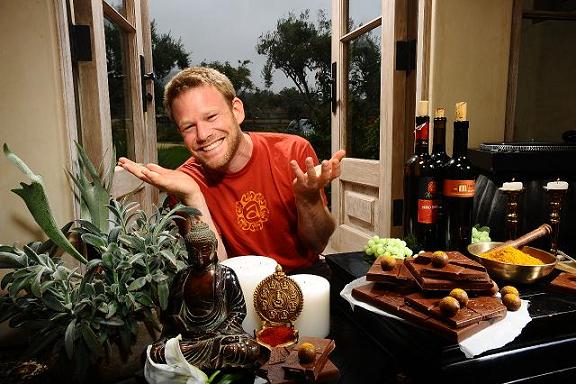
Why put 12 year-old aged balsamic vinegar from Modena, Italy into a chocolate truffle?  Well, because it tastes surprisingly great, for one thing. But also, according to Dave Romanelli, one of the presenters at last weekend’s flexibly diverse San Francisco Yoga Journal Conference, because it can heighten your yoga practice. Enlightenment through chocolate? We’ll take it.

New York-based Romanelli taught a class called “Yoga  and Chocolate,” and like many of the conference’s fifty presenters, he brought a yogic flavor to the conference influenced as much by his personal path to the mat as ancient teachings. In other words, fundamentalist ayurveda this was not.

Referred to as “Yeah Dave” by his friends (as in, “yeah, Dave, whatever…”), Romanelli has penchant for stoner-esque musings that eventually left him with the radical idea that to flourish in today’s fast-paced society, yoga should be made accessible to a broad audience. 

In the ’90s, Romanelli and a partner started At One, a chain of trendy yoga studios in Phoenix that Romanelli says in an interview with SFBG were meant to “bust through the stereotypes” that yoga is pretentious and unconnected to daily life. In 2009 he published a book called Yeah Dave’s Guide to Livin’ in the Moment, an irreverent manual to enjoying life in the here and now. These days, he travels the country leading workshops that seek to initiate people into a yogic lifestyle through careful attention to the senses – which he engages with the help of wine and exotically-flavored chocolate provided by Yoga and Chocolate co-founder and master chocolatier Katrina Markoff.  

“Yoga and Chocolate” was one of over a hundred classes, guest lectures, all-day intensive workshops, and special events that filled the San Francisco Hyatt over the MLK Day weekend, ranging from fiery asana practices to contemplative journeys through yogic philosophy.  The scads of famous yogis in attendance included teachers like Ana Forrest, creator of the healing-based Forrest Yoga approach, Seane Corn, an internationally celebrated yoga teacher, activist and humanitarian, and San Francisco’s own Baron Baptiste, whose parents opened the city’s first yoga center in 1955 and who has shared his empowering vinyasa yoga with classes around the world.

With so many presenters — and with nearly half of conference attendees yoga teachers in their own right — the expo left the downtown hotel rife with pairs of groovy tie-dyed pants and hundreds of bare feet riding up and down the Hyatt’s escalators. In a city like San Francisco, it’s not surprising that the traditional Indian practice could draw such a huge audience – but the sight of so many modernized classes begged the question: Patanjali compiled the yoga sutras no later than 150 BC, and we’ve been mulling them over ever since. How much is really left to learn?

The answer is “a lot” if this year’s offerings were to be believed. Joining “Yoga and Chocolate” was MC Yogi’s “Ganesh is Fresh,” a hip-hop inspired retelling of the story of the elephant-headed deity Ganesh, remover of obstacles. (Fyi, if you’re a harmonious hip-hop head, it’s also the name of a track on MC Yogi’s 2008 album “Elephant Power.”) Another high-energy choice was “Bollywood Vinyasa,” a cardio-heavy yogic workout set to bright rhythms of bhangra and Bollywood music. 

“I never intended to be a yoga teacher,” said Hemalayaa, the class’ teacher and the Canadian-born daughter of Indian parents. “I started practicing as a way to guide myself, be a leader for myself,” she announced to the students before her. The seed of “Bollywood Vinyasa” was planted during darker days in Hemalayaa’s 20s, when she would come home and blast Bollywood music as a way of shaking out her troubles. After having grown to the lively beats, she was able to incorporate them into her study of yoga. “Now I teach as a way to continue my study. Being a leader to others helps me stay true to myself.”

Romanelli agrees on the importance of applying traditional yogic teachings in a way that’s applicable to our own life stories. He has no problem using his own life experiences – like having man-boobs and wearing too much cologne on prom night in pursuit of after-party action – to draw laughs and convince his students that self-reflection can be fun.  

His style is a definite departure from traditional yogic teaching (ashtanga yogis advocate pratyahara, withdrawal of the senses from external objects, as a means of attending to the inner self). But, in Yeah Dave’s opinion, sensual experience can be the first step toward getting people to pay attention and eventually journey inward.  

“In today’s society, how realistic is closing off the senses?” he asks. “People are afraid to be alone with themselves on a three by six mat.” He admits that people often need help to make the first step. “And if it has to be chocolate, then so be it,” he grins.

For information on next year’s Yoga Journal Conference stretch out to www.yjevents.com/sf

Stage Listings

0

Stage listings are compiled by Guardian staff. Performance times may change; call venues to confirm. Reviewers are Robert Avila, Rita Felciano, and Nicole Gluckstern. Submit items for the listings at listings@sfbg.com. For further information on how to submit items for the listings, see Picks. For complete listings, see www.sfbg.com.

THEATER

OPENING

Audition – A Play Exit Theater, 156 Eddy; (800) 838-3006, www.brownpapertickets.com. Call for price. Opens Thurs/20, 8pm. Runs Thurs and Sat, 8pm; Sun, 3pm. GenerationTheatre presents a comedy of the absurd by Roland David Valayre.

Bone to Pick and Diadem Exit on Taylor, 277 Taylor; (800) 838-3006, www.cuttingball.com. $15-50. Opens Thurs/20, 8pm. Runs Thurs-Sat, 8pm; Sun, 5pm. Cutting Ball Theatre presents a pair of plays by Eugenie Chan.

The Companion Piece Z Space at Theatre Artaud, 450 Florida; (800) 838-3006, www.zspace.org. $20-40. Call for price. Previews Wed/19-Thurs/20, 7pm; Fri/21, 8pm. Opens Sat/22, 8pm. Runs Thurs 7pm; Fri-Sat, 8pm; Sun, 5pm. Through Feb 13. Z Space presents the world premiere of a new play by Mark Jackson, with Beth Wilmurt and Christopher Kuckenbaker.

Out of Sight The Marsh, 1062 Valencia; (800) 838-3006, www.themarsh.org. $15-35. Previews Thurs/20, 8pm. Opens Sat/22, 8pm. Runs Thurs and Sat, 8pm; Sun, 3pm. Through Feb 13. The Marsh presents a new solo show by Sara Felder.

Spalding Gray: Stories Left to Tell Gough Street Playhouse, 1620 Gough; (510) 207-5774, www.custommade.org. $10-25. Previews Fri/21-Sat/22, 8pm. Opens Tues/25, 8pm. Runs Thurs-Sat, 8pm. Through Feb 19. Custom Made Theatre presents stories by the late writer and performer.

The 39 Steps TheatreWorks at the Mountain View Center for the Performing Arts, 500 Castro, Mtn View; (650) 463-1960, www.theatreworks.org. $24-79. Previews Wed/19, 7:30pm; Thurs/20-Fri/21, 8pm. Opens Sat/22, 8pm. Runs Tues-Wed, 7:30pm; Thurs-Fri, 8pm; Sat, 2 and 8pm; Sun, 2 and 7pm. TheatreWorks presents Patrick Barlow’s comic adaptation of the book and movie of the same name.

Treefall New Conservatory Theatre Center, 25 Van Ness; 861-8972, www.nctsf.org. $24-40. Previews Fri/21-Sat/22, 8pm; Sun/23, 2pm; Jan 26-28, 8pm. Opens Jan 29, 8pm. Through Feb 27. New Conservatory Theatre Center presents a tale of erotic attraction by Henry Murray.

BAY AREA

The Agony and the Ecstasy of Steve Jobs Berkeley Rep, Thrust Stage, 2025 Addison, Berk; (510) 647-2949, www.berkeleyrep.org. $14.50-73. Previews Thurs/20-Sat/22, 8pm. Opens Sun/23, 7pm. Call for dates and times. Through Feb 27. Storyteller Mike Daisey spins a yarn about the Apple head.

Heartbreak House Live Oak Theatre, 1301 Shattuck, Berk; (510) 649-0999, www.berkeleyrep.org. $12-15. Opens Fri/21, 8pm. Runs Fri-Sat, 8pm (also Feb 13, 2pm; Feb, 17, 8pm). Through Feb 19.Actors Ensemble of Berkeley presents the George Bernard Shaw comedy set just before World War I.

ONGOING

Clue Boxcar Playhouse, 505 Natoma; 776-1747, www.boxcartheatre.org. $15-35. Wed-Fri, 8pm; Sat, 7 and 10pm. Through Feb 19. Boxcar Theatre presents a play based on a movie based on a board game.

No Good Deed Pear Avenue Theatre, 1220 Pear, Mtn View; (650) 254-1148, www.thepear.org. $15-30. Thurs-Fri, 8pm; Sat, 8pm; Sun, 2pm. Pear Avenue Theatre presents a world premiere noir-inflected play by Paul Braverman.

Party of 2 – The New Mating Musical Shelton Theater, 533 Sutter; (800) 838-3006, www.partyof2themusical.com. $27-29. Sun, 3pm. Open-ended. A musical about relationships by Shopping! The Musical author Morris Bobrow.

*Pearls Over Shanghai Thrillpeddlers’ Hypnodrome, 575 Tenth St; 1-800-838-3006, www.brownpapertickets.com. $30-69. Sat, 8pm. Through April 9. Thrillpeddlers’ acclaimed production of the Cockettes musical continues its successful run.

BAY AREA

East 14th – True Tales of a Reluctant Player The Marsh Berkeley, 2120 Allston Way, Berk; (800) 838-3006, www.themarsh.org. $20-50. Call for times. Through Feb 13. Don Reed’s one-man show continues its extended run.

The Last Cargo Cult Berkeley Repertory Theatre, Thrust Stage, 2025 Addison, Berk; (510) 647-2949, www.berkeleyrep.org. $14.50-73. Call for dates and times. Through Feb 20. Mike Daisey stars in a one-man show about obsession with commerce.

*Of the Earth – The Salt Plays Ashby Stage, 1901 Ashby; (510) 841-6500, www.shotgunplayers.org. $17-30. Thurs-Sat, 8pm; Sun, 5pm. Through Jan 30. If those whom the gods favor die young, it’s probably just as well for Odysseus (Dan Bruno) that Zeus (Rami Margron) happens to be irked at him. That Zeus occasionally manifests as a scary nurse with a penchant for ballroom dance is one of but many mysterious angles Jon Tracy teases out of the standard Odysseus myth. Another involves the instant-messaging potential of paper planes; a third, a blunt addiction metaphor for warmongering. In what must surely be a happy coincidence, the design elements and staging of Of the Earth are curiously similar to those of the recent Cutting Ball production of The Tempest. Characters leaping about from floor-to-ceiling ladders to physically embody shipwrecks and monsters, a handful of actors playing multiple roles, watery video installations, even the allusion to mental illness and modern psychiatry are threads that tie the two productions, however unsuspectingly, together. Happily for The Shotgun Players, their version floats above the comparison with a host of extra tension-drivers—the sinuously menacing fighting-style of Posiedon (Anna Ishida), the heart-throb pounding of Taiko drums, the sensual machinations of Circe (Charisse Loriaux), the clever usage of Penelope’s (Lexie Papedo) “tapestry” to weave together the action. And though at times the thread is broken mid-scene, we are finally given to understand that this epic tale of war’s fallout is first and finally a story of love. (Gluckstern)

Strange Travel Suggestions The Marsh Berkeley, Cabaret, 2120 Allston Way, Berk; (800) 838-3006, www.themarsh.org. $15-35. Thurs-Fri, 8pm; Sat, 5pm. Through Feb 19. Jeff Greenwald stars in a one-man show about the vagaries of wanderlust.

World’s Funniest Bubble Show The Marsh Berkeley, 2120 Allston Way, Berk; (800) 838-3006, www.themarsh.org. $8-11. Sun, 11am. Through April 3. The Amazing Bubble Man extends the bubble-making celebration.

PERFORMANCE/DANCE

Gush Brava Theater, 2783 24th St; 6470-2822, www.brava.org. Call for dates and times (through Jan 29). $15-35. Brava presents a dance series curated by Joe Goode.

A Hand in Desire Viracocha, 998 Valencia; (800) 838-3006, www.brownpapertickets.com. $20. Fri-Sat, 8pm (through Jan 29). EmSpace Dance presents a “remix” of A Streetcar Named Desire.

Women of the Way Festival Shotwell Studios, 3252-A Shotwell; and The Garage, 975 Howard; (800) 838-3006, www.ftloose.org. Call for dates and times (through Jan 30). $15-20. The dance festival celebrates it 11th anniversary with 23 new shows.

BAY AREA

Marga’s Funny Mondays The Cabaret at The Marsh Berkeley, 2120 Allston; (800) 838-3006, www.themarsh.org. Mon/24, 8pm. $10. Marga Gomez kicks off a Monday night comedy series.

Tango Buenos Aires Zellerbach Hall, UC Berkeley campus, Berk; (510) 642-9988, www.calperformances.org. Fri/21, 8pm. $22-52. The dance company visits the Bay Area as part of a ten-week tour of North America.

SF’s new political era

31

news@sfbg.com

You can argue about what the word “progressive” means, and you can argue about the process and the politics that put Ed Lee in the Mayor’s Office. And you can talk forever about which group or faction has how much of a majority on the San Francisco Board of Supervisors, but you have to admit: this city has just undergone a significant political realignment.

Some of that was inevitable. The last members of the class of 2000, the supervisors who were elected in a rebellion against the sleaze, corruption, and runaway development policies of the Willie Brown administration, have left office. Gavin Newsom, the mayor who was often at war with the board and who encouraged a spirit of rancor and partisanship, is finally off to Sacramento. For the first time since 1978, the supervisors will be working with a mayor they chose themselves.

For much of the past 15 years, progressive politics was as much about stopping bad things — preventing Brown and then Newsom from wrecking the city — as it was about promoting good things. But the “politics of anti,” as San Francisco State political scientist Rich DeLeon describes is, wasn’t a central theme in the November elections, and this generation of supervisors comes into office with a different agenda.

Besides, one of the clear divisions on the board the past seven years was the Newsom allies against the progressives — something that dissipated instantly when Lee took over.

But the realignment goes deeper.

Until recently, the progressives on the board had a working majority — a caucus, so to speak — and they tended to vote together much of the time. The lines on the board were drawn almost entirely by what Newsom disparagingly calls ideology but could more accurately be described as a shared set of political values, a shared urban agenda.

There are still six supervisors who call themselves progressives, but the idea that they’ll stick together was shattered in the battle over a new mayor — and the notion that there’s anything like a progressive caucus died with Board President David Chiu’s election (his majority came in part from the conservative side, with three progressives opposing him) and with Chiu’s new committee assignments, which for the first time in a decade put control of key assignments in the hands of the fiscal conservatives.


A PROGRESSIVE MAJORITY?

The progressive bloc on the board was never monolithic. There were always disagreements and fractures. And, thanks to the Brown Act, the progressives don’t actually meet outside of the formal board sessions. But it was fair and accurate to say that, most of the time, the six members of the board majority functioned almost as a political party, working together on issues and counting on each other for key votes. There was, for example, a dispute two years ago over the board presidency — but in the end, Chiu was elected with exactly six votes, all from the progressive majority that came together in the end.

That all started to fall apart the minute the board was faced with the prospect of choosing a new mayor. For one thing, the progressives couldn’t agree on a strategy — should they look for someone who would seek reelection in November, or try to find an acceptable interim mayor? The rules that barred supervisors from voting for themselves made it more tricky; six votes were not enough to elect any of the existing members. And, not surprisingly, some of the progressives had mayoral ambitions themselves.

When state Assemblymember Tom Ammiano — who would have had six votes easily — took himself out of the running, there was no other obvious progressive candidate. And with no other obvious candidate, and little opportunity for open discussion, the progressives couldn’t come to an agreement.

But by the Jan. 4 board meeting, five of the six had coalesced around Sheriff Mike Hennessey. Chiu, however, was supporting Ed Lee, someone he had known and worked with in the Asian community and whom he considered a progressive candidate. And once it became clear that Lee was headed toward victory, Sup. Eric Mar announced that he, too, would be in Lee’s camp.

A few days later, when the new board convened to choose a president, the progressive solidarity was gone. Sups. David Campos, John Avalos, and Ross Mirkarimi, now the solid left wing of the board, voted for Avalos. Chiu won with the support of Mar, Sup. Jane Kim, and the moderate-to-conservative flank.

Now the Budget Committee — long controlled by a progressive chair and a progressive majority — will be led by Carmen Chu, who is among the most fiscally conservative board members. The Land Use and Development Committee will be chaired by Mar, but two of the three members are from the moderate side. Same goes for Rules, where Sup. Sean Elsbernd, for years the most conservative board member, will work with ideological ally Sup. Mark Farrell on confirming mayoral appointments, redrawing supervisorial districts, and promoting or blocking charter amendments as Kim, the chair, does her best to contain the damage.

You can argue that having independent-minded supervisors who don’t vote as a caucus is a good thing. You can also argue that a fractured left will never win against a united downtown. And both arguments have merit.

But you can’t argue any more that the board has the same sort of progressive majority it’s had for the past 10 years. That’s over. It’s a new — and different — political era.

What happens now? Will the progressives hold enough votes to have an influence on the city budget (and ensure that the deficit solutions include new revenue and not just cuts)? What legislative priorities will the supervisors be pushing in the next year? How will the votes shake out on difficult new proposals (and ongoing issues like community choice aggregation)?

Mayor Lee has pledged to work with the board and will show up for monthly questions. How will he respond to the sorts of progressive legislation — like tenant protections, transit-first policies, immigrant rights measures, and stronger affordable housing standards — that Newsom routinely vetoed?

How will this all play out in a year when the city will also be electing a new mayor?


IDENTITY POLITICS?

When Sups. Chiu, Mar, and Kim broke with their three progressive colleagues to support Chiu for board president — just as Chiu and Mar helped clear the path for Ed Lee to become mayor days earlier — it seemed to many political observers that identity had trumped ideology on the board. There’s some truth to that observation, but it’s too simple an explanation. There’s also the fact that Chiu strongly supported Kim, who is a personal friend and former roommate, in her election, so it’s no surprise she went with him for board president.

And the phrase itself is so laden with baggage and problems that it’s hard to talk about. It has come to signify a wide range of political activity and theorizing founded in the shared experiences of injustice of members of certain social groups. “Rather than organizing solely around belief systems, programmatic manifestoes, or party affiliation, identity political formations typically aim to secure the political freedom of a specific constituency marginalized within its larger context,” says the Stanford Encyclopedia of Philosophy, an ongoing research project by the students and faculty at Stanford University.

Although the notion of identity politics took hold during the social movements of the 1960s and ’70s — when liberation and organizing movements among women and various ethic and other identity groups fed a larger liberal democratic surge that targeted war, economic inequity, social injustice, and other issues — it’s also a political approach that has divided the populace.

“One of the central charges against identity politics by liberals, among others, has been its alleged reliance on notions of sameness to justify political mobilization,” says the Stanford Encyclopedia. “Looking for people who are like you rather than who share your political values as allies runs the risk of sidelining critical political analysis of complex social locations and ghettoizing members of social groups as the only persons capable of making or understanding claims to justice.”

Mar explains that the reality of identity politics and whether it’s a factor in the current politics at City Hall is far more complex.

“With me, David Chiu, and Jane Kim as a block of three progressive Asians — and I still define David Chiu as a progressive though I think some are questioning that — we all come out of what I would call a pro-housing justice, transit-first, and environmental sustainability [mindset],” Mar told us. “But I think because of our ethnic background and experiences, we may have different perspectives at times than other progressives.”

For example, Mar said, many working class families of color need to drive a car so they’ll differ from progressives who want to limit parking spaces to discourage driving. He also has reservations about the proposed congestion pricing fee and how it might affect low-income drivers.\

“I think often when progressive people of color come into office — Jane Kim might be one of the best examples — that sometimes there’s an assumption that her issues are going to be the same as a white progressive or a Latino progressive,” he said. “But I think kind of the different identities that we all have mean that we’re more complex.”

Campos, a Latino immigrant who is openly gay, noted that “as a progressive person of color, I have at times felt that the progressive movement didn’t recognize the importance of identity politics and what it means for me to have another person of color in power.”

But, he added, “I don’t think identity politics alone should guide what happens. A progressive agenda isn’t just about race but class, sexual orientation, and other things. It’s not enough to say that identity politics justifies everything.”

University of San Francisco political science professor Corey Cook told the Guardian that identity has always been a strong factor in San Francisco politics, even if it was overshadowed by the political realignment around progressive ideology that occurred in 2000, mostly as a reaction to an economic agenda based on rapid development and political cronyism.

“I’m not sure that identity wasn’t relevant, but it was swamped by ideology,” Cook told the Guardian. Now, he said, another political realignment seems to be occurring, one that downplays ideology compared to the position it has held for the last 10 years. “I’m not sure that ideology is dead. But the dynamics have definitely changed.”

Cook sees what may be a more important change reflected in Chiu’s decision to put the political moderates in control of key board committees. But he said that shift was probably inevitable given the difficulties of unifying the diverse progressive constituencies.

“It’s hard to hold a progressive coalition together, and it’s amazing that it has lasted this long,” he said.

There’s another kind of identity politics at play as well — that of native San Franciscans, who often express resentment at progressive newcomers talking about what kind of city this is, versus those who see San Francisco as a city of immigrants and ideas, a place being shaped by a wider constituency than the old-timers like to acknowledge.

“I’m honored to join Sups. Elsbernd and Cohen in representing the neighborhoods they grew up in,” Sup. Mark Farrell said during his opening remarks after being sworn in Jan. 8., sobbing when he thanked his parents for their support.

As he continued, he fed the criticism of the notion of ideology-based politics that has been a popular trope with Gavin Newsom and other fiscal conservatives in recent years, telling the crowd he wanted “to turn City Hall into a place based on issues and ideas, not ideology.”

Cohen also placed more importance on her birthright than on her political philosophy, telling stories about entering board chambers through the back door at age 16 when she was part of a youth program created by then-Mayor Frank Jordan, and with former Mayor Dianne Feinstein coming to speak at Cohen’s third-grade class. “I am a San Francisco native, and that is a responsibility I take seriously,” said Cohen, who graduated from the Emerge Program, which grooms women for political office,

“We will have another woman as president of the Board of Supervisors, and we will have a woman as mayor of San Francisco,” she added. And as the sole African American on the board, she also pledged, “I will be working to add more members of the African American community to the elected family of San Francisco.”

But what issues she plans to focus on and what values she’ll represent were unclear in her comments — as they were throughout her campaign, despite the efforts of journalists and activists to discern her political philosophy. In her public comments, her only stated goal was to build bridges between the community and City Hall and let decisions be guided by the people “not political ideologies.”

Oftentimes in recent San Francisco history, identity and ideology have worked in concert, as they did with former Sup. Harvey Milk, who broke barriers as the first openly gay elected official, but who also championed a broad progressive agenda that included tenants rights, protecting civil liberties, and creating more parks and public spaces.

Sup. Scott Wiener, shortly after being sworn into office, acknowledged the legacy of his district, which was once represented by Milk and fellow gay progressive leader Harry Britt, telling the crowd: “I’m keenly aware of the leadership that has come through this district and I have huge shoes to fill.”

Yet Wiener, a moderate, comes from a different ideological camp than Milk and Britt and he echoed the board’s new mantra of collaboration and compromise. “I will always try to find common ground. There is always common ground,” he said.


GETTING THINGS DONE?

Chiu is making a clear effort to break with the past, and has been critical of some progressive leaders. “I think it’s important that we do not have a small group of progressive leaders who are dictating to the rest of the progressive community what is progressive,” he said.

While he didn’t single out former Sup. Chris Daly by name, he does seem to be trying to repudiate Daly’s leadership style. “I think that while the progressive left and the progressive community leaders have had very significant accomplishments over the past 10 years, I do think that there are many times when our oppositional tactics have set us back.”

When Chiu was reelected board president, he told the crowd that “none of us were voted into office to take positions. We were voted into office to get things done.”

Some progressives were not at all happy with that comment. “I thought that was a terrible thing to say,” Avalos told the Guardian, arguing the positions that elected officials take shape the legislation that follows. As an example, he cited the positions that progressive members of Congress took in favor of the public option during the health care reform debate.

Talking about getting things done is “a sanctimonious talking point that fits well with what the Chronicle and big papers want to hear,” Avalos said. He said the Chronicle and other downtown interests are more interested in preserving the status quo and blocking progressive reforms. “It’s what they want to see not get done.”

Campos even challenged the comment publicly during the Jan. 11 board meeting when he said, “It’s important to get things done, but I don’t think getting things done is enough. We have to ask ourselves: what is it that we’re getting done? How is it that we’re getting things done? And for whom is it that we’re doing what we’re doing? Is it for the people, or the downtown corporate interests? I hope it’s not getting things done behind closed doors.”

Chiu said that, for him, getting things done is about expanding the progressive movement and consolidating its recent gains. “I think we all share a political goal. As progressives, we all share a political goal of getting things done and growing mainstream support for our shared progressive principles so that they really become the values of our entire city.”

To do that, he said, progressives are going to need to be more conciliatory and cooperative than they’ve been in the past. “I think it’s easy to slip into a more oppositional way of discussing progressive values, but I’m really pushing to move beyond that.”

The biggest single issue this spring will be the budget — and it’s hard to know exactly where the board president will draw his lines. “I have spoken to Mayor Lee about the need for open, transparent, and community-based budget processes and he’s open to that,” Chiu told us — and that alone would be a huge change. But the key progressive priority for the spring will be finding ways to avoid brutal budget cuts — and that means looking for new revenue.

When asked whether new general revenue will be a part of the budget solution, instead of Newsom’s Republican-style cuts-only approaches, Chiu was cautious. “I am open to considering revenues as part of the overall set of solutions to close the budget deficit,” he said. “I am willing to be one elected here that will try to make that argument.” But with his political clout and connections right now, he can do a lot more than be one person making an argument.

Chiu has always been open to new revenue solutions and even led the way in challenging the cuts-only approach to both the city budget and MTA budget two years in a row, only to back down in the end and cut a deal with Newsom. When asked whether things will be better this year given his closer relationship to Lee, Chiu replied, “I think things are going to be different in the coming months.”

During the board’s Jan. 7 deliberation on Lee, Sup. Eric Mar also said that based on his communications with Lee, Mar believed that the Mayor’s Office is open to supporting new revenue measures. He echoed the point later to us.

In addition to supporting the open, inclusive budget process, Mar called for “a humane budget that protects the safety net and services to the most vulnerable people in San Francisco is kind of the critical, top priority.

“I think it’s going to be difficult working with the different forces in the budget process,” he added. “That’s why I wish it could have been a progressive who was chairing the budget process.”

Mar said progressive activism on the budget process is needed now more than ever. “The Budget Justice Coalition from last year I think has to be reenergized so that so many groups are not competing for their own piece of the pie, but that it’s more of a for-all, share-the-pain budget with as many people communicating from outside as possible, putting the pressure on the mayor and the board to make sure that the critical safety net’s protected.”


CUTS WILL BE CENTER STAGE

But major cuts — and the issue of city employees pay and benefits — will also be center stage.

At the board’s Jan. 11 meeting, before the supervisors voted unanimously to nominate Lee as interim mayor, Sup. Elsbernd signaled that city workers’ retirement and health benefits will once again be at the center of the fight to balance the budget.

Elsbernd noted that in past years he was accused of exaggerating the negative impacts that city employees’ benefits have on the city’s budget. “But rather than being inflated, they were deflated,” Elsbernd said, noting that benefits will soon consume 18.14 percent of payroll and will account for 26 percent in three years.

“Does the budget deficit include this amount?” he asked.

And at the after-party that followed Lee’s swearing-in, Public Defender Jeff Adachi, who caused a furor last fall when he launched the ill-considered Measure B, which sought to reform workers’ benefits packages, told us he is not one to give up lightly.

“We learned a lot from that,” Adachi said. “This is still the huge elephant in City Hall. The city’s pension liability just went up another 1 percent, which is another $30 million”

Chu agreed that worker benefits would be a central part of the budget-balancing debate. “Any conversation about the long-term future of San Francisco’s budget has to look at the reality of where the bulk of our spending is,” she said.

Avalos noted that he plans to talk to labor and community based organizations about ways to increase city revenue. “I’m going to work behind the scene on the budget to make sure the communities are well-spoken for,” Avalos said, later adding, “But it’s hard, given that we need a two-thirds majority to pass stuff on the ballot.”

Last year, Avalos helped put two measures on the ballot to increase revenue: Prop. J, which sought to close loopholes in the city’s current hotel tax and asked visitors to pay a slightly higher hotel tax (about $3 a night) for three years, and Prop. N, the real property transfer tax that slightly increased the tax charged by the city on the sale of property worth more than $5 million.

Prop. N should raise $45 million, Avalos said. “I’ve always had my sights set on raising revenue, but making cuts is inevitable.”


THE IDEOLOGY ARGUMENT

Newsom and his allies loved to use “ideology” as a term of disparagement, a way to paint progressives as crazies driven by some sort of Commie-plot secret agenda. But there’s nothing wrong with ideology; Newsom’s fiscal conservative stance and his vow not to raise taxes were ideologies, too. The moderate positions some of the more centrist board members take stem from a basic ideology. Wiener, for example, told us that he thinks that in tough economic times, local government should do less but do it better. That’s a clear, consistent ideology.

For much of the past decade, the defining characteristic of the progressives on the board has been a loosely shared urban ideology supported by tenants, immigrant-rights groups, queer and labor activists, environmentalists, preservationists, supporters of public power and sunshine and foes of big corporate consolidation and economic power. Diversity and inclusiveness was part of that ideology, but it went beyond any one political interest or identity group.

It was often about fighting — against corruption and big-business hegemony and for economic and social equality. The progressive agenda started from the position that city government under Brown and Newsom had been going in the wrong direction and that substantive change was necessary. And sometimes, up against powerful mayors and their well-heeled backers, being polite and accommodating and seeking common ground didn’t work.

As outgoing Sup. Daly put it at his final meeting: “I’ve seen go-along to get along. If you want to do more than that, if you think there’s a fundamental problem with the way things are in this world, then go-along to get along doesn’t do it.” When Chiu announced that the new progressive politics is one of pragmatism, he was making a break from that ideology. He was signaling a different kind of politics. He has urged us to be optimistic about the new year — but we still don’t know what the new agenda will look like, how it will be defined, or at what point Chiu and his allies will say they’ve compromised and reached out enough and are ready to take a strong, even oppositional, stand. We do know the outcome will affect the lives of a lot of San Franciscans. And when the budget decisions start rolling down the pike, the political lines will be drawn fairly clearly. Because reaching across the aisle and working together sounds great in theory — but in practice, there is nothing even resembling a consensus on the board about how the city’s most serious problems should be resolved. And there are some ugly battles ahead.

They have issues: Members of the new Board speak

20

Board President David Chiu touched off a broad political discussion in recent weeks with his statement that officials were elected “not to take positions, but to get things done.” Delivered just before his reelection as Board President with the solid backing of the board’s moderate faction, Chiu’s comment has been viewed in light of City Hall’s shifting political dynamic, a subject the Guardian explores in a Jan. 19 cover story. Politics aside, Chiu’s statement also begs the question: Just what do members of the board hope to get done, and how do they propose to accomplish the items on their agenda?
Last week, Guardian reporters tracked down every member of the board to find out. We asked, what are your top priorities? And how do you plan to achieve them? Some spoke with us for 25 minutes, and others spoke for just 5 minutes, but the result offers some insight into what’s on their radar. Not surprisingly, getting the budget right was mentioned by virtually everyone as a top priority, but there are sharp differences in opinion in terms of how to do that. Several supervisors, particularly those in the moderate wing, mentioned ballooning pension and healthcare costs. Aiding small business also emerged as a priority shared by multiple board members.

Sup. Eric Mar
District 1

Issues:
*Budget
*Assisting small businesses
*Programs and services for seniors
*Food Security
*Issues surrounding Golden Gate Park

Elected in 2008 to represent D1, Sup. Eric Mar has been named chair of the powerful Land Use & Economic Development Committee and vice chair of the City Operations and Neighborhood Services Committee.

Asked to name his top priorities, Mar said, “A humane budget that protects the safety net and services to the must vulnerable people in San Francisco is kind of the critical, top priority.”

It’s bound to be difficult, he added. “That’s why I wish it could have been a progressive that was chairing the budget process. Now, we have to work with Carmen Chu to ensure that it’s a fair, transparent process.”

A second issue hovering near the top of Mar’s agenda is lending a helping hand to the small businesses of the Richmond District. “There’s a lot of anxiety about the economic climate for small business. We’re trying to work closely with some of the merchant associations and come up with ideas on how the city government can be more supportive,” he said. Mar also spoke about the need to respond to the threat of big box stores, such as PetCo, that could move in and harm neighborhood merchants. “I’m worried about too many of the big box stores trying to come in with an urban strategy and saying that they’re different — but they sure have an unfair advantage,” he noted.

Programs and services for the senior population ranked high on his list. Mar noted that he’d been working with senior groups on how to respond to a budget analyst’s report showing a ballooning need for housing – especially affordable housing – for seniors. “It’s moving from the Baby Boom generation to the Senior Boomers, and I think the population, if I’m not mistaken, by 2020 it’s going up 50 percent,” he said. “It’s a huge booming population that I don’t think we’re ready to address.”

Addressing food security issues through the Food Security Task Force also ranked high on Mar’s list, and he noted that he’s been working with a coalition that includes UCSF and the Department of Public Health to study the problem. “We’ve had a number of strategy meetings already, but we’re trying to launch different efforts to create healthier food access in many of our lowest income neighborhoods,” Mar said.

Finally, Mar talked about issues relating to the park. “I do represent the district that has Golden Gate Park, so I’m often busy with efforts to preserve the park, prevent privatization, and ensure enjoyment for the many residents not just in the Richmond but throughout the city that enjoy the park.” Although it’s not technically in his district, Mar noted that he is very supportive of HANC Recycling Center – and plans to advocate on their behalf to Mayor Lee.

Sup. Mark Farrell
District 2
Issues:
*Pension reform
*Long-term economic plan for city
*Job creation
*Quality-of-life issues

Elected to replace termed-out D2 Sup. Michela Alioto-Pier, Farrell has been named vice-chair of the Government Audits & Oversight Committee and a member of the Rules Committee. A native of D2, Farrell told the Guardian he believes his roots in the city and background as a venture capitalist would be an asset to the city’s legislative body. “I know at the last board, Carmen [Chu] was the only one who had any finance background,” he said. “To have someone come from the private sector with a business / finance background, I really do believe … adds to the dialogue and the discussion here at City Hall.”

Along those lines, Farrell said one of his top priorities is the budget. “I’m not on the budget and finance committee this time around, but given my background, I am going to play a role in that,” he said.

So what’s his plan for closing the budget deficit? In response, he alluded to slashing services. “In the past, there have been views that we as a city don’t provide enough services and we need to raise revenues to provide more, or the perspective that we first need to live within our means and then provide more services. Everyone’s going to disagree, but I’m in the latter camp,” he said. “I do believe we need to make some tough choices right now – whether it be head count, or whether it be looking at …pension reform. I do believe pension reform needs to be part of the dialogue. Unfortunately, it’s unsustainable.”

He also said he wanted to be part of “trying to create and focus on a framework for a long-term financial plan here in San Francisco.”

Secondly, Farrell discussed wanting to put together a “jobs bill.”

“Jobs is a big deal,” he said. “It’s something I want to focus on. There are only so many levers we can pull as a city. I think the biotech tax credits have spurred a lot of business down in Mission Bay.”

Next on Farrell’s agenda was quality-of-life issues, but rather than talk about enforcing San Francisco’s sit/lie ordinance – supported by political forces who organized under the banner of maintaining ‘quality-of-life’ – Farrell revealed that he is incensed about parking meter fines. “It is so strikingly unjust when you are 1 minute late to your parking meter and you have a $65 parking fine,” he said.

Farrell also mentioned development projects that would surely require time and attention. “CPMC is going to be a major dominant issue,” he said. He also mentioned Doyle Drive, and transitional age youth housing projects proposed in D2 – but as far as the housing project planned for the King Edward II Inn, which has generated some controversy among neighborhood groups, he didn’t take a strong position either way, saying he wanted to listen to all the stakeholders first.

Board President David Chiu
District 3
Issues:
*Budget
*Preserving neighborhood character
*Immigrant rights
*Preserving economic diversity
*Transit

Elected for a second two-year term as President of the Board, D3 Sup. David Chiu is rumored to be running in the mayor’s race, after he turned down former Mayor Gavin Newsom’s offer to appoint him as District Attorney. That offer was made after Kamala Harris won the state Attorney General’s race this fall. And when Chiu turned it down, former Mayor Gavin Newsom shocked just about everybody by appointing San Francisco Police Chief George Gascon, who is not opposed to the death penalty and was a longtime Republican before he recently registered as a Democrat, instead.

A temporary member of the Board’s Budget acommittee, Chiu is also a permanent member of the Board’s Government Audits & Oversight Committee.

Asked about his top priorities, Chiu spoke first and foremost about  “ensuring that we have a budget that works for all San Franciscans, particularly the most vulnerable.” He also said he wanted to see a different kind of budget process: “It is my hope that we do not engage in the typical, Kabuki-style budget process of years past under the last couple of mayors, where the mayor keeps under wraps for many months exactly what the thinking is on the budget, gives us something on June 1 for which we have only a couple of weeks to analyze, and then engage in the tired back-and-forth of debates in the past.” Chiu also spoke about tackling “looming pension and health care costs.”

Another priority, he said, was “Ensuring that our neighborhoods continue to remain the distinctive urban villages that they are, and protecting neighborhood character,” a goal that relates to “development, … historic preservation, [and] what we do around vacant commercial corridors.”

*Immigrant rights also made his top-five list. “I was very sad that last November we didn’t prevail in allowing all parents to have a right and a voice in school board elections,” he said, referencing ballot measure Proposition D which appeared on the November 2010 ballot. “I think we are going to reengage in discussion around Sanctuary City, another topic I have discussed twice already with Mayor Lee.”

Another issue for Chiu was  “ensuring again that hopefully San Francisco continues to remain an economically diverse city, and not just a city for the very wealthy.” He spoke about reforming city contracts: “In particular, dealing with the fact that in many areas, 70 to 80 percent of city contracts are awarded to non-San Francisco businesses. … I think there is more significant reform that needs to happen in our city contracting process.” Another economic-diversity measure, he said, was tax policy, “particularly around ensuring that our business tax is incenting the type of economic growth that we want.”

Finally, Chiu spoke about “Creating a transit-first city. This is not just about making sure MUNI is more reliable and has stable funding, but ensuring that we’re taking steps to reach a 2020 goal of 20 percent cycling in the city. Earlier this week I called for our transit agencies to look at pedestrian safety, because we are spending close to $300 million a year to deal with pedestrian deaths and injuries.”

Sup. Carmen Chu
District 4
*Budget
*Core Services
*Jobs
*Economy

Chiu has just named Sup. Carmen Chu as chair of the powerful Board and Finance Committee. And Chu, who worked as a budget analyst for Newsom’s administration, says the budget, core services, employment and the economy are her top priorities.

“My hope is that this year the budget is going to be a very collaborative and open process,” Chu said.

Chu believes workers benefits will be a central part of the budget-balancing debate.
“Any conversation about the long-term future of San Francisco’s budget has to look at the reality of where the bulk of our spending is,” she said.

Chu noted that the budget debate will have to take the state budget into account.
“At the end of the day, we need to take into account the context of the state budget, in terms of new cuts and taxes, because anything we do will be on top of the state level.

“We need to ask who do these measures really impact,” she added, noting that there were attempts to put revenue measures on the ballot last year.

Sup. Ross Mirkarimi
District 5
* Local Hire / First Source / Reentry programs
* Budget / generating revenue
* Infrastructure improvements
*Reversing MTA service cuts

With only two years left to serve on the Board, D5 Sup. Ross Mirkarimi has been named chair of the Board’s Public Safety Committee and vice-chair of the Budget and Finance Committee.

“One of my top priorities is building on and strengthening the work that I’ve already done and that Avalos is doing on mandatory local hire and First Source programs,” Mirkarimi said. He also spoke about “strengthening reentry programs for those coming out of the criminal justice system, because we still have an enormously high recidivism rate.”

The budget also ranked high on Mirkarimi’s list, and he stressed the need for “doing surgical operations on our budget to make sure that services for the vulnerable are retained, and looking for other ways to generate revenue beyond the debate of what’s going on the ballot.

“For instance, I helped lead the charge for the America’s Cup, and while the pay-off from that won’t be realized for years, the deal still needs to be massaged. What we have now is an embryonic deal that still needs to be watched.”

Mirkarimi mentioned safeguarding the city against privatization, saying one of his priorities was “retooling our budget priorities to stop the escalating practice of privatizing city services.”

 He spoke about “ongoing work citywide to make mixed-use commercial and residential infrastructure improvements, which coincide with bicycle and pedestrian improvements.”

Finally, Mirkarimi said he wanted to focus on transportation issues. “As Chair of the Transportation Authority, if I even continue to be chair, to take the lead on signature transit projects and work with the M.T.A. to reverse service cuts.”

Sup. Jane Kim
District 6
Issues:
*Jobs
*Economic Development
*Small Business
*Pedestrian Safety
*Legislation to control bedbug infestations

Elected to replace termed-out D6 Sup. Chris Daly, Kim has been named chair of the Rules Committee and a member of the Budget & Finance committee.

Kim believes that she will prove her progressive values through her work and she’s trying to take the current debate about her allegiances on the Board in her stride.

“The one thing I learned from serving on the School Board was to be really patient,” Kim told me, when our conversation turned to the issue of “progressive values.”

“I didn’t want to be President of the School Board for the first few years, because I loved pushing the envelope,” Kim added, noting that as Board President David Chiu is in the often-unenviable position of chief negotiator between the Board and the Mayor.

But with Ed Lee’s appointment as interim mayor, Kim is excited about the coming year.
“There are a lot of new opportunities, a different set of players, and it’s going to be very interesting to learn how to traverse this particular scene.”

Kim is kicking off her first term on the Board with two pieces of legislation. The first seeks to address bedbug infestations. “Particularly around enforcement, including private landlords,” Kim said, noting that there have also been bedbug problems in Housing Authority properties.

Her second immediate goal is to look at pedestrian safety, a big deal in D6, which is traversed by freeways with off-ramps leading into residential zones.
“Pedestrian safety is a unifying issue for my district, particularly for all the seniors,” Kim said, citing traffic calming, speed limit enforcement and increased pedestrian traffic, as possible approaches.

Beyond those immediate goals, Kim plans to focus on jobs, economic development and small businesses in the coming year. “What can we do to create jobs and help small businesses? That is my focus, not from a tax reduction point of view, but how can we consolidate the permitting and fees process, because small businesses are a source of local jobs.”

Kim plans to help the Mayor’s Office implement Sup. John Avalos’ local hire legislation, which interim Mayor Ed Lee supports, unlike his predecessor Mayor Gavin Newsom.

“Everyone has always liked the idea of local hire, but without any teeth, it can’t be enforced,” Kim observed. “It’s heartbreaking that young people graduate out of San Francisco Unified School District and there’s been not much more than retail jobs available.”

She noted that jobs, land use and the budget are the three overarching items on this year’s agenda. “I’m a big believer in revenue generation, but government has to come half-way by being able to articulate how it will benefit people and being able to show that it’s more than just altruistic. I think we have to figure out that balance in promoting new measures. That’s why it’s important to be strong on neighborhood and community issues, so that folks feel like government is listening and helping them. I don’t think it’s a huge ask to be responsive to that.”

Kim said she hoped the new mayor would put out a new revenue measure, enforce local hire, and implement Sup. David Campos’ legislation to ensure due process for immigrant youth.

“I think Ed can take a lot of the goodwill and unanimous support,” Kim said. “We’ve never had a mayor without an election, campaigns, and a track record. Usually mayors come in with a group of dissenters. But he is in a very unique position to do three things that are very challenging to do. I hope raising revenues is one of those three. As a big supporter of local hire, I think it helps having a mayor that is committed to implement it. And I’m hoping that Ed will implement due process for youth. For me, it’s a no brainer and Ed’s background as a former attorney  for Asian Law Caucus is a good match. Many members of my family came to the U.S. as undocumented youth, so this is very personal. Kids get picked up for no reason and misidentified. People confuse Campos and Avalos, so imagine what happens to immigrant youth.”

Sup. Sean Elsbernd
District 7
Issues:
*Parkmerced
*Enforcing Prop G
*Pension & healthcare costs
*CalTrain

With two years left to serve on the Board, D7 Sup. Sean Elsbernd has been named vice-chair of the Rules Committee and a member of the City Operations & Neighborhood Services Committee. He was congratulated by Chinatown powerbroker Rose Pak immediately after the Board voted 11-0 to nominated former City Administrator Ed Lee as interim mayor, and during Lee’s swearing-in, former Mayor Willie Brown praised Elsbernd for nominating Lee for the job.

And at the Board’s Jan. 11 meeting before the supervisors voted for Lee, Elsbernd signaled that city workers’ retirement and health benefits will be at the center of the fight to balance the budget in the coming year.

Elsbernd noted that in past years, he was accused of exaggerating the negative impacts that city employees’ benefits have on the city’s budget. “But rather than being inflated, they were deflated,” Elsbernd said, noting that benefits will soon consume 18.14 percent of payroll and will account for 26 percent in three years. “Does the budget deficit include this amount?” he asked.

And at the afterparty that followed Lee’s swearing in, Public Defender Jeff Adachi, who caused a furor last fall when he launched Measure B, which sought to reform workers’ benefits packages, told the Guardian he is not one to give up lightly. “We learned a lot from that,” Adachi said. “This is still the huge elephant in City Hall. The city’s pension liability just went up another 1 percent, which is another $30 million.”

As for priorities, Elsbernd broke it down into district, city, and regional issues. In D7, “Hands-down, without question the biggest issue … is Parkmerced,” he said, starting with understanding and managing the environmental approval process. If it gets approved, he said his top concerns was that “the tenant issue. And the overriding concern of if they sell, which I think we all think is going to happen in the near-term – do those guarantees go along with the land?”

Also related to Parkmerced was planning for the traffic conditions that the development could potentially create, which Elsbernd dubbed a “huge 19th Avenue issue.”

Citywide, Elsbernd’s top priorities included enforcing Proposition G – the voter-approved measure that requires MUNI drivers to engage in collective bargaining – and tackling pension and healthcare costs. He spoke about “making sure that MTA budget that comes to us this summer is responsive” to Prop G.

As for pension and healthcare, Elsbernd said, “I’ve already spent a good deal of time with labor talking about it, and will continue to do that.” But he declined to give further details. Asked if a revenue-generating measure could be part of the solution to that problem, Elsbernd said, “I’m not saying no to anything right now.”

On a regional level, Elsbernd’s priority was to help CalTrain deal with its crippling financial problem. He’s served on that board for the last four years. “The financial situation at CalTrain – it is without question the forgotten stepchild of Bay Area transit, and the budget is going to be hugely challenging,” he said. “I think they’ll survive, but I think they’re going to see massive reductions in services.”

Sup. Scott Wiener
District 8
Issues:
*Transportation
*Reasonable regulation of nightlife & entertainment industry
*Pension reform

Elected in November 2010 to replace termed-out D8 Sup. Bevan, Wiener has been named a temporary member of the Board’s Budget and Finance Committee and a permanent member of the Land Use and Economic Development Committee.

“Transportation is a top priority,” Wiener said. ‘That includes working with the M.T.A. to get more cabs on the street, and making sure that the M.T.A. collectively bargains effectively with its new powers, under Prop. G.”

“I’m also going to be focusing on public safety, including work around graffiti enforcement, though I’m not prepared to go public yet about what I’ll be thinking,” he said.

“Regulating nightlife and entertainment is another top priority,” Wiener continued. “I want to make sure that what we do is very thoughtful in terms of understanding the economic impacts, in terms of jobs and tax  revenues, that this segment has. With some of the unfortunate incidents that have happened, it’s really important before we jump to conclusions that we figure out what happened and why. Was it something the club did inappropriately, or was it just a fluke? That way, we can avoid making drastic changes across the board. I think we have been very reactive to some nightclub issues. I want us to be more thoughtful in taking all the factors into consideration.”

“Even if we put a revenue measure on the June or November ballot, we’d need a two-thirds majority, so realistically, it’s hard to envision successfully securing significant revenue measure before November 2012,” Wiener added. “And once you adopt a revenue measure, it takes time to implement it and revenue to come in, so it’s hard to see where we’ll get revenue that will impact the 2012 fiscal year. In the short term, for fiscal year 2011/2012, the horse is out of the barn”

“As for pension stuff, I’m going to be very engaged in that process and hopefully we will move to further rein in pension and retirement healthcare costs.”

Sup. David Campos
District 9
Issues:
*Good government
*Community policing
*Protecting immigrant youth
*Workers’ rights and healthcare

Elected in 2008, D9 Sup. David Campos has been named chair of the Board’s Government Audit & Oversight Committee and a member of the Public Safety Committee. And, ever since he declared that the progressive majority on the Board no longer exists, in the wake of the Board’s 11-0 vote for Mayor Ed Lee, Campos has found his words being used by the mainstream media as alleged evidence that the entire progressive movement is dead in San Francisco.

“They are trying to twist my words and make me into the bogey man,” Campos said, noting that his words were not a statement of defeat but a wake-up call.

“The progressive movement is very much alive,” Campos said. “The key here is that if you speak your truth, they’ll go after you, even if you do it in a respectful way. I didn’t lose my temper or go after anybody, but they are trying to make me into the next Chris Daly.”

Campos said his overarching goal this year is to keep advancing a good government agenda.

“This means not just making sure that good public policy is being pursued, but also that we do so with as much openness and transparency as possible,” he said.

As a member of the Board’s Public Safety Committee, Campos says he will focus on making sure that we have “as much community policing as possible.

He plans to focus on improving public transportation, noting that a lot of folks in his district use public transit.

And he’d like to see interim mayor Ed Lee implement the due process legislation that Campos sponsored and the former Board passed with a veto-proof majority in 2009, but Mayor Gavin Newsom refused to implement. Campos’ legislation sought to ensure that immigrant youth get their day in court before being referred to the federal immigration authorities for possible deportation, and Newsom’s refusal to implement it, left hundreds of youth at risk of being deported, without first having the opportunity to establish their innocence in a juvenile court.
‘We met with Mayor Lee today,” Campos told the Guardian Jan. 18. “And we asked him to move this forward as quickly as possible. He committed to do that and said he wants to get more informed, but I’m confident he will move this forward.”

Campos also said he’ll be focusing on issues around workers’ rights and health care.
“I want to make sure we keep making progress on those fronts,” Campos said.

“It’s been a rough couple of days,” Campos continued, circling back to the beating the press gave him for his “progressive” remarks.“But I got to keep moving, doing my work, calling it as a I see it, doing what’s right, and doing it in a respectful way. The truth is that if you talk about the progressive movement and what we have achieved, which includes universal healthcare and local hire in the last few years, you are likely to become a target.”

Sup. Malia Cohen
District 10
Issues:
*Public safety
*Jobs
*Preserving open space
*Creating Community Benefit Districts
*Ending illegal dumping
Elected to replace termed-out D10 Sup. Sophie Maxwell, Cohen has been named chair of the City & School District committee, vice chair of the Land Use and Economic Development Committee and vice chair of the Public Safety Committee.

Cohen says her top priorities are public safety, jobs, open space, which she campaigned on, as well as creating community benefits districts and putting an end to illegal dumping.

“I feel good about the votes I cast for Ed Lee as interim mayor and David Chiu as Board President. We need to partner on the implementation of local hire, and those alliances can help folks in my district, including Visitation Valley.”

“I was touched by Sup. David Campos words about the progressive majority on the Board,” she added. “I thought they were thoughtful.”

Much like Kim, Cohen believes her legislative actions will show where her values lie.
“I’d like to see a community benefits district on San Bruno and Third Street because those are two separate corridors that could use help,” Cohen said. 

She pointed to legislation that former D10 Sup. Sophie Maxwell introduced in November 2010, authorizing the Department of Public Works to expend a $350,000 grant from the Solid Waste Disposal Clean-Up Site trust fund to clean up 25 chronic illegal dumping sites.
“All the sites are on public property and are located in the southeast part of the city, in my district,” Cohen said, noting that the city receives over 16,000 reports of illegal dumping a year and spends over $2 million in cleaning them up.

Sup. John Avalos
District 11
*Implementing Local Hire
*Improving MUNI / Balboa Park BART
*Affordable housing
*Improving city and neighborhood services

Sup. John Avalos, who chaired the Budget committee last year and has just been named Chair of the Board’s City Operations and Neighborhood Services Committee, said his top priorities were implementing local hire, improving Muni and Balboa Park BART station, building affordable housing at Balboa, and improving city and neighborhood services.

“And despite not being budget chair, I’ll make sure we have the best budget we can,” Avalos added, noting that he plans to talk to labor and community based organizations about ways to increase city revenues. “But it’s hard, given that we need a two-thirds majority to pass stuff on the ballot,” he said.

Last year, Avalos helped put two measures on the ballot to increase revenues. Prop. J sought to close loopholes in the city’s current hotel tax, and asked visitors to pay a slightly higher hotel tax (about $3 a night) for three years. Prop. N, the real property transfer tax, h slightly increased the tax charged by the city on the sale of property worth more than $5 million.

Prop. J secured only 45.5 percent of the vote, thereby failing to win the necessary two-thirds majority. But it fared better than Prop. K, the competing hotel tax that Newsom put on the ballot at the behest of large hotel corporations and that only won 38.5 percent of the vote. Prop. K also sought to close loopholes in the hotel tax, but didn’t include a tax increase, meaning it would have contributed millions less than Prop. J.

But Prop. N did pass. “And that should raise $45 million,” Avalos said. “So, I’ve always had my sights set on raising revenue, but making cuts is inevitable.”

2011 Cannabis Club Guide

0

Welcome to our 2011 Cannabis Club Guide. We’ve added four new clubs to our updated guide, a continuation of last year’s.

As I created my list of the clubs I planned to review, I found abundant online resources such as San Francisco Cannabis Clubs and Weed Tracker. But an even better indicator of how mainstream this industry has become were the extensive listings and reviews on Yelp.com.

I combined that information with recommendations from a variety of sources I interviewed to develop my list, which is incomplete and entirely subjective, but nonetheless a good overview of the local industry and the differences among the clubs.

Also, like our restaurant reviewers, I didn’t identify myself as a journalist on my visits, preferring to see how the average customer is treated — and frankly, I was amazed at the high level of friendly, knowledgeable customer service at just about every club. To comply with city law, all the clubs are fully accessible by those with disabilities.

So, with that business out of the way, please join me on my tour of local cannabis clubs, in the (random) order that I visited them. 

2011 REVIEWS

SPARC

The San Francisco Patient and Resource Center, or SPARC (1256 Mission, SF) immediately set a new standard for dispensaries when it opened last August, combining a stunningly beautiful facility with deep connections to the medical marijuana community and a strong commitment to taking care of patients and moving the movement forward.

Even the casual observer can see what a unique place this is. A selection of almost three dozen bud varietals is presented in the style of a Chinese apothecary, each strain laboratory-tested for strength and purity and labeled with THC and CBD levels. The facility was lovingly designed from scratch with state-of-the-art humidors and security systems, creating an environment that is warm, friendly, and secure, with more employees per customer than other clubs.

Below the surface, SPARC is also setting a standard. Founder Erich Pearson and others involved with the club have been movement leaders for many years and they have deep connections with growers, patient groups, and the progressive political community. So they offer everything from free acupuncture and other services to generous compassionate giving programs to strong support for all aspects of the vertically-integrated collective.

But it is the experience of visiting that is most striking. Get expert advice on choosing from a huge range on indoor and outdoor strains and then settle into one of the tables, load a bowl into the high-end Volcano vaporizer, and taste the fruits of SPARC’s expertise.

There are always lots of great deals to choose from, from one-pound bags for baking for $300 to eighths of the finest outdoor weed for as low as $28.

SPARC is truly an industry leader, setting a high bar for what dispensaries can be.

Prepackaged buds

Opened in 2010

Price: Wide range

Selection: Huge!

Ambiance: Warm, comfortable, hip

Smoke on site: Vaporizing only

Thug factor: Low

Access/security: Tight but welcoming

———–

IGZACTLY HEALTH CENTER

Opening in late 2010, Igzactly (527 Howard, SF) is the new kid of the block — but it’s already establishing itself as one of the best cannabis clubs around. With a rotating supply of almost 40 varieties of buds to choose from at a full range of prices, it has the biggest selection in town. I asked the bud tender how the club is able to offer such a wide array of high-quality buds, and he said it’s because they’re using a different model than most clubs. Rather than buying the buds from growers, Igzactly uses a consignment system, splitting the proceeds with the growers.

Complementing the huge stock of dried buds, Igzactly also has a large selection of cannabis-infused edibles, concentrates, tinctures, ointments, and just about anything you can get weed into. On top of that, Igzactly has a comfortable lounge and is one of just a handful of clubs that allows vaporizing on site, giving clients a choice of using the top-end Volcano or the Zephyr (my personal favorite) vaporizer models. They even offer complimentary teas and coffee.

The staff there is friendly and customer-oriented. For example, when the club opened, it offered prepackaged buds like most clubs, but it heeded customer input and quickly switched to displaying all their buds in huge jars and weighing them out on purchase, which many patients prefer. And he said the club plans to expand the lounge soon and to add on-site laboratory services by year’s end.

If Igzactly is a sign of where the industry’s headed, the future looks bright and verdant.

Buds weighed on purchase

Opened in 2010

Price: From cheap to average

Selection: Huge!

Ambiance: Green, friendly, inviting

Smoke on site: Vaporizing only

Thug factor: Low

Access/security: Secure but easy access

———–

SHAMBHALA

I visited Shambhala (2441 Mission, SF) on its second day open, when the smell of paint was stronger than that of weed, so it’s hard to judge it fairly. Check-in for new patients was maddening slow to an almost comical degree, they weren’t yet taking credit cards and had no ATM on site, and they offered a bigger selection of rolling papers than bud varieties.

But I still liked this place, the only one in that stretch of Mission Street. The staff is very friendly and they seem to really know their products. Unlike many clubs that offer a few good deals, the only cheap weed here was Afgoo for $25 per eighth, less than half the price of most of the 13 varieties they offered. When I asked why it was so much cheaper, the bud tender explained that the buds weren’t as tight or well-trimmed as the dispensary expects, although it still proved to be plenty strong and tasty.

Beyond the buds, Shambhala is also part head shop, selling lots of nice glass bongs, a display case filled with pipes, and rolling papers of all shapes and flavors. And while its selection of edibles is small, they do feature all of Auntie Dolores’ yummy cookies and savory snacks, even displaying the pretzels, chili-lime peanuts, and caramel corn in large glass jars on the counter.

Once Shambhala finds its groove, it will be a solid addition to the city’s dispensary network.

Prepackaged buds

Open since 2011

Price: Moderate

Selection: Limited buds, lots of paraphernalia

Ambiance: Clean, open, friendly

Smoke on site: No

Thug factor: Low

Access/security: Tight

———-

MARKET STREET COOPERATIVE

It’s easy to overlook this place (1884 Market, SF), as I did last year when I first began to compile this guide. Nestled into the back of a wide sidewalk courtyard where Market meets Laguna just up the street from the LGBT Center, Market Street Cooperative has low-key signage and doesn’t seem to do much advertising or outreach, particularly compared to marketing-savvy clubs such as the Vapor Room, Medithrive, and SPARC.

But the operators clearly know what they’re doing, offering a wide product selection in a quiet, clean, no-nonsense environment. They offer a choice of buds for every taste and use, from the best high-end buds at a good price down to eighths for a dirt-cheap $18 and three different grades of shake, which many vaporizer users prefer over the tight buds that they need to grind themselves.

Access is limited to members, and the club insists on being able to verify the recommendation of users in a phone call to their doctors, a stricter standard that most clubs use and one that can get users turned away if their visit is after normal business hours (as they unapologetically did to my friend, the first time a club had denied him entry).

But once you’re in, you’re in, and this long-running club will take good care of you. 

Prepackaged buds

Opened in 1999

Price: Moderate with lots of good deals

Selection: High

Ambiance: Low-key and business-like

Smoke on site: No

Thug factor: Very low

Access/security: Tight 


RE-LEAF HERBAL CENTER

I wasn’t terribly impressed by ReLeaf (1284 Mission, SF) when I first reviewed the club in 2010, so at their owner’s request I returned recently to give them another look. They have definitely improved in both the feel of the club and its customer service, but it still suffers from some of the same shortcomings I noticed last year.

While they allow smoking on site, which is great, they don’t have any vaporizers or bongs on hand for patients to use, making it seem a little sketchy. The selection of buds is also fairly limited, with about a dozen varieties divided into two pricing tiers (although only a couple selections on each tier really looked and smelled great), and the clones they had on sale during my visit looked scraggly and sickly.

But the employees there are very nice and helpful, and the atmosphere in the club has become more inviting. There carry a large stock of edibles not available in other clubs, including smoothies and other refrigerated snacks that require a special permit from the city to sell. And the customer appreciation barbecue events they offer are a nice touch.

For a small storefront operation, Releaf does a fine job and it’s worth a visit. But with the way in which the bar has been raised for dispensaries in this city, I wouldn’t put Releaf in the top tier. Sorry guys, maybe next year.


Buds weighed on purchase

Open since 2007 ( with three years at previous SF location)

Price: Moderate

Selection: Limited

Ambiance: A loud head shop that also has some weed

Smoke On Site: Yes

Thug factor: Low

Access/Security: Moderate

—————

2010 REVIEWS

DIVINITY TREE

While the reviews on Yelp rave about Divinity Tree (958 Geary St.), giving it five stars, I found it a little intimidating and transactional (although it was the first club I visited, so that might be a factor). But if you’re looking to just do your business in a no-frills environment and get out, this could be your place.

The staff and most of the clientele were young men, some a bit thuggish. One worker wore a “Stop Snitching” T-shirt and another had “Free the SF8.” But they behaved professionally and were knowledgeable and easy to talk to. When I asked for a strain that would ease my anxiety but still allow me enough focus to write, my guy (patients wait along a bench until called to the counter) seemed to thoughtfully ponder the question for a moment, then said I wanted a “sativa-dominant hybrid” and recommended Neville’s Haze.

I bought 1/16 for $25 and when I asked for a receipt, it seemed as though they don’t get that question very often. But without missing a beat he said, “Sure, I’ll give you a receipt,” and gave me a hand-written one for “Meds.”

Buds weighed on purchase

Open for: four years

Price: Fairly low

Selection: Moderate

Ambiance: A transactional hole in the wall

Smoke On Site: No

Thug factor: Moderate

Access/Security: Easy. Membership available but not required

————-

GRASS ROOTS

Located at 1077 Post St. right next to Fire Station #3, Grass Roots has the feel of a busy saloon. Indeed, as a worker named Justin told me, many of the employees are former bartenders who know and value customer service. With music, great lighting, and nice décor, this place feels comfortable and totally legit. Whereas most clubs are cash-only, Grass Roots allows credit card transactions and has an ATM on site.

The steady stream of customers are asked to wait along the back wall, perusing the menus (one for buds and another with pictures for a huge selection of edibles) until called to the bar. When asked, my guy gave me a knowledgeable breakdown of the difference between sativa and indica, but then Justin came over to relieve him for a lunch break with the BBQ they had ordered in and ate in the back.

Justin answered my writing-while-high inquiry by recommending Blue Dream ($17 for a 1.2-gram), and when I asked about edibles, he said he really likes the indica instant hot chocolate ($6), advising me to use milk rather than water because it bonds better with the cannabinoids to improve the high. Then he gave me a free pot brownie because I was a new customer. I was tempted to tip him, but we just said a warm goodbye instead.

Buds weighed on purchase

Open for: six years

Price: Moderate

Selection: High

Ambiance: A warm and welcoming weed bar

Smoke On Site: No

Thug factor: Low

Access/Security: Easy

————–

HOPENET

Hopenet (223 Ninth St.) is one of the few places in the city where you can smoke on site, in a comfortable, homey style, as if you’re visiting a friend’s apartment. In addition to the loveseat, two chairs, and large bong, there is a small patio area for smoking cigarettes or playing a guitar, as someone was doing during my visit.

Although the small staff is definitely knowledgeable, they all seemed stoned. And when I asked about the right weed for my writing problem, a gruff older woman impatiently dismissed any indica vs. sativa distinctions and walked away. But I learned a lot about how they made the wide variety of concentrates from the young, slow-talking guy who remained.

He weighed out a heavy gram of White Grapes for $15, the same price for Blue Dream, and $2 cheaper than I had just paid at Grass Roots. That was in the back room, the big middle area was for hanging out, and the front area was check-in and retail, with a case for pipes and wide variety of stoner T-shirts on the walls.

Buds weighed on purchase

Open for: eight years

Price: Low

Selection: Moderate

Ambiance: Like a converted home with retail up front

Smoke On Site: Yes!

Thug factor: Low

Access/Security: Easy

————

VAPOR ROOM

Vapor Room (607A Haight, www.vaporroom.com) is San Francisco’s best pot club, at least in terms of feeling like an actual club and having strong connections to its community of patients. It’s a large room where customers can smoke on site, giving this collective a warm, communal vibe that facilitates social interaction and fosters a real sense of inclusiveness.

Each of the four large tables has a high-end Volcano vaporizer on it, there’s a big-screen TV, elegant décor, and large aquarium. There’s a nice mix of young heads and older patients, the latter seeming to know each other well. But, lest members feel a little too at home, a sign on the wall indicates a two-hour time limit for hanging out.

Its early days in the spot next door were a bit grungier, but the new place is bright and elegant. It has a low-key façade and professional feel, and it strongly caters to patients’ needs. Low-income patients are regularly offered free medicine, such as bags full of vapor prepared by staff. Mirkarimi said the Vapor Room is very involved in the Lower Haight community and called it a “model club.”

But they’re still all about the weed, and they have a huge selection that you can easily examine (with a handy magnifying glass) and smell, knowledgeable staff, lots of edibles and concentrates, a tea bar (medicated and regular), and fairly low standardized pot prices: $15 per gram, $25 per 1/16th, $50 per eighth. And once you got your stuff, grab a bong off the shelf and settle into a table — but don’t forget to give them your card at the front desk to check out a bowl for your bong. As the guy told me, “It’s like a library.”

Buds weighed on purchase

Open for: seven years

Price: Moderate

Selection: High

Ambiance: Warm, communal hangout

Smoke On Site: Yes!

Thug factor: Low

Access/Security: Easy, but membership required

————-

MEDITHRIVE

The newest cannabis club in town, MediThrive (1933 Mission, www.medithrive.com) has a bright, fresh, artsy feel to it, with elegantly frosted windows and a welcoming reception area as you enter. This nonprofit coop takes your photo and requires free membership, and already had almost 3,000 members when I signed up a couple weeks ago. Tiana, the good-looking young receptionist, said the club recently won a reader’s choice Cannabis Cup award and noted that all the art on the walls was a rotating collection by local patients: “We’re all about supporting local art.”

The decorators seemed to have fun with the cannabis concept, with a frosted window with a pot leaf photo separating the reception area from the main room, while the walls alternated wood planks with bright green fake moss that looked like the whole place was bursting with marijuana. There’s a flat-screen TV on the wall, at low volume.

The large staff is very friendly and seemed fairly knowledgeable, and the huge selection of pot strains were arranged on a spectrum with the heaviest indica varieties on the left to the pure sativas on the right. Lots of edibles and drinkables, too. The cheapest bud was a cool steel tin with a gram of Mission Kush for $14 (new members get a free sample), while the high rollers could buy some super-concentrated OG Kush Gold Dust ($50) or Ear Wax ($45) to sprinkle over their bowls.

Prepackaged buds

Open for: one year

Price: Moderate

Selection: High

Ambiance: Professional, like an artsy doctor’s office

Smoke On Site: No

Thug factor: Very low

Access/Security: Easy, but membership required

————

KETAMA COLLECTIVE

At 14 Valencia St., Ketama is a testament to how silly it is that clubs within 1,000 feet of schools aren’t permitted to allow smoking on site. This former café has a large, comfortable seating area and full kitchen, both of which have had little use since a school opened way down the street last year, causing city officials to ban smoking at Ketama.

Pity, because it seems like a great place to just hang out. Yet now it just seemed underutilized and slow. The staff is small (one door guy and a woman hired last summer doing sales), and we were the only customers during the 20 minutes I was there (except for the weird old guy drinking beer from a can in a bag who kept popping in and out).

But it still had jars of good green bud, several flavors of weed-laced drinks and edibles, and a pretty good selection of hash and kief at different prices, and the woman spoke knowledgeably about the different processes by which they were created. To counteract the slow business, Ketama has a neon sign out front that explicitly announces its business — another indication the industry has gone legit.

Buds weighed on purchase

Open for: six years

Price: Low

Selection: Limited

Ambiance: Hippie hangout, but with nobody there

Smoke On Site: No

Thug factor: Low

Access/Security: Easy, but free membership required

————

MR. NICE GUY

Belying its name, Mr. Nice Guy (174 Valencia St.) thrilled and scared me, but not necessarily in a bad way. Located across the street from Zeitgeist, the thug factor here was high and so was the security, allowing no human interaction that wasn’t mediated by thick Plexiglass, presumably bulletproof.

After initially being told by a disembodied voice to come back in five minutes, I submitted my doctor’s recommendation and ID into the slot of a teller’s window, darkened to hide whoever I was dealing with. Quickly approved, I was buzzed into a small, strange room with three doors.

I paused, confused, until the disembodied voice again told me, “Keep going,” and I was buzzed through another door into a hallway that led to a large room, its walls completely covered in brilliant murals, expertly painted in hip-hop style. Along the front walls, a lighted menu broke down the prices of about 20 cannabis varieties.

Then finally, I saw people: two impossibly hot, young female employees, lounging nonchalantly in their weed box, like strippers waiting to start their routines. The only other customer, a young B-boy, chatted them up though the glass, seemingly more interested in these striking women than their products.

I finally decided to go with the special, an ounce of Fever, normally $17, for just $10. I opened a small door in the glass, set down my cash, and watched the tall, milk chocolate-skinned beauty trade my money for Fever, leaving me feeling flushed. It was the best dime-bag I ever bought.

Prepackaged buds

Price: Moderate, with cheap specials

Selection: High

Ambiance: Hip hop strip club

Smoke On Site: No

Thug factor: High

Access/Security: High security but low scrutiny

————-

BERNAL HEIGHTS COLLECTIVE

Bernal Collective (33 29th St. at Mission) seemed both more casual and more strict than any of the other clubs in town — and it also turned out to be one of my favorites.

After refusing to buy pot for a guy out front who had just been turned away, I entered the club and faced more scrutiny than I had at any other club. It was the only club to ask for my doctor’s license number and my referral number, and when I tried to check an incoming text message, I was told cell phone use wasn’t allowed for “security reasons.” On the wall, they had a blown-up copy of their 2007 legal notice announcing their opening.

But beyond this by-the-book façade, this club proved warm and welcoming, like a comfortable clubhouse. People can smoke on site, and there’s even a daily happy hour from 4:20–5:20 p.m., with $1 off joints and edibles, both in abundant supply. Normal-sized prerolled joints are $5, but they also offer a massive bomber joint with a full eighth of weed for $50.

The staff of a half-dozen young men were knowledgeable about the 20 varieties they had on hand and offered excellent customer service, even washing down the bong with an alcohol-wipe before letting a customer take a rip from the XXX, a strong, sticky bud that was just $15 for a gram.

Buds weighed at purchase

Open for: six years

Price: Fairly low

Selection: High

Ambiance: A clubhouse for young stoners

Smoke On Site: Yes

Thug factor: Low

Access/Security: Fairly tight

————-

LOVE SHACK

This longtime club (502 14th St.) has had its ups and downs, the downs coming mostly because of its location on a fairly residential block. After taking complaints from neighbors, the city required Love Shack to cap its membership, although that seems to be changing because the club let me in, albeit with a warning that next time I would need to have a state ID card. It was the only club I visited to have such a requirement.

Once inside this tiny club, I could see why people might have been backed up onto the street at times. But the staff was friendly and seemed to have a great rapport with the regulars, who seemed be everyone except me. The knowledgeable manager walked me through their 20-plus varieties, most costing the standard street price of $50 per eighth, or more for stronger stuff like Romulan.

On the more affordable end of the spectrum was the $10 special for Jack Herrer Hash, named for the longtime legalization advocate who wrote The Emperor Wears No Clothes, a classic book on the history of the movement.

Buds weighed at purchase

Open for: nine years

Price: Moderate

Selection: High

Ambiance: Small, like a converted apartment

Smoke On Site: No

Thug factor: Moderate

Access/Security: Tight

————-

COFFEE SHOP BLUE SKY

Blue Sky (377 17th St., Oakland)is based on the Amsterdam model of combining marijuana dispensaries with coffee shops, although it suffers a bit from Oakland’s ban on smoking. Still, it’s a cool concept and one that Richard Lee sees as the future of marijuana-related businesses because of the synergy between smoking and grabbing a bite or some coffee.

Most of Blue Sky is a small coffee shop and smoothie bar, but there’s a little room in back for buying weed. “We’ve got the best prices around,” said the guy who checked my ID, and indeed, $44 eighths and $10 “puppy bags” were pretty cheap. Customers can also sign up to do volunteer political advocacy work for free weed.

The only downside is the limited selection, only four varieties when I was there, although the woman at the counter said the varieties rotate over the course of the day based on the club’s purchases from growers.

Prepackaged buds

Open for: 15 years

Price: Low

Selection: Very limited

Ambiance: A fragrant little room behind a coffee shop

Smoke On Site: No

Thug factor: Low

Access/Security: Easy

————–

HARBORSIDE HEALTH CENTER

I have seen the future of legitimized medical marijuana businesses, and it’s Harborside (1840 Embarcadero, Oakland). With its motto of “Out of the shadows, into the light,” this place is like the Costco of pot — a huge, airy facility with a dizzying number of selections and even a “rewards card” program.

All new members are given a tour, starting with sign-up sheets for daily free services that include yoga, chiropractic, acupuncture, reiki, consultations with herbalists, and classes on growing. Then we moved to a section with the clones of dozens of pot plant varieties available for purchase (limit of 72 plants per visit), along with a potted marijuana plant the size of a tree.

Harborside is also blazing the trail on laboratory services, testing all of its pot for contaminants and THC content, labeling it on the packaging just like the alcohol industry does. Some of the smaller clubs don’t like how over-the-top Harborside is, and they complain that its prices are high. But those profits seem to be poured back into the services at this unique facility.

Prepackaged buds

Open for: four years

Price: High

Selection: Huge

Ambiance: A big, open shopping emporium

Smoke On Site: No

Thug factor: Low

Access/Security: Tight

————-

SANCTUARY

The people who run Sanctuary (669 O’Farrell St.), the first club to fully comply with the new city regulations and get its permanent license, have been active in the political push for normalizing medical marijuana, as a wall full of awards and letters from politicians attests. Owner Michael Welch was commended for his work by the Harvey Milk LGBT Democratic Club, where Sanctuary employee Tim Durning has been an active longtime member and former elected officer.

Sanctuary has a generous compassionate giving program and caters to lots of poor residents of the Tenderloin neighborhood. While the club is prohibited from allowing smoking, they fudge the restriction with a Volcano vaporizer. “A lot of patients are on fixed income and live in the SROs, where they can’t smoke, so we let them vaporize here whether they buy from us or not,” Durning told us.

Those who do buy from them find a huge selection — including 20 different kinds of hash and 17 varieties of buds — at a wide price range. Staffers know their products well and take their business seriously, giving a regular spiel to new members about responsible use, which includes maintaining neighborhood relations by not smoking near the business.

Buds weighed on purchase

Open for: six years

Price: Low to moderate

Selection: High

Ambiance: Campaign headquarters for the marijuana movement

Smoke On Site: No, but vaporizing OK

Thug factor: Low

Access/Security: Easy

————–

GREEN DOOR

If low prices or a huge selection of edibles are what you seek, Green Door (843 Howard St., www.greendoorsf.com) could be the club for you.

Eighths of good green buds start at a ridiculously low $25 and go up to just $50 (the cheapest price for eighths at many clubs and also the standard black market price). If that’s not low enough, super-broke users can buy a quarter-ounce bag of high-grade shake for $40.

If you didn’t already have the munchies going in, you’ll get them perusing the huge menu of edibles: from weed-laced knockoffs of Snickers bars and Reese’s Peanut Butter Cups for just $5 to cupcakes, ice cream, or Chex party mix. They have lots of hash and other concentrates as well.

Somehow, the club also manages to have a strong compassionate giving program and contibutes to local civic organizations that include the Black Rock Arts Foundation, Maitri AIDS Hospice, and Friends of the Urban Forest.

The club itself is a little sterile and transactional, with an institutional feel and employees stuck behind teller windows. But even though that and the steady flow of tough-looking young male customers raise its thug factor a bit, the employees all seemed friendly and helpful, giving free edibles to first-time customers.

Prepackage buds

Open for: nine years (five here, four in Oakland)

Price: Cheap

Selection: High for edibles, moderate for weed

Ambiance: Like a community bank of cheap weed

Smoke On Site: No

Thug factor: Moderate

Access/Security: Easy access, high security

————–

 

Our Weekly Picks: January 12-18

0

WEDNESDAY 12

DANCE

“The A.W.A.R.D. Show!”

It had to happen: life imitating television. If you’ve ever wanted to put your body on the line and participate in judging a reality TV dance show, this is your opportunity. “The A.W.A.R.D. Show!” is a six-city endeavor in which 12 local choreographers (four per night) get evaluated by you and presenters from each participating entity. You get to vote for one artist each night. Each evening’s winner proceeds to Saturday’s final, where one will walk away with $10,000 check — chicken feed in television land, but a nice chunk for choreographers trying to find the cash for their next work. First on will be Manuelito Biag, Liss Fain, Katie Faulkner, and Catherine Galasso. (Rita Felciano)

Wed/12–Sat/15, 8 p.m., $20

ODC Theater

3153 17th St., SF

(415) 863-9834

www.odctheater.org


THEATER

Clue

Who killed Mr. Boddy? Was it Mrs. Peacock in the conservatory with the revolver? Or was it Professor Plum in the billiard room with the candlestick? Find out in Boxcar Theatre’s Clue, written and directed by Peter Matthews and Nick A. Olivero. First a popular board game, then a cult classic movie, this new version (adapted from the 1985 film) features a life-size board game with the audience watching six feet above. Secret passageways, murderous hilarity, and multiple possible endings make this whodunnit a must-see. Hot tip: get your tickets now — presale popularity has been so high that Boxcar has already added some performances to its run. (Emmaly Wiederholt)

Through Feb. 19

Wed.–Fri. 8 p.m.; Sat, 7 and 10 p.m., $15-$25

Boxcar Playhouse

505 Natoma, SF

(415) 776-1747

www.boxcartheatre.org


THURSDAY 13

FILM

“For Your Consideration: A Selection of Oscar Submissions from Around the World”

So you’ve been a good little film geek and seen all of 2010’s likely Oscar contenders: The King’s Speech, The Social Network, Toy Story 3, etc. etc. But what about those films submitted for Best Foreign Language Film consideration that get extremely limited stateside releases (if they even make here at all)? Though the films in the Smith Rafael’s “For Your Consideration” series probably aren’t destined to rake in massive box office dollars (see: 2000’s Crouching Tiger, Hidden Dragon), they still represent what each country felt was worthy of worldwide notice. “For Your Consideration” presents a handful of hand-picked selections, including Spain’s Even the Rain, starring Gael García Bernal as a filmmaker intent on making a film about Christopher Columbus; Crab Trap, about Colombia’s isolated Pacific coast community; and Poland’s All That I Love, the story of four friends who form a punk band amid early-1980s Communist unrest. (Cheryl Eddy)

Jan. 13–20, $6.75–$10.25

Christopher B. Smith Rafael Film Center

1118 Fourth St, San Rafael

(415) 454-1222

www.cafilm.org


PERFORMANCE

Women on the Way Festival

For the next three weeks, expect sassy women to please, surprise, and shake you during the 11th Women on the Way Festival. The format pairs newcomers (for example, Norwegian Muslim comedian Shabana Rehman), with established artists (like San Francisco poet Genny Lim). If you are into multimedia and dance theater, the Shotwell Studios are your place to go. If dance — more or less pure — is your bag, the Garage is opening its red door. W.O.W.’s Producer Mary Alice Fry, who has made a career of spotting new talent, says she was delighted to see that so many women are working with live and often original music. The festival’s website, www.ftloose.org, offers succinct, detailed information on the individual artists and the work they’ll present. (Felciano)

Through Jan. 30, $15–$20

Shotwell Studios

3252-A 19th St., SF

Garage

975 Howard, SF

1-800-838-3006

www.brownpapertickets.com/producer/5930


EVENT

Bay Area Puma Project

If you’re not sick of cougar jokes by now, I feel sorry for you. After all, most of the appeal is in giving up dominance, and really honey, you were never the top predator in the first place. Real cougars — as in mountain lions — are the last large animals in California with a substantial population, aside from us; their habitat covers about half our huge state. Join wildcat conservationist Zara McDonald, founder of the Felidae Conservation Fund, to hear about the first major, decade-long study of pumas in the Bay Area, efforts to protect them, and tips on coexisting with these elusive cats. Don’t you know 2011 is the year of the silver fox, anyway? (Kat Renz)

7:30–9:00 p.m., free

Randall Museum

199 Museum Way, SF

(415) 225-3830

www.sfns.org


COMEDY

SF Sketchfest

In 2002, I excitedly wrote about a brand-new event right here in these very pages: the first annual San Francisco Sketch Comedy Festival, a monthlong comedy smorgasbord featuring six local acts. Organizers, I wrote, foresaw “a Fringe Festival-style expansion that will bring comedy to the masses for years to come.” Well, that totally happened. Sketchfest, now in its 10th year, is the West Coast’s premiere comedy festival (in your face, L.A.), and it annually features superstars galore. This year’s sure-to-sell-out events include a 25th anniversary tribute to It’s Garry Shandling’s Show, tributes to Murphy Brown and Airplane! (1980), plus appearances by boldface names like James L. Brooks, Cloris Leachman, Dan Aykroyd, and David Byrne. And yeah, there are still some locals in the mix: SF native Greg Proops pops up in improv show Whose Live Anyway?, plus there’ll be a reunion show featuring the original six sketch groups (including Kasper Hauser and the Meehan Brothers) who got this party started in the first place. (Eddy)

Through Feb. 5, $15–$60

Various venues, SF

www.sfsketchfest.com


FRIDAY 14

EVENT

“Salute to Supernatural

In the television graveyard of contemporary TV dramas centered around vampires, werewolves, or horror-related themes, one of the more mainstream ones that doesn’t deserve a stake firmly implanted in its creators is the CW show Supernatural. Following the adventures of Sam and Dean Winchester, a pair of demon-hunting brothers, the program has become a hit with viewers over the past five years. At this weekend’s special Supernatural convention, Bay Area fans can meet the two lead actors, Jensen Ackles and Jared Padalecki, along with several costars, in addition to listening to talks, going to themed parties, perusing vendors, and much more. (Sean McCourt)

Fri/14, 1–6 p.m.; Sat/15, 11:30 a.m.–7 p.m.;

Sun/16, 10 a.m.–5:30 p.m., $20–$50

Westin St. Francis

335 Powell, SF

(818) 409-0960

www.creationent.com.


COMEDY

Norm MacDonald

Coming to fame as a cast member of Saturday Night Live from 1993-98, comedian Norm MacDonald made his name as the biting host of that show’s “Weekend Update” segment, along with his hilarious impersonations of celebrities including Burt Reynolds, Bob Dole, and Larry King. Though his departure from SNL was marred by controversy, MacDonald has continued to have a successful career in show business, punctuated by a variety of movie and television roles along with several writing gigs. Be prepared for laugh-induced side aches — the funnyman comes to the Fillmore for two special live shows tonight, taping a TV special for Comedy Central. (McCourt)

7:30 and 10 p.m., $35.25

Fillmore

1805 Geary, SF

(415) 346-6000

www.thefillmore.com


SATURDAY 15

FILM

A Brighter Summer Day

Tender and wise, Edward Yang’s A Brighter Summer Day (1991) is simply one of the finest historical dramatizations ever put to celluloid, ambitiously proportioned (four hours long, a cast of hundreds) but fine-grained in the telling. Yang traces Taiwan’s tumultuous midcentury history in the erring lives of teenagers. Between the deft staging of intergenerational conflict, Proustian attention to objects, and existential portraits of alienation, there’s enough material here for several filmmaking careers. Long inaccessible in the U.S., the film has been restored by Martin Scorsese’s laudably internationalist World Cinema Foundation. The Pacific Film Archive screens a selection of the organization’s recent projects throughout the month. (Max Goldberg)

6:30 p.m., $9.50

Pacific Film Archive

2575 Bancroft, Berk.

(510) 642-1412

www.bampfa.berkeley.edu


PERFORMANCE

Corpo/Ilicito: The Post Human Society

“It’s going to be a very wild performance,” performance artist Guillermo Gomez-Peña told Time Out Chicago about his troupe Pocha Nostra’s piece Corpo/Illicito. They’ll be performing at the closing reception of SOMArts’ group exhibit, “It’s All a Blur,” a reflection on empowerment and enfranchisement via the American dream. La Pocha Nostra is famed for using its performers’ bodies as canvases for its art, so get ready for some made-up, bound, embellished, and politically ostentatious artists gone wild. As for the exhibit’s more static installations, Dale Hoyt’s videos and drawings will be on view, as will Tony Labat’s Blanket Policy, a tent made of Goodwill paintings, and Labat’s 12-foot tall barbeque. To art and freshly grilled meat products! (Caitlin Donohue)

SOMArts Cultural Center

934 Brannan, SF

(415) 552-1770

www.somarts.org


MONDAY 17

EVENT

“Dr. Martin Luther King Jr. Birthday Celebration”

Hooray for MLK! Maybe this year we can eschew the sappy television specials and get a little work done on that old dream of his? That’s what’s going down at the Yerba Buena Gardens, where a daylong celebration dubbed “Sustaining the Dream: Through Community and Service” offers free admission to the Museum of the African Diaspora and the Contemporary Jewish Museum. The event also features a kid’s reading fest and a plethora of local health care providers doling out diabetes tests, children’s dental screenings, and a passel of other helpful services. Once they’ve got you feeling good, stick around for “King in Five Vignettes” at 12:15 p.m., music and performance dedicated to the man with the plan. (Donohue)

9 a.m.–5 p.m., free

Yerba Buena Gardens

Mission between Fourth and Third streets., SF

www.norcalmlk.org


TUESDAY 18

VISUAL ART

“Twist and Crawl”

The Bay Area is a major center for artists with disabilities, thanks to sites such as Oakland’s Creative Growth, San Francisco’s Creativity Explored, and the NIAD Center for Art and Disabilities in Richmond. Starting from an awareness that some major names in contemporary art work with disabilities, the new exhibition “Twist and Crawl” brings together work by 14 artists to bridge gaps and blur boundaries between traditionally-acknowledged painters, photographers, and sculptors and their disabled counterparts. “Twist and Crawl,” which takes its name from a frenetic song by the English Beat, is the first installment in a thematically arranged three-part series organized by artist and curator Timothy Buckwalter. Continuing through August, it syncs up with an upcoming traveling Berkeley Art Museum exhibition devoted to Creative Growth, Creativity Explored, and NIAD. (Johnny Ray Huston)

Through March 16

National Institute of Art and Disabilities (NIAD) Gallery

551 23rd St., Richmond

www.niadart.org


The Guardian listings deadline is two weeks prior to our Wednesday publication date. To submit an item for consideration, please include the title of the event, a brief description of the event, date and time, venue name, street address (listing cross streets only isn’t sufficient), city, telephone number readers can call for more information, telephone number for media, and admission costs. Send information to Listings, the Guardian Building, 135 Mississippi St., SF, CA 94107; fax to (415) 487-2506; or e-mail (paste press release into e-mail body — no text attachments, please) to listings@sfbg.com. Digital photos may be submitted in jpeg format; the image must be at least 240 dpi and four inches by six inches in size. We regret we cannot accept listings over the phone.

Stage Listings

0

Stage listings are compiled by Johnny Ray Huston. Performance times may change; call venues to confirm. Reviewers are Robert Avila, Rita Felciano, and Nicole Gluckstern. Submit items for the listings at listings@sfbg.com. For further information on how to submit items for the listings, see Picks. For complete listings, see www.sfbg.com.

THEATER

OPENING

Bone to Pick and Diadem Exit on Taylor, 277 Taylor; (800) 838-3006, www.cuttingball.com. $15-50. Previews Fri/14-Sat/15, 8pm; Sun/16, 5pm. Opens Jan 20, 8pm. Runs Thurs-Sat, 8pm; Sun, 5pm. Cutting Ball Theatre presents a pair of plays by Eugenie Chan.

The Companion Piece Z Space at Theatre Artaud, 450 Florida; (800) 838-3006, www.themarsh.org. Call for price. Previews Tues/18, 7pm; Jan 19 and 20, 7pm; Jan 21, 8pm. Opens Sat/22, 8pm. Runs Thurs 7pm; Fri-Sat, 8pm; Sun, 5pm. Through Feb 13. Z Space presents the world premiere of a new play by Mark Jackson, with Beth Wilmurt and Christopher Kuckenbaker.

Out of Sight The Marsh, 1062 Valencia; (800) 838-3006, www.themarsh.org. $15-35. Previews Thurs/13 (through Jan 21). Opens Jan 22, 8pm. Runs Thurs and Sat, 8pm; Sun, 3pm (except Sun/16 at 7pm). The Marsh presents a new solo show by Sara Felder.

BAY AREA

The Last Cargo Cult Berkeley Repertory Theatre, Thrust Stage, 2025 Addison, Berk; (510) 647-2949, www.berkeleyrep.org. $14.50-73. Opens Wed/12, 8pm. Call for dates and times. Through Feb 20. Mike Daisey stars in a one-man show about obsession with commerce.

ONGOING

Clue Boxcar Playhouse, 505 Natoma; 776-1747, www.boxcartheatre.org. $15-35. Wed-Fri, 8pm; Sat, 7 and 10pm. Through Feb 19. Boxcar Theatre presents a play based on a movie based on a board game.

Dirty Little Showtunes! A Parody Musical Revue New Conservatory Theatre Center, 25 Van Ness; 861-8972, www.nctcsf.org. $24-40. Wed-Sat, 8pm; Sun, 2pm. Through Sun/16. Tom Orr’s adults-only holiday show returns, with direction by F. Allen Sawyer and musical direction by Scrumbly Koldewyn.

*Forever Tango Marines’ Memorial Theatre, 609 Sutter; 771-6900; www.marinesmemorialtheatre.com. $45-100. Call for dates and times. Through Wed/12. Luis Bravo’s atmospheric showcase is a slick, showy mélange of music and dancing whose fluid precision and assemblage of talent make it hard to resist. Cheryl Burke heads up an amazing 13-member ensemble of very stylishly draped dancers (exquisite costuming by Argemira Affonso) who singularly, all together, and of course in dramatic couplings, blend supreme control and dramatic restraint with unabashed sexual allure and volcanic energy. The orchestra, meanwhile, under direction of Eduardo Miceli, creates the intoxicating ether that sets everything in motion. (Avila)

The Lion in Winter Actors Theatre, 855 Bush; 345-1287, www.ticketweb.com. $26-38. Wed-Sat, 8pm. Through Sat/15. Actors Theatre of SF presents James Goldman’s play of palace intrigue.

Lost in Yonkers Kanbar Hall, Jewish Community Center SF, 3200 California; 292-1233, www.jccsf.org/arts. $20-39. Thurs-Sat, 8pm; Sun, 2 and 7pm. Through Jan 16. There’s a lot to like about Grandma Kurnitz (Naomi Newman), though she’d do her best to discourage you from thinking it. Her grown children are as neurotic a collection of misfits as you would expect at a Woody Allen family reunion, her grandchildren are afraid of her, and she hasn’t had a single friend in the 30+ years she’s lived in Yonkers. Set during World War 2, Neil Simon’s Lost in Yonkers portrays a family coming to terms with the times, and more importantly with itself over the course of ten months, as teenaged Jay (Zachary Frier-Harrison) and Arty (Noah Silverman St. John) are left in their Grandmother’s grudging care while their father Eddie (Greg Alexander) trawls the South for scrap metal to pay off an impatient loan shark. Meanwhile, their flighty yet sincere aunt Bella (Deb Fink), a grown woman with the mental attributes of a preteen Pollyanna, actually does the work of holding together the family that Grandma just can’t help but to try to scare off at the slightest provocation. A deliberately-paced production, some of the more emotional content flags a little in the translation, but a tightly-wound face-off between the boys and their Uncle Louie (Søren Oliver) — a small-time mobster with an Alexei Sayle air — and a surprising revelation from Bella are superbly played. (Gluckstern)

Party of 2 – The New Mating Musical Shelton Theater, 533 Sutter; (800) 838-3006, www.partyof2themusical.com. $27-29. Sun, 3pm. Open-ended. A musical about relationships by Shopping! The Musical author Morris Bobrow.

*Pearls Over Shanghai Thrillpeddlers’ Hypnodrome, 575 Tenth St; 1-800-838-3006, www.brownpapertickets.com. $30-69. Sat, 8pm. Through April 9. Thrillpeddlers’ acclaimed production of the Cockettes musical continues its successful run.

BAY AREA

East 14th – True Tales of a Reluctant Player The Marsh Berkeley, 2120 Allston Way, Berk; (800) 838-3006, www.themarsh.org. $20-50. Call for times. Through Feb 13. Don Reed’s one-man show continues its extended run.

Lemony Snicket’s The Composer is Dead Berkeley Repertory Theatre, Roda Theatre, 2015 Addison, Berk; (510) 647-2949, www.berkeleyrep.org. Call for dates and times. Through Sat/15. Berkeley Rep premieres the new musical, written by Lemony Snicket, with music by Nathaniel Stookey.

*Of the Earth – The Salt Plays Ashby Stage, 1901 Ashby; (510) 841-6500, www.shotgunplayers.org. $17-30. Thurs-Sat, 8pm; Sun, 5pm. Through Jan 30. If those whom the gods favor die young, it’s probably just as well for Odysseus (Dan Bruno) that Zeus (Rami Margron) happens to be irked at him. That Zeus occasionally manifests as a scary nurse with a penchant for ballroom dance is one of but many mysterious angles Jon Tracy teases out of the standard Odysseus myth. Another involves the instant-messaging potential of paper planes; a third, a blunt addiction metaphor for warmongering. In what must surely be a happy coincidence, the design elements and staging of Of the Earth are curiously similar to those of the recent Cutting Ball production of The Tempest. Characters leaping about from floor-to-ceiling ladders to physically embody shipwrecks and monsters, a handful of actors playing multiple roles, watery video installations, even the allusion to mental illness and modern psychiatry are threads that tie the two productions, however unsuspectingly, together. Happily for The Shotgun Players, their version floats above the comparison with a host of extra tension-drivers—the sinuously menacing fighting-style of Posiedon (Anna Ishida), the heart-throb pounding of Taiko drums, the sensual machinations of Circe (Charisse Loriaux), the clever usage of Penelope’s (Lexie Papedo) “tapestry” to weave together the action. And though at times the thread is broken mid-scene, we are finally given to understand that this epic tale of war’s fallout is first and finally a story of love. (Gluckstern)

Strange Travel Suggestions The Marsh Berkeley, Cabaret, 2120 Allston Way, Berk; (800) 838-3006, www.themarsh.org. $15-35. Thurs-Fri, 8pm; Sat, 5pm. Jeff Greenwald stars in a one-man show about the vagaries of wanderlust.


PERFORMANCE/DANCE

Gush Brava Theater, 2783 24th St; 6470-2822, www.brava.org. Thurs/13 through Jan 29. $15-35. Brava presents a dance series curated by Joe Goode.

Women of the Way Festival Shotwell Studios, 3252-A Shotwell; and The Garage, 975 Howard; (800) 838-3006, www.ftloose.org. Call for dates and times; Thurs/13 through Jan 30. $15-20. The dance festival celebrates it 11th anniversary with 23 new shows.

BAY AREA

SF Ethnic Dance Festival Auditions Zellerbach Hall, UC Berkeley campus, Berk; 474-3914, www.worldartswest.org. Sat/8, 10am-6pm; Sun/9, 10am-7pm. $10. The second of two weekends of auditions for this year’s festival, open to the public.

Local bounty

0

caitlin@sfbg.com

CAREERS AND ED “People are very confused about what’s safe to eat as far as mollusks go.” Champion monkeyface eel angler Kirk Lombard offhandedly throws the remark out at his “find your own marine sustenance” primer offered by DIY food cabal ForageSF. For a moment I panic. My mercury levels! But then I remember: I’m on his San Francisco fishing tour because I have never, not once, even thought to harvest the bay’s bounty on my own.

Isn’t life in the city just like that? You never get out to Alcatraz, you never hit up Muir Woods — they sit there trying to catch your eye and you shuffle past, going about your routine. It’s easy to duck the pressure of actually making the most of what the Bay Area has to offer.

But it’s 2011 (only one year left till the end of the world!) and you need to get out there. Back to Kirk Lombard, who is gesturing to the rocky edge of the Marina Green, where on a good day you can find limpets and turban snails adhering to, and rockfish darting amid, the boulders. “You have to pound the shit out of them to make them tender enough to eat,” he counsels. This referring to chitons, shellfish resembling centipedes that are plentiful in the Bay Area and can be popped off rocks to be enjoyed.

Lombard’s class is an example of the utility of local expertise. At the tail end of many years with the Department of Fish and Game surveying the catch of Bay Area fishermen, he is also the creator of a blog (monkeyfacenews.typepad.com) that makes me wish I fished, which I must say has never happened before.

Other things that can be caught and eaten around these parts include the tiny, perfect-as-salad-topping limpet, the hideously ugly but reportedly nutritious cabazon fish, monkeyface eels (thrilling to hear Lombard discuss his record-holding pursuit of them) and California and blue mussels. Of these last two you are only allowed to harvest 10 pounds per day, an astonishing rule that seems well beyond my capabilities past, present, or future.

Lombard’s walks take participants out on the windy, disconcertingly cold spit of land near the wave organ on the Marina Green. Our group of 12 meanders after him as he enthusiastically answers questions about feeding oneself on the seaweed and fishies of the bay. Lombard himself hasn’t bought fish in years and tends to focus on smaller, quicker to mature species that are difficult to overfish. “I’ve found myself really embracing the smelt family,” he reflects.

Having graduated from his one-time course, do I now stuff my rod in my Chrome bag every day before I leave the house? Are we munching monkeyface all the live-long day? Well no. But the beauty of Lombard’s tours, and the following SF classes, isn’t that they will revamp your life in one fell curricular swoop. It’s that they just might open your eyes to a little more atmosphere, from mussels to mushrooms, architecture to enlightenment.

WILD SEAFOOD: SAN FRANCISCO FISHING TOUR

Next walk: Sun/16 2–4 p.m., $30

Register at www.foragesf.com


MUSHROOM FORAYS

All hail the Mycological Society of San Francisco! Now more than 60 years old, the mushroom lovers club focuses on expanding the community’s knowledge of our fungal friends — from the tastes and nutrition they provide to their scientific and aesthetic qualities. You can drop in on one of its potluck gatherings or beyond-informative Fungus Fairs, but why not start from the beginning? The society regularly conducts forays into nature to teach wannabe mycologists how and what to look for when they’re tracking toadstools in the moist corners of the Bay Area — which, due to its temperate climate, happens to be a superlative spot to find them.

Next foray: Sat/15 10 a.m.–3 p.m., $25. Register at www.mssf.org for start location


“SEASONAL EATING, HEALTHY LIVING, DIGESTIVE BLISS”

What is even more soothing than taking a class amid the community-building rows of plants at Hayes Valley Farm? Try taking a class on how to use those very fruits and veggies (or seasonal varietals like them) toward more robust bodily health. It’s part of a four-class series, but you can attend individual sessions — this upcoming one focuses on lower intestinal health, where 70 percent of your immune system lives.

Sat/19 10–11:30 a.m., $25–$50. Hayes Valley Farm, 450 Laguna, SF. www.hayesvalleyfarm.com


INTRODUCTION TO BUDDHISM AND ZEN

Of course, all this seeking and searching — it’s the new year and all, but don’tcha know that desire is the root of all ignorant, pig-headed maleficence? You’d know that if you were Zen, see. But grasp no further. The SF Zen Center has been in the practice of expanding minds — often for cheap or free — for years. Take one of their friendly entry-level courses in meditation and all that new ksanti (patience) is sure to lead to some prajna (wisdom). Guest student courses offer amazing rates for meditation, lodging, and meals.

Jan. 29– March 19, 9–10 a.m., $96-$120. San Francisco Zen Center, 300 Page, SF. (415) 863-3136, www.sfzc.org


SAN FRANCISCO INTERIORS

You gotta suppose that after drawing your city in intimate detail, you’d see a little more of it. A gable, a funky load-bearing pole. Maybe we just don’t hang and stare at walls enough. Or maybe not, but anyway this no-credit City College class taught by artist Jacqueline Ruben explores some of SF’s more artistically fertile nooks and crannies, teaching you drawing style to boot.

Feb. 26–March 19 9 a.m.–noon, $100–$110. Fort Mason, SF. (415) 561-1860.

www.ccsf.edu 


Michael Mina

24

paulr@sfbg.com

DINE When Michael Mina closed his eponymous restaurant in Union Square last year, I did not mourn. I had visited the place early in its run, toward the end of the summer of 2004, and felt as if I’d been seated inside a giant pillowcase, with awkward ergonomics and over fussy food — good food, of course, but expensive and show-offy. The desire — I might say the lust — of human beings to leave their mark on the world, whether by making rivers run backward or carving radishes into rose blooms, is a constant, for better or worse, and one notes its manifestations with wary neutrality. But as a philosophical matter I subscribe to the Alice Waters school of letting foods speak in their own voices instead of turning them into chefly statements, and in this sense a certain sort of high-style cooking poses issues for me.

In October, Michael Mina reopened in the old Aqua space, and a circle was closed, since Mina had been Aqua’s chef for a decade, through the 1990s and into the new millennium. How, I wondered, did they actually move the restaurant? Did they pack it into moving vans and speed off in the middle of the night, the way the Baltimore Colts did in 1984? However the move was accomplished, it was well worth making. The new space, while vault-like, is softened by curvature of the spine; it’s also quiet enough for comfortable conversation even when full. The ergonomics are much improved.

And the food? Well, Mina still likes his flights, his arrays of one- or two-bite treats, but the general tone of things is more muscular — an amuse-bouche of beluga-lentil soup, say, served in a demitasse with a small square of grilled-cheese sandwich on the side — and at times even rustic, as with the baskets of grilled levain to be spread with ricotta cheese enhanced by honey and pepper.

The smaller courses are mostly wondrous. A platter of hors d’oeuvres ($16/person) was a blitzkrieg of sensory experience, including a sublime crab fritter nested in a lettuce cup, a small filet of cured ocean trout propped on a mini-blini, a sensuous round of blood-red steak tartare, and (tasting mainly of fat), a foie gras “pb&j” with a buckwheat cake and huckleberry preserves.

The spell did weaken some with the main courses; a “five seas” tasting of Japanese fish ($42) could have been an appetizer plate, as could a duo of crispy fish ($39). A frenched rack of Prather Ranch lamb ($39), on the other hand, offered real ooomph, although views were divided about the niçoise-style fregola pasta, mixed with shreds of lamb osso buco served in an elegant little pot on the side — too rustic and not part of the greater whole? Maybe, but I liked it anyway.


Although the eagle-eyed will note that Michael Mina’s prices are top-tier, I hesitate to describe the restaurant as a haven for the rich, if only because an experience there is actually available to people whose incomes don’t reach past the payroll-tax cap. I have no issue with the rich per se — they, like the poor, will be with us always — but I feel no special urge to worship them or their achievements. I leave that task to them, since they seem to be well-equipped for it.

It is a writer’s job to afflict the comfortable and complacent, and so a few weeks ago I noted the absurdity of Senate Republicans’ waging all-out legislative war to extend the so-called Bush tax cuts on adjusted incomes over $250,000 when doing so requires us to borrow yet more money from foreign creditors, chief among them China. This brief noting of the obvious occasioned a hail of furious, invective-laden email — “cheesy,” “socialist” — hurled by web trolls from as far afield as Cape Cod.

I recognize such outbursts of right-wing media thugs because I’ve seen them before. In October 2008, when I dared to mention other obvious absurdities — Sarah Palin, our antediluvian Cuba policy — abuse also poured in from afar and I was even denounced by noted high school graduate James Taranto in the politics blog he writes for The Wall Street Journal. The wing nuts of the right perceive, I guess, that tax cuts for the rich — following bail-outs for reckless Wall Streeters — are politically touchy in a time when the federal deficit has become an aneurysm. They believe that media intimidation, even of small fry like me, is always worth a try. And plainly they believe that the next presidential campaign is already on. There, I agree with them. *

MICHAEL MINA

Dinner: Sun.–Thurs., 5:30–10 p.m.; Fri.–Sat., 5:30–10:30 p.m.

Lunch: Mon.–Fri., 11:30 a.m.–2:30 p.m.

252 California, SF

(415) 397-9222

www.michaelmina.net

Full bar

AE/DS/MC/V

Comfortable noise level

Wheelchair accessible


Turn to the left: Transgender threads hit the online runway

0

Fashionable transsexuals are in the air, floating about on a current of gender smarts and well-fitting blazers and pant hips. Consider the evidence: on Friday, local trans rag Original Plumbing held a runway show at the Elbo Room to celebrate the release of its fashion issue, Justin Vivian Bond just issued a flowering proclamation of pronoun for those looking for a way to describe v (read it already), and now, a transpeople website that promises it will finally provide you with a dress that’ll fit right over those shoulders of yours. 

“This is a group of people that often need custom clothing and haven’t figured out how to get it yet.” Sarah Dopp is a transgender connector. The founder of Genderfork, a warm feeling-inducing collection of photos and stories from folks rejecting the binary model of gender from around the world, Dopp identifies as a “female, androgynous, genderqueer.” When we got the chance to catch up with her via phone last week, she told us that the idea for Genderplayful is one that she holds close to her own zipper.

Take, for example, her trip home for the holidays. Dopp’s well-meaning mom drew her aside one day before Christmas to talk presents with her. “She said she wanted to give me mine in advance because she didn’t know if I was going to like it and she didn’t want us to go through all that stress on Christmas Day,” Dopp says. The gift was a much-needed coat. Dopp, endowed with what she calls “a broad back but big hips,” can’t fit into most store bought clothes. “I just burst into tears. It’s just such an emotional subject for me, especially since I’m working on this project.”

Clothes that fit right are a common concern for a lot of transsexual individuals who are looking for a good Friday night frock – or even just an outfit to wear to work. Such sartorial endeavors often require a lot of time to search for the perfect fit, or as Dopp puts it, “a lot of money, and you better be comfortable talking with your tailor.” Plus, most stores are totally boring. “Conventional retail stores,” Dopp says, “just don’t have the most interesting clothing these days.”

On Genderplayful, she hopes to create a community wherein these kinds of concerns can be a source of empathy and DIY commerce instead of stress. Picture an Etsy stocked chockfull of transgendered buyers and sellers, only minus the limiting rules that all items exchanged be either handmade or over 20 years old to be considered vintage. Buyers will be able to describe their dream garment, and sellers will be able to display their broad shouldered-broad hipped coat designs (or tuxes with room for bosom, or robo-pirate-hipster-gypsy-goth wear — whatever the case may be) for a worldwide audience of eager fashionista/o/vs. 

Genderfork user Courtney submitted this fierce shot of beautiful-handsome hotness

Given the amount of interest already generated by the site, Dopp is hopeful that it will be a revenue-generator, not just a feel-good project. “We’re starting with the buyers, which I think is an interesting thing in a recession.” Handmade e-commerce seems to have dodged much of the financial ruin affecting the rest of the online retail industry – Etsy experienced a 65 percent increase in sales in December 2010 over last year’s figures at the same time, making it the site’s biggest month yet.

But that doesn’t mean she doesn’t need a little in Genderplayful’s coffers to get the online marketplace up and running, which Dopp estimates will take another three to six months. The site is currently fundraising – donors (won’t you be one?) can be a part of the magic until Sat/15. Added bonus: if you give money now, you can be a part of the site’s soft opening, checking out the transgendered transactions weeks before the regular public is allowed in. “If can we can raise $5,000 we will do it. If we raise $50,000 we will do it really well and awesomely,” Dopp explains.

“The wrong clothes can feel like trying to speak gibberish with conviction,” says a bespectacled dapper who weighs in on the darling video of testimonies by Genderplayful’s supporters-potential customer base. One can’t help but wish the plucky Dopp and her e-gang of genderqueered dandies well on their way to style glory and accessibility. Because the dressing room is a rough experience for many of us – even leaving aside the question of which one to go into. 

Funk phenomenon

0

One of the most influential, and underreported, trends of San Francisco nightlife in the past few years has been the feisty reinvigoration of the jazz scene. Yoshi’s Fillmore, which opened in 2007, finally seemed to settle into its giant digs in that historic district — and, despite fears to the contrary, didn’t crowd out the stellar, more established jazz joints around it like Rasselas and Sheba Lounge. It also helped expand the traditional jazz palate into famously funkier territory — this month at Yoshi’s boasts the Ohio Players, The Family Stone, War, George Clinton and Parliament Funkadelic, and Public Enemy with a live band. (What, no full orchestra? Flava Flav needs some glockenspiel.)

Also recently, San Francisco sent its huge and hip Jazz Mafia collective around the country performing uptempo “hip-hop symphony” Brass, Bows, and Beats. Unfortunately the Mafia’s homebase, Coda, closed on the first of this year — along with another beloved club, Triple Crown — citing the economic climate, but the supper club valiantly kept true to its live jazz mission to the end and shimmied with packed aficionados. Club Verde’s spunky Tuesday Night Jump! (Tuesdays, 9 p.m., $12. 2424 Mariposa, SF. www.oldtimey.net/tuesdays) with live band Stompy Jones revived that classic SF rockabilly swing vibe. Meanwhile, over at Martuni’s piano bar (4 Valencia, SF. 415-241-0205) near the Castro, a new generation seemed to discover its inner Sondheim, tipsily belting a few out ’round the gleaming ebonies and ivories. Send in those damn clowns already, Jesus.

That jazzy hometown spirit of expanding definitions and embracing the musical past as a living thing, not just some retro curiosity frozen into easily marketed poses, has graced other scenes as well. Even as you’re funking hard on the floor to some old school disco cuts or electronic productions, it’s hard not to hear echoes of jazz’s open-minded complexity working somewhere in the background.

And one of the parties I’ve funked hardest at lately has been Loose Joints (Fridays, 10 p.m., $5. MakeOut Room, 3225 22nd St., SF. www.makeoutroom.com). Let me be clear: Loose Joints isn’t a jazz club — although on a recent visit, DJ Tom Thump expertly melted London all-horn ensemble Brassroots’ 2010 New Orleans-leaning version of Inner City’s 1988 Detroit techno classic “Good Life” into Bill Withers’ Hammond-driven soul stomper “Harlem” from 1971. (At that point along my night’s journey, I needed a new pair of hotpants.) It’s more of an improvisational, all-vinyl DJ jam session that uses classic funk as its departure point. Hitting a tuneful sweet spot neither too familiar nor too abstract, Loose Joints has one of the best brain-to-feet ratios in the city: music nerds will dance their tight glasses off, straight-up partiers will discover where all those groovy samples come from.

The core trio of DJs at the heart of Loose Joints is a wild combination, rotating rapidly behind the tables. Founder Tom Thump digs deep into the wide-ranging, rarity-seeking global funk scene that brings to mind great DJs like Greg Wilson and Gilles Peterson (especially Peterson’s Brownswood Recordings project). Damon Bell reps Oakland’s fantastic, proudly abstract Deepblak techno scene, with a soulful Afro-Cuban twist. (Don’t sleep on his “multiple mind-space” Kush Musik series on Deepblak Recordings, www.deepblakmusic.com.) And DJ Centipede, who helps put on the headiest club going right now, Change the Beat (Tuesdays, 9 p.m., free. SOM, 2925 16th St., SF. www.som-bar.com), brings a future bass and experimental low-end background to the proceedings. Somehow they average out into a completely accessible and danceable entity.

“We are a strange triumvirate,” Thump told me. “I planned that, it was by design. I’ve known Centipede for years, when he used come into [Haight Street record store] Groove Merchant. So talented and unique. And I saw Damon play at [now-closed Panhandle club] Poleng one night a few years ago and was blown away by his soulful tunes. We are just one of my serendipitous flights of fancy.”

“Loose Joints” itself is a sly wink toward the experimental-made-accessible, a name cribbed by Damon from left-field dance music hero Arthur Russell’s popular side project, which put out the 1980 hit “Is It All Over My Face.” It also refers to the loose style the trio applies to mixing their vinyl cuts. (They leave other, more elevating interpretations to the imagination.)

The party is put on well from a practical standpoint, although the MakeOut Room’s layout is a bit strangulating near the door and it could use another person or two behind the bar. Because the MakeOut hosts live acts earlier in the evening, you’ll encounter a thrilling grab-bag of leftover patrons. The crowd is comfortable and open, dancing itself into frenzy. (When I dropped by last month, there was a gaggle of super-hot boys and girls grappling each other woozily to the floor, which was just fine. But watch where you step.) The strip of 22nd Street between Shotwell and Valencia has really taken on a European plaza air of late, with several bars and cafes spilling over with exuberant sophisticates. We need to ban cars there. And there’s also a healthy dose of newbie tech types — including the one in front of me in line who couldn’t believe the door guy wouldn’t take Visa for the $5 cover.

“San Francisco is so fucking beautifully diverse, that’s why the party goes so hard,” Centipede told me. “All types of life dancing to the same bassline.” Thump said: “There are a lot of people into funky sounds right now — from 1960s girl groups and Latin disco to post-punk and newer Afro-electro. We’re here to give all those a push. A sexy push.”

LOOSE JOINTS TOP TUNES

Mim Sulieman (with Maurice Fulton), “Mingi”

Suzy Q, “Can’t Give You Love (Persnickety All Stars Edit)”

The Fatback Band, “Wicky Wacky”

Bohannon, “Me And The Gang”

Boogie blows up

2

“It was an honor to be a part of history. The rest is history.” Spray paint artist Chor Boogie (www.chorboogie.com) is hanging out amid spurts of December rain in Clarion Alley, standing before his mural debut in the heralded Mission community art space. But he’s talking about a different piece, on a different chunk of creative community space, in a city halfway around the world: The Eyes of the Berlin Wall, which Boogie painted on an actual section of the Berlin Wall and was reported to have sold for 500,000 euros this fall.

The real story is a bit more complicated — and perhaps speaks to the uncertain position in which street art finds itself. After all, we’re at the close of a few years of pop culture re-ascendance, during which Banksy made a stencil art photographer of every major city tourist and that are ending with Brazilian muralist Blu’s commission of a massive mural facing a World War II memorial by Los Angeles’ Museum of Contemporary Art that was subsequently whitewashed when he painted a wall of coffins draped with dollar bills.

What is street art’s role today? A form once used by inner city youth to reintroduce their stifled voices into their surroundings is now heralded in the upper echelons of the art world and hipsterdom alike. Still, many so-called street artists are getting stuck in stale, reductive modes of being presented to the public — stale because many do public art as a form of getting known, fluidly moving back and forth between the corner and the gallery. What are we to call these artists?

I know one name for them: Chor Boogie. After a tough youth spent tagging in San Diego, Boogie, borne on the wings of a technique and style that pushes the capabilities of the aerosol can (he never paints without it) has achieved artistic notoriety. His low pressure, inverted style of spraying and rejection of stencils and other tools gives birth to kaleidoscopic psychoscapes — but why don’t we let Boogie describe Boogie?

“A surrealistic expressionism of a street romantic voodoo. Emotional landscapes of a melodic symphony through color therapy — that’s my style in a nutshell,” he tells me, pointing up at the twisted face-in-purgatory that he recently completed in Clarion, a piece that extends a full foot above the boundary delineated by the alley’s mural collective and onto the high priced condo above.

Boogie has painted at the Beijing Olympics, done portraits for Hugh Hefner and Jay-Z, has vast, stained glass-cosmos murals all over town, and gallery shows up and down the coast. His name gained widespread recognition when some kids tried to steal a few of his cans while he painted a Market Street mural in late 2009. He chased them into a dark alley and was stabbed twice. “I didn’t feel it at all because I was drawing,” he says, despite one wound landing an inch from his lower intestine.

His distinctive style may have been what drew the fateful attention of Patrice Lux at Berlin’s Stroke Urban Art Fair. For two days, the German art collector had scrutinized Boogie while painting at his festival booth. Boogie had no idea who the guy was. “He was studying my every move — finally, he walked up to me, asked me what my name was, and asked me if I’d like to paint the Berlin Wall. He took me up to his studio and he had a piece of the wall with Michael Jackson painted on it. I was like, ‘You want me to paint over that? Because I will!’ I think he thought it was kind of cool to have an American artist painting over this American pop star.”

Boogie was signing up to paint on a piece of graffiti history. When first erected, artists came from around the world to cover the western side of the wall in color, often working under the ominous gaze of East Berlin patrollers who kept the eastern surface sterile. “Artists risked their lives painting that wall. You went there at night and painted quickly,” says James Prigoff, an international street art photographer.

But by his visit in 1985, Prigoff was underwhelmed by what he saw. “It had become a funny zoo,” he remembers, tourists gawking at East Berliners and tagging the wall with shout-outs to relatives in Des Moines.

Although Keith Haring and Quick subsequently created memorable pieces on the wall, Prigoff thinks the site’s sociopolitical significance has shrunk. “Chor Boogie is a great artist, he deserves all the attention he gets. But [his painting on the wall] doesn’t do anything for me in the context of art. There are a lot of walls in the world, and that’s just one of them.”

Not everyone agrees. Lux tipped off Die Bunte Zeitung, one of Berlin’s major newspapers, that he would be looking for 500,000 euros for the piece of the wall Boogie had painted — dwarfing sales of individual wall pieces in the past. The day after the article ran, they had an offer. The piece still wasn’t finished. After that, Boogie had an audience of 100-plus people watching him complete his cash cow.

Back in San Francisco among the streets he’s helped to make more beautiful, Boogie’s not sure what’s going on with the deal — and perhaps almost as important, all that cash — vagaries of “contracts and commissions,” he says. Improbably, he’s washing his hands clean of the matter, for now.

“What’s the next one?” He smiles, possibilities dancing across his face. “The Great Wall of China!” He’s joking, but the future for Boogie — and street art in general — will invariably include larger canvasses. 


CHOR BOOGIE’S URBAN OSMOSIS NYE OPENING PARTY

Fri/31 7 p.m.–late, free

Space Gallery

1141 Polk, SF

www.spacegallerysf.com

March Fourth Marching Band reveals its gypsy secrets

1

One of these days, I’ll hop a bus outta this town. Pullin’ out of here on the wind, if you want to quote the Boss (sometimes I do). One of the groups I’ve been keeping my eye on as a possible accomplice is March Fourth Marching Band. You can find the million-piece ensemble’s rig parked at nearly every festival, ever – always with a few stilters or trombone players spilling out the door, sprawled on a tarp nearby, or if you’re lucky, tapping out a cheerful marching band symphony by a campfire at around five in the morning (hello, High Sierra!) 

And onstage! They’re like a big, loud circus onstage – until all of a sudden they’re off the stage and you’re engulfed in 360 degrees of marching band madness, now having a dance party with its frenzied audience. In anticipation of the band’s upcoming pre-NYE show at The Independent (Thurs/30), March Fourth’s bandleader John Averill sat down at his email portal to tell us all his secrets about where he found the mail order balls needed to make touring with so many moving parts possible.


San Francisco Bay Guardian: When March Fourth got together, was touring part of the original concept? How’d you get the balls to take such a massive group on the road?

John Averill: Well, the band was put together for a Fat Tuesday party, so at that time the main concern was learning seven songs to play. Touring was never part of the original concept.  After our first road trip, though, it was pretty evident to me that one, traveling as a group was fun, and two, our project had potential to reach audiences outside of our hometown. We purchased the actual balls to take this massive group on the road by fund-raising and applying to www.theballsyouneed.com. I think we spent like $172 or something. Most balls are less expensive, but M4 is a large group and therefore required extra large balls. But, to anyone out there looking for balls: it’s definitely worth it to spend the money for big balls, if you really need them. I think this year we’re going to purchase an extra set of back-up balls just in case.


SFBG: How many musicians do you typically have touring? What’s the toughest part of rolling so deep on tour?

JA: About 13 musicians, five dancers, and two bus drivers is what we’ve been touring with lately. The toughest part is making payroll, which is why we’ve been traveling with a “smaller” group (we used to travel with upwards of 30 people). When we go on tours that are longer than three weeks, there are also issues with accruing very little sleep and not having much personal space. We’re lucky that we get along so well or this thing would be a disaster after a couple of weeks. 

The whole gang. Photo by Andy Batt

SFBG: I’m really into the bus — I’ve seen your rig all over the place, camped out at festivals, etc. What do you keep on there? Does everyone sleep on it? Where’d you get the bus and what’s it’s make and model?

JA: Our bus is a 40-foot MCI coach. It was built in 1984 in Roswell, New Mexico, presumably by aliens. We bought it on eBay 3 years ago and converted it to suit our needs. It can sleep 10 people comfortably, or 20 semi-comfortably. It has become our home on wheels and is probably the single wisest investment we have ever made. It’s where we cook, get dressed, etc. Most promoters can’t pay for lodging for 20 people when we’re on tour so we sleep in, on top of, and around the bus. We keep our camping gear on top and set up tents when we can, and when it’s not miserable outside. Our bus doesn’t doesn’t have an official name, although it is called “Razzle Dazzle” by many. I personally refer to it as “The Shire,” although the idea to have round doors installed was not practical.


SFBG: Where do the costumes come from?

JA: The costumes are designed by the people who wear them, for the most part. Most of us are pretty good at finding cool vintage stuff and thrift-store items and then augmenting them to fit us. All of our dancers have mad costume skills — some are bona-fide full-time designers and they help out the musicians who don’t know how to sew.  


SFBG: What genre does March Fourth classify as? Are there groups out there that you see as your peers?

JA: I don’t know what our genre is. Is there a genre for rockin’ crazy fun global groove tribal symphony with stilts?  Actually, one of my favorite things about this project is that we don’t have a genre, and we’re not easy to pigeonhole. Yet, at the same time we’ve developed a “sound.”  There are some groups, like Gogol Bordello, Balkan Beat Box, Ozomatli, Yard Dogs Road Show, and Mucca Pazza who I see as energetic peers and/or kindred spirits, even though we don’t sound like any of them.


SFBG: Who are the group’s role models?

JA: You’d probably have to poll everyone in the band to get an accurate answer. Part of the original inspiration for putting the group together was after seeing Extra Action Marching Band and The Infernal Noise Brigade at Burning Man in 2002. Myself and a few others, were thinking “hey let’s try doing something like this in Portland,” but we never sought to emulate those groups in terms of the style of music we performed or how we presented ourselves. Now there’s an alternative marching band in just about every major city in the US and there are a couple of festivals like HONK! in Boston and HONK! Fest West in Seattle that have become a sort of mecca for large brass and drum-heavy bands to converge and play together. On a personal level, I’ve been inspired by the model created by the Grateful Dead, big bands of the 1930s, large contemporary ensembles such as Polyphonic Spree, and some of the stuff coming out of Brooklyn, Dap Tone Records in particular. I’m inspired by anyone who can actually make ends meet doing this.


March Fourth Marching Band

Thurs/30 9 p.m. $15-17

The Independent

628 Divisadero, SF

(415) 771-1421

www.theindependentsf.com


Babes in bondage

1

arts@sfbg.com

YEAR IN FILM ‘Tis the season to dismantle. For us film critic types, that means picking over the past year’s movie offerings with the ill-advised intensity of Natalie Portman working a hangnail in Black Swan. (That scene was so gross, yes?)

Speaking of sadomasochistic tendency (and La Portman), 2010 saw an intriguing mini-trend in psychological horror, most exemplified by a trio of films: Vincenzo Natali’s riotous sci-fi cheesefest Splice, Mark Romanek’s austerely devastating Never Let Me Go, and Darren Aronofsky’s aforementioned phenom Black Swan. Superficially, these movies couldn’t be more different. Splice is an homage to B exploitation and Cronenbergian body horror; Never Let Me Go is a pedigreed adaptation of a dead-serious study of emotional subtlety and Black Swan is a grandiose, visually exhilarating spectacle, not to mention one of the weirdest films ever to likely get an Oscar nod.

Dig a little deeper (perhaps with Winona Ryder’s Black Swan nail file?) and some surprisingly similar themes, motifs, and motivations become clear. This new breed of female-centered “body horror” challenges certain well-worn horror tropes, whether intentionally or not, along with the subject-object relationship of women in movies in general. And while female body horror is certainly nothing new (vaginas with teeth, anyone?) these movies do offer a refreshing new spin.

Genetic clones, genetic hybrids, and guano-crazy ballerinas, the female characters in these films exemplify the idea of the “other” superficially, but also collapse the traditional idea the “monstrous feminine.” Even if we aren’t meant to identify with them in totality, their terror is still our terror, not some janky Freudian nightmare of their otherness and our supposed repulsion to it. This kind of female subject-object horror revisionism has been seen before — Georges Franju’s 1960 French quasi-surrealist masterpiece Eyes Without a Face and the raucous little Canadian cult indie Ginger Snaps (2000) come to mind — but it hasn’t punctured mainstream Hollywood film in quite this way before.

All three movies work off the principle relationship of the matriarch and her offspring: Elsa (Sarah Polley) and Dren (Delphine Chaneac) in Splice; Nina (Natalie Portman) and her mother (Barbara Hershey, her plastic surgery–pummeled visage unintentionally representing the concept of “face horror”) in Black Swan; and Miss Emily (Charlotte Rampling) and later Madame (Nathalie Richard) and Kathy (Carey Mulligan) in Never Let Me Go.

Black Swan goes so far as to encourage a curiously gender-flipped Oedipal reading of Nina’s relationship with her (s)mother, who feverishly paints portraits of her daughter while Nina slaves away at ballet practice. Indeed, the movie’s true WTF moment comes when, at the behest of her tyrannical director Thomas (Vincent Cassel), Nina masturbates, almost violently so, until she realizes that her mother is watching her from the bedroom corner.

From her raw, toe-shoe ravaged feet to her undernourished frame to the intermittent appearances of blood oozing from imaginary sores, Nina experiences physical and psychological disturbances that lead to an eventual complete breakdown and physical metamorphosis in the classic body horror tradition. “I wanna be perfect,” she laments. That desire for perfection ultimately manifests itself in the masochistic self-infliction of physical pain to achieve transcendence. It’s a subject Aronofsky mined to great effect in his last film, 2008’s The Wrestler.

Psychological and physical metamorphoses are rampant in the movie, characterized by Nina’s overly precious pink butterfly wallpaper and Thomas’ uber-masculine Rorschach blotter–inspired living room. In a motif most reminiscent of David Cronenberg’s The Fly (1986), Nina begins to see nonhuman physical transformations in the form of scratches that elicit bristle-like feathers on her back, much in the same way The Fly‘s Seth Brundle grew coarse insect hairs as he slowly morphs into “Brundlefly.” Nina finally asserts her sexual independence by absorbing her “black swan” by way of sexually demonstrative doppelganger, Lily (Mila Kunis). In the process, she becomes something all-powerful and completely unknowable, achieving total perfection. She also ceases to be human.

Transcending the entrapment of biology plays a major role in Splice and Never Let Me Go as well. In Splice, Dren’s jacked-up DNA is a source of fear and revulsion to Elsa’s husband and coresearcher, Clive (Adrien Brody), and she is held captive while they study her in their pursuit of greater scientific truth. But her creator-mother can’t help but delight in her otherness, which mirrors her own in some perverse way. She even insists that Dren, who resembles something akin to a beautiful chicken-alien-minotaur, is “perfectly formed.” The moment Dren reveals her magnificent wings for the first time (wings she didn’t even know she possessed) recalls Nina’s crazed transformation in Black Swan. Both characters eventually embrace their outsider status, although it’s hard to say if it really works out for either of them. (Baby steps.)

Officially, Never Let Me Go isn’t really a horror film, but more of a Merchant Ivory–style sci-fi. In addition to being an exercise in stylistic restraint and melancholy, Romanek’s film is an affecting, straight-faced mediation on life and loss. But its core conceit can easily be read as a story of body horror as well. Kathy, the pretty, waifish clone-girl at the center of the narrative, grows up at a genteel English boarding school called Hailsham, a place she finds as warm and nurturing as the womb. But it’s also a place from which there is no escape. By virtue of her very birth, Kathy is bound by a grisly obligation, metaphorically and literally: eventually her body will be dismantled bit by bit, her organs redistributed, so that in her death (or “completion,” as its dubbed in a kind of gentle Newspeak) “real” people may live. But her body’s eventual betrayal is not Kathy’s ultimate source of horror. Her true other-ness isn’t represented by physicality, but by spirituality: like all her fellow clones, she must question the very idea that she is human, what it means to be human, and whether or not she even possesses that supposed essential blueprint, a soul. The audience shares Kathy’s existential horror at that most inner fear. Eventually, though, it’s virtually impossible to not acknowledge what makes Kathy, like Nina and even Dren, so potently human. Their humanity, of course, is in their very imperfection. Nobody’s perfect, except for maybe that little spitfire Natalie Portman. At this point, I think it’s safe to say she’s at least better than the rest of us.

Hot sexy events: December 29-January 4

3

“Scott and I wanted to create an adult playground that wasn’t just some hedonistic, narcissistic freefall into the apocalypse.” Co-founder Polly Superstar is ready to celebrate a decade of Mission Control‘s swingin’ good times at the play space (which she founded with hubby Baron Scott Levkoff)’s NYE party-ten year anniversary soiree Fri/31. 

But first, a look back. “We wanted a place where people could feel safe exploring their sexuality without the rigidity of the BDSM scene, and without the expectation and pressure of the swinger scene.” And so MC’s been throughout the aughts: a land where art, sex, and hell yeah, theme parties, have been coming together to the greater glory of SF’s freaky, funky pansexual scene.

Superstar’s pumped about her brand’s expansion into Austin and her hometown of London – and between her, me, and you, there’s more to come. Try club openings in New York, Copenhagen, and Krakow, a how-to book on throwing your own sex party – and at the SF location kinksters have grown to bone and love, a 2011 event that will focus on ritual and sexuality and be hosted by Francesca Gentile (who has led similar rituals at MC events in the past). So pop them bottles, SF – spend your midnight with the Mission Control freaks, or sample some of the other tasty sex events on the NYE buffet line. 


NYE at Mission Control 

This new year marks a decade of ooo’s and ah’s done pansexual style at Mission Control – so what better way to show your thanks for their sexy play space than by attending their NYE bash? Onstage lineup includes spoken word artists Baraka and We Are The Unreal, as well as burlesque (and boylesque) artists, DJs, and an appearance by the dreaded, orgasm-stealing Coq Blok! Party in the front, sexy time in the back (rooms).  

Fri/31 10 p.m.-3 a.m., $35-40 members only

Mission Control 

2519 Mission, SF

www.missioncontrolsf.org


Lusty New Year

Watch them balls drop! Your favorite unionized strip club is open for business as 2011 comes a’knockin’. And, unlike the rest of the NYE heap, they’re not charging a cover! Amazing, isn’t it – ladies who are respected on the job ready and waiting to show you their naughty bits, dance on your lap – they’re even down for a bit of foot worship. Wanna break (or make) some early resolutions?

Fri/31 11 p.m.- 3 a.m., free

Lusty Lady

1033 Kearny, SF

(415) 391-3991

www.lustyladysf.com


Steamworks New Year’s Toast

Bring NYE in with a bang! (How many puns can I wring out of this holiday? Let’s find out!) Yes indeed, Steamworks encourages you to put on your new year’s best, then strip it all off and shoot your (champagne!) spume across the room in celebration. The bath house is calling in the help of DJ Frank Wild, plus they’re showing the Times Square festivities on their mega 60-incher in the lounge. Wait, there’s a TV in the Steamworks lounge? Now you know.

Fri/31 10 p.m.- 1 a.m., 

Steamworks

2107 Fourth St., Berk.

(510) 845-8992

www.steamworksonline.com


Fuggedaboutit

Most of the strip clubs in town are investing in oversized martini glasses to stick their girls in, but Centerfolds has a slightly different take on NYE: why don’t get the patrons to dress up in ridiculous costumes this time? To that end, their Sopranos-themed evening, Fuggedaboutit. Discounts for wise guy costumes at the door, hourly giveways of TLC from the ladies onstage, and of course, free Italian all-you-can-eat courtesy of Pizelle Pizza.

Fri/31, $10 with mobster costume

Centerfolds

391 Broadway, SF

(415) 834-0662

www.centerfoldsf.com


Power Exchange New Year’s Eve Ball

A little flogging play with your bubbly, ma’am? ‘Tis the season to hook up with randoms – and lucky you, you’ve got the Power Exchange so that you don’t have to spend a moment with the teases and prudes at most of the city’s bars and clubs. Dust off your leather best, polish up your seduction game, and head to one of SF’s best known BDSM spaces.

Fri/31 8 p.m.-2 a.m., $20 single women and trans, $40 couples, $60 men

Power Exchange 

74 Otis, SF

(800) 916-2513

www.powerexchange.com


The Year in Film: Guardian critics on 2010’s best!

0

Dennis Harvey’s Top 20 of 2010

Note: because this was generally such a crap year, a “best” list seemed too much of a stretch. Ergo this is a Top 20 list, in no particular order, of films I enjoyed most one way or the other (The Killer Inside Me, Everyone Else, and I Spit on Your Grave definitely representing the other). No doubt The King’s Speech, The Social Network, and several other currently awards-baiting titles have finer qualities than some here, but they’re not what I’d gladly watch again right now.

Fish Tank (Andrea Arnold, UK/Netherlands)
The Tillman Story (Amir Bar-Lev, USA)
The Killer Inside Me (Michael Winterbottom, USA/Sweden/UK/Canada)
The Desert of Forbidden Art (Tchavdar Georgiev and Amanda Pope, Russia/UK/Uzbekistan)
Mother (Bong Joon-ho, South Korea)
City Island (Raymond De Felitta, USA)
OSS 177: Lost in Rio (Michel Hazanavicius, France)
Daddy Longlegs (Ben Safdie and Joshua Safdie, USA/France)
The Kids Are All Right (Lisa Cholodenko, USA)
Let It Rain (Agnès Jaoui, France)

http://www.youtube.com/watch?v=G18Y-S8YrQ0

Anton Chekhov’s The Duel (Dover Koshashvili, USA)
Everyone Else (Maren Ade, Germany)
Babies (Thomas Balmès, France)
Prodigal Sons (Kimberly Reed, USA)
I Spit on Your Grave (Steven R. Monroe, USA)
Life During Wartime (Todd Solondz, USA)
Get Him to the Greek (Nicholas Stoller, USA)
MacGruber (Jorma Taccone, USA)
Genius Within: The Inner Life of Glenn Gould (Michèle Hozer and Peter Raymont, Canada)
[rec] 2 (Jaume Balagueró and Paco Plaza, Spain)

http://www.youtube.com/watch?v=bE_X2pDRXyY

Cheryl Eddy’s Top 10 of 2010

(1) Winter’s Bone (Debra Granik, USA)
(2) Fish Tank (Andrea Arnold, UK/Netherlands)
(3) Black Swan (Darren Aronofsky, USA)
(4) The Social Network (David Fincher, USA)
(5) True Grit (Ethan Coen and Joel Coen, USA)
(6) The Two Escobars (Jeff Zimbalist and Michael Zimbalist, Colombia/USA)
(7) The Tillman Story (Amir Bar-Lev, USA)
(8) The Ghost Writer (Roman Polanski, France/Germany/UK)
(9) Scott Pilgrim vs. the World (Edgar Wright, USA/UK/Canada)
(10) Toy Story 3 (Lee Unkrich, USA)

http://www.youtube.com/watch?v=cm-mfxOiUXI

Jesse Hawthorne Ficks’ top films of 2010

Jesse Hawthorne Ficks teaches Film History at the Academy of Art University and curates-hosts the film series “Midnites for Maniacs,” which emphasizes dismissed, underrated and overlooked films in a neo-sincere way.

(1) Meek’s Cutoff (Kelly Reichardt, USA)
(2) Another Year (Mike Leigh, UK)
(3) Alamar (Pedro González-Rubio, Mexico)
(4) Sweetgrass (Ilisa Barbash and Lucien Castaing-Taylor, France/UK/USA)
(5) Winter’s Bone (Debra Granik, USA) and True Grit (Ethan Coen and Joel Coen, USA)
(6) The Last Exorcism (Daniel Stamm, USA/France)
(7) Tiny Furniture (Lena Dunham, USA) and The Freebie (Katie Aselton, USA)
(8) Somewhere (Sofia Coppola, USA) and Daddy Longlegs (Ben Safdie and Joshua Safdie, USA/France)
(9) Shutter Island (Martin Scorsese, USA) and Blue Valentine (Derek Cianfrance, USA)
(10) White Material (Claire Denis, France/Cameroon)
(11) Life During Wartime (Todd Solondz, USA)
(12) Machete (Ethan Maniquis and Robert Rodriguez, USA)
(13) 127 Hours (Danny Boyle, USA/UK) and Buried (Rodrigo Cortés, Spain/USA/France)
(14) Trash Humpers (Harmony Korine, USA/UK/France) and Jackass 3D (Jeff Tremaine, USA)
(15) Cyrus (Jay Duplass and Mark Duplass, USA) and Greenberg (Noah Baumbach, USA)
(16) Scott Pilgrim vs. the World (Edgar Wright, USA/UK/Canada)
(17) Uncle Boonmee Who Can Recall His Past Lives (Apichatpong Weerasethakul,
Thailand/UK/Germany/France/Spain)

bonus round…

(18) You Will Meet a Tall Dark Stranger (Woody Allen, UK) and Film Socialism (Jean Luc Godard, France)
(19) Please Give (Nicole Holofcener, USA)
(20) Boxing Gym (Frederick Wiseman, USA)

http://www.youtube.com/watch?v=2fnojZw54ls

Louis Peitzman’s Top 10 of 2010

(1) The Social Network (David Fincher, USA)
(2) Blue Valentine (Derek Cianfrance, USA)
(3) Inception (Christopher Nolan, tk)
(4) Rabbit Hole (John Cameron Mitchell, tk)
(5) Black Swan (Darren Aronofsky, USA)
(6) Toy Story 3 (Lee Unkrich, USA)
(7) The Kids Are All Right (Lisa Cholodenko, USA)
(8) Never Let Me Go (Mark Romanek, UK/USA)
(9) Joan Rivers: A Piece of Work (Ricki Stern and Anne Sundberg, USA)
(10) The Ghost Writer (Roman Polanski, France/Germany/UK)

http://www.youtube.com/watch?v=Jk-EoUb0nvg

Max Goldberg’s Top Films of 2010

The Autobiography of Nicolae Ceausescu (Andrei Ujica, Romania)
Boxing Gym (Frederick Wiseman, USA)
Cold Weather (Aaron Katz, USA)
Foreign Parts (Verena Paravel and J.P. Sniadecki, USA)
In the Shadows (Thomas Arslan, Germany)
The Oath (Laura Poitras, USA)
The Social Network (David Fincher, USA)
Uncle Boonmee Who Can Recall His Past Lives (Apichatpong Weerasethakul,
Thailand/UK/Germany/France/Spain)
You Are All Captains (Olivier Laxe, Spain/France)
Wednesday Morning Two A.M. (Lewis Klahr, USA)/Union (Paul Clipson,
USA)/Pastourelle (Nathaniel Dorsky, USA)

Kimberly Chun’s Top 11 of 2010

True grit, girl style: Winter’s Bone (Debra Granik, USA), Easy A (Will Gluck, USA)
True camp, with a heaving side of eye candy: Black Swan (Darren Aronofsky, USA), Enter the Void (Gaspar Noe, France/Germany/Italy)
Indie family comedies for adults: Cyrus (Jay and Mark Duplass, USA), The Kids Are All Right, (Lisa Cholodenko, USA), Tiny Furniture (Lena Dunham, USA)
Indie crime family that eats its young: Animal Kingdom (David Michod, Australia)
Indie entrepreneurs run amok: The Social Network (David Fincher, USA)
“Made it, ma! Top o’ the world!” — border-crossing crime stories: A Prophet (Jacques Audiard, France/Italy, 2009), Carlos (330-minute version, Olivier Assayas, France/Germany)

The Performant: Big ideas, small packages

0

Taking size of the One-Minute Play Festival and Monsters of Accordion

I’m a sucker for miniaturization. Sushi erasers, super-strong magnets, marzipan fruit baskets, teeny-weeny screwdrivers; anything you can pack into a matchbox or stuff into a watch-pocket makes my spirits soar. So I was naturally keen to take in the One-Minute Play Festival at Thick House. Sixty-three 60-second plays performed in a quicksilver stream of actors, action, and scene. A good example of where miniature does not automatically equate “cute” or “precious” but rather “succinct” or “direct,” the one-minute play is an exercise in brevity and restraint.


Without time for lengthy exposition or backstory, the plays had to cut straight to the heart of a single moment of impact. Admittedly, many of the moments chosen by playwrights basically amounted to humorous set-ups with stand-up style punchlines — a PTA meeting of horny housewives (“P Trois A,” by Lauren Gunderson), a vengeful lover ordering a swarm of poisonous jellyfish online (“Irukanji,” by Steve Yockey), a pair of odes to male bonding ritual (“Manly Men,” by Qui Nguyen; “Handshake,” by Erin Bregman). But other plays sought to explore loss (“Kosovo,” by Garret Jon Groenveld), revenge (“Last Chance,” by Elizabeth Gjelten), and betrayal (“Later, a Letter,” by Evelyn Jean Pine).

What became swiftly apparent was that while it’s really difficult to tell an individual playwright from another in just one minute, the individual directors who were each given twelve to thirteen minutes worth of stage time apiece were able to really stamp their own personal signatures onto the proceedings. Paul Cello went for stylized movement and uniform basic black outfits for all his actors, Meridith McDonough and Jonathan Spector used plenty of props, Desdemona Chiang used extra actors and paid extra attention to lighting and sound design. It made me interested to see them take the experiment of the one-minute play festival even further. What if you had one one-minute play… and sixty directors? Would it be an exercise in déjà vu—or something possibly much more intriguing?
 
Meanwhile, at Slim’s, the “Monsters of Accordion” (aka “Jason Webley and friends”) were exploring humor and tragedy in their own way with that most bizarrely beloved all-purpose instrument of all time—the piano accordion. Talk about the wonders of miniaturization! An accordion may not be a small instrument, but the number of instruments it can take the place of can turn a single master wielder into an orchestra unto themselves. And when you get an entire pack of them onstage together, well, “monsters” is a good descriptor! Also passionate geeks and secret saboteurs of the mundane. From the sinuous swing of The Petrojvic Blasting Company, the Cajun stomp of local gal, and lone button accordionist, Renee de la Prade, or the gleefully demented Bacteria song first written by Webley for a roomful of scientists studying fruit-bat fellatio, the stylistic range spanned continents, eras, possibilities. And much like acollection of short-attention-span-style plays, included humor, collaboration, applause.

Appetite: Revisit Studio 54 at Burritt Room’s NYE party

0

There are many, many party options for New Year’s Eve this year, but one of my favorite cocktail spots is hosting an event that seems particularly appealing to those with adventurous taste (and tastebuds) …

It’s Dec 31, 1977. Enter the iconic Studio 54 decked out in your most stylish pantsuit, hair flowing and free. Sip cocktails by a life-sized unicorn sculpture made of ice before heading to the dance floor to strut your best disco moves. Four tons of glitter drop from the ceiling creating a shimmering moment Studio 54 owner Ian Shrager later called “standing on stardust.” Movie set or imaginary party? Not this New Year’s Eve. Hosted by the fabulous Bon Vivants, S.O.S. 2011 takes place in the seductive Burritt Room with the magic re-created, sans four tons of glitter (the unicorn will be there, however).

If you’ve ever been to a Bon Vivants party, you know they are classy, exuberant, unforgettable events (recall my recap of the Cocktail Carnival Gala they hosted at this year’s SF Cocktail Week). Wear your best disco-chic and come for a respite from overcrowded, obnoxious NYE parties elsewhere (a value I truly appreciate at Vivants events).

Dance the new year in 1970’s-style to the disco sounds of DJ Bus Station John (trust us, it wont be the same tunes you’ve heard a million times), savor four of Josh Harris and Scott Baird’s signature cocktails, all-night bites from Trick Dog chef Chester Watson, and a midnight champagne toast (all included in ticket price). The event will sell out soon so jump on tickets now. See you there under the disco ball.

December 31, 9pm-2am

$85/ticket, includes 4 signature cocktails, champagne, food
The Burritt Room at the Crescent Hotel
417 Stockton Street
*Discount packages offered for ticket & hotel room combinations: $250 – 2 tickets + standard hotel room; $300 – 2 tickets + hotel suite

Tickets available at www.brownpapertickets.com/event/139468

–Subscribe to Virgina’s twice monthly newsletter, The Perfect Spot