Style

Dad, Millennium. Millennium, Dad

0

San Francisco is composed of many worlds: in one, men and women wear suits and whiz up high-speed elevators to the top of the Transamerica building (until recently, I held to the belief that the uppermost floor is built entirely from Lindor truffles and boasts a wine fountain). In a cross-town galaxy, “Transamerica” might be a documentary on one’s downstairs neighbor.  

But the great thing about the city is that its various worlds frequently overlap – in laundromats, at last call, and in the occasional rare dining experience that leaves everyone happy and full, even in the wallet. Case in point: Millennium, an artful mash-up of hippie and high class.

This weekend, I experienced just such a coalescence when my father, a venerable business-type, flew in for a meeting and informed me that the highest occupiable floor of the Transam Pyramid is just an inconveniently small conference room. After introducing him to my roommate Bella Donna (formerly Donald), I wanted to treat him to a taste of the city that would satisfy his unabashedly carnivorous appetite, impress him with SF’s classy culture, and yet not leave me scrambling to find a menu item that didn’t involve au jus.

I settled on Millennium, a veggie-only venue in the Hotel California, and shuffled my old man out the door before he could ask what kind of cuisine we were headed for. We’d already de-cabbed (traveling in style being one of the many perks of dining with Pop) in front of the restaurant when he finally weaseled it out of me.

“Vegetarian? Vegetarian!” he spluttered, looking genuinely shocked that I, his own flesh and blood, would so betray and deprive him of some other animal’s skin and bone. I almost felt bad as he plopped into his seat, not at all trying not to sulk.

The décor was the first thing to soothe his spirit: rich, heavy woodwork; black-and-white tiled floor á la French bistro, and an ornate, substantial zinc-topped bar may have reassured him that his meal, too, would be a satisfyingly substantial one. Even when I informed him that the restaurant’s interior had been recently redesigned with sustainability in mind (Charles de Lisle of Your Space Interiors chose curtains from recycled plastic bags, chandeliers that started life as paper grocery sacks, and earth-toned interior paints) he seemed at home in the cozy, cruelty-free faux leather booth – or at least sufficiently insulated from SF’s raging counter-culture, viz. a heavy tattooed specimen one table over. 

Conscious, not crunchy – Millennium’s classic décor is father-approved. Photo by Alison Bagby

Our server Justin was polite, just the right amount of chatty, and swift to suggest an array of dishes that would please my flesh-craving father, who at this point was becoming sort of embarrassed by his insistence on animal, given that the restaurant’s staff seemed to be nice folk.  

(“I don’t eat that much meat,” he squirmed. I reminded him that he grew up working in a meat-packing plant, the son of its branch manager. And that his eyes turn red when he goes too long without a steak.)

The first dish to come out was the housemade tortellini ($12.75) with black chanterelle and chestnut filling and an array of accoutrements that risked sounding prissy (“carrot butter, saffron-spring onion-white wine broth, braised sunchoke and spigarello kale”) but that actually rounded the plate out with a delightful and necessary balance of flavors and textures. From the dense, sweet cubes of sunchoke to the delicate crisp breadcrumbs topping the dish, each element melted lusciously into the whole, while somehow holding on to its own identity. Dad took one bite and then made haste to safely locate his portion of the dish to his plate: half, or actually, a fair bit more than half.

Next up was the black bean torte – Justin’s suggestion – stuffed with caramelized plantains ($10.75). In truth, I thought the bean filling was a bit pasty and bland, and that it didn’t do the plantains justice. But the pumpkin-habañero papazul more than supplied the needed kick, and the accompanying cashew “sour cream” was satisfyingly rich, tart, and abundant. Here, Dad broke out with a “this is totally vegetarian?” He scraped his fork across his already-clean plate and licked it. In other words, success.

From there, things just got better. We were surprised when oyster mushrooms ($11 in most circumstances) crusted with chickpea flour and thyme landed on our table, courtesy of the kitchen, simply because we commented that they sounded good. In truth, they were fantastic. Entrees included the seared sweet potato griddle cake ($23.25) with cauliflower, winter greens, and cilantro and lime chutney, which was crowned by an extravagant mound of sweet onion pakora. Resembling nothing so much as a bouffant-like mound of playafied burner-dreadlocks, the elaborate heap had my dad ready to rave. “This,” he said, waving his fork in the air. “This. This is… better than meat.” Whoa.

His awe and appetite carried us right through a Oaxacan green corn arepa ($24.75, billed as hearty fare to sate the meat-eaters among us), the chewiness and density of which was a slight disappointment to only me.  Furthermore, it carried the now-expected array of plays on texture and contrasting tastes: poblano chiles, grapefruit, avocado and roasted butternut squash frolicked in complete harmony.  

Three appetizers and two entrees later, and despite the generous portions, we were so charmed that we committed to a slice of chocolate almond midnight torte ($9.25). By the time it came out, my dad had been converted to a vociferous proponent of vegetarian cuisine and, eager to show his approval he said, “Great! I can’t wait to try this! I can’t believe they even make vegetarian dessert!”

Though I’m pretty sure my father hasn’t imbibed too many authentic mincemeat tarts or lard-and-suet pie crusts, I refrained from pointing out the slackmindedness of his statement. I just smiled into my vegetarian cappuccino, feeling wholly content and victorious.

So deeply entrenched was my father in the afterglow of a great gourmet experience that he didn’t even mind the mingled smells of urine and weed that wafted us along through the Tenderloin. “That was the only meal you could completely gorge on and still want to take a stroll afterwards,” he commented as we wandered, now cab-less, through the San Francisco streets.


Millennium

Sun-Thurs 5:30 p.m. – 9:30 p.m.;  Fri-Sat 5:30 p.m. – 10:30 p.m.

580 Geary, SF

(415) 345-3900

www.millenniumrestaurant.com

Beer, Wine and Full Bar

AE/DC/MC/V

Quiet

Wheelchair accessible


Ficks’ picks: Sundance and Slamdance ’11

0

1. Take Shelter (Jeff Nichols, US)
The creepiest film at this year’s Sundance follows Curtis, a hard working father and husband who is either truly having premonitions that a terrifying storm is a-comin’, or is slowly slipping into a mental breakdown. Michael Shannon’s performance is not only played to an absolute perfection, but the director’s script truly takes the time to let these characters earn their merit badges. And similar to previous festival experiences like Donnie Darko (2001) and Downloading Nancy (2008), the eerie tone and consistent pacing will either send you for the exit door (quite a few impatient audience members stormed out) or it will clamp around you, not letting go until the jaw-droppingly unexpected finale. The metaphor-filled Take Shelter is a genuine treasure that lingers for days after — here’s hoping it gets a higher-profile post-festival life than the previous Nichols-Shannon collaboration, the impressive Shotgun Stories (2007).

2. The Off Hours (Megan Griffiths, US)
Originally chosen to compete in the Dramatic Competition, this haunting ensemble piece was unexpectedly bumped into the NEXT category, which showcases innovative low-budget features.

http://www.youtube.com/watch?v=0TzI-gfP1Ko

Whatever the reasons the film was shifted around, Megan Griffiths (who also produced Todd Rohal’s wacked-out Catechism Cataclysm) has created the type of movie that used to rake in Sundance awards. Spiraling around a group of stagnated small-towners, these late-night diner waitresses and regional truck drivers are portrayed with complexity, depth, and the kind of melancholy that makes you want to jump into the screen and help them get out of there. Griffiths (who wrote, directed, and edited the film) makes you care about every single character — special nod to both Amy Seimetz, the shining star of Adam Wingard’s brilliant little horror flick A Horrible Way to Die (2010), and Ross Partridge, who crackled in the Duplass Brothers’ Baghead (2008). Did I mention Griffiths shot this on a digital Canon camera (5D)? Suggestion: turn this film into a quiet, off-beat TV show for IFC. It’s on par with Martin Scorsese’s Alice Doesn’t Live Here Anymore (1974) and should not be missed.
 
3. Meek’s Cutoff (Kelly Reichardt, US)
It was my favorite film at the Toronto Film Festival and it only got better this second time around. Not only is Jon Raymond’s subtle and layered script one of the most important of this era, the film’s artistic reveal is as profound as the genuine cinematic classics that it was inspired by. With this “minimalist Western,” Kelly Reichardt has delivered yet another astonishing, contemplative road trip (see: 2006’s Old Joy and 2008’s Wendy and Lucy). Do whatever it takes to see this on the big screen. Due to it being shot in the now rare 1932-1952 Academy ratio (1.37:1) format, only a limited number of screens in the world even have the capability to properly project this gorgeous square frame. Not only does cinematographer Chris Blauvelt’s camera masterfully pack in countless vertical horizons throughout this Oregon Trail trek, Reichardt edits this nuanced journey pitch-perfectly. Take a deep breath, pay attention to the small details of these pioneers’ struggles, and let the film happen all around you. It’s one of those small films that doesn’t patronize you for one second, yet it is able to confront our country’s very serious political confusion. Reichardt and Raymond have made a movie for the ages.

4. Pioneer (David Lowery, US)
This 15-minute short Pioneer stars Will Oldham (aka singer Bonnie “Prince” Billy, star of Reichardt’s Old Joy) as a father telling a bedtime story to his son; it’s easily as powerful as any of the 37 features (out of the 120 programmed) that I saw at this year’s festival. As dad continues to read the book and as the story continues to go deeper and darker, the simple and priceless interaction between father and son may remind you of some moments long forgotten. If you are looking for an hypnotic child actor for your next film, track down Myles Brooks immediately!

5. Old Cats (Pedro Peirano and Sebastián Silva, Chile)
This follow-up to Peirano and Silva’s stunning second film, 2009’s The Maid, is yet another mini-masterpiece, this time following an elderly woman who is disrupted one afternoon by her angry, bulldozing daughter who won’t stop complaining for one single minute. The film plays out in real time and you truly feel as if you are stuck in this apartment with the characters. With Peirano and Silva writing, directing, and even shooting this hypnotic cinema-verite, they yet again capture family dynamics in a way that is sometimes too much to bear. Small stories about small people seem to hit the hardest and I was truly a wreck when the lights came up.

6. Uncle Kent (Joe Swanberg, US)
Amy Taubin (Film Comment’s enfant terrible) unabashedly stated three years ago that Joe Swanberg’s films LOL (2006) and Hannah Takes the Stairs (2007) were so useless, they were “reason enough to bring back the draft.” But this has not stopped one of the originators of the mumblecore genre. (Unfamiliar? Mumblcore = modern-day hipsters sitting around rambling about stuff like Seinfeld episodes, Ebay auctions, and who sexted them last night.) While Swanberg has been smoothing out his cocky kinks the past few years, he has delivered some extremely rewarding films, including the spot-on take on the frustrations of long distance relationships in Nights and Weekends (2008), and Alexander the Last (2009) which sensitively uncovers the difficulty of being an artistic young married couple.

Uncle Kent is hands-down his greatest achievement to date. An exploration of social networking, this little ditty follows Kent, a down-on-his-luck 40-year-old, over the course of one weekend as he meets up with a girl from Chatroulette, and follows them as they go on Craigslist to find a partner for a threesome. (This layered, poignant, Greenberg-esque look at the boundaries of modern day relationships even won over Taubin, who admitted to me that she “really liked the film”!) If you’ve never heard of Swanberg or think he’s a waste of time, start with this short (72 minute), smart, and sexy flick.

7. In a Better World (Susanne Bier, Denmark/Sweden)
Susanne Bier’s latest accomplishment not only won the Golden Globe this year for Best Foreign Film, but is a good bet to take home the Oscar later this month. It’s a hypnotic look at how similarly confusing childhood and adulthood can be. Showcasing many Dogme 95 actors, this Danish gem swims nicely alongside Claire Denis’ most recent masterpiece White Material (2009).

8. Without (Mark Jackson, US)
That’s right, yet another low-budget indie film made in the Northwest. But boy, is it memorable. Winning a Special Jury Mention at this year’s Slamdance Film Festival for Joslyn Jensen’s “creative, nuanced and moving performance”, you can’t help but feel isolated and even trapped in this character study’s life. The almost-silent film follows a young girl as she tends to every detail for an invalid over a three-day period; it captures that alone time that for many is the ultimate fear. Warning: this film is not what it seems. A truly chilling and meditative experience all at the same time!

9. Pariah (Dee Rees, US) and Circumstance (Maryam Keshavarz, USA/Iran/Lebanon)
Both of these films bravely and triumphantly confront familial conflicts in the context of modern day same-sex relationships. Fleshing out Rees’ brillant 27 minute short film by the same name in 2007, Pariah not only embodies that gritty New York realism that independent filmmakers dream of, it succeeds just as powerfully due to its bar-none vision and sincerity to each one of its diverse characters. (Not only that, newcomer Adepero Oduye needs to be nominated for an Oscar.)

http://www.youtube.com/watch?v=wJq_rsfagO4

After Iranian filmmaker Jafar Panahi (1995’s The White Balloon; 2006’s Offside) was recently sentenced to prison (six years!) for making films that explore controversial subject matter, the director of the Audience Award-winning Circumstance filmed her movie in Lebanon to protect her cast and crew. Many of them are now banned from ever returning to Iran. The feelings of impossibility and utter frustration towards life, love, and everything in between reach amazing heights in Keshavarz’s debut feature. The film blends Deepa Mehta’s Fire (1996) and Steve McQueen’s art-house exploitation film Hunger (2007), all the while premiering during the first days of Egypt’s uprising. Looking for this year’s Winter’s Bone (2010)? It’s gonna be Pariah or Circumstance — hopefully both.

10. Martha Marcy May Marlene (Sean Durkin, US)
Mary Kate and Ashley’s younger sister Elizabeth Olsen delivers one of the best performances of the year (I know it’s early but trust me on this) as a young girl who falls prey to a modern day cult. John Hawkes gives another captivating performance though slightly less complex than his Oscar nominated role in Winter’s Bone. This is a gen-u-ine horror film and if you let it work, you will have goosebumps running down your arms all the way down to the last freakin’ shot.

11. Submarine (Richard Ayoade, UK)
I’m calling it now. This is the best grumpy teen romance of the year!

http://www.youtube.com/watch?v=6CAntLzsQ74

12. The Mill and Cross (Lech Majewski, Poland/Sweden)
Experimental art cinema for the digital age! It’s truly like taking a class on Bruegel’s The Procession to Calvary. But seriously, the film has at one point 143 digital layers! Even if that doesn’t make any sense to you, know that this director is insane and profound all at the same time.

13. Like Crazy (Drake Dremus, US)
This Grand Jury Prize winner will be a hard sell to people wanting relief from their own difficult relationships. For those that stick through it, it will expose your darkest and weakest secrets about your fears of being alone versus being with someone to fill the void.

14. Hobo With a Shotgun (Jason Eisener, Canada)
Just like Machete (2010), Hobo With a Shotgun was a fake trailer before it became a real movie. (Eisener won a South by Southwest competition held by Tarantino and Rodriguez, circa 2007’s Grindhouse, and the trailer was included with certain screenings of that film.) Brace yourself for Rutger Hauer playing… a hobo with a shotgun. This first-time filmmaker captures the perfect balance of irony and sincerity.

Original trailer:

New trailer (for the movie made after the original trailer):

http://www.youtube.com/watch?v=ssHEAOrAdCU

15. The Troll Hunter (André Øvredal, Norway)
This Norwegian horror film sits perfectly right along side Sweden’s Let the Right One In (2008) and Finland’s Rare Exports: A Christmas Tale (2010). It starts with the age-old folklore of trolls, revises the details into very tangible mythology, and presents it in the “found footage” style of Blair Witch Project (1999) and you’ve got yourself yet another contemporary Scandinavian horror hit.

Check back soon for Ficks’ picks, 2.0: 2011 Sundance documentaries!

Jesse Hawthorne Ficks has been teaching Film History at the Academy Art University for six years and has curated MiDNiTES FOR MANiACS for 10 years, a film series devoted to screening 35mm prints of dismissed, underrated, and overlooked films in a neo-sincere way.

To the bone

0

DANCE/MUSIC There are a lot of interesting things in Brontez Purnell’s room. Giant self-made posters of Josephine Baker (“The most famous black party kid ever,” he says), Arthur Evans’ Witchcraft and the Gay Counterculture, and the legendary Harlem Renaissance publication Fire!!. An arrangement of Polaroid Instamatic nude shots of old flames and interview subjects from his zine, Fag School. A few more Instamatic shots – of him and his mom and grandmother. A framed letter from Kathleen Hanna. An autographed copy of the Go-Go’s’ Talk Show. A typewriter. Effects pedals. On a window ledge, a CD by his uncle, the late blues guitarist J.J. Malone. On his bed, a well-worn paperback of Lady Sings the Blues, next to a Teenage Mutant Ninja Turtles pillow. But the most interesting presence in the room is Brontez himself.

“I grew up with a strong Southern Baptist influence,” Brontez says, when I ask about the role of ritual in his dance projects. “These days I’m not as likely to disregard what that did to me and how it set my way of thinking about the world into motion. I talk to my mom, who is a devout Christian and also totally wild-ass, every day. But for the first 15 years of my life, I was at a place where, every Sunday, the most conservative people could scream their heads off. It wasn’t pretentious, it was to the bone. It’s part of the reason I’ve never had trouble dancing at [rock] shows or getting into the energy of the moment.”

Long before Brontez burned up the stage as a key member of Gravy Train!!!!, he was the talk of the Bay Area rock scene because of his uninhibited energy. “Sometimes, in Gravy Train!!!!, or especially when I was younger, people would sexualize me in this way that was weird to me,” he recalls. “I just felt like I was being more punk than sexy. Sometimes I’d jump in the crowd and people would finger me, or rip off my underwear, and I was put off or taken aback. I felt like I was this baby with whiplash.”

No longer a baby with whiplash, the Brontez of today is still punk rock, but also well-read – and a dancer. This Friday, he’s debuting a trio of live dance pieces, and a trio of dance films (The Beats are Falling Down, Itxel, and Free Jazz) made with Gary Gregerson, as part of a Berkeley Art Museum program curated by Betty Nguyen. Shot in black-and-white and kindred in spirit with works by Yvonne Rainer (“Her ideas about task-oriented choreography, and choreography that deals with the everyday, are so fact-based,” he says), the movies are a natural extension from the dynamic dance video that Irwin Swirnoff made for “Sha-Boo Lee,” by Brontez’s band, Younger Lovers. They’ve got an electric charge — they’re inspiring.

“What I like about Gary [Gregerson] and Irwin [Swirnoff] is that there is always a sense of naturalness with them,” says Brontez. “In the Bay Area, there can be this cult of clutter – everyone has their Cockette thing going, and everything has to be splattered with glitter and fuzzy purple rhinestones. With the art I make, there isn’t a lot of high concept and high camp going on. I’m literally trying to tell a story that I want to let breathe. Both Gary and Irwin are respectful of that.”

This directness is present in Rock Flawless (Bachelor), the latest Younger Lovers album, which features contributions from Bare Wires’ Matthew Melton and drummer Taaji Malik (who is also present in Gregerson’s films), as well as bandmate Mateo Corona. Recorded next door to Aunt Charlie’s Lounge at a studio on the corner of Turk and Taylor in SF, Rock Flawless trades the vagaries of romance for the truth. “When I wrote about a boy on [2008’s] Newest Romantic, it was ‘la la la’ and flowery, but on Rock Flawless I’ll write about a specific boy, in a specific neighborhood – like the Lower Haight – that fucked me over.”

Brontez also throws in a killer cover, of “Heartbroken,” by T2 featuring Jodie Aysha. He’s typically candid about its inspiration. “I first heard [the song] during this Adam4Adam trick,” he says. “I went to this guy’s house and he was a total freak. He had this way-too-close relationship with his dog. I hugged him and the dog ran off the bed and he said, ‘She hates when you take my energy away like that.’ We were fucking and he had on his Pandora and that song came on, and I was like, ‘What is this? This is what’s up!’”

What’s up for Brontez today? For starters, his neighborhood in West Oakland, where warehouse spaces like Sugar Mountain, Ghost Town, and Copland are putting on shows. “On the weekend, you see so many white kids it’s like Woodstock,” he laughs. “What’s happening here isn’t going on in San Francisco. But during the weekdays, you see the nice cars that drive by to get heroin and crack, and the regular neighborhood people.”  

What’s also going on is a strong dedication to making things happen, and making dance. “My biological clock is ticking, ticking, going ‘What have you done, girl?’,” Brontez jokes. “It’s nice to sit around waiting on boys to love you, but in the meantime…” In the meantime, he’s reading up on Rainer, Katherine Dunham, and Martha Graham. He’s watching AXIS Dance Company rehearsals. He’s drawing on his studies with choreographers Eric Kupers and Nina Haft. He’s getting set to act with Jesse Hewit and others in a film by Travis Mathews. He’s leading dance workshops. And he’s giving any “fucking squares” in dance a loving “a kick in the ass,” flyering shows punk rock-style, and choreographing pieces involving witch dancers and preachers, with titles like Whenever I Hit the Floor, I’m Like a Fucking Hurricane.

“Thank god I also read a lot of rock ‘n’ roll autobiographies,” Brontez says. “Because all of my favorite artists say the same thing: ‘They did not love me enough.’ This year, I’m going to find out who my brothers and sisters are, so we can start doing shows together.”

L@TE FRIDAY NIGHTS AT BAM/PFA: BRONTEZ WITH BRILLIANT COLORS
7:30 p.m. (DJ Myles Cooper at 6:30 p.m.), $7
Berkeley Art Museum, Gallery B
2626 Bancroft, Berk.
(510) 642-0808

bampfa.berkeley.edu

Commercial, free

0

MUSIC For a band with some of the horniest lyrics around, the members of Los Amigos Invisibles have remained remarkably faithful to one another. They’ve been together since the early 1990s, when they were teenagers rebelling against the goth- and rock-dominated Caracas music scene. It was then that these six amigos set out to make music with one purpose: to make people lose their shit on the dance floor. And 20 years later, they show no signs of being tardy for the party. We caught up with the group’s guitarist and main songwriter, Jose Luis Pardo, just after both he and Los Amigos Invisibles had released new albums.

SFBG A few weeks ago you guys released the seventh Los Amigos Invisibles studio album, Not So Commercial (Nacional Records), which is a follow-up to 2009’s Latin Grammy-winning Commercial.

JOSE LUIS PARDO/DJ AFRO Yeah it’s like a spin-off. Our intention with Commercial was to create an accessible pop album. But at the end we had all these extra tracks that were more trippy and not so pop. So we brought the idea of putting out an EP to Nacional Records and they were totally into it.

SFBG Did you have any clue when Los Amigos Invisibles first got together that it would be this kind of journey?

JLP Absolutely not. We were just having fun. But this year we’re turning 20, which is a miracle!

SFBG It’s almost unheard of that a band would stick together for that long and not take a break somewhere along the line.

JLP I know, I know, it’s crazy. We love it! But we’re old now, we don’t have that much hair anymore …

SFBG You still have a lot of hair, you’re DJ Afro after all!

JLP Ha, that’s right! We still love playing together. We don’t take it for granted. We were just an underground band in Caracas when David Byrne found us. After he put us on Luaka Bop we started touring the states. Our first plan was to move to San Francisco. But because the label was in New York City, we moved there and it’s been great. That was 2001, so we’ve been in the States for 10 years. We like it here!

SFBG And NYC’s winter isn’t cramping your tropical style?

JLP Not really. We go home to Venezuela on the holidays to get our beach fix.

SFBG Since you’re the principal songwriter of Los Amigos Invisibles, Julio Briceño (Los Amigos’s lead singer) has been your de facto muse for the past 20 years. He’s got that amazing machismo shtick when he’s performing. Just curious, is that a persona he takes on for the stage? Is it like his “Sasha Fierce,” or is that just who he is?

JLP It’s a little bit of both. He’s got a lot of charisma, but it’s kind of weird when people approach him off-stage because he can be shy and reserved too.

SFBG It must feel like you’re married to him because you’ve been together for so long …

JLP Exactly. We haven’t cheated on each other.

SFBG But just a few days ago you released your first solo album, Free (Nacional Records), where you worked with several other singers …

JLP Well, yes, Julio’s been my friend and my brother for all these years. So it was a challenge to write for new people. It was a totally new experience. But getting out of my element was awesome. Right after we finished Commercial I wanted to keep recording. Before that I’d always done remixes and a lot of work on the Los Amigos albums, but the thought of doing my own album never crossed my mind. I don’t like being the front man of anything. I like being part of a group.

LOS AMIGOS INVISIBLES

With Trombone Shorty and Orleans Avenue

Fri/11, 9 p.m.; $25–$35

The Fillmore

1805 Geary, SF

(415) 346-3000

www.thefillmore.com

Date with Satan? “Mosh Potatoes” to the rescue!

0

Sure, Julia Child was a badass in her own way — but do you think she ever blasted Seventh Son of a Seventh Son while cooking up beef bourguignon? (Gonna guess … not. I saw the movie so I’m kind of an expert.) For all the would-be chefs who prefer their kitchen adventures with a side of Satan comes Steve “Buckshot” Seabury’s Mosh Potatoes: Recipes, Anecdotes and Mayhem from the Heavyweights of Heavy Metal (Atria Books, $15).

Mosh Potatoes isn’t the first-ever metal-themed cookbook (see also: Hellbent for Cooking: The Heavy Metal Cookbook by Annick Giroux, which similarly features recipe contributions from famous headbangers). But Mosh Potatoes has the better name. Also, download site Loudtrax.com is running a contest (it ends Monday, a.k.a. February 14, a.k.a. Valentine’s Day) in conjunction with the book. For brave culinary warriors only, “We Dare You to Cook Up Lemmy!” offers Kilmister-approved prizes for folks willing to attempt the Motorhead legend’s contribution to the book. (Details here; the recipe involves chocolate syrup, curry powder, brandy, and fire, among other things. It is called “Krakatoa Surprise,” and I wouldn’t get near it even if you offered me a suit made out of Ove Gloves.)

For those with less suicidal palates, Mosh Potatoes offers a variety of appetizers (“Opening Acts”), main dishes (“Headliners”), and desserts (“Encores”), explained in first-person style by whoever contributed the dish. Some of the recipes are more Food Network-ready than others (Dave Witte of Municipal Waste‘s surprisingly sophisticated Turkey Gyoza with Soy-Vinegar Sauce; Aaron from Red Fang‘s Red Fang Pad Thai); some are worth reading just because of the anecdote (see: Life of Agony’s Joey Zampella’s lobster-hypnosis tips) or suspicious items in the ingredient list (I lost track of how many people included beer or booze, not for the food but for the chef to drink while cooking.)

I’m generally crap in the kitchen, but I can definitely mix a bunch of ingredients together and shove them in an oven. So in lieu of Krakatoa Surprise, I decided to make “The Best Blueberry Muffins,” created by Darkest Hour‘s Paul Burnette. I made sure to pick a recipe from a band I actually know and like; the book’s artists are overall pretty cool, but there are a few odd numbers (Mudvayne? Come on now.)

The muffins call for all the usual ingredients (butter, sugar, eggs, vanilla, flour, etc.) plus a boatload of blueberries. They were delicious, though the note about waiting for the muffins to cool before taking them out of the pan was key. Lots of blueberries = lots of molten blueberry juice waiting to sear anyone who dared try and nudge a muffin out of the pan before due time.

They were best within the first 24 hours — I’d recommend making them fresh before, like, a brunch and (after they cool off, f’reals) sharing them with a group. Not too sweet but full of blueberry goodness — perfect for hangovers. My batch of batter made around 18 smallish muffins and they were dee-lish.

Here’s my quarrel with Mosh Potatoes, and I suspect it’s simply due to the number, er, nature of the beast: though author Seabury says he tested out all the recipes while compiling the book, the instructions here aren’t as thorough as you’d find in a typical cookbook. If you’re a kitchen-phobe like me, expect to be intimidated by vague or imprecise instructions for some of the entries. Even something simple as muffins, I would’ve liked to have known how many muffins the batch was going to make before I started out, which is something a reg’lar cookbook would’ve divulged.

But while Julia Child always offered thorough instructions, she certainly didn’t pepper her recipes with drinking games (to my knowledge), and she never used Jägermeister as an ingredient (did she? If so, contact me ASAP with deets). Mosh Potatoes may be light on haute cuisine, but it’s heavy on nacho-salsa-guac varieties, groupie gossip, bad puns (“Kale ‘Em All,” har har), and does contain at least one recipe that should not be read while eating (talking to you and your barfy “ball cheese,” Michael Starr of Steel Panther). For those about to cook…

Snap Sounds: Darwin Deez

0

DARWIN DEEZ
Darwin Deez

(Lucky Number)

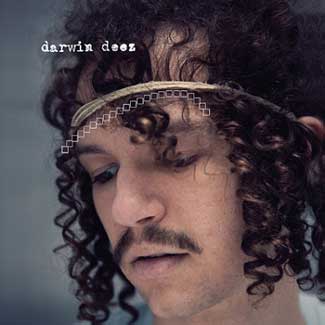
Phoenix is the most obvious reference for Darwin Deez‘s crisp, clean, and commercial tunefulness, with occasional traces of El Guincho — and Beck’s hipster clowning, which makes sense, as Deez made an unofficial 2009 video for Cornelius’s 2001 song “Fly.” (I’d hazard a guess that both Phoenix and Deez are influenced by the light beauty of Lô Borges.) My favorite aspect of lead member Darwin Smith’s songwriting and recording is the melodicism of his guitar sound — counter-melodic grace notes whirligig through the air on songs like “Deep Sea Divers,” “The City,” “Up in the Clouds,” and “Bed Space.” His lyrics and look are way too precious for my taste, but I might succumb with the repeated listens the better songs here attract. Guitar pop alert: In addition to some Deez clips, after the jump you’ll also find Damon Packard‘s HILARIOUS video for Buva’s “Hide Away,” with absolutely unparalleled animal control puppetry!

Darwin Deez, “Up in the Clouds,” from Darwin Deez:

Buva, “Hide Away,” directed by Damon Packard:

Darwin Deez, “Bed Space (Paramore-Style Music Video),” from Darwin Deez:

Hot sexy events: February 9-15

1

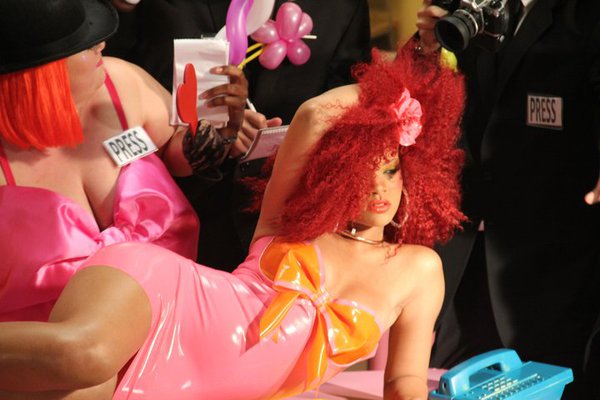
So Rihanna made an S&M video. No really, it’s called “S&M.” And yes, it does feature her walking Perez Hilton – not the sexiest choice – on a leash, while wearing a latex dress and a killer day-at-the-races hat-thing, plus her singing while hanging from the ceiling, men in restraints and gags, and creative use of duct tape. Yep, yet another celebrity discovers BDSM. While the video itself is not thrilling and not all that arousing (for my money, Rihanna’s made hotter), the girl’s got a way with outfits – she has a penchant for performing in latex, and sports a pretty incredible hood and stockings latex ‘fit in the new video, which already has 9.3 million views on YouTube, fyi. Perhaps she could be convinced to share the wealth at one of SF’s two kinky costume swaps this Sun/13 — at Kinky Salon and the SF Citadel respectively. Even if RiRi’s not in attendance, the event should be a good opportunity to re-up on some gear to wear to the next wild-and-wacky costumed sex party. Or nearly any of this weeks’ sex events, for that matter…


Bawdy Storytelling: “Slut or Whore?”

Four years of Bawdy Storytelling already? And it doesn’t look a day over “once upon a time”! At any rate, four years of exhibitionist show-and-tell deserves a little contemplation, so this month’s theme makes perfect sense. Sexologist Carol Queen and fowl-about-town Chicken John will be sharing scenes from their crazy line-toeing lives – maybe we can all sit back and think on what it means to get paid for it, whatever our career may be.

Weds/9 8 p.m., $10

The Blue Macaw

2656 Mission, SF

www.bawdystorytelling.com


Lyon-Martin Beer Bust

You’ve heard by now, no doubt, about how trans and woman-friendly Lyon-Martin Health Services is being threatened by these toughie economic times. Things are looking good for the clinic though, if one is to judge by the magnum-sized avalanche of fundraising events that have come down the chute from organizations and businesses all over the city. You can find a list of them here, by the way. And here’s a fabulous option: the Eagle will be busting beers out all afternoon in honor of safe, respectful, and effective reproductive health care – go drain a bottle, donate some cash to the cause, and buy some raffle tickets while you’re at it – your community will thank you.

Sat/12 3-6 p.m., free

The Eagle Tavern

398 12th St., SF

(415) 626-0880

www.lyon-martin.org


Valentino’s Casablanca

Here’s looking at you kid – you and your valentine(s, not trying to be limiting here) are welcome to get fuzzy at Stefanos invocation of Bogart’s bar. Sip on noir-style cocktails and look sultry while you check out violinists and sky-suspended roped beauties. Plus, there’s that big old dungeon to frolic in. Trust, this could be the beginning of a beautiful friendship(s, again, not tryin’ to hold you back here).

Sat/12 8-10 p.m., $30 singles, $60 couples, $90 trios

SF Citadel

1277 Mission, SF

(415) 626-2746

www.brownpapertickets.com


Kinky Salon Costume Swap

It can get rough attending themed swingers’ parties week in and week out – there’s only so many times you can wear those pink cat ears before their frisky fun seems a little worn out. Luckily, Kinky Salon’s got your back – show up at this naked person party (when you’re changing outfits people, game faces please) with an armload of the fetish funwear you’ve grown luke-warm on, and pick up another armload of your kinky peers’ cast-offs. Remember to clean everything before you bring it down.

Sun/13 4-6 p.m., $10 with costumes to swap, $20 without

Mission Control 

www.missioncontrolsf.org


Swap it Out!

Just like the one above, only the Citadel’s swap is a true naked lady party – only women and the female-identifying are allowed at this trade. Bring your threads (street clothes welcome at this swap) – the ones that no one picks up will be shipped off to charity at the end of the three hours. 

Sun/13 2-5 p.m., free

SF Citadel

1277 Mission, SF

(415) 626-2746

www.sfcitadel.org


Pop-Up Dildo Shop and Icecream Social

Now this will be all kinds of fun: an event at Fifty 24’s pop-up store with a little something for everyone. To whit, raunchy comedy by Will Franken, free organic icecream from Three Twins, a class on how to choose the perfect sex toy with Carol Queen, giveaways from Good Vibes, even free PBR! My goodness, and hot ’60s pop act Female Trouble to soundtrack the whole thing? Can you wait til Sunday, even? 

Sun/13 3-5 p.m., free

Fifty 24 SF Gallery

252 Fillmore, SF

Facebook: Good Vibrations’ Pop-Up Dildo Shop and Ice Cream Social


Club Neon Underwear Party

Now let’s not get ahead of ourselves here, folks. This is an underwear party – which does not mean that you’re guaranteed nookie (when are you, really), but the talent will be much easier to scope than in your typical nightclub scene. That stud over there seem awfully full in the boxer brief? Sweaty sweetie by the bathrooms shaking that demi-bra with the skills to pay the bills? Play your cards right and you may have found your valentine. 

Mon/14 9 p.m.-2 a.m., $5, free before 11 p.m. with no pants

The Knockout 

3223 Mission, SF

(415) 550-6994

Facebook: Club Neon Underwear Party


The Performant: Homing instinct

0

Performance thrives on the Living Room Circuit

What are the barest fundamentals of theatre once you remove it from “the” theatre? This is one of the questions site-specific performances are always confronted with, and the answer is not immediately clear. Does “theatre” require a script? (Then what is improv?) Does it require actors? (Then what is Spalding Gray?) Does it require a moral? (Then what is Ubu Roi?) Perhaps, like obscenity, it is immediately known when seen, but otherwise elusively indefinable. What does seem to be certain, particularly in light of the latest wave of productions set in non-traditional venues, is that performing in an actual theatre space is definitely not a requirement for creating an actual theatre piece.

Probably the best example of space self-sufficiency is the current upswing in salon-style performances. From participatory readings to full-blown plays performed for invited attendees, the trend has become so pervasive that Berkeley-based performance artist Philip Huang even coined a name for it: Home Theater, naturally. In May 2010, Huang launched the “Home Theater Festival”, with events on both sides of the bridge. This year, beginning March 3, the festival will include performances from all around the world, staged in the homes of the artists performing in it.

One participant in last year’s festival, performance-poet Baruch Porras-Hernandez, had such a positive experience he’s signed up for another slot this year on March 18, even though he doesn’t think he’ll be able to use the space he currently lives in on the grounds that it is too small. “It is one of the things I am most proud of, out of all my 2010 projects,” he tells me via email, “[I] have not seen so much joy in an audience.”

 Other pioneers of the living-room performance circuit include No Nude Men, who have been hosting theatre salons since 2009, though their interpretation of salon is more traditionally-slanted towards play-reading and subsequent discourse. In 2008, Boxcar Theatre staged Edward Albee’s “The American Dream” in four different living rooms across the Bay Area, and EmSpace Dance premiered their “Keyhole Dances” in a Victorian flat. And every couple of months in the upper Haight, The Living Room Reading Series brings together a diverse crowd of writers and readers together for an evening of wordsmithery on display.

Seduced by the potential of living rooms used for living art, two weekends ago I also hosted a performance salon in my home. And though I feel I must refrain from gushing about the specifics in this column (fabulous as they were!) I can say I highly recommend the experience on either side of the “stage.” Not only was a palpable intimacy created by just being packed in a smaller space, but more importantly by being in a *living* space, which quite literally made the event seem more alive. Though the atmosphere was casual, it was charged with an excitement I rarely, if ever, feel seated in the tidy rows of a conventional “theatre.”

Best of all, from my perspective, at least four attendees left vowing to host salons of their own, and one had attended a similar event in the Berkeley Hills the night before. This makes me hopeful to think that we’re standing at the brink of a bona-fide movement, not just a momentary fad.

Flush with tips

0

culture@sfbg.com

CULTURE I floated drunkenly into the second-story bathroom at 1015 Folsom. It’s a tiny affair, and my head was just enough obscured to make navigating past the waiting bodies a sure difficulty. I did my business and realized that the man that I had squeezed by, near the sink, wasn’t another patron, but some sort of bathroom attendant. In my inebriated state, it appeared to be an elaborate joke.

He was Latino, wearing a nice suit, and stood in the narrow space between the sink and one of the three urinals, his back against the middle pissoir. He had a mountain of curiosities piled over the sink, and a towel for drying hands draped over one arm.

“Have you worked here long?” I asked.

He shook his head. No. Just a little while.

“Do you keep your tips?”

No. He shook his head again, indicating that there was some sort of split. Reluctantly using the towel, I thanked him and dropped a Washington into the tip jar.

Somewhere, after more French techno, I drifted off to sleep. When I awoke, I wondered, had that really happened? Had I dreamt it? Had I hallucinated?

I sent 1015 Folsom an e-mail inquiring about the attendant. Apparently it was true. Barnaby May, who describes himself as a seven-year veteran of the nightclub scene, took credit for the hookup. He felt that something was lacking from 1015, that it would be better to have a bathroom attendant than not. He put me in contact with Shaun Fausz, who runs a company called Refreshus, which trains and supplies bathroom attendants.

According to Fausz, the service is tailored to appeal to a lackluster economy: it costs the clubs nothing. “Clubs would rather have a free service than have to repaint every few months and replace a trashed sink,” Fausz says. Which makes good sense in a city where one of the dominant aesthetics of the nightlife is a sort of high-class posturing that can quickly be ruined by a Magic Marker. Other clubs have resorted to taunting taggers. Look how fucked up our bathroom is, the Rickshaw Stop seems to say, what else can you do? Put up another sticker? The Independent has painted its water closets black to nullify vandalism.

Bathroom attendants from Refreshus act as security, whether they’re at a nightclub, like 1015, or at a strip club, like the Century Club, where one of Refeshus’ longest standing employees, Gary Lawton, has worked for nine months. Lawton says it’s “a good public service,” although he never imagined performing it. Positioned in the bathroom, he’s able to monitor illicit behavior. “As you hear the snorting, you know what’s going on and you just let them know that they have to take it outside,” he says. “Or they’ll approach me and ask me if its cool, and I’ll just inform them that it’s zero tolerance, as well as alcohol, because there’s no drinking with full nudity.”

This was news to me. (My Catholic upbringing and feminist programming at university makes it impossible to attend a “gentleman’s club.”) If a club includes full nudity, and not just topless dancing, alcohol is verboten. “Our beloved senator is responsible for that, Dianne Feinstein.” says Lawton. “It doesn’t make any sense — I mean that’s what security is for. If you see someone being belligerent, you just tell them to go get some fresh air or something.”

Lawton, who looks like he could be a bouncer, doesn’t necessarily tell people he’s a bathroom attendant as much as “a member of security, who’s stationed in the bathroom.” But no embarrassment shows when he discusses the details. He loves his work, where he gets to act as liaison, recommending girls to patrons and occasionally getting a peek himself. He gets to meet people from all over, and show them a piece of the world that he never glimpsed before being at the Century. “It’s something I can’t explain,” he says. “You know you’re stuck in the bathroom, and then you see them doing something like ‘School Girl Night.’ It’s wild. Like nothing I’ve ever seen before. It’s just amazing every time I get out there. They have several girls who actually lift their legs up and climb all the way to the ceiling. It’s like being at the circus, but they’re stripping.”

It’s an experience that, to put it simply, Lawton is generally priced out of, a world where “private dances” can cost upwards of $100. In terms of straightforward class, Lawton has no shortage — he’s a polite man who chooses his words with the precision of someone who makes a living speaking to people — but if we’re talking economics, he’s low on the ladder. Once or twice before meeting me at the Barbary Coast coffee shop off Market Street, Lawton had to drop appointments at the last minute, his housing situation in tumult. Truth is he’s on General Assistance, in the shelter system, and shared tips from a few nights work a week aren’t enough to get over.

The income for a bathroom attendant, the flow of tips, breaks down across class lines as well as cultural ones. In Lawton’s experience, middle- to upper-class white men tip well. With African American or Indian men, he doesn’t count on tips. In some ways, bathroom attendants perform an obsolete service that only older generations know how to handle. (Think of the bathroom attendants at Bimbo’s, and that club’s retro style.)

Fausz has his own observations: “European people don’t tip. They don’t have tipping over in Europe. Women don’t tip as often — they like to let the guys pay for everything when they go out.” To my knowledge, Refreshus doesn’t have female attendants.

While Lawton can’t enforce any specific prices, he sometimes has to step in, politely explaining that the service isn’t complimentary. “Everyone under 32, they’re oblivious,” he says. “They come in and see the candy and go, ‘Oh, it’s free.’ And you have to remind them that, no, this is a service. But you don’t force any prices. Like I’ll have a jar with a $5 bill and I’ll just let them use their own discretion, just remind them that the colognes are usually this amount because it’s expensive and I have to pay for all that. You just make them feel comfortable and let them know that even though it’s complimentary, this is how I make a living. I’m responsible for all this. Because they think the club provides the service.”

A lot of this has to do with exposure. While a number of clubs — Vessel, Harlot, Trigger — reportedly have similar services, bathroom attendants aren’t common. Lawton had never encountered one before landing his job, just seen them on TV, and he describes the position as obsolete. “Each generation wants their own type of representation,” he says. “So naturally anything they think of as obsolete just doesn’t apply to them.” At the same time, Lawton acknowledges that a genuine amount of surprise plays in his favor, and patrons admire that the service is still on offer.

Whether bathroom attendant work at the nightclubs provides enough income is unclear. In a place where people pack singles, like the strip clubs, the tips are expected to flow more freely. That’s fine with Lawton, who doesn’t like the more amphetamine-infused nightclub culture as much, having had close family members ruin their life over addiction.

Fausz has seen turnover, most often when attendants steal or are headhunted by clubs. Some just aren’t a good fit ,or can’t work in the environment, or can’t hold the right amount of conversation. (The attendant I met at the beginning of this piece no longer works for Fausz.) But there are people willing to work for Refreshus wherever the opportunity arises. On a recent night I ran into Russ, a lean fellow in a sharp jacket stationed in the more luxurious main bathroom at 1015 Folsom. He described the job as “a good way to supplement my income,” adding “I’m a personal trainer.”

Fausz wants to fit bathroom attendants into more of the city’s nightclubs, even if an event tends to draw a crowd for whom a bathroom attendant is an obscure novelty. He puts it simply: “I’m kind of training the next generation of people to tip.”

Pizza Nostra

0

paulr@sfbg.com

DINE Nice — I speak of the French city, not the human quality, of which I must be one of life’s least accomplished practitioners — isn’t quite Italian, but it isn’t quite not, either. Like Alsace in the north — another locus of French pizza — it has been the subject of international contention for centuries. Maybe pizza helps settle nerves frayed by all this struggle, but whether it does or not, pizza served with a distinctly French flair (and often a pitcher of local rosé) is what you’ll find at the many outdoor cafes in the heart of Nice, just a few blocks from the beaches of the Cote d’Azur.

It’s what you’ll find, too, at Pizza Nostra, our own little slice of Nice — complete with outdoor tables! — at the north foot of Potrero Hill. The neighborhood will never be mistaken for the Cote d’Azur, and of course the weather here is considerably fouler, but there is something sublime about pizza — really a whole Italian menu, with many interesting small courses, salads, soups, and starters — served with Gallic style.

The restaurant opened some years ago, as Couleur Cafe, in a small shopping center with a parking lot and buildings of a shed-like, provisional quality, like a PX on Guam. It then became Pizza Nostra, changing hands last year from Jocelyn Bulow to Winona Matsuda. She hasn’t changed much, and maybe that’s because there isn’t much in need of change. Despite the faux-suburban setting, the interior has wonderful candlelit atmospherics under a high ceiling that melts into shadow. The service is impeccable. And the food travels well beyond the country of pizza; you could do quite nicely here without pizza at all. But the pizzas are lovely, and if you were stuck with just that, you’d be happy too.

But I do question the wisdom of bringing basket after basket of complimentary focaccia to people who are in all likelihood waiting for pizza. White flour in our diet is like atmospheric radiation left over from those 1950s tests in the South Pacific: insidious, omnipresent, unnoticed. I think this every time I go by Tartine Bakery and see people queuing like Soviet-era Muscovites. As Michael Pollan noted in his polemic In Defense of Food, white flour is so devoid of nutrition that even bugs don’t want it.

Having said that, I note that Pizza Nostra’s focaccia is addictive, with a pillow-like softness and bewitching olive-oil breath. If you can restrain yourself from gobbling it down straight, you will find it’s useful for dunking and sopping applications. We found its spear shape ideal for sticking into a bowl of mushroom-eggplant soup ($6) that was possibly the most gratifying use of eggplant I’ve ever come across. Its subtle, bitter bite was like a sheen around the earthy weight of the fungi.

The focaccia was also useful in wiping up the savory oil left on the plate after we’d demolished the halved brussels sprouts ($5), pan-roasted with fat chunks of pancetta. I would have let the sprouts cook through and caramelize a little more, but they were tender and flavorful nonetheless.

Sicilian-style tuna salad ($12) seemed like a close relative of salade niçoise, except without anchovies. But there was a wealth of halved pear tomatoes, pitted nicoise olives, and cannellini beans nested in a jumble of arugula and frisée, with the tuna arranged in a berm that partly enclosed the greens.

The pizzas are thin-crust, made (according to the menu) in the style of Recco, a town in the northern Italian region of Liguria, not far from Nice. The array of toppings is mostly conventional, although the kitchen does throw together various specials, including a pie ($16) topped with hot Italian sausage, red and yellow bell peppers, mushrooms, a red-onion confit, and broccoli florets — all of which runs against the basic article of American faith that more is better. Sometimes more isn’t better. Broccoli doesn’t translate well to pizza, and we found the red-onion jam to be jarringly sweet.

But — on the subject of sweets — the olive-oil cake ($6), a cupcake-like disk, was dense and moist. It could have stood without assistance from the large pat of limoncello gelato on the side, although the gelato was a nice touch.

PIZZA NOSTRA

Dinner: nightly, 5:30–10 p.m.

Lunch: Mon.–Fri., 11:30 a.m.–2:30 p.m.

Brunch: Sat.–Sun., noon–3 p.m.

300 De Haro, SF

(415) 558-9493

www.pizzanostrasf.com

Beer and wine

AE/DC/MC/V

Not too noisy

Wheelchair acccesible


Rise up and reflect

0

arts@sfbg.com

FILM A 10-part anthology film marking the 100th anniversary of the Mexican Revolution, Revolución derives most of its resonance from bits of Mexico’s landscape and cultural identity rather than head-on treatments of the revolution and its ideals.

However, this should only be read as a shortcoming if one approaches the film anticipating overt political or nationalist engagement. Instead, as might be expected from independent-minded, festival-focused directors such as Fernando Eimbcke (2008’s Lake Tahoe) and Carlos Reygadas (2007’s Silent Light), these 10 short films by Mexico’s most recognized directors and actors (Gael García Bernal and Diego Luna coproduced the entire project and directed segments) shape up in unexpected ways.

Taken as a whole, Revolución presents an ordinary, dignified, beautiful Mexico (in contrast to its increasingly violent image, courtesy of sensationalized news reports). Apropos to the diversity of the nation is the diversity of cinematic styles employed.

Patricia Riggen’s Beautiful and Beloved is a heartfelt and comedic story of familial duty leading to a small revelation. When a second-generation immigrant has to sneak the corpse of her father across the border to fulfill his wishes of being buried in Mexico, she is initially resentful. But something in her changes amid the massive funeral procession when she engages with her dad’s garrulous old pal. Beautiful offers one of the more conventional narratives in the film; it also includes the most direct references to the revolution and outlines an easily discernible conflict. Rodrigo García’s 7th and Alvarado, on the other hand, is a dreamlike juxtaposition of ordinary pedestrians and traditional horseback soldiers on the streets of a Hispanic area of Los Angeles.

Similarly, the three segments that portray celebrations in order to consider how the revolution is remembered today are all poignant yet quite distinctive from each other. Eimbcke’s graceful The Welcome Ceremony opens the film on a quiet, observant note by depicting a taciturn tuba player preparing for a concert that never happens. Reygadas’ This is My Kingdom is a vérité-style depiction of raucous outdoor activities that contrasts middle-class enjoyment with the rituals of the homeless who share the space. Rodrigo Pla’s vision, 30/30, may be Revolución‘s most cynical — it explores the dissonance experienced by Mexican Revolutionary general Pancho Villa’s grandson when he is both superficially honored and callously ignored at a centennial event.

REVOLUCIÓN

Thurs/10–Fri/11, 7:30 p.m., $6–$8

Yerba Buena Center for the Arts

701 Mission, SF

(415) 978-2787
www.ybca.org

Delicious love

0

V-DAY What if this year Valentine’s paired romance with a visit to one of SF’s best new restaurants? Here are new additions to the local dining scene in 2010 that will please food lovers (and who isn’t, in this city?) while offering a range of price points in love-worthy settings.


FOR AMOROUS EXPERIMENTALISTS: COMMONWEALTH

Anthony Myint and chef Jason Fox are reinventing fine dining. Your edgy foodie date will be impressed. Myint was a mastermind behind Mission Street Food and Mission Chinese Food. Here at Commonwealth with Chef Fox, he delves into deliciously experimental creations with a fresh, unpretentious approach. And shockingly, no dish costs more than $16. Dine on goat cooked in hay while sipping a liquid nitrogen aperitif, finish with porcini thyme churros with huckleberry jam. You may be packed in tight in the spare, modern space, but you’ll both leave glowing from stimulating flavors and presentation.

2224 Mission, SF. (415) 355-1500, www.commonwealthsf.com


FOR OLD WORLD ROMANTICS: COMSTOCK SALOON

The Barbary Coast comes alive in this bar-restaurant gem that feels like a timeless classic … and isn’t too taxing on the wallet. From Victorian wallpaper to restored dark woods, the spirit and history of the space entice. Filling up on rich beef shank and bone marrow potpie or bites like whiskey-cured gravlax on rye toast is happy respite on chilly nights. Pair with a perfect Martinez cocktail or a barkeep’s whimsy (bartender’s creation based on your preferences), and see if your date doesn’t cozy up with you next to that wood-burning stove. Comstock exemplifies the best of what a modern-day saloon with Old World sensibilities can be.

155 Columbus, SF. (415) 617-0071, www.comstocksaloon.com


FOR LOVING LOCAVORES: GATHER

Gather is the best thing to come along in Berkeley in ages, and ideal for your local or locavore-y date. It reads typical Bay Area yet goes further: local, sustainable, organic everything, including spirits, wine, and beer. A rounded room with open kitchen is holistically casual and urban. All the raves you’ve heard about the vegan “charcuterie” are true. Marvel at the artistic, affordable array of five different vegetable presentations on a wood slab, like roasted baby beets with fennel, dill, blood orange, horseradish almond puree, and pistachio. Executive chef Sean Baker and team do meat right, too, whether sausage/pork belly/chile pizza or house-cured ham topped with crescenza cheese. Gather displays an ethos and presentation one can only dream of becoming a standard everywhere.

2200 Oxford, Berk. (510) 809-0400, www.gatherrestaurant.com


FOR BEEF-LOVING BEAUS: THE SYCAMORE

Skip the Valentine’s Day’s hoopla and take your sweetie out for a night that will make you feel like kids again — to the Sycamore, which offers a delicious “famous” roast beef sandwich. A glorified Arby’s staple on grocery store-reminiscent sesame buns with BBQ sauce and mayo, the sandwich salutes the native Bostonian owners’ roots. But the roast beef sandwich isn’t the only item that shines at this humble Mission eatery, which doubles as a cozy beer and wine bar. Pork belly-stuffed donut holes in Maker’s Mark bourbon glaze are pretty near orgasmic. A slab of pan-fried Provolone cheese is enlivened by chimichurri sauce and roasted garlic bulb. I applaud its all-day hours and prices under $9.

2140 Mission, SF. (415) 252 7704, www.thesycamoresf.com


FOR PURIST PARAMOURS: HEIRLOOM CAFÉ

The menu (less than 10 starters and entrees) is so simple I almost got bored reading it. But each dish served in this Victorian-yet-modern dining room was so well executed that my skepticism vanished. More than a little Chez Panisse in its ethos, Heirloom will delight that special someone with a purist take on food, with ultra fresh, pristine ingredients, impeccably prepared. Savor a mountain of heirloom tomatoes piled over toasted bread with pickled fennel, cucumbers, and feta, or a flaky bacon onion tart loaded with caramelized onions. Heirloom’s added strength is owner Matt Straus’ thoughtfully chosen wine lists covering wines from Lebanon to Spain.

2500 Folsom, SF. (415) 821-2500, www.heirloom-sf.com


FOR SENTIMENTAL GOURMANDS: SONS & DAUGHTERS

Like Commonwealth, Sons and Daughters is another opening where young, visionary chefs create fine molecular fare at reasonable prices ($48 for four-course prix fixe, à la carte from $9-$24). But this space particularly lends itself to romance: intimate, black and white, with shimmering chandeliers and youthful, European edge. Dishes are inventive and ambitious, like the highly acclaimed eucalyptus herb salad of delicate curds and whey over quinoa, or the seared foie gras accompanied by a glass of tart yogurt and Concord grape granita. It’s a place to hold hands and gaze into each other’s eyes while never neglecting your taste buds.

708 Bush St., SF. (415) 391-8311, www.sonsanddaughterssf.com


FOR NEW YORKER HEARTS: UNA PIZZA NAPOLETANA

Yes, this one’s casual, and you’ll have to wait outside in line. But if your sweetie has New York roots, she will thank you. Pizzaiolo Anthony Mangieri closed his beloved New York City institution, Una Pizza, and moved west. As in NYC, Una Pizza is a one-man show with Mangieri single-handedly crafting each pie (which partly explains the no take-out policy and long waits; popularity accounts for the rest). All this may make it hard to frequent Una Pizza, but if you make the commitment, you will be rewarded with doughy heaven. With only five vegetarian pies, I dream of the Filetti: cherry tomatoes soaking in buffalo mozzarella, accented by garlic, extra-virgin olive oil, basil, and sea salt. On the plus side: all that waiting in line for a hand-made pie will give you and your sweetie pie plenty of time to talk.

210 11th St., SF. (415) 861-3444, www.unapizza.com/sf


FOR AMORE ITALIANO: BARBACCO

True, Barbacco can get obnoxiously noisy and crowded. But it’s a good alternative to its parent restaurant, Perbacco, offering the same outstanding quality at a great value ($3-$14 per dish). For a bustling Italian enoteca-style date, this is the place. Heartwarming food and a thoughtful wine list make it an ideal urban trattoria and a comfortably affordable night out. Order a glass of Lambrusco, the fried brussels sprouts, and raisin and pine nut-accented pork meatballs in a tomato sugo, then marvel at the minimalist bill.

220 California, SF. (415) 955-1919, www.barbaccosf.com


FOR YOUR SWEETIE PIE: BAKER AND BANKER

With dark brown walls and booths, the space exudes a warm elegance. Husband and wife team Jeff Banker and Lori Baker get it right from start to finish with his dishes (vadouvan curry cauliflower soup, brioche-stuffed quail in a bourbon-maple glaze) and her memorable desserts (XXX triple dark chocolate layer cake, pumpkin cobbler with candied pumpkin seed ice cream). Extra points if you buy him a box of pastries to go for the next morning from Baker and Banker bakery next door.

1701 Octavia, SF. (415) 351-2500, www.bakerandbanker.com

Deconstructing Cinderella, deconstructing La Llorona

1

They say you shouldn’t judge a person until you’ve walked a mile in their shoes. Ana Teresa Fernandez, the featured artist in Galería de la Raza’s upcoming video exhibition “La Llarona Unfabled,” (opening Sat/12) has obliged in regards to that feminist foil, Cinderella. For her video installation, Fernandez spent hours standing wearing a melting pair of “glass slippers” made of ice on a dirty West Oakland street. The experience, she feels, left her more than qualified to criticize the social constructs embodied by fairy tale’s scullery maid-cum-princess.

Originally conceived by Galería’s executive director Carolina Ponce de León, “La Llorona Unfabled” will include work from four other artists: Monica Enriquez-Enriquez, Geraldine Lozano, Rosario Sotelo, and Tanya Vlach. The five will respond to issues of gender, class, identity, and migration in an effort to re-craft cultural narratives into feminist and Latina perspectives.

Which is not to say the exhibition won’t speak to all women. “It isn’t about brown, white, rich, poor,” Fernandez affirms. “It is about the self, learning to find your true voice and talents and making that voice the thing which sustains you in life.”

In her art, Fernandez uses lessons from her own life to challenge feminine mythologies — from the Mexican folktale of La Llorona, the weeping woman, to the story of Cinderella –  to “show little girls that they can be the protagonists of their own stories,” she says. Born in Tampico, Mexico, Fernandez was recruited by San Francisco Art Institute with a full scholarship – an opportunity that she met with amazement, and which enabled her to do the art she loves for a living. But Fernandez didn’t have a Prince Charming to make her dreams come true, or a fairy godmother for that matter. For that, she had to rely on talent, hard work and a passion for subverting the macho norms of classic art.

Growing up, the artist experienced very clear ideas about where women belonged. Her mother, a runner, was chastised for wearing short-shorts and sneaking out of the house to race with men. Ana, also an athlete, broke four national swimming records by the time she was eight. “They had to train me with the boys,” she recalls. Now 29, the artist has traveled the world but still feels that by supporting herself through painting, she is swimming against the current.  

Like many children in Mexico, Fernandez grew up hearing the story of La Llorona, the colonial-era fable of a beautiful peasant girl who is abandoned by her noble (read: white) husband.  She drowns her two children, and then herself in the river and is condemned to forever wander its banks, wailing for her lost sons. To Fernandez, the story was a clear message that a woman need to rescued by a man or else face a life of desperation. “What’s that game?” she asks, snapping her fingers. “Old Maid. If you’re not chosen, you’re nobody.” 

Even as the child of educated parents from a big city, Fernandez feels she has to fight the story’s notions of class and race, isolation and empowerment. “There is something to be said about changing the incredible enlaid guilt of how you must act or what you must do as a woman where I grew up – which sounds so incredibly old-fashioned.” 

Inspired by the “strong, elegant women” of her childhood, Fernandez’s paintings – the body of her artistic work up til now – balance the sensuality of the female body with the constrictions that work and fashion place upon it. In “Siren’s Shadow,” a woman swims in a cocktail dress and heels, literally dragged down by those conventional symbols of femininity. In the “La Llorona”  show, these same themes are explored through video and performance art, with water taking on additional meaning as a symbol of La Llorona, weeping endlessly into the river.

“Siren’s Shadow” by Ana Teresa Fernandez 

With the added dimension of time that video brings to Fernandez’s work, its dismantling of the ideals of femininity encoded in myth and art is shown more dynamically. As she stands over sewage in her ice shoes cast from the exaggerated stilettos worn by exotic dancers, waiting for her prince to come, Fernandez’s “glass slippers” and the mythology they imply literally melt away. 

Fernandez is reluctant to align herself with the tradition of Chicana painters working in San Francisco. Her paintings are a far cry from the bold, primary colors of Mujeres Muralistas, the Mission’s famous group of female street artists who lit up Balmy Alley. While she says the Mission feels like her “home away from home,” with its pockets of Mexican culture, Fernandez admits that her work relates more to the European masters and is “much more influenced by male painters.”

Which seems a little incongruous, given her subject material, but Fernandez argues that the virtuosic style of her painting is in itself a subversion, given that the role of the virtuoso painter wasn’t always available to women. Many female artists, especially Latina artists, committed “rebellious acts” against virtuosic tradition in order to get noticed, creating Kahlo-like fantasy worlds rather than create art in the patriarchal classical vein. 

By contrast, Fernandez’s figures, richly constructed out of layers of oil on canvas, glow with heat and realism. “Michelangelo and Botticelli and Brunelleschi were all men that fascinated me,” she says. 

In fact, to someone not paying attention, the muscled, sculptural bodies in Fernandez’s work may not seem so different from the sexualized objects they are meant to replace. But “hyper-sensuality is not the same as sexuality – it oozes, rather than blurts out,” she explains. “It’s quieter, it lingers longer. That’s what I try to play with.” 

She hopes to balance the tradition by adding a female voice without compromising the work’s aesthetic qualities. “In painting women have always been interpreted by men.” As in her life, in her art Fernandez chooses not to retreat into the realm assigned to her by men. She would rather beat them at their own game.


“La Llorona Unfabled: Stories to (Re)Tell to Little Girls”

Artist Talk Sat/12, 2-4 p.m., free

Opening Reception Sat/12, 7:30 p.m., free

Through April 16

La Galería de la Raza

2857 24th St., SF

(415) 826-8009

www.galeriadelaraza.org


Two’s a crowd?

0

The Companion Piece is a charmingly inventive new work of devised theater conceived by actor Beth Wilmurt and directed by Mark Jackson for Z Space. It unfolds as a series of arch “meta” vaudevillian routines by a frustrated long-time duo (played with uncommon chemistry and comedic finesse by Wilmurt and Christopher Kuckenbaker).

Companion is less a narrative-driven tale than a clever, frequently hilarious, and gently moving set of variations on certain themes. These include the need for companionship, the nature of artistic creation, and the fragile balance between egos desperate to assert themselves yet just as desperately bound to the support and sympathy of others. Wilmurt’s initial inspiration for the show was a scientific treatise on the nature of human connection, the 2000 bestseller A General Theory of Love, by psychiatrists Thomas Lewis, Fari Amini, and Richard Lannon. It’s appropriate that this world premiere runs to the very cusp of dreaded Valentine’s Day.

As often as not, Companion‘s themes develop through telling contrasts. The central one juxtaposes the two needy, half-bumbling performers — as they set about trying to forge their second-string act — with the deft, supremely self-confident solo headliner (played with a flawless, period-flavored, almost animatronic showbiz intensity by Jake Rodriguez). The headliner lives with a manic force exclusively for the few minutes he’s onstage — in a bizarre and well-honed routine delivered at the outset of the play and again at the end — shutting down into an enervated, shell-shocked state in between. The duo, whose high jinx account for the bulk of what we see, meanwhile remains most alive in the give-and-take of their zany, agonized creative process. That process may be forever incomplete, but it produces one captivating scene after another, often with the simplest of means: a sly sock-and-shoe puppet show inside a giant trunk is just one of many winning moments.

All this takes place on a cavernous, shadow-filled stage (courtesy of scenic designer Nina Ball), largely bare but for a grab bag of props — trampolines, musical instruments, toilet plungers, rubber chickens, and the like — and a large olio drop featuring a magnificent vintage-style portrait of the headliner, “the sensation of the stage.” There are also a set of doors in the far wall at the back of the stage, one conspicuously set about 10 feet off the ground, sort of Winchester Mystery House style, with a gold star painted on it. This door, it turns out, is accessible by one of two rolling metal staircases, which both become the inspiration for a gorgeously solemn, oddball waltz between the couple. The deceptively spare environment comes filled with other small surprises, as when Wilmurt’s character swings out from the wing on an industrial crane that slowly glides over the front rows of the audience.

There’s an eerie beauty to this theatrical undress, and the capacious sense of possibility mingling there in the shuffle and tussle of the performers. As they tirelessly ply their shtick and clamber for turf in the enveloping darkness (moodily broken up by Gabe Maxson’s lighting and poignantly underscored by Rodriguez’s evocative sound design), it comes to seem like their environment is no less than the muffling expanse of time and space itself.

In the end, the bracketing of the play’s action with a precise repetition of the headliner’s act does not diminish this impression of infinite negotiation. The headliner himself boasts, paradoxically, “I don’t open no shows, I don’t close no shows.” The lack of a strong narrative works to advantage here, as a way of further demystifying the theatrical conceit itself. As director Jackson suggests in his program note, the arc of a storyline is far too neat a device to contain all the indeterminacy and subtleties of this slipstream existence. The show goes on, as the headliner quips, “one night only — every night,” even if, as my companion that night suggested, we all ultimately “open” and “close” alone. 

THE COMPANION PIECE

Through Feb. 13; $20–$40

Z Space

450 Florida, SF

(800) 838-3006

www.zspace.org


Editor’s Notes

1

You want a really bleak picture of the politics of California today? Check out the recent comments of Dan Schnur, GOP political consultant and director of the Jesse Unrush Institute for Politics at the University of Southern California.

In an interview with the Los Angeles Times, Schnur discussed the disconnect between image and reality in this state: "Cut $1 billion out of Medi-Cal and most voters won’t notice," he said. "Take away some cell phones and make legislators sit on a picnic bench, and they pay attention."

Yeah, he’s a Republican who worked for the likes of George W. Bush and John McCain, but his point, while politically sick and wrong, is also sadly accurate. How much money will the state save by getting rid of 48,000 cell phones? About $20 million a year. That’s 0.08 percent of the state’s budget shortfall. What did Brown save by replacing a boardroom-style conference table in his office with a glorified picnic table? Probably a few thousand dollars. How much does the state continue to lose every year to the utter waste of corporate tax breaks? How much could we bring in with an oil-severance tax? Well into the multiple billions.

What got all the press? Jerry’s picnic table and cell phone crackdown.

I’m not against either of those moves. In tough times, it’s important to set the standards at the top, and living cheap and avoiding the imperial trappings of public office is a great way to instill voter confidence. And anything Brown can do to convince the voters that he’s serious about cutting waste — and that they can trust him enough with their money that they should vote yes on his tax plan — can only be good.

But it all seems so silly and shallow.

The truth is, when you cut Medi-Cal, people die. You can’t prove that any specific cut killed any individual, and most of them are poor anyway and the major media don’t make a big fuss every time a poor person dies. It’s not as sexy as some Caltrans worker having to give up a cell phone.

I think I’m going to throw up now.

Panabay rising

4

MUSIC Last year was a big one for Los Rakas. The Oakland-by-way-of-Panama duo, Raka Rich and Raka Dun, have been hustling their frenetic Panabay stylings since they banded together as high school students in 2005. But on the cusp of their second mixtape, La Tanda Del Bus, the arresting diversity of their influences and musical ideas began to coalesce. The far reaches of the blogosphere and the streets took notice.

Los Rakas’ “Abrazame” — a song reworked from Gyptian’s crossover hit “Hold You” and remixed into sure shot form by Brooklyn producer Uproot Andy — overcrowded year-end lists as the pinnacle summer jam of 2010. In the video, parallel love stories unfold and collapse over the backdrop of San Francisco’s Carnaval Festival. Shuffling polyrhythms swarm underneath simple Casio chords as Raka Rich moves effortlessly from trading syrupy verses with guest songstress Faviola to bursts of rapid-fire lyricism.

Meanwhile, the video for Los Rakas’ “Soy Raka” — a youthful ode to turfin’ in the streets of Oakland — has surpassed 250,000 hits on YouTube. What other rap groups spit a chorus like “Tengo mi pistola y diente de oro” on the same playlist as a sweltering love ballad? The video not only helped spawn the syncopated dance movement in Panama, but also inspired kids to prefix their names with Raka — “you know, like Raka Miguel” — Dun tells me excitedly in a thick Spanish accent. “In Panama, ‘That’s raka’ or ‘We’re from raka’ means ‘that’s ghetto’ or ‘we’re from the ghetto.’ But it’s an empowering term. It means that we’re proud of who we are and where we come from.”

This sort of community-centered spirit has inspired Los Rakas since the beginning of its rhapsodic ventures. In 2006, Rich and Dun released their first Panabay Twist mixtape with the help and studio support of local outreach organizations Youth Uprising, BUMP (Bay Unity Music Project), and Youth Movement Records. Its single, “Mi Barrio,” in many ways a precursor to the anthemic “Soy Raka,” is driven by the standard hip-hop commandment to represent where you’re from. But the song also honors a more difficult and subtle hip-hop ideal: one love. Los Rakas might boast about Oakland and Panama stomping grounds, but the duo also calls out for us to be “orgulloso and put your flag in the air.” Which flag, exactly?

“Oakland influenced us,” says Dun, who moved to the Bay when he was 14. “It didn’t just shape our instrumentals and lyrical style, from Zion I to E-40—Oakland has the history of the Black Panthers and politicism, so we naturally put that content in our music too.”

Los Rakas sound a bit different from, say, any other Bay Area rapper, because Rich and Dun’s music is informed by the infectious rhythms and punctuated Spanish flows heard in Panama’s pop music of the day, plena. A sprawling folk genre that originated in the Caribbean and related regions of Central America, plena has recently been digitized for a new generation, becoming a Panamanian spin on reggaeton.

But the influences don’t stop there. “In Panama we listen to all types of music: reggae, dancehall, salsa, meringue,” says Dun. “When I met Rico, he was listening to Tupac and we traded music. Hip-hop caught my attention fast. I found out about Tribe [Called Quest], Lil Kim, Nas. I researched where it came from, and how it evolved, and just fell in love with it.” Although the connections aren’t obvious at first, hip-hop and plena have a lot in common. They’re both hybrid genres, forms of pastiche that draw from a wide range of sonic traditions and background, computerizing folk and funk for the bass-hungry children of the always-evolving soundsystem.

Unsurprisingly, Los Rakas garnered attention from an emerging scene of enthusiasts, producers, DJs, writers, and musicians concerned with the musical diaspora of the Afro-Caribbean, or more acutely, what British sociologist Paul Gilroy has called the Black Atlantic. The term denotes the webbed network of the African diaspora culture that is not so much organized by a clear conception of roots but by a rhizomatic set of exchanges and networks: migrations, ships, trade, Creole, European miscegenation, flights, origin myths, stories of repatriation, and now the most diffusive cross-cultural exchange device of them all, the Internet.

Keep in mind that 2010 was the year that Diplo and Switch’s over-the-top dancehall project, Major Lazer, took clubs by storm, and even Rihanna finally started reppin’ roots, rhythm, and wires with “Rude Boy” and multicolored neon booty shorts. Even if MIA’s third full-length was lackluster, something of her world-town swagger has penetrated our times, while her “Bird Flu” call to arms has circulated through our quickly multiplying musical economies. Check the formula: add world genre to rap and uptempo dancehall/Bmore/house/techno; reconfigure percussion patterns in a drum machine; loop melodic fragments of a regional instrument; add inner-city noise, gunshots, chants, or field recordings of aggressive animal life; manipulate with a swill of static, fuzz, and a heavy dose of low end. Bump loud. Call it third world democracy.

Los Rakas, without even asking for it, has popped up in countless mixes and blog posts loosely labeled under the category of tropical bass. Rich and Dun contributed the steady banger “Afro Latino” to the recent Banana Clipz EP, produced by tropical harbingers Chief Boima and Ora 11 of Bersa Discos, and released on their Ghetto Bassquake blog and upstart. Speaking of Bersa, it hosts the crazy monthly Tormenta Tropical, which spotlights new sounds of electro-cumbia and related frontiers arising from the Black Atlantic. “That movement, I’m not sure what to call it, embraced us,” says Dun. It only makes sense that Los Rakas — navigating Oakland and Panama, turfin’ and plena, hiphop and digital polyrhythms, the new and the old — has returned the favor.

AUDYSSEY PRESENTS THE NEIGHBORHOOD: LOS RAKAS

with Roach Gigz

Wed/2, 9 p.m.–-2 a.m.; free

111 Minna Gallery

111 Minna, SF

(415) 974-1719

www.111minnagallery.com

alt.sex.column: Get fit

1

Dear Readers:

The subject of size-discordant couples is a perennial favorite and will only get more so until such time as we Americans fulfill our apparent destiny and become a nation of like-size giants in height and girth. Until then, though, making a couple’s ends meet will continue to be an issue and a puzzlement. Pillows, ramps, and wedges sold expensively as sex pillows and less appealingly but more affordably at medical-device emporia will do but many couples would rather eschew such artifice and stick with the basics. First, short woman, tall man.

The woman can kneel on the bed, crouching forward a bit and stabilizing herself with her arms, ass toward the edge. Unless the guy is the Jolly Green Giant, he should be able to steer into her with just a little doing. She will be more comfortably positioned on the bed than if bending over while standing up, too.

Now, heavy woman, thin man. For this, I took the discussion to one of the invisible rooms full of invisible friends I frequent out on the interwebs. Here is what my favorite invisifriend said, in all her surprising, not to say shocking, candor. Say thank you!

I am very fat. My husband and I are both about the same height, and he’s slender. We both have joint problems. We also have awesome sex. Here are some things that work for us.

The best all-around position is what we call scissors. I lie on my left side, knees slightly bent, and raise my right leg. He kneels and enters me, and we roll over, me pushing off with my left leg so that he winds up lying on his side and I have my right leg over him. My left leg is between his two legs. I am almost, but not quite, lying on my back, and we’re at an angle to each other. This is great because it’s completely comfortable, he can reach to touch me, and we both have good access to me for hands or vibrator.

If you have the right furniture, cowgirl can be very easy. This position blows his mind. We line up a rectangular ottoman perpendicular to the sofa, and he lies back — propped up on big pillows — with his butt on the ottoman. He’s lying near one end of the sofa so that I can use the arm to help take my weight. All I do is straddle the ottoman and him (they’re almost the same width) and lower myself. Once down, I can rest my arms on the sofa, lean forward, or sit upright. He has a fantastic view and it’s perfect for kissing. Only drawback for me is that I can’t really get to my clit.

Three or four pillows also helps for doggy-style, so I don’t have to rest my entire weight on my arms. The sofa and ottoman are also handy for this. I put one knee on the sofa, one on the ottoman, and he stands behind me while I rest against the sofa arm, piled with cushions.

So get on that, readers, won’t you?  

Love, Andrea

Got a question? Email Andrea at andrea@mail.altsexcolumn.com


Gorgeous George

0

TRASH She’s an unstoppable force, that Sherri Frankenstein. As embodied by Linda Martinez in an anything-but-soggy serial by George Kuchar, Sherri is endlessly buffeted by life — shoved, mutilated, or worse by rapacious characters ever-eager to administer injections. She’s prone to oracular gestures so lengthy and dizzyingly impulse-driven that their conclusions directly contradict the reality around her. But whether she’s carousing at a go-go club or distractedly presiding over a Dracula’s castle-turned-home for wayward women, Sherri’s is a spirit that will not be snuffed.

Sherri’s odyssey begins in 2003’s Kiss of Frankenstein, a screen adaptation of a 2003 play’s torrid and torrential vomitous verbiage. Shot in three hours for $500 and post-dubbed in a bathroom, Kiss is an orgy of all that Kuchar in dramatic mode has to offer — a DayGlo video update of the old dark house scenario of his and Curt McDowell’s classic Thundercrack! (1975) with live action-meets-animation interiors that outdo Dario Argento’s Suspiria (1977) in terms of lurid décor. Martinez’s sheer organza negligee is only the raciest fabric in a dance of the 700 veils to rival Kenneth Anger’s Puce Moment (1949). The dreamy-eyed male lead’s hairy chest and right nipple peeks out from a torn pajama top. A maze of maniacal monologues and mythical machinations — listening to Kuchar’s characters rattle off narration, one can’t help but ponder the narcissistic nature of memoir — in the form of a hungry Hungarian “pilgrimage for the palate,” the first chapter in Kuchar’s monstrous equivalent to Wagner’s Ring includes a sudden ax attack rendered in the style of William Castle.

Fresh from an acid facial, Sherri is back and pig-biting mad in 2005’s The Fury of Frau Frankenstein, another of Kuchar’s collaborations with his students at San Francisco Art Institute. Abandoning Kiss‘s monologues for title cards and visual tale-spinning, Fury introduces Sherri’s buxom niece Leticia, whose fate is watched by a Ryan Gosling-like newspaper reporter named Bruce. (In a bit part, young filmmaker Sarah Hagey almost steals the movie while her man is stolen.) Kuchar unleashes a blitz of post-production video effects, placing party scenes within envelopes and sprinkling digital glitter on Sherri’s face. Shot for $100 less than its predecessor, Fury is pure cinematic gluttony on a budget: a stew is stirred with a dismembered hand, a glimmering spider web curtain from the previous movie returns as one character’s cape, and a bat scurries across a floor in a manner that evokes not just the ravenous killer brains of the 1958 British horror flick Fiend Without a Face, but also furry slippers.

Technical difficulties prevented a viewing of the climax of Kuchar’s Frankenstein Cycle, 2008’s Crypt of Frankenstein. But Sherri returns in a sequel to the series, 2010’s Jewel of Jeopardy, whose cast includes an M.D. A little weary and slurry and lost in the length and relentlessness of her monologues, she’s soon helpless — gleefully so — to stop a Dracula who “burns quite easily” as he feasts on the “nubile necks” of her female charges, administering “hellish hickeys.” Here, the prop-mad and pixelated fervor of Kuchar’s meta-montage reaches its apex: digital blood drapes the screen, hairdos morph into spider webs, a character is beaten with his own severed leg, a Santa Claus wall hanging beams green rays from its eyes, Martinez’s flesh is visually rhymed with a Frankenstein mask, and the cast is momentarily lost in a blizzard of animated hearts and stars that would bring a blush to the face of the Lucky Charms leprechaun.

It’ll end in puke, of course, but anyone with a hungry eye should welcome the Roxie’s decision to put three nights of movies by George Kuchar on its menu. Or a hungry heart: the cheerful gastric onslaughts of Kuchar’s Frankenstein cycle are countered by the disarmingly poignant mortal attention to digestion and bodily function in his recent diary films, Vintage Visits, The Nutrient Express, and Dribbles, all from 2010. The time is right to gorge with George. 

BY, FOR, AND ABOUT GEORGE KUCHAR

Fri/28–Sun/30, $6–$10 (Fri/28: The Frankenstein Cycle; Sat/29: It Came From Kuchar plus two Kuchar shorts; Sun/30: new video diaries by George Kuchar)

Roxie Theater

3117 16th St., SF

(415) 863-1087

www.roxie.com

Stage Listings

0

Stage listings are compiled by Guardian staff. Performance times may change; call venues to confirm. Reviewers are Robert Avila, Rita Felciano, and Nicole Gluckstern. Submit items for the listings at listings@sfbg.com. For further information on how to submit items for the listings, see Picks. For complete listings, see www.sfbg.com.

THEATER

ONGOING

Audition – A Play Exit Theater, 156 Eddy; (800) 838-3006, www.brownpapertickets.com. Call for price. Thurs and Sat, 8pm; Sun, 3pm. Through Feb 13. GenerationTheatre presents a comedy of the absurd by Roland David Valayre.

Bone to Pick and Diadem Exit on Taylor, 277 Taylor; (800) 838-3006, www.cuttingball.com. $15-50. Thurs-Sat, 8pm; Sun, 5pm. Through Feb 13. Cutting Ball Theatre presents a pair of plays by Eugenie Chan.

Clue Boxcar Playhouse, 505 Natoma; 776-1747, www.boxcartheatre.org. $15-35. Wed-Fri, 8pm; Sat, 7 and 10pm. Through Feb 19. A play based on a film based on a board game is just the kind of tangled genealogy much goodtime theater is made of these days. So there’s nothing too new about Boxcar’s stage adaptation of the manic 1985 comedy derived from a once popular Parker Bros. diversion. In fact, it’s at least the second stage adaptation of same to be offered in San Francisco. (Impossible Productions remounted its version at the Dark Room just last year.) Nevertheless, led by adapter-director Nick A. Olivero, Boxcar’s production pursues its vision like a mad yen, with a loving fidelity and self-referential glee that are not so much inspired as just plain zealous (although Olivero’s scenic design does reach new heights: a TV-toned board-game set that the audience peers down on from six-feet-high balconies ringing the stage). Performances are dutiful and solid for the most part, with especially nice work from Brian Martin (as the butler) and J. Conrad Frank (as Mrs. Peacock). Although there’s something vaguely and not unpleasantly hypnotic about it all, groups of cult-film line-gleaners may be the best audience for this one. (Avila)

*The Companion Piece Z Space at Theatre Artaud, 450 Florida; (800) 838-3006, www.themarsh.org. Call for price. Thurs 7pm; Fri-Sat, 8pm; Sun, 5pm. Through Feb 13. Z Space presents the world premiere of a new play by Mark Jackson, with Beth Wilmurt and Christopher Kuckenbaker.

*A Hand in Desire Viracocha, 998 Valencia; www.viracochasf.com. $10-20. See website for dates and times. Through 1/29 Even though the card game of choice in Tennesee Willams’ A Streetcar Named Desire is poker, it’s fitting that the five-member cast of EmSpace Dance’s adaptation A Hand in Desire should play at hearts instead. After all, as Mitch (Christopher White) reminds us, “poker shouldn’t be played in a house with women” And besides, hearts are very much the core of each character: the heart of Blanche, a flighty bird, the heart of Stella, a string of colored lights, the heart of the doomed Allen Grey (Kegan Marling), an open wound. As the cast plays onstage with a custom-designed deck, each trump card is turned over to a laconic narrator/conductor (Heather Robinson) who names the scene they are to play next. Each evening promises a different sequence of scenes, some of which stick more closely to the original script than others. However, the ensemble is at it’s best when it lets go of text altogether, such as the scene “a cleft in the rock of the world I could hide in,” during which Stella (Natalie Greene) and Stanley (Peter Griggs) get it on, and Blanche (Rowena Richie) awkwardly waltzes with Mitch as Alan insinuates himself into their duet. Musicians Joshua Pollock and Chris Broderick tie the whole experiment together with aplomb. (Gluckstern)

Out of Sight The Marsh, 1062 Valencia; (800) 838-3006, www.themarsh.org. $15-35. Thurs and Sat, 8pm; Sun, 3pm. Through Feb 13. The Marsh presents a new solo show by Sara Felder.

Party of 2 – The New Mating Musical Shelton Theater, 533 Sutter; (800) 838-3006, www.partyof2themusical.com. $27-29. Sun, 3pm. Open-ended. A musical about relationships by Shopping! The Musical author Morris Bobrow.

*Pearls Over Shanghai Thrillpeddlers’ Hypnodrome, 575 Tenth St; 1-800-838-3006, www.brownpapertickets.com. $30-69. Sat, 8pm. Through April 9. Thrillpeddlers’ acclaimed production of the Cockettes musical continues its successful run.

Spalding Gray: Stories Left to Tell Gough Street Playhouse, 1620 Gough; (510) 207-5774, www.custommade.org. $10-25. Thurs-Sat, 8pm. Through Feb 19. Custom Made Theatre presents stories by the late writer and performer.

Treefall New Conservatory Theatre Center, 25 Van Ness; 861-8972, www.nctsf.org. $24-40. Call for dates and times. Through Feb 27. New Conservatory Theatre Center presents a tale of erotic attraction by Henry Murray.

BAY AREA

The Agony and the Ecstasy of Steve Jobs Berkeley Rep, Thrust Stage, 2025 Addison, Berk; (510) 647-2949, www.berkeleyrep.org. $14.50-73. Call for dates and times. Through Feb 27. Storyteller Mike Daisey spins a yarn about the Apple head.

East 14th – True Tales of a Reluctant Player The Marsh Berkeley, 2120 Allston Way, Berk; (800) 838-3006, www.themarsh.org. $20-50. Call for times. Through Feb 13. Don Reed’s one-man show continues its extended run.

Heartbreak House Live Oak Theatre, 1301 Shattuck, Berk; (510) 649-0999, www.berkeleyrep.org. $12-15. Fri-Sat, 8pm (also Feb 13, 2pm; Feb, 17, 8pm). Through Feb 19. Actors Ensemble of Berkeley presents the George Bernard Shaw comedy set just before World War I.

The Last Cargo Cult Berkeley Repertory Theatre, Thrust Stage, 2025 Addison, Berk; (510) 647-2949, www.berkeleyrep.org. $14.50-73. Call for dates and times. Through Feb 20. As fans of J. Maarten Troost have learned, life on an island “paradise” is far less idyllic than the imagination yearns to believe. So it’s hardly surprising that Mike Daisey’s monologue The Last Cargo Cult begins with a white-knuckle ride in a prop plane piloted by a man with a milky eye. Daisey’s destination, the Pacific island of Tanna, is the location of one of the world’s last so-called “cargo cults”, and their big celebration “John Frum Day” is approaching. Daisey’s intention to hang out at the festivities smacks a little of entitled voyeurism, but the parallel he manages to draw between the complexities of a religion dedicated to a mythical cargo of “awesome shit”, and our own dedication to the acquisition of same, is a striking one. From our almost blind faith in the value of basically valueless currency, to our even blinder faith that indenturing ourselves by debt will enrich us, the foundations of our own “cargo cult” are revealed smartly by Daisey to be just as precarious as if built at the base of a volcano as in Tanna. Still, I found the most revealing thing about the evening to be the moment when the couple next to me took off with a $100 bill they’d acquired free-of-charge at the door, to which I can’t help but ask them: “Did you get your money’s worth?” (Gluckstern)

No Good Deed Pear Avenue Theatre, 1220 Pear, Mtn View; (650) 254-1148, www.thepear.org. $15-30. Thurs-Fri, 8pm; Sat, 8pm; Sun, 2pm. Pear Avenue Theatre presents a world premiere noir-inflected play by Paul Braverman.

*Of the Earth – The Salt Plays Ashby Stage, 1901 Ashby; (510) 841-6500, www.shotgunplayers.org. $17-30. Thurs-Sat, 8pm; Sun, 5pm. Through Sun/30. If those whom the gods favor die young, it’s probably just as well for Odysseus (Dan Bruno) that Zeus (Rami Margron) happens to be irked at him. That Zeus occasionally manifests as a scary nurse with a penchant for ballroom dance is one of but many mysterious angles Jon Tracy teases out of the standard Odysseus myth. Another involves the instant-messaging potential of paper planes; a third, a blunt addiction metaphor for warmongering. In what must surely be a happy coincidence, the design elements and staging of Of the Earth are curiously similar to those of the recent Cutting Ball production of The Tempest. Characters leaping about from floor-to-ceiling ladders to physically embody shipwrecks and monsters, a handful of actors playing multiple roles, watery video installations, even the allusion to mental illness and modern psychiatry are threads that tie the two productions, however unsuspectingly, together. Happily for The Shotgun Players, their version floats above the comparison with a host of extra tension-drivers—the sinuously menacing fighting-style of Posiedon (Anna Ishida), the heart-throb pounding of Taiko drums, the sensual machinations of Circe (Charisse Loriaux), the clever usage of Penelope’s (Lexie Papedo) “tapestry” to weave together the action. And though at times the thread is broken mid-scene, we are finally given to understand that this epic tale of war’s fallout is first and finally a story of love. (Gluckstern)

Strange Travel Suggestions The Marsh Berkeley, Cabaret, 2120 Allston Way, Berk; (800) 838-3006, www.themarsh.org. $15-35. Thurs-Fri, 8pm; Sat, 5pm. Through Feb 19. Jeff Greenwald stars in a one-man show about the vagaries of wanderlust.

The 39 Steps TheatreWorks at the Mountain View Center for the Performing Arts, 500 Castro, Mtn View; (650) 463-1960, www.theatreworks.org. $24-79. Tues-Wed, 7:30pm; Thurs-Fri, 8pm; Sat, 2 and 8pm; Sun, 2 and 7pm. Through Feb 13. TheatreWorks presents Patrick Barlow’s comic adaptation of the book and movie of the same name.

World’s Funniest Bubble Show The Marsh Berkeley, 2120 Allston Way, Berk; (800) 838-3006, www.themarsh.org. $8-11. Sun, 11am. Through April 3. The Amazing Bubble Man extends the bubble-making celebration.

PERFORMANCE/DANCE

Gush Brava Theater, 2783 24th St; 6470-2822, www.brava.org. Call for dates and times (through Jan 29). $15-35. Brava presents a dance series curated by Joe Goode.

A Hand in Desire Viracocha, 998 Valencia; (800) 838-3006, www.brownpapertickets.com. $20. Fri-Sat, 8pm (through Jan 29). EmSpace Dance presents a “remix” of A Streetcar Named Desire.

Women of the Way Festival Shotwell Studios, 3252-A Shotwell; and The Garage, 975 Howard; (800) 838-3006, www.ftloose.org. Call for dates and times (through Jan 30). $15-20. The dance festival celebrates it 11th anniversary with 23 new shows.

BAY AREA

Marga’s Funny Mondays The Cabaret at The Marsh Berkeley, 2120 Allston; (800) 838-3006, www.themarsh.org. Mon/31, 8pm. $10. Marga Gomez hosts a Monday night comedy series.


Cannabis Club Guide

8

CANNABIS CLUB GUIDE 2012 When we first created our detailed local Cannabis Club Guide two years ago — which you can find at www.sfbg.com/cannabisguide — it seemed as if the marijuana business had entered a golden age of openness and professionalism in San Francisco. But with a federal crackdown shuttering at least a half-dozen dispensaries in the Bay Area (Market Street Collective, Sanctuary, Mr. Nice Guy, Medithrive, Divinity Tree, Marin Alliance for Medical Marijuana) things have changed. Luckily for needy patients and stoners alike, San Francisco has always been a resourceful city, so those meddling feds have actually done very little to disrupt the free flow of the world’s best marijuana.

Even before the cannabis industry moved above ground and into brick-and-mortar storefronts, there were always pot delivery services here. Now they’re really proliferating, so we thought it was high time to add them to our guide. And once we delved into this realm, we found that it was every bit as civilized and professional as a visit to our friendly neighborhood dispensary — and perhaps even more convenient and cost-effective.

The process seems just as secure and legally compliant as it is at the clubs, with most reputable delivery services requiring that you become a member before accessing their products. That means sending them copies of your doctor’s recommendation and California ID, which can be even done from a photo on your smart phone. After the services verify you, you’re good to go.

We’re starting the guide with just a trio of the most high-profile delivery services, as well as a couple more dispensaries, but we’ll be adding to the online guide throughout the year, so check back frequently for more updates.

DELIVERIES

THE GREEN CROSS

This is one of San Francisco’s premier cannabis clubs, setting the standard for everyone else in terms of quality, professionalism, and advocacy for the industry. My sources had long been telling me that the Green Cross carries the best weed in the city — information validated by the long string of awards it accumulates at cannabis competitions. And founder Kevin Reed has been a passionate, high-profile leader in the community for years.

But I became even more impressed once I actually used the service. Its great website features the best descriptions of its nearly two dozen strains of lab-tested marijuana, including where and how it was grown, as well as products ranging from inexpensive pipes to eye drops. I settled on a $40 eighth of Blue Deliah, a sativa-dominant hybrid that looked both cheap and good.

Within about 30 minutes, the friendly delivery guy showed up at my apartment, handed me a white paper bag full of goodies, and charged me $35 with my new customer discount. Inside the bag, there was a grinder, a cool jar, rolling papers, a lighter and other Green Cross swag, a pot cookie, non-medicated munchies, an information packet, a receipt stuck to the inside of the bag — and a baggie of beautifully trimmed buds.

www.thegreencross.org

(415) 648-4420

Opened in 2004

Price: Low to average

Selection: Huge and high-quality

Delivery time: Super fast

Sketch factor: Very low

Access: Secure but easy to use


MEDITHRIVE

When Medithrive opened as a dispensary in my Mission District neighborhood, it became one of my favorite clubs, so I was disappointed to see it shut down by threats from the federal government late last year. But it immediately reinvented itself as a delivery-only club, and it still retains the friendly service and large selection that first endeared me to it.

“It’s definitely been a change for us, but if patients can handle the delivery thing, it ends up being better for everyone,” said the employee who took my order: the Apocalypse Medi-Mix, a mix of high-quality small buds (better for vaporizers) for $40 for four grams. And because I was a newbie to its delivery service, they threw in a free joint.

I called at 3 p.m. and was told to expect delivery between 4:15 p.m.-4:45 p.m. — and it actually showed up at 4 p.m. It wasn’t a problem because I was working at home all afternoon, but I can imagine such a long arrival window wouldn’t be ideal for some. And frankly, the buds were pretty dry, perhaps the result of not moving as much inventory as Medithrive is used to.

But on the whole, it’s still a solid dispensary and a very friendly staff that’s still worth using.

www.medithrive.com

(415) 562-MEDI

Opened in 2010

Price: Average with good deals

Selection: Large

Delivery time: Fast but uncertain

Sketch factor: Low

Access: Secure but easy to use


FOGGY DAZE DELIVERY

This place pops up prominently when people Google marijuana delivery services in San Francisco, but other parts of its operation don’t seem quite as tight as its search engine savvy. Even its readily available website, I learned while trying to order, has an outdated menu of available items. For what it actually offers, customers need to visit www.weedmaps.com, where the guy said the menu would quickly appear when I typed in “foggydaze,” but it didn’t.

Finally, I just asked him to recommend a good sativa strain, and he mentioned just two that they had in stock: Headband and Cheezle. Shooting in the dark, I went with an eighth of Cheezle for $45, and he offered me a new member gift of a joint or sample of equal or lesser priced weed. I opted for the joint because it just seemed easier at that point, particularly since my initial call went to voicemail and then I had to wait 45 minutes to get my information verified. An hour later (he said it would be 45 minutes), I had my weed.

Compared to the bad old days of ordering whatever my underground drug dealer had and jumping through whatever hoops he required, Foggy Daze is much better. But in the modern marijuana scene in this highly evolved city, Foggy Daze doesn’t quite measure up as is.

www.foggydazedelivery.com

(415) 200-7451

Price: Average

Selection: Small

Delivery time: OK, but slow on verification

Sketch factor: Medium

Access: Pretty good


DISPENSARIES

APOTHECARIUM

It was only a matter of time before someone had the idea to really emphasize excellent personal service with high-end products in an elegant environment — but the folks at Apothecarium have done it in a way that really sets them apart from the rest of the pack. This place is an experience more than just a place to score weed, much the same way adventurous bars like Alembic aren’t just about getting tipsy but appreciating just what a cocktail can become in the right hands.

Visitors to the Apothecarium are warmly greeted and seated in front of an extensive (and well-designed) menu, which an knowledgeable staffer patiently and enticingly walks you through, focusing exclusively on you and your needs. Once you finally find what you want, a large jar of your chosen buds emerge, and the employee uses long silver tweezers to place the prettiest ones on a display tray in front of you to inspect while he weighs out your choice of small or large buds with an air of showmanship.

2095 Market, SF

(415) 500-2620

www.apothecariumsf.com

Buds weighed on purchase

Opened in 2011

Price: High to low (“compassionately priced” strains available)

Selection: Large, extremely informative menu available

Ambiance: Looks like a fancy hair salon, hardwood floors and patterned wallpaper

Smoke on site: No

Sketch factor: Low

Access/security: Secure but easy access


1944 OCEAN COLLECTIVE

Despite a somewhat forbidding waiting room, this neighborhood dispensary on a mellow stretch of Ingleside’s Ocean Avenue has a real family feel once you step onto the salesfloor.

I was in the market for edibles when I went to 1944, and chatted with the jocular sales staff about which available edible wouldn’t give me couch lock or paranoia — a fully-functioning treat, as it were. My budtender pointed me towards a sativa-based peanut butter cookie with high potency, and then made me feel OK about our difficulty making a decision. “We’re all stoners here,” he laughed.

Once you make your selection among the edibles, flowers, and tinctures on offer, head to the back of the low-glitz, comfortably appointed room to give your money at the cash register. Head back to the bud counter to pick up your selection — if you’re lucky you can grab a brownie bite, cup of tea, or apple from the buffet to assuage your munchies. There’s even a sign that announces the dispensary’s job counseling and resume writing classes. A somewhat cold exterior sure, but it belies a warm heart. (Reviewed by Caitlin Donohue)

1944 Ocean, SF.

(415) 239-4766

Buds weighed on purchase

Opened in 2004

Price: From cheap to high

Selection: Large

Ambiance: Comfortable seating, jovial staff, family feel

Smoke on site: No

Sketch factor: Forbidding waiting room, friendly inside

Access/security: Tight 


2011 REVIEWS

SPARC

The San Francisco Patient and Resource Center, or SPARC (1256 Mission, SF) immediately set a new standard for dispensaries when it opened last August, combining a stunningly beautiful facility with deep connections to the medical marijuana community and a strong commitment to taking care of patients and moving the movement forward.

Even the casual observer can see what a unique place this is. A selection of almost three dozen bud varietals is presented in the style of a Chinese apothecary, each strain laboratory-tested for strength and purity and labeled with THC and CBD levels. The facility was lovingly designed from scratch with state-of-the-art humidors and security systems, creating an environment that is warm, friendly, and secure, with more employees per customer than other clubs.

Below the surface, SPARC is also setting a standard. Founder Erich Pearson and others involved with the club have been movement leaders for many years and they have deep connections with growers, patient groups, and the progressive political community. So they offer everything from free acupuncture and other services to generous compassionate giving programs to strong support for all aspects of the vertically-integrated collective.

But it is the experience of visiting that is most striking. Get expert advice on choosing from a huge range on indoor and outdoor strains and then settle into one of the tables, load a bowl into the high-end Volcano vaporizer, and taste the fruits of SPARC’s expertise.

There are always lots of great deals to choose from, from one-pound bags for baking for $300 to eighths of the finest outdoor weed for as low as $28.

SPARC is truly an industry leader, setting a high bar for what dispensaries can be.

Prepackaged buds

Opened in 2010

Price: Wide range

Selection: Huge!

Ambiance: Warm, comfortable, hip

Smoke on site: Vaporizing only

Sketch factor: Low

Access/security: Tight but welcoming

———–

IGZACTLY HEALTH CENTER

Opening in late 2010, Igzactly (527 Howard, SF) is the new kid of the block — but it’s already establishing itself as one of the best cannabis clubs around. With a rotating supply of almost 40 varieties of buds to choose from at a full range of prices, it has the biggest selection in town. I asked the bud tender how the club is able to offer such a wide array of high-quality buds, and he said it’s because they’re using a different model than most clubs. Rather than buying the buds from growers, Igzactly uses a consignment system, splitting the proceeds with the growers.

Complementing the huge stock of dried buds, Igzactly also has a large selection of cannabis-infused edibles, concentrates, tinctures, ointments, and just about anything you can get weed into. On top of that, Igzactly has a comfortable lounge and is one of just a handful of clubs that allows vaporizing on site, giving clients a choice of using the top-end Volcano or the Zephyr (my personal favorite) vaporizer models. They even offer complimentary teas and coffee.

The staff there is friendly and customer-oriented. For example, when the club opened, it offered prepackaged buds like most clubs, but it heeded customer input and quickly switched to displaying all their buds in huge jars and weighing them out on purchase, which many patients prefer. And he said the club plans to expand the lounge soon and to add on-site laboratory services by year’s end.

If Igzactly is a sign of where the industry’s headed, the future looks bright and verdant.

Buds weighed on purchase

Opened in 2010

Price: From cheap to average

Selection: Huge!

Ambiance: Green, friendly, inviting

Smoke on site: Vaporizing only

Sketch factor: Low

Access/security: Secure but easy access

———–

SHAMBHALA

I visited Shambhala (2441 Mission, SF) on its second day open, when the smell of paint was stronger than that of weed, so it’s hard to judge it fairly. Check-in for new patients was maddening slow to an almost comical degree, they weren’t yet taking credit cards and had no ATM on site, and they offered a bigger selection of rolling papers than bud varieties.

But I still liked this place, the only one in that stretch of Mission Street. The staff is very friendly and they seem to really know their products. Unlike many clubs that offer a few good deals, the only cheap weed here was Afgoo for $25 per eighth, less than half the price of most of the 13 varieties they offered. When I asked why it was so much cheaper, the bud tender explained that the buds weren’t as tight or well-trimmed as the dispensary expects, although it still proved to be plenty strong and tasty.

Beyond the buds, Shambhala is also part head shop, selling lots of nice glass bongs, a display case filled with pipes, and rolling papers of all shapes and flavors. And while its selection of edibles is small, they do feature all of Auntie Dolores’ yummy cookies and savory snacks, even displaying the pretzels, chili-lime peanuts, and caramel corn in large glass jars on the counter.

Once Shambhala finds its groove, it will be a solid addition to the city’s dispensary network.

Prepackaged buds

Open since 2011

Price: Moderate

Selection: Limited buds, lots of paraphernalia

Ambiance: Clean, open, friendly

Smoke on site: No

Sketch factor: Low

Access/security: Tight

———-

MARKET STREET COOPERATIVE

It’s easy to overlook this place (1884 Market, SF), as I did last year when I first began to compile this guide. Nestled into the back of a wide sidewalk courtyard where Market meets Laguna just up the street from the LGBT Center, Market Street Cooperative has low-key signage and doesn’t seem to do much advertising or outreach, particularly compared to marketing-savvy clubs such as the Vapor Room, Medithrive, and SPARC.

But the operators clearly know what they’re doing, offering a wide product selection in a quiet, clean, no-nonsense environment. They offer a choice of buds for every taste and use, from the best high-end buds at a good price down to eighths for a dirt-cheap $18 and three different grades of shake, which many vaporizer users prefer over the tight buds that they need to grind themselves.

Access is limited to members, and the club insists on being able to verify the recommendation of users in a phone call to their doctors, a stricter standard that most clubs use and one that can get users turned away if their visit is after normal business hours (as they unapologetically did to my friend, the first time a club had denied him entry).

But once you’re in, you’re in, and this long-running club will take good care of you. 

Prepackaged buds

Opened in 1999

Price: Moderate with lots of good deals

Selection: High

Ambiance: Low-key and business-like

Smoke on site: No

Sketch factor: Very low

Access/security: Tight 


RE-LEAF HERBAL CENTER

I wasn’t terribly impressed by ReLeaf (1284 Mission, SF) when I first reviewed the club in 2010, so at their owner’s request I returned recently to give them another look. They have definitely improved in both the feel of the club and its customer service, but it still suffers from some of the same shortcomings I noticed last year.

While they allow smoking on site, which is great, they don’t have any vaporizers or bongs on hand for patients to use, making it seem a little sketchy. The selection of buds is also fairly limited, with about a dozen varieties divided into two pricing tiers (although only a couple selections on each tier really looked and smelled great), and the clones they had on sale during my visit looked scraggly and sickly.

But the employees there are very nice and helpful, and the atmosphere in the club has become more inviting. There carry a large stock of edibles not available in other clubs, including smoothies and other refrigerated snacks that require a special permit from the city to sell. And the customer appreciation barbecue events they offer are a nice touch.

For a small storefront operation, Releaf does a fine job and it’s worth a visit. But with the way in which the bar has been raised for dispensaries in this city, I wouldn’t put Releaf in the top tier. Sorry guys, maybe next year.


Buds weighed on purchase

Open since 2007 ( with three years at previous SF location)

Price: Moderate

Selection: Limited

Ambiance: A loud head shop that also has some weed

Smoke On Site: Yes

Sketch factor: Low

Access/Security: Moderate

—————

2010 REVIEWS

DIVINITY TREE

While the reviews on Yelp rave about Divinity Tree (958 Geary St.), giving it five stars, I found it a little intimidating and transactional (although it was the first club I visited, so that might be a factor). But if you’re looking to just do your business in a no-frills environment and get out, this could be your place.

The staff and most of the clientele were young men, some a bit thuggish. One worker wore a “Stop Snitching” T-shirt and another had “Free the SF8.” But they behaved professionally and were knowledgeable and easy to talk to. When I asked for a strain that would ease my anxiety but still allow me enough focus to write, my guy (patients wait along a bench until called to the counter) seemed to thoughtfully ponder the question for a moment, then said I wanted a “sativa-dominant hybrid” and recommended Neville’s Haze.

I bought 1/16 for $25 and when I asked for a receipt, it seemed as though they don’t get that question very often. But without missing a beat he said, “Sure, I’ll give you a receipt,” and gave me a hand-written one for “Meds.”

Buds weighed on purchase

Open for: four years

Price: Fairly low

Selection: Moderate

Ambiance: A transactional hole in the wall

Smoke On Site: No

Sketch factor: Moderate

Access/Security: Easy. Membership available but not required

————-

GRASS ROOTS

Located at 1077 Post St. right next to Fire Station #3, Grass Roots has the feel of a busy saloon. Indeed, as a worker named Justin told me, many of the employees are former bartenders who know and value customer service. With music, great lighting, and nice décor, this place feels comfortable and totally legit. Whereas most clubs are cash-only, Grass Roots allows credit card transactions and has an ATM on site.

The steady stream of customers are asked to wait along the back wall, perusing the menus (one for buds and another with pictures for a huge selection of edibles) until called to the bar. When asked, my guy gave me a knowledgeable breakdown of the difference between sativa and indica, but then Justin came over to relieve him for a lunch break with the BBQ they had ordered in and ate in the back.

Justin answered my writing-while-high inquiry by recommending Blue Dream ($17 for a 1.2-gram), and when I asked about edibles, he said he really likes the indica instant hot chocolate ($6), advising me to use milk rather than water because it bonds better with the cannabinoids to improve the high. Then he gave me a free pot brownie because I was a new customer. I was tempted to tip him, but we just said a warm goodbye instead.

Buds weighed on purchase

Open for: six years

Price: Moderate

Selection: High

Ambiance: A warm and welcoming weed bar

Smoke On Site: No

Sketch factor: Low

Access/Security: Easy

————–

HOPENET

Hopenet (223 Ninth St.) is one of the few places in the city where you can smoke on site, in a comfortable, homey style, as if you’re visiting a friend’s apartment. In addition to the loveseat, two chairs, and large bong, there is a small patio area for smoking cigarettes or playing a guitar, as someone was doing during my visit.

Although the small staff is definitely knowledgeable, they all seemed stoned. And when I asked about the right weed for my writing problem, a gruff older woman impatiently dismissed any indica vs. sativa distinctions and walked away. But I learned a lot about how they made the wide variety of concentrates from the young, slow-talking guy who remained.

He weighed out a heavy gram of White Grapes for $15, the same price for Blue Dream, and $2 cheaper than I had just paid at Grass Roots. That was in the back room, the big middle area was for hanging out, and the front area was check-in and retail, with a case for pipes and wide variety of stoner T-shirts on the walls.

Buds weighed on purchase

Open for: eight years

Price: Low

Selection: Moderate

Ambiance: Like a converted home with retail up front

Smoke On Site: Yes!

Sketch factor: Low

Access/Security: Easy

————

VAPOR ROOM

Vapor Room (607A Haight, www.vaporroom.com) is San Francisco’s best pot club, at least in terms of feeling like an actual club and having strong connections to its community of patients. It’s a large room where customers can smoke on site, giving this collective a warm, communal vibe that facilitates social interaction and fosters a real sense of inclusiveness.

Each of the four large tables has a high-end Volcano vaporizer on it, there’s a big-screen TV, elegant décor, and large aquarium. There’s a nice mix of young heads and older patients, the latter seeming to know each other well. But, lest members feel a little too at home, a sign on the wall indicates a two-hour time limit for hanging out.

Its early days in the spot next door were a bit grungier, but the new place is bright and elegant. It has a low-key façade and professional feel, and it strongly caters to patients’ needs. Low-income patients are regularly offered free medicine, such as bags full of vapor prepared by staff. Mirkarimi said the Vapor Room is very involved in the Lower Haight community and called it a “model club.”

But they’re still all about the weed, and they have a huge selection that you can easily examine (with a handy magnifying glass) and smell, knowledgeable staff, lots of edibles and concentrates, a tea bar (medicated and regular), and fairly low standardized pot prices: $15 per gram, $25 per 1/16th, $50 per eighth. And once you got your stuff, grab a bong off the shelf and settle into a table — but don’t forget to give them your card at the front desk to check out a bowl for your bong. As the guy told me, “It’s like a library.”

Buds weighed on purchase

Open for: seven years

Price: Moderate

Selection: High

Ambiance: Warm, communal hangout

Smoke On Site: Yes!

Sketch factor: Low

Access/Security: Easy, but membership required

————-

MEDITHRIVE

The newest cannabis club in town, MediThrive (1933 Mission, www.medithrive.com) has a bright, fresh, artsy feel to it, with elegantly frosted windows and a welcoming reception area as you enter. This nonprofit coop takes your photo and requires free membership, and already had almost 3,000 members when I signed up a couple weeks ago. Tiana, the good-looking young receptionist, said the club recently won a reader’s choice Cannabis Cup award and noted that all the art on the walls was a rotating collection by local patients: “We’re all about supporting local art.”

The decorators seemed to have fun with the cannabis concept, with a frosted window with a pot leaf photo separating the reception area from the main room, while the walls alternated wood planks with bright green fake moss that looked like the whole place was bursting with marijuana. There’s a flat-screen TV on the wall, at low volume.

The large staff is very friendly and seemed fairly knowledgeable, and the huge selection of pot strains were arranged on a spectrum with the heaviest indica varieties on the left to the pure sativas on the right. Lots of edibles and drinkables, too. The cheapest bud was a cool steel tin with a gram of Mission Kush for $14 (new members get a free sample), while the high rollers could buy some super-concentrated OG Kush Gold Dust ($50) or Ear Wax ($45) to sprinkle over their bowls.

Prepackaged buds

Open for: one year

Price: Moderate

Selection: High

Ambiance: Professional, like an artsy doctor’s office

Smoke On Site: No

Sketch factor: Very low

Access/Security: Easy, but membership required

————

KETAMA COLLECTIVE

At 14 Valencia St., Ketama is a testament to how silly it is that clubs within 1,000 feet of schools aren’t permitted to allow smoking on site. This former café has a large, comfortable seating area and full kitchen, both of which have had little use since a school opened way down the street last year, causing city officials to ban smoking at Ketama.

Pity, because it seems like a great place to just hang out. Yet now it just seemed underutilized and slow. The staff is small (one door guy and a woman hired last summer doing sales), and we were the only customers during the 20 minutes I was there (except for the weird old guy drinking beer from a can in a bag who kept popping in and out).

But it still had jars of good green bud, several flavors of weed-laced drinks and edibles, and a pretty good selection of hash and kief at different prices, and the woman spoke knowledgeably about the different processes by which they were created. To counteract the slow business, Ketama has a neon sign out front that explicitly announces its business — another indication the industry has gone legit.

Buds weighed on purchase

Open for: six years

Price: Low

Selection: Limited

Ambiance: Hippie hangout, but with nobody there

Smoke On Site: No

Sketch factor: Low

Access/Security: Easy, but free membership required

————

MR. NICE GUY

Belying its name, Mr. Nice Guy (174 Valencia St.) thrilled and scared me, but not necessarily in a bad way. Located across the street from Zeitgeist, the thug factor here was high and so was the security, allowing no human interaction that wasn’t mediated by thick Plexiglass, presumably bulletproof.

After initially being told by a disembodied voice to come back in five minutes, I submitted my doctor’s recommendation and ID into the slot of a teller’s window, darkened to hide whoever I was dealing with. Quickly approved, I was buzzed into a small, strange room with three doors.

I paused, confused, until the disembodied voice again told me, “Keep going,” and I was buzzed through another door into a hallway that led to a large room, its walls completely covered in brilliant murals, expertly painted in hip-hop style. Along the front walls, a lighted menu broke down the prices of about 20 cannabis varieties.

Then finally, I saw people: two impossibly hot, young female employees, lounging nonchalantly in their weed box, like strippers waiting to start their routines. The only other customer, a young B-boy, chatted them up though the glass, seemingly more interested in these striking women than their products.

I finally decided to go with the special, an ounce of Fever, normally $17, for just $10. I opened a small door in the glass, set down my cash, and watched the tall, milk chocolate-skinned beauty trade my money for Fever, leaving me feeling flushed. It was the best dime-bag I ever bought.

Prepackaged buds

Price: Moderate, with cheap specials

Selection: High

Ambiance: Hip hop strip club

Smoke On Site: No

Sketch factor: High

Access/Security: High security but low scrutiny

————-

BERNAL HEIGHTS COLLECTIVE

Bernal Collective (33 29th St. at Mission) seemed both more casual and more strict than any of the other clubs in town — and it also turned out to be one of my favorites.

After refusing to buy pot for a guy out front who had just been turned away, I entered the club and faced more scrutiny than I had at any other club. It was the only club to ask for my doctor’s license number and my referral number, and when I tried to check an incoming text message, I was told cell phone use wasn’t allowed for “security reasons.” On the wall, they had a blown-up copy of their 2007 legal notice announcing their opening.

But beyond this by-the-book façade, this club proved warm and welcoming, like a comfortable clubhouse. People can smoke on site, and there’s even a daily happy hour from 4:20–5:20 p.m., with $1 off joints and edibles, both in abundant supply. Normal-sized prerolled joints are $5, but they also offer a massive bomber joint with a full eighth of weed for $50.

The staff of a half-dozen young men were knowledgeable about the 20 varieties they had on hand and offered excellent customer service, even washing down the bong with an alcohol-wipe before letting a customer take a rip from the XXX, a strong, sticky bud that was just $15 for a gram.

Buds weighed at purchase

Open for: six years

Price: Fairly low

Selection: High

Ambiance: A clubhouse for young stoners

Smoke On Site: Yes

Sketch factor: Low

Access/Security: Fairly tight

————-

LOVE SHACK

This longtime club (502 14th St.) has had its ups and downs, the downs coming mostly because of its location on a fairly residential block. After taking complaints from neighbors, the city required Love Shack to cap its membership, although that seems to be changing because the club let me in, albeit with a warning that next time I would need to have a state ID card. It was the only club I visited to have such a requirement.

Once inside this tiny club, I could see why people might have been backed up onto the street at times. But the staff was friendly and seemed to have a great rapport with the regulars, who seemed be everyone except me. The knowledgeable manager walked me through their 20-plus varieties, most costing the standard street price of $50 per eighth, or more for stronger stuff like Romulan.

On the more affordable end of the spectrum was the $10 special for Jack Herrer Hash, named for the longtime legalization advocate who wrote The Emperor Wears No Clothes, a classic book on the history of the movement.

Buds weighed at purchase

Open for: nine years

Price: Moderate

Selection: High

Ambiance: Small, like a converted apartment

Smoke On Site: No

Sketch factor: Moderate

Access/Security: Tight

————-

COFFEE SHOP BLUE SKY

Blue Sky (377 17th St., Oakland)is based on the Amsterdam model of combining marijuana dispensaries with coffee shops, although it suffers a bit from Oakland’s ban on smoking. Still, it’s a cool concept and one that Richard Lee sees as the future of marijuana-related businesses because of the synergy between smoking and grabbing a bite or some coffee.

Most of Blue Sky is a small coffee shop and smoothie bar, but there’s a little room in back for buying weed. “We’ve got the best prices around,” said the guy who checked my ID, and indeed, $44 eighths and $10 “puppy bags” were pretty cheap. Customers can also sign up to do volunteer political advocacy work for free weed.

The only downside is the limited selection, only four varieties when I was there, although the woman at the counter said the varieties rotate over the course of the day based on the club’s purchases from growers.

Prepackaged buds

Open for: 15 years

Price: Low

Selection: Very limited

Ambiance: A fragrant little room behind a coffee shop

Smoke On Site: No

Sketch factor: Low

Access/Security: Easy

————–

HARBORSIDE HEALTH CENTER

I have seen the future of legitimized medical marijuana businesses, and it’s Harborside (1840 Embarcadero, Oakland). With its motto of “Out of the shadows, into the light,” this place is like the Costco of pot — a huge, airy facility with a dizzying number of selections and even a “rewards card” program.

All new members are given a tour, starting with sign-up sheets for daily free services that include yoga, chiropractic, acupuncture, reiki, consultations with herbalists, and classes on growing. Then we moved to a section with the clones of dozens of pot plant varieties available for purchase (limit of 72 plants per visit), along with a potted marijuana plant the size of a tree.

Harborside is also blazing the trail on laboratory services, testing all of its pot for contaminants and THC content, labeling it on the packaging just like the alcohol industry does. Some of the smaller clubs don’t like how over-the-top Harborside is, and they complain that its prices are high. But those profits seem to be poured back into the services at this unique facility.

Prepackaged buds

Open for: four years

Price: High

Selection: Huge

Ambiance: A big, open shopping emporium

Smoke On Site: No

Sketch factor: Low

Access/Security: Tight

————-

SANCTUARY

The people who run Sanctuary (669 O’Farrell St.), the first club to fully comply with the new city regulations and get its permanent license, have been active in the political push for normalizing medical marijuana, as a wall full of awards and letters from politicians attests. Owner Michael Welch was commended for his work by the Harvey Milk LGBT Democratic Club, where Sanctuary employee Tim Durning has been an active longtime member and former elected officer.

Sanctuary has a generous compassionate giving program and caters to lots of poor residents of the Tenderloin neighborhood. While the club is prohibited from allowing smoking, they fudge the restriction with a Volcano vaporizer. “A lot of patients are on fixed income and live in the SROs, where they can’t smoke, so we let them vaporize here whether they buy from us or not,” Durning told us.

Those who do buy from them find a huge selection — including 20 different kinds of hash and 17 varieties of buds — at a wide price range. Staffers know their products well and take their business seriously, giving a regular spiel to new members about responsible use, which includes maintaining neighborhood relations by not smoking near the business.

Buds weighed on purchase

Open for: six years

Price: Low to moderate

Selection: High

Ambiance: Campaign headquarters for the marijuana movement

Smoke On Site: No, but vaporizing OK

Sketch factor: Low

Access/Security: Easy

————–

GREEN DOOR

If low prices or a huge selection of edibles are what you seek, Green Door (843 Howard St., www.greendoorsf.com) could be the club for you.

Eighths of good green buds start at a ridiculously low $25 and go up to just $50 (the cheapest price for eighths at many clubs and also the standard black market price). If that’s not low enough, super-broke users can buy a quarter-ounce bag of high-grade shake for $40.

If you didn’t already have the munchies going in, you’ll get them perusing the huge menu of edibles: from weed-laced knockoffs of Snickers bars and Reese’s Peanut Butter Cups for just $5 to cupcakes, ice cream, or Chex party mix. They have lots of hash and other concentrates as well.

Somehow, the club also manages to have a strong compassionate giving program and contibutes to local civic organizations that include the Black Rock Arts Foundation, Maitri AIDS Hospice, and Friends of the Urban Forest.

The club itself is a little sterile and transactional, with an institutional feel and employees stuck behind teller windows. But even though that and the steady flow of tough-looking young male customers raise its thug factor a bit, the employees all seemed friendly and helpful, giving free edibles to first-time customers.

Prepackage buds

Open for: nine years (five here, four in Oakland)

Price: Cheap

Selection: High for edibles, moderate for weed

Ambiance: Like a community bank of cheap weed

Smoke On Site: No

Sketch factor: Moderate

Access/Security: Easy access, high security

————–