Sheriff

Election night coverage and parties

7

As always, the Guardian will have a team of reporters in the field tonight covering the election parties and doing regular posts here on the Politics blog, where Executive Editor Tim Redmond will also be analyzing the results as they come in. But if you want to get out there mix and mingle with the campaigns yourself, here’s a list of the parties around San Francisco, most of which start around 8:30 and last until around 11. 

John Avalos for Mayor, Roccapulco, 3140 Mission St.

Dennis Herrera for Mayor, Club Mighty, 119 Utah St.

Leland Yee for Mayor, Rasselas Jazz Club, 1534 Fillmore St.

Jeff Adachi for Mayor, Harbour Court Hotel 165 Steuart St.

David Chiu for Mayor, Rendezvous Tapas, 2080 Van Ness

Bevan Dufty for Mayor, Don Ramon’s Mexican Restaurant, 225 11th St.

Ed Lee for Mayor, Tres, 130 Townsend St.

Tony Hall for Mayor, Campaign HQ, 99 West Portal Avenue

Joanna Rees for Mayor, Eastside West, 3154 Fillmore

Michela Alioto-Pier for Mayor, The Brick  Yard, 1787 Union St.

League of Pissed Off Voters, El Rio, 3158 Mission St. (mayoral candidate Terry Baum in attendance)

Yes on A, Mercury Lounge, 1582 Folsom St.

Yes on C/No on D, Slim’s, 333 11th St.

David Onek for DA, Pilsner Inn, 225 Church

Sharmin Bock for DA, Yoshi’s Jazz Club, 1330 Fillmore

Bill Fazio for DA, Tony Nik’s Cafe, 1534 Stockton

George Gascon for DA/Chris Cunnie for Sheriff, Delancey Street, 600 The Embarcadero

Ross Mirkarimi for Sheriff, Carnelian by the Bay, 1 Ferry Plaza

Paul Miyamoto for Sheriff, Pete’s Tavern, 128 King Street


Dick Meister: Searching for Joe

2


By Dick Meister

Dick Meister, former labor editor of the SF Chronicle and KQED-TV Newsroom, has covered labor and politics for more than a half-century. Contact him through his website, www.dickmeister,com, which includes more than 300 of his columns.

San Francisco’s unions have been looking for another Joe Alioto ever since he left the mayor’s office in 1976 after eight years of being one of the best political friends organized labor ever had – anywhere.

Unions certainly have no chance of finding such a staunch supporter among the candidates for mayor in Tuesday’s election – not even in former Supervisor Michela Alioto-Pier, Alioto’s granddaughter. She reflects the conservative views of her former supervisorial district, which encompasses the upscale Pacific Heights and Marina neighborhoods.

Some of the other candidates claim to be labor-friendly, and some actually are. But none have gained anything approaching the all-out, almost unprecedented support that unions gave Alioto. Not surprisingly, unions have in turn been promised only relatively little post-election support by Tuesday’s candidates.

Alioto’s rewards to labor were based in part on the fact that, as he declared, “the controlling and decisive factor in my election was the support of organized labor.”

His administrations, he said, were “first of all sympathetic to labor.”

Alioto appointed union representatives to all of the city’s boards and commissions, some of which previously had little or no union representation, and helped unions in major strikes against recalcitrant employers, often stepping in to convince the employers to settle.

Probably the greatest benefits to union members came from the downtown building boom that Alioto launched, creating thousands of construction jobs.

So, with no Alioto-like union supporter in this year’s mayoral race, who are unions supporting? And how is labor likely to influence the outcome as well as the votes for ballot propositions, particularly Props C and D that involve the pensions and health care of public employees that have come to preoccupy municipal and state governments everywhere?

It seems clear that labor’s influence on the election outcome will turn out to be relatively slight, certainly considerably less than in Alioto’s time – less, in fact than in just about any other city election since the 1930s, when San Francisco was celebrated as one of the country’s premier “union towns.”

But no more. It’s sometimes hard to believe that San Francisco was ever a union town in the same league as New York, Chicago and Detroit.

The general public hardly hears from the city’s once vibrant and highly influential Labor Council and its leaders these days. Individual unions such as the Service Employees, Longshore and Warehouse Union, Nurses Association and Unite-Here, the hotel workers union, still have considerable clout, as do a few others. But that’s about it.

It’s partly the fault of the news media, but their scant coverage of organized labor reflects the failure of unions to take the leading position in politics as in economics that they once had, and must have if they are to prosper.

Unions are staging something of a comeback with the growth of public employee unions, which now dominate organized labor in numbers and influence – though locally unions probably do not yet have enough influence to play the role that once put them in a position to help elect politicians who considered them indispensable.

Public Defender and mayoral candidate Jeff Adachi and his conservative backers are trying hard to seriously weaken the growing strength of San Francisco’s public employee unions and their members, mainly through Proposition D. The apparent frontrunner in the mayor’s race, acting Mayor Ed Lee, is no particular friend of labor, either. Neither was Lee’s predecessor, Gavin Newsom.

Labor wasn’t helped by last year’s elections that gave the Board of Supervisors a strong minority of members on the political right who are at best indifferent to unions. Only five of the 11 supervisors can be legitimately considered pro-labor progressives.

It would help labor greatly to have a strong pro-union mayor, but none of the major candidates would play that role. The Labor Council endorsed Dennis Herrera and Leland Yee. The Building and Construction Trades Council went with Alioto-Pier and Yee.

But what about me? Glad you asked. I say it should be Herrera, who’s an excellent city attorney, has a broad base of supporters and, as a Hispanic, would give that underrepresented minority an important voice in City Hall. All the major candidates for sheriff and district attorney have solid credentials, and I’m sure any of them would do a good job.

Can’t see any reason not to vote for Prop A, a much needed school bond measure, and Prop B that would authorize bonds to pay for needed road and street repair. A big no on the foolish Prop E that would allow the Board of Supervisors to undo measures previously approved by voters.

No on F, another foolish and unnecessary measure. But Prop. G’s a good one. It raises the sales tax by half a percent to finance public safety programs and services to children and seniors.

Prop H is bad news. It would take away parental choice of schools and force students to attend only their neighborhood schools. Since many neighborhoods are still segregated by race or along socio-economic lines, it also would re-segregate schools citywide.

The main event includes, of course, Props C and D, and we should reject both measures. Don’t be confused by those who say, “I can’t vote no on C, because if D gets more votes, Adachi will win.” That ain’t necessarily so, for if neither measure gets at least 50 percent+one of the votes, then both would be defeated.

Make no mistake: Both propositions would be extremely harmful, because both would needlessly increase the financial burden of city employees by limiting the pensions of many new employees, while at the same time requiring them to make higher contributions to city pension funds. Both measures would also require some current employees to contribute more, although Prop D’s rates are somewhat higher, especially for higher income employees. Both C and D would also limit cost-of-living raises for current retirees.

Ever since voters in 2004 approved a badly needed reform of the City Health Service System that oversees the health care of employees and retirees, their elected representatives have had a genuine voice, with four members on the service’s seven-member governing board. The other three have been City Hall appointees.

Prop C would reverse the numbers, substituting another City Hall appointee for one of the elected members and otherwise limiting the voice of the elected members. Sponsors of Prop C would have you believe that the proposition is a “consensus” measure agreed to by all parties. But don’t you believe it.

Retirees, who make up a large part of those in the Health Service System, were not allowed to be part of the consensus negotiations, presided over by acting Mayor Lee.

It’s certain Joe Alioto would never have allowed that to happen.

Dick Meister, former labor editor of the SF Chronicle and KQED-TV Newsroom, has covered labor and politics for more than a half-century. Contact him through his website, www.dickmeister,com, which includes more than 300 of his columns.

Miyamoto and jail abuse

107

A new video produced by lawyer Ben Rosefeld includes disturbing footage of deputy sheriffs under the supervision of Paul Miyamoto using excessive force on peaceful protesters. It reflects charges in a 2007 lawsuit against the city — and evidence collected in that case shows that Miyamoto, now a captain in the department and a candidate for sheriff, was an active participant in the alleged misconduct.

The lawsuit is a result of a protest that took place in June, 2004, when activists were demonstrating against a biotech conference in the city. Protesters dressed as mutant animals marched through the streets, and 17 were arrested and taken to the county jail.

The protesters declined to give their names — and at some point, sheriff’s deputies were directed to remove them from a holding cell.
As the video — taken by the Sheriff’s Department and released as part of the lawsuit — shows, the deputies used physical force to pull the protesters out of the cell. The protesters were holding on to each other — and in some cases, the level of force used certainly appears excessive.

Remember: These were nonviolent activists who never threatened the deputies or gave any sign that they were dangerous.

Miyamoto, then a sergeant, both supervised and participated in the removal. In a legal document responding to questions from Rosenfeld, who represented the protesters, Miyamoto said that he, along with another sergeant, had developed the extraction plan and “became physically involved in the cell extractions on more than one occasion.”

I called Miyamoto and sent him a copy of the video. He told me that he was, indeed, involved and said the video was “a fair representation” of what happened.

“I stand by out decision that night,” he told me, saying he didn’t see anything in the video that bothered him or that was inappropriate.

“Our job was to get them out individually, and we took great pains not to harm anybody,” he said.

The lawsuit charged that some of the protesters were seriously injured during the extraction. It was settled when the city agreed to pay $25,000.

Sup. Ross Mirkarimi, who is running for sheriff, told me that the video was, indeed, disturbing. “I think it speaks for itself,” he said, adding that he didn’t think the tactics were appropriate.

“This is why we need an independent sheriff who isn’t connected to the Deputy Sheriff’s Association,” he said.

Lee benefits from vetoing health care reform

25

Downtown groups that pressured Mayor Ed Lee to veto legislation that would have prevented businesses from raiding their employees’ health savings accounts have been funneling big bucks into independent expenditure campaigns formed to keep Lee in the Mayor’s Office.

Meanwhile, the Board of Supervisors today strengthened a weak alternative to the vetoed legislation by Board President David Chiu, which it then continued for two weeks. The amendments by Sup. Malia Cohen were unanimously approved by the board, but her five allies in supporting the vetoed legislation – David Campos, John Avalos, Ross Mirkarimi, Jane Kim, and Eric Mar – preferred that the measure be returned to committee for more analysis, losing on a 6-5 vote.

“We need more time to understand the implications of the amendments. We’re not sure if it actually closes the loophole,” Campos, the vetoed measure’s sponsor, said of provisions in the Health Care Security Ordinance – the city’s landmark measure that required employers to provide some health coverage to employees – that allowed businesses last year to pocket more than $50 million from health savings accounts they created for their employees.

One Cohen amendment specifically addressed one of the more egregious violations – restaurants that charge customers at 3-5 percent surcharge for employee health care and than pocket that money at the end of the year – which Chiu had addressed only by calling for more scrutiny of the tactic by the Office of Labor Standards. She also would require businesses to keep two years worth of contributions in the account, rather than the one year sought by Chiu to address the so-called “January problem” of businesses draining the account at the end of every year and leaving nothing for employees who get sick or injured at the start of the year.

It was perhaps a sign of the heat that Lee took from labor and consumer groups for his veto that he quickly issued a press release today praising the supervisors for addressing the issue. “I applaud President Chiu, Supervisor Cohen, organized labor, small business owners, and the Department of Public Health for finding the solutions to this important public policy that can strengthen our City’s landmark Health Care Security Ordinance. By closing the loophole through these proposed amendments, we can increase access to health care, protect jobs in our small businesses and protect consumers while growing our economy at the same time,” it read.

But Lee appears to have already benefited from heeding the demands of downtown – particularly the San Francisco Chamber of Commerce and Golden Gate Restaurant Association (GGRA) – who made defeating the Campos legislation a top priority, casting it as a new “fee” that would drain $50 million from the local economy.

The San Francisco Alliance for Jobs and Sustainable Growth PAC, created by notorious downtown bagman Jim Sutton, is the best-funded on the four independent expenditure groups that are supporting Lee, taking in $390,000 this fall, including $27,000 from the GGRA and $25,000 from the Chamber’s SF Forward group. Both groups also support the Committee on Jobs, which kicked in $110,000 to the Alliance campaign. GGRA also gave another $10,000 to the pension reform campaign that Lee is pushing, support the Chamber had threatened to withhold if the Campos measure was approved.

GGRA Executive Director Rob Black denied this was pay-to-play politics, noting that the Alliance is also supporting DA George Gascon, Sheriff candidate Chris Cunnie and two ballot measures. “But absolutely, the mayor’s name is on there and the organization voted to endorse him,” Black said.

GGRA voted in August to endorse Lee, Chiu, and Michela Alioto-Pier for mayor. Black said the organization is “generally supportive of Sup. Chiu’s approach to reforming the Health Care Security Ordinance,” and Black specifically said it supports improving requirements that businesses notify employees about the health savings accounts and how to use them.

The GGRA led the original fight against the HCSO in 2006, which was sponsored by then-Sup. Tom Ammiano, who lined up a veto-proof majority on the progressive-dominated board and eventually persuaded then-Mayor Gavin Newsom to support it. The measure created the Healthy San Francisco program and required employers to spend a minimum amount per employee on health care, although federal ERISA law bars cities from prescribing how that money is spent.

GGRA challenged the employer mandate all the way to the U.S. Supreme Court on the grounds that it violated ERISA, losing the case. Many of its members restaurants then opted to use health savings accounts rather than paying into Healthy San Francisco or private health insurance, even though health experts say such accounts are the worst option.

Campos and his allies have maintained that money in these health savings accounts belongs to employees and that businesses that use and raid them gain an unfair competitive advantage at the expense of their employees, customers, and city taxpayers, who are often forced to foot the bill for the uninsured.

Campos and the coalition that supports him has said they may take this issue to voters if the Chiu/Lee legislative fix doesn’t address their concerns.

Kamala Harris likes Bob Marley and Chris Cunnie

3

My Sublime station on Pandora just got interupted by California Attorney General Kamala Harris, telling me that she likes Jay Z, Bob Marley, and Chris Cunnie.

It was sponsored by the latter’s Sheriff campaign. I’m not surprised by the Cunnie part, but Bob Marley? With that kind of musical taste, you’d think Kamala would take a stronger stand in defense of California’s medical marijuana laws.

Bob would certainly be disappointed that she’s not standing up for our rights — and he’d probably back Ross Mirkarimi, who created San Francisco’s successful framework for dealing with the pot clubs.

The selling of Ed Lee

0

steve@sfbg.com

Ed Lee has gone through a remarkable makeover in the last year, transformed from the mild-mannered city bureaucrat who reluctantly became interim mayor to a political powerhouse backed by wealthy special interests waging one of the best-funded and least transparent mayoral campaigns in modern San Francisco history.

The affable anti-politician who opened Room 200 up to a variety of groups and individuals that his predecessor had shut out — a trait that won Lee some progressive accolades, particularly during the budget season — has become an elusive mayoral candidate who skipped most of the debates, ducked his Guardian endorsement interview, and speaks mostly through prepared public statements peppered with contradictions that he won’t address.

The old Ed Lee is still in there somewhere, with his folksy charm and unshakable belief that there’s compromise and consensus possible on even the most divisive issues. But the Ed Lee that is running for mayor is largely a creation of the political operatives who pushed him to break his word and run, from brazen power brokers Willie Brown and Rose Pak to political consultants David Ho and Enrique Pearce to the wealthy backers who seek to maintain their control over the city.

So we thought it might be educational to retrace the steps that brought us to this moment, as they were covered at the time by the Guardian and other local media outlets.

Caretaker mayor

The story begins quite suddenly on Jan. 4, when the Board of Supervisors convened to consider a replacement for Gavin Newsom, who had been elected lieutenant governor but delayed his swearing-in to prevent the board from choosing a progressive interim mayor who might then have an advantage in the fall elections. Newsom and other political centrists insisted on a “caretaker mayor” who pledged to vacate the office after serving the final year of the current term.

It was the final regular meeting of the old board, four days before the four newly elected supervisors would take office. What had been a bare majority of progressive supervisors openly talked about naming former mayor Art Agnos, or Sheriff Michael Hennessey, or maybe Democratic Party Chair Aaron Peskin as a caretaker mayor.

When then-Sup. Bevan Dufty said he would support Hennessey, someone Newsom had already said was acceptable, the progressive supervisors decided to coalesce around Hennessey. That was mostly because the moderates on the board had suddenly united behind a rival candidate who had consistently said didn’t want the job: City Administrator Ed Lee.

Board President David Chiu was the first in the progressive bloc to breaks ranks and back Lee, saying that had long been his first choice. Dufty became the swing vote, and he abstained from voting as the marathon meeting passed the 10 p.m. mark, at which point he asked for a recess and walked down to Room 200 to consult with Newsom.

At the time, Dufty said no deals had been cut and that he was just looking for assurances that Lee wouldn’t run for a full term (Dufty was already running for mayor) and that he would defend the sanctuary city law. But during his endorsement interview with the Guardian last month, he confessed to another reason: Newsom told him that Hennessey had pledged to get rid of Chief-of-Staff Steve Kawa, a pro-downtown political fixer from the Brown era who was despised by progressive groups but liked by Dufty.

Chiu and others stressed Lee’s roots as a progressive tenants rights attorney, the importance of having a non-political technocrat close the ideological gap at City Hall and get things done, particularly on the budget. So everyone just hoped for the best.

“Run, Ed, Run”

The drumbeat began within just a couple months, with downtown-oriented politicos and Lee supporters urging him to run for mayor in the wake of a successful if controversial legislative push by Lee, Chiu, and Sup. Jane Kim to give million of dollars in tax breaks to Twitter and other businesses in the mid-Market and Tenderloin areas.

In mid-May, Pak and her allies created Progress for All, registering it as a “general civic education and public affairs” committee even though its sole purpose was to use large donations from corporations with city contracts or who had worked with Pak before to fund a high-profile “Run, Ed, Run” campaign, which plastered the city with posters featuring a likeness of Lee.

Initially, that campaign and its promotional materials were created by Pak (who refuses to speak to the Guardian) and political consultant Enrique Pearce (who did not return calls for this article) of Left Coast Communications, which had just run Kim’s successful D6 victory over progressive opponent Debra Walker, along with Pak protégé David Ho.

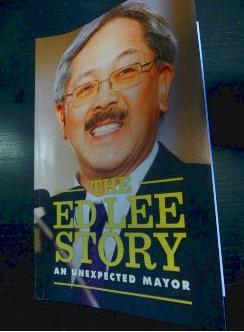
During that campaign, the Guardian and Bay Citizen discovered Pearce running an independent expenditure campaign called New Day for SF, funded mostly by Willie Brown, out of his office, despite bans of IEs coordinating with official campaigns. That tactic would repeat itself over the coming months, drawing criticism but never any sanctions from the toothless Ethics Commission. Pearce was hired by two more pro-Lee IEs: Committee for Effective City Management and SF Neighbor Alliance, for which he wrote the book The Ed Lee Story, a supposedly “unauthorized biography” filled with photos and personal details about Lee.

Publicly, the campaign was fronted by noted Brown allies such as his former planning commissioner Shelly Bradford-Bell, Pak allies including Chinatown Community Development Center director Gordon Chin, and a more surprising political figure, Christina Olague, a progressive board appointee to the Planning Commission. She had already surprised and disappointed some of her progressive allies on Feb. 28 when she endorsed Chiu for mayor during his campaign kickoff, and even more when she got behind Lee.

Olague recently told us the moves did indeed elicit scorn from some longtime allies, but she defends the latter decision as being based on Lee’s experience and willingness to dialogue with progressives who had been shut out by Newsom, noting that she had been asked to join the campaign by Chin. Olague also said the decision was partially strategic: “If we get progressives to support him early on, maybe we’ll have a seat at the table.”

Right up until the end, Lee told reporters that he planned to honor his word and not run. During a Guardian interview in July when we pressed him on the point, Lee said he would only run if every member of the Board of Supervisors asked him to, although about half the board publicly said that he shouldn’t, including Sup. Sean Elsbernd, who nominated him for interim mayor.

And then, just before the filing deadline in early August, Lee announced that he had changed his mind and was running for mayor, the powers of incumbency instant catapulting him into the frontrunner position where he remains today, according to the most recent poll by the Bay Citizen and University of San Francisco.

Lee the politician

With his late entry into the race and decision to forgo public financing and its attendant spending limits, one might think that Lee would have to campaign aggressively to keep his job. But most of the heavy lifting has so far been done by his taxpayer-financed Office of Communications (which issues press releases at least daily) and by corporate-funded surrogates in a series of coordinated “independent” groups (see Rebecca Bowe’s story, “The billionaires’ mayor”).

That has left Lee to simply act as mayor, where he’s made a series of decisions that favor the business community and complement the “jobs” mantra cited relentlessly by centrist politicians playing on people’s economic insecurities.

Yet Lee has been elusive on the campaign trail and to reporters who seek more detailed explanations about his stands on issue or contradictions in his positions, and his spokespersons sometimes offer only misleading doublespeak.

For example, Lee’s office announced plans to veto legislation by Sup. David Campos that would prevent businesses from meeting their city obligation to provide a minimum level of employee health benefits through health savings accounts that these businesses would then pocket at the end of the year, taking $50 million last year even though some of that money had been put in by restaurant customer’s paying 5 percent surcharges on their bills.

Although Campos, the five other supervisors who voted for the measure, four other mayoral candidates, and its many supporters in the labor and consumer rights movements maintained the money belonged to workers who desperately needed it to afford expensive health care, the San Francisco Chamber of Commerce said it was about “jobs” that would be protected only if businesses could keep that money.

Lee parroted the position but tried to push the political damage until after the election, issuing a statement entitled “Mayor Lee Convenes Group to Improve Health Care Access & Protect Jobs,” saying that he would seek to “develop a consensus strategy” on the divisive issue — one in which Campos said “we have a fundamental disagreement” — that would take weeks to play out.

After a frustrating back-and-forth with Lee Press Secretary Christine Falvey by email, it’s still unclear how to resolve the contradiction between whether businesses could seize these funds or whether they belonged to employees, with her latest statement being, “The Mayor absolutely wants these funds spent on providing access to quality primary and preventative health care because this is the business’s obligation under HCSO. Making sure that these funds go to pay for health care is the most important objective.”

Similarly, when police raided the OccupySF encampment on Oct. 5, Lee’s office issued a statement that was a classic case of politicians trying to have it both ways, expressing support for the movement and its goal to “occupy” public space, but also supporting the need to police to clear the encampment of those same occupiers.

But now, in the wake of a repeat raid on Oct. 16 that has inflamed passions on the issue, the question is whether Lee can run out the clock and retain the office he gained on the promise of being someone more than a typical politician.

Few surprises in Examiner endorsements

15

The San Francisco Examiner – a paper with a generally conservative editorial stance, and one that endorsed John McCain for president in 2008 – has endorsed a slate of Establishment candidates for citywide office: Ed Lee for mayor, George Gascon for DA, and Chris Cunnie for sheriff.
That’s not really surprising, but its second and third choices for mayor were: Dennis Herrera second and Bevan Dufty third. Herrera was also the Guardian’s second choice and Dufty was someone we considered for third, choosing instead to go with Leland Yee. As the Examiner wrote, there are lots of qualified candidates in this race, and there were a lot more worrisome ones the paper could have picked.
For a newspaper that often takes ridiculous right-wing stances, such as its editorial last year denying global warming, the mayoral endorsement actually reads fairly reasonably. I don’t agree with its conclusion that Lee’s aversion to politics and business-friendly focus are good things, but I was happy to see the Examiner call out Lee’s cronyism and uncritical praise for bad corporate actors like PG&E.
“We do have some concerns about his ties to former power-brokers and off-the-cuff comments that are now being blasted in negative campaign ads. We implore Lee to work harder to separate himself from those who claim responsibility for his success, for they are just as likely to be responsible for any downfall. We ask that Lee, as we would any mayor to be open and honest about his relationships,” the paper wrote.
And its comments about the other candidates it liked were also pretty much on target. The only real criticism I would offer – and it is a significant one – is that progressive favorite John Avalos didn’t even get mentioned among the eight it discussed. WTF?
Now I’m sure they wouldn’t have had great things to say, given their conservative leanings. But to simply leave Avalos out shows the paper has a disregard and disdain for the left that is a big part of what’s wrong in San Francisco. It’s why our mayor and police chief can make this the first city in the country to launch an aggressive midnight raid on the Occupy Wall Street movement. It’s why the Chamber of Commerce can so shamelessly demand that businesses be allowed to drain the employee health funds that a hard-won city law requires them to provide.
San Francisco is not a progressive city, although a large number of San Franciscans are progressive and they have helped usher in a number of important progressive reforms, from worker and tenants protections to environmental initiatives, often through battles that Avalos helped wage on the people’s behalf.
So to ignore Avalos is to ignore progressives in this city. And they can steal our money or our tents, but we aren’t going away.

Endorsement interviews: Paul Miyamoto

4

Paul Miyamoto is a captain in the Sheriff’s Office and is running for the top job. He told us that at a time when significant change is coming — from the retirement of longtime Sheriff Mike Hennessey to state realignment on prison policy — it’s important to have “someone from within, someone who’s been doing the job.” He vowed (as did all the candidates) to continue Hennessey’s progressive policies, but was a little fuzzy in some areas. He said, for example, that he’s against privatizing jail health services — but would be willing to examine the issue if there were a viable alternative. Audio and video after the jump.

Miyamoto by endorsements2011


The death penalty: How close, how far

5

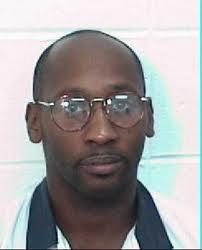
The Chronicle didn’t even put the news on the front page (although The New York Times did), but the execution of Troy Davis went forward more or less as scheduled Sept. 21, with news media around the world watching. It was a shameful miscarriage of justice; as the Times noted in an editorial:

Seven of nine witnesses against Mr. Davis recanted after trial. Six said the police threatened them if they did not identify Mr. Davis. The man who first told the police that Mr. Davis was the shooter later confessed to the crime. There are other reasons to doubt Mr. Davis’s guilt: There was no physical evidence linking him to the crime introduced at trial, and new ballistics evidence broke the link between him and a previous shooting that provided the motive for his conviction.

Yes the Georgia courts, and the federal courts, and the United States Supreme Court, let the state kill Davis — and now it’s too late to prove his innocence. That, of course, is the most horrible aspect of the death penalty. It’s also cruel, expensive and pointless.

But there’s a bit of good news, at least in California. I’m convinced that sentiment is changing. We’ve been interviewing candidates for San Francisco sheriff and district attorney over the past two weeks — and I can tell you, while San Francisco isn’t a good reflection of the state as a whole, attitudes among law-enforcement types in this town have changed pretty dramatically over the past ten years or so.

In 1999, Matt Gonzalez, Bill Fazion and Terence Hallinan all ran for district attorney, and Gonzales came in third. Fazio — a veteran prosecutor and tough-on-crime type, went to Gonzalez and sought his endorsment in the runoff. Gonzalez said he’d support him — if Fazio would agree never to seek the death penalty. It was a pretty easy call, since no San Francisco jury is ever going to vote for capital punishment anyway — but Fazio refused. He insisted that he was a death-penalty supporter to the end, and he lost the race.

Now, Fazio says the death penalty is a complete failure, and he would not only never seek it but he’s actively in favor of repealing it.

Just a few months ago, former police chief and current D.A. George Gascon was talking about how the death penatly ought to be one of a prosecutor’s tools — but now he utterly disavows is, says he would never seek it and is calling for repeal.

Chris Cunnie, a former president of the avowedly pro-death-penalty Police Officers Association, told us he opposes capital punishment.

And Kamala Harris, who never wavered in her refusal to seek the death penalty, even for the killing of a cop, managed to get elected attorney general of California.

So there’s hope.


On Guard!

1

news@sfbg.com


CENTRAL SUBTERFUGE

While supporters of the controversial Central Subway project — from Mayor Ed Lee and his allies in Chinatown to almost the entire Board of Supervisors — dismiss the growing chorus of critics as everything from ill-informed to racist, they refuse to address the biggest concerns about the project.

In a nutshell, the main concerns center on serious design flaws (such as the lack of direct connections to either Muni or BART), the city’s responsibility for any cost overruns on this complex $1.6 billion project, its estimated $15.2 million increase to Muni’s already strained annual operating budget (a figure used by the Federal Transportation Administration, well over the local estimate of $1.7 million), and the city’s unwillingness to implement its own plans for improving north-south transit service on congested Stockton Street rather than relying solely on such an expensive option for serving Chinatown that doesn’t start until 2019.

Judge Quentin Kopp, a longtime former legislator, called this summer’s grand jury report, “Central Subway: Too Much Money for Too Little Benefit,” the best he’s ever read and one that should be heeded. He recently wrote a letter to top state officials urging them to reconsider the $488 million in state funding pledged to the project. As we reported last week, mayoral candidate Dennis Herrera is also challenging a project that he supported before its most recent cost overruns and design changes.

But supporters of the project pushed back hard on Sept. 14, using taunts and emotional rhetoric that avoided addressing the core criticisms. “Beneath the unfounded criticism about costs is actually a disagreement over values. The grand jury report relied upon by critics makes a only brief and superficial criticism about costs,” Norman Fong and Mike Casey wrote in an op-ed in last week’s Guardian.

Actually, the 56-page grand jury report goes into great detail about why it believes cost overruns are likely, citing the myriad risks from tunneling and SFMTA’s administrative shortcomings and history of mismanagement, including on this project’s less-complicated first phase, the T-Third line, which was 22 percent over budget and a year and half late in completion. Even with the contingencies built into the Central Subway budget, the report notes that a similar overrun would increase the local share of this project from $124 million to more than $150 million.

Mayor Lee purportedly addressed criticism of the project during the Question Time session in the Sept. 14 Board of Supervisors meeting, prompted by a loaded question from Sup. Sean Elsbernd offering Lee the “opportunity to move beyond the clichés and one-liners of political campaigns.”

But Lee’s answer was classically political, touting the estimated 30,000 jobs it would create, praising those who have pushed this project since the 1980s, offering optimistic ridership estimates (that exceed current FTA figures by about 9,000 daily riders), and ignoring concerns about whether the city can cover the ever-increasing capital and operating costs.

“Now is the time to support the Central Subway,” Lee said, flashing his trademark mustachioed grin.

We called the normally responsive Elsbernd, who prides himself on his fiscal responsibility, twice, to ask about financial concerns surrounding the project and he didn’t call back. During their mayoral endorsement interviews with the Guardian last week, we also asked Sups. John Avalos and David Chiu to address how they think the city will be able to afford this project, and neither had good answers about the most substantive issues (listen for yourself to the audio recordings on our Politics blog).

Once Congress gives final approval to $966 million in federal funding for this project sometime in the next couple months, the city will be formally committed to the Central Subway and all its costs. It’s too bad that, even during election season, all its supporters have to offer to address valid concerns are “clichés and one-liners.”(Steven T. Jones)


BLACK AGENDA

Mayoral candidates faced tougher questions than usual at a Sept. 15 forum hosted by the Harvey Matthews Bayview Hunters Point Democratic Club. Whereas debates hosted in the Castro and Mission Bay, for instance, featured questions on how candidates planned to clean up city streets, what they thought about AT&T’s plan to place utility boxes on city sidewalks, or how they’d promote a more business-friendly environment, residents brought a thornier set of concerns to the Bayview Opera House.

One question pointed to an alarming statistic based on U.S. Census data and cited by racial justice advocates, showing that residents of the predominantly African American Bayview Hunters Point have a life expectancy that’s 14 years lower, on average, than that of residents of the more well-to-do Russian Hill.

Someone else asked about improving mental health services for lower-income community members struggling with post-traumatic stress syndrome (PTSD). High unemployment figured in as a key concern. And one member of the audience wanted to know how candidates planned to “improve the behavior of the police,” alluding to the mid-July officer-involved shooting that left 19-year-old Seattle resident Kenneth Harding dead, triggering community outrage.

Mayor Ed Lee attended the beginning of the forum but left early to attend an anniversary celebration for the Bayview Hunters Point Foundation; other participants included Terry Joan Baum, Jeff Adachi, Bevan Dufty, Dennis Herrera, David Chiu, Michela Alioto-Pier, and Joanna Rees.

Answers to Bayview residents’ sweeping concerns varied, yet many acknowledged that the southeastern neighborhood had been neglected and ill-served by city government for years.

“There is no economic justice here in Bayview Hunters Point,” Adachi said. “There never has been. That’s the reality.” He pointed to his record in the Pubic Defender’s Office on aggressively targeting police misconduct, and played up his pension reform measure, Prop. D, as a vehicle for freeing up public resources for critical services.

Dufty, who has repeatedly challenged mayoral contenders to incorporate a “black agenda” into their platforms, spoke of his vision for a mayor’s office with greater African American representation, and emphasized his commitment to improving contracting opportunities for minority-owned businesses.

Herrera, meanwhile, was singled out and asked to explain his support for gang injunctions, an issue that has drawn the ire of civil liberties groups. “I only support gang injunctions as a last resort,” he responded. “We shouldn’t have to use them. But … people should be able to walk around without being caught in a web of gang violence. I put additional restrictions on myself to go above and beyond what the law requires, to make sure that I am balancing safe streets with protecting civil liberties.”

Herrera asserted that gang violence had been reduced by 60 percent in areas where he’d imposed the controversial bans on contact between targeted individuals, and noted that the majority of those he’d sought injunctions against in Oakdale weren’t San Francisco residents.

Baum brought questions about a lack of services back to the overarching issue of the widening income and wealth gaps. “Right now, the money is being sucked upward as we speak,” she said. “We have to bring that money back down.”

She closed with her signature phrase: “Tax the rich. Duuuuh.” (Rebecca Bowe)


DUFTY REMEMBERS

The selection of Ed Lee as interim (or not-so-interim) mayor of San Francisco was one of those moments that left just about everyone dazed — how did a guy who wasn’t even in town, who had shown no interest in the job, who had never held elective office, suddenly wind up in Room 200?

Well, former Sup. Bevan Dufty, who was going to nominate Sheriff Mike Hennessey and switched to providing the crucial sixth vote for Lee at the last minute, told us the story during his mayoral endorsement interview last week.

Remember: Lee, as recently as a few days earlier, had told people he didn’t want to be mayor. “An hour before the meeting, Gavin (Newsom) called Michela (Alioto-Pier) and me into his office and said Ed Lee had changed his mind,” Dufty told us. He walked out of the Mayor’s Office uncommitted, he said, and even Newsom wasn’t sure where Dufty would go.

After two rounds of voting, with Dufty abstaining, there were five votes for Lee. So Dufty asked for a recess and went back to talk to Newsom — where he was told that the mayor thought the reason the progressives were supporting Hennessey was that the sheriff had agreed to get rid of about 20 mayoral staffers — including Chief of Staff Steve Kawa, “who had engineered Ed Lee running.”

So Kawa, with Newsom’s help, preserved his job and power base. “It’s all turnabout,” Dufty said. “I figure Mike Hennessey’s had a couple of beers and a couple of good times thinking about my vote. But that’s politics.” (Tim Redmond)


ALMOST FREE?

Friends and supporters of Shane Bauer and Josh Fattal were kept in a state of agonizing suspense over whether the two men, both 29, would be released from the Iranian prison where they’ve been held for more than two years following an ill-fated hiking trip in Iraqi Kurdistan.

On Sept. 13, Iranian President Mahmoud Ahmadinejad stated publicly that Bauer and Fattal could be freed “in a couple of days.” The announcement brought hope for family and friends who, just weeks earlier, had absorbed the news that the men were sentenced to eight years in prison after an Iranian court found them guilty of committing espionage, a charge that the hikers, the United States government, religious leaders, and human rights advocates have characterized as completely baseless.

Reports followed that the Iranian judiciary would commute the hikers’ sentences and release them in exchange for bail payments totaling $1 million. But by Sept. 16, when supporters gathered in San Francisco in hopes that of an imminent announcement, they were instead greeted with new delays.

The constantly shifting accounts hinted at internal strife within the Iranian government, and contributed to the sense that Bauer and Fattal were trapped as pawns in a power struggle. By Sept. 19, their Iranian lawyer remained in limbo, awaiting the signature of a judge who was scheduled to return from vacation Sept. 20.

“Shane and Josh’s freedom means more to us than anything and it’s a huge relief to read that they are going to be released,” the hikers’ families said in a statement Sept. 13. “We’re grateful to everyone who has supported us and looking forward to our reunion with Shane and Josh. We hope to say more when they are finally back in our arms.” (Rebecca Bowe)

SF Labor Council makes surprising dual endorsements

5

The San Francisco Labor Council made a pair of dual endorsements last night that reflect the wide ideological range of local unions — stretching from the progressive SEIU Local 1021 that represents city workers to the more conservative members of the trade unions — as well as the power of behind-the-scenes politicking.

For mayor, the council made a dual endorsement of Leland Yee — who secured an early endorsement from the trade unions and has significant progressive support as well — and Dennis Herrera, whose supporters deftly worked to secure the long-shot endorsement for his ascendant campaign.

Similarly, the council gave a dual endorsement in the sheriff race to Ross Mirkarimi, the progressive candidate who has a long list of labor union endorsements, and Chris Cunnie, whose base of support is the police unions and other more conservative groups and individuals. There was no endorsement in the DA’s race.

So how did Herrera and Cunnie manage to land such influential support despite having secured only a few endorsements from individual labor unions? Several of those in attendance wondered the same thing, but several sources say both dual endorsements were engineered by Labor Council President Mike Casey, who heads UNITE-HERE Local 2, whose hotel worker members have been locked in a bitter labor dispute with the big hotel corporations. Casey did not immediately return a call for comment, but I’ll update this post if and when I hear back.   

Endorsement interviews: Phil Ting

32

We’ve started interviewing the candidates for mayor, sheriff and district attorney, and, as usual, we’re taping the interviews and posting the audio feed unedited for your listening fun. We’re also putting up videos of the candidates’ opening statements.

mayoral candidate Phil Ting’s basic pitch: “The most progressive thing we can do is make government more efficient.” He talked a lot about his crowdsourcing website, Resetsf, which allows hundreds of San Franciscans to weigh in on the city’s problems — and offer solutions. Among his solutions: One minute of improved time on every Muni line would save $20 million a year. That means eliminating some bus stops to make the busses go faster.

He argued (with me) that San Francisco can eventually build its way out of the housing crisis by constructing more units on transit corridors. He vowed to reverse Gavin Newsom’s policy on sanctuary and told us he supports the central subway. Listen and watch after the jump.

Ting by endorsements2011

Watch Ting’s opening statement here:

The real Leland Yee

53

tredmond@sfbg.com

It’s early January 2011, and the Four Seas restaurant at Grant and Clay is packed. Everyone who is anyone in Chinatown is there — and for good reason. In a few days, the Board of Supervisors is expected to appoint the city’s first Asian mayor.

The rally is billed as a statement of support for Ed Lee, the mild-mannered bureaucrat and reluctant mayoral hopeful. But that’s not the entire — or even, perhaps, the central — agenda.

Rose Pak, who describes herself as a consultant to the Chinese Chamber of Commerce but who is more widely known as a Chinatown powerbroker, is the host of the event. She stands in front of the room, takes the microphone, and, in Cantonese, delivers a remarkable political speech.

According to people in the audience, she says, in essence, that the community has come out to celebrate and support Ed Lee — but that’s just the start. She also urges them not just to promote their candidate — but to do everything possible to prevent Leland Yee from becoming mayor.

She continues on for several minutes, lambasting Yee, the state Senator who lived in Chinatown as a child, accusing him of about every possible political sin — and turning the Lee rally into an anti-Yee crusade. And nobody in the crowd seems terribly surprised.

Across Chinatown, from the liberal nonprofits to the conservative Chamber of Commerce, there’s a palpable fear and distrust of the man who for years has been among San Francisco’s most prominent Asian politicians — and who, had Lee not changed his mind and decided to run for a full term this fall, was the odds-on favorite to become the city’s first elected Chinese mayor.

The reasons for that fear are complex and say a lot about the changing politics of Asian San Francisco, the power structure of a city where an old political machine is making a bold bid to recover its lucrative clout — and about the career of Yee himself.

Senator Leland Yee is a political puzzle. He’s a Chinese immigrant who has built a political base almost entirely outside of the traditional Chinatown community. He’s a politician who once represented a deeply conservative district, opposed tenant protections, voted against transgender health benefits and sided with Pacific Gas and Electric Co. on key environmental issues — and now has the support of some of the most progressive organizations in the city. He’s taken large sums of campaign money from some of the worst polluters in California, but gets high marks from the Sierra Club.

His roots are as a fiscal conservative — yet he’s been the only Democrat in Sacramento to reject budget compromises on the grounds that they required too many spending cuts.

He’s grown, changed, and developed his positions over time. Or he’s become an expert at political pandering, telling every group exactly what it wants to hear. He’s the best chance progressives have of keeping the corrupt old political machine out of City Hall — or he’s a chameleon who will be a nightmare for progressive San Francisco.

Or maybe he’s a little bit of all of that.


Leland Yin Yee was born in Taishan, a city in China’s Guangdong province on the South China Sea. The year was 1948; Mao Zedong’s Communist Party of China had taken control of much of the countryside and was moving rapidly to take the major cities. The nationalist army of General Chiang Kai-Shek was falling apart, and Yee’s father, who owned a store, decided it was time for the family to leave.

The Yees made it to Hong Kong, and since Mee G. Yee had previously lived in the United States and served in the U.S. Army during World War II, he was ultimately able to move the family to San Francisco. In 1951, the three-year-old Leland Yee arrived in Chinatown.

For four years, Yee lived with his sister and mother in a one-room apartment with a shared bathroom while his father worked as a sailor in the merchant marine. It was, Yee recalled in a recent interview, a tight, closed, and largely self-sufficient community.

“The movie theater, the shoe store, the barber shop, food — everything you needed you could get in Chinatown,” Yee said. “You never had to leave.”

Of course, after a while, Yee and his mom started to venture out, down Stockton Street to Market, where they’d shop at the Emporium, the venerable department store. “It was like walking into a different country,” he said. “If you didn’t know English, they didn’t have time for you.”

Yee, like a lot of young Chinese immigrants of his era, put much of his time into his studies — in the San Francisco public schools and in a local Chinese school. “My mom spoke a village dialect, and we had to learn Cantonese,” he said. “Every little kid had to go to Chinese school. We hated it.”

When Yee was eight, his parents managed to buy a four-unit building on Dolores Street, and the family moved to the Mission, where he would spend not only the rest of his childhood but much of his early adult life. He graduated from Mission High School, enrolled in City College, studied psychology and after two years won admission to UC Berkeley.

Berkeley in 1968 was a very different world from Chinatown and even the relatively controlled environment he’d experienced at home in the Mission. “You didn’t protest in school. You’d have been sent home, and your mother would kill you,” he said.

At Berekely, all hell was breaking loose, with the antiwar protests, the People’s Park demonstrations, the campaign to create a Third World College (which led to the first Ethnic Studies Department), and a general attitude of mistrust for authority. “I developed a sense of activism,” Yee said. “I realized I could speak out.”

That spirit quickly vanished when Yee lost faith in some of his fellow activists. “People would work with us, then get into positions of power and use that against you,” he recalled. “A lot of my friends said ‘forget it.’ I left the scene.”

Yee once again devoted his energy to school, earning a masters at San Francisco State University and a Ph.D in child psychology from the University of Hawaii. Along the way, he met his wife, Maxine.

With his new degree, the Yees moved back to San Francisco — and back in with his parents at the Dolores property, where he, Maxine and a family that would grow to four kids would live for more than a decade.


Yee worked as a child psychologist for the San Francisco Department of Public Health, starting the city’s first high school mental-health clinic. He went on to become a child psychologist at the Oakland Unified School District, then joined a nonprofit mental health program in San Jose.

In 1986, Yee decided to get active in politics for the first time since college, and ran for the San Francisco School Board. He lost — and that would be the only election he would ever lose. In 1988, he won a seat, and established himself as an advocate for students of color, fighting school closures in minority neighborhoods. He also tried to get the district to modify its harsh disciplinary rules, arguing against mandatory expulsions.

On fiscal issues, though, Yee was a conservative. For his first term, despite the brutal cutbacks of the recession of the late 1980s and early 1990s, he insisted that the district make do with the money it had. His solution to the red ink: Cut waste. Only in 1992, when he was up for re-election, did he acknowledge that the district needed more cash; at that point, he supported a statewide initiative to tax the rich to bring money to the schools.

The sense of fiscal conservatism — of holding the line on taxes, but mandating open and fair contracting procedures and tight financial controls — was a hallmark of much of his political career. When the Guardian endorsed him for re-election to the board in 1992, we wrote that “there’s real value in his continuing vigilance against administrative fat and favoritism in contracts.”

Over the next four years, Yee worked with then-Superintendent Waldemar “Bill” Rojas, a deeply polarizing figure who pushed his own personal theory of “reconstitution” — firing all the staff at low-performing schools — and later was enmeshed in a scandal that led to prison time for a contractor he’d hired. Yee told me he was the only board member to vote against hiring Rojas, but people who were watching the board closely back then say he didn’t always stand up to the superintendent.

He also became what some say was a bit too close with Tim Tronson, a consultant hired by the district as a $1,000-a-day facilities consultant. Tronson wound up getting indicted on 22 counts of grand theft, embezzlement, and conspiracy in a scheme to steal $850,000 from the schools, and was sentenced to four years in state prison.

In 1998, when some school board members wanted to build housing for teachers on property that the district owned in the Sunset, Yee led the opposition — with Tronson’s help. At one meeting at Sunset Elementary School, Yee went so far as to say, according to people present, that “Tim Tronson is my man, and I rely on him for advice.”

Yee acknowledged that he worked closely with Tronson to defeat that housing project. “He was the facilities manager,” Yee explained, “and I said that I trusted his judgment.”


Yee has either a great sense of political timing or exceptional luck. He ran for the Board of Supervisors in 1996, facing one of the weakest fields in modern San Francisco history. He was the only Chinese candidate and one of just two Asians (the other, appointed incumbent Michael Yaki, barely squeaked to re-election). In an at at-large election with the top five winning seats, Yee came in third, with 103,000 votes.

He was never a progressive supervisor. In 2000, the Guardian ranked the good votes of what we referred to as Willie Brown’s Board, and Yee scored only 43 percent. He was against campaign finance reform. He supported the brutal gentrification and community displacement represented by the Bryant Square development. He voted to kill a public-power feasibility study and opposed the Municipal Utility District initiative. He opposed a moratorium on uncontrolled live-work development.

In 2002, Yee was one of only three supervisors to oppose Proposition D, a crucial public-power measure that would have broken up PG&E’s monopoly in the city. He stood with PG&E (and then-Sups. Tony Hall and Gavin Newsom) in opposition to the measure, then signed a pro-PG&E ballot argument packed with PG&E lies.

When I asked him about that stand, Yee at first didn’t recall opposing Prop. D, but then said he “stood with labor” on the issue. In fact, the progressive unions didn’t oppose Prop. D at all; the opposition was led by PG&E’s house union, IBEW Local 1245.

Yee was particularly bad on tenant issues. He not only voted to deny city funding for the Eviction Defense Collaborative, which helped low-income tenants fight evictions; he actually tried to get the city to put up money for a free legal fund to help landlords evict their tenants. He opposed a ballot measure limiting condo conversions. He opposed a measure to limit the ability of landlords to pass improvement costs on to their tenants.

In 2001, Yee voted to uphold a Willie Brown veto of legislation to limit tenancies in common, a backdoor way to get around the city’s condo conversion ordinance. Only Hall and Newsom, then the most conservative supervisors on the board, joined Yee. At one point, he started asking whether the city should consider repealing rent control.

He opposed an affordable housing bond in 2002, joining the big landlord groups in arguing that it would raise property taxes. Every tenant group in town supported the measure, Proposition B; every landlord group opposed it.

I asked Yee about his tenant record, and he told me that he now supports rent control. But he said that he was always on the side of homeowners and small landlords, and that property ownership was central to Chinese culture. “I was responding to the Chinese community and the West Side,” he said.

He wasn’t much of an environmentalist, either — at least not in today’s terms. He was one of the only city officials to support a “Critical Car” rally in 1999, aimed at promoting the rights of vehicle drivers (and by implication, criticizing Critical Mass and the bicycle movement).

His record on LGBT issues was mixed. While he supported a counseling program for queer youth when he was on the school board, he also supported JROTC, angering queer leaders who didn’t want a program in the public schools run by, and used as a recruiting tool for, the military, which at that point open discriminated against gay and lesbian people.


Yee was also one of only two supervisors who voted in 2001 against extending city health benefits to transgender employees.

That was a dramatic moment in local politics. Nine votes were needed to pass the measure, and while eight of the supervisors were in favor, Yee and Hall balked. At one point, Board President Tom Ammiano had to direct the Sheriff’s Office to go roust Sup. Gerardo Sandoval, who was ducking the issue in his office, to provide the crucial ninth vote.

Yee didn’t just vote against the bill. According to one reliable source who was there at the time, Yee spoke to a community meeting out on Ulloa Street in the Sunset and berated his colleagues, quipping that the city should have better things to do than “spend taxpayer money on sex-change operations.”

It was a bit shocking to trans people — Yee had, over the years, befriended some of the most marginalized members of what was already a marginalized community. “There was one person at the rail crying, saying ‘Leland, how could you do this to us,'” Ammiano recalled.

The LGBT community was furious with Yee. “I didn’t speak to him for at least a year,” Gabriel Haaland, one of the city’s most prominent transgender activists, told me.

Yee now says the vote was a mistake — but at the time, he told me, he was under immense pressure. When he voted for the queer youth program, he said, “the elders of the Chinese community ripped me apart. They called my mother’s friends back in the village [where he was born] and said her son was embarrassing the Chinese community.”

That must have been difficult — and he said that “if I had known the pain I had caused, I wouldn’t have voted that way.” But it was hard to miss that pain his vote caused.

On the other hand, people learn from their experiences, attitudes evolve, we all grow up and get smarter, and the way Yee describes it, that’s what happened to him.

In 2006, when he was running for state Senate, Yee met with a group of trans leaders and formally — many now say sincerely — apologized. It was an important gesture that made a lot of his critics feel better about him.

“He didn’t have to do that,” Haaland said. “People change, and he paid for his crime, and that’s genuine enough for me.”

As a former school board member, Yee kept an interest in the schools — but not always a healthy one. At one point, he actually proposed splitting SFUSD into two districts, one on the (poorer) east side of town and one on the (richer) west. “We strongly opposed that,” recalled Margaret Brodkin, who at the time ran Coleman Advocates for Children and Youth. “Eventually he dropped the idea.”

For all the problems, in his time on the Board of Supervisors, Yee developed a reputation for independence from the Brown Machine, which utterly dominated much of city politics in the late 1990s. His weak 43 percent rating on the Guardian scorecard was actually third-best among the supervisors, after Ammiano and the late Sue Bierman.

In 1998, he was one of the leaders in a battle to prevent the owners of Sutro Tower from defying the city’s zoning administrator and placing hundreds of new antennas on Sutro Tower. He, Bierman, and Ammiano were the only supervisors opposing Brown’s crackdown on homeless people in Union Square.

When he ran in the first district elections, in 2000, against two opponents who had Brown’s support and big downtown money, the Guardian endorsed him, noting that while he “can’t be counted on to support worthy legislation … He’s one of only two board members who regularly buck the mayor on the big issues.”

(He never liked district elections, and used to take any opportunity to denounce the system, at times forcing Ammiano to use his position as president to tell Yee to quit dissing the electoral process and get to the point of his speech.)


In 2002, the westside state Assembly district seat opened up, and both Yee and his former school board colleague Dan Kelly ran in the Democratic primary. Yee won, and went on to win the general election with only token opposition.

His legislative record in the Assembly wasn’t terribly distinguished. Yee never chaired a policy committee — although he did win a leadership post as speaker pro tem. And he cast some surprisingly bad votes.

In 2003, for example, then-Assemblymember Mark Leno introduced a bill that would have exempted single-room occupancy hotels from the Ellis Act, which allows landlords to evict tenants for no reason. Yee refused to vote for the bill. Leno was furious — he was one vote short of a majority and Yee’s position would have doomed the bill. At the last minute, a conservative Republican who had grown up in an SRO hotel voted in favor.

When he ran for re-election in 2004, we noted: “What’s Leland Yee doing up in Sacramento? We can’t figure it out — and neither, as far as we can tell, can his colleagues or constituents. He’s introduced almost no significant bills — compared, for example, to Assemblymember Mark Leno’s record, Yee’s is an embarrassment. The only high-profile thing he’s done in the past several years is introduce a bill to urge state and local governments to allow feng shui principles in building codes.”

In 2006, Yee decided to move up to the state Senate, and he won handily, beating a weak opponent (San Mateo County Supervisor and former San Francisco cop Mike Nevin) by almost 2-1. His productivity increased significantly in the upper chamber — and in some ways, he moved to the left. He’s begun to support taxes — particularly, an oil severance tax — and when I’ve questioned him, he somewhat grudgingly admits that Prop. 13 deserves review.

He’s done some awful stuff, like trying to sell off the Cow Palace land to private developers. But he has consistently been one of the best voices in the Legislature on open government, and that’s brought him some national attention.

Yee has been a harsh critic of spending practices and secrecy at the University of California, and when UC Stanislaus refused in 2010 to release the documents that would show how much the school was paying Sarah Palin to speak at a fundraiser, Leland flew into action. He not only blasted the university and introduced legislation to force university foundations to abide by sunshine laws; he worked with two Stanislaus students who had found the contract in a dumpster and made headlines all over the country.

He’s fought for student free speech rights and this year pushed a bill mandating that corporations that get tax breaks for job creation prove that they’ve actually created jobs — or pay the tax money back. He’s also won immense plaudits from youth advocates and criminal justice reformers for his bill that would end life-without-parole sentences for offenders under 18.

Along the way, he compiled a 100 percent voting record from the major labor unions, including the California Nurses Association and SEIU, and with the Sierra Club. All three organizations have endorsed him for mayor.

Yee told me that he thinks he’s become more progressive over the years. “My philosophy has shifted,” he said.

Yet when you talk to his colleagues in Sacramento, including Democrats, they aren’t always happy with him. Yee has a tendency to be a bit of a loner — he’s never chaired a policy committee and in some of the most bitter budget fights, he’s refused to go along with the Democratic majority. Yee insists that he’s taken principled stands, declining to vote for budget bills that include deep service cuts. But the reality in Sacramento is that budget bills have until this year required a two-thirds vote, meaning two or three Republicans have had to accept the deal — and losing a Democratic vote has its cost.

“You have to give up all sorts of things, make terrible compromises, to get even two Republicans,” one legislative insider told me. “When a Democrat goes south, you have to find another Republican, and give up even more.”

In other words: It’s easy to take a principled stand, and make a lot of liberal constituencies happy, when you aren’t really trying to make the state budget work.


I met Rose Pak on a July afternoon at the Chinatown Hilton. She brought along her own loose tea, in a paper package; the waitress, who clearly knew the drill, took it back to the kitchen to brew. Pak and I have not been on the greatest of terms; she’s called the Guardian all kinds of names, and I’ve had my share of critical things to say about her. But on this day, she was polite and even at times charming.

After we got the niceties out of the way (she told me I was unfair to her, and I told her I didn’t like the way she and Willie Brown played politics), we started talking about Yee. And Pak (unlike some people I interviewed for this story) was happy to speak on the record.

She told me Yee had “no moral character.” She told me she couldn’t trust him. She told me a lot of stories and made a lot of allegations that we both knew neither she nor I could ever prove.

Then we got to talking about the politics of Chinatown and Asians in San Francisco, and a lot of the animosity toward Yee became more clear.

For decades, Chinatown and the institutions and people who live and work there have been the political center of the Chinese community. Nonprofits like the Chinatown Community Development Center have trained several generations of community organizers and leaders. The Chinese Chamber of Commerce, the Six Companies, and other business groups have represented the interests of Chinese merchants. And while the various players don’t always get along, there’s a sense of shared political culture.

“In Chinatown,” Gordon Chin, CCDC’s director, likes to say, “it’s all about personal connections.”

There’s a lively infrastructure of community-service programs, some of which get city money. There’s also a sense that any mayor or supervisor who wants to work with the Chinese community needs to at least touch base with the Chinatown establishment.

Yee doesn’t do that. “He doesn’t give a shit about them,” David Looman, a political consultant who has worked with many Chinese candidates over the years, told me.

Yee’s Asian political base is outside of Chinatown; he told me he sees himself representing more of the Chinese population of the Sunset and Richmond and the growing Asian community in Visitacion Valley and Bayview.

Pak is connected closely to Brown, who Yee often clashed with. For Pak, Brown, and their allies, strong connections to City Hall mean lucrative lobbying deals and public attention to the needs of Chinatown businesses. Then there’s the nonprofit sector.

CCDC and other nonprofits do important, sometimes crucial work, building and maintaining affordable housing, taking care of seniors, fighting for workers rights, and protecting the community safety net. Yee, Pak said, “has never shown any interest in our local nonprofits. We all work together here, and he doesn’t seem to care what we do.” Yee told me he has no desire to see funding cut for any critical social services in any part of town. But he has also made no secret of the fact that he questions the current model of delivering city services through a large network of nonprofits, some of which get millions of taxpayer dollars. And the way Pak sees it, all of that — the nonprofits, the business benefits, the contracts — are all at risk. “If Leland Yee is elected mayor,” she told me, “we are all dead.”

I ran into an old San Francisco political figure the other day, a man who has been around since the 1970s, inside and outside of City Hall, who remains an astute observer of the players and the power relationships in the local scene. At the time we talked, he wasn’t supporting any of the mayoral candidates, but he had a thought for me. “This town,” he said, “is being taken over by a syndicate. Willie Brown is the CEO, and Rose Pak is the COO, and it’s all about money and influence.”

That’s not a pleasant thought — I’ve lived through the era of political machine dominance in this town, and it was awful. In the days when Brown ran San Francisco, politics was a tightly controlled operation; only a small number of people managed to get elected to office without the support of the machine. Developers made land-use policy; gentrification and displacement were rampant; corruption at City Hall turned a lot of San Franciscans off, not only to the political process but to the whole notion that government could be a positive force in society.

A few years ago, I thought those days were over — and to a certain extent, district elections will always make machine politics more difficult. But when I see signs of the syndicate popping up — and I see a candidate like Ed Lee, who’s close friends with Brown, leading the Mayor’s Race — it makes me nervous. And for all his obvious flaws, at least Leland Yee isn’t part of that particular operation. If there’s a better reason to vote for him, I don’t know what it is.

YEE HOME PURCHASE RAISES SUSPICIONS

Rose Pak has a question about Leland Yee. “How,” she asked me, “did the guy manage to buy a million-dollar house on a $30,000 City Hall salary?”

Pak isn’t the only one asking — numerous media reports over the years have examined how Yee raised a family of four and bought a house in the Sunset on very little visible income. And while I’m not usually that interested in the personal finances of political candidates, I decided that it was worth a look.

Here’s what I found: Public records show that in July 1999, Yee and his wife, Maxine, purchased a house on 24th Avenue for $875,000 (it’s now assessed at slightly more than $1 million). At the time, Yee was a San Francisco supervisor, earning a little more than $30,000 a year. (The salary of the supervisors was raised dramatically shortly after Yee left the board and went to the state Assembly.) His wife wasn’t working. And his economic interest statements for that period show no other outside earnings. So the disposable, after-tax income of the entire Yee family couldn’t have been much more than $25,000.

That, by any normal standard, shouldn’t have been enough to float a mortgage that, records show, totaled $516,000. In fact, the interest payments alone on that mortgage alone would total $3,600 a month — more than Yee’s gross income.

Documents in the Assessor’s Office show another paper trail, too. In 1989, Jung H. Lee, Yee’s mother, transferred the deed on a four-unit Dolores St. building where the family had been living to Maxine and Leland Yee — for no money. And a few months before the Yees bought the Sunset house, they took out a $320,000 home-equity loan on that property. That was the down payment on the Sunset property.

Still: At that point, the Yees would have been paying off two mortgages, with a total nut of about $5,000 a month — and supporting four kids, in San Francisco. In 2002, Yee’s economic interest statement’s show some modest income from teaching at Lincoln University — but nowhere near enough to pay that level of expenses.

What happened? Yee explains it this way: “For more than 10 years, we were living rent-free in my parents’ property,” he told me I an interview. “We were a close Chinese family, and my parents provided the food and helped pay for the children’s clothing. So we had almost no expenses and we lived very frugally.”

During that period, Yee was working for the San Francisco Department of Public Health, the Oakland Unified School District, and a San Jose nonprofit, earning, he said, between $50,000 and $90,000 a year. If he saved almost all of that money, he would have had more than a half-million dollars in the bank when he bought the Sunset house.

There’s nothing on any of his economic disclosure forms showing any ownership of stocks or other reportable financial interests during that period, so he wasn’t investing the money. In fact, he says, it was, and is, all in simple savings accounts. A bit unusual for that large a sum of money.

How did he get a mortgage? “Back then,” he said, “banks were willing to lend a lot more freely than they do today.”

Starting in 2003, Yee was in the state Assembly, making a higher salary — but still not much in excess of $100,000 a year. After taxes, he was probably taking home about $75,000 — and $60,000 was going to the two mortgages.

How did he do it? “We have been supplementing our income with our savings,” he said. “We don’t take vacations, we are very careful with our money.” And they clearly aren’t desperate for cash — Yee’s daughter occupies two of the four units in the Dolores St. building they own, but the other two units are vacant.

It’s possible. It’s plausible. But I don’t blame people for wondering how he managed to pull it off. (Tim Redmond, with research assistance by Oona Robertson) 


BIG CORPORATIONS HAVE BACKED YEE

Yee became a prodigious fundraiser in Sacramento — and a lot of the money came from big corporations that had business in the Legislature. And while he has perfect scores from the Sierra Club and the big labor unions, he’s taken tens of thousands of dollars from some of the biggest corporations, agribusiness interests, and polluters in the state. And at times, he’s voted their way.

Since 1993, for example, campaign finance records show Yee has taken more than $20,000 from Chevron, ExxonMobil, Valero, Conoco Phillips, and BP. He’s received another $22,450 from the chemical industry (and industry employees). Most of it came from Clorox, Dow Chemical, and Dupont.

And while the Sierra Club may not have considered it a priority, Sen. Mark Leno has worked hard to pass a bill limiting chemical fire retardants in furniture. In 2008, Yee voted against Leno’s AB 706.

That year he also refused to support a bill that would prohibit the use of the chemical diacetyl in workplaces. The industries that opposed AB 514 (including Bayer, Abbott Laboratories, Pfizer, and Johnson & Johnson) have given Yee a total of more than $60,000.

In 2003, Yee voted against a crucial tenant bill, one that would have prevented the owners of single room occupancy hotels from using the Ellis Act to evict tenants. He received a campaign check for $2,500 from the San Francisco Apartment Association the next day. Landlords in general have given Yee close to $40,000.

Then there’s agribusiness. Yee gets a lot of money from the farming industry, despite the fact that there obviously aren’t many farms in his district. Why, for example, would the California Poultry Association, the California Cattlemen’s Association, and the California Farm Bureau give him money? The Poultry Association’s Bill Mattos told us that Yee “has taken a keen interest in California’s poultry industry.”

Yee also took immense flak from the San Francisco Chronicle and other papers over a 2003 vote against a bill to limit emissions from farm vehicles. In an editorial, the paper wrote that he was “doing dirty work for the lobbyists.” In the end, under immense public pressure, he switched positions and voted for the bill. I asked Yee about all that money from all those bad operators, and he told me — as most politicians will — that campaign cash has never influenced any of his votes.

So why do all these groups give him money? “It’s about whether you will sit down and listen,” Yee said. “I will talk to all sides and at least consider the arguments as a thoughtful human being. Then I vote my conscience.” (Tim Redmond, with research by Oona Robertson) 

Caught in a RAT trap

2

rebeccab@sfbg.com

Things are not always as they seem. That’s a lesson Matthew Martinez and Thad Conley learned the hard way — each of them after becoming unwitting targets of San Francisco Police Department (SFPD) sting operations that landed them in San Francisco County Jail, bewildered.

It was early October of 2010, and Martinez had just finished his shift as a chef at a San Francisco restaurant and was headed home when he encountered a man who seemed very intoxicated, near Eighth and Mission streets. The man asked him for a cigarette, so Martinez handed him one.

But then the man gestured to his chest, a move Martinez later explained he interpreted as an invitation to take one of the crumpled dollar bills that was spilling out of the disheveled drunk’s pocket, as payment for the cigarette. Martinez testified in court that he took one dollar, but tucked the other bills safely back into the hapless individual’s pocket.

As soon as Martinez had the bill in his hand, he was surrounded. Not only was the man who’d wanted a cigarette not drunk, he was a police officer. One of eight police officers. The undercover officer gave an arrest signal, and seven cops who had quietly been standing ready closed in, placing the 28-year-old chef under arrest.


TAKING THE BAIT

The cops had been staked out on the street for a sting operation as part of SFPD’s Robbery Abatement Team (RAT), a controversial unit that has drawn criticism from the San Francisco Public Defender’s Office for targeting some of the city’s poorest neighborhoods for busts, using cash as bait and sometimes snagging people with no prior criminal records.

Some of the same officers engaged in RAT stings have come under investigation for alleged misconduct in connection with a string of incidents at single room occupancy (SRO) hotels, publicized in a series of surveillance videos aired at press conferences earlier this year by San Francisco Public Defender Jeff Adachi.

“RAT … is used citywide as an effective tool to prevent robberies of innocent victims,” SFPD spokesperson Albie Esparza told the Guardian. “The Police Department uses this operation to catch people that are preying on the vulnerable. The theory is, you catch these people and get them off the street to prevent more robberies or more serious crimes from occurring, thus providing a safer neighborhood. Over 50 percent of the suspects arrested in RAT operations have a history of robbery or theft and a majority are on parole or probation.”

Esparza confirmed that some of the officers have been pulled from RAT duties. “Some of the officers that participated in the RAT operations are not actively working in that capacity due to the SRO/Henry Hotel investigations,” he said, referring to the alleged misconduct cases.

A couple months before Martinez’s ill-fated encounter with the man who he thought wanted to buy a cigarette, Conley was visiting San Francisco from Cincinnati to see friends and attend the Outside Lands music festival when he noticed something strange. Some women had made a show of leaving a car parked, with the doors open and engine still running, in the bus zone near the McDonald’s at Haight and Stanyan streets.

As they climbed into a cab, they spoke as if they were pulling a stunt to get back at a guy. According to Corey Farris, a public defender who represented Conley, he took it upon himself to move the car to a safe place. He first pulled it into the McDonald’s lot, but after someone informed him it would only get towed if he left it there, Farris says, Conley drove the car to a nearby police station.

The car had been placed there by SFPD and KKI Productions, which produces a television show called Bait Car. The whole thing was taped, and in footage obtained by the Guardian that was shot inside a stakeout vehicle where a cop and television producer were monitoring the scene, they can be heard laughing about sexually explicit comments one of them makes about a woman who walks in front of the camera.

At one point, the unidentified undercover officer wonders out loud who would take the bait, saying, “I was kinda hoping the Latin guy would do it.” Later in the video, when Conley comes into view after being apprehended by uniformed officers outside the police station where he’d parked the car, he’s heard explaining to officers that he moved the car because he didn’t want to see it towed.

“I read the police report,” Farris said. “And the police report doesn’t reference any of my client’s statements whatsoever. He says, ‘I’m taking it to the police station.’ That just seems like a big fact to leave out when you’re charging them for stealing the car.”


TELLING IT TO THE JUDGE

That dollar Martinez said he thought was meant as payment for a smoke snowballed into an expensive and time-consuming legal problem. He was held in jail for several days, according to his attorney, Prithika Balakrishnan, a public defender.

When Martinez, who is epileptic, asked to retrieve from his backpack the medication he takes to prevent seizures, his request was denied, Balakrishnan said. Unable to access his meds, he asked if he could sleep on a lower bunk in his jail cell in case he had a seizure, and Balakrishnan says that request was denied, too. The San Francisco Sheriff’s Department had not responded to a request for comment by press time.

Martinez’s trial was held in December 2010 and lasted several days. The officer who had been in plainclothes posing as a drunk denied ever motioning to his chest. At the end of the whole fiasco, it took a jury less than 20 minutes to find Martinez not guilty of grand theft. Disgusted, he left San Francisco soon after.

Conley, meanwhile, flew in from Cincinnati almost a year later for his trial date — only to be told upon arrival that his case had been dismissed.

Their cases were particularly bizarre, but Martinez and Conley aren’t the only ones to be targeted by undercover robbery abatement operations. A similar formula is employed in many cases, according to Deputy Public Defender Bob Dunlap, who heads up the office’s Felony Unit. An average of nine officers are staked out along the street, with a decoy officer posing as an easy target.

“He’ll have money crumpled up into balls in his shirt pocket,” Dunlap explains. “He’ll adopt the persona of someone who’s extremely intoxicated.” When someone tries to swipe the loose bills, the offender is immediately arrested. It’s easy to prove that the suspects are guilty. The offenders will have “marked city funds” in their possession — bills that have been photocopied in advance so serial numbers can be matched for evidence.

According to a tally of cases from the Public Defender’s Office, the average amount of money stolen in a RAT sting is $28, and there have been 118 cases filed with the Public Defender’s Office in connection with these undercover operations since 2007. Around 46 percent of all RAT stings take place in the Tenderloin, and 68 percent of the arrestees are black, according to Public Defender statistics. Officers are sometimes paid overtime while conducting RAT operations, and they earn extra pay for court appearances as well.

Just 35 percent of the cases were charged as misdemeanors, and the rest as felonies, according to the tally. “If it’s charged as a robbery, it counts as a strike offense,” points out Matt Gonzalez, chief attorney of the Public Defender’s Office. He’d like to know whether the program will continue under the direction of newly installed Police Chief Greg Suhr, particularly since some of the officers have been pulled from RAT operations in the wake of the SRO scandal, but SFPD has not made any indications that it will reevaluate the practice.

While the busts may be catching criminals who would be taking advantage of vulnerable residents, Gonzalez and Dunlap question the tactic of manufacturing crime, saying it’s an expensive operation that isn’t the best use of public resources. Dunlap likens it to a fishing expedition with an incredibly shallow reach. “They’re creating a different situation than they’re trying to abate,” he says. “There’s something distasteful about going into the poorest neighborhoods and fishing with money.”

Will progressives prevail at DCCC? — UPDATED

57

UPDATE: The DCCC endorsed Ross Mirkarimi for sheriff; John Avalos in first place for mayor and Dennis Herrera in second place; and David Onek in first place for DA and Sharmin Bock in second place.

There’s been a flurry of negotiations, backroom deal-making, and wild conspiracy theories leading up to tonight’s (Wed/17) San Francisco Democratic County Central Committee meeting, where the big item on the agenda is endorsements for this fall’s citywide elections, endorsements that are among the most influential in this one-party town.

Depending on one’s definition of the label, progressives still hold a majority of seats on the 32-member elected body, so solidly progressive candidates Ross Mirkarimi, who is running for sheriff, and John Avalos, who is running for mayor, have a decided advantage going into the vote.

Nothing is certain given the crowded fields in both races, although we’re hearing Mirkarimi getting the first place – and probably the only – endorsement in that race is the only prediction those involved are willing to make. Everything else is up in the air.

“How it goes down, only tonight will tell,” DCCC Chair Aaron Peskin told us. “Anything can happen. It is real democracy, with a lowercase D.”

We’ve spoken to other current and former DCCC members on background and gotten a sense of how things are shaping up, although new plays have been popping up all the time. Avalos seems to be close to the 17 votes that he needs to get the endorsement, with the second largest block of votes being supporters of Dennis Herrera, including savvy and influential players such as Carole Migden who will try to leverage at least a second place endorsement for him.

Mayor Ed Lee also has some support on the DCCC, probably not enough to get on the slate without some serious deal-cutting, but maybe enough to gum up the works and threaten to prevent a mayoral endorsement and neutralize the DCCC. Leland Yee also has some support, but it would still be a surprise if he or Lee ends up on the slate, even in third place.

In the District Attorney’s race, it seems to be coming down to a contest between David Onek and Sharmin Bock, who has gained significant ground on the committee in the last couple months to pull almost even with Onek, although neither appears to have the 17 votes they need (or 16 is someone abstains). While the very few George Gascon and Bill Fazio supporters on the DCCC may try to make mischief and deny anyone the DA’s endorsement, a more likely scenario is the Onek and Bock camps will cut a deal to give them the endorsements, probably with Onek first and Bock second.

DCCC rules don’t allow for dual endorsements – they must be ranked – it’s also possible that in either the DA or mayor’s races that there will be a movement to postpone the vote and change that rule to allow a dual endorsement. But again, things are still in such flux that anything can happen, so stop by the 6 pm meeting in the basement of the state building at 455 Golden Gate Avenue, if you’re into that sort of thing.

Our Weekly Picks: August 10-16

0

WEDNESDAY 10

MUSIC

Outdoorsmen

Seeking some pissed-as-shit garage rock from San Francisco? Eschewing the contemporary lyrical idiom of pizzas, fun, and friends, the band Outdoorsmen has more in common with early GG Allin (minus the racism, sexism, and other things about the baddest of rock ‘n’ roll’s bad boys that were generally inexcusable, no matter how good he was otherwise) than the Seeds or 13th Floor Elevators. If you want the raging fury of punk run through too many pedals and spat out in songs like “Summer of Hate” and “Decapitated,” these cats are here to save you from the paisley wave of vintage rock wannabes. Get angry! (Cooper Berkmoyer)

With San Francisco Water Cooler

9 p.m., $6

Hemlock Tavern

1131 Polk, SF

(415) 923-0923

www.hemlocktavern.com


MUSIC

Breakestra

I’ve never quite been able to wrap my head around L.A. band Breakestra. With a tendency to change members and labels as frequently as it switches from one break beat to another, the expectation is inconsistency. But instead, its collective effort manages to reach a level of esteem that puts them somewhere between other encyclopedic genre bands like the Roots and the Dap-Kings (or to go back further, the J.B.’s), reliably grooving across funk, hip-hop, and soul. Its last album, 2009’s Dusk Till Dawn, saw the band resurrecting the feel of a Norman Whitfield-era Temptations track one moment, only to later lay down a proper beat for Chali 2na. (Ryan Prendiville)

With California Honeydrops

9 p.m., $15

Brick and Mortar Music Hall

1710 Mission, SF

(415) 800-8782

www.brickandmortarmusic.com


FRIDAY 12

COMEDY

Dave Attell

Often regarded as the epitome of a “comedian’s comedian” while paying his dues in the New York City stand-up circuit, Dave Attell finally caught his well-earned break in 2001 with the debut of Insomniac, his late night reality show on Comedy Central. His blunt and unabashed style, blue-collar looks, and approachability made him the perfect comic to maneuver the run-ins with all the drunks and freaks on that show, and those same qualities translate to his live performances. As a former writer for Saturday Night Live and contributor to The Daily Show, Attell’s credentials run deep, and his balance of the lewd and the incredibly clever has helped make him one of the best and most-respected comics around. (Landon Moblad)

Fri/12-Sat/13, 8 and 10:15 p.m., $35

Cobb’s Comedy Club

915 Columbus, SF

(415) 928-4320

www.cobbscomedyclub.com


MUSIC

Sadies

Comprised of guitarists Dallas and Travis Good (who are also brothers), drummer Mike Belitsky, and bassist Sean Dean, the Sadies have recorded and toured with everyone from John Doe and Neko Case to Andre Williams and Heavy Trash — all for very good reason. The Canadian rockers seamlessly incorporate country, surf, rockabilly, garage rock, and more into their musical foundation, creating a wide sonic pallet to work with. The band shines just as brightly on its own as in its collaborations, as was the case with its latest excellent release, 2010’s Darker Circles — so expect nothing short of an amazing live set tonight. (Sean McCourt)

With Jesse Sykes and the Sweet Hereafter

9 p.m., $17

Great American Music Hall

859 O’Farrell, SF

(415) 885-0750

www.gamh.com


MUSIC

Javelin

Though you may hear descriptors like electro and hip-hop bandied about to describe Javelin’s music, neither really captures the wide-eyed charm of the group’s eccentric cut-and-paste style. Originally from Providence, RI but now rooted in New York City, the duo is comprised of two cousins who are just as intrigued by MPCs and old, dusty vinyl samples as they are by homemade instruments and beat-up toy keyboards. No Mas, Javelin’s 2010 debut, showed off its ability to filter lo-fi psychedelia, playful electronica, and fractured R&B into a perfectly balanced, collage-style mix of live and electronic sounds. Its follow-up, Candy Canyon, is a 24-minute exercise in cowboy folk and spaghetti Western scores. (Moblad)

With Siriusmo, Pictureplane, Krystal Klear, Vin Sol, and Charles McCloud

10 p.m., $15

103 Harriet, SF

(415) 264-1015

www.1015.com/onezerothree


MUSIC

Trainwreck Riders

What do you get when you cross the epic guitar work of stadium rock and the audacity of punk with the drunken swagger of country? A trainwreck? Trainwreck Riders actually. This San Francisco four-piece will have you stumbling along in commiseration and drifting into rock heaven with its boozy lullabies, but that’s only half the equation. As genuinely beautiful and sad as Trainwreck Riders can be (just check out their single “Christmas Time Blues” — goddamn) it’s just as apt to slam you back to earth with leaden shredding and headbanging goodness. Sing along and dance or just let the melodies carry you away. Trainwreck Riders will make a fan of you yet. (Berkmoyer)

With Pine Hill Haints, Mahgeetah, and Pops

8:30 p.m., $12

Café Du Nord

2170 Market, SF

(415) 861-5016

www.cafedunord.com


MUSIC

DJ Lo Down Loretta Brown a.k.a. Erykah Badu

Following a live performance at Outside Lands, Erykah Badu — the reigning queen of whatever genre she’s in — will be donning her DJ Lo Down Loretta Brown persona at Mezzanine. Whether you catch the soulful singer, who’s reportedly working on material with Flying Lotus, following Big Boi at the festival, or just the DJ set, she’ll be keeping the party going for the Ankh Marketing (the people behind Rock the Bells and plenty of Bay Area hip-hop) seventh anniversary celebration. Ankh has delivered on their events — the last time they brought the Roots’ Questlove for a set (which they’ll repeat Saturday at Public Works) Ghostface Killah popped on stage in the two o’clock hour. (Prendiville)

With D-Sharp

9 p.m. Doors, $25 Advance

Mezzanine

444 Jessie, SF

(415) 625-8880

www.mezzaninesf.com


SATURDAY 13

MUSIC

Inciters

Although it hails from Santa Cruz, the band known as Inciters sounds as though it could have come straight out of England circa the late 1960s, steeped in the rich sound and traditions of Northern Soul, albeit with an energy and attitude all its own. Currently recording its next album, the 11-piece outfit has been rocking stages both locally and internationally since 1995, and tonight finds it both performing an opening slot and also acting as the backing band for genre favorite Dean Parrish, known for 1960s hits like “I’m On My Way.” (McCourt)

With Champions, Soul Fox, Shawn and Miss T, and Mattie Valentine

9 p.m., $8

Rockit Room

406 Clement, SF

www.rock-it-room.com


VISUAL ART

“Scab-Free”

Is there anything more fun than a scab? Pick, pick, pick. The tension between patience and raw fulfillment makes them better than blackheads, dandruff, and ingrown hairs combined. And while blood streams through the gutters to the Bay from the tatted-up flesh of everyone from your barista to rock stars to your aunt, before the scabs and permanent skin art came the sketches and paintings. As the co-owners of Black Heart Tattoo, Scott Sylvia, Tim Lehi, and Jeff Rassier are globally renowned knights with tattoo-machine swords, swivel-stool steeds, and holy grails of pigments. Their canvases, and those of five other Black Heart dudes, may not bleed, but they’ll surely inspire your next inky scab. (Kat Renz)

Through Sept. 3

Opening reception tonight, 7 p.m.-midnight, free

Space Gallery

1141 Polk, SF

(415) 377-3325

www.spacegallerysf.com


FILM

Jaws

Discovery Channel’s annual Shark Week wrapped up August 5. As a floundering nation collapses into Great White Withdrawl Syndrome, Bay Area residents can feed (-ing frenzy) their obsession with bloody, toothy good times at Film Night in the Park’s screening of 1975’s Jaws. One of the first-ever summer blockbusters, Steven Spielberg’s seaside classic actually doesn’t feature much fishy footage, thanks to a cranky mechanical shark that taught all involved a valuable lesson about stories actually being scarier when you don’t reveal too much of the monster. But since Discovery just served up plenty of savage shark porn (Top Five Eaten Alive!), bundle up and enjoy Jaws‘ human standouts: Roy Scheider as the sheriff trying to cope with the deadly waters off his beaches; Richard Dreyfuss as the nerdy ichthyologist; Robert Shaw as the crusty shaaak hunter; and composer John Williams, who spun epic menace from a few simple notes and created one of cinema’s most recognizable themes in the process. (Cheryl Eddy)

8 p.m., donations accepted

Dolores Park

19th St. at Dolores, SF

(415) 272-2756

www.filmnight.org


MUSIC

“Incest Fest”

Incest is really bad if you’re a cheetah — one of the fastest species on Earth is nearly extinct because of its shrinking gene pool. Luckily, the Bay Area metal scene is not the African savannah. Here, such cozy relations are less about genetic mutations and all about a healthy synergy. Our local slaying skills are legendary throughout the headbanging realm, and Incest Fest is searing testimony: a dozen musicians composing five bands: Orb of Confusion (last show! CD release!), Hazzard’s Cure, Floating Goat, Owl, and Hellship. The night’s not only celebrating diverse permutations of heaviness; it’s also the birthday of one of the triple-duty guitarists. Buy the man a drink! And cheers to cheetahs, too. (Renz)

10 p.m., $5

Bender’s Bar and Grill

806 South Van Ness, SF

(415) 824-1800

www.bendersbar.com


TUESDAY 16

MUSIC

Heavy Hawaii

Heavy Hawaii aren’t really that heavy. Actually, they aren’t heavy at all. They are very “Hawaii.” What the hell does that mean, you ask? These minimalist weirdoes from San Diego tap into the same dream state that the islands and their beaches inspired in the Beach Boys and Jan and Dean and a whole generation of vacation-going Americans. It’s surf-pop for a new generation, one reared on shoegaze and surrealism. The classic pop vocals are there, and catchy melodies abound, but the instrumentation is an exercise in simplicity and unsettling strangeness that will leave you swaying like kelp in a creepy underwater forest. (Berkmoyer)

With Bleached and Plateaus 9 p.m., $7

Hemlock Tavern 1131 Polk, SF

(415) 923-0923

www.hemlocktavern.com


The Guardian listings deadline is two weeks prior to our Wednesday publication date. To submit an item for consideration, please include the title of the event, a brief description of the event, date and time, venue name, street address (listing cross streets only isn’t sufficient), city, telephone number readers can call for more information, telephone number for media, and admission costs. Send information to Listings, the Guardian Building, 135 Mississippi St., SF, CA 94107; fax to (415) 487-2506; or e-mail (paste press release into e-mail body — no text attachments, please) to listings@sfbg.com. Digital photos may be submitted in jpeg format; the image must be at least 240 dpi and four inches by six inches in size. We regret we cannot accept listings over the phone.

Ed Lee does some ‘splainin

Ed Lee, appointed San Francisco’s interim mayor early this year after giving the San Francisco Board of Supervisors his word that he would not seek a full term, filed papers to enter the race as a mayoral candidate on Aug. 8.

“I haven’t changed at all,” Lee said when reporters questioned his 180-degree turnaround. “I’ve just made a change of mind in terms of running for this office.”

Standing beside his wife, Anita, the mayor delivered a five-minute speech about what has transpired in his seven months as interim mayor, saying he was motivated to run by his accomplishments in office so far.

http://www.youtube.com/watch?v=7u4DudZPY80

Lee said he had met with members of the Board of Supervisors and understood that some would be looking for an explanation on his change of heart.

Former District 6 Sup. Chris Daly has said he believes Lee’s run for mayor was scripted from the start. Whatever the case, an outburst that occurred as Lee was filling out paperwork certainly was not part of any script. Surrounded by news cameras, Charles Khalish heckled Lee, asking, “Sir, are you going to step down? You’re in the office under false pretenses, Mr. Lee.” When security surrounded him, he loudly protested, and a group of sheriff deputies and mayoral security officers with the San Francisco Police Department closed in and grabbed him.

http://www.youtube.com/watch?v=Gs0tFvWCNzo

While it was impossible for this reporter to see exactly what took place seconds before Khalish was forcibly removed, Tony Winnicker, a former press secretary to Mayor Gavin Newsom who is now issuing media advisories for Lee’s mayoral campaign, later claimed he wouldn’t have been removed if he hadn’t gotten pushy. The officers hauled Khalish down the corridor as he shrieked, “Heeeeeeelp!!” They restrained his arms behind his back and placed his head in a lock while they told him to stop resisting.

“He was cited for obstructing public business,” sheriff spokesperson Eileen Hirst later told the Guardian. “It is likely that he will be released as soon as the paperwork is finished.” She added that she had not yet seen an incident report.

The interim mayor said he made the decision to run over the weekend with the help of his family members. Chinatown power broker Rose Pak is not part of his family, but Lee’s daughter Brianna wrote in a January editorial called “Fear the ‘ Stache” that she had always known Pak as “Auntie Rose.”

Pak was a key driver behind “Run, Ed, Run,” the campaign backed by Progress for All that plastered cartoon drawings of Lee all over San Francisco. Progress for All will be the subject of discussion at the Aug. 8 Ethics Commission meeting, since Ethics director John St. Croix has stated he believes the political organization filed improperly as a general purpose committee. In late July, five mayoral candidates — including Board President David Chiu — joined Democratic County Central Committee chair Aaron Peskin in asking for an investigation into whether Progress for All had violated local campaign laws. Campaign finance reports, meanwhile, show that the effort was backed by a small group of inflential business insiders. Asked about the role of “Run, Ed, Run,” on his campaign for mayor, here’s how Lee responded:

http://www.youtube.com/watch?v=CBI5SSmVr4E

This evening, Lee the will participate in a mayoral candidate forum hosted by the Duboce Triangle/Castro/Eureka Valley Neighborhood Association at the Castro Theater at 7 p.m.

Fall ballot gets stripped of progressive measures

25

The San Francisco Tenants Union suffered a pair of disappointing setbacks in the last week – first when a referendum on the Parkmerced project narrowly failed to qualify for the fall ballot, then when progressive supervisors withdrew a proposed ballot measure to prevent demolition of existing rental housing – leaving the fall ballot without any progressive measures (unless one counts the sales tax measure that was unanimously approved this week by the Board of Supervisors).

Also dropped from the ballot this week was another progressive measure that would have prevented the Recreation and Park Department from entering into new commercial leases of parks and recreation centers, a measure written by the citizens group Take Back Our Parks to reverse RPD’s recent push to monetize more of its assets.

Yet unlike last week’s removal of a third measure placed on the ballot by at least four progressive supervisors – the Fair Shelter Initiative, written by the Coalition on Homelessness, which was unhappy that Sup. Jane Kim dropped her support under pressure from the Mayor’s Office – it was the sponsoring groups that asked the supervisors to remove the two measures this week.

Sponsors of the parks measure say it had some legal problems that would have complicated the campaign, particularly after an analysis by the City Attorney’s Office concluded that it could affect things like private party reservations and leases associated with the America’s Cup.

Ted Gullicksen of the San Francisco Tenants Union said his group concluded there were legal problems with the anti-demolition measure as well and that it wouldn’t affect the demolition of 1,500 housing units associated with the Board of Supervisors’ 6-5 vote to approve the massive Parkmerced project, which was the catalyst for the measure.

SFTU sponsored the signature-gathering campaign to do a referendum on that vote, but the Elections Department concluded on July 29 that of the 18,487 signatures that were turned in, just 12,917 were valid, falling short of the 14,336 they needed. Gullicksen said delays in qualifying the 56-page petition gave them just three weeks to gather signatures, and a freak mid-June rainstorm hurt that effort as well.

“We knew from the get-go that it was going to be a challenge,” he said. “It was very disappointing that we fell just short.”

But he said there was a silver lining: “It sent a message to the supervisors. David Chiu [the swing vote on the Parkmerced approval] called me the next day to say he’d make sure demolitions don’t become an epidemic.”

Sup. David Campos – who helped sponsor all three measures and even kept his name on the shelter measure after Sups. Eric Mar and Kim had removed theirs – told us, “I think it’s disappointing that there isn’t a measure on the ballot to excite the progressive base, but at the end of the day, we do have an exciting mayor’s race and races for sheriff and district attorney.”

Campos has endorsed John Avalos of mayor and Ross Mirkarimi for sheriff, but has not yet made an endorsement for DA.