sex

Hot sexy events: March 23-29

0

Though the SF Jacks, the gay jerk-off club now well into its third decade of existence in San Francisco, was started in the anxiety and agony of the AIDS epidemic, it shouldn’t be readily categorized as a safe sex for swingers party. No, these are guys that just really like to get themselves off in the company of like-minded individuals. Unlike some of the cruiser bars and clubs around town, Jacks’ weekly meetups take place in a well-lit room with minimal distractions from the show at hand – making it somewhat of a spiritual experience for some of its enthusiastic adherents. The peckerplay is moving operations to the Center for Sex and Culture this week, so the time, we think, is ripe for a look back at the group’s long line of love.

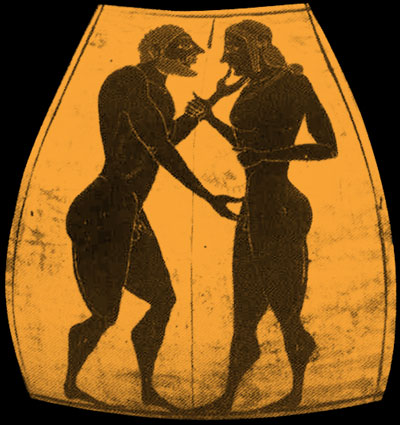
In? Just check out the group’s regular newsletters dating from the early ’80s to early ’90s — neatly preserved on its website — a fetching collage of Talmudic quotes, earnestly rendered dick art, and tantalizing record of theme nights past, including an appliance night, a Platonic love night (at which the Greek and the broad-shouldered were tempted with discounts on admission), and a flower-powered Hippiedick night. Now for the rest of the sex event explosion this week in the city. 


The League

Time to get classy, all you fluidly-gendered folk. This night, part of Femina Potens‘ series of events at Mission Control, invites you to dress up dandy (top hat and spats), va-va-voom (backless gowns and vintage lingerie), or some mixture of the two (all of the above) and pose nattily while you are entertained by a talented evening cabaret. 

Weds/28 8 p.m.-midnight, $10 for members of Mission Control, free for Femina Potens members

Mission Control 

www.missioncontrolsf.org 


“How to Have Sex With a Transguy”

Pondering the matter yourself? Put your faith in Dr. Liam “Captain” Snowdon, who is teaching this class about ways to pleasure your transman. Roles in bed, the role of surgeries in sexual feeling, and more will all be touched on. All genders and orientations welcome!

Weds/23 6-8 p.m., $20-25

Good Vibrations

1620 Polk, SF

(415) 345-0500

www.goodvibes.com 


Hot Draw!

Calling all gay male artists – Mark I. Chester has a regular drawing session with quite a cast of characters assembled as models – so sharpen your pencils and get the sneer on that leather daddy just right or perfect your rendering of the shiny metal ring clamped about the life drawing model’s balls… attached to a rope… attached to the ceiling. At any rate, do your part to render the art of fetish into whatever medium most fluffs your creativity.

Thurs/17 6:30-9:30 p.m., suggested donation

Mark I. Chester studio

1229 Folsom, SF

www.markichester.com


Shibari Relief

“Come join us. We know what it’s like to live on a faultline.” Such is the pitch from Shibari Relief, a kinky fundraiser set up to aide our buddies affected by the Japanese earthquake/tsunami/nuclear threat/kitchen sink. The group will be setting up shop with an auction of kinky art and two tickets to this year’s Shibaricon in Chicago, among other kinky goodies. Come down off your ropes, kinky community, and do something good for our neighbors across the Pacific.

Sun/27 2-5 p.m., $20 suggested donation

Wicked Grounds

289 Eighth St., SF

(415) 503-0405

www.shibarirelief.org


SF Jacks

In need of a release, or maybe a good buddy? SF Jacks has both for the distinguishing homo – a room full of menfolk bonding over hot jerk-off action. Check your clothes at the door and get to wanking… 

Mon/28 7:30 p.m., $7 donation suggested

Center for Sex and Culture

1349 Mission, SF

(415) 267-6999

www.sexandculture.org


King of the spook house

0

BRAZILIAN CULT HORROR English-language horror cinema has had its share of actors identified with playing one particular role over and over, from Bela Lugosi’s Dracula to Robert Englund’s Freddy Krueger. But we’ve never had anything quite like José Mojica Marins and his infamous Zé do Caixão (José of the Grave). Known to cult movie fans worldwide as Coffin Joe, this top-hatted, cape-flaring, bearded undertaker with extra-long curved fingernails and a mile-wide sadistic streak has been a sort of folk hero in Brazil for nearly 50 years.

His vehicles are unique fever dreams — alternately silly, shocking, or surreal, when not all three at once — that take great pleasure thumbing nose at traditional morality and any institutional authority, whether state or (especially) church. “Destroy me, I believe in nothing!” he dared God while desecrating graves in his first film, 1963’s At Midnight I’ll Take Your Soul. God demurred, perhaps intimidated.

This week sees the U.S. release (in Synapse’s Blu-ray/DVD combo pack) of 2008’s Embodiment of Evil. It’s Marins’ return to the role after a long layoff, and to the director’s seat after a longer one — apparently since 1987’s 48 Hours of Hallucinatory Sex, last among the porn movies he was reduced to during an extended career lull. (Those films are said to be stubbornly, grotesquely anti-erotic, which would be entirely in character.) It’s an official conclusion to the “Coffin Joe Trilogy” left off in 1967’s This Night I’ll Possess Your Corpse, which was advertised promising “200 Snakes! 300 Spiders! 1,000 Extras! The most terrifying film in the world!” and certainly gave sensation-seeking patrons their money’s worth with a prolonged color climax depicting the torments of a papier-mâché hell.

That makes Embodiment perhaps the longest-delayed end to a horror trilogy, kicking Dario Argento’s ass — you will recall his “Three Witches” triptych of 1977’s amazing Suspiria, 1980’s incoherent but picturesque Inferno, and 2007’s daft Mother of Tears. Perhaps Embodiment‘s biggest shock arrives when it opens with the 20th Century Fox logo — clearly somebody is still very big in Brazil. Otherwise it’s back to blaspheming basics for our antihero, who after many years is being released from prison, despite having apparently “killed nearly 30 guys just in jail.” (Never a paragon of political correctitude, Marins has the warden reluctantly “letting the beast loose” and telling his terrified guards: “Any of you turns chicken on me, I’ll get you to stand watch at the queers ward!”)

Once out, Coffin Joe resumes his lifelong quest to find a “perfect woman” capable of bearing a child “higher than God, lower than Satan,” thus allowing our “visionary of the superior bloodline” to achieve immortality. This he’ll do “even if it means imploding the entire cosmos!” For all his hubris, however, this archvillain is still scared shitless whenever his past victims appear as accusatory apparitions.

As ever, auditioning mates (most screaming kidnapees) involves “testing” for fear and resilience in ways they’re unlikely to survive. En route he also acquires lots of new enemies and is happy to orchestrate their grotesque demises too. If Coffin Joe is a sort of spook house incarnation of ideas from Nietzsche and Sade — he’s a mortal superman imposing his will on those haplessly constrained by the societal conventions he scorns — his horrors are hardly grandiose; instead they are manic plunges into the realm of ick.

One unfortunate’s face meets a bucket o’ bugs; another is coated with hot cheese, followed by hungry rats. While CJ evinces disgust at how the world has changed during his long absence (favela kids sniffing glue, etc.), his new adventure takes advantage of some new cultural norms, including goth-punk henchmen, seemingly real body piercings, and a young priest who enjoys applying electric nipple clamps at the altar. (None of this is as memorable as one “terrifying” vision in 1970’s LSD-themed Awakening of the Beast: mooning butts with cartoon faces painted on, several clutching plastic “noses” ‘tween cheeks. Run for your lives!)

Far from the best Coffin Joe movie, Embodiment nonetheless brings the crazy with Marins’ distinctive zeal for outrageous offense. His once frequently-banned works now look loopy and quaint, yet there’s still a subversive edge. Then again, he’s also a lot like the snickering older brother at the Halloween party who thrusts blindfolded kids’ hands into cold wet spaghetti, crowing “WORMS!”

Stage Listings

0

Stage listings are compiled by Guardian staff. Performance times may change; call venues to confirm. Reviewers are Robert Avila, Rita Felciano, and Nicole Gluckstern. Submit items for the listings at listings@sfbg.com. For further information on how to submit items for the listings, see Picks. 

THEATER

OPENING

*Geezer Marsh, 1062 Valencia; (800) 838-3006, www.themarsh.org. $20-50. Previews Thurs, 8pm; Sat, 5pm; Sun, 3pm (through March 27). Opens March 31. Thurs, 8pm; Sat, 5pm; Sun, 3pm. Through May 1. The Marsh presents a new solo show about aging and mortality by Geoff Hoyle.

ONGOING

As Always Eureka Theatre, 215 Jackson; www.AsAlwaysTickets.com. $25. Thurs-Sun, 8pm. Through March 27. Tracy Ward directs a new musical by Peter W. Tucker.

*Caliente Pier 29, The Embarcadero; 438-2668, www.love.zinzanni.org. $117-145. Wed-Sat, 6pm; Sun, 5pm. Open-ended. Teatro Zinzanni presents a new production conceived in San Francisco.

*40 Pounds in 12 Weeks: A Love Story The Marsh, 1062 Valencia; 1-800-838-3006, www.themarsh.org. $15-35. Fri, 8pm; Sat, 8:30pm. Through Sat/26. “I hate assumptions,” says Pidge Meade. In fact, her new solo show, about her experience as a young woman of size on a brutal crash diet, goes a long way toward unsettling more than one. Developed and directed by Charlie Varon (Rush Limbaugh in Night School, Rabbi Sam), Meade’s multi-character monologue eschews easy sentiment for a sharply performed, consistently funny and genuine engagement with her younger, bigger self. Framed by a 20-year college reunion during which she suffers an unwanted conversation with an old roommate about her intervening dramatic weight loss, Meade recounts trying to lose 40 unwanted pounds to please her devoted but “harsh” father, an Olympic-level gymnastics coach shocked and appalled by her weight gain while at school. The father-daughter story comes interlarded with a few other encounters and characters measuring the variety of attitudes and approaches to weight among women in her Midwestern milieu. Meanwhile, Meade’s problematic relationship with her demanding if ultimately responsive father finds an unexpected echo in her former roommate’s pushy inquisitiveness (which, we learn, stems from her own desperate concern over a beloved but obese teen nephew). It’s in quietly mingling awkwardness, fear, and love that Meade’s piece can really surprise, and reaffirm that whatever else follows, it’s the usual assumptions that need shedding first. (Avila)

The Homecoming American Conservatory Theater, 415 Geary; 749-2228, www.act-sf.org. Call for times and prices. Through Sun/27. North London in the mid-1960s served Harold Pinter well as an apt location for an enduring vision of familial nightmare, namely a jockeying tribe of self-interested working-class men bent on embracing as much as destroying one another. Into this testy household returns for a visit, unannounced and in the wee hours, one of their own: social climber Teddy (Anthony Fusco) back from America with wife Ruth (René Augesen). What happens next still has real force, even if it’s sometimes missing in American Conservatory Theater’s current revival. A family unit of vipers and sadists and weirdoes is still a family unit, but real connections between the actors are few here. Augesen’s Ruth—startlingly set free from deadening domestic harmony by the braying barnyard she soon comes to dominate—is the riveting center of attention, but the tension overall remains diffuse and inconsistent despite her gravitational pull. As the pugnacious patriarch, Max, slipping mercilessly from his historic spot at the top of the dog pile, Jack Willis is a bit all over the place, sometimes physically—director Carey Perloff has him well across the room in the opening scene’s vital first confrontation, instead of up in the grill of coiled son Lenny (Andrew Polk)—but in tone and register too. Kenneth Welsh’s fine performance as Max’s superficially calm brother Sam goes some way toward grounding the proceedings, but the other performances remain more dutiful than distinguished and the production never quite attains the pressure and threat it should. (Avila)

James Bond: Lady Killer Dark Room Theater, 2263 Mission; 732-9592, www.brownpapertickets.com. $20. Fri-Sat, 8pm. Through Sat/26. Dark Room Theater presents an all-new James Bond adventure.

Lady Grey (in ever lower light) EXIT on Taylor, 277 Taylor; (800) 838-3006, www.brownpapertickets.com. $15-50. Thurs-Sat, 8pm; Sun, 5pm. Through April 10. Cutting Ball Theater presents the Bay Area premiere of three short plays by Will Eno.

*Loveland Marsh, 1062 Valencia; 1-800-838-3006, www.themarsh.org. $20-50. Fri, 8pm; Sat, 8:30pm. Through Sat/26. Ann Randolph’s one-woman show extends its run.

M. Butterfly Gough Street Playhouse, 1620 Gough; (510) 207-5774, www.custommade.org. $20-28. Thurs-Sat, 8pm (also April 3 and 10, 7pm). Through April 16. Custom Made Theatre presents David Henry Hwang’s award-winning play.

*Obscura: A Magic Play Exit Studio, 156 Eddy; 673-3847, www.sffringe.org. $20-25. Fri-Sat, 8pm. Through April 16. Christian Cagigal is back with the magical. Over the last several years, the popular Bay Area writer/performer has developed a series of dramatically structured magic shows (the most recent being the autobiographical Now and at the Hour), each a different attempt at blending expert prestidigitation with elements of narrative theater. Tightly focused and deliberately small-scale, Obscura is in some ways his most successful foray yet. In the Exit Theater’s new studio space, Cagigal (with occasional help from his audience) unfolds a series of sly Gothic stories combined with extremely clever, sometimes dementedly playful card and coin tricks—the majority a collection of favorite pieces from other magicians—all played out on a delicately managed little table augmented by overhead projection (a set-up that offers various visual opportunities, including use of title cards). Rapid-fire narration (occasionally indistinct but generally articulate) and a laid back, slightly mischievous demeanor combine here with consummate skill in an intimate and very enjoyable evening of crafty little tales. If there’s an overarching theme, it probably has something to do with human folly, the persistence of mystery, and the devil, but then any good fable involving a deck of cards probably should. (Avila)

The Oldest Profession Brava Theater, 2781 24th St; 647-2822, www.brava.org. $10-25. Brava Theater presents a play by Paula Vogel, directed by Evren Odcikin.

Out of Sight Marsh, 1062 Valencia; 1-800-838-3006, www.themarsh.org. $15-50. Thurs and Sat, 8pm; Sun, 3pm. Through Sun/27. Sara Felder’s one-woman show extends its run.

Party of 2 — The New Mating Musical Shelton Theater, 533 Sutter; 1-800-838-3006, www.partyof2themusical.com. $27-29. Fri, 9pm. Open-ended. A musical about relationships by Shopping! The Musical author Morris Bobrow.

*Pearls Over Shanghai Thrillpeddlers’ Hypnodrome, 575 Tenth St; 1-800-838-3006, www.brownpapertickets.com. $30-69. Sat, 8pm. Through April 9. Thrillpeddlers’ acclaimed production of the Cockettes musical continues its successful run.

Regrets Only New Conservatory Theatre Center, 25 Van Ness; 861-8972, www.nctcsf.org. $24-40. Wed-Sat, 8pm; Sun, 2pm. Through April 3. New Conservatory Theatre presents a play by Paul Rudnick, directed by Andrew Nance.

7 Sins…One More Time! EXIT Theatre, 156 Eddy; (800) 838-3006, www.brownpapertickets.com. $25-40. Fri-Sat, 8pm. Through April 10. James Judd’s long-running comedy hit has a return engagement.

Sex and Death: A Night with Harold Pinter Phoenix Theatre, Suite 601, 414 Mason; 1-800-838-3006, www.offbroadwaywest.org. $35. Thurs-Sat, 8pm. Through Sat/26. The thing with Harold Pinter is you never know for certain whether he means for something to be funny or not. Take his most celebrated one-act, The Dumb Waiter, a rather tense dialogue between two hit-men waiting for their mark to show which veers into disarmingly surrealist territory once they start receiving mysterious lunch orders via a creaky dumbwaiter, despite not having any food, or indeed any gas to cook food on. Is this Pinter’s attempt to lighten the mood in an otherwise joyless examination of two minor functionaries in the criminal underworld, or is it a way for him to interject more unease into their already intractable situation? In Off-Broadway West’s staging they opt mainly for the latter interpretation, neither Gus (Conor Hamill) nor Ben (Shane Fahy) play up much of the sly humor tucked into their lines, and when the “surprise” twist arrives, it feels like a foregone conclusion. More deftly nuanced, the second one-act on the bill, The Lover milks the sex lives of the petty bourgeoisie for all the hidden wit and complicated innuendo that could possibly be excavated. Morphing from chilly society marrieds to shameless afternoon fling and “common garden slut” Chad Stender and Nicole Helfer play out a tightly-wound sexual fantasy with a cool edge, a satisfying end to a low-key revival. (Gluckstern)

Shopping! The Musical Shelton Theater, 533 Sutter; (800) 838-3006, www.shoppingthemusical.com. $27-29. Sat, 8pm. Open-ended. A musical comedy revue about shopping by Morris Bobrow.

Tenth Annual Bay One-Acts Festival Boxcar Theatre, 505 Natoma; 891-7235, www.bayoneacts.org. $20-32. Wed-Fri, 8pm; Sat, 3 and 8pm; Sun, 3pm. Through Sat/26. Three Wise Monkeys Theatre Company presents the tenth incarnation of the curated festival.

BAY AREA

Free Range Thinking Marsh Berkeley, TheaterStage, 2120 Allston, Berk; 1-800-838-3006, www.themarsh.org. $15-50. Fri, 8pm; Sat, 5pm. Through April 9. The Marsh Berkeley presents a new comedic solo show by Robert Dubac.

The Iliad Berkeley City Club, 1802 Fairview, Berk; (510) 698-4030. $12-24. Thurs-Sat, 8pm; Sun, 2pm. Through April 3. Inferno Theatre Company presents an adaptation of Homer’s ancient tale.

Narnia: The Lion, the Witch, and the Wardrobe Berkeley Playhouse, 2640 College; (510) 845-8542, www.berkeleyplayhouse.org. $15-33. Call for dates and times. Through April 3. Berkeley Playhouse presents a musical fantasy based on the C.S. Lewis story.

The North Pool TheatreWorks at Lucie Stern Theater, 1305 Middlefiled, Palo Alto; (650) 463-1960, www.theatreworks.org. $24-67. Tues-Wed, 7:30pm; Thurs-Fri, 8pm; Sat, 2 and 8pm; Sun, 2 and 7pm. Through April 3. TheatreWorks presents a psychological thriller by Rajiv Joseph.

Not a Genuine Black Man The Marsh Berkeley, TheaterStage, 2120 Allston Way, Berk; 826-5750, www.themarsh.org. $20-35. Thurs, 7:30pm. Through March 31. Brian Copeland’s one-man show returns to the stage.

Romeo and Juliet La Val’s Subterranean, 1834 Euclid, Berk; www.impacttheatre.com. $10-20. Thurs-Sat, 8pm. Through Sat/26. Bet you thought Romeo and Juliet was just a sappy love story at its beating heart. But as Impact Theatre’s artistic director Melissa Hillman, fight director Dave Meier, and production “blood technician” Tunuviel Luv manage to remind us, R&J is known as a tragedy for good reason—full of escalating violence and a bodycount almost as high as Hamlet’s. Before they snuff it though, Romeo (Michael Garret McDonald) and Juliet (Luisa Frasconi) fall in love in a meet-cute, after-school special way: Frasconi exhibiting the coltish excitability of a very young teenager, and doofy McDonald egged on by a pack of uncouth youth (Seth Thygesen as Benvolio, Marilet Martinez as Mercutio, Miyuki Bierlein as Balthasar) who pretty much steal the show with their crass deconstruction of Romeo’s woes. Unfortunately, the Russian mafia angle is less fully fleshed out than the teen romance portion of the show. Yes, the mobsters all sport some great tattoos, carry mean-looking pistols, and occasionally deliver their lines in Russian thanks to language consultant Helen Nesteruk, but setting the show in the ex-pat Russian community “in the Bay Area” dilutes the extreme feudalism that setting the show in Moscow would imply, and allows the production to rely a little too heavily on familiar California-isms—phrases, behaviors, and fashions— rather than committing fully to exploring the vastly different world of the Russkaya Mafiya. (Gluckstern)

*Ruined Berkeley Repertory Theatre, Roda Theatre, 2015 Addison, Berk; (510) 647-2949, www.berkeleyrep.org. $29-73. Call for dates and times. Through April 10. Berkeley Rep presents Lynn Nottage’s Pulitzer-winning play about the lives of women in Africa.

Singing at the Edge of the World The Cabaret at The Marsh Berkeley, 2120 Allston Way, Berk; (800) 838-3006, www.brownpapertickets.com. $15-35. Thurs-Fri, 8pm; Sat, 5pm. Through April 16. The Marsh presents a one-man show by Randy Rutherford.

World’s Funniest Bubble Show The Marsh Berkeley, 2120 Allston Way, Berk; 1-800-838-3006, www.themarsh.org. $8-11. Sun, 11am. Through April 3. The Amazing Bubble Man extends the bubble-making celebration.

PERFORMANCE/DANCE

Marga’s Funny Mondays Cabaret at Marsh Berkeley, 2120 Allston, Berk.; 1-800-838-3006, www.themarsh.org. Mon/28, 8pm. $10. Marga Gomez hosts a Monday night comedy series. *


Party Radar: Happy birthday, sexy Lexy

0

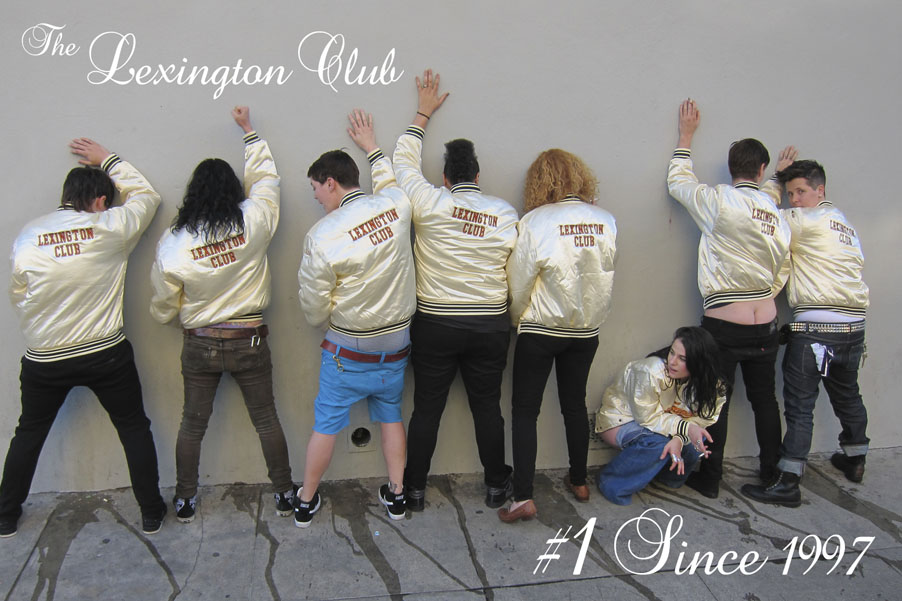
Gosh and begorrah, I know you’re hungovah — from all that St. Paddy’s Day grog or whatever. Don’t worry, you’ll feel better by Saturday, just in time to celebrate the Lexington Club‘s 14th anniversary, huzzah! Unfamiliar with this rowdy party dyke landmark? Hot chicks, get hip real quick at this blowout, featuring DJs Jenna Riot and Miss Pop, sexy-sexy dancers, no cover, and of course stiff drinks.

After the jump, a Super Ego clubs column from 2007 devoted to the Lex’s 10th anniversary (which was the perfect antidote to the L Word phenomenon of the time), giving you a wee bit o’ lesbian history.

LEXINGTON CLUB 14TH ANNIVERSARY Sat/19, 9 p.m., free. Lexington Club, 3464 19th St., SF. www.lexingtonclub.com

(originally published 4/10/07):

HOT LEX

10 years of hot dykes and cold beer at the Lexington Club

SUPER EGO Lesbians: is there nothing they can’t do? They can run a contemporary art gallery in thigh-baring Versace, tossing back their Paul Labrecqued locks as they leap from their roofless 330Ci. They can go from homeless crack addict to nude Hugo Boss model without gaining a single ounce. They can be a smokin’-hot Latina named Papi, a sassy, brassy canoodler who just happens — surprise! — to be a whiz at hoops. Astonishing lesbians!

Oh, wait. That’s The L Word — about as far from the real world of gloriously rambunctious, wild San Francisco dykes as you can get without scarfing down a gift sack of MAC Pervette lip frost, doing Pilates to Ashlee Simpson (“I am me!”), and microwaving Cheeto, your stump-tailed calico cat. Yes, yes, I know the writhing isle of televised lesbos that L makes LA out to be is one big, fat, easy, anorexic target. Don’t get your Mary Green panties in a bunch, Caitlyn. Just lie back, relax, and think of Joan Jett and Carmen Electra. It’s OK. But just as Chuck D. once bemoaned the fact that most of his heroes don’t appear on no stamps, so my homo heroes don’t appear on no Showtime.

Case in point: Lila Thirkield, the superhumanly vivacious owner of SF sapphic outpost the Lexington Club. When I first moved here in the early ’90s, I almost turned straight or something. The San Francisco my naive dreams envisioned was full of hot, scruffy, tattooed boys into hip-hop and punk, all of them on goofy, gleaming bicycles, occasionally in drag. What I got were mostly overgymed proto–circuit queens in pink spandex thongs and cracked-out twinks you could practically see through. Great if I needed to floss, but … And while all the cute ex–ACT UPers were somewhere adrift — busy shearing sleeves off flannels, maybe — it was the rough-and-tumble sistas who really dotted the t’s on my fanboy résumé. Dykes ruled it.

That was back when wallet chains were radical and FTMs were the new It girls. I’m dating myself, but who wouldn’t, hello? Alas, despite all those Sister Sledge–soundtracked strides up the rainbow of equal signs, women could still get kicked out of bars for making out. Wha? It was a gay man, man, man’s world, and the few lesbian watering holes hewed strictly to the old-school standards: alternadykes, calm down.

Thirkield, a spiky-souled kid at the time, stepped up and opened the Lexington in 1997 to give dykes of a different stripe a dive of their own. Like all bars clever enough to fill a cultural gap, the Lex galvanized its community and reinforced the new, boisterous lesbo aesthetic that combined street activism, machismo appropriation, punk rock attitude, and a winking yen for girly pop culture. And hot sex, of course.

“It seemed so important to have a space where we could be creative, where artists, street kids, and young people could hook up and express themselves,” Thirkield says. “It was my first time running a bar, but it was like the whole community was running it with me.”

Over the past decade the Lex has persevered in the same spirit. “The economics of the city have really changed,” Thirkield says. “Our crowd has a really hard time living here now — that’s why we never charge a cover and we always support other things going on. But really, we’re doing better than ever.”

The young drinking dyke crowd has also expanded, finding homes over the years in such spaces as the Phone Booth and Pop’s, as well as legendary joints such as Sadie’s Flying Elephant and the Wild Side West. New bar Stray is catering to a mostly female clientele, and, although lesbian spaces Cherry and the old Transfer have succumbed, a slew of roving dyke dance parties have taken root.

“The dyke scene has changed in the past 10 years too,” Thirkield says. “It’s more diverse. Certain aspects of it are more visible in the media — some people expect different things. We get a lot more complaints from people coming in for the first time, saying things like ‘It’s such a dive!’ Well, yes, that’s exactly what it is. I mean, it’s great that lipstick types exist. I hope they find a place that makes them happy. But if you want to flick your lighter and sing along to old Journey songs with a roomful of babes from around the world — like during Pride last year — this is the place.”

And what about that pesky L Word? “We get a big crowd to watch it on Sunday nights — mostly because they can’t afford cable. Then they stay for an hour afterward, drinking and bitching about it. So it’s great for business!”

Live Review: Warpaint at The Independent, 3/16

0

The anticipation was brewing: even before the the ladies of Warpaint took the stage at the Independent, a guy standing at front and center passed out. His muscle failure could have been a product of over-intoxication, but I’m guessing it was an overdose of hard excitement. I admit, I too got the jimmy-legs during the show but I managed to keep them clenched until the encore came to a wow-worthy close. And then I hit the floor with a smirk. 

The LA band of four was nothing short of stunning. The set was gorgeously long, stacked with songs from their debut, The Fool [Rough Trade, 2010] and an exceptional jam-session during the encore. The guitars were intense, the drums fierce and the bass lines sanded rough edges with impressive force. Warpaint rocks hard and yet continually taunts with such an eerie, feminine mystique. 

It’s the girly details I liked best: Theresa Wayman hugs her guitar while she sings, Emily Kokal’s hips sway while she plucks a rift, the constant and very mischievous smirk on drummer Stella Mozgawa’s lips and Jenny Lee Lindberg’s relentless wild-child energy. They laughed, they kissed and hugged and flirted– and all the while the music was still totally rad and introspective. Harmonies oozed like honey from the nest and the simultaneous head-banging kept emotions on the rail. They drew the crowd in with a taunting index finger and then pushed us flat down when we got too close. It was the perfect mix of sensual and edgy. 

The Warpaint women are obviously best buds and their complimentary energies explode on stage. They’re like an upgraded version of the Babysitters Club— a hippie, feminist, grown-up version of the girl clan that could have been totally badass if they had traded all their boy-drama and horseback riding for band practice. 

I already totally loved the recorded version of Warpaint but their live performance upgraded my feelings to overflowing admiration for their mad skills, sex appeal and sweetness. No doubt this group is going to blow up and it’s totally deserved. 

Hot sexy events: March 16-22

1

Although it’s not often that the Wall Street Journal alerts us to convincing arguments for the existence of prostitution, that seems to be the case today. The Journal published findings from a Duke University paper done on sex workers in Kenya that concluded that many prostitutes found relief in hard times from their clients. Illnesses in the family, unexpected handicaps, and staggering funeral bills were all cited as instances in which sex workers fell back on the largesse of their regular clients for financial support. 

Respectful relationships between sex workers and johns – yet another nail in the coffin for those that would ban the industry on the basis of worker exploitation.


The Art of 8 Limbs

Leave your bag of tools at home this time, kinky community. Disciple, local expert in kinky grappling and cell popping, will be teaching this class in utilizing one’s own body as an implement in body impact play and striking. And just to make sure you’re not inflicting pain on unsuspecting parties, part of the night will be devoted to stretching exercises you can perform before you put the techniques into play.

Thurs/17 8-10 p.m., $20

SF Citadel

1277 Mission, SF

(415) 626-2746

www.sfcitadel.org 


Exiles Mini Un-Conference

What’s an un-conference? Well, it’s unplanned, unpredictable, and undone when The Exiles, women’s BDSM group are running it. Come with something to teach and you can sign up on a schedule grid. Come with something to learn and you’ll do just that. After the impromptu workshops, the group is holding its officer elections, so a return to order is inevitable. Women-identifying folks only, please. 

Fri/18 7:30-10:30 p.m., free

Women’s Building 

3543 18th St., SF

www.theexiles.org


Kinky Salon Mardi Gras

This pansexual swinger’s party will probably be the easiest place in town to give away your beads. Get frisky while Bombshell Betty, Fromagique, Dangerous Delilah, and more take turns onstage to burlesque and brass band your inhibitions away.

Sat/19 10 p.m.-late, $25-35 members only

Mission Control

www.missioncontrolsf.org


Chaps Closing Party

You may have heard Chaps is closing. To send you leather lusties into the next few weeks without a cruise bar at 1225 Folsom, the bar is holding this sayonara party. Chuck Slaton and Ron Morrison, owners of the original Chaps, will be on hand, so take that shot, bend over, and wave – it’s been a heady three years. 

Sat/19 9 p.m.-late, free

Chaps 

1225 Folsom, SF

(415) 255-2427

www.chapsbarsanfrancisco.com


“Ask Me, I’ll Tell You: Men and Women Talk Out Loud About Sex and Aging”

How does down and dirty change when gravity comes to roost and you’re staring down retirement? Good question, one that even those approaching that age don’t rightly know how to answer. Joan Price gives this lecture on spicing up senior sex, lessons that you can also cull from her books,  Better Than I Ever Expected: Straight Talk about Sex After Sixty and Naked at Our Age: Talking Out Loud about Senior Sex.

Tues/22 6-8 p.m., $25-30

Good Vibrations

1620 Polk, SF

(415) 345-0500

www.goodvibes.com 


Sex Work Shop Talk

Take a load off those stilettos for a chat with your peers – that’s the mission of these semi (check the sexworkshoptalk.com website for the next date) weekly meet-ups for members of the sex trade just for industry types to connect on work-related topics. This week the get-together will also feature makeup tips for all genders, and a clothing/toy/makeup swap. Oh, and chocolate. There will be chocolate.

Tues/22 6:30 p.m., $3-10 suggested donation

Center for Sex and Culture

1349 Mission, SF

(415) 552-7399

www.sexandculture.org


Cult fiction

0

arts@sfbg.com


LIT I read a lot of thrillers. Mysteries, murder, international intrigue, weird pulp crime … I’ve been addicted since I was in high school and discovered John D. McDonald, Alistair McLean, and Trevanian. These days, I live by James Patterson, Michael Connolly, Robert B. Parker, Janet Evanovich, Lee Child, and John Lescroart.


And I just found the best new thriller writer, and the best new character, to come along since Mr. Child invented Jack Reacher. The writer’s name is Taylor Stevens, her character is Vanessa Michael Munroe, and the first book of what I hope will be a continuing series is called The Informationist (Crown, 307 pages, $23).


Buy it. It’s amazing. And when Stevens is as big as Patterson, you can say you helped discover her.


V. M. Munroe is an awesome protagonist. She ran away from her missionary parents as a teen to sign on with one of Africa’s most notorious gunrunners, and now she deals in information — secrets somebody wants but almost nobody can find.


The book’s set in Central Africa, where Munroe has been hired to find the kidnapped daughter of a Texas oil billionaire.


By the way: she’s skinny, slight, and a total fucking badass who rides a Ducati and effortlessly beats the shit out of the poor losers who try to accost her at a gas station. She speaks 22 languages. She’s the first trans thriller lead, too, a person who slips effortlessly from female to male. Of course, she’s got personal demons, and part of the back story is her battle to silence them. By the end of the second chapter, I had written this in my notes: “I love Vanessa already. Nobody else like her on the literary scene. Nobody.”


The plot is tight, the characters come alive, the sex is fun and intense sometimes but not overdone. The scene at the end involving a sniper, a knife fight, and a stunning decapitation (tell you more and I’ll ruin a gut-wrenching chapter) as good as anything I’ve read in years.


Unlike a lot of thriller authors, Stevens can write. Check it out:


The details of the case ran through her head, and with them came the memories. It was another life, another world, untamed and vast, where stretches of two-lane tarmac ran vein-like through sub-Saharan emptiness, and buses — old, rusting, belching black smoke — pumped the blood of humanity along the way.


And this from a woman who has a sixth-grade education.


Seriously. One of the most amazing things about Stevens is that she grew up in a cult in Central Africa, wasn’t allowed to go beyond basic education, and wasn’t allowed to read books.


I caught up with her in February; here are some excerpts from our talk.


SFBG Tell me a little about your background and how you came to write this book.


Taylor Stevens I was born into and raised in the Children of God, an apocalyptic religious cult. That’s the only world I knew. It was very secluded; all our interactions with what went on outside the community were accompanied by an adult cult member. We didn’t have access to TV; books were almost nonexistent; we didn’t listen to the radio. My entire world was framed within the context of the cult.


SFBG When did you get out?


TS I didn’t get out until I was in my late 20s. I was quite afraid to leave, not of what the cult would do to me, but of what God would do to me. My ex husband — then my husband — and I took a long time to plan how to get out because we didn’t want to end up like some other cult members who had left with no education, no money, no career, on the streets. We had a baby at the time. The group didn’t believe in education. The standard acceptance was sixth-grade education.


SFBG So where did you learn to write?


TS It’s a big mystery, huh? Like my main character, I guess, I absorb languages — at least I absorbed English. I had to teach myself.


The ultimate inspiration came from reading Robert Ludlum, one of the first authors I read, and it was quite by accident. After we made it to the United States, we were so broke, we were living — a family of four — on $13 an hour. I would buy books at garage sales because it was so cheap, then I would sell them again and use the money to buy more books. The first book I read was The Holcroft Covenant. It was so much beyond anything I’d seen before in reading, so I started reading Ludlum voraciously. I found The Bourne Identity and started reading it, and when I was reading The Bourne Ultimatum I was amazed by these places and people. I said to myself, “I wish I could write about all these exotic settings.” And then I thought, “Wait a minute, I’ve lived in places far more exotic than this.”


I’ve always wanted to write, but the cult would never let me write. I got in horrible trouble growing up and trying to write.


SFBG So did you just sit down and start working on The Informationist?


TS That was the first thing I wrote. I had dabbled when I was 15, but I had all my stuff taken and burned. I figured that if I’m going to write, I’d


better learn something about writing. So I bought a couple of used books on writing fiction and I learned from those.


SFBG In this genre of thriller fiction, there aren’t a lot of female protagonists. Was that something you were thinking about?


TS No, because I had no idea. I didn’t know what was out there at all. Even to this day, I’m not very widely read. I’ve read maybe 250 books. I just wrote what made sense to me.


SFBG One of the interesting things about Vanessa is that she has something of a trans element to her. Sometimes she’s Vanessa and sometimes she’s Michael. How did you come up with that?


TS When I first started writing this book, it didn’t have any plot. I just wanted to use Africa as my setting. Jason Bourne was my ideal because I wanted a character who was tormented — not the ideal good guy or good girl, because life doesn’t work like that. Right while I was reading the Ludlum books, I saw the Tomb Raider movies, back to back, and what I loved about Lara Croft was that, while she was a bit of a caricature, she was very sexual, very feminine on every level. I didn’t want my character to lose her femininity in her badassery.


As far as playing the role of a male, in my experience in having lived in some of these countries, it’s completely implausible that you would have a woman be able to go in there and root around and get what she needed. It wouldn’t happen. So the only way she could do it is if she could pull herself off as a man.


SFBG I’m not going to give away too much of the plot, but the subplot of her coming from of a background where she was living at 14 with a gunrunner, there is a certain parallel with you.


TS Her life and my life are not at all similar. But to understand her pain and the frustrations she went through — there’s no way to create that without living with it. I did draw on the sense of emotions my friends and I grew up with. We didn’t have a happy childhood, so it wasn’t difficult to conjure that emotional torment, because it’s very real.


SFBG They’re going to make a movie out of this book, and I’m thinking if they stay true to the scene at the end with the decapitation, you’re going to have a hard time getting even an R rating. I read a lot of thrillers, and I’ve rarely seen such a graphically brutal thing. It’s brilliant, and it’s gut-wrenching. Where did that come from?


TS It just made sense. This person already straddles a fine line between brilliance and insanity. And for her to lose the only one person who loves her for what she was, in such an arbitrary manner, there was no other way she could respond.


SFBG I hope there’s a sequel.


TS It’s already written. And I use my background in a more direct way — and there’s a third book I’m working on now. And if I’m given an opportunity, I hope there will be much more of Michael Munroe.

Anticlimax

1

Dear Andrea:

I’m living with my first “serious” girlfriend and everything is great except the sex. As far as I can tell, she is having orgasms but I’m not. When we have sex I have to finish myself off with my hand. I don’t think it’s supposed to go this way.

Love,

Disappointed

Dear Dis:

You don’t say whether you’ve ever had intercourse with anyone else before Serious, but I’m going to guess not.

So anyway. A little self-stim never hurt anyone. I don’t think that part is, in and of itself, a problem. Technically, it’s actually a solution. It could be a bit grim, though, to always have to rely on your own devices despite having gone to all the trouble to acquire and keep a partner.

Typically, anorgasmia and, uh, semi-orgasmia are usually a girl problem, with guy problems tending to run to the can’t-get-it-up, can’t-keep-it-up, and “whoops!” varieties. Or maybe you’re on SSRI antidepressants, which I’m kind of hoping you are, because that can be fixed.

No? And no blood pressure meds either, right? Or any scarring or neuropathy or … no, you’re like 20 years old. So it’s almost certainly not some physical thing. Probably you are entirely capable of reaching orgasm easily but you’re not letting yourself.

Do you think you might be going kind of out-of-body and are watching yourself perform instead of feeling yourself feel? Are you wondering if she really likes having sex with you or is just pretending? All this falls under the clunky-sounding rubric of “specatatoring,” and you can get out of the habit but it does take some work.

Are you anxious? Worried about keeping it up? Judging yourself? Raised to believe that sex is bad — or that premarital sex is bad? Or are you fine with sex but terribly worried you’ll get her pregnant and ruin everybody’s life?

Obviously that last one can be addressed with technology. And other anxieties can be salved through other technologies, be they drugs or meditation or talking to each other so you can stop wondering and worrying about what she might be thinking.

But maybe what’s wrong is the intercourse itself. An old instructor of mine used to teach that sex is nothing but fantasy plus friction, and if you’re OK in the fantasy department, maybe you need more friction. Move! Put her on top. Try it from behind. I don’t care, just try something else. And try more lube while you’re at it, and also, less.

Or maybe you are one of those men, not rare but rarely spoken of, who just don’t like intercourse much. You didn’t have this problem back while you were still letting yourselves have teenage sex before you moved in together. If this is the case, all you have to do is add back the stuff you like to the stuff she (presumably) likes and boom, everybody’s happy.

Final possibility? You two are not very good at this. This, too, is OK — lack of knowledge and lack of skill are entirely curable conditions.

Love,

Andrea

Got a question? Email Andrea at andrea@altsexcolumn.com

Seven for spring

1

marke@sfbg.com

FASHION/SHOPPING Everything seems so chill in men’s street wear lately, no? The harsh electro neons and jittery MySpace fabrics of the past few years have gone the way of shutter shades and full-print tees. Flashiness — on the dance floor, on the streets, online — is fading into a style of subtle sparks, complex yet unfussy, mixing high-tech winks with a comfy, endlessly expandable base. Menswear is going deep on us, and taking our sensibilities with it: if you’re still using irony to justify your outfit, then you need to back slowly away from your Tumblr and take a look around.

This makes it harder to binge shop for your wardrobe at thrift stores, of course, unless you’ve got a great connection to a super-hip tailor who won’t go overboard. And I fear that by jettisoning the devil-may-care attitude of WTF bricolage ensembles, we’re quaffing any sense of humor altogether. Still, the burst of, dare I say, modesty after a decade of gaudy attention-whoring comes as a relief. It feels like menswear in 2011 just totally deleted the comments section and moved on.

Another worry, though: how much does all this cost? It’s true that the new look and feel hearkens back to the old model of class, taste, and, yes, accounts. Fortunately, you can get by just fine matching neutral-leaning thrift and vintage finds — some holes or split seams, no problem — with newer touches. Yay for casual deconstruction! Lately San Francisco, previously by no means an oasis of menswear shopping, has opened up in the cool men’s streetwear department, adding to its handful of staples (Nomads, Upper Playground, Density, Unionmade, Azalea, Brooklyn Circus, etc.) a batch of new places and sites to search for spring inspiration. Below are some of my faves.


SUI GENERIS “ILLE”

This is the coolest place to vintage shop in the city right now. Castro men’s designer consignment boutique Sui Generis isn’t new, but it just moved, doubling its size as well as its offerings, and adding “Ille,” a Latin masculine declension, after its name. (Owners Miguel Lopez and Gabriel Yanez have turned the old location, at 2265 Market St., into “Illa,” a gorgeous upscale women’s consignment shop.) I’m far from a label whore, but I can appreciate when my friends gush over the selection of repriced Prada, etc. on offer here, all of it chosen with an excellent eye. Beyond the brand worship, you’ll find everything you need to construct a look here — just add your own futuristic flourishes — and the prices aren’t too shabby.

2265 Market, SF. (415) 437-2231, www.suigenerisconsignment.com


NICE COLLECTIVE MSU

Just down the street from Sui Generis is this rad pop-up shop from the boys at the fantastic local Nice Collective label, showcasing their particular genius for deconstructed clothing that radiates raffish gentility. (I’m living for their anarcho-utopian push-up cargo pants.) The tech details in most of their designs are fascinating, and the interior of this shop, with its disassembled drop ceiling, billowing canvas tunnel entrance, and digital projections, is a work of art in itself. Nice Collective is a real, big time design house, though, so expect related price points and quality.

2111 Market, SF. (415) 200-5322, www.nicecollective.com


HANGR 16

Go to this just-opened Mission District store if only to bask in the incredible friendliness, not pushiness, of the people who work there. As well as carrying unique items from local design wunderkinds Turk + Taylor — I’m still drooling over this one heavy felt Army jacket there — Hangr 16 offers an array of super-affordable button-ups, western shirts, plaid flannels, jeans, and nifty tees in its immaculate little white hangar of a space. More shopping options in the Mission? Oh yeah.

3128 16th St., SF. (415) 626-5522. www.faceboook.com/hangr16


BUSH + LEAVENWORTH

A smooth take on classic Americana from this online design house, founded by Neth Nom at his apartment guess where. Light plaid button-ups and some mouthwatering tee designs based on chess pieces (queen for me!) are highlights, as is the ultra-sporty nylon Fillmore windbreaker, combining Members Only stylishness with team jacket masculinity.

www.bushandleavenworth.com


MISSION WORKSHOP

Bike enthusiasts with chronic Chrome fatigue should fixie-fly to this hidden little warehouse outlet immediately. Beautifully crafted messenger bags and backpacks in unique styles are the draw, but the supplementary Quoc Pham, DZR, and house footwear, plus a good selection of outerwear, transcend utility to style bliss.

40 Rondel Place, SF. (415) 864-7225, www.missionworkshop.com


REVOLVER

I am crying, weeping with want, over this kickass pair of Yuketen Maine Guide OX Red shoes that look like Docksides on steroids. They are $440 at Revolver, a cute little joint that just opened in Lower Haight, and, alas, I sold my first-born for a baggie in the 1990s. But I am going to try them on with a pair of $199 Denham Mohawk chinos and a post-prepster $160 ecru Vassan 2-Tone jacket and yacht rock the fuck out for a few minutes.

136 Fillmore, SF. (415) 871-0665, www.revolversf.com


ALLSAINTS SPITALFIELDS

I really hate to recommend a chain, even one from Britain that’s just launching on these shores. But hey, I can’t afford anything here anyway (basic shirts start at around $140), so I’m going to tell you to go and check it out, if only because of the stunning interior that mixes steampunk accents with actual Victoriana. The clothes represent the complete yet fascinating gentrification of a certain postapocalyptic Burning Man aesthetic (the one without the sex clowns and fun fur). Everything is perfectly distressed — work boots, for instance, that gleam vermilion in certain slants of light.

140 Geary, SF. (415) 762-0702, www.allsaints.com

Film Listings

0

SAN FRANCISCO INTERNATIONAL ASIAN AMERICAN FILM FESTIVAL

The 29th SFIAAFF runs through Sun/20 at the Camera 12, 201 S. Second St., San Jose; Pacific Film Archive, 2776 Bancroft, Berk.; Sundance Kabuki, 1881 Post; and Viz Cinema, New People, 1746 Post, SF. For tickets (most shows $12) and additional program information, visit www.caamedia.org. All times pm.

WED/16

Kabuki “Futurestates” (shorts program) 4. One Voice 4:45. Made in India 6:45. Anna May Wong: In Her Own Words with “Slaying the Dragon Reloaded” 7:15. Dance Town 9:15. Affliction 9:30.

PFA M/F Remix 7. Sampaguita, National Flower 9.

Viz “Living Life Large” (shorts program) 4. Dog Sweat 6:45. Peace 9:15.

THURS/17

Kabuki Living in Seduced Circumstances 4:20. “Tainted Love” (shorts program) 5:15. “Silent Rituals and Hovering Proxies” (shorts program) 6:45. Surrogate Valentine 7. Bi, Don’t Be Afraid! 7:30.

PFA Dance Town 7. Nang Nak 9:20.

Viz “Life Interrupted” (shorts program) 5. “Futurestates” (shorts program) 7:30.

FRI/18

PFA Passion 7. The Taqwacores 8:45.

SAT/19

Camera Amin 12:15. Piano in a Factory 1. Saigon Electric 3:15. “Life, Interrupted” (shorts program) 3:30. Almost Perfect 6. Made in India 6. Emir 8:30. When Love Comes 9.

PFA Bend It Like Beckham 4. The Imperialists Are Still Alive! 6:10. Histeria 8.

SUN/20

Camera “3rd I South Asian International Shorts” noon. The Fourth Portrait 1. One Voice 2:15. Surrogate Valentine 3:30. Abraxas 4:45. Bi, Don’t Be Afraid! 6. It’s a Wonderful Afterlife 7:30. Break Up Club 8.


OPENING

Certified Copy See “Looking Glass Love.” (1:46) Clay, Shattuck, Smith Rafael.

*Heartbeats See “Xavier University.” (1:35) Lumiere.

*The Human Resources Manager What happens when a nameless, faceless “human resource” begin to resolve into a palpably real being with hopes, fears, loved ones, a hometown, a past? The harried Human Resources Manager of a big Jerusalem bakery finds out when one of his employer’s foreign workers is killed in a suicide bombing. After her body remains unclaimed in a city morgue, his employer is tagged with callous indifference, and it’s up to the beleaguered HR Manager (Mark Ivanir) — already suffering from something of an existential crisis — to undertake damage control. That task turns out to be absurdly above and beyond the ordinary when he retraces his late charge’s footsteps and tracks down her family in Romania, dogged by a meddling reporter (Guri Alfi). Back in the bleak old country, “neither east nor west,” as he’s constantly reminded, the HR Manager encounters a suitably salty, strange array of characters — the earthy Consul (Rozina Cambos) and the deceased’s divorced husband (Reymond Amsalem) and her feral son (Noah Silver) — though who can actually claim the lady’s remains? The troublesome chore turns into a journey about reconnecting with the people the HR Manager stopped seeing as full-fledged, complicated beings. Working from A.B. Yehoshua’s 2006 novel, A Woman in Jerusalem, director Eran Riklis deigns to give his characters names, apart from the dead, and instead focuses on crafting a carefully balanced, altogether enjoyable and accessible black comedy, rendering it all with a delicate touch that Anton Chekhov might have approved of. (1:43) Opera Plaza, Shattuck. (Chun)

*Jane Eyre Do we really need another adaptation of Jane Eyre? As long as they’re all as good as Cary Fukunaga’s stirring take on the gothic romance, keep ’em coming. Mia Wasikowska stars in the titular role, with the dreamy Michael Fassbender stepping into the high pants of Edward Rochester. The cast is rounded out by familiar faces like Judi Dench, Jamie Bell, and Sally Hawkins — all of whom breathe new life into the material. It helps that Fukunaga’s sensibilities are perfectly suited to the story: he stays true to the novel while maintaining an aesthetic certain to appeal to a modern audience. Even if you know Jane Eyre’s story — Mr. Rochester’s dark secret, the fate of their romance, etc. — there are still surprises to be had. Everyone tells the classics differently, and this adaptation is a thoroughly unique experience. And here’s hoping it pushes the engaging Wasikowska further in her ascent to stardom. (2:00) Embarcadero. (Peitzman)

*Limitless An open letter to the makers of Limitless: please fire your marketing team because they are making your movie look terrible. The story of a deadbeat writer (Bradley Cooper) who acquires an unregulated drug that allows him to take advantage of 100 percent of his previously under-utilized brain, Limitless is silly, improbable and features a number of distracting comic-book-esque stylistic tics. But consumed with the comic book in mind, Limitless is also unpredictable, thrilling, and darkly funny. The aforementioned style, which includes many instances of the infinite regression effect that you get when you point two mirrors at each other, and a heavy blur to distort depth-of-field, only solidifies the film’s cartoonish intentions. Cooper learns foreign languages in hours, impresses women with his keen attention to detail, and sets his sights on Wall Street, a move that gets him noticed by businessman Carl Van Loon (Robert DeNiro in a glorified cameo) as well as some rather nasty drug dealers and hired guns looking to cash in on the drug. Limitless is regrettably titled and masquerades in TV spots as a Wall Street series spin-off, but in truth it sports the speedy pacing and tongue-in-cheek humor required of a good popcorn flick. (1:37) (Galvin)

The Lincoln Lawyer Matthew McConaughey stars as an unconventional lawyer who takes on a controversial client (Ryan Phillippe). (1:59)

The Music Never Stopped Based on a Dr. Oliver Sacks case history, this neurological wild-ride focuses on the generation gap in extremis: after a ’60s teenage son rebels against his parents, staying incommunicado in the interim, he resurfaces over two decades later as a disoriented, possibly homeless patient they’re called to identify at a hospital. He’s had a benign brain tumor removed — yet it had grown so large before surgery that it damaged gray-matter areas including those handling recent memory. As a result, Gabriel (Lou Taylor Pucci) relates to Mr. (J.K. Simmons) and Mrs. Sawyer (a terrific but underutilized Cara Seymour) as if they were still his upstate NY domestic keepers. A radiant Julia Ormond plays the music therapist who convinces them Gabe might respond to music, which had helped serially glue and sever the father-son bond decades earlier. This is an inherently fascinating psychological study. But director Jim Kohlberg and his scenarists render it placidly inspirational, with too little character nuance, scant period atmosphere (somewhat due to budgetary limitations), and weak homage to the Grateful Dead (ditto) rendering an unusual narrative oddly formulaic. (1:45) Shattuck. (Harvey)

Paul Across the aisle from the alien-shoot-em-up Battle: Los Angeles is its amiable, nerdy opposite: Paul, with its sweet geeks Graeme (Simon Pegg) and Clive (Nick Frost), off on a post-Comic-Con pilgrimage to all the US sites of alien visitation. Naturally the buddies get a close encounter of their very own, with a very down-to-earth every-dude of a schwa named Paul (voiced by Seth Rogen), given to scratching his balls, spreading galactic wisdom, utilizing Christ-like healing powers, and cracking wise when the situation calls for it (as when fear of anal probes escalates). Despite a Pegg-and-Frost-penned script riddled with allusions to Hollywood’s biggest extraterrestrial flicks and much 12-year-old-level humor concerning testicles and farts, the humor onslaught usually attached to the two lead actors — considered Lewis and Martin for pop-smart Anglophiles — seems to have lost some of its steam, and teeth, with the absence of former director and co-writer Edgar Wright (who took last year’s Scott Pilgrim vs. the World to the next level instead). Call it a “soft R” for language and an alien sans pants. (1:44) California. (Chun)

*Phil Ochs: There But For Fortune When Phil Ochs was at his peak, he was one of the finest polemical folksingers to come out of the ’60s, and when he tumbled from those heights, the fall was terrible: he lost more than friends and fame — he appeared to completely lose himself, to substance abuse and mental illness. Director Kenneth Bowser does the singer-songwriter justice with this documentary, threading to-the-ramparts tunes like “Hazard, Kentucky,” questioning numbers a la “Love Me, I’m a Liberal,” and achingly beautiful songs such as “Jim Dean of Indiana” throughout political events of the day, scenes from a protest movement that were inextricably entangled with Ochs’ oeuvre. Along with the many clips of Ochs in performance are interviews with the artist’s many friends, cohorts, and fans including Van Dyke Parks (who is becoming a Thurston Moore-like go-to for a generation’s damaged voices), brother (and music archivist) Michael Ochs, Joan Baez, Tom Hayden, Peter Yarrow, Billy Bragg, daughter Meegan Ochs, and Ed Sanders. Expect an education in Ochs’ art, but also, perhaps more importantly (to the singer-songwriter), a glimpse into a time and place that both fed, fueled and bestowed meaning on his songs. Bowser succeeds in paints the portrait of a performer that was both idealistic and careerist, driven to fight injustice yet also propelled to explore new creative avenues (like recording with local musicians in Africa). Did Ochs fall — by way of drink, drugs, and mental illness — or was he pushed, as the artist claimed when he accused CIA thugs of destroying his vocal chords? The filmmaker steps back respectfully, allowing us to draw our own conclusion about this life lived fully. (1:38) Smith Rafael. (Chun)

You Won’t Miss Me Look at this fucking hipster: dour, aimless Shelly (Stella Schnabel, daughter of Julian) has her own New York City apartment (plus access to a country home, the ability to travel to Atlantic City on a whim, etc.) despite having no apparent source of income. Shelly drifts, going on auditions to further her as-yet unsuccessful acting career; leaving monotone voice mails for her mother; visiting her therapist; hooking up with assorted unwashed dudes; and hanging out with her insipid friends, one of whom helps our hapless 21st century protagonist set up her very first email account. That Shelly is depressed is a given; why anyone would choose to watch this drag of a film is a mystery. Director Ry Russo-Young aims to break up the angst by deploying an array of formats — from Super 8 to Flip — but no amount of artsy quirks (or cameos recognizable only to mumblecore enthusiasts) can make up for You Won’t Miss Me‘s uninvolving plot and unsympathetic characters. For a less painful (though by no means pain-free) experience, seek out last year’s similar Tiny Furniture instead. (1:21) Roxie. (Eddy)

ONGOING

The Adjustment Bureau As far as sci-fi romantic thrillers go, The Adjustment Bureau is pretty standard. But since that’s not an altogether common genre mash-up, I guess the film deserves some points for creativity. Based on a short story by Philip K. Dick, The Adjustment Bureau takes place in a world where all of our fates are predetermined. Political hotshot David Norris (Matt Damon) is destined for greatness — but not if he lets a romantic dalliance with dancer Elise (Emily Blunt) take precedence. And in order to make sure he stays on track, the titular Adjustment Bureau (including Anthony Mackie and Mad Men‘s John Slattery) are there to push him in the right direction. While the film’s concept is intriguing, the execution is sloppy. The Adjustment Bureau suffers from flaws in internal logic, allowing the story to skip over crucial plot points with heavy exposition and a deus ex machina you’ve got to see to believe. Couldn’t the screenwriter have planned ahead? (1:39) 1000 Van Ness, Piedmont, SF Center, Shattuck, Sundance Kabuki. (Peitzman)

*Battle: Los Angeles Michael Bay is likely writhing with envy over Battle: Los Angeles; his Transformers flicks take a more, erm, nuanced view of alien-on-human violence. But they’re not all such bad guys after all; these days, as District 9 (2009) demonstrated, alien invasions are more hazardous to the brothers and sisters from another planet than those trigger-happy humanoids ready to defend terra firma. So Battle arrives like an anomaly — a war-is-good action movie aimed at faceless space invaders who resemble the Alien (1979) mother more than the wide-eyed lost souls of District 9. Still reeling from his last tour of duty, Staff Sergeant Nantz (Aaron Eckhart) is ready to retire, until he’s pulled back in by a world invasion, staged by thirsty aliens. In approximating D-Day off the beach of Santa Monica, director Jonathan Liebesman manages to combine the visceral force of Saving Private Ryan (1998) with the what-the-fuck hand-held verite rush of Cloverfield (2008) while crafting tiny portraits of all his Marines, including Michelle Rodriguez, Ne-Yo, and True Blood‘s Jim Parrack. A few moments of requisite flag-waving are your only distractions from the almost nonstop white-knuckle tension fueling Battle: Los Angeles. (1:57) California, 1000 Van Ness. (Chun)

Beastly The problem with a title like Beastly is that it’s difficult to avoid the obvious line: the movie lives up to its name. But indeed, this modernized take on the Beauty and the Beast tale is wretched on all fronts — a laughable script, endless plot holes, and the kind of wooden acting that makes you long for the glory days of Twilight (2008). New “It Boy” Alex Pettyfer stars as Kyle, a vapid popular kid who is cursed to look like a slightly less attractive version of himself by a vengeful witch (Mary-Kate Olsen). Only the love of kind-hearted Lindy (Vanessa Hudgens) can cure him of his fate. There is so much wrong with Beastly, it’s hard to zone in on its individual faults: this is a film in which the opening scene has Kyle telling his ugly classmates to “embrace the suck”—and then getting elected to student government anyway. Embrace Beastly‘s suck if you can’t live without Pettyfer’s washboard abs, but you’re far better off rewatching the Disney or Cocteau versions. (1:35) 1000 Van Ness. (Peitzman)

Biutiful Uxbal (Javier Bardem) has problems. To name but a few: he is raising two young children alone in a poor, crime-beset Barcelona hood. He is making occasional attempts to rope back in their bipolar, substance-abusive mother (Maricel Álvarez), a mission without much hope. He is trying to stay afloat by various not-quite legal means while hopefully doing the right thing by the illegals — African street drug dealers and Chinese sweatshop workers — he acts as middleman to, standing between them and much less sympathetically-inclined bossmen. He’s got a ne’er-do-well brother (Eduard Fernandez) to cope with. Needless to say, with all this going on (and more), he isn’t getting much rest. But when he wearily checks in with a doc, the proverbial last straw is stacked on his camelback: surprise, you have terminal cancer. With umpteen odds already stacked against him in everyday life, Uxbal must now put all affairs in order before he is no longer part of the equation. This is Alejandro González Iñárritu’s first feature since an acrimonious creative split with scenarist Guillermo Arriaga. Their films together (2006’s Babel, 2003’s 21 Grams, 2000’s Amores Perros) have been criticized for arbitrarily slamming together separate baleful storylines in an attempt at universal profundity. But they worked better than Biutiful, which takes the opposite tact of trying to fit several stand-alone stories’ worth of hardship into one continuous narrative — worse, onto the bowed shoulders of one character. Bardem is excellent as usual, but for all their assured craftsmanship and intense moments, these two and a half hours collapse from the weight of so much contrived suffering. Rather than making a universal statement about humanity in crisis, Iñárritu has made a high-end soap opera teetering on the verge of empathy porn. (2:18) Shattuck. (Harvey)

*Black Swan “Lose yourself,” ballet company head Thomas (Vincent Cassel) whispers to his leading lady, Nina (Natalie Portman), moments before she takes the stage. But Nina is already consumed with trying to find herself, and rarely has a journey of self-discovery been so unsettling. Set in New York City’s catty, competitive ballet world, Black Swan samples from earlier dance films (notably 1948’s The Red Shoes, but also 1977’s Suspiria, with a smidgen of 1995’s Showgirls), though director Darren Aronofsky is nothing if not his own visionary. Black Swan resembles his 2008 The Wrestler somewhat thematically, with its focus on the anguish of an athlete under ten tons of pressure, but it’s a stylistic 180. Gone is the gritty, stripped-down aesthetic used to depict a sad-sack strongman. Like Dario Argento’s 1977 horror fantasy, the gory, elegantly choreographed Black Swan is set in a hyper-constructed world, with stabbingly obvious color palettes (literally, white = good; black = evil) and dozens of mirrors emphasizing (over and over again) the film’s doppelgänger obsession. As Nina, Portman gives her most dynamic performance to date. In addition to the thespian fireworks required while playing a goin’-batshit character, she also nails the role’s considerable athletic demands. (1:50) Shattuck, Sundance Kabuki. (Eddy)

*Cedar Rapids What if The 40 Year Old Virgin (2005) got so Parks and Rec‘d at The Office party that he ended up with a killer Hangover (2009)? Just maybe the morning-after baby would be Cedar Rapids. Director Miguel Arteta (2009’s Youth in Revolt) wrings sweet-natured chuckles from his banal, intensely beige wall-to-wall convention center biosphere, spurring such ponderings as, should John C. Reilly snatch comedy’s real-guy MVP tiara away from Seth Rogen? Consider Tim Lippe (Ed Helms of The Hangover), the polar opposite of George Clooney’s ultracompetent, complacent ax-wielder in Up in the Air (2009). He’s the naive manchild-cum-corporate wannabe who never quite graduated from Timmyville into adulthood. But it’s up to Lippe to hold onto his firm’s coveted two-star rating at an annual convention in Cedar Rapids. Life conspires against him, however, and despite his heartfelt belief in insurance as a heroic profession, Lippe immediately gets sucked into the oh-so-distracting drama, stirred up by the dangerously subversive “Deanzie” Ziegler (John C. Reilly), whom our naif is warned against as a no-good poacher. Temptations lie around every PowerPoint and potato skin; as Deanzie warns Lippe’s Candide, “I’ve got tiger scratches all over my back. If you want to survive in this business, you gotta daaance with the tiger.” How do you do that? Cue lewd, boozy undulations — a potbelly lightly bouncing in the air-conditioned breeze. “You’ve got to show him a little teat.” Fortunately Arteta shows us plenty of that, equipped with a script by Wisconsin native Phil Johnston, written for Helms — and the latter does not disappoint. (1:26) California, Empire, Piedmont, Sundance Kabuki. (Chun)

Even the Rain It feels wrong to criticize an “issues movie” — particularly when the issues addressed are long overdue for discussion. Even the Rain takes on the privatization of water in Bolivia, but it does so in such an obvious, artless way that the ultimate message is muddled. The film follows a crew shooting an on-location movie about Christopher Columbus. The film-within-a-film is a less-than-flattering portrait of the explorer: if you’ve guessed that the exploitation of the native people will play a role in both narratives, you’d be right. The problem here is that Even the Rain rests on our collective outrage, doing little to explain the situation or even develop the characters. Case in point: Sebastian (Gael García Bernal), who shifts allegiances at will throughout the film. There’s an interesting link to be made between the time of Columbus and current injustice, but it’s not properly drawn here, and in the end, the few poignant moments get lost in the shuffle. (1:44) Lumiere, Shattuck. (Peitzman)

The Fighter Once enough of a contenda to have fought Sugar Ray Leonard — and won, though there are lingering questions about that verdict’s justice — Dicky (Christian Bale) is now a washed-up, crack-addicted mess whose hopes for a comeback seem just another expression of empty braggadocio. Ergo it has fallen to the younger brother he’s supposedly “training,” Micky (Mark Wahlberg), to endure the “managerial” expertise of their smothering-bullying ma (Melissa Leo) and float their large girl gang family of trigger-tempered sisters. That’s made even worse by the fact that they’ve gotten him nothing but chump fights in which he’s matched someone above his weight and skill class in order to boost the other boxer’s ranking. When Micky meets Charlene (Amy Adams), an ambitious type despite her current job as a bartender, this hardboiled new girlfriend insists the only way he can really get ahead is by ditching bad influences — meaning mom and Dicky, who take this shutout as a declaration of war. The fact-based script and David O. Russell’s direction do a good job lending grit and humor to what’s essentially a 1930s Warner Brothers melodrama — the kind that might have had Pat O’Brien as the “good” brother and James Cagney as the ne’er-do-well one who redeems himself by fadeout. Even if things do get increasingly formulaic (less 1980’s Raging Bull and more 1976’s Rocky), the memorable performances by Bale (going skeletal once again), Wahlberg (a limited actor ideally cast) and Leo (excellent as usual in an atypically brassy role) make this more than worthwhile. As for Adams, she’s just fine — but by now it’s hard to forget the too many cutesy parts she’s been typecast in since 2005’s Junebug. (1:54) 1000 Van Ness, SF Center. (Harvey)

Gnomeo and Juliet If you willingly see a movie titled Gnomeo and Juliet, you probably have a keen sense of what you’re in for. And as long as that’s the case, it’s hard not to get sucked into the film’s 3D gnome-infested world. Believe it or not, this is actually a serviceable adaptation of Shakespeare’s classic — minus the whole double-suicide downer ending. But at least the movie is conscious of its source material, throwing in several references to other Shakespeare plays and even having the Bard himself (or, OK, a bronze statue) comment on the proceedings. It helps that the cast is populated by actors who could hold their own in a more traditional Shakespearean context: James McAvoy, Emily Blunt, Maggie Smith, and Michael Caine. But Gnomeo and Juliet isn’t perfect — not because of its outlandish concept, but due to a serious overabundance of Elton John. The film’s songwriter and producer couldn’t resist inserting himself into every other scene. Aside from the final “Crocodile Rock” dance number, it’s actually pretty distracting. (1:24) 1000 Van Ness. (Peitzman)

Hall Pass There are some constants when it comes to a Farrelly Brothers movie: lewd humor, full-frontal male nudity, and at least one shot of explosive diarrhea. Hall Pass does not disappoint on the gross-out front, but it’s a letdown in almost every other way. Rick (Owen Wilson) and Fred (Jason Sudeikis) are married men obsessed with the idea of reliving their glory days. Lucky for them, wives Maggie (Jenna Fischer) and Grace (Christina Applegate) decide to give them a week-long “hall pass” from marriage. Of course, once Rick and Fred are able to go out and snag any women they want, they realize most women aren’t interested in being snagged by dopey fortysomethings. On paper, Hall Pass has the potential to be a sharp, anti-bro comedy. Instead, it wallows in recycled toilet humor that’s no longer edgy enough to make us squirm. At least there are still moments of misogyny to provide that familiar feeling of discomfort. (1:38) 1000 Van Ness. (Peitzman)

Happythankyoumoreplease Director, writer, and star Josh Radnor gets the prize for most unwieldy, hard-to-remember title in a while — and a tiny gold star for revealing the most heart within one so-called hipster. In this indie feel-gooder, writer Sam (Radnor) is lost at sea, completely adrift at the close of his twenties and unable to sell his novel. The aimlessness is beginning to seem less than cute to the random ladies that pass in the night and chums like Annie (Malin Akerman), who happens to have Alopecia and whose merry outlook is battling with her lack of self-confidence, and Mary Catherine (Zoe Kazan), who is puzzling whether to follow her boyfriend Charlie (Pablo Schreiber) to LA or to retain her life as a an artist in NYC. It takes a lost little boy, Rasheen (Michael Algieri), to bring out the selfless nurturer in Sam’s self-conscious man-child, giving him the courage to approach the local hottie-slash-waitress-slash-cabaret-singer Mississippi (Kate Mara). Radnor — who resembles a likable, every-guy Ben Affleck, though he’s hindered with an expressiveness that ranges from bemused to bemused — himself points to the similarities between Woody Allen’s hymns to Manhattan intelligentsia-bohemia and his own aria to NYC singles on the brink of hooking up with adulthood. Waxing cute rather than critical, Happythankyoumoreplease lacks Allen’s early bite, but its guileless sweetness just might do the trick and satisfy some. (1:40) Lumiere. (Chun)

I Am File in the dusty back drawer of An Inconvenient Truth (2006) wannabes. The cringe-inducing, pretentious title is a giveaway — though the good intentions are in full effect — in this documentary by and about director Tom Shadyac’s search for answers to life’s big questions. After a catastrophic bike accident, the filmmaker finds his lavish lifestyle as a successful Hollywood director of such opuses as Bruce Almighty (2003) somewhat wanting. Thinkers and spiritual leaders such as Desmond Tutu, Howard Zinn, UC Berkeley psychology professor Dacher Keltner, and scientist David Suzuki provide some thought-provoking answers, although Shadyac’s thinking behind seeking out this specific collection of academics, writers, and activists remains somewhat unclear. I Am‘s shambling structure and perpetual return to its true subject — Shadyac, who resembles a wide-eyed Weird Al Yankovic — doesn’t help matters, leaving a viewer with mixed feelings, less about whether one man can work out his quest for meaning on film, than whether Shadyac complements his subjects and their ideas by framing them in such a random, if well-meaning, manner. And sorry, this film doesn’t make up for Ace Ventura: Pet Detective (1994). (1:16) Opera Plaza, Shattuck. (Chun)

I Am Number Four Do you like Twilight? Do you think aliens are just as sexy — if not sexier! — than vampires? I Am Number Four isn’t a rip-off of Stephenie Meyer’s supernatural saga, but the YA novel turned film is similar enough to draw in that coveted tween audience. John (Alex Pettyfer) is a teenage alien with extraordinary powers who falls in love with a human girl Sarah (Dianna Agron). But they’re from two different worlds! To be fair, star-crossed romance isn’t the issue here: the real problem is I Am Number Four‘s “first in a series” status. Rather than working to establish itself as a film in its own right, the movie sets the stage for what’s to come next, a bold presumption for something this mediocre. It lazily drops some exposition, then launches into big, loud battles without pausing to catch its breath. I Am Number Four only really works if it gets a sequel, and we all know how well that turned out for The Golden Compass (2007). (1:44) 1000 Van Ness. (Peitzman)

I Saw the Devil This latest by South Korean wunderkind Kim Ji-woon (2008’s The Good, The Bad, The Weird; 2003’s A Tale of Two Sisters) aims to push serial-killer thriller conventions to new extremes in intensity, violent set-piece bravado, and sheer length. Intelligence agent Joo-yeong (Lee Byung-hun) is inconsolably horrified when his fiancée — a police chief’s daughter — is abducted, tortured and murdered by giddily remorseless Kyung-chul (Choi Min-sik). The latter is a rural schoolbus driver who stalks his prey on and off the job, hauling them to a rigged-up shack where he enjoys their protracted final writhings. Once our hero tracks down this grotesque villain, he demonstrates a perverse, obsessive side by letting the “devil” loose again — each time after serious physical punishment — so that he can live in terror of his avenger. The trouble with that concept is that our upright, fanatical hero thus allows remorseless Kyung-chul to abuse new victims every time he’s let loose, which simply doesn’t make psychological sense. I Saw the Devil has some dazzling action set-pieces and outre content. But the dependency on slasher genre-style harm toward pretty young women sounds a sour, conventional note. And while it reserves a delicious irony or two for the end, this glorified horror flick simply goes on way too long. (2:21) Opera Plaza. (Harvey)

*The Illusionist Now you see Jacques Tati and now you don’t. With The Illusionist, aficionados yearning for another gem from Tati will get a sweet, satisfying taste of the maestro’s sensibility, inextricably blended with the distinctively hand-drawn animation of Sylvain Chomet (2004’s The Triplets of Belleville). Tati wrote the script between 1956 and 1959 — a loving sendoff from a father to a daughter heading toward selfhood — and after reading it in 2003 Chomet decided to adapt it, bringing the essentially silent film to life with 2D animation that’s as old school as Tati’s ambivalent longing for bygone days. The title character should be familiar to fans of Monsieur Hulot: the illusionist is a bemused artifact of another age, soon to be phased out with the rise of rock ‘n’ rollers. He drags his ornery rabbit and worn bag of tricks from one ragged hall to another, each more far-flung than the last, until he meets a little cleaning girl on a remote Scottish island. Enthralled by his tricks and grateful for his kindness, she follows him to Edinburgh and keeps house while the magician works the local theater and takes on odd jobs in an attempt to keep her in pretty clothes, until she discovers life beyond their small circle of fading vaudevillians. Chomet hews closely to bittersweet tone of Tati’s films — and though some controversy has dogged the production (Tati’s illegitimate, estranged daughter Helga Marie-Jeanne Schiel claimed to be the true inspiration for The Illusionist, rather than daughter and cinematic collaborator Sophie Tatischeff) and Chomet neglects to fully detail a few plot turns, the dialogue-free script does add an intriguing ambiguity to the illusionist and his charge’s relationship — are they playing at being father and daughter or husband and wife? — and an otherwise straightforward, albeit poignant tale. (1:20) Opera Plaza, Smith Rafael. (Chun)

Inside Job Inside Job is director Charles Ferguson’s second investigative documentary after his 2007 analysis of the Iraq War, No End in Sight, but it feels more like the follow-up to Alex Gibney’s Enron: The Smartest Guys in the Room (2005). Keeping with the law of sequels, more shit blows up the second time around. As with No End in Sight, Ferguson adeptly packages a broad overview of complex events in two hours, respecting the audience’s intelligence while making sure to explain securities exchanges, derivatives, and leveraging laws in clear English (doubly important when so many Wall Street executives hide behind the intricacy of markets). The revolving door between banks, government, and academia is the key to Inside Job‘s account of financial deregulation. At times borrowing heist-film conventions (it is called Inside Job, after all), Ferguson keeps the primary players in view throughout his history so that the eventual meltdown seems anything but an accident. The filmmaker’s relentless focus on the insiders isn’t foolproof; tarring Ben Bernanke, Henry Paulson, and Timothy Geithner as “made” guys, for example, isn’t a substitute for evaluating their varied performances over the last two years. Inside Job makes it seem that the entire crisis was caused by the financial sector’s bad behavior, and this too is reductive. Furthermore, Ferguson does not come to terms with the politicized nature of the economic fallout. In Inside Job, there are only two kinds of people: those who get it and those who refuse to. The political reality is considerably more contentious. (2:00) Bridge. (Goldberg)

The King’s Speech Films like The King’s Speech have filled a certain notion of “prestige” cinema since the 1910s: historical themes, fully-clothed romance, high dramatics, star turns, a little political intrigue, sumptuous dress, and a vicarious taste of how the fabulously rich, famous, and powerful once lived. At its best, this so-called Masterpiece Theatre moviemaking can transcend formula — at its less-than-best, however, these movies sell complacency, in both style and content. In The King’s Speech, Colin Firth plays King George VI, forced onto the throne his favored older brother Edward abandoned. This was especially traumatic because George’s severe stammer made public address tortuous. Enter matey Australian émigré Lionel Logue (Geoffrey Rush, mercifully controlled), a speech therapist whose unconventional methods include insisting his royal client treat him as an equal. This ultimately frees not only the king’s tongue, but his heart — you see, he’s never had anyone before to confide in that daddy (Michael Gambon as George V) didn’t love him enough. Aww. David Seidler’s conventionally inspirational script and BBC miniseries veteran Tom Hooper’s direction deliver the expected goods — dignity on wry, wee orgasms of aesthetic tastefulness, much stiff-upper-lippage — at a stately promenade pace. Firth, so good in the uneven A Single Man last year, is perfect in this rock-steadier vehicle. Yet he never surprises us; role, actor, and movie are on a leash tight enough to limit airflow. (1:58) Albany, Embarcadero, Empire, 1000 Van Ness, Piedmont, Sundance Kabuki. (Harvey)

*Last Lions It’s hard being a single mom. Particularly when you are a lioness in the Botswana wetlands, your territory invaded and mate killed by an invading pride forced out of their own by encroaching humanity. Add buffalo herds (tasty yes, but with sharp horns they’re not afraid to use) and crocodiles (no upside there), and our heroine is hard-pressed to keep herself alive, let alone her three small cubs. Derek Joubert’s spectacular nature documentary, narrated by Jeremy Irons (in plummiest Lion King vocal form) manages a mind-boggling intimacy observing all these predators. Shot over several years, while seeming to depict just a few weeks or months’ events, it no doubt fudges facts a bit to achieve a stronger narrative, but you’ll be too gripped to care. Warning: those kitties sure are cute, but this sometimes harsh depiction of life (and death) in the wild is not suitable for younger children. (1:28) Embarcadero, Shattuck. (Harvey)

Mars Needs Moms (1:28) 1000 Van Ness, SF Center.

Nora’s Will There’s certainly something to be said for the uniqueness of Nora’s Will: I can’t think of any other Mexican-Jewish movies that cover suicide, Passover, and cooking with equal attention. But while it sounds like the film is overloaded, Nora’s Will is actually too subtle for its own good. It meanders along, telling the story of the depressed Nora, her conflicted ex-husband, and the family she left behind. When the movie focuses on the clash between Judaism and Mexican culture, the results are dynamic, but more often that not, it simply crawls along. It’s not that Nora’s Will is boring: it’s just easily forgettable, which is surprising given its subject matter. Meanwhile, it walks that fine line between comedy and drama, never bringing the laughs or the emotional catharsis it wants to offer. The only real reaction it inspires is hunger, particularly if the idea of a Mexican-Jewish feast sounds appealing. Turns out “gefilte fish” is the same in every language. (1:32) Opera Plaza, Shattuck. (Peitzman)

*Of Gods and Men It’s the mid-1990s, and we’re in Tibhirine, a small Algerian village based around a Trappist monastery. There, eight French-born monks pray and work alongside their Muslim neighbors, tending to the sick and tilling the land. An emboldened Islamist rebel movement threatens this delicate peace, and the monks must decide whether to risk the danger of becoming pawns in the Algerian Civil War. On paper, Of Gods and Men sounds like the sort of high-minded exploitation picture the Academy swoons over: based on a true story, with high marks for timeliness and authenticity. What a pleasant surprise then that Xavier Beauvois’s Cannes Grand Prix winner turns out to be such a tightly focused moral drama. Significantly, the film is more concerned with the power vacuum left by colonialism than a “clash of civilizations.” When Brother Christian (Lambert Wilson) turns away an Islamist commander by appealing to their overlapping scriptures, it’s at the cost of the Algerian army’s suspicion. Etienne Comar’s perceptive script does not rush to assign meaning to the monks’ decision to stay in Tibhirine, but rather works to imagine the foundation and struggle for their eventual consensus. Beauvois occasionally lapses into telegraphing the monks’ grave dilemma — there are far too many shots of Christian looking up to the heavens — but at other points he’s brilliant in staging the living complexity of Tibrihine’s collective structure of responsibility. The actors do a fine job too: it’s primarily thanks to them that by the end of the film each of the monks seems a sharply defined conscience. (2:00) Albany, Embarcadero. (Goldberg)

Rango (1:47) Empire, 1000 Van Ness, Sundance Kabuki.

Red Riding Hood In order to appreciate a movie like Red Riding Hood, you have to be familiar with the teen supernatural romance genre. Catherine Hardwicke’s sexy reinterpretation of the fairy tale is not high art: the script is often laughable, the acting flat, and the werewolf CGI embarrassing. But there’s something undeniably enjoyable about Red Riding Hood, especially in the wake of the duller, more sexually repressed Twilight series. Amanda Seyfried stars as Valerie, a young woman living in a village of werewolf cannon fodder. She’s torn between love and duty — or, more accurately, Peter (Shiloh Fernandez) and Henry (Max Irons). Meanwhile, a vicious werewolf hunter (Gary Oldman) has arrived to overact his way into killing the beast. It’s a silly story with plenty of hamfisted references to the original fairy tale, but if you can embrace the camp factor and the striking visuals, Red Riding Hood is actually quite fun. Though, to be fair, it might help if you suffer through Beastly first. (1:38) 1000 Van Ness, Shattuck, SF Center. (Peitzman)

Take Me Home Tonight Just because lame teen comedies existed in the ’80s doesn’t mean that they need to be updated for the ’10s. Nary an Eddie Money song disgraces the soundtrack of this unselfconscious puerile, pining sex farce — the type one assumes moviemakers have grown out of with the advent of smarty-pants a la Apatow and Farrell. Take Me Home Tonight would rather find its feeble kicks in major hair, big bags of coke, polo shirts with upturned collars, and “greed is good” affluenza. Matt (Topher Grace) is an MIT grad who’s refused to embrace the engineer within and is instead biding his time as a clerk at the local Suncoast video store when he stumbles on his old high school crush Tori (Teresa Palmer), a budding banker. In an effort to impress, he tells her he works for Goldman Sachs and trails after her to the rip-roaring last-hooray-before adulthood bash. Pal Barry (Dan Fogler) gets to play the Belushi-like buffoon when he swipes a Mercedes from the dealership he just got fired from, and ends up with a face full of powder in the arms of a kinky ex-supermodel (Angie Everhart). Despite cameos by comedians like Demetri Martin and a trailer and poster that make it all seem a bit cooler than it really is, Take Me Home Tonight doesn’t really touch the coattails of Jonathan Demme or even Cameron Crowe — in the hands of director Michael Dowse, it feels nowhere near as heartfelt, rock ‘n’ roll, or at the very least, cinematically competent. (1:37) 1000 Van Ness. (Chun)

*True Grit Jeff Bridges fans, resist the urge to see your Dude in computer-trippy 3D and make True Grit your holiday movie of choice. Directors Ethan and Joel Coen revisit (with characteristic oddball touches) the 1968 Charles Portis novel that already spawned a now-classic 1969 film, which earned John Wayne an Oscar for his turn as gruff U.S. Marshall Rooster Cogburn. (The all-star cast also included Dennis Hopper, Glen Campbell, Robert Duvall, and Strother Martin.) Into Wayne’s ten-gallon shoes steps an exceptionally crusty Bridges, whose banter with rival bounty hunter La Boeuf (a spot-on Matt Damon) and relationship with young Mattie Ross (poised newcomer Hailee Steinfeld) — who hires him to find the man who killed her father — likely won’t win the recently Oscar’d actor another statuette, but that doesn’t mean True Grit isn’t thoroughly entertaining. Josh Brolin and a barely-recognizable Barry Pepper round out a cast that’s fully committed to honoring two timeless American genres: Western and Coen. (1:50) SF Center. (Eddy)

“2011 Academy Award-Nominated Short Films, Live-Action and Animated” (Live-action, 1:50; animated, 1:25) Red Vic.

Unknown Everything is blue skies as Dr. Martin Harris (Liam Neeson) flies to Germany for a biotech conference, accompanied by lovely wife Elizabeth (January Jones in full Betty Draper mode). Landing in Berlin things quickly become grey, as he’s separated from his wife and ends up in a coma. Waking in a hospital room, Harris experiences memory loss, but like Harrison Ford he’s getting frantic with an urgent need to find his wife. Luckily she’s at the hotel. Unluckily, so is another man, who she and everyone else claims is the real Dr. Harris. What follows is a by-the-numbers thriller, with car chases and fist fights, that manages to entertain as long as the existential question is unanswered. Once it’s revealed to be a knock-off of a successful franchise, the details of Unknown‘s dated Cold War plot don’t quite make sense. On the heels of 2008’s Taken, Neeson again proves capable in action-star mode. Bruno Ganz amuses briefly as an ex-Stasi detective, but the vacant parsing by bad actress Jones, appropriate for her role on Mad Men, only frustrates here. (1:49) 1000 Van Ness, SF Center. (Ryan Prendiville)

*William S. Burroughs: A Man Within William S. Burroughs, as director John Waters puts it in this long-overdue documentary, became famous before any of his peers, “for all the things you were supposed to hide: he was gay; he was a junkie; he shot his wife.” Of course, that isn’t the entire story. Examining the cultural forces and tragic biographical events that shaped The Naked Lunch author, director Yony Lesler attempts with varying degrees of success to separate the intensely private man from the countercultural raconteur in the gray flannel suit Burroughs would become later in his life. Combining interviews with a who’s who of famous associates, friends, and admirers, rare and never-before seen archival footage, and clips from Burroughs’ own experimental films and later home movies, Lesler makes a convincing case for Burroughs as a perennial outsider, even to himself. His Harvard education and wealthy pedigree set him apart from his crunchier Beat compatriots and he openly disdained the label of “gay revolutionary” even as his writing boldly envisioned same-sex desire as something truly queer. And although his dour mien and conservative dress would later become personal trademarks, he in fact privately mourned the death of his wife, Joan Vollmer, who he shot in Mexico playing a drunken round of William Tell (he was never tried), and his estranged son, Bill Burroughs Jr., who died attempting to approximate his father’s former junkie lifestyle. The film’s talking heads variously credit Burroughs with everything from punk rock to performance art, but the sad, all-too-human story behind the hagiography is what’s most compelling here. (1:38) Roxie. (Sussman)

REP PICK

*In the Dust of the Stars This goofy 1976 science-fiction opus would certainly have some cult cache in the West if it hadn’t been an East Germany-Romania coproduction whose exposure was pretty well limited to nations behind the Iron Curtain. A spaceship from planet Cynro captained by Akala (Jana Brejchova) arrives on Tem 4, having answered a call asking for help. It is disconcerting when the Temians try to make them crash during landing, then incongruously welcome them with open arms and cocktails — well, actually, flavored inhalers — while claiming no distress signal was sent. When our protagonists remain skeptical, they are further plied with a lavish party involving much interpretive dancing, snakes slithering among the smorgasbord (which no one seems to mind, or notice), screaming women bouncing on circus nets, and a game in which men and women alike catch little balls with their cleavage. The guests are brainwashed by these vaguely orgiastic goings-on, but one who’d stayed behind on the ship suspects something amiss, soon discovering Tem 4’s big secret: its ruling class are invaders who have enslaved the actual natives, who toil in the mines or serve as frequently slapped waiters. Its supreme leader, apparently named “Boss,” likes to get his hair painted different colors and wear a bathrobe at all times. Things bog down at times as we wait for the proletariat to achieve nonviolent revolutionary overthrow of their capitalist oppressors, but how can you dislike any movie in which people wear futuristic pastel disco track suits and red leather jumpsuits? Let alone one that alternately recalls everything from 1930s Flash Gordon and 1950s mega-kitsch like Queen of Outer Space (1958) to Barbarella (1968) and Space: 1999. This is part of Goethe Institut’s “From the Wild West to Outer Space: East German Genre Films” series, which concludes March 31 with the 1968 youth pop musical Hot Summer. (1:35) Thurs/17, 7 p.m., $7, Goethe-Institut, 530 Bush, SF; www.goethe.de. (Harvey)


Film listings are edited by Cheryl Eddy. Reviewers are Kimberly Chun, Michelle Devereaux, Peter Galvin, Max Goldberg, Dennis Harvey, Johnny Ray Huston, Louis Peitzman, Lynn Rapoport, Ben Richardson, and Matt Sussman. For rep house showtimes, see Rep Clock. For first-run showtimes, see Movie Guide.

Stage Listings

0

THEATER

OPENING

Geezer Marsh, 1062 Valencia; (800) 838-3006, www.themarsh.org. $20-50. Previews Thurs, 8pm; Sat, 5pm; Sun, 3pm (through March 27). Opens March 31. Thurs, 8pm; Sat, 5pm; Sun, 3pm. Through May 1. The Marsh presents a new solo show about aging and mortality by Geoff Hoyle.

M. Butterfly Gough Street Playhouse, 1620 Gough; (510) 207-5774, www.custommade.org. $20-28. Thurs-Sat, 8pm (also April 3 and 10, 7pm). Custom Made Theatre presents David Henry Hwang’s award-winning play.

BAY AREA

Free Range Thinking Marsh Berkeley, TheaterStage, 2120 Allston, Berk; 1-800-838-3006, www.themarsh.org. $15-50. Previews Fri, 8pm; Sat, 5pm (through Sat/12). Opens Fri/18, 8pm. Runs Fri, 8pm; Sat, 5pm. Through April 9. The Marsh Berkeley presents a new comedic solo show by Robert Dubac.

The Iliad Berkeley City Club, 1802 Fairview, Berk; (510) 698-4030. $12-24. Opens Fri/18, 8pm. Runs Thurs-Sat, 8pm; Sun, 2pm. Through April 3. Inferno Theatre Company presents an adaptation of Homer’s ancient tale.

ONGOING

As Always Eureka Theatre, 215 Jackson; www.AsAlwaysTickets.com. $25. Thurs-Sun, 8pm. Through March 27. Tracy Ward directs a new musical by Peter W. Tucker.

Caliente Pier 29, The Embarcadero; 438-2668, www.love.zinzanni.org. $117-145. Wed-Sat, 6pm; Sun, 5pm. Teatro Zinzanni presents a new production conceived in San Francisco.

*40 Pounds in 12 Weeks: A Love Story The Marsh, 1062 Valencia; 1-800-838-3006, www.themarsh.org. $15-35. Fri, 8pm; Sat, 8:30pm. Through March 26. “I hate assumptions,” says Pidge Meade. In fact, her new solo show, about her experience as a young woman of size on a brutal crash diet, goes a long way toward unsettling more than one. Developed and directed by Charlie Varon (Rush Limbaugh in Night School, Rabbi Sam), Meade’s multi-character monologue eschews easy sentiment for a sharply performed, consistently funny and genuine engagement with her younger, bigger self. Framed by a 20-year college reunion during which she suffers an unwanted conversation with an old roommate about her intervening dramatic weight loss, Meade recounts trying to lose 40 unwanted pounds to please her devoted but “harsh” father, an Olympic-level gymnastics coach shocked and appalled by her weight gain while at school. The father-daughter story comes interlarded with a few other encounters and characters measuring the variety of attitudes and approaches to weight among women in her Midwestern milieu. Meanwhile, Meade’s problematic relationship with her demanding if ultimately responsive father finds an unexpected echo in her former roommate’s pushy inquisitiveness (which, we learn, stems from her own desperate concern over a beloved but obese teen nephew). It’s in quietly mingling awkwardness, fear, and love that Meade’s piece can really surprise, and reaffirm that whatever else follows, it’s the usual assumptions that need shedding first. (Avila)

James Bond: Lady Killer Dark Room Theater, 2263 Mission; 732-9592, www.brownpapertickets.com. $20. Fri-Sat, 8pm. Through March 26. Dark Room Theater presents an all-new James Bond adventure.

Lady Grey (in ever lower light) EXIT on Taylor, 277 Taylor; (800) 838-3006, www.brownpapertickets.com. $15-50. Thurs-Sat, 8pm; Sun, 5pm. ThroughApril 10. Cutting Ball Theater presents the Bay Area premiere of three short plays by Will Eno.

*Loveland Marsh, 1062 Valencia; 1-800-838-3006, www.themarsh.org. $20-50. Fri, 8pm; Sat, 8:30pm. Through March 26. Ann Randolph’s one-woman show extends its run.

The Oldest Profession Brava Thater, 2781 24th St; 647-2822, www.brava.org. $10-25. Brava Theater presents a play by Paula Vogel, directed by Evren Odcikin.

Out of Sight Marsh, 1062 Valencia; 1-800-838-3006, www.themarsh.org. $15-50. Thurs and Sat, 8pm; Sun, 3pm. Through March 27. Sara Felder’s one-woman show extends its run.

Party of 2 — The New Mating Musical Shelton T8eater, 533 Sutter; 1-800-838-3006, www.partyof2themusical.com. $27-29. Fri, 9pm. Open-ended. A musical about relationships by Shopping! The Musical author Morris Bobrow.

*Pearls Over Shanghai Thrillpeddlers’ Hypnodrome, 575 Tenth St; 1-800-838-3006, www.brownpapertickets.com. $30-69. Sat, 8pm. Through April 9. Thrillpeddlers’ acclaimed production of the Cockettes musical continues its successful run.

Regrets Only New Conservatory Theatre Center, 25 Van Ness; 861-8972, www.nctcsf.org. $24-40. Wed-Sat, 8pm; Sun, 2pm. Through April 3. New Conservatory Theatre presents a play by Paul Rudnick, directed by Andrew Nance.

7 Sins…One More Time! EXIT Theatre, 156 Eddy; (800) 838-3006, www.brownpapertickets.com. $25-40. Fri-Sat, 8pm. Through April 10. James Judd’s long-running comedy hit has a return engagement.

Sex and Death: A Night with Harold Pinter Phoenix Theatre, Suite 601, 414 Mason; 1-800-838-3006, www.offbroadwaywest.org. $35. Thurs-Sat, 8pm. Through March 26. The thing with Harold Pinter is you never know for certain whether he means for something to be funny or not. Take his most celebrated one-act, The Dumb Waiter, a rather tense dialogue between two hit-men waiting for their mark to show which veers into disarmingly surrealist territory once they start receiving mysterious lunch orders via a creaky dumbwaiter, despite not having any food, or indeed any gas to cook food on. Is this Pinter’s attempt to lighten the mood in an otherwise joyless examination of two minor functionaries in the criminal underworld, or is it a way for him to interject more unease into their already intractable situation? In Off-Broadway West’s staging they opt mainly for the latter interpretation, neither Gus (Conor Hamill) nor Ben (Shane Fahy) play up much of the sly humor tucked into their lines, and when the “surprise” twist arrives, it feels like a foregone conclusion. More deftly nuanced, the second one-act on the bill, The Lover milks the sex lives of the petty bourgeoisie for all the hidden wit and complicated innuendo that could possibly be excavated. Morphing from chilly society marrieds to shameless afternoon fling and “common garden slut” Chad Stender and Nicole Helfer play out a tightly-wound sexual fantasy with a cool edge, a satisfying end to a low-key revival. (Gluckstern)

Shopping! The Musical Shelton Theater, 533 Sutter; (800) 838-3006, www.shoppingthemusical.com. $27-29. Sat, 8pm. Open-ended. A musical comedy revue about shopping by Morris Bobrow.

Tenth Annual Bay One-Acts Festival Boxcar Theatre, 505 Natoma; 891-7235, www.bayoneacts.org. $20-32. Wed-Fri, 8pm; Sat, 3 and 8pm; Sun, 3pm. Through March 26. Three Wise Monkeys Theatre Company presents the tenth incarnation of the curated festival.

BAY AREA

Death of a Salesman Pear Avenue Theatre, Mtn View; (650) 254-1148, www.thepear.org. $15-30. Thurs-Sat, 8pm; Sun, 2pm. Through Sun/20. Pear Avenue Theatre presents the Arthur Miller classic.

Narnia: The Lion, the Witch, and the Wardrobe Berkeley Playhouse, 2640 College; (510) 845-8542, www.berkeleyplayhouse.org. $15-33. Call for dates and times. Through April 3. Berkeley Playhouse presents a musical fantasy based on the C.S. Lewis story.

The North Pool TheatreWorks at Lucie Stern Theater, 1305 Middlefiled, Palo Alto; (650) 463-1960, www.theatreworks.org. $24-67. Tues-Wed, 7:30pm; Thurs-Fri, 8pm; Sat, 2 and 8pm; Sun, 2 and 7pm. Through April 3. TheatreWorks presents a psychological thriller by Rajiv Joseph.

Not a Genuine Black Man The Marsh Berkeley, TheaterStage, 2120 Allston Way, Berk; 826-5750, www.themarsh.org. $20-35. Thurs, 7:30pm. Brian Copeland’s one-man show returns to the stage.

Romeo and Juliet La Val’s Subterranean, 1834 Euclid, Berk; www.impacttheatre.com. $10-20. Thurs-Sat, 8pm. Through March 26. Bet you thought Romeo and Juliet was just a sappy love story at its beating heart. But as Impact Theatre’s artistic director Melissa Hillman, fight director Dave Meier, and production “blood technician” Tunuviel Luv manage to remind us, R&J is known as a tragedy for good reason—full of escalating violence and a bodycount almost as high as Hamlet’s. Before they snuff it though, Romeo (Michael Garret McDonald) and Juliet (Luisa Frasconi) fall in love in a meet-cute, after-school special way: Frasconi exhibiting the coltish excitability of a very young teenager, and doofy McDonald egged on by a pack of uncouth youth (Seth Thygesen as Benvolio, Marilet Martinez as Mercutio, Miyuki Bierlein as Balthasar) who pretty much steal the show with their crass deconstruction of Romeo’s woes. Unfortunately, the Russian mafia angle is less fully fleshed out than the teen romance portion of the show. Yes, the mobsters all sport some great tattoos, carry mean-looking pistols, and occasionally deliver their lines in Russian thanks to language consultant Helen Nesteruk, but setting the show in the ex-pat Russian community “in the Bay Area” dilutes the extreme feudalism that setting the show in Moscow would imply, and allows the production to rely a little too heavily on familiar California-isms—phrases, behaviors, and fashions— rather than committing fully to exploring the vastly different world of the Russkaya Mafiya. (Gluckstern)

*Ruined Berkeley Repertory Theatre, Roda Theatre, 2015 Addison, Berk; (510) 647-2949, www.berkeleyrep.org. $29-73. Call for dates and times. Through April 10. Berkeley Rep presents Lynn Nottage’s Pulitzer-winning play about the lives of women in Africa.

Singing at the Edge of the World The Cabaret at The Marsh Berkeley, 2120 Allston Way, Berk; (800) 838-3006, www.brownpapertickets.com. $15-35. Thurs-Fri, 8pm; Sat, 5pm. The Marsh presents a one-man show by Randy Rutherford.

World’s Funniest Bubble Show The Marsh Berkeley, 2120 Allston Way, Berk; 1-800-838-3006, www.themarsh.org. $8-11. Sun, 11am. Through April 3. The Amazing Bubble Man extends the bubble-making celebration.

PERFORMANCE/DANCE

Marga’s Funny Mondays Cabaret at Marsh Berkeley, 2120 Allston, Berk.; 1-800-838-3006, www.themarsh.org. Mon/21, 8pm. $10. Marga Gomez hosts a Monday night comedy series.

Stage listings are compiled by Guardian staff. Performance times may change; call venues to confirm. Reviewers are Robert Avila, Rita Felciano, and Nicole Gluckstern. Submit items for the listings at listings@sfbg.com. For further information on how to submit items for the listings, see Picks. 

Delhi 2 Dublin brings the St. Paddy’s bhangra

0

It’s St. Patrick’s Day and everyone is Irish. Truly — the West coast brand of ethnic identity is a far cry from that of New England and New York, where families ran straight from the Potato Famine to set up shop in certain neighborhoods, maintaining their Celtic colors even now. Nope, by the time the gene pool wagon-wheels its way to California, most people are some amalgamation of several cultures. Which is to say that the Vancouver-based Celtic electro-bhangra of Delhi 2 Dublin should be seen as less of a new bastardization of world musics as much as a let’s-all-get-down reflection of who we are today.

But I’m waxing more sociological (per usual) than the band does itself. We caught the group’s DJ, Tarun Nayar, on a layover in an airport he was having trouble identifying (“Baltimore?” he guessed). The only concrete location we were able to get out of him is that the band is playing Mezzanine on St. Patrick’s itself, Thurs/17, after its show at the Aubergine in Sebastopol on Tues/15. Other sureities? Go to either and you’re gonna have a high-energy, border-blurring dance party on your Guinness-wielding hands.

San Francisco Bay Guardian: So you guys are playing your St. Patrick’s Day show here. In honor of the holiday, can you run down the group’s Celtic connection for me?

Tarun Nayar: Well the group was born on St. Patrick’s Day five years ago, so the Celtic connection is really important to us. The ex-director of the Vancouver Folk Festival called me to do an Irish-themed event. I was an electronica DJ and I was like, I don’t think we’re going to be able to put together enough material for you. He suggested that we blend together Indian and Celtic music. At the last minute we got together with a Punjabi singer. It’s always been easy to blend the two together since then. 


SFBG: Is there any actual Irish heritage in the group?

TN: There is – I’m half Irish-Scottish, and our fiddle player Sara Fitzpatrick is – ha, obviously.


SFBG: Why does that mix work so well, do you think?

TN: It’s the world’s two greatest drinking cultures! No, but really I think that two types of music – and we also play with North Indian influences – can be really happy, but have a real melancholy, introverted streak too. Plus, there’s all these historical theories that the Celts and the gypsies of North India have common ancestors. But we don’t really philosophize about it, we just play what sounds good. 


SFBG: Is there a single genre that describes Delhi 2 Dublin?

TN: We say “world fusion.” But that sounds so lame to me – it has these connotations to it. I just like to say good music.


SFBG: You’ve also got some interesting solo side projects…

TN: Yeah, I have a solo CD that came out March first in the States and Canada. It sums up my experience traveling around the world – it doesn’t really have anything to do with electronic music or Punjabi music. I sometimes do the scores of movies too, I just did work on a really gritty film about sex workers north of Bombay. 


SFBG: I hear a lot about Vancouver’s incredible cosmopolitan nature, and diversity. How did the city influence your music?

TN: Vancouver has one of North America’s strongest South Asian music scenes. Without the light of that community and the strength of its culture Delhi 2 Dublin definitely couldn’t have made it. Our singer and dhol player are out of that tribe. Without the open-mindedness of the people of Vancouver also, I don’t think we’d be around. We’ve always felt that San Francisco is a bigger version of Vancouver. San Francisco was one of the first cities on the West coast to embrace us. 


Delhi 2 Dublin 

With Señor Oz, Pleasuremaker, and DJ Dragonfly

Thurs/17 9 p.m., $18

Mezzanine 

444 Jessie, SF

www.mezzaninesf.com

Is David Crane just another Kochhead?

24

This week the Chronicle majorly attacked State Sen. Leland Yee, claiming Yee tried “to distort the words” of billionaire investment banker and UC Regent David Crane on collective bargaining.

The Chron’s attack came on the heels of Yee’s attempt to block Crane’s UC Regents confirmation. And Yee’s attempt to block Crane came in response to an op-ed Crane wrote for the Chron titled “Should public employees have collective bargaining rights?”

In its counter-counter attack editorial this week, the Chronicle accused Yee of falsely claiming that Crane had “called for an end to collective bargaining rights for California teachers, nurses, firefighters, university employees and other public sector worker.”

“What the former adviser to Gov.Arnold Schwarzenegger did was present a history of collective bargaining in California and explain how a 1977 law had changed the balance of power by giving public employees power over their compensation and benefits,” the Chronicle stated. “Crane did assert that extending collective bargaining to employees who already have civil service protections ‘serves to reduce benefits for citizens and to raise costs for taxpayers. Anyone who would argue with that fact has not been paying attention to what is happening with state and local budgets lately.”

The Chronicle finished by praising Crane, who is currently a lecturer on Public Policy at Stanford University and is reportedly working with former Fed Chairman Paul Volcker to form a task force to examine current state budget practices. Crane, the Chron asserted, has “long been widely respected as a teller of inconvenient truths about the rising costs of public-employee pensions and benefits. He should not be silenced – or misquoted by opportunistic politicians. The Senate should vote to confirm him as regent.”

Now, when Schwarzenegger appointed Crane as a UC Regent in December 2010 as one of his last acts as Governor, the Sacramento Bee described Crane as Schwarzenegger’s “chief public employee pension critic.” But here in San Francisco, the Chron didn’t bother to flesh out Crane’s history of employment, campaign contributions, prior statements on collective bargaining, and financial investments.

Maybe it was because these public records reveal Crane to be less a dyed-in-the-wool Democrat and more of a Bushocrat, an ultra-rich investor who supported G.W. Bush through two elections, and repeatedly frames the collective bargaining rights of government employees as an obstacle standing in the way of pension reform and budget balancing.

Campaign finance records show that in March 1999, when Democrats were trying to hang onto the White House in the wake of Clinton’s sex scandals, Crane gave $1,000 to Bush. And in June 2003, just three months after Bush invaded Iraq on a false pretext, Crane saw fit to give Bush another $2,000.

The good news? Crane didn’t support Sarah Palin and John McCain in 2008. But he did donate $7,200 to Republican Tom Campbell’s unsuccessful 2010 bid for US Sen. Barbara Boxer’s seat. And here in San Francisco, Crane was one of several billionaires who wrote big fat checks last fall in support of Measure B, which sought to curb the pension and health benefits of city workers, most of whom will make a fraction in their lifetime of what Crane rakes in each year from his widely diversified financial portfolio.

Crane’s 2009 statement of economic interest shows he has over $1 million invested in Farallon Capital Partners, one of the world’s largest hedge funds, many of whose investors include top university endowments.

Crane also has over $1 million invested in Acacia Partners, over $1 million in Bislett Partners, over $1 million in Kensico Partners, over $1 million in Semper Vic Partners, over $1 million in Berkshire Hathaway, whose CEO is Warren Buffet, over $1 million in the HCP Absolute Return Fund, whose Board includes Warren Hellman, and up to $1 million in Hall Capital Management, whose Board includes Hellman and Gap heir John Fisher. Crane also owns several million dollars stake in real estate investments, and has sizeable stock in Wells Fargo, Chesapeake Energy, Microsoft, Google, Pangloss Oil, Whole Foods Market, M&T Bank Corp., IBM, American Express, WalMart and Exxon.

And he gets income from Acacia Partners and Babcock & Brown, where he was a former partner from 1979 to 2003. While at Babcock, Crane reportedly brokered a controversial jet-lease deal between Arnold Schwarzenegger and Singapore Airlines that allowed Schwarzenegger to defer taxes on millions of dollars. And in 2004, Crane went to work for then Republican Gov. Schwarzenegger as special advisor for Jobs and Economic Growth. The Terminator returned the favor by appointing Crane to the California Commission in Economic Development and the California High Speed Rail Authority. But Crane was rejected in Senate confirmation proceedings for a position on the board of California State Teachers Retirement System.

Now, clearly it’s not a crime to be a billionaire, even though the way some folks make their billions is criminal. But you have to wonder if UC really needs another ultra-rich Regent on its Board. You also have to wonder why the wealthy Crane sought reimbursements of $2,812 from UC in 2009, if he cares about saving the state money.

And Crane has made plenty of statements about collective bargaining rights and pension reform in recent months that seem to frame government employees as the bogey men, not just in California, but across the entire nation.

Take his April 2010 comments to the Los Angeles Times: “State legislators are afraid even to utter the words ‘pension reform’ for fear of alienating what has become — since passage of the Dills Act in 1978, which endowed state public employees with collective bargaining rights on top of their civil service protections — the single most politically influential constituency in our state: government employees,” Crane said.

Or what he said in August 2010 to the Fox Business Network: “Even if you took care of every one of these spiked above the iceberg level pensions in California, you would not take care of the pension problem in California, which is true of virtually every state in the country, at least those where, you know, government employees have collective bargaining rights,” Crane said

In December 2010, he told the L.A. Times that the year 1978, ”wasn’t notable just because of Proposition 13. That was also the year public employees gained a power Franklin D. Roosevelt had warned against: collective bargaining rights.”

“California hasn’t been the same since,” Crane continued. “Public workers have gained at the expense of private workers as government spending was redirected from infrastructure and education to higher salaries, pensions and other benefits.”

And in his Feb. 27 Chronicle op-ed, Crane claimed that, “The battle in Wisconsin is not over collective bargaining rights generally but rather the appropriateness of those rights in the public sector ”

“Collective bargaining is a good thing when it’s needed to equalize power, but when public employees already have that equality because of civil service protections, collective bargaining in the public sector serves to reduce benefits for citizens and to raise costs for taxpayers,” Crane continued. “Citizens and taxpayers should consider this as they watch events unfold in Madison.”

As of today, letters are circulating in Sacramento opposing Crane’s confirmation. And Sen. Ted W. Lieu (D-Torrance), Chair of the Labor and Industrial Relations Committee in Sacramento, has already signaled his opposition.

“I cannot support someone for the powerful post of UC Regent who continues to perpetuate the myth that collective bargaining caused our state economic crisis and has a fundamental misunderstanding of how our state budget operates,” Lieu said in a statement. He noted that in the Chron op-ed Crane claimed that because of collective bargaining, “general fund spending on higher education, parks and environmental protection was flat or lower.” 
“As a matter of historical fact, that is false,” Lieu countered. “ Our general fund spending generally declined because of a national economic recession.  The recession was not caused by collective bargaining or public sector unions, but by private sector, out of control Wall Street firms at the time.”

“The specific reason our general fund spending sharply declined was because the person Mr. Crane advised, former Gov. Arnold Schwarzenegger, reduced the Vehicle License Fee and replaced it with . . . nothing,” Lieu continued. “As a result, the state general fund lost over $5 to $6 billion in revenues per year for every year Mr. Schwarzenegger was in office.  The VLF reduction has resulted in a total loss of over $30 billion to the state, an amount in excess of the current California budgetary shortfall.  How conveniently Mr. Crane forgot to mention that critical fact when it doesn’t suit his ideological assault on public sector unions.”

“Now that Mr. Crane senses his confirmation may be in jeopardy, he attempts to marginalize his own Op-Ed by releasing a new statement saying he really didn’t mean to attack all public sector unions, just those who happen to have statutory civil service protections,” Lieu added. “For those in Ivory Towers that distinction may have some academic meaning, but for everyone else in the real world that is a distinction without a difference. Civil Service protections do not prevent employees from being terminated or laid off, they provide standards for government to follow when firing or disciplining employees. Such protections do not guarantee appropriate wages or benefits, nor address a plethora of other issues, such as workforce safety issues.”
 
“Mr. Crane’s Op-Ed also discusses political spending by public sector unions, “Lieu concluded. “In his world view, political spending by the California Teachers Association is inappropriate, but the massive political spending by the Koch Brothers would presumably be acceptable. I cannot, and will not, support someone for the post of UC Regent who blames public sector employees, such as teachers, for somehow being responsible for our economic crisis or the resulting decline in general fund spending.  We need UC Regents who are interested in solving problems, not those who twist historical facts to suit an ideological agenda.”

So, as I wait for Crane to return my call, I’ll leave you with something reporter Peter Byrne, who authored the award-winning investigative series ‘Investor’s Club” How the Regents of the University of California spin public funds into private profit,” said to me yesterday when I asked him about the wisdom of putting investment bankers on the UC Regents Board. “Putting investment bankers in front of a plate of $63 billion is like putting a pound of hamburger in front of a bunch of feral cats. They are going to eat it. It’s in their nature.”

So, would confirming Crane be like adding another feral cat to the mix? Is he just another Kochhead? Or is he just maligned and misunderstood, as the Chron vehemently implies?

Hot sexy events: March 9-15

0

Hole-y moley, it’s time to say sayonara to Chaps, compadres – again. After assuming the name of the classic leather bar that called the DNA Lounge’s address home in the ’80s, Chaps II (as the 1225 Folsom location is formerly called) is switching identities to Kok Bar SF. Is the new moniker a sly wink to the once-was Kokpit bar of San Francisco gone by? Or have we perhaps been spending too much time at the new GLBT History Museum? Regardless, Saturday the 19th will be Chaps last night open before it metamorphs into Kok, which will reopen April 1 at 9 p.m. for cruising good times. 

Luck OH! the Irish

Alameda County Leather Corps event on Sunday notwithstanding, I’m a bit disappointed in the dearth of St. Patty’s themed sex events this year. C’mon, Mission Control, where was your call for leprechaun-themed codpieces and pots-of-gold augmented cleavage? Missed opportunites. Luckily, a brave band of gingers have taken up the call for Irish fun times — check out Powerhouse’s Patty’s themed “party for the dirty gentleman,” where you are cordially invited to kiss someone’s Blarney stones. 

Weds/9 10 p.m.-2 a.m., $3

Powerhouse

1347 Folsom, SF

(415) 552-8689

Facebook: Luck OH! the Irish


Bawdy Storytelling: Jackpot!

Dixie De La Tour’s monthly story-on-stage series has gathered up fetish photographer Charles Gatewood, musician Catie Magee, videogame developer Agent Orange, and others to recount their tales of getting what they thought they really wanted – from a meeting with their fave porn star to a women’s-only sex party – and the resulting epiphany/chagrin/orgasm.

Weds/9 8 p.m., $10

The Blue Macaw

2565 Mission, SF

www.bawdystorytelling.com


Radical Polyamory

It’s one thing to figger out that what your love life is missing is a trip to the polyamory buffet. But it’s an entirely separate challenge to move confidently with that choice through the vanilla, monogamy-normalized world. This workshop with sex activist Julianne Carroll focuses on just that, blithely hopping about from the best ways to approach relationship agreements, confronting jealousy, emotional safety, to changing the world. 

Weds/9 6-8 p.m., $20-25

Good Vibrations

1620 Polk, SF

(415) 345-0500

www.goodvibes.com 


The Art of 8 Limbs

Leave your bag of tools at home this time, kinky community. Disciple, local expert in kinky grappling and cell popping, will be teaching this class in utilizing one’s own body as an implement in body impact play and striking. And just to make sure you’re not inflicting pain on unsuspecting parties, part of the night will be devoted to stretching exercises you can perform before you put the techniques into play.

Thurs/17 8-10 p.m., $20

SF Citadel

1277 Mission, SF

(415) 626-2746

www.sfcitadel.org 


Strap-ons and Smut

Add to your repetoire as a lover with this dual-mission educational evening. Rain DeGrey (she’s everywhere this week – check out Sun/13 for more of her) will be wielding her strap-on for the good of your sex life, and erotic writing educator Jenn Cross explores the art of the slutty love letter. The event at Mission Control is part of Femina Poten’s program there while the art-sex gallery remains physical location-less. 

Thurs/10 7-9 p.m., $15

Mission Control 

www.missioncontrolsf.org


Von Gutenberg Fetish Ball

Calling all latexuals: Von Gutenberg, purveyor of fine electric pink latex cigarette girl costumes and webmaster of all things tight and shiny is holding its extravaganza dress-up weekend, featuring three days of costumed craziness, taped nipples, and pumping beats to writhe to.

Thurs/10-Sat/12, $95 for weekend pass

Various venues, SF

www.vongutenbergblog.com


Give up the Bootie! Anal Play 101

No need to shy from the ass – here’s a class that take you through the paces of rimming, enemas, butt plugs, prostate massage, and more. Rain DeGrey, BDSM educator, rigger, and fetish model, takes you through the paces of one of her favorite pastimes. 

Sun/13 2-5 p.m., $20-40

The Looking Glass Dungeon

Jack London Square, Oakl.

www.myspace.com/thelookingglassdungeon

mail@thelookingglassarts.com 


By demons driven

0

arts@sfbg.com

SAN FRANCISCO INTERNATIONAL ASIAN AMERICAN FILM FESTIVAL A few years ago, much was being made of the “new wave” of Asian horror films. Western audiences were being introduced to the long-haired, vengeful spirits and women on the verge of murderous rampages that had been scaring moviegoers in Japan, South Korea, and Southeast Asia for much of the late 1990s and early aughts. Companies such as Tartan and Lionsgate rushed to make the latest bloodbaths from directors such as Takashi Miike and Kim Ji-woon available on DVD, and Hollywood began to voraciously buy up story rights and churn out English-language remakes. Then Saw (2004) and Hostel (2005) came along.

But while the new wave of Asian horror may have crested as a Western phenomena, SFIAAFF’s retrospective “After Death: Horror Cinema from South East Asia” proves that using regional ghost stories as a springboard for Romero-worthy blood feasts is still a winning formula for many Southeast Asian directors. Nang Nak (1999), the oldest of the three films in the series, reenvisions the Thai folktale of a wife whose love for her family chains her to the earthly realm long after death. Histeria (2008) loosely bases its six-girls-tormented-by-an-evil-spirit variation on the classic slasher narrative on actual cases of mass hysteria among Malaysian schoolgirls. And 2008’s Affliction (the only film unavailable for preview) pits a father against his daughter as he fights to prevent her transformation into an Aswang, a blood-sucking monster of Filipino legend.

To be honest, there might be a reason these titles have received less attention abroad than the output of the Pang brothers (2002’s The Eye), for example. For all its flashy cinematography and folkloric source material, Nang Nak drags for most of its 100 minutes (when we already know long before the protagonist does that his dutiful dearest is not all she appears to be, waiting for him to finally catch on feels like an eternity). Histeria has more fun at least with its set-up, sketching out the hierarchy at work in its clique of schoolgirls sentenced to a long weekend of janitorial labor at their rural boarding school before dispatching them in unsavory ways one by one. The film even features what’s touted to be Malaysian cinema’s first same-sex onscreen kiss; although a “half-peck” might be more accurate. Still, the film’s special effects are imaginative — especially its creature design — and its scares are genuine even if the twist ending doesn’t pack much surprise. Indeed, the films in “After Death” are perhaps SFIAAFF’s most familiar offerings, but that doesn’t make them any less enjoyable for, say, date night.

SAN FRANCISCO INTERNATIONAL ASIAN AMERICAN FILM FESTIVAL

March 10–20, most shows $12

Various venues

www.caamedia.org


Film Listings

0

SAN FRANCISCO INTERNATIONAL ASIAN AMERICAN FILM FESTIVAL

The 29th SFIAAFF runs March 10-20 at the Asian Art Museum, 200 Larkin, SF; Castro, 429 Castro, SF; Clay, 2261 Fillmore, SF; Pacific Film Archive, 2776 Bancroft, Berk.; Sundance Kabuki, 1881 Post; and Viz Cinema, New People, 1746 Post, SF. For tickets (most shows $12) and additional program information, visit www.caamedia.org. All times pm.

THURS/10

Castro West Is West 7.

FRI/11

Clay The Learning 6. When Love Comes 9. Histeria 11:30.

Kabuki Dooman River 4:30. One Kine Day 6:30. The House of Suh 9:15. “Life, Interrupted” 9:30.

PFA Abrazas 7. Break Up Club 9:20.

Viz Summer Pasture 6:30. “Chicken Proof” (shorts program) 9:30.

SAT/12

Clay It’s a Wonderful Afterlife 12:15. The Fourth Portrait 3. The Taqwacores 5:30. I Wish I Knew 8.

Kabuki Gold and Copper 12:15. Anna May Wong: In Her Own Words with “Slaying the Dragon Reloaded” 12:45. Stepping Forward 2. Saigon Electric 3:15. Open Season 5:30. Dog Sweat 6. Resident Aliens with “Fumiko Hayashida: The Woman Behind the Symbol” 7:30. “Living Life Large” (shorts program) 8:30. Nang Nak 9:30.

PFA Summer Pasture 4. Piano in a Factory 6:30. Living in Seduced Circumstances 9.

Viz M/F Remix 4. “Tainted Love” (shorts program) 8:45.

SUN/13

Castro The Man From Nowhere noon. Emir 3. Clash 6:30. Raavanan 9:30.

Clay Almost Perfect 1. Bend It Like Beckham 4. One Voice 6:45. Break Up Club 9.

Kabuki Peace noon. “3rd I South Asian International Shorts” (shorts program) 1:15. The House of Suh 2. Passion 4. “Play/House” (shorts program) 4:30. Made in India 6. Piano in a Factory 8:30. Sampaguita, National Flower 9:15.

PFA Anna May Wong: In Her Own Words with “Slaying the Dragon Reloaded” 2:30. Charlie Chan at the Olympics 6. Bi, Don’t Be Afraid! 8.

Viz “Silent Rituals and Hovering Proxies” (shorts program) 2:15. Tales of the Waria 5. Gold and Copper 7. Living in Seduced Circumstances 9:30.

MON/14

Kabuki “Chicken Proof” (shorts program) 4. Summer Pasture 4:30. Sampaguita, National Flower 6:30. Abraxas 6:45. Saigon Electric 8:30. Dooman River 9:30.

Viz One Kine Day 4. “Suite Suite Chinatown” (shorts program) 7. Affliction 9.

TUES/15

Kabuki “3rd I South Asian International Shorts” (shorts program) 4:15. Tales of the Waria 4:45. Almost Perfect 6:45. Open Season 7. M/F Remix 9. “Play/House” (shorts program) 9:30.

PFA I Wish I Knew 7.

Viz Resident Aliens with “Fumiko Hayashida: The Woman Behind the Symbol” 4:15. The Imperialists Are Still Alive! 6:30. Amin 9.

OPENING

Battle: Los Angeles Aliens invade L.A. and Will Smith isn’t involved? SoCal is doomed. (1:57) California.

Carbon Nation This polished, surprisingly optimistic doc from director Peter Byck (1996’s Garbage) takes on the world’s current over-reliance on carbon-based energy — with a focus on the greediest “Carbon Nation” around, the U.S. — and lays out several logical and seemingly do-able scenarios and solutions that just might help slow the rapidly changing climate. Though Carbon Nation reality-checks itself on more than one occasion (noting the reluctance of politicians and corporations to help mainstream the green movement), this doc is unerringly hopeful, and it entertains with an array of real-life characters: a good ol’ boy Texas wind farmer, a quirky Alaskan geothermal expert, a former rock n’ roller who turned to recycling refrigerators after a near-death experience, and charismatic Bay Area activist Van Jones. Carbon Nation‘s droll narration and snappy graphics at times suggest the film is aimed at lowest-common-denominator types who don’t even recycle their soda cans — but really, isn’t that the type of person who most deserves a clean-energy wake-up call? (1:22) Opera Plaza. (Eddy)

Happythankyoumoreplease Director, writer, and star Josh Radnor gets the prize for most unwieldy, hard-to-remember title in a while — and a tiny gold star for revealing the most heart within one so-called hipster. In this indie feel-gooder, writer Sam (Radnor) is lost at sea, completely adrift at the close of his twenties and unable to sell his novel. The aimlessness is beginning to seem less than cute to the random ladies that pass in the night and chums like Annie (Malin Akerman), who happens to have Alopecia and whose merry outlook is battling with her lack of self-confidence, and Mary Catherine (Zoe Kazan), who is puzzling whether to follow her boyfriend Charlie (Pablo Schreiber) to LA or to retain her life as a an artist in NYC. It takes a lost little boy, Rasheen (Michael Algieri), to bring out the selfless nurturer in Sam’s self-conscious man-child, giving him the courage to approach the local hottie-slash-waitress-slash-cabaret-singer Mississippi (Kate Mara). Radnor — who resembles a likable, every-guy Ben Affleck, though he’s hindered with an expressiveness that ranges from bemused to bemused — himself points to the similarities between Woody Allen’s hymns to Manhattan intelligentsia-bohemia and his own aria to NYC singles on the brink of hooking up with adulthood. Waxing cute rather than critical, Happythankyoumoreplease lacks Allen’s early bite, but its guileless sweetness just might do the trick and satisfy some. (1:40) Embarcadero. (Chun)

I Saw the Devil This latest by South Korean wunderkind Kim Ji-woon (2008’s The Good, The Bad, The Weird; 2003’s A Tale of Two Sisters) aims to push serial-killer thriller conventions to new extremes in intensity, violent set-piece bravado, and sheer length. Intelligence agent Joo-yeong (Lee Byung-hun) is inconsolably horrified when his fiancée — a police chief’s daughter — is abducted, tortured and murdered by giddily remorseless Kyung-chul (Choi Min-sik). The latter is a rural schoolbus driver who stalks his prey on and off the job, hauling them to a rigged-up shack where he enjoys their protracted final writhings. Once our hero tracks down this grotesque villain, he demonstrates a perverse, obsessive side by letting the “devil” loose again — each time after serious physical punishment — so that he can live in terror of his avenger. The trouble with that concept is that our upright, fanatical hero thus allows remorseless Kyung-chul to abuse new victims every time he’s let loose, which simply doesn’t make psychological sense. I Saw the Devil has some dazzling action set-pieces and outre content. But the dependency on slasher genre-style harm toward pretty young women sounds a sour, conventional note. And while it reserves a delicious irony or two for the end, this glorified horror flick simply goes on way too long. (2:21) Lumiere, Shattuck. (Harvey)

Mars Needs Moms A young boy must fight to save his kidnapped-by-aliens mother in this 3D animated Disney comedy. (1:28)

Red Riding Hood Amanda Seyfried stars in Catherine Hardwicke’s edgy (i.e., the Big Bad Wolf is now a werewolf) fairy-tale update. (1:38) Shattuck.

*William S. Burroughs: A Man Within William S. Burroughs, as director John Waters puts it in this long-overdue documentary, became famous before any of his peers, “for all the things you were supposed to hide: he was gay; he was a junkie; he shot his wife.” Of course, that isn’t the entire story. Examining the cultural forces and tragic biographical events that shaped The Naked Lunch author, director Yony Lesler attempts with varying degrees of success to separate the intensely private man from the countercultural raconteur in the gray flannel suit Burroughs would become later in his life. Combining interviews with a who’s who of famous associates, friends, and admirers, rare and never-before seen archival footage, and clips from Burroughs’ own experimental films and later home movies, Lesler makes a convincing case for Burroughs as a perennial outsider, even to himself. His Harvard education and wealthy pedigree set him apart from his crunchier Beat compatriots and he openly disdained the label of “gay revolutionary” even as his writing boldly envisioned same-sex desire as something truly queer. And although his dour mien and conservative dress would later become personal trademarks, he in fact privately mourned the death of his wife, Joan Vollmer, who he shot in Mexico playing a drunken round of William Tell (he was never tried), and his estranged son, Bill Burroughs Jr., who died attempting to approximate his father’s former junkie lifestyle. The film’s talking heads variously credit Burroughs with everything from punk rock to performance art, but the sad, all-too-human story behind the hagiography is what’s most compelling here. (1:38) Roxie. (Sussman)

ONGOING

The Adjustment Bureau As far as sci-fi romantic thrillers go, The Adjustment Bureau is pretty standard. But since that’s not an altogether common genre mash-up, I guess the film deserves some points for creativity. Based on a short story by Philip K. Dick, The Adjustment Bureau takes place in a world where all of our fates are predetermined. Political hotshot David Norris (Matt Damon) is destined for greatness — but not if he lets a romantic dalliance with dancer Elise (Emily Blunt) take precedence. And in order to make sure he stays on track, the titular Adjustment Bureau (including Anthony Mackie and Mad Men‘s John Slattery) are there to push him in the right direction. While the film’s concept is intriguing, the execution is sloppy. The Adjustment Bureau suffers from flaws in internal logic, allowing the story to skip over crucial plot points with heavy exposition and a deus ex machina you’ve got to see to believe. Couldn’t the screenwriter have planned ahead? (1:39) 1000 Van Ness, Piedmont, SF Center, Shattuck, Sundance Kabuki. (Peitzman)

*Another Year Mike Leigh’s latest represents a particularly affecting entry among his many improv-based, lives-of-everyday-Brits films. More loosely structured than 2008’s Happy-Go-Lucky, which featured a clear lead character with a well-defined storyline, the aptly-titled Another Year follows a year in the life of a group of friends and acquaintances, anchored by married couple Tom (Jim Broadbent) and Gerri (Ruth Sheen). Tom and Gerri are happily settled into middle-class middle age, with a grown son (Oliver Maltman) who adores them. So far, doesn’t really sound like there’ll be much Leigh-style heightened emotion spewing off the screen, traumatizing all in attendance, right? Well, you haven’t met the rest of the ensemble: there’s a sad-sack small-town widower, a sad-sack overweight drunk, a near-suicidal wife and mother (embodied in one perfect, bitter scene by Imelda Staunton), and Gerri’s work colleague Mary, played with a breathtaking lack of vanity by Lesley Manville. At first Mary seems to be a particularly shrill take on the clichéd unlucky-in-love fiftysomething woman — think an unglamorous Sex in the City gal, except with a few more years and far less disposable income. But Manville adds layers of depth to the pitiful, fragile, blundering Mary; she seems real, which makes her hard to watch at times. That said, anyone would be hard-pressed to look away from Manville’s wrenching performance. (2:09) Shattuck. (Eddy)

Barney’s Version The charm of this shambling take on Mordecai Richler’s 1997 novel lies almost completely in the hang-dog peepers of star Paul Giamatti. Where would Barney’s Version be without him and his warts-and-all portrayal of lovable, fallible striver Barney Panofsky — son of a cop (Dustin Hoffman), cheesy TV man, romantic prone to falling in love on his wedding day, curmudgeon given to tying on a few at a bar appropriately named Grumpy’s, and friend and benefactor to the hard-partying and pseudo-talented Boogie (Scott Speedman). So much depends on the many nuances of feeling flickering across Giamatti’s pale, moon-like visage. Otherwise Barney’s Version sprawls, carries on, and stumbles over the many cute characters we don’t give a damn about — from Minnie Driver’s borderline-offensive JAP of a Panofsky second wife to Bruce Greenwood’s romantic rival for Barney’s third wife Miriam (Rosamund Pike). A mini-who’s who of Canadian directors surface in cameos — including Denys Arcand, David Cronenberg, and Atom Egoyan — as a testament to the respect Richler commands. Too bad director Richard J. Lewis didn’t get a few tips on dramatic rigor from Cronenberg or intelligent editing from Egoyan — as hard as it tries, Barney’s Version never rises from a mawkish middle ground. (2:12) Opera Plaza. (Chun)

Beastly The problem with a title like Beastly is that it’s difficult to avoid the obvious line: the movie lives up to its name. But indeed, this modernized take on the Beauty and the Beast tale is wretched on all fronts — a laughable script, endless plot holes, and the kind of wooden acting that makes you long for the glory days of Twilight (2008). New “It Boy” Alex Pettyfer stars as Kyle, a vapid popular kid who is cursed to look like a slightly less attractive version of himself by a vengeful witch (Mary-Kate Olsen). Only the love of kind-hearted Lindy (Vanessa Hudgens) can cure him of his fate. There is so much wrong with Beastly, it’s hard to zone in on its individual faults: this is a film in which the opening scene has Kyle telling his ugly classmates to “embrace the suck”—and then getting elected to student government anyway. Embrace Beastly‘s suck if you can’t live without Pettyfer’s washboard abs, but you’re far better off rewatching the Disney or Cocteau versions. (1:35) 1000 Van Ness. (Peitzman)

Biutiful Uxbal (Javier Bardem) has problems. To name but a few: he is raising two young children alone in a poor, crime-beset Barcelona hood. He is making occasional attempts to rope back in their bipolar, substance-abusive mother (Maricel Álvarez), a mission without much hope. He is trying to stay afloat by various not-quite legal means while hopefully doing the right thing by the illegals — African street drug dealers and Chinese sweatshop workers — he acts as middleman to, standing between them and much less sympathetically-inclined bossmen. He’s got a ne’er-do-well brother (Eduard Fernandez) to cope with. Needless to say, with all this going on (and more), he isn’t getting much rest. But when he wearily checks in with a doc, the proverbial last straw is stacked on his camelback: surprise, you have terminal cancer. With umpteen odds already stacked against him in everyday life, Uxbal must now put all affairs in order before he is no longer part of the equation. This is Alejandro González Iñárritu’s first feature since an acrimonious creative split with scenarist Guillermo Arriaga. Their films together (2006’s Babel, 2003’s 21 Grams, 2000’s Amores Perros) have been criticized for arbitrarily slamming together separate baleful storylines in an attempt at universal profundity. But they worked better than Biutiful, which takes the opposite tact of trying to fit several stand-alone stories’ worth of hardship into one continuous narrative — worse, onto the bowed shoulders of one character. Bardem is excellent as usual, but for all their assured craftsmanship and intense moments, these two and a half hours collapse from the weight of so much contrived suffering. Rather than making a universal statement about humanity in crisis, Iñárritu has made a high-end soap opera teetering on the verge of empathy porn. (2:18) SF Center, Sundance Kabuki. (Harvey)

*Black Swan “Lose yourself,” ballet company head Thomas (Vincent Cassel) whispers to his leading lady, Nina (Natalie Portman), moments before she takes the stage. But Nina is already consumed with trying to find herself, and rarely has a journey of self-discovery been so unsettling. Set in New York City’s catty, competitive ballet world, Black Swan samples from earlier dance films (notably 1948’s The Red Shoes, but also 1977’s Suspiria, with a smidgen of 1995’s Showgirls), though director Darren Aronofsky is nothing if not his own visionary. Black Swan resembles his 2008 The Wrestler somewhat thematically, with its focus on the anguish of an athlete under ten tons of pressure, but it’s a stylistic 180. Gone is the gritty, stripped-down aesthetic used to depict a sad-sack strongman. Like Dario Argento’s 1977 horror fantasy, the gory, elegantly choreographed Black Swan is set in a hyper-constructed world, with stabbingly obvious color palettes (literally, white = good; black = evil) and dozens of mirrors emphasizing (over and over again) the film’s doppelgänger obsession. As Nina, Portman gives her most dynamic performance to date. In addition to the thespian fireworks required while playing a goin’-batshit character, she also nails the role’s considerable athletic demands. (1:50) Shattuck, Sundance Kabuki. (Eddy)

Carmen in 3D (2:55) SF Center.

*Cedar Rapids What if The 40 Year Old Virgin (2005) got so Parks and Rec‘d at The Office party that he ended up with a killer Hangover (2009)? Just maybe the morning-after baby would be Cedar Rapids. Director Miguel Arteta (2009’s Youth in Revolt) wrings sweet-natured chuckles from his banal, intensely beige wall-to-wall convention center biosphere, spurring such ponderings as, should John C. Reilly snatch comedy’s real-guy MVP tiara away from Seth Rogen? Consider Tim Lippe (Ed Helms of The Hangover), the polar opposite of George Clooney’s ultracompetent, complacent ax-wielder in Up in the Air (2009). He’s the naive manchild-cum-corporate wannabe who never quite graduated from Timmyville into adulthood. But it’s up to Lippe to hold onto his firm’s coveted two-star rating at an annual convention in Cedar Rapids. Life conspires against him, however, and despite his heartfelt belief in insurance as a heroic profession, Lippe immediately gets sucked into the oh-so-distracting drama, stirred up by the dangerously subversive “Deanzie” Ziegler (John C. Reilly), whom our naif is warned against as a no-good poacher. Temptations lie around every PowerPoint and potato skin; as Deanzie warns Lippe’s Candide, “I’ve got tiger scratches all over my back. If you want to survive in this business, you gotta daaance with the tiger.” How do you do that? Cue lewd, boozy undulations — a potbelly lightly bouncing in the air-conditioned breeze. “You’ve got to show him a little teat.” Fortunately Arteta shows us plenty of that, equipped with a script by Wisconsin native Phil Johnston, written for Helms — and the latter does not disappoint. (1:26) California, Empire, Piedmont, Sundance Kabuki. (Chun)

Drive Angry 3D It says something about the sad state of Nicolas Cage’s cinematic choices when the killer-B, grindhouse-ready Drive Angry 3D is the finest proud-piece-o-trash he’s carried since The Bad Lieutenant: Port of Call New Orleans (2009), which doesn’t say much — the guy works a lot. Here, in his quest to become the paycheck-happy late-Brando of comic book, sci-fi, and fantasy flicks, Cage gets to work that anguished hound-dog mien, while meting out the punishment against grotty Satanists, in this cross between Constantine (2005), bible comics, and Shoot ‘Em Up (2007). Out for blood and sprung from the deepest, darkest hole a bad boy can find himself in, vengeful grandpa Milton (Cage) — a sop for Paradise Lost readers — is determined to rescue his infant granddaughter. She’s in the hands of Jonah King (Billy Burke), a devil-worshipping cult leader with a detestable soul patch who killed Milton’s daughter and carries her femur around as a souvenir. Along for the ride is the hot-pants-clad hottie Piper (Amber Heard), who’s as handy with her fists as she is randy with the busboys (she drives home from work, singing along to Peaches’ “Fuck the Pain Away” — ‘nuf said), and trailing Milton is the mysterious Accountant (William Fichtner). Gore, boobs, fast cars, undead gunfighters, and cheese galore — it’s a fanboy’s fantasy land, as handed down via the tenets of our fathers Tarantino and Rodriguez — and though the 3D seems somewhat extraneous, it does come in, ahem, handy during the opening salvo. (1:44) 1000 Van Ness. (Chun)

Even the Rain It feels wrong to criticize an “issues movie” — particularly when the issues addressed are long overdue for discussion. Even the Rain takes on the privatization of water in Bolivia, but it does so in such an obvious, artless way that the ultimate message is muddled. The film follows a crew shooting an on-location movie about Christopher Columbus. The film-within-a-film is a less-than-flattering portrait of the explorer: if you’ve guessed that the exploitation of the native people will play a role in both narratives, you’d be right. The problem here is that Even the Rain rests on our collective outrage, doing little to explain the situation or even develop the characters. Case in point: Sebastian (Gael García Bernal), who shifts allegiances at will throughout the film. There’s an interesting link to be made between the time of Columbus and current injustice, but it’s not properly drawn here, and in the end, the few poignant moments get lost in the shuffle. (1:44) Lumiere, Shattuck, Smith Rafael. (Peitzman)

The Fighter Once enough of a contenda to have fought Sugar Ray Leonard — and won, though there are lingering questions about that verdict’s justice — Dicky (Christian Bale) is now a washed-up, crack-addicted mess whose hopes for a comeback seem just another expression of empty braggadocio. Ergo it has fallen to the younger brother he’s supposedly “training,” Micky (Mark Wahlberg), to endure the “managerial” expertise of their smothering-bullying ma (Melissa Leo) and float their large girl gang family of trigger-tempered sisters. That’s made even worse by the fact that they’ve gotten him nothing but chump fights in which he’s matched someone above his weight and skill class in order to boost the other boxer’s ranking. When Micky meets Charlene (Amy Adams), an ambitious type despite her current job as a bartender, this hardboiled new girlfriend insists the only way he can really get ahead is by ditching bad influences — meaning mom and Dicky, who take this shutout as a declaration of war. The fact-based script and David O. Russell’s direction do a good job lending grit and humor to what’s essentially a 1930s Warner Brothers melodrama — the kind that might have had Pat O’Brien as the “good” brother and James Cagney as the ne’er-do-well one who redeems himself by fadeout. Even if things do get increasingly formulaic (less 1980’s Raging Bull and more 1976’s Rocky), the memorable performances by Bale (going skeletal once again), Wahlberg (a limited actor ideally cast) and Leo (excellent as usual in an atypically brassy role) make this more than worthwhile. As for Adams, she’s just fine — but by now it’s hard to forget the too many cutesy parts she’s been typecast in since 2005’s Junebug. (1:54) 1000 Van Ness, SF Center, Sundance Kabuki. (Harvey)

Gnomeo and Juliet If you willingly see a movie titled Gnomeo and Juliet, you probably have a keen sense of what you’re in for. And as long as that’s the case, it’s hard not to get sucked into the film’s 3D gnome-infested world. Believe it or not, this is actually a serviceable adaptation of Shakespeare’s classic — minus the whole double-suicide downer ending. But at least the movie is conscious of its source material, throwing in several references to other Shakespeare plays and even having the Bard himself (or, OK, a bronze statue) comment on the proceedings. It helps that the cast is populated by actors who could hold their own in a more traditional Shakespearean context: James McAvoy, Emily Blunt, Maggie Smith, and Michael Caine. But Gnomeo and Juliet isn’t perfect — not because of its outlandish concept, but due to a serious overabundance of Elton John. The film’s songwriter and producer couldn’t resist inserting himself into every other scene. Aside from the final “Crocodile Rock” dance number, it’s actually pretty distracting. (1:24) 1000 Van Ness, SF Center. (Peitzman)

Hall Pass There are some constants when it comes to a Farrelly Brothers movie: lewd humor, full-frontal male nudity, and at least one shot of explosive diarrhea. Hall Pass does not disappoint on the gross-out front, but it’s a letdown in almost every other way. Rick (Owen Wilson) and Fred (Jason Sudeikis) are married men obsessed with the idea of reliving their glory days. Lucky for them, wives Maggie (Jenna Fischer) and Grace (Christina Applegate) decide to give them a week-long “hall pass” from marriage. Of course, once Rick and Fred are able to go out and snag any women they want, they realize most women aren’t interested in being snagged by dopey fortysomethings. On paper, Hall Pass has the potential to be a sharp, anti-bro comedy. Instead, it wallows in recycled toilet humor that’s no longer edgy enough to make us squirm. At least there are still moments of misogyny to provide that familiar feeling of discomfort. (1:38) 1000 Van Ness. (Peitzman)

I Am File in the dusty back drawer of An Inconvenient Truth (2006) wannabes. The cringe-inducing, pretentious title is a giveaway — though the good intentions are in full effect — in this documentary by and about director Tom Shadyac’s search for answers to life’s big questions. After a catastrophic bike accident, the filmmaker finds his lavish lifestyle as a successful Hollywood director of such opuses as Bruce Almighty (2003) somewhat wanting. Thinkers and spiritual leaders such as Desmond Tutu, Howard Zinn, UC Berkeley psychology professor Dacher Keltner, and scientist David Suzuki provide some thought-provoking answers, although Shadyac’s thinking behind seeking out this specific collection of academics, writers, and activists remains somewhat unclear. I Am‘s shambling structure and perpetual return to its true subject — Shadyac, who resembles a wide-eyed Weird Al Yankovic — doesn’t help matters, leaving a viewer with mixed feelings, less about whether one man can work out his quest for meaning on film, than whether Shadyac complements his subjects and their ideas by framing them in such a random, if well-meaning, manner. And sorry, this film doesn’t make up for Ace Ventura: Pet Detective (1994). (1:16) Lumiere, Shattuck, Smith Rafael. (Chun)

I Am Number Four Do you like Twilight? Do you think aliens are just as sexy — if not sexier! — than vampires? I Am Number Four isn’t a rip-off of Stephenie Meyer’s supernatural saga, but the YA novel turned film is similar enough to draw in that coveted tween audience. John (Alex Pettyfer) is a teenage alien with extraordinary powers who falls in love with a human girl Sarah (Dianna Agron). But they’re from two different worlds! To be fair, star-crossed romance isn’t the issue here: the real problem is I Am Number Four‘s “first in a series” status. Rather than working to establish itself as a film in its own right, the movie sets the stage for what’s to come next, a bold presumption for something this mediocre. It lazily drops some exposition, then launches into big, loud battles without pausing to catch its breath. I Am Number Four only really works if it gets a sequel, and we all know how well that turned out for The Golden Compass (2007). (1:44) 1000 Van Ness. (Peitzman)

*The Illusionist Now you see Jacques Tati and now you don’t. With The Illusionist, aficionados yearning for another gem from Tati will get a sweet, satisfying taste of the maestro’s sensibility, inextricably blended with the distinctively hand-drawn animation of Sylvain Chomet (2004’s The Triplets of Belleville). Tati wrote the script between 1956 and 1959 — a loving sendoff from a father to a daughter heading toward selfhood — and after reading it in 2003 Chomet decided to adapt it, bringing the essentially silent film to life with 2D animation that’s as old school as Tati’s ambivalent longing for bygone days. The title character should be familiar to fans of Monsieur Hulot: the illusionist is a bemused artifact of another age, soon to be phased out with the rise of rock ‘n’ rollers. He drags his ornery rabbit and worn bag of tricks from one ragged hall to another, each more far-flung than the last, until he meets a little cleaning girl on a remote Scottish island. Enthralled by his tricks and grateful for his kindness, she follows him to Edinburgh and keeps house while the magician works the local theater and takes on odd jobs in an attempt to keep her in pretty clothes, until she discovers life beyond their small circle of fading vaudevillians. Chomet hews closely to bittersweet tone of Tati’s films — and though some controversy has dogged the production (Tati’s illegitimate, estranged daughter Helga Marie-Jeanne Schiel claimed to be the true inspiration for The Illusionist, rather than daughter and cinematic collaborator Sophie Tatischeff) and Chomet neglects to fully detail a few plot turns, the dialogue-free script does add an intriguing ambiguity to the illusionist and his charge’s relationship — are they playing at being father and daughter or husband and wife? — and an otherwise straightforward, albeit poignant tale. (1:20) Embarcadero, Smith Rafael. (Chun)

Inside Job Inside Job is director Charles Ferguson’s second investigative documentary after his 2007 analysis of the Iraq War, No End in Sight, but it feels more like the follow-up to Alex Gibney’s Enron: The Smartest Guys in the Room (2005). Keeping with the law of sequels, more shit blows up the second time around. As with No End in Sight, Ferguson adeptly packages a broad overview of complex events in two hours, respecting the audience’s intelligence while making sure to explain securities exchanges, derivatives, and leveraging laws in clear English (doubly important when so many Wall Street executives hide behind the intricacy of markets). The revolving door between banks, government, and academia is the key to Inside Job‘s account of financial deregulation. At times borrowing heist-film conventions (it is called Inside Job, after all), Ferguson keeps the primary players in view throughout his history so that the eventual meltdown seems anything but an accident. The filmmaker’s relentless focus on the insiders isn’t foolproof; tarring Ben Bernanke, Henry Paulson, and Timothy Geithner as “made” guys, for example, isn’t a substitute for evaluating their varied performances over the last two years. Inside Job makes it seem that the entire crisis was caused by the financial sector’s bad behavior, and this too is reductive. Furthermore, Ferguson does not come to terms with the politicized nature of the economic fallout. In Inside Job, there are only two kinds of people: those who get it and those who refuse to. The political reality is considerably more contentious. (2:00) Bridge. (Goldberg)

The King’s Speech Films like The King’s Speech have filled a certain notion of “prestige” cinema since the 1910s: historical themes, fully-clothed romance, high dramatics, star turns, a little political intrigue, sumptuous dress, and a vicarious taste of how the fabulously rich, famous, and powerful once lived. At its best, this so-called Masterpiece Theatre moviemaking can transcend formula — at its less-than-best, however, these movies sell complacency, in both style and content. In The King’s Speech, Colin Firth plays King George VI, forced onto the throne his favored older brother Edward abandoned. This was especially traumatic because George’s severe stammer made public address tortuous. Enter matey Australian émigré Lionel Logue (Geoffrey Rush, mercifully controlled), a speech therapist whose unconventional methods include insisting his royal client treat him as an equal. This ultimately frees not only the king’s tongue, but his heart — you see, he’s never had anyone before to confide in that daddy (Michael Gambon as George V) didn’t love him enough. Aww. David Seidler’s conventionally inspirational script and BBC miniseries veteran Tom Hooper’s direction deliver the expected goods — dignity on wry, wee orgasms of aesthetic tastefulness, much stiff-upper-lippage — at a stately promenade pace. Firth, so good in the uneven A Single Man last year, is perfect in this rock-steadier vehicle. Yet he never surprises us; role, actor, and movie are on a leash tight enough to limit airflow. (1:58) Albany, Embarcadero, Empire, 1000 Van Ness, Piedmont, Sundance Kabuki. (Harvey)

*Last Lions It’s hard being a single mom. Particularly when you are a lioness in the Botswana wetlands, your territory invaded and mate killed by an invading pride forced out of their own by encroaching humanity. Add buffalo herds (tasty yes, but with sharp horns they’re not afraid to use) and crocodiles (no upside there), and our heroine is hard-pressed to keep herself alive, let alone her three small cubs. Derek Joubert’s spectacular nature documentary, narrated by Jeremy Irons (in plummiest Lion King vocal form) manages a mind-boggling intimacy observing all these predators. Shot over several years, while seeming to depict just a few weeks or months’ events, it no doubt fudges facts a bit to achieve a stronger narrative, but you’ll be too gripped to care. Warning: those kitties sure are cute, but this sometimes harsh depiction of life (and death) in the wild is not suitable for younger children. (1:28) Embarcadero, Shattuck. (Harvey)

*Machotaildrop Every once in a while you see the Best Film Ever Made. Meaning, the movie that is indisputably the best film ever made at least for the length of time you’re watching it. Illustrative examples include Dr. Seuss musical The 5,000 Fingers of Dr. T (1953), Superstar (Todd Haynes’ 1987 Barbie biopic about Karen Carpenter), Nina Paley’s 2008 animation Sita Sings the Blues, several Buster Keaton vehicles, and Paul Robeson sightings — anything that delights unceasingly. Now there is Machotaildrop, which the Roxie had the excellent sense to book for an extended run after its local debut at SF IndieFest, a year and a half after its premiere at Toronto mystifyingly failed to set the entire world on fire. Corey Adams and Alex Craig’s debut takes place in a gently alternative universe where pro skateboarders play pro skateboarders who aspire to belonging in the media kingdom and island fiefdom of ex-tightrope-walking corporate titan the Baron (James Faulkner). Such is the lucky fate of gormless small-town lad Walter (Anthony Amedori), though naturally there proves to be something sinister going on here to kinda drive the kinda-plot along. When that disruption of skating paradise takes central focus after about an hour, what was hitherto something of pure joy — a genial, laid-back surrealist joke without identifiable cinematic precedent — becomes just a wee more conventional. But Machotaildrop still offers fun on a level so high it’s seldom legal. (1:31) Roxie. (Harvey)

Nora’s Will There’s certainly something to be said for the uniqueness of Nora’s Will: I can’t think of any other Mexican-Jewish movies that cover suicide, Passover, and cooking with equal attention. But while it sounds like the film is overloaded, Nora’s Will is actually too subtle for its own good. It meanders along, telling the story of the depressed Nora, her conflicted ex-husband, and the family she left behind. When the movie focuses on the clash between Judaism and Mexican culture, the results are dynamic, but more often that not, it simply crawls along. It’s not that Nora’s Will is boring: it’s just easily forgettable, which is surprising given its subject matter. Meanwhile, it walks that fine line between comedy and drama, never bringing the laughs or the emotional catharsis it wants to offer. The only real reaction it inspires is hunger, particularly if the idea of a Mexican-Jewish feast sounds appealing. Turns out “gefilte fish” is the same in every language. (1:32) Opera Plaza, Shattuck, Smith Rafael. (Peitzman)

*Of Gods and Men It’s the mid-1990s, and we’re in Tibhirine, a small Algerian village based around a Trappist monastery. There, eight French-born monks pray and work alongside their Muslim neighbors, tending to the sick and tilling the land. An emboldened Islamist rebel movement threatens this delicate peace, and the monks must decide whether to risk the danger of becoming pawns in the Algerian Civil War. On paper, Of Gods and Men sounds like the sort of high-minded exploitation picture the Academy swoons over: based on a true story, with high marks for timeliness and authenticity. What a pleasant surprise then that Xavier Beauvois’s Cannes Grand Prix winner turns out to be such a tightly focused moral drama. Significantly, the film is more concerned with the power vacuum left by colonialism than a “clash of civilizations.” When Brother Christian (Lambert Wilson) turns away an Islamist commander by appealing to their overlapping scriptures, it’s at the cost of the Algerian army’s suspicion. Etienne Comar’s perceptive script does not rush to assign meaning to the monks’ decision to stay in Tibhirine, but rather works to imagine the foundation and struggle for their eventual consensus. Beauvois occasionally lapses into telegraphing the monks’ grave dilemma — there are far too many shots of Christian looking up to the heavens — but at other points he’s brilliant in staging the living complexity of Tibrihine’s collective structure of responsibility. The actors do a fine job too: it’s primarily thanks to them that by the end of the film each of the monks seems a sharply defined conscience. (2:00) Albany, Embarcadero. (Goldberg)

127 Hours After the large-scale, Oscar-draped triumph of 2008’s Slumdog Millionaire, 127 Hours might seem starkly minimalist — if director Danny Boyle weren’t allergic to such terms. Based on Aron Ralston’s memoir Between a Rock and a Hard Place, it’s a tale defined by tight quarters, minimal “action,” and maximum peril: man gets pinned by rock in the middle of nowhere, must somehow free himself or die. More precisely, in 2003 experienced trekker Ralston biked and hiked into Utah’s Blue John Canyon, falling into a crevasse when a boulder gave way under his feet. He landed unharmed … save a right arm pinioned by a rock too securely wedged, solid, and heavy to budge. He’d told no one where he’d gone for the weekend; dehydration death was far more likely than being found. For those few who haven’t heard how he escaped this predicament, suffice it to say the solution was uniquely unpleasant enough to make the national news (and launch a motivational-speaking career). Opinions vary about the book. It’s well written, an undeniably amazing story, but some folks just don’t like him. Still, subject and interpreter match up better than one might expect, mostly because there are lengthy periods when the film simply has to let James Franco, as Ralston, command our full attention. This actor, who has reached the verge of major stardom as a chameleon rather than a personality, has no trouble making Ralston’s plight sympathetic, alarming, poignant, and funny by turns. His protagonist is good-natured, self-deprecating, not tangibly deep but incredibly resourceful. Probably just like the real-life Ralston, only a tad more appealing, less legend-in-his-own-mind — a typical movie cheat to be grateful for here. (1:30) Opera Plaza. (Harvey)

Rango (1:47) Empire, 1000 Van Ness, Sundance Kabuki.

Take Me Home Tonight Just because lame teen comedies existed in the ’80s doesn’t mean that they need to be updated for the ’10s. Nary an Eddie Money song disgraces the soundtrack of this unselfconscious puerile, pining sex farce — the type one assumes moviemakers have grown out of with the advent of smarty-pants a la Apatow and Farrell. Take Me Home Tonight would rather find its feeble kicks in major hair, big bags of coke, polo shirts with upturned collars, and “greed is good” affluenza. Matt (Topher Grace) is an MIT grad who’s refused to embrace the engineer within and is instead biding his time as a clerk at the local Suncoast video store when he stumbles on his old high school crush Tori (Teresa Palmer), a budding banker. In an effort to impress, he tells her he works for Goldman Sachs and trails after her to the rip-roaring last-hooray-before adulthood bash. Pal Barry (Dan Fogler) gets to play the Belushi-like buffoon when he swipes a Mercedes from the dealership he just got fired from, and ends up with a face full of powder in the arms of a kinky ex-supermodel (Angie Everhart). Despite cameos by comedians like Demetri Martin and a trailer and poster that make it all seem a bit cooler than it really is, Take Me Home Tonight doesn’t really touch the coattails of Jonathan Demme or even Cameron Crowe — in the hands of director Michael Dowse, it feels nowhere near as heartfelt, rock ‘n’ roll, or at the very least, cinematically competent. (1:37) 1000 Van Ness, Shattuck. (Chun)

*True Grit Jeff Bridges fans, resist the urge to see your Dude in computer-trippy 3D and make True Grit your holiday movie of choice. Directors Ethan and Joel Coen revisit (with characteristic oddball touches) the 1968 Charles Portis novel that already spawned a now-classic 1969 film, which earned John Wayne an Oscar for his turn as gruff U.S. Marshall Rooster Cogburn. (The all-star cast also included Dennis Hopper, Glen Campbell, Robert Duvall, and Strother Martin.) Into Wayne’s ten-gallon shoes steps an exceptionally crusty Bridges, whose banter with rival bounty hunter La Boeuf (a spot-on Matt Damon) and relationship with young Mattie Ross (poised newcomer Hailee Steinfeld) — who hires him to find the man who killed her father — likely won’t win the recently Oscar’d actor another statuette, but that doesn’t mean True Grit isn’t thoroughly entertaining. Josh Brolin and a barely-recognizable Barry Pepper round out a cast that’s fully committed to honoring two timeless American genres: Western and Coen. (1:50) 1000 Van Ness, SF Center, Sundance Kabuki. (Eddy)

“2011 Academy Award-Nominated Short Films, Live-Action and Animated” (Live-action, 1:50; animated, 1:25) Opera Plaza.

*Uncle Boonmee Who Can Recall His Past Lives There are very few contemporary filmmakers who grasp narrative as an expressive instrument in itself, and even among them Apichatpong Weerasethakul (2000’s Mysterious Object at Noon, 2004’s Tropical Malady) seems special. For those yet convinced, it’s important to note that while Apichatpong is sometimes pegged as a critic’s darling, he’s also highly esteemed by other filmmakers. I think this is because he entrusts the immersive qualities of sound and image and the intuitive processes of narrative. Like animals, his films change form as they move. Their regenerative story structures and sensuous beauty betray a motivating curiosity about the nature of perception as filtered through memory, desire, landscape, spirituality and social ties. All of Apichatpong’s films have a science-fiction flavor — the imaginative leap made to invent parallel worlds which resemble our reality but don’t quite behave — but Uncle Boonmee is the first to dress the part. That the film won the Palme d’Or at the 2010 Cannes Film Festival was instantly claimed as a triumph for film culture (which it was), but Uncle Boonmee has something to say to those interested in Buddhism, installation art, Jung, astrophysics, experimental music, animism … I could go on. If that list makes it sound a very San Francisco-appropriate movie, that’s not wrong either. (1:53) Sundance Kabuki. (Goldberg)

Unknown Everything is blue skies as Dr. Martin Harris (Liam Neeson) flies to Germany for a biotech conference, accompanied by lovely wife Elizabeth (January Jones in full Betty Draper mode). Landing in Berlin things quickly become grey, as he’s separated from his wife and ends up in a coma. Waking in a hospital room, Harris experiences memory loss, but like Harrison Ford he’s getting frantic with an urgent need to find his wife. Luckily she’s at the hotel. Unluckily, so is another man, who she and everyone else claims is the real Dr. Harris. What follows is a by-the-numbers thriller, with car chases and fist fights, that manages to entertain as long as the existential question is unanswered. Once it’s revealed to be a knock-off of a successful franchise, the details of Unknown‘s dated Cold War plot don’t quite make sense. On the heels of 2008’s Taken, Neeson again proves capable in action-star mode. Bruno Ganz amuses briefly as an ex-Stasi detective, but the vacant parsing by bad actress Jones, appropriate for her role on Mad Men, only frustrates here. (1:49) 1000 Van Ness, SF Center. (Ryan Prendiville)

*We Were Here Reagan isn’t mentioned in David Weissman’s important and moving new documentary about San Francisco’s early response to the AIDS epidemic, We Were Here — although his communications director Pat Buchanan and Moral Majority leader Jerry Falwell get split-second references. We Were Here isn’t a political polemic about the lack of governmental support that greeted the onset of the disease. Nor is it a kind of cinematic And the Band Played On that exhaustively lays out all the historical and medical minutiae of HIV’s dawn. (See PBS Frontline’s engrossing 2006 The Age of AIDS for that.) And you’ll find virtually nothing about the infected world outside the United States. A satisfying 90-minute documentary couldn’t possibly cover all the aspects of AIDS, of course, even the local ones. Instead, Weissman’s film, codirected with Bill Weber, concentrates mostly on AIDS in the 1980s and tells a more personal and, in its way, more controversial story. What happened in San Francisco when gay people started mysteriously wasting away? And how did the epidemic change the people who lived through it? The tales are well told and expertly woven together, as in Weissman’s earlier doc The Cockettes. But where We Were Here really hits home is in its foregrounding of many unspoken or buried truths about AIDS. The film will affect viewers on a deep level, perhaps allowing many to weep openly about what happened for the first time. But it’s a testimony as well to the absolute craziness of life, and the strange places it can take you — if you survive it. (1:30) Castro. (Marke B.)

*The Woman Chaser First widely noted as Elaine’s emotionally deaf boyfriend on Seinfield, in recent years Patrick Warburton has starred in successful network sitcoms Rules of Engagement and Less than Perfect. They followed The Tick, a shortlived Fox superhero parody series everyone loved but the viewing public. He’s voiced various characters on Family Guy (a man’s gotta work), as well as endearing villain Kronk in The Emperor’s New Groove (2000). That latter reunited him with Eartha Kitt, also a co-star in his screen debut: 1987’s campsterpiece Mandingo (1975) rip-off Dragonard, which he played a race traitor Scottish hunk on an 18th century Caribbean slaving isle also populated by such punishing extroverts as boozy Oliver Reed, chesty Claudia Uddy, and creaky Pink Panther boss Herbert Lom. These days, Warburton is promoting a past project he’d rather remember: 1999’s The Woman Chaser, billed as his leading-role debut. It was definitely the first feature for Robinson Devor (2005’s Police Beat, 2007’s Zoo), one of the most stubbornly idiosyncratic and independent American directors to emerge in recent years. Derived from nihilist pulp master’s Charles Willeford 1960 novel, this perfect B&W retro-noir miniature sets Warburton’s antihero to swaggering across vintage L.A. cityscapes. Sloughing off an incestuously available mother and other bullet-bra’d she cats, his eye on one bizarre personal ambition, he’s a vintage man’s man bobbing obliviously in a sea of delicious, droll irony. (1:30) Roxie. (Harvey)


Film listings are edited by Cheryl Eddy. Reviewers are Kimberly Chun, Michelle Devereaux, Peter Galvin, Max Goldberg, Dennis Harvey, Johnny Ray Huston, Louis Peitzman, Lynn Rapoport, Ben Richardson, and Matt Sussman. For rep house showtimes, see Rep Clock. For first-run showtimes, see Movie Guide.

Stage Listings

0

THEATER

OPENING

Geezer Marsh, 1062 Valencia; (800) 838-3006, www.themarsh.org. $20-50. Previews Thurs, 8pm; Sat, 5pm; Sun, 3pm (through March 27). Opens March 31. Thurs, 8pm; Sat, 5pm; Sun, 3pm. Through May 1. The Marsh presents a new solo show about aging and mortality by Geoff Hoyle.

BAY AREA

Free Range Thinking Marsh Berkeley, TheaterStage, 2120 Allston, Berk; 1-800-838-3006, www.themarsh.org. $15-50. Previews Fri, 8pm; Sat, 5pm (through Sat/12). Opens March 18, 8pm. Runs Fri, 8pm; Sat, 5pm. Through April 9. The Marsh Berkeley presents a new comedic solo show by Robert Dubac.

ONGOING

*40 Pounds in 12 Weeks: A Love Story The Marsh, 1062 Valencia; 1-800-838-3006, www.themarsh.org. $15-35. Fri, 8pm; Sat, 8:30pm. Through March 26. “I hate assumptions,” says Pidge Meade. In fact, her new solo show, about her experience as a young woman of size on a brutal crash diet, goes a long way toward unsettling more than one. Developed and directed by Charlie Varon (Rush Limbaugh in Night School, Rabbi Sam), Meade’s multi-character monologue eschews easy sentiment for a sharply performed, consistently funny and genuine engagement with her younger, bigger self. Framed by a 20-year college reunion during which she suffers an unwanted conversation with an old roommate about her intervening dramatic weight loss, Meade recounts trying to lose 40 unwanted pounds to please her devoted but “harsh” father, an Olympic-level gymnastics coach shocked and appalled by her weight gain while at school. The father-daughter story comes interlarded with a few other encounters and characters measuring the variety of attitudes and approaches to weight among women in her Midwestern milieu. Meanwhile, Meade’s problematic relationship with her demanding if ultimately responsive father finds an unexpected echo in her former roommate’s pushy inquisitiveness (which, we learn, stems from her own desperate concern over a beloved but obese teen nephew). It’s in quietly mingling awkwardness, fear, and love that Meade’s piece can really surprise, and reaffirm that whatever else follows, it’s the usual assumptions that need shedding first. (Avila)

James Bond: Lady Killer Dark Room Theater, 2263 Mission; 732-9592, www.brownpapertickets.com. $20. Fri-Sat, 8pm. Through March 26. Dark Room Theater presents an all-new James Bond adventure.

*Loveland Marsh, 1062 Valencia; 1-800-838-3006, www.themarsh.org. $20-50. Fri, 8pm; Sat, 8:30pm. Through March 26. Ann Randolph’s one-woman show extends its run.

Out of Sight Marsh, 1062 Valencia; 1-800-838-3006, www.themarsh.org. $15-50. Thurs and Sat, 8pm; Sun, 3pm. Through March 27. Sara Felder’s one-woman show extends its run.

Party of 2 – The New Mating Musical Shelton Theater, 533 Sutter; 1-800-838-3006, www.partyof2themusical.com. $27-29. Sun, 3pm. Open-ended. A musical about relationships by Shopping! The Musical author Morris Bobrow.

*Pearls Over Shanghai Thrillpeddlers’ Hypnodrome, 575 Tenth St; 1-800-838-3006, www.brownpapertickets.com. $30-69. Sat, 8pm. Through April 9. Thrillpeddlers’ acclaimed production of the Cockettes musical continues its successful run.

Regrets Only New Conservatory Theatre Center, 25 Van Ness; 861-8972, www.nctcsf.org. $24-40. Wed-Sat, 8pm; Sun, 2pm. Through April 3. New Conservatory Threatre presents a play by Paul Rudnick, directed by Andrew Nance.

Sex and Death: A Night with Harold Pinter Phoenix Theatre, Suite 601, 414 Mason; 1-800-838-3006, www.offbroadwaywest.org. $35. Thurs-Sat, 8pm. Through March 26. The thing with Harold Pinter is you never know for certain whether he means for something to be funny or not. Take his most celebrated one-act, The Dumb Waiter, a rather tense dialogue between two hit-men waiting for their mark to show which veers into disarmingly surrealist territory once they start receiving mysterious lunch orders via a creaky dumbwaiter, despite not having any food, or indeed any gas to cook food on. Is this Pinter’s attempt to lighten the mood in an otherwise joyless examination of two minor functionaries in the criminal underworld, or is it a way for him to interject more unease into their already intractable situation? In Off-Broadway West’s staging they opt mainly for the latter interpretation, neither Gus (Conor Hamill) nor Ben (Shane Fahy) play up much of the sly humor tucked into their lines, and when the “surprise” twist arrives, it feels like a foregone conclusion. More deftly nuanced, the second one-act on the bill, The Lover milks the sex lives of the petty bourgeoisie for all the hidden wit and complicated innuendo that could possibly be excavated. Morphing from chilly society marrieds to shameless afternoon fling and “common garden slut” Chad Stender and Nicole Helfer play out a tightly-wound sexual fantasy with a cool edge, a satisfying end to a low-key revival. (Gluckstern)

Tenth Annual Bay One-Acts Festival Boxcar Theatre, 505 Natoma; 891-7235, www.bayoneacts.org. $20-32. Wed-Fri, 8pm; Sat, 3 and 8pm; Sun, 3pm. Through March 26. Three Wise Monkeys Theatre Company presents the tenth incarnation of the curated festival.

BAY AREA

Death of a Salesman Pear Avenue Theatre, Mtn View; (650) 254-1148, www.thepear.org. $15-30. Thurs-Sat, 8pm; Sun, 2pm. Through March 20. Pear Avenue Theatre presents the Arthur Miller classic.

I Dream of Chang and Eng Zellerbach Playhouse, UC Berkeley campus; Berk; (510) 642-8827. $10-15. Fri-Sat, 8pm; Sun, 2pm. Through Sun/13. The original “Siamese twins”—Thailand-born Chinese conjoined twins and living “freak” exhibition of the American 19th century, Chang and Eng Bunker (Josemari Saenz and Andy Chan)—are bountiful subjects for this fictional re-imagining of their lives by internationally esteemed Bay Area playwright Philip Kan Gotanda. Slipping in and out of a poetical dreamscape and back again into history, the brothers are much more than metaphor, as their intersected lives the basis for a larger canvas of human connection, discovery, and strife. Characters from the King of Siam to P.T. Barnum populate the large beautifully detailed stage at UC Berkeley, against a historical backdrop that includes such resonant episodes of fraternal friction and racialized violence as the Civil War. At the same time, Gotanda takes care to craft two specific and very different individuals (the actors sometimes float away from one another in their solitary imaginations, but are otherwise joined by a band linking two slim harnesses). Indeed, this sprawling, fitful but often beautiful three-act play—imaginatively staged by Peter Glazer for the Department of Theater, Dance, and Performance Studies—works best when the drama gets intimate and concrete, as in a fascinating encounter between the brothers and a worldly, beguiled and beguiling English woman who briefly becomes their lover. She literally puts them before a rare full-length mirror at one point, to their amazement, but the three people in this scene are acting as mirrors to one another in so many ways. (Avila)

A Man’s Home…an Ode to Kafka’s Castle Berkeley City Club, 2315 Durant; (510) 558-1381, www.centralworks.org. $14-25. Thurs-Sat, 8pm; Sun 5pm (also Sat/12, 5pm). Through Sun/13. Central Works pays homage to Franz.

Romeo and Juliet La Val’s Subterranean, 1834 Euclid, Berk; www.impacttheatre.com. $10-20. Thurs-Sat, 8pm. Through March 26. Bet you thought Romeo and Juliet was just a sappy love story at its beating heart. But as Impact Theatre’s artistic director Melissa Hillman, fight director Dave Meier, and production “blood technician” Tunuviel Luv manage to remind us, R&J is known as a tragedy for good reason—full of escalating violence and a bodycount almost as high as Hamlet’s. Before they snuff it though, Romeo (Michael Garret McDonald) and Juliet (Luisa Frasconi) fall in love in a meet-cute, after-school special way: Frasconi exhibiting the coltish excitability of a very young teenager, and doofy McDonald egged on by a pack of uncouth youth (Seth Thygesen as Benvolio, Marilet Martinez as Mercutio, Miyuki Bierlein as Balthasar) who pretty much steal the show with their crass deconstruction of Romeo’s woes. Unfortunately, the Russian mafia angle is less fully fleshed out than the teen romance portion of the show. Yes, the mobsters all sport some great tattoos, carry mean-looking pistols, and occasionally deliver their lines in Russian thanks to language consultant Helen Nesteruk, but setting the show in the ex-pat Russian community “in the Bay Area” dilutes the extreme feudalism that setting the show in Moscow would imply, and allows the production to rely a little too heavily on familiar California-isms—phrases, behaviors, and fashions— rather than committing fully to exploring the vastly different world of the Russkaya Mafiya. (Gluckstern)

Ruined Berkeley Repertory Theatre, Roda Theatre, 2015 Addison, Berk; (510) 647-2949, www.berkeleyrep.org. $29-73. Call for dates and times. Through April 10. Berkeley Rep presents Lynn Nottage’s Pulitzer-winning play about the lives of women in Africa.

World’s Funniest Bubble Show The Marsh Berkeley, 2120 Allston Way, Berk; 1-800-838-3006, www.themarsh.org. $8-11. Sun, 11am. Through April 3. The Amazing Bubble Man extends the bubble-making celebration.

PERFORMANCE/DANCE

BAY AREA

Marga’s Funny Mondays Cabaret at Marsh Berkeley, 2120 Allston; 1-800-838-3006, www.themarsh.org. Mon/28, 8pm. $10. Marga Gomez hosts a Monday night comedy series.


Stage listings are compiled by Guardian staff. Performance times may change; call venues to confirm. Reviewers are Robert Avila, Rita Felciano, and Nicole Gluckstern. Submit items for the listings at listings@sfbg.com. For further information on how to submit items for the listings, see Picks. For complete listings, see www.sfbg.com.

Music Listings

0

WEDNESDAY 9

ROCK/BLUES/HIP-HOP

Castanets, Holy Sons, Dolorean Hemlock Tavern. 9pm, $8.

Dears, Eulogies, Tender Box Slim’s. 8pm, $16.

Damien Jurado, Viva Voce, Campfire OK Bottom of the Hill. 9pm, $12.

Guverment, Curse of Panties, One Over Eight Red Devil Lounge. 8pm, $6.

Red Hot Blues Sisters Biscuits and Blues. 8 and 10pm, $15.

Sabertooth Zombie, Owen Hart, Xibalba, Grace Alley Thee Parkside. 8pm, $8.

Starfucker, Unknown Mortal Orchestra Rickshaw Stop. 8pm, $15.

Sway Machinery, Khaira Arby Great American Music Hall. 8pm, $16.

Emily Jane White, Hélène Renaut, Ed Masuga Café Du Nord. 9:30pm, $10.

JAZZ/NEW MUSIC

Cosmo Alleycats Le Colonial, 20 Cosmo, SF; www.lecolonialsf.com. 7pm.

Jesus Diaz and the Afro-Cuban Jazz All-Star Ensemble Yoshi’s San Francisco. 8pm, $15.

Dink Dink Dink, Gaucho, Michael Abraham Amnesia. 7pm, free.

Ettie Street Project Madrone Art Bar. 9pm, free.

Ben Marcato and the Mondo Combo Top of the Mark. 7:30pm, $10.

Medeski, Martin and Wood, Edmund Welles: The Bass Clarinet Quartet Independent. 8pm, $30.

“Musical Flora and Fauna” Meridian Gallery, 535 Powell, SF; www.meridiangallery.org. 7:30pm, $10. Performed by David Barnett.

Pocket Jazz Revolution Café, 3248 22nd St, SF; (415) 642-0474. 8:30pm, free.

Paula West and George Mesterhazy Quartet Rrazz Room. 8pm, $35.

FOLK/WORLD/COUNTRY

Chico Trujillo, Bang Data, DJ Juan Data Elbo Room. 9pm, $10-12.

DANCE CLUBS

Booty Call Q-Bar, 456 Castro, SF; www.bootycallwednesdays.com. 9pm. Juanita Moore hosts this dance party, featuring DJ Robot Hustle.

Cannonball Beauty Bar. 10pm, free. Rock, indie, and nu-disco with DJ White Mike.

Jam Fresh Wednesdays Vessel, 85 Campton, SF; (415) 433-8585. 9:30pm, free. With DJs Slick D, Chris Clouse, Rich Era, Don Lynch, and more spinning top40, mashups, hip hop, and remixes.

Mary-Go-Round Lookout, 3600 16th St, SF; (415) 431-0306. 10pm, $5. A weekly drag show with hosts Cookie Dough, Pollo Del Mar, and Suppositori Spelling.

No Room For Squares Som., 2925 16th St, SF; (415) 558-8521. 6-10pm, free. DJ Afrodite Shake spins jazz for happy hour.

Respect Wednesdays End Up. 10pm, $5. Rotating DJs Daddy Rolo, Young Fyah, Irie Dole, I-Vier, Sake One, Serg, and more spinning reggae, dancehall, roots, lovers rock, and mash ups.

Synchronize Il Pirata, 2007 16th St, SF; (415) 626-2626. 10pm, free. Psychedelic dance music with DJs Helios, Gatto Matto, Psy Lotus, Intergalactoid, and guests.


THURSDAY 10

ROCK/BLUES/HIP-HOP

Joey Cape, Steve Soto and the Twisted Hearts, Richmond Kid Thee Parkside. 9pm, $10.

Cave Singers, Lia Ices, Triumph of Lethargy Great American Music Hall. 8pm, $15.

Cheap Time, Idle Times, Dead Meat Hemlock Tavern. 9pm, $10.

Data Rock, Dirty Ghosts, Baertur Bottom of the Hill. 9pm, $14.

Jason King Band Biscuits and Blues. 8 and 10pm, $15.

Kill Moi, Silent Comedy, Sporting Life Red Devil Lounge. 8pm, $6.

Miami Horror, Reporter, Boys IV Men, Eli Glad Mezzanine. 9pm, $18.

Wave Array, Ash Reiter, Buckeye Knoll Café Du Nord. 9pm, $10.

JAZZ/NEW MUSIC

Cosmo Alleycats Blondie’s, 540 Valencia, SF; www.blondiesbar.com. 9pm.

Organsm with Jim Gunderson and “Tender” Tim Shea Bollyhood Café. 6:30pm, free.

SF Jazz Hotplate Series Amnesia. 9pm.

Stompy Jones Top of the Mark. 7:30pm, $10.

McCoy Tyner Yoshi’s San Francisco. 8 and 10pm, $25-35.

Paula West and George Mesterhazy Quartet Rrazz Room. 8pm, $40.

Patrick Wolff Revolution Café, 3248 22nd St, SF; (415) 642-0474. 8:30pm, free.

FOLK/WORLD/COUNTRY

Tyler Fortier Café Royale, 800 Post, SF; (415) 641-6033. 8pm, free.

High Country Atlas Café. 8-10pm, free.

DANCE CLUBS

Afrolicious Elbo Room. 9:30pm, $5. DJs Pleasuremaker and Señor Oz spin Afrobeat, tropicália, electro, samba, and funk.

Caribbean Connection Little Baobab, 3388 19th St, SF; (415) 643-3558. 10pm, $3. DJ Stevie B and guests spin reggae, soca, zouk, reggaetón, and more.

Drop the Pressure Underground SF. 6-10pm, free. Electro, house, and datafunk highlight this weekly happy hour.

80s Night Cat Club. 9pm, $6 (free before 9:30pm). Two dance floors bumpin’ with the best of 80s mainstream and underground with Dangerous Dan, Skip, Low Life, and guests. This week, March birthday babies get in free with a guest.

Guilty Pleasures Gestalt, 3159 16th St, SF; (415) 560-0137. 9:30pm, free. DJ TophZilla, Rob Metal, DJ Stef, and Disco-D spin punk, metal, electro-funk, and 80s.

Jivin’ Dirty Disco Butter, 354 11th St., SF; (415) 863-5964. 8pm, free. With DJs spinning disco, funk, and classics.

Kissing Booth Make-Out Room. 9pm, free. DJs Jory, Commodore 69, and more spinning indie dance, disco, 80’s, and electro.

Mestiza Bollywood Café, 3376 19th St, SF; (415) 970-0362. 10pm, free. Showcasing progressive Latin and global beats with DJ Juan Data.

Motion Sickness Vertigo, 1160 Polk, SF; (415) 674-1278. 10pm, free. Genre-bending dance party with DJs Sneaky P, Public Frenemy, and D_Ro Cyclist.

1984 Mighty. 9pm, $2. The long-running New Wave and 80s party has a new venue, featuring video DJs Mark Andrus, Don Lynch, and celebrity guests.

Peaches Skylark, 10pm, free. With an all female DJ line up featuring Deeandroid, Lady Fingaz, That Girl, and Umami spinning hip hop.

Popscene Rickshaw Stop. 10pm, $10. With Blackbird Blackbird, Designer Deejays, and Richie Panic, plus resident DJ Aaron Axelsen.

Thursday Special Tralala Revolution Café, 3248 22nd St, SF; (415) 642-0474. 5pm, free. Downtempo, hip-hop, and freestyle beats by Dr. Musco and Unbroken Circle MCs.


FRIDAY 11

ROCK/BLUES/HIP-HOP

Bone Thugs-N-Harmony Yoshi’s San Francisco. 8 and 10pm, $35.

“Boxwars” Cellspace, 2050 Bryant, SF; www.boxwars.tumblr.com. 8pm, $7. “Violent recycling” plus live music with Bum City Saints, 132, and Not Even a Mouse.

Foolproof 4 Revolution Café, 3248 22nd St, SF; (415) 642-0474. 9pm, free.

Rick McKay and GQ Café Royale, 800 Post, SF; (415) 641-6033. 8pm, free.

North Mississippi Allstars Independent. 9pm, $22.

Pogo, Lynx Slim’s. 9pm, $16.

Joshua Radin, Cary Brothers, Laura Jensen Great American Music Hall. 9pm, $22.

Revolver, Hey Rosetta, 7 Orange ABC Rickshaw Stop. 8:30pm, $10.

Lavay Smith and the Red Hot Skillet Lickers Biscuits and Blues. 8 and 10pm, $20.

Soft Kill, Dangerous Boys Club, DJ Night School Hemlock Tavern. 9:30pm, $8.

Super Diamond, Sun Kings Bimbo’s 365 Club. 9pm, $22.

Tapes ‘n Tapes Amoeba, 1855 Haight, SF; www.amoeba.com. 3pm, free.

Tapes ‘n Tapes, Dale Earnhardt Jr. Jr., Glaciers Bottom of the Hill. 10pm, $16.

Truth and Salvage Co., Pirate Radio, Shants Café Du Nord. 9pm, $12. 

Weedeater, Zoroaster, Kvelertak, Begotten Thee Parkside. 9pm, $12-14.

JAZZ/NEW MUSIC

Black Market Jazz Orchestra Top of the Mark. 9pm, $10.

SF Jazz Collective Herbst Theatre, 401 Van Ness, SF; www.sfjazz.org. 8pm, $25-65. Performing the music of Stevie Wonder.

Paula West and George Mesterhazy Quartet Rrazz Room. 8pm, $45.

FOLK/WORLD/COUNTRY

Valerie Orth, Larry Block, Dana Carmel Dolores Park Café, 501 Dolores, SF; (415) 621-2936. 8pm, $10.

Chuchito Valdez Peña Pachamama, 1630 Powell, SF; (415) 646-0018. 10pm.

DANCE CLUBS

Afro Bao Little Baobab, 3388 19th St, SF; (415) 643-3558. 10pm, $5. Afro and world music with rotating DJs including Stepwise, Steve, Claude, Santero, and Elembe.

Blow Up: Designer Drugs DNA Lounge. 10pm, $20. With Designer Drugs and Jeffrey Paradise.

Club Gossip Cat Club. 9pm, $5-8 (free before 9:30pm). Joy Division tribute night.

Exhale, Fridays Project One Gallery, 251 Rhode Island, SF; (415) 465-2129. 5pm, $5. Happy hour with art, fine food, and music with Vin Sol, King Most, DJ Centipede, and Shane King.

Fubar Fridays Butter, 354 11th St., SF; (415) 863-5964. 6pm, $5. With DJs spinning retro mashup remixes.

Good Life Fridays Apartment 24, 440 Broadway, SF; (415) 989-3434. 10pm, $10. With DJ Brian spinning hip hop, mashups, and top 40.

Heartical Roots Bollywood Café. 9pm, $5. Recession friendly reggae.

Hot Chocolate Milk. 9pm, $5. With DJs Big Fat Frog, Chardmo, DuseRock, and more spinning old and new school funk.

Original Plumbing Elbo Room. 10pm, $6. With dance DJs 100 Spokes and Rapid Fire.

Rockabilly Fridays Jay N Bee Club, 2736 20th St, SF; (415) 824-4190. 9pm, free. With DJs Rockin’ Raul, Oakie Oran, Sergio Iglesias, and Tanoa “Samoa Boy” spinning 50s and 60s Doo Wop, Rockabilly, Bop, Jive, and more.

Some Thing Stud. 10pm, $7. VivvyAnne Forevermore, Glamamore, and DJ Down-E give you fierce drag shows and afterhours dancing.

Vintage Orson, 508 Fourth St, SF; (415) 777-1508. 5:30-11pm, free. DJ TophOne and guest spin jazzy beats for cocktalians.


SATURDAY 12

ROCK/BLUES/HIP-HOP

AC/Dshe, Total B.S., Only Sons Slim’s. 9pm, $15.

Clay Aiken Warfield. 8pm, $34.50-49.50.

Aunt Kizzy’z Boyz Biscuits and Blues. 8 and 10pm, $20.

Bar Feeders, Lopez, Fast Asleep Bender’s Bar and Grill, 900 S. Van Ness, SF; www.bendersbar.com. 10pm, $5.

Bone Thugs-N-Harmony Yoshi’s San Francisco. 8 and 10pm, $35.

Captain 9’s and the Knickerbocker Trio, Kepi Ghoulie Electric, Meat Sluts Thee Parkside. 9pm, $6.

Excision, Downlink, Antiserum Independent. 9pm, $25.

North Mississippi Allstars Independent. 9pm, $22.

Joshua Radin, Cary Brothers, Laura Jensen Great American Music Hall. 9pm, $22. Red Fang, Danava, Lecherous Gaze Bottom of the Hill. 10pm, $12.

Sharp Objects, Complaints, High and Tight, Neighborhood Brats Li Po Lounge. 9pm, $5. Slough Feg, Christian Mistress, Witch Mountain Hemlock Tavern. 9:30pm, $8.

Umphrey’s McGee, Big Gigantic Fillmore. 9pm, $25.

Zoo Station: The Complete U2 Experience, Minks, Bang-on Café Du Nord. 9pm, $15.

JAZZ/NEW MUSIC

Gayle Lynn and the Hired Hands Café Royale, 800 Post, SF; (415) 641-6033. 8pm, free.

SF Jazz High School All-Stars Combo Swedish American Hall (upstairs from Café Du Nord). 6:30pm, $5-15.

Paula West and George Mesterhazy Quartet Rrazz Room. 7 and 9:30pm, $45.

FOLK/WORLD/COUNTRY

Juanes Bill Graham Civic Auditorium, 99 Grove, SF; www.ticketmaster.com. 8pm, $39.50-79.50.

Rupa and the April Fishes Revolution Café, 3248 22nd St, SF; (415) 642-0474. 9pm, free.

Chuchito Valdez Peña Pachamama, 1630 Powell, SF; (415) 646-0018. 10pm.

Craig Ventresco and Meredith Axelrod Atlas Café. 4pm, free.

DANCE CLUBS

Afro Bao Little Baobab, 3388 19th St, SF; (415) 643-3558. 10pm, $5. Afro and world music with rotating DJs including Stepwise, Steve, Claude, Santero, and Elembe.

Bootie: Brazilian Carnaval Party DNA Lounge. 9pm, $8-15. Mash-ups with Adrian and Mysterious D plus Faroff and more.

Cockblock Rickshaw Stop. 10pm, $7. With DJ Nuxx and friends.

Frolic Stud. 9pm, $3-7. DJs Dragn’Fly, NeonBunny, and Ikkuma spin at this celebration of anthropomorphic costume and dance. Animal outfits encouraged.

Same Sex Salsa and Swing Magnet, 4122 18th St, SF; (415) 305-8242. 7pm, free.

Spirit Fingers Sessions 330 Ritch. 9pm, free. With DJ Morse Code and live guest performances.

Spotlight Siberia, 314 11th St, SF; (415) 552-2100. 10pm. With DJs Slowpoke, Double Impact, and Moe1.

Tormenta Tropical Elbo Room. 10pm. Electro cumbia with Schachthofbronx and DJs Shawn Reynaldo and Oro 11.


SUNDAY 13

ROCK/BLUES/HIP-HOP

Blind Willies, Broun Fellinis, Ferocious Few, Kallisto Stud. 8pm, $10.

Jimmie Dale Gilmore, Wronglers: Heritage Music Exposed, Barbary Ghosts Slim’s. 5pm, $10.

Hightower, Walken, Asada Messiah Bottom of the Hill. 4pm, $8.

Meshell Ndegeocello Independent. 8pm, $25. Prince covers.

Royal Baths, Twerps, Lilac Hemlock Tavern. 9pm, $6.

Tahiti 80, It’s For Free Grace, Sunbeam Rd. Rickshaw Stop. 8pm, $12.

Umphrey’s McGee, Big Gigantic Fillmore. 8pm, $25.

JAZZ/NEW MUSIC

John Butcher, Bill Hsu, Gino Robair Artists’ Television Access, 992 Valencia, SF; www.atasite.org. 7:30pm, $6.

Mark Inouye and the Unit Yoshi’s San Francisco. 7pm, $15.

Marcus Shelby Trio Herbst Theatre, 401 Van Ness, SF; www.sfjazz.org. 11am, $5-15.

Tom Lander Duo Medjool, 2522 Mission, SF; www.medjoolsf.com. 6-9pm, free.

John Pizzarelli and Jessica Molaskey Venitian Room, Fairmont San Francisco, 950 Mason, SF; www.bayareacabaret.org. 5pm, $45.

Preservation Hall Jazz Band, Bourbon Kings Brass Band Herbst Theatre, 401 Van Ness, SF; www.sfjazz.org. 7pm, $25-60.

Pete Yellin, Larry Vuckovich, Buca Necak, Adam Goodhue Bliss Bar, 4026 24th St., SF; www.blissbarsf.com. 4:30pm, $10.

Paula West and George Mesterhazy Quartet Rrazz Room. 7pm, $40.

FOLK/WORLD/COUNTRY

Falls City Five, Misisipi Mike Wolf Thee Parkside. 2pm, free.

Family Folk Explosion Revolution Café, 3248 22nd St, SF; (415) 642-0474. 8pm, free.

DANCE CLUBS

Death Guild 18th Anniversary: Assemblage 23 DNA Lounge. 8pm, $22. Industrial.

DiscoFunk Mashups Cat Club. 10pm, free. House and 70’s music.

Dub Mission Elbo Room. 9pm, $6. Dub, roots, and classic dancehall with DJ Sep, J Boogie, and guest DJ Arson.

Gloss Sundays Trigger, 2344 Market, SF; (415) 551-CLUB. 7pm. With DJ Hawthorne spinning house, funk, soul, retro, and disco.

Honey Soundsystem Paradise Lounge. 8pm-2am. “Dance floor for dancers — sound system for lovers.” Got that?

La Pachanga Blue Macaw, 2565 Mission, SF; www.thebluemacawsf.com. 6pm, $10. Salsa dance party with live Afro-Cuban salsa bands.

Swing-out Sundays Rock-It Room. 7pm, free (dance lessons $15). DJ B-Bop spins 20s through 50s swing, jive, and more with varying live band weekly.


MONDAY 14

ROCK/BLUES/HIP-HOP

Liar Script, Threads, Neon Anyway Elbo Room. 9pm, $5.

Smiths Indeed, Reptile House Café Du Nord. 8pm, $10.

DANCE CLUBS

Death Guild 18th Anniversary DNA Lounge. 9:30pm, $5-10. Gothic, industrial, and synthpop with Joe Radio, Decay, and Melting Girl.

Krazy Mondays Beauty Bar. 10pm, free. With DJs Ant-1, $ir-Tipp, Ruby Red I, Lo, and Gelo spinning hip hop.

M.O.M. Madrone Art Bar. 6pm, free. With DJ Gordo Cabeza and guests playing all Motown every Monday.

Network Mondays Azul Lounge, One Tillman Pl, SF; www.inhousetalent.com. 9pm, $5. Hip-hop, R&B, and spoken word open mic, plus featured performers.

Sausage Party Rosamunde Sausage Grill, 2832 Mission, SF; (415) 970-9015. 6:30-9:30pm, free. DJ Dandy Dixon spins vintage rock, R&B, global beats, funk, and disco at this happy hour sausage-shack gig.

Skylarking Skylark. 10pm, free. With resident DJs I & I Vibration, Beatnok, and Mr. Lucky and weekly guest DJs.


TUESDAY 15

ROCK/BLUES/HIP-HOP

Beehavers, Passenger and Pilot, Sour Mash Hug Band Bottom of the Hill. 9pm, $8.

Harper Blynn, Schuyler Fisk, King Baldwin Café Du Nord. 8pm, $10.

East Bay Grease, Only Sons, D. Runk Knockout. 9:30pm, $5.

House of Pain, Big B, Dirtball, Sozay Fillmore. 8pm, $25.

Yea-Ming, Andrew Licoln Levy Hemlock Tavern. 9pm, $5.

FOLK/WORLD/COUNTRY

Forro Brazuca, DJ Carioca, DJ P-Shot Elbo Room. 9pm, $7.

Panique Revolution Café, 3248 22nd St, SF; (415) 642-0474. 8:30pm, free.

DANCE CLUBS

Death Guild 18th Anniversary: Imperative Reaction DNA Lounge. 8pm, $22. Industrial.

Eclectic Company Skylark, 9pm, free. DJs Tones and Jaybee spin old school hip hop, bass, dub, glitch, and electro.

Extra Classic DJ Night Little Baobab, 3388 19th St, SF; www.bissapbaobab.com. 10pm. Dub, roots, rockers, and reggae from the 60s, 70s, and 80s.

Share the Love Trigger, 2344 Market, SF; (415) 551-CLUB. 5pm, free. With DJ Pam Hubbuck spinning house.


Music listings are compiled by Cheryl Eddy. Since club life is unpredictable, it’s a good idea to call ahead to confirm bookings and hours. Prices are listed when provided to us. Submit items for the listings at listings@sfbg.com. For further information on how to submit items for the listings, see Picks.


Hot sexy events: March 2-8

0

Those bedazzled emissaries of SF morals, the Sisters of Perpetual Indulgence, are once again emerging from their pancake makeup-encrusted cloisters to spread the good word. Indeed, on Sun/6 they’ll be hosting not one, but two benefits involving liberal doses of alcohol and private part-focused celebrations.

In SoMa, the sisters invite you to take a sacrament of all-you-can-drink Bud Lite at Chaps to benefit the group’s anti-hate crime “Stop the Violence” campaign. Of course, pants are optional – the event is entitled, after all, Jock Off. Eee! Pacifism is sexy! Pull your trousers halfway up to trek across town for the concurrent Quadroboob, whose ra-ma-tazz lineup (including the spectacular Lady Monster) guarantees that even as you are raising funds for the Breast Cancer Emergency Fund, you will be simultaneously putting your knockers to good use. That means shake ’em, ladies (and gents).


Leather Alliance Weekend

A whirling dervish of chaps and kicky hide hats descends on SF this week, as the Leather Alliance and its entourage gear up for the Mr. Leather Contest on Sat/5 at the Hotel Whitcomb – oh, and the SF Citadel meet and greet (Thurs/3) and assorted beer busts and cigar celebrations in honor of the chosen one. Last year was New Mexican transman wheelchair-user Tyler McCormick‘s time to shine, who will wear the leather crown this year?

Thurs/3-Sun/6 $15-35 for weekend’s events

Various locations, SF

www.leatheralliance.org


International Sex Workers’ Rights Day Art XXX-hibition

Not to be confused with the International Day to End Violence Against Sex Workers (that’s December 17), International Sex Workers’ Rights Day brings a whole bunch of creative works by and of those that supply society with a much-needed dose of climax-for-hire. Annie Sprinkle will be selling her prints, and St. James’ Infirmary workers Rachel Schreiber and Barbara DeGenevieve will share their photographs of sex workers at the center. 

Fri/4 6-9 p.m., free

Million Fishes Art Gallery

2501 Bryant, SF

www.millionfishes.com


Kinky Dating

How does the dating game change when the night of your dreams ends with you in shackles and him holding a whip and a plan? Edukink’s one-off workshop explores the etiquette of courting in the BDSM world, lessons that all you kinksters can get down on regardless of sexual orientation. The class is part of the program’s monthly “Newcomer’s Series,” so feel free to stop by even (especially) if you’re new to the dungeon scene. 

Fri/4 7:30-10:30 p.m., $15-25 sliding scale

SF Citadel

1277 Mission, SF

(415) 626-2746

www.sfcitadel.org


Quadroboob

Over 12 performers will prance about Bernal Heights’ superlative dyke bar to raise funds for breast cancer. Bonus round: the Sisters of Perpetual Indulgence’s Sister Sara Femme Fatale is emceeing, implying that more of her otherworldly siblings may well be in attendance.

Sun/6 5-9 p.m., $10-20 suggested donation

Wildside West

424 Cortland, SF

(415) 647-3099

www.thesisters.org


Jock Off

An anti-hate crime benefit with unlimited booze and jock contests to boot? Where else would you spend the end of your weekend, one might well ask.

Sun/6 5-9 p.m., $8

Chaps

1225 Folsom, SF

(415) 255-2427

www.chapsbarsanfrancisco.com


Asking for What you Want in the Bedroom and Beyond

You’ll never know what will make you feel slutty, shameless, and satiated if you can’t ask for it! Which is why your perpetual best friend in the bedroom, Good Vibrations, has contracted a one Marcia Baczynski, sex educator, to elaborate on the intricacies of sexual proposition. How to make asks in a way that is inspired, assertive, and sensitive will be covered, as will be handling rejection and the best course of action to take if what you asked for turns out to suck. 

Tues/8 6-8 p.m., $20-25

Good Vibrations

1620 Polk, SF

(415) 345-0500

www.goodvibes.com 


alt.sex.column: Once bi-tten

0

Dear Readers:

In a recent column I asked the, um, asker (how can I have had this column for over a decade and still not know what to call the people who ask me questions?) what exactly she thought people would assume about her if she came out with it and identified herself to new acquaintances as bi.

We all know that for a fair number of people the first thing that springs to mind when they hear “bi girl” is some version of “slut.” But there’s another whole anti-bi bias that’s rarely discussed: bisexuals are assumed by some Kinsey 6 types to be luxuriating in hetero privilege, and are scorned, if not actively shunned. While I grant you that a bi person out with a date of the socially sanctioned gender will be presumed straight and may be welcomed in a way she surely would not be had she chosen to spend that night with Eve instead of Steve, this is indicative of a far farther-reaching social ill we all need to be working on and not, you know, the fault of that harmless bi-chick heading for the hipster bar to drink PBR with some guy she met volunteering at the film festival. And boy, can there be a lot of judging going on about such things.

I urged my correspondent to come out and be proud — because how else will we ever achieve our fabled place at the table? — but bisexuality comes with a set of problems that are especially galling: nobody really knows what the hell it is.

There are the mostly straight folks who fooled around with same-sex friends back when everyone was doing a lot of X. There are people who have long, stable, serially semi-monogamous relationships with no gender preference whatsoever. There was a guy who sat in the Bi Guy chair on sexual preference panels at San Francisco Sex Information trainings who later admitted he hadn’t had his Bi Card stamped in so many years it ought to be revoked. And there was the other guy at SFSI panels who sat in the Straight Guy chair who explained that he once had a long, serious, romantic, and sexual relationship with a man but eventually realized that it wouldn’t work because he is, in fact, straight.

So, bisexuality. Often not what you think it is. Tell them you’re bi and who knows what they’re going to hear. So having told my original correspondent that, yeah, of course she should come out with it whenever appropriate, I think I will reconsider. Yes, she should (we all should) continue to stop and correct people who assume we’re heterosexual just because we look or do how/whatever it is they think only heterosexuals look or do.

But you have to be prepared to explain yourself. And honestly, there are times when you just aren’t gong to feel like it. You don’t have to feel like you’re letting down whatever side if just sometimes you’d just rather skip it.

Love,

Andrea

Got a sex question? E-mail Andrea at andrea@mail.altsexcolumn.com

Leather forever

0

Every year since 1989, 25 movies are added to the National Film Registry, deemed worthy of preservation for being “culturally, historically, or aesthetically significant.” Their current number encompasses Eraserhead (1976) and Enter the Dragon (1973), the Zapruder and Hindenburg footage, The Muppet Movie (1979), “Let’s All Go to the Lobby,” Stan Brakhage and Kenneth Anger films, and This is Spinal Tap (1984) — as well as, you know, Citizen Kane (1941) and stuff. Which is to say, it is one of those ways in which democracy just kinda works.

However, even a list as diverse in age, genre, theme, and purpose as this one is capable of heinous omission, the kind that makes you question the whole system and wonder why somebody just doesn’t do something. You may not even want to continue here, because what you are about to read will infuriate you. It is this: there are 550 movies at present in the National Film Registry. And not one is Heavy Metal Parking Lot (1986).

You could argue it is not there because the Library of Congress does not want future generations to know a truth that ugly — but then, how to explain the presence of Hoosiers (1986)? Simply, it is an injustice that can only have been orchestrated by evildoers who hate freedom. They do not want you to rock.

Fortunately here in San Francisco we know how to rock out — yes, frequently with our cocks out — and will be doing so particularly when the Found Footage Festival returns to the Red Vic. This is good news enough, but it is made extra-special because in addition to their debonair live commentary on the latest batch of mind-boggling VHS clips culled from garage sales and thrift stores, FFF curators Nick Prueher and Joe Pickett will be presenting a 25th-anniversary screening of Heavy Metal Parking Lot.

In 1986, Jeff Krulik and John Heyn had the extremely good idea of taking their camcorder to the late Capital Centre stadium in Landover, Md., before a Judas Priest concert and letting the fans outside just … be. The resulting anthropological study went viral in an analog era, spurring countless homages and imitations, eventually getting a theatrical release (opening for Chris Smith’s longer 2001 documentary Home Movie — much as Dokken opened for the Priest!) and, once a few music rights issues were ironed out, a deluxe DVD. Not afraid to milk it, the filmmakers later explored further vistas of hot pavement in Neil Diamond Parking Lot, Yanni Parking Lot, Michael Jackson Arraignment Parking Lot, Pro Wrestling Sidewalk, Science Fiction Convention Lawn, and so forth. Proving there is, perhaps, endless variety between groups of people who are exactly like each other.

Which in Heavy Metal‘s case means shirtless, drunk, mullet or teased-haired, and absolutely certain everything either sux (like Dokken) or rüles (duh). What really sucks, of course, is everything not metal, like the musical and societal blight known as “that punk shit.” With inimitable logic, one young buck opines “Madonna can go to hell. She’s a dick.” But he’s unusually verbose — most of the kids here stick to sentiments short enough they’ll have no trouble heaving them onto the cement a couple hours later.

The titanium-strength cluelessness on display is enhanced by one’s knowledge that this sea of fist-pumping testosterone was shortly about to worship the rare metal lead singer who not only looked like he’d stepped out of the Folsom Street Fair, but probably actually had. (Denial is the most powerful weed: even I was shocked along with the rest of a 1978 Queen concert’s Kalamazoo, Mich., audience when Freddie Mercury acted kinda … you know. I mean, who’d have guessed?)

Heavy Metal will just be only one of the many amazing artifacts excavated and edited for your edification by the Found Footage Fest dudes, who have been doing this for seven years now and might actually make money at it. Their current program of video oddities from the golden age of VHS includes montages devoted to ventriloquism instruction (oddly creepier even than the sex-hypnosis segment), real-life Elmer Fudds’ hunting calls, things strange even by public-access-channel standards, horrifyingly dull seminar speakers, and the inevitable vintage exercise-video grotesquerie.

Other highlights include a bit from How to Spot Counterfeit Beanie Babies (what Pruehler calls “this adorable crime”), the lowest of all Linda Blair career lows, and something called “Rent-A-Friend,” which stares into an existential void more terrifying even than Heavy Metal Parking Lot.

FOUND FOOTAGE FESTIVAL

Fri/4–Sat/5, 7:15 and 9:15 p.m., $12

Red Vic

1727 Haight, SF

(415) 668-3994

www.redvicmoviehouse.com

Film Listings

0

OPENING

The Adjustment Bureau In this drama adapted from a Philip K. Dick story, a congressman (Matt Damon) and a dancer (Emily Blunt) fall in love, much to the annoyance of the mysterious suits (portrayed by Mad Men‘s John Slattery, among others) tasked with controlling the politician’s destiny. (1:39) Marina, Piedmont, Shattuck.

Beastly Beauty (Vanessa Hudgens) meets beast (Alex Pettyfer) in this teen-oriented drama. Neil Patrick Harris is also involved, hopefully playing a singing tea kettle. (1:35)

Carmen in 3D Bizet’s popular opera hits the big screen, thanks to RealD and London’s Royal Opera House. (2:55)

I Am File in the dusty back drawer of An Inconvenient Truth (2006) wannabes. The cringe-inducing, pretentious title is a giveaway — though the good intentions are in full effect — in this documentary by and about director Tom Shadyac’s search for answers to life’s big questions. After a catastrophic bike accident, the filmmaker finds his lavish lifestyle as a successful Hollywood director of such opuses as Bruce Almighty (2003) somewhat wanting. Thinkers and spiritual leaders such as Desmond Tutu, Howard Zinn, UC Berkeley psychology professor Dacher Keltner, and scientist David Suzuki provide some thought-provoking answers, although Shadyac’s thinking behind seeking out this specific collection of academics, writers, and activists remains somewhat unclear. I Am‘s shambling structure and perpetual return to its true subject — Shadyac, who resembles a wide-eyed Weird Al Yankovic — doesn’t help matters, leaving a viewer with mixed feelings, less about whether one man can work out his quest for meaning on film, than whether Shadyac complements his subjects and their ideas by framing them in such a random, if well-meaning, manner. And sorry, this film doesn’t make up for Ace Ventura: Pet Detective (1994). (1:16) Lumiere, Shattuck, Smith Rafael. (Chun)

*Last Lions It’s hard being a single mom. Particularly when you are a lioness in the Botswana wetlands, your territory invaded and mate killed by an invading pride forced out of their own by encroaching humanity. Add buffalo herds (tasty yes, but with sharp horns they’re not afraid to use) and crocodiles (no upside there), and our heroine is hard-pressed to keep herself alive, let alone her three small cubs. Derek Joubert’s spectacular nature documentary, narrated by Jeremy Irons (in plummiest Lion King vocal form) manages a mind-boggling intimacy observing all these predators. Shot over several years, while seeming to depict just a few weeks or months’ events, it no doubt fudges facts a bit to achieve a stronger narrative, but you’ll be too gripped to care. Warning: those kitties sure are cute, but this sometimes harsh depiction of life (and death) in the wild is not suitable for younger children. (1:28) Embarcadero. (Harvey)

*Machotaildrop Every once in a while you see the Best Film Ever Made. Meaning, the movie that is indisputably the best film ever made at least for the length of time you’re watching it. Illustrative examples include Dr. Seuss musical The 5,000 Fingers of Dr. T (1953), Superstar (Todd Haynes’ 1987 Barbie biopic about Karen Carpenter), Nina Paley’s 2008 animation Sita Sings the Blues, several Buster Keaton vehicles, and Paul Robeson sightings — anything that delights unceasingly. Now there is Machotaildrop, which the Roxie had the excellent sense to book for an extended run after its local debut at SF IndieFest, a year and a half after its premiere at Toronto mystifyingly failed to set the entire world on fire. Corey Adams and Alex Craig’s debut takes place in a gently alternative universe where pro skateboarders play pro skateboarders who aspire to belonging in the media kingdom and island fiefdom of ex-tightrope-walking corporate titan the Baron (James Faulkner). Such is the lucky fate of gormless small-town lad Walter (Anthony Amedori), though naturally there proves to be something sinister going on here to kinda drive the kinda-plot along. When that disruption of skating paradise takes central focus after about an hour, what was hitherto something of pure joy — a genial, laid-back surrealist joke without identifiable cinematic precedent — becomes just a wee more conventional. But Machotaildrop still offers fun on a level so high it’s seldom legal. (1:31) Roxie. (Harvey)

Nora’s Will There’s certainly something to be said for the uniqueness of Nora’s Will: I can’t think of any other Mexican-Jewish movies that cover suicide, Passover, and cooking with equal attention. But while it sounds like the film is overloaded, Nora’s Will is actually too subtle for its own good. It meanders along, telling the story of the depressed Nora, her conflicted ex-husband, and the family she left behind. When the movie focuses on the clash between Judaism and Mexican culture, the results are dynamic, but more often that not, it simply crawls along. It’s not that Nora’s Will is boring: it’s just easily forgettable, which is surprising given its subject matter. Meanwhile, it walks that fine line between comedy and drama, never bringing the laughs or the emotional catharsis it wants to offer. The only real reaction it inspires is hunger, particularly if the idea of a Mexican-Jewish feast sounds appealing. Turns out “gefilte fish” is the same in every language. (1:32) Albany, Bridge, Smith Rafael. (Peitzman)

*Of Gods and Men It’s the mid-1990s, and we’re in Tibhirine, a small Algerian village based around a Trappist monastery. There, eight French-born monks pray and work alongside their Muslim neighbors, tending to the sick and tilling the land. An emboldened Islamist rebel movement threatens this delicate peace, and the monks must decide whether to risk the danger of becoming pawns in the Algerian Civil War. On paper, Of Gods and Men sounds like the sort of high-minded exploitation picture the Academy swoons over: based on a true story, with high marks for timeliness and authenticity. What a pleasant surprise then that Xavier Beauvois’s Cannes Grand Prix winner turns out to be such a tightly focused moral drama. Significantly, the film is more concerned with the power vacuum left by colonialism than a “clash of civilizations.” When Brother Christian (Lambert Wilson) turns away an Islamist commander by appealing to their overlapping scriptures, it’s at the cost of the Algerian army’s suspicion. Etienne Comar’s perceptive script does not rush to assign meaning to the monks’ decision to stay in Tibhirine, but rather works to imagine the foundation and struggle for their eventual consensus. Beauvois occasionally lapses into telegraphing the monks’ grave dilemma — there are far too many shots of Christian looking up to the heavens — but at other points he’s brilliant in staging the living complexity of Tibrihine’s collective structure of responsibility. The actors do a fine job too: it’s primarily thanks to them that by the end of the film each of the monks seems a sharply defined conscience. (2:00) Embarcadero. (Goldberg)

Rango Pirates of the Caribbean series director-star duo Gore Verbinski and Johnny Depp re-team for this animated comedy about a chameleon’s Wild West adventures. (1:47) Presidio.

Take Me Home Tonight Just because lame teen comedies existed in the ’80s doesn’t mean that they need to be updated for the ’10s. Nary an Eddie Money song disgraces the soundtrack of this unselfconscious puerile, pining sex farce — the type one assumes moviemakers have grown out of with the advent of smarty-pants a la Apatow and Farrell. Take Me Home Tonight would rather find its feeble kicks in major hair, big bags of coke, polo shirts with upturned collars, and “greed is good” affluenza. Matt (Topher Grace) is an MIT grad who’s refused to embrace the engineer within and is instead biding his time as a clerk at the local Suncoast video store when he stumbles on his old high school crush Tori (Teresa Palmer), a budding banker. In an effort to impress, he tells her he works for Goldman Sachs and trails after her to the rip-roaring last-hooray-before adulthood bash. Pal Barry (Dan Fogler) gets to play the Belushi-like buffoon when he swipes a Mercedes from the dealership he just got fired from, and ends up with a face full of powder in the arms of a kinky ex-supermodel (Angie Everhart). Despite cameos by comedians like Demetri Martin and a trailer and poster that make it all seem a bit cooler than it really is, Take Me Home Tonight doesn’t really touch the coattails of Jonathan Demme or even Cameron Crowe — in the hands of director Michael Dowse, it feels nowhere near as heartfelt, rock ‘n’ roll, or at the very least, cinematically competent. (1:37) California. (Chun)

*Uncle Boonmee Who Can Recall His Past Lives See “Something Wild.” (1:53) Sundance Kabuki.

When We Leave See “Choose or Lose.” (1:59) Opera Plaza, Shattuck.

ONGOING

*Another Year Mike Leigh’s latest represents a particularly affecting entry among his many improv-based, lives-of-everyday-Brits films. More loosely structured than 2008’s Happy-Go-Lucky, which featured a clear lead character with a well-defined storyline, the aptly-titled Another Year follows a year in the life of a group of friends and acquaintances, anchored by married couple Tom (Jim Broadbent) and Gerri (Ruth Sheen). Tom and Gerri are happily settled into middle-class middle age, with a grown son (Oliver Maltman) who adores them. So far, doesn’t really sound like there’ll be much Leigh-style heightened emotion spewing off the screen, traumatizing all in attendance, right? Well, you haven’t met the rest of the ensemble: there’s a sad-sack small-town widower, a sad-sack overweight drunk, a near-suicidal wife and mother (embodied in one perfect, bitter scene by Imelda Staunton), and Gerri’s work colleague Mary, played with a breathtaking lack of vanity by Lesley Manville. At first Mary seems to be a particularly shrill take on the clichéd unlucky-in-love fiftysomething woman — think an unglamorous Sex in the City gal, except with a few more years and far less disposable income. But Manville adds layers of depth to the pitiful, fragile, blundering Mary; she seems real, which makes her hard to watch at times. That said, anyone would be hard-pressed to look away from Manville’s wrenching performance. (2:09) Shattuck. (Eddy)

Barney’s Version The charm of this shambling take on Mordecai Richler’s 1997 novel lies almost completely in the hang-dog peepers of star Paul Giamatti. Where would Barney’s Version be without him and his warts-and-all portrayal of lovable, fallible striver Barney Panofsky — son of a cop (Dustin Hoffman), cheesy TV man, romantic prone to falling in love on his wedding day, curmudgeon given to tying on a few at a bar appropriately named Grumpy’s, and friend and benefactor to the hard-partying and pseudo-talented Boogie (Scott Speedman). So much depends on the many nuances of feeling flickering across Giamatti’s pale, moon-like visage. Otherwise Barney’s Version sprawls, carries on, and stumbles over the many cute characters we don’t give a damn about — from Minnie Driver’s borderline-offensive JAP of a Panofsky second wife to Bruce Greenwood’s romantic rival for Barney’s third wife Miriam (Rosamund Pike). A mini-who’s who of Canadian directors surface in cameos — including Denys Arcand, David Cronenberg, and Atom Egoyan — as a testament to the respect Richler commands. Too bad director Richard J. Lewis didn’t get a few tips on dramatic rigor from Cronenberg or intelligent editing from Egoyan — as hard as it tries, Barney’s Version never rises from a mawkish middle ground. (2:12) Opera Plaza. (Chun)

Big Mommas: Like Father, Like Son (1:47) 1000 Van Ness.

Biutiful Uxbal (Javier Bardem) has problems. To name but a few: he is raising two young children alone in a poor, crime-beset Barcelona hood. He is making occasional attempts to rope back in their bipolar, substance-abusive mother (Maricel Álvarez), a mission without much hope. He is trying to stay afloat by various not-quite legal means while hopefully doing the right thing by the illegals — African street drug dealers and Chinese sweatshop workers — he acts as middleman to, standing between them and much less sympathetically-inclined bossmen. He’s got a ne’er-do-well brother (Eduard Fernandez) to cope with. Needless to say, with all this going on (and more), he isn’t getting much rest. But when he wearily checks in with a doc, the proverbial last straw is stacked on his camelback: surprise, you have terminal cancer. With umpteen odds already stacked against him in everyday life, Uxbal must now put all affairs in order before he is no longer part of the equation. This is Alejandro González Iñárritu’s first feature since an acrimonious creative split with scenarist Guillermo Arriaga. Their films together (2006’s Babel, 2003’s 21 Grams, 2000’s Amores Perros) have been criticized for arbitrarily slamming together separate baleful storylines in an attempt at universal profundity. But they worked better than Biutiful, which takes the opposite tact of trying to fit several stand-alone stories’ worth of hardship into one continuous narrative — worse, onto the bowed shoulders of one character. Bardem is excellent as usual, but for all their assured craftsmanship and intense moments, these two and a half hours collapse from the weight of so much contrived suffering. Rather than making a universal statement about humanity in crisis, Iñárritu has made a high-end soap opera teetering on the verge of empathy porn. (2:18) California, SF Center, Sundance Kabuki. (Harvey)

*Black Swan “Lose yourself,” ballet company head Thomas (Vincent Cassel) whispers to his leading lady, Nina (Natalie Portman), moments before she takes the stage. But Nina is already consumed with trying to find herself, and rarely has a journey of self-discovery been so unsettling. Set in New York City’s catty, competitive ballet world, Black Swan samples from earlier dance films (notably 1948’s The Red Shoes, but also 1977’s Suspiria, with a smidgen of 1995’s Showgirls), though director Darren Aronofsky is nothing if not his own visionary. Black Swan resembles his 2008 The Wrestler somewhat thematically, with its focus on the anguish of an athlete under ten tons of pressure, but it’s a stylistic 180. Gone is the gritty, stripped-down aesthetic used to depict a sad-sack strongman. Like Dario Argento’s 1977 horror fantasy, the gory, elegantly choreographed Black Swan is set in a hyper-constructed world, with stabbingly obvious color palettes (literally, white = good; black = evil) and dozens of mirrors emphasizing (over and over again) the film’s doppelgänger obsession. As Nina, Portman gives her most dynamic performance to date. In addition to the thespian fireworks required while playing a goin’-batshit character, she also nails the role’s considerable athletic demands. (1:50) Shattuck, Sundance Kabuki. (Eddy)

*Blue Valentine Sometimes a performance stands out and grabs attention for embodying a particular personality type or emotional state that’s instantly familiar yet infrequently explored in much depth at the movies. What’s most striking about Derek Cianfrance’s Blue Valentine is the primary focus it lends Michelle Williams’ role as the more disgruntled half of a marriage that’s on its last legs whether the other half knows that or not. Ryan Gosling has the showier part — his Dean is mercurial, childish, more prone to both anger and delight, a babbler who tries to control situations by motor-mouthing or goofing through them. But Williams’ Cindy has reached the point where all his sound and fury can no longer pass as anything but static that must be tuned out as much as possible so that things get done. Things like parenting, going to work, getting the bills paid, and so forth. It’s taken a few years for Cindy to realize that she’s losing ground in her lifelong battle for self-improvement with every exasperating minute she continues to tolerate him. Williams’ bile-swallowing silences and the involuntary recoil that greets Dean’s attempts to touch Cindy are the film’s central emotional color: that state in which the loyalty, obligation, fear, pity, or whatever has kept you tied to a failing relationship is being whittled away by growing revulsion. Gosling’s excellent stab at an underwritten part is at a disadvantage compared to Williams, who just about burns a hole through the screen. (1:53) Four Star, SF Center, Shattuck, Sundance Kabuki. (Harvey)

*Cedar Rapids What if The 40 Year Old Virgin (2005) got so Parks and Rec‘d at The Office party that he ended up with a killer Hangover (2009)? Just maybe the morning-after baby would be Cedar Rapids. Director Miguel Arteta (2009’s Youth in Revolt) wrings sweet-natured chuckles from his banal, intensely beige wall-to-wall convention center biosphere, spurring such ponderings as, should John C. Reilly snatch comedy’s real-guy MVP tiara away from Seth Rogen? Consider Tim Lippe (Ed Helms of The Hangover), the polar opposite of George Clooney’s ultracompetent, complacent ax-wielder in Up in the Air (2009). He’s the naive manchild-cum-corporate wannabe who never quite graduated from Timmyville into adulthood. But it’s up to Lippe to hold onto his firm’s coveted two-star rating at an annual convention in Cedar Rapids. Life conspires against him, however, and despite his heartfelt belief in insurance as a heroic profession, Lippe immediately gets sucked into the oh-so-distracting drama, stirred up by the dangerously subversive “Deanzie” Ziegler (John C. Reilly), whom our naif is warned against as a no-good poacher. Temptations lie around every PowerPoint and potato skin; as Deanzie warns Lippe’s Candide, “I’ve got tiger scratches all over my back. If you want to survive in this business, you gotta daaance with the tiger.” How do you do that? Cue lewd, boozy undulations — a potbelly lightly bouncing in the air-conditioned breeze. “You’ve got to show him a little teat.” Fortunately Arteta shows us plenty of that, equipped with a script by Wisconsin native Phil Johnston, written for Helms — and the latter does not disappoint. (1:26) California, Empire, Piedmont, Sundance Kabuki. (Chun)

Drive Angry 3D It says something about the sad state of Nicolas Cage’s cinematic choices when the killer-B, grindhouse-ready Drive Angry 3D is the finest proud-piece-o-trash he’s carried since The Bad Lieutenant: Port of Call New Orleans (2009), which doesn’t say much — the guy works a lot. Here, in his quest to become the paycheck-happy late-Brando of comic book, sci-fi, and fantasy flicks, Cage gets to work that anguished hound-dog mien, while meting out the punishment against grotty Satanists, in this cross between Constantine (2005), bible comics, and Shoot ‘Em Up (2007). Out for blood and sprung from the deepest, darkest hole a bad boy can find himself in, vengeful grandpa Milton (Cage) — a sop for Paradise Lost readers — is determined to rescue his infant granddaughter. She’s in the hands of Jonah King (Billy Burke), a devil-worshipping cult leader with a detestable soul patch who killed Milton’s daughter and carries her femur around as a souvenir. Along for the ride is the hot-pants-clad hottie Piper (Amber Heard), who’s as handy with her fists as she is randy with the busboys (she drives home from work, singing along to Peaches’ “Fuck the Pain Away” — ‘nuf said), and trailing Milton is the mysterious Accountant (William Fichtner). Gore, boobs, fast cars, undead gunfighters, and cheese galore — it’s a fanboy’s fantasy land, as handed down via the tenets of our fathers Tarantino and Rodriguez — and though the 3D seems somewhat extraneous, it does come in, ahem, handy during the opening salvo. (1:44) 1000 Van Ness. (Chun)

The Eagle The mysterious fate of Rome’s Ninth Legion is all the rage lately — well, so sayeth the wee handful of people who caught Neil Marshall’s Centurion last year. For all who missed that flawed if worthy release, The Eagle arrives with a bigger budget and a bigger-name cast to puzzle out exactly what happened when thousands of Roman soldiers marched into what’s now Scotland, circa 120 AD, and never returned. The Eagle‘s Kevin Macdonald (2006’s The Last King of Scotland) bases his film on Rosemary Sutcliff’s popular children’s book, The Eagle of the Ninth, but the theory advanced here resembles Centurion‘s: the army was wiped out by hostile (and occasionally body-painted) natives. Much of The Eagle takes place decades after the disappearance, with the son of a Roman commander (Channing Tatum) scuttling past Hadrian’s Wall to seek truth, clear his family name, and reclaim a highly symbolic bronze eagle. Providing muscle and street smarts (or whatever the equivalent — backwoods smarts?) is slave Jamie Bell. The Eagle is handsomely shot, with some semi-thrilling PG-13 battle scenes, and any spin on Unsolved Mysteries: The Ninth Legion can’t really suck outright. But while Tatum has clearly clocked in the gym time to embody a Roman soldier, he doesn’t possess nearly enough depth (or any interesting qualities whatsoever) to play a character who supposedly has a lot of big emotions to work through. Bell does what he can with his sidekick role, short of performing CPR on his pulse-free costar, but it ain’t enough. Was Vin Diesel unavailable, or what? (1:54) 1000 Van Ness. (Eddy)

Even the Rain It feels wrong to criticize an “issues movie” — particularly when the issues addressed are long overdue for discussion. Even the Rain takes on the privatization of water in Bolivia, but it does so in such an obvious, artless way that the ultimate message is muddled. The film follows a crew shooting an on-location movie about Christopher Columbus. The film-within-a-film is a less-than-flattering portrait of the explorer: if you’ve guessed that the exploitation of the native people will play a role in both narratives, you’d be right. The problem here is that Even the Rain rests on our collective outrage, doing little to explain the situation or even develop the characters. Case in point: Sebastian (Gael García Bernal), who shifts allegiances at will throughout the film. There’s an interesting link to be made between the time of Columbus and current injustice, but it’s not properly drawn here, and in the end, the few poignant moments get lost in the shuffle. (1:44) Lumiere, Shattuck, Smith Rafael. (Peitzman)

The Fighter Once enough of a contenda to have fought Sugar Ray Leonard — and won, though there are lingering questions about that verdict’s justice — Dicky (Christian Bale) is now a washed-up, crack-addicted mess whose hopes for a comeback seem just another expression of empty braggadocio. Ergo it has fallen to the younger brother he’s supposedly “training,” Micky (Mark Wahlberg), to endure the “managerial” expertise of their smothering-bullying ma (Melissa Leo) and float their large girl gang family of trigger-tempered sisters. That’s made even worse by the fact that they’ve gotten him nothing but chump fights in which he’s matched someone above his weight and skill class in order to boost the other boxer’s ranking. When Micky meets Charlene (Amy Adams), an ambitious type despite her current job as a bartender, this hardboiled new girlfriend insists the only way he can really get ahead is by ditching bad influences — meaning mom and Dicky, who take this shutout as a declaration of war. The fact-based script and David O. Russell’s direction do a good job lending grit and humor to what’s essentially a 1930s Warner Brothers melodrama — the kind that might have had Pat O’Brien as the “good” brother and James Cagney as the ne’er-do-well one who redeems himself by fadeout. Even if things do get increasingly formulaic (less 1980’s Raging Bull and more 1976’s Rocky), the memorable performances by Bale (going skeletal once again), Wahlberg (a limited actor ideally cast) and Leo (excellent as usual in an atypically brassy role) make this more than worthwhile. As for Adams, she’s just fine — but by now it’s hard to forget the too many cutesy parts she’s been typecast in since 2005’s Junebug. (1:54) Four Star, 1000 Van Ness, SF Center, Sundance Kabuki. (Harvey)

Gnomeo and Juliet If you willingly see a movie titled Gnomeo and Juliet, you probably have a keen sense of what you’re in for. And as long as that’s the case, it’s hard not to get sucked into the film’s 3D gnome-infested world. Believe it or not, this is actually a serviceable adaptation of Shakespeare’s classic — minus the whole double-suicide downer ending. But at least the movie is conscious of its source material, throwing in several references to other Shakespeare plays and even having the Bard himself (or, OK, a bronze statue) comment on the proceedings. It helps that the cast is populated by actors who could hold their own in a more traditional Shakespearean context: James McAvoy, Emily Blunt, Maggie Smith, and Michael Caine. But Gnomeo and Juliet isn’t perfect — not because of its outlandish concept, but due to a serious overabundance of Elton John. The film’s songwriter and producer couldn’t resist inserting himself into every other scene. Aside from the final “Crocodile Rock” dance number, it’s actually pretty distracting. (1:24) 1000 Van Ness, Presidio, SF Center. (Peitzman)

*The Green Hornet I still don’t understand why this movie had to be in 3D, or what Cameron Diaz’s character has to do with anything, but I liked The Green Hornet in spite of myself. Only in Hollywood could artsy director Michel Gondry hook up with self-satisfied comedian Seth Rogen, who stars in and co-wrote this surprisingly amusing (if knowingly lightweight) superhero entry. After the death of his father (a megarich newspaper owner — how retro!), Rogen’s party boy Britt Reid decides, either out of boredom or misdirected rebellion, to become an anti-crime vigilante only pretending to be a criminal. (And that’s about as complicated as this movie gets.) Helping him, which is to say creating all of the cool cars and gadgets and single-handedly winning all of the fist fights, is Kato (Taiwanese actor Jay Chou, taking over the role Bruce Lee made famous). As himself, Reid is so obnoxious he pisses off newspaper editor Axford (Edward James Olmos); as the Hornet, he’s so obnoxious he pisses off actual crime boss Chudnofsky, played by movie highlight Christoph Waltz — more or less doing a Eurotrash twist on his Oscar-winning Inglourious Basterds (2009) Nazi. (1:29) SF Center. (Eddy)

Hall Pass There are some constants when it comes to a Farrelly Brothers movie: lewd humor, full-frontal male nudity, and at least one shot of explosive diarrhea. Hall Pass does not disappoint on the gross-out front, but it’s a letdown in almost every other way. Rick (Owen Wilson) and Fred (Jason Sudeikis) are married men obsessed with the idea of reliving their glory days. Lucky for them, wives Maggie (Jenna Fischer) and Grace (Christina Applegate) decide to give them a week-long “hall pass” from marriage. Of course, once Rick and Fred are able to go out and snag any women they want, they realize most women aren’t interested in being snagged by dopey fortysomethings. On paper, Hall Pass has the potential to be a sharp, anti-bro comedy. Instead, it wallows in recycled toilet humor that’s no longer edgy enough to make us squirm. At least there are still moments of misogyny to provide that familiar feeling of discomfort. (1:38) 1000 Van Ness, Presidio. (Peitzman)

How I Ended This Summer (2:04) Sundance Kabuki.

I Am Number Four Do you like Twilight? Do you think aliens are just as sexy — if not sexier! — than vampires? I Am Number Four isn’t a rip-off of Stephenie Meyer’s supernatural saga, but the YA novel turned film is similar enough to draw in that coveted tween audience. John (Alex Pettyfer) is a teenage alien with extraordinary powers who falls in love with a human girl Sarah (Dianna Agron). But they’re from two different worlds! To be fair, star-crossed romance isn’t the issue here: the real problem is I Am Number Four‘s “first in a series” status. Rather than working to establish itself as a film in its own right, the movie sets the stage for what’s to come next, a bold presumption for something this mediocre. It lazily drops some exposition, then launches into big, loud battles without pausing to catch its breath. I Am Number Four only really works if it gets a sequel, and we all know how well that turned out for The Golden Compass (2007). (1:44) 1000 Van Ness, Shattuck. (Peitzman)

*The Illusionist Now you see Jacques Tati and now you don’t. With The Illusionist, aficionados yearning for another gem from Tati will get a sweet, satisfying taste of the maestro’s sensibility, inextricably blended with the distinctively hand-drawn animation of Sylvain Chomet (2004’s The Triplets of Belleville). Tati wrote the script between 1956 and 1959 — a loving sendoff from a father to a daughter heading toward selfhood — and after reading it in 2003 Chomet decided to adapt it, bringing the essentially silent film to life with 2D animation that’s as old school as Tati’s ambivalent longing for bygone days. The title character should be familiar to fans of Monsieur Hulot: the illusionist is a bemused artifact of another age, soon to be phased out with the rise of rock ‘n’ rollers. He drags his ornery rabbit and worn bag of tricks from one ragged hall to another, each more far-flung than the last, until he meets a little cleaning girl on a remote Scottish island. Enthralled by his tricks and grateful for his kindness, she follows him to Edinburgh and keeps house while the magician works the local theater and takes on odd jobs in an attempt to keep her in pretty clothes, until she discovers life beyond their small circle of fading vaudevillians. Chomet hews closely to bittersweet tone of Tati’s films — and though some controversy has dogged the production (Tati’s illegitimate, estranged daughter Helga Marie-Jeanne Schiel claimed to be the true inspiration for The Illusionist, rather than daughter and cinematic collaborator Sophie Tatischeff) and Chomet neglects to fully detail a few plot turns, the dialogue-free script does add an intriguing ambiguity to the illusionist and his charge’s relationship — are they playing at being father and daughter or husband and wife? — and an otherwise straightforward, albeit poignant tale. (1:20) Clay, Shattuck, Smith Rafael. (Chun)

Inside Job Inside Job is director Charles Ferguson’s second investigative documentary after his 2007 analysis of the Iraq War, No End in Sight, but it feels more like the follow-up to Alex Gibney’s Enron: The Smartest Guys in the Room (2005). Keeping with the law of sequels, more shit blows up the second time around. As with No End in Sight, Ferguson adeptly packages a broad overview of complex events in two hours, respecting the audience’s intelligence while making sure to explain securities exchanges, derivatives, and leveraging laws in clear English (doubly important when so many Wall Street executives hide behind the intricacy of markets). The revolving door between banks, government, and academia is the key to Inside Job‘s account of financial deregulation. At times borrowing heist-film conventions (it is called Inside Job, after all), Ferguson keeps the primary players in view throughout his history so that the eventual meltdown seems anything but an accident. The filmmaker’s relentless focus on the insiders isn’t foolproof; tarring Ben Bernanke, Henry Paulson, and Timothy Geithner as “made” guys, for example, isn’t a substitute for evaluating their varied performances over the last two years. Inside Job makes it seem that the entire crisis was caused by the financial sector’s bad behavior, and this too is reductive. Furthermore, Ferguson does not come to terms with the politicized nature of the economic fallout. In Inside Job, there are only two kinds of people: those who get it and those who refuse to. The political reality is considerably more contentious. (2:00) Lumiere. (Goldberg)

Just Go With It Only within the hermetically sealed landscape of the Hollywood romantic comedy can a man’s sociopathic impulse (to lie about being unhappily married to every gullible young woman he sleeps with over the course of two action-filled decades) be smoothed over into a laughable character defect that the right woman will see through or look past and then cure him of. But here we are in Hollywood, or rather, in Beverly Hills, where, as depicted by Just Go With It, the moral continuum seems to range from plastic surgeons who perform good boob jobs to plastic surgeons who perform bad ones. Adam Sandler is one of the good-fake-boob kinds but also the liar liar, and Jennifer Aniston is the long-suffering office assistant and single mom who joins forces with him in the cause of smoothing out a wrinkle in his ersatz romantic life. This involves the construction of an improvisatory tissue of lies so vast that it envelops an entire fake blended family (including not one but two creepily precocious children) and necessitates a trip to Hawaii and nearly two hours of penile-implant, mammary-gland, and alimentary-canal humor to be untangled sufficiently for a happy ending. Sandler and Aniston have a decent comic rapport going, at least until the sappy, sick-making moment of truth, and this reviewer may have snickered at one or two moments, or even periodically throughout the film, but is deeply ashamed of it now. (1:56) 1000 Van Ness. (Rapoport)

Justin Bieber: Never Say Never 3D (1:45) 1000 Van Ness.

The King’s Speech Films like The King’s Speech have filled a certain notion of “prestige” cinema since the 1910s: historical themes, fully-clothed romance, high dramatics, star turns, a little political intrigue, sumptuous dress, and a vicarious taste of how the fabulously rich, famous, and powerful once lived. At its best, this so-called Masterpiece Theatre moviemaking can transcend formula — at its less-than-best, however, these movies sell complacency, in both style and content. In The King’s Speech, Colin Firth plays King George VI, forced onto the throne his favored older brother Edward abandoned. This was especially traumatic because George’s severe stammer made public address tortuous. Enter matey Australian émigré Lionel Logue (Geoffrey Rush, mercifully controlled), a speech therapist whose unconventional methods include insisting his royal client treat him as an equal. This ultimately frees not only the king’s tongue, but his heart — you see, he’s never had anyone before to confide in that daddy (Michael Gambon as George V) didn’t love him enough. Aww. David Seidler’s conventionally inspirational script and BBC miniseries veteran Tom Hooper’s direction deliver the expected goods — dignity on wry, wee orgasms of aesthetic tastefulness, much stiff-upper-lippage — at a stately promenade pace. Firth, so good in the uneven A Single Man last year, is perfect in this rock-steadier vehicle. Yet he never surprises us; role, actor, and movie are on a leash tight enough to limit airflow. (1:58) Albany, Embarcadero, Marina, 1000 Van Ness, Piedmont, Sundance Kabuki. (Harvey)

No Strings Attached The worst thing about No Strings Attached is its advertising campaign. An eyeroll-worthy tagline — “Can sex friends stay best friends?” distracts from the fact that this is a sharp and satisfying romantic comedy. Perhaps it’s not the most likely follow-up to Black Swan (2010), but Natalie Portman is predictably charming, and Ashton Kutcher proves he’s leading man material after all. They’re aided by an exceptional supporting cast, including indie darlings Greta Gerwig and Olivia Thirlby, and underrated comic actors Lake Bell and Mindy Kaling. No Strings Attached is a welcome return to form from director Ivan Reitman, who gave us classics like Ghostbusters (1984) before tainting his image with Six Days Seven Nights (1998) and My Super Ex-Girlfriend (2006). There are likely going to be many who will dismiss Reitman’s latest out of hand — and with those misleading trailers and posters, it’s hard to blame them. But I advise you to give No Strings Attached a chance: at the very least, it’ll counter the image of Portman tearing at a stubborn hangnail. (1:50) 1000 Van Ness. (Peitzman)

127 Hours After the large-scale, Oscar-draped triumph of 2008’s Slumdog Millionaire, 127 Hours might seem starkly minimalist — if director Danny Boyle weren’t allergic to such terms. Based on Aron Ralston’s memoir Between a Rock and a Hard Place, it’s a tale defined by tight quarters, minimal “action,” and maximum peril: man gets pinned by rock in the middle of nowhere, must somehow free himself or die. More precisely, in 2003 experienced trekker Ralston biked and hiked into Utah’s Blue John Canyon, falling into a crevasse when a boulder gave way under his feet. He landed unharmed … save a right arm pinioned by a rock too securely wedged, solid, and heavy to budge. He’d told no one where he’d gone for the weekend; dehydration death was far more likely than being found. For those few who haven’t heard how he escaped this predicament, suffice it to say the solution was uniquely unpleasant enough to make the national news (and launch a motivational-speaking career). Opinions vary about the book. It’s well written, an undeniably amazing story, but some folks just don’t like him. Still, subject and interpreter match up better than one might expect, mostly because there are lengthy periods when the film simply has to let James Franco, as Ralston, command our full attention. This actor, who has reached the verge of major stardom as a chameleon rather than a personality, has no trouble making Ralston’s plight sympathetic, alarming, poignant, and funny by turns. His protagonist is good-natured, self-deprecating, not tangibly deep but incredibly resourceful. Probably just like the real-life Ralston, only a tad more appealing, less legend-in-his-own-mind — a typical movie cheat to be grateful for here. (1:30) Opera Plaza. (Harvey)

*True Grit Jeff Bridges fans, resist the urge to see your Dude in computer-trippy 3D and make True Grit your holiday movie of choice. Directors Ethan and Joel Coen revisit (with characteristic oddball touches) the 1968 Charles Portis novel that already spawned a now-classic 1969 film, which earned John Wayne an Oscar for his turn as gruff U.S. Marshall Rooster Cogburn. (The all-star cast also included Dennis Hopper, Glen Campbell, Robert Duvall, and Strother Martin.) Into Wayne’s ten-gallon shoes steps an exceptionally crusty Bridges, whose banter with rival bounty hunter La Boeuf (a spot-on Matt Damon) and relationship with young Mattie Ross (poised newcomer Hailee Steinfeld) — who hires him to find the man who killed her father — likely won’t win the recently Oscar’d actor another statuette, but that doesn’t mean True Grit isn’t thoroughly entertaining. Josh Brolin and a barely-recognizable Barry Pepper round out a cast that’s fully committed to honoring two timeless American genres: Western and Coen. (1:50) Empire, SF Center, Shattuck, Sundance Kabuki. (Eddy)

“2011 Academy Award-Nominated Short Films, Live-Action and Animated” (Live-action, 1:50; animated, 1:25) Opera Plaza, Shattuck.

Unknown Everything is blue skies as Dr. Martin Harris (Liam Neeson) flies to Germany for a biotech conference, accompanied by lovely wife Elizabeth (January Jones in full Betty Draper mode). Landing in Berlin things quickly become grey, as he’s separated from his wife and ends up in a coma. Waking in a hospital room, Harris experiences memory loss, but like Harrison Ford he’s getting frantic with an urgent need to find his wife. Luckily she’s at the hotel. Unluckily, so is another man, who she and everyone else claims is the real Dr. Harris. What follows is a by-the-numbers thriller, with car chases and fist fights, that manages to entertain as long as the existential question is unanswered. Once it’s revealed to be a knock-off of a successful franchise, the details of Unknown‘s dated Cold War plot don’t quite make sense. On the heels of 2008’s Taken, Neeson again proves capable in action-star mode. Bruno Ganz amuses briefly as an ex-Stasi detective, but the vacant parsing by bad actress Jones, appropriate for her role on Mad Men, only frustrates here. (1:49) 1000 Van Ness, Presidio, SF Center. (Ryan Prendiville)

*We Were Here Reagan isn’t mentioned in David Weissman’s important and moving new documentary about San Francisco’s early response to the AIDS epidemic, We Were Here — although his communications director Pat Buchanan and Moral Majority leader Jerry Falwell get split-second references. We Were Here isn’t a political polemic about the lack of governmental support that greeted the onset of the disease. Nor is it a kind of cinematic And the Band Played On that exhaustively lays out all the historical and medical minutiae of HIV’s dawn. (See PBS Frontline’s engrossing 2006 The Age of AIDS for that.) And you’ll find virtually nothing about the infected world outside the United States. A satisfying 90-minute documentary couldn’t possibly cover all the aspects of AIDS, of course, even the local ones. Instead, Weissman’s film, codirected with Bill Weber, concentrates mostly on AIDS in the 1980s and tells a more personal and, in its way, more controversial story. What happened in San Francisco when gay people started mysteriously wasting away? And how did the epidemic change the people who lived through it? The tales are well told and expertly woven together, as in Weissman’s earlier doc The Cockettes. But where We Were Here really hits home is in its foregrounding of many unspoken or buried truths about AIDS. The film will affect viewers on a deep level, perhaps allowing many to weep openly about what happened for the first time. But it’s a testimony as well to the absolute craziness of life, and the strange places it can take you — if you survive it. (1:30) Castro. (Marke B.)

*The Woman Chaser First widely noted as Elaine’s emotionally deaf boyfriend on Seinfield, in recent years Patrick Warburton has starred in successful network sitcoms Rules of Engagement and Less than Perfect. They followed The Tick, a shortlived Fox superhero parody series everyone loved but the viewing public. He’s voiced various characters on Family Guy (a man’s gotta work), as well as endearing villain Kronk in The Emperor’s New Groove (2000). That latter reunited him with Eartha Kitt, also a co-star in his screen debut: 1987’s campsterpiece Mandingo (1975) rip-off Dragonard, which he played a race traitor Scottish hunk on an 18th century Caribbean slaving isle also populated by such punishing extroverts as boozy Oliver Reed, chesty Claudia Uddy, and creaky Pink Panther boss Herbert Lom. These days, Warburton is promoting a past project he’d rather remember: 1999’s The Woman Chaser, billed as his leading-role debut. It was definitely the first feature for Robinson Devor (2005’s Police Beat, 2007’s Zoo), one of the most stubbornly idiosyncratic and independent American directors to emerge in recent years. Derived from nihilist pulp master’s Charles Willeford 1960 novel, this perfect B&W retro-noir miniature sets Warburton’s antihero to swaggering across vintage L.A. cityscapes. Sloughing off an incestuously available mother and other bullet-bra’d she cats, his eye on one bizarre personal ambition, he’s a vintage man’s man bobbing obliviously in a sea of delicious, droll irony. (1:30) Roxie. (Harvey)


Film listings are edited by Cheryl Eddy. Reviewers are Kimberly Chun, Michelle Devereaux, Peter Galvin, Max Goldberg, Dennis Harvey, Johnny Ray Huston, Louis Peitzman, Lynn Rapoport, Ben Richardson, and Matt Sussman. For rep house showtimes, see Rep Clock. For first-run showtimes, see Movie Guide.