Science

Bling and the kingdom

1

arts@sfbg.com

HAIRY EYEBALL “Why curate an exhibition focused on a single country in an age of disappearing boundaries?” is one of the questions posed by the curatorial text at the start of “The Matter Within: New Contemporary Art from India,” Yerba Buena Center for the Arts’ survey of recent photography, sculpture, and video from the subcontinent.

One obvious answer is, “Why not?” The recent historic record gives plenty of reason enough. Despite all those “disappearing boundaries” and the wider circulation of art and ideas and artists around the globe, there is the fact that, perhaps with the exception of Chinese art, comprehensive displays of contemporary art from non-Western countries are proportionally much rarer in major Western institutions, especially those in the US.

There is also the issue of timeliness. Although India’s transformation into a leading global economic player is not news, the impact that growth has had on the arts and the art market still is. An Artinfo.com headline asked only last week, “Is India Becoming the World’s Hub for Internet Art Commerce?” (with the related article on the blue chip, Internet-based art fair, India Art Collective, making a persuasive case for “yes”).

But the most compelling reasons for The Matter Within are offered by the art itself. Alternately playful and reflective, packing visual pop and demanding of deeper consideration, the exhibit’s pieces are as densely-packed with ideas, portraits, and questions about what and who comprises as complex an entity as “India,” and also what India’s future might look like when reflected in its past and present, as YBCA’s galleries are chock-a-block with things to look at.

This breadth is both “The Matter Within”‘s greatest curatorial strength and the source of some of its practical weak spots, particular in regards to how it is installed. There is simply more art here than YBCA can comfortably accommodate, as well as intriguing omissions (why no paintings?). Different series by the same artist are spread across the space’s two main galleries, something not explicitly stated in the wall didactics, which often address both bodies of work but are positioned alongside only one of them.

This is all the more frustrating since not everything in the show necessarily deserves inclusion. Sunil Gupta’s photo-story Sun City, which recasts the heterosexual relationship at the center of Chris Marker’s 1962 science fiction film La Jetee as a trans-national homosexual one played out against the backdrop of AIDS rather than nuclear annihilation, is a moving engagement with both the film it references and the shifting valences of minoritarian sexuality and desirability across borders.

His large-scale, multi-portrait narratives focusing on gender-ambiguous couples in the next room over, however, is less compelling and lacks the directness with which Tejal Shah documents the female masculinity of her transsexual and transgender subjects in the photo series and digital slide show, “I Am.” Shah’s portraits would’ve made for a smart counterpoint to Pushpamala N.’s “Native Types” series — in which the photographer appears as various Indian female archetypes culled from art history, pop culture, and religion— that instead are hung across from Nikhil Chopra’s equally costume and prop-heavy, yet less conceptually tight, photos and video in the show’s entry gallery.

Similarly, Rina Banerjee’s Frankensteinian sculptures of colonial-era antiquities and costly animal remnants, although rich with historical allusion, simply look busy compared to Siddartha Karawall’s giant send-up of a horse and rider statue Hangover Man, made from wax-covered T-shirts that had originally been donated to poor communities in India by an American charity but got re-routed to the open market. The rider in question is the former Maharaja after whom Karwall’s art school was named, who now appears as a Don Quixote-like wraith representative of the gulf between Western goodwill and the Indian “ground truth” of need and impoverishment it is supposedly addressing.

A different sort of disconnect haunts the Asian Art Museum’s “Maharaja: The Splendor of India’s Royal Courts,” the other major exhibit in town currently devoted to India. Maharaja means “great king” or “high king” in Sanskrit, a status expressed in the breathtaking level of sumptuousness and luxury of the material items through which Indian rulers displayed their power.

Light on historical context and heavy on the baubles, Maharaja offers up a seemingly endless parade of such items: extravagantly embroidered textiles, magnificent ceremonial accouterments, and enough serious bling to outshine the borrowed sparkles of any contemporary red carpet. The effect is strangely flattening. Monarchy is the golden goose that produces marvelous things rather than a larger institution, the spoils of which only tell one part of a more complex and usually bloody story.

Thus, what Maharaja leaves largely unaddressed are questions of power and history, as well as the politics of display. For example, what was the cost in human labor (and perhaps lives) to spin and weave the silk necessary to make the stunning 18th Century bridal gown in the second gallery? Or to mine the diamonds, rubies, and emeralds that emblazon so many of the items displayed?

The fact that the majority of the artifacts come from London’s Victoria and Albert Museum –an official co-presenter of the exhibit— speaks more to the legacy of British colonial rule than the brief gloss the Raj and its aftermath receive in the show’s third gallery, which crams in most of Maharaja’s history lessons. And judging from the case of various Cartier commissions from the 1920s and ’30s, and the gorgeous modern furniture commissioned by Yeshwant Rao Holkar II (a jazz age jetsetter and friend of Man Ray’s who is the exhibit’s breakout star), India’s deposed royals did pretty well for themselves, even as the times changed around them.

But then again, that the already powerful would continue being high rollers is not really news. As Mel Brooks pointed out long ago, it’s good to be the king.

THE MATTER WITHIN: NEW CONTEMPORARY OF INDIA

Through January 15

Yerba Buena Center for the Arts

701 Mission, SF.

(415) 978-2787

www.ybca.org

MAHARAJA: THE SPLENDOR OF INDIA’S ROYAL COURTS

Through April 8

Asian Art Museum

200 Larkin, SF.

(415) 581-3500

www.asianart.org


The Performant: Revenge of the nerds

0

Gaiman and Palmer, the Bay Area Science Festival, and a live game of Frogger

Nerd might still be a four-letter word in high school locker rooms (assuming these are still high school locker rooms to be found), but there’s really never been a better time in history to be an adult nerd. No matter if your inclinations lie in language, linux, or the laws of thermodynamics, a nerdish life lived well is truly the best revenge for all those real or imagined slings and arrows of awkward youth.

Epitomizing this truism, geek-elite power couple Neil Gaiman and Amanda Palmer launched a joint mini-tour across the West Coast entitled simply “An Evening with Neil Gaimna and Amanda Palmer,” which turned out to be exactly that, no more and no less.


Though shades of goth tinge both artists’ output, their overall aesthetic is more playful than grim. Neil Gaiman, a prolific writer in many mediums, will perhaps always be best known for his long-running graphic novel series The Sandman, while Amanda Palmer, first hit international acclaim as co-founder of the antique punk/Weimer cabaret act The Dresden Dolls. During a pleasurably meandering three-hour evening at the Brava Theatre (two days before their appearance at The Palace of Fine Arts), the two performed bits of their own work—Neil reading from his 2006 collection of short stories Fragile Things, she playing the ukulele and piano with her singular panache. The songs that they performed together were naturally the highlights. Who knew that Neil Gaiman had a torch singer tucked within his black garb and quiet English reserve? He also penned the lyrics for some of the more notable tunes, including a lovelorn lament “I Google You,” plus one of opening act The Jane Austen Argument’s tunes: “Holes.”

It was a brainiac weekend all around, thanks to the Bay Area Science Festival, which hosted a plethora of walking tours, lectures, exhibitions, and hands-on activities for all. Ducking into my friendly neighborhood Sci-Fi/Fantasy/Horror fiction bookshop, Borderlands, I got an earful from science fiction authors Scott Sigler, Mira Grant, and Jeff Carlson about the “Science of Science Fiction,” primarily about how much research goes into being able to create with a mostly scientific justification for “melting faces” and “zombification”.

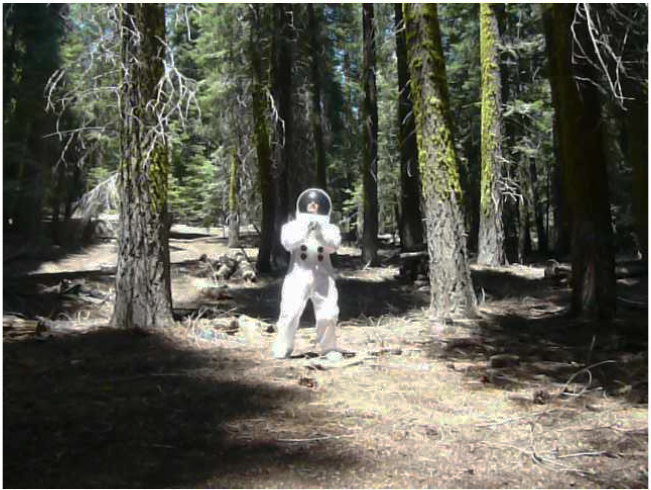
Last but not least, the Come Out and Play Festival, wrapped up a week’s worth of street games with an intensely-packed weekend of battle-scaled dodgeball, cardboard tube fighting, city-wide scavenger hunts, and labyrinths. In Everett Middle School’s vast playground, about forty adults plus a handful of kids, showed up to play a few rousing rounds of Field Frogger, a completely analog twist on the classic arcade game of yore. Participants playing “froggers” sat on giant yoga balls and bounced through an obstacle course of banner-carrying “cars,” “turtles,” and ”logs.” By the end of the morning, there were six froggers hopping through the roads and rivers at the same time, which gave the playing field more of an appearance of a collision course than in the original Konami version, combining innovation with chaos and homage with humor.

http://www.youtube.com/watch?v=zDgqJjht2vQ

The growing 99 percent

0

steve@sfbg.com

In recent weeks, the Bay Area has been roiled by anger and frustration with how the rich have grown richer while the rest of us endure underemployment, foreclosures, and deep cuts to public education and services, peaking with the Nov. 2 Oakland General Strike that drew more than 10,000 people into the streets to demand economic justice.

The Occupy Wall Street movement — and its many local manifestations, including OccupySF and Occupy Oakland — has been the main vehicle for those populist passions for the last two months, with the support of the labor movement. But now, student and faculty groups from California’s three public university systems are about to get involved in the fight in a big way.

Student and labor groups allied with the ReFund California coalition are planning a week of action for Nov. 9-16, culminating that final day in demonstrations outside the California State University Board of Trustees meeting in Fullerton and University of California Board of Trustees meeting at the UCSF campus in San Francisco’s Mission Bay.

Those protests aim to connect the problem of deep cuts and tuition hikes in the public university systems with the larger issue of wealthy individuals and corporations that haven’t been paying their fair share. The coalition wants the boards to pledge support for a five-point action plan that includes taxes on the wealthy, removing commercial property from Prop. 13 caps on property taxes, restoration of cuts to higher education, a sales tax on Wall Street financial transactions, and pressuring banks to reduce mortgage debt on underwater homes.

Charlie Eaton, a ReFund California organizer from United Auto Workers Local 2865, which represents teaching assistants at UC, notes that many UC and CSU board members also sit on the boards of major banks and corporations that have contributed to the current financial crisis and which have been in the crosshairs of the Occupy Wall Street movement.

“It’s really a club of California’s corporate elites,” Eaton said. “It’s about saying to these folks: if you aren’t willing to actively support paying your fair share, or at least get out of the way, we can’t let it be business as usual at the Wall Street institutions that you help run.”


NO BUSINESS AS USUAL

He said there’s a direct connection between the actions of these corporate boards and lack of resources in California for public education and services, so it’s only right that these powerful board members — from Regent Richard Blum, the investment banker husband of Sen. Dianne Feinstein, to Trustee Bill Hauck, former head of the California Business Roundtable — support the needs of the 99 percent.

“We’ll be there to call on them to sign the pledge,” Eaton said of the Nov. 16 meetings. “And if they aren’t prepared to make that pledge, we’re headed to the Financial District to make sure there is no business as usual for these corporations.”

That day of action will echo the last ReFund California protest in San Francisco, the Sept. 29 “Make Banks Pay” march through the Financial District that was one of the first high-profile demonstrations involving OccupySF. The march was several hundred strong, targeting major financial institutions including a Chase Bank branch on Market Street that was occupied by protesters, resulting in six arrests.

When we asked Eaton whether the Occupy movement would lend its energy and numbers to these ReFund California protests, he said, “We’re embedded in the Occupy movement, so it’s not quite right to say it’s something the Occupy movement might help with…I think the Occupy Wall Street movement shows we can make them pay.”

Meanwhile, the next day (Nov. 17), Occupy Wall Street plans to march the 11-mile length of Manhattan in a day of action that will be supported by solidarity marches by Occupy encampments across the country. That is also the day that a two-campus strike is being threatened by the California Faculty Association.

“I think that day is going to be a busy day all around the nation,” Kim Geron, a political science professor at CSU East Bay and vice president of the CFA, told us.

On Nov. 7, the CFA Board of Directors authorized one-day strikes for Nov. 17 at the CSU East Bay and CSU Dominguez Hills campuses to protest CSU Chancellor Charles B. Reed’s decision to withhold negotiated faculty pay raises. It would be the first faculty strike in the system since 1983, although a strike was authorized in 2007 but called off after a negotiated settlement.

After the vote, according to a statement put out to members, CFA President Lillian Taiz told her board, “We hope this carefully targeted strike, which symbolizes both our anger and our commitment to fairness, will lead to changes in his priorities and his positions. If it does not, the CFA leadership—and the CSU faculty we represent—are prepared to escalate the fight.”


DUCKING THE TAX ISSUE

CSU spokesperson Mike Uhlenkamp said the campuses will remain open despite the strikes. “We expect it to be business as usual,” he said. As for the pledge that ReFund California is seeking, “We don’t get into advocating between taxing and not taxing,” he said, saying that’s a state decision and “we’re not going to push them to make that determination.”

Guardian calls to the UC President’s Office were not returned by press time. A spokesperson for Gov. Jerry Brown, who is the subject of a student letter-writing campaign urging him to tax the rich and stop cutting public services, continued to blame Republicans.

“We too are deeply concerned about cuts to the state’s universities and colleges, which is why the Governor pushed for a solution to our budget deficit that included extending revenues. Unfortunately, Republicans in the Legislature refused to even allow the people of California to vote on the measure, which could have helped prevent future cuts,” Brown spokesperson Evan Westrup responded via email.

When we asked whether Brown was simply giving up, how he planned to deal with the problem, and why Brown has not followed up his campaign pledge to tax the rich with any proposals to do so, he wrote simply, “There are a number of ways to pursue additional revenue moving forward and these options are being considered.”

Geron said there is a clear connection between problems in the CSU system and the hoarding of resources by the richest one percent of Americans, the main critique of Occupy Wall Street, a movement driven largely by current and recent college students.

“We are part of it. One of our slogans is we are the 99 percent and we teach the 99 percent,” Geron told us.

While the CFU is focused on decisions by the Chancellor’s Office — indeed, the strike is legally allowed only because the chancellor broke the contract by withholding negotiated pay increases — Geron said those decisions were made in a climate of deep funding cuts prompted by the state budget crisis.

“Obviously, the economic crisis is a lot of the reason why all this happened. It’s part of a larger crisis that is going on about how to fund the public good, including higher education,” Geron said. “Students are paying a lot more and getting a lot less. That’s the heart of what’s going on.”

The UC Student Association is taking part in the ReFund California week of action, but has not yet voted to participate in direct action against corporations on Nov. 16, Executive Director Matt Haney told us. But he said that many UC students will still take part in that action, just as they’ve been taking part in the Occupy movement.

“It’s the same frustrations. We have to get out there and start pushing this ourselves,” he told us. “We need to show the state that things can’t just keep moving along as they have. We have to put a stop to business as usual. The economic collapse is what destroyed the UC system.”

Haney sees the student, labor, and Occupy movements starting to come together in a very natural way. “It has really put the wind in the sails of student activists to see the energy of the Occupy movement,” Haney said. “There is a coming together of students and labor, and it’s overlapping with the Occupy movement in a powerful way.” *

Find details about the ReFund California Week of Action at www.makebankspaycalifornia.com.

Stage Listings

0

Stage listings are compiled by Guardian staff. Performance times may change; call venues to confirm. Reviewers are Robert Avila, Rita Felciano, and Nicole Gluckstern. Submit items for the listings at listings@sfbg.com. For further information on how to submit items for the listings, see Picks.


THEATER

OPENING

Fela! Curran Theatre, 445 Geary, SF; www.shnsf.com. $31-200. Opens Tues/15, 8pm. Runs Wed-Sat, 8pm (also Wed and Sat, 2pm; no show Nov 24); Sun, 2pm (also Nov 27, 7:30pm). Through Dec 11. The life and music of Nigerian superstar Fela Kuti is captured in this show with choreography by Bill T. Jones.

Forgetting the Details Bindlestiff Studio, 185 Sixth St, SF; www.nicolemaxali.com. $20. Opens Thurs/10, 8pm. Runs Thurs-Sat, 8pm; Sun/13, 3pm. Through Nov 19. Nicole Maxali performs her solo work about the effects of Alzheimer’s.

The Importance of Being Earnest Notre Dame Senior Plaza, Community Room, 347 Dolores, SF; (650) 952-3021. Free. Opens Fri/11, 7:30pm. Runs Fri, 7:30pm; Sat-Sun, 3pm. Through Nov 20. 16th Street Players perform the Oscar Wilde classic.

Language Rooms Thick House, 1695 18th St, SF; www.brownpapertickets.com. $20-28. Previews Thurs/10-Fri/11, 8pm. Opens Sat/12, 8pm. Runs Thurs-Sat, 8pm (no show Nov 24); Sun, 7pm (no show Sun/13). Through Dec 4. Golden Thread Productions and Asian American Theater Company present the West Coast premiere of Yussef El Guindi’s dark comedy.

SexRev: The José Sarria Experience CounterPULSE, 1310 Mission, SF; (415) 552-4100, www.therhino.org. $10-25. Previews Thurs/10-Sat/12 and Nov 17-18, 8pm (also Sat/12, 10:30pm); Sun/13, 3pm. Opens Nov 19, 8pm. Runs Thurs-Sat, 8pm (also Sat, 10:30pm; no show Nov 24); Sun, 3pm. Through Nov 27. Theatre Rhinoceros performs John Fisher’s musical celebration of America’s first queer activist — a hit for the company in 2010.

BAY AREA

The Soldier’s Tale Aurora Theatre, 2081 Addison, Berk; (510) 843-4822, www.auroratheatre.org. $10-55. Previews Fri/11-Sat/12 and Nov 16, 8pm; Sun/12, 2pm; Tues/15, 7pm. Opens Nov 17, 8pm. Runs Tues, 7pm; Wed-Sat, 8pm; Sun, 2 and 7pm. Through Dec 18. Aurora Theatre presents a re-imagined version of Igor Stravinsky’s 1918 musical by Tom Ross and Muriel Maffre.

ONGOING

Absolutely San Francisco Alcove Theater, 414 Mason, Ste 502, SF; (415) 992-8168, www.thealcovetheater.com. $32-50. Sun, 6pm; starting Nov 19, Thurs and Sat, 8pm. Through Dec 29. Not Quite Opera Productions presents Anne Nygren Doherty’s musical about San Francisco, with five characters all portrayed by Mary Gibboney.

Almost Nothing, Day of Absence Lorraine Hansberry Theatre, 450 Post, SF; (415) 474-8800, www.lhtsf.org. $43-53. Wed-Sat, 8pm (also Sat, 2pm); Sun, 2pm. Through Nov 20. The Lorraine Hansberry Theatre christens its grand new home near Union Square with two well-acted one-act plays under sharp direction by artistic director Steven Anthony Jones. Almost Nothing by Brazilian playwright Marcos Barbosa marks the North American premiere of an intriguing and shrewdly crafted Pinteresque drama, wherein a middle-class couple (Rhonnie Washington and Kathryn Tkel) returns home from an unexpected encounter at a stop light that leaves them jittery and distracted. As an eerie wind blows outside (in David Molina’s atmospheric sound design), their conversation circles around the event as if fearing to name it outright. When a poor woman (Wilma Bonet) arrives claiming to have seen everything, the couple abandons rationalization for a practical emergency and a moral morass dictated by poverty and class advantage — negotiated on their behalf by a black market professional (Rudy Guerrero). Next comes a spirited revival of Douglas Turner Ward’s Civil Rights–era Day of Absence (1965), a broad satire of Southern race relations that posits a day when all the “Neegras” mysteriously disappear, leaving white society helpless and desperate. The cast (in white face) excel at the high-energy comedy, and in staging the text director Jones makes a convincing parallel with today’s anti-immigrant laws and rhetoric. But if the play remains topical in one way, its too-blunt agitprop mode makes the message plain immediately and interest accordingly pales rapidly. (Avila)

Annapurna Magic Theatre, Bldg D, Fort Mason Center, Marina at Laguna, SF; (415) 441-8822, www.magictheatre.org. $20-60. Opens Wed/9, 8pm. Showtimes vary, through Dec 4. Magic Theatre performs Sharr White’s world premiere drama about love’s longevity.

How to Love Garage, 975 Howard, SF; www.pustheatre.com. $15. Fri-Sat, 8pm; Sun, 2pm. Through Nov 20. Three demigod-like personalities at the center of the earth are charged with answering life’s mysteries, big and small, but find themselves stymied by their latest task, namely, explaining “how to love.” They have only a week to do it, for some reason, or humanity will be consigned to everlasting consternation, or something like that — coherence is not a priority here — anyway: stakes are high. Their boss, the Magistrate (Geo Epsilanty), has them present their findings each day, but each of them — the Very Sexy One (Jessica Schroeder in sassy lingerie), the Stern One (Gloria MacDonald in girl-school uniform), and the Young One (Brian Martin in caped crusader outfit) — comes up with bupkus. Finally, the Young One gets the inspiration to kidnap a surface-dwelling earthling (Valerie Fachman) to help them figure it all out. Local playwright Megan Cohen’s mumbling comedy, directed with robust attention to blocking and movement by Scott Baker for Performers Under Stress, is far too skit-like a conceit to merit its two plodding acts. More to the point, its humor is very silly but generally dim. Despite being set at the center of the earth, this is too shallow and glancing an investigation of love to intrigue or tickle the genuinely curious. (Avila)

*The Kipling Hotel: True Misadventures of the Electric Pink ’80s Marsh San Francisco, 1062 Valencia, SF; (415) 282-3055, www.themarsh.org. $15-50. Sat/12, 8:30pm; Sun/13, 7pm. This new autobiographical solo show by Don Reed, writer-performer of the fine and long-running East 14th, is another slice of the artist’s journey from 1970s Oakland ghetto to comedy-circuit respectability — here via a partial debate-scholarship to UCLA. The titular Los Angeles residency hotel was where Reed lived and worked for a time in the 1980s while attending university. It’s also a rich mine of memory and material for this physically protean and charismatic comic actor, who sails through two acts of often hilarious, sometimes touching vignettes loosely structured around his time on the hotel’s young wait staff, which catered to the needs of elderly patrons who might need conversation as much as breakfast. On opening night, the episodic narrative seemed to pass through several endings before settling on one whose tidy moral was delivered with too heavy a hand, but if the piece runs a little long, it’s only the last 20 minutes that noticeably meanders. And even with some awkward bumps along the way, it’s never a dull thing watching Reed work. (Avila)

Making Porn Box Car Theatre Studios, 125A Hyde, SF; www.brownpapertickets.com. $25-50. Thurs, 8pm; Thurs, 8pm; Fri-Sat, 9pm; Sun, 7pm. Extended through Nov 27. Ronnie Larsen brings back his crowd-pleasing comedy about the gay porn industry.

*”Master Harold” … and the Boys Phoenix Theater, 414 Mason, Ste 601, SF; 1-800-838-3006, www.offbroadwaywest.org. $18-40. Thurs-Sat, 8pm. Through Nov 19. Based loosely on personal history, Athol Fugard’s drama explores institutionalized racism in South Africa’s apartheid era ensconced in the seemingly innocuous world of a Port Elizabeth tea room. The play opens during a rainy afternoon with no customers, leaving the Black African help, Willie (Anthony Rollins-Mullens) and Sam (LaMont Ridgell), with little to do but rehearse ballroom dance steps for a big competition coming up in a couple of weeks. When Hally (Adam Simpson), the owner’s son, arrives from school, the atmosphere remains convivial at first then increasingly strained, as events happening outside the tea room conspire to tear apart their fragile camaraderie. The greatest burdens of the play are carried by Sam, who fills a range of roles for the increasingly pessimistic and emotionally-stunted Hally — teacher, student, surrogate father, confidante, and servant — all the while completely aware that their mutual love is almost certainly doomed to not survive past Hally’s adolescence, and possibly not past the afternoon. Ridgell rises greatly to the challenges of his character, ably flanked by Rollins-Mullens, and Simpson; he embodies the depth of Sam’s humanity, from his wisdom of experience, to his admiration for beauty, to his capacity to bear and finally to forgive Hally’s need to lash out at him. It is a moving and memorable rendering. (Gluckstern)

More Human Than Human Dark Room Theater, 2263 Mission, SF; (415) 401-7987, www.brownpapertickets.com. $25. Thurs-Sat, 8pm. Through Nov 19. B. Duke’s dystopian drama is inspired by Philip K. Dick.

Not Getting Any Younger Marsh San Francisco, Studio Theater, 1062 Valencia, SF; (415) 826-5750, www.themarsh.org. $15-50. Thurs-Fri, 8pm; Sat, 8:30pm; Sun, 3pm. Extended through Dec 17. Marga Gomez is back at the Marsh, a couple of too-brief decades after inaugurating the theater’s new stage with her first solo show — an apt setting, in other words, for the writer-performer’s latest monologue, a reflection on the inevitable process of aging for a Latina lesbian comedian and artist who still hangs at Starbucks and can’t be trusted with the details of her own Wikipedia entry. If the thought of someone as perennially irreverent, insouciant, and appealingly immature as Gomez makes you depressed, the show is, strangely enough, the best antidote. (Avila)

*The Odyssey Aboard Alma, Hyde Street Pier, San Francisco Maritime National Historic Park, SF; www.weplayers.org. $160. Fri/11-Sat/12 and Nov 18, 12:30pm. Heralding their hugely ambitious Spring 2012 production of The Odyssey, which will take place all over Angel Island, the WE Players are tackling the work on a slightly smaller scale by staging it on the historic scow schooner Alma, which is part of the Maritime National Historical Park fleet docked at the end of Hyde Street Pier. Using both boat and Bay as setting, the essential chapters of the ten-year voyage — encounters with the Cyclops, Circe, the Underworld, the Sirens, Aeolus, the Laestrygonians, and Calypso — are enacted through an intriguing mash-up of narration, choreography, sea chanteys, salty dog stories (like shaggy dog stories, but more water-logged), breathtaking views, and a few death-defying stunts the likes of which you won’t see on many conventional stages. High points include the casual swapping of roles (every actor gets to play Odysseus, however briefly), Ross Travis’ masked and flatulent Prometheus and sure-footed Hermes, Ava Roy’s hot pants-clad Circe, Charlie Gurke’s steady musical direction and multi-instrumental abilities, and the sail itself, an experiential bonus. Landlubbers beware, so much time facing the back of the boat where much of the action takes place can result in mild quease, even on a calm day. Take advantage of the downtime between scenes to walk around and face forward now and again. You’ll want to anyway. (Gluckstern)

Oh, Kay! Eureka Theatre, 215 Jackson, SF; (415) 255-8207, www.42ndstmoon.org. $20-50. Wed, 7pm; Thurs-Fri, 8pm; Sat, 6pm; Sun, 3pm. Through Nov 20. 42nd Street Moon performs George and Ira Gershwin’s Prohibition-set comedy.

*On the Air Pier 29 on the Embarcadero (at Battery), SF; (415) 438-2668, love.zinzanni.org. $117 and up (includes dinner). Wed-Sat, 6pm; Sun, 5pm. Through Dec 31. Teatro ZinZanni’s final production at its longtime nest on Pier 29 is a nostalgia-infused banquet of bits structured around an old-time radio variety show, featuring headliners Geoff Hoyle (Geezer) and blues singer Duffy Bishop. If you haven’t seen juggling on the radio, for instance, it’s pretty awesome, especially with a performer like Bernard Hazens, whose footing atop a precarious tower of tubes and cubes is already cringingly extraordinary. But all the performers are dependably first-rate, including Andrea Conway’s comic chandelier lunacy, aerialist and enchanting space alien Elena Gatilova’s gorgeous “circeaux” act, graceful hand-balancer Christopher Phi, class-act tapper Wayne Doba, and radio MC Mat Plendl’s raucously tweeny hula-hooping. Add some sultry blues numbers by raunchy belter Bishop, Hoyle’s masterful characterizations (including some wonderful shtick-within-a-shtick as one-liner maestro “Red Bottoms”), a few classic commercials, and a healthy dose of audience participation and you start to feel nicely satiated and ready for a good cigar. Smoothly helmed by ZinZanni creative director Norm Langill, On the Air signals off-the-air for the popular dinner circus — until it can secure a new patch of local real estate for its antique spiegeltent — so tune in while you may. (Avila)

*Pellas and Melisande Cutting Ball Theater, Exit on Taylor, 277 Taylor, SF; 1-800-838-3006, www.cuttingball.com. $10-50. Thurs, 7:30; Fri-Sat, 8pm (also Sat, 2pm); Sun, 5pm. Through Nov 27. The Frog Prince, Rapunzel, the Swan Maiden: shimmering strands of each timeless tale twist through the melancholy tapestry of the Maurice Maeterlinck play Pelleas and Melisande, which opens Cutting Ball Theater’s 12th season. Receiving a lushly atmospheric treatment by director and translator Rob Melrose, this ill-fated Symbolist drama stars Joshua Schell and Caitlyn Louchard as the doomed lovers. Trapped in the claustrophobic environs of an isolated castle at the edge of a forbidding forest and equally trapped in an inadvertent love triangle with the hale and hearty elder prince Golaud (Derek Fischer), Pelleas’ brother and Melisande’s husband, the desperate, unconsummated passion that builds between the two youngsters rivals that of Romeo and Juliet’s, and leads to an ending even more tragic — lacking the bittersweet reconciliation of rival families that subverts the pure melodrama of the Shakespearean classic. Presented on a spare, wooden traverse stage (designed by Michael Locher), and accompanied by a smoothly-flowing score by Cliff Caruthers, the action is enhanced by Laura Arrington’s haunting choreography, a silent contortionism which grips each character as they try desperately to convey the conflicting emotions which grip them without benefit of dialogue. Though described by Melrose as a “fairy tale world for adults,” the dreamy gauze of Pelleas and Melisande peels away quickly enough to reveal a flinty and unsentimental heart. (Gluckstern)

*Race American Conservatory Theater, 415 Geary, SF; (415) 749-2228, www.act-sf.org. $10-85. Opens Wed/26, 8pm. Wed/9-Sat/12, 8pm (also Wed/9 and Sat/12, 2pm); Sun/13, 2pm. A very rich older white guy (Kevin O’Rourke) accused of sexually assaulting a poor woman of color looks for representation from the racially diverse firm headed by Jack (Anthony Fusco) and Henry (Chris Butler) with assistance from Jack’s African American protégé, Susan (Susan Heyward). With shades of Oleanna and Speed the Plow, David Mamet’s fleet new play mixes race and gender in the so-called justice system (in fact solely adversarial in the playwright’s unsurprising view, with winning being the only point). The result is an ultimately vindictive struggle both volatile and familiar. Some of that familiarity naturally stems from the world beyond the playwright’s immediate control — especially with the odor of the Dominique Strauss-Kahn affair still in the air — but the play’s action feels managed throughout by a political worldview too, um, black-and-white to register as up-to-the-moment. That said, muscular writing and the strong and appealing cast under intelligent direction by Irene Lewis guarantee an enjoyable, crackerjack production from American Conservatory Theater. (Avila)

Savage in Limbo Actors Theatre of San Francisco, 855 Bush, SF; (415) 345-1287, www.actorstheatresf.org. $26-38. Wed-Sat, 8pm. Through Dec 3. Actors Theatre of San Francisco performs John Patrick Shanley’s edgy comedy.

“Shocktoberfest 12: Fear Over Frisco” Hypnodrome Theatre, 575 10th St, SF; (415) 377-4202, www.thrillpeddlers.com. $25-35. Thurs-Sat, 8pm. Through Nov 19. In its annual season-scented horror bid, Thrillpeddlers joins forces with SF’s Czar of Noir, writer-director Eddie Muller, for a sharply penned triplet of plays that resurrect lurid San Francisco lore as flesh-and-blood action. In the slightly sluggish but intriguing Grand Inquisitor, a solitary young woman modeling herself on Louise Brooks in Lulu (an alluringly Lulu-like Bonni Suval) believes she has located the Zodiac killer’s widow (a sweet but cagey Mary Gibboney) — a scenario that just can’t end well for somebody, yet manages to defy expectations. An Obvious Explanation turns on an amnesiac (Daniel Bakken) whose brother (Flynn de Marco) explains the female corpse in the rollaway (Zelda Koznofski) before asking bro where he hid a certain pile of money. Enter a brash doctor (Suval) with a new drug and ambitions of her own vis-à-vis the hapless head case. Russell Blackwood directs The Drug, which adapts a Grand Guignol classic to the hoity-toity milieu of the Van Nesses and seedy Chinatown opium dens, where a rough-playing attorney (an ever persuasive Eric Tyson Wertz) determines to turn a gruesome case involving the duplicitous Mrs. Van Ness (an equally sure, sultry Kära Emry) to his own advantage. The evening also offers a blackout spook show and some smoothly atmospheric musical numbers, including Muller’s rousing “Fear Over Frisco” (music composed by Scrumbly Koldewyn; accompaniment by Steve Bolinger and Birdie-Bob Watt) and an aptly low-down Irving Berlin number — both winningly performed by the entire company. (Avila)

Shoot O’Malley Twice StageWerx, 446 Valencia, SF; www.viragotheatre.org. Thurs-Sat, 8pm (no show Nov 24). Through Nov 26. Virago Theater Company performs Jon Brooks’ world-premiere existential comedy.

Sitting in a Circle Intersection for the Arts, 925 Mission, Ste 109, SF; www.brownpapertickets.com. $15-25. Fri/11-Sat/12, 8pm. We are here to question the ways we present ourselves, communicate, and commune, but the masks never really come off and — unlike, say, a general assembly meeting down at Occupy SF — a circle of equals never really forms in this new work by the Erika Chong Shuch Performance Project, debuting at Intersection for the Arts’ new downtown space. The audience sits in or around a large circle of chairs, initially bathed in the harsh glow of office-space fluorescence. This much is as expected. But as the room transforms (amid production designer Allen Willner’s protean, mood-shifting lighting scheme) into some in-between world of personal-transformation workshop, talk show confessional, art therapy session, and psychic retreat, the accompanying conceit of spontaneous open-ended “coming together” gives way to a highly choreographed, largely jocular entertainment managed by a group of seven performers planted among the assembled. The results are varied, sometimes amusing, sometimes pushy, and usually too stylized or arch to be very moving or discerning. But a dance solo by adroit 13-year-old Rio Mezey Anderson comes as an unexpected, mesmerizing moment that — in its channeling of pure, unguarded expression — is also the evening’s most authentic. (Avila)

Sticky Time Brava Theater, 2781 24th St, SF; www.vanguardianproductions.com. $15-40. Wed-Sat and Mon/14, 8pm. Through Nov 18. Crowded Fire and Vanguardian Productions present playwright-director Marilee Talkington’s multimedia science fiction about a woman running out of time in the worst way. The prolix and histrionic story is the real sticking point, however, in this otherwise imaginatively staged piece, which places its audience on swivel chairs in the center of Brava’s upstairs studio theater, transformed by designer Andrew Lu’s raised stage and white video screens running the length of the walls into an enveloping aural (moody minimalistic score by Chao-Jan Chang) and visual landscape. Thea (Rami Margron) heads a three-person crew of celestial plumbers managing a sea of time “threads,” an undulating web of crisscrossing lines (in the impressive video animation by Rebecca Longworth). The structure is plagued by a mysterious wave of “time quakes” that Tim (Lawrence Radecker) thinks he may have figured out. Coworker Emit (Michele Leavy), meanwhile, goofing around like a hyperactive child, spots some sort of beast at work in the ether. When Thea gets stuck by a loose thread, she becomes something of a time junky, desperate to relive the color-suffused world of love and family lost somewhere in space-time as reality starts to unravel (with a dramatic assist from cinematographer Lloyd Vance) and the crew seeks help from a wise figure in a tattered gown (Mollena Williams). A little like a frenetic, stagy version of Andrey Tarkovsky’s Solaris (1972), the story gets credit for dramatizing some confounding facts about time and space at the particle level but might have benefited from less dialogue and more mystery — just as the audio-visual experience works best when the house lights are low. (Avila)

The Temperamentals New Conservatory Theatre Center, 25 Van Ness, SF; (415) 861-8972, www.nctcsf.org. $25-45. Previews Wed/9-Fri/11, 8pm. Opens Sat/12, 8pm. Runs Wed-Sat, 8pm; Sun, 2pm. Through Dec 18. New Conservatory Theatre Center performs Jon Marans’ drama about gay rights during the McCarthy era.

Totem Grand Chapiteau, AT&T Park, Parking Lot A, 74 Mission Rock, SF; cirquedusoleil.com/totem. $58-248.50. Tues-Sun, schedule varies. Extended through Dec 18. Cirque Du Soleil returns with its latest big-top production.

Two Dead Clowns Box Car Theatre Studios, 125A Hyde, SF; www.brownpapertickets.com. $20. Fri-Sat, 7pm. Through Nov 26. Ronnie Larsen’s new play explores the lives of Divine and John Wayne Gacy.

The Waiting Period MainStage, Marsh San Francisco, 1062 Valencia, SF; (415) 282-3055, www.themarsh.org. $15-35. Fri, 8pm; Sat, 5pm. Through Nov 26. Brian Copeland (Not a Genuine Black Man) presents a workshop production of his new solo show.

*Working for the Mouse Exit Theatre, 156 Eddy, SF; www.brownpapertickets.com. $22. Thurs-Sat, 8pm (no performances Nov 24-26). Through Dec 17. It might not come as a surprise to hear that even “the happiest place on earth” has a dark side, but hearing Trevor Allen describe it during this reprise of 2002’s Working for the Mouse will put a smile on your face as big as Mickey’s. With a burst of youthful energy, Allen bounds onto the tiny stage of Impact Theatre to confess his one-time aspiration to never grow up — a desire which made auditioning for the role of Peter Pan at Disneyland a sensible career move. But in order to break into the big time of “charactering,” one must pay some heavy, plush-covered dues. As Allen creeps up the costumed hierarchy one iconic cartoon figure at a time, he finds himself unwittingly enmeshed in a world full of backroom politics, union-busting, drug addled surfer dudes with peaches-and-cream complexions, sexual tension, showboating, job suspension, Make-A-Wish Foundation heartbreak, hash brownies, rabbit vomit, and accidental decapitation. Smoothly paced and astutely crafted, Mouse will either shatter your blissful ignorance or confirm your worst suspicions about the corporate Disney machine, but either way, it will probably make you treat any “Casual Seasonal Pageant Helpers” you see running around in their sweaty character suits with a whole lot more empathy. (Note: review from the show’s recent run at La Val’s Subterranean in Berkeley.) (Gluckstern)

BAY AREA

Annie Berkeley Playhouse, Julia Morgan Center for the Arts, 2640 College, Berk; (510) 845-8542, www.berkeleyplayhouse.org. $17-35. Thurs-Sat, 7pm; Sun, noon and 5pm. Through Dec 4. Berkeley Playhouse performs the classic musical.

Doubt: A Parable Live Oak Theatre, 1301 Shattuck, Berk; www.aeofberkeley.org. $12-15. Fri-Sat, 8pm; Sun/13, 2pm. Through Nov 19. Actors Ensemble of Berkeley performs John Patrick Shanley’s Pulitzer-winning drama.

How to Write a New Book for the Bible Thrust Stage, 2025 Addison, Berk; (510) 647-2949, www.berkeleyrep.org. $14.50-73. Tues, Thurs-Sat, 8pm (also Sat, 2pm; no show Nov 18); Wed and Sun, 7pm (also Sun, 7pm). Through Nov 20. An aspiring writer who later becomes a priest, Bill (Tyler Pierce) is the caregiver for his aging mother (Linda Gehringer) during her long bout with cancer. His father (Leo Marks), though already dead, still inhabits his mother’s flickering concept of reality, made all the more dreamlike by her necessary dependence on pain medication. His brother (Aaron Blakely), meanwhile, has returned from Vietnam with survivor guilt but lands a meaningful career as a schoolteacher in the South. The latest from playwright Bill Cain (Equivocation, 9 Circles) is a humor-filled but sentimental and long-winded autobiographical reflection on family from the vantage of his mother’s long illness. It gets a strong production from Berkeley Rep, with a slick cast under agile direction by Kent Nicholson, but it plays as if narrator Bill mistakenly believes he’s stepped out of an Arthur Miller play, when in fact there’s little here of dramatic interest and far too much jerking of tears. (Avila)

Rambo: The Missing Years Cabaret at Marsh Berkeley, 2120 Allston, Berk; (415) 282-3055, www.themarsh.org. $15-50. Thurs-Fri, 7pm; Sat, 8:30pm. Through Dec 10. Howard “Hanoi Howie” Petrick presents his solo show about being an anti-war demonstrator — while also serving in the Army.

*Rita Moreno: Life Without Makeup Berkeley Repertory Theatre, Roda Theatre, 2015 Addison, Berk; (510) 647-2949, www.berkeleyrep.org. $14.50-73. Wed/9, 7pm; Thurs/10 and Sat/12-Sun/13, 2pm; Fri/11, 8pm. The life of stage and screen legend Rita Moreno is a subject that has no trouble filling two swift and varied acts, especially as related in anecdote, song, comedy, and dance by the serene multiple–award-winning performer and Berkeley resident herself. Indeed, that so much material gets covered so succinctly but rarely abruptly is a real achievement of this attractively adorned autobiographical solo show crafted with playwright and Berkeley Rep artistic director Tony Taccone. (Avila)

Sam’s Enchanted Evening TheaterStage at Marsh Berkeley, 2120 Allston, Berk; (415) 282-3055, www.themarsh.org. $15-50. Thurs-Fri, 8pm; Sat, 8:30pm. Through Nov 26. The Residents wrote the script and did the musical arrangements for this musical, featuring singer Randy Rose and pianist Joshua Raoul Brody.

The World’s Funniest Bubble Show Marsh Berkeley, TheaterStage, 2120 Allston, Berk; (415) 826-5750, www.themarsh.org. $8-50. Sun, 11am. Through Nov 20. Louis “The Amazing Bubble Man” Pearl returns with this kid-friendly, bubble-tastic comedy.

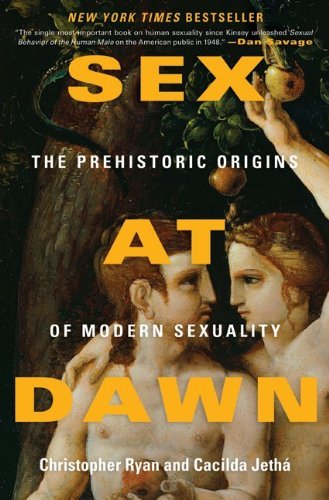
Author Christopher Ryan and the socio-evolutionary reasons for non-monogamy

0

Love your partner and love to fool around with other people? Author Christopher Ryan says that’s perfectly natural. A psychologist and historian who insists that human beings are not cut out for sexual monogamy, Ryan’s hitting SF next week (Wed/9-Thu/10) to talk about the evolutionary reasons for why that’s so.

Sure the freaks will be out in force for his events, but Ryan says that his book’s message is not just for people who already embrace alternative sexuality identities. 

Sex At Dawn shows that they’re not freaks because they find so-called traditional, strict monogamy to be stilted and unnatural for them. There’s a good reason for that, it is unnatural for them, and for the rest of us.” Ryan told the Guardian in a recent interview.  

But Sex at Dawn is not about modern non-monogamous types. It’s an ancient history that traces human evolution and focuses on pre-agricultural societies. Ryan explains, “Our ancestors evolved for 95 percent or more of our existence as a species of nomadic hunter-gatherers. In nomadic hunter-gatherer society, the central organizing principle is sharing. Sharing of childcare, sharing of food, defense, shelter, access to the sprit world, medical shamanic principles.”

His book argues that sexual pleasure was a no less communal practice for these early humans. 

“You look at our bodies, you look at anthropology, you look at all these different sources of information and you see, no, they weren’t possessive about sexuality in a way that they weren’t about anything else.”

But he has little idea on how to apply these historical tendencies to a modern society hooked on the one-plus-one-equals-two arrangement.

That’s partly why Andrew Sullivan, the organizer of next weeks’ events, wanted to present Ryan’s theories with the work of San Francisco’s esteemed sex activists. The expert panel backing up the author at Club Exotica will include relationship coach Marcia Baczynski, the founder of Kinky Salon Polly Pandemonium, and sex-positive icon and founder of the Center for Sex and Culture Carol Queen.

Says Sullivan: “Ryan talks about this pre-agricultural state, but he doesn’t really talk about — well, what do you do. He doesn’t deal with that. And that’s why I wanted to have him do this presentation, provide the science, provide the motivation for the work.”

He thinks these events will attract Bay Area residents from all walks of life.

“The cross-sections of life that are intersecting around this book are extremely diverse. You’ve got Republicans on the other side of the tunnel who are coming to an event like this because it hits them. They’re like, that’s part of my life, but its something they hide from out there, and they’re afraid of. All of a sudden they’re at the same event with somebody whose got a whip and rope and somebody else who is in a completely different socio-political mindset than they are, but they’re all going ‘we share something in common here.’”

The party that follows the Nov. 9 panel is sure to bring people together on whole other level. Sullivan says the event will “transition into an actual environment, this essential erotic environment that actually facilitates these kinds of connections. That’s why I call it the full spectrum event. It’s all right here. It’s like Woodstock for alternative relationships.”

On Nov. 10, economists and alternative currency advocates will gather to discuss sex and scarcity. Ryan says the talk will compare pre-agricultural society to our current system. “Our ancestors’ societies were based on sharing resources, which means they’re based on a notion of plenty — there will always be enough. Whereas post-agricultural societies, like our own, shifted 130 degrees to an orientation of scarcity. There’s never enough.” 

Ryan applies this scarcity theory to modern-day relationships. 

“You say well, I have to have my sex partner, I have to have my lover because she’s the one who gives me sexual pleasure, the stuff that I need, companionship, intimacy, security. If I lose her, I’m screwed, I’m alone. Because we live in that sort of fractured world. But our ancestors didn’t live in that sort of world, they lived in a world where hey, it doesn’t matter. I’m with her, I’m with her, she’s with her, she’s with him. You know we’ve all got multiple lovers, so if one relationship isn’t working, it’s not the end of the world.  It allows the social groups to function much more smoothly without all this conflict.”

He’s even found a way to connect this scarcity-plenty conundrum with the zeitgeist of our times.

Says Ryan, “I think that the message from the Occupy Wall Street movement, and Occupy different cities all around the country, is that no society can last if we lose sight of the fact that we’re in this together. That we are a species that evolved sharing resources and taking care of one another. And the more we lose sight of that, the more miserable we become. I don’t care how rich you are. I’ve known a lot of very wealthy people in my life, and they are not the happiest people I’ve known. The happiest people I’ve known are the ones who are living in communities where they’re taking care of each other and there’s a sense of unity and fairness that people respect. So I think that’s their message. That we have to get back to this understanding of what sort of animal we are and what sort of social system works best for us.”


Club Exotica presents Sex at Dawn

Wed/9 8 p.m.-2 a.m., $10-$35

Supperclub

657 Harrison, SF

www.clubexoticapresents.com


“Sex at Dawn: Modeling a New Culture of Sharing”

Thurs/10 free for members, guests $20 

Mission Control 

www.missioncontrolsf.org


Stage Listings

0

Stage listings are compiled by Guardian staff. Performance times may change; call venues to confirm. Reviewers are Robert Avila, Rita Felciano, and Nicole Gluckstern. Submit items for the listings at listings@sfbg.com. For further information on how to submit items for the listings, see Picks.

THEATER

OPENING

Annapurna Magic Theatre, Bldg D, Fort Mason Center, Marina at Laguna, SF; (415) 441-8822, www.magictheatre.org. $20-60. Previews Wed/2-Sat/5, 8pm; Sun/6, 2:30pm; Tues/8, 7pm. Opens Nov 9, 8pm. Through Dec 4, showtimes vary. Magic Theatre performs Sharr White’s world premiere drama about love’s longevity.

More Human Than Human Dark Room Theater, 2263 Mission, SF; (415) 401-7987, www.brownpapertickets.com. $25. Opens Fri/4, 8pm. Runs Thurs-Sat, 8pm. Through Nov 19. B. Duke’s dystopian drama is inspired by Philip K. Dick.

Oh, Kay! Eureka Theatre, 215 Jackson, SF; (415) 255-8207, www.42ndstmoon.org. $20-50. Previews Wed/2, 7pm; Thurs/3-Fri/4, 8pm. Opens Sat/5, 6pm. Runs Wed, 7pm; Thurs-Fri, 8pm; Sat, 6pm; Sun, 3pm. Through Nov 20. 42nd Street Moon performs George and Ira Gershwin’s Prohibition-set comedy.

The Temperamentals New Conservatory Theatre Center, 25 Van Ness, SF; (415) 861-8972, www.nctcsf.org. $25-45. Previews Fri/4-Sat/5 and Nov 9-11, 8pm; Sun/6, 2pm. Opens Nov 12, 8pm. Runs Wed-Sat, 8pm; Sun, 2pm. Through Dec 18. New Conservatory Theatre Center performs Jon Marans’ drama about gay rights during the McCarthy era.

Two Dead Clowns Box Car Theatre Studios, 125A Hyde, SF; www.brownpapertickets.com. $20. Previews Thurs/3, 8pm (free preview). Opens Fri/4, 7pm. Runs Fri-Sat, 7pm. Through Nov 26. Ronnie Larsen’s new play explores the lives of Divine and John Wayne Gacy.

The Waiting Period MainStage, Marsh San Francisco, 1062 Valencia, SF; (415) 282-3055, www.themarsh.org. $15-35. Opens Fri/4, 8pm. Runs Fri, 8pm; Sat, 5pm. Through Nov 26. Brian Copeland (Not a Genuine Black Man) presents a workshop production of his new solo show.

*Working for the Mouse Exit Theatre, 156 Eddy, SF; www.brownpapertickets.com. $22. Opens Thurs/3, 8pm. Runs Thurs-Sat, 8pm (no performances Nov 24-26). Through Dec 17. It might not come as a surprise to hear that even “the happiest place on earth” has a dark side, but hearing Trevor Allen describe it during this reprise of 2002’s Working for the Mouse will put a smile on your face as big as Mickey’s. With a burst of youthful energy, Allen bounds onto the tiny stage of Impact Theatre to confess his one-time aspiration to never grow up — a desire which made auditioning for the role of Peter Pan at Disneyland a sensible career move. But in order to break into the big time of “charactering,” one must pay some heavy, plush-covered dues. As Allen creeps up the costumed hierarchy one iconic cartoon figure at a time, he finds himself unwittingly enmeshed in a world full of backroom politics, union-busting, drug addled surfer dudes with peaches-and-cream complexions, sexual tension, showboating, job suspension, Make-A-Wish Foundation heartbreak, hash brownies, rabbit vomit, and accidental decapitation. Smoothly paced and astutely crafted, Mouse will either shatter your blissful ignorance or confirm your worst suspicions about the corporate Disney machine, but either way, it will probably make you treat any “Casual Seasonal Pageant Helpers” you see running around in their sweaty character suits with a whole lot more empathy. (Note: review from the show’s recent run at La Val’s Subterranean in Berkeley.) (Gluckstern)

ONGOING

Almost Nothing, Day of Absence Lorraine Hansberry Theatre, 450 Post, SF; (415) 474-8800, www.lhtsf.org. $43-53. Wed-Sat, 8pm (also Sat, 2pm); Sun, 2pm. Through Nov 20. The Lorraine Hansberry Theatre christens its grand new home near Union Square with two well-acted one-act plays under sharp direction by artistic director Steven Anthony Jones. Almost Nothing by Brazilian playwright Marcos Barbosa marks the North American premiere of an intriguing and shrewdly crafted Pinteresque drama, wherein a middle-class couple (Rhonnie Washington and Kathryn Tkel) returns home from an unexpected encounter at a stop light that leaves them jittery and distracted. As an eerie wind blows outside (in David Molina’s atmospheric sound design), their conversation circles around the event as if fearing to name it outright. When a poor woman (Wilma Bonet) arrives claiming to have seen everything, the couple abandons rationalization for a practical emergency and a moral morass dictated by poverty and class advantage — negotiated on their behalf by a black market professional (Rudy Guerrero). Next comes a spirited revival of Douglas Turner Ward’s Civil Rights–era Day of Absence (1965), a broad satire of Southern race relations that posits a day when all the “Neegras” mysteriously disappear, leaving white society helpless and desperate. The cast (in white face) excel at the high-energy comedy, and in staging the text director Jones makes a convincing parallel with today’s anti-immigrant laws and rhetoric. But if the play remains topical in one way, its too-blunt agitprop mode makes the message plain immediately and interest accordingly pales rapidly. (Avila)

Desdemona: A Play About a Handkerchief Boxcar Theatre Playhouse, 505 Natoma, SF; www.boxcartheatre.org. $15-35. Wed/2-Sat/5, 8pm. Written in 1979 by a 28-year-old Paula Vogel, Desdemona retells a familiar Shakespearean tragedy, Othello, through the eyes of its more marginalized characters, much as Tom Stoppard’s Rosencrantz and Guildenstern are Dead did with Hamlet in 1966. In Vogel’s play, it is the women of Othello — Desdemona the wife, Emilia her attendant (demoted down to washer-woman in Vogel’s piece), and Bianca, Cassio’s lover, and the bawdy town pump — who are the focus, and are the play’s only onstage characters. Whiling away an endless afternoon cooped up in the back room of the governor’s mansion, the flighty, spoiled, and frankly promiscuous Desdemona (Karina Wolfe) frets over the loss of her “crappy little snot-rag,” while her subservient, pious, but quietly calculating washer-woman Emilia (Adrienne Krug) scrubs the sheets and mends the gubernatorial underpants with an attitude perfectly balanced between aggrieved, disapproving, and cautiously optimistic. Though the relationship between the two women often veers into uncomfortable condescension from both sides, their repartee generally feels natural and uncontrived. Less successfully portrayed is Theresa Miller’s Bianca, whose Cockney accent is wont to slip, and whose character’s boisterous nature feels all too frequently subdued. Jenn Scheller’s billowing, laundry-line set softens the harsh edges of the stage, just as Emilia’s final act of service for her doomed mistress softens, though not mitigates, her unwitting role in their mutual downfall. (Gluckstern)

Honey Brown Eyes SF Playhouse, 533 Sutter, SF; (415) 677-9596, www.sfplayhouse.org. $20-50. Wed/2-Thurs/3, 7pm; Fri/4-Sat/5, 8pm (also Sat/5, 3pm). Bosnia in 1992 is divided in a horrifying civil war, some characteristics of which play out in parallel circumstances for two members of a single rock band in SF Playhouse’s west coast premiere of Stefanie Zadravec’s new play. In the first act, set in Visegrad, a young Bosnian Muslim woman (Jennifer Stuckert) is held at gunpoint in her kitchen by a jumpy soldier (Nic Grelli) engaged in a mission of murder and dispossession known as ethnic cleansing. The second act moves to Sarajevo and the apartment of an elderly woman (Wanda McCaddon) who gives shelter and a rare meal to an army fugitive (Chad Deverman). He in turn keeps the bereaved if indomitable woman company. Director Susi Damilano and cast are clearly committed to Zadravec’s ambitious if hobbled play, but the action can be too contrived and unrealistic (especially in act one) to be credible while the tone — zigzagging between the horror of atrocity and the offbeat gestures of romantic comedy — comes over as confused indecision rather than a deliberate concoction. (Avila)

How to Love Garage, 975 Howard, SF; www.pustheatre.com. $15. Fri-Sat, 8pm; Sun, 2pm. Through Nov 20. Performers Under Stress Theatre presents Megan Cohen’s Plato-inspired world premiere.

*The Kipling Hotel: True Misadventures of the Electric Pink ’80s Marsh San Francisco, 1062 Valencia, SF; (415) 282-3055, www.themarsh.org. $15-50. Sat, 8:30pm; Sun, 7pm. Through Nov 13. This new autobiographical solo show by Don Reed, writer-performer of the fine and long-running East 14th, is another slice of the artist’s journey from 1970s Oakland ghetto to comedy-circuit respectability — here via a partial debate-scholarship to UCLA. The titular Los Angeles residency hotel was where Reed lived and worked for a time in the 1980s while attending university. It’s also a rich mine of memory and material for this physically protean and charismatic comic actor, who sails through two acts of often hilarious, sometimes touching vignettes loosely structured around his time on the hotel’s young wait staff, which catered to the needs of elderly patrons who might need conversation as much as breakfast. On opening night, the episodic narrative seemed to pass through several endings before settling on one whose tidy moral was delivered with too heavy a hand, but if the piece runs a little long, it’s only the last 20 minutes that noticeably meanders. And even with some awkward bumps along the way, it’s never a dull thing watching Reed work. (Avila)

Making Porn Box Car Theatre Studios, 125A Hyde, SF; www.brownpapertickets.com. $25-50. Thurs, 8pm; Thurs, 8pm; Fri-Sat, 9pm; Sun, 7pm. Extended through Nov 27. Ronnie Larsen brings back his crowd-pleasing comedy about the gay porn industry.

*”Master Harold” … and the Boys Phoenix Theater, 414 Mason, Ste 601, SF; 1-800-838-3006, www.offbroadwaywest.org. $18-40. Thurs-Sat, 8pm. Through Nov 19. Based loosely on personal history, Athol Fugard’s drama explores institutionalized racism in South Africa’s apartheid era ensconced in the seemingly innocuous world of a Port Elizabeth tea room. The play opens during a rainy afternoon with no customers, leaving the Black African help, Willie (Anthony Rollins-Mullens) and Sam (LaMont Ridgell), with little to do but rehearse ballroom dance steps for a big competition coming up in a couple of weeks. When Hally (Adam Simpson), the owner’s son, arrives from school, the atmosphere remains convivial at first then increasingly strained, as events happening outside the tea room conspire to tear apart their fragile camaraderie. The greatest burdens of the play are carried by Sam, who fills a range of roles for the increasingly pessimistic and emotionally-stunted Hally — teacher, student, surrogate father, confidante, and servant — all the while completely aware that their mutual love is almost certainly doomed to not survive past Hally’s adolescence, and possibly not past the afternoon. Ridgell rises greatly to the challenges of his character, ably flanked by Rollins-Mullens, and Simpson; he embodies the depth of Sam’s humanity, from his wisdom of experience, to his admiration for beauty, to his capacity to bear and finally to forgive Hally’s need to lash out at him. It is a moving and memorable rendering. (Gluckstern)

Not Getting Any Younger Marsh San Francisco, Studio Theater, 1062 Valencia, SF; (415) 826-5750, www.themarsh.org. $15-50. Thurs-Fri, 8pm; Sat, 8:30pm; Sun, 3pm. Extended through Dec 17. Marga Gomez is back at the Marsh, a couple of too-brief decades after inaugurating the theater’s new stage with her first solo show — an apt setting, in other words, for the writer-performer’s latest monologue, a reflection on the inevitable process of aging for a Latina lesbian comedian and artist who still hangs at Starbucks and can’t be trusted with the details of her own Wikipedia entry. If the thought of someone as perennially irreverent, insouciant, and appealingly immature as Gomez makes you depressed, the show is, strangely enough, the best antidote. (Avila)

*The Odyssey Aboard Alma, Hyde Street Pier, San Francisco Maritime National Historic Park, SF; www.weplayers.org. $160. Fri/4-Sun/6, Nov 11-12, and 18, 12:30pm. Heralding their hugely ambitious Spring 2012 production of The Odyssey, which will take place all over Angel Island, the WE Players are tackling the work on a slightly smaller scale by staging it on the historic scow schooner Alma, which is part of the Maritime National Historical Park fleet docked at the end of Hyde Street Pier. Using both boat and Bay as setting, the essential chapters of the ten-year voyage — encounters with the Cyclops, Circe, the Underworld, the Sirens, Aeolus, the Laestrygonians, and Calypso — are enacted through an intriguing mash-up of narration, choreography, sea chanteys, salty dog stories (like shaggy dog stories, but more water-logged), breathtaking views, and a few death-defying stunts the likes of which you won’t see on many conventional stages. High points include the casual swapping of roles (every actor gets to play Odysseus, however briefly), Ross Travis’ masked and flatulent Prometheus and sure-footed Hermes, Ava Roy’s hot pants-clad Circe, Charlie Gurke’s steady musical direction and multi-instrumental abilities, and the sail itself, an experiential bonus. Landlubbers beware, so much time facing the back of the boat where much of the action takes place can result in mild quease, even on a calm day. Take advantage of the downtime between scenes to walk around and face forward now and again. You’ll want to anyway. (Gluckstern)

*On the Air Pier 29 on the Embarcadero (at Battery), SF; (415) 438-2668, love.zinzanni.org. $117 and up (includes dinner). Wed-Sat, 6pm; Sun, 5pm. Through Dec 31. Teatro ZinZanni’s final production at its longtime nest on Pier 29 is a nostalgia-infused banquet of bits structured around an old-time radio variety show, featuring headliners Geoff Hoyle (Geezer) and blues singer Duffy Bishop. If you haven’t seen juggling on the radio, for instance, it’s pretty awesome, especially with a performer like Bernard Hazens, whose footing atop a precarious tower of tubes and cubes is already cringingly extraordinary. But all the performers are dependably first-rate, including Andrea Conway’s comic chandelier lunacy, aerialist and enchanting space alien Elena Gatilova’s gorgeous “circeaux” act, graceful hand-balancer Christopher Phi, class-act tapper Wayne Doba, and radio MC Mat Plendl’s raucously tweeny hula-hooping. Add some sultry blues numbers by raunchy belter Bishop, Hoyle’s masterful characterizations (including some wonderful shtick-within-a-shtick as one-liner maestro “Red Bottoms”), a few classic commercials, and a healthy dose of audience participation and you start to feel nicely satiated and ready for a good cigar. Smoothly helmed by ZinZanni creative director Norm Langill, On the Air signals off-the-air for the popular dinner circus — until it can secure a new patch of local real estate for its antique spiegeltent — so tune in while you may. (Avila)

*Pellas and Melisande Cutting Ball Theater, Exit on Taylor, 277 Taylor, SF; 1-800-838-3006, www.cuttingball.com. $10-50. Thurs, 7:30; Fri-Sat, 8pm (also Sat, 2pm); Sun, 5pm. Through Nov 27. The Frog Prince, Rapunzel, the Swan Maiden: shimmering strands of each timeless tale twist through the melancholy tapestry of the Maurice Maeterlinck play Pelleas and Melisande, which opens Cutting Ball Theater’s 12th season. Receiving a lushly atmospheric treatment by director and translator Rob Melrose, this ill-fated Symbolist drama stars Joshua Schell and Caitlyn Louchard as the doomed lovers. Trapped in the claustrophobic environs of an isolated castle at the edge of a forbidding forest and equally trapped in an inadvertent love triangle with the hale and hearty elder prince Golaud (Derek Fischer), Pelleas’ brother and Melisande’s husband, the desperate, unconsummated passion that builds between the two youngsters rivals that of Romeo and Juliet’s, and leads to an ending even more tragic — lacking the bittersweet reconciliation of rival families that subverts the pure melodrama of the Shakespearean classic. Presented on a spare, wooden traverse stage (designed by Michael Locher), and accompanied by a smoothly-flowing score by Cliff Caruthers, the action is enhanced by Laura Arrington’s haunting choreography, a silent contortionism which grips each character as they try desperately to convey the conflicting emotions which grip them without benefit of dialogue. Though described by Melrose as a “fairy tale world for adults,” the dreamy gauze of Pelleas and Melisande peels away quickly enough to reveal a flinty and unsentimental heart. (Gluckstern)

Race American Conservatory Theater, 415 Geary, SF; (415) 749-2228, www.act-sf.org. $10-85. Opens Wed/26, 8pm. Tues-Sat, 8pm (also Wed and Sat, 2pm); Sun, 2pm (also Sun/6, 7pm). Through Nov 13. ACT performs David Mamet’s wicked courtroom comedy.

The Rover, or the Banish’d Cavaliers, The American Clock Hastings Studio Theater, 77 Geary, SF; (415) 749-2228, www.act-sf.org. $10 ($15 for both productions). Through Sat/5, performance times vary. American Conservatory Theater’s Masters of Fine Arts program presents plays in repertory by Aphra Behn and Arthur Miller.

Savage in Limbo Actors Theatre of San Francisco, 855 Bush, SF; (415) 345-1287, www.actorstheatresf.org. $26-38. Wed-Sat, 8pm. Through Dec 3. Actors Theatre of San Francisco performs John Patrick Shanley’s edgy comedy.

“Shocktoberfest 12: Fear Over Frisco” Hypnodrome Theatre, 575 10th St, SF; (415) 377-4202, www.thrillpeddlers.com. $25-35. Thurs-Sat, 8pm. Through Nov 19. In its annual season-scented horror bid, Thrillpeddlers joins forces with SF’s Czar of Noir, writer-director Eddie Muller, for a sharply penned triplet of plays that resurrect lurid San Francisco lore as flesh-and-blood action. In the slightly sluggish but intriguing Grand Inquisitor, a solitary young woman modeling herself on Louise Brooks in Lulu (an alluringly Lulu-like Bonni Suval) believes she has located the Zodiac killer’s widow (a sweet but cagey Mary Gibboney) — a scenario that just can’t end well for somebody, yet manages to defy expectations. An Obvious Explanation turns on an amnesiac (Daniel Bakken) whose brother (Flynn de Marco) explains the female corpse in the rollaway (Zelda Koznofski) before asking bro where he hid a certain pile of money. Enter a brash doctor (Suval) with a new drug and ambitions of her own vis-à-vis the hapless head case. Russell Blackwood directs The Drug, which adapts a Grand Guignol classic to the hoity-toity milieu of the Van Nesses and seedy Chinatown opium dens, where a rough-playing attorney (an ever persuasive Eric Tyson Wertz) determines to turn a gruesome case involving the duplicitous Mrs. Van Ness (an equally sure, sultry Kära Emry) to his own advantage. The evening also offers a blackout spook show and some smoothly atmospheric musical numbers, including Muller’s rousing “Fear Over Frisco” (music composed by Scrumbly Koldewyn; accompaniment by Steve Bolinger and Birdie-Bob Watt) and an aptly low-down Irving Berlin number — both winningly performed by the entire company. (Avila)

Sticky Time Brava Theater, 2781 24th St, SF; www.vanguardianproductions.com. $15-40. Wed-Sat and Nov 14, 8pm. Through Nov 18. Crowded Fire and Vanguardian Productions present playwright-director Marilee Talkington’s multimedia science fiction about a woman running out of time in the worst way. The prolix and histrionic story is the real sticking point, however, in this otherwise imaginatively staged piece, which places its audience on swivel chairs in the center of Brava’s upstairs studio theater, transformed by designer Andrew Lu’s raised stage and white video screens running the length of the walls into an enveloping aural (moody minimalistic score by Chao-Jan Chang) and visual landscape. Thea (Rami Margron) heads a three-person crew of celestial plumbers managing a sea of time “threads,” an undulating web of crisscrossing lines (in the impressive video animation by Rebecca Longworth). The structure is plagued by a mysterious wave of “time quakes” that Tim (Lawrence Radecker) thinks he may have figured out. Coworker Emit (Michele Leavy), meanwhile, goofing around like a hyperactive child, spots some sort of beast at work in the ether. When Thea gets stuck by a loose thread, she becomes something of a time junky, desperate to relive the color-suffused world of love and family lost somewhere in space-time as reality starts to unravel (with a dramatic assist from cinematographer Lloyd Vance) and the crew seeks help from a wise figure in a tattered gown (Mollena Williams). A little like a frenetic, stagy version of Andrey Tarkovsky’s Solaris (1972), the story gets credit for dramatizing some confounding facts about time and space at the particle level but might have benefited from less dialogue and more mystery —just as the audio-visual experience works best when the house lights are low. (Avila)

Totem Grand Chapiteau, AT&T Park, Parking Lot A, 74 Mission Rock, SF; cirquedusoleil.com/totem. $58-248.50. Tues-Sun, schedule varies. Extended through Dec 18. Cirque Du Soleil returns with its latest big-top production.

BAY AREA

Annie Berkeley Playhouse, Julia Morgan Center for the Arts, 2640 College, Berk; (510) 845-8542, www.berkeleyplayhouse.org. $17-35. Thurs-Sat, 7pm; Sun, noon and 5pm. Through Dec 4. Berkeley Playhouse performs the classic musical.

Doubt: A Parable Live Oak Theatre, 1301 Shattuck, Berk; www.aeofberkeley.org. $12-15. Fri-Sat, 8pm; Nov 13, 2pm. Through Nov 19. Actors Ensemble of Berkeley performs John Patrick Shanley’s Pulitzer-winning drama.

How to Write a New Book for the Bible Thrust Stage, 2025 Addison, Berk; (510) 647-2949, www.berkeleyrep.org. $14.50-73. Tues, Thurs-Sat, 8pm (also Sat, 2pm; no show Nov 18); Wed and Sun, 7pm (also Sun, 7pm). Through Nov 20. An aspiring writer who later becomes a priest, Bill (Tyler Pierce) is the caregiver for his aging mother (Linda Gehringer) during her long bout with cancer. His father (Leo Marks), though already dead, still inhabits his mother’s flickering concept of reality, made all the more dreamlike by her necessary dependence on pain medication. His brother (Aaron Blakely), meanwhile, has returned from Vietnam with survivor guilt but lands a meaningful career as a schoolteacher in the South. The latest from playwright Bill Cain (Equivocation, 9 Circles) is a humor-filled but sentimental and long-winded autobiographical reflection on family from the vantage of his mother’s long illness. It gets a strong production from Berkeley Rep, with a slick cast under agile direction by Kent Nicholson, but it plays as if narrator Bill mistakenly believes he’s stepped out of an Arthur Miller play, when in fact there’s little here of dramatic interest and far too much jerking of tears. (Avila)

Rambo: The Missing Years Cabaret at Marsh Berkeley, 2120 Allston, Berk; (415) 282-3055, www.themarsh.org. $15-50. Thurs-Fri, 7pm; Sat, 8:30pm. Through Dec 10. Howard “Hanoi Howie” Petrick presents his solo show about being an anti-war demonstrator — while also serving in the Army.

*Rita Moreno: Life Without Makeup Berkeley Repertory Theatre, Roda Theatre, 2015 Addison, Berk; (510) 647-2949, www.berkeleyrep.org. $14.50-73. Wed-Sun, showtimes vary. Extended through Nov 12. The life of stage and screen legend Rita Moreno is a subject that has no trouble filling two swift and varied acts, especially as related in anecdote, song, comedy, and dance by the serene multiple–award-winning performer and Berkeley resident herself. Indeed, that so much material gets covered so succinctly but rarely abruptly is a real achievement of this attractively adorned autobiographical solo show crafted with playwright and Berkeley Rep artistic director Tony Taccone. (Avila)

Sam’s Enchanted Evening TheaterStage at Marsh Berkeley, 2120 Allston, Berk; (415) 282-3055, www.themarsh.org. $15-50. Thurs-Fri, 8pm; Sat, 8:30pm. Through Nov 26. The Residents wrote the script and did the musical arrangements for this musical, featuring singer Randy Rose and pianist Joshua Raoul Brody.

The World’s Funniest Bubble Show Marsh Berkeley, TheaterStage, 2120 Allston, Berk; (415) 826-5750, www.themarsh.org. $8-50. Sun, 11am. Through Nov 20. Louis “The Amazing Bubble Man” Pearl returns with this kid-friendly, bubble-tastic comedy.

On the Cheap Listings

0

On the Cheap listings are compiled by Lucy Schiller. Submit items for the listings at listings@sfbg.com. For further information on how to submit items for the listings, see Picks.

WEDNESDAY 2

Ecology, Ethics, and World Renewal lecture Northbrae Community Church, 941 Alameda, Berk. (510) 526-3805. 7:30 p.m., $5 suggested donation. Stephen Most, documentarian and dreamer, discusses the links between Aldo Leopold’s philosophies and those of the Klamath River tribes.

Alan Kaufman reading Booksmith, 1644 Haight, SF. www.booksmith.com. 7:30 p.m., free. San Franciscan Alan Kaufman, author of “Matches” and “Jew Boy,” has led a life as steeped in alcohol as that of a tequila worm. Somehow, he made it out of the bottle and has managed to write a harrowing account of the battle.

Ask a Scientist Science Trivia Atlas Café, 3049 20th St., SF. www.atlascafe.net. 7 p.m., free. Finally, a trivia night where no one has to name all the members of the Bangles. Join revelers for more cerebral concerns (and munch on an Atlas yam sandwich).

Day of the Dead procession 22nd St. and Bryant, SF. www.dayofthedeadsf.org. 7 p.m., free. With marigolds, stilts, drum-pounders, candles, and altars, SF’s annual Dia de los Muertos procession mixes reverence with neighborhood block party. Join thousands under cover of darkness for a thoughtful remembrance of friends, family, pets, and strangers.

Day of the Dead Festival of Altars Garfield Park, 26th St. and Harrison, SF. www.dayofthedeadsf.org. 6-11 p.m., free. Upwards of 80 altars commemorating the lives of loved ones light up Garfield Park. Break out your sugar skulls, candles, photos, and meaningful mementos, this is the time to celebrate the folks you love and miss.

Casa Bonampak Day of the Dead Fiesta Casa Bonampak, 1051 Valencia, SF. www.casabonampak.com. 7-10 p.m., free. Duck into the papel picado-bedecked nook for a break from the DOTD parade to dance, eat, drink, and browse.

THURSDAY 3

San Francisco Transgender Film Festival opening celebration CounterPULSE, 1310 Mission, SF. Also Fri/4, Sat/5. www.counterpulse.org. 8 p.m., $12 sliding scale. Honoring its tenth anniversary as a massive exhibition of short, trans-themed films, this year’s festival opens with a veritable extravaganza featuring some of the more creative names around: Fairy Butch and Kentucky Fried Woman, for starters.

FRIDAY 4

Pico Sanchez Tribute and Dia de los Muertos celebration Mission Arts Center, 745 Treat, SF. (415) 695-5014. 5-8 p.m, free. Kick off the opening of the new Mission Arts Center with a fitting Dia de los Muertos remembrance of formative Mission muralist Pico Sanchez.

Dance Palace Day of the Dead celebration Dance Palace Community Center, 5th St. and B St., Point Reyes. www.dancepalace.org. 6-8 p.m., free. Head North for a smaller-scale Dia de los Muertos, attended by Point Reyesians (Reyesites?) whose aim for the evening is constructing a communal altar celebrating the lives of their loved ones.

SATURDAY 5

Robin Hood and Occupy Wall Street lecture Green Arcade, 1680 Market, SF. www.thegreenarcade.com. 7 p.m., free. Paul Buhle, radical historian and illustrator extraordinaire, recently published a graphic exploration of the original populist hero: Robin Hood. Here he talks about the link between Occupy and men in tights.

Bay Area Star Party Thornton Hall, San Francisco State University, 1600 Holloway, SF. www.astrosociety.org. 8-10 p.m., free. Hubble, Hubble — SFSU opens its stellar planetarium and telescope to the public as part of a bay-wide celestial celebration and viewing. Because we’re all stars in our own right, right?

Cowgirl Tricks Performance Potrero Branch Library, 1616 20th St., SF. www.sfpl.org. 4 p.m., free. San Franciscan Karen Quest holds a rather vague prize from the Wild West Arts International Convention for “Most Unusual Trick” — quite a trophy to carry in this city, anyway. Quest whipcracks, yeehaws, and ropes in style among library bookshelves.

Rad Dad book release and reading Rock Paper Scissors Collective, 2278 Telegraph, Oakl. www.rpscollective.org. 7-9 p.m., free. The hip dads biking through SF with faux-hawked toddlers named things like “Orbison” are sweet alright, but there are also plenty of radical folks for whom politics and parenting go hand-in-hand. Zinesters and Rad Dad scenesters Tomas Moniz and Jeremy Adam Smith speak on activist parenting.

Hypothesis: An Art and Science Fair The Lab, 2948 16th St., SF. www.thelab.org. 7:30-11 p.m., free. For a certain high school subculture, science fairs were make-it-or-break-it happenings. Would your sputtering baking-soda-and-vinegar volcano land you that NYU scholarship? Now of legal drinking age, local artists vie for the blue ribbon at the Lab’s true-to-form exhibition, which was closed to any entries lacking the classic tripartite foam board.

Trail Ridge service day UCSF Mount Sutro Open Space Reserve, SF. www.ridgetrail.org. 8:30 a.m.-12:30 p.m., free. Register online. When completed, the ongoing trail work sponsored by the Bay Area Ridge Trail Council, Sutro Stewards, and REI will culminate in 550 miles of hikeable, bikeable horse-ridable glory. Make your mark this weekend restoring the Twin Peaks Connector Trail.

Illuminations: Dia de los Muertos 2011 closing reception, SOMArts, 934 Brannan, SF. www.somarts.org. 6-9 p.m., $10 sliding scale. Last chance to catch the upwards of 30 altars and installations covering death, from the gravely massive — Fukushima — to the highly personal. Pablo Picasso and beloved Casa Sanchez owner, Martha Sanchez, are among those honored.

SUNDAY 6

Come Out and Play Festival ending games The Go Game, 400 Treat, SF. www.comeoutandplaysf.org. Noon-6 p.m., free. Today marks the end of this week-long, maddeningly mysterious and impossibly brilliant festival challenging San Franciscans to step away from the laptop and onto the streets for games titled things like “Charge of the Rubber Ball Brigade”. Don’t forget to Daylight Savings-ify your reminder notification.

The case against C and D

68

By Brenda Barros, Riva Enteen, Joe Jacskon, Renee Saucedo, Dave Welsh, David H. Williams and Claire Zvanski

OPINION The Guardian started out right on Proposition C and D:

“Our initial instinct was to oppose both of these measures… There’s a basic unfairness about all of this that bothers us … city workers are being asked to give up part of their pay — but the wealthiest individuals and big corporations in San Francisco are giving up nothing. It’s part of the national trend — the poor and middle class are shouldering the entire burden of the economic crisis, and the rich aren’t suffering a bit.”

It’s too bad that the Guardian editors didn’t stick to their guns.

We all know why decent pensions and health care cost so much: corporate greed. And the identity of the corporate criminals who are driving the economy into the ground is no secret. It’s the Wall Street banks and financial speculators. It’s Bank of America and Wells Fargo. It’s the corporate CEOs. It’s the insurance companies.

All workers, whether they work for the city or not, have a right to affordable medical care and a decent retirement.

Take Ethel, who retired 10 years ago after working for the city for more than 20 years and collects a pension of only $17,000 a year. Both Prop C and Prop D would take money out of her check. Some city workers qualify for section 8 housing — Prop C and D would take money out of their paychecks too.

None of this is rocket science. But the corporate media pounds away daily at public employees and ignores the shenanigans of their buddies in the corporate boardrooms. And far too many fall for this bait and switch, or are just too confused to stand up and fight back.

Now, with Propositions C and D, the downtown bigwigs and their lapdog politicians are taking advantage of this confusion to sock it to the victims, and make workers pay for the party the rich have been having at our expense.

Unfortunately, there are those among us who think we should concede many of our hard-fought rights in order to appear reasonable and fend off future attacks.

Making these kinds of concessions is like putting a little blood in the water, and hoping that the corporate sharks will be satisfied. But the reality is that when sharks taste blood, they just get hungry for more.

The editors of the San Francisco Chronicle, the mouthpiece for Wall Street and its minions, said pretty much the same thing in a recent editorial:

“San Franciscans should have no illusions,” wrote the Chronicle editors. “Props C and D offer only modest down payments on the reforms [sic] that must be pursued… The very fact that business and labor leaders are supporting Prop C… sets the stage for… further reforms [sic] that will almost certainly be needed…”

Of course the “reforms” that the Chronicle is demanding are just more attacks on workers’ rights. That’s why many political leaders, including former Supervisor Chris Daly and Ted Gullicksen of the Tenants Union — opposed both Propositions C and D.

Enough is enough. Let’s take heart from the Occupy Wall Street movement. After decades of Reaganomics, Bushonomics, and Democratonomics, it is high time to draw the line, stand up to Wall Street, and fight back.

Join former Supervisor Chris Daly and Tenant’s Union leader Ted Gullicksen, and: Vote NO on C! Vote NO on D! Tax the Rich! 

Brenda Barros is vice-chair, Social Economic Committee, SEIU 1021. Riva Enteen is a member of SEIU 1021. Joe Jackson is co-chair of the S.F. African American Employee Association. Renee Saucedo is a member of SEIU 1021. Dave Welsh is a delegate to the S.F. Labor Council. David H. Williams and Claire Zvanski are retiree members of SEIU 1021.

Snap Sounds: Celsius 7’s “Life Well Spent”

1

“First date was lovely, and the second was stellar: by the third I was liking you hella,” Bay Area MC Celsius 7 states on my Indian Summer jam “Difficult” from his new album Life Well Spent. Leave it to  the former Psychokinetics crew member to vibrantly revive the hoary “hella” chestnut — it’s not the first time you hear it on a disc that’s full of sunny tracks from the hip-hop comfort zone, and also includes references to Wild Style, Krush Groove, Doug E. Fresh, Rubik’s Cube necklaces, “Where’s the beef?,” and Dungeons and Dragons. Hey, what’s that? An EPMD sample? Aw yeah.

“I don’t keep up much with current hip-hop,” the down-to-earth rapper told me over the phone. “A lot of it just doesn’t catch my ear. I’m drawn more to the classics like Outkast, Tribe Called Quest, De La Soul, Nas, like that. Or else more underground stuff like El-P, Zion I, Aesop Rock, Yelawolf. Later Eminem is good, too. And my friends laugh at me because I listen to a lot of what they call “Castle Rock,” like Arcade Fire, Muse, Black Keys. Heartfelt lyrics with good music.

“But Life Well Spent is my ode to the Golden Age of hip-hop — specifically the Golden Age of Bay Area hip-hop, in the late 1990s and early 2000s when there was such a tight family of MCs and clubs like Tru Skool and Elefunk, when you could go out to the club every night and there would be a free exchange of creativity and ideas.” Catchy tracks off the new joint like “Pop Rox,” “Heavy Mental,” and “Small Science” bring to mind that time, while the entrancing opening run of “Minds Like Me,” “Givin’ Up,” and “Don’t Take Time” perfectly embody it.

Cel’s style may hark back to the glory days with an easy flow, catchy hooks, and subject matter that roams from fly girls to money problems to ladder-climbing ambition (and back around to fly girls) — but the production on Life Well Spent, his follow up to 2008 solo debut “Wanderlust,” is sparkling fresh and hints at the new. A large roster of guest — including Baby Jaymes, iLL Media, Foreign Legion, Loyalist, Denizen, and the notorious Dirt Nasty (a lifelong friend from Cel’s days growing up in Alameda) — helps bring everything up to date.

And for those who may get the impression that Celsius 7 is a wholly wholesome soul — the opposite of his raunchy, raunchy cousin Smooth Rick of raunchy, raunchy Bay rap collective Kalri$$ian — well, Celsius still comes through with the outright dirty talk on “KnockFace” (unsurprisingly joined by Dirt Nasty).

“I’m always looking to challenge myself,” Cel told me. “My first album was pretty much all on my own. This one’s more a collaboration and explores more sides of me. The idea of it re-energized me to move on to the next phase.” 

Uncomfortable truths

3

arts@sfbg.com

HAIRY EYEBALL Sometimes it seems like Americans would rather undergo a root canal than honestly talk about race in this country. Witness the rounds of recrimination and defensive posturing on all sides that followed the Washington Post’s recent front page story that the hunting camp Texas governor Rick Perry has long frequented was formerly known as “Niggerhead.”

Perry acknowledged that the camp’s original name was “offensive,” and in a move akin to the white paint that Perry’s own father brushed onto the rock on which it is carved, tellingly declared, “[it] has no place in the modern world.” This is a story a lot of people, not just Republican Texans, like to tell themselves about racism — it’s all in the past, or, if racism manifests itself presently, it is a crime committed by only the most egregious and malicious perpetrators. It’s this kind of magical thinking that makes a narrative like The Help, with its privileged-but-sympathetic heroine giving her cartoonishly racist sisters their comeuppance, a guaranteed best-seller and a box-office draw.

How refreshing then is SHIFT, a series of solo projects by Bay Area artists David Huffman, Elizabeth Axtman, and Travis Somerville newly commissioned by the San Francisco Arts Commission. Employing different mediums and narrative strategies—crowd-sourced community intervention (Axtman), historical reconstruction (Somerville), science fiction-tinged Afro Futurism (Huffman) — each artist works through the messy business of how race is lived in America today in ways that are deeply personal, and at times, politically oblique.

Huffman’s contribution, “Out of Bounds,” which takes over most of the SFAC’s Van Ness gallery space (401 Van Ness, SF), packs the most visual impact of SHIFT’s three propositions and also leaves the most dots to connect. At its center is a towering pyramid of 650 basketballs, held in place solely by gravity and a simple wood frame at the pile’s base. The smell of rubber hits your nostrils before you have a chance to take in the piece visually.

Huffman, whose background is in painting, has materialized this formation before in a 2006 series of mixed media canvases which depict similar heaps of balls next to barren trees, as if they were piles of raked autumn leaves. Its current sculptural incarnation is far more monumental, like some arrangement of mythological fruit. But unlike Jeff Koons’ 1985 hermetically-sealed, readymade “Three Ball 50/50 Tank (Two Dr. J. Silver Series, One Wilson Supershot),” Huffman’s pyramid is in fact temporary: the balls will be donated to local charities after the piece is deconstructed.

Spheres and pyramids abound throughout “Out of Bounds,” as Huffman — who is African American — uses basketball as a kind of metaphoric lingua franca across his videos (his first pieces in the medium) and abstract paintings of astronomic clusters of balls to convey other forms of travel, whether across racial or temporal lines. Not everything translates, but maybe that’s the point. The sight of a spacesuit-clad Huffman comically embracing his way through a grove of redwoods in the video “Traumanaut Tree Hugger” is both silly and discomfiting, a humorous send-up of the supposed color-blindness of progressive politics and an unintended portrait of total isolation from other humans.

Less ambiguous but certainly more ambitious is Axtman’s ongoing video project “The Love Renegade #308: I Love You Keith Bardwell (Phase 1),” on view at the Van Ness gallery and which the artist is also showing in a series of community screenings. “The Love Renegade” responds to a 2009 incident in which Bardwell, a former Louisiana Justice of the Peace, refused to marry a mixed race couple fearing the rejection they would face by society. In response, Axtman interviewed mixed race couples and the children of mixed race couples who talk about their lives and assure Bardwell that it’s gotten better for them, ending their testimonials with a pledge of unconditional love to Bardwell.

Somerville’s moveable mural “Places I Have Never Been,” on display at SFAC’s Grove Street (155 Grove, SF) window space, is perhaps SHIFT’s most conventional component in terms of its chosen medium. Focusing on six pivotal moments in Bay Area history that affected various minority populations, Somerville has rendered iconic imagery from each event onto the six sides of large cubes that stack on top of one another to create a 10×14 foot wall that when placed together forms a large-scale painting across all its faces. Some of the events, such as the internment of Japanese citizens during WWII or the White Night riots, are more familiar than others (the 1966 Hunters Point uprising that saw residents facing off against 1200 National Guard troops).

Even though I started out this review discussing current events, I’d feel like I was underselling SHIFT if I simply called it timely. The point is that Huffman, Axtman and Somerville have taken the time in the first place to think through one of the most fraught, at times ugly, and always ever-present categories that we must continue to live with. The pieces in SHIFT are discussion prompts not diagnoses. And although they’re articulated with varying degrees of direction and clarity, at least they’re encouraging the conversation about race America never seems to be having to be broached in a way that’s not about blame or personal wrongdoing but accountability to each other.

SHIFT

Through December 10, free

San Francisco Arts Commission Gallery

Various locations, SF

(415) 554-6080

www.sfartscommission.org


City Lights celebrates a vital, veteran publisher

1

The avant-garde publisher New Directions was founded in 1936, but the idea was borne two years earlier when Ezra Pound gave some fairly harsh advice to James Laughlin, a 22-year-old aspiring poet and Harvard undergrad. In 1934, Laughlin was ambitious enough to travel to Rapallo, Italy, to meet and study under Pound, who was by that time a fascist and outspoken anti-Semite, but still respected by young writers as the force behind Eliot, Joyce, and Hemingway, as well as Imagism, the movement he helped shape. After two months, though, Pound didn’t think Laughlin possessed enough talent, and told him to return to the states and “do something useful.”
 
Three quarters of a century later, “useful” hardly describes New Directions (which will be celebrated Tues/11 at City Lights Books) and its dedication to publishing eccentric and groundbreaking work, beginning with the likes of Dylan Thomas, Denise Levertov, Tennessee Williams, and Marianne Moore, and continuing today with contemporaries like László Krasznahorkai and Javier Marías.

Birds, Beasts, and Seas: Nature Poems from New Directions (New Directions Publishing, 191 pages, $14.95) testifies to that dedication. Published to commemorate its 75th anniversary this year, and edited by the poetry editor, Jeffrey Yang, the anthology draws from the New Directions’ exhaustive archive, piling together over 140 poets of every nationality, period, and style into a handsome little book. Arranged chronologically by date of birth, and spanning from antiquity to the present, the anthology explores the vastly different ways poets have responded to nature: worshipping it, vilifying it, and bemoaning its loss. As luck would have it, four contributors to the anthology will read at City Lights to commemorate New Directions’ anniversary: Michael Palmer, Michael McClure, Lawrence Ferlinghetti, and Nathaniel Tarn.
 
As conventional or even dry as an anthology of nature poems may sound, Birds, Beasts, and Seas is impressive simply because New Directions’ specialty has always been renegades, rejects, and intransigents. It’s an anthology of nature poems, of course, but the poems are by no means characteristic of the genre. They are, however, characteristic of New Directions. Several of the poets here are rarely anthologized at all, and stumbling onto them is like bumping into old friends suddenly back from oblivion. William Bronk, for instance, whose poem “Aspects of the World Like Coral Reefs” dismantles science and asserts “It is absurd to describe the world in sensible terms;” or French poet Saint John Perse, Chilean poet Vincente Huidobro, and some of the very poets reading at City Lights on Tuesday, like Nathaniel Tarn whose brooding poem from “The Fire Season” wouldn’t appear in your typical nature anthology:
 
Our pines continue to die and continue to die—
funeral carpets of needles around their base.
You could sleep there, you could suffocate
soundly and be in harmony with all of nature.
 
Editor Yang writes in the preface that nature poems could change our way of thinking about the environment, and while Yang’s faith in the poem is admirable (however naive), the most anyone can really expect from Birds, Beasts, and Seas is an anthology that, at its finest moments, is new and invigorating.

New Directions Publishing 75th Anniversary
Tues/11, 7 p.m., free
City Lights
261 Columbus, SF
www.citylights.com

The price of civilization: high taxes to support a high level of government services

8

Jeffrey D. Sachs
Jeffrey D. Sachs is Professor of Economics and Director of the Earth Institute at Columbia University. He is also Special Adviser to United Nations Secretary-General on the Millennium Development Goals.

NEW YORK – We live in an era in which the most important forces affecting every economy are global, not local. What happens “abroad” – in China, India, and elsewhere – powerfully affects even an economy as large as the United States. 

Economic globalization has, of course, produced some large benefits for the world, including the rapid spread of advanced technologies such as the Internet and mobile telephony. It has also reduced poverty sharply in many emerging economies – indeed, for this reason alone, the world economy needs to remain open and interconnected.

Yet globalization has also created major problems that need to be addressed. First, it has increased the scope for tax evasion, owing to a rapid proliferation of tax havens around the world. Multinational companies have many more opportunities than before to dodge their fair and efficient share of taxation.

Moreover, globalization has created losers as well as winners. In high-income countries, notably the US, Europe, and Japan, the biggest losers are workers who lack the education to compete effectively with low-paid workers in developing countries. Hardest hit are workers in rich countries who lack a college education. Such workers have lost jobs by the millions. Those who have kept their jobs have seen their wages stagnate or decline.

Globalization has also fueled contagion. The 2008 financial crisis started on Wall Street, but quickly spread to the entire world, pointing to the need for global cooperation on banking and finance. Climate change, infectious diseases, terrorism, and other ills that can easily cross borders demand a similar global response. 

What globalization requires, therefore, are smart government policies. Governments should promote high-quality education, to ensure that young people are prepared to face global competition. They should raise productivity by building modern infrastructure and promoting science and technology. And governments should cooperate globally to regulate those parts of the economy – notably finance and the environment – in which problems in one country can spill over to other parts of the world.

The need for highly effective government in the era of globalization is the key message of my new book, The Price of Civilization. Simply put, we need more government nowadays, not less. Yet the role of government also needs to be modernized, in line with the specific challenges posed by an interconnected world economy.

I wrote The Price of Civilization out of the conviction that the US government has failed to understand and respond to the challenges of globalization ever since it began to impact America’s economy in the 1970’s. Rather than respond to globalization with more government spending on education, infrastructure, and technology, Ronald Reagan won the presidency in 1980 by pledging to slash government spending and cut taxes.

For 30 years, the US has been going in the wrong direction, cutting the role of government in the domestic economy rather than promoting the investments needed to modernize the economy and workforce. The rich have benefited in the short run, by getting massive tax breaks. The poor have suffered from job losses and cuts in government services. Economic inequality has reached a high not seen since the Great Depression.

These adverse trends have been exacerbated by domestic politics. The rich have used their wealth to strengthen their grip on power. They pay for the expensive campaigns of presidents and congressmen, so presidents and congressmen help the rich – often at the expense of the rest of society.  The same syndrome – in which the rich have gained control of the political system (or strengthened their control of it) – now afflicts many other countries.

Yet there are some important signs around the world that people are fed up with governments that cater to the rich while ignoring everyone else. Start with the growing calls for greater social justice. The upheavals in Tunis and Cairo were first called the Arab Spring, because they seemed to be contained to the Arab world. But then we saw protests in Tel Aviv, Santiago, London, and now even in the US. These protests have called first and foremost for more inclusive politics, rather than the corrupt politics of oligarchy.

Moreover, US President Barack Obama is gradually shifting toward the left. After three years in which his administration coddled corporate lobbyists, he has finally begun to emphasize the need for the rich to pay more taxes. This has come late in his term, and he might well continue to favor the rich and Wall Street in exchange for campaign contributions in 2012, but there is a glimmer of hope that Obama will defend a fairer budget policy.

Several European governments, including Spain, Denmark, and Greece, also seem to be moving in the same direction. Spain recently imposed a new wealth tax on high-net-worth taxpayers. Denmark elected a center-left government committed to higher government spending financed by new taxes on the rich. And Greece has just voted for a new property tax to help close its yawning fiscal deficit.

The European Commission has also called for a new Financial Transactions Tax (FTT) to raise around $75 billion per year. The Commission has finally agreed that Europe’s financial sector has been under-taxed. The new FTT might still face political opposition in Europe, especially in the United Kingdom, with its large and influential banking sector, but at least the principle of greater tax fairness is high on the European agenda.

The world’s most successful economies today are not in Asia, but in Scandinavia. By using high taxes to finance a high level of government services, these countries have balanced high prosperity with social justice and environmental sustainability. This is the key to well-being in today’s globalized economy. Perhaps more parts of the world – and especially the world’s young people – are beginning to recognize this new reality.


Jeffrey D. Sachs is Professor of Economics and Director of the Earth Institute at Columbia University. He is also Special Adviser to United Nations Secretary-General on the Millennium Development Goals.

Copyright: Project Syndicate, 2011.
www.project-syndicate.org

Film Listings

0

OPENING

Dream House Newlyweds Daniel Craig and Rachel Weisz, plus third wheel Naomi Watts, star in this psychological thriller. (1:33)

50/50 This is nothing but a mainstream rom-com-dramedy wrapped in indie sheep’s clothes. When Adam (Joseph Gordon-Levitt) learns he has cancer, he undergoes the requisite denial, anger, bargaining, depression, and acceptance like a formality. Aided by his bird-brained but lovable best friend Kyle (Seth Rogan), lovable klutz of a counselor Katherine (Anna Kendrick), and panicky mother (Anjelica Huston), Adam gets a new lease on life. This comes in the form of one-night-stands, furious revelations in parked cars, and a prescribed dose of wacky tobaccy. If 50/50 all sounds like the setup for a pseudo-insightful, kooky feel-goodery, it is. The film doesn’t have the brains or spleen to get down to the bone of cancer. Instead, director Jonathan Levine (2008’s The Wackness) and screenwriter Will Reiser favor highfalutin’ monologues, wooden characters, and a Hollywood ending (with just the right amount of ambiguity). Still, Gordon-Levitt is the most gorgeous cancer patient you will ever see, bald head and all. (1:40) Presidio. (Ryan Lattanzio)

Machine Gun Preacher The title sounds like a sequel to Hobo with a Shotgun — but there’s nary a speck of tongue-in-cheek, kitschy-koo-koo irony in this passionate rendering of the life of Sam Childers. Childers (Gerard Butler) was a former dealing, thieving biker who found God, built a refuge for Sudanese orphans and former child soldiers, and became their fiercest fight-fire-with-fire defender. As Machine Gun Preacher opens, Childers has just emerged from the pen — he’s still the mean motherfucker he always was, shooting up within hours of release and hooking up with chum Donnie (Michael Shannon) to rob dealers. But a semi-mystical run-in forces him to face the worst and sends him to church, to join wife Lynn (Michelle Monaghan), a former stripper and addict. Childers’ fiery love of the Lord, and his spontaneous visions, lead him to construct his own church for sketched-out recovered sinners like himself and then on to war-torn Sudan, where he discovers even more to fix — and likely more than he ever can. To his credit, director Marc Forster (2001’s Monster’s Ball, 2008’s Quantum of Solace) doesn’t shy away from the visceral violence nor the enraged holy-rolling that’s a clear part of Childers’ life, although the most memorable part of Machine Gun Preacher must be Butler, who gets his righteous wrath on in his meatiest part since 2006’s 300. (2:03) (Chun)

The Mill and the Cross One of the clichés often told about art is that it is supposed to speak to us. Polish director Lech Majewski’s gorgeous experiment in bringing Flemish Renaissance painter Peter Bruegel’s sprawling 1564 canvas The Procession to Calvary to life attempts to do just that. Majeswki both re-stages Bruegel’s painting –which draws parallels between its depiction of Christ en route to his crucifixion and the persecution of Flemish citizens by the Spanish inquisition’s militia — in stunning tableaux vivant that combine bluescreen technology and stage backdrops, and gives back stories to a dozen or so of its 500 figures. Periodically, Bruegel himself (Rutger Hauer) addresses the camera mid-sketch to dolefully explain the allegorical nature of his work, but these pedantic asides speak less forcefully than Majeswki’s beautifully lit vignettes of the small joys and many hardships that comprised everyday life in the 16th century. Beguiling yet wholly absorbing. (1:37) Embarcadero, Shattuck. (Sussman) *Mysteries of Lisbon Though produced for Portuguese television, Raúl Ruiz’s Mysteries of Lisbon won awards and raves on the festival circuit. Suddenly, the aging Ruiz seemed more assured his rightful status as a master. Mysteries of Lisbon has arrived for a rather miraculous theatrical run — but Ruiz is gone. He died in August 2011, having directed many more films than his 70 years. His movies have typically been the province of hardcore cinephiles, but this splendid epic holds wider appeal. It’s difficult to think of another movie that so satisfyingly captures the intricacies and volatilities of the 19th century novel — anyone enthralled by the teeming creations of Balzac and Dickens will find that Mysteries of Lisbon‘s four-and-a-half hours stream by. Ruiz was no stranger to the 19th century — his recent films included Klimt (2006) and the Proustian Time Regained (1999) — but the ornately plotted trio of novellas by Portuguese author Camilo Castelo Branco which supply these mysteries seem specially tailored to the director’s affinity for involved narrations. The story sweeps across dozens of characters and several generations of doomed love, revenge plots, disguised identities, uncertain parentages, and religious vows. We even glimpse the Napoleonic Wars. Ruiz’s narrations are commonly likened to labyrinths, but for Mysteries of Lisbon‘s vigorous expansion I reach for the cosmos: one luminous sphere rotates another which in turn rotates a larger system, the whole of it spreading outwards in all directions at once. (4:26) Embarcadero, Shattuck. (Goldberg)

Passione John Turturro’s lush tribute to the music of Naples, Italy is beamed directly from a strange alternate universe completely devoid of snark — a place where grand emotions and sweeping melodrama are presented at face value. In other words, anyone who can’t stomach a heaping helping of cheese will miss the point of Passione. (If you can stomach a small helping of cheese, the film will suck you in after a few minutes.) Passione is more free-form than docs like Buena Vista Social Club (1999), but it’s in a similar vein: a celebration of the musical traditions and artists from a specific place, and an exploration of what it is about that specific place that inspires such creativity. In Naples, there are centuries-old folk ballads, comedic ditties about the mafia, histrionic romantic duets, slinky laments, opera, and more. Actor-turned-director Turturro — the Brooklyn-born son of Italian immigrant parents — doesn’t really provide a structure so much as simply let the performances, most of which are staged in organic settings, flow. Fans of Italian popular music might recognize some of the singers, but most will be unfamiliar to stateside viewers. The majority of the songs offer subtitles, but even the ones that don’t are so over-the-top that their meanings (usually having to do with anguish, love, or the anguish of love) are easy to decipher. Turturro is scheduled to appear in person at the film’s Mon/3 evening screenings; check www.sffs.org for updates. (1:31) SFFS New People Cinema. (Eddy)

*Tucker and Dale vs. Evil See “Twang On.” (1:28) California, Lumiere.

What’s Your Number? Unlucky-in-love Anna Faris checks back in with all her former conquests in this romantic comedy. (1:46) Presidio.

ONGOING

Abduction (1:46) 1000 Van Ness.

*The Black Power Mixtape 1967-1975 Cinematic crate-diggers have plenty to celebrate, checking the results of The Black Power Mixtape 1967-1975. Swedish documentarian Göran Hugo Olsson had heard whispers for years that Swedish television archives possessed more archival footage of the Black Panthers than anyone in the states — while poring through film for a doc on Philly soul, he discovered the rumors were dead-on. With this lyrical film, coproduced by the Bay Area’s Danny Glover, Olsson has assembled an elegant snapshot of black activists and urban life in America, relying on the vivid, startlingly crisp images of figures such as Stokely Carmichael and Huey P. Newton at their peak, while staying true to the wide-open, refreshingly nonjudgmental lens of the Swedish camera crews. Questlove of the Roots and Om’Mas Keith provide the haunting score for the film, beautifully historicized with shots of Oakland in the 1960s and Harlem in the ’70s. It’s made indelible thanks to footage of proto-Panther school kids singing songs about grabbing their guns, and an unforgettable interview with a fiery Angela Davis talking about the uses of violence, from behind bars and from the place of personally knowing the girls who died in the infamous Birmingham, Ala., church bombing of 1963. (1:36) Embarcadero, Piedmont, Shattuck. (Chun)

Circumstance Thirteen (2003) goes to Tehran? The world of sex, drugs, and underground nightclubs in Iran provides the backdrop for writer-director Maryam Keshavarz’s lusty, dreamy take on the passionate teenagers behind the hijabs. Risking jail and worse are the sassy, privileged Atafeh (Nikohl Boosheri) and the beautiful, orphaned Shireen (Sarah Kazemy), who, much like young women anywhere, just want to be free — to swim, sing, dance, test boundaries, lose, and then find themselves. The difference here is that they’re under constant, unnerving surveillance, in a country where more than 70 percent of the population is less than 30 years old. Nevertheless, within their mansion walls and without, beneath graffitied walls and undulating at intoxicating house parties, the two girls begin to fall in love with each other, as Atafeh’s handsome, albeit creepy older brother Mehran (Palo Alto-bred Reza Sixo Safai) gazes on. The onetime musical talent’s back from rehab, has returned to the mosque with all the zeal of the prodigal, and has hooked up with the Morality Police that enforces the nation’s cultural laws. Filmed underground in Beirut, with layers that permit both pleasure and protest (wait for the hilarious moment when 2008’s Milk is dubbed in Farsi), Circumstance viscerally transmits the realities and fantasies of Iranian young women on the verge. (1:45) Opera Plaza, Shattuck. (Chun)

City of Life and Death There have been a number of recent works about the “rape of Nanking,” but perhaps none tackles the brutal nature of Nanjing’s fall with as much beauty as City of Life and Death. Shot in striking black and white, the film depicts the invasion of China’s capital by Japanese forces from a number of points of view, including that of a Japanese soldier. It can be difficult at times to become emotionally attached to characters within such a restless narrative, but the structure goes a long way toward keeping the proceedings balanced. The stunningly elaborate sets and cinematography alone are worth the price of admission, and it’s amazing that such detail was achieved with a budget of less than $12 million. But it is the unflinching catalog of the some 300,000 murders and rapes that took place between 1937 and 1938 in Nanjing that will remain with you long after watching. (2:13) Four Star. (Peter Galvin)

*Contagion Tasked with such panic-inducing material, one has to appreciate director Steven Soderbergh’s cool head and hand with Contagion. Some might even dub this epic thriller (of sorts) cold, clinical, and completely lacking in bedside manner. Still, for those who’d rather be in the hands of a doctor who refuses to talk down to the patient, Contagion comes on like a refreshingly smart, somewhat melodrama-free clean room, a clear-eyed response to a messy, terrifying subject. A deadly virus is spreading swiftly — sans cure, vaccine, or sense — starting with a few unlikely suspects: globe-trotting corporate exec Beth (Gwyneth Paltrow), a waiter, a European tourist, and a Japanese businessman. The chase is on to track the disease’s genesis and find a way to combat it, from the halls of the San Francisco Chronicle and blog posts of citizen activist-journalist Alan (Jude Law), to the emergency hospital in the Midwest set up by intrepid Dr. Mears (Kate Winslet), to a tiny village in China with a World Health investigator (Marion Cotillard). Soderbergh’s brisk, businesslike storytelling approach nicely counterpoints the hysteria going off on the ground, as looting and anarchy breaks out around Beth’s immune widower Mitch (Matt Damon), and draws you in — though the tact of making this disease’s Typhoid Mary a sexually profligate woman is unsettling and borderline offensive, as is the predictable blame-it-on-the-Chinese origin coda. (1:42) California, 1000 Van Ness, Sundance Kabuki. (Chun)

Crazy, Stupid, Love Keep the poster’s allusion to 1967’s The Graduate to one side: there aren’t many revelations about midlife crises in this cleverly penned yet strangely flat ensemble rom-com, awkwardly pitched at almost every demographic at the cineplex. There’s the middle-aged romance that’s withered at the vine: nice but boring family man Cal (Steve Carell) finds himself at a hopeless loss when wife and onetime teenage sweetheart Emily (Julianne Moore) tells him she wants a divorce and she’s slept with a coworker (Kevin Bacon). He ends up waxing pathetic at a slick nightclub where he catches the eye of the well-dressed, spray-tanned smoothie Jacob (Ryan Gosling), who appears to have taken his ladies man stance from the Clooney playbook. It’s manly makeover time: GQ meets Pretty Woman (1990)! Cut to Cal and Emily’s babysitter Jessica (Analeigh Tipton), who is crushing out on Cal, while the separated couple’s tween Robbie (Jonah Bobo) hankers for Jessica. Somehow Josh Groban worms his way into the mix as the dullard suitor of Hannah (Emma Stone) in a hanging chad of a storyline that must somehow be resolved in this mad, mad, mad, mad — actually, the problem with Crazy, Stupid, Love is that it isn’t really that crazy. It tries far too hard to please everybody in the theater to its detriment, reminding the viewer of a tidy, episodic TV series (albeit a quality effort) like Modern Family more than an actual film. Likewise I yearned for a way to fast-forward through the too-cute Jessica-Robbie scenes in order to get back to the sleazy-smart, punchy complexity of Gosling, playing adeptly off both Carrell and Stone. (1:58) SF Center, Shattuck. (Chun)

The Debt On paper, The Debt has a lot going for it: captivating history-based plot, “it” actor Jessica Chastain, Helen Mirren vs. Nazis. And while the latest from John Madden (1998’s Shakespeare in Love) is fairly entertaining, the film is ultimately forgettable. Chastain plays Rachel, a member of an Israeli team tasked with capturing a Nazi war criminal and bringing him to justice. Mirren is the older Rachel, who is haunted by the long-withheld true story of the mission. Although The Debt traffics in spy secrets, it’s actually rather predictable: the big reveal is shrug-worthy, and the shocking conclusion is expected. So while the entire cast — which also includes Tom Wilkinson, Sam Worthington, and Ciaran Hinds — turn in admirable performances, the script is lacking what it needs to make The Debt an effective drama or thriller. Like 2008’s overrated The Reader, the film tries to hide its inadequacies under heavy themes and the dread with which we remember the Holocaust. (1:54) Four Star, 1000 Van Ness, Presidio, Sundance Kabuki. (Peitzman)

Detective Dee and the Mystery of the Phantom Flame (2:02) Embarcadero, Four Star, Shattuck, Sundance Kabuki.

Dolphin Tale (1:53) 1000 Van Ness, Presidio, SF Center.

*Drive Such a lovely way to Drive, drunk on the sensual depths of a lush, saturated jewel tone palette and a dreamlike, almost luxurious pacing that gives off the steamy hothouse pop romanticism of ’80s-era Michael Mann and David Lynch — with the bracing, impactful flecks of threat and ultraviolence that might accompany a car chase, a moody noir, or both, as filtered through a first-wave music video. Drive comes dressed in the klassic komforts — from the Steve McQueen-esque stances and perfectly cut jackets of Ryan Gosling as the Driver Who Shall Remain Nameless to the foreboding lingering in the shadows and the wittily static, statuesque strippers that decorate the background. Gosling’s Driver is in line with Mann’s other upstanding working men who hew to an old-school moral code and are excellent at what they do, regardless of what side of the law they’re working: he likes to keep it clear and simple — his services as a wheelman boil down to five minutes, in and out — but matters get messy when he falls for sweet-faced neighbor Irene (Carey Mulligan), who lives down the hall with her small son, and her ex-con husband (Oscar Isaac) is dragged back into the game. Populated by pungent side players like Albert Brooks, Bryan Cranston, Ron Perlman, and Christina Hendricks, and scattered with readily embeddable moments like a life-changing elevator kiss that goes bloodily wrong-right, Drive turns into a real coming-out affair for both Danish director Nicolas Winding Refn (2008’s Bronson), who rises above any crisis of influence or confluence of genre to pick up the po-mo baton that Lynch left behind, and 2011’s MVP Ryan Gosling, who gets to flex his leading-man muscles in a truly cinematic role, an anti-hero and under-the-hood psychopath looking for the real hero within. (1:40) Marina, 1000 Van Ness, SF Center, Sundance Kabuki. (Chun)

Farmageddon First-time director Kristin Canty embarked on this documentary after discovering the healing power of raw milk in helping her child’s allergies. And it shows. Farmaggedon really should have been titled A Raw Deal for Raw Milk, considering its primary focus on several small family-operated dairies and the souring treatment they have received from government bureaucrats, spurring Canty’s activist act of making this movie. Larry and Linda Failace of Three Shephard’s Cheese in Vermont (the latter wrote her own book, 2007’s Mad Sheep: The True Story Behind the USDA’s War on a Family Farm) seem to have suffered the most, driven out of business when the sheep they brought over legally, with all the required quarantines, were seized and destroyed by the government agents on the pretext that the animals might spread “mad cow” disease. The sight of Linda Failace breaking into tears reading her daughter’s words about how the sheep were like her brothers and sisters is heart-breaking. Undermining such powerful, outrageous material are Canty’s textbook missteps: the director has major problems organizing her seemingly scattershot, lopsided material into a coherent and, er, organic whole, and lets her many sources drone on without a strong narrative through-line. All of this makes Farmaggedon a bit of a struggle to watch, although the dirt Canty digs up is likely to justifiably raise the hackles of progressive foodies. (1:30) Roxie, Smith Rafael. (Chun)

*The Future Dreams and drawings, cats and fantasies, ambition and aimlessness, and the mild-mannered yet mortifying games people play, all wind their way into Miranda July’s The Future. The future’s a scary place, as many of us fully realize, even if you hide from it well into your 30s, losing yourself in the everyday. But you can’t duck July’s collection of moments, objects, and small gestures transformed into something strangely slanted and enchanted, both weird and terrifying, when viewed through July’s looking glass. Care and commitment — to oneself and others — are two vivid threads running through The Future. Cute couple Sophie (July) and Jason (Hamish Linklater) — unsettling look-alikes with their curly crops — appear at first to be sailing contently, aimlessly toward an undemanding unknown: Jason works from home as a customer-service operator, and Sophie attempts to herd kiddies as a children’s dance instructor. But enormous, frightening demands beckon — namely the oncoming adoption of a special-needs feline named Paw-Paw (voiced by July as if it’s a traumatized, innocent child). Lickety-splitsville, they must be all they can be before Paw-Paw’s arrival. The weirdness of the familiar, and the kindness of strangers, become ways into fantasy and escape when the couple bumps up against the limits of their imagination. This ultra-low-key horror movie of the banal is obviously remote territory for July (2005’s Me and You and Everyone We Know). The Future is her best film to date and finds her tumbling into a kind of magical realism or plastic fantastic, embodied by a talking cat that becomes the conscience of the movie. (1:31) Roxie. (Chun)

The Guard Irish police sergeant Gerry Boyle (Brendan Gleeson) is used to running his small town on his own terms — not in a completely Bad Lieutenant (1992) kind of way, though he’s not afraid to sample drugs and hang with hookers. More like, he’s been running the show for years, and would prefer that big-city cops stay the hell out of his village. Alas, a gang of drug smugglers is doing business in the area, so an officious group of investigators from Dublin (horrors!) and America (in the form of an FBI agent played by Don Cheadle) soon descend. His mother’s dying, his brand-new partner’s missing, and between all the interlopers on both sides of the law, Boyle’s having a hard time having a pint in peace. Good thing he’s not as simple-minded as all who surround him think he is. Writer-director John Michael McDonagh (brother of playwright Martin, who directed 2008’s In Bruges — also starring Gleeson) puts an affable Irish spin on what’s essentially a pretty typical indie comedy, with some pretty typical crime-drama elements layered atop. Boyle’s character is memorably clever, but the film that contains him never quite elevates to his level. (1:36) Lumiere, Shattuck, Sundance Kabuki. (Eddy)

*The Hedgehog You needn’t possess the rough, everyday refinement of the characters of The Hedgehog to appreciate this debut feature by director-screenwriter Mona Achache — just an appreciation for a delicate touch and a tender heart. Eleven-year-old Paloma (the wonderful Garance Le Guillermic) is too smart for her own good, bored, neglected by her parents, and left to fend for herself with only her considerable imagination and a camcorder. She drifts around her fishbowl of privilege, a deluxe art nouveau-style apartment building in Paris, leveling her all-too-wise gaze on its denizens and plotting certain suicide on her 12th birthday — that is until a new resident appears in her viewfinder: a kindly Japanese gentleman Kakuro Ozu (Togo Igawa). He has as much of a connoisseur’s eye as Paloma — the proof is in his unlikely focus of attention, the building’s concierge Renée Michel (Josiane Balasko, resembling a burly Gertrude Stein), who hides her cultured and bookish inclinations behind a gruff, drab exterior. They recognize in each other a reverence for an almost monkish life of the mind, the austere elegance of wabi-sabi, and the transient beauty of rough-hewn imperfection, even in the sleek, well-heeled heart of the City of Light. To the credit of Achache, working with Muriel Barbery’s novel, these unlikely fragile friendships between outsiders take hold in a way that sidesteps preciousness and stays with you long after its pages have turned. (1:40) Smith Rafael. (Chun)

The Help It’s tough to stitch ‘n’ bitch ‘n’ moan in the face of such heart-felt female bonding, even after you brush away the tears away and wonder why the so-called help’s stories needed to be cobbled with those of the creamy-skinned daughters of privilege that employed them. The Help purports to be the tale of the 1960s African American maids hired by a bourgie segment of Southern womanhood — resourceful hard-workers like Aibileen (Viola Davis) and Minny (Octavia Spencer) raise their employers’ daughters, filling them with pride and strength if they do their job well, while missing out on their own kids’ childhood. Then those daughters turn around and hurt their caretakers, often treating them little better than the slaves their families once owned. Hinging on a self-hatred that devalues the nurturing, housekeeping skills that were considered women’s birthright, this unending ugly, heartbreaking story of the everyday injustices spells separate-and-unequal bathrooms for the family and their help when it comes to certain sniping queen bees like Hilly (Bryce Dallas Howard). But the times they are a-changing, and the help get an assist from ugly duckling of a writer Skeeter (Emma Stone, playing against type, sort of, with fizzy hair), who risks social ostracism to get the housekeepers’ experiences down on paper, amid the Junior League gossip girls and the seismic shifts coming in the civil rights-era South. Based on the best-seller by Kathryn Stockett, The Help hitches the fortunes of two forces together — the African American women who are trying to survive and find respect, and the white women who have to define themselves as more than dependent breeders — under the banner of a feel-good weepie, though not without its guilty shadings, from the way the pale-faced ladies already have a jump, in so many ways, on their African American sisters to the Keane-eyed meekness of Davis’ Aibileen to The Help‘s most memorable performances, which are also tellingly throwback (Howard’s stinging hornet of a Southern belle and Jessica Chastain’s white-trash bimbo-with-a-heart-of-gold). (2:17) California, 1000 Van Ness, SF Center, Sundance Kabuki. (Chun)

I Don’t Know How She Does It I don’t know how a likable comedian like Sarah Jessica Parker does it — meaning, such mediocre material as this mom-com. Parker may have parlayed her Sex and the City fame into a fashion, fragrance, and spin-off franchises, but she still hasn’t quite found her stride away from Carrie Bradshaw, though her Lucille Ball-esque physical comedy here — pulling down her skirt in mid-mommy-frazzle in front of her high-powered client — can be cute. Kate (Parker) just might be the busiest mom in the world: she’s juggling two kids, a hubby whose own career is on the rise (Greg Kinnear), and a major fund idea, which she has to sell to an attractive banking bigwig (Pierce Brosnan). Poor, poor privileged mom — in the trenches of the still-unadorable field of banking, with her obviously sizable salary, enviable Boston duplex, flaky-nice nanny, and bubbly single-mom friend (Christina Hendricks)! The biggest assist comes from her careerist aide, played by Olivia Munn, who grabs the biggest laughs with her deadpan delivery. (1:35) 1000 Van Ness. (Chun)

*Killer Elite Jason Statham has a lot going on, in addition to devastatingly attractive male-pattern balding: along with fellow Brit Daniel Craig, he’s one of the most believable action heroes in the cineplex today. This continent-hopping, Bourne-ish exercise, kitted out with piercingly loud sound design, comes chock-full of promise in the form of Statham, Robert De Niro, and Clive Owen, wielding endless firearms and finding new deadly uses for bathroom tile — you don’t want to be caught solo in anger management class with these specialists in cinematic rageaholism. Mercenary assassin Danny (Statham) wants out of the game after a traumatic killing involving way too much eye contact with a small child. Killer coworker Hunter (De Niro) pulled him out of that tight spot, so when the aging gunman is held hostage, Danny must emerge from hiding in rural Australia and take on a seemingly impossible case: avenge the deaths of a dying sheik’s sons, who were gunned down by assorted highly trained British military hotshots, get them to confess, and make it all look like an accident. Oh, yes, and try to make sure his own loved ones aren’t killed in the process. Dancing backwards as fast as he can is those retired Brits’ guardian angel-of-sorts, Spike (Owen), another intense, dangerous fellow with too much time on his hands. Throw in my favorite Oz evil-doer Adewale Akinnuoye-Agbaje as Danny and Hunter’s boss, some welcome been-there twinkle from De Niro, as well as a host of riveting fight scenes (and that ’00s cliché: sudden death by bus/truck/semi), and you have diverting popcorn killer. (1:40) 1000 Van Ness, Presidio. (Chun)

The Lion King 3D (1:29) SF Center, Shattuck, Sundance Kabuki.

*Love Crime Early this year came the announcement that Brian De Palma was hot to do an English remake of Alain Corneau’s Love Crime. The results, should they come to fruition, may well prove a landmark in the annals of lurid guilty-pleasure trash. But with the original Love Crime finally making it to local theaters, it’s an opportune moment to be appalled in advance about what sleazy things could potentially be done to this neat, dry, fully clothed model of a modern Hitchcockian thriller. No doubt in France Love Crime looks pretty mainstream. But here its soon-to be-despoiled virtues of narrative intricacy and restraint are upscale pleasures. Ludivine Sagnier plays assistant to high-powered corporate executive Christine (Kristin Scott Thomas). The boss enjoys molding protégée Isabelle to her own image, making them a double team of carefully planned guile unafraid to use sex appeal as a business strategy. But Isabelle is expected to know her place — even when that place robs her of credit for her own ideas — and when she stages a small rebellion, Christine’s revenge is cruelly out of scale, a high-heeled boot brought down to squash an ant. Halfway through an act of vengeance occurs that is shocking and satisfying, even if it leaves the remainder of Corneau and Nathalie Carter’s clever screenplay deprived of the very thing that had made it such a sardonic delight so far. Though it’s no masterpiece, Love Crime closes the book on his Corneau’s career Corneau (he died at age 67 last August) not with a bang but with a crisp, satisfying snap. (1:46) Albany, Clay, Smith Rafael. (Harvey)

Mary Lou A musical fable for fans of Glee, Hedwig and the Angry Inch (2001), The Adventures of Priscilla, Queen of the Desert (1994), and Bollywood, the latest from Eytan Fox (2002’s Yossi and Jagger) is a drag-flavored dramedy (Israel’s first?) Originally a hit miniseries in its home country, Mary Lou screens at the Castro in one big chunk jammed with singing, dancing, and a dreamy cast. Pouty Ido Rosenberg stars as Meir, a gay boy obsessed with finding the mother who left him when he was 10. After a disastrous graduation party, Meir flees his homophobic high school for the worldly environs of Tel Aviv, where he soon becomes a drag star named Mary Lou, after his mother’s favorite song. Love, loss, friendship, tragedy, joy, coming-of-age, and quite a few elaborate musical numbers soon transpire — the plot is not without clichés, to be sure, but it’s hard to hate on anything possessed of such sparkly energy. Not familiar with Svika Pick, the Israeli legend whose music provides much of the soundtrack? It matters not, especially if you’re a fan of deliriously corny pop tunes. (2:30) Castro. (Eddy)

Midnight in Paris Owen Wilson plays Gil, a self-confessed “Hollywood hack” visiting the City of Light with his conservative future in-laws and crassly materialistic fiancée Inez (Rachel McAdams). A romantic obviously at odds with their selfish pragmatism (somehow he hasn’t realized that yet), he’s in love with Paris and particularly its fabled artistic past. Walking back to his hotel alone one night, he’s beckoned into an antique vehicle and finds himself transported to the 1920s, at every turn meeting the Fitzgeralds, Gertrude Stein (Kathy Bates), Dali (Adrien Brody), etc. He also meets Adriana (Marion Cotillard), a woman alluring enough to be fought over by Hemingway (Corey Stoll) and Picasso (Marcial di Fonzo Bo) — though she fancies aspiring literary novelist Gil. Woody Allen’s latest is a pleasant trifle, no more, no less. Its toying with a form of magical escapism from the dreary present recalls The Purple Rose of Cairo (1985), albeit without that film’s greater structural ingeniousness and considerable heart. None of the actors are at their best, though Cotillard is indeed beguiling and Wilson dithers charmingly as usual. Still — it’s pleasant. (1:34) Albany, Embarcadero, Four Star, Piedmont. (Harvey)

Moneyball As fun as it is to watch Brad Pitt listen to the radio, work out, hang out with his cute kid, and drive down I-80 over and over again, it doesn’t quite translate into compelling cinema for the casual baseball fan. A wholesale buy-in to the cult of personality — be it A’s manager Billy Beane or the actor who plays him — is at the center of Moneyball‘s issues. Beane (Pitt) is facing the sad, inevitable fate of having to replace his star players, Jason Giambi and Johnny Damon, once they command the cash from the more-moneyed teams. He’s gotta think outside of the corporate box, and he finds a few key answers in Peter Brand (a.k.a. Paul DePodesta, played by Jonah Hill), who’s working with the sabermetric ideas of Bill James: scout the undervalued players that get on base to work against better-funded big-hitters. Similarly, against popular thought, Moneyball works best when director Bennett Miller (2005’s Capote) strays from the slightly flattening sunniness of its lead actor and plunges into the number crunching — attempting to visualize the abstract and tapping into the David Fincher network, as it were (in a related note, Aaron Sorkin co-wrote Moneyball‘s screenplay) — though the funny anti-chemistry between Pitt and Hill is at times capable of pulling Moneyball out of its slump. (2:13) Marina, 1000 Van Ness. (Chun)

Mozart’s Sister Pity the talented sister of a world-shaking prodigy. Maria Anna “Nannerl” Mozart, who may have had just as much promise as a composer as her younger brother, according to Rene Féret’s Mozart’s Sister. A scant five years older, enlisted in the traveling family band led by father-teacher Leopold (Marc Barbe), yet forced to hide her music, being female and forbidden to play violin and compose, Nannerl (Marie Féret, the filmmaker’s daughter) tours the courts of Europe and is acclaimed as a keyboardist and vocalist but is expected to share little of her brother’s brilliant future. Following a chance carriage breakdown near a French monastery, Nannerl befriends one of its precious inhabitants, a daughter of Louis XV (Lisa Féret, another offspring), which leads her to Versailles, into a cross-dressing guise of a boy, and puts her into the sights of the Dauphin (Clovis Fouin, who could easily find a spot in the Cullen vampire clan). He’s seduced by her music and likewise charms Nannerl with his power and feline good looks — what’s a humble court minstrel to do? The conceit of casting one’s daughters in a narrative hinging on unjustly neglected female progeny — shades of Sofia Coppola in The Godfather: Part III (1990)! — almost capsizes this otherwise thoughtful re-imagination of Maria Anna’s thwarted life; despite the fact Féret has inserted his children in his films in the past, both girls offer little emotional depth to their roles. Nevertheless, as a feminist rediscovery pic akin to Camille Claudel (1988), Mozart’s Sister instructs on yet another tragically quashed woman artist and might inspire some righteous indignation. (2:00) Bridge, Shattuck, Smith Rafael. (Chun)

*My Afternoons with Margueritte There’s just one moment in this tender French dramedy that touches on star Gerard Depardieu’s real life: his quasi-literate salt-of-the-earth character, Germain, rushes to save his depressed friend from possible suicide only to have his pretentious pal pee on the ground in front of him. Perhaps Depardieu’s recent urinary run-in, on the floor of an airline cabin, was an inspired reference to this moment. In any case, My Afternoons With Margueritte offers a hope of the most humanist sort, for all those bumblers and sad cases that are usually shuttled to the side in the desperate ’00s, as Depardieu demonstrates that he’s fully capable of carrying a film with sheer life force, rotund gut and straw-mop ‘do and all. In fact he’s almost daring you to hate on his aging, bumptious current incarnation: Germain is the 50-something who never quite grew up or left home. The vegetable farmer is treated poorly by his doddering tramp of a mother and is widely considered the village idiot, the butt of all the jokes down at the cafe, though contrary to most assumptions, he manages to score a beautiful, bus-driving girlfriend (Sophie Guillemin). However the true love of his life might be the empathetic, intelligent older woman, Margueritte (Gisele Casadesus), that he meets in the park while counting pigeons. There’s a wee bit of Maude to Germain’s Harold, though Jean Becker’s chaste love story is content to remain within the wholesome confines of small-town life — not a bad thing when it comes to looking for grace in a rough world. (1:22) Embarcadero, Shattuck. (Chun)

*Point Blank Not for nothing did Hollywood remake French filmmaker Fred Cavaye’s last film, Anything for Her (2008) as The Next Three Days (2010) — Cavaye’s latest, tauter-than-taut thriller almost screams out for a similar rework, with its Bourne-like handheld camera work, high-impact immediacy, and noirish narrative economy. Point Blank — not to be confused with the 1967 Lee Marvin vehicle —kicks off with a literal slam: a mystery man (Roschdy Zem) crashing into a metal barrier, on the run from two menacing figures until he is cornered and then taken out of the action by fate. His mind mainly on the welfare of his very pregnant wife Nadia (Elena Anaya), nursing assistant Samuel (Gilles Lellouche) has the bad luck to stumble on a faux doctor attempting to make sure that the injured man never rises from his hospital bed. As police wrangle over whose case this exactly is — the murder of an industrialist seems to have expanded the powers of the stony-faced, monolithic Commandant Werner (Gerard Lanvin) — Samuel gets sucked into the mystery man’s lot, a conspiracy that allows them to trust no one, and seemingly impossibly odds against getting out of the mess alive. Cavaye never quite stops applying the pressure in this clever, unrelenting cat-and-mouse and mouse-and-his-spouse game, topping it with a nerve-jangling search through a messily chaotic police station. (1:24) Opera Plaza. (Chun)

*Rise of the Planet of the Apes “You gotta love a movie where the animals beat up on the humans,” declared my Rise of the Planet of the Apes companion. Indeed, ape must not kill ape, and this Planet of the Apes prequel-cum-remake of Conquest of the Planet of the Apes (1972) takes the long view, back to the days when ape-human relations were still high-minded enough to forbid smart apes from killing those well-armed, not-so-bright humanoids. I was a fan of the original series, but honestly, I approached Rise with trepidation: I dreaded the inevitable scenes of human cruelty meted out to exploited primates — the current wave of chimp-driven films seems focused on holding a scary, shaming mirror up to the two-legged mammalian violence toward their closest living genetic relatives. It’s a contrast to the original series, which provided prisms with which to peer at race relations and generational conflict. But I needn’t have feared this PG-13 “reboot.” There’s little CGI-driven gore, apart from the visceral opening and the showdown, though the heartbreak remains. Scientist Will (James Franco, brow perpetually furrowed with worry) is working to find a medicine designed to supercharge the brain in the wake of Alzheimer’s — a disease that has struck down his father (John Lithgow). When the experimental chimp that responds to his serum becomes violently aggressive, the project is shut down, although the primate leaves behind a surprise: a baby chimp that Will and his father name Caesar and raise like a beloved child in their idyllic Bay Area Victorian. Growing in intelligence as he matures, Caesar finds himself torn by an existential dilemma: is he a pet or a mammal with rights that must be respected? Rise becomes Caesar’s story, rendered in heart-wrenching, exhilarating ways — to director Rupert Wyatt and his team’s credit you don’t miss the performance finesse of Roddy McDowell and Kim Hunter in groundbreaking prosthetic ape face in the original movies — while resolving at least one question about why humans gave up the globe to the primates. One can only imagine the next edition will take care of the lingering question about how even the cleverest of apes will feed themselves in Muir Woods. (1:50) 1000 Van Ness, SF Center. (Chun)

Sarah’s Key (1:42) Opera Plaza.

*Senna When Ayrton Senna died in 1994 at the age of 34, he had already secured his legacy as one of the greatest and most beloved Formula One racers of all time. The three-time world champion was a hero in his native Brazil and a respected and feared opponent on the track. This eponymous documentary by director Asif Kapadia is nearly as dynamic as the man himself, with more than enough revving engines and last minute passes to satisfy your lust for speed and a decent helping Ayrton’s famous personality as well. Senna was a champion, driven to win even as the sometimes-backhanded politics of the racing world stood in his way. A tragic figure, maybe, but a legend nonetheless. You don’t have to be an F1 fan to appreciate this film, but you may wind up one by the time the credits roll. (1:44) Opera Plaza, Smith Rafael. (Cooper Berkmoyer)

*Shaolin There’s a lot to like about Shaolin, from Andy Lau, as a warlord turned passionate monk, to the return of Jackie Chan, as a stir-frying Shaolin, to its overall Buddhistic message (by way of heaps of chopsocky, blood-spitting violence), to its many action scenes, complete with mucho ax-throwing and horsing around with out-of-control carriages. We’re at the dawn of China’s republic, and the warlords are squabbling over the country’s spoils. General Hou Jie (Lau) appears to be the most ruthless of them all, following his second in command Cao Man (Nicholas Tse) into the Shaolin Temple to pursue an enemy with a golden secret and arrogantly leaving his mark on the sanctuary signage. But tragedy turns Hou around and sends him in the temple once more, where he finds real brotherhood with the good-hearted monks. Lau has reteamed here with director Benny Chan, and the results effectively recast the star, sometimes too easily pictured as a villain with his hawkish looks, as a hero once again, all while foregrounding Buddhism and giving it to the white devils at the end — an anti-imperialism message that has become rote in recent years, little wonder considering China’s growing might and the hardening of positions on the front lines of the global economy. (2:11) SFFS New People Cinema. (Chun)

Straw Dogs Never could I have predicted there would be a day when the violent finale of Straw Dogs would be met with raucous cheers. The original 1971 film was produced within a morally ambiguous social climate and remains one of director Sam Peckinpah’s most controversial efforts; contemporary audiences trained to applaud a payoff of blood and gore are likely in the wrong headspace for a film like this. The remake, which sends a good-natured screenwriter (James Marsden) on a retreat in his wife’s (Kate Bosworth) sweaty Southern hometown where they find themselves at odds with a group of good ol’ boys, remains powerful and just as uncomfortable and mean as Peckinpah’s version, but it’s in service of a moral outcome that’s more in line with its commercial placement: ultimately it takes the road of “man becomes protector” over “man becomes monster.” If you have no interest in the original, you will find a fair bit of talent in this remake, but without the cynical attitude it can be hard to separate Straw Dogs from any other horror-movie-of-the-week. (1:50) 1000 Van Ness, SF Center. (Galvin)

*3 The press literature for 3, Tom Tykwer’s latest, throws around references to classic Hollywood screwball comedies, but this romantic drama is far too self-conscious, serious, and almost pretentious to ever completely ape the mercury lightness of that genre. Apart from one slightly jarring fantasy sequence or two, this polyamorous love story is all about contemporary Berlin bohemia, from hero Hanna’s (Sophie Rois) immersion in the worlds of science and art, to her increasingly plastic relationship with partner Simon (Sebastian Schipper). On the edge of their 20th anniversary, the smart, stylish 40-ish bohos are still in love, though a younger, perpetually amused-looking doctor Adam (Devid Striesow) threatens to turn their two-decade itch into something much more involved. Tykwer kicks off his high-minded romp with a pas de trois, sprinkling split-screen interludes into the program as he goes, but such devices fall away — sucking the viewer into its heady, seductive undertow — beneath the sheer eroticism of these sexual empiricists’ couplings, particularly in the humid, Cat People-like scenes set in a Badeschiff pool, which comes to resemble a carnally charged hothouse as envisioned by Olafur Eliasson. (1:59) Sundance Kabuki. (Chun)

The Tree of Life Mainstream American films are so rarely adventuresome that overreactive gratitude frequently greets those rare, self-conscious, usually Oscar-baiting stabs at profundity. Terrence Malick has made those gestures so sparingly over four decades that his scarcity is widely taken for genius. Now there’s The Tree of Life, at once astonishingly ambitious — insofar as general addressing the origin/meaning of life goes — and a small domestic narrative artificially inflated to a maximally pretentious pressure-point. The thesis here is a conflict between “nature” (the way of striving, dissatisfied, angry humanity) and “grace” (the way of love, femininity, and God). After a while Tree settles into a fairly conventional narrative groove, dissecting — albeit in meandering fashion — the travails of a middle-class Texas household whose patriarch (a solid Brad Pitt) is sternly demanding of his three young sons. As a modern-day survivor of that household, Malick’s career-reviving ally Sean Penn has little to do but look angst-ridden while wandering about various alien landscapes. Set in Waco but also shot in Rome, at Versailles, and in Saturn’s orbit (trust me), The Tree of Life is so astonishingly self-important while so undernourished on some basic levels that it would be easy to dismiss as lofty bullshit. Its Cannes premiere audience booed and cheered — both factions right, to an extent. (2:18) Lumiere. (Harvey)

*Warrior Those wondering why the mixed martial arts scene has captured the imagination of so many can finally understand what the fuss is all about, now that it comes filtered through a melodramatic narrative akin to The Fighter (2010). Warrior‘s mis-en-scene is immediately recognizable: a prodigal returns, in the form of Tom Conlon (Tom Hardy). Once a talented teenage wrestler, the now-battered man is the damaged youngest son of alcoholic ex-boxer Paddy Conlon (Nick Nolte). Tom wants his father to train him for a major mixed martial arts tournament with a multimillion-dollar purse, though the two obviously still have a deadly hold on each other — the repentant Paddy is on the wagon and the emotionally bruised Tom harbors secrets he won’t reveal — and battle with cutting comments rather than fists. Tom isn’t the only prodigal in the house: Paddy has lost the trust of Tom’s bro, Brendan (Joel Edgerton), a former fighter and present-day physics high school teacher who’s struggling to make ends meet with an underwater mortgage. Though Warrior is no Raging Bull (1980), it almost outdukes The Fighter in terms of its brutal bouts, conveying the swift, no-holds-barred action of MMA in the ring, while giving actors plenty of drama to wrap their jowls ’round — particularly in Nolte’s case. His tore-up turn as an all-excuses patriarch is as heartbreaking as a solid kick to the jaw. (2:19) SF Center. (Chun)

*We Were Here Reagan isn’t mentioned in David Weissman’s important and moving new documentary about San Francisco’s early response to the AIDS epidemic, We Were Here — although his communications director Pat Buchanan and Moral Majority leader Jerry Falwell get split-second references. We Were Here isn’t a political polemic about the lack of governmental support that greeted the onset of the disease. Nor is it a kind of cinematic And the Band Played On that exhaustively lays out all the historical and medical minutiae of HIV’s dawn. (See PBS Frontline’s engrossing 2006 The Age of AIDS for that.) And you’ll find virtually nothing about the infected world outside the United States. A satisfying 90-minute documentary couldn’t possibly cover all the aspects of AIDS, of course, even the local ones. Instead, Weissman’s film, codirected with Bill Weber, concentrates mostly on AIDS in the 1980s and tells a more personal and, in its way, more controversial story. What happened in San Francisco when gay people started mysteriously wasting away? And how did the epidemic change the people who lived through it? The tales are well told and expertly woven together, as in Weissman’s earlier doc The Cockettes. But where We Were Here really hits home is in its foregrounding of many unspoken or buried truths about AIDS. The film will affect viewers on a deep level, perhaps allowing many to weep openly about what happened for the first time. But it’s a testimony as well to the absolute craziness of life, and the strange places it can take you — if you survive it. (1:30) Castro. (Marke B.)


Film listings are edited by Cheryl Eddy. Reviewers are Kimberly Chun, Michelle Devereaux, Max Goldberg, Dennis Harvey, Louis Peitzman, Lynn Rapoport, Ben Richardson, and Matt Sussman. For rep house showtimes, see Rep Clock. For complete film listings, see www.sfbg.com.

Fighting displacement in Fiji, San Antonio’s community gardens

3

Last Saturday, the website 350.org encouraged people met up to protest dependence on fossil fuels and celebrate community-based activism. The result was 2,000 events across the world for a day of action called Moving Planet Day, a dispersed mix that illustrated how climate change is affecting and being worked on in different parts of the world. We checked in with organizers in San Francisco and Buenos Aires last week (check shots from the celebration in San Francisco’s Civic Center Plaza here) and will round out the series with news from activists in San Antonio, Tex. and Suva, Fiji. Their answers spoke to the breadth of the day’s significance.

Mobi Warren, founder of 350SanAntonio.org and Moving Planet volunteer coordinator, helped organize two events in her city — one at a community garden and one at a repurposed brewery, at the same time as a farmers market. 

SFBG: What was the goal of Moving Planet Day in your town?

MW: Increased awareness among citizens; expanded partnerships and new alliances between environmental, civic, non-profit, and local governmental organizations who engage with the issue of climate change from different perspectives; momentum and inspiration for all the hard work that lies ahead.  


SFBG: How did people mark the day? What was going on in San Antonio?

MW: We had [Moving Planet Day] events at two venues. One was sponsored by the Health Collaborative, a non-profit that works in local schools and that has a beautiful community garden (next door to the school where I am a fifth grade math teacher — the Roots and Shoots Environmental Club I sponsor at my school partners with the garden) — they offered several family-friendly, hands-on activities that explored community gardens and local food as one of the solutions to climate change. They also had two huge pinatas in the shape of Hummers filled with green surprises that children broke open as a symbolic way of breaking an addiction to fossil fuel.

The second event was a larger awareness fair that took place at a popular San Antonio gathering place — the historical Pearl Brewery — a completely solar-powered space that has been repurposed and that holds a popular farmer’s market every Saturday that draws a good crowd. Twenty groups set up tables with hands-on activities and info related to climate change solutions: green building, alternative transportation, recycling, community gardening, etc. Sierra Club members took on the task of inviting an impressive slate of speakers for the Pearl event. We had state representative Mike Villareal, two Texas  Climate Scientists, Gunnar Schade and Gerald North who gave terrific and informative presentations, and Congressman Lloyd Doggett, a strong advocate of 350.org. There was even a poetry reading as part of Moving Planet in the local bookstore at the Pearl, The Twig. Poets read poems on the theme of climate change and environmental issues.


SFBG: Your favorite part of the day?

MW: The entire event was pretty amazing. We estimate 800 to 1000 people passed through the awareness fair and there was a lot of engagement and conversation going on the whole time. Seeing citizens stay after the speakers’ presentations to ask questions and discuss with them how we can better work together on the urgent issue of climate change made me feel that awareness and momentum is growing here in the heart of Texas. But maybe the most inspiring moment was seeing the face of one of my students who came to both venues with her mom and siblings (and this is a low income family that gets everywhere by bus or foot) — explaining to her family what 350.org means.   


Ewan Cameron celebrated two Moving Planet Days — roughly the first and last ones in the world. The coordinator for the Pacific chapter of Moving Planet Day and part of the organizing committee for Moving Planet Samoa, he participated in a Suva, Fiji walk-bike-canoe-run event. We caught up with him via email before he flew the 719 miles — and 22 hour time difference — to Samoa to participate in festivities there. 

SFBG: What is your role in your city’s Moving Planet Day events?

Ewan Cameron: I am the Pacific coordinator for Moving Planet as well as a part of the Samoa Moving Planet organizing committee.


SFBG: What inspired you to get involved?

EC: The problems that small islands face, the interactiveness of 350.org, the friendship and inspiration of others, and the passion.


SFBG: What did Suva get up to on Saturday?

EC: We paddled a six-person canoe, sailed, walked, ran, and cycled from Suva Point to Suva’s grammar school and back.


SFBG: What, for you, was the most inspiring moment?

EC: Sharing this moment with fellow Pacific Islanders, and with the rest of the entire world, in addition the fact that the Pacific officially began the campaign with in Tonga, and we in Samoa will be the last country to close the campaign. I am fortunate at this moment to be in Fiji participating in the Moving Planet event in Suva, I was here attending a 2 week training, and then I fly out tonight back to Samoa where I live to celebrate our event in Samoa which is the last event on the planet. So I will be in two different time zone.


SFBG: How many people attended the event?

EC: Over 50 people participated.


SFBG: Why was this such a big deal?

EC: Because the climatic impacts are already being felt, people, and communities within the Pacific are being forced to relocate and are being displaced. These problems are not being exaggerated, Coastal areas are eroding, saltwater from king tides are damaging staple foods that people rely on, climate change is a real issue. The science is there, it can be proven, and on top of that major emitters are violating people rights!


SFBG: What do you hope that Saturday’s activities achieve?

EC: Major public pressure on governments to commit to a emissions reduction target that will bring the planet down below the safety level of 350ppm, and a serious, rapid display of movement towards the use of cleaner energy sources.  


SFBG: How did you transport yourself to the festivities?

EC: I walked.


SFBG: Complete this sentence: We can reverse the causes of man-made climate change if we… 

EC: … stop burning coal, and not allow the burning of tar sands. 

Free at last

20

An ordeal lasting more than two years for Shane Bauer and Josh Fattal came to an end in Iran today, when the two 29-year-old University of California Berkeley grads were freed at last from Tehran’s Evin Prison.

CNN reports that Bauer and Fattal were transported from the Iranian prison to an international airport just before nightfall, accompanied by Swiss and Omani officials. They were bound for Muscat, the Omani capital, where arrangements had been made for them to meet with their families and Sarah Shourd, Bauer’s fiancee, who was arrested along with them in July of 2009 while on a hiking trip in Iraqi Kurdistan. Shourd was released in what Iran characterized as a humanitarian gesture last year, after spending 410 days in solitary confinement.

“Today can only be described as the best day of our lives,” a statement from the families said in response to the news that they had finally been released. “We have waited for nearly 26 months for this moment and the joy and relief we feel at Shane and Josh’s long-awaited freedom knows no bounds. We now all want nothing more than to wrap Shane and Josh in our arms, catch up on two lost years and make a new beginning, for them and for all of us.”

Last month, Bauer and Fattal were convicted of spying and illegally entering the country and sentenced to eight years in prison each, despite a lack of evidence and repeated statements by President Barack Obama that they had never worked for the U.S. government.

Yet human rights activists advocating for their release have characterized the Iranian government’s decision to continue holding them as a political tactic to begin with, and some observers didn’t take the outcome of the trial at face value.

The fact that they stood trial after two years of being detained was interpreted as potentially a positive signal by some supporters advocating for their release.
News of their conviction and harsh eight-year sentences also brought kernels of hope, ironically, for some who speculated that the severe outcome of their trial might figure into a broader plan to grant their pardon, setting the Iranian government up for an opportuinity to take credit on the world stage for a merciful act just as Iranian President Mahmoud Ahmadinejad headed to the United States for the United Nations General Assembly in New York.

However, unexpected delays and hints that the hikers were caught up amid an internal power struggle in Iran kept friends and supporters in a state of agonizing suspense over the past week. On Sept. 13, Iranian President Mahmoud Ahmadinejad stated publicly that Bauer and Fattal could be freed “in a couple of days.”
 
But that statement had come to nothing by Sept. 16, when supporters from the Bay Area gathered in San Francisco in hopes that an announcement would be made. The following day, reports surfaced that an Iranian lawyer trying to free them was waiting on the signature of a judge who was on vacation until Sept. 20 before their release could go forward.

Bauer and Fattal were released on $1 million bail, a sum CNN reported was paid by the Omani government.

Bauer, Fattal and Shourd are social-justice advocates, antiwar activists, writers, environmentalists, travelers, and creative thinkers with deep ties to the Bay Area. Shourd and Bauer had been living in Syria when they joined with Fattal, who was visiting, and embarked on the ill-fated hiking trip in Iraqi Kurdistan in July of 2009. Shourd, who lives in Oakland, was teaching English to Iraqi refugees when she was in Syria, as well as practicing some journalism. Fattal, who taught at Aprovecho — an education center in Oregon focused on sustainability and permaculture — had been traveling to India, South Africa, and other places through the International Honors Program to lead workshops on health and sustainable technology before visiting his friends in Syria.

Bauer wrote for publications such as The Nation, Mother Jones, and the Christian Science Monitor, and the San Francisco Bay Guardian. A photojournalist who has won multiple awards and had his work published internationally, he’s documented stories ranging from tenant conditions in San Francisco SROs to conflict-ridden regions in Africa and the Middle East.

Their imprisonment prompted an international response. Calls for their release were issued by Obama, Secretary of State Hillary Clinton, United Nations Secretary General Ban Ki-moon, human rights activists, religious leaders, authors, celebrities, and hundreds of supporters who wrote letters, displayed banners, and raised money for efforts pushing for their release. A host of family members, friends, and supporters organized under an effort called Free the Hikers worked steadily to free them, and their long-anticipated reunion with Bauer and Fattal has finally arrived.

Film Listings

0

OPENING

Abduction A teenager (Taylor Lautner) sets out to find his true identity (duh, dude, everyone knows you’re a werewolf) in John Singleton’s action thriller. (1:46)

*The Black Power Mixtape 1967-1975 Cinematic crate-diggers have plenty to celebrate, checking the results of The Black Power Mixtape 1967-1975. Swedish documentarian Göran Hugo Olsson had heard whispers for years that Swedish television archives possessed more archival footage of the Black Panthers than anyone in the states — while poring through film for a doc on Philly soul, he discovered the rumors were dead-on. With this lyrical film, coproduced by the Bay Area’s Danny Glover, Olsson has assembled an elegant snapshot of black activists and urban life in America, relying on the vivid, startlingly crisp images of figures such as Stokely Carmichael and Huey P. Newton at their peak, while staying true to the wide-open, refreshingly nonjudgmental lens of the Swedish camera crews. Questlove of the Roots and Om’Mas Keith provide the haunting score for the film, beautifully historicized with shots of Oakland in the 1960s and Harlem in the ’70s. It’s made indelible thanks to footage of proto-Panther school kids singing songs about grabbing their guns, and an unforgettable interview with a fiery Angela Davis talking about the uses of violence, from behind bars and from the place of personally knowing the girls who died in the infamous Birmingham, Ala., church bombing of 1963. (1:36) Embarcadero, Piedmont, Shattuck. (Chun)

City of Life and Death There have been a number of recent works about the “rape of Nanking,” but perhaps none tackles the brutal nature of Nanjing’s fall with as much beauty as City of Life and Death. Shot in striking black and white, the film depicts the invasion of China’s capital by Japanese forces from a number of points of view, including that of a Japanese soldier. It can be difficult at times to become emotionally attached to characters within such a restless narrative, but the structure goes a long way toward keeping the proceedings balanced. The stunningly elaborate sets and cinematography alone are worth the price of admission, and it’s amazing that such detail was achieved with a budge of less than $12 million. But it is the unflinching catalog of the some 300,000 murders and rapes that took place between 1937 and 1938 in Nanjing that will remain with you long after watching. (2:13) Opera Plaza. (Peter Galvin)

Dolphin Tale A wayward dolphin with an injured tail is rescued by marine biologists, befriends a little boy and his single mother (Ashley Judd), and somehow Kris Kristofferson and Morgan Freeman are involved. Admit it, you’re weeping already. (1:53) Presidio.

Farmageddon First-time director Kristin Canty embarked on this documentary after discovering the healing power of raw milk in helping her child’s allergies. And it shows. Farmaggedon really should have been titled A Raw Deal for Raw Milk, considering its primary focus on several small family-operated dairies and the souring treatment they have received from government bureaucrats, spurring Canty’s activist act of making this movie. Larry and Linda Failace of Three Shephard’s Cheese in Vermont (the latter wrote her own book, 2007’s Mad Sheep: The True Story Behind the USDA’s War on a Family Farm) seem to have suffered the most, driven out of business when the sheep they brought over legally, with all the required quarantines, were seized and destroyed by the government agents on the pretext that the animals might spread “mad cow” disease. The sight of Linda Failace breaking into tears reading her daughter’s words about how the sheep were like her brothers and sisters is heart-breaking. Undermining such powerful, outrageous material are Canty’s textbook missteps: the director has major problems organizing her seemingly scattershot, lopsided material into a coherent and, er, organic whole, and lets her many sources drone on without a strong narrative through-line. All of this makes Farmaggedon a bit of a struggle to watch, although the dirt Canty digs up is likely to justifiably raise the hackles of progressive foodies. (1:30) Roxie, Smith Rafael. (Chun)

*Killer Elite Jason Statham has a lot going on, in addition to devastatingly attractive male-pattern balding: along with fellow Brit Daniel Craig, he’s one of the most believable action heroes in the cineplex today. This continent-hopping, Bourne-ish exercise, kitted out with piercingly loud sound design, comes chock-full of promise in the form of Statham, Robert De Niro, and Clive Owen, wielding endless firearms and finding new deadly uses for bathroom tile — you don’t want to be caught solo in anger management class with these specialists in cinematic rageaholism. Mercenary assassin Danny (Statham) wants out of the game after a traumatic killing involving way too much eye contact with a small child. Killer coworker Hunter (De Niro) pulled him out of that tight spot, so when the aging gunman is held hostage, Danny must emerge from hiding in rural Australia and take on a seemingly impossible case: avenge the deaths of a dying sheik’s sons, who were gunned down by assorted highly trained British military hotshots, get them to confess, and make it all look like an accident. Oh, yes, and try to make sure his own loved ones aren’t killed in the process. Dancing backwards as fast as he can is those retired Brits’ guardian angel-of-sorts, Spike (Owen), another intense, dangerous fellow with too much time on his hands. Throw in my favorite Oz evil-doer Adewale Akinnuoye-Agbaje as Danny and Hunter’s boss, some welcome been-there twinkle from De Niro, as well as a host of riveting fight scenes (and that ’00s cliché: sudden death by bus/truck/semi), and you have diverting popcorn killer. (1:40) Presidio. (Chun)

Moneyball As fun as it is to watch Brad Pitt listen to the radio, work out, hang out with his cute kid, and drive down I-80 over and over again, it doesn’t quite translate into compelling cinema for the casual baseball fan. A wholesale buy-in to the cult of personality — be it A’s manager Billy Beane or the actor who plays him — is at the center of Moneyball‘s issues. Beane (Pitt) is facing the sad, inevitable fate of having to replace his star players, Jason Giambi and Johnny Damon, once they command the cash from the more-moneyed teams. He’s gotta think outside of the corporate box, and he finds a few key answers in Peter Brand (a.k.a. Paul DePodesta, played by Jonah Hill), who’s working with the sabermetric ideas of Bill James: scout the undervalued players that get on base to work against better-funded big-hitters. Similarly, against popular thought, Moneyball works best when director Bennett Miller (2005’s Capote) strays from the slightly flattening sunniness of its lead actor and plunges into the number crunching — attempting to visualize the abstract and tapping into the David Fincher network, as it were (in a related note, Aaron Sorkin co-wrote Moneyball‘s screenplay) — though the funny anti-chemistry between Pitt and Hill is at times capable of pulling Moneyball out of its slump. (2:13) Marina. (Chun)

*My Afternoons with Margueritte There’s just one moment in this tender French dramedy that touches on star Gerard Depardieu’s real life: his quasi-literate salt-of-the-earth character, Germain, rushes to save his depressed friend from possible suicide only to have his pretentious pal pee on the ground in front of him. Perhaps Depardieu’s recent urinary run-in, on the floor of an airline cabin, was an inspired reference to this moment. In any case, My Afternoons With Margueritte offers a hope of the most humanist sort, for all those bumblers and sad cases that are usually shuttled to the side in the desperate ’00s, as Depardieu demonstrates that he’s fully capable of carrying a film with sheer life force, rotund gut and straw-mop ‘do and all. In fact he’s almost daring you to hate on his aging, bumptious current incarnation: Germain is the 50-something who never quite grew up or left home. The vegetable farmer is treated poorly by his doddering tramp of a mother and is widely considered the village idiot, the butt of all the jokes down at the cafe, though contrary to most assumptions, he manages to score a beautiful, bus-driving girlfriend (Sophie Guillemin). However the true love of his life might be the empathetic, intelligent older woman, Margueritte (Gisele Casadesus), that he meets in the park while counting pigeons. There’s a wee bit of Maude to Germain’s Harold, though Jean Becker’s chaste love story is content to remain within the wholesome confines of small-town life — not a bad thing when it comes to looking for grace in a rough world. (1:22) Embarcadero, Shattuck. (Chun)

Restless See “Twee of Life.” (1:35) Lumiere, Shattuck.

*3 The press literature for 3, Tom Tykwer’s latest, throws around references to classic Hollywood screwball comedies, but this romantic drama is far too self-conscious, serious, and almost pretentious to ever completely ape the mercury lightness of that genre. Apart from one slightly jarring fantasy sequence or two, this polyamorous love story is all about contemporary Berlin bohemia, from hero Hanna’s (Sophie Rois) immersion in the worlds of science and art, to her increasingly plastic relationship with partner Simon (Sebastian Schipper). On the edge of their 20th anniversary, the smart, stylish 40-ish bohos are still in love, though a younger, perpetually amused-looking doctor Adam (Devid Striesow) threatens to turn their two-decade itch into something much more involved. Tykwer kicks off his high-minded romp with a pas de trois, sprinkling split-screen interludes into the program as he goes, but such devices fall away — sucking the viewer into its heady, seductive undertow — beneath the sheer eroticism of these sexual empiricists’ couplings, particularly in the humid, Cat People-like scenes set in a Badeschiff pool, which comes to resemble a carnally charged hothouse as envisioned by Olafur Eliasson. (1:59) Sundance Kabuki. (Chun)

ONGOING

Bucky Larson: Born to Be a Star (1:36) 1000 Van Ness.

Circumstance Thirteen (2003) goes to Tehran? The world of sex, drugs, and underground nightclubs in Iran provides the backdrop for writer-director Maryam Keshavarz’s lusty, dreamy take on the passionate teenagers behind the hijabs. Risking jail and worse are the sassy, privileged Atafeh (Nikohl Boosheri) and the beautiful, orphaned Shireen (Sarah Kazemy), who, much like young women anywhere, just want to be free — to swim, sing, dance, test boundaries, lose, and then find themselves. The difference here is that they’re under constant, unnerving surveillance, in a country where more than 70 percent of the population is less than 30 years old. Nevertheless, within their mansion walls and without, beneath graffitied walls and undulating at intoxicating house parties, the two girls begin to fall in love with each other, as Atafeh’s handsome, albeit creepy older brother Mehran (Palo Alto-bred Reza Sixo Safai) gazes on. The onetime musical talent’s back from rehab, has returned to the mosque with all the zeal of the prodigal, and has hooked up with the Morality Police that enforces the nation’s cultural laws. Filmed underground in Beirut, with layers that permit both pleasure and protest (wait for the hilarious moment when 2008’s Milk is dubbed in Farsi), Circumstance viscerally transmits the realities and fantasies of Iranian young women on the verge. (1:45) Embarcadero, Shattuck. (Chun)

*Cold Fish Did you love (or find yourself baffled by) Sion Sono’s Love Exposure during its Roxie run? Sono’s Cold Fish is similarly occupied with indoctrination, masochism, and extreme behavior. However, it’s also somewhat better able to sustain a tone of hysteria escalating toward dementia. An unhappy family (father Mitsuru Fukikoshi, daughter Hikari Kajiwara, stepmother Megumi Kagurazaka) is yanked into the orbit of a tropical-fish tycoon (Denden) who at first seems a boisterous benefactor providing shock therapy to their depressed lives out of simple altruism. But he and his bombshell wife (Asuka Kurosawa) soon reveal sides not just sinister but psychopathic, ensnaring all three in diabolical doings that encompass murder, rape, grisly corpse disposals, and more. Structured like Love Exposure as one long countdown to a transformative moment, Cold Fish pushes black comedy way beyond the bounds of taste with an oddly neutralizing good cheer. It’s a manic Grand Guignol set to the soothing kitsch strains of retro Hawaiian-flavored lounge music. (2:24) Roxie. (Harvey)

Colombiana (1:47) 1000 Van Ness.

*Connected: An Autoblogography About Love, Death, and Technology Local filmmaker Tiffany Shlain (founder of the Webby Awards) takes a look at 21st century connections, both technological and personal, in this documentary. And the film gets very personal at times; constructed mostly as a video collage (using animation, stock footage, etc.), its few original clips come from Shlain family movies, which become more poignant when it’s revealed that the filmmaker’s beloved father, an author and brain surgeon, is dying of brain cancer. Shlain’s film draws some of its themes from her father’s 1999 book The Alphabet Versus the Goddess, a study of literacy’s effect on male-female dynamics over history, and the film is dedicated to him. But though the Shlain family’s struggles with loss and life (the filmmaker was pregnant when her father died) form Connected‘s thru line, the film’s probing, lively exploration of links (on- and offline) is universally relatable, and ultimately quite thought-provoking. (1:20) Embarcadero, Shattuck. (Eddy)

*Contagion Tasked with such panic-inducing material, one has to appreciate director Steven Soderbergh’s cool head and hand with Contagion. Some might even dub this epic thriller (of sorts) cold, clinical, and completely lacking in bedside manner. Still, for those who’d rather be in the hands of a doctor who refuses to talk down to the patient, Contagion comes on like a refreshingly smart, somewhat melodrama-free clean room, a clear-eyed response to a messy, terrifying subject. A deadly virus is spreading swiftly — sans cure, vaccine, or sense — starting with a few unlikely suspects: globe-trotting corporate exec Beth (Gwyneth Paltrow), a waiter, a European tourist, and a Japanese businessman. The chase is on to track the disease’s genesis and find a way to combat it, from the halls of the San Francisco Chronicle and blog posts of citizen activist-journalist Alan (Jude Law), to the emergency hospital in the Midwest set up by intrepid Dr. Mears (Kate Winslet), to a tiny village in China with a World Health investigator (Marion Cotillard). Soderbergh’s brisk, businesslike storytelling approach nicely counterpoints the hysteria going off on the ground, as looting and anarchy breaks out around Beth’s immune widower Mitch (Matt Damon), and draws you in — though the tact of making this disease’s Typhoid Mary a sexually profligate woman is unsettling and borderline offensive, as is the predictable blame-it-on-the-Chinese origin coda. (1:42) California, Empire, Marina, 1000 Van Ness, Sundance Kabuki. (Chun)

Crazy, Stupid, Love Keep the poster’s allusion to 1967’s The Graduate to one side: there aren’t many revelations about midlife crises in this cleverly penned yet strangely flat ensemble rom-com, awkwardly pitched at almost every demographic at the cineplex. There’s the middle-aged romance that’s withered at the vine: nice but boring family man Cal (Steve Carell) finds himself at a hopeless loss when wife and onetime teenage sweetheart Emily (Julianne Moore) tells him she wants a divorce and she’s slept with a coworker (Kevin Bacon). He ends up waxing pathetic at a slick nightclub where he catches the eye of the well-dressed, spray-tanned smoothie Jacob (Ryan Gosling), who appears to have taken his ladies man stance from the Clooney playbook. It’s manly makeover time: GQ meets Pretty Woman (1990)! Cut to Cal and Emily’s babysitter Jessica (Analeigh Tipton), who is crushing out on Cal, while the separated couple’s tween Robbie (Jonah Bobo) hankers for Jessica. Somehow Josh Groban worms his way into the mix as the dullard suitor of Hannah (Emma Stone) in a hanging chad of a storyline that must somehow be resolved in this mad, mad, mad, mad — actually, the problem with Crazy, Stupid, Love is that it isn’t really that crazy. It tries far too hard to please everybody in the theater to its detriment, reminding the viewer of a tidy, episodic TV series (albeit a quality effort) like Modern Family more than an actual film. Likewise I yearned for a way to fast-forward through the too-cute Jessica-Robbie scenes in order to get back to the sleazy-smart, punchy complexity of Gosling, playing adeptly off both Carrell and Stone. (1:58) SF Center, Shattuck, Sundance Kabuki. (Chun)

The Debt On paper, The Debt has a lot going for it: captivating history-based plot, “it” actor Jessica Chastain, Helen Mirren vs. Nazis. And while the latest from John Madden (1998’s Shakespeare in Love) is fairly entertaining, the film is ultimately forgettable. Chastain plays Rachel, a member of an Israeli team tasked with capturing a Nazi war criminal and bringing him to justice. Mirren is the older Rachel, who is haunted by the long-withheld true story of the mission. Although The Debt traffics in spy secrets, it’s actually rather predictable: the big reveal is shrug-worthy, and the shocking conclusion is expected. So while the entire cast — which also includes Tom Wilkinson, Sam Worthington, and Ciaran Hinds — turn in admirable performances, the script is lacking what it needs to make The Debt an effective drama or thriller. Like 2008’s overrated The Reader, the film tries to hide its inadequacies under heavy themes and the dread with which we remember the Holocaust. (1:54) Four Star, 1000 Van Ness, Sundance Kabuki. (Peitzman)

Detective Dee and the Mystery of the Phantom Flame (2:02) Embarcadero, Shattuck, Sundance Kabuki.

*Drive Such a lovely way to Drive, drunk on the sensual depths of a lush, saturated jewel tone palette and a dreamlike, almost luxurious pacing that gives off the steamy hothouse pop romanticism of ’80s-era Michael Mann and David Lynch — with the bracing, impactful flecks of threat and ultraviolence that might accompany a car chase, a moody noir, or both, as filtered through a first-wave music video. Drive comes dressed in the klassic komforts — from the Steve McQueen-esque stances and perfectly cut jackets of Ryan Gosling as the Driver Who Shall Remain Nameless to the foreboding lingering in the shadows and the wittily static, statuesque strippers that decorate the background. Gosling’s Driver is in line with Mann’s other upstanding working men who hew to an old-school moral code and are excellent at what they do, regardless of what side of the law they’re working: he likes to keep it clear and simple — his services as a wheelman boil down to five minutes, in and out — but matters get messy when he falls for sweet-faced neighbor Irene (Carey Mulligan), who lives down the hall with her small son, and her ex-con husband (Oscar Isaac) is dragged back into the game. Populated by pungent side players like Albert Brooks, Bryan Cranston, Ron Perlman, and Christina Hendricks, and scattered with readily embeddable moments like a life-changing elevator kiss that goes bloodily wrong-right, Drive turns into a real coming-out affair for both Danish director Nicolas Winding Refn (2008’s Bronson), who rises above any crisis of influence or confluence of genre to pick up the po-mo baton that Lynch left behind, and 2011’s MVP Ryan Gosling, who gets to flex his leading-man muscles in a truly cinematic role, an anti-hero and under-the-hood psychopath looking for the real hero within. (1:40) Empire, 1000 Van Ness, Presidio, SF Center, Sundance Kabuki. (Chun)

*The Future Dreams and drawings, cats and fantasies, ambition and aimlessness, and the mild-mannered yet mortifying games people play, all wind their way into Miranda July’s The Future. The future’s a scary place, as many of us fully realize, even if you hide from it well into your 30s, losing yourself in the everyday. But you can’t duck July’s collection of moments, objects, and small gestures transformed into something strangely slanted and enchanted, both weird and terrifying, when viewed through July’s looking glass. Care and commitment — to oneself and others — are two vivid threads running through The Future. Cute couple Sophie (July) and Jason (Hamish Linklater) — unsettling look-alikes with their curly crops — appear at first to be sailing contently, aimlessly toward an undemanding unknown: Jason works from home as a customer-service operator, and Sophie attempts to herd kiddies as a children’s dance instructor. But enormous, frightening demands beckon — namely the oncoming adoption of a special-needs feline named Paw-Paw (voiced by July as if it’s a traumatized, innocent child). Lickety-splitsville, they must be all they can be before Paw-Paw’s arrival. The weirdness of the familiar, and the kindness of strangers, become ways into fantasy and escape when the couple bumps up against the limits of their imagination. This ultra-low-key horror movie of the banal is obviously remote territory for July (2005’s Me and You and Everyone We Know). The Future is her best film to date and finds her tumbling into a kind of magical realism or plastic fantastic, embodied by a talking cat that becomes the conscience of the movie. (1:31) Roxie. (Chun)

The Guard Irish police sergeant Gerry Boyle (Brendan Gleeson) is used to running his small town on his own terms — not in a completely Bad Lieutenant (1992) kind of way, though he’s not afraid to sample drugs and hang with hookers. More like, he’s been running the show for years, and would prefer that big-city cops stay the hell out of his village. Alas, a gang of drug smugglers is doing business in the area, so an officious group of investigators from Dublin (horrors!) and America (in the form of an FBI agent played by Don Cheadle) soon descend. His mother’s dying, his brand-new partner’s missing, and between all the interlopers on both sides of the law, Boyle’s having a hard time having a pint in peace. Good thing he’s not as simple-minded as all who surround him think he is. Writer-director John Michael McDonagh (brother of playwright Martin, who directed 2008’s In Bruges — also starring Gleeson) puts an affable Irish spin on what’s essentially a pretty typical indie comedy, with some pretty typical crime-drama elements layered atop. Boyle’s character is memorably clever, but the film that contains him never quite elevates to his level. (1:36) Lumiere, Shattuck, Sundance Kabuki. (Eddy)

*The Hedgehog You needn’t possess the rough, everyday refinement of the characters of The Hedgehog to appreciate this debut feature by director-screenwriter Mona Achache — just an appreciation for a delicate touch and a tender heart. Eleven-year-old Paloma (the wonderful Garance Le Guillermic) is too smart for her own good, bored, neglected by her parents, and left to fend for herself with only her considerable imagination and a camcorder. She drifts around her fishbowl of privilege, a deluxe art nouveau-style apartment building in Paris, leveling her all-too-wise gaze on its denizens and plotting certain suicide on her 12th birthday — that is until a new resident appears in her viewfinder: a kindly Japanese gentleman Kakuro Ozu (Togo Igawa). He has as much of a connoisseur’s eye as Paloma — the proof is in his unlikely focus of attention, the building’s concierge Renée Michel (Josiane Balasko, resembling a burly Gertrude Stein), who hides her cultured and bookish inclinations behind a gruff, drab exterior. They recognize in each other a reverence for an almost monkish life of the mind, the austere elegance of wabi-sabi, and the transient beauty of rough-hewn imperfection, even in the sleek, well-heeled heart of the City of Light. To the credit of Achache, working with Muriel Barbery’s novel, these unlikely fragile friendships between outsiders take hold in a way that sidesteps preciousness and stays with you long after its pages have turned. (1:40) Smith Rafael. (Chun)

The Help It’s tough to stitch ‘n’ bitch ‘n’ moan in the face of such heart-felt female bonding, even after you brush away the tears away and wonder why the so-called help’s stories needed to be cobbled with those of the creamy-skinned daughters of privilege that employed them. The Help purports to be the tale of the 1960s African American maids hired by a bourgie segment of Southern womanhood — resourceful hard-workers like Aibileen (Viola Davis) and Minny (Octavia Spencer) raise their employers’ daughters, filling them with pride and strength if they do their job well, while missing out on their own kids’ childhood. Then those daughters turn around and hurt their caretakers, often treating them little better than the slaves their families once owned. Hinging on a self-hatred that devalues the nurturing, housekeeping skills that were considered women’s birthright, this unending ugly, heartbreaking story of the everyday injustices spells separate-and-unequal bathrooms for the family and their help when it comes to certain sniping queen bees like Hilly (Bryce Dallas Howard). But the times they are a-changing, and the help get an assist from ugly duckling of a writer Skeeter (Emma Stone, playing against type, sort of, with fizzy hair), who risks social ostracism to get the housekeepers’ experiences down on paper, amid the Junior League gossip girls and the seismic shifts coming in the civil rights-era South. Based on the best-seller by Kathryn Stockett, The Help hitches the fortunes of two forces together — the African American women who are trying to survive and find respect, and the white women who have to define themselves as more than dependent breeders — under the banner of a feel-good weepie, though not without its guilty shadings, from the way the pale-faced ladies already have a jump, in so many ways, on their African American sisters to the Keane-eyed meekness of Davis’ Aibileen to The Help‘s most memorable performances, which are also tellingly throwback (Howard’s stinging hornet of a Southern belle and Jessica Chastain’s white-trash bimbo-with-a-heart-of-gold). (2:17) California, Empire, 1000 Van Ness, Presidio, SF Center, Sundance Kabuki. (Chun)

I Don’t Know How She Does It I don’t know how a likable comedian like Sarah Jessica Parker does it — meaning, such mediocre material as this mom-com. Parker may have parlayed her Sex and the City fame into a fashion, fragrance, and spin-off franchises, but she still hasn’t quite found her stride away from Carrie Bradshaw, though her Lucille Ball-esque physical comedy here — pulling down her skirt in mid-mommy-frazzle in front of her high-powered client — can be cute. Kate (Parker) just might be the busiest mom in the world: she’s juggling two kids, a hubby whose own career is on the rise (Greg Kinnear), and a major fund idea, which she has to sell to an attractive banking bigwig (Pierce Brosnan). Poor, poor privileged mom — in the trenches of the still-unadorable field of banking, with her obviously sizable salary, enviable Boston duplex, flaky-nice nanny, and bubbly single-mom friend (Christina Hendricks)! The biggest assist comes from her careerist aide, played by Olivia Munn, who grabs the biggest laughs with her deadpan delivery. (1:35) 1000 Van Ness. (Chun)

The Lion King 3D (1:29) 1000 Van Ness, SF Center, Shattuck, Sundance Kabuki.

*Love Crime Early this year came the announcement that Brian De Palma was hot to do an English remake of Alain Corneau’s Love Crime. The results, should they come to fruition, may well prove a landmark in the annals of lurid guilty-pleasure trash. But with the original Love Crime finally making it to local theaters, it’s an opportune moment to be appalled in advance about what sleazy things could potentially be done to this neat, dry, fully clothed model of a modern Hitchcockian thriller. No doubt in France Love Crime looks pretty mainstream. But here its soon-to be-despoiled virtues of narrative intricacy and restraint are upscale pleasures. Ludivine Sagnier plays assistant to high-powered corporate executive Christine (Kristin Scott Thomas). The boss enjoys molding protégée Isabelle to her own image, making them a double team of carefully planned guile unafraid to use sex appeal as a business strategy. But Isabelle is expected to know her place — even when that place robs her of credit for her own ideas — and when she stages a small rebellion, Christine’s revenge is cruelly out of scale, a high-heeled boot brought down to squash an ant. Halfway through an act of vengeance occurs that is shocking and satisfying, even if it leaves the remainder of Corneau and Nathalie Carter’s clever screenplay deprived of the very thing that had made it such a sardonic delight so far. Though it’s no masterpiece, Love Crime closes the book on his Corneau’s career Corneau (he died at age 67 last August) not with a bang but with a crisp, satisfying snap. (1:46) Albany, Clay, Smith Rafael. (Harvey)

Mary Lou A musical fable for fans of Glee, Hedwig and the Angry Inch (2001), The Adventures of Priscilla, Queen of the Desert (1994), and Bollywood, the latest from Eytan Fox (2002’s Yossi and Jagger) is a drag-flavored dramedy (Israel’s first?) Originally a hit miniseries in its home country, Mary Lou screens at the Castro in one big chunk jammed with singing, dancing, and a dreamy cast. Pouty Ido Rosenberg stars as Meir, a gay boy obsessed with finding the mother who left him when he was 10. After a disastrous graduation party, Meir flees his homophobic high school for the worldly environs of Tel Aviv, where he soon becomes a drag star named Mary Lou, after his mother’s favorite song. Love, loss, friendship, tragedy, joy, coming-of-age, and quite a few elaborate musical numbers soon transpire — the plot is not without clichés, to be sure, but it’s hard to hate on anything possessed of such sparkly energy. Not familiar with Svika Pick, the Israeli legend whose music provides much of the soundtrack? It matters not, especially if you’re a fan of deliriously corny pop tunes. (2:30) Castro. (Eddy)

Midnight in Paris Owen Wilson plays Gil, a self-confessed “Hollywood hack” visiting the City of Light with his conservative future in-laws and crassly materialistic fiancée Inez (Rachel McAdams). A romantic obviously at odds with their selfish pragmatism (somehow he hasn’t realized that yet), he’s in love with Paris and particularly its fabled artistic past. Walking back to his hotel alone one night, he’s beckoned into an antique vehicle and finds himself transported to the 1920s, at every turn meeting the Fitzgeralds, Gertrude Stein (Kathy Bates), Dali (Adrien Brody), etc. He also meets Adriana (Marion Cotillard), a woman alluring enough to be fought over by Hemingway (Corey Stoll) and Picasso (Marcial di Fonzo Bo) — though she fancies aspiring literary novelist Gil. Woody Allen’s latest is a pleasant trifle, no more, no less. Its toying with a form of magical escapism from the dreary present recalls The Purple Rose of Cairo (1985), albeit without that film’s greater structural ingeniousness and considerable heart. None of the actors are at their best, though Cotillard is indeed beguiling and Wilson dithers charmingly as usual. Still — it’s pleasant. (1:34) Albany, Embarcadero, Piedmont. (Harvey)

Mozart’s Sister Pity the talented sister of a world-shaking prodigy. Maria Anna “Nannerl” Mozart, who may have had just as much promise as a composer as her younger brother, according to Rene Féret’s Mozart’s Sister. A scant five years older, enlisted in the traveling family band led by father-teacher Leopold (Marc Barbe), yet forced to hide her music, being female and forbidden to play violin and compose, Nannerl (Marie Féret, the filmmaker’s daughter) tours the courts of Europe and is acclaimed as a keyboardist and vocalist but is expected to share little of her brother’s brilliant future. Following a chance carriage breakdown near a French monastery, Nannerl befriends one of its precious inhabitants, a daughter of Louis XV (Lisa Féret, another offspring), which leads her to Versailles, into a cross-dressing guise of a boy, and puts her into the sights of the Dauphin (Clovis Fouin, who could easily find a spot in the Cullen vampire clan). He’s seduced by her music and likewise charms Nannerl with his power and feline good looks — what’s a humble court minstrel to do? The conceit of casting one’s daughters in a narrative hinging on unjustly neglected female progeny — shades of Sofia Coppola in The Godfather: Part III (1990)! — almost capsizes this otherwise thoughtful re-imagination of Maria Anna’s thwarted life; despite the fact Féret has inserted his children in his films in the past, both girls offer little emotional depth to their roles. Nevertheless, as a feminist rediscovery pic akin to Camille Claudel (1988), Mozart’s Sister instructs on yet another tragically quashed woman artist and might inspire some righteous indignation. (2:00) Bridge, Shattuck, Smith Rafael. (Chun)

*One Day Why do romantic comedies get such a bad rap? Blame it on the lame set-up, the contrived hurdles artificially buttressed by the obligatory chorus of BFFs, the superficial something-for-every-demographic-with-ADD multinarrative, and the implausible resolutions topped by something as simple as a kiss or as conventional as marriage, but often no deeper, more crafted, or heartfelt than an application of lip gloss. Yet the lite-as-froyo pleasures of the genre don’t daunt Danish director Lone Scherfig, best known for her deft touch with a woman’s story that cuts closer to the bone, with 2009’s An Education. Her new film, One Day, based on the best-selling novel by David Nicholls, flirts with the rom-com form — from the kitsch associations with Same Time, Next Year (1978) to the trailer that hangs its love story on a crush — but musters emotional heft through its accumulation of period details, a latticework of flashbacks, and collection of encounters between its charming protagonists: upper-crusty TV presenter Dexter (Jim Sturgess) and working-class aspiring writer Emma (Anne Hathaway). Their quickie university friendship slowly unfolds, as they meet every St. Swithin’s Day, July 15, over a span of years, into the most important relationship of their lives. Despite the blue-collar female lead and UK backdrop that it shares with An Education, One Day feels like a departure for Scherfig, who first found international attention for her award-winning Dogme 95-affiliated Italian for Beginners (2000). (1:48) 1000 Van Ness, Piedmont. (Chun)

*Our Idiot Brother If you thought 1998’s The Big Lebowski had eked all the humor that it could from the Dude, well, screenwriter (and Vanity Fair contributor) Evgenia Peretz, her not-so-idiotic brother (director Jesse Peretz), and star Paul Rudd would differ. They correctly guessed that there are still laughs to be wrung from a shaggy stoner in floral jams, only this time with less fuuuck-s and more benevolent, idiot-savant good vibrations. Dazed and confused broheim 2.0 (Rudd) is glimpsed through the jaded, harried prism of his three dysfunctional, supposedly normal sisters: frumpadelic mom Liz (Emily Mortimer), queen-bitch Vanity Fair writer Miranda (Elizabeth Banks), and slatternly would-be comedian Natalie (Zooey Deschanel). A good-hearted naïf who’s easily entrapped by a uniformed police officer claiming to need some pity doobage, Ned has just emerged from the joint and is now couch-surfing among his sibs, exposing the hypocrisies of bourgie-hipster Brooklyn, as well as the infidelities and vanities of family, friends, and partners (Steve Coogan, Rashida Jones, Adam Scott, and Hugh Dancy) as he goes, in his own good-natured, aw-shucks way. As innocuous (and desexualized) as Andy Griffith beneath the hippie trappings, this dude-with-a-little-d knows where his real family is — with his dog, Willie Nelson, who loves him just as unconditionally. Beastie besties have never seemed so innocent as they are in this proudly feel-good comedy, and despite a cringe-y, saccharine soundtrack and lackadaisical pacing, Rudd’s charismatic sunny slacker and some pointed jabs at the follies of the cooler-than-thou save this indie-that-could. (1:36) 1000 Van Ness, Sundance Kabuki. (Chun)

*Point Blank Not for nothing did Hollywood remake French filmmaker Fred Cavaye’s last film, Anything for Her (2008) as The Next Three Days (2010) — Cavaye’s latest, tauter-than-taut thriller almost screams out for a similar rework, with its Bourne-like handheld camera work, high-impact immediacy, and noirish narrative economy. Point Blank — not to be confused with the 1967 Lee Marvin vehicle —kicks off with a literal slam: a mystery man (Roschdy Zem) crashing into a metal barrier, on the run from two menacing figures until he is cornered and then taken out of the action by fate. His mind mainly on the welfare of his very pregnant wife Nadia (Elena Anaya), nursing assistant Samuel (Gilles Lellouche) has the bad luck to stumble on a faux doctor attempting to make sure that the injured man never rises from his hospital bed. As police wrangle over whose case this exactly is — the murder of an industrialist seems to have expanded the powers of the stony-faced, monolithic Commandant Werner (Gerard Lanvin) — Samuel gets sucked into the mystery man’s lot, a conspiracy that allows them to trust no one, and seemingly impossibly odds against getting out of the mess alive. Cavaye never quite stops applying the pressure in this clever, unrelenting cat-and-mouse and mouse-and-his-spouse game, topping it with a nerve-jangling search through a messily chaotic police station. (1:24) Opera Plaza. (Chun)

*Rise of the Planet of the Apes “You gotta love a movie where the animals beat up on the humans,” declared my Rise of the Planet of the Apes companion. Indeed, ape must not kill ape, and this Planet of the Apes prequel-cum-remake of Conquest of the Planet of the Apes (1972) takes the long view, back to the days when ape-human relations were still high-minded enough to forbid smart apes from killing those well-armed, not-so-bright humanoids. I was a fan of the original series, but honestly, I approached Rise with trepidation: I dreaded the inevitable scenes of human cruelty meted out to exploited primates — the current wave of chimp-driven films seems focused on holding a scary, shaming mirror up to the two-legged mammalian violence toward their closest living genetic relatives. It’s a contrast to the original series, which provided prisms with which to peer at race relations and generational conflict. But I needn’t have feared this PG-13 “reboot.” There’s little CGI-driven gore, apart from the visceral opening and the showdown, though the heartbreak remains. Scientist Will (James Franco, brow perpetually furrowed with worry) is working to find a medicine designed to supercharge the brain in the wake of Alzheimer’s — a disease that has struck down his father (John Lithgow). When the experimental chimp that responds to his serum becomes violently aggressive, the project is shut down, although the primate leaves behind a surprise: a baby chimp that Will and his father name Caesar and raise like a beloved child in their idyllic Bay Area Victorian. Growing in intelligence as he matures, Caesar finds himself torn by an existential dilemma: is he a pet or a mammal with rights that must be respected? Rise becomes Caesar’s story, rendered in heart-wrenching, exhilarating ways — to director Rupert Wyatt and his team’s credit you don’t miss the performance finesse of Roddy McDowell and Kim Hunter in groundbreaking prosthetic ape face in the original movies — while resolving at least one question about why humans gave up the globe to the primates. One can only imagine the next edition will take care of the lingering question about how even the cleverest of apes will feed themselves in Muir Woods. (1:50) 1000 Van Ness, SF Center. (Chun)

Sarah’s Key (1:42) Four Star, Opera Plaza.

*Senna When Ayrton Senna died in 1994 at the age of 34, he had already secured his legacy as one of the greatest and most beloved Formula One racers of all time. The three-time world champion was a hero in his native Brazil and a respected and feared opponent on the track. This eponymous documentary by director Asif Kapadia is nearly as dynamic as the man himself, with more than enough revving engines and last minute passes to satisfy your lust for speed and a decent helping Ayrton’s famous personality as well. Senna was a champion, driven to win even as the sometimes-backhanded politics of the racing world stood in his way. A tragic figure, maybe, but a legend nonetheless. You don’t have to be an F1 fan to appreciate this film, but you may wind up one by the time the credits roll. (1:44) Opera Plaza, Smith Rafael. (Cooper Berkmoyer)

Straw Dogs Never could I have predicted there would be a day when the violent finale of Straw Dogs would be met with raucous cheers. The original 1971 film was produced within a morally ambiguous social climate and remains one of director Sam Peckinpah’s most controversial efforts; contemporary audiences trained to applaud a payoff of blood and gore are likely in the wrong headspace for a film like this. The remake, which sends a good-natured screenwriter (James Marsden) on a retreat in his wife’s (Kate Bosworth) sweaty Southern hometown where they find themselves at odds with a group of good ol’ boys, remains powerful and just as uncomfortable and mean as Peckinpah’s version, but it’s in service of a moral outcome that’s more in line with its commercial placement: ultimately it takes the road of “man becomes protector” over “man becomes monster.” If you have no interest in the original, you will find a fair bit of talent in this remake, but without the cynical attitude it can be hard to separate Straw Dogs from any other horror-movie-of-the-week. (1:50) 1000 Van Ness, SF Center, Shattuck. (Galvin)

The Tree of Life Mainstream American films are so rarely adventuresome that overreactive gratitude frequently greets those rare, self-conscious, usually Oscar-baiting stabs at profundity. Terrence Malick has made those gestures so sparingly over four decades that his scarcity is widely taken for genius. Now there’s The Tree of Life, at once astonishingly ambitious — insofar as general addressing the origin/meaning of life goes — and a small domestic narrative artificially inflated to a maximally pretentious pressure-point. The thesis here is a conflict between “nature” (the way of striving, dissatisfied, angry humanity) and “grace” (the way of love, femininity, and God). After a while Tree settles into a fairly conventional narrative groove, dissecting — albeit in meandering fashion — the travails of a middle-class Texas household whose patriarch (a solid Brad Pitt) is sternly demanding of his three young sons. As a modern-day survivor of that household, Malick’s career-reviving ally Sean Penn has little to do but look angst-ridden while wandering about various alien landscapes. Set in Waco but also shot in Rome, at Versailles, and in Saturn’s orbit (trust me), The Tree of Life is so astonishingly self-important while so undernourished on some basic levels that it would be easy to dismiss as lofty bullshit. Its Cannes premiere audience booed and cheered — both factions right, to an extent. (2:18) California, Lumiere. (Harvey)

*Warrior Those wondering why the mixed martial arts scene has captured the imagination of so many can finally understand what the fuss is all about, now that it comes filtered through a melodramatic narrative akin to The Fighter (2010). Warrior‘s mis-en-scene is immediately recognizable: a prodigal returns, in the form of Tom Conlon (Tom Hardy). Once a talented teenage wrestler, the now-battered man is the damaged youngest son of alcoholic ex-boxer Paddy Conlon (Nick Nolte). Tom wants his father to train him for a major mixed martial arts tournament with a multimillion-dollar purse, though the two obviously still have a deadly hold on each other — the repentant Paddy is on the wagon and the emotionally bruised Tom harbors secrets he won’t reveal — and battle with cutting comments rather than fists. Tom isn’t the only prodigal in the house: Paddy has lost the trust of Tom’s bro, Brendan (Joel Edgerton), a former fighter and present-day physics high school teacher who’s struggling to make ends meet with an underwater mortgage. Though Warrior is no Raging Bull (1980), it almost outdukes The Fighter in terms of its brutal bouts, conveying the swift, no-holds-barred action of MMA in the ring, while giving actors plenty of drama to wrap their jowls ’round — particularly in Nolte’s case. His tore-up turn as an all-excuses patriarch is as heartbreaking as a solid kick to the jaw. (2:19) California, 1000 Van Ness, SF Center. (Chun)


Film listings are edited by Cheryl Eddy. Reviewers are Kimberly Chun, Michelle Devereaux, Max Goldberg, Dennis Harvey, Louis Peitzman, Lynn Rapoport, Ben Richardson, and Matt Sussman. For rep house showtimes, see Rep Clock.

Film Listings

0

OPENING

Abduction A teenager (Taylor Lautner) sets out to find his true identity (duh, dude, everyone knows you’re a werewolf) in John Singleton’s action thriller. (1:46)

*The Black Power Mixtape 1967-1975 Cinematic crate-diggers have plenty to celebrate, checking the results of The Black Power Mixtape 1967-1975. Swedish documentarian Göran Hugo Olsson had heard whispers for years that Swedish television archives possessed more archival footage of the Black Panthers than anyone in the states — while poring through film for a doc on Philly soul, he discovered the rumors were dead-on. With this lyrical film, coproduced by the Bay Area’s Danny Glover, Olsson has assembled an elegant snapshot of black activists and urban life in America, relying on the vivid, startlingly crisp images of figures such as Stokely Carmichael and Huey P. Newton at their peak, while staying true to the wide-open, refreshingly nonjudgmental lens of the Swedish camera crews. Questlove of the Roots and Om’Mas Keith provide the haunting score for the film, beautifully historicized with shots of Oakland in the 1960s and Harlem in the ’70s. It’s made indelible thanks to footage of proto-Panther school kids singing songs about grabbing their guns, and an unforgettable interview with a fiery Angela Davis talking about the uses of violence, from behind bars and from the place of personally knowing the girls who died in the infamous Birmingham, Ala., church bombing of 1963. (1:36) Embarcadero, Piedmont, Shattuck. (Chun)

City of Life and Death There have been a number of recent works about the “rape of Nanking,” but perhaps none tackles the brutal nature of Nanjing’s fall with as much beauty as City of Life and Death. Shot in striking black and white, the film depicts the invasion of China’s capital by Japanese forces from a number of points of view, including that of a Japanese soldier. It can be difficult at times to become emotionally attached to characters within such a restless narrative, but the structure goes a long way toward keeping the proceedings balanced. The stunningly elaborate sets and cinematography alone are worth the price of admission, and it’s amazing that such detail was achieved with a budge of less than $12 million. But it is the unflinching catalog of the some 300,000 murders and rapes that took place between 1937 and 1938 in Nanjing that will remain with you long after watching. (2:13) Opera Plaza. (Peter Galvin)

Dolphin Tale A wayward dolphin with an injured tail is rescued by marine biologists, befriends a little boy and his single mother (Ashley Judd), and somehow Kris Kristofferson and Morgan Freeman are involved. Admit it, you’re weeping already. (1:53) Presidio.

Farmageddon First-time director Kristin Canty embarked on this documentary after discovering the healing power of raw milk in helping her child’s allergies. And it shows. Farmaggedon really should have been titled A Raw Deal for Raw Milk, considering its primary focus on several small family-operated dairies and the souring treatment they have received from government bureaucrats, spurring Canty’s activist act of making this movie. Larry and Linda Failace of Three Shephard’s Cheese in Vermont (the latter wrote her own book, 2007’s Mad Sheep: The True Story Behind the USDA’s War on a Family Farm) seem to have suffered the most, driven out of business when the sheep they brought over legally, with all the required quarantines, were seized and destroyed by the government agents on the pretext that the animals might spread “mad cow” disease. The sight of Linda Failace breaking into tears reading her daughter’s words about how the sheep were like her brothers and sisters is heart-breaking. Undermining such powerful, outrageous material are Canty’s textbook missteps: the director has major problems organizing her seemingly scattershot, lopsided material into a coherent and, er, organic whole, and lets her many sources drone on without a strong narrative through-line. All of this makes Farmaggedon a bit of a struggle to watch, although the dirt Canty digs up is likely to justifiably raise the hackles of progressive foodies. (1:30) Roxie, Smith Rafael. (Chun)

*Killer Elite Jason Statham has a lot going on, in addition to devastatingly attractive male-pattern balding: along with fellow Brit Daniel Craig, he’s one of the most believable action heroes in the cineplex today. This continent-hopping, Bourne-ish exercise, kitted out with piercingly loud sound design, comes chock-full of promise in the form of Statham, Robert De Niro, and Clive Owen, wielding endless firearms and finding new deadly uses for bathroom tile — you don’t want to be caught solo in anger management class with these specialists in cinematic rageaholism. Mercenary assassin Danny (Statham) wants out of the game after a traumatic killing involving way too much eye contact with a small child. Killer coworker Hunter (De Niro) pulled him out of that tight spot, so when the aging gunman is held hostage, Danny must emerge from hiding in rural Australia and take on a seemingly impossible case: avenge the deaths of a dying sheik’s sons, who were gunned down by assorted highly trained British military hotshots, get them to confess, and make it all look like an accident. Oh, yes, and try to make sure his own loved ones aren’t killed in the process. Dancing backwards as fast as he can is those retired Brits’ guardian angel-of-sorts, Spike (Owen), another intense, dangerous fellow with too much time on his hands. Throw in my favorite Oz evil-doer Adewale Akinnuoye-Agbaje as Danny and Hunter’s boss, some welcome been-there twinkle from De Niro, as well as a host of riveting fight scenes (and that ’00s cliché: sudden death by bus/truck/semi), and you have diverting popcorn killer. (1:40) Presidio. (Chun)

Moneyball As fun as it is to watch Brad Pitt listen to the radio, work out, hang out with his cute kid, and drive down I-80 over and over again, it doesn’t quite translate into compelling cinema for the casual baseball fan. A wholesale buy-in to the cult of personality — be it A’s manager Billy Beane or the actor who plays him — is at the center of Moneyball‘s issues. Beane (Pitt) is facing the sad, inevitable fate of having to replace his star players, Jason Giambi and Johnny Damon, once they command the cash from the more-moneyed teams. He’s gotta think outside of the corporate box, and he finds a few key answers in Peter Brand (a.k.a. Paul DePodesta, played by Jonah Hill), who’s working with the sabermetric ideas of Bill James: scout the undervalued players that get on base to work against better-funded big-hitters. Similarly, against popular thought, Moneyball works best when director Bennett Miller (2005’s Capote) strays from the slightly flattening sunniness of its lead actor and plunges into the number crunching — attempting to visualize the abstract and tapping into the David Fincher network, as it were (in a related note, Aaron Sorkin co-wrote Moneyball‘s screenplay) — though the funny anti-chemistry between Pitt and Hill is at times capable of pulling Moneyball out of its slump. (2:13) Marina. (Chun)

*My Afternoons with Margueritte There’s just one moment in this tender French dramedy that touches on star Gerard Depardieu’s real life: his quasi-literate salt-of-the-earth character, Germain, rushes to save his depressed friend from possible suicide only to have his pretentious pal pee on the ground in front of him. Perhaps Depardieu’s recent urinary run-in, on the floor of an airline cabin, was an inspired reference to this moment. In any case, My Afternoons With Margueritte offers a hope of the most humanist sort, for all those bumblers and sad cases that are usually shuttled to the side in the desperate ’00s, as Depardieu demonstrates that he’s fully capable of carrying a film with sheer life force, rotund gut and straw-mop ‘do and all. In fact he’s almost daring you to hate on his aging, bumptious current incarnation: Germain is the 50-something who never quite grew up or left home. The vegetable farmer is treated poorly by his doddering tramp of a mother and is widely considered the village idiot, the butt of all the jokes down at the cafe, though contrary to most assumptions, he manages to score a beautiful, bus-driving girlfriend (Sophie Guillemin). However the true love of his life might be the empathetic, intelligent older woman, Margueritte (Gisele Casadesus), that he meets in the park while counting pigeons. There’s a wee bit of Maude to Germain’s Harold, though Jean Becker’s chaste love story is content to remain within the wholesome confines of small-town life — not a bad thing when it comes to looking for grace in a rough world. (1:22) Embarcadero, Shattuck. (Chun)

Restless See “Twee of Life.” (1:35) Lumiere, Shattuck.

*3 The press literature for 3, Tom Tykwer’s latest, throws around references to classic Hollywood screwball comedies, but this romantic drama is far too self-conscious, serious, and almost pretentious to ever completely ape the mercury lightness of that genre. Apart from one slightly jarring fantasy sequence or two, this polyamorous love story is all about contemporary Berlin bohemia, from hero Hanna’s (Sophie Rois) immersion in the worlds of science and art, to her increasingly plastic relationship with partner Simon (Sebastian Schipper). On the edge of their 20th anniversary, the smart, stylish 40-ish bohos are still in love, though a younger, perpetually amused-looking doctor Adam (Devid Striesow) threatens to turn their two-decade itch into something much more involved. Tykwer kicks off his high-minded romp with a pas de trois, sprinkling split-screen interludes into the program as he goes, but such devices fall away — sucking the viewer into its heady, seductive undertow — beneath the sheer eroticism of these sexual empiricists’ couplings, particularly in the humid, Cat People-like scenes set in a Badeschiff pool, which comes to resemble a carnally charged hothouse as envisioned by Olafur Eliasson. (1:59) Sundance Kabuki. (Chun)

ONGOING

Bucky Larson: Born to Be a Star (1:36) 1000 Van Ness.

Circumstance (1:45) Embarcadero, Shattuck.

*Cold Fish (2:24) Roxie.

Colombiana (1:47) 1000 Van Ness.

*Connected: An Autoblogography About Love, Death, and Technology Local filmmaker Tiffany Shlain (founder of the Webby Awards) takes a look at 21st century connections, both technological and personal, in this documentary. And the film gets very personal at times; constructed mostly as a video collage (using animation, stock footage, etc.), its few original clips come from Shlain family movies, which become more poignant when it’s revealed that the filmmaker’s beloved father, an author and brain surgeon, is dying of brain cancer. Shlain’s film draws some of its themes from her father’s 1999 book The Alphabet Versus the Goddess, a study of literacy’s effect on male-female dynamics over history, and the film is dedicated to him. But though the Shlain family’s struggles with loss and life (the filmmaker was pregnant when her father died) form Connected‘s thru line, the film’s probing, lively exploration of links (on- and offline) is universally relatable, and ultimately quite thought-provoking. (1:20) Embarcadero, Shattuck. (Eddy)

*Contagion (1:42) California, Empire, Marina, 1000 Van Ness, Sundance Kabuki.

Crazy, Stupid, Love (1:58) SF Center, Shattuck, Sundance Kabuki.

The Debt (1:54) Four Star, 1000 Van Ness, Sundance Kabuki.

Detective Dee and the Mystery of the Phantom Flame (2:02) Embarcadero, Shattuck, Sundance Kabuki.

*Drive Such a lovely way to Drive, drunk on the sensual depths of a lush, saturated jewel tone palette and a dreamlike, almost luxurious pacing that gives off the steamy hothouse pop romanticism of ’80s-era Michael Mann and David Lynch — with the bracing, impactful flecks of threat and ultraviolence that might accompany a car chase, a moody noir, or both, as filtered through a first-wave music video. Drive comes dressed in the klassic komforts — from the Steve McQueen-esque stances and perfectly cut jackets of Ryan Gosling as the Driver Who Shall Remain Nameless to the foreboding lingering in the shadows and the wittily static, statuesque strippers that decorate the background. Gosling’s Driver is in line with Mann’s other upstanding working men who hew to an old-school moral code and are excellent at what they do, regardless of what side of the law they’re working: he likes to keep it clear and simple — his services as a wheelman boil down to five minutes, in and out — but matters get messy when he falls for sweet-faced neighbor Irene (Carey Mulligan), who lives down the hall with her small son, and her ex-con husband (Oscar Isaac) is dragged back into the game. Populated by pungent side players like Albert Brooks, Bryan Cranston, Ron Perlman, and Christina Hendricks, and scattered with readily embeddable moments like a life-changing elevator kiss that goes bloodily wrong-right, Drive turns into a real coming-out affair for both Danish director Nicolas Winding Refn (2008’s Bronson), who rises above any crisis of influence or confluence of genre to pick up the po-mo baton that Lynch left behind, and 2011’s MVP Ryan Gosling, who gets to flex his leading-man muscles in a truly cinematic role, an anti-hero and under-the-hood psychopath looking for the real hero within. (1:40) Empire, 1000 Van Ness, Presidio, SF Center, Sundance Kabuki. (Chun)

*The Future (1:31) Roxie.

The Guard (1:36) Lumiere, Shattuck, Sundance Kabuki.

*The Hedgehog (1:40) Smith Rafael.

The Help (2:17) California, Empire, 1000 Van Ness, Presidio, SF Center, Sundance Kabuki.

I Don’t Know How She Does It I don’t know how a likable comedian like Sarah Jessica Parker does it — meaning, such mediocre material as this mom-com. Parker may have parlayed her Sex and the City fame into a fashion, fragrance, and spin-off franchises, but she still hasn’t quite found her stride away from Carrie Bradshaw, though her Lucille Ball-esque physical comedy here — pulling down her skirt in mid-mommy-frazzle in front of her high-powered client — can be cute. Kate (Parker) just might be the busiest mom in the world: she’s juggling two kids, a hubby whose own career is on the rise (Greg Kinnear), and a major fund idea, which she has to sell to an attractive banking bigwig (Pierce Brosnan). Poor, poor privileged mom — in the trenches of the still-unadorable field of banking, with her obviously sizable salary, enviable Boston duplex, flaky-nice nanny, and bubbly single-mom friend (Christina Hendricks)! The biggest assist comes from her careerist aide, played by Olivia Munn, who grabs the biggest laughs with her deadpan delivery. (1:35) 1000 Van Ness. (Chun)

The Lion King 3D (1:29) 1000 Van Ness, SF Center, Shattuck, Sundance Kabuki.

*Love Crime (1:46) Albany, Clay, Smith Rafael.

Mary Lou A musical fable for fans of Glee, Hedwig and the Angry Inch (2001), The Adventures of Priscilla, Queen of the Desert (1994), and Bollywood, the latest from Eytan Fox (2002’s Yossi and Jagger) is a drag-flavored dramedy (Israel’s first?) Originally a hit miniseries in its home country, Mary Lou screens at the Castro in one big chunk jammed with singing, dancing, and a dreamy cast. Pouty Ido Rosenberg stars as Meir, a gay boy obsessed with finding the mother who left him when he was 10. After a disastrous graduation party, Meir flees his homophobic high school for the worldly environs of Tel Aviv, where he soon becomes a drag star named Mary Lou, after his mother’s favorite song. Love, loss, friendship, tragedy, joy, coming-of-age, and quite a few elaborate musical numbers soon transpire — the plot is not without clichés, to be sure, but it’s hard to hate on anything possessed of such sparkly energy. Not familiar with Svika Pick, the Israeli legend whose music provides much of the soundtrack? It matters not, especially if you’re a fan of deliriously corny pop tunes. (2:30) Castro. (Eddy)

Midnight in Paris (1:34) Albany, Embarcadero, Piedmont.

Mozart’s Sister (2:00) Bridge, Shattuck, Smith Rafael.

*One Day (1:48) 1000 Van Ness, Piedmont.

*Our Idiot Brother (1:36) 1000 Van Ness, Sundance Kabuki.

*Point Blank (1:24) Opera Plaza.

*Rise of the Planet of the Apes (1:50) 1000 Van Ness, SF Center.

Sarah’s Key (1:42) Four Star, Opera Plaza.

*Senna (1:44) Opera Plaza, Smith Rafael.

Straw Dogs Never could I have predicted there would be a day when the violent finale of Straw Dogs would be met with raucous cheers. The original 1971 film was produced within a morally ambiguous social climate and remains one of director Sam Peckinpah’s most controversial efforts; contemporary audiences trained to applaud a payoff of blood and gore are likely in the wrong headspace for a film like this. The remake, which sends a good-natured screenwriter (James Marsden) on a retreat in his wife’s (Kate Bosworth) sweaty Southern hometown where they find themselves at odds with a group of good ol’ boys, remains powerful and just as uncomfortable and mean as Peckinpah’s version, but it’s in service of a moral outcome that’s more in line with its commercial placement: ultimately it takes the road of “man becomes protector” over “man becomes monster.” If you have no interest in the original, you will find a fair bit of talent in this remake, but without the cynical attitude it can be hard to separate Straw Dogs from any other horror-movie-of-the-week. (1:50) 1000 Van Ness, SF Center, Shattuck. (Galvin)

The Tree of Life (2:18) California, Lumiere.

*Warrior (2:19) California, 1000 Van Ness, SF Center.


Film listings are edited by Cheryl Eddy. Reviewers are Kimberly Chun, Michelle Devereaux, Max Goldberg, Dennis Harvey, Louis Peitzman, Lynn Rapoport, Ben Richardson, and Matt Sussman. For rep house showtimes, see Rep Clock.

Appetite: What not to miss during SF Cocktail Week 2011

0

For those of you who attended last year’s San Francisco Cocktail Week, you know it was jam-packed with some downright magical events, celebrating our city’s rich cocktail heritage, bar talent and innovation. Monday begins the fifth annual Cocktail Week, bigger than ever, with numerous national and local brands represented, an extensive schedule of seminars, parties, events, and the first ever Legends Awards honoring key contributors in the field.

I’d recommend Cocktail Week certainly for aficionados (cocktail/spirits geeks), but equally for the curious or those who just plain love classy, transporting events.

To name a few, the enchanting Cocktail Carnival Gala and St. George’s Cocktail Cookout last year were unforgettable for all of us lucky enough to attend. We basked in the glow of camaraderie and unparalleled settings like the historic Old Mint (where this year’s Barbary Coast Bazaar will be held) or along the Bay in Alameda. I’m anticipating more memorable events this year.

MAIN EVENTS  include the first ever Legends Awards Gala, showcasing some of our best talent in a multi-course dinner from chef Jen Biesty (of Top Chef fame), cocktails prepared by some of our best bartenders at stations throughout the room, awards announced, with live music and performance interspersed. The list of 5 award winners (including Lifetime Achievement and Renegade awards), along with the all-star bartender line-up, is here.

This is also the first year for an event like Best of the West, where top talent from cities of the West (LA, Victoria, San Diego, Portland, Seattle, Sacramento, Las Vegas) compete with local bartenders, showing off drink style in each of their cities.

SEMINARS are a new addition this year. The line-up is rich with around 15 seminars. Learn how to stock your own home bar, about the science of taste, or the history of cocktails in San Francisco. Seminars are all held at the Boothby Center for the Beverage Arts (1161 Mission St., Suite 120, San Francisco), the non-profit behind Cocktail Week.

DINING EVENTS are being thrown all week by restaurants and bars, with special cocktail guests and multi-course menus, at bar-star restaurants like Bar Agricole, Heaven’s Dog, and Jasper’s Corner Tap.

AFTERPARTIES include the big shindig at the newly revamped Starlight Room atop the Sir Francis Drake hotel following the Legends Awards Gala (afterparty included in Legends Award ticket price).

Tickets and schedule here www.sfcocktailweek.com. See you there!

— Subscribe to Virgina’s twice monthly newsletter, The Perfect Spot

Trash Lit: Demon hunting with John Wayne Cleaver

0

I Don’t Want to Kill You, By Dan Wells
Tor, 320 pages, $11.95

One of the reviews on the back of this book says that “regardless or your age or your genre preferences, you will find this story both profound and enthralling.” The usual blurb crap, but it did make me think that this could be another series like the Maximum Ride books –stuff my 12-year-old son and I could share.

He’s pretty advanced in the thriller world; he reads Stephen Hunter and Lee Child. And this one seemed right up his alley — a shy high school kid who has to fight off a demon made of black goo that takes over the bodies (and minds) of humans. John Wayne Cleaver (perfect name for a demon hunter) is the only one who can stop the evil creature from killing everyone in town.

But I Don’t Want To Kill You is just a tad too creepy for young teens, even kids raised on today’s violent video games. See, Cleaver’s mom is an undertaker, and John lives in the family funeral home and helps with the embalming — and while I appreciate the grisly details of mortuary science, particularly the use of vaseline to plug bullet holes so the preservative fluid can be pumped through the veins, it gets to be a bit much.

So I’ll wait a couple of years before I pass this along to Michael — but I’m happy to share it with my adult friends. It’s great — weird, nasty, sometimes sick, but brilliantly written with memorable prose, a great plot and lively characters.

Our protagonist is a diagnosed sociopath, someone pretty much incapable of feeling empathy for other human beings. He’s positively beastly to his poor mom. But he’s not as cold-hearted as he seems — he knows that he has to risk his own life to save everyone else in the town, and he goes about it in a methodical and logical way.

The only problem: This depraved and confused high school kid starts to maybe, sorta fall in love. With a girl who’s hot and popular and ought to want nothing to do with him. For a while, we suspect that she might be the demon, but she’s not — she just likes John, the way cute teenage girls sometimes like boys who are so odd that they’re attractive.

The thing is, her friends, the other teenage girls, start killing themselves, for no good reason, and it’s clear that the demon is somehow at work. Oh, she (John is convinced that the demon is female) also kills a priest and a teacher — and it’s not clear exactly how or why she’s choosing her targets. Except that John Wayne Cleaver is going to be one of them.

Slashed up body parts. Gross post-autopsy mortuary scenes. Eyes gouged out, tongues cut off, bodies stuck up on poles, gunshots, death by fire … and a first date and a first kiss and some honest puberty angst. You know, to go with all the blood and petroleum jelly and body fluids and black goo.

You gotta check this one out.
 

Roeg, warrior

0

arts@sfbg.com

FILM It’s grown obvious in ways it couldn’t have been originally that from 1970 to 1980 Nicolas Roeg was the most adventuresome English director, even if then as now his work seems less “British” than just about any colleague you could name. Perhaps not quite knowing where he was coming from — in any sense — made Performance (1970), Walkabout (1971), Don’t Look Now (1973), The Man Who Fell to Earth (1976), and Bad Timing (1980) messy, strange, and interesting in ways that then felt borderline gimmicky, as disjointed as they were deliberately dislocative. Yet all those qualities have helped the films age beautifully. In fact they’ve scarcely dated at all, perhaps because their lateral rather than linear storytelling, seemingly contrary audio and visual cues, and pervasive cultural unease reflect a mindset familiar enough now but very strange those decades ago.

That remarkable run comes to mind because of Earth‘s return in a newly struck 35th anniversary print that offers the complete 139-minute “director’s cut.” That version has in fact been available for years — the heavily-cut original U.S. theatrical release is doubtless harder to find now — but remains full of surprises. Even after so long a span, it’s a science fiction movie unconventional enough to annoy the hell out of many professed sci-fi film fans. But then their template was formed the next year by Star Wars (1977), then shortly thereafter by Alien (1979) — two expressions of sci-fi rooted in comic books and ’50s monster movies respectively, spawning innumerable imitations since equally focused on action over ideas.

The Man Who Fell to Earth, stubbornly, has no interest in spaceships, let alone battles or creatures. Instead, its subject is human society, which from the title character’s viewpoint really is nothing for our planet to brag about. It’s still an alien piece of filmmaking because Roeg wants us to view earthly life with fresh eyes that gradually dim from amused curiosity to the cynicism of a reluctant émigré forced into permanent residency in a land he despises.

In his first major film role, David Bowie plays Thomas Newton, who turns up in the American Southwest out of the blue — no one realizes at first quite how literally — with ideas for “toys” of extraordinary technological advancement that quickly make him a very, very wealthy man. Amassing money seems to be his only real interest, toward a goal he eventually reveals to hand-picked confederates including patent attorney Buck Henry and technician Rip Torn, plus singularly dim companion Mary-Lou (Candy Clark). That goal is constructing a space vehicle capable of returning Newton to his planet, which is dying from drought. (Our protagonist’s decline is charted in his changing beverage choices, from precious water to the cheap consolation of alcohol.) He intends no harm. But despite all efforts at evading notice, he inevitably attracts invasive government attention as a freak of potential scientific, capitalist, or militaristic use.

Taking considerable liberties with Walter Tevis’ novel, Paul Mayerberg’s screenplay and Roeg’s direction enlarge several subsidiary characters, add a number of new incidents, and minimize Newton’s backstory. Yet when Earth was first released in the U.S., its 20-minutes-shorter edit removed much of the more outré inventions — including a whole lotta sex scenes, mostly between college prof Torn and myriad female students — oddly re-asserting the story’s science-fiction emphasis. Yet what remains fascinating about the film, beyond Bowie’s silvery performance and Roeg’s arresting stylistic strategies, is that it’s every bit as much a stunned observation of mid-decade middlebrow Americana as the same year’s Nashville. Like a Tibetan monk transplanted to a papier-mâché dinosaur theme park, Newton is agog at a vigorous garishness that’s as invasive as the probes eventually stuck into his body. Chocolate chip cookies, evangelical hysteria, Elvis musicals, and Mary-Lou’s ever-changing hairdos are all an equal amazement to him. The people around him age decades, but he never does, and strangely neither does the culture; when Clark and Torn visit a record store in their twilight years, it’s still selling Jim Croce records to Me Decade longhairs. Newton’s tragic fate is to be trapped in a space-time warp of alien triviality.

Famously crossing over to direction from cinematography (on movies like 1967’s Far From the Madding Crowd and 1968’s Petulia), Roeg brought a sensibility to his own projects that owed less to film and theater than to modern still photography, experimental cinema, and the literary avant-garde. Before anyone else thought likewise, his soundtracks felt like wildly unpredictable (but apt) mix tapes.

None of his features strictly fit any genre they’re aligned to, when there is one. Don’t Look Now is less interested in the supernatural than the psychological deterioration of a marriage. Bad Timing is still under appreciated as the decade’s more disturbing follow-up to Last Tango in Paris (1972), wherein male control of the female sex object grows increasingly desperate and destructive. Performance, co-directed with the late Donald Cammell, was supposed to be a Swinging London snapshot a la Blow-Up (1966) — fashionable, arty, a little kinky, with Mick Jagger acting as lure. It turned out such a druggy, gender-bending mindfuck that Warner Bros. initially refused to release it. A processing lab destroyed some “obscene” footage without permission; even without that, audiences walked out, demanded refunds, even vomited. Performance no longer shocks, but it’s still subversive.

After 1980, Roeg’s output grew steadily less compelling. After years of silence suddenly there was 2007’s Puffball: The Devil’s Eyeball, a seriocomic semi-fantasy curio based on a Fay Weldon novel. No one saw it; they didn’t miss much. At 82, it’s quite possible Roeg won’t make another feature. Yet that single decade of remarkable work still points forward, and has influenced many of the more interesting younger directors’ approaches to style and storytelling since.


THE MAN WHO FELL TO EARTH opens Fri/9 in Bay Area theaters.