Scene

(Wo)manhattan diaries

2

ruggy@yelp.com

Let’s be frank. Actually, let’s be Fran. In this cocktail-centric metropolis, the chances of sipping on a superlative Harvey Wallbanger or a provocative NOLA-inspired Sazerac made from the hands of a fully-tattooed male with an affinity for Rollie Fingers is a fair sight more likely than savoring a boozy palliative shaken by a member of the fairer species.

I (clearly) have no qualms about guzzling toothsome moonshine from the XY chromosomes at Bloodhound or Bourbon and Branch, but when barkeeps from Venus go toe-to-toe with the boys, my soul all but melts into a Spinal Tap-esque puddle of goop. Ah, gender equality. This week, we’ve got mad props for the wise women of classy intoxicants.


NOPA

This former-bank-turned-restaurant has evolved into a realtor’s nocturnal emission. While anyone living in the ‘hood for longer than a half decade is quick to point out that you’re actually hobnobbing in the Western Addition, it didn’t take long — the joint’s been open for five years now — for Divisadero denizens to become familiar with their new acronym, and the piquant potables of bartender Kitty Gallisa.

On any given evening on the corner of Hayes and Diviz (perhaps a tad less often these days since Gallisa’s been busy with her Hapa Ramen project), you’ll find her mixing and muddling to a local crowd of fervent followers. From White Dog manhattans, to Aston Martins, to the surprisingly delightful nonalcoholic quince lemonade, rest assured that when she’s slingin’ drinks, you’re in for a treat.

560 Divisadero, SF. (415) 864-8643, www.nopasf.com


15 ROMOLO

For many, 15 Romolo is one of the best reasons to saunter into the neon trees of North Beach. Among the many attractions at this Barbary-Coast-staple-turned-hipster-hideaway is a menu of seasonal, locally sourced bar bites and carnival fare that will engage and inspire, as well as a truly remarkable cocktail program aided by the affable New York City transplant (and recent Bar Star winner!) Morgan Young.

The sassy, inked up 20-something came onto the scene last summer, and her immediate impact as a force to be reckoned with was felt shortly thereafter. While she’s clearly able to mix up a fine, traditional Mad Men-era cocktail, if you’re torn on what to order just give her a base alcohol of preference and she’ll handle the dirty work of creating a luscious libation while you munch on smoked pulled pork sliders, burgers made with 100 percent grass fed beef, and some of the best chicken ‘n’ biscuits you’ll find west of the Mason-Dixon line.

And if you’re in a vivacious mood, ask Morgan for her signature Pebbles champagne cocktail with orange Curacao, peach bitters, rosé, sugar cubes, and a grapefruit twist. It’s like a party in your mouth, and everyone on Broadway and Columbus is invited.

15 Romolo Place. www.15romolo.com (415) 398-1359


HOTSY TOTSY CLUB

This one’s a bit of a trek, but if you have a pal with a whip who owes you a huge favor, burn a lifeline by scoring a lift to the Totsy. What was once a gritty, since-1939 rathskeller reserved solely for self-medicating WWI veterans has morphed into the coolest hang in all of Albany (actually a lot bigger feat than you’d think).

With free shuffleboard, free Wi-Fi, and a free 45-rpm jukebox filled with donated records spanning 1952 to the late ’70s, there’s no better place to enjoy artisanal fire water and eye-opening transgressive cinema streaming from a high def Magnavox. Bartender Keli Rivers oversees HTC’s cocktail program, and if you find a better mescal creation than Totsy owner Jessica Maria’s Mexican Velvet, a blend of Cazadores reposado, Chichicapa mescal, pineapple gum, and fresh lime in a velvet falernum-rinsed glass, I’d love to hear about it.

Save yourself the trouble of looking and dabble in Keli and Maria’s handiwork with a street taco from nearby Tacos al Autlense in one hand and your lap dog in the other (it’s a canine-friendly joint). If that ride isn’t forthcoming, catch Keli mixing it up tonight (Wednesday, May 25) at CUESA’s farmers market cocktail event at the Ferry Building.

601 San Pablo, Albany. (510) 526-5986, www.hotsytotsyclub.com 

The raffish Ruggy Joesten is senior community manager at Yelp.com.


Pulp gaming

0

For all the serious discussion sparked by the Grand Theft Auto series, Rockstar Games’ blockbuster is not the most serious bunch of games. Notoriously pop-culture obsessed, the company’s otherwise earnest game stories are peppered with movie references, goofy caricatures, and dick jokes. The separation between atmosphere and content became most difficult to overlook when the series joined the current console generation with Grand Theft Auto IV. The tale of an East-European immigrant’s moral struggle to survive in America, Grand Theft Auto IV toned down its signature over-the-top gameplay in a bid for game art, but Rockstar couldn’t resist undermining its characters’ newfound complexities with immature humor.

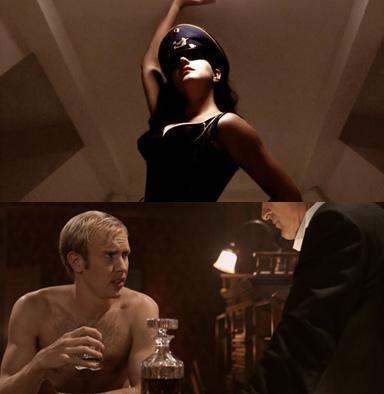
With LA Noire, Rockstar delivers a truly grown-up game. Constructed under Rockstar’s wing, LA Noire is the first game from development house Team Bondi, an Australian company started by Brendan McNamara of gritty English mob game The Getaway. In Team Bondi, Rockstar has found the perfect studio to indulge its aesthetic while reigning in its more puerile impulses. Taking cues from Raymond Chandler, James Cain, and LA Confidential, LA Noire stars conflicted war hero Cole Phelps, who joins the LAPD as a patrolman and quickly rises through the ranks by solving murders and other crimes in an authentic-looking 1940s Los Angeles. Tempting as it must have been to lampoon the genre, there is nary a Dead Men Don’t Wear Plaid (1982) reference to be found.

Gameplay follows a simple pattern over the course of its 20ish hours: investigate a crime scene, follow leads and track down suspects, interrogate and arrest. Rockstar has long led gaming’s evolution into “cinematic experiences,” and LA Noire is a stunning example of blockbuster presentation. It has created a studied facsimile of L.A.’s exalted era, developed a new motion-capture technology that allows realistic representation of faces (see sidebar), and devoted hours of game time to cinema-quality cut-scenes.

Taking further steps to ensure that its cinematic style remains front and center, Team Bondi built in options to remove investigation aids, allowed players to completely skip action and driving sequences, and — for real noir aficionados — added the option to play the whole game in black and white. Selecting these choices points players toward the story and, in turn, reveals which elements were likely neglected during the development process. In this case, the shootouts and the driving.

It might sound like a deal-breaker, but it’s not. Flaws in the conventional gameplay of combat and vehicles are most pronounced in the early-going, where cases are shorter and less memorable; without the context of an engaging mystery, the clunky mechanics are emphasized. Driving is stiff and offers little excitement beyond passing the time between investigations. Shoot-outs and fistfights often are over in less than a minute — not nearly enough time to get the blood pumping. But once you’ve passed the first couple of desks and hit homicide — where the cases are based loosely on real-life murders of the period and play off one another in interesting ways — it becomes clear that gunplay and fisticuffs aren’t LA Noire‘s intended focus but were simply concessions to tradition and buyer expectation.

Setting expectations aside, imagining LA Noire as the triumphant return to point-and-click adventure games becomes easy. Investigations task you with wandering around and clicking on things until you click the right thing that lets you move on. Hey, that sounds like Monkey Island! Conversations with suspects are like tiptoeing through a minefield. Action sequences are filled with second chances; playing human lie detector is a merciless activity, and failing severely weakens your case. These sequences are the real stars of the game.

LA Noire is unlikely to disappoint, unless you were expecting something that the game never was. There’s a sandbox, but it isn’t really a sandbox game; nor is it a variable detective simulation. LA Noire has a stand-alone story and is a guided experience. Many of the cases are worthy of novel-length expansion, which is about the highest compliment a game like this can get. More than anything, Rockstar and Team Bondi have created an impressive and consummate example of gaming’s recent cinematic obsession. Today’s games continue to be about making decisions and working toward goals, and about strategy and winning. But more and more, games have begun to reflect our lives, cultures, and histories. If that doesn’t make them art, I don’t know what can.


LA Noire

(Team Bondi/Rockstar Games), Xbox 360, PS3


Our Weekly Picks: May 25-31, 2011

0

WEDNESDAY 25


MUSIC

Stiff Little Fingers

Led by founding member and singer Jake Burns for 34 years now, Belfast’s punk legends Stiff Little Fingers remain a stalwart musical force to be reckoned with. Fueled by the same energy and edgy political criticism that drove classic tracks like “Alternative Ulster” and “Suspect Device,” the band may have changed lineups over the years, but still delivers the goods live, and will likely showcase some songs from its forthcoming album, due out later this year. Be sure to catch SLF tonight in all its glory in a small club — later this weekend they co-headline the Punk Rock Bowling festival in Las Vegas. (Sean McCourt)

With Sharks

8 p.m., $20

Slim’s

333 11th St., SF

(415) 255-0333

www.slims-sf.com


MUSIC

Yeasayer

After listening to its self-described “Middle Eastern-psych-snap-gospel” music on its second studio album Odd Blood, you’ll only be yelling “yay!” to the stylings of Brooklyn-based trio (Chris Keating, Ira Wolf Tuton, and Anand Wilder), Yeasayer. Truth be told, the threesome admitted that Odd Blood was conceived because of a “massive” acid trip in New Zealand. Psychedelics or not, Yeasayer managed a more poppy feel to its much-acclaimed sophomore releases as opposed to its previous recordings. What’s more of a trip is that Peter Gabriel’s drummer, Jerry Marotta, assisted Yeasayer with its recording in an upstate New York studio. Trust me — you won’t be saying “nay” to Yeasayer.(Jen Verzosa)

 With Smith Westerns and Hush Hush

Wed/25-Thurs/26, $20

Fillmore

1805 Geary, SF

(415) 346-6000

www.livenation.com


THURSDAY 26


EVENT

“Muybridge in Three Movements”

It’s Eadweard Muybridge madness with performance, film, and conversation about the artist wrapped into one evening at SFMOMA. A pioneering spirit whose work led to early motion pictures, Muybridge began his artistic career in the 1860s in California. In conjunction with the retrospective exhibition “Helios: Eadweard Muybridge in a Time of Change,” SFMOMA presents excerpts from Catherine Galasso’s Bring On The Lumière!, a performance meditation on early cinema and the basic components of light and movement, key to Muybridge’s work. Also on the program: related short films selected by San Francisco Cinematheque’s Steve Polta and a conversation on cinematic space and time led by Infinite City: A San Francisco Atlas author Rebecca Solnit. (Julie Potter)

7 p.m., $10

Phyllis Wattis Theater

San Francisco Museum of Modern Art

151 Third St., SF

(415) 357-4000

www.sfmoma.org


MUSIC

Atomic Bomb Audition

The first time I heard the Atomic Bomb Audition, I wondered what film the band was scoring: desolate yet pretty, surreal but cohesive, complete with natural scene changes and visible textures. The Oakland band thus succeeds in its explicit compositional goal — to make music for films that don’t exist. Self-described “cinematic sci-fi metal” (Oh Lucifer, please not another heavy metal sub-sub-subgenre … ), ABA channels psychedelic black doom tainted with Mr. Bungle’s carnie creed and heartened by the fearlessness reminiscent of Pink Floyd’s Animals. The resulting soundtrack rings equally holy and dissonant; get your cinematic self to the show because this is the band’s last live one of the year. (Kat Renz)

With Listo, and Moe! Staiano

9 p.m., $8

Bottom of the Hill

1233 17th St., SF

(415) 621-4455

www.bottomofthehill.com


DANCE

“Post:Ballet Sneak Peek”

Rooted in ballet with an eye toward the future, Robert Dekkers’ Post:Ballet thrives on fresh, edgy collaborations with artists in other disciplines. “Sneak Peek” offers an interactive preview of Interference Pattern, a work in progress with film excerpts by Amir Jaffer, performances by the company, audience experiments, and discussion. In discovering how observations influence the subconscious, the exchange during the evening aims to draw a variety of responses from the dance-artists and the audience. Before starting Post: Ballet in 2009, Dekkers performed in the Bay Area with ODC/Dance and Company C Ballet. These days his gorgeous troupe breathes new movement and ideas into ballet. Go ahead, sneak a peek! (Potter)

7–9 p.m., $10

Public Works

161 Erie, SF

(415) 932-0955

www.postballet.org


FRIDAY 27


MUSIC

“Carnaval Fever”

Just can’t get enough SF Carnaval? Sparkly revelers: stray ye not far from the Mission this Memorial Day weekend. Go beyond the free parade and festival (more info on those events at www.sfcarnaval.com) and shake your feathers at the multi-venue after-party, “Carnaval Fever.” Brick and Mortar, newly opened in the old Coda space at Mission near Division, hosts a trio of live bands, starting with Latin American-Caribbean funksters B-Side Players (Fri/27) and followed by retro funksters Monophonics (Sat/28) and the not-purportedly-funky-but-no-doubt-will-make-you-dance-anyway Brazilian accordion slingers Forró Brazuca (Sun/29). For those who’d rather party in a club pounding with Latin beats, there’ll be DJ sets at Public Works (with headliner Marques Wyatt, Sat/28) and Som. (with Sabo, Sun/29). (Cheryl Eddy)

Fri/27–Sun/29, 9 p.m., $12–$15

Brick and Mortar

1710 Mission, SF

Sat/28, 9 p.m., $10

Public Works

161 Erie, SF

Sun/29, 9 p.m., $10

Som.

2925 16th St., SF

www.carnavalfever.com


SATURDAY 28


DANCE

“RAWdance Concept Series: 8”

I’m here to tell you: RAWdance’s Concept Series can become addictive. Few mixed programs of excerpted or in-progress works are as much fun as these occasional showings hidden in the Duboce Triangle (with parking as difficult as North Beach). Presided over — if such it can be called — by RAWdance’s Wendy Rein and Ryan Smith in a venue where, quite unceremoniously, you have to move your butt if the choreographer needs your space, the evenings offer glimpses of what these choreographers are up to. Rarely does it lack for something intriguing, even if it’s just a question the choreographer hasn’t found the answer to yet. This time AXIS’ Margaret Crowell, Amy Seiwert, and wild-woman Christine Bonansea join the hosts, along with the South Bay’s Nhan Ho. As always, coffee and popcorn are included. (Rita Felciano)

Sat/28–Sun/29, 8 p.m.;

Sun/29, 3 p.m., pay what you can

James Howell Studio

66 Sanchez, SF

(415) 686-0728

www.rawdance.org


SUNDAY 29


FILM

Saicomanía

If you haven’t heard of Los Saicos, you’re not alone — though Héctor M. Chávez’s new rockumentary, Saicomanía, aims to shed some long-deserved light on “the best-kept secret from the ’60s.” Formed in 1964 Peru, at the height of worldwide Beatlemania, the members of Los Saicos were anything but fresh-scrubbed mop tops (see: the band’s name, which recalls a certain 1960 Hitchcock movie). Amid (unfounded) rumors that its members were cannibals and played their instruments with hand tools, a raw, frenzied, jangly sound emerged, surging forth to influence countless other bands (including present-day darlings the Black Lips, who appear in the doc), but earning few props from music historians beyond connoisseurs of early garage rock. Saicomanía traces the band’s origins and catches up with its surviving members, still giving off mischievous punk-rock vibes after all these years. The film’s U.S. premiere is hosted by Colectivo Cinema Errante; the screening also features music videos by contemporary South American bands influenced by los abuelos of garage-punk. (Eddy)

7:30 p.m., $6

Artists’ Television Access

992 Valencia, SF

(415) 824-3890

www.atasite.org


TUESDAY 31


DANCE

Royal Danish Ballet

The 19th century Bournonville repertoire is what the Royal Danes — a.k.a. the Royal Danish Ballet, founded in 1748 — is best known for. With this company, forget about errant princes and lost princesses, sky-high extensions, and tornado like whirligigs. Instead, watch for ordinary folks in feathery footwork, rounded arms, suppleness, and ease. That’s what you’ll get with La Sylphide — the oldest extant Romantic ballet. But the Danes, no longer exclusively Danish, also are resolutely 21st-century dancers. That’s why the company is also bringing Nordic Modern, four hot-out-of-the-studio choreographies. Why won’t we see some of Bournonville’s fabled full-evening story ballets? Everyone else on this U.S. tour is getting them, but we don’t have an available theater that can accommodate the designs. What a pity. (Felciano)

Tues/31, June 1, and June 3–4,

8 p.m., $38–$100

Zellerbach Hall

Bancroft at Telegraph,

UC Berkeley, Berk.

(510) 642-9988

www.calperfs.berkeley.edu


MUSIC

Antlers

There are depressing albums, and then there is Antlers’ 2009 LP Hospice. Based on musician Peter Silberman’s intimate solo recordings, Hospice paints nightmares of hospitals, terminally ill children, death, and depression, all with such solemnity that it made this listener egregiously bummed. The band’s follow-up, Burst Apart, drops hospital drama for what might as well be a psychologist’s office — this time wrestling with universal themes of love, scary dreams, and putting the dog to sleep. It’s a far easier pill to swallow, and the newfound keyboard melodies provide a strong backbone for Silberman’s sing-along “ooh and ah” falsetto. It’s also the year’s first firmly melodramatic release to play equally well whether it’s late at night or a sunlit day. (Peter Galvin)

With Little Scream

8 p.m., $18

Great American Music Hall

859 O’Farrell, SF

(315) 885 0750

www.gamh.com 


The Guardian listings deadline is two weeks prior to our Wednesday publication date. To submit an item for consideration, please include the title of the event, a brief description of the event, date and time, venue name, street address (listing cross streets only isn’t sufficient), city, telephone number readers can call for more information, telephone number for media, and admission costs. Send information to Listings, the Guardian Building, 135 Mississippi St., SF, CA 94107; fax to (415) 487-2506; or e-mail (paste press release into e-mail body — no text attachments, please) to listings@sfbg.com. Digital photos may be submitted in jpeg format; the image must be at least 240 dpi and four inches by six inches in size. We regret we cannot accept listings over the phone.

Film Listings

0

Film listings are edited by Cheryl Eddy. Reviewers are Kimberly Chun, Michelle Devereaux, Peter Galvin, Max Goldberg, Dennis Harvey, Johnny Ray Huston, Louis Peitzman, Lynn Rapoport, Ben Richardson, and Matt Sussman. For rep house showtimes, see Rep Clock. For first-run showtimes, see Movie Guide.

OPENING

The Hangover Part II What could possibly go wrong this time? (1:42) Four Star, Marina, Presidio, Shattuck.

Hobo With a Shotgun See “Last Train to Fuck Town.” (1:26) Lumiere.

*Into Eternity Danish artist Michael Madsen (no, not that Michael Madsen) sneaks into Werner Herzog territory with this rather existential documentary about nuclear waste storage. Though he lacks Herzog’s distinctive, delightful style (his narration is way too corny, and his interview subjects lack any discernable quirks), Madsen is onto something here. Ostensibly, his film is an exploration of Finland’s Onkalo, an enormous underground facility built to store highly dangerous waste until it is no longer radioactive. Ho-hum, until you realize the facility must remain intact and functional for 100,000 years. How, Into Eternity asks, can we plan that far in the future? We can anticipate most natural-disaster scenarios, but what about human intrusion? How can we prevent future civilizations from drilling into the deadly cache, either accidentally or deliberately? How do we warn them? Should we warn them? Will humans even be around that far in the future? All we are is dust in the wind? Needless to say, this quiet, stylistically unassuming doc goes way, way deeper than 500 meters below Finland’s ancient bedrock. (1:15) Roxie. (Eddy)

Kung Fu Panda 2 Po (Jack Black) and company return for 3D martial-arts misadventures. (1:30) Cerrito, Four Star, Presidio.

Midnight in Paris Owen Wilson plays Gil, a self-confessed “Hollywood hack” visiting the City of Light with his conservative future in-laws and crassly materialistic fiancée Inez (Rachel McAdams). A romantic obviously at odds with their selfish pragmatism (somehow he hasn’t realized that yet), he’s in love with Paris and particularly its fabled artistic past. Walking back to his hotel alone one night, he’s beckoned into an antique vehicle and finds himself transported to the 1920s, at every turn meeting the Fitzgeralds, Gertrude Stein (Kathy Bates), Dali (Adrien Brody), etc. He also meets Adriana (Marion Cotillard), a woman alluring enough to be fought over by Hemingway (Corey Stoll) and Picasso (Marcial di Fonzo Bo) — though she fancies aspiring literary novelist Gil. Woody Allen’s latest is a pleasant trifle, no more, no less. Its toying with a form of magical escapism from the dreary present recalls The Purple Rose of Cairo (1985), albeit without that film’s greater structural ingeniousness and considerable heart. None of the actors are at their best, though Cotillard is indeed beguiling and Wilson dithers charmingly as usual. Still — it’s pleasant. (1:34) Embarcadero. (Harvey)

ONGOING

American: The Bill Hicks Story (1:41) Sundance Kabuki.

*L’Amour Fou Pierre Thoretton’s documentary L’amour fou opens with two clips of men bidding farewell. The first, from 2002, is of the French-Algerian couturier Yves Saint Laurent announcing his retirement in a moving and emotional speech worthy of his favorite writer Marcel Proust. The second is of Pierre Bergé, Saint Laurent’s longtime business partner and former lover, eulogizing his departed friend at the designer’s memorial service six years later. Thoretton’s film is suffused with goodbyes, many tender and candid, some portentous and rehearsed. To be sure, L’amour fou is a touching portrait of the powerful and tempestuous bond between Saint Laurent and Bergé, a bond that lasted close to five decades and resulted in one of the great empires of 20th century fashion. But it is also, alongside David Teboud’s two 2002 YSL documentaries, another entry in the hagiography of Saint Laurent, one cannily steered by Bergé as much as by Thoretton. Well-spoken and charming, Bergé still comes off as the punchy entrepreneurial foil to Saint Laurent’s dazzling but fragile genius. He can be both hyperbolic (praising Saint Laurent’s gifts) but also forthcoming (discussing the designer’s demons). Former muses Loulou de la Falaise and Betty Catroux are also interviewed, but this is clearly Bergé’s show. (1:43) Albany, Embarcadero. (Sussman)

The Beaver It’s been more than 15 years since Jodie Foster sat in the director’s chair; she’s back with The Beaver, which tells the unique story of Walter Black (Mel Gibson), a clinically depressed man who struggles through his suicidal desires with the help of a beaver puppet. Walter uses the puppet — which he also voices — as a way of connecting with his family and the outside world. The film examines both the comedic aspects and the devastating reality of mental illness, and the script walks the line between dark and light — it’s the first feature from Kyle Killen, who created the critically adored but short-lived TV series Lone Star. The Beaver gets points for ambition, but it’s ultimately too all over the place to come together in the end. The moments of humanity are undercut by scenes of Walter and his wife Meredith (Foster) having sex with the puppet in the bed — intentionally funny, but jarring nonetheless. Still, Foster’s direction is solid and, for all its faults, The Beaver is a great reminder of Gibson’s legitimate talent. (1:31) Elmwood, SF Center, Shattuck, Sundance Kabuki. (Peitzman)

*Bill Cunningham New York To say that Bill Cunningham, the 82-year old New York Times photographer, has made documenting how New Yorkers dress his life’s work would be an understatement. To be sure, Cunningham’s two decades-old Sunday Times columns — “On the Street,” which tracks street-fashion, and “Evening Hours,” which covers the charity gala circuit — are about the clothes. And, my, what clothes they are. But Cunningham is a sartorial anthropologist, and his pictures always tell the bigger story behind the changing hemlines, which socialite wore what designer, or the latest trend in footwear. Whether tracking the near-infinite variations of a particular hue, a sudden bumper-crop of cropped blazers, or the fanciful leaps of well-heeled pedestrians dodging February slush puddles, Cunningham’s talent lies in his ability to recognize fleeting moments of beauty, creativity, humor, and joy. That last quality courses through Bill Cunningham New York, Richard Press’ captivating and moving portrait of a man whose reticence and personal asceticism are proportional to his total devotion to documenting what Harold Koda, chief curator at the Costume Institute at the Metropolitan Museum of Art, describes in the film as “ordinary people going about their lives, dressed in fascinating ways.” (1:24) Bridge, Elmwood. (Sussman)

*Bridesmaids For anyone burned out on bad romantic comedies, Bridesmaids can teach you how to love again. This film is an answer to those who have lamented the lack of strong female roles in comedy, of good vehicles for Saturday Night Live cast members, of an appropriate showcase for Melissa McCarthy. The hilarious but grounded Kristen Wiig stars as Annie, whose best friend Lillian (Maya Rudolph) is getting hitched. Financially and romantically unstable, Annie tries to throw herself into her maid of honor duties — all while competing with the far more refined Helen (Rose Byrne). Bridesmaids is one of the best comedies in recent memory, treating its relatable female characters with sympathy. It’s also damn funny from start to finish, which is more than can be said for most of the comedies Hollywood continues to churn out. Here’s your choice: let Bridesmaids work its charm on you, or never allow yourself to complain about an Adam Sandler flick again. (2:04) Balboa, Empire, Marina, 1000 Van Ness, Shattuck, Sundance Kabuki. (Peitzman)

*Cave of Forgotten Dreams The latest documentary from Werner Herzog once again goes where no filmmaker — or many human beings, for that matter — has gone before: the Chauvet-Pont-d’Arc Cave, a heavily-guarded cavern in Southern France containing the oldest prehistoric artwork on record. Access is highly restricted, but Herzog’s 3D study is surely the next best thing to an in-person visit. The eerie beauty of the works leads to a typically Herzog-ian quest to learn more about the primitive culture that produced the paintings; as usual, Herzog’s experts have their own quirks (like a circus performer-turned-scientist), and the director’s own wry narration is peppered with random pop culture references and existential ponderings. It’s all interwoven with footage of crude yet beautiful renderings of horses and rhinos, calcified cave-bear skulls, and other time-capsule peeks at life tens of thousands of years ago. The end result is awe-inspiring. (1:35) SF Center, Shattuck, Sundance Kabuki. (Eddy)

The Conspirator It may not be your standard legal drama, but The Conspirator is a lot more enjoyable when you think of it as an extended episode of Law & Order. The film chronicles the trial of Mary Surratt (Robin Wright), the lone woman charged in the conspiracy to assassinate Abraham Lincoln. It’s a fascinating story, especially for those who don’t know much of the history past John Wilkes Booth. But while the subject matter is compelling, the execution is hit-or-miss. Wright is sympathetic as Surratt, but the usually great James McAvoy is somewhat forgettable in the pivotal role of Frederick Aiken, Surratt’s conflicted lawyer. It’s hard to say what it is that’s missing from The Conspirator: the cast — which also includes Evan Rachel Wood and Tom Wilkinson — is great, and this is a story that’s long overdue to be told. Still, something is lacking. Could it be the presence of everyone’s favorite detective, the late Lennie Briscoe? (2:02) Opera Plaza. (Peitzman)

*The Double Hour Slovenian hotel maid Sonia (Ksenia Rappoport) and security guard Guido (Filippo Timi) are two lonely people in the Italian city of Turin. They find one another (via a speed-dating service) and things are seriously looking up for the fledgling couple when calamity strikes. This first feature by music video director Giuseppe Capotondi takes a spare, somber approach to a screenplay (by Alessandro Fabbri, Ludovica Rampoldi, and Stefano Sardo) that strikingly keeps raising, then resisting genre categorization. Suffice it to say their story goes from lonely-hearts romance to violent thriller, ghost story, criminal intrigue, and yet more. It doesn’t all work seamlessly, but such narrative unpredictability is so rare at the movies these days that The Double Hour is worth seeing simply for the satisfying feeling of never being sure where it’s headed. (1:35) Albany, Clay, Piedmont, Smith Rafael. (Harvey)

*Everything Must Go Just skirting the edge of sentimentality and banality, Everything Must Go aims to do justice by its source material: Raymond Carver’s rueful, characteristically spare short story, “Why Don’t You Dance?,” from the 1988 collection Where I’m Calling From. And it mostly succeeds with some restraint from its director-writer Dan Rush, who mainly helmed commercials in the past. Everything Must Go gropes toward a cinematic search for meaning for the Willy Lomans on both sides of the camera — it’s been a while since Will Ferrell attempted to stretch beyond selling a joke, albeit often extended ones about masculinity, and go further as an actor than 2006’s Stranger Than Fiction. The focus here turns to the despairing, voyeuristic whiskey drinker of Carver’s highly-charged short story, fills in the blanks that the writer always carefully threaded into his work, and essentially pushes him down a crevasse into the worst day of his life: Ferrell’s Nick has been fired and his wife has left him, changing the locks, putting a hold on all his bank accounts, and depositing his worldly possessions on the lawn of their house. Nick’s car has been reclaimed, his neighbors are miffed that he’s sleeping on his lawn, the cops are doing drive-bys, and he’s fallen off the wagon. His only reprieve, says his sponsor Frank (Michael Pena), is to pretend to hold a yard sale; his only help, a neighborhood boy Kenny who’s searching for a father figure (Christopher Jordan Wallace, who played his dad Notorious B.I.G. as a child in 2009’s Notorious) and the new neighbor across the street (Rebecca Hall). Though Rush expands the characters way beyond the narrow, brilliant scope of Carver’s original narrative, the urge to stay with those fallible people — as well as the details of their life and the way suburban detritus defines them, even as those possessions are forcibly stripped away — remains. It makes for an interesting animal of a dramedy, though in Everything Must Go‘s search for bright spots and moments of hope, it’s nowhere near as raw, uncompromising, and tautly loaded as Carver’s work can be. (1:36) Piedmont, Sundance Kabuki. (Chun)

Fast Five There are plenty of laugh-out-loud moments in Fast Five, in addition to a much demolition derby-style crunch — instances that stretch credulity and simultaneously trigger a chuckle at the OTT fantasy of the entire enterprise. Two unarmed men chained to the ceiling kick their way out of a torture cell, jump favela rooftops to freedom with nary a bullet wound in sight, and, in the movie’s smash-’em-up tour de force, use a bank vault as a hulking pair of not-so-fuzzy dice to pulverize an unsuspecting Rio de Janeiro. Not for nothing is rapper Ludacris attached to this franchise — his name says it all (why not go further than his simple closing track, director Justin Lin, now designated the keeper of Fast flame, and have him providing the rap-eratic score/running commentary throughout?) In this installment, shady hero Dominic (Vin Diesel) needs busting out of jail — check, thanks to undercover-cop-turned-pal Brian (Paul Walker) and Dominic’s sis Mia (Jordana Brewster). Time to go on the lam in Brazil and to bring bossa nova culture down to level of thieving L.A. gearheads, as the gearhead threesome assemble their dream team of thieves to undertake a last big heist that will set ’em up for life. Still, despite the predictable pseudo-twists — can’t we all see the bromance-bonding between testosteroni boys Diesel and Dwayne Johnson coming from miles of blacktop away? — there’s enough genre fun, stunt driving marvels, and action choreography here (Lin, who made his name in ambitious indies like 2002’s Better Luck Tomorrow, has developed a knack for harnessing/shooting the seeming chaos) — to please fans looking for a bigger, louder kick. (1:41) 1000 Van Ness. (Chun)

The First Grader After a government announcement offering free elementary school educations to all Kenyans, an elderly man, Maruge (Oliver Litondo), shuffles to the nearest rural classroom in search of reading lessons. Though school officials (and parents, miffed that the man would take a child’s place in the already overcrowded system) protest, open-minded head teacher Jane (Naomie Harris) allows him to stay and study. Maruge’s freedom-fighter past, which cost him his family at the brutal hands of the British, is an important part of this true story, which otherwise would’ve felt a bit too heavy on the heartwarming tip. (His classmates, actual students at the school used for filming, are pretty unavoidably adorable.) As directed by Justin Chadwick (2008’s The Other Boleyn Girl ), Harris and Litondo turn in passionate performances, but the film unfolds like a heavy-handed TV movie. The facts of this story are inspiring enough — the film shouldn’t have to try so hard. (1:43) Opera Plaza, Smith Rafael. (Eddy)

Forks Over Knives Lee Fulkerson steps up as the latest filmmaker-turned-guinea-pig to appear in his own documentary about nutrition. As he makes progress on his 12-week plan to adopt a “whole foods, plant-based diet” (and curb his Red Bull addiction), he meets with other former junk food junkies, as well as health professionals who’ve made it their mission to prevent or even reverse diseases strictly through dietary changes. Along the way, Forks Over Knives dishes out scientific factoids both enlightening and alarming about the way people (mostly us fatty Americans, though the film investigates a groundbreaking cancer study in China) have steadily gotten unhealthier as a direct result of what they are (or in some cases, are not) eating. Fulkerson isn’t as entertaining as Morgan Spurlock (and it’s unlikely his movie will have the mainstream appeal of 2004’s Super Size Me), but the staunchly pro-vegan Forks Over Knives certainly offers some interesting, ahem, food for thought. (1:36) Opera Plaza. (Eddy)

*Hanna The title character of Hanna falls perfectly into the lately very popular Hit-Girl mold. Add a dash of The Boys from Brazil-style genetic engineering — Hanna has the unfair advantage, you see, when it comes to squashing other kids on the soccer field or maiming thugs with her bare hands — and you have an ethereal killing/survival machine, played with impassive confidence by Atonement (2007) shit-starter Saoirse Ronan. She’s been fine-tuned by her father, Erik (Eric Bana), a spy who went out into the cold and off the grid, disappearing into the wilds of Scandinavia where he home-schooled his charge with an encyclopedia and brutal self-defense and hunting tests. Atonement director Joe Wright plays with a snowy palette associated with innocence, purity, and death — this could be any time or place, though far from the touch of modern childhood stresses: that other Hannah (Montana), consumerism, suburban blight, and academic competition. The 16-year-old Hanna, however, isn’t immune from that desire to succeed. Her game mission: go from a feral, lonely existence into the modern world, run for her life, and avenge the death of her mother by killing Erik’s CIA handler, Marissa (Cate Blanchett). The nagging doubt: was she born free, or Bourne to be a killer? Much like the illustrated Brothers Grimm storybook that she studies, Hanna is caught in an evil death trap of fairytale allegories. One wonders if the super-soldier apple didn’t fall far from the tree, since evil stepmonster Marissa oversaw the program that produced Hanna — the older woman and the young girl have the same cold-blooded talent for destruction and the same steely determination. Yet there’s hope for the young ‘un. After learning that even her beloved father hid some basic truths from her, this natural-born killer seems less likely to go along with the predetermined ending, happy or no, further along in her storybook life. (1:51) SF Center. (Chun)

*Hesher Young teen TJ (Devin Brochu) has lost his mom, and her shockingly sudden passing has sent his entire family into a tailspin. His father (Rainn Wilson) can barely rouse himself from his heavily medicated stupor, while his lonely grandmother (Piper Laurie) is left to care for the wrecked men folk as best she can. All TJ can do is to try to desperately hang onto the smashed car that has been sold to the used car salesman and then the junkyard. So it almost seems like a dream when he catches the attention of an aloof, threatening metalhead named Hesher (a typecast-squashing, perfectly on-point Joseph Gordon-Levitt), squatting in an empty suburban model home. Hesher threatens to kill him, then moves in, becoming his so-called “friend” and brand-new, unwanted shadow. What’s a grieving family lost in its own tragic inertia supposed to do with a home invasion staged by an angry, malevolent spirit? Coming to terms with Hesher’s presence becomes a lot like going through Kubler-Ross’s five stages of grief: there’s the denial that he’s taken over the living-room TV and rejiggered the cable to get a free porn channel, the anger that he’s set fire to your enemy’s hot rod and left you at the scene of the crime, and lastly the acceptance that there’s no good, right, or unmessy way to say goodbye. Director Spencer Susser (with co-writer David Michod of 2010’s Animal Kingdom) modeled the character of Hesher after late Metallica bassist Cliff Burton, and that fact, along with the film’s independent-minded spirit, is probably one of the reasons why Metallica allowed more than one of their songs to be used in the film. Hesher itself also likely had something to do with it: if the intrigue with heavy-metal-parking-lot culture doesn’t do donuts in your cul-de-sac, then the sobering story might. (1:45) California, Lumiere. (Chun)

*Incendies When tightly wound émigré Nawal (Luba Azabal) dies, she leaves behind adult twins Jeanne (Mélissa Désormeaux-Poulin) and Simon (Maxim Gaudette) — and leaves them documents that only compound their feelings of grief and anger, suggesting that what little they thought they knew about their background might have been a lie. While resentful Simon at first stays home in Montreal, Jeanne travels to fictive “Fuad” (a stand-in for source-material playwright Wajdi Mouawad’s native Lebanon), playing detective to piece together decades later the truth of why their mother fled her homeland at the height of its long, brutal civil war. Alternating between present-day and flashback sequences, this latest by Canadian director Denis Villeneuve (2000’s Maelstrom) achieves an urgent sweep punctuated by moments of shocking violence. Resembling The Kite Runner in some respects as a portrait of the civilian victimization excused by war, it also resembles that work in arguably piling on more traumatic incidences and revelations than one story can bear — though so much here has great impact that a sense of over-contrivance toward the very end only slightly mars the whole. (2:10) Opera Plaza, Shattuck. (Harvey)

Jumping the Broom (1:48) SF Center.

*Meek’s Cutoff After three broke down road movies (1994’s River of Grass, 2006’s Old Joy, 2008’s Wendy and Lucy), Kelly Reichardt’s new frontier story tilts decisively towards socially-minded existentialism. It’s 1845 on the choked plains of Oregon, miles from the fertile valley where a wagon train of three families is headed. They’ve hired the rogue guide Meek to show them the way, but he’s got them lost and low on water. When the group captures a Cayeuse Indian, Solomon proposes they keep him on as a compass; Meek thinks it better to hang him and be done with it. The periodic shots of the men deliberating are filmed from a distance — the earshot range of the three women (Michelle Williams, Zoe Kazan, and Shirley Henderson) who set up camp each night. It’s through subtle moves like these that Meek’s Cutoff gives a vivid taste of being subject to fate and, worse still, the likes of Meek. Reichardt winnows away the close-ups, small talk, and music that provided the simple gifts of her earlier work, and the overall effect is suitably austere. (1:44) Roxie, Shattuck. (Goldberg)

*My Perestroika Robin Hessman’s very engaging documentary takes one very relatable look at how changes since glasnost have affected some average Russians. The subjects here are five thirtysomethings who, growing up in Moscow in the 70s and 80s, were the last generation to experience full-on Communist Party indoctrination. But just as they reached adulthood, the whole system dissolved, confusing long-held beliefs and variably impacting their futures. Andrei has ridden the capitalist choo-choo to considerable enrichment as the proprietor of luxury Western menswear shops. But single mother Olga, unlucky in love, just scrapes by, while married schoolteachers Lyuba and Boris are lucky to have inherited an apartment (cramped as it is) they could otherwise ill afford. Meanwhile Ruslan, once member of a famous punk band (which he abandoned on principal because it was getting “too commercial”), both disdains and resents the new order just as he did the old one. Home movies and old footage of pageantry celebrating Soviet socialist glory make a whole ‘nother era come to life in this intimate, unexpectedly charming portrait of its long-term aftermath. (1:27) Balboa. (Harvey)

*Nostalgia for the Light Chile’s Atacama Desert, the setting for Patricio Guzmán’s lyrically haunting and meditative documentary, is supposedly the driest place on earth. As a result, it’s also the most ideal place to study the stars. Here, in this most Mars-like of earthly landscapes, astronomers look to the heavens in an attempt to decode the origins of the universe. Guzmán superimposes images from the world’s most powerful telescopes — effluent, gaseous nebulas, clusters of constellations rendered in 3-D brilliance — over the night sky of Atacama for an even more otherworldly effect, but it’s the film’s terrestrial preoccupations that resonate most. For decades, a small, ever dwindling group of women have scoured the cracked clay of Atacama searching for loved ones who disappeared early in Augusto Pinochet’s regime. They take their tiny, toy-like spades and sift through the dirt, finding a partial jawbone here, an entire mummified corpse there. Guzmán’s attempt through voice-over to make these “architects of memory,” both astronomers and excavators alike, a metaphor for Chile’s reluctance to deal with its past atrocities is only marginally successful. Here, it’s the images that do all the talking — if “memory has a gravitational force,” their emotional weight is as inescapable as a black hole. (1:30) Lumiere, Smith Rafael. (Devereaux)

Pirates of the Caribbean: On Stranger Tides The last time we saw rascally Captain Jack Sparrow (Johnny Depp), he was fighting his most formidable enemy yet: the potentially franchise-ending Pirates of the Caribbean: At World’s End (2007). The first Pirates movie (2003) was a surprise critical success, earning Depp his first-ever Oscar nomination; subsequent entries, though no less moneymaking, suffered from a detectable case of sequel-itis. Overseeing this reboot of sorts is director Rob Marshall (2002’s Chicago), who keeps the World’s End notion of sending Jack to find the Fountain of Youth, but adds in a raft of new faces, including Deadwood‘s Ian McShane (as Blackbeard) and lady pirate Penélope Cruz. The story is predictably over-the-top, with the expected supernatural elements mingling with sparring both sword-driven and verbal — as well as an underlying theme about faith that’s nowhere near as fun as the film’s lesser motifs (revenge, for one). It’s basically a big swirl of silly swashbuckling, nothing more or less. And speaking of Depp, the fact that the oft-ridiculous Sparrow is still an amusing character can only be chalked up to the actor’s own brand of untouchable cool. If it was anyone else, Sparrow’d be in Austin Powers territory by now. (2:05) Balboa, Castro, Cerrito, Empire, 1000 Van Ness, Presidio, Sundance Kabuki. (Eddy)

Priest (1:27) 1000 Van Ness, SF Center.

*The Princess of Montpensier Marie (Mélanie Thierry), the titular figure in French director Bertrand Tavernier’s latest, is a young 16th century noblewoman married off to a Prince (Grégoire Leprince-Ringuet) of great wealth and property. But they’ve barely met when he’s called off to war — leaving her alone on his enormous estate, vulnerable to myriad suitors who seem to be forever throwing themselves at her nubile, neglected body. Lambert Wilson (2010’s Of Gods and Men) is touching as the older soldier appointed her protector; he comes to love her, yet is the one man upstanding enough to resist compromising her. If you’ve been jonesing for the kind of lush arthouse period epic that feels like a big fat classic novel, this engrossing saga from a 70-year-old Gallic cinema veteran in top form will scratch that itch for nearly two and a half satisfyingly tragic-romantic hours. (2:19) Smith Rafael. (Harvey)

Potiche When we first meet Catherine Deneuve’s Suzanne — the titular trophy wife (or potiche) of Francois Ozon’s new airspun comedy — she is on her morning jog, barely breaking a sweat as she huffs and puffs in her maroon Adidas tracksuit, her hair still in curlers. It’s 1977 and Suzanne’s life as a bourgeois homemaker in a small provincial French town has played out as smoothly as one of her many poly-blend skirt suits: a devoted mother to two grown children and loving wife who turns a blind eye to the philandering of husband Robert (Fabrice Luchini), Suzanne is on the fast track to comfortable irrelevance. All that changes when the workers at Robert’s umbrella factory strike and take him hostage. Suzanne, with the help of union leader and old flame Babin (Gerard Depardieu, as big as a house), negotiates a peace, and soon turns around the company’s fortunes with her new-found confidence and business savvy. But when Robert wrests back control with the help of a duped Babin, Suzanne does an Elle Woods and takes them both on in a surprise run for political office. True to the film’s light théâtre de boulevard source material, Ozon keeps things brisk and cheeky (Suzanne sings with as much ease as she spouts off Women’s Lib boilerplate) to the point where his cast’s hammy performances start blending into the cheery production design. Satire needs an edge that Potiche, for all its charm, never provides. (1:43) Elmwood, Opera Plaza. (Sussman)

Queen to Play From first-time feature director Caroline Bottaro comes this drama about … chess. Wait! Before your eyes glaze over, here are a few more fast facts: it’s set in idyllic Corsica and features, as an American expat, Kevin Kline in his first French-speaking role. (Side note: is there a Kline comeback afoot? First No Strings Attached, then The Conspirator, and now Queen to Play. All within a few short months.) Lovely French superstar Sandrine Bonnaire plays Héléne, a hotel maid who has more or less accepted her unremarkable life — until she happens to catch a couple (one half of which is played by Jennifer Beals, cast because Bottaro is a longtime fan of 1983’s Flashdance!) playing chess. An unlikely obsession soon follows, and she asks Kline’s character, a reclusive doctor who’s on her freelance house-cleaning route, to help her up her game. None too pleased with this new friendship are Héléne’s husband and nosy neighbors, who are both suspicious of the doctor and unsure of how to treat the formerly complacent Héléne’s newfound, chess-inspired confidence. Queen to Play can get a little corny (we’re reminded over and over that the queen is “the most powerful piece”), and chess is by nature not very cinematic (slightly more fascinating than watching someone type, say). But Bonnaire’s quietly powerful performance is worth sticking around for, even when the novelty of whiskery, cardigan-wearing, French-spouting Kline wears off. (1:36) Shattuck, Smith Rafael. (Eddy)

Rio (1:32) Elmwood, 1000 Van Ness, SF Center.

Something Borrowed (1:53) 1000 Van Ness, Presidio.

*Source Code A post-9/11 Groundhog Day (1993) with explosions, Inception (2010) with a heart, or Avatar (2009) taken down a notch or dozen in Chicago —whatever you choose to call it, Source Code manages to stand up on its own wobbly Philip K. Dick-inspired legs, damn the science, and take off on the wings of wish fulfillment. ‘Cause who hasn’t yearned for a do-over — and then a do-over of that do-over, etc. We could all be as lucky — or as cursed — as soldier Colter Stevens (Jake Gyllenhaal), who gets to tumble down that time-space rabbit hole again and again, his consciousness hitching a ride in another man’s body, while in search of the bomber of a Chicago commuter train. On the upside, he gets to meet the girl of his dreams (Michelle Monaghan) — and see her getting blown to smithereens again and again, all in the service of his country, his commander-cum-link to the outside world (Vera Farmiga), and the scientist masterminding this secret military project (Jeffrey Wright). On the downside, well, he gets to do it over and over again, like a good little test bunny in pinball purgatory. Fortunately, director Duncan Jones (2009’s Moon) makes compelling work out of the potentially ludicrous material, while his cast lends the tale a glossed yet likable humanity, the kind that was all too absent in 2010’s Inception. (1:33) 1000 Van Ness. (Chun)

*13 Assassins 13 Assassins is clearly destined to be prolific director Takashi Miike’s greatest success outside Japan yet. It’s another departure for the multi-genre-conquering Miike, doubtless one of the most conventional movies he’s made in theme and execution. That’s key to its appeal — rigorously traditional, taking its sweet time getting to samurai action that is pointedly not heightened by wire work or CGI, it arrives at the kind of slam-dunk prolonged battle climax that only a measured buildup can let you properly appreciate. In the 1840s, samurai are in decline but feudalism is still hale. It’s a time of peace, though not for the unfortunates who live under regional tyrant Lord Naritsugu (Goro Inagaki), a li’l Nippon Caligula who taxes and oppresses his people to the point of starvation. Alas, the current Shogun is his sibling, and plans to make little bro his chief adviser — so a concerned Shogun official secretly hires veteran samurai Shinzaemon (Koji Yakusho) to assassinate the Lord. Fully an hour is spent on our hero doing “assembling the team” stuff, recruiting other unemployed, retired, or wannabe samurai. When the protagonists finally commence their mission, their target is already aware he’s being pursued, and he’s surrounded by some 200 soldiers by the time Miike arrives at the film’s sustained, spectacular climax: a small village which Shinzaemon and co. have turned into a giant boobytrap so that 13 men can divide and destroy an ogre-guarding army. A major reason why mainstream Hollywood fantasy and straight action movies have gotten so depressingly interchangeable is that digital FX and stunt work can (and does) visualize any stupid idea — heroes who get thrown 200 feet into walls by monsters then getting up to fight some more, etc. 13 Assassins is thrilling because its action, while sporting against-the-odds ingeniousness and sheer luck by our heroes as in any trad genre film, is still vividly, bloodily, credibly physical. (2:06) California, Embarcadero, Smith Rafael. (Harvey)

*Thor When it comes to superhero movies, I’m not easily impressed. Couple that with my complete disinterest in the character of Thor, and I didn’t go into his big-screen debut with any level of excitement. Turns out Kenneth Branagh’s Thor is a genre standout — the best I’ve seen since 2008’s Iron Man. For those who don’t know the mythology, the film follows Thor (Chris Hemsworth) as he’s exiled from the realm of Asgard to Earth. Once there, he must reclaim his mighty hammer — along with his powers — in order to save the world and win the heart of astrophysicist Jane Foster (Natalie Portman). Hemsworth is perfectly cast as the titular hero: he’s adept at bringing charm to a larger-than-life god. The script is a huge help, striking the ideal balance between action, drama, and humor. That’s right, Thor is seriously funny. On top of that, the effects are sensational. Sure, the 3D is once again unnecessary, but it’s admittedly kind of fun when you’re zooming through space. (2:03) Empire, 1000 Van Ness, Sundance Kabuki. (Peitzman)

The Topp Twins: Untouchable Girls It’s hard to name an American equivalent of New Zealand’s Topp Twins — a folk-singing, comedy-slinging, cross-dressing duo who’re the biggest Kiwi stars you’ve never heard of (but may be just as beloved as, say, Peter Jackson in their homeland). Recent inductees in the New Zealand Music Hall of Fame, the fiftysomething Jools and Lynda, both lesbians, sing country-tinged tunes that slide easily from broad and goofy (with an array of costumed personas) to extremely political, sounding off on LGBT and Maori rights, among other topics. Even if you’re not a fan of their musical style, it’s undeniable that their identical voices make for some stirring harmonies, and their optimism, even when a serious illness strikes, is inspiring. This doc — which combines interviews, home movies, and performance footage — will surely earn them scores of new stateside fans. (1:24) Shattuck. (Eddy)

Water for Elephants A young man named Jacob Jankowski (Robert Pattinson) turns his back on catastrophe and runs off to join the circus. It sounds like a fantasy, but this was never Jacob’s dream, and the circus world of Water for Elephants isn’t all death-defying feats and pretty women on horses. Or rather, the pretty woman also rides an elephant named Rosie and the casualties tend to occur outside the big top, after the rubes have gone home. Stumbling onto a train and into this world by chance, Jacob manages to charm the sadistic sociopath who runs the show, August (Christophe Waltz), and is charmed in turn by August’s wife, Marlena (Reese Witherspoon), a star performer and the object of August’s abusive, obsessive affections. Director Francis Lawrence’s film, an adaptation of Sarah Gruen’s 2006 novel, depicts a harsh Depression-era landscape in which troupes founder in small towns across America, waiting to be scavenged for parts — performers and animals — by other circuses passing through. Waltz’s August is a frightening man who defines a layoff as throwing workers off a moving train, and the anxiety of anticipating his moods and moves supplies most of the movie’s dramatic tension; Jacob and Marlena’s pallid love story feeds off it rather than adding its own. The film also suffers from a frame tale that feels awkward and forced, though Hal Holbrook makes heroic efforts as the elderly Jacob, surfacing on the grounds of — what else? — a modern-day circus to recount his tale of tragedy and romance. (2:00) 1000 Van Ness, SF Center, Sundance Kabuki. (Rapoport)

*Win Win Is Tom McCarthy the most versatile guy in Hollywood? He’s a successful character actor (in big-budget movies like 2009’s 2012; smaller-scale pictures like 2005’s Good Night, and Good Luck; and the final season of The Wire). He’s an Oscar-nominated screenwriter (2009’s Up). And he’s the writer-director of two highly acclaimed indie dramas, The Station Agent (2003) and The Visitor (2007). Clearly, McCarthy must not sleep much. His latest, Win Win, is a comedy set in his hometown of New Providence, N.J. Paul Giamatti stars as Mike Flaherty, a lawyer who’s feeling the economic pinch. Betraying his own basic good-guy-ness, he takes advantage of a senile client, Leo (Burt Young), when he spots the opportunity to pull in some badly-needed extra cash. Matters complicate with the appearance of Leo’s grandson, Kyle (newcomer Alex Shaffer), a runaway from Ohio. Though Mike’s wife, Jackie (Amy Ryan), is suspicious of the taciturn teen, she allows Kyle to crash with the Flaherty family. As luck would have it, Kyle is a superstar wrestler — and Mike happens to coach the local high school team. Things are going well until Kyle’s greedy mother (Melanie Lynskey) turns up and starts sniffing around her father’s finances. Lessons are learned, sure, and there are no big plot twists beyond typical indie-comedy turf. But the script delivers more genuine laughs than you’d expect from a movie that’s essentially about the recession. (1:46) California, Piedmont. (Eddy)


 

American Idol: The weeping edition

12

Six weeks ago, who could have imagined — the American Idol final is Scotty and Lauren? Please. So many talented people gone, so little talent left ….


I like Scotty, I really do, despite the religion and the aw-shucks sheepishness. I think he’s a sincere kid who will have a great career as a country music singer. But AI is supposed to showcase broad-based talent, and that’s not him.


Lauren is also a nice kid, and the scene with her crying as she viewed the flood wreckage was way, way over the top, but sincere. (In fact, there was an awful lot of weeping this week. Scotty wept all the way home. The only one who didn’t seem overcome by emotion was Haley, who was also the best performer. But I guess it’s all about the televised tears. You cry and you love God and you get a recording contract. What a great country.)


A few noteworthy moments in the penultimate week:


Ryan reports 95 million votes. Somebody’s got an app out there.


Steven once again has gold glittery pants. It goes with the feathers in his hair, I guess.


Shameless huckerism just gets worse: The three finalists get to go to the special showing of “Super 8” — followed immediately by an ad for “Super 8.” The kids all look miserable doing their final Ford music video.


Then on comes — ready? — Il Volo, a group of three young Italian opera singers who sing “O Sole Mio” in Italian. They’re totally talented, no complaints, but it’s really odd and the three finalists are kind of dumbfounded.


There’s a six-second appearance by 50 Cent, who looks as if he’d rather be anywhere else in the world.


The videos of the carefully orchestrated “home visits” are long, dumb and about as sappy as it gets. Lauren’s bodyguard is gigantic. Then we go on to the results — and it’s clear that the voters have been so wrong for so long that the show is becoming a farce. Good people gone? Pia. Casey. James. Now Haley. Any of them could have been legitimate finalists. But it’s all about the cuteness and the emotion, and I’m over it.


Final prediction: Viv wants Lauren, because she says (and it’s a good point) that Scotty and James will wind up with great careers anyway, but if Lauren finishes second and doesn’t get the Idol contracts, she’s never going anywhere on her own. But come on — it has to be Scotty. It’s not even a choice. At least he’s good at something.

Finally, a prosecutor leaps into D.A.’s race

73

From the moment I walked into Sharman Bock’s District Attorney campaign launch and saw the roomful of “signs proclaiming, “A prosecutor for District Attorney”, I realized that Bock isn’t the type of candidate to hold her punches. And that makes perfect sense, because unlike the other candidates in the D.A.’s race, Bock, 48,  is a seasoned prosecutor.


Bock, as I soon found out, is also a longtime San Francisco resident, who moved here from Iran when she was four and has lived in the city for more than four decades. She went to high school here, returned after graduating cum laude from Georgetown University Law Center, and earned a clerkship with the Hon. D. Lowell Jensen of the Northern District of California, before starting her prosecutorial career in Alameda County, where she has served as an Assistant D.A. since 1989.  And she continues to live in San Francisco, where she is currently raising two kids with her husband in the Richmond District.


Joined by Congressmember Jackie Speier, Lulu Flores, President of the National Women’s Political Caucus, and Shronda Wallace, whose mother was brutally murdered in 1989, Bock made no bones about why she has decided to spring into the race.


“I’m running for San Francisco District Attorney because this is a job that requires a seasoned prosecutor who knows what it takes to put the most violent and dangerous criminals behind bars and keep them there,” Bock said. “I am a professional prosecutor. I want to give voters a real choice. No other candidate in this race has prosecuted even a single criminal case. This is no job for rookies. The stakes are too high and rookies make mistakes.”


When Bock noted that her conviction rate is over 90 percent, and that she has never lost a serious or violent jury trial, I wondered how successful the other main contenders–former SFPD Chief George Gascón, who Mayor Gavin Newsom appointed as D.A. in January, and former San Francisco Police Commissioner David Onek, are going to be when it comes to downplaying the fact that neither, as Bock wasn’t afraid to remind reporters, “has ever prosecuted a criminal case.”


“This is not a managerial, police or career job,” Bock continued, confronting head-on the arguments Gascón and Onek have already tossed out in response to questions about how they can be D.A. given their complete lack of prosecutorial experience.


“It’s certainly not a job for a rookie, and with 22 years of experience, I’m ready,” Bock commented.


“To lead an office of trial lawyers, you’d have to walk a mile in their shoes,” Bock added, noting that currently she is doing just that. “I’m responsible for supervising extremely experienced trial lawyers each day,” she said, referring to her job as Assistant D.A. in Alameda County.


Praising the record of former D.A. Kamala Harris, who was elected Attorney General in November, Bock observed that San Francisco “sets the national standard. Kamala did a good job, and I’d like to keep the momentum going. We can’t lose it.”


Next, Bock outlined some of the highlights of her prosecutorial career.


A national expert on efforts to combat human trafficking, Bock leads the Human Exploitation and Trafficking (HEAT) Unit, which prosecutes complex trafficking cases. In fact, Bock actually prosecuted the first human trafficking case in California.


Based on her expertise with DNA and other forensic evidence, Bock was tapped to lead the Cold Case Unit, which focuses on solving old murder and sexual assault cases.


Bock also oversees other specialized felony units, including Public Integrity, Child Sexual Assault, Sexually Violent Predator and Restitution, which recovered more than $15 million for victims of violent crime last year.


In 2009, Bock received the Fay Stender Award from the California Women’s Lawyers Association for her “ability to affect change and her commitment to representing the underprivileged. And in 2010, the California Legislature recognized Bock as “Woman of the Year” for her groundbreaking work to stop human trafficking.


“American children are being sold for sex in our own backyard,” Bock warned, as she talked about what she has learned from her decades as a prosecutor. She said solving cold cases “provides closure that is priceless for families of victims” and is part of keeping the community safe. She talked about the fact that she is an independent prosecutor, who won’t be conflicted by police misconduct and crime lab scandals, unlike our current D.A. And she wrapped up by voicing her desire to serve—and remain in—San Francisco. “I am committed to giving back and serving the city I love,” Bock said.


Meanwhile, across the city, D.A. Gascón had just a neighborhood prosecution program in the Bayview and Mission districts. According to a Gascón press release, the program, “brings immediacy to the resolution of crimes that diminish the livability of local communities by employing a restorative justice model” and “brings the D.A.’s Office into the community, positioning the office to be more directly and immediately responsive to the needs of community members.”


Gascón promised that the program will engage “residents in the process of determining an appropriate sanction focused on repairing the harm done to the community and setting the offender on the path to long-term productivity. This approach will bring a swifter and more certain resolution to offenses that have repeatedly gone unchecked for too long.”


The idea is that designated Assistant D.A’s will be assigned to  local police station to pre-screen eligible individuals and determine if the offenses they have been cited for by police are suitable to be heard in neighborhood courts. “Under the supervision of the District Attorney’s Office local residents are trained in restorative justice to adjudicate matters, instead of having cases charged and heard in criminal courts,” Gascón stated. “The adjudicators represent a wide swath of the community and include merchants, home owners retirees and students.”


Gascón says a range of non-violent offenses, including drinking in public, vandalism and petty theft, fit the criteria for matters that can be reviewed in the neighborhood court.“Eligible individuals cannot be under the supervision of the criminal justice system,” he stated. “Individuals who volunteer to have their matters heard in the neighborhood courts agree to abide by the prescribed outcomes that focus on restoring both the community and the offender. Individuals who are successful in meeting the terms avoid the blight of a mark on their criminal record. By taking this restorative justice approach, the program seeks to break the cycle of crime. It increases the accountability of the offenders to the community and the community’s stake in the offenders’ rehabilitation.”


Gascón claimed the program saves money by significantly shortening the length of time it takes to resolve offenses. “Typically the offenses being heard in a neighborhood court in one to two weeks from the time a citation is written would take nine months to a year to be heard in a criminal court,” he stated. “The average cost of having these cases charged and heard in a traditional criminal court would be $1500 per misdemeanor compared to $300 in a neighborhood court.”


Gascón concluded by noting that this new neighborhood prosecution program will operate under the direction of the newly-formed Collaborative Courts Division of the D.A.’s Office and is scheduled to spread citywide. “The Bayview and Mission district launches are part of D.A. Gascón’s initiative to increase accountability and integration of the former Community Court programs,” Gascón’s press release stated. “The neighborhood prosecution program model will eventually be adopted and employed city-wide, district by district as a replacement for the former model.”


Bock for her part seemed less than impressed by the fairness of Gascón’s program. “People dealing with quality of life crimes deserve a District Attorney,  a defense attorney and a judge,” she said. “You can’t shortchange justice “


And she wasn’t shy about sharing her thoughts on the conflict of interest Gascón faces when dealing with the ongoing police misconduct and crime lab scandals.“George Gascón is between a rock and a hard place,” Bock said. “He was in charge of the police district during that time period,” she observed. “And it’s important that the police don’t get thrown under the bus in the process.”


And unlike Gascón, Bock is personally opposed to the death penalty.“I will oppose any effort to further that law, and I would support ballot measures to change it,” Bock said. “It hasn’t had a deterrent effect, it doesn’t make the community safer, but it is the law of the state.”


As D.A., Bock would implement the same procedures that former D.A. Kamala Harris had in place—a committee where each case is reviewed in fact and law, and not reflective of a personal opinion. “I would look at each case,” Bock said.


“I want to make this city as safe to live in as I have fought in Oakland to achieve,” Bock continued, noting that when she graduated, she faced a choice of a corporate job or public service. “I chose public service,” she said.


Unlike Gascón, Bock does not think the city’s recently enacted sit-lie legislation has resolved anything. “Sit-lie is a perfect example of why political hot-button measures don’t work,” Bock said. “People should be able to use the sidewalks. But at the same time, there are people with serious mental health issues. Sit-lie hasn’t solved any problem. And the good news about me is that I am not a politician.”


Congressmember Jackie Speier enthusiastically endorsed Bock. “This is a very important race for San Francisco, and it’s not a political race,” Speier said. “It’s a race about safety and prosecution and making sure we have a District Attorney who is going to be here for thecommunity.”


Speier noted that Bock has worked for some of the finest law firms, has dedicated more than 20 years of her life to prosecuting heinous criminals, has deep roots in San Francisco, and is on the board of numerous non-profits.


“She has been successful in over 1,000 cases—tough cases, including murder, torture and sex trafficking,” Speier continued. “She is someone who has the capacity to handle this job like no one I’ve ever seen. Her passion for her work knows no bounds.”


“And she is truly committed to San Francisco,” Speier added. “It’s no secret that the present occupant of the D.A.’s office is interested in being a highly placed person in the F.B.I. I think Gaston will be good in some respects should he seek that.”


“Politics is a funny thing, the process works the way it does, but the people of San Francisco have an opportunity to compare and contrast—and this is a stark contrast,” Speier concluded, pointing to Bock’s “impeccable credentials and proven track record in the prosecution of criminals,” and describing her as “the best and brightest” as she lauded Bock’s leadership skills and talent as a prosecutor.


Lula Flores, who flew in from Washington, D.C. to announce the National Women’s Political Caucus early endorsement of Bock, described Bock as a “progressive forward-thinking candidate.”


“We need more women in leadership safety positions,” Flores said, noting that Bock “represents diversity and is the most qualified and most experienced candidate.”


“She will do the best job,” Flores continued. “San Francisco is home to a myriad of leaders, it is the place that has grown so many of our national leaders.”


And Shronda Wallace recalled how her mother’s 1989 murder had been “all but forgotten, but then Sharman Bock took charge.”
Wallace described how, using DNA from the crime, Bock “re-created the scene, identified the killer, proved he intended to kill my mother, convicted him, and put him in prison without parole for the rest of his life. Through her determined and relentless prosecution of this cold case, not only did Sharman Bock make me feel safer, but she brought me desperately needed closure, and that is something I will never forget.”


A tale of two cocktail trends

0

virginia@sfbg.com

In the shifting sea of drink menus around San Francisco, one of the world’s leading cocktail cities, excellent cocktails have long been the standard rather than the stand-out. Keeping up on trends can be exhausting — but staying abreast of a great mixology culture can be well worth the hefty bar tabs. This week, we examine two new shakes to the cocktail scene that hail from outside city limits — and have us asking the bartender for another round.


BARREL AGING

Thanks to Jeffrey Morgenthaler of southeast Portland, Ore.’s Clyde Common restaurant, the barrel-aged cocktail phenomenon has taken off over the past year. If you’re new to the aging scene, here’s the gist: take an already brilliant drink — Morgenthaler finds his muse in a classic negroni — and age it in a barrel for weeks or months, letting the flavors meld into a more integrated whole.

And barrel-aged cocktails have made it to the Bay Area in a big way. Joel Teitelbaum of Zero Zero launched a barrel-aged negroni of his own earlier this spring. Made with Beefeater gin, Campari, sweet vermouth, and aged in an American oak barrel for three months, it’s a sexy, lush version — even deeper than an iconic negroni when you taste the two side by side. Still thirsty? Head in a slightly different direction with Teitelbaum’s negroni bianco: Leopold’s gin, infused Cocchi, and white vermouth.

On a recent trip across the bay to Oakland’s forward-thinking Adesso, I tried a house barrel-aged martini made with Karlsson’s Gold vodka, an already unusual (read: flavorful and high quality) spirit. The white vermouth and vodka meld into a sophisticated, layered martini.

If you see a barrel-aged cocktail on a menu, order it — and quickly, since a bar’s stock of these beauties can run out rapidly. Even better, sample one next to its young version to fully comprehend the difference a little oak aging can make. It’s a trend whose novelty may pass eventually, but the barrel aging technique can put a new spin on your favorite cocktail.


WINE COUNTRY RISING

Sonoma County has long had one of the best bartenders in the country in Scott Beattie, formerly of Cyrus and now at Spoonbar, even if wine country on the whole continues to be far better known for, well, the wine. But a cocktail renaissance seems to be on the rise.

In early 2009, a wave of new restaurants debuted, including Bardessono in Yountville, whose farm-fresh cocktail menu was assembled by SF experts like Thad Vogler. Around the same time, old school-spirited Jack & Tony’s opened in Santa Rosa, heavy on boozy cocktail classics and whiskey selections. Sweeping change did not follow; nor has the wine country become a cocktail mecca. Yet slowly, steadily, it has been gaining momentum.

Healdsburg’s Spoonbar serves some of the best cocktails anywhere. Recently, beloved culinary destinations like Terra opened a more casual bar focused around — you guessed it — cocktails. At Bar Terra, you can get a Jack Rose or a Rob Roy as easily as a glass of Cep Vineyards rosé.

One of the best places for cocktails in Sonoma county is Medlock Ames’ Alexander Valley Bar. It’s a winery, but if you arrive after 5 p.m., walk around to the back side of the tasting room. There you’ll find a retro-casual bar with design touches of Prohibition and the Wild West mingling with a vintage photo booth and a bar lined with herbs and citrus. Cocktails like the Verdant Virtue/Vice exemplify the garden fresh harvest of ingredients from Medlock’s own backyard. Hendrick’s Gin and green Chartreuse are amplified with mint, basil, rosemary, cucumber, and lime to yield refreshing beauty. A nocino manhattan plays heavier and muskier with Buck Bourbon, Carpano Antica, and the nuttiness of nocino walnut liqueur.

And while wine still reigns in Napa and Sonoma counties, contests like Charbay and Perfect Puree’s second annual wine country cocktail competition, held May 16, showcase the increasing array of talent in both counties. It may not be up with the big cities yet, but the region has caught onto the cocktail renaissance, infusing it with its fresh local flair. It would seem that the wine country is not just for winos anymore. 

Subscribe to Virginia’s twice monthly newsletter, the Perfect Spot.


Slick

0

“Surface, surface, surface.” Patrick Bateman’ pithy summation of the dominant aesthetic of his times in American Psycho could easily serve as a subtitle for Takeshi Murata’s colorful still lifes currently hanging at Ratio 3 (Murata’s computer animated short, I, Popeye, which plays in the gallery’s backroom, merits less discussion despite its gallows humor).

Seemingly random groups of objects — fruit, knickknacks, VHS cassette tapes of cult films such as Dario Argento’s Opera or Dawn of the Dead, a cow skull, cans of Coors, and what appear to be forlorn, soft-sculpture likenesses of brass instruments and a tea kettle — are arranged against neutral backgrounds and dramatically lit from a variety of angles.

Murata’s images are large and crisp. Their flawless, hermetically sealed perfection recalls certain advertising photography from (to return to American Psycho) the 1980s. Or, to go back a few years earlier, some of the album art created by British design firm Hipgnosis. The catch is that these images aren’t actually photographs of anything; they aren’t even photographs. Murata created these pigment prints — to call them by their proper name — with a computer, individually rendering each object, light source, shadow, and reflection.

The fact that there’s no there there shouldn’t be alarming. Open any lifestyle magazine and you’ll find countless examples of pictorial illusion promising the world. Murata’s images replicate the logic behind the shell game that advertising firms call doing business and Marxists call commodity fetishism. None of the objects in his compositions really make sense together syntactically, but bathed in the glow of a nonexistent photo studio each thing appears as strangely covetable as it does out of place.

This is not say that Murata’s compositions can’t simply be enjoyed for their pleasing arrangements of shape and color, or for the ways the objects play off each other (in Art and the Future, a replica of the Terminator’s chrome skull is paired with a copy of Douglas Davis’ 1975 treatise of the same name). Rather, these carefully orchestrated moments out of time complicate that enjoyment, asking us to reconsider the pleasures we take in looking at and staging displays of taste.


TAKE ME TO THE FAIR

Starting tomorrow through the rest of the weekend, San Francisco will become home to not one, not two, but three — count ’em, three — art fairs. The largest is the San Francisco Fine Art Fair, which returns to Fort Mason’s cavernous Festival Pavilion after its inaugural run last year. Then there are the two newcomers: ArtMRKT San Francisco at the Concourse Exhibition Center, the first Bay Area event put on by the Brooklyn-based art fair organizers of the same name, and the smaller scale, locally-based ArtPad SF, which takes over the rooms, patio, and even the pool of the Phoenix Hotel.

Art fairs are many things: commercial ventures, networking hubs, forums for and targets of critique, and socio-aesthetic petri dishes in which artists, dealers, gallerists, curators, critics, collectors, and gawkers all rub shoulders and share drinks. This kind of close proximity can be rare in San Francisco, which given its size, has a lot of different places to see art and a lot of different kinds of art to see. Sure, individual openings are their own kind of mixers, but not on the scale or with as diverse an audience as an art fair.

Almost every local gallery worth its salt, along with plenty of out-of-town exhibitors, will have a presence at one of the fairs (and to make taking it all in that much easier ArtMRKT and ArtPadSF will be sharing a shuttle service between venues on Saturday and Sunday). ArtMRKT and ArtPad SF, in particular, have also made it a point to involve community arts orgs and nonprofits. Black Rock Arts Foundation is ArtPad SF’s opening night beneficiary and ArtMRKT is hosting MRKTworks, an online and live auction set to benefit several other local arts nonprofits. ArtPAD SF will also host panel discussions on California art and collecting street art with a who’s who of notable locals and feature live performances and video pieces throughout the weekend.

What this confluence of big events means for the state of art-making and consuming in San Francisco remains up for discussion. Art fairs are one indicator of market growth — or at least of the organizer’s belief in a market’s potential, which in San Francisco’s case would mean having to address the fact that local artists have historically outnumbered local collectors. The proof, I suppose, will be in the attendance records and sales figures.

On the other hand, you can view these fairs as a sign of evolutionary development within the larger ecosystem of San Francisco’s art scene. Before last year’s SF Fine Art Fair, there hadn’t been a comparable event in the city for close to two decades. Maybe these are the sort of events SF needs to slough off of the self-deprecatory framework that regards what is made and what goes on here as “provincial” compared to Los Angeles or New York City. After all, “boosterism” needn’t be a dirty word.

I hope to expand on these issues in the next Eyeball, after I’ve had a chance to make the rounds and cool my feet in the Phoenix’s pool. 


TAKESHI MURATA: GET YOUR ASS TO MARS

Through June 11; free

Ratio 3

1447 Stevenson

(415) 821-3371

www.ratio3.org


ARTMRKT SAN FRANCISCO

Thurs/19– Sun/22; $25 (single day), $45 (3-day)

Concourse Exhibition Center

620 Seventh St., SF

(212) 518-6912

www.art-MRKT.com/sf


ARTPAD SF

May 19–May 22

Phoenix Hotel; $10

601 Eddy, SF

(415) 364-5465

www.artpadsf.com/


SAN FRANCISCO FINE ART FAIR

May 20 –22; $20 (single day), $30 (3-day)

Festival Pavilion

Fort Mason Center, SF

(800) 211-0640

www.sffineartfair.com


Homecoming for an accidental choreographer

0

arts@sfbg.com

Choreographer Barak Marshall knows a thing or two about what he calls “umbilical whiplash.” The son of Yemenite-Israeli choreographer Margalit Oved, Marshall happened upon his dance voice while accompanying his mother for a 1994 visit with the Inbal Dance Company in Israel. Since then, Marshall has been creating his own dances, working as the first house choreographer for Ohad Naharin’s Batsheva Dance Company in 1999, and more recently arriving with his own company at the Suzanne Dellal Centre in Tel Aviv, the beating heart of the Israeli dance community. The choreographer, who grew up in Los Angeles, enjoys a homecoming to California this week, presenting his work for the first time in the United States with a tour of Monger. The work will be performed Thursday, May 19 at the Marines Memorial Theatre as part of the 2011 San Francisco International Arts Festival.

“I basically spent the majority of my childhood bopping around on a red school bus with 10 to 15 dancers touring as a company throughout the United States … I slept more on the floors of performance halls than in my own bed at home in L.A.,” Marshall recalled. Growing up in the middle of a dance company was one reason Marshall never wanted to dance. It was his mother’s thing. “She is the most prolific dance creator I’ve ever met and also the most powerful performer I’ve ever seen onstage. I have an enormous amount of respect for her.

“And we have the natural tension that goes along with a mother-son relationship,” he added. “She’s incredibly supportive and also critical. She helps me get better, so it’s a good relationship.”

After breaking his leg in 2000, Marshall took a hiatus from choreography, which makes Monger his first work in eight years. “Coming back at a more mature age has allowed me to honestly pursue the stories and the languages and make the statement I want to make. I’m also a little more brave. Monger is about people who do not have any control over their own destiny. The struggle for self-determination. It addresses the issue of how much of our lives are controlled by others.” The narrative work is set to a collage of music that includes works by Taraf de Haidouk, Balkan Beat Box, the Yiddish Radio Project, Margalit Oved, Handel, and Verdi.

Marshall’s culture, as well as his studies in social theory and philosophy at Harvard University, continue to influence the content of his work. “For me it really is genetic and unavoidable to use my ethnic resources — my Yemenite heritage and my Israeli heritage — as a basis for the movement language. I’m excited to constantly go back and research these stories as a fertile resource.” In an effort to develop a distinct vocabulary, Marshall builds his own movement, often teaching it to a single dancer to get a general sense of structure. He then sets sections on a larger group to play with and refine the choreography.

Reflecting on his time as the house choreographer for Ohad Naharin’s Batsheva Dance Company, Marshall said, “A wonderful thing I learned there is the totality of the Batsheva dancer, of the Israeli dancer, that is so much a signature of that company. Ohad as a mentor was wonderful. He really allows you to figure it out with very kind nudges and challenging questions.”

Marshall is thrilled to be involved in Tel Aviv’s thriving dance scene. “Israeli dance is flourishing — I think it’s known especially in Europe as being a hot spot for dance. And it really is amazing the per capita of dance we have and the success rate of these choreographers abroad, from Inbal Pinto Dance Company, Batsheva Dance Company, Kibbutz Dance Company, Emanuel Gat Dance, and Vertigo Dance Company to a lot of other choreographers. We don’t have a long history, so the choreographers are not following a certain genre or style. But they’re very ‘chutzpah-tic’ — bold and unique voices — and I’m excited to be a part of the community.” 


BARAK MARSHALL COMPANY: MONGER

Part of the San Francisco International Arts Festival

Thurs/19, 8 p.m., $12–$20

Marines Memorial Theatre

609 Sutter, SF

(415) 399-9554

www.sfiaf.org

So much soul

0

arts@sfbg.com

Before he’d excuse himself to dance the boogaloo on stage, Soul Brother No. 1 would quip into the mic, often saying things like, “So much soul, I got some to spare!” So in case you’re wondering, James Brown is pretty much the inspiration for the name of this column. As for my intentions, I hope to keep the parameters somewhat loose, but focused on celebrating our local music scene. However, sometimes these Bay Area bands want to celebrate elsewhere.

Take Bare Wires, for example. On my recent trip to Portland, Ore., I unexpectedly caught one of their shows at a bar. Not that I haven’t seen them play here numerous times. It was more of a pleasant surprise, sort of like the tulips that were in full bloom everywhere, but not like the great scrutiny my nearly expired driver’s license went through. Most bartenders would normally just wish me a happy birthday, but nine times out of 10, I’d get discerning looks and these stern words of caution: “You know this expires in a few days?” I conclude that Portland hates birthdays but loves flowers and the way Oakland’s Bare Wires, decked out in ’70s garb, straggle out of their van, a virtual Mystery Machine. It was a solid performance with an engaged audience, complete with an attendee who stole the mic at the end of the set for some shrieking. Way to represent.

Speaking of ’70s-inspired, I was listening to KUSF in Exile’s web stream — which has been available thanks to WFMU for about two months now — and I heard a song that sounded familiar in more ways than one. I didn’t recognize it as a Marc Bolan song at first, until the chorus gave way. The DJ read the playback and the singer was revealed to be Ty Segall. The song, “Fist Heart Mighty Dawn Dart,” was from Tyrannosaurus Rex’s 1970 Beard of Stars album. Segall’s limited edition 12-inch of all T. Rex covers, appropriately titled Ty Rex (Goner Records), is a bold move that almost addresses taboo. The idolizing of Bolan is up-front and out in the open. It’s kind of like saying ‘Screw it, I wanna sound like T. Rex, so I’m just gonna do a bunch of their songs.’ And the result is pretty right on.

“Woodland Rock” — a song I’m less familiar with — is reminiscent of “Go Home,” the opening track from Segall first self-titled album. The explosion of fast-paced energy sounds like fun or the discovery of one’s creative self.

I was glad he chose to cover “Salamanda Palaganda,” partly because of its absurd title. Here Segall chooses to slow down what was once a hyper-frenzied acoustic Tyrannosaurus Rex workout and puts his own twist on it, which consists of lots of fuzz and reverb that was the prevailing affect on 2009’s Lemons (Goner Records). His version of “Elemental Child” is full of distortion and there may even be a slight mimicry of Bolan’s trademark warbled vocal.

I guess it’s interesting that the six tracks chosen on this album seem so carefully picked from a period where the lyrically long-winded and acoustic Bolan would transform his mystical, musical image and persona by going electric and abbreviating the band’s name. Segall even takes on two tracks from the iconic Slider album where Bolan, by then glamorous, had perfected his craft, tapped into the industry, and attained mass appeal.

I managed to get my hands on the record at one of those last packed Eagle Tavern shows in April which doubled as a Save KUSF benefit (Segall being an avid Save KUSF supporter). I saw Segall by the merch booth after his set while Thee Oh Sees were playing and jokingly asked how he’d feel if Marc Bolan covered his songs. He just kinda smiled and said something like “That’d be it.” As fate would have it, Bolan wouldn’t boogie past 1977. 


Hooked in

0

culture@sfbg.com

There is no water cooler. There are no memos. In most cases, sex workers aren’t walking into an office on Monday mornings — or even late Saturday nights — to punch in and gab with coworkers about the last shift. Sex work is a umbrella term pertaining to a multitude of professions, including but not limited to prostitution, porn, burlesque, modeling, and stripping. Most sex workers are independent contractors, freelancers, and individuals running their own businesses.

So in a way, the seventh San Francisco Sex Worker Film and Arts Festival (May 20-29) serves as the city’s whore company party, run with the intention of unifying a community in an ironically isolating line of work. Because whatever your profession, talking to a coworker about the daily grind is always extra-satisfying.

All but a select number of events during the festival are open to the public — we’re not talking about an exclusive trade show here. Organizers have packed nine days with musicals, cabarets, workshops, and parties, so whether you’re in the business, out of the business, curious, or supportive, this sex fest will do the trick.

The decision to base the festival around this kind of openness was intentional. Once the workday is done, where does a sex worker go to compare notes, swap secrets, laugh, or cry? The stigma around sex work can make talking to friends and family who don’t pole dance or film masturbation for pay awkward.

Chloe Camilla, a member of the festival’s planning committee, is still relatively new to the sex industry. She’s been doing a mix of porn and modeling for the past few years and remembers how intimidated she felt in the beginning.

“It’s strange — you’re shooting your first anal scene and you just want to ask somebody, ‘Uh, what do I do? Who do I talk to? Where’s the handbook?'” She and her friends have been talking about putting together a training manual with chapters on things like how to file your taxes, develop a marketing campaign, and learn screen tricks. “There should be a ‘Welcome to porn, here’s what to expect when you show up on set’ book.”

Camilla will be teaching “The Art of Webcamming”, a workshop she put together in response to peer requests. Webcams are a great introduction to the sex industry: cheap, easy, and gatekeeper-free — the Internet is an equal opportunity employer.

“Everyone can find their own market and niche. There’s room for all bodies and genders out there,” Camilla says, hoping her class will get people online and making money fast.

Festival founder Carol Leigh, a.k.a. longtime pro-sex activist, sex worker, and performance artist Scarlot Harlot, started the festival in 1999 to help foster supportive peer relationships while simultaneously urging hookers to use their collective voice to speak out on their own behalf and fight marginalization.

“I’m basically Grandma Scarlot Harlot now,” she smiles, her crimson lips matching the shiny paint on her fingernails. After years of marching up and down capitol steps, Leigh realized the creative potential of the people rallying around her.

It’s what she calls the “whore’s eye view:”

“As a group that’s oppressed with a stigma, there’s a kind of wisdom that grows from that stigmatization. Because we’re not accepted, we might not necessarily buy into mainstream values. Therefore, we do and see things differently,” Leigh says. Through art or film, sex workers can find their voice — even if they can’t be open about their profession because of child custody laws or a conservative day gig.

Now 60, with more than 30 years of advocating for sex workers’ rights behind her, Leigh says the festival’s relevance has expanded to respond to the community’s current needs. The back-to-back workshops at SomArts Cultural Center on May 27 most accurately reflects this year’s current list of hot topics: self-care and eco-sex, building bonds between male sex workers, and love advice for partners and pals of sex workers.

Although parts of the city’s sex worker community are tight-knit, festival organizer Erica Fabulous admits that closeness can depend on where you work and whom you work with. Getting politically active sex workers to attend is a snap, but festival organizers hope to reach past clubs and into the streets, pulling in workers from every corner of the industry.

“Sex work is raced and classed just like anything else — that’s why I’m so proud of the diversity of viewpoints that will be represented during the festival,” says Laure McElroy, the festival’s film curator.

Nearly 40 sex-worker-themed flicks will play at this year’s festival during a one-day marathon. Stories from Canada, Holland, Germany, Cambodia, and the U.S. will lay bare the work and lives of strippers, whores, masseuses, peep show gals, erotic performance artists, survival street workers, and escorts.

The diverse viewpoints echo another of the festival’s underlying missions: “These films are a glimpse of what’s happening out there — the people who are out there,” McElroy says. “I want people to walk away from this festival knowing that there isn’t just one way to think or talk about sex work.” 


Rolling recreation

4

caitlin@sfbg.com

SUMMER GUIDE “We definitely try to de-emphasize Iron Man trips,” says Justin Eichenlaub, author of Post-Car Adventuring, the eminently usable guide to low carbon camping, hiking, and cruising trips around the Bay Area, Although Eichenlaub and coauthor Kelly Gregory want to include all fitness levels in the fun, make no mistake — they’re hardcore.

The two met through a Craigslist posting for a multi-day group bike trip to Monterey and now publish guidebooks and a blog under the name Post-Car Press. They’re virtual encyclopedias of info: locations of wide highway berms, how to avoid Devil’s Slide on Highway 101 (incidentally, by a route bikers have dubbed Planet of the Apes Road), and the absolute best for-bikers-by-bikers maps money can buy (Krebs cycle maps, available at www.krebscycleproducts.com).

But they’re adamant that it doesn’t take quads of steel to master the roads — even ones to far-flung campsites — sans car with the help of trains, county buses, and the occasional ferry. Indeed, even if you’re not the biking type, auto-less camping is still within your grasp. Shoulder your backpack and head out to Marin’s Samuel P. Taylor State Park via the Golden Gate Transit express bus to San Rafael, then the Marin Stagecoach No. 68. The stagecoach drops you a quarter-mile from campsites tucked into a redwood grove — where walk and bike-in camping doesn’t require reservation and costs only $3 per person per night.

A few tips for the road, courtesy of Eichenlaub. “Have a bike that you’re comfy on — it doesn’t have to be a road bike, or even have a rack, because you can stow your gear in a backpack. Realize you’re allowed to go really slow and the bike will always feel lighter than you expect.” Always familiarize yourself with your route before you leave, and — duh — bring a flat tire kit, pump, and bike lights. “Even if you’re planning a day ride, it can sometimes turn into a dusk ride.”

Here’s a partial guide to three of the pair’s fave summer adventures. Make sure to look up detailed directions before you roll out to recreate. Transit time and bike mileage numbers are for round trips.


MERCEY HOT SPRINGS

Public transit time: eight hours

Total bike mileage: 68 miles

“This is really a slice of California that Bay Area people don’t go to,” says Eichenlaub of Fresno County’s desert lands, which house a natural spa center that’s been around since 1912. Take BART to the MacArthur Station and bike about 1.2 miles to the Emeryville Amtrak Station. Load your steed onto a train bound for Merced — trains in California never charge fees for stowing bikes — then hop the Route 10 Merced County Transit bus (schedules at www.mercedthebus.com) to Dos Palos. Get off near the Reynolds and Christian streets intersection and begin the 33-mile ride through dry, wildflower-studded lands.

“There are few, if any, trees — only sweeping sandy plains dotted with desert brush,” according to Gregory. After an especially beautiful 12 miles on Little Panoche Road, two lanes of thoroughfare where cars rarely pass — you’ll reach Mercey Hot Springs, where you’ll find cabins (starting at $120/night) and campsites ($30 per person/night) for your well-deserved slumber.

“It feels as though you are far, far away from the city,” Gregory says. The center hosts regular yoga seminars and has a disc golf course that guests can use for free. But if you’re trying to make this a quick jaunt, day use of the pool, sauna, and baths costs only $20.

Side trip: Eichenlaub swears on the Panoche Inn, a “cowboy saloon” 10 miles down the road from Mercey. Hey, what’s better on a detox trip than getting wasted with the cowpokes? Of course, the place does have a website (www.panocheinn.com), so it can’t be too back roads.


PALAMERES ROAD VINEYARD DAYTRIP

Public transit time: 77 minutes

Total bike mileage: 27 miles

Take BART to the West Dublin-Pleasanton Station and then break out your bike for the ride down beautiful, shaded back roads to Sunol, a tiny town whose most famous inhabitant is probably Bosco, a golden retriever who was elected honorary mayor from 1981 until his death in 1994 (and was featured in a Chinese newspaper as an example of Western democracy’s failings).

From there, it’s a gentle hill climb up to a pair of vineyards: Westover and Chouinard. Just, ahem, don’t be expecting a Napa scene. “The first time we went out there, one of the vintners was blowing his own leaves, wearing a muscle shirt,” says Eichenlaub. Vino, sans pretension? Well worth the trip.

Drink your fill from the pleasant tasting rooms and — here’s the beauty of this ride — roll tipsily down the sloping route to the Castro Valley Station, and home.

Side trip: If you’re in the mood to make this an overnight adventure, Eichenlaub recommends taking on the extra 30 miles to the enormous Lake Del Valle, where there’s kickass family campsites tucked into a bend in the shoreline, kayak rentals, and lots of sun.


LOMA-PRIETA SIERRA CLUB HIKER’S HUT

Transit time: two hours Total bike journey: 50 miles

Snuggled into the Santa Cruz Mountains is an A-frame cabin with a kitchen, wood stove, and a tranquil view of the ocean you just can’t find within city limits. It’s operated by the Sierra Club, but non-club members (up to 14 at a time) can crash within its logs at prices starting at $20 per night. Be sure you make a reservation before you go at www.lomaprieta.sierraclub.org.

To become a woodland creature, take Caltrain to the Menlo Park Station and begin riding out Sand Hill Road, toward the mountains. After about seven miles, turn onto beautiful Old La Honda Road (“car-lite and redwood-lined,” says Eichenlaub) a three-mile climb to the ridge line. After summiting the hill, he recommends a pit stop at Apple Jack’s in La Honda, where Ken Kesey used to kick it — “a very quirky, very local, and surprisingly friendly bar.”

From there, continue west on Highway 84 until you get to Pescadero Road and then the entrance of Sam MacDonald County Park. After a few loops and a little climbing, make a left onto the Old Towne fire road (across from a park station parking lot) and navigate 1.2 miles of beautiful trail out to the hiker’s hut and outdoor playtime galore. Return the same way after your stay or use your Krebs map to explore West Alpine Road for fresh scenery on the loop back. 

For more info on Post-Car Adventuring and carfree trips to Big Sur, Tassajara Hot Springs, flat routes in Marin County, and even Yosemite, go to postcarpress.tumblr.com.


Film Listings

0

Film listings are edited by Cheryl Eddy. Reviewers are Kimberly Chun, Michelle Devereaux, Peter Galvin, Max Goldberg, Dennis Harvey, Johnny Ray Huston, Louis Peitzman, Lynn Rapoport, Ben Richardson, and Matt Sussman. For rep house showtimes, see Rep Clock. For first-run showtimes, see Movie Guide.

OPENING

American: The Bill Hicks Story The late comedian gets his due in this documentary about his life and career. (1:41) Sundance Kabuki.

*L’Amour Fou See “The Long Goodbye.” (1:43) Embarcadero.

The First Grader After a government announcement offering free elementary school educations to all Kenyans, an elderly man, Maruge (Oliver Litondo), shuffles to the nearest rural classroom in search of reading lessons. Though school officials (and parents, miffed that the man would take a child’s place in the already overcrowded system) protest, open-minded head teacher Jane (Naomie Harris) allows him to stay and study. Maruge’s freedom-fighter past, which cost him his family at the brutal hands of the British, is an important part of this true story, which otherwise would’ve felt a bit too heavy on the heartwarming tip. (His classmates, actual students at the school used for filming, are pretty unavoidably adorable.) As directed by Justin Chadwick (2008’s The Other Boleyn Girl ), Harris and Litondo turn in passionate performances, but the film unfolds like a heavy-handed TV movie. The facts of this story are inspiring enough — the film shouldn’t have to try so hard. (1:43) Embarcadero. (Eddy)

Pirates of the Caribbean: On Stranger Tides Jack’s back. (2:05) Balboa, Presidio.

*13 Assassins See “Bastard Samurai.” (2:06) Embarcadero.

The Topp Twins: Untouchable Girls It’s hard to name an American equivalent of New Zealand’s Topp Twins — a folk-singing, comedy-slinging, cross-dressing duo who’re the biggest Kiwi stars you’ve never heard of (but may be just as beloved as, say, Peter Jackson in their homeland). Recent inductees in the New Zealand Music Hall of Fame, the fiftysomething Jools and Lynda, both lesbians, sing country-tinged tunes that slide easily from broad and goofy (with an array of costumed personas) to extremely political, sounding off on LGBT and Maori rights, among other topics. Even if you’re not a fan of their musical style, it’s undeniable that their identical voices make for some stirring harmonies, and their optimism, even when a serious illness strikes, is inspiring. This doc — which combines interviews, home movies, and performance footage — will surely earn them scores of new stateside fans. (1:24) Lumiere. (Eddy)

ONGOING

The Beaver It’s been more than 15 years since Jodie Foster sat in the director’s chair; she’s back with The Beaver, which tells the unique story of Walter Black (Mel Gibson), a clinically depressed man who struggles through his suicidal desires with the help of a beaver puppet. Walter uses the puppet — which he also voices — as a way of connecting with his family and the outside world. The film examines both the comedic aspects and the devastating reality of mental illness, and the script walks the line between dark and light — it’s the first feature from Kyle Killen, who created the critically adored but short-lived TV series Lone Star. The Beaver gets points for ambition, but it’s ultimately too all over the place to come together in the end. The moments of humanity are undercut by scenes of Walter and his wife Meredith (Foster) having sex with the puppet in the bed — intentionally funny, but jarring nonetheless. Still, Foster’s direction is solid and, for all its faults, The Beaver is a great reminder of Gibson’s legitimate talent. (1:31) SF Center, Sundance Kabuki. (Peitzman)

*Bill Cunningham New York To say that Bill Cunningham, the 82-year old New York Times photographer, has made documenting how New Yorkers dress his life’s work would be an understatement. To be sure, Cunningham’s two decades-old Sunday Times columns — “On the Street,” which tracks street-fashion, and “Evening Hours,” which covers the charity gala circuit — are about the clothes. And, my, what clothes they are. But Cunningham is a sartorial anthropologist, and his pictures always tell the bigger story behind the changing hemlines, which socialite wore what designer, or the latest trend in footwear. Whether tracking the near-infinite variations of a particular hue, a sudden bumper-crop of cropped blazers, or the fanciful leaps of well-heeled pedestrians dodging February slush puddles, Cunningham’s talent lies in his ability to recognize fleeting moments of beauty, creativity, humor, and joy. That last quality courses through Bill Cunningham New York, Richard Press’ captivating and moving portrait of a man whose reticence and personal asceticism are proportional to his total devotion to documenting what Harold Koda, chief curator at the Costume Institute at the Metropolitan Museum of Art, describes in the film as “ordinary people going about their lives, dressed in fascinating ways.” (1:24) Embarcadero. (Sussman)

*Bridesmaids For anyone burned out on bad romantic comedies, Bridesmaids can teach you how to love again. This film is an answer to those who have lamented the lack of strong female roles in comedy, of good vehicles for Saturday Night Live cast members, of an appropriate showcase for Melissa McCarthy. The hilarious but grounded Kristen Wiig stars as Annie, whose best friend Lillian (Maya Rudolph) is getting hitched. Financially and romantically unstable, Annie tries to throw herself into her maid of honor duties — all while competing with the far more refined Helen (Rose Byrne). Bridesmaids is one of the best comedies in recent memory, treating its relatable female characters with sympathy. It’s also damn funny from start to finish, which is more than can be said for most of the comedies Hollywood continues to churn out. Here’s your choice: let Bridesmaids work its charm on you, or never allow yourself to complain about an Adam Sandler flick again. (2:04) Balboa, Empire, Four Star, 1000 Van Ness, Sundance Kabuki. (Peitzman)

*Cave of Forgotten Dreams The latest documentary from Werner Herzog once again goes where no filmmaker — or many human beings, for that matter — has gone before: the Chauvet-Pont-d’Arc Cave, a heavily-guarded cavern in Southern France containing the oldest prehistoric artwork on record. Access is highly restricted, but Herzog’s 3D study is surely the next best thing to an in-person visit. The eerie beauty of the works leads to a typically Herzog-ian quest to learn more about the primitive culture that produced the paintings; as usual, Herzog’s experts have their own quirks (like a circus performer-turned-scientist), and the director’s own wry narration is peppered with random pop culture references and existential ponderings. It’s all interwoven with footage of crude yet beautiful renderings of horses and rhinos, calcified cave-bear skulls, and other time-capsule peeks at life tens of thousands of years ago. The end result is awe-inspiring. (1:35) SF Center, Sundance Kabuki. (Eddy)

The Conspirator It may not be your standard legal drama, but The Conspirator is a lot more enjoyable when you think of it as an extended episode of Law & Order. The film chronicles the trial of Mary Surratt (Robin Wright), the lone woman charged in the conspiracy to assassinate Abraham Lincoln. It’s a fascinating story, especially for those who don’t know much of the history past John Wilkes Booth. But while the subject matter is compelling, the execution is hit-or-miss. Wright is sympathetic as Surratt, but the usually great James McAvoy is somewhat forgettable in the pivotal role of Frederick Aiken, Surratt’s conflicted lawyer. It’s hard to say what it is that’s missing from The Conspirator: the cast — which also includes Evan Rachel Wood and Tom Wilkinson — is great, and this is a story that’s long overdue to be told. Still, something is lacking. Could it be the presence of everyone’s favorite detective, the late Lennie Briscoe? (2:02) Four Star, Opera Plaza. (Peitzman)

*The Double Hour Slovenian hotel maid Sonia (Ksenia Rappoport) and security guard Guido (Filippo Timi) are two lonely people in the Italian city of Turin. They find one another (via a speed-dating service) and things are seriously looking up for the fledgling couple when calamity strikes. This first feature by music video director Giuseppe Capotondi takes a spare, somber approach to a screenplay (by Alessandro Fabbri, Ludovica Rampoldi, and Stefano Sardo) that strikingly keeps raising, then resisting genre categorization. Suffice it to say their story goes from lonely-hearts romance to violent thriller, ghost story, criminal intrigue, and yet more. It doesn’t all work seamlessly, but such narrative unpredictability is so rare at the movies these days that The Double Hour is worth seeing simply for the satisfying feeling of never being sure where it’s headed. (1:35) Clay, Smith Rafael. (Harvey)

*Everything Must Go Just skirting the edge of sentimentality and banality, Everything Must Go aims to do justice by its source material: Raymond Carver’s rueful, characteristically spare short story, “Why Don’t You Dance?,” from the 1988 collection Where I’m Calling From. And it mostly succeeds with some restraint from its director-writer Dan Rush, who mainly helmed commercials in the past. Everything Must Go gropes toward a cinematic search for meaning for the Willy Lomans on both sides of the camera — it’s been a while since Will Ferrell attempted to stretch beyond selling a joke, albeit often extended ones about masculinity, and go further as an actor than 2006’s Stranger Than Fiction. The focus here turns to the despairing, voyeuristic whiskey drinker of Carver’s highly-charged short story, fills in the blanks that the writer always carefully threaded into his work, and essentially pushes him down a crevasse into the worst day of his life: Ferrell’s Nick has been fired and his wife has left him, changing the locks, putting a hold on all his bank accounts, and depositing his worldly possessions on the lawn of their house. Nick’s car has been reclaimed, his neighbors are miffed that he’s sleeping on his lawn, the cops are doing drive-bys, and he’s fallen off the wagon. His only reprieve, says his sponsor Frank (Michael Pena), is to pretend to hold a yard sale; his only help, a neighborhood boy Kenny who’s searching for a father figure (Christopher Jordan Wallace, who played his dad Notorious B.I.G. as a child in 2009’s Notorious) and the new neighbor across the street (Rebecca Hall). Though Rush expands the characters way beyond the narrow, brilliant scope of Carver’s original narrative, the urge to stay with those fallible people — as well as the details of their life and the way suburban detritus defines them, even as those possessions are forcibly stripped away — remains. It makes for an interesting animal of a dramedy, though in Everything Must Go‘s search for bright spots and moments of hope, it’s nowhere near as raw, uncompromising, and tautly loaded as Carver’s work can be. (1:36) Sundance Kabuki. (Chun)

Fast Five There are plenty of laugh-out-loud moments in Fast Five, in addition to a much demolition derby-style crunch — instances that stretch credulity and simultaneously trigger a chuckle at the OTT fantasy of the entire enterprise. Two unarmed men chained to the ceiling kick their way out of a torture cell, jump favela rooftops to freedom with nary a bullet wound in sight, and, in the movie’s smash-’em-up tour de force, use a bank vault as a hulking pair of not-so-fuzzy dice to pulverize an unsuspecting Rio de Janeiro. Not for nothing is rapper Ludacris attached to this franchise — his name says it all (why not go further than his simple closing track, director Justin Lin, now designated the keeper of Fast flame, and have him providing the rap-eratic score/running commentary throughout?) In this installment, shady hero Dominic (Vin Diesel) needs busting out of jail — check, thanks to undercover-cop-turned-pal Brian (Paul Walker) and Dominic’s sis Mia (Jordana Brewster). Time to go on the lam in Brazil and to bring bossa nova culture down to level of thieving L.A. gearheads, as the gearhead threesome assemble their dream team of thieves to undertake a last big heist that will set ’em up for life. Still, despite the predictable pseudo-twists — can’t we all see the bromance-bonding between testosteroni boys Diesel and Dwayne Johnson coming from miles of blacktop away? — there’s enough genre fun, stunt driving marvels, and action choreography here (Lin, who made his name in ambitious indies like 2002’s Better Luck Tomorrow, has developed a knack for harnessing/shooting the seeming chaos) — to please fans looking for a bigger, louder kick. (1:41) 1000 Van Ness. (Chun)

Forks Over Knives Lee Fulkerson steps up as the latest filmmaker-turned-guinea-pig to appear in his own documentary about nutrition. As he makes progress on his 12-week plan to adopt a “whole foods, plant-based diet” (and curb his Red Bull addiction), he meets with other former junk food junkies, as well as health professionals who’ve made it their mission to prevent or even reverse diseases strictly through dietary changes. Along the way, Forks Over Knives dishes out scientific factoids both enlightening and alarming about the way people (mostly us fatty Americans, though the film investigates a groundbreaking cancer study in China) have steadily gotten unhealthier as a direct result of what they are (or in some cases, are not) eating. Fulkerson isn’t as entertaining as Morgan Spurlock (and it’s unlikely his movie will have the mainstream appeal of 2004’s Super Size Me), but the staunchly pro-vegan Forks Over Knives certainly offers some interesting, ahem, food for thought. (1:36) Bridge. (Eddy)

*Hanna The title character of Hanna falls perfectly into the lately very popular Hit-Girl mold. Add a dash of The Boys from Brazil-style genetic engineering — Hanna has the unfair advantage, you see, when it comes to squashing other kids on the soccer field or maiming thugs with her bare hands — and you have an ethereal killing/survival machine, played with impassive confidence by Atonement (2007) shit-starter Saoirse Ronan. She’s been fine-tuned by her father, Erik (Eric Bana), a spy who went out into the cold and off the grid, disappearing into the wilds of Scandinavia where he home-schooled his charge with an encyclopedia and brutal self-defense and hunting tests. Atonement director Joe Wright plays with a snowy palette associated with innocence, purity, and death — this could be any time or place, though far from the touch of modern childhood stresses: that other Hannah (Montana), consumerism, suburban blight, and academic competition. The 16-year-old Hanna, however, isn’t immune from that desire to succeed. Her game mission: go from a feral, lonely existence into the modern world, run for her life, and avenge the death of her mother by killing Erik’s CIA handler, Marissa (Cate Blanchett). The nagging doubt: was she born free, or Bourne to be a killer? Much like the illustrated Brothers Grimm storybook that she studies, Hanna is caught in an evil death trap of fairytale allegories. One wonders if the super-soldier apple didn’t fall far from the tree, since evil stepmonster Marissa oversaw the program that produced Hanna — the older woman and the young girl have the same cold-blooded talent for destruction and the same steely determination. Yet there’s hope for the young ‘un. After learning that even her beloved father hid some basic truths from her, this natural-born killer seems less likely to go along with the predetermined ending, happy or no, further along in her storybook life. (1:51) 1000 Van Ness, SF Center. (Chun)

*Hesher Young teen TJ (Devin Brochu) has lost his mom, and her shockingly sudden passing has sent his entire family into a tailspin. His father (Rainn Wilson) can barely rouse himself from his heavily medicated stupor, while his lonely grandmother (Piper Laurie) is left to care for the wrecked men folk as best she can. All TJ can do is to try to desperately hang onto the smashed car that has been sold to the used car salesman and then the junkyard. So it almost seems like a dream when he catches the attention of an aloof, threatening metalhead named Hesher (a typecast-squashing, perfectly on-point Joseph Gordon-Levitt), squatting in an empty suburban model home. Hesher threatens to kill him, then moves in, becoming his so-called “friend” and brand-new, unwanted shadow. What’s a grieving family lost in its own tragic inertia supposed to do with a home invasion staged by an angry, malevolent spirit? Coming to terms with Hesher’s presence becomes a lot like going through Kubler-Ross’s five stages of grief: there’s the denial that he’s taken over the living-room TV and rejiggered the cable to get a free porn channel, the anger that he’s set fire to your enemy’s hot rod and left you at the scene of the crime, and lastly the acceptance that there’s no good, right, or unmessy way to say goodbye. Director Spencer Susser (with co-writer David Michod of 2010’s Animal Kingdom) modeled the character of Hesher after late Metallica bassist Cliff Burton, and that fact, along with the film’s independent-minded spirit, is probably one of the reasons why Metallica allowed more than one of their songs to be used in the film. Hesher itself also likely had something to do with it: if the intrigue with heavy-metal-parking-lot culture doesn’t do donuts in your cul-de-sac, then the sobering story might. (1:45) Embarcadero. (Chun)

*Incendies When tightly wound émigré Nawal (Luba Azabal) dies, she leaves behind adult twins Jeanne (Mélissa Désormeaux-Poulin) and Simon (Maxim Gaudette) — and leaves them documents that only compound their feelings of grief and anger, suggesting that what little they thought they knew about their background might have been a lie. While resentful Simon at first stays home in Montreal, Jeanne travels to fictive “Fuad” (a stand-in for source-material playwright Wajdi Mouawad’s native Lebanon), playing detective to piece together decades later the truth of why their mother fled her homeland at the height of its long, brutal civil war. Alternating between present-day and flashback sequences, this latest by Canadian director Denis Villeneuve (2000’s Maelstrom) achieves an urgent sweep punctuated by moments of shocking violence. Resembling The Kite Runner in some respects as a portrait of the civilian victimization excused by war, it also resembles that work in arguably piling on more traumatic incidences and revelations than one story can bear — though so much here has great impact that a sense of over-contrivance toward the very end only slightly mars the whole. (2:10) Lumiere. (Harvey)

Jumping the Broom (1:48) 1000 Van Ness.

Last Night Married for three years and together “since college,” New York City yuppies Michael (Sam Worthington) and Joanna (Keira Knightley) have a comfortable, loving relationship, though it’s unclear how much passion remains. Still, it doesn’t take much for Joanna to bristle jealously when she meets Michael’s co-worker and frequent business-trip companion, Laura (Eva Mendes). As Michael and Laura flirt their way to an overnight meeting in Philly, Joanna runs into an old flame (Guillaume Canet); before long, it becomes a cross-cutting race to see who’ll cheat first. Writer-director Massy Tadjedin isn’t spinning a new story here — and though the film offers a sleek look at contemporary marriage, Last Night takes itself a tad too seriously, purporting to showcase realistic problems and emotions amid a cast beamed directly from Planet Gorgeous Movie Star. Beautiful people: they’re just like us? (1:30) Sundance Kabuki. (Eddy)

*Limitless An open letter to the makers of Limitless: please fire your marketing team because they are making your movie look terrible. The story of a deadbeat writer (Bradley Cooper) who acquires an unregulated drug that allows him to take advantage of 100 percent of his previously under-utilized brain, Limitless is silly, improbable and features a number of distracting comic-book-esque stylistic tics. But consumed with the comic book in mind, Limitless is also unpredictable, thrilling, and darkly funny. The aforementioned style, which includes many instances of the infinite regression effect that you get when you point two mirrors at each other, and a heavy blur to distort depth-of-field, only solidifies the film’s cartoonish intentions. Cooper learns foreign languages in hours, impresses women with his keen attention to detail, and sets his sights on Wall Street, a move that gets him noticed by businessman Carl Van Loon (Robert DeNiro in a glorified cameo) as well as some rather nasty drug dealers and hired guns looking to cash in on the drug. Limitless is regrettably titled and masquerades in TV spots as a Wall Street series spin-off, but in truth it sports the speedy pacing and tongue-in-cheek humor required of a good popcorn flick. (1:37) 1000 Van Ness. (Galvin)

*My Perestroika Robin Hessman’s very engaging documentary takes one very relatable look at how changes since glasnost have affected some average Russians. The subjects here are five thirtysomethings who, growing up in Moscow in the 70s and 80s, were the last generation to experience full-on Communist Party indoctrination. But just as they reached adulthood, the whole system dissolved, confusing long-held beliefs and variably impacting their futures. Andrei has ridden the capitalist choo-choo to considerable enrichment as the proprietor of luxury Western menswear shops. But single mother Olga, unlucky in love, just scrapes by, while married schoolteachers Lyuba and Boris are lucky to have inherited an apartment (cramped as it is) they could otherwise ill afford. Meanwhile Ruslan, once member of a famous punk band (which he abandoned on principal because it was getting “too commercial”), both disdains and resents the new order just as he did the old one. Home movies and old footage of pageantry celebrating Soviet socialist glory make a whole ‘nother era come to life in this intimate, unexpectedly charming portrait of its long-term aftermath. (1:27) Balboa. (Harvey)

*Nostalgia for the Light Chile’s Atacama Desert, the setting for Patricio Guzmán’s lyrically haunting and meditative documentary, is supposedly the driest place on earth. As a result, it’s also the most ideal place to study the stars. Here, in this most Mars-like of earthly landscapes, astronomers look to the heavens in an attempt to decode the origins of the universe. Guzmán superimposes images from the world’s most powerful telescopes — effluent, gaseous nebulas, clusters of constellations rendered in 3-D brilliance — over the night sky of Atacama for an even more otherworldly effect, but it’s the film’s terrestrial preoccupations that resonate most. For decades, a small, ever dwindling group of women have scoured the cracked clay of Atacama searching for loved ones who disappeared early in Augusto Pinochet’s regime. They take their tiny, toy-like spades and sift through the dirt, finding a partial jawbone here, an entire mummified corpse there. Guzmán’s attempt through voice-over to make these “architects of memory,” both astronomers and excavators alike, a metaphor for Chile’s reluctance to deal with its past atrocities is only marginally successful. Here, it’s the images that do all the talking — if “memory has a gravitational force,” their emotional weight is as inescapable as a black hole. (1:30) Lumiere. (Devereaux)

Priest (1:27) 1000 Van Ness, SF Center.

*The Princess of Montpensier Marie (Mélanie Thierry), the titular figure in French director Bertrand Tavernier’s latest, is a young 16th century noblewoman married off to a Prince (Grégoire Leprince-Ringuet) of great wealth and property. But they’ve barely met when he’s called off to war — leaving her alone on his enormous estate, vulnerable to myriad suitors who seem to be forever throwing themselves at her nubile, neglected body. Lambert Wilson (2010’s Of Gods and Men) is touching as the older soldier appointed her protector; he comes to love her, yet is the one man upstanding enough to resist compromising her. If you’ve been jonesing for the kind of lush arthouse period epic that feels like a big fat classic novel, this engrossing saga from a 70-year-old Gallic cinema veteran in top form will scratch that itch for nearly two and a half satisfyingly tragic-romantic hours. (2:19) Smith Rafael. (Harvey)

Potiche When we first meet Catherine Deneuve’s Suzanne — the titular trophy wife (or potiche) of Francois Ozon’s new airspun comedy — she is on her morning jog, barely breaking a sweat as she huffs and puffs in her maroon Adidas tracksuit, her hair still in curlers. It’s 1977 and Suzanne’s life as a bourgeois homemaker in a small provincial French town has played out as smoothly as one of her many poly-blend skirt suits: a devoted mother to two grown children and loving wife who turns a blind eye to the philandering of husband Robert (Fabrice Luchini), Suzanne is on the fast track to comfortable irrelevance. All that changes when the workers at Robert’s umbrella factory strike and take him hostage. Suzanne, with the help of union leader and old flame Babin (Gerard Depardieu, as big as a house), negotiates a peace, and soon turns around the company’s fortunes with her new-found confidence and business savvy. But when Robert wrests back control with the help of a duped Babin, Suzanne does an Elle Woods and takes them both on in a surprise run for political office. True to the film’s light théâtre de boulevard source material, Ozon keeps things brisk and cheeky (Suzanne sings with as much ease as she spouts off Women’s Lib boilerplate) to the point where his cast’s hammy performances start blending into the cheery production design. Satire needs an edge that Potiche, for all its charm, never provides. (1:43) Opera Plaza, Smith Rafael. (Sussman)

Queen to Play From first-time feature director Caroline Bottaro comes this drama about … chess. Wait! Before your eyes glaze over, here are a few more fast facts: it’s set in idyllic Corsica and features, as an American expat, Kevin Kline in his first French-speaking role. (Side note: is there a Kline comeback afoot? First No Strings Attached, then The Conspirator, and now Queen to Play. All within a few short months.) Lovely French superstar Sandrine Bonnaire plays Héléne, a hotel maid who has more or less accepted her unremarkable life — until she happens to catch a couple (one half of which is played by Jennifer Beals, cast because Bottaro is a longtime fan of 1983’s Flashdance!) playing chess. An unlikely obsession soon follows, and she asks Kline’s character, a reclusive doctor who’s on her freelance house-cleaning route, to help her up her game. None too pleased with this new friendship are Héléne’s husband and nosy neighbors, who are both suspicious of the doctor and unsure of how to treat the formerly complacent Héléne’s newfound, chess-inspired confidence. Queen to Play can get a little corny (we’re reminded over and over that the queen is “the most powerful piece”), and chess is by nature not very cinematic (slightly more fascinating than watching someone type, say). But Bonnaire’s quietly powerful performance is worth sticking around for, even when the novelty of whiskery, cardigan-wearing, French-spouting Kline wears off. (1:36) Smith Rafael. (Eddy)

Rio (1:32) 1000 Van Ness, SF Center.

Something Borrowed (1:53) 1000 Van Ness, Presidio.

*Source Code A post-9/11 Groundhog Day (1993) with explosions, Inception (2010) with a heart, or Avatar (2009) taken down a notch or dozen in Chicago —whatever you choose to call it, Source Code manages to stand up on its own wobbly Philip K. Dick-inspired legs, damn the science, and take off on the wings of wish fulfillment. ‘Cause who hasn’t yearned for a do-over — and then a do-over of that do-over, etc. We could all be as lucky — or as cursed — as soldier Colter Stevens (Jake Gyllenhaal), who gets to tumble down that time-space rabbit hole again and again, his consciousness hitching a ride in another man’s body, while in search of the bomber of a Chicago commuter train. On the upside, he gets to meet the girl of his dreams (Michelle Monaghan) — and see her getting blown to smithereens again and again, all in the service of his country, his commander-cum-link to the outside world (Vera Farmiga), and the scientist masterminding this secret military project (Jeffrey Wright). On the downside, well, he gets to do it over and over again, like a good little test bunny in pinball purgatory. Fortunately, director Duncan Jones (2009’s Moon) makes compelling work out of the potentially ludicrous material, while his cast lends the tale a glossed yet likable humanity, the kind that was all too absent in 2010’s Inception. (1:33) 1000 Van Ness. (Chun)

There Be Dragons (2:00) SF Center.

These Amazing Shadows If you love movies, it’ll be hard to resist These Amazing Shadows (subtitled “A story about the National Film Registry and the power of the movies”) — it’s chock full o’ clips from films that’ve been deemed worthy of inclusion in the National Film Registry’s elite ranks. This includes, of course, the likes of 1942’s Casablanca and 1939’s Gone With the Wind, but also more recent cultural touchstones like 1985’s Back to the Future and a number of experimental, short, and silent works, and even a few cult films too. Along the way film scholars and makers (including locals Barry Jenkins, Rick Prelinger, and Mick LaSalle) chime in on their favorite films and stress why preserving film is important. There’s a healthy dose of film history, as well, with mentions of groundbreaking director Lois Weber (one of early cinema’s most prolific artists, despite her gender) and a discussion of why racially questionable films like 1915’s The Birth of a Nation — a film that Boyz n the Hood (1991) director John Singleton recommended for Registry inclusion — are historically important despite their content. Dedicated film buffs won’t discover any surprises, and there’s not much discussion of queer film (unless John Waters talking about 1939’s The Wizard of Oz counts?), nor any mention of the current shift from film to digital formats (of course preserving old films is important, but will the Registry also start considering digital-only films for inclusion?) But perhaps these are topics for another film, not this nostalgia-heavy warm fuzzy that’ll affect anyone who remembers the magic of seeing a personally significant film — join the mob if it’s 1977’s Star Wars — for the first time. (1:28) Sundance Kabuki. (Eddy)

*Thor When it comes to superhero movies, I’m not easily impressed. Couple that with my complete disinterest in the character of Thor, and I didn’t go into his big-screen debut with any level of excitement. Turns out Kenneth Branagh’s Thor is a genre standout — the best I’ve seen since 2008’s Iron Man. For those who don’t know the mythology, the film follows Thor (Chris Hemsworth) as he’s exiled from the realm of Asgard to Earth. Once there, he must reclaim his mighty hammer — along with his powers — in order to save the world and win the heart of astrophysicist Jane Foster (Natalie Portman). Hemsworth is perfectly cast as the titular hero: he’s adept at bringing charm to a larger-than-life god. The script is a huge help, striking the ideal balance between action, drama, and humor. That’s right, Thor is seriously funny. On top of that, the effects are sensational. Sure, the 3D is once again unnecessary, but it’s admittedly kind of fun when you’re zooming through space. (2:03) Empire, Four Star, 1000 Van Ness, Presidio, Sundance Kabuki. (Peitzman)

True Legend Just because True Legend is as canned and derivative as a Five Venom Fist sucker punch or a lousy Kung Fu episode, doesn’t mean there are moments of enjoyment to be culled from the spectacle in this, the first Chinese martial arts flick on 3-D. In fact, it’s easy to read True Legend as Matrix series action choreographer Yuen Woo Ping ripping himself off by returning to the tipsy territory of one of his early films (the influential 1978 Jackie Chan comedy Drunken Master), calling in favors, and updating it with the international crowd-pleasing elements pulled from the many movies he’s worked on, from Iron Monkey (1993) to Crouching Tiger, Hidden Dragon (2000) to the Kill Bill flicks (2003 and 2004). Our hero, Su Can (Vincent Zhao/Man Cheuk Chiu), is the good-hearted Qing dynasty general who just wants to settle down humbly and peacefully with wife Ying (Xuan Zhou of 2000’s Suzhou River) and open his own wushu school. He hands off a power position to his foster brother (and his wife’s blood sibling), Yuan (Andy On), and retreats to the country. Alas, bro comes calling with vengeance on his mind and destroys Su Can’s happy family, sending Ying into the winemaking biz and transforming the injured Su Can into a long-haired madman (picture a more innocuous Chinese Charles Manson intent on bashing the gods of wushu). This sets us up for some majestic Crouching Tiger-like nature scenes, a climactic bout with foreign fighters in line with nationalistic sentiments of recent Chinese martial arts offerings a la 2010’s Ip Man 2, and and some rather poorly explicated yet humorous scenes of a dreadlocked, now alcoholic and homeless Su Can discovering a new martial art — Zui Quan (the Drunken Fist) — while resembling a shaggy, ragged, breakdancing B-boy. The latter just might inspire the sooty-faced crust punk in each of us to take up MMA. While kicking considerable old-school cred — along with brief guest turns by Michelle Yeoh, Jay Chou, Gordon Liu, and David Carradine — True Legend is about as messy, shambolic, and up for entertaining action as a urine-soaked panhandler with a soiled yet solid iron fist. (1:56) Opera Plaza. (Chun)

Water for Elephants A young man named Jacob Jankowski (Robert Pattinson) turns his back on catastrophe and runs off to join the circus. It sounds like a fantasy, but this was never Jacob’s dream, and the circus world of Water for Elephants isn’t all death-defying feats and pretty women on horses. Or rather, the pretty woman also rides an elephant named Rosie and the casualties tend to occur outside the big top, after the rubes have gone home. Stumbling onto a train and into this world by chance, Jacob manages to charm the sadistic sociopath who runs the show, August (Christophe Waltz), and is charmed in turn by August’s wife, Marlena (Reese Witherspoon), a star performer and the object of August’s abusive, obsessive affections. Director Francis Lawrence’s film, an adaptation of Sarah Gruen’s 2006 novel, depicts a harsh Depression-era landscape in which troupes founder in small towns across America, waiting to be scavenged for parts — performers and animals — by other circuses passing through. Waltz’s August is a frightening man who defines a layoff as throwing workers off a moving train, and the anxiety of anticipating his moods and moves supplies most of the movie’s dramatic tension; Jacob and Marlena’s pallid love story feeds off it rather than adding its own. The film also suffers from a frame tale that feels awkward and forced, though Hal Holbrook makes heroic efforts as the elderly Jacob, surfacing on the grounds of — what else? — a modern-day circus to recount his tale of tragedy and romance. (2:00) Empire, Marina, 1000 Van Ness, SF Center, Sundance Kabuki. (Rapoport)

*Win Win Is Tom McCarthy the most versatile guy in Hollywood? He’s a successful character actor (in big-budget movies like 2009’s 2012; smaller-scale pictures like 2005’s Good Night, and Good Luck; and the final season of The Wire). He’s an Oscar-nominated screenwriter (2009’s Up). And he’s the writer-director of two highly acclaimed indie dramas, The Station Agent (2003) and The Visitor (2007). Clearly, McCarthy must not sleep much. His latest, Win Win, is a comedy set in his hometown of New Providence, N.J. Paul Giamatti stars as Mike Flaherty, a lawyer who’s feeling the economic pinch. Betraying his own basic good-guy-ness, he takes advantage of a senile client, Leo (Burt Young), when he spots the opportunity to pull in some badly-needed extra cash. Matters complicate with the appearance of Leo’s grandson, Kyle (newcomer Alex Shaffer), a runaway from Ohio. Though Mike’s wife, Jackie (Amy Ryan), is suspicious of the taciturn teen, she allows Kyle to crash with the Flaherty family. As luck would have it, Kyle is a superstar wrestler — and Mike happens to coach the local high school team. Things are going well until Kyle’s greedy mother (Melanie Lynskey) turns up and starts sniffing around her father’s finances. Lessons are learned, sure, and there are no big plot twists beyond typical indie-comedy turf. But the script delivers more genuine laughs than you’d expect from a movie that’s essentially about the recession. (1:46) Four Star, Opera Plaza, Presidio. (Eddy)


Appetite: Island bites, part four

0

I spent some brilliant days — and the first three of five installations in my Hawaiian series — exploring Oahu. But based on what every traveler I’d ever met had told me, I knew it could only get better with Kauai. This time around, let’s talk the restaurant scene on Kauai – next time, I’ll feature its hotels and drink. 

But first, the ugly: traffic jams are jarring shocks on the island’s east side near Lihue, particularly in Kapaa. One-lane roads at a dead stop along stetches of strip malls are downright irritating. I almost missed my flight home when it took one hour to go 10 miles from Kapaa to Lihue Airport (the day before the same route took 10 minutes).

But on the South and North shores there was little to no traffic. Even in Lihue, where the main airport is based, mountains and fields surround the tiny town. Kauai is imminently more laid back than the already relaxed Oahu — a distinction I savored, even if Honolulu is clearly the leader in food and dining.

A helicopter ride over the famed Napali Coast and around the entirety of Kauai is nothing short of magical. Though you will spend roughly $350 per person, it’s worth it. It cost $250 when we payed in cash at Inter-island Helicopters – whose friendly, fun staff and pilot gave us a wonderful, hour-long tour, just take note: those shiny, red copters on the website are not the ones we rode, ours was more like an old army helicopters, with open air, no doors — terrifying to take off in, but one quickly acclimates to the feeling.

You’ll need a helicopter ride to take in the Napali Coast, sans blisters

I can honestly say this was one of the best travel adventures of my life, and I’ve traveled to five continents. Views are breathtaking, yes, but getting up close and personal is the real thrill.

On a less windy day, our pilot flew close into craters and mountain niches, through the gorgeous Waimea Canyon, over blowholes and coffee plantations, and along the coastline. We covered the entire island, smelled rain from the highest peaks, and took in the pristine blue of the ocean.

Whatever you do on Kauai, do this. Next time I will try an ocean boat ride, the only other way to actually see the Napali Coast without hiking it (an arduous journey meant for the hardcore and even then, limited paths mean you can’t hike it in its entirety). I’m sure a boat ride can be full of thrills, but it can’t give the all-encompassing view of the entire island you can see via air.

But no matter how you see it, see Kauai at least once in your life. It’s incredible how a tiny island can enchant. Even for a big city girl like myself, Kauai had a way of wrapping my days up in its mellow spell.


CHEAP EATS

Mark’s Place, Lihue:

Mark’s Place musubi, for those who like their Hawaiian snacks authentic

My favorite plate lunch of the trip, Mark’s Place is a true local’s gem. It’s a clean hole-in-the-wall with creative daily specials and desserts and salads on top of traditional loco moco, beef stew, and chicken katsu.

Specials were not just ultra-fresh, they were gourmet. I loved a dish of blackened mahi mahi ($8.95) gently drizzled in a lilikoi (passion fruit) mustard sauce, served over quinoa and sauteed spinach. A green salad in papaya seed dressing accompanied the fish.

At that price, the dish was a steal, and you’d expect it to shine in any restaurant setting – only you order it as take-out in an industrial neighborhood frequented by blue collar workers, with whom you’ll be sharing one outdoor picnic table. Mark’s Place’s simple, fresh musubi ($2.25), particularly the teriyaki beef variety, makes a fine snack.


Kountry Kitchen, Kapaa: 

Kountry Kitchen was my top breakfast on Kauai. Packed with locals, my eyes widened at the sight of what must have been the most massive pancakes I’ve seen (and I’ve had some gigantic ones). Good thing I saw them before ordering two — it’s a mere $6-8 for two pancakes, which could feed a few tourist between them.

Macadamia nut pancakes are a popular pick at Kountry Kitchen, but I couldn’t resist the day’s special: Elvis pancakes. Yes, this means peanut butter and bananas, the King’s beloved combo. Accompanied with awesome housemade coconut syrup, they were perfection.


Shrimp Station, Waimea:

If you’re going to Waimea, don’t miss this classic shrimp window with outdoor picnic tables, reminiscent of the shrimp trucks and window fronts on Oahu’s North Shore. Shrimp Station serves killer coconut shrimp, plus beer-battered, garlic, or sweet chili garlic.

A basket of coconut shrimp was juicy and savory with ginger-papaya tartar sauce. Our pace was slow while we lingered at the picnic tables in this sleepy little town. Quintessential southern Kauai.


Koloa Fish Market, Koloa: 

An authentic, plate lunch take-out only shop, Koloa Fish Market is beloved in southern Kauai. It serves heaps of Kalua pork, lau lau (shredded pork wrapped in a taro leaf), and all kinds of poke, from raw ahi to octopus. Ordering food and taking it back to our Grand Hyatt porch with a bottle of wine was a pleasure.

Though cheap and plentiful, I found Koloa’s flavors not particularly impressive. I’m crazy about fish (raw, cooked, any which way), but this is no pristine poke experience. Fresh as it is, I find eating at similar hole-in-the-walls around Hawaii, authenticity seems to mean hunks of seafood drowning in oil — well-prepared but lacking that ultra-fresh, of-the-sea taste. I find plenty to love in local Hawaiian cooking, but personally find more flavor and finesse with raw fish in other culinary styles.

Salty, fall-apart pork (in lau lau or Kalua styles) was better than the seafood but not as satisfying for me as pulled pork barbecue from the South. 


Papalani Gelato, Koloa: 

It’s no Italian gelato or San Francisco ice cream (à la Humphry or Bi-Rite), but Papalani Gelato is organic, with straightforward island flavors like lilikoi, mango, papaya, and macadamia nut. It’s the go-to local ice cream shop (as opposed to sugary, lower quality cream at the shop a couple doors down – I tried both).


Mermaids Cafe, Kapaa:

Mermaids Cafe is about one thing: ahi nori wraps ($9.45). Basically a giant burrito made with a green tortilla with a layer of nori, or seawood, they come stuffed with seared ahi tuna tossed in wasabi cream, pickled ginger, and rice.

This hippie-spirited walk-up counter isn’t quite what I’d call gourmet – there is something slightly amateur about the food (are things cooked in burnt oil?) But the cafe does bring fresh, vegetarian-oriented food and hippie clientele to the island — and those factors hardly mask its Hawaiian spirit. Plus, you can fill up for $10.


MID-RANGE

22 North, Lihue: 

Maybe the best meal I had in Kauai, and certainly the most creative, 22 North is on the grounds of Kilohana Plantation. Kilohana, if you squint past the touristy jewelry shops and such, is among the last remaining glimpses of the sugar glory days of Hawaii. The 1930s spirit prevails, lazy breezes blowing through the original house (where a few rooms still showcase ’30s decor), while whiffs of whole pig roasting underground in expectation of a luau intoxicate.

Tourist trappings aside, I enjoyed an hour and a half ride on the plantation’s 1939 Whitcomb diesel engine train, taking in 50 varieties of fruits and vegetables growing alongside the tracks that ran through the working farm. The best part was stopping to feed bread to a herd of pigs.

Afterwards, I sat in the courtyard of the plantation house for a meal at 22 North. Farm fresh is no exaggeration here — many ingredients come straight from the surrounding fields. 

The playful, contemporary hand given to many a dish is reason enough to dine here. But 22 North’s cocktails were the best I had on Kauai. Intriguingly, one was unlike any other I’ve had before – a rare occurrence for me anywhere, much less in a region not known for cocktails. Blue Rhum ($8) impressed me with its light rum, home-grown Kilohana pineapple, lime, and a stunning frond of African blue basil – it was aromatic and sophisticated. 

The rest were a mixed bag. The Paloma Fresca ($8) was unable to find a harmony between its tequila and grapefruit, but it benefited from local citrus and Kiawe honey. Fried Green Tomatoes ($11) gave a nod to the Southern United States with tomatoes from the farm encrusted in cornmeal, served with a romaine salad in a Maui onion buttermilk chive dressing.

22 North’s burger ($11) was satisfyingly juicy, made with local meat (rotates between beef, lamb, and veal). The cubano sandwich ($9) was pulled pork and house-cured ham laden with homemade pickles and mustard. The restaurant serve gougères ($5) made with fennel honey butter, baccala fritters ($7) with macadamia nut romesco, and sesame-crusted tuna ($28) poached in carrot, ginger, and white wine with a “forbidden rice cake.”

Dessert (all $8) is another highlight here. Local fruit pie benefits from even more home-grown produce, served warm, enclosed in a surprisingly French pie crust that was flaky and buttery, and topped with a scoop of Kauai’s own Lappert’s vanilla ice cream.

22 North has four different “adult floats” ($12) all made with ice cream and beer or spirits — oddly delightful. Though I’ve had beer floats before, I’ve never had one with the refreshing tang of the coconut porter float made with Maui Brewing Co. coconut porter and toasted coconut.

All around, this meal was the most uniquely satisfying of my Kauai visit, and the one that best represents local bounty.


EXPENSIVE

Tidepools, Koloa:

Tidepools at the otherworldly Grand Hyatt captures the magic of its setting in a Disneyland-esque way. It almost feels fake: tiki torches light up a lagoon as you dine under open-air, thatched-roof huts listening to frogs croak. Idyllic.

Certainly the menu reads old school – and there is a dated air about the place, but there are culinary surprises that hold the spell of the setting. It’s $32-55 for entrees and a more reasonable $9-15 for appetizers. You’re right: in the scheme of fine restaurants, it’s not worth that high price tag. But you’re in Kauai and this is one of the best meals you’ll have there, in an environment that helps that cost go down more easily.

Salads (like $9 Manoa lettuce with a creamy Maui onion-garlic dressing and shaved manchego cheese) and sashimi starters (like $15 ahi with Hawaiian hearts of palm and shiso leaf) are fresh and pleasing. Brandt Farms organic prime NY strip steak ($48) is shockingly juicy when cooked medium-rare, and packed with flavor. The other surprise is the crowd-pleasing macadamia nut mahi mahi ($32): lightly encrusted in nuts over coconut jasmine rice in a tropical rum buerre blanc. It tastes of Hawaii: redolent of the sea, gently sweet, with a nutty goodness.


— Subscribe to Virgina’s twice monthly newsletter, The Perfect Spot


Drinking al Frisco

0

ruggy@yelp.com

RUGGY’S YELP Lately the weather around San Francisco has been more akin to what you’d expect in a city like San Diego. Or San Antonio (remember Pewee, there’s no basement in the Alamo!). Or heck, even San Felipe, Mexico.

Feel free to insert your own tropical “San” destination as a point of comparison, but the fact remains: we’ve been as spoiled as a Kardashian sister in an NBA locker room over the last couple of weeks with this delicious abundance of California sunshine. When those warm days and nights take hold in our usually mild metropolis, the low hanging fruit for al fresco assimilation frequently ends up being Zeitgeist. But believe it or not, that’s not the only gunslinger in the Wild West of outdoor indulgence.

Looking to take a break from slugging bloody marys among a sea of tight-jeaned counter-culturalists? Check out a few of these lesser-known destinations for exoteric irrigation.


JONES

Taking up residency in an area of town better known for its seedy rathskellers and nondescript, shadowy tap rooms lies one of the most impressive open air asylums in town. With enough room to play a round of jai alai with every last member of the Polyphonic Spree, Jones is easily the most sprawling rooftop deck you’ll find anywhere in this seven-by-seven-mile playground. Featuring nibbles by Ola Fendert of Oola fame, the menu includes everything from fried chicken and waffles and Humboldt Fog pizza to lighter fare of seasonal soups, steamed mussels, and ambrosial salads, accompanied by an array of beer, wine, and specialty cocktail selections. Jones does channel a bit of the fist-pumping Ruby Skye scene at times, but don’t let a few spray-tanned fashionistas deter you from one of the best hangs under the stars for a balmy, cloudless night.

620 Jones, SF. (415) 496-6858, www.620-jones.com


PASSION CAFÉ

This relative newcomer to the skids sits high above the curbs of the Sixth and Market interchange with a cozy garden setting ripe for an extended stopover any time of day. While pigeons fight over discarded bones from nearby Louisiana Fried Chicken and free-spirited drifters engage in heated debates with various inanimate objects, dive into a chilled glass of pinot grigio or a frothy pint of Lagunitas IPA (beer and wine only here) while devouring French-inspired treats like artisan fromage and meaty baguette sandwiches. While most menu selections don’t necessarily give Thomas Keller a run for his money, the croque monsieur is not to be missed if you know what’s good for ya.

28 Sixth St., SF. (415) 437-9730


SPORK

In the space where the parking lot for the KFC that previously called this space home once stood is a finger-lickin’ good outdoor veranda, perfect for throwing back a few adult libations in the heart of the Mission. Few are aware of Spork’s hidden bucolic surroundings, so if it’s date night and you’re looking to impress your boo with an under-the-radar retreat, it will do the trick nicely.

And it ain’t no parking lot ambiance, either. The vintage record player that spits out tunes in the corner makes for a easefully hip aura perfect for tipping back a gaggle of hard-to-pronounce barley-malted bevies. In the event temperatures dip a little beyond your comfort level, the crew will gladly fire up the heatlamps to ensure that your goose bumps don’t get too out of hand. (Of course you could always take the opportunity to keep your dining companion warm with some old-fashioned 98 degree body heat, but we’ll leave that up to you, player.)

1058 Valencia, SF. (415) 643-5000, www.sporksf.com

The raffish Ruggy Joesten is senior community manager at Yelp.com.


Hot sexy events: May 11-17

2

On the website for Kink Studios – Kink.com‘s foray into the world of arthouse porn cinema – one scrolls down a quote from, of all people, that strapping hunk of man meat Roger Ebert. It’s about The Last Tango in Paris

The movie frightened off imitators, and instead of being the first of many X-rated films dealing honestly with sexuality, it became almost the last. Hollywood made a quick U-turn into movies about teenagers, technology, action heroes and special effects. And with the exception of a few isolated films like The Unbearable Lightness of Being (1988) and In the Realm of the Senses (1976), the serious use of graphic sexuality all but disappeared from the screen.

But being the innovators, perverts, and getting-things-done Type A’s that they are, the minds behind Kink.com decided to do something about this dearth of sexy, smart art. To wit, they made a film, Indietro, that combines all the flogging and excited screams that you’ve come to expect from the website’s more conventional BDSM flicks, with haunting piano trills and – gasp! – character development. They stocked the film with acting turns by Madison Young, Aurora Snow, and William Van Toland, and is written and directed by Vivian Darkbloom. 

It’s playing at Mission Control (via Femina Potens‘ programming) on Thurs/12, along with a Q&A with cast and crew. See it to believe it – and bring Mr. Ebert, won’t you?


Virgie Tovar presents “Burlesque Basics for the Shy and Awkward”

Amazing alert: the fantabulously fat burlesque star Dulce de Lecherous (Miss Tovar if you’re nasty) is doing this course on Burly Q gratis for the wonky and discombobulated set. I bet you never thought you’d be able to shimmy in stilettos, or twirl tassels with tact – but this here Virgie is ready to ease all comers – boys, girls, bois, “girls” – into stageside sexiness. Or, at least get you on the right path. We’re only talking about an hour-long class here, people. 

Thurs/12 6:30-7:30 p.m., free

Good Vibrations

1620 Polk, SF

(415) 345-0500

www.goodvibes.com


First Full of Kink: Indietro

Watch Kink Studios’ first foray into art porn, ask all your perverted wonderings of its cast and crew, then enjoy black and white porn and live burlesque performances. Afterwards, you can stay for the play party – if you’re a member of Femina Potens. Keep it classy, art freaks. 

Thurs/12 8 p.m.-1 a.m., $15

Mission Control

www.feminapotens.org


“Saburau: The Warrior’s Path of Service”

A educational run-down of positive power exchange practices in the Japanese samauri tradition. Sure, it’s not your run-of-the-mill Exiles class (they tend to focus on more explicitly S&M teachings), but that’s why this course sounds so cool. Ground your play time in a background of service-oriented community. 

Fri/13 8-10 p.m., $4 members/$10 non-members

The Women’s Building

3543 18th St., SF

www.theexiles.org


Dungeon monitor training

This training is not about loving control – or maybe it is, but don’t walk into it whip in hand. Being a dungeon monitor is a big deal, a crucial role in the pursuit of a healthy S&M scene. This orientation is open to everyone, and features interactive scenes showing problematic dungeon happenings in which you’re asked to practice your better judgement to mediate. Not into becoming a monitor, per se? You’re still welcome to learn and hone your skills as a member of a smart and safe community. 

Sat/14 4:30-7:30 p.m., $5-10 suggested donation

SF Citadel

1277 Mission, SF

(415) 626-2746

www.sfcitadel.org 


Naked Girls Reading: Burlesque legends

SF’s regularily-occurring lit night is famous for letting it all hang out. Really — the women on stage are naked as jaybirds. And though once again local luminaries like Lili St. Cyr, Lady Monster, and Cherry Galette will be orating from honored texts, this time around at least part of the show will be occuring offstage. Burlesque legends from Holiday O’Hara to Satan’s Angel will be in attendance – and you can sit next to one of the lovelies, if you’re down to shell out another five bucks. Deal! 

Sun/15 8:30-10 p.m., $15-20

Center for Sex and Culture

1349 Mission, SF

(415) 552-7399

www.sexandculture.org


The fun side of bikes

3

steve@sfbg.com

Paul Freedman, a.k.a. the Fossil Fool, is a singer-songwriter and builder of elaborate art bikes who lives in San Francisco’s Mission District. Since 2001, when he decided to apply his Harvard University education to building custom bikes, accessories, pedal-powered products, and mobile sound systems, Freedman created Fossil Fool and Rock the Bike to sell his creations and provide a platform for his performances and alternative transportation advocacy work.

But anyone who’s watched Freedman build and ride his creations — such as his latest, El Arbol, a 14-foot fiberglass tree built around a double-decker tall bike with elaborate generator, sound, and lighting systems and innovative landing gears — knows this is a serious labor of love by an individual at the forefront of Bay Area bike culture. We caught up with him recently to discuss his work and vision.

SFBG How did Rock the Bike start?

FOSSIL FUEL I was working at a shop in Berkeley and I decided to make my first bike music system, which I called Soul Cycles. So I had that other job at a bicycle nonprofit, which is cool, and that was the first impetus. I did two innovative things with my first bike music system: I put the controls on the handlebars, which I’d never seen anyone do, and I put speaker back-lighting to make the speakers look nice at night. I used a really nice CFL fluorescent lamp, and I started playing around with those and it looked great, so that was our first product for those first three or four years.

SFBG What was going on in the larger culture at the time that led you to believe your interest in bikes and technology was going to be fruitful or make an interesting statement?

FF I care deeply about biking and a lot of the people I was with did too, but I felt like the bicycle advocacy scene was not very effective when it came to actual outreach. I felt like the thing that had been really formative for me was this person-to-person interaction, in my case by hanging out with the guys who started Xtracycle, and going on quests to get ingredients for dinner and riding late at night with the music systems on the tour. I felt like those experiences were what made bicycling appealing, but the bike advocacy scene was using guilt trips and telling people you should ride a bike because you’re too fat and you should ride a bike because there’s too much traffic. And I felt like we needed to shift that mindset and really start focusing on the fun aspects of biking and the social aspects to grow the scene.

SFBG Do you feel like it has, and what effect do you think it had on those who weren’t already riding bikes?

FF I think it’s moving that direction. Even within traditional bike advocacy groups, those people are starting to really focus on their events and creating community, in a good way, and challenging themselves with doing so. And I think that’s really positive.

SFBG Your timing also dovetailed with heightened green awareness — with a push for renewable energy, concerns over peak oil, and things like that.

FF Yeah, I feel that transportation choices are the main thing people need to examine about their lives with respect to their impact on global warming. And that’s not just a feeling, that’s the consensus of the Union of Concerned Scientists. They say that if you want to have an impact on the planet, positive or negative, the first thing you should consider is your transportation habits. So that means flying, it means driving, and everything else. I don’t think it’s really beneficial to focus on what people need to do with a car, like they need to drop their kids off. It’s more important how people do the optional things with cars like the trips to Tahoe, and the flights to Mexico. It’s those optional things I want to focus on, which is why I’m so interested in Sunday Streets, which is like the antidote. It’s this thing you can do here, that you can walk and bike to, that’s as fun as driving to Tahoe.

SFBG Through your technology and design work, it also seems like you’re showing a broad range of what people can do on a bike, with lots of cargo or a whole performance stage setup. Do you think design is convincing people that bikes are more versatile that they thought they were?

FF Oh yeah, I think that would be a really beneficial outcome of this work. By riding through town with our music gear, of course people are going to look at that and think, oh yeah, I could probably go to Rainbow Grocery and buy a bunch of food for my household on a bike. So it would be a great outcome if people would make that connection.

SFBG Is there anything about San Francisco that makes people here more receptive to your message?

FF San Francisco is a very tight city geographically. It’s not like Phoenix. The blocks are pretty short here and the distances are pretty short here, and you can ride year-round here, which is not true in Boston where I grew up.

SFBG The focus on technology and design here also probably helps, right?

FF Oh, for sure. This is an awesome place to be prototyping and doing funky mechanical, electrical art. There’s a lot of support for it. There are places like Tap Plastics for learning about fiberglass. There are lots of electronics stores that serve the Silicon Valley tech developer communities. You can buy stuff there that’s helpful. You can learn about Arduino [an open source microprocessor] at Noisebridge. There are a lot of resources for doing interactive art here or for doing bicycle-related projects. There are a lot of welders here.

SFBG Where do you think we are on the arch with this stuff — the beginning, the middle? — in terms of gaining wider acceptance of biking as an imperative and an option for anyone?

FF I think there’s an important generational shift underway, and I don’t know whether it’s my focus on bikes that leads me to meet all these kinds of people, but it feels like I’m meeting more people these days that are going to pick their next city or their next neighborhood based on how it is to bike there. They’re bringing it up in conversation, it’s not me. So it seems like people are really considering what their daily life is going to be like and how the community feels, and biking is one of the symbols of a whole swath of other beneficial things. They know that if they see a bunch of bikes when they visit a place, then there’s probably a lot of other cool stuff like music, arts, farmers markets. Those kinds of things are sort of linked together, and the bike is the key indicator. So there’s been this generational change of thought. The idea that having a bigger, faster car is better, I just don’t think that’s popular with these people. They no longer believe it.

SFBG It’s having cooler bike.

FF It’s having cooler bike and being able to use it and not have to step into the stress of car culture if you can avoid it.

SFBG What’s your next step?

FF One of the really positive things for me has been the Rock the Bike community, with its roadies, performers, musicians — all types of people who are on our e-mail list. So I can just say, I need three roadies for a three-hour performance slot and there’s going to be a jam at the end, so bring your instruments. That’s an awesome thing and it’s just going to improve, so I think the community will grow as we continue do gigs where we have fun and the people have fun.

In terms of my own art, this tree [gesturing to his El Arbol bike] has been my focus for the last year or two, and it’s not done yet. It has to look undeniably like a tree. It looks like a tree, but with a light green bark that you really don’t see in nature, so that has to change. I want it to have brown bark, but I still want it to do beautiful things at night with translucency. And I want it to have a true canopy of leaves, so that when you’re far away from it at Sunday Streets and you’re wondering whether to go over there, you’ll see a tree. Not just a representation of a tree, but I want them to be like, how the hell did he ride a tree over here?

SFBG Why a tree?

FF I don’t know. You get these ideas, and you start drawing them and can’t shake them. There are all sorts of reasons why trees are interesting. They are gathering points.

SFBG And you’re doing some very innovative design work on this bike, such as the landing gear.  

FF The roots. Yeah, that’s never been done before. Through the course of doing the project, people would send me tips and interesting things, and one guy sent me a link to a photo of tall bikes being used in Chicago in the early 1900s as gas lamp lighting tools, and they were very tall. I’d say 10 to 12 feet tall, and they were tandems, so there was a guy on top and a stoker on the bottom providing extra power, and they didn’t have landing gears. So they would ride from one lamp to another and hold the lamp as they refilled it. And I just love that story because if you were growing up in Chicago, and you saw these gas lamp people coming by in the early evening to turn the lights on, and if you were a little kid trying to fall asleep or whatever, that would have an indelible mark on your childhood, and that whimsical quality is what I’m going for. That should be part of what it’s like to grow up in the Mission District in 2011.

SFBG How does that fit into the other cultural stuff that you’re also bringing to the bike movement, the music you’re writing, design work, the style, and the events that you’re creating?

FF Sometimes I wish it wasn’t so multipronged. I would clearly be a better performer and musician if it was the only thing I did, so I apologize to all my fans for not putting 100 percent into the music. But I put 100 percent into the whole thing, including creating bikes and running Rock the Bike, which is a business.

SFBG But are you doing all these things because you find a synergy among them?

FF It’s the fullest expression of who I am.

SFBG Where do you see this headed? What will Rock the Bike be like five years from now?

FF I would like to see the quality of our entertainment offerings steadily improve to the point where people genuinely look forward to it, and not just to the gee-whiz aspect of look what they’re doing, but just for the feeling of being there. So I’d like to challenge ourselves with the quality of the music, how it is to be engaged in the setup process — because I think the setup is cool, with biking to the event and engaging in the transition to a spectacle, where every step along the way is part of the show. I like that idea. I’d like to challenge ourselves to be a carbon-free Cirque du Soleil, a show that is slamming entertainment and they bike there and pedal-power everything: the lighting, the sound, the transportation. And I want the performers to be just as good.

SFBG Are there people in other cities doing similar things?

FF The Bicycle Music Festival is spreading to other cities, which is cool. I think there are going to be over a dozen bicycle music festivals this summer. In terms of people doing really inspiring work with bike culture or this kind of mobile art, you definitely see some amazing things at Burning Man. That’s probably one of the best venues for this type of art. But I can’t think of another city where people are doing all of this. I’m part of a group on Flickr called Bicycle and Skater Sound Systems, and there’s nothing on that whole group that I see as being on this level. I don’t know why.

SFBG When you ride a cool custom bike down the street, the reactions it elicits from passersby is just so strong and happy. What is that about?

FF It’s a reaction to an expression of personal freedom. People light up when they see you expressing yourself, and a part of them thinks, oh yeah, that would be fun, I’d like to express myself. And there are just so many ways to express yourself and be human — and that’s something that we need to remind ourselves because, in many ways, our personal freedoms are declining and there’s more surveillance.

SFBG And people might take that spark and do any number of things with it.

FF One of the very cool things about bicycle art is that it’s mobile. So you ride your bike and you might turn heads a couple dozen times a day. I ride this tree, and if it’s in the full mode where it’s 14-feet tall and there’s music on, and I’m going from here to Golden Gate Park, I’d estimate that 500 people see it. There’s probably no other art form you can do that with. I can’t think of any other that’s like that. So it’s a really cool art form. Those people aren’t paying you, but you shared art with them, and it’s a good way to get exposure. It’s a great way for a lot of people to see your art.

SFBG With your mobile, pedal-powered stages, you’re also demonstrating green ways of powering even stationary art.

FF It is an interesting time for pedal power. I feel like there’s a turning point that’s maybe beginning in the field of events with how they’re powered. I think there are going to be a lot more people who are going to festivals in the coming years who are looking at the diesel generators and saying, ‘My summertime festival experience is being powered by diesel.’ And I think there are going to be a lot of people seeing that and wanting to do something else.

SFBG Have the technologies for how much juice you’re able to get out of pedal power been advancing since you’ve been working on it?

FF Yes, it’s truly impressive right now, particularly if you’re putting that juice into music because we have very efficient generators where there’s no friction interface anymore, nothing rolling on the tire, it’s all just ball bearings rolling on the hub. Then we put that power into these new modified amps, and they have a DC power supply now, as opposed to an AC power supply, so we don’t have to put the power into an inverter. So the net sum of that is one person can pedal-power dance music for 200 people, which is pretty amazing and inspiring.

SFBG And the battery technology is also improving, right?

FF Yeah, the batteries are what you use for the mobile rides, and that’s getting better. If you’ve been to a bike party, it’s just incredible how many good, loud sound systems there are right now. It’s a very kinetic art form, although I wish people would focus more on the visual aspects of their system, because I feel like there’s a trend to get big and loud fast. But I wish there were more people doing the work that Jay Brummel is doing, where he doesn’t just want to ride on a bicycle, so he turned his bike into a deer and he steers by holding the antlers.

SFBG But there has been some push-back from the police. Have you gotten many tickets?

FF Well, I got tickets for riding up high on this quadracycle. There is a law against riding tall bikes in California. It says you shouldn’t ride a bicycle in such as manner as to not be able to stop safely and put your foot down. Obviously you can’t put your foot down on a tall bike.

SFBG The fact that you have landing gears on your bike didn’t make a difference?

FF Well the officer didn’t take it seriously, but the court sided in my favor. The judge was flipping through photos of the landing gear the entire trial — he couldn’t stop flipping through them. And he asked, ‘How do you get on? Where do you step?’ So I was like, ‘Well, you step here, you step there, and you swing.’ It was pretty fun. 

BICYCLE MUSIC FESTIVAL

Saturday, June 18

11 a.m.–10 p.m., free

Various locations, SF

www.rockthebike.com

www.fossilfool.com


Ride the lightning

0

arts@sfbg.com

Since grunge broke, who hasn’t been fascinated by those unwashed, straggly-haired, flannel-clad legions who somehow were recast as Kurt Cobain’s minions? In reality they lurked on the sidelines of school functions and adolescent gatherings long before Nevermind, butt hanging from lips, back set to slouch, and coolly assessing everything against some maddeningly precise internal bullshit meter. If you thought all the entertainment was up onstage, you’ve got another thing comin’.

But whatever you called them — skids, stoners, dirtbags, headbangers, or heshers, according to the Urban Dictionary definition (“Reebok-wearing, mulleted person in acid-washed jeans and a Judas Priest T-shirt who, at the age of 28, still lives in his/her parents’ basement”) — these figures always seemed like the stuff of grimy, suburban legend because, unlike everyone at a certain tender age, they didn’t give a rat’s ass about what anyone thought of them.

That’s why Hesher director and cowriter Spencer Susser loosely modeled his title character after late Metallica bassist Cliff Burton. “He was someone who didn’t worry about what people thought of him,” says Susser by phone recently. “He wore bell-bottoms in the early ’80s, way after they were considered cool, and he got a lot of grief about it, but he was like, ‘Screw you.’ I think [the character of] Hesher is very much like that. [Burton] was never interested in being a rock star. He just wanted to make music — he was very pure in a way.”

Susser and cowriter David Michod (2010’s Animal Kingdom) have a feel for that independent-minded spirit — probably one reason Metallica allowed more than one of its songs to be used in Susser’s first feature film. Hesher itself also likely had something to do with it — if the intrigue with heavy-metal-parking-lot culture doesn’t do donuts in your cul-de-sac, then the sobering story, seen through the eyes of a 13-year-old boy, might.

TJ (Devin Brochu) has lost his mom, and her shockingly sudden, traumatic passing has sent his entire family into a tailspin: his father (Rainn Wilson) can barely rouse himself from his heavily medicated stupor to attend their family grief counseling meetings, while his lonely grandmother (Piper Laurie) is left to care for the wrecked menfolk as best she can. All TJ can do is try to desperately hang onto the smashed car that has been sold to the used car salesman and then the junkyard, even if it means riding his bike into traffic and incurring the wrath of a neighborhood kid (Brendan Hill) who gets between him and the crushed metal.

So it almost seems like a dream when he stumbles on and catches the attention of an aloof, threatening metalhead named Hesher (a typecast-squashing, perfectly on-point Joseph Gordon-Levitt), squatting in an empty suburban model home. Hesher threatens to kill him, then gets TJ into trouble with his pint-sized archenemy, and finally moves in, becoming his so-called “friend” and brand-new, unwanted shadow.

What’s a grieving family lost in its own tragic inertia supposed to do with a home invasion staged by an angry, dangerous malevolent spirit — one giant raised middle finger etched into his back and a stick figure shooting itself in the head on his chest? The man is a walking fail tattoo — with a supernatural talent for arson, an appetite for grandma’s home cooking and down-home nurturing, and an attraction to TJ’s awkward friend Nicole (Natalie Portman, who also produced the film).

Coming to terms with Hesher’s presence becomes a lot like going through Elisabeth Kübler-Ross’ five stages of grief: there’s the denial that he’s taken over the living-room TV and rejiggered the cable to get a free porn channel; the anger that he’s set fire to your enemy’s hot rod and left you at the scene of the crime; and finally the acceptance that there’s no good, right, or unmessy way to say goodbye — even if farewell means a beer-soaked, profanity-laced eulogy and walking the coffin past the strip mall. 

HESHER opens Fri/13 in Bay Area theaters.


Outta be in pictures

1

arts@sfbg.com

THEATER Taking ownership of their own image as Irish folk is not a thought that occurs to any character in Martin McDonagh’s The Cripple of Inishmaan. The cranky rural inhabitants of the titular island — one of three hardscrabble Aran Islands off Ireland’s west coast — are more likely to assure themselves that Ireland “can’t be that bad” if others seem to think so. Nevertheless, image-making and self-image, both individual and collective, are important themes bandied about in the London-reared Irish playwright’s dark comedy, which is set in the early 1930s, just as American filmmaker Robert J. Flaherty and his Hollywood crew are shooting the 1934 pseudo-documentary feature, Man of Aran, on neighboring Inishmore.

The thematic shading as well as the humor, reluctant compassion, and musicality in McDonagh’s 1996 play are all shown off to fine effect in the current touring production by Ireland’s renowned Druid Theater Company, coproduced by New York’s Atlantic Theater and running through this weekend at UC Berkeley’s Zellerbach Playhouse. If neither the play or production achieve the surpassing power and beauty of Druid’s last offering in 2009, Enda Walsh’s The Walworth Farce, this is still a worthwhile show, especially for people intrigued by relatively recent and fairly strong productions at the Berkeley Rep of McDonagh’s The Lieutenant of Inishmore (another in the playwright’s Aran Islands trilogy) and The Pillowman.

Druid’s cofounder Garry Hynes, an early and enthusiastic champion of the playwright-turned-filmmaker (writer-director of 2008’s Academy Award–nominated In Bruges) who took home a Tony for Druid’s staging of McDonagh’s The Beauty Queen of Leenane, directs her fine cast with admirable assurance. Indeed, her Cripple of Inishmaan takes ownership of the material without sentimentality, but rather in perfect sync with the brutally honest humor that signals as it sidesteps an underlying sweetness and sorrow.

The story centers on titular hero “Cripple Billy” Claven (the supple, slyly charismatic Tadhg Murphy), a kind-hearted bookworm with a misshapen right foot and hand who desires to secure himself a part in the Hollywood production and escape his treeless island burg. It’s a plan that inspires much ribald laughter from his fellow villagers who can only see Billy — an orphan raised by the two spinsters (Ingrid Craigie and Dearbhla Molloy) who run a half-stocked general store, in which cans of peas are over-represented and eggs and sweets at a premium — as a hopeless, ugly simpleton. Included in this consensus is Slippy Helen (a vivacious Clare Dunne), a disheveled, foul-mouthed yet majestic beauty with a pronounced violent streak who is Billy’s secret love interest.

Billy is plagued by a sense of guilt over the deaths of his parents, who died on the sea in an apparent suicide (a story that has more than one permutation as the play progresses), leaving him as an infant on the shore to be scooped up by local gossip-monger Johnnypateenmike (Dermot Crowley). Billy nevertheless exudes a confidence that belies his background, his handicap, or the general self-deprecating opinion of Irish life by those living it around him.

In the mouths of Hynes’ actors, the coarseness and banality of that life becomes more than an occasion for much humor. In subtle contrast to the self-effacing language of insult and pettiness, it becomes a kind of brilliant naïve music. The opening dialogue between Billy’s aunties, for instance, recalls Beckett as the two women, waiting anxiously for Billy’s return, pass the time side-by-side behind a long freestanding counter, facing blankly out to the audience as they trade a volley of simple lines about a “bad arm” as if the subject were a ping-pong ball, setting up a rhythm that is its own message and meaning, an idle sport marking time in the cadence of a children’s nursery poem.

If looks and words are deceiving here, so too are the initial impressions we have of Billy in others’ eyes: there are layers of unacknowledged perception at work between these characters. We, of course, see right away that Billy, despite an inflated reputation for cow-staring, is anything but vacuous. Indeed, he is easily the island’s most decent, intelligent, and charming inhabitant. And Murphy plays him with a long-suffering cool in which a sweetness and determination will not be silenced, as well as an offbeat physical grace. His Billy shuffles across the floor with a habitual ease that has something like a joy in it, something between a sashay and a swagger, as if he were a jazz musician stroking a set of brushes over a snare top.

The Cripple of Inishmaan makes good sport of the notion of superiority, moral or otherwise, in rural life. Taking his cue from the historical moment flagged and deceptively packaged by Man of Aran (whose depictions of traditional Aran life were in many cases already antiquated by the 1930s), McDonagh wrests his subjects from the premodern caricatures in Flaherty’s stagy documentary. (A late scene has the characters, sans Billy, gathered to watch the completed Flaherty film, marveling with some frustration at a slow-to-unfold shark-hunting sequence as if it were from another world altogether.) McDonagh, however, a boyhood visitor to the region but otherwise a life-long Londoner, does so not exactly in the name of realism, since his comedy is hardly an effort at documentary and trades in caricatures of its own. At the same time, while taking a contagious delight in mocking certain ethnographic and nationalist pretenses, he lets us glimpse in his characters a compassion — heavily guarded beneath an otherwise hearty brutality — that does not lie. 

THE CRIPPLE OF INISHMAAN

Wed/11–Fri/14, 8 p.m.; Sat, 2 and 8 p.m.; $68

Zellerbach Playhouse

UC Berkeley, Bancroft and Telegraph

(510) 642-9988

www.calperformances.org


Our Weekly Picks: May 11-17, 2011

0

WEDNESDAY 11

PERFORMANCE

“Mayday! Mayday! Mayday!”

Studio Gracia artist-in-residence Bianca Cabrera employs her saucy cabaret style in orchestrating a series of lusty hump days in May. On Wednesday evenings this month, Cabrera performs among “contemporary dance, cover bands, showgirls, cowgirls, and boygirls,” plus “drinking and feasting.” Guest performers for this week’s installment, themed “Camp Songs,” include the Fossettes, Hailey Gaiser, Rasa Vitalia, LevyDance, and Serpent and the Rainbow. Come back the following Wednesdays for “May I be Frank?” and “Dance off! Hands On!” Like a huge airy living room with a dance floor, bar, and comfy couches, Studio Gracia is ideal for salon-type performance gatherings like these. Hedonists welcome. (Julie Potter)

Wed/11, May 18, and May 25, 9 p.m., $10

Studio Gracia

19 Heron, SF

(206) 293-6630

www.studiogracia.com


FRIDAY 13

MUSIC

The Cars

Assuming we all just go ahead and overlook the Ric Ocasek-less, Todd Rundgren-fronted cash cow absurdity that was the New Cars, 2011 marks the first legitimate Cars reunion in more than two decades. With the original lineup intact (minus bassist-vocalist Benjamin Orr, who lost a battle with pancreatic cancer in 2000), the Boston new wave and synthpop innovators have even managed to record an album of all new material. Move Like This is surprisingly solid not just in its execution, but in its avoidance of the trappings of modern trend piggybacking that can often afflict older bands trying to regain relevance. Instead, the group has gone the tasteful route and made an album that perfectly adheres to the style, instrumentation, and production of its classic work. (Landon Moblad)

8 p.m., $49.50

Fox Theater

1807 Telegraph, Oakl.

(510) 302-2277

www.thefoxoakland.com


MUSIC

Peter Bjorn and John

There are some things I will never get sick of. Peanut butter and jelly, for instance: if stuck on an uninhabited, heretofore uncharted island I hope that the coconuts are full of that slightly salty, sweet combination. I want to unabashedly say the same about the other PB&J, but there was a period where “Young Folks” became so oversaturated that just hearing someone whistle made me wish I were marooned. But let’s be honest, someone had to write that song, and the Swedes went for it then as much as now, saying on their cowbell-smacking recent single “You can’t, can’t count on a second chance. A second chance will never be found.” (Ryan Prendiville)

With Bachelorette

9 p.m., $26

Great American Music Hall

859 O’Farrell, SF

(415) 885-0750

www.gamh.com


EVENT

“Go Go Mania!”

All right all you hip cats and crazy chicks — you know you’re still out there — it’s time to grab your dancin’ shoes, slick back your hair, and get ready for a blistering blast from the past tonight at “Go Go Mania!”, a show featuring seductive burlesque set to the rollicking sounds of live rockabilly. The lovely ladies of San Francisco’s Devil-Ettes will strut their stuff; Burlesque A Go Go with La Chica Boom, Kellita, and Kiki Bomband dazzle the eyes; and a who’s who of excellent musicians including Deke Dickerson, Los Shimmy Shakers, Royal Deuces, and more provide the sultry soundtrack. (Sean McCourt)

8 p.m., $10

Rickshaw Stop

155 Fell, SF

(415) 861-2011

www.rickshawstop.com


DANCE

Body Evidence

Choreographer Opiyo Okach presents a work-in-progress showing of his latest solo, Body Evidence — offering an opportunity to engage with the artist in an informal setting and learn about his creative process. Currently working in Kenya and France, Okach’s influences trace back to mime and physical theater training in London, as well as memorable exchanges with legendary Senegalese and French choreographer Germaine Acogny. Okach demonstrates simplicity and elegance through his improvisation style, which examines the role of the body in shaping 21st century global culture and the power of the individual. The artistic director of the first contemporary dance company in Kenya, Okach continues to be a dance leader for the country. (Potter)

Fri/13–Sat/14, 8 p.m., $10

Yerba Buena Center for the Arts

701 Mission, SF

(415) 978-2787

www.ybca.org


MUSIC

Prizehog

After a long five days of work, what’s your preferred Friday night: rocking out or zoning out? Noisy, sludgy, even ambient at times, Prizehog satisfies both. Formed in 2006, the San Francisco foursome resides in the realm of the low and weighted, where droning heaviness is prerequisite. Headliner Diesto, hailing from our sister city Portland, Ore., is similarly massive, having been compared more than once to the uncompromisingly experimental band, the Jesus Lizard and the deep, dark Eyehategod. This show will be the whole bill’s second performance of the evening (following an earlier set at an Oakland café), and just might, or might not, be Prizehog’s first LP release show. (Kat Renz)

With Diesto and Attitude Problem

9:30 p.m., $6

Hemlock Tavern

1131 Polk, SF

(415) 923-0923

www.hemlocktavern.com


PERFORMANCE

CubaCaribe Festival

The sizzling CubaCaribe Festival has become a growth industry. It has jammed Dance Mission Theater with enthusiastic back-talking crowds for the last six years. Now the three-weekend event is expands to the East Bay while also increasing the range of its programming. This year it includes spoken word artist Marc Bamuthi Joseph and Jacinta Vlach’s urban Liberation Dance Theater. The first weekend at the home base in the Mission is dedicated to Haitian-influenced dance and choreography from the New York City-based Danis “La Mora” Pérez’s Oyu Oro and Collete Eloi’s El Wah Movement. The following week offers a kaleidoscopic diaspora mix, and as is the tradition, the last weekend focuses on CubaCaribe artistic director Ramon Ramos Alaya’s own choreography, including the deeply felt 2005 La Madre. (Rita Felciano)

Fri/13–Sat/14, 8 p.m.; Sun/15, 7 p.m., $12–$24

Dance Mission Theater

3316 24th St., SF

May 20–21, 8 p.m.; May 22, 3 p.m., $10–$24

Malonga Casquelourd Theater

1428 Alice, Oakl.

May 26–28, 8 p.m., $12–$24

Laney College Theater

900 Fallon, Oakl.

www.cubacaribe.org


SATURDAY 14

MUSIC

Man Man

Philadelphia’s Man Man is one of the more unabashedly fun bands to operate under the often gaudy guise of “experimental rock.” Mashing up some Rain Dogs-era Tom Waits with bits of Balkan street folk, 1950s doo-wop, and carnival punk, the four-piece somehow manages to craft a recognizable sound despite the eclecticism in its influences. But Man Man’s real strength is never losing sight of song structure and its knack for strong vocal hooks. Stylistic left turns that may initially seem jarring quickly begin to start making sense, as ringleader Honus Honus propels the band’s high-energy live shows with his piano playing and suitably hoarse vocals. The band is touring in support of its new album, Life Fantastic, which it recorded with Mike Mogis from Bright Eyes and Monsters of Folk. (Moblad)

With Shipa Ray and Her Happy Hookers

9 p.m., $18

Bimbo’s 365 Club

1025 Columbus, SF

(415) 474-0365

www.bimbos365club.com


SUNDAY 15

MUSIC

“Vocal Alchemy”

Interdisciplinary performer Meredith Monk joins forces with the eight-member Bay Area women’s vocal arts ensemble, Kitka, in performance. For their first concert together, Monk, a pioneer in extended vocal technique, and Kitka, known for its haunting ancient and contemporary-sounding vocal effects, perform a program of Monk’s trailblazing work, which includes the world premieres of Phantom Voices and Quilting, the West Coast premieres of selections from Quarry, Volcano Songs, American Archeology #1: Roosevelt Island, and The Politics of Quiet, and excerpts from Atlas, Book of Days, Facing North, impermanence, and The Games. Monk’s work invites you to hear the amazing capabilities of the voice. Get ready for an evening of distinct and astonishing sound. (Potter)

7 p.m., $36–$41

Jewish Community Center of San Francisco

Kanbar Hall

3200 California, SF

(415) 292-1200

www.jccsf.org FILM


20,000 Leagues Under the Sea

Walt Disney’s 1954 film adaptation of Jules Verne’s classic novel 20,000 Leagues Under The Sea is a classic in its own right. It’s a picture from the days when the Disney studio pushed the envelope of filmmaking with innovative special effects and visual design — the Nautilus and giant squid among the iconic images — but added a magical mix of a great story and a stellar cast as well. James Mason’s performance as the intensely driven and disturbed Captain Nemo remains the standard for all other portrayals, and Kirk Douglas clearly enjoyed playing the swingin’ and singin’ (“Whale of a Tale!”) harpooner Ned Land. And who can forget his fine, flippered female companion Esmerelda? Not every sea lion gets wined, dined, and serenaded by Hollywood royalty! (McCourt)

2 and 6:40 p.m., $7.50–$10

Castro Theatre

429 Castro, SF

(415) 621-6120

www.castrotheatre.com


MUSIC

Saviours

Local metal darlings Saviours have been diligently writing the band’s fourth full-length record, says vocalist-guitarist Austin Barber. The band is debuting at least half its new songs along this balls out, week-long West Coast tour, a road test to get ready to record next month. Barber called the new tracks “epic and doomy — we pulled back the reins a little bit,” compared to the blatantly thrashy Accelerated Living (Kemado, 2009). Note that it’s an evening show, and Eli’s hardly hesitates to sweep everyone out by 10:59 p.m. (And yeah, there’s an Elbo Room show on Monday, but don’t you love Eli’s back patio?) Regardless, heed Barber’s warning: “The other bands are sick, so get there early.” (Renz)

With Midnight, Lightning Swords of Death, Archons

6 p.m., $10

Eli’s Mile High Club

3629 Marin Luther King Junior Blvd., Oakl.

(510) 350-7818

www.elismilehigh.com

Also Mon/16

9 p.m., $10

Elbo Room

647 Valencia, SF

(415) 552-7788

www.elbo.com


MONDAY 16

MUSIC

“Magic 8-Ball Tour with A-Trak, Kid Sister, Gaslamp Killer, and Jeffrey Paradise”

Half of Kanye West’s success has been in picking collaborators. (The other half is their agreeing to work with him.) West certainly scored a coup bringing A-Trak into his entourage as tour DJ in 2004. Already an honorary member of Invisibl Skratch Piklz, A-Trak had won a DJ World Championship by age 15. Now he’s at the center of the New York City party scene, with the Fool’s Gold label and Armand Van Helden production collab Duck Sauce. (Their song “Barbra Streisand” will either make them your savior or the Antichrist.) This will be a relatively intimate (insane) show for the arena DJ. (Prendiville) With Sleazemore, Eli Glad, and Shane King

8 p.m., $25

Mezzanine

444 Jessie, SF

(415) 625-8880

www.mezzaninesf.com


The Guardian listings deadline is two weeks prior to our Wednesday publication date. To submit an item for consideration, please include the title of the event, a brief description of the event, date and time, venue name, street address (listing cross streets only isn’t sufficient), city, telephone number readers can call for more information, telephone number for media, and admission costs. Send information to Listings, the Guardian Building, 135 Mississippi St., SF, CA 94107; fax to (415) 487-2506; or e-mail (paste press release into e-mail body — no text attachments, please) to listings@sfbg.com. Digital photos may be submitted in jpeg format; the image must be at least 240 dpi and four inches by six inches in size. We regret we cannot accept listings over the phone.

Film Listings

0

Film listings are edited by Cheryl Eddy. Reviewers are Kimberly Chun, Michelle Devereaux, Peter Galvin, Max Goldberg, Dennis Harvey, Johnny Ray Huston, Louis Peitzman, Lynn Rapoport, Ben Richardson, and Matt Sussman. For rep house showtimes, see Rep Clock. For first-run showtimes, see Movie Guide.

OPENING

*Bridesmaids For anyone burned out on bad romantic comedies, Bridesmaids can teach you how to love again. This film is an answer to those who have lamented the lack of strong female roles in comedy, of good vehicles for Saturday Night Live cast members, of an appropriate showcase for Melissa McCarthy. The hilarious but grounded Kristen Wiig stars as Annie, whose best friend Lillian (Maya Rudolph) is getting hitched. Financially and romantically unstable, Annie tries to throw herself into her maid of honor duties — all while competing with the far more refined Helen (Rose Byrne). Bridesmaids is one of the best comedies in recent memory, treating its relatable female characters with sympathy. It’s also damn funny from start to finish, which is more than can be said for most of the comedies Hollywood continues to churn out. Here’s your choice: let Bridesmaids work its charm on you, or never allow yourself to complain about an Adam Sandler flick again. (2:04) Balboa. (Peitzman)

*The Double Hour Slovenian hotel maid Sonia (Ksenia Rappoport) and security guard Guido (Filippo Timi) are two lonely people in the Italian city of Turin. They find one another (via a speed-dating service) and things are seriously looking up for the fledgling couple when calamity strikes. This first feature by music video director Giuseppe Capotondi takes a spare, somber approach to a screenplay (by Alessandro Fabbri, Ludovica Rampoldi, and Stefano Sardo) that strikingly keeps raising, then resisting genre categorization. Suffice it to say their story goes from lonely-hearts romance to violent thriller, ghost story, criminal intrigue, and yet more. It doesn’t all work seamlessly, but such narrative unpredictability is so rare at the movies these days that The Double Hour is worth seeing simply for the satisfying feeling of never being sure where it’s headed. (1:35) Clay, Smith Rafael. (Harvey)

*Everything Must Go Just skirting the edge of sentimentality and banality, Everything Must Go aims to do justice by its source material: Raymond Carver’s rueful, characteristically spare short story, “Why Don’t You Dance?,” from the 1988 collection Where I’m Calling From. And it mostly succeeds with some restraint from its director-writer Dan Rush, who mainly helmed commercials in the past. Everything Must Go gropes toward a cinematic search for meaning for the Willy Lomans on both sides of the camera — it’s been a while since Will Ferrell attempted to stretch beyond selling a joke, albeit often extended ones about masculinity, and go further as an actor than 2006’s Stranger Than Fiction. The focus here turns to the despairing, voyeuristic whiskey drinker of Carver’s highly-charged short story, fills in the blanks that the writer always carefully threaded into his work, and essentially pushes him down a crevasse into the worst day of his life: Ferrell’s Nick has been fired and his wife has left him, changing the locks, putting a hold on all his bank accounts, and depositing his worldly possessions on the lawn of their house. Nick’s car has been reclaimed, his neighbors are miffed that he’s sleeping on his lawn, the cops are doing drive-bys, and he’s fallen off the wagon. His only reprieve, says his sponsor Frank (Michael Pena), is to pretend to hold a yard sale; his only help, a neighborhood boy Kenny who’s searching for a father figure (Christopher Jordan Wallace, who played his dad Notorious B.I.G. as a child in 2009’s Notorious) and the new neighbor across the street (Rebecca Hall). Though Rush expands the characters way beyond the narrow, brilliant scope of Carver’s original narrative, the urge to stay with those fallible people — as well as the details of their life and the way suburban detritus defines them, even as those possessions are forcibly stripped away — remains. It makes for an interesting animal of a dramedy, though in Everything Must Go‘s search for bright spots and moments of hope, it’s nowhere near as raw, uncompromising, and tautly loaded as Carver’s work can be. (1:36) (Chun)

Forks Over Knives Lee Fulkerson steps up as the latest filmmaker-turned-guinea-pig to appear in his own documentary about nutrition. As he makes progress on his 12-week plan to adopt a “whole foods, plant-based diet” (and curb his Red Bull addiction), he meets with other former junk food junkies, as well as health professionals who’ve made it their mission to prevent or even reverse diseases strictly through dietary changes. Along the way, Forks Over Knives dishes out scientific factoids both enlightening and alarming about the way people (mostly us fatty Americans, though the film investigates a groundbreaking cancer study in China) have steadily gotten unhealthier as a direct result of what they are (or in some cases, are not) eating. Fulkerson isn’t as entertaining as Morgan Spurlock (and it’s unlikely his movie will have the mainstream appeal of 2004’s Super Size Me), but the staunchly pro-vegan Forks Over Knives certainly offers some interesting, ahem, food for thought. (1:36) Bridge. (Eddy)

*Hesher See “Ride the Lightning.” (1:45) Embarcadero.

*Nostalgia for the Light Chile’s Atacama Desert, the setting for Patricio Guzmán’s lyrically haunting and meditative documentary, is supposedly the driest place on earth. As a result, it’s also the most ideal place to study the stars. Here, in this most Mars-like of earthly landscapes, astronomers look to the heavens in an attempt to decode the origins of the universe. Guzmán superimposes images from the world’s most powerful telescopes — effluent, gaseous nebulas, clusters of constellations rendered in 3-D brilliance — over the night sky of Atacama for an even more otherworldly effect, but it’s the film’s terrestrial preoccupations that resonate most. For decades, a small, ever dwindling group of women have scoured the cracked clay of Atacama searching for loved ones who disappeared early in Augusto Pinochet’s regime. They take their tiny, toy-like spades and sift through the dirt, finding a partial jawbone here, an entire mummified corpse there. Guzmán’s attempt through voice-over to make these “architects of memory,” both astronomers and excavators alike, a metaphor for Chile’s reluctance to deal with its past atrocities is only marginally successful. Here, it’s the images that do all the talking — if “memory has a gravitational force,” their emotional weight is as inescapable as a black hole. (1:30) Lumiere. (Devereaux)

Priest Paul Bettany stars as the titular vampire-fighter in this graphic novel adaptation. (1:27)

True Legend “Directed by Yuen Woo Ping” = high-flying martial arts galore. (1:56) Lumiere.

ONGOING

The Beaver It’s been more than 15 years since Jodie Foster sat in the director’s chair; she’s back with The Beaver, which tells the unique story of Walter Black (Mel Gibson), a clinically depressed man who struggles through his suicidal desires with the help of a beaver puppet. Walter uses the puppet — which he also voices — as a way of connecting with his family and the outside world. The film examines both the comedic aspects and the devastating reality of mental illness, and the script walks the line between dark and light — it’s the first feature from Kyle Killen, who created the critically adored but short-lived TV series Lone Star. The Beaver gets points for ambition, but it’s ultimately too all over the place to come together in the end. The moments of humanity are undercut by scenes of Walter and his wife Meredith (Foster) having sex with the puppet in the bed — intentionally funny, but jarring nonetheless. Still, Foster’s direction is solid and, for all its faults, The Beaver is a great reminder of Gibson’s legitimate talent. (1:31) SF Center, Sundance Kabuki. (Peitzman)

*Bill Cunningham New York To say that Bill Cunningham, the 82-year old New York Times photographer, has made documenting how New Yorkers dress his life’s work would be an understatement. To be sure, Cunningham’s two decades-old Sunday Times columns — “On the Street,” which tracks street-fashion, and “Evening Hours,” which covers the charity gala circuit — are about the clothes. And, my, what clothes they are. But Cunningham is a sartorial anthropologist, and his pictures always tell the bigger story behind the changing hemlines, which socialite wore what designer, or the latest trend in footwear. Whether tracking the near-infinite variations of a particular hue, a sudden bumper-crop of cropped blazers, or the fanciful leaps of well-heeled pedestrians dodging February slush puddles, Cunningham’s talent lies in his ability to recognize fleeting moments of beauty, creativity, humor, and joy. That last quality courses through Bill Cunningham New York, Richard Press’ captivating and moving portrait of a man whose reticence and personal asceticism are proportional to his total devotion to documenting what Harold Koda, chief curator at the Costume Institute at the Metropolitan Museum of Art, describes in the film as “ordinary people going about their lives, dressed in fascinating ways.” (1:24) Embarcadero. (Sussman)

*Cave of Forgotten Dreams The latest documentary from Werner Herzog once again goes where no filmmaker — or many human beings, for that matter — has gone before: the Chauvet-Pont-d’Arc Cave, a heavily-guarded cavern in Southern France containing the oldest prehistoric artwork on record. Access is highly restricted, but Herzog’s 3D study is surely the next best thing to an in-person visit. The eerie beauty of the works leads to a typically Herzog-ian quest to learn more about the primitive culture that produced the paintings; as usual, Herzog’s experts have their own quirks (like a circus performer-turned-scientist), and the director’s own wry narration is peppered with random pop culture references and existential ponderings. It’s all interwoven with footage of crude yet beautiful renderings of horses and rhinos, calcified cave-bear skulls, and other time-capsule peeks at life tens of thousands of years ago. The end result is awe-inspiring. (1:35) SF Center, Sundance Kabuki. (Eddy)

The Conspirator It may not be your standard legal drama, but The Conspirator is a lot more enjoyable when you think of it as an extended episode of Law & Order. The film chronicles the trial of Mary Surratt (Robin Wright), the lone woman charged in the conspiracy to assassinate Abraham Lincoln. It’s a fascinating story, especially for those who don’t know much of the history past John Wilkes Booth. But while the subject matter is compelling, the execution is hit-or-miss. Wright is sympathetic as Surratt, but the usually great James McAvoy is somewhat forgettable in the pivotal role of Frederick Aiken, Surratt’s conflicted lawyer. It’s hard to say what it is that’s missing from The Conspirator: the cast — which also includes Evan Rachel Wood and Tom Wilkinson — is great, and this is a story that’s long overdue to be told. Still, something is lacking. Could it be the presence of everyone’s favorite detective, the late Lennie Briscoe? (2:02) Embarcadero. (Peitzman)

Fast Five There are plenty of laugh-out-loud moments in Fast Five, in addition to a much demolition derby-style crunch — instances that stretch credulity and simultaneously trigger a chuckle at the OTT fantasy of the entire enterprise. Two unarmed men chained to the ceiling kick their way out of a torture cell, jump favela rooftops to freedom with nary a bullet wound in sight, and, in the movie’s smash-’em-up tour de force, use a bank vault as a hulking pair of not-so-fuzzy dice to pulverize an unsuspecting Rio de Janeiro. Not for nothing is rapper Ludacris attached to this franchise — his name says it all (why not go further than his simple closing track, director Justin Lin, now designated the keeper of Fast flame, and have him providing the rap-eratic score/running commentary throughout?) In this installment, shady hero Dominic (Vin Diesel) needs busting out of jail — check, thanks to undercover-cop-turned-pal Brian (Paul Walker) and Dominic’s sis Mia (Jordana Brewster). Time to go on the lam in Brazil and to bring bossa nova culture down to level of thieving L.A. gearheads, as the gearhead threesome assemble their dream team of thieves to undertake a last big heist that will set ’em up for life. Still, despite the predictable pseudo-twists — can’t we all see the bromance-bonding between testosteroni boys Diesel and Dwayne Johnson coming from miles of blacktop away? — there’s enough genre fun, stunt driving marvels, and action choreography here (Lin, who made his name in ambitious indies like 2002’s Better Luck Tomorrow, has developed a knack for harnessing/shooting the seeming chaos) — to please fans looking for a bigger, louder kick. (1:41) Empire, 1000 Van Ness. (Chun)

*Hanna The title character of Hanna falls perfectly into the lately very popular Hit-Girl mold. Add a dash of The Boys from Brazil-style genetic engineering — Hanna has the unfair advantage, you see, when it comes to squashing other kids on the soccer field or maiming thugs with her bare hands — and you have an ethereal killing/survival machine, played with impassive confidence by Atonement (2007) shit-starter Saoirse Ronan. She’s been fine-tuned by her father, Erik (Eric Bana), a spy who went out into the cold and off the grid, disappearing into the wilds of Scandinavia where he home-schooled his charge with an encyclopedia and brutal self-defense and hunting tests. Atonement director Joe Wright plays with a snowy palette associated with innocence, purity, and death — this could be any time or place, though far from the touch of modern childhood stresses: that other Hannah (Montana), consumerism, suburban blight, and academic competition. The 16-year-old Hanna, however, isn’t immune from that desire to succeed. Her game mission: go from a feral, lonely existence into the modern world, run for her life, and avenge the death of her mother by killing Erik’s CIA handler, Marissa (Cate Blanchett). The nagging doubt: was she born free, or Bourne to be a killer? Much like the illustrated Brothers Grimm storybook that she studies, Hanna is caught in an evil death trap of fairytale allegories. One wonders if the super-soldier apple didn’t fall far from the tree, since evil stepmonster Marissa oversaw the program that produced Hanna — the older woman and the young girl have the same cold-blooded talent for destruction and the same steely determination. Yet there’s hope for the young ‘un. After learning that even her beloved father hid some basic truths from her, this natural-born killer seems less likely to go along with the predetermined ending, happy or no, further along in her storybook life. (1:51) 1000 Van Ness, SF Center. (Chun)

Hoodwinked Too! Hood vs. Evil (1:25) 1000 Van Ness.

*Incendies When tightly wound émigré Nawal (Luba Azabal) dies, she leaves behind adult twins Jeanne (Mélissa Désormeaux-Poulin) and Simon (Maxim Gaudette) — and leaves them documents that only compound their feelings of grief and anger, suggesting that what little they thought they knew about their background might have been a lie. While resentful Simon at first stays home in Montreal, Jeanne travels to fictive “Fuad” (a stand-in for source-material playwright Wajdi Mouawad’s native Lebanon), playing detective to piece together decades later the truth of why their mother fled her homeland at the height of its long, brutal civil war. Alternating between present-day and flashback sequences, this latest by Canadian director Denis Villeneuve (2000’s Maelstrom) achieves an urgent sweep punctuated by moments of shocking violence. Resembling The Kite Runner in some respects as a portrait of the civilian victimization excused by war, it also resembles that work in arguably piling on more traumatic incidences and revelations than one story can bear — though so much here has great impact that a sense of over-contrivance toward the very end only slightly mars the whole. (2:10) Embarcadero. (Harvey)

*Jane Eyre Do we really need another adaptation of Jane Eyre? As long as they’re all as good as Cary Fukunaga’s stirring take on the gothic romance, keep ’em coming. Mia Wasikowska stars in the titular role, with the dreamy Michael Fassbender stepping into the high pants of Edward Rochester. The cast is rounded out by familiar faces like Judi Dench, Jamie Bell, and Sally Hawkins — all of whom breathe new life into the material. It helps that Fukunaga’s sensibilities are perfectly suited to the story: he stays true to the novel while maintaining an aesthetic certain to appeal to a modern audience. Even if you know Jane Eyre’s story — Mr. Rochester’s dark secret, the fate of their romance, etc. — there are still surprises to be had. Everyone tells the classics differently, and this adaptation is a thoroughly unique experience. And here’s hoping it pushes the engaging Wasikowska further in her ascent to stardom. (2:00) Opera Plaza. (Peitzman)

Jumping the Broom (1:48) 1000 Van Ness, Shattuck.

Last Night Married for three years and together “since college,” New York City yuppies Michael (Sam Worthington) and Joanna (Keira Knightley) have a comfortable, loving relationship, though it’s unclear how much passion remains. Still, it doesn’t take much for Joanna to bristle jealously when she meets Michael’s co-worker and frequent business-trip companion, Laura (Eva Mendes). As Michael and Laura flirt their way to an overnight meeting in Philly, Joanna runs into an old flame (Guillaume Canet); before long, it becomes a cross-cutting race to see who’ll cheat first. Writer-director Massy Tadjedin isn’t spinning a new story here — and though the film offers a sleek look at contemporary marriage, Last Night takes itself a tad too seriously, purporting to showcase realistic problems and emotions amid a cast beamed directly from Planet Gorgeous Movie Star. Beautiful people: they’re just like us? (1:30) Sundance Kabuki. (Eddy)

*Limitless An open letter to the makers of Limitless: please fire your marketing team because they are making your movie look terrible. The story of a deadbeat writer (Bradley Cooper) who acquires an unregulated drug that allows him to take advantage of 100 percent of his previously under-utilized brain, Limitless is silly, improbable and features a number of distracting comic-book-esque stylistic tics. But consumed with the comic book in mind, Limitless is also unpredictable, thrilling, and darkly funny. The aforementioned style, which includes many instances of the infinite regression effect that you get when you point two mirrors at each other, and a heavy blur to distort depth-of-field, only solidifies the film’s cartoonish intentions. Cooper learns foreign languages in hours, impresses women with his keen attention to detail, and sets his sights on Wall Street, a move that gets him noticed by businessman Carl Van Loon (Robert DeNiro in a glorified cameo) as well as some rather nasty drug dealers and hired guns looking to cash in on the drug. Limitless is regrettably titled and masquerades in TV spots as a Wall Street series spin-off, but in truth it sports the speedy pacing and tongue-in-cheek humor required of a good popcorn flick. (1:37) 1000 Van Ness. (Galvin)

*Meek’s Cutoff After three broke down road movies (1994’s River of Grass, 2006’s Old Joy, 2008’s Wendy and Lucy), Kelly Reichardt’s new frontier story tilts decisively towards socially-minded existentialism. It’s 1845 on the choked plains of Oregon, miles from the fertile valley where a wagon train of three families is headed. They’ve hired the rogue guide Meek to show them the way, but he’s got them lost and low on water. When the group captures a Cayeuse Indian, Solomon proposes they keep him on as a compass; Meek thinks it better to hang him and be done with it. The periodic shots of the men deliberating are filmed from a distance — the earshot range of the three women (Michelle Williams, Zoe Kazan, and Shirley Henderson) who set up camp each night. It’s through subtle moves like these that Meek’s Cutoff gives a vivid taste of being subject to fate and, worse still, the likes of Meek. Reichardt winnows away the close-ups, small talk, and music that provided the simple gifts of her earlier work, and the overall effect is suitably austere. (1:44) Opera Plaza. (Goldberg)

*My Perestroika Robin Hessman’s very engaging documentary takes one very relatable look at how changes since glasnost have affected some average Russians. The subjects here are five thirtysomethings who, growing up in Moscow in the 70s and 80s, were the last generation to experience full-on Communist Party indoctrination. But just as they reached adulthood, the whole system dissolved, confusing long-held beliefs and variably impacting their futures. Andrei has ridden the capitalist choo-choo to considerable enrichment as the proprietor of luxury Western menswear shops. But single mother Olga, unlucky in love, just scrapes by, while married schoolteachers Lyuba and Boris are lucky to have inherited an apartment (cramped as it is) they could otherwise ill afford. Meanwhile Ruslan, once member of a famous punk band (which he abandoned on principal because it was getting “too commercial”), both disdains and resents the new order just as he did the old one. Home movies and old footage of pageantry celebrating Soviet socialist glory make a whole ‘nother era come to life in this intimate, unexpectedly charming portrait of its long-term aftermath. (1:27) Balboa. (Harvey)

*The Princess of Montpensier Marie (Mélanie Thierry), the titular figure in French director Bertrand Tavernier’s latest, is a young 16th century noblewoman married off to a Prince (Grégoire Leprince-Ringuet) of great wealth and property. But they’ve barely met when he’s called off to war — leaving her alone on his enormous estate, vulnerable to myriad suitors who seem to be forever throwing themselves at her nubile, neglected body. Lambert Wilson (2010’s Of Gods and Men) is touching as the older soldier appointed her protector; he comes to love her, yet is the one man upstanding enough to resist compromising her. If you’ve been jonesing for the kind of lush arthouse period epic that feels like a big fat classic novel, this engrossing saga from a 70-year-old Gallic cinema veteran in top form will scratch that itch for nearly two and a half satisfyingly tragic-romantic hours. (2:19) Opera Plaza, Smith Rafael. (Harvey)

Potiche When we first meet Catherine Deneuve’s Suzanne — the titular trophy wife (or potiche) of Francois Ozon’s new airspun comedy — she is on her morning jog, barely breaking a sweat as she huffs and puffs in her maroon Adidas tracksuit, her hair still in curlers. It’s 1977 and Suzanne’s life as a bourgeois homemaker in a small provincial French town has played out as smoothly as one of her many poly-blend skirt suits: a devoted mother to two grown children and loving wife who turns a blind eye to the philandering of husband Robert (Fabrice Luchini), Suzanne is on the fast track to comfortable irrelevance. All that changes when the workers at Robert’s umbrella factory strike and take him hostage. Suzanne, with the help of union leader and old flame Babin (Gerard Depardieu, as big as a house), negotiates a peace, and soon turns around the company’s fortunes with her new-found confidence and business savvy. But when Robert wrests back control with the help of a duped Babin, Suzanne does an Elle Woods and takes them both on in a surprise run for political office. True to the film’s light théâtre de boulevard source material, Ozon keeps things brisk and cheeky (Suzanne sings with as much ease as she spouts off Women’s Lib boilerplate) to the point where his cast’s hammy performances start blending into the cheery production design. Satire needs an edge that Potiche, for all its charm, never provides. (1:43) Embarcadero, Smith Rafael. (Sussman)

Prom (1:44) 1000 Van Ness.

Queen to Play From first-time feature director Caroline Bottaro comes this drama about … chess. Wait! Before your eyes glaze over, here are a few more fast facts: it’s set in idyllic Corsica and features, as an American expat, Kevin Kline in his first French-speaking role. (Side note: is there a Kline comeback afoot? First No Strings Attached, then The Conspirator, and now Queen to Play. All within a few short months.) Lovely French superstar Sandrine Bonnaire plays Héléne, a hotel maid who has more or less accepted her unremarkable life — until she happens to catch a couple (one half of which is played by Jennifer Beals, cast because Bottaro is a longtime fan of 1983’s Flashdance!) playing chess. An unlikely obsession soon follows, and she asks Kline’s character, a reclusive doctor who’s on her freelance house-cleaning route, to help her up her game. None too pleased with this new friendship are Héléne’s husband and nosy neighbors, who are both suspicious of the doctor and unsure of how to treat the formerly complacent Héléne’s newfound, chess-inspired confidence. Queen to Play can get a little corny (we’re reminded over and over that the queen is “the most powerful piece”), and chess is by nature not very cinematic (slightly more fascinating than watching someone type, say). But Bonnaire’s quietly powerful performance is worth sticking around for, even when the novelty of whiskery, cardigan-wearing, French-spouting Kline wears off. (1:36) Opera Plaza, Smith Rafael. (Eddy)

Rio (1:32) 1000 Van Ness, SF Center.

Scre4m Back in 1996, Wes Craven’s Scream revitalized the slasher genre with a script (by Kevin Williamson) that poked fun at horror clichés while still delivering genuine scares. The sequels offered diminishing returns on this once-clever formula; Scream 4 arrives 11 years past Scream 3, presumably hoping to work that old self-referential yet gory magic on a new crop of filmgoers. But Craven and Williamson’s hall-of-mirrors creation (more self-satisfied than self-referential, scrambling to anticipate a cynical audience member’s every second-guess) is barely more than than a continuation of something that was already tired in 2000, albeit with iPhone and web cam gags pasted in for currency’s sake. Eternal Ghostface target Sidney Prescott (Neve Campbell) returns to her hometown to promote what’s apparently a woo-woo self-help book (Mad Men‘s Alison Brie, as Sidney’s bitchy-perky publicist, steals every scene she’s in); still haunting Woodsboro are Dewey (David Arquette), now the sheriff, and Gale (Courteney Cox), a crime author with writer’s block. When the Munch-faced one starts offing high school kids, local movie nerds (Rory Culkin, Hayden Panettiere) and nubile types (Emma Roberts, Hayden Panettiere) react by screening all seven Stab films, inspired by the “real-life” Woodsboro murders, and spouting off about the rules, or lack thereof in the 21st century, of horror sequels. If that sounds mega-meta exhausting, it is. And, truth be told, not very scary. (1:51) 1000 Van Ness. (Eddy)

Something Borrowed (1:53) 1000 Van Ness.

*Source Code A post-9/11 Groundhog Day (1993) with explosions, Inception (2010) with a heart, or Avatar (2009) taken down a notch or dozen in Chicago —whatever you choose to call it, Source Code manages to stand up on its own wobbly Philip K. Dick-inspired legs, damn the science, and take off on the wings of wish fulfillment. ‘Cause who hasn’t yearned for a do-over — and then a do-over of that do-over, etc. We could all be as lucky — or as cursed — as soldier Colter Stevens (Jake Gyllenhaal), who gets to tumble down that time-space rabbit hole again and again, his consciousness hitching a ride in another man’s body, while in search of the bomber of a Chicago commuter train. On the upside, he gets to meet the girl of his dreams (Michelle Monaghan) — and see her getting blown to smithereens again and again, all in the service of his country, his commander-cum-link to the outside world (Vera Farmiga), and the scientist masterminding this secret military project (Jeffrey Wright). On the downside, well, he gets to do it over and over again, like a good little test bunny in pinball purgatory. Fortunately, director Duncan Jones (2009’s Moon) makes compelling work out of the potentially ludicrous material, while his cast lends the tale a glossed yet likable humanity, the kind that was all too absent in 2010’s Inception. (1:33) 1000 Van Ness, Sundance Kabuki. (Chun)

Stake Land Not gonna lie — the reason I wanted to review this one was because of the film still in the San Francisco International Film Festival catalogue. Rotten-faced vampire with a stake through its neck? Yes, please! But while Jim Mickle’s apocalyptic road movie does offer plenty of gore, it’s more introspective than one might expect, following an orphaned teenage boy, Martin (Connor Paolo, Serena’s little bro on Gossip Girl), and his gruff mentor, Mister (Snake Plissken-ish Nick Damici), on their travels through a ravaged America. As books, films, and comics have taught us, whenever a big chunk of the human race is wiped out (thanks to zombies, vampires, an unknown cataclysm, etc.), the remaining population will either be good (heroic, like Mister and Martin, or helpless, like the stragglers they rescue, including a nun played by Kelly McGillis), or evil — cannibals, rapists, religious nuts, militant survivalists, etc. Stake Land doesn’t throw many curveballs into its end-times narrative, but it’s beautifully shot and doesn’t hold back on the brutality. Larry Fessenden (director of 2006’s The Last Winter) produced and has a brief cameo as a helpful bartender. (1:38) Roxie. (Eddy)

There Be Dragons (2:00) SF Center, Sundance Kabuki.

These Amazing Shadows If you love movies, it’ll be hard to resist These Amazing Shadows (subtitled “A story about the National Film Registry and the power of the movies”) — it’s chock full o’ clips from films that’ve been deemed worthy of inclusion in the National Film Registry’s elite ranks. This includes, of course, the likes of 1942’s Casablanca and 1939’s Gone With the Wind, but also more recent cultural touchstones like 1985’s Back to the Future and a number of experimental, short, and silent works, and even a few cult films too. Along the way film scholars and makers (including locals Barry Jenkins, Rick Prelinger, and Mick LaSalle) chime in on their favorite films and stress why preserving film is important. There’s a healthy dose of film history, as well, with mentions of groundbreaking director Lois Weber (one of early cinema’s most prolific artists, despite her gender) and a discussion of why racially questionable films like 1915’s The Birth of a Nation — a film that Boyz n the Hood (1991) director John Singleton recommended for Registry inclusion — are historically important despite their content. Dedicated film buffs won’t discover any surprises, and there’s not much discussion of queer film (unless John Waters talking about 1939’s The Wizard of Oz counts?), nor any mention of the current shift from film to digital formats (of course preserving old films is important, but will the Registry also start considering digital-only films for inclusion?) But perhaps these are topics for another film, not this nostalgia-heavy warm fuzzy that’ll affect anyone who remembers the magic of seeing a personally significant film — join the mob if it’s 1977’s Star Wars — for the first time. (1:28) Sundance Kabuki. (Eddy)

*Thor When it comes to superhero movies, I’m not easily impressed. Couple that with my complete disinterest in the character of Thor, and I didn’t go into his big-screen debut with any level of excitement. Turns out Kenneth Branagh’s Thor is a genre standout — the best I’ve seen since 2008’s Iron Man. For those who don’t know the mythology, the film follows Thor (Chris Hemsworth) as he’s exiled from the realm of Asgard to Earth. Once there, he must reclaim his mighty hammer — along with his powers — in order to save the world and win the heart of astrophysicist Jane Foster (Natalie Portman). Hemsworth is perfectly cast as the titular hero: he’s adept at bringing charm to a larger-than-life god. The script is a huge help, striking the ideal balance between action, drama, and humor. That’s right, Thor is seriously funny. On top of that, the effects are sensational. Sure, the 3D is once again unnecessary, but it’s admittedly kind of fun when you’re zooming through space. (2:03) Empire, 1000 Van Ness, Sundance Kabuki. (Peitzman)

Tyler Perry’s Madea’s Big Happy Family (2:00) 1000 Van Ness.

Water for Elephants A young man named Jacob Jankowski (Robert Pattinson) turns his back on catastrophe and runs off to join the circus. It sounds like a fantasy, but this was never Jacob’s dream, and the circus world of Water for Elephants isn’t all death-defying feats and pretty women on horses. Or rather, the pretty woman also rides an elephant named Rosie and the casualties tend to occur outside the big top, after the rubes have gone home. Stumbling onto a train and into this world by chance, Jacob manages to charm the sadistic sociopath who runs the show, August (Christophe Waltz), and is charmed in turn by August’s wife, Marlena (Reese Witherspoon), a star performer and the object of August’s abusive, obsessive affections. Director Francis Lawrence’s film, an adaptation of Sarah Gruen’s 2006 novel, depicts a harsh Depression-era landscape in which troupes founder in small towns across America, waiting to be scavenged for parts — performers and animals — by other circuses passing through. Waltz’s August is a frightening man who defines a layoff as throwing workers off a moving train, and the anxiety of anticipating his moods and moves supplies most of the movie’s dramatic tension; Jacob and Marlena’s pallid love story feeds off it rather than adding its own. The film also suffers from a frame tale that feels awkward and forced, though Hal Holbrook makes heroic efforts as the elderly Jacob, surfacing on the grounds of — what else? — a modern-day circus to recount his tale of tragedy and romance. (2:00) Empire, 1000 Van Ness, SF Center. (Rapoport)

*Win Win Is Tom McCarthy the most versatile guy in Hollywood? He’s a successful character actor (in big-budget movies like 2009’s 2012; smaller-scale pictures like 2005’s Good Night, and Good Luck; and the final season of The Wire). He’s an Oscar-nominated screenwriter (2009’s Up). And he’s the writer-director of two highly acclaimed indie dramas, The Station Agent (2003) and The Visitor (2007). Clearly, McCarthy must not sleep much. His latest, Win Win, is a comedy set in his hometown of New Providence, N.J. Paul Giamatti stars as Mike Flaherty, a lawyer who’s feeling the economic pinch. Betraying his own basic good-guy-ness, he takes advantage of a senile client, Leo (Burt Young), when he spots the opportunity to pull in some badly-needed extra cash. Matters complicate with the appearance of Leo’s grandson, Kyle (newcomer Alex Shaffer), a runaway from Ohio. Though Mike’s wife, Jackie (Amy Ryan), is suspicious of the taciturn teen, she allows Kyle to crash with the Flaherty family. As luck would have it, Kyle is a superstar wrestler — and Mike happens to coach the local high school team. Things are going well until Kyle’s greedy mother (Melanie Lynskey) turns up and starts sniffing around her father’s finances. Lessons are learned, sure, and there are no big plot twists beyond typical indie-comedy turf. But the script delivers more genuine laughs than you’d expect from a movie that’s essentially about the recession. (1:46) Lumiere. (Eddy)


Appetite: Upcoming contests, from Napa cocktails to the ultimate sausage recipe

0

It’s a privilege to be part of a food and drink judging panel. One witnesses wild creativity from up-and-coming stars as well as established greats in the field. Competitions are where food geniuses take risks, and step out further than the bounds of set menus sometimes allow. 

Here are two upcoming contests I’ll be judging: one for cocktails up in Napa (wine country bartenders, please apply!) and one in SF showcasing five local chefs creating gourmet sausage recipes.

2nd Annual Wine Country Cocktail Competition 

Head to Calistoga’s Solage Resort on a Monday night to support your favorite wine country bartender. The mixologists will compete for best cocktail using two winning products: Charbay’s exceptional spirits and Perfect Purée of Napa Valley’s purees and concentrates. Top three winners get cash prizes, while first place gets to participate in a drink photo shoot at Perfect Purée’s headquarters. Bartenders work with ingredients like Perfect Purée’s yuzu luxe sour and carmelized pineapple concentrate, and are allowed to use any base spirit from Charbay’s portfolio, from vodkas to rum (with the exception of its Whiskey Release II, Nostalgie, and brandy). 

The last Charbay-Perfect Purée contest I judged at Rye delivered many memorable beauties. Wine country in the spring is already worth an excursion north, and if you attend the contest you can experience a growing cocktail scene in a region traditionally dominated by wine  – not to mention a showcase of two of the area’s best local products.

Monday, May 16, 6-8 p.m., free

The Solage Resort 

755 Silverado Trail, Calistoga

www.charbay.com 

www.perfectpuree.com


Tailgate Throwdown

Mark your calendars for what will be one of the most fun competitions of the summer. Tres Restaurant is the setting, and $10 is an oh-so-right price to sample five unique recipes featuring Saag’s Sausage. Here’s the meat of the competition: five popular Bay Area chefs will vie for best tailgating sausage recipe. You’ll get to sample each entry, along with classic game day sides like potato salad and coleslaw, then vote on who you think is top dog of the night. You’ll take home a swag bag stuffed with sausage samples, recipes, and more — the winning chef gets $250. Best of all, all ticket proceeds benefit Food Runners of San Francisco

Monday, June 20, 6:30-8:30 p.m., $10

Tres Restaurant 

130 Townsend, SF

(415) 227-0500

www.tailgatethrowdown.eventbrite.com 


–Subscribe to Virgina’s twice monthly newsletter, The Perfect Spot