Scene

GOLDIES 2011

0

Although the Goldies have been around for 23 years, the question arises with annual predictability: Goldies? What are the Goldies? The name is shorthand for the Guardian Outstanding Local Discovery awards — and it represents the Guardian’s annual celebration of local musicians, filmmakers, dancers, choreographers, and theater and visual artists (plus, this year, a film programmer and a poet) who have affixed their unique stamps on the Bay Area’s diverse, ever-changing arts scene.

Goldies winners produce work that stands out for being exciting, provocative, influential, inspiring, and even awe-inspiring. In 2011, with depressing financial news crowding the headlines and mind-numbing product churning from the mainstream entertainment maw, it is particularly crucial to honor and encourage those who’ve stayed true to their creative pursuits — be they makers of crush-worthy bubblegum punk rock, outrageously hilarious performance art, nimble and athletic dance routines, or symbolically-charged high heels carved from ice.

The 2011 Goldie winners were selected by a group of Guardian editors and contributors, including Emily Savage, Robert Avila, Garrett Caples, Rita Felciano, Nicole Gluckstern, Max Goldberg, and Matt Sussman. Thanks to all who participated, and thanks to you for reading the Guardian and supporting Bay Area arts. Most importantly, thanks to all Goldies winners past and present. They are people who, as writer Caples remarks of 2011 Lifetime Achievement winner David Meltzer, “make San Francisco great.” (Cheryl Eddy)

>>DANCE: SAN FRANCISCO HIP HOP DANCEFEST

>>THEATER: PHILIP HUANG

>>MUSIC: RELIGIOUS GIRLS

>>DANCE: KATIE FAULKNER

>>VISUAL ART: ANA TERESA FERNANDEZ

>>FILM: PAUL CLIPSON

>>MUSIC: DIRTY CUPCAKES

>>VISUAL ART: TAMMY RAE CARLAND

>>LIFETIME ACHIEVEMENT: INGRID EGGERS

>>LIFETIME ACHIEVEMENT: DAVID MELTZER

GOLDIES 2011 Lifetime Achievement: Ingrid Eggers

0

GOLDIES In a city that boasts far more film festivals than movie theaters, one of the most singularly focused is the annual Berlin and Beyond Film Festival — the largest German-language film festival in the United States. Carefully curated for 14 years by Dr. Ingrid Eggers, former program coordinator of the San Francisco branch of the Goethe-Institut, Berlin and Beyond has showcased an eclectic mix of movies by established filmmakers, debut features, documentaries, shorts, and silent films, from Germany, Austria, and Switzerland. Eggers’ major criteria — that the movies be filmed primarily in German, a language she felt was often missing from San Francisco’s foreign film scene — still left plenty of room for variety. Over the years, quirky documentaries about East German break dancers (Nico Raschick’s 2006 Here We Come) have shared screen space with gritty culture clashes such as Fatih Akin’s 2004 Head-On, wartime dramas such as Margarethe von Trotta’s 2003 Rosenstrasse, and non-traditional romances, such as Andreas Dresen’s 2008 Cloud 9.

Now, two-and-a-half years after her unanticipated removal from the Berlin and Beyond helm, which shocked the San Francisco film community, Eggers insists on looking forward. “We have made our peace,” she says genially, referring to the current incarnation of Berlin and Beyond, which just celebrated its sweet 16 in October.

When Eggers talks film, whether in a café in the Mission or on the stage of the Castro Theatre, her whole face lights up, a beatific glow. She may have reached Germany’s mandatory retirement age of 65 a few years ago, but her youthful vigor attests to a university background in physical education (along with history and literature) and her personal propensity for sport. Every film of the over 500 she’s presented — from the smallest short to the biggest blockbuster — has received a notably warm introduction, and more than one person has remarked in my presence that it is as if she were born to be a festival host. Yet it’s Eggers’ unassuming, collaborative nature rather than any kind of cult of personality that made Berlin and Beyond so successful. For example, it was by working closely with Anita Monga, former Castro programmer, that Eggers learned the ropes of festival scheduling.

“For our opening night in 1996 she insisted we show Fassbinder’s Martha,” Eggers reminisces. “A very difficult film; we had people walk out.”

From early partnerships with the then-San Francisco-based International Film Financing Conference and Kinofest Lünen, a sister festival in Germany’s North Rhine-Westphalia state, to later ones with corporate sponsors such as Kuehne + Nagel, who underwrote the shipping costs of the film canisters, Eggers’ ability to forge unique partnerships has served her in good stead. Her current film festival project — the smaller-scale German Gems — is set to screen for a third year in January 2012.

After that, Eggers is not so sure. “It’s incredibly expensive to put on even such a small festival,” she admits ruefully, though her many years of festival directing has provided her with the unquantifiable currency of influence. The first German Gems festival, a jam-packed day in 2010 at the Castro (with an encore performance in Point Arena), included von Trotta’s biopic of Hildegarde von Bingen, Vision, and received an official blessing from Dieter Kosslick, director of the prestigious Berlin International Film Festival.

Since she’s less interested in competing with than enhancing the selections at Berlin and Beyond, Eggers has shifted German Gems’ focus toward student and first feature films, one of her favorite components of B and B festivals past. But like any proud parent, she still speaks fondly of her first-born festival, pointing out the big-name film personalities who graced Berlin and Beyond’s stage: Bruno Ganz, Michael Verhoeven, and Wim Wenders — coups that put the event on the map, even in Germany. It won’t ever be quite the same without her, but thanks to Eggers’ persistent efforts over the years, the future of San Francisco’s premiere showcase of German cinema seems assured.

GOLDIES 2011 Lifetime Achievement: David Meltzer

1

GOLDIES “This isn’t a conflict of interest, I hope?” David Meltzer asks. We’re smoking on the back porch of his Piedmont apartment with his wife, poet Julie Rogers, about two bottles of wine into our interview, wondering whether he’s the first former Guardian contributor to get a Goldie. A decade or so ago, he was writing CD reviews and the odd feature on anything from pedal steel guitar to new age music. But Meltzer had made a reputation long before, as the youngest poet (along with Ron Loewinsohn, now a UC Berkeley professor) in Donald Allen’s seminal New American Poetry (Grove, 1960). Now, at age 74, he’s fresh from his latest achievement, When I Was a Poet, chosen by Lawrence Ferlinghetti as #60 in the City Lights Pocket Poets Series.

Between these two events he’s made so many distinctive contributions to Bay Area culture that his foray into music journalism for the Guardian is simply characteristic of his protean endeavors. Indeed, his musical endeavors alone would earn him a place in San Francisco history, beginning with his late ’50s jazz poetry readings at the Cellar. In the mid-’60s, Meltzer hosted the Monday night hootenannies at the Coffee Gallery — folk jam sessions attracting visitors like David Crosby, as well as now-legendary locals like Jerry Garcia — as well as performing there regularly with his late first wife, Tina Meltzer (who died in 1997).

“It was the genesis of the SF rock scene,” Meltzer says, and he soon found himself, like Dylan, “going electric,” as guitarist, songwriter, and co-lead vocalist of the Serpent Power, a psychedelic folk band featuring Tina on vocals and poet Clark Coolidge on drums, along with stray members of the Grass Roots. Released on Vanguard Records in 1967, Serpent Power’s eponymous LP went nowhere at the time, but in 2007 was named #28 on Rolling Stone‘s top 40 albums of the Summer of Love (which, if you think of the number of classics released in ’67, is extraordinary). As an example of the possibilities of long-form rock, the 13-minute, album-closing “Endless Tunnel” is widely considered ahead of its time.

Meltzer’s a natural raconteur — easily outlasting my digital recorder — because his life’s been so extraordinary. By the time he moved from L.A. to SF in 1957, first inhabiting the window display area of a defunct radio repair shop at 1514 Larkin, the Brooklyn-born Meltzer was already a former child performer on radio and TV, as well as a recent participant in the art scene around Wallace Berman. But SF was an irresistible lure for a 20-year-old poet.

“It seemed to be the place of a kind of creative surge,” he recalls, having already encountered Pocket Poets books such as Ferlinghetti’s Pictures of the Gone World (1955) and Allen Ginsberg’s Howl (1956). “I needed to be in a place where you dealt with language rather than paint and images.”

“Of course, when I got here, the first place I went to was City Lights,” Meltzer continues. “It was much smaller back then, like a more proletarian Gotham Bookmart, with an emphasis on literary production.”

By 1961, Meltzer would find himself co-editor of the first issue of City Lights’ occasional Journal for the Protection of All Beings, the first of several projects he worked on at the press. But, despite Ferlinghetti’s admiration for his work, When I Was a Poet is Meltzer’s first book of poems for City Lights, some 54 years after his arrival. “It’s just one of those things,” says Meltzer, who published many books over the years on presses ranging from Black Sparrow to Penguin.

Space precludes a full rehearsal of Meltzer’s career, and significant items — such as editing the poetry and kabbalah journal Tree in the ’70s or co-founding the New College poetics program in ’80s — can only be mentioned in passing. His precociousness has engendered a sort of perpetual youth, and you can still find Meltzer giving readings around town, solo or in tandem with Julie Rogers. He remains one of the key people who make San Francisco great.

GOLDIES 2011: Tammy Rae Carland

1

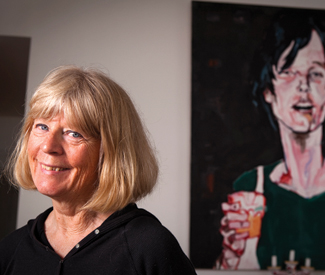
GOLDIES The beds in the photographs are like any other unmade beds — messes of rumpled sheets and dented pillows occasionally punctuated by a stray article of clothing or a curious pet. Except that they are not like other beds: they are, as the title of Tammy Rae Carland’s 2002 series of depopulated portraits informs the viewer, “lesbian beds.”

The distinction is crucial, critical. A smart conceptual retort to the hoary stereotype of lesbian bed death, Carland’s photographs of one of the places where women share their lives (and their bodies) with other women also make clear the political stakes of representing even the most quotidian objects.

At the same time, there is nothing in or about the photographs that signifies “lesbian.” Indeed, it is very banality of the images’ content, the very familiarity of the scene that is repeatedly depicted in “Lesbian Beds,” that makes them so immediately relatable. And yet to uncouple these photographs from the title which brackets them would be to disregard the difference the entire series makes visible.

This sometimes uneasy mix of representational politics and sentimental attachment to objects is at the core of Carland’s work. She cites her longtime involvement in the queer and feminist punk scenes that sprung up in Pacific Northwest in the early ’90s — where she made zines, ran a gallery space, booked shows and, later, ran the successful and politically progressive indie label Mr. Lady Records with her partner — as a catalyst for her interest in, “marginal identities and marginal bodies.”

“[And] not just in regards to sites of oppression,” explains Carland — who has lived in Oakland for close to a decade and now chairs the California College of the Arts’ photography department — “but alternative sites where people function.” It is often the material possessions accumulated at those sites, rather than the people themselves, that catch Carland’s sympathetic eye and form the genesis for a new project. For her series “Outposts,” it was the (unpopulated) encampments within the “women born, women only” space of the Michigan Womyn’s Music Festival. In “My Inheritance,” Carland turned the camera on the inventory of her late mother’s apartment — the entirety of which could fit in a paper grocery bag.

Carland’s latest project, “I’m Dying Up Here,” which was recently featured as part of Yerba Buena Center for the Arts’s triennial Bay Area Now 6, takes a different tack, focusing on stand-up comedy and the figure of the self-deprecating comedian. Pieces include staged photographs of local female performers, their faces often obscured, caught mid-routine, as well as a bar stool and microphone — the tools of the trade — cast in white porcelain.

Like beds, the comedy club stage is also a site of vulnerability, albeit a public one. For female comedians, the price of admission is often predicated on making themselves the butt of their own jokes. The melancholy and tender pieces in “I’m Dying Up Here” convey that moment, pregnant with empowerment but also the threat of rejection. A joke, like an artwork, can always flop or the audience just might not get it. A bed is just a bed; but then it isn’t, if two women share it. Carland’s work routinely foregrounds this riskiness while extending a reassuring hand as if to say, “it’s ok if this fails, because we both still tried.”

GOLDIES 2011: Dirty Cupcakes

4

GOLDIES It was the summery music video that launched a thousand bubblegum crushes. Guitarist-vocalist Lauren Matsui, drummer Laura Gravander, and bassist Sola Morrissey, a.k.a the Dirty Cupcakes, adorably lust after unrequited love. The cute boy of their dreams prefers other boys, and he sexily smooches another man, while the girls swoon from different spots around San Francisco, including a Sandy-in-Grease bedroom scene. “I feel like it’s a San Francisco thing to be in love with a gay man, or somebody that you can’t have,” says Matsui.

The addictive video, created by their pals Jen Dorn, Kevin Jardin, and Aya Carpio for the band’s garage pop jam “I Want It (Your Love),” was an insta-hit this summer, gaining the relatively unknown trio more than 15,000 page views to date.

It was a rough cut of the video that convinced Matthew Melton of Bare Wires to put out the trio’s record as the first release on his new label, Fuzz City. Just released last month, the I Want It seven-inch was recorded in Melton’s bedroom in Oakland and a studio in the Tenderloin beginning late 2009. The Cupcakes were born just a year prior.

It almost began on a lark. On a sunny day in Dolores Park in 2008, some strippers were holding a bake sale, and a friend of Matsui and Morrissey’s brought back a treat. Hence the name, Dirty Cupcakes. “We didn’t even have a band, but we had the name,” Matsui laughs. Matsui, who had been playing guitar since she was 13 (thanks to A Hard Day’s Night), taught Morrissey to play the bass and they picked up Gravander shortly there after.

Gravander was playing with Nobunny at the now-shuttered Eagle Tavern when Matsui gathered some “liquid courage” and asked Gravander to join her band: “She was so awesome and totally had the energy we needed.”

The band, influenced by stripped-down bubblegum punk like Nikki and the Corvettes and early Go-Go’s, has since played throughout the Bay, most often at the Knockout (“we’re basically the resident band,” Matsui jokes) and house shows in the East Bay — Nov. 9, they’ll play Oakland’s New Parish for the first time.

Live, they play fast and loud, wearing matching costumes — colorful ’60s-esque stripey shifts, Girl Scout uniforms, dinosaur heads. At one Oakland house show, Gravander recalls things getting particularly hectic. “During the last half of our last song, the drums collapsed and I was like, ‘No! I won’t end like this!’ So I pulled the snare and held it on my lap and kept playing.”

It’s the band’s cheerful take on punk that has endeared them to locals and other bands like Shannon and the Clams. They make fun songs (including one about robot love) and videos, wear creative frocks, and say they feel the freedom to do whatever they want as band — I guess, save for making out with gay boys.

Our Weekly Picks: November 9-15

0

WEDNESDAY 9

Keep Shelly in Athens

Grecian downbeat band Keep Shelly in Athens is an enigmatic act. Not in the annoying, contrived, hype-craving way — rather, this duo keeps its public persona as laid back as its chilled out, ambient music, allowing the material to speak for itself. Keep Shelly in Athens’ new EP, Our Own Dream (Forest Family), is refreshingly accessible. There are enough enchanting vocal melodies to snare pop enthusiasts, enough heavy beats to satisfy the most voracious electro-heads, and plenty of mellow, spaced out vibes for the chillwavers. (Frances Capell)

With Kisses and Blackbird Blackbird (DJ Set)

8 p.m., $14

Independent

628 Divisadero, SF

(415) 771-1421

www.theindependentsf.com


Lykke Li

A few years back, it seemed Swedish singer Lykke Li was most known for a certain frailty, a breathless, whispered seduction on songs like “Little Bit.” With her last album, 2011’s boldly dark Wounded Rhymes, every weakness has been inverted into a strength. The pining 1950s bubblegum on “Sadness Is A Blessing” is not the song of teen heartbreak it appears to be, revealing an emotional maturity and confidence beyond what you would expect from any of her peers. From other 25-year-olds, the chorus of “Get Some” — “I’m your prostitute/you’re gonna get some” — would be little more than a sleazy come on. From Lykke Li, it’s a threat. (Ryan Prendiville)

With First Aid Kit

8 p.m., $35

Fox Theater

1807 Telegraph, Oak.

www.thefoxtheater.com


THURSDAY 10

Holy Ghost!

With the release of the first single in 2007, Holy Ghost! set a high bar for itself. An electropop track with a debt to Italo, “Hold On” announced the duo of Alex Frankel and Nick Millhiser (two session musicians with ties to DFA in NYC) as a group to watch. Also, taking the title seriously, a group to wait for, as a full album wouldn’t be released until this year (they may have been busy opening for LCD Soundsystem and Cut Copy.) On the self-titled LP, though, “Hold On” is easily overshadowed by songs including the New Order referencing “It’s Not Over,” “Some Children” featuring soulful white man Michael McDonald, and the saddest dance song, “Jam for Jerry,” (a tribute to deceased !!! drummer Jerry Fuchs, who also had worked with Holy Ghost!).(Prendiville)

With Jessica 6 and Eli Escobar

8 p.m., $16

Slim’s

333 11th St., SF

(415) 255-0333

www.slims-sf.com


Blek le Rat

Xavier Prou, a.k.a Blek le Rat, has been stenciling political art on city walls since 1981 — decades earlier than Banksy. “Every time I think I’ve painted something original,” Banksy has said, “I find out Blek Le Rat has done it as well, only 20 years earlier.” Blek le Rat’s stirring and elegant stencil work has become a model for others. He’s pushed the limits of what graffiti can do, and helped elevate it to the respected art it is today — as one court judge in Paris said of his work, “I cannot condemn it. It’s too beautiful.” Arts Publishing Ltd. has released an immense 30-year retrospective book of Blek le Rat’s work. And at SFMOMA, the artist appears for a signing party in the Schwab Room. (James H. Miller)

6:30 p.m., free

SFMOMA

151 Third St., SF

(415) 357-4000

www.sfmoma.com


FRIDAY 11

Big Troubles

It was difficult to discern just how much talent was buried within Big Troubles’ ultra-fuzzy lo-fi debut, Worry. There were a few promising glimpses of My Bloody Valentine, but altogether the band came across as a little one-dimensional. Then the baby-faced boys from Ridgewood, NJ, got serious for the more mature, infinitely more polished follow-up, Romantic Comedy (Slumberland). Its songs convey angst, heartache, and ennui with a delightfully diverse array of influences: shoegaze, jangle-pop, even slacker rock. Big Troubles makes modern pop music for the teenager in all of us. Let your inner teen out, if only for a night. (Capell)

With Real Estate

9 p.m., $17

Slim’s

333 11th St., SF

(415) 255-0333

www.slims-sf.com


“Bring on the Lumière”

Don’t fence in Catherine Galasso. She is intrigued by smashing distinctions between the virtual and the real, the present and the historic and, of course, conventional artistic disciplines like dance, music, drama, and film. Her instinct for the theater is clear; her craft impressive. Still, expending all that talent on a work about Emperor Norton seemed distinctly odd. Given that her father was a composer of music for films — she uses some of his scores — her present project, “Bring on the Lumière,” an evocation of cinema inventors Auguste and Louis Lumière, makes a lot more sense. She couldn’t have done better than collaborating with pioneering lighting designer Elaine Buckholtz. Or with dancers Cristine Bonansea and Marina Fukushima as the brothers. (Rita Felciano)

Through Sun/13, 8 p.m. $17-$20.

ODC Theater

3153 17th St., SF

(415) 863-9834

www.odctheater.org


“Lost Together in No Man’s Land”

Midnites for Maniacs’ latest triple bill at the Castro highlights exotic road adventures with two familiar features, the animated Ferngully: The Last Rainforest (1992) and 1984’s Romancing the Stone. Both were hits, but the midnight show was a notorious flop. Like Heaven’s Gate before it, Ishtar‘s 1987 release was preceded by embarrassingly public reports of a production wildly over-budget, over-schedule, and over-run by the clashing of several monumental egos. Thus it was considered a failure before it was ever seen, and became a cultural joke rejected by both critics and public. But Elaine May’s salute to the 1940s Hope/Crosby Road to… comedies, with Warren Beatty and Dustin Hoffman as talentless NYC lounge singers incongruously caught up in Middle Eastern political upheavals, is overdue for re-evaluation — it has moments of sublime silliness. Still unavailable on DVD, Ishtar gets a rare 35mm showing tonight. (Dennis Harvey)

7:30 p.m. (Ishtar at 11:45 p.m.), $12

Castro Theatre

429 Castro, SF

(415) 621-6120

www.midnightsformaniacs.com


SATURDAY 12

“International BowWow Doggy Film Festival”

I just finished reading Susan Orlean’s Rin Tin Tin: The Life and the Legend, so I’ve got canine cinema on the brain. That famous German Shepherd (or shepherds, as the book discusses) doesn’t factor into the Roxie’s first-ever dog-centric film festival, but plenty of other pooches do, from the sad-faced, snappily-dressed Weimaraners onscreen (in a program of William Wegman shorts), to the dog show judged by celebs like Go-Go’s guitarist Jane Wiedlin and former child actor Jon Provist (a.k.a. the always-imperiled Timmy from Lassie). A good portion of the audience will be on four legs, too: hounds under 35 pounds get in free, and while bigger Fidos do need their own tickets, it’s all for a good cause — Muttville senior dog rescue. Alert the pup-arazzi! (Cheryl Eddy)

12:30 p.m., $10–$40

Roxie Theater

3117 16th St., SF

(415) 863-1087

www.roxie.com


They Might Be Giants

The Fillmore’s page for this show includes a video of They Might Be Giants from 1991, performing a couple of traditional gateways into the band, “Istanbul” and “Birdhouse In Your Soul.” But it doesn’t really answer important questions like “Are these guys still any good?” or “Are they still making children’s music?” For that, you could check out the recent albums Join Us and Album Raises New and Troubling Questions, but a shortcut would be John Flansburgh and John Linnell’s performance for the Onion AV Club’s cover song competition, “Undercover.” With a bombastic version of Chumbawumba’s “Tubthumping” the veteran band destroys a host of hip chillwave acts and bearded indie rockers, proving that yeah, the two Johns still got it.(Prendiville)

Also Sun/13,

8 p.m., $27.50

Fillmore

1850 Geary, SF

(415) 346-6000

www.thefillmore.com


Austra

Austra’s sound has been described as “harkening back to the sleazier side of new wave” — is there anything more appealing than that notion? Sleaze-wave; it rolls off the tongue. Led by Latvian-Canadian vocal powerhouse Katie Stelmanis (a former solo artist known for her youthful opera training and her Fucked Up album guest appearance), the Toronto based trio creates classically driven electronic dance music with spiffy beats and supernatural female vocals — it’d fit well in an impassioned 1980s montage scene, perhaps one where our main girl has a revelation of sudden power. This is especially true of “Lose It,” the heart-pumping single with scattered operatic highs off this spring’s debut, Feel It Break. It’s a modern, electro-“Total Eclipse of the Heart” meets “Sweet Dreams,” only you know, sexier. (Emily Savage)

With Grimes, Sister Crayon

9 p.m., $16

Great American Music Hall

859 O’Farrell, SF

(415) 885-0750

www.gamh.com


SUNDAY 13

The Two Man Gentlemen Band

Calling all hep cats and swing kids. The Two Man Gentlemen Band is jumping and jiving its way across the country with a brand new vinyl seven-inch, and an exuberant retro sound. Sounding like a cheeky cross between a Django Reinhardt revival and a late-night drinking session with Broke-Ass Stuart, the gents of the Two Man Gentlemen Band honed their craft on the unsympathetic streets and subways of the Big Apple, and like other buskers-turned-legit, their sound is much bigger and far tighter than you might expect from a bare bones string duo whose favorite themes are inebriation, indiscretion, and ladies. A toe-tapping, seriously swinging good time for all. (Nicole Gluckstern)

With Colin Gilmore, the Barbary Ghosts

9 p.m., $10

Amnesia

853 Valencia, SF

(415) 970-0012

www.amnesiathebar.com


TUESDAY 15

Future Islands

The only thing more intense and cathartic than a Future Islands record is a Future Islands show. Each release from this Baltimore, Md., synth-pop trio is more haunting than the last, but its dramatic performances have been legendary from the get-go. Thunder-throated singer Samuel T. Herring has been known to call forth the beast within by slapping his own face and beating on his chest as he takes to the stage. Future Islands’ dreamy synth and bass tunes are as danceable as they are tragic; you won’t know whether to sweat or cry. You’ll probably do both. (Capell)

With Ed Shrader’s Music Beat and Secret Shopper

9 p.m., $14

Bottom of the Hill

1233 17th St., SF

(415) 621-4455

www.bottomofthehill.com


The Guardian listings deadline is two weeks prior to our Wednesday publication date. To submit an item for consideration, please include the title of the event, a brief description of the event, date and time, venue name, street address (listing cross streets only isn’t sufficient), city, telephone number readers can call for more information, telephone number for media, and admission costs. Send information to Listings, the Guardian Building, 135 Mississippi St., SF, CA 94107; fax to (415) 487-2506; or e-mail (paste press release into e-mail body — no text attachments, please) to listings@sfbg.com. Digital photos may be submitted in jpeg format; the image must be at least 240 dpi and four inches by six inches in size. We regret we cannot accept listings over the phone.

Film Listings

0

Film listings are edited by Cheryl Eddy. Reviewers are Kimberly Chun, Max Goldberg, Dennis Harvey, Lynn Rapoport, and Matt Sussman. For rep house showtimes, see Rep Clock.

OPENING

*Bedazzled and The Car After several weeks of delivering some fairly purgatorial cinematic meditations on Mephistopheles, the Vortex Room’s final demonic double bill is da bomb. First up is mother of all cult comedies Bedazzled (1967), in which Goon Show regulars Peter Cook and Dudley Moore ramped up their anticipation of Monty Python-esque absurd sketch-humor outrages by positing themselves as wily Devil and major chump in a not-so-swinging contemporary London. Moore’s besotted (with the divine Eleanor Bron) Wimpy Burger employee gets seven wishes for true happiness in exchange for his soul, but each fantasy granted — ranging from animation to killer pop-star satire to nuns on trampolines — somehow comes with a fly in its ointment. Too ahead of its time for popular success (despite an elongated cameo by reigning sexpot Raquel Welch as Lillian Lust), Bedazzled is now a bit dated, but still bloody marvelous. One doubts that compound adjective was ever applied to The Car (1977), which came out a decade later and sort of managed to couple 1975’s Jaws and 1976’s The Omen (albeit without achieving anywhere near their success). A killer car — a black Continental Mark III, to be precise — trolls around the Southwest edging bicyclists off cliffs, mowing down pedestrians, even attacking potty-mouthed schoolteachers inside their homes. (This last scene alone is definitely worth the price of admission.) What’s more, there appears to be no driver, suggesting this vehicle is fueled by pure evil. James Brolin at his hairiest is the local sheriff whose guns alone can’t save the town. Unquestionably silly, The Car nonetheless remains the Rolls Royce of supernaturally-possessed-automotive-transportation movies. Vortex Room. (Harvey)

*El Bulli: Cooking in Progress Oh to be a fly on the wall of El Bulli — back in 2008 and 2009, when director Gereon Wetzel turned his lens on the Spanish landmark, it was considered the best restaurant in the world. This elegantly wrought documentary, covering a year at the culinary destination (now closed), allows you to do just that. Wetzel opens on chef-owner Ferran Adrià shutting down his remarkable eatery for the winter and then drifting in and out of his staff’s Barcelona lab as they develop dishes for the forthcoming season. Head chef Oriol Castro and other trusted staffers treat ingredients with the detached methodicalness of scientists — a champignon mushroom, say, might be liquefied from its fried, raw, sous-vide-cooked states — and the mindful intuition of artists, taking notes on both MacBooks and paper, accompanied by drawings and much photo-snapping. Fortunately the respectful Wetzel doesn’t shy away from depicting the humdrum mechanics of running a restaurant, as Adrià is perpetually interrupted by his phone, must wrangle with fishmongers reluctant to disclose “secret” seasonal schedules, and slowly goes through the process of creating an oil cocktail and conceptualizing a ravioli whose pasta disappears when it hits the tongue, tasting everything as he goes. Energized by an alternately snappy and meditative percussive score, this look into the most influential avant-garde restaurant in the world is a lot like the concluding photographs of the many menu items we glimpse at their inception — a memorable, sublimely rendered document that leaves you hungry for more. (1:48) Embarcadero. (Chun)

Le Havre Aki Kaurismäki’s second French-language film (following 1992’s La Vie de Boheme) offers commentary on modern immigration issues wrapped in the gauze of a feel good fairy tale and cozy French provincialism a la Marcel Pagnol. Worried about the health of his hospitalized wife (Kaurismäki regular Kati Outinen), veteran layabout and sometime shoe shiner Marcel (Andre Wilms) gets some welcome distraction in coming to the aid of Idrissa (Blondin Miguel), a young African illegally trying to make way to his mother in London while eluding the gendarmes. Marcel’s whole neighborhood of port-town busybodies and industrious émigrés eventually join in the cause, turning Le Havre into a sort of old-folks caper comedy with an incongruously sunny take on a rising European multiculturalism in which there are no real racist xenophobes, just grumps deserving comeuppance. Incongruous because Kaurismäki is, of course, the king of sardonically funny Finnish miserabilism — and while it’s charmed many on the festival circuit, this combination of his usual poker-faced style and feel-good storytelling formula may strike others as an oil-and-water mismatch. (1:43) Clay, Smith Rafael. (Harvey)

Immortals Tarsem Singh (2006’s The Fall) directs Mickey Rourke and Stephen Dorff in this CG-laden mythology adventure. (1:50) Presidio.

*Into the Abyss: A Tale of Death, a Tale of Life How remarkable is it that, some 50-plus features along, filmmaker Werner Herzog would become the closest thing to a cinema’s conscience? This time the abyss is much closer to home than the Amazon rainforest or the Kuwaiti oil fields — it lies in the heart of Rick Perry country. What begins as an examination of capital punishment, introduced with an interview with Reverend Richard Lopez, who has accompanied Texas death row inmates to their end, becomes a seeming labyrinth of human tragedy. Coming into focus is the execution of Michael Perry, convicted as a teenager of the murder of a Conroe, Tex., woman, her son, and his friend — all for sake of a red Camaro. Herzog obtains an insightful interview with the inmate, just days before his execution, as well as his cohort Jason Burkett, police, an executioner, and the victims’ family members, in this haunting examination of crime, punishment, and a small town in Texas where so many appear to have gone wrong. So wrong that one might see Into the Abyss as more related to 1977’s Stroszek and its critical albeit compassionate take on American life, than Herzog’s last tone poem about the mysterious artists of 2010’s Cave of Forgotten Dreams (and it’s also obviously directly connected to next year’s TV documentary, Death Row). The layered tragedies and the strata of destroyed lives stays with you, as do the documentary’s difficult questions, Herzog’s gentle humanity as an interviewer, and the fascinating characters that don’t quite fit into a more traditional narrative — the Conroe bystander once stabbed with a screwdriver who learned to read in prison, and the dreamy woman impregnated by a killer whose entire doomed family appears to be incarcerated. (1:46) Embarcadero. (Chun)

J. Edgar The usual polished, sober understatement of Clint Eastwood’s directing style and the highlights-compiling CliffsNotes nature of Dustin Lance Black’s screenplay turn out to be interestingly wrong choices for this biopic about one of the last American century’s most divisive figures. Interesting in that they’re perhaps among the very few who would now dare viewing the late, longtime FBI chief with so much admiration tempered by awareness of his faults — rather than the other way around. After all, Hoover (played by Leonardo DiCaprio) strengthened his bureau in ways that, yes, often protected citizens and state, but at what cost? The D.C. native eventually took to frequently “bending” the law, witch-hunting dubious national enemies (he thought the Civil Rights movement our worst threat since the bomb-planting Bolshevik anarchists of half a century earlier), blackmailing personal ones, weakening individual rights against surveillance, hoarding power (he resented the White House’s superior authority), lying publicly, and doing just about anything to heighten his own fame. A movie that internalized and communicated his rising paranoid megalomania (ironically Hoover died during the presidency of Nixon, his equal in that regard) might have stood some chance of making us understand this contradiction-riddled cipher. But J. Edgar is doggedly neutral, almost colorless (literally so, in near-monochrome visual presentation), its weird appreciation of the subject’s perfectionism and stick-to-it-iveness shutting out almost any penetrating insight. (Plus there’s Eastwood’s own by-now-de rigueur soundtrack of quasi-jazz noodling to make what is vivid here seem more dull and polite.) The love that dare not speak its name — or, evidently, risk more than a rare peck on the cheek — between Hoover and right-hand-man/life companion Clyde Tolson (Armie Hammer, very good if poorly served by his old-age makeup) becomes both the most compelling and borderline-silly thing here, fueled by a nervous discretion that seems equal parts Black’s interest and Eastwood’s discomfort. While you might think the directors polar opposites in many ways, the movie J. Edgar ultimately recalls most is Oliver Stone’s 1995 Nixon: both ambitiously, rather sympathetically grapple with still-warm dead gorgons and lose, filmmaker and lead performance alike laboring admirably to intelligent yet curiously stilted effect. (2:17) Marina. (Harvey)

Jack and Jill Adam Sandler plays a dude who has a Thanksgiving from hell thanks to his twin sister (played by an in-drag Adam Sandler). Somehow Al Pacino is also involved. (runtime not available) Presidio.

*Melancholia Lars von Trier is a filmmaker so fond of courting controversy it’s like he does it in spite of himself — his rambling comments about Hitler (“I’m a Nazi”) were enough to get him banned from the Cannes Film Festival earlier this year, where Melancholia had its debut (and star Kirsten Dunst won Best Actress). Oops. Maybe after the (here’s that word again) controversy that accompanied 2009’s Antichrist, von Trier felt like he needed a shocking context for his more mellow latest. Pity that, for Melancholia is one of his strongest, most thoughtful works to date. Split into two parts, the film follows first the opulent, disastrous, never-ending wedding reception of Justine (Dunst) and Michael (Alexander Skarsgard), held at a lavish estate owned by John (Kiefer Sutherland), the tweedy husband of Justine’s sister, Claire (Charlotte Gainsbourg). Amid the turmoil of arguments (John Hurt and Charlotte Rampling as Justine and Claire’s divorced parents), pushy guests (Stellan Skarsgard as Justine’s boss), livid wedding planner (Udo Kier, amazing), and hurt feelings (Michael is the least-wanted groom since Kris Humphries), it’s clear that something is wrong with Justine beyond just marital jitters. The film’s second half begins an unspecified amount of time later, as Claire talks her severely depressed, near-catatonic sister into moving into John’s mansion. As Justine mopes, it’s revealed that a small planet, Melancholia — glimpsed in Melancholia‘s Wagner-scored opening overture — is set to pass perilously close to Earth. John, an amateur astronomer, is thrilled; Claire, fearful for her young son’s future and goaded into high anxiety by internet doomsayers, is convinced the planets will collide, no matter what John says. Since Justine (apparently von Trier’s stand-in for himself) is convinced that the world’s an irredeemably evil place, she takes the news with a shrug. Von Trier’s vision of the apocalypse is somber and surprisingly poetic; Dunst and Gainsbourg do outstanding work as polar-opposite sisters whose very different reactions to impending disaster are equally extreme. (2:15) Embarcadero. (Eddy)

Octubre This downtempo drama directed by Daniel and Diego Vega follows Clemente (Bruno Odar), a stone-faced moneylender living in a shabby apartment in Lima, Peru. Clemente’s days couldn’t be more bleak. When he’s not dealing with clients over his kitchen table — appraising watches and jewelry, handing out or collecting cash — he’s eating egg sandwiches and paying cold visits to prostitutes. When one of them leaves a baby girl in his apartment, Clemente goes on a search for the mother. Meanwhile, he enlists a client, Sofía (Gabriela Velásquez), as a live-in nanny for the baby. Both Sofía and the baby add some life and color to Clemente’s apartment and ultimately, his reclusive existence. Octubre is a slow rolling and muted film that’s interested in detail. Most of the time, you’re searching Clemente’s stony face (Odar’s acting is superb and unbroken), hoping he might betray a thought or even better, a feeling — he does. (1:23) SFFS New People Cinema. (James H. Miller)

ONGOING

Anonymous Hark, what bosom through yonder bodice heaves? If you like your Shakespearean capers OTT and chock-full of fleshy drama, political intrigue, and groundling sensation, then Anonymous will enthrall (and if the lurid storyline doesn’t hold, the acting should). Writer John Orloff spins his story off one popular theory of Shakespeare authorship — that Edward de Vere, the 17th Earl of Oxford, was the true pen behind the works attributed to William Shakespeare of Stratford-upon-Avon. Our modern-day narrator (Derek Jacobi) foregrounds the fictitious nature of the proceedings, pulling back the curtain on Ben Jonson (Sebastian Armesto) staging his unruly comedies for the mob, much to the amusement of a mysterious aging dandy of a visitor: the Earl of Oxford (Rhys Ifans). Hungry for the glory that has always slipped through his pretty fingers, the Earl yearns to have his works staged for audiences beyond those in court, where Queen Elizabeth I (Vanessa Redgrave as the elder regent, daughter Joely Richardson as the lusty young royal) dotes on them, and out of the reach of his puritan father-in-law Robert Cecil (David Thewlis), Elizabeth’s close advisor, and he devises a plan for Jonson to stage them under his own name. But much more is triggered by the productions, uncovering secret trysts, hunchback stratagems, and more royal bastards than you can shake a scepter at. Director Roland Emmerich invests the production with the requisite high drama — and camp — to match the material, as well as pleasing layers of grime and toxic-looking Elizabethan makeup for both the ladies and the dudes who look like ladies (the crowd-surfing, however, strikes the off-key grunge-era note). And if the inherent elitism of the tale — could only a nobleman have written those remarkable plays and sonnets? — offends, fortunately the cast members are more than mere players. Ifans invests his decadent Earl with the jaded gaze and smudgy guyliner of a fading rock star, and Redgrave plays her Elizabeth like a deranged, gulled grotesque. (2:10) 1000 Van Ness, SF Center, Sundance Kabuki. (Chun)

*Drive Such a lovely way to Drive, drunk on the sensual depths of a lush, saturated jewel tone palette and a dreamlike, almost luxurious pacing that gives off the steamy hothouse pop romanticism of ’80s-era Michael Mann and David Lynch — with the bracing, impactful flecks of threat and ultraviolence that might accompany a car chase, a moody noir, or both, as filtered through a first-wave music video. Drive comes dressed in the klassic komforts — from the Steve McQueen-esque stances and perfectly cut jackets of Ryan Gosling as the Driver Who Shall Remain Nameless to the foreboding lingering in the shadows and the wittily static, statuesque strippers that decorate the background. Gosling’s Driver is in line with Mann’s other upstanding working men who hew to an old-school moral code and are excellent at what they do, regardless of what side of the law they’re working: he likes to keep it clear and simple — his services as a wheelman boil down to five minutes, in and out — but matters get messy when he falls for sweet-faced neighbor Irene (Carey Mulligan), who lives down the hall with her small son, and her ex-con husband (Oscar Isaac) is dragged back into the game. Populated by pungent side players like Albert Brooks, Bryan Cranston, Ron Perlman, and Christina Hendricks, and scattered with readily embeddable moments like a life-changing elevator kiss that goes bloodily wrong-right, Drive turns into a real coming-out affair for both Danish director Nicolas Winding Refn (2008’s Bronson), who rises above any crisis of influence or confluence of genre to pick up the po-mo baton that Lynch left behind, and 2011’s MVP Ryan Gosling, who gets to flex his leading-man muscles in a truly cinematic role, an anti-hero and under-the-hood psychopath looking for the real hero within. (1:40) Bridge, SF Center. (Chun)

50/50 This is nothing but a mainstream rom-com-dramedy wrapped in indie sheep’s clothes. When Adam (Joseph Gordon-Levitt) learns he has cancer, he undergoes the requisite denial, anger, bargaining, depression, and acceptance like a formality. Aided by his bird-brained but lovable best friend Kyle (Seth Rogan), lovable klutz of a counselor Katherine (Anna Kendrick), and panicky mother (Anjelica Huston), Adam gets a new lease on life. This comes in the form of one-night-stands, furious revelations in parked cars, and a prescribed dose of wacky tobaccy. If 50/50 all sounds like the setup for a pseudo-insightful, kooky feel-goodery, it is. The film doesn’t have the brains or spleen to get down to the bone of cancer. Instead, director Jonathan Levine (2008’s The Wackness) and screenwriter Will Reiser favor highfalutin’ monologues, wooden characters, and a Hollywood ending (with just the right amount of ambiguity). Still, Gordon-Levitt is the most gorgeous cancer patient you will ever see, bald head and all. (1:40) Bridge, Four Star, 1000 Van Ness, SF Center, Sundance Kabuki. (Ryan Lattanzio)

Footloose Another unnecessary remake joins the queue at the box office, aiming for the pockets of ’80s-era nostalgics and fans of dance movies and naked opportunism. A recap for those (if there are those) who never saw the 1984 original: city boy Ren McCormack moves to a Middle American speck-on-the-map called Bomont and riles the town’s inhabitants with his rock ‘n’ roll ways — rock ‘n’ roll, and the lewd acts of physicality it inspires, i.e., dancing, having been criminalized by the town council to preserve the souls and bodies of Bomont’s young people. Ren falls for wayward preacher’s daughter Ariel Moore — whose father has sponsored this oversolicitous piece of legislation — and vows to fight city hall on the civil rights issue of a senior prom. Ren McCormack 2.0 is one Kenny Wormald (prepped for the gig by his tenure in the straight-to-cable dance-movie sequel Center Stage: Turn It Up), who forgoes the ass-grabbing blue jeans that Kevin Bacon once angry-danced through a flour mill in. Otherwise, the 2011 version, directed and cowritten by Craig Brewer (2005’s Hustle & Flow), regurgitates much of the original, hoping to leverage classic lines, familiar scenes, and that Dance Your Ass Off T-shirt of Ariel’s. It doesn’t work. Ren and Ariel (Dancing with the Stars‘ Julianne Hough) are blandly unsympathetic and have the chemistry of two wet paper towels, the adult supporting cast should have known better, and the entire film comes off as a tired, tuneless echo. (1:53) Four Star. (Rapoport)

*Gainsbourg: The Man Who Loved Women Those hungry for more of the real Serge Gainsbourg — after being tantalized and teased by Joann Sfar’s whimsical comic book-inspired feature — will want to catch this documentary by Pascal Forneri for many of the details that didn’t fit or were skimmed over, here, in the very words and image of the songwriter and the many iconic women in his life. Much of the chanson master’s photographic or video history seems to be here — from his blunt-force on-camera proposition of Whitney Houston to multiple, insightful interviews with the love of his life, Jane Birkin, as well as the many women who won his heart for just a little while, such as Brigitte Bardot, Juliette Gréco, Françoise Hardy, and Vanessa Paradis. Gainsbourg may be marred by its somewhat choppy, mystifying structure, at times chronological, at times organized according to creative periods, but overriding all are the actual footage and photographs loosely, louchely assembled and collaged by Forneri; delightful pre-music-videos Scopitones of everyone from France Gall to Anna Karina; and the gemlike, oh-so-quotable interviews with the mercurial, admirably honest musical genius and eternally subversive provocateur. Quibble as you might with the short shrift given his later career—in addition to major ’70s LPs like Histoire de Melody Nelson and L’Homme à tête de chou (Cabbage-Head Man) — this is a must-see for fans both casual and seriously seduced. (1:45) Roxie. (Chun)

The Ides of March Battling it out in the Ohio primaries are two leading Democratic presidential candidates. Filling the role of idealistic upstart new to the national stage — even his poster looks like you-know-who’s Hope one — is Governor Mike Morris (George Clooney), who’s running neck-and-neck in the polls with his rival thanks to veteran campaign manager (Philip Seymour Hoffman) and ambitious young press secretary Steven (Ryan Gosling). The latter is so tipped for success that he’s wooed to switch teams by a rival politico’s campaign chief (Paul Giamatti). While he declines, even meeting with a representative from the opposing camp is a dangerous move for Steven, who’s already juggling complex loyalties to various folk including New York Times reporter Ida (Marisa Tomei) and campaign intern Molly (Evan Rachel Wood), who happens to be the daughter of the Democratic National Party chairman. Adapted from Beau Willimon’s acclaimed play Farragut North, Clooney’s fourth directorial feature is assured, expertly played, and full of sharp insider dialogue. (Willimon worked on Howard Dean’s 2004 run for the White House.) It’s all thoroughly engaging — yet what evolves into a thriller of sorts involving blackmail and revenge ultimately seems rather beside the point, as it turns upon an old-school personal morals quandary rather than diving seriously into the corporate, religious, and other special interests that really determine (or at least spin) the issues in today’s political landscape. Though stuffed with up-to-the-moment references, Ides already feels curiously dated. (1:51) Marina, 1000 Van Ness, Sundance Kabuki. (Harvey)

In Time Justin Timberlake moves from romantic comedy to social commentary to play Will Salas, a young man from the ghetto living one day at a time. Many 12-steppers may make this claim, but Salas literally is, because in his world, time actually is money and people pay, say, four minutes for a cup of coffee, a couple hours for a bus ride home from work, and years to travel into a time zone where people don’t run from place to place to stay ahead of death. In writer-director Andrew Niccol’s latest piece of speculative cinema, humans are born with a digitized timepiece installed in their forearm and a default sell-by date of 25 years, with one to grow on — though most end up selling theirs off fairly quickly while struggling to pay rent and put food on the table. Time zones have replaced area codes in defining social stature and signaling material wealth, alongside those pesky devices that give the phrase “internal clock” an ominous literality. Niccol also wrote and directed Gattaca (1997) and wrote The Truman Show (1998), two other films in which technological advances have facilitated a merciless, menacing brand of social engineering. In all three, what is most alarming is the through line between a dystopian society and our own, and what is most hopeful is the embattled protagonist’s promises that we don’t have to go down that road. Amanda Seyfried proves convincible as a bored heiress to eons, her father (Vincent Kartheiser) less amenable to Robin Hood-style time banditry. (1:55) 1000 Van Ness, SF Center. (Rapoport)

Johnny English Reborn (1:41) Four Star.

*Like Crazy Jacob (Anton Yelchin) and Anna (Felicity Jones) meet near the end of college; after a magical date, they’re ferociously hooked on each other. Trouble is, she’s in Los Angeles on a soon-to-expire student visa — and when she impulsively overstays, then jets home to London for a visit months later, her re-entry to America is stopped cold at LAX. (True love’s no match for homeland security.) An on-and-off long-distance romance ensues, and becomes increasingly strained, even as their respective careers (he makes furniture, she’s a magazine staffer) flourish. Director and co-writer Drake Doremus (2010’s Douchebag) achieves a rare midpoint between gritty mumblecore and shiny Hollywood romance; the characters feel very real and the script ably captures the frustration that settles in when idealized fantasies give way to the messy workings of everyday life. There are some contrivances here — Anna’s love-token gift from Jacob, a bracelet engraved “Patience,” breaks when she’s with another guy — but for the most part, Like Crazy offers an honest portrait of heartbreak. (1:29) SF Center. (Eddy)

*Love Crime Early this year came the announcement that Brian De Palma was hot to do an English remake of Alain Corneau’s Love Crime. The results, should they come to fruition, may well prove a landmark in the annals of lurid guilty-pleasure trash. But with the original Love Crime finally making it to local theaters, it’s an opportune moment to be appalled in advance about what sleazy things could potentially be done to this neat, dry, fully clothed model of a modern Hitchcockian thriller. No doubt in France Love Crime looks pretty mainstream. But here its soon-to be-despoiled virtues of narrative intricacy and restraint are upscale pleasures. Ludivine Sagnier plays assistant to high-powered corporate executive Christine (Kristin Scott Thomas). The boss enjoys molding protégée Isabelle to her own image, making them a double team of carefully planned guile unafraid to use sex appeal as a business strategy. But Isabelle is expected to know her place — even when that place robs her of credit for her own ideas — and when she stages a small rebellion, Christine’s revenge is cruelly out of scale, a high-heeled boot brought down to squash an ant. Halfway through an act of vengeance occurs that is shocking and satisfying, even if it leaves the remainder of Corneau and Nathalie Carter’s clever screenplay deprived of the very thing that had made it such a sardonic delight so far. Though it’s no masterpiece, Love Crime closes the book on his Corneau’s career Corneau (he died at age 67 last August) not with a bang but with a crisp, satisfying snap. (1:46) Lumiere. (Harvey)

*Margin Call Think of Margin Call as a Mamet-like, fictitious insider jab at the financial crisis, a novelistic rejoinder to Oscar-winning doc Inside Job (2010). First-time feature director and writer J.C. Chandor shows a deft hand with complex, writerly material, creating a darting dance of smart dialogue and well-etched characters as he sidesteps the hazards of overtheatricality, a.k.a. the crushing, overbearing proscenium. The film opens on a familiar Great Recession scene: lay-off day at an investment bank, marked by HR functionaries calling workers one by one into fishbowl conference rooms. The first victim is the most critical — Eric Dale (Stanley Tucci), a risk-management staffer who has stumbled on an investment miscalculation that could potentially trigger a Wall Street collapse. On his way out, he passes a drive with his findings to one of his young protégés, Peter (Zachary Quinto), setting off a flash storm over the next 24 hours that will entangle his boss Sam (Kevin Spacey), who’s agonizing over his dying dog while putting up a go-big-or-go-home front; cynical trading manager Will (Paul Bettany); and the firm’s intimidating head (Jeremy Irons), who gets to utter the lines, “Explain to me as you would to a child. Or a Golden Retriever.” Such top-notch players get to really flex their skills here, equipped with Chandor’s spot-on script, which manages to convey the big issues, infuse the numbers with drama and the money managers with humanity, and never talk down to the audience. (1:45) Sundance Kabuki. (Chun)

*Martha Marcy May Marlene If Winter’s Bone star Jennifer Lawrence was the breakout ingénue of 2010, look for Martha Marcy May Marlene‘s Elizabeth Olsen to take the 2011 title. Both films are backwoodsy and harrowing and offer juicy roles for their leading starlets — not to mention a pair of sinister supporting roles for the great John Harkes. Here, he’s a Manson-y figure who retains disturbing control over Olsen’s character even after the multi-monikered girl flees his back-to-the-land cult. Writer-director Sean Durkin goes for unflashy realism and mounds on the dread as the hollow-eyed Martha attempts to resume normal life, to the initial delight of her estranged, guilt-ridden older sister (Sarah Paulson). Soon, however, it becomes clear that Things Are Not Ok. You’d be forgiven for pooh-poohing Olsen from the get-go; lavish Sundance buzz and the fact that she’s Mary-Kate and Ashley’s sis have already landed her mountains of pre-release publicity. But her performance is unforgettable, and absolutely fearless. (1:41) Sundance Kabuki. (Eddy)

Midnight in Paris Owen Wilson plays Gil, a self-confessed “Hollywood hack” visiting the City of Light with his conservative future in-laws and crassly materialistic fiancée Inez (Rachel McAdams). A romantic obviously at odds with their selfish pragmatism (somehow he hasn’t realized that yet), he’s in love with Paris and particularly its fabled artistic past. Walking back to his hotel alone one night, he’s beckoned into an antique vehicle and finds himself transported to the 1920s, at every turn meeting the Fitzgeralds, Gertrude Stein (Kathy Bates), Dali (Adrien Brody), etc. He also meets Adriana (Marion Cotillard), a woman alluring enough to be fought over by Hemingway (Corey Stoll) and Picasso (Marcial di Fonzo Bo) — though she fancies aspiring literary novelist Gil. Woody Allen’s latest is a pleasant trifle, no more, no less. Its toying with a form of magical escapism from the dreary present recalls The Purple Rose of Cairo (1985), albeit without that film’s greater structural ingeniousness and considerable heart. None of the actors are at their best, though Cotillard is indeed beguiling and Wilson dithers charmingly as usual. Still — it’s pleasant. (1:34) Opera Plaza. (Harvey)

Moneyball As fun as it is to watch Brad Pitt listen to the radio, work out, hang out with his cute kid, and drive down I-80 over and over again, it doesn’t quite translate into compelling cinema for the casual baseball fan. A wholesale buy-in to the cult of personality — be it A’s manager Billy Beane or the actor who plays him — is at the center of Moneyball‘s issues. Beane (Pitt) is facing the sad, inevitable fate of having to replace his star players, Jason Giambi and Johnny Damon, once they command the cash from the more-moneyed teams. He’s gotta think outside of the corporate box, and he finds a few key answers in Peter Brand (a.k.a. Paul DePodesta, played by Jonah Hill), who’s working with the sabermetric ideas of Bill James: scout the undervalued players that get on base to work against better-funded big-hitters. Similarly, against popular thought, Moneyball works best when director Bennett Miller (2005’s Capote) strays from the slightly flattening sunniness of its lead actor and plunges into the number crunching — attempting to visualize the abstract and tapping into the David Fincher network, as it were (in a related note, Aaron Sorkin co-wrote Moneyball‘s screenplay) — though the funny anti-chemistry between Pitt and Hill is at times capable of pulling Moneyball out of its slump. (2:13) Marina, 1000 Van Ness, Sundance Kabuki. (Chun)

Oranges and Sunshine At the center of this saga of lives ripped apart by church and state is Margaret Humphreys, the Englishwoman who uncovered the scandalous mass deportation of children from England to Australia. In one of her most rewarding roles since The Proposition (2005), her last foray to Oz, Watson portrays the English social worker who in the ’80s learns of multiple cases of now-adult orphans in Australia who don’t know their real name or even age but remember that they once lived in the UK. She starts to explore the past of victims such as Jack (Hugo Weaving) and Len (David Wenham) and tries to reunite them with their families, including mothers who were told their youngsters were adopted into real families. In the course of her work, and at the expense of her own family life, Humphreys discovers the horrors that befell many young deportees — as child slave-laborers — and the corruption that extends its fingers into government and the Catholic church. In his first feature film, director Jim Loach, son of crusading cinematic force Ken Loach, turns over each stone with care and compassion, finding the perfect filter through which to tell this well-modulated story in Watson, whose Humphreys faces harassment and post-traumatic stress disorder in her quest to heal the children who were lured overseas in the hope that they would ride horses to school and pick oranges off a tree for breakfast. (1:45) Opera Plaza. (Chun)

*Paranormal Activity 3 A prequel to a prequel, this third installment in the faux-home-movie horror series is as good as one could reasonably hope for: considerably better than 2010’s part two, even if inevitably it can’t replicate the relatively fresh impact of the 2007 original. After a brief introductory sequence we’re in 1988, with the grown-up sisters of the first two films now children (Chloe Csengery, Jessica Tyler Brown) living with a recently separated mom (Lauren Bitter) and her nice new boyfriend (Christopher Smith). His wedding-video business provides the excuse for many a surveillance cam to be set up in their home once things start going bump in the night (and sometimes day). Which indeed they do, pretty quickly. Brown’s little Kristi has an invisible friend called Toby she says is “real,” though of course everyone else trusts he’s a normal, harmless imaginary pal. Needless to say, they are wrong. Written by Christopher Landon (Paranormal Activity 2, 2007’s Disturbia) and directed by the guys (Henry Joost, Ariel Schulman) who made interesting nonfiction feature Catfish (2010), this quickly made follow-up does a good job piling on more scares without getting shameless or ludicrous about it, extends the series’ mythology in ways that easily pave way toward future chapters, and maintains the found-footage illusion well enough. (Excellent child performances and creepy camcorder “pans” atop an oscillating fan motor prove a great help; try to forget that video quality just wasn’t this good in ’88.) Not great, but thoroughly decent, and worth seeing in a theater — this remains one chiller concept whose effectiveness can only be diminished to the point of near-uselessness on the small screen. (1:24) 1000 Van Ness. (Harvey)

*Point Blank Not for nothing did Hollywood remake French filmmaker Fred Cavaye’s last film, Anything for Her (2008) as The Next Three Days (2010) — Cavaye’s latest, tauter-than-taut thriller almost screams out for a similar rework, with its Bourne-like handheld camera work, high-impact immediacy, and noirish narrative economy. Point Blank — not to be confused with the 1967 Lee Marvin vehicle —kicks off with a literal slam: a mystery man (Roschdy Zem) crashing into a metal barrier, on the run from two menacing figures until he is cornered and then taken out of the action by fate. His mind mainly on the welfare of his very pregnant wife Nadia (Elena Anaya), nursing assistant Samuel (Gilles Lellouche) has the bad luck to stumble on a faux doctor attempting to make sure that the injured man never rises from his hospital bed. As police wrangle over whose case this exactly is — the murder of an industrialist seems to have expanded the powers of the stony-faced, monolithic Commandant Werner (Gerard Lanvin) — Samuel gets sucked into the mystery man’s lot, a conspiracy that allows them to trust no one, and seemingly impossibly odds against getting out of the mess alive. Cavaye never quite stops applying the pressure in this clever, unrelenting cat-and-mouse and mouse-and-his-spouse game, topping it with a nerve-jangling search through a messily chaotic police station. (1:24) Opera Plaza. (Chun)

Puss in Boots (1:45) 1000 Van Ness, Presidio.

Real Steel Everybody knows what this movie about rocking, socking robots should have been called. Had the producers secured the rights to the name, we’d all be sitting down to Over The Top II: Child Endangerment. Absentee father Charlie Kenton (Hugh Jackman) and his much-too-young son Max (Dakota Goyo) haul their remote-controlled pugilists in a big old truck from one underground competition to the next. Along the way Charlie learns what it means to be a loving father while still routinely managing to leave cherubic Max alone in scenarios of astonishing peril. Seriously, there are displays of parental neglect in this movie that strain credulity well beyond any of its Rock ‘Em Sock ‘Em elements. Fortunately the filmmakers had the good sense to make those elements awesome. The robots look great and the ring action can be surprisingly stirring in spite of the paper-thin human story it depends on. And as adept as the script proves to be at skirting the question of robot sentience, we’re no less compelled to root for our scrappy contender. Recommended if you love finely wrought spectacle but hate strong characterization and children. (2:07) 1000 Van Ness. (Jason Shamai)

Revenge of the Electric Car The timing is right for Chris Paine to make a follow-up to his 2006 Who Killed the Electric Car?, a celebrity-studded doc examining the much-mourned downfall of GM’s EV1 — with gas prices so high and oil politics so distressing, even drivers who don’t consider themselves radical environmentalists are interested in going electric, as choices aplenty flood the marketplace. The aptly-titled Revenge of the Electric Car makes nice with GM’s Bob Lutz as he readies the release of the Chevy Volt. It also profiles Silicon Valley’s own electric car startup, Tesla; tracks Nissan’s top gun Carlos Ghosn as he pushes the Nissan Leaf into production; and even digs up an off-the-grid mechanical wizard known as “Gadget,” who makes his living converting regular autos (if a Porsche is “regular”) into vehicles with plug-in power. The film makes it clear that for most of these folks, business comes first — sure, it’s great to be green, but you have to make green, too — and there’s some tension when the crash of 2008 threatens the auto industry’s enthusiasm for planet-friendly innovations. But there’s far more optimism here than Paine’s first Electric Car film, not to mention a refreshing lack of Mel Gibson. (1:30) Lumiere. (Eddy)

The Rum Diary Hunter S. Thompson’s writing has been adapted twice before into feature form. Truly execrable Where the Buffalo Roam (1980) suggested his style was unfilmable, but Terry Gilliam’s Fear and Loathing in Las Vegas (1998) duly captured a “gonzo” mindset filtered through quantities of drugs and alcohol that might kill the ordinary mortal — a hallucinatory excess whose unpleasant effectiveness was underlined by the loathing Fear won in most quarters. Now between those two extremes there’s the curiously mild third point of this Johnny Depp pet project, translating an early, autobiographical novel unpublished until late in the author’s life. Failed fiction writer Paul Kemp (Johnny Depp) thinks things are looking up when he’s hired to an English-language San Juan newspaper circa 1960 — though it turns out he was the only applicant. A gruff editor (Richard Jenkins), genially reckless photographer flatmate (Michael Rispoli) and trainwreck vision of his future self (Giovanni Ribisi) introduce him to the thanklessness of writing puff pieces for the gringo community of tourists and robber barons. One of the latter (Aaron Eckhart as Sanderson) introduces him to the spoils to be had exploiting this tax-shelter island “paradise” without sharing one cent with its angrily cast-aside, impoverished natives. Sanderson also introduces Kemp to blonde wild child Chenault (Amber Heard), who’s just the stock Girl here. Presumably hired for his Withnail & I (1987) cred, Bruce Robinson brings little of that 1987’s cult classic’s subversive cheek to his first writing-directing assignment in two decades. Handsomely illustrating without inhabiting its era, toying with matters of narrative and thematic import (American colonialism, Kemp-slash-Thompson finding his writing “voice,” etc.) that never develop, this slack quasi-caper comedy ambles nowhere in particular pleasantly enough. But the point, let alone the rage and outrageousness one expects from Thompson, is missing. On the plus side, there’s some succulent dialogue, as when Ribisi asks Depp for an amateur STD evaluation: “Is it clap?” “A standing ovation.” (2:00) Four Star, 1000 Van Ness, Sundance Kabuki. (Harvey)

The Skin I Live In I’d like to think that Pedro Almodóvar is too far along in his frequently-celebrated career to be having a midlife crisis, but all the classic signs are on display in his flashy, disjointed new thriller. Still mourning the death of his burn victim wife and removed from his psychologically disturbed daughter, brilliant-but-ethically compromised plastic surgeon Robert (played with smoldering creepiness by former Almodóvar heartthrob Antonio Banderas) throws himself into developing a new injury-resistant form of prosthetic skin, testing it on his mysterious live-in guinea pig, Vera (the gorgeous Elena Anaya, whose every curve is on view thanks to an après-ski-ready body suit). Eventually, all hell breaks loose, as does Vera, whose back story, as we find out, owes equally to 1960’s Eyes Without a Face and perhaps one of the Saw films. And that’s not even the half of it — to fully recount every sharp turn, digression and MacGuffin thrown at us would take the entirety of this review. That’s not news for Almodóvar, though. Much like Rainer Werner Fassbinder before him, Almodóvar’s métier is melodrama, as refracted through a gay cinephile’s recuperative affections. His strength as a filmmaker is to keep us emotionally tethered to the story he’s telling, amidst all the allusions, sex changes and plot twists torn straight from a telenovela. The real shame of The Skin I Live In is that so much happens that you don’t actually have time to care much about any of it. Although its many surfaces are beautiful to behold (thanks largely to cinematographer José Luis Alcaine), The Skin I Live In ultimately lacks a key muscle: a heart. (1:57) Embarcadero, Sundance Kabuki. (Sussman)

*Sutro’s: The Palace at Land’s End Filmmaker Tom Wyrsch (2008’s Watch Horror Films, Keep America Strong and 2009’s Remembering Playland) explores the unique and fascinating history behind San Francisco’s Sutro Baths in his latest project, an enjoyable documentary that covers the stories behind Adolph Sutro, the construction of his swimming pools, and the amazingly diverse, and somewhat strange collection of other attractions that entertained generations of locals that came to Land’s End for amusement. Told through interviews with local historians and residents, the narrative is illustrated with a host of rarely-seen historic photographs, archival film footage, contemporary video, and images of old documents, advertisements and newspapers. The film should appeal not only to older viewers who fondly remember going to Sutro’s as children, and sadly recall it burning down in 1966, but also younger audiences who have wandered through the ruins below the Cliff House and wondered what once stood there. (1:24) Balboa. (Sean McCourt)

Tower Heist The mildest of mysteries drift around the edges of Tower Heist — like, how plausible is Ben Stiller as the blue-collar manager of a tony uptown NYC residence? How is that Eddie Murphy’s face has grown smoother and more seamless with age? And how much heavy lifting goes into an audience member’s suspension of disbelief concerning a certain key theft, dangling umpteen floors above Thanksgiving parade, in the finale? Yet those questions might not to deter those eager to escape into this determinedly undemanding, faintly entertaining Robin Hood-style comedy-thriller. Josh Kovacs (Stiller) is the wildly competent manager of an upscale residence — toadying smoothly and making life run perfectly for his entitled employers — till Bernie Madoff-like penthouse dweller Arthur Shaw (Alan Alda) is arrested for big-time financial fraud, catching the pension fund of Josh’s staffers in his vortex. After a showy standoff gets the upstanding Josh fired, he assembles a crew of ex-employees Enrique (Michael Peña) and Charlie (Casey Affleck), maid Odessa (Gabourey Sidibe), and foreclosed former resident Mr. Fitzhugh (Matthew Broderick), as well as childhood friend, neighbor, and thief Slide (Murphy). Murphy gets to slink effortlessly through supposed comeback role — is he vital here? Not really. Nevertheless, a few twists and a good-hearted feel for the working-class 99 percent who got screwed by the financial sector make this likely the most likable movie Brett Ratner has made since 2006’s X-Men: The Last Stand — provided you can get over those dangles over the yawning gaps in logic. (1:45) Balboa, 1000 Van Ness, Presidio. (Chun)

A Very Harold and Kumar 3D Christmas Delivery of a mystery package to the crash pad Kumar (Kal Penn) no longer shares with now-married, successfully yuppiefied Harold (John Cho) forces the former to visit the latter in suburbia after a couple years’ bromantic lapse. Unfortunately Kumar’s unreconstructed stonerdom once again wreaks havoc with Harold’s well-laid plans, necessitating another serpentine quest, this time aimed toward an all-important replacement Xmas tree but continually waylaid by random stuff. Which this time includes pot (of course), an unidentified hallucinogen, ecstasy, a baby accidentally dosed on all the aforementioned, claymation, Ukrainian mobsters, several penises in peril, a “Wafflebot,” and a Radio City Music Hall-type stage holiday musical extravaganza starring who else but Neil Patrick Harris. Only in it for ten minutes or so, NPH manages to make his iffy material seem golden. But despite all CGI wrapping and self-aware 3D gratuitousness, this third Harold and Kumar adventure is by far the weakest. While the prior installments were hit/miss but anarchic, occasionally subversive, and always good-natured, Christmas substitutes actual race jokes for jokes about racism, amongst numerous errors on the side of simple crassness. There are some laughs, but you know creators Jon Hurwitz and Hayden Schlossberg are losing interest when the majority of their gags would work as well for Adam Sandler. Cho and Penn remain very likeable; this time, however, their movie isn’t. (1:30) 1000 Van Ness. (Harvey)

*Weekend In post-World War II Britain, the “Angry Young Man” school excited international interest even as it triggered alarm and disdain from various native bastions of cultural conservatism. Alan Sillitoe’s Saturday Night and Sunday Morning (1958) discomfited many by depicting a young factory grunt who frequently wakes in a married woman’s bed, chases other available tail, lies as naturally as he breathes, and calls neighborhood busybodies “bitches and whores.” Today British movies (at least the ones that get exported) are still more or less divided by a sort of class system. There’s the Masterpiece Theatre school of costumed romance and intrigue on one hand, the pint-mouthed rebel yellers practicing gritty realism on another. Except contemporary examples of the latter now allow that Angry Young Men might be something else beyond the radar once tuned to cocky, white male antiheroes. The “something else” is gay in Weekend, which was shot in some of the same Nottingham locations where Albert Finney kicked against the pricks in the 1960 film version of Saturday Night. The landscape has changed, but is still nondescript; the boozy clubs still loud but with different bad music. It’s at one such that bearded, late-20s Russell (Tom Cullen) wakes up next morning with a hangover next to no married lady but rather Glen (Chris New). It would be unfair to reveal more of Weekend‘s plot, what little there is. Suffice it to say these two lads get to know each other over less than 48 hours, during which it emerges that Russell isn’t really “out,” while Glen is with a vengeance — though the matter of who is more emotionally mature or well adjusted isn’t so simple. Writer-director Andrew Haigh made one prior feature, a semi-interesting, perhaps semi-staged portrait of a male hustler called Greek Pete (2009). It didn’t really prepare one for Weekend, which is the kind of yakkety, bumps and-all romantic brief encounter movies (or any other media) so rarely render this fresh, natural, and un-stagy. (1:36) Lumiere. (Harvey)

The Woman on the Sixth Floor There is a particular strain of populist European comedy in which stuffy northerners are loosened up by liberating exposure to those sensual, passionate, loud, all-embracing simple folk from the sunny south. The line between multicultural inclusion and condescension is a thin one these movies not infrequently cross. Set in 1960, Philippe Le Guay’s film has a bourgeoisie Paris couple hiring a new maid in the person of attractive young Maria (Natalia Verbeke). She joins a large group of Spanish women toiling for snobbish French gentry in the same building. Her presence has a leavening effect on investment counselor employer Jean-Louis (Fabrice Luchini), to the point where he actually troubles to improve the poorly housed maids’ lot. (Hitherto no one has cared that their shared toilet is broken.) But he also takes an inappropriate and (initially) unwanted romantic interest in this woman, lending a creepy edge to what’s intended as a feel-good romp. (For the record, Verbeke is about a quarter-century younger than Luchini — a difference one can’t imagine the film would ignore so completely if the genders were reversed.) Le Guay’s screenplay trades in easy stereotypes — the Spanish “help” are all big-hearted lovers of life, the Gallic upper-crusters (including Sandrine Kiberlain as J-L’s shallow, insecure wife) emotionally constipated, xenophobic boors — predictable conflicts and pat resolutions. As formulaic crowd-pleasers go, it could be worse. But don’t be fooled — if this were in English, there’d be no fawning mainstream reviews. In fact, it has been in English, more or less. And that ugly moment in cinematic history was called Spanglish (2004). (1:44) Opera Plaza. (Harvey)

THREAD Show – Indie fashion extravganza

0

Support the local design scene by shopping the latest trends at THREAD Show, a travelling showcase of the best indie fashion.
 
In addition to shopping, you’ll  find sweet interactive features like live music, a pop-up local art gallery, Style Lounge, Nail Bar, THREAD Wellness Lounge with mini-massages, DIY Gift Wrapping Lounge, Fashion Art Installation, photo booth, plus a Clothing Swap Lounge.

Guests can either pre-register up to 24 hours prior to the show here, or bring a bag of clothes for swapping, to get in for $5. Otherwise, general admission tickets will be be available at the door for $10.
 
Sunday, November 20 from Noon to 5pm @ Metreon, 101 4th St., SF

Here’s an example of what to expect:


Wine tales

0

virginia@sfbg.com

APPETITE The wine scene never rests, particularly during harvest time. Besides traveling to Bordeaux for harvest a couple weeks ago (where I picked grapes with the harvesters one day in Sauternes), and continued weekends in Napa and Sonoma, I’ve been savoring the city’s latest wine bars, wine books, and a rare panel for Robert Mondavi staff of key Napa winemakers discussing Napa’s premier soil.


NEW CITY SIPS

Alongside the best wine bar openings of 2010 — like Barrique (www.barriquesf.com) and Fat Angel (www.fatangelsf.com) — there are the new Barrel Room (www.barrelroomsf.com) in the old Hidden Vine space, and the new Hidden Vine (www.thehiddenvine.com), near the Transamerica Building.

But for city-produced vino, I’d head to brand new Bluxome Street Winery (www.bluxomewinery.com). Reclaiming a SoMa winemaking heritage they say was thriving pre-1906 Great Quake, the Bluxome crew grows their own grapes within 100 miles of SF, producing a handful of whites and reds, from Sauvignon Blanc to Pinot. Tasting through flights of each, I found all balanced and interesting, particularly a Chardonnay, which reigns in typically over-oaked California qualities for a pleasantly acidic, well-rounded white. In the tasting room, sit in front of giant windows overlooking production of the wine you’re tasting.


GRAND CRU AT TO KALON

This summer I spent an unforgettable weekend with Robert Mondavi staff at Mondavi’s To Kalon vineyards, where vines were first planted in 1868. Mondavi’s master of wine, Mark de Vere, deems this land, “the preeminent Grand Cru [exceptional growth] site of Napa since the 19th century.” At the cost of more than $40,000 per acre, it’s outrageously expensive land. But to the winemakers who each claim a plot of it, they say it produces some of California’s (and the world’s) finest wine, reflective of the unique terroir of Napa.

A panel of six To Kalon winemakers (including Mondavi’s Genevieve Janssens, a Frenchwoman named 2010 winemaker of the year by Wine Enthusiast) mesmerized me, discussing how Napa is reaching maturing in the quality of vines, land, and winemaker technique. Tor Kenward, of TOR wines, said working with To Kalon vines is “intellectually challenging…. Despite price, it’s fascinating to work with.”

Sampling five To Kalon Cabernet Sauvignons side-by-side, each reflects similar characteristics pointing to the properties inherent in the land. Each also reflects winemaker style (these winemakers likewise produce wines from other Napa regions).

Standouts were Carter Cellars 2008 Cab ($125 a bottle), with dusty earth and spice giving it profound character, balanced by bright floral notes. At a mere 185-300 cases a year, it’s truly a limited wine. The other was TOR’s 2008 Cab ($150, with 400-500 cases a year). A clean, mineral nose exudes light perfume, while it tastes of dark berries with gentle spice, vanilla, and a creamy finish.

As one would expect, these are pricey bottles, hovering between $125-150 due to immense land costs. Provenance Vineyards was the exception at $75 a bottle for its 2007 Cab, exhibiting notes of white pepper, vanilla, and berries. Provenance winemaker Tom Rinaldi may get flak for not increasing the price of his To Kalon wine to more closely match fellow winemakers, but he keeps costs low for reasons akin to benefiting from rent control: he secured an early contract and plot with an essentially fixed price. I admire that although he could be making double, he has chosen not to put this on his customers… yet. (His current rates will be re-examined soon.)

Tor Kenward commented on Napa’s maturing winemaking, playfully expressing California’s place in the wine world: “I’ve gone mano y mano with Bordeaux through the decades. It’s amazing how California goes head to head.”


DRINKING IN PAGES

My recent flights overseas required some serious reading, and finishing Natalie Maclean’s new Unquenchable: A Tipsy Quest for the World’s Best Bargain Wines (www.nataliemaclean.com) helped a 10-hour flight pass quickly.

Each section hits a different part of the world in search of high quality, value wines. From South Africa to Sicily, wine terms and history are subtly slipped into stories about individual winemakers and pairing recipes. A cheery book cover belies Ms. Maclean’s skill with imagery (she’s won the M.F.K. Fisher Distinguished Writing Award and four James Beard Foundation Journalism Awards). For example, in her particularly engaging chapter on German riesling, she compares riesling as the “quivering … opera diva Sarah Brightman singing pop tunes… [with a] range [that] stretches far beyond what I hear,” to popular chardonnays as: “breathy pop stars who have to whisper the high notes.”

Subscribe to Virgina’s twice monthly newsletter, The Perfect Spot (www.theperfectspotsf.com)


Our Weekly Picks November 2-8

0

WEDNESDAY 2

“The Unstable Object”

The PFA hosts the West Coast premiere of The Unstable Object, a mysterious, precisely observed work by Daniel Eisenberg. Nearly wordless (but densely aural), the film surveys three work sites: a glassy Volkswagen plant in Germany which doubles as a tourist destination; a Chicago clock producer staffed by the blind; and the alchemical Zildjian Cymbal factory in Istanbul. Occasionally surreal and completely engrossing, the film poetically analyzes differing degrees of labor and manual reproduction. Tomorrow night Eisenberg visits Yerba Buena Center for the Arts to present his film Persistence (1997) and to continue a conversation with Jeffrey Skoller, a UC Berkeley scholar who has edited a new critical anthology on Eisenberg’s work. (Max Goldberg)

7:30 p.m., $11

Pacific Film Archive

2575 Bancroft, Berk.

(510) 642-1412

www.bampfa.berkeley.edu

www.sfcinematheque.org


THURSDAY 3

Fruit Bats

Starting out life as a lo-fi project of Eric D. Johnson (who has stints behind him as a member of the Shins, among other bands) in the mid 1990s, the Fruit Bats came together as an working live band around the turn of the millennium, and has had somewhat of an open/revolving door of a lineup since — but its releases continue to get better and better. The group’s music is full of joyously simple , yet infectiously catchy folk-esque tunes, mixed with a touch of country-fried Southern rock and brightly sung sweet melodies — Johnson keeps the successful formula going on the group’s most recent release, Tripper (Sub Pop), which dropped earlier this year. (Sean McCourt)

With Parson Red Heads

9 p.m., $15

Great American Music Hall

859 O’Farrell, SF

(415) 885-0750

www.gamh.com


Unknown Mortal Orchestra

Unknown Mortal Orchestra’s eponymous debut has to be one of my favorite albums of 2011. The brainchild of Portland, Ore., via New Zealand rocker Ruban Nielson, Unknown Mortal Orchestra is like listening to a crate of dusty, warped ’60s psych and Motown records after ingesting a couple mind-altering substances. It may have originated in Portland, but I can’t imagine a place more suited to this fuzzy drugged out basement-pop than San Francisco. Come get weird. (Frances Capell)

With Gauntlet Hair and Popscene DJs 9 p.m., $12–<\d>$14 Rickshaw Stop 155 Fell, SF (415) 861-2011 www.rickshawstop.com


Mastodon

Mastodon didn’t please everyone with Crack the Skye, its astral-projecting 2009 concept album, but the band isn’t really in the pleasing business. Ever since mid-aughts underground success propelled the Atlanta quartet into the major label limelight, Mastodon has stuck to its wildly inventive, idiosyncratic guns. Pivoting away from Crack‘s epic song structures and complicated arrangements, The Hunter, released this fall, is an infectious smorgasbord of taut, focused songwriting, heavy on vocal hooks provided by the band’s three singers (guitarist Brent Hinds, bassist Troy Sanders, and drummer Brann Dailor). Lyrical topics range from meth-addled lumberjacks to lonely octopi, but the star of the show is Mastodon’s boundless, yet disciplined creativity. No note, no matter how unexpected or bizarre, feels out of place. (Ben Richardson)

With the Dillinger Escape Plan and Red Fang

8 p.m., $30

Warfield

982 Market, SF

(415) 345-0900

www.thewarfieldtheatre.com


San Francisco Transgender Film Festival

One of the greatest things about San Francisco is that there’s a film festival for everyone: green activists, dog lovers, anti-corporate crusaders, horror fiends, outdoor enthusiasts, kung fu fans, and dozens more. Basically, if you can’t find a festival that excites you, you probably don’t actually like movies. This week alone there’s “Not Necessarily Noir” at the Roxie, the San Francisco Film Society’s “Cinema By the Bay,” the American Indian Film Festival (see Fri/4), and the San Francisco Transgender Film Festival. Step out tonight to check out a performance honoring the Transgender fest’s 10th anniversary, with artistic director Shawna Virago among those taking the stage. The films kick in this weekend, showcasing two shorts programs from across the globe; all have a transgender element in common, but topics range from boxing, boobs, and bunnies to the search for true love. (Cheryl Eddy)

Through Sat/5

8 p.m., $12–$15

CounterPulse

1310 Mission, SF

www.sftff.org


FRIDAY 4

American Indian Film Festival

Hollywood loves to depict indigenous people as creatures who exist only in the past, battling cowboys or stepping forth to offer solemn life lessons to the likes of Kevin Costner. The American Indian Film Festival, now in its 36th year, offers ample cinematic evidence to the contrary, with a jam-packed week of programming. Ok, there’s a Western — supernatural frontier tale Yellow Rock — but there are also documentaries (Wild Horses and Renegades, about the Bureau of Land Management’s controversial stance on wild horses), a thriller set in deepest Alaska (On the Ice, which won “Best Debut Film” at the Berlin International Film Festival), and opening night family drama Every Emotion Costs, a Canadian film making its US premiere. (Eddy)

Nov. 4-12, free–$20

Embarcadero Cinema

One Embarcadero Center, Promenade Level, SF

Palace of Fine Arts

3301 Lyon, SF

(415) 554-0525

www.americanindianfilminstitute.com


FRIDAY 4


“Cat Lady”

Performance artist, writer, and serious prankster Kristina Wong has a way with stereotypes (cf. her mail-order-bride site, bigbadchinesemama.com), but her work defies categories by virtue of the brilliant wit, creative reach, and restless iconoclasm informing such acclaimed pieces as Wong Flew Over the Cuckoo’s Nest (about the high incidence of suicide among Asian American women) and Going Green the Wong Way (which made its Bay Area debut in July). The SF-born, LA-based Wong normally flies solo, but in her anticipated return to San Francisco this weekend, she unveils her first full-length ensemble piece, a work bringing together “animal psychics, aggressive pick-up artists and musty cat ladies” in a hilarious and unsettling exploration of connection at the social and sexual margins. (Robert Avila)

Fri/4-Sat/5, 8 p.m., Sun/6, 7 p.m.; $17–$20

ODC Theater

3153 17th St., SF

(415) 863-9834

www.odctheater.org


Wild Flag

Wild Flag’s self-titled debut, released in September on Merge, is a breath of fresh air from the former members of Sleater-Kinney (Carrie Brownstein, Janet Weiss), Helium (Mary Timony), and the Minders (Rebecca Cole). As tested rockers from Portland, Ore. and Washington D.C. who’ve been playing in bands and listening to them for years (Brownstein also had a blog at NPR Music), Wild Flag’s tough pop rock feels decidedly different from other new bands out today — in other words, not esoteric indie rock awash in reverb. Wild Flag is vivacious, accessible, and catchy. It delivers a multifarious punch of classic hard rock, punk, and post-hardcore that’s downright fun to listen to. And if there’s ever been a great live band, it’s Wild Flag; these women grew up on stage.(James H. Miller)

With Drew Grow & the Pastors’ Wives

Through Sat/5

9 p.m., $19

Great American Music Hall

859 O’Farrell, SF

(415) 885-0750

www.gamh.com


Das Racist

Das Racist is a tough act to define. It’s weed rap; it’s social commentary. It’s catchy and fun; it’s edgy and subversive. Or, as Himanshu Suri (a.k.a. Heems) and Victor Vazquez (a.k.a. Kool AD) put it, they’re not joking — just joking — they are joking. Since the pair first broke into the hip-hop scene with silly cyber-hit “Combination Pizza Hut and Taco Bell,” Das Racist has released two hugely successful mixtapes and an album, Relax (Greedhead). Suri and Vazquez may be joking, but with remarkably astute lyrics and a crazy amount of talent, Das Racist is taking over the rap game in a very serious way. (Capell)

With Boots Riley (sitting in with Das Racist), Danny Brown, and Despot

8 p.m., $25

Ruby Skye

420 Mason, SF

(415) 693-0777

www.rubyskye.com


SATURDAY 5

SF Symphony Dia de los Muertos

There is musically much more to Day of the Dead than the ominous-humorous beating of drums, the rustle of voluminous skirts through ofrenda-dotted parks, and the clackity-clack of dancing skeletons bumping knees. There is singing at the symphony! Mexican tenor David Lomelí will join the players in a festive, family-oriented afternoon of favorites like “Besame Mucho,” “Granada,” and works by Mexican composers. Starting at 1 p.m., the colorful Ensambles Ballet Folklórico de San Francisco and musical group Vinikai will lead a procession into Davies Symphony Hall, where musically themed altars will be on display. Plus, complimentary pan de muerto from Bay Baking Co and Mexican hot chocolate will be served, eliciting a few shouts of “Yum!” (Marke B.)

1 p.m. procession, 2 p.m. performance, $15–$68

Davies Symphony Hall

201 Van Ness, SF.

(415) 552-8338

www.sfsymphony.org


DaM-Funk and Master Blazter

The last few times DaM-Funk was in town for shows — a DJ set at Som Bar; an incredible but barely remembered 45 party at Public Works to cap off Noise Pop — it wasn’t the full deal. Now the ambassador of boogie will cap off his fall tour with live accompaniment from Master Blazter, strapping on the shoulder synth to accomplish his main goal: throwing a party where everyone gets down. And there’s a good chance DaM-Funk has picked up some new old school tricks producing former Slave frontman Steve Arrington’s new album which comes out this month, Love, Peace, and Funky Beats. (Ryan Prendiville)

With Matthew David, Devon Who, and Sweater Funk DJs

9 p.m., $20

Mezzanine

444 Jessie, SF

(415) 625-8880

www.mezzaninesf.com


SUNDAY 6

“Beyond This Place” with live soundtrack

It makes sense that Sufjan Stevens would compose the soundtrack for Kaleo La Belle’s documentary Beyond This Place. The two have been friends since childhood and the documentary is personal. After 30 years of estrangement, La Belle and his stubborn hippie father, Cloud Rock, embark on a 500-mile bike excursion where La Belle hopes he’ll learn whether there’s an inextricable bond between himself and Cloud Rock — a man without guilt, regret, or compassion. At the Castro Theater, Beyond This Place screens with a live soundtrack performance by Sufjan Stevens and Castanets’ Ray Raposa; a Q&A with La Belle follows. (Miller)

7:30 p.m., $25

Castro Theater

429 Castro, SF

(415) 621-6120

www.castrotheater.com


TUESDAY 8

North Sky Cello Ensemble

When the Yeah Yeah Yeahs burst onto the indie rock scene in 2003, singer Karen O and guitarist Nick Zinner were so fashionable and seductive that I couldn’t quite relate to the coolness of it all. I preferred Brian Chase, who looked like a 1980s tech guy by comparison. Besides, the classically trained drummer played phenomenally. All three members have been working on projects outside the Yeah Yeah Yeahs lately. O wrote a “psycho opera,” Zinner has been doing photography, and Chase? He’s been pounding at the drums with the North Sky Cello Ensemble, a collection of classical musicians whose players have supported the likes of Beyonce and Elton John. How would, say, Debussy sound with a killer rhythm section? (Miller)

8 p.m., free

Brick and Mortar Music Hall

1710 Mission, SF

(415) 800-8782

www.brickandmortarmusic.com 


The Guardian listings deadline is two weeks prior to our Wednesday publication date. To submit an item for consideration, please include the title of the event, a brief description of the event, date and time, venue name, street address (listing cross streets only isn’t sufficient), city, telephone number readers can call for more information, telephone number for media, and admission costs. Send information to Listings, the Guardian Building, 135 Mississippi St., SF, CA 94107; fax to (415) 487-2506; or e-mail (paste press release into e-mail body — no text attachments, please) to listings@sfbg.com. Digital photos may be submitted in jpeg format; the image must be at least 240 dpi and four inches by six inches in size. We regret we cannot accept listings over the phone.

Film Listings

0

Film listings are edited by Cheryl Eddy. Reviewers are Kimberly Chun, Max Goldberg, Dennis Harvey, Lynn Rapoport, and Matt Sussman. For rep house showtimes, see Rep Clock.

OPENING

Asylum of Satan and The Devil and Max Devlin The Vortex Room’s penultimate program of Satanic cinema weighs deeper into approximating the torments of hell, starting with the 1972 Asylum. The inevitable young lovely (Carla Borelli) is committed to a mental institution against her will. The other patients dress in white robes with heavy hoods like Klan members — in wheelchairs, yet — and the few other “normal” inmates tend to die horrible deaths under “treatment.” Reaching Andy Milligan-level amateurity of performance and filmmaking (complete with a library-music score), this patience-testing horror was the first feature from William Girdler, who stuck with exploitation genres but managed a steep learning curve. During the next few years he ascended to guilty-pleasure blaxploitation Exorcist rip-off Abby (1974) to competent hairy Jaws (1975) rip-off Grizzly (1976) to a true original, 1978’s berserk all-star The Manitou, in which a 400-year-old evil Native American spirit grows as a tumor from Susan Strasberg’s neck. Sadly, we’ll never know where Girdler could have gone from that zenith — he died in a helicopter crash at age 30 the same year. For maximum incongruity, Asylum‘s co-feature is 1981’s The Devil and Max Devlin, in which Elliott Gould plays a mean L.A. slumlord who’s run over by a bus full of Hare Krishnas. Waking up in Hades, Satan (Bill Cosby — what about that casting seems disturbingly just-right?), offers Max a deal: he can get outta jail free if he delivers three souls by making some innocent kids into selfish brats. One of them is a teen singer who, in a strange in-joke, sounds exactly and looks quite a bit like Barbra Streisand (the former Mrs. Gould). With its non-cute representations of Hell and deliberately humorless Cosby, this ersatz comedy made at the height of Disney’s post-Walt wilderness wandering won the Mouse House one of its first PG (as opposed to G) ratings. Mercifully Beelzebub’s further influence was curtailed before the studio reached the logical end point of this path, producing porn. Vortex Room. (Harvey)

I Think It’s Raining In local film curator Joshua Moore’s first feature, screening on opening night at Cinema by the Bay, a young woman named Renata (Alexandra Clayton) returns to her hometown of San Francisco after unspecified wanderings, replants herself loosely (in a motel), and proceeds to drift across the city, connecting with old friends and with strangers and disconnecting in response to internal impulses like panic attacks and drunken vitriol. The film is filled with evocative moments, like a scene in a nightclub where Renata’s musician friends call her up to perform a song (written and sung by Clayton) that seems to sketch out all the charms and failings and pitfalls and misadventures that make up her mysterious biography — Super 8 images flickering across her face, her own image set off in the darkness and isolated from the life and warmth around her. Renata is clearly moving in an atmosphere of emotional disturbances, and her discomfort and unsteadiness transmit powerfully, leaving the viewer equally uneasy and afraid. The mood temporarily lightens during a random, rainy-day encounter with a young man, Val (Andrew Dulman), who seems tuned in to Renata’s frequency without emitting the same anxious bursts of static — or perhaps simply inspires her to try to tune in to his. But it’s painfully unclear how sustaining such a mode can be for a protagonist who admits to lacking the primary skills for holding on to happiness. (1:32) SFFS New People Cinema. (Rapoport)

*Like Crazy Jacob (Anton Yelchin) and Anna (Felicity Jones) meet near the end of college; after a magical date, they’re ferociously hooked on each other. Trouble is, she’s in Los Angeles on a soon-to-expire student visa — and when she impulsively overstays, then jets home to London for a visit months later, her re-entry to America is stopped cold at LAX. (True love’s no match for homeland security.) An on-and-off long-distance romance ensues, and becomes increasingly strained, even as their respective careers (he makes furniture, she’s a magazine staffer) flourish. Director and co-writer Drake Doremus (2010’s Douchebag) achieves a rare midpoint between gritty mumblecore and shiny Hollywood romance; the characters feel very real and the script ably captures the frustration that settles in when idealized fantasies give way to the messy workings of everyday life. There are some contrivances here — Anna’s love-token gift from Jacob, a bracelet engraved “Patience,” breaks when she’s with another guy — but for the most part, Like Crazy offers an honest portrait of heartbreak. (1:29) (Eddy)

Revenge of the Electric Car The timing is right for Chris Paine to make a follow-up to his 2006 Who Killed the Electric Car?, a celebrity-studded doc examining the much-mourned downfall of GM’s EV1 — with gas prices so high and oil politics so distressing, even drivers who don’t consider themselves radical environmentalists are interested in going electric, as choices aplenty flood the marketplace. The aptly-titled Revenge of the Electric Car makes nice with GM’s Bob Lutz as he readies the release of the Chevy Volt. It also profiles Silicon Valley’s own electric car startup, Tesla; tracks Nissan’s top gun Carlos Ghosn as he pushes the Nissan Leaf into production; and even digs up an off-the-grid mechanical wizard known as “Gadget,” who makes his living converting regular autos (if a Porsche is “regular”) into vehicles with plug-in power. The film makes it clear that for most of these folks, business comes first — sure, it’s great to be green, but you have to make green, too — and there’s some tension when the crash of 2008 threatens the auto industry’s enthusiasm for planet-friendly innovations. But there’s far more optimism here than Paine’s first Electric Car film, not to mention a refreshing lack of Mel Gibson. (1:30) Embarcadero, Shattuck. (Eddy)

*Sutro’s: The Palace at Land’s End Filmmaker Tom Wyrsch (2008’s Watch Horror Films, Keep America Strong and 2009’s Remembering Playland) explores the unique and fascinating history behind San Francisco’s Sutro Baths in his latest project, an enjoyable documentary that covers the stories behind Adolph Sutro, the construction of his swimming pools, and the amazingly diverse, and somewhat strange collection of other attractions that entertained generations of locals that came to Land’s End for amusement. Told through interviews with local historians and residents, the narrative is illustrated with a host of rarely-seen historic photographs, archival film footage, contemporary video, and images of old documents, advertisements and newspapers. The film should appeal not only to older viewers who fondly remember going to Sutro’s as children, and sadly recall it burning down in 1966, but also younger audiences who have wandered through the ruins below the Cliff House and wondered what once stood there. (1:24) Balboa. (Sean McCourt)

Tower Heist Members of the 99% (real-life zillionaires Ben Stiller and Eddie Murphy) team up to get revenge on a sleazy Wall Street 1%-er (Alan Alda). Brett Ratner (also a real-life zillionaire) directs, so don’t actually expect much timely social commentary. (1:45) Balboa, Presidio, Shattuck.

A Very Harold and Kumar 3D Christmas The bros are back in this year’s first, and no doubt stoniest, holiday-themed release. (1:30)

ONGOING

Anonymous Hark, what bosom through yonder bodice heaves? If you like your Shakespearean capers OTT and chock-full of fleshy drama, political intrigue, and groundling sensation, then Anonymous will enthrall (and if the lurid storyline doesn’t hold, the acting should). Writer John Orloff spins his story off one popular theory of Shakespeare authorship — that Edward de Vere, the 17th Earl of Oxford, was the true pen behind the works attributed to William Shakespeare of Stratford-upon-Avon. Our modern-day narrator (Derek Jacobi) foregrounds the fictitious nature of the proceedings, pulling back the curtain on Ben Jonson (Sebastian Armesto) staging his unruly comedies for the mob, much to the amusement of a mysterious aging dandy of a visitor: the Earl of Oxford (Rhys Ifans). Hungry for the glory that has always slipped through his pretty fingers, the Earl yearns to have his works staged for audiences beyond those in court, where Queen Elizabeth I (Vanessa Redgrave as the elder regent, daughter Joely Richardson as the lusty young royal) dotes on them, and out of the reach of his puritan father-in-law Robert Cecil (David Thewlis), Elizabeth’s close advisor, and he devises a plan for Jonson to stage them under his own name. But much more is triggered by the productions, uncovering secret trysts, hunchback stratagems, and more royal bastards than you can shake a scepter at. Director Roland Emmerich invests the production with the requisite high drama — and camp — to match the material, as well as pleasing layers of grime and toxic-looking Elizabethan makeup for both the ladies and the dudes who look like ladies (the crowd-surfing, however, strikes the off-key grunge-era note). And if the inherent elitism of the tale — could only a nobleman have written those remarkable plays and sonnets? — offends, fortunately the cast members are more than mere players. Ifans invests his decadent Earl with the jaded gaze and smudgy guyliner of a fading rock star, and Redgrave plays her Elizabeth like a deranged, gulled grotesque. (2:10) 1000 Van Ness, SF Center, Sundance Kabuki. (Chun)

*The Black Power Mixtape 1967-1975 Cinematic crate-diggers have plenty to celebrate, checking the results of The Black Power Mixtape 1967-1975. Swedish documentarian Göran Hugo Olsson had heard whispers for years that Swedish television archives possessed more archival footage of the Black Panthers than anyone in the states — while poring through film for a doc on Philly soul, he discovered the rumors were dead-on. With this lyrical film, coproduced by the Bay Area’s Danny Glover, Olsson has assembled an elegant snapshot of black activists and urban life in America, relying on the vivid, startlingly crisp images of figures such as Stokely Carmichael and Huey P. Newton at their peak, while staying true to the wide-open, refreshingly nonjudgmental lens of the Swedish camera crews. Questlove of the Roots and Om’Mas Keith provide the haunting score for the film, beautifully historicized with shots of Oakland in the 1960s and Harlem in the ’70s. It’s made indelible thanks to footage of proto-Panther school kids singing songs about grabbing their guns, and an unforgettable interview with a fiery Angela Davis talking about the uses of violence, from behind bars and from the place of personally knowing the girls who died in the infamous Birmingham, Ala., church bombing of 1963. (1:36) Shattuck. (Chun)

*Contagion Tasked with such panic-inducing material, one has to appreciate director Steven Soderbergh’s cool head and hand with Contagion. Some might even dub this epic thriller (of sorts) cold, clinical, and completely lacking in bedside manner. Still, for those who’d rather be in the hands of a doctor who refuses to talk down to the patient, Contagion comes on like a refreshingly smart, somewhat melodrama-free clean room, a clear-eyed response to a messy, terrifying subject. A deadly virus is spreading swiftly — sans cure, vaccine, or sense — starting with a few unlikely suspects: globe-trotting corporate exec Beth (Gwyneth Paltrow), a waiter, a European tourist, and a Japanese businessman. The chase is on to track the disease’s genesis and find a way to combat it, from the halls of the San Francisco Chronicle and blog posts of citizen activist-journalist Alan (Jude Law), to the emergency hospital in the Midwest set up by intrepid Dr. Mears (Kate Winslet), to a tiny village in China with a World Health investigator (Marion Cotillard). Soderbergh’s brisk, businesslike storytelling approach nicely counterpoints the hysteria going off on the ground, as looting and anarchy breaks out around Beth’s immune widower Mitch (Matt Damon), and draws you in — though the tact of making this disease’s Typhoid Mary a sexually profligate woman is unsettling and borderline offensive, as is the predictable blame-it-on-the-Chinese origin coda. (1:42) Shattuck. (Chun)

*Drive Such a lovely way to Drive, drunk on the sensual depths of a lush, saturated jewel tone palette and a dreamlike, almost luxurious pacing that gives off the steamy hothouse pop romanticism of ’80s-era Michael Mann and David Lynch — with the bracing, impactful flecks of threat and ultraviolence that might accompany a car chase, a moody noir, or both, as filtered through a first-wave music video. Drive comes dressed in the klassic komforts — from the Steve McQueen-esque stances and perfectly cut jackets of Ryan Gosling as the Driver Who Shall Remain Nameless to the foreboding lingering in the shadows and the wittily static, statuesque strippers that decorate the background. Gosling’s Driver is in line with Mann’s other upstanding working men who hew to an old-school moral code and are excellent at what they do, regardless of what side of the law they’re working: he likes to keep it clear and simple — his services as a wheelman boil down to five minutes, in and out — but matters get messy when he falls for sweet-faced neighbor Irene (Carey Mulligan), who lives down the hall with her small son, and her ex-con husband (Oscar Isaac) is dragged back into the game. Populated by pungent side players like Albert Brooks, Bryan Cranston, Ron Perlman, and Christina Hendricks, and scattered with readily embeddable moments like a life-changing elevator kiss that goes bloodily wrong-right, Drive turns into a real coming-out affair for both Danish director Nicolas Winding Refn (2008’s Bronson), who rises above any crisis of influence or confluence of genre to pick up the po-mo baton that Lynch left behind, and 2011’s MVP Ryan Gosling, who gets to flex his leading-man muscles in a truly cinematic role, an anti-hero and under-the-hood psychopath looking for the real hero within. (1:40) Bridge, SF Center. (Chun)

50/50 This is nothing but a mainstream rom-com-dramedy wrapped in indie sheep’s clothes. When Adam (Joseph Gordon-Levitt) learns he has cancer, he undergoes the requisite denial, anger, bargaining, depression, and acceptance like a formality. Aided by his bird-brained but lovable best friend Kyle (Seth Rogan), lovable klutz of a counselor Katherine (Anna Kendrick), and panicky mother (Anjelica Huston), Adam gets a new lease on life. This comes in the form of one-night-stands, furious revelations in parked cars, and a prescribed dose of wacky tobaccy. If 50/50 all sounds like the setup for a pseudo-insightful, kooky feel-goodery, it is. The film doesn’t have the brains or spleen to get down to the bone of cancer. Instead, director Jonathan Levine (2008’s The Wackness) and screenwriter Will Reiser favor highfalutin’ monologues, wooden characters, and a Hollywood ending (with just the right amount of ambiguity). Still, Gordon-Levitt is the most gorgeous cancer patient you will ever see, bald head and all. (1:40) Four Star, 1000 Van Ness, SF Center, Sundance Kabuki. (Ryan Lattanzio)

Footloose Another unnecessary remake joins the queue at the box office, aiming for the pockets of ’80s-era nostalgics and fans of dance movies and naked opportunism. A recap for those (if there are those) who never saw the 1984 original: city boy Ren McCormack moves to a Middle American speck-on-the-map called Bomont and riles the town’s inhabitants with his rock ‘n’ roll ways — rock ‘n’ roll, and the lewd acts of physicality it inspires, i.e., dancing, having been criminalized by the town council to preserve the souls and bodies of Bomont’s young people. Ren falls for wayward preacher’s daughter Ariel Moore — whose father has sponsored this oversolicitous piece of legislation — and vows to fight city hall on the civil rights issue of a senior prom. Ren McCormack 2.0 is one Kenny Wormald (prepped for the gig by his tenure in the straight-to-cable dance-movie sequel Center Stage: Turn It Up), who forgoes the ass-grabbing blue jeans that Kevin Bacon once angry-danced through a flour mill in. Otherwise, the 2011 version, directed and cowritten by Craig Brewer (2005’s Hustle & Flow), regurgitates much of the original, hoping to leverage classic lines, familiar scenes, and that Dance Your Ass Off T-shirt of Ariel’s. It doesn’t work. Ren and Ariel (Dancing with the Stars‘ Julianne Hough) are blandly unsympathetic and have the chemistry of two wet paper towels, the adult supporting cast should have known better, and the entire film comes off as a tired, tuneless echo. (1:53) 1000 Van Ness, Presidio. (Rapoport)

Gainsbourg: A Heroic Life Far from perfect, yet imbued with all the playful, artful qualities of the maestro himself, writer-director Joann Sfar goes out of his way to tell singer-songwriter Serge Gainsbourg’s tale the way that he sees it, as that of an artist, and in the process creates a wonderland of cartoonish perversity from the cradle to the grave. The remainder of A Heroic Life is almost eclipsed by the film’s earliest interludes, which trail the already too-clever-for-his-own-good young musician and painter, born Lucien Ginsburg, as he proudly claims his gold star from the Nazis. With echoes of 400 Blows (1959) resounding with every wayward step, the brash young Lucien lives by his active imagination, dreaming up a fat, spiderlike plaything from the monstrous Jew depicted in Nazi propaganda and conjuring an imaginary alter-ego he dubs his ugly Mug. Though Heroic Life‘s adult Serge is seamlessly embodied by Eric Elmosnino, few of the moments from the grown lothario’s life rival those initial scenes, with the exception of his exuberant love affair with Brigitte Bardot (Laetitia Casta) and the fantastic music that came out of it. Still, it’s a joy to hear his music, even in short snatches, with subtitles that clearly spell out Gainsbourg’s talents as a stunning, uniquely talented lyricist. (2:02) Lumiere, Smith Rafael. (Chun)

*Gainsbourg: The Man Who Loved Women Those hungry for more of the real Serge Gainsbourg — after being tantalized and teased by Joann Sfar’s whimsical comic book-inspired feature — will want to catch this documentary by Pascal Forneri for many of the details that didn’t fit or were skimmed over, here, in the very words and image of the songwriter and the many iconic women in his life. Much of the chanson master’s photographic or video history seems to be here — from his blunt-force on-camera proposition of Whitney Houston to multiple, insightful interviews with the love of his life, Jane Birkin, as well as the many women who won his heart for just a little while, such as Brigitte Bardot, Juliette Gréco, Françoise Hardy, and Vanessa Paradis. Gainsbourg may be marred by its somewhat choppy, mystifying structure, at times chronological, at times organized according to creative periods, but overriding all are the actual footage and photographs loosely, louchely assembled and collaged by Forneri; delightful pre-music-videos Scopitones of everyone from France Gall to Anna Karina; and the gemlike, oh-so-quotable interviews with the mercurial, admirably honest musical genius and eternally subversive provocateur. Quibble as you might with the short shrift given his later career—in addition to major ’70s LPs like Histoire de Melody Nelson and L’Homme à tête de chou (Cabbage-Head Man) — this is a must-see for fans both casual and seriously seduced. (1:45) Roxie. (Chun)

The Help It’s tough to stitch ‘n’ bitch ‘n’ moan in the face of such heart-felt female bonding, even after you brush away the tears away and wonder why the so-called help’s stories needed to be cobbled with those of the creamy-skinned daughters of privilege that employed them. The Help purports to be the tale of the 1960s African American maids hired by a bourgie segment of Southern womanhood — resourceful hard-workers like Aibileen (Viola Davis) and Minny (Octavia Spencer) raise their employers’ daughters, filling them with pride and strength if they do their job well, while missing out on their own kids’ childhood. Then those daughters turn around and hurt their caretakers, often treating them little better than the slaves their families once owned. Hinging on a self-hatred that devalues the nurturing, housekeeping skills that were considered women’s birthright, this unending ugly, heartbreaking story of the everyday injustices spells separate-and-unequal bathrooms for the family and their help when it comes to certain sniping queen bees like Hilly (Bryce Dallas Howard). But the times they are a-changing, and the help get an assist from ugly duckling of a writer Skeeter (Emma Stone, playing against type, sort of, with fizzy hair), who risks social ostracism to get the housekeepers’ experiences down on paper, amid the Junior League gossip girls and the seismic shifts coming in the civil rights-era South. Based on the best-seller by Kathryn Stockett, The Help hitches the fortunes of two forces together — the African American women who are trying to survive and find respect, and the white women who have to define themselves as more than dependent breeders — under the banner of a feel-good weepie, though not without its guilty shadings, from the way the pale-faced ladies already have a jump, in so many ways, on their African American sisters to the Keane-eyed meekness of Davis’ Aibileen to The Help‘s most memorable performances, which are also tellingly throwback (Howard’s stinging hornet of a Southern belle and Jessica Chastain’s white-trash bimbo-with-a-heart-of-gold). (2:17) Shattuck. (Chun)

The Ides of March Battling it out in the Ohio primaries are two leading Democratic presidential candidates. Filling the role of idealistic upstart new to the national stage — even his poster looks like you-know-who’s Hope one — is Governor Mike Morris (George Clooney), who’s running neck-and-neck in the polls with his rival thanks to veteran campaign manager (Philip Seymour Hoffman) and ambitious young press secretary Steven (Ryan Gosling). The latter is so tipped for success that he’s wooed to switch teams by a rival politico’s campaign chief (Paul Giamatti). While he declines, even meeting with a representative from the opposing camp is a dangerous move for Steven, who’s already juggling complex loyalties to various folk including New York Times reporter Ida (Marisa Tomei) and campaign intern Molly (Evan Rachel Wood), who happens to be the daughter of the Democratic National Party chairman. Adapted from Beau Willimon’s acclaimed play Farragut North, Clooney’s fourth directorial feature is assured, expertly played, and full of sharp insider dialogue. (Willimon worked on Howard Dean’s 2004 run for the White House.) It’s all thoroughly engaging — yet what evolves into a thriller of sorts involving blackmail and revenge ultimately seems rather beside the point, as it turns upon an old-school personal morals quandary rather than diving seriously into the corporate, religious, and other special interests that really determine (or at least spin) the issues in today’s political landscape. Though stuffed with up-to-the-moment references, Ides already feels curiously dated. (1:51) California, Marina, 1000 Van Ness, Piedmont, Sundance Kabuki. (Harvey)

In Time Justin Timberlake moves from romantic comedy to social commentary to play Will Salas, a young man from the ghetto living one day at a time. Many 12-steppers may make this claim, but Salas literally is, because in his world, time actually is money and people pay, say, four minutes for a cup of coffee, a couple hours for a bus ride home from work, and years to travel into a time zone where people don’t run from place to place to stay ahead of death. In writer-director Andrew Niccol’s latest piece of speculative cinema, humans are born with a digitized timepiece installed in their forearm and a default sell-by date of 25 years, with one to grow on — though most end up selling theirs off fairly quickly while struggling to pay rent and put food on the table. Time zones have replaced area codes in defining social stature and signaling material wealth, alongside those pesky devices that give the phrase “internal clock” an ominous literality. Niccol also wrote and directed Gattaca (1997) and wrote The Truman Show (1998), two other films in which technological advances have facilitated a merciless, menacing brand of social engineering. In all three, what is most alarming is the through line between a dystopian society and our own, and what is most hopeful is the embattled protagonist’s promises that we don’t have to go down that road. Amanda Seyfried proves convincible as a bored heiress to eons, her father (Vincent Kartheiser) less amenable to Robin Hood-style time banditry. (1:55) 1000 Van Ness, SF Center. (Rapoport)

Johnny English Reborn (1:41) 1000 Van Ness, SF Center.

The Legend is Born: Ip Man If you prefer your martial arts movies Zhang Yimou-lush, Jackie Chan-hilarious, or Tsui Hark-insane, you’ll want to skip The Legend is Born: Ip Man, an earnest, unfussy semi-biopic about the early years of Wing Chun grandmaster Yip Man (he taught Bruce Lee … respect). Here, he’s called Ip Man and is played by the bland Dennis To, who might be carved from wood if not for his many nimble fight scenes — playful dispute-settling, grueling training sequences, to-the-death clashes, etc. The Ip Man story has been popular Hong Kong movie fodder in recent years, with the far more charistmatic Donnie Yen playing the lead in a pair of 2008 and 2010 flicks. This apparently unrelated production is less flashier than those films, but purists will appreciate appearances by fightin’ screen legends Sammo Hung and Yuen Bao, plus a cameo by Yip Man’s real-life son. Side note: director Herman Yau co-directed absolutely bonkers crime drama The Untold Story (1993), starring Anthony Wong as a Sweeney Todd type who runs a restaurant famed for its “pork” buns. Worth a look, fiends. (1:40) Four Star. (Eddy)

The Lion King 3D (1:29) SF Center.

*Love Crime Early this year came the announcement that Brian De Palma was hot to do an English remake of Alain Corneau’s Love Crime. The results, should they come to fruition, may well prove a landmark in the annals of lurid guilty-pleasure trash. But with the original Love Crime finally making it to local theaters, it’s an opportune moment to be appalled in advance about what sleazy things could potentially be done to this neat, dry, fully clothed model of a modern Hitchcockian thriller. No doubt in France Love Crime looks pretty mainstream. But here its soon-to be-despoiled virtues of narrative intricacy and restraint are upscale pleasures. Ludivine Sagnier plays assistant to high-powered corporate executive Christine (Kristin Scott Thomas). The boss enjoys molding protégée Isabelle to her own image, making them a double team of carefully planned guile unafraid to use sex appeal as a business strategy. But Isabelle is expected to know her place — even when that place robs her of credit for her own ideas — and when she stages a small rebellion, Christine’s revenge is cruelly out of scale, a high-heeled boot brought down to squash an ant. Halfway through an act of vengeance occurs that is shocking and satisfying, even if it leaves the remainder of Corneau and Nathalie Carter’s clever screenplay deprived of the very thing that had made it such a sardonic delight so far. Though it’s no masterpiece, Love Crime closes the book on his Corneau’s career Corneau (he died at age 67 last August) not with a bang but with a crisp, satisfying snap. (1:46) Lumiere. (Harvey)

*Margin Call Think of Margin Call as a Mamet-like, fictitious insider jab at the financial crisis, a novelistic rejoinder to Oscar-winning doc Inside Job (2010). First-time feature director and writer J.C. Chandor shows a deft hand with complex, writerly material, creating a darting dance of smart dialogue and well-etched characters as he sidesteps the hazards of overtheatricality, a.k.a. the crushing, overbearing proscenium. The film opens on a familiar Great Recession scene: lay-off day at an investment bank, marked by HR functionaries calling workers one by one into fishbowl conference rooms. The first victim is the most critical — Eric Dale (Stanley Tucci), a risk-management staffer who has stumbled on an investment miscalculation that could potentially trigger a Wall Street collapse. On his way out, he passes a drive with his findings to one of his young protégés, Peter (Zachary Quinto), setting off a flash storm over the next 24 hours that will entangle his boss Sam (Kevin Spacey), who’s agonizing over his dying dog while putting up a go-big-or-go-home front; cynical trading manager Will (Paul Bettany); and the firm’s intimidating head (Jeremy Irons), who gets to utter the lines, “Explain to me as you would to a child. Or a Golden Retriever.” Such top-notch players get to really flex their skills here, equipped with Chandor’s spot-on script, which manages to convey the big issues, infuse the numbers with drama and the money managers with humanity, and never talk down to the audience. (1:45) Shattuck, Sundance Kabuki. (Chun)

*Martha Marcy May Marlene If Winter’s Bone star Jennifer Lawrence was the breakout ingénue of 2010, look for Martha Marcy May Marlene‘s Elizabeth Olsen to take the 2011 title. Both films are backwoodsy and harrowing and offer juicy roles for their leading starlets — not to mention a pair of sinister supporting roles for the great John Harkes. Here, he’s a Manson-y figure who retains disturbing control over Olsen’s character even after the multi-monikered girl flees his back-to-the-land cult. Writer-director Sean Durkin goes for unflashy realism and mounds on the dread as the hollow-eyed Martha attempts to resume normal life, to the initial delight of her estranged, guilt-ridden older sister (Sarah Paulson). Soon, however, it becomes clear that Things Are Not Ok. You’d be forgiven for pooh-poohing Olsen from the get-go; lavish Sundance buzz and the fact that she’s Mary-Kate and Ashley’s sis have already landed her mountains of pre-release publicity. But her performance is unforgettable, and absolutely fearless. (1:41) Sundance Kabuki. (Eddy)

Midnight in Paris Owen Wilson plays Gil, a self-confessed “Hollywood hack” visiting the City of Light with his conservative future in-laws and crassly materialistic fiancée Inez (Rachel McAdams). A romantic obviously at odds with their selfish pragmatism (somehow he hasn’t realized that yet), he’s in love with Paris and particularly its fabled artistic past. Walking back to his hotel alone one night, he’s beckoned into an antique vehicle and finds himself transported to the 1920s, at every turn meeting the Fitzgeralds, Gertrude Stein (Kathy Bates), Dali (Adrien Brody), etc. He also meets Adriana (Marion Cotillard), a woman alluring enough to be fought over by Hemingway (Corey Stoll) and Picasso (Marcial di Fonzo Bo) — though she fancies aspiring literary novelist Gil. Woody Allen’s latest is a pleasant trifle, no more, no less. Its toying with a form of magical escapism from the dreary present recalls The Purple Rose of Cairo (1985), albeit without that film’s greater structural ingeniousness and considerable heart. None of the actors are at their best, though Cotillard is indeed beguiling and Wilson dithers charmingly as usual. Still — it’s pleasant. (1:34) Opera Plaza, Shattuck. (Harvey)

Moneyball As fun as it is to watch Brad Pitt listen to the radio, work out, hang out with his cute kid, and drive down I-80 over and over again, it doesn’t quite translate into compelling cinema for the casual baseball fan. A wholesale buy-in to the cult of personality — be it A’s manager Billy Beane or the actor who plays him — is at the center of Moneyball‘s issues. Beane (Pitt) is facing the sad, inevitable fate of having to replace his star players, Jason Giambi and Johnny Damon, once they command the cash from the more-moneyed teams. He’s gotta think outside of the corporate box, and he finds a few key answers in Peter Brand (a.k.a. Paul DePodesta, played by Jonah Hill), who’s working with the sabermetric ideas of Bill James: scout the undervalued players that get on base to work against better-funded big-hitters. Similarly, against popular thought, Moneyball works best when director Bennett Miller (2005’s Capote) strays from the slightly flattening sunniness of its lead actor and plunges into the number crunching — attempting to visualize the abstract and tapping into the David Fincher network, as it were (in a related note, Aaron Sorkin co-wrote Moneyball‘s screenplay) — though the funny anti-chemistry between Pitt and Hill is at times capable of pulling Moneyball out of its slump. (2:13) Four Star, 1000 Van Ness, Presidio, Sundance Kabuki. (Chun)

*My Afternoons with Margueritte There’s just one moment in this tender French dramedy that touches on star Gerard Depardieu’s real life: his quasi-literate salt-of-the-earth character, Germain, rushes to save his depressed friend from possible suicide only to have his pretentious pal pee on the ground in front of him. Perhaps Depardieu’s recent urinary run-in, on the floor of an airline cabin, was an inspired reference to this moment. In any case, My Afternoons With Margueritte offers a hope of the most humanist sort, for all those bumblers and sad cases that are usually shuttled to the side in the desperate ’00s, as Depardieu demonstrates that he’s fully capable of carrying a film with sheer life force, rotund gut and straw-mop ‘do and all. In fact he’s almost daring you to hate on his aging, bumptious current incarnation: Germain is the 50-something who never quite grew up or left home. The vegetable farmer is treated poorly by his doddering tramp of a mother and is widely considered the village idiot, the butt of all the jokes down at the cafe, though contrary to most assumptions, he manages to score a beautiful, bus-driving girlfriend (Sophie Guillemin). However the true love of his life might be the empathetic, intelligent older woman, Margueritte (Gisele Casadesus), that he meets in the park while counting pigeons. There’s a wee bit of Maude to Germain’s Harold, though Jean Becker’s chaste love story is content to remain within the wholesome confines of small-town life — not a bad thing when it comes to looking for grace in a rough world. (1:22) Opera Plaza. (Chun)

Oranges and Sunshine At the center of this saga of lives ripped apart by church and state is Margaret Humphreys, the Englishwoman who uncovered the scandalous mass deportation of children from England to Australia. In one of her most rewarding roles since The Proposition (2005), her last foray to Oz, Watson portrays the English social worker who in the ’80s learns of multiple cases of now-adult orphans in Australia who don’t know their real name or even age but remember that they once lived in the UK. She starts to explore the past of victims such as Jack (Hugo Weaving) and Len (David Wenham) and tries to reunite them with their families, including mothers who were told their youngsters were adopted into real families. In the course of her work, and at the expense of her own family life, Humphreys discovers the horrors that befell many young deportees — as child slave-laborers — and the corruption that extends its fingers into government and the Catholic church. In his first feature film, director Jim Loach, son of crusading cinematic force Ken Loach, turns over each stone with care and compassion, finding the perfect filter through which to tell this well-modulated story in Watson, whose Humphreys faces harassment and post-traumatic stress disorder in her quest to heal the children who were lured overseas in the hope that they would ride horses to school and pick oranges off a tree for breakfast. (1:45) Albany, Embarcadero. (Chun)

*Paranormal Activity 3 A prequel to a prequel, this third installment in the faux-home-movie horror series is as good as one could reasonably hope for: considerably better than 2010’s part two, even if inevitably it can’t replicate the relatively fresh impact of the 2007 original. After a brief introductory sequence we’re in 1988, with the grown-up sisters of the first two films now children (Chloe Csengery, Jessica Tyler Brown) living with a recently separated mom (Lauren Bitter) and her nice new boyfriend (Christopher Smith). His wedding-video business provides the excuse for many a surveillance cam to be set up in their home once things start going bump in the night (and sometimes day). Which indeed they do, pretty quickly. Brown’s little Kristi has an invisible friend called Toby she says is “real,” though of course everyone else trusts he’s a normal, harmless imaginary pal. Needless to say, they are wrong. Written by Christopher Landon (Paranormal Activity 2, 2007’s Disturbia) and directed by the guys (Henry Joost, Ariel Schulman) who made interesting nonfiction feature Catfish (2010), this quickly made follow-up does a good job piling on more scares without getting shameless or ludicrous about it, extends the series’ mythology in ways that easily pave way toward future chapters, and maintains the found-footage illusion well enough. (Excellent child performances and creepy camcorder “pans” atop an oscillating fan motor prove a great help; try to forget that video quality just wasn’t this good in ’88.) Not great, but thoroughly decent, and worth seeing in a theater — this remains one chiller concept whose effectiveness can only be diminished to the point of near-uselessness on the small screen. (1:24) California, 1000 Van Ness. (Harvey)

*Point Blank Not for nothing did Hollywood remake French filmmaker Fred Cavaye’s last film, Anything for Her (2008) as The Next Three Days (2010) — Cavaye’s latest, tauter-than-taut thriller almost screams out for a similar rework, with its Bourne-like handheld camera work, high-impact immediacy, and noirish narrative economy. Point Blank — not to be confused with the 1967 Lee Marvin vehicle —kicks off with a literal slam: a mystery man (Roschdy Zem) crashing into a metal barrier, on the run from two menacing figures until he is cornered and then taken out of the action by fate. His mind mainly on the welfare of his very pregnant wife Nadia (Elena Anaya), nursing assistant Samuel (Gilles Lellouche) has the bad luck to stumble on a faux doctor attempting to make sure that the injured man never rises from his hospital bed. As police wrangle over whose case this exactly is — the murder of an industrialist seems to have expanded the powers of the stony-faced, monolithic Commandant Werner (Gerard Lanvin) — Samuel gets sucked into the mystery man’s lot, a conspiracy that allows them to trust no one, and seemingly impossibly odds against getting out of the mess alive. Cavaye never quite stops applying the pressure in this clever, unrelenting cat-and-mouse and mouse-and-his-spouse game, topping it with a nerve-jangling search through a messily chaotic police station. (1:24) Opera Plaza. (Chun)

Puss in Boots (1:45) 1000 Van Ness, Presidio.

Real Steel Everybody knows what this movie about rocking, socking robots should have been called. Had the producers secured the rights to the name, we’d all be sitting down to Over The Top II: Child Endangerment. Absentee father Charlie Kenton (Hugh Jackman) and his much-too-young son Max (Dakota Goyo) haul their remote-controlled pugilists in a big old truck from one underground competition to the next. Along the way Charlie learns what it means to be a loving father while still routinely managing to leave cherubic Max alone in scenarios of astonishing peril. Seriously, there are displays of parental neglect in this movie that strain credulity well beyond any of its Rock ‘Em Sock ‘Em elements. Fortunately the filmmakers had the good sense to make those elements awesome. The robots look great and the ring action can be surprisingly stirring in spite of the paper-thin human story it depends on. And as adept as the script proves to be at skirting the question of robot sentience, we’re no less compelled to root for our scrappy contender. Recommended if you love finely wrought spectacle but hate strong characterization and children. (2:07) 1000 Van Ness, Shattuck. (Jason Shamai)

The Rum Diary Hunter S. Thompson’s writing has been adapted twice before into feature form. Truly execrable Where the Buffalo Roam (1980) suggested his style was unfilmable, but Terry Gilliam’s Fear and Loathing in Las Vegas (1998) duly captured a “gonzo” mindset filtered through quantities of drugs and alcohol that might kill the ordinary mortal — a hallucinatory excess whose unpleasant effectiveness was underlined by the loathing Fear won in most quarters. Now between those two extremes there’s the curiously mild third point of this Johnny Depp pet project, translating an early, autobiographical novel unpublished until late in the author’s life. Failed fiction writer Paul Kemp (Johnny Depp) thinks things are looking up when he’s hired to an English-language San Juan newspaper circa 1960 — though it turns out he was the only applicant. A gruff editor (Richard Jenkins), genially reckless photographer flatmate (Michael Rispoli) and trainwreck vision of his future self (Giovanni Ribisi) introduce him to the thanklessness of writing puff pieces for the gringo community of tourists and robber barons. One of the latter (Aaron Eckhart as Sanderson) introduces him to the spoils to be had exploiting this tax-shelter island “paradise” without sharing one cent with its angrily cast-aside, impoverished natives. Sanderson also introduces Kemp to blonde wild child Chenault (Amber Heard), who’s just the stock Girl here. Presumably hired for his Withnail & I (1987) cred, Bruce Robinson brings little of that 1987’s cult classic’s subversive cheek to his first writing-directing assignment in two decades. Handsomely illustrating without inhabiting its era, toying with matters of narrative and thematic import (American colonialism, Kemp-slash-Thompson finding his writing “voice,” etc.) that never develop, this slack quasi-caper comedy ambles nowhere in particular pleasantly enough. But the point, let alone the rage and outrageousness one expects from Thompson, is missing. On the plus side, there’s some succulent dialogue, as when Ribisi asks Depp for an amateur STD evaluation: “Is it clap?” “A standing ovation.” (2:00) California, Marina, 1000 Van Ness, Piedmont, Sundance Kabuki. (Harvey)

Sarah’s Key (1:42) Opera Plaza, Shattuck.

The Skin I Live In I’d like to think that Pedro Almodóvar is too far along in his frequently-celebrated career to be having a midlife crisis, but all the classic signs are on display in his flashy, disjointed new thriller. Still mourning the death of his burn victim wife and removed from his psychologically disturbed daughter, brilliant-but-ethically compromised plastic surgeon Robert (played with smoldering creepiness by former Almodóvar heartthrob Antonio Banderas) throws himself into developing a new injury-resistant form of prosthetic skin, testing it on his mysterious live-in guinea pig, Vera (the gorgeous Elena Anaya, whose every curve is on view thanks to an après-ski-ready body suit). Eventually, all hell breaks loose, as does Vera, whose back story, as we find out, owes equally to 1960’s Eyes Without a Face and perhaps one of the Saw films. And that’s not even the half of it — to fully recount every sharp turn, digression and MacGuffin thrown at us would take the entirety of this review. That’s not news for Almodóvar, though. Much like Rainer Werner Fassbinder before him, Almodóvar’s métier is melodrama, as refracted through a gay cinephile’s recuperative affections. His strength as a filmmaker is to keep us emotionally tethered to the story he’s telling, amidst all the allusions, sex changes and plot twists torn straight from a telenovela. The real shame of The Skin I Live In is that so much happens that you don’t actually have time to care much about any of it. Although its many surfaces are beautiful to behold (thanks largely to cinematographer José Luis Alcaine), The Skin I Live In ultimately lacks a key muscle: a heart. (1:57) Embarcadero, Shattuck, Sundance Kabuki. (Sussman)

*Take Shelter Jeff Nichols directed Michael Shannon in 2007’s Shotgun Stories, released right around the time the actor’s decade-plus prior career broke huge with an Oscar nom for 2008’s Revolutionary Road. Their second collaboration, Take Shelter, is a subtle drama that succeeds mostly because of Shannon’s strong star turn, with an assist from Jessica Chastain (suddenly ubiquitous after The Help, The Debt, and Tree of Life). Curtis (Shannon) and Samantha (Chastain) live paycheck to paycheck in a small Midwestern town; the health insurance associated with his construction job is the only reason they’ll be able to afford a cochlear implant for their deaf daughter. When Curtis starts having horrible nightmares, he can’t shake the feeling that his dreams prophesize an actual disaster to come — or are an indicator that Curtis, like his mother before him, is slowly losing touch with reality. Curtis does seek professional help, but he also starts ripping up his backyard, making expensive improvements to the family’s tornado shelter. You know, just in case. Domestic turmoil, troubles at work, and social ostracization inevitably follow. Where will it all lead? Won’t spoil it for you, but Take Shelter‘s conclusion isn’t nearly as gripping as Shannon’s performance, an skillfully balanced mix of confusion, anger, regret, and white-hot terror. (2:00) Lumiere, Shattuck. (Eddy)

The Thing John Carpenter’s 1982 The Thing is my go-to favorite film (that and 1988’s They Live — I’m a little bit Carpenter-obsessed). So this prequel-which-is-actually-more-like-a-remake is already treading on holy cinematic ground with me. My expectations were low. Pleasantly, first-time director Matthijs van Heijningen Jr. doesn’t deliver a total suckfest (as most remakes of sacred movies do, like the abominable 2003 Texas Chainsaw Massacre); his Thing is rated R, is not in 3D, casts a few actual Norwegians to play the inhabitants of Norway’s Antarctic research lab, etc. It also tries to create continuity with Carpenter’s film by ending exactly where the 1982 film begins. However, all that comes before is basically a weak imitation of Carpenter, whose own film was heavily inspired by 1951 sci-fi classic The Thing from Another World (all three versions list John W. Campbell Jr.’s story “Who Goes There?” as source material). Van Heihningen Jr. offers nothing new except for CG (the 1982 organic FX were creepier, though). Oh, there’s also a “we need a final girl” plot device that shoehorns Mary Elizabeth Winstead into the mix. Both this version and Carpenter’s film build up dread with paranoia. But Carpenter’s was also heavy with the Antarctic-long-haul side effects of cabin fever and extreme isolation. Not really a factor when your main character has just jetted in from New York. (1:43) 1000 Van Ness. (Eddy)

The Three Musketeers 3D (1:50) 1000 Van Ness.

The Way (1:55) 1000 Van Ness.

*Weekend In post-World War II Britain, the “Angry Young Man” school excited international interest even as it triggered alarm and disdain from various native bastions of cultural conservatism. Alan Sillitoe’s Saturday Night and Sunday Morning (1958) discomfited many by depicting a young factory grunt who frequently wakes in a married woman’s bed, chases other available tail, lies as naturally as he breathes, and calls neighborhood busybodies “bitches and whores.” Today British movies (at least the ones that get exported) are still more or less divided by a sort of class system. There’s the Masterpiece Theatre school of costumed romance and intrigue on one hand, the pint-mouthed rebel yellers practicing gritty realism on another. Except contemporary examples of the latter now allow that Angry Young Men might be something else beyond the radar once tuned to cocky, white male antiheroes. The “something else” is gay in Weekend, which was shot in some of the same Nottingham locations where Albert Finney kicked against the pricks in the 1960 film version of Saturday Night. The landscape has changed, but is still nondescript; the boozy clubs still loud but with different bad music. It’s at one such that bearded, late-20s Russell (Tom Cullen) wakes up next morning with a hangover next to no married lady but rather Glen (Chris New). It would be unfair to reveal more of Weekend‘s plot, what little there is. Suffice it to say these two lads get to know each other over less than 48 hours, during which it emerges that Russell isn’t really “out,” while Glen is with a vengeance — though the matter of who is more emotionally mature or well adjusted isn’t so simple. Writer-director Andrew Haigh made one prior feature, a semi-interesting, perhaps semi-staged portrait of a male hustler called Greek Pete (2009). It didn’t really prepare one for Weekend, which is the kind of yakkety, bumps and-all romantic brief encounter movies (or any other media) so rarely render this fresh, natural, and un-stagy. (1:36) Embarcadero. (Harvey)

The Woman on the Sixth Floor There is a particular strain of populist European comedy in which stuffy northerners are loosened up by liberating exposure to those sensual, passionate, loud, all-embracing simple folk from the sunny south. The line between multicultural inclusion and condescension is a thin one these movies not infrequently cross. Set in 1960, Philippe Le Guay’s film has a bourgeoisie Paris couple hiring a new maid in the person of attractive young Maria (Natalia Verbeke). She joins a large group of Spanish women toiling for snobbish French gentry in the same building. Her presence has a leavening effect on investment counselor employer Jean-Louis (Fabrice Luchini), to the point where he actually troubles to improve the poorly housed maids’ lot. (Hitherto no one has cared that their shared toilet is broken.) But he also takes an inappropriate and (initially) unwanted romantic interest in this woman, lending a creepy edge to what’s intended as a feel-good romp. (For the record, Verbeke is about a quarter-century younger than Luchini — a difference one can’t imagine the film would ignore so completely if the genders were reversed.) Le Guay’s screenplay trades in easy stereotypes — the Spanish “help” are all big-hearted lovers of life, the Gallic upper-crusters (including Sandrine Kiberlain as J-L’s shallow, insecure wife) emotionally constipated, xenophobic boors — predictable conflicts and pat resolutions. As formulaic crowd-pleasers go, it could be worse. But don’t be fooled — if this were in English, there’d be no fawning mainstream reviews. In fact, it has been in English, more or less. And that ugly moment in cinematic history was called Spanglish (2004). (1:44) Albany, Clay. (Harvey)


The Hangover: Oct.23-28

0

Fever dreams and wardrobe malfunctions: all about Halloween Weekend 2011 (and it’s still not over!)

**It’s a little nerve-wracking going out in costume for a show when it’s not  quite yet Halloween. What if no one else dresses up and it’s a scene out of  Legally Blonde? Luckily the bands at Brick and Mortar (Zulus, Uzi Rash, Apache, Nobunny, Ty Segall)  were slated to perform costumed covers, so I figured it would be safe. (Plus, I  spent enough money making the damn thing to ensure I’d be living with my dad for an additional month — so I was gonna milk it.) Still, when I got inside the venue, I scouted to find some other outfits among black  clothes and leather. A guy was wearing a 1994 USA Olympic Dream Team  windbreaker (“Carl Mullen” he told me, pointing to one of the figures  with a basketball) and a still priced-tagged Batman cap, so I assume that he was the first of many Tyler the Creators, despite his refusal. Another guy was dressed as Middle Aged Business Man Who Has Too Much To Drink, Tries To Mosh Too Early, And Is Never Seen Again, but this was easily topped by the best costume of the night: Totally Trashed Crazy Girl (Ryan Prendiville)

**If you were in the back of the Prospector in Long Beach, Calif. on Saturday night, you likely saw my glowing light saber sharking through moshing bodies up front for the Shitfits, a Misfits cover band (actually, the members of now-defunct math rock act the Valley Arena) that comes together just once a year at this special time. The musicians, who are now spread out across the U.S. in San Francisco, New York City, and Long Beach, have been dressing up as the Shitfits for the past six or so Halloweens, though they claimed this perhaps could be their last. My saber disappeared sooner than I’d hoped, when an angry, long-haired, ratfink tried to start some shit in the pit. This is Halloween, man, we’re here to celebrate ghoulish punk, not incite brocious pummeling. No matter, the sweaty set tore it up, kicking off with “Where Eagles Dare” and ending bittersweetly with “Last Caress. (Emily Savage) 

** South by Southwest favorites White Denim helped draw a sizable crowd in support of Manchester Orchestra to the Regency Ballroom on the Friday before Halloween. The Austin, Texas locals did not, however, save for a few ripping solos and a lap around the stage that coincided with some lyrics about running (I think), perform memorably for the sparsely costumed audience. White Denim played jammy, hip indie rock with, albeit, some interesting twists and breakdowns, and certainly with no lack of musicianship, but the set failed to deliver any standout moments. Instead, it seemed to fade into a background noise of other, similar bands with able musicians at the helm playing decent rock’n’roll to the Coachella generation. (Cooper Berkmoyer)

**There were art shags aplenty (and some lovely folks haven’t shown their faces on the nightlife scene in a while) at the tongue-through-cheek orgiastic spectacle that was Thursday’s “Ann Magnuson plays David Bowie and Jobriath, or, the Rock Star as Witch Doctor, Myth Maker, and Ritual Sacrifice” at the SF MoMA’s Halloween installment of its nighttime Now Playing series. While the live show featuring the beloved New York performance artist and Bongwater singer — backed by a fantastic four-piece live band — wasn’t quite as long as its title, it did covera whole lot of ground. Practically David Bowie’s entire career catalog got a glance, refracted through a bloody Mayan-type ritual enactment, with piñata even. But that was just the first bit. Jobriath, revered gay glam rock cult star who burnt out early and later died of AIDS, was resurrected and his tunes reverently trotted out by the always mesmerizing Ann. But in the end it was Beelzebub, the half-naked gogo “acolyte” dancing onstage throughout the entire show, who won. Imagine a wide-eyed Eyeore on ecstacy and you’re halfway there. (Marke B.)

**Santa Cruz did what it does best this weekend: dress up like crazies. Also: Peewee Herman! And motorcycle riders. And a Goldigger (why is that still a costume?). They had to, so that the surfers could be distracted from the fact that the Santa Cruz Coldwater Classic hit a weekend of sub-par waves in front of the town’s lighthouse. Not disappointing at all: the grin on eventual winner, Brazilian Miguel Pupo. Or the fish taco truck. No lines! (Caitlin Donohue)

**The season was in full effect Friday night at Kimo’s, with three costumed bands and quite a few creatively-attired audience members, including a dead-on Jack White. (It seemed all of Polk Street was in the Halloween spirit, for that matter, though the girls dressed as “slutty Teenage Mutant Ninja Turtles” really should’ve known better.) Anyway, rockers Heavy Action — with ghostly back-up dancer — took the stage first with a raft of 70s covers (including “Boris the Spider,” complete with a prop spider), followed by punk-band-with-songs-about-Van-Damme-movies Dalton (all members were dressed as Wayne’s World characters). Headliners Street Justice moonlighted as “Sesame Street Justice” for the night. Turns out that in addition to teaching children about friendship, Bert and Ernie are also capable of throwing down big time. Who knew?(Cheryl Eddy)

**Trannyshack Halloween: A Party was OK on Saturday. Most of the drag numbers were recycled and a little tired, although a neatly choreographed dance number by several of our finest Asian zombie queens, the Rice Rockettes, to “Heads Will Roll” was cuuute. Hostesses Peaches Christ and Heklina seemed to be in a bad mood — and when secret guest costume contest judge Tommy Lee failed to show up, their wrath exploded. Playing his apology voicemail over the PA (he claimed he had “a show tomorrow so really need my rest … rock on, ladies!”) they could barely conceal their disappointment. And usually ace retro DJ Omar seemed a bit on autopilot — although Oingo Boingo’s “Dead Man’s Party” sounds great right now, and Mary J. Blige’s first album is really making a comeback through a wide variety of DJs. Some of the costumes were dope and we still danced to the wee hours. (Marke B.)


Remembering Pina Bausch onscreen … and onstage

1

One reason I love dance so much is the transcendence I feel when I watch really powerful dance. It is the feeling that somehow the bodies onstage have moved beyond being simple dancers on an elevated platform and are instead communicators of something that can’t be written or painted, but can only be communicated through the medium of physical movement. When I have this feeling I know I will once again be swept up in dance and cry or laugh or simply feel my soul reverberate. 


 One such great practitioner of dance passed away in 2009. Her name was Pina Bausch, and she created epic dance-theater pieces for her company in Wuppertal, Germany. Bausch’s work built itself upon the personalities of her dancers, asking them to emote theatrically in order to create meaning in movement. Her pieces were characterized by elaborate sets, including stages covered in dirt, flowers, leaves, chairs, and even rain. Her dancers were incredibly devoted to her, some staying in her company for two to three decades, investing their lives in her work. She delved into themes ranging from sex to death, heavy topics she explored through repetition, pushing both her dancers and her audiences’ comfort thresholds. She is attributed with creating the genre of tanztheater, or dance-theater. While not all loved her work, she undeniably pushed hard and said much through dance.
 
Wim Wenders, renowned film director, playwright, author, photographer, and producer, has long been spellbound by Bausch’s work. While he had discussed with Bausch on many occasions documenting her work, it wasn’t until the advent of 3D technology that he knew he had found the perfect medium to capture the essence of Bausch’s work on film. The resulting film, Pina, began as a collaboration between Bausch and Wenders, but after Bausch’s sudden death Wenders decided to complete the film as a tribute to her. I recently saw Pina at the recent Mill Valley Film Festival, and found it deeply touching.

The care and devotion both Wenders and the dancers have in creating a testament to their lost teacher, leader and friend is evident in every beautiful shot and scene. The film walks a fine line between trying to be representational of Bausch’s work and knowing it cannot begin to do it justice in one short film. Excerpts from some of her more famous works are interspersed with choreography taken off of the stage and out into Wuppertal. From a dancer struggling up a huge hill of dirt to a man catching a woman as she falls down steps, these moments of site-specific dance are not an attempt to change the perspective of Bausch’s choreography, which was always presented in proscenium theaters, but simply to honor the spirit of her choreography by showcasing it in different settings.
 
Pina left me incredibly sad, for I will never have the opportunity to see much of her work. Her pieces, with their elaborate stage sets and their dependence on the dancers’ personalities, cannot easily be reset on other dance companies. Yet somehow the ephemeral nature of her work makes it all the more special. Her company is touring for what might be the last time, and is coming to the Bay Area via Cal Performances on December 2 and 3. The piece being presented, Danzón, is a meditation on life’s trajectory through childhood and sexual awakening on into adulthood and death. This will be one of the last chances to see Bausch’s work performed with the dancers she crafted the piece on.
 
What little I’ve seen of Bausch’s work has left me breathless. Knowing that dance like Bausch’s exists, dance that can communicate a feeling so powerful across generations and cultures, fills me with such love and reverence for the art form. I highly recommend seeing either Pina or Danzón. See Bausch’s work one way or another. It might be the last time we can.

A very Nobunny Halloween turns crazy, quickly

0

It’s a little nerve-wracking going out in costume for a show when it’s not quite yet Halloween. What if no one else dresses up and it’s a scene out of Legally Blonde? Luckily the bands at Brick and Mortar (Zulus, Uzi Rash, Apache, Nobunny, Ty Segall) were slated to perform costumed covers, so I figured it would be safe. (Plus, I spent enough money making the damn thing to ensure I’d be living with my dad for an additional month–so I was gonna milk it.) Still, when I got inside the venue, I scouted to find some other outfits among black clothes and leather. A guy was wearing a 1994 USA Olympic Dream Team windbreaker (“Carl Mullen” he told me, pointing to one of the figures with a basketball). Another guy was dressed as Business Man Who Has Too Much To Drink, Tries To Mosh Too Early, And Is Never Seen Again, but this was easily topped by the best costume of the night: Totally Trashed Crazy Girl.

Totally Trashed Crazy Girl is an excellent example of how to pull off a costume. Because it’s not just about the outfit. Hers was simply a black dress, although she gained (some would say stole) some accessories throughout the night. By itself, not enough to make people understand the costume, but she also committed to the concept. (Because really, who wants to stand around all night explaining how you’re a Totally Trashed Crazy Girl when they ask “What are you supposed to be?”).

As soon as the Zulus came onstage performing as the Stooges, it was clear that TTCG would have to step up her game. Because let’s face it, it’s hard to show up Iggy Pop and Zulus’ Iggy was on it. Launching into “Search and Destroy,” he almost immediately flew into the crowd, where he would spend half his time, when not contorting his body into extreme poses onstage. Simply trying to wave the lead singer down mid-song would not prove to be a strong enough tactic for TTCG.

And step it up she did. While Uzi Rash covered the Undertones, TTCG took to pulling on the lead singer’s pant legs. Initially, slightly bothered, saying “Would you stop that?”, Uzi Rash’s version of Feargal Sharkey eventually just blew her off with bursts of microphone feedback before walking over her with his bare feet.

During its set, Apache’s singer asked if there were any drinks for his Dead Boys. Someone in the audience passed up a partially full flask of Jack Daniel’s Honey Whiskey, which was passed around by the band before being set down by the kit. This is where TTCG proceed to creep onstage and grab it for herself. “No!” the original owner of this questionable liquor said, “That’s not for you!” and took it away.

Now fully in the spirit of the role, TTCG was comfortable being on stage, seeking out any drinks or Reese’s Cups that happened to be evading her. Ty Segall as the Gories took it upon himself to eject her mid-song, screaming “Get this girl off the stage, motherfuckers!”

The bands had a lot to contend with that night in addition to TTCG, in particular stolen setlists taken by overzealous fans. Nobunny, doing his best David Johansen (all the New York Dolls were looking pretty good), had to request that they give it back, “or at least just shout out the next song.” Fittingly, it was “Bad Girl,” during which TTCG made her final appearance. (Clearly it had to be a costume – how else could she have survived the night? Five bands!) “You’re a bad girl,” admonished Nobunny. “Only because you keep punching me in my dick and I don’t like it.” Just to show that there were no hard feelings, he later awarded TTCG a red feather boa.

Quan’s legal advisor: “Which side are we on?”

The scene in Oakland was calm and peaceful around 9 p.m. last night as some 2,000 occupiers met in the amphitheater outside Oakland City Hall at Frank Ogawa Plaza. In sharp contrast with the war zone-like scene the previous evening, police did not mobilize to try and put a stop to the massive and highly organized general assembly meeting. Protesters have vowed to reconvene at 14th and Broadway at 6 p.m. every single day to continue organizing using a consenus process.

The night before, police in riot formations threatened “serious injury” if protesters did not disperse and assailed them with projectiles and blasts of teargas. But spirits were high as a fence blocking Frank Ogawa Plaza came down and the occupiers regrouped in the square, which they’d renamed Oscar Grant Plaza.

According to some news reports, Oakland Mayor Jean Quan had a change of heart. “Clearly, a decision was made last night not to involve the police,” Attorney Dan Siegel, a legal advisor to Quan, told the Guardian.

“My sense of things is that the city as a whole made a conclusion that it did not want to have another confrontation with Occupy Oakland.” Siegel said that when he was at City Hall in the early evening Oct. 26, before the General Assembly got underway, he was challenged by protesters who were angered by police actions the night before. “I said I didn’t agree with the decision of the police to break up the encampment,” he explained.

“I thought the police overreacted and committed actions of improper violence.”

In the heat of the confrontation, he even said he would think about resigning as Quan’s legal advisor.

But Siegel added that he hoped Quan was coming around. “I’ve been trying to convince her and others that there’s a different paradigm at issue here,” he said.

Instead of focusing on inconveniences and city ordinances about camping overnight in public parks, he said, Oakland could be taking the perspective that “we are really in a situation of crisis in the United States … and the Occupy movement is a response to that. It is very likely to be a longstanding movement.”

He added that problems could be mitigated without involving police or using force. “As a city and as individuals, which side are we on?” Siegel said.

The Guardian sent messages to Quan’s office a short time ago to find out what the mayor’s intentions are regarding Occupy Oakland, whether instances of police violence are being investigated, and whether the city planned to meet with Occupy Oakland organizers. We haven’t yet heard back.

Think this is Judas Priest’s final concert? You’ve got another thing coming

1

With some of the most memorable and recognizable heavy metal anthems ever put to tape or performed live, Judas Priest has been at the forefront of the scene for some 40 years now. Featuring singer Rob Halford’s piercing vocals, the twin guitar attacks of Glenn Tipton and K.K. Downing, and the rock solid rhythm section of Ian Hill and Scott Travis, the band has come a long way from its humble beginnings in Birmingham, England, where it earned the moniker, “Metal Gods.”

Songs such as “The Ripper,” “Breaking The Law,” “Living After Midnight,” “Hell Bent For Leather,” and “You’ve Got Another Thing Comin’” are among just a few of the classic tracks that fans will be able to sing along with the band when they take the stage in Concord tonight. Although this outing for Judas Priest is being dubbed the “Epitaph” tour, and some venues are advertising it as a “farewell” tour, that doesn’t exactly mean what it might imply, as Halford explains over the phone from a tour stop in Las Vegas.

“We don’t want to get wrapped up in these farewell fiascos where people say ‘We’re quitting,’ and then come back three years later, we think that’s not a very cool thing to do, so we’re making it plain and clear to fans that this is not the end of Priest — this is our last world tour, but we will be going out for selected shows in the future.”  Halford, who recently turned 60, said the band’s decision to stop undertaking massive world tours after this one was due in part to several factors, with the desire to continue to making quality music and put on the caliber of shows that fans have come to expect from Judas Priest being the ultimate reason.

“We’re just facing mortality and reality — the fact that these big world tours take a couple of years to accomplish, and we’re such a physically demanding bunch of guys, we really push each other on stage, so it’s a workout as much as anything else. We just had three back to back shows and I’m feeling it today,” Halford says.

He promises fans an epic concert tonight, worthy of the band’s storied reputation — a nearly two and a half hour set featuring songs spanning the entire spectrum of it’s career, and of course, an elaborate stage show, complete with the lights, lasers, smoke, costume changes, and more. The singer adds that he will ride out on his signature Harley-Davidson motorcycle, which is something done for JP tradition, and it also represents something for him personally.

“The Harley really represents rock ‘n’ roll — it’s made of metal, which is very apropos, and then of course it’s loud and smells and pisses certain people off. Rock ‘n’ roll should still be a kick in the butt, it should still be offensive to some people who don’t understand it.”

As a sign that Judas Priest really is going to continue on in the future, Halford says the band is working on a new album. With most of the songs already written, he hopes to record and have it out sometime next year.  “We’ve been in each other’s lives for so long, it would just seem an impossible thought not to see each other again, and not to work with each other again. There will be more to come,” Halford laughs, “as Johnny Carson used to say…that’s showing my age!”

He ends in a more serious tone: “It’s a combination of a lot of feelings and emotions when you’ve been doing something as wonderful as we have for the last four decades — we’ve loved every minute of it.”

Judas Priest
With Thin Lizzy and Black Label Society
Thurs/27, 6pm, $20-$108.50.
Sleep Train Pavilion  
2000 Kirker Pass, Concord
www.livenation.com

Big victory for OccupySF, Occupy Oakland reconvenes after crackdown (VIDEO)

36

(UPDATED/CORRECTED AT 11:30 AM)The Occupy movements in San Francisco and Oakland reportedly scored big victories last night, with huge numbers of people overcoming police crackdowns and the shutdown of public transit stations, turning back city efforts to clear the OccupySF encampment and voting in the General Assembly in Oakland to call a general strike for Nov. 2.

We’ll have a full reports later today. Occupy Oakland protesters showed up outside a cordoned-off Frank Ogawa Plaza to figure out how to respond to the previous day’s aggressive police raid, which made national news and left Iraq War veteran Scott Olsen in the hospital with a fractured skull after apparently being hit by a tear gas canister or some other projectile fired by police.

In San Francisco, Mayor Ed Lee and the SFPD threatened to shut down the OccupySF encampment over alleged public health problems – which the movement tried to address by bringing in their own porta-potties because the city refused to provide them at night – but the camp swelled with supporters. Among them were mayoral candidates John Avalos, Leland Yee, Jeff Adachi, and David Chiu, as well as Sups. Jane Kim, Eric Mar, and David Campos.

Video by Rebecca Bowe

They spoke to the crowd around 2 a.m., expressing their support and saying that neither police nor Lee had responded to requests for information about the city’s intentions. Other notables on the scene included writer Rebecca Solnit, SF Democratic Party Chair Aaron Peskin, Shawn San Liu of the Chinese Progressive Association, and local labor leaders Tim Paulson, Gabriel Haaland, and Mike Casey. Spirits were high, and protesters were ready to link arms and form a human blockade in the event that police showed up.

SF police reportedly massed nearby in the early morning hours, preparing to clear Justin Herman Plaza, and there were rumors that hundreds more were on the way. BART stations in the area were shut down to prevent more arrivals, while police in Oakland also reportedly stopped protesters there who tried to cross the bay to support OccupySF. But the raid was then reportedly called off because police were outnumbered and possibly to avoid a repeat of the violence and mass arrests that have plagued Oakland since the decision to clear the encampment there, and protesters sent out jubilant messages of victory.

Check back later for video and eyewitness details of what went down, from the the Guardian’s Rebecca Bowe (who contributed to this report) and Yael Chanoff, as well as information on what comes next. Or follow the Oakland live stream here or San Francisco live stream here.