Scene

San Francisco’s loss

116

news@sfbg.com

San Francisco is increasingly losing its working and creative classes to the East Bay and other jurisdictions — and with them, much of the city’s diversity — largely because of policy decisions that favor expensive, market-rate housing over the city’s own affordable housing goals.

“It’s definitely changing the character of the city,” said James Tracy, an activist with Community Housing Partnership. “It drains a big part of the creative energy of the city, which is why folks came here in the first place.”

>>Is Oakland cooler than San Francisco? Oaklanders respond.

Now, as San Francisco officials consider creating an affordable housing trust fund and other legislative changes, it’s fair to ask: Does City Hall have the political will to reverse the trend?

Census data tells a big part of the story. In 2000, the median owner-occupied home in San Francisco cost $369,400, and by 2010 it had more than doubled to $785,200. Census figures also show median rents have gone from $928 in 2000 up to $1,385 in 2010 — and even a cursory glance at apartment listings show that rents have been steadily rising since then.

Tracy and other affordable housing activists testified at an April 9 hearing before the Board of Supervisors Land Use and Economic Development Committee on a new study by the Budget and Legislative Analyst, commissioned last July by Sup. David Campos, entitled “Performance Audit of San Francisco’s Affordable Housing Policies and Programs.”

“There’s a hearing right now at City Hall about our housing stock and how it’s been skewing upward toward those with higher incomes,” Board President David Chiu told us, noting that it is sounding an alarm that, “Creative individuals that make this place so special are being driven out of the city.”

Oakland City Council member Rebecca Kaplan said that San Francisco’s loss has been a gain for Oakland and other East Bay cities, which are enjoying a new cultural vibrancy that has so far been largely free of the gentrifying impacts that can hurt a city’s diversity.

“You can add more people without getting rid of anybody if you do it right. Most of development is looking at places that are now completely empty like the Lake Merritt BART station parking lot, empty land around the Coliseum, and the West Oakland BART station,” Kaplan told us. “We have to commit to revitalization without displacement.”

Yet the fear among some San Franciscans is that we’ll have just the opposite: displacement that actually hinders the city’s attempts at economic revitalization. “What’s at stake is the economic recovery of the city,” Tracy said. “You can’t have such a large portion of the workforce commuting into the city.”

TOO MANY CONDOS

A big part of the problem is that San Francisco is building plenty of market-rate (read: really expensive) housing, but not nearly enough affordable housing. The report Campos commissioned looked at how well the city did at meeting various housing construction goals it set for itself from 1999 to 2006 in its state-mandated Housing Element, which requires cities to plan for the housing needs of its population and absorb a fair share of the state’s affordable housing needs.

The plan called for 7,363 market-rate units, or 36 percent of the total housing construction, with the balance being housing for those with moderate, low, or very low incomes. Developers built 11,293 market rate units during that time, 154 percent of what was needed and 65 percent of the total housing construction. There were only 725 units built for those with moderate incomes (just 13 percent the goal) and just over half the number of low-income units needed and 83 percent of the very low-income goal met.

“We have to do a better job of monitoring and evaluating each project,” Chiu said. “Every incremental decision we make determines whether this will be a city for just the wealthy.”

The situation for renters is even worse. From 2001-2011, the report showed there were only 1,351 rental units built for people in the low to moderate income range, people who make 50-120 percent of the area median income, which includes a sizable chunk of the working class living in a city where about two-thirds of residents rent.

“The Planning Commission does not receive a sufficiently comprehensive evaluation of the City’s achievement of its housing goals,” the report concluded, calling for the planners and policymakers to evaluate new housing proposals by the benchmark of what kind of housing the city actually needs. Likewise, it concluded that the Board of Supervisors isn’t being regularly given information it needs to correct the imbalance or meet affordable housing needs.

Policy changes made under former Mayor Gavin Newsom also made this bad situation even worse. Developers used to build affordable housing required by the city’s inclusionary housing law rather than pay in-lieu fees to the city by a 3-1 ratio, but since the formulas in that law changed in 2010, 55 percent of developers have opted to pay the fee rather than building housing.

Also in 2010, Newsom instituted a policy that allowed developers to defer payment of about 85 percent of their affordable housing fees, resulting in an additional year-long delay in building affordable housing, from 48 months after the market rate project got permitted to 60 months now.

Tracy and the affordable housing activists say the city needs to reverse these trends if it is to remain diverse. “It’s not even debatable that the majority housing built in the city needs to be affordable,” Tracy said.

Mayor Ed Lee has called for an affordable housing trust fund, the details of which are still being worked out as he prepares to submit it for the November ballot. Chiu said that would help: “I will require a lot of different public policies, but a lot of it will be an affordable housing trust fund.”

GROWTH AND DIVERSITY

San Francisco’s problems have been a boon for Oakland.

“With much love and affection to my dear SF friends, I must say that Oakland is more fun,” Kaplan told us. “Also I think a lot of people are choosing to live in Oakland now for a variety of reasons that aren’t just about price. We have a huge resurgent art scene, an interconnected food, restaurant, and club scene, a place where multicultural community of grassroots artists is thriving, best known from Art Murmur.”

There is fear that Oakland could devolve into the same situation plaguing San Francisco, with rising housing prices that displace its diverse current population, but so far that isn’t happening much. Oakland remains much more racially and economically diverse than San Francisco, particularly as it attracts San Francisco’s ethnically diverse residents.

“We’re not looking at a situation where the people moving into town are necessarily predominantly white,” Kaplan said. “We’re having large growth in quite a range of communities, including growing Ethiopian and Eritrean and Vietnamese populations…If you don’t want to live in a multicultural community, maybe Oakland’s not your cup of tea.”

According to the 2010 census, a language other than English is spoken at home in 40.2 percent of Oakland households, compared to 25.4 percent in San Francisco. “Almost every language in the world spoken in Oakland,” Kaplan said.

African Americans make up 28 percent of Oakland’s population, compared to only 6.1 percent in San Francisco, and 6.2 percent of the population of California. In San Francisco, the number of black-owned businesses is dismal at 2.7 percent, compared to 4 percent statewide and 13.7 percent in Oakland. The census also finds that 25.4 percent Oaklanders are people of Latino origin, compared to San Francisco at 15.1 percent and 37.6 percent statewide. San Francisco is 33.3 percent Asian, compared to Oakland at 16.8 percent and all of California at 13 percent.

Both cities are less white than California as a whole; the state’s white population is 57.6 percent, compared to 34 percent in Oakland and 48.5 percent in San Francisco.

Gentrification shows its face differently depending on the neighborhood. Some say Rockridge, a trendy Oakland neighborhood where prices have recently increased, has gone too far down the path.

“Rockridge has been ‘in’ for a long time, but the prices are staggering and it isn’t as interesting any more,” Barbara Hendrickson, an East Bay real estate agent, told us.

The nationwide foreclosure crisis didn’t spare Oakland and may have sped up its gentrification process. “The neighborhoods are being gentrified by people who buy foreclosures and turn them into sweet remolded homes,” observed Hendrickson.

Yet Kaplan said many of these houses simply remain vacant, driving down values for surrounding properties and destabilizing the community. “I think we need a policy where the county doesn’t process a foreclosure until the bank has proven that they own the note,” said Kaplan, who mentioned that the city has had some success using blight ordinances to hold banks accountable for the empty buildings.

And as if San Francisco didn’t have enough challenges, Kaplan also noted another undeniable advantage: the weather. “The weather is really quite something,” she said. “I have days with a meeting in San Francisco and I always have to remember to bring completely different clothing. Part of why I wanted to live in California was to be able to spend more time outdoors, be healthy, bicycle, things like that. So that’s pretty easy to do over here in Oakland.”

Heading East: The flight from San Francisco

13

EDITORIAL There is no simple free-market solution to gentrification and displacement. There’s no way a crowded city like San Francisco can simply rely on the forces of supply and demand to protect vulnerable populations. And there’s no way the city’s flawed housing policy can prevent the loss of thousands of San Franciscans — particularly young, creative people who help keep a city lively — from fleeing to a town where they can actually afford the rent.

Richard Florida, the famous social and economic theorist who coined the term “creative class” argues that artists and writers and geeks and musicians are the forces that drive modern economies. His pioneering 2002 essay in the Washington Monthly was titled “Why cities without gays and rock bands are losing the economic development race.”

Florida’s something of an elitist and he ignores the contributions that tens of thousands of others (including retired people, union members and nonprofit workers) make a community. He idolizes tech culture and often ignores issues like class and race.

But he’s got a point: Nobody who’s doing anything cool wants to live in a city where everyone is rich and everything is clean and boring. And that’s the danger San Francisco faces.

Just go over to Oakland for a few days and talk to all the people who were once part of this city’s cultural scene. They’ll tell you what anyone with any sense knows: You don’t attract creative people to a city by giving out tax breaks for corporations and building fancy office space. The rock bands that Florida talks about aren’t going to stay in a city because it has high-end jobs for people with advanced degrees. Artists need a place where they can afford the rent.

San Francisco is still a great urban center, by any possible standard, and has all the qualities of diversity, openness, energy, politics and fun that have made generations of immigrants from all over the world want to make it their home. But at a certain point, housing becomes more important than all of the other development issues that local government can address.

Take Andy Duvall, a musician we interviewed who was part of San Francisco for 15 years before he was literally priced out of town. For half of what he was paying in the Mission, Duvall has more than twice the space in Oakland — and the situation is just getting worse. While most of the country is still mired in a deep housing slump (and parts of San Francisco are facing a foreclosure crisis), rents in this town are soaring, beyond the affordability of almost anyone who currently lives here. According to the city’s own statistics, only about 10 percent of San Franciscans can afford the rent on a median market-rate apartment. That means if they’re evicted or lose their homes, they have to leave town.

The supervisors held a hearing April 9 on affordable housing, and the message was profound: “Affordable housing preserves the neighborhood in more ways than one; residents are the foundation on which the economy is built. From any angle, if we can’t afford to live here, there is no city,” observed Val Sinckler, a Western Addition resident.

But while the mayor is working to attract companies that will pay high-end salaries to people who can afford to pay far more rent than the average San Franciscan, he’s a long way from coming up with the money to even begin to mitigate the problem.

An effective policy to preserve San Francisco requires strict regulation (to prevent evictions and displacement), a mandate that commercial developers build housing for their workforce and that residential developers meet the needs of low- and moderate-income residents — and a large investment of public money in affordable housing. If Lee isn’t willing to talk serious about those three crucial elements, then he’s presiding over the decline of one of the world’s coolest cities.

Editorial: The flight from San Francisco

23

EDITORIAL There is no simple free-market solution to gentrification and displacement. There’s no way a crowded city like San Francisco can simply rely on the forces of supply and demand to protect vulnerable populations. And there’s no way the city’s flawed housing policy can prevent the loss of thousands of San Franciscans — particularly young, creative people who help keep a city lively — from fleeing to a town where they can actually afford the rent.

Richard Florida, the famous social and economic theorist who coined the term “creative class” argues that artists and writers and geeks and musicians are the forces that drive modern economies. His pioneering 2002 essay in the Washington Monthly was titled “Why cities without gays and rock bands are losing the economic development race.”

Florida’s something of an elitist and he ignores the contributions that tens of thousands of others (including retired people, union members and nonprofit workers) make a community. He idolizes tech culture and often ignores issues like class and race.

But he’s got a point: Nobody who’s doing anything cool wants to live in a city where everyone is rich and everything is clean and boring. And that’s the danger San Francisco faces.

Just go over to Oakland for a few days and talk to all the people who were once part of this city’s cultural scene. They’ll tell you what anyone with any sense knows: You don’t attract creative people to a city by giving out tax breaks for corporations and building fancy office space. The rock bands that Florida talks about aren’t going to stay in a city because it has high-end jobs for people with advanced degrees. Artists need a place where they can afford the rent.

San Francisco is still a great urban center, by any possible standard, and has all the qualities of diversity, openness, energy, politics and fun that have made generations of immigrants from all over the world want to make it their home. But at a certain point, housing becomes more important than all of the other development issues that local government can address.

Take Andy Duvall, a musician we interviewed who was part of San Francisco for 15 years before he was literally priced out of town. For half of what he was paying in the Mission, Duvall has more than twice the space in Oakland — and the situation is just getting worse. While most of the country is still mired in a deep housing slump (and parts of San Francisco are facing a foreclosure crisis), rents in this town are soaring, beyond the affordability of almost anyone who currently lives here. According to the city’s own statistics, only about 10 percent of San Franciscans can afford the rent on a median market-rate apartment. That means if they’re evicted or lose their homes, they have to leave town.

The supervisors held a hearing April 9 on affordable housing, and the message was profound: “Affordable housing preserves the neighborhood in more ways than one; residents are the foundation on which the economy is built. From any angle, if we can’t afford to live here, there is no city,” observed Val Sinckler, a Western Addition resident.

But while the mayor is working to attract companies that will pay high-end salaries to people who can afford to pay far more rent than the average San Franciscan, he’s a long way from coming up with the money to even begin to mitigate the problem.

An effective policy to preserve San Francisco requires strict regulation (to prevent evictions and displacement), a mandate that commercial developers build housing for their workforce and that residential developers meet the needs of low- and moderate-income residents — and a large investment of public money in affordable housing. If Lee isn’t willing to talk serious about those three crucial elements, then he’s presiding over the decline of one of the world’s coolest cities.


Was the cyclist who killed a pedestrian reckless?

215

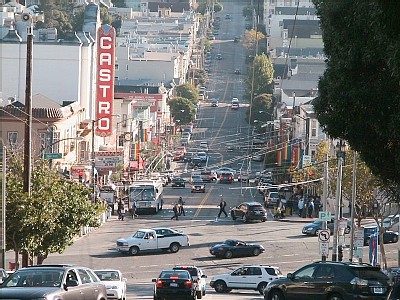
San Francisco’s bicycling community is bracing for a backlash following the second recent case of a cyclist hitting and killing a pedestrian, particularly given a callous online posting by someone claiming to be the cyclist, whose 71-year-old victim this week died of injuries sustained a week ago at the intersection of Castro and Market streets.

The case was a hot topic at last night’s monthly Carfree Happy Hour, a gathering of cyclists, transportation professionals, and alternative transportation activists, many of whom had unearthed new information about a case they’re all grappling with. And the consensus opinion was that the cyclist seemed reckless and may deserve to face criminal charges.

Yet activists also sought to place this case in context, noting that an average of almost three pedestrians are hit by cars everyday in San Francisco, even though that rarely makes headlines. There were 220 pedestrians killed in San Francisco from 2000-2009, the vast majority hit by cars whose drivers rarely faced criminal charges. In fact, the same week that Sustchi Hui was killed there was another pedestrian killed by a motorist and another one by a Muni bus.

But that doesn’t lessen the importance of this latest bike-vs.-pedestrian fatality, which is sure to make news precisely because it’s so rare, and because it comes just weeks after 23-year-old Randolph Ang pled guilty to vehicular manslaughter for running a red light at Embarcadero and Folsom Street in July 2001, hitting a 68-year-old woman who later died from her head injury.

San Francisco Police Department won’t identify the cyclist in the latest incident unless he’s charged with a crime, and its investigation is still ongoing, said SFPD spokesperson Albie Esperanza. “It’s a tragic accident,” he told us, noting that the cyclist was cooperating with the investigation. Once the investigation is complete, the District Attorney’s Office will decide whether to bring criminal charges against the cyclist.

Someone who identified himself as Chris Bucchere posted a note on the Mission Cycling Google group on the afternoon of the incident, March 29, describing an accident that apparently took place at the same time and place. And the description that Bucchere gave of the accident is not likely to garner much public sympathy for him (We contacted Bucchere by e-mail and telephone, we’re waiting to hear back for him, and we can’t independently confirm the authenticity of the message or its contents).

“I wrecked on the way home today from the bi-weekly Headlands Raid today. Short story: I’m fine. The pedestrian I clobbered? Not so much,” the message began.

The post then goes on to describe the incident, which matches the details of other reported accounts of the fatal crash: “Around 8 am I was descending Divisidero Street southbound and about to cross Market Street. The light turned yellow as I was approaching the intersection, but I was already way too committed to stop. The light turned red as I was cruising through the middle of the intersection and then, almost instantly, the southern crosswalk on Market and Castro filled up with people coming from both directions. The intersection very long and the width of Castro Street at that point is very short, so, in a nutshell, blammo.”

Another member of the Carfree Happy Hour group who is a regular competitive cyclist said that Bucchere was a member of the website strava.com, which tracks minute-by-minute data of cyclists for training purposes. And this source said he was able to use the site to determine that Bucchere was traveling through the intersection – which is at the bottom of a steep hill – at approximately 35 mph at the time of the collision.

Bucchere’s message continued: “The quote/unquote ‘scene of the crime’ was that intersection right by the landmark Castro Theatre – it leads from a really busy MUNI station to that little plaza where The Naked Guy always hangs out. It was commuter hour and it was crowded as all getup. I couldn’t see a line through the crowd and I couldn’t stop, so I laid it down and just plowed through the crowded crosswalk in the least-populated place I could find.

“I don’t remember the next five minutes but when I came to, I was in a neck brace being loaded into an ambulance. I remember seeing a RIVER of blood on the asphalt, but it wasn’t mine. Apparently I hit a 71-year old male pedestrian and he ended up in the ICU with pretty serious head injuries. I really hope he ends up OK.

“They asked me a bunch of stupid easy questions that I couldn’t answer, so they kept me for a few hours for observation, gave me a tetanus shot and sent me on my way.

“Anyway, other than a stiff neck, a sore jaw/TMJ, a few bruises and some raspberries, I’m totally fine. I got discharged from the hospital during the lunch hour. The guy I hit was not as fortunate. I really hope he makes it.

“The cops took my bike. Hopefully they’ll give it back.

“In closing, I want to dedicate this story to my late helmet. She died in heroic fashion today as my head slammed into the tarmac. Like the Secret Service would do for a president, she took some serious pavement today, cracking through-and-through in five places and getting completely mauled by the ragged asphalt. May she die knowing that because she committed the ultimate sacrifice, her rider can live on and ride on. Can I get an amen?

“Amen.

“The moral of this little story is: WYFH”

Several members of the newsgroup took issue with the lesson Bucchere claims to have learned : WYFH, or “Wear Your Fucking Helmet.” One poster wrote, “I’m not sure that’s the moral of the story,” to which several others agreed. Another poster wrote: “What were you thinking ? As a 15 year sf resident and a 10 year cyclist and a pedestrian at that intersection every weekday .. I’m kind of embarrassed to wear my mc kit anywhere nearby now. I truly hope you’ve learned your lesson but I’d have to say this is not the end of the story for you, and yes you should get yourself a lawyer.”

Recent studies have shown that San Francisco is a dangerous city for pedestrians, but not as dangerous as many other cities on a per capita basis given our density and high pedestrian populations. A study released in January by the Alliance for Biking & Walking concludes San Francisco has the third highest biking and walking levels among major US cities, but ranks eighth in bicycle and pedestrian fatality rates.

A 2011 study by the group Transportation for America, “Dangerous by Design,” analyzed factors associated with pedestrian deaths – some of which seem to be at play in this case – and concluded, “Especially when combined with unsafe street and road design, vehicle speed presents a deadly threat to pedestrians.”

Restaurant 1833

0

virginia@sfbg.com

APPETITE There’s nothing quite like Monterey’s Restaurant 1833 in San Francisco. Yes, we boast fantastic food, cocktails, wine and beer lists that are competitive with the best in the world. But 1833’s magical setting sets it apart, truly the whole package. Housed in an adobe structure from 1833 (hence the name), I was captivated from the moment I stood on the patio lined with firepits, beneath a sprawling oak. A giant palm tree and redwoods tower over an expansive side deck. 1833 evokes New Orleans or haunted Savannah in Spanish-influenced California architecture.

A broad wood door opens onto a series of enchanting rooms. Red velvet antique couches sit in front of a roaring library fireplace, an absinthe bar is tucked away upstairs, dining rooms are presided over by ghosts that have haunted the house over a century (note Hattie’s Room upstairs). There’s an intimate, one-table dining room, Gallitan’s Room, with a boar’s head guarding relics from the restaurant’s former incarnation as Gallatin’s, a restaurant where presidents and movie stars dined in decades past. The bar is mesmerizing — an illuminated white onyx top glows under slanted roof rafters, imbibers perched in coveted raised booths gaze down at the scene.

But what about the food? This no style-over-substance scenario. Chef Levi Mezick’s menu wanders from whole-roasted meats to pizzas and pastas. There’s bone-in ribeye for two ($75) or a real splurge (temporary until the foie ban kicks in this June) of whole roasted lobe of foie gras ($150). Whole truffle chicken ($38) is blissfully decadent. The chicken is brined for two days with truffle butter injected under the skin. Pizzas ($16-17) are topped with Dungeness crab and leeks or pineapple and sopressatta, while dense, pillowy gnocchi ($22) rest in Parmesan cream with Swiss chard, chanterelles, pickled onions, and crispy croutons.

Appetizers shine, like a delicate beet salad ($12) accented with Greek yogurt and hazelnuts, or a heartwarming helping of bone marrow ($16) with horseradish crust. Bites offer more gourmet delights, particularly fresh, raw hamachi ($6) dotted with pickled jalapenos, avocado, oranges. Among the best items on the entire menu are $4 biscuits: sundried tomato feta biscuits with roasted garlic basil butter or a bacon cheddar biscuit with maple chili butter. Both are flaky, dreamy delights, warm and soft under a smear of butter.

Generous portions leave you fat and contented, while drink offerings threaten to outshine the food. Wine director Ted Glennon curates a playful, sophisticated wine list highlighting the best of the Central Coast and the world. His passion and palate have deservedly led to accolades such as being named one of 2012’s Food and Wine’s top 10 sommeliers. Glennon’s wine list is whimsically annotated with comments such as this one about Chardonnay: “The blonde bombshell has taken the hearts of so many…”

http://www.youtube.com/watch?v=kKY1F0jQank

There’s no slacker in any of his pairings. I was absolutely smitten with 2000 López de Heredia Viña Tondonia Rosé ($50 bottle). This stunning rosé is unlike any I’ve ever had, crisp and acidic, yes, but also funky, earthy, with notes of mushroom and ripe cheese. As it sits it sweetens, evoking sherry while maintaining its crispness.

Local highlights were 2006 Caraccioli Cellars Santa Lucia Highlands Brut Rosé, a dry, floral, sparkling beauty, and 2007 Pelerin Wines Rosella’s Vineyard Pinot Noir, from a Santa Lucia micro-winery producing age-worthy California Pinot. With acidity and body, green tea and licorice notes play with cranberry and dark cherry — lovely with the truffled chicken.

As a cocktail destination, 1833 has no equal in the entire area. Bar manager Michael Lay oversees aging cocktails in barrels with colonial names like Betsy and Abigail. Lay’s talent is apparent in a range of classically influenced cocktails like Commander in Chief ($11), Bulleit Rye whiskey, Carpano Antica sweet vermouth, Campari, Cherry Heering, and orange bitters with a peaty Laphroaig Scotch rinse.

Besides a tableside absinthe cart (brilliant), offering some of my favorites like Duplais or Vieux Pontarlier, Lay makes a mean Hot Buttered Rum prepared tableside. His recipe is perked up with pumpkin pie spice and lemon peel. My favorite cocktail here is a twist on the Penicillin, a Penicillin No. 2 ($11). Instead of Scotch, Lay uses Tres Agaves Reposado Tequila and tops the drink with smoky mezcal, alongside the usual lemon and candied ginger. Further fun is had comparing barrel-aged Negronis, a nine-week-aged Abigail ($12) using Tanqueray gin, Campari, Amaro Nonino, Carpano Antica sweet vermouth, and Ruth-Anne, a more gin-forward Negroni.

We’ve seen each of these parts, yes, but not this exact whole. I long for more settings in my own city as bewitching and multifaceted as 1833. Thankfully, Monterey is not too far away. *

RESTAURANT 1833

500 Hartnell, Monterey

(831) 643-1833

www.restaurant1833.com

Subscribe to Virgina’s twice-monthly newsletter, The Perfect Spot, www.theperfectspotsf.com


On the Cheap

0

On the Cheap listings are compiled by Soojin Chang. Submit items for the listings at listings@sfbg.com. For further information on how to submit items for the listings, see Picks.

WEDNESDAY 4

“Mexico’s National Emergency and the Role of the United States” University of San Francisco, McLaren Conference Center, 2130 Fulton, SF. (415) 422-6919, www.usfca.edu. 5:30pm-7pm, free. Since the gang-related murder of his son last year, poet and journalist Javier Sicilia has not ceased in speaking out against the drug crises of Mexico. He is planning a protest caravan from San Diego to Washington D.C. this summer, and this Wednesday, he will be at USF to share his insight on Mexico’s current social injustices.

THURSDAY 5

After Dark: Gastronomy-themed activities and demonstrations Exploratorium, 3601 Lyon, SF. (415) 561-0360, www.exploratorium.edu. 6pm-10pm, $15 regular museum admission. Lucky for us, we are living through a period of rapid technological advancement. We’re even more blessed when these innovations trickle in to the culinary world, making our dining experience deliciously transformative. Come taste the spirit of modernist cuisine and discover the latest ways technology and food are intersecting.

“Snow White” author book signing and pastries San Francisco Museum of Modern Art, 151 Third St., SF. (415) 357-4000, www.sfmoma.org. Book signing at 6pm; Cake cutting at 8pm, free. Camille Rose Garcia gives the Disney princess a vintage punk makeover, and sets the classic Grimm’s tale in a tragically beautiful wasteland. As if this wasn’t a treat enough, pastry chef Dante Nuno of Fire and Icing will be serving his Snow White-inspired cake.

“Spring into Spring NightLife” seasonal produce extravaganza California Academy of Sciences, 55 Music Concourse, Golden Gate Park, SF. (415) 379-8000, www.calacademy.org. 6pm-10pm, $12. Spring means delectable fruits, fresh herbs, and mouthwatering honey. Revel in the lusciousness of the season by talking (and tasting) with Urban Bee SF, then meander over to Earl’s Organic Produce to snack on Earl’s fresh-picked strawberries. In between tasting succulent treats and grooving to the tunes of DJ Sleazemore, make a pit stop at Cocktail Lab to learn how to make a seasonally fresh cocktail drink from the night’s mixologists.

“Behind the Scenes: The Art and Craft of Cinema” Landis Pacific Film Archive, 2575 Bancroft, Berk. (510) 642-1412, www.bampfa.berkeley.edu. Through April 6. 7pm, $9.50 for one program; $13.50 for double bills. Harrison Ford would not have been Indiana Jones without his brown fedora and distressed leather jacket. And Michael Jackson’s “Thriller” would not have been nearly as dazzling without his unforgettable crimson, wing-shouldered jacket. Meet the crafty hands that tailored the defining personalities of many films and iconic performances, as their owner discusses the vital role costuming plays in storytelling.

FRIDAY 6

Jimi Hendrix poetry remix 50 Mason Social House, 50 Mason, SF. (415) 433-5050, www.50masonsocialhouse.com. 7pm-10pm, free. Copus is a rap-jazz fusion ensemble that infuses spoken word with piano, flute, bass, and percussion. Come hear the band take apart the poetry of Jimi Hendrix and bring the chromatic words together to their own beat.

SATURDAY 7

“Drink Beer. Solve Autism.” Pyramid’s new beer release tasting Pyramid Alehouse, 901 Gilman, Berk. (510) 528-9880, www.pyramidbrew.com. 1pm-4pm, $20. Enjoy a relaxing afternoon of live music, snacks, and unlimited samples of Pyramid Breweries’ newest beer. 100 percent of proceeds benefit Ales for Autism.

Lomography film canister hunt Lomography Gallery Store, 309 Sutter, SF. (415) 248-0096, www.lomography.com. 1pm-4pm, $10. To prep for the chocolate-filled egg hunts happening tomorrow, hop on over to Lomography SF and get ready to search every nook and cranny for a gift-filled film canister. They’re scattered all around downtown and are packed with sweet analogue prizes like Lomography products, free film, and workshop admissions.

Titanic Anniversary Ball San Mateo Masonic Lodge Ballroom, 100 N. Ellsworth, San Mateo. (510) 522-1731, www.peers.org. Dance lessons at 7pm; dancing at 8pm, $15 adv.; $20 at door. There are two good things that came out of RMS Titanic sinking: an awesomely dramatic movie, and a chance to have an epic ball to commemorate the tragedy’s centennial in all its submerged beauty. Relive the glorious, pre-iceberg moments of the Titanic as Bangers and Mash plays Edwardian waltzes, polkas, and ragtime hits throughout the night. Meet us on the Titanic. It’s going down.

“Cartoonist in Residence: Mike Reger” meet and greet Cartoon Art Museum, 655 Mission, SF. (415) 227-8666, www.cartoonart.org. 1pm-3pm, free. Mike Reger is a San Francisco cartoonist whose eclectic comics touch on everything from local politics to satirical takes on the city’s drug culture. He also does work at Mission Minicomix, a group that arose out of the ’90s punk scene in the Mission. Come pick his cartoonist brain and check out his latest projects.

SUNDAY 8

“Pumps and Circumstance” The Sisters of Perpetual Indulgence Easter celebration Dolores Park, 18th St. and Dolores, SF. (415) 820-9697, www.thesisters.org. 11am-4pm, free. Celebrate the Sisters’ 33rd birthday at their annually indulged Easter celebration. The morning will commence with face paintings and an egg hunt, and the afternoon will continue with Easter bonnet and hunky Jesus contests. The Sisters promise to have you partying like it’s 1979 again.

21st Annual Union Street spring celebration and Easter parade Union between Gough and Fillmore, SF. (800) 310-6563, www.SRESproductions.com. 10am-5pm, free. The wonderfully wacky street fair boasts a petting zoo, pony ride, climbing wall, inflatable bounces, and live entertainment from local musicians. When you’re passed by a roller-blading cows or a self-propelled mini-float, you’ll know the parade’s begun.

MONDAY 9

“Best Sex Writing 2012” Rachel Kramer Bussel and Susie Bright explore erotic literary work The Booksmith, 1644 Haight, SF. (415) 863-8688, www.booksmith.com. 7:30pm, free. Sex columnist Rachel Kramer Bussel and commentator Susie Bright are this year’s eyes and ears in collecting the most alluring and insightful work on the seemingly limitless topic of sex for the always rewarding Best Sex Writing series. Put on your slutty-librarian reading glasses and open up the enticing anthology of the latest political sex scandals, impassioned debates over circumcision, SlutWalks, female orgasm workshops, and many more sensual affairs.

TUESDAY 10

San Francisco Film Society presents “Beyond Film School” Roxie Theater, 3117 16th St., SF. (415) 863-1087, www.roxie.com. 7:30pm, $10. Those first muddled years after film school is quite a murky transition. But for some artists, this daunting passage produces some of their most resounding works. The forum showcases student-produced films and will be followed by a panel discussion on the sustainability of Bay Area-based film careers.

Film Listings

0

Film listings are edited by Cheryl Eddy. Reviewers are Kimberly Chun, Max Goldberg, Dennis Harvey, Lynn Rapoport, and Matt Sussman. For rep house showtimes, see Rep Clock.

OPENING

American Reunion Care for yet another helping of all-American horn dogs? The original American Pie (1999) was a sweet-tempered, albeit ante-upping tribute to ‘80s teen sex comedies, so the latest in the franchise, the older, somewhat wiser American Reunion, is obliged to squeeze a dab more of the ole life force outta the class of ‘99, in honor of their, em, 13th high school reunion. These days Jim (Jason Biggs) is attempting to fluff up a flagging postbaby sex life with wife Michelle (Alyson Hannigan). Kevin (Thomas Ian Nicholas) yearns to get in touch with his buried bad boy. Oz (Chris Klein) has become a sportscaster-reality competition star and is seemingly lost without old girlfriend Heather (Mena Suvari). Stifler (Seann William Scott) is as piggishly incorrigible as ever—even as a low-hanging investment flunky, while scarred, adventuring biker Finch (Eddie Kaye Thomas) seems to have become “the most interesting man in the world.” How much trouble can the gang get into? About as much of a mess as the Hangover guys, which one can’t stop thinking about when Jim wakes up on the kitchen floor with tile burns and zero pants. Half the cast — which includes Tara Reid, John “MILF!” Cho, Natasha Lyonne, and Shannon Elizabeth — seems to have stirred themselves from their own personal career hangovers, interludes of insanity, and plastic surgery disasters (with a few, like Cho and Thomas, firmly moving on), and others such as parental figures Eugene Levy and Jennifer Coolidge continuing to show the kids how it’s done. Still, the farcical American franchise’s essentially benign, healthy attitude toward good, dirty fun reads as slightly refreshing after chaste teen fare like the Twilight and High School Musical flicks. Even with the obligatory moment of full-frontal penis smooshing. (1:53) California, Four Star, Piedmont. (Chun)

*Comic-Con IV: A Fan’s Hope When what is now known as the San Diego Comic-Con International launched in 1970, attendance consisted of a couple hundred comic-book fans. Now, it’s a huge event thronging with hundreds of thousands of geek-leaning movie, TV, video game, and — oh, yeah — comic-book fans; it’s also become an essential part of the hype-building machine for every major pop-culture property. Super Size Me (2004) director Morgan Spurlock’s lively doc examines the current state of Comic-Con with input from those who’ve ridden the nerd train to fame and fortune (Joss Whedon, Guillermo Del Toro, Stan Lee) — but the film’s most compelling sequences zero in on a handful of ordinary folks obsessed with the event for a variety of reasons. There’s the proprietor of a Denver comics shop, a 38-year Comic-Con veteran, faced with the chilling prospect of having to sell his most valuable (and most beloved) comic in order to keep his business afloat; the Carrie Brownstein look alike who spends the entire year crafting incredibly detailed costumes for Comic-Con’s annual masquerade contest; the soldier and family man who dreams of drawing comics for a living; and the sweetly dorky young man nervously planning to propose to his girlfriend … during a Kevin Smith panel. To its credit, Comic-Con IV never mocks its subjects, and it manages to infuse its many storylines with surprising emotional depth. Extra points for the clever, comics-inspired transitions, too. Director Spurlock appears in person for post-film Q&As Sun/8 at 5 and 7:30pm shows. (1:26) Vogue. (Eddy)

*Free Men Amid moderate hoopla for Casablanca’s 70th anniversary, it’s a good time for something that was a whole lot more common back then — a wartime drama not about battle or victimization, but espionage intrigue crossing the lines between military, diplomatic, and civilian sectors. Arrested for participating in the black market in the occupied Paris of 1942, North African émigré Younes (Tahar Rahim from 2009’s A Prophet) evades prison or deportation by agreeing to spy on a local mosque suspected by the Nazis of harboring and smuggling out Jews. His clumsy efforts are quickly found out by a visiting imam (Michael Lonsdale), with the result that Younes — whose brother (Farid Larbi) is already a committed fighter in the Resistance underground — winds up playing double-agent, pretending to serve the police and SS while actually working against them. En route he becomes entangled in the disparate agendas of others including Leila (Lubna Azabal), who’s secretly involved in the Algerian liberation movement, and Salim (Mahmud Shalaby), an apolitical, bisexual singer whose career ambitions blind him to the personal dangers he risks. Ismaël Ferroukhi’s handsome, twisty drama won’t have you white-knuckling the armrests, but it’s an intelligent, satisfying throwback to the colorful characters and narrative intricacies of another era’s cinematic melodramas — with the welcome update of making non-white players our protagonists rather than “exotic” support players. (1:39) Lumiere, Shattuck. (Harvey)

*Goon An amiable Massachusetts bar bouncer who’s the odd one out within his highly-educated, high-achieving Jewish family (led by Eugene Levy), Doug Glatt (Seann William Scott) can punch your lights out as easily — and with as little malice — as he’d flip a light switch. That skill looks useful to a local hockey team in need of an enforcer to disable relevant members of the opposing team when needed, then sit in the penalty box. Soon “Doug the Thug’s” burgeoning reputation brings him to the relative big leagues of Halifax, where his main job for the Highlanders is protecting a star (Marc-André Grondin) who’s been skittish since his serious bruising at the hands of “Ross the Boss” (Liev Schreiber), our hero’s veteran equivalent. Based very loosely on Doug “The Hammer” Smith’s memoir, this latest from director Michael Dowse (2004’s It’s All Gone Pete Tong) and co-scenarist Jay Baruchel (who also plays Doug’s incredibly crass best friend) is a cut above most Canadian hockey comedies — which, trust me, is not saying much. But it is indeed rather endearing eventually as an exercise in rude, pretty funny yet non-loutish humor about oafish behavior. A lot of its appeal has to do with Scott, who is arguably miscast and somewhat wasted as this “Hebrew Dolph Lundgren” — the actor’s forte being manic, impulsive, near-lunatic rather than slow-witted characters — yet who helps Goon maintain a no-foul friendliness in inverse proportion to its face-mashing action on ice. The writing could be sharper, but apparently there is only room for one smart hockey satire in our universe, and that spot was taken by Slap Shot 35 years ago. (1:30) Lumiere. (Harvey)

*They Call it Myanmar: Lifting the Curtain Recent elections signal that Myanmar’s status as “the second-most isolated country on the planet,” per Robert H. Lieberman’s doc, may soon be changing. With that hopeful context, this insightful study of Myanmar (or Burma, depending on who’s referring to it) is particularly well-timed. Shot using clandestine methods, and without identifying many of its fearful interviewees — with the exception of recently-released-from-house-arrest politician Aung San Suu Kyi, a Nobel Peace Prize winner — They Call it Myanmar offers a revealing look at a country largely untouched by corporate influences and pop culture. Myanmar’s military dictatorship is the opposite of a cult of personality; it’s scarier, one subject reflects, because “it’s a system, not an individual,” with faceless leaders who can be quietly be replaced. The country struggles with a huge disconnect between the very rich and the very poor; it has a dismal health care system overrun by “quacks,” and an equally dismal educational system that benefits very few children. Hunger, disease, child labor — all prevalent. Surprisingly, though the conditions that surround them are grim, Myanmar’s people are shown to be generally happy and deeply spiritual as they go about their daily lives. A highlight: Lieberman’s interactions with excited Buddhist pilgrims en route to Kyaiktiyo Pagoda, with an up-close look at the miraculously teetering “Golden Rock.” (1:23) Bridge. (Eddy)

*This Is Not a Film See “The Necessity of Images.” (1:15) SF Film Society Cinema.

Titanic 3D It’s baaack. (3:14) Metreon.

ONGOING

*The Artist With the charisma-oozing agility of Douglas Fairbanks swashbuckling his way past opponents and the supreme confidence of Rudolph Valentino leaning, mid-swoon, into a maiden, French director-writer Michel Hazanavicius hits a sweet spot, or beauty mark of sorts, with his radiant new film The Artist. In a feat worthy of Fairbanks or Errol Flynn, Hazanavicius juggles a marvelously layered love story between a man and a woman, tensions between the silents and the talkies, and a movie buff’s appreciation of the power of film — embodied in particular by early Hollywood’s union of European artistry and American commerce. Dashing silent film star George Valentin (Jean Dujardin, who channels Fairbanks, Flynn, and William Powell — and won this year’s Cannes best actor prize) is at the height of his career, adorable Jack Russell by his side, until the talkies threaten to relegate him to yesterday’s news. The talent nurtured in the thick of the studio system yearns for real power, telling the newspapers, “I’m not a puppet anymore — I’m an artist,” and finances and directs his own melodrama, while his youthful protégé Peppy Miller (Bérénice Béjo) becomes a yakky flapper age’s new It Girl. Both a crowd-pleasing entertainment and a loving précis on early film history, The Artist never checks its brains at the door, remaining self-aware of its own conceit and its forebears, yet unashamed to touch the audience, without an ounce of cynicism. (1:40) California, Castro, 1000 Van Ness. (Chun)

*The Ballad of Genesis and Lady Jaye Once dubbed “the wickedest man in the world”, shock artist and cofounder of seminal industrial music pioneers Throbbing Gristle Genesis Breyer P-Orridge has softened somewhat with time. Her plunge into pandrogyny, an ongoing artistic and personal process embarked upon with the late Jacqueline “Lady Jaye” Breyer P-Orridge, is an attempt to create a perfectly balanced body, incorporating the characteristics of both. As artists, the two were committed to documenting their process, but as marriage partners, much of their footage is sweetly innocuous home video footage: Genesis cooking in the kitchen decked out in a little black dress, Lady Jaye setting out napkins at a backyard bar-b-que or helping to dig through Genesis’ archives of COUM Transmissions and Throbbing Gristle “ephemera,” the two wrapped in bandages after getting matching nose jobs. “I just want to be remembered as one of the great love affairs of all time,” Jaye tells Genesis. This whimsical documentary by Marie Losier will go a long way toward making that wish a reality. (1:12) Roxie. (Nicole Gluckstern)

*Boy Apparent in his 2007 film Eagle vs. Shark and his brief turns writing and directing The Flight of the Conchords, filmmaker Taika Waititi seems to embody a uniquely Polynesian sensibility, positioned at a crossroads that’s informed by his Te-Whanau-a-Apanui heritage and his background in the Raukokore area of New Zealand, as well as an affection of global pop culture and a kind of keeping-it-real, keeping-it-local, down-home indie sensibility. All of which has fed into Boy, which became the highest-grossing New Zealand film of all time when it was released in its homeland in 2010. Its popularity is completely understandable. From the lush green inlands and stunning beaches of Waihau Bay to its intimate, gritty and humorous sketch of its natives, this affectionate, big-hearted bildungsroman is a lot like its 11-year-old eponymous hero — eminently lovable and completely one of a kind. Despite the tragedies and confines of his small-town rural life, Boy has a handle on his world: it’s 1984, and his pals spend their time hanging out at the snack shop and harvesting weed for one deadbeat biker parent. Boy’s brother Rocky (Te Aho Aho Eketone-Whitu) believes he has superpowers and is scarred by the fact that his birth was responsible for their mother’s death, and Michael Jackson has just been crowned the king of pop. Then, while his grandma’s away, Boy’s own deadbeat dad, Alamein (Waititi) appears on the scene, turning an extended family of small children on its head — and inspiring many a Thriller dance-slash-dream sequence. Waititi finds his way inside Boy’s head with Crayola-colorful animated children’s drawings, flashbacks, and the kind of dreamy fluidity that comes so naturally during long, hot Polynesian days, all while wonderfully depicting a world that far too few people have glimpsed on screen. (1:30) Smith Rafael. (Chun)

*Casa de mi Padre Will Ferrell’s latest challenge in a long line of actorly exercises and comic gestures — from his long list of comedies probing the last gasps of American masculinity to serious forays like Stranger Than Fiction (2006) and Everything Must Go (2010) — is almost entirely Spanish-language telenovela-burrito Western spoof Casa de mi Padre. Here Ferrell tackles an almost entirely Spanish script (with only meager, long-ago high school and college language courses under his belt) alongside Mexican natives Gael García Bernal and Diego Luna and telenovela veteran Genesis Rodriguez. This clever, intriguing, occasionally very funny, yet not altogether successful endeavor, directed by Matt Piedmont and written by Andrew Steele, sprang from Ferrell’s noggin. Ferrell is nice guy Armando, content to stay at home at the ranch, hang with his buddies, and be dismissed by his father (Pedro Armendáriz Jr.) as a dolt. The arrival of his sleazy bro Raul (Luna) and Raul’s fiancée Sonia (Rodriguez) change everything, bringing killer narco Onza (Bernal) into the family’s life and sparking some hilariously klutzy entanglements between Armando and Sonia. All of this leads to almost zero improvisation on Ferrell’s part and plenty of meta, Machete-like spoofs on low-budget fare, from Sergio Leone to Alejandro Jodorowsky. Casa punctures padre-informed transmissions of Latin machismo, but it equally ridicules the idea of a gringo actor riding in and superimposing himself, badly or otherwise, over another country’s culture. (1:25) Metreon, Shattuck. (Chun)

*The Deep Blue Sea Caught between the devil and the deep blue sea, filmmaker Terence Davies, much like his heroine, chooses a mutable, fluid sensuality, turning his source material, Terence Rattigan’s acclaimed mid-century play, into a melodrama that catches you in its tide and refuses to let go. At the opening of this sumptuous portrait of a privileged English woman who gives up everything for love, Hester (Rachel Weisz) goes through the methodical motions of ending it all: she writes a suicide note, carefully stuffs towels beneath the door, takes a dozen pills, turns on the gas, and lies down to wait for death to overtake her. Via memories drifting through her fading consciousness, Davies lets us in on scattered, salient details in her back story: her severely damped-down, staid marriage to a high court judge, Sir William (Simon Russel Beale), her attraction and erotic awakening in the hands of charming former RF pilot Freddie Page (Tom Hiddleston), her separation, and her ultimate discovery that her love can never be matched, as she hazards class inequities and ironclad gender roles. “This is a tragedy,” Sir William says, at one point. But, as Hester, a model of integrity, corrects him, “Tragedy is too big a word. Sad, perhaps.” Similarly, Sea is a beautiful downer, but Davies never loses sight of a larger post-war picture, even while he pauses for his archetypal interludes of song, near-still images, and luxuriously slow tracking shots. With cinematographer Florian Hoffmeister, he does a remarkable job of washing post-war London with spots of golden light and creating claustrophobic interiors — creating an emotionally resonant space reminiscent of the work of Wong Kar-wai and Christopher Doyle. At the center, providing the necessary gravitas (much like Julianne Moore in 2002’s Far From Heaven), is Weisz, giving the viewer a reason to believe in this small but reverberant story, and offering yet another reason for attention during the next awards season. (1:38) Embarcadero, Piedmont, Shattuck, Smith Rafael. (Chun)

Dr. Seuss’ The Lorax (1:26) Metreon, 1000 Van Ness, Shattuck.

Footnote (1:45) Clay.

*Friends With Kids Jennifer Westfeldt scans Hollywood’s romantic comedy landscape for signs of intelligent life and, finding it to be a barren place possibly recovering from a nuclear holocaust, writes, directs, and stars in this follow-up to 2001’s Kissing Jessica Stein, which she co-wrote and starred in. Julie (Westfeldt) and Jason (Adam Scott) are upper-thirtysomething New Yorkers with two decades of friendship behind them. He calls her “doll.” They have whispered phone conversations at four in the morning while their insignificant others lie slumbering beside them on the verge of getting dumped. And after a night spent witnessing the tragic toll that procreation has taken on the marriages of their four closest friends — Bridesmaids (2011) reunion party Leslie (Maya Rudolph), Alex (Chris O’Dowd), Missy (Kristen Wiig), and Ben (Jon Hamm), the latter two, surprisingly and less surprisingly, providing some of the film’s darkest moments — Jason proposes that they raise a child together platonically, thereby giving any external romantic relationships a fighting chance of survival. In no time, they’ve worked out the kinks to their satisfaction, insulted and horrified their friends, and awkwardly made a bouncing baby boy. The arrival of significant others (Edward Burns and Megan Fox) signals the second phase of the experiment. Some viewers will be invested in latent sparks of romance between the central pair, others in the success of an alternative family arrangement; one of these demographics is destined for disappointment. Until then, however, both groups and any viewers unwilling to submit to this reductive binary will be treated to a funny, witty, well crafted depiction of two people’s attempts to preserve life as they know it while redrawing the parameters of parenthood. (1:40) Four Star, SF Center, Sundance Kabuki. (Rapoport)

*House of Pleasures Set in a fin de siècle French brothel, Bertrand Bonello’s lushly rendered drama is challenging and frequently unpleasant. Bonello sees the beauty and allure of his subjects, the many miserable women of this maison close, but rarely sinks to sympathy for their selfish and sometimes sadistic clients. Bound as they are by their debts to their Madame, the prostitutes are essentially slaves, held to strict and humiliating standards. All they have is each other, and the movie’s few emotional bright spots come from this connection. The filmmaking is wily and nouvelle vague-ish, featuring anachronistic music and inventive split-screen sequences. Additionally, there is a spidery complexity to the film’s chronology, wherein certain scenes repeat to reveal new contexts. This unstuck sense of newness is perhaps didactic — this could and does happen now as well as then — but it also serves to make an already compelling ensemble piece even richer and more engaging. (2:02) SF Film Society Cinema. (Sam Stander)

Hugo Hugo turns on an obviously genius conceit: Martin Scorsese, working with 3D, CGI, and a host of other gimmicky effects, creates a children’s fable that ultimately concerns one of early film’s pioneering special-effects fantasists. That enthusiasm for moviemaking magic, transferred across more than a century of film history, was catching, judging from Scorsese’s fizzy, exhilarating, almost-nauseating vault through an oh-so-faux Parisian train station and his carefully layered vortex of picture planes as Hugo Cabret (Asa Butterfield), an intrepid engineering genius of an urchin, scrambles across catwalk above a buzzing station and a hotheaded station inspector (Sacha Baron Cohen). Despite the special effects fireworks going off all around him, Hugo has it rough: after the passing of his beloved father (Jude Law), he has been stuck with an nasty drunk of a caretaker uncle (Ray Winstone), who leaves his duties of clock upkeep at a Paris train station to his charge. Hugo must steal croissants to survive and mechanical toy parts to work on the elaborate, enigmatic automaton he was repairing with his father, until he’s caught by the fierce toy seller (Ben Kingsley) with a mysterious lousy mood and a cute, bright ward, Isabelle (Chloe Grace Moretz). Although the surprisingly dark-ish Hugo gives Scorsese a chance to dabble a new technological toolbox — and the chance to wax pedantically, if passionately, about the importance of film archival studies — the effort never quite despite transcends its self-conscious dazzle, lagging pacing, diffuse narrative, and simplistic screenplay by John Logan, based on Brian Selznick’s book. Even the actorly heavy lifting provided by assets like Kingsley and Moretz and the backloaded love for the fantastic proponents at the dawn of filmmaking fail to help matters. Scorsese attempts to steal a little of the latters’ zeal, but one can only imagine what those wizards would do with motion-capture animation or a blockbuster-sized server farm. (2:07) Metreon. (Chun)

The Hunger Games Katniss Everdeen (Jennifer Lawrence) is a teenager living in a totalitarian state whose 12 impoverished districts, as retribution for an earlier uprising, must pay tribute to the so-called Capitol every year, sacrificing one boy and one girl each to the Hunger Games. A battle royal set in a perilous arena and broadcast live to the Capitol as gripping diversion and to the districts as sadistic propaganda, the Hunger Games are, depending on your viewpoint, a “pageant of honor, courage, and sacrifice” or a brutal, pointless bloodbath involving children as young as 12. When her little sister’s name comes up in the annual lottery, Katniss volunteers to take her place and is joined by a boy named Peeta Mellark (Josh Hutcherson), with whom she shares an old, unspoken bond. Tasked with translating to the screen the first installment of Suzanne Collins’s rabidly admired trilogy, writer-director Gary Ross (2003’s Seabiscuit, 1998’s Pleasantville) telescopes the book’s drawn-out, dread-filled tale into a manageable two-plus-hour entertainment, making great (and horrifying) use of the original work’s action, but losing a good deal of the narrative detail and emotional force. Elizabeth Banks is comic and unrecognizable as Effie Trinket, the two tributes’ chaperone; Lenny Kravitz gives a blank, flattened reading as their stylist, Cinna; and Donald Sutherland is sufficiently creepy and bloodless as the country’s leader, President Snow. More exceptionally cast are Woody Harrelson as Katniss and Peeta’s surly, alcoholic mentor, Haymitch Abernathy, and Stanley Tucci as games emcee Caesar Flickerman, flashing a bank of gleaming teeth at each contestant as he probes their dire circumstances with the oily superficiality of a talk show host. (2:22) Balboa, Marina, 1000 Van Ness, Presidio, SF Center, Sundance Kabuki. (Rapoport)

*The Hunter Shot and set during Iran’s contentious 2009 Presidential campaign, The Hunter starts as a Kafka-esque portrait of quiet desperation in a cold, empty Tehran, then turns into a sort of existential thriller. The precise message may be ambiguous, but it’s no surprise this two-year-old feature has so far played nearly everywhere but Iran itself. Ali (filmmaker Rafi Pitts) is released from prison after some years, his precise crime never revealed. Told that with his record he can’t expect to get a day shift on his job as security guard at an automotive plant, he keeps hours at odds with his working wife Sara (Mitra Haijar) and six-year-old daughter Saba (Saba Yaghoobi). Still, they try to spend as much time together as possible, until one day Ali returns to find them uncharacteristically gone all day. After getting the bureaucratic runaround he’s finally informed by police that something tragic has occurred; one loved one is dead, the other missing. When his thin remaining hope is dashed, with police notably useless in preventing that grim additional news, Ali snaps — think Peter Bogdanovich’s 1968 Targets. He’s soon in custody, albeit in that of two bickering officers who get them all lost in the countryside. Pitts, a long-ago child performer cast here only when the actor originally hired had to be replaced, makes Ali seem pinched from the inside out, as if in permanent recoil from past and anticipated abuse. This thin, hunched frame, vulnerable big ears, and hooded eyes — the goofily oversized cap he wears at work seems a deliberate affront — seems so fixed an expression of unhappiness that when he flashes a great smile, for a moment you might think it must be someone else. He’s an everyman who only grows more shrunken once the film physically opens up into a natural world no less hostile for being beautiful. (1:32) Roxie. (Harvey)

Intruders Despite his aptitude for filling a tux nicely with a loaded, Don Draper-esque suaveness, Clive Owen has a way of dominating the screen with his rage — a mad man more likely to brawl than deliver biting ad lines — so it’s hard for Intruders to escape the specter of his role in 2010’s Trust, as a dad futilely attempting to protect his daughter from an online predator. Consider Intruders the dark-fantasy offspring of that film and 2006’s Pan’s Labyrinth. A nightmare appears to be materializing for two children in Spain and England: Juan (Izan Corchero) is being tormented by a shadowy figure who creeps into his room at night, and his mother (Pilar López de Ayala) and priest (Daniel Brühl) seem unable to stop the visitations or exorcise the demon that resembles a grand inquisitor in a hoodie. Meanwhile, Mia (Ella Purnell) discovers that the terrifying faceless figure she’s been writing about for her school fiction class is becoming a reality for both her and her protective papa (Owen). Is it a figment of their imagination — a case of folie à deux (and along with Apart, the second hitting the theaters in the last month) — or something potentially more terrifying, like the imaginative power of a child’s mind? 28 Weeks Later (2007) director Juan Carlos Fresnadillo attempts to sustain the mystery throughout, but that calculated juggling act only succeeds in making the final “gotcha” ending — involving, yes, wronged angry dad Owen — seem like a bit of a cheat. (1:40) Metreon. (Chun)

The Iron Lady Curiously like Clint Eastwood’s 2011 J. Edgar, this biopic from director Phyllida Lloyd and scenarist Abi Morgan takes on a political life of length, breadth and controversy — yet it mostly skims over the politics in favor of a generally admiring take on a famous narrow-minded megalomaniac’s “gumption” as an underdog who drove herself to the top. Looking back on her career from a senile old age spent in the illusory company of dead spouse Denis (Jim Broadbent), Meryl Streep’s ex-British Prime Minister Margaret Thatcher steamrolls past hurdles of class and gender while ironically re-enforcing the fustiest Tory values. She’s essentially a spluttering Lord in skirts, absolutist in her belief that money and power rule because they ought to, and any protesting rabble don’t represent the “real England.” That’s a mindset that might well have been explored more fruitfully via less flatly literal-minded portraiture, though Lloyd does make a few late, lame efforts at sub-Ken Russell hallucinatory style. Likely to satisfy no one — anywhere on the ideological scale — seriously interested in the motivations and consequences of a major political life, this skin-deep Lady will mostly appeal to those who just want to see another bravura impersonation added to La Streep’s gallery. Yes, it’s a technically impressive performance, but unlikely to be remembered as one of her more depthed ones, let alone among her better vehicles. (1:45) Opera Plaza. (Harvey)

*The Island President The titular figure is Mohamed Nasheed, recently ousted (by allies of the decades long dictator he’d replaced) chief executive of the Republic of Maldives — a nation of 26 small islands in the Indian Ocean. Jon Shenk’s engaging documentary chronicles his efforts up to and through the 2009 Copenhagen Climate Summit to gather greater international commitment to curbing greenhouse gas emissions. This is hardly do-gooderism, a bid for eco-tourism, or politics as usual: scarcely above sea level, with nary a hill, the Maldives will simply cease to exist soon if waters continue to rise at global warming’s current pace. (“It won’t be any good to have a democracy if we don’t have a country,” he half-jokes at one point.) Nasheed is tireless, unjaded, delightful, and willing to do anything, at one point hosting “the world’s first underwater cabinet meeting” (with oxygen tanks, natch) as a publicity stunt. A cash-strapped nation despite its surfeit of wealthy vacationers, it’s spending money that could go to education and health services on the pathetic stalling device of sandwalls instead. But do bigger powers — notably China, India and the U.S. — care enough about this bit-part player on the world stage to change their energy-use and economic habits accordingly? (A hint: If you’ve been mulling a Maldivian holiday, take it now.) Somewhat incongruous, but an additional sales point nonetheless: practically all the film’s incidental music consists of pre-existing tracks by Radiohead. (1:51) Embarcadero, Shattuck. (Harvey)

*Jeff, Who Lives at Home The failure-to-launch concept will always thrive whenever and wherever economies flail, kids crumble beneath family trauma, and the seduction of moving back home to live for free with the parental units overcomes the draw of adulthood and individuation. Nevertheless brotherly writing and directing team Jay and Mark Duplass infuse a fresh, generous-minded sweetness in this familiar narrative arc, mainly by empathetically following those surrounding, and maybe enabling, the stay-at-home. Spurred by a deep appreciation of Signs (2002) and plentiful bong hits, Jeff (Jason Segel) decides to go with the signals that the universe throws at him: a mysterious phone call for a Kevin leads him to stalk a kid wearing a jersey with that name and jump a candy delivery truck. This despite the frantic urging of his mother (Susan Sarandon), who has set the bar low and simply wants Jeff to repair a shutter for her birthday, and the bad influence of brother Pat (Ed Helms), a striving jerk who compensates for his insecurities by buying a Porsche and taking business meetings at Hooters. We never quite find out what triggered Jeff’s dormancy and Pat’s prickishness — two opposing responses to some unspecified psychic wound — yet by Jeff, Who Lives at Home‘s close, it doesn’t really matter. The Duplass brothers convince you to go along for the ride, much like Jeff’s blessed fool, and accept the ultimately feel-good, humanist message of this kind-hearted take on human failings. (1:22) California, SF Center, Sundance Kabuki. (Chun)

Jiro Dreams of Sushi Celebrity-chef culture has surely reached some kind of zeitgeist, what with the omnipresence of Top Chef and other cooking-themed shows, and the headlines-making power of people like Paula Deen (diabetes) and Mario Batali (sued for ripping off his wait staff). Unconcerned with the trappings of fame — you’ll never see him driving a Guy Fieri-style garish sports car — is Jiro Ono, 85-year-old proprietor of Sukiyabashi Jiro, a tiny, world-renowned sushi restaurant tucked into Tokyo’s Ginza station. Jiro, a highly-disciplined perfectionist who believes in simple, yet flavorful food, has devoted his entire life to the pursuit of “deliciousness” — to the point of sushi invading his dreams, as the title of David Gelb’s reverential documentary suggests. But Jiro Dreams of Sushi goes deeper than food-prep porn (though, indeed, there’s plenty of that); it also examines the existential conflicts faced by Jiro’s two middle-aged sons. Both were strongly encouraged to enter the family business — and in the intervening years, have had to accept the soul-crushing fact that no matter how good their sushi is, it’ll never be seen as exceeding the creations of their legendary father. (1:21) Embarcadero, Piedmont, Shattuck, Smith Rafael. (Eddy)

John Carter More or less an adaptation of Tarzan author Edgar Rice Burroughs’ 1917 sci-fi classic A Princess of Mars, John Carter is yet another film that lavishes special effects (festooned with CG and 3D) on a rote story filled with characters the viewer couldn’t give two craps about. Angry Civil War veteran John Carter (Taylor Kitsch, more muscleman than thespian) mysteriously zips to Mars, a planet not only populated by multiple members of the cast of HBO’s Rome (Ciarán Hinds, James Purefoy, and the voice of Polly Walker), but also quite a bit of Red Planet unrest. Against his better judgment, and with the encouragement of a comely princess (tragic spray-tan victim Lynn Collins), Carter joins the fight, as red people battle blue people, green four-armed creatures pitch in when needed, and sinister silver people (led by Mark Strong) use zap-tastic powers to manipulate the action for their amusement. If you’re expecting John Carter to be a step up from Conan the Barbarian (2011), Prince of Persia (2010), etc., because it’s directed by Andrew Stanton (the Pixar superstar who helmed 2008’s Finding Nemo and 2010’s WALL*E), eh, think again. There’s nothing memorable or fun about this would-be adventure; despite its extravagant 3D, it’s flatter than a pancake. (2:17) Metreon, 1000 Van Ness. (Eddy)

*The Kid with a Bike Slippery as an eel, Cyril (Thomas Doret) is the bane of authorities as he tries to run away at any opportunity from school and a youth home — being convinced that the whole adult world is conspiring to keep his father away from him. During one such chase he literally runs into hair-salon proprietor Samantha (Cécile De France), who proves willing to host him on weekends away from his public facility, and is a patient, steadying influence despite his still somewhat exasperating behavior. It’s she who orchestrates a meeting with his dad (Jerémié Renier, who played the child in the Dardennes’ 1996 breakthrough La Promesse), so Cyril can confront the hard fact that his pa not only can’t take care of him, he doesn’t much want to. Still looking for some kind of older male approval, Cyril falls too easily under the sway of Wes (Egon Di Mateo), a teenage thug whom everyone in Samantha’s neighborhood knows is bad news. This latest neorealist-style drama from Belgium’s Dardenne Brothers treads on very familiar ground for them, both in themes and terse execution. It’s well-acted, potent stuff, if less resonant in sum impact than their best work. (1:27) Embarcadero, Shattuck. (Harvey)

Mirror Mirror In this glittery, moderately girl-powery adaptation of the Snow White tale (a comic foil of sorts to this summer’s gloomier-looking Snow White and the Huntsman), Julia Roberts takes her turn as stepmom, to an earnest little ingenue (Lily Collins) whose kingly father (Sean Bean) is presumed dead and whose rather-teeny-looking kingdom is collapsing under the weight of fiscal ruin and a thick stratum of snow. Into this sorry realm rides a chiseled beefcake named Prince Alcott (Arnie Hammer), who hails from prosperous Valencia, falls for Snow White, and draws the attentions of the Queen (Roberts) from both a strategic and a libidinal standpoint. Soon enough, Snow White (Snow to her friends) is narrowly avoiding execution at the hands of the Queen’s sycophantic courtier-henchman (Nathan Lane), rustling up breakfast for a thieving band of stilt-walking dwarves, and engaging in sylvan hijinks preparatory to deposing her stepmother and bringing light and warmth and birdsong and perennials back into fashion. Director Tarsem Singh (2000’s The Cell, 2011’s Immortals) stages the film’s royal pageantry with a bright artistry, and Roberts holds court with vicious, amoral relish as she senses her powers of persuasion slipping relentlessly from her grasp. Carefully catering to tween-and-under tastes as well as those of their chaperones, the comedy comes in various breadths, and there’s meta-humor in the sight of Roberts passing the pretty woman torch, though Collins seems blandly unprepared to wield her power wisely or interestingly. Consider vacating your seats before the extraneous Bollywood-style song-and-dance number that accompanies the closing credits. (1:46) Balboa, Metreon, 1000 Van Ness, Presidio, Sundance Kabuki. (Rapoport)

*Pina Watching Pina Bausch’s choreography on film should not have been as absorbing and deeply affecting of an experience as it was. Dance on film tends to disappoint — the camera flattens the body and distorts perspective, and you either see too many or not enough details. However, improved 3D technology gave Wim Wenders (1999’s Buena Vista Social Club; 1987’s Wings of Desire) the additional tools he needed to accomplish what he and fellow German Bausch had talked about for 20 years: collaborating on a documentary about her work. Instead of making a film about the rebel dance maker, Wenders made it for Bausch, who died in June 2009, two days before the start of filming. Pina is an eloquent tribute to a tiny, soft-spoken, mousy-looking artist who turned the conventions of theatrical dance upside down. She was a great artist and true innovator. Wenders’ biggest accomplishment in this beautifully paced and edited document is its ability to elucidate Bausch’s work in a way that words probably cannot. While it’s good to see dance’s physicality and its multi dimensionality on screen, it’s even better that the camera goes inside the dances to touch tiny details and essential qualities in the performers’ every gesture. No proscenium theater can offer that kind of intimacy. Appropriately, intimacy (the eternal desire for it) and loneliness (an existential state of being) were the two contradictory forces that Bausch kept exploring over and over. And by taking fragments of the dances into the environment — both natural and artificial — of Wuppertal, Germany, Wenders places them inside the emotional lives of ordinary people, subjects of all of Bausch’s work. (1:43) Four Star, Shattuck. (Rita Felciano)

*The Raid: Redemption As rip-roaring as they come, Indonesian import The Raid: Redemption (from, oddly, a Welsh writer-director, Gareth Huw Evans) arrives to reassure genre fans that action films are still being made without CG-embellished stunts, choppy editing, and gratuitous 3D. Fists, feet, and gnarly weapons do the heavy lifting in this otherwise simple tale of a taciturn special-forces cop (Iko Uwais) who’s part of a raid on a run-down, high-rise apartment building where all the tenants are crooks and the landlord is a penthouse-dwelling crime boss (Ray Sahetapy). Naturally, things go awry almost immediately, and floor-to-floor brawls (choreographed by Uwais and co-star Yayan Ruhian, whose character is aptly named “Mad Dog”) comprise nearly the entirety of the film; of particular interest is The Raid‘s focus on pencak silat, an indigenous Indonesian fighting style — though there are also plenty of thrilling gun battles, machete-thwackings, and other dangerous delights. Even better: Redemption is the first in a planned trilogy of films starring Uwais’ badass (yet morally rock-solid) character. Bring it! (1:40) California, Metreon, Sundance Kabuki. (Eddy)

Safe House Frankly, Denzel Washington watchers are starved for another movie in which he’s playing the smartest guy in the room. Despite being hampered by a determinedly murky opening, Safe House should mostly satisfy. Washington’s Tobin Frost is well-used to dwelling into a grayed-out borderland of black ops and flipped alliances — a onetime CIA star, he now trades secrets while perpetually on the run. Fleeing from killers of indeterminate origin, Tobin collides headlong with eager young agent Matt (Ryan Reynolds), who’s stuck maintaining a safe house in Cape Town, South Africa. Tasked with holding onto Tobin’s high-level player by his boss (Brendan Gleeson) and his boss’s boss (Sam Shepard), Matt is determined to prove himself, retain and by extension protect Tobin (even when the ex-superspy is throttling him from behind amid a full-speed car chase), and resist the magnetic pull of those many hazardous gray zones. Surrounded by an array of actorly heavies, including Vera Farmiga, who collectively ratchet up and invest this possibly not-very-interesting narrative — “Bourne” there; done that — with heart-pumping intensity, Washington is magnetic and utterly convincing as the jaded mouse-then-cat-then-mouse toying with and playing off Reynolds go-getter innocent. Safe House‘s narrative doesn’t quite fill in the gaps in Tobin Frost’s whys and wherefores, and the occasional ludicrous breakthroughs aren’t always convincing, but the film’s overall, familiar effect should fly, even when it’s playing it safe (or overly upstanding, especially when it comes to one crucial, climactic scrap of dialogue from “bad guy” Washington, which rings extremely politically incorrect and tone-deaf). (2:00) SF Center. (Chun)

*Salmon Fishing in the Yemen In Lasse Hallström’s latest film, a sheikh named Muhammed (Amr Waked) with a large castle in Scotland, an ardent love of fly-fishing, and unlimited funds envisions turning a dry riverbed in the Yemeni desert into an aquifer-fed salmon-run site and the surrounding lands into an agricultural cornucopia. Tasked with realizing this dream are London marketing consultant Harriet Chetwode-Talbot (Emily Blunt) and government fisheries scientist Alfred Jones (Ewan McGregor), a reluctant participant who refers to the project as “doolally” and signs on under professional duress. Despite numerous feasibility issues (habitat discrepancies, the necessity for a mass exodus of British salmon, two million irate British anglers), Muhammed’s vision is borne forward on a rising swell of cynicism generated within the office of the British prime minister’s press secretary (Kristin Scott Thomas), whose lackeys have been scouring the wires for a shred of U.K.-related good news out of the Middle East. Ecology-minded killjoys may question whether this qualifies. But putting aside, if one can, the possible inadvisability of relocating 10,000 nonnative salmon to a wadi in Yemen — which is to say, putting aside the basic premise — it’s easy and pleasant enough to go with the flow of the film, infected by Jones’s growing enthusiasm for both the project and Ms. Chetwode-Talbot. Adapted from Paul Torday’s novel by Simon Beaufoy (2009’s Slumdog Millionaire), Salmon Fishing is a sweet and funny movie, and while it suffers from the familiar flurried third-act knotting together of loose ends, its storytelling stratagems are entertaining and its characters compellingly textured, and the cast makes the most of the well-polished material. (1:52) Albany, Embarcadero, 1000 Van Ness, Piedmont, Presidio, Sundance Kabuki. (Rapoport)

*The Salt of Life Gianni Di Gregorio is both a triumph over and cautionary illustration of the aging uomo, racking up decades of experience yet still infantilized by that most binding tie. He’s a late bloomer who’s long worked in theater and film in various capacities, notably as a scenarist for 2008’s organized crime drama Gomorrah. That same year he wrote and directed a first feature basically shot in his own Rome apartment. Mid-August Lunch was a surprise global success casting the director himself as a putz, also named Gianni, very like himself (by his own admission), peevishly trying to have some independence while catering to the whims of the ancient but demanding mother (Valeria De Franciscis) he still lives with. Lunch was charming in a sly, self-deprecating way, and The Salt of Life is more of the same minus the usual diminishing returns: the creator’s barely-alter ego Gianni is still busy doing nothing much, dissatisfied not by his indolence but by its quality. But his pint-sized, wig-rocking, nearly century-old matriarch has now moved to a plush separate address with full-time care — and Salt‘s main preoccupation is Gianni’s discovery that while he’s as available and interested in women as ever, at age 63 he is no longer visible to them. While Fellini confronted desirable, daunting womanhood with a permanent adolescent’s masturbatory fantasizing, Di Gregorio’s humbler self-knowledge finds comedy in the hangdog haplessness of an old dog who can’t learn new tricks and has forgotten the old ones. (1:30) Opera Plaza, Shattuck, Smith Rafael. (Harvey)

*A Separation Iran’s first movie to win Berlin’s Golden Bear (as well as all its acting awards), this domestic drama reflecting a larger socio-political backdrop is subtly well-crafted on all levels, but most of all demonstrates the unbeatable virtue of having an intricately balanced, reality-grounded screenplay — director Asghar Farhadi’s own — as bedrock. A sort of confrontational impartiality is introduced immediately, as our protagonists Nader (Peyman Moadi) and Simin (Leila Hatami) face the camera — or rather the court magistrate — to plead their separate cases in her filing for divorce, which he opposes. We gradually learn that their 14-year wedlock isn’t really irreparable, the feelings between them not entirely hostile. The roadblock is that Simin has finally gotten permission to move abroad, a chance she thinks she must seize for the sake of their daughter, Termeh (Sarina Farhadi). But Nader doesn’t want to leave the country, and is not about to let his only child go without him. Farhadi worked in theater before moving into films a decade ago. His close attention to character and performance (developed over several weeks’ pre-production rehearsal) has the acuity sported by contemporary playwrights like Kenneth Lonergan and Theresa Rebeck, fitted to a distinctly cinematic urgency of pace and image. There are moments that risk pushing plot mechanizations too far, by A Separation pulls off something very intricate with deceptive simplicity, offering a sort of integrated Rashomon (1950) in which every participant’s viewpoint as the wronged party is right — yet in conflict with every other. (2:03) Albany, Lumiere. (Harvey)

*The Secret World of Arrietty It’s been far too long between 2008’s Ponyo, the last offering from Studio Ghibli, and this feature-length adaptation of Mary Norton’s children’s classic, The Borrowers, but the sheer beauty of the studio’s hand-drawn animation and the effortless wonder of its tale more than make up for the wait. This U.S. release, under the very apropos auspices of Walt Disney Pictures, comes with an American voice cast (in contrast with the U.K. version), and the transition appears to be seamless — though, of course, the background is subtly emblazoned with kanji, there are details like the dinnertime chopsticks, and the characters’ speech rhythms, down to the “sou ka” affirmative that peppers all Japanese dialogue. Here in this down-low, hybridized realm, the fearless, four-inches-tall Arrietty (voiced by Bridgit Mendler) has grown up imaginative yet lonely, believing her petite family is the last of their kind: they’re Borrowers, a race of tiny people who live beneath the floorboards of full-sized human’s dwellings and take what they need to survive. Despite the worries of her mother Homily (Amy Poehler), Arrietty begins to embark on borrowing expeditions with her father Pod (Will Arnett) — there are crimps in her plans, however: their house’s new resident, a sickly boy named Shawn (David Henrie), catches a glimpse of Arrietty in the garden, and caretaker Hara (Carol Burnett) has a bit of an ulterior motive when it comes to rooting out the wee folk. Arrietty might not be for everyone — some kids might churn in their seats with ADD-style impatience at this graceful, gentle throwback to a pre-digital animation age — but in the care of first-time director Hiromasa Yonebayashi and Ghibli mastermind Hayao Miyazaki, who wrote co-wrote the screenplay, Arrietty will transfix other youngsters (and animation fans of all ages) with the glorious detail of its natural world, all beautifully amplified and suffused with everyday magic when viewed through the eyes of a pocket-sized adventurer. (1:35) Metreon, Shattuck. (Chun)

*Shame It’s been a big 2011 for Michael Fassbender, with Jane Eyre, X-Men: First Class, Shame, and A Dangerous Method raising his profile from art-house standout to legit movie star (of the “movie stars who can also act” variety). Shame may only reach one-zillionth of X-Men‘s audience due to its NC-17 rating, but this re-teaming with Hunger (2008) director Steve McQueen is Fassbender’s highest achievement to date. He plays Brandon, a New Yorker whose life is tightly calibrated to enable a raging sex addiction within an otherwise sterile existence, including an undefined corporate job and a spartan (yet expensive-looking) apartment. When brash, needy, messy younger sister Cissy (Carey Mulligan, speaking of actors having banner years) shows up, yakking her life all over his, chaos results. Shame is a movie that unfolds in subtle details and oversized actions, with artful direction despite its oft-salacious content. If scattered moments seem forced (loopy Cissy’s sudden transformation, for one scene, into a classy jazz singer), the emotions — particularly the titular one — never feel less than real and raw. (1:39) Opera Plaza. (Eddy)

*Tim and Eric’s Billion Dollar Movie It’s almost impossible to describe Adult Swim hit Tim and Eric Awesome Show, Great Job!, but “cable access on acid” comes pretty close. It’s awkward, gross, repetitive, and quotable; it features unsettling characters portrayed by famous comedians and unknowns who may not actually be actors. It all springs from the twisted brains of Tim Heidecker and Eric Wareheim, now on the big screen with Tim and Eric’s Billion Dollar Movie. The premise: Tim and Eric (amplified-to-the-extreme versions of Heidecker and Wareheim) get a billion to make a movie, and the end result is a very short film involving a lot of diamonds and a Johnny Depp impersonator. On the run from their angry investors (including a hilariously spitting-mad Robert Loggia), the pair decides to earn back the money managing a run-down mall filled with deserted stores (and weird ones that sell things like used toilet paper) and haunted by a man-eating wolf. Or something. Anyway, the plot is just an excuse to unfurl the Tim and Eric brand of bizarre across the length of a feature film; if you’re already in the cult, you’ve probably already seen the film (it’s been On Demand for weeks). Adventurous newcomers, take note: Tim and Eric’s comedy is the ultimate love-it-or-hate-it experience. There is no middle ground. There are, however, some righteously juicy poop jokes. (1:32) Roxie. (Eddy)

*21 Jump Street One of the more pleasant surprises on the mainstream comedy landscape has to be this, ugh, “reboot” of the late-’80s TV franchise. I wasn’t a fan of the show — or its dark-eyed, bad-boy star, Johnny Depp — back in the day, but I am of this unexpectedly funny rework overseen by apparent enthusiast, star, co-writer, and co-executive producer Jonah Hill, with a screenplay by Scott Pilgrim vs. the World (2010) co-writer Michael Bacall. There’s more than a smidge of Bacall’s other high school fantasy, Project X, in the buddy comedy premise of nerd (Hill’s Schmidt) meets blowhard (Channing Tatum’s Jenko), but 21 Jump Street thankfully leapfrogs the former with its meta-savvy, irreverent script and har-dee-har cameo turns by actors like Ice Cube as Captain Dickson (as well as a few key uncredited players who shall remain under deep cover). High school continues to haunt former classmates Schmidt and Jenko, who have just graduated from the lowly police bike corps to a high school undercover operation — don’t get it twisted, though, Dickson hollers at them; they got this gig solely because they look young. Still, the whole drug-bust enchilada is put in jeopardy when the once-socially toxic Schmidt finds his brand of geekiness in favor with the cool kids and so-called dumb-jock Jenko discovers the pleasures of the mind with the chem lab set. Fortunately for everyone, this crew doesn’t take themselves, or the source material, too seriously. (1:49) Marina, Metreon, 1000 Van Ness, Shattuck, Sundance Kabuki. (Chun)

Wrath of the Titans Playing fast and loose with Greek myths but not agile enough to kick out a black metal jam during a flaming underworld power-grab, Wrath of Titans is, as expected, a bit of a CGI-crammed mess. Still, the sword-and-sandals franchise has attracted scads of international actorly talent — the cast is enriched this time by Édgar Ramírez (2010’s Carlos), Bill Nighy, and Rosamund Pike — and you do get at least one cool monster and paltry explication (Cerberus, which bolts from earth for no discernible reason except that maybe all hell is breaking loose). Just because action flicks like Cloverfield (2008) have long dispensed with narrative handlebars doesn’t mean that age-old stories like the Greek myths should get completely random with their titanic tale-spinning. Wrath opens on the twilight of the gods: Zeus (Liam Neeson) is practically groveling before Perseus (Sam Worthington) — now determined to go small, raise his son, and work on his fishing skills — and trying to persuade him to step up and help the Olympians hold onto power. Fellow Zeus spawn Ares (Ramírez) is along for the ride, so demigod up, Perseus. In some weird, last-ditch attempt to ream his bro Zeus, the oily, mulleted Hades (Ralph Fiennes) has struck a deal with their entrapped, chaotic, castrating fireball of a dad Cronus to let them keep their immortality, on the condition that Zeus is sapped of his power. Picking up Queen Andromeda (Pike) along the way, Perseus gets the scoop on how to get to Hell from Hephaestus (Nighy playing the demented Vulcan like a ’60s acid casualty, given to chatting with mechanical owl Bubo, a wink to 1981 precursor Clash of the Titans, which set the bar low for the remake). Though there are some distracting action scenes (full of speedy, choppy edits that confuse disorientation for excitement) and a few intriguing monsters (just how did the Minotaur make it to this labyrinth?), there’s no money line like “Release the Kraken!” this time around, and there’s way too much nattering on about fatherly responsibility and forgiveness —making these feel-good divinities sound oddly, mawkishly Christian and softheaded rather than mythically pagan and brattily otherworldly. Wasn’t the appeal of the gods linked to the fact that they always acted more like outta-hand adolescents than holier-than-thou deities? I guess that’s why no one’s praying to them anymore. (1:39) Metreon, 1000 Van Ness. (Chun) *


 

Cooking without borders

0

By Cynthia Salaysay

arts@sfbg.com

VISUAL ARTS The aura of old wars was in the room. Sock-footed, sitting on the floor eating bowls of ramen in the old barracks of the Marin Headlands, we were cozy and well-defended from the coastal fog. Once, these barracks were used to keep the Japanese out. But now we were welcoming them in, with every slurp of soup.

This was an art event about food and Japan. OPENrestaurant, an art collective of restaurateurs and cooks from the community around Chez Panisse, has been hosting events like these for the past four years. It’s the Alice Waters ethos applied to social practice art — creating food happenings where participants forge new connections, and a deeper understanding of food can hopefully occur.

This particular night, a foggy one at the Marin Headlands Center for the Arts, was a quiet one — no pigs butchered, or poultry running amok. It was a show-and-tell of the collective’s OPENharvest project of last fall, in which members — such as Jeremy Tooker from Four Barrel, Kayoko Akabori of Umamimart, and Sam White and Jerome Waag (current head chef) of Chez Panisse — met with people from the Tokyo food scene, to cook and eat beside them during rice harvest season.

Scattered throughout the room were mementos of the trip that spoke of the commonalities and the strange differences between the two cultures. eatlip gift: Cook book for Cooking People showed page after page of Saveur-esque snapshots of food — but no text. A stack of Café Sweet magazines sat next to the Four Barrel coffee cart, one of which featured photos from the Four Barrel café on Valencia. A small bottle of extra virgin olive oil was labeled in traditional Japanese brush script.

Ramen was served, the meaty broth spiked with Meyer lemon, and topped with gushy, soft-boiled egg. So were Japanese whiskey highballs, ubiquitous in Tokyo bars.

“There is this parallel community of people out there, who appreciate art and food in the way we do,” said White, a principle organizer of OPENharvest. “In the Bay Area it’s like preaching to the choir, people appreciate foodie-artsy-whatever. But to take it to a different culture, with a different food style, plug in some of our philosophy and have it work — that was super rewarding.”

During their trip, they made collaborative dinners with local chefs. Making bouillabaisse involved fishing in Tokyo Bay and calling farms for produce — an uncommon practice there. Local olive oil and wine was used. Dishes combined Japanese and California influences, for example using chestnuts, and kabocha squash as a stuffing for ravioli. Wild deer was butchered in front of their guests, and served.

“Everything tasted sweeter there,” said Waag.

Jonathan Waters, wine director at Chez Panisse, also took part. “The Japanese approached wine with an open palate. They were not conditioned to attach flavors to a construct — like dry or sweet. They were more open to the ethereal, mysterious qualities in wine.”

The Japanese were just as receptive to learning from OPEN members. “It seemed like it was a good time in the psyche of their country to talk about food,” said White. Sourcing of ingredients take on new meaning in a country dealing with the effects of radiation on agricultural areas.

But, said White, “Our Japanese friends said to us, ‘We don’t want to make this [event] a memorial to Japan.’ They didn’t want it to be just about radiation. That definitely exists, that’s a real thing, but there’s also a whole country with a future, stuff to hope for, and work towards.”

Last fall’s trip continues to have socio-cultural impact. The restaurants they worked with continue to call farmers directly for produce. And Japanese chefs and artists have since come to learn, cook, and do projects here in the Bay Area.

“Part of me feels like it’s not over,” said White. “Because what happened was we opened a door.” 

www.openharvestjapan.com


Oaksterdam University gets a Monday morning federal raid

31

Good morning cannabis patients. Hopefully you weren’t planning on attending horticulture classes at Oaksterdam University today. The cannabis school in the heart of downtown Oakland is being raided by IRS and the DEA with support from US Marshals right now. 

At this point, little is known about the motivations behind the raid. The Huffington Post reports that an IRS spokesperson could only say that the incursion was authorized by a federal search warrant. There are reports that Oaksterdam owner Richard Lee was also detained and then released early today. 

A throng of protesters have gathered around the taped-off entrance to Oaksterdam, holding signs, heckling official vehicles for lacking valid license plates. Andrew Deangelo, brother of founder of Harborside Health Center Steve Deangelo, pleaded with law enforcement guarding the doors to Oaksterdam to refuse similar assignments “to arrest sick and suffering people” in the future. The federal agents have so far removed documents, safes, and cannabis plants from Oaksterdam. 

Oaksterdam University was founded in 2007 by Richard Lee as a place where patients and caregivers could learn the necessary skills to grow quality cannabis. The syllabus now includes courses in cannabis politics, history, and the legal rights of patients. Lee was one of the primary forces behind the 2010 California ballot measure Proposition 19 that would have legalized marijuana for use across the board. One of the central figures in the cannabis community, this raid is a bold move in a creeping movement by the feds that is curtailing patient access of late. 

A call this morning to Anne Campbell Washington, Quan’s chief of staff, yielded little information regarding the city’s response. “We don’t have information on it yet, because it wasn’t our operation,” Washington said. 

The Guardian will have a reporter on the scene shortly, so check back here and in this week’s Herbwise print column for updates on the fate of the University. 

UPDATE: The LA Times has reported that Richard Lee’s house was also raided today. 

Nite Trax: Sisterz of the Underground re-fresh the Bay

0

Sometimes being a nightlife writer feels like getting stranded on Techno Dude Island. Not always cuuute. So when I got wind that the classic Sisterz of the Underground hip-hop party crew was hitting the Bay for a huge 10-year anniversary celebration Sat/31 including a party at Public Works and a day of tech workshops and empowerment talks at CellSpace, I jumped on the chance for a breath of fresh female air and an indepth talk with folks who inspired me back in the day to try a few dance floor moves I probably shouldn’t have.

SOTU founder Sarah “Smalls” McCann, creative director Traci P, and organizer Crykit moved away from the Bay a little while ago (and the groundbreaking in-school hip-hop education program they started, Def Ed, is currently in hibernation mode), but the international Sisterz of the Underground network they helped establish is still thriving and inspiring women to discover and transmit the roots of hip-hop dance, art, music, creativity, and culture. The 10th anniversary party reflects that all-encompassing approach with live music from Kid Sister, DJ Shortee, Green B, Jeanine da Feen, and tons more, plus a 1-on-1 dance battle, art and vendor fair, live painting, nail booth… It’ll be a much-needed femme attack in this age of War on Women, hip-hop style acrimony, and the mainstreaming of street spirit. 

I communicated with the trio over email in anticipation of their return, and got not only the trademark Sisterz blend of energy, outspokenness, and positivity, but some juicy tidbits about Bay hip-hop history, the current state of rap and dance, and the ladies’ current doings as well. Check it.      

SISTERZ OF THE UNDERGROUND 10-YEAR ANNIVERSARY CELEBRATION

Sat/31 at Public Works and CellSpace

Details and tickets: sisterzunderground.eventbrite.com

Facebook Invite is here.


SFBG It’s been a minute since you’ve been on my radar. Can you introduce yourself and tell us what’s going on with y’all now?

TRACI P I moved to Las Vegas a little over a year and a half ago after an almost decade stint in San Francisco throwing events and creative directing the Sisterz of the Underground. Currently I am the managing partner of RAW Entertainment (www.raw-e.com) which is both a booking agency and event production company based here in Sin City. I book for a variety of artists, like BReal of Cypress Hill,  two-time DMC champ DJ SHIFTEE, and NYC club and fashion DJ Roxy Cottontail. Aside from artist bookings I continue to produce local events here in Vegas as well as a monthly in San Francisco called Femme Fatale at John Colins, every second Thursday — it features an all-female lineup and highlights music, fashion, and art. The next one is Thu., April 12, and will feature live painting, a guest performer and a dubstep DJ line-up including Lotus Drops, Sculltrain and Smashletooth. I also write music interviews for Thrasher Magazine, mostly about hip-hop and rap artists.

SARAH “SMALLS” MCCANN I’m the founder of SOTU and also a B-girl in the Extra Credit Kru. After years of being in the Bay and running SOTU and Def Ed, our hip-hop education program, I moved down to Los Angeles at the end of 2006. Since then, most of my experience has been selling events at various venues including House of Blues Hollywood and Jillian’s Universal. Currently, I’m the marketing sales manager at Pacific Park, the amusement park at the Santa Monica pier while also being a partner in Clique Events Society and a board member for the tour and travel marketing association of Southern California.

On the side of all of that, I also run an entertainment company with my husband, B-boy Machine, called Hit the Floor Productions (www.hitthefloorproductions.com), help direct our in-house dance company, West Bound, and manage Bboy Machine as an artist. When I’m not busy being the business guru that I am, I’m still just a hip-hop head and a die-hard B-girl with Extra Credit Kru! However at this present moment, I’m not breaking as i’m almost 8 months pregnant with my first child!

CRYKIT Hey hey! I’m Michelle, aka Crykit, aka Miss Crix 🙂 I grew up on a farm in Wisconsin, moved to the Bay Area in 2000, LA in 2010, and currently in Las Vegas since 2011. I started DJing, popping,  and breaking in 2002. The rave scene of 98-02 is really where it all began for me. For the last eight years B-girling has been my main focus. I’ve been a member of Extra Credit Kru since day one and with this crew of amazing talented inspiring ladies we’ve taught in schools and studios, entered hundreds of battles, performed at some pretty epic events, been featured in music videos and short films, traveled nationally and internationally

When I moved to LA I manifested what originally was an idea for a hip fashion line with the perfect balance of masculine and feminine HAPPY MEDIUM, into a dancy DJ duo that encompasses everything from dance to art to fashion to music. My partner in crime is a funky stylin’ B-girl I met back in the Bay: Faye aka 13 Moons. (She is DJing the 1-on-1 female dance battle at our Public Works party.)


SFBG You must have a lot of memories of SOTU — how did it all come together and what stands out for you most from the past decade?

TRACI P Sarah’s the founder, but I can tell you a bit about how I started with the collective. I moved to San Francisco when I was 19 after leaving UC Davis. Having decided to take an alternate educational path towards my ultimate goal of working in the music industry, I decided to intern at as many record companies and entertainment-oriented entities I could. This included Bomb Hip Hop, Look Records, Live Up Records, and Quannum Records. A boyfriend of mine at the time introduced me to Sarah. I loved the idea of women in the music industry and hip-hop, and felt an overwhelming sense of welcome and support in the collective. I pushed Sarah to let me do whatever she needed and learn more about how she produced events and operated. I started coming in everyday. I had such a respect for her vision, dedication, and the energy she put into making this collective so visible and tangible for women all around the globe. From then on she became a mentor to me. Both she and the Sisterz of the Underground changed my life forever.

SMALLS Well, this is always a long answer for me, as even though I’m pregnant with my first child, I always saw SOTU as my real first child. This all started back in 2000 when I was approached by the owner of the Justice League (now the Independent) about doing a hip-hop event at the venue. I was super inspired by two females in my life at that time: Arouz, a female graff artist, and Inchant, a female MC. i thought it would be super dope to produce an all-female hip-hop event that included all elements of hip-hop (MCing, breaking, graffiti, DJing, beatboxing, etc.). I spent about a month scouting talent from all over and found B-girls from UC Berkeley, Syndel from old dominion, and many more. I asked Medusa to be the headliner and threw a show on January 18, 2001 called Sisterz of the Underground.
The show had over 600 attendees and was a huge success! After the show, everyone was asking me who is Sisterz of the Underground… Well, I was in college at the time and didn’t really have any plans for who or what was SOTU. I decided to ask the girls involved if they were interested in forming a collective where women could comfortably express themselves, come together to share, and put on shows.

After a few more successful shows in the Bay, I decided to organize a group of us to teach at a young women’s conference. At this time, we really didn’t know what we were doing, but we knew we had something to share. From that conference, we were contacted by two all girl groups to come and teach at their center. Well, the year was filled with many shows and many workshops and soon we were voted “Best Hip-Hop Monthly of the Year” in the Guardian and we created a hip-hop education program called Def Ed. Def Ed became such a success and grew into a program that was eventually serving over 3,000 youth a year and existing in 6 counties of the Bay Area.

It’s hard to pinpoint my favorite point of SOTU, but I have to say that my life wouldn’t be the same without it and i would not be the woman that I am without all of my Sisterz that I have met along the way.

CRYKIT I first found out about SOTU at an all girl weekly dance practice at Dance Mission around 2002. There I felt supported in learning all about the culture and its elements. I would sketch in a black book, create stencils, DJ parties, pop, break, freestyle in the car on battle road trips, hahaha. It just sort of became a part of me, a lifestyle. I’m so grateful to have had a collective of such eclectic, empowering, talented women to grow as an artist with, to jump in a cypher with, to create a mix tape with… And most of these women are like super hero goddesses LOL.. Nurses, firefighters, neuroscientists, designers, massage therapists, business owners… the list goes on and on.

My favorite story I guess would be connecting with and building friendships with girls from other countries like Sweden, Germany, and India through SOTU! It’s so cool the network and community has spread globally.


SFBG The lineup for this party at Public Works is absolutely insane! It really brings together some true female talent. With female MCs like Nicki, Azealia Banks, and Iggy Azalea all over, do you have any thoughts about the state of females in hip-hop right now?

TRACI P
Thank you first off for the compliment, that’s endearing! As far as the state of females in hip-hop, I would like to start by saying that hip-hop in general is in a state of transition as is the music industry as a whole. As the landscape of popular music shifts more and more to being influenced by electronic music, I think that hip-hop as well is starting to play into this trend. Nicki Minaj is a great rapper but some of her songs are SO far from rap or even hip hop. “Starships,” enough said. Iggy Azalea has got a lot of style and I am interested to see where she goes but I am not so confident in her skills as a lyricist.

Then there are one hitters like Kreayshawn whose success can be attributed to the beat of ‘Gucci Gucci’ being along a electronic-dubstep style as well as her look being right for the time. There is less and less attention paid to substance and more to image and look. Half of these girls can’t even perform live and are in a sense disposable because they have no stage presence. Just a pretty face with flashly clothes and jewelry. Then you have these record labels and agencies making it worse because the industry is so in the toilet that the SECOND they smell a lick of talent, they come along, swoop them up, charge ridiculous amounts of money to promoters, the artist never fully develops before being fed to the sharks, and ultimately fails!

But then you have girls like KID SISTER and MIA who steady hold it down. They have their own style and do a good job of incorporating current trends as well as keeping true to themselves and having a voice instead of being a puppet. I’m forever a student, however, and am interested in what’s to come in the music industry.

And the female DJ should also not be forgotten. As is evident in our line-up we respect all elements of hip-hop and the DJ is no exception. I feel as though the past few years have given rise to a great window of opportunity for female DJs and we’ve seen more and more emerge and tear it up! Living in Vegas I see a lot of plastic behind the decks but there are truly real women who can throw it down and rock a party and/or battle just as good as men, La Femme Deadly Venom for one, Pam the Funkstress, Spinderella, we have our own Crykit in Vegas killing clubs with style. It makes me happy to see this.

SMALLS
To be honest, I think hip-hop overall is ever changing and growing with different niches and styles that come through. As for females in hip-hop, we’ve definitely come a long way and are continuing to get out there and do our thing. If you look at the different eras of hip-hop, you’ll see how many female MCs were legends in their own right: MC Lyte, Roxanne Shante, Lil Kim, Raw Digga, Bahamadia, Nicki Minaj, the list goes on and on. I also think that female DJs have come along way and are continuing to show that they can rock just as hard or even harder than some male DJs. The thing that’s always been an issue for us women, or at least for me as a B-girl, was not wanting to be viewed as “just dope for a girl.” We want to be viewed as dope overall for our skill and not having anything to do with the fact that we may be a different sex.

CRYKIT I would like to hear better lyrical content in hip hop overall right now. I’m not really moved by too many female MCs at the moment. Wishing Missy Elliot did more, I feel like she can be true to herself but also bring it in at a commercial level. One thing I love about her is she always had real dancers in her videos.. she understands hip-hop as a whole and a community with all elements on display. I’m excited to bring Kid Sister to Public Works, I love her versatility, she sounds fresh on electro house tracks as well as hip-hop.

http://www.youtube.com/watch?v=zOgLK4t-Rts

SFBG I feel like hip-hop in general in the Bay Area, while still lively, is slipping below the radar, on the down swing of a cycle — any thoughts about that?

TRACI P Hip-hop in the Bay is most def on a decline. It was once a mecca but is no longer a hub for new and exciting artists, unfortunately. I have a lot of friends in the rap and hip-hop industry here in the Bay Area whom I would NEVER discredit or whose music I would never put down but as a whole, but I haven’t seen much that’s exceptionally great coming from this sector of California as far as hip-hop is concerned. I would say that the RAP is still there but the hip hop is falling off. I would also like to take this time to say RIP to Special One of Conscious Daughters who hip-hop lost late last year.

SMALLS Unfortunately I don’t live up there anymore, but I have heard that the hip-hop scene has sort of died. Well, i can tell you that it’s not only in the Bay… it’s the same thing in LA. I remember places like the Justice League where you knew you were always going to find a sick hip-hop show whether it was Black Star or Wu-Tang and in LA going to Project Blowed every week. Now, you’re lucky if you can find a club that doesn’t have a dress code and won’t yell at the B-boys and B-girls for starting a cypher. I think this is one of the many reasons that we’ve tried to keep SOTU alive and always try to incorporate the true meaning of hip hop behind our events!

CRYKIT I would say the hip hop dance scene is still thriving in the Bay Area! There’s a lot of talented dancers from the Bay in videos, TV, movies. And currently there’s classes offered at studios like City Dance taught by dancers who have been in the scene for a long time and have learned from the OGs and originators. There are battles almost every weekend filled with high schoolers and up… So in that arena it is still thriving and is a genuine mecca for dancers.

http://www.youtube.com/watch?v=lBjcW9rnjoE

SFBG I love that you’re having workshops during the day at CellSpace that cover both female empowerment and technical skills. Can you tell me a bit about what inspired you to turn the reunion into a true community event?

TRACI P Community is very important to us and key to the idea of empowerment. Obviously the nighttime events are geared toward adults, but we recognize the importance the youth has in shaping the world as a whole — and it’s always been important for us to reach out to the youth through hip-hop. We also founded a hip-hop education program called Def Ed years back, it is unfortunately no longer active, but we taught at many sites around the Bay and still have strong access to many of the kids around the area, it’s important that we maintain that connection.

Also, there is a lot more to the culture of hip-hop than just what you see on a stage or in a music video, the aspects of art, dance, production, and fashion are equally important. At a time when everything seems so fabricated it’s essential that people be exposed to the roots of music and the culture. It is our mission to teach and empower in any way possible. By having females host these workshops, you never know who might be inspired, because it’s not every day women are so praised in such a male dominated arena such as hip hop.

SMALLS This is easy: SOTU has always been about community, education, growth, expression, and hip-hop. This event marks more than 10 years strong as a female hip-hop collective and tying in all of these aspects was truly important to us. There’s no point in just putting on an event to make money (at least for us)….we wanted to produce an event that included the youth and our amazing sisterz sharing their knowledge along with a night time event to remember. We figured having workshops, battles, showcases, vendors, art galleries and all of the various things we are including in this event would show was SOTU has always been about — true hip-hop expression in an open environment that welcomes anyone and everyone!

Crykit SOTU events have always been community-based, that’s where we all began. I love that a part of the celebration is at Cellspace because that’s where we established our breaking practice eight years ago actually, almost a decade we’ve been working with them. It’s a piece of Bay Area dance history, and our practice is the longest-running established regular practice in the city of San Francisco. It’s always important to include the youth. We love the spirit, freedom, and creativity they bring!

SFBG Can I get a current top 5 from each of you?

http://www.youtube.com/watch?v=lDo8Z-eoBiI

Traci P

MIA, “Bad Girls”

Slaughterhouse, “Hammer Dance”

Schoolboy Q, “Hands on the Wheel”

Joey Bada$$, “Survival Tactics”

J. Cole, “can’t get enough’’


Crykit

1. B.Bravo “Swing My Way” remix

2. Flying Lotus/ Thundercat “$200 TB”

3. Trina “Red Bottoms”

4. Mark Ronson “Animal” remix

5. Rye Rye & M.I.A “Sunshine”

Smalls

If I can twist this and get you my current top 5 reasons for still being a true hip hop head:
1. The feeling I get at a live show when everyone has their hands pumping in the air
2. The feeling I get jumping into a hot cypher where the DJ is killin’ it and everyone wants to get in
3. The feeling i get seeing the little girls of Extra Credit Kru enter a battle with us OGs
4. The feeling I get watching my hubby, B-boy machine, smoke someone on the dance floor
5. The feeling I get knowing that no matter how commercial hip-hop has become, that there’s still so many folks doing it right in the community


Hot sexy events: March 28-April 2

0

This is the thing, is that pastel is not supposed to be sexy and it’s definitely not supposed to be San Francisco.

But here it is, and nowhere is it more apparent than in this week’s lineup of sex events. It’s not just Mission Control’s pajama bash, but also the parade of parties that will be hitting the decks throughout the next seven days. Actually, maybe it’s just Sat/31 that’s putting forth the highest wattage of lightly-hued light. The 15th anniversary of the Lex? Well sure, it’s hardly pastel in everyone’s favorite dykve bar, but best believe that the world of the Lexington churns based on the wattage that pink provides. And the Clitoris Celebration at La Pena Cultural Center? Rosy shades of powerful. So don’t worry if your dye job’s starting to look a little tie-dye-red — just tell ’em you’re in My Little Pony land and they’ll understand. Hey, maybe even take you home.

In Burning, In Bashing Back, In Blooming

Alexander Alvina Chamberland is a SF native gone Swede — but though they’ve toured their spoken word performance piece all about Europe (try Berlin, London, Stockholm, Manchester, Göteborg, Malmö, Lund, Amsterdam, Copehagen, Norberg, and Uppsala, and don’t ask me what country the last one of those is in) eventually one always must return home. So let’s give the queer performer a big attending-your-soul-baring hug, because In Burning deals in two of the most personal topics there are: sexual assault and gender identity. Plus, Chamberland is an emotive whiz. See the clip of an early performance of a scene from the show for proof: 

Thu/29 7:30pm-9:30pm, $5-$15 sliding scale, no one turned away for lack of funds

Center for Sex and Culture

1349 Mission, SF

www.sexandculture.org


Love Triangle pajama party

No one’s going to tell you to stay on your side of the pillow tonight — just make sure you dress your frilly, fierce best because Mission Control’s playspace is all about polyamory permission tonight. Dress code is sleepwear, sweetie, and don’t forget your bedfellow. The buddy system won’t be enforced at the door of the event, but you’ll need a pal for getting into any of the fun zones. 

Sat/31 9pm-3am, $20 Mission Control and Love Triangle members only

Mission Control

www.missioncontrolsf.org


Lexington Club 15th anniversary party

Sayeth Marke B. in this week’s Super Ego nightlife column: Time flies when you’re a flaming hot lesbian! Can it be 15 years already since the proudly dive-y Lex threw open its doors to the gorgeously rough-and-tumble dykes of the Mission and their humble admirers (like yours truly)? Oh hell yes. Congratulate owner Lila and crew on keeping one of the few lesbars in homocity open, with filthy music, smokin’ go-gos, kinky quinceanera shenanigans, and lipstick-obliterating drink specials.

Sat/31, 9pm, free

Lexington Club

3464 19th St., SF

www.lexingtonclub.com


Clitoris Celebration

Not enough lip service is paid to the hood beneath your hood, no? Perhaps it we don’t celebrate it appropriately — which is why this benefit for Global Women Intact, the grassroots nonprofit that raises awareness about African female genital mutilation is so important. An evening of music from the mother continent has been planned, so go to support our right to keep that oh-so-important swatch at the forefront of our lives. 

Sat/31 8pm, $15/$20 

La Peña Cultural Center

3150 Shattuck, Berk.

(510) 849-2568

www.lapena.org


Sinclair Sexsmith author reading

Mr. Sexsmith has recently edited two tomes of stories to get you in trouble — Best Lesbian Erotica 2012 and Say Please: A Lesbian Erotica Anthology. She’ll be reading from the latter today, so if you need a nice little treat for this weekend’s hookup, you can drop by Good Vibes to get a copy sexily signed by its author herself. 

Sun/1 5pm-6pm, free

Good Vibrations

1620 Polk, SF

(415) 345-0400

Four hours in Mendell Plaza

5

Everyone stops what they were doing and ducks behind the plastic tables set up on the sidewalk. Flyers and  packaging rustle in the wind. There’s no yelling or chaos, but three police cars speed onto the scene from three different directions. 

I had been at Feed the People Day all of thirty seconds before gunshots were fired.

Feed the People Day, an international effort in which people get together to share food in black and poor communities from Australia to South Africa, was on its fourth year, and organizers from Bayview were joining in. 

A few minutes after the gunshots, we all get up from behind the table. “God is good,” one volunteer says. “That could have been us.”

The volunteers get back to serving food.

“It’s a typical day in the life,” says Jameel Patterson, one of the volunteers serving food. “Not every day. But every so often.”

They chose to set up at Mendell Plaza. It’s full of people, a common place to spend free time. It’s next to the Bayview Opera House, which holds frequent events, as well as a complex that includes a gym, elementary schools, a playground, and a 300-person auditorium. Those buildings don’t hold many events, though—they’re mainly used for storage by the school district.

Mendell Plaza is directly off the T train, whose installation was supposed to bring prosperity and foot traffic to Bayview. But most of the businesses on the few blocks surrounding the plaza are still boarded up. And this T stop has become well known for a different reason: it was here that Kenneth Harding, Jr, exited the train July 16, ran away after police asked for his transfer, got shot in the back and died.

And it was in Mendell Plaza that police stood around the bleeding Harding for 30 minutes, allegedly denying him medical care, before he died.

Tracey Bell-Borden, one of the organizers of Bayview’s Feed the People Day, wants to rename the spot Kenneth Harding Jr. Plaza. 

Fly Benzo, a musician and college student who has become well known after speaking out for Harding and a subsequent arrest–again at Mendell Plaza– while filming police, was a block away when the shots were fired. He was trying to take a young girl that he was looking after inside the gym to play. It was, inexplicably for a Sunday afternoon, locked.

“It’s never open,” said Benzo. “Where are we supposed to take our kids so they can be inside?”

The police, whose lightning-quick response time implies that they had a tip—according Patterson, it generally takes them 15 to 17 minutes to respond to gunshots– haven’t found a gun yet. Most of them are standing around three teenagers who, bystanders insist, were on the sidewalk doing nothing when the gunshots went off. The police run their IDs and take them to jail; probably on a gang injunction. 

20 minutes have gone by before a cop drives up to the tables. “What organization are you with?” he asks.

Bell-Borden replies, “the Kenneth Harding Foundation.” Denika Chatman, Harding’s mother who moved to San Francisco after his death to try and find out more details surrounding its circumstances, asks “do you have a contribution?” the cop gets back in his car and speeds off. 

“They didn’t want to know, is anyone here hurt? Are you guys OK?” says Patterson.

One man says he saw the smoke when the shots went off, directly behind him. The police rolled right past.

Patterson tells a story of the past Friday night, when lots of people had been out in Mendell Plaza. When one teenager who was playing with a remote control car accidentally steered it onto the street, a police officer pulled up and ran his ID.

Despite some dangers, neighbors continue to congregate in Mendell Plaza, and Bell-Borden says she is planning on turning Feed the People Day into a monthly event; the next date will be April 15.

Dewayne Isaacs, a community organizer who grew up in the Fillmore and Haight-Ashbury and had several Black Panther relatives killed in the 70s, says he, for one, will keep coming back for it.

“It’s us Bay Area natives,” says Isaacs. “We always fight back.”

Our Weekly Picks: March 28-April 3

0

WEDNESDAY 28

“How to Drink Like a Locavore” Rents in the Mission and Noe Valley rose 10 percent in the last six months? Sea changes are afoot in this city (as always). But let’s make lemonade with the lemons of increasing preciousness — the monied have certainly provided a market for the Bay’s burgeoning local liquor scene. Community service for having snapped up the rental market? Today, for $25 anyone can sample pours from more than six distilleries in the tony climes of the Commonwealth Club — the ambrosial offerings of St. George’s Spirits, Anchor, and Distillery No. 209 included. Oh, and there’ll be an expert panel of hoochmakers to educate on what you’re sipping. Ask them if they need a roommate. (Caitlin Donohue)

6:30 p.m., $7–<\d>$25

595 Market, SF

(415) 597-6700

www.commonwealthclub.org


Sea of Bees

To call Julie Baenziger’s brand of sweet, haunting, exasperated vocals unique is an understatement. The Sea of Bees leader hails from California’s Central Valley and creates dreamy, blissful folk rock with a small group of co-conspirators. Sea of Bees’ debut album, Songs for the Ravens (2010), received critical acclaim and carries a fair bit of angst (with subtlety, mind you). Its forthcoming LP, Orangefarben, out this spring, includes “Gnomes,” a dynamic, surreal track released last summer on EP. Baenziger’s songs focus on love, sadness, hope, and intimacy, and her soulful style and live candor will draw you in.(Mia Sullivan)

With Radiation City, the Loom

8 p.m., $10

Rickshaw Stop

155 Fell, SF

(415) 861-2011

www.rickshawstop.com


THURSDAY 29

The Ferocious Few

Oh the Ferocious Few, how do we love thee, let me count the ways. That with just a guitar and drum kit you are nonetheless able to create a rock’n’roll ruckus any five-piece combo would be lucky to emulate (one). That Francisco Fernandez’s vocals, a honeyed firewater blaze, haunt every BART-station-street-corner-park-bench you’ve ever played (two). That every lyric you’ve penned about love lost slices right through the heart and straight for the jugular (three).That despite the massive setback of getting your gear stolen (since recovered), you still made it to SXSW with aplomb to spare (four). That you’re headlining a gig, indoors for a change, just before we went into major FF withdrawal (five). There are more reasons, but we’re out of word count. Just go. (Nicole Gluckstern)

With Zodiac Death Valley, B. Hamilton

8 p.m., $14

Great American Music Hall

859 O’Farrell, SF

(415) 885-0750

www.slimspresents.com


FRIDAY 30

“Dance Anywhere”

The world is in the toilet, and at times it feels like a giant cosmic hand is just about to flush us all. But a glimmer of hope for humanity lurks amid events like “Dance Anywhere,” which advises even the two-left-footed among us to pause and bust a joyful move in as part of a coordinated, global public art movement. Check the event’s website to line up your time zone (in San Francisco, it’s noon), and limber up for your solo macarena — or find your way to a free professional performance. Bay Area participants include Anne Bluethenthal Dance (at SFMOMA), Raisa Simpson and Push Dance Co. (at the Oakland Museum of California), and Alyce Finwall Dance Theatre (on 343 Sansome’s rooftop deck). In the words of Footloose: dance your ass off! (Eddy)

Noon, free

Various locations

www.danceanywhere.org


Kevin Brownlow

“The visual resources of the cinema have never been stretched further than in Napoléon vu par Abel Gance.” — that’s what Academy-honored film historian Kevin Brownlow had to say about the 1927 epic in his silent film tome The Parade’s Gone By… Now, his decades of restoration work on the film are culminating with screenings at the Paramount Theater in Oakland (the remaining two are Sat/31 and Sun/1; visit www.silentfilm.org for info). Brownlow will appear at UC Berkeley’s Pacific Film Archive to present “Abel Gance’s Napoléon, A Restoration Project Spanning a Lifetime,” a discussion of his work, sure to be an invaluable companion to the movie itself, which will feature scenes from the film and live piano accompaniment from Judith Rosenberg. (Sam Stander)

Book signing and reception, 5:30 p.m.; on Napoleon, 7:00 p.m., $5.50–<\d>$9.50

Pacific Film Archive

2575 Bancroft Way, Berk.

(510) 642-1412

bampfa.berkeley.edu


“Computer Face: A Show by Kirk Read”

Make way Wolf Blitzer, writer-performer-instigator Kirk Read, following the campaign trail as a sex worker like Mother Courage hauling her wares after the armies of Europe, offers his own take on the Republican primaries — among so much else — in his latest performance piece, now up through this weekend at the Garage. Read’s theater work is often grouped, not unreasonably, under performance art, queer cabaret, and such, but he has a quality that feels sui generis and shouldn’t be missed. Exuding a charming combination of practical, everyday groundedness and unmoored fancy, Read is a pure artist, and Rick Santorum’s hot wet nightmare. (Robert Avila)

Through Sat/31, $10–$20

Garage

975 Howard, SF

(415) 518-1517

www.975howard.com


Galactic

For those who aren’t really into jam, think of Galactic as an incarnate of Phish with brass instead of wah; but really, if you have a soul and like fun, you should probably acquaint yourself with Galactic, as it represents jazz-funk jam at its finest. The group’s live shows have been known to induce expressive dance as well as impressive marijuana intake. The pulsing and ecstatic Carnivale Electricos, which came out this past Mardi Gras, is an ode to carnivale in New Orleans (the band’s home city) and Brazil, where people take the responsibility of engaging in lustful debauchery on this crazy night quite seriously. (Sullivan)

With Soul Rebels Brass Band, Corey Henry

Fri/30-Sat/31, 9 p.m., $41.50

Fillmore

1805 Geary, SF

(415) 346-6000

www.thefillmore.com


Filastine

Could there be anything more emblematic of the “global economy” — its giddy consumerism, its nomadic promise, its horrid displacement — than the lowly shopping cart? Audio-visual percussionist Filastine makes the shopping cart central to his transnational electro bass music project, zinging, plucking, and kicking its ribs to turn a metaphor into a dance party of resistance. His amazing latest video, “Colony Collapse,” was filmed at several sites of ecological disaster, pairing with the sites’ residents to make a fractured song of despair and hope. His live stage show, this appearance opening for Bay Area electro-jazz-hop collective Beats Antique, couples virtuoso live drumming and electronic grooves with a visual spectacle that holds crowds spellbound, a neat complement to the mobile dance parties and sonic activism he’s renowned for leading, from Tokyo to Barcelona. (Marke B.)

With Beats Antique, the Loyd Family Players

8 p.m., $25

Fox Theater

1807 Telegraph, Oakl.

(510) 548-3010

www.thefoxoakland.com


SATURDAY 31

Pilot 60

ODC’s Pilot Program is giving young choreographers a leg up, so to speak. Having an idea about making a dance is easy. Shaping it so that it makes sense to the choreographer as well as to an audience is tough. Being in the same boat with others, however, helps. Just ask the dozens of choreographers who over the years (this is Pilot’s 60th incarnation) have gone through this well structured, proven way to nudge budding professionals to the spotlight. Alison Williams, Samantha Giron, Milissa Payne Bradley, David Schleiffers, Lisa Fagan and Claudia Anata Hubiak will be presenting works this time around. (Rita Felciano)

Sat/31-Sun/1, 8 p.m., $12

ODC Dance Commons, Studio B

351 Shotwell, SF

(415) 863-9834

www.odctheater.org


SUNDAY 1

“Memorabilia from the Ira and Leonore Gershwin Trust”

Know your Gershwins: Ira was the older brother (born 1896), but he outlived George (born 1898) by nearly 50 years. Together, they were a songwriting dream team ruling Broadway and American popular song — but even after George’s death, Ira continued writing lyrics for the stage and screen. He died in 1983; his widow, Leonore, died in 1991 after devoting her later years to preserving the legacy of the talented brothers. Fans won’t want to miss the exhibition of items from the Ira and Leonore Gershwin Trust (sheet music, concert posters, family photos, awards), as well as related events, including a talk by Ira’s nephew Mike Strunsky (Mon/2) and performances of The Man That Got Away: Ira After George (April 13-15). (Eddy)

Through June 15

Gallery hours Mon.-Thurs., 7 a.m.-10 p.m.; Fri.-Sun., 7 a.m.-8 p.m., free

Jewish Community Center of San Francisco

Katz Snyder Gallery

3200 California, SF

www.jccsf.org


“April Fools With Miss Coco Peru”

Tempting as it might be to play a trick on some poor fool today, firing the opening shot in a prank war is risky — payback is, after all, a notorious bitch. Instead of getting your April Fool’s Day guffaws at the expense at someone else, why not show your appreciation for a razor-sharp and unfailingly glamorous comedian? Miss Coco Peru, star of screens big (1999’s Trick) and small (“Wee Britain”-era Arrested Development) — and, of course, of stage (Ugly Coco) — performs her latest, There Comes a Time, a no-holds-barred monologue reflecting on her colorful life in the spotlight. Earlier in the day, Miss Peru will be on hand for a short Q&A after a screening of 2003’s Girls Will Be Girls, a campy cult comedy (tantalizingly described as “every novel Jacqueline Susann’s ever written”) with a sequel due out this year. (Eddy)

Screening, noon, $10

Performance, 7 and 9:30 p.m., $29.95

Victoria Theatre

2961 16th St., SF

(415) 863-0611

www.ticketfly.com


Chain & the Gang

You’re either with Ian Svenonius or you’re against him. The shamanic leader of Nation of Ulysses, Make-Up, and Weird War (all quality on their own, according to me) inspires fervor, mirrored weirdness, and the occasional eye-roll (hey, I’ve seen it). His most recent project Chain & the Gang (touring now in support new LP, In Cool Blood ) doesn’t get any less quirked, so if you’re not in line with Svenonius, you won’t find it as thrilling as the rest of us. With a muffled scream here, a tambourine shake there, and a buzzing chainsaw guitar slicing through it all, Chain & the Gang is a testament to Svenonius’s continuity, and his ongoing ability to scrap genres, culling the best bits of the past — Southern blues, working man shuffles, post-punk, and mod — for his own future perfect. (Emily Savage)

With Neonates, the Smell

9 p.m., $9–$12

Brick and Mortar Music Hall

1710 Mission, SF

(415) 800-8782

www.brickandmortarmusic.com


TUESDAY 3

Field Report

Chris Porterfield used to be a member of the now-defunct Wisconsin-based act DeYarmond Edison with Justin Vernon (Bon Iver) and the men of Megafaun (Brad Cook, Phil Cook, Joe Westerlund). He also made music under the Conrad Plymouth moniker for a while but recently debuted his new project, Field Report, at SXSW — a lush and poetic picture of longing, nostalgia, and hope. The retrospection and emotionality wrapped into Porterfield’s folksy, bluesy Americana is easily relatable and will make you want to melt into his world. Field Report’s debut album, which was recorded in Vernon’s studio and produced by Paul Koderie, is due out in July. (Sullivan)

With Megafaun

9 p.m., $12

Cafe Du Nord

2170 Market, SF

(415) 861-5016

www.cafedunord.com


The Guardian listings deadline is two weeks prior to our Wednesday publication date. To submit an item for consideration, please include the title of the event, a brief description of the event, date and time, venue name, street address (listing cross streets only isn’t sufficient), city, telephone number readers can call for more information, telephone number for media, and admission costs. Send information to Listings, the Guardian Building, 135 Mississippi St., SF, CA 94107; fax to (415) 487-2506; or e-mail (paste press release into e-mail body — no text attachments, please) to listings@sfbg.com. Digital photos may be submitted in jpeg format; the image must be at least 240 dpi and four inches by six inches in size. We regret we cannot accept listings over the phone.

Stage Listings

0

Stage listings are compiled by Guardian staff. Performance times may change; call venues to confirm. Reviewers are Robert Avila, Rita Felciano, and Nicole Gluckstern. Submit items for the listings at listings@sfbg.com. For further information on how to submit items for the listings, see Picks.

THEATER

OPENING

Any Given Day Magic Theatre, Fort Mason Center, Marina at Laguna, SF; www.magictheatre.org. $20-60. Previews Thurs/29-Sat/31 and April 4-7, 8pm (also April 7, 2:30pm); Sun/1 and April 8, 2:30pm; Tues/3 and April 10, 7pm. Opens April 11, 8pm. Runs Wed-Sat, 8pm (also April 21, 2:30pm); Sun, 2:30pm; Tues, 7pm. Through April 22. Magic Theatre performs Linda McLean’s Glasgow-set play about modern, urban life.

Maple and Vine American Conservatory Theater, 415 Geary, SF; (415) 749-2228, www.act-sf.org. $10-95. Previews Thurs/29-Sat/31 and Tues/3, 8pm (also Sat/31, 2pm). Opens April 4, 8pm. Runs Tues-Sat, 8pm (April 10, show at 7pm); Wed and Sat-Sun, 2pm (no matinees Sun/1 or April 4); April 15, show at 7pm). Through April 22. ACT performs the West Coast premiere of Jordan Harrison’s play about a 21st century couple drawn into a community of people who live as if it’s the 1950s.

ONGOING

*The Aliens SF Playhouse, 533 Sutter, SF; (415) 677-9596, www.sfplayhouse.org. $20-70. Tues-Thurs, 7pm; Fri-Sat, 8pm; Sun, 3pm. Through May 5. On the heels of Aurora Theatre’s production of Body Awareness, SF Playhouse introduces local audiences to another of contemporary American playwright Annie Baker’s acclaimed plays, in a finely tailored West Coast premiere directed by Lila Neugebauer. The Aliens unfolds in the days just around July 4, at slacker pace, in the backyard of a Vermont café (lovingly realized to palpable perfection by scenic designer Bill English), daily haunt of scruffy, post-Beat dropouts and sometime band mates Jasper (a secretly brooding but determined Peter O’Connor) and KJ (a charmingly ingenuous yet mischievous Haynes Thigpen). New employee and high school student Evan (a winningly eager and reticent Brian Miskell) is at first desperate to get the interlopers out of the “staff only” backyard but is just lonely enough to be seduced into friendship and wary idolatry by the older males. What unfolds is a small, sweet and unexpected tale of connection and influence, amid today’s alienated dream-sucking American landscape — same as it ever was, if you ask Charles Bukowski or Henry Miller, both points of reference to Jasper and KJ, who borrow Bukowski’s poem The Aliens for one of their many band names. An appropriate name for the alienated, sure, but part of the charm of these characters is just how easy they are to recognize, or how much we can recognize ourselves in them. Delusions of grandeur reside in every coffee house across this wistful, restless land. It’s not just Jasper and KJ who may be going nowhere. A final gesture to the young and awkward but clearly capable Evan suggests, a little ambiguously to be sure, that there’s promise out there yet for some. But more than that: the transaction makes clear by then that there are no fuck-ups, really; not among people with generous and open hearts — never mind how fucked up the country at large. (Avila)

A Bright Room Called Day Gough Street Playhouse, 1620 Gough, SF; www.custommade.org. $25-32. Thurs-Sat, 8pm; Sun, 7pm. Through April 8. Custom Made Theatre performs Tony Kushner’s drama set in Berlin just before the Nazi takeover.

“Celebration of Women’s History Month:” The Right Thing Thick House, 1695 18th St, SF; www.3girlstheatre.org. $30. Fri/30-Sat/31, 8pm; Sun/1, 4pm. Over one long day of legal mediation, aggrieved former CEO Zell Gardner (a brash but vulnerable Catherine Castellanos) and attorney Manny Diamond (a sharp, loquacious Louis Parnell) square off against Zell’s former Big Pharma pals headed up by vindictive interim CEO David Heller (a coolly cutting Lol Levy) flanked by Zell’s longtime colleague Chris McKnight (a nicely down-to-earth John Flanagan). Zell’s lawyer becomes increasingly ambivalent, however, as Manny discovers his tough, brassy mess of a pill-popping client has been less than forthcoming about the charge of sexual harassment the other side is using to justify her dismissal and the company’s pocketing of the three million Zell expected as compensation — a charge involving Zell’s 19-year-old goddaughter, Sam (Karina Wolfe). Attempting to reconcile the parties and broker a deal is retired judge Leigh Mansfield (Helen Shumaker), but she has her work cut out for her with this crowd. AJ Baker’s new drama — the inaugural production of newcomers 3Girls Theatre — take issues of sexual politics and power in its high-powered setting and cracks them against the everyday familial and social dynamics that are perhaps a casualty of the corporate ethos, but without opening them up to a satisfactory degree. Director Suze M. Allen assembles a generally strong cast (Castellanos is riveting throughout), and some scenes smolder with just the right teeth-baring tension, but pacing is inconsistent and the script’s own wayward drift — together with an odd, unnecessary video backdrop—distract from the concentrated treatment the story demands. (Avila)

Certitude and Joy Bindlestiff Studio, 185 Sixth St, SF; www.brownpapertickets.com. $25-35. Thurs/29-Sun/1, 8pm. In his latest chamber opera, composer Erling Wold (Queer, Mordake) uses his own memories of growing up in an evangelical household, and the harrowing incident in 2005 in which an Oakland mother (played by Talya Patrick) murdered her three children and threw them into the Bay on orders from God, to explore the dark attraction of religious certainty. Surprisingly, while this seems to be among Wold’s most personal works (he even participates intermittently as a character), it is one of his less inspired musically. The score for voices and two pianos (delivered with clarity and finesse by soprano Laura Bohn, baritone Jo Vincent Parks, and pianists Keisuke Nakagoshi and Eva-Marie Zimmerman) is often lovely, but it rarely achieves either the transcendence or dissonance seemingly called for by the libretto. And while the performers (directed by Jim Cave and including actor Robert Ernst and dancers Kerry Mehling and Travis Rowland) deliver the story charmingly, something is lost in the move away from a single narrator. The multiplying of voices may make thematic sense — schizophrenia, religious inspiration, a doubling of stories, and a kind of communal complicity all being operative — but the text is finally divvied up between too many performers and styles of delivery to feel cohesive or even, at times, coherent. Perhaps equally problematic is the overture, which gives away so much that there is little tension or suspense in the story that follows, let alone revelation. (Avila)

*Fool For Love Boxcar Studios, 125A Hyde, SF; www.boxcartheatre.org. $25. Showtimes vary. Through April 14. Another installment of Boxcar Theatre’s epic Sam Shepard repertory project, Fool for Love inaugurates their newest performance space within their Hyde Street Studios location. A depressingly realistic reproduction of a claustrophobic motel room, the tiny jewel-box theatre provides no refuge for the actors, and certainly not for the audience, each trapped beneath the pitiless gaze of the other. And if that too-close-for-comfort intimacy doesn’t get to you, the intentionally difficult subject matter — a “typical” Shepardian foray into alcohol-fueled ranting, violence, incest, and casual cruelty — probably will. Shepard’s strength in monologue shows itself off to meaty effect from May’s (Lauren Doucette) melancholy description of her mother’s love affair with the Old Man (Jeff Garrett) to Eddie’s (Brian Trybom) candid admittance to May’s timid suitor Martin (Geoffrey Nolan) that he and May are not cousins at all but half-siblings who have “fooled around” with each other. In addition to the reliably strong performances from each of the actors, Fool features a notably clever bit of staging involving the Old Man who appears not as a specter wandering the periphery of the stage, but as a recurring figure on the black-and-white television, interrupting the flow of cheesy Westerns with his garrulous trailer park wisdom and an omnipresent Styrofoam cup filled, one suspects, with something stronger than just coffee. (Gluckstern)

*Glengarry Glen Ross Actors Theatre of San Francisco, 855 Bush, SF; (415) 345-1287, www.brownpapertickets.com. $26-40. Wed-Sat, 8pm. Extended through April 28. Actors Theatre of San Francisco and director Keith Phillips offer a sharp, spirited production of the 1984 play by David Mamet in which four real estate agents (Mark Bird, Sean Hallinan, John Krause, and Christian Phillips) jockey and scheme for advantage in their Chicago office in a landscape of insecurity and fierce competition symbolized by the selective doling out of the best leads by manager and company man John (Frank Willey). Clients (like the gullible young husband played by Randy Blair), meanwhile, are just witless marks for the machinations of the predatory salesman, no more meaningfully human than the “muppets” targeted by Greg Smith’s Goldman Sachs. If the scenic design is a little shabby, the strong cast makes that hardly an impediment to a story that feels especially timely in its sharply etched, not to say angry portrait of the ruthless and corrosive business mentality to which egos, livelihoods, and lives — not to mention the culture at large — are enthralled. (Avila)

Hot Greeks Hypnodrome Theatre, 575 10th St, SF; www.brownpapertickets.com. $30-69. Opens Thurs/29, 8pm. Runs Thurs-Sat, 8pm. Through May 5. Thrillpeddlers launch a new version (new cast, songs, costumes, etc.) of the Cockettes classic by Scrumbly Koldewyn and Martin Worman.

It’s All the Rage Studio Theater, Marsh San Francisco, 1062 Valencia, SF; (415) 282-3055, www.themarsh.org. $15-50. Thurs, 8pm; Sat, 8:30pm, Sun, 7pm. Through April 15. Longtime comedian and radio host Marilyn Pittman’s solo play wrestles with the legacy of her parents’ violent deaths in a 1997 murder-suicide initiated by her father. It’s disturbing material that Pittman, a stout middle-aged woman with a gregarious and bounding personality, approaches indirectly via a good deal of humor — including recounting the first time she did her growing-up-lesbian bit before her mother in a DC comedy club. But the pain and confusion trailing her for 13 years is never far behind, whether in accounts of her own battle with anger (and the broken relationships it has left in its wake) or in ominous memories of her too complacent mother or her charming but domineering father, whose controlling behavior extended to casually announcing murderous dreams while policing the boundaries of his marriage against family interference. A fine mimic, Pittman deploys a Southern lilt in playing each parent, on a stage decorated with a hint of their Southwestern furnishings and a framed set of parental photographs. In not exactly knowing where to lay blame for, or find meaning in, such a horrifying act, the play itself mimics in subtler form the emotional tumult left behind. There’s a too brief but eerie scene in which her veteran father makes reference to a murder among fellow soldiers en route to war, but while PTSD is mentioned (including as an unwanted patrimony), the 60-minute narrative crafted by Pittman and director David Ford wisely eschews any pat explanation. If transitions are occasionally awkward and the pace a bit loose, the play leaves one with an uncomfortable sense of the darker aspects of love, mingled with vague concentric histories of trauma and dislocation in a weird, sad tale of destruction and staying power. Note: review from the show’s 2009 run at the Marsh. (Avila)

Julius Caesar Buriel Clay Theater, African American Art and Culture Complex, 762 Fulton, SF; 1-800-838-3006, www.african-americanshakes.org. $10-30. Sat/31, 8pm; Sun/1, 4pm. Ever since there have been politicians there have been political intrigues, making it completely possible to take a play written around 1599 about Roman politicians in 44 BC, and present it as a thoroughly modern coup d’état with very little alteration. In the African-American Shakespeare Company’s compact adaptation of Julius Caesar, ancient Rome becomes a modern African nation, evoked sparingly by crumbling cement, untamed foliage, camouflage uniforms, and crudely menacing machetes. The overblown syntax of Shakespearean English lends itself particularly well to the heavy West African accents utilized by the actors — most successfully by B. Chico Purdiman, as surprisingly sympathetic assassination mastermind Cassius — and the constant upheavals of public opinion and political influence could be ripped right from the headlines of certain restless regions. The small ensemble cast makes the best of their streamlined numbers to create as big a ruckus as possible during crowd scenes, but having them running around the aisles of the Buriel Clay Theater unfortunately dilutes the power of their limited mass. But excellent performances are rendered unto Caesar by Purdiman and David Moore, who plays co-conspirator Brutus, while Frederick Pitts’ Mark Anthony skillfully delivers a eulogy full of slyly self-serving political double-speak worthy of any modern tyrant-in-waiting. (Gluckstern)

*A Lie of the Mind Boxcar Playhouse, 505 Natoma, SF; www.boxcartheatre.org. $25. Showtimes vary. Through April 14. Sam Shepard’s three-act drama is streaked with humor, horror and heartbreak, all of it arising from the most mundane but also extraordinary of things, love and family. That’s Shepard territory, of course, as surely as is the rowdy backwater of the American West where much of the play unfolds. But seeing the exceptionally sharp and powerful production currently up at Boxcar Theatre under direction of Susannah Martin — in the midst of Boxcar’s mostly terrific four-play Shepard fest that includes his better known Pulitzer-winner, Buried Child (1979) — suggests 1985’s Lie may cut deeper than most. It begins in the immediate aftermath of a vicious episode of domestic abuse, from which the married couple of Beth (Megan Trout) and Jake (Joe Estlack) flies apart and back into the ambivalent arms of their mutually dysfunctional families (played wonderfully by Carolyn Doyle, Marissa Keltie, Tim Redmond, Katja Rivera, Josh Schell, and Don Wood). Trout’s brain-damaged Beth is a wrenching figure, not merely for her confusion and vulnerability but more so for the certainty and determination that make their way from her heart through the prison bars of her hampered mind. As Jake, Estlack is doing some of his finest work, convincingly incarnating a veritable beast whose roaring, roiling emotions sound the loneliest and most desolate of souls within. Martin’s intelligent staging — aided by Steve Decker’s beautifully spare wood-plank set, Lucas Krech’s moody lighting, and a choice, eerie sound design by Teddy Hulsker — adds tangible weight and texture to the play’s radiant dialogue and engrossing characters, realized by one of the finest ensemble casts all year. (Avila)

The Real Americans Marsh Studio Theater, 1062 Valencia, SF; (415) 282-3055, www.themarsh.org. $25-50. Fri, 8pm; Sat, 5pm. Extended through April 14. Dan Hoyle revives his hit solo show about small-town America.

The Rita Hayworth of this Generation Shotwell Studios, 3252-A 19th St, SF; www.brownpapertickets.com. $10-15. Fri-Sat, 8pm. Through April 7. Writer and performer Tina D’Elia performs her solo, multi-character play about a queer Latina performer inspired by the legendary Hollywood goddess.

Sam Marlowe and the Mean Streets of San Francisco Stage Werx, 446 Valencia, SF; (415) 412-3989, www.catchynametheatre.org. $20. Thurs-Sat, 8pm. Through April 7. Catchy Name Theatre presents a world premiere noir play by Jim Strope.

Suicide in B Flat Stagewerx, 446 Valencia, SF; suicideinbflat.blogspot.com. $15. Fri-Sat, 11pm. Through April 7. Sam Shepard is all over SF at the moment. Contributing to the four-play repertory program Boxcar Theatre has underway comes this lively if uneven production of a little seen Shepard work, a darkly comical jazz noir, by capable newcomers Do It Live, under direction of Will Hand. Suicide in B Flat (which features live musical underscoring by Grayson Converse) offers parallel stories overlapping on one stage, as two inept homicide detectives (Anthony Agresti and Hand) investigate the death of jazzman Niles, who may have been murdered or may have offed himself — or may be alive and well, since we soon meet Niles (a suitably charismatic and tentative Michael Saarela) heading out of town in a fitful, indecisive attempt at reinventing himself anew. As Niles’s band mates begin showing up for a jam session, the detectives progressively lose their own sense of identity. There’s a grim streak running through this existential who-dunnit, which sometimes comes across more like an existential what-the-fuck? But that too is a legit question in this in-between realm. (Avila)

*True West Boxcar Studios, 125A Hyde, SF; (415) 967-2227, www.boxcartheatre.org. $25. Thurs-Sat, 8pm. Through April 7. The first installment of Boxcar Theatre’s four-play Sam Shepard repertory project, True West ushers in the ambitious run with a bang. This tale of two brothers who gradually assume the role of the other is one of Shepard’s most enduring plays, rich with humorous interludes, veering sharply into dangerous terrain at the drop of a toaster. In time-honored, True West tradition, the lead roles of Austin, the unassuming younger brother, and Lee, his violent older sibling, are being alternated between Nick A. Olivero and Brian Trybom, and in a new twist, the role of the mother is being played by two different actresses as well (Adrienne Krug and Katya Rivera). The evening I saw it, Olivero was playing Austin, a writer banging away at his first screenplay, and Trybom was Lee, a troubled, alcoholic drifter who usurps his brother’s Hollywood shot, and trashes their mother’s home while trying to honor his as yet unwritten “contract”. The chemistry between the two actors was a perfect blend of menace and fraternity, and the extreme wreckage they make of both the set (designed by both actors), and their ever-tenuous relationship, was truly inspired. (Gluckstern)

Waiting for Godot New venue: SF Playhouse Stage Two, 533 Sutter, SF; (415) 336-3522, www.tidestheatre.org. $20-32. Thurs, 7pm; Fri-Sat, 8pm. Extended through April 14. The fuchsia papier-mâché tree and swirling grey-on-white floor pattern (courtesy of scenic designer Richard Colman) lend a psychedelic accent to the famously barren landscape inhabited by Vladimir (Keith Burkland) and Estragon (Jack Halton) in this production of the Samuel Beckett play by newcomers Tides Theatre. The best moments here broadcast the brooding beauty of the avant-garde classic, with its purposely vague but readily familiar world of viciousness, servility, trauma, want, fear, grudging compassion, and the daring, fragile humor that can look it all squarely in the eye. (Avila)

The Waiting Period MainStage, Marsh San Francisco, 1062 Valencia, SF; (415) 282-3055, www.themarsh.org. $15-50. Fri, 8pm; Sat, 5pm. Extended through April 27. Brian Copeland (comedian, TV and radio personality, and creator-performer of the long-running solo play Not a Genuine Black Man) returns to the Marsh with a new solo, this one based on more recent and messier events in Copeland’s life. The play concerns an episode of severe depression in which he considered suicide, going so far as to purchase a handgun — the title coming from the legally mandatory 10-day period between purchasing and picking up the weapon, which leaves time for reflections and circumstances that ultimately prevent Copeland from pulling the trigger. A grim subject, but Copeland (with co-developer and director David Ford) ensures there’s plenty of humor as well as frank sentiment along the way. The actor peoples the opening scene in the gun store with a comically if somewhat stereotypically rugged representative of the Second Amendment, for instance, as well as an equally familiar “doood” dude at the service counter. Afterward, we follow Copeland, a just barely coping dad, home to the house recently abandoned by his wife, and through the ordinary routines that become unbearable to the clinically depressed. Copeland also recreates interviews he’s made with other survivors of suicidal depression. Telling someone about such things is vital to preventing their worst outcomes, says Copeland, and telling his own story is meant to encourage others. It’s a worthy aim but only a fitfully engaging piece, since as drama it remains thin, standing at perhaps too respectful a distance from the convoluted torment and alienation at its center. (Avila)

BAY AREA

Cabaret Larkspur Café Theater (American Legion Hall Post 313), 500 Magnolia, Larkspur; www.brownpapertickets.com. $25-45. Fri-Sat, 8pm; Sun, 7pm (no show April 8). Through April 15. Independent Cabaret Productions and Shakespeare at Stinson move their production of the Kander and Ebb classic from Fort Mason to the North Bay.

The Coast of Utopia: Voyage Ashby Stage, 1901 Ashby, Berk; www.shotgunplayers.org. $20-30. Wed-Thurs, 7pm; Fri-Sat, 8pm; Sun, 5pm. Through April 29. Shotgun Players present Tom Stoppard’s riff on pre-revolutionary Russia.

*The Kipling Hotel: True Misadventures of the Electric Pink ’80s New venue: Marsh Berkeley, 2120 Allston, Berk; (415) 282-3055, www.themarsh.org. $20-50. Sat, 8:30pm; Sun, 7pm. Extended through May 6. This new autobiographical solo show by Don Reed, writer-performer of the fine and long-running East 14th, is another slice of the artist’s journey from 1970s Oakland ghetto to comedy-circuit respectability — here via a partial debate-scholarship to UCLA. The titular Los Angeles residency hotel was where Reed lived and worked for a time in the 1980s while attending university. It’s also a rich mine of memory and material for this physically protean and charismatic comic actor, who sails through two acts of often hilarious, sometimes touching vignettes loosely structured around his time on the hotel’s young wait staff, which catered to the needs of elderly patrons who might need conversation as much as breakfast. On opening night, the episodic narrative seemed to pass through several endings before settling on one whose tidy moral was delivered with too heavy a hand, but if the piece runs a little long, it’s only the last 20 minutes that noticeably meanders. And even with some awkward bumps along the way, it’s never a dull thing watching Reed work. (Avila)

Now Circa Then Lucie Stern Theatre, 1305 Middlefield, Palo Alto; (650) 463-1960, www.theatreworks.org. $19-69. Wed/28, 7:30pm; Thurs/29-Sat/31, 8pm (also Sat/31, 2pm); Sun/1, 2 and 7pm. TheatreWorks performs Carly Mensch’s comedy about a romance that blooms between two historical re-enactors.

The Pirates of Penzance Julia Morgan Center for the Arts, 2640 College, Berk; (510) 845-8542, www.juliamorgan.org. $17-35. Fri/30-Sat/31, 7pm (also Sat/31, 2pm); Sun/1, noon and 5pm. Berkeley Playhouse performs the Gilbert and Sullivan classic, with the setting shifted to a futuristic city.

Red Berkeley Repertory Theatre, Thrust Stage, 2025 Addison, Berk; (510) 647-2949, www.berkeleyrep.org. $14.50-83. Tues and Thurs-Fri, 8pm (also Thurs/29 and April 26, 2pm; no show April 27); Wed, 7pm; Sat-Sun, 2pm (also Sat, 8pm; Sun, 7pm; no matinee Sat/31). Through April 29. Berkeley Rep performs John Logan’s Tony Award-winning play about artist Mark Rothko.

Titus Andronicus La Val’s Subterranean, 1834 Euclid, Berk; www.impacttheatre.com. $10-20. Thurs/29-Sat/31, 8pm. Impact Theatre takes on the Bard’s bloodiest tragedy.

The World’s Funniest Bubble Show Marsh Berkeley, TheaterStage, 2120 Allston, Berk; (415) 826-5750, www.themarsh.org. $8-50. Extended run: Sun/1, 11am. Also May 5-27 (Sat-Sun, 11am); June 3-July 15 (Sun, 11am). Louis “The Amazing Bubble Man” Pearl returns with this kid-friendly, bubble-tastic comedy.

PERFORMANCE/DANCE

“April Fools With Miss Coco Peru: There Comes a Time” Victoria Theater, 2961 16th St, SF; www.ticketfly.com. Sun/1, 7 and 9:30pm. $29.95. (Screening of Girls Will Be Girls, Sun/1, noon, $10). Acclaimed storyteller-monologist Clinton Leupp, a.k.a. Miss Coco Peru, performs his latest solo show, which he describes as “a night of pure fun with Coco.”

“Club Chuckles” Hemlock Tavern, 1131 Polk, SF; www.hemlocktavern.com. Sun/1, 7:30pm. $6. April Fool’s Day comedy with Alex Koll, the exotic magic of Stallion!, and the Ultra Mega Virgins comedy tour.

“The Collection” Exit Stage Left, 156 Eddy, SF; www.brownpapertickets.com. Sun/1 and April 8, 7pm; April 2-7 and 9-13, 8pm. $20-50. Theatrical magician Christian Cagigal debuts his brand-new, top-secret show.

“Computer Face” Garage, 975 Howard, SF; www.brownpapertickets.com. Fri/30-Sat/31, 8pm. $10-20. Kirk Read (How I Learned to Snap) performs his latest solo show.

“Dance Anywhere” Various locations; www.danceanywhere.org. Fri/30, noon. Free. Join the global movement of folks who participate in this annual, public performance piece.

“Elect to Laugh” Studio Theater, Marsh San Francisco, 1062 Valencia, SF; (415) 282-3055, www.themarsh.org. Tues, 8pm. Ongoing through Nov 6. $15-50. Will Durst and friends perform in this weekly political humor show that focuses on the upcoming presidential election.

Jess Curtis/Gravity CounterPULSE, 1310 Mission, SF; www.counterpulse.org. Thurs/29-Sun/1, 8pm. $15-20. Gravity’s performance series, Intercontinental Collaborations, presents Jess Meets Angus, a co-production with Silke Z./resistance created and performed by Jess Curtis and Angus Balbernie.

“Octopus’s Garden” Alcove Theater, 414 Mason, Fifth Flr, SF; www.thealcovetheater.com. Sat, 8pm. Through April 7. $25-35. PianoFight performs Scott Herman’s modern-family drama.

“Pilot 60” ODC Dance Commons, Studio B, 351 Shotwell, SF; www.brownpapertickets.com. Sat/31, 8pm; Sun/1, 7pm. $12. ODC’s 60th (!) Pilot production showcases innovative contemporary work by emerging dance artists.

“The Return of the MF David Deery Show” Jon Good Annex, 401 Alabama, SF; artschoolvets.com/motherfuckindaviddeery. Sat/31, 9pm. $5. David Deery performs music and stand-up.

“The Romaine Event Comedy Show” Make-Out Room, 3225 22nd St, SF; www.pacoromane.com. Wed/28, 7:30pm. $10. Paco Romane’s seventh-anniversary show features headliner Joe Klocek plus other Bay Area comedians, including Joe Tobin, Kaseem Bentley, and more.

“The Secret History of Love” Dance Mission Theater, 3316 24th St, SF; www.brownpapertickets.com. Thurs/29-Sun/1, 8pm (also Sat/31-Sun/1, 4pm). $10-25. Sean Dorsey Dance performs a world premiere performance based on Dorsey’s archival research and interviews with LGBT elders.

“Talks of the Vagina” Women’s Building, 3543 18th St, SF; www.brownpapertickets.com. Fri/30, 7. $20. Proceeds from Yoni Ki Baat’s Vagina Monologues-inspired performance benefit the Women’s Building mural restoration project.

Film Listings

0

Film listings are edited by Cheryl Eddy. Reviewers are Kimberly Chun, Max Goldberg, Dennis Harvey, Lynn Rapoport, and Matt Sussman. For rep house showtimes, see Rep Clock. For complete film listings, see www.sfbg.com.

OPENING

*The Deep Blue Sea Caught between the devil and the deep blue sea, filmmaker Terence Davies, much like his heroine, chooses a mutable, fluid sensuality, turning his source material, Terence Rattigan’s acclaimed mid-century play, into a melodrama that catches you in its tide and refuses to let go. At the opening of this sumptuous portrait of a privileged English woman who gives up everything for love, Hester (Rachel Weisz) goes through the methodical motions of ending it all: she writes a suicide note, carefully stuffs towels beneath the door, takes a dozen pills, turns on the gas, and lies down to wait for death to overtake her. Via memories drifting through her fading consciousness, Davies lets us in on scattered, salient details in her back story: her severely damped-down, staid marriage to a high court judge, Sir William (Simon Russel Beale), her attraction and erotic awakening in the hands of charming former RF pilot Freddie Page (Tom Hiddleston), her separation, and her ultimate discovery that her love can never be matched, as she hazards class inequities and ironclad gender roles. “This is a tragedy,” Sir William says, at one point. But, as Hester, a model of integrity, corrects him, “Tragedy is too big a word. Sad, perhaps.” Similarly, Sea is a beautiful downer, but Davies never loses sight of a larger post-war picture, even while he pauses for his archetypal interludes of song, near-still images, and luxuriously slow tracking shots. With cinematographer Florian Hoffmeister, he does a remarkable job of washing post-war London with spots of golden light and creating claustrophobic interiors — creating an emotionally resonant space reminiscent of the work of Wong Kar-wai and Christopher Doyle. At the center, providing the necessary gravitas (much like Julianne Moore in 2002’s Far From Heaven), is Weisz, giving the viewer a reason to believe in this small but reverberant story, and offering yet another reason for attention during the next awards season. (1:38) Embarcadero, Piedmont, Shattuck, Smith Rafael. (Chun)

*House of Pleasures Set in a fin de siècle French brothel, Bertrand Bonello’s lushly rendered drama is challenging and frequently unpleasant. Bonello sees the beauty and allure of his subjects, the many miserable women of this maison close, but rarely sinks to sympathy for their selfish and sometimes sadistic clients. Bound as they are by their debts to their Madame, the prostitutes are essentially slaves, held to strict and humiliating standards. All they have is each other, and the movie’s few emotional bright spots come from this connection. The filmmaking is wily and nouvelle vague-ish, featuring anachronistic music and inventive split-screen sequences. Additionally, there is a spidery complexity to the film’s chronology, wherein certain scenes repeat to reveal new contexts. This unstuck sense of newness is perhaps didactic — this could and does happen now as well as then — but it also serves to make an already compelling ensemble piece even richer and more engaging. (2:02) SF Film Society Cinema. (Sam Stander)

*The Hunter See “Mister Vengeance.” (1:32) Roxie.

Intruders Despite his aptitude for filling a tux nicely with a loaded, Don Draper-esque suaveness, Clive Owen has a way of dominating the screen with his rage — a mad man more likely to brawl than deliver biting ad lines — so it’s hard for Intruders to escape the specter of his role in 2010’s Trust, as a dad futilely attempting to protect his daughter from an online predator. Consider Intruders the dark-fantasy offspring of that film and 2006’s Pan’s Labyrinth. A nightmare appears to be materializing for two children in Spain and England: Juan (Izan Corchero) is being tormented by a shadowy figure who creeps into his room at night, and his mother (Pilar López de Ayala) and priest (Daniel Brühl) seem unable to stop the visitations or exorcise the demon that resembles a grand inquisitor in a hoodie. Meanwhile, Mia (Ella Purnell) discovers that the terrifying faceless figure she’s been writing about for her school fiction class is becoming a reality for both her and her protective papa (Owen). Is it a figment of their imagination — a case of folie à deux (and along with Apart, the second hitting the theaters in the last month) — or something potentially more terrifying, like the imaginative power of a child’s mind? 28 Weeks Later (2007) director Juan Carlos Fresnadillo attempts to sustain the mystery throughout, but that calculated juggling act only succeeds in making the final “gotcha” ending — involving, yes, wronged angry dad Owen — seem like a bit of a cheat. (1:40) (Chun)

*The Island President The titular figure is Mohamed Nasheed, recently ousted (by allies of the decades long dictator he’d replaced) chief executive of the Republic of Maldives — a nation of 26 small islands in the Indian Ocean. Jon Shenk’s engaging documentary chronicles his efforts up to and through the 2009 Copenhagen Climate Summit to gather greater international commitment to curbing greenhouse gas emissions. This is hardly do-gooderism, a bid for eco-tourism, or politics as usual: scarcely above sea level, with nary a hill, the Maldives will simply cease to exist soon if waters continue to rise at global warming’s current pace. (“It won’t be any good to have a democracy if we don’t have a country,” he half-jokes at one point.) Nasheed is tireless, unjaded, delightful, and willing to do anything, at one point hosting “the world’s first underwater cabinet meeting” (with oxygen tanks, natch) as a publicity stunt. A cash-strapped nation despite its surfeit of wealthy vacationers, it’s spending money that could go to education and health services on the pathetic stalling device of sandwalls instead. But do bigger powers — notably China, India and the U.S. — care enough about this bit-part player on the world stage to change their energy-use and economic habits accordingly? (A hint: If you’ve been mulling a Maldivian holiday, take it now.) Somewhat incongruous, but an additional sales point nonetheless: practically all the film’s incidental music consists of pre-existing tracks by Radiohead. (1:51) Embarcadero. (Harvey)

Mirror Mirror In this glittery, moderately girl-powery adaptation of the Snow White tale (a comic foil of sorts to this summer’s gloomier-looking Snow White and the Huntsman), Julia Roberts takes her turn as stepmom, to an earnest little ingenue (Lily Collins) whose kingly father (Sean Bean) is presumed dead and whose rather-teeny-looking kingdom is collapsing under the weight of fiscal ruin and a thick stratum of snow. Into this sorry realm rides a chiseled beefcake named Prince Alcott (Arnie Hammer), who hails from prosperous Valencia, falls for Snow White, and draws the attentions of the Queen (Roberts) from both a strategic and a libidinal standpoint. Soon enough, Snow White (Snow to her friends) is narrowly avoiding execution at the hands of the Queen’s sycophantic courtier-henchman (Nathan Lane), rustling up breakfast for a thieving band of stilt-walking dwarves, and engaging in sylvan hijinks preparatory to deposing her stepmother and bringing light and warmth and birdsong and perennials back into fashion. Director Tarsem Singh (2000’s The Cell, 2011’s Immortals) stages the film’s royal pageantry with a bright artistry, and Roberts holds court with vicious, amoral relish as she senses her powers of persuasion slipping relentlessly from her grasp. Carefully catering to tween-and-under tastes as well as those of their chaperones, the comedy comes in various breadths, and there’s meta-humor in the sight of Roberts passing the pretty woman torch, though Collins seems blandly unprepared to wield her power wisely or interestingly. Consider vacating your seats before the extraneous Bollywood-style song-and-dance number that accompanies the closing credits. (1:46) Presidio, Sundance Kabuki. (Rapoport)

*The Salt of Life See “Solo Mio.” (1:30) Bridge, Shattuck, Smith Rafael.

Wrath of the Titans Playing fast and loose with Greek myths but not agile enough to kick out a black metal jam during a flaming underworld power-grab, Wrath of Titans is, as expected, a bit of a CGI-crammed mess. Still, the sword-and-sandals franchise has attracted scads of international actorly talent — the cast is enriched this time by Édgar Ramírez (2010’s Carlos), Bill Nighy, and Rosamund Pike — and you do get at least one cool monster and paltry explication (Cerberus, which bolts from earth for no discernible reason except that maybe all hell is breaking loose). Just because action flicks like Cloverfield (2008) have long dispensed with narrative handlebars doesn’t mean that age-old stories like the Greek myths should get completely random with their titanic tale-spinning. Wrath opens on the twilight of the gods: Zeus (Liam Neeson) is practically groveling before Perseus (Sam Worthington) — now determined to go small, raise his son, and work on his fishing skills — and trying to persuade him to step up and help the Olympians hold onto power. Fellow Zeus spawn Ares (Ramírez) is along for the ride, so demigod up, Perseus. In some weird, last-ditch attempt to ream his bro Zeus, the oily, mulleted Hades (Ralph Fiennes) has struck a deal with their entrapped, chaotic, castrating fireball of a dad Cronus to let them keep their immortality, on the condition that Zeus is sapped of his power. Picking up Queen Andromeda (Pike) along the way, Perseus gets the scoop on how to get to Hell from Hephaestus (Nighy playing the demented Vulcan like a ‘60s acid casualty, given to chatting with mechanical owl Bubo, a wink to 1981 precursor Clash of the Titans, which set the bar low for the remake). Though there are some distracting action scenes (full of speedy, choppy edits that confuse disorientation for excitement) and a few intriguing monsters (just how did the Minotaur make it to this labyrinth?), there’s no money line like “Release the Kraken!” this time around, and there’s way too much nattering on about fatherly responsibility and forgiveness —making these feel-good divinities sound oddly, mawkishly Christian and softheaded rather than mythically pagan and brattily otherworldly. Wasn’t the appeal of the gods linked to the fact that they always acted more like outta-hand adolescents than holier-than-thou deities? I guess that’s why no one’s praying to them anymore. (1:39) (Chun)

ONGOING

*Boy Apparent in his 2007 film Eagle vs. Shark and his brief turns writing and directing The Flight of the Conchords, filmmaker Taika Waititi seems to embody a uniquely Polynesian sensibility, positioned at a crossroads that’s informed by his Te-Whanau-a-Apanui heritage and his background in the Raukokore area of New Zealand, as well as an affection of global pop culture and a kind of keeping-it-real, keeping-it-local, down-home indie sensibility. All of which has fed into Boy, which became the highest-grossing New Zealand film of all time when it was released in its homeland in 2010. Its popularity is completely understandable. From the lush green inlands and stunning beaches of Waihau Bay to its intimate, gritty and humorous sketch of its natives, this affectionate, big-hearted bildungsroman is a lot like its 11-year-old eponymous hero — eminently lovable and completely one of a kind. Despite the tragedies and confines of his small-town rural life, Boy has a handle on his world: it’s 1984, and his pals spend their time hanging out at the snack shop and harvesting weed for one deadbeat biker parent. Boy’s brother Rocky (Te Aho Aho Eketone-Whitu) believes he has superpowers and is scarred by the fact that his birth was responsible for their mother’s death, and Michael Jackson has just been crowned the king of pop. Then, while his grandma’s away, Boy’s own deadbeat dad, Alamein (Waititi) appears on the scene, turning an extended family of small children on its head — and inspiring many a Thriller dance-slash-dream sequence. Waititi finds his way inside Boy’s head with Crayola-colorful animated children’s drawings, flashbacks, and the kind of dreamy fluidity that comes so naturally during long, hot Polynesian days, all while wonderfully depicting a world that far too few people have glimpsed on screen. (1:30) Opera Plaza, Smith Rafael. (Chun)

The Hunger Games Katniss Everdeen (Jennifer Lawrence) is a teenager living in a totalitarian state whose 12 impoverished districts, as retribution for an earlier uprising, must pay tribute to the so-called Capitol every year, sacrificing one boy and one girl each to the Hunger Games. A battle royal set in a perilous arena and broadcast live to the Capitol as gripping diversion and to the districts as sadistic propaganda, the Hunger Games are, depending on your viewpoint, a “pageant of honor, courage, and sacrifice” or a brutal, pointless bloodbath involving children as young as 12. When her little sister’s name comes up in the annual lottery, Katniss volunteers to take her place and is joined by a boy named Peeta Mellark (Josh Hutcherson), with whom she shares an old, unspoken bond. Tasked with translating to the screen the first installment of Suzanne Collins’s rabidly admired trilogy, writer-director Gary Ross (2003’s Seabiscuit, 1998’s Pleasantville) telescopes the book’s drawn-out, dread-filled tale into a manageable two-plus-hour entertainment, making great (and horrifying) use of the original work’s action, but losing a good deal of the narrative detail and emotional force. Elizabeth Banks is comic and unrecognizable as Effie Trinket, the two tributes’ chaperone; Lenny Kravitz gives a blank, flattened reading as their stylist, Cinna; and Donald Sutherland is sufficiently creepy and bloodless as the country’s leader, President Snow. More exceptionally cast are Woody Harrelson as Katniss and Peeta’s surly, alcoholic mentor, Haymitch Abernathy, and Stanley Tucci as games emcee Caesar Flickerman, flashing a bank of gleaming teeth at each contestant as he probes their dire circumstances with the oily superficiality of a talk show host. (2:22) Marina, 1000 Van Ness, Presidio, SF Center, Sundance Kabuki. (Rapoport)

*The Kid with a Bike Slippery as an eel, Cyril (Thomas Doret) is the bane of authorities as he tries to run away at any opportunity from school and a youth home — being convinced that the whole adult world is conspiring to keep his father away from him. During one such chase he literally runs into hair-salon proprietor Samantha (Cécile De France), who proves willing to host him on weekends away from his public facility, and is a patient, steadying influence despite his still somewhat exasperating behavior. It’s she who orchestrates a meeting with his dad (Jerémié Renier, who played the child in the Dardennes’ 1996 breakthrough La Promesse), so Cyril can confront the hard fact that his pa not only can’t take care of him, he doesn’t much want to. Still looking for some kind of older male approval, Cyril falls too easily under the sway of Wes (Egon Di Mateo), a teenage thug whom everyone in Samantha’s neighborhood knows is bad news. This latest neorealist-style drama from Belgium’s Dardenne Brothers treads on very familiar ground for them, both in themes and terse execution. It’s well-acted, potent stuff, if less resonant in sum impact than their best work. (1:27) Embarcadero, Shattuck. (Harvey)

*The Raid: Redemption As rip-roaring as they come, Indonesian import The Raid: Redemption (from, oddly, a Welsh writer-director, Gareth Huw Evans) arrives to reassure genre fans that action films are still being made without CG-embellished stunts, choppy editing, and gratuitous 3D. Fists, feet, and gnarly weapons do the heavy lifting in this otherwise simple tale of a taciturn special-forces cop (Iko Uwais) who’s part of a raid on a run-down, high-rise apartment building where all the tenants are crooks and the landlord is a penthouse-dwelling crime boss (Ray Sahetapy). Naturally, things go awry almost immediately, and floor-to-floor brawls (choreographed by Uwais and co-star Yayan Ruhian, whose character is aptly named “Mad Dog”) comprise nearly the entirety of the film; of particular interest is The Raid‘s focus on pencak silat, an indigenous Indonesian fighting style — though there are also plenty of thrilling gun battles, machete-thwackings, and other dangerous delights. Even better: Redemption is the first in a planned trilogy of films starring Uwais’ badass (yet morally rock-solid) character. Bring it! (1:40) California, Metreon, Sundance Kabuki. (Eddy)

Marathon of sound

1

emilysavage@sfbg.com

MUSIC There is just no easy way to define longtime Oakland band, Faun Fables. But here goes: send a classically-trained dark folk duo into the brush and bramble of a snow-tipped forest as part of a nefarious fairy tale, then ask them to sing for their supper. See? It’s difficult.

That’s precisely why the band (Dawn McCarthy and Sleepytime Gorilla Museum’s Nils Frykdahl) was chosen as one of the headliners for the fifth annual Switchboard Music Festival — the eight-hour-long marathon of fearless composers and bands making music that doesn’t fit neatly anywhere elsewhere in the Bay. “The idea with the programming is that a lot of this music doesn’t really have a home because it doesn’t fall easily into one genre or another, so Switchboard is trying to be that home for these groups,” explains co-organizer Ryan Brown.

The day will include 13 dizzying sets: some at just 15 minutes, most at 30 minutes, and two headliners at 45 minutes. Along with Faun Fables, the other headliner is Volti, an a capella chamber choir. “They do this incredible modern music for choir with all these extended vocal techniques and different sounds from around the world,” says Brown. “We’ll have them together on stage [with Faun Fables] for a song or two as well — that’s what I’m really looking forward to.”

Other acts this year include Dominique Leon, Cornelius Boots, Ramon and Jessica, Mercury Falls, Jeff Anderle, Beep, the Hurd Ensemble, and Grains. The SF Conservatory Guitar Ensemble will play a piece composed by Brown on six classical guitars, electric guitar, electric bass, and percussion.

“The sets are short enough that… you hear things back to back and you can sort of start to make these connections between different genres and styles that you might not otherwise make if you were exploring on your own,” says Brown.

Now completing their PhDs in music composition at Princeton, Brown and pal Jonathan Russell first came up with the Switchboard concept shortly after receiving their masters from the San Francisco Conservatory of Music. The two hung around the school after graduating — teaching and working in the box office — and routinely ate lunch together, which is where they discussed a desire to showcase the musicians they’d met. Jeff Anderle, a clarinetist at the school, came in to the discussion and the three came up with Switchboard.

“We wanted to do something that brought together all the amazing musicians, different scenes, and genre-blending zeitgeist that that seemed to be happening in the city,” says Brown. “Genre lines were being deliberately broken down, things were being mixed in strange ways.”

That first year the three organizers just made a list of people they knew who were breaking down those barriers and programmed the event. The first three years the event was held at the Dance Mission Theater, capacity 135, and last year it jumped to Brava Theater, which can house around 350 people. “The sound there is incredible, it’s just a really cool space and size,” Brown says.

And in that space there will be nearly 100 musicians milling about, both in the proper concert room where bands will be playing, and out in the lobby, where there will be merch, food and drink, and a projection of the live music. Attendees will be given wristbands, so they may also mill about during the eight-hour stretch.

As in years past, nearly every band playing the festival is from the Bay Area. It’s been a deliberate choice, as Brown and his co-organizers feel the region doesn’t get the attention it deserves for having such an innovative music scene. And, they feel like they’re filling a niche in that scene.

“There are other festivals here that are doing what they do really well,” says Brown. “Outside Lands, showcasing a certain type of rock music, Other Minds, showcasing a certain type of contemporary music, the jazz festival — but what about the music that doesn’t fit into any of these distinctions?” 

SWITCHBOARD MUSIC FESTIVAL

Sun/1, 2-10 p.m., $15

Brava Theater

2781 24 St., SF

(415) 641-7657

www.switchboardmusic.com


Lost at sea

3

cheryl@sfbg.com

AMERICA’S CUP Clear your mind, if you can, of brawls over San Francisco piers and other obscenely expensive parcels of waterfront real estate. Focus solely on the inevitability of the 34th annual America’s Cup.

Summer 2013, it’ll rip into town, offering self-described “adrenaline sailing at its best” to jet-setting yachting enthusiasts. In 2010, the 33rd contest was won in Spanish waters by Oracle Racing, headed up by billionaire Larry Ellison. In 2013, Ellison plans to defend his trophy as the competition (ironically, dealing with its own financial struggles; the San Francisco Business Times reported March 23 that America’s Cup officials laid off half their staff) makes its San Francisco Bay debut.

Of course, average San Franciscans — often found ransacking their couch cushions to scare up burrito funds — couldn’t give a rat’s ass about an event blatantly catering to the one percent. But they should, and here’s why: unless we want to see all those Top-Siders stride directly to wine country after each day of racing concludes, we need to give the visitors (estimates vary on the numbers: 10,000? 200,000?) a reason to hang out in SF, visit its neighborhoods, and spend money locally.

One idea: organize an arts festival with programming complementary to the America’s Cup races. Such an event would potentially offer a huge boost to the local arts scene.

The most passionate supporter of an America’s Cup arts festival has got to be Andrew Wood, executive director of the San Francisco International Arts Festival. Last fall, he announced the 2013 SFIAF would shift its dates from May, when it usually takes place, to July through September. That way, SFIAF could coincide with the race — and be a component in what he envisions as a much larger, citywide event.

“We first contacted the America’s Cup about including an arts component before they even confirmed San Francisco as the venue,” Wood remembers. “They’ve never really had a strong arts component to the America’s Cup before, but they’ve never tried to do anything like they’re trying to do here.”

He’s referring to this particular race’s unique appeal for “a land-based audience.” Geographically speaking, some America’s Cup races are viewable only to television audiences and anyone who happens to have a boat hanging out within sight of the course; the San Francisco Bay obviously offers far more viewing opportunities for landlubbers.

“If you do either of the two largest sporting events in the world — the Olympics and the World Cup — an arts festival is mandatory. You can’t even bid on the Olympics unless you have a festival that’s going to run alongside it,” Wood explains. “[The event will then] appeal to more people. People will stay in the locale longer and spend more money — [especially important for] the America’s Cup, where there’s only racing for an hour a day.”

Money is always a factor when planning for an arts festival of any size, particularly something large enough to entertain 200,000-ish people.

“We can raise a lot of our own money, but what we need is some type of agreement that says we can go out and raise it as the name ‘America’s Cup’,” Wood says, noting that he’s already broached the subject of fundraising with some of the consulates representing countries with boats entered in the race. He’d like to bring artists from all of the participating countries (so far: Italy, Spain, France, South Korea, New Zealand, China, and Sweden) to San Francisco to perform alongside Bay Area arts groups. His grand vision includes theme weeks for each country revolving around the various holidays that happen to fall within the race dates — for example, France’s Bastille Day, July 14.


AN IMPOSSIBLE DREAM?

Wood was optimistic after his first meeting with Mark Bullingham, then the America’s Cup director of marketing, in April 2011.

“Then I jumped into SFIAF in May,” Wood remembers. “When I came back in June or July, he’d resigned. We were never able to get traction with the America’s Cup after that.”

As time for fundraising grows short — and the America’s Cup deal shrinks and evolves as development plans are tinkered with; the latest incarnation was presented to the San Francisco Board of Supervisors March 27 — Wood holds out hope that an arts festival will be included in the deal. A little bit of hope.

“If they let the deal be signed without including an arts component — or even just mentioning ‘Well, we’ll have a future conversation around this’ — then Larry Ellison can do what he wants. Oracle can have some entertainment if they wish, or they can cut the entertainment if they wish,” he says. “The way the actual America’s Cup legislation is written at the moment, the city is going to let the America’s Cup Event Authority escape without having to commit to any type of arts program whatsoever.”

From the city’s point of view, that’s not entirely true. San Francisco’s Office of Economic and Workforce Development acknowledged the importance of having an arts component in a memo titled “America’s Cup Neighborhood Engagement Strategy” presented to the Board of Supervisors February 22, 2012 — though so far, that’s been the only official word on the subject.

“We’re still trying to get our approvals here so we haven’t really moved much beyond [what’s in the memo],” says the OEWD’s Jane Sullivan, Communications Director for the America’s Cup project. “I think what we in the mayor’s office are concentrating on is trying to make sure the economic benefits spread across the city, and probably using the neighborhoods as a focus of how to do that. But certainly that would include the arts component in the neighborhoods and maybe beyond.”

One promising idea outlined in the memo is to use a smart phone app to help alert visitors to neighborhood activities, including arts events.

“There’s an app that exists right now called Sfarts.org that is a project between the [San Francisco] Arts Commission and Grants for the Arts,” Sullivan explains, noting that working with the San Francisco Travel Association would be a way to market the app to visitors.

Though discussions are “ongoing,” Sullivan says the city is focused on “coordination and promotion, and then helping to develop or further develop a robust technology platform to support that.”

When asked if she thinks an official, large-scale arts festival would make its way into the America’s Cup deal, she’s straightforward: “I do not think that’s going to happen.”


X GAMES 2.0

Tony Kelly — facilities manager at Bindlestiff Studio, and a longtime participant in San Francisco’s arts and political scenes — believes that arts events are “the only way to save the America’s Cup” in terms of reaping any of the event’s promised neighborhood economic impact.

“It’s not just having arts events, it’s putting them in places to draw people to the neighborhoods,” he says. “If people go to the races in the afternoon, then you draw them out into the neighborhoods for arts events in the evening, then they actually stay in the city longer. They go to restaurants, bars, hotels, and merchants.”

However, he cautions, “If you think this many people are showing up, you better have things for them to do. If you don’t think this many people are showing up, you better create things so that people do show up. Either way.”

He’s concerned about the city’s strategy of promoting existing arts events without offering additional support to arts groups.

“If the city pretends that we have this ongoing international arts festival any weekend of the year, and therefore we’ll just promote what we already have, and that’ll be our festival during the America’s Cup, that essentially works as a budget cut,” Kelly says. “There’s a certain amount of funding that dribbles down to the arts right now. It is what it is. And then they’re like, ‘We’re gonna add this whole other thing, and we hope you guys can add capacity to handle this stuff, because here come all these people. But no, we’re not going to support it at all.’ That’s a classic unfunded mandate. ‘Oh, you can take this on too.'”

Kelly, Wood, and other members of the arts community have brainstormed a hypothetical list of festival events: an America’s Cup-themed parade, allowing Sunday Streets on Market Street throughout the weeks of racing, outdoor musical performances, an art walk along the Embarcadero, and more, tapping into publicly-owned venues around the city. A sample budget was also drafted.

“It is definitely an example of what could be done fairly quickly and efficiently in this year’s budget, if anyone at City Hall chose to do so,” Kelly says.

Unsurprisingly, Wood shares Kelly’s frustration with the city’s let’s-promote-what’s-in-place plan. “San Francisco has this enormous arts infrastructure that it isn’t using properly,” he says. “Why not hotwire the system to create a program of events that would also complement [arts events which are] already going on? There’s been no real effort to try and corral what’s going on and figure out how it fits together, so that’s what we’ve been trying to do.”

Kelly remains skeptical that the America’s Cup will even draw the promised crowds; he suspects its actual impact on the city will more resemble the X Games — which San Francisco hosted in 1999 and 2000 — than an event “as big as multiple Super Bowls.”

He also views the city’s reluctance to support an arts festival as part of a larger, long-standing problem.

“San Francisco is this great, hip, fun, creative city — why is that? It’s because of the artists. But housing prices keep going up, so more artists have to leave,” he says. “However, when there’s an event that’s counting on us to actually deliver this stuff to the neighborhoods, there’s no support for it. Push is coming to shove and has for a number of years now, and this is just one more obvious, obvious example of it.”

Barbed wire love

0

TRASH In 1968, Pretty Poison, which plays the Castro Theatre this Thursday in a new 35mm print, arrived a bit early. The next year Easy Rider would suddenly make young American directors seem like “the future” of an industry then hobbling on the same now-arthritic legs that had supported its Golden Age decades earlier. By 1970 and for several years afterward small, idiosyncratic, independent (both within and outside studio funding) films would flourish, in number and frequent quality if not commercially.

But 1968 was the year of Belle de Jour, 2001: A Space Odyssey, Rosemary’s Baby, Petulia, two Ingmar Bergmans, and three Jean-Luc Godards — all “foreign films” in fact or stance. Stage or TV-trained not-quite-newbies like Arthur Penn or Mike Nichols aside, the perception was that U.S. cinema needed new voices yet unfound.

Certainly 20th Century Fox had no great expectations from Poison, which seemed eminently disposable: A small-town thriller with medium-watt stars, a first-time director (Noel Black had only done Skaterdater, a prize-winning ’65 short about suburban boarders), and a TV scenarist (Lorenzo Semple Jr., just off the Batman series). Expecting to dump it into drive-ins and second run houses, they opened in one New York City theater without a press screening, then were taken aback when Pauline Kael and Newsweek sought it out and praised it to the skies.

http://www.youtube.com/watch?v=cJovJY-1f8c

We first meet Dennis Pitt (Anthony Perkins) being released from a lockup institution of some sort, his probation officer advising him to stay in touch and keep his “fantasies” in check. Relocating to a sleepy mill town for drone work at a chemical plant, Dennis quickly abandons both those principles. He’s convinced he’s under surveillance, because he’s onto a conspiracy to poison the water supply. Or is that absurd intrigue just a ruse to beguile the high school honor student he’s ogled on the football field in her miniskirt?

Sue Ann Stepenek (Tuesday Weld) is the golden all-American ingénue in Blondie’s “Sunday Girl:” “cold as ice cream but still as sweet.” She responds to Dennis’ crazy overtures with Girl Scout enthusiasm; looking for adventure, she’s willing to play along with his secret-agent delusions. It takes us a while to realize what’s really happening — that Dennis is not the bigger freak here. When we meet Sue Ann’s hectoring single mother (Beverly Garland), we begin to glean she might be using the older man to get out of her own domestic lockup. Later it occurs that she is Mother Version 2.0, with twice the chrome and venom. Weld doesn’t channel deception as most actors might — her Sue Ann doesn’t let us see the act’s seams any more than Dennis does. The depth of her performance is only revealed in a full-circle tag scene at that unlikely hub for criminal genius, the hot dog stand.

Weld was supposed to be our great actress of the 1970s, but that didn’t happen. Was the teen-pinup image impossible for audiences to overcome? Was she too “difficult”? Was she just not that interested? A few roles like this one make her career seem tragically under-realized. Director Black’s, not so much — the two movies he made (1970’s Cover Me Babe, 1971’s Jennifer On My Mind) on Poison‘s promise were nadirs of New Hollywood flailing that sentenced him to TV work and B genre flicks. But for a moment, Pretty Poison made it seem like anything was possible for them both.

PRETTY POISON

Thurs/29, 7 p.m., $7.50-$10

Castro Theatre

429 Castro, SF

www.castrotheatre.com

Appetite: The very latest in LA cocktails

0

After years of hunting, the day finally came when I could find proper cocktails in LA, even if the scene itselfwas years behind NYC or SF. I’ve covered LA cocktail bars in recent years as the quality has rapidly grown, with my latest visit yielding the most consistent drinks yet. The LA cocktail renaissance is indeed coming into its own.

There have still been a few hyped-up letdowns, like Next Door Lounge in Hollywood, which is a fantastic space: roomy, mellow, old world, with comfy leather couches, friendly service, and classic Powell and Loy movies playing on a big screen. I absolutely loved the environment which it made it even more disappointing in sampling four expensive drinks ($12-14) to find them unbalanced and generally unappetizing.

Perhaps Next Door’s execution will improve to match the interior. In the meantime, here are some spots worth checking out down south.

Italian and Peruvian pleasures:
SOTTO, Culver City

My favorite drinks this visit were served by my favorite bartender Kate Grutman at Sotto restaurant. She exudes style and panache, while keeping customer service and comfort foremost. In a spacious building housing Picca Peruvian Cantina upstairs, Sotto’s low ceilings and buzzy vibe are the backdrop for Neapolitan pizzas and Italian pleasures like sardines or house lardo on toast.

Both restaurants opened just under a year ago with menus created and bars managed by Julian Cox, well known for his cocktail menu at Rivera in downtown LA. He poured rare Italian amari from Sotto’s vibrant collection, while Kate served cocktails exhibiting restraint, balance, and sheer drinkability. At Sotto, amaro is king and in cocktails is given a range of interpretations.

I particularly adored Kate’s off-menu creation of Junipero gin, Suze, house sage and parsley bitters, Angostura bitters, and vermouth infused with pineapple and thyme. The drink hit all the right herbaceous, bitter, aromatic notes, shining as an aperitif or dinner accompaniment.

More amaro fun was had with a Carroll Gardens, typically made with rye, amaro, and maraschino liqueur. Instead, Kate used Averna, maraschino liqueur, and Cocchi for a bitter brightness. Menu stand-outs include a spiced Amaro Daiquiri: Fall Redux (rhum agricole, lime, Averna, allspice dram), a subtle, soft Smart & Fennel (London dry gin, lemon, house bitter orange marmalade, fennel-scented egg, fennel frond), a boozy but elegant Bicycle Thief (Scotch, Holland gin, vermouth, West Indian orange bitters), and a vivid Il Cavallo Bianco (reposado tequila, pineapple/thyme-infused dry vermouth, Cocchi, grapefruit peel).

PICCA, Culver City

Upstairs from Sotto is the aforementioned bustling Picca. While impeccable Peruvian food is reason to visit, the bar is a destination on its own for South of the Border spirits. Mezcal, tequila, pisco and cachaca are showcased here. There are infusion shots ($6), like pisco with coconut, pineapple or Concord grapes, or mezcal with rocoto pepper.

Cocktails are once again by Julian Cox, while the friendly bartending crew exhibit a love for the spirits they work with. After two visits, my top drink is Zarate’s Tomahawk # 15 ($12). It utilizes my beloved mezcal, infusing it with rocoto peppers, shaken with lemon juice, agave, and huacatay (Peruvian black mint), topping it with a soft cucumber foam. Heat, citrus tart, pepper, smoke and silky sweet weave into a balanced whole.

Boots with Fur ($12) shows off Italia-varietal pisco in a Tiki-inspired drink. Brightly spiced with bonded apple brandy, lime, and ginger, orgeat and falernum offer texture and nuttiness. It’s served over crushed ice in a copper mug, the most playful presentation on the menu. Texture rules in Avocado Project ($12), blending fresh avocado with the excellent Banks 5 Island white rum, lime, agave, ascorbic acid for balance, and a bit of salt for a sweet, salty, vegetal imbibement.

A bartender said actress Frida Pinto (Slumdog Millionaire) was just in days before and they served her their Slumdog Chamomillionaire ($11). Subtle Quebranta pisco earthiness  marries well with red grape cardamom black pepper coulis, balanced by lemon and evaporated cane sugar. Picca’s bar menu is as lively and vivid as its food.

Rum and cigar havens:
CANA RUM BAR, Downtown

Cana Rum Bar transports. Yes, you need a membership to enter, but it’s merely $20 for a whole year. I find this seemingly pretentious charge at the door actually keeps out “riff raff” (allow me to digress for a moment and explain my apparent snobbery. By riff raff, I mean vodka tonic partiers who ruin the setting at some of the more craft cocktail bars. There’s nothing more frustrating for those of us who really care about quality and a relaxed space to imbibe than to have that space overrun by those uninterested in craft and there to get drunk – they can do so at any of the hundreds of bars and clubs around that cater to exactly that crowd. There’s far less quality cocktail havens than party dens, so even more reason we pine for a few civilized spots in which to savor a well-made drink and conversation.)

Don’t worry: the place is sans attitude. Mellow on my visit with roaring patio fireplace, embracing glow, and cozy booths, Cana makes many a night a party with funky DJs and celebrations like Bob Marley’s birthday.

General Manager Allan Katz knows his rum… and his cocktails. Though not as encyclopedic as our own Smuggler’s Cove menu, rum geeks will delight in a well-curated menu grouped by island and continent. There are also tasting flights and cigar pairings.

I’m delighted with cocktails like Tennessee Isle ($12) made with Prichard’s Fine Rum, overripe mango-infused absinthe (subtle), and coconut Peychaud’s bitters. The menu describes it best: “This is what a sazerac would taste like if the wicked witch of the west overtook Kansas and sent Tennessee to the Caribbean via flying monkey.”

On the low alcohol front is a Trader Vic recipe adapted by bartender Danielle, an Angostura Fizz ($13): a full shot of bitters with house pomegranate reduction, lemon, cream. It’s a bitter, frothy, elegant beauty. An Actual Apple Martini ($12) changes the game for a typically dreadful drink using apple-infused Plymouth and Death’s Door gins, Pommeau de Normandie (a marriage of Calvados and fresh apple juice), Dolin Dry Vermouth, and Bitter Truth Creole Bitters. No fake green apple pucker here.

In keeping with Cana’s vibe, the drinks are refined yet entirely approachable.

LA DESCARGA, Hollywood

La Descarga is mobbed when live burlesque and Cuban jazz are scheduled, while bartenders in the main bar seemed disinterested and “too cool” to engage. But in an open air back room (appears to be closed but is vented around the ceiling), I encountered two delightful bartenders who knew their rum. Only a couple basic cocktails are served in this room, otherwise, it’s straight rum and cigars. I truly appreciate that you can bring your own cigar or purchase one from their selection. In the main bar, I made my usual off-menu request and was served a Mr. Boston classic, the Chet Baker cocktail (named after the swoony musician), using Zacapa 23 rum, Punt e Mes, Angostura bitters, honey.

Though I slipped away for live jazz in the body-to-body main room, Renaissance Man and I were more than content to linger in the smooking room over rum and a cigars, savoring La Descarga’s musty, Old World ambiance.

I was delighted with each rum pour selected by back room bartenders:

– A light brown Martinique agricole (French West Indies rhum made from sugar cane juice vs. molasses): lovely Clement Rhum Vieux http://www.ministryofrum.com/rumdetails.php?r=755 exudes minerality with apple brandy and fig notes.
– Vascaya 21yr Cuban-style rum http://www.vizcayarum.com/ from Dominican Republic has whispers of vanilla cream soda.
– Pot-stilled beauty Plantation 1990 https://www.klwines.com/detail.asp?sku=1058663 from Guyana is earthy, even slightly smoky, alongside vanilla and soft spice.

La Descarga evokes Old World Havana: divey, dim, a little run down. Despite the beautiful Hollywood crowd, this is not merely a hipster haven but a true rum bar.

Note: make a reservation (email via the website).

Along Hollywood Blvd.:
LIBRARY BAR, Hollywood

Returning to Library Bar in the Hollywood Roosevelt Hotel confirms thoughts in my review last year: creative, farmers market cocktails remain impeccable, some of the best LA has to offer, but I missed the higher level of service given by Matt Biancaniello in prior visits. Clientele was as frustrating as before, asking for basic, vodka tonic-type cocktails or coffee, packing out the intimate, chic bar the longer we were there, turning it into a pick-up scene.

Despite these downsides, a full farmers market spread and bartender creations (be aware: there is no menu) resulted in more winning drinks. Simple and sweet, Barsol Pisco was perky with mint, agave, lime, and grapefruit.

Mezcal mixed happily with jalapeno heat, herbaceous thyme, and agave for gentle sweetness. Another creation of Basil Hayden bourbon with plump cherry tomatoes, fresh basil, and lemon, defined “garden fresh.”

The best cocktail of the night was bartender Chris Hughes’ Controlada (he also provided best service of the night). Hughes blends five chiles with two of my top agave spirits: Del Maguey’s Chichicapa mezcal and Fortaleza Blanco tequila. Additionally, he adds ginger lemon honey, arbol chile-infused St. Germain elderflower liqueur, red and yellow peppers. It may sound like too many ingredients but balance is spot on. Spice, color and brightness shine, while the overall effect is vivacious and refreshing.

Just be ready for a NYC-priced bill of about $16 per cocktail at the end.

WOOD & VINE, Hollywood

Packed crowds mar the scene at Wood & Vine – I wouldn’t recommend going out of your way for it. But if you’re in the area and on a mild LA night, Wood & Vine’s back patio and laid back staff are inviting.

Late night happy hours keep prices low and though there are only a few cocktails, there’s a solid spirits and beer selection and classic drinks like a Bee’s Knees or classic Daiquiri.

Their own creations vary in quality, from a Millennium, surprisingly delightful with softly bitter Cocchi, gin, and white creme de cacao, to a Kentucky Cashmere, with dominant spice from chai vanilla-infused bourbon, Jelinek Fernet, and chocolate chili bitters, which ultimately felt off balance.

Drinks with a view:
HOTEL WILSHIRE ROOFTOP BAR, Mid-City West

Staying at the new boutique Hotel Wilshire was a welcome respite from busy LA streets. Spending each sunset on their rooftop bar by the pool was a pleasure. Surrounded by LA hills and high rises, it’s a gorgeous urban view and peaceful place from which to take in rosy-pink LA sunsets.

The drinks menu is fairly basic but there is care in the details. They make their own ginger beer, which is delicious on its own or makes a vivid Dark & Stormy, garnished with candied ginger. Also of note, the hotel’s restaurant chef is Eric Greenspan of Next Iron Chef fame.

And you can’t beat that view.

Subscribe to Virgina’s twice-monthly newsletter, The Perfect Spot, www.theperfectspotsf.com

Localized Appreesh: Bang Data

0

Localized Appreesh is our weekly thank-you column to the musicians that make the Bay. To be considered, contact emilysavage@sfbg.com.

The duo behind Bang Data has long been moving and shaking in the Bay Area music scene: MC Deuce Eclipse has worked with Oakland hip-hop act Zion I, while musician-producer Juan Manuel Caipo is engulfed in the local Latin alternative music scene.

So then it comes as a surprise to find that newest release, La Sopa, is actually Bang Data’s debut full-length. The album – which blends a hyper, thrilling mix of samba, hip-hop, and ska with Latin beats – was released digitally March 13, and the hard copy dropped today.

Perhaps even more thrilling – and totally fitting – the single “Bang Data” (also the band’s EP, Maldito Carnaval) was featured on pulse-quickening meth drama, Breaking Bad. To celebrate all this, after years of hard work, the band will play an album release party at Elbo Room this week. Get shaking.

http://www.youtube.com/watch?v=YIuXmgesbUg

Year and location of origin: 2008 Bay Area.

Band name origin: It came from describing our sound: hard hitting music with a message.

Band motto:
Think out of the box.

Description of sound in 10 words or less:
Like a soup of styles – Latin, Alternative, Hip Hop, Afro Electro.

Instrumentation: Drums, Beats, Guitar, Synths, Trumpet, Bass, Vocals – it could be anything.

Most recent release: La Sopa.

Best part about life as a Bay Area band: Living in the Bay Area.

Worst part about life as a Bay Area band: Not enough spots for live music.

First album ever purchased: 
Deuce: Fat Boys; Caipo: Cheap Trick at Budokan.

Most recent album purchased/downloaded:
 Black Keys: El Camino & Canteca de Macao (Spain)

Favorite local eatery and dish: Deuce: Los Toros in the East Bay (Soup); Caipo: El Perol/Limon Rotisserrie (Lomo Saltado, Chicken).

Bang Data
With Non Stop Bhangra
Fri/30, 10pm, $10
Elbo Room
647 Valencia, SF
(415) 552-7788
www.elbo.com

Parents in San Francisco: we want justice for Trayvon Martin

66

“If I had a son, he’d look like Trayvon,” President Obama reflected today. In the wake of Trayvon Martin’s death, said Obama, “I can only imagine what these parents are going through.”

Martin, a black 17-year-old walking back to a family friend’s home in a gated community in Sanford, Florida was killed Feb. 26. His killer shot him after pursuing him in his car, and then on foot. 911 tapes and a confession from the killer, George Zimmerman, confirm his guilt. But no jury has had the chance to decide the case, as police have refused to so much as arrest him.

This remains true, even after Sanford police chief Bill Lee Jr stepped down temporarily in response to a nationwide outcry.

Police say that, at the scene, Zimmerman told them he was acting in self-defense. 

“Mr. Zimmerman provided a statement claiming he acted in self defense which at the time was supported by physical evidence and testimony. By Florida Statute, law enforcement was PROHIBITED from making an arrest based on the facts and circumstances they had at the time,” (emphasis theirs) said the chief in a statement yesterday. 

The killing, which has been called a case of “walking while black,” has ignited a call for justice throughout the country.

This call was made March 21 in San Francisco, when hundreds gathered downtown after a protest organized just two days earlier.

At  6 p.m. in Justin Herman Plaza, 500 held candles and listened as parents of black sons murdered in the Bay Area spoke.

Cephus “Uncle Bobby” Johnson, whose nephew, Oscar Grant, was killed by BART police officer Johannes Mehserle in 2009, expressed his support to Martin’s family.

“He was only 17. His life was taken away from him. This murder of Trayvon is very personal to me,” said Johnson. “It’s another baby gone.”

He added that, if Zimmerman is not arrested by Sunday, he plans to fly to Florida. 

“My wife and I will be on a plane to support the community.”

“It’s our kids who are going through this thing. If we don’t stand up for them, who will,” said Denika Chatman. Her son, Kenneth Harding Jr, was killed by police in July 2011. He was 19 years old.

The parents of James Rivera, Jr, who was 16 when he was killed by police in July 2010 in Stockton, also spoke to the crowd. 

“The pain still feels like it was yesterday,” said Rivera’s mother, Dionne Smith-Downs. “It’s been almost two years and we’ve received nothing. They didn’t even tell us why they shot our son.”

Many speakers asserted that, had the races been switched in the Martin case, law enforcement would likely have immediately arrested the perpetrator and he would likely be charged by now. Both first degree murder and felony murder are punishable by death in Florida.

In the United States, persons convicted of killing whites are four times more likely to be sentenced to death than persons convicted of killing African Americans. 

Hundreds then marched up Market Street. Many held signs reading “In loving memory, Trayvon Martin: 1995-2012.” Many wore hoodies, the garment that apparently made Martin appear “suspicious” to Zimmerman. 

Chants included “we are all Trayvon Martin,” “protect and serve, that’s a lie, they don’t care when black kids die,” and ‘Zimmerman: guilty. The system: guilty.”

The group then marched to UN Plaza, gaining supporters, including handfuls of passers-by and shoppers on every block. By Sixth Street the group was 700-strong.

Mourners then created a memorial for Martin at the foot of a pillar in UN plaza inscribed with the Universal Declaration of Human Rights. Thousands in New York City also marched to the UN March 21, and the national call coincides with the UN’s International Day to End Racial Discrimination.

At the memorial, silence fell over the crowd when organizers called for participants to speak the name of anyone killed by the racism. In a chilling ceremony, many spoke, naming Sean Bell, Emmett Till, Nat Turner, Ramarley Graham, Fred Hampton, Troy Davis, Tookie Williams, and dozens of other black men killed in the United States spanning slavery, Jim Crow, the civil rights era and today.

Speakers demanded the immediate arrest of Zimmerman. But many maintained that arresting the killer in this case may not prevent “the next Trayvon Martin.”

“When Oscar was killed we said, we must work, because we cannot have another Oscar Grant. Now, we have another Oscar Grant. And there will be another one,” said Johnson.

Several mothers, many of whom did not give their names, spoke of the fear they feel for their children when they walk the streets, not knowing whether they will be the next victim of a racist crime.

“They don’t care when people kill our babies. We have to fight and stand up for our own people and for our children,” said one mother. 

Get ‘Wilde’: Al Pacino’s new doc receives red carpet opening at Castro

0

All my amigo Morlock E. wants to know is where Frank Chu is, since Frank Chu is still a fairly good indicator of being at the most happening event of the evening — or at any rate the one with the most television cameras. But instead of Frank, all we see is a crush of autograph seekers pressed against the velvet rope separating them from the red carpet unfurled outside the Castro Theatre. They’re not here to see Frank Chu, and in truth, neither are we. We’re here to get a photo of Al Pacino and maybe touch the hem of his cloak, at the US premiere of his latest project, a documentary entitled Wilde Salome.

Since it’s not every day San Francisco gets to play host to a big premiere, the Wed/21 turnout is robust, convivial. Also a fundraiser for the GLBT Historical Society — there are some quite dapper dandies in attendance, an element one feels certain Wilde would have approved of. But one gets the impression that the autograph-hounds are less enamored with the Wildean aspect of the event rather than the chance to shake the hand of Scarface, but Wilde, with his penchant for “rough trade” might well have approved of that too.


Morlock perks up when a gigantic luxury mobile pulls up and disgorges a gaggle of socialites onto the red carpet. “Are they escorts?” he demands to know. He indicates the license plate, ESCORT1 as proof, but attempting to explain custom business plates to contrarians is really a wasted effort, so I let it go as the ladies line up against a somewhat unimpressive backdrop of sponsorship logos and dimple cutely for the cameras. In truth, it’s the mechanics of events like these that interest me most, everyone doggedly intent on playing their respective roles, from the principles to the sycophants.

Morlock’s base improv is a small wrench in the smoothly-rehearsed order of things, but fortunately we don’t have much longer to wait. Another sleek black vehicle rolls up and Pacino rolls out. And like the red sea caving back in on top of the Egyptians, the orderly crowd becomes a desperate, notebook-waving mob. Expertly hustled through the throng, Pacino poses quickly against the backdrop before being swept inside by security. And there, in his scattered wake, we finally spot Frank Chu. It’s always good to see a familiar face.

It’s been 130 years since Oscar Wilde was himself in San Francisco — March 26, 1882 to be precise — and close to 30 years since Pacino played The Curran Theatre as Teach in David Mamet’s “American Buffalo,” but in Pacino’s good-humored introductory speech, he expressed his fondness for his San Francisco days, appropriately framed against a similarly complimentary Oscar Wilde quote about our torrid Babylon.

In the vein of Looking for Richard, Wilde Salome began as a personal project of Pacino’s, who admits to having made several such documentaries in the past, though Richard is the only one that he’s ever released—until now. Tracing the circuitous path of a method actor in search of not just his character but also the motivations of that character’s creator, Wilde Salome is partly an exploration of Oscar Wilde’s most controversial play “Salome,” and partly an exploration of the man himself. Filmed in part during a run of Oscar Wilde’s “Salome,” at the Wadsworth theatre in LA, in which Pacino played King Herod, and in part in the company of “experts,” (Gore Vidal, Tom Stoppard, Tony Kushner, and Bono to name a few) fleshing out the historical details of Oscar Wilde’s life, the action unfolds in a series of non-chronological scenes with Pacino as the thread connecting them together.

Opening with the line “this is a story about an obsession” the film proceeds to delve into about a dozen: Pacino’s obsession with both his portrayal of Herod and Wilde, Wilde’s obsession with his boorish lover “Bosie” (Lord Alfred Douglas), Herod’s obsession with his step-daughter Salome, Salome’s obsession with the prophet Jokanaan, Film Producer Barry Navidi’s obsession with their tight shooting schedule, and even each individual actor’s quirky backstage rituals. In one scene, Pacino throws a party, in order to instill the impression of a raucous banquet gone too far in the actors, and especially in Jessica Chastain, whose intoxicatingly toxic portrayal as Salome speaks volumes on “the destructive power of sexuality,” a Wildean parallel.

In fact, if the movie has a sleeper star it is certainly Chastain, whose actor’s instincts appear as sharply honed as those of any of her older co-stars, and her wrathful dance of the seven veils reads as practically a throwdown challenge to the old guard. Herod’s certainly. And maybe even Pacino’s. Though seeing Pacino graciously holding court at the Castro did give the impression that he’s got a few years in him before he’ll have to worry about being summarily dethroned.

Bachelorette’s computer folk lands in Oakland this weekend

0

Ask the initially shy New Zealander Bachelorette how she makes music, and you’ll get a fascinating mouthful.

“Some of the stuff I make, it’s almost psychedelic disco, other times I think the music is quite folky,” she begins, “in that kind of computer-based way.” Pausing she then adds, “Lately people have asked me to describe the style and I describe it as computer folk. The computer is my folk instrument. It’s just me on stage and I have a couple of computers and samples and a guitar, a lot of sampling and looping live – I construct the songs differently every time I play, so there’s an element of improvisation.”

Recorded, at least on her self-titled LP released in 2011 on Drag City, the songs are at once soothing and eerie – Bachelorette (aka Annabel Alpers) lets her voice echo over pulsating synth just long enough to create alien unknowns, light-years beyond the realms of modern folk. In songs such as “Polarity Party” she could have slipped in the Drive soundtrack undetected, yet the very next track “Sugarbug,” which begins with the tinkling of a toy piano, would never have worked with all that ’80s-cool smoothness. Her voice subtly hits emotional high notes here, and the slowed-down-to-a-crawl procession of keys and solitary drum beats build to a shimmering crescendo. Then the album takes another turn with Velvet Undergroundian “The Last Boat’s Leaving.”

http://www.youtube.com/watch?v=cU_lh7ZZKjM

This casual variety should be of no real surprise once Bachelorette’s background is examined. She grew up in NZ adoring the Beatles, then as a teenager began exploring the local underground scene, discovering bands on the Flying Nun label like Tall Dwarfs, also finding a lifelong love of atmospheric 1980s act Cocteau Twins and ’60s psychedelic music, Syd Barrett, and the Kinks. She joined a teen band called Hawaii 5-0 that was “very unambitious psychedelic surf pop.”

Then came a shift in theory. She earned a bachelor of music, majoring in composition and focused mainly on computer-based composition. “I enrolled so I could use computers because I had ideas I wanted to make using multitasking before I knew how to use them.” She then spent an honors year studying in Auckland.

“That’s where I started making music for Bachelorette,” she explains. “I got distracted when I was studying composition because we had to make this art music, I probably would’ve failed if I made pop music – I spent four years having to make pretentious academic art music.”  Though she notes, “it was good training because it broke me out of my songwriting habits from bands before university. I ended up getting waylayed for four years then started making pop music again.” Bachelorette is slightly experimental but still has that pop sensibility, she says. Agreed.

She chose the name “Bachelorette” because of its simplicity and gender indication. And she just liked the way it looked when she it written on a piece of paper. “I thought the word written down suited the minimalist aesthetic [of my music] and of course it’s fitting because I’m a woman making music on my own.”

http://www.youtube.com/watch?v=CE_2bJuSKbY

Lately, she’s been listening to a lot of folk music from China and parts of Africa. “I’ve never been any good at trying to replicate other sounds, I try to filter and turn it into my own thing. I imagine that listening to indigenous folk music would somehow influence my own music but it’s hard to say how.”

Now based out of New York when not out playing shows (though she still goes back to NZ every year), Bachelorette has been touring the U.S. since the start of 2010, with a brief touchdown in Baltimore last week to help a friend mix his own album. After that she’ll pick back up on tour with Magnetic Fields, which brings her to Oakland this Saturday.

“It’s really great playing to their audience because they’re a really great band with a great following. And it’s nice to play to new audiences.“

Bachelorette
With Magnetic Fields
Sat/24, 8 p.m., $35
Fox Theater
1807 Telegraph, Oakl.
(510) 548-3010
www.thefoxoakland.com

SXSW Music Highlights: Photographer Brittany Powell’s snaps

0

In addition to our other coverage of the SXSW music festival, the Guardian also had photographer Brittany Powell pounding Austin’s pavement in search of great music. Here are some of her photos and impressions from the week.

BRITTANY’S SXSW DIARY

Day One: 3/13/12

Checked out Star and Dagger and High on Fire at Emo’s East. The show was packed, free, and had a mini ramp that was going off all night. Quite the scene. Lindsey Kuhn, makes beautiful silk screened posters for Emo’s Austin that date back twenty years. The show was all ages, so even the youngsters were out!

Star and Dagger was pretty fun and rocking… their guitarist Sean Yseult used to be in White Zombie.  Lastly, High on Fire’s first show of seven at SXSW was as heavy as ever.

Day Two: 3/14/12

Everything was chaotic. I saw lines that stretched for blocks to see bands like Built to Spill and even the Bay Area’s Trash Talk. I ended up at a metal show at Dirty Dog bar and saw Oakland’s Saviours, San Francisco’s Black Cobra, and North Carolina’s legendary Corrosions of Conformity.  

Streets were crowded in Austin, reminding me of Mardi Gras… but the weather was great and it really seemed that everyone was in great spirits enjoying the music.

Day Three: 3/15/12

Thursday night I checked out SF booking agency Leafy Green’s showcase at the Bat Bar. Sleepy Sun played an excellent blend of dreamy psych rock. Singer Bret Constantino has a sexy, almost Jim Morrison-like presence. 

My favorite of the night was Long Beach based Crystal Antlers, who were previously signed with the now defunct Touch and Go records. They had a super trippy dancer join them on stage while they rocked out with incredible force. This band is not to be missed (and apparently they now need a new label)!

Day Four: 3/16/12 

I stopped by the Knitting Factory’s showcase at Rusty’s. There I heard the Atlanta, GA four piece punk band The Biters. They were awesome and let’s just say their lead singer Matt has really dirty mouth!  Worth giving a listen if you’re a Johnny Thunders or a Sex Pistols fan…

Following Rusty’s I headed over to Bar 96, where I managed to push my way into the packed Dinosaur Jr show.  This show was probably the best show I saw all week.  They were amazing, playing nostalgic songs like “Feel the Pain.”  It was a thick, heavy, stoner rock show and I have to say: Bassist Lou Barlow came pretty close to stealing the show from guitarist J Mascis. Felt pretty lucky on this one!

On the way home from the Bat Bar, we overheard the melody from “Just Like Honey…” my personal favorite tune from the Jesus and Mary Chain, who were playing a packed show at the Belmont. Slyly using my photo pass to sneak in the back door, we caught the last five songs of their set.  Such a sweet surprise!

Day Five: 3/17/12

I spent the day at the MOG showcase. What a day!  Things kicked off with Southern CA based band Silent Comedy, who put on quite a show and then it was killer blues musician Gary Walker Jr.

Other bands I loved were Portland’s Blitzen Trapper and Oakland-based Howlin Rain…and definitely headliner The Roots!