San Francisco

Vanishing point

2

arts@sfbg.com

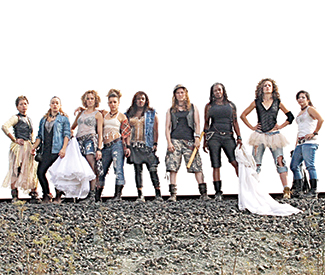
DANCE Sitting at her large desk overlooking the intersection of Mission and 24th Street, Krissy Keefer speaks eloquently and movingly about the genesis of Hemorrhage: An Ablution of Hope and Despair, the latest work for her 10-woman Dance Brigade Company.

Keefer is a dancer-choreographer-activist who has always enthusiastically plowed into the morass of the social, environmental, and political concerns of the day. Her works are issue-oriented, theatrically savvy, and entertaining, not least because of her sense of humor. Keefer may be deadly serious about her art, but she doesn’t take herself all that seriously.

But on a recent Saturday afternoon, as her crew prepared the main theater for a rehearsal of Hemorrhage, you couldn’t help but notice a note of fatigue, even despair, in her passionate takedown of the types of disasters that drain us of our humanity with ever-increasing frequency.

Keefer admits to being a news junkie. She has her ear to the ground, not just locally; she’s in tune with Midwest farmers who can’t plant crops because of the drought, multi-millionaire Chinese who leave their fellow citizens behind, and the survivors of Fukushima and Hurricane Sandy. Where are they, she wonders, how do people survive? “If you pay attention, you live with hope and despair. You obsess with hope, but what you feel underneath is actually despair. If you are not feeling some kind of despair, you are not paying attention.”

But couldn’t the increased flood of disaster information be the result of our sensationalist 24/7 news cycle? She doesn’t think so, believing instead that violent upheavals have actually become more frequent: “What we have done to the environment, [for instance], is completely despairing.” Included in her indictment are not only the governmental, corporate, and financial forces that act out of self-interest, but also a progressive movement that she believes has not acted strongly and decisively enough.

But Keefer’s major preoccupation at the moment is what she calls the “the corporate monsters — the last robber barons,” who are destroying a culture she has helped build. She lives and works in the Mission, and raised her daughter there. In the last 12 years, Dance Mission Theater has become a community institution, offering classes for adults and children, and providing affordable rehearsal and performance space. These days, when she looks through her office window and sees all those Silicon Valley-bound buses swarming past, she wants to pull out her hair.

“I feel very protective of the culture that we have created in San Francisco. You put layer upon layer on it, from the longshoremen, the Beat poets, the Black Panthers, the hippies, the gay and lesbian solidarity movement, feminism, the immigrant communities. It’s like layers of cheesecloth that you lay down, and this is the culture that came out of it. I participated in that, I am dedicated to it, and I am devastated by its being pulled apart.” Mincing no words, she adds, “It’s one of the cultures that keeps our country from sliding into fascism.”

So Keefer is stepping into the trenches as she always has done: as an artist. Walking into the theater, you realize this is the messiest set she (with Kate Boyd) has ever created. It’s one big junk pile, taking over half the theater and filling the bleachers from top to bottom. It makes you think of the outskirts of Mumbai and Manila, where thousands of people try to eke a living from whatever they can salvage. Where did Dance Brigade get the wheel drums, broken crock pots, fans, at least one bathtub, lace curtains, suitcases, Christmas tree ornaments, and enough body parts to reassemble several automobiles?

“We went to a wrecking yard,” Keefer laughs. “They deliver.”

Thinking of herself and her dancers as having been exiled from their city, as so many people have recently been, she envisioned Hemorrhage as a work about having to live on the edges. “Women always are more vulnerable during catastrophes,” she says, “because they take care of the children.”

For the script, she drew on her own writing but also that of fellow San Franciscans Rebecca Solnit (Hollow City: The Siege of San Francisco and the Crisis of American Urbanism) and performer-activist Guillermo Gómez-Peña, shaping it as a running monologue — a rant, a poem, a meditation, a political manifesto — that runs through the piece and ties it together.

And what do her nine women performers, most of whom have been part of Dance Brigade for close to 20 years, contribute? They sing, they shout, they play the drums, they dance; fiercely, proudly, unstoppably, full of hope, and full of despair. *

HEMORRHAGE: AN ABLUTION OF HOPE AND DESPAIR

Through Feb. 8

Opens Fri/24, 8pm; Thu-Sat, 8pm (Feb 8, shows at 4 and 7pm); Sun, 6pm, $20-$25

Dance Mission Theater

3316 24th St, SF

www.dancemission.com


Tenant battle brewing

44

rebecca@sfbg.com

Benito Santiago, 63, was born and raised in San Francisco. But now that he’s received an eviction notice from the apartment he’s lived in since 1977, he isn’t sure what the future holds.

“This is roots for me,” Santiago told us. “I have more affinity for San Francisco than the Philippines,” his family’s place of origin.

He works part-time with disabled youth enrolled in San Francisco public schools. “The idea that I built a rapport with these students here … to be put in a position where I wouldn’t be able to work with them, I’m a little saddened and depressed by it,” he said. “If I’m homeless, I can’t be taking care of these kids. I mean — it’s a worst-case scenario.”

He’s been exploring alternative housing options, and trying to stay positive. He says he’s even trying to “change the rate of vibration” of the real estate speculators seeking to oust him as part of his pre-dawn meditation and ritualistic movement practice, a routine he developed to mitigate the chronic pain he dealt with after being hit by an automobile when he was crossing the street in 1980.

“Hopefully, they can have some compassion,” he said.

Santiago is hoping to get a temporary extension to stave off his eviction, and he’s been looking into publicly subsidized below-market rate apartments. But rent for even the most affordable of those places would eat up 75 percent of his monthly income, he said. Unless he can find an affordable arrangement somewhere, he might end up having to leave the city.


GROWING MOVEMENT

Santiago has been a part of a growing movement underway in San Francisco to reform the Ellis Act and introduce meaningful legislation at the local level to protect the city’s renters.

In recent weeks, the San Francisco Anti Displacement Coalition, made up of a wide range of organizations including the San Francisco Tenants Union, has hosted a series of neighborhood tenant conventions to solicit ideas that will be boiled down at a citywide tenants’ gathering scheduled for Feb. 8. At that meeting, organizers plan to hash out a strategy and possibly solicit ideas for a ballot initiative.

The tenant conventions are happening on a parallel track with efforts to reform the Ellis Act, which allows landlords to remove apartments from the rental market and evict tenants.

“Our goal is to ban the use of the Ellis Act in certain circumstances,” explained Dean Preston of Tenants Together, a nonprofit focused on strengthening the rights of renters.

“More than half of Ellis Acts are performed by people who bought the properties within the past six months,” he told us. “Their whole purpose is to buy it and kick everyone out. It was supposed to be for long-term landlords to get out of the business” of being landlords, he added. Instead, “it’s being completely abused.”

Sen. Mark Leno is working with Mayor Ed Lee on a response that would seek to lessen the impact the Ellis Act has had in San Francisco. Meanwhile, Assemblymember Tom Ammiano is spearheading a separate effort.

“At this time, he’s not really ready to say which avenue he’s taking” in terms of a legislative strategy, said Carlos Alcalá, Ammiano’s communications director. “Because that can rule out that avenue.”

Preston said he’s been through waves of evictions before, but the organizing now taking place has been especially effective at drawing attention to the issue. Oftentimes, “the speculators are not from within the city or even within the state,” he pointed out. “That has fueled a lot of activism and courage.”

For Santiago, the organizing has given him heart during a difficult time. “I’m hearing a lot of sad stories,” he said, “and I am not alone.”

Judging hackers

9

joe@sfbg.com

The Bay Guardian is happy to announce a partnership with BeMyApp, CloudCamp, Hewlett Packard, and Intel in launching a hackathon for societal benefit. I will be one of the judges of their CloudCamp Social Good Hackathon the weekend of Jan. 24.

The hackathon is a contest tasking programmers and designers with creating apps that could change their city, state, country, or the world. Teams will craft those changes around health, fitness, the environment, and education. The Guardian has always been solutions based, and we hope to work with tech to help solve the problems of San Francisco’s rising displacement and inequality together.

Entrance in the hackathon is free, though space is limited. The first and second prizes are $5,000 and $4,000, respectively. Hackers will strut their ones and zeroes at Impact Hub San Francisco, which is housed in the bottom floor of the San Francisco Chronicle Building on Fifth and Mission.

Kalina Machlis, community manager at BeMyApp, said the Guardian was a natural choice to partner with them due to our often critical stance on the tech community: We’d keep them honest. She also hoped it would help build ties with a media community that can be critical of the tech industry.

“It’s a good way for you to see there are positive things happening in the tech world,” she told us. And though no one app can solve all of San Francisco’s social ills, we hope this can be a first step toward harnessing tech for the good of all the city’s residents.

Be advised, you don’t necessarily need to be a tech head to join in. Just bring your ideas, Machlis told us. “Our initial idea for beginning the company was to bring together people who don’t have technical skills with people who design and code,” she said.

We’re looking forward to bringing a bit of Guardian fire to a hub of techies who want to change the world. For every Greg Gopman spewing hatred, no doubt there are tech-savvy folk who care about the less fortunate around them. We want to meet those socially conscious hackers.

By the people

3

rebecca@sfbg.com

A growing number of people seem to be convinced that “civic innovation” is sexy.

Tech-oriented events at San Francisco City Hall, like hackathons for improving government services, have become increasingly common. App developers are gaga over the idea of revolutionizing government through software, and the concept is gaining momentum.

To borrow an analogy referenced in an essay by tech publisher Tim O’Reilly, some software purveyors are moving away from the idea of government as a vending machine: “When we don’t get what we expect, our ‘participation’ is limited to protest—essentially, shaking the vending machine.”

Instead, they’re latching onto the idea of government as an open platform that citizens can tinker with.

That’s exciting. Can it lead to a government that is more responsive to the people, as enthusiasts predict? Can we really hack away the ineffective and irresponsive parts of the public sector?

Or is some of this just hype and libertarian idealism from a cash-drenched tech sector seeking business opportunities and greater political influence?


HACK THE LAW

Sup. Mark Farrell recently proposed doing away with an outmoded and widely disregarded law disallowing bicycle storage in garages. The legislative tweak matters because it was spurred by feedback submitted through a new website, SanFranciscoCode.org.

Operated by a private nonprofit organization called the OpenGov Foundation, the website presents an interactive, online version of the city’s municipal code with an open platform where anyone can easily comb through the thicket of city laws and leave comments on specific sections, using the software as a magnifying glass.

Farrell touted the website — launched in partnership with Mayor Ed Lee’s Office of Civic Innovation last September — as a tool that could spur “a more transparent and accountable city government.”

“I see this leading to better engagement,” said Jess Montejano, Farrell’s legislative aide. Seamus Kraft, executive director of the OpenGov Foundation, has been compiling all the comments submitted via SanFranciscoCode.org, and recently sent a memo with all user feedback to each member of the Board of Supervisors.

“Our mission is to put as much public information into the public’s hands as possible,” Kraft said, “so that people can access their laws the way they deserve in 2013.”

The idea that a law would be changed instantly based on public comments is a new take on an old concept, with shades of being enamored by that shiny new thing. After all, many supervisors have a habit of turning their backs, or very obviously zoning out, during public comment sessions at weekly board meetings.

Yet anyone with an Internet connection can run with this new portal for citizen engagement. How about a reinvigorated response to San Francisco’s Sit/Lie Ordinance? A torrent of online commentary about the public nudity ban? Not everyone has the same idea about what it means to fix a broken law.

In some respects, City Hall appears to be lending itself out as a laboratory in which to test the wide-ranging theories of civic innovators. Mayor Lee has greeted the technology sector with arms wide open, and empowered the Office of Civic Innovation to foster tech-fueled government fine-tuning.

With the rise of amply funded organizations such as Code for America, droves of programmers stand at the ready, eager to chip in and do their part to help transport the public sector out of the analog ages.

A recent brigade of Code for America fellows partnered with the city’s Department Health and Human Services to create an app that automatically notifies food stamp recipients via text when they are about to be automatically dis-enrolled. The idea is to give recipients advance notice so they can take steps to renew their enrollment.

Other initiatives, such as the Department of Public Health’s release of an open data set to reveal housing inspection records, can arm citizens with useful knowledge — like empowering apartment hunters to spot a slumlord from a mile away.

The use of tech for transparency holds potential: What if each and every public record — down to every last email, calendar appointment, or police report — were instantly uploaded to a publicly accessible database, easy to locate, and fully searchable? Would that be a check against corruption?

Ron Bouganim, a San Francisco-based venture capitalist and mentor to the very Code for America teams industriously improving city government through technology, recently filed paperwork with the Securities and Exchange Commission to create GovTech. It’s a new kind of venture capital fund, specifically devoted to fostering companies looking to find their way in the “civic innovation” sector.

Bouganim laid out the dynamics driving the civic innovation trend: First, “2008-2009 was like a nuclear bomb,” he explained. “The financial crisis was a cataclysmic event. The money is not coming back, ever.”


THE NEW NORMAL?

This new normal, characterized by dramatically depleted public-sector finances, has helped make government more open to working with startups instead of trusted brands like IBM, Bouganim said, since startups can help government “do more with less.”

Bouganim also said adoption of cloud computing has changed the game. Whereas governments were initially hesitant to move their data to the cloud, the recent migration has made it possible for companies seeking government contracts to price below the “procurement threshold,” a price point that triggers a long public approval process before a purchase can go through. Now that technology has helped software developers slice through red tape, startups are flooding in, eager to land public sector contracts.

The city’s Entrepreneurship in Residence webpage (entrepreneur.sfgov.org), which markets a program rolled out by the Office of Civic Innovation, says it all. Sporting a gleaming picture of San Francisco City Hall, it bears the caption: “Develop products & services for the $142 billion public sector market.”

Bouganim wasn’t willing to say much in the way of GovTech’s plans, but he mentioned that his accelerator provides mentorship for startups that are paired with government agencies, and hinted that his initial investments would lead to “a dramatic impact on government savings.”

An underlying goal of the whole civic innovation movement, Bouganim added, “is to fundamentally change this concept that government is over there, and I am over here. We the people are the government, we’ve just lost touch with it.”

Bouganim responded to the Guardian’s call within 15 minutes, mentioning he was in London. “I wanted to get back to you so you didn’t think I was ignoring you,” he said, “because that would be awful.”

But the well-compensated public servants at the Mayor’s Office of Civic Innovation evidently had no such compunction. The Bay Guardian placed multiple calls to that office for this story, only to be met with radio silence.

And that’s a quandary. One cannot trumpet lofty goals of citizen engagement while habitually walling off government critics, and still expect to be taken seriously. And therein lies the rub with civic innovation: Even if technology is neutral, politics will never be so.

Hey whistleblowers

6

rebecca@sfbg.com

The San Francisco Bay Guardian newsroom is tapping some high-tech tools to continue its journalistic mission.

Working in partnership with a group of technologists who dislike government corruption just as much as we do, we’re launching a new web-based system to enable sources to anonymously submit documents directly to our news staff.

The system offers better safeguards for protecting sources’ identities than conventional email can offer.

Powered by a software system called SecureDrop, the system is designed to protect the identities of whistleblowers if they wish to share information without fear of retaliation.

If the documents we receive contain newsworthy information that can be independently verified, we’ll use it as the basis for our reporting.

Since this is an experiment, we have no idea what will land in our SecureDrop folder — but it creates the potential for us to partner with sources in breaking significant news items.

The SecureDrop program originated with the late Aaron Swartz, who developed it in collaboration with Wired Editor Kevin Poulson. Swartz was an Internet activist and programmer known for hashing out inventive ways to fight corruption and promote transparency. He’s remembered, among other things, for cofounding Reddit, the online news site; and for founding Demand Progress, an online activism group known for its 2012 campaign against the Stop Online Piracy Act.

Now, SecureDrop is managed by the Freedom of the Press Foundation, a nonprofit organization founded in 2012 that is “dedicated to helping support and defend public-interest journalism focused on exposing mismanagement, corruption, and law-breaking in government.”

Files submitted to the Guardian through the SecureDrop system will remain encrypted until they are securely downloaded. This means there’s no way for a third party to view their contents and trace them back to the sender.

Sources’ actual identities will never be revealed, and they’ll be identified to our news staff only through randomly generated code names.

Of course, whistleblowers desiring to keep their identities unknown always have the option of putting some documents into an unmarked envelope and dropping it in the mail.

But by submitting documents through SecureDrop, sources will have the ability to send high volumes of information that would be logistically difficult to print out or send. The program also enables sources to communicate with journalists in real time without revealing their actual identities.

Stay tuned. In coming weeks, the Guardian will publish a clip-out guide with instructions on how to submit documents to our news staff using SecureDrop. Sending encrypted files to journalists begins with downloading the Tor Browser Bundle, a system that makes online activity invisible to third parties.

Nickels and dimes… or transit for our times?

14

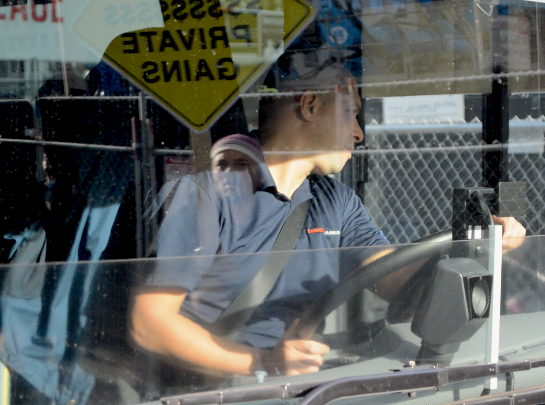
STREET FIGHT Much has been written about the so-called “Google buses” and San Francisco’s latest round of gentrification. It’s a horrible mess and the city’s trifling $1 charge per bus stop will do little to address the broader structural problem that these buses lay bare.

Ordinary people cannot ride them, nor do the people who clean and cook for the tech world. Like tour buses, they are clunky and inappropriate for many neighborhood streets. While they do substitute for some car trips, an ad hoc private transit system does not reflect the kind of thoughtful regional planning needed to truly reduce car use in the Bay Area.

But the controversy over the private commuter buses does show that there is great potential for a public regional express bus system. Consider that in 1980, 9 percent of commuters in San Francisco left the city every day to go to work. In 2010, outbound commuters approached 25 percent. Owing to regional political fragmentation, Muni cannot provide intercounty service and thus is not the travel mode of choice for many of these commuters. And although Caltrain and BART offer some regional service, the sprawling locations of suburban firms often make regional rail impractical or at the very least time-consuming owing to unavoidable multiple transfers to local buses.

So in noteworthy ways, the rise of private transit is an immediate reaction to poor regional transit connections. Yet rather than sidestepping failed regional planning by encouraging an inequitable, two-tiered, private system, we need to expand and regionalize the existing public bus systems. San Francisco’s mayor and Board of Supervisors have seats at the table of regional planning and ought to use the controversy over private buses as an opportunity to kickstart the implementation of a regional public bus system accessible to all.

For example, something like AC Transit’s Transbay routes should be extended through San Mateo and Santa Clara counties, perhaps operated by BART or Caltrain as part of the next iteration of Plan Bay Area. This network would use reallocated express lanes on 101 and I-280 and use transit priority lanes on arterials like 19th Avenue in San Francisco and El Camino Real in San Mateo. Regional property assessments on the corporations and developers, in part already possible within the existing BART district (one should be created for Caltrain), could be used to fund such a system. Congestion charging on 101 and I-280 should also be deployed and those funds used for electrifying Caltrain and developing the parallel and complementary regional bus system.

Of course there will be opposition to a regional public bus system as there already is to progressive regional planning. Transit-connected, walkable communities in the South Bay, for example, have been made all but illegal by decades of conservative middle and upper class, anti-density, anti-tax homeowners in suburban localities. As recently as last year, this Tea Party-style conservative politics dampened Plan Bay Area, resulting in a weak regional housing plan with an underfunded and lackluster transit vision. This conservative approach stifles our collective sense of what is possible and the fear-mongering has rendered regional planners virtually impotent. Yet it can and must be overcome.

Some progressives may find it convenient (and in some cases justifiable) to target tech workers right now, but they could also direct energy into shaping the next round of Plan Bay Area. Remember that Plan Bay Area is a living document, a work in progress. The current version of the plan, weak on transit funding, has been subdued by a loud, irrational mob of Tea Party cranks bent on sabotaging anything that hints of progressive ideas. Plan Bay Area is also stifled by a regional business class that wants to keep the status quo and that is comfortable with the neoliberal model of private transit.

So while a smattering of dedicated and hard-working progressive transit activists showed up and attempted to shape Plan Bay Area last year, in the coming years the plan needs a broader progressive movement — including transit, housing, social justice, and environmental activists — to demand a more visionary regional transportation plan that connects all of the Bay Area. I am hopeful that this would not only steer regional planning in a progressive direction, but many of the tech workers who are now on the private buses would gladly join in the cause.


THE POLITICS OF SUNDAY PARKING

Speaking of hopeful, last month the SFMTA reported that Sunday metering, implemented last January, is a resounding success. Switching-on the meters doubled parking availability on Sundays, which is invariably what small businesses, most of which are open on Sunday, want to see.

Sunday meters increased the number of cars using city-owned garages and decreased the time cars circled in search of parking from an average of four minutes to two — de-cluttering streets in commercial districts. While this might seem like a boon to drivers, it also means less pollution, safer conditions for pedestrians and cyclists, less delay for Muni, and a much needed enhancement of revenue for operating public transit.

So it is mystifying that such success would be ignored by Mayor Ed Lee, who instead has proposed to discontinue Sunday metering. This is doubly confusing because, based on existing travel behavior to many commercial districts, 25 percent of people arrived by driving, while 31 percent took transit and 25 percent walked. So what the mayor is effectively saying to the pedestrian and transit-using majority is you matter little. What does matter is the few whining motorists who called him to complain about being “nickel and dimed.”

The mayor talks a good game when saying he is truly concerned about pedestrian and cyclist safety, and insisting that he wants to fix Muni. But gutting a reliable source of operating funds and pandering to car drivers who will dangerously circle for parking is inconsistent.

Lee says money isn’t an issue because his proposed General Obligation bond (which must be approved by voters) will patch the lost revenue from Sunday metering. But the GO bond will incur further debt and only fund existing capital needs, while parking meters provide a debt-free steady revenue stream for Muni. It’s also slightly misleading because the bond would not cover Muni operations, while revenue from Sunday metering does pay for operations.

The mayor’s pandering also put the SFMTA Board of Directors, which has been working out parking management and Muni finance, on the spot. Ultimately, it has to vote to preserve or scrap Sunday metering in the coming months. Now the directors have to decide if they support transit-first or the mayor’s pandering.

Unfortunately, when it comes to parking policy, the way that the Board of Supervisors has behaved lately suggests it will either jump on the mayor’s bandwagon and pander to motorists or cower in silence as good public policy is trashed. Not a good situation at City Hall, where transit riders seem to be routinely thrown under the bus by the political establishment.

Street Fight is a monthly column by Jason Henderson, an urban geography professor at San Francisco State University.

Protect pedestrians

0

More than 50 public commenters spoke at the Jan. 16 joint Police Commission and Board of Supervisors Neighborhood Services and Safety Committee meeting, and all sounded one message loud and clear: Drivers can maim and kill pedestrians with near impunity in San Francisco, and that must end.

"I’m here very simply to urge you to end the carnage on our streets," said Natalie Burdick of the nonprofit Walk SF. "These crimes cost the city millions annually, and untold value in terms of squandered human capital."

Pedestrian deaths reached a high last year, with 21 killed in traffic collisions. Sup. Eric Mar highlighted the lack of funding in Mayor Ed Lee’s Pedestrian Strategy, which has a funding gap of $5-18 million. But SFPD’s failure to cite motorists was the main criticism.

"The fact is these statistics have been consistent that two-thirds of pedestrian accidents are the fault of the driver," Sup. Scott Wiener said at the outset of the meeting. "It’s the fact of the situation."

State of the City: spin over substance

5

It was maddening to watch Mayor Ed Lee deliver his annual State of the City address on Jan. 17. This was pure politics, from the staged backdrop of housing construction at Hunters Point Shipyard to the use of “regular people” props to the slate of vague and contradictory promises he made.

“This place, the shipyard, links our proud past to an even more promising future,” was how Lee began his hour-plus, invite-only address.

Later, he touted the housing construction being done there by Lennar Urban as emblematic of both his promise to bring 30,000 new housing units online by 2020 — the cornerstone to what he called his “affordability agenda” — and the opposition to unfettered development that he is pledging to overcome.

“A great example is the place we’re standing right now. This took us too long,” Lee said after decrying the “easy slogans and scapegoating” by progressive activists who place demands on developers.

But that implication was bullshit. As we’ve reported, progressive and community activists have long encouraged Lennar Urban (which has a close relationship to Lee) to speed up development on this public land that it was given almost a decade ago, particularly the long-promised affordable housing, rather than waiting for the real estate market to heat up.

That was just one of many examples of misleading and unsupported claims in a speech that might have sounded good to the uninformed listener, but which greatly misrepresented the current realities and challenges in San Francisco.

For example, Lee called for greater investments in the public transit system while acknowledging that his proposal to ask voters this November to increase the vehicle license fee isn’t polling well. And yet even before that vote takes place, Lee wants to extend free Muni for youth and repeal the policy of charging for parking meters on Sundays without explaining how he’ll pay for that $10 million per year proposal.

Lee also glossed over the fact that he hasn’t provided funding for the SFMTA’s severely underfunded bicycle or pedestrian safety programs, yet he still said, “I support the goals of Vision Zero to eliminate traffic deaths in our city.”

Again, nice sentiment, but one disconnected from how he’s choosing to spend taxpayer money and use city resources. And if Lee can somehow achieve his huge new housing development push, Muni and other critical infrastructure will only be pushed to the breaking point faster.

Even with his call to increase the city’s minimum wage — something that “will lift thousands of people out of poverty” — he shied away from his previous suggestion that $15 per hour would be appropriate and said that he needed to consult with the business community first: “We’ll seek consensus around a significant minimum wage increase.”

But Mayor Lee wants you to focus on his words more than his actions, including his identification with renters who “worry that speculators looking to make a buck in a hot market will force them out.”

Yet there’s little in his agenda to protect those vulnerable renters, except for his vague promise to try to do so, and to go lobby in Sacramento for reforms to the Ellis Act.

Lee also noted the “bone dry winter” we’re having and how, “It reminds us that the threat of climate change is real.” Yet none of the programs he mentions for addressing that challenge would be as effective at reducing greenhouse gas emissions as the CleanPowerSF program that Lee and his appointees are blocking, while offering no other plan for building renewable energy capacity.

Far from trying to beef up local public sector resources that vulnerable populations increasingly need, Lee said, “Affordability is also about having a city government taxpayers can afford.”

Manhattanization revisited

116

joe@sfbg.com

The housing crisis is spurring pro-development arguments that threaten to hasten the “Manhattanization of San Francisco,” a buzzphrase from another era that led to local controls on high-rise development.

The city is getting richer and less diverse, and the unaddressed displacement of longtime residents has fueled populist outrage. Now, politicians are finally getting the message, but some are offering solutions that may reopen old civic wounds.

They say that the answer to the housing affordability crisis is to build massive amounts of new housing, and to build it higher and more densely than city codes and processes currently allow.

Sup. Scott Wiener wrote a scathing indictment of the city’s alleged aversion to housing production in the San Francisco Chronicle on Jan. 13, slamming a planning process that he says slows necessary construction.

“This disconnect — saying that we need more housing while arbitrarily finding reasons to kill or water down projects that provide that housing — is having profound effects on our city and its beautiful diversity, economic and otherwise,” Wiener wrote.

Though he mentioned affordable housing, the need to build all kinds of housing was the crux of his argument. It’s the same kind of developer-friendly rhetoric that whips people into a frenzy with faux common sense: build more, and the market will take care of everyone.

But there are flaws to that simplistic argument. Housing advocates (and Guardian editorials) have long argued that market rate units — the median price of which just surpassed $1 million — don’t trickle down to maintain the city’s economic diversity. More supply may help, but with insatiable demand for housing here, it won’t help much with affordability for the working class.

The next day, Wiener introduced legislation to loosen density requirements when developers build below-market-rate housing units on site, creating an incentive to build more of the units that affordable housing advocates say are most valuable.

“Long term, I’m concerned about young persons that can come here,” he told the Guardian. “It’s not just about building more housing.”

Pushing a pro-development agenda while playing lip service to an affordable housing push is all the rage in San Francisco nowadays, with Mayor Ed Lee calling for building 30,000 new housing units by 2020, supporting the rapid growth calls by SPUR, Housing Action Coalition, and other pro-growth groups.

But Peter Cohen, co-director of the Council of Community Housing Organizations, says supply and demand logic doesn’t apply to the San Francisco housing market for a number of reasons.

He pointed to a paper by CCHO cohort Calvin Welch, who teaches a class on the politics of housing development at USF and SFSU. Welch cites data from the City Controller’s Office showing that when San Francisco increases supply, the market responds by raising the average housing price. Contrary to all the supply and demand claims, when we produce more, things get more expensive.

Why?

“In classic economic theory prices are set by supply and demand only when the market is ‘competitive’ when neither consumers nor suppliers have the ‘market power’ to set the price by themselves,” Welch wrote. “Clearly, that is not the case in San Francisco…of the City’s 47 square miles, only 13 square miles is available for housing uses.”

“There is no ‘free land’ in San Francisco,” he wrote. “The owners have total ‘market power’ over its price.”

But that’s the kind of complex argument that has a tough time penetrating the public consciousness. The idea isn’t as catchy as “supply and demand.”

“I think frankly this whole thing about build, build, build — it’s an easy answer to something that’s complex,” Cohen told us. “It resonates. It sounds like the easy path to sound like you know what you’re talking about.”

That simplistic thinking is dangerous, though, because San Francisco is quickly becoming Manhattanized. Since 2002, New York City Mayor Michael Bloomberg rezoned over 37 percent of New York City, according to The New York Times, causing the construction frenzy many are seeking for San Francisco.

Bloomberg added 40,000 buildings in his time as mayor, but that boom had mixed results. It arguably hastened the Big Apple’s gentrification, especially in Manhattan, one of the few US locales denser than San Francisco.

From 2000 to 2010, Manhattan’s ranks of white people swelled by 58,000. During the same period, the wealthy home of Wall Street lost 29,000 African Americans and 14,000 Latinos. More alarming is the income disparity there.

From 1990 to 2010, the city that never sleeps, and its neighborhoods, increasingly became a land of have and have-nots. Census maps showed that while 1990 Manhattan had economic diversity, now the median income hovers over $75,000 for most blocks of that famous borough.

Articles from the Times and NYC-based housing advocacy organizations frequently describe Manhattan as a haven of wealthy white yuppies. Sound familiar?

San Francisco is quickly following suit. The same census maps that show the swell of wealth in Manhattan show a swell of wealthy folk in San Francisco.

BMR housing set-asides help, and Mayor Lee has promised to ramp up BMR production, calling for about 10,000 units by the year 2020. But any serious increase in housing production carries its own cost in a city where public transit and other vital infrastructure are already underfunded and would need serious new investments.

In his Jan. 17 State of the City speech, Mayor Lee warned against demonizing the tech industry or with pitting one group against another. “San Francisco changes us more than any group of newcomers will change San Francisco,” he said to the invite-only crowd.

The difference now is the wealth that threatens to gentrify San Francisco’s weird soul, the one we’ve hung onto since a man named Joshua Norton declared himself Emperor of the United States and was hailed as a San Franciscan icon.

“Manhattanization” is not just a buzz term or a scare tactic: It’s representative of a specific set of zoning and construction policies that many San Franciscans are now advocating for, which will change the demographics and politics of this city, whether we like it or not.

San Francisco’s chief economist addresses supply and demand in terms of housing — it’d take over 100,000 new housing units to make a dent in housing prices in San Francisco.

Alerts: January 22 – 28, 2014

0

WEDNESDAY 22

Housing forum at an historic location I-Hotel Manilatown Center, 868 Kearny, SF. 630pm, free. Join Sup. David Campos and others for a community forum on the housing affordability crisis in San Francisco at the Manilatown Center, the site of the historic International Hotel housing battle. Other panelists will include Gen Fujioka of the Chinatown Community Development Center; Lisa Gray Garcia aka Tiny, POOR Magazine and Angelica Cabande of the South of Market Community Action Network. The evening will also mark the debut of the “I-Hotel Anti-eviction, anti-gentrification Hit Squad” spoken word group.

Community forum on surveillance in Oakland Oakland Metropolitan Chamber of Commerce boardroom, 475 14th St., Oakl. www.lwvoakland.org. 6pm-7:30pm, free. The League of Women Voters of Oakland plans to host this discussion about Oakland surveillance. How does a city like Oakland respond to residents’ demands for more effective crime prevention and reduction while protecting everyone’s civil liberties? How will the Domain Awareness Center impact Oakland? How much surveillance is enough — or too much — to enhance our law enforcement capabilities? Bring your ideas and a friend to discuss these important issues with knowledgeable resource people and fellow Oaklanders.


TUESDAY 28


Economic Strategies for Japantown’s Cultural Preservation SPUR Urban Center, 654 Mission, SF. www.spur.org/events.12:30pm, $10 non-member fee. This meeting is intended to help promote new strategies in improving and preserving the economic and cultural heritage of Japantown. The event will include speakers Bob Hamaguchi and Karen Kai of the Organizing Committee, Diana Ponce de Leon of the Office of Economic and Workforce Development, as well as Shelley Caltagirone and Steve Werthelm from the San Francisco Planning Department. Show your support and help guide the future of this historic neighborhood, while remembering its past.


WEDNESDAY 29

Spaghetti Dinner and a Fight for Global Justice and Anti Capitalism Unitarian Universalist Center, 1187 Franklin, SF. www.sf99percent.org. 6-9pm, $20 requested donation. The San Francisco 99% dinner will feature a hearty meal plus a program featuring Jerry Mander, author of The Capitalist Papers: Fatal Flaws of an Obsolete System, political satirist Will Durst, poetry from Revolutionary Poets Brigade, and recognition of local activists. No one turned away for lack of funds. Sponsored by the Unitarian Universalists for Peace-San Francisco.

Gimme 5: Must-see shows this week

0

We hear a certain sporting team lost a football match of sorts over the weekend — at least, this is what we understand to be the reason for the even-more-morose-than-usual drinking our friends seem to have been doing for the last 48 hours. If you want to try switching things up, may we suggest going to a venue where people are playing live music and drinking there instead, with other people, possibly while moving your feet? A handful of options:

Wed/22

As the wild frontman for The Legendary Shack Shakers, Col. J.D. Wilkes brought together a wide array of blues-infused and swampy sounding rock n’ roll, earning them the admiration of fans and invitations to tour with noted performers such as Robert Plant. Wilkes — a bonafide Kentucky colonel, hence his title — formed The Dirt Daubers in 2009 with his wife, Jessica, and added guitarist Rod Hamdallah and drummer Preston Corn for the band’s most recent album, Wild Moon (Plowboy Records). Produced by iconic punk rocker Cheetah Chrome (The Dead Boys), the album finds them back in the vein of mixing traditional sounds with an infectious rock attitude and approach. — Sean McCourt
8pm, $10-$12
Rickshaw Stop
155 Fell, SF
(415) 861-2011
www.rickshawstop.com

Thu/23

What do you call the darlings of the San Francisco psych-rock scene when half the band migrates to Portland? Wooden Shjips is what you call ’em, and as much as it pains us to admit it, the move was just what the doctor ordered if the calm, confident, melodic landscapes of last fall’s Back to Land are any indication. The record is as dreamy yet cohesive as they’ve ever sounded, with acoustic guitar adding a new layer of warm haze, but there’s still plenty of distortion and unexpected riffs, and drawn-out organ licks that somehow bear no resemblance to anything you’ve ever heard in a rock song. You can pout that they left, but you’re not gonna not catch them on home turf.
With Carlton Melton and Golden Void
9pm, $14-$16
Chapel
777 Valencia, SF
(415) 551-5157
www.thechapelsf.com

Fri/24

Over three albums, Dent May has been a bit of a indie pop chameleon. Take the fabulous lounge kitsch of The Good Feeling Music Of Dent May & His Magnificent Ukulele. Or the drum machine disco revival on Do Things. And May’s latest, Warm Blanket, is predictably unpredictable: See the Bowie styled “Let’s Dance” intro that quickly upshifts into an afrobeat groove on “Let Them Talk.” Still, one thing May shares with his label bosses Animal Collective is a shared affinity for Brian Wilson, and it’s the biggest referent, with a track like “Corner Piece” sounding like it could have spun off of Pet Sounds, and it’s the perfect opportunity for May to get increasingly open-hearted and romantic.Ryan Prendiville
With Chris Cohen, Jack Name
9pm, $12
Slim’s
333 11th St., SF
(415) 255-0333
www.slimspresents.com

Sat/25

Nicki Bluhm has had a big few months. She’s been Bay Area Americana royalty for several years now, but when her self-titled album with the Gramblers dropped last August, it took the bluesy-folk songstress to a new level, adding appearances on Conan and the like to her staple appearances at Hardly Strictly Bluegrass and, you know, in viral videos covering Hall and Oates songs in a van. The band’s live show has only gotten tighter and somehow simutaneously more playful as a result. Bonus: Hometown openers Goodnight, Texas, who sing foot-stomping songs about Civil War-era romance and coal mine disasters with a musicianship and joyful sophistication that seem much older than their (20-something) years.
9pm, $25
Fillmore
1805 Geary, SF
(415) 346-3000
www.thefillmore.com

Also Sat/25

We’ve seen a major resurgence of UK-based R&B-circa-’89 over the past few years, but while songstresses like Jessie Ware tackle those Lisa Stansfield-ish stylings with showy emotivity, Canada’s Jessy Lanza takes a borderline-shoegaze approach to her vocals, filtering ambiguous yearnings and half-confessions through delay and echo until they’re just another instrument in the mix, as stark and percussive as they are ethereal and melodic. Released on the much-fetishized Hyperdub imprint, and produced/co-written by Junior Boys’ Jeremy Greenspan, Lanza’s icy, prickly, spacious debut LP, Pull My Hair Back (2013), updates a flashy throwback genre for introverted, LCD-immersed times, in which the people can’t quite be trusted to say what they mean, or vice versa. This Saturday’s Popscene-curated show marks Lanza’s second-ever West Coast appearance, and might elucidate a persona that, similarly to those of labelmates Hype Williams and Laurel Halo, remains well concealed. — Taylor Kaplan
With Running in the Fog
9pm, $10
Amnesia
853 Valencia, SF
(415) 970-0012
www.amnesiathebar.com

Debunking SF Mag’s Ellis Act apologist article, point by point

107

Well, everyone’s got an opinion. And when it comes to San Francisco’s housing crisis, that’s doubly true.

San Francisco Magazine’s opinion though, amounts to a cry for help for (they say) the oft-demonized landlords from what they call the ever-overblown Ellis Act eviction crisis.

In his Tweet earlier today, San Francisco Magazine Editor-in-Chief Jon Steinberg said “We’re calling BS on San Francisco’s eviction crisis.” The article, by San Fran Mag Web Editor Scott Lucas, lays out a San Francisco that’s hard to recognize, one where evictions and rental increases aren’t displacing people in droves. At least, not enough to qualify as a “crisis.”

Sorry Jon, we’re calling BS on your article.

The Guardian reached out to Ted Gullicksen, executive director of the San Francisco Tenant’s Union and Erin McElroy, the head of the Anti-Eviction Mapping Project, to debunk some of the claims made in SF Magazine’s attempt to de-fang the threat of Ellis Act evictions. 

You can read the full article here, but we’ve reproduced lines from the piece and included responses from Gullicksen and McElroy addressing their points one by one. 

San Francisco Magazine The narrative was a straightforward one: Because the Bay Area has seen an influx of people—largely young, white, and working in tech—who need housing (and can pay for it), greedy landlords, many of them out-of-town speculators, are throwing longtime San Franciscans into the streets and turning the city over to gentrification. It looked cut-and-dried.

It’s not. In fact, Ellis Act evictions represent only a small proportion of the city’s total evictions—and they’re not even historically high to begin with. 

Ted Gullicksen That is incorrect on a couple levels. First off, it’s important to understand that the main way people are evicted these ways are via the Ellis Act followed by a buyout. The reason for that is that San Francisco passed strict condominium conversion prohibitions several years ago. If you do an Ellis, you generally are not going to be able to convert to condos ever. 

(You need to) include the Ellis threats… for every single Ellis Act eviction filed with the rent board, they’re where the speculators tried to get the tenants to bite… for every Ellis Act eviction, there are about five buyouts where Ellis Act was used as a club.

I come to that number by the number of people coming to the Tenants Union concerned about buyouts, and comparing those with the rent board’s numbers. Pretty consistently we see 33 percent of what the rent board sees. 

Erin McElroy California is the only state where the Ellis Act is utilized, it’s hard to say whether it’s historically high or not. We also see it’s being utilized by landlords repeatedly. It’s being used as a business model, not a way of going out of business which was its intended use in 1986. 

SFM In the 12-month period ending on February 28, 2013, the total number of Ellis Act evictions was 116—an almost twofold increase over the previous year, but a nearly 70 percent decrease since 2000, when such evictions hit an all-time high of 384. All told, the Ellis Act was behind less than 7 percent of the 1,716 total evictions in the city between February 2012 and February 2013. “Isn’t it far more likely,” asks Karen Chapple, a professor of city planning at UC Berkeley, “that more units are being lost [from the market] through Airbnb?”

TG That number, the 1,716 number, includes “for fault” evictions. If you just include no-fault evictions, Ellis Act evictions are the highest amounts. No-fault evictions are the ones we’re all talking about here. There are a number of rental units lost from the market and that’s a big problem, but the TIC and condominium conversions far surpass tourist conversions (like AirBNB).

EM First of all, for every Ellis Act being recorded, there is not a recording of the units evicted. While you can say there is a number of evictions, it doesn’t represent the units or people being displaced: it doesn’t record the number of people losing their homes.

What we’ve done through the Anti-Eviction Mapping Project is to match those petitions with the number of units. If you go to our website you can see the number of units lost since 1997 in each petition. While the city (of San Francisco) only recorded about 1,300 Ellis Act evictions since then, there have been at least 4,000 units lost. We don’t know how many people are in each unit. There could be between 1 and 6 people in each on average. 

SFM Laying the blame on nefarious Rich Uncle Pennybags types isn’t exactly right either. A recent report commissioned by Supervisor David Campos is clear on that point: The increase in Ellis Act evictions, it found, “occurred simultaneously with significant increases in San Francisco housing prices.” In other words, the problem isn’t speculators. It’s the market. 

TG The problem is indeed the speculators. Most of these buyouts are done by speculators, of the current Ellis Act evictions right now, most of the buyouts are done by one of twelve speculators. 

The Anti-Eviction Mapping Project showed that these real estate speculators form Limited Liability Corporations for each building. The Anti Eviction Mapping Project went through all these LLC’s and identified actual owners and compared them to Ellis Act evictions at the rent board. One person involved is doing six Ellis evictions right now. 

EM Speculators are taking advantage of the market. If there weren’t people to buy luxury condos, Ellis Act evictors wouldn’t buy up the units and turn them into condos. 

It’s one thing for a landlord to issue an Ellis Act one time because they’re done being a landlord, it’s another to see serial evictors use it over and over again through Limited Liability Corporations. Urban Green has 40 or so LLC’s, they’re using them all to push the Ellis Act. See our serial evictor chart and you’ll see 12 different people that use that serial evictor model. It’s a way for them to make money. 

SFM The city simply doesn’t have enough housing to keep up with job growth. And as real estate values rise, the incentive for a property owner to sell grows considerably. No villainy. Just economics.

TG The city is building a ton of housing, as anyone can tell you. The city, though, is building nothing but luxury condos. There’s plenty of housing, but nothing affordable.

EM If displacing long term residents and folks with disabilities and seniors is just economics, it’d be an argument against our economic system. The city offers services for trans folk, queer folk, people with HIV, all reasons people moved to San Francisco and it has a popular place in people’s imagination. Native San Franciscans are also not being valued. If that’s economics, San Francisco has lost its heart and its soul.

SFM Even if incremental changes happen, San Francisco’s affordability problem will likely continue almost unabated. Ellis Act evictions are, in Chapple’s words, not a cause of the housing crisis, but rather “a symptom. Fixing it is like using a Band-Aid for brain cancer.”

TG The Ellis Act is in fact a cause, because it’s taking thousands of units off the rent control market. When we’re losing more and more rent control units, supply dwindles and the rents go up. 

EM I would agree the Ellis Act isn’t the cause of the problem. The problem is it’s being utilized with other forms of evictions for landlords to take advantage of a political economy with the relationship between the city and tech. The problem is the relationship with the new tech class and the impunity it maintains through city government.

Talking points for Google busers

TechCrunch is reporting that a Google employee leaked an internal memo the Silicon Valley tech firm circulated to its employees, urging them to provide public comment on the controversial proposal to sanction its private shuttles’ use of city bus stops.

Here are the talking points Googlers were supposedly told to highlight in comments to the San Francisco Municipal Transportation Agency at tomorrow’s (Tue/21) meeting, when the transit board will vote on the proposal.

  • I am so proud to live in San Francisco and be a part of this community
  • I support local and small businesses in my neighborhood on a regular basis
  • My shuttle empowers my colleagues and I to reduce our carbon emissions by removing cars from the road
  • If the shuttle program didn’t exist, I would continue to live in San Francisco and drive to work on the peninsula*
  • I am a shuttle rider, SF resident, and I volunteer at…..
  • Because of the above, I urge the Board to adopt this pilot as a reasonable step in the right direction

The leaked memo, according to TechCrunch, also noted that “While you are not required to state where you work, you may confirm that Google is your employer if you are so inclined. If you do choose to speak in favor of the proposal we thought you might appreciate some guidance on what to say. Feel free to add your own style and opinion.”

According to the article, the memo was leaked to the activists who have been organizing tech bus blockades by an employee who found it “a bit high handed.” In turn, the activists sent it to TechCrunch.

*Not according to the study that was mentioned by the SFMTA at the SF Environment Commission last week.

Double standard for the role of voters in SF waterfront development?

4

As our article on San Francisco waterfront development was hitting the presses last week, California State Lands Commission Chief Counsel Mark Meier made public a letter questioning the legality of a local initiative in circulation that would submit waterfront projects that break height limits to a vote of the people.

Meier argued that such “public trust lands” are managed locally for statewide benefit, and therefore voters can’t meddle with the decisions made in City Hall or the Port of San Francisco offices: “The land use and management decisions that the City makes regarding these public trust land cannot be overriden by the local initiative process…”

State Lands Commission must sign off on most waterfront developments, along with the San Francisco Bay Conservation and Development Commission, so this Jan. 13 letter to the City Attorney’s Office is significant. It’s unlikely to keep the measure off the June ballot if the campaign gets enough qualifying signatures by Feb. 3, but it could be used in later challenges. 

Campaign Manager Jon Golinger said he wasn’t surprised or worried by the threat, calling Meier’s argument flawed. “Our attorneys have already analyzed this and we feel pretty confident,” he told us, summarizing his side’s legal argument as, “Anything that the people’s representatives can do, the people are also allowed to do.”

Golinger also noted a perverse aspect to Meier’s arguments, noting that the initiative seeks to strengthen existing protections of the waterfront, which is exactly what the Burton Act encouraged when transfering authority to the city. And most of the caselaw that Meier relies on for his arguments involved judges ruling against initiatives that sought to weaken local authority and protections.

Golinger also noted the glaring contradiction between the position between taken now by the State Lands Commission, of which Lieutenant Governor Gavin Newsom is one of three elected members, and the Prop. C initiative campaign funded last year by the 8 Washington project developers that was overtly supported by Newsom.

“If this is of question legally, why didn’t Commissioner Newsom raise this last year?” Golinger asked.  

In fact, that initiative would have been a far more glaring violation of the sanctity of local government control considering it would have not only green-lighted the 8 Washington project and all of its variances from local codes, but it would have prohibited “discretionary review” of the project by professional city planners.

We called both Meier and Newsom’s office with questions about the letter, its arguments and contradictions, and the role that Newsom had in ordering, preparing, or reviewing the letter. We never heard back from either of them, but we’ll update this post if and when we do.   


New, final Presidio museum proposals are in

9

The final round of project proposals for the Crissy Field Presidio site are in, and boy do they sure look… almost exactly the same as the last round. 

The Presidio Trust was fairly critical of each of the three finalists for the current site of the Sports Basement, which will soon lose its prime real estate. The Bridge Institute, the Golden Gate National Parks Conservancy’s Presidio Exchange, and Star Wars creator George Lucas’ personal pop art collection are all duking it out for a little patch of green (which is worth a lot of green) by the Golden Gate Bridge. 

Everyone in San Francisco has an opinion on who should win the spot: Mayor Ed Lee and tech venture capitalist Ron Conway want George Lucas’ museum to win (as do most tech folks with money), every environmental group out there wants the Presidio Exchange to get the space (including the Sierra Club), and the Chronicle’s design writer John King just wants Lucas to use the old Palace of Fine Arts site, dammit.

The Presidio Trust, a presidentially appointed entity, has the final say. And what it said last time was this: give us new proposals.

The Lucas proposal was too big, and the Trust felt it needed to be “redesigned to be more compatible with the Presidio.” The Presidio Exchange, it said, struggled to find a theme programatically. It lacked focus. As for the Bridge Institute? The Trust was worried it didn’t have the money to build with at all. 

Now everyone is back with new plans, in force.

George Lucas responded to the critique that his museum was just too darn big:
“Relative to the issue of ‘ensuring the building’s compatibility with the Presidio’ we are submitting two new design concepts for your consideration that we believe address the issues of massing and height. We have worked diligently the past few weeks with our architects at Urban Design Group and other members of our team to develop a new design that we believe will meet the criteria outlined by the Trust while providing the best home for the collection and its diverse cultural and educational programs. We are submitting two designs for your consideration, with the intent that if the Lucas Cultural Arts Museum is chosen for the Crissy Field site, you will identify the design you would like to see further developed.”

So it’s the same beast, just you know, smaller.

The Presidio Exchange folks, on the other hand, decided that since their programs lacked clarity, they’d make a flow chart. It’s good to know that they strive for consistency.

pdxgraph

pdxfinal

The final conceptual image of the PDX.

And as for funding the Bridge Institute? It wants to put a member of the Presidio Trust to work helping it raise money.

“The trust and Trust Board would make its network of contacts available to the BRIDGE fundraising team, and assist in making positive contacts with those contacts as part of the fundraising efforts of the organization,” it wrote. In other words, Presidio Trust, help us raise the dough, please. Presidio Trust President Nancy Hellman Bechtle is wealthy, but there’s no telling if she’d tap her wealthy friends to help the Bridge Institute. 

“We appreciate the effort each team has made to further develop its proposal for the Mid-Crissy Field site,” Becthle said, in a press release. “In the weeks ahead we will evaluate the revised proposals, weigh the wide range of public comments, and make a decision that will stand the test of time. This is a remarkable opportunity for the Presidio and San Francisco and we look forward to the public’s continued engagement.”

Love the designs or hate them, the public’s last chance to comment will be at the Public Board  of Directors Meeting to be held on Monday, Jan. 27, 6:30 pm in Herbst at the Presidio.

You can read all the museum proposals for yourself, here.

And while you’re at it, check out our front page story covering the founding of the Presidio, and how that history shaped the museum proposals.


State of the City speech filled with unsupported promises

178

It was maddening to watch Mayor Ed Lee deliver his annual State of the City address this morning. This was pure politics, from the staged backdrop of housing construction at Hunters Point Shipyard to the use of “regular people” props to the slate of vague and contradictory promises he made.

“This place, the shipyard, links our proud past to an even more promising future,” was how Lee began his hour-plus, invite-only address.

Later, he touted the housing construction being done there by Lennar Urban as emblematic of both his promise to bring 30,000 new housing units online by 2020 — the cornerstone to what he called his “affordability agenda” — and the opposition to unfettered development that he is pledging to overcome.

“A great example is the place we’re standing right now. This took us too long,” Lee said after decrying the “easy slogans and scapegoating” by progressive activists who place demands on developers.

But that implication was complete bullshit. As we and others have reported, progressive and community activists have long encouraged Lennar Urban (which has a close relationship to Lee) to speed up development on this public land that it was given almost a decade ago, particularly the long-promised affordable housing, rather than waiting for the real estate market to heat up.

That was just one of many examples of misleading and unsupported claims in a speech that might have sounded good to the uninformed listener, but which greatly misrepresented the current realities and challenges in San Francisco.

For example, Lee called for greater investments in the public transit system while acknowledging that his proposal to ask voters this November to increase the vehicle license fee isn’t polling well. And yet even before that vote takes place, Lee wants to extend free Muni for youth and repeal the policy of charging for parking meters on Sundays without explaining how he’ll pay for that $10 million per year proposal.

“Nobody likes it, not parents, not our neighborhood businesses, not me,” Lee said of Sunday meters, ignoring a study last month by the San Francisco Muncipal Transportation Agency showing the program was working well and accomplishing its goals of increasing parking turnover near businesses and bringing in needed revenue.

Lee also glossed over the fact that he hasn’t provided funding for the SFMTA’s severely underfunded bicycle or pedestrian safety programs, yet he still said, “I support the goals of Vision Zero to eliminate traffic deaths in our city.”

Again, nice sentiment, but one that is totally disconnected from how he’s choosing to spend taxpayer money and use city resources. And if Lee can somehow achieve his huge new housing development push, Muni and other critical infrastructure will only be pushed to the breaking point faster.  

Lee acknowledges that many people are being left out of this city’s economic recovery and are being displaced. “Jobs and confidence are back, but our economic recovery has still left thousands behind,” he said, pledging that, “We must confront these challenges directly in the San Francisco way.”

And that “way” appears to be by making wishful statements without substantial support and then letting developers and venture capitalists — such as Ron Conway, the tech and mayoral funder seated in the second row — continue calling the shots.

Even with his call to increase the city’s minimum wage — something that “will lift thousands of people out of poverty” — he shied away from his previous suggestion that $15 per hour would be appropriate and said that he needed to consult with the business community first.

“We’ll seek consensus around a significant minimum wage increase,” he said, comparing it to the 2012 ballot measures that reformed the business tax and created an Affordable Housing Fund (the tradeoff for which was to actually reduce the on-site affordable housing requirements for developers).

But Mayor Lee wants you to focus on his words more than his actions, including his identication with renters who “worry that speculators looking to make a buck in a hot market will force them out.”

Yet there’s little in his agenda to protect those vulnerable renters, except for his vague promise to try to do so, and to go lobby in Sacramento for reforms to the Ellis Act. While in Sacramento, he says he’ll also somehow get help for City College of San Francisco, whose takeover by the state and usurpation of local control he supported.   

“City College is on the mend and already on the path to full recovery,” Lee said, an astoundingly out-of-touch statement that belies the school’s plummeting enrollment and the efforts by City Attorney Dennis Herrera and others to push back on the revocation of its accreditation.

Lee also had the audacity to note the “bone dry winter” we’re having and how, “It reminds us that the threat of climate change is real.” Yet none of the programs he mentions for addressing that challenge — green building standards, more electric vehicle infrastructure, the GoSolar program — would be as effective at reducing greenhouse gas emmisions as the CleanPowerSF program that Lee and his appointees are blocking, while offering no other plan for building renewable energy capacity.

Far from trying to beef up local public sector resources that vulnerable city residents increasingly need, or with doing environmental protection, Lee instead seemed to pledge more of the tax cutting that he’s used to subsidize the overheating local economy.

“Affordability is also about having a city government taxpayers can afford,” Lee said. “We must be sure we’re only investing in staffing and services we can afford over the long term.”

How that squares with his pledges to put more resources into public transit, affordable housing development, addressing climate change, and other urgent needs that Lee gives lip service to addressing is anybody’s guess.  

RIP Gary Arlington, underground comix hero (UPDATED)

5

UPDATE: This just in from Ron Turner: “Hello Friends.  There will be a memorial for Gary this coming Tuesday at 11 AM at 225 Berry St. off 4th, very near the Giants ballpark and the Cal Train station.  Hope to see you there.  It is a modern Senior Center where Gary made his home. Bring stories and memories to share.”

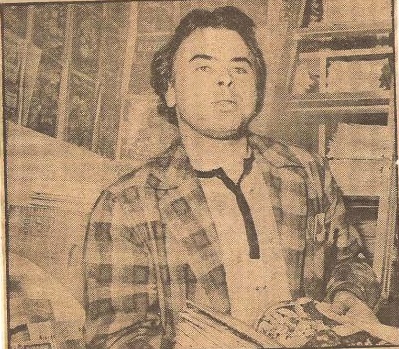
Just got word from Last Gasp Press founder Ron Turner that comics legend Gary Edson Arlington has passed away at age 75. In 1968, he opened what is considered the first comic book store in the United States, San Francisco Comic Book Company, which galvanized the hotbed Bay Area underground comix scene (and helped house his enormous collection, too).

As Art Spiegelman told the Chronicle in 2012, on the occasion of the publication of “I Am Not of this Planet,” a book of Arlington’s colorful artwork published by Last Gasp:

“San Francisco was the capitol of comix culture in the ’60s and early ’70s; and Gary Arlington’s hole-in-the-wall shop was, for me, the capitol of San Francisco.”

He was truly a fascinating character who supported local comics and art until the end, and influenced pop culture exponentially. 

Turner wrote:

“Gary died last night in San Francisco.  He had been living on his own in a nice subsidized  apartment near the ball park.  He had a motorized wheel chair and was out and about in SF.  He had heart and circulatory problems that led to several hospital stays during the last decade.  The comic community will remember Gary as founding the first comic book store in America, on 23rd st. in the Mission. I bought my first underground comic there in 1968.  It was a hangout for all the early underground comic artists and fans.  Services have not been announced as yet.”

We’ll update this post when we find out about services. Meanwhile, go out to your nearest comics bookstore and buy a bunch of indies in his honor!

Photo by Gabriela Hasbun:


One of Gary’s celebrated comics anthologies from 1983:

Clippings and artwork sourced from Larry Rippee and Molly Rea Art.

Welcome to San Francisco, “Welcome to Night Vale”

0

Hello, listeners. Brilliant breakout podcast “Welcome to Night Vale” has gained a rabid (yet adorably introspective) fanbase since it launched in June 2012. The twice-monthly, 20-minute-long show, created by Joseph Fink and Jeffrey Cranor, takes the form of a surreal newscast, coming to us from “somewhere in the Southwestern United States” by way of Twin Peaks.

Describing a community of indelible characters, it’s a twisted take on Lake Wobegone that vacillates cunningly from whimsical to chilling, often veering into outright poetry. “Night Vale” also recalls the golden age of radio plays: even though it lacks sound effects and depends mostly on the deep, hypnotic voice of narrator Cecil, it summons the entrancing atmosphere of such classics as “The Shadow.”

And now it’s coming to the Victoria Theater for a big live show-reading on Tue/21. Expect seismic things, tiered heavens, off-limits dog parks, magic lightbulbs, hovering livestock, public service koans, and the heirarchy of angels.

Also expect: cosplay — something a radio-like show can carve out extra imaginative room for.

I asked Cecil about coming to San Francisco (he really does sound like that in real life!). He enthused about visiting us:

“San Francisco has been an amazing city for ‘Welcome to Night Vale.’ Last September, we did a live reading at The Booksmith in Haight-Ashbury and it was so much fun — the fans were super-excited, lots of really creative cosplay. One person walking by the bookstore asked, ‘are they giving out free weed in there?’

“This time we are performing at the Victoria Theatre in the Mission for a larger audience and I can’t wait to see who (or what) the fans come dressed as. I think there’s a special relationship between Night Vale and San Francisco. The people of the Bay Area are exceptionally smart, creative and techno-savy: it’s a great combination!”

And now we interrupt this broadcast for a special bulletin: Look to the north. Keep looking. There’s nothing coming from the south.


SFUSD backs supervisors’ sugary beverage tax, with concerns

8

A San Francisco ballot initiative to levy a tax on sugary beverages got a boost last night as the San Francisco Unified School District Board of Education voted 5-2 to endorse it.

“The school district has done amazing work around nutrition for kids,” said Supervisor Scott Wiener, one of the initiative’s authors, shortly after the meeting. “This is a big win.” 

The initiative is proposed by Supervisors Mar, Wiener, Cohen and Avalos, and is estimated to generate up to $31 million annually, according to data from the supervisors, but its main aim is to curb the consumption of beverages they believe contributes to obesity in San Franciscans. The supervisors will be introducing a final, unified measure at the Board of Supervisors in the coming weeks, they said. 

Advocates at the meeting said sugary drinks contribute to a crisis in children’s health. “Our community suffers some of the highest rates of diabetes and hospitalizations from diabetes,” said Roberto Vargas, a Bayview resident and Mission high graduate of 1989. “I ask you to support these policies for San Francisco’s children, and San Francisco’s families.”

The resolution to support the tax initiative passed, but not easily. The ensuing argument may even have given a peek inside the mayor’s insecurities around the upcoming November ballot.

Commissioner Hydra Mendoza McDonald, who works in the Mayor’s Office as his education advisor, thought backing the “soda tax” could put a ballot initiative regarding SFUSD funding in jeopardy. 

“I don’t have a political or personal agenda, but I think we’d be remiss if we didn’t think this would be a political fight,” Mendoza McDonald said. “I have a tremendous amount of respect for Supervisor Wiener… but I have to say my priority right now is the public education enrichment fund, and that’s it.”

She’s referring to the city’s supplemental funding to the school district, PEEF, which the SFUSD depends on to pay for over 50 librarians, 200 PE coaches and more. That fund is about to sunset in 2015 — meaning no more money for the SFUSD from the city. In the 2013-2014 fiscal year, the city is set to provide the SFUSD over $50 million.

A ballot initiative is slated for November that would renew the PEEF funding agreement. That’s a lot of money at stake. 

Mendoza McDonald expressed fear that support of the soda tax would put the SFUSD in the crosshairs of Wiener and Mar’s deep-pocketed opponents, the beverage industry. 

“It makes me nervous,” she said. “It’s in everyone’s mind a slam dunk to pass the (PEEF funding initiative)…People have voted time and time again for children’s issues. But in every single measure, we’ve cleared the field and made sure we haven’t had any opposition, and that’s what makes us successful. I’m worried if the people who have historically supported us would do so again knowing there’s a bigger pot of money going against us.”

This 13 minute audio recording features some of the main arguments made against backing the sugary beverages tax initative. 

The board then asked Wiener to respond.

“If I could be blunt, the arguments that I’m hearing from people not comfortable supporting this are going to be the same in June as they are today,” Wiener said. “The idea that this would generate a campaign against the Children’s Fund and PEEF, has no basis, with respect. This is about the sugary beverage industry.”

“In San Francisco we don’t shy away from big business trying to threaten us,” he added.

Ultimately the board voted to back the sugary beverage tax initiative. Its reasons were many. Some commissioners described the early onset of puberty children are facing due to the effects of sugary drinks, others brought up the growing rates of obesity in children. 

They all echoed the sentiment that the benefits of supporting the resolution outweighed the risks. Commissioner Rachel Norton probably echoed their myriad positions most succinctly. 

“I have no idea whether this legislation will ultimately pass at the ballot box, but I think what’s important is that we support this resolution,” she said. “This is the right thing to do, and be fearless about.”

Lee panders to motorists and undermines SFMTA with Sunday metering repeal

36

First Mayor Ed Lee ignores the rising cost of living in San Francisco (fueled partly by his own corporate welfare for the tech industry and commercial landlords), and now he’s using his sudden concern about gentrification as an excuse to make parking meters free again on Sundays, a blatant bit of political pandering that blows a $6 million annual hole in Muni’s budget.

Maybe it’s understandable that a politician worried about his reelection prospects with restive voters would take a page from the playbook of former Gov. Arnold Schwarzenegger, who slashed the state’s vehicle license fee to win that office. But what makes this move stink even more is it’s being supported by the San Francisco Municipal Transportation Agency, a supposedly independent (yet mayoral appointed) body whose top officials methodically and courageously have made a strong case for Sunday metering.

“We’re just willing to partner with the mayor to address affordability,” SFMTA spokesperson Paul Rose told us, admitting the agency hasn’t yet identified a funding source to fill that gap if Sunday metering is repealed on July 1 as proposed. Sunday meters were budgeted for $1 million in revenue, but they actually brought in $6 million in the last year because of more tickets than expected, feeding the outrage of motorists who feel entitled to use public roads for free. 

We’re waiting for calls back from SFMTA Executive Director Ed Reiskin and Chairman Tom Nolan to find out whether they no longer stand by the arguments they’ve been making for Sunday metering, claiming it helps the local economy by making parking spaces available in neighborhood commercial districts and that it’s consistent with the city’s official transit-first policy.

“What does this say about the city’s commitment to the policy of promoting transit first?” San Francisco Bicycle Coalition Executive Director Leah Shahum said, saying she was shocked by the announcement given how underfunded the SFMTA’s transit, bicycle, and pedestrian improvement programs all are. “Why in the world are we even talking about this?”

Lee claims this is about affordability, telling the Chronicle “it was just nickel-and-diming people to death,” yet his own plans call for asking voters to approve more than $6.3 billion in taxes to fund Muni’s needs over the next 15 years, including a proposal to increase the sales tax in 2016, a regressive tax that will hit those already struggling harder than Sunday metering does to the 70 percent of San Francisco households that have an automobile.

Lee has also proposed ballot measures for this November that would increase the vehicle license fee and issue a $500 million general obligation bond, paid for on the property taxes of all city households. His own polls show the measures could be difficult sells to voters, and it’s not clear why he won’t wait for those results before ending Sunday metering.

When we asked mayoral Press Secretary Christine Falvey about all this, she selectively answered our questions with the following response: “The mayor believes a comprehensive funding strategy to not just maintain, but improve Muni performance, pedestrian and bike safety and the condition of our roads is what will finally turn the corner on improving San Francisco’s Transportation System. That’s why he has spent the better part of a year with the Transportation 2030 Taskforce, that recommended several ways to support these goals, including a $500 million general obligation bond, which the mayor supports. Because of a strong economy, the mayor believes it’s time to eliminate parking fees for six hours on Sundays and permanently fund Free Muni for low income youth to help working families in San Francisco and ease the affordability issues he hears about from families across the City.”

But at this point, that’s just political rhetoric, and Lee’s “comprehensive funding strategy” remains a vague and distant dream — one that will soon be $6 million a year tougher to make a reality. 

Music Listings: Jan. 15-21, 2014

0

WEDNESDAY 15

ROCK

Bottom of the Hill: 1233 17th St., San Francisco. Connan Mockasin, Disappearing People, Faux Canada, 9 p.m., $10-$12.

El Rio: 3158 Mission, San Francisco. Nobunny, King Lollipop, Pookie & The Poodlez, 9 p.m., $7.

Elbo Room: 647 Valencia, San Francisco. The Legendary Stardust Cowboy, The Sloths, Beachkrieg, DJ Sid Presley, 9 p.m., $8.

DANCE

Beaux: 2344 Market, San Francisco. “BroMance: A Night Out for the Fellas,” 9 p.m., free.

The Cafe: 2369 Market, San Francisco. “Sticky Wednesdays,” w/ DJ Mark Andrus, 8 p.m., free.

Cat Club: 1190 Folsom, San Francisco. “Bondage A Go Go,” w/ DJs Damon, Tomas Diablo, & guests, 9:30 p.m., $5-$10.

Club X: 715 Harrison, San Francisco. “Electro Pop Rocks,” 18+ dance night, 9 p.m.

The EndUp: 401 Sixth St., San Francisco. “Tainted Techno Trance,” 10 p.m.

F8: 1192 Folsom St., San Francisco. “Housepitality,” 9 p.m., $5-$10.

Harlot: 46 Minna, San Francisco. “Qoöl,” 5 p.m.

Infusion Lounge: 124 Ellis, San Francisco. “Indulgence,” 10 p.m.

Lexington Club: 3464 19th St., San Francisco. “Friends of Dorothy,” w/ DJ Sissyslap, 9 p.m., free.

Lookout: 3600 16th St., San Francisco. “What?,” w/ resident DJ Tisdale and guests, 7 p.m., free.

Madrone Art Bar: 500 Divisadero, San Francisco. “Rock the Spot,” 9 p.m., free.

Make-Out Room: 3225 22nd St., San Francisco. “Burn Down the Disco,” w/ DJs 2shy-shy & Melt w/U, Third Wednesday of every month, 9 p.m., free.

MatrixFillmore: 3138 Fillmore, San Francisco. “Reload,” w/ DJ Big Bad Bruce, 10 p.m., free.

Q Bar: 456 Castro, San Francisco. “Booty Call,” w/ Juanita More, Joshua J, guests, 9 p.m., $3.

Showdown: 10 Sixth St., San Francisco. “Nokturnal,” w/ DJs Coyle & Gonya, Third Wednesday of every month, 9 p.m., free.

HIP-HOP

Skylark Bar: 3089 16th St., San Francisco. “Mixtape Wednesday,” w/ resident DJs Strategy, Junot, Herb Digs, & guests, 9 p.m., $5.

Slate Bar: 2925 16th St., San Francisco. “Special Blend,” w/ resident DJs LazyBoy & Mr. Murdock, 9 p.m., free.

ACOUSTIC

Cafe Divine: 1600 Stockton, San Francisco. Craig Ventresco & Meredith Axelrod, 7 p.m., free.

Club Deluxe: 1511 Haight, San Francisco. Happy Hour Bluegrass, 6:30 p.m., free.

Fiddler’s Green: 1333 Columbus, San Francisco. Terry Savastano, Every other Wednesday, 9:30 p.m., free/donation.

Yoshi’s San Francisco: 1330 Fillmore, San Francisco. Shawn Colvin, Through Jan. 16, 8 p.m., $45.

JAZZ

Amnesia: 853 Valencia, San Francisco. Gaucho, Eric Garland’s Jazz Session, The Amnesiacs, 7 p.m., free.

Burritt Room: 417 Stockton St., San Francisco. Terry Disley’s Rocking Jazz Trio, 6 p.m., free.

Jazz Bistro at Les Joulins: 44 Ellis, San Francisco. Charles Unger Experience, 7:30 p.m., free.

Le Colonial: 20 Cosmo, San Francisco. The Cosmo Alleycats featuring Ms. Emily Wade Adams, 7 p.m., free.

Revolution Cafe: 3248 22nd St., San Francisco. Michael Parsons Trio, Every other Wednesday, 8:30 p.m., free/donation.

Savanna Jazz Club: 2937 Mission, San Francisco. “Cat’s Corner,” 9 p.m., $10.

Sheba Piano Lounge: 1419 Fillmore, San Francisco. Fran Sholly, 8 p.m.

Top of the Mark: One Nob Hill, 999 California, San Francisco. Ricardo Scales, Wednesdays, 6:30-11:30 p.m., $5.

INTERNATIONAL

Bissap Baobab: 3372 19th St., San Francisco. Timba Dance Party, w/ DJ WaltDigz, 10 p.m., $5.

Cafe Cocomo: 650 Indiana, San Francisco. “Bachatalicious,” w/ DJs Good Sho & Rodney, 7 p.m., $5-$10.

Pachamama Restaurant: 1630 Powell, San Francisco. Cafe Latino Americano, 8 p.m., $12.

BLUES

Biscuits and Blues: 401 Mason, San Francisco. Tommy Odetto, 7:30 & 9:30 p.m., $15.

The Royal Cuckoo: 3202 Mission, San Francisco. Big Bones & Chris Burns, 7:30 p.m., free.

The Saloon: 1232 Grant, San Francisco. Little Jonny & The Giants, 9:30 p.m.

EXPERIMENTAL

Hemlock Tavern: 1131 Polk, San Francisco. Coward, Vibrating Garbage, Jacob Felix Heule, 8:30 p.m., $6.

SOUL

Boom Boom Room: 1601 Fillmore, San Francisco. “Soul Train Revival,” w/ Ziek McCarter, Third Wednesday of every month, 9:30 p.m., $5.

THURSDAY 16

ROCK

Bottom of the Hill: 1233 17th St., San Francisco. Joshua Cook & The Key of Now, Be Calm Honcho, Drivers, 9 p.m., $10.

The Chapel: 777 Valencia St., San Francisco. Papa M (performing Whatever, Mortal), Guy Blakeslee, 8 p.m., $18-$22.

Hemlock Tavern: 1131 Polk, San Francisco. Bad Bad, Talk of Shamans, Banshee Boardwalk, 8:30 p.m., $6.

Make-Out Room: 3225 22nd St., San Francisco. Rich Girls, Go to Hell, 7 p.m., $5.

Slim’s: 333 11th St., San Francisco. Cody Canada & The Departed, American Aquarium, 8 p.m., $16.

DANCE

Abbey Tavern: 4100 Geary, San Francisco. DJ Schrobi-Girl, 10 p.m., free.

Aunt Charlie’s Lounge: 133 Turk, San Francisco. “Tubesteak Connection,” w/ DJ Bus Station John, 9 p.m., $5-$7.

The Cafe: 2369 Market, San Francisco. “¡Pan Dulce!,” 9 p.m., $5.

Cat Club: 1190 Folsom, San Francisco. “Throwback Thursdays,” ‘80s night with DJs Damon, Steve Washington, Dangerous Dan, and guests, 9 p.m., $6 (free before 9:30 p.m.).

The Cellar: 685 Sutter, San Francisco. “XO,” w/ DJs Astro & Rose, 10 p.m., $5.

Club X: 715 Harrison, San Francisco. “The Crib,” 9:30 p.m., $10, 18+.

DNA Lounge: 375 11th St., San Francisco. “8bitSF,” w/ The Glowing Stars, Ovenrake, Tonight We Launch, 8 p.m., $8-$11.

Elbo Room: 647 Valencia, San Francisco. “Afrolicious,” w/ DJs Pleasuremaker, Señor Oz, and live guests, 9:30 p.m., $5-$8.

F8: 1192 Folsom St., San Francisco. “Beat Church,” w/ resident DJs Neptune & Kitty-D, Third Thursday of every month, 10 p.m., $10.

Infusion Lounge: 124 Ellis, San Francisco. “I Love Thursdays,” 10 p.m., $10.

John Colins: 138 Minna, San Francisco. “SoLuna,” w/ resident DJ Miquel Penn, Third Thursday of every month, 9 p.m., free.

Laszlo: 2532 Mission, San Francisco. “Werk It,” w/ DJ Kool Karlo, Third Thursday of every month, 9 p.m., free.

Madrone Art Bar: 500 Divisadero, San Francisco. “Night Fever,” 9 p.m., $5 after 10 p.m.

Monarch: 101 6th St., San Francisco. Justin Martin, Nick Monaco, 10 p.m., $10 advance.

Q Bar: 456 Castro, San Francisco. “Throwback Thursday,” w/ DJ Jay-R, 9 p.m., free.

Raven: 1151 Folsom St., San Francisco. “1999,” w/ VJ Mark Andrus, 8 p.m., free.

The Tunnel Top: 601 Bush, San Francisco. “Tunneltop,” DJs Avalon and Derek ease you into the weekend with a cool and relaxed selection of tunes spun on vinyl, 10 p.m., free.

Underground SF: 424 Haight, San Francisco. “Bubble,” 10 p.m., free.

Vessel: 85 Campton, San Francisco. “Base,” w/ J.Phlip, 10 p.m., $5-$10.

HIP-HOP

1015 Folsom: 1015 Folsom St., San Francisco. 2Racks Rap Contest, hosted by Sellassie, 8 p.m., $20.

Eastside West: 3154 Fillmore, San Francisco. “Throwback Thursdays,” w/ DJ Madison, 9 p.m., free.

Showdown: 10 Sixth St., San Francisco. “Tougher Than Ice,” w/ DJs Vin Sol, Ruby Red I, and Jeremy Castillo, Third Thursday of every month, 10 p.m.

Skylark Bar: 3089 16th St., San Francisco. “Peaches,” w/ lady DJs DeeAndroid, Lady Fingaz, That Girl, Umami, Inkfat, and Andre, 10 p.m., free.

ACOUSTIC

Bazaar Cafe: 5927 California, San Francisco. Acoustic Open Mic, 7 p.m.

Plough & Stars: 116 Clement, San Francisco. Emperor Norton Céilí Band, 9 p.m.

Yoshi’s San Francisco: 1330 Fillmore, San Francisco. Shawn Colvin, Through 8 p.m., $45.

JAZZ

Blush! Wine Bar: 476 Castro, San Francisco. Doug Martin’s Avatar Ensemble, 7:30 p.m., free.

Cafe Claude: 7 Claude, San Francisco. Mad & Eddie Duran Trio, 7:30 p.m., free.

Jazz Bistro at Les Joulins: 44 Ellis, San Francisco. Eugene Pliner Quartet with Tod Dickow, First and Third Thursday of every month, 7:30 p.m., free.

Le Colonial: 20 Cosmo, San Francisco. Steve Lucky & The Rhumba Bums, 7:30 p.m.

The Royal Cuckoo: 3202 Mission, San Francisco. Charlie Siebert & Chris Siebert, 7:30 p.m., free.

Savanna Jazz Club: 2937 Mission, San Francisco. Savanna Jazz Jam with Eddy Ramirez, 7:30 p.m., $5.

Top of the Mark: One Nob Hill, 999 California, San Francisco. Stompy Jones, 7:30 p.m., $10.

Zingari: 501 Post, San Francisco. Barbara Ochoa, 7:30 p.m., free.

INTERNATIONAL

Bissap Baobab: 3372 19th St., San Francisco. “Pa’Lante!,” w/ Juan G, El Kool Kyle, Mr. Lucky, 10 p.m., $5.

Pachamama Restaurant: 1630 Powell, San Francisco. “Jueves Flamencos,” 8 p.m., free.

Sheba Piano Lounge: 1419 Fillmore, San Francisco. Gary Flores & Descarga Caliente, 8 p.m.

Verdi Club: 2424 Mariposa, San Francisco. The Verdi Club Milonga, w/ Christy Coté, DJ Emilio Flores, guests, 9 p.m., $10-$15.

REGGAE

Pissed Off Pete’s: 4528 Mission St., San Francisco. Reggae Thursdays, w/ resident DJ Jah Yzer, 9 p.m., free.

BLUES

50 Mason Social House: 50 Mason, San Francisco. Bill Phillippe, 5:30 p.m., free.

Biscuits and Blues: 401 Mason, San Francisco. Syl Johnson, 7:30 & 9:30 p.m., $20.

The Saloon: 1232 Grant, San Francisco. Chris Ford, Third Thursday of every month, 4 p.m.; Charles Wheal, 9:30 p.m.

COUNTRY

The Parlor: 2801 Leavenworth, San Francisco. “Twang Honky Tonk & Country Jamboree,” w/ DJ Little Red Rodeo, 7 p.m., free.

FUNK

Boom Boom Room: 1601 Fillmore, San Francisco. Sophistafunk, 9:30 p.m., $10-$15.

SOUL

Make-Out Room: 3225 22nd St., San Francisco. “Sugar Snap,” w/ DJ JZA, Third Thursday of every month, 6 p.m., free; “Soul: It’s the Real Thing,” 10 p.m., free.

FRIDAY 17

ROCK

Abbey Tavern: 4100 Geary, San Francisco. Hairstrike, 9:30 p.m., free.

Bottom of the Hill: 1233 17th St., San Francisco. The Hundred Days, Cosmic Suckerpunch, Blackout Party, Dogcatcher, 9 p.m., $10-$12.

Hemlock Tavern: 1131 Polk, San Francisco. The Criminals, VKTMS, The Rinds, 10 p.m., $8.

Slim’s: 333 11th St., San Francisco. Vela Eyes, The Surgeon Generals, Ghost Parade, Lemme Adams, 8 p.m., $13.

Thee Parkside: 1600 17th St., San Francisco. Weedeater, Black Cobra, 9 p.m., $15.

DANCE

1015 Folsom: 1015 Folsom St., San Francisco. Mimosa, Lee Bannon, Gladkill, Sugarpill, Bogl, DJ Dials, Releese, DJ Balance, 10 p.m., $15-$17.50 advance.

Audio Discotech: 316 11th St., San Francisco. Teenage Mutants, Human Life, J. Remy, 9:30 p.m., $10 advance.

Cafe Flore: 2298 Market, San Francisco. “Kinky Beats,” w/ DJ Sergio, 10 p.m., free.

The Cafe: 2369 Market, San Francisco. “Boy Bar,” w/ DJ Matt Consola, 9 p.m., $5.

The Cellar: 685 Sutter, San Francisco. “F.T.S.: For the Story,” 10 p.m.

DNA Lounge: 375 11th St., San Francisco. “So Stoked: Frequency 8,” w/ Christopher Lawrence, Klubfiller, Mars, Sausee, Blix Cannon, Saphyre, Angoscia, more, 7 p.m., $20-$30.

The EndUp: 401 Sixth St., San Francisco. “Fever,” 10 p.m., free before midnight.

The Grand Nightclub: 520 4th St., San Francisco. “We Rock Fridays,” 9:30 p.m.

Infusion Lounge: 124 Ellis, San Francisco. “Escape Fridays,” 10 p.m., $20.

Lookout: 3600 16th St., San Francisco. “HYSL,” 9 p.m., $3.

Madrone Art Bar: 500 Divisadero, San Francisco. “That ‘80s Show,” w/ DJs Dave Paul & Jeff Harris, Third Friday of every month, 9 p.m., $5.

Manor West: 750 Harrison, San Francisco. “Fortune Fridays,” 10 p.m., free before 11 p.m. with RSVP.

MatrixFillmore: 3138 Fillmore, San Francisco. “F-Style Fridays,” w/ DJ Jared-F, 9 p.m.

Mighty: 119 Utah, San Francisco. DJ David Harness, 10 p.m., free before midnight with RSVP.

OMG: 43 6th St., San Francisco. “Release,” 9 p.m., free before 11 p.m.

Public Works: 161 Erie, San Francisco. Ida Engberg, Ben Seagren, Brian Knarfield, Max Gardner, John Kaberna, in the main room, 9 p.m., $13-$20.

Q Bar: 456 Castro, San Francisco. “Pump: Worq It Out Fridays,” w/ resident DJ Christopher B, 9 p.m., $3.

Ruby Skye: 420 Mason, San Francisco. Max Graham, 9 p.m., $20 advance.

Sip Bar & Lounge: 787 Broadway, San Francisco. DJ Marc deVasconcelos, 10 p.m., free.

Slate Bar: 2925 16th St., San Francisco. “Darling Nikki,” w/ resident DJs Dr. Sleep, Justin Credible, and Durt, Third Friday of every month, 8 p.m., $5.

Temple: 540 Howard, San Francisco. Roger Shah, Mitka, John Beaver, Reverse, DJ Tone, DJ Von, 10 p.m., $15.

Underground SF: 424 Haight, San Francisco. “Bionic,” 10 p.m., $5.

Wish: 1539 Folsom, San Francisco. “Bridge the Gap,” w/ resident DJ Don Kainoa, Fridays, 6-10 p.m., free; “Depth,” w/ resident DJs Sharon Buck & Greg Yuen, Third Friday of every month, 10 p.m., free.

HIP-HOP

EZ5: 682 Commercial, San Francisco. “Decompression,” Fridays, 5-9 p.m.

John Colins: 138 Minna, San Francisco. “Juicy,” w/ DJ Ry Toast, Third Friday of every month, 10 p.m., $5 (free before 11 p.m.).

Mezzanine: 444 Jessie, San Francisco. DJ Drama, DJ Amen, DJ Sean G, 9 p.m., $15-$20.

Showdown: 10 Sixth St., San Francisco. “Fresh to Def Fridays: A Tribute to Yo! MTV Raps,” w/ resident DJs Boom Bostic, Inkfat, and Hay Hay, Third Friday of every month, 10 p.m.

ACOUSTIC

Mercury Cafe: 201 Octavia, San Francisco. Toshio Hirano, Third Friday of every month, 7:30 p.m., free, all ages.

Plough & Stars: 116 Clement, San Francisco. “Bluegrass Bonanza,” Third Friday of every month, 9 p.m., $6-$10.

The Sports Basement: 610 Old Mason, San Francisco. “Breakfast with Enzo,” w/ Enzo Garcia, 10 a.m., $5.

JAZZ

Atlas Cafe: 3049 20th St., San Francisco. Jazz at the Atlas, 7:30 p.m., free.

Beach Chalet Brewery & Restaurant: 1000 Great Highway, San Francisco. Johnny Smith, 8 p.m., free.

Bird & Beckett: 653 Chenery, San Francisco. The Third Quartet, Third Friday of every month, 5:30 p.m., free.

Boom Boom Room: 1601 Fillmore, San Francisco. Ike Stubblefield Quartet, 9:30 p.m., $20 advance.

Cafe Claude: 7 Claude, San Francisco. Jerry Oakley Trio, 7:30 p.m., free.

Jazz Bistro at Les Joulins: 44 Ellis, San Francisco. Charles Unger Experience, 7:30 p.m., free.

The Palace Hotel: 2 New Montgomery, San Francisco. The Klipptones, 8 p.m., free.

Red Poppy Art House: 2698 Folsom, San Francisco. Emily Asher’s Garden Party, 7:30 p.m., $15-$20.

Revolution Cafe: 3248 22nd St., San Francisco. Emily Anne’s Delights, Third Friday of every month, 8:45 p.m., free/donation.

Savanna Jazz Club: 2937 Mission, San Francisco. Savanna Jazz Trio, 7 p.m., $8.

Sheba Piano Lounge: 1419 Fillmore, San Francisco. David Jeffrey Jazz Fourtet, 9 p.m.

Top of the Mark: One Nob Hill, 999 California, San Francisco. Black Market Jazz Orchestra, 9 p.m., $10.

Zingari: 501 Post, San Francisco. Joyce Grant, 8 p.m., free.

INTERNATIONAL

Asiento: 2730 21st St., San Francisco. “Kulcha Latino,” w/ resident selectors Stepwise, Ras Rican, and El Kool Kyle, Third Friday of every month, 9 p.m., free.

Bissap Baobab: 3372 19th St., San Francisco. Qumbia Qrew, Third Friday of every month, 8 p.m.; “Paris-Dakar African Mix Coupe Decale,” 10 p.m., $5.

Cafe Cocomo: 650 Indiana, San Francisco. Taste Fridays, featuring local cuisine tastings, salsa bands, dance lessons, and more, 7:30 p.m., $15 (free entry to patio).

Cat Club: 1190 Folsom, San Francisco. “Gigante Temblor,” w/ DJs Kidd Sysko & Tori, 10 p.m., $5.

The Chapel: 777 Valencia St., San Francisco. Sila, Lagos Roots, Non Stop Bhangra DJs, 9 p.m., $17-$19.

Pachamama Restaurant: 1630 Powell, San Francisco. Cuban Night with Fito Reinoso, 7:30 & 9:15 p.m., $15-$18.

REGGAE

Gestalt Haus: 3159 16th St., San Francisco. “Music Like Dirt,” 7:30 p.m., free.

BLUES

Biscuits and Blues: 401 Mason, San Francisco. Syl Johnson, 7:30 & 10 p.m., $22.

Lou’s Fish Shack: 300 Jefferson St., San Francisco. Eldon Brown, 6 p.m.

The Saloon: 1232 Grant, San Francisco. West Coast Blues Revue, 4 p.m.; Henry Oden, 9:30 p.m.

FUNK

Amnesia: 853 Valencia, San Francisco. “Hella Tight,” w/ resident DJs Vinnie Esparza, Jonny Deeper, & Asti Spumanti, Third Friday of every month, 10 p.m., $5.

Make-Out Room: 3225 22nd St., San Francisco. “Loose Joints,” w/ DJs Centipede, Damon Bell, and Tom Thump, 10 p.m., $5-$10.

SOUL

Edinburgh Castle: 950 Geary, San Francisco. “Soul Crush,” w/ DJ Serious Leisure, 10 p.m., free.

The Independent: 628 Divisadero, San Francisco. UnderCover Presents Sly & The Family Stone’s Stand!, w/ guest music director David Möschler, Jan. 17-19, 8 p.m., $25-$30.

The Knockout: 3223 Mission, San Francisco. “Oldies Night,” W/ DJs Primo, Daniel, Lost Cat, and friends, Third Friday of every month, 10 p.m., $5.

The Royal Cuckoo: 3202 Mission, San Francisco. Freddie Hughes & Chris Burns, 7:30 p.m., free.

SATURDAY 18

ROCK

Bender’s: 806 S. Van Ness, San Francisco. Flexx Bronco, Antique Scream, 10 p.m., $5.

Bottom of the Hill: 1233 17th St., San Francisco. Crooks on Tape, Fever the Ghost, Carta, 9:30 p.m., $10-$12.

The Chapel: 777 Valencia St., San Francisco. Toy, Cellar Doors, Wymond Miles, 9 p.m., $12-$15.

DANCE

Amnesia: 853 Valencia, San Francisco. “Pance Darty,” w/ Jjaaxxnn & Duke, Third Saturday of every month, 9 p.m., $7.

Cafe Flore: 2298 Market, San Francisco. “Bistrotheque,” w/ DJ Ken Vulsion, 8 p.m., free.

Cat Club: 1190 Folsom, San Francisco. “New Wave City: Depeche Mode Night,” w/ DJ Shindog, Tomas Diablo, Andy T, Fem Mystique, 9 p.m., $7-$12.

DNA Lounge: 375 11th St., San Francisco. “Bootie S.F.,” 9 p.m., $10-$15.

The EndUp: 401 Sixth St., San Francisco. “The Show,” w/ Ben Seagren, Dean Samaras, and guests (starts 2 a.m. Sunday morning), Third Saturday of every month.

Infusion Lounge: 124 Ellis, San Francisco. “Social Addiction,” Third Saturday of every month, 10 p.m., $20.

Lexington Club: 3464 19th St., San Francisco. “S.O.S.,” w/ DJ Andre, 9 p.m., free.

Lookout: 3600 16th St., San Francisco. “Bounce!,” 9 p.m., $3.

Madrone Art Bar: 500 Divisadero, San Francisco. “Fringe,” w/ DJs Blondie K & subOctave, Third Saturday of every month, 9 p.m., $5 (free before 10 p.m.).

Mighty: 119 Utah, San Francisco. “Eighth Annual Icebreakers Ball,” w/ DJ Icey, Zach Moore, Motion Potion, Matt Haze, Phleck, U9lift, Professor Bang, more, 10 p.m., $15-$20.

Milk Bar: 1840 Haight, San Francisco. “The Queen Is Dead: A Tribute to the Music of Morrissey & The Smiths,” w/ DJ Mario Muse & guests, Third Saturday of every month, 9 p.m.

Monarch: 101 6th St., San Francisco. “Sound Department 009,” w/ Stimming, DJ M3, Martin Aquino, Nick Williams, 9 p.m., $10-$25.

Powerhouse: 1347 Folsom, San Francisco. “Beatpig,” Third Saturday of every month, 9 p.m.

Public Works: 161 Erie, San Francisco. “Icee Hot: 4-Year Anniversary,” w/ Levon Vincent, Joey Anderson, Floating Points, Jason Kendig, Jackie House, Ghosts on Tape, Low Limit, Shawn Reynaldo, DJ Will, 9 p.m., $15 advance.

Ruby Skye: 420 Mason, San Francisco. Sick Individuals, Donald Glaude, 9 p.m., $20 advance.

Slate Bar: 2925 16th St., San Francisco. “Smiths Night S.F.,” w/ The Certain People Crew, Third Saturday of every month, 10 p.m., $5.

Slide: 430 Mason, San Francisco. “Luminous,” w/ DJ Zhaldee, Third Saturday of every month, 9 p.m.

Sub-Mission Art Space (Balazo 18 Gallery): 2183 Mission, San Francisco. “Requiem,” w/ DJs Xiola, Calexica, and Callum McGowan, 9:30 p.m., $6.

Temple: 540 Howard, San Francisco. “Crush,” 10 p.m., $20.

Vessel: 85 Campton, San Francisco. Tristan Garner, Tommy Beringer, 10 p.m., $10-$30.

HIP-HOP

111 Minna Gallery: 111 Minna St., San Francisco. “Shine,” Third Saturday of every month, 10 p.m.

Boom Boom Room: 1601 Fillmore, San Francisco. Alphabet Soup with DJ Logic, 9:30 p.m., $15 advance.

Hemlock Tavern: 1131 Polk, San Francisco. Schaffer the Darklord, Adam WarRock, Tribe One, Dual Core, 9 p.m., $10.

John Colins: 138 Minna, San Francisco. “The Bump,” w/ The Whooligan, Third Saturday of every month, 10 p.m., free.

The Knockout: 3223 Mission, San Francisco. “The Booty Bassment,” w/ DJs Dimitri Dickinson & Ryan Poulsen, Third Saturday of every month, 10 p.m., $5.

Showdown: 10 Sixth St., San Francisco. “Purple,” w/ resident DJs ChaunceyCC & Party Pablo, Third Saturday of every month, 10 p.m.

Skylark Bar: 3089 16th St., San Francisco. “Night Swim,” w/ resident DJ Mackswell, Third Saturday of every month, 10 p.m.

ACOUSTIC

Atlas Cafe: 3049 20th St., San Francisco. Craig Ventresco and/or Meredith Axelrod, Saturdays, 4-6 p.m., free.

JAZZ

Cafe Claude: 7 Claude, San Francisco. The Monroe Trio, 7:30 p.m., free.

Jazz Bistro at Les Joulins: 44 Ellis, San Francisco. Bill “Doc” Webster & Jazz Nostalgia, 7:30 p.m., free.

The Royal Cuckoo: 3202 Mission, San Francisco. Jules Broussard, Danny Armstrong, and Chris Siebert, 7:30 p.m., free.

Savanna Jazz Club: 2937 Mission, San Francisco. Savanna Jazz Trio, 7 p.m., $8.

Sheba Piano Lounge: 1419 Fillmore, San Francisco. The Robert Stewart Experience, 9 p.m.

INTERNATIONAL

1015 Folsom: 1015 Folsom St., San Francisco. “Pura,” 9 p.m., $20.

Bissap Baobab: 3372 19th St., San Francisco. “Paris-Dakar African Mix Coupe Decale,” 10 p.m., $5.

Croatian American Cultural Center: 60 Onondaga, San Francisco. Táncház: Hungarian Dance House, 3 p.m., free.

The Emerald Tablet: 80 Fresno St., San Francisco. Howard Alden & Almir Côrtes, 8 p.m., $15 suggested donation.

Make-Out Room: 3225 22nd St., San Francisco. “El SuperRitmo,” w/ DJs Roger Mas & El Kool Kyle, 10 p.m., $5 before 11 p.m.

Pachamama Restaurant: 1630 Powell, San Francisco. Eddy Navia & Pachamama Band, 8 p.m., free.

Revolution Cafe: 3248 22nd St., San Francisco. Go Van Gogh, Third Saturday of every month, 9 p.m., free/donation.

Space 550: 550 Barneveld, San Francisco. “Club Fuego,” 9:30 p.m.

BLUES

Biscuits and Blues: 401 Mason, San Francisco. Syl Johnson, 7:30 & 10 p.m., $22.

Lou’s Fish Shack: 300 Jefferson St., San Francisco. Jim Moore & Funktional Soul, 6 p.m.

The Saloon: 1232 Grant, San Francisco. Tony Perez & Second Hand Smoke, Third Saturday of every month, 4 p.m.; Curtis Lawson, 9:30 p.m.

St. Cyprian’s Episcopal Church: 2097 Turk, San Francisco. David Jacobs-Strain, Rev Rabia, 8 p.m., $17-$20.

COUNTRY

Slim’s: 333 11th St., San Francisco. Randy Rogers Band, Wade Bowen, 9 p.m., $16.

EXPERIMENTAL

Yerba Buena Center for the Arts: 701 Mission, San Francisco. Dohee Lee: Winter Ritual – Mago, noon, free.

SOUL

Elbo Room: 647 Valencia, San Francisco. “Saturday Night Soul Party,” w/ DJs Lucky, Phengren Oswald, and Paul Paul, Third Saturday of every month, 10 p.m., $10 ($5 in formal attire).

The Independent: 628 Divisadero, San Francisco. UnderCover Presents Sly & The Family Stone’s Stand!, w/ guest music director David Möschler, Jan. 17-19, 8 p.m., $25-$30.

SUNDAY 19

ROCK

Thee Parkside: 1600 17th St., San Francisco. Bobby Joe Ebola & The Children MacNuggits, The Haymarket Squares, The Crux, 8 p.m., $8.

DANCE

Beaux: 2344 Market, San Francisco. “Full of Grace: A Weekly House Music Playground,” 9 p.m., free.

The Cellar: 685 Sutter, San Francisco. “Replay Sundays,” 9 p.m., free.

The Edge: 4149 18th St., San Francisco. “’80s at 8,” w/ DJ MC2, 8 p.m.

Elbo Room: 647 Valencia, San Francisco. “Dub Mission,” Sunday night excursions into the echo-drenched outer realms of dub with resident DJ Sep and guests, 9 p.m., $6 (free before 9:30 p.m.).

The EndUp: 401 Sixth St., San Francisco. “T.Dance,” 6 a.m.-6 p.m.; “Sunday Sessions,” 8 p.m.

F8: 1192 Folsom St., San Francisco. “Stamina,” w/ DJs Lukeino, Jamal, and guests, 10 p.m., free.

The Knockout: 3223 Mission, San Francisco. “Sweater Funk,” 10 p.m., free.

Lookout: 3600 16th St., San Francisco. “Jock,” Sundays, 3-8 p.m., $2.

MatrixFillmore: 3138 Fillmore, San Francisco. “Bounce,” w/ DJ Just, 10 p.m.

Otis: 25 Maiden, San Francisco. “What’s the Werd?,” w/ resident DJs Nick Williams, Kevin Knapp, Maxwell Dub, and guests, 9 p.m., $5 (free before 11 p.m.).

The Parlor: 2801 Leavenworth, San Francisco. DJ Marc deVasconcelos, 10 p.m., free.

Q Bar: 456 Castro, San Francisco. “Gigante,” 8 p.m., free.

Ruby Skye: 420 Mason, San Francisco. “Hero,” w/ DJs Moto Blanco & Manny Lehman, 6 p.m., $25 advance.

Slate Bar: 2925 16th St., San Francisco. “She Said…: A Queer Affair,” Third Sunday of every month, 4 p.m., $3-$5.

Temple: 540 Howard, San Francisco. “Sunset Arcade,” 18+ dance party & game night, 9 p.m., $10.

HIP-HOP

Boom Boom Room: 1601 Fillmore, San Francisco. “Return of the Cypher,” 9:30 p.m., free.

Slim’s: 333 11th St., San Francisco. Hopsin, DJ Hoppa, Dizzy Wright, 8 p.m., $21-$24.

ACOUSTIC

The Lucky Horseshoe: 453 Cortland, San Francisco. Bernal Mountain Bluegrass Jam, 4 p.m., free.

Madrone Art Bar: 500 Divisadero, San Francisco. “Spike’s Mic Night,” Sundays, 4-8 p.m., free.

The Rite Spot Cafe: 2099 Folsom, San Francisco. Conspiracy of Beards, Peter Whitehead, Volunteer Plum, 8 p.m., free.

St. Luke’s Episcopal Church: 1755 Clay, San Francisco. “Sunday Night Mic,” w/ Roem Baur, 5 p.m., free.

JAZZ

Jazz Bistro at Les Joulins: 44 Ellis, San Francisco. Bill “Doc” Webster & Jazz Nostalgia, 7:30 p.m., free.

Madrone Art Bar: 500 Divisadero, San Francisco. “Sunday Sessions,” 10 p.m., free.

Revolution Cafe: 3248 22nd St., San Francisco. Jazz Revolution, 4 p.m., free/donation.

The Riptide: 3639 Taraval, San Francisco. The Cottontails, Third Sunday of every month, 7:30 p.m., free.

The Royal Cuckoo: 3202 Mission, San Francisco. Lavay Smith & Chris Siebert, 7:30 p.m., free.

INTERNATIONAL

Atmosphere: 447 Broadway, San Francisco. “Hot Bachata Nights,” w/ DJ El Guapo, 5:30 p.m., $10 ($18-$25 with dance lessons).

Bissap Baobab: 3372 19th St., San Francisco. “Brazil & Beyond,” 6:30 p.m., free.

Thirsty Bear Brewing Company: 661 Howard, San Francisco. “The Flamenco Room,” 7:30 & 8:30 p.m.

BLUES

Amnesia: 853 Valencia, San Francisco. HowellDevine, Third Sunday of every month, 8:30 p.m., $7-$10.

Biscuits and Blues: 401 Mason, San Francisco. The Brat Pack, 7:30 & 9:30 p.m., $15.

Lou’s Fish Shack: 300 Jefferson St., San Francisco. Nat Bolden, 4 p.m.

The Saloon: 1232 Grant, San Francisco. Blues Power, 4 p.m.; Silvia C, 9:30 p.m.

Sheba Piano Lounge: 1419 Fillmore, San Francisco. Bohemian Knuckleboogie, 8 p.m., free.

Swig: 571 Geary, San Francisco. Sunday Blues Jam with Ed Ivey, 9 p.m.

FUNK

Pier 23 Cafe: Pier 23, San Francisco. Hot Pocket, Third Sunday of every month, 4 p.m., $5.

SOUL

Delirium Cocktails: 3139 16th St., San Francisco. “Heart & Soul,” w/ DJ Lovely Lesage, 10 p.m., free.

The Independent: 628 Divisadero, San Francisco. UnderCover Presents Sly & The Family Stone’s Stand!, w/ guest music director David Möschler, Jan. 17-19, 8 p.m., $25-$30.

MONDAY 20

ROCK

The Chapel: 777 Valencia St., San Francisco. Pure Bathing Culture, La Luz, 8 p.m., $12.

Elbo Room: 647 Valencia, San Francisco. “Americalia,” w/ Mark Matos & guests, 9 p.m. continues through Jan. 27, $7.

DANCE

DNA Lounge: 375 11th St., San Francisco. “Death Guild,” 18+ dance party with DJs Decay, Joe Radio, Melting Girl, & guests, 9:30 p.m., $3-$5.

The Knockout: 3223 Mission, San Francisco. “Disorder,” w/ Bright Future, Manics, Percy’s Music, plus DJs Nickie, Brynna Ashley, and James David, 9 p.m., $5.

Q Bar: 456 Castro, San Francisco. “Wanted,” w/ DJs Key&Kite and Richie Panic, 9 p.m., free.

Underground SF: 424 Haight, San Francisco. “Vienetta Discotheque,” w/ DJs Stanley Frank and Robert Jeffrey, 10 p.m., free.

ACOUSTIC

Amnesia: 853 Valencia, San Francisco. Windy Hill, Third Monday of every month, 9 p.m., free.

The Chieftain: 198 Fifth St., San Francisco. The Wrenboys, 7 p.m., free.

Fiddler’s Green: 1333 Columbus, San Francisco. Terry Savastano, 9:30 p.m., free/donation.

Hotel Utah: 500 Fourth St., San Francisco. Open Mic with Brendan Getzell, 8 p.m., free.

Make-Out Room: 3225 22nd St., San Francisco. “Sad Bastard Club,” Third Monday of every month, 7:30 p.m., free.

Osteria: 3277 Sacramento, San Francisco. “Acoustic Bistro,” 7 p.m., free.

The Saloon: 1232 Grant, San Francisco. Peter Lindman, 4 p.m.

JAZZ

Cafe Divine: 1600 Stockton, San Francisco. Rob Reich, First and Third Monday of every month, 7 p.m.

Jazz Bistro at Les Joulins: 44 Ellis, San Francisco. Eugene Pliner Quartet with Tod Dickow, 7:30 p.m., free.

Le Colonial: 20 Cosmo, San Francisco. Le Jazz Hot, 7 p.m., free.

Sheba Piano Lounge: 1419 Fillmore, San Francisco. City Jazz Instrumental Jam Session, 8 p.m.

The Union Room at Biscuits and Blues: 401 Mason, San Francisco. The Session: A Monday Night Jazz Series, pro jazz jam with Mike Olmos, 7:30 p.m., $12.

REGGAE

Skylark Bar: 3089 16th St., San Francisco. “Skylarking,” w/ I&I Vibration, 10 p.m., free.

BLUES

The Saloon: 1232 Grant, San Francisco. The Bachelors, 9:30 p.m.

COUNTRY

Make-Out Room: 3225 22nd St., San Francisco. “Whiskey River,” w/ DJ Handlebars & Pretty Ricky, Third Monday of every month, 10 p.m., free.

SOUL

Madrone Art Bar: 500 Divisadero, San Francisco. “M.O.M. (Motown on Mondays),” w/ DJ Gordo Cabeza & Timoteo Gigante, 8 p.m., free.

TUESDAY 21

ROCK

Bottom of the Hill: 1233 17th St., San Francisco. Max Bemis, Matt Pryor, Perma, Merriment, Allison Weiss, 7:30 p.m., $14-$17.

The Knockout: 3223 Mission, San Francisco. High Anxiety, Butt Problems, Apogee Sound Club, DJ Fred Thrillhouse, 9:30 p.m., $6.

DANCE

Aunt Charlie’s Lounge: 133 Turk, San Francisco. “High Fantasy,” w/ DJ Viv, Myles Cooper, & guests, 10 p.m., $2.

Monarch: 101 6th St., San Francisco. “Soundpieces,” 10 p.m., free-$10.

Otis: 25 Maiden, San Francisco. “Vibe,” w/ Binkadink, Third Tuesday of every month, 6 p.m., free.

Q Bar: 456 Castro, San Francisco. “Switch,” w/ DJs Jenna Riot & Andre, 9 p.m., $3.

Underground SF: 424 Haight, San Francisco. “Shelter,” 10 p.m., free.

Wish: 1539 Folsom, San Francisco. “Tight,” w/ resident DJs Michael May & Lito, 8 p.m., free.

ACOUSTIC

Amnesia: 853 Valencia, San Francisco. Farallons, 9:15 p.m. Starts . continues through Jan. 28, $7.

Bazaar Cafe: 5927 California, San Francisco. Songwriter in Residence: Tom Rhodes, 7 p.m. continues through Jan. 28.

Plough & Stars: 116 Clement, San Francisco. Seisiún with Autumn Rhodes & Pat O’Donnell, 9 p.m.

JAZZ

Beach Chalet Brewery & Restaurant: 1000 Great Highway, San Francisco. Gerry Grosz Jazz Jam, 7 p.m.

Blush! Wine Bar: 476 Castro, San Francisco. Kally Price & Rob Reich, 7 p.m., free.

Burritt Room: 417 Stockton St., San Francisco. Terry Disley’s Rocking Jazz Trio, 6 p.m., free.

Cafe Divine: 1600 Stockton, San Francisco. Chris Amberger, 7 p.m.

Jazz Bistro at Les Joulins: 44 Ellis, San Francisco. Clifford Lamb, Mel Butts, and Friends, 7:30 p.m., free.

Le Colonial: 20 Cosmo, San Francisco. Lavay Smith & Her Red Hot Skillet Lickers, 7 p.m.

Revolution Cafe: 3248 22nd St., San Francisco. West Side Jazz Club, 5 p.m., free; Panique, Third Tuesday of every month, 8:30 p.m., free/donation.

Tupelo: 1337 Green St., San Francisco. Mal Sharpe’s Big Money in Jazz Band, 6 p.m.

Verdi Club: 2424 Mariposa, San Francisco. “Tuesday Night Jump,” w/ Stompy Jones, 9 p.m., $10-$12.

INTERNATIONAL

Cafe Cocomo: 650 Indiana, San Francisco. “Descarga S.F.,” w/ DJs Hong & Good Sho, 8 p.m., $12.

The Cosmo Bar & Lounge: 440 Broadway, San Francisco. “Conga Tuesdays,” 8 p.m., $7-$10.

Elbo Room: 647 Valencia, San Francisco. “Porreta!,” all night forro party with DJs Carioca & Lucio K, Third Tuesday of every month, 9 p.m., $7.

F8: 1192 Folsom St., San Francisco. “Underground Nomads,” w/ rotating resident DJs Amar, Sep, and Dulce Vita, plus guests, 9 p.m., $5 (free before 9:30 p.m.).

REGGAE

Milk Bar: 1840 Haight, San Francisco. “Bless Up,” w/ Jah Warrior Shelter Hi-Fi, 10 p.m.

BLUES

Biscuits and Blues: 401 Mason, San Francisco. Daniel Castro, 7:30 & 9:30 p.m., $15.

The Saloon: 1232 Grant, San Francisco. Lisa Kindred, Third Tuesday of every month, 9:30 p.m.

EXPERIMENTAL

Center for New Music: 55 Taylor St., San Francisco. sfSoundSalonSeries, w/ George Cremaschi, Katherine Young, and sfSoundGroup, 7:49 p.m., $7-$10.

FUNK

Madrone Art Bar: 500 Divisadero, San Francisco. “Boogaloo Tuesday,” w/ Oscar Myers & Steppin’, 9:30 p.m., free.

SOUL

Make-Out Room: 3225 22nd St., San Francisco. “Lost & Found,” w/ DJs Primo, Lucky, and guests, 9:30 p.m., free. 2