San Francisco

Sync up, time’s come for Zion I’s Atomic Clock

0

Bay Area hip-hop heads are grateful that Zion I walks these mean streets. Emcee Zumbi and DJ Amp Live have been expanding the boundaries of what dope beats and lifted lyrics can be ever since they fled the industry culture of Atlanta and hit the Oakland scene with 1997’s underground hit Enter the Woods. Their vibe’s stayed positive while resisting major label affliation and a lot of the turf warring that plagues hip-hop in a weird, stereotype-enhancing way around some of the Bay’s venues.

We spoke with Morehouse College grad Zumbi over the phone on the cusp of the duo’s weekend-long Slim’s celebration (Sat/20 and Sun/21) in honor of new album Atomic Clock, and the gig will be the duo’s last before hitting the road on tour. Clock is a bangin’, lifted affair studded with gems like “Always” and “Girlz” featuring Martin Luther’s sweet hook — but all the same, we still found ourselves talking politics. Sheesh.

San Francisco Bay Guardian: What’s your definition of a conscious emcee? I hear a lot of people call themselves “backpack rappers” and then come out with a song telling girls to shake faster, make that money. How can you tell who the conscious rappers are? 

Zumbi: For one, I don’t think consciousness is dictated by sexuality. For instance Common is a cat who’s a pretty consistently conscious person. But then he comes out talking about getting head — I think in most of his music there’s an awareness. For me, Jacka has conscious music because he reflects on spirituality and Allah. Even though he’s got the gangster stuff he’s analyzing society and spirituality, mixing it together. It’s about the dominant sense you get from the music. I feel you though, there are people that say they’re a conscious rapper and then their album just doesn’t feel that way. For me, consciousness doesn’t make you dope necessarily, even though most of the people I respect have it. 


SFBG: I’ve read in past interviews that your parents attended the March on Washington and that you were at the Million Man March yourself. Can you tell me what your political beliefs are? 

Z: I don’t really think of myself as a political person. I don’t totally believe in Democrats and Republicans and voting. I’m not sold on those things. I think there’s manipulation involved in all of that, and I don’t consider myself political, because I don’t think the political system is just. I just think people should be able to get what they need, that they should be able to have a full life. That’s why I’ve chosen music: it’s a little more direct. People have to jump through hoops with politics, I see it as kind of fraternity. 

Zion I’s latest, Atomic Clock, tells the time

SFBG: But you have musical talent you can use as a forum to express your beliefs – how do people make a difference who don’t have that platform?

Z: By being present and really standing for what you believe – just show up. I don’t call myself political, but take something like Oscar Grant, I was down there at the BART station, I was at City Hall the second time, I was taking pictures and trying to get footage. I think it’s more about that: standing up and making your voice known. Your clothes, your fashion sense, riding a bike instead of driving cars. There’s a disconnect between what people want and how people live their lives. You don’t want to be a slave to the system, so why do you put on clothes you don’t want to wear and go do something that someone tells you that you don’t want to do every day of your life? That’s what life is about, what you choose to do. Living in the United States, we can pretty much say what we want to say. It’s not a country that’s overly oppressive on the intellectual level. Physically it is, but you can pretty much say what you want. Just get out there and be it instead of complaining about everything, be the change you want to see in the world.


SFBG: Tell me your take on Obama’s presidency so far.

Z: It’s very interesting. You couldn’t write this stuff, this is a movie in action. When he got elected there was this passion, everyone was so over George Bush. It was like we were ushering in this whole level of politics in the US. And then, because things didn’t change… for me, I voted for Obama, but I don’t think the president makes all the decisions. He’s just the face man for the government. It’s not like this guy was going to change all evils in the world! But now reality is setting in. And because he is Black, it’s encouraged this other thing, the Tea Party? That’s just ridiculous, it’s engendered this backlash, there’s this ideal that there is no racism but in reality there’s more racism than before. Michael Vick — whose dog killed a man on his property — he served two years. Obama to me is a symbol of something – I’m not sure what it is yet, some kind of transformation hopefully, but people are pushing back against what change could be because they’re frustrated, there’s no jobs – they’re looking for a way out. It’s a strange story, it’s like a movie I’m watching. 


SFBG: I’ve heard that in Zion I, one of you studied to be a doctor and another, a psychologist. Which is which? How’d you chose that course of study?

Z: (laughs) I might again, you never know, I was just looking at grad schools online. The fact that it had to do with the mind in general. In college I was undeclared for the first two years and then I was getting to that point, so I was like psychology. I like the power of the mind, what the new age thing-movement is all about now, meditation, clearing your mind, intuition,


SFBG: Atomic Clock has been described as “moody and emotional.” Are you guys getting moody these days?

Z: Yeah a bit. The record, we did it really quickly in two and a half, three weeks. We proposed it to the label, hoping that they’d pass on it initially but they optioned it. It was a quick sprint all of a sudden, it went from this cool idea to something we had to rush to finish it. Because of that we had a moody attitude to it, the timing added this urgent feeling. Also, like the thing about Obama, it’s where things are, everything is in this transitional period, everyone’s stressed. 


SFBG: What do you think of the influx of dance beats in hip hop these days?

Z: I think its cool. I n the beginning, hip hop was always dance music. Sugar Hill Gang was the first quote-unquote rap record. For cats to be doing [dance beats], it’s a natural thing. That’s a part of hip hop. In the late ’90s, early ’00s hip hop kind of left the club, and then the South brought us back into the club. This music is about celebrating, having a good time. 


Zion I Atomic Clock CD release parties

Sat/20: featuring Locksmith, Hold Up, Bayliens, DJ Kevvy Kev

8:30 p.m., $20-23

Sun/21: featuring Eligh w/ Scarub, Bang Data, Hold Up, Oakland Faders

8 p.m., $20-23

Slim’s

333 11th St., SF

(415) 255-0333

www.slims-sf.com


Spread the warm fuzzies

0

Caitlin@sfbg.com

Congratulations. Now that you’re reading an article on giving back during the holidays, the healing can begin. Gentle friend, you are now free to have the warm fuzzies! Seriously, though, volunteering and making sure the presents you buy contribute to a good cause are admirable pursuits during this time of fireplace and family — but most of the organizations listed below do their thang year round. Use the season of giving to ignite a relationship with one of them that will continue long past the menorahs been packed away and Christmas tree set aflame by wandering packs of Mad Maxes.


VOLUNTEERING


ROADDAWGZ

The Tenderloin drop-in center provides a creative outlet for homeless and transitionally housed youth. It’s always looking for volunteers to help with artistic and literary programs, administration, technical support, fundraising, and outreach.

(415) 923-9085, www.roaddawgz.org


SF FOOD BANK

Four hundred tons of food pass through the Food Bank’s warehouse each week. That’s a lot of box wrangling! This Thanksgiving, the bank’s hoping to provide 35,705 families with Turkey Day dinner — so get on down to their facilities to lend a hand, no lengthy orientation or time commitment required.

www.sffoodbank.org/volunteer


SF SPCA

How much is that doggy in the window? You’ll have the answer to this and other questions when you become a volunteer with SF’s pioneering no-kill animal shelter and its furry yearly Macy’s display windows, site of 300 adoptions and $50,000 in donations last holiday season. Greeter and matchmaker positions are available.

www.sfspca.org


GLIDE CHURCH

Glide’s got the goods when it comes to your soup kitchen service time this holiday season. (Hurry, spots fill quickly!) But maybe people aren’t your thing. In that case, come join the church’s good Samaritans who keep Boedekker Park in the Tenderloin in good working order for the TL community every third Saturday from 9 a.m.-noon.

www.glide.org


LARKIN STREET YOUTH SERVICES

Calling all shopaholics — we’ll take a break from harassing you about consumerism if you’ll turn your retail frenzy to a good cause. Larkin Street is looking for donations of everything from clothes to electronics to personal care items and gift certificates for its homeless youth holiday gift drive. Chip in, willya?

www.larkinstreetyouth.org


GIFTS THAT GIVE BACK


UNDER ONE ROOF

From Harvey Milk notecards to San Francisco martini glasses, Under One Roof has a wealth of kitschy-cool presents for someone who could use a little City by the Bay in their life. What’s even better is that Under One Roof has been selling these things since 1990 to raise money for agencies that provide HIV/AIDS support.

518 Castro, SF. (415) 503-2300, www.underoneroof.org


COLE HARDWARE

Roommate needs to stop borrowing your hammer? Cole’s got what you need to wrap up self-reliance for him this holiday season — and with its community partnership program, you can choose from a long list of neighborhood and national nonprofits (like local schools) to receive 10 percent of the money from your purchases.

Various locations, SF. www.colehardware.com


CREATIVITY EXPLORED HOLIDAY ART SALE

When you’re developmentally disabled, the term “outsider art” takes on new meaning — but points the way to some ravishingly perceptive masterpieces. Creativity Explored provides a support center for these nontraditional Picassos, and you can lend weight to their mission by shopping their holiday art sale.

Dec. 3–22, free. Mon. and Tues. 10 a.m.–3 p.m., Wed through Fri., 10 a.m.–7 p.m. Sat noon-6 p.m. 3245 16th St., SF. (415) 863-2108, www.creativityexplored.org


LA COCINA GIFT FAIR

The budding food entrepreneurs supported by this nonprofit will be more than happy to take the cookie-baking off your hands. Give your loved ones a box of chocolate-caramel shortbread squares or a delicious pierogi made by enterprising members of your community.

Dec. 10, 4–9 p.m., free. Mission Cultural Center for Latino Arts, 2868 Mission, SF. (415) 824-2729, www.lacocinasf.org

50 cute-as-heck gifts for $10 and under

3

Our official metaphor for holiday shopping this season is just going to have to be Tron. Not just because Tron: Legacy opens Dec. 17 or because some of us are forever stuck in totally awesome adolescent ’80s video game world. We also must zip across the alien landscape of holiday commercialism, snatching up neon-fantasy presents (and possibly exploding). Go! Go! Go!

Or, you know, use this guide and pick up some killer giftos all in one easy trip. We scoured the city for cool items ringing in at 10 ducats and under. Yes, you can still wear an electric blue bodysuit. (Marke B.)


JESUS FLASHLIGHT, $4.99

Tutti Frutti

With the exception of millions of Jews, Buddhists, Muslims, Hindis, and Zoroastrians, Jesus is lighting up the world these days. And what better way for your Xian friends to keep His light flowing than this Jesus flashlight. Pair it with a Jesus pen; we’re pretty sure this is the pen Jesus would have used.

718 Irving, Inner Sunset, SF. (415) 661-8504


DYNA GRO PLANT FOOD, $5.95

Plant’It Earth

Since Prop. 19 flopped at the polls, it’s back to dealer-only cell phones and GIY smokes. Give your dealer or favorite organic grower this perfect 7-9-5 blend of plant food and help nourish the next crop (you’ll be paying for it anyway). Plant’It Earth also has grow lights, soil, and other no-Prop. 19 essentials.

661 Divisadero, Panhandle, SF. (415) 626-5082, wwwplantitearth.com


SQUEAKY TOY SQUIRREL, $3.99

The Animal House Pet Mercantile

As the movie “Up” taught us, if dogs could talk, their conversation would go something like this: “Squirrel!” Give Bowser this plush toy Squirrel!, which will last way longer than a real Squirrel! and not stink up your house. Animal House also has cat toys, but your cat won’t give a shit.

157 Fillmore, Lower Haight, SF. (415) 552-0233, www.theanimalhouse.com


“MEDITATING” SIGN, $7

San Francisco Zen Center Bookstore

Tired of hearing your beloved shriek “Shut the #$%@* up, I’m meditating!” when you inadvertently stumble onto your deck at 6:30 a.m.? End it with this calligraphy sign, which can be hung from a doorknob or from the back of your beloved’s neck. Back it up with a book on Zen.

300 Page, Hayes Valley, SF. (415) 863-3136, www.sfzc.org


HOT DOG TOTE, $4.99

Arch Art Supplies

The sandwich rectangle, the pizza triangle, the hamburger round — all are inadequate for toting le hot dog. End the long-standing and justifiable frustration of your frankfurtin’ friends with this washable, reusable, hot dog-specific tote. Pick up the chips bag to go with it, or maybe some drafting or graphics supplies.

99 Missouri, Potrero Hill, SF. (415) 433-2724, www.archsupplies.com


BRANCH 3-WAY SPLITTER, $10

Zinc Details

‘Tis the season for sharing — but only if you want to and only if you have the technology. To make others share with you, give your BFF (or No. 1 frenemy) this 3-way music splitter and put an end to the nasty talk about how 3-ways don’t work. Zinc Details has plenty of other nifty stuff that can be done as a two-way or one-way.

1905 Fillmore, Pacific Heights, SF. (415) 776-2100, www.zincdetails.com


FROMAGE BLANC, $4.50

Cowgirl Creamery

So “some of your best friends are Jews” and you feel bad because you know Santa won’t go there. Make amends for years of no Santa with this fromage blanc, which is way better than regular cream cheese and not from Philly. Add a tub of hand-clabbered cottage cheese for their blintzes, kugels, and whatever else it is Jews eat.

1 Ferry Building, #17, Embarcadero, SF. (415) 362-9354, www.cowgirlcreamery.com


“STUBBY” HAMMER, $4.99

Cole Hardware

We believe that, like hemlines in other realms, a mini or micro version of the Utilikilt is due out any day now. And when that happens, utilidudes will need scaled-down, “stubby” versions of their tools to make it all work (and boy do these tools work). Cole Hardware also has stubby pliers and wrenches.

956 Cole, Cole Valley, SF. (415) 753-2653, wwwcolehardware.com


FELT FLOWERS, $7

Samsara

Why buy blooms destined for the dustbin for your loved ones when you can score them these long-lasting buds? Samsara’s small sales floor is packed with small treasures imported from the Far East. Pick up a colorful woven headband or Indian lotus wooden stamp for the yogi on your list.

2035 Union, Marina, SF. (415) 563-5485


BOBINO CABLE BUDDY, $3.99

Under One Roof

Many a hook-up mood has been ruined waiting for the hookee to disentangle three feet of earphone wire from a fly or brassiere. Stop the madness with the Cable Buddy, which keeps cords neatly wrapped and out of the way. And get few extra for those cords you know you’ll get ensnared in at the hook’s house.

518 Castro, Castro District, SF. (415) 503-2300, www.underoneroof.org


ECO-BAG, $1.75

Ichiban Kan

It’s not a competition, but your my-eco-bag-is-more-eco-than-your-ego-bag pals will love this Japanese-made eco bag. The bag comes in six different patterns, all groovy enough to go with all their hemp outfits. Ichiban Kan also has bento boxes, lunch bags, and knit panda hats.

22 Peace Plaza #540, Japantown, SF. (415) 409-0472, www.ichibankanusa.com


SPORK, $4

Flight 001

Your peripatetic pals can’t help it if they find themselves casting off plastic utensils everywhere they go. Detox them with the Spork, a durable, washable spoon-fork-knife in one. The brightly-colored utensil is guaranteed to make fellow travelers say “go Spork yourself” to disposables. Flight 001 also has clocks, bags, and bagatelle for the traveler.

525 Hayes, Hayes Valley, SF. (415) 487-1001, www.flight101.com


NOE VALLEY APIARIES, $7.95

The Green Arcade

Give your honey bun some fresh-baked honey buns made with honey from Noe Valley Apiaries. Better yet, give your honey bun the whole jar and she can drink it herself. The limited-edition honey is unfiltered and antibiotic-free. Or get a book on beekeeping while you’re at this perfectly curated, eco-centric store so you can give your honey bun her own hive someday.

1680 Market, Hayes Valley, SF. (415) 431-6800, www.thegreenarcade.com


CERAMIC ROSE, $5

Xapno

Put an end to the chronic “Yes, I loved the roses you gave me last week but now they’re DEAD” statements with this ceramic rose. Baked by a local ceramics artist and available with or without a stem, the roses come in lovely shades of pink, ivory, peach, and lavender. Xapno can also set you up with a vase or ribbon to set it off.

678 Haight, Lower Haight, SF. (415) 863-8199, www.xapno.com


GLASS STRAW, $9

GlassDharma

The glamour girls and boys who won’t drink coffee or red wine with you anymore because it stains their teeth need to get back to reality with one of these glass straws. (Buh-bye, BriteSmile.) Ensure that they bring it with them to your next drinking game by getting them bamboo carrying case as well.

Online only. (707) 964-9350, www.glassdharma.com/straws


CLASSIC SOUL AND R&B MIX CDS, $10

Rooky Ricardo’s Records

Diehard record collectors love to dig through crates of dust-covered vinyl searching for elusive, long-out-of-print song 45s. Rooky Ricardo’s is perfect for them (cool old singles for around $3!) — and for those of us who just want to hear some awesome music without the stiff back and neck (or record player). A sweet selection of classic soul, pop, and R&B mix CDs culled from Rooky’s collection will get your sweet ones humming.

448 Haight St., Lower Haight, SF. (415) 864-7526, www.rookyricardos.com


TOPOGRAPHIC TRAIL MAPS, $8–$9.50

Sports Basement

This holiday season, tell your loved ones to take a hike. A handy trail map of southern Marin ($9.50) combined with the 76 Marin Headlands bus can easily help them rediscover the glorious nature beckoning just outside the Golden Gate. Also at Sports Basement: Nalgene PBA-free water bottles start at $8.50.

1590 Bryant St., SoMa, SF. (415) 575-3000;

610 Old Mason St., Presidio, SF. (800) 869-6670, www.sportsbasement.com


SWEETIE PIE PRESS BUTTONS PACK, $6 FOR 3

Rare Device

Who doesn’t love buttons? No one. They’re a quick, easy way to customize your backpack, hat, coat, scarf, whatever. And even when they’re designed by artists, they’re still cheap. Sweetie Pie buttons are produced as series by designers using security envelopes, reclaimed silk-screened posters, and other recycled materials. There’s a ton of individuality in each pack, so grab more than one.

1845 Market St., Hayes Valley, SF. (415) 863-3969, www.raredevice.net


ICE CREAM GIFT CERTIFICATE, $5

Three Twins Organic Ice Cream

Give a special gift of sweet, sweet empty(ish) calories. Using only organic ingredients, Three Twins scoops up incredible flavors like milk and honey, lemon cookie, chocolate peanutbutter cookie, or the exotic Dad’s Cardamom. With a $5 certificate, your giftee can choose between two teensy ice cream cones or a pint to munch on at home while watching 30 Rock on Hulu.

254 Fillmore St. Lower Haight, SF. (415) 487-8946, www.threetwinsicecream.com


THE WALKING DEAD COMIC, $2.99

Al’s Comics

Do you have a friend literally salivating and moaning for next week’s The Walking Dead episode on AMC? Satisfy their zombie craving with an issue of the original comic book series (now at issue #78). And since comic books are Hollywood’s favorite source material for summer blockbusters these days, Al’s Comics is probably going to have 2013’s summer action blockbuster of the year… right now!

1803 Market St., Hayes Valley, SF. (415) 861-1220, www.alscomicssf.com


FAKE MUSTACHE, $9.95

Costumes on Haight

If there’s one thing everyone should own, it’s a mustache. It might just be the most useful gift you could ever give. Who knows when your recipients may need to change identities quickly, appear as an authority figure, or even just get really really handsome instantly. Costumes on Haight provides ‘staches for any need or hair color. Spirit gum’s an extra $2, but you’ll earn that back quickly at 10 cents per ride.

735 Haight St, Lower Haight, SF. (415) 621-1356. www.costumesonhaight.com


LONELY PLANET PHRASEBOOK $8.99

Get Lost Books

Your perennially-traveling friend always seems to have the most fabulous stories to recount. But the on-the-ground truth is probably a lot less romantic, with miscommunications, bad directions, and an unintentional slur or two. Swing by Get Lost Books for a handy Lonely Planet phrasebook they can take with them when they do. No more ignorant American oopsies for them (and possibly a lot more sex).

1825 Market St., Hayes Valley, SF. (415) 437-0529. www.getlostbooks.com


ZING! LAUNCHING SPOON, $5 and SOUPER! SPOON ACTION FIGURE, $10

New People

Naughty uncle gifts alert: New People’s got the goods for meal avoidance — a spoon that doubles as a superhero and another that spring-launches broccoli. Hand off to the nearest tyke, then duck (the wrath of the li’l ones’ parents). Tokyo pop culture mall New People is an amazing one-stop source for quirky, beautiful lifestyle accessories like dope headphones and separated toe socks.

1746 Post, Japantown, SF. (415) 525-8600, www.newpeopleworld.com


MINI BURRO PIÑATA, $7.99

SF Party

This party donkey’s cool to get behind — the recipient will be stoked by his party-pumping bustability. (Hint: stuff with mini bottles.) SF Party’s got what you need for instacheer — peep the local store’s decorations and holiday flair for ways to trick everyone into thinking you’re festive.

939 Post, Tenderloin, SF. (415) 931-9393, www.sfparty.com


IGNITE ME MASSAGE CANDLE, $10

Good Vibrations

You already know that Good Vibes is the top spot for fun, sexy, and horizon-expanding gifts for your sweetie (or prospective sweetie). These two ounces of scented soy wax set the mood for a little post-mistletoe vida loca. Just light the candle and it melts into massage oil.

Various locations, SF. www.goodvibes.com


HOT CHOCOLATE SET, $10

Sweetdish

Looking for a wintertime wonder amid Sweetdish’s happy racks of rare and delicious candies? Try their hot chocolate sets, packaged here in San Francisco: Taza drinkable chocolate disks and a Japanese ceramic mug and spoon are included in this power punch for the holiday sweet tooth. While you’re there, pick up some locally made Poco Dolce chocolate — the burnt toffee ($6.50 per pack) is to die for.

2144 Chesnut, Marina, SF. (415) 563-2144, www.thesweetdish.com


TRAVEL-SIZE BUTCH BODY SPRAY, $8

This one’s fun for sending a pleasant mixed message: “They want me to butch it up when I’m on the go, but with a body spray?” Forunately, one sniff of this enticingly spicy scent will ax all doubts, and the travel-spritzing will begin in earnest. (Also available: floral Femme and tangy Original scents.) Local-centric beauty product makers Nancy Boy provides line after line of scrumptious freshness.

347 Hayes, Hayes Valley, SF. (415) 552-3802, www.nancyboy.com


LASER MONEY DEVICE, $7

Misdirections Magic Shop

When your teenager wants to expand his trick repertoire beyond lighting farts, it’s time for a magic laser money device. With practice, your teenager can create money out of nothing, just like the Fed! It’s also the perfect comeback to “You can stop washing the dishes when you start making money.” Misdirections has other magic galore.

1236 Ninth Ave., Inner Sunset, SF. (415) 566-2190, www.misdirections.com


PERSONALIZED INITIAL STICKERS, $5

Toss

Toss designs its own classy prep looks, which will hit the spot for any beachy babes within striking distance of your gift list. But if the pretty handbags and frothy dresses are too spendy, cop the store’s style with embroidered stickers that’ll customize any existing satchels your bronzed beauty swings over their shoulder.

2185 Chestnut, Marina, SF. (415) 440-8677, www.tossdesigns.com


ORIGAMI FAST FOOD SET, $3.95

Paper Tree

Fold-your-own hamburger, shake, and fries for … what, your vegetarian sister? Meat-loving Uncle Mark? Paper Tree’s aisles of origami kits — paper and laughably cryptic Japanese instructions included — range from make-your-own meals to puppy dogs and finger puppets, and make a fantastic offering for any of your friends who dream of creating their own world.

1743 Buchanan, Japantown, SF. (415) 921-1700, www.paper-tree.com


HAMBURGER KITCHEN TIMER, $8

Park Life

Too bad hamburgers don’t go in the oven, ’cause that would be the funniest thing ever with this plump, juicy-looking thing! (The joke might work with Hanukkah sufanganiyot, too.) Park Life’s a neato outpost of cleverly designed artifacts and nom-nom art, with something for everyone, but mostly really cool everyones.

220 Clement, Richmond, SF. (415) 386-7275, www.parklifestore.com


SOURCE ZINE, $3

Needles & Pens

Locally published advice on fermenting, planting, and all kinds of other stuff makes a swell gift for your favorite urbanite interested in sustainably downsizing for 2011. Needles & Pens stocks indie clothes and jewelery designs, as well as racks of zines from fresh local artists and doodlers.

3253 16th St., Mission, SF. (415) 255-1534, www.needles-pens.com


EYE-MELTING WALL CALENDAR, $3

Little Otsu

Calendars can be so … quantifying. Leave it to craft wonderland Little Otsu to make date-finding creative again. Pick up this cheaply had bit of creativity designed by Ron Regé Jr., for the nonlinear thinker on your list, or browse the racks of Otsu’s recycled material stationary and precious T-shirt designs.

849 Valencia, Mission, SF. (415) 255-7900, www.littleotsu.com


CANTAINER BICYCLE CUP HOLDER, $10

Gravel and Gold

Because nothing goes better than bikes and bevvies — they’ll cruise into golden, road soda (we mean coffee, of course!) glory with an American-made bike cup holder masterpiece from this beautiful, sunny Mission store, whose shelves of hip handmade treasures take the crass consumerism straight out of your holiday shopping.

3266 19th St., Mission, SF. (415) 552-0112, www.gravelandgold.com


PISTACHIO BAKLAVA, $7.95

Sumiramis Middle Eastern Imports

Score flaky, made-in-the-Bay filo dough holiday meal or gathering treats at this fantastical, low-key grocery store, which stocks all things Mediterranean from hookahs to halvah. Your lucky guests will wonder where you got it. (Make like you had to go further than 26th Street and Mission.)

2990 Mission, Mission, SF. (415) 824-6555


DE LA ROSA CANDY, $3.69

Casa Guadalupe

These crumbly peanut marzipan gems are a recognizable staple of Latino bodegas, but the red rose on their 30-pack carton wouldn’t look out of place alongside brightly wrapped presents under a Hanukkah bush.

2999 Mission, Mission, SF. (415) 824-2043


RHINESTONE INITIAL EARRINGS, $10

Good Fellows

Reward those who’ve been nice through 2010 with this customizable bling — they can wear their sparkly identities on their lobes! Because you know you have a friend who will be more impressed if you tell them you got their present from a head shop. And Good Fellows has a dispensary in the back if your giftee’s on the very, very good list.

473 Haight, Lower Haight, SF. (415) 255-1323


YUMMYPOCKETS PB&J ITEM HOLDER, $9.50

Therapy

Stuff the mouth of their wallet — money tastes good again with this disturbingly realistic peanut butter and jelly sandwich billfold. Therapy’s got the goods when it comes to gifts for the young fashionista on your list — another great choice is their faux-Guate coin purses ($10), decorated with colorful embroidered patterns that call up your trip last year to Lake Antigua.

Various location, SF. www.shopattherapy.com


THE SNOWY DAY, $6.99

Lola of North Beach

Lit love for the soon-to-be-bundled little one. The illustrations in this new board edition are as stunning as they were when Caldecott winner Ezra Jack Keats published the original book in 1962. Lola’s is a great gift stop for chic families — Mom and Dad included — on your list.

1415 Grant, North Beach, SF. (415) 781-1817, www.lolaofnorthbeach.com


HOMEMADE SPINACH PASTA, $2.95 PER POUND

Molinari Deli

Step around the display arrays of Italian fruitcakes and brightly-wrapped candies up to this old school neighborhood joint’s deli case. You can buy the hostess with the mostest a peck of that finest green — a skein of house-made spinach noodles. Maybe she’ll even invite you back for a holiday-themed pasta feed.

373 Columbus, North Beach, SF. (415) 421-2337


TRAVELS WITH GINSBERG: A POSTCARD BOOK, $9.95

City Lights Books

Ginsberg in Benares, Ginsberg in Venice, Ferlinghetti in SF — this book of postcards is the perfect bon voyage present for your favorite wanderlustful loved one. Include a card urging that one of the notes makes it back to you when the L.O. has a spare moment. City Lights, as well all know, has the best and brightest in O.G. Beat lit as well as today’s hottest book titles.

261 Columbus, North Beach, SF. (415) 362-8193, www.citylights.com


CHOPSTICK KIDS CHOPSTICK HELPER, $10

Aldea Niños

Get ’em going on noodle bowls young with these playful pinchers. Soon enough, your tyke will be ready to slurp udon with the best of them. Aldea’s newly opened children store stocks all the finest in sustainably made baby products. For another cheap, fun gift, try the wooden fish castanets, whose clacking teeth with make a flamenco fiend of any toddler.

1017 Valencia, Mission, SF. (415) 874-9520, www.aldeababy.com


SUCCULENT CANDLES, $6

Current

Oof — they couldn’t even keep last year’s astrophytum kicking? Lower the ante and reignite the light with this cacti candle. Current also stocks natural beauty products and small vases made to be tied up in a beautifully wrapped, color coordinating gift box. Indeed, many of its offerings already are, perfect for the gift-and-go.

911 Valencia, Mission, SF. (415) 648-2015


MR. LACY SHOELACES, $2.50

Shoe Biz

Sure, your buddy’s got style — but are their Technicolor kicks looking technically mussed and scuffed? You can brighten the load for any sneaker kid with these ties, which sit alongside Shoe Biz’s fantastic selection of boots and slippers and are available in a lacy rainbow of shades.

Various location, SF. www.shoebizsf.com


CHARDONNAY ANCHOVY STUFFED OLIVES, $6.95

We Olive

Does it get more posh than Chardonnay anchovy-stuffed Californian olives? No. And they taste good too! We Olive’s racks of California olive products, from tapenade to lip balm, will tickle the palate of any gourmand on your list. Plus, the store has samples that will sate you for hours. Squirt a dab of their transcendent olive oils on a bread cube and get shopping.

2379 Chestnut, Marina, SF. (415) 673-3669, www.weolive.com


ALBUM COVER NOTEBOOKS, $9.95

Green Apple Books

Giving new meaning to the words “liner notes,” these repurposed record sleeves have been transformed into the keepers of your giftee’s nascent raps and lovelorn lyrics. Green Apple has three floors of books and an annex of every stripe and flavor, so plan on getting lost for a few days — and emerging with an armful of amazing finds for everyone on your gift list.

506 Clement, Richmond, SF. (415) 387-2272, www.greenapplebooks.com


FOUR-INCH SUCCULENTS, $7

Succulence

Haworthia, aeonium, echeveria, oh my! Snag one of these flower-producing enduring plants from this cacti shop — it even stocks two-inchers for the true budget gifty. Succulence also sells unique pots and frames, so your loved one’s new plant buddy will be looking dapper indeed.

402 Cortland, Bernal Heights, SF. (415) 282-2212


MAGIC WAND $6

Fiddlesticks

Yes, this is really just a smallish wooden star at the end of a thinnish wooden rod. We will not argue! But the star comes in such pretty colors, and the simple wooden-toyness of it conjures up childhood loveliness. Plus, hello — instantly anyone becomes a fairy princess or Harry Potter! Cool tyke hotspot Fiddlesticks has an array of neat matching outfits and other magical doo-dads.

508 Hayes, Hayes Valley, SF. (415) 565-0508, www.shopfiddlesticks.com


CHOCOLATE BAR WITH POPPING ROCKS

Oh, Christopher Elbow, chocolatier to the stars! Your gem-colored, bite-sized, often Bucky Dome-shaped chocolates tend toward adventurous flavors like Venezuelan spice, rosemary caramel, and spiced pear. But you keep it real with our favorite quick trip back to childhood: the Christopher Elbow chocolate bar No. 6. A thick slab of dark chocolate bursting with popping candy rocks? Chocolate plus fun equals win.

401 Hayes, Hayes Valley, SF. (415) 355-1105, www.elbowchocolates.com


OWL-SHAPED MUG, $8.99

Kamei Housewares and Restaurant Supply

Who-who can’t resist a cup of joe from a lovable owl? Kamei’s got what you need in terms of high class, unique kitchenware on the cheap. It also has out-of-the-kitchen objects — check by the front door for a stack of beautiful paper parasols for the promenading perambulator on your list.

525-547 Clement, Richmond, SF. (415) 666-3699


FELT MUSHROOM, $6 AND $8

Lotus Bleu

Let’s spend the holidays shrooming! For your most cherished permagrinner (or possibly Smurf) come these beauties, small and large, in orange, gray, brown, and blue combinations. Made of sustainable wool by a couple in Nepal, these squishy caps fit perfectly in your hand — and also fit right in with Lotus Bleu’s dazzlingly patterned, natural fabric goods aesthetic.

325 Hayes, Hayes Valley, SF. (415) 861-2700, www.lotusbleudesign.com


TAKENOTSUYU YUKI HONOKA “SILENT SNOW” SAKE, $8

True Sake

True Sake was recently anointed by The New York Times as a true original, a gem of a space specializing in nothing but sakes. Seriously, dozens of gorgeous bottles and wildly diverse flavors await you here. Our pick is this super-cute, super-fresh, super-smooth sake. Wine is so passé — put a little bow on one of these beauties and come off sophisticated.

560 Hayes, Hayes Valley, SF. (415) 355-9555, www.truesake.com

Return to me

0

If magical realism is rooted in Latin American cultures, nobody told Adia Tamar Whitaker. Her Ampey!, a 50-minute dance, chant, music, film, and narration piece, is an incantatory celebration of life — including the parts of life ingrained in our muscles and our dreams. If CounterPULSE’s Performing Diaspora program had produced nothing but Ampey!, it would have been worth doing. Performed by a stellar cast of dancers and musicians, Whitaker has succeeded in pulling together strands of complex subject matter into a first-rate, original piece of poetic theater.

Whitaker is equally skilled in verbal and movement languages. The blunt honesty with which she looks at herself, refusing to sentimentalize or overplay her sense of identity, gives Ampey! a strong backbone. The impetus for the work came from a trip to Ghana, where Whitaker traveled to explore her roots. A small-boned, light-skinned woman who shaves her head, she found herself at odds there. With Ampey!, she set out to explore the disconnect between her African and African American identities. Perhaps not surprisingly, she found misunderstandings on both sides. One of the show’s most insightful moments comes via a film clip, in which an elderly Ghanaian man talked about how outsiders not only view his country, but the whole continent.

Whitaker divides Ampey! into three acts: “Freedom,” “Home,” and “Family.” Her periodic narrations, on film, feel a bit like a personal travelogue, but they also create a sense of anticipation for the live segments. On stage, her persona shifts identity by moving from one dancer to another, an effective way of expanding the personal into a larger context.

In “Freedom,” the dancers, dressed in prim American school uniforms, dive into a high-energy children’s clapping dance, “Getting Lite.” With limbs flying, this is an exuberant, wildly energetic but also playful form of urban expression whose African origins — at least as seen here on stage — are unmistakable. A ring shout and a Haitian dance raise the volume of this affirmation of freedom, though in actually it is being denied. Strong vocalist-dancer Tossie Long, scurrying anxiously among the celebrants, acts as an Elder, cautioning Whitaker to be patient.

“Home” switches gears drastically. With one chair conspicuously empty and Whitaker as the lead vocalist, the dancers sit in a row, chanting and keeping the beat with gourd-like rattles. According to the program notes, the dance is a version of the Ghanaian agbadza, usually performed on an open field. Here, clapping and percussion underline rhythmical, forward-bending movements. The flowing harmonies set against that regular bending pattern proved to be hypnotic — I kept thinking of Muslims praying together on the floors of their mosques. Whitaker dedicated this section to her former teacher, Alicia Pierce, who died in San Francisco while Whitaker was learning this very dance in Ghana. This mourning dance, rising and falling, like waves, like deep breaths, was perhaps Ampey!‘s single most beautiful moment.

The final section, the somewhat problematic “Family,” finds Whitaker on her knees. Carefully measuring and pasting segments of tape, she tries to rearrange the complex floor patterns that look like a mixture of astrology charts and gym floors. As people in colorful garb spill onto the stage, she keeps up her task for a while. The scene becomes a marketplace, with dancers “selling” their wares to each other and to the audience. Here, the performers’ individuality — Eyla Moore, Stephanie Bastos, Veleda Roel, Zakiya Roehl, and Rashidi Omari Byrd — creates a vibrantly pulsating environment. Still, as Whitaker finally takes her place among them, the finale feels a little too easy. It is a lovely ending, but not a completely convincing one.

AMPEY!

Thurs/18–Sat/20, 8 p.m.;

Sun/21, 3 p.m., $19-$24

CounterPULSE

1310 Mission, SF

1-800-838-3006

www.counterpulse.org

Breaking down the cost of hosting the America’s Cup

0

San Francisco’s Budget and Legislative Analyst has released a report outlining the costs and benefits of hosting the 34th America’s Cup in San Francisco. Bottom line: If the world-famous yacht race is held here, it will cost the city an estimated $42 million.

The Guardian will publish a more detailed report in coming weeks, but for now, here are a few highlights from the report, which was requested by Sup. Chris Daly and released to the media on Nov. 18.

* The overall cost breaks down like this: The Budget Analyst estimates that the city would receive an estimated $22 million in revenue, and incur new costs of $64 million, resulting in a net loss of $42 million.

* The city would receive an estimated $3.6 million from property tax revenues from new development (probably luxury condos) if the event organizers built on the port properties they’d receive as part of the deal. Billionaire Larry Ellison, who has the ultimate say in selecting the venue for the America’s Cup, would receive several port properties rent-free for 66 to 75 years, under leases which haven’t yet been formally approved. However, if the city obtained a private developer through a competitive process instead, it could receive increased tax revenues of $89.8 million. According to the Budget Analyst, this estimated net loss of $86.2 million “is in addition to the estimated net loss … of $42.1 million.”

* The major benefit to hosting the prestigious yacht race in San Francisco would be an estimated $1.2 billion in new spending in San Francisco’s economy, and the Budget Analyst predicts a range of $928 million to $1.6 billion in economic activity – undoubtedly a good thing for a troubled economy.

* However, the creation of “9,000 jobs” you may have heard about isn’t as simple as it sounds. According to the report: “All ‘jobs’ predicted … are not permanent full time jobs, and therefore would not result in hiring 8,840 employees.” Instead, the Budget Analyst prefers to frame it in terms of work hours, noting that the additional work would be either absorbed by the existing workforce (as in a server waiting on more customers per hour), greater overtime for the existing workforce (think police), or temporary jobs.

The Budget Analyst is careful to state that the report is not meant as a recommendation one way or another for hosting the America’s Cup. “However,” it states, “it is the responsibility of the Budget and Legislative Analyst to report the facts to the Board of Supervisors.”

People’s history: the writing’s on the wall… and now, in a book

0

A thousand pox upon the head of traditional history books. Leaving aside all matters of sexism, classism, imperialism, and plain old fact suppression, they’re usually a pretty boring read on top of it all. But the writing’s on the wall: Celebrate People’s History is releasing its own version of “how we got here”’s greatest hits — and the book release party is Sat/20.

Josh MacPhee has been making unsung history the writing on the wall since 1998. Though technically he sees himself as an anarchist, MacPhee is the putative head of the poster collective CPH, having commissioned over 100 original radical history posters over the years. Those prints have made their way around the world, to classrooms and street corners. The signs join a legacy that MacPhee identifies — in Celebrate People’s History‘s introduction — as having begun with Cuba’s Organization in Solidarity with the People’s of Africa, Asia, and Latin America (OSPAAAL)’s work during the ’60s, and which stretches to include the pieces done locally by artists of the Mission School and the Billboard Liberation Front. 

What’s special about the CPH pieces among this line of populist propaganda are a proactive focus on history’s shining moments, those points in time where people came together and resistence against hegemony held. MacPhee’s book includes posters of Harriet Tubman’s historic crossing of 750 escaping slaves over the Combahee River in South Carolina in 1863 (with the aide of Union troops, the only female-led military action in the history of the country) and the 2003 city shutdown of San Francisco in response to the bombing of Baghdad.

This is how the book looks. Right page: duo-tone poster. Left page: typed-out version of its text. The codification on the pages make the triumphs seem more real, somehow — like most things do when they are written down. 

MacPhee writes that he felt the need to bind the posters together to make visible the “broader sweeps of the past,” and the evolution of radical social movement. The end product may be a lot less exciting than seeing a CPH poster on your corner’s electrical box, but it is a gas to see them neatly placed on pages, next to their message codified into uniform typeface. 

In the wake of sit-lie’s triumphant refutation of the freedom of public space and in a time where some are questioning poor people’s right to even live in this city, I think the questions below, posed by MacPhee in his introduction to the book, is pretty pertinent:

Can our streets become active galleries of ideas and information we can use to understand who we are and where we come from? Can these galleries evolve and change, instead of calcifying, fading, and cracking, and make room for new ideas, images, and conversations?

Here’s hopin’… 


Celebrate People’s History book release

Sat/20 7 p.m., free

Center for Political Education 

522 Valencia, SF 

(415) 431-1918

www.politicaleducation.org


Inside the UC protests

1

Hundreds of students showed up at the Mission Bay campus Nov. 17 to protest the eight percent tuition hike that UC Regents are expected to approve on Thursday, Nov.18.


The protests turned violent after police tried to prevent students – and members of the public – from attending a public meeting on the finances of a public university.


The latest hike would amount to a cumulative tuition increase of 40 percent this year alone, bringing the cost of what was once a free public education, and as recently as 1995 was just $1,300 a year, to more than $10,000 — pushing a lot of students out.


Nathan Brostom, vice president of UC business operations, told the Regents that although the university’s balance sheet looks good, its liabilities are growing. Future increases are a possibility, he said, in light of a state budget that leaves less and less for public education.


Of course, UC is also lot of money on campus expansion.


The students made it clear where they stand on this issue: they refuse to believe that tuition hikes are the only way. And there’s a strong case to be made that the university has other options; Bob Meister, a professor of political and social thought at UC Santa Cruz and president of the Council of UC Faculty Organizations, released a detailed letter to the Regents explaining several options for avoiding the increase. He spoke to the board during the public comment part of the meeting.


You can read his letter here (PDF)

At a press conference during the event, UCSF Police Chief Pamela Roskowski noted: “I want to acknowledge that tensions are high.” That was an understatement.


Protests lasted all day, leading to 13 arrests.


The first major police backlash happened when protestors attempted to rush a police barricade, which stood between them and the regents inside the community center. Police lined the barricade’s inner wall and pushed back as the wave of sign-holding students swelled against it.


Roskowski referred to the “angry, unruly, aggressive” protestors and said that they picked up a part of the barricade and used it as a weapon, injuring at least one officer. She also said that protestors tried to pull an officer over the railing and onto their own side. This was when police retaliated with pepper spray — and, by the looks of what was caught on camera, loads of the stuff.


Roskowski defended the use of pepper spray, saying it is the least lethal weapon that officers carry, and that police used it here “in lieu of a baton.” The video shows police spraying protesters with what looks like a hose.


In a separate confrontation, a large group of protestors apparently attempted to enter the community center from a walkway in the adjacent parking garage. Video shows protestors pushing against a wall of police officers, who stood as a human barricade.


In another video, one of the officers breaks away and enters the crowd. He then struggles with protesters momentarily before he regains his footing and stands in the crowd’s center — with his gun drawn and pointed at the crowd.


Roskowski said the officer attempted to fend off the protestors, but that they took his baton from him and struck his head with it, and he pulled out his gun in self-defense.


We’ve looked at the video a number of times, though, and while the scene is chaotic and it’s not always possible to see the officer every moment, and he does lose possession of his baton at one point, there’s no clear visible evidence of any protester taking it from him. And there’s no evidence at all of anyone hitting the helmeted officer with the baton.


In fact, it’s hard to figure out why he charged into the crowd in the first place.


Look for yourself.


The student who allegedly attacked the officer with his own baton has been charged with assault with a deadly weapon. The remainder have been charged with obstructing an officer from the discharge of his/her duties, which is a misdemeanor.


When asked whether there would be an investigation into whether today’s police response was appropriate, Roskowski said “There is always an investigation.”


The police force present at the Regents meeting consisted of 60 UC officers and 35 borrowed from the University of San Francisco.

Folsom gives good skrill at the Armory

0

I’ll admit I went to Kink’s baroque bordello atop the Mission Tuesday night to check out the fine china and torpedo breasted, roped-up female statues  – but I stayed to watch men in leather pants give away monies to local angels. 

Those dashing fellows would be Folsom Street Events, who used the ambiance of the Amory’s penthouse to donate $326,161 in 2010 proceeds from the Fair, Up Your Alley, and Magnitude to their 16 beneficiary non-profits. It was a gentle flog on the ass of a reminder to anyone who says that perverts never did anything for our city, not to mention a welcome sign that our great grant-making institutions haven’t completely gone under yet.

Who got their sticky paws on the giant cardboard signifier? Everyone from Pets Are Wonderful, the support agency for low income patients and their animals, to the Queer Cultural Center, to SF Sex Information (for a full list of the leather set’s lucky ones go here). The presenter and announcer of all this do-gooding fuzziness celebrated our momentouxxx surroundings by thanking Kink creator Peter Acworth, who was padding about in baggy jeans and flip-flops, for using the space “even if we don’t enjoy it quite the way you do – or maybe we do, just in different clubs.”

FSE executive director Demetri Moshoyannis told me that the most that his organization has ever donated in a year is $350,000 – but at close to $4.5 million over the history of the fair, Folsom’s making the SF’s charitable contributions look like they just got done skinny dipping in a frigid mountain pool. 

But who can focus on non-profit pissing matches when there’s cock ring cake to be had? Not to mention the well-scrubbed, epically proportioned dinner tables on which one ponders setting down one’s app plate, the chains hanging becomingly from the rather sumptuous ceilings, and the fifteen-foot high oil painting in the Amory stairwell of a well dressed woman offering scraps to a dignified greyhound and crouching blonde clad in nothing but a leather doggie mask? 

Fire and Icing cock ring cake: so good, it was real hard to get a slice. Photo by Caitlin Donohue

“Did you notice the statue?” a spiky haired attache in leather pants inquired in the midst of our reluctant retreat from the Armory’s philanthropic festivities. We had, possessing the facility of sight and rudimentary powers of observation – she stands four feet tall and occupies the center stage of the sitting room upstairs. 

“Did you know that Peter Acworth’s mother sculpted that?” We are treated to the history of the busty bust, who apparently went through three drafts before Acworth told Momma that her lady’s tits were of a prominence suitable for placement in his debauched drawing room. 

As this conversation took place alongside a glass case containing Kink’s gift shop, we had the chance to admire the red and black towels for sale (at one point complimentary clean ups for the on-screen talent, recently put into production when guests started filching them for their own). And then off into the night we went, grateful to see that San Francisco’s sex community is still well endowed in the areas of financial generosity, artistic vision, and commercial enterprise. 


Processing the mayoral transition

5

The question of who will be the next mayor of San Francisco wasn’t any clearer by the end of the Nov. 16 Board of Supervisors meeting, but many expressed a desire for an open and transparent process with accountability to the public. The board approved a motion by Board President David Chiu to have the Clerk of the Board propose an process for selecting a successor mayor, which will come under consideration at the next meeting. But with only a handful of board meetings left before the new board is sworn in on Jan. 8, there is a high level of anticipation.

Clerk of the Board Angela Calvillo confirmed that her office is drafting a proposed process for mayoral selection. Calvillo said the proposal would be submitted for consideration at next week’s meeting, and it will be available to the public on the city website by Friday, Nov. 19.

Essentially, the board could choose from a number of options at its next meeting on how to appoint a successor mayor once Mayor Gavin Newsom vacates office. Whatever the Board decides prior to Jan. 3, when Newsom is sworn in as Lt. Governor, will not have the force of law, since there won’t yet be a vacancy. So a second vote will have to be taken Jan. 4 to make the official appointment. Newsom has said he is “99 percent sure” that he will vacate the Office of the Mayor on Jan. 3.

According to Santa Clara County attorneys — who are filling in for City Attorney Dennis Herrera since he has a conflict-of-interest as a mayoral candidate — neither the Charter nor the Municipal Code dictates a specific process for the Board to use in selecting a successor mayor. So, the board could either follow the regular appointments procedure under the current Board Rules, or it could devise its own process.

The Clerk of Board is now hammering out that unique process, as directed by the board, and the board may vote to modify and adopt that process next week — but since a vote to adopt it would constitute an amendment to the board rules, it would require a super-majority of eight votes.

If there aren’t eight votes, then the board may still opt to set forth an appointment process under the current board rules. “I strongly believe that we do have the ability to effectuate an appointment without amending the board rules,” Sup. Chris Daly said. Daly told the Guardian that he has submitted a motion to take nominations and appoint a successor mayor, which will appear on the adoption without committee reference calendar at next Tuesday’s Board meeting. However, a similar motion put forth by Sup. John Avalos wasn’t able to gain the needed support.

If the board went through the normal appointments process, it would require sending nominees through the Rules Committee for consideration – but since it wouldn’t be practical to have just three members of the board recommend a mayoral appointment to the full board, all 11 supervisors could sit as a Committee of the Whole instead.

The timing is important because if supervisors cannot agree upon a process, or gain enough support for a single nominee, then the task will fall to the new Board of Supervisors, who will be sworn in Jan. 8. If the current board doesn’t reach a decision by Jan. 4, Board President David Chiu will automatically become acting mayor. Once the new board is sworn in, it can continue whatever appointment process has been set in motion or decide to initiate a new process for appointing a successor mayor. If the current board appoints a successor mayor, however, the new board cannot revoke or otherwise affect that appointment.

There are a slew of questions still at play. For example, under conflict-of-interest laws, when some one is nominated as successor mayor, he or she must leave the room and is barred from influencing the process in any way. The idea was bandied about at the Nov. 16 Board meeting to require nominees to respond to questions from the board as part of a public forum, but it’s unclear how a supervisor who has been nominated could respond to questions from his or her colleagues while being sequestered and prohibited from influencing the process.

Although word went out that interested members of the public should show up at City Hall around 4 p.m. Nov. 16 to weigh in on the discussion about appointing a successor mayor, the conversation didn’t get underway till much later.

Sup. John Avalos had submitted a motion to vote on an interim mayor and then vote a second time to ratify that appointment once Mayor Gavin Newsom had vacated office. However, his motion was amended to simply take public input and discuss the process of appointing a successor mayor.

Members of the public waited patiently, and when it was time, they lined up behind the speakers podium wearing neon sunburst stickers that read, “Let the Sun Shine In!” Local writer, artist, and activist Tommi Avicolli Mecca even sang the refrain of the song by that name, before imploring the Supes to “Get this done now, and give us a good, progressive interim mayor.”

Labor activist Gabriel Haaland urged the current board to agree upon an appointment instead of handing the responsibility over to the next board. “People who’ve never held an office hour in their life should not be making this decision,” Haaland said.

Christopher Cook highlighted the challenges that the new mayor would face. “We’re talking about a less-than-average amount of time to prepare for an absolute maelstrom,” with regard to the city budget, Cook noted.

“Let the sun shine in” seemed to be the catchphrase of the evening. Before the public weighed in, Sup. Chris Daly called for an open, transparent process for the appointment of the new mayor. “Conversations about mayoral transition have been happening behind closed doors, not in public session, for the better part of this past year,” Daly charged. “It’s time to hear from the public.”

But just how, exactly, the appointment process will work is anything but clear and sunny – at least for the time being.

Meanwhile, Judge Quentin Kopp, who was a member of the Board of Supervisors when a successor mayor was appointed on Dec. 4, 1978 — one week after the assassinations of Mayor George Moscone and Sup. Harvey Milk — said the process of choosing a new mayor was simpler back then.

In that case, then-Sup. Dianne Feinstein was the only nominee. She was appointed with six votes. Two, including Kopp, voted no, and there were two absences (Harvey Milk had been assassinated one week prior, and Dan White was in jail). Feinstein, who was made to leave the room during the vote, abstained. However, before the vote was called, Feinstein was able to vote against a motion for a continuance — a power she likely would not have had if current political-reform laws were in place.

“It’s simple,” Kopp said. “Why are they complicating it?”

He scoffed at the circuitous discussion happening now, and said some one else had called him with the same inquiry earlier that same day. “Once again, our overpaid supervisors are making work for themselves,” he said. “It’s called busywork.”

And that might be the most insightful statement yet – after all, while the process points are debated over and over again, there is more time for supervisors to determine just who might be able to collect the six votes needed to be elected mayor of San Francisco.

Radical diplomacy: an interview with Guillermo Gómez-Peña

3

“It welcomes hipsters, but advocates for a more intelligent hipsterism.”

Performance artist Guillermo Gómez-Peña is sitting in his unexpectedly luxurious Outer Mission live-work space, surrounded by walls of fake masonry, stacks of props for his work, and velvet paintings of lucha libre wrestlers, police officers, and John Wayne that have accumulated in the 16 years that Gómez-Peña has rent-controlled the place. In anticipation of his upcoming performance at Galeria de la Raza‘s 40th anniversary gala (Sun/21), we’re trying to figure out a few minor details about life in 21st century America.

On the table is our two shot glasses of cachacha (he’s recently returned from a performance in Brazil) immigration politics, the fate of artistic San Francisco, the role of current events in art – just the sort of small talk one always embarks upon when meeting a stranger best known to you for crucifying himself on Ocean Beach and spending time in traditional indigenous Amerindian garb, trapped in a cage stationed in the lobbies of fine art museums’. Gómez-Peña is letting me hold his chihuahua Babalú while he (Gómez-Peña, that is) chain smokes, wearing a black cowboy shirt, bolo tie, and traces of kohl smudged along his lower eyelids.

His hipster comment is about la Galeria. Gómez-Peña has been involved there for 26 years, ever since moving up from Mexico City via Los Angeles. He had heard San Francisco was good for artists, and in Galeria de la Raza, he found spiritual resonance.

“It is one of the most original Chicano-American spaces in the country,” he tells me. Gómez-Peña, whose wife, Carolina Ponce de León, is now the executive director of the gallery, says that he feels a “sentimental connection” with the place. Ever since 1984, when then-director Rene Yañez invited his Border Arts Workshop to stage their first performance in the gallery, he has made a point to bring some version of each of his projects at la Galeria. 

“The Chicano Vampire” shreds border politics, Sun/21

It’s the space’s anti-nationalist viewpoint that draws him. Gómez-Peña, a native of Mexico City, is a man who has made his life on the border, examining the border, erasing the border. In the mid ’90s, the fake masonry that now dominates his ruby-red living room formed a part of “Temple of Confessions,” for which the artist, attired in tribal splendor, and a man dressed as a cholo gang member, sat ensconsed in Plexi-glass – end of the century saints incarnate. They encouraged visitors to approach their “confessionals” and divulge their secret thoughts about Mexico, Mexicans, race, nation.  

I ask him what secrets they told him, how he thinks those secrets would be different now, in the age of SB 1040 and yet another peak of anti-immigrant hysteria. “At that time,” he begins, drawing on his Marlboro, “the pop culture views about Mexico were much more varied. Nowadays the dominant opinion is one of a country of ingovernability, a potential trampoline for drug smugglers and terrorists. There are no longer any redeeming mythologies.”

Gómez-Peña tells me that he thinks that in the age of strife in the Middle East and grave problems within both their interiors, the United States and Mexico are no longer looking at each other. “There is a lot of silence, indifference at the border,” says the man who has staged elaborate stunts at the nations’ fracture point, including a “border wedding” in which the bride and groom stood on either sides of the wall separating us from our neighbors to the south. He says people can’t – or don’t – tell the difference between narco traficantes and migrant workers.

It’s this miasma which makes the art done at Galeria de la Raza all the more important. The space has always been a place where cultures mixed, and where Latinos found ways to enter the psyche of the American zeitgeist. Gómez-Peña says the Chicano spoken word movement got its start there on the corner of 24th Street and Bryant, as did Frida Kahlo-mania. 

But things have been changing, even for this stalwart of the San Francisco neighborhood art scene. For one thing, it’s not so neighborhood anymore. The Mission has transformed into what Gómez-Peña calls, in his typically luminous style, “a bohemian theme park.” Many of the young Chicano artists that “inform the Galeria’s aesthetics” have hightailed it out of here for the easel space and relatively easy rent checks of the East Bay and beyond. 

Obama has disappointed Gómez-Peña. In the wake of a campaign that everyone believed in, wanted to believe in, the arts funding promised hasn’t been delivered. Nowadays, the artist sees fellow creatives having to work two times as hard for their paycheck, even a brain drain of people leaving for the more affordably fertile soils of Buenos Aires and Lisbon. It’s one of the subjects of his performance piece on Sunday, which he calls Strange Democracy. The program will also honor Yañez, House on Mango Street author Sandra Cisneros, and Tomas Ybarra-Frausto, the acclaimed Chicano Studies professor.

But through the slings and arrows of political misfortune, Gómez-Peña has found ways to be proactive. His Pocha Nostra group is one way, a program that hosts artists in both Tempe, Arizona and Oaxaca in forming multi-cultural, politically striking performance pieces – and, as he riffs, contributes to the “trafficking of artists across the border – we’re intellectual coyotes!” 

And on Sunday, he can contribute his unique style to that of Galeria — a place where he says there is “radical cultural diplomacy, a place for different cultures to meet in a time in which the whole country is becoming divided ideologically and when Latinos are being demonized.” A place where we can all meet and talk in the kingdom of confessions, cachaca, and Babalú.


“40 Years Adelante!”: Galeria de la Raza benefit performance and awards ceremony

Sun/21 4-9 p.m., $40-65

Brava Theatre Center

2781 24th St., SF

(415) 826-8009

www.galeriadelaraza.org


Do San Francisco cyclists need a lift?

10

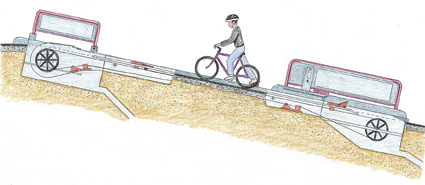
The abundance of hills in San Francisco may prove to be a formidable obstacle to the city’s goal of increasing the percentage of commuters who use bicycles, particularly for hilltop residents leery ending their days with steep climbs. But motorized lifts could prove to be a potential solution, one now being pondered by public officials and cycling advocates.

Bike lifts are used in several European cities, including Brussels, Belgium and Trondheim, Norway. It consists of a foot plate on a motorized track that pushes riders up the hill at a speed of about three to seven miles per hour.

At a San Francisco Transportation Authority Plans and Programs Committee meeting last month, Sup. David Chiu mentioned seeing the lifts while on his recent trip through the Netherlands, where he went to get ideas for San Francisco to expand bicycle ridership to a full 20 percent of vehicle trips by 2020, a goal set by the Board of Supervisors shortly after that discussion.

“We’re talking about the hilly terrain that can be dealt with in many different ways, but not without investment,” SFTA Director Jose Luis Moscovich said at the meeting. Using the lifts was an idea raised by Renee Rivera, acting Executive Director of the San Francisco Bicycle Coalition. Moscovich responded to the proposal by saying, “We’d probably need to invest in some of those.”

“It’s an idea we’ve shared often and the response is, ‘Hey, I want one of those for my hill,’” Rivera told us. “It’s certainly something that has resonated with some folks, but we think we’ve got some more basic questions to deal with first and that really is improving our network of bike routes here in San Francisco so that they really carry people where they need to go.”

SFBC has had discussions with the Presidio Trust about installing a lift that would take people from the Fort Point parking lot up to the visitor’s center. “It would be in itself a fun attraction for people going to the Golden Gate Bridge because there’s kind of a climb getting up to the bridge,” Rivera said.

While the idea might sound a little far fetched, the flood gates have opened for bicycle-friendly projects in San Francisco. A four-year court injunction that prohibited city engineers from implementing the San Francisco Bicycle Plan was lifted in August and the Board of Supervisors voted in October to approve a resolution to increase the number of trips taken by bicycle to 20 percent of the transportation share by the year 2020. Currently, about 7 percent of the trips within the city are made by bicycle, a figure that has doubled in recent years.

Trampe is the name of the Norwegian lift and the system’s website notes, “In a user survey, 41 percent of the lift users claim they are using the bicycle more often due to the installation of Trampe,” and 72 percent said they would like to see more lifts in Trondheim.

What do you say, San Franciscans, you want one on your hill as well?

Jail bait

0

le.chicken.farmer@gmail.com

CHEAP EATS On a day when I felt really very much like oiling a countertop with my elbows, I oiled a countertop with my elbows! This proves that such a thing as free will exists, I think.

Proving that I’m not a very great thinker, because maybe I was predetermined to want what I wanted, or maybe we all want the same thing: barbecued pork ramen.

Other evidence of my not-greatness, brainwise, includes knocking over the popcorn, letting my bike basket get moldy, and locking myself out of my apartment seven or eight times a day. I’m exaggerating.

The good news is, I have managed to live my life so far entirely in and occasionally locked out of apartments. Or at least vans. I have never been homeless, or, worse, incarcerated against my will. Every time I see a mental institution I think: there, but for the grace of God, go I. Same with jails.

My poor mom, who has been in both of those places, kicking and screaming, is also in me. See? I believe in genetics. I don’t believe in God, but I do believe in “the grace of God,” I guess, because so far I have managed to pass as merely kooky. And in this people tend to humor me and keep spare keys to my apartment.

Still, there’s a certain moodiness with which one walks or bicycles past the Hall of Justice, if one is me. I mean, if I’m driving a car I’m okay, because the sight of all those police just scares me into closing my eyes, thinking about ponies, and stepping on the gas.

Pedically speaking, I stick to the other side of the street, basking in the barrage of bail bondage. It’s San Francisco’s most alliterative block of businesses, you know: Bail Bonds, Bail Bonds, Bail Bonds, Bail Bonds, Sushi, Bail Bonds, Bail Bonds, Bail —

What the? Did I just say sushi?

Yep. Believe it, jurors and judges. Oh, and bad guys, you no longer have to go to jail without first having one last California roll, or meet with your friendly neighborhood bail bondsmanperson over McDonalds. God damn, what a great city this is! What a wonderful and humane criminal justice system we have here, now that Live Sushi is on the block.

Good luck finding the entrance.

I took the trouble because a) they had a counter, although it wasn’t exactly what my elbows had had in mind. On the other hand, there was a cooking show on TV, and b) they had ramen. And soba and udon. For like, $8 or $9 at lunch time. Which it was.

I wished I could afford some sushi too, but, nah. This is not no criminal justice system sushi, pricewise. It’s Potrero Hill, only crammed between a bunch of bail bonds boutiques. So alls I could afford was a bowl of barbecue pork ramen and a glass of ice water.

Gotta say: the water was very very good, and cold, and came with free refills, and the soup was excellent. The pork could have been a bit less cooked, but the broth was delicious, and I loved the little curly pickles and the ginger. And the ramen. Great bowl of soup, new favorite restaurant. And I think I learned something from watching TV, but I forget what it was. Something about chicken bones.

Anyway, I stopped at Trader Joe’s and bought me their cheapest chicken on the way home, because Mr. Wong was coming over for his own private, personal cooking show, his first, and I wanted to show him how to make five meals from one chicken … a trick I learned by listening to Spot 1019 in the old days.

I didn’t want to start cooking dinner without him, although that’s usually what I do as soon as I’m done with lunch. So, to kill time, I decided to clean the mold off of my super cool Toto Too bike basket.

I went upstairs to borrow some bleach off Earl Butter and, of course, locked myself out of my apartment. There’s a couch in the lobby. And a magazine rack. For the rest of the afternoon, I didn’t get anything done.

LIVE SUSHI BISTRO

Mon.–Fri.: 11 a.m.–10 p.m.;

Sat.–Sun.: 4:30 p.m.–10 p.m.

1 Gilbert, SF

(415) 558-8778

D,MC,V

Beer and wine

Free parking

0

arts@sfbg.com

THEATER/DANCE In the world of performing arts, it often feels like there is a dearth of resources. The race for funding, rehearsal space, performance space, and audience attention can easily create disillusion. Lucky for San Francisco, there is a light in all this resource madness: the Garage, a small theater run by Joe Landini.

“There is a danger in believing in limited resources,” Landini recently said. He believes in abundance, that there is actually plenty of room for everyone who wants to create work, and that perpetuating this kind of thinking is essential to the mission of the Garage.

An unassuming building, the Garage’s little red door at 975 Howard St. leads into a modest foyer and black box theater. The basement houses a green room, dressing room, and prop closet in one. A lighting board allowing for tech support and sound can be found directly off the stage to the right of the audience seating. A single bathroom and sink are behind the stage’s back curtain. Yet despite its meager facilities, the Garage is home to a surprisingly large number of artists. Approximately 120 performers from diverse disciplines enjoy residencies at the Garage every year, culminating in more than 200 shows annually.

The Garage offers two kinds of residencies for performing artists: AIRspace (artist in residence), which is geared toward queer artists, and RAW (Resident Artist Workshop), the general program. Both are 12-week residencies culminating in a two-night performance run. Artists receive four hours a week of rehearsal space, totaling 48 hours, plus publicity and technical support. Resident artists may also have the opportunity to present their works-in-progress at the informal Raw and Uncut performance series. But perhaps the pièce de résistance of all this is that it comes at no cost to the artist: the Garage provides free rehearsal space, performance space, tech support, and press.

The Garage’s humble facility might be a clue to how this generosity is achieved. Another clue lies in the number of theater personnel; a friend who recently attended a Garage show commented on Landini’s presence, asking who the guy was who ushered, bartended, ran tech, and was basically the Garage’s ringmaster. In other words, there’s no staff and no expensive facility to run either. The Garage is funded entirely by grants and ticket sales, which goes to supporting the artists.

Angela Mazziotta moved to San Francisco earlier this year after completing her BFA in dance at the University of South Florida. Although she had choreographed within her BFA program, she had little experience creating work outside the college environment. Interested in further exploring her choreographic voice, she took up a residency at the Garage in August and will be presenting her new work, SMACKdab — a piece dissecting themes of belonging — Dec. 1-2 as part of the RAW performance series. While researching the dance community before moving to San Francisco, she stumbled across the Garage’s webpage and recalls feeling like the Garage sounded like a place she could start establishing herself. Mazziotta is an example of a newcomer to the SF dance scene who has been able to pursue her choreographic interests through the Garage’s magnanimity.

“The Garage is a place for anyone who wants to get their dance out there,” Mazziotta mused. More likely, the Garage is a place for anyone who wants to put anything out there. From traditional to classical to contemporary to avant-garde to downright insane, the breadth of the work presented at the Garage is staggering. Sometimes the Garage is sold out; other times there’s a sympathetic handful — but the work goes on.

Although the majority of resident artists come from dance backgrounds — due in part to Landini’s strong ties within the dance community — the Garage is by no means limited to dance. Anything performance-related — thespians, circus groups, musicians, poets, and artists of all walks have enjoyed time on the Garage’s stage — can ostensibly find a home there. The basic screening process includes a short write-up of the proposed work and a YouTube video of prior work, and the majority of applicants are granted residencies. This egalitarian mentality manifests the Garage’s guiding principle that anyone who is willing to give their time and energy in the name of art should have a place to do so.

Thus, a new dancer to the city who needs a place to start choreographing can begin at the Garage. A more established artist with limited funds who wants a theater to present work in is welcome there as well. A multidisciplinary artist interested in combining poetry and film would fit in. An eccentric group of performers who stand on their heads and juggle eggs with their feet could probably be accommodated as well. Imagination is the limit. Whatever the inclination or area of interest, the black box theater at 975 Howard will continue to house and assist performing artists through its generous programming and services. Everyone has a voice, and everyone who wants to should have a forum in which to express that voice. The Garage is a perfect example of an institution that supports and promotes the expression of all voices.

www.975howard.com

Delta death

5

By Patrick Porgans and Lloyd Carter

news@sfbg.com

While Californians were held captive waiting for Gov. Arnold Schwarzenegger and the Legislature to agree on spending cuts and adopt a budget, state officials were throwing hundreds of millions of dollars down the drain and compounding California’s water crisis.

Water officials have wasted more than $10 billion and 35 years in extended delays in their failed attempt to carry out their legal mandates to protect the waters of the state and restore the San Francisco Bay-Delta Estuary. The result: water quality in the estuary is rapidly declining; fisheries are in crisis; and the proposed solution, an $11 billion bond act set for the ballot in 2012, will only make things worse.

The primary source of the water-quality crisis is a toxic mix of salt and chemicals discharged from lands irrigated by subsidized water delivered by the federal Central Valley Project to contractors farming on the arid west side of the San Joaquin Valley.

The salt comes from several sources. Irrigation water — particularly from the delta, where the water is somewhat brackish — contains salt. There also is salt and traces of much more toxic selenium in the soil. Industrial fertilizers add more dangerous chemicals to the mix. And since crops grown in the Central Valley don’t absorb much salt and the constant flushing with irrigation water leaches the selenium out of the soil, a nasty stew starts to build up.

This U.S. Geological Survey map shows a plan by federal and state regulators to divert toxic water more directly into the Sacramento Delta. All these diversion plans ignore the fact that poorly drained land isn’t suitable for farming.

If the irrigation water isn’t drained off, the salt buildup in the groundwater renders the land unusable to farming. In essence, farmers have been dumping the runoff water — laden with salt and selenium, along with mercury and boron — into the San Joaquin River, which carries it back into the delta and the bay.

All this is being done as the government declares its intent to save the San Francisco Bay-Delta Estuary.

How much salt are we talking about? According to a 2006 U.S. Geological Survey report, it amounts to about 17 railroad cars a day, each capable of carrying 100 tons of salt, as well as selenium and mercury. That’s 3.4 million pounds of salt a day being dumped in the lower San Joaquin River.

Of course, the river is a freshwater habitat, so all that salt damages plant and fish life.

Some experts say that part of the toxic stew is ultimately flushed out to sea, and the rest perhaps enters the aquatic food chain or at least degrades cleaner delta water.

As far back as the 1998, the state Water Board staff reported that salt loads in the valley were doubling every five years. Toxic salt-loading is not only taking its toll on the river and Bay-Delta Estuary, it’s draining the state treasury since myriad publicly funded programs for drainage, water quality improvement, fisheries restoration, and others continue to be financed with borrowed money from the deficit-ridden General Fund.

The water quality problem was identified as a potential crisis in the 1950s and has contributed to the pollution of a significant length of the 330-mile San Joaquin River. According to the U.S. Environmental Protection Agency, 215.4 miles of the river are on the list of waterways so polluted they’re unfit to swim in. And some species of fish from the river aren’t safe to eat.

On a 1999 EPA map, the valley is the single largest “more serious water quality problem — high vulnerability” area in the nation.

Water officials, drainers, and the major environmental groups forged a deal in 1995 to permit the toxic drainage to continue until October 2010, at which time the discharges were to end. But that hasn’t happened; the water boards have approved a new target date for compliance (2019) and sanctioned continued dumping of toxic drainage. The train wreck in the making will be allowed to continue dumping and pumping toxic salts every day into the waters of the state for the rest of this decade.

The tons of toxics salts being discharged into the waters of the state are only the tip of the iceberg. An unfathomable amount of toxic salts are also being stored in the soil underground, contaminating groundwater basins throughout the valley.

State and federal officials have put a lot of faith in a federal Bureau of Reclamation project known as the Grasslands Bypass, which is designed to send contaminated agricultural water through a part of the old San Luis Drain (that once led to the contamination of the Kesterson Wildlife Refuge) into a San Joaquin tributary known as Mud Slough.

The Grasslands Bypass Project, begun in 1995, is operated by the Department of the Interior’s Bureau of Reclamation. It reroutes subsurface agricultural drainage water around wetlands on its way eastward to the San Joaquin River.

Originally the agricultural runoff traveled through Salt Slough (a San Joaquin River tributary), which passed through wetlands on the way to the river. The Grasslands Bypass Project uses the San Luis Drain to reroute that runoff around approximately 100,000 acres of land between Firebaugh and Los Banos and into Mud Slough (another tributary of the San Joaquin River).

Carolee Krieger, president of the California Water Impact Network (C-WIN), says the Grasslands Bypass Project misses the point. The best solution, she said, is to stop farming altogether on the poorly-draining western valley along the San Joaquin River.

The project protects the wetlands but hurts the river itself. Dennis Lemly, research professor of biology at Wake Forest University in Winston/Salem, N.C., confirmed in December 2009 that the continuation of the Grasslands Bypass Project will cause a 50 percent mortality among juvenile Chinook salmon and Central Valley Steelhead in the San Joaquin River. Furthermore, the state water board lists both the Carquinez Strait and Suisun Bay, both downstream from the San Joaquin River, as “impaired” for their excessive selenium content.

At best, the bypass project can only slightly mitigate the damage. The only real way to resolve the discharge of the tons of toxic salts is to stop irrigating land that has known drainage problems.

In the early 1980s, the discharge of the toxic salts into the now-closed Kesterson National Wildlife Refuge, located in the San Joaquin Valley, was the site of one of the worst government-induced wildlife crises in American history. Several studies have since been conducted and numerous Band-Aid-type fixes have been implemented, costing taxpayers hundreds of millions of dollars. So far officials have failed to identify a viable cost-effective solution to the toxic agricultural drainage crisis and estimate a pilot program will cost at least $2 billion.

Meanwhile, the Legislative Analyst reported in 2008 that the state and federal government have spent $5 billion on projects to improve the Delta.

This is one of the ways your tax dollars fund the destruction of the San Francisco Bay-Delta ecosystem.

Patrick Porgans is a Sacramento-based water-policy consultant. Lloyd Carter, a former UPI and Fresno Bee reporter, has covered water issues in California for more than 30 years. For more information, go to www.lloydgcarter.com and www.planetarysolutions.org. Additional research was done by Noah Arroyo.

Down on the farm

0

rebeccab@sfbg.com

Sherman Island may barely register for motorists traveling over the Antioch Bridge and through the delta on Highway 160. Almost wholly owned by the Department of Water Resources, the roughly 10,000-acre patch of Sacramento-San Joaquin Delta flatland is barely developed, and probably home to more cows than people. It lies at the confluence of the Sacramento and San Joaquin rivers, where freshwater mixes with the salty seawater of the San Francisco Bay.

What isn’t obvious at first glance is that Sherman Island was once host to highly productive agriculture — but as delta water quality diminished, farmers saw their crop yields plummet. Larry Del Chiaro, who formerly headed the Sherman Island Landowners Association, used to grow asparagus, wheat, barley, safflower, milo, hay, and other crops on the island. But today, like nearly all the others who previously raised crops there, he no longer has property there and has moved on. His story illustrates how California water policies have benefited one group while affecting the livelihoods of the people who live in the state’s central water hub, the delta.

“I was a third-generation farmer on the island,” Del Chiaro told the Guardian on a hot August day in the city of Pittsburg. “My grandfather started it. My father, his brothers, my cousins were all on the island farming.” Del Chiaro majored in soil science in the 1970s and was interested in increasing crop yields, so he set up test plots and was closely monitoring their progress.

But by 1987, the yields were plummeting dramatically — a drought had hit the state, and Sherman Island farmers weren’t getting enough fresh water to sustain their crops. Instead of going to irrigate farmland in the delta, much of the scarce freshwater was being pumped south through the State Water Project to agricultural lands in the arid San Joaquin Valley, causing the delta water to get saltier and saltier.

It presented a problem that was particularly acute in that location. “Sherman Island, to use a cliché, is the plug for the Sacramento Delta,” Del Chiaro said. “We’re the last one to get the freshwater, and the first one to get the saltwater intrusion.”

The North Delta Water Agency, a regional water body, had a contract on behalf of the island’s landowners with the Department of Water Resources (DWR) that guaranteed a certain level of water quality. But DWR’s contractual obligations weren’t met that year. “As the drought continued, our water quality diminished, and diminished, and diminished, till it got to the point where we had to rely on Mother Nature for rainfall,” Del Chiaro said. “And when we didn’t get rainfall, our crops suffered.”

Under state water law, Sherman Island landowners had riparian water rights, which allowed them use of the freshwater that flowed past their land. The overarching problem, he said, was that DWR couldn’t meet contractual obligations to both the delta farmers and the San Joaquin Valley farmers in a dry year because it had over-promised water deliveries through the State Water Project. “We have no control over what Mother Nature gives us in terms of rainfall and the snow pack,” he said. “So they were being overly optimistic in terms of all those contracts.”

With the help of consultant Patrick Porgans and a San Francisco attorney, Del Chiaro and the 26 other Sherman Island landowners sued DWR for damages. In 1991, the state settled for $3.6 million, and the farmers were paid for not drawing water out of the delta. Soon after, DWR bought up the island. Once the water agency took control, it eliminated the need for DWR to satisfy contractual obligations to provide freshwater to the Sherman Island farmers. The farmers had cleared out, and the agency’s problem was solved.

“Compared to the San Joaquin Valley, the vast amount of acreage out there, the people that they employ, and the business compared to the delta, we’re kind of a drop in the bucket,” Del Chiaro noted. “Still, there are the businesses in the delta that basically survive off of our farming operation.”

Sherman Island is more well-known to recreational boaters and travelers, and Chris and Dawn Gulick provide a place for delta vacationers at Eddo’s Harbor & RV Park, located on Gallagher Slough on the east side of the island. Eddo’s wasn’t always a harbor and RV park — when Chris Gulick’s father started the business in 1967, fishing was the primary attraction and the small harbor maintained a fleet of fishing boats for rent. The State Water Project came online around the same time, marking the beginning of freshwater pumping out of the delta.

As delta water quality worsened over the years, there were fewer fish to be caught, so over the decades it became less practical to maintain the fishing vessels. Today, the fishing boats have been sold, and Eddo’s primarily gets its business from recreational boaters looking for guest slips or travelers who find their way to the quiet waterfront park to stay in their RVs.

Chris Gulick emphasized the larger picture during an interview about water issues in the delta, but he acknowledged that his business had been affected by what he saw as the state’s misguided water policies. “When we got here, the striped bass fishery was robust,” he said, “and it slowly has declined, and it steadily has declined.”

Gulick said countless experts and researchers had been in and out of the delta over the years, but he felt that the core problem had to do with governance of the system and the fact that water agencies had over-promised the water.

“The problem with the delta, or the water situation, is that the people that are in policy and are writing these guidelines don’t have a vested interest,” he said. “A lot of them don’t know a whole lot about this, but they’re the experts. They’re the ones who are supposed to be writing the plans. They don’t have a clue — and that is a prevalent attitude to the experts who come out and talk to us.”

From second to first

5

steve@sfbg.com

In Oakland and San Francisco, the big story of this election was ranked-choice voting, a system that allowed Jean Quan to overcome a nearly 10-point election-night deficit to become Oakland’s next mayor and enabled come-from-behind victories in two races for the San Francisco Board of Supervisors.

Those who never liked this system of letting voters rank their top three candidates — a group primarily affiliated with downtown and the moderates who did well under the old system of low-turnout, big-money runoff elections — felt validated by the outcomes. “Ranked-choice voting an undemocratic nightmare” was the headline on Examiner columnist Ken Garcia’s Nov. 11 column.

But for those who understand this system — a product of the progressive movement — and have supported it, this was a watershed election that showcased RCV’s populist possibilities. In Quan’s smart use of an RCV strategy and the huge gap she overcame to topple Don Perata, they see an opportunity for political coalition-building that could influence next year’s San Francisco mayor’s race and beyond.

Besides Perata, if there’s anyone who could justifiably be unhappy with how RCV worked in this election, it would be Tony Kelly. He finished in first place in the D10 supervisorial race on election night only to be defeated by Malia Cohen, who climbed out of fourth place on the strength of those who ranked her second or third. But Kelly is perfectly happy with how RCV worked.

“I supported it before and there’s no reason not to support it now, even though I’m on the edge of this,” Kelly told the Guardian. In fact, he said the only reason he ran for public office in San Francisco was because of progressive electoral reforms such as RCV, district elections and public financing of campaigns. “These are all things that help grassroots candidates.”

Kelly had a ranked-choice strategy; he and Marlene Tran each encouraged their supporters to rank the other second. The alliance might have been a way to overcome the strength of the district’s strong African American voting bloc, which favored Cohen (she got her biggest and most lopsided bumps when Dewitt Lacy and Lynette Sweet were eliminated). But most of Tran’s votes were exhausted when she was eliminated, meaning that many of her voters didn’t list any second and third choices.

“Without RCV, that black vote would have never come together. It would have splintered,” said Steven Hill, a progressive activist who helped design the system.

In Oakland, progressives and other blocs of voters wanted anybody but Perata, a Democratic Party power broker. So Quan reached out to all voters and was particularly helped by a progressive base that she shared with fellow Oakland City Council Member Rebecca Kaplan.

“One thing Jean Quan does consistently at events is say, ‘I would like your first place votes, and if I don’t get that, I would like your second place votes,” Kaplan told the Guardian. “It was striking to me that she consistently asked for No. 2 votes.”

That strategy, along with Quan and Kaplan running mutually supportive races and encouraging their supporters to list the other second, clearly paid off.

“It rewrites the textbook for how to win with ranked-choice voting,” Hill said.

Hill and Kaplan said Oakland voters proved themselves adept at using the ranked-choice system on its debut there. Hill noted how few exhausted ballots there were, showing that voters understood and used their full options — more so than have voters in San Francisco, which has had the system in place since 2004.

“I think what this says is that RCV worked. Voters overwhelmingly filled out their ballots correctly,” Kaplan said. She also noted how the election demonstrated the possibilities of political coalition-building: “It isn’t so much the coattails of the candidates as the coalition of the supporters.”

But many observers also say the situation in Oakland was a perfect storm of opposition to a single candidate, Perata, who professed ignorance about how RCV worked.

“I don’t think we’ll see something like this again, but it adds to what’s possible,” said David Latterman, a political consultant who works primarily with downtown-backed candidates.

Jim Stearns, a consultant who represents more progressive candidates, said moderate candidates with money usually prevail in runoff elections, and that probably would have been the case in Oakland if voters hadn’t switched to RCV: “I think you would have had a very different result if you’d had a runoff.”

Yet most political consultants still don’t like RCV, particularly those who work with downtown candidates. “RCV just probably won two races for me, coming from behind, and I still don’t like it,” said Latterman, who worked with Cohen and D2 winner Mark Farrell. “I like runoffs. I like candidates having to reach out and prove themselves.”

Of course, that system favored candidates who have the resources to reach out and target a voter base that is generally smaller and more conservative than in regular elections. But all the consultants are now trying to figure out how to make RCV work.

“The priority of any candidate in ranked-choice is to build your base,” Stearns, who is now working on Leland Yee’s mayoral campaign, told us. After that, the strategy is about identifying other candidates whose bases would also support your candidate and figuring out how to reach them. “Ranked-choice voting is a labor-intensive thing because you have to talk to everyone within that short window.”

But even Latterman said RCV will be a factor in next year’s San Francisco mayor’s race given what happened in Oakland this year. “For the first time a second place strategy worked and it can’t be ignored anymore,” Latterman said.

Hill said the progressive candidates and political consultants in San Francisco still need to learn how to work together to increase the turnout of their voters, sell swing voters on the progressive message and policies, and seek to win the race without undercutting those first two goals.

“How do you broaden your coalition and can you do that by having other progressives in the race?” Hill said. “These are the sorts of questions that progressives have to ask.”

Unfortunately, Hill hasn’t seen evidence that progressive campaigns in San Francisco have figured this out, noting how progressive supervisorial campaigns have instead criticized each other in the last few election cycles, such as this year’s D6 race between Jane Kim and Debra Walker.

“That’s the kind of behavior we still see from progressives in San Francisco, but that progressives in Oakland have already overcome,” Hill said. “Unfortunately, conservatives may figure this out first.”

Ultimately, Hill said that for progressive candidates to run strong ranked-choice voting campaigns against better-financed moderate candidates in a high-stakes election like the mayor’s race, they need to be a little bit selfless: “The progressive candidates need to care less about whether they win individually than that a progressive wins.”

Fighting dirty

1

rebeccab@sfbg.com

One by one, representatives from California local governments who had gone toe-to-toe with Pacific Gas & Electric Co. recounted their war stories. They were weary, fatigued, and uncertain of the future. Their resources had been depleted by hefty legal expenses, and they were forever caught up in the game of trying to undo the damage of misinformation campaigns whipped up against them by PG&E. None had ever suspected that following state law would be so arduous.

At a Nov. 8 hearing of the California Senate Select Committee on Renewable Energy, held in San Rafael, officials from the San Joaquin Valley, Marin County, and San Francisco spoke about challenges they faced trying to initiate community choice aggregation (CCA) programs, which would create alternative electricity providers to PG&E.

In accordance with Assembly Bill 117, which allows local governments to purchase power in bulk and distribute it to a customer base using the infrastructure and billing systems operated by investor-owned utilities, representatives from local government agencies said they pursued CCAs to bolster local economies and benefit the environment — but quickly fell prey to fierce marketing campaigns.

So far, PG&E hasn’t faced any real consequences for trying to derail its competitors using unethical and sometimes illegal tactics, and the director of the California Public Utilities Commission, Paul Clanon, did not commit to imposing fines or sanctions against the company.


COOPERATING FULLY

Despite a requirement under AB117 that utilities must “cooperate fully” with CCA implementation, agency representatives testified that PG&E consistently tried to obstruct their success. The San Joaquin Valley Joint Power Authority’s CCA effort was suspended after a protracted legal battle, and has yet to be revisited.

At the hearing, Sen. Mark Leno listened attentively and offered sympathetic words of encouragement. “It is a superhuman accomplishment that you are even here with us today,” he jested after Dawn Weisz, interim director of the Marin Energy Authority (MEA), finished describing a litany of tactics the monolithic utility employed against Marin’s CCA.

Marin’s experience may foreshadow what’s in store for San Francisco. CleanPower SF, the city’s CCA program, is picking up steam again after an initial attempt to hire a contractor failed to yield an acceptable agreement. On Nov. 5, the San Francisco Public Utilities Commission (SFPUC) announced it had received four responses to a second RFP for an electricity service provider to administer the city’s CCA.

Already San Francisco has weathered some attacks. Sup. Ross Mirkarimi, who chairs the Local Agency Formation Commission (LAFCo) and has been a key figure in moving CCA forward, characterized Marin and San Francisco as “brothers and sisters in arms,” saying, “We would share what we knew of what we could expect, because we were no strangers to these tactics.”

Weisz noted that early on, PG&E sent lobbyists to meet privately with local elected officials. Soon after, the company upped the ante with a negative marketing campaign, distributing mailers that contained misleading information about the program. Their activity prompted a rebuke — but no fines — from the CPUC. “I sent PG&E a letter to say knock it off,” Clanon said at the hearing.

PG&E also set up a phone-banking operation to dial up every prospective CCA customer in Marin County and encourage them to opt out of the program and used false information to persuade customers to stick with PG&E service, Weisz charged. “Many were led to believe that their lights wouldn’t go on if they didn’t opt out,” she said.

Once the CCA was in operation, PG&E imposed a delay on the billing process that made one month’s bill artificially low and the subsequent bill abnormally high, making it appear that CCA rates were higher than PG&E rates. This gaffe, which the company chalked up as a technical error, amounted to a sleight-of-hand: “Our rates were set to match PG&E rates,” Weisz explained.

PG&E did not return calls seeking comment.

Against all odds, Marin County is forging ahead with a power program that offers a 26.5 percent renewable energy mix, with 78 percent of its power generated without greenhouse gas emissions. State records show that only 14 percent of PG&E’s energy comes for renewable sources, failing to meet a state requirement that utilities get at least 20 percent of their power from such sources.

Charles McGlashan, a Marin County supervisor who chairs the Marin Energy Authority, noted that implementing a CCA was the most effective method the county could have employed to reduce greenhouse gas emissions, yielding an estimated 500,000-ton reduction of greenhouse gas emissions annually.

While the potential exists for other municipalities to follow suit, PG&E smear campaigns will likely discourage similar projects. “This is a powerful opportunity that has been virtually destroyed by the antics of PG&E,” McGlashan said. “It has had an extraordinary chilling effect on the political leaders to even embark on such an enterprise.” Later he added, “I’m only doing it because I’m so hell-bent on answering the children’s questions about climate change.”


STORM COMING

Meanwhile, in San Francisco, CCA advocates are getting ready to batten down the hatches. “We’re under no illusion — PG&E will compete fiercely,” San Francisco Public Utilities Commission spokesperson Charles Sheehan told the Guardian. He said the city was taking a proactive approach by conducting early outreach to residents and holding public informational meetings about CleanPower SF.

The SFPUC has received four bids from prospective electricity service providers. The respondents are Constellation Energy Commodities Group, Shell Energy North America, Power Choice Inc. (which was selected during the last RFP process but was unable to secure a binding agreement with the city), and Noble Americas Energy Solutions, formerly known as Sempra Energy Solutions. During the Senate hearing, San Francisco CCA director Mike Campbell noted that the city expected to complete a scoring process and select one of the four by the end of the year. The goal is to be fully operational by 2011, he added.

Leno predicted resistance from PG&E. “It’s like a storm coming in,” he said. “We have no doubt of its arrival. They have endless opportunities for nefarious creativity.” He queried Clanon on why the PUC wouldn’t levy fines or sanctions against the utility for the negative campaigns it waged in Marin, as a way to signal that such activity wouldn’t be tolerated in San Francisco.

Clanon did not commit to taking such an action. “That’s a choice about how you get the right behavior,” he said. He noted that the CPUC issued a decision last May preventing the utility from distributing false or misleading information about CCAs or illegally soliciting opt-outs. Clanon warned that PG&E might not be deterred by “fines and sanctions and specific rules.” Pressed on this point later, Clanon told the Guardian that imposing fines or sanctions “would take a lot of resources by us” at a time when the state agency is consumed with other pressing issues, such as the aftermath of the San Bruno explosion caused by a PG&E gas pipeline rupture. “If you set a rule, more people get around the rule,” he said.

Even if the state regulatory body doesn’t hold PG&E’s feet to the fire, Mirkarimi won’t hold back. “We’re tired of the thuggery. We’re tired of the bullying,” he said. He alluded to the Raker Act, a 1913 act of Congress that allowed San Francisco to build the O’Shaughnessy Dam and draw water from the Hetch Hetchy Reservoir under the condition that no private profit was derived from the development, saying the arrangement had been subverted by PG&E. “We should be able to chart our own energy destiny,” Mirkarimi said.

The perils of unaccountable power

3

By Saul Bloom

OPINION San Francisco has two redevelopment commissions that together have broad, sweeping authority over land use and development in the city. The Redevelopment Agency Commission and the Treasure Island Development Authority (TIDA) have more power in some respects than the Board of Supervisors — people you actually vote for.

There is no way to overstate the importance of the power of these commissions. The Candlestick Shipyard and Treasure Island projects by themselves account for an area the size of the Presidio. Over the next decade, the commissions will oversee the outcome of the Schlage Lock parcel in Visitacion Valley, the Bayview-Hunters Point Project Area, the Hunters Point Shipyard and Candlestick Point, India Basin, Mission Bay, South of Market, and Treasure and Yerba Buena islands.

Two important questions these commissions raise are: 1) Is It healthy for our city and county to vest so much authority into two essentially unaccountable authorities; and 2) Would it be better to vest this responsibility in the Board of Supervisors — considering that it’s the norm around the state for these local legislatures to also act as redevelopment commissions?

In San Francisco, redevelopment commissioners are appointed by the mayor and confirmed by the Board of Supervisors. The board cannot select its own representatives. The commissions wield the power of independent financial authority, multimillion dollar agency contracts, and the ability to destroy a community near you. This is a substantial amount of authority for an unelected body.

The mayor and six members of the Board of Supervisors are all that is required to allow a commissioner to serve for life. There are no term limits for commissioners. There are no meaningful criteria to judge a commissioner’s appointment. There is no yard stick by which to measure a panel member’s worthiness for reappointment every four years. The board’s confirmation and reappointment process is more a popularity party than a Supreme Court nominee review.

Other than the courts, there is no recourse to a commission decision. During the recent Candlestick Point-Hunters Point Shipyard debate members of the Board of Supervisors learned they actually has to seek the approval of these political appointees to modify an environmental impact report.

As a consequence, the appointment of commissioners is highly political. The power of the two commissions makes appointments prime objectives for influential sectors of the city’s political establishment. Those commissioners who disagree with the Mayor’s Office over important issues are not reappointed.

There’s no need to abolish the redevelopment authorities, which have unique legal benefits, particularly in project financing. But we can modify the way the city oversees the agencies.

In most counties in California the Board of Supervisors also serves as the Redevelopment Commission. While that could be a bit unnerving in a city as complicated as San Francisco, it is difficult to see how the process could become more politicized, less accountable, and less democratic.

Having the board oversee redevelopment would at least ensure that agency plans reflect the needs and interests of all 11 districts — and an elected body could be held accountable for those plans.

San Francisco deserves a dialogue about whether this is the best way to chart our course into a very foggy future. 

Saul Bloom is executive director of Arc Ecology.

Editor’s Notes

0

tredmond@sfbg.com

Imagine if the next mayor of San Francisco was chosen in public. I don’t mean the supervisors voting in public — they’ll have to do that at some point anyway. I mean the various possible candidates going through a process that allows the public to see who’s on the short list — and where those candidates are on the issues.

Sup. John Avalos, with the backing of his colleagues Chris Daly and David Campos, have started the process by suggesting that the board nominate candidates, soon. The idea, Avalos says, is to get a new mayor chosen early so that person can start on the transition process and get up to speed on leading the city.

But there are further steps here. When the supervisors nominate candidates for less significant offices, the Rules Committee holds a hearing and discusses the nominees. What if the supervisors, meeting as a Committee of the Whole, nominated, say, a half-dozen people for the job of interim mayor — then asked each candidate to appear before the group and answer questions?

The voters just overwhelmingly approved a charter amendment that will require the next mayor to appear at a board meeting once a month. There’s no reason the candidates shouldn’t do the same.

The supervisors have every right to ask someone who wants to be mayor what his or her position is on a long list of policy issues. And the pubic has every right to hear the responses.

I know, I know — the candidates would hate it. Standing in front of 11 people, from Chris Daly to Sean Elsbernd, and submitting to the mother of all job interviews would be unpleasant, perhaps unsettling. Some of the top contenders might bow out at the prospect.

But let’s be serious: In a normal campaign, the voters get to see candidates for mayor speak, take stands on issues, and engage in debates. I can’t see the supervisors choosing a new mayor on good faith alone (well, I’d take Tom Ammiano on good faith, but he doesn’t want the job). And if there aren’t any public discussions or interviews, then the only screening process is going to happen privately, with individual board members contacting individual candidates and (most likely) cutting deals.

I think it’s perfectly fair to say to the potential candidates: You want to be mayor of San Francisco? Spend an hour making the case for yourself and fielding questions from the people who are about to hire you. And let the rest of us watch.

Questions for the next mayor

4

EDITORIAL The progressives on the Board of Supervisors are a long way from united on a possible mayoral candidate, and if they can’t come together, the person who finishes Gavin Newsom’s term will be a compromise candidate, either a short-term caretaker (not the greatest option) or someone who’s more in the moderate camp but a candidate the left can work with — for 2011 and possibly four years after that.

We’re glad to see the proposal by Sup. John Avalos to begin the mayoral selection process early. Picking a mayor in a mad scramble on the day Newsom steps down is a recipe for chaos — and potentially a bad outcome. And as the process begins, the last thing the city needs is a mayor chosen through a backroom deal.

But it’s entirely appropriate for progressive board members to set some standards and to ask the people who are angling for the job to make clear exactly what their positions would be on key policy issues.

In other words, anyone who wants to be the interim mayor — and possibly mayor for the next five years or longer — should have to answer, directly and without hedging, question like these:

How much new revenue does San Francisco need to solve its budget problems, and where, specifically, should it come from? This is the central issue facing the city, now and for the indefinite future. San Francisco’s budget has a structural deficit of at least $250 million, and it simply can’t be closed by cuts alone. What taxes will you pledge to support — and put political capital and fundraising clout behind when they go on the ballot?

What specific programs ought to be cut? Everyone likes to talk about the city living within its means, but that ends up leading to a series of death-by-1,000-cuts decisions that year after year devastate services to the poor. Don’t tell us you need to look at budget figures and work it out later; the big-ticket items are no secret. What’s on the chopping block — and what isn’t?

Will you work to promote public power? How will you expedite community choice aggregation, and will you support a ballot measure to replace Pacific Gas and Electric Co. with a full-scale municipal electric utility?

What are your law enforcement priorities? If money’s tight, should the San Francisco police be hassling nightclubs, or should more resources go into the homicide division? How important are foot patrols, and which neighborhoods should get them? Will the SFPD and juvenile authorities continue to turn young people over to federal immigration authorities?

Who should pay to fix Muni? Should the burden of paying for the transit system fall primarily on the riders (through fare increases and reduced services) or should big downtown businesses and retailers (the major beneficiaries of the system) pay more? Should car owners pay higher fees (including parking fees and congestion management fees) to subsidize transit? Which specific fees would you be willing to push for?

Who should the city build housing for? Right now, much of the new housing stock is aimed at the very rich — and San Francisco is turning into a bedroom community for Silicon Valley. Would you set housing policy to conform with the city’s General Plan assertion that more than half of all new housing should be below market rate? How would you make that balance happen? Should the city spend a significant amount of money for affordable housing, and who should pay for it?

Do you agree that public sector jobs are as important as private sector jobs in San Francisco? Would you support the tax plan proposed by Sup. David Chiu?

Do you support giving the supervisors appointments to all major commissions?

Do you think the city should be doing more to stop TICs and condo conversions and to preserve existing rental housing?

That’s just the beginning of a long list of questions — but the progressives on the board should make sure they have answers before agreeing to support anyone, as a caretaker or interim mayor.

Music Listings

0

Music listings are compiled by Cheryl Eddy. Since club life is unpredictable, it’s a good idea to call ahead to confirm bookings and hours. Prices are listed when provided to us. Submit items for the listings at listings@sfbg.com. For further information on how to submit items for the listings, see Picks.

WEDNESDAY 17

ROCK/BLUES/HIP-HOP

Birthday Massacre, Black Veil Brides, Dommin, Aural Vampire Slim’s. 7:30pm, $16.

Fabulous Diamonds, Pigeons, Donovan Quinn and the 13th Month Bottom of the Hill. 9pm, $10.

Hey Monday, Cartel, Ready Set, This Century Great American Music Hall. 7:30pm, $16.

Hobo Nephews of Uncle Frank, Sour Mash Hug Band, Crux Thee Parkside. 8pm, $7.

Intimate Stranger, Evan Bailey, Guverment Elbo Room. 9pm, $8.

Jason King Band Biscuits and Blues. 8pm, $15.

Kyle Eastwood Band Yoshi’s San Francisco. 8pm, $15.

One F, Giant Value, Cash Pony Café Du Nord. 9pm, $10.

Or the Whale, Chris Pureka Independent. 8pm, $15.

A Perfect Circle Fillmore. 8pm, $40.

Sleepwalkers Hemlock Tavern. 9pm, $5.

*Watain, Goatwhore, Black Anvil, Necrite, Pale Chalice DNA Lounge. 7:30pm, $20.

DANCE CLUBS

Booty Call Q-Bar, 456 Castro, SF; www.bootycallwednesdays.com. 9pm. Juanita Moore hosts this dance party, featuring DJ Robot Hustle.

Breezin Koko Cocktails, 1060 Geary, SF; (415) 885-4788. 9:30pm, free. With DJs Amy A and Brynnie Mac spinning yacht rock od smooth 70s.

Cannonball Beauty Bar. 10pm, free. Rock, indie, and nu-disco with DJ White Mike.

Hands Down! Bar on Church. 9pm, free. With DJs Claksaarb, Mykill, and guests spinning indie, electro, house, and bangers.

Jam Fresh Wednesdays Vessel, 85 Campton, SF; (415) 433-8585. 9:30pm, free. With DJs Slick D, Chris Clouse, Rich Era, Don Lynch, and more spinning top40, mashups, hip hop, and remixes. Mary-Go-Round Lookout, 3600 16th St, SF; (415) 431-0306. 10pm, $5. A weekly drag show with hosts Cookie Dough, Pollo Del Mar, and Suppositori Spelling.

Red Wine Social Triple Crown. 5:30-9:30pm, free. DJ TophOne and guests spin outernational funk and get drunk.

Respect Wednesdays End Up. 10pm, $5. Rotating DJs Daddy Rolo, Young Fyah, Irie Dole, I-Vier, Sake One, Serg, and more spinning reggae, dancehall, roots, lovers rock, and mash ups.

Synchronize Il Pirata, 2007 16th St, SF; (415) 626-2626. 10pm, free. Psychedelic dance music with DJs Helios, Gatto Matto, Psy Lotus, Intergalactoid, and guests.

THURSDAY 18

ROCK/BLUES/HIP-HOP

Bear Hands, LoveLikeFire, Safe Rickshaw Stop. 8pm, $12.

Shane Dwight Biscuits and Blues. 8pm, $16.

Eisley, Christie Dupree Swedish American Hall (upstairs from Café Du Nord). 8pm, $15.

Eux Autres, Writer, Sporting Life El Rio. 8pm, $7.

Idlewild, Happy Hollows Independent. 8pm, $15.

Tift Merrit, Elizabeth and the Catapult Great American Music Hall. 8pm, $18.

A Perfect Circle Fillmore. 8pm, $40.

Razor Skyline, Conspiracy of Venus, Fuzzpod Café Du Nord. 8:30pm, $10.

3OH!3, Hellogoodbye, Down With Webster, K. Flay Slim’s. 7:30pm, $21.

Stiletto Ghetto Grant and Green. 9:30pm, free.

*Toxic Holocaust, Black Cobra, Dopecharge, Earslaughter Thee Parkside. 9:30pm, $10.

Why Because, Midday Veil, Moonbell Hemlock Tavern. 9pm, $6.

DANCE CLUBS

Afrolicious Elbo Room. 9:30pm, $10. DJs Pleasuremaker and Señor Oz spin Afrobeat, tropicália, electro, samba, and funk.

Caribbean Connection Little Baobab, 3388 19th St, SF; (415) 643-3558. 10pm, $3. DJ Stevie B and guests spin reggae, soca, zouk, reggaetón, and more.

Club Jammies Edinburgh Castle. 10pm, free. DJs EBERrad and White Mice spinning reggae, punk, dub, and post punk.

Drop the Pressure Underground SF. 6-10pm, free. Electro, house, and datafunk highlight this weekly happy hour.

Electric Feel Lookout, 3600 16th St, SF; (415) 431-0306. 9pm, $2. With DJs subOctave and Blondie K spinning indie music videos.

Good Foot Som., 2925 16th St, SF; (415) 558-8521. 10pm, free. With DJs spinning R&B, Hip hop, classics, and soul.

Guilty Pleasures Gestalt, 3159 16th St, SF; (415) 560-0137. 9:30pm, free. DJ TophZilla, Rob Metal, DJ Stef, and Disco-D spin punk, metal, electro-funk, and 80s.

Jivin’ Dirty Disco Butter, 354 11th St., SF; (415) 863-5964. 8pm, free. With DJs spinning disco, funk, and classics.

Koko Puffs Koko Cocktails, 1060 Geary, SF; (415) 885-4788. 10pm, free. Dubby roots reggae and Jamaican funk from rotating DJs.

Nightvision Harlot, 46 Minna, SF; (415) 777-1077. 9:30pm, $10. DJs Danny Daze, Franky Boissy, and more spinning house, electro, hip hop, funk, and more.

FRIDAY 19

ROCK/BLUES/HIP-HOP

Agnostic Electric Gospel Socha Café, 3235 Mission, SF; www.sochacafe.com. 8:30pm, free.

Bad Religion, Off With Their Heads, Bouncing Souls Regency Ballroom. 8:30pm, $27.

Battlehooch, Corpus Callosum, Sun Hop Fat, DJ Mashi Mashi Bottom of the Hill. 9:40pm, $12.

Blonde Redhead, Olof Arnalds Warfield. 9pm, $28.

Clinic, Fresh and Onlys, Loons Independent. 9pm, $17.

Freelance Whales, Miniature Tigers Rickshaw Stop. 8:30pm, $15.

Lauren Jordan Vin Club, 515 Broadway, SF; www.thevinclub.com. 8pm, free.

Kings Go Forth, Myron and E with Hot Pocket, Selector DJ Kirk Elbo Room. 10pm, $13.

Legendary Pink Dots, Big City Orchestra Café Du Nord. 9:30pm, $20.

Love Dimension, Parties, Trevor Childs and the Beholders Hemlock Tavern. 9:30pm, $7.

*Marduk, Withered, Bosse De Nage, Deafheaven Thee Parkside. 9pm, $20.

Mike and Ruthy, Miller Carr and the Shalants Make-Out Room. 7:30pm, $8.

Bob Mould Swedish American Hall (upstairs from Café Du Nord). 8pm, $22.

Rykarda Parasol, Tamaryn, Hot Toddies, Sioux City Kid and the Revolutionary Ramblers Slim’s. 8:30pm, $13.

Sadies, Possum and Lester Great American Music Hall. 9pm, $16.

Shaimus, Ayurveda, Brooks Was Here, Our Vinyl Vows Kimo’s. 9pm.

Eddie Turner Biscuits and Blues. 8pm, $20.

JAZZ/NEW MUSIC

Basia Bimbo’s 365 Club. 9pm, $32.

FOLK/WORLD/COUNTRY

Toshio Hirano Mercury Café, 201 Octavia, SF; www.mercurycafe.com. 7:30pm, free.

“San Francisco First Annual Pancake Festival” Coda. 10pm, $10. Doctors Without Borders benefit.

“San Francisco World Music Festival: The Ritual Project: Offering” Jewish Community Center of San Francisco, 3200 California, SF; (415) 292-1233, www.sfworldmusicfestival.org. 8pm, $15.

DANCE CLUBS

Alcoholocaust Presents Riptide Tavern. 9pm, free. DJ What’s His Fuck spins old-school punk rock and other gems.

Dirty Rotten Dance Party Madrone Art Bar. 9pm, $5. With DJs Morale, Kap10 Harris, and Shane King spinning electro, bootybass, crunk, swampy breaks, hyphy, rap, and party classics. Exhale, Fridays Project One Gallery, 251 Rhode Island, SF; (415) 465-2129. 5pm, $5. Happy hour with art, fine food, and music with Vin Sol, King Most, DJ Centipede, and Shane King.

Fat Stack Fridays Koko Cocktails, 1060 Geary, SF; (415) 885-4788. 10pm, free. With rotating DJs B-Cause, Vinnie Esparza, Mr. Robinson, Toph One, and Slopoke.

Fubar Fridays Butter, 354 11th St., SF; (415) 863-5964. 6pm, $5. With DJs spinning retro mashup remixes.

Good Life Fridays Apartment 24, 440 Broadway, SF; (415) 989-3434. 10pm, $10. With DJ Brian spinning hip hop, mashups, and top 40.

Hot Chocolate Milk. 9pm, $5. With DJs Big Fat Frog, Chardmo, DuseRock, and more spinning old and new school funk.

Hubba Hubba Revue: Secret Agents DNA Lounge. 9pm, $10-15. Burlesque and comedy plus live music by Thee Swank Bastards.

Radioactivity 222 Hyde, SF; (415) 440-0222. 6pm. Synth sounds of the cold war era.

Rockabilly Fridays Jay N Bee Club, 2736 20th St, SF; (415) 824-4190. 9pm, free. With DJs Rockin’ Raul, Oakie Oran, Sergio Iglesias, and Tanoa “Samoa Boy” spinning 50s and 60s Doo Wop, Rockabilly, Bop, Jive, and more.

Simian Mobile Disco, Worthy, Solar Mezzanine. 9pm, $18.

Some Thing The Stud. 10pm, $7. VivvyAnne Forevermore, Glamamore, and DJ Down-E give you fierce drag shows and afterhours dancing.

Vintage Orson, 508 Fourth St, SF; (415) 777-1508. 5:30-11pm, free. DJ TophOne and guest spin jazzy beats for cocktalians.

SATURDAY 20

ROCK/BLUES/HIP-HOP

Bad Religion, Off With Their Heads Regency Ballroom. 8:30pm, $27.

Bar Feeders, Complaints, Kicker El Rio. 10pm, $7.

Barrel Riders, Space Vacation, Cobretti Li Po Lounge. 8pm, $5. Benefit for San Francisco Bay shark research and conservation.

Black Label Society, Clutch, Children of Bodom, 2 Cents Warfield. 7:30pm, $42.

Dawes, Moondoggies, Romany Rye Independent. 9pm, $15.

DSM-5 Knockout. 3pm.

Slim Jenkins, B Stars, Hi-Rhythm Hustlers Verdi Club, 2424 Mariposa, SF; www.slimjenkins.com. 9pm, $10.

Legendary Pink Dots, Big City Orchestra Café Du Nord. 9:30pm, $20.

Point of View Thee Parkside. 3pm, free.

“SFX Music Festival” Mission Rock Café, 817 Terry Francois, SF; (415) 626-5355. 4pm, $15. With Music for Animals, Hundred Days, Ferocious Few, Mister Loveless, and more.

Sonny Rhodes Biscuits and Blues. 8pm, $20.

Snailface, Atomic Bomb Audition, Cartographer Hemlock Tavern. 9:30pm, $6.

Tunng, White Cloud, Carta Bottom of the Hill. 10pm, $10.

Turbonegra, Ancient Mariner, Five Magics, Rock School Band Thee Parkside. 9pm, $8.

Keller Williams Great American Music Hall. 9pm, $23.

Zion I, Locksmith, Hold Up, Bayliens, DJ Kevvy Kev Slim’s. 8:30pm, $23.

JAZZ/NEW MUSIC

Sheilani Alix Coda. 7pm, $5.

“San Francisco World Music Festival: The Ritual Project: Entering the Fire” Jewish Community Center of San Francisco, 3200 California, SF; (415) 292-1233, www.sfworldmusicfestival.org. 8pm, $15.

FOLK/WORLD/COUNTRY

Mary Black, Roisin O Bimbo’s 365 Club. 9pm, $37.50.

Jimmy Crowley and Marla Fibish Aboard Balclutha, Hyde Street Pier, SF; www.maritime.org. 8pm, $14.

DANCE CLUBS

Bootie: The Monster Show DNA Lounge. 9pm, $6-12. Mash-ups and drag with Cookie Dough.

Cock Fight Underground SF. 9pm, $7. Gay locker room antics galore with electro-spinning DJ Earworm, MyKill, and Dcnstrct.

Fire Corner Koko Cocktails, 1060 Geary, SF; (415) 885-4788. 9:30pm, free. Rare and outrageous ska, rocksteady, and reggae vinyl with Revival Sound System and guests.

Fringe Madrone Art Bar. 9pm, $5. Indie music video dance party with DJs Blondie K and subOctave.

Full House Gravity, 3505 Scott, SF; (415) 776-1928. 9pm, $10. With DJs Roost Uno and Pony P spinning dirty hip hop.

HYP Club Eight, 1151 Folsom, SF; www.eightsf.com. 10pm, free. Gay and lesbian hip hop party, featuring DJs spinning the newest in the top 40s hip hop and hyphy.

Non Stop Bhangra Rickshaw Stop. 9pm, $15. Desi-driven beats of Bhangra with the Dholrhythms Dance Troupe.

Prince vs. Michael Madrone Art Bar. 8pm, $5. With DJs Dave Paul and Jeff Harris battling it out on the turntables with album cuts, remixes, rare tracks, and classics.

Rock City Butter, 354 11th St., SF; (415) 863-5964. 6pm, $5 after 10pm. With DJs spinning party rock.

Saturday Night Soul Party Elbo Room. 10pm, $10. Soul on 45s with DJs Lucky, Phengren Oswald, and Paul Paul.

Spirit Fingers Sessions 330 Ritch. 9pm, free. With DJ Morse Code and live guest performances.

SUNDAY 21

ROCK/BLUES/HIP-HOP

“Battle of the Bands” DNA Lounge. 5:30pm, $12. With Swindlefish, Exit 27, City Psychology, and more.

*Gwar, Casualties, Infernaeon, Mobile Death Camp Regency Ballroom. 7:30pm, $25.

Hallflowers, Kackala Hemlock Tavern. 8pm, $5.

Dave Mason Yoshi’s San Francisco. 8pm, $36.

April Smith and the Great Picture Show, Yukon Blonde, Le Switch Hotel Utah. 8pm, $6.

Sonos, Ira Marlowe Café Du Nord. 8pm, $12.

Pat Travers Great American Music Hall. 8pm, $21.

Zion I, Eligh, Scarub, Bang Date, Hold Up, Oakland Faders Slim’s. 8pm, $23.

FOLK/WORLD/COUNTRY

Calafia Thee Parkside. 4pm, free.

“San Francisco World Music Festival: The Ritual Project: Feasting” Jewish Community Center of San Francisco, 3200 California, SF; (415) 292-1233, www.sfworldmusicfestival.org. 8pm, $15.

Andre Thierry and Zydeco Magic Knockout. 2pm, $7.

DANCE CLUBS

Call In Sick Skylark. 9pm, free. DJs Animal and I Will spin danceable hip-hop.

Dub Mission Elbo Room. 9pm, $6. Dub, dubstep, roots, and dancehall with DJ Sep, Ludichris, and guests Stronghold Sound featuring Dub Snakkr, Bongo, and Iggy Mon.

DiscoFunk Mashups Cat Club. 10pm, free. House and 70’s music.

Gloss Sundays Trigger, 2344 Market, SF; (415) 551-CLUB. 7pm. With DJ Hawthorne spinning house, funk, soul, retro, and disco.

Honey Soundsystem Paradise Lounge. 8pm-2am. “Dance floor for dancers – sound system for lovers.” Got that?

Kick It Bar on Church. 9pm. Hip-hop with DJ Zax.

Pachanga Coda. 7pm, $10. Salsa dance party with DJs Fab Fred and Antonio with Louie Romero y Mazacote.

Religion Bar on Church. 3pm. With DJ Nikita.

Swing Out Sundays Rock-It Room. 7pm, free (dance lessons $15). DJ BeBop Burnie spins 20s through 50s swing, jive, and more.

MONDAY 22

ROCK/BLUES/HIP-HOP

Midnight Juggernauts Independent. 8pm, $15.

Red Light Go, Trouble Horse, Pie Crust Promises El Rio. 7pm, $5.

RRIICCEE featuring Vincent Gallo Café Du Nord. 9pm, $20.

Summer Set, Stereo Skyline, Mod Sun, Downtown Fiction Bottom of the Hill. 7pm, $12.

Wild Flag Hemlock Tavern. 6:30pm, $12.

DANCE CLUBS

Black Gold Koko Cocktails, 1060 Geary, SF; (415) 885-4788. 10pm-2am, free. Senator Soul spins Detroit soul, Motown, New Orleans R&B, and more — all on 45!

Death Guild DNA Lounge. 9:30pm, $3-5. Gothic, industrial, and synthpop with Decay, Joe Radio, and Melting Girl.

Krazy Mondays Beauty Bar. 10pm, free. With DJs Ant-1, $ir-Tipp, Ruby Red I, Lo, and Gelo spinning hip hop.

M.O.M. Madrone Art Bar. 6pm, free. With DJ Gordo Cabeza and guests playing all Motown every Monday.

Manic Mondays Bar on Church. 9pm. Drink 80-cent cosmos with Djs Mark Andrus and Dangerous Dan.

Musik for Your Teeth Revolution Café, 3248 22nd St., SF; (415) 642-0474. 5pm, free. Soul cookin’ happy hour tunes with DJ Antonino Musco.

Network Mondays Azul Lounge, One Tillman Pl, SF; www.inhousetalent.com. 9pm, $5. Hip-hop, R&B, and spoken word open mic, plus featured performers.

Skylarking Skylark. 10pm, free. With resident DJs I & I Vibration, Beatnok, and Mr. Lucky and weekly guest DJs.

TUESDAY 23

ROCK/BLUES/HIP-HOP

Attack Attack!, Emmure, Pierce the Veil, Of Mice and Men, In Fear and Faith Regency Ballroom. 7pm, $20.

Karmen Buttler, Caitlin Canty, Lauren O’Connell Hotel Utah. 8pm, $6.

Moore Brothers, Them Hills, Twinks Hemlock Tavern. 9pm, $7.

Mr. Gnome, Weapons of the Future, Whirl Elbo Room. 9pm, $7.

Robyn, Maluca, Natalia Kills Warfield. 7:30pm, $27-35.

Silver Threads, Ladyfinger El Rio. 7pm, free.

DANCE CLUBS

Alcoholocaust Presents Argus Lounge. 9pm, free. With DJs Avi and What’s His Fuck.

Eclectic Company Skylark, 9pm, free. DJs Tones and Jaybee spin old school hip hop, bass, dub, glitch, and electro.

Rock Out Karaoke! Amnesia. 7:30pm. With Glenny Kravitz.

Share the Love Trigger, 2344 Market, SF; (415) 551-CLUB. 5pm, free. With DJ Pam Hubbuck spinning house.

Womanizer Bar on Church. 9pm. With DJ Nuxx.

Rep Clock

0

Schedules are for Wed/17–Tues/23 except where noted. Director and year are given when available. Double and triple features are marked with a •. All times are p.m. unless otherwise specified.

ARTISTS’ TELEVISION ACCESS 992 Valencia, SF; www.atasite.org. $6. Cine Barrio presents: Los Bastardos (Escalante, 2008), Fri, 8. “Other Cinema:” Future So Bright (McCormick), plus other “psycho geography” films, Sat, 8:30. Calvin and Sweetpea (Fletcher, 2007), Sun, 8.

CALIFORNIA INSTITUTE OF INTEGRAL STUDIES 1453 Mission, SF; www.ciis.edu. Free. “Queers, Gringos, and Other Deviants,” films from Mexico’s School of Arts of the State University of Morelos, Wed, 6:30.

CASTRO 429 Castro, SF; (415) 621-6120, www.castrotheatre.com. $10-15. Grease (Kleiser, 1978), Wed-Tues, 7:30 (also Sat-Sun, 2:30). Presented sing-along style.

CHRISTOPHER B. SMITH RAFAEL FILM CENTER 1118 Fourth St, San Rafael; (415) 454-1222, www.cafilm.org. $6.50-10.25. The Girl Who Kicked the Hornet’s Nest (Alfredson, 2009), call for dates and times. Inside Job (Ferguson, 2010), call for dates and times. Leaving (Corsini, 2009), call for dates and times. Vision: From the Life of Hildegard Von Bingen (von Trotta, 2009), call for dates and times. “San Francisco Grand Opera Cinema Series:” La Boheme (2008-2009), Thurs, 7; Sat, 10am. Today’s Special (Kaplan, 2009), Nov 19-25, call for times. Breath Made Visible (Gerber, 2009), Sun, 4:15.

FOUR STAR 2200 Clement, SF; (415) 666-3488; www.lntsf.com/2010_chinese_american_film_festival. $7-9. “Fourth Chinese American Film Festival 2010,” Wed-Tues.

HUMANIST HALL 390 27th St, Oakl; www.humanisthall.org. $5. Sicko (Moore, 2007), Wed, 7:30.

MAGNET 4122 18th St, SF; www.tolerance.org/bullied. Bullied: A Student, a School, and a Case That Made History, Sat, 7.

MECHANICS’ INSTITUTE 57 Post, SF; (415) 393-0100 (reservations required). $10. “CinemaLit: Lights! Camera! Action!”: Day for Night (Truffaut, 1973), Fri, 6.

PACIFIC FILM ARCHIVE 2575 Bancroft, Berk; (510) 642-5249, www.bampfa.berkeley.edu. $5.50-9.50. “Alternative Visions:” “Surface Tension: Short Films by Morgan Fisher, Hollis Frampton, Owen Land, and Robert Nelson,” Wed, 7:30. “Carl Theodor Dreyer:” Michael (Dreyer, 1924), Fri, 7; Medea (von Trier, 1987), Fri, 9; The Master of the House (Dreyer, 1925), Sat, 6:30; Leaves from Satan’s Book (Dreyer, 1921), Sun, 2. “Radical Light: Alternative Film and Video in the San Francisco Bay Area:” “1990-1999,” Sun, 5:15.

PIEDMONT 4186 Piedmont, Oakl; www.landmarktheatres.coom. $8. The Room (Wiseau, 2003), Sat, midnight.

RED VIC 1727 Haight, SF; (415) 668-3994. $6-10. Life During Wartime (Solondz, 2010), Wed, 2, 7:15, 9:15. Bold Native (Hennelly and Suchan, 2010), Thurs, 7, 9:30. Inception (Nolan, 2010), Fri-Mon, 8 (also Sat-Sun, 2, 5). ID (The Film), Fri, 4. Soul Kitchen (Akin, 2009), Nov 23-24, 7:15, 9:25 (also Nov 24, 2).

ROXIE 3117 and 3125 16th St, SF; (415) 863-1087, www.roxie.com. $5-9.75. Carlos (Assayas, 2010), Wed-Thurs, 6:45. Exit Through the Gift Shop (Banksy, 2010), Wed-Thurs, 10:15. Strange Powers: Stephin Merritt and the Magnetic Fields (Fix and O’Hara, 2010), Wed-Thurs, 6:45, 8:30. “Destroy All Movies!!! Punk-Sploitation Double Feature:” •Times Square (Moyle, 1980), Fri, 6, 9:45, and Surf II (Badat, 1984), Fri, 8. “Nine Nation Animation,” Nov 19-25, call for times. “Midnites for Maniacs: Back to After School Specials Triple Bill:” •A Movie Star’s Daughter (Fuest, 1979), Sat, 7; Rich Kids (Young, 1979), Sat, 8:15; Stoned (Herzfeld, 1980), Sat, 10:30. “Animals Are Absurd!,” co-presented with McSweeney’s, Sat-Sun, call for times. “Magyar Tales of Kornél Mundruczó:” Delta (2008), Nov 22-24, call for times; Johanna (2005), Nov 22-24, call for times.

SAN FRANCISCO LGBT CENTER 1800 Market, SF; www.queerculturalcenter.org. $10. “Between Sizes: An Evening with Skinnyfat,” films about body image, Sat, 7.

VICTORIA 2961 16th St, SF; www.sfcinema.org. $10. San Francisco Cinematheque presents: “New Landscapes for the New World: Contemporary Spanish Experimental Cinema,” Wed, 7:30.

VIZ CINEMA New People, 1746 Post, SF; www.vizcinema.com. $10. Electric Button (Moon and Cherry) (Tanada, 2004), Wed-Thurs, 5, 7:15. Kamu Gaidan (Sai, 2009), Nov 19-Dec 1, check website for times. YERBA BUENA CENTER FOR THE ARTS 701 Mission, SF; (415) 978-2787, www.ybca.org. $6-8. “Remembering Kazuo Ohno:” An Offering to Heaven (2002), Thurs, 7:30; •O, Kind God!, and Flower (2001), Sat, 7:30; •Kazuo Ohno (Schmid), with “Admiring La Argentina” (1994), Sun, 2.

Alerts

0

alert@sfbg.com

WEDNESDAY, NOV. 17


“The Master Switch: The Rise and Fall of Information Empires”

Will corporations consolidate power over the Internet the way they have with television — or will it remain a source of free-flowing information? The Commonwealth Club presents a conversation on the possibilities with Tim Wu, author; policy advocate, and professor at Columbia University.

5:30 p.m., $8 members, $20 nonmembers

Commonwealth Club

595 Market, 2nd floor, SF

(415) 597-6700

THURSDAY, NOV. 18


Halt, thief!

To draw attention to the National Day of Action Against Wage Theft, the San Francisco Progressive Workers Alliance holds a rally and press conference highlighting how low-wage workers can have their wages withheld from them.. National surveys show that 68 percent of low-wage workers report minimum-wage violations, illegal pay deductions, denied overtime pay, and other forms of economic exploitation.

11 a.m., free

SF City Hall,

Polk Street steps

1 Dr. Carlton B. Goodlett, SF

crain100@gmail.com, shawsan@cpasf.org.


Fight the right

The International Socialist Organization presents Alan Maass, editor of the SocialistWorker.org and author of The Case for Socialism, giving a lecture entitled “The Right Turn in U.S. Politics: How It Happened … and What We Can Do To Stop It.”

1 p.m., free

CCSF Ocean Campus,

Statler Wing Room 14

Phelan and Juson, SF

iso@norcalsocialism.org

(415) 452-5481

SATURDAY, NOV. 20


A Progressive platform

The West Coast Regional Congress hosts plenary sessions and workshops on living-wage jobs, universal health care, affordable housing, Social Security, high-quality education, progressive taxation of corporations and the wealthy, and peace and self-determination.

9 a.m., free

Horace Mann Middle School

3351 23rd St. SF

(415) 863-1225


Be the change

Aimee Allison moderates a free talk on “Weaving through Change: Identifying Intersections Between Education, Health and Economics.” In the organizers’ words, “the event aspires to provide a safe space for discourse and structure to improve the quality of our thoughts, our actions, and most important, our results as change agents.”

9 a.m.–2 p.m., free

Laney College

900 Fallon, Oakl.

(510) 464-3424

SUNDAY, NOV. 21


The Legacy of Thanksgiving

This Free Land Project event brings together artists, activists, and communities to explore the complex history of Thanksgiving and acknowledge the legacy of US colonialism and genocide against Native Americans. Featuring Audiopharmacy, Jeremy Goodfeather, Mohawk , Yvonne Swan, Sinixt Arrow Lakes Nation Raw-G.

7 p.m., $10–$25 sliding scale

La Peña Cultural Center

3105 Shattuck, Berk.

(510) 849-2568 2

Mail items for Alerts to the Guardian Building, 135 Mississippi St., SF, CA 94107; fax to (415) 437-3658; or e-mail alert@sfbg.com. Please include a contact telephone number. Items must be received at least one week prior to the publication date.