San Francisco

Let cities raise taxes

44

There’s a move in the California legislature to allow local government much broader authority to raise taxes — and the GOP types have their panties in a major bunch.


Dan Morain at the Sacramento Bee says it’s all a tactical move: The Republicans won’t allow any tax hikes at the state level, but the Democrats, by simple majority vote, can authorize cities and counties to do all kinds of things that the no-tax crowd hates. Maybe, Morain suggests, this is just a way to bring the recalcitrant Reps back to the budget table. But I don’t know about that: Senate President Darrel Steinberg may be playing games, but his legislative partner, Budget Chair Mark Leno, has been pushing for years to allow cities to raise their own vehicle license fees.


Leno’s brought that bill back this year, and it’s going to commitee next week. And I have to say, tactical or not, the Steinberg bill (PDF) is one of the best things I’ve seen out of Sacramento in years. It would allow local government agencies to impose an income tax, a car tax, an oil severance tax, and a series of excise taxes. It could make the budget deficit in San Francisco vanish.


I agree with Brian at Calitics: There are problems here.


What we’ll end up with is Bay Area counties with more stable revenue streams, while the Central Valley faces ever deepening cuts.  The inequality would be both troubling, and possibly violate some laws.   


And if the state Legislature weren’t paralyzed by a ridiculous two-thrids rule and a handful of die-hard no-tax Republicans, we might not need to go in this direction. But even so, it’s fair to ask: Why can’t the San Francisco voters decide they’d rather pay higher taxes than see the schools collapse?


It’s the same reason I’ve argued in favor of splitting California into three states. Those of us who live in the Bay Area have a very different vision of government than those who live in the no-tax districts. Why should they be able to hold us hostage?


Yes, there will be inequities. But there are only a few parts of the state that so utterly lack economic activity and wealth that there simply is nothing to tax (and the state would have to help them out). Much of Ag Land (and much of no-tax burbland) has plenty of wealthy people and businesses. The poverty is as much a result of inequality as it is a bum economy. In other words: those places can raise taxes, too.


And maybe over time the people in those crumbling tax-free towns will look over at San Francisco, with good schools, healthy, well-educated kids, clean, well-maintained streets, professional fire and police services and the like and say: Why can’t we have that?


And the answer will be: You can.

1964 all over again?

16

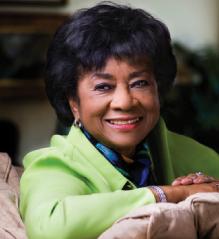
Outstanding piece on Calbuzz about the new Belva Davis book, “Never in My Wildest Dreams: A Black Woman’s Life in Journalism.” The Calbuzzers recount the vicious racist attacks Davis endured during the 1964 Republican convention in San Francisco, when the Goldwater forces were in control:


As we began our descent down the ramps of the Cow Palace, a self-appointed posse dangled over the railings, taunting. “Niggers!” “Get out of here, boy!” “You too, nigger bitch!” “Go on, get out!” “I’m gonna kill your ass!”


I stared straight ahead, putting one foot in front of the other like a soldier who would not be deterred from a mission. The throng began tossing garbage at us: wadded up convention programs, mustard-soaked hot dogs, half-eaten Snickers bars. My goal was to appear deceptively serene, mastering the mask of dispassion I had perfected since childhood to steel myself against any insults the outside world hurled my way.


Then a glass soda bottle whizzed within inches of my skull. I heard it whack against the concrete and shatter. I didn’t look back, but I glanced sideways at Louis and felt my lower lip began to quiver. He was determined we would give our tormentors no satisfaction.


“If you start to cry,” he muttered, “I’ll break your leg.”


Davis, of course, survived and when on to a storied career locally. The scary thing: There are a lot of parallels between the 1964 Goldwaterites and the tea partiers of today. Calbuzz:


Nearly 50 years later [the Goldwater platform] might serve as a manifesto for today’s Tea Party Republicans.


Attacking Democrats as “Federal extremists,” who have “enslaved” and “seek to master” ordinary Americans, the platform vowed , among other things, that Republicans would make deficit reduction their highest economic priority, oppose the “compulsory Democratic scheme” of Medicare and roll back actions of the Kennedy-Johnson Administration that “violently thrust Federal power into the free market.”


And race is still very much a part of what’s going on:


As evidence of the role that race still plays in conservative politics, Davis cited the Tea Party’s embrace of “birthers,” the slurs and spittle hurled by activists at Representatives and civil rights leaders John Lewis and James Clyburn at health care bill protests, and the recent email depicting Obama as a chimpanzee that was sent out by Tea Partier and Orange County Republican Central Committee member Marilyn Davenport.


 Back to the future. And it isn’t pretty.


Get baked with Obama

2

Whoa, dude. Back up. What?

Well, sort of. We all have heard about the $35,800 dinner that President Obama will be feasting upon tonight in Nob Hill, so needless to say, the man is in town. And the Green Door, one of San Francisco’s premier marijuana dispensaries, has tipped their patients off to some very top secret information – The president’s motorcade, according to the Green Door’s website, is expected to serendipitously drive past the shop, located at 843 Howard, at approximately 4:20 p.m., on this, the unofficial stoner holiday we affectionately call 4/20.

Just about every marijuana dispensary in the city is having some sort of patient appreciation party and tokefest, and the Green Door is no exception. All day they will be offering product deals and giveaways with raffle prizes, Djs, and munchies, so if you’re lucky enough have made it inside the shop before the police temporarily close off Howard – sometime between 3 and 4 p.m., the Green door says, though we were unable to verify any specifics with the SFPD – you will be able to “inhale to the chief.”

Happy 4/20!

Our Weekly Picks: April 20-26

0

WEDNESDAY 20

DANCE

“MOVE(MEN)T4”

The “MOVE(MEN)T” concerts plug into a men-only choreography tradition from the 1980s (although women do perform in them. Joe Landini revived the idea four years ago because the guys so clearly enjoyed the camaraderie that comes from working together. The artists for the second week’s program include Tim Rubel, who creates text-heavy pieces notable for their humor, and Honey McMoney and Kowal in what Landini calls “very queer” work. Jesse Bie has been dancing with and choreographing for Steamroller for more than 10 years while Michael Velez, a stunningly beautiful dancer, is a still-young choreographer. Todd McQuade is creating an installation in the basement; he will later perform it with Sasha Waltz and Guests in Berlin. (Rita Feliciano)

Wed/20-Thurs/21 8 p.m., $10-20

Garage

957 Howard, SF

(415) 518-1517

www.brownpapertickets.com


MUSIC

Dengue Fever

In trying to deal with the challenge Dengue Fever poses — singer Chhom Nimol belting out 1960s-style Cambodian pop played by L.A.-based musicians — critics have appealed to a unifying element: funk. Whether you’re Sharon Jones and the Dap-Kings, Antibalas Afrobeat Orchestra, or Dengue Fever, anachronism doesn’t matter, if you make the beat move. On its newest album, Cannibal Courtship, Dengue Fever twists the cultural novelty out of their lyrics, turning songs unexpectedly strange. (In the first track, Nimol shakes up the bored, hand-clapping back-up singers, transitioning from “you wouldn’t understand” to “be my sacrificial lamb.”) Funk is universal, and makes for a hell of a party. Just like LSD. (Ryan Prendiville)

With Maus Haus and DJ Felina

8 p.m., $22.50

Fillmore 

1850 Geary, SF

(415) 346-6000

www.livenation.com


THURSDAY 21

EVENT

“Salmon in the Trees”

What are fish doing up in the leafy branches of trees? The punch line (spoiler alert!) requires thinking web-of-life style. Salmon swim upstream from the ocean to spawn and then die, having successfully laid the next generation. In the process, some are hunted by hungry bears — among 50 other salmon-eating animals, including us — who consequently spread carcasses and salmon-fortified poop far and wide on the forest floor. Nutrients are absorbed, reaching the tops of even the oldest-growth trees. Learn about this phenomenon and more with award-winning conservation photographer and author Amy Gulick, who talks about her adventures documenting this wild interconnectivity in Alaska’s Tongass National Forest, one of the rarest ecosystems on the planet. (Kat Renz)

5:30 p.m., $20

Commonwealth Club

595 Market, SF

(415) 597-6700

www.commonwealthclub.org


PERFORMANCE

The Lily’s Revenge

What happens when a flower goes on a quest to become a man in order to wed his beloved bride? Or rather, what doesn’t happen, during this five-hour theater extravaganza in which playwright and burlesque performer Taylor Mac — along with dozens of local Bay Area artists — tackles love, marriage, and Prop. 8 using vaudeville, haiku, drag queens, ukuleles, feminist theories, dream ballets, and public dressing rooms, culminating in an interactive town hall. You heard right. Five hours. The first of three intermissions serves as a communal dinner, and wine and snacks are available for the long journey. Get ready for a spectacular adventure. (Julie Potter)

Through May 22

Tues-Sat 7 p.m.; Sun 2:30 p.m., $20-150

Magic Theatre

Fort Mason Center, SF

(415) 441-8822

www.magictheatre.org


FRIDAY 22

FILM

“John Waters’ Birthday Weekend”

John Samuel Waters was born April 22, 1946, which means he’s 65 today — but let’s hope one of America’s most daringly creative, bitingly hilarious, boundary-pushing filmmakers (not to mention authors, visual artists, and stand-up performers) has no intention of retiring anytime soon. The Castro pays tribute to “the Pope of Trash” with a quartet of essential early films (1972’s Pink Flamingos, 1974’s Female Trouble, 1981’s Polyester, and 1977’s Desperate Living), plus the (slightly) more mainstream 1994 Serial Mom and the movie that spawned the musical that spawned the movie musical, 1988’s Hairspray. True fiends will want to rush home post-weekend to watch all the movies not contained here, plus the DVD edition of 1981’s Mommie Dearest that contains Waters’ brilliant commentary, “Filth is my life!” (Cheryl Eddy)

Fri/22-Sun/24 $7.50-$10 

Castro Theatre

429 Castro, SF

(415) 621-6120

www.castrotheatre.com


MUSIC

Amon Amarth

Though they’ve been a band since 1992, the five burly Vikings in Sweden’s Amon Amarth didn’t really hit their stride for a decade. While headlining a U.S. tour in 2002, the quintet introduced stateside death metal maniacs to its untrammeled beards, overflowing, belt-mounted drinking horns, and soaring, harmonized riffs. With Oden on Our Side (2006) cemented the band’s status as standard bearers for the now-burgeoning Viking metal subgenre, partially on the strength of two hair-whipping music videos. New release Surtur Rising marks a historic chapter in the band’s career — one without headliners. This year’s “An Evening with Amon Amarth” tour features the band playing the new platter in its entirety, before launching into another set’s worth of old favorites. (Ben Richardson)

9 p.m., $22.50

Regency Ballroom

1300 Van Ness, SF

(415) 673-5716

www.theregencyballroom.com


DANCE

Bay Area National Dance Week

Free. Dance. Everywhere. Kicking off with the participatory “One Dance” in Union Square Plaza at noon today, Bay Area National Dance Week, presented by Dancers’ Group, encourages everyone to bust a move with classes, workshops, performances, and events across the region. Head to ODC Dance Commons for free classes from bhangra and ballet to the Rhythm and Motion dance workout. Impress your friends with new fire dancing skills learned at Temple of Poi. Or get close to your favorite performers during an open rehearsal. Whatever your style, be sure to enjoy some of the more than 400 events taking place as part of this dance celebration. (Potter)

Through May 1, free

Various Bay Area locations

(415) 920-9181

www.bayareandw.org


MUSIC

Questlove

From busking on the streets of Philadelphia in the late 1980s to a nightly gig on Late Night With Jimmy Fallon (with more than 12 albums in between), the Roots have never slowed down. It’s no blind guess that Ahmir Thompson, a.k.a. Questlove (a.k.a. ?uestlove), is a driving force behind its success (particularly if you’ve ever seen the look on his face when someone dropped the beat). A talented drummer with few peers, Questlove is the major reason the band is credited with not using recorded samples; he keeps them in his head and plays them with his hands. His deep knowledge of music, hip-hop, and beyond will be on display in an extensive four-hour DJ set. (Prendiville)

9 p.m., $20

Mezzanine

444 Jessie, SF

(415) 625-8880

www.mezzaninesf.com


SATURDAY 23

EVENT

“Cycles of History: Ecological Tour”

Feel the shape of San Francisco imprinted on your ass during a four-hour bike tour pedaling through the ecological past and present of the city’s northern neighborhoods. Sponsored by Shaping San Francisco, a living archive of lost local history, the two-wheeled trip explores the nature currently occupied by the towers of downtown, the landfilled waterfront, and the Presidio’s culturally-constructed forest, among other buried treasures. The tour is one of several offered throughout the year on everything from dissent to cemeteries, organized and led by the excessively knowledgeable and accessible Chris Carlsson, one of San Francisco’s premier activists and visionaries. An afternoon that’s good for the brain and the butt. (Renz)

Noon, $15-$50 sliding scale

Meet at CounterPULSE

1310 Mission, SF

(415) 608-9035

www.shapingsf.org


TUESDAY 26

MUSIC

tUnE-YarDs

It should be clear by now, given that name, its punctuation, the previous album (BiRd-BrAiNs) and the new one (w h o k i l l), plus the cover art, that Merrill Garbus has a thing for collage. Without hearing the music, you see it’s going to be a strange assembly. Sure as hell isn’t going to fit set styles in any easy way. But. Oh, she put that there? Kind of works. And those clippings on top of that image? It’s actually a little inspired (the glitter in particular.) Is she one of these crazy bedroom producers? Would explain the uncanny intimacy. The live show should explain how she puts it all together. (Prendiville)

With Buke and Gass, Man/Miracle

8 p.m., $15

Great American Music Hall

859 O’Farrell, SF

(415) 885-0750

www.gamh.com


FILM

Valley Girl

OK, so Nicolas Cage’s career of late has taken a strange turn. Bad Lieutenant: Port of Call New Orleans (2009) showed that under the right conditions, he can still contain his spiraling zaniness, but films like Season of the Witch, The Sorcerer’s Apprentice (2010), Knowing (2009), and Next (2007) — not to mention 2006’s remake of The Wicker Man — show that often he’d simply prefer not to. With Drive Angry 3-D and, Lord help us, an upcoming Ghost Rider (2007) sequel hinting that won’t be changing soon, take the time to revisit 1983’s Valley Girl, featuring a teenage Cage as a Hollywood demi-punk wooing adorable, mall-fixated Valley gal Deborah Foreman. The “I Melt With You” sequence is the gold standard for teen-dream falling-in-love montages; the dialogue, as always, remains totally tripendicular. (Eddy)

Tues/26-Weds/27 7:15 p.m., 9:25 p.m. (also April 27, 2 p.m.), $6-$10

Red Vic Movie House

1727 Haight, SF

(415) 668-3994

www.redvicmoviehouse.com


The Guardian listings deadline is two weeks prior to our Wednesday publication date. To submit an item for consideration, please include the title of the event, a brief description of the event, date and time, venue name, street address (listing cross streets only isn’t sufficient), city, telephone number readers can call for more information, telephone number for media, and admission costs. Send information to Listings, the Guardian Building, 135 Mississippi St., SF, CA 94107; fax to (415) 487-2506; or e-mail (paste press release into e-mail body — no text attachments, please) to listings@sfbg.com. Digital photos may be submitted in jpeg format; the image must be at least 240 dpi and four inches by six inches in size. We regret we cannot accept listings over the phone.

Beyond 420

0

steve@sfbg.com

GREEN CITY When the clock or the calendar hits 420 — and particularly at that magical moment of 4:20 p.m. on April 20 — the air of Northern California fills with the fragrant smell of green buds being set ablaze. But this year, some longtime cannabis advocates are trying to focus the public’s attention on images other than stoners getting high.

“I hope the house of hemp will replace the six-foot-long burning joint as the symbol of 420,” says Steve DeAngelo, executive director of Harborside Health Center, an Oakland cannabis collective, and one of the organizers of an April 23 festival in Richmond dubbed Deep Green that offers an expanded view of cannabis culture.

In addition to big musical acts, guest speakers, and vendors covering just about every aspect of the cannabis industry, the event will feature a house made almost entirely of industrial hemp. That exhibit and many others will highlight the myriad environmental and economic benefits of legalizing hemp, as California Sen. Mark Leno has been trying to do for years, with his latest effort, SB676, The California Industrial Hemp Farming Act, clearing the Senate Agriculture Committee on a 5–1 vote April 5.

Public opinion polls show overwhelming support for ending the war on drugs, particularly as it pertains to socially benign substances like industrial hemp, a strain of cannabis that doesn’t share the psychoactive qualities of its intoxicating sister plants. Yet DeAngelo said that after 40 years of advocating for legalization, he’s learned to be patient because “unfortunately, our politicians are lagging behind public opinion.”

In San Francisco and many other cities, marijuana dispensaries have become a legitimate and important part of the business community (see “Marijuana goes mainstream,” 1/27/10), spawning offshoots like the edibles industry that provide more safe and effective ways of ingesting marijuana (see “Haute pot,” 1/25/11).

But the proof that the medical marijuana is about more than just getting people high also continues to grow, from the endless touching tales of cancer, AIDS, and other patients who have been saved from suffering by this wonder weed to the lengths that the industry is going to cultivate cannabidiol (CBD), a compound found in marijuana that doesn’t get people high but offers many other benefits, including acting as an antidepressant and antiinflammatory medicine.

CBD and tetrahydrocannabinol (THC), the main psychoactive compound in marijuana, generally have an inverse relationship in cannabis plants, so the efforts by generations’ worth of pot cultivators to breed strains with higher THC content have almost completely bred the CBD out of the plants. “In the underground markets, it didn’t have any value,” DeAngelo said.

When Harborside Health Center first started laboratory-testing marijuana many years ago, DeAngelo said that of 2,000 strains tested, only nine had “appreciable quantities of CBD.” In addition to efforts by Harborside and the San Francisco Patient and Resource Center (SPARC) to work with growers on bringing back CBD-heavy strains, modern scientific techniques are allowing CBD to be extracted from the strains that do exist.

“It’s not psychoactive, but let me tell you, it is mood-altering,” says Albert Coles, founder of CBD Sciences in Stinson Beach. “A lot of people, when they smoke pot go inward, but that often isn’t good for social interactions.”

His company makes laboratory-tested cannabis tinctures called Alta California that have been increasingly popular in San Francisco, offering three different varieties: high THC/low CBD, low THC/high CBD, and a 50-50 mix. “It’s good for creative thinking because it just clears out all the noise,” Coles said of CBD.

But even when talking about THC, many in the industry dispute the criticism that most marijuana use is merely recreational drug use. Vapor Room founder Martin Olive has said most pot use isn’t strictly medical or recreational, but a third category he calls “therapeutic,” people who smoke pot to help cope with the stress of modern life.

DeAngelo agrees, although he puts it slightly differently: “The vast majority of cannabis users use it for the purpose of wellness.” 

DEEP GREEN FESTIVAL Saturday, April 23. Performances by The Coup, Heavyweight Dub Champion, and more; speakers include pot cultivation columnist Ed Rosenthal, Steve DeAngelo, and business owner David Bronner. $20 advance/$30 door ($20 for bicyclists and carpoolers, $100 VIP).

Craneway Pavilion, 1414 Harbour Way South, Richmond. www.deepgreenfest.com


Why the Eagle is home

4

Some people don’t fit in. Anybody who has walked in the margins for any period of time gets this. And anybody who gets this, honestly, understands that within the margins of the outsider, there are narrower margins to inhabit. If you came to San Francisco, or the Bay Area, as an outsider’s outsider, you may have found a home of sorts at the Eagle Tavern.

I came to San Francisco a long time ago. I came out, I did my time in the Castro. I migrated out of there as I migrated out of my 20s and wound up hanging in the SoMa bars, where I felt more comfortable and had more in common with the men who frequented them. The scene down there was edgier for sure, maybe outright crazy at times, but at least it seemed a little more down to earth. The people were interesting and fun. Artists, musicians, addicts, hustlers, drag queens. Home.

Beyond my identity as a queer man, I’ve also worked as a musician for the last three or so decades. I’ve had a reasonable amount of mainstream success. But I also do a lot of smaller projects, which don’t always make me money but are in many ways what I live and breathe for.

About 10 years ago, one of my musical brothers in arms, Doug Hilsinger, who is the talent booker at the Eagle, asked my to play with the Cinnamon Girls, his Neil Young tribute … The catch, well you gotta wear a dress. In fact, well, you get to have a couple of drinks and rock out LOUD (really loud) and play Neil songs … and we do, and if you’ve heard us, you know we do it right, and we do it well. It’s shambolic, drunken, and artful. Awesome fun, the art of the bar band, a stage to play on and an audience to listen.

Do a little cultural deconstruction here: a band of straight and gay musicians get together and play Neil Young songs at a leather bar in San Francisco, simply for fun, to a mixed audience (the Eagle is notoriously mixed straight and gay on music nights). I believe you call this cultural cross-pollination, when groups of people who might not anticipate socializing do so by accident and create some unanticipated unity. It’s not at a scripted event, but it is part of the day-to-day workings of the Eagle Tavern in San Francisco. Could you please tell me, if you happen to know, if there is any other place on the planet (seriously) where something like this happens? People throw around phrases like “unique San Francisco institution” a little to easily sometimes. THIS is the real deal.

And this is, by the way, one of about 100 plus events that may happen at the Eagle in any given year. What else may happen? AIDS fundraisers, political rallies (I’ve seen no fewer than five city supervisors and two state senators plying the crowd at the Sunday beer bust). Hilsinger’s regular Thursday night indie music night has seen a host of great and notable artists for a decade, offering a venue to people who might otherwise have a hard time finding a stage. I’ve been to memorials and wakes there. My partner Troy and I had our reception for our illegal San Francisco gay marriage at the Eagle back in 2004.

The Eagle isn’t really as much a bar as it is an oddball equivalent of the old school public house, the bar that also has become a community center. Add to all of this a history of more than 30 years, far enough back to when leather was really the outsider community within the community, old enough to have lost a lot of clientele and fought hard to stay in business during the AIDS crisis. Old enough to have weathered the shifting demographic of SoMa during the dot-com and Web 2.0 economic tidal shifts. That’s called institutional endurance, and its rare. You can ask any bar owner or restaurant owner about this.

The Eagle Tavern, for all of these reasons and many more, is culturally significant in this town. Should it close so that an owner (who doesn’t live in town and who has shown callously that he doesn’t give a damn about the community) can “clean it up” and make, presumably, a straight bar that caters to the bridge-and-tunnel scene (or even a new, trendy gay bar focused on younger clientele), we as a city are going to lose something that simply cannot be replaced.

Victor Krummenacher is a musician and designer.


A bang and a whimper

0

arts@sfbg.com

SAN FRANCISCO INTERNATIONAL FILM FESTIVAL Science fiction’s open secret is that it has never really been about the future. As William Gibson explained to an interviewer in 2007, echoing earlier genre criticism by writers such as Samuel R. Delany and Joanna Russ, science fiction is, at its heart, “speculative fiction, but you don’t really have the future to work with, so you are always working with history and with the present.”

Gibson’s ecumenical gloss on genre fiction provides a helpful rubric under which to view some of SFIFF’s odder ducks. Although each of the following films slot differently genre-wise — apocalyptic road movie, surrealist fantasy, cybernetic thriller — the “what ifs?” posed by their imaginings of alternate presents (and in one case, an alternate past) certainly qualify them as speculative fictions. To what degree their directors are skilled at telling such stories remains open to speculation.

It’s hard to tell which way the world ends (or if it is ending at all) in Jo Sung-Hee’s dark, head-scratcher of a debut feature, End of Animal. The modest production opens inside a taxi, which a young pregnant woman is taking to her mother’s place in the country. All hell breaks loose when the driver, for reasons left unexplained, picks up a male hitchhiker who within minutes is spouting end times gibberish and, following his prediction of the blinding freak flash that suddenly cuts off all power in the surrounding area, vanishes into thin air.

Much like K in Franz Kafka’s The Castle, the now-stranded and cell phone-less woman spends the next hour and a half unsuccessfully trying find a roadside shelter, alternately befriending and fending off increasingly-hostile locals who are just as confused and frightened as she is. Are we watching those left behind duke it out post-Rapture? Or was the hitchhiker an alien? And why does he want the woman’s baby so badly? Unfortunately, End of Animal drops many tantalizing breadcrumbs but offers no trail to follow.

Unlike other contemporary ruminations on the apocalypse, such as Michael Haneke’s Time of the Wolf (2003) or Kiyoshi Kurosawa’s Charisma (1999) and Pulse (2001), End of Animal‘s explanatory obstinacy does not enhance the drama or emotional intensity of watching its protagonists endure their trials by fire, but rather, leaves viewers feeling just as lost in the woods.

Alejandro Chomsky offers something more transparent in his serviceable adaptation of fellow countryman and frequent Borges collaborator Adolfo Bioy Casares’ 1973 novel Asleep in the Sun. Chomsky translates Casare’s strange tale of a humble watchmaker who uncovers a sinister plot in which the souls of the mentally afflicted are siphoned into unknowing canines with plenty of visual relish, thanks to an antiseptic color palette and great 1930s-inspired production design. The film mixes bemusement and dead earnestness to its detriment, dialing down the urgency of its protagonist’s growing realization that he is the lapdog of an all-controlling bureaucracy from “nightmarish” to merely “unpleasant.” Alas, Asleep in the Sun‘s Kafka-esque (there he is again) pretensions are all bark and no bite.

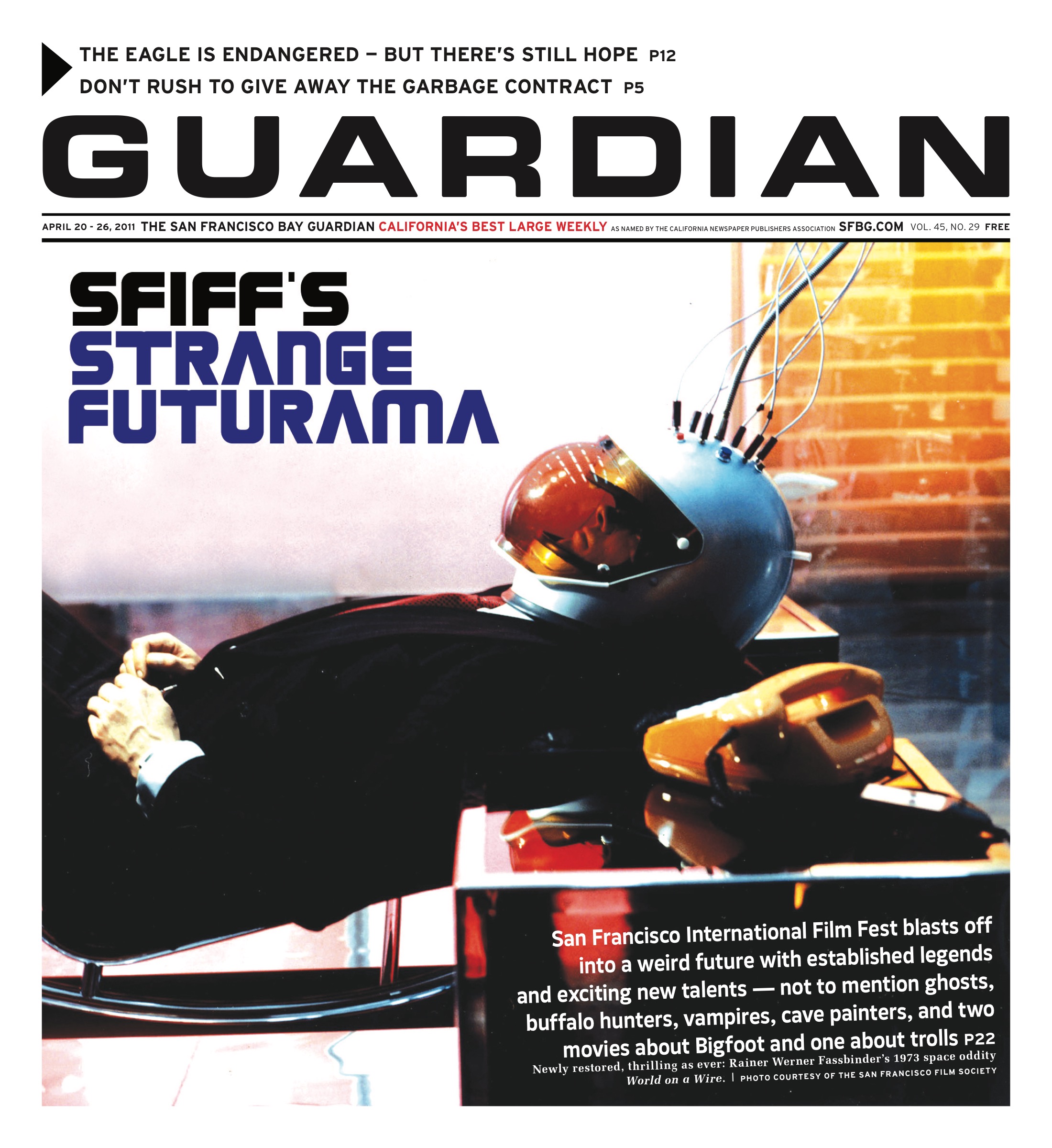
Well, thank your SFIFF programmers for including the recently restored version of Rainer Werner Fassbinder’s 1973 techno-caper World on a Wire. Originally made as a two-part miniseries for German TV, Fassbinder’s only foray into science fiction finds the uber-prolific director borrowing a page or two from Alphaville (1965) while blowing some air kisses to Stanley Kubrick’s monolith 2001: A Space Odyssey (1968) and out Matrix-ing 1999’s The Matrix by some 25 years.

When the inventor of a supercomputer responsible for generating an artificial world mysteriously disappears, his handsome predecessor must fight against his corporate bosses to find out what happened, in the process stumbling on a far more shattering secret about the nature of reality itself. Sound crazy? Well, it is. But, between the mirrored and Lucite furniture, chiseled Teutonic women in disco finery, chase sequences, and frenetic zooms, it adds up to some of the most enjoyable hours you can spend at the festival.

SAN FRANCISCO INTERNATIONAL FILM FESTIVAL

April 21–May 5, most shows $13

Various Bay Area venues

www.sffs.org

House haunters

0

cheryl@sfbg.com

SAN FRANCISCO INTERNATIONAL FILM FESTIVAL Remember that episode of The Brady Bunch where Carol and Mike decide to sell the house and the kids fake-haunt it to scare off potential buyers? It’s the pop culture moment I always think of when I hear about an apartment with suspiciously cheap rent. First reaction: “Wow! Is it haunted?”

In real life, low rent usually means the place is the size of a broom closet or has some other easy-to-discover flaw. But in Emily Lou’s The Selling, ghostly squatters — plus bleeding walls, exploding toilets, and other unexplained phenomena — are a legit concern for real estate agent Richard Scarry (“like the children’s book author”), played by the film’s screenwriter, Gabriel Diani.

Richard’s trying to sell the troublesome house quickly to pay for his mother’s medical bills, so he turns to blogger and spirit-world expert Ginger Sparks (Etta Devine) for help. The previous tenant, a serial killer nicknamed “the Sleep Stalker,” could be the root cause — but the supernatural goings-on prove more sinister than Richard and Ginger expect. Mayhem (inspired by haunted-house films past, including 1979’s The Amityville Horror, 1982’s Poltergeist, 1980’s The Shining, 1987’s Evil Dead II, and 1988’s Beetle Juice) inevitably ensues.

The Selling is Lou’s first feature; it’s having its world premiere as part of SFIFF’s “Late Show” program. Her background is in theater directing, which is how she met Diani — they both studied at San Francisco State University, and later collaborated on a play at the San Francisco Fringe Festival. Diani was also a part of Totally False People, a comedy troupe instrumental in founding San Francisco Sketch Comedy Festival (TFP O.G.s Janet Varney and Cole Stratton also have roles in The Selling).

Though the film was shot in Los Angeles (lowbrow comedy fans may recognize the house — it’s the same one used in 2008’s The House Bunny), Lou, who grew up in Yuba City, lives in Oakland. She was inspired to trade the stage for a film set for tangible reasons.

“I did a lot of theater and I’d spend all this time and energy creating this product I was really proud of — and not only my time and energy, but a lot of other people’s too. And at the end of the day, like 50 people would have seen it,” she says. “It struck me that I wanted to create something timeless, something we could keep and contain — and hopefully a greater audience could see it. The idea of this moment in time with theater just passing by didn’t seem like enough. I wanted something longer-lasting, something that gave a little bit more to the people who put their heart and souls into it.”

After getting a camera and shooting “a couple of terrible short films,” Lou contacted Diani, whose writing skills she admired. Ironically, horror isn’t her favorite genre. “I am so easily scared,” she confesses. “But Gabe and I are both drawn to older, classic horror rather than the new, Saw-type horror.”

Though it has spooky elements, The Selling is more comedy than frightfest. Directing two genres at once required a certain amount of flexibility on Lou’s part. “Horror has a lot more to do with the visual components, like the set and makeup — and setting up for the shot, because it’s probably going to be enhanced with some after-effects. With comedy, if it’s funny, it’s funny — let’s just capture the funny.”

The Selling‘s cast is largely unknown (unless you’re a Sketchfest diehard), but it does feature a cameo by Rocky Horror Picture Show (1975) royalty Barry Bostwick, playing a daffy exorcist. “We were fans of his, and we approached his agent. Barry read the script, and he really liked it and wanted to do it,” Lou says. “It just kind of went from there, and he worked for less than he normally works for — he’s also a fan of classic horror. He was amazing to work with, just a great guy.”

THE SELLING

April 29, 11:30 p.m.;

May 4, 4:15 p.m., $13

Sundance Kabuki

1881 Post, SF

www.sffs.org

What to watch

0

THURS/21

Beginners (Mike Mills, U.S., 2010) There is nothing conventional about Beginners, a film that starts off with the funeral arrangements for one of its central characters. That man is Hal (Christopher Plummer), who came out to his son Oliver (Ewan McGregor) at the ripe age of 75. Through flashbacks, we see the relationship play out — Oliver’s inability to commit tempered by his father’s tremendous late-stage passion for life. Hal himself is a rare character: an elderly gay man, secure in his sexuality and, by his own admission, horny. He even has a much younger boyfriend, played by the handsome Goran Visnjic. While the father-son bond is the heart of Beginners, we also see the charming development of a relationship between Oliver and French actor Anna (Melanie Laurent). It all comes together beautifully in a film that is bittersweet but ultimately satisfying. Beginners deserves praise not only for telling a story too often left untold, but for doing so with grace and a refreshing sense of whimsy. Thurs/21, 7 p.m., Castro. (Louis Peitzman)


FRI/22

The Good Life (Eva Mulvad, Denmark, 2010) Portraits of the formerly wealthy are often guilty of peddling secondhand nostalgia for some ancien regime while simultaneously stoking schadenfreude toward the now-deposed (just ask Vanity Fair). Eva Mulvad’s melancholy character study of 50-something Annemette Beckmann and her aged mother, Mette, avoids both traps even as her subjects — formerly wealthy Danish expats living on the dole in a cramped apartment in a coastal Portuguese town — offer few inroads for sympathy. Narcissistic and petulant, Annemette blames the loss of her family’s wealth on the 1974 nationalization of Portugal’s then-Communist government, and claims that her cosseted upbringing has made it hard to find a job (“Work doesn’t become me,” she gratingly protests at one point). Mette, who is more likeable, is a resigned realist whose sole comfort, aside from the pet dog, seems to be her knowledge that she is not long for this world. Comparisons to Grey Gardens (1975) are inevitable here, but the Beckmanns simply aren’t as interesting or possessed by as idiosyncratic a joie de vivre as the Beales, making The Good Life a tough slog. Fri/22, 3:45 p.m.; April 28, 6:45 p.m.; and May 1, 9:30 p.m., Kabuki. (Matt Sussman)

Hahaha (Hong Sang-soo, South Korea, 2010) Do you remember a time you behaved badly (not horribly, but bad enough that you felt ashamed) but you didn’t really think about it until long after the fact, say, when getting drinks with an old friend? If you can’t, than the latest from South Korean director Hong Sang-soo will probably jog your memory. As with many of Hong’s films, Hahaha’s premise is similar to the above scenario: two 30-something buds get together and reminisce about their recent trips to the same seaside town. Shown in episodic flashbacks, we start to realize that the incidents and players in their separate accounts overlap into one story filled with terrible poetry, domineering mothers, stalker-ish behavior, and poorly made choices. Hong’s films are primers in how not to treat your fellow human beings (straight dudes are usually the culprits), so take notes. Fri/22, 9:15 p.m.; Mon/25, 9 p.m.; and Tues/26, 3:30 p.m., Kabuki. (Sussman)

I’m Glad My Mother is Alive (Claude Miller and Nathan Miller, France, 2009) Codirected with his son Nathan, this latest by veteran French director Claude Miller is an about-face from his acclaimed 2007 period epic A Secret. Viscerally up-to-the-moment in content and handheld-camera style, it’s a small story that builds toward an enormous punch. Thomas (played by Maxime Renard as a child, then Vincent Rottiers) is a lifelong malcontent whose troubles are rooted in his abandonment at age five by an irresponsible mother (Sophie Cattani). Neither the attentions of well-meaning adoptive parents or the influence of his better-adjusted younger brother can quell Thomas’ mix of furious resentment and curiosity toward his mere, whom he finally develops a relationship with as a young adult. As usual, Miller doesn’t “explain” his characters or let them explain themselves, yet everything feels emotionally true — right up to a narrative destination both that feels both shocking and inevitable. Fri/22, 6:45 p.m., and Mon/25, 9:30 p.m., Kabuki. (Dennis Harvey)

Meek’s Cutoff (Kelly Reichardt, U.S., 2010) After three broke down road movies (1994’s River of Grass, 2006’s Old Joy, 2008’s Wendy and Lucy), Kelly Reichardt’s new frontier story tilts decisively toward socially-minded existentialism. It’s 1845 on the choked plains of Oregon, miles from the fertile valley where a wagon train of three families is headed. They’ve hired the rogue guide Meek to show them the way, but he’s got them lost and low on water. When the group captures a Cayeuse Indian, Solomon proposes they keep him on as a compass; Meek thinks it better to hang him and be done with it. The periodic shots of the men deliberating are filmed from a distance — the earshot range of the three women (Michelle Williams, Zoe Kazan, and Shirley Henderson) who set up camp each night. It’s through subtle moves like these that Meek’s Cutoff gives a vivid taste of being subject to fate and, worse still, the likes of Meek. Reichardt winnows away the close-ups, small talk, and music that provided the simple gifts of her earlier work, and the overall effect is suitably austere. Fri/22, 9 p.m., and Mon/25, 4:30 p.m., Kabuki. (Max Goldberg)

Stake Land (Jim Mickle, U.S., 2010) Not gonna lie — the reason I wanted to review this one was because of the film still in the SFIFF catalog. Rotten-faced vampire with a stake through its neck? Yes, please! But while Jim Mickle’s apocalyptic road movie does offer plenty of gore, it’s more introspective than one might expect, following an orphaned teenage boy, Martin (Connor Paolo, Serena’s little bro on Gossip Girl), and his gruff mentor, Mister (Snake Plissken-ish Nick Damici), on their travels through a ravaged America. As books, films, and comics have taught us, whenever a big chunk of the human race is wiped out (thanks to zombies, vampires, an unknown cataclysm, etc.), the remaining population will either be good (heroic, like Mister and Martin, or helpless, like the stragglers they rescue, including a nun played by Kelly McGillis), or evil — cannibals, rapists, religious nuts, militant survivalists, etc. Stake Land doesn’t throw many curveballs into its end-times narrative, but it’s beautifully shot and doesn’t hold back on the brutality. Larry Fessenden (director of 2006’s The Last Winter) produced and has a brief cameo as a helpful bartender. Fri/22, 11:30 p.m., and Mon/25, 9:45 p.m., Kabuki. (Cheryl Eddy)


SAT/23

The Autobiography of Nicolae Ceausescu (Andrei Ujica, Romania, 2010) Andrei Ujica’s three-hour documentary uses decades of propagandic footage to let the late Romanian dictator — who was overthrown by popular revolt and executed in 1989 — hang himself with his own grandiose image-making. While the populace suffered (off-screen, you might want to bone up on the facts before seeing this ironical, commentary-free portrait), the “great leader” and his wife Elena were constantly seen holding state dances, playing volleyball, hunting bear, and vacationing hither and yon. (We even see them on the Universal Studios tour.) There’s no surprise in seeing them greeted with enormous pageantry in China; but it’s a little shocking to see this tyrant welcome Nixon (in the first-ever U.S. presidential visit to a Communist nation), lauded by Jimmy Cartner, and hobnobbing with Queen Elizabeth. This grotesque parade of self-glorifying public moments has a happy ending, however. Sat/23, 12:45 p.m., Kabuki; Sun/24, 5:15 p.m., New People; May 1, 1:30 p.m., PFA. (Harvey)

Life, Above All (Oliver Schmitz, South Africa/Germany, 2010) It’s tough enough to simply grow up, let alone care for a parent with AIDS and deal with the suspicions and fears of the no-nothing adults all around you. Rising above easy preaching and hand-wringing didacticism, Life, Above All takes as its blueprint the 2004 best-seller by Allan Stratton, Chandra’s Secrets, and makes compelling work of the story of 12-year-old Chandra (Khomotso Manyaka) and her unfortunate family, unable to get effective help amid the thicket of ignorance regarding AIDS in Africa. After her newborn sister dies, Chandra finds her loyalty torn between her bright-eyed best friend Esther (Keaobaka Makanyane), who’s rumored to hooking among the truck drivers in their dusty, sun-scorched rural South African hometown, and her mother (Lerato Mvelase), who listens far too closely to her bourgie friend Mrs. Tafa (an OTT Harriet Manamela), for her own good. Cape Town native director Oliver Schmitz sticks close to the action playing across his actors’ faces, and he’s rewarded, particularly by the graceful Manyaka, in this life-affirmer about little girls forced to shoulder heart-breaking responsibility far too soon. Sat/23, 4 p.m., and April 28, 6 p.m., Kabuki. (Kimberly Chun)

The Mill and the Cross (Lech Majewski, Poland/Sweden, 2010) One of the clichés often told about art is that it is supposed to speak to us. Polish director Lech Majewski’s gorgeous experiment in bringing Flemish Renaissance painter Peter Bruegel’s sprawling 1564 canvas The Procession to Calvary to life attempts to do just that. Majeswki both re-stages Bruegel’s painting — which draws parallels between its depiction of Christ en route to his crucifixion and the persecution of Flemish citizens by the Spanish inquisition’s militia — in stunning tableaux vivant that combine bluescreen technology and stage backdrops, and gives back stories to a dozen or so of its 500 figures. Periodically, Bruegel himself (Rutger Hauer) addresses the camera mid-sketch to dolefully explain the allegorical nature of his work, but these pedantic asides speak less forcefully than Majeswki’s beautifully lighted vignettes of the small joys and many hardships that comprised everyday life in the 16th century. Beguiling yet wholly absorbing, this portrait of a portrait is like nothing else at the festival. Sat/23, 12:30 p.m., SFMOMA, and April 27, 9 p.m., Kabuki. (Sussman)

Mind the Gap Experimental film fans: come for the big names, but don’t miss out on the newcomers. Locals Jay Rosenblatt (melancholy found-footage bio The D Train), Kerry Laitala (psychedelic 3-D brain-dazzler Chromatastic), and Skye Thorstenson (mannequin-horror music video freak out Tourist Trap, featuring the acting and singing stylings of the Guardian’s Johnny Ray Huston) offer strong entries in an overall excellent program. International bigwigs Peter Tscherkassky (the 25-minute Coming Attractions, a layered study of airplanes, Hollywood, and Hollywood airplanes — not for the crash-phobic) and Jonathan Caouette (“Lynchian” has been used to describe the Chloë Sevigny-starring All Flowers In Time, though it contains a scary-faces contest that’d spook even Frank Booth) are also notable. New names for me were Zachary Drucker, whose Lost Lake introduces a transsexual, pervert-huntin’ vigilante for the ages, and my top pick: Kelly Sears’ Once it started it could not end otherwise, a deliciously sinister hidden-history lesson imagined via 1970s high-school yearbooks. Sat/23, 4:45 p.m., and May 1, 9:45 p.m., Kabuki. (Eddy)

The Troll Hunter (André Ovredal, Norway, 2010) Yes, The Troll Hunter riffs off The Blair Witch Project (1999) with both whimsy and, um, rabidity. Yes, you may gawk at its humongoid, anatomically correct, three-headed trolls, never to be mistaken for grotesquely cute rubber dolls, Orcs, or garden gnomes again. Yes, you may not believe, but you will find this lampoon of reality TV-style journalism, and an affectionate jab at Norway’s favorite mythical creature, very entertaining. Told that a series of strange attacks could be chalked up to marauding bears, three college students (Glenn Erland Tosterud, Tomas Alf Larsen, and Johanna Morck) strap on their gumshoes and choose instead to pursue a mysterious poacher Hans (Otto Jespersen) who repeatedly rebuffs their interview attempts. Little did the young folk realize that their late-night excursions following the hunter into the woods would lead at least one of them to rue his or her christening day. Ornamenting his yarn with beauty shots of majestic mountains, fjords, and waterfalls, Norwegian director-writer André Ovredal takes the viewer beyond horror-fantasy — handheld camera at the ready — and into a semi-goofy wilderness of dark comedy, populated by rock-eating, fart-blowing trolls and overshadowed by a Scandinavian government cover-up sorta-worthy of The Girl with the Dragon Tattoo (2009). Sat/23, 11:30 p.m., Kabuki; Mon/25, 6:15 p.m., New People. (Chun)

World on a Wire (Rainer Werner Fassbinder, Germany, 1973) The words “Rainer Werner Fassbinder” and “science fiction film” are enough to get certain film buffs salivating, but the Euro-trashy interior décor is almost reason enough to see this restored print of the New German Cinema master’s cyber thriller. Originally a two-part TV miniseries, World on a Wire is set in an alternate present (then 1973) in which everything seems to be made of concrete, mirror, Lucite, or orange plastic. When the inventor of a supercomputer responsible for generating an artificial world mysteriously disappears, his handsome predecessor must fight against his corporate bosses to find out what really happened, and in the process, stumbles upon a far more shattering secret about the nature of reality itself. Riffing off the understated cool of Godard’s Alphaville (1965) while beating 1999’s The Matrix to the punch by some 25 years, World on a Wire is a stylistically singular entry in Fassbinder’s prolific filmography. Sat/23, 8:45 p.m., Kabuki, and April 30, 2 p.m., PFA. (Sussman) SUN/24

A Cat in Paris (Alain Gagnol and Jean-Loup Felicioli, France/Belgium/Netherlands/Switzerland, 2010) Save your pocket poodles, please: Paris, as cities go, is most decidedly feline. From 1917’s silent serial Les Vampires to its uber-cool 1990s update Irma Vep, cat burglars and the Parisian skyline have gone together like café and au lait. Add actual cats and jazz to the mix for good measure (even Disney saw fit to set its jazzy 1970 Aristocats in the City of Light). At just over an hour long, the animated A Cat in Paris is an enjoyable little amuse-bouche that employs all the standards of the cats-in-Paris meme: Billie Holiday warbling on the soundtrack, a dashingly heroic antihero who scales the rooftops as if he studied parkour under Spider-Man, and the titular untamable black cat who serves as his partner in crime. Complete with a climatic Hitchcockian set piece on the rooftops of Notre Dame Cathedral, A Cat in Paris has a refreshingly angular and graphic, almost cubist, feel. Directors Alain Gagnol and Jean-Loup Felicioli’s work certainly doesn’t rank among that of countryman Sylvain Chomet (2010’s The Illusionist), but this family film is worth checking out if kitties up to no good in Purr-ree simply make you want to le squee. Sun/24, 12:30 p.m., Kabuki, and May 1, 12:30 p.m., New People. (Michelle Devereaux)


MON/25

Cave of Forgotten Dreams (Werner Herzog, U.S., 2010) The latest documentary from Werner Herzog once again goes where no filmmaker — or many human beings, for that matter — has gone before: the Chauvet-Pont-d’Arc Cave, a heavily-guarded cavern in Southern France containing the oldest prehistoric artwork on record. Access is highly restricted, but Herzog’s 3D study is surely the next best thing to an in-person visit. The eerie beauty of the works leads to a typically Herzog-ian quest to learn more about the primitive culture that produced the paintings; as usual, Herzog’s experts have their own quirks (like a circus performer-turned-scientist), and the director’s own wry narration is peppered with random pop culture references and existential ponderings. It’s all interwoven with footage of crude yet beautiful renderings of horses and rhinos, calcified cave-bear skulls, and other time-capsule peeks at life tens of thousands of years ago. The end result is awe-inspiring. Mon/25, 7 p.m., and Tues/26, 9:30 p.m., Kabuki. (Eddy)


TUES/26

Nostalgia for the Light (Patricio Guzmán, France/Chile/Germany, 2010) Chile’s Atacama Desert, the setting for Patricio Guzmán’s lyrically haunting and meditative documentary, is supposedly the driest place on earth. As a result, it’s also the most ideal place to study the stars. Here, in this most Mars-like of earthly landscapes, astronomers look to the heavens in an attempt to decode the origins of the universe. Guzmán superimposes images from the world’s most powerful telescopes — effluent, gaseous nebulas, clusters of constellations rendered in 3-D brilliance — over the night sky of Atacama for an even more otherworldly effect, but it’s the film’s terrestrial preoccupations that resonate most. For decades, a small, ever dwindling group of women have scoured the cracked clay of Atacama searching for loved ones who disappeared early in Augusto Pinochet’s regime. They take their tiny, toy-like spades and sift through the dirt, finding a partial jawbone here, an entire mummified corpse there. Guzmán’s attempt through voice-over to make these “architects of memory,” both astronomers and excavators alike, a metaphor for Chile’s reluctance to deal with its past atrocities is only marginally successful. Here, it’s the images that do all the talking — if “memory has a gravitational force,” their emotional weight is as inescapable as a black hole. Tues/26, 6:30 p.m., Kabuki, and April 28, 6:15 p.m., PFA. (Devereaux)

The Sleeping Beauty (Catherine Breillat, France, 2010) Fairytales are endemically Freudian; perhaps it has something to with their use of subconscious fantasy to mourn — and breathlessly anticipate — the looming loss of childhood. French provocateuse Catherine Breillat’s feminist re-imagining of The Sleeping Beauty carries her hyper-sexualized signature, but now she also has free reign to throw in bizarre and beastly metaphors for feminine and masculine desire in the form of boil-covered, dungeon-dwelling ogres, albino teenage princes, and icy-beautiful snow queens. The story follows Anastasia, a poor little aristocrat, who longs to be a boy (she calls herself “Sir Vladimir”). When her hand is pricked with a yew spindle (more of a phallic impalement, really), Anastasia falls into a 100-year adventurous slumber, eventually awakening as a sexually ripe 16-year-old. It all plays like an anchorless, Brothers Grimm version of Sally Potter’s 1992 Orlando. And while it’s definitely not for the kiddies, it’s hard to believe that many adults would find its overt symbolism and plodding narrative any more than a sporadically entertaining exercise in preciousness. Your own dreams will undoubtedly be more interesting — perhaps you can catch a few zzz’s in a theater screening this movie. Tues/26, 6:15 p.m., and April 27, 6:30 p.m., Kabuki. (Devereaux)

THE 54TH ANNUAL SAN FRANCISCO INTERNATIONAL FILM FESTIVAL runs April 21–May 5. Venues are the Sundance Kabuki, 1881 Post, SF; Castro, 429 Castro, SF; New People, 1746 Post, SF; San Francisco Museum of Modern Art, 151 Third, SF; and Pacific Film Archive, 2575 Bancroft, SF. For tickets (most shows $13) and complete schedule visit www.sffs.org>.

Wicked, man

7

marke@sfbg.com

RAVE CULTURE Here’s a classic San Francisco rave story for you. First the official legend: “In the spring of 1991, a small, brave crew of acid house seekers set sail from southeast England in search of adventure. San Francisco was the destination. They made their mark under the Golden Gate Bridge at Baker Beach with the first in a six-year run of wild and lawless Full Moon parties.” And now the party reality: the crew set up during heavy fog after touching down from Britain — and at least two of Wicked’s four members, Garth and Jenö, had absolutely no freaking clue that they were beneath the Golden Gate Bridge.

“We Brits were virgins to that beach,” Garth told me. “We were all enjoying a psychedelic dance when the sun started to come up, and the fog peeled back to reveal the bridge above our heads, lit up like a spaceship! We were hooked from that moment on. The decks were set up on a blanket on the sand. No table. Walkman speakers made makeshift monitors. One well-prepared gay friend improvised a cardboard dancefloor for himself and went about his vogueing like he was back at the Endup or Paradise Garage.”

The Wicked Brit saucer, launched from the illustrious Tonka Sound System renegade rave base, touched down on our shores at a moment when the Bay Area psychedelic sound and spirit was flagging. The West Coast underground party scene was being commercialized into the kind of slick, infantile, overproduced spectacles that unfortunately came to define rave in many ’90s people’s minds. And the music was veering from true basement soul to Big Bird carnival woo-woo — not that there was anything too awful about that, at the time it was fresh. But a pagan squadron of prog-rocky, deep acid house and baggy beats lovers setting up on a beach was a blast of fresh air.

Update on the Wicked crew: Almost all have benefited from our wonderful current dance music moment that values historical broad-mindedness over genre lockstep. (Really, the era-roving Wicked DJs have never sounded better than right now). Garth now lives in Los Angeles and has been releasing a steady stream of re-edits and remixes on his two labels, and through his King & Hound project with beloved local disco archivist James Glass. Former punk protestor and anarchist bookstore haunter Jenö plays live acid house every first Saturday at 222 Hyde, broadcasts the weekly “Noise from the Void” radio show (Tuesdays at 9 p.m. at www.90hz.org), and is codirecting a documentary on the social implications of San Francisco’s early rave scene, due out this summer. Thomas is in New York City as one-half of the awesome Rub N Tug production team and owns Whatever We Want Records. And Markie? The dude is and always will be Markie, party legend.

On the eve of the full moon Wicked: 20 Years of Disco Glory reunion party (the name is a cheeky play on one of Garth’s already cheeky dance floor hits), I talked to Garth, Jenö, and Thomas over e-mail.

SFBG It seems like a boatload of Brits emigrated here in the ’90s and had a huge impact on the party scene — in fact, they’re still coming. Is there something special about San Francisco that draws you guys? 

Garth I think a lot of Brits followed us here after they heard what was going on in the Bay Area, the freedom. The U.K. party scene was outlawed by Thatcher’s conservative government when it passed the criminal justice bill, which made it illegal for groups of more than 10 people to congregate while listening to repetitive beats. So there was a kind of party exodus: trance heads went to India (specifically Goa), other Brits went to Thailand, Australia, and Spain in search of a more fun life. San Francisco is particularly appealing to Brits because the climate suits us. It’s never too hot or too cold, and there’s a good dose of fog. It’s very liberal, the architecture is Victorian, it’s by the ocean with hills and those trams — plus great food and a strong, self-sustaining music scene.

Thomas It’s poetic, cosmopolitan, and charming without being European: we like that.

SFBG You definitely did bring a pagan spirit with you — not just with the full moon and witchy Wicked angles, but also in the sense of reinfusing the local music scene with a particularly enchanting Northern California-British psychedelic rock sensibility. Is that spirit still alive? After seeing how the West Coast techno scene has progressed in the past 20 years, do you have any thoughts or gripes? 

Garth Life’s too short for gripes. And I don’t consider it a “West Coast techno scene,” really. It’s all just music. We’ve always played the best in disco, acid house, psych rock, and all points in between. It’s the tempo that keeps things moving, and move it always will.

Jenö I wouldn’t consider Wicked as even being a part of the techno scene. Our music was a lot broader than that, dominated more by psychedelic house and soulful disco grooves. But we definitely influenced the West Coast music scene, and that influence can still felt today in the style and sounds of the current crop of local DJ crews, from the Sunset parties to the hipster clubs currently delving into obscure house and disco-driven sounds.

Thomas I’ll tell you this: I live in New York, and there’s too much disco.

SFBG Any good stories from the early days of Burning Man? 

Garth We were the first and only sound system there in 1995, and of the 5,000 or so people out on the playa, we had a few thousand of them all grooving out under the open skies: no marquees, no lightshow, just a kick ass 15K Turbosound system, right out of the box. During the height of my five-hour set on Saturday night, one naked freak (they never seem to be clothed) ran up and flipped the tables on top of me. There was thunder and lightning and a mad electrical hum until we got the gear up and running again. The crowd went apeshit — it’s still the highlight of my DJ career!

Jenö I didn’t make it the Wicked BM camps back then. But I did attend the last-ever Stonehenge Free Festival in the U.K. during summer solstice in 1984, which was the epiphany that drove me to want to create my own anarchic and free-spirited musical gatherings. Very similar to BM in style and substance — art and music-driven with countercultural ideals, but without the dust and ridiculously expensive admission of Black Rock City.

Thomas I didn’t go because I didn’t think I’d get served a proper cocktail. A foolish mistake on many levels.

SFBG Top five quintessential Wicked records?

Wicked DJ Garth & Eti, “20 Minutes of Disco Glory” — all the boys did excellent remixes of this seminal West Coast classic.

!!!, “Hello Is This Thing On? (Rub N Tug Remix)” — this incredible remix really sums up the Wicked sound, and they recorded it on a full moon!

Colm III, “High as a Mountain” — the title of this 1988 release says it all. Jenö brought it with him from England and played it at the first SF Full Moon party.

Marshall Jefferson, “Open Your Eyes” — deep vibes from the master of early Chicago house. More than just good music, it’s a spiritual journey.

The Man Collective, “No Hassle From the Man” — anthem. It’s rock and rave and soul and psych and passion. That’s maybe what we’re all about. 

WICKED: 20 YEARS OF DISCO GLORY

Sat/23, 10 p.m.–7 a.m., $20 advance

Mighty

119 Utah, SF

www.mighty119.com

Facebook: Wicked Disco Glory


Occupational hazards

0

arts@sfbg.com

SAN FRANCISCO INTERNATIONAL FILM FESTIVAL The drama of the workplace invariably hinges on the frisson of learned and instinctive behaviors. Films that get the workplace right have a special dynamism insofar as a whole social order is at stake: this is the secret connection between Erving Goffman’s The Presentation of Self in Everyday Life “(consider[ing) the way in which the individual in ordinary work situations presents himself and his activity to others”) and the fine art of office comedies. There’s at least one of these in this year’s SFIFF — the nimble Japanese film Hospitalité along with a few sterner features that make unusual commitments toward reflecting a work environment.

In Hospitalité, Mikio runs a print shop backing up to a cozy domicile. Under the same roof are his young wife, Natsuki; his daughter from a previous marriage, Eriko; and his recently divorced sister, Seiko. Crucially, we still haven’t sorted this web of relations when the balance is disturbed by the arrival of a stranger. A relatively harmless variation of Joseph Cotton’s character in Shadow of a Doubt (1943), Kagawa parlays a vague family connection into a job, a room, and more.

Early in the film, Mikio runs into his ex-wife at the market and invites her to take Eriko for a few hours. It’s a mildly puzzling scene since writer-director Koji Fukada has let us believe (along with Kagawa) that Eriko’s mother was dead — but not nearly so baffling as the nonsensical vision of a blonde bombshell in her bathrobe waiting for Mikio and Natsuki at home (Kagawa’s Brazilian wife, it turns out). This is how Hospitalité goes, one uncertainty following another. The difficulty distinguishing what’s threatening from what’s just odd is part of the film’s charm, and Fukada deftly manages the constrained frames of his shop around the corner to unravel his characters’ mannered reactions. The mechanical operation of the printers provides nice comic counterpoint in several scenes; it also seems an almost poignant choice of occupation for a story concerning the pitfalls of self-sufficiency.

The sunken figures of Christoph Hochhäusler’s The City Below also live at work, but there’s nothing domestic about this world of glass and sheer verticality. Actual Frankfurt is made subsidiary to its enveloping high-finance architecture. The visual field is worryingly destabilized in these lofts and offices; Hochhäusler has pulled off the neat trick of realizing expressionistic motifs as translucence rather than shadow. The City Below’s story doesn’t truck with psychological realism, so it’s probably useful knowing that it was inspired by the David and Bathsheba myth. This being late capitalism, our David (the aging venture capitalist Roland) doesn’t need to send the husband to war to have his Bathsheba (maddeningly opaque Svenja). He contrives a transfer to fill a post in Jakarta, where a former colleague was recently kidnapped and murdered.

Hochhäusler gestures toward familiar motifs of betrayal, seduction, and deception, but with the floridness drained away. You can see the difference from something like Oliver Stone’s Wall Street: Money Never Sleeps (2010) in the film’s gliding camera movements, a flourish typically deployed as shorthand for power’s intoxicating effects. Hochhäusler works from unnerving angles and chops up the glide so as to retrace the same ground like a record needle stuck in a groove — one of the film’s many striking alienation effects. The title takes on a radical redefinition with a sudden exit reminiscent of the one that swallowed up Manoel de Oliveira’s A Talking Picture (2003). But even before then, the meltdowns to come have already blocked the easy flow of time and space.

The Last Buffalo Hunt might seem a leap from here, but listen to Terry Albrecht explaining how burned out he feels from decades of guiding tourist-hunters for a shot at the once-plentiful beasts: “You know how it is … another day at the office.” A documentary pitched uneasily between third-person essay and first-person observation, The Last Buffalo Hunt is the result of more than five years of tracking Albrecht and his patrons in Utah’s choked Henry Mountains. Lee Anne Schmitt and coproducer Lee Lynch do not make this material easy to absorb either at the level of sensory impressions or intellectual understanding. It’s a familiar story by now — that as the West was won, it was made consumable as iconography and fantasy — but rarely has the laboriousness of this task been brought into such close focus as it is here.

In her previous film, California Company Town (2008), Schmitt created a ruminative space by supplementing her landscape surveys with essayistic illuminations of what had been wrought in this or that place. The soundtrack in The Last Buffalo Hunt works similarly, situating the annual hunts in shards of history and variations on the Western theme (ranging from popular song to Frederick Jackson Turner’s discourses). But Schmitt’s foray into this landscape is more precarious for the simple reason that she and Lynch are dependent on Terry and his men. He’s a different kind of guide to them than he is to the hunters, to be sure, but similarly indispensable.

When I saw the film at the International Film Festival Rotterdam, one viewer commented on the Western memorabilia glimpsed in Terry’s home — that it seemed typical of how American individualism devolves into a refusal to see beyond one’s myths. I suppose he’s right, but there’s something sad about how little the myth has done for Terry. At the end of his career, his livelihood is far from triumphal. Early in The Last Buffalo Hunt we see a century-old photograph of a man standing in front of a mountain of skins, and the present-tense hunts seem entirely predicated on such photo-ops. The narration suggests a common link in entitlement, though this hardly feels like a solution. If the protracted death of a single bison is finally as irreducible as Terry’s hard day at the office, they both end up in the animatronic display of history, the Indians long forgotten. 

THE 54TH ANNUAL SAN FRANCISCO INTERNATIONAL FILM FESTIVAL runs April 21–-May 5. Venues are the Sundance Kabuki, 1881 Post, SF; Castro, 429 Castro, SF; New People, 1746 Post, SF; San Francisco Museum of Modern Art, 151 Third, SF; and Pacific Film Archive, 2575 Bancroft, SF. For tickets (most shows $13) and complete schedule visit www.sffs.org.


Editor’s notes

2

tredmond@sfbg.com

You lose a lot on the left. We all get used to it; we’re fighting against a rich, entrenched power structure and the rules of the game are rigged against us. For people in the labor movement, it’s been a particularly bad year; all over the country, politicians are looking for ways to undermine collective bargaining rights.

So it’s nice to win one every now and then — and it’s nice to be able to say that labor, progressive labor, just won a major victory in San Francisco. But it’s no surprise that the San Francisco Chronicle got the story wrong.

For several years now, the owners of the Fairmont Hotel have wanted to tear down a tower built in the 1960s, eliminate 226 hotel rooms, and build about 160 luxury condos instead. The hotel workers union, not surprisingly, worried about a loss of jobs; condo owners don’t use housekeeping. But it’s a larger issue than that: people who buy hotel condos don’t live there much. Most of the rooms that have been converted nationwide become pieds à terre for very wealthy people. They spend a few nights a year in their units; the rest of the time, the places are empty. Nobody there to shop, eat, or get entertained in SF; nobody spending money here.

So it’s a nice little bit of class warfare: The city loses hotel and restaurant jobs — and part of the city’s tourist infrastructure — so that the owners (including a Saudi prince and Oakland A’s owner Lou Wolff) can make a fast windfall profit. (Think $1 million to $2 million each for 160 condos and you get the picture.)

The owners hired Willie Brown to make their case at City hall; Mayor Ed Lee quickly introduced legislation that would allow the conversion. The Chron picked up the ownership line: only condos can save the Fairmont. “The business has migrated downhill to new hotels near the Moscone Convention Center south of Market,” the paper lamented in an April 17 editorial. Done deal, right?

Well, no. Local 2, the hotel workers union, did an amazing job of organizing, working with Nob Hill neighbors and, by the way, pointing out the facts — the Fairmont has outperformed the SoMa hotels during 10 of the past 11 years, has enviable occupancy rates and stands to reap the benefits of the America’s Cup. Facing a possible strike and a battle royal at City Hall, the Fairmont blinked. The condo plan is dead. Good work, my friends. 


Stopping the garbage monopoly

2

A few years back, when Aaron Peskin was president of the Board of Supervisors, he decided that the contract to perform budget and policy analysis ought to go out to bid. Supporters of longtime budget analyst Harvey Rose were aghast — Rose, by all accounts, does a great job watching the city’s dollars and helping the supervisors evaluate proposals. He has more than 30 years of institutional knowledge and memory; the very thought of replacing him seemed insane.

But Rose works as a private contractor, and for decades, he had the equivalent of a no-bid contract — the same sort of deal he and his staff have warned against. So the supervisors took bids — and, to nobody’s surprise, Rose won the contract. That was the right outcome. Except that faced with a competitive bid, he lowered his prices, and the city saved about $500,000.

That’s an important lesson, one the supervisors ought to keep in mind on April 20 when they consider the latest version of a proposal to award the contract for taking the city’s trash to a landfill. Two competing outfits, Recology and Waste Management, are fighting for the lucrative deal. It’s a complex environmental and policy issue: Recology is proposing to haul the trash all the way to Yuba County, and Waste Management would truck it to the existing Altamont landfill. But there’s a critical policy issue hanging in the background.

Since 1932, the company now known as Recology (formerly Sunset Scavenger then Norcal Solid Waste Systems) has had an exclusive, no-bid contract to collect garbage within the San Francisco city limits. The contract to haul the stuff over the bridge and out of town gets put out to bid, but only Recology can pick up residential and commercial garbage. The rates are set by the director of public works. And Recology pays the city nothing — zero — in franchise fees. (The only money the city gets from the garbage company is some $7.5 million a year that goes to the Department of Environment.) Oakland, with about half the number of customers, gets $29 million a year for its general fund from its garbage contractors; by that standard, San Francisco could pull in at least another $14 million a year, maybe more. And it’s not as if Recology is hurting — the company’s San Francisco revenue last year was $275 million.

Both the budget analyst and a private report commissioned by the city’s Local Agency Formation Commission have recommended that San Francisco put its garbage contract out to bid. In fact, the LAFCO report, done by R3 Consulting, notes that San Francisco is the only one of 95 cities surveyed in the Bay Area that had no competitive bidding process for local garbage hauling — and is the only city that has neither a bidding process nor a formal franchise agreement. According to the consultant, “it does not appear that Recology is contractually obligated to 1) negotiate with San Francisco or 2) continue providing service.”

This is utterly unacceptable. Sup. David Campos is absolutely right to be proposing a ballot measure that would mandate competitive bidding. And if he can’t find three more supervisors to sign on (and wouldn’t that be a sad statement), citizen activists are prepared to gather signatures.

We recognize that Recology is a local, worker-owned company with fully unionized employees and good benefits. That should — and will — be a factor in any bidding process. But no $275 million deal should be awarded to anyone in perpetuity, without the city having any leverage to negotiate.

The bid to haul waste to the landfill is directly related: If the board awards Recology that contract too, then the company will have such a monopoly that competitive bidding would be difficult. The committee should continue that item until the board figures out how to handle Recology’s overall contract. Rushing it through now would be a bad mistake.


Endangered Eagle may still have hope

4

news@sfbg.com

An important community institution never truly dies. It remains in the hearts and minds of everyone it has touched — a fact that that patrons who have lived and loved (sometimes literally) in the Eagle Tavern understand. But that doesn’t mean they’re ready to loosen their talons and let go.

With the help of San Francisco’s supervisors, some seriously committed community energy — and maybe even a Dallas cowboy who likes his leather — they may not have to.

For the past week, patrons of one of San Francisco’s oldest and boldest gay leather bars have been rallying to save their stomping ground from uncertain fate. It started when they found that rumors swirling since early in the year were true: the Eagle was slated to close at the end of April and faced a May 1 eviction.

Since then, defenders of the 12th Street space have scraped together emergency meetings and impromptu marches, a surprise leather night at the Skylark Bar (owned by a believed-to-be buyer), and a demonstration on the steps of City Hall. Letters were sent to the Board of Supervisors, petitions signed, and pink tent campouts planned as vigils.

Through it all, the message carrying most clearly was that the Eagle Tavern is far more than a swingin’ hot spot. “It’s our history and it’s our culture,” said organizer Kyle DeVries at a rally on the steps of City Hall last Tuesday. “And we’re proud of what we’ve given to this city.”

That “what” includes more than $1 million raised through the years at popular Sunday beer busts supporting everything from breast cancer research to AIDS awareness. But it also includes providing a safe haven and sense of belonging for San Francisco’s queer community for more than three decades.

And now, patrons have learned they will eek out another month. Thanks to the huge outpouring of support from Eagle denizens, and political pressure from three San Francisco supervisors, the end-of-April plan to fly the coop has been delayed at least until the end of May, Eagle manager Ron Hennis said.

But since the issue first exploded April 11, efforts to save the sacred space haven’t slowed down. At press time, supporters were planning an April 19 “Tuesday roost” at the Eagle in hopes of pumping energy and cash back into the tavern on a night known to be quiet.

Sup. Scott Wiener, along with Sups. David Campos and Jane Kim, sent a letter to the San Francisco Police Department that reviews liquor license sales in connection with the California Department of Alcohol Beverage Control. The letter reviewed the Eagle’s importance in SF’s queer community and stated that its authors are “adamantly opposed to any sale that would result in the Eagle’s destruction.”

The supervisors urged the SFPD to “closely scrutinize, consistent with applicable legal standards, any requested liquor license transfer relating to the Eagle to ensure that any such transfer will not harm the LGBT community by putting an end to the Eagle.”

So far, these efforts have been promising for Eagle patrons. In a phone interview, Wiener told us that Skylark owner Steve Englebrecht has pulled out of negotiations to buy the place. But the situation remains complex.

Eagle manager Ron Hennis explained that current owners John Gardiner and Joe Banks decided to sell the Eagle a year ago to focus on their other SoMa leather bar, Hole in the Wall Saloon, which has been plagued with high-cost property battles of its own.

Gardiner and Banks didn’t respond to our e-mails. But Hennis said they intended to sell the business — which includes the Eagle name, equipment, and liquor license — to people they felt would maintain the existing spirit of the bar: Hennis, Eagle entertainment coordinator Doug Hilsinger, and Lila Thirkield, owner of the Lexington Club.

Hennis and Hilsinger told us a contract was signed and the deal had progressed through an initial set of inspections and into escrow when the property’s owner, John Nikitopoulos, refused to negotiate a new lease with the prospective owners.

Despite successful conversations up to that point, Gardiner and Banks “turned off and didn’t say why,” Hennis said.

Further complicating the matter, Gardiner and Banks’ lease ran out and Nikitopoulos hasn’t renewed it. He’s been renting the property month-to-month and is reportedly raising the monthly price tag, which has remained the same for the past 10 years.

Hennis said the owners were still paying rent when they were threatened with eviction — which would mean a death sentence for the Eagle unless they could sell the business to a party Nikitopoulos would be willing to negotiate a lease with.

In the midst of the stalemate, Nikitopoulos offered to buy the business (and most important, the liquor license) from Gardiner and Banks, who refused saying they’d already agreed to sell to Hennis and his partners. Nikitopoulos then approached Hennis, suggesting Hennis purchase the business as planned and then sell him the liquor license. When Hennis also turned down the landlord’s offer — without the liquor license, Hennis wouldn’t actually own the bar — he disappeared from the conversations.

At the April 12 demonstration, mayoral candidate Bevan Dufty called for the stakeholders involved to recognize that in a city that “values history — indeed, is defined by history,” the lease on the Eagle is “more than just a business transaction.

“The owner of this building needs to come to the table and talk about this,” he urged.

But Nikitopoulos, a resident of Santa Rosa who inherited the property from his father, hasn’t responded to Hennis, reporters, or even to calls from Sup. Wiener. He was, however, reportedly in communication with Englebrecht when the Skylark owner swept in to purchase the space and liquor license — but not the name or the leather culture.

Though Englebrecht withdrew, supporters worry Nikitopoulos could potentially negotiate a lease with a different tenant — leaving the bar a casualty of SoMa’s continued gentrification.

Longtime Eagle patron Mike Talley, who has lived in SoMa for more than two decades, fears the Eagle would fit perfectly into a familiar story of luxury lofts, astronomical rent increases, and — inevitably — mass evictions. He explained that what the Chronicle’s late columnist Herb Caen called the Miracle Mile — a strip of SoMa gay and leather bars that once numbered in the dozens — now consists of just a few properties “hanging in there.”

Mark Kliem, a.k.a Sister Zsa Zsa Glamour of the Sisters of Perpetual Indulgence, echoed Talley’s concern, saying, “The rest of the entire world is family-friendly. Why can’t we have this one little half-mile area to call queer space?”

It’s worth noting that the Eagle is by no means exclusively gay. It is famous for its Thursday-night rock shows where, according to an Eagle DJ, “a melting pot of hipsters, stoners, and rockers mixed with the leather crowd.”

“Everyone was cool,” he said. “Everyone was welcome.”

Still, the bar has become an icon of San Francisco’s queer community.

Kim, who represents the district, presented the Eagle with a letter of commendation recognizing its 30 outstanding years as a “venue, cultural institution, safe haven, and home for the LGBT community” at the April 12 meeting.

“You can’t threaten something as important as this institution,” Campos added.

Wiener, Kim, and California Sen. Mark Leno also praised the Eagle at Sunday’s regularly scheduled beer bust. Leno lauded the efforts of local drag queen/community organizer Anna Conda, and referred to the week’s events as “Stonewall West.”

If anything, the week of demonstrations has drawn San Francisco’s queer community closer. And there is hope that the crowd can stay together in the spot they claimed for themselves. One white-horse possibility is Mark Frazier, owner of a Dallas bar also named the Eagle — and also home to a leather crowd.

Seth Munter of Herth Realty in San Francisco said Frazier has been eyeing the SF Eagle for more than a year, and that he is “interested and able to participate in continuing the Eagle as it has been, either with partners or on his own.”

Reached by phone in Dallas, Frazier told us he’s dreamt of the business since before his own Eagle took flight in 1995. “I think the San Francisco Eagle has a lot of history and a core base of support,” he said. “Any time you go into a business with so much support, it’s going to be successful.”

Frazier stressed that like the SF original, his Eagle has raised substantial sums for charity. Though he acknowledged that the bottom line of all businesses is to make money, “the successful ones continue to give back to the community — and not only monetarily.”

So far, Frazier said he has “exchanged e-mails with the powers that be” and that he is confident the Eagle’s troubles stem from a “communication gap” he could help fix.

Hennis expressed hope about the possibility of working with Frazier in addition to pursuing other options like historical preservation.

Demonstrators have penned more than 100 hand-written letters to the Historic Preservation Commission urging it to assign the Eagle landmark status. Commissioner Alan Martinez said such a process could cost thousands of dollars and would not “grant the right to dictate businesses or tenants.”

Still, he announced publicly that giving the building historic status is not “about turning the city into a museum — it’s about our history.”

Though landmark status protects the physical property, it would also provide legitimacy, an instantaneous way to tell the building’s story and bind the community together. And no matter what happens with the sale of the Eagle, that’s one possibility that flies.


Gascon’s futility

0

news@sfbg.com

If the April 12, 2011 breakfast meet-and-greet featuring appointed District Attorney George Gascón at a West Portal Avenue eatery constitutes a barometer of the campaign for that important public office, San Franciscans are in for a tepid exercise in municipal futility.

Sponsored by a prolific campaign contributor and restaurant owner, a Board of Permit Appeals appointee of former Mayor Gavin Newsom, and the owner of a new public relations/lobbying firm just awarded the $100,000 dollar public relations contract for Muni, the event attracted some 20 people, including Gascón’s campaign manager and fundraiser, and consisted of a stereotypical candidate presentation and a meager number of audience questions.

Revealing he’s “intrigued” by a chief of police becoming the District Attorney, Gascón described a Saturday afternoon meeting in early January with Newsom supposedly about the transition in local law enforcement arising from relinquishment of the DA’s office by the prior officeholder. According to Gascón, he was “really surprised” when Newsom declared he wanted to appoint him to the office — but Gascón had to accept the offer by 5 p.m. (Not a word did he provide his breakfast audience about Willie Brown-Rose Pak’s participation in promulgating the Newsom offer).

After claiming he “got some very good results” in his first year as police chief, Gascón recited the need for “separation” between his role as former chief and execution of prosecutorial duties. But he failed to specify, even by example, cases in which he has or will recuse himself from prosecuting in favor of the state’s attorney general — at added taxpayer cost, to be sure! (The Attorney General’s Office institutionally lacks trained criminal trial lawyers; the office responsibility pertains to defending the people in appeals from criminal trial court convictions.)

Asserting that the D.A.’s office is “understaffed and underfunded,” the political appointee then tried to describe the three sections of responsibility within the office, concentrating on so-called community courts for “low-level offenses” and “diversion courts.”

He referred to a section for “justice integrity” without defining its nature or scope. He proclaimed as novelty ” a pre-preliminary hearing” proceeding to resolve charges by “offers” for defendants pleading no contest or guilty to lesser crimes, an existing standard practice in Superior Court.

Audience questions involved the mentally ill, capital offenses, the Mental Health Court, domestic violence, and prosecution problems caused by a flawed drug laboratory, search and seizure police errors, and the like. Gascón conveyed his personal “misgivings about the death penalty,” asserted that 60 percent of Death Row prisoners are “minorities,” reminded listeners the death penalty is California law and must be followed and concluded: “I can’t say categorically I’d never seek the death penalty.” (There are currently seven cases in the District Attorney’s Office that qualify for capital punishment.)

Gascón finally stated he “is not a fan of” so-called consent searches and that he has established a 24-hour search warrant office capability for police — and he spoke of an unexplained relationship with Public Defender Jeff Adachi, who has criticized several warrantless Police Department searches.

Strikingly absent from the Gascón dissertation was any reference to attacking public corruption of the genre disclosed by the Guardian and many other sources. One also wonders whether punishment represents an object of this prosecutor’s office or whether social outcomes represent the dominant goal.

Never mentioned was the Special Prosecution Unit of the office (which once handled corruption cases), whether it still exists or, if so, what its current mission is. Never mentioned was the method of selecting judges for his proposed Community Courts.

And, as John Shanley, one-time spokesman for ex-District Attorney Terence Hallinan and a former deputy city attorney observes: “Anybody who thinks public corruption ended in San Francisco with the disgraced Ed Jew needs to reduce their dosage of medicinal marijuana.”

Lacking any questions or information on the candidate’s trial experience, prosecutorial successes, or experience as a lawyer, we still don’t know much about political appointee D.A. Gascón after one West Portal meet and greet.

Retired Superior Court Judge Quentin Kopp — a former San Francisco supervisor and state senator — has been engaged as a special correspondent for the Guardian covering selected political events and issues.


Guardian named California’s best weekly newspaper

1

The California Newspaper Publishers Association gave the Guardian its coveted General Excellence Award April 16, in effect naming the Guardian the best large weekly newspaper in the state.

The blue-ribbon panel of judges considered entries from across the state, from alternative weeklies, community weeklies, and weeklies published by big daily outfits.

The contest required entrants to submit three consecutive issues from March 2010. In awarding first-place to the Guardian, the judges noted: “The San Francisco Guardian knows itself, knows what it does and does it very well. In-depth reporting, with an attitude yet fully fair, is a real contribution to a democratic society. The FOI awards are a shining diamond in the rough. The arts and culture coverage sparkles in words and design. The listings are endless.”

In his remarks accepting the award at the CNPA convention in Los Angeles, Bruce Brugmann, editor and publisher, noted that the award was timely because “it helps us celebrate 45 years of printing the news and raising hell by an independent, family-owned paper in San Francisco.” He added that the Guardian had an advantage because of the unending scandals in San Francisco: “We have Willie Brown, we have Gavin Newsom, and we have PG&E.”


Stage Listings

0

Stage listings are compiled by Guardian staff. Performance times may change; call venues to confirm. Reviewers are Robert Avila, Rita Felciano, and Nicole Gluckstern. Submit items for the listings at listings@sfbg.com. For further information on how to submit items for the listings, see Picks. For complete listings, see www.sfbg.com.

THEATER

OPENING

Vice Palace: The Last Cockettes Musical Thrillpeddlers’ Hypnodrome, 575 10th St; (800) 838-3006, www.brownpapertickets.com. $30-35. Previews Fri/22-Sat/23, 8pm; Sun/24, 7pm. Opens April 29, 8pm. Runs Fri-Sat, 8pm; Sun, 7pm. Through July 31. Thrillpeddlers presents composer Scrumbly Koldewyn’s revival of the 1972 musical revue.

BAY AREA

Passion Play Live Oak Theatre, 1301 Shattuck, Berk; (510) 649-5999, www.aeofberkeley.org. $10-15. Opens Fri/22, 7pm. Runs Fri-Sat, 7pm (also May 1, 18, and 15, 2pm). Through May 21. Actors Ensemble of Berkeley presents the West Coast premiere of a time-travel play by Sarah Ruhl.

ONGOING

The Busy World is Hushed New Conservatory Theatre Center, 25 Van Ness; 861-8972, www.nctcsf,org. $24-40. Wed-Sat, 8pm; Sun, 2pm. Through May 1. New Conservatory Theatre Center presents the world premiere of a play by Keith Bunin.

*Caliente Pier 29, The Embarcadero; 438-2668, www.love.zinzanni.org. $117-145. Wed-Sat, 6pm; Sun, 5pm. Open-ended. Teatro Zinzanni presents a new production conceived in San Francisco.

Collected Stories Stage Werx, 533 Sutter; Z(800) 838-3006, www.brownpapertickets.com. $20-25. Fri-Sat, 8pm (alos April 24 2pm). Through May 7. Stage Werx presents David Margulies’ drama about art, ethics, and betrayal.

Cordelia NOHspace, 2840 Mariposa; (800) 838-3006, www.brownpapertickets.com. $18-20. Wed-Thurs, 7pm; Fri-Sat, 8pm. Through May 7. Theatre of Yugen presents world premiere of an abstraction of Shakespeare’s King Lear.

*40 Pounds in 12 Weeks The Marsh, Studio Theater, 1074 Valencia; (800) 838-3006, www.themarsh.org. $15-35. Call for dates and times. Through April 30. Pidge Meade’s one-woman show extends its successful run.

*Geezer Marsh, 1062 Valencia; (800) 838-3006, www.themarsh.org. $20-50. Thurs, 8pm; Sat, 5pm; Sun, 3pm. Through July 10. The Marsh presents a new solo show about aging and mortality by Geoff Hoyle.

*Into the Clear Blue Sky Phoenix Theater, 414 Mason; 913-7272, www.sleepwalkerstheatre.com. $15-17. Thurs-Sat, 8pm. Through April 30. In our post-apocalyptic future as imagined by J.C. Lee, New Jersey is a pitched battleground of mythic proportions, and the moon is open for business. Against a spare backdrop of torn, crumpled fragments of letters and skillfully understated lighting (designed respectively by Ben Randle, Christian Mejia, and Alexander C. Senchak), a nuclear family of four experiences a severe meltdown. We meet a deadbeat dad who disappears into space (Christopher Nelson), a runaway daughter whose hands are disfigured by chemical burns (Dina Percia), a slightly unhinged, Neruda-quoting mother (Pamela Smith), and a banished son, Kale (Eric Kerr), who sets out on a hero’s quest to bring his sister home. The second part of the “This World and After” trilogy, being staged this season in its entirety by Sleepwalkers Theatre, Into the Clear Blue Sky may be set in a futuristic world beset by cannibals and sea monsters, but its primary concerns are those close to the heart. In fact, the most sympathetic character by far is the lovelorn neighbor boy, Cody (Adrian Anchondo), who would wear his heart on his sleeve if he had sleeves to wear it on; a bare-chested, face-painted, poetry-spouting Sancho Panza to Kale’s Quixote. Under Ben Randle’s direction, the actors morph easily from their characters into parts of the set and even the lighting team, making the most of a small budget with their large collaborative effort. (Gluckstern)

KML Reboots Traveling Jewish Theater, 470 Floriad; www.killingmylobster.com. $10-20. Thurs-Fri, 8pm; Sat, 7 and 10pm; Sun, 7pm. Through Sun/24. The sketch comedians present a new show about the pleasures and pains of technology.

Loveland The Marsh, 1062 Valencia; (800) 838-3006, www.themarsh.org. $20-35. Fri, 8pm; Sat, 8:30pm (also May 1 and 8, 7pm). Through May 8. Ann Rudolph’s one-woman show continues its successful run.

M. Butterfly Gough Street Playhouse, 1620 Gough; (510) 207-5774, www.custommade.org. $20-28. Thurs-Sat, 8pm. Through April 30. Custom Made Theatre presents David Henry Hwang’s award-winning play.

Party of 2 — The New Mating Musical Shelton Theater, 533 Sutter; 1-800-838-3006, www.partyof2themusical.com. $27-29. Fri, 9pm. Open-ended. A musical about relationships by Shopping! The Musical author Morris Bobrow.

The Real Americans The Marsh MainStage, 1062 Valencia; 282-3055, www.themarsh.org. $25-35. Fri, 8pm; Sat, 8:30pm. Through April 30. Dan Hoyle’s hit show returns for another engagement.

Sea Turtles Exit Theater, 156 Eddy; www.generationtheatre.com. $15-25. Fri-Sat, 8pm; Sun, 3pm (also April 28, 8pm). Through April 30. GenerationTheatre presents an original play by David Valayre.

Secret Identity Crisis SF Playhouse, Stage 2, 533 Sutter; 869-5384, www.un-scripted.com. $10-20. Thurs-Sat, 8pm (no show May 7). Through May 14. Un-Scripted Theater Company presents a story about unmasked heroes.

Shopping! The Musical Shelton Theater, 533 Sutter; (800) 838-3006, www.shoppingthemusical.com. $27-29. Sat, 8pm. Open-ended. A musical comedy revue about shopping by Morris Bobrow.

A Streetcar Named Desire Actors Theatre, 855 Bush; 345-1287, www.actorstheatresf.org. $26-38. Wed-Sat, 8pm. Through June 4. Actors Theatre of San Francisco presents the Tennessee Williams tale.

Talking With Angels Royce Gallery, 2901 Mariposa; (800) 838-3006, www.brownpapertickets.com. $21-35. Thurs-Sat, 8pm. Through May 21. A play by Shelley Mitchell set in Nazi-occupied Hungary.

Tape The Dark Room, 2263 Mission; www.darkroomsf.com. $10-20. Fri-Sat, 8pm. Through Sat/23. The 4th Mirror presents a production of the play by Stephen Belber.

Twelfth Night African American Art & Culture Complex, 762 Fulton; (800) 838-3006, www.African-AmericanShakes.org. $15-35. Sat, 8pm; Sun, 3pm (no performance April 24). Through May 1. African-American Shakespeare Company presents a jazzy interpretation of the Bard.

*Wirehead SF Playhouse, 533 Sutter; 677-9596, www.sfplayhouse.org. $30-50. Tues-Wed, 7pm; Thurs-Fri, 8pm; Sat, 3and 8pm. Through Sat/23. Perfectionism’s ruthless class dimensions come to the fore in SF Playhouse’s smart, fun, and sharply staged Bay Area premiere about the super-smart posthumans of the near future, and the rest of us. A shady China-based conglomerate with a name that sounds like Sin-Tell sells a scintillating if dangerous procedure for those already well connected: a hardwire boost to the neural circuitry that gives the recipient more than an edge on the competition and something just shy of godlike powers. Two friends and colleagues in a banking firm (Craig Marker and Gabriel Marin) and their variously class-marked but equally ambitious girlfriends (Lauren Grace and Madeleine H.D. Brown) are all drawn into this cyborgian gold rush, and it gets sticky in more ways than one, as meanwhile a brash local DJ named RIP (Scott Coopwood) raps sardonically over the airwaves about this latest twist in an old game. SF Playhouse’s Susi Damilano directs a charismatic cast (including a terrific Cole Alexander Smith in a related series of frenetic roles) in Matt Benjamin and Logan Brown’s culture-jamming riposte to tech-mad humanist hogwash about Progress. It gets you thinking. (Avila)

BAY AREA

*Beardo Ashby Stage, 1901 Ashby, Berk; (510) 841-6500, www.shotgunplayers.org. $17-26. Thurs-Sat, 8pm; Sun, 5pm. Through Sun/24. Shotgun Players present a an original songplay about Rasputin.

East 14th – True Tale of a Reluctant Player The Marsh Berkeley, 2120 Allston Way, Berk; (800) 838-3006, www.themarsh.org. $20-50. Sat, 8pm; Sun, 7pm. Through May 8. Don Reed’s one-man show continues.

*Eccentricities of a Nightingale Aurora Theatre, 2081 Addison; (510) 843-4822, www.auroratheatre.org. $10-55. Tues, 7pm; Wed-Sat, 8pm; Sun, 2 and 7pm. Through May 8. Bracketed literally from beginning to end by fireworks, Aurora Theatre’s production of Tennesee Williams’ The Eccentricities of a Nightingale offers some serious bang. On the surface, a tragic-comic tale of unrequited love in small-town Mississippi, Eccentricities plunges into deeper waters, exploring the ever-waged war between societal norms and its misfits — and the struggle to remain true to oneself — with a subtly layered approach. Protagonist Alma (Beth Wilmurt), the titular Nightingale, isolated by her complicated family circumstances and her own mild eccentricities, carries a long-burning torch for the boy-next-door, a rather callow young doctor (Thomas Gorrebeeck) with a terrifyingly overprotective mother (Marcia Pizzo). But Alma’s yearning, as much habit as attraction, has less to do with a dream of settling down with a nice doctor husband, but rather of freeing herself from the conventions that threaten to crush her spirit. Alma’s nervous artistic temperament hides a solidly pragmatic core, and when she has her young doctor alone in a hotel room at last, her plea for him to “give me an hour and I’ll make a lifetime of it,” rings not of desperation but of the adventure she craves. Director Tom Ross deftly brings out the gentle humor and bittersweet victory in the text via a strong cast and stellar design team. (Gluckstern)

Not a Genuine Black Man The Marsh Berkeley, TheaterStage, 2120 Allston Way, Berk; (800) 838-3006, www.themarsh.org. $20-50. Thurs, 7:30pm. Through May 5. Brian Copeland’s one-man show continues.

Out of Sight The Marsh Berkeley, Theaterstage, 2120 Allston Way, Berk; (800) 838-3006, www.themarsh.org. $20-50. Sat, 5pm (no show Sat/9); Sun, 3pm. Through May 8. Sara Felder’s one-woman show returns.

Singing at the Edge of the World The Cabaret at The Marsh Berkeley, 2120 Allston Way, Berk; (800) 838-3006, www.brownpapertickets.com. $15-35. Thurs-Fri, 8pm; Sat, 5pm. Through Sat/16. The Marsh presents a one-man show by Randy Rutherford.

Slices 2011 pear Avenue Theatre, 1220 Pear, Mtn View; (650) 254-1148, www.thepear.org. $15-30. Thurs-Sat, 8pm; Sun, 2pm. Through April 24. Pear Avenue Theatre presents its annual festival of short plays.

Snow Falling on Cedars TheatreWorks at Mountain View Center for the Performing Arts, 500 Castro, Mtn View; (650) 463-1960, www.theatreworks.org. $24-67. Tues-Wed, 7:30pm; Thurs-Fri, 8pm; Sat, 2 and 8pm; Sun, 2 and 7pm. Through April 24. TheatreWorks presents a stage adaptation of the David Guterson novel.

Three Sisters Berkeley Reperory Theatre, Thrust Stage, 2025 Addison, Berk; (510) 647-2949, www.berkeleyrep.org. $29-73. Dates and times vary. Through May 22. The creators of Eurydice and In the Next Room present a new take on Chekhov.

The World’s Funniest Bubble Show The Marsh Berkeley, Cabaret, 2120 Allston Way, Berk; (800) 838-3006, www.themarsh.org. $8-50. Through July 10. The Amazing Bubble Man returns.

PERFORMANCE/DANCE

Alonzo King LINES Ballet Yerba Buena Center for the Arts; 701 Mission; (415) 978-2787, www.ybca.org. Wed/20-Thurs/21, 7:30pm; Fri/22-Sat/23, 8pm; Sun/24, 5pm. Check for prices. Alonzo King LINES Ballet’s new Triangle of the Squinches—the title refers to a structural device—is a dance about affinities. Dance is often described as “architectural,” and architectural creations are sometimes described as having “dancing” qualities. Architect Christopher Haas created what looked like a solid wall that made up of rubberized strings, and another wall – monumental, but also malleable – out of corrugated cardboard. The dancers’ movements infused these seemingly solid structures with motion. But the choreography stayed on the level of “Let’s see what we can do with this.” Still, LINES is LINES. The dancing, particularly by newcomers Courtney Henry and Michael Montgomery, was gorgeous. Mickey Hart’s score had a beautiful shimmer to it, combining earthly sounds with celestial ones. (Felciano) 

Music Listings

0

Music listings are compiled by Cheryl Eddy. Since club life is unpredictable, it’s a good idea to call ahead to confirm bookings and hours. Prices are listed when provided to us. Submit items for the listings at listings@sfbg.com. For further information on how to submit items for the listings, see Picks.

WEDNESDAY 20

ROCK/BLUES/HIP-HOP

Bridge, Big Light, Real Nasty Slim’s. 8pm, $13.

Cypress Hill Warfield. 8pm, $45.

Dengue Fever, Maus Haus, DJ Felina Fillmore. 8pm, $22.50.

Fucking Buckaroos, Clepto, Mano Cherga Band El Rio. 9pm, $5.

Grand Lodge 50 Mason Social House, 50 Mason, SF; www.50masonsocialhouse.com. 9pm, free.

Gregory Alan Isakov, Fairchildren Café Du Nord. 8:30pm, $14.

Janet Jackson Bill Graham Civic Auditorium, 99 Grove, SF; www.tickemaster.com. 8pm, $49.50-149.50.

Limousines, K.Flay, Young Digerati, Shitty DJ Independent. 8pm, $15.

Angie Mattson, Beth Waters Hotel Utah. 8pm, $8.

Movits!, Planet Booty, Coppe with Deghouls Bottom of the Hill. 9pm, $12.

Radiators Great American Music Hall. 9pm, $30.

Thralls, Night Surgeon, Bad Bibles Hemlock Tavern. 9pm, $6.

FOLK/WORLD/COUNTRY

Artofficial, Hot Pocket, Seneca, DJ A-Train Elbo Room. 9pm, $8.

“Jah Summit Live” Blue Macaw, 2565 Mission, SF; www.jahsummit.eventbrite.com. 9pm, $7.

JAZZ/NEW MUSIC

Lynda Carter Rrazz Room. 8pm, $45-55.

Cosmo Alleycats Le Colonial, 20 Cosmo, SF; www.lecolonialsf.com. 7pm.

Dink Dink Dink, Gaucho, Michael Abraham Amnesia. 7pm, free.

Larry Jazz Band Showroom, 1000 Van Ness, SF; www.theshowroomsf.com. 7pm, $10.

Ben Marcato and the Mondo Combo Top of the Mark. 7:30pm, $10.

Michael Parsons Revolution Café, 3248 22nd St, SF; (415) 642-0474. 8:30pm, free.

DANCE CLUBS

Booty Call Q-Bar, 456 Castro, SF; www.bootycallwednesdays.com. 9pm. Juanita Moore hosts this dance party, featuring DJ Robot Hustle.

Cannonball Beauty Bar. 10pm, free. Rock, indie, and nu-disco with DJ White Mike.

Jam Fresh Wednesdays Vessel, 85 Campton, SF; (415) 433-8585. 9:30pm, free. With DJs Slick D, Chris Clouse, Rich Era, Don Lynch, and more spinning top40, mashups, hip hop, and remixes.

Mary-Go-Round Lookout, 3600 16th St, SF; (415) 431-0306. 10pm, $5. A weekly drag show with hosts Cookie Dough, Pollo Del Mar, and Suppositori Spelling.

No Room For Squares Som., 2925 16th St, SF; (415) 558-8521. 6-10pm, free. DJ Afrodite Shake spins jazz for happy hour.

Respect Wednesdays End Up. 10pm, $5. Rotating DJs Daddy Rolo, Young Fyah, Irie Dole, I-Vier, Sake One, Serg, and more spinning reggae, dancehall, roots, lovers rock, and mash ups.

Synchronize Il Pirata, 2007 16th St, SF; (415) 626-2626. 10pm, free. Psychedelic dance music with DJs Helios, Gatto Matto, Psy Lotus, Intergalactoid, and guests.

Third Wednesdays Underground SF. 10pm-2am, $3. With Ms. Jackson, DJ Loryn, and Becky Knox spinning electro, tech, house, and breaks.

THURSDAY 21

ROCK/BLUES/HIP-HOP

Nicholas Burke, Infantree, Hugo, Damato Hotel Utah. 8pm, $8.

Crackerjack Highway 50 Mason Social House, 50 Mason, SF; www.50masonsocialhouse.com. 9pm, free.

Harderships, Mammatus Knockout. 9:30pm.

Marchfourth Marching Band Independent. 8pm, $18.

Mimosa, Paper Diamond Dillmore. 8pm, $22.50.

Off!, Culture Kids, Ecoli Eagle Tavern. 9pm.

Valerie Orth, Stringer Belle, Audiafauna Café Du Nord. 9pm, $10.

Ty Segall, Royal Baths, TRMRS, Nick Waterhouse and the Tarots Bottom of the Hill. 8:30pm, $8.

Sparrows Gate, SentiMentals, Toshio Hirano Amnesia. 9pm, $7.

Subhumans, M.D.C., Vacuum Thee Parkside. 8:30pm, $12.

System and Station, Gold Medalists, Sprains Hemlock Tavern. 9pm, $7.

Young the Giant, Man in Space, Strange Birds Slim’s. 9pm, $14.

Zeds Dead Regency Ballroom. 8pm, $20.

JAZZ/NEW MUSIC

Lynda Carter Rrazz Room. 8pm, $45-55.

Collective Revolution Café, 3248 22nd St, SF; (415) 642-0474. 8:30pm, free.

Dime Store Dandy Rite Spot, 2099 Folsom, SF; www.ritespotcafe.net. 9pm, free.

Organsm featuring Jim Gunderson and “Tender” Tim Shea Bollyhood Café. 6:30-9pm, free.

Stompy Jones Top of the Mark. 7:30pm, $10.

FOLK/WORLD/COUNTRY

Country Casanovas Atlas Café. 8-10pm, free.

Jessica Fichot Red Poppy Art House. 7pm, $12-15.

“Twang! Honky Tonk” Fiddler’s Green, 1330 Columbus, SF; www.twanghonkytonk.com. 5pm.

DANCE CLUBS

Afrolicious Elbo Room. 9:30pm, $5. DJs Pleasuremaker and Señor Oz spin Afrobeat, tropicália, electro, samba, and funk.

Base Vessel. 10pm, $10. With Three and Greg Eversoul.

Caribbean Connection Little Baobab, 3388 19th St, SF; (415) 643-3558. 10pm, $3. DJ Stevie B and guests spin reggae, soca, zouk, reggaetón, and more.

Club Jammies Edinburgh Castle. 10pm, free. DJs EBERrad and White Mice spinning reggae, punk, dub, and post punk.

Culture Corner Koko Cocktails, 1060 Geary, SF; www.kokococktails.com. 10pm, free. Roots reggae, dub, rocksteady, and classic dancehall with DJ Tomas, Yusuke, Vinnie Esparza, and Basshaka and ILWF.

Drop the Pressure Underground SF. 6-10pm, free. Electro, house, and datafunk highlight this weekly happy hour.

80s Night Cat Club. 9pm, $6 (free before 9:30pm). Two dance floors bumpin’ with the best of 80s mainstream and underground with Dangerous Dan, Skip, Low Life, and guests. This week, celebrate Robert Smith’s birthday with a Cure-themed night.

Guilty Pleasures Gestalt, 3159 16th St, SF; (415) 560-0137. 9:30pm, free. DJ TophZilla, Rob Metal, DJ Stef, and Disco-D spin punk, metal, electro-funk, and 80s.

Jivin’ Dirty Disco Butter, 354 11th St., SF; (415) 863-5964. 8pm, free. With DJs spinning disco, funk, and classics.

Mestiza Bollywood Café, 3376 19th St, SF; (415) 970-0362. 10pm, free. Showcasing progressive Latin and global beats with DJ Juan Data.

Monsoon Season El Rio. 9pm, free. World beats with DJ ExEss.

Nightvision Harlot, 46 Minna, SF; (415) 777-1077. 9:30pm, $10. DJs Danny Daze, Franky Boissy, and more spinning house, electro, hip hop, funk, and more.

1984 Mighty. 9pm, $2. The long-running New Wave and 80s party has a new venue, featuring video DJs Mark Andrus, Don Lynch, and celebrity guests.

Peaches Skylark, 10pm, free. With an all female DJ line up featuring Deeandroid, Lady Fingaz, That Girl, and Umami spinning hip hop.

Thursday Special Tralala Revolution Café, 3248 22nd St, SF; (415) 642-0474. 5pm, free. Downtempo, hip-hop, and freestyle beats by Dr. Musco and Unbroken Circle MCs.

FRIDAY 22

ROCK/BLUES/HIP-HOP

Amon Amarth Regency Ballroom. 9pm, $25.

Lynda Carter Rrazz Room. 8pm, $45-55.

Diego’s Umbrella, Vagabond Opera, Mark Growden Independent. 9pm, $15.

Disastroid, Here, Fondue El Rio. 9pm, $8.

Endoxi, Bob Hill Band Union Room (above Biscuits and Blues). 8:30pm, $10.

Glen Fajardo and Eddie Cohn 50 Mason Social House, 50 Mason, SF; www.50masonsocialhouse.com. 9pm, free.

Lost in the Trees, Sean Rowe Hemlock Tavern. 9:30pm, $10.

Mustache Harbor Café Du Nord. 9:30pm, $15.

Randy Newman Davies Symphony Hall, 201 Van Ness, SF; www.sfjazz.org. 8pm, $25-45.

Radio Moscow, Hot Lunch Thee Parkside. 9pm, $10.

“Sugar Rush: A Fundraiser Concert for the American Diabetes Association” Rasselas Jazz. 9pm, $10-20. With Jay Trainer Band, Ziva, Peggle Theory, For the Broken, and more.

Kurt Vile and the Violators, RTX, Carletta Sue Kay Bottom of the Hill. 10pm, $14.

“Yard Concert Fundraiser 2011” Dolores Park Café, 501 Dolores, SF; www.doloresparkcafe.com. 7pm, $20. With Audrey Howard, Laura Zucker, True Margit, Shelley Doty, Groovy Judy, and Sistas in the Pit.

JAZZ/NEW MUSIC

Black Market Jazz Orchestra Top of the Mark. 9pm, $10.

Les Carnegie and the Jazz Vanguards Condor, 300 Columbus, SF; www.condorsf.com. 3pm.

Ensemble Mik Nawooj Red Poppy Art House. 8pm, $10-15.

Wobbly, Ensemble Economonique, Thomas Carnacki Lab, 2948 16th St, SF; www.thelab.org. 8pm.

FOLK/WORLD/COUNTRY

Baxtalo Drom Amnesia. 9pm, $7-10.

Harvey Diller Revolution Café, 3248 22nd St, SF; (415) 642-0474. 9pm, free.

Lagos Roots AfroBeat Ensemble, DJ Jeremiah Elbo Room. 10pm, $13.

Yonder Mountain String Band Fillmore. 9pm, $25.

DANCE CLUBS

Afro Bao Little Baobab, 3388 19th St, SF; (415) 643-3558. 10pm, $5. Afro and world music with rotating DJs including Stepwise, Steve, Claude, Santero, and Elembe.

DJ Mei Lwun Medjool, 2522 Mission, SF; www.medjoolsf.com. 10:30pm, free.

Duniya Dancehall Blue Macaw, 2565 Mission, SF; (415) 920-0577. 10pm, $10. With live performances by Duniya Drum and Dance Co. and DJs dub Snakr and Juan Data spinning bhangra, bollywood, dancehall, African, and more.

Exhale, Fridays Project One Gallery, 251 Rhode Island, SF; (415) 465-2129. 5pm, $5. Happy hour with art, fine food, and music with Vin Sol, King Most, DJ Centipede, and Shane King.

Fubar Fridays Butter, 354 11th St., SF; (415) 863-5964. 6pm, $5. With DJs spinning retro mashup remixes.

Good Life Fridays Apartment 24, 440 Broadway, SF; (415) 989-3434. 10pm, $10. With DJ Brian spinning hip hop, mashups, and top 40.

Hot Chocolate Milk. 9pm, $5. With DJs Big Fat Frog, Chardmo, DuseRock, and more spinning old and new school funk.

Hubba Hubba Revue: The San Francisco Show DNA Lounge. 9pm, $10-15. Barbary Coast-themed burlesque.

PANTyRAID, LowRIZERz 103 Harriet, 1015 Folsom, SF; www.1015.com. 10pm, $25.

Psychedelic Radio Club Six. 9pm, $7. With DJs Kial, Tom No Thing, Megalodon, and Zapruderpedro spinning dubstep, reggae, and electro.

Rockabilly Fridays Jay N Bee Club, 2736 20th St, SF; (415) 824-4190. 9pm, free. With DJs Rockin’ Raul, Oakie Oran, Sergio Iglesias, and Tanoa “Samoa Boy” spinning 50s and 60s Doo Wop, Rockabilly, Bop, Jive, and more.

Some Thing Stud. 10pm, $7. VivvyAnne Forevermore, Glamamore, and DJ Down-E give you fierce drag shows and afterhours dancing.

Soul Rebel Koko Cocktails, 1060 Geary, SF; www.kokococktails.com. 10pm, free. Reggae, punk, 2tone, oi, and more with Dougie, Tim, and Tomas.

Vintage Orson, 508 Fourth St, SF; (415) 777-1508. 5:30-11pm, free. DJ TophOne and guest spin jazzy beats for cocktalians.

SATURDAY 23

ROCK/BLUES/HIP-HOP

Jello Biafra and the Guantanamo School of Medicine, Restarts, Dreadful Children, Bum City Saints Thee Parkside. 2:30pm, $10-12.

Eddie Cohn, Joyce Todd McBride and friends, Mindi Hadan, Con Brio Amnesia. 8pm, $7-10.

Foreverland, Sex With No Hands Bimbo’s 365 Club. 9pm, $22.

Daryl Hance Brick and Mortar Music Hall, 1710 Mission, SF; www.brickandmortarmusic.com.

“Lyrics Born presents Continuum” Yoshi’s San Francisco. 10:30pm, $26. With full live band and special guests.

Silly Pink Bunnies! Thee Parkside. 7pm, free.

Spectrum, Spyrals Hemlock Tavern. 9:30pm, $15.

Two Gallants Bottom of the Hill. 10pm, $15.

“UK Reunion Tour” Regency Ballroom. 8pm, $65-99. Featuring Eddie Jobson and John Wetton.

Yoni Wolf, Moore Brothers, Becky Wolf and Amy Miller Swedish American Hall (upstairs from Café Du Nord). 8pm, $15.

JAZZ/NEW MUSIC

Erin Brazill 50 Mason Social House, 50 Mason, SF; www.50masonsocialhouse.com. 9pm, free.

Garage a Trois, Amendola vs. Blades Independent. 9pm, $20.

Buddy Guy, John Németh Davies Symphony Hall, 201 Van Ness, SF; www.sfjazz.org. 8pm, $20-65.

Nucleus Revolution Café, 3248 22nd St, SF; (415) 642-0474. 9pm, free.

FOLK/WORLD/COUNTRY

Back49 Riptide Tavern. 9:45pm, free.

Lady A and the Heel Draggers, Misisipi Mike and the Midnight Gamblers, West Nile Ramblers, Bootcuts, DJ Blaze Orange Café Du Nord. 8:30pm, $13.

Quijeremá Red Poppy Art House. 8pm, $12-15.

“Sounds and Rhythms of Afghanistan” Herbst Theatre, 401 Van Ness, SF; (415) 621-6600. 8pm, $25-75.

Craig Ventresco and Meredith Axelrod Atlas Café. 4pm, free.

Yonder Mountain String Band Fillmore. 9pm, $25.

DANCE CLUBS

Afro Bao Little Baobab, 3388 19th St, SF; (415) 643-3558. 10pm, $5. Afro and world music with rotating DJs including Stepwise, Steve, Claude, Santero, and Elembe.

Barracuda 111 Minna. 9pm, $10. Eclectic 80s music with DJs Damon and Phillie Ocean plus 80s cult video projections, a laser light show, prom balloons, and 80s inspired fashion.

Bootie SF: DJ Tripp’s Birthday DNA Lounge. 9pm, $8-15. Mash-ups with DJ Tripp, David X, Mykill, and more.

Debaser Knockout. 9pm, $5. DJ Jamie Jams, EmDee, and Stab Master Arson spin 90s hip-hop jams.

DJ Clee Medjool, 2522 Mission, SF; www.medjoolsf.com. 10:30pm, free.

Fog and Laser Rickshaw Stop. 9pm, $7. DJs EmDee and RamblinWorker host this anything-goes, genre-free dance party.

4OneFunktion Elbo Room. 10pm, $5-10. Starship 27 Vol. 2 release party with guest performers Diabase, J-1, the 4OneFunktion All-Stars, and more.

Go Bang! Deco Lounge, 501 Larkin, SF; www.decosf.com. 9pm, $5. Atomic dancefloor disco action with Nicky B, Derrick Love, and more.

Mango El Rio. 3-8:30pm, $8-10. Sweet, sexy fun for women with DJs Edaj, Marcella, Olga, and La Coqui.

Reggae Gold Club Six. 9pm, $15. With DJs Daddy Rolo, Polo Mo’qz, Tesfa, Serg, and Fuze spinning dancehall and reggae.

Rock City Butter, 354 11th St., SF; (415) 863-5964. 6pm, $5 after 10pm. With DJs spinning party rock.

Spirit Fingers Sessions 330 Ritch. 9pm, free. With DJ Morse Code and live guest performances.

SUNDAY 24

ROCK/BLUES/HIP-HOP

“Aftermath: A Citizen to Citizen Tsunami Rescue and Relief Benefit” Thee Parkside. 8pm, $7-10. With Ass Baboons of Venus, Thunders, Tiger Honey Pot, and DJs Nako, Korri, and Lil Joe.

Alter Bridge, Black Stone Cherry, Like A Storm Regency Ballroom. 8pm, $28.

Eastern Conference Champs, Red Cortez, Apopka Darkroom Hemlock Tavern. 9pm, $8.

“It Gets Indie: A Benefit for It Gets Better and the Trevor Project” Great American Music Hall. 7:30pm, $25. With Rabbit! and Handshakes.

“JAMband Family Festival” Park Chalet, 1000 Great Hwy, SF; www.jamjamjam.com. 11am, free. With Charity Kahn.

Tower of Dudes, Graves Brothers Deluxe, Tunnel Make-Out Room. 8pm, $7.

Two Gallants Bottom of the Hill. 9pm, $15.

JAZZ/NEW MUSIC

Tom Lander Duo Medjool, 2522 Mission, SF; www.medjoolsf.com. 6-9pm, free.

FOLK/WORLD/COUNTRY

Family Folk Explosion Revolution Café, 3248 22nd St, SF; (415) 642-0474. 8:30pm, free.

Louis Romero and Mazacote El Rio. 5-8pm, $8.

Tater Famine Thee Parkside. 4pm, free.

DANCE CLUBS

Batcave Cat Club. 10pm, $5. Death rock, goth, and post-punk with Steeplerot Necromos and c_death.

Branded James Rickshaw Stop. 8pm, $5. Benefit for Back to Business career workshops.

Dub Mission Elbo Room. 9pm, $6. Dub, roots, and classic dancehall with DJ Sep, Ludachris, and guest Janaka Selekta.

Gloss Sundays Trigger, 2344 Market, SF; (415) 551-CLUB. 7pm. With DJ Hawthorne spinning house, funk, soul, retro, and disco.

Honey Soundsystem Paradise Lounge. 8pm-2am. “Dance floor for dancers – sound system for lovers.” Got that?

La Pachanga Blue Macaw, 2565 Mission, SF; www.thebluemacawsf.com. 6pm, $10. Salsa dance party with live Afro-Cuban salsa bands.

MONDAY 25

ROCK/BLUES/HIP-HOP

Travis Barker and Mix Master Mike Independent. 9pm, $30-50.

Mad Rad, Mash Hall, Toast Elbo Room. 9pm, $10.

Paul Simon Davies Symphony Hall, 201 Van Ness, SF; www.ticketmaster.com. 8pm, $65-125.

DANCE CLUBS

Death Guild DNA Lounge. 9:30pm, $3-5. Gothic, industrial, and synthpop with Joe Radio, Decay, and Melting Girl.

Krazy Mondays Beauty Bar. 10pm, free. With DJs Ant-1, $ir-Tipp, Ruby Red I, Lo, and Gelo spinning hip hop.

M.O.M. Madrone Art Bar. 6pm, free. With DJ Gordo Cabeza and guests playing all Motown every Monday.

Network Mondays Azul Lounge, One Tillman Pl, SF; www.inhousetalent.com. 9pm, $5. Hip-hop, R&B, and spoken word open mic, plus featured performers.

Sausage Party Rosamunde Sausage Grill, 2832 Mission, SF; (415) 970-9015. 6:30-9:30pm, free. DJ Dandy Dixon spins vintage rock, R&B, global beats, funk, and disco at this happy hour sausage-shack gig.

Skylarking Skylark. 10pm, free. With resident DJs I & I Vibration, Beatnok, and Mr. Lucky and weekly guest DJs.

TUESDAY 26

ROCK/BLUES/HIP-HOP

Civil War Rust, Cut Downs, Sheens Bottom of the Hill. 9pm, $8.

Jamaica, Chain Gang of 1974 Independent. 8pm, $15.

Outlaws and Preachers, Ghost Town Refugees John Colins, 138 Minna, SF; www.johncolins.com. 9pm, $5.

Ash Reiter, Radiation City, Phantom Kicks Hemlock Tavern. 9pm, $6.

Sugarspun, Silver Threads El Rio. 7pm, free.

tUnE-yArDs, Buke and Gass, Man/Miracle

Whiskey Avengers, Franco Nero, DJ Ras Fank Elbo Room. 9pm, $5.

FOLK/WORLD/COUNTRY

Quiet Echos Revolution Café, 3248 22nd St, SF; (415) 642-0474. 8:30pm, free.

DANCE CLUBS

Eclectic Company Skylark, 9pm, free. DJs Tones and Jaybee spin old school hip hop, bass, dub, glitch, and electro.

Share the Love Trigger, 2344 Market, SF; (415) 551-CLUB. 5pm, free. With DJ Pam Hubbuck spinning house.


 

Film Listings

0

Film listings are edited by Cheryl Eddy. Reviewers are Kimberly Chun, Michelle Devereaux, Peter Galvin, Max Goldberg, Dennis Harvey, Johnny Ray Huston, Louis Peitzman, Lynn Rapoport, Ben Richardson, and Matt Sussman. For rep house showtimes, see Rep Clock. For first-run showtimes, see Movie Guide.

SAN FRANCISCO INTERNATIONAL FILM FESTIVAL

The 54th annual San Francisco International Film Festival runs April 21–May 5. Venues are the Sundance Kabuki, 1881 Post, SF; Castro, 429 Castro, SF; New People, 1746 Post, SF; San Francisco Museum of Modern Art, 151 Third, SF; and Pacific Film Archive, 2575 Bancroft, SF. For tickets (most shows $13) and complete schedule visit www.sffs.org.

THURS/21

Castro Beginners 7.

FRI/22

Kabuki The Place In Between 2. “Irresistable Impulses” (shorts program) 3:15. The Good Life 3:45. Miss Representation 6. Hahaha 6:15. I’m Glad My Mother is Alive 6:45. Attenberg 7. Walking Too Fast 8:45. Meek’s Cutoff 9. Microphone 9:15. The City Below 9:30. Stake Land 11:30.

New People Hot Coffee 6:30. Nainsukh 9:15.

PFA Silent Souls 7. Jean Gentil 8:40.

SAT/23

Kabuki “Youth Media Mash-Up” noon. Mysteries of Lisbon 12:15. The Autobiography of Nicolae Ceausescu 12:45. The Colors of the Mountain 1. Year Without a Summer 3. Life, Above All 4. “Mind the Gap” (shorts program) 4:45. Better This World 6. The Future 6:15. Le Quattro Volte 6:45. The Light Thief 7:15. World on a Wire 8:45. Living On Love Alone 9:30. “Get With the Program” (shorts program) 9:45. The Troll Hunter 11:30.

New People Pink Saris 1. The Last Buffalo Hunt 3:20. The Pipe 6. Hospitalité 9.

SFMOMA The Mill and the Cross 12:30. !Women Art Revolution 3.

PFA Foreign Parts 2:15. The Green Wave 4. Autumn 6:15. The High Life 8:40.

SUN/24

Kabuki “Irresistable Impulses” (shorts program) noon. A Cat in Paris 12:30. Jean Gentil 1. Nainsukh 2:30. The Green Wave 2:45. Walking Too Fast 3. “Cupid With Fangs” (shorts program) 3:15. Silent Souls 4:45. Crime After Crime 6. At Ellen’s Age 6:15. The Colors of the Mountain 6:30. “The Deep End” (shorts program) 7. Asleep in the Sun 8:45. “State of Cinema: Christine Vachon” 9. The Stool Pigeon 9:15. “From A to Zellner” (shorts program) 9:45.

New People A Useful Life noon. Microphone 2. The Autobiography of Nicolae Ceausescu 5:15. The Future 9:15.

PFA Something Ventured 2. Children of the Princess of Cleves 4:15. Chantrapas 6:15. The Arbor 8:45.

MON/25

Kabuki Children of the Princess of Cleves 2. The City Below 4. Meek’s Cutoff 4:30. Hot Coffee 6:30. Autumn 6:45. Cave of Forgotten Dreams 7. She Monkeys 7:15. Salon: The Social Justice Documentary 8:30. Hahaha 9. The Light Thief 9:15. I’m Glad My Mother is Alive 9:30. Stake Land 9:45.

New People The Troll Hunter 6:15. Year Without a Summer 9:15.

PFA A Useful Life 7. !Women Art Revolution 8:40.

TUES/26

Kabuki Hot Coffee 2. Hahaha 3:30. Ulysses 4. Chantrapas 6. Jean Gentil 6. The Sleeping Beauty 6:15. Nostalgia for the Light 6:30. She Monkeys 8:45. New Skin For the Old Ceremony 9. The Whistleblower 9:15. Cave of Forgotten Dreams 9:30.

New People The Last Buffalo Hunt 6:30. “Cupid With Fangs” (shorts program) 9.

PFA Better This World 6:30. Position Among the Stars 8:50.

OPENING

African Cats This Earth Day release, narrated by Samuel L. Jackson, follows cheetah and lions on the African savanna. (1:40) Shattuck.

Ceremony It’s easy to dismiss Ceremony as derivative. The plot isn’t exactly original. But recycled material aside, it’s an entertaining indie diversion and a promising feature-length debut from writer-director Max Winkler. The underrated Michael Angarano stars as Sam Davis, a pretentious shit who owes a lot to Holden Caulfield by way of Rushmore‘s Max Fischer. Sam tricks his best friend Marshall (Reece Thompson) into accompanying him on a weekend getaway, with the real objective of winning back his lost love Zoe (Uma Thurman). But Zoe is all set to marry blowhard Whit Coutell (Lee Pace) and is not too keen on blowing off her wedding. None of the characters are all that likable — a quirky indie comedy must — and there are few surprises. But Winkler’s script is cute, and his cast is charming enough to carry the material along. The scenes between Angarano and Thompson are the film’s best. Here’s hoping they stand out enough to earn these young actors the recognition they deserve. (1:40) Lumiere. (Peitzman)

Pom Wonderful Presents: The Greatest Movie Ever Sold Don’t even think about shortening the title: Morgan Spurlock’s new documentary POM Wonderful Presents: The Greatest Story Ever Sold is ingenious, bitingly funny, and made possible by corporate sponsorship. POM paid good money to earn a spot about the title, so damned if I’m going to leave them out. Instead of keeping product placement subliminal — or at least trying — Spurlock shows exactly what goes into the popular marketing practice. His film isn’t so much critical as it is honest: he doesn’t fight product placement, but rather embraces it to his own advantage. It’s win-win. Spurlock gets to make his movie without losing any cash, and the audience gets a hilarious insider look into a mostly hidden facet of advertising. As he says, it’s about transparency, and no one can claim Spurlock is trying to go behind our backs. And what of the advertising that pops up throughout the film? I can only speak to my own experience, but yes, I’m drinking POM as I write this. (1:26) SF Center. (Peitzman)

Red, White and Blue Noah Taylor stars in this mystery punctuated by shocking twists. (1:42) Roxie.

Trust A teenager is victimized by an internet predator in this drama. Clive Owen and Catherine Keener play her horrified parents. (1:55) Opera Plaza.

Tyler Perry’s Madea’s Big Happy Family She’s baaack. (2:00) Shattuck.

Water for Elephants A young man (Robert Pattinson) joins a circus (populated by the likes of Reese Witherspoon and Christoph Waltz) in this drama based on the best-selling novel. (2:00) Balboa, Marina.

White Irish Drinkers What is 20-year TV veteran John Gray (of series The Ghost Whisperer) doing writing-directing yet another indie Mean Streets (1973) knockoff? That’s fresh-outta-film-school business. Why is anyone doing one of those so long after the expiration date for that second (or by now third) generation shit? This trip down some very familiar roads — 1997’s Good Will Hunting and 1977’s Saturday Night Fever being others — stars SF native Nick Thurston as a 1975 Brooklyn youth with a violent alcoholic father (Stephen Lang), long-suffering mother (Karen Allen), and an older brother drifting into criminality (Geoffrey Wigdor). As outside influences this talented closet artist has the requisite upscaling girl (Leslie Murphy) urging him to dream big, and a wistfully downtrodden employer (Peter Riegert) providing the plot gimmick as a failing movie-palace owner who hopes to turn around his fortunes with a one-night-stand by the Rolling Stones. Everything about White Irish Drinkers feels recycled from other movies. Though the performers work hard and the progress is entertaining enough, there’s way too much déjà vu here for one film to bear and still stand on its own punch-drunk legs. (1:49) Lumiere, Shattuck. (Harvey)

ONGOING

The Adjustment Bureau As far as sci-fi romantic thrillers go, The Adjustment Bureau is pretty standard. But since that’s not an altogether common genre mash-up, I guess the film deserves some points for creativity. Based on a short story by Philip K. Dick, The Adjustment Bureau takes place in a world where all of our fates are predetermined. Political hotshot David Norris (Matt Damon) is destined for greatness — but not if he lets a romantic dalliance with dancer Elise (Emily Blunt) take precedence. And in order to make sure he stays on track, the titular Adjustment Bureau (including Anthony Mackie and Mad Men‘s John Slattery) are there to push him in the right direction. While the film’s concept is intriguing, the execution is sloppy. The Adjustment Bureau suffers from flaws in internal logic, allowing the story to skip over crucial plot points with heavy exposition and a deus ex machina you’ve got to see to believe. Couldn’t the screenwriter have planned ahead? (1:39) Balboa, Shattuck. (Peitzman)

Arthur (1:45) Empire, 1000 Van Ness, SF Center.

Atlas Shrugged (1:57) Shattuck, SF Center.

*Bill Cunningham New York To say that Bill Cunningham, the 82-year old New York Times photographer, has made documenting how New Yorkers dress his life’s work would be an understatement. To be sure, Cunningham’s two decades-old Sunday Times columns — “On the Street,” which tracks street-fashion, and “Evening Hours,” which covers the charity gala circuit — are about the clothes. And, my, what clothes they are. But Cunningham is a sartorial anthropologist, and his pictures always tell the bigger story behind the changing hemlines, which socialite wore what designer, or the latest trend in footwear. Whether tracking the near-infinite variations of a particular hue, a sudden bumper-crop of cropped blazers, or the fanciful leaps of well-heeled pedestrians dodging February slush puddles, Cunningham’s talent lies in his ability to recognize fleeting moments of beauty, creativity, humor, and joy. That last quality courses through Bill Cunningham New York, Richard Press’ captivating and moving portrait of a man whose reticence and personal asceticism are proportional to his total devotion to documenting what Harold Koda, chief curator at the Costume Institute at the Metropolitan Museum of Art, describes in the film as “ordinary people going about their lives, dressed in fascinating ways.” (1:24) Embarcadero, Shattuck. (Sussman)

Certified Copy Abbas Kiarostami’s beguiling new feature signals “relationship movie” with every cobblestone step, but it’s manifestly a film of ideas — one in which disillusionment is as much a formal concern as a dramatic one. Typical of Kiarostami’s dialogic narratives, Certified Copy is both the name of the film and an entity within the film: a book written against the ideal of originality in art by James Miller (William Shimell), an English pedant fond of dissembling. After a lecture in Tuscany, he meets an apparent admirer (Juliette Binoche) in her antique shop. We watch them talk for several minutes in an unbroken two-shot. They gauge each other’s values using her sister as a test case — a woman who, according to the Binoche character, is the living embodiment of James’ book. Do their relative opinions of this off-screen cipher constitute characterization? Or are they themselves ciphers of the film’s recursive structure? Kiarostami makes us wonder. They begin to act as if they were married midway through the film, though the switch is not so out of the blue: Kiarostami’s narrative has already turned a few figure-eights. Several critics have already deemed Certified Copy derivative of many other elliptical romances; the strongest case for an “original” comes of Roberto Rossellini’s Voyage to Italy (1954). The real difference is that while Rossellini’s masterpiece realizes first-person feelings in a third-person approach, Kiarostami stays in the shadow of doubt to the end. (1:46) Opera Plaza, Smith Rafael. (Goldberg)

*Circo The old notion of “running away with the circus” seldom seemed appealing — conjuring images of following an elephant around with a shovel — and it grows even less so after watching Aaron Schock’s warm, touching documentary. The kids here might one day run away from the circus. They’re born into Grand Circo Mexico, one of four circuses run by the Ponce family, which has been in this business for generations; if they’re old enough to walk, they’re old enough to perform, and help with the endless setup and breakdown chores. (Presumably child labor laws are an innovation still waiting to happen here.) Touring Mexico’s small towns in trucks with a variety of exotic animals, it’s a life of labor, with on-the-job training in place of school — arguably not much of a life for child, as current company leader Tino’s wife Ivonne (who really did run away with the circus, or rather him, at age 15) increasingly insists. Other family members have split for a normal life, and Tino is caught between loyalty to his parents’ ever-struggling business and not wanting to lose the family he’s raised himself. This beautifully shot document, scored by Calexico and edited by Mark Becker (of 2005’s marvelous Romantico), is a disarming look at a lifestyle that feels almost 19th century, and is barely hobbling into the 21st one. (1:15) Lumiere, Shattuck. (Harvey)

The Conspirator It may not be your standard legal drama, but The Conspirator is a lot more enjoyable when you think of it as an extended episode of Law & Order. The film chronicles the trial of Mary Surratt (Robin Wright), the lone woman charged in the conspiracy to assassinate Abraham Lincoln. It’s a fascinating story, especially for those who don’t know much of the history past John Wilkes Booth. But while the subject matter is compelling, the execution is hit-or-miss. Wright is sympathetic as Surratt, but the usually great James McAvoy is somewhat forgettable in the pivotal role of Frederick Aiken, Surratt’s conflicted lawyer. It’s hard to say what it is that’s missing from The Conspirator: the cast — which also includes Evan Rachel Wood and Tom Wilkinson — is great, and this is a story that’s long overdue to be told. Still, something is lacking. Could it be the presence of everyone’s favorite detective, the late Lennie Briscoe? (2:02) Embarcadero, Empire, 1000 Van Ness, Piedmont, Presidio. (Peitzman)

*Hanna The title character of Hanna falls perfectly into the lately very popular Hit-Girl mold. Add a dash of The Boys from Brazil-style genetic engineering — Hanna has the unfair advantage, you see, when it comes to squashing other kids on the soccer field or maiming thugs with her bare hands — and you have an ethereal killing/survival machine, played with impassive confidence by Atonement (2007) shit-starter Saoirse Ronan. She’s been fine-tuned by her father, Erik (Eric Bana), a spy who went out into the cold and off the grid, disappearing into the wilds of Scandinavia where he home-schooled his charge with an encyclopedia and brutal self-defense and hunting tests. Atonement director Joe Wright plays with a snowy palette associated with innocence, purity, and death — this could be any time or place, though far from the touch of modern childhood stresses: that other Hannah (Montana), consumerism, suburban blight, and academic competition. The 16-year-old Hanna, however, isn’t immune from that desire to succeed. Her game mission: go from a feral, lonely existence into the modern world, run for her life, and avenge the death of her mother by killing Erik’s CIA handler, Marissa (Cate Blanchett). The nagging doubt: was she born free, or Bourne to be a killer? Much like the illustrated Brothers Grimm storybook that she studies, Hanna is caught in an evil death trap of fairytale allegories. One wonders if the super-soldier apple didn’t fall far from the tree, since evil stepmonster Marissa oversaw the program that produced Hanna — the older woman and the young girl have the same cold-blooded talent for destruction and the same steely determination. Yet there’s hope for the young ‘un. After learning that even her beloved father hid some basic truths from her, this natural-born killer seems less likely to go along with the predetermined ending, happy or no, further along in her storybook life. (1:51) Empire, Four Star, 1000 Van Ness, SF Center. (Chun)

Henry’s Crime Keanu Reeves is one of those actors who’s spectacularly franchise-wealthy — due to those Matrix movies wherein his usual baffled solemnity was ideal — yet whom the public otherwise feels scant evident loyalty toward, and producers don’t know what to do with. Now that he’s aging out of his looks, can he transform into a character actor? Maybe. Reeves played charming suitors in Something’s Gotta Give (2003) and The Private Lives of Pippa Lee (2009), both very much supporting roles. He seems increasingly interested in indie films, which he surely doesn’t need to pay the rent, and he’s certainly the best reason to see Henry’s Crime, a pleasant, middling, retro crime caper costarring frequently better actors at dimmer wattage than usual. The film is an old hat out of the Damon Runyon trunk, in which lovable crooks mix it up with hoity theatrical types and nobody gets hurt except (barely) the really bad guys. James Caan — who starred in similar enterprises during their post-The Sting heyday plays the veteran convict-conman who schools Reeves’ hapless Buffalo, N.Y., toll-taker Henry after our hero is slammer-thrown for an armed robbery he didn’t know he was embroiled in until it was over. Upon release, Henry discovers the targeted bank and nearby theater had a Prohibition-era secret tunnel between them. Having already done the time, he figures he might as well do the crime by finishing the aborted bank job for real. He enlists local stage diva Julie (Vera Farmiga) as well as Caan’s parole-coaxed Max. Resulting wacky hijinks render Max a theater “volunteer” and Henry as Julie’s Cherry Orchard costar, all so they can access the walled-up passageway to the bank vault. Much of this is ridiculous, of course, and not intentionally so. The climax is classic movies-getting-how-theater-works-wrong. But its contrivance functions to some extent because the lead actor convinces us it should. (1:48) Embarcadero. (Harvey)

Hop (1:30) 1000 Van Ness, Shattuck.

*In a Better World Winner of this year’s Best Foreign Language Film Oscar, this latest from Danish director Susanne Bier (2004’s Brothers, 2006’s After the Wedding) and her usual co-scenarist Anders Thomas Jensen (2005’s Adam’s Apples, 2003’s The Green Butchers) is a typically engrossing, complex drama that deals with the kind of rage for “personal justice” that can lead to school and workplace shootings, among other things (like terrorism). Shy, nervous ten-year-old Elias (Markus Rygaard) needs a confidence boost, but things are worrying both at home and elsewhere. His parents are estranged, and his doting father (Mikael Persbrandt) is mostly away as a field hospital in Kenya tending victims of local militias. At school, he’s an easy mark for bullies, a fact which gets the attention of charismatic, self-assured new kid Christian (William Jøhnk Nielsen), who appoints himself Elias’ new (and only) friend — then when his slightly awed pal is picked on again, intervenes with such alarming intensity that the police are called. Christian appears a little too prone to violence and harsh judgment in teaching “lessons” to those he considers in the wrong; his own domestic situation is another source of anger, as he simplistically blames his earnest, distracted executive father (Ulrich Thomsen) for his mother’s recent cancer death. Is Christian a budding little psychopath, or just a kid haplessly channeling his profound loss? Regardless, when an adult bully (Kim Bodnia as a loutish mechanic) humiliates Elias’ father in front of the two boys, Christian pulls his reluctant friend into a pursuit of vengeance that surely isn’t going to end well. With their nuanced yet head-on treatment of hot button social and ethical issues, Bier and Jensen’s work can sometimes border on overly-schematic melodrama, meting out its own secular-humanist justice a bit too handily, like 21st-century cinematic Dickenses. But like Dickens, they also have a true mastery of the creating striking characters and intricately propulsive plotlines that illustrate the points at hand in riveting, hugely satisfying fashion. This isn’t their best. But it’s still pretty excellent, and one of those universally accessible movies you can safely recommend even to people who think they don’t like foreign or art house films. (1:53) Embarcadero, Shattuck. (Harvey)

Insidious (1:42) 1000 Van Ness.

*Jane Eyre Do we really need another adaptation of Jane Eyre? As long as they’re all as good as Cary Fukunaga’s stirring take on the gothic romance, keep ’em coming. Mia Wasikowska stars in the titular role, with the dreamy Michael Fassbender stepping into the high pants of Edward Rochester. The cast is rounded out by familiar faces like Judi Dench, Jamie Bell, and Sally Hawkins — all of whom breathe new life into the material. It helps that Fukunaga’s sensibilities are perfectly suited to the story: he stays true to the novel while maintaining an aesthetic certain to appeal to a modern audience. Even if you know Jane Eyre’s story — Mr. Rochester’s dark secret, the fate of their romance, etc. — there are still surprises to be had. Everyone tells the classics differently, and this adaptation is a thoroughly unique experience. And here’s hoping it pushes the engaging Wasikowska further in her ascent to stardom. (2:00) Albany, Embarcadero, Piedmont, Presidio. (Peitzman)

Kill the Irishman If you enjoy 1970s-set Mafia movies featuring characters with luxurious facial hair zooming around in Cadillacs, flossing leather blazers, and outwitting cops and each other — you could do a lot worse than Kill the Irishman, which busts no genre boundaries but delivers enjoyable retro-gangsta cool nonetheless. Adapted from the acclaimed true crime book by a former Cleveland police lieutenant, the film details the rise and fall of Danny Greene, a colorful and notorious Irish-American mobster who both served and ran afoul of the big bosses in his Ohio hometown. During one particularly conflict-ridden period, the city weathered nearly 40 bombings — buildings, mailboxes, and mostly cars, to the point where the number of automobiles going sky-high is almost comical (you’d think these guys would’ve considered taking the bus). The director of the 2004 Punisher, Jonathan Hensleigh, teams up with the star of 2008’s Punisher: War Zone, Ray Stevenson, who turns in a magnetic performance as Greene; it’s easy to see how his combination of book- and street smarts (with a healthy dash of ruthlessness) buoyed him nearly to the top of the underworld. The rest of the cast is equally impressive, with Vincent D’Onofrio, Val Kilmer, Christopher Walken, and Linda Cardellini turning in supporting roles, plus a host of dudes who look freshly defrosted from post-Sopranos storage. (1:46) Opera Plaza. (Eddy)

The King’s Speech Films like The King’s Speech have filled a certain notion of “prestige” cinema since the 1910s: historical themes, fully-clothed romance, high dramatics, star turns, a little political intrigue, sumptuous dress, and a vicarious taste of how the fabulously rich, famous, and powerful once lived. At its best, this so-called Masterpiece Theatre moviemaking can transcend formula — at its less-than-best, however, these movies sell complacency, in both style and content. In The King’s Speech, Colin Firth plays King George VI, forced onto the throne his favored older brother Edward abandoned. This was especially traumatic because George’s severe stammer made public address tortuous. Enter matey Australian émigré Lionel Logue (Geoffrey Rush, mercifully controlled), a speech therapist whose unconventional methods include insisting his royal client treat him as an equal. This ultimately frees not only the king’s tongue, but his heart — you see, he’s never had anyone before to confide in that daddy (Michael Gambon as George V) didn’t love him enough. Aww. David Seidler’s conventionally inspirational script and BBC miniseries veteran Tom Hooper’s direction deliver the expected goods — dignity on wry, wee orgasms of aesthetic tastefulness, much stiff-upper-lippage — at a stately promenade pace. Firth, so good in the uneven A Single Man last year, is perfect in this rock-steadier vehicle. Yet he never surprises us; role, actor, and movie are on a leash tight enough to limit airflow. (1:58) Shattuck. (Harvey)

*Limitless An open letter to the makers of Limitless: please fire your marketing team because they are making your movie look terrible. The story of a deadbeat writer (Bradley Cooper) who acquires an unregulated drug that allows him to take advantage of 100 percent of his previously under-utilized brain, Limitless is silly, improbable and features a number of distracting comic-book-esque stylistic tics. But consumed with the comic book in mind, Limitless is also unpredictable, thrilling, and darkly funny. The aforementioned style, which includes many instances of the infinite regression effect that you get when you point two mirrors at each other, and a heavy blur to distort depth-of-field, only solidifies the film’s cartoonish intentions. Cooper learns foreign languages in hours, impresses women with his keen attention to detail, and sets his sights on Wall Street, a move that gets him noticed by businessman Carl Van Loon (Robert DeNiro in a glorified cameo) as well as some rather nasty drug dealers and hired guns looking to cash in on the drug. Limitless is regrettably titled and masquerades in TV spots as a Wall Street series spin-off, but in truth it sports the speedy pacing and tongue-in-cheek humor required of a good popcorn flick. (1:37) California, Four Star, 1000 Van Ness, SF Center. (Galvin)

*The Lincoln Lawyer Outfitted with gym’d-tanned-and-laundered manly blonde bombshells like Matthew McConaughey, Josh Lucas, and Ryan Phillippe, this adaptation of Michael Connelly’s LA crime novel almost cries out for an appearance by the Limitless Bradley Cooper — only then will our cabal of flaxen-haired bros-from-other-‘hos be complete. That said, Lincoln Lawyer‘s blast of morally challenged golden boys nearly detracts from the pleasingly gritty mise-en-scène and the snappy, almost-screwball dialogue that makes this movie a genre pleasure akin to a solid Elmore Leonard read. McConaughey’s criminal defense attorney Mickey Haller is accustomed to working all the angles — hence the title, a reference to a client who’s working off his debt by chauffeuring Haller around in his de-facto office: a Lincoln Town Car. Haller’s playa gets truly played when he becomes entangled with Louis Roulet (Phillippe), a pretty-boy old-money realtor accused of brutally attacking a call girl. Loved ones such as Haller’s ex Maggie (Marisa Tomei) and his investigator Frank (William H. Macy) are in jeopardy — and in danger of turning in some delightfully textured cameos — in this enjoyable walk on the sleazy side of the law, the contemporary courtroom counterpart to quick-witted potboilers like Sweet Smell of Success (1957). (1:59) Four Star, 1000 Van Ness. (Chun)

Miral (1:42) California.

*Of Gods and Men It’s the mid-1990s, and we’re in Tibhirine, a small Algerian village based around a Trappist monastery. There, eight French-born monks pray and work alongside their Muslim neighbors, tending to the sick and tilling the land. An emboldened Islamist rebel movement threatens this delicate peace, and the monks must decide whether to risk the danger of becoming pawns in the Algerian Civil War. On paper, Of Gods and Men sounds like the sort of high-minded exploitation picture the Academy swoons over: based on a true story, with high marks for timeliness and authenticity. What a pleasant surprise then that Xavier Beauvois’s Cannes Grand Prix winner turns out to be such a tightly focused moral drama. Significantly, the film is more concerned with the power vacuum left by colonialism than a “clash of civilizations.” When Brother Christian (Lambert Wilson) turns away an Islamist commander by appealing to their overlapping scriptures, it’s at the cost of the Algerian army’s suspicion. Etienne Comar’s perceptive script does not rush to assign meaning to the monks’ decision to stay in Tibhirine, but rather works to imagine the foundation and struggle for their eventual consensus. Beauvois occasionally lapses into telegraphing the monks’ grave dilemma — there are far too many shots of Christian looking up to the heavens — but at other points he’s brilliant in staging the living complexity of Tibrihine’s collective structure of responsibility. The actors do a fine job too: it’s primarily thanks to them that by the end of the film each of the monks seems a sharply defined conscience. (2:00) Albany, Opera Plaza. (Goldberg)

*Poetry Sixtysomething Mija (legendary South Korean actor Yun Jung-hee) impulsively crashes a poetry class, a welcome shake-up in a life shaped by unfulfilling routines. In order to write compelling verse, her instructor says, it is important to open up and really see the world. But Mija’s world holds little beauty beyond her cheerful outfits and beloved flowers; most pressingly, her teenage grandson, a mouth-breathing lump who lives with her, is completely remorseless about his participation in a hideous crime. In addition, she’s just been disgnosed with the early stages of Alzheimer’s, and the elderly stroke victim she housekeeps for has started making inappropriate advances. Somehow writer-director Lee Chang-dong (2007’s Secret Sunshine) manages not to deliver a totally depressing film with all this loaded material; it’s worth noting Poetry won the Best Screenplay Award at the 2010 Cannes Film Festival. Yun is unforgettable as a woman trying to find herself after a lifetime of obeying the wishes of everyone around her. Though Poetry is completely different in tone than 2009’s Mother, it shares certain elements — including the impression that South Korean filmmakers have recognized the considerable rewards of showcasing aging (yet still formidable) female performers. (2:19) Shattuck, Smith Rafael. (Eddy)

Potiche When we first meet Catherine Deneuve’s Suzanne — the titular trophy wife (or potiche) of Francois Ozon’s new airspun comedy — she is on her morning jog, barely breaking a sweat as she huffs and puffs in her maroon Adidas tracksuit, her hair still in curlers. It’s 1977 and Suzanne’s life as a bourgeois homemaker in a small provincial French town has played out as smoothly as one of her many poly-blend skirt suits: a devoted mother to two grown children and loving wife who turns a blind eye to the philandering of husband Robert (Fabrice Luchini), Suzanne is on the fast track to comfortable irrelevance. All that changes when the workers at Robert’s umbrella factory strike and take him hostage. Suzanne, with the help of union leader and old flame Babin (Gerard Depardieu, as big as a house), negotiates a peace, and soon turns around the company’s fortunes with her new-found confidence and business savvy. But when Robert wrests back control with the help of a duped Babin, Suzanne does an Elle Woods and takes them both on in a surprise run for political office. True to the film’s light théâtre de boulevard source material, Ozon keeps things brisk and cheeky (Suzanne sings with as much ease as she spouts off Women’s Lib boilerplate) to the point where his cast’s hammy performances start blending into the cheery production design. Satire needs an edge that Potiche, for all its charm, never provides. (1:43) Clay, Shattuck, Smith Rafael. (Sussman)

Rio (1:32) 1000 Van Ness, Presidio, SF Center.

Scre4m Back in 1996, Wes Craven’s Scream revitalized the slasher genre with a script (by Kevin Williamson) that poked fun at horror clichés while still delivering genuine scares. The sequels offered diminishing returns on this once-clever formula; Scream 4 arrives 11 years past Scream 3, presumably hoping to work that old self-referential yet gory magic on a new crop of filmgoers. But Craven and Williamson’s hall-of-mirrors creation (more self-satisfied than self-referential, scrambling to anticipate a cynical audience member’s every second-guess) is barely more than than a continuation of something that was already tired in 2000, albeit with iPhone and web cam gags pasted in for currency’s sake. Eternal Ghostface target Sidney Prescott (Neve Campbell) returns to her hometown to promote what’s apparently a woo-woo self-help book (Mad Men‘s Alison Brie, as Sidney’s bitchy-perky publicist, steals every scene she’s in); still haunting Woodsboro are Dewey (David Arquette), now the sheriff, and Gale (Courteney Cox), a crime author with writer’s block. When the Munch-faced one starts offing high school kids, local movie nerds (Rory Culkin, Hayden Panettiere) and nubile types (Emma Roberts, Hayden Panettiere) react by screening all seven Stab films, inspired by the “real-life” Woodsboro murders, and spouting off about the rules, or lack thereof in the 21st century, of horror sequels. If that sounds mega-meta exhausting, it is. And, truth be told, not very scary. (1:51) 1000 Van Ness. (Eddy)

Some Days Are Better Than Others First-time director Matt McCormick doesn’t break any new stylistic or thematic ground with his ensemble drama, but Some Days Are Better Than Others does boast an interesting bit of stunt casting. Indie rock fans will recognize the Shins’ James Mercer as mopey Eli, who drifts between temp jobs trying to earn enough money to go back to school because he hates working so much; fellow musician Carrie Brownstein appears as Katrina, a recently-dumped, reality TV-obsessed dog-shelter worker; her character is the kind of emo thrift-shopper that Portlandia would had no trouble poking fun at. Other points on this sad-sack square are a lonely woman ((Renee Roman Nose) who finds an erstwhile cremation urn, and an elderly man (David Wodehouse) obsessed with the kaleidoscope-like patterns he captures while filming soap bubbles. Moments of wry humor (Katrina checks messages at “mumblemail.net”) and some Ghost World-ish jabs at mainstream go-getters (including a moving-company douchebag who hires Eli to help clean out a recently-deceased woman’s house) keep Some Days from being a total downer, but be warned: this is one melancholy movie. Shins fans will enjoy the scene where Eli, alone in his room, rehearses for a yearned-for karaoke date with a Bonnie Tyler classic. (1:33) Roxie. (Eddy)

Soul Surfer (1:46) 1000 Van Ness, SF Center.

*Source Code A post-9/11 Groundhog Day (1993) with explosions, Inception (2010) with a heart, or Avatar (2009) taken down a notch or dozen in Chicago —whatever you choose to call it, Source Code manages to stand up on its own wobbly Philip K. Dick-inspired legs, damn the science, and take off on the wings of wish fulfillment. ‘Cause who hasn’t yearned for a do-over — and then a do-over of that do-over, etc. We could all be as lucky — or as cursed — as soldier Colter Stevens (Jake Gyllenhaal), who gets to tumble down that time-space rabbit hole again and again, his consciousness hitching a ride in another man’s body, while in search of the bomber of a Chicago commuter train. On the upside, he gets to meet the girl of his dreams (Michelle Monaghan) — and see her getting blown to smithereens again and again, all in the service of his country, his commander-cum-link to the outside world (Vera Farmiga), and the scientist masterminding this secret military project (Jeffrey Wright). On the downside, well, he gets to do it over and over again, like a good little test bunny in pinball purgatory. Fortunately, director Duncan Jones (2009’s Moon) makes compelling work out of the potentially ludicrous material, while his cast lends the tale a glossed yet likable humanity, the kind that was all too absent in Inception. (1:33) Balboa, Marina, 1000 Van Ness. (Chun)

*Win Win Is Tom McCarthy the most versatile guy in Hollywood? He’s a successful character actor (in big-budget movies like 2009’s 2012; smaller-scale pictures like 2005’s Good Night, and Good Luck; and the final season of The Wire). He’s an Oscar-nominated screenwriter (2009’s Up). And he’s the writer-director of two highly acclaimed indie dramas, The Station Agent (2003) and The Visitor (2007). Clearly, McCarthy must not sleep much. His latest, Win Win, is a comedy set in his hometown of New Providence, N.J. Paul Giamatti stars as Mike Flaherty, a lawyer who’s feeling the economic pinch. Betraying his own basic good-guy-ness, he takes advantage of a senile client, Leo (Burt Young), when he spots the opportunity to pull in some badly-needed extra cash. Matters complicate with the appearance of Leo’s grandson, Kyle (newcomer Alex Shaffer), a runaway from Ohio. Though Mike’s wife, Jackie (Amy Ryan), is suspicious of the taciturn teen, she allows Kyle to crash with the Flaherty family. As luck would have it, Kyle is a superstar wrestler — and Mike happens to coach the local high school team. Things are going well until Kyle’s greedy mother (Melanie Lynskey) turns up and starts sniffing around her father’s finances. Lessons are learned, sure, and there are no big plot twists beyond typical indie-comedy turf. But the script delivers more genuine laughs than you’d expect from a movie that’s essentially about the recession. (1:46) Bridge, California, Piedmont. (Eddy)

Your Highness One of the dangers of reviewing a film like Your Highness is that stoner comedies have a very specific intended audience. A particular altered state is recommended to maximize one’s enjoyment. I tend not to show up for professional gigs with Mary Jane as my plus-one, so I had to view the latest from Pineapple Express (2008) director David Gordon Green through un-bloodshot eyes. While Express was more explicitly ganja-themed, Your Highness is instead a comedy that approximates the experience of getting as high as possible, then going directly to Medieval Times. Never gut-bustingly funny, Your Highness still reaps chuckles from its hard-R dialogue and plenty of CG-assisted sight gags involving genetalia. James Franco and Danny McBride star as princes, one heroic and one ne’er-do-well, who quest to save a maiden kidnapped by an evil wizard (Justin Theroux). Natalie Portman turns up as a thong-wearing warrior, just ’cause it’s that kind of movie. Forget the box office; only time and the tastes of late-night movie watchers will dictate whether Your Highness is a success or a bust. Case in point: nobody thought much of Half Baked (1998) when it was released, but in certain circles, it’s become a bona fide classic. Say it with me now: “Fuck you, fuck you, fuck you, you’re cool, and fuck you. I’m out!” (1:42) 1000 Van Ness, SF Center. (Eddy) 


Rep Clock

0

Schedules are for Wed/20–Tues/26 except where noted. Director and year are given when available. Double and quadruple features are marked with a •. All times are p.m. unless otherwise specified.

ARTISTS’ TELEVISION ACCESS 992 Valencia, SF; www.atasite.org. $5-6. “George Chen’s Show,” talk show, comedy, music, and more, Wed, 8. “OpenScreening,” Thurs, 8. For participation info, contact ataopenscreening@atasite.org. “Other Cinema:” “Bill Daniel’s Tumbleweed Crossroads,” Sat, 8:30.

CASTRO 429 Castro, SF; (415) 621-6120, www.castrotheatre.com. $7.50-10. Elmer Gantry (Brooks, 1960), Wed, 7:30. With TCM host Ben Mankiewicz and star Shirley Jones in person; visit www.tcm.com/roadtohollywood for free tickets. “San Francisco International Film Festival:” Beginners (Mills, 2010), Thurs, 7. For tickets and info visit www.sffs.org. “John Waters’ Birthday Weekend:” •Pink Flamingos (1972), Fri, 7:30, and Female Trouble (1974), Fri, 9:35; •Polyester (1981), Sat, 2, 5:30, 9, and Desperate Living (1977), Sat, 3:45, 7:15; •Serial Mom (1994), Sun, 1:25, 5:05, 8:45, and Hairspray (1988), Sun, 3:20, 7.

CHRISTOPHER B. SMITH RAFAEL FILM CENTER 1118 Fourth St, San Rafael; (415) 454-1222, www.cafilm.org. $6.50-15. Certified Copy (Kiarostami, 2010), call for dates and times. Poetry (Yun, 2010), call for dates and times. Potiche (Ozon, 2010), call for dates and times. Paul Jacobs and the Nuclear Gang (Landau, 1980), Mon, 7:15. With filmmaker Saul Landau and journalist Norman Solomon in person.

CITY COLLEGE OF SAN FRANCISCO Ocean Campus, 50 Phelan, SF; (415) 239-3580. Free. A Fierce Green Fire (Kitchell, 2011), Wed, 7.

MECHANICS’ INSTITUTE 57 Post, SF; (415) 393-0100, rsvp@milibrary.org. $10. “CinemaLit Film Series: French Twist:” Man on the Train (Leconte, 2002), Fri, 6.

PACIFIC FILM ARCHIVE 2575 Bancroft, Berk; (510) 642-5249, www.bampfa.berkeley.edu. $5.50-9.50. “Film 50: History of Cinema: Fantasy Films and Realms of Enchantment:” Wings of Desire (Wenders, 1988), Wed, 3:10. “Alternative Visions:” The Saddest Music in the World (Maddin, 2003), Wed, 7:30. “San Francisco International Film Festival,” April 22-May 5. For schedule, see film listings; for tickets and additional info, visit www.sffs.org.

RED VIC 1727 Haight, SF; (415) 668-3994; www.redvicmoviehouse.com. $6-10. The Big Lebowski (Coen, 1998), Wed-Thurs, 7, 9:30 (also Thurs, 2, 4:20). Reservoir Dogs (Tarantino, 1992), Fri-Sat, 7:15, 9:25 (also Sat, 2, 4:15). Baraka (Fricke, 1992), Sun-Mon, 7:15, 9:20 (also Sun, 2, 4:15). Valley Girl (Coolidge, 1983), April 26-27, 7:15, 9:25 (also April 27, 2).

ROXIE 3117 and 3125 16th St, SF; (415) 863-1087, www.roxie.com. $5-9.75. Carancho (Trapero, 2010), Wed-Thurs, 9. Even the Rain (Bollaín, 2010), Wed-Thurs, 7. Some Days Are Better Than Others (McCormick, 2010), Wed-Thurs, 7 and 9. Red, White and Blue (Rumley, 2010), April 22-28, 7:15, 9:15 (also Sat-Sun, 2:55, 5).

WOMEN’S BUILDING 3543 18th St, SF; www.coathangerproject.com. Free. The Coat Hanger Project (Young), Wed, 7. With director Angie Young in person for a post-screening discussion about reproductive rights in America. YERBA BUENA CENTER FOR THE ARTS 701 Mission, SF; (415) 978-2787, www.ybca.org. $6-8. “Fearless: Chinese Independent Documentaries:” Disorder (Huang, 2009), Thurs, 7:30.