San Francisco

New development planned for site of demolished historic cottage

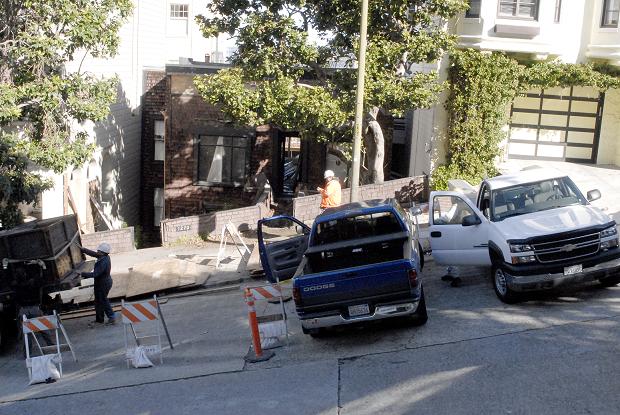
About two years ago, the Guardian reported on the demolition of one of San Francisco’s oldest buildings — the Little House, a cottage on Russian Hill that stood for 148 years at 1268 Lombard Street.

The demolition drew the ire of the Russian Hill Neighbors Association and local historic preservationists, because the historic property came down in the blink of an eye after the owners were granted an emergency demolition permit from the Department of Building Inspection. At the time, surrounding neighbors raised concerns that the Little House had been purposefully neglected in order to get it to a demolish-able condition, so that the lot could be cleared for development without undergoing the standard environmental review process.


Co-owners of the lot (pictured in the box) where the Little House once stood now want to construct a 4-unit building.

The agenda for today’s Board of Supervisors meeting includes a public hearing on a conditional use permit for a new building at 1268 Lombard, deemed to be an infill project because it’ll be constructed on what’s now an empty lot. Co-owners James Nunenbacher and Michael Cassidy are requesting city approval to construct a four-unit, 40-foot high residential project there.

Expect fireworks, as residents such as F. Joseph Butler, an architect with the Little House Committee, haven’t forgotten the loss of the cottage, which was one of the only structures on Russian Hill that emerged unscathed after the 1906 earthquake and ensuing fires.

“I think that the project sponsors … should not be rewarded for tearing down one of our most historic properties,” a woman from the preservation community noted at a Feb. 17 Planning Commission meeting about the conditional use permit.

At today’s meeting, supervisors could vote either to approve or disapprove the conditional-use permit.

***UPDATE*** No fireworks after all, the item was continued.

The Treasure Island nightmare

83

There are times when people like me, who think development should be driven by public needs, not private profit, are in something of a bind. I don’t like the Lennar plan for Bayview Hunters Point — but I agree that doing nothing isn’t a very good alternative. Sometimes, the “no-project” alternative isn’t an alternative at all — which gives the developers a huge hand up in negotiations with the city. Gee, you want affordable housing? We can give you 15 percent — or we can walk away and you’ll get nothing.


But when it comes to Treasure Island, I think we’re in a different situation. The proposed development is so out of whack, so looney, that it makes no sense to me — and the alternative of doing nothing, at least for now, isn’t so bad at all.


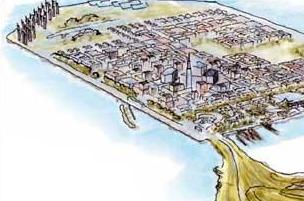
The plan calls for 19,000 new residents on the 403-acre artificial island in the Bay. At most, 25 percent of the units would be below-market. Which means some 13,700 rich people, virtually all of them with jobs in San Francisco, the Peninsula or the East Bay, would be plunked into a place with no viable transportation alternatives.


I wonder if any of these planners have ever tried to leave TI by car; it’s a nightmare. And there’s no way to fix it: Even if they build a new acceleration ramp (the current stop-and-go into 60-mile-an-hour traffic is a death trap), the Bay Bridge is already at full capacity during a very long rush hour in the morning and evening. And does anybody really think those 13,700 people will all take the ferry to work every day?


Impossible: There’s no way to provide enough ferry service for that population at anything resemble the cost the developers are willing to pay. How about all the Google and Yahoo and Genentech employees (and that’s a big part of the population buying new high-end condos in San Francisco)? You think they’re all going to take a ferry to downtown SF then hop on a bus or train then take another bus to the office? Not these folks. A lot of them will want to drive.


And the bridge, which is already backed up, will back up further, driving more traffic onto the streets of SOMA and creating a slowdown all the way back to Berkeley.


Meanwhile, the island is sinking, and water levels are rising. Forget the fancy engineering plans to sink stone columns deep into the clay under the Bay; what happens when the water rises? Are we going to surround the entire place with seawalls?


And here’s the bottom line: The current situation isn’t all that awful. There’s a small amount of housing out there, some of it affordable. There’s lots of open space. A little effort and the playing fields and parkland could be upgraded and TI could, for the intermediate term, be a day-use area for the city. Not a terrible alternative.


At some point, either the island’s going to sink back into the Bay or it’s going to have to be completely redeveloped. But right now, with no public money available, we’re at the whims of private developers. And what they’re offering doesn’t even remotely meed the city’s needs — and will create a catastrophic transportation problem.


So the supervisors are in a great position to negotiate. We want 50 percent affordable housing, we want the developer to pay for substantially increased bus and ferry service (or maybe we want to add a rail line to the Bay Bridge). And if that’s not something the developers want to do, fine: we’ll wait. Nothing wrong with that.


Extra! Nevius finds a bad landlord!

6

Our old buddy C.W. Nevius actually found a landlord he doesn’t like — a guy named Peter Iskander who is trying to toss some seniors and disabled people out on the streets. In a classic bleeding-heart column April 17, he lamented the pending evictions, which would pave the way for the landlord to turn some rental units into tenancies in common:


Imagine the sight of Carlo Tarrone, who is in his 70s and uses a walker, and Sandy Bishop, who is 70 and has lung cancer, forced out of their homes.


Imagine it, Chuck. It happens all the time. It’s been happening for years in this city (and elsewhere), in large part because of the Ellis Act, a truly abominable law that paves the way for landlords to evict tenants and then sell the units for fast cash. Nevius seems to understand that the Ellis Act is behind this particular horror story — but instead of suggesting that the law ought to be changed, he ends his column by suggesting that San Francisco ought to make these sorts of evictions more profitable:


Maybe it is time to start looking at ways to get middle-class buyers into San Francisco real estate. Mayor Ed Lee is looking at a one-time “condo bypass,” an idea floated by Mayor Gavin Newsom in 2010, where tenancies in common residents could pay a large fee to be allowed to convert to a condo. No one would be evicted, and the cash-strapped city could gain millions in fees.


Another plan is “fractional” mortgages for tenants in common. Rather than the old model where everyone in the building is part of a large single mortgage, each unit would have its own mortgage, making it sort of a pseudo-condo.


Actually, Chuck,  both of those plans will make condos and TICs more attractive. That means more evictions of old people — and poor people, and middle-class people who want to live in the city and are getting forced out by somewhat richer middle class people. It’s an awful situation, and what Nevius calls for would just make it worse.


When there’s enough publicity, sometimes bad landlords back off, and I’m sure Nevius will celebrate if that happens as the result of his column. I’ll be happy, too; every inappropriate eviction averted is another small victory. But most tenants don’t get daily newspaper columns written about tham, and you can’t fight this battle one case at a time. You need structural reforms, and repealing the Ellis Act is step one.  


Appetite: Island bites, part two

0

After a dreamy week in Hawaii, I have a slew of food and drink recommendations to share. Part one of these covered farmers market and street food in Honolulu and snacks from the North Shore of Oahu. This time, we sleep and drink in Honolulu. In part three, we’ll talk Honolulu restaurants.

Though I arrived islandside with a head full of romantic, slightly improbable Blue Hawaii dreams — me wearing a vintage bathing suit, lei, and a mai tai being serenaded by Elvis — my vacation reality was no letdown. No doubt the touristy scourge of chain shops, restaurants, and photo-snapping throngs do indeed exist in Waikiki, but contrary to what some told me, Hawaii’s largest city can be clean and relaxed. Though you truly find “island time” on Kauai and quieter locales, Honolulu is by no means hectic (if you ignore the traffic). It is that island city where you can while away hours at the beach, explore hole-in-the-wall eats, or listen to live music as the sun sets.

Hotel Renew, Waikiki Beach: 

With Asian-modern, Zen-like decor, clean lines and big city chic, these rooms are a welcome respite from the all-day party of Waikiki surfers and sunbathers. No pool or beachfront property here, though upper rooms on the south side have views of the beach. After long walks and lots of sun, I was grateful to enter the heavy front doors of Renew and be welcomed by the tinkle of the lobby’s water fountain. I’d grab a glass of water laced with fresh oranges and head up to my room with ultra-comfy bed and an ocean view.

The winning points of Hotel Renew, which is located on the eastern end of Waikiki, is affordability and peace. Plus, you can always take their complimentary boogie boards and towels a block away to the beach. But the best part? As overpriced as Waikiki can be, here you can get a room on a busy weekend for $180 to $225 a night. 


COCKTAILS

The cocktail renaissance is finally hitting Hawaii. Here’s a handful of places and bartenders forging the way.

Lobby Bar at The Waikiki Edition:

Although it is to be found by pushing aside a bookshelf in a hotel lobby, the Lobby Bar is no speakeasy — it’s a white, urban bar with muted lighting and long couches with a semi-exclusive, yet unpretentious air in The Edition, a hot hotel perfect for ultra-cool poolside lounging.

Bar manager Sam Treadway hails direct from Boston’s best-known cocktail bar, Drink and he’s clearly loving the warm island breezes, playing off of the canon of island classics, like the deconstructed mai tai ($11). Treadway has toned down the drink’s characteristic sweetness, amping up the rum (Pyrat XO) and orgeat (almond syrup) and topping it off with mai tai foam and a shiso leaf. He served me a lovely rum manhattan made with Montecristo 12 year rum, and he’s also handy with mezcal. The Agony and the Ecstasy ($11 – nice literary reference) is a winning mix of Del Maguey’s Mezcal Vida, St. Germain, and fresh grapefruit juice, topped with a house ginger beer. Spicy, smoky, gently sweet.

The cherry on top? Treadway combines Mezcal Vida, Campari, and soda to create, yes, a mezcal negroni. I long for the day when I can get one here, in my own negroni-obsessed city.

Town:

Another of the city’s great bartenders is Town‘s Dave Power. Located in Kaimuki, just a few minutes drive from Waikiki, Town feels like I’m back home in San Francisco. Local, organic foods served with with rustic, Italian technique, all-American heart, gourmet animal parts, and classic cocktails (all $10).

Power executes cocktails simply but with a beautifully, even literary, bent. His tequila negroni is a revelation. He explains that his inspiration is M.F.K. Fisher‘s love of equal parts gin, vermouth, and bitters in her cocktail. His version adds an equal part of Don Julio Reposado and a Campari infused with local Hawaiian Kiawe wood chips for a gentle smoky taste.

He also makes a Very Very Good Martini (this being how it’s listed on the menu) and my beloved Death’s Door — something you don’t see much in these parts — and a white manhattan with moonshine (white whiskey) and Dolin Blanc vermouth.

I’d recommend eating as well as drinking here. It’s a special place that evokes other big cities, but uses Hawaiian ingredients and laid-back charm.

Mai Tai Bar:

I am in love with the Royal Hawaiian Hotel. A pink, playful beacon that jumps out of the town’s blanket of highrises, it is the one hotel that evokes the history of old Waikiki. Built in 1927 and dubbed the Pink Palace of the Pacific, this is the classic Hawaii I dreamed of.

I’ll stay there one day. But in the meantime, one can always head through its grove of trees laden with hanging lights, past torches, through the lobby, and out to the back lawn where the Mai Tai Bar looks out over the beach. Live music at sunset and my own private cabana on the beach made this scene one of the most magical I spent in Honolulu.

This is not the place for refined cocktails but the bar has a history of providing tropical oceanside drinks. Manager Mike Swerdloff is a wine lover himself, but keeps up on the national cocktail scene and is passionate about great service, food and drink.

As for cocktails, there are various versions of the mai tai here — all too sweet for me, but they’re destined to be crowd-pleasers, and are greatly enhanced by the paradisical surroundings. Were I to really go for sweetness here, I’d prefer the Chi ($13), made from coconut and Maui’s organic Ocean Vodka and perked up with fresh pineapple and basil; or Pina Rocks ($10): Bacardi 8 year, coconut cream, pineapple, and a lemon-thyme float.

We had a lot of fun with our Smoking Gun mai tai, a winner in last year’s Mai Tai Festival on Kona. A glass of Whaler’s dark rum, Bacardi White, and a housemade velvet falernum was torched with smoke, then topped with a brown sugar-torched pineapple wedge. The presentation was quite dramatic — smoke even spilled out from the glass — but I could still taste the propane when I sipped the drink. That aside, the Smoking Gun yielded a delightfully sweet, smoky island imbibement that evoked roasting marshmallows over a campfire.

Lewers Lounge:

Inside the gorgeous Halekulani Hotel hides a classic New York hotel bar, rich with history and flush with jazz. And the music really is the reason to come. Nightly live jazz sets the classy, upscale tone of Lewers — don’t you dare wear shorts or flip-flops because this elegance is maintained with a strict dress code. You’ll also need a reservation on many nights.

Despite the legendary stamp of Dale DeGroff on the menu (he created it), drinks are of the sweet, fruity variety, like the refreshing ginger lychee caipirissima ($12). More ambitious efforts like the Amante Picante ($12) — tequila with cucumber, cilantro, green tabasco — have the right idea but lack balance. All in the execution?

What is impressive is the bar’s dessert menu. The ever-popular Halekulani coconut cake ($9) is ordered for weddings all over the islands, even from as far as LA. Adult gourmet versions of popsicles and ice cream sandwiches on ice are also available. One can always order from the spirits and wine lists and enjoy a sip of brandy and a slice of cake while taking in Tennyson Stephens and Rocky Holmes’ delightful jazz duo.

La Mariana:

No, I am not recommending La Mariana Sailing Club for the drinks — this write-up is a nod to the historical appeal and charm of a rundown but well-loved space. One of the last remaining kitschy tiki bars from the 1950′s, it can be an adventure just getting here.

Located way out on a harbor, you won’t be sure you’ve found it even when you’ve arrived at the right spot. Park on the street near the “sailing club” sign, then walk around to the right side of the building and enter through the back along the water. Tiki decor and thatched roofs abound in a multi-room layout with open air patio.

The day after the Japanese tsunami hit Hawaii’s shores, I sat here with a pina colada watching boat owners pull their damaged sailboats out of the water. Crusty, sun-scorched sailors sipped mai tais and beers around me, comparing damage done to their boats.

If you go, be sure to read the story of owner Annette Nahinu on the menu. She’s the sort of local character that will make you fall in love with Honolulu and its colorful international history.

Note: I tried to make it to a new Honolulu hotspot that local bartenders recommended, Apartment 3, but couldn’t make it there on a day when Kyle was bartending (Friday nights at the moment). I hear he’s a whiskey lover like myself, and I was sure he’d be another envelope-pushing bartender on this list.

–Subscribe to Virgina’s twice monthly newsletter, The Perfect Spot


Bar Crawler

0

The Guardian Guide to local drinking presents bar crawls through some of San Francisco’s beloved neighborhoods and nightlife hot spots, as well as an overview of the Bay’s vibrant independent bar scene.

Issue Date: Wednesday, June 8, 2011
Advertising Deadline: Friday, June 3, 2011

Contact your account executive at (415) 487-4600 or admanagers@sfbg.com

The Streets Issue

0

The Guardian Street Issue takes it outside to explore the amazing history, culture, and energy of the streets. The Issue covers bike culture and issues, outdoor activities, street food, street art, street food, street musicisans, and all things San Francisco streetwise, both underground and mainstream.

Issue Date: Wednesday, May 11, 2011
Advertising Deadline: Friday, May 6, 2011

Contact your account executive at (415) 487-4600 or admanagers@sfbg.com

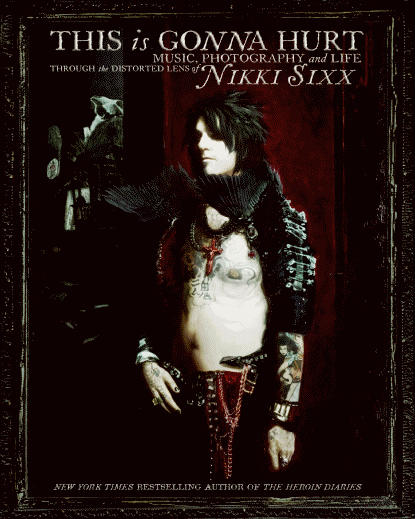
Hey Nikki! Sixx heads to SF to sign his new book, “This Is Gonna Hurt”

0

Known not only for his fiery stage presence and key songwriting contributions as bassist for Mötley Crüe, Nikki Sixx gained a notorious reputation for his off-stage antics as well, particularly his legendary appetite for drugs and debauchery. Sober now for several years, Sixx detailed many of these early escapades and horrors in his 2007 book The Heroin Diaries.

He returns — just in time before a major summer tour featuring Mötley Crüe, Poison, and the New York Dolls, which hits San Francisco June 15 — with the follow up, This Is Gonna Hurt: Music, Photography and Life Through The Distorted Lens of Nikki Sixx (William Morrow), a look at his post-addiction life that finds him a successful author, radio host, and of course, still rocking the stage as a member of the Crüe and Sixx: A.M.

The new book, which Sixx signs tonight (Thurs/14) at Book Passage in the Ferry Building, is a strikingly designed collection of attention grabbing and thought-provoking photos and essays, a body of work that covers a wide variety of subjects. When he came up with his first draft of the project, Sixx says that it wound up being 500 pages long — his passions for the book and subjects inspiring a flurry of writing that he eventually streamlined into the 200 page tome that was released earlier this week.

“I had this body of work from the last ten years as a photographer, and once I started talking about photography, it was really like peeling an onion; I started looking at a lot of social issues, a lot of issues of my own, where I came from, where I’m at and where I’m going,” says Sixx.

“It took a lot of trimming down and finding that thread — when I write I kind of just do this stream of consciousness writing, I’m really influenced by Beat Generation writers. I can really get lost in words, and sometimes that’s hard for a reader to follow, so it really took an editor to help me figure out the best way to deliver the message.”

That main message, which Sixx touches on throughout the book, is that he hopes to show people a different way of looking at life, that where mainstream society sees freaks and deformities, he sees through to the inner beauty.

Some of the images he captured while travelling the world on tour with Mötley Crüe; there are pictures of the band included, but the collection mainly focuses on his adventures offstage: exploring brothels in Germany, drug-infested alleys in Vancouver, gothic churches in St. Petersburg, Russia. Several images featured in the book were shot in his private photography studio, with models running the gamut from women who could be called obese to men with a variety of birth defects to a double amputee.

“For me, it’s all about seeing something and going for it, I wanted to push myself to the next level as a photographer,” says Sixx, who says that after working with the models, he often felt that they were the type of person that he — and others — should aspire to be.

In one passage of the book, he relates a story of visiting San Francisco a few years ago; while walking down by the waterfront and piers, he was approached by a large, African American homeless man, who said, “Hey Tattoo Man…you have any money?”

Sixx replied, “I’ll do you a favor if you do me one…don’t judge me by the color of my skin, ok?”

The man apologized, Sixx smiled and told him “It’s ok, happens all the time.”

The man’s response: “Yeah, me too.”

“That fit with what the overall message of This Is Gonna Hurt is all about, it really is in a nutshell what we do to each other as people, and this man who has been judged is whole life is judging another man. And I’m guilty of it too, it’s something I have to work on,” says Sixx.

With several book signings in the near future, the release of the book’s companion CD from Sixx: A.M., the summer Mötley Crüe tour, his radio show and new clothing line, Sixx certainly has his plate full; he admits to being a workaholic in the book, but it clearly brings him satisfaction and inspiration.

“I’m just so excited to get out there and see what kind of reaction that it raises in people,” says Sixx, who hopes that the book will inspire his fans to do something creative and fulfilling in their own lives. “Music will always be there, along with other creative outlets, whether its clothing design, or photography, or writing. For me, creativity is something anybody can do at any age — not have, do. Some people say, ‘Well I’m not a creative person’ — that’s not true. If you want to be creative you can be, you can pick up a guitar or a pen or whatever, and it’s sort of like being a magician — you just make stuff appear, it can come out of thin air. It’s amazing.”

Thurs/14
6 p.m., purchase of book ($29.99) is required for admission.
Book Passage
1 Ferry Building, SF
(415) 835-1020
www.bookpassage.com

Mayor derails hearing on nightclub crackdown

3

Will entering a large nightclub in San Francisco be akin to a TSA pat down? We won’t know for a while, as the proposal for heightened security measures by San Francisco Police has caught the interest of Mayor Ed Lee and further discussion has been stalled pending his analysis.

A hearing last night (Tues/12) at the Entertainment Commission proved to be a disappointment for the dozens of people who attended in hopes of getting closure on the hotly contested proposal, which has drawn criticism for its infringement on freedom and privacy and burdensome cost to club owners, as well as being the latest battle in San Francisco’s War on Fun.

“We need to protect our events,” said Liam Shy of the organization Save the Rave, a coalition of people dedicated to keeping electronic dance parties alive. “They are in a state of crisis right now, and this would make it much worse.”

Shy and fellow Save the Rave member Matt Kaftor saw the mayor’s interest in the issue was a good indication that community dissent has been heard.

“I would be truly shocked if this passed,” said Kaftor. “If it does, we will be protesting constantly.”

The proposal would require all venues with an occupancy of 100 or more people to record the faces of all patrons and employees and scan their IDs for storage in a database, which would be available to law enforcement on request for at least two weeks. Metal detectors, security cameras and brighter lights in the venues would also be required. The proposal was created in response to recent violence in and around nightclubs, most notably the shooting outside Suede in Fisherman’s Wharf last year that resulted in the closing of the club.

However, critics say this is an overreaction that unfairly targets events as sources of violence.

“What I keep getting from measures like this is that police work is hard,” said SF resident Jonathan Duggan. “But instead of doing their hard work, they are just creating another avenue for privacy invasion that shifts the responsibility to everyone else.”

Although the main target is nightclubs, many events in San Francisco would be affected. Events with strong cultural, ideological, and political components are frequently held at venues that would be affected by these rules.

Eva Galperin of the Electronic Frontier Foundation showed up last night prepared to give the commission a piece of her mind. She shared a letter with us outlining her concerns, which listed the support of many other civil liberty and privacy protection groups such as the Bill of Rights Defense Committee.

“The city of San Francisco has a long history of political activism and cultural diversity which would be profoundly threatened by this proposed rule,” Galperin wrote. “Scanning the IDs of all attendees at an anti-war rally, a gay night club, or a fundraiser for a civil liberties organization would result in a deeply chilling effect on speech…This would transform the politically and culturally tolerant environment for which San Francisco is famous into a police state.”

District 8 Supervisor Scott Weiner, who has been instrumental in the effort to keep events in San Francisco alive, told us that he does not support the proposal. His resolution to protect events passed the Board of Supervisors on March 29 and focuses on collaboration between city agencies and nightclub owners to combat violence rather than simply cracking down on entertainment venues.

 “It’s one thing for a large club with a history of problems to receive those kinds of exceptional security measures, but for the majority of clubs, it strikes me as overkill as well as invasion of privacy,” Weiner told us.

Jocelyn Kane, executive director of the Entertainment Commission, could not give any indication as to when another hearing would be or what prompted the mayor’s decision.  Neither she nor the mayor’s office could elaborate on whether the mayor has problems with the proposal or is simply responding to the public outrage.

Supes vote on Botanical Garden fees

The Board of Supervisors voted on April 12 to keep in place nonresident fees at the San Francisco Botanical Garden for at least another two years, rejecting a proposal by Sup. John Avalos to do away with the fees and make up for the shortfall with a portion of revenues brought in by a real-estate transfer tax that was approved by voters last year.

Advocating for his position, Avalos stood to tell a story about his last visit to the Botanical Garden. “A couple months ago, I was able to go there with my kids,” he began. “I went in, I was asked for my ID, I showed my ID. I noticed the next person who came in after me looked very agitated when she got to the gate. She said the F-word very loud, and she started to walk away. I approached her, and I said, ‘hey what’s going on?’ And she said, ‘I come here everyday, and I’m being asked for my ID, and I have to go back to my house to get it because I don’t have it with me today.'”

She wasn’t the only person who seemed disgruntled by the gatekeeper that day. “On my way out, I noticed a few tourists coming up,” Avalos continued. “It looked like they were from Germany. They walked up to the gate and then they walked back away from the gate. They clearly did not go in because they did not want to pay the fee.” A couple in their 60s tried to enter, but they did not go in because they didn’t have their IDs proving that they lived in San Francisco, he added.

Bottom line: “The gate and the fee has really diminished what people’s enjoyment of the park has been like for decades,” he said. “Can’t there just be one fee that we don’t raise? Can this be that one fee? I don’t think that’s asking too much.” He also noted that budget analyst’s report showed that the fees did not bring in the revenue that had been anticipated, a point echoed by Sups. Ross Mirkarimi and David Campos.

Yet Avalos’ pitch wasn’t enough to persuade his colleagues. On the question of whether money from the real-estate transfer tax revenues should be used to make up for the nonresident fees so that the Botanical Garden could be free for everyone, supervisors said no on a 7-4 vote, with Sups. Eric Mar, Mirkarimi, Campos, and Avalos voting yes.

The board also voted on whether the nonresident admission fees should be extended beyond June 30, 2011 (a date set when the fee was initially imposed), as proposed by Mayor Ed Lee. Board President David Chiu offered an amendment that the fees would only remain in place for two years, after which point the debate could be rehashed. The amendment was adopted, and the mayor’s proposal passed on a 6-5 vote, with Sups. Jane Kim, Mar, Mirkarimi, Avalos, and Campos voting no.

So, that’s how it went down at the board. If you’re a nonresident, the Botanical Garden still isn’t free.

Since Kim and Avalos both shared their accounts of visiting the Botanical Garden, I thought I’d share my own photos and impressions from a visit on a recent afternoon, when I had several hours to myself to explore Golden Gate Park’s haven of greenery. Admission was free, since I’d planned ahead to bring my ID.

The day was sunny and warm, and I spent a long time photographing the light streaming through a cluster of bamboo and sitting by a pond watching some water bugs skip around on the surface. It was a welcome escape from city life with an element of educational value, since all the plants are labeled with plaques identifying their Latin names, common names, and places of origin.

I noticed two people sitting wordlessly together in the sun. The woman, who seemed to be a caregiver, was seated on a bench, and beside her was an elderly man in a wheelchair with a blanket over his lap. The man seemed to be very frail. Yet he wore a serene expression, and was clearly enjoying the calm and quiet afternoon.

I don’t know if they paid to get in or not. As Board President David Chiu noted at the meeting before voting in favor of keeping the fee in place, “We don’t live in a perfect world.” You can argue about the privatization of parks, or about the need to find all possible sources of revenue in order to fend off cuts to city-funded services. Nevertheless, it’s sad to think of the folks who would be barred from the simple pleasure of sitting in the sun surrounded by natural beauty, because they can’t afford to pay.

Enter the Guardian Creations Contest

0

In celebration of the Maker Faire May 21-22, we would like to invite Guardian readers to enter to win the Guardian Creations Contest.

Transform the paper into your DIY creation by designing a piece of art with the Guardian newspaper as your main medium. Artwork must be no larger than 2 feet width by height.

The Guardian editorial staff will pick the most creative and interesting submission’s to be displayed at the Guardian table at the Maker Faire. Makers of the most creative artwork will receive a gift certificate from BRITEX and free tickets to Maker Faire.

Send in your art, give it a name and make sure to include your name, email address and phone number.

Submissions should be delivered to:
The San Francisco Bay Guardian
135 Mississippi Street
San Francisco, CA 94107
From 9pm-5pm Mon-Fri. by May 13

Art walk used to protest Chase Bank

8

This week’s Thursday evening Divisadero Art Walk is going to combine local culture with a clear political message. Local activists have dubbed the night the “No Chase Block Party” to protest a banking giant’s unwelcome entry in their neighborhood. Many in the neighborhood pride themselves on staving off the corporate chains, but now J.P. Morgan Chase is set to open a new branch at the intersection of Divisadero and Oak streets. Previously, the retail location held three locally owned shops including a specialty cheese vendor.

“We are intentionally choosing to have the action as part of the Divisadero Art Walk to both celebrate and participate in the creative community that exists and is blossoming here,” said Ilyse Magy, a local resident helping with the outreach. “The Block Party will be just that, a block party, a chance for neighbors to meet neighbors and have actual conversations about what they want their neighborhood to look like.”

Magy and others will present an art project in which resident that walk by can brainstorm and write down ideas for the neighborhood. Additionally, information about local credit unions will be available, she said.

As for corporate chains, two other Chase branches lie within a 10-block radius, and a Bank of America is around the corner, indicating there is no shortage of banking options in the area. The location, however, is excellent for displaying an advertising logo considering the immense traffic on that stretch of Divisadero.

The community action is happening in conjunction with formal appeals to the San Francisco Planning Commission. City law requires chain businesses that move into certain neighborhoods to undergo a conditional use permit hearing. But the Planning Department has interpreted the law to exempt banks, thus preventing a hearing that would empower community voices and local concerns.

Question time’s a waste of time

8

I strongly supported the measure that mandates that the mayor of San Francisco appear before the supervisors once a month to take questions. But the rules adopted by the board — with waaay too much consultation between Mayor Ed Lee and Board president David Chiu — have turned this great idea into a farce.


The supervisors have to submit questions in writing a week in advance. The mayor in essence stands there and reads pre-written answers. Aaron Peskin, one of the backers of question time, sent a text to Sup. Chiu’s office during the April 12th board meeting and made the point:


“Your idiotic question time rules have led 2 an absurd charade of folks reading (poorly) 2 eachother.  What a joke.” 


It’s embarassing. The board needs to rewrite the rules, now, and allow some actual interchange and debate, which is what the whole thing was supposed to be about in the first place.

2011 SAN FRANCISCO UNDERGROUND SHORT FILM FESTIVAL With Hostess Peaches Christ & Host Sam Sharkey

0

The SFUSFF returns with our biggest and wildest night of entertainment yet! Dedicated to supporting underground cinema from Bay Area filmmakers, this raucously, thrilling evening will include 20 short films and the world premiere of the feature film Devious, Inc.
 
PLUS! Live entertainment, interactive screening components, characters from the films off-screen and in your face, a live rock show, fetish contest, and MORE!

Tickets Available Online www.peacheschrist.com
Tickets are $15 for each program (shorts & feature)
Or Buy One $20 Ticket For BOTH Programs (Save $10!)
Peaches Fan Club Members Get $2 Off Every Ticket W/ Discount Code
Friday, April 15th at 7:30pm @ Victoria Theatre, 2961 16th Street, in San Francisco’s colorful Mission District!

A long time ago, in a galaxy not far away

0

arts@sfbg.com

SCI-FI DOCUMENTARY Recalling a simpler time — before mass commercialization and marketing took over the world of science fiction, pop culture, and fan conventions — local filmmaker Tom Wyrsch’s new documentary Back To Space-Con conveys the story of the home-grown, grassroots-fueled sci-fi conventions of the 1970s, told through interviews with the people behind the events, fans who were there, and rare footage shot on location here in the Bay Area more than 30 years ago.

Coming off the successes of his first two projects, 2008’s Watch Horror Films, Keep America Strong, which looked at the local TV phenomenon Creature Features and last year’s wildly popular Remembering Playland At The Beach, about the now-gone San Francisco beach-side amusement park, it wasn’t hard for Wyrsch to decide on what subject to tackle next.

Several years ago, the late Bob Wilkins, former host of Creature Features, had given Wyrsch a treasure trove of one-of-a-kind 16mm footage taken for his show at a series of Star Trek and sci-fi conventions, showing a great array of fans, their handmade costumes, and of course, the many special guests and celebrities who were on hand.

Wyrsch himself had attended some of these events, the larger ones called “Space-Con,” when he was growing up in the Bay Area. “At that time they were a brand new experience,” says Wyrsch. “To go to these conventions was just fabulous. And they definitely left a mark.”

With his fond memories in place and the opportunity to use Wilkins’ rare original footage, Wyrsch decided to interview the people who helped put on the shows, along with those who had attended the conventions as fans, all to help share the feeling of what it was like back then, which the film does very effectively.

“My approach to making documentaries is to really do two things: First, I want to take people back who actually experienced it. The other part is, I want to be able to take people there who never had a chance to go because they either weren’t in the area or they were too young,” says Wyrsch.

One of the great things about Back To Space-Con is seeing all the homespun costumes that fans wore — this was before the Star Trek movies started being made, and for some of the conventions included here, just before and at the beginning of the Star Wars (1977) phenomenon. There were virtually no official costumes or merchandise, and many of the people interviewed remark how wonderful it was to see such creativity and excitement in their fellow fans.

“[Space-Cons] were fan-based conventions that really did not have anything to do with the industry. They were the fans putting on shows for each other,” says Wyrsch. “In the film you can see how they are the grassroots movement of conventions that led to the ones we have today.”

Wyrsch is grateful to have been able to use so much original film footage, and he hopes viewers will appreciate how rare it is that material like this has survived all this time.

“What the younger generation doesn’t know was that it was very difficult and very expensive to go out in the field and do an interview or to film indoors because of lighting and the old cameras,” he explains. “With video and all the high-tech electronics and computers you can put in the camera [today], you don’t have to worry about that stuff anymore. But back then, it was tough, and with a lot of interviews they would go out and do them and then throw the film away because there was no use to it anymore and it took up a lot of storage space. Bob [Wilkins] kept this, and he kept part of history.”

Wyrsch will be on hand at a special Back to Space-Con premiere event at the Balboa Theater, along with former Chronicle writer and Creature Features host John Stanley, and Ernie Fosselius, the man behind the Star Wars spoof Hardware Wars (1978).

“I think people get to see the simplicity that was there in the seventies, it wasn’t so regimented like they are nowadays,” says Wyrsch. “And people love that.”

BACK TO SPACE-CON

Thurs/14, 7 p.m., $10

Balboa Theater

3630 Balboa, SF

(415) 221-8184

www.balboamovies.com


Flannelalia

0

marke@sfbg.com

PLAID OBSESSION We live in a post-Etsy world, people, and the latest homemade, zero-kilometer focus is on small-batch clothing production. As usual, the Bay Area is taking a lead here, weaving its green intentions and entrepreneurial zeal into its free-spirited fashion sense and a strong garment manufacturing legacy — and producing stylish duds with enough professional veneer to take to the runway or just out for a beer.

The three sharp dudes from Pladra (www.pladra.com) — Scott Ellison, Ian Ernzer, and Jeff Ladra — add another Bay tradition to the mix: classically avid sportiness. “As passionate outdoorsmen, we have never found a flannel that we could wear both in the field and to the bar after getting blood on it,” they say, and so they set about combining their love of surfing, fly-fishing, camping, hunting, skateboarding, and nature photography with flawless design skills and vintage beauty. (It doesn’t hurt that a good plaid flannel is the one item that still unites many of our current style tribes.)

I admit I’m a flannel freak, and Pladra’s three current lines, including an awesome one for women, had me wiping drool off my keyboard. But I wanted a glimpse into the new local-production trend, too, and the Pladra boys happily provided, answering my questions over e-mail.

SFBG Pladra is all about plaid flannel — how’d you come to focus on that? Will you be expanding? 

PLADRA I think it’s safe to say we’ve all had a few go-to flannels throughout our lives. You know, the one you camp in, then come home and go straight to a bar or concert in, then wear to work the next day — each stain is a story and a memory. In terms of our growth, we’d love to let everything grow at its own pace, although we definitely have some ideas. For now, we’re keeping production small and tight. We wanted to start with plaid flannel shirts because they’re timeless and represent an iconic outdoor style we feel really connects to life in the Bay Area. It’s funny that people peg flannels as a trend, but even the gold miners wore flannel. Jeff grew up here, and his grandparents spent their whole lives building and racing motorcycles. He still has photos of them wearing flannels.

SFBG Right now you’re foregoing retail outlets and selling direct from your website. I’m assuming that’s to keep costs down, yes? Has this been a problem in regard to getting your product in front of people?

PLADRA That’s true, we’re selling direct through our website to maintain the lowest price possible. Our goal is not to turn a profit, but to make the best garment possible at the most reasonable price — and our price range is $89–$109. Truth be told, this is what it costs to have a quality, American-made, custom shirt. We’ve found that people who initially scoff at our prices backpedal when they find out what goes into making something in the USA. Americans are so accustomed to paying for cheap garments that are imported mostly from Asia. We’re not condemning that, the truth is that a lot of production out of Asia has great quality. But at a certain point, we need to step back and consider the ramifications that one of the USA’s largest imports is apparel. Many U.S. cities used be the home to some of the best and biggest fabric mills in the world. Now what? All the mills are overseas. Very few companies can afford to use fabric milled in the USA. Even denim companies have to use reclaimed fabric.

The direct selling approach certainly makes it difficult to reach a wide range of people off the bat. But we do want to offer reasonable pricing to our customers. We want to focus on the brand integrity and we don’t want to dilute our product and blast it everywhere right away. We are taking a slow and careful approach in our growth.

SFBG What were the specific challenges of designing and producing everything in San Francisco? 

PLADRA It was really important to us to keep things local and support local businesses. But limiting our geographic range also meant limiting our accessibility to materials that would maintain our desired quality while not forcing our prices to skyrocket. That meant we had to challenge ourselves to search harder for vendors that could deliver great materials and finishing — and we ended up partnering with some incredible ones who went above and beyond to support our vision.

SFBG Pladra isn’t just all about hunting and designing. What are some of your favorite shops and bars in SF? 

PLADRA Shopping-wise, we really like Union Made in the Castro. Our friends at Park Life in the Inner Richmond and the General Store in the Outer Sunset offer amazing home-produced goods. And the Aqua and Mollusk surf shops have always been amazing at supporting their communities. As for going out, we could happily spend the rest of our lives drinking our way through the menus at Toronado and Alembic. And we just scored one of our favorite clubs, 111 Minna, to host our official launch party. See you there? *

PLADRA LAUNCH PARTY Tues/26, 5 p.m.–9 p.m., free. 111 Minna, SF. www.111minnagallery.com


Transylvania twist

0

arts@sfbg.com

FILM For many devoted fans of horror films who grew up in the 1980s — especially those who were monster kids in spirit or became one in the ensuing years — the 1987 movie The Monster Squad has a special, firmly staked place in their hearts.

Paying tribute to the icons of the classic Universal monster pantheon while weaving a modern storyline into the mix, writer and director Fred Dekker created a now-cult favorite, a film that is scary and funny, entertaining and touching all at the same time.

Dekker, who was born in San Francisco and grew up in Marin County, will appear for a post-screening Q&A after The Monster Squad unspools at the Castro Theatre, part of Midnites for Maniacs’ “Heavy Metal Monster Mash” (the rest of the mash: 1981’s Heavy Metal, 1984’s This is Spinal Tap, 1986’s Trick or Treat, and 1984’s Monster Dog).

“I loved the Universal monster movies and would stay up on Saturday nights and watch those on TV, but I also loved The Little Rascals and Our Gang and Abbott and Costello,” Dekker says. “The Monster Squad came out of my idea to kind of do a new take on Our Gang — kids with a club who all have their own lives apart from their parents and grown-ups — [mixed] with the Abbott and Costello Meet Frankenstein (1948) approach, where they meet the classic Universal monsters. That was the genesis of it in a nutshell.”

Although the film has finally gotten some of the recognition it deserves over the past several years, culminating in a two-disc 20th anniversary edition DVD release, along with several tributes and live events around the country, it was not considered a success at the box office when initially released.

“It was a little depressing for me because I had worked so hard on it and I felt like I hadn’t connected, but I’m happy that we made the movie that we wanted to make,” the director says. “We made a very peculiar kind of movie. We made it for ourselves, and a lot of the choices that seem a little politically incorrect now actually make the movie, I think, hold up better because we were true to the characters and our experience as kids. I think that people respond to that, the verisimilitude of it.”

In addition to the bold, creative reimagining of the monsters and their design and characteristics, Dekker added another layer of depth to the story with the character referred to as “Scary German Guy.” Viewers discover he’s a survivor of a Nazi concentration camp when he tells the kids that he has dealt with “monsters” before, and the camera zooms in on his camp tattoo.

“I believe that genre stuff only really works if it’s got some foot in reality that an audience can relate to,” Dekker explains. “I think you have to imagine that the world you’re seeing in the movie is the world you live in. It makes those fantastical elements more believable.”

Dekker didn’t realize that The Monster Squad had become such a beloved part of so many people’s lives until a few years ago, when he was invited to a tribute event in Austin. These days, he enjoys attending screenings and events, and is looking forward to answering questions from local fans on Saturday.

“I found that the movie had this enormous following from the people who had grown up with it and taken it to heart because they saw themselves in it,” he says. “It’s been really gratifying in a weird way, because it did find its audience — it just took 20 years.” 

MIDNITES FOR MANIACS: HEAVY METAL MONSTER MASH

Sat/16, 2:30 p.m. (Monster Squad, 4:45 p.m.)

$13 for all five films

Castro Theatre

429 Castro, SF

(415) 621-6120

www.castrotheatre.com

New school

1

CAREERS AND ED You don’t need a degree, or even the patience to sift through US Census Bureau reports on educational attainment, to know that each year this nation graduates more students from institutions of higher ed — public and private universities, colleges, junior colleges, and professional schools — than it did the year before. San Francisco is second only to Seattle in the number of papered persons running around, and statistics say that they, in turn, are more likely to raise little educational overachievers of their own. With this glut of matriculation on the horizon, it’s hard not to ponder the degree programs of the future: an associate’s in astrotourism? A bachelor’s of biosynthetic anatomy? A PhD of P4TA? (That’s “preparing for the apocalypse” for the cyber-stupid.) Hard to say. But before we get carried away, here’s a sampling of programs fit for a brave new world that can be found in the here and now.


SOLAR PHOTOVOLTAIC DESIGN AND INSTALLATION

California South Bay University sits smack-dab in the center of Silicon Valley, so it’s no surprise that the offerings are high-tech. The larger California zeitgeist seems to be rolling in on the San Francisco fog, though, and interesting patterns — like a master’s of science in green energy technology — have emerged. But the university really takes advantage of the Santa Clara Valley sunshine (and billowing demand for sustainable energy) with its Interstate Renewable Energy Council-accredited certificate program in solar photovoltaics, the science of connecting the two. If a full-fledged degree isn’t in your forecast, the school offers two 40-hour courses that might be a perfect fit.

California South Bay University, 1107 North Fair Oaks, Sunnyvale. (408) 400-9008, www.csbu.us


INTERACTION DESIGN

Degrees in video-game design and Web programming are old hat, but California College of the Arts takes the idea of the user interface beyond the screen, and plugs it back into real life. The school’s focus on design that users can interact with includes classes on platforms from cell phone to sculpture, game console to gallery, preparing students to “create meaningful and innovative designed experiences in the realms of work, lifestyle, and play.” Vague? Yes. Useful? Possibly. That three-dimensional holographic surround-sound computer interface that Tom Cruise uses in Minority Report? Get your virtual-reality gloves out ’cause it’s on its way …

California College of the Arts, 1111 Eighth St., SF. 1-800-477-1278, www.cca.edu


LANDSCAPE HORTICULTURE

Horticulture goes high-tech at Merritt College. The school claims to have all the most up-to-date equipment in the field, and with 5,000 square feet of computerized greenhouses, a 5,000-square-foot lath house, a floral and drafting lab, and disciplines such as “turf management,” we doubt anyone would argue. And to think, we were still relying on dirt, sun, and water to do our growing.

Merritt College, 12500 Campus Drive, Oakl. (510) 531-4911, www.merritt.edu


BOOK ART AND CREATIVE WRITING

This master’s program allows students to develop as writers and visual artists simultaneously, and encourages a “deep exploration of the book form in both content and materiality.” The interplay of form and content is not a new academic trope, but given that physical codices may soon be obsolete, taking a moment to ponder the book as object might not be a bad idea — lest future generations wonder why we wrote all over our toilet paper. Literary artifacts? Worth checking out!

Mills College, 5000 MacArthur Blvd., Oakl. (510) 430-2255, www.mills.edu


GREEN AND SUSTAINABLE TRAVEL

Tourists looking for a tequila sunrise and a tan may not realize that the pool they’re baking beside used to be a jungle. Each year, sensitive wildlife areas the world over are steamrolled under hotel strips. At the same time, environmentally-conscious tourism has become a booming industry. Given the facts, a student could do worse than this City College Business School program. The quickie certificate takes just a year — not a bad thing, considering ecotourism’s popularity and the rapidly decreasing availability of stuff left to tour.

City College of San Francisco, Ocean Campus, 50 Phelan, SF. (415) 239-300, www.ccsf.edu


HIV/STI PREVENTION

With a focus on risk reduction counseling, data collection, and outreach strategies, this one-year certificate in HIV/STI prevention studies from City College’s health education department just seems like a really good plan to bring a brighter future to all.

City College of San Francisco, Ocean Campus, 50 Phelan, SF. (415) 239-3000, www.ccsf.edu


FOLKLORE

Preparing for the future is all about remembering the past … or so might say a folklorist with a master’s or doctorate from UC Berkeley. An interdisciplinary degree from the department of anthropology, folkloristics (that’s the term) provide a new spin on the studies of ethnicity, nationality, gender, and sexuality, as well as the chance to revive vernacular tales, customs, beliefs, and plain ol’ stories from days gone by.

UC Berkeley, 318 Sproul Hall No. 5900, Berk. (510) 642-7405, www.berkeley.edu


RAZA STUDIES

That “melting pot” we all learned about in grade school is on the boil — bubbling with a range of issues both sweet and spicy, and some we haven’t even tasted yet. As our country continues to diversify, equity, social justice, and community empowerment will only become more important. San Francisco State University’s B.A. in raza studies seeks to offer future leaders the knowledge, skills, and social consciousness necessary to navigate an increasingly complex social landscape.

San Francisco State University, 1600 Holloway Ave., SF. (415) 338-1111, www.sfsu.edu


TAXATION

If everything else on this list is just a bit too futuristic and far out, Golden Gate University offers one of the country’s oldest and best-respected graduate programs in taxation. Looking for the ultimate in job security? This is your best bet since the San Francisco College of Mortuary Sciences closed in 2002. Death … and taxes. Golden Gate University School of Taxation, 536 Mission, SF. (415) 442-7880, www.ggu.edu