San Francisco

Recology president Mike Sangiacomo disses the Guardian as landfill agreements head to full Board

4

Dressed in neon- yellow vests, a crowd of Recology employees filed into the Board’s Chambers to witness the Board’s Budget and Finance subcommittee, which Sup. Carmen Chu chairs, vote to forward the Department of Environment’s proposal to award the city’s landfill disposal and facilitation agreements to Recology (formerly NorCal Waste, Inc), to the full Board.

The B&F vote wasn’t exactly a surprise. In the past six months, Recology’s top brass have been exerting pressure on the committee members to approve the agreements, which got delayed after folks started raising questions about the lack of a franchise fee and competitive bidding on all other aspects of San Francisco’s multimillion dollar municipal solid waste stream. And lobbyist Alex Clemens reported $17, 134.25 in promised payments from Recology between January and June 2011 for services that included contact with B&F subcommittee vice-chair Ross Mirkarimi in mid-June.

If the full Board goes ahead and gives the green light July 26, that approval would authorize Recology, which Waste Age’s June 2011 issue named as the 10th largest waste management company in the U.S.,  to start transporting and disposing up to 5 million tons of municipal solid waste in its Ostrom Road Landfill in Wheatland, Yuba County, once the city’s agreement at Waste Management’s Altamont landfill in Livermore expires, which is expected to happen some time in 2014 or 2015.

The initial refusal of Mirkarimi and fellow B&F subcommittee member Sup. Jane Kim to agree to Chu’s suggestion that they forward the proposed agreements “with recommendation” appeared to be indications that both supervisors harbored some concerns about the deal. UPDATE: But According to DoE communications director Mark Westlund, before yesterday’s meeting was over, Mirkarimi called to rescind the vote on the landfill item asking for it to go to the full Board with recommendation. Jane Kim concurred, and so now it goes to the Board with unanimous committee support. 

“Overall, I think this was a good contract,” Kim said during the July 20 hearing.

Kim added that she thinks “We need to continue the dialogue,” about the city’s 1932 refuse collection and disposal ordinance, which resulted in Recology gaining a monopoly over every aspect of the city’s $225 million-a-year waste stream, except the $11-million-a-year landfill disposal agreement.

Kim noted that under the arrangement that grew out of the 1932 ordiance the city doesn’t get a  franchise fee. And she claimed that San Francisco is getting half of what other Bay Area cities, which all have franchise fees, get from their waste contractors. “So, I’m really interested in continuing that conversation, but I think it’s a separate conversation,” Kim said.

Mirkarimi, who is running for sheriff this fall, noted that he has been “the most outspoken member” of the committee on the Recology item, and that his concerns were what led the committee to “put a pause” on the deal, until the committee could “undertake more homework.”

Thanks to that pause, the city’s LAFCO committee was able to commission a report on what other jurisdictions do around transporting and disposing of their solid waste in landfills, and Mirkarimi noted that his office “held a number of meetings” and he tried to leverage this opportunity to “reanimate activity at the Port.”

“I was hoping we might be able to arrive at something much more deliverable,” Mirkarimi said, presumably referring to the fact that these efforts only resulted in DoE unveiling a last-minute amendment to include two “possible changes” to operations and facilities at the Port of San Francisco in the agreements.

These possible changes, which DoE director Melanie Nutter presented during the July 20 hearing, involve a) utilizing modes of transportation, including barges, other than, or in addition to, the rail haul plan proposed in the agreement, b) developing new facilities at the Port for the handling of waste, recyclables, organics and other refuse, meeting no later than the fifth anniversary of the agreement to discuss the feasibility of such changes, and c) incorporating into the rates, or otherwise financing, the cost of implementing such transportation alternatives and the cost of such facilities.

“I think that cost-effectively we may be able to insert the Port into this equation, but it’s not ready for prime-time yet,” Mirkarimi observed.

Mirkarimi concluded by noting the many innovative things Recology has done in terms of making the city’s waste disposal system more environmentally friendly. “This should be a front-burner conversation,” Mirkarimi said noting that Mayor Gavin Newsom made it a focus of his administration to make San Francisco the greenest city. Referring to the fact that San Francisco claims to have a 77 percent diversion rate—the highest in the U.S—Mirkarimi said, “That comes at a cost, it doesn’t come for free.”

Mirkarimi’s comments came in the wake of Nutter’s claims that Recology’s bid for the landfill disposal agreement will save ratepayers $130 million, over the 10-year course of the agreement, compared to the bid that Waste Management submitted. “This is the best deal for San Francisco,” Nutter said.

Nutter’s estimates were repeated by Jim Lazarus, who spoke on behalf of the SF Chamber of Commerce and the Alliance for Jobs and Sustainable Growth. “This is the right contract for the people of San Francisco,” Lazarus said.

But Nutter’s $130 million estimate was thrown into question by Yuba County Sup. Roger Abe, who had driven the 130 miles from Wheatland to alert San Francisco  that Recology’s bid is based on the assumption that Yuba County will only charge San Francisco a $4.40 per ton host fee.

As Abe pointed out, Yuba’s rates have not changed in 14 years, and his county is considering increasing them later this year by up to $20 or $30 a ton.
Such an increase, multiplied by the 5-million tons of garbage in the agreement, could dramatically increase the cost to San Francisco ratepayers over the course of 10 years, Abe observed..

[If Yuba County approves an increase, and diesel fuel prices also increase, it could eliminate much of the cost differential between Recology’s and WM’s bid: a recent Budget and Legislative Analyst report shows that Recology would charge $58.94 a ton, ($28.53 for tipping and other fees + $30.14 transportation cost per ton), while WM would charge $66.79 for tipping and other fees + $18.33 transportation costs per ton.). But if diesel rises above $2:30 a gallon, SF ratepayers could also get hit with a fuel surcharge.]

Also speaking at the hearing was former D10 supervisorial candidate Tony Kelly, who along with retired Judge Quentin Kopp, David Gavrich’s SF Bay Railroad, and other concerned citizens, recently gathered 12,000 signatures to qualify a petition to require all aspects of San Francisco’s $225-million-a-year waste services to be put out to bid, and to require the winning bidder to pay San Francisco an annual franchise fee.

Kelly et al were originally aiming to qualify their petition for the 2011 ballot, but they blame what Kelly described during public comment as, “a very expensive advertising campaign,” by Recology, plus harassment of petition gatherers and signers, as why they ultimately had to delay qualifying their initiative until the June 2012 election cycle.

Kelly urged the committee to probe the details of a $10 million Special Reserve fund, which Recology could access, under the terms of its facilitation agreement, to cover all its expenses that have not yet been reimbursed through rate hikes. “You’d think the Budget and Finance sub-committee would want to explore those things,” Kelly said.

David Gavrich, who is also President & CEO of Waste Solutions Group, which has hauled 6 million tons of waste in the last 20 years, said approving the landfill disposal agreement, without knowing what rates Yuba County are about to set, was tantamount to “opening up San Francisco’s check book to Yuba County.”

“Recology has never moved a single ton by rail,” Gavrich also asserted.

But while none of the supervisors asked for any clarification of details in the proposed agreements, including the last-minute amendment, during the hearing, Chu was quick to comment about Gavrich’s “blank check” comment, noting that any county can increase its rates. “Alameda County already charges a lot more, so there are no guarantees either way,” Chu said.

She also claimed that the agreements had been subjected to a “very extensive, competitive and open process, especially around tipping fees.” What Chu didn’t mention is that earlier this week, WM filed a writ of mandate with San Francisco Superior Court to prevent the final award of a new long-term solid waste transportation agreement and landfill disposal contract to Recology ordinances, on the grounds that the deal violates the City’s competitive procurement laws.

Instead, Chu urged moving on the deal as soon as possible, by invoking the specter of a disaster hitting San Francisco before a landfill agreement is reached.
“Imagine if we had to go to the open market,” Chu said, apparently ignoring the fact that WM has stated that it would take SF’s waste in an emergency.

After the vote, Kelly expressed concern that the agreements are not competitive, but cost-plus, which means all costs get passed along to ratepayers. And that the city continues to lack a contract and ensuing franchise fees. “They are running this as if it’s still the 1950s,” Kelly said.

Kelly claimed that Recology Vice President John Legnitto, who is the 2011 Chair of the SF Chamber of Commerce’s Board, told him that Recology had been in negotiations with City Hall around a $4 million franchise fee, but that the money would now be spent opposing Kelly et al’s competitive bidding initiative.
But when the Guardian approached Legnitto after the hearing, he refused to comment, telling me my questions should go to Recology’s Robert Reed.
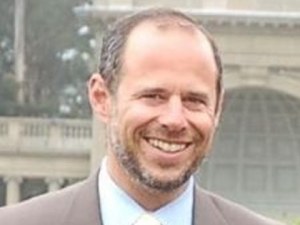
And Recology President Mike Sangiacomo, who was speaking to Chronicle reporter Rachel Gordon rudely told me, “Not today thank you,” when I approached him seeking comment on the Board committee’s vote.

“What did you do to him?” Gordon asked, as she followed Sangiacomo into a corner of City Hall. Er, nothing. Except what any self-respecting reporter would do. Like ask questions, read documents, and challenge the spin.

But that something clearly has ruffled the feathers of Recology’s top brass.
 “It’s like Godzilla, it’s like Monster Island, they can’t help themselves,” Beyond Chron’s Eric Smith commented to me during the hearing. “I’m disgusted by how money, labor and all these different entities can influence what happens. They don’t care about the little people. They care about the bottom line.”

Smith, who ran for D10 supervisor in 2010, spoke to the huge pressure that has been exerted on those supervisors who have publicly raised questions about Recology’s monopoly over all other aspects of the city’s $225 million-per-year waste stream. “Big corporations like Recology throw big money around and intimidate the electeds,” Smith said.

Meanwhile, DoE deputy director David Assmann confirmed that the City Attorney’s Office is looking at WM’s writ of mandate. But Assmann added that it is too early to respond to questions about the implications of that legal action on the Recology agreements.

Assmann also responded to a number of questions I’d already raised on the Guardian’s blog about the juicy details buried in the Recology agreements, beginning with a special reserve fund that was established in 1988, as part of Recology’s facilitation agreement that governed the transportation of waste to WM’s Altamont landfill, which is where San Francisco has been depositing its trash since 1987, and that will be rolled over to form the basis of a new special reserve fund.

Assmann said the fund currently contains almost $29 million, but only needs a baseline of $15 million. The extra funds will be the subject of a hearing this fall, he said, to determine how to use the balance, including exploring the possibility of using the funds, which were collected through a 1.3 percent surcharge on ratepayers, to lower the garbage rates.

Assmann also noted that while there is no limit on how much Yuba County can theoretically increase its host fees, “there has to be a nexus with associated costs,” and that Yuba County supervisors would have to bring any such proposed increase, which would also apply to all their other landfill users, to their voters.

Assmann further noted that the idea behind developing new facilities relates to the city’s 2020 goal of zero waste is “to get to zero waste we need new methods of handling waste,” Assmann told me explaining that San Francisco wants to be able to take residual material and process it so it could be recycled and wouldn’t end up in the landfill.

Assmann said a consultant is comparing the feasibility of building those facilities on land next to Recology’s Tunnel Road facility in Brisbane, or on land the Port owns in San Francisco, and the report should be completed later this year. He also noted that the transportation amendment would allow the City to switch or improve its transportation mode, during the life of the agreement, should cleaner technologies be developed, “including trains that run on less polluting fuel.”

Assmann clarified that San Francisco ratepayers won’t be footing the cost of building a new rail spur in Yuba County. “We’re not paying capital costs. The rail spur is not a cost that Recology can charge because it’s out of county. And if San Francisco only produces 2 million tons during the life of the agreement, we are under no obligation beyond that.”

And he noted that a potential $10 million contingency payment would only go into play if the City gave Recology the green light, and the company incurred costs related to rail haul, and the City then reneged on its deal, at which point Recology could then use its incurred costs to justify why it needs up to $10 million to included in the garbage rates.

All interesting details as we approach the Board’s July 26 vote—with a lawsuit hanging over the City’s head. So stay tuned…

Carfree crowd praises SFMTA’s choice of Reiskin

4

Today’s announcement of Ed Reiskin as the new executive director of the San Francisco Municipal Transportation Agency is being warmly welcomed by bicyclists, transit riders, and other advocates for alternatives to the automobile – and not just because Reiskin doesn’t own a car and gets around by bike and Muni.

As the head of the Department of Public Works, Reiskin transformed the agency into one that facilitated the creation of more vibrant public spaces and safer, multi-use streets, overseeing some of the Newsom Administration’s most significant progressive accomplishments.

“He really began the process of turning DPW into a complete streets agency,” says Tom Radulovich, executive director of Livable City and an elected member of BART’s Board of Directors. He noted that Reiskin is widely respected by city staff, department heads, and a variety of community groups.

San Francisco Bicycle Coalition director Leah Shahum said she was “really pleased” with the choice – saying Reiskin has been “lights years ahead” of previous DPW administrators – and said it bodes well for an agency that faces some difficult challenges.

“I think Ed Reiskin has proven himself as a leader and someone who is really involved with San Francisco,” she said. “He will be the MTA director who most understands the real needs that San Franciscans have in terms of mobility.”

For example, she said Reiskin prioritized repaving and filling in potholes on streets that have bike lanes, where bad pavement can cause serious crashes or conflicts with drivers. “The fact is he understands that is a safety issue,” she said.

Radulovich offered two cautionary notes in his praise of the choice. The first was his hope that Reiskin will be allowed to take the bold action the MTA needs to reform Muni and create truly mulit-modal, safe streets, rather than being micromanaged and having the agency turned into a piggybank for other departments, as Mayor Newsom did with former MTA director Nat Ford.

“Is the mayor finally going to allow the MTA director to do what he needs to do to fix the agency?” Radulovich asked.

Secondly, he fears that DPW might backslide to the days before Reiskin took over, when the agency was removing public benches all over the city and making public spaces less inviting, rather than taking the lead on creating new, more inviting public spaces – from parklets to Sunday Streets – as Reiskin did.

“The worst case is you don’t gain anything at the MTA and you lose something at Public Works,” Radulovich said.

For his part, Mayor Ed Lee sounded a note of optimism that Reiskin will transform the agency. “I thank the SFMTA Board of Directors for their thoughtful, deliberative and unanimous support of Ed Reiskin as the new leader of the SFMTA,” Lee in a prepared statement. “Now is the time to focus on the future of the SFMTA and continue to make good on our promise to San Francisco transit riders and taxpayers by creating greater efficiency in our transit system, improving on-time performance, and honoring our City’s Transit First Policy.”

Editorial: Don’t gut SF campaign law

1

The U.S. Supreme Court, which has already ruled that corporations can spend all the money they want on political campaigns, dealt another huge blow to democracy in June when it struck down a campaign finance law in Arizona that was designed to level the playing field for candidates running against better-financed opponents.

The ruling has implications for San Francisco’s public finance law, and already the Ethics Commission has moved to amend — some would say gut — the ordinance. The supervisors also have to approve the changes, and they should move cautiously; there is much about the local law that can still be saved, and there are experts working on alternative models that could still work under the Arizona ruling.

The Arizona law gave public funds to candidates who agreed to limit personal spending to $500. The more privately financed opponents and independent expenditure (IE) committees spent on a candidate, the more public matching money the other candidates received.

The idea: if one rich candidate — or one candidate supported by deep-pocketed special interests — tried to dominate the election, the others would be given enough money to make things fair.

That’s the same motivation behind San Francisco’s law, which sets a spending limit for the mayoral and supervisorial races, provides matching funds for small contributions — and gives public money to candidates who are attacked by outside independent expenditure committees.

It’s possible that the current IE match won’t hold up to legal scrutiny under the Arizona decision. And already some of the city’s biggest downtown interests are threatening to sue to overturn the local ordinance. But there is much about the San Francisco law that will likely survive a court challenge.

Bob Stern, a campaign finance expert and president of the Center for Governmental Studies in Los Angeles, told us that he’s working on a new model law for cities like San Francisco. The Ethics Commission knew that when it voted July 11 to eliminate matching for IEs and to reduce the available pot of money.

Now the law comes to the Board of Supervisors, where eight votes are required to accept the Ethics Commission amendments. Good government advocates say the supervisors should do only what is clearly legally necessary: “The Ethics Commission should have used a scalpel, not a sledgehammer,” Oliver Luby, a former commission staffer, told us.

The November mayor’s race is a huge test for the city’s law; this will be the first time effective public financing will be in place for a citywide race, and the success of the ordinance will draw national attention. The supervisors should stop short of so badly amending it that it will lose all its teeth.

The board should hold public hearings and solicit input from local and national experts. The supervisors shouldn’t be intimidated by downtown lawsuits and consider only the most limited changes — after reviewing every possible alternative. 


Outrage at the Bayview Opera House (VIDEO)

A community meeting July 20 at the Bayview Opera House dissolved into chaotic shouting when Police Chief Greg Suhr attempted to present the San Francisco Police Department’s version of what transpired July 16 when a 19-year-old African American man was shot nine times by police and killed just blocks from where the meeting was held.

“On Saturday afternoon, two officers at the Bayview station … contacted a fare evader whose name ended up being Kenneth Wade Harding, Jr. of Seattle, Washington,” Suhr began. “After asking him for his identification, he became a little bit anxious, and at one point in time he jumped off the platform and ran across the street, and ran through crowded Mendell Plaza. I cannot tell you how badly that I feel … as captain of this station for two years. I love the Bayview community.”

At that point, angry shouts rose up and Suhr started getting booed, but he continued. “During this foot pursuit, at some point in time, the suspect … fired at the officers, and the officers returned fire. This is the account that we have so far.”

Kilo Perry began shouting back at the chief, saying, “You are not a friend of ours. You are the enemy,” before bystanders tried to calm him down. The SFPD had planned on showing a power point presentation about the incident, but that didn’t happen. Instead, Suhr was drowned out, and the microphone was passed to various community representatives and members of the clergy, who’d helped organize the meeting, as they tried to regain control. Lifelong Bayview resident Charlie Walker asked people to sit down and relax.

Several hundred people had gathered at the Bayview Opera House to get answers about the shooting, and most remained seated as people continued to swarm around the police chief. After some time had passed, community leaders managed to set up a question-and-answer session with Suhr.

From this brief exchange and venting session, it became clear that people had come to the meeting with broader concerns than just what transpired Saturday. Elvira Pollard stood to recount how, seven years ago, her son had been shot by police 36 times, and that police had claimed that he’d shot first. She said it took more than nine months to get an autopsy report. “It’s the same scenario!” she charged. “Do you really think they aren’t going to lie about this one?” Suhr said that he couldn’t comment on that case specifically since he didn’t know the details, but offered to meet with her.

As people spoke, police violence against youth emerged as a theme. Harding was not a resident of the Bayview, and it came to light after his death that he had served time for attempting to promote prostitution and was a person of interest in connection with the fatal shooting of a 19-year-old woman. But to many who expressed outrage at the meeting, his death was linked to past instances in which youth had been gunned down by law enforcement. One woman showed up wearing a T-shirt, earrings, and a handbag displaying images of Oscar Grant, the 20-year-old unarmed Hayward man who was shot and killed by BART officer Johannes Mehserle on January 1, 2009.

A concern that was voiced again and again was that people felt the police routinely harrassed youth on the T-Third line. Grilled about why police were constantly stopping young people over MUNI transfers, Suhr responded that police had recovered weapons from T-line passengers while conducting fare inspections in the past.

The meeting broke apart when Suhr was escorted out, surrounded by uniformed officers, news cameras, and angry residents who continued to demand that he release the names of the officers who shot Harding. One simply yelled, “stop shooting black people in the back!” Once outside, with beads of sweat rolling down his face, Suhr told reporters, “I’ll be back.”

Here’s a video of the tense exchanges that took place at the July 20 meeting. 

http://www.youtube.com/watch?v=l3cQwtKMsXM

Video by Rebecca Bowe

Wage theft prevention ordinance moves forward

Supervisors expressed strong support July 20 for an ordinance that a San Francisco coalition of labor advocates is pushing for to prevent wage theft and shore up protections for low-income workers. Spearheaded by Sups. Eric Mar and David Campos with Sups. Ross Mirkarimi, Jane Kim, John Avalos, and David Chiu as co-sponsors, the legislation would enhance the power of the city’s Office of Labor Standards and Enforcement (OLSE) and double fines for employers who retaliate against workers.

Dozens of low-wage restaurant workers, caregivers, and day laborers turned out for a July 20 Budget & Finance Committee meeting to speak in support of the Wage Theft Prevention Ordinance, which was drafted in partnership with the Progressive Workers Alliance. The umbrella organization includes grassroots advocacy groups such as the Chinese Progressive Association, the Filipino Community Center, Pride at Work, Young Workers United, and others.

A restaurant worker who gave his name as Edwin said during the hearing that he’d been granted no work breaks, no time off, and had his tips stolen by his employer during a two-and-a-half year stint in a San Francisco establishment, only to be fired for trying to take a paid sick day. “When I was let go, I did not receive payment for my last days there,” he said.

His experience is not uncommon. An in-depth study of labor conditions in Chinatown restaurants conducted by the Chinese Progressive Association found that some 76 percent of employees did not receive overtime pay when they worked more than 40 hours in a week, and roughly half were not being paid San Francisco’s minumum wage of $9.92 an hour.

“People who need a job and can’t afford to lose it are vulnerable to exploitation,” Shaw San Liu, an organizer with the Chinese Progressive Association who has been instrumental in advancing the campaign to end wage theft, told the Guardian.

The ordinance would increase fines against employers from $500 to $1,000 for retaliating against workers who stand up for their rights under local labor laws. It would establish $500 penalties for employers who don’t bother to post notice of the minimum wage, don’t provide contact information, neglect to notify employees when OLSE is conducting a workplace investigation, or fail to comply with settlement agreements in the wake of a dispute. It would also establish a timeline in which worker complaints must be addressed.

“The fact is that even though we have minimum wage laws in place, those laws are still being violated not only throughout the country but here in San Francisco,” Campos told the Guardian. “Wage theft is a crime, and we need to make sure that there is adequate enforcement — and that requires a change in the law so that we provide the Office of Labor Standards and Enforcement more tools and more power to make sure that the rights of workers are protected. Not only does it protect workers, but it also protects businesses, because the vast majority of businesses in San Francisco are actually … complying with the law, and it’s not fair for them to let a small minority that are not doing that get away with it.”

So far, the ordinance is moving through the board approval process with little resistance. Mayor Ed Lee has voiced support, and Budget Committee Chair Carmen Chu, who is often at odds with board progressives, said she supported the goal of preventing wage theft and thanked advocates for their efforts during the hearing. The item was continued to the following week due to several last-minute changes, and will go before the full board on Aug. 2.

Mayor Lee meets with Bayview community leaders about officer-involved shooting

Mayor Ed Lee and officials from the San Francisco Police Department met with Bayview community leaders in City Hall July 19 to discuss the police investigation surrounding a July 16 officer-involved shooting that has prompted intense community anger and protests. While city officials indicated that the meeting was called to provide information and updates for the community, frustrated community members emerging from the City Hall conference room dismissed it as “more of a lecture,” saying city officials weren’t open to hearing broader community concerns that have intensified in the wake of this tragic event.

Reporters were not allowed in the room while the meeting was held because “it’s more of a community meeting,” according to mayoral communications staff member Francis Tsang. Attendees included Bayview community leaders Chris Jackson, Geoffrea Morris, Mike Brown, Charlie Walker, Ed Donaldson, and the Rev. Amos Brown. District 10 Sup. Malia Cohen also issued invitations to the meeting, which was scheduled at the same time as the full Board of Supervisors meeting, and sent a representative.


The shooting victim was Kenneth Harding Jr., 19, from Washington. Police say he fired one round at officers before police fired nine rounds, killing him. However, some witnesses initially reported that they did not see Harding fire a gun, and a firearm wasn’t immediately recovered from the scene. Police initially tried to detain Harding on the station platform of the Oakdale / Palou stop on the T-Third line on suspected fare evasion. After Harding was killed, it came to light that he had a criminal history and had been named as a person of interest in the fatal shooting of a 19-year-old pregnant woman from Washington. The incident, which occurred in broad daylight and was captured on film and witnessed by people who were out on the street, proved to be a traumatizing event for a low-income, predominantly African American community where tensions already run high between police and residents.

Lee indicated to the Guardian that the July 19 meeting had been called primarily to clear up misinformation. “There have been a lot of stories spreading about what did and didn’t occur, and we felt it was necessary to get the community updated as quickly as possible,” Lee said. “Any time there is a death in any community we’re very concerned … this one in particular has been represented in many different ways, and a lot of it has been very inflammatory in terms of what people have said occurred. We’ve heard points like there was no gun, when in fact now we’ve found a gun through police investigation. That there was no shot made at officers when … the officers have at least some evidence through the ShotSpotter program that there was an initial shot made by the suspect.”

Lee added that MUNI staff had reported people relaying “all kinds of stories” while riding the buses. “These are very hard, hard feelings,” he said. “So I felt it necessary that we confront this head on with community leaders. We met with some yesterday, we’re meeting with some today, [Police Chief Greg Suhr] is hosting a town-hall meeting in the Bayview tomorrow to yet again find every opportunity to fully explain what they have uncovered as the evidence, and to make sure people base their views on the facts.” A larger community meeting is scheduled for July 20 at 6 p.m. at the Bayview Opera House.

Meanwhile, Bayview community leaders Chris Jackson and Geoffrea Morris were not pleased when they emerged from the conference room. “The mayor left without hearing one public comment,” Morris said. “It was just a lecture. It wasn’t addressing the police, and how they deal with fare evasion, and harass people along the T train. It was not that. It was just, the mayor said his little thing, did not say goodbye, and ran out.”

Morris went on, “We don’t have grief counselors out there. We don’t have the police saying that they’ll stay off the T-Train platform until the investigation is done. We thought this meeting was going to be for them to go, ‘where do we go from here?’ And the thing that people are missing … whatever demon that boy had, that was a human life.” Concerns are still swirling about how long it took for an ambulance to arrive after the shooting, Morris said, and about how police arrived at the scene with high-powered weapons which they kept drawn even as Harding writhed in a pool of blood on the sidewalk.

Morris and Jackson said that during the meeting, officials showed a Channel 7 TV news broadcast clip and played an audio of gunshots being fired to demonstrate that the suspect had fired an initial shot before police opened fire. “We all have Internet, smart phones, and all the footage as well,” Morris said. “I was there on the site.”

Shortly after the meeting, the San Francisco Police Department issued a statement to announce that gunshot residue had been detected on Harding’s right hand during an investigation. “The presence of gunshot residue on Harding’s right hand supports statements from witnesses that Harding held the gun in his right hand as he fired at the police officers,” the press release stated. It went on to note that the presence of gunshot residue on an individual’s hand could indicate that the individual fired a gun, or was in close proximity to a gun when it was fired, or touched something that was coated with gunshot residue.

Morris and Jackson also voiced concerns that went beyond the details of this particular case. “The response really needs to be a policy shift,” Jackson said. “We need a better approach in terms of violence prevention. We cannot address this with more cops on the T line.”

Jackson, who ran for District 10 supervisor in 2010, also questioned why police officers had been tasked with fare evasion enforcement on the T-Third line in the first place. MUNI also employs fare inspectors, he pointed out, and the city has a specialized program, called the ambassadors program, which was created last year in the wake of violence along the T-Third line directed at members of the Asian community. “Where was the public conversation about putting cops on MUNI trains?” Jackson wanted to know. “Who came up with that idea?”

Asked about this, Lee told the Guardian that he had specifically requested a higher police presence in areas where higher levels of crime were anticipated – and the July 16 shooting occurred in just such an area.

“I actually asked the chief to pay more attention to areas that had a history of gun violence and shootings and other kinds of violence … and it just so happens that this particular area, Third and Palou, is a place where there’s a lot of violence,” Lee said. “So we had more uniformed officers on that specifically at not only my request, but with the understanding of the police chief, too. He’s trying to do his best to keep everybody safe. And that in the summer, with all of the evidence that we have about where the shootings are and where they’re occurring, we naturally focus on areas where we think there’s going to be more violence to have more presence. So circumstances occurred where an individual was stopped because of a fare evasion, and I believe police were there to begin to detain him, and ask him to provide some evidence of who he is and why he did what he did, and that turned out to be a chase. A chase is one thing, but a chase with an opening of a firearm is a completely different thing.”

Meanwhile, Bayview community residents who ride the T-Third line experienced delays in recent days because MUNI operations staff decided to stop running light rail trains into the Bayview, instead dropping people off partway through the route and then directing them to wait for shuttle buses.

On July 18, a little before dark, a T-Third driver stopped at the Marin Street stop and announced that all passengers would have to wait for a shuttle bus. When passengers demanded to know why, she responded, “They’re acting up on Third Street, and our bosses don’t want us in the middle of it.”

According to SFMTA spokesperson Kristen Holland, operations staff began receiving reports around 6:30 or 7 p.m. July 18 that “there were upwards of 50 people walking on the right-of-way for the trains. As a safety precaution, our operations folks deployed buses for that portion of the line. We were told that they started at the southern terminus, and were walking north.”

This Guardian reporter hopped onto a shuttle bus with a notebook in hand after hearing that people were “acting up,” but by the time the bus made its way into the heart of the Bayview, the streets were calm. A MUNI employee who asked not to be named said he’d heard that someone had kicked in a window on one of the T-Third cars, and that was why the trains weren’t going through.

Meanwhile, the unexpected transfer left passengers weary, since for many waiting for the shuttle marked a second or third transfer on public transportation to get home. “People’s kind of frustrated. You go a few blocks, and they say it’s the end of the line. You go a couple blocks and they tell you the same thing,” said Darwin Green.

Another passenger, a youth who was with a friend and seemed concerned about the unfamiliar route the shuttle bus was taking, said, “I think it’s bullshit that they’re issuing citations. And there’s no need to shoot somebody because they didn’t have change for the bus fare.”
 
Another passenger was also disgruntled about the delays. Asked what he thought about everything that had been going on in recent days, he said, “It seems like they spend an awful lot of money in wages chasing down $2 fares.”

Shuttle wars at SFO

1

news@sfbg.com

It’s a misty morning at San Francisco International Airport, with the fog breaking into a slight drizzle. At the ground transportation area, travelers were repeatedly running in to each other in their head-down dash across packed taxi lanes.

The biggest bottleneck wasn’t the cars, though; it was the confused populace staring up at multicolored, multiarrowed transportation-related signs. Taxi? No. Shuttle? Yes, but which shuttle — reserved, hotel, or shared-ride?

I watch the collective confusion from the shared-ride zone, itself a tricolor ménage. A small sign shows that the red, yellow, and blue zones each correspond to a set of shuttle companies, but it takes some time to figure out which is which. Someone (official or not, I can’t tell) has crossed out and reassigned companies with a permanent marker. Good thing I don’t actually need a ride.

I ask a curb coordinator on duty, Carlos Marenco, about the colored zones. He explains that there are eight small shuttle companies that share the yellow zone — they rotate every five minutes. Two companies use the red zone and rotate every seven minutes. And one company, SuperShuttle, has its own blue zone. Why are the zones distributed like this, I ask?

“SuperShuttle and Lorrie’s (a red zone company) are bigger. More people know them, so they need more space,” Marenco said.

Just then a bewildered couple approached the shared-ride zone. They began talking to the driver of a small yellow zone company who is about to finish his allotted five minutes.

“No,” a coordinator shouts as he comes bustling toward passengers. “You need to go down to the blue zone.”

“Why?” the man asks.

“It is not this driver’s turn. You need to go to the blue zone,”

The coordinator takes their bags from the driver and begins wheeling them to the blue zone.

“They want to ride with me!” he shouts.

The couple is already down the sidewalk though, guiltily following their bags to a waiting SuperShuttle — and the next yellow zone driver idles nearby waiting for their spot at the curb. The driver curses, slams his door, and drives off empty.


AT THE CURB

Curb space at SFO is prime real estate, and a battle is underway between the giant SuperShuttle — owned by a French conglomerate — and a group of small, locally owned airport shuttle companies that say that they’re being pushed aside.

It gets heated out at the curb — when I talked to him after the unlucky driver left without his potential passengers, Marenco explained that the coordinators are often yelled at by enraged drivers.

“They think we cheat them, but we do not,” Marenco said. He says his job is to make sure drivers do not solicit passengers and that each zone gets an equal number of walk-up customers. He has come up with his own system — three large rectangular red, yellow, and blue magnets he puts on a pole at the front of the line to show drivers who gets the next passenger.

But Aaron Chan, owner of Advance Airporter, a small company stuck in the yellow zone, said that “the drivers are always telling me that the curb coordinators give many more passengers to SuperShuttle, even when it is not their turn.” And some small companies say that the big outfit pays the coordinators for more favorable treatment.

Marenco insists he never took money (which you can call tips or bribes, depending on your attitude). But Matt Curwood, San Francisco SuperShuttle general manager, acknowledged that “there have been a number of situations where our drivers are forced into circumstances where coordinators will only escort passengers to their shuttle if they are provided with payment of some form.”

There are no shining angels here. Both parties blame the other side; both deny bribery themselves (but claim the others do it), and the coordinators deny it happens at all.

And the whole mess is getting dropped in the lap of the Airport Commission, which in the past has been very friendly to SuperShuttle.


GET RID OF THE LITTLE GUYS

When the new Terminal 2 opened in April, airport staff asked each shuttle company to submit a letter discussing how zoning should be organized at the new curb. SuperShuttle responded — and took the opportunity to push a topic it has been trying to get SFO officials to adopt since the early 1990s: limiting the number of shuttle companies allowed to serve SFO to no more than two or three.

Curwood says that of the airports SuperShuttle operates in, SFO is the most difficult for customers to navigate. In the letter, he proposed the solution of “a competitive RFP process [that] enables competition and improves the quality of service the customer currently experiences. The essence of the problem SFO faces is that it is trying to accommodate too many substandard operators at the jeopardy of the public’s experience and safety.”

Gil Sharabi, general manager of Airport Express, a yellow zone company his father started in 1979, told me that his company has a perfect safety record and is just as qualified to serve the public as SuperShuttle. Sharabi says that SuperShuttle is really aiming to eliminate local business competition.

SuperShuttle’s corporate offices are in Illinois, and it serves 36 airports in the United States.

Curwood says it’s unfair to make this about the big company versus the little guy. “When you see one of those SuperShuttles on the road, that’s its own business. That’s its own franchise. I want that to be clear because we talk about small companies, and in fact what we are is a franchise for over 100 small companies.”

SuperShuttle may be made up of franchises, but the company itself is owned by Veolia Transportation, part of French multinational company Veolia Environment. Veolia is a Fortune 200 company with four divisions — water, energy, environmental services, and transport — and is the 34th-largest employer in the world. Its website boasts that it is the leading private water service provider in the world and the “No. 1 private transportation operator in Europe and North America.” So much for the little guy.

Sharabi says that aside from monopolization threats, the real problem is the special treatment SuperShuttle is given by airport staff.

The current tricolor system began in 1993 when the airport tried to terminate space in the yellow zone. The issue went to the Board of Supervisors, which directed the airport to give yellow zone companies their space back.

Since then, the companies in the yellow zone have been forced to share their space eight ways, which means fewer customers for them. If each colored zone gets one-third of walk-up customers, a company in the yellow zone — if it’s lucky — one out of every 24. SuperShuttle, on the other hand, gets all blue zone customers and can wait to pile in passengers, saving on gas and time. Furthermore, the eight yellow zone companies pay more of the third-party curb coordinator’s salaries than SuperShuttle.


A FREE BILLBOARD

Ray Sloan-Zayotti of the local lobbying firm Public Policy Advocates, which has represented the eight yellow zone companies since 1993, said that by not making SuperShuttle rotate, “they essentially have a free billboard right outside the terminal — and they don’t have to pay the fees the others pay to loop through the airport.”

Sharabi said the situation at SFO is unusual. “There are even more shuttles at Oakland Airport, but no one complains there,” Sharabi said. “It’s because everyone over there is treated fairly — and that’s all we’re asking for.”

Indeed, Sharabi said, one of the most aggravating parts of this debate is that the day after airport staff received SuperShuttle’s letter, it led to a long discussion at the Airport Commission. He said his and other yellow zone companies have been trying for years to get the commission and staff to listen to their complaints of unequal treatment.

“They don’t want to listen to us,” Sharabi said. “They have decided that they want SuperShuttle here, and not us. And they haven’t given us a reason why.

“We’ve been sending letters and doing proposals and lots of work for years,” he added. “And they have not only never cared for us, they have never forwarded anything to the commission,” Sharabi said.

In exasperation, the eight yellow zone companies sent a response letter directly to the Airport Commission outlining their position. “For nearly two decades a majority of companies — many that have been around much longer than SuperShuttle — have sent letters to SFO and the commission that have been received with little or no interest,” it stated. The letter went on to ask the commission to consider giving all 11 companies equal time at the curb.


A MATTER OF SURVIVAL

Sharabi and Sloan-Zayotti both point out that SuperShuttle hired Platinum Advisors, a well-known local lobbying firm. Curwood confirmed that SuperShuttle has hired the company, adding that it’s common for businesses dealing with the city to hire lobbyists. (Indeed, yellow zone companies have a lobbyist of their own.) He said SuperShuttle’s proposal will benefit passengers, but that it is ultimately up to the commissioners and airport staff.

“The system is right now catering to the small companies to ensure their survival rather than catering to the public,” Curwood said. “[The letter is] not saying ‘I want to kick everyone out of business,’ it’s saying that these are serious issues our customers say they face and proposing a way to put standards in place that will change it.”

“In all honesty, we understand what SuperShuttle is doing — and that’s reducing the competition for them,” Sharabi said. “It’s business, right? But what’s not right is that unelected officials get to make decisions that affect small business owners like us without having to answer to the public. That right there is the problem.”

“I do not know where that’s coming from,” said Michael McCarron, director of the SFO Bureau of Community Affairs. “We listen to everyone. We can’t make everyone happy, but we try to listen to everyone and work out the best possible arrangements for all the operators.”

Sharabi disagreed. “Everybody drops the line ‘You know we support the local people.’ But it couldn’t be further from the truth.”


The long wait for sleep

7

rebeccab@sfbg.com

Rodney Palmer is 52, and he uses a cane because he has a bad hip. Walking is painful for the homeless native San Franciscan, but to reserve a bed at a shelter, he’s got to get up early and cover a lot of ground. “I get up at 4 a.m. and go to Glide” in hopes of getting a long-term shelter bed, he told the Guardian. “By the time I get there, there’s people sleeping on the ground.”

People arrive at the homeless assistance center so early because the shelter beds that can be reserved for 90 days free up at 7 a.m. on a first-come, first-served basis — and they’re quickly snapped up.

Palmer reached into his sock and pulled out a small plastic bag full of painkillers to demonstrate how he copes. Lately he hasn’t had any luck getting a long-term bed, so he’s devoting many hours a day to getting on wait lists for overnight beds. That means heading to drop-in centers in SoMa and the Mission, where at least there are chairs he can rest in. “It’s an all-day job,” he said. When it comes to waiting outside, “I feel vulnerable. People can die like that when the winter comes.”


BEYOND SHELTER

A coalition of homeless advocates is trying to change the way shelter beds are allocated in San Francisco, and District 6 Supervisor Jane Kim has taken up their cause, spearheading an initiative for the Nov. 8 ballot. The Fair Shelter Initiative would eliminate “shelter” from the definition of housing under Care Not Cash, the signature homeless policy created under former Mayor Gavin Newsom.

Since about 41 percent of shelter beds are set aside as housing for Care Not Cash recipients — who represent an estimated 7 percent of the city’s homeless population — advocates say the move would effectively free up long-term shelter space for veterans, disabled people, seniors, and others who don’t qualify for Care Not Cash. It would, they say, give everyone an equal shot at getting a bed.

At the same time, proponents say, it would solve a recurring problem of beds going unfilled even as shelter seekers wait for hours on end only to be turned away or to finally give up, discouraged by the system.

Cyn Bivens, a peer advocate at Mission Neighborhood Resource Center, says roughly 60 people sign up for shelter beds on a given day at his facility. People who are trying for the 90-day beds show up before 7 a.m.

“They may drop between one and five beds, but we may have 50 people in line,” Bivens explains. “Usually, by 7:15, I’m saying sorry, they’ve only dropped two beds.” People then continue to sign up all day in hopes of reserving overnight beds, which are released later in the day. Bivens estimates that about half the people who start out seeking a bed don’t wind up getting one.

While Kim and supporters of the Fair Shelter Initiative view the proposed change as a simple adjustment that would improve a dysfunctional system, they face opposition from Mayor Ed Lee and Human Services Agency Director Trent Rohrer, who have described it as a bid to dismantle Care Not Cash.


$59 A MONTH

As things stand, several hundred indigent adults in San Francisco benefit from County Adult Assistance Programs (CAAP), an umbrella encompassing General Assistance and several other programs intended for people who are waiting to receive Social Security Income (SSI) or seeking employment.

Each month, CAAP beneficiaries are allocated a maximum of $422, or $342 in the case of General Assistance recipients, but they never actually see that money. Instead, under Care Not Cash, they receive $65 and $59, respectively, since the rest is deducted for housing. Some CAAP recipients have actual housing in single-room occupancy (SRO) hotels, but roughly two-thirds are guaranteed shelter beds to meet their housing needs, according to an estimate from the Coalition on Homelessness.

The upshot of this system is that most CAAP recipients are effectively made to pay up to $357 a month from their benefits to sleep on a cot in a shelter, provided they make it there by curfew. For one frustrated homeless man on General Assistance who spoke at a July 14 hearing about the proposed initiative, living on less than $2 a day rather than closer to $11 a day was making it very difficult for him to improve his situation.

“I’m trying to look for work,” he said, adding that he’d seen job postings in other cities. “How am I going to subsidize my trip to Emeryville or San Jose? I’m stuck, and there are things that I cannot do.”

Mark Leach, another homeless CAAP beneficiary, said the low cash grant posed a vexing problem for him too: “I can’t afford to pay my phone bill.” Living on nothing more than $65 a month can mean living in isolation, with no way to receive calls in case work becomes available.

Another issue arising from the current system, according to Bob Offer-Westort of the Coalition on Homelessness, is that a disproportionately high number of beds are reserved for the relatively small number of CAAP recipients citywide, and those program beneficiaries don’t always use their beds. Some don’t make it to the shelter in time for curfew, others couch surf, and still others may prefer to sleep outside, far from the confines and crowds of the shelters. If they don’t show up to claim the bed, it will eventually become available to someone else for the night — but that can take hours. So people who either aren’t enrolled in CAAP or don’t already have long-term beds are reduced to waiting, day after day, for space to free up overnight.

If the Fair Shelter Initiative were in place, CAAP recipients “won’t be guaranteed a shelter bed” as part of Care Not Cash, says Offer-Westort. “But they’ll be competing for more beds,” he added, which “should reduce the wait time.”

In the meantime, CAAP recipients who aren’t being housed in SROs or some other transitional housing would receive the full amount of their benefits. Rohrer, the HSA director, seized on this point as problematic, saying that doling out the full cash grants would draw people to San Francisco from other counties where benefits are lower. “If we start to get folks from other counties and states … the result will be more homeless people in San Francisco and less access for folks,” Rohrer said.

Jennifer Friedenbach of the Coalition on Homelessness countered this, saying, “they have never been able to prove that people will come from out of town.” She addressed the notion that the Fair Shelter Initiative would dismantle Care Not Cash by saying, “It’s news to me — big news — that shelter is the entirety of Care Not Cash.”

Opponents of the measure who spoke at the hearing argued that $422 a month was too much to give to a homeless person because it could feed addiction. While it’s true that many homeless people in San Francisco have substance-abuse issues, many others are disabled or have just fallen on hard times. Advocates say they’ve noted a surge in newly homeless people accessing services, particularly women.


HUNDREDS OF BEDS CUT

Compounding the overall problem is that more than 300 shelter beds have been lost since 2004. During the hearing, L.J. Cirilo ticked off a long list of homeless service programs and facilities that had vanished in recent years due to budget cuts, going on for several minutes.

Palmer falls into the category of people who might benefit from a shorter wait time if Kim’s initiative were in place. He was just one of many who turned up at the Mission Neighborhood Resource Center — a homeless drop-in center that offers a clinic, shower, and laundry facilities — to watch a movie and eat supper. Two of the others there said they had experienced traumatic brain injuries and had been victims of identity theft. A construction worker explained that he was seeking odd jobs with little luck. Another man shuffled impatiently back and forth as he spoke, scratching incessantly, while he condemned the entire homeless services system as corrupt.

The measure has drawn opposition from Mayor Lee, who is “concerned that changes to Care Not Cash may begin a process that would unravel the program,” according to Christine Falvey, Lee’s spokesperson. “He wants to make sure we don’t do anything to prevent our department from providing the program.”

Falvey also noted that Lee was interested in meeting with advocates to find an administrative fix, rather than a ballot initiative, that could address concerns about the shortcomings of the shelter system. Kim expressed some openness to that idea at a hearing, but seemed committed to moving forward with changing the system that’s in place. “We do want to address inequity,” she said. “There absolutely should be no vacant beds.”

Rep Clock

0

Schedules are for Wed/20–Tues/26 except where noted. Director and year are given when available. Double and triple features are marked with a •. All times are p.m. unless otherwise specified.

AFRICAN AMERICAN ART AND CULTURE COMPLEX 762 Fulton, SF; (415) 922-2049. Free. Crisis in the Congo: Uncovering the Truth, Wed, 6.

BALBOA 3620 Balboa, SF; www.balboamovies.com. $7.50-20. “Opera, Ballet, and Shakespeare in Cinema:” Giselle, performed by the Royal Ballet, London, Wed, 7:30. Make Believe (Tweel, 2011), July 22-28, call for times. Idiots and Angels (Plympton, 2011), Mon-Tues, 9. With shorts and animator Bill Plympton in person.

CASTRO 429 Castro, SF; (415) 621-6120, www.castrotheatre.com. $7.50-13. •Poison (Haynes, 1991), Wed, 3, 7, and Safe (Haynes, 1995), Wed, 4:35, 8:40. San Francisco Jewish Film Festival, Thurs and July 23-28. Check www.sfjff.org for complete schedule and ticket info. •Wild at Heart (Lynch, 1990), Fri, 7, and Vampire’s Kiss (Bierman, 1988), Fri, 9:20.

CHRISTOPHER B. SMITH RAFAEL FILM CENTER 1118 Fourth St, San Rafael; (415) 454-1222, www.cafilm.org. $10.25. Buck (Meehl, 2011), call for dates and times. Page One (Rossi, 2011), call for dates and times. The Tree of Life (Malick, 2011), call for dates and times. The Trip (Winterbottom, 2010), call for dates and times. Road to Nowhere (Hellman, 2010), July 22-28, call for times.

“FILM NIGHT IN THE PARK” This week: Creek Park, 451 Sir Francis Drake, San Anselmo; (415) 272-2756, www.filmnight.org. Donations accepted. Double Indemnity (Wilder, 1944), Fri, 8. True Grit (Coen, 2010), Sat, 8.

FOUR STAR 2200 Clement, SF; www.lntsf.com. $10. “Asian Movie Madness” •Red Cliff Part I (Woo, 2008), and Red Cliff Part II (Woo, 2009), Thurs, call for times.

JACK LONDON SQUARE 66 Franklin, Oakl; www.jacklondonsquare.com. Free. “Waterfront Flicks:” Big Night (Scott and Tucci, 1966), Thurs, sunset.

JAPANESE CULTURAL CENTER AND COMMUNITY CENTER OF NORTHERN CALIFORNIA 1840 Sutter, SF; www.jetaanc.org. Free. The Five Bandits, Sun, 2.

MECHANICS’ INSTITUTE 57 Post, SF; (415) 393-0100, rsvp@milibrary.org. $10. “CinemaLit Film Series: Music and Nostalgia:” The Night They Raided Minsky’s (Friedkin, 1968), Fri, 6.

PACIFIC FILM ARCHIVE 2575 Bancroft, Berk; (510) 642-5249, www.bampfa.berkeley.edu. $5.50-9.50. “Bernardo Bertolucci: In Search of Mystery:” Partner (1968), Wed, 7; Last Tango in Paris (1972), Sat, 8:10. “Japanese Divas:” Late Spring (Ozu, 1949), Thurs, 7; Early Summer (Ozu, 1951), Sun, 5. “Hands Up: Essential Skolimowski:” Deep End (1970), Fri, 7; The Shout (1978), Fri, 8:50; Identification Marks: None (1964), Sun, 7:30. “Going South: American Noir in Mexico:” The Great Flamarion (Mann, 1945), Sat, 6:30.

PARAMOUNT 2025 Broadway, Oakl; 1-800-745-3000, www.ticketmaster.com. $5. Jaws (Spielberg, 1975), Fri, 8.

RED VIC 1727 Haight, SF; (415) 668-3994; www.redvicmoviehouse.com. $6-10. The Last Waltz (Scorsese, 1978), Wed, 2, 7, 9:25. Harold and Maude (Ashby, 1971), Fri-Mon, 7:15, 9:15 (also Sat-Sun, 2, 4).

ROXIE 3117 and 3125 16th St, SF; (415) 863-1087, www.roxie.com. $5-9.75. Enforcing the Silence (Nguyen, 2011), Thurs, 7. Road to Nowhere (Hellman, 2011), July 22-28, 7 (also Fri, 9:30; Sat-Sun, 2). Monte Hellman in person Fri/22. Ride in the Whirlwind (Hellman, 1965), Sat, 4:30, 9:20. The Shooting (Hellman, 1966), Sun, 4:30, 9:20. Two-Lane Blacktop (Hellman, 1971), Mon, 9:15 and July 27, 7. Cockfighter (Hellman, 1974), Tues and July 27, 9:20.

VORTEX ROOM 1082 Howard, SF; www.myspace.com/thevortexroom. $5 donation. “The United States of Vortex:” •Death Race 2000 (Bartel, 1975), Thurs, 9, and Mr. Freedom (Klein, 1969), Thurs, 11. YERBA BUENA CENTER FOR THE ARTS 701 Mission, SF; (415) 978-2787, www.ybca.org. $6-8. Pornography in Denmark (de Renzy, 1969),Thurs, 7:30.

Our Weekly Picks: July 20-26

0

FRIDAY 22

FILM/MUSIC

Casablanca with the San Francisco Symphony

When you think about the music from the classic 1942 film Casablanca, the first thing that likely comes to mind is “As Time Goes By,” the Herman Hupfeld song that Sam is asked to play (again) by both Ingrid Bergman and Humphrey Bogart. As iconic as the piano tune is, one shouldn’t overlook the outstanding score by Max Steiner, who incorporated themes from the French and German national anthems to act as motifs and punctuate the onscreen drama. At tonight’s special concert, the San Francisco Symphony performs the score live as an accompaniment to a screening of the movie, and concertgoers are encouraged to show up early for cocktails and a piano sing-along, a party truly befitting Rick’s Café Américain. (Sean McCourt)

8 p.m., $30–$70

Davies Symphony Hall

201 Van Ness, SF

(415) 864-6000

www.sfsymphony.org


MUSIC

Doc Martin

The exact date is unclear, but noted electronic musicologist and rave historian David Sevene of Chicago University believes it took place between 1990-91. The location was a Where the Wild Things Are-theme party, an all-night Wild Rumpus in L.A. Doc Martin, already at the forefront of the West Coast scene, entered the DJ booth to find Charlie Sheen, Flavor Flav, and Nicolas Cage exchanging drugs. The three were making a pact: to “go all out,” “party the night away,” and “cut loose.” It was the beginning, many believe, of a path that would lead to collective insanity, assault convictions, self-destruction, and 1992’s Honeymoon in Vegas. For Doc Martin, who remains an unparalleled deep house DJ, it was just another night. (Ryan Prendiville)

With Garth, Nikola Baytala, Galen, Bo, and Rouzbeh

10 p.m., $15–$18

Public Works

161 Erie, SF

(415) 932-0955

www.publicsf.com


THEATER

Bay Area Playwrights Festival

Be the first to see a local hit or even a work by a future Tony winner at the 34th Bay Area Playwrights Festival, a two-week showcase of fresh works by seven emerging playwrights, performed script-in-hand at Potrero Hill’s Thick House. The fest includes full-length works like Lauren Gunderson’s Rock Creek: Southern Gothic and Dan Dietz’s Home Before Zero, as well as a program of short plays (Bay Area Shorts, or BASH!). A highlight will surely be Oakland-born writer-on-the-rise Chinaka Hodge’s new short play about a friendship between two track stars, the East Bay-set 700th & Int’l. (Cheryl Eddy)

July 22–31, $20

Thick House

1695 18th St., SF

www.playwrightsfoundation.org


MUSIC

1-2-3-4 Go! 10th Anniversary

Since its inception in 2001, 1-2-3-4 Go! has proven itself not only as the proprietor of the best record store in the East Bay, but as a quality label in its own right, boasting an impressive (and ever expanding) roster of punk and garage bands from our own backyard and beyond. In honor of these achievements, 1-2-3-4 Go! is hosting a three day festival packed full to bursting with every act your punk-hungry ears could dream of. It would be impossible to list every noteworthy band on the bill without simply reproducing it in its entirety, but to name a few: the Bananas, the world’s greatest/drunkest pop-punk band, will be joined by a reunited Zero Boys and local garage-champion Nobunny, as well as King Khan and many more, plus record swaps and DJs … and now I’m out of breath. (Cooper Berkmoyer)

Through Sun/24

8:30 p.m., $14–$15

Oakland Metro Operahouse

630 Third St., Oakl.

(510) 763-1146

www.oaklandmetro.org


FILM

Harold and Maude

This is it, folks: the last film to ever play the Red Vic as we know it. The Haight Street theater shuts its doors after more than three decades following a run of one of its perennial favorites, Hal Ashby’s 1971 black comedy, Harold and Maude — an appropriate choice not just for its Bay Area setting, but also because of its bittersweet themes (helped along by Cat Stevens’ soundtrack songs). The Red Vic’s final day coincides with its 31st birthday. Expect a profusion of daisy petals and not many dry eyes. Head out, pull up a bench, dig into some yeasty popcorn, and celebrate the collectively-run theater — and thank its staff for their long run of matching quirky programming with a one-of-a-kind film going experience. Red Vic, you’ll be missed. (Eddy)

Fri/22–Mon/24, 7:15, 9:15

Also Sat/23–Sun/24, 2, 4), $6–$9

Red Vic Movie House

1727 Haight, SF

(415) 668-3994

www.brownpapertickets.com


MUSIC

Earth

Mixing stately, meditative guitar hums with a new-found twang, influential Seattle outfit Earth is poised to thrill San Francisco concertgoers — at least those with long attention spans. Since its founding in 1989 the band has perfected “drone doom,” a repetitive, tectonically shifting subgenre of extreme music. Though some elements have stayed constant — slow tempos; warm, somnolent guitar tones — Earth has gradually transformed its sound, incorporating keyboards, cellos, and aforementioned twangy leads, redolent of country music. The result is ominous, evocative music that often sounds like the score from some depressing, not-yet-filmed psychedelic western. (Ben Richardson)

With Angelo Spencer and Les Hauts Sommets, Whirr

9 p.m., $15

Slim’s

333 11th St., SF

(415)-255-0333

www.slims-sf.com


SATURDAY 23

MUSIC

Uncle Rebel

Definitive Uncle Rebel song “Take Your Rest” has no percussion. Instead, the backbeat is held down by a bizarre, eerie sound effect that sounds like someone plucking a tightly coiled spring. Over top appears the haunting acoustic guitar and pained, bluesy singing of Matt Welde, who eventually launches into a shuddering solo on electric. Welde’s band and its somber, Americana-inflected tunes will be joined at Slim’s by the Soft White Sixties, a five-piece that, as its name implies, seasons exuberant, danceable rock with hefty does of 1960s R&B. Fans of homegrown rock ‘n’ roll with vintage sensibilities are sure to enjoy what they hear. (Richardson)

With the Hypnotist Collectors

8:30 p.m., $14

Slim’s

333 11th St., SF

(415)-255-0333

www.slims-sf.com


PERFORMANCE

“Brave New Voices Grand Slam Finals”

I just watched Russell Simmons’ HBO-ification of the international youth spoken word competition Brave New Voices, and even through the reality show treatment, the kids’ performances were making my fists ball and throat hurt — such was the emotional power hemorrhaging out of their poet bodies as they spat the biggest issues in their world. Their ultimate showdown comes to the Bay Area for the first time this year. Tonight’s finals are the culmination of writing workshops and multiple rounds of competition featuring pieces the teams busted so hard that the stages were left covered with un-ignorable piles of real, young-person emotion. Damn, there’s that lump in my throat again. Go see it. (Caitlin Donohue)

7–10 p.m., $18–$100

War Memorial Opera House

301 Van Ness, SF

www.bravenewvoices.org


SUNDAY 24

FILM/EVENT

“2011 SFJFF Freedom of Expression Award: Kirk Douglas”

Actor, producer, and author Kirk Douglas is a true Hollywood legend and icon. For nearly 70 years, he has not only entertained and enlightened audiences, he has stoically fought for what he believes in. Perhaps the most famous example is when he broke the Hollywood blacklist by insisting that Dalton Trumbo be given screenwriting credit for his work on the 1960 epic Spartacus — an action for which, along with his incredible career, he is being honored today by the San Francisco Jewish Film Festival. Douglas, who was born Issur Danielovich, will appear live on stage to receive the 2011 Freedom of Expression Award, and to be on hand for a special 50th anniversary screening of Spartacus. (McCourt)

1 p.m., $16–$18

Castro Theatre

429 Castro, SF

www.sfjff.org


TUESDAY 26

MUSIC

Symbolick Jews

Making good on the promise of lo-fi, bombarding an audience with equal parts noise and rock ‘n’ roll, and releasing more albums in a year than most bands eek out in a lifetime, the Symbolick Jews embody much of what is great about independent music. Loud, raucous, fun and always on the verge of collapsing, a Symbolick Jews song is like a dog pile with your wasted friends on the Fourth of July. Fireworks explode somewhere deep inside the pile of beer-soaked flesh and denim and all you can do is laugh-scream as chaos erupts and bodies slump to the side. It isn’t incoherent: part shitgaze, part Pixies-era indie rock, Symbolick Jews captures something like the avant-garde songcraft of Pere Ubu, but at its most rocking heights rather than its weirder experimental adventures. (Berkmoyer)

With Baby Talk and the Gems

7 p.m., $5

El Rio

3158 Mission, SF

(415) 282-3325

www.elriosf.com


MUSIC

Yuck

While it might be impossible to ignore the blatancy with which Yuck wears its late-1980s and early-1990s indie rock influences on its sleeves, the band pulls it off so flawlessly that it ultimately winds up little more than an afterthought. Obvious touchstones include Dinosaur Jr.’s fuzzy guitar assault and the loose charm of early Pavement albums, all coupled with a melodic sweetness that stops just short of turning overly saccharine. The London-born songwriting pair of Daniel Blumberg and Max Bloom lies at the core of Yuck, and thanks to a firestorm of hype after the release of the band’s debut LP early this year, the two have found themselves touring nonstop and headlining SXSW showcases before they’d even hit their 20s. (Landon Moblad)

With Unknown Mortal Orchestra

July 26–27, 8 p.m., $13–$15

Independent

628 Divisadero, SF

(415) 771-1421

www.theindependentsf.com


The Guardian listings deadline is two weeks prior to our Wednesday publication date. To submit an item for consideration, please include the title of the event, a brief description of the event, date and time, venue name, street address (listing cross streets only isn’t sufficient), city, telephone number readers can call for more information, telephone number for media, and admission costs. Send information to Listings, the Guardian Building, 135 Mississippi St., SF, CA 94107; fax to (415) 487-2506; or e-mail (paste press release into e-mail body — no text attachments, please) to listings@sfbg.com. Digital photos may be submitted in jpeg format; the image must be at least 240 dpi and four inches by six inches in size. We regret we cannot accept listings over the phone.

Stage Listings

0

THEATER

OPENING

American Buffalo Actors Theatre of San Francisco, 855 Bush, SF; (415) 345-1287, www.actorstheatresf.org. $26-38. Opens Fri/22, 8 p.m. Runs Wed-Sat, 8pm. Through Aug 27. Actors Theatre of San Francisco performs the David Mamet crime classic.

“Bay Area Playwrights Festival” Thick House, 1695 18th St, SF; www.playwrightsfoundation.org. $20. July 22-31. Staged readings of works by seven emerging playwrights.

BAY AREA

Communicating Doors Live Oak Theatre, 1301 Shattuck, Berk; www.aeofberkeley.org. $12-15. Opens Fri/22, 8pm. Runs Fri-Sat, 8pm; Aug 14, 2pm. Through Aug 20. Actors Ensemble of Berkeley performs Alan Ayckbourn’s “time-travel-battle-of-the-sexes comedy.”

ONGOING

Act One, Scene Two SF Playhouse, Stage Two, 533 Sutter, SF; (415) 869-5384, www.un-scripted.com. $10-20. Thurs-Sat, 8pm. Through Aug 20. Un-Scripted Theater Company hosts a different playwright each night, performing the first scene of an unfinished play and then improvising its finish.

Assisted Living: The Musical Imperial Palace, 818 Washington, SF; 1-888-88-LAUGH, www.assistedlivingthemusical.com. $79.59-99.50 (includes dim sum). Sat-Sun, noon (also Sun, 5pm). Through July 31. Rick Compton and Betsy Bennett’s comedy takes on “the pleasures and perils of later life.”

Billy Elliot Orpheum Theater, 1192 Market, SF; www.shnsf.com/shows/billyelliot. $35-200. Tues-Sat, 8pm (also Wed, 2pm); Sun, 2pm. Through Sept. 17. As a Broadway musical, Billy Elliot proves more enjoyable than the film. The movie’s T. Rex score may have been a major selling point, but it was a bit maudlin for a story that needed no help in that department. The musical naturally has a sentimental moment or three, but it’s much more often funny, muscular in its staging (with repeatedly inspired choreography from Peter Darling), and expansive in its eclectic score (Elton John) and well-wrought book and lyrics (Lee Hall). Moreover, Stephen Daldry (who also directed the 2000 film) plays up bracingly the too-timely class politics of the modest 1980s English mining town besieged by Margaret Thatcher’s neoliberal regime in the latter’s ultimately successful bid to crush the once-powerful miners union. The cast is likewise very strong. The second act is not as strong as the first, but as crowd-pleasing entertainment the musical burrows deep and more often than not comes up with gold. (Avila)

The Book of Liz Custom Made Theatre, 1620 Gough, SF; www.custommade.org. $10-29. Thurs-Sat, 8pm; Sun, 7pm. Through July 31. Custom Made Theatre performs David and Amy Sedaris’ comedy about an unconventional nun.

Indulgences in the Louisville Harem Phoenix Theatre, 414 Mason, SF; 1-800-838-3006, www.offbroadwaywest.org. $20-40. Thurs-Sat, 8pm. Through July 30. Two spinster sisters find unlikely beaux in Off Broadway West Theatre’s production of John Orlock’s play.

Left-Handed Darling Exit Theatre, 156 Eddy, SF; www.brownpapertickets.com. $15-30. Fri-Sat, 8pm. Through Aug 13. Foul Play Productions perfomrs the world premiere of Nikita Schoen’s Dust Bowl-era drama.

Not Getting Any Younger Marsh San Francisco, 1062 Valencia, SF; www.themarsh.org. $15-50. Thurs/21, 8pm; Sat/23, 8:30pm; Sun/24, 7pm. Marga Gomez presents a workshop production of her new comedy, her ninth solo show.

Salty Towers Exit Theatre, 156 Eddy, SF; (415) 673-3847, www.theexit.org. $15-25. Thurs/21-Sat/23, 8pm. Thunderbird Theatre Company performs a farce that combines Greek mythology with a tale of sea creatures running a two-star hotel.

Tales of the City American Conservatory Theater, 415 Geary, SF; (415) 749-2228, www.act-sf.org. $35-98. Tues-Sat, 8pm (also Sat, 2pm); Sun, 2 and 7pm. Extended through July 31. ACT performs a musical version of Armisted Maupin’s beloved San Francisco story.

Tigers Be Still SF Playhouse, 522 Sutter, SF; www.sfplayhouse.org. $30-50. Tues-Wed, 7pm; Thurs-Sat, 8pm (also Sat, 3pm). Through Sept 10. SF Playhouse performs Kim Rosenstock’s quirky comedy.

Twilight Zone Live: Season 8 Dark Room, 2263 Mission, SF; www.ticketturtle.com. $20 ($5 discount if you use the code word “maggie”). Fri-Sat, 8pm. Through July 29. The Dark Room Theater presents its eighth annual tribute to classic Twilight Zone episodes.

*Vice Palace: The Last Cockettes Musical Thrillpeddlers’ Hypnodrome, 575 10th St; (800) 838-3006, www.brownpapertickets.com. $30-35. Fri-Sat, 8pm; Sun, 7pm. Through July 31. Hot on the high heels of a 22-month run of Pearls Over Shanghai, the Thrillpeddlers are continuing their Theatre of the Ridiculous revival with a tits-up, balls-out production of the Cockettes’ last musical, Vice Palace. Loosely based on the terrifyingly grim “Masque of the Red Death” by Edgar Allan Poe, part of the thrill of Palace is the way that it weds the campy drag-glamour of Pearls Over Shanghai with the Thrillpeddlers’ signature Grand Guignol aesthetic. From an opening number set on a plague-stricken street (“There’s Blood on Your Face”) to a charming little cabaret about Caligula, staged with live assassinations, an undercurrent of darkness runs like blood beneath the shameless slapstick of the thinly-plotted revue. As plague-obsessed hostess Divina (Leigh Crow) and her right-hand “gal” Bella (Eric Tyson Wertz) try to distract a group of stir-crazy socialites from the dangers outside the villa walls, the entertainments range from silly to salacious: a suggestively-sung song about camel’s humps, the wistful ballad “Just a Lonely Little Turd,” a truly unexpected Rite of Spring-style dance number entitled “Flesh Ballet.” Sumptuously costumed by Kara Emry, cleverly lit by Nicholas Torre, accompanied by songwriter/lyricist (and original Cockette) Scrumbly Koldewyn, and anchored by a core of Thrillpeddler regulars, Palace is one nice vice. (Gluckstern)

What Mamma Said About Down There SF Downtown Comedy Theater, 287 Ellis, SF; www.sfdowntowncomedytheater.com. $15. Thurs-Sat, 8pm. Through August 20. Sia Amma returns with her solo comedy.

BAY AREA

All My Children Cabaret at Marsh Berkeley, 2120 Allston, Berk; www.themarsh.org. $20-50. Fri/22, 8pm; Sat/23, 8:30pm. Not the soap opera — it’s Seattle Improv co-founder Matt Smith in his comedy about a middle-aged man with boundary issues.

East 14th: True Tales of a Reluctant Player Marsh Berkeley, 2120 Allston, Berk; www.themarsh.org. $20-50. Sat, 8:30pm; Sun, 7pm. Through Aug 7. Don Reed’s hit solo comedy receives one last extension before Reed debuts his new show (a sequel to East 14th) in the fall.

Fly By Night Lucie Stern Theatre, 1305 Middlefield, Palo Alto; (650) 463-1960, www.theatreworks.org. $19-69. Tues-Wed, 7:30pm; Thurs-Sat, 8pm (also Sat, 2pm); Sun, 2 and 7pm. Through Aug 13. TheatreWorks performs the world premiere of Kim Rosentock, Michael Mitnick, and Will Connolly’s musical, set in 1965 New York.

Macbeth Dominican University of California, Forest Meadows Amphitheater, 1475 Grand, San Rafael; (415) 499-4488, www.marinshakespeare.org. $20-35. Opens Fri/15, 8pm. Performance times vary; check website for schedule. Through Aug 14. Marin Shakespeare Company takes on the Scottish play, opening under a full moon, no less.

Metamorphosis Aurora Theatre, 2081 Addison, Berk; (510) 843-4822, www.auroratheatre.org. $10-55. Wed/22-Sat/23, 8pm; Sun/24, 2 and 7pm. Aurora Theatre Company performs a terrifying yet comic adaptation of Kafka’s classic by David Farr and Gísli Örn Gardarsson.

A Midsummer’s Night Dream This week: Dimond Park, 3860 Hanly, Oakl. www.womanswill.org. Free (donations requested). Sat/23-Sun/24, 2pm. Performances continue at Bay Area parks through Aug 21. Woman’s Will performs the Shakespeare favorite.

2012: The Musical! This week: Mosswood Park, W. MacArthur and Broadway, Oakl; www.sfmt.org. Free. Sat/23, 2pm. Nicholl Park, Macdonald at 31st St, Richmond. Sun/23, 2pm. Continues through Sept. 25 at various Bay Area venues. San Francisco Mime Troupe mounts their annual summer musical; this year’s show is about a political theater company torn between selling out and staying true to its anti-corporate roots.

The Verona Project Bruns Amphitheater, 100 California Shakespeare Theater Way, Orinda; (510) 548-9666, www.calshakes.org. $35-66. Tues-Thurs, 7:30pm; Fri-Sat, 8pm (also July 30, 2pm); Sun, 4pm. Through July 31. California Shakespeare Theater performs a world-premiere play (inspired by The Two Gentlemen of Verona) by Amanda Dehnert. 

Stage listings are compiled by Guardian staff. Performance times may change; call venues to confirm. Reviewers are Robert Avila, Rita Felciano, and Nicole Gluckstern. Submit items for the listings at listings@sfbg.com. For further information on how to submit items for the listings, see Picks. For complete listings, seewww.sfbg.com.

Music Listings

0

WEDNESDAY 20

ROCK/BLUES/HIP-HOP

Barn Owl, Sean Smith, 3 Leafs Elbo Room. 9pm, $8.

Brush Prairie, Sexy Water Spiders, Ruby Feathers Knockout. 9pm, $10.

“DAMSF” DNA Lounge. 10pm. Emerging artists’ showcase with dancers, musicians, and more.

Liturgy, Chelsea Wolfe, Common Eider King Eider, DJ Rob Metal Bottom of the Hill. 9pm, $10.

Hamilton Loomis Biscuits and Blues. 8 and 10pm, $18.

Mental 99, Wesley Morgan Madrone Art Bar. 7pm, free. Every Wed. in July.

Jeremy Messersmith, Lumineers, Rin Tin Tiger Hotel Utah. 8pm, $10.

Paper City Kimo’s. 8pm, $6.

Tim Robbins and the Rogues Gallery Band Bimbo’s 365 Club. 8pm, $28.

Spyrals, VonVeederVeld, Nectarine Pie, Outlaw Hemlock Tavern. 8:30pm, $8.

JAZZ/NEW MUSIC

Cat’s Corner with Nathan Dias Savanna Jazz. 9pm, $10.

Cosmo Alleycats Le Colonial, 20 Cosmo, SF; www.lecolonialsf.com. 7pm.

Dink Dink Dink, Gaucho, Michael Abraham Amnesia. 7pm, free.

Jazz organ party with Graham Connah Royal Cuckoo, 3202 Mission, SF; www.royalcuckoo.com. 7:30pm, free.

Ben Marcato and the Mondo Combo Top of the Mark. 7:30pm, $10.

“Outsound New Music Summit: Face Music” San Francisco Community Music Center, 544 Capp, SF; www.outsound.org. 8:15pm, $12.

“Underground Sound” Stage Werx, 533 Sutter, SF; www.brownpapertickets.com. 8pm, $12. With Kurt Weill Project and Kat Downs.

DANCE CLUBS

Booty Call Q-Bar, 456 Castro, SF; www.bootycallwednesdays.com. 9pm. Juanita Moore hosts this dance party, featuring DJ Robot Hustle.

Buena Onda Little Baobab, 3388 19th St, SF; (415) 643-3558. 10pm, free. Funk, swing, rare grooves, and more with Dr. Musco and guests.

Joe Clausell, Afrolicious DJs Public Works, 161 Erie, SF; www.publicsf.com. 10pm.

Mary Go Round, the New Generation Lookout, 3600 16th St, SF; www.lookoutsf.com. 10pm, $5. Drag with Suppositori Spelling, Mercedez Munro, and Ginger Snap.

No Room For Squares Som., 2925 16th St, SF; (415) 558-8521. 6-10pm, free. DJ Afrodite Shake spins jazz for happy hour.

Third Wednesdays Underground SF. 10pm-2am, $3. With Ms. Jackson, DJ Loryn, and Becky Knox spinning electro, tech, house, and breaks.


THURSDAY 21

ROCK/BLUES/HIP-HOP

Big Talk with Ronnie Vannucci Rickshaw Stop. 10pm, $15. Plus Popscene DJs.

Con Brio, Audiafauna Café Du Nord. 8:30pm, $13.

Dreamdate, Lotus Moons, Skystone Amnesia. 9pm, $7.

Johnny Gill with live band Yoshi’s San Francisco. 8 and 10pm, $38.

Laurie Morvan Band Biscuits and Blues. 8 and 10pm, $16.

Mannequin Planet, Slave Unit, Spellbound, Scission Red Devil Lounge. 9pm, $6.

Memory Tapes, Painted Palms, Sleep Over Slim’s. 9pm, $15.

Asada Messiah, Lord Dying, Nether Regions, Pigs Thee Parkside. 9pm, $7.

Naked Fiction 50 Mason Social House, 50 Mason, SF; www.50masonsocialhouse.com. 9pm, free.

Soundgarden, Mars Volta Bill Graham Civic Auditorium, 99 Grove, SF; www.ticketmaster.com. 7:30pm, $62.75.

Steel Hot Cakes, Olive Ewe, Inferno of Joy Hemlock Tavern. 9pm, $6.

Superhumanoids, Easy Street, Half-handed Cloud Bottom of the Hill. 9pm, $10.

Chris Webby 330 Ritch. 8pm.

Zodiac Death Valley, Lilac, Cannons and Clouds, DJ Mikey Tashjian Independent. 8pm, $12.

JAZZ/NEW MUSIC

Dave Parker Quartet Purple Onion, 140 Columbus, SF; (415) 956-1653. 7:30-10:30pm, free.

Dime Store Dandy Rite Spot, 2099 Folsom, SF; www.ritespotcafe.net. 9pm.

Gilbert Fix Trio Rose Pistola, 532 Columbus, SF; www.rosepistola.com. 8pm, free.

Organsm featuring Jim Gunderson and “Tender” Tim Shea Bollyhood Café. 6:30-9pm, free.

“Outsound New Music Summit: The Freedom of Sound” San Francisco Community Music Center, 544 Capp, SF; www.outsound.org. 8:15pm, $12.

Savanna Jazz jam Savanna Jazz. 7pm, $5.

Soul jazz party with Chris Siebert Royal Cuckoo, 3202 Mission, SF; www.royalcuckoo.com. 7:30pm, free.

Stompy Jones Top of the Mark. 7:30pm, $10.

FOLK/WORLD/COUNTRY

Crooked Still, Cahalen Morrison and Eli West Great American Music Hall. 8pm, $20.

Muddy Roses, Emily Bonn and the Vivants Hotel Utah. 9pm, $6.

DANCE CLUBS

Afrolicious Elbo Room. 9:30pm, $5. Afrobeat, Tropicália, electro, samba, and funk with DJs Pleasuremaker and Señor Oz.

Culture Corner Koko Cocktails, 1060 Geary, SF; www.kokococktails.com. 10pm, free. Roots reggae, dub, rocksteady, and classic dancehall with DJ Tomas, Yusuke, Vinnie Esparza, and Basshaka and ILWF.

Double Down John Colins, 138 Minna, SF; www.johncolins.com. 9pm, $5. Soul, funk, and hip-hop with DJs Guillermo, E Da Boss, and Kung Fu Chris, plus a live performance by Myron & E.

Guilty Pleasures Gestalt, 3159 16th St, SF; (415) 560-0137. 9:30pm, free. DJ TophZilla, Rob Metal, DJ Stef, and Disco-D spin punk, metal, electro-funk, and 80s.

1984 Mighty. 9pm, $2. The long-running New Wave and 80s party features video DJs Mark Andrus, Don Lynch, and celebrity guests.

Thursday Special Tralala Revolution Café, 3248 22nd St, SF; (415) 642-0474. 5pm, free. Downtempo, hip-hop, and freestyle beats by Dr. Musco and Unbroken Circle MCs.

Thursdays at the Cat Club Cat Club. 9pm, $6 (free before 9:30pm). Two dance floors bumpin’ with the best of 80s mainstream and underground with Dangerous Dan, Skip, Low Life, and guests.

Tropicana Madrone Art Bar. 9pm, free. Salsa, cumbia, reggaeton, and more with DJs Don Bustamante, Apocolypto, Sr. Saen, Santero, and Mr. E.


FRIDAY 22

ROCK/BLUES/HIP-HOP

Automatic Rival, Endroit, Phantoms, Era Escape Blue Macaw, 2565 Mission, SF; www.thebluemacawsf.com. 9pm, $10.

B’z Fillmore. 8pm, $55.

Frank Bey Biscuits and Blues. 8 and 10pm, $20.

Mike Burns Rite Spot, 2099 Folsom, SF; www.ritespotcafe.net. 9pm.

Earth, Angelo Spencer et Les Hauts Sommets, Whirr Slim’s. 9pm, $15.

Ben Folds, Kenton Chen Warfield. 8pm, $38.

I The Mighty, A Lot Like Birds, Case In Theory, Quiet Game Starting Now Bottom of the Hill. 8:30pm, $12.

Love is Chemicals, Mist and Mast, To The Sea Hemlock Tavern. 9:30pm, $8.

Odd Future Regency Ballroom. 8pm, $22.

Old-Fashioned Way, Altars, Upstairs Downstairs, Honey for the Bears Café Du Nord. 9:30pm, $12.

Peeling Grey, Tongue + Teeth, DJ MIB Retox Lounge. 9pm.

Langhorne Slim, Henry Wolfe Independent. 9pm, $15.

Tainted Love, This Charming Band Bimbo’s 365 Club. 8pm, $23.

Velvet Teen, Silian Rail, Worker Bee, Not to Reason Why Great American Music Hall. 8:30pm, $13.

Nick Waterhouse and the Tarots, Allah-Las, DJ Lucky Elbo Room. 10pm, $10.

JAZZ/NEW MUSIC

Black Market Jazz Orchestra Top of the Mark. 9pm, $10.

Dan Heffez Trio Rose Pistola, 532 Columbus, SF; www.rosepistola.com. 8pm, free.

“Outsound New Music Summit: The Art of Composition” San Francisco Community Music Center, 544 Capp, SF; www.outsound.org. 8:15pm, $12.

Suzanna Smith Savanna Jazz. 7pm, $8.

Soul Jazz Party with Jules Broussard and Chris Siebert Royal Cuckoo, 3202 Mission, SF; www.royalcuckoo.com. 7:30pm, free.

Vaughan Johnson Jazz Combo Jack’s Club, 2545 24th St., SF; (415) 641-1880. 7pm, free.

FOLK/WORLD/COUNTRY

Spoonbill 50 Mason Social House, 50 Mason, SF; www.50masonsocialhouse.com. 9pm, free.

DANCE CLUBS

Afro Bao Little Baobab, 3388 19th St, SF; (415) 643-3558. 10pm, $5. Afro and world music with rotating DJs including Stepwise, Steve, Claude, Santero, and Elembe.

Baxtalo Drom Amnesia. 9pm, $7-10. Gypsy punk and belly dance.

DJ Cam Yoshi’s San Francisco. 10:30pm, $20.

Doc Martin, Garth, Nikola Baytala, Galen, Bo, Rouzbeh Public Works, 161 Erie, SF; www.publicsf.com. 10pm.

Duniya Dancehall Blue Macaw, 2565 Mission, SF; (415) 920-0577. 10pm, $10. With live performances by Duniya Drum and Dance Co. and DJs dub Snakr and Juan Data spinning bhangra, bollywood, dancehall, African, and more.

Dillon Francis, Adam F., Ototoxik, Manics, Ultraknock Rickshaw Stop. 10pm, $13-16.

Greasetrap Underground SF. 10pm. DJs Cutso, Doc Fu, and Mr. Lucky spin ghettotech, booty bass, and more.

Hubba Hubba Revue: That Old Time Religion DNA Lounge. 9pm, $10-15. Bible-thumpin’ bump n’ grind.

Soul Rebel Koko Cocktails, 1060 Geary, SF; www.kokococktails.com. 10pm, free. Reggae, punk, 2tone, oi, and more with Dougie, Tim, and Tomas.

Vintage Orson, 508 Fourth St, SF; (415) 777-1508. 5:30-11pm, free. DJ TophOne and guest spin jazzy beats for cocktalians.


SATURDAY 23

ROCK/BLUES/HIP-HOP

Ambrosia Biscuits and Blues. 8 and 10pm, $30.

Audiodub, Sean Tabor Band, Starving Millionaires Independent. 9pm, $15.

Alvarius B, Porest, Cave Bears Hemlock Tavern. 9:30pm, $12.

Alan Choy and Dingle 50 Mason Social House, 50 Mason, SF; www.50masonsocialhouse.com. 9pm, free.

Ferocious Few, Rad Cloud, Indianna Hale Amnesia. 9pm, $10.

Hallflowers Rite Spot, 2099 Folsom, SF; www.ritespotcafe.net. 9pm.

Mister Loveless, Books On Tape, Stripmall Architecture Bottom of the Hill. 10pm, $10.

Nothington, Build Us Airplanes, Semi Evolved Simians, Why I Hate Thee Parkside. 9pm, $8.

Socialists Party, Yes Gos Thee Parkside. 3pm, free.

Tainted Love, This Charming Band Bimbo’s 365 Club. 8pm, $23.

Uncle Rebel, Soft White Sixties, Hypnotist Collectors Slim’s. 8:30pm, $14.

Wallpaper, Hood Internet Great American Music Hall. 9pm, $19.

Zoo Station: The Complete U2 Experience, Lovefool: The Quintessential 90s Party Band Café Du Nord. 9pm, $15.

JAZZ/NEW MUSIC

Dee Dee Bridgewater Yoshi’s San Francisco. 8 and 10pm, $25-30.

Eddie Duran Duo Rose Pistola, 532 Columbus, SF; www.rosepistola.com. 8pm, free.

Escalay Seventh Avenue Performances, 1329 Seventh Ave, SF; www.sevenperforms.org. 7:30pm, $15-20.

Gina Harris and Mark Jordan Savanna Jazz. 7pm, $10.

Jazz Organ Party with Graham Connah Royal Cuckoo, 3202 Mission, SF; www.royalcuckoo.com. 7:30pm, free.

Lisa Mezzacappa’s Bait and Switch Red Poppy Art House. 9pm, $10-12.

“Outsound New Music Summit: Sonic Foundry Too!” San Francisco Community Music Center, 544 Capp, SF; www.outsound.org. 8:15pm, $12.

Sunday jazz jam 50 Mason Social House, 50 Mason, SF; www.50masonsocialhouse.com. 9pm, free.

FOLK/WORLD/COUNTRY

Hafez Modirzadeh and Ethel Yerba Buena Center for the Arts, 701 Mission, SF; www.ybca.org. 8pm, $25.

Maurice Tani, Jenn Courtney, 77 El Deora St. Cyprian’s Episcopal Church, 2097 Turk, SF; www.noevalleymusicseries.com. 8pm, $13-15.

DANCE CLUBS

Afro Bao Little Baobab, 3388 19th St, SF; (415) 643-3558. 10pm, $5. Afro and world music with rotating DJs including Stepwise, Steve, Claude, Santero, and Elembe.

Bootie SF: Mysterious D’s Birthday DNA Lounge. 9pm, $8-15. Mash-ups with a special birthday set by resident DJ Mysterious D.

Fog & Laser #2 Rickshaw Stop. 10pm, $7-10. With DJs EmDee and RamblinWorker, plus an electro set by Little Wings.

4OneFunktion Elbo Room. 10pm, $5-10. Hip-hop and funk DJs.

Go Bang! Deco Lounge, 510 Larkin, SF; www.gobangsf.com. 9pm, $5. Atomic dance floor disco action with DJs Pat Les Stache, Mykill, Kuze, Steve Fabus, and Sergio.


SUNDAY 24

ROCK/BLUES/HIP-HOP

Cody Canada and the Departed Slim’s. 8pm, $15.

Coathangers, Swann Danger, Morning Crazies Hemlock Tavern. 9pm, $7.

Cults Redwood Room and Velvet Room, Clift Hotel, 495 Geary, SF; cliftsessions@morganshotelgroup.com. 9pm, free (RSVP required).

Pokey LaFarge and the South City Three, Swamp Noir Amnesia. 9pm, $7-10.

Emily Wells, Blank Tapes Café Du Nord. 8pm, $10.

JAZZ/NEW MUSIC

Dee Dee Bridgewater Yoshi’s San Francisco. 5 and 7pm, $5-25.

Jazz organ party with Lavay Smith and Chris Siebert Royal Cuckoo, 3202 Mission, SF; www.royalcuckoo.com. 7:30pm, free.

Little Brown Brother Jazz and Blues Jam Savanna Jazz. 7pm, $5.

Rob Evans Trio Rose Pistola, 532 Columbus, SF; www.rosepistola.com. 8pm, free.

Sherri Roberts, David Udolf, Chris Amberger Bliss Bar, 4026 24th St, SF; www.blissbarsf.com. 4:30pm, $10.

San Francisco Symphony Sigmund Stern Grove, 19th Ave at Sloat, SF; www.sterngrove.org. 2pm, free.

Sunday jazz jam 50 Mason Social House, 50 Mason, SF; www.50masonsocialhouse.com. 9pm, free.

Tom Lander Duo Medjool, 2522 Mission, SF; www.medjoolsf.com. 6-9pm, free.

DANCE CLUBS

Batcave Cat Club. 10pm, $5. Death rock, goth, and post-punk with Steeplerot Necromos and c_death.

Dub Mission Elbo Room. 9pm, $6. Dub, roots, and classic dancehall with DJ Sep, J Boogie, and guest Dub Snakkr.

Jock Lookout, 3600 16th St, SF; www.lookoutsf.com. 3pm, $2. Raise money for LGBT sports teams while enjoying DJs and drink specials.

La Pachanga Blue Macaw, 2565 Mission, SF; www.thebluemacawsf.com. 6pm, $10. Salsa dance party with live Afro-Cuban salsa bands.


MONDAY 25

ROCK/BLUES/HIP-HOP

Zachary Cale, Fort King, Cabinet of Curiosities Knockout. 9pm, $7.

Cold Cave, Austra, Prurient Great American Music Hall. 8pm, $16.

Fucked Up Independent. 9pm, $15.

Iceage, Cult of Youth, DJ Omar Elbo Room. 9pm, $12.

Project Film, Moonbell, Horsefly Kimo’s. 8pm.

Ana Popovic Biscuits and Blues. 8 and 10pm, $22.

DANCE CLUBS

Death Guild DNA Lounge. 9:30pm, $3-5. Gothic, industrial, and synthpop with Joe Radio, Decay, and Melting Girl.

M.O.M. Madrone Art Bar. 6pm, free. DJs Timoteo Gigante, Gordo Cabeza, and Chris Phlek playing all Motown every Monday.

Sausage Party Rosamunde Sausage Grill, 2832 Mission, SF; (415) 970-9015. 6:30-9:30pm, free. DJ Dandy Dixon spins vintage rock, R&B, global beats, funk, and disco at this happy hour sausage-shack gig.


TUESDAY 26

ROCK/BLUES/HIP-HOP

Sharif Ali and the Radical Folksonomy Kimo’s. 8pm, $6.

Bombino, Magic Leaves Slim’s. 8pm, $25.

Faye Carol Yoshi’s San Francisco. 8pm, $10-20.

Ghost Animals, Kids on a Crime Spree, Permanent Collection Hemlock Tavern. 9pm, $7.

Iceage Amoeba, 1855 Haight, SF; www.amoeba.com. 6pm, free.

Thurston Moore, Kurt Vile, Hush Arbors Great American Music Hall. 8pm, $22.

Sheens, Sad Bastard Book Club, Cryptics Bottom of the Hill. 9pm, $8.

Tidelands, Debbie Neigher, Blue Rabbit Café Du Nord. 8pm, $10.

Yuck, Unknown Mortal Orchestra Independent. 8pm, $15.

Music listings are compiled by Cheryl Eddy. Since club life is unpredictable, it’s a good idea to call ahead to confirm bookings and hours. Prices are listed when provided to us. Submit items for the listings at listings@sfbg.com. For further information on how to submit items for the listings, see Picks.

Pod people

0

arts@sfbg.com

LIGHTS OUT Ironically, the Bay Bridged founders Christian Cunningham and Ben Van Houten were on their yearly pilgrimage to South by Southwest when they came up with the idea for a local music website.

In 2006, the two were watching a San Francisco band whose name has since been lost to time, wondering why they’d come all the way to Austin to discover how much they liked this band from their own town. “It just struck us as odd,” Van Houten explains.

Life-long music fans, they decided they wanted to take active roles in promoting the local SF indie scene. When they returned to the Bay Area, they started an audio podcast. “Since I had done college radio, my friend kept telling me about podcasting and he finally sold me on the idea,” Van Houten says. “We just decided we would interview a band every week that was always local, and that all the music was going to be local.”

From there, the mission expanded — now the Bay Bridged is a nonprofit with a complete website that gives out recording grants and other creative support to local music groups. The podcast continues, airing every other week. During the first week of the month, the site offers tracks from a sampling of bands coming to the Bay Area. Later in the month, it releases a mixtape with a thematic binding agent, like a single artist (the most recent mix featured a set of 15 favorite Ty Segall songs) or a festival (for example, 20 tracks by bands playing at SF Pop Fest 2011). “The question we’ve been asking ourselves for the past five years is how to get people interested in local music,” Van Houten says.

These days, it’s not a Bay Bridged deal breaker if you’re not a local band. Van Houten explains that the organization’s new focus is on getting people out to see the music for themselves. “If you stay just on the Internet, then you’ll discover good things — but you’ll never have that visceral experience one gets with live music.”

Many Bay Area shows are a mix of local and other music, a combination of sounds that becomes part of the experience of seeing these bands. The site clues you into a gig with one of your favorite visiting bands, and in the process you discover a rad local opener: mission accomplished. The website also curates its own concert and festivals, including the third annual Regional Bias fundraiser showcase that will stuff four local indie groups into the Verdi Club on Aug. 6.

“On the radio waves you can’t find independent rock in San Francisco,” Van Houten says. “[But] podcasts are good for many of the same reasons radio is great. I still think there’s a value to being a passive participant in music, to being part of the audience and letting someone else do the programming.”

We’re living in an era when most of our AM and FM radio waves are stuck in a controlled loop. Luckily, it’s also the age of the Internet and for many music fans, creating a podcast is just mic check away.

The Bay Bridged recently made its 250th podcast. And Van Houten sees no end to his role as a local hype man. “Periodically we say, ‘Surely, we’re going to run out of things we’re interested in.’ But It hasn’t happened yet — and I don’t see it happening in the near future.”

THE BAY BRIDGED’S REGIONAL BIAS 2011

With Royal Baths, Little Wings, Sea of Bees, and White Cloud

Aug. 6, 8 p.m., $10–$50 donations

Verdi Club

2424 Mariposa, SF

www.thebaybridged.com


Film Listings

0

SAN FRANCISCO JEWISH FILM FESTIVAL

The 31st San Francisco Jewish Film Festival runs July 21-Aug 8 at the Castro, 429 Castro, SF; Christopher B. Smith Rafael Film Center, 1119 Fourth St., San Rafael; Jewish Community Center of San Francisco, 3200 California, SF; Oshman Jewish Community Center, 3921 Fabian Way, Palo Alto; and Roda Theatre at Berkeley Rep, 2025 Addison, Berk. For tickets (most shows $12) and a full schedule, visit www.sfjff.org.

OPENING

Captain America: The First Avenger Chris Evans trades in his Human Torch togs to play the patriotic Marvel superhero. (2:09) Marina, Shattuck.

*Enforcing the Silence With a taut running time of 59 minutes, Tony Nguyen’s debut doc delves into the mysterious 1981 murder of Lam Duong, a Vietnamese journalist and social activist who lived and worked in the Tenderloin. He’d come to Oberlin, Ohio in the early 1970s as part of a high school exchange program, and ended up staying for college and beyond as war raged in his homeland. Though the program Duong founded after moving to San Francisco, the Vietnamese Youth Development Center, was an asset to the community (providing a place for kids to hang out after school, assisting non-English speakers with complicated social-services forms, etc.), his political views made him a polarizing figure, and may have cost him his life. Was being seen as pro-communist (and speaking out about it, per his first amendment rights) the motive for Duong’s murder? What about the other Vietnamese American journalists also killed in the early 80s? The crimes remain unsolved, but as Nguyen’s film finds through interviews with investigators and people who knew Duong during his short life, the controversy lingers. Enforcing the Silence has its local debut Thurs/21 at 7 p.m., the 30th anniversary of Duong’s murder; half of the proceeds (tickets $5-25) will go to the VYDC. (:59) Roxie. (Eddy)

Friends With Benefits Mila Kunis and Justin Timberlake star in an apparent remake of the Natalie Portman-Ashton Kutcher rom-com No Strings Attached. (1:44) Four Star, Presidio.

Life, Above All It’s tough enough to simply grow up, let alone care for a parent with AIDS and deal with the suspicions and fears of the no-nothing adults all around you. Rising above easy preaching and hand-wringing didacticism, Life, Above All takes as its blueprint the 2004 best-seller by Allan Stratton, Chandra’s Secrets, and makes compelling work of the story of 12-year-old Chandra (Khomotso Manyaka) and her unfortunate family, unable to get effective help amid the thicket of ignorance regarding AIDS in Africa. After her newborn sister dies, Chandra finds her loyalty torn between her bright-eyed best friend Esther (Keaobaka Makanyane), who’s rumored to hooking among the truck drivers in their dusty, sun-scorched rural South African hometown, and her mother (Lerato Mvelase), who listens far too closely to her bourgie friend Mrs. Tafa (an OTT Harriet Manamela), for her own good. Cape Town native director Oliver Schmitz sticks close to the action playing across his actors’ faces, and he’s rewarded, particularly by the graceful Manyaka, in this life-affirmer about little girls forced to shoulder heart-breaking responsibility far too soon. (1:46) Embarcadero. (Chun)

*Rapt Colder than cool — and pokerfaced in its perusal of all the angles — this hostage thriller takes as its starting point the real-life 1978 kidnapping of Belgian aristo Baron Edouard-Jean Empain. Slick industrialist Stanislas Graff (Yvan Attal) is smoothly going through the motions of life — preparing for a sojourn to China alongside heads of state, swinging through his gambling den, indulging in an afternoon tryst with a mistress, then heading home to make fatherly noises for the family. Graff’s seamless, impressively precise kidnapping effectively cock-blocks the routine. Fifty million euros is the ransom, and the kidnappers quickly, brutally demonstrate that they mean bidness. Filmmaker Lucas Belvaux tests the tension at home, in the boardroom, among law enforcement, while the ugly details of Graff’s day-to-day life are laid bare by the French tabloids, much like dismembered body parts — and giving off a whiff of the hypocrisies surrounding ex-IMF chief Dominique Strauss-Kahn. More often behind the camera than before it, Attal offers what might be his best performance as the entitled scion reduced to a cowering bag of bones and scar tissue. He’s well-matched by Anne Consigny as his shell-shocked spouse and Alex Descas as his lawyer, as Belvaux efficiently delivers his core query with almost zero melodrama: who’s the more brutal player in this high-stakes game — the so-called terrorists or the cutthroat captains of industry? (2:05) Lumiere, Shattuck. (Chun)

*Road to Nowhere See “To Hellman and Back.” (2:02) Roxie, Smith Rafael.

ONGOING

Bad Teacher Jake Kasdan, the once-talented director of a few Freaks and Geeks episodes and 2002’s underrated Orange County, seems hell-bent on humiliating everyone in the cast of Bad Teacher. Cameron Diaz is Elizabeth, the title’s criminally bad pedagogue who prefers the Jack Daniels method to the Socratic. Her impetus for pounding Harper Lee into her middle school students’ bug-eyed little heads is to cash in on a bonus check to fund her breast-y ambitions and woo Justin Timberlake and his baby voice. The only likable onscreen presence is Jason Segal as a sad sack gym teacher in love with Elizabeth. But he could do so much better. There’s no shortage of racist jokes and potty humor in this R-rated comedy pandering to those 17 and below. When asked if she wants to go out with her coworkers, Elizabeth ripostes, “I’d rather get shot in the face!” That scenario is likely a better alternative than suffering this steaming pile of cash cow carcass. (1:29) SF Center, Shattuck. (Lattanzio)

Beats, Rhymes & Life Actor Michael Rapaport probably didn’t set out to make a hip-hop Metallica: Some Kind of Monster (2004), but that’s pretty much where his portrait of A Tribe Called Quest ends up. The first half of Beats, Rhymes & Life: The Travels of A Tribe Called Quest is predictably worshipful, slathering on low angles and slow motion to cover mediocre live shows. More effectively, Rapaport traces the Queens group’s brief incubation period and subsequent breakthroughs in what would later be called alternative or, more obnoxiously, conscious hip-hop. A slew of notable followers and contemporaries toast Tribe’s first three albums, but by the time Rapaport catches up to the group’s 2008 reunion even their longtime friends De La Soul are wishing they’d call the whole thing off. The documentary slides into the Monster zone of hurt feelings and passive aggressive behavior in accounting for the group’s split after their inappropriately named 1998 album, The Love Movement. Phife Dawg and Q-Tip are the warring egos, though perennially slighted Phife is really no match for the imperially cool Tip. DJ Ali Shaheed Muhammad is the Kirk Hammett of the outfit, looking on helplessly as the two bigger personalities make a mess of things. There’s still novelty in a story about aging in hip-hop, but Rapaport’s portrait is utterly conventional. He also doesn’t pursue more interesting questions of race and politics that naturally follow the band’s crossover appeal. (1:38) Shattuck, Sundance Kabuki. (Goldberg)

*Beginners There is nothing conventional about Beginners, a film that starts off with the funeral arrangements for one of its central characters. That man is Hal (Christopher Plummer), who came out to his son Oliver (Ewan McGregor) at the ripe age of 75. Through flashbacks, we see the relationship play out — Oliver’s inability to commit tempered by his father’s tremendous late-stage passion for life. Hal himself is a rare character: an elderly gay man, secure in his sexuality and, by his own admission, horny. He even has a much younger boyfriend, played by the handsome Goran Visnjic. While the father-son bond is the heart of Beginners, we also see the charming development of a relationship between Oliver and French actor Anna (Mélanie Laurent). It all comes together beautifully in a film that is bittersweet but ultimately satisfying. Beginners deserves praise not only for telling a story too often left untold, but for doing so with grace and a refreshing sense of whimsy. (1:44) Embarcadero, Piedmont. (Peitzman)

A Better Life (1:38) Opera Plaza, Shattuck.

*Bill Cunningham New York To say that Bill Cunningham, the 82-year old New York Times photographer, has made documenting how New Yorkers dress his life’s work would be an understatement. To be sure, Cunningham’s two decades-old Sunday Times columns — “On the Street,” which tracks street-fashion, and “Evening Hours,” which covers the charity gala circuit — are about the clothes. And, my, what clothes they are. But Cunningham is a sartorial anthropologist, and his pictures always tell the bigger story behind the changing hemlines, which socialite wore what designer, or the latest trend in footwear. Whether tracking the near-infinite variations of a particular hue, a sudden bumper-crop of cropped blazers, or the fanciful leaps of well-heeled pedestrians dodging February slush puddles, Cunningham’s talent lies in his ability to recognize fleeting moments of beauty, creativity, humor, and joy. That last quality courses through Bill Cunningham New York, Richard Press’ captivating and moving portrait of a man whose reticence and personal asceticism are proportional to his total devotion to documenting what Harold Koda, chief curator at the Costume Institute at the Metropolitan Museum of Art, describes in the film as “ordinary people going about their lives, dressed in fascinating ways.” (1:24) Opera Plaza. (Sussman)

Bride Flight Who doesn’t love a sweeping Dutch period piece? Ben Sombogaart’s Bride Flight is pure melodrama soup, enough to give even the most devout arthouse-goer the bloats. Emigrating from post-World War II Holland to New Zealand with two gal pals, the sweetly staid Ada (Karina Smulders) falls for smarm-ball Frank (Waldemar Torenstra, the Dutchman’s James Franco) and kind of joins the mile high club to the behest of her conscience. The women arrive with emotional baggage and carry-ons of the uterine kind. As the harem adjusts to the country mores of the Highlands, Frank tries a poke at all of them in a series of sex scenes more moldy than smoldery. This Flight, set to a plodding score and stuffy mise-en-scene, never quite leaves the runway. Not to mention the whole picture, pale as a corpse, resembles one of those old-timey photographs of your great grandma’s wedding. These kinds of pastoral romances ought to be put out to, well, pasture. (2:10) Opera Plaza. (Lattanzio)

*Bridesmaids For anyone burned out on bad romantic comedies, Bridesmaids can teach you how to love again. This film is an answer to those who have lamented the lack of strong female roles in comedy, of good vehicles for Saturday Night Live cast members, of an appropriate showcase for Melissa McCarthy. The hilarious but grounded Kristen Wiig stars as Annie, whose best friend Lillian (Maya Rudolph) is getting hitched. Financially and romantically unstable, Annie tries to throw herself into her maid of honor duties — all while competing with the far more refined Helen (Rose Byrne). Bridesmaids is one of the best comedies in recent memory, treating its relatable female characters with sympathy. It’s also damn funny from start to finish, which is more than can be said for most of the comedies Hollywood continues to churn out. Here’s your choice: let Bridesmaids work its charm on you, or never allow yourself to complain about an Adam Sandler flick again. (2:04) 1000 Van Ness, Presidio, Shattuck, Sundance Kabuki. (Peitzman)

Buck This documentary paints a portrait of horse trainer Buck Brannaman as a sort of modern-day sage, a sentimental cowboy who helps “horses with people problems.” Brannaman has transcended a background of hardship and abuse to become a happy family man who makes a difference for horses and their owners all over the country with his unconventional, humane colt-starting clinics. Though he doesn’t actually whisper to horses, he served as an advisor and inspiration for Robert Redford’s The Horse Whisperer (1998). Director Cindy Meehl focuses generously on her saintly subject’s bits of wisdom in and out of a horse-training setting — e.g. “Everything you do with a horse is a dance” — as well as heartfelt commentary from friends and colleagues. In the harrowing final act of the film, Brannaman deals with a particularly unruly horse and his troubled owner, highlighting the dire and disturbing consequences of improper horse rearing. (1:28) Lumiere, Shattuck, Smith Rafael. (Sam Stander)

Cars 2 You pretty much can’t say a bad thing about a Pixar film. Cars 2 is by no means Ratatouille (2007) or Wall-E (2008), but the sequel to the 2006 hit Cars offers plenty of sleek visuals and one-note gags under its hollow hood. If nothing else, Pixar seems to have overcome the dingy, dark glaze that plagues 3-D films. Directors John Lasseter and Joe Ranft return to beloved autos Lightning McQueen (Owen Wilson) and the “extremely American” Mater (Larry the Cable Guy). This time around, secret agents Finn McMissile (Michael Caine) and Holley Shiftwell (Emily Mortimer) come along for the ride while working to expose sabotage in the alternative fuel industry. Compelling chase sequences, explosions and more than a few jabs at cultural stereotypes follow suit. This is the lightest, silliest Pixar film to date, but you probably don’t have any business seeing it unless you’ve got a kid in tow. (1:52) 1000 Van Ness, SF Center, Shattuck. (Lattanzio)

*Cave of Forgotten Dreams The latest documentary from Werner Herzog once again goes where no filmmaker — or many human beings, for that matter — has gone before: the Chauvet-Pont-d’Arc Cave, a heavily-guarded cavern in Southern France containing the oldest prehistoric artwork on record. Access is highly restricted, but Herzog’s 3D study is surely the next best thing to an in-person visit. The eerie beauty of the works leads to a typically Herzog-ian quest to learn more about the primitive culture that produced the paintings; as usual, Herzog’s experts have their own quirks (like a circus performer-turned-scientist), and the director’s own wry narration is peppered with random pop culture references and existential ponderings. It’s all interwoven with footage of crude yet beautiful renderings of horses and rhinos, calcified cave-bear skulls, and other time-capsule peeks at life tens of thousands of years ago. The end result is awe-inspiring. (1:35) SF Center, Shattuck. (Eddy)

Empire of Silver Love, not money, is at the core of Empire of Silver — that’s the M.O. of a Shanxi banking family’s libertine third son, or “Third Master” (Aaron Kwok) in this epic tug-of-war between Confucian duty and free will. The Third Master pines for his true love, his stepmother (Hao Lei), yet change is going off all around the star-crossed couple in China at the end of the 19th century and the start of the 20th, and the youthful scion ends up pouring his passion into the family business, attempting to tread his own path, apart from his Machiavellian father (Tielin Zhang). Much like her protagonist, however, director (and Stanford alum) Christina Yao seems more besotted with romance than finance, bathing those scenes with the love light and sensual hues reminiscent of Zhang Yimou’s early movies. Though Yao handles the widescreen crowd scenes with aplomb, her chosen focus on money, rather than honey, leaches the action of its emotional charge. It doesn’t help that, on the heels of the Great Recession, it’s unlikely that anyone buys the idea of a financial industry with ironclad integrity — or gives a flying yuan about the lives of bankers. (1:52) Four Star. (Chun)

The Hangover Part II What do you do with a problematic mess like Hangover Part II? I was a fan of The Hangover (2009), as well as director-cowriter Todd Phillips’ 1994 GG Allin doc, Hated, so I was rooting for II, this time set in the East’s Sin City of Bangkok, while simultaneously dreading the inevitable Asian/”ching-chang-chong” jokes. Would this would-be hit sequel be funnier if they packed in more of those? Doubtful. The problem is that most of II‘s so-called humor, Asian or no, falls completely flat — and any gross-out yuks regarding wicked, wicked Bangkok are fairly old hat at this point, long after Shocking Asia (1976) and innumerable episodes of No Reservations and other extreme travel offerings. This Hangover around, mild-ish dentist Stu (Ed Helms) is heading to the altar with Lauren (The Real World: San Diego‘s Jamie Chung), with buds Phil (Bradley Cooper) and Doug (Justin Bartha) in tow. Alan (Zach Galifianakis) has completely broken with reality — he’s the pity invite who somehow ropes in the gangster wild-card Mr. Chow (Ken Jeong). Blackouts, natch, and not-very-funny high jinks ensue, with Jeong, surprisingly, pulling small sections of II out of the crapper. Phillips obviously specializes in men-behaving-badly, but II‘s most recent character tweaks, turning Phil into an arrogant, delusional creep and Alan into an arrogant, delusional kook, seem beside the point. Because almost none of the jokes work, and that includes the tired jabs at tranny strippers because we all know how supposedly straight white guys get hella grossed out by brown chicks with dicks. Lame. (1:42) SF Center. (Chun)

*Harry Potter and the Deathly Hallows Part 2 Chances are you aren’t going to jump into the Harry Potter series with Harry Potter and the Deathly Hallows Part 2. So while the movie is probably the best Harry Potter film yet, it’s more a fitting conclusion than a standalone film. For fans of the books, there are no real surprises — this is a close adaptation. And for those Harry Potter movie fans who haven’t read the books, shame on you, and kudos if you managed to not get spoiled. It’s hard for me to offer a serious critical analysis of Part 2, because it represents the end of a long and very emotional journey. (Everyone in that audience was crying. Everyone.) I will say that, as was the case in the book, there are a few overdone, schmaltzy moments that aren’t really necessary. But in the context of the series, they’re forgivable — this may not be the great cinematic event of our generation, but Harry Potter as a whole is sure to be one of our most enduring cultural icons. (2:10) Empire, 1000 Van Ness, Presidio, Sundance Kabuki. (Peitzman)

Horrible Bosses Lead by a clearly talented ensemble of comic actors, Horrible Bosses is yet another example of a big-budget summer comedy with a promising conceit (see Bad Teacher) that fails to deliver anything but crude alms to the lowest common denominator. Seth Gordon directs Jason Bateman, Jason Sudeikis, and Charlie Day as three pals fed up with their evil employers (Kevin Spacey, Colin Farrell and Jennifer Aniston, respectively) so they hatch a plan to have them killed. Because the answer to their problem obviously lies in a dive bar in the “bad part of town,” Jamie Foxx plays Motherfucker Jones, their murder consultant and the film’s most likable character-stereotype. In the tradition of The Hangover (2009) and its ilk of beer-guzzling, frat-boy cousins, Horrible Bosses is a disastrous pile-up of idiocy that’s more vapid than vulgar despite a few amusing performances. See it for no other reason than Michael Bluth and Charlie Kelly on coke. (1:33) Four Star, Marina, 1000 Van Ness, Sundance Kabuki. (Lattanzio)

Larry Crowne While Transformers: Dark of the Moon may be getting all the attention for being the most terrible summer movie, I’d like to propose Larry Crowne as the bigger offender. No, it doesn’t have the abrasive effects of a Michael Bay blockbuster, but it’s surely just as incompetent. And coming from an actor as talented as Tom Hanks — who co-wrote, directed, produced, and stars in the film —Larry Crowne is insulting. The plot, insofar as there is one, centers around the titular Larry (Hanks), a man who goes to community college, joins a scooter gang led by Wilmer Valderrama, and ends up falling for his cranky, alcoholic teacher Mercedes (Julia Roberts). The scenes are thrown together hapharzadly, with no real sense of character development or continuity. Larry Crowne doesn’t even feel like a romantic comedy until a drunk Mercedes begins kissing and dry humping her student. But hey, who can resist a shot of Larry’s middle-aged bottom as he tries to wriggle into jeans that are just too small? (1:39) Presidio, SF Center. (Peitzman)

Midnight in Paris Owen Wilson plays Gil, a self-confessed “Hollywood hack” visiting the City of Light with his conservative future in-laws and crassly materialistic fiancée Inez (Rachel McAdams). A romantic obviously at odds with their selfish pragmatism (somehow he hasn’t realized that yet), he’s in love with Paris and particularly its fabled artistic past. Walking back to his hotel alone one night, he’s beckoned into an antique vehicle and finds himself transported to the 1920s, at every turn meeting the Fitzgeralds, Gertrude Stein (Kathy Bates), Dali (Adrien Brody), etc. He also meets Adriana (Marion Cotillard), a woman alluring enough to be fought over by Hemingway (Corey Stoll) and Picasso (Marcial di Fonzo Bo) — though she fancies aspiring literary novelist Gil. Woody Allen’s latest is a pleasant trifle, no more, no less. Its toying with a form of magical escapism from the dreary present recalls The Purple Rose of Cairo (1985), albeit without that film’s greater structural ingeniousness and considerable heart. None of the actors are at their best, though Cotillard is indeed beguiling and Wilson dithers charmingly as usual. Still — it’s pleasant. (1:34) Albany, Embarcadero, 1000 Van Ness, Piedmont, Sundance Kabuki. (Harvey)

*Page One: Inside the New York Times When Andrew Rossi’s documentary premiered at Sundance this January, word of mouth on it was respectable but qualified, with nearly everyone opining that it was good … just not what they’d been led to expect. What they expected was (in line with the original subtitle A Year Inside the New York Times) a top-to-bottom overview of how the nation’s most respected — and in some circles resented — arbiter of news, “style,” and culture is created on a day-to-day as well as longer term basis. That’s something that would doubtless fascinate anyone still interested in print media, or even that realm of web media not catering to the ADD nation. But that big picture and the wealth of minute cogs within isn’t Page One‘s subject. Instead, Rossi focuses on the Gray Lady’s wrestling with admittedly fast-changing times in which newspapers and any other information source on paper seem to constitute an endangered species. This particular Times, however, is such a special case that that crisis might better have been explored by training a camera on a less fabled publication, perhaps one of the many that have succumbed to a once unthinkable, market-shrunk mortality in recent years. The film finds its colorful protagonist in David Carr, an ex-crack addict turned media columnist who retains his cranky, nonconformist edge even as he defends the Times itself from the same out-with-the-old cheerleaders who 15 years ago were inflating the dot-com boom till it burst. Facing one particularly smug champion of the blogosphere at a forum, Carr notes that without a few remaining outlets — like the Times — doing the hard work of serious research and reportage, the web would have nothing to purloin or offer but its own unending trivia and gossip. Page One does what it does entertainingly well, but if you’re looking for insight toward this not-dead-yet U.S. institution as a whole, you’d be better off simply picking up this week’s Sunday edition and reading every last word. (1:28) Lumiere, Smith Rafael. (Harvey)

Pirates of the Caribbean: On Stranger Tides The last time we saw rascally Captain Jack Sparrow (Johnny Depp), he was fighting his most formidable enemy yet: the potentially franchise-ending Pirates of the Caribbean: At World’s End (2007). The first Pirates movie (2003) was a surprise critical success, earning Depp his first-ever Oscar nomination; subsequent entries, though no less moneymaking, suffered from a detectable case of sequel-itis. Overseeing this reboot of sorts is director Rob Marshall (2002’s Chicago), who keeps the World’s End notion of sending Jack to find the Fountain of Youth, but adds in a raft of new faces, including Deadwood‘s Ian McShane (as Blackbeard) and lady pirate Penélope Cruz. The story is predictably over-the-top, with the expected supernatural elements mingling with sparring both sword-driven and verbal — as well as an underlying theme about faith that’s nowhere near as fun as the film’s lesser motifs (revenge, for one). It’s basically a big swirl of silly swashbuckling, nothing more or less. And speaking of Depp, the fact that the oft-ridiculous Sparrow is still an amusing character can only be chalked up to the actor’s own brand of untouchable cool. If it was anyone else, Sparrow’d be in Austin Powers territory by now. (2:05) SF Center. (Eddy)

*Project Nim This is the story of an individual plucked from their native culture even before birth, separated from parents shortly after, handed over to a chaotic if loving urban foster family, yanked from them to a lavish, isolated country estate, then shipped off to a medical experimentation lab, “rescued” only to be placed in prison like solitary confinement, and … well, things finally get a little better, but isn’t this enough abuse for several lifetimes? Before you call Child Services or the ACLU, be informed that this is not the saga of a human being, but one Nim Chimpsky, a chimpanzee born in U.S. captivity, then set on a highly unusual life course as the subject of a study in animal language acquisition by Columbia University linguist Herbert S. Terrace. Nim did indeed prove remarkably adept at learning sign language to communicate with his teachers/minders — even if Terrace finally belittled that as no more than imitation performed to beg food and other favor. Nim was a prodigy, and for a while a media sensation. He was also a temperamental, physically powerful wild beast who could (and sometimes did) cause considerable harm to those around him. Regardless, both his adaptation to human habitats and animal instincts should have been deal with a great deal more care and consistency — there was no overall plan for his well-being beyond serving (or being abandoned by) whoever his keepers were at any given moment. This latest documentary by James Marsh (2008’s Man on Wire, 1999’s Wisconsin Death Trip) is an involving story whose latter-day interviewees — tumbling rather easily into hero and villain categories, with Prof. Terrance not in the first camp — annotate an enormous amount of archival footage shot throughout Nim’s life. (1:33) SF Center. (Harvey)

*Snow Flower and the Secret Fan Working with Lisa See’s novel, director Wayne Wang returns to the crowd-pleasing territory of his wildly popular Joy Luck Club (1993) — fortunately it’s also material that feels intensely personal, even transposed in 21st century China (one of those modern Chinese women, Rupert Murdoch’s wife Wendi bought the rights to the book and provides a financial boost here). Modern-day Nina (Bingbing Li) is about to leave her native Shanghai for NYC and certain success in the banking world when she learns that her best friend, her laotong or sworn sister, Sophia (Gianna Jun), is in a coma. She must piece together the mystery of her friend’s life since they last parted, studying the book written about her 19th century forbearer Snow Flower (also Jun) and her own laotong Lily (Li). An uncredited turn by Hugh Jackman as a caddish boyfriend is beside the point here; Wang’s take on the bond of friendship that ties two women together, beyond the pain of foot-binding, marriage, class, and adversity is tremulously sentimental, in way that will have many would-be Joy Luck Club-ers happily identifying with these sisters from other mothers — and leave everyone else sobbing in the darkness. (1:40) Albany, Piedmont, SF Center, Sundance Kabuki. (Chun)

*Super 8 The latest from J.J. Abrams is very conspicuously produced by Steven Spielberg; it evokes 1982’s E.T.: The Extra-Terrestrial as well as 1985’s The Goonies and 1982’s Poltergeist (so Spielbergian in nature you’d be forgiven for assuming he directed, rather than simply produced, the pair). But having Grandpa Stevie blessing your flick is surely a good thing, especially when you’re already as capable as Abrams. Super 8 is set in 1979, high time for its titular medium, used by a group of horror movie-loving kids to film their backyard zombie epic; later in the film, old-school celluloid reveals the mystery behind exactly what escaped following a spectacular train wreck on the edge of their small Ohio town. The PG-13 Super 8 aims to frighten, albeit gently; there’s a lot of nostalgia afoot, and things do veer into sappiness at the end (that, plus the band of kids at its center, evoke the trademarks of another Grandpa Stevie: Stephen King). But the kid actors (especially the much-vaunted Elle Fanning) are great, and there’s palpable imagination and atmosphere afoot, rare qualities in blockbusters today. Super 8 tries, and mostly succeeds, in progressing the fears and themes addressed by E.T. (divorce, loneliness, growing up) into century 21, making the unknowns darker and the consequences more dire. (1:52) Empire, 1000 Van Ness, Shattuck. (Eddy)

*Tabloid Taking a break from loftier subjects, Errol Morris’ latest documentary simply finds a whopper of a story and lets the principal participant tell her side of it — one we gradually realize may be very far from the real truth. In 1978 former Miss Wyoming Joyce McKinney flew to England, where the Mormon boy she’d grown infatuated with had been posted for missionary work by his church. What ensued became a U.K. tabloid sensation, as the glamorous, not at all publicity-shy Yankee attracted accusations of kidnapping, imprisonment, attempted rape and more. Her victim of love, one Kirk Anderson, is not heard from here — presumably he’s been trying to live down an embarrassing life chapter ever since. But we do hear from others who shed considerable light on the now middle-aged McKinney’s continued protestations that it was all just one big misunderstanding. Most importantly, we hear from the lady herself — and she is colorful, unflappable, unapologetic, and quite possibly stone-cold nuts. (1:28) California, Embarcadero. (Harvey)

*Terri What happens when the camera stops on the quiet, shy and heavy 15-year-old in the corner of the classroom? Terri might be his story — if he cut class regularly to avoid being teased about his man-breasts, wore PJs to school, and befriended an affable, straight-talking Shrek of a teacher. Painfully awkward Terri (Jacob Wysocki) is ignored or mocked by most, left to feed the mice he catches in traps to passing raptors, care for his ailing uncle, and avoid the school bullies as best he can. But assistant principal Mr. Fitzgerald (John C. Reilly), who has a habit of nurturing the school’s misfits, recognizes Terri’s tender heart and takes him under his wing. It’s catching, apparently, as Terri first befriends the hair-pulling Chad (Bridger Zadina) and then Heather, the girl who allows herself be fingered in home ec (Olivia Crocicchia). What transpires among these school outcasts, shaped by director-writer Azazel Jacobs, subtly subverts your conventional teen identity story arc —Terri isn’t the only one here that’s good-hearted. (1:45) Bridge, California. (Chun)

*13 Assassins 13 Assassins is clearly destined to be prolific director Takashi Miike’s greatest success outside Japan yet. It’s another departure for the multi-genre-conquering Miike, doubtless one of the most conventional movies he’s made in theme and execution. That’s key to its appeal — rigorously traditional, taking its sweet time getting to samurai action that is pointedly not heightened by wire work or CGI, it arrives at the kind of slam-dunk prolonged battle climax that only a measured buildup can let you properly appreciate. In the 1840s, samurai are in decline but feudalism is still hale. It’s a time of peace, though not for the unfortunates who live under regional tyrant Lord Naritsugu (Goro Inagaki), a li’l Nippon Caligula who taxes and oppresses his people to the point of starvation. Alas, the current Shogun is his sibling, and plans to make little bro his chief adviser — so a concerned Shogun official secretly hires veteran samurai Shinzaemon (Koji Yakusho) to assassinate the Lord. Fully an hour is spent on our hero doing “assembling the team” stuff, recruiting other unemployed, retired, or wannabe samurai. When the protagonists finally commence their mission, their target is already aware he’s being pursued, and he’s surrounded by some 200 soldiers by the time Miike arrives at the film’s sustained, spectacular climax: a small village which Shinzaemon and co. have turned into a giant boobytrap so that 13 men can divide and destroy an ogre-guarding army. A major reason why mainstream Hollywood fantasy and straight action movies have gotten so depressingly interchangeable is that digital FX and stunt work can (and does) visualize any stupid idea — heroes who get thrown 200 feet into walls by monsters then getting up to fight some more, etc. 13 Assassins is thrilling because its action, while sporting against-the-odds ingeniousness and sheer luck by our heroes as in any trad genre film, is still vividly, bloodily, credibly physical. (2:06) Four Star, Opera Plaza. (Harvey)

Transformers: Dark of the Moon I’ll never understand the wisdom behind epic-length children’s movies. What child — or adult, for that matter — wants to sit through 154 minutes of assaultive popcorn entertainment? It’s an especially confounding decision for this third installment in the Transformers franchise because there’s a fantastic 90-minute movie in there, undone at every turn by some of the worst jokes, most pointless characters, and most hateful cultural politics you’re likely to see this summer. But when I say a fantastic movie, I mean a fantastic movie. It took two very expensive earlier attempts before director Michael Bay figured out that big things require a big canvas. Every shot of Dark of the Moon‘s predecessors seemed designed to hide their effects by crowding the screen. Finally we get the full view — the scale is now rightly calibrated to operatic and ridiculous. The marquee set pieces are inspired and terrifying, eliciting a sense of vertigo that’s earned for once, not imposed by the editing. The human hijinks are less consistent but ingratiatingly batshit, and without resorting to preening self-awareness and elaborately contrived mea culpas. But unfortunately Bay is too unapologetic even to walk back the ethnic buffoonery that not only upsets hippies like me but also seems defiantly disharmonious with the movie he’s trying to make. Bay is like that guy at the party who thinks amping up the racism will prove he’s not a racist. It’s that kind of garbage (plus, I guess, some universal primal hatred of Shia LaBeouf that I don’t really get) that makes people dismiss these movies wholesale. This time it’s just not deserved. I wouldn’t want to meet the asshole who made this thing, but credit where credit is due. It’s a visual marvel with perfectly integrated, utterly tactile, brilliantly choreographed CG robotics — a point that’ll no doubt be conceded in passing as if it’s not the very reason the movie exists. As if it’s not a feat of mastery to make a megaton changeling truck look graceful. (2:34) 1000 Van Ness, Sundance Kabuki. (Jason Shamai)

The Tree of Life Mainstream American films are so rarely adventuresome that overreactive gratitude frequently greets those rare, self-conscious, usually Oscar-baiting stabs at profundity. Terrence Malick has made those gestures so sparingly over four decades that his scarcity is widely taken for genius. Now there’s The Tree of Life, at once astonishingly ambitious — insofar as general addressing the origin/meaning of life goes — and a small domestic narrative artificially inflated to a maximally pretentious pressure-point. The thesis here is a conflict between “nature” (the way of striving, dissatisfied, angry humanity) and “grace” (the way of love, femininity, and God). After a while Tree settles into a fairly conventional narrative groove, dissecting — albeit in meandering fashion — the travails of a middle-class Texas household whose patriarch (a solid Brad Pitt) is sternly demanding of his three young sons. As a modern-day survivor of that household, Malick’s career-reviving ally Sean Penn has little to do but look angst-ridden while wandering about various alien landscapes. Set in Waco but also shot in Rome, at Versailles, and in Saturn’s orbit (trust me), The Tree of Life is so astonishingly self-important while so undernourished on some basic levels that it would be easy to dismiss as lofty bullshit. Its Cannes premiere audience booed and cheered — both factions right, to an extent. (2:18) California, Embarcadero, Empire, Smith Rafael, Sundance Kabuki. (Harvey)

*The Trip Eclectic British director Michael Winterbottom rebounds from sexually humiliating Jessica Alba in last year’s flop The Killer Inside Me to humiliating Steve Coogan in all number of ways (this time to positive effect) in this largely improvised comic romp through England’s Lake District. Well, romp might be the wrong descriptive — dubbed a “foodie Sideways” but more plaintive and less formulaic than that sun-dappled California affair, this TV-to-film adaptation displays a characteristic English glumness to surprisingly keen emotional effect. Playing himself, Coogan displays all the carefree joie de vivre of a colonoscopy patient with hemorrhoids as he sloshes through the gray northern landscape trying to get cell reception when not dining on haute cuisine or being wracked with self-doubt over his stalled movie career and love life. Throw in a happily married, happy-go-lucky frenemy (comic actor Rob Brydon) and Coogan (TV’s I’m Alan Partridge), can’t help but seem like a pathetic middle-aged prick in a puffy coat. Somehow, though, his confused narcissism is a perverse panacea. Come for the dueling Michael Caine impressions and snot martinis, stay for the scallops and Brydon’s “small man in a box” routine. (1:52) Clay, Shattuck, Smith Rafael. (Devereaux)

Winnie the Pooh (1:09) 1000 Van Ness, Presidio.

Zookeeper (1:42) 1000 Van Ness.


Film listings are edited by Cheryl Eddy. Reviewers are Kimberly Chun, Michelle Devereaux, Peter Galvin, Max Goldberg, Dennis Harvey, Johnny Ray Huston, Louis Peitzman, Lynn Rapoport, Ben Richardson, and Matt Sussman. For rep house showtimes, see Rep Clock.

Film Listings

0

Film listings are edited by Cheryl Eddy. Reviewers are Kimberly Chun, Michelle Devereaux, Peter Galvin, Max Goldberg, Dennis Harvey, Johnny Ray Huston, Louis Peitzman, Lynn Rapoport, Ben Richardson, and Matt Sussman. For rep house showtimes, see Rep Clock. For complete film listings, see www.sfbg.com.

SAN FRANCISCO JEWISH FILM FESTIVAL

The 31st San Francisco Jewish Film Festival runs July 21-Aug 8 at the Castro, 429 Castro, SF; Christopher B. Smith Rafael Film Center, 1119 Fourth St., San Rafael; Jewish Community Center of San Francisco, 3200 California, SF; Oshman Jewish Community Center, 3921 Fabian Way, Palo Alto; and Roda Theatre at Berkeley Rep, 2025 Addison, Berk. For tickets (most shows $12) and a full schedule, visit www.sfjff.org.

OPENING

Captain America: The First Avenger Chris Evans trades in his Human Torch togs to play the patriotic Marvel superhero. (2:09) Marina, Shattuck.

*Enforcing the Silence With a taut running time of 59 minutes, Tony Nguyen’s debut doc delves into the mysterious 1981 murder of Lam Duong, a Vietnamese journalist and social activist who lived and worked in the Tenderloin. He’d come to Oberlin, Ohio in the early 1970s as part of a high school exchange program, and ended up staying for college and beyond as war raged in his homeland. Though the program Duong founded after moving to San Francisco, the Vietnamese Youth Development Center, was an asset to the community (providing a place for kids to hang out after school, assisting non-English speakers with complicated social-services forms, etc.), his political views made him a polarizing figure, and may have cost him his life. Was being seen as pro-communist (and speaking out about it, per his first amendment rights) the motive for Duong’s murder? What about the other Vietnamese American journalists also killed in the early 80s? The crimes remain unsolved, but as Nguyen’s film finds through interviews with investigators and people who knew Duong during his short life, the controversy lingers. Enforcing the Silence has its local debut Thurs/21 at 7 p.m., the 30th anniversary of Duong’s murder; half of the proceeds (tickets $5-25) will go to the VYDC. (:59) Roxie. (Eddy)

Friends With Benefits Mila Kunis and Justin Timberlake star in an apparent remake of the Natalie Portman-Ashton Kutcher rom-com No Strings Attached. (1:44) Four Star, Presidio.

Life, Above All It’s tough enough to simply grow up, let alone care for a parent with AIDS and deal with the suspicions and fears of the no-nothing adults all around you. Rising above easy preaching and hand-wringing didacticism, Life, Above All takes as its blueprint the 2004 best-seller by Allan Stratton, Chandra’s Secrets, and makes compelling work of the story of 12-year-old Chandra (Khomotso Manyaka) and her unfortunate family, unable to get effective help amid the thicket of ignorance regarding AIDS in Africa. After her newborn sister dies, Chandra finds her loyalty torn between her bright-eyed best friend Esther (Keaobaka Makanyane), who’s rumored to hooking among the truck drivers in their dusty, sun-scorched rural South African hometown, and her mother (Lerato Mvelase), who listens far too closely to her bourgie friend Mrs. Tafa (an OTT Harriet Manamela), for her own good. Cape Town native director Oliver Schmitz sticks close to the action playing across his actors’ faces, and he’s rewarded, particularly by the graceful Manyaka, in this life-affirmer about little girls forced to shoulder heart-breaking responsibility far too soon. (1:46) Embarcadero. (Chun)

*Rapt Colder than cool — and pokerfaced in its perusal of all the angles — this hostage thriller takes as its starting point the real-life 1978 kidnapping of Belgian aristo Baron Edouard-Jean Empain. Slick industrialist Stanislas Graff (Yvan Attal) is smoothly going through the motions of life — preparing for a sojourn to China alongside heads of state, swinging through his gambling den, indulging in an afternoon tryst with a mistress, then heading home to make fatherly noises for the family. Graff’s seamless, impressively precise kidnapping effectively cock-blocks the routine. Fifty million euros is the ransom, and the kidnappers quickly, brutally demonstrate that they mean bidness. Filmmaker Lucas Belvaux tests the tension at home, in the boardroom, among law enforcement, while the ugly details of Graff’s day-to-day life are laid bare by the French tabloids, much like dismembered body parts — and giving off a whiff of the hypocrisies surrounding ex-IMF chief Dominique Strauss-Kahn. More often behind the camera than before it, Attal offers what might be his best performance as the entitled scion reduced to a cowering bag of bones and scar tissue. He’s well-matched by Anne Consigny as his shell-shocked spouse and Alex Descas as his lawyer, as Belvaux efficiently delivers his core query with almost zero melodrama: who’s the more brutal player in this high-stakes game — the so-called terrorists or the cutthroat captains of industry? (2:05) Lumiere, Shattuck. (Chun)

*Road to Nowhere See “To Hellman and Back.” (2:02) Roxie, Smith Rafael.

ONGOING

Bad Teacher (1:29) SF Center, Shattuck.

Beats, Rhymes & Life Actor Michael Rapaport probably didn’t set out to make a hip-hop Metallica: Some Kind of Monster (2004), but that’s pretty much where his portrait of A Tribe Called Quest ends up. The first half of Beats, Rhymes & Life: The Travels of A Tribe Called Quest is predictably worshipful, slathering on low angles and slow motion to cover mediocre live shows. More effectively, Rapaport traces the Queens group’s brief incubation period and subsequent breakthroughs in what would later be called alternative or, more obnoxiously, conscious hip-hop. A slew of notable followers and contemporaries toast Tribe’s first three albums, but by the time Rapaport catches up to the group’s 2008 reunion even their longtime friends De La Soul are wishing they’d call the whole thing off. The documentary slides into the Monster zone of hurt feelings and passive aggressive behavior in accounting for the group’s split after their inappropriately named 1998 album, The Love Movement. Phife Dawg and Q-Tip are the warring egos, though perennially slighted Phife is really no match for the imperially cool Tip. DJ Ali Shaheed Muhammad is the Kirk Hammett of the outfit, looking on helplessly as the two bigger personalities make a mess of things. There’s still novelty in a story about aging in hip-hop, but Rapaport’s portrait is utterly conventional. He also doesn’t pursue more interesting questions of race and politics that naturally follow the band’s crossover appeal. (1:38) Shattuck, Sundance Kabuki. (Goldberg)

*Beginners (1:44) Embarcadero, Piedmont.

A Better Life (1:38) Opera Plaza, Shattuck.

*Bill Cunningham New York (1:24) Opera Plaza.

Bride Flight (2:10) Opera Plaza.

*Bridesmaids (2:04) 1000 Van Ness, Presidio, Shattuck, Sundance Kabuki.

Buck (1:28) Lumiere, Shattuck, Smith Rafael.

Cars 2 (1:52) 1000 Van Ness, SF Center, Shattuck.

*Cave of Forgotten Dreams (1:35) SF Center, Shattuck.

Empire of Silver (1:52) Four Star.

The Hangover Part II (1:42) SF Center.

*Harry Potter and the Deathly Hallows Part 2 Chances are you aren’t going to jump into the Harry Potter series with Harry Potter and the Deathly Hallows Part 2. So while the movie is probably the best Harry Potter film yet, it’s more a fitting conclusion than a standalone film. For fans of the books, there are no real surprises — this is a close adaptation. And for those Harry Potter movie fans who haven’t read the books, shame on you, and kudos if you managed to not get spoiled. It’s hard for me to offer a serious critical analysis of Part 2, because it represents the end of a long and very emotional journey. (Everyone in that audience was crying. Everyone.) I will say that, as was the case in the book, there are a few overdone, schmaltzy moments that aren’t really necessary. But in the context of the series, they’re forgivable — this may not be the great cinematic event of our generation, but Harry Potter as a whole is sure to be one of our most enduring cultural icons. (2:10) Empire, 1000 Van Ness, Presidio, Sundance Kabuki. (Peitzman)

Horrible Bosses (1:33) Four Star, Marina, 1000 Van Ness, Sundance Kabuki.

Larry Crowne (1:39) Presidio, SF Center.

Midnight in Paris (1:34) Albany, Embarcadero, 1000 Van Ness, Piedmont, Sundance Kabuki.

*Page One: Inside the New York Times (1:28) Lumiere, Smith Rafael.

Pirates of the Caribbean: On Stranger Tides (2:05) SF Center.

*Project Nim This is the story of an individual plucked from their native culture even before birth, separated from parents shortly after, handed over to a chaotic if loving urban foster family, yanked from them to a lavish, isolated country estate, then shipped off to a medical experimentation lab, “rescued” only to be placed in prison like solitary confinement, and … well, things finally get a little better, but isn’t this enough abuse for several lifetimes? Before you call Child Services or the ACLU, be informed that this is not the saga of a human being, but one Nim Chimpsky, a chimpanzee born in U.S. captivity, then set on a highly unusual life course as the subject of a study in animal language acquisition by Columbia University linguist Herbert S. Terrace. Nim did indeed prove remarkably adept at learning sign language to communicate with his teachers/minders — even if Terrace finally belittled that as no more than imitation performed to beg food and other favor. Nim was a prodigy, and for a while a media sensation. He was also a temperamental, physically powerful wild beast who could (and sometimes did) cause considerable harm to those around him. Regardless, both his adaptation to human habitats and animal instincts should have been deal with a great deal more care and consistency — there was no overall plan for his well-being beyond serving (or being abandoned by) whoever his keepers were at any given moment. This latest documentary by James Marsh (2008’s Man on Wire, 1999’s Wisconsin Death Trip) is an involving story whose latter-day interviewees — tumbling rather easily into hero and villain categories, with Prof. Terrance not in the first camp — annotate an enormous amount of archival footage shot throughout Nim’s life. (1:33) SF Center. (Harvey)

*Snow Flower and the Secret Fan (1:40) Albany, Piedmont, SF Center, Sundance Kabuki.

*Super 8 (1:52) Empire, 1000 Van Ness, Shattuck.

*Tabloid Taking a break from loftier subjects, Errol Morris’ latest documentary simply finds a whopper of a story and lets the principal participant tell her side of it — one we gradually realize may be very far from the real truth. In 1978 former Miss Wyoming Joyce McKinney flew to England, where the Mormon boy she’d grown infatuated with had been posted for missionary work by his church. What ensued became a U.K. tabloid sensation, as the glamorous, not at all publicity-shy Yankee attracted accusations of kidnapping, imprisonment, attempted rape and more. Her victim of love, one Kirk Anderson, is not heard from here — presumably he’s been trying to live down an embarrassing life chapter ever since. But we do hear from others who shed considerable light on the now middle-aged McKinney’s continued protestations that it was all just one big misunderstanding. Most importantly, we hear from the lady herself — and she is colorful, unflappable, unapologetic, and quite possibly stone-cold nuts. (1:28) California, Embarcadero. (Harvey)

*Terri (1:45) Bridge, California.

*13 Assassins (2:06) Four Star, Opera Plaza.

Transformers: Dark of the Moon (2:34) 1000 Van Ness, Sundance Kabuki.

The Tree of Life (2:18) California, Embarcadero, Empire, Smith Rafael, Sundance Kabuki.

*The Trip (1:52) Clay, Shattuck, Smith Rafael.

Winnie the Pooh (1:09) 1000 Van Ness, Presidio.

Zookeeper (1:42) 1000 Van Ness.


Digging into the juicy details of Recology’s proposed landfill disposal and facilitation agreements

1

Last weekend, I tried to review online the details of the landfill disposal and facilitation agreements with Recology that the Board’s Budget & Finance committee votes on Wednesday, July 20, (assuming Waste Management’s petition for a writ of mandate doesn’t throw a monkey wrench into the committee’s scheduled vote on those agreements. And when I finally got to view the agreements in person, they raised a number of questions.

(WM has asked the Superior Court to issue a temporary, preliminary and permanent injunction, immediately enjoining the City and Recology from conducting any further action in connection with those agreements, including finally awarding them to Recology, and requiring the City to set aside and vacate the agreements, based on the grounds that they were not procured in accordance with the City’s competitive procurement laws. But as of press time, the City Attorney’s office had not issued any statement leading me to conclude that the hearing will proceed as planned.)

As it happens, my online research was thwarted by the fact that not all of the details in the proposed agreement with Recology are available electronically. So, on Monday I headed to City Hall. And I spent most of the day in the Clerk of the Board’s office, where I reviewed a) the contract language, b) the history of how the Recology was tentatively awarded the 10-year landfill disposal contract by the Department of the Environment, c) how Waste Management has been complaining ever since about what it perceives to be the unfair process whereby Recology was also awarded the city’s facilitation agreement, which governs how San Francisco’s waste would be hauled to the landfill, and d) why the Budget and Legislative Analyst recommended that the Board consider submitting a proposition to the voters to repeal the city’s 1932 refuse ordinance so future refuse collection and transportation services would be awarded under the city’s normal competitive bidding process, and require that refuse collection rates for residential and commercial services be henceforth subject to Board approval.

Heading into tomorrow’s hearing at 10 a.m, the Board has still not submitted any such ordinance (So, here are some of the questions that came up as a result of my research that I would like to learn more about before the committee takes its vote.

1. Why pay $10 million to build a rail spur in Yuba County if San Francisco’s goal is to have zero waste by 2020?

The landfill disposal agreement grants the city the right to deposit at Recology’s Ostrom Road landfill in Wheatland, Yuba County, all solid waste collected in San Francisco until Dec. 31, 2025, or until 5 million tons has been deposited. But according to the landfill disposal agreement’s Appendix B, which cites the city’s landfill disposal targets, San Francisco is projected to produce 2.4 million tons of trash between now and 2019, with zero waste projected for 2020. That got me wondering why get San Francisco ratepayers paying $10 million for the construction of a rail spur in Yuba County that would only get a few years heavy use, if these estimates are indeed accurate?

2. Just how green is my city?

According to the landfill agreement, the commencement date, when all or substantially all of the city’s solid waste is first accepted, may not be later than January 1, 2019. But according to the agreement’s Appendix B, San Francisco has an annual disposal target of 36, 614 tons in 2019, and zero waste in 2020. So are those figures just pie in the sky? And if so, is San Francisco’s claim to be the “greenest city in the U.S.” a tad overblown? Or is an independent agency like Cal ReCycle auditing these claims?

3. Oops. Are we about to authorize a $10-million annual slush fund?

Last year, the city held a hearing to consider plans to reallocate 1.3 percent of its ratepayers’ overall refuse rates that previously went to a special reserve fund that then contained $28 million, and that was initially created as a result of the city’s 1987 facilitation agreement to cover extraordinary costs associated with WM’s Altamont landfill and hazardous waste control and disposal.

There are still several years to go at Altamont (see number 1), but last fall, the Rate Board, which consisted of then City Administrator (and now mayor) Ed Lee, Deputy City Controller Monique Zmuda and SFPUC director Ed Harrington, voted 3-0 to authorize the Director of Public Works to reallocate the 1.3 percent billing surcharge to an impound account to offset DPW’s recycling and waste management costs for the period of July 1, 2010 to September 30, 2011.

“The change will not affect the monthly rate charged for residential collection service and the reallocation will be reviewed as part of the public process to review and update refuse rates, expected to take place in 2011 or 2012,” DPW’s website stated. “The city is proposing these changes to help meet San Francisco’s goal of diverting 75 percent of its waste from landfills by 2010 and to achieve zero waste by 2020.” (See number 2 in my list.)

The city also noted the need for a public hearing to discuss the special reserve fund and its uses, before September 30, 2011 (which is 10 weeks away). But to date, there appears not to have been any such hearing. Meanwhile, the city’s proposed amended facilitation agreement with Recology mentions establishing another special reserve fund, for no less than $10 million, this time funded from a one percent surcharge on all waste delivered to Recology’s transfer station, landfill and back-up landfill.

And the agreement stipulates that Recology may draw upon the reserve fund “from time to time” to reimburse costs that have or will be incurred by Recology, but have not yet been fully reimbursed, (“e.g. because a corresponding adjustment in rates has not yet taken effect, or has taken effect but has not yet been fully reimbursed.”) Such costs include all fees and penalties, including the $10 million cost of constructing a new rail spur and facility in Yuba County that Recology could become liable for if the city breaches the landfill disposal contract, or there is a delay in the contract’s commencement date.

So, does this mean that Recology will potentially have access to an additional $10 million a year for a decade, in addition to its guaranteed $200 million-a-year from the rest of the city’s collection, consolidation, transfer and composting non-biddable agreements? And does that inflate the worth of Recology’s landfill disposal and facilitation agreements by an additional $100 million?

4. Why isn’t the business related to San Francisco’s mandatory composting ordinance put out to bid, since our organics appear to be processed in Vacaville?

In the city’s master file on the disposal and facilitation agreements, I came across the following figures related to the carbon footprint of the city’s proposed rail tranportation plan: in 2008, an estimated 471, 551 tons of San Francisco material were trucked to Waste Management’s Altamont landfill. And 140,213 tons were hauled to the Hay Road landfill in Vacaville of which 105,704 tons were composted, and the remaining 34,509 tons were used as alternative daily cover.

Moving forward, the proposed plan is to rail transport the city’s annual tonnage to Recology’s Ostrom Road landfill for disposal, organics processing and alternative daily cover, and transport some of the organics for digestion by the East Bay Municipal Utility District. What’s less clear is the value of the city’s mandatory composting ordinance from a business perspective, how it came to fall under Recology’s monopoly, given that it’s being processed outside city limits, and whether the organics hauling was factored into DoE’s “green” equation, when evaluating landfill disposal proposals, and Recology’s facilitation agreement?

5. Has WM actually acquired a temporary writ and if so, what does this mean for any vote that the Board subcommittee takes on the proposed agreements? Neither the City Attorney’s Office nor WM’s attorneys got back to me with an answer to this question, as of press time, but it would be good to clear this question up before the voting begins tomorrow.

I have more questions which I hope Sups. Carmen Chu, Jane Kim and Ross Mirkarimi, who sit on the Board’s Budget & Finance sub-Committee, will drill into tomorrow, but either way, stay tuned as we approach what promises to be an educational vote tomorrow, one way or another….

Parton me

0

marke@sfbg.com

“Well, hi, Marke! This is Dolly calling you from Nashville. I hope you’re doin’ well out there in San Francisco.”

Are you freaking kidding me? There are no better gifts for a little gay boy on Pride weekend than a call from Dolly Parton. After the squee-squee squealing subsided on my end, we got down to business: discussing what she was going to wear on the tour supporting her latest (41st!) album, Better Days on Dolly Records. Would she be pitching any wardrobe curve balls to throw off the legions of Dolly impersonators when she comes to the Concord Pavilion on Sunday, July 24?

“Now, I know you’ve seen me before,” she laughed. “I couldn’t really get much gaudier — unless maybe I walked out with a beaver on my head!”

Gaaaah, I adore her.

“You know, though, I love the drag queens,” Dolly continued, “and all my gay fans, too. I’ve always loved all my fans equally. We just have so much fun together when I’m up on the stage. I always look forward to seeing what the impersonators are gonna wear. It cheers me right up.”

Dolly has never been lachrymose, exactly, but she does have a famous way with homespun bluegrass melancholy — something that’s put to use only sporadically on the new album. Instead, Better Days is meant to be a rootin’, tootin’ shot of inspiration in these dark economic times. Like Backwoods Barbie before it, it doesn’t shy away from sharp power anthems and those unmistakable Dollyisms (“I’m quite content with who I am/And if you ain’t, well, kiss my ham”).

Now playing the honky-tonk preacher — rolling chords and gospel choir included — Dolly’s determined to lift spirits. Her melodies here, including a sparkling solo redo of her great 1974 duet with Porter Wagoner, “Together You and I,” are as infectious as always. And at points her bootstrap-tugging lyrical confidence almost crosses into televangelistic materialism or even classic gangsta rap territory (albeit with killer banjos), unabashedly boasting in “The Sacrifice” about how leaving family, friends, and fun behind has been worth it to be rich and famous. Get that skrilla, Dolly! Make it rain.

“That was an important song for me to write,” Dolly said. “I get a lot of comments on it. But I wanted to be honest. If you want something bad enough, like I did, you need to have faith, work hard, and you can get it. You just need to be prepared to pay the price.”

Some of Better Days‘ razzy boosts might help keep the ever-ambitious musician and businesswoman herself in a positive state of mind, especially now that she’s navigating the current industry with her own label, launched in 2007.

“People may think I’m crazy to start my own thing like this now, but I love calling the shots and being able to release my own material. And to tell you the truth, there just aren’t the big record contracts out there for established performers anymore — those multimillion-dollar deals are mostly for the young people on the rise. And this way, with Dolly Records, I can adapt faster to all the changes going on in the music business.

“I can also be a lot more flexible in what I do, try some new things,” she continued, a mischievous spark lighting up her voice. “I’m even thinking about doing a dance record. I wrote this song just the other day called ‘Just a Wee Bit Gay’ that I think would go really well on the dance floor.”

I told her that the extended version of her 1983 stomper “Potential New Boyfriend” has been ruling certain parties lately, and she sounded tickled. “I never thought that would be what everyone’s into! I’ll have to look into re-releasing that one.”

“You know, I can’t wait to get back to the Bay Area. The people are so warm and friendly,” she concluded. “Now you just make sure to grab all your drag queen friends, fluff up that tutu of yours, and come down and see me, you hear?” Yes, ma’am!

DOLLY PARTON

Sun/24, 7 p.m., $34–$206

Concord Pavilion

2000 Kirker Pass Road, Concord

www.ticketmaster.com

DOLLY PARTON DRAG TRIBUTE

Thurs/21, 10 p.m.–1 a.m., $5

The Monster Show at the Edge

4149 18th St., SF

www.cookievision.com


Turning the tide

0

arts@sfbg.com

DANCE Joan Lazarus is one determined woman. This month, WestWave Dance celebrates its 20th anniversary. WestWave originated in 1991 as SummerFest by choreographer Cathleen Murphy; Lazarus joined her three years later, and the two women ran it together until Murphy moved on.

A few months ago Lazarus made noises about perhaps calling it quits. She was frustrated because in all the years of curating these annual menus of contemporary, often brand-new, choreography, “I could not make it work,” she says. Audiences remained small, budgets smaller.

From the beginning, Summerfest/WestWave had a clear idea of its role within the panoply of Bay Area dance. Most important was offering opportunities to choreographers who may not be on other presenters’ radar screens and who didn’t have the cash — or energy — to self-produce. The application process has always been wide open. This year, for instance, Lazarus programmed three unknown-to-her choreographers simply on the basis of the video they submitted. “I was intrigued by their work,” she explains.

It was imperative to present each choreographer under the best circumstances, which meant a professional presentation — lighting, sound, tech — in a professional setting, like the Cowell or ODC theaters. It was also important to create visibility, which usually translated into getting reviews. “It was only in year seven or eight that we started getting reviewed,” Lazarus remembers. “That’s when we noticed a tremendous jump in people who wanted to be in.” Still, the festival barely scraped by. Every year it was touch and go.

Lazarus sounds newly invigorated about starting another decade for this problem child of local dance that, nonetheless, has given many a choreographer — Katie Faulkner, Ben Levy, and Kara Davis among them — a push up the professional ladder. So what happened?

An experienced local presenter Lazarus consulted with told her that what she did didn’t work because it couldn’t be done. Audiences, she was told, will not attend contemporary performances on successive nights, so forget about trying to run this type of program as a festival. She should also forget about preferring world premieres (something Lazarus admits she was “prejudiced toward”) and insist instead that the artists present the best pieces they have. “You choose the artists based on their previous works and then let them make the decision on what they want to show,” she recalls from the conversation.

Last year — by programming WestWave on three monthly Monday nights — Lazarus took a first step in rectifying the situation. The overall quality of the three evenings turned out to be more than respectable.

For the 20th anniversary season she expanded the format. Evenings of solos, duets, trios, and more will again be shown on Monday nights: Aug. 15, Sept. 12, and Oct. 10 at ODC Theater.

This month, Lazarus wanted to feature some of the artists for whom WestWave had been an important early step. This weekend (July 22-24) at Z Space, she offered Seiwert — in 2007, WestWave had hosted her first full-evening concert — another program along the same lines. But Seiwert demurred, wanting her im’ij-re dancers to grow beyond her own choreography. So with Lazarus’ assent, Seiwert commissioned works from Matthew Neenan (Philadelphia), Adam Houghland (Cincinnati), and Susan Roemer (San Francisco).

For the second July program (July 28-29), the artists Lazarus selected asked to co-choreograph a single work. Lazarus told Manuelito Biag, Davis, Faulkner, and Alex Ketley to go ahead. Since each of them has a well-developed independent voice, this collaboration could prove fascinating. Later that weekend (July 30), Viktor Kabaniaev and Tina Kay Bohnstedt — Diablo Ballet’s strong in-house-nurtured choreographers — present an evening of their own work. Why? “Because they have never had one, and it’s about time,” Lazarus says.

One more change. Lazarus quit her daytime jobs so that she won’t have to steal an hour here and an hour there, often at midnight, to work on WestWave. “We’ll see how it goes, ” she laughs, ever the optimist.

WESTWAVE DANCE

July 22–31, 8 p.m., $18–$25

Z Space

450 Florida, SF

Aug. 15, Sept. 12, and Oct. 10, 8 p.m., $18–$25

ODC Theater

3153 17th St., SF

1-866-55-TICKETS

www.westwavedancefestival.org

Nude Beaches Guide 2011

18

garhan@aol.com

A few snippets from the year in nude beaches: TV installer Paul Jung enjoyed playing nude volleyball on the north end of Baker Beach. Stinson Beach local and attorney-teacher Fred Jaggi preferred to be naked while tossing a Frisbee on Red Rock Beach in the North Bay. And when he wasn’t busy representing an area that stretches from Tomales south to Muir Beach and as far east as Novato, Marin County Supervisor Steve Kinsey could sometimes be found without a stitch of clothing at a beach in Point Reyes National Seashore.

They’ll be able to continue enjoying their favorite clothing-optional spots. Unfortunately, that’s not the case for all Californians.


BUDGET CUTS TO NAKED SPACE

As you may have heard, our state government plans to close 70 state parks and beaches, including at least three places in Northern California that have traditionally attracted naturists: Montara’s Gray Whale Cove State Beach in San Mateo County, Garrapata State Park near Carmel, and Zmudowski State Beach in northern Monterey County. All three sites have seen declines in nude use recently.

But there’s good news too: After a July 8 meeting of the California State Park & Recreation Commission, Allen Baylis, a board member of the Naturist Action Committee, was hopeful that the state will soon officially designate some beaches as clothing-optional — and said that progress is being made behind the scenes. “We’re going to get there sooner or later,” he predicted. Plus, we’ve learned that none of the spots slated for closure will be fully shuttered before July 2012.

Roy Stearns, deputy director of communications of the California State Parks, says that until then “there may be service reductions and closures on non-peak days, such as Monday through Thursday,” but nothing firm has been decided yet.

“And how do you really close a beach?” asks a state official who wants to remain anonymous. “It’s never been done before in California, so it’s new territory to us. Sure, we can close the bathrooms and the doors, turn off the electricity, and stop the garbage pickup, but you probably can’t keep people out.”

To prevent them from being broken or vandalized, authorities may even decide to keep some gates open at closed beaches.


MARIN TIDINGS

Thankfully, Kinsey won’t have to worry about those concerns in Marin County, although he has had his hands full trying to broker an agreement between homeowners and nudists at Muir Beach in 2009 and 2010. In the end, county officials ordered a sign to be erected on the sand, warning visitors not to engage in lewd behavior and encouraging them to report violations to law enforcers.

“My favorite ongoing spot for going au natural is Limantour Beach, in the dunes heading toward Drakes Estero,” Kinsey says. In fact, while others were mowing their lawns or having barbecues with their families, Kinsey spent part of his Fourth of July weekend sunbathing in the nude area of Limantour.

Limantour isn’t the only clothing-optional place in Marin where Kinsey likes to relax. He was at Bass Lake, also in the Point Reyes National Seashore last year. “And I make it a point to check Red Rock once a year to make sure things are steady and stable,” Kinsey says.


THE NEW BEACH ON THE BLOCK

Even while some nude beaches face closure, we’re proud to add North Garberville Nude Beach in Humboldt County to our online guide this year.

Its discovery comes as a surprise to us, even though it has been known to locals for years. If there’s one thing we’ve learned about covering — and uncovering — nude beaches over the years, it’s to expect the unexpected.

For instance, at North Garberville some visitors even camp naked. “I’ve done it, but so have others,” says reader Dave.


NAKED ON THE MOUNTAINTOP

In January, the leader of the Tahoe Area Naturists, North Swanson, used snowshoes to walk down a flurry-covered hill and go nude with some friends at Secret Harbor Creek Beach, just south of Incline Village, in North Lake Tahoe. “If it’s above 40 degrees and there’s no wind, it’s okay,” says Swanson, who went back several more times that month.

A few times, bears have wandered onto nude beaches at Tahoe during broad daylight, though nobody’s been injured, and the bears have left quickly every time. Once, a federal park ranger on a trail near Marin County’s Bass Lake let a group of nudists pass without incident while he was busy writing a citation to a man (clothed) for not having his dog on a leash.

About the ratings: We give an A to spots that are large or well-established and where the crowd is mostly nude, B to places where fewer than half the visitors are nude, C to small or emerging nude areas, and D to areas we suggest you avoid.

Please send brainstorms, your new beach finds, trip reports, and improved directions (especially road milepost numbers), along with your phone number to garhan@aol.com or Gary Hanauer, c/o San Francisco Bay Guardian, 135 Mississippi St., San Francisco CA 94107


SAN FRANCISCO

NORTH BAKER BEACH

RATING: A

From the first day of summer, when several hundred people appeared — by the estimate of regular visitor Paul Jung — to the warm spells that followed, visitors have been swarming onto San Francisco’s North Baker Beach this year. And when it’s been hot, 60 percent to 80 percent of those people showing up on the shoreline have been nude. The only bummer: a mini-war has erupted between beach regulars and a few gawkers with cameras or binoculars who occasionally hang out in the rocks above the site. “Most of the regulars carry small mirrors to shine at them,” explains Jung, who keeps one in his beach bag. “Some people are even starting to shine laser pointers at them, with great success. Sometimes, five of us will aim up at one guy. So far, it’s been pretty effective in getting them to back off.”

Directions: Take the 29 Sunset or go north on 25th Avenue to Lincoln Boulevard. Turn right and take the second left onto Bowley Street. Follow Bowley to Gibson Road, turn right, and follow Gibson to the east parking lot. At the beach, head right to the nude area, which starts at the brown and yellow “Hazardous surf, undertow, swim at your own risk” sign. Some motorcycles in the lot have been vandalized, possibly by car owners angered by bikers parking in car spaces; to avoid trouble, motorcyclists should park in the motorcycle area near the cyclone fence.


LAND’S END BEACH

RATING: A

What ends at Land’s End? Quite possibly your tan lines. Shorts, bikini tops, and even a few work clothes seem to disappear during weekday lunch breaks on warm summer days at this fun cove, which attracts a few skinny-dippers among a mostly swimsuit-wearing crowd. The site features a mix of sand and rocks, plus some of the Bay Area’s best views. The beach is a quarter-mile long, with some nice sunbathing nooks. Bring a windbreaker in case the weather changes or check out the mini-windbreaks that visitors there have made with rocks and put together one of your own.

Directions: Follow Geary Boulevard to the end, then park in the dirt lot up the road from the Cliff House. Take the trail at the far end of the lot. About 100 yards (past a bench and some trash cans) the path narrows and bends, then rises and falls, eventually becoming the width of a road. Don’t take the road to the right, which leads to a golf course. Just past another bench, as the trail turns right, go left toward a group of dead trees where you will see a stairway and a “Dogs must be leashed” sign. Descend and head left to another stairway, which leads to a 100-foot walk to the cove. Or instead, take the service road below the El Camino del Mar parking lot for a quarter-mile until you reach a bench, then follow the trail there. It’s eroded in a few places. At the end, you’ll have to scramble over some rocks. Turn left (west) and walk until you find a good place to put down your towel.


GOLDEN GATE BRIDGE BEACH

RATING: A

Golden Gate Bridge Beach’s rocky shoreline features incredible views of the world-famous bridge, along with water that can be great for wading. “In low tide,” one woman says, “you can sometimes go 150 feet.” But if you want to be alone, don’t even think about visiting this site, where hundreds of gay men — along with some women and straight visitors — pack three side-by-side coves on the hottest days. No wonder it’s also known as Nasty Boy Beach!

Directions: From the toll booth area of Highway 101/1, take Lincoln Boulevard west about a half mile to Langdon Court. Turn right (west) on Langdon and look for space in the parking lots, across Lincoln from Fort Winfield Scott. Park and then take the beach trail, starting just west of the end of Langdon, down its more than 200 steps to Golden Gate Bridge Beach, also known as Marshall’s Beach. Despite recent improvements, the trail to the beach can still be slippery, especially in the winter and spring.


FORT FUNSTON BEACH

RATING: C

Even though Fort Funston has gone to the dogs — who appear here with their human entourages by the hundreds — a few naturists sneak in from time to time. But don’t even think about going naked here on weekends. Even on weekdays, be sure to use discretion before disrobing. Suit up quickly if you see rangers or families in the area. Authorities usually only issue several citations a year at Fort Funston, south of Ocean Beach, so if you don’t make a fuss and remain in the dunes, you may not be busted. If anyone complains, put on your beach gear right away. Two more fun activities at Fort Fun: watching the passing parade of people and their dogs, and watching the hanggliders that take off from the cliffs.

Directions: From San Francisco, go west to Ocean Beach, then south on the Great Highway. After Sloat Boulevard, the road heads uphill. From there, curve right onto Skyline Boulevard, go past one stoplight, and look for signs for Funston on the right. Turn into the public lot and find a space near the west side. At the southwest end, take the sandy steps to the beach, turn right, and walk to the dunes. Find a spot as far as possible from the parking lot. Don’t go nude here on the weekends. And if you dislike dogs, try another beach.


CONTRA COSTA COUNTY

LAS TRAMPAS REGIONAL WILDERNESS

RATING: C

Are you ready to moon the moon? Imagine walking nude on parkland in the East Bay Hills, with the trail silhouetted by a full moon and small herds of horses coming up to greet you: it’s a scene that makes you feel like you’re on Avatar‘s fictional planet Pandora, mingling with another species.

“It’s absolutely surreal,” says Jurek Zarzycki of Fremont. “The horses come within inches of you, so close you can feel their breath. It’s like being on a moonscape with aliens. You may be a little afraid at first, but the horses are very friendly.”

As part of a partnership between the Sequoians nudist park and the San Jose-based Bay Area Naturists, Hikers leave the Sequoians’ property fully clothed at dusk and walk through meadows and up hills until the moon rises, before heading back down the slopes completely nude, with their clothes folded neatly into their backpacks. Some people walk partially nude, especially near the top of the main ridge used by the hikers where, says Zarzycki, “there can be very cold winds.” San Leandro resident Dave Smith, who leads the naked treks, adds that “the coastal air just starts pouring over the hilltop. And the wind begins howling.” Once on the peak, almost everyone dons a windbreaker.

Zarzycki suggests hikers bring good hiking shoes, a flashlight — though most of the time, the moon provides plenty of light — and bug spray. And don’t forget baby carrots to give to the horses. “It’s truly wonderful,” says Smith. “We’re usually the only ones on the path.”

Zarzycki agrees. “It’s one of the best experiences I’ve ever had. I pitched my tent right there at the Sequoians and then slept under the sky.”

After the walk, most hikers shower at the Sequoians, then take a dip in the pool or hot tub.

Directions: Contact the Sequoians (www.sequoians.com) or the Bay Area Naturists (www.bayareanaturists.org) for details on how to join a walk. Meet at the Sequoians park. To get there, take Highway 580 east to the Crow Canyon Road exit. Or follow 580 west to the first Castro Valley off-ramp. Take Crow Canyon Road toward San Ramon three-quarters of a mile to Cull Canyon Road. Then follow Cull Canyon about 6.5 miles to the end of the paved road. Take the dirt road on the right until the Y in the road and keep left. Shortly after, you’ll see the Sequoians sign. Proceed for another three-quarters mile to the Sequoians front gate.


SAN MATEO COUNTY

DEVIL’S SLIDE, MONTARA

RATING: A

Though it’s one of 70 beaches and parks being closed by the state to save money, Gray Whale Cove is set to remain available for use through at least July 2012. (But days and hours may be reduced according to Roy Stearns, deputy director of communications of the California State Parks.) Today only a few visitors go nude: naturist numbers are down sharply form the several hundred that came during Devil Slide’s heyday as a privately operated nude beach. The nudists that do come tend to hang out on the pretty northern end of the shoreline. “It’s a good place to recharge from work,” says Ron, a regular visitor who enjoys swimming there, even though signs warn of dangerous surf. Dogs are prohibited.

Directions: Driving from San Francisco, take Highway 1 south through Pacifica. Three miles south of the Denny’s restaurant in Linda Mar, turn left (inland or east) on an unmarked road, which takes you to the beach’s parking lot and to a 146-step staircase that leads to the sand. Coming from the south on Highway 1, look for a road on the right (east), 1.2 miles north of the Chart House restaurant in Montara.


SAN GREGORIO NUDE BEACH, SAN GREGORIO

RATING: A

Now in its 45th year of operation, San Gregorio continues its reign as the USA’s longest continually used nude beach. The beach, adjacent to the no-nudity-allowed San Gregorio State Beach, usually attracts a large gay crowd, along with some nude and suited straight couples, singles, and families. First-timers should be wary of the driftwood structures on the sandy slope leading down to the beach, which are used by some visitors as “sex condos.” (If you see one with a t-shirt on a pole, it means it’s occupied.) However, fans of the beach savor San Gregorio’s stunning scenery. It has “awesome natural beauty,” says regular visitor Bob Wood. Attractions at this 120-acre site include two miles of great sand and intriguing tide pools to explore, as well as a lagoon and lava tube.

Directions: From San Francisco, drive south on Highway 1 past Half Moon Bay. Between mileposts 18 and 19, look on the right side of the road for telephone call box number SM 001 0195 at the Stage Road intersection. From there, continue 1.1 miles to the entrance, ABOUT 0.1 MILES from Junction 84. Turn into a gravel driveway, passing through an iron gate with 19429 on the gatepost. Drive past a grassy field to the parking lot, where you’ll be asked to pay an entrance fee. Take the long path from the lot to the sand; everything north of the trail’s end is clothing-optional (families and swimsuit-using visitors tend to stay on the south end of the beach). The beach is also accessible from the San Gregorio State Beach parking area to the south; from there, hike about a half mile north. Take the dirt road past the big white gate with the toll road sign to the parking lot.


SANTA CRUZ COUNTY

BONNY DOON NUDE BEACH, BONNY DOON

RATING: A

At Bonny Doon, “free bathers” head for the northernmost of two coves, where Santa Cruz County’s best-looking nude beach usually has a friendly, social crowd. In recent years, its delightful scenery and peaceful vibes have attracted more women and couples than most clothing-optional sites. However, the Doon’s reputation has been tarnished recently by reports of increased visits by law enforcers and comments left on message boards by men and women alike about some men on the sand making unwanted advances. Jill from Santa Cruz visited the beach in March and wrote that, even after she and her boyfriend left, “one of the men actually got up and followed us.” But after a June visit, Elizabeth from San Jose said, “I gave them the get-away-from-me look and things were cool after that.”

Directions: Go south on Highway 1 to the Bonny Doon parking lot at milepost 27.6 on the west side of the road, about 11 miles north of Santa Cruz. From Santa Cruz, head north on Highway 1 until you see Bonny Doon Road, which veers sharply to the right just south of Davenport. The beach is right off the intersection. Park in the paved lot to the west of Highway 1; don’t park on Bonny Doon Road or the shoulder of Highway 1. If the lot is full, drive north on Highway 1, park at the next beach lot and walk back to the first lot. To get to the beach, climb the berm next to the railroad tracks adjacent to the Bonny Doon lot, cross the tracks, descend, and take the trail to the sand. Walk north past most of the beach to the cove on the north end.


2222, SANTA CRUZ

RATING: A

Named for the house number across the street, America’s smallest nude beach could probably fit in your yard. And that’s what makes it a magical place. You won’t find crowds at this pocket size cove, which takes scrambling to reach and isn’t recommended for children or anyone who isn’t a good hiker. However, those who are agile enough to make it down a steep cliff and over some concrete blocks on the way down will probably be rewarded with an oasis of calm and a good spot to catch some sunrays. Even though there’s a walking path just above it, the beach can’t be seen from above. College students like to hang out here and, if they’re lucky, get a glimpse of a local juggler who can sometimes be seen practicing his routines on the sand.

Directions: The beach is a few blocks west of Natural Bridges State Beach and about 2.5 miles north of the Santa Cruz Boardwalk. From either north or south of Santa Cruz, take Highway 1 to Swift Street. Drive for 0.8 miles to the ocean, then turn right on West Cliff Drive. The beach is five blocks away. Past Auburn Avenue, look for 2222 West Cliff on the inland side of the street. Park in the nine-car lot next to the cliff. If it’s full, continue straight and park along Chico Avenue. Use care in following the path on the side of the beach closest to downtown Santa Cruz and the municipal wharf.


PRIVATES BEACH, SANTA CRUZ

RATING: A

Surf and turf conditions at Privates are excellent once again. The beach — 4524 Opal Cliff Drive, north of the Capitola Pier — is nearly always pristine. “Privates is one of my favorite beaches,” says Brittney Barrios, manager of the nearby Freeline Design Surfboards shop. “It’s always very peaceful.” Nudists, surfers, and families all mingle on the sand. “Everyone gets along,” adds Barrios. “And it’s never crowded.” Barrios, who likes to lay out in the sun at Privates, says many of the local naturists share a favorite pastime: “They like to play paddle ball.”

Directions: Some visitors walk north from Capitola Pier in low tide (not a good idea since at least four people have needed to be rescued). Others reach it in low tide via the stairs at the end of 41st Avenue, which lead to a surf spot called the Hook at the south end of a rocky shore known as Pleasure Point. Surfers can paddle on their boards for the short stretch between Privates and Capitola or the Hook. But most visitors buy a key to the beach gate for $100 a year at Freeline (821 41st Ave., Santa Cruz (831) 476-2950), 1.5 blocks west of the beach. Others go with someone with a key or wait outside the gate until a person with a key goes in, provided a security guard is not present (they often are). “Most people will gladly hold the gate open for someone behind them whose hands are full,” says Bay Area Naturists leader Rich Pasco. The nude area starts to the left of the bottom of the stairs.


MARIN COUNTY

MUIR NUDE BEACH

RATING: A

Happier times have returned to the clothing-optional portion of Muir Beach, long cherished by nudists and known to locals as Little Beach. “Dogs without leashes have replaced people without swimsuits as the top beach concern of the season,” says Steve Kinsey, the member of the Marin County Board of Supervisors who found himself smack dab in the middle of the brouhaha between some homeowners and nudists over use of the sand in the last few years. After several community meetings, it was decided that, while naked use of the incredibly beautiful cove would not be ended, a warning sign stressing “respect” for everyone and listing a phone number for complaints would be installed by the county. Unlike many other nude beaches, Muir doesn’t have a challenging beach path, with eroded steps or poison oak — and the swimming here can be good. To reach it, walk along the water to the north end of the public beach and follow the others you will see crossing over a line of rocks there.

Directions: From San Francisco, take Highway 1 north to Muir Beach to milepost 5.7. Turn left on Pacific Way and park in the Muir lot (to avoid tickets, don’t park on Pacific). Or, park on the long street off Highway 1 across from Pacific and about 100 yards north. From the Muir lot, follow a path and boardwalk to the sand. Then walk north to a pile of rocks between the cliffs and the sea. You’ll need good hiking or walking shoes to cross. In very low tide, try to cross closer to the water. The nude area starts north of it.


RED ROCK BEACH, STINSON BEACH

RATING: A

With what’s thought to be the friendliest Bay Area nude beach crowd, Marin’s Red Rock Beach plays host to Ultimate Frisbee games that last up to three hours. Nudists are also trying their luck at double disc court, for which players toss two Frisbees at once (“We throw them really hard and fast,” says Fred Jaggi, the attorney-teacher from Stinson Beach), and Befuddle, which, Jaggi explains, means that “you throw the first one soft and the second disc hard.” Naked Scrabble has replaced nude hearts as the most popular game played by sunbathers. Tips: the lower part of the trail sometimes is slippery, so wear good shoes on the path instead of flip-flops. For more sitting space, visit when the tide is low (check tide tables before visiting) and bring a folding beach chair. If possible, arrive early in the day, before crowds, or come on a Monday.

Directions: Go north on Highway 1 from Mill Valley, following the signs to Stinson Beach. At the long line of mailboxes next to the Muir Beach cutoff point, start checking your odometer. Look for a dirt lot full of cars to the left (west) of the highway 5.6 miles north of Muir and a smaller one on east side of the road. The lots are at milepost 11.3, one mile south of Stinson Beach. Limited parking is also available 150 yards to the south on the west side of Highway 1. Or from Mill Valley, take the West Marin/Bolinas Stage toward Stinson Beach and Bolinas. Get off at the intersection of Panoramic Highway and Highway 1. Then walk south 0.6 mile to the Red Rock lots. Follow the long, steep path to the beach that starts near the Dumpster next to the main parking lot.


BASS LAKE, BOLINAS

RATING: A

“It really was nice in May,” says Dave Smith of San Leandro regarding his visit to beautiful Bass Lake, deep in the Point Reyes National Seashore. The lake lies off a path that, if you continue past the lake turnoff, will eventually take you to a waterfall. “The trail was a little overgrown — but I had fun swimming nude in the lake.” Bass, though, doesn’t attract as many nudists as it did 10 years ago. “When I first went, everybody was nude,” says Smith, who usually leads a group of Bay Area Naturists once a year for picnicking and swimming outings at Bass — which, by the way, doesn’t have any bass fish. Pat, a recent visitor, says, “Most people are cool if you take off your clothes, but some are kind of freaked out.” Suggestions: bring an air mattress, water shoes, and a thick towel or tarp for sitting on the matted, sometimes prickly meadow near the water. For even more fun, try the lake’s rope swing.

Directions: From Stinson Beach, go north on Highway 1. Just north of Bolinas Lagoon, turn left on the often-unmarked exit to Bolinas. Follow the road as it curves along the lagoon and eventually ends at Olema-Bolinas Road. Continue along Olema-Bolinas Road to the stop sign at Mesa Road. Turn right on Mesa and drive four miles until it becomes a dirt road and ends at a parking lot. On hot days the lot fills quickly. A sign at the trailhead next to the lot will guide you down scenic Palomarin Trail to the lake. For directions to Alamere Falls, 1.5 miles past Bass Lake, please see “Elsewhere In Marin” in our online listings.


RCA BEACH, BOLINAS

RATING: A

Inspiring. Romantic. Isolated. Rugged. However you describe RCA Beach, a Point Reyes National Seashore property near Bolinas, you’ll probably say you like it. “It hasn’t changed much in 20 years,” says regular visitor Michael Velkoff. But it can be a bit breezy at the cove, which requires a moderately long walk to reach. The good news is that there are lots of nooks that are sheltered from the wind. And there’s so much driftwood on the sand that many people build windbreaks or even whole forts. Though seldom deserted, RCA is never crowded and averages five to 20 people per day. “It’s a quiet place,” says Velkoff. “Whenever I’ve been there, everyone’s been nude.”

Directions: From Stinson Beach, take Highway 1 (Shoreline Highway) north toward Calle Del Mar for4.5 miles. Turn left onto Olema Bolinas Road and follow it 1.8 miles to Mesa Road in Bolinas. Turn right and stay on Mesa until you see cars parked past some old transmission towers. Park and walk a quarter mile to the end of the pavement. Go left through the gap in the fence. The trail leads to a gravel road. Follow it until you see a path on your right, leading through a gate. Take it along the cliff top until it veers down to the beach. Or continue along Mesa until you come to a grove of eucalyptus trees. Enter through the gate here, then hike a half mile through a cow pasture on a path that will also bring you through thick brush. The second route is slippery and eroding, but less steep. “It’s shorter, but toward the end there’s a rope for you to hold onto going down the cliff,” says Velkoff.


LIMANTOUR BEACH, OLEMA

RATING: B

On warm days in the summer, arrive by 10:30 a.m. or the parking lot of this Olema-area clothing-optional beach may be full. More parking is located a half mile away. Even with several hundred visitors on a hot weekend day, Limantour is so large that it usually looks deserted. Recently named one of the USA’s top 10 national park beaches in the west by Sunset Magazine, you may just want to wear one thing: a pair of binoculars for watching birds, whales, and seals. Leashed dogs are okay, but only on the south half of the beach. Nudity is allowed away from main public areas like the parking lot or a picnic area, as long as nobody complains. A regular visitor says he walks several minutes from the lot before going nude. “The closest person is usually 100 to 150 yards away,” he says. Also popular for disrobing are the sand dunes on the north end.

Directions: Follow Highway 101 north to the Sir Francis Drake Boulevard exit, then follow Sir Francis through San Anselmo and Lagunitas to Olema. At the intersection with Highway 1, turn right onto 1. Just north of Olema, go left on Bear Valley Road. A mile after the turnoff for the Bear Valley Visitor Center, turn left (at the Limantour Beach sign) on Limantour Road and follow it 11 miles to the parking lot at the end. Walk north a half mile until you see some dunes about 50 yards east of the shore. Nudists usually prefer the valleys between the dunes for sunbathing, which may be nearly devoid of, or dotted with, users depending on the day.


GET NAKED: UPCOMING NUDIST EVENTS

BODYFEST

A five day long, clothing-optional summer camp at a retreat in the Santa Cruz Hills

July 20–26, www.photonaturals.com


SEQUOIANS NUDIST PARK

The family friendly Castro Valley park is holding a naked luau on July 30, an outdoor movie on the lawn Aug. 6, and a day of Jamaican food and reggae music Aug. 20.

www.sequoians.com


FULL MOON HIKE

For fun that’s not in the sun, join this group nude hike in the East Bay Hills.

Next hike Sept. 9. Leaves from the Sequoians, Castro Valley. www.sequoians.com


BONNY DOON BEACH CLEANUP

Want to help the environment and work on your tan at the same time? Drop by this nude beach to give back to nature, in your natural state.

Sept. 17. Bonny Doon Beach, Santa Cruz. www.bayareanaturists.org


NUDE BEACH PARTY DAY

Clothes-free races, nude fashion show, track and field events, naked sand sculpting, and body painting — and prizes up to $500 for winners.

Oct. 8, 11 a.m.–4 p.m., free. North Baker Beach, SF. www.photonaturals.com 


Winning big

0

le.chicken.farmer@gmail.com

CHEAP EATS In Lovelock at the Saddest Little Carnival Ever I threw ping-pong balls into little glass cups of water and in this manner won two goldfish. Live ones, looping insanely in a small plastic water cup with a lid on it.

“What do you have to do to win a stuffed one?” I said, indicating with a tilt of my head one of the strings of orange-and-white-striped Nemo fish adorning all four posts of the booth. These would have made much better travel companions. Then I could have given it to one of the chunks when I got home.

The carny flashed a piano keyboard smile and drawled, “Those are just for show.”

“I see,” I said, wishing I could have those five-for-a-dollar ping-pong balls back and miss this time. What was I going to do with a plastic cup of goldfish on a 10-day road trip?

There were about 14 other people at the Saddest Little Carnival Ever, and about 13 of them were not on the Zipper, the Orbit, the Spaceship 2000, or the merry-go-round. I found a 10-year-old mark who had gotten away from his parents for the moment and looked like he might know what to do with some goldfish on a 10-day road trip. Or maybe he lived in Lovelock.

“Do you want them?” I said.

“Yes,” he said.

So I handed him the little plastic cup and got the hell out of there before his parents came around.

I should have gambled, because lately I’ve been hitting my marks. In San Francisco, weirdly, I scored goals each of the past two Sundays. One was in a 14-4 win, so everyone was doing it, and the other — in a 6-5 win — was lucky cause it grazed off a defender’s head or their keeper surely would have gotten it.

But that’s what I’m saying. Lucky. I should have gambled in Lovelock. On money, not ping-pong balls and goldfish.

Alice Shaw the Person, my teammate and old friend, wanted to go to a barbecue with all the Brazilian boys on our team, and — having grilled the meats with Brazilian boys myself, once or twice — I wanted to go too.

Alas, I had me some childerns to tend to that afternoon, so Alice Shaw the Person went to the feast with someone else and lent me her car to get home.

In life, no one has lent me more cars than Alice Shaw the Person. The last thing I want to do is get onions all over her upholstery. But I was not only hungry as a fullback, I was running late for work and needed of course a bath.

So I did. I ate in the car. First I had to find a parking spot between Ghirardelli Square and the Mission, and that happened at Gough and Hayes. So Kebabs of Hayes Valley seemed like a pretty good idea.

Kebabs in cars, right? It’s like a giant toothpick only it’s putting in instead of taking out, and in the end everyone is happy, give or take the onions.

Yeah, but I didn’t get kebabs. They had Mediterranean wraps, and that seemed even better. Lamb and beef gyro on lavash, with lettuce, tomato, pepper, cukes, and tahini. Sounds to me like shawarma.

Whatever, it was so good, and I was so hungry, that I’m pretty sure none of it — not even a crumb — made it to the floor or even the seat of that car.

One thing, though: there wasn’t any lamb, or beef, in my lamb and beef gyro wrap. It was chicken. All chicken. And it was so juicy and delicious that instead of being mad I was like, yeah, that’s what I meant.

So: New favorite restaurant, for reading my mind. And for being there. It seemed like an okay place to eat in, too. Some people were. They looked happy and clean.

But what do I know?

I know there’s a little boy in Nevada whose parents are yelling at him, right now, and while this isn’t ideal, I’ll take it. 

KEBABS OF HAYES VALLEY

Sun.–Thu. 11 a.m.–10 p.m.;

Fri.–Sat. 11 a.m.–11 p.m.

406 Hayes, SF

(415) 252-5100

kebabsofhayesvalley.com

Beer and wine

MC/V


Over the edge

0

cheryl@sfbg.com

SAN FRANCISCO JEWISH FILM FESTIVAL The 2011 San Francisco Jewish Film Festival program touts Rabies as Israel’s first horror movie. I suppose I agree that the gloriously trashy filmography of producers Menahem Golan and Yoran Globus doesn’t technically count, though the cousins were Israeli and can be thanked/blamed for flicks like 1985’s Lifeforce and 1980’s New Year’s Evil. Anyway, Rabies is the first shot-in-Israel horror movie, made by Israeli directors Aharon Keshales and Naot Papushado, with a cast of comely Israeli stars Americans probably won’t recognize. Not knowing anything about the actors is actually an advantage — Rabies is the kind of movie that builds its tension around absolutely anything happening at any given moment, viewer expectations be damned.

See, there’s this fox preserve. It’s supposed to be deserted, but is actually overrun with humans whose nightmarish plights keep intersecting. Just when you think you have things figured out — ah, yes, it’s another movie about a coveralls-wearing psychopath who builds traps to ensnare lost girls who happen to stumble near his rural lair — yeah, you don’t. Not even the presence of a dog (see: title) is a reliable indicator of what’s to come. Here’s a hint without giving anything away: Rabies redefines “mean-spirited;” it’s also squirm-inducing on many, many levels.

Writer-directors Keshales and Papushado are lifelong horror fans, and their influences (early Wes Craven, Tobe Hooper, Eli Roth) are obvious. But there’s something different afoot, which is explained in the directors’ statement and is worth keeping in mind while watching: “Rabies is a satirical horror film about the intense and harsh difficulties of living in Israel.” The (satirical) end result turns out to be total madness. If Rabies finds an audience, expect more genre movies (there’s at least one Israeli-made zombie flick underway) from a region uniquely suited to exploit horror’s way of commenting on social unease.

Another kind of insanity takes hold in Bobby Fischer Against the World, the new documentary by Liz Garbus (1998’s The Farm: Angola U.S.A.) This is, of course, the story of the Brooklyn chess champion’s sad spiral from prodigy to famous eccentric to tin-foil crazy; at the end of his life, his controversial post-9/11 rants and raging anti-Semitism (despite coming from a Jewish family) saw him exiled to the only country that would have him: Iceland, where he’d won the 1972 World Chess Championship.

Bobby Fischer Against the World will no doubt stand as the definitive Fischer bio-doc; Garbus compiles vintage footage, photographs, and letters, plus a huge array of interviews — people who knew Fischer intimately, chess experts, sportscasters, Henry Kissinger. That last one’s not so surprising once you realize the Cold War-era significance of Fischer’s high-profile 1972 battle with Soviet opponent Boris Spassky. Think quick — when’s the last time a chess match enthralled the world? Maybe we cared for half a minute about Garry Kasparov versus that computer? In the Fischer era, the stakes were so high that matches were shown on live TV, results were broadcast in Times Square, and, according to one interviewee here, “there were chess groupies” (cut to the unlikely sight of the Charlie’s Angels cast posing seductively behind a game board).

The sport’s golden boy, already kind of an odd duck to begin with, dealt with his newfound superstardom by engaging in ever-stranger behavior. Garbus leaves it open to interpretation whether Fischer’s diva tactics (delaying matches, refusing to play in front of a camera) were the result of his flaring neuroses, or an elaborate plan to psych Spassky out. After the match that riveted the world (game six was “a symphony of placid beauty,” a chess colleague remembers dreamily), Fischer’s inability to function within the world of chess — the only world he’d known since he was six years old — led to him being unable to function at all. Bobby Fischer Against the World‘s ultimate question is a thorny one: was being so good at chess (and only chess) the thing that drove Bobby Fischer crazy — or was his mental illness the only reason he was so good at chess in the first place? 

SFJFF

July 21–Aug. 8, most shows $12

www.sfjff.org


Deep court cuts favor landlords over tenants

37

When I read about the latest manifestation of California’s voluntary descent toward Third World status – in this case, the defunding of San Francisco’s civil court system thanks to the deep state budget cuts caused by Republicans – in this morning’s SF Chronicle, I tried to fight through my despair and search for a silver lining.

“With a few exceptions, only criminal cases will go to trial,” the article said, listing those exceptions as mostly family law cases, such as child abuse and neglect and domestic violence.

Hmmm, I thought, is there a way for the average San Franciscan to somehow benefit from this virtual shutdown of our justice system? Then, we at the Guardian had an idea: in a city where two-thirds of residents are renters, perhaps a civil court system that will now take years to get a hearing would be a boon to those contesting eviction proceedings.

Yay, we thought, free rent! And given that it’s mostly the property-owning class that has caused this decimation of basic government services, people who have benefited mightily by having Prop. 13 keep their property taxes artificially low but still block other efforts to increase tax revenues, there seemed to be a certain poetic justice in the possibility that the courts would stop helping them evict their tenants.

So I called San Francisco Tenants Union Director Ted Gullicksen to run our idea past him and find out if we were onto something, but he doused the idea with a bucket of ice-cold reality. It turns out that evictions will continue to move rapidly through the otherwise gutted civil court system (as I would have learned from the Bay Citizen article on the issue).

“Unfortunately, tenants and criminals are being fast tracked,” he told us. And it gets even worse than that because while landlords will still be able to demand action on their evictions within five days, tenants will find years-long delays when they seek justice from landlords acting illegally or unfairly. “While they will move quickly on evictions, they will move slowly on wrongful eviction lawsuits,” Gullicksen said.

Ann Donlan, spokesperson for the San Francisco Superior Court, told us that eviction proceedings will still move quickly because “it’s a statutory requirement.” But, I asked her, as a matter of fairness and equity, why the courts will still delay wrongful eviction suits for years, even though they often deal with the same set of facts as the eviction cases? Doesn’t that bias the courts toward landlords? She told me to please submit my question in writing and she’ll try to get me an answer.

But there really aren’t any good answers to the gross inequities that these deep cuts will cause in the court system, with a 40 percent overall cut being disproportionately focused on the civil side of the equation.

“This is pretty heavy duty,” attorney Stephen Sommers, who handles wrongful termination, civil rights, and other cases on behalf of the little guy. He said many businesses in San Francisco already wantonly disregard their employees’ rights. “They feel like they can get away with murder and now they’ll be highly incentivized to continue that.”

Attorneys facing five-year waits for a trial will be less likely to handle cases on contingent for poor plaintiffs, he said, and people in positions of power of all kind will be more likely to abuse their authority in myriad ways, knowing that their victims will have far less recourse in the courts.

“It’s going to be the wild west out there,” he said. “I wonder, if people can’t turn to the courts, whether they’ll take matters into their own hands and the crime rate will go up.”

But if there is any silver lining for the powerless at all, Gullicksen said the powerful will also find less recourse in an overwhelmed court system. So he suggested, “It might be a good time for a citywide rent strike because they don’t have many resources in the court system anymore.”

Editor’s notes

0

So now I’m really confused.

State Assemblymember Tom Ammiano met July 18 with representatives of BART and the BART Police (three BART lobbyists, a deputy chief, and a sergeant). He wanted to get some sense of what’s going on with the investigation into the Civic Center shooting. Ammiano had pushed last year for legislation forcing BART to create a civilian oversight agency for the cops; instead, BART created its own police auditor position.

Ammiano asked when BART would start releasing information, starting with the station video of the event, which ended with a homeless man dead on the platform. BART, Ammiano told me, said the whole thing had been turned over to the San Francisco Police Department.

But the SFPD Public Affairs Office tells me that it won’t release anything — that all information has to come from BART. Linton Johnson, BART’s public affairs person, tells me that it’s SFPD’s investigation and nothing will be forthcoming until SFPD turns its files over to the district attorney — but yes, even then, thanks to an interagency deal, all info will have to come from BART.

Round and round and round we spin. And nobody tells us anything.

There are some serious questions here. BART officials told Ammiano that Charles Hill, the dead man, was “armed with two knives and a bottle.” That’s the current narrative — that the guy was a mortal threat to the officers, who had the discretion to use lethal force.

Quintin Mecke, Ammiano’s press aide, asked the obvious question: Was Hill in fact wielding the weapons in a threatening way? Were the knives later found on his body? Did he throw the bottle or was it in his hand?

BART’s response: “They told me that was part of the investigation,” Mecke said.

As for the SFPD, Mecke said he’s been told that the investigation should be concluded in 45 days — which is crazy. I can’t imagine why it takes that long to review a police shooting that took place on a public train platform — and was recorded on video. “It is,” Mecke told me, “a stonewall all around.”

The good news is that BART now has an official police auditor. His name is Mark Smith. He has no staff at all, so he can’t investigate the case — but that’s okay, because the BART police are offering to help him.

For the record, I remain dubious.

Don’t gut SF campaign law

0

The U.S. Supreme Court, which has already ruled that corporations can spend all the money they want on political campaigns, dealt another huge blow to democracy in June when it struck down a campaign finance law in Arizona that was designed to level the playing field for candidates running against better-financed opponents.

The ruling has implications for San Francisco’s public finance law, and already the Ethics Commission has moved to amend — some would say gut — the ordinance. The supervisors also have to approve the changes, and they should move cautiously; there is much about the local law that can still be saved, and there are experts working on alternative models that could still work under the Arizona ruling.

The Arizona law gave public funds to candidates who agreed to limit personal spending to $500. The more privately financed opponents and independent expenditure (IE) committees spent on a candidate, the more public matching money the other candidates received.

The idea: if one rich candidate — or one candidate supported by deep-pocketed special interests — tried to dominate the election, the others would be given enough money to make things fair.

That’s the same motivation behind San Francisco’s law, which sets a spending limit for the mayoral and supervisorial races, provides matching funds for small contributions — and gives public money to candidates who are attacked by outside independent expenditure committees.

It’s possible that the current IE match won’t hold up to legal scrutiny under the Arizona decision. And already some of the city’s biggest downtown interests are threatening to sue to overturn the local ordinance. But there is much about the San Francisco law that will likely survive a court challenge.

Bob Stern, a campaign finance expert and president of the Center for Governmental Studies in Los Angeles, told us that he’s working on a new model law for cities like San Francisco. The Ethics Commission knew that when it voted July 11 to eliminate matching for IEs and to reduce the available pot of money.

Now the law comes to the Board of Supervisors, where eight votes are required to accept the Ethics Commission amendments. Good government advocates say the supervisors should do only what is clearly legally necessary: “The Ethics Commission should have used a scalpel, not a sledgehammer,” Oliver Luby, a former commission staffer, told us.

The November mayor’s race is a huge test for the city’s law; this will be the first time effective public financing will be in place for a citywide race, and the success of the ordinance will draw national attention. The supervisors should stop short of so badly amending it that it will lose all its teeth.

The board should hold public hearings and solicit input from local and national experts. The supervisors shouldn’t be intimidated by downtown lawsuits and consider only the most limited changes — after reviewing every possible alternative.