San Francisco

On Guard!

0

news@sfbg.com

BART’S CRACKDOWN

For weeks now, protesters have descended on Bay Area Rapid Transit (BART) stations to denounce the fatal July 3 shooting of homeless passenger Charles Hill by a BART Police officer, and to call for the agency’s long-controversial police force to be disbanded. Commuters have had to contend with service disruptions and delays, and costs to the transit agency have exceeded $300,000. Yet it isn’t just bullhorn-wielding protesters who’ve been thrust into the spotlight — BART’s police force is also facing scrutiny for its conduct under pressure.

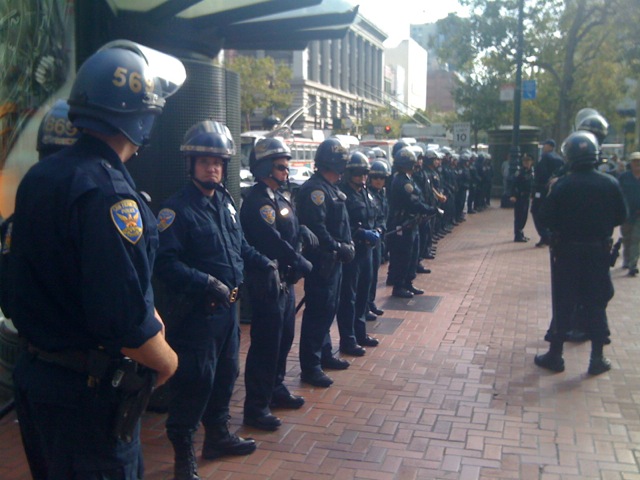
BART drew the ire of numerous media outlets after a Sept. 8 protest when transit cops detained members of the press along with protesters on suspected violation of California Penal Code Section 369i, which prohibits interfering with the operations of a railroad. Most journalists were eventually released, but the protest resulted in 24 arrests.

Although BART police later contended that they issued dispersal orders prior to closing in, many who were encircled and detained (including me) insisted they’d heard no such announcement. BART police also instructed San Francisco Police Department (SFPD) officers who were on hand to assist to seize reporters’ SFPD-issued press passes — a move that SFPD spokesperson Troy Dangerfield later told the Guardian was an error that went against normal SFPD protocol.

In a Sept. 10 editorial, the San Francisco Chronicle blasted BART police for placing Chronicle reporter Vivian Ho in handcuffs despite being informed that she was there as a journalist. Ho’s experience was mild compared with that of Indybay reporter David Morse (aka Dave Id), who told the Guardian he was singled out for arrest by BART Deputy Police Chief Daniel Hartwig and isolated from the scene — even though Hartwig is familiar with Morse and knows he’s been covering protests and BART board meetings for the free online publication. Asked why Morse was arrested when other journalists detained for the same violation were released, BART spokesperson Jim Allison told us, “The courts will answer that, won’t they?”

No Justice, No BART — a group that was instrumental in organizing the Sept. 8 protest — telegraphed to media and police at the outset that they intended to test BART’s assertions that people’s constitutionally guaranteed rights to free speech would be upheld as long as they remained outside the paid areas of the station, in what was dubbed a “free speech zone.” (Rebecca Bowe)


CHRON VS. WIENER(S)

Scott Wiener tried to do something eminently reasonable, and ask the naked guys in the Castro to put down a towel before they sit on public benches. Although the Department of Public Health hasn’t made any statements about the issue (and people put their naked butts on public toilet seats without creating major social problems), it’s pretty much an ick factor thing — and using a towel is an unwritten (sometimes written) rule at almost every nudist resort in the country.

The whole thing is a bit ironic, since it’s already illegal for fully clothed poor people to sit on the street — but so far, it’s not illegal for naked people to sit on benches. So far.

Wiener’s move set off an anti-nudity campaign at the San Francisco Chronicle, starting with columnist C.W. Nevius suggesting that the nudies are all perverts: “If these guys were opening a trench coat and exposing themselves to bystanders in a supermarket parking lot we’d call them creeps.” A Chron editorial called for a new law banning nudity in the city (an excellent use of time for a police department that already says it can’t afford community policing). The national (right-wing) press is having a field day. The commenters on sfbg.com are arguing about whether the pantsless men are shedding scrotal hair, or whether they’re mostly shaved. For the record, we haven’t checked.

And for the record, in a couple of months it’s going to get way too cold and rainy for this sort of thing anyway. (Tim Redmond)


HERRERA’S SMACKDOWNS

City Attorney Dennis Herrera has always been limited by his office’s neutral role in criticizing city policies and officials. But as a mayoral candidate, he seems to have really discovered his political voice, offering more full-throated criticisms of Mayor Ed Lee and his policies than any of the other top-tier candidates.

“I think it’s kind of liberating for him that he can talk policy instead of just about legal issues,” Herrera’s longtime spokesperson Matt Dorsey, who recently took a leave from his city job to work on the campaign full-time, told the Guardian.

Perhaps not surprisingly, Herrera’s shift began a little more than a month ago when Lee bowed to pressure from Willie Brown, Rose Pak, and other top power brokers to get into mayor’s race, prompting Herrera’s biting analysis that, “Ed Lee’s biggest problem isn’t that he’s a dishonest man — it’s that he’s not his own man. The fact is, if Ed Lee is elected mayor, powerful people will continue to insist on things. And I don’t think San Franciscans can be blamed for having serious doubts about whether Ed Lee would have the courage to say no.”

Herrera followed up last week by providing an example of something Lee and most other mayoral candidates don’t have the courage to say no to: the Central Subway project, with its runaway price tag and growing number of critics that say it’s a wasteful and inefficient boondoggle that will worsen Muni’s operating budget deficit.

“Fiascos aren’t born that way. They typically grow from the seeds of worthy idea, and their laudable promise is betrayed in subtle increments over time,” was how Herrera began a paper he released Sept. 8 called “It’s time to rethink the Central Subway,” in which he calls for a reevaluation of a project that he and the entire Board of Supervisors once supported.

He notes that the project’s costs have tripled and its design flaws have been criticized by the Civil Grand Jury and numerous transit experts. “Let’s look at this thing and see if it still makes sense,” Herrera told us, a stand that was greeted as blasphemy from the project’s supporters in Chinatown, who called at least two press conferences to decry that they called a “cheap political stunt.”

While the stand does indeed help distinguish Herrera from a crowded mayoral field, he insists that it was the grand jury report and other critiques that prompted him to raise the issue. “Good policy is good politics, so let’s have a debate on it and let the validity of the project stand or fall on its merits,” he said.

Herrera and fellow candidate John Avalos were also the ones who called out Lee on Sept. 2 for praising Pacific Gas & Electric Co. as “a great company that get it” for contributing $250,000 to a literacy program, despite PG&E’s deadly negligence in the San Bruno pipeline explosion and its spending of tens of millions of dollars to sabotage public power efforts and otherwise corrupt the political process.

“It shows insensitivity to victims’ families, and poor judgment for allowing his office to be used as a corporate PR tool. No less troubling, it ignores the serious work my office and others have done to protect San Franciscans from PG&E’s negligence,” Herrera said in a prepared statement.

Now, his rhetoric isn’t quite up to that of Green Party mayoral candidate Terry Baum, who last week called for PG&E executives to be jailed for their negligence, but it’s not bad for a lawyerly type. Herrera insists that he’s always wielded a big stick, expressed through filing public interest lawsuits rather than campaign missives, “but the motivation in how I do either is not really different.” (Steven T. Jones)


JACK IS BACK

The mayor’s race just got a new player, someone who is guaranteed to liven things up. His name is Jack Davis — and he’s already gone on the attack.

Davis, the infamous bad boy of political consulting who is so feared that Gavin Newsom paid him handsomely just to stay out of the 2003 mayor’s race, has been keeping a low profile of late. But he’s come out of semi-retirement to work for Jeff Adachi, the public defender who is both running for mayor and promoting Prop. D, his pension-reform plan.

Davis and Adachi first bonded when Adachi ran against appointed incumbent Kim Burton in 2002. Now, Davis has begun firing away at Mayor Ed Lee, with a new mailer that calls the competing Lee pension plan a “backroom deal.” The piece features a shadowy figure (who looks nothing like Ed Lee) slipping through a closing door, a fancy ashtray full of cigars and an allegation that Lee gave the cops a sweet pension deal in exchange for the police union endorsement.

Trust us, that’s just the start. (tr)


PENSION PALS

Meanwhile, Adachi sent Lee a letter on Sept. 8 challenging him to debate the merits of their rival pension measures — Lee spearheaded the creation of Prop. C, with input from labor unions and other stakeholders — sometime in the next month.

“I believe there is a vital need — if not an obligation — for us to ensure that the voters of San Francisco understand both the severity of our pension crisis as well as the significant differences between our two proposals,” Adachi wrote, later adding, “As the two principals behind the competing ballot measures, I hope that we can work together to increase awareness of this important issue and work toward a better future for our city.”

Lee’s campaign didn’t respond directly to Adachi, but Lee’s ever-caustic campaign spokesperson Tony Winnicker told the Guardian that the request was “the oldest political trick in book” and one they were rejecting, going on to say, “Voters deserve to hear from all the candidates on pension reform, not just two of them.”

Perhaps, but given the mind-numbing minutiae that differentiates the two measures, some kind of public airing of their differences might be good for all of us. Or I suppose we can just trust all those dueling mailers headed our way, right? (stj)

For more, visit our Politics blog at www.sfbg.com.

Cops go after the press

1

EDITORIAL The BART Board and the new general manager, Grace Crunican, have become so clueless it’s almost mind-boggling. For weeks, demonstrators have been taking to the BART stations to complain about a policy that never should have been in place (the shutoff of cell phone service during an earlier demonstration). The response of the BART Police (and, unfortunately, the San Francisco Police Department) has been so heavy handed and out of scale that it’s just making the situation worse.

For starters, BART could have easily avoided most of the trouble if the agency had simply apologized for cutting off phone service and instituted a policy to ensure that it would never happen again. And the new civilian police auditor can go a long way to establishing public credibility by expediting review of the shooting of Charles Hill and releasing a report quickly.

But BART is doing nothing but further agitating the protesters — and the events of Sept. 8 were a case in point.

The BART Police, with the help of the SFPD, began arresting people who were doing nothing but protesting in an area that BART had previously said would be open for demonstrations. The activists were peaceful — loud at times, but peaceful. And the police had nothing to charge them with except an old state statute that bars interference with the operation of a railroad.

The arrests came without warning — as Rebecca Bowe reported on sfbg.com, the police never declared an unlawful assembly, never warned protesters that they would be arrested if they didn’t leave and never followed normal, proper, legal procedures.

Then the cops went after the press. Reporters who were wearing passes issued by the SFPD were told to line up and present their credentials — at which point the San Francisco cops confiscated the press passes. That left reporters in a bind — if they stayed around to continue to cover the events, they would be subject to arrest. If they left, they’d miss the story — which may have been exactly what BART had in mind.

The episode is just the latest evidence that the BART police lack the training and experience to handle difficult situations. Crunican needs to get a handle on this immediately — and the BART Board, which has been far too hands-off when it comes to police abuse, needs to demand tighter procedures and more direct and effective discipline for the subway system cops.

The SFPD brass knows better than this — and while some officers privately say that detaining the press was a mistake, Chief Greg Suhr has been silent on the issue. He needs to speak out, now — apologize to the reporters and announce a policy change that strictly limits the ability of officers to arrest or detail credentialed journalists (and that bars the confiscation of press passes in all but the most unusual circumstances).

Meanwhile, the incident raises again a question the Society of Professional Journalists, and San Francisco officials, ought to be taking up: Why are the cops the ones who issue credentials for reporters?

A new progressive agenda

56

Over the past three months, the Guardian has been hosting a series of forums on progressive issues for the mayor’s race. We’ve brought together a broad base of people from different communities and issue-based organizations all over town in an effort to draft a platform that would include a comprehensive progressive agenda for the next mayor. All told, more than 100 people participated.

It was, as far as we know, the first time anyone tried to do this — to come up with a mayoral platform not with a few people in a room but with a series of open forums designed for community participation.

The platform we’ve drafted isn’t perfect, and there are no doubt things that are left out. But our goal was to create a document that the voters could use to determine which candidates really deserve the progressive vote.

That’s a critical question, since nearly all of the top contenders are using the word “progressive” on a regular basis. They’re fighting for votes from the neighborhoods, the activists, the independent-minded people who share a vision for San Francisco that isn’t driven by big-business interests.

But those of us on what is broadly defined as the city’s left are looking for more than lip service and catchy phrases. We want to hear specifics; we want to know that the next mayor is serious about changing the direction of city policy.

The groups who endorsed this effort and helped plan the forums that led to this platform were the Harvey Milk LGBT Club, SEIU Local 1021, the San Francisco Tenants Union, the Human Services Network, the Community Congress 2010, the Council of Community Housing Organizations, San Francisco Rising, Jobs with Justice, and the Center for Political Education.

The panelists who led the discussions were: Shaw-san Liu, Calvin Welch, Fernando Marti, Gabriel Haaland, Brenda Barros, Debbi Lerman, Jenny Friedenbach, Sarah Shortt, Ted Gullicksen, Nick Pagoulatos, Sue Hestor, Sherilyn Adams, Angela Chan, David Campos, Mario Yedidia, Pecolio Mangio, Antonio Diaz, Alicia Garza, Aaron Peskin, Saul Bloom, and Tim Redmond.

We held five events looking at five broad policy areas — economy and jobs; land use, housing and tenants; budget and social services; immigration, education and youth; and environment, energy and climate change. Panelists and audience participants offered great ideas and the debates were lively.

The results are below — an outline of what the progressives in San Francisco want to see from their next mayor.


ECONOMY AND JOBS

Background: In the first decade of this century, San Francisco lost some 51,000 jobs, overwhelmingly in the private sector. When Gavin Newsom was sworn in as mayor in January 2004, unemployment was at 6.4 percent; when he left, in January 2011, it was at 9.5 percent — a 63 percent increase.

Clearly, part of the problem was the collapse of the national economy. But the failed Newsom Model only made things worse. His approach was based on the mistaken notion that if the city provided direct subsidies to private developers, new workers would flock to San Francisco. In fact, the fastest-growing sector of the local economy is the public sector, especially education and health care. Five of the 10 largest employers in San Francisco are public agencies.

Local economic development policy, which has been characterized by the destruction of the blue-collar sector in light industry and maritime uses (ironically, overwhelmingly privately owned) to free up land for new industries in business services and high tech sectors that have never actually appeared — or have been devastated by quickly repeating boom and bust cycle.

Instead of concentrating on our existing workforce and its incredible human capital, recent San Francisco mayors have sought to attract a new workforce.

The Mayor’s Office has, as a matter of policy, been destroying blue-collar jobs to promote residential development for people who work outside of the city.

There’s a huge disconnect between what many people earn and what they need. The minimum wage in San Francisco is $9.92, when the actual cost of living is closer to $20. Wage theft is far too common.

There is a lack of leadership, oversight and accountability in a number of city departments. For example, there is no officiating body or commission overseeing the work of the Office of Economic and Workforce Development. Similarly the Arts Commission, the chartered entity for overseeing cultural affairs, is responsible for less than 25 percent of the budget reserved for this purpose

There’s no accountability in the city to protect the most vulnerable people.

The city’s main business tax is highly regressive — it’s a flat tax on payroll but has so many exceptions and loopholes that only 8,500 businesses actually pay it, and many of the largest and richest outfits pay no city tax at all.


Agenda items:

1. Reform the Mayor’s Office of Economic and Workforce Development to create a department with workforce development as a primary objective. Work with the San Francisco Unified School District, City College and San Francisco State to create sustainable paths to training and employment.

2. Create a municipal bank that offers credit for locally developed small businesses instead of relying on tax breaks. As a first step, mandate that all city short-term funds and payroll accounts go only to banks or credit unions that will agree to devote a reasonable percentage of their local loan portfolios for small business loans.

3. Reform procurement to prioritize local ownership.

4. Link economic development of healthcare facilities to the economic development of surrounding communities.

5. Link overall approval of projects to a larger economic development policy that takes as its centerpiece the employment of current San Francisco residents.

6. Enforce city labor laws and fund the agency that enforces the laws.

7. Establish the Board of Supervisors as the policy board of a re-organized Redevelopment Agency and create community-based project area oversight committees.

8. Dramatically expand Muni in the southeast portion of the city and reconfigure routes to link neighborhoods without having to go through downtown. Put special emphasis on direct Muni routes to City College and San Francisco State.

9. Reform the payroll tax so all businesses share the burden and the largest pay their fair share.

10. Consolidate the city’s various arts entities into a single Department of Arts & Culture that includes as part of its mandate a clear directive to achieve maximum economic development through leveraging the city’s existing cultural assets and creative strengths and re-imagining San Francisco’s competitive position as a regional, national and international hub of creative thinking. Sponsor and promote signature arts programs and opportunities to attract and retain visitors who will generate maximum economic activity in the local economy; restore San Francisco’s community-based cultural economy by re-enacting the successful Neighborhood Arts Program; and leverage the current 1-2 percent for art fees on various on-site building projects to be directed towards non-construction-site arts activity.


LAND USE, HOUSING AND TENANTS

Background: Since the office market tanked, the big land-use issue has become market-rate housing. San Francisco is building housing for people who don’t live here — in significant part, for either very wealthy people who want a short-term pied a terre in the city or for commuters who work in Silicon Valley. The city’s own General Plan calls for 60 percent of all new housing to be below-market-rate — but the vast majority of the new housing that’s been constructed or is in the planning pipeline is high-end condos.

There’s no connection between the housing needs of city residents and the local workforce and the type of housing that’s being constructed. Family housing is in short supply and rental housing is being destroyed faster than it’s being built — a total of 21,000 rental units have been lost to condos and tenancies in common.

Public housing is getting demolished and rebuilt with 2500 fewer units. “Hotelization” is growing as housing units become transitory housing.

Planning has become an appendage of the Mayor’s Office of Economic Development, which has no commission, no public hearings and no community oversight.

Projects are getting approved with no connection to schools, transit or affordable housing.

There’s no monitoring of Ellis Act evictions.

Transit-oriented development is a big scam that doesn’t include equity or the needs of people who live in the areas slated for more development. Cities have incentives to create dense housing with no affordability. Communities of concern are right in the path of this “smart growth” — and there are no protections for the people who live there now.

Agenda items:

1. Re emphasize that the Planning Department is the lead land-use approval agency and that the Mayor’s Office of Economic and Workforce Development should not be used to short-circuit public participation in the process.

2. Enact a freeze on condo conversions and a freeze on the demolition of existing affordable rental housing.

3. Ban evictions if the use or occupation of the property will be for less than 30 days.

4. Index market-rate to affordable housing; slow down one when the other is too far ahead.

5. Disclose what level of permanent affordability is offered at each project.

6. Stabilize existing communities with community benefits agreements before new development is approved.


BUDGET AND SOCIAL SERVICES

Background: There have been profound cuts in the social safety net in San Francisco over the past decade. One third of the city’s shelter beds have been lost; six homeless centers have closed. Homeless mental health and substance abuse services have lost $32 million, and the health system has lost $33 million.

None of the budget proposals coming from the Mayor’s Office have even begun to address restoring the past cuts.

There’s not enough access to primary care for people in Healthy San Francisco.

Nonprofit contracts with the city are flat-funded, so there’s no room for increases in the cost of doing business.

The mayor has all the staff and the supervisors don’t have enough. The supervisors have the ability to add back budget items — but the mayor can then make unilateral cuts.

The wealthy in San Francisco have done very well under the Bush tax cuts and more than 14 billionaires live in this city. The gap between the rich and the poor, which is destroying the national economy, exists in San Francisco, too. But while city officials are taking a national lead on issues like the environment and civil rights, there is virtually no discussion at the policy level of using city policy to bring in revenue from those who can afford it and to equalize the wealth disparities right here in town.

Agenda items:

1. Establish as policy that San Francisco will step in where the state and federal government have left people behind — and that local taxation policy should reflect progressive values.

2. Make budget set-asides a budget floor rather than a percentage of the budget.

3. Examine what top city executives are paid.

4. Promote public power, public broadband and public cable as a way to bring the city millions of dollars.

5. Support progressive taxes that will bring in at least $250 million a year in permanent new revenue.

6. Change the City Charter to eliminate unilateral mid-year cuts by the mayor.

8. Pass a Charter amendment that: (a) Requires the development of a comprehensive long-term plan that sets the policies and strategies to guide the implementation of health and human services for San Francisco’s vulnerable residents over the next 10 years, and (b) creates a planning body with the responsibility and authority to develop the plan, monitor and evaluate its implementation, coordinate between policy makers and departments, and ensure that annual budgets are consistent with the plan.

9. Collect existing money better.

10. Enact a foreclosure transfer tax.


YOUTH, IMMIGRATION, AND EDUCATION

Background: In the past 10 years, San Francisco has lost 24,000 people ages 12-24. Among current youth, 5,800 live in poverty; 6,000 have no high school degree; 7,000 are not working or attending school; 1,200 are on adult probation.

A full 50 percent of public school students are not qualified for college studies. Too often, the outcome is dictated by race; school-to-prison is far too common.

Trust between immigrants and the police is a low point, particularly since former Mayor Gavin Newsom gutted the sanctuary ordinance in 2008 after anti-immigrant stories in the San Francisco Chronicle.

Some 70 percent of students depend on Muni, but the price of a youth pass just went from $10 to $21.

Agenda items:

1. Recognize that there’s a separate role for probation and immigration, and keep local law enforcement from joining or working with immigration enforcement.

2. Improve public transportation for education and prioritize free Muni for youth.

3. Create family-friendly affordable housing.

4. Restore the recreation direction for the Recreation and Parks Department.

5. Implement police training to treat youth with respect.

6. Don’t cut off benefits for youth who commit crimes.

7. Shift state re-alignment money from jails to education.


ENERGY, ENVIRONMENT AND CLIMATE CHANGE

Background: When it comes to land use, the laws on the books are pretty good. The General Plan is a good document. But those laws aren’t enforced. Big projects get changed by the project sponsor after they’re approved.

Land use is really about who will live here and who will vote. But on a policy level, it’s clear that the city doesn’t value the people who currently live here.

Climate change is going to affect San Francisco — people who live near toxic materials are at risk in floods and earthquakes.

San Francisco has a separate but unequal transportation system. Muni is designed to get people downtown, not around town — despite the fact that job growth isn’t happening downtown.

San Francisco has a deepwater port and could be the Silicon Valley of green shipping.

San Francisco has a remarkable opportunity to promote renewable energy, but that will never happen unless the city owns the distribution system.


Agenda items:

1. Promote the rebirth of heavy industry by turning the port into a center for green-shipping retrofits.

2. Public land should be for public benefit, and agencies that own or control that land should work with community-based planning efforts.

3. Planning should be for the community, not developers.

4. Energy efficiency programs should be targeted to disadvantaged communities.

5. Pay attention to the urban food revolution, encourage resident owned farmers markets. Use unused public land for local food and community gardens.

6. Provide complete information on what parts of the city are fill, and stop allowing development in areas that are going to be inundated with sea level rise.

7. Prioritize local distributed generation of electricity and public ownership of the power grid.

8. Change Clean Energy San Francisco from a purchasing pool system to a generating system.

Mayor Lee likes Question Time just the way it is: scripted and boring

26

Mayor Ed Lee appeared before the Board of Supervisors today for his fifth monthly Question Time session, where he was asked by Sup. John Avalos – and subsequently by reporters – whether he would be willing to “change the format to make it a truly interactive, substantive, and dynamic exchange?”
But Lee disagreed with the widespread perception that the scripted nature of these exchanges – a condition that Lee’s office insisted on during negotiations with the board earlier this year, with questions submitted in writing a week before the meeting – is a contrived and dull departure from what San Francisco voters intended when they twice voted to establish Question Time.
“Supervisor Avalos, this is substance, and I think it’s exactly what the voters had in mind with Proposition C,” Lee said, reading from a prepared text. Later, he added, again reading from his script, “I think these are very substantial and dynamic exchanges.”
But apparently, that view isn’t widely shared, as the format has been criticized by a wide variety of media outlets in town, and it was the main topic that the pack of reporters who intercepted Lee in the hallway afterwards wanted to discuss. He was asked whether the session would still be as civil as they are if they were less scripted, and Lee responded that he thought they would still be civil.
“But I like a little more structure to it,” Lee said, adding that he likes to have prepared notes to address the questions that supervisors might ask. “If we don’t set boundaries, it could be a free-for-all.”
But a bit more of a free-for-all is certainly what former Sup. Chris Daly intended when he drafted the legislation, which voters approved as a binding measure last year after first approving it as an advisory measure two years early, only to have then-Mayor Gavin Newsom refuse to come.
For example, when Sup. Sean Elsbernd asked Lee for a status report on the Central Subway project, it’s possible that Lee’s recitation of the project’s benefits might have been followed up with questions asking him to address recent criticisms or the tripling of the project’s costs, which he didn’t mention.
Or perhaps Sup. Eric Mar might have asked a follow-up question when Lee answered the question “Are you willing to require that CPMC enter into a Community Benefits Agreement before their proposal is approved by the city?” by saying, “These community benefits will be incorporated into a Developer Agreement,” reminding the mayor of the premise of his question that many of the benefits that the community is seeking cannot legally be included in the Developer Agreement.
Similarly, Lee also avoided directly answering Sup. David Campos’ question about whether the mayor intends to support legislation by Campos and Sup. Mark Farrell that would require city departments to return to the board for approval of budget supplements when overtime costs are significantly exceeding those that the department budgeted for.
But there is some wiggle room in the exchanges for supervisors who want to freestyle, as long as they are within the narrow confines of civility being practiced at City Hall these days. Elsbernd embellished his approved Central Subway question, calling it an “opportunity to move beyond the clichés and one-liners of political campaigns.”
And when Lee closed his answer to Avalos by inviting him to take part in an upcoming benefit ping-pong match in Chinatown, Avalos asked the mayor, with a slight taunt in his voice, “How is your game?”
To which Lee – perhaps reaching new heights in conflict aversion – said his style of play is “diplomatic and friendship first.” To which Avalos responded, again with an air of challenge, “I used to work at the Boys and Girls Club and played everyday.”
And that, I suppose, is what passes for political conflict and debate at City Hall these days.

Deep-pocketed Lee supporter aims to take back S.F. from progressives

1

Power brokers Willie Brown and Rose Pak aren’t nearly the only influential backers working behind the scenes to help elect Mayor Ed Lee to a full term. Three different committees have been set up to support his candidacy and are fundraising independently from his official campaign, according to Ethics Commission filings.

The principal officer and treasurer of one of these independent expenditure committees are, respectively, a Republican Silicon Valley tech investor who’s spoken publicly about taking San Francisco back from progressives, and a political attorney who worked on Pacific Gas & Electric Co.’s failed yet stunningly expensive Proposition 16 campaign.

“San Franciscans for Jobs and Good Government, Supporting Ed Lee for Mayor 2011,” was created in late August with a San Rafael address, according to an Ethics filing. Its principal officer is Ron Conway, a Silicon Valley angel investor who made his fortune in the tech industry. Conway was quoted in a San Francisco Business Times article last year as saying “we must take our city back” from progressives, a rallying cry he delivered at a dinner hosted by the the Bay Area Council, a business association. A book written about Conway by Gary Rivlin dubs him “The Godfather of Silicon Valley.”

According to campaign finance records, Conway, a registered Republican, has donated more than $320,000 to Republican state and federal candidates since 1999. He also contributed $1,000 to a Draft Ed Lee for Mayor committee, a separate effort from Progress for All which was formed before Lee announced his candidacy to encourage him to run. Conway has made substantial contributions to Democratic hopefuls, too, but the majority of his campaign donations over the last decade have benefited GOP candidates.

The treasurer of “San Franciscans for Jobs and Good Government” is Elli Abdoli, a political attorney who works in the San Rafael office of Nielsen Merksamer Parrinello Mueller & Naylor, a heavyweight political firm based in Sacramento whose services were tapped last year by PG&E to advance the Proposition 16 ballot initiative that the company bankrolled. Prop 16 was designed to crush municipal power programs that threatened to compete with PG&E by requiring a supermajority approval of the voters before they could move forward. Despite sinking more than $45 million into that campaign, voters rejected Prop. 16.

Abdoli served as the assistant treasurer for the Yes on 16 committee, according to a form filed with the Fair Political Practices Commission. She was listed as a contact for the “San Franciscans for Jobs and Good Government” committee and had not returned calls by press time.


Editorial: The BART and SFPD cops go after the press!

3

The BART Board and the new general manager, Grace Crunican, have become so clueless it’s almost mind-boggling. For weeks, demonstrators have been taking to the BART stations to complain about a policy that never should have been in place (the shutoff of cell phone service during an earlier demonstration). The response of the BART Police (and, unfortunately, the San Francisco Police Department) has been so heavy handed and out of scale that it’s just making the situation worse.

For starters, BART could have easily avoided most of the trouble if the agency had simply apologized for cutting off phone service and instituted a policy to ensure that it would never happen again. And the new civilian police auditor can go a long way to establishing public credibility by expediting review of the shooting of Charles Hill and releasing a report quickly.

But BART is doing nothing but further agitating the protesters — and the events of Sept. 8 were a case in point.

The BART Police, with the help of the SFPD, began arresting people who were doing nothing but protesting in an area that BART had previously said would be open for demonstrations. The activists were peaceful — loud at times, but peaceful. And the police had nothing to charge them with except an old state statute that bars interference with the operation of a railroad.

The arrests came without warning — as Guardian reporter  Rebecca Bowe reported on sfbg.com, the police never declared an unlawful assembly, never warned protesters that they would be arrested if they didn’t leave and never followed normal, proper, legal procedures.

Then the cops went after the press. Reporters who were wearing passes issued by the SFPD were told to line up and present their credentials — at which point the San Francisco cops confiscated the press passes. That left reporters in a bind — if they stayed around to continue to cover the events, they would be subject to arrest. If they left, they’d miss the story — which may have been exactly what BART had in mind.

The episode is just the latest evidence that the BART police lack the training and experience to handle difficult situations. Crunican needs to get a handle on this immediately — and the BART Board, which has been far too hands-off when it comes to police abuse, needs to demand tighter procedures and more direct and effective discipline for the subway system cops.

The SFPD brass knows better than this — and while some officers privately say that detaining the press was a mistake, Chief Greg Suhr has been silent on the issue. He needs to speak out, now — apologize to the reporters and announce a policy change that strictly limits the ability of officers to arrest or detail credentialed journalists (and that bars the confiscation of press passes in all but the most unusual circumstances).

Meanwhile, the incident raises again a question the Society of Professional Journalists, and San Francisco officials, ought to be taking up: Why are the cops the ones who issue credentials for reporters?


Ting wants instant public records

6

When Assessor and mayoral candidate Phil Ting came by for his endorsement interview, we talked about open government, and I mentioned an idea that sunshine advocate Kimo Crossman first proposed back in 2008: Why not make all city documents (with a few limited exceptions) public the moment they’re created?

Why not send a copy of every memo, every email, every contract, every check, everything anyone at City Hall produces, into a public server, where the rest of us can see what our elected officials and civil servants are doing? No more hassles with sunshine requests — the docs would already be there, in a searchable database.

Well, apparently Ting liked the idea — and it’s now part of his mayoral platform. In a release posted Sept. 13, Ting argues that “everything should be public.”

And I mean just about everything. I think that every email, every memo, every check, every contract, every phone message, every tweet, every cell phone call and every other single government document that is not part of an employee personnel decision, about an immediate public safety issue, protected by state law or part of a pending lawsuit should be made public at the time it is created. The reality is that technology has outstripped our city’s Sunshine laws. And it would be far less expensive – and far more productive – simply to have all digital public records (which is now nearly all public records) simply posted to a City Sunshine Site at the time they are created. This site should quickly include, and certainly be the basis of, an Application Programming Interface (API) that gives San Franciscans the tools and the data they need to help hold government accountable.

He explains:

So as mayor, if I send an email to my chief of staff on an issue – that should be made public when I send it. When I have a meeting at City Hall or anywhere else, that would be part of an online calendar, which should be made public. A direct message – a tweet from the mayoral account – just about anything that is created, said or discussed should be made public in real time.

Every document created by city government (with the noted exceptions) should be made available to the public at the time it is created. That should include every check written – and every dollar spent or promised. And every contract. And every subcontract. Everything.

There is simply no supportable reason for any work product created by a public employee to be hidden from the public – or perhaps even worse, to be put behind the barrier of a “sunshine” process that is now so complicated, time consuming and expensive that it promises public accountability without always being able to deliver it.

It makes perfect sense — the technology exists, and is relatively inexpensive (particularly compared to the time it takes city agencies to respond to public records requests). It would be easy to allow people creating confidential documents (legal strategy memos in the City Attorney’s Office, say, or personnel records) to add a tag to the file that would keep it out of the public database — and, of course, it would be easy for an agency (or the Sunshine Task Force) to search those tagged files later to see what should and shouldn’t have been kept secret.

I don’t think anyone else has ever done this; San Francisco could be the first city in the country to make sunshine a part of everyday life at city Hall. I hope this becomes part of the mayoral debates.

YBCA PRESENTS BIG ART GROUP

0

On Sept. 16 and 17, YBCA and Z Space present New York experimental ensemble Big Art Group, transforming Florida Street into a film set of sorts for The People: San Francisco. The site-specific performance combines live theater with large-scale, real-time video projections on Z Space’s exterior. Juxtaposing live reenactments with clips of taped conversations, The People: San Francisco brings the concept of reality TV to a new level. The People, which first premiered in Italy in 2007, is part of a larger cross-cultural work that will eventually combine dialogues from all its global exhibitions. Starting at 6:30pm, prior to each evening’s performance, the block will be closed off for food and drink vendors, including something called “The Taco Throwdown.” Performances start at 8; $10 in advance at ybca.org or cash only at the door. More info here.
September 16-17 at 8PM @ Outside Z Space, 450 Florida St, San Francisco

SAN FRANCISCO COCKTAIL WEEK IS SHAKING THINGS UP!

0
The 5th Annual San Francisco Cocktail Week, beginning September 19, is jam-packed with parties, seminars, neighborhood cocktail crawls, dining events, festive galas and more.
Kick off the week at the Opening Night Party with Anchor Distilling Co. Continue rocking at main events including the Shaker & Flask party with Cocktail Lab showcasing the scientific side of cocktails and molecular mixology; the East Bay Showdown in Oakland with some of the best mixologists from the East Bay facing off to create the tastiest concoctions; the Best of the West party with guest bartenders from San Diego to Vancouver showing off the best their city has to offer; the Barbary Coast Bazaar celebrating all things bizarre and delicious in a fantastical night of cocktails with carnival curiosities; and the 1st annual Legends Awards dinner celebrating the true leaders in the industry complete with tableside cocktails and burlesque dancers.  New events are continually being added – check the website often!
September 19-25 All around the Bay Area

SF Labor Council makes surprising dual endorsements

5

The San Francisco Labor Council made a pair of dual endorsements last night that reflect the wide ideological range of local unions — stretching from the progressive SEIU Local 1021 that represents city workers to the more conservative members of the trade unions — as well as the power of behind-the-scenes politicking.

For mayor, the council made a dual endorsement of Leland Yee — who secured an early endorsement from the trade unions and has significant progressive support as well — and Dennis Herrera, whose supporters deftly worked to secure the long-shot endorsement for his ascendant campaign.

Similarly, the council gave a dual endorsement in the sheriff race to Ross Mirkarimi, the progressive candidate who has a long list of labor union endorsements, and Chris Cunnie, whose base of support is the police unions and other more conservative groups and individuals. There was no endorsement in the DA’s race.

So how did Herrera and Cunnie manage to land such influential support despite having secured only a few endorsements from individual labor unions? Several of those in attendance wondered the same thing, but several sources say both dual endorsements were engineered by Labor Council President Mike Casey, who heads UNITE-HERE Local 2, whose hotel worker members have been locked in a bitter labor dispute with the big hotel corporations. Casey did not immediately return a call for comment, but I’ll update this post if and when I hear back.   

Localized Appreesh: The Jaunting Martyrs

1

Localized Appreesh is our weekly thank-you column to the musicians that make the Bay. Each week a band/music-maker with a show, album release, or general good news during those seven days is highlighted and spotlit. To be considered, contact emilysavage@sfbg.com.

The Jaunting Martyrs were chosen for Localized Appreesh because the seven-piece band has a great, thoroughly San Franciscan in spirit, show this week and it could use your attention: Kimo’s tonight (Tuesday) with Fierce Bad Rabbit, Wesley Woo, Halftime Heros.

Plus, have you heard its music? It’s like an Eastern European circus took a folky Appalachian holiday.  It’s both quiet, classical bedtime story and traveling, rambling, carnival party.  The song “Surfin Tzigane” off last year’s self-titled EP is probably the most telling. With initially delicate Spanish-style strumming, it leads eventually to rowdy wet reverb –  not out of place within a true-blue American surf rock Dick Dale track – and, laid over that, Bulgarian drumming and Turkish horn. It’s world traveling from the ground-pillow comfort of your own intimate local music venue.

Year and location of origin: 2008, San Francisco, Calif.
Band name origin: Originally, it began as the random name of the track of space music Justine was sending off in the mail when she met Brendan on the BART train, but has come to mean something deeper, communicated in some of the characters in our songs, such as Mickey, Lila, and Bonnie Blue. Basically, A Jaunting Martyr is one who has moved past anger and angst into acceptance of their plight, and is able to laugh and dance in the face of hopelessness.
Band motto: “Never mind the baby faces, this is a savage band.”
Description of sound in 10 words or less: A sound that tells a story, fluttering from intimate to intense.
Instrumentation: Electric guitar, bass, banjo, mandolin, trumpet, tapan (Bulgarian drum), fiddle, charango, kaval.
Most recent release: A self-titled self-released, self-mixed self-published EP.
Best part about life as a Bay Area band: This is simply the most beautiful, spiritually powerful place in the world. We are all natives here, we all consider it home. (Except for Ivan, he’s from Bulgaria, which I’m sure he digs as well).
Worst part about life as a Bay Area band: Those folks with the tightly crossed arms at shows.
First record/cassette tape/or CD ever purchased: The Mermen – A Glorious Lethal Euphoria.
Most recent record/cassette tape/CD/or Mp3 purchased/borrowed from the Web: Spirits of The Red City – Hunter Moon.
Favorite local eatery and dish: Lucca Foods on Irving and 20th.  Best deli in SF, baby. Get the Billy Filly. (You can only get it when Billy’s working).

With Fierce Bad Rabbit, Wesley Woo, Halftime Heros
Tues/13, 9 p.m., $6
Kimo’s
1351 Polk, SF
www.kimosbarsf.com

Try not to fall in love: http://www.youtube.com/watch?v=uOC31u1GzxU&feature=related

SFBG Radio: Johnny wants a nude-in

3

Today we can’t resist talking about naked people in the Castro, since my last post on the subject has about 90 comments (not counting the ones that violated our comments policy and had to be deleted). Johnny thinks all of San Francisco should pick a day and go naked, just to show solidarity with the guys at 17th and Castro. I’m good with that — maybe, sort of — as long as Chuck Nevius and a few others I can think of stay home.

Listen to the fun after the jump.

SFNudeOut by endorsements2011

Endorsement interviews: Phil Ting

32

We’ve started interviewing the candidates for mayor, sheriff and district attorney, and, as usual, we’re taping the interviews and posting the audio feed unedited for your listening fun. We’re also putting up videos of the candidates’ opening statements.

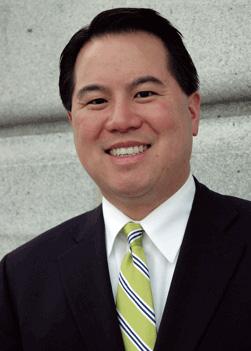
mayoral candidate Phil Ting’s basic pitch: “The most progressive thing we can do is make government more efficient.” He talked a lot about his crowdsourcing website, Resetsf, which allows hundreds of San Franciscans to weigh in on the city’s problems — and offer solutions. Among his solutions: One minute of improved time on every Muni line would save $20 million a year. That means eliminating some bus stops to make the busses go faster.

He argued (with me) that San Francisco can eventually build its way out of the housing crisis by constructing more units on transit corridors. He vowed to reverse Gavin Newsom’s policy on sanctuary and told us he supports the central subway. Listen and watch after the jump.

Ting by endorsements2011

Watch Ting’s opening statement here:

Suds on sea legs: A photo journey through Brews on the Bay

0

All photos by Allen David

“Fuck the wine industry! I mean, I drink wine like everybody else.” Brenden Dobel, brewmaster at Thirsty Bear Brewing Company may be tipsy — but then again, we are on a boat.

A bigass boat in fact — the S.S. Jeremiah O’Brien, one of the mere two Liberty ships still afloat from the batch of 2,710 that were constructed during WWII. But we were pretty far from Normandy on Saturday; the O’Brien was hosting Brews on the Bay, a celebration of San Francisco’s alcoholic beverage of choice.

At least, that’s how Dobel would have it. “Our entire civilization is based on beer — and I’ll stand by that statement,” said the brewer from behind his aviator glasses and cigarette, hanging out by the cask ale at his brewery’s tasting table, perched on a platform atop the 441-foot boat. 

But for too long California wine producers have been outhustling brewers in terms of public relations, even in the food pairing arena (“wine cannot handle heavy cheeses, spicy food — beer has much more dimensions,” he says). Dobel and other SF brewers’ answer to the problem was to form the SF Brewer’s Guild in 2003. The associationa has been holding Brews on the Bay for eight years to celebrate San Francisco beer — suds from “the birthplace of the American craft brewery revolution,” as Dobel puts it. 

This weekend, 50 beers from eight breweries were on offer to the exuberant crowd of mostly-young people swilling on the O’Brien’s deck. Thirsty Bear’s brewmaster was excited about the possibilities of adding more guild members in the years to come, possibly from the ranks of the nanobreweries that have begun to make their mark on the San Francisco scene. 

“By 2013, we should have 11 breweries here,” he shares — although from the look of the crowd swerving down the gangplank at the end of the day (your author definitely included), Brews of the Bay’s beer selection left nothing to be desired. 

The Guardian Final Forum — featuring the candidates

0

A chance for candidates for mayor to review the progressive platform we’ve developed in community meetings over the summer and tell us where they stand

Wednesday, September 21st from 6:00 – 7:30 pm

LGBT Center 1800 Market Street (at Octavia), San Francisco, CA
(Limited street parking.  MUNI METRO LINES J,K,L,M,N, the F STREETCAR, or MUNI BUS LINES 6,7,9, 10, 14, 21, 26, 47, 49, 66 and 71.  BART to SF Civic Center, then transfer to Muni Metro or F lines.)

Previously Discussed Issues
Issue One: Economy, Jobs and the Progressive Agenda
Issue Two: Budget, Healthcare and Social Services
Issue Three: Tenants, Housing and Land Use
Issue Four: Immigration, Education and Youth
Issue Five: Environment, Energy and Climate Change


PLUS: The Guardian’s mayoral endorsement interviews are underway, and you can get full audio versions of all the discussions on the politics blog.

Live Shots: Religious Girls, Part Time, and Born Gold

0

Last night at the Knockout, Religious Girls killed it. It was a homecoming show of sorts for the local band after its late summer tour, and the feeling was all warm and fuzzy — minus a drunken birthday boy fight in the crowd. The Knockout itself was crowded, but not that unbearable, sweat-running-down-the-walls packed it has been known to incur. The boys of Religious Girls, who we profiled earlier this week, played hard and tight; especially the drummer, who we’re giving MVP for the night.

After opening the show, Religious Girls were followed by another recent birthday boy, San Francisco’s 80s synth dreampopper Part Time, backed by a full band, then Canadian trio Born Gold (formerly Gobble Gobble).

All photos by Chris Stevens.

The Chron’s war on nudity

110

Poor Scott Wiener. He tries to do something practical — telling naked guys to sit on a towel or something when they occupy public benches — and all of a sudden the Chron launches a war on nudity. First there’s this shit from Chuck Nevius, who suggests that anyone who isn’t wearing clothes is some sort of a pervert:

Why? If these guys were opening a trench coat and exposing themselves to bystanders in a supermarket parking lot we’d call them creeps. But if they sit on public chairs and expose themselves to bystanders, they’re defenders of free speech. Here’s some free speech – when moms and dads walk their kids to school, they don’t want to see you naked. This isn’t a civil rights issue, it’s just obnoxious.

Actually, I’ve often walked my daughter to school along Castro Street, and I don’t care whether people are naked or not. Neither does she. My kids are San Francisco city kids; it’s all a big Whatever. And the naked guys in the Castro, mostly middle-aged men, aren’t “exposing themselves” in the way of a sex offender who gets off on it; they don’t confront anyone, or jump in front of anyone, or try to force anyone to look at them. They aren’t fucking in the streets. They’re just walking around (and sitting down) without clothes on.

Whatever.

But then the Chron decides this is all worth a scathing editorial:

Here’s an idea, San Franciscans: Keep your pants on – at least in public. Most people don’t want to see that much of you. And even in a city known for tolerance of unusual behavior, inflicting nudity on an unsuspecting public can scare youngsters and offend adults. … People who insist on walking down Market Street without clothes should be cited.

Now there’s going to be pressure on the cops to find a way to bust the nudists (some of whom will love the attention), and the city will either waste a lot of money prosecuting and defending them when there’s no actual law that’s been broken — or the supervisors will be under pressure to outlaw public nudity, which will create another big fuss and waste a lot of all of our time.

Besides, the Chron ought to love the Wiener law. If I ran that paper, I’d put a couple of new racks at Castro and Market. The guys who forget their towels are going to need something to sit on.

PS: If nudity doesn’t offend you, check out our hottest butt in SF contest here.

Powell station shut down by BART protest

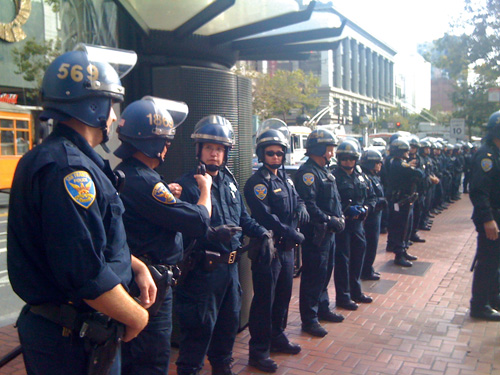
A Sept. 8 protest called to test the limits of the Bay Area Rapid Transit (BART) agency’s policies on freedom of speech inside BART stations ended in a cluster of protesters and journalists being coralled by nightstick-wielding BART officers, detained, and in some cases, arrested. The station was shut down at around 6 p.m. when police surrounded a group of demonstrators who had marched around the unpaid area of the transit station, as well as a group of media who were following them with cameras and voice recorders.

It was unclear at press time just how many arrests were made, but it is clear that things did not go as planned from the perspective of either the protesters or the transit agency. As the demonstration got underway, one of the No Justice No BART protest organizers, Christopher Cantor, told reporters, “We are here to test free speech limitations at BART, but more importantly, we’re here to say we don’t trust BART, we don’t trust BART to protect us, we don’t trust BART to interpret the constitution.” He also said that none of them were there to get arrested.

Before the banners and bullhorns came out, BART spokesperson Jim Allison told the Guardian that if BART police deemed a gathering inside the unpaid area of the station to be dangerous, “we would ask people to disperse.” If they didn’t disperse, “we would declare an unlawful assembly.” Allison said protesters were free to exercise their first amendment rights to protest inside the areas of the station that don’t require a ticket to enter. He said people could do that as long as they were not “interrupting or interfering” with regular service. When the Guardian caught up with Allison after the protest by phone to find out why his statements about the dispersal order were contradicted by police activity, he refused to answer our questions, directing us instead to watch a press conference on the BART website.

“I’m going off duty,” he said after calling the Guardian in response to a page, after being asked several times why BART police had not issued a dispersal order before surrounding people and arresting them. “I simply cannot devote the rest of my night to answering your questions.”

Here’s what Cantor said just before the march around the station got underway:

Before police closed in, the protest featured some 60 protesters chanting things like, “How can they protect and serve us? The BART police just make me nervous.” One banner, from a group called Feminists Against Cops, read, “Disarm BART, Arm Feminists.”

Things heated up when the protest got closer to the fare gates, at which point police may have determined that protesters were interfering with service. At one point, police tackled a masked demonstrator to the ground. However, when people were detained, they were not standing directly in front of the fare gates.

Police did not make any public statements indicating that the situation had been deemed unlawful before surrounding the group of detainees, nor did they issue a dispersal order. We were told that we were not free to leave.

While I was detained along with Luke Thomas, a reporter from the popular political Fog City Journal, and freelance reporter Josh Wolf, an officer told us that we were being detained on suspected violation of California Penal Code 369-i, which prohibits interfering with the operations of a railroad.

Thomas phoned Matt Gonzalez, former president of the Board of Supervisors and now a chief attorney with the Public Defender’s office, to ask about that law. Gonzalez looked it up and told him that there was an exception to that law which “does not prohibit picketing in the adjacent area of any property” belonging to a railroad. So it would seem that the protesters, along with more than a dozen journalists, were being unlawfully detained. When we put this question to one of the officers who stood holding a nightstick and blocking us in, he refused to address the issue directly, repeating that we weren’t free to leave.

Members of the press with San Francisco Police Department issued credentials were made to line up and present their press passes to San Francisco police officers, who had been called in to assist. The police officers took away media’s press passes, saying it was SFPD property and could be retrieved later — which meant that if journalists had opted to stay and cover any further police activity, we would have had no way of presenting credentials to avoid arrest. We were issued Certificates of Release and ushered outside of the station, where it was impossible to see what was happening, and therefore, impossible to do our jobs as reporters.

Just outside, San Francisco State lecturer Justin Beck was very concerned that several of his journalism students, whom he’d sent on assignment to cover the protest, were being detained. They did not have SFPD issued press passes and at that time were not being allowed to exit the station.


BART Police arrest journalists and protesters

22

BART Police are cracking down hard on a peaceful protest in the Powell Street station, detaining a group of 30 to 40 people that includes almost a dozen journalists, including Guardian reporter Rebecca Bowe, who just called in with a report on the ongoing situation. (For Rebecca Bowe’s account of the BART protest and arrests, with video footage, click here.)

The scene is chaotic and details are unclear at this point, but we’ll report more on this blog post as the situation unfolds. This protest stems from shootings by BART Police, the transit agency’s ban on political speech on train platforms, and its decision last month to cut cell phone service in an effort to scuttle a police accountability protest that never materialized. Today’s protest, organized by the group Anonymous, stated an intention to exercise free speech rights without disrupting BART service.

But BART officials have apparently decided to deal harshly with the protesters and Bowe reports that the group has been detained for violation of Penal Code Section 369i, which makes it a crime to disrupt rail service, outlawing activities that “would interfere with, interrupt, or hinder the safe and efficient operation of any locomotive, railway car, or train.”

Yet an attorney working with the protesters notes that mere speech doesn’t hinder operations, noting that section C of that code section specifically “does not prohibit picketing in the immediately adjacent area of the property of any railroad or rail transit related property or any lawful activity by which the public is informed of the existence of an alleged labor dispute.”

While this protest may not involve a labor dispute, it does seem that the ongoing protests against BART are evolving into a test of the agency’s claims of the authority to ban all protest and political speech on its train platforms.

More to come…

UPDATE AT 6:07 PM: The professional journalists in the group have been released after being detained for about 30 minutes, and they’ve been shepherded into an area where they can no longer see the group of arrestees. But a group of three to five San Francisco State University journalism students who don’t have press credentials remain in custody, despite repeated appeals to the police by their faculty advisor Justin Beck.

Transportive

2

MUSIC One way in which to think about the development of what could now be called “ambient electronic music” is to trace the attempts by musicians who fall under that banner to work against and around time.

Terry Riley’s legendary all night concerts of the late ’60s and early ’70s were enabled by a simple tape delay mechanism he dubbed the “time lag generator,” which repeated and echoed the notes Riley repeatedly sounded whether on organ or saxophone. Brian Eno devised Ambient music as a way to make the passing of “free” time — whether spent (as in Eno’s case) bed-ridden recovering from an injury, or, as with his breakthrough 1978 album Music for Airports (EG), waiting for a departing flight — less noticeable. And experimental duo Coil took things to new extremes when they claimed that the slowly evolving synthesizer drones on their composed-under-the-influence-of-psychedelics 1998 release Time Machines were meant to “dissolve time.”

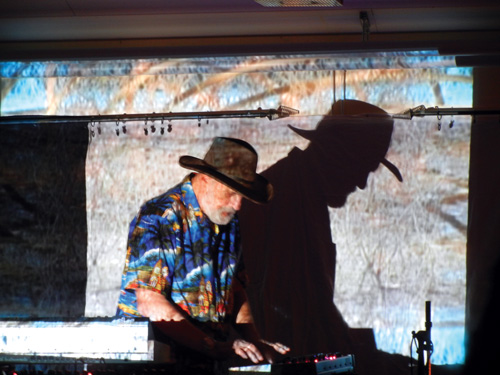
It is fitting then, that J.D. Emmanuel prefers to be thought of as a time traveler rather than as a musician (the self-designation is practically everywhere you look on his website). There is something undeniably transportive about listening to Emmanuel’s expansive meditations for synthesizer and electronic keyboard. Clusters of notes gradually coalesce and dissolve around a dominant drone. Occasionally, he’ll introduce field recordings of environmental sounds — birds, lapping waves, wind — into the mix, but these serve as compliments to the synthesized elements rather than as sonic footholds of the outside world (the point of Emmanuel’s music isn’t to hold on to anything, but to drift).

But, as is now so often the case, were it not for the Internet (another sort of time machine) far fewer listeners would be drifting along. The three LPs of ambient music that Emmanuel self-released in the early to mid ’80s were long considered grails for private press collectors until a Belgian label did a limited re-release of Wizards, Emmanuel’s second album from 1982, in 2007 (followed by its inevitable distribution on file-sharing networks). A compilation of electronic works from 1979-82 followed in 2009, and last year Important Records re-issued Wizards to a wider audience and much critical acclaim which lead Emmanuel to start playing concerts after a near three-decade hiatus.

His closing night set is undoubtedly one of the anticipated highlights of the 12th annual San Francisco Electronic Music Festival, whose location at the Brava Theater should provide a comfortable venue for time traveling without moving.

Emmanuel expressly admits that his own musical approach was greatly shaped by listening to Riley and Steve Reich in 1970. Riley, is in many ways, the Kevin Bacon of electronic music, and his name — along with Reich’s and that of their New York minimalist associate LaMonte Young — make up a cannon unto themselves, leading to inevitable comparisons when discussing younger artists working in a similar vein. The appearance at SFEMF by another elder statesman of drone, Bay Area composer Yoshi Wada, who will be performing with his son Tashi Wada (a composer in his own right) actually brings things full circle.

The elder Wada moved to New York in 1967 and got introduced to drone music via Young and later studied with Pandit Pran Nath, the great North Indian singer who was also Young’s teacher at the time. Their influence is audible in the sonorous, shimmering drones heard on EM Records’ steady output of re-issues of Wada’s two official albums and various concert recordings from the ’70s and ’80s. The younger Wada has very much continued to in his father’s footsteps, exploring harmonic overtones and dissonance in his own practice, and their joint headlining performance on Saturday night is bound to be resonant in more ways than one.


12TH ANNUAL SAN FRANCISCO ELECTRONIC MUSIC FESTIVAL

Sept. 8-11

Brava Theater

2789 24th St., SF

San Francisco Museum of Modern Art

151 3rd St., SF.

(415) 641-7651

www.sfemf.org

The Performant: Space cadets

1

Cosmic San Francisco mainstays Audium and Planet Booty shoot us to the moon.

Some only-in-San-Francisco adventures are subtler than others — they’re you-have-to-know-they’re-there treasures, unencumbered by a surfeit of fanfare or weight of fickle expectation.

Audium, a continually-morphing collaboration in sound design between composer Stan Shaff and electronics “architect” Douglas McEachern, definitely counts as one of these.

Beginning in 1960 with a single performance involving eight speakers and a four-channel board, Shaff and McEachern have spent decades perfecting their singular brainchild—a custom-built performance space where the structural relationships of sound and space can be fully explored.
       
Walking into the intimate theatre is a small adventure in and of itself, feet shuffling along a path of illuminated glow tape arrows leading the opposite direction, as ripples of sound bounce along the barely lit passage. Beneath a mothership portal of speakers arranged in concentric circles, three fairy rings of chairs encircle a large multi-directional speaker positioned in the very center of the room. More speakers discreetly line the walls and crouch beneath chairs, 176 in all. Once all are seated, the lights fade from dim to black to the sounds of waves crashing along a sandy shore, and the immersive Audium experience begins.

As with any musical composition, there is a set order in which the vast catalogue of field recordings is played, but Shaff manipulates the trajectory and emphasis of each at every performance: both conductor and orchestra of one. In addition to water sounds of all varieties are numerous birdsongs, snatches of children’s voices, galloping horses, thunder, laughter, drumrolls, horns, strings, West African polyphony, a pipe organ, and synthesized electronica zinging from wall to wall, ceiling to floor, ear to ear. Without benefit of sight, the body’s capacity to trace the actual physical curve of each sound as it travels from speaker to speaker becomes enhanced, and the occasional rustling of listening bodies adds a subtle layer of improv to the piece, a connection that Shaff strives to enhance with every performance. Upon exiting, the sole visual component of the work—a video projection of flowing water—allows each visitor a brief moment to reintegrate sight and sound before heading off into the multi-dimensional night.

A completely different iteration of “Space” music landed Sunday on the Peace Pagoda of Japantown as part of the newly-established Convergence Fest, dedicated to alternative music and art. Planet Booty, a hyper-active ensemble of post-funkadelic bass lines and warp-speed retro remixes livened up the stage along with the theatrical antics of frontman Dylan Germick, whose self-assured commitment to booty-bouncing caused him to literally split his pants about a minute into the rollicking set. More dance moves courtesy of poker-faced Lady Emasita, rap vox and occasional trombone by Josh Cantero, drumming from Max Reed, and electronic manipulations by Nathan Germick rounded out the “stripped-down” festival day ensemble, who normally number eight. And though they couldn’t quite inspire the entire crowd of lazy-afternoon onlookers to bounce along, the good denizens of Planet Booty did fulfill their roles as ambassadors for their rump-shaking cause, which will undoubtedly be fully realized at their upcoming September 10 show at Bottom of the Hill.

Brown the columnist: How long can this go on?

9

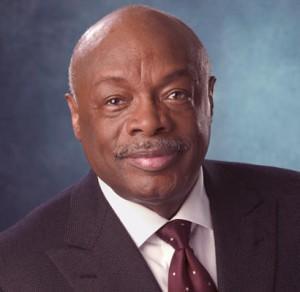
Well, the Chronicle didn’t have any problem when one of its columnists, Willie Brown, showed up at California Public Utilities Commission hearing representing PG&E. That was a stretch. Now Brown has hosted a fundraiser for the mayor — getting directly involved in an electoral campaign while writing about politics in a column in the daily paper.

And when an Examiner reporter asked for details about his fundraiser, Brown used his Chron job as an excuse to duck:

“I don’t talk to reporters. I am a reporter,” said Brown, now a columnist for the San Francisco Chronicle. “I write my own column. All right? Nothing personal.”

The Chron has fired other people for far less relevant conflicts of interest. At the very, very least, Brown ought to be disclosing in his column what campaigns he’s working on (and which private clients he’s representing).
I don’t know if the Chron has any rules at all for Brown (could he run for office again, as a columnist?) But if there are any rules that have any connection to the standards that the Chron forces all of its other employees to uphold, then this is over the line. Way over the line.
I emailed and called Chron editor Ward Bushee to ask him about this latest conflict, and if he gets back to me I’ll let you know.
UPDATE: Bushee emailed me. Here’s the verbatim transcript:

We’ve gone down this road before. Our position remains the same.  Willie Brown is not a member of the Chronicle news staff. Our reporters continue to cover the former mayor as a newsmaker and he has been the subject of scrutiny in our editorials. Willie’s World is highly popular with our readers who are well aware of his background and long history of involvement in local and state politics.

Actually, I’m not sure how many readers are aware of all of his background. The Chron’s much happier with good ol’ avuncular Willie. I suppose I shouldn’t be surprised.

Instant replaya

0

SUPER EGO Dear burners,

I am absolutely NOT BITTER that I couldn’t join you this year. And I certainly DID NOT wrap myself in a hot-pink bedsheet, spin around until I saw Ganesh, puke up 23 packets of Tasty Bites, and throw a fistful of chickpea flour in my roommate’s face, screaming “Rites of passage, bitch!” so that I could virtually burn. And then I didn’t fist-pump to vintage Bassnectar, nor construct a 12-foot flashing Alexander Wang Summer 2011 fun-fur ankle strap high-heeled sandal in our foyer out of wire hangers, chicken bones, old Dell motherboards, and tuck tape.

Does anyone have a couch I could crash on? Preferably one of those big red lips-shaped ones?

In a sort-of pathetic attempt to even things out a bit, here’s what you missed: a gaggle of the hottest nerds in the world cruising Zinefest; the best Bloody Mary ever at my new-old favorite bar, Little Shamrock; Optimo DJs blowing minds at Public Works by dropping one of the first industrial tracks, Liasons Dangereuses’ “Los Niños del Parque”; German frenzy-whipper Matthias Tanzmann slaying with Maxwell-sampling summer smash “Entrance Song” by Eats Everything at Mighty, the supernova heat-explosion of Oakland Pride … and I’m not even on Sunday evening yet. So, you know, nyah.

ARAABMUZIK AND DJ FUNK

Young Rhode Islander Abraham Orellano, a.k.a. Araabmuzik, is actually of Dominican-Guatemalan descent – his crew dubbed him Araab when he was a teen. (Why? Because he’s so fine like the rest of us Arab brothers?) But beyond the Google-gold moniker, Araab’s emblematic of a neat trend right now in our frantic niche-crossover times: he’s a hip-hop beatmaker (Cam’ron, Duke Da God) with a touching love for poppy old dance music, using his genius manual dexterity with big-buttoned, retro-looking Music Production Center devices in his live act to melt dance floors into stunned lumps of woah.

This year’s Electronic Dreams album subtly warps goofball “Night at the Roxbury”-type ’90s dance anthems like Future Breeze’s “Why Don’t You Dance With Me” and Starchaser’s “So High” – and even gabber-house noise-blast “Underground Stream” by Nosferatu – into haunting documents of a young man’s often-lonely street life. Araab’s polishing songs I spent a good part of my life running in terror from into weird mirrors of interiority, fusing futuristic bedroom-producer headspace with retro big-room boom. And the dude’s just getting started.

http://www.youtube.com/watch?v=QeJcUz7nSYk

Also headlining this month’s Lights Down Low party is DJ Funk, a Chicago booty-bass legend who pioneered the “ghetto house” sound that still holds the Midwest underground in its filthy, rump-slapping grip. Funk’ll get the panties wet; up to you to rip ’em off.

Fri/9, 9:30 p.m.-3 a.m., $15. SOM, 2925 16th St., SF. www.som-bar.com

VIRGO FOUR

The word “timeless” sure gets thrown around a lot in this retro-minded era. And I’m fine with that, as long as the hype keeps fuelling comebacks like Virgo Four’s. At the moment, timeless, in techno terms, is almost a spatial distinction – and records like the Chicago duo’s wonderful “Vision” from 1989 really do sound like something that steps swiftly out of the distant past and into tomorrow’s speakers.

Merwyn Sanders and Eric Lewis expertly stroked the house-techno-acid nexis of the time with a series of releases that now serve as a few vinyl collectors’ 401ks. They’ve been relatively silent in the 20-odd years since, but from what I’ve heard on the virtual grapevine, their reunion DJ sets are deep and smoking. Honey Soundsystem and the No Way Back boys are pairing up to present this one, so the party should be mixed-crowd, no-attitude bliss.

Fri/9, 10 p.m.-4 a.m., $15. Public Works, 161 Erie, SF. www.publicsf.com

TRUCK RELAUNCH WITH CHRISTEENE

One of San Francisco’s cutest macho gay bars is having a makeover-do-over, with new co-owner Matt Bearracuda from the West Coast’s insane Bearracuda bear dance parties joining already-owner Paul Miller at the helm. Apparently, a new menu, new parties, new faces are in store (and I bet a lot of those faces will be fuzzy in a good way).

http://www.youtube.com/watch?v=QkL9Fpp1FF4

First up, the actually insane trash drag rapper r&b clown-whore Christeene (www.christeene.org) performs some “opening” numbers. I don’t really “get” her, which just might be an endorsement!

Sat/10, 8 p.m., free. 1900 Folsom, SF. www.trucksf.com

Lit love at Ourshelves, the Mission’s new lending library

1

Perched on a wooden bench built into the salvaged redwood walls of the back room of Viracocha, surrounded by the Ourshelves lending library she’s created in the nook, the soft-spoken Kristina Kearns reads “literary heroine.” For Pete’s sake, she’s making literature that you can’t find at the library available to the masses in the heart of the Mission. 

But also this: Kearns once worked in a small bookshop on the island of Santorini, Greece. She lived in the store, in fact, tending it while the owner was away during the off season. “That was when Greece started to fall apart,” she says. Political unrest made her stay untenable, so she flew back to the United States — with very little funds to nurture her bibliophilic nature.

Our heroine is a fan of hard-to-find European authors. She points me towards a slim volume by Hungarian author László Krasnahorkai entitled Animalinside and speaks reverently of Scottish poet W.S. Graham. “He’s not even in print here,” she tells me disbelievingly. 

To go from literally living amongst her favorite tomes to not being able to afford to read them at all must have been fairly heartbreaking. 

“It’s hard to find international books in the library,” says Kearns, who recently scratched a cornea and couldn’t see print for six days. During that time she “realized I don’t love reading. I need reading.” She invokes Vonnegut’s theory of reading as occidental meditation, saying “It makes me a happier person.”

Even sadder than Kearns’ empty wallet was the general sense of doom she discovered in the publishing world.

“It was difficult to come back to the States and hear from authors that publishing is dead. It’s not! The history of books is long. What if we just try? What if we don’t complain and just try? Jonathan let me try, and I think that’s awesome.”

She had this thought: “one of the things we can do is flex our idea of what a bookshop is. Why do people go to bookshops in the first place?” Many people, she thought, have to be led to a good book — and to be led, people have to trust their curator. 

“Jonathan” is Johnathan Siegel, owner of Viracocha. Siegel and Kearns met and wound up talking about her dream to create a space dedicated to books, one that wasn’t a library or commercial bookstore. Kearns says she didn’t think much of the conversation, but one month later Siegel called to offer her a room at the back of his antiques and art store that was at the time being used, Kearns says, “for haircuts and storage.” 

She had been working five part-time jobs to assemble the library necessary for the space, and had been contacting publishing houses and authors, asking anyone who would listen if they would donate books towards her nascent lending library. The San Francisco Public Library now donates five copies each time there is a new volume being read in the city’s “One City, One Book” book club. Michael Chabon offered up his home library. “We just kind of roamed through and took what we wanted,” says Kearns. 

But there was still the matter of the space itself. 

“I was naïve in the beginning — I thought I would magically start on June 1, like the shelves would magically appear,” Kearns says, remembering that it took three to four tries for her to properly install each shelf, made from wood and metal pipes. Others contributed elbow grease and artistic aptitudes and soon enough Kearns was hosting an opening party with a surprising crowd of 100 attendees. 

Ourshelves as a physical space is somewhat transcendent. Kearns carefully arranges the books on the shelves, and the antique volumes of Alice and Wonderland and other classics on the table. There is a painted tree made of books that grows out from the bench seating in the back corner, and a whiskey bottle placed just so on an antique desk. She now has shelves “curated” by local authors, among them, Stephen Elliott, Tamin Ansary, and one-time editor of The Believer Andrew Leland. It’s hush is perfect for running a hand across the spines of the new and used novels and poetry volumes — and once one is selected it, reading it in view of its brothers and sisters. 

Tucked away at the back of Viracocha, Kearns puts much truck in the experience of stumbling across Ourshelves. On the day I visited, a man had done just that and after speaking with Kearns for a comfortable spell, he donated money to the library without even checking out a book.

There are 62 members now, each paying $10 each month to check out as many books as they’d like. Their fees go towards rent, and towards the 20 to 40 titles a month that Kearns aims to bring in at members’ requests. 

“Learn about the world, dammit!” Siegel interrupts a discussion Kearns and I are having about superlative fiction writers. He is, she tells me, going to be the space’s non-fiction curator.

“You can in fiction!” she retorts. 

Certainly, Kearns has found a way to manifest her version of a better world through books with Ourshelves. The small room has become a place to honor the written world, a place where quiet conversations between strangers can start — and a place to discover that perhaps publishing is not so dead, after all. 

“For people who love books,” Kearns smiles. “Being surrounded by books is nice feeling.”