San Francisco

Localized Appreesh: Billy and Dolly

2

Localized Appreesh is our weekly thank-you column to the musicians that make the Bay. To be considered, contact emilysavage@sfbg.com.

At its core, good pop music simply pleases the senses. Billy & Dolly should be pleased as punch right about now: the SF act’s charming sophomore LP, Dally Bon Idyll, is finally here. The power-pop duo of Bill Rousseau and Dahlia Gallin grew from another well-regarded local band, mid-Aughts act the Monolith, and released their debut as Billy & Dolly three years back (2009’s In the Beginning), so this record is a long time in the making.

Dally Bon Idyll sees the act moving further into creamy pop with perky melodies, poppy riffs, and perfectly timed shared vocal responsibilities. It’s gained the band favorable comparisons to Teenage Fanclub and Donovan, the latter of which is said to have inspired Billy & Dolly’s sound, along with Simon & Garfunkel and Dolly Parton (natch). 

The band fêtes the birth of Dally Bon Idyll with an album release show next week at the Rickshaw Stop, which should please the whistling masses. But first, Billy & Dolly take the Localized Appreesh challenge:

http://www.youtube.com/watch?v=3JtVtfi7nDU

Year and location of origin:
2009, San Francisco.

Band name origin
: No comment.

Band motto: Shitty in the City.

Description of sound in 10 words or less: Why is this so hard for musicians to answer?

Instrumentation:
Vocals X 2, Piano/Organ, Guitar, Bass and Drums.

Most recent release: Dally Bon Idyll.

Best part about life as a Bay Area band: This is the best place to live on the face of the planet.

Worst part about life as a Bay Area band: This is the most expensive place to live on the face of the planet.

First album ever purchased: Billy: Pat Benatar – Get Nervous. Dolly: Brian Eno – Here Come the Warm Jets

Most recent album purchased/downloaded:
Billy: Father John Misty – Fear Fun. Dolly: Jim Ford – Harlan County.

Favorite local eatery and dish: Billy — Range, Baked Chicken. Dolly — Shanghai Dumpling King, fried sugar egg puffs.

Billy & Dolly
With the 21th Century, Morgan Manifacier
Wed/11, 8pm, $10
Rickshaw Stop
155 Fell, SF
(415) 861-2011
www.rickshawstop.com

Guardian Voices: Stop and Frisk didn’t work last time

5

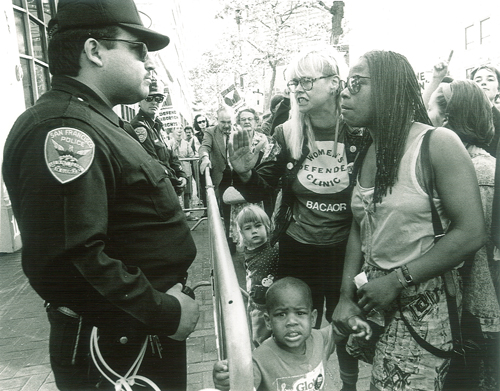
Mayor Lee’s musings before the Chronicle editorial board, in which he revealed his thoughts about instituting a “stop and frisk” policy in San Francisco, set off a very quick negative responses from two of his high-profile supporters in the African American community, Willie Brown and Supervisor Malia Cohen. But that’s only part of the surprise the mayor will face if he pursues this policy.

It wasn’t a real good week for Mayor Lee, who seemed to repeatedly trip himself up:

— In  the chat about stop and frisk;
— In the admission at a Board of  Supervisors hearing by Sutter/CPMC that the economic modeling of the hospital chain’s proposed  project so undermined key elements of the deal that Mayor Lee demanded that it be redone;
— And in his testimony before the Ethics Commission on the Mirkarimi case that brought specific charges of  perjury he has yet to answer.

But the stop and frisk was the most sobering of the three, for it shows a fundamental misunderstanding of the very nature of the city that he seeks to govern and an astounding insensitivity to its not-too-distant past.

The last time stop and frisk was implemented by the San Francisco Police Department was in 1974, at the height of the “Zebra” murders during which, over a six-month period from the end of 1973 to the beginning of 1974, 16 whites were murdered and another six wounded (one of whopm was a young Art Agnos) in shootings using a similar caliber hand gun. What made sensational headlines was the fact that the six survivors all agreed that the shooters were  black. 

Mayor Joe Alioto, facing a steep decline in tourist visits to the city and a drumbeat of headlines, surprised eferyone by announcing a stop and frisk policy aimed at young Black males. Within the first week some 500 stops were made. Not a single Zebra suspect was found.

The San Francisco NAACP and ACLU quickly filed suit in Federal Court where the policy was banned as being un-Constitutional racial profiling. The Zebra case was broken using the time tested technique of offering a reward for information. An informant stepped up, and in the summer of 1974, four men were arrested based upon his information. In 1976 the four men were convicted –and the stop and frisk policy had nothing to do with either their arrest or conviction.  Nothing remained of the failed policy for 38 years.

What did remain was a deep and bitter memory of stop and frisk in the San Francisco African-American community — a memory neither Willie Brown nor Malia Cohen forgot.

If the mayor really believes that stop and frisk will work in the face of deep seated community resentment, based on actual local historic experience – for his remarks were all about “getting the guns” off the street in African American neighborhoods — then he has a profound misunderstanding of the nature of San Francisco.

San Francisco is perhaps one of the two or three most humanly diverse cities in North America. There is a bewildering mix of humans in our city, which confronts any policy based upon appearances — such as stop and frisk — with complexities that often render its actual use on the street ineffective. Simply stated, people are not as they seem in San Francisco, and many San Franciscans prefer to live no other way. Good cops understand this and work hard to learn who is who on the street. That’s called community policing and it often works in San Francisco.  

But many times it doesn’t. Let me tell you a personal story.

During the school year, I try to pick up my two grandsons, Jalius and Jacob, every Tuesday. We spend some time together walking from their school, George Peabody, in the Inner Richmond, to the 33 Stanyan bus stop at Clement and Arguello for a bus ride back to the Haight-Ashbury. We walk and talk and then wait for the bus and talk some more.

A few months ago, we were waiting for the bus, the boys sitting on the bench, me standing and talking. I noticed a cop across the street doing a foot patrol, talking to merchants and customers. He kept looking at us. He was Chinese and my grandsons are half Chinese.  Finally, he walked over to us and with a polite smile asked me why was I talking to these children.

I had an idea that was why he came over so I was expecting the question. I smiled back to him and said, proudly, “these are my grandsons, Jalius and Jacob”.  He looked at me and then turned to the boys and said “is he?” They said “yes” and he looked back at me and said “just doing my job,”  and turned and walked away.

And what a tough job it is as people are often other than they look in San Francisco. Old white men are not always what they seem, and young black men are not always what they seem, no matter how low they ware their pants. Policies based upon things being exactly as they appear will be overwhelmed by the human reality of the City of St. Francis.

There is a connection between people in this physically compact city of ours that forms a foundation for a common political outlook when it comes to personal and group rights and freedoms. San Francisco is a center-left city on matters of civil and human rights. Local elections have shown time after time that on civil and human rights the usual political divisions between the various parts of San Francisco don’t obtain. Trying to push a center-right stop and frisk policy on San Francisco will politically isolate Ed Lee, making all other parts of his agenda that much more difficult to accomplish. And as a city we need to get some big things done, quickly. Let’s move on, together, and get them done.

Bachata morning, courtesy of Joan Soriano

1

Surely when Joan Soriano left his Dominican fishing town for the bright lights of bachata central Villa Mella — at 13! — he couldn’t have anticipated that a San Francisco culture writer’s fireworks hangover would be alleviated by his NPR concert. There you have it, however. Let Soriano take away that Fifth of July (red, white, and) blues on the coattails of his jingling, mellow notes. For more Soriano, check out his gigs at Cafe Cocomo on Fri/6 and Impala for “Hot Bachata Nights” on Sun/8.  

Guardian Voices: A place for rage

23

Just a few weeks ago, my partner came home from work in South San Francisco to tell me some horrifying news. A cop had killed a boy she knew, a Black eighth grader named Derrick Gaines. We looked at each other in the way we do when there is too much to say, our eyes wet, our hearts racing, our rage too big for words. We held our son extra tight that night.

Ayoka went to the funeral last Thursday, and was finally able to shed a few of what felt like a mountain of tears inside of her. She supported family and friends who were overwhelmed with grief, and listened to people’s efforts to make sense of this madness. But for anyone who can see the humanity of this young Black man, there is no way for his murder to make any damn sense at all.

I don’t know and I don’t care if Derrick was what the news calls “a good kid” or a “troubled kid,” a “gangbanger” or a straight-A student. What I do know, what matters to my heavy heart, and what is at the source of my rage, is that Derrick was a human being, that he was a kid, that a cop killed him needlessly and that he will most likely get away with it. There will be no apologies, no accountability, no recognition that the cop had many other options than to shoot and kill. And the absence of all this will be another silent attack on our psyche, an unstated affirmation of Black inferiority, of the lesser value of Black lives.

Derrick’s tragic murder has captured less attention than that of Trayvon Martin, but they both have weighed especially heavily on my heart. Both young, Black and male, they were supposedly “looking suspicious” in a non-Black neighborhood. Both Derrick and Trayvon were teenagers minding their business. Neither was in the midst of committing a crime – which would not in any case justify their murder but does draw attention to the degree to which their Blackness itself was apparently the crime being committed.

Both Derrick and Trayvon are dead, no one is safer, and Derrick’s four-year-old brother is left to struggle with the reality that his big brother will never be coming home again. I’ve been to more than my fair share of police accountability protests. But today, on this 4th of July, something is rising up in me that is new. It has to do with the place for rage.

Anybody Black in America has a strategy, conscious or not, for dealing with rage. Some of us are lucky and stumble upon socially productive paths – we serve, we organize for change, we become leaders in our church. Others are less lucky and make choices that lead to violence and self-destruction. Some of us stay permanently in a place of rage, and become one kind of crazy or another.

I confess to having been, for all these years, a fairly reasonable sister, reticent to fully voice my heartbreak, pain and rage about the state of my people. But I’m reconsidering this path.

The moment clearly calls for a new way. We may have a Black president, but these are dark times. It’s Trayvon and Derrick. It’s the Supreme Court’s racist ruling on SB1070, allowing the blatant racial profiling of the “papers please” provision to move forward. All the talk about government agents stopping black and brown people in the street takes me back to slave times, when we needed papers to leave the plantation, when white men were paid to hunt for fugitive slaves, and why my great great great grandfather took his family to Canada after the passage of the Fugitive Slave Act of 1850. It was time to protect his family and leave the madness of the United States of America.

The Black Community faces Depression-level unemployment, a resurgence racist Right and a level of state violence in our everyday lives that is largely invisible to most non-Black people. We have the greatest number of Black people incarcerated of any time in American history; there are more Black men under the control of the criminal justice system today than there were in slavery in 1850. In supposedly progressive San Francisco, Mayor Lee is openly considering New York’s notoriously racist “stop and frisk” policing policy. And even without such a draconian measure, the data already tell us that the majority of Black boys in San Francisco have been stopped, harassed, or arrested by the local cops by the time they become adults.

In the face of what can only be considered extreme conditions, extreme violence and extreme disenfranchisement amongst my people, I confess that I have failed to take the extraordinary measures that are plainly necessary.

See, the thing is, I had good home training and was socialized to be a nice Black girl. I can code-switch and communicate with nearly anyone with a passion that generally gains respect. Even when in the midst of political battle I don’t scream and holler, and have allowed any number of white people to do and say racist things and get away unharmed. Like so many of us, I try to be a Black person with dignity, without losing my shit. As Michael Jackson would say, I’m a lover not a fighter. This strategy has helped me gain social status, an elite education, and some middle class comforts of American life.

So what to do with this rage? What’s the path beyond reasonableness that does not lead to self-destruction? On this 4th of July, I’m remembering our freedom fighters Frederick Douglass and Harriet Tubman, and asking them for wisdom. In my own way and in these times, I want to walk with faith and fearlessness as they did, and not be afraid to put my body on the line for freedom. What sacrifices will we all need to make? What creature comforts or career plans will we need to put aside? What will it take to build a movement that lifts up the value of Black life and our place in a better, more just society?

In Michelle Alexander’s stunning book The New Jim Crow, she makes a clear case that since we won the formal battle against Jim Crow in the 1960s, “We have not ended racial caste in America; we have merely redesigned it.” This contemporary, supposedly colorblind, system of mass incarceration and social control of Black people makes our work more complicated, our moral outrage less understandable and our courage ever more necessary.

Let’s build a movement for racial justice, honor our rage, and find a way to be the Frederick Douglass’ and Harriet Tubmans of the 21st century that these times require.

To support Derrick Gaines’ family, donations can be made at any Wells Fargo to the ‘Derrick Gaines Memorial Fund’ account #: 1636477653.

You can check out Michelle Alexander’s work on the New Jim Crow here. And stay tuned for community organizing against attempts to bring “Stop and Frisk” to SF.

Davis launches D5 campaign with fortuitous timing

14

When progressive activist Julian Davis formally launched his District 5 supervisorial campaign late last week with a well-attended kickoff party at the Peacock Lounge in Lower Haight, timing and circumstances seemed to be on his side.

Days earlier, Quintin Mecke – a rival for the progressive vote in this staunchly leftist district – announced to supporters that he needed to care for his ailing mother and wouldn’t be running after all. At the same time, appointed incumbent Christina Olague seemed to be rapidly falling from favor with many progressives.

First came the viral video of Olague gushing over all the support she’s received from Chinatown power broker Rose Pak during a fundraiser where she raised nearly $50,000, then her squirrely role in helping the moderates repeal ranked-choice voting, and finally the bizarre episode of clashing with a close progressive ally and friend to defend Mayor Ed Lee from perjury allegations.

Davis has sought to capitalize on the rapidly unfolding developments, today sending out a press release blasting Olague for having “joined the conservatives on the Board of Supervisors to repeal ranked choice voting for mayoral elections,” and telling the Guardian that Mecke’s exit will help clarify the choice D5 voters face.

“The fact that he’s out allows us to consolidate the progressive base,” Davis said, not mentioning that candidates John Rizzo and Thea Shelby will also be vying for the progressive vote.

At his kickoff party, Davis also demonstrated that he has substantial support from another significant D5 voting block – African Americans – for which he’ll be competing with political moderate London Breed, director of the African American Arts & Cultural Complex.

Davis said that with Olague’s support by Mayor Ed Lee and the city’s economic and political establishment, he’ll need to run a strong grassroots campaign based on “people power and shoe leather,” an approach that he’s also displaying with regular street corner campaigning.

“We’re at an economic, social, and political crossroads in San Francisco,” he said at his launch party. “Rogue developers are corrupting City Hall with a vision of luxury condos, corporate tax breaks, chain stores, and parking garages. It’s a vision of San Francisco that doesn’t include us. Everyday, progressive reforms are being dismantled and progressive values are being abandoned.”

Davis is hoping that Olague’s ties to Lee will drag her down in a district that voted almost 2-1 in favor of progressive John Avalos (whose campaign Davis actively worked on) over Lee in last year’s mayor’s race.

“Look what’s happening on the waterfront where Olague voted to approve the 8 Washington development. These are condos for the Kardashians, vacation homes for the ultra rich and the 1 percent. That’s not keeping it real for San Francisco,” he said at the kickoff. “So we’ve got to ask ourselves: how do they get away with it? The only way they can. By choosing your leaders for you. Over the past two years in San Francisco, we’ve had an appointed mayor, an appointed district attorney, an appointed sheriff, and an appointed District 5 supervisor. Does that sound like participatory democracy to you? Does that sound like your vote counts?”

And as Avalos also tried to do in his mayoral campaign, Davis says he wants to use his campaign to help restart the city’s progressive movement, which has been in tatters since being divided and nearly conquered by the politicians and political operatives who helped elevate Lee into Room 200 18 months ago.

As he told supporters, “We can re-launch the progressive movement in San Francisco from this district. We can take back City Hall. We will win this election with people power, street by street, block by block, neighbor to neighbor, shop by shop.”

Five for summer

2

virginia@sfbg.com

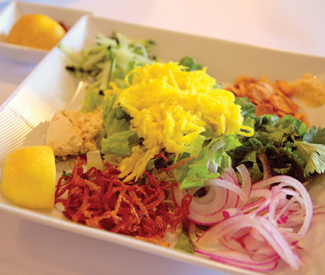
APPETITE Time to dive into summer — at least nominally. These five playful dishes recently made an impression, and brought a little sunshine to the table.


BREAKFAST BISCUIT SANDWICH AT 15 ROMOLO

Brunch at one of the city’s best bars, 15 Romolo, is a pleasure, and blessedly unmobbed. Arrive at opening (11:30am), and you’re likely to secure a table instantly. Greeted with complimentary waffle shots — yes, rounds of waffle bites resting in a mini-pool of maple syrup and boozy rum — you’re then guaranteed impeccable mid-day cocktails ($9–$10), like zippy, frothy absinthe showcase (not for the anise or licorice averse) Famous Fizz, made with St. George absinthe, shaken with strawberry-thyme shrub, cream, egg white, finished with seltzer. Or try a Breakfast of Champions # 2, rich with Manzanilla sherry, Nocino walnut liqueur, maple syrup, coffee tincture and house banana cordial — warmly gratifying, not cloying. Exciting drinks are a given here, but the menu’s no slouch. This has been true at night and it’s likewise true at brunch. The one that makes me salivate is the breakfast biscuit sando ($9). In keeping with other brunch dishes, portions are generous: a moist, green chile biscuit filled with crispy fried chicken, the perfect kind of bacon (not too crispy, fatty), fried egg, house pickles, and a vivid arugula walnut pesto. Hash browns accompany, and after adding on a hefty, savory house rye sausage patty ($3), I practically rolled out post-meal, blissfully fattened.

15 Romolo Pl., SF. (415) 398-1359, www.15romolo.com


SMOKED BRISKET MEATLOAF AT PICAN

Though one can experience both highs and lows at downtown Oakland’s upscale Southern sanctuary Pican (like uneven desserts or cocktails — oh, would that that sweet Mint Julep be less syrupy and served in a proper Julep cup), staff are eager to please and the American whiskey list is extensive. New executive chef Sophina Uong (Waterbar, 900 Grayson) continues introducing vibrant dishes to the menus. Even as I begin digging into new menu items like playful blue crab profiteroles, my heart belongs to classic smoked brisket meatloaf ($21). It’s genius, really: shaved slices of Creekstone natural beef brisket are baked into a meaty-yet-light loaf, served with BBQ tomato jam, on roasted sweet corn salad with Cajun cheddar aioli. Mom’s home cooking, upscale Southern treatment, California creative-fresh spin — a veritable mash-up of cuisines.

2295 Broadway, Oakl. (510) 834-1000, www.picanrestaurant.com


MANGO SALAD AT RANGOON RUBY

Merely a couple weeks old, downtown Palo Alto’s Rangoon Ruby boasts chefs Win Aye and Win Tin, formerly of Burma Superstar, serving fresh, vivid Burmese dishes. The chic, clean space boasts a nice spirits collection (all three St. George gins can be found here, along with Camus Cognac) and tiki-focused cocktail menu, including lava and scorpion bowls for two or four. While still working out opening and service kinks, owner and Burma native John Lee presents a gracious, hard-working aesthetic grown from his own experience working in the restaurant at San Francisco’s Fairmont. Beloved Burmese salads ($10-13), from tea leaf to ginger, are done right here — brightly generous and served in its superior version: strips of mango atop greens, that fantastic hint of savory imparted by fried onions and garlic, accented with cucumber and dried shrimp. Also try nan gyi nok ($12), a heartwarming mound of rice noodles doused in coconut milk chicken and yellow bean powder, accented with a squeeze of lemon and a hard-boiled egg.

445 Emerson, Palo Alto. (650) 323-6543 www.rangoonruby.com


PICKLED HOT LINK AT SHOWDOGS

Showdogs corners dogs in a space that continues to improve Market Street’s less culinary-inclined blocks, adding on old school sign and sidewalk seating enclosed by hedges since they opened. I have a number of go-to sausages (plus a rocked-out corn dog), but it’s the pickled hot link ($6.95) that remains truly different. A hot link, plump and pickled in apple-cider vinegar for a couple weeks: it’s tangy, slightly blackened as it’s grilled to order, topped with Crater Lake blue cheese sauce and arugula leaves.

1020 Market, SF. (415) 558-9560, www.showdogssf.com


CHAWAN MUSHI AT NOMBE

As part of an affordable seven-course Kaiseki dinner ($39.95) at Nombe, chawan mushi or Japanese savory egg custard has been prfected by chef Noriyuki Sugie. Though numerous izakayas, particularly Nojo, make memorable versions, I was recently hooked on Sugie’s uni chawan mushi, lush with uni’s seaworthy, umami notes, woven into a silky, custard, topped with more fresh uni, served traditionally in a covered dish. Order a pour from Nombe’s impressive sake list — ask co-owner and sake sommelier Gil Payne to recommend a pairing for you — and settle into black booths in the quirky, comfy Mission diner space.

2491 Mission, SF. (415) 681-7150, www.nombesf.com

Subscribe to Virgina’s twice-monthly newsletter, The Perfect Spot, www.theperfectspotsf.com


Faces of feminism

7

Is San Francisco still on the cutting edge of women’s issues? I recently spent a sunny Saturday morning buried in the radical archives of Bolerium Books (www.bolerium.com) — which is by the way, an amazing resource for anyone researching labor, African American, First Peoples, and queer history, among other things. Me, I was looking into our city’s rich history of feminist activism, inspiration for our upcoming Guardian “Bay Area Feminism Today” panel discussion. The event will unite amazing females from across the city who have but one thing in common: they’re pushing the envelope when it comes to the definition of what a “women’s issue” is, in a time when very few people claim feminism as their primary crusade. We’ll be talking more about their exciting projects –- but also touching on more universal issues. What is San Francisco’s role in fighting the nationwide attack on reproductive rights? How is our progressive community doing in terms of supporting women and maintaining a feminist perspective on issues?

Women’s work: it’s alive and kicking, and it deserves its moment in the spotlight. Meet our panelists here, in preparation for the real deal. 

THE GUARDIAN PRESENTS: “BAY AREA FEMINISM TODAY”

Wed/11 6-8pm, free

City College of San Francisco Mission campus

1125 Valencia, SF

www.sfbg.com/bayareafeminismtoday


STEPHANY ASHLEY

St. James Infirmary programs director, ex-president of Harvey Milk LGBT Democratic Club


For me, sex worker rights are a feminist issue because they are about body autonomy. As much as reproductive choice is a feminist issue, so too is the right to determine the ways in which we use our bodies, change our bodies, and take care of our bodies. When people are criminalized for their HIV status, denied access to hormones and safe gender transitions, or are afraid to carry condoms because it might lead to police harassment or arrest — these are all feminist issues. At St. James Infirmary (www.stjamesinfirmary.org), we provide healthcare and social services from a peer-based model, so community is really the central aspect of the project. I was excited to chair the Harvey Milk LGBT Democratic Club (www.milkclub.org) last year, because I wanted to keep raising sex workers rights issues as part of the LGBT agenda. At St. James, nearly 70 percent of our community members are LGBTQ, so it’s really critical that sex workers rights are treated as a queer issue, a feminist issue, and a labor issue.

CELESTE CHAN

Artist and founder of Queer Rebels

My partner KB Boyce and I started our production company Queer Rebels (www.queerrebels.com) to honor the feminist and queer of color artists and elders who paved the way. Our main project is “Queer Rebels of the Harlem Renaissance,” a performance extravaganza which took place June 28-30. Such an exciting time! The Harlem Renaissance legacy remains with us to this day. It was an explosion of art, intellect, and sexual liberation led by queer Black artists. I’m also a board member at Community United Against Violence (www.cuav.org). CUAV was formed in the wake of Harvey Milk’s assassination and the White Night riots, and does incredible work to address violence within and against the LGBTQ community. Another way I’m involved with women’s issues is through Femme Conference (www.femme2012.com). In a culture where femininity is both de-valued and the expected norm, Femme Con creates a vital feminist space — this year it takes place in Baltimore, Maryland.

EDAJ

DJ and promoter of queer nightlife

I work in nightlife to provide space for communities that often don’t have spaces to come together. For 15 years, I have been providing music for women as the resident DJ at Mango (every fourth Sunday at El Rio, www.elriosf.com). I also work to support my fellow LGBT veterans by promoting their visibility through my nightlife projects. Ex-Filipino Marine and two-spirit drag king Morningstar Vancil’s story has inspired me to work on creating a space that raises awareness about LGBT veterans, especially women living with disabilities. I also think it’s important to do outreach in the Black LGBT community to help strengthen support for organizations such as the Bayard Rustin LGBT Coalition (www.bayardrustincoalition.com), a group that is not only fighting for Black LGBT equality, but is focused on social change for all oppressed people. After 10 years of executive producing the Women’s Stage at SF Pride, I was honored as a grand marshal this year at an event hosted by the BRC and Soul of Pride. It was beautiful to see so many Black LGBT people dedicated to moving global equality forward. Although there is a need to reach out to everyone in the Black LGBT community, naturally my goal is to first focus on connecting more women, a group that has always been less visible.

JUANA FLORES

Co-director of Mujeres Unidas y Activas

My organization Mujeres Unidas y Activas (www.mujeresunidas.net) is based on a double mission: personal transformation and community power for social justice. MUA is a place where women arrive through different challenges in their lives. We try to provide emotional support and references so that they don’t feel like they’re alone, so that they have strength to begin the process of healing and making changes. Those can include issues of domestic violence, problems with teenage children, labor or housing issues — when they arrive at MUA they begin the process of developing their self esteem and becoming stronger. They also begin to participate in trainings and making changes in their community and to the system through civic and political participation. At MUA, women find a home. They feel comfortable because they’re always welcome. We’re developing strong leadership, leadership that is at the table when it comes to making decisions about our campaigns, like our letter of labor rights and the help we give to victims of domestic violence through our crisis line. Every day our members are developing their ability to be involved in the organization and community, and making changes in their personal and familial lives.

ALIX ROSENTHAL

Attorney and elected member of the SF Democratic County Central Committee

As an elected member of the SF DCCC (www.sfdemocrats.org), the governing body of the SF Democratic Party, I am working to involve the party in recruiting more women to run for political office locally. In the June 2012 election, I assembled a slate of the female candidates for DCCC — we called ourselves “Elect Women 2012.” It was a controversial effort, because it included both progressives and moderates. In the wake of a highly contentious and factional term on the DCCC, we hoped to prove that moderates and progressives can work together to re-energize Democrats in this important presidential election cycle. Running for office in San Francisco is a high stakes game; it is costly and requires an extensive political network. And so the DCCC is where many future candidates get their start — it is where they build the connections necessary to run for higher office, and where they hone their fundraising abilities. By recruiting and supporting women candidates for the DCCC, I am hoping to build a “farm team” of female candidates within the party. This year, I am proud that the seven women incumbents on the DCCC retained our seats in the June election, and that we achieved parity by electing four new women to the party’s governing board. I look forward to seeing what these women can accomplish together.

LAURA THOMAS

Deputy state director of Drug Policy Alliance

Ending the failed war on drugs is a women’s issue because women are far too often bearing the brunt of that failure, losing their freedom, children, economic independence, safety, health, and sometimes their lives as victims of the war on drugs. Women in prison in California can be shackled during childbirth, lose custody of their children because they use legal medical marijuana. They’re vulnerable to HIV and hepatitis C because they or their partners don’t have access to sterile syringes for injecting drugs. My major project for the Drug Policy Alliance (www.drugpolicy.org) is mobilizing San Francisco to show the rest of the world how effective progressive drug policy can be. I want to see San Francisco open the first supervised injection facility in the United States, to end new HIV and hepatitis C infections among people who use drugs. I want us to truly have effective, culturally appropriate substance use treatment for everyone who requests it. I want San Francisco to end the cycle of undercover drug buys-incarceration-recidivism. I want us to address the appalling racial disparities in who gets arrested, convicted, and incarcerated for drug offenses here. I want us to aggressively defend our ground-breaking, well-regulated medical cannabis dispensary system against all federal intervention. San Francisco is leading the way in the United States in addressing the harms of drug use and drug prohibition but we have a lot more we can do.

MIA TU MUTCH

Transgender activist and SF Youth Commission officer

I’ve worked for a plethora of LGBTQ organizations and have been on several national speaking tours. I currently serve as media and public relations officer of the San Francisco Youth Commission, and use my position to promote LGBTQ safety and overall health. I’ve partnered with several city departments in order to create a cultural competency video that will train all service providers on best practices for working with LGBTQ youth. As a vocal advocate against hate crimes and sexual assaults, I’m working with local groups to create a community patrol in the Mission to prevent violence against women and transgender people. I’m also the founder of Fundraising Everywhere for All Transitions: a Health Empowerment Revolution! (FEATHER), a collective aimed at making gender-affirming transitions more affordable for low income transgender people. I work to create avenues of equality for those who benefit the least from patriarchy by creating a culture of safety and support for people of all genders.

Delta delight

1

arts@sfbg.com

FILM In the annual hothouse atmosphere of Sundance, even mediocre or bad new American narrative features are cocooned in an atmosphere of self-congratulation — at least until the reviews come out a few hours later. Movies that are actually pretty good invariably become “great” for the duration of the festival; with everyone searching for something to hyperventilate about, one need only light a birthday candle to set off a roman candle of hyperbole. Most of these movies come out a few months, waving their festival awards, only to look significantly diminished in the sober light of day (and decreased altitude). Suddenly they’re, well, just pretty good.

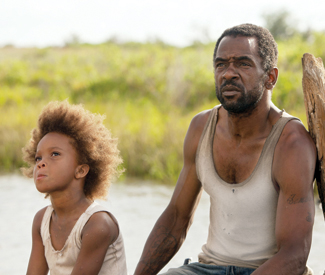
With the occasional exception, of course. Six months after winning the Grand Jury Prize at Sundance (and a Cannes Camera d’Or), Beasts of the Southern Wild proves capable of enduring a second or third viewing with its originality and strangeness fully intact. Magical realism is a primarily literary device that isn’t attempted very often in U.S. cinema, and succeeds very rarely. But this intersection between Faulkner and fairy tale, a fable about — improbably — Hurricane Katrina, is mysterious and unruly and enchanting, an imaginative leap of unusual ambition and accomplishment for a first feature.

Ostensibly based on a stage play — co-scenarist Lucy Alibar’s Juicy and Delicious, said to be a bluegrass musical — Benh Zeitlin’s film is wildly cinematic from the outset, as voiceover narration from six-year-old Hushpuppy (Quvenzhané Wallis) offers simple commentary on her rather fantastical life. She abides in the Bathtub, an imaginary chunk of bayou country south of New Orleans whose residents live closer to nature, amid the detritus of civilization. Seemingly everything is some alchemical combination of scrap heap, flesh, and soil. What might look like an unhygienic, frightening, child-abusive nightmare to any Social Services authority is to Hushpuppy a constant playground, and to her elders a sort of pagan-libertarian utopia.

http://www.youtube.com/watch?v=Wqt5m0OBkjE

Before the story has gotten properly started there’s a community celebration with fireworks, music, guns fired into the air, babies crawling everywhere — a celebration of nothing in particular, at least that we can tell. But as our heroine says, “The Bathtub has more holidays than the rest of the world.” It is clear that, for that and many other reasons, its citizens have no use for the rest of the world.

She lives with her father Wink (Dwight Henry) — albeit in separate ramshackle trailers on stilts — a fierce, erratic man with unknown demons who’s seldom outright unkind but acts less like a father than an Outward Bound coach, teaching his charge the tools to survive on her own. (In addition to slopping the livestock and pets, she can already make dinner for herself, lighting the stove with a blowtorch.) But one day he disappears, leaving Hushpuppy without human company beyond the memory of a long-absent mother she nonetheless frequently talks to. When Wink returns, it’s in a hospital gown and bracelet; whatever happened, he doesn’t want to discuss it.

Soon they have bigger things to worry about, anyway, as “the storm” is coming — prompting all but a few stubborn holdouts (well-fortified by alcohol) to evacuate the Bathtub. Wink and child aren’t going anywhere, waiting it out instead in a shack then floating to safety in their boat (a decapitated truck bed).

The area is fully flooded, however, and an illegal breach of a remaining levee drains it but can’t repair the devastation wrought on plants, animals, and homes. The holdouts are forced at federal gunpoint to evacuate at last, sequestered in a relief shelter-hospital whose sterility and order is as alien to them as the surface of Mars. Worse, this exile hastens the serious illness Wink was able to keep (mostly) at bay in the Bathtub — as the wary say, hospitals are where sick people go to die.

With its elements of magic (or at least the illustration of a child’s belief in such), mythological exodus, and evolutionary biology — Gina Montana’s Amazonian schoolmarm Miss Bathsheeba defines her eat-or-be-eaten perspective with “Everything is part of the buffet of the universe” — Beasts goes way out on a conceptual limb. Particularly for a low-budget movie with non-professional actors; you could argue it achieves many (if not more) of the same goals Terrence Malick’s 2011 The Tree of Life did at a fraction of that film’s cost and length. Its messiness is an organic virtue, with grainy imagery whose hand-held spastic camerawork (by Ben Richardson) is for once much more than a trendy stylistic choice; the instability feels in synch with Hushpuppy’s world, in vibrates with the slightest clue provided by glance, weather, or instinct.

The frenetic yet amorphous atmosphere might on a first viewing make you question whether there’s really much story beneath the busy aesthetic surface, but in fact for all its freely digressive air Beasts is pretty tightly constructed. (Nonetheless, you can imagine the editors scratching their heads initially over how this footage might possibly cut together, unless they were in on the project from the start.) Adding to that spectral, hyperreal effect is a score by Dan Zomer and Zeitlin that combines keening or plucked strings with the ethereal chime of a glockenspiel, at times sounding like a Sufjan Stevens instrumental.

There are moments of real enchantment, like an all-girls’ side trip to a floating bordello whose bosomy ladies surrender to their maternal instincts, or the recurrent glimpses that see Hushpuppy’s hog gradually morph into a thundering pack of tusked, primeval wild boars. (Toward the end especially, this latter effect underlines the notion that the film’s closest recent antecedent is Spike Jonze’s 2009 Where the Wind Things Are, another child’s feral fantasy.)

Through it all the pint-sized Wallis (who was just five when she was chosen from some 4000 auditioning kids) strides with astonishing alertness and confidence, a vulnerable minor one minute, as regally self-possessed as Pam Grier in Coffy (1973) the next.

It would almost be a shame if she did anything else — this performance would be best preserved as a mysterious lone bolt from the blue, just as the movie itself seems to capture unrepeatable lightning in a bottle.


BEASTS OF THE SOUTHERN WILD opens Fri/6 in San Francisco.

Brown, Pak, and Olague

38

Christina Olague was a great planning commissioner. I’ve always liked her, and when she was appointed we pointed out how strongly she was rooted in the progressive community.

Olague has strong progressive activist credentials, from working with the Mission Anti-Displacement Coalition to protect low-income renters during the last dot-com boom to her more recent community organizing for the Senior Action Network. She co-chaired the 2003 campaign that established the city’s minimum wage and has been actively involved in such progressive organizations as the Milk Club, Transit Riders Union, and the short-lived San Francisco People’s Organization.

She also served two terms on the Planning Commission — appointed by Board of Supervisors then-President Matt Gonzalez in 2004 and reappointed by then-President Aaron Peskin in 2008 — where she was known for doing her homework on complicated land use issues and usually landing on the progressive side of divided votes.

We’ve had some disagreements since she took office — particularly around 8 Washington. (I also disagreed with the Labor Council on that one, and only three of the supervisors agreed with me.) And it’s not the first time an elected official I supported turned around and infuriated me on a development vote.

I want Olague to succeed; I want her to come to us in the fall with a record that makes us want to endorse her for a full four-year term. She’s been talking seriously about violence in the district and about young people, predominantly African Americans, getting killed. I feel like she wants to do the right thing.

But her reelection effort is starting to feature some bad actors.

At a recent fundraiser in Chinatown, former Mayor Willie Brown, who ranks as one of the most corrupt public officials in modern San Francisco history and whose administration was a disaster for poor and working-class people (he once even said that poor people ought to just get out of town because this city is too expensive for them), stood up and made a speech, warmly endorsed Olague and said he would be with her “all the way.” Olague then thanked Rose Pak, the Chinatown power broker, for “all of her support over the last few months.”

This makes me nervous. And it hasn’t helped my nerves that I’ve been trying to talk to Olague about these issues for the last week, and she keeps avoiding the conversation by not returning calls or cutting conversations short when I do reach her.

Willie Brown, with his Chron column, has taken on this funny, warm, man-about-town persona, but when he was running City Hall, everything was about money. He cut deals right and left that destroyed communities and neighborhoods. He oversaw, aided and encouraged what we called the “Economic Cleansing of San Francisco.” Tens of thousands of working-class people, artist, writers, young people … were driven out of the city by a steamroller of gentrification — all with the mayor’s blessing.

Now he’s working as a private attorney, and last time we checked was getting $200,000 a year to represent PG&E. We have no idea what other big corporate clients he has or what he does for them — but it’s clearly not writing legal briefs and handling litigation. He gets paid for being a political fixer. For the bad guys.

And he’s going to be with Olague “all the way.”

Damn.

Our Weekly Picks: July 4-10

0

WEDNESDAY 4

“For the Greater Good, Or The Last Election”

Real quick, if you’re new here: San Francisco Mime Troupe productions do not contain any mimes of the painted-face-and-striped-shirt variety. The company’s first performances (in 1959) were silent, but since those early days, SFMT has evolved into its current, much-loved form: presenting lively political musicals at parks and other venues across NorCal every summer. Previous plays have feasted on such satire-ready topics as big oil, religious fanatacism, and the corporate takeover of America; this year, the headlines once again supply a ripe subject: one percenters behaving badly. For the Greater Good, Or The Last Election is actually a re-working of The Poor of New York, a soapy drama written in 1857 with greedy themes that still ring true in the good ol’ 21st. (Cheryl Eddy)

Various venues through Sept. 8

Wed/4 and Sat/7-Sun/8, 2pm, free (donations accepted)

Dolores Park, 18th St. at Dolores, SF

www.sfmt.org


THURSDAY 5

Skerik’s Bandalabra

For those of you bitching about jazz’s irrelevance in the 21st century: meet Skerik. The Seattle-based saxophonist performs with total abandon, filtering his horn through a tangle of effects pedals as he solos with incendiary force. Resembling a rock frontperson as much as a jazz bandleader, Skerik has spearheaded a handful of projects, from Garage a Trois, to the Tortoise-y Critters Buggin. He describes his latest outfit, Skerik’s Bandalabra, as conjuring “Fela Kuti meeting Steve Reich in rock’s backyard,” and with a lineup of several of Seattle’s hottest session players in tow, it’s one of his tightest, most funkified ensembles yet. Ever had the urge to hear a sax fed through a wah-wah pedal? Well then, look no further. (Taylor Kaplan)

With Wil Blades Trio

9:30pm, $10

Boom Boom Room

1601 Fillmore, SF

(415) 673-8000

www.boomboomblues.com


Smokey Robinson with the San Francisco Symphony

R&B legend Smokey Robinson got his start in the music business back in the 1950s, forming the Miracles while he was still in high school and eventually leading the band to stardom: they were Motown Records’ first million-selling artists on the strengths of hit songs such as “Shop Around,” “You’ve Really Got A Hold On Me,” “I Second That Emotion,” and “Ooh Baby Baby.” The velvet-voiced Robinson has continued to write and perform ever since, and has earned a host of well-deserved awards and accolades, including being honored by the Kennedy Center in 2006. Fans won’t want to miss the music icon tonight when he performs a special show with the San Francisco Symphony. (Sean McCourt)

7:30pm, $15–$115

Davies Symphony Hall

201 Van Ness, SF

(415) 864-6000

www.sfsymphony.org


Liars

Based in LA, then Jersey, then Berlin, then NYC, Liars change locales as often as they switch musical directions. The three-piece has come a long way since their early days in the “dance-punk” compartment, but since the brawny, percussive Drum’s Not Dead (2006) they’ve struggled a bit to deliver a definitive statement. This year’s WIXIW (say wish-you) finds Liars reinventing the wheel again, to produce their most synthified affair yet; picture the rocktronic fusion of Kid A-era Radiohead, approached with the finely calibrated ambience of Bjork’s Vespertine, Trent Reznor’s swagger, and Tom Waits’ lumbering dynamics. How will this abrupt switch in instrumentation affect their live setup? Will the band approach their older work with an electronic edge? Liars thrive on this sense of uncertainty. (Kaplan)

With Cadence Weapon 8pm, $22.50 Great American Music Hall 859 O’Farrell, SF

(415) 885-0750

www.slimspresents.com


FRIDAY 6

“Kung Fu Double-Feature”

Summer programming at the Roxie ain’t nothing to fuck with. Witness the kung fu double punch of 1979’s The Mystery of Chessboxing, a.k.a. Ninja Checkmate, featuring a villain named Ghost Face Killer who inspired you-know-which Staten Island hip-hop star; and Five Elemental Ninjas, a.k.a. Chinese Super Ninjas, which came out in 1982 and is therefore a late-ish entry from director Chang Cheh, superstar helmer for Hong Kong’s powerhouse Shaw Brothers Studio. What you won’t get: CG, 3D, Oscar-caliber acting, logic. What you can expect: rare 35mm prints of both films, supernatural ninjas cloaked in gold lamé, blood-squirting violence, an overabundance of unnecessary camera zooms, and some of the most hilariously stilted dubbing ever committed to celluloid. (Eddy)

Five Element Ninjas, 7:30pm; The Mystery of Chess Boxing, 9:30pm, $6.50–$10

Roxie Theater

3117 16th St., SF

www.roxie.com


Paper Bird

With seven members and no leader, Paper Bird should be a logistical nightmare, but this native Denver band has been making seamlessly joyful noise for five years. Contributions from nearly 10 different songwriters make its work, fresh, eclectic, and unpredictable. And despite the size of the group, Paper Bird exudes a charming sense of intimacy. Focused on vocal harmony, banjo, and brass, the band plays danceable folk music for all ages. These hometown heroes have been voted in Colorado’s top 10 underground bands for three years running by the Denver Post and were recently featured in NPR’s All Things Considered and now they’ve come to win the heart of the Bay Area. (Haley Zaremba)

With Muralismo, Corpus Callosum

9:30pm, $10

Hotel Utah

500 Fourth St., SF

(415) 546-6300

www.hotelutah.com


Foxtails Brigade

Laura Weinbach is a creative force to be reckoned with. Her band Foxtails Brigade spins whimsical tales woven with violin accompaniment by Anton Patzner (Judgement Day). The band just released the third episode of their “Farmhouse Sessions” series on Youtube — revel in Weinbach’s on-point articulation of the chorus, “I am not my, I am not myself/ We are not our, we are not ourselves” over the rhythmic picking of Patzner’s violin, Joe Lewis jamming on the guitar, and a steady drumbeat provided by Josh Pollack. For her springtime release, The Bread and the Bait, Weinbach was inspired by narratives of the Victorian Era, resulting in a lush and intricate sound. Check out her unabashedly romantic cover of Edith Piaf’s “La Vie in Rose,” a fan favorite,. If that doesn’t get you hooked, well then I’ll eat my Victorian Era laced bonnet. (Shauna C. Keddy)

With La Dee Da, Missing Parts

9:30pm, $10

Starry Plough

3101 Shattuck, Berk.

(510) 841-2082

www.starryploughpub.com


Swing U Benefit Ball

Modern city dwellers: it’s time to head out to the middle of the bay and swing back in time to an era that saw the glamorous Golden Gate International Exposition of 1939 hosting visitors from around the world on Treasure Island, greeted by local pirate pin-up queen Zoe Dell Lantis. Tonight’s classic USO-themed “Swing U Benefit Ball” will feature live music, dancing, pirate pin-up contests, vintage vendors, historical presentations, and more, all paying tribute to the important role that Treasure Island played in the development of the San Francisco Bay Area, and raising funds for the Treasure Island Museum. (McCourt)

7pm, $15–$30

Winery SF

200 California Ave., Building 180 North, Treasure Island, SF

www.sfswingfest.com


SATURDAY 7

All My Friends Are Still Dead

What would your survival chances be if you were a poor fish in a bowl, watching your fellow fish friends die off thanks to an irresponsible owner? How would it feel to try to make friends if you were the Grim Reaper? Enjoy a hilarious take on these predicaments and more in All My Friends Are Dead, an illustrated book by Jory John (contributor to NY Times, SF Chronicle, and Believer Magazine) and actor-writer Avery Monsen. John will read from the book’s sequel, All My Friends Are Still Dead, at bookstore-museum Paxton Gate’s Curiosities for Kids today. Reminiscent of Lemony Snicket (A Series of Unfortunate Events) and his morbid childrens’ tales, their book is an ironic yet endearing anti-fable — each page is cringe-worthy yet laughter-inducing. (Keddy)

Paxton Gate’s Curiosities for Kids

1pm, free

766 Valencia, SF

(415) 252-9990

www.paxtongate.com


Y La Bamba

Indie-folk rockers Y La Bamba have been steadily making a name for themselves over the past couple of years, earning praise from the likes of NPR and musically popping up in television programs such as “Bones.” The latter is a fine example of a creative producer seizing upon the Portland-based band’s haunting and ethereal, yet rich and full sound, which is propelled by singer-songwriter Luzelena Mendoza, whose vocals float and weave above and throughout Latin-inspired rhythms and unique backing vocals. The band’s new album, Court The Storm, was produced by Los Lobos member Steve Berlin, and released this February — catch Y La Bamba in an intimate setting while you still can. (McCourt)

9pm, $16

Great American Music Hall

859 O’Farrell St., SF

(415) 885-0750

www.slimspresents.com


Blackalicious

This Sacramento rap duo has a lot more going for it than just an awesome name. Rapper Gift of Gab and DJ Chief Xcel, who met in high school, have been spinning catchy hip-hop tracks for more than a decade. Like fellow West Coast Rappers Jurassic 5 and Pharcyde, Blackalicious eschews the misogyny and violence too often synonymous with rap music. Their multi-syllabic rhymes are both complex and uplifting. Their debut album Nia is Swahili for “purpose” and spirituality is an important feature of their lives and work. When they hit the stage these down-to-earth, self-described “everyday brothers” will make your head bob, your feet tap, and your mind expand. (Zaremba)

With Richie Cunning, Raw-G

9pm, $25

The Independent

628 Divisadero, SF

(415) 771-1421

www.theindependentsf.com


MONDAY 9

The Eric Andre Show

If David Lynch were given his own late-nite program on a public-access channel in Pete & Pete’s basement, it might look and feel somewhat like The Eric Andre Show. Hosted by the LA-based stand-up comic, Adult Swim’s perverse, unhinged excuse for a talk show makes it way to the live stage with real/fake celebrity appearances (fake-George Clooney chugging coffee, perhaps?), charmingly incompetent house band, and incredibly seedy production values in full force. Beloved Oakland hip-hop duo Main Attrakionz will bring their hazy, lo-fi productions to the show as well, rounding out an evening of deranged, unpredictable, and supremely stoned entertainment. No Visine required. (Kaplan)

With Main Attrakionz, Stroy Moyd, Chris Garcia 8pm, $10 Rickshaw Stop 155 Fell, SF (415) 861-2011 www.rickshawstop.com

Stage Listings

0

Stage listings are compiled by Guardian staff. Performance times may change; call venues to confirm. Reviewers are Robert Avila, Rita Felciano, and Nicole Gluckstern. Submit items for the listings at listings@sfbg.com. For further information on how to submit items for the listings, see Picks.

THEATER

OPENING

Duck Lake The Jewish Theater, 470 Florida, SF; www.duck-lake.com. $17-35. Opens Fri/6, 8pm. Runs Fri-Sat, 8pm. Through July 28. PianoFight’s resident sketch comedy group, Mission CTRL, performs its new "ballet-horror-comedy."

For the Greater Good, Or The Last Election This week: Dolores Park, 18th St at Dolores, SF; www.sfmt.org. Free (donations accepted). Opens Wed/4, 2pm. Runs Sat/7-Sun/8, 2pm. Various venues through Sept. 8. SF Mime Troupe launches its annual political musical (this year’s theme: one percenters behaving badly); the show travels around NorCal parks and other venues throughout the summer.

BAY AREA

King John Forest Meadows Amphitheater, 890 Belle, Dominican University of California, San Rafael; www.marinshakespeare.org. $20-35. Previews Fri/6-Sun/8, 8pm. Opens July 13, 8pm. Runs July 15, 21, 27, 29, Aug 4, 10-12, 8pm; July 22 and Aug 5, 4pm. Marin Shakespeare Company kicks off its 2012 outdoor summer festival season with this history play.

ONGOING

Absolutely San Francisco Alcove Theater, 414 Mason, Ste 502, SF; www.thealcovetheater.com. $32-50. Thu-Sat, 8pm (no show Fri/6). Through Aug 18. A multi-character solo show about the characters of San Francisco.

5 Lesbians Eating a Quiche Phoenix Theatre, 414 Mason, SF; www.tidestheatre.org. $20-38. Thu-Sat, 8pm (also Sat, 10pm). Through July 21. Tides Theatre performs Evan Linder and Andrew Hobgood’s comedy about five women forced into a bomb shelter during a mid-breakfast nuke attack.

Fwd: Life Gone Viral Marsh San Francisco, 1062 Valencia, SF; (415) 282-3055, www.themarsh.org. $20-50. Sat, 8:30pm; Sun, 7pm (July 15, show at 7:30pm). Extended through July 22. The internet becomes comic fodder for creator-performers Charlie Varon and Jeri Lynn Cohen, and creator-director David Ford.

Hedwig and the Angry Inch Boxcar Playhouse, 505 Natoma, SF; www.boxcartheatre.org. $25. Wed/4-Thu/5, 8pm; Fri/6-Sat/7, 7 and 9:30pm; Sun/8, 5pm. Boxcar Theatre performs John Cameron Mitchell’s musical about a transgendered glam rocker.

Jip: His Story Marsh San Francisco, MainStage, 1062 Valencia, SF; www.themarsh.org. $8-50. Thu-Fri, 7:30pm; Sat, 2pm; Sun, 3pm. Through July 15. Marsh Youth Theater remounts its 2005 musical production of Katherine Paterson’s historical novel.

The Magic Flute War Memorial Opera House, 301 Van Ness, SF; www.sfopera.com. $31-340. Fri/6, 8pm; Sun/8, 2pm. San Francisco Opera adds some unexpected vitality to its new star-studded production of one of the world’s most popular operas, Mozart’s whimsical but philosophical tale of a romance and (Mason-inspired) spiritual evolution. Prince Tamino (poised tenor Alek Shrader) and sidekick Papageno (fine baritone Nathan Gunn in a blithe comedic performance) are on a quest to rescue from sorcerer Sarastro (imposing bass Kristinn Sigmundsson) the lovely Pamina (appealing soprano Heidi Stober), daughter of the Queen of the Night (the rousingly virtuosic Russian soprano Albina Shagimuratova). The battle royal between the Queen and Sarastro is one between darkness and light, but the emphasis of this joyful production is rightly on the latter, even as Tamino and Papageno’s journey takes them through the ritual rite of passage in Sarastro’s order, the Temple of Light. Visual artist Jun Kaneko (responsible for the giant ceramic heads on view outside the War Memorial Opera House until November) marshals a brightly extensive color palette and some state-of-the-art 3D software to create a mise-en-scène out of parallel planes of patterned line and color. These enveloping and fascinating geometric flights of fancy — animated by a drawn, human touch and organic trickles and blushes of color throughout — come complimented by wildly playful costumes, including a host of wonderfully oddball brightly painted birds, that make for some pleasantly cackling entrances. David Gockley’s English-language translation of the libretto, meanwhile, adds a zesty colloquial freshness whose tinge of irony contributes to an intellectual roominess that matches the aesthetic one, both together offering some necessary reflective space to the contemporary audience vis-à-vis the certainties of this Enlightenment fairytale. (Avila)

Proof NOHspace, 2840 Mariposa, SF; www.proofsf.com. Wed-Sat, 8pm. Through July 14. $28. Expression Productions performs David Auburn’s Pulitzer-winning play about a mathematician and his daughter.

"Risk Is This…The Cutting Ball New Experimental Plays Festival" Exit on Taylor, 277 Taylor, SF; (415) 525-1205, www.cuttingball.com. Free ($20 donation for reserved seating; $50 donation for five-play reserved seating pass). Fri-Sat, 8pm. Through July 14. Cutting Ball’s annual fest of experimental plays features two new works and five new translations in staged readings.

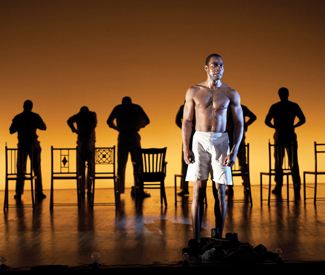
The Scottsboro Boys American Conservatory Theater, 415 Geary, SF; www.act-sf.org. $20-95. Tue-Sat, 8pm (also Wed and Sat, 2pm; no matinee Wed/4); Sun/8, 7pm. Extended through July 22. American Conservatory Theater presents the Kander and Ebb musical about nine African American men falsely accused of a crime they didn’t commit in the pre-civil rights movement South.

Vital Signs Marsh San Francisco, 1062 Valencia, SF; (415) 282-3055, www.themarsh.org. $15-50. Sat, 8:30pm. Through July 21. The Marsh San Francisco presents Alison Whittaker’s behind-the-scenes look at nursing in America.

Waiting… Larkspur Hotel Union Square, 525 Sutter, SF; www.brownpapertickets.com. $69-75. Thu-Sat, 8pm; Sun, 2pm. Through Aug 5. Comedy set behind the scenes at a San Francisco restaurant.

The Waiting Period MainStage, Marsh San Francisco, 1062 Valencia, SF; (415) 282-3055, www.themarsh.org. $15-50. Fri, 8pm; Sat, 5pm. Extended through August 4. Brian Copeland (comedian, TV and radio personality, and creator-performer of the long-running solo play Not a Genuine Black Man) returns to the Marsh with a new solo, this one based on more recent and messier events in Copeland’s life. The play concerns an episode of severe depression in which he considered suicide, going so far as to purchase a handgun — the title coming from the legally mandatory 10-day period between purchasing and picking up the weapon, which leaves time for reflections and circumstances that ultimately prevent Copeland from pulling the trigger. A grim subject, but Copeland (with co-developer and director David Ford) ensures there’s plenty of humor as well as frank sentiment along the way. The actor peoples the opening scene in the gun store with a comically if somewhat stereotypically rugged representative of the Second Amendment, for instance, as well as an equally familiar "doood" dude at the service counter. Afterward, we follow Copeland, a just barely coping dad, home to the house recently abandoned by his wife, and through the ordinary routines that become unbearable to the clinically depressed. Copeland also recreates interviews he’s made with other survivors of suicidal depression. Telling someone about such things is vital to preventing their worst outcomes, says Copeland, and telling his own story is meant to encourage others. It’s a worthy aim but only a fitfully engaging piece, since as drama it remains thin, standing at perhaps too respectful a distance from the convoluted torment and alienation at its center. (Avila)

BAY AREA

Emotional Creature Berkeley Repertory Theatre, Roda Theatre, 2025 Addison, Berk; www.berkeleyrep.org. $14.50-73. Tue and Thu-Sat, 8pm (also Sat, 2pm; no show July 13); Wed, 7pm (no show Wed/4); Sun, 2 and 7pm. Through July 15. It’s not easy being a girl, and Eve Ensler’s newest play Emotional Creature leaves no scenario unexplored: from high school shaming rituals to ritual clitorectomies. If that sounds like a jarring juxtaposition, you’d be right. It’s difficult theatrically to transition seamlessly from a deeply affecting monologue about being a teenage sex slave in the Democratic Republic of Congo to a cute song about wearing miniskirts, and it’s equally difficult for the audience to change emotional gears rapidly enough to be able to adequately absorb the impact of each individual segment. Instead, the play comes off as an earnest but awkward Girl Scout Jamboree variety show — attempting to address as wide a variety of social ills as possible (from teen suicide to industrial pollution) — despite the strong and savvy acting chops of the six performers. In contrast to Ensler’s most popular work, The Vagina Monologues, which effectively "humanized" a part of the body by giving it something highly personal to say, Emotional Creature weirdly depersonalizes its girls by putting lines in their mouths ("I’m not the life you never lived") that clearly come from an adult perspective. And as for those girls who don’t particularly identify as "emotional creatures" at all? For them, there are no words. (Gluckstern)

The Kipling Hotel: True Misadventures of the Electric Pink ’80s New venue: Marsh Berkeley, 2120 Allston, Berk; (415) 282-3055, www.themarsh.org. $20-50. Sat, 8:30pm; Sun, 7pm. Extended through July 15. This new autobiographical solo show by Don Reed, writer-performer of the fine and long-running East 14th, is another slice of the artist’s journey from 1970s Oakland ghetto to comedy-circuit respectability — here via a partial debate-scholarship to UCLA. The titular Los Angeles residency hotel was where Reed lived and worked for a time in the 1980s while attending university. It’s also a rich mine of memory and material for this physically protean and charismatic comic actor, who sails through two acts of often hilarious, sometimes touching vignettes loosely structured around his time on the hotel’s young wait staff, which catered to the needs of elderly patrons who might need conversation as much as breakfast. On opening night, the episodic narrative seemed to pass through several endings before settling on one whose tidy moral was delivered with too heavy a hand, but if the piece runs a little long, it’s only the last 20 minutes that noticeably meanders. And even with some awkward bumps along the way, it’s never a dull thing watching Reed work. (Avila)

Salomania Aurora Theatre, 2081 Addison, Berk; www.auroratheatre.org. $30-55. Tue, 7pm; Wed-Sat, 8pm; Sun, 2 and 7pm. Through July 22. The libel trial of a politically opportunistic newspaper publisher (Mark Andrew Phillips) and the private life of a famous dancer of the London stage — San Franciscan Maud Allan (a striking Madeline H.D. Brown) — become the scandalous headline-grabber of the day, as World War I rages on in some forgotten external world. In Aurora’s impressive world premiere by playwright-director Mark Jackson, the real-life story of Allan, celebrated for her risqué interpretation of Oscar Wilde’s Salomé, soon gets conflated with the infamous trial (20 years earlier) of Wilde himself (a shrewdly understated Kevin Clarke). But is this case just a media-stoked distraction, or is there a deeper connection between the disciplining of "sexual deviance" and the ordered disorder of the nation state? Jackson’s sharp if sprawling ensemble-driven exploration brings up plenty of tantalizing suggestions, while reveling in the complexly intermingling themes of sex, nationalism, militarism, women’s rights, and the webs spun by media and politics. A group of trench-bound soldiers (the admirable ensemble of Clarke, Alex Moggridge, Anthony Nemirovsky, Phillips, Marilee Talkington, and Liam Vincent) provide one comedy-lined avenue into a system whose own excesses are manifest in the insane carnage of war — yet an insanity only possible in a world policed by illusions, distractions and the fear of unsettled and unsettling "deviants" of all kinds. In its cracked-mirror portraiture of an era, the play echoes a social and political turmoil that has never really subsided. (Avila)

PERFORMANCE/DANCE

"Channels: An Evening of Cross-Disciplinary Performance" Shotwell Studios, 3252-A 19th St, SF; www.ftloose.org. Fri/6-Sun/7, 8pm. $10-20. Dancers Daria Kaufman, Bianca Brzezinski, and musician-composer Richard Warp perform Arti Ulate, a dance-theater piece; Brzezinski also performs a solo, Non-self.

"Comedy Bodega" Esta Noche Nightclub, 3079 16th St, SF; www.comedybodega.com. Thu/5, 8pm. Free (one drink minimum). Weekly free stand-up show. This week: Yayne Abeba, David Hawkins, Anna Seregina, Veronica Porras, Baruch P. Hernandez, and George Chen.

"Comedy Returns to El Rio" El Rio, 3158 Mission, SF; www.brownpapertickets.com. Mon/9, 8pm. $7-20. With Joe Klocek, Josh Healey, Regina Stoops, Johan Miranda, Shanti Charan, and Lisa Geduldig.

"Elect to Laugh" Studio Theater, Marsh San Francisco, 1062 Valencia, SF; (415) 282-3055, www.themarsh.org. Tue, 8pm. Through Nov 6. $15-50. Will Durst and friends perform in this weekly political humor show that focuses on the upcoming presidential election.

"The Eric Andre Show" Rickshaw Stop, 155 Fell, SF; www.rickshawstop.com. Mon/9, 8pm. $10. Adult Swim-spawned, SF Sketchfest-presented faux-cable access variety show with musical guests and "real and fake celebrity appearances," hosted by actor Eric André.

"The Fag Hag Comedy Show" Deco Lounge, 510 Larkin, SF; www.brownpapertickets.com. Sun/8, 8pm. $10. Charlie Ballard hosts this stand-up comedy extravaganza, with headliner Glamis Rory and more.

"A Funny Night for Comedy" Actors Theatre of San Francisco, 855 Bush, SF; www.natashamuse.com. Sun/8, 7pm. $10. Natasha Muse and Ryan Cronin host stand-up comedians, including headliner Jason Wheeler, at their monthly talk show.

"Jillarious Tuesdays" Tommy T’s Showroom, 1000 Van Ness, SF; www.jillarious.com. Tue, 7:30. Ongoing. $20. Weekly comedy show with Jill Bourque, Kevin Camia, Justin Lucas, and special guests.

Carolina Lugo and Carolé Acuña’s Café Flamenco Peña Pachamama, 1630 Powell, SF; www.carolinalugo.com. Sun/8, 6:15pm. $15-19. Mother-daughter flamenco dance and music company.

"Majestic Musical Review Featuring Her Rebel Highness" Harlot, 46 Minna, SF; www.herrebelhighness.com. Sun, 5pm. Through Aug 12. $25-65. Cocktails and hors d’oeuvres, performers in Baroque-chic gowns, music, and more.

"Schwabacher Summer Concert" Herbst Theatre, 401 Van Ness, SF; www.sfopera.com. Thu/5, 7:30pm. $25-40. The young talent of the Merola Opera Program performs scenes from works by Bizet, Stravinsky, and more.

Under oath

19

steve@sfbg.com

Mayor Ed Lee and suspended Sheriff Ross Mirkarimi each took some lumps on June 29 as they were cross-examined by opposing attorneys in front the Ethics Commission, which is conducting the official misconduct case that Lee brought against Mirkarimi over a Dec. 31 domestic violence incident. But the hearings proved unexpectedly dramatic when the room was suddenly cleared for an undisclosed security threat — following testimony by Lee that a city commissioner alleges included perjury.

The incident raises a number of issues that officials hadn’t yet answered by Guardian press time. Was the security threat real? If so, why wasn’t the room or the rest of City Hall properly secured after the mayor was whisked away? If not, who ordered the room cleared and why?

Undersheriff Paul Miyamoto, who ran against Mirkarimi last year, told the Guardian that the San Francisco Police Department notified his office that a caller claimed to have planted bombs outside of City Hall and on the Golden Gate Bridge. Deputies conducted a search and found nothing, and his office didn’t order the recess of the hearing. “We did not evacuate anyone,” he told us.

Speculation about the incident was heightened during the break when Debra Walker, a Mirkarimi supporter and longtime member of the city’s Building Inspection Commission, told the Guardian that Lee committed perjury when he denied speaking with any members of the Board of Supervisors before filing official misconduct charges. Lee was responding to a direct and pointed question from Mirkarimi attorney Shepherd Kopp — one that that Lee’s attorneys had unsuccessfully objected to.

Specifically, Walker said that her longtime friend and political ally Sup. Christina Olague — who Lee appointed to serve the last year of Mirkarimi’s term for the District 5 seat — had told her repeatedly that Lee had asked her advice before filing the charges against Mirkarimi, and that Olague’s advice was that Lee should ask for Mirkarimi’s resignation but drop the matter if he refused.

That allegation, which was first reported on the Guardian’s Politics blog shortly after the commission went into recess (Olague had not yet returned a call from the Guardian asking whether she had spoken to Lee about Mirkarimi), prompted reporters to confront Olague in the hallway outside her supervisorial office, where she tersely denied the allegation and then took refuge behind closed doors.

When the reporters lingered and persisted, waiting for a more complete answer, Olague finally emerged, reiterated her denial, refused to speculate about why her friend Walker would make that claim, and said, “We’re not allowed to discuss this matter with anyone before it comes to the board…I may have to recuse myself from voting on this.”

It was unclear why she thought recusal might be necessary, but if she does disqualify herself from voting on Mirkarimi’s removal later this summer after Ethics completes its investigation and makes its recommendations to the board, that would hurt Lee’s effort to get the nine votes needed to remove Mirkarimi.

When the Ethics Commission hearing resumed after a couple hours, Lee was again placed in a position of denying specific factual allegations that others have made, again raising the possibility that he committed perjury in his sworn testimony, which could expose him to felony criminal charges while undercutting his moral authority to remove Mirkarimi over the single misdemeanor count of false imprisonment that he pleaded guilty to in March.

The second instance was when Kopp asked Lee, “Did you ever extend any offer through third parties that you would find him another job if he resigned?”

“I don’t recall offering Sheriff Mirkarimi any job,” Lee replied.

Kopp specifically asked whether that job offer had been extended on Lee’s behalf by permit expediter Walter Wong or by San Francisco Democratic Party Chair Aaron Peskin, to which Lee replied, “Absolutely not.”

Mirkarimi supporters have told the Guardian that Peskin had made that offer, which Mirkarimi refused, shortly before the party chair publicly called for Mirkarimi’s resignation. The outgoing message on Peskin’s cell phone said he was unavailable and wouldn’t be checking his messages until July 5. Mirkarimi’s attorneys said they’re still figuring out how to respond to the developments and had no comment, but Walker said she’s willing to testify under oath.

But the dramas underscore the treacherous grounds opened up by these unprecedented proceedings, the first involving the Ethics Commission and the broadened definition of official misconduct placed into the City Charter in 1996. As baseball great Barry Bonds and former President Bill Clinton learned, being forced to testify under oath about sensitive topics can be a tough trap to negotiate.


MIRKARIMI TESTIMONY

Deputy City Attorney Peter Keith also seemed to be trying to spring that perjury trap on Mirkarimi as he took the stand on the morning of June 29 following an hour on the stand at the previous night’s hearing. Keith reminded Mirkarimi that he was advised not to discuss his testimony with anyone and asked, “Who have you spoken to since last night?”

“My attorneys,” Mirkarimi answered.

“What did you say to them?” Keith asked, drawing objections about attorney-client privilege that Commission Chair Benedict Hur sustained.

“Did you stop for coffee?” Keith then asked, seemingly concerned that Mirkarimi may have discussed his testimony with someone at the coffee shop that morning, which Mirkarimi denied. Keith let the allegation go but maintained an accusatory, hectoring tone throughout the next three hours that he had Mirkarimi on the stand, two more hours than he had told the commission he would need.

Much of the time was spent trying to establish support for the allegation that Mirkarimi had dissuaded witnesses and sought to thwart the police investigation, which was triggered by a call from Ivory Madison, a neighbor to whom Mirkarimi’s wife, Eliana Lopez, had confided. But the testimony yielded little more than the city’s unsupported inference that Mirkarimi must have directed Lopez and his campaign manager, Linnette Peralta Haynes, to contact Madison after she had called the police and urged her to stop cooperating with them.

Mirkarimi has maintained that he did nothing to dissuade Madison or anyone from talking to police, and that he wasn’t aware of the investigation or that Madison had made a videotape of Lopez showing a bruise on her arm until hours after the police were involved. He even sent a text to Lopez saying there was nothing he could do, as he noted.

“It was after 4pm on January 4 when I first learned of any of this,” Mirkarimi testified, later adding, “I was very clear to her in saying you can’t unring the bell, we have to follow through with this.”

Yet Lee and the deputy city attorneys who are representing him also maintain that they needn’t prove witness dissuasion or other allegations they have made, and that the Dec. 31 incident and Mirkarimi’s guilty plea to a single misdemeanor count of false imprisonment are enough to constitute official misconduct and warrant his removal, an interpretation that Mirkarimi’s attorneys dispute.

Keith sought to hammer home how Mirkarimi should have admitted to and publicly atoned for his crime right away rather than telling reporters it was a “private family matters” (which Mirkarimi admitted was a mistake) or fighting the charges by trying to discredit Madison publicly, an allegation he denies.

After unsuccessfully trying to get Mirkarimi to admit to directing efforts to question Madison’s credibility in local media accounts, Keith asked, “Did you ever direct anyone not to attack Ivory Madison?”

“I never directed anyone to attack or not attack,” Mirkarimi replied.

Keith also clarified that Mirkarimi denies the allegation Madison made that the physical abuse on Dec. 31 went beyond grabbing Lopez’s arm once in the car, as the couple has maintained. “It’s your testimony there was no punching, pulling, or grabbing in the house?” Keith asked, which Mirkarimi confirmed.

Yet Keith said that given the totality of what happened, Mirkarimi should have known he couldn’t continue on as sheriff. “Under those circumstances, wouldn’t resigning be the honorable thing to do?” Keith said, to which Mirkarimi replied that it’s a hard question and that he’s doing what he thinks is right.

Faced with friendlier questions from his own attorney, David Waggoner, Mirkarimi apologized for his actions, saying “I feel horrible and ashamed,” but that he was “sad and scared” to have his family torn apart against their will. He also said that he believes he can still be effective as sheriff because “what makes San Francisco special is our forward-thinking approach to criminal justice.”

Longtime Sheriff Michael Hennessey — who endorsed Mirkarimi and continues to support him — established a variety of programs emphasizing redemption and rehabilitation, hiring former convicts into top jobs in the department to emphasize a belief in restorative justice that Mirkarimi ran a campaign promising to continue.

“Never in my wildest dreams did I think I would be an example of what this redemption process looks like,” Mirkarimi said, choking back tears.

But Keith had the last word before Mirkarimi left the stand, belittling the idea that Mirkarimi offers an example to follow by noting how much probation time and court-ordered counseling he still has to undergo and asking, “The process of redemption doesn’t happen overnight, right?”


LEE ON THE STAND

Under questioning by Kopp, Mayor Lee admitted that he doesn’t have a written policy on what constitutes official misconduct, that his decisions are made on “a case by case basis,” and that he’s not sure whether conviction of a crime would always constitute official misconduct “because I’ve never confronted this before.”

“Were you aware that many members of the Sheriff Department have criminal convictions?” Kopp asked. Lee said he was not aware. Asked whether he was aware that Sheriff Hennessey had hired a convicted murderer into a top command staff position (see “The unlikely sheriff,” 12/21/11), Lee said he wasn’t.

Lee’s insistence that Mirkarimi’s crime makes him unable to deal effectively with other officials was also attacked by Kopp, who asked, “Isn’t it true that people get elected who have disagreements with other city officials?” He pointed out that City Attorney Dennis Herrera had nasty conflicts with Lee when they ran against each other for mayor last year, but that they’re working well together now.

Kopp also drilled into Lee about his decision to bring official misconduct charges before conducting an investigation or speaking with any witnesses besides Madison — an answer Lee blurted out just as city attorneys objected to the question. Much of Madison’s written testimony has been rejected by the commission as prejudicial hearsay evidence (see “Mayor vs. Mirkarimi,” July 27).

But the public’s perception of this case, if not it’s outcome, could turn on whether Lee is holding Mirkarimi to standards that he himself — as someone appointed mayor on a later-broken promise not to run for a full term — couldn’t meet. It was what Kopp seemed to be driving at before the bomb scare.

“You have asserted in your written charges that Sheriff Mirkarimi’s conduct fell below the standard of decency, good faith, and right action that is impliedly required of all public officials, correct?” Kopp asked.

“Yes,” Lee replied.

“We expect certain things of our elected officials, right?” Kopp asked.

After a long pause, in which Lee appeared to be thinking through his answer, he replied, “That’s generally true, yes.”

“And when the charter speaks of official misconduct, it doesn’t say we expect a certain standard for the sheriff, a different standard for the mayor, a different standard for the DA, a separate standard for the assessor, it just speaks in general terms about official misconduct for public officials, right?” Kopp asked.

Kaiser objected to the question on three counts, sustained on the grounds that it calls for a legal conclusion.

“Do you yourself believe there’s a separate standard for sheriff than for other elected officials?” Kopp asked, and this time the city’s objection was overruled and Lee replied, “It should be the same standard.”

“And would you agree with me that one of the things that is expected of elected officials is for them to be honest and forthright when dealing not only with their constituents, but with other elected officials?” Kopp asked, his final question before Chair Benedict Hur announced that the hearing would be suspended and the room would need to be cleared.

After the hearing reconvened, Kopp drew parallels to other city officials who remained on job after scandals, including former Mayor Gavin Newsom (who had an affair with a subordinate who was married to his campaign manager), former Sheriff Dick Hongisto (who was jailed for refusing to carry out a court’s eviction order), and current Fire Chief Joanne Hayes White (whose husband reported that she hit him in the head with a pint glass).

Asked about the latter case, Lee responded, “I don’t know all the circumstances around that and I don’t believe I was mayor at the time.”


Cash your bowl

0

caitlin@sfbg.com

HERBWISE It’s time to get a Discover card. As of July 1, you can no longer use your Visa or Mastercard credit or debit card to buy medical marijuana. And of course, American Express cards have been out of the question since spring 2011. Electronic Merchant Systems, which handles card processing for most of the nation, sent out an announcement last month to its vendors, raising the stakes for dispensaries across the country that seem to be coming under a coordinated federal attack. Cash-only cannabis? That’s pretty bad, maybe just as bad as the next thing I have to tell you about…

MORE BAD NEWS

The Vapor Room is closing. Yes, the perennial Best of the Bay-winning, nine-year old Lower Haight dispensary-lounge (607 Haight, SF. www.vaporroom.com) will be closing its doors as of July 31, according to the nonprofit’s executive director Martin Olive. Olive told the Guardian in a phone interview that the dispensary learned an undisclosed amount of time ago that its landlord had received one of the doom-bearing letters now so familiar to San Francisco dispensaries from US Attorney Melinda Haag declaring that the dispensary was within 1,000 feet of Duboce Park. The city’s permitting laws, Olive told us, are concerned with how far cannabis clubs are from playgrounds, not park grounds. Vapor Room has a long-standing relationship with the Harvey Milk Rec Center that anchors the park — the nonprofit actually sponsors free yoga classes and health counseling that take place in the center itself. Olive wouldn’t confirm rumors that Vapor Room’s stock will continue to be available for delivery, but that’s the word on the street.

PLEASE NO MUNCHIES JOKES

The “bath salts” face-eater didn’t have any bath salts in his system. In fact, the only drug authorities uncovered through post-humous tests was cannabis.

UNDISCLOSED THING

As an events editor, organizations that don’t send us the vital information we need to cover their event are the bane of my existence. It is another thing entirely, however, when an organization requests that vital information be kept out of the newspaper. A sign of the times when it comes to cannabis journalism, I’m afraid. And as such: check out a happy hour benefit at El Rio for “an organization supporting low-income, AIDS-HIV, and cancer patients with free medicine.” Sigh. It’ll be running semi-concurrently with pop-up Mugsy Wine Bar’s hat-tip to Bastille Day (5:30pm-8:30pm). Drown your frustrations with some nice sparkling Blanc de Noir Cremant de Bourgnone, why don’t you.

Fri/13 4pm-6pm, free. El Rio, 3158 Mission, SF. www.elriosf.com

AND FINALLY

Search YouTube for “Conan O’Brien and Martha Stewart Get Crafty with Pot.” Discussion question: for all the weirdness that you just read, is marijuana becoming more or less accepted in mainstream culture?

Stop ‘stop and frisk’

4

EDITORIAL If the San Francisco Police Department put up checkpoints and metal detectors all along lower Market Street and stopped and searched every person who walked by, they’d find some contraband. No question — a certain percentage of people on the city’s main downtown artery are carrying drugs or weapons. Some have warrants out. There would be multiple arrests and criminals taken off the streets.

And it’s hard to imagine that anyone would consider that a good idea.

So how about moving those checkpoints to the Mission and Bayview-Hunters Point? You might get even more weapons and drugs. And it would still be a profound violation of the civil liberties of every San Franciscan.

But what Mayor Ed Lee is now talking about — instituting some version of the notorious New York City “stop and frisk” law — isn’t much different. Under New York Mayor Michael Bloomberg, the police have been given the authority to search, without cause or a warrant, anyone who looks suspicious. The goal is to get guns off the street.

The result: The vast majority of people stopped are African American or Latino — and 88 percent are totally innocent.

It is, in other words, a huge waste of police resources as well as a systematic program or racial profiling and harassment.

Lee told the San Francisco’ Chronicle’s editorial board that he realized the problems with the New York system and wants a better model. And he said, correctly, that there are serious problems with gun violence, particularly in Bayview-Hunters Point. “I think we have to get to the guns,” Lee said. “I know we have to find a different way to get to these weapons, and I’m very willing to consider what other cities are doing.”

But San Francisco has spent huge amounts of time and resources trying (not always successfully) to build a community policing program that would increase trust between the police and communities of color — and any version of “stop and frisk” would instantly undermine that effort. It’s a terrible idea, and Lee should make it clear that he is dropping any discussion or consideration of it.

The mayor and his supporters insist that they’ll only pursue this approach if it can be done without profiling. But that’s almost impossible and it’s a fantasy to think the San Francisco cops, once empowered to stop anyone for any reason, would target white people the same way they do blacks and Latinos. There’s never been an example anywhere in the country where this kind of law was anything but a case study in racial profiling. Even Police Chief Greg Suhr sounds dubious.

The fact that Lee would even suggest this is a sign of how far he’s moved from his progressive roots. Moving even a step further toward this sort of wholesale civil-liberties violation would be a disaster for San Francisco.

Show trial

0

arts@sfbg.com

THEATER The set (by Beowulf Boritt) is almost unassuming in its simplicity: just a trio of receding frames arching over the stage, each progressively more askew, and beneath them a jumble of aluminum chairs piled to one side. Still, such simplicity also hints at, and soon delivers, rich complexity.

The chairs become many things over the course of the evening but first of all a bus stop, where an African American woman (C. Kelly Wright) in 1950s dress waits and remembers. This mute opening scene then gives way to a reverie and nightmare — a memory and history that take the form of a highly fraught “entertainment” — as a man in a white suit and a black string bow tie (Hal Linden), invariably recalling the Old South if only via the emblem of a certain fast-food chicken franchise, comes onto the stage and pronounces the start of the show.

That would be a minstrel show, a notorious artifact of 19th and 20th century American popular culture, which returns with subversive vengeance in The Scottsboro Boys — the iridescent 2010 Broadway musical by the famed song-making team of John Kander and the late Fred Ebb, in collaboration with equally-no-slouch associates David Thompson (book) and Susan Stroman (director and choreographer). Making an impressive Bay Area debut at American Conservatory Theater, The Scottsboro Boys revisits the trials and the international cause célèbre sparked by the false accusation of rape leveled by two white women at nine freight-train–hopping African American youths (all teenagers ranging in age from 13 to 19) in Depression-era Alabama.

If this seems a heavy subject for a musical, that hardly prevents The Scottsboro Boys from being exquisitely well wrought and enthralling, thanks to an excellent score (channeled wonderfully by Eric Ebbenga’s pit orchestra), Stroman’s devilishly potent staging and choreography, and a strikingly multifaceted, charismatic cast that includes a memorable Clifton Duncan as Haywood Patterson, upon whose memoir, Scottsboro Boy, the narrative partly draws (David Bazemore, Cornelius Bethea, Nile Bullock, Christopher James Culberson, Eric Jackson, Jared Joseph, James T. Lane, JC Montgomery, Clifton Oliver, and Clinton Roane make up the rest of the outstanding ensemble).

At the same time, it’s precisely the mesh-clash of form and content —recalling similar canny deployments of popular theatrical forms Kander and Ebb’s Cabaret and Chicago — that makes Scottsboro a vigorous, if sometimes simplified excavation of the case, as well as this country’s ongoing convolutions over race, sex, ethnicity, and class. A productive tension arises between the show’s exquisite spectacle and the often uncomfortable, even macabre content of the storyline. In just one example, a winning tap number erupts in the young men’s shared jail cell, inspired by the terrifying proximity of the electric chair. So charged a number generates as much thought as emotion, as the audience shifts uneasily in a place where popular entertainment mingles pleasure and complicity, truth and artifice.

The subversive appropriation of minstrelsy is not unique to Scottsboro —there’s the San Francisco Mime Troupe’s 1965 production of Minstrel Show, Or Civil Rights in a Cracker Barrel, Suzan-Lori Parks’ use of minstrel tropes in Topdog/Underdog and The America Play, and Spike Lee’s 2000 film Bamboozled, for instance — but the musical deploys it with its own intent, humanizing the young men whose lives were permanently altered by their arrest and the subsequent trials, which became international news when the Communist-led International Labor Defense got involved, sending in celebrated New York attorney Samuel Liebowitz as the new defense counsel. That the trials were themselves the lesser evil in a white Southern regime of lynching and mob justice (waiting, essentially, just outside the walls of the jailhouse) is never lost on the audience either.

Thompson’s admirable book, meanwhile, in the figure of the woman at the bus stop (an unnamed Rosa Parks) bearing witness to the events of the past, draws a line from the Scottsboro case to the later Civil Rights Movement. But, ironically, the use of Rosa Parks obscures as much as it reveals if we think of her as a lone actor who sparks a revolt against an unjust system. She too was a member of a movement culture, one that had built on the activism of the 1930s that first brought the Scottsboro case to light. *

THE SCOTTSBORO BOYS

Extended through July 22, $20-$95

American Conservatory Theater

415 Geary, SF

www.act-sf.org

A quick glimpse into the SF Mime Troupe’s history

1

The amazing SF Mime Troupe has been part of San Francisco so long, it basically is San Francisco. In honor of 53 years of guerilla theater (and new show “The Last Election”), the troupe put together this little vid full of nifty clips of past presentations. Catch ’em in Dolores Park and beyond.

The good old days in Rock Rapids, Iowa, the Fourth of July, 1940-1953

1

(Note: In July of 1972, when the Guardian was short a Fourth of July story, I sat down and cranked out this one for the front page on my trusty Royal Typewriter. I now reprint it each year on the Bruce blog, with some San Francisco updates and postscripts.)

Back where I come from, a small town beneath a tall standpipe in northwestern Iowa, the Fourth of July was the best day of a long, hot summer.

The Fourth came after YMCA camp and Scout camp and church camp, but before the older boys had to worry about getting into shape for football. It was welcome relief from the scalding, 100-degree heat in a town without a swimming pool and whose swimming holes at Scout Island were usually dried up by early July. But best of all, it had the kind of excitement that began building weeks in advance.

The calm of the summer dawn and the cooing of the mourning doves on the telephone wires would be broken early on July Fourth: The Creglow boys would be up by 7 a.m. and out on the lawn shooting off their arsenal of firecrackers. They were older and had somehow sent their agents by car across the state line and into South Dakota where, not far above the highway curves of Larchwood, you could legally buy fireworks at roadside stands.

Ted Fisch, Jim Ramsey, Wiener Winters, the Cook boys, Hermie Casjens, Jerry Prahl, Elmer Menage, and the rest of the neighborhood gang would race out of  their houses to catch the action. Some had cajoled firecrackers from their parents or bartered from the older boys in the neighborhood: some torpedoes (the kind you smashed against the sidewalk); lots of 2 and 3-inchers, occasionally the granddaddy of them all, the cherry bomb (the really explosive firecracker, stubby, cherry red, with a wick sticking up menacingly from its middle; the kind of firecracker you’d gladly trade away your best set of Submariner comics for).

Ah, the cherry bomb. It was a microcosm of excitement and mischief and good fun. Bob Creglow, the most resourceful of the Creglow boys, would take a cherry bomb, set it beneath a tin can on a porch, light the fuse, then head for the lilac bushes behind the barn.

“The trick,” he would say, imparting wisdom of the highest order, “is to place the can on a wood porch with a wood roof. Then it will hit the top of the porch, bang, then the bottom of the porch, bang. That’s how you get the biggest clatter.”

So I trudged off to the Linkenheil house, the nearest front porch suitable for cherry bombing, to try my hand at small-town demolition. Bang went the firecracker. Bang went the can on the roof. Bang went the can on the floor. Bang went the screen door as Karl Linkenheil roared out in a sweat, and I lit out for the lilacs behind the barn with my dog, Oscar.

It was glorious stuff – not to be outdone for years, I found out later, until the Halloween eve in high school when Dave Dietz, Ted Fisch, Ken Roach, Bob Babl, and rest of the Hermie Casjens gang and I made the big time and twice pushed a boxcar loaded with lumber across Main Street and blocked it for hours. But that’s another story for my coming Halloween blog.

Shooting off fireworks was, of course, illegal in Rock Rapids, but Chief of Police Del Woodburn and later Elmer “Shinny” Sheneberger used to lay low on the Fourth. I don’t recall ever seeing them about in our neighborhood and I don’t think they ever arrested anybody, although each year the Rock Rapids Reporter would carry vague warnings about everybody cooperating to have “a safe and sane Fourth of July.”

Perhaps it was just too dangerous for them to start making firecracker arrests on the Fourth – on the same principle, I guess, that it was dangerous to do too much about the swashbuckling on Halloween or start running down dogs without leashes (Mayor Earl Fisher used to run on the platform that, as long as he was in office, no dog in town would have to be leashed. The neighborhood consensus was that Fisher’s dog, a big, boisterous boxer, was one of the few that ought to be leashed).

We handled the cherry bombs and other fireworks in our possession with extreme care and cultivation; I can’t remember a single mishap. Yet, even then, the handwriting was on the wall. There was talk of cutting off the fireworks supply in South Dakota because it was dangerous for young boys. Pretty soon, they did cut off the cherry bomb traffic and about all that was left, when I came back from college and the Roger boys had replaced the Creglow boys next door, was little stuff appropriately called ladyfingers.

Fireworks are dangerous, our parents would say, and each year they would dust off the old chestnut about the drugstore in Spencer that had a big stock of fireworks and they caught fire one night and much of the downtown went up in a spectacular shower of roman candles and sparkling fountains.

The story was hard to pin down, and seemed to get more gruesome every year – but, we were told, this was why Iowa banned fireworks years before, why they were so dangerous and why little boys shouldn’t be setting them off. The story, of course, never made quite the intended impression; we just wished we’d been on the scene My grandfather was the town druggist (Brugmann’s Drugstore, “Where drugs and gold are fairly sold, since 1902″) and he said he knew the Spencer druggist personally. Fireworks put him out of business and into the poorhouse, he’d say, and walk away shaking his head.

In any event, firecrackers weren’t much of an issue past noon – the Fourth celebration at the fairgrounds was getting underway and there was too much else to do. Appropriately, the celebration was sponsored by the Rex Strait post of the American Legion (Strait, so the story went, was the first boy from Rock Rapids to die on foreign soil during World War I); the legionnaires were a bunch of good guys from the cleaners and the feed store and the bank who sponsored the American Legion baseball team each summer.

There was always a big carnival, with a ferris wheel somewhere in the center for the kids, a bingo stand for the elders, a booth where the ladies from the Methodist Church sold homemade baked goods, sometimes a hootchy dancer or two, and a couple of dank watering holes beneath the grandstand where the VFW and the Legion sold Grainbelt and Hamms at 30¢ a bottle to anybody who looked of age.

Later on, when the farmboys came in from George and Alvord, there was lots of pushing and shoving, and a fist fight or two.

In front of the grandstand, out in the dust and the sun, would come a succession of shows that made the summer rounds of the little towns. One year it would be Joey Chitwood and his daredevil drivers. (The announcer always fascinated me: “Here he comes, folks, rounding the far turn…he is doing a great job out there tonight…let’s give him a big, big hand as he pulls up in front on the grandstand…”)

Another year it would be harness racing and Mr. Hardy, our local trainer from Doon, would be in his moment of glory. Another year it was tag team wrestling and a couple of barrel-chested goons from Omaha, playing the mean heavies and rabbit-punching their opponents from the back, would provoke roars of disgust from the grandstand. ( The biggest barrel-chest would lean back on the ropes, looking menacingly at the crowd and yell, “ Aw, you dumb farmers. What the hell do you know anyway? I can beat the hell out of any of you.”   And the crowd  would roar back in glee.)

One year, Cedric Adams, the Herb Caen of Minneapolis and the Star-Tribune, would tour the provinces as the emcee of a variety show. “It’s great to be in Rock Rapids,” he would say expansively, “because it’s always been known as the ‘Gateway to Magnolia.” (Magnolia, he didn’t need to say, was a little town just over the state line in Minnesota which was known throughout the territory for its liquor-by-the-drink roadhouses. It was also Cedric Adams’ hometown: his “Sackamenna.”) Adams kissed each girl (soundly) who came on the platform to perform and, at the end, hushed the crowd for his radio broadcast to the big city “direct from the stage of the Lyon County Fairgrounds in Rock Rapids, Iowa.”

For a couple of years, when Rock Rapids had a “town team,” and a couple of imported left-handed pitchers named Peewee Wenger and Karl Kletschke, we would have some rousing baseball games with the best semi-pro team around, Larchwood and its gang of Snyder brothers: Barney the eldest at shortstop, Jimmy the youngest at third base, John in center field, Paul in left field, another Snyder behind the plate and a couple on the bench. They were as tough as they came in Iowa baseball.

I can remember it as if it were yesterday at Candlestick, the 1948 game with the Snyders of Larchwood. Peewee Wenger, a gawky, 17-year-old kid right off a high school team, was pitching for Rock Rapids and holding down the Snyder artillery in splendid fashion. Inning after inning he went on, nursing a small lead, mastering one tough Larchwood batter after another, with a blistering fastball and a curve that sliced wickedly into the bat handles of the right-handed Larchwood line-up.

Then the cagey Barney Snyder laid a slow bunt down the third base line. Wenger stumbled, lurched, almost fell getting to the ball, then toppled off balance again, stood helplessly holding the ball. He couldn’t make the throw to first. Barney was safe, cocky and firing insults like machine gun bullets at Peewee from first base.

Peewee, visibly shaken, went back to the mound. He pitched, the next Larchwood batter bunted, this time down the first base line. Peewee lurched for the ball, but couldn’t come up with it. A couple more bunts, a shot through the pitcher’s mound, more bunts and Peewee was out. He could pitch, but, alas, he was too clumsy to field. In came Bill Jammer, now in his late 30’s, but in his day the man who beat the University of Iowa while pitching at a small college called Simpson.

Now he was pitching on guts and beer, a combination good enough for many teams and on good days even to take on the Snyders. Jammer did well for a couple of innings, then he let two men on base, then came a close call at the plate. Jammer got mad. Both teams were off the bench and onto the field and, as Fred Roach wrote in the Rock Rapids Reporter, “fisticuffs erupted at home plate.” When the dust cleared, Jammer has a broken jaw, and for the next two weeks had to drink his soup through a straw at the Joy Lunch. John Snyder, it was said later, came all the way in from center field to throw the punch, but nobody knew for sure and he stayed in the game. I can’t remember the score or who won the game, but I remember it as the best Fourth ever.

At dusk, the people moved out on their porches or put up folding chairs on the lawn. Those who didn’t have a good view drove out to the New Addition or parked out near Mark Curtis’ place or along the river roads that snaked out to the five-mile bridge and Virgil Hasche’s place.

A hush came over the town. Fireflies started flickering in the river bottom and, along about 8:30, the first puff of smoke rose above the fairgrounds and an aerial bomb whistled into the heavens. BOOM! And the town shook as if hit by a clap of thunder.

Then the three-tiered sky bombs – pink, yellow, white, puff, puff, puff. The Niagara Falls and a gush of white sparks.

Then, in sudden fury, a dazzling display of sizzling comets and aerial bombs and star clusters that arched high, hung for a full breath and descended in a cascade of sparks that floated harmlessly over the meadows and cornfields. At the end, the flag – red, white and blue – would burst forth on the ground as the All-American finale in the darkest of the dark summer nights. On cue, the cheers rolled out from the grandstand and the cars honked from the high ground and the people trundled up their lawn chairs and everybody headed for home.

Well, I live in San Francisco now, and I drive to Daly City with my son, Danny, to buy some anemic stuff in gaudy yellow and blue wrapping and I try unsuccessfully each year to get through the fog or the traffic to see the fireworks at Candlestick. But I feel better knowing that, back where I come from, everybody in town will be on their porches and on the backroads on the evening of the Fourth to watch the fireworks and that, somewhere in town, a little boy will put a big firecracker under a tin can on a wood porch, then light out for the lilacs behind the barn.

P.S. Our family moved in l965 from Daly City to a house in the West Portal area of San Francisco. There are, I assure you, few visible fireworks in that neighborhood. However, down at the bottom of Potrero Hill, the professional and amateur action is spectacular.

 From any Potrero Hill height, you can see the fireworks in several directions: the waterfront fireworks in the city, fireworks on the Marin side of the Golden Gate bridge, fireworks at several points in the East Bay, fireworks along the Peninsula coast line.

And for the amateur action, parents with kids, kids of all ages, spectators in cars and on foot, congregate after dusk along Terry Francois Boulevard in San Francisco along the shoreline between the Giants ballpark and Kellys Mission Rock restaurant.

The action is informal but fiery, fast,  and furious: cherry bombs, clusters, spinning wheels, high flying arcs, whizzers of all shapes and sizes. The cops are quite civilized and patrol the perimeter but don’t bother anybody. I go every year. I think it’s the best show in town. B3.

Heads Up: 8 must-see concerts this week

0

You’ve got a midweek day off? You’re stoked. Go see some live music with that hard-earned free time. Oh, and happy independence, America. That’s what we’re celebrating, correct?

Eat a barbecued tofu dog slathered in relish and drink some park beers in celebration of such things as country pride and days without responsibility. Then fill those Bay Area music venues, checking in on America’s favorite proto-punk troubadour, Mali’s favorite virtuoso progeny, the Big Time Freedom Fest, woozy dream poppers, a punk rock museum benefit, and more.

Here are your must-see Bay Area concerts this week/end:

Jonathan Richman
Last time the Modern Lover cult hero Jonathan Richman did a slew of shows at the Make-Out Room, he brought drummer Tommy Larkins to the outings, performed for hours on end, sang in multiple languages, chatted awkwardly, mixed up his pacing and flipped his set list so time floated by without a lull. He also danced samba-like solo – twisting his thin frame as a contortionist. Who’s to say this round should be any different? We know Larkins is back at least.
Mon/2-Tue/3, 7:30pm, $15
Make-Out Room
3225 22nd St., SF
(415) 647-2888
www.themakeoutroom.com
http://www.youtube.com/watch?v=XjFU98mEem4

Vieux Farka Toure
The son of Ali Farka Toure, Malian singer-guitarist is legend in his own right. Oft referenced as a “guitar virtuoso” or more specifically  “The Hendrix of the Sahara,” Vieux’s graceful, quick-fingered guitar skills rival those of the rock’n’roller regime, yet he blends in traditional West African influences. Fresh off the Touré-Raichel Collective (his collaborative album and tour with Israeli musician Idan Raichel), Vieux this time swings into town solo, his strumming again center stage.
Mon/2, 8pm, $22
Yoshi’s SF
1330 Fillmore, SF
(415) 655-5600
www.yoshis.com
http://www.youtube.com/watch?v=IecSMEH9ZVg

“Big Time Freedom Fest”
What’s more deliciously new America than the string-lit back patio at El Rio? That’s where dreams are made and shattered. People fall in momentary beat-fueled lust, cheap beers with lime wedges are sipped en masse, and fried food is gobbled up without a second thought. It’s tradition, years in the making. This seventh annual Big Time Freedom Fest features some awesome local heavy-hitters: Religious Girls, Tartufi, Finn Riggins, Battlehooch, and Night Call, all for $8, in the outdoor heavy-hung fog.
Wed/4, 3:30pm, $8
El Rio
3158 Mission, SF
(415) 282-3325
www.elriosf.com
http://www.youtube.com/watch?v=7mMUsyZY4kA

Giraffage, James & Evander
“Glitchy” seems to be the key word for San Francisco’s electronically-constructed solo project, Giraffage. I’m on board. Those little glitchy effects break up otherwise endless ambient affairs, spinning the act from dream-pop to hip-hop in a cotton candy pillow. Tonight’s a co-headlining set with fellow Bay Area suspected Ambien-poppers, James & Evander. That “synth/stoner pop” Oakland act released magical debut LP Bummer Pop last month. How many more pops can we squeeze in this show description? Pop.
With Astronautica, Young Pharaohs
Thu/5, 9pm, $6
Milk Bar
1840 Haight, SF
(415) 387-6455
www.milksf.com
http://www.youtube.com/watch?v=MrrL0sYLgA0

Liars
“This year’s WIXIW (say wish-you) finds Liars reinventing the wheel again, to produce their most synthified affair yet; picture the rocktronic fusion of Kid A-era Radiohead, approached with the finely calibrated ambience of Bjork’s Vespertine, Trent Reznor’s swagger, and Tom Waits’ lumbering dynamics.” – Taylor Kaplan 
With Cadence Weapon
Thu/5, 8pm, $22.50
Great American Music Hall
859 O’Farrell, SF
(415) 885-0750
www.slimspresents.com
http://www.youtube.com/watch?v=ggR6RuBh8I0

Shana Falana
Formerly of San Francisco, the now New York-based psychedelic dream popper Shana Falana returns to her beloved Bay in support of new In the Light EP, bringing along a new multimedia show. Falana’s lilting church choir-like vocals matched to looping guitar and percussion gives the impression of a surreal religious experience deep in the X-Files woods. I want to believe.
With Kelley Stoltz, the She’s, B and Not B
Fri/6, 9pm, $15
Cafe Du Nord
2170 Market, SF
(415) 861-5016
www.cafedunord.com
http://www.youtube.com/watch?v=MUqgXal-knk

Punk Rock Museum Benefit
Given punk’s lasting impact on so many musical branches, and influence on the raw sounds of countless beloved acts, a Punk Rock Museum seems absolutely necessary. Why didn’t we think of this? The new museum – spearheaded by Taquila Mockingbird and based in LA – has been established to “further preserve the punk rock genre.” For this show, parts of the museum travel to San Francisco. There will be a mix pieces (photographs, old fliers, art by the likes of Winston Smith, etc.) from the permanent museum collection, and of course, live music to carry on the legend: Debora Iyall (of Romeo Void), Metal Circus (A tribute to Husker Du), and Meri St. Mary and the Housecoats. Also, DJ Big Nate will be spinning classic punk cuts.
Sat/7, 9pm, $15
Thee Parkside
1600 17th St., SF
(415) 252-1330
www.theeparkside.com
http://www.youtube.com/watch?v=ePIImGMjn_8

Cool Ghouls
Local psych-rockers Cool Ghouls seem to be everywhere lately, opening up Noise Pop retrospective shows, making appearances at lots of local venues, playing Save KUSF benefits; a.k.a traveling around town with beer-fueled, good-time rock’n’roll in tow. They’ve got a bright and free EP currently up for grabs on their Tumblr, an upcoming slot at the Independent before Sonny and the Sunsets, and a full-length LP coming in the fall; this Hemlock show is a good chance to check out the five-piece in smallish setting.
With LA Witch, the Sister Ruby Band
Sun/8, 9pm
Hemlock Tavern
1131 Polk Street, SF
(415) 923-0923
www.hemlocktavern.com

Undocumented youth hold ‘graduation’ at Civic Center

7

“I’m undocumented and unafraid, queer and unashamed!” Javier Hernandez declared as he took the stage in front of City Hall June 30.

He was one of hundreds of undocumented students from across the western United States who showed up in Civic Center Plaza to celebrate undocumented immigrant youth and students.

During the ceremony, students, dressed  in caps and gowns, told their stories. Many involved a struggle to get through school while unable to work, and uncertainty and fear about their own fate and that of their families. 

Angela Davis spoke in support of the students.

Later, Pomp and Circumstance played as the students marched down the aisles, each taking a turn on stage to say speak their names and their undocumented status, followed with a bold “and I’m unafraid!”

“Our core message today was to celebrate how far the undocumented movement has come,” said Blanca Vazquez, a senior at San Francisco State studying child and adolescent development. “It’s been 10 years since the DREAM Act was first proposed.”

Many protesters were made more hopeful by President Obama’s recent “deferred action” Department of Homeland Security policy directive, calling on officers to defer the depaortaton of many undocumented youth.

“This is a huge win for our communities,” Hernandez said to a cheering crowd, “and you made it happen!”

For Vazquez, the directive is an important step, but there is still much to be done. She participated in a sit-in at Obama campaign offices last week. On day two of the sit-ins, Vasquez said, Obama issued his policy directive.

Vazquez said the group wanted an Executive Order, not a policy directive. They stayed to continue the sit-in, but after the policy directive passed security guards at campaign office stopped allowing them to eat or go to the bathroom. After enduring those conditions for a day, the students stopped the occupation.

Vazquez promised they would be back, however, if “Obama doesn’t implement the policies he promised.”

A video made by immigrant youth in support of the “(und)occupation” of the campaign offices points out that although the policy directive allows DREAMers to apply for deferment and work permits, it does not guarantee either and denied applications can lead to the start of the deportation process. 

One speaker said the was grateful for the directive and hoped to get a work permit, especially after living in fear of deportation her last year of high school. But as an 18-year, she said she was still worried at the prospect of being left alone if her parents are deported to Indonesia. 

“Deportation is not just a Latino issue!” the young woman, a member of Asian Students Promoting Immigrant Rights through Education, reminded the crowd. 

Hernandez was among dozens who emphasized the intersections between undocumented and queer movements. 

“We want to find a way to bridge communities affected by homophobia and xenophobia,” Hernandez said. “It’s the same struggle.” 

Occupy brings the noise to the Canadian consulate for Quebec students

8

Activists with Occupy San Francisco, Occupy Education Northern California and other groups staged a small demonstration outside the building that houses the Canadian consulate to express solidarity with student strikes in Quebec.

Protesters brought pots and pans to the building at 580 California, banging them in tribute to the casserole marches that have characterized the Quebec strikes.

Students in Quebec province have been on strike since February. School has let out for the summer, but the uprising shows no sign of stopping- in a massive demonstration June 22, some reports showed 100,000 marching in the streets of Montreal, and recently teachers have pledged to join students. 

“Last Friday, they had 100,000 people in the streets,” cried Stephan Georgiou, a former CCSF and UC Berkeley student. “The students of Quebec have continued to take to the streets despite Bill 78.”

Bill 78, passed as an emergency measure May 18 by the National Assembly of Quebec, forbids protests on or near school grounds, requires that march organizers submit their route to police in advance of demonstrations, and attempts insure that all classes resume in late summer.

Security guards allowed two protesters into the building and representatives from the consulate came to the lobby to receive a list of demands written by the group, which included the release and dismissal of charges against imprisoned students, the repeal of Bill 78, and “the end of all austerity measures for students, because education is a human right.”

Protests in Quebec began over proposed tuition hikes, and at yesterday’s rally, students from area high school and colleges told stories of their student loan debt during the rally.

“I was a senior in high school in the 2011/2012 school year. I applied to SF State,” said Hannah Stutz, 17. “My parents are currently in debt, so I needed to apply for financial aid.”

With a loan offered by FAFSA, Stutz said, “I was awarded $70 if I take out a $30,000 loan.”

“I’m a single father, I have yet to graduate college, and I’m $60,000 in debt,” said another protester.

Last March, US total student loan debt surpassed $1 trillion.

“It’s approaching the amount of the bank bail outs,” said one protester. “They should have just bailed out all the student debt. The money would have gone to the banks anyway.”

Indeed, activists and polticians have thrown around the idea of widespread student loan debt forgiveness, as well as a debt strike– simply refusing to pay.

“The average debt people graduate with is now $25,000,” said Beezer de Martelly, a graduate student at UC Berkeley, “and we all know how quickly these prices are escalating.”

“On November 9, we were beaten in exchange for trying to keep dept down for future generations,” she said, recalling Occupy Cal protests against tuition hikes during which students were notoriously beaten by police.

“There is a large group of students here in California planning on forming our own student union,” said Georgiou.

After leaving the building’s lobby, satisfied with proof that the consulate had faxed the group’s demands to Canadian Premier Jean Charest, Occupy CCSF organizer Janice Suess thanked the crowd for coming out.

“Not only are we in solidarity with the students in Quebec,” said Suess, “but we’re building our own movement here.”

Guardian voices: The labor agreement that changed SF

18

This year marks the 53rd anniversary of the beginnings of  negotiations between the International Longshoreman’s and Warehouseman’s Union and the Pacific Maritime Association over what came to be known as the “Mechanization and Modernization Agreement.”  Signed in October, 1960, after months of talks,  the “M and M agreement” transformed San Francisco’s economy forever, moving its founding industry — shipping and trans shipping — to the East Bay, opening up the land once devoted to maritime uses to real estate development, and setting off the modern political era of San Francisco.

The agreement allowed containerization to come into the San Francisco Bay, making obsolete  the finger piers along San Francisco’s waterfront and the ILWU’s “gangs” that worked on them, hand-loading “break bulk” cargo into the holds of cargo ships. The new technology of shipping cargo in a single  container that could be transported by truck, train, and ship without unloading  transformed maritime trade.

During World War II, shipbuilding and shipping were  fundamental in the effort to move billions of tons of supplies and millions of troops across the global battlefield. In both cases the  San Francisco Bay was ground zero in that in that effort.

Kaiser and Bechtel, two Bay Area-based construction companies, wildly successful in undertaking huge construction projects during the New Deal, were urged to build ships during the war. Kaiser in Richmond and Bechtel in Sausalito constructed  huge shipyards that  built cargo ships by the hundreds, bringing tens of thousands of workers to the Bay Area and changing the demographics of the region for ever. These huge industrial centers didn’t last after the war, and while they transformed who lived in the region, they didn’t really have a lasting economic impact.

But wartime changes in cargo handling did.

For as long as San Francisco had been a city, it depended on its port as the base of its economy. The Gold Rush happened here in part because we had a port and the world rushed in on ships. The enduring fortunes were made during that period by merchants and shipping companies were totally dependent on shipping and cargo handling.

At the heart of the maritime economy was the longshoreman who, by hand, loaded and unloaded ships’ holds. The demand for speed during WWII saw the then-revolutionary introduction of the fork lift truck on the piers of San Francisco, replacing hands with a machine for the first time in the history of the San Francisco waterfront.

But that was only the beginning. New ship designs and new shipping techniques were invented to meet the needs of global war. Since most of the Pacific islands that were the military objectives of the war had no ports or piers, ships were designed that could land directly on a beach and unload preloaded trucks.  Preloaded containers were simply stacked on the decks of Liberty ships, avoiding the need to load the cargo below decks.  By the Korean War these containers were in such regular use by the Army that ships were modified to carry only them, replacing below-deck cargo entirely.

Since ports and piers had been major targets during the war and required extensive rebuilding in both Europe and Asia,  new cargo handling techniques were built into these new facilities, making US ports, undamaged by the war, outmoded and old fashioned.  If US ports were to keep up they had to be modernized.  But who would pay for these new facilities: the shipping business or the government?

San Francisco was still governed by an unbroken line of Republican Mayors during this key period: the anti-New Deal, pro-Mussolini Angelo Rossi; the shipping line owner and anti- ILWU leader Roger Lapham; the pro-real-estate development Elmer Robinson; and finally, the last Republican Mayor of San Francisco, the pro-urban-renewal stalwart George Christopher. These four had no desire to rebuild the waterfront and make the ILWU even stronger. Indeed, Robinson and his successor Christopher had a vision of the waterfront as prime real estate, not working waterfront.

And so, with no commitment to the maritime industry from the city’s leadership and with technological change making the status quo impossible to maintain, Harry Bridges and the leadership of the ILWU cut the best deal they could for their existing members: the 1960 M and M agreement, which gave all existing longshore workers lifetime jobs and very good pay — but sealed the fate of San Francisco waterfront.

By 1962 the Port of Oakland had built its first container facility, and that same year, the first containership, the S.S. Elizabethport, docked and begin loading. By the mid 1970’s, the ILWU was no longer a force in the San Francesco labor movement, its leadership taken by the Building Trades unions  whose  numbers increased as the development boom, fueled by land made vacant by the loss of the maritime industry, grew.

For the rest of the Bay Area, it was San Francisco’s model of waterfront as real estate development that was followed, not Oakland’s investment in cargo shipping. By 1965, development of the Bay was so intense that the McAteer-Petris Act was passed, creating the Bay Conservation and Development Commission, a regional body aimed at limiting the powers of local governments (like San Francisco) in filling and over-developing the Bay.

The 8 Washington battle, the struggle over the Hunters Point shipyard, and the looming battle over the use of a port pier for the Warriors arena all have their history deeply rooted in the 1960 M and M agreement.

In this second decade of the 21st century, our greatest challenge is creating and sustaining meaningful employment. Would our prospects be better if we had somehow been able to keep some maritime uses at the port? Would families in Bay View-Hunters Point be more able to buy homes in their own neighborhood if the same kinds of jobs that allowed their grandparents to buy theirs still existed? Would the boom-or-bust cycle of our real-estate dependent local economy been so disruptive if we had a more steady state base of a maritime sector — which kept the Great Depression from being so devastating in San Francisco in the1930s?

These questions are real — and should show that the shape of our economy is made by us and the decisions we make, locally, not solely by techological change, global trends or the far-too-palsied invisible hand of the free market.