Review

Crime Bomb

0

Editors note: This story was originally published in 2001.


They found Virginia Lowery lying in the garage of her Excelsior home, an electrical cord around her throat, an ice pick jammed through her skull — in one ear and out the other. For the next 11 years San Francisco homicide detectives made no progress on the case. Promising leads turned into dead ends. Theories collapsed. The cops assigned to the case retired. It looked like Lowery’s 1987 slaying would never be solved.
Then in April 1998, by pure chance, police found Robert C. Nawi. Or rather, they found his fingertips.
When Nawi, a 57-year-old carpenter, got in a shouting match in a North Beach watering hole, he was picked up by the cops on misdemeanor charges and shuttled to county jail, where he was fingerprinted and booked. The computer spat out some interesting news: Nawi’s digits, according to the database, resembled a fingerprint found at the scene of Lowery’s slaying.
Soon thereafter, police evidence analyst Wendy Chong made a positive print match, and the new suspect found himself facing murder charges and life in a cage.
Nawi’s fate, to be decided at trial next year, rests largely on police readings of his fingerprints, as well as some DNA gathered by the coroner. Which raises some questions: How, exactly, did the cops and their computers analyze the evidence? Did they get it right? Is anybody checking their work?


Making a match between the distinguishing ridges and whorls, often microscopic, of two fresh fingerprints is a relatively simple task for a print expert. However, cases like Nawi’s aren’t so clear-cut: the print collected in Lowery’s garage is faint, smudged, and missing in patches.
Michael Burt, the resident forensic-<\h>science guru at the San Francisco Public Defender’s Office, shows me an 8-by-10-inch enlargement of the print discovered at the murder scene; it’s blurry, grainy, and only about 60 percent complete. To my layperson’s eye, it bears little resemblance to the clear, fresh mark left by Nawi at his booking. “The one print is so washed out you can’t see anything,” says Burt, who is representing Nawi. “This is not science at all; it’s subjective and shouldn’t be allowed.”
Burt, a 22-year veteran defense lawyer known around the Hall of Justice for his trademark cart full of documents, has plenty of cause to doubt the cops’ evidence. Despite what you may have seen on Law and Order, fingerprint examiners can — and often do — get it wrong. Last year 141 of America’s top forensic labs were tested to see if they could accurately match two fingerprints: 39 percent failed; 11 labs made false IDs. San Francisco analysts are rarely, if ever, graded for accuracy.
Jim Norris, head of the San Francisco Police Department’s forensics division, argues that new computer imaging tools are making it possible to match even sketchy, partial prints. “When somebody shows a print that was originally collected at the crime scene, and it looks very difficult to deal with, what they’re not looking at is the image that has been [digitally] enhanced,” Norris explains. “It’s a lot easier to deal with.” Norris admits that the department has seldom tested its print examiners for accuracy, but he says their work is constantly checked by superiors.
According to Burt, in this particular instance analysts didn’t turn to computers but simply enlarged the prints before making the call. The district attorney’s DNA evidence against Nawi is equally flawed, he says. When coroner Boyd Stephens autopsied the corpse, he — per routine — snipped the woman’s fingernails with a household nail clipper and stuck them in an envelope. Unrefrigerated, the clippings slowly rotted for more than a decade, until, in the wake of Nawi’s arrest, prosecutor John Farrell had them tested for DNA.
When the crime lab got the evidence, in 1998, DNA analyst Alan Keel scraped all 10 nails with a single cotton swab, combined the scrapings into one tiny pile, and dropped them into a genetic-<\h>typing device. According to standard forensic procedure, each nail should’ve been swabbed and tested separately.
Now, Burt contends, the sample has deteriorated because of a lack of refrigeration and has been contaminated with the DNA of more than one person. “[Keel] says there are three, possibly four different individuals underneath her fingernails,” the lawyer says. “He’s trying to grab my client out of that mixture. There’s no scientific way to do that.”
Norris disagrees: “There are ways to deal with [DNA] mixtures; it’s not a common problem luckily, but it’s something that comes up — for example, in rape cases where there are multiple assailants. There are ways to deal with it.”
I run down the scenario for Dr. Simon Ford, a Ph.D. biochemist and DNA expert who heads up San Francisco–<\d>based Lexigen Science and Law Consultants. “That’s not good,” Ford tells me. “You should deal with each hand separately, at least, and probably each nail separately. I don’t think combining all the nails together is a good idea.”
Blinding them with science
The dispassionate examination of crime scene evidence — narcotics, fingerprints, hair and fibers, genetic material, firearms, and everything else — is a cornerstone of the American justice system. The work, which can mean the difference between life and death for a suspect, is carried out by more than 500 labs nationwide, most of them run by law enforcement agencies.
In the public imagination — as shaped by endless cops-and-<\h>lawyers TV shows — forensic science is a perfectly impartial arbiter of justice. Eyewitnesses get confused. Police may be corrupt. Lawyers can corkscrew facts. Juries, not always composed of the brightest lights, can be swayed by mob dynamics. But science doesn’t lie. If the analyst says the bullet came from the suspect’s gun, then it must have.
It’s a comforting thought.
There’s just one problem: All forensic science is performed by humans, and all people make blunders. They mislabel samples. They use malfunctioning equipment. They inadvertently drop a flake of skin in a vial of blood, thus adding their own DNA to the sample.
Subjectivity, too, plays a starring role in forensic science, much of which depends on human-<\h>made comparisons. In one case heard last year by San Francisco Superior Court Judge Robert Dondero, two DNA experts couldn’t agree on the meaning of a genetic sample.
In addition to honest mistakes born of incompetence and overwork, there are continuously uncovered examples of fraud: the lab analyst, believing that the verdict justifies the means, willing to lie on the stand or fake test results.
While the scientific question of DNA accuracy has been hashed out extensively in court rooms and the media, the issue of police crime lab accuracy has gone ignored, both by press and government regulators.
Each year California cops make 1.5 million arrests. Each of the state’s 19 local crime labs — run by sheriffs, prosecutors, and cops — performs thousands of analyses annually. Each of those tests, if faulty, could put an innocent person behind bars, or set a guilty soul free.
And in the wild world of forensics there are precious few safeguards against human bias and error: Crime labs are almost entirely unregulated. There are virtually no federal laws governing their operation; no law that says, “Bullet comparisons must be done using the best, most accurate techniques”; no law that says, “DNA examiners must meet these basic educational criteria”; no requirement that crime labs be audited and inspected. In California only DUI-<\h>testing procedures are regulated by state law.
“There’s more regulation in whether some clinical lab can give a test for strep throat than there is on whether you can use a test to put somebody in the gas chamber,” public defender Burt says. “That to me seems backwards. The stakes are the highest in the criminal justice system. These people are deciding who lives or dies.”
The ramifications spread beyond individual cases. While billions of dollars have been poured into police departments and prisons over the past two decades, pols and badge wearers have shown little interest in adequately funding or regulating crime labs. California’s facilities need hundreds of millions of dollars in repairs and equipment upgrades. The idea of public oversight is off the radar entirely.
The nonprofit American Society of Crime Laboratory Directors (ASCLD) is the closest thing forensics has to a regulatory agency. Created in the early 1970s to “improve the quality of laboratory services provided to the criminal justice system,” the group runs a voluntary accreditation program for forensic facilities. To get the society’s stamp of approval, a facility must pass a 149-point inspection. (Sample question: “Are the procedures used generally accepted in the field or supported by data gathered in a scientific manner?”) To maintain the certification, a lab must be tested annually and be reinspected every five years.
Of the approximately 500 labs in the United States, a mere 187 are accredited by the ASCLD. Only 11 of California’s 19 local crime labs have the group’s seal of approval. The San Francisco police facility isn’t one of them. Neither is the Contra Costa sheriff’s lab. Nor the San Mateo sheriff’s forensic unit.
Renewing the review process
“Got dope?” asks the white-<\h>coated woman who opens the locked door to the SFPD crime lab. She’s expecting cops bearing drug-filled baggies, to be weighed and tested and filed away until the courtroom beckons. Crime lab chief Martha “Marty” Blake steps out of her windowless office to greet me.
A few months back, Blake and her 18-person team traded overstuffed quarters in the city’s central cop shop at Eighth Street and Bryant for expansive new $1.5 million digs out in the asphalt wastes of the Hunters Point shipyard. “I’m getting ready to apply for accreditation, hopefully by next spring,” she says, pointing to a file cabinet emblazoned with the ASCLD seal. “We couldn’t get accredited in that facility when we were downtown at the Hall of Justice. It was too cramped. There was no way we could guarantee there would never be any chance for any contamination of the evidence when we had four people crammed into a little room trying to look at clothing, for example.”
Blake’s operation has taken its lumps over the years. In 1994 analyst Allison Lancaster was canned after she was videotaped faking drug tests. Last year Superior Court Judge Dondero slammed the lab’s lead DNA expert for “engaging in shortcuts,” “performing missteps,” and harboring a questionable “degree of bias” against defendants. Defense lawyers like Burt continue to hammer the lab for its lack of credentials.
With her eyeglasses and graying hair Blake looks more like a schoolteacher than a cop. She pulls a xeroxed sheet of paper out of a drawer and eagerly places it in front of me. “We just switched to a new case review process. This is the sort of thing we have to implement for accreditation. Every case we produce has to go through a review by a supervisor,” she explains. “This wasn’t happening before; a review happened before, but you’d just glance over [the work] and say, ‘Hmm, looks good to me,’ and initial it. It was sort of lightweight.” Bolstered by an increased budget and a growing staff, the lab’s procedures are improving across the board, according to Blake.
Why should forensic labs, which can land someone on death row, go without government oversight? “I’d like to think we can do this ourselves,” Blake replies, noting that the state’s management of the DUI testing program has been less than stellar. “I’m a little nervous about other agencies getting involved in regulation,” she says, because they don’t “really know the science.”
Beyond O.J.
Nationally, the accountability vacuum is producing a steady stream of scandals, raising unsettling questions about the way we administer justice in this locked-down nation. A small sampling:
• Let’s start with the trial of the century, wherein O.J.’s defense team put the forensic bunglings of the Los Angeles Police Department on display for “unacceptable sloppiness,” pointing out a dozen major instances of possible evidence contamination. After losing the Simpson trial, the lab promptly began a thorough overhaul.
• In 1993 the West Virginia Supreme Court found a police blood expert guilty of fabricating or misrepresenting evidence in a staggering 134 cases. The man, one Fred Zain — employed by the state cops during the 1980s — was put on trial for perjury, while the state freed several unjustly imprisoned death row inmates and paid out millions to people who had been wrongfully convicted. Bexar County, Texas, where Zain worked in the early ’90s, also prosecuted him for perjury.
• A few years later, in 1997, the reputation of the Federal Bureau of Investigation crime lab — at the time widely regarded as the pinnacle of forensic science — was shredded by the allegations of a whistle-<\h>blowing scientist. The bureau’s lab practiced shoddy science and regularly presented inaccurate, pro-<\h>prosecution testimony, charged Dr. Frederic Whitehurst, one of the agency’s top explosives experts. The FBI denied the allegations and tried to discredit Whitehurst, but a scathing 517-page report by the Justice Department’s inspector general corroborated many of the scientist’s major claims and recommended disciplinary action against five agents.
• An April 1997 front-page story in the Wall Street Journal brought more unflattering publicity to the FBI lab, scrutinizing the track record of agent Michael Malone, a hair and fiber analyst. The paper quoted three well-known forensic scientists who challenged Malone’s analyses (one labeled him a “fraud”), illustrated numerous cases where the agent seemed to be fudging the evidence — and noted that courts were busy overturning convictions obtained with his testimony. “The guy’s a total liar,” one defense lawyer told the Wall Street Journal.
• In 1998 San Diego jurors convicted a top county police DNA expert of embezzling $8,100 in cash seized as evidence in murder cases. That same year the San Diego Police Department embarked on a 10-month internal investigation into charges of sloppy work and missing evidence at its crime lab, and it admitted that it had lost crucial evidence in an unsolved homicide case.
• Last year a crime lab chemist in Prince George’s County, Md., claimed that the police department was using improperly calibrated drug analysis equipment. Defense lawyers promptly challenged some 100 pending drug cases.
Under the microscope
California is one of the few states that has actually scoped the inner workings of its local crime labs. The results of that onetime review, performed in 1998 by the state auditor’s office, are disturbing. Quality control was lacking at most of the facilities. Many of the labs were using “outdated and improperly working equipment.” As in San Francisco, many didn’t make their scientists undergo regular proficiency testing.
Without quality assurance measures — minimal at 13 of the 19 labs — the potential for error shoots through the roof. California auditor Elaine Howel says the study raised serious questions. “There are several issues,” she says. “Is the evidence being handled appropriately so there’s no potential for contamination?” Labs, according to Howel, should “make sure they are consistently applying the methodology so one forensic examiner isn’t using one technique and someone is using a different technique to conduct the same type of testing. That ties back to the credibility of the results.”
Ten of the outfits were relying on “outmoded” technology that needed replacement. At the Huntington Beach Police Department lab, staffers worked up a Rube Goldberg–<\d>esque scheme to revive a broken arson analysis gadget. Sort of. “Because the laboratory does not have the funds to replace this equipment, staff found a creative way to cool the [machine] using hoses rigged to a faucet,” auditors found. But, they noted, “this method could negatively affect the analysis of the evidence processed by this instrument.”
Then there was the question of whether the analysts themselves were up to par. “We think forensic examiners need to be tested every year to make sure they’re maintaining competence in their ability to perform the forensic examinations they’re doing,” Howel tells me. Eight of the labs had no proficiency testing for their staffers.
“It helped us put our operation in perspective to the rest of the state,” says S.F. lab chief Blake, who thinks the audit was fair. “We did look like we were swamped. It helped us get our additional staff.”
Busting the FBI
Whitehurst, the former top explosives expert at the FBI, doesn’t like the term ‘whistle-blower.’ “We’re simply scientists, and we disagree with the type of science that’s being practiced — because it’s not science,” he told me. “Our forensic labs are dictating truth; they’re not discovering it.” Whitehurst says he constantly hears from irate crime lab scientists claiming their operations are riddled with improprieties.
The Ph.D. chemist spent eight years at the bureau combing the rubble of bomb blasts for clues. And complaining. During his tenure with the bureau, he made 237 written complaints concerning what he saw as a pattern of bunk science and bogus testimony on the part of his colleagues. The charges spurred an 18-month probe by the Justice Department, the phone-book-<\h>size results of which were made public in 1997, undoubtedly marking one of the FBI’s worst public embarrassments.
The special-inspection team, an international panel of renowned forensic scientists, had few kind words for the lab, finding “significant instances of testimonial errors, substandard analytical work, and deficient practices” in numerous investigations, including the Unabomber, Oklahoma City, and World Trade Center bombings. Among the skeletons in the bureau’s closet: “scientifically flawed reports”; examiners devoid of the “requisite scientific qualifications”; and five agents who couldn’t be trusted.
Whitehurst’s experiences have led him to believe that crime labs should be overseen by federal or state authorities, rather than by ASCLD and its voluntary certification program. “It’s a foregone conclusion; there’s no question in my mind in five years forensic labs will be regulated, and they will be audited,” said Whitehurst, who now lives in Bethel, N.C., and acts as an expert witness in criminal trials. “There’s too much discovery happening.”
Lab directors argue that their work is constantly reviewed by the courts — juries don’t have to believe a forensic expert; judges can overturn verdicts based on forensic evidence — making their profession among the most scrutinized.
Whitehurst disagrees, saying juries, defense lawyers, and judges are often baffled by the science presented to them. “Listen to this phrase: pyrolisis-gas chromatography/mass spectrometry,” he says. “Do you know what that is? Let’s try this one: fourier transform infrared spectrometry. I’ve got a doctorate in chemistry and a jurisdoctorate also. What I’m saying to you are completely foreign concepts. When I try to explain how a ultraviolet spectraphatometer works, or how a micro spectraphatometer works, just saying the words begins the glass-over of the eyes.”
Understaffed in Alameda
The Alameda County Sheriff’s crime lab is housed in a two-<\h>story building in the foothills just off 150th Avenue in San Leandro. On the second floor, in a series of linoleum-<\h>tiled rooms connected by a cluttered hallway, the lab’s technicians scope the physical remnants of crime, putting bullets beneath microscopes, lifting latent fingerprints from knife handles, culling DNA strands from splattered blood.
Each year the operation, which analyzes evidence for most of the county’s police forces, handles some 200 “major” investigations, most of them murders and rapes. But drug cases (1,800 to 2,000) and DUIs (more than 4,700) make up the bulk of the work. There are only eight lab technicians to handle the massive load.
“Every analytical report has to be right on the mark,” said lab director Tony Sprague, who has worked at the facility for 30 years. “We have a huge responsibility to make sure all the results are accurate.”
Sprague guides me through the building, showing me a single lead particle, as magnified 10,000 times by a monstrous, $270,000 scanning electron microscope. Next door a white-<\h>coated technician sits glued to a conventional microscope, studying a handgun cartridge. Across the hall are the analysts’ personal workstations: on one of the wide-<\h>topped tables sit the innards of an auto; on another lie sheets of paper covered with boot prints.
Sprague is an amiable gearhead and explains in detail how each of the machines works. The gas chromatograph/mass spectrometer, an ovenlike slab of a machine, can detect the presence of gasoline or kerosene in air samples collected at the scene of a suspected arson fire. Another device uses infrared light to determine the chemical composition of a given substance — a bag of white powder for instance.
The lab’s ASCLD accreditation in June 1999 was a huge undertaking, according to Sprague. “It took us about two years [to get certified],” he says. “It was costly from the standpoint that you have to take dedicated staff time away from analytical work to get the paperwork done for the accreditation process. In our case we really didn’t change our ways of doing forensic science to meet accreditation standards. There was really no issue about doing things differently — the thing we had to do, we had to document all the policies, the procedures, all of our quality assurance records had to be brought up to a little bit higher level.”
Voluntary reviews by the nonprofit ASCLD are enough regulation for Sprague, who views government oversight as a losing proposition. “Some mandated federal program? I don’t know that that’s really the answer,” he says. “That would involve a huge bureaucracy. It would be a very difficult situation.”
Ralph Keaton, executive director of ASCLD’s accrediting board, agrees. “I think crime laboratories should have some kind of program to review the quality of the work being produced by the laboratory — and that’s the reason we came into existence,” he tells me via telephone from the organization’s headquarters in Garner, N.C. “It’s my opinion that no one can evaluate the type of work being done better than the actual practitioners of that discipline. Just like the oversight of the medical profession is best done by the doctors themselves.”
Speaking to me in his office library, Sprague tells me he is proud of the work his team does, proud to be acknowledged by his peers. But he admits to a certain frustration, saying that his lab is seriously short-staffed: “We’re about one-third the strength we should be at for what we’re doing.”<\!s>v


Editor’s Notes

0

Tredmond@sfbg.com

The San Francisco Chamber of Commerce decided this month to release a scorecard ranking the members of the Board of Supervisors on business-related issues. The idea was pretty clear: make the progressives on the board appear “anti jobs” — although some of the selections (naming rights for Candlestick Park?) weren’t really jobs issues at all. And the scorecard wasn’t about jobs (after all, the biggest employers in San Francisco are public agencies); it was about the downtown agenda.

We typically wait until election time to review how the supes voted over the past two years, but since the Chamber is launching its assault early, we thought we’d add a dose of reality. On page 13, you can find our list of 20 key votes on a broad range of progressive issues and see how the district supervisors did.

There’s another guide in this issue, too — our annual look at the San Francisco International Film Festival. And in honor of the festival, we’ve done something unusual. There are two different versions of the Guardian cover, highlighting two different movies. Go ahead — collect ’em both. 


Brown investigates destruction of Palin documents

0

Attorney General Jerry Brown, who is also running for governor, announced that his office has launched “a broad investigation” of CSU Stanislaus and its foundation following yesterday’s revelations that officials may have destroyed documents related to an upcoming speech by Sarah Palin.

Both Brown and Sen. Leland Yee, whose inquiries into how much Palin is being paid triggered the investigation, emphasized that this isn’t about a controversial conservative speaking at the university, but about government transparency and how scarce public resources are being used.

In his announcement, Brown echoed Yee’s criticism of how foundations can be used improperly and to hide public scrutiny. Officials from CSU Stanislaus haven’t returned Guardian calls, but they denied wrongdoing to the Chronicle without specifically addressing how or why the documents were destroyed.

Here is Brown’s complete announcement:

Brown Expands Probe into CSU Stanislaus Foundation

SAN FRANCISCO – Attorney General Edmund G. Brown Jr. announced today that he has launched a broad investigation into the California State University Stanislaus Foundation to include an examination of its finances and the alleged dumping of documents into a university dumpster.

This action follows an inquiry Brown began last week into whether the CSU Stanislaus Foundation violated the California Public Records Act. On April 7, State Senator Leland Yee asked Brown to investigate the refusal of California State University Stanislaus to turn over records, under the Public Records Act, pertaining to the $500-a-plate June 25 speaking engagement of former vice presidential candidate Sarah Palin at the university’s 50th anniversary gala. Palin’s compensation for speaking at the CSU Stanislaus gala hasn’t been disclosed, but she earned $100,000 for speaking in February at a Tea Party convention in Nashville.

The expanded inquiry will seek to determine whether the foundation, which has assets of more than $20 million, is spending its money to benefit the campus, as it promises donors, the university and the public. The CSU Stanislaus Foundation spends more than $3 million each year on university endeavors. The Attorney General is asking university officials to preserve foundation documents.

“We are taking this action to make sure that the money raised goes toward the intended educational purposes and not a dollar is wasted or misspent,” Brown said, “Prudent financial stewardship is crucial at a time in which universities face vastly decreased funding and increased student fees.”

The Attorney General oversees charitable organizations to make sure that they comply with the law. Brown’s office has recently sought records of several foundations following allegations of improprieties including a no-bid contract to a foundation board member, a loan — with a large loss — to a former foundation board member, a $1.5 million-dollar loss because of bad debts, a questionable real estate deal and a $200,000 low-interest loan to a university president.

The university foundations provide crucial financial help to state universities, supplementing student fees and state support for scholarships, academic programs, buildings and operating expenses.

Brown said his office would also review documents obtained from Yee today, including part of Palin’s speech contract, which students say they plucked out of a dumpster near the CSU Stanislaus administration building. Investigators will first attempt to determine whether the documents are authentic and how they ended up in the dumpster.

“This is not about Sarah Palin,” Brown said. “She has every right to speak at a university event, and schools should strive to bring to campus a broad range of speakers. The issues are public disclosure and financial accountability in organizations embedded in state-run universities. We’re not saying any allegation is true, but we owe it to the taxpayers to thoroughly check out every serious allegation.”

The assets controlled by 95 auxiliary bodies and foundations associated with the entire CSU system amount to $1.34 billion, according to the CSU chancellor’s office. UC system foundations control another $4 billion in assets.

The Attorney General’s investigation is being conducted by its Charitable Trusts Section, which works with charities to make sure they comply with the law and their articles of incorporation. The Attorney General is also authorized to bring legal actions against charities if they misuse funds under their control.

For more information on the Attorney General’s Charitable Trusts Division, see http://ag.ca.gov/charities.php.


Force is the weapon of the weak: decrying the right’s violent rhetoric

16

American political discourse is being poisoned by some truly scary rhetoric from the right-wing, which is increasingly resorting to threats and condoning of violence, a trend that has played out in recent weeks right here on the Guardian’s Politics blog. Now is the time to recognize and stop it, just as a new coalition is calling for

San Francisco resident Greg Lee Giusti was arraigned in federal court this morning for making threatening phone calls to House Speaker Nancy Pelosi, one day after the arrest of Charles Alan Wilson for threatening to kill Sen. Patty Murray (D-Wash.). In both cases, the subject was the recent health care reform bill, the anger of the suspects stoked by misinformation and inflammatory rhetoric from top conservative politicians and media figures, as well as the Tea Party movement.

But these cases – along with the recent domestic terrorism plot by Christian fundamentalists and other incidents of overt and implied threats of violence – aren’t isolated examples; they are closer to the norm of rhetoric emanating from the right-wing these days, a trend not seen in this country since the months that led up to the bombing of the Oklahoma City federal building by right-wing radical Timothy McVeigh, the biggest act of domestic terrorism before 9/11.

Consider Giusti, who also wrote a scary letter to me and the Guardian in the midst of his threats against Pelosi, taking issue with our recent cover story that was critical of police crackdowns on SF nightlife. In additional to praising police violence and encouraging cops to “crack a few skulls open,” just like his NYPD cop uncle, who “knows how to inflect [sic] excruciating Paine [sic] on someone without leaving any signs of what happened.”

But Giusti was far from alone in promoting violence over the issues we’ve raised. SFPD Southern Station Capt. Daniel McDonough praised the sometimes-violent tactics of the two undercover cops who bust parties and nightclubs, strongly implying those tactics were justified to counter the unspecified threats of violence that nightclubs represent. “Because of their diligence and professionalism the amount of violence and disorder has been reduced,” McDonough wrote, echoing a troubling strain of right-wing political thought that condones violence to prevent even speculative threats of violence, a perspective that led us to invade Iraq.

And when I wrote about McDonough’s response yesterday, a commenter wrote that aggressive police tactics are justified because, “The unprecedented ascendancy of nightclubs and violation of the Constitutional rights of residents to peaceful use of their property calls for drastic measures.”

In a similar vein, our blog post this week on a newly released video of American soldiers in a helicopter opening fire on a crowd in Baghdad that included journalists and children while making disturbing comments that seemed to relish the opportunity to kill people also provoked some equally disturbing comments.

“So a couple of journalists embedded with terrorists killing Americans got wiped out…congrats to the shooters! A couple of terrorists in training got shot up in a terrorist rescue attempt…congrats to the shooters! Everyone on scene who died got what was coming to them,” one wrote, while another warned, “Raise a weapon against America or Americans and prepare to experience the worst day in the rest of your life. Hoowa!”

Even though the helicopter was miles away and the video showed no credible threats toward it or anyone else, supporters of the war seemed to think that quickly resorting to violence is acceptable. “This is the price we pay for are [sic] freedom. put yourself in that chopper and then put yourself on the ground they all no [sic] what can and will happen. It will happen at home again 911 just give it time. We will do are [sic] best to defend are [sic] country. GOD BLESS USA.”

And I will do my best to defend this country from right-wing extremists. That effort starts with challenging Sarah Palin’s winking exhortation for her followers to “lock and load,” and with letting commentators like Glenn Beck and Bill O’Reilly, on a nightly basis, cast liberals as enemies of the state to their well-armed listeners.

This is simply not OK, a point that’s being made by the prosecutors of Giusti and Wilson, as well as the new Stop Domestic Terrorism campaign by a coalition of organization concerns about the increasing violent rhetoric of the rights. 

“Law abiding Americans do not advocate violence against fellow Americans,” campaign spokesperson Brad Friedman said in a public statement. “As Americans, we all need to engage in a vigorous debate of the issues based on facts and reason rather than fear and prejudice.”

But even in San Francisco, it’s common for conservatives and so-called “moderates” to condone violence against the homeless, drug users, petty criminals, ravers, Critical Mass bicyclists, “illegal immigrants,” or others that they dismiss as “getting what’s coming to them” for daring to violate laws or social mores. I’ve personally had violence wished on me more times than I can count, in letters, phone messages, and to my face. 

As a full-time newspaper journalist for almost 20 years, I’ve dealt with right-wing crazies for a long time, but there are times when you can sense their indignation getting ratcheted up to dangerous levels. In 1994, I wrote stories for the Auburn Journal and Sacramento News & Review about right-wing “patriots” and “constitutionalists” that were part of the militia movement in Placer County.

They warned me that then-President Bill Clinton was an agent of the “New World Order” who was plotting a socialist takeover of the “real Americans,” and that violent resistance was necessary. They spun elaborate fantasies about the impending civil war, which they said the federal government had already started with their raids in Ruby Ridge and Waco. 

“You won’t be able to write an article like this anymore because the government will come and kick in your door and murder you and your children,” one militia member told me after my first article came out.

On April 19 of the next year, while I was working for the Santa Maria Times, I remember vividly when the federal building in Oklahoma City was bombed, killing 168 people. For the first 24 hours, most media outlets speculated that it was an attack by terrorists from the Middle East, but as soon as I heard it was the anniversary of the Waco incident, I knew exactly who was really responsible: the dangerous right wing extremism that pushed militia member Timothy McVeigh to attack his own country.

And now, it’s happening again. Overheated rhetoric on the right is casting Pelosi and fellow Democrats not just as political opponents, but as dangerous enemies of the “real Americans” that Palin claims to champion. They have, like Wilson said of Murray, “ a target on her back.”

When Sen. Leland Yee tried to find out how much Palin was being paid to speak at California State University-Stanislaus, he was aggressively attacked by her acolytes for trying to “take away her constitutional right to free speech,” according to an anonymous message left on his answering message yesterday, which his office shared with the Guardian. “Maybe we ought to have a homosexual with a long enough dick so he can stick it up his ass and fuck himself while he’s on stage giving a speech.”

Such crass, semi-literate, weirdly homophobic comments might be funny if they weren’t part of a larger, more dangerous trend in this country. Once again, a Democratic president is being actively accused of treasonous hostility to “real Americans” by major conservative figures with huge audiences, and once again, the lunatic fringe is being worked up into a frenzy.

The recently uncovered plot by Michigan militia members to murder police officers in the hopes of starting a holy war with the enemies of Christianity is just one indication for what this kind of rhetoric is leading to in isolated pockets around the country. Now is the time to put a stop to condoning violence in any of its forms, whether it’s cops cracking the skulls of clubbers or street denizens, soldiers firing on crowds of people, or citizens threatening our elected representatives.

“Force is the weapon of the weak,” said the radical pacifist-anarchist Ammon Hennacy, a quote that was often repeated by folk singer and progressive writer Utah Phillips, who I had the honor of covering at the same time I was covering the militia movement. It’s true, and at this difficult moment in our country’s history, let’s all try to stay strong.  

Recology’s Nevada landfill blocked

6

The Las Vegas Review-Journal is reporting that the Planning Commission in Humboldt County, Nevada blocked Recology’s landfill expansion application in Winnemucca, which is halfway between San Francisco and Salt Lake City.

The news comes close on the heels of the Guardian’s report that San Francisco has tentatively selected Recology to dispose of the city’s waste in Yuba County.

The LVRJ articles notes that “Recology wants to haul in 4,000 tons of garbage a day from Northern California communities for the next 95 years and dump it on the desert playa about 28 miles west of Winnemucca.”

Adam Alberti, a spokesman for Recology and the Jungo Land Co., is quoted as saying that the commission’s decision “could cost the region more than $660 million and new jobs.”

And U.S. Senate Majority Leader Harry Reid, D-Nev., is quoted as calling the proposed dump a threat to Nevada’s “sovereignty and dignity.”

“The proposal to dump a mountain of California trash in Nevada is a lose-lose proposition for our state,” Reid said. “The people of Humboldt County have made it clear they don’t want other states dumping trash in their backyards, and I applaud their decision. “

Asked if there was a connection between the proposed Nevada dump and San Francisco’s trash, given that the city is only proposing a ten-year contract with Recology in Yuba County, Alberti said the landfill Recology was pursuing in Nevada is a “speculative effort” and that San Francisco “prohibits its waste from being taken out of state.”

“Recology has no contract in Winnemucca, and you have to have a landfill open before you can enter into a contract,” he said.

Here in San Francisco, District 10 candidate Eric Smith said he wants to see a whole lot more light being shone on the debate about what to do with the city’s trash.

“There needs to more transparency and accountability in the debate, which needs to include looking at all aspects of the issue, including where and how we transport our trash,” Smith said. “Should we barge, rail or truck it? What are the economic and environmental consequences? And is this something the citizens and ratepayers of San Francisco can support? Instead, there appear to be three main companies duking it out under cloak of darkness.”

Dreams on 45

0

johnny@sfbg.com

MUSIC Sonny Smith is sitting at a window table at the Latin with a cap on his head and a small glass of red wine and some 7-inch single cover art by Stephanie Syjuco in front of him. I get a whiskey and sit down to talk about the matter at hand: art, music, mythologies, and “100 Records,” the gargantuan yet in some ways quite local show of sounds and images he’s putting together at Gallery 16. One man, 100 records — with help from dozens of artists, a number of musicians, a carpenter, and an electrician, Smith not only has created a number of 45s by fictional musicians and bands, he’s built a jukebox to play them.

The due date for Smith’s mammoth creation is a week away, and he’s in the final stages of assembling it. “I’ve been struggling to write down all the bios,” he says, as we talk about some of his imaginary recording acts, which range from New Orleans drag queens to Utah nature lovers. “They’re not Wikipedia-esque, but more like entries in a Rolling Stone Encyclopedia [of Rock & Roll]. At the beginning, I was swapping names and titles all the time — if a surf jam turned out to be a folk song, I could give it to another character. But now, with the last three [records], it has to be what it is.”

What is it? An open-ended project, not solo and self-enclosed in the manner of the Magnetic Fields’ 1998 69 Love Songs, where Stephin Merrit’s formulaic writing reached its apex. Instead, Smith is allowing “100 Records” to form itself as he assembles it. “I’ve only brushed up against the edges of it all becoming interwoven,” he explains over the post-work barroom din. “It’s almost as if I’d rather it not be — if you read the Harry Smith Anthology [of American Folk Music], or a biography of a musician, it’s enjoyable that there are so many loose ends.”

The visual artists contributing to “100 Records” — including William T. Wiley, Alicia McCarthy, Harrell Fletcher, Paul Wackers, and Mingering Mike (who knows a thing or two about creating folk musical figures) — have responded to Smith’s call for cover art in a variety of ways. “Alice Shaw was this character Carol Darger, and I was Jackie Feathers,” Smith says, to give one country-tinged example. “Their biography is that they’ve gotten married and been divorced twice. We took photos together for cover art. And Jackie Feathers also has solo records with art by different artists.”

When one thinks of Sonny Smith, band names don’t come to mind, though his latest endeavor Sonny and the Sunsets plays wittily off of his current San Francisco neighborhood. For years, Smith has put his plain name forward rather than come up with musical monikers. “100 Records” changed all that. “What’s weird is that I tried for years to come up with cool band names,” he says. “I’d come up with one and think, ‘That’s dumb.’ I’ve never had a knack for it. But because [the acts in “100 Records” are] fictional, it was easy to come up with band names — the names came left and right. A lot of the names that came to me I’d be happy to use as real band names. In fact, I’m trying to get a couple of the bands to become real bands.”

Indeed, one of the groups on “100 Records,” the Loud Fast Fools, will soon make the transition from fiction to the reality of today with a gig at the Knockout. Smith’s recording process for the project has been varied. He’s taken instrumental passages from obscure ’50s, ’60s, and ’80s songs, patched and lopped them with Guitar Hero, and put vocals on top. He’s recorded solo. He also knocked out dozens of songs with a multi-instrumentalist group of largely San Francisco musicians, some of whom he refers to by last name: Stoltz, Dwyer.

“There are a couple of balls-out, crazy ‘Louie Louie’-type numbers, and Spencer [Owen] played drums on those,” Smith says, describing the sessions. “It was some of the best drumming I’ve ever played with. He had these bizarre beats and fills. I thought, ‘This is so perfect — this is probably how a song like “Louie Louie” happened.'”

A spaghetti-narrative project like “100 Records” is a natural for Smith, a storyteller who has documented his life in comic book form and written plays. Later in the interview, with the Rolling Stones’ Tattoo You on the stereo at my apartment, he tells me that one of the first singles he bought was by Mick Jagger. “I didn’t buy it because I knew anything — the guy at the record store just told me to buy it,” he says. “It was a record store in Fairfax that was Van Morrison’s parents’ record store. He just bought the store and put his parents there to run it.” This anecdote then spirals into a funny one that a member of Morrison’s band told him about being stuck playing an endless version of “Domino” on a darkened arena concert stage while Morrison secretly caught a cab and a plane to L.A.

Smith has a keen eye for the mythologizing involved in music, and how a college radio DJ can build the guy down the street into a mysterious cult figure. Around the release of one album, his label pestered him to write a fake Pitchfork review, but he declined. “I’d be more into writing a fake Playboy interview,” he says. Ironically, Pitchfork has come calling of late, writing about Sonny and the Sunsets.

Internet career-makers come and go. For now, Smith is more concerned with opening night of “100 Records” and the debut of his own art contribution to the show, a customized jukebox. “It’s a hell of a thing, ” he says, after breaking down the differences between Wurlitzers and other brands, and explaining that a rat-infested jukebox buried under stacks at Adobe Books first inspired the idea. “My friend who is a master carpenter used this German ’50s jukebox as a reference. It’s almost like a joke — like making a stove from scratch. Why would someone do that? But someone did.” That someone is Smith, and he’s hosting a jukebox party this week.

SONNY SMITH: 100 RECORDS

With music by the Sandwitches and Sonny and the Sunsets

Fri/9, 6–9 p.m. (through May 14), free

Gallery 16

501 Third St., SF

(415) 626-7495

One question for Tiger Woods

1

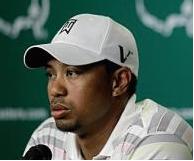
So Tiger Woods is finally talking to the press. I don’t get invited to the press conferences at Augusta National (imagine that), but if I were there, I’d have tried to ask exactly one question:


Mr Woods: Can you explain why your personal life is any business of anyone in this room — and if you can’t, then why don’t you stop answering questions about it?


Seriously: I’m tired of it. The guy has sex with people to whom he wasn’t married. His wife got pissed about it. Is that not the story of millions of couples all over the world? Just shut up and ask him about his practice rounds, or his new swing, or why Augusta still doesn’t have any women members.


The cover story in the American Journalism Review this month is called “Lost in the Woods: Sinking standards, the Media and Tiger Woods.” It’s by Washington Post reporter Paul Farhi. AJR is pretty stodgy for my taste most of the time, but Farhi has it right:


For all its lurid aspects, the Woods scandal may have constituted a watershed in American journalism: A major news story in which many “respectable” news outlets ditched traditional newsgathering methods and standards of fair play and piggybacked on aggressive but not always accurate tabloid reporting. The distinction between “mainstream” and “tabloid” may never have been so blurred as it was in the whirlwind of reporting on Woods.


I don’t fucking care who Tiger fucked. As John Madden might say, just let the guy play the game.

Trash talk

3

Sarah@sfbg.com

The battle to win San Francisco’s lucrative garbage disposal contract turned nasty as city officials tentatively recommended it go to Recology (formerly Norcal Waste Systems), causing its main competitor, Oakland-based Waste Management, to claim the selection process was flawed and bad for the environment.

Recology is proposing to dispose of San Francisco’s nonrecyclable trash at its Ostrom Road landfill in Yuba County, which is double the distance of the city’s current dump. The contract, worth hundreds of millions of dollars, would run until 2025.

For the past three decades, the city has trucked its trash 62 miles to the Altamont landfill near Livermore, under an agreement that relied on the services of the Sanitary Fill Company (now Recology’s SF Recycling and Disposal) and Oakland Scavenger Company (now Waste Management of Alameda County).

That agreement allowed up to 15 million tons of San Francisco’s municipal solid waste to be handled at Altamont or 65 years of disposal, whichever came first. As of Dec. 31, 2007, approximately 11.9 million tons of the capacity had been used, leaving a balance of 3.1 million tons, which the city estimates will be used up by 2015.

Currently Recology collects San Francisco’s curbside trash, hauls it to Pier 96, which is owned by the Port of San Francisco, then sends nonrecyclables to the Altamont landfill operated by Waste Management.

After SF’s Department of the Environment issued a request for qualifications in 2007, Waste Management, Recology, and Republic Services were selected as finalists. The city then sent the three companies a request for proposals, asking for formal bids as well as details of how they would minimize and mitigate impacts to the environment, climate, and host communities, among other criteria.

Republic was dropped after a representative failed to show at a mandatory meeting, and Recology was selected during a July 2009 review by a committee composed of DOE deputy director David Assmann, city administrator Ed Lee and Oakland’s environmental manager Susan Kattchee.

The score sheet suggests that the decision came down to price, which was 25 percent of the total points and made the difference between Recology’s 85 points and Waste Management’s 80 in the average scores of the three reviewers. But the scores revealed wide disparities between Kattchee’s and Lee’s scores, suggesting some subjectivity in the process.

For instance, Kattchee and Lee awarded Recology 15 and 23 points, respectively, for its “approach and adherence to overarching considerations.” Kattchee awarded 13 points to Recology’s “ability to accommodate City’s waste stream,” while Lee gave it 24 points. And Kattchee awarded Waste Management 13 points and Lee gave it 20 for its proposed rates.

When the selections and scores were unveiled in November, Waste Management filed a protest letter; Yuba County citizens coalition YUGAG (Yuba Group against Garbage) threatened to sue; and Matt Tuchow, president of the city’s Commission on Environment, scheduled a hearing to clarify how the city’s proposals was structured, how it scored competing proposals, and why it tentatively awarded Recology the contract.

Emotions ran high during the March 23 hearing, which did little to clarify why Recology was selected. Assmann said that much of the material that supports the city’s selection can’t be made public until the bids are unsealed, which won’t happen until the city completes negotiations with Recology and the proposal heads to the Board of Supervisors for approval.

YUGAG attorney Brigit Barnes said Recology’s proposal could negatively affect air quality in Alameda, Contra Costa, Solano, Yolo, Sacramento, and Yuba counties, and does not attain maximum possible reductions of greenhouse gas emissions. Barnes pointed to a study commissioned by Waste Management showing the company’s biomethane-fueled trucks emit 68 percent fewer greenhouse gases than Recology’s proposed combination of trucks and trains.

Barnes further warned that Recology’s proposal might violate what she called “environmental justice strictures,” noting that “Yuba County has one of the lowest per capita incomes and one of the highest dependent populations in the state.”

She also claimed that awarding the contract to Recology would create a monopoly over the city’s waste stream and could expose the city to litigation. “Every aspect of garbage collection and waste treatment will be handled by Norcal’s companies,” Barnes stated, referring to antitrust laws against such monopolies.

Deputy City Attorney Tom Owen subsequently confirmed that the two main companies that handle San Francisco’s waste are Recology subsidiaries. “But it’s an open system,” Owen told the Guardian. “Recology would be the licensed collectors and would have the contract for disposal of the city’s trash.”

Irene Creps, a retired schoolteacher who lives in San Francisco and Yuba County, suggested at the hearing that the city should better compare the environmental characteristics of Ostrom Road and the Altamont landfill before awarding the contract. She said the Ostrom Road landfill poses groundwater concerns since it lies in a high water table next to a slough and upstream from a cemetery.

“It’s good agricultural land, especially along the creeks, red dirt that is wonderful for growing rice because it holds water,” Creps said of Recology’s site. “I’d hate to see that much garbage dumped on the eastern edge of Sacramento Valley.”

Livermore City Council member Jeff Williams said the Altamont landfill has the space to continue to dispose of San Francisco’s waste and he warned that Livermore will lose millions of dollars in mitigation fees it uses to preserve open space.

“Waste Management has done a spectacular job of managing the landfill and they have a best-in-their-class methane control system,” Williams said, noting that the company runs its power plants on electricity and its trucks on liquid methane derived from the dump.

Williams pointed out that the Altamont landfill is in a dry hilly range that lies out of sight, behind the windmills on the 1,000-foot high Altamont Pass. “It’s many miles from our grapevines, in an area used for cattle grazing because it’s not particularly fertile land,” Williams said. “We are filling valleys, not building mountains.”

Waste Management attorney John Lynn Smith told the commission that the city’s RFP process was flawed because it didn’t request a detailed analysis of transportation to the landfill sites or fully take into account greenhouse gas emissions, posing the question: “So, did you really get the best contract?”

David Gavrich, who runs San Francisco Bay Railroad and Waste Solutions Group, testified that he helped negotiate the city’s contract 35 years ago, saving taxpayers hundreds of millions of dollars, and that the city needs to be smarter about this contract.

Gavrich and port director Monique Moyer wrote to the Department of the Environment in June 2009, stating their belief that shipping trash by rail directly from the port “can not only minimize environmental impacts, but can also provide an anchor of rail business from the port, and a key economic engine for the local Bayview-Hunters Point community, and the city as a whole.” But Gavrich said DOE never replied, even though green rail from San Francisco creates local jobs and further reduces emissions.

“Let the hearings begin so people get more than one minute to speak on a billion-dollar contract,” Gavrich said, citing the time limit imposed on speakers at the commission hearing.

Wheatland resident Dr. Richard A. Paskowitz blamed former Mayor Willie Brown’s close connection to Recology mogul Michael Sangiacomo for the company’s success in pushing through a state-approved 1988 extension of its Ostrom Road Landfill while assuring Yuba County residents that the site would only be used as a local landfill.

“The issue is that Yuba County is becoming the repository of garbage from Northern California,” Paskowitz said, claiming that the site already accepts trash from Nevada.

Members of the commission told Assmann that they wanted an update on the transportation issue, but they appeared to believe the process was fair. “One guy got the better score,” Commissioner Paul Pelosi Jr. said. “The fact that they may or may not have permits or the best location, that’s for the Board of Supervisors to take up.”

Recology spokesperson Adam Alberti told the Guardian that its bid was predominantly about handling the waste stream. “Everybody’s bid included transportation, so you include the cost of getting the trash there. But primarily we were looking at the cost of handing the city’s waste,” Alberti said. “Recology’s Ostrom Road facility has more than enough capacity to hold not only San Francisco’s, but also the surrounding region’s, waste.”

Alberti said Recology is still pursuing a permit for a rail spur to get the waste from Union Pacific’s line, which ends some 100 yards from Ostrom Road site. Still, he said the company is confident it will be awarded, calling this step “a pro forma application with Yuba County.” Alberti also noted that it’s normal for host communities to object to landfills but that Yuba County stands to gain $1.6 million from the deal in annual mitigation fees.

Assmann told the Guardian the selection process took into account issues raised at the hearing. “The important thing in a landfill is to make sure there is no seepage, no matter how much rainfall there is, “Assmann said. “And there are still two hurdles Recology needs to clear: a successful negotiation, and the approval of the board.”

Blink

0

le.chicken.farmer@gmail.com

CHEAP EATS He was tapping a red-tipped cane, staying close to the buildings, and sometimes bumping into them. We greeted each other in passing. And the second person I saw that morning, walking to BART in the dark, was using a red-tipped cane too, but also holding onto her man’s arm. Her hat was tall and adorned with either fruit, flowers, or both. I took off my glasses and wiped them on my shirt.

The children have been wonderful. Boink, who started reading books to his little sister while I was away, says "I love you" about a million times a day now. One of the first things we did was make gnocchi, and now Popeye the Sailor Baby is old enough to help roll them too.

The Chunks de la Cooter remember all our songs and games, and Chunk II hardly ever lets go of me when I’m there. As if, more than even me, she can’t believe I’m back and ain’t lettin’ go this time.

I feel like I’ve just woken up from a really, really bad dream, rolled over in my sweat-soaked life, and blinked into the also-blinking eyes of my four True Loves, age two, two, three, and four. These four, they give my heart right back to me.

Boink thinks we should open a restaurant together. Inclined to believe him, I picture the boy 14 years from now, standing on a step-stool next to me, lightly dusted in flour from his fuzzy blond head to his pink tennis shoes — only I guess by then he’ll have flour in his beard too.

Maybe in the meantime — his parents and child labor laws willing — I can practice him in my imaginary guerilla Guerrero Street pastry war against Tartine. He can sell lemonade to the liner-uppers across the street while I learn to cook. Or better yet: limeade.

The burritos I have eaten have tended to be from Cancun, of course, with Earl Butter, and of course El Farolito with Dan-Dan the Fireman and Phenomenon. With one exception. That was El Buen Sabor, with Last Straw Sullenger, who is helping me to curtain and depression-proof my new hovel.

And she bought me a burrito for lunch.

Now I was never very fond of Good Taste during my previous stomps through the Mission, I forget why. But Earl Butter told me El Buen Sabor got better, and I trust him, as you know.

As you also know, if you’ve been reading Cheap Eats while I was out there getting my ass kicked, the buttery one just doesn’t venture beyond a two-block radius of his house at lunchtime or dinnertime. Or breakfast time, for that matter.

So what I think he likes about El Buen Sabor is that it’s the closest beans to home for him, and now me. Well, their two table-top squeezy-thingie salsas are excellent — both the red and the green. They both have some seriousness to them, and are good not only on chips and burritos, but back home poured over slightly stale and heavily buttered drop biscuits. I speak from first-hand leftover experience. But personally, I don’t think the place is any better than I think I used to think it was. That is: nothing special.

They do have brown rice and spinach tortillas, as Last Straw proved by asking for, and getting, both. With her vegetarian burrito.

Whereas I got my vegetarian burrito with as much unhealthiness as possible: white rice, refried beans, and carnitas. It was good, but honestly, unless you live one block away and are Earl Butter, or have recently eaten Mexican food in Regensburg, Germany … it’s nothing to write home about.

Let alone a restaurant review.

So now, if you’ll excuse me, I would like to go back outside again, before it gets dark again, and look into one of those stenciled sidewalk gems again, for a while longer.

This one:

I WOULD STEAL THE STARS FOR YOUR and then I can’t quite make out the last word but I believe it to be HAT.

There is more than one way to read this.

EL BUEN SABOR

Daily: 10 a.m.–10:30 p.m.

697 Valencia, SF

(415) 552-8816

D/MC/V

Beer & wine

L.E. Leone’s new book is Big Bend (Sparkle Street Books), a collection of short fiction.

Video game review: “Yakuza 3”

0

By Peter Galvin

Yakuza 3
(CS1 Team, Sega)
PS3

Yakuza 3 is a Japanese import title that recalls a time when our game consoles were dominated by similarly wacky culture-clash experiences instead of the American-made games that dominate the charts today. In the late 90s, it seemed every other game released was from Japan, and the bumping and grinding of East meets West was a large part of the enjoyment of these games. A game from this era that springs to mind is 1999’s Shenmue, the story of a Japanese boy setting out to avenge his father’s death. It was largely story-centric, free-roaming and often criticized for encouraging players to bask in the mundanities of modern Japanese life.

Well if you weren’t a Shenmue fan, steer clear of Yakuza 3, because the game offers another chance to experience an incredibly foreign culture by engaging in such daily Japanese life-activities as batting practice, blogging, mahjong and beating the crap out of Tokyo gangsters. You play as Kazuma Kiryu, ex-Yakuza who now tends to a group of orphans in Okinawa, and who is thrust back into the lifestyle when a Yakuza land deal threatens to destroy his orphanage. With more twists, betrayals and “are they or aren’t they dead”s than a weekday soap, the story could have sagged under the pressure but instead remains surprisingly complex. It’s Yakuza 3’s strongest feature.

However, Yakuza 3 is also reminiscent of Sega’s past action titles in its gameplay department: clunky movement, lots of loading, and fight sequences that more than anything recall 1991’s Streets of Rage. It also has a knack for interrupting the seat-of-your-pants thrills that make the story so compelling by forcing you to spend nearly as much time bandaging boo-boos at the Okinawa orphanage as you do kicking butt. If it weren’t for its thoroughly cinematic feel and a perspective that is wildly different from anything else on the market right now, I’m not sure Yakuza 3 could hang with triple-A games like Grand Theft Auto or Mass Effect, but in this instance the well-written story and sheer amount of stuff to do make it a worthwhile package.

Pentamiligrams: Pentagram deliver the wrong dosage of rock

3

Between the pre-salers and the at-the-door buyers, Pentagram fans shelled out around $20 each for the DNA Lounge show Wed/24. Though the complications of the band’s discography could fill the pages of a sizable book, suffice to say that they are not promoting a new album — the concert-goers in attendance were universally excited for a healthy portion of Pentagram classics (especially those diehards who saw July 2009’s command performance, also at the DNA).

The set that followed was a sham. It started auspiciously with “Forever My Queen” and “Review Your Choices” — two of the favorites that everyone expected. Then singer Bobby Liebling, 56-year-old butt poured into turquoise skinny jeans, reached for his harmonica.

What followed could hardly be called a “song,” and would be more appropriately and unfortunately be called a “jam.” It was the most ham-handed attempt at concert filler I’ve ever witnessed. Despite a half-hearted attempt to evoke ZZ Top’s “La Grange” somewhere around the middle of its bloated, 20-minute run time, it was largely an exercise in poorly-rehearsed, poorly-performed 12-bar-blues, packed start-to-finish with Liebling’s unsettling attempts at being “sexy” onstage (read: lots of cunnilingus-style tongue waggling and Robert Plant crotch diddling). After two more songs (the well-received “Sign of the Wolf” and “20 Buck Spin”), Pentagram bugged the fuck out, without playing an encore.

Turns out the band’s long-time lead guitarist, Russ Strahan, quit under mysterious circumstances right before the current tour was about to start. According to a statement posted on his MySpace page, Strahan felt he had to walk away “Due to communication breakdowns and inner band issues,” refusing to “compromise [his] values and love of playing music.” He cryptically concluded: “True fans of Pentagram … will understand the ongoing internal turmoil that has haunted this band from its inception & I refuse to air dirty laundry to the public.”

As tempting as it is to speculate, the exact nature of the stains on the band’s “dirty laundry” is likely to remain unknown. It is telling, nevertheless, that Liebling is the sole constant in a band that lists no fewer than 23 “former members” on Wikipedia. The singer is notoriously difficult to get along with, though, to his credit, he has recently kicked a long-running and devastating drug habit, thanks in large part to his relationship with 23-year-old wife Hallie, a fresh-faced, fashion-forward blonde who ironically blogs and twitters under the name “Halcoholic.”

In order to continue with their current tour, the band recruited axeman Johnny Wretched (formerly of under-appreciated Mid-Atlantic doomsters Unorthodox) to fill in for Strahan. Though a competent guitarist, he was apparently unable to learn a sufficient amount of Pentagram material in the short time frame available, leading to the debacle that transpired onstage at the DNA Lounge last night. It would certainly behoove the band to be more forthright (one pre-set apology aside) with their short-changed fans in the future. More importantly, those intending to attend one of the shows later in the tour should “Be Forewarned.”

For further reading, check out this fascinating interview with Liebling on metal blog The Obelisk.

Director Atom Egoyan talks remakes, marriage, and “Chloe”

0

Canadian director Atom Egoyan (1994’s Exotica, 1997’s The Sweet Hereafter) was recently in town to discuss Chloe, his latest film, which producer Ivan Reitman commissioned him to direct. Based on, but markedly different from, the 2003 French film Nathalie, Chloe follows the unexpected course of events triggered when the middle-aged Catherine (Julianne Moore), suspecting her husband David (Liam Neeson) of having an affair, hires luxe call-girl Chloe (Amanda Seyfried) to tempt him.

San Francisco Bay Guardian: Do you know what attracted Ivan Reitman to this project?

Atom Egoyan: My only clue, really, is that in looking at his filmography, he made a film [in 1993] called Dave, which I enjoyed because it really is also a study of a marriage, a marriage that had gone completely cold. Sigourney Weaver plays the wife of a president, played by Kevin Kline, and they can’t stand each other. He dies, and a ringer is brought in, also played by Kevin Kline. All they have to do is make public appearances, because this couple doesn’t talk to each other in private at all. And she finds herself strangely falling in back love with her husband, and of course it isn’t her husband, it’s a surrogate. I think I understand why the person who made that film would be attracted to Chloe, because it’s dealing with similar themes.

SFBG: This is the first time you’ve directed a feature film script you haven’t written. Have you been approached before?

AE: Oh yes, all the time [gestures to two stacks at the end of the table, two and four inches thick, respectively]. I’ve had an agent since Exotica, sending me scripts. I was actually about to do a script after Exotica, a thriller, with Warner Brothers, and I spent a year in LA. And like anyone else, you can spend time there and have meetings and sort of not make movies. And I had an opportunity in Canada to make a certain type of  movie, so I went back and made The Sweet Hereafter, and I didn’t really ever regret that decision. I’m still sent scripts all the time. And some of them are tempting, some of them are films that you’d be interested in watching, but my question is, would I be able to spend a year, year-and-a-half, two years making the film, and remaining interested, and then talking about it?

SFBG: The script contains some of the recurrent themes in your work — identity, secrets, history; were there any other aspects that drew you to it?

AE: It was the study of a marriage. I thought it was a challenge to deal with this issue and this script that was written by a women, dealing with this very specific issue of a woman who feels she’s disappearing, and the crisis that it brings on in her, but also the very extreme action that she takes as a result. She wants to prove her husband is having an affair, and there are other ways of doing that than hiring a prostitute [laughs]. What she wants to do is not just prove he’s having an affair, but re-eroticize an image of him. because she can’t do that herself. There is something that Chloe’s stories are eliciting in her that she’s finding very compelling, and it’s a reconnection with her husband, a connection she once had. Unbeknownst to her, I think Chloe is finding it very powerful telling these stories to her of these encounters which she actually is having, though not necessarily [exactly as she is describing them]. It’s basically the story of these two women’s fantasies colliding in ways that they aren’t necessarily aware of.

SFBG: Did Reitman have something in mind that he wanted to change or add to the original film, a specific reason for wanting a remake? Had you seen Nathalie, and did you think about doing a remake?

AE: That’s the strange thing, I’ll tell you. I did see Nathalie, at the Toronto Film Festival in 2003. I enjoyed the film, and I know [director] Anne Fontaine, she’s a friend, someone I’ve known in Paris. It never would have occurred to me to do a remake. I wouldn’t have thought it was a particularly interesting premise to explore, but Ivan did. And then Ivan hired Erin Cressida Wilson to write the script, and by the time I got the script, it was intriguing. There were problems with it for me — it really pushed the thriller aspect way too far, so I felt it had to be pulled back, because the ending in the script I got was wildly different.

SFBG: Did you change anything else? The names are so tailored to the characters — “Catherine” means “pure,” “Chloe” means “blooming,” and “David” means “beloved” — that I wondered whether you or Erin had chosen them.

AE: Erin did. I think Erin’s incredibly attendant to all those things. She’s a really great writer and it was really a pleasure working with her, but I think there were things she felt she was being pushed to bring forward, certain more formulaic expectations of where the film should go. [Egoyan describes the specifics of making the ending less melodramatic. Redacted to avoid spoilers.] That alteration tonally just changes the whole film. I never wanted to demonize Chloe — I mean, the instigator in all this is Catherine, in a way, and I felt for Chloe and I wanted that to form our sense of who she was.

SFBG: You normally have great compassion for and involvement with your characters — and yet we never really find out anything about Chloe, not even if that’s really her name. Was there originally more story or backstory for her?

AE: Yeah, there was. But I think we must understand through the nature of her interaction with Catherine that there’s something she hasn’t received in her life, and I think we can figure that out, there are clues to that. I just didn’t want to make it too explicit because that felt reductive.

SFBG: She’s not really getting all that much from Catherine, is she?

AE: But she is. And it’s only my interpretation, I never want to assert orthodoxy over these movies, because I want them to be open, but I see that [how she comes to feel about] Catherine, all that she has from Catherine really is that someone is listening to her so attentively, listening to her tell stories about her day-to-day life. She’s paid to be forgotten. When they meet, Chloe’s crying in a bathroom cubicle, there’s some crisis that she’s experiencing, and from the moment that she meets Catherine, although you could say she sees her as a prospective client, I think there’s something in the first gesture, something that Catherine does, in that first touch — Chloe over-responds to it, maybe, but she needs to at that point.

SFBG: I wondered if this difference, that we never find out more about Chloe, was rooted in the fact that you hadn’t written the script.

AE: I have to admit, there is something, in retrospect, talking about it now, almost a year later, to do with Adoration [Egoyan’s 2009 film, starring his wife and longtime collaborator Arsinee Khanjian]. The deployment of exposition in the last part of that movie just doesn’t work for me somehow, when they begin to actually explain who they are. I really love the beginning of that film, the way it’s structured, and the way these [metaphoric] balls are being juggled — I don’t need to know exactly where and why, exactly what Arsinee is doing. Both these films involve  women are trying to get into the house of someone they either are in love with or were in love with. But if you make the comparison with Arsinee’s character in Adoration, the audience cannot have access to why that woman in that strange outfit wants to get into this house. There’s no way that that invites identification, and yet there’s tension and mystery….

SFBG: There was originally also more story and backstory on the son?

AE: Yes, Max Thieriot’s a really wonderful actor and he has a great story, which we had to cut. This will be on the  “deleted scenes” on the DVD. There’s a conversation with Catherine and Chloe about Catherine’s background….

SFBG: How long would the film have been if —

AE: The problem really wasn’t about the length, it just became unwieldy, it didn’t play right.

SFBG: The original script was set here. Was San Francisco’s iconic status as a locus for hedonism and sexual freedom a significant factor in Wilson’s original script?

AE: Yes, but there were things about it that made me recoil, because first, I was trying to wrap my head around the issue, how do you photograph this city in a way that hasn’t been shown before, when it’s been so detailed through films. My attraction to filming in Toronto is that it’s a place with a very distinct iconography — except most people don’t know what it is, so it creates this interesting tension. We’ve shown this film to a lot of people outside of Toronto, especially outside of Canada, and they’re going, “Where. Is. This. Place?” They feel they should know but they don’t.

SFBG: Because we’ve all seen Toronto masquerading as New York.

AE: Exactly. Toronto is like Chloe, paid to be something else. It becomes a controlling metaphor throughout the film.

SFBG: Was it relevant at all to the making of this movie that you and Arsinee had separated?

AE: We’re trying again. But I’ll be honest, it was a tough time for us when I was shooting, so . . . a lot of reflection on marriage. So this ended up being a strange and personal movie, and I was very thankful for Erin to have written it, because there is no way I could have gone to these [emotional] places as I was experiencing that. But we’re in a better place now.

Chloe opens Fri/26 in Bay Area theaters. Go here for Lynn Rapoport’s review of the film in this week’s Guardian.

John Ross: The damaged spine of America

2


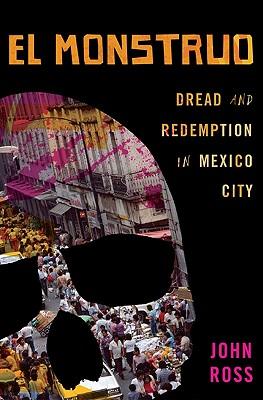
I am on a low-rent book tour with my new cult classic El Monstruo – Dread & Redemption In Mexico City.  For the next three months, I will stumble across this land from sea to stinking sea probing the underbelly of Obama’s America.  The findings will be posted on these pages.


LAS CRUCES N.M. — The snow was already dusting the Organ Mountains fringing this high desert town, promising a hard winter further up the spine of Obama’s America. I ride the Mexican bus (officially doing business as the El Paso-L.A, Limousine Express) when I ply the back roads of the southwest. Greyhound, with its stern rules and regulations and surly drivers who threaten their cargos with summary expulsion for minor infractions, doesn’t much inspire me these days.  


With notable exceptions, Greyhound passengers are a harried and haunted bunch, riding the Big Dog from trouble to trouble, often with all their possessions stuffed into plastic garbage bags. In the cruelest of gestures, the Greyhound management has recently banned garbage bags as an instrument of luggage.  Zombie passengers on the Big Dog stare out at the distant horizon submerged in their worries or stab music into their ears to sever all human communication. No one talks to their fellow travelers anymore.

By way of contrast, the Mexican bus bubbles with chatter.  “Platicame!” (“Talk to me!”) my seatmates insist. The chitchat often gravitates towards work — where they have recently toiled, the job towards which they are headed. Wistful nostalgia for their families and pueblos down in Mexico are common ground. Rancheros belch from the speakers and the taste of tamales flavors the ride. It feels like going home.

Bus rides are an opportunity to reinvent oneself. I am usually the only gabacho on these long hauls through the rugged mountains and barren deserts of the southwest, but I speak colloquial, unaccented Mexican and who I really am excites curiosities. These days, my kuffiyah wrapped around my scrawny neck, I pass myself as an Arab from Mexico City hawking books from tank town to tank town, a plausible story — back home, Arabs are often stereotyped as itinerant peddlers.

North of Las Cruces, the Mexican bus is pulled into a Migra shed and the conversation modulates real quick. A blonde woman agent jumps on board and demands to see everyone’s documents. She studies the passports and green cards under the glare of her flashlight and then shines it into the eyes of the passengers to see who will blink first. One young man — he looks like a university student – is pulled off the bus and is never seen again. When the Mexican bus slides out of the shed, the chatter resumes — but with one less voice in the mix.

Clayton, a young Wobbly who used to run a bookshop down by the rail yards in Albuquerque that was mostly frequented by hobos looking for a little warmth in a cold winter world, is now teaching at a troubled middle school. Patrol cars are often parked out front and half the kids – 99.99% of who are “Hispanics” (read Mexicans) – have juvenile police records. Clayton asks me in to talk to the students, who have never seen a real author in the flesh.  

We hunker down in the library and I step into my Grandpa persona and tell tales of the Mexican revolution while Clayton projects portraits of the Great Zapata and Pancho Villa on the audio-visual screen. I recount how the two men met in a rural schoolhouse in Xochimilco, now a borough of Mexico City, in December 1914. For an hour the two sat in frozen silence until Zapata, unable to contain his bitterness, declares that Carranza, their rival, is “un hijo de puta!” The kids fall off their little library chairs in gales of Mexican mirth. Clayton frets for his job but the librarian apparently doesn’t understand Spanish.  

I show the kids my books. Helen, a boisterous tweener, grabs “Iraqigirl” from Clayton’s hand and announces she is taking it home. The next day, she returns it with a review: “this is the best book I have ever read.” Two boys sit at the round reading table with copies of “El Monstruo — Dread & Redemption In Mexico City” and “Murdered by Capitalism — 150 Years of Life & Death on the American Left” spread before them. They pour over the subversive pages all through the lunch hour. When we prompt them that we have to leave, they hide the books under their hoodies.

 “I don’t have it — check me out!” Salvador (not his real name) challenges. The librarian rushes over and promises the boys that she has just ordered the books on line for them. They will be here Monday morning.  “But this is only Thursday,” protests Manuel (not his real name.)  

Garfield middle school is the best stop so far on this monstrous book tour.

Attendance at public events in Albuquerque is sparse. A vegan spread at the Catholic Worker House drums up a dozen hungry souls, a presentation of “Iraqigirl” at the Peace & Justice Center eight, including an Iraqi woman who leaves early. I show “Corazon del Tiempo” (“Heart of Time”), the new Zapatista movie (it was previewed at Sundance) in a small room at the university – Weather veterano Mark Rudd and the remarkable investigator Nelson Valdez and a handful of starry-eyed students (“Corazon” is a love story) show up.  


I sorely miss my old pal Tilda Sosaya who fought doggedly for prisoners’ rights in the nearly wholly privatized New Mexico prison system for decades after her son was imprisoned for ten years for some dumb teenage caper. Last March, I wrote Tilda that I had been diagnosed with liver cancer and she wrote back that she had it too. The cancer took her quickly and now she is gone and her son is back in prison. We fight for justice but life in this lane is not very just.

I catch the day train up to Santa Fe to visit with the writer Chellis Glendinning. Chellis has lived for the past 18 years on a tiny plot in Chimayo, the land of miraculous dirt and a key distribution point for black tar heroin from Sinaloa and Nayarit — see her “Chiva – How One New Mexican Town Took On The Global Heroin Trade.” Now she is pulling up stakes and throwing in with Evo Morales. Her jeep flies a Bolivian flag and she is rushing to be in Cochabamba for the tenth anniversary of the landmark struggle against the privatization of that city’s water supply by the Bechtel Corporation. Adios companera — la lucha sigue y sigue y sigue!

I am back on the Mexican bus heading towards Denver. The riders get off at whistlestops like Las Vegas and Durango and Colorado Springs where they will do the dirty work of this country — walloping pots, washing cars, cleaning motel rooms, milking cows, shoveling their manure, keeping Obama’s America spic and span for the next paying customer at minimum wages if indeed they are not cheated out of them by unscrupulous contractors.  

When the guy across the aisle gets curious, I revive my new identity as an Arab peddler. “Donde esta tu mujer?” he asks (“Where is your wife?”) and I lie that she is in Iraq taking care of her people. “The Yanquis invaded her country and bombed her neighborhood…”  “Pobre gente,” he sympathizes.  Santiago (is that his real name?) is from Hidalgo de Parral, Chihuahua and says he is on his way to work the Colorado ski resorts where so many Mexicans slave for Senor Charlie these days. He knows all about exile.  

I am invited to deliver a pair of lectures at Denver University, Condoleezza Rice’s alma mater (her father was provost.)  Doug Vaughn, also a DU grad who went left at an early age, notices that I will be speaking at the same time as Cindy Courville, Condi’s roommate who followed her to the National Security Council and then became U.S. emissary to the African Union.

My talks are programmed for the Josef Korbel Center for International Studies. Josef Korbel was Madeline Albright’s father, to give you some assessment of my chances of winning converts here. Indeed, the students are polite and well-groomed, models of future CIA assets — in tracking down the announcement of Courville’s talk on a Korbel Center bulletin board, Doug encounters a CIA recruitment leaflet. The grad students have been forewarned they will be visited by a representative of the lunatic fringe and busy themselves with their e-mail under the pretext of taking notes.  

Academic acrimony flourishes in the Denver- Boulder axis.  Everywhere else in this land where my father croaked, the trials and tribulations of Ward Churchill and his ill-timed assault on the “little Eichmans” deconstructed in the Twin Towers conflagration went out with the fish wrap the next morning — but here in mile-high city, mention of Ward and Colorado AIM can still start a prairie fire. Although such Churchill accusers as the governor and the Colorado U president have long since resigned due, in fact, to other scandals after successfully silencing Ward, his detractors’ thirst for blood remains unsatiated.

Infused with the venom of the dearly departed Bellencourts (who Churchill once dissed as “Nebraska wigmakers”), Ernesto B. Vigil, author of an action-packed bio of Corky Gonzalez, the Denver-based Xicano founder of the Nation of Aztlan, is still brandishing the long knives. Ward Churchill is a fake Indian, Ernesto obsesses, a white guy whose claim to indigenousness is backed up by white people because white people only listen to white people.  White people think they know everything, he scoffs in a heated e-mail in which he disparages my whiteness a dozen times in as many lines.

Actually, I don’t give a rat’s ass if Ward Churchill is one/sixteenth Cherokee or not (the tribal government recently expelled all its black members) — Churchill remains the most lucid writer on American genocide in this benighted country.

Boulder is said to be the most over-regulated city in North America although white liberal enclaves like Madison Wisconsin and Arcata California could give Boulder a run for its money.  I accompany Joe Richey, a local alternative radio sleuth, to the Boulder dog pound to bail out his black lab “Yanqui” (as in “Yanqui! Go home!) “Yanqui” has been adjudged guilty of illicit dog-like behavior i.e. nuzzling a neighborhood garbage can.  

After Joe pays off the authorities and the mutt is released to his custody and properly admonished, we drive past a local dog park.  In a paroxysm of charitable intent, the Boulder City Council permits the homeless to encamp at night amidst the dog turds but they must be gone by daybreak when the pooches of the city’s housed residents take possession or risk a $100 fine. How the homeless, forced to bed down in dog shit nightly, can afford this astronomical sum is unclear. Such is what passes for compassion on the underbelly of Obama’s Amerikkka.


On my final day in Denver, Hank Lamport, a local schoolteacher who favorably reviewed “El Monstruo” for the Post, today the only daily in this formerly two-newspaper town, drives me out to the Rocky Mountain Arsenal National Wildlife Rehabilitation Area. Until a few years ago, the Rocky Mountain Arsenal manufactured and stored deadly nerve gas, chiefly Serin — an occasional lost canister still spooks the wildlife.  The displays at the Visitors’ Center feature photos of workers filling “Honest John” missiles with the stuff. Napalm was also cooked up here. I study the glazed eyes of taxidermied foxes and coyotes and bald eagles and hastily bid adieu.

On the way out of town, we stop to worship the victuals in an Aurora, Colorado taco shop. Hank laments that when he first became a devotee of “Tacos y Salsas,” the clientele, uniformly Mexicanos, would greet him with a “buen provecho” (“good appetite” — a universal courtesy in the Spanish-speaking world) but now the customers have become so gringo-ized that the salutation is a lost art. Nonetheless, when we polish off our orders and head for the door, two working stiffs at the next table wish us each “buen provecho.”
  
It warms the cockles of my contused heart to know that such cultural resistance still percolates out here on the damaged spine of Obamalandia.

Next stop: the frozen, melancholy flatlands of the Great Midwest.  

John Ross and “El Monstruo – Dread & Redemption in Mexico City” (“gritty and pulsating” – NY Post) will be visiting Traverse City and Grand Rapids Michigan in the final week of March. You can catch them at the Headland Café in Chicago’s Rogers Park March 31st, Toronto’s Hoggtown April 1st-4th, and St. Louis Mo. April 7th.  


Neighborliness

0

le.chicken.farmer@gmail.com

CHEAP EATS My soccer team is good. They win without me by gaudy scores like 18-1. When I’m there we still win, mostly, but with better manners. And sometimes we tie or even lose, but only when I’m there. This makes me feel needed.

After games the guys drink beer out of Dixie cups then go grocery shopping, because they’re married, and the girls, being single, go out for brunch or lunch or breakfast and talk about the guys. We wonder what they said, since they speak Portuguese and we don’t. My assumption has always been that they are yelling at me.

They play hard, but then they seem so nice, with their Dixie cups and shopping lists. Of course I am in love with my city right now, and all the people, grocery stores, and restaurants in it.

Even Tartine, which is the view from my new window, and on weekends especially is loused with line-loving wahoos. I love Tartine because I ate a sandwich from there once, a few years ago, and as I recall it was pretty fucking great. But also I love them because they represent a very special challenge to me, and you all know how I appreciate a good challenge.

So: my long-term goal in my new go-round at 18th and Guerrero streets is to annoy Tartine out of business. Just for fun! And not by saying mean things about them either. Obviously some talented folks are putting out some cool beans over there, to line ’em up like they do. No, I have in mind a more neighborly way to undo them.

First, let me fire up my tiny shitty old studio-size gas oven, then I will have to learn how to make morning buns better than theirs. Check that, then I will have to learn what a morning bun is. Hold on a second.

(Insert sound of idle whistling here)

I’m back. OK, mmm, hold on a second, my fingers are pretty sticky. OK, don’t worry, this is not a review of Tartine. I’m not going to say a word about their morning buns, only that it might take me a long time to put them out of business. But that’s fine, because time is a thing I have. Time, a tiny oven, and the means to make a cup or two of coffee.

My plan, then: to swing my gated window open and play my steel drum so enticingly that everyone standing in Tartine’s line will cross the street to see what gives. Then … I will give. I will offer them morning buns, mugs of coffee, and semi-intelligent conversation, for free of course, and so dazzled will they be by my neighborliness that they will eventually forget all about why they came to the Mission in the first place.

It’s a dream, and a distant and misty one at that, I know.

Meanwhile, for the last couple Sundays while all of Chestnut Street has been lined up outside my Mission District window, I have been on Chestnut Street having brunch, lunch, and breakfast at the wonderful and empty Chestnut Diner.

My new favorite restaurant! It was turned on to me by Alice Shaw the Person, who, having a car, carts us to and from our soccer games, which have been conducted lately in the Marina.

The omelets are great. The hash browns are fine. The décor is fantastic: light-blue-topped chrome stools around a J-shaped counter, with booths on either side.

I just can’t recommend the burgers, because they don’t understand rare there. Listen:

Me: Can I have that rare please?

Waitressperson: Half?

Me: (thinking, half?) Huh? No, Rare.

She: Oh, well.

Me: No, rare.

She: Half?

And so on until I gave up and ordered an omelet. But she looked sad about this, so I explained what rare meant and ordered a bacon burger. That way, when it came overcooked (which of course it did), it would still taste good. Which of course it did. *

CHESTNUT DINER

Daily: 7 a.m.–3 p.m.

1312 Chestnut, SF

(415) 441-1168

MC/V

No alcohol

L.E. Leone’s new book is Big Bend (Sparkle Street Books), a collection of short fiction.

Shit show

5

By Brady Welch


news@sfbg.com

GREEN CITY Food safety groups complain that the San Francisco Public Utilities Commission has until recently been dumping its crap in the backyards and gardens of any residents who unwittingly asked for it.

The city calls this crap “biosolids compost,” and for Mayor Gavin Newsom and the SFPUC, it seemed like a green dream come true. But it turns out that putting processed human excrement into people’s vegetable gardens might not be the elegant — if somewhat gross — reuse strategy it once seemed to be.

The vexing sewage sludge left over after treatment and separation of the city’s wastewater was being treated, combined with woodchips and paper waste, and labeled compost so it could, according to the SFPUC’s Web site, “provide essential plant nutrients, improve soil structure, enhance moisture retention, and reduce soil erosion.” Not bad for the ultimate human waste product.

The problem, say groups including the Center for Food Safety and Organic Consumers Association, is that the SFPUC’s compost contains a host of other toxins and hazardous materials not necessarily originating with what the city’s granola-munching denizens flush down the toilet. In fact, a January 2009 Environmental Protection Agency study of sewage sludge from 74 treatment plants found, in nearly every sample, “28 metals, four polycyclic aromatic hydrocarbons, two semi-volatiles, 11 flame retardants, 72 pharmaceuticals, and 25 steroids and hormones.” Yikes.

“You name it, it’s in there,” John Mayer, said spokesperson for the Organic Consumers Association. The compost “is hazardous waste, and it’s absurd to claim that it’s safe to consume. No matter what the sludge processing industry claims, it is by definition dangerous.” The EPA report would certainly seem to support Mayer’s claim, except that it expressly stops short of doing just that, stating that the results “do not imply that the concentrations for any [substance] are of particular concern to EPA.”

Then again, it was the EPA that started promoting the use of biosolid compost in the first place, back in 1978. The only safety thresholds the agency sets for biosolids compost concern nine heavy metals and the elimination of pathogens — none of the flame retardants, steroids, semi-volatiles, and carcinogens found in their study — a standard that has remained largely unchanged for a decade.

But that’s only part of the story, because as it turns out, San Francisco’s sewage sludge isn’t that contaminated compared to the shit generated in other regions. “We found in our tests that it’s really low for all the emerging pollutants,” SFPUC spokesperson Tyron Jue told us, citing data listed on its Web site indicating that testing goes beyond what the EPA requires, and even beyond more stringent European Union standards. Jue even said that the SFPUC’s biosolids compost has “metal limits lower than in a daily vitamin, and lower or comparable to store-bought compost.”

Yet Paige Tomaselli of the Center for Food Safety understands the data differently. “San Francisco may test above and beyond the national standards. They may think their testing is green. But the truth of the matter is that that the compost they’re giving away is not generated here in San Francisco.”

Indeed, the sewage sludge the SFPUC tested is not the same stuff it was handing out for three years as “organic biosolids compost.” After the organic food industry complained, the utility recently dropped the “organic” designation, offering the admittedly sheepish defense that the label was meant to imply “carbon-rich,” a definition that would make, among nearly everything else, the Guardian you hold in your hands organic.

Jue told us that the utility spends over $3 million annually on its biosolids program, $500,000 of which last year went to contracts with Synagro, “the largest recycler of organic residuals in the United States,” according to its Web site. The compost in the SFPUC’s giveaways came from the corporation’s Central Valley Composting Facility in Merced County, where it was mixed with sludge from at least eight other counties, including municipalities whose safety requirements are nowhere near as stringent as San Francisco’s.

“The vast majority [of sludge] comes from Fresno,” Tomaselli said, adding that the SFPUC continues to cite its own numbers, “completely ignoring the fact that this sewage sludge comes from a city with agricultural and industrial toxins that may be going into the waste stream.”

Many of those toxins remain in the “compost” San Franciscans have been applying to their tomato plants. “You can cook it all day,” Mayer told us. “Those things aren’t going anywhere.”

Both OCA and CFS say that, given such a broad avenue by which toxic material could enter the SFPUC’s compost, the SFPUC is violating San Francisco’s environmental standards. For example, the opening chapter of the Environment Code for the City and County of San Francisco explicitly states that all members of the city’s government should employ the “precautionary principle” in conducting its affairs, requiring the city to err on the side of caution in environmental policy.

One sentence in particular would seem to address biosolids and the 2009 EPA study specifically: “Any gaps in scientific data uncovered by the examination of alternatives will provide a guidepost for future research, but will not prevent the city from taking protective action.” And in the case of so-called biosolids, protective action would seem to call for keeping this shit away from food.

Hugh Kaufman, a senior policy analyst at the EPA and founder of the Superfund program, flatly stated to us over the phone that “there’s no scientific consensus that this stuff is safe. They test less than 1 percent of the stuff that has been tested to be in it.”

The health effects of even that 1 percent can be alarming. Of the nine heavy metals the EPA tests for, chromium is a known carcinogen and mercury can cause permanent nervous system and kidney damage. But if that stuff doesn’t kill you, prolonged exposure to low levels of arsenic, another heavy metal, “can cause a discoloration of the skin and the appearance of small corns or warts,” according to the federal Occupational Safety and Health Administration Web site.

Considering that Kaufman works in the Office of Solid Waste and Emergency Response (as apposed to the Office of Water that oversees biosolids), we asked him how and why his own employer is encouraging the land application of something so potentially hazardous.

“I think it’s very similar to the reason why the government doesn’t ban naked credit-default swaps. You’ve got a situation here where the cheapest way to dispose of the sludge is land application,” he said. By giving away the sludge as compost, as San Francisco has been doing, “you can transfer liability from the government to the public where the stuff is ultimately dumped. There is tremendous economic pressure to keep the ball rolling in the same direction.”

A February 2008 ruling of 11th Circuit Court of Appeals would seem to bear this out. The case involved the McElmurrays, a family of farmers that allowed the city of Augusta, Ga., to apply biosolids on their land from 1979 to 1990. The sludge eventually poisoned their crops and even the cows who fed on them.

Citing Augusta’s lack of disclosure about the noxious effects of the sludge, the McElmurrays sought compensation subsidies under a 2002 Farm Bill, going first to the county, then the U.S. Department of Agriculture’s Farm Service Agency, a state-level agency. After a number of back-and-forth denials and delays, the matter was appealed to the national USDA, which then sought the EPA’s advice for their ruling.

The court found that the series of opinions the EPA subsequently issued were unrelated to the case before the USDA and were nevertheless based on Augusta’s faulty land application data. “In short,” the ruling’s conclusion states, “it appears that the only persons to consider [the McElmurrays’] applications ended up ruling in their favor…. The USDA’s decision to accept a contrary decision, based on no review of the applications by the EPA, was arbitrary and capricious. The conclusions of the EPA were not based on substantial evidence.”

As for SFPUC’s biosolids giveaway, “They wanted a program that would green-wash this dangerous substance,” Mayer told us. “And they participated in this ruse for the benefit of Synagro. Even the mayor got pulled in.”

Tony Winnicker, the spokesperson for the SFPUC before becoming Newsom’s press secretary in January, told us the idea behind the program was a good one. “The spirit behind this is right, in terms of reuse and sustainability,” he said. “This was one of the PUC’s environmental initiatives from the beginning, and the mayor supports the agency’s efforts at environmental sustainability.”

But Winnicker said he was not aware that San Francisco’s well-tested biosolids were being mixed with those of other areas, and that Newsom would defer to SFPUC experts on how to handle the situation.

“I have no doubt that they tell people it’s biosolids compost,” CFS’s Paige Tomaselli told us. But she echoed the 11th Circuit court’s findings when she added, “On the other hand, I don’t think people know what that entails.”

This could be why SFPUC recently suspended the compost giveaways. “We’re reevaluating,” Jue told us. “What we’re trying to do is take a step back. We’re always looking at all the new information presented in front of us.” As for the utility’s record of disclosure, “We’ve always been very transparent with everyone coming to pick up compost. This is bringing awareness to an issue people don’t want to think about. [Sewage] doesn’t disappear. We have to think about it.”

So what’s to be done? Newsom has pushed San Francisco to the national forefront in sustainability and generating zero waste. Unfortunately, “they’re part of the wrong side of the sludge game,” said EPA’s Kaufman. “Is it possible to manage it better? Yes. Is there a black box to spin gold out of hay? No. Can one be invented in the future? Maybe.”

Kaufman found quite a bit of potential in the city’s successful green-bin composting. “San Francisco collects biodegradable waste material, good waste material, that can make very good compost,” he noted. “It’s not made from industrial waste; it’s made from real organic material. That’s not what the giveaway compost is made from. If San Francisco had taken what homeowners had put in for recycling and composted that and given that away, that would be fantastic.”

It would certainly have been better than the shit it has been giving away.

Stage listings

0

Stage listings are compiled by Guardian staff. Performance times may change; call venues to confirm. Reviewers are Robert Avila, Rita Felciano, and Nicole Gluckstern. Submit items for the listings at listings@sfbg.com. For further information on how to submit items for the listings, see Picks.

THEATER

OPENING

The Diary of Anne Frank Next Stage, 1620 Gough; 1-800-838-3006, www.custommade.org. $10-28. Previews Fri/26-Sat/27, 8pm; Sun/28, 7pm. Opens Tues/30, 8pm. Runs Thurs-Sat, 8pm; Sun, 7pm. Through May 1. Custom Made performs Wendy Kesselman’s modern take on the classic.

An Enemy of the People Randall Museum Theatre, 199 Museum Wy; http://sffct.wordpress.com. Free. Opens Fri/26, 7:30pm. Runs Sat/28, 7:30pm; Sun/28, 3pm. Also: Eureka Valley Recreation Center Auditorium, 100 Collingwood. April 2-3 and 9-10, 7:30pm; April 11, 3pm. Through April 11. San Francisco Free Civic Theatre performs Henrik Ibsen’s drama.

Othello African American Art and Culture Complex, 762 Fulton; 1-800-838-3006, www.african-americanshakes.org. $20-30. Previews Thurs/25, 10am. Opens Fri/26, 8pm. Runs Wed-Thurs, 10am (school matinees); Sat/27, April 10, and April 17, 8pm; Sun/28, April 3, April 11, and April 18, 3pm. Through April 18. African-American Shakespeare Company closes its 15th season with this adaptation of Shakespeare’s play, set during a modern-day military tribunal in Iraq.

BAY AREA

A Seagull in the Hamptons Ashby Stage, 1901 Ashby, Berk; www.shotgunplayers.org. $15-30. Previews Thurs/24-Fri/25, 8pm. Opens Sat/26, 8pm. Runs Wed, 7pm; Thurs-Sat, 8pm; Sun, 5pm. Through April 25. Shotgun Players perform Emily Mann’s fresh spin on Chekhov’s The Seagull.

ONGOING

*…And Jesus Moonwalks the Mississippi Cutting Ball Theater, 277 Taylor; 1-800-838-3006, www.cuttingball.com. $15-30. Thurs-Sat, 8pm; Sun, 5pm. Through April 11. Amid the tumult of the American Civil War, a former slave named Damascus (a subtle, commanding Aldo Billingslea) searches for his daughter, desperate to pass on his song to her lest it be forgotten. Plucked from a tree and a noose by a god moved to see him get a second chance, he searches on, now as a woman named Demeter, until he finds a white family called the Verses, served by a downhome Shakespearean schemer named Brer Bit (Martin F. Grizzell, Jr.) and headed by a bitter matriarch (Jeanette Harrison) in the absence of the paterfamilias (David Sinaiko), a deserter-turned-scavenger making his way back with a Yankee bugler (Zac Schuman) in tow. Twin daughters Blanche (Sarah Mitchell) and Free (Erika A. McCrary), meanwhile, are not so very identical, and Demeter suspects that Free — whose imaginary friend is an African American Jesus with a decidedly 20th-centruy mojo (played by a beautifully deadpan-beatific David Westley Skillman) — is actually his/her own kin. In this inspired poetical-historical counter-narrative from Bay Area playwright Marcus Gardley, Greek mythology, African American folklore, personal family history, and Christian theology are all drawn irresistibly along in a great sweep of wild and incisive humor, passion, pathos and rousing gospel music as buoyant and wide as the Mississippi — or rather Miss Sippi (the impressive Nicole C. Julien), personification of the mighty and flighty river, backed by a chorus of blue-gowned sisters (Rebecca Frank, Halili Knox, Erica Richardson). The Cutting Ball–Playwrights Foundation coproduction, lovingly directed by Amy Mueller, sports exquisite design touches from Cutting Ball regulars like Michael Locher, whose gorgeous plank-wood set serves as the ideal platform for a work both magnificently simple and eloquently evocative. (Avila)

Baby: A Musical Off-Market Theatres, 965 Mission; 1-800-838-3006, www.roltheatre.com. $20-32. Thurs-Sat, 8pm; Sun, 2pm. Through April 18. Ray of Light Theatre performs a comedy about pregnancy.

Caddyshack: Live! Dark Room, 2263 Mission; 401-7987, www.brownpapertickets.com/event/99361. $20. Fri/26-Sat/27, 8pm. The Dark Room presents Jim Fourniadis’ live adaptation of the iconic movie.

Death Play EXIT Theatre, 156 Eddy; 673-3847, www.theexit.org. $15-20. Thurs/25-Sat/27, 8pm. Thunderbird Theatre Company presents the third installment in the comedy series by Sang S. Kim.

*Den of Thieves SF Playhouse, 533 Sutter; 677-9596, www.sfplayhouse.org. $40. Tues, 7pm; Wed-Sat, 8pm (also Sat, 3pm). Through April 17. Stephen Adly Guirgis has been good to SF Playhouse. The company already scored big with two of the New Yorker’s gritty, dark and sharply funny plays, Our Lady of 121st Street and Jesus Hopped the ‘A’ Train. Director Susi Damilano continues the streak with SF Playhouse’s latest, the less heavy but very funny Den of Thieves, about an unlikely foursome of inept bandits caught trying to heist a Mafioso’s safe under a discotheque in Queens — a simple tale that gives plenty of scope to Guirgis’s muscular way with dialogue and the clash of characters. The story opens on a depressed recovering kleptomaniac, Maggie (an affectingly understated Kathryn Tkel), and her 12-step sponsor Paul (the excellent Casey Jackson), a nerdy fast-talking mixed-race former safecracker, whose Jewish grandfather headed up a famous crime ring that robin-hooded their take to library construction for kids in the neighborhood. Enter Maggie’s former boyfriend, a Puerto Rican tough named Flaco (a hilariously spot-on Chad Deverman), with his new squeeze, erotic dancer Boochie (a deftly comic Corinne Proctor), and a lead on a large traceless sum of cash. Suddenly the smell of big money sends recovery out the window and makes uneasy bedfellows of the motley, hostile bunch. Enter angry but softhearted mobster Little Tuna (Ashkon Davaran), his sadistic sidekick Sal (Peter Ruocco), and big gun Big Tuna (Joe Madero). Facing mob vengeance, it’s time for some fast-talking and deal making among the mini-den, and all bets are off. The ending seems to have eluded Guirgis a little, but the way there makes for meaty comedy, while the exceptional cast sells the conceit so beautifully they make it a crime to miss. (Avila)

Desperate Affection Royce Gallery, 2901 Mariposa; www.expressionproductions.com. $28. Thurs-Sat, 8pm. Through April 10. Expression Productions presents a dark comedy by Bruce Graham.

Eat, Pray, Laugh! Off-Market Theaters, 965 Mission; www.brownpapertickets.com. $20. Wed, 8pm. Through April 28. Off-Market Theaters presents stand up comic and solo artist Alicia Dattner in her award-winning solo show.

KML Preaches to the Choir Jewish Theater, 470 Florida; www.killingmyblobster.com. $15-20. Thurs/25-Fri/26, 8pm; Sat/27, 7 and 10pm; Sun/28, 7pm. The award-winning sketch comedy group takes aim at the higher powers in this piece directed by Paco Romane.

*Loveland The Marsh, 1074 Valencia; 826-5750, www.themarsh.org. $15-50. Sat, 8:30pm; Sun, 7pm. Through April 25. Starting May 8, runs Sat, 5pm and Sun, 2pm at the Marsh Berkeley, 2120 Allston, Berk. Through June 13. Los Angeles–based writer-performer Ann Randolph returns to the Marsh with a new solo play partly developed during last year’s Marsh run of her memorable Squeeze Box. Randolph plays loner Frannie Potts, a rambunctious, cranky, and libidinous individual of decidedly odd mien, who is flying back home to Ohio after the death of her beloved mother. The flight is occasion for Frannie’s own flights of memory, exotic behavior in the aisle, and unabashed advances toward the flight deck brought on by the seductively confident strains of the captain’s commentary. The singular personality and mother-daughter relationship that unfurls along the way is riotously demented and brilliantly humane. (Avila)

Now and at the Hour EXIT Stage Left, 156 Eddy; 673-3847, www.theexit.org. $15-25. Fri/26-Sat/27, 8pm. EXIT presents the subtly unnerving show by theatrical magician Christian Cagigal.

Pearls Over Shanghai Hypnodrome, 575 Tenth St.; 1-800-838-3006, www.thrillpeddlers.com. $30-69. Sat, 8pm; Sun, 7pm. Through April 24. Thrillpeddlers presents this revival of the legendary Cockettes’ 1970 musical extravaganza.

Ramble-Ations: A One D’Lo Show Brava Theater Center, 2781 24th St; 647-2822, www.brava.org. $10-25. Thurs-Sat, 8pm; Sun, 3pm. Through April 3. Performance artist D’Lo offers up a comedic solo show from a unique (gay, Hindi, Sri Lankan, SoCal, hip-hop) perspective.

The Real Americans The Marsh, 1062 Valencia; 826-5750, www.themarsh.org. $18-50. Wed-Fri, 8pm (April 16, show at 9pm; starting April 24, no Fri shows except May 28, 8pm); Sat, 5pm; Sun, 3pm. Through May 30. The Marsh presents the world premiere of Dan Hoyle’s new solo show.

Shopping! The Musical Shelton Theater, 533 Sutter; 1-800-838-3006, www.brownpapertickets.com. $27-29. Fri-Sat, 8pm. The musical is now in its fifth year at Shelton Theater.

Something You Might Want Stagewerx Theatre, 533 Sutter; www.catchynametheatre.org. $16. Fri/26-Sat/27, 8pm; Sun/28, 3pm. CatchyNameTheatre presents this dark comedy written and directed by Jim Strope.

Suddenly Last Summer Actors Theatre, 855 Bush; 345-1287, www.actorstheatresf.org. $15-35. Thurs-Sat, 8pm. Through April 10. Actors Theatre presents one of Tennessee Williams’ finest and most famous plays.

The Sugar Witch New Conservatory Theatre Center, 25 Van Ness; 861-4914, www.nctcsf.org.

Wed-Sat, 8 pm; Sun, 2pm. Through April 4. NCTC presents the premiere of Nathan Sanders’ crime story.

Truce Noh Space, 2840 Mariposa; 826-1958. $10-25. Wed-Sat, 8pm. Through April 3. Playwright-performer Marilee Talkington stars in Vanguardian Productions’ presentation of her autobiographical work about a woman struggling with impending blindness.

What Mama Said About Down There Our Little Theater, 287 Ellis; 820-3250, www.theatrebayarea.org. $15-25. Thurs-Sun, 8pm. Through July 30. Writer-performer-activist Sia Amma presents this largely political, a bit clinical, inherently sexual, and utterly unforgettable performance piece.

BAY AREA

Concerning Strange Devices from the Distant West Roda Theatre, 2015 Addison, Berk; (510) 647-2949, berkeleyrep.org. $13.50-27. Days and times vary. Through April 11. Berkeley Rep presents a sexy and intriguing new show from Naomi Iizuka.

*East 14th: True Tales of a Reluctant Player Marsh Berkeley, 2120 Allston, Berk; www.themarsh.org. $20-35. Fri/26, April 9, 16, 30, and May 7, 9pm; Sun/28, 7pm; April 10, May 1, and May 8, 8pm; April 18 and 25, 2pm. Don Reed’s solo play, making its Oakland debut after an acclaimed New York run, is truly a welcome homecoming twice over. (Avila)

Handless Central Stage, 5221 Central, Richmond; 1-800-838-3006, www.raggedwing.org. $15-30. Thurs/25-Sat/27, 8pm. Ragged Wing Ensemble presents Amy Sass’ re-invention of the folk-tale The Handless Maiden.

*Learn to be Latina La Val’s Subterranean, 1834 Euclid, Berk. impacttheatre.com. $10-20. Thurs/25-Sat/27, 8pm. Impact Theatre continues its 14th season with the world premiere of Enrique Urueta’s play.

PERFORMANCE

"Act Wright Performance" Bayanihan Community Center, 1010 Mission; 239-0249. Wed, 8pm. $10. Kularts presents this ensemble theater showcase directed by Anthem Salgado.

Alicia Dattner Off-Market Theatre, 965 Mission; 538-9232, www.cafearts.com. Wed, 8pm, $20. The comedian performs her solo show.

"Funny That Way" Actors’ Theatre, 855 Bush; www.brownpapertickets.com/event/102787. Sun, 7pm. $8. Bay Area comedians perform to raise money for anti-poverty organization Tripura Foundation.

"King Tut: The Boy Who Would Be King" Bayview Opera House, 4705 Third St; 824-0386. Fri-Sat, 8pm (also Sat, 2:30pm); Sun, 4pm. $10-20. Farah Dews’ play recreates King Tut’s coronation.

"Naked Comedy!" Clubhouse, 414 Mason, Ste 502; 921-2051. Sat, 9pm. $12-15. Will Franken headlines.

PianoFight Studio 250 at Off-Market, 965 Mission; www.pianofight.com. Mon, 8pm. $20. The female-driven variety show Monday Night ForePlays returns with brand-new sketches, dance numbers, and musical performances.

"Sheherezade X: A Year in Review (2009)" Phoenix Theatre, 414 Mason; 885-8526. Fri-Sat, 8pm. $25. Short plays by local writers take on topics as varied as Muni and Bernie Madoff.

Virgin Play Series Magic Theatre, Fort Mason Center, Bldg D, Marina at Laguna, SF; 240-4454, http://magictheatre.org. Mon, 6pm. Free (reservations recommended). Magic Theatre presents Martha Heasley Cox’s series of staged readings of works currently in development.

DANCE

"Dance Anywhere" Various locations; www.danceanywhere.org. Fri, noon. This worldwide conceptual art piece celebrates the power of dance. Check website for local events.

"ODC Pilot 56: My Young Nostalgic Life" ODC Dance Commons, Studio B, 351 Shotwell; 863-9834. Sat-Sun, 8pm (also Sun, 5pm). $12. Six emerging choreographers present new works.

BAY AREA

Ballet Folklórico de México de Amalia Fernandez Marin Center, 10 Avenue of the Flags, San Rafael; www.marincenter.rorg. Fri, 8pm. $25-65. The distinguished company performs traditional dance from Mexico.

Merce Cunningham Dance Company Zellerbach Hall, UC Berkeley, Bancroft at Telegraph, Berk; (510) 642-9988, www.calperformances.org. Fri-Sat, 8pm. $30-50. The company presents the late legend’s final work, Nearly 90².

Developers win, but just this round

16

So the developers won the first round of the 555 Washington battle — and the role of the Recreation and Parks and City Planning Commissions said a lot about the state of local politics today. In both cases, you had the equivalent of a party-line vote: Every commissioner appointed by Mayor Gavin Newsom voted in favor of the project, and every commissioner appointed by the Board of Supervisors voted against it.


And since the Rec-Park commission is entirely made up of mayoral appointees, that vote was unanimous.


The fact that there were dissenting views on the Planning Commission is a clear indication of why it’s so important that the supes and the mayor both get to name members of that panel. And perhaps it’s time to apply the same standard to Rec-Park.


A sign of how bad it was at planning: Toward the end of the discussion on the certification of the environmental impact report, after board-appointed commissioner Christina Olague complained about the threats to the redwood trees on the site, commissioner Bill Lee insisted on taking some expert testimony on the issue. And who did he call up? The landscape architect for the project sponsor. Guess what? She thought the trees would be just fine.


But this shady deal is not done yet. The Planning Commission was set to vote not only on the EIR but on the other various approvals the project needs, but Sue Hestor, a lawyer and project foe, pointed out that the developer had made some last-minute changes to the plans, and by law, the public needed more time to review the new material. And the City Attorney’s Office, to its credit, agreed, and told the commission to continue that part of the vote for two weeks.


Meanwhile, it’s pretty clear that opponents will appeal the EIR certification to the Board of Supervisors — and the board will also have to approve the zoning changes and the sale of a public street that are necessary for the project to go forward.


And interesting twist at the commission meeting: Former Sup. Aaron Peskin pointed out that in 1992, a similar project came before the Recreation and Parks Commission — similar except that it was about half as tall. And the commission rejected it because it would cast shadows on public parkland.


And yet, a much bigger project, which must more extensive shadows, sailed through Newsom’s park panel — with no discussion at all. “This thing was a greased as it gets,” Peskin told me.


From Beijing to Oakland

0

arts@sfbg.com

LIT In 2005, after dropping out of a PhD program in immunology, Chinese writer Yiyun Li debuted her first book of fiction, A Thousand Years of Good Prayers. A collection of stories exploring the aftershock of the Cultural Revolution on mainland and overseas Chinese, it won the Frank O’Connor International Short Story Award, PEN/Hemingway Award, Guardian First Book Award, and California Book Award. Li’s story “Immorality” won the Paris Review Plimpton Prize.

Afterward, Li’s green card application was rejected by the U.S. Citizenship and Immigration Services — twice. Her “extraordinary ability” as an artist (Title 8, Code of Federal Regulations, Part 204.5) could not be proven until she won, on top of those accolades, a Pulitzer Prize.

Fortunately for the status of fiction in America, Li’s extraordinary ability was finally recognized in 2007, 11 years after her arrival to the United States. In a journey that has taken her from Beijing to Iowa, Li now resides in Oakland with her family. Li left China in 1996 to pursue a doctorate in immunology at the University of Iowa. Living in China, she had no interest in writing fiction, and her natural affinity and aptitude for telling stories in English took her by surprise. Her second language in speaking, she discovered, was really a “first language in creating and thinking.”

Li has a scientist’s eye toward precision and a gifted storyteller’s ability to extract meaning from the mad fracas of human circumstance. Last year, she published a well-received first novel called The Vagrants. Set in China during 1979, in a fictional provincial city called Muddy River, the novel provides an unflinching view into the era’s brutality and violence. The novel also reveals, carefully and without sentiment, the unexpected moments of transcendence that result when love, empathy, and human emotions bloom in the harshest of environments.

Li spoke with the SFBG about The Vagrants, released in paperback by Random House a few weeks ago.

SFBG You write in English, which you learned as an adult. Does this have to do with any innate differences linguistic between English and Chinese? Does it have anything to do with your associations with China?

YIYUN LI I wasn’t trained as a writer in China, and even though I widely read Chinese literature when I was in China, I never had the urge to write in Chinese until I came to America, picked up English, and felt it a natural way to express myself. I think it is a more personal decision than I may have indicated, though honestly I myself sometimes feel mystified by this switch of languages too. I feel much more like myself when I write in English, which is to say English is really my first language in creating and thinking. In a way I do censor myself less when I write in English — again, that censoring is not from others, but from myself.

SFBG Do you think in Chinese?

YL I no longer think in Chinese. Of course as my mother tongue, Chinese is still used in my everyday life — I still count and do my math in Chinese, but when I think about literature, art and philosophy I think in English.

SFBG As an international student, your decision to forgo a promising medical career and become a writer was extremely brave. During the process of writing your first book, did you experience great anxiety or doubt? Were you ever tempted to give up and go back to medicine?

YL I didn’t feel self-doubt — I think by the time I gave up my immunology career, I was certain I wouldn’t go back. There was a certain level of anxiety but I would say at the time it was minimal. I probably just lived with a tunnel vision and all I thought about was to write, and write well. I was certain that I needed some time to improve myself, so it did not occur to me to give up.

SFBG When you write, do you find you draw any lessons from your experiences studying medicine?

YL Medical knowledge, like any kind of knowledge, is helpful and useful for a fiction writer. I think my training perhaps helps me look at the world and its many violences without being sentimental.

SFBG In The Vagrants, even small children in Muddy River are completely unmoved by public executions. This strikes me as devastating and true. My mother told me that when she was growing up in China during the early 1970s, she saw a man bleed to death on the side of the road. The real horror of the experience didn’t dawn on her until decades later. You were seven years old in 1979, the year in which The Vagrants takes place. Writing about violence from the perspective of children, do you recall events from your own childhood in China?

YL Your mother’s experience was quite close to my own experience, and indeed for most children, empathy and sympathy come not naturally, but with some help from grownups and education. When violence is prevalent, as one sometimes finds in life, not only children but adults too stop questioning the injustice. I did draw from my own memories of the time, but like your mother, I had to look back as a different person to understand the tie.

SFBG Have you gone back to China since you’ve left? How are you received?

YL Yes, I have been back visiting. I keep a very low profile when I visit China. so there is not much trouble for me.

SFBG You’ve mentioned that your biggest literary influence is William Trevor. You’ve named Chekhov, Tolstoy, and Greene as influences, too. Do you draw any influences from Chinese literature?

YL My favorite Chinese author — Shen Congwen — influenced me a lot, not in the way of how he wrote stories and how he used language but how he looked at the world as a storyteller.

SFBG Speaking of Chinese novels, some of your characters in The Vagrants, like Teacher Gu, are quite literary. I enjoyed that Kai and Kialin hold their clandestine meetings in the library. I also liked that Jialin’s mother steals books for him from the shelves she’s supposed to guard. What books are these characters reading? If you could pick a book for each Gu, Kai, and Jialin, what might be a book that affected the way each viewed the world at that time?

YL This is a great question. For Jialin and Kai, I imagine they would be reading Gadfly, a little-known novel in the West but a hugely popular novel in China (and Soviet Union) written by the Irish author Ethel Voynich. I also thought Jialin might be interested in reading French authors. For Teacher Gu, I would imagine he would read Tolstoy.

Who profits from ICE’s electronic monitoring anklets?

1

One of the many troubling things to emerge from the threatened deportation of the wife and stepsons of Muni bus driver Charles Washington is the extent to which the Department of Homeland Security (DHS) is using electronic monitoring bracelets to track immigrants–and is turning to private contractors to deliver these services.
Take the Washingtons’ case. Charles Washington told reporters that US Immigration and Customs Enforcement (ICE) told him they would release his teenage stepson, if his wife Tracey, went to ICE’s Sansome Street office in San Francisco and agreed to wear an electronic anklet (pictured below).

Tracey's anklet
Tracey Washington agreed to the deal, worried about her 13-year old son, who had spent close to a week in detention at juvenile hall, after he got into a fight at school over 46 cents, and who was now in the hands of federal immigration authorities. And she had cause to worry. The feds have been known to transfer teenage immigrants arrested in San Francisco to detention facilities in Florida, Virginia and Oregon, while their deportation is pending.
So, the Washingtons hurried down to Sansome Street to retrieve their son.  And, there Tracey Washington was given deportation orders for herself and her son, and an electronic monitoring device, which contains a GPS device to monitor her movements 24/7, was placed around her ankle.
Tracey says the device was too tight at first, and, though it has since been adjusted, wearing it makes her feel as if she has committed a serious crime. But so far, no one in her family has actually been found guilty of a crime in this Kafkaesque episode.
Instead, her 13-year-old son has been charged with felony robbery, assault and extortion, charges that sound serious but have yet to be adjudicated in a juvenile justice court, and that were made in the wake of a schoolyard fight, which did not involve weapons, after the parent of the victim called the police.
But these felony charges are the reason why a juvenile probation officer called ICE, who picked up the boy, and, within 5 hours, released him to his mother, once they’d locked an electronic monitoring device on her ankle.
As for the question of the Washingtons’ visa overstay, which is ICE’s grounds for the anklet, the couple say they called the US Citizenship and Immigration Service (US CIS), not once, but twice, two days after they got married in April 2009, when Tracey, who met Charles on vacation six years ago, was midway through a 90-day visa waiver.
The couple say they were given misinformation on the phone about the urgency of applying for a green card, and that’s how they came to be only at the beginning of that process when their son got nabbed—a lag that Charles Washington attributes to the time it took for his family to save up the thousands of dollars that green card applications cost.
And apparently there is no way for the Washingtons or the US government to verify what happened when the couple called US CIS, and spoke to an operator. US CIS spokesperson Sharon Rummery told the Guardian that it is impossible to ascertain if a contractor with the US government misinformed the family.
‘I can’t say that it’s true or not, because it was a private conversation between one of the operators who works on our customer service line,” Rummery said. “Our operators are highly trained and are backed up by our trained officers,” Rummery continued, confirming that the operators are contractors, not US CIS staff.
Either way, Tracey Washington is left wearing an anklet. And as a hard-working, bus-driving US citizen, her husband Charles is not pleased that his tax dollars are being put to use in a way that leaves his wife stressed and feeling like a criminal.

“It’s my belief they are wasting tax payer money,” Washington said, eight days after US ICE granted his wife and stepson 60-day deportation reprieve. “With all the publicity this case has received, and the fact that our green card application has been sent in, I don’t see why she needs to be on the anklet. Everything that immigration has requested, we have complied with.”

So, just how widely spread is the use of anklets to track immigrants?

In 2002, federal immigration authorities created a $3 million Alternatives to Detention (ATD) program, to ensure that “aliens released from detention appear for their court hearings,” according to a 2010 ICE report.Fast forward to 2010 and the program’s FY 2010 budget is set at $69.9 million.
And somewhere along the way, the program began requiring immigrants who are in the process of applying for residency to wear electronic monitoring ankle bracelets 24/7—a requirement otherwise reserved for rapists, child molesters and other convicted criminals on parole.
This pilot program, which began in eight cities, including San Francisco, has since grown to a nationwide multimillion opportunity for contractors and now involves at least 30 cities: Atlanta, Charlotte, Baltimore, Boston, Hartford, Buffalo, Chicago, Kansas City, Dallas, Denver, Detroit, El Paso, Houston, Los Angeles, Delray Beach, Miami, Orlando, Newark, New Orleans, New York, Philadelphia, Phoenix, Portland, Seattle, San Francisco, Salt Lake City, San Antonio, San Diego, St. Paul and Washington.
In July 2009, DHS/ICE’s office of Detention and Removal Operations (DRO) awarded a $372 million, 5-year contract to BI Incorporated, a Boulder Colorado-based company, to provide support services for its Intensive Supervision Appearance Program  (ISAP) 11, as the federal government previously called its electronic monitoring program.
G4S Government Services of Atlanta, Georgia, which held the previous ISAP’s pilot contract, and put in a S489 million bid for ISAP 11, protested the BI award, arguing that DHS’ evaluation and BI’s price proposal were “unreasonable.”
Either way, DHS’ “statement of work” documents, which were posted online as part of that contract bid, suggest that ICE plans to use ATD on an even wider basis, in future.
“Approximately, 32,000 persons are held in secure detention by DRO each day,” the contract’s statement of work (SOW) section states, noting that this figure includes “aliens in the United States who are in violation of the Immigration and Nationality ACT (INA) who pose a threat to community safety, national security, and/or may be a flight risk, in addition to those aliens required to be detained under specific provisions of the INA.”
“Limited detention capacity and an increasing detainee population coupled with the need to lower alien absconder rates have sparked national efforts over the past several years to integrate into DRO’s general practices the use of various alternatives to detention for aliens who do not require mandatory detention in accordance with the INA,” the contract continues. “Alternatives to detention offer the prospect of a considerable cost savings over secure detention for eligible aliens.”
“Depending on available funding during the execution of the ISAP 11 contract, DRO intends to expand its ISAP coverage,” the contract notes. An attached appendix shows a list of 165 cities in which the program would operate nationwide. In addition to San Francisco and Los Angeles, California cities on the list include Bakersfield, San Diego, El Centro, Fresno, Imperial, Lancaster, Lompoc, Sacramento, San Jose, San Pedro, Santa Ana, Stockton, and Ventura.
Under the current contract, BI was expected to be fully prepared with sufficient staff and equipment to fulfill all statement of work requirements for 16,750 ISAP II slots, within two months of assuming control of the program. San Francisco was expected to fill 850 of these slots, putting it in fourth place behind Los Angeles (3,400 slots), New York, (1,500 slots) and Washington, D.C., (1,025).
And by the end of the five-year contract, the numbers of slots are expected to rise to 27,237 slots—a 10,487 increase, along with a steady increase in participating cities. Under those estimates, San Francisco is expected to have 957 slots five years from now,
The federal government touts ISAP, which relies on telephonic reporting, unannounced home visits, and regular face-to-face interviews, as well as electronic GPS monitoring devices, as a “cost-effective alternative to detention for aliens being processed through the Immigration Court system.”
ICE’s Lori Haley stressed that the program, with its focus on alternatives to detention, is part of the department’s “commitment to immigration reform.”
“Our mission is to ID non-citizens here without legal status and move them through the immigration process how the court sees fit,” Haley said.
She also stressed that the anklet program is preferable to detention and is suitable for folks with families who are not posing a danger to their community.
“We also found that as people get closer to the conclusion of the process, they may need a stronger level of monitoring,” Haley added, alluding to the reaction of folks on realizing that they are going to be deported after all.
These statistics paint a perhaps surprising picture to the average American, who likely wasn’t aware that there are thousands of immigrants in the US, who haven’t committed a serious crime, yet are walking around wearing these onerous, privacy-invading devices, hidden beneath their pants, or while they shower, or go to bed, while they await a ruling from the courts on their request to stay here permanently.
And these numbers are only going to grow bigger, if ICE has its way.
“Depending how long an alien remains in the ATD program and the number of individuals enrolled in the ATD program, implementing ATD nationwide would require between $88 million and $513 million,” ICE stated in its 2010 report to Congress. “The most realistic scenario for expansion requires a reduction in the average length in the ATD program to 180 days, down from the current average of 310 days. Reducing the average length on the program requires significant coordination within the Department of Justice, Executive Office for Immigration Review.”
“310 days in an anklet” sounds like the name of a funny film. Unfortunately for the 800 people in San Francisco, including Tracey Washington, who are apparently walking around wearing these devices in any given year, the situation is not funny, but it is all too real. And is this really the way to reform the federal immigration system in a humane and meaningful way?

Film listings

0

Film listings are edited by Cheryl Eddy. Reviewers are Kimberly Chun, Michelle Devereaux, Max Goldberg, Dennis Harvey, Johnny Ray Huston, Erik Morse, Louis Peitzman, Lynn Rapoport, Ben Richardson, and Matt Sussman. The film intern is Peter Galvin. For rep house showtimes, see Rep Clock. For first-run showtimes, see Movie Guide.

SF INTERNATIONAL ASIAN AMERICAN FILM FESTIVAL

The 28th San Francisco International Asian American Film Festival runs through Sun/21 at the Sundance Kabuki, 1881 Post, SF; Viz Cinema, 1746 Post, SF; Clay, 2261 Fillmore, SF; Pacific Film Archive, 2575 Bancroft, Berk; and Camera 12 Cinemas, 201 South Second St, San Jose. Tickets (most shows $12) available at www.asianamericanmedia.org. All times pm.

WED/17

PFA Agrarian Utopia 7. Mundane History 9:20.

Sundance Kabuki "Classic Filipino American Shorts" (shorts program) 4:15. God is D_ad 4:30. "FutureStates" (shorts program) 6:45. Wo Ai Ni Mommy 7. You Have Been Weighed and Found Wanting 9:15. Aoki 9:30.

Viz "Memory Vessels and Phantom Traces" (shorts program) 4:45. Ninoy Aquin and the Rise of People Power 7. Dear Doctor 9:15.

THURS/18

PFA Hana, Dul, Sed… 7. Bayan Ko: My Own Country 9.

Sundance Kabuki Mundane History 5. "Wandering, Wondering" (shorts program) 5. "Blueprints for a Generation" (shorts program) 5. Au Revoir Taipei 7. "FutureStates" (shorts program) 7:15.

Viz "Sweet Dreams and Beautiful Nightmare" (shorts program) 5. Tehran Without Borders 7:30.

FRI/19

Camera Au Revoir Taipei 7.

PFA What We Talk About When We… 7. The Forbidden Door 9:10.

SAT/20

Camera Dear Doctor noon. "3rd I South Asian International Shorts" (shorts program) 2:45. Aoki 3. The People I’ve Slept With 4:45. A Village Called Versailles 5:30. Make Yourself at Home 7:15. Like You Know it All 7:45. Prince of Tears 9:15.

PFA Manila in the Claws of Neon 6. About Elly 8:30.

SUN/21

Camera "Wandering, Wondering" (shorts program) noon. Talentime 2. State of Aloha 2:15. Cooking With Stella 4:30. Fog 4:45. In the Matter of Cha Jung Hee 6:45. The Forbidden Door 7. The Message 9.

OPENING

The Bounty Hunter Gerard Butler and Jennifer Aniston play a formerly married couple who … zzzzz. Huh? Oh, whatever. (1:50)

Diary of a Wimpy Kid The agonies of middle school come to life in this kid-friendly comedy. (2:00)

The Girl on the Train André Téchiné’s beautifully photographed, ripped-from-the-headlines film explores the events that led a young Parisian girl to lie about being the victim of an anti-semitic attack. Téchiné’s dramatization fails as an account of the incident, but the film manages to evoke a powerfully mysterious tone due largely to two stellar performances, by Émilie Dequenne as the 20-something Jeanne and Catherine Deneuve as her persistent mother. Much of the running time follows Jeanne’s experiences before the fabrication, as she falls for (and moves in with) a young wrestler named Franck, before a tragic event causes Jeanne to invent the famous lie. An arty exploration into the psychology of victimization that happens to be anchored by a real-life event, The Girl on the Train may disappoint those looking for easy answers but is undeniable as a showcase for some outstanding acting. (1:42) Embarcadero, Shattuck. (Galvin)

*The Girl With the Dragon Tattoo See "Life After Death." (2:32) Albany, Embarcadero.

Mother Bong Joon-ho’s latest is a crime drama about a mentally challenged murder suspect and his formidable mother. See review at www.sfbg.com. (2:09) Clay, Shattuck.

*Neil Young Trunk Show As loose as Jonathan Demme’s prior Neil doc Heart of Gold (2006) was tidy, with a taste for rave-ups where that film emphasized the mellower country-rock side, this neck-deep wade into Young’s four-decade-plus songbook is pretty dang nirvanic. Shot at the Tower Theater in Upper Darby, PA —exactly the kind of funky old midsized venue you’d want to see him at — it’s assembled via camera and editorial choices as seemingly random yet astute as Young’s grab bag of tunes. The latter range from historic hits ("Cinnamon Girl," "Harvest," "Cowgirl in the Sand") to more recent compositions ("The Believer," "No Hidden Path") and some real obscurities from the bottom of that trunk, including a few acoustic heartbreakers. Even shown out of concert order — there’s never any sense just where we are in the audience’s evening — they meld seamlessly, the epic half-hour oceanics of "Path" just as well as something small and plaintive like "Sad Movies." Never in better voice (qualify that as you will) at age 65, surrounded by an assured band of five plus scattered oddball props and one live canvas painter, Young is the eye of this particular hurricane — even if "Like a Hurricane" is the one performance that feels a tad uninspired. If you’re a fan, this will be pretty close to sheer ecstasy. If not … well, frankly, I have absolutely no idea whether
you’ll be converted, mildly entertained, or bored to death. (1:22) Lumiere, Shattuck. (Harvey)

Repo Men Nope, not a sequel to the 1984 cult classic. Jude Law and Forest Whitaker will, however, relieve you of your futuristic mechanical organs if you can’t pay for them post-transplant. (1:53) Shattuck.

The Runaways In Floria Sigismondi’s tale of the rise and fall of a 1970s all-girl band, LA producer Kim Fowley (Michael Shannon) proclaims that the Runaways are going to save rock and roll. It’s hard to gauge the sincerity of this pronouncement, but you can certainly hear, in songs like "Cherry Bomb" and "Queens of Noise," how the band must have brightened a landscape overrun by kings of prog rock. Unfortunately, a handful of teenagers micromanaged by a sleazy, abusive nutcase proved not quite up to the task, though the band did launch the careers of metal guitarist Lita Ford (Scout Taylor-Compton) and, more famously, Joan Jett (Kristen Stewart). Sigismondi’s film entertainingly sketches the Runaways’ beginnings in glam rock fandom and gradual attainment of their own rabid fan base. We get Currie lip-synching Bowie to catcalls at the high school assembly, Jett composing "Cherry Bomb" with Fowley, glamtastic hair-and-wardrobe eye candy, pills-and-Stooges-fueled intra-band fooling around, and five teenage girls sent off sans chaperone on an international tour with substantial quantities of hard drugs in their carry-on luggage. What follows is less pretty: a capsule version of the band’s disintegration after the departure of bottoming-out 16-year-old lead singer Cherie Currie (Dakota Fanning). In a film darkened by Currie’s trajectory, Jett’s subsequent success is a feel-good coda, but it’s awkwardly attached and emblematizes one of The Runaways‘ main problems. When the band begins to fall apart, the film doesn’t know which way to turn and ends up telling no one’s story well. (1:42) Bridge. (Rapoport)

ONGOING

Ajami You may recognize the title of Yaron Shoni and Scandar Copti’s debut collaboration as one of five films nominated for a 2010 Academy Award in the Foreign Category. Though it didn’t bring home the grand prize, Ajami remains a complex and affecting story about desperation and its consequences in a religiously-mixed town in Israel. As we follow the lives of four of Ajami’s residents the narrative shifts perspective almost maddeningly, switching characters seemingly at the height of each story’s action. But once all of the stories fully intersect, the final product has the distinction of feeling both meticulously calculated and completely natural. I was most impressed to learn that Shani and Copti prepared their actors with improvised role-playing rather than scripts. By withholding what was going to happen in a scene before shooting, we are treated to looks of surprise and emotion on actor’s faces that never feel unnatural. Attaining such a level of realism may be Ajami‘s crowning achievement; it can’t have been easy to make a foreign world feel so familiar. (2:00) Embarcadero, Shattuck. (Galvin)

Alice in Wonderland Tim Burton’s take on the classic children’s tale met my mediocre expectations exactly, given its months of pre-release hype (in the film world, fashion magazines, and even Sephora, for the love of brightly-colored eyeshadows). Most folks over a certain age will already know the story, and much of the dialogue, before the lights go down and the 3-D glasses go on; it’s up to Burton and his all-star cast (including numerous big-name actors providing voices for animated characters) to make the tale seem newly enthralling. The visuals are nearly as striking as the CG, with Helena Bonham Carter’s big-headed Red Queen a particularly marvelous human-computer creation. But Wonderland suffers from the style-over-substance dilemma that’s plagued Burton before; all that spooky-pretty whimsy can’t disguise the film’s fairly tepid script. Teenage Alice (Mia Wasikowska) displaying girl-power tendencies is a nice, if not surprising, touch, but Johnny Depp’s grating take on the Mad Hatter will please only those who were able to stomach his interpretation of Willy Wonka. (1:48) Castro, Cerrito, Empire, 1000 Van Ness, SF Center, Sundance Kabuki. (Eddy)

*The Art of the Steal How do you put a price on something that’s literally priceless? The Art of the Steal takes an absorbing look at the Barnes Collection, a privately-amassed array of Post-Impressionist paintings (including 181 Renoirs) worth billions — and the many people and corporate interests who schemed to control it. Founder Albert C. Barnes was an singular character who took pride in his outsider status; he housed his art in a specially-constructed gallery far from downtown Philadelphia’s museum scene, and he emphasized education and art appreciation first and foremost. But he had no heirs, and after his death in 1951, opportunists began circling his massive collection; the slippery political and legal dealings that have unfolded since then are nearly as jaw-dropping as Barnes’ prize paintings. Philly documentarian Don Argott has a doozy of a subject here, and his skillful, even suspenseful film does it justice. (1:41) Elmwood, Opera Plaza, Smith Rafael. (Eddy)

Avatar James Cameron’s Avatar takes place on planet Pandora, where human capitalists are prospecting for precious unobtainium, hampered only by the toxic atmosphere and a profusion of unfriendly wildlife, including the Na’vi, a nine-foot tall race of poorly disguised cliches. When Jake Sully (Sam Worthington), a paraplegic ex-marine, arrives on the planet, he is recruited into the "Avatar" program, which enables him to cybernetically link with a part-human, part-Na’vi body and go traipsing through Pandora’s psychedelic underbrush. Initially designed for botanical research, these avatars become the only means of diplomatic contact with the bright-blue natives, who live smack on top of all the bling. The special effects are revolutionary, but the story that ensues blends hollow "noble savage" dreck with events borrowed from Dances With Wolves (1990) and FernGully: The Last Rainforest (1992). When Sully falls in love with a Na’vi princess and undergoes a spirit journey so he can be inducted into the tribe and fight the evil miners, all I could think of was Kevin Bacon getting his belly sliced in The Air Up There (1994). (2:42) 1000 Van Ness. (Richardson)

The Blind Side When the New York Times Magazine published Michael Lewis’ article "The Ballad of Big Mike" — which he expanded into the 2006 book The Blind Side: Evolution of a Game — nobody could have predicated the cultural windfall it would spawn. Lewis told the incredible story of Michael Oher — a 6’4, 350-pound 16-year-old, who grew up functionally parentless, splitting time between friends’ couches and the streets of one of Memphis’ poorest neighborhoods. As a sophomore with a 0.4 GPA, Oher serendipitously hitched a ride with a friend’s father to a ritzy private school across town and embarked on an unbelievable journey that led him into a upper-class, white family; the Dean’s List at Ole Miss; and, finally, the NFL. The film itself effectively focuses on Oher’s indomitable spirit and big heart, and the fearless devotion of Leigh Anne Tuohy, the matriarch of the family who adopted him (masterfully played by Sandra Bullock). While the movie will delight and touch moviegoers, its greatest success is that it will likely spur its viewers on to read Lewis’ brilliant book. (2:06) Elmwood, Oaks. (Daniel Alvarez)

Brooklyn’s Finest "Really? I mean, really?" asked the moviegoer beside me as the final freeze-frame of Brooklyn’s Finest slapped our eyeballs. Yes, that’s the sound of letdown, despite the fact that Brooklyn’s Finest initially resembled a promisingly gritty juggling act in the mode of The Wire and Cop Land (1997), Taxi Driver (1976) and Training Day (2001). Bitter irony flows from the title — and from the lives, loves, bad habits, pressure-cooker stress, and unavoidable moral dilemmas of three would-be everyday cops, all occupying several different rungs on a food chain where right and wrong have an unpleasant way of switching sides. Eddie (Richard Gere) is the veteran officer just biding his time till he gets his pension, all while comforting himself with the meager sensuous attentions of hooker Chantel (Shannon Kane). Sal (Ethan Hawke) is the bad detective, stealing from the dealers to fund a dream home for his growing family with Angela (Lili Taylor). Tango (Don Cheadle) is the undercover detective who has cultivated friendships with dealers like Caz (Wesley Snipes) and sacrificed his marriage for a long-promised promotion from his lieutenant (Will Patton) and his superior (Ellen Barkin, in likely the most misogynist portrayal of a lady with a badge to date). You spend most of Brooklyn’s Finest waiting for these cops to collide in the most unfortunate, messiest way possible, but instead the denouement leaves will leave one wondering about unresolved threads and feeling vaguely unsatisfied. In any case, director Antoine Fuqua and company seem to pride themselves on their tough-minded if at times cartoonish take on law enforcement, with Hawke in particular turning in a memorably OTT and anguished performance. (2:13) 1000 Van Ness, Shattuck. (Chun)

The Crazies Disease and anti-government paranoia dovetail in this competent yet overwhelmingly non-essential remake of one of George A. Romero’s second-tier spook shows. In a small Iowa hamlet overseen by a benevolent sheriff (Timothy Olyphant) and his pregnant wife (Radha Mitchell), who’s also the town doctor, a few odd incidents snowball into all-out chaos when a mysterious, unmarked plane crashes into the local water supply. Before long, the few residents who aren’t acting like homicidal maniacs are rounded up by an uber-aggressive military invasion. Though our heroes convey frantic panic as they try to figure out what the hell is going on, The Crazies never achieves full terror mode. It’s certainly watchable, and even enjoyable at times. But memorable? Not in the slightest. (1:41) 1000 Van Ness. (Eddy)

Crazy Heart "Oh, I love Jeff Bridges!" is the usual response when his name comes up every few years for Best Actor consideration, usually via some underdog movie no one saw, and the realization occurs that he’s never won an Oscar. The oversight is painful because it could be argued that no leading American actor has been more versatile, consistently good, and true to that elusive concept "artistic integrity" than Bridges over the last 40 years. It’s rumored Crazy Heart was slotted for cable or DVD premiere, then thrust into late-year theater release in hopes of attracting Best Actor momentum within a crowded field. Lucky for us, this performance shouldn’t be overlooked. Bridges plays "Bad" Blake, a veteran country star reduced to playing bars with local pickup bands. His slide from grace hasn’t been helped by lingering tastes for smoke and drink, let alone five defunct marriages. He meets Jean (Maggie Gyllenhaal), freelance journalist, fan, and single mother. They spark; though burnt by prior relationships, she’s reluctant to take seriously a famous drunk twice her age. Can Bad handle even this much responsibility? Meanwhile, he gets his "comeback" break in the semi-humiliating form of opening for Tommy Sweet (Colin Farrell) — a contemporary country superstar who was once Bad’s backup boy. Tommy offers a belated shot at commercial redemption; Jean offers redemption of the strictly personal kind. There’s nothing too surprising about the ways in which Crazy Heart both follows and finesses formula. You’ve seen this preordained road from wreckage to redemption before. But actor turned first-time director Scott Cooper’s screenplay honors the flies in the windshield inherited from Thomas Cobb’s novel — as does Bridges, needless to say. (1:51) Lumiere, Piedmont, 1000 Van Ness, Shattuck, Sundance Kabuki. (Harvey)

*An Education The pursuit of knowledge — both carnal and cultural — are at the tender core of this end-of-innocence valentine by Danish filmmaker Lone Scherfig (who first made her well-tempered voice heard with her 2000 Dogme entry, Italian for Beginners), based on journalist Lynn Barber’s memoir. Screenwriter Nick Hornby breaks further with his Peter Pan protagonists with this adaptation: no man-boy mopers or misfits here. Rather, 16-year-old schoolgirl Jenny (Carey Mulligan) is a good girl and ace student. It’s 1961, and England is only starting to stir from its somber, all-too-sober post-war slumber. The carefully cloistered Jenny is on track for Oxford, though swinging London and its high-style freedoms beckon just around the corner. Ushering in those freedoms — a new, more class-free world disorder — is the charming David (Peter Sarsgaard), stopping to give Jenny and her cello a ride in the rain and soon proffering concerts and late-night suppers in the city. He’s a sweet-faced, feline outsider: cultured, Jewish, and given to playing fast and loose in the margins of society. David can see Jenny for the gem she is and appreciate her innocence with the knowing pleasure of a decadent playing all the angles. The stakes are believably high, thanks to An Education‘s careful attention to time and place and its gently glamored performances. Scherfig revels in the smart, easy-on-eye curb appeal of David and his friends while giving a nod to the college-educated empowerment Jenny risks by skipping class to jet to Paris. And Mulligan lends it all credence by letting all those seduced, abandoned, conflicted, rebellious feelings flicker unbridled across her face. (1:35) Oaks, Smith Rafael. (Chun)

*The Ghost Writer Roman Polanski’s never-ending legal woes have inspired endless debates on the interwebs and elsewhere; they also can’t help but add subtext to the 76-year-old’s new film, which is chock full o’ anti-American vibes anyway. It’s also a pretty nifty political thriller about a disgraced former British Prime Minister (Pierce Brosnan) who’s hanging out in his Martha’s Vineyard mansion with his whip-smart, bitter wife (Olivia Williams) and Joan Holloway-as-ice-queen assistant (Kim Cattrall), plus an eager young biographer (Ewan McGregor) recently hired to ghost-write his memoirs. But as the writer quickly discovers, the politician’s past contains the kinds of secrets that cause strange cars with tinted windows to appear in one’s rearview mirror when driving along deserted country roads. Polanski’s long been an expert when it comes to escalating tension onscreen; he’s also so good at adding offbeat moments that only seem tossed-off (as when the PM’s groundskeeper attempts to rake leaves amid relentless sea breezes) and making the utmost of his top-notch actors (Tom Wilkinson and Eli Wallach have small, memorable roles). Though I found The Ghost Writer‘s ZOMG! third-act revelation to be a bit corny, I still didn’t think it detracted from the finely crafted film that led up to it. (1:49) California, Embarcadero, Piedmont, Sundance Kabuki. (Eddy)

Green Zone Titled for the heavily-guarded headquarters of international occupation in Baghdad, Green Zone reunites director Paul "Shaky-Cam" Greengrass with star Matt Damon, the two having previously collaborated on the last two Bourne films. Instead of a super-soldier, this time around Damon just plays a supremely insubordinate one as he attempts to uncover the reason why his military unit can’t find any of Saddam’s WMDs. With the aid of the CIA, a Wall Street Journal reporter and a friendly Iraqi, Damon goes rogue in order to suss out the source of the misinformation. The Iraq War action is decent if scarce, but an overindulgence in (you guessed it) shaky-cam and political jargon cannot hide the fact that Green Zone‘s plot is simplistic and probably light on actual facts. Damon makes a fine cowboy-cum-hero, but the effectiveness of the mix of patriotism and Pentagon paranoia will vary based on your penchant for such things. Still, Green Zone moves fast enough that it remains worth a matinee for conspiracy thriller aficionados. (1:55) California, Empire, 1000 Van Ness, Piedmont, Sundance Kabuki. (Galvin)

The Hurt Locker When the leader of a close-knit U.S. Army Explosive Ordnance Disposal squad is killed in action, his subordinates have barely recovered from the shock when they’re introduced to his replacement. In contrast to his predecessor, Sgt. James (Jeremy Renner) is no standard-procedure-following team player, but a cocky adrenaline junkie who puts himself and others at risk making gonzo gut-instinct decisions in the face of live bombs and insurgent gunfire. This is particularly galling to next-in-command Sanborn (Anthony Mackie). An apolitical war-in-Iraq movie that’s won considerable praise for accuracy so far from vets (scenarist Mark Boal was "embedded" with an EOD unit there for several 2004 weeks), Kathryn Bigelow’s film is arguably you-are-there purist to a fault. While we eventually get to know in the principals, The Hurt Locker is so dominated by its seven lengthy squad-mission setpieces that there’s almost no time or attention left for building character development or a narrative arc. The result is often viscerally intense, yet less impactful than it would have been if we were more emotionally invested. Assured as her technique remains, don’t expect familiar stylistic dazzle from action cult figure Bigelow (1987’s Near Dark, 1989’s Blue Steel, 1991’s Point Break) — this vidcam-era war movie very much hews to the favored current genre approach of pseudo-documentary grainy handheld shaky-cam imagery. (2:11) Cerrito, Opera Plaza, Shattuck. (Harvey)

*The Last Station Most of the buzz around The Last Station has focused on Helen Mirren, who takes the lead as the Countess Sofya, wife of Leo Tolstoy (Christopher Plummer). Mirren is indeed impressive — when is she not? — but there’s more to the film than Sofya’s Oscar-worthy outbursts. The Last Station follows Valentin Bulgakov (James McAvoy), hired as Tolstoy’s personal secretary at the end of the writer’s life. Valentin struggles to reconcile his faith in the anarchist Christian Tolstoyan movement with his sympathy for Sofya and his budding feelings for fellow Tolstoyan Masha (Kerry Condon). For the first hour, The Last Station is charming and very funny. Once Tolstoy and Sofya’s relationship reaches its most volatile, however, the tone shifts toward the serious — a trend that continues as Tolstoy falls ill. After all the lighthearted levity, it’s a bit jarring, but the solid script and accomplished cast pull The Last Station together. Paul Giamatti is especially good as Vladimir Chertkov, who battles against Sofya for control of Tolstoy’s will. You’ll never feel guiltier for putting off War and Peace. (1:52) Albany, Opera Plaza. (Peitzman)

*The Most Dangerous Man in America: Daniel Ellsberg and the Pentagon Papers For many, Daniel Ellsberg is a hero — a savior of American First Amendment rights and one of the most outspoken opponents of the Vietnam war. But as this documentary (recently nominated for an Academy Award) shows, it’s never an an easy decision to take on the U.S. government. Ellsberg himself narrates the film and details his sleepless nights leading up to the leak of the Pentagon Papers — the top secret government study on the Vietnam war — to the public. Though there are few new developments in understanding the particulars of the war or the impact the release of the Papers had on ending the conflict, the film allows audiences to experience the famous case from Ellsberg’s point of view, adding a fresh and poignantly human element to the events; it’s a political documentary that plays more like a character drama. Whether you were there when it happened or new to the story, there is something to be appreciated from this tale of a man who fell out of love with his country and decided to do something about it. (1:34) Shattuck, Smith Rafael. (Galvin)

*North Face You’ll never think of outerwear the same way again — and in fact you might be reaching for your fleece and shivering through the more harrowing climbing scenes of this riveting historical adventure based on a true tale. Even those who consider themselves less than avid fans of outdoor survival drama will find their eyes frozen, if you will, on the screen when it comes to this retelling/re-envisioning of this story, legendary among mountaineers, of climbers, urged on by Nazi propaganda, to tackle the last "Alpine problem." At issue: the unclimbed north face of Switzerland’s Eiger, a highly dangerous and unpredictable zone aptly nicknamed "Murder Wall." Two working-class friends, Toni Kurz (Benno Fürmann of 2008’s Jerichow) and Andi Hinterstoisser (Florian Lukas) — here portrayed as climbing fiends driven to reach summits rather than fight for the Nazis — take the challenge. There to document their achievement, or certain death, is childhood friend and Kurz’s onetime sweetheart Luise (Johanna Wokalek, memorable in 2008’s The Baader Meinhof Complex), eager to make her name as a photojournalist while fending off the advances of an editor (Ulrich Tukur) seeking to craft a narrative that positions the contestants as model Aryans. But the climb — and the Eiger, looming like a mythical ogre — is the main attraction here. Filmmaker Philipp Stölzl brings home the sheer heart-pumping exhilaration and terror associated with the sport — and this specific, legendarily tragic climb — by shooting in the mountains with his actors and crew, and the result goes a way in redeeming an adventure long-tainted by its fascist associations. (2:01) Smith Rafael. (Chun)

Our Family Wedding America Ferrera and Lance Gross play a couple of lovebirds who must jump through some serious family hoops before they get married in the mostly serviceable Our Family Wedding. What begins as a dual Guess Who’s Coming to Dinner, with the differences in each family’s traditions forcing complications and compromises, soon loses sight of its matrimonial plot as the focus steers towards a childish rivalry between the fathers. While it’s being marketed as a goofy comedy, the final product seeks a relatively sentimental tone, which makes the few slapstick moments — like a goat trying to rape Academy Award-winning actor Forest Whitaker — seem pretty inappropriate. Still, for some audiences the well-tread plot will act as comfort food: they fight, they make up, and it all ends in a big wedding where we watch the characters dance for damn near ten minutes. (1:41) 1000 Van Ness. (Galvin)

*Percy Jackson and the Olympians: The Lightning Thief It would be easy to dismiss Percy Jackson and the Olympians: The Lightning Thief as an unabashed Harry Potter knock-off. Trio of kids with magic powers goes on a quest to save the world in a Chris Columbus adaptation of a popular young adult series — sound familiar? But The Lightning Thief is sharp, witty, and a far cry from Columbus’ joyless adaptation of Harry Potter and the Sorcerer’s Stone (2001). Logan Lerman stars as Percy Jackson, the illegitimate son of Poseidon and Catherine Keener. Once he learns his true identity at Camp Half-Blood, he sets off on a quest with his protector, a satyr named Grover, and potential love interest Annabeth, daughter of Athena. Along the way, they bump into gods and monsters from Greek mythology — with a twist. Think Percy using his iPhone to fight Medusa (Uma Thurman), or a land of the Lotus-Eaters disguised as a Lady Gaga-blasting casino. A worthy successor to Harry Potter? Too soon to say, but The Lightning Thief is at least a well-made diversion. (1:59) 1000 Van Ness. (Peitzman)

*A Prophet Filmmaker Jacques Audiard has described his new film, A Prophet, as "the anti-Scarface." Yet much like Scarface (1983), A Prophet bottles the heady euphoria that chases the empowerment of the powerless and the rise of the long-shot loner on the margins. In its almost-Dickensian attention to detail, devotion to its own narrative complexity, and passion for cinematic poetry, A Prophet rises above the ordinary and, through the prism of genre, finds its own power. The supremely opportunistic, pragmatically Machiavellian intellectual and spiritual education of a felon is the chief concern of here. Played by Tahar Rahim with guileless, open-faced charisma, Malik is half-Arab and half-Corsican — and distrusted or despised by both camps in the pen. When he lands in jail for his six-year sentence, he’s 19, illiterate, friendless, and vulnerable. His deal with the devil — and means of survival — arrives with Reyeb (Hichem Yacoubi), temporarily locked up before his testifies against the mob. Corsican boss Cesar Luciani (Niels Arestrup) wants him dead, and Malik is tagged to penetrate Reyeb’s cell with a blade hidden in mouth. After Malik’s gory rebirth, it turns out that the teenager’s a seer in more ways than one. From his low-dog position, he can eyeball the connections linking the drugs entering the prison to those circulating outside, as well as the machinations intertwining the Arab and Corsican syndicates. It’s no shock that when Cesar finds his power eroding and arranges prison leaves for his multilingual crossover star that Malik serves not only his Corsican master, but also his own interests, and begins to build a drug empire rivaling his teacher’s. Throughout his pupil’s progress, Audiard demonstrates a way with Henri Cartier-Bresson’s decisive moment, and when Malik finally breaks with his Falstaffian patriarch, it makes your heart skip a beat in a move akin to the title of the director’s last film. This Eurozone/Obama-age prophet is all about the profit — but he’s imbued with grace, even while gaming for ill-gotten gain. (2:29) Embarcadero, Shattuck, Smith Rafael. (Chun)

Remember Me Ominously set in New York City during the summer of 2001, Remember Me, starring Robert Pattinson (of the Twilight series) and Emilie de Ravin (of TV’s Lost), pretty much answers the question of whether it’s still too soon to make the events of September 11 the subject of a date movie. Or rather, not the subject so much as the specter waiting just off-camera for its walk-on while brooding 21-year-old Tyler Hawkins (Pattinson) quotes Gandhi, gets into brawls, gets drunk, writes letters to his dead brother, and otherwise channels despondency and rage into various salubrious outlets. One of these is romancing (under circumstances severely testing the viewer’s credulity) de Ravin’s Ally Craig, grappling somewhat more constructively with her own familial tragedy. Ally is the sort of self-possessed, strong-willed young woman whose instincts, shortly after she’s been backhanded by her drunk father (Chris Cooper), tell her to placate and have sex with her drunk boyfriend when he comes home enraged after battling his own father (Pierce Brosnan). She is there to teach Tyler, through quirky habits like eating dessert first, what director Allen Coulter (2006’s Hollywoodland) wishes to teach us: that time is short and one must fill one’s life with meaningful actions — like throwing a fire extinguisher through a window to convince a classroom of tweens to stop bullying one’s little sister. The film is seeded with allusions to an impending catastrophe that feels less integrated than exploited. And it’s uncomfortable seeing the fall of the towers used to make the ground shake under a sweet, fairly depthless depiction of love and grief. (2:08) Empire, 1000 Van Ness, Sundance Kabuki. (Rapoport)

She’s Out of My League From the co-writers of the abysmal Sex Drive (2008), She’s Out of My League could be another 90-minute assemblage of gross-out humor, dick jokes, and unabashed homophobia. As it turns out, the latest offering from Sean Anders and John Morris is legitimately funny — far better than the trailer (and that half-assed title) would have you believe. The adorkable Jay Baruchel stars as Kirk, a hapless loser who finds himself dating bonafide hottie Molly (Alice Eve). Once you get past the film’s silly conceit — Kirk’s only "movie ugly," and personality goes a long way — you’re left with a surprisingly charming comedy. The characters are amusing and the wit is sharp. Not to mention the fact that She’s Out of My League offers a downright heartfelt message. There’s a sincerity here that feels genuine instead of just tacked-on: yeah, yeah, it’s about what’s inside that counts, but there’s more to it than that. Ignore the dreadful "jizz in my pants" scene, and the movie’s almost an old-fashioned romcom. (1:44) Elmwood, Oaks, 1000 Van Ness, SF Center. (Peitzman)

Shutter Island Director Martin Scorsese and muse du jour Leonardo DiCaprio draw from oft-filmed novelist Dennis Lehane (2003’s Mystic River, 2007’s Gone Baby Gone) for this B-movie thriller that, sadly, offers few thrills. DiCaprio’s a 1950s U.S. marshal summoned to a misty island that houses a hospital for the criminally insane, overseen by a doctor (Ben Kingsley) who believes in humane, if experimental, therapy techniques. From the get-go we suspect something’s not right with the G-man’s own mind; as he investigates the case of a missing patient, he experiences frequent flashbacks to his World War II service (during which he helped liberate a concentration camp), and has recurring visions of his spooky dead wife (Michelle Williams). Whether or not you fall for Shutter Island‘s twisty game depends on the gullibility of your own mind. Despite high-quality performances and an effective, if overwrought, tone of certain doom, Shutter Island stumbles into a third act that exposes its inherently flawed and frustrating storytelling structure. If only David Lynch had directed Shutter Island — it could’ve been a classic of mindfuckery run amok. Instead, Scorsese’s psychological drama is sapped of any mystery whatsoever by its stubbornly literal conclusion. (2:18) California, 1000 Van Ness, Sundance Kabuki. (Eddy)

A Single Man In this adaptation of Christopher Isherwood’s 1964 novel, Colin Firth plays George, a middle-aged gay expat Brit and college professor in 1962 Los Angeles. Months after the accidental death of Jim (Matthew Goode), his lover for 16 years, George still feels worse than bereft; simply waking each morning is agony. So on this particular day he has decided to end it all, first going through a series of meticulous preparations and discreet leave-takings that include teaching one last class and having supper with the onetime paramour (Julianne Moore) turned best friend who’s still stuck on him. The main problem with fashion designer turned film director Tom Ford’s first feature is that he directs it like a fashion designer, fussing over surface style and irrelevant detail in a story whose tight focus on one hard, real-world thing — grief — cries for simplicity. Not pretentious overpackaging, which encompasses the way his camera slavers over the excessively pretty likes of Nicholas Hoult as a student and Jon Kortajarena as a hustler, as if they were models selling product rather than characters, or even actors. (In fact Kortajarena is a male supermodel; the shocker is that Hoult is not, though Hugh Grant’s erstwhile About a Boy co-star is so preening here you’d never guess.) Eventually Ford stops showing off so much, and A Single Man is effective to the precise degree it lets good work by Goode, Moore and especially the reliably excellent Firth unfold without too much of his terribly artistic interference. (1:39) 1000 Van Ness, Opera Plaza. (Harvey)

*Sweetgrass Recorded between 2001-03 by Lucien Castaing-Taylor and Ilisa Barbash, Sweetgrass immerses us in sheep farming before taking off after a pair of latter-day cowboys on a 150-mile drive through Montana’s Absaroka-Beartooth range — a journey with deep historical roots and no practical future. As its rugged scenery beggars (but ultimately unseats) projections of the pastoral, so too do its mild sheep trigger myriad symbolic associations. Sweetgrass is finally about the relationship between farmhands and their flocks, and in this, it is notably unsentimental. During long takes of shearing and birthing, the correspondent displays of violence and tenderness, much of it erotic and seemingly reflexive, speaks to the human-animal encounter Berger eulogized in 1977. The lonesome cowboys whisper sweet nothings to the dogs and hurl fantastically mismatched streams of curses at the sheep (the absence of women being the common link). Through it all, Castaing-Taylor’s camera is an embodied presence, and hard work at that. Compared with Planet Earth‘s impossible views and spectacular displacements, Sweetgrass has its feet planted on the ground. (1:41) Lumiere, Shattuck. (Goldberg)

REP PICKS

The Female Bunch Al Adamson was the Ed Wood Jr. of the late 60s and 1970s, albeit a version without any delusions of grandeur — in it for the money, he knew his ultra-cheap films were crap. This one, titled to cash in on The Wild Bunch and made the same year (though there were no distribution takers until 1971, two years later), is closer to an unacknowledged, soporific remake of Herschell Gordon Lewis’ great ’68 She-Devils on Wheels, with the deadly dames on horseback rather than motorcycles. When Sandy (Nesa Renet) is dumped by her faithless Vegas lounge singer boyfriend — and no wonder, since she behaves like a Velcro doormat — her showgirl friend Libby (peroxide-blonde perennial Adamson star and subsequent spouse Regina Carroll) recommends she join a "club" of women on a secret ranch. They smuggle drugs, have soft-core orgies (with Mexican men and each other), abuse the local "wetbacks," and enforce a strict "no men" rule on ranch property whose violation can lead to the poor sod getting branded, dragged to death, or worse. One such unfortunate is Russ Tamblyn, who sure fell hard and fast from being third-billed in Best Picture winner West Side Story just eight years prior; another is pathetic ranch hand Lon Chaney, Jr. in one of his last roles, seeming even more pathetic than called for because he was undergoing debilitating cancer treatments at the time. The "she-devil" here is serious man-hater Grace, whose thespian Jennifer Bishop also appeared in such greats as 1970’s Bigfoot (as one of the pretty girls it keeps chained in its cave), 1974’s Impulse (imperiled by William Shatner), 1969’s The Maltese Bippy, and two Hee Haw episodes. The Female Bunch was advertised with slogans including "Hot Pants — and a Fast Draw! They Treat Their Horses Better Than Their Men!" It was partially shot at the Spahn Ranch, also home at the time to Charlie Manson and company. This grade-Z opus is preceded at the Vortex Room by the very big-budget Candy (1968), an abysmal stab at Terry Southern’s porn satire whose all-star cast included everyone from Brando and Burton to Ringo Starr, Sugar Ray Robinson, John Huston, and Anita Pallenberg. Thurs/18, 9 p.m., $5, Vortex Room, 1082 Howard, SF; www.myspace.com/thevortexroom. (Harvey)

Stage listings

0

Stage listings are compiled by Guardian staff. Performance times may change; call venues to confirm. Reviewers are Robert Avila, Rita Felciano, and Nicole Gluckstern. Submit items for the listings at listings@sfbg.com. For further information on how to submit items for the listings, see Picks.

THEATER

OPENING

Baby: A Musical Off-Market Theatres, 965 Mission; 1-800-838-3006, www.roltheatre.com. $20-32. Previews Thurs/18, 8pm. Opens Fri/19, 8pm. Runs Thurs-Sat, 8pm; Sun, 2pm. Through April 18. Ray of Light Theatre performs a comedy about pregnancy.

Ramble-Ations: A One D’Lo Show Brava Theater Center, 2781 24th St; 647-2822, www.brava.org. $10-25. Opens Wed/17, 8pm. Runs Thurs-Sat, 8pm; Sun, 3pm. Through April 3. Performance artist D’Lo offers up a comedic solo show from a unique (gay, Hindi, Sri Lankan, SoCal, hip-hop) perspective.

Truce Noh Space, 2840 Mariposa; 826-1958. $10-25. Previews Wed/17, 8pm. Opens Thurs/18, 8pm. Runs Wed-Sat, 8pm. Through April 3. Playwright-performer Marilee Talkington stars in Vanguardian Productions’ presentation of her autobiographical work about a woman struggling with impending blindness.

ONGOING

…And Jesus Moonwalks the Mississippi Cutting Ball Theater, 277 Taylor; 1-800-838-3006, www.cuttingball.com. $15-30. Opens Fri/19, 8pm. Runs Thurs-Sat, 8pm; Sun, 5pm. Through April 11. Cutting Ball presents this deeply personal fantasy play inspired by the myth of Demeter and Persephone and directed by Amy Mueller.

Caddyshack: Live! Dark Room, 2263 Mission; 401-7987, www.brownpapertickets.com/event/99361. $20. Fri-Sat, 8pm. Through March 27. The Dark Room presents Jim Fourniadis’ live adaptation of the iconic movie.

Death Play EXIT Theatre, 156 Eddy; 673-3847, www.theexit.org. $15-20. Thurs-Sat, 8pm. Through March 27. Thunderbird Theatre Company presents the third installment in the comedy series by Sang S. Kim.

*Den of Thieves SF Playhouse, 533 Sutter; 677-9596, www.sfplayhouse.org. $40. Tues, 7pm; Wed-Sat, 8pm (also Sat, 3pm). Through April 17. Stephen Adly Guirgis has been good to SF Playhouse. The company already scored big with two of the New Yorker’s gritty, dark and sharply funny plays, Our Lady of 121st Street and Jesus Hopped the ‘A’ Train. Director Susi Damilano continues the streak with SF Playhouse’s latest, the less heavy but very funny Den of Thieves, about an unlikely foursome of inept bandits caught trying to heist a Mafioso’s safe under a discotheque in Queens — a simple tale that gives plenty of scope to Guirgis’s muscular way with dialogue and the clash of characters. The story opens on a depressed recovering kleptomaniac, Maggie (an affectingly understated Kathryn Tkel), and her 12-step sponsor Paul (the excellent Casey Jackson), a nerdy fast-talking mixed-race former safecracker, whose Jewish grandfather headed up a famous crime ring that robin-hooded their take to library construction for kids in the neighborhood. Enter Maggie’s former boyfriend, a Puerto Rican tough named Flaco (a hilariously spot-on Chad Deverman), with his new squeeze, erotic dancer Boochie (a deftly comic Corinne Proctor), and a lead on a large traceless sum of cash. Suddenly the smell of big money sends recovery out the window and makes uneasy bedfellows of the motley, hostile bunch. Enter angry but softhearted mobster Little Tuna (Ashkon Davaran), his sadistic sidekick Sal (Peter Ruocco), and big gun Big Tuna (Joe Madero). Facing mob vengeance, it’s time for some fast-talking and deal making among the mini-den, and all bets are off. The ending seems to have eluded Guirgis a little, but the way there makes for meaty comedy, while the exceptional cast sells the conceit so beautifully they make it a crime to miss. (Avila)

Desperate Affection Royce Gallery, 2901 Mariposa; www.expressionproductions.com. $28. Thurs-Sat, 8pm. Through April 10. Expression Productions presents a dark comedy by Bruce Graham.

Eat, Pray, Laugh! Off-Market Theaters, 965 Mission; www.brownpapertickets.com. $20. Wed, 8pm. Through April 28. Off-Market Theaters presents stand up comic and solo artist Alicia Dattner in her award-winning solo show.

*Juliet Little Theatre, Creative Arts Bldg, San Francisco State University, 1600 Holloway; http://creativearts.sfsu.edu/events/1412/juliet. $8-12. Thurs/18-Sat/20, 8pm; Sun/21, 2pm. Can a cast of seven Juliets a Romeo and Juliet make? Very much so. In fact, this devised work, directed by Mark Jackson and beautifully brought to life by an exceptional student cast from SF State’s theater department, conveys not just the poetry but the sheer energy, surprise, and shock of living — at the very heart of the work — better than any recent straight-ahead production in recent memory. This vibrant, movement-based, and repeatedly stunning postmodern Juliet retains the dramatic arc of Shakespeare’s tragedy, yet runs another parallel arc of its own, exploring the perspective of Juliet as an extremely intelligent, vital and growing young woman by ingeniously refracting her through the lives and memories of seven actors, six female (Arisa Bega, Charlotte Gulezian, Meredith, Frannie Morrison, Megan Trout, Mai Kou Vang) and one male (Dara Yazdani). The results are not to be missed, providing something truly unique as well as one of the most compelling ways into a text that refuses to die despite a million bad productions. Excellent scenic and lighting designs (by Hannah Murray and Clyde Sheets, respectively) and a truly outstanding sound design by Matt Stines offer fine mood-casting support throughout. (Avila)

KML Preaches to the Choir Jewish Theater, 470 Florida; www.killingmyblobster.com. $15-20. Thurs-Fri, 8pm; Sat, 7 and 10pm; Sun, 7pm. Through March 28. The award-winning sketch comedy group takes aim at the higher powers in this piece directed by Paco Romane.

*Loveland The Marsh, 1074 Valencia; 826-5750, www.themarsh.org. $15-50. Sat, 8:30pm; Sun, 7pm. Through April 11. Los Angeles–based writer-performer Ann Randolph returns to the Marsh with a new solo play partly developed during last year’s Marsh run of her memorable Squeeze Box. Randolph plays loner Frannie Potts, a rambunctious, cranky, and libidinous individual of decidedly odd mien, who is flying back home to Ohio after the death of her beloved mother. The flight is occasion for Frannie’s own flights of memory, exotic behavior in the aisle, and unabashed advances toward the flight deck brought on by the seductively confident strains of the captain’s commentary. The singular personality and mother-daughter relationship that unfurls along the way is riotously demented and brilliantly humane. (Avila)

*Mirrors In Every Corner Intersection for the Arts, 446 Valencia; 626-2787, www.theintersection.org. $15-25. Thurs/18-Sun/21, 8pm. Try to ask someone who’s ever felt marked by the color (any color) of their skin if they believe in a post-racial society, and see what kind of a response you elicit. That there is no tidy answer to this potentially messy question is a conundrum well-illustrated by playwrite Chinaka Hodge’s hypothetical fable of a white-skinned baby born into an African-American family. Each member of the family has a different reaction to and relationship with the mysterious blonde-haired changeling Miranda, dubbed "Random". Her father, who dies when she is young, is reported to have hated her. Her oldest brother Watts (Daveed Diggs) claims to understand her best, but in trying to get her to unravel what it means to be "black" vs. "white", reveals himself to be as confused as anyone by the lack of a single definition. Her mother Willie—played tough and no-nonsense by Margo Hall (who also plays the teenaged Miranda)—loves her unconditionally, yet ultimately sacrifices her for the well-being of the greater family unit. Hodge’s first full-length play, Mirrors succeeds in strong performance, warm humor, and crackling, poetic dialogue, but fails to adequately resolve how it is that the otherwise uncompromising Willie lets the low card of an unfortunate accident trump her otherwise strong hand of "colorblind" maternal loyalty. With Dwight Huntsman and Traci Tolmaire. (Gluckstern)

Now and at the Hour EXIT Stage Left, 156 Eddy; 673-3847, www.theexit.org. $15-25. Fri-Sat, 8pm. Through March 27. EXIT presents the subtly unnerving show by theatrical magician Christian Cagigal.

Pearls Over Shanghai Hypnodrome, 575 Tenth St.; 1-800-838-3006, www.thrillpeddlers.com. $30-69. Sat, 8pm; Sun, 7pm. Through April 24. Thrillpeddlers presents this revival of the legendary Cockettes’ 1970 musical extravaganza.

The Real Americans The Marsh, 1062 Valencia; 826-5750, www.themarsh.org. $18-50. Wed-Fri, 8pm (April 16, show at 9pm; starting April 24, no Fri shows except May 28, 8pm); Sat, 5pm; Sun, 3pm. Through May 30. The Marsh presents the world premiere of Dan Hoyle’s new solo show.

Shopping! The Musical Shelton Theater, 533 Sutter; 1-800-838-3006, www.brownpapertickets.com. $27-29. Fri-Sat, 8pm. The musical is now in its fifth year at Shelton Theater.

Something You Might Want Stagewerx Theatre, 533 Sutter; www.catchynametheatre.org. $16. Fri-Sat, 8pm; Sun, 3pm. Through March 28. CatchyNameTheatre presents this dark comedy written and directed by Jim Strope.

Suddenly Last Summer Actors Theatre, 855 Bush; 345-1287, www.actorstheatresf.org. $15-35. Thurs-Sat, 8pm. Through March 27. Actors Theatre presents one of Tennessee Williams’ finest and most famous plays.

The Sugar Witch New Conservatory Theatre Center, 25 Van Ness; 861-4914, www.nctcsf.org.

Wed-Sat, 8 pm; Sun, 2pm. Through April 4. NCTC presents the premiere of Nathan Sanders’ crime story.

What Mama Said About Down There Our Little Theater, 287 Ellis; 820-3250, www.theatrebayarea.org. $15-25. Thurs-Sun, 8pm. Through July 30. Writer-performer-activist Sia Amma presents this largely political, a bit clinical, inherently sexual, and utterly unforgettable performance piece.

BAY AREA

Concerning Strange Devices from the Distant West Roda Theatre, 2015 Addison, Berk; (510) 647-2949, berkeleyrep.org. $13.50-27. Days and times vary. Through April 11. Berkeley Rep presents a sexy and intriguing new show from Naomi Iizuka.

*East 14th Laney College Theatre, 900 Fallon St, Oakl; www.east14thoak.eventbrite.com. $10-50. Fri-Sat, 8:30pm. Through March 28. Also at the the Marsh Berkeley in March. Don Reed’s solo play, making its Oakland debut after an acclaimed New York run, is truly a welcome homecoming twice over. (Avila)

Handless Central Stage, 5221 Central, Richmond; 1-800-838-3006, www.raggedwing.org. $15-30. Thurs-Sat, 8pm. Through March 27. Ragged Wing Ensemble presents Amy Sass’ re-invention of the folk-tale The Handless Maiden.

*Learn to be Latina La Val’s Subterranean, 1834 Euclid, Berk. impacttheatre.com. $10-20. Thurs-Sat, 8pm. Through March 27. Impact Theatre continues its 14th season with the world premiere of Enrique Urueta’s play.

Singin’ in the Rain Julia Morgan Center for the Arts, 2640 College, Berk; (510) 665-5565, www.berkeleyplayhouse.org. $19-28. Fri/19, 7:30pm; Sat/20, 2 and 7pm; Sun/21, 1 and 6pm. Berkeley Playhouse presents this classic musical.

PERFORMANCE

"All Star Magic & More" SF Playhouse, Stage Two, 533 Sutter; 646-0776, www.comedyonthesquare.com. Sun, 7pm. Ongoing. $20. Magician RJ Owens hosts the longest running magic show in San Francisco.

"Bananaritis!" CounterPULSE, 1310 Mission; 1-800-838-3006, www.brownpapertickets.com. Sat, 8pm. $20. Tim Rubel Human Shakes presents a performance piece that examines queer relationships.

BATS Improv Theatre Bayfront Theater, Fort Mason Center, B350 Fort Mason; 474-6776, www.improv.org. Fri-Sat, 8pm. $17-20. The Theatresports show format treats audiences to an entertaining and engaging night of theater and comedy presented as a competition.

"The Cat’s Pajamas" Make-Out Room, 3225 22nd St; www.makeoutroom.com. Mon, 8pm. $5. This month’s installment of the performance series hosts the Revolutionary Poets Brigade, among other acts.

"HyperReal" Yerba Buena Center for the Arts Forum, 701 Mission; 978-ARTS, www.ybca.org. Thurs-Sat, 8pm. $25. Bay Area artist Sara Kraft debuts her tech-vs-mind exploration, a fusion of text, song, sound, movement, and video.

PianoFight Studio 250 at Off-Market, 965 Mission; www.pianofight.com. Mon, 8pm. Through March 29. $20. The female-driven variety show Monday Night ForePlays returns with brand-new sketches, dance numbers, and musical performances.

"Sheherezade X: A Year in Review (2009)" Phoenix Theatre, 414 Mason; 885-8526. Fri-Sat, 8pm. Through March 27. $25. Short plays by local writers take on topics as varied as Muni and Bernie Madoff.

"Two on a Party" Artaud Theater, 450 Florida; 1-800-838-3006. Sat-Sun, 8pm. $18-20. Word for Word performs the Tennessee Williams work before they head off to present it in France.

VergeFest Garage, 975 Howard; 885-4006. Fri-Sun, 8pm. $10-20. Featuring contemporary dance, improvisation, and performance.

Virgin Play Series Magic Theatre, Fort Mason Center, Bldg D, Marina at Laguna, SF; 240-4454, http://magictheatre.org. Mon, 6pm. Free (reservations recommended). Through March 29. Magic Theatre presents Martha Heasley Cox’s series of staged readings of works currently in development. This week: Ryan Purcell’s Brazilian musical Marinheiro.

Waste of paper

0

rebeccab@sfbg.com

Several weeks ago, Sup. Chris Daly e-mailed the San Francisco Ethics Commission to ask what seemed like a simple question. Daly is spearheading a June citywide ballot measure to ask voters to support the designation of the new Transbay Transit Center as the end point for the planned California High Speed Rail project, a response to the California High Speed Rail Authority’s move to explore alternative locations.

As an elected official, Daly knew there were certain individuals he might be barred from accepting money from for this effort. A San Francisco campaign finance law prohibits entities holding city contracts worth $50,000 or more from donating to political campaigns run by the elected officials who approve those contracts, a rule crafted to eliminate quid pro quo dealings that can corrupt the political process.

But when Daly tried to find out whose checks he shouldn’t be accepting, he didn’t receive a simple list of names in response. Instead he got a dense e-mail highlighting the complexity of this area of campaign finance law, offering no easy answers. For one, it wasn’t clear whether the law applied to his committee. Assuming it did, however, there was another hurdle.

“Determining which contributors are prohibited from contributing to your committee is a bit complex at the moment,” Oliver Luby, an Ethics Commission staffer, wrote in the e-mail, “because the contractor disclosures filed … are only in hard copy format.”

This vexing detail meant that obtaining a searchable list of banned contributors would require scanning hundreds of Ethics Commission forms filed on behalf of the Board of Supervisors, then manually entering potentially thousands of data rows into a spreadsheet, a project that could suck up significant time and resources.

The campaign contribution ban applies not only to major contractors, but the executive officers, subcontractors, and major shareholders of those contracting firms, so there could be a long list of individuals prohibited from making a political donation once a single contract is approved.

These restrictions theoretically create an excellent safeguard against corruption — but since it’s not recorded in electronic format, the filings amount to an almost useless sea of data. In fact, even the Ethics Commission, which is supposed to regulate violations of this ban and issue fines, isn’t able to routinely do so.

Luby pointed out the shortcoming of the system and an easy solution to Executive Director John St. Croix and Deputy Director Mabel Ng in an internal e-mail last December. “Private interests that can afford to manually create databases using the data … will have an advantage over other interests (perhaps even our own office) where the resources are not available to manually create such databases,” he wrote. “The obvious solution to this problem is e-filing.”

For example, if city agencies and political campaigns were required to submit their data in Excel spreadsheets or through an online system that automatically created spreadsheets, it would be easy to compare them to see who is violating the law.

When asked about this, St. Croix said the resources just don’t exist to upgrade the commission’s online capabilities. “We don’t have the resources to develop the software right now,” he told us. “So someday, yes. After we go through the next election season, and people see that they have a lot of difficulties in complying with this, then we may be able to build some support to make these changes.”

The e-mails were among hundreds of documents included in response to a Sunshine Ordinance public information request the Guardian submitted to the Ethics Commission in February. The assortment of documents relating to the contractor contribution ban revealed just how difficult it is for the average person to discern whether any entities striking deals with the city are at the same time trying to curry favor with the politicians who approve their contracts.

In 2006, a batch of reforms were approved to tighten restrictions on campaign contributions from major city contractors and require filing disclosure forms. Intended to point a floodlight on pay-to-play practices, the rules were championed by former Ethics Commissioner Joe Lynn, who died late last year.

Since it was established in 2006, however, the law has seen neither steady enforcement nor routine compliance from elected officials, documents show. The Mayor’s Office, for example, did not start filing the forms until April 2009, a month after critical media reports pointed out that few city departments were in compliance. While many more have started filing regularly, it appears that certain state agencies covered by the law — including the Treasure Island Development Authority (TIDA) — have not.

Nor does the Ethics Commission itself seem focused on ferreting out potential violators. “I am reluctant to ask my auditors or enforcement staff to review [contract disclosure] filings and compare them against campaign filings because the sheer amount of data will make the search wasteful and likely fruitless,” St. Croix wrote in a memo to his staff last October.

At the same time, attempts have been made to scale back the scope of the law, based on the argument that it is difficult to enforce. St. Croix’s memo recommended that the contribution ban not apply to contractors who deal with state agencies such as TIDA or the Redevelopment Agency, which are controlled by mayoral appointees and oversee development contracts worth millions of dollars. “Although city elective officers appoint some members of those bodies, city officials rarely have any involvement with those agencies’ contracts,” he argued.

Asked if these suggestions will be discussed formally anytime soon, St. Croix was doubtful. “Unfortunately, even though we think they’re necessary, it’s going to be a very difficult sell at the Board [of Supervisors],” he said. “Even though we think we’re fixing a problem, it looks like you’re rolling back reform, and that’s not popular.”

On the eve of an election season featuring hotly contested seats on the Board of Supervisors, the Democratic County Central Committee, and other high-profile local and statewide offices, the relatively arcane archive of the contractor disclosure forms stored away at the Ethics Commission might get more attention. Are major corporations that do business with the city scratching the backs of politicians who want to advance their political careers to keep the wheels greased for their own business ambitions?

Without a user-friendly, functional system for tracking contracts and comparing them against campaign contributions, it’s tough to say.

Chelsea Handler bang bangs

0

Witness, if you will, the cast of the Jersey Shore‘s interview with Chelsea Handler. “I was excited to see what your body looked like in person, and I must admit I’m pleased,” Handler greeted Snookie, MTV’s bowling-ball-shaped Guidette. The host immediately progressed to feeling the neo Italian clan’s gel heavy coifs and commenting on Snookie’s famous roundhouse to the face made famous by the show.

It was an inspired conversation. The Jersey Shore cabal is blessed with a singular sense of humor about the deprecating whirlwind of fame that surrounds them these days, and Handler has built a career on being frank with her party girl lifestyle. After all, one of her three books was titled Are you there Vodka? It’s me, Chelsea. As the only female in the late night television game, lady’s got to be tough. And her show Chelsea Lately, a cross between the standard interview format and entertainment news hash-out, has carved a niche for itself based largely on Handler’s biting wit, self awareness and willingness to take it there. It continues to soar in ratings and ad revenue, even from its non traditional nest on the E! network. She’s bringing the noise to Davies Symphony Hall this weekend (Fri/12), so raise your glass to the lady of sass. 

San Francisco Bay Guardian: It’s already been quite the year. Which celebrity news story of 2010 have you had the best time covering on “Chelsea Lately”?

Chelsea Handler: I guess Tiger Woods. That story officially started in 2009, but it’s carried over into this year. He made my job easy for weeks. I didn’t need to think, I just needed to go on line and there would be a new VIP hostess telling yet another humiliating story about him giving her an extra big tip.

SFBG: Your upcoming stand up show sold out real fast in SF- so fast you scheduled a second. The gays just love them some Chelsea, don’t they?

CH: I think they all assume deep down I’m a lesbian. Which I’m not…unless you count college, which I didn’t even go to.


SFBG: Is this what you wanted to be when you grew up?

CH: I just knew I wanted to leave New Jersey. I couldn’t handle my father humiliating me anymore. I figured I’d either do something in the entertainment industry or take over for Julie McCoy on the Love Boat. I just always wanted to sit on the Captain at the Captain’s table. Once that dream died, I went for plan B…not the morning after pill; my actual plan B.


SFBG: I just got done reading “Memoirs of a Beatnik” by Diane di Prima and the author was sharing her sex life in explicit detail even back then in the 1960s. Will the kind of sexually up front, unapologetic humor that you do ever NOT be considered shocking, coming from a woman?

CH: I don’t think so. For some people, sure…but there will always be a large percentage of people who think a woman shouldn’t talk so openly about those things. I just disagree. Once I figured out what I could pull off in a room by myself, I knew finding a boy to do it with could only make my discovery that much better. Why wouldn’t I want to talk about it? If talking about sex saves at least one virgin in her late twenties from carrying out that whole “not before marriage” thing, then my work is done.


SFBG: I read an online review of “My Horizontal Life” that suggested the book might “inspire bad girls to more bad behavior”- but what is a ‘bad girl,’ nowadays?

CH: The only “Bad Girls” I know are the one from that Oxygen show, and they seem really annoying.


SFBG: Your show devotes a large amount of time to celebrity news, or rather, to mocking our obsession with celebrity news. Has there ever been a time when you’ve felt the brunt of paparazzi or had a ridiculous story about you hit the news?

CH: Perez Hilton once reported that I had vaginal rejuvenation surgery. So, there’s that.


SFBG: How do you get the celebrity guests on your show to get off the talking points they walked in with?

CH: The person that prepares the interview usually lets the guest know that I like to talk about things that wouldn’t normally be talked about on other late night shows. I think they’re usually prepared for my sense of humor. I don’t necessarily want to know about somebody’s new role in a movie, but I would like to know how they got their body or who they porked on set. So I just ask.


SFBG: You’re not exactly tip-toeing around a lot of your guests’ egos on the show- has anyone ever had an adverse reaction to your brand of humor?

CH: Probably, but that’s why I don’t read my e-mails.


Chelsea Chelsea Bang Bang Tour

Fri/12 10:30 p.m., $49.50- 75.50

Davies Symphony Hall

201 Van Ness, SF

(415) 864-6000

www.livenation.com

MUNI driver: luck, not system, saved my family

3

MUNI bus driver Charles Washington says it was luck that won his family a reprieve from a federal deportation order. His Australian bride Tracey, who he married in Reno last April, and her 13-year-old son were served deportation orders after the boy got into a schoolyard fight and a police officer wrote him up with three felony charges. Under the city’s current policy, felony charges against undocumented youth triggers an immediate referral to ICE before the youth can prove their innocence.

Charles and Tracey Washington hug outside a hearing on the city’s policy towards immigrant youth. After the hearing, the juvenile probation department dropped language from its policy that advocates say could lead to racial profiling, but JPD Chief William Sifferman said the department cann’t allow kids due process for fear of being accused of harboring and transporting aliens.

Washington’s family won a reprieve after the media learned of their plight, an outcome Charles puts down to luck, not evidence that the system is working. He believes the nightmare his family is going through proves that the city’s policy towards immigrant youth isn’t working. And he wants those responsible for setting that policy to take responsibility and fix what’s broken,  not pass the buck by trying to hide behind federal laws they claim prevent them from fixing their own policy.

“The problem with the policy is that is doesn’t allow for due process,” Washington said during a March 4 hearing on the city’s policy which Mayor Gavin Newsom ordered in 2008.”The policy is based upon the original charges that a police officer made, a  field officer who has to make a quick decison based upon a couple of known facts,” Washington said. “Kids get treated as if they are guilty before they are proven innocent. There has to be a better way for the system to work.”

Washington doesn’t blame the city’s police or probation officers for his stepson getting referred to the feds before he could prove he was innocent of felony-level charges.

Gabe Calvillo, president of the city’s probation officers union, congratulated the Washington family on their reprieve, but repeated concerns that giving kids their day in court would put his members at risk.

And Washington does not blame city workers for the fact that federal immigration agents used his stepson as bait to get his wife to come in to their Sansome Street office where they handed her and her son deportation orders and slapped an electronic monitoring device on her ankle–a device she is still wearing to this day.

 Tracey Washington demonstrates the device that the feds are forcing her to wear, making her feel like a “murderer,” even though the couple say federal contractors gave them misinformation about when to apply for a green card, after she got married to  Charles Washington while she and her two sons were here on a visa waiver.

As a city worker, Washington gets that these city workers were simply following orders. But as a husband, father and US citizen who is still fighting to keep his family intact, he believes that those responsible for the policy that led to this nightmarish sequence of events are hiding behind claims that their hands are tied by federal law. And he wants them to get off their hands and back to the drawing board, so other families don’t have to go through what his family just experienced.

And unlike many families that feel they were unnecessarily ripped apart by the city’s policy towards immigrant kids, Washington can articulate his concerns without fear of being deported himself.

“It’s unbelievable how any family could have been put in that position,” Washington said, recalling how his son landed in ICE’s hands, after a SFPD officer wrote him up for three felony charges, following a schoolyard fight over 46 cents.

When an SFPD officer charges a juvenile with a felony, juvenile probation is required to refer the kid to US Immigration and Customs Enforcement (ICE), if they suspect the youth is here without legal documentation.

Once Washington’s stepson was referred to ICE, under a policy that Mayor Gavin Newsom ordered in 2008, the feds ordered him and his mother deported, without waiting to see if local courts actually find the boy guilty of any felony charges.

It was only when Washington went public with his family’s nightmare and the media started making calls that ICE backed off.

But while it was the city’s flawed policy that landed the Washingtons in this dilemma, the Mayor’s Office did not offer to try and help. Instead, the Mayor’s office claimed that their case proves that Newsom’s policy is “not draconian.” (You can read Newsom’s full statement at the end of this post.)

“The Mayor’s Office could have contacted me, tracked me down,” Washington said. “But they just sat back and waited to jump on the band wagon, whichever way it went.”

Mayoral spokesperson Tony Winnicker said the Mayor’s Office was sympathetic to the family’s plight but could see no reason to get involved in what he described as “a federal immigration matter.”

But Washington notes that it was Newsom’s policy that led to his stepson being referred to ICE, and the feds would have deported his family this week, if they hadn’t gone public with their case,a step most immigrant families are afraid to take.

“The bottom line is that we got lucky,” Washington said. “How many families wouldn’t know what to do in this situation? When I spoke at the press conference at the Asian Law Caucus,  I didn’t know what to do either. What if the Asian Law Caucus had been too busy, or the media hadn’t come to the press conference? Does everybody have to contact a lawyer. Our story shows that the system failed, and that it was luck that saved us.”

While folks are acting as if the Washingtons’ problems are over, the family still faces huge financial and legal challenges.

“For the time being, we’ve had a huge burden lifted off of us, but the next huge problem is that we are bing requested to have one-way plane tickets ready for the first part of April, though we are not being asked to leave now until May 4, that’s several thousand dollars that we have to lose,” Washington said, noting that it will cost over $4,000 to apply for green cards.
“Meanwhile, It looks like everyone wants to point the finger at someone else instead of focusing on the fact that there is a problem.”

Washington made his comments after a hearing that Sup. David Campos called to determine why the Juvenile Probation department hasn’t implemented an amendment that Campos introduced in 2009 to address the Catch 22 situation that’s  hidden within Newsom’s current policy and that ensnared the Washingtons’ kid.

Campos’ amendment instructed probation officers to wait until kids have had their day in court before referring them to ICE. But Mayor Newsom said he will ignore the amendment, and JPD Chief Sifferman has refused to implement it.

Either way, Campos’ March 4 hearing offered a rare insight into the, some would say, dysfunctional dynamics within the city’s juvenile justice department since it came under the microscope of US Attorney Joe Russoniello in 2008.

A Bush appointee, Russoniello has been ideologically opposed to the concept of sanctuary ever since the city enacted its City of Refuge ordinance in the 1980s, when he was first US Attorney for Northern California.

After Kevin Ryan was fired as US Attorney in 2006 and hired as Newsom’s director of criminal justice in 2007, Russoniello resumed his post as top federal prosecutor, a position of power that let him launch a federal Grand Jury investigation in 2008 to determine if JPD’s former practices violated federal law.

Ryan has since resigned from the Mayor’s Office, and the Obama adminstration is vetting Russoniello’s replacement, but the City claims it can’t give immigrant kids their day in court for fear of federal retaliation. And some believe the unresolved tension between the city’s sanctuary policy and the federal immigration laws will continue, unless national immigration reform occurs.

Juvenile Probation Department Chief William Sifferman said today that his department is eliminating language from its juvenile immigrant policy that could be an invitation to racial profiling.

JPD Chief William Sifferman told Campos that his department looked into Campos’ amendment, which directs JPD to modify its policies and practices to the “extent permitted by federal law”‘and concluded that it cannot modify them.

Sifferman recalled what happened when JPD used to return immigrant youth to their country of origin or place them in group homes, with no notification to ICE.

“Many of these youth were arrested for selling crack cocaine in the Tenderloin, were placed in group homes, ran away, were rearrested, selling drugs again,” Sifferman testified.

He recalled how JPD officers were interrogated and threatened with arrest by federal agents who intercepted them at Houston airport as they were accompanying minors to Honduras. And that Russoniello subsequently convened a Grand Jury to investigate JPD’s actions.

“That investigation continues to this day,” Sifferman said. “The department’s current policy was adpoted becoasue of these concerns.”

“Until a court rules otherwise, the department must conclude that [federal] law would not allow the city to change its policy,” Sifferman said.

He said probation officers are trained not to directly question juveniles or their parents about their immigration status. And hee noted “a marked reduction” in the number of unaccompanied Honduran minors who have been arrested for selling crack cocaine.

“We believe our policy has significantly reversed a 15-year trend in the city’s history,” he said.

Sifferman said he did not receive Campos’ request for time estimate information until 48 hours before the March 4 hearing, though Campos said he made his request weeks ago.

But he offered some statistics, including the fact that “since July 2008, JPD has released 107 unduplicated youth to ICE, 125 times.”

“This means that 17 were referred to ICE twice, that they returned to country of origin, then reoffended,” Sifferman explained.

He also noted that 92 percent of the youth are released to ICE after a felony finding.

“Only a small number are released to ICE without having determined if they had committed a felony,” Sifferman said.

The monthly average of kids referred to ICE for the first four months of the city’s new policy was ten, Sifferman said.

“And for the past 16 months, it’s been five,” he said. “We attribute this decline to undocumented Honduran youth no longer returning to the Tenderloin to sell crack with the same frequency.”

But he claimed that while there has been a reduction in releases to ICE, there had been no measurable decline in probation officer’s case or work load.

‘They continue to supervise kids who have not been referred to ICE,” he said.

“We have dedicated none of our resources to working with ICE,” he added.

Contact with ICE is limited to fax transmissions, follow-up phone calls, and follow-up responses, Sifferman said.

“Probation officers do not arrest or detain youth based on their undocumented status nor do they assist in taking youth into ICE custody,” Sifferman said. “We must always recognize the public safety impliations of our policy.”

Asked what kind of resources JPD spends on this contact, Sifferman said, “De minimus.”

Pressed  for more details,  Sifferman said, “It’s difficult to estimate given that our staffing level functions are ministerial—a fax being sent a record placed in a file, a phone call about a potential release date. We haven’t done a time study.”

Campos noted that unlike JPD’s former policy, the amendment he enacted last fall does not call for prior policing and actual transport of youth across the country. But Sifferman countered that if youth are released back into the community, JPD could be aked to transport them “to various locales.”

Campos questioned Sifferman as to the origin of language in Newsom’s current policy that immigrant advocates believe could lead to racial profiling (language that, as the Guardian learned today, has now been deleted from the policy).

“In determining whether there is reasonable suspicion that youth is undocumented, one of the criteria listed in the policy says, ‘presence of undocumented persons, ‘ but how would you know when a person is undocumented?” Campos asked.

“There could be information in the arresting report describing the conditions,” Sifferman suggested.

“How did you decide to include this language in the policy?” Campos asked.

“It was based on research and advice we received from the City Attorney’s office,” Sifferman said. “The entire policy is based on review and approval of the City Attorney’s office.”

“Can you see how something as open-ended as this could lead to racial profiling?” Campos asked.

‘It could, it requires vigilant oversight, if that criterion was taken alone, we’d have  a problem wth that,” Sifferman said.

Sup. Eric Mar said he was “very upset,” that Sifferman did not have the cost estimates available.
Mar also voiced concerns that the policy sounded “like a justification for racial profiling.”

“I really respect you, but it sure sounds like you’re flying in the face of San Francicso values when you are not implementing a policy to protect due process,” Mar said.

“I disagree that we have been intentionally stalling,” said Sifferman, who has been hit with budget cuts and staffing reductions in the past couple of years like other department heads.

Campos took issue with Sifferman citing Title 8, Section 1373 of the US code as justification for not implementing his policy amendment.

That section of the US code states that, “Notwithstanding any other provision of Federal, State, or local law, a Federal, State, or local government entity or official may not prohibit, or in any way restrict, any government entity or official from sending to, or receiving from, the Immigration and Naturalization Service information regarding the citizenship or immigration status, lawful or unlawful, of any individual. “

“Can you point to a section of the federal law that requires you to report?” Campos said
“No, I can’t,” Sifferman said.

But Sifferman subsequently noted  that there is a prohibition against “transporting and harboring any person known to be undocumented,” a position that leaves JPD officers feeling vulnerable given that the department has received three federal Granf Jury subpoenas related to JPD’s previous policy towards juveniles.

During public comment, UC Davis Law Professor Bill Ong Hing addressed the fact that a bunch of misinformation continues to swirl around the city’s immigrant juvenile policy.

“I would encourage the Board, Chief Sifferman, the Mayor’s Office and City Attorney’s office to sit down together,” Hing said. “A lot of misinformation is floating around.”

Hing noted that there is nothing in the Campos amendment that prohibits reporting kids to ICE.

“But you do not have to volunteer information to them, if it’s not required,” Hing said.

“The vast majority of jurisdictions don’t contact ICE [before kids have day in court], they recognize that’s not good policing, ” Hing continued. “Under the rules of federalism, there is nothing that prohibits this ordinance.”

“And there has never been a prosecution of a city worker [for following a city’s sanctuary policy], and [a prosecution of a city worker for that] wouldn’t be authorized by the Obama admininstration,” Hing claimed.

He also said that a confidential memo that Mayor Newsom leaked to the Chronicle was ‘laughable”.

“It exagerrates the likelihood of a successfully overruling the sanctuary ordinance,” Hing said.

Hing concluded that City Attorney approved language in Newsom’s current policy, “is a complete inviation for racial profiling.”

City Attorney spokesperson Matt Dorsey responded forcefully to these accusations.

“Racial profiling is illegal, and something we take very seriously,” Dorsey wrote in an email.” Part of the City Attorney’s duty is to advise against illegal conduct. If a client department informs us that a policy could risk illegality, we will work with our clients to make sure laws aren’t broken, and that no one’s rights are violated. That’s a job lawyers do every day.  And that’s especially true here, where the matter involves litigation, threats of litigation, and a federal criminal investigation.”

And today, JPD decided to eliminate the language that was triggering racial profiling concerns.

Meanwhile, mayoral spokesperson Tony Winnicker noted that of the 125 reports to ICE since July 2008, 97 percent were for felony arrests, and the other 3 percent were “misdemeanors with priors.”

Winnicker also emailed a statement from Newsom that reads as follows:

“I have long supported our sanctuary policy and a range of policies and programs designed to assist our immigrant community. I believe San Francisco continues to be an international leader with our efforts to protect immigrants in our community. However, the sanctuary ordinance as originally conceived and adopted was designed to protect all residents of our city, not as a shield for felons and criminal behavior. I will not put City staff, our sanctuary city policy and thousands of residents at risk to shield felony criminal behavior by a few. Immigration and Customs enforcement is a federal responsibility. San Francisco cannot be the arbiter of immigration cases that take place within the City. That’s why many other counties in California have a similar policy of reporting suspected juvenile felons to Immigration and Customs Enforcement at the booking stage. The recent example of the Washington family validates that our current policy is appropriate. Juvenile Probation officials report undocumented felony arrests to Immigration & Customs Enforcement, and Immigration & Customs Enforcement officials determine the appropriate response. In this case, once President Obama’s Immigration and Customs Enforcement office became aware of the exceptional circumstances around the case, they took commendable action to ensure that the young boy and his family were given time to resolve their residency status.San Francisco’s Sanctuary Ordinance continues to strike the appropriate balance between offering a welcoming hand to our immigrant community and protecting the public safety of law-abiding residents of our City.”

That’s a fine statement, and I’m sure the mayor cares about youth, whatever their nationality and immigration status. But  immigrant youth still face a  Catch 22 trap within his policy that has led kids who haven’t committed felonies being referred to ICE for deporation. The question now becomes, can a miracle happen? Will everyone involved–at the city and federal level–sit down and hash out an equitable solution? Will heads of other city departments acknowledge their role in this process or will Sifferman be hung out to dry all on his lonesome? And will a bunch more kids get thrown under the bus before we as a nation find our way towards a saner and more equitable immigration process? Stay tuned.