Review

Taser proposal will move forward

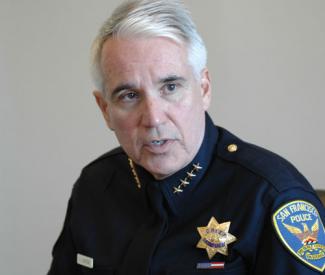
Following a hearing at the San Francisco Police Commission that stretched late into the night, the seven-member panel voted 6 to 1 to authorize the San Francisco Police Department to develop a proposal for implementing Tasers or other less-lethal weapons.

Representatives from immigrant advocacy groups, communities of color, queer and transgender communities, mental-health professional organizations, and civil-rights watchdog groups turned out en masse to voice opposition to the plan. Out of around 50 speakers, just one spoke in favor of adopting Tasers.

As the discussion wore on, commissioners revised the resolution again and again. Interim Police Chief Jeff Godown had initially requested permission to draft a proposal in 30 days; it was extended to 90. Instead of researching the feasibility of Tasers alone, commissioners said the SFPD should look into other less-lethal weapons as possible alternatives. Another amendment prioritized outreach to marginalized communities.

Commissioner Petra DeJesus cast the lone vote of dissent, saying, “No matter how you dress it up, it’s a soft-pitch way to authorize Tasers.” DeJesus voiced concerns about how the departmental budget would be impacted. She also noted, “They’re being used more in the minority community, and that’s the community we’re trying to build trust with.”

Commissioner Angela Chan invited a series of guests to testify about concerns surrounding Tasers. Among them was Attorney John Burris, who has sued police departments over misuse of Tasers; a University of California Berkeley professor who gave a detailed presentation about Tasers and cardiac arrest; and Allen Hopper of the American Civil Liberties Union, who presented a video clip showing outrageous instances of Taser use. At the end of the night, however, Chan was persuaded to go along with the proposal.

Chan later told the Guardian that she supported the resolution because the timeline had been lengthened, which allowed for greater community outreach, and because the discussion had been broadened to include discussion about less-lethal weapons other than Tasers. Also, Chan noted that her suggestion for the force to review their use-of-force tactics as part of moving forward with the program was integrated into the resolution.

Several members of the San Francisco police force told horror stories about situations in which they said they could have used Tasers. A Mission Station officer suffered an attack by a Nortenos gang member in Garfield Park, and feared for his life until backup arrived. A Tenderloin Station officer was thrown into a store window after responding to a call about a trespasser. Just before it happened, “I was reaching for my firearm, and I was going to shoot him,” the officer said.

During the hearing, Chief Godown asked all SFPD officers to stand. He announced, “Everybody that’s in this room are my kids. I’m passionate about making sure they don’t get hurt.” Following a role-playing scenario in which a person waved a knife at an officer, Godown said that without a Taser, “That officer would have had no other option but to shoot that man.”

Equally disturbing, however, were stories about Taser deployments gone wrong. There was the petite African American woman who was at a drugstore buying candy when police attacked and Tasered her because they mistook her for a shoplifter. There was the Virginia couple that was hosting a backyard baptism celebration when police responded to a noise complaint and Tasered them both; the woman was pregnant, and could have suffered a miscarriage due to the electric charge. There was the 17-year-old grocery store clerk who suffered a heart attack and died after police Tasered him — the whole thing started with his employer’s complaint that he was eating a hot pocket he didn’t pay for. Then there was the man who was Tasered during a traffic stop by cops who thought he was drunk. In reality, he was in diabetic shock.

Mayor Ed Lee’s Deputy Chief of Staff, Cristine DeBerry, made an appearance to say Lee was in support of the department’s proposal to move forward with investigating the use of Tasers.

Sheriff Mike Hennessey also offered comments, saying Tasers have been an effective tool in San Francisco jails, yet are rarely used.

Community members, meanwhile, raised a slew of concerns. They highlighted pending budget cuts and asked how these new and expensive instruments could possibly be paid for. They questioned the erosion of trust between police and the public, particularly in communities of color, where Taser use tends to be disproportionately high. Many people, particularly from the mental health community, voiced concerns about accidental deaths due to Taser use.

“I’m a great-grandma with a heart murmur,” said Terrrie Frye, “and I wonder if the police will be able to recognize that when we’re all protesting the budget cuts that will result from these Tasers.”

*This post has been updated from an earlier version.

No San Bruno rate hike for PG&E

0

EDITORIAL In a Feb. 18 message to shareholders, Pacific Gas and Electric Co. announced that the projected costs of the San Bruno pipeline explosion could exceed $700 million. Now the company wants to get some of that back from ratepayers. That will be a huge test for Gov. Jerry Brown and the California Public Utilities Commission, and send a signal about how the new governor will deal with the rogue utility. The outcome should be simple: every penny of the costs of cleaning up the mess, repairing and upgrading the pipelines, and setting damage claims and lawsuits should be paid out of PG&E profits.

Let’s review the facts.

The CPUC gave PG&E $5 million to upgrade the pipeline under San Bruno in 2009, but the company decided to spend the money instead on executive bonuses.

PG&E officials fought bitterly to prevent the federal government from cracking down on natural gas pipeline inspections.

PG&E never conducted serious inspections of a line that was past its rated use and had been poorly constructed in the first place.

PG&E intentionally inflated gas pressure in that line beyond what regulators say was safe.

It took PG&E more than an hour to shut off the gas after the explosion, making the resulting fire much harder to contain and quite possibly contributing to some of the eight deaths and destruction of more than 30 houses.

That’s not the sort of record that suggests that the pipeline disaster was an unavoidable accident. It certainly wasn’t caused by a natural disaster. It was corporate error — misuse of money, irresponsible monitoring of a dangerous piece of equipment, intentional efforts to blunt public oversight. The damage was PG&E’s fault.

The problem is that so far, the company hasn’t been held accountable. As John Weber, editor of The Bay Citizen, pointed out in a Feb. 5 column: “What consequences have PG&E and its executives faced for these blunders? None. The stock is doing just fine. The California Public Utilities Commission has awarded the company almost $30 million in bonuses for energy-saving targets that weren’t achieved. The company plans to hire a new gas operations executive, but no one has lost his job — except a hapless manager who thought it would be smart to spy on the online discussions of smart-meter opponents.”

Ideally, the CPUC and the federal regulators ought to levy the heaviest possible fines on the company and mandate far stricter maintenance oversight. At the very least, the commission needs to make it clear that no ratepayer money will go for San Bruno-related expenses.

The pressure should be on at every level of government. The San Francisco supervisors should pass a resolution calling on the CPUC to reject any rate hike that would force PG&E customers to pay for the accident. State Sen. Leland Yee (D-SF) has already issued a statement denouncing any rate hike. But the Legislature ought to go further and pass a bill that would state that no utility can charge its ratepayers for costs related to an accident that was clearly the utility’s fault.

Otherwise, the utility that killed eight people and destroyed an entire neighborhood will emerge unaccountable and unscathed. P.S. Go to TURN.org to sign the Utility Reform Network’s anti rate hike petition.

Live Review: Prince at the Oracle Arena

11

At this point in his 35-year career, Prince is perhaps justified in expecting us humanoids to happily accept anything handed down to us from Mount Paisley Park. But at the Oracle Arena in Oakland on Mon./21 — the first of three last-minute concerts planned for the Bay (Thursday’s show was announced Monday night, after more than 30,000 tickets were sold for the first two performances in less than 72 hours), the mood was a curious mixture of intense, polished skill tinged with unexpected insecurity: Prince, in full 52-years-young prodigy mode, broke from the action in one instance with a surprising, “Are y’all having fun?” And heated anticipation and adulation gave way to a brief outbreak of boos — the audience pressed hard to get into the show, and was loathe to give up its ground after the first encore, hollering with displeasure when the house lights came up.

It was a mixed bag, albeit an entertaining and fascinating one, from an entertainer who can still pull out the stops, fingering his fretboard with one hand while slicking back his short crop with the other. A playful Prince alternately grinned at his band, placated the fans with hits, and happily jammed at length on one of his many Telecaster-style guitars, pacing himself all the while with breaks featuring guest Sheila E. and his backup vocalists. His impassioned take on “Cool,” the song he bestowed on the Time back in 1981, said it all: Prince was out to reestablish his own ageless brand of awesome, and have fun doing it. 

Opening the show was white zoot-suited Oakland native and psychedelic funk-rock pater familias Larry Graham, the bassist who broke ground and moved major booty with his slapping technique as part of Sly and the Family Stone. Fronting his band, Graham Central Station, Drake’s uncle got the audience primed with a sing-along to his 1980 slow-dance hit “One in a Million You,” before immediately ripping into a jaw-dropping bass demo that had him scraping his strings against a mic stand and probing them with his teeth — an exhibition that would have had Jimi Hendrix pondering the possibilities of the low end. The kicker: a lengthy Sly and the Family Stone medley, including a moving “Family Affair,” “Thank You (Falettinme Be Mice Elf Agin),” and “Dance to the Music,” with a finale that had Prince rising up from the bowels of the glyph-shaped stage, clad in fuzzy après-ski boots, to join Graham and crew for “Everyday People” and a palpably joyful “I Want to Take You Higher” that inspired everyone onstage — and a good batch of the crowd — to leap in unison.

The psych-funk-rock lineage clearly established, Prince remained the main Event-with-a-capital-E. The artist presently known as Prince is still an eerily, extraterrestrially-gifted performer, capable of shredding in hair-band-esque Eddie Van Halen mode, then tossing his leopard-pick-guarded guitar off the stage, and finally breaking into a fluid yet precisely controlled slew of popping, locking contortions in what looked to be flared satin PJs. A big-screen closeup of his posterior moving ever-so-minutely in time to the beat captured the detail with hilarious exactitude.

I had to laugh, marveling at the calculated, smooth perfection of the maestro’s moves, though Prince’s absolute, practiced fluency in so many modes of American music — rock tear-throughs, blues jams, soul breakdowns, pop sing-alongs, R&B balladry, jazz interludes and conga workouts with Sheila E. by his side — is seriously hard to question, and in keeping with the title of this tour, “Welcome 2 America.” This not-of-this-earth visitor has conquered the musical languages of the land, turning the tables on the natives.

Still, nothin’ compares 2 love, and Prince was out to please Monday — sprinkling his set with hits like “Raspberry Beret,” “Controversy,” and “Kiss” and unleashing a violet confetti downpour with “Purple Rain” — while seemingly just as eager to embrace the contributions of Carlos Santana, who was lent the Princely guitar; Bay native Sheila E., who sang “The Glamorous Life” to loud home-girl cheers; and backup vocalist Shelby Johnson, who memorably emoted through “Misty Blue,” as Prince playfully pulled Larry Graham up to enact a faux-romantic reunion.

The guest appearances may not have matched the celebrity drive-bys at his recent NYC dates — those ranged from Alicia Keys and Questlove to Cornel West and Kim Kardashian (who got kicked off stage for less-than-stellar dancing) — and new twirlers the Twinz weren’t in the house to add considerable sex appeal, but I, for one, left sated after a two-hour performance that included an hour-long encores. Prince’s displays of slink-worthy lewdness have been replaced by exhibitions of guitar hero virtuosity — “I don’t know how you feel, but I’ve missed you something horrible,” the gold-satin-draped artist cooed to us over a hot gold guitar toward the end of the show — but that made it no less a close encounter of the Princely kind.

PRINCE
With Larry Graham
Wed./23 and Thurs./24, 7:30 p.m., $71.50-$238
Oracle Arena
7000 Coliseum Way, Oakl.
www.livenation.com

Police Commission braces for another Taser debate

The San Francisco Police Department, police commissioners, and community advocates are gearing up for another debate about whether or not SFPD officers should carry and use Tasers. The hearing will be held at tomorrow’s Feb. 23 police commission meeting.

Interim Police Chief Jeff Godown — carrying forward a plan that originated with his predecessor, former police chief George Gascon — called for a hearing on the Taser proposal, according to a Police Commission spokesperson. If it wins approval, the SFPD will begin conducting research to develop training and policy guidelines for the SFPD to implement Tasers. The issue has ignited fierce debate in the past, and resistance is likely to be revived on this go-round.

Last year, the commission rejected Gascon’s proposal to add Tasers to police officers’ use-of-force options. Now, Commissioner Angela Chan, who was appointed last year by the San Francisco Board of Supervisors after the proposal had been defeated, is emerging as a voice of dissent.

Chan submitted a handful of reports published by American Civil Liberties Union (ACLU), Amnesty International, and other sources critical of Tasers for commissioners to review prior to the meeting. She’s also preparing a 45-minute presentation highlighting concerns about the weapons.

The SFPD will give its own 45-minute presentation to try and convince commissioners that it should be allowed to move forward with the plan this time. “It’s another tool for officers to use when encountering violent persons,” noted Sgt. Mike Andraychak, a police spokesperson.

Andraychak said it was too soon to provide any details about whether the Taser proposal would take the form of a pilot program, or be implemented all at once. He did not have specific information about how training would be developed, how the department planned to solicit input from various communities, or how long the department expected to be working on a draft policy if the police commission granted approval. Chak did note that if the SFPD moves forward, it may host town hall meetings about Tasers.

The Feb. 23 police commission meeting is likely to bring vociferous community opposition. The Coalition on Homelessness (COH) and a number of other community-based organizations are encouraging people to attend the meeting and speak during public comment.

In a letter submitted to the police commission, Asian and Southeast Asian Societies, Causa Justa (Just Cause), The Harvey Milk LGBT Democratic Club, COH, and other community advocates point out that Tasers have been declared a form of torture by a UN torture panel, and cite a University of Calfornia San Francisco study finding that police shootings more than doubled in the first full year of Taser implementation.

The community organizations also pointed out that Tasers are manufactured in Scottsdale, Ariz. — and San Francisco is still boycotting Arizona for enacting SB 1070, a bill that has drawn widespread criticism for encouraging racial profiling. Meanwhile, in a lean budget year, the cost of implementing Tasers is estimated at around $2 million, according to the letter.

Despite being turned down last time, the department has revived its Taser proposal in the wake of two officer-involved shootings early this year, including one that struck a mentally ill, wheelchair-bound man who was brandishing a knife. That case came under scrutiny after it was caught on a phone camera and posted to YouTube.

Following that incident, Gascon suggested that the outcome may have been different if officers had the option of deploying Tasers.

Yet Allen Hopper, police practices director at the ACLU, questions the idea that deploying a Taser would have been the correct response in that circumstance — especially in light of a recent Police Commission vote to strengthen SFPD practices when encountering people with mental illness. The Commission recently directed the SFPD to establish a Crisis Intervention Team (CIT), based on a policing model that emphasizes deescalation. Yet Hopper says deploying a Taser would achieve just the opposite.

“We think it’s putting the cart before the horse to give the police Tasers before they put that plan into effect,” Hopper said. People with mental-health problems, he added, are more likely to be on strong medication, or prone to excited emotional states and rapid heart rates — all of which could place them at a higher risk for serious injury or even death if struck with a Taser.

Counted among a class of weapons called conducted energy devices, Tasers deliver a painful electric jolt when deployed, temporarily immobilizing a subject by disrupting the central nervous system and causing involuntary muscle contractions. While they tend to be hailed by law enforcement as non-lethal alternatives to firearms, human-rights organizations have criticized Tasers because accidental deaths have been linked to their use. According to a report by Amnesty International, more than 330 people were reported to have died in the last decade after being struck by police Tasers. While not all of those deaths were directly attributed to the Tasers in coroners’ reports, many of the people who died were found to be in “excited states of delirium” or under the influence of illegal drugs or prescription medications when they were Tasered.

Alerts

0

THURSDAY 24

Benefit for Bradley Manning

Raise funds to support U.S. Army soldier and accused WikiLeaks whistleblower Bradley Manning at this events, which features discussions, updates, and special guests, including Daniel Ellsberg and former Sen. Mike Gravel of Alaska.

7–9 p.m., $5–10 donation

Berkeley Fellowship of Unitarian Universalists

1924 Cedar, Berk.

www.couragetoresist.org


Eyewitness to Egyptian revolt

Ahmed Shawki, editor of the International Socialist Review and a Cairo native, shares his eyewitness account of the revolution that toppled Egyptian President Hosni Mubarak.

7:30–9 p.m., free

The Women’s Building Auditorium

3543 18th St., SF

Facebook: Eye-Witness to the Egyptian Revolution in SF


FRIDAY 25

Progressive senator in town

Vermont Sen. Bernie Saunders, an independent and arguably the most progressive U.S. senator, will give an overview of his work, from his historic filibuster against the continuation of George H. Bush-era tax cuts for the rich to his fight against big money interests in Washington.

7–9:30 p.m., $15

First Unitarian Universalist Church

1187 Franklin., SF

www.brownpapertickets.com/event/156941


SATURDAY 26

Iraqi solidarity

Stand in peaceful solidarity with the people of Iraq, including the many who are protesting the Maliki regime, and call for an end the U.S. occupation and demand that our troops come home.

2:30–3:30 p.m., free

Ferry Building

Embarcadero and Market, SF

www.codepinkalert.com


Coffee Party meeting

The progressive answer to the widely publicized Tea Party, this nonpartisan grassroots movement calls for more accountability from our corporate-sponsored, conflict-based political system. This meeting will focus on organizing outreach strategies and the proposed landfill in the San Francisco Bay. But anything goes, so come and exchange ideas over coffee and help take back the democratic process.

11 a.m.–12:30 p.m., free with drink purchase

Cafe La Tartine

830 Middlefield, Redwood City

www.coffeepartyusa.com


Panel discussion on censorship

This public forum titled “Censorship in the Arts: A Trend or Just a Passing Fad” is about exploring the current rise in censorship and the renewed threats to defund the National Endowment for the Arts, the National Endowment of the Humanities, and the Public Broadcasting Service. Join the panelists and learn about the recent efforts toward censorship in the arts.

2:30 p.m.-5:30 p.m., free

Performance Art Institute

575 Sutter, SF

www.theperformanceartinstitute.org


SUNDAY 27

Who inspires you?

Attend the fourth round of the Bay Area Inside the Activists’ Studio, where you will surely be inspired by the many change-makers and leaders of local Jewish social organizations on the panel. Celebrate the many ways change that can be brought about through skill-building workshops, panel discussions, and more. A catered lunch will be provided.

10:30 a.m.–4:30 p.m., $8–$18 sliding scale

Contemporary Jewish Museum

736 Mission, SF

www.pursueaction.org

Mail items for Alerts to the Guardian Building, 135 Mississippi St., SF, CA 94107; fax to (415) 437-3658; or e-mail alert@sfbg.com. Please include a contact telephone number. Items must be received at least one week prior to the publication date.

Onek to SFPD Chief turned D.A. Gascon: release records of officers cleared in shootings

3

Calitics has a revealing letter from David Onek, a senior fellow at the Berkeley Center for Criminal Justice, a former member of the San Francisco Police Commission and a candidate in the 2011 District Attorney’s race, demanding greater transparency from the D.A.’s office when it comes to explaining why officers have been cleared in officer-related shootings.

“After spending my career working to identify and implement the most effective public safety strategies, I have seen one constant – the community is safest when the police and prosecutors earn and keep the public’s trust,” Onek writes in a letter that is guaranteed to turn up the ante in an already intriguing race. “That’s why I read with real concern that the San Francisco District Attorney’s office would not produce reports related to officer-involved shootings pursuant to a recent public records request from NPR-affiliate KALW.”

(The KALW report shows that the person in the D.A.’s office who penned the letter denying its request for records was Paul Henderson, D.A. Kamala Harris’ chief of staff and her preferred pick as replacement D.A. before Gavin Newsom appointed former SFPD Chief George Gascón as his last act as mayor, shocking just about everyone except Willie Brown, especially when it came out that Gascón used to be a Republican and is not philosophically opposed to the death penalty. And while Gascón, who was registered in recent years as decline-to-state, promptly turned around and registered as a Democrat, he also filed papers in the D.A.’s race that cite the phone number of notorious campaign attorney Jim Sutton.)

In his post on Calitics, Onek notes that as a former Police Commissioner, he was briefed in closed session on the details of officer-involved shootings, and he often heard complaints from community members about how little public information was released about officer-involved shootings.
“This lack of transparency breeds distrust,” Onek observes.

Onek acknowledges that in all officer-involved shootings, the DA’s office conducts an independent review to determine if there is criminal liability, and that if such liability is found, the DA presses charges, which are public. “But when the DA determines that there is no liability, it is equally important that the DA publicly explain the reasons for its decision,” Onek states.

In short, he believes the D.A.’ office should issue a very detailed report on every officer-involved shooting in which it does not file charges and should make the report publicly available on its website. “The report should detail the facts, the law and the reasons for the decision not to file charges,” Onek says, arguing that complete transparency would make the job of police and prosecutors much easier by building trust between law enforcement and the community, making it more likely that community members will work in partnership with police and prosecutors, and that victims and witnesses will come forward to testify.

“Publishing detailed reports that clear officers when they acted within the law can dispel public misconceptions about what actually happened,” Onek concludes. “Of course, officers’ privacy rights need to be respected and investigations cannot be compromised. But once an investigation is complete, and an officer has been cleared, it is imperative that the District Attorney’s office share its findings with the public. “

And as Onek points out, this standard is already in place in communities in California. “The District Attorney’s office in San Diego, hardly a bastion of liberalism, actually lists these cases on its website,” Onek states. “Many other counties – including Los Angeles, Orange and Fresno – also make them matters of public record and available on request. Building trust with the community is the key to enhancing public safety. Let’s not violate that trust by refusing to release documents that the public has the right to see.”

I’ve got a call into D.A. Gascón’s office to learn more about the rationale for denying KALW’s request, and I’ll be sure to post his reply here, so stay tuned.

Dense in the west

9

rebeccab@sfbg.com

A marathon special meeting of the San Francisco Planning Commission on Feb. 10 demonstrated a clear split over Parkmerced, a $1.2 billion private development project that will rebuild an entire existing neighborhood on the west side of San Francisco.

While some expressed strong enthusiasm for moving forward with the ambitious plan, many residents turned out to voice vehement opposition, citing concerns about traffic congestion, noise, dust, and the demolition of affordable apartments that some Parkmerced tenants have occupied for decades.

The votes to certify the project’s environmental analysis and send the plan onto the Board of Supervisors with a commission endorsement were split 4-3, with Commissioners Christina Olague, Hisashi Sugaya, and Kathrin Moore dissenting.

Those who voted no were appointees of the Board of Supervisors, while the four commissioners who voted in favor were appointees of former Mayor Gavin Newsom, suggesting a break along clear political lines. State Assemblymember Tom Ammiano also submitted a letter urging commissioners not to approve the project.

While Parkmerced Investors LLC, the project sponsor, eagerly awaits groundbreaking, spokesperson P.J. Johnston noted that they weren’t there yet. “First,” he said, “we have to break ground at the Board of Supervisors.”


IS IT GREEN?

The Parkmerced redesign has been touted as an ecological and sustainable beacon for urban development and, indeed, some features of the grand plan read as if they were plucked from a checklist from the U.S. Green Building Council’s Leadership in Energy and Environmental Design (LEED) green-neighborhood standards.

Walkable, bikeable streets with proximity to transit? Check. Water-efficient landscaping? Check. Energy-efficient dwellings? Check. Project sponsors claim that through dramatic reductions in per capita resource consumption, three times as many residents would consume the same amount of water and electricity as Parkmerced’s current population does today.

Johnston emphasized how adding new units to the west side of the city also helped contribute to “density equality,” since most new projects tend to be concentrated in the eastern neighborhoods.

Johnston was particularly jazzed about an innovative storm-water discharge system envisioned for the plan, which he described as a design that could “regenerate and repair the environment.” It would recirculate rainwater through a naturally filtrating system of ponds and bioswales to recharge Lake Merced, a water body that has been slowly shrinking due to being choked off from its natural watershed by a concrete urban barrier.

Green points might be awarded for plans for an on-site organic garden, but Commissioner Michael Antonini, who said he lives less than a mile from Parkmerced, cautioned that developers shouldn’t get too attached to that idea. After all, he said, many kinds of vegetables won’t thrive in that part of the city.

Meanwhile, the wholesale destruction of existing units is decidedly not eco-chic. The Green Building Council’s LEED neighborhood standards insist that “historic resource preservation and adaptive reuse” is always preferable in a green development — and that’s the point that Aaron Goodman, an architect who previously lived at Parkmerced, has been driving at for more than a year. Proponents maintain that Parkmerced’s wartime construction meant it was built with inferior materials, and that property owners have battled dry rot and other infrastructure problems.

Another not-so-green Parkmerced project feature has also raised eyebrows: parking. While proponents portray the redesign as a switch from a suburban, love-affair-with-the-automobile style to an enlightened departure from car-centrism, plans nonetheless include a parking space for every single unit.

That creates the potential for more than 6,000 new cars on the road in that area, and the 19th Avenue corridor is already notorious for traffic snarls. According to calculations by the Environmental Protection Agency, the typical American motorist generates more than five metric tons of carbon dioxide by driving in a given year.


REPLACING WHAT’S THERE

Before the Planning Commission meeting, residents from the Parkmerced Action Coalition — a relatively new residents’ group formed to oppose the redevelopment and a wholly different entity from the Parkmerced Residents’ Organization — made a public show of their dissatisfaction outside City Hall. Holding signs with slogans such as “Don’t Bulldoze Our Homes,” residents sang protest songs and chanted, “We are Parkmerced!”

With the dramatic makeover, Parkmerced would expand to around 8,900 units, tripling the number of residents who could be accommodated. Existing 1940’s-era garden apartments would be razed to make way for higher, denser housing. The plan comes at a time when neighboring San Francisco State University is undergoing its own phase of expansion.

“This project in its current state is a vision that is not in harmony with the people, place, or the environment,” charged Cathy Lentz, an organizer with the Parkmerced Action Coalition, in a vociferous plea to the commissioners. “It is a narrow vision, a corporate vision … a true vision would be inclusive of present dwellings, inclusive of animals, trees, and present environment.”

One resident lamented the pending loss of his garden courtyard, noting how much his children had enjoyed the green space growing up and listing the different kinds of birds that would surely be driven away by heavy-duty construction and tree removal. For many, the point was not so much what developers intended to build, but what would be lost to make way for it. One speaker dismissed the plan as “architectural clear-cutting.”

Commissioner Moore, an architect, sounded a similar note when she rejected the notion that the Parkmerced redevelopment should be hailed as infill, a desirable development concept that curbs sprawl by utilizing space efficiently. “Urban infill housing is defined as infill on vacant sites,” Moore said, “not sites that have become vacant by demolition.” She added that she believed the environmental impact review “fails to sufficiently examine why housing demolition is even necessary.”

In Moore’s view, “the only reasonable alternative is a significantly redesigned … project.”


WORKING-CLASS NEIGHBORHOOD

Unlike a luxury condominium development, the Parkmerced plan emphasizes built-in economic diversity — yet critics point out that as it stands, the housing complex is already inclusive of many lower-income, working-class residents.

The plan will incorporate several hundred below-market rate units, in accordance with the city’s inclusionary zoning ordinance. Commissioner Antonini also emphasized the boost to city coffers from tax revenue associated with the project.

Meanwhile, questions are still arising on the issue of rent control. “We do not believe it is appropriate for the City and County of San Francisco to be displacing rent-controlled residents,” noted Michael Yarne, a mayoral development advisor. A binding agreement between Parkmerced Investors LLC and the city of San Francisco, which will be linked to the land, promises that new units will be made available to rent-controlled tenants at the same monthly rate they now pay, with rent control intact (See “Weighing a Landlord’s Promise,” Dec. 21, 2010).

Yet Polly Marshall, a commissioner on the San Francisco Rent Board, noted that she still didn’t believe tenant protections were adequate. She also spoke to the pitfalls of tearing down and redoing an entire neighborhood.

“The proposed Parkmerced development is the kind of development that I normally would support. It’s the kind of thing I work on in my profession,” noted Marshall, an attorney who has worked on redevelopment projects. “What’s different about this project is that it involves an existing community. It requires devastation of that community. It reminds me of the old-style redevelopment projects that went on in the Fillmore that destroyed existing neighborhoods. Look around that area now … there’s high density housing there, but that’s about all. The community — the networks of the people — was destroyed decades ago.”

Marshall took it a step further, offering her analysis on why Parkmerced was targeted. “It’s because it’s a working-class neighborhood of renters,” she said. “That’s why we’re going to destroy Parkmerced.”

Garbage curveball

0

sarah@sfbg.com

A newly released report from the Budget and Legislative Analyst has thrown a curve ball at the Department of the Environment’s proposal to transport the city’s garbage by truck and rail to Yuba County for disposal in Recology’s Ostrom Road landfill.

Recology’s proposal would kick in when the city’s disposal contract with Waste Management’s Altamont landfill reaches its 15 million ton limit, which is anticipated to occur in 2015, or beyond (see “A tale of two landfills,” 06/15/10). But as that much-anticipated proposal finally comes to a Board of Supervisors committee on Feb. 9, the debate has suddenly been significantly broadened.

The Budget and Legislative Analyst’s report recommends replacing existing trash collection and disposal laws with legislation that requires competitive bidding on all aspects of the city’s waste collection, transportation, and disposal system. It also recommends that the Board of Supervisors require that refuse collection rates for both residential and commercial services be subject to board approval, and that competitive bidding could result in reduced refuse collection rates in San Francisco.

The annual cost to ratepayers of the city’s entire refuse system is $206 million, but only the landfill disposal contract, worth $11.2 million a year, gets put out to competitive bid, the BLA observes.

Debra Newman, an analyst with he BLA, told the Guardian that she has been asked why she brought up all these issues in advance of the Board’s Feb. 9 Budget and Finance committee hearing to discuss the Department of Environment’s recommendation that Recology be awarded the disposal contract. The company already has a monopoly over collection and transportation of waste in San Francisco thanks to an 79-year-old voter-approved agreement.

“Our position is that this is the only opportunity to address these issues with the board because of the way the city’s 1932 refuse collection and disposal ordinance reads,” Newman said. “This is the only vehicle we would have because nothing else is going to come to them. The residential rates don’t come to them, the commercial rates don’t even come to the Rate Board. This is our chance to discuss the whole kit and caboodle of waste collection, transportation, and disposal.”

The BLA’s Feb. 4 report notes that “Unlike water rates charged by the SF Public Utilities Commission, neither residential or collection rates are currently subject to Board approval, under the city’s 1932 refuse ordinance.”

Residential rates are approved by the director of Public Works, unless such rates are appealed, in which case they are subject to the approval of the city’s Rate Board, which consists of the city administrator, the controller and the SF Public Utilities Commission director. Recology sets the commercial rates, which are not subject to city approval.

Voters previously rejected two attempts to allow for competitive bidding for refuse collection and transportation (Prop. Z in 1993 and Prop. K in 1994). And the BLA observes that if the Board doesn’t go to the ballot box, it could ask DoE to analyze costs and benefits of using Recology to collect refuse, and using a separate firm to provide transportation, if that firm can avoid transporting refuse through San Francisco’s streets.

Under the never-ending waste ordinance that the city approved during the Great Depression, 97 permits exist to collect refuse within the city, and only authorized refuse collectors that have these permits may transport refuse “through the streets of the City and County of San Francisco.” Due to a number of corporate acquisitions, Recology now owns all 97 permits and so has a monopoly over refuse collected in and transported through the streets of San Francisco.

But the BLA report was unable to identify any portion of the city’s 1932 refuse ordinance that governs the transport of refuse that does not occur through the city’s streets.

“Therefore, it may be possible for a second firm, other than Recology, to transport refuse after it has been collected by Recology, if that second firm’s transfer station was located either outside the city limits or was located near marine or rail facilities, such that refuse from the transfer station to the city’s designated landfill could avoid being transported through the streets of the city and county of San Francisco,” the BLA states.

“These are nuanced issues and they’ve evolved,” Newman observed. “All we are doing is trying to help the board try and decide what to do on this matter. We are saying that the current approach is a policy matter for the board, and recommending that the board submit a proposal to the voters to amend the refuse collection and disposal ordinance.”

The BLA report comes 15 months after the city tentatively awarded the new landfill disposal agreement to Recology to deposit up to 5 million tons of waste collected in San Francisco in Recology’s landfill in Yuba County for 10 years. The award was based on score sheets from a three-member evaluation panel composed of City Administrator (now Mayor) Ed Lee, DoE Deputy Director David Assmann, and Oakland environmental services director Susan Katchee.

The trio scored competing proposals from Recology and Waste Management, and awarded Recology 254, and WM 240, out of a possible 300 points. Lee’s scores in favor of Recology were disproportionately higher than other panelists, and the BLA notes that the largest differences in the scoring occurred around cost.

The BLA concluded that the city’s proposed agreement with Recology was subject to the city’s normal competitive process, “because the landfill disposal agreement is the sole portion of the refuse collection, transportation and disposal process which is subject to the City’s normal competitive bidding process.” And it found that because the transfer and collection of the city’s refuse has never been subject to the city’s normal bidding process, approval of the proposed resolution is a policy decision for the board.

But while DoE’s Assmann has said that California cities must maintain a plan for 15 years of landfill disposal capacity, the BLA notes that such plans can include executed agreements and anticipated agreements. And WM officials confirm that Altamont has capacity for 30 to 40 years. This means the board need not rush its disposal decision.

The BLA report comes against a backdrop of intense lobbying around Recology’s proposal. Records show that in 2010, Alex Clemens of Barbary Coast Consulting recorded $82,500 from Recology, and Chris Gruwell of Platinum Advisors recorded $70,000 from Waste Management to lobby around the city’s landfill disposal contract.

And now both firms continue to press their case in face of the BLA report.

“Folks are trying to cloud the issue,” Recology’s consultant Adam Alberti, who works for Sam Singer Associates, said. He claims the BLA report concludes that Recology’s proposed contract is the lowest cost to rate payers, saving an estimated $130 million over 10 years, that Recology’s green rail option is the environmentally superior approach, and that the city’s contract procurement process was open, thorough, and fair. “In short, the process works—and it works well,” Alberti said. “The rate setting process is an important subject, and one the board should review, but the one before the board now is a fully vetted contract.”

Alberti claimed that contrary to the conclusions of the BLA, which found commercial collection rates are significantly higher in San Francisco than Oakland, Recology’s rates are cheaper than Oakland—once you factor in Recology’s recycling discounts.

Waste Management’s David Tucker said the BLA report “raises lots of good questions.”

“We have said from day one that transportation was a component of the request for proposals [for the landfill disposal contract] that no other company other than Recology had an option to bid on,” Tucker said. “Had we been able to bid on the transportation component, our costs would have been lower.”

Tucker believes that no matter who wins the landfill contract, the BLA report points to a lack of transparency and openness under the city’s existing refuse ordinance.

“Up until this time, no one has been able to understand the process,” Tucker said. “If the Budget and Legislative Analyst has shown that there are some inconsistencies in the statements made by the Department of the Environment, if the process has slight flaws, then the whole process from the request for proposals to the pricing needs to be revised. And time is on the City’s side. There is no need to rush into a decision. Yes, our contract with the city is ending, but our capacity at the Altamont clearly goes into 2030 and 2040. So, this is an opportunity to toss out [Recology’s] proposal and start again.”

Asked if Recology is planning to rail haul waste to Nevada, once its Ostrom Road Yuba County landfill, Alberti said that the city’s current procurement process prohibits that.

“Will that be around next time? I don’t know,” he said. “Recology’s first goal is reducing waste, and managing it responsibly. We believe rail haul is an integral part of that.”

And he insisted BLA’s report should not be connected to Recology’s disposal contract.

“Recology believes that the system is working very well, as evidenced by the fact that it’s yielded the best diversion rates, lower rates than average, and has an open and thorough rate-setting process set by an independent body,” he said. ” We feel the recommendations are separate from the matter-at-hand. But if the board so chooses to have this debate, we’re anxious and happy to be part of that discussion.”

David Gavrich, CEO of Waste Solutions Group, which transports waste by rail and barge from San Francisco, praised the BLA report for “finally peeling back the layers of the onion” on the city’s entire waste system. Gavrich notes that in June 2009, he and Port Director Monique Moyer advised DoE of an option on a piece of long-vacant port property that offers direct rail and barge transportation of waste and could result in tremendous long-term savings to ratepayers.

“But we never got a reply to our letter,” Gavrich said. “Instead, DoE pushed forward with Recology’s trucking of waste to the East Bay, the transloading of waste from truck to railcar in the East Bay, and the railing of waste east to Yuba County.”

Sup. Ross Mirkarimi, which sits on the Board’s Budget and Finance Committee, is concerned that the city is considering enlarging Recology’s monopoly, without calling into question the reform of the 1932 charter.

“I don’t think these two questions should be disconnected in the way they are in the proposal to award Recology the landfill disposal contract,” Mirkarimi said. “The city and the DOE are very defensive about this and have a well laid-out defense to show that they followed the letter of the law in awarding this contract. But that leads to a secondary set of concerns: namely are we getting the best bang for our bucks, and is there something less than competitive about the current process.”

Mirkarimi admits that Recology has been committed to many of the city’s environmental policy advances. “But that’s aside from the larger question of what this mean in terms of institutionalizing further the expansion of a monopoly,” he said. “Our utilities are governed by monopolies like PG&E. So, should we be going in the same direction as 1932, or thinking if we want to diversify our utility portfolio?”

Meat-cute

0

le.chicken.farmer@gmail.com

CHEAP EATS The things that New Orleans throws at you! Example: a wall of doors, so metaphoric it hurts. My goal is, for the length of this column, to not let it mean anything, just … a wall of doors. Yep.

So this wall of doors separates our yard here from the neighbor’s, which isn’t a yard so much as a couple of feet between houses, a walkway. And, instead of a picket fence, door door door door door. All wooden, all weathered to varying degrees and in different ways. A few still have their knobs on, and these sparkle in the sunshine — albeit meaninglessly. One has no knob, but yes hardware, which is rusty and does not sparkle.

Shine or no, each door is beautiful in its own way; some are bare, others getting there but with swaths of prehistoric primer still, or paint. One had been covered so thickly, so many times, in a now-yellowing white, that the cracks in it resemble giraffe skin. Another has window panes, four quarters: two still have glass, and two are blank space. I could pass a cold beer through to the workers working on the dilapidated house next door.

New Orleans is a ragged and broken city, which is of course part of its charm. The streets have potholes the size of swimming pools. The sidewalks end, drop off, bend and crack. I’m afraid to ride my bike. Walking is an extreme sport. The zoo is just across the street, and I take the Doughboy there because it is safe and smooth. We are becoming friends with the zookeepers, and already they have let us pet a snake.

End of the day, when I told his mummy about this snake-petting business, she wondered what my own personal “spirit animal” was.

“Giraffe,” I said, without even thinking about it. Before, as you know, it was chickens. Why — since I am famous for eating me my meat — do I always identify with the vegetarian, and the prey?

My new New Orleans friends, the human ones, are meat meat meat eaters, and music music music lovers, which makes perfect sense because food and tunes are what this town is all about. You can imagine my giddiness. Hedgehog, the one I am kissing, works on a TV show I’ve never seen, because I don’t have a TV, let alone HBO, so I feel especially qualified to give it an especially objective review. I mean, how much more objective can you be than to never have even seen a thing? So: not enough plot. Or character. Oodles of fantastic music.

I base this impression solely on comments made by my TV-having friends back home when I’ve mentioned that, yo, I’m hanging with someone from Treme. Then when I tell them that she does sound, then they are impressed.

On Monday, Hedgehog and me walked along the Mississippi River, drank vodka in a gay man bar, and ate at a place called Green Goddess, which (hee hee hee) is all about meat — pulled pork flapjack for me, and a bacon meatloaf samwich for her.

Mind you, that’s at the Green Goddess. So you can imagine what goes down at the restaurants called Butcher, and Pig — but in French, which here doesn’t mean pretentious. I’m in heaven!

Next evening, four of us gathered after work for $2 taco night and $2 Red Stripes at the Caribbean-influenced Rum House. Just some of the stuff my own personal tacos featured: lamb vindaloo, barbecued ribs, roasted duck, and goose cracklin. Um, that’s four different animals crammed into only three $2 tacos.

You know how after-work gatherings go: the televisionistas are unwindingly griping, their shitty day this, their shitty day that, and I’m just serenely sipping my Red Stripe because I’d had an awesome day, changing diapers.

Tomorrow we’re eating at Patois, and Sunday we’re having a little Super Bowl party. I’m making my patented barbecued eggs, and Hedgehog is bringing her patented gumbo tacos, and what the fuck? I can’t get me no lesbian love in queer central, San Francisco, where I’m popular. Or in Boston, where I rock. Whereas one week into New Orleans, where my most ardent admirers are a nine-month-old boy and a handful of zookeepers, and I’m squeezing me a hot hot hottie who’s won a goddamn Emma.

Or whatever that’s called. Bragging? Not really. I’m just looking out my window at a wall made of doors.

NEW ORLEANS

The only place in this country that’s cooler than San Francisco.

Richard Johns is closer to developers than preservationists

2

The controversial mayoral appointment of attorney Richard Johns to historian’s seat on the Historic Preservation Commission is being challenged in court by Gertrude Platt and a group of local preservationists calling itself The Prop. J Committee. They are asking the judge to remove Johns from his post.

“Voters approved Proposition J creating the Historic Preservation Commission for the clear and distinct purpose of protecting San Francisco’s historic resources. To erode the voter-mandated qualifications and expertise on the Commission undermines the will of the voters and the intent of the law,” Platt, a 14-year member of the city’s Landmarks Preservation Advisory Board (which 2008’s Prop. J replaced with the commission), said last week in a prepared statement.

The group’s press release noted that “Johns is a business attorney and husband to Eleanor Johns, former Mayor Willie Brown’s longtime senior staffer and confidante dating back to his tenure as Speaker of the California Assembly. Mr. Johns is not an historian….No testimony or material was presented to the Board of Supervisors to establish otherwise.”

In fact, Johns’ resume and comments to the Guardian two weeks ago (when he dismissed concerns about his connections to Brown as “lame” and “silly”) indicate that his only experience in historic preservation has been working for almost 20 years to preserve the Old Mint, by serving on the San Francisco Museum and Historical Society Board of Directors. But a review of that body doesn’t inspire much confidence that he’ll stand for historic preservation in the face of pressure from developers.

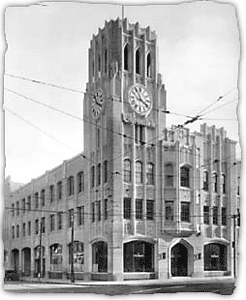
The president of the board is Jim Lazarus, who is the senior vice president for public policy at the San Francisco Chamber of Commerce and a regular advocate for greater development of the city. There are other real estate and corporate representatives on that board as well, most notably Martin Cepkauskas, director of real estate for the Western Properties Division of Hearst Corporation, which is the middle of seeking city permits and approval to redevelop its historically significant Chronicle Building, where the paper has been since 1924, adjacent to Mint Plaza.

So we asked Lazarus, Johns, and Cepkauskas about what would seem to be a conflict of interests between board members who are pushing for development and John’s new role as a guardian of historically significant buildings. After I e-mailed the trio, Lazarus responded to the group “I will respond to this guy,” to which Johns wrote “good” and refused to answer further Guardian inquiries.

In a phone interview, Lazarus said there was no conflict because “nobody has any financial interest in the Mint Project. It’s a pure nonprofit board.” He also made the distinction that “we’re concerned with preserving San Francisco history, not buildings.” But in the name preserving history, the society helped create Mint Plaza, a welcoming plaza across from the Chronicle Building that is ringed by restaurants, retail, and office space.

Lazarus personally bought Cepkauskas onto the society’s board last year because the Hearst project “will have to do community mitigation and I want the Mint to be the beneficiary of that mitigation.” Yet he denies that there is a conflict between the interests of his board and the Hearst project and that of historic preservation and the public interest.

Lazarus also said “I assume Richard would like to stay on our board,” and Lazarus sees no reason why Johns should resign even though the Hearst project is likely to come before the commission later this year.

Don’t nobody still give a damn?

33

For the second day in a row, Aboriginal Blackmen United (ABU), a community organization that represents unemployed construction workers from Bayview Hunters Point, embarassed University of California officials by blocking the front gate of UC’s $1.7 billion Mission Bay hospital project.


ABU members claim UCSF is refusing to hire workers from local neighborhoods and they say they are prepared to go to jail if their demands aren’t met.

“At 6: 30 this morning, we were full of energy,” ABU President James Richards said on the first day of the protest. And ABU members recalled that they saw ” nothing but skunks”  when they arrived outside the construction site at 6 a.m.


“They’d locked up everything and guarded back fence, so we stopped everyone from coming in this front entrance, including management and cars,” Richards said, as he stood outside UC’s 16th Street and Fourth Street construction site, while ABU members chanted, “If we don’t work, nobody works.”


Richards said the police told employees to go around to the site’s back entrance, as they made calls, trying to figure out what was going on.

“We’ve been out here every day for almost a year and nothing has changed except the paperwork,” Richards continued. “We have qualified union workers standing outside the job site that are ready, willing, and able to work and if the community doesn’t work, no one works.”

But UC officials say they want the Mission Bay Hospitals project to be a model for the nation of how to put people to work, even though, as a state agency, they cannot mandate local hire requirements or give preference to any particular domicile.

“UC is very committed to maximizing local hire where we can,” Cindy Lima, executive director of the Mission Bay Hospitals project, said. “It’s unfortunate that there is a protest because it gives the sense that we haven’t been working with the community, when in fact we have been working with the Mayor’s Office, CityBuild and every stakeholder interested in this project, including ABU.”

Richards said ABU decided to mount their protest this week for two main reasons: to challenge UC’s claims that it has been hiring more local residents at the site, and to register anger over the distribution of a  flier that encouraged local residents interested in working at the UC site and other construction projects in town to sign up with a group called the San Francisco Workforce Collaborative.


The flier, which fueled suspicions that UC is trying to divide the city’s disadvantaged communities, named Dr. Arelious Walker as President of BayView Hope Community Development Corporation.


“We at the San Francisco Workforce Collaborative partnered with BayView Hope CDC are currently doing sign-ups in ALL trades to afford you the opportunity to work on these projects,” the flier stated.


Richards was particularly outraged that Walker was calling his group “the San Francisco Workforce Collaborative,” since this was the name UC used to describe its community outreach efforts last year.


“We guys were with Walker when he was fighting the Nation of Islam’s attempt to stop development at the shipyard, so it hurts so bad to see this,” he said, pointing to a copy of Walker’s flier, which listed Jan. 25 and Jan. 27 as sign-up dates at Walker’s Gilman Avenue building.

“All I know is that ABU is here for the long run and we’re prepared to go to jail,” Richards said. “Never again will we stand by and let people come into the southeast community and take our jobs. We’re going to fight until the end.”


“When Dwayne Jones was with the City, DPR [which is UC’s construction contractor] was trying to notify him about requirements for job hire, and Jones was supposed to notify ABU for job placements, but now we find out that they have brought in another consultant,” Richards said, noting that Jones has left the city and now works for Platinum Advisors. “And now all of a sudden, UC hires this company and is giving this list to DPR?” Richards continued, noting that UC has hired a consultant called Marinus Lamprecht to handle job submissions at its hospital site, but no one from ABU had been hired, despite the fact that Richards submitted five names to UC, months ago.


“We’ve been demonstrating at this site and marching down the street, and UC was telling us at that time, we’re gonna put some of your folks to work,” Richards said. ” All I know is that ABU is working diligently to try and get our people hired. We want to be the first organization, not the only organization to have people work here. After demonstrating and protesting for over a year, we feel that the people who brought UC to the table and supported the city’s new local hire legislation have the right to work first. But it always seems that the powers-that-be go outside our community to cause division amongst the community.”

“We’ve been here since 6 a.m. today and this is the community,” Richards continued. “No so-called community leaders have joined forces with us, including pastors and political leaders. And that’s why we say, don’t nobody give a damn about us, but us.”

Reached by phone, UCSF’s news director Amy Pyle clarified that in recent weeks UC has committed to voluntary hiring goals at the site. The goals start at 20 percent, and increase 5 percent each year until the completion of the project in 2014, Pyle said.

This means UCSF’s voluntary local hiring plan was put together shortly after the Board of Supervisors approved Sup. John Avalos’ mandatory local hire legislation for city-funded projects. Former Mayor Gavin Newsom refused to sign Avalos’ legislation, leaving Mayor Ed Lee to figure out how to implement Avalos’ legislation, which mandates 20 percent local hire this year, increasing 5 percent each year until mandatory 50 percent goals are reached. And UCSF officials stress that, as a state agency, UC can’t have quotas and isn’t subject to the city’s local hire mandates, since its hospital project is not city-funded. But they note that the university has set voluntary local hiring goals, held monthly meetings with stakeholders, and is currently working on carving out financial incentives to encourage contractors to achieve these voluntary goals.

“Our voluntary goals are not a result of their protest,” UCSF news director Pyle said. “We have been aware of the local hire concerns since before they were protesting. So, I don’t think people should expect there to be a quid pro quo.”

And Lima observed that UC has tried to maximize local hire on construction sites, since 1993. “It’s ranged from 7 to 24 percent, so the average has been about 12 percent,” she said, stressing that a lot has changed in recent years, regarding UCSF, local hire, and the overall economy.

“For a start, this project is six times larger than anything we’ve done,” Lima said. “There’s been a shift in capacity of community groups. The city has centralized its actions, concerning local hire efforts. And now it’s advancing its local hire goals, and then there’s the economy.”

Lima said that it’s because of this changed landscape that UCSF is ramping up its efforts to hire local residents.

“While we cannot mandate that our contractors hire locally, we are holding monthly meetings that are open to all community stakeholders,” she said. “We are doing extensive outreach to offer any stakeholders to submit names. We are keeping a list so as jobs become available. We are able to provide those names to unions for job call opportunities. And we have tried to carve out part of our payment to contractors to put it into an incentive program if they hit those goals.”

Lima said the final details of the incentive plan haven’t been worked out.
“But they are substantial,” she said.

She insisted that ABU did not succeed in completely shutting down UC Mission Bay Hospitals’ construction site in the last two days, and she claimed that if the goals of UCSF’s voluntary local hire program are reached, UC will double its historical local hire average, eventually.

Lima pointed to UC Mission Bay’s website where minutes of a Jan. 13 meeting between UCSF and representatives for the local workforce are posted.

Those minutes show that UCSF has agreed to work with its Mission Bay construction contractor DPR “to ensure that qualified San Francisco residents have access to jobs, Lima said, and that names can be submitted to consultant Marinus Lamprecht, using submission forms available here.

UCSF also intends to prepare trade-by-trade name call opportunities and has promised to report on actual local hiring progress at monthly community workforce meetings to be held the second Thursday of each month, she said.


UCSF’s news director Amy Pyle clarified that under UC’s voluntary local hire program,  “local residents mean people who live in San Francisco generally.”


“Of course we are looking to be good neighbors and hire people from an area we know has been hard hit,” Pyle said.

Meanwhile, Lima said UC has not entered into any contract with BayView Hope CDC and requested a copy of Walker’s flier to see if his group “overstepped.”
“For many years, UC did have a memorandum of understanding with the community and was working with a group called the San Francisco Workforce Collaborative,” Lima clarified. “The name has lasted, but the organization has changed. It was very successful historically, and there’s been an effort in the community to resurrect that group and make it stronger, but the landscape has changed, so we decided to open the doors to everybody.”

According to Lima, any interested party can now submit names to UC’s sign-up list.

“I carry that list around with me,” Lima said, promising folks will be hired in the order their names are received, if they match available opportunities.

“The contractors talk to the subcontractors who give them their best monthly estimates,” Lima said, noting that the subcontractors arrive with a core crew and then call the unions to fill their remaining needs.


Lima said part of the current uproar over local hire at UC Mission Bay’s hospital site stems from the misperception that there are lots of jobs available now.


“Job opportunities should ramp up in May, but right now, they are installing 1,052 structural piles,” she said. “So if there is an opportunity for a carpenter or a laborer to get decks built, we call the union.”

Lima added that folks are welcome to review data that UC’s compliance officer gathers.
‘It’s in our and the community’s best interest to put people to work,” she said.

But so far UCSF’s stance has continued to angered ABU members. They note that the university’s local hiring rates hovered at less than 10 percent until a series of ABU-led community protests in late 2010 forced UCSF and its contractor DPR  to request voluntary reporting of worker residency. 

And while UCSF claims that local employment is on the rise at the site, ABU questions the reliability of the university’s self-reported performance at the site. As a result, ABU imembers continued to protest at the site Jan. 26, even as efforts appeared to be underway to address their concerns.

“Dr. Walker called us, he was apologetic,” ABU’s Ashley Rhodes told the Guardian Jan. 26, referring to BayView Hope CDC’s flier. “And the Mayor’s Office just called, saying they wanted to talk with James [Richards, ABU’s leader]. So, that’s where he is right now. But tomorrow we may go to jail.”

Rhodes noted that on Jan. 26, DPR hired one carpenter from ABU’s list.  “And a female receptionist is being interviewed, but we still have three out of five names we submitted last year to bring in,” he said.

Outside UC’s Mission Bay construction site , Michelle Carrington, a 58-year-old Hunters Point resident, continued her protest for a second day straight.

“I’ve been out of work for ten years,” Carrington said, noting that she has over a decade of construction experience as a flagger and an operating engineer.
“I graduated from YCD in 1999,” she said, referring to Young Community Developers. “Dwayne Jones trained me. He just left the Mayor’s Office and now he is working to help us get jobs.”

Music Listings

0

Music listings are compiled by Cheryl Eddy. Since club life is unpredictable, it’s a good idea to call ahead to confirm bookings and hours. Prices are listed when provided to us. Submit items for the listings at listings@sfbg.com. For further information on how to submit items for the listings, see Picks.

WEDNESDAY 19

ROCK/BLUES/HIP-HOP

Atlantic/Pacific, Ash Reiter, Sonny Pete, DJs Bagel Ted and Julie T Milk Bar. 8pm, $5.

Tia Carroll and Hard Work Biscuits and Blues. 8 and 10pm, $15.

Dead Westerns, Mosshead, Street Pyramids Hemlock Tavern. 9pm, $6.

Zoe Keating, Inu feat. Zoe Keating, Tycho Independent. 8pm, $17.

Bryan McPherson, Mick Leonardi, Graham Patzner Hotel Utah. 8pm, $7.

Third Victim of Abigail Rutledge, SuperfinosVTO, Young Lovers Kimo’s. 9pm.

White Manna, Greg Ashley, Outlaw, Rachel Fannan Elbo Room. 9pm, $7.

Young Prisms, Melted Toys Bottom of the Hill. 9pm, $10.

JAZZ/NEW MUSIC

Cat’s Corner with Christine and Nathan Savanna Jazz. 9pm, $10.

Congress, Conspiracy of Venus, Mindi Hadan Café Du Nord. 8:30pm, $10.

Dink Dink Dink, Gaucho, Michael Abraham Amnesia. 7pm, free.

Ben Marcato and the Mondo Combo Top of the Mark. 7:30pm, $10.

Michael Parsons Revolution Café, 3248 22nd St, SF; (415) 642-0474. 8:30pm, free.

Roy Hargrove Quintet Yoshi’s San Francisco. 8 and 10pm, $16-22.

Paula West and the George Mesterhazy Quartet Rrazz Room. 8pm, $35.

FOLK/WORLD/COUNTRY

Triskela Koret Auditorium, San Francisco Public Library, 100 Larkin, SF; (510) 548-3326. 6pm, free.

DANCE CLUBS

Booty Call Q-Bar, 456 Castro, SF; www.bootycallwednesdays.com. 9pm. Juanita Moore hosts this dance party, featuring DJ Robot Hustle.

Cannonball Beauty Bar. 10pm, free. Rock, indie, and nu-disco with DJ White Mike.

Hands Down! Bar on Church. 9pm, free. With DJs Claksaarb, Mykill, and guests spinning indie, electro, house, and bangers.

Jam Fresh Wednesdays Vessel, 85 Campton, SF; (415) 433-8585. 9:30pm, free. With DJs Slick D, Chris Clouse, Rich Era, Don Lynch, and more spinning top40, mashups, hip hop, and remixes.

Mary-Go-Round Lookout, 3600 16th St, SF; (415) 431-0306. 10pm, $5. A weekly drag show with hosts Cookie Dough, Pollo Del Mar, and Suppositori Spelling.

Respect Wednesdays End Up. 10pm, $5. Rotating DJs Daddy Rolo, Young Fyah, Irie Dole, I-Vier, Sake One, Serg, and more spinning reggae, dancehall, roots, lovers rock, and mash ups.

Synchronize Il Pirata, 2007 16th St, SF; (415) 626-2626. 10pm, free. Psychedelic dance music with DJs Helios, Gatto Matto, Psy Lotus, Intergalactoid, and guests.

THURSDAY 20

ROCK/BLUES/HIP-HOP

Jonathan Coulton, Paul and Storm Great American Music Hall. 7:30pm, $25.

Inferno of Joy, White Barons, Bite, Last Internationale Thee Parkside. 9pm, $6-7.

Mac Miller Slim’s. 9pm, $16.

Nectarine Pie, These Hills of Gold, Memory’s Mystic Band Hemlock Tavern. 9pm, $7.

Peter Wolf Crier, Retribution Gospel Choir, Cannons and Clouds Bottom of the Hill. 9pm, $10.

Johnny Vernazza and the Knockouts Biscuits and Blues. 8 and 10pm, $15.

Wailers, Tomorrows Bad Seeds, Duane Stephenson Independent. 9pm, $25.

Worker Bee, Sleeptalks, Nick Reinhart, Sunbeam Rd. Café Du Nord. 8pm, $10.

JAZZ/NEW MUSIC

Ara Anderson and Michael McIntosh Revolution Café, 3248 22nd St, SF; (415) 642-0474. 8:30pm, free.

Roy Hargrove Quintet Yoshi’s San Francisco. 8 and 10pm, $16-22.

Savanna Jazz Trio and jam session Savanna Jazz. 7:30pm, $5.

Stompy Jones Top of the Mark. 7:30pm, $10.

Paula West and the George Mesterhazy Quartet Rrazz Room. 8pm, $40.

FOLK/WORLD/COUNTRY

Adam Traum Atlas Café. 8pm, free.

DANCE CLUBS

Afrolicious Elbo Room. 9:30pm, $10. DJs Pleasuremaker and Señor Oz spin Afrobeat, tropicália, electro, samba, and funk.

Caribbean Connection Little Baobab, 3388 19th St, SF; (415) 643-3558. 10pm, $3. DJ Stevie B and guests spin reggae, soca, zouk, reggaetón, and more.

Club Jammies Edinburgh Castle. 10pm, free. DJs EBERrad and White Mice spinning reggae, punk, dub, and post punk.

Drop the Pressure Underground SF. 6-10pm, free. Electro, house, and datafunk highlight this weekly happy hour.

Good Foot Som., 2925 16th St, SF; (415) 558-8521. 10pm, free. With resident DJs Haylow, A-Ron, Prince Aries, Boogie Brown, Ammbush, plus food carts and community creativity.

Guilty Pleasures Gestalt, 3159 16th St, SF; (415) 560-0137. 9:30pm, free. DJ TophZilla, Rob Metal, DJ Stef, and Disco-D spin punk, metal, electro-funk, and 80s.

Jivin’ Dirty Disco Butter, 354 11th St., SF; (415) 863-5964. 8pm, free. With DJs spinning disco, funk, and classics.

Koko Puffs Koko Cocktails, 1060 Geary, SF; (415) 885-4788. 10pm, free. Dubby roots reggae and Jamaican funk from rotating DJs.

Mestiza Bollywood Café, 3376 19th St, SF; (415) 970-0362. 10pm, free. Showcasing progressive Latin and global beats with DJ Juan Data.

Nightvision Harlot, 46 Minna, SF; (415) 777-1077. 9:30pm, $10. DJs Danny Daze, Franky Boissy, and more spinning house, electro, hip hop, funk, and more.

Peaches Skylark, 10pm, free. With an all female DJ line up featuring Deeandroid, Lady Fingaz, That Girl, and Umami spinning hip hop.

Popscene Rickshaw Stop. 9pm, $10. With Royal Bangs and Foster the People.

Two Thousand a LOVE-in Kimo’s. 9pm. With SF Block Party, Seapora, and Gypsy Love.

FRIDAY 21

ROCK/BLUES/HIP-HOP

Bayonics, Skins and Needles Elbo Room. 10pm, $10-13.

Jay Brannan, Dave Smallen, Jhameel Bottom of the Hill. 9:30pm, $14.

Shane Dwight Biscuits and Blues. 8 and 10pm, $20.

Guster Fillmore. 8pm, $27.50.

Man/Miracle, Butterfly Bones, Elephant and Castle Hemlock Tavern. 9:30pm, $7.

Mission Players Coda. 10pm, $10.

Papa Grows Funk, Allofasudden Slim’s. 9pm, $25.

Passenger and Poilot, Black Swan, Hypnotist Collectors Red Devil Lounge. 8pm, $8.

Pimps of Joytime, Staxx Brothers Independent. 9pm, $25.

Planet Booty, Super Adventure Club, Greenhorse, MC Ladyfinger Café Du Nord. 9pm, $12.

Ra Ra Riot, Givers Great American Music Hall. 9pm, $18.

Sassy!!!, Witchburn, Diemond El Rio. 9pm, $5.

Harley White Jr. Studio Gracia, 19 Heron, SF; www.beyondblues.com. 8pm, $15.

JAZZ/NEW MUSIC

Benn Bacot Savanna Jazz. 7:30pm, $5.

Black Market Jazz Orchestra Top of the Mark. 9pm, $10.

Emily Anne’s Delight Revolution Café, 3248 22nd St, SF; (415) 642-0474. 9pm, free.

Roy Hargrove Quintet Yoshi’s San Francisco. 8 and 10pm, $20-26.

Scott Amendola Quartet Red Poppy Art House. 8pm, $12-20.

Paula West and the George Mesterhazy Quartet Rrazz Room. 8pm, $45.

DANCE CLUBS

Dirty Rotten Dance Party Madrone Art Bar. 9pm, $5. With DJs Morale, Kap10 Harris, and Shane King spinning electro, bootybass, crunk, swampy breaks, hyphy, rap, and party classics.

DJ Meat Hookz Thee Parkside. 8pm, free. Funk, soul, and hip-hop.

DJ Momentum Medjool, 2522 Mission, SF; www.medjoolsf.com. 10:30pm, $10.

DJ What’s His Fuck Riptide Tavern. 9pm, free. Old school punk rock and other gems.

Exhale, Fridays Project One Gallery, 251 Rhode Island, SF; (415) 465-2129. 5pm, $5. Happy hour with art, fine food, and music with Vin Sol, King Most, DJ Centipede, and Shane King.

Fat Stack Fridays Koko Cocktails, 1060 Geary, SF; (415) 885-4788. 10pm, free. With rotating DJs B-Cause, Vinnie Esparza, Mr. Robinson, Toph One, and Slopoke.

Fubar Fridays Butter, 354 11th St., SF; (415) 863-5964. 6pm, $5. With DJs spinning retro mashup remixes.

Good Life Fridays Apartment 24, 440 Broadway, SF; (415) 989-3434. 10pm, $10. With DJ Brian spinning hip hop, mashups, and top 40.

Hot Chocolate Milk. 9pm, $5. With DJs Big Fat Frog, Chardmo, DuseRock, and more spinning old and new school funk.

House of Voodoo Blue Macaw, 2565 Mission, SF; www.houseofvoodoo.com. 9pm, free ($5 after 10pm).

Oldies Night Knockout. 9pm, $2-4. DJs Primo, Daniel, and Lost Cat spin doo-wop, one-hit wonders, soul, and more.

Radioactivity 222 Hyde, 222 Hyde, SF; www.222hyde.com. 6-9:30pm. Kraut-minimal wave-cosmic-Italo standards with Cole Palme, Tristes Tropiques, and Robots.In.Heat.

Rockabilly Fridays Jay N Bee Club, 2736 20th St, SF; (415) 824-4190. 9pm, free. With DJs Rockin’ Raul, Oakie Oran, Sergio Iglesias, and Tanoa “Samoa Boy” spinning 50s and 60s Doo Wop, Rockabilly, Bop, Jive, and more.

Singapore 60s Happy Hour Knockout. 5:30pm, free. DJ Sid Presley spins rare pop, garage, and freakbeat from SE Asia, circa 1964-72.

Some Thing Stud. 10pm, $7. VivvyAnne Forevermore, Glamamore, and DJ Down-E give you fierce drag shows and afterhours dancing.

Trannyshack: Star Search DNA Lounge. 9:30pm, $15. Heklina and Peaches Christ host this drag-tastic talent show.

Vintage Orson, 508 Fourth St, SF; (415) 777-1508. 5:30-11pm, free. DJ TophOne and guest spin jazzy beats for cocktalians.

SATURDAY 22

ROCK/BLUES/HIP-HOP

Justin Ancheta, Con Brio, Titan Ups Amnesia. 9pm.

Asylum Street Spankers Great American Music Hall. 8pm, $30.

David Berkeley. Bhi Bhiman Swedish American Hall (upstairs from Café Du Nord). 8pm, $22.

Family Crest, Moanin’ Dove, Welcome Matt Café Du Nord. 9pm, $12.

Fu Manchu, Dusted Angel Bottom of the Hill. 10pm, $12.

Hate Crime, Grandma’s Boyfriend, Symbolick Jews, Dinner With the Kids Li-Po Lounge. 9pm, $5.

Josh Klipp, Joe Stephens, Alex Davis, Storm Florez, Eli Conley El Rio. 6pm, free.

Lecherous Gaze, Ripper Bender’s, 800 S. Van Ness, SF; www.bendersbar.com. 10pm, $5.

Meris, High Horse, Super Proxy Thee Parkside. 3pm, free.

Old 97s Fillmore. 9pm, $26.50.

Pigs, Outdoorsmen, Dead Meat, Dadfag Hemlock Tavern. 9:30pm, $7.

Pimps of Joytime, J Boogie’s Dubtronic Science Independent. 9pm, $25.

Rubber Souldiers, Moonlight Rodeo Slim’s. 9pm, $15.

Sioux City Kid and the Revolutionary Ramblers, That Ghost, Hanalei, Thee Landlords Thee Parkside. 9pm, $7.

Sugaray and CK All Stars Biscuits and Blues. 8 and 10pm, $20.

Wonderbread 5, Foreverland Bimbo’s 365 Club. 9pm, $20.

JAZZ/NEW MUSIC

Gina Harris and Torbie Phillips Savanna Jazz. 7:30pm, $8.

Roy Hargrove Quintet Yoshi’s San Francisco. 8 and 10pm, $26.

Jesse Scheinin Revolution Café, 3248 22nd St, SF; (415) 642-0474. 9pm, free.

Thingamajigs Performance Group Meridian Gallery, 535 Powell, SF; (510) 444-1322. 8pm, $10.

Paula West and the George Mesterhazy Quartet Rrazz Room. 8pm, $45.

FOLK/WORLD/COUNTRY

Kafana Balkan, Brass Menazeri, DJ Zeljko Rickshaw Stop. 9pm, $10.

Genghis Blues Review Kaleidoscope Free Speech Zone, 3109 24th St, SF; www.kaleidoscopefreespeechzone.com. 8:30pm, $10. With Kongar-ol Ondar and more.

Pickpocket Ensemble Red Poppy Art House. 8pm, $12-15.

“Suonare e Passeggiare: Extravagant Music from 17th Century Italy and Spain” Most Holy Redeemer Church, 100 Diamond, SF; www.musicsources.org. 2pm, $20.

Craig Ventresco and Meredith Axelrod Atlas Café. 4pm, free.

DANCE CLUBS

Bar on Church 9pm. Rotating DJs Foxxee, Joseph Lee, Zhaldee, Mark Andrus, and Nuxx.

Barracuda 111 Minna. 9pm, $10. Eclectic 80s music with DJs Damon and Phillie Ocean plus 80s cult video projections, a laser light show, prom balloons, and 80s inspired fashion.

Bootie: Boston in SF with DJ BC DNA Lounge. 9pm, $6-12. Mash-ups from the East Coast.

Debaser Knockout. 9pm, $5. DJ Jamie Jams, Emdee, and Stab Master Arson spin 90s hip-hop.

DJ Duserock Medjool, 2522 Mission, SF; www.medjoolsf.com. 10:30pm, $10.

4 Years: One Funktion Elbo Room. 10pm, $5-10. 4OneFunktion hip-hop party four-year anniversary with sets by B. Cause and Mista B, F.A.M.E., Light Up the Darkness, and more.

Go Bang! Deco Lounge, 510 Turk, SF; www.decosf.com. 9pm, free ($5 after 10pm). Atomic dancefloor disco action with Eddy Bauer, DJ FreshStep, and DJ Flight.

HYP Club Eight, 1151 Folsom, SF; www.eightsf.com. 10pm, free. Gay and lesbian hip-hop party, featuring DJs spinning the newest in the top 40s hip hop and hyphy.

Jersey Score Underground SF. 9pm, free ($5 after 10pm). Jersey Shore-themed gay dance party with DJs Robert Jeffrey and Juan Garcia.

Reggae Gold Club Six. 9pm, $15. With DJs Daddy Rolo, Polo Mo’qz, Tesfa, Serg, and Fuze spinning dancehall and reggae.

Rock City Butter, 354 11th St., SF; (415) 863-5964. 6pm, $5 after 10pm. With DJs spinning party rock.

Spirit Fingers Sessions 330 Ritch. 9pm, free. With DJ Morse Code and live guest performances.

SUNDAY 23

ROCK/BLUES/HIP-HOP

Angels on Acid, Cystem Cex, NPMN DNA Lounge. 8pm, $10.

Beep!, Dinosaur Feathers, Careerers Hemlock Tavern. 9pm, $6.

Black Swans, Will Sprott, Pancho-San Knockout. 9pm, $5.

Bryan Greenberg Café Du Nord. 8pm, $14.

Madball, Cruel Hand, Crucified, Boundaries Thee Parkside. 7:30pm, $15.

Jake Mann and the Upper Hand, Grand Lake, Il Gato Bottom of the Hill. 8:30pm, $8.

Sour Mash Hug Band, Crux Amnesia. 9pm, $7-10.

Symbolick Jews, Grandma’s Boyfriend, Stowaways, Subfobias Kimo’s. 8pm, $7.

La Veda, Epiphany Castro, Eric De Arantahna El Rio. 6pm, $8.

JAZZ/NEW MUSIC

Los Boleros Savanna Jazz. 7:30pm, $5.

Christy and the Lowdowns Revolution Café, 3248 22nd St, SF; (415) 642-0474. 9pm, free.

Lua Hadar, Jason Martineau, Dan Feiszli Bliss Bar, 4026 24th St, SF; www.blissbarsf.com. 4:30pm, $10.

Paula West and the George Mesterhazy Quartet Rrazz Room. 7pm, $40.

FOLK/WORLD/COUNTRY

Blue Diamond Fillups Thee Parkside. 4pm, free.

Kat Parra Latin/World Ensemble Red Poppy Art House. 7pm, $12-20.

DANCE CLUBS

DiscoFunk Mashups Cat Club. 10pm, free. House and 70’s music.

Dub Mission Elbo Room. 9pm, $6. Dub, roots, and classic dancehall with DJs Sep, J Boogie, and guest Kentyah.

Gloss Sundays Trigger, 2344 Market, SF; (415) 551-CLUB. 7pm. With DJ Hawthorne spinning house, funk, soul, retro, and disco.

Honey Soundsystem Paradise Lounge. 8pm-2am. “Dance floor for dancers – sound system for lovers.” Got that?

Kick It Bar on Church. 9pm. Hip-hop with DJ Zax.

Religion Bar on Church. 3pm. With DJ Nikita.

Swing Out Sundays Rock-It Room. 7pm, free (dance lessons $15). DJ BeBop Burnie spins 20s through 50s swing, jive, and more.

MONDAY 24

ROCK/BLUES/HIP-HOP

Midnite, Jah Yzer Independent. 9pm, $28.

War Yoshi’s San Francisco. 8pm, $40.

JAZZ/NEW MUSIC

Lavay Smith Swinget with Jules Broussard Enrico’s, 504 Broadway, SF; (415) 982-6223. 7pm, free.

DANCE CLUBS

Black Gold Koko Cocktails, 1060 Geary, SF; (415) 885-4788. 10pm-2am, free. Senator Soul spins Detroit soul, Motown, New Orleans R&B, and more — all on 45!

Death Guild DNA Lounge. 9:30pm, $3-5. Gothic, industrial, and synthpop with Joe Radio, Decay, and Melting Girl.

Krazy Mondays Beauty Bar. 10pm, free. With DJs Ant-1, $ir-Tipp, Ruby Red I, Lo, and Gelo spinning hip hop.

M.O.M. Madrone Art Bar. 6pm, free. With DJ Gordo Cabeza and guests playing all Motown every Monday.

Manic Mondays Bar on Church. 9pm. Drink 80-cent cosmos with Djs Mark Andrus and Dangerous Dan.

Network Mondays Azul Lounge, One Tillman Pl, SF; www.inhousetalent.com. 9pm, $5. Hip-hop, R&B, and spoken word open mic, plus featured performers.

Skylarking Skylark. 10pm, free. With resident DJs I & I Vibration, Beatnok, and Mr. Lucky and weekly guest DJs.

Smile! Knockout. 9pm, $7. DJ Neil Martinson spins psych, soul, glam, bubblegum, and more.

TUESDAY 25

ROCK/BLUES/HIP-HOP

Paul Banks and the Carousels Elbo Room. 9pm.

Barn Owl, Phil Manley Life Coach, Diego Andres Gonzalez Hemlock Tavern. 9pm, $6.

Sonya Cotton, Honeycomb, Ever Isles Rickshaw Stop. 8pm, $10.

Eli Wise Band, Evon, Steel Hotcakes El Rio. 7pm, free.

Ghost of a Saber Tooth Tiger, Laura Gibson Café Du Nord. 8pm, $17. Amos Lee, Vusi Mahlasela Fillmore. 8pm, $25. Midnite, Jah Yzer Independent. 9pm, $28. Sandwitches, Art Museums, Soft Bombs, Rachel Fannan Slim’s. 8pm, $5. War Yoshi’s San Francisco. 8pm, $40. Wovenhand, Git Some, Common Eider King Eider Bottom of the Hill. 9pm, $13. FOLK/WORLD/COUNTRY Graham Connah Revolution Café, 3248 22nd St, SF; (415) 642-0474. 8:30pm, free. JAZZ/NEW MUSIC Ricardo Scales Top of the Mark. 6:30pm, $5. DANCE CLUBS Eclectic Company Skylark, 9pm, free. DJs Tones and Jaybee spin old school hip hop, bass, dub, glitch, and electro. Extra Classic DJ Night Little Baobab, 3388 19th St, SF; www.bissapbaobab.com. 10pm. Dub, roots, rockers, and reggae from the 60s, 70s, and 80s. Share the Love Trigger, 2344 Market, SF; (415) 551-CLUB. 5pm, free. With DJ Pam Hubbuck spinning house. Stump the Wizard Argus Lounge. 9pm, free. Interactive DJ game with What’s His Fuck and the Wizard.


Bye bye blackbird

0

arts@sfbg.com

FILM During the course of writing this review, I will at some point be ensnared by a sentence, reworking its syntax and flow across many notebook pages. For some of us, this is what writing is. When we praise commanding literary performances as great writing, we’re actually talking about reading. It’s not surprising that film portraits of artists usually only give us a mime of their craft; biography and circumscribed performance are shields from the crooked time of the creative process.

Pedro Costa made a rare “painters painting” movie of the French filmmakers Jean-Marie Straub and Danièle Huillet, and now he has done another with Jeanne Balibar. The two films trail distinct voices: Where Does Your Hidden Smile Lie? (2001) had the voluble Straub, whereas in Ne change rien Balibar speaks an obscure language of process (“Bring out the silences.” “This is fragile.”) that is outside the paltry domain of the conventional music documentary.

Costa forgoes exposition, and his stationary long takes require patience. Early on in Ne change rien, we watch Balibar work through a compact melodic phrase for more than 10 minutes. Stretched out of shape in this way, singing comes to seem distinctly of the body — equal parts athletic and spiritual exercise. Warhol’s unstinting camera is an obvious reference point for Costa’s staring-down-the-void, but while it’s true the Portuguese director doesn’t fear boredom, neither does he court it. He forgets the audience but gives us a greater taste of being for it. His tendency to black out vast portions of the frame makes a special kind of sense in Balibar’s recording studio; herein, both sound and vision register as isolated degrees of a larger frame.

Balibar’s appearance seems to change from one song to the next, and Costa’s signature shadows accentuate this disappearing act — we might call it seduction. Though the film shows us Balibar live onstage and training for opera — a different person almost — the heart of Ne change rien is in the studio, where we get to know a handful of songs as we would people (i.e., not all at once). A recording studio is not conducive to spectators; indeed, it can be difficult to remain engaged even as a participant. It is where musicians break their songs apart for the discrete elements can be recombined as a dynamic illusion of a single performance. Similarly to the Straub-Huillet portrait, Costa situates Ne change rien in an enclosed chamber of creative production while withholding the composite product assembled there.

We are left clinging to fragments, and yet the offhanded threads between shots (a repeated quip about movie sets, a cat) underscore the more resonant elucidations of the songs in construction. As Balibar circles a melody, so the tunes coil the sequences — no wonder they’ve been haunting my sleep. Late in the game of “Cinéma,” Costa cuts between guitarist Rodolphe Burger and the recording engineer listening to the full playback of the song and Balibar in a different room recording its vocal track (she hears what they do on headphones, but we hear her voice alone). This is the only time we see a piece of the outside world, and you will have to take my word that the window and her voice are one. At the end of Ne change rien, Costa cuts to the musicians in a backstage room flooded with artificial light. Graphically, the shot is the opposite of all that’s come before. The group runs through a lovely song we haven’t yet heard (“Rose”). The effortlessly unfolding time-frame of rehearsal is something new too. It looks a lot like grace. 

NE CHANGE RIEN

Thurs/20, 7:30 p.m.; Sun/23, 2 p.m., $6–$8

Yerba Buena Center for the Arts

701 Mission, SF

(415) 978-2787

www.ybca.org

Crack-ups

0

arts@sfbg.com

FILM Who wants to die for art? That question, immortally screamed by Divine at the climax of John Waters’ Female Trouble (1974), has most recently been taken up by Darren Aronofsky’s campy psychological thriller Black Swan (2010), in which Natalie Portman’s fragile ballerina discovers that giving her all as the good and evil leads in an edgy production of Swan Lake requires giving up her sanity, and eventually, her life.

The somewhat romantic notion that an overinvestment in one’s art can lead to a psychotic break with reality also underlies Ronald Colman’s far more gripping, Oscar-winning performance in George Cukor’s 1947 backstage noir A Double Life, a film Black Swan perhaps owes as much a debt to as it does to its other cinematic antecedents such as The Red Shoes (1948) or All About Eve (1950) (2007’s I Know Who Killed Me also deserves a lesser place on that list).

In the film — which screens at the Castro Theatre in a new archival print as part of Noir City 9 — Colman stars as Anthony John, a celebrated stage actor with a nasty temper who winds up playing the title role in a production of Othello opposite his ex-wife Brita (Signe Hasso), who has been cast as Desdemona. As John gets deeper into his character, his own lingering frustrations over his failed marriage become cross-wired with Othello’s jealous rage resulting in a fatal instance of life imitating art. "What seems a fairly safe profession, acting," wrote New York Times film critic Bosley Crowther in his review of the film, "is as dangerous as they come."

Cowritten by husband-and-wife team Ruth Gordon and Garson Kanin (who themselves were no strangers to the stage) and photographed with Expressionistic verve by Milton R. Krasner, A Double Life is — true to its title — filled with mirror imagery, split frames, and opposites locked in conflict. It also sets the stage, if you will, for the other titles in this year’s Noir City program, many of which turn on a character struggling to keep from splitting in two.

So often in film noir, the burden of proof is so great as to drive our hero or heroine mad as they try to convince those around them that they’re innocent, in danger, or more often than not, both. Such is the case with Pat O’Brien’s museum curator in Crack-Up (1947), who survives a horrible accident only to be told it never happened, or Barbara Stanwyck’s imperiled, bed-ridden rich girl in 1948’s Sorry, Wrong Number (Stanwyck, it should be noted, is all over this year’s festival, including a blistering starring turn as the titular addict in 1949’s The Lady Gambles).

In some cases, as with two of this year’s many not-on-DVD rarities, the protagonists actually do have evil twins. Olivia de Havilland beat Hayley Mills to the punch playing both sisters in Robert Siodmak’s The Dark Mirror (1946), in which the evil de Havilland uses her physical resemblance to frame her sweet sister (also de Havilland) for murder. Meanwhile, in Among the Living (1941), Albert Dekker goes up against himself as a brain-damaged psychopath who terrorizes a small town and the fraternal twin who must take him out.

This year’s nuttiest film by far is Fritz Lang’s Freudian roller-coaster ride The Secret Beyond the Door (1948). Faster than you can say Rebecca (1940), Joan Bennett’s naïve newlywed has been whisked off to her new husband’s big, dark house full of repressed secrets and a spinsterish head housekeeper. As gorgeous to look at is its plot is difficult to follow, The Secret Beyond the Door is a film you’d have to be nuts not to see.

NOIR CITY 9

Jan. 21–30, $10

Castro Theatre

429 Castro, SF

(415) 621-6120

www.noircity.com

2011 Cannabis Club Guide

0

Welcome to our 2011 Cannabis Club Guide. We’ve added four new clubs to our updated guide, a continuation of last year’s.

As I created my list of the clubs I planned to review, I found abundant online resources such as San Francisco Cannabis Clubs and Weed Tracker. But an even better indicator of how mainstream this industry has become were the extensive listings and reviews on Yelp.com.

I combined that information with recommendations from a variety of sources I interviewed to develop my list, which is incomplete and entirely subjective, but nonetheless a good overview of the local industry and the differences among the clubs.

Also, like our restaurant reviewers, I didn’t identify myself as a journalist on my visits, preferring to see how the average customer is treated — and frankly, I was amazed at the high level of friendly, knowledgeable customer service at just about every club. To comply with city law, all the clubs are fully accessible by those with disabilities.

So, with that business out of the way, please join me on my tour of local cannabis clubs, in the (random) order that I visited them. 

2011 REVIEWS

SPARC

The San Francisco Patient and Resource Center, or SPARC (1256 Mission, SF) immediately set a new standard for dispensaries when it opened last August, combining a stunningly beautiful facility with deep connections to the medical marijuana community and a strong commitment to taking care of patients and moving the movement forward.

Even the casual observer can see what a unique place this is. A selection of almost three dozen bud varietals is presented in the style of a Chinese apothecary, each strain laboratory-tested for strength and purity and labeled with THC and CBD levels. The facility was lovingly designed from scratch with state-of-the-art humidors and security systems, creating an environment that is warm, friendly, and secure, with more employees per customer than other clubs.

Below the surface, SPARC is also setting a standard. Founder Erich Pearson and others involved with the club have been movement leaders for many years and they have deep connections with growers, patient groups, and the progressive political community. So they offer everything from free acupuncture and other services to generous compassionate giving programs to strong support for all aspects of the vertically-integrated collective.

But it is the experience of visiting that is most striking. Get expert advice on choosing from a huge range on indoor and outdoor strains and then settle into one of the tables, load a bowl into the high-end Volcano vaporizer, and taste the fruits of SPARC’s expertise.

There are always lots of great deals to choose from, from one-pound bags for baking for $300 to eighths of the finest outdoor weed for as low as $28.

SPARC is truly an industry leader, setting a high bar for what dispensaries can be.

Prepackaged buds

Opened in 2010

Price: Wide range

Selection: Huge!

Ambiance: Warm, comfortable, hip

Smoke on site: Vaporizing only

Thug factor: Low

Access/security: Tight but welcoming

———–

IGZACTLY HEALTH CENTER

Opening in late 2010, Igzactly (527 Howard, SF) is the new kid of the block — but it’s already establishing itself as one of the best cannabis clubs around. With a rotating supply of almost 40 varieties of buds to choose from at a full range of prices, it has the biggest selection in town. I asked the bud tender how the club is able to offer such a wide array of high-quality buds, and he said it’s because they’re using a different model than most clubs. Rather than buying the buds from growers, Igzactly uses a consignment system, splitting the proceeds with the growers.

Complementing the huge stock of dried buds, Igzactly also has a large selection of cannabis-infused edibles, concentrates, tinctures, ointments, and just about anything you can get weed into. On top of that, Igzactly has a comfortable lounge and is one of just a handful of clubs that allows vaporizing on site, giving clients a choice of using the top-end Volcano or the Zephyr (my personal favorite) vaporizer models. They even offer complimentary teas and coffee.

The staff there is friendly and customer-oriented. For example, when the club opened, it offered prepackaged buds like most clubs, but it heeded customer input and quickly switched to displaying all their buds in huge jars and weighing them out on purchase, which many patients prefer. And he said the club plans to expand the lounge soon and to add on-site laboratory services by year’s end.

If Igzactly is a sign of where the industry’s headed, the future looks bright and verdant.

Buds weighed on purchase

Opened in 2010

Price: From cheap to average

Selection: Huge!

Ambiance: Green, friendly, inviting

Smoke on site: Vaporizing only

Thug factor: Low

Access/security: Secure but easy access

———–

SHAMBHALA

I visited Shambhala (2441 Mission, SF) on its second day open, when the smell of paint was stronger than that of weed, so it’s hard to judge it fairly. Check-in for new patients was maddening slow to an almost comical degree, they weren’t yet taking credit cards and had no ATM on site, and they offered a bigger selection of rolling papers than bud varieties.

But I still liked this place, the only one in that stretch of Mission Street. The staff is very friendly and they seem to really know their products. Unlike many clubs that offer a few good deals, the only cheap weed here was Afgoo for $25 per eighth, less than half the price of most of the 13 varieties they offered. When I asked why it was so much cheaper, the bud tender explained that the buds weren’t as tight or well-trimmed as the dispensary expects, although it still proved to be plenty strong and tasty.

Beyond the buds, Shambhala is also part head shop, selling lots of nice glass bongs, a display case filled with pipes, and rolling papers of all shapes and flavors. And while its selection of edibles is small, they do feature all of Auntie Dolores’ yummy cookies and savory snacks, even displaying the pretzels, chili-lime peanuts, and caramel corn in large glass jars on the counter.

Once Shambhala finds its groove, it will be a solid addition to the city’s dispensary network.

Prepackaged buds

Open since 2011

Price: Moderate

Selection: Limited buds, lots of paraphernalia

Ambiance: Clean, open, friendly

Smoke on site: No

Thug factor: Low

Access/security: Tight

———-

MARKET STREET COOPERATIVE

It’s easy to overlook this place (1884 Market, SF), as I did last year when I first began to compile this guide. Nestled into the back of a wide sidewalk courtyard where Market meets Laguna just up the street from the LGBT Center, Market Street Cooperative has low-key signage and doesn’t seem to do much advertising or outreach, particularly compared to marketing-savvy clubs such as the Vapor Room, Medithrive, and SPARC.

But the operators clearly know what they’re doing, offering a wide product selection in a quiet, clean, no-nonsense environment. They offer a choice of buds for every taste and use, from the best high-end buds at a good price down to eighths for a dirt-cheap $18 and three different grades of shake, which many vaporizer users prefer over the tight buds that they need to grind themselves.

Access is limited to members, and the club insists on being able to verify the recommendation of users in a phone call to their doctors, a stricter standard that most clubs use and one that can get users turned away if their visit is after normal business hours (as they unapologetically did to my friend, the first time a club had denied him entry).

But once you’re in, you’re in, and this long-running club will take good care of you. 

Prepackaged buds

Opened in 1999

Price: Moderate with lots of good deals

Selection: High

Ambiance: Low-key and business-like

Smoke on site: No

Thug factor: Very low

Access/security: Tight 


RE-LEAF HERBAL CENTER

I wasn’t terribly impressed by ReLeaf (1284 Mission, SF) when I first reviewed the club in 2010, so at their owner’s request I returned recently to give them another look. They have definitely improved in both the feel of the club and its customer service, but it still suffers from some of the same shortcomings I noticed last year.

While they allow smoking on site, which is great, they don’t have any vaporizers or bongs on hand for patients to use, making it seem a little sketchy. The selection of buds is also fairly limited, with about a dozen varieties divided into two pricing tiers (although only a couple selections on each tier really looked and smelled great), and the clones they had on sale during my visit looked scraggly and sickly.

But the employees there are very nice and helpful, and the atmosphere in the club has become more inviting. There carry a large stock of edibles not available in other clubs, including smoothies and other refrigerated snacks that require a special permit from the city to sell. And the customer appreciation barbecue events they offer are a nice touch.

For a small storefront operation, Releaf does a fine job and it’s worth a visit. But with the way in which the bar has been raised for dispensaries in this city, I wouldn’t put Releaf in the top tier. Sorry guys, maybe next year.


Buds weighed on purchase

Open since 2007 ( with three years at previous SF location)

Price: Moderate

Selection: Limited

Ambiance: A loud head shop that also has some weed

Smoke On Site: Yes

Thug factor: Low

Access/Security: Moderate

—————

2010 REVIEWS

DIVINITY TREE

While the reviews on Yelp rave about Divinity Tree (958 Geary St.), giving it five stars, I found it a little intimidating and transactional (although it was the first club I visited, so that might be a factor). But if you’re looking to just do your business in a no-frills environment and get out, this could be your place.

The staff and most of the clientele were young men, some a bit thuggish. One worker wore a “Stop Snitching” T-shirt and another had “Free the SF8.” But they behaved professionally and were knowledgeable and easy to talk to. When I asked for a strain that would ease my anxiety but still allow me enough focus to write, my guy (patients wait along a bench until called to the counter) seemed to thoughtfully ponder the question for a moment, then said I wanted a “sativa-dominant hybrid” and recommended Neville’s Haze.

I bought 1/16 for $25 and when I asked for a receipt, it seemed as though they don’t get that question very often. But without missing a beat he said, “Sure, I’ll give you a receipt,” and gave me a hand-written one for “Meds.”

Buds weighed on purchase

Open for: four years

Price: Fairly low

Selection: Moderate

Ambiance: A transactional hole in the wall

Smoke On Site: No

Thug factor: Moderate

Access/Security: Easy. Membership available but not required

————-

GRASS ROOTS

Located at 1077 Post St. right next to Fire Station #3, Grass Roots has the feel of a busy saloon. Indeed, as a worker named Justin told me, many of the employees are former bartenders who know and value customer service. With music, great lighting, and nice décor, this place feels comfortable and totally legit. Whereas most clubs are cash-only, Grass Roots allows credit card transactions and has an ATM on site.

The steady stream of customers are asked to wait along the back wall, perusing the menus (one for buds and another with pictures for a huge selection of edibles) until called to the bar. When asked, my guy gave me a knowledgeable breakdown of the difference between sativa and indica, but then Justin came over to relieve him for a lunch break with the BBQ they had ordered in and ate in the back.

Justin answered my writing-while-high inquiry by recommending Blue Dream ($17 for a 1.2-gram), and when I asked about edibles, he said he really likes the indica instant hot chocolate ($6), advising me to use milk rather than water because it bonds better with the cannabinoids to improve the high. Then he gave me a free pot brownie because I was a new customer. I was tempted to tip him, but we just said a warm goodbye instead.

Buds weighed on purchase

Open for: six years

Price: Moderate

Selection: High

Ambiance: A warm and welcoming weed bar

Smoke On Site: No

Thug factor: Low

Access/Security: Easy

————–

HOPENET

Hopenet (223 Ninth St.) is one of the few places in the city where you can smoke on site, in a comfortable, homey style, as if you’re visiting a friend’s apartment. In addition to the loveseat, two chairs, and large bong, there is a small patio area for smoking cigarettes or playing a guitar, as someone was doing during my visit.

Although the small staff is definitely knowledgeable, they all seemed stoned. And when I asked about the right weed for my writing problem, a gruff older woman impatiently dismissed any indica vs. sativa distinctions and walked away. But I learned a lot about how they made the wide variety of concentrates from the young, slow-talking guy who remained.

He weighed out a heavy gram of White Grapes for $15, the same price for Blue Dream, and $2 cheaper than I had just paid at Grass Roots. That was in the back room, the big middle area was for hanging out, and the front area was check-in and retail, with a case for pipes and wide variety of stoner T-shirts on the walls.

Buds weighed on purchase

Open for: eight years

Price: Low

Selection: Moderate

Ambiance: Like a converted home with retail up front

Smoke On Site: Yes!

Thug factor: Low

Access/Security: Easy

————

VAPOR ROOM

Vapor Room (607A Haight, www.vaporroom.com) is San Francisco’s best pot club, at least in terms of feeling like an actual club and having strong connections to its community of patients. It’s a large room where customers can smoke on site, giving this collective a warm, communal vibe that facilitates social interaction and fosters a real sense of inclusiveness.

Each of the four large tables has a high-end Volcano vaporizer on it, there’s a big-screen TV, elegant décor, and large aquarium. There’s a nice mix of young heads and older patients, the latter seeming to know each other well. But, lest members feel a little too at home, a sign on the wall indicates a two-hour time limit for hanging out.

Its early days in the spot next door were a bit grungier, but the new place is bright and elegant. It has a low-key façade and professional feel, and it strongly caters to patients’ needs. Low-income patients are regularly offered free medicine, such as bags full of vapor prepared by staff. Mirkarimi said the Vapor Room is very involved in the Lower Haight community and called it a “model club.”

But they’re still all about the weed, and they have a huge selection that you can easily examine (with a handy magnifying glass) and smell, knowledgeable staff, lots of edibles and concentrates, a tea bar (medicated and regular), and fairly low standardized pot prices: $15 per gram, $25 per 1/16th, $50 per eighth. And once you got your stuff, grab a bong off the shelf and settle into a table — but don’t forget to give them your card at the front desk to check out a bowl for your bong. As the guy told me, “It’s like a library.”

Buds weighed on purchase

Open for: seven years

Price: Moderate

Selection: High

Ambiance: Warm, communal hangout

Smoke On Site: Yes!

Thug factor: Low

Access/Security: Easy, but membership required

————-

MEDITHRIVE

The newest cannabis club in town, MediThrive (1933 Mission, www.medithrive.com) has a bright, fresh, artsy feel to it, with elegantly frosted windows and a welcoming reception area as you enter. This nonprofit coop takes your photo and requires free membership, and already had almost 3,000 members when I signed up a couple weeks ago. Tiana, the good-looking young receptionist, said the club recently won a reader’s choice Cannabis Cup award and noted that all the art on the walls was a rotating collection by local patients: “We’re all about supporting local art.”

The decorators seemed to have fun with the cannabis concept, with a frosted window with a pot leaf photo separating the reception area from the main room, while the walls alternated wood planks with bright green fake moss that looked like the whole place was bursting with marijuana. There’s a flat-screen TV on the wall, at low volume.

The large staff is very friendly and seemed fairly knowledgeable, and the huge selection of pot strains were arranged on a spectrum with the heaviest indica varieties on the left to the pure sativas on the right. Lots of edibles and drinkables, too. The cheapest bud was a cool steel tin with a gram of Mission Kush for $14 (new members get a free sample), while the high rollers could buy some super-concentrated OG Kush Gold Dust ($50) or Ear Wax ($45) to sprinkle over their bowls.

Prepackaged buds

Open for: one year

Price: Moderate

Selection: High

Ambiance: Professional, like an artsy doctor’s office

Smoke On Site: No

Thug factor: Very low

Access/Security: Easy, but membership required

————

KETAMA COLLECTIVE

At 14 Valencia St., Ketama is a testament to how silly it is that clubs within 1,000 feet of schools aren’t permitted to allow smoking on site. This former café has a large, comfortable seating area and full kitchen, both of which have had little use since a school opened way down the street last year, causing city officials to ban smoking at Ketama.

Pity, because it seems like a great place to just hang out. Yet now it just seemed underutilized and slow. The staff is small (one door guy and a woman hired last summer doing sales), and we were the only customers during the 20 minutes I was there (except for the weird old guy drinking beer from a can in a bag who kept popping in and out).

But it still had jars of good green bud, several flavors of weed-laced drinks and edibles, and a pretty good selection of hash and kief at different prices, and the woman spoke knowledgeably about the different processes by which they were created. To counteract the slow business, Ketama has a neon sign out front that explicitly announces its business — another indication the industry has gone legit.

Buds weighed on purchase

Open for: six years

Price: Low

Selection: Limited

Ambiance: Hippie hangout, but with nobody there

Smoke On Site: No

Thug factor: Low

Access/Security: Easy, but free membership required

————

MR. NICE GUY

Belying its name, Mr. Nice Guy (174 Valencia St.) thrilled and scared me, but not necessarily in a bad way. Located across the street from Zeitgeist, the thug factor here was high and so was the security, allowing no human interaction that wasn’t mediated by thick Plexiglass, presumably bulletproof.

After initially being told by a disembodied voice to come back in five minutes, I submitted my doctor’s recommendation and ID into the slot of a teller’s window, darkened to hide whoever I was dealing with. Quickly approved, I was buzzed into a small, strange room with three doors.

I paused, confused, until the disembodied voice again told me, “Keep going,” and I was buzzed through another door into a hallway that led to a large room, its walls completely covered in brilliant murals, expertly painted in hip-hop style. Along the front walls, a lighted menu broke down the prices of about 20 cannabis varieties.

Then finally, I saw people: two impossibly hot, young female employees, lounging nonchalantly in their weed box, like strippers waiting to start their routines. The only other customer, a young B-boy, chatted them up though the glass, seemingly more interested in these striking women than their products.

I finally decided to go with the special, an ounce of Fever, normally $17, for just $10. I opened a small door in the glass, set down my cash, and watched the tall, milk chocolate-skinned beauty trade my money for Fever, leaving me feeling flushed. It was the best dime-bag I ever bought.

Prepackaged buds

Price: Moderate, with cheap specials

Selection: High

Ambiance: Hip hop strip club

Smoke On Site: No

Thug factor: High

Access/Security: High security but low scrutiny

————-

BERNAL HEIGHTS COLLECTIVE

Bernal Collective (33 29th St. at Mission) seemed both more casual and more strict than any of the other clubs in town — and it also turned out to be one of my favorites.

After refusing to buy pot for a guy out front who had just been turned away, I entered the club and faced more scrutiny than I had at any other club. It was the only club to ask for my doctor’s license number and my referral number, and when I tried to check an incoming text message, I was told cell phone use wasn’t allowed for “security reasons.” On the wall, they had a blown-up copy of their 2007 legal notice announcing their opening.

But beyond this by-the-book façade, this club proved warm and welcoming, like a comfortable clubhouse. People can smoke on site, and there’s even a daily happy hour from 4:20–5:20 p.m., with $1 off joints and edibles, both in abundant supply. Normal-sized prerolled joints are $5, but they also offer a massive bomber joint with a full eighth of weed for $50.

The staff of a half-dozen young men were knowledgeable about the 20 varieties they had on hand and offered excellent customer service, even washing down the bong with an alcohol-wipe before letting a customer take a rip from the XXX, a strong, sticky bud that was just $15 for a gram.

Buds weighed at purchase

Open for: six years

Price: Fairly low

Selection: High

Ambiance: A clubhouse for young stoners

Smoke On Site: Yes

Thug factor: Low

Access/Security: Fairly tight

————-

LOVE SHACK

This longtime club (502 14th St.) has had its ups and downs, the downs coming mostly because of its location on a fairly residential block. After taking complaints from neighbors, the city required Love Shack to cap its membership, although that seems to be changing because the club let me in, albeit with a warning that next time I would need to have a state ID card. It was the only club I visited to have such a requirement.

Once inside this tiny club, I could see why people might have been backed up onto the street at times. But the staff was friendly and seemed to have a great rapport with the regulars, who seemed be everyone except me. The knowledgeable manager walked me through their 20-plus varieties, most costing the standard street price of $50 per eighth, or more for stronger stuff like Romulan.

On the more affordable end of the spectrum was the $10 special for Jack Herrer Hash, named for the longtime legalization advocate who wrote The Emperor Wears No Clothes, a classic book on the history of the movement.

Buds weighed at purchase

Open for: nine years

Price: Moderate

Selection: High

Ambiance: Small, like a converted apartment

Smoke On Site: No

Thug factor: Moderate

Access/Security: Tight

————-

COFFEE SHOP BLUE SKY

Blue Sky (377 17th St., Oakland)is based on the Amsterdam model of combining marijuana dispensaries with coffee shops, although it suffers a bit from Oakland’s ban on smoking. Still, it’s a cool concept and one that Richard Lee sees as the future of marijuana-related businesses because of the synergy between smoking and grabbing a bite or some coffee.

Most of Blue Sky is a small coffee shop and smoothie bar, but there’s a little room in back for buying weed. “We’ve got the best prices around,” said the guy who checked my ID, and indeed, $44 eighths and $10 “puppy bags” were pretty cheap. Customers can also sign up to do volunteer political advocacy work for free weed.

The only downside is the limited selection, only four varieties when I was there, although the woman at the counter said the varieties rotate over the course of the day based on the club’s purchases from growers.

Prepackaged buds

Open for: 15 years

Price: Low

Selection: Very limited

Ambiance: A fragrant little room behind a coffee shop

Smoke On Site: No

Thug factor: Low

Access/Security: Easy

————–

HARBORSIDE HEALTH CENTER

I have seen the future of legitimized medical marijuana businesses, and it’s Harborside (1840 Embarcadero, Oakland). With its motto of “Out of the shadows, into the light,” this place is like the Costco of pot — a huge, airy facility with a dizzying number of selections and even a “rewards card” program.

All new members are given a tour, starting with sign-up sheets for daily free services that include yoga, chiropractic, acupuncture, reiki, consultations with herbalists, and classes on growing. Then we moved to a section with the clones of dozens of pot plant varieties available for purchase (limit of 72 plants per visit), along with a potted marijuana plant the size of a tree.

Harborside is also blazing the trail on laboratory services, testing all of its pot for contaminants and THC content, labeling it on the packaging just like the alcohol industry does. Some of the smaller clubs don’t like how over-the-top Harborside is, and they complain that its prices are high. But those profits seem to be poured back into the services at this unique facility.

Prepackaged buds

Open for: four years

Price: High

Selection: Huge

Ambiance: A big, open shopping emporium

Smoke On Site: No

Thug factor: Low

Access/Security: Tight

————-

SANCTUARY

The people who run Sanctuary (669 O’Farrell St.), the first club to fully comply with the new city regulations and get its permanent license, have been active in the political push for normalizing medical marijuana, as a wall full of awards and letters from politicians attests. Owner Michael Welch was commended for his work by the Harvey Milk LGBT Democratic Club, where Sanctuary employee Tim Durning has been an active longtime member and former elected officer.

Sanctuary has a generous compassionate giving program and caters to lots of poor residents of the Tenderloin neighborhood. While the club is prohibited from allowing smoking, they fudge the restriction with a Volcano vaporizer. “A lot of patients are on fixed income and live in the SROs, where they can’t smoke, so we let them vaporize here whether they buy from us or not,” Durning told us.

Those who do buy from them find a huge selection — including 20 different kinds of hash and 17 varieties of buds — at a wide price range. Staffers know their products well and take their business seriously, giving a regular spiel to new members about responsible use, which includes maintaining neighborhood relations by not smoking near the business.

Buds weighed on purchase

Open for: six years

Price: Low to moderate

Selection: High

Ambiance: Campaign headquarters for the marijuana movement

Smoke On Site: No, but vaporizing OK

Thug factor: Low

Access/Security: Easy

————–

GREEN DOOR

If low prices or a huge selection of edibles are what you seek, Green Door (843 Howard St., www.greendoorsf.com) could be the club for you.

Eighths of good green buds start at a ridiculously low $25 and go up to just $50 (the cheapest price for eighths at many clubs and also the standard black market price). If that’s not low enough, super-broke users can buy a quarter-ounce bag of high-grade shake for $40.

If you didn’t already have the munchies going in, you’ll get them perusing the huge menu of edibles: from weed-laced knockoffs of Snickers bars and Reese’s Peanut Butter Cups for just $5 to cupcakes, ice cream, or Chex party mix. They have lots of hash and other concentrates as well.

Somehow, the club also manages to have a strong compassionate giving program and contibutes to local civic organizations that include the Black Rock Arts Foundation, Maitri AIDS Hospice, and Friends of the Urban Forest.

The club itself is a little sterile and transactional, with an institutional feel and employees stuck behind teller windows. But even though that and the steady flow of tough-looking young male customers raise its thug factor a bit, the employees all seemed friendly and helpful, giving free edibles to first-time customers.

Prepackage buds

Open for: nine years (five here, four in Oakland)

Price: Cheap

Selection: High for edibles, moderate for weed

Ambiance: Like a community bank of cheap weed

Smoke On Site: No

Thug factor: Moderate

Access/Security: Easy access, high security

————–


SFBG Radio: The year in review

0

In today’s episode, Johnny and Tim talk about the crazy year that was 2010. Listen after the jump.

2010 by endorsements2010

Our Weekly Picks: December 22-28, 2010

0

WEDNESDAY 22

DANCE

The Christmas Ballet

Smuin Ballet’s The Christmas Ballet (previewed previously and now a mini-review) is a welcome antidote to the sentimentality surrounding the holiday season. The first part pays lip service to more or less classical music but the show really takes off in the second half, “The Cool Christmas.” Matthew Linzer as Elvis and Robin Cornwell, giving life to Eartha Kitt, are show-stealers. But then so is Ryan Camou’s high-leaping drummer boy. This entertainment — and that’s what it is — is ballet-based though leavened with Cajun, Irish, polka, waltz, hula, jazz, and tap. This year choreographer-in-residence Amy Seiwert’s added a spritely “Carol of the Bells”; her stark and sculpturally intriguing “Noel Nouvelet,” based on a 15th-century carol, still looks strong. The late Smuin’s wide-ranging musical taste allowed him to come with intriguing versions of familiar material. In this respect, at least, Seiwert seems to follow in his footsteps. (Rita Felciano)

Wed/22–Thurs/23, 8 p.m. (also Wed/22, 2 p.m.);

Fri/24, 2 p.m., $4–$62

Yerba Buena Center for the Arts

Novellus Theater

701 Mission, SF

(415) 978-2787

www.ybca.org


PERFORMANCE

SantaLand Diaries

David Sedaris, one of America’s favorite humorists, got his start with SantaLand Diaries, an essay on his stint working as an elf in the holiday spectacle at Macy’s. Sedaris first shared this humorous holiday anecdote on National Public Radio’s Morning Edition in 1992. Since then it has been adapted for the stage by Joe Mantello as a solo one-act. David Sinaiko stars as Crumpet the elf in Combined Artform’s annual presentation of holiday amusement and laughs. The wacky zaniness of the holidays is captured by Sedaris like none other. Note that no one under 16 will be admitted. (Emmaly Wiederholt)

Wed/22–Fri/24 and Dec. 26–-30, 8 p.m.;

(also Thurs/23, 5 p.m.; Fri/24, 3 p.m.) $20–$30

Eureka Theatre

215 Jackson, SF

www.cafearts.com


MUSIC

San Francisco Symphony

In the last few frenzied days before Christmas, take time to get into the spirit with the San Francisco Symphony in Twas the Night, a program of holiday favorites. From “Good King Wenceslas” to “The 12 Days of Christmas,” this assortment of beloved seasonal tunes will put the whole family in good cheer. Ages 17 and under are half-price and complimentary festive beverages follow the performance, so join in the jolly fun. With Ragnar Bohlin conducting, Robert Huw Morgan on organ, Lisa Vroman singing soprano, and Joan Cifarelli on piano, traditional carols and songs come to life as never before. (Wiederholt)

Wed/22–Thurs/23, 7:30 p.m.; Fri/24, 2 p.m., $15–$67

Davies Symphony Hall

201 Van Ness, SF

(415) 864-6000

www.sfsymphony.org


THURSDAY 23


FILM

Sita Sings the Blues

Inspired by the sudden decay of her own marriage, Nina Paley recreated what she’s called “the greatest break-up story ever told,” the tale of Sita and Rama from Sanskrit epic the Ramayama. The resulting film, produced on the director’s home computer, has been hailed as a miracle of contemporary animation, blending various artistic styles with the music of 1920s blues singer Annette Hanshaw. Using that music created a copyright suit against Paley, who has since released the movie online as part of the Free Culture movement. These screenings benefit the Red Vic, courtesy of the director and Shadow Distribution. (Ryan Prendiville) Thurs/23 and Sun/26, 7:15 and 9:15 p.m.

(also Sun/26, 2 and 4 p.m.), $6–$9

Red Vic Movie House

1727 Haight, SF

(415) 668-3994

www.redvicmoviehouse.com


PERFORMANCE

“Joyful Noise: A Gospel Celebration of Christmas”

The Lorraine Hansberry Theatre is in the midst of its 30th anniversary seasons — and like all previous seasons, 2010-11 is dedicated to “exploring, celebrating, and reflecting the lives of African Americans.” But it’s been a bittersweet year, with the deaths of founding artistic director Stanley E. Williams and founding executive director Quentin Easter, a longtime couple, coming just weeks apart. LHT has dedicated this year’s spin on its traditional holiday gospel musical, Black Nativity, to the pair; the popular performance’s new title and script were created with Williams’ input before he died. But don’t expect a somber affair — the play honors the spirits of its founders with dance, humor, and powerful vocals, and promises to bring joy to all ages, cultures, and faiths. (Cheryl Eddy)

Through Dec. 31

Thurs, 8 p.m.; Fri/24 and Dec. 31, 2 p.m.;

(also Dec. 31, 7 p.m.); Sun/26, 4 p.m., $25–$50

Fort Mason Center

Southside Theater, Bldg D

Marina at Laguna, SF

www.lhtsf.org


EVENT

Latke Ball

While the nerdy Jews will be tittering away at Kung Pao Kosher Comedy (see below), the Jew who just wants to get her grind on (or anyone trying to duck down from tinsel) heads tonight to the annual Latke Ball, the Jewish Community Federation’s annual December fundraiser — usually held Dec. 24 but stepping into the night prior this year outta respect to shabbat. Sure, there are no cutting edge DJs on the bill, but more than 1,000 observant and not-so-much Heebs who refuse to take “closed for the holidays” for an answer? This calls for a mazel tov! — and maybe a Manhattan. (Caitlin Donohue)

9 p.m.–2 a.m., $40

Ruby Skye

420 Mason, SF

(415) 777-0411

www.jewishfed.org/event/latke-ball-2010


PERFORMANCE

Kung Pao Kosher Comedy

While the Jew into sweatin’ to the top 40 is dodging flailing stiletto vamps at the Latke Ball (see above), the more cerebral set heads to Kung Pao Kosher Comedy, comedian Lisa Geduldig’s 18-year-old stand-up alternative to the low-fi claymation specials blasting from your roommate’s TV. The annual event was birthed in a South Hadley, Mass., Chinese restaurant and serves up yucks by offbeat comedians hailing from various corners of Jewdom, all over family-style servings of rock cod with bok choy and Boca Raton-style chow mein. Headliners this year include creepy-cute comedy vet Wendy Liebman, 21-year old prodigy Nathan Habib, and Georgia-born Vietnamese-Jew Joe Nguyen. (Donohue)

Thurs/23–Sun/26, 5 and 8:30 p.m., $42–$62

New Asia Restaurant

772 Pacific, SF

(925) 275-9005

www.koshercomedy.com


SATURDAY 25


EVENT

Safeway Holiday Ice Rink

New York City has its world-famous skating rink at Rockefeller Center, blah blah blah. But why travel to the freezing-cold East Coast when you can get some downtown ice time right here in San Francisco? Possibly rocking a t-shirt while you’re at it? Plunked down in the middle of Union Square, the Safeway Holiday Ice Rink offers 90-minute sessions starting on each even hour. You’ll already be banged up from fighting the crowds at Macy’s and (sweet Jeebus) Forever 21, so it’s well worth taking a shopping time-out to channel your inner Johnny Weir as Union Square’s behemoth Christmas tree twinkles overhead. (Eddy)

Through Jan. 17, 2011

Daily, 10 a.m.–10 p.m. (Fri-Sat, 10 a.m.-11:30 p.m.);

Dec. 31, closes at 9:30 p.m., $4.50–$9.50 (skate rental, $4)

Union Square

Geary and Powell, SF

www.unionsquareicerink.com


MUSIC

“13th Annual Black X Mass”

Gotta love it when you click on an event taking place Dec. 25 and it takes you to the First Satanic Church’s homepage. The Black X Mass, though, is ironically a bit of a godsend. Maybe you don’t celebrate Christmas, or you’re unable to travel to hang with relatives — or perhaps you’re planning to do both, and fully realize you’ll need to decompress after a full-court press of holiday cheer. Whatever the reason, if you’ll be lurking around the dark and lonely streets of San Francisco during the holidays, head to the Elbo Room for Karla LaVey and the First Satanic Church’s annual Black X Mass party. Replace that Santa hat with horns and hail the stylings of Graves Brothers Deluxe, Dimesland, Los Murderachis, the Fuxedos, Theremin Wizard Barney, the Devil Dancers, and more. (Eddy)

9 p.m., $9.99

Elbo Room

647 Valencia, SF

(415) 552-7788

www.elbo.com


SUNDAY 26


PERFORMANCE

“Gallagher’s Holiday Smash Bash”

Like Sinbad, Gallagher has spent a couple decades in relative obscurity. So obscure, in fact, that’s it’s hard to imagine a time when he was popular. Immensely popular. Like, 10 televised specials between 1980 and 1987 popular. (Side note: this type of inexplicable success is known as “the Aykroyd phenomenon.”) Cultural amnesia makes it difficult to admit liking the innovator of prop comedy. But the decline of Gallagher is not due to simply a change in fashion, the way society decided one day that we no longer found giant men hilarious if they wore Hammer pants. No, it’s because of Carrot Top. That fucker single-handedly ruined props for everyone. Tonight, Gallagher may Sledge-O-Matic us back to a simpler time. (Prendiville)

7 p.m., $30

Yoshi’s San Francisco

1330 Fillmore, SF

(415) 655-5600

www.yoshis.com


MONDAY 27

MUSIC

Morris Day and the Time

Few can rock a suit like Morris Day. After bringing himself out of a self-imposed retirement in 2004, the funk-R&B singer and Prince collaborator released It’s About Time, his first solo album in 12 years. Much to his fans’ delight, he also got all the original members of the Time back together to begin touring again. Pieced together by Prince in 1981 as an outlet for material he didn’t necessarily want to release under his own (ever-changing) name, the group eventually carried on itself, thanks in large part to the eccentric and energetic stylings of Day — who also turned in a memorable performance as the Purple One’s foil in 1984’s Purple Rain. (Landon Moblad)

Mon/27–Tues/28, 8 and 10 p.m., $30–$45

Yoshi’s San Francisco

1330 Fillmore, SF

(415) 655-5600

www.yoshis.com


TUESDAY 28


MUSIC

“X-mas With X (An Evening With)”

Legendary Los Angeles punk rock group X distinguished itself from other bands of its era by adding the rock-solid drumming of DJ Bonebrake, the guitar virtuosity of Billy Zoom, and the poetic lyrics and intimate vocal interplay of John Doe and Exene Cervenka. It was this distinctive blend that caught the attention of Doors keyboardist Ray Manzarek, who went on to produce the band’s classic first album, 1980’s Los Angeles. At these two very special shows, Manzarek joins X on stage to perform their debut record in its entirety, lending his talents on the keys that helped shape tunes such as the throbbing “Nausea” and the set-closing “The World’s A Mess, It’s In My Kiss.” (Sean McCourt)

Through Dec. 29

8 p.m., $31

Slim’s

333 11th St., SF

(415) 255-0333

www.slims-sf.com 


The Guardian listings deadline is two weeks prior to our Wednesday publication date. To submit an item for consideration, please include the title of the event, a brief description of the event, date and time, venue name, street address (listing cross streets only isn’t sufficient), city, telephone number readers can call for more information, telephone number for media, and admission costs. Send information to Listings, the Guardian Building, 135 Mississippi St., SF, CA 94107; fax to (415) 487-2506; or e-mail (paste press release into e-mail body — no text attachments, please) to listings@sfbg.com. Digital photos may be submitted in jpeg format; the image must be at least 240 dpi and four inches by six inches in size. We regret we cannot accept listings over the phone.


How many suspects did SF cops frame?

1

EDITORIAL The job of a district attorney is bringing criminals to justice; everybody knows that. But it’s also the job of the city’s top law enforcement agent to make sure the innocent are protected — and that’s a part that many DAs ignore.

There’s considerable evidence that the San Francisco police have framed suspects, set up evidence, and illegally manipulated the legal system to put the wrong people behind bars. Repeatedly. That’s a crisis that requires active intervention from the District Attorney’s Office — and since Kamala Harris is on her way out the door, it has to be a top priority for her successor.

The latest example: Superior Court Judge Marla Miller ruled Dec. 14 that Caramad Conley was denied his constitutional rights and convicted of murder after San Francisco cops allowed a paid witness to lie on the stand.

Miller concluded that homicide inspector Earl Sanders, who later became police chief and is now retired on a nice pension, knew that witness Clifford Polk was lying and made no effort to correct it.

That’s not the first time Sanders has been tied to an improper conviction. John Tennyson and Antoine Goff were sentenced to 25 years to life in 1990 — and spent 13 years in prison for a crime they didn’t commit. They were convicted after Sanders, and his then-partner Napoleon Hendrix, failed to inform the defense about key evidence.

Tennison and Goff would still be behind bars — except that Tennison’s brother read a Guardian story about the case and put a copy on the windshield of every car in the parking lot where he worked. And some of the people who parked there were lawyers for the top-flight criminal defense firm of Keker & Van Nest LLP.

The lawyers helped Jeff Adachi, then a deputy public defender, convince a federal judge that Tennison and Goff were wrongly convicted, and the two left prison in 2003. The case has now cost the San Francisco taxpayers $7.5 million.

The evidence that may soon free Conley came to light during the Tennison/Goff case — and it looks an awful lot like there’s a pattern here. Sanders and Hendrix (who died of cancer in 2009) worked some 500 homicide cases — and it’s unlikely that these two are isolated instances.

Conley has a shot at leaving prison after 18 years only because lawyers working on another case stumbled on old files, some of them literally buried under debris in a police warehouse. We have to wonder: how many other innocent people are rotting away (at considerable cost to the state) because SF cops helped frame them? And how many killers are still wandering the streets because homicide inspectors and prosecutors took the easy way out and manufactured or suppressed evidence against the first obvious suspect — and sent away the wrong person?

When Harris leaves office next month, a new district attorney will take over responsibility for this mess. It’s not possible, given the limited resources of the department, to go back and review every single case that Sanders and Hendrix worked. But the Conley case involved a key witness who was paid by the cops — that is, an informant getting public money. It’s perfectly legal to pay informants — as long as defense lawyers know that a witness was on the tab at the time of trial. But that didn’t happen in Conley’s case — and there may be many others.

Harris’ successor will have to take on the problems of the crime lab mess and continue to review cases that may be tainted by bad forensic techniques. But he or she needs to assign someone to go back over all of the cases in which Sanders and Hendrix used paid informants and see if any of those convictions need to be reviewed.

In the meantime, Chief George Gascón ought to take the opportunity to review police policies for paying snitches who then take the stand in court. There’s abundant evidence that the current system has serious problems.

EDITORIAL: How many suspects did SF cops frame?

1

The job of a district attorney is bringing criminals to justice; everybody knows that. But it’s also the job of the city’s top law enforcement agent to make sure the innocent are protected — and that’s a part that many DAs ignore.

There’s considerable evidence that the San Francisco police have framed suspects, set up evidence, and illegally manipulated the legal system to put the wrong people behind bars. Repeatedly. That’s a crisis that requires active intervention from the District Attorney’s Office — and since Kamala Harris is on her way out the door, it has to be a top priority for her successor.

The latest example: Superior Court Judge Marla Miller ruled Dec. 14 that Caramad Conley was denied his constitutional rights and convicted of murder after San Francisco cops allowed a paid witness to lie on the stand.

Miller concluded that homicide inspector Earl Sanders, who later became police chief and is now retired on a nice pension, knew that witness Clifford Polk was lying and made no effort to correct it.

That’s not the first time Sanders has been tied to an improper conviction. John Tennyson and Antoine Goff were sentenced to 25 years to life in 1990 — and spent 13 years in prison for a crime they didn’t commit. They were convicted after Sanders, and his then-partner Napoleon Hendrix, failed to inform the defense about key evidence.

Tennison and Goff would still be behind bars — except that Tennison’s brother read a Guardian story about the case and put a copy on the windshield of every car in the parking lot where he worked. And some of the people who parked there were lawyers for the top-flight criminal defense firm of Keker & Van Nest LLP.

The lawyers helped Jeff Adachi, then a deputy public defender, convince a federal judge that Tennison and Goff were wrongly convicted, and the two left prison in 2003. The case has now cost the San Francisco taxpayers $7.5 million.

The evidence that may soon free Conley came to light during the Tennison/Goff case — and it looks an awful lot like there’s a pattern here. Sanders and Hendrix (who died of cancer in 2009) worked some 500 homicide cases — and it’s unlikely that these two are isolated instances.

Conley has a shot at leaving prison after 18 years only because lawyers working on another case stumbled on old files, some of them literally buried under debris in a police warehouse. We have to wonder: how many other innocent people are rotting away (at considerable cost to the state) because SF cops helped frame them? And how many killers are still wandering the streets because homicide inspectors and prosecutors took the easy way out and manufactured or suppressed evidence against the first obvious suspect — and sent away the wrong person?

When Harris leaves office next month, a new district attorney will take over responsibility for this mess. It’s not possible, given the limited resources of the department, to go back and review every single case that Sanders and Hendrix worked. But the Conley case involved a key witness who was paid by the cops — that is, an informant getting public money. It’s perfectly legal to pay informants — as long as defense lawyers know that a witness was on the tab at the time of trial. But that didn’t happen in Conley’s case — and there may be many others.

Harris’ successor will have to take on the problems of the crime lab mess and continue to review cases that may be tainted by bad forensic techniques. But he or she needs to assign someone to go back over all of the cases in which Sanders and Hendrix used paid informants and see if any of those convictions need to be reviewed.

In the meantime, Chief George Gascón ought to take the opportunity to review police policies for paying snitches who then take the stand in court. There’s abundant evidence that the current system has serious problems.