Restaurants

The Daily Blurgh: Drop that cornhole, Bieber!

0

Curiosities, quirks, oddites, and items from around the Bay and beyond

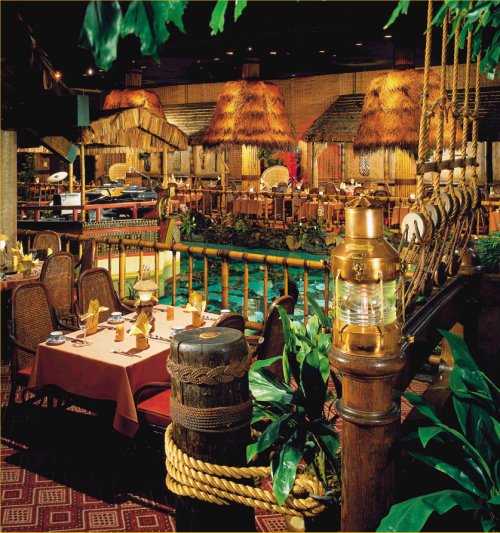
Is the Tonga Room saved? A City Planning Commission report may indicate yes. The report concludes that San Francisco’s finest (imperiled) tiki bar is covered in enough irreplaceable tchotkes and gewgaws to make it a “historical resource.” That might not stop those same tchotkes and gewgaws from being removed, “for public information and education, and/or reuse in an alternate off-site location.” But what about the indoor rainstorm over the lagoon?!?!

*****
Discuss: Michael Bauer notes of his top 10 list of the best breakfasts in San Francisco that many of the restaurants that made the cut “include a woman’s name.” (Also: Boogaloo’s? Really?)

*****

Heil Bieber!

******

Conscientious objection is not an option: “During his tenure as Archbishop of San Francisco, Cardinal William Levada chose not to inform police about a priest who admitted molesting an adolescent boy, an AP story reports. Cardinal Levada is now prefect of the Congregation for the Doctrine of the Faith, which handles disciplinary cases involving sexual abuse by priests.”

*****

Today in unicorns: Unicorn corn holders, ‘Cornz II Men, and a unicorn’s cornhole (SFW).


*****

“[Gary] Gilmore, the notorious spree-killer, uttered the words “Let’s do it” just before a firing squad executed him in Utah in 1977. Years later, the phrase became the inspiration for Nike’s “Just Do It” campaign.”

******

The ever-awesome Ubuweb has uploaded some of the animated films of local artist Kota Ezawa. Here is his rendition of the delivery of the verdict in the O.J. Simpson trial.


The Daily Blurgh: No more toys for you

0

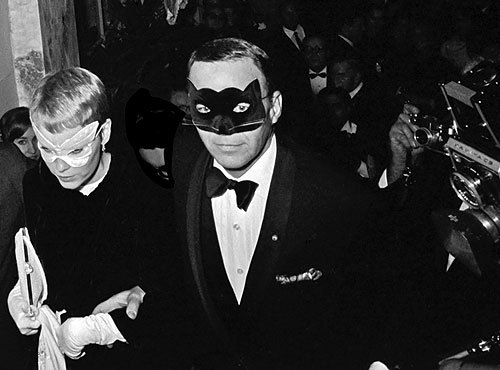
The Black and White Ball: Not just for the city’s elite anymore.

*****

The Prop 8 trial could wrap in time for Pride, causing either waves of rainbow-colored jubilation to ripple across the LGBT populace or a massive flashback to the bummer November of ’08.

******

“Just because David Morales Colón is dead doesn’t mean he can’t also be stylish. According to Primera Hora, the 22-year-old Puerto Rican man was murdered in his San Juan neighborhood last Thursday. As a tribute to the young man, the Marin Funeral Home treated the body and then dressed him up in his typical riding outfit complete with helmet on top of the Honda CBR600 F4 the man’s uncle had given to him.” (h/t Slog)

*****

Today in local, misguided attempts to legislate the well-being of children: making it illegal for fast food restaurants to pass out toys in kiddie meals.

*****

“Child pornography is great. It is great because politicians understand child pornography. By playing that card, we can get them to act, and start blocking sites. And once they have done that, we can get them to start blocking file sharing sites.” (So, people, can we please create an equivalent to Godwin’s Law for egregious (mis)uses of “child porn” as a rhetorical trump card?)

*****

Will hearing classic children’s books read aloud in the manner of Werner Herzog ever get old? No.

Benefits: April 28-May 4

0

Ways to have fun while giving back this week


Wednesday, April 28

Save the Waves
Attend this benefit for Chile, where donations will go to directly aid small coastal areas that were hit hardest by the Feb. 27th earthquake and following tsunamis, featuring free food, surf flicks, raffles, and DJs Paul McNitt and Paul Hobi spinning soul, funk, house, breaks, and reggae.
8 p.m., free
Riptide
3639 Taraval, SF
www.savethewaves.org

Thursday, April 29

Hospitality House Art Auction
Help support Hospitality House’s Community Arts Program (CAP), a free fine arts studio and gallery space that provides professional instruction, materials, and sales and exhibition support for poor and homeless Tenderloin artists. This 25th anniversary auction will feature more than 150 unique pieces of art from a diverse collection of regional artists.
6 p.m., $30
Andrea Schwartz Gallery
525 2nd St., SF
www.hospitalityhouse.org

Toe to Toe
Attend this benefit for ODC Dance Commons and Cal Athletics featuring a live competition between ODC/Dance’s contemporary dance company and top student athletes from UC Berkeley to see who’s the better athlete: dancers or sports stars. Judges to include San Francisco 49ers Ronnie Lott, Harris Barton, Nate Clements, MC Hammer, and more. Hosted by Warren Hellman.
6:30 p.m., $125
Herbst Pavilion
Fort Mason Center, SF
www.slimstickets.com

Friday, April 30

Blue Ribbon Luncheon
Help support the San Francisco Child Abuse Prevention Center, an organization dedicated to the prevention of child abuse and neglect, at this luncheon featuring three-time Super Bowl champion and former 49er Riki Ellison, and Emmy-award winning co-anchor of ABC 7/KGO TV Cheryl Jennings as master of ceremonies.
Noon, $250
Westin St. Francis Hotel
335 Powell, SF
www.sfcapc.org

Hold the Light for Haiti and Chile
Join Bay Area poets as they gather in support of efforts to assist the men, women, and children in Haiti and Chile who have been devastated by the recent earthquakes. Poets to include Diane di Prima, Al Young, Devorah Major, Mary Rudge, Deborah Grossman, and many more. Proceeds will be donated to Doctors Without Borders.
6 p.m., $5-10 suggested donation
Islamic Cultural Center
1433 Madison, Oak.
www.penoakland.org

Noe Valley Uncorked
Learn about and sample Argentinean wine at this wine event featuring on-hand experts and hors d’ oeuvres. Door proceeds benefit the Noe Valley Ministry.
6 p.m., $35
Noe Valley Ministry
1021 Sanchez, SF
www.noevalleyministry.org

Saturday, May 1

Bay Area Brain Tumor Walk
Attend this inspirational, all-ages fundraising walk to support the fight against brain tumors, featuring food, music, prizes, and more.
9 a.m.; raise a minimum amount of $350 or donate what you can
Speedway Meadow
Golden Gate Park
299 Tansverse, SF
www.bayareawalk.org

Sunday, May 2

Bliss 2010
Help support Maitri, the only AIDS-specific residential care facility left in the Bay Area, at this gala and auction featuring stand-up comedian Sandra Bernhard and designer Carmen Marc Valvo and food from top SF restaurants, drinks, live music, and more.
6 p.m., $150
Golden Gate Club
Presidio, Fisher Loop, SF
www.maitrisf.org

Mother’s Day Diaper Drive
Bring your kids to this fundraiser family day to benefit Help a Mother Out (HAMO), a grassroots advocacy campaign dedicated to improving the lives of mothers, children, and families, featuring games, crafts, pizza, cupcakes, and complimentary kiddie photo sessions. Proceeds will be used to purchase diapers for HAMO’s Bay Area partners. 
3 p.m., $40 per family
Peekadoodle Kidsclub
900 North Point, suite F100, SF
www.helpamotherout.org

Wanderlust at the Fillmore
In the spirit of the Wanderlust festival in North Lake Tahoe, this yoga and music festival will offer yoga classes during the day courtesy of Yoga Tree and live music performances featuring Rupa and the April Fishes at night. A portion of the proceeds benefit
Off the Mat, Into the World.
4 p.m. yoga, 7 p.m. concert; $25-$55
Fillmore
1805 Geary, SF
www.yogatreesf.com

Monday, May 3

“Aurora Borealis”
Wine and dine for a cause at this fundraiser for the Aurora Theater Company’s live performances, education program, and the Global Age Project, featuring specialty wines, silent auction, three-course meal, live entertainment, and more.
6 p.m., $200
Hotel Shattuck Plaza
Crystal Ballroom
2086 Allston, Berk.
(510) 843-4042, ext. 312

Throwing down with the Tablehopper

0

The incredibly everywhere Marcia Gagliardi, a.k.a. the Tablehopper (www.tablehopper.com), has somehow canvassed, in-depth, every eatery, drinkery, and food-cartery in our fair city — while still maintaining her voracious appetite, sassy aplomb, and appealing figure. Her new book, The Tablehopper’s Guide to Dining and Drinking in San Francisco (Ten Speed Press) is one of those must-have recommendation books that truly opens your eyes and mouth to culinary nooks and crannies. Divided into a multitude of sections like “Shituations” (places for dumping someone), “Morning After Breakfasts,” “Picky Eaters,” “Dude Food,” and “Ethnic Group Dinners,” it’s a fantastic thing to have on hand for every occasion, real or imagined. Marcia took a minute to answer some of our more “Guardian” questions about Bay dining and drinking. (Marke B.)

SFBG I’m pansexual and bursting with spring fever. What bars or restaurants can I go to where the boys and girls and everything-in-between are hot and open to everything?

MARCIA GAGLIARDI I’ve always thought the Lush Lounge (1221 Polk, SF. 415-771-2022, www.lushloungesf.com) has a good mixed vibe, and it seems Blackbird (2124 Market, SF. 415-503-0630, www.blackbirdbar.com) draws a mixed crowd as well. Orbit Room (1900 Market, SF. 415-252-9525) too. Or just go to Beretta (1199 Valencia, SF. 415- 695-1199, www.berettasf.com) late at night, sprinkle some Ecstasy on everyone’s crispy thin-crust pizza, and see what happens.

SFBG I have $5 for dinner. Where should I go?

MG I’d go to Balompie Café (3349 18th St., SF. 415-648-9199) or El Zocalo (3230 Mission, SF. 415-282-2572) and get a couple of extremely filling pupusas, which come with chips and salsa. Yep, you can get some hot pupusa action for less than $5. Hott!

SFBG Oh dear, I’ve doublebooked on date night. But then I get to thinking — why not take ’em both on at once? They might get into each other as well, and three’s certainly company! What’s a good place to have them both meet me and, once the initial confusion subsides, gently introduce the idea of a potentially delicious ménage à trois?

MG Well, hello, Ms. Popular. This is the kind of night that calls for some sexy atmosphere, and whaddya know, booze. The cozy downstairs booths at Oola (860 Folsom, SF. 415-995-2061, www.oola-sf.com) might fit the bill, and you can take turns licking the sauce from the yummy, sticky, baby back ribs off each other’s fingers.

SFBG My parents are on their way to take me out to dinner, but I just got really stoned. Where will my goofy demeanor blend right in?

MG Florio (1915 Fillmore, SF. 415-775-4300, www.floriosf.com) would work because its dandy-yet-friendly atmosphere is parental-unit approved, the lights are dim, the hearty food will jive with your munchies, and there’s usually enough going on in there that your parents won’t be watching your every move. There’s also a little alley around the corner where you can spark up if you need another puff before dessert.

SFBG Best place to announce my impending gender reassignment surgery to someone close to me who may be surprised?

MG Absinthe (398 Hayes, SF. 415-551-1590, www.absinthe.com). You can request a quieter table so not everyone hears your answers to all of your friend’s burning questions, and the spirited cocktails — a coquettishly tangy Ginger Rogers or bourbon-spiked Scarlett O’Hara, perhaps? — will help them digest the good news.

SFBG Someone took me out on a date to a really expensive restaurant and insisted on paying. Now it’s my turn to take them out, but I’m like, down to my last $20. Where can I take them so they feel I’ve treated them to something classier than my budget suggests?

MG Ah yes, the old smoke and mirrors. I’d go to Great Eastern in Chinatown (649 Jackson, SF. 415-986-2500), which has some bountiful deals on set menus, and the room is spiffy. Or you could take them to dim sum at one of my favorite places, S&T Hong Kong Seafood (2578 Noriega, SF. 415-665-8338) in the Outer Susnset, and you will feast fo’ cheap.

SFBG What wine bars have the best pours? I mean top-of-the-glass for $6. I’m a-thirsty, girl!

MG Well, the folks working the bar at Castro’s 2223 (2223 Market, SF. 415-431-0692, www.2223restaurant.com) know their clientele well and do pretty big pours. Same with Laszlo (2526 Mission, SF. 415-401-0810, www.laszlobar.com). I also noted a fuller glass the last time I was at the Hidden Vine (620 Post, SF. 415-674-3567, www.thehiddenvine.com). And based on the number of loaded folks at the Wine Jar (1870 Fillmore, SF. 415-931-2924, www.winejar-sf.com), I’d say the generous pours are to blame.

SFBG What would you say are the most “interesting” things you’ve ever eaten in the city?

MG Some of the dishes at Spices! (294 Eighth Ave., SF. 415-752-8884) have definitely pushed the envelope for me. (Stinky tofu, intestine stew — and I don’t care to have either dish ever again). The tendon pho at Pho Tan Hoa (431 Jones, SF. 415-673-3163) definitely rates on the funky meter — and I’m talking big hunks of tendon.

FEAST: 5 farm-fresh cocktails

0

We’re used to well-crafted, artisanal cocktails year-round in our city, and some bartenders showcase the bounty of the seasons in their cocktails, using local fruits, herbs, vegetables. It’s easy to take the abundance of the region for granted, but let’s not and remember to enjoy what can happen when fresh produce and spirits get into the right hands. Here are a few places and drinks we recommend as winter turns to spring. (Virginia Miller)

BEET COCKTAILS AT THE ALEMBIC


The Alembic offers quite a selection of spirits and beer, plus some of our city’s best cocktails, including New Orleans’ classics done right. (Thankfully, the bar doesn’t let the small space get too crowded, it regulates crowds at the door during peak hours. Even so, I prefer "off" times during the afternoon or early weeknights). The staff knows its stuff, so go ahead and ask them to make you something off menu with your favorite spirit as a base. In recent weeks, I’ve seen wonders worked with fresh produce on hand, whether it beets, ginger, or even galangal. A couple versions of a beet cocktail wowed me each time, the latest being a Rittenhouse Rye base with dry vermouth, red wine vinegar, orange zest muddled with sugar, and plenty of beets for a glowing red hue. Topped with a celery leaf and splash of sparkling wine, it’s a tart, earthy, slightly effervescent delight. If no beets are in house, you can’t go wrong with menu staple, Southern Exposure ($10), a Junipero Gin cocktail brightened with mint leaves, lime, a touch of sugar and a shot of fresh celery juice.

1725 Haight, SF. (415) 666-0822, www.alembicbar.com

KUMQUAT CAIPIRINHA AT NOPA


If you want to be ahead of the curve tasting a new small batch spirit no one has heard of or cocktails unlike anyone else’s, Nopa is your spot. Bar manager Neyah White, who’s always ahead of trends and has a pioneer’s taste for the untried, has introducing me to spirits I’ll later hear everyone talking about. Neyah and the Nopa bar staff create luscious cocktails — try one of their sherry or white whiskey renditions for a proper use of the spirits. If you’re lucky, the kumquats they’ve been procuring for weeks will still be on the menu for a kumquat caiprinha ($9). I’ve had kumquats in a number of cocktails — the juicy tart is a lifelong favorite taste. Not only are Nopa’s kumquats the best I’ve had in recent memory, but the use of Boca Loca Cachaca and fresh lime with the plump, tart citrus makes for a bracing drink: pleasantly sweet, floral, tangy. I ate every kumquat out of the glass.

560 Divisadero, SF. (415) 864-8643, www.nopasf.com

KENTUCKY BUCK AT RICKHOUSE


Rickhouse has one of those dream menus for cocktailians: pages and pages of flips, fizzes, and punches. The atmosphere holds the magic mustiness of a dim old bourbon house — without the must. (You just have to brave — or avoid — the Financial District happy hour mobs). From Rickhouse’s beverage director, Erick Castro, comes a drink created last spring that has thankfully stuck around: the Kentucky Buck. A refreshing bourbon and ginger beer cocktail ($8), it is one of the best-balanced bucks I’ve tasted. ("Buck" is the historic name for drinks involving a base spirit, citrus, and ginger beer or ale). Bourbon is served with organic Monterey Bay Farms’ strawberries, lemon, Angostura bitters, then topped with ginger beer. Refreshing and spring-like, it’s nuanced, showcasing all the strawberry’s best assets without overstepping into sweet territory.

246 Kearney, SF. (415) 398-2827, www.rickhousebar.com

EVERGREEN AT RANGE


Range sets the standard for experimental but refined cocktails. This is one of the great neighborhood restaurants, but it’s also a worthy bar destination. You can expect fresh and inventive here every time — with classic cocktail sensibilities. The Evergreen welcomes spring with gusto in the form of citrus and herbs. Plymouth Gin and St. Germain accompany fresh kumquat juice, sage, and lemon. Smooth and bright, not one flavor overpowers the other, but all meld nicely. If tequila is more your speed, try the Malia with Pueblo Viejo blanco tequila, lime, egg white, cinnamon bitters, and a winning duo of quince and apple.

842 Valencia, SF. (415) 282-8283, www.rangesf.com

TRACK 42 AT 15 ROMOLO


Thankfully, this cocktail has been on the menu a while, a glass of layered delights from one of our city’s best all-around bars, 15 Romolo. Track 42 ($12) is an exhilarating fresh garden of a drink made with 42 Below Manuka Honey Vodka, basil, unfiltered apple juice, lemon, and egg white. You won’t go wrong with most anything on (or off) the menu, but this treat involves more complexity and nuanced flavor than the "vodka cocktail" label would suggest, and is a favorite among many, many delectable drinks. Other highlights: I love the Prohibition-era elegance, laid back staff, and legendary Chartreuse Gong Shows — American Idol-like karaoke shows with judges, a giant gong if you suck, and, yes, shots of chartreuse for everyone. 15 Romolo is the bar I wish was in my neighborhood.

15 Romolo Place, SF. (415) 398-1359, www.15romolo.com

That po’ boy

0

le.chicken.farmer@gmail.com

CHEAP EATS There is something pretty exquisite about being stood up by a date. When I find out what it is, I’ll be sure to let you know. Meanwhile, you’ll just have to take my word for it. Words.

The stander-upper was someone I’d bonked back before I accidentally fell in love with whatsername. We’d had a long coffee date that turned into a long walk in the park that turned into making out for a long time on a park bench, which of course turned into going to the grocery store to buy pork.

And a bottle of wine.

Now, I had a very strict policy back then of never having sex with someone on a first date. I have since added an amendment forbidding me to have more than one date with a person in a single day. Because somewhere between the pork and the wine we determined that since we’d driven separate cars from the grocery store to my house, this dinnery business was technically our second date.

So, yes, sex happened. Then, like a lot of guys who sleep with me once, he became obsessed with two seemingly contradictory thoughts: how to sleep with me again, and how to never ever, under any circumstances, sleep with me again. Thus he would e-mail me every other night: He had to see me immediately or else, as I read it, his hair would catch on fire and his penis would rocket away from his body, through the roof of his house, into outer space, and then back down into the atmosphere where of course it too would be consumed in flames and therefore ruined.

Not wanting that, I would cancel whatever plans were cluttering my calendar and we’d make a date — which he would cancel at the last minute because his mom had a tumor, or his car blew up, or his son or sister (or in many cases both) had been taken aboard an alien spacecraft and needed everyone’s prayers for a while.

I’m a trusting sort, and pretty patient, I think, but after 60 times I told this cat to get lost. Instead, he went into therapy. So I got lost. In Germans and Germany and so forth. Well, around the time things were busting apart for me there, I got another e-mail from him here saying he can’t stop thinking about me, he can’t believe he blew it with me, he’s gotten his shit together finally and wondered if I would give him another chance.

The man is tall. Very tall. So tall that I can wear four-inch heels and still only come up to his chin. For the first time in nine months, I wrote back. I said I was a broken woman, that I was coming home, and that eventually I would have coffee with him. That that was all we would have this time. No pork.

So we did, eventually, have our second first date — just coffee — and then, even more eventually, a very nice and only slightly less platonic dinner date, which ended with a soft, sweet kiss in his car.

It was our third (or in other words, fifth) date when he stood me up. And as I sat there waiting at my for-real favorite restaurant, Just For You, listening to live violin music, I decided that being stood up was pretty exquisite, maybe because it implies just dating, which implies uncertainty — and then when you finally give up and place your order, and the waitressperson as-discreetly-as-possible clears away that other place setting … then you do know. It’s decided, done, or over before it started, and sad, yes — but it’s a delicious sadness, because you still get to eat.

As I drenched my fried oyster po’boy in Crystal hot sauce, which somehow seemed even more romantic than violins, I decided that even if he was in the hospital having heart attacks, I would not give this tall man another “another chance.”

Three days later I finally heard from him. By e-mail. He’d been in the hospital, having heart attacks. Hopes I’ll still see him.

That same day eating with Last Straw’s childerns at Sunflower, Larkstraw, age 10, who aspires to be a writer, asked how long I’d been writing about restaurants, how much I get paid, do I ever write about the same place more than once, and if so, why?

“Any excuse I can find,” I said. Happy 20-Year Anniversary to: 

JUST FOR YOU

Mon.–Fri. 7:30 a.m.– 9 p.m.; Sat.–Sun. 8 a.m. – 3 p.m.

732 22nd St., S.F.

(510) 647-3033

MC/V

Beer and wine


Our Weekly Picks

0

WEDNESDAY 21

EVENT/LIT

Yann Martel: Beatrice and Virgil

Yann Martel brought us The Life of Pi, an award-winning story about an Indian boy trapped on a life raft with a Bengal tiger in the middle of the Pacific Ocean. At www.whatisstephenharperreading.ca, Martel chronicles his vow to send a book every two weeks to Canadian Prime Minister Stephen Harper to promote government arts funding. And now, Martel is back with Beatrice and Virgil, another folkloric tale. It’s about a writer working on a novel about the Holocaust, and it’s also the story of a donkey named Beatrice and a howler monkey named Virgil whose epic journey begins only after fate places them in a taxidermy shop run by an intriguing man. (Paula Connelly)

In conversation with Laura Fraser

7:30 p.m., $15 (21 and over)

Sundance Kabuki Theater

1181 Post, SF

www.booksmith.com

THURSDAY 22

MUSIC

Blank Dogs

It’s impossible to keep up with what Blank Dogs frontman Mike Sniper is up to at any given moment. In addition to being a tad shy — as evidenced by his wearing a mask or blanket to performances and publicity photo shoots — the Brooklyn native is also so prolific that he probably has another limited distribution EP or 7-inch scheduled for release by the end of this sentence. His brand of lo-fi new-wave is noisy and discordant, but ever familiar, like New Order or OMD heard through a tunnel with a blender running in the background. Sniper is emerging from his East Coast bedroom for a show at Eagle Tavern, and though his persona might not be the mystery it once was, his unique perversion of post-punk is always promisingly puzzling. (Peter Galvin)

With Bare Wires, Fresh and Onlys, Cosmetics

9 p.m., call for price

Eagle Tavern

398 12th St. , SF

(415) 626-0880

www.sfeagle.com

DINE

Wine Enthusiast’s Talk of the Town 2010

More than 500 varieties of wine and spirits — along with food from 30 great Bay Area restaurants — are on the menu for sampling at Wine Enthusiast’s Toast of the Town 2010, a classy affair taking place in the historic environs of the beautiful War Memorial Opera House. Live jazz provides the soundtrack for the evening’s indulgences, which benefit the San Francisco Food Bank, the venerable organization that needs a little help of its own right now to help people in our community. Raise a glass (or several) and know that this night of fun will also help to make someone’s day tomorrow when they sit down for a much-needed meal. (Sean McCourt)

7 p.m., $89 ($169 for 5 p.m. VIP tasting)

War Memorial Opera House

301 Van Ness, SF.

www.wineenthusiast.com

1-800-847-5949

MUSIC

Jrod Indigo

Jrod Indigo inspires comparisons to Michael Jackson, Robin Thicke, and Prince. Born in Chicago, raised in Atlanta, having spent some time in Seattle and now in the Bay Area, Jrod possesses musical versatility. He’s a polished songwriter who prefers to play with a live band. Layered harmonies, vintage synths, funky guitar riffs, and deeply-rooted soul incorporate different elements from the music of the cities where he has lived. He’s performed with Amel Larrieux, Martin Luther, Crown City Rockers, and others. Tonight he’s the headliner. (Lilan Kane)

With the Whooligan, Femi

9:30pm, $7

Coda Lounge

1710 Mission, SF

(415) 551-2632

www.codalive.com

MUSIC

Chicha Libre

Drink enough mugs of chicha, and you’ll get lifted like the ancients. The fermented corn drink has been imbibed since before the conquistadors launched their grand tour of bummer, and still plays a central role in the lives of indigenous Peruvians. Gets you all drunk and stuff. This age-old psychedelia inspires the chaps of Chicha Libre, a South American surf band that adds classic pop sounds from 1970s AM radio, sun-drenched Beach Boys guitar melodies, and a little cumbia shake to the Amazonian rhythms of their ancestors. Raise a glass. (Caitlin Donohue)

With the Cuban Cowboys, DJ Juan Data

8 p.m., $9.99

Rickshaw Stop

155 Fell, SF

(425) 861-2011

www.rickshawstop.com

FRIDAY 23

SPORTS

Harlem Globetrotters

They’re the only professional basketball team to play an entire game on ice skates (and ice, in Central Park) or go for an 8,000-game win streak: If you haven’t seen the Harlem Globetrotters do their thing, you’re missing out on the greatest American sports kitsch. From the get they’ve been showboaters — they actually got their start as a traveling team in Chicago, but dubbed themselves Harlem because it sounded more exotic. We forgive them because they can make half-court shots, have the most kick ass of theme songs, dribble like the devil, and clown on David Duchovny when he sits courtside. (Donohue)

7 p.m., $21–$109

Cow Palace

2600 Geneva, Daly City

(415) 404-4111

www.harlemglobetrotters.com

MUSIC

Around Amoeba in 180 Minutes with DJ Bearzbub

Amoeba is a colossal beast of a record store. With rows upon rows of vinyl, CDs, posters, and listening stations, it’s hard not to look for a specific record and leave with 10 other things. The infinite sound in the place can suck you in for hours. Today, however, DJ Bearzbub is your guide. He’ll show you what the store has to offer within a three-hour timespan. (Elise-Marie Brown)

6 p.m., free

Amoeba Music

1855 Haight, SF

(415) 831-1200

www.amoeba.com

DANCE

National Dance Week

National Dance Week is a kind of spring madness of lessons, mini-performances, workshop showings and rehearsal watching in SF, the North, South and East Bay. All of it is free. You won’t be able to take in all of the four hundred-plus offerings, but you can enjoy it today. Noon is kick-off time at Union Square with over a dozen showcases and — new this year — the first annual “One Dance” flash-mob event. Look out for solo dancer Fawole and musicians popping up throughout the city, and mini shows from a new generation of dancers at the Richmond District YMCA in the late afternoon. You can see Robert Moses at work. Or, in the evening, you can take a class in Afro-Cuban, Hula Hoop, Tango, Go Go Style, World Fusion or West Coast Swing. For details, go online or pick up a brochure at dance studios and selected coffee shops. (Felciano)


Noon (through May 2), free

Union Square, SF

(415)920-9181

www.bayareandw.org

MUSIC

J Rocc

In 1992, Stones Throw mainstay DH J Rocc founded the World Famous Beat Junkies with Melo-D and Rhettmatic. Since then, he’s been a dominating force in turntablism, releasing several mixtapes and producing different Stones Throw releases. He’s been a reliable force within Madlib’s live shows, and worked with Madlib again on Beat Konducta Vol. 5-6: A Tribute to J Dilla. He’s currently putting together a solo album, and this show should offer a taste. (Kane)

With DJ Apollo

10 p.m., $8–$10

Mighty

119 Utah

(415) 626-7001

www.mighty119.com

MUSIC

Bonobo

Since the success of his third album, 2006’s Days to Come, Bonoboa.k.a. Simon Green — has refined his impressive sound. The evidence is on his latest effort, Black Sands. The combination of live instrumental arrangements and complex digital sounds in his work can be extraordinary. (A tip: if you want a taste of Bonobo’s live set but don’t have the $22 to get into Mezzanine, trek to the Haight and catch an earful at Amoeba Music at 5 p.m.) (Brown)

With Yppah and Mofnono

Mezzanine

444 Jessie, SF

(415) 625-8880

www.mezzaninesf.com

SATURDAY 24

THEATER

Tartuffe

Seems like lately, everything old is new again on the Bay Area theater scene. Current or recent local productions have updated The Diary of Anne Frank, Lysistrata, and The Seagull. San Francisco’s up-and-coming Generation Theatre isn’t aiming to alter to content of Molière’s classic comedy Tartuffe, as other productions have before (there’ve been versions that cast the main character as a televangelist, reset the action in India or during the Harlem Renaissance, and paid homage to the TV show Dallas.) Instead, Generation’s new translation by director Roland David Valayre arranges the play’s lines in alexandrine verse — which is to say, the 12-syllable format in which it was originally written. “Twelve-foot long laughter” is promised. (Cheryl Eddy)

8 p.m. (through May 16), $20–$25

Studio 205 at Off-Market Theater

965 Mission, SF

(415) 377-5882

www.generationtheatre.com

SUNDAY 25

COMEDY

Aqua Teen Hunger Force Live

Two of the more bizarrely brilliant and hilarious shows that appear on Cartoon Network’s Adult Swim, Aqua Teen Hunger Force and Squidbillies, come to life tonight. As part of a national tour, ATHF cocreator Dave Willis (voice actor for characters including Meatwad and Carl) is joined by Dana Snyder, who voices Master Shake and Granny Cuyler. Expect zany script readings, screenings of clips, music, and more at an event that should be more exciting than drinking pine cone liquor and selling a house that oozes blood to Glenn Danzig. (McCourt)

8 p.m., $25

Regency Ballroom

1290 Sutter, SF

(800) 745-3000

www.theregencyballroom.com

www.aquateenlive.com

MONDAY 26

MUSIC

Audra MacDonald with the SF Symphony

After you win four Tony awards, you can pretty much do what you want when it comes to musical theater. Audra McDonald neatly illustrates the point. One of only three actresses to accomplish the triple Tony feat, the soprano has graduated from roles in Broadway productions like A Raisin in the Sun, Carousel, and Ragtime to solo performances backed by some of the greatest musical ensembles in the country. In this SF Symphony performance, McDonald takes on her favorite show tunes, as well as a few ditties written especially for her. When you’re this good — did we mention she has two Grammies stashed away? — people will compose music in the hopes you’ll sing it. (Donohue)

8 p.m., $15–$105

Davies Symphony Hall

201 Van Ness, SF

(415) 864-6000

www.sfsymphony.org

TUESDAY 27

EVENT

A Fresh Look: Observations on Artistic and Social Practices in Urban Farming

Mmmmm. If there’s any benefit of living in San Francisco, it’s the array of delicious food sold at the multiple farmers’markets throughout the city. But selling pesticide-free produce isn’t the only way to encourage sustainable farming. The San Francisco Art Institute is working to address the proper social practices of urban farming by launching a new underground market. Along with live music and a panel discussion, delicious treats will be sold: think homemade cookies, raw chocolate, quiche, marmalades and kombucha. (Brown)

4 p.m., free

San Francisco Art Institute

800 Chestnut, SF

(415) 771-7020

www.sfai.com

MUSIC

Liars

Liars has spent the better part of a decade refining a terrifyingly bestial art-metal, and its fifth album Sisterworld is the culmination of years spent concocting an unusual formula of chant-like vocals, ambient noise and sudden outbursts of sound. Whether anyone’s listening or not, the group is immensely proud of its weirdness — they reinforce high-concept songs about murder and witchcraft with just the right amount of traditional songwriting to draw in the unsuspecting. After all, if there wasn’t a good deal of brilliance behind that eerie atmosphere and brutal bluster, it’d just be another Tuesday night goth show. (Galvin)

With Fol Chen

8:30 p.m., $15

Slim’s

333 11th St., SF

(415) 255 0333

www.slims-sf.com


The Guardian listings deadline is two weeks prior to our Wednesday publication date. To submit an item for consideration, please include the title of the event, a brief description of the event, date and time, venue name, street address (listing cross streets only isn’t sufficient), city, telephone number readers can call for more information, telephone number for media, and admission costs. Send information to Listings, the Guardian Building, 135 Mississippi St., SF, CA 94107; fax to (415) 487-2506; or e-mail (paste press release into e-mail body — no text attachments, please) to listings@sfbg.com. We cannot guarantee the return of photos, but enclosing an SASE helps. Digital photos may be submitted in jpeg format; the image must be at least 240 dpi and four inches by six inches in size. We regret we cannot accept listings over the phone.

RN74

0

paulr@sfbg.com

DINE As we wait for someone to open a restaurant called Highway 29 — the ultimate Napa Valley wine-country spot — we are comforted in the knowledge that we already have RN74. You are absolved for not knowing that RN74, the road, is the Highway 29 of Burgundy. It runs south from the provincial capital of Dijon to Beaune, in the heart of the Burgundian wine country.

I am not thrilled with the local trend toward naming restaurants after European highways — the names sound too much like car names — but there is no denying the force behind RN74. That force is Michael Mina, and if there is a more lustrous name in the recent annals of San Francisco restauranting, that name has escaped my notice. Mina was the man who, for a decade, guided the kitchen at Aqua (after an opening starburst of George Morrone); he then went on to open his (first) eponymous restaurant in the Westin St. Francis in the summer of 2004, with another following at the Bellagio in Las Vegas.

The themes here would seem to be luxe and empire, but in both of those senses, RN74 upsets expectations. It is beautiful and elegant inside but not overwrought, and it is (so far) one-of-a-kind. The main disappointment, for me, pertains to location; as at nearby Roy’s, the windows gaze out onto Mission Street and the romantic spell fades. Maybe that’s why such effort has been spent on the window treatments, with row after row of louvered screens lending a sense of warm summer evenings while subtly filtering out much of the actual view.

The other tremendous design element is the huge wine board hanging high above the east end of the dining room. It resembles the big boards you see in French railway stations, black with ever-changing white letters, like a huge mechanized chalkboard. In train stations, the board gives destinations and platforms; at RN74, the data involves last bottles of wine.

Given the immense scope of the wine list, the mechanized chalkboard must be close to indispensable. You could easily get lost in the printed version, which runs for many pages in small print and includes bottlings from France, Italy, Spain, California, and elsewhere, more than a few of them running into the hundreds of dollars. But the big board flashes deals — we snagged the last of an Italian gamay for $42 — while the prix-fixe option, three courses for $39, also includes a crack at the sommelier’s choice of red or white Burgundy for $30.

The food is exemplary: much less intricate and overbearing than at Michael Mina while losing little or nothing in inventiveness and polish. I was especially impressed by the smoked-sturgeon rillettes ($9), which incorporated a responsibly farmed fish into a classic French technique to produce a beguiling result — a kind of shmear to be spread on toast points. (The fish had been combined with crème fraïche for extra velvetiness.)

When your risotto wins the approval of someone who dislikes risotto, you must be making pretty good risotto. RN74’s leek version ($15) included plenty of Parmesan cheese, green peas, trumpet mushrooms, and watercress; it had the look and texture of corn snow, and the grains were perfectly cooked al dente, with just a hint of chalkiness. No mush. And when your grilled Monterey Bay sardines ($14) are gobbled up by someone who doesn’t like sardines … well, Q.E.D.

The main courses are marginally less compelling, mainly because they are star-driven and tend to rely on large masses of protein rather than artful interlacings of varied ingredients. Still, protein has its charms: halibut ($27) poached in olive oil to an almost confit-like denseness and plated with asparagus and snap peas; a pair of rounds of center-cut ribeye ($30), still gorgeously purple-pink in the middle and riding a coarse magic carpet woven from green garlic and trumpet mushrooms, while a ravioli filled with potato mousseline sat to one side like a cupcake; a filet of striped bass ($28), intoxicatingly scented with herbs and served with little pebbles of crisped chorizo.

Beignets seem to be well on their way to joining crème brûlée and molten chocolate cakes on just about every dessert menu around. At RN74, the beignets ($9) look like little throw pillows someone spilled sugar all over, and you dip them in a whiskey-caramel sauce with a little whipped cream. More interesting was a chocolate-praline bar ($9) — if your tailor made bespoke candy bars, they’d be something like this. You can get throw pillows anywhere.

RN74

Dinner: Sun.–Thurs., 5:30–10 p.m.; Fri.-Sat., 5:30-10:30 p.m.

Lunch: Mon.–Fri., 11:30 a.m.–2 p.m.

301 Mission, SF

(415) 543-7474

www.RN74.com

Full bar

AE/DS/MC/V

Bearable noise even when full

Wheelchair accessible


SF smokers kicked to curb, by the cars

9

By Adam Lesser

San Francisco smokers will be hit with the latest in a long lines of restrictions starting April 25, when they’ll be kicked to the curb, out by the cars whose tailpipes are at least as dangerous as secondhand smoke.

But drivers haven’t been as easy to demonize as smokers. Light up within 15 feet of a building entrance and you’ll be breaking the law. Other spots where smokers will be barred include outdoor areas at cafes and restaurants, farmer’s markets, and charity bingo games (grandma can take her wheelchair to the curb if she needs a puff).

But pot smokers need not fear. The new law maintains a provision allowing you to light up in licensed dispensaries. Smoking patios at bars are still okay, though smokers probably shouldn’t get too comfortable.

            The San Francisco Department of Public Health frames the smoking debate in terms of the impacts of secondhand smoke. And there’s some good data there. People tend to think lungs and cancer when they think smoking, but the real problem with second hand smoke is heart attacks.  A 2005 estimate from the California EPA put the number of heart attack deaths from second hand smoke at 3,600 annually. Second hand smoke contains a host of toxins from benzene to arsenic.

But it’s hard to know the incremental benefits of moving smokers to the curb. Almost all of the positive data on public health improvements from smoking bans has come from measures the city has already taken. But Mele Lau-Smith of DPH gave me a preview of the potential next battleground: third hand smoke.

“The new science that’s coming out on third hand smoke is interesting. Third hand smoke is everything that clings to furniture and hair and takes longer to dissipate. They’re smaller particles that get deeper into the lungs,” she says. The term was coined last year in the journal Pediatrics and a 2010 paper showed that nicotine reacts with nitrous acid to form carcinogenic molecules that hang around long after a smoker has left the room.

            So the news gets worse for smokers, and the anti-smoking crusade to completely eliminate smoking gains an inch. The smoking prevalence rate in California is among the lowest in the country at 14.3 percent. Most states are in the 18-20 percent range.

            And while it’s all well and good, one wonders if there are other problems in the air besides second hand smoke. Choosing to live in an urban area like San Francisco lowers one’s life expectancy by two years, and one of the major reasons for that is auto exhaust and illnesses related to poorer air quality.

            Mark Jacobson, Professor of Civil and Environmental Engineering at Stanford University, believes the government should keep regulating until smoking is eliminated. But when comparing deaths from automobile emissions versus second hand smoke, he added, “If you look at the mass of the automobile exhaust, then you’re looking at a much bigger figure than second hand smoke. Vehicle exhaust is still way under regulated for addressing health concerns.” Over 2 million people die globally from air pollution each year. About 500,000 die from second hand smoke.

            In the end, Jacobson says it comes down to combustion. When you start burning, you release toxins that eventually hurt or kill people. It doesn’t matter if it’s diesel fuel, gasoline, or tobacco. Combustible products harm public health, and in the case of oil, the environment.

Smokers have proven ideal targets for taxes. San Francisco smokers pay $2.08 in taxes on every pack of cigarettes. When you’re in the minority and the government needs cash, it’s a political no brainer. A 20 cent cigarette tax was tacked on by the Board of Supervisors last October, done under the argument that the money was needed to clean up cigarette butts. Recent proposals to add a local 10 cent tax on gasoline in order to help various cash strapped public transit agencies haven’t found much traction.

So smokers, enjoy the summer. It’ll be the last summer you can light up after an outdoor sunset meal. The smoking ban at restaurants won’t be implemented for another six months.

But come November you’ll be enjoying that smoke out by the curb, where you’ll also be treated to some car exhaust. But, hey, at this point you’re probably all in anyways.

Holy smokes, could it be… the biggest SF mural ever?

4

The answer is yes, yes it will be. And how did the madness begin? “I was in the neighborhood and I saw this wall. And me being me, I got really excited and wanted to paint it.” And so it started, Brian Barneclo’s latest SOMA mural project, whose launch will be celebrated alongside “Systematics,” his solo (indoor art) show at fabric8 on Sat/10.

See a wall, paint it; It’s a common enough story in SF — until you look at one small variable; Barneclo’s wall is 600 feet long and 40 feet tall. And he intends to cover the whole thing. That’s 24,000 square feet, making Barneclo’s “Systems” the largest mural yet in a town filled with them. “That was recently pointed out to me,” he told me in a recent interview. “It’s an interesting thing because, yeah, its going to be helpful [for fundraising], people like to hear that stuff, ‘it’s the loudest, it’s the biggest.’ But it really has no… [the size] is such a byproduct.”

Barneclo’s known for his ambitious projects. The artist — in whose aesthetic fabric8 gallery owner and long time associate, Olivia Ongpin, detects traces of both the Mission school and the Bay area figurative movement from the ’50s and ’60s — has installed large scale pieces all over town, from Nopa, to the inner Mission, even on the side of our humble Guardian building. His most well known works are urban cultural/architectural jumbles, representational maps of the iconic streetlamps, restaurants, and skylines that we call our city. “Systems” will be a reflection of Barneclo’s recent meditations on interconnectivity; in our society, our city, and in our own bodies.

A mock up of “Systems,” slated to be completed by June

It’s easy to see why this particular wall caught the muralist’s eye. The 7th St. and Townsend building, owned by Crescent Cove Apartments, plays a visible role in the neighborhood. Barncelo’s wall can be seen from both I-80 commuters and Caltrain passengers, the train tracks passing at the wall’s base. Barneclo thinks it’s high time such a prominent canvass was utilized for art. “I think when we’re done, people will be like, ‘I can’t imagine that without a mural.”

But the mural’s not done yet. There’s the matter of funding, though Barneclo has already secured a $10,000 grant from Adobe and thinks “people are inclined to get behind the project once they see some action happening.” Barneclo has already put in nearly two years of permission getting and permit securing into the project, along with partner Christi Azevedo. And of course, there’s still a whole lot of wall to be painted. 

But that will be the easy part. Barneclo completed “Food Chain,” his 200 by 25 foot mural on Shotwell between 14th and 15th Street in ten days, with only one helper. His goal is to maintain that same pace for “Systems,” completing the mega mural in one month with a team of three helpers. Barneclo doesn’t sound too stressed about the task ahead. “I’ll sleep when I’m dead. If I have a chance to take a month and paint one big mural, what more can I ask for? I mean, my girlfriend probably won’t like it, it’s probably going to be all I’m talking about and thinking about.”

Will he make it? Ongpin thinks so. “This might seem like a daunting prospect,” she said. “But if you look at the scope, and amount of murals he’s done around the city for the past six or seven years, I’m sure he can do it and do it well.”

So get ready, San Francisco, because “Systems” is set to be one of the first things some commuters see when they hit SOMA. “It’s almost a welcome to SF to people who are riding the train,” Barneclo imagines. “Or a farewell. Its like a port. Treat it like a “Boom! Welcome to San Francisco.”


Brian Barneclo‘s “Systems” Mural launch party/ “Systemics” exhibition

Sat/10 5-9 p.m., free

Fabric8 Gallery

3318 22nd St., SF

(415) 647-5888

www.fabric8.blogspot.com

Uproot: Notes from the underground food scene

0

Recently Kitchen Table Talks, a monthly series of discussions on the US food system, invited a panel of SF entrepreneurs from the emerging underground food scene for a QA, hoping to answer big questions like what’s driving the trend and whether or not it has a future. As Iso Rabins from forageSF, Leif Hedendal, a veteran chef of secret suppers, Lucera Muñoz Arrellano, the owner of a bacon-wrapped hot dog cart in the Mission, shared their stories, I got a sense that no one had an overarching theory about the recent surge of popular interest. But it’s clear a lot of passionate people are firmly committed to redefining our food culture whether the man likes it or not.

Rabins originally began forageSF as a way to educate people about wild food with guided foraging tours that served to recontextualize nature as not an abstraction but an integrated environment to which we are inherently bound; it can even feed us. As he saw more and more people’s interest in preparing food grow and their resources dwindle, forageSF evolve to include the Underground Market, a venue for foragers and other uncertified producers to sell their goods. He’s had a few run-ins with the health department, but since he’s now operating under the quasi-legal status of a club he said he pretty much plans on running the market till forced to shut down.

In the long term, though, Rabins doesn’t have much interest in “legitimizing” the market considering enough certified farmers markets already exist, and to him, adjusting to the regulations would circumscribe the innovative spirit of the project. But he does see it developing into more of a launching pad for those wanting to make the switch over to the mainstream.

Hedendal, after working in brick-and-mortar food establishments, became disillusioned with what he described as kitchen culture — the demanding schedule and strict hierarchy that disconnected workers from the community, and thus, one of the main pleasures of cooking. He’s also critical of the “cheating” that many restaurants resort to in order to still be considered sustainable and not go broke. After getting out of the professional world almost a decade ago, he’s been involved with various food projects and secret dinners that sought to uphold the values of community, affordability, and creativity — it’s a pretty long and impressive resume. As of right now, he’s cooking for Dinner Discussions, which brings together food and socially-engaged artists. But for all his negative experiences working in restaurants, Hedendal’s ultimate goal is to open one that satisfies his values of true sustainability and community—maybe impossible now but who knows what will be eventually possible with the changing tides in our food and economic culture.

Lucero Muñoz Arrellano, though, kept the conversation grounded in the practical reality for a lot of those who informally vend on the streets. When asked why she began selling the popular Mexican hot dogs, she answered, assisted by a translator, that her biggest reason was to find a way to support her children, bringing it home that for many in this recession, underground food is a means to surviving in a shrinking job market that’s squeezing out the marginalized—especially those who might lack formal education or English language skills.

I don’t want to sell her short, though; her experiences and trials as an informal street vendor have given her a goal other than just subsisting. With her recent acceptance into the incubator program at La Cocina, a nonprofit geared towards nurturing low-income food entrepreneurs, Arrellano has been inspired to convince others to legalize their businesses. She’s intimately familiar with the hurdles that are almost impossible to navigate—like the bureaucratese of the necessary documentation that frustrates many non-English speakers or those who have limited education. And she also knows the risks that informal vendors suffer. At a minimum, the $250 citation fee can wipe out more than a day’s worth of work, not to mention the threat of having the cart confiscated and losing what may be their only livelihood. Some work in fear of arrest and deportation. A very big risk indeed.

In some ways the talk was illuminating and in other ways it confirmed ideas I deeply support. I suspect, given the wide-arching participation in decentralizing the mainstream food industry, the underground scene is not solely about hipster novelty-seeking. (Though, let’s not lie, that does play a significant part.) It also reflects the growing public re-evaluation of dysfunctional socioeconomic systems and support for those who are redefining how and what we eat.

Benefits: April 7-April 13

0

Ways to have fun while giving back this week

Thursday, April 8

1369 Lights
Be among the first to get a copy of the new Moholy Ground Magazine, the New Photography Journal. Meet Moholy Ground staff and featured artists and enjoy cocktails and music from DJ BoomBostic spinning soul, motown, and funk. The Moholy Ground Project publishes nonprofit art journals and books and provides low cost promotions and marketing to art organizations and individuals involved in the art community.
7 p.m., $5
Blue Six Acoustic Room
3043 24th St., SF
www.moholyground.org

Friday, April 9

FACT/SF

Grab some gloves, hats, or any other costumes you feel like wearing  and head to this fundraiser party for the dance troupe FACT/SF featuring a silent auction, drinks, snacks, performances by Light Fiction, Lily Taylor, Emily Woo Zeller, DJ Nuxx, and more, including a sneak preview of FACT/SF’s new project, The Consumption Series.
8 p.m., $20-100 sliding scale
Mama Calizo’s Voice Factory
1519 Mission, SF
www.factsf.org

Saturday, April 10

Catwalk 2010
Watch as aspiring male to female transgender models from all over the country compete for the Catwalk 2010 crown in categories such as cocktail wear, swimwear, and evening wear. Proceeds from the event go to the AIDS Housing Alliance.
7 p.m., $40
SOMArts Gallery
934 Brannan, SF
catwalkusa.com

Poker Tounament
Attend this poker tournament to benefit Bay Area Women Against Rape (BAWAR), an organization that provides 24 hour services for survivors of sexual assault and their significant others. First, second, and third place winners will receive prizes and there will be raffle drawings throughout the night.
7:30 p.m., $50 buy in
Station Barber Shop
Suite 100
4400 Grand, Oak.
(510) 214-2299
poker@bawar.org, call or email to register

Soiree 8
Celebrate the San Francisco LGBT Community Center’s eighth anniversary with a night of decadent foods from San Francisco restaurants, entertainment from queer artists, and flowing cocktails featuring special guests Theresa Sparks and David Campos. The evening is scheduled to end with a dance party with music by local DJs.
7 p.m., $95
Terra Gallery
511 Harrison, SF
soiree.sfcenter.org

Sunday, April 11

Rose Pistola Cooks for North Beach
Enjoy a bountiful family style dinner, served at long tables, and accompanied by wines by Fancis Coppola Wines to benefit the North Beach Citizens, a neighborhood organization for the homeless. The hosts of the evening will be Lawrence Ferlinghetti and Jeanette Etheredge, so expect poetry  readings, film screenings, dancing, and other suprises.
6 p.m., $125
Basement of Sts. Peter and Paul Church
666 Filbert, SF
www.northbeachcitizens.org

Alerts

0

alert@sfbg.com

WEDNESDAY, APRIL 7

The Human Cost of Food


Join the Green Café Network, Mission Pie, and local farmers for a discussion about the different models of farm labor structure and how individual consumers, cafes, and restaurants can integrate this knowledge into their sourcing decisions and methods. It’s an idea whose time has come: fooders and foodies working together to balance social and economic justice goals with economic demands.

6:30 p.m., $5–$10 suggested donation

Kitchen at Mission Pie

2901 Mission, SF

(415) 282-1500

greencafenetwork.org

FRIDAY, APRIL 9

Berkeley Critical Mass


Join this "spring renewal ride" to celebrate Berkeley Critical Mass’ 17th year of protests on wheels. Bring noise-makers, bike decorations, food to share, and bike lights.

6 p.m., free

Berkeley BART

Center at Shattuck, Berk.

www.berkeleycriticalmass.org

SATURDAY, APRIL 10

Forum for Choice 2010


Hear candidates for governor, attorney general, and insurance commissioner take part in an in-depth discussion on a woman’s right to choose and the government’s role in making reproductive health decisions that affect all of us. Confirmed participants are Jerry Brown, Hector De La Torre, Rocky Delgadillo, Kamala Harris, Dave Jones, Chris Kelly, Ted Lieu, Pedro Nava, and Alberto Torrico.

8:30 a.m.; $50, $15 for students

Nob Hill Masonic Center

1111 California, SF

forumforchoice.com

Hilltop Park Beautification Day


Join AmeriCorps members of Habitat for Humanity as they maintain and beautify Hilltop Park, an under-utilized public outdoor space in the Bayview neighborhood that has fallen into disrepair due to budget cuts at SF’s Recreation and Park Department.

9 a.m., free

Across from 52 Whitney Young Circle construction site, SF

www.habitatgsf.org

San Francisco Green Festival


Volunteer or attend the Spring 2010 San Francisco Green Festival, a sustainability event featuring talks by authors, educators, and leaders; exhibits from ecofriendly businesses; workshops, films, activities, vegetarian food, and more.

Sat. 10 a.m.–7 p.m., Sunday 11 a.m.– 6 p.m.

$15 weekend, $10 one-day; $5 seniors, bike, and public transit riders;

free for volunteers, students, and youth.

SF Concourse Exhibition Center

635 Eighth St., SF

www.greenfestivals.org

SUNDAY, APRIL 11

Cuba and U.S.


Attend this afternoon of presentations and discussions about Cuba, the U.S. blockade, how to visit, how to get involved advocating for Cuba, and how you can get involved with freeing the Cuban Five.

3 p.m., $5

La Pena Cultural Center

3105 Shattuck, Berk.

(510) 849-2568 or email cucaravan@igc.org

Mail items for Alerts to the Guardian Building, 135 Mississippi St., SF, CA 94107; fax to (415) 255-8762; or e-mail alert@sfbg.com. Please include a contact telephone number. Items must be received at least one week prior to the publication date.

Appetite: It’s Passover — so come on over

0

As Passover begins tonight through next Monday, here’s a few places where you know you can eat quite well and stay quite kosher:

4/5 – SLOW FOOD Seder at Mission Beach Cafe
Heeb magazine teams up with one of my favorite neighborhood restaurants, Mission Beach Café for a Slow Food Seder. Yes, that’s slow food principles, modern cooking sensibilities, traditional Jewish dishes. In fact, with each course, you have the choice of traditional or California-style dishes, each made with local ingredients. Will it be smoked black cod with potato kugel or matzo flatbread with haroset, balsamic reduction, basil scallion pesto and messo seco cheese?

Braised Prather Ranch lamb shank with butter beans, oyster mushrooms, baby carrots and red pearl onions or roasted duck with Israeli couscous, Jerusalem artichokes, pea shoots and orange sabayon? Thankfully, Mission Beach’s wonderful pastry chef, Alan Carter, has dessert in hand.
$55 for four courses, excluding tax and tip
Monday, April 5
5:30-10:30pm
Mission Beach Café
198 Guerrero Street
415-861-0198
www.missionbeachcafesf.com


Firefly’s Eight Days of Passover menu
Right by my former home in Noe Valley, beloved Firefly does an “Eight Days of Passover” menu all week long, a bevy of Jewish greats made with Firefly’s usual homey, gourmet flair: chopped chicken livers, Grandma Rose’s matzo ball soup, owner, Brad’s housemade gefilte fish, vegetable matzo kugel, grilled lamb sirloin and beef brisket (or vegan brisket, if you so desire).
March 29–April 5
a la carte menu during regular hours
4288 24th Street, SF.
415-821-7652
www.fireflyrestaurant.com


TAKE-OUT at Sweet Jo’s
Jo and her best-there-is biscuits  are always available at Sweet Jo’s in the Jewish Community Center, but she also knows Passover foods and has plenty for you to take home to suppliment or be your complete Passover meal. Maybe braised Kobe beef brisket, felfite fish, potato kugel, mashed potatoes, rosemary broccoli, and a side of horseradish cream?
Available for pick-up a la carte or to eat in the cafe through Passover
Sweet Jo’s, inside the Jewish Community Center
3200 California, SF.
415-345-0090
www.sweetjoscafe.com

Sit, lie, stand and fight

14

A version of the following op-ed by Ben Rosenfeld ran in this week’s Guardian, edited for space reasons, and it’s generating quite a lively discussion here. He has asked us to post this extended dance mix of his piece, which offers more political context and gets into some of the issues raised in this weeks’ cover story, which is also generating heated debate. So here it is:

            This is a call out to creative, fun-loving San Franciscans: The mayor, the police chief, and their downtown cronies have declared war on our grassroots arts culture, and they are coming for your actual and conceptual space next. All that stands between the town you love and their vision of San Francisco as one big mercantile zone is a single vote progressive majority on the Board of Supervisors. But come November, they see the chance to take that away. The future they promise is already manifest in their many recent attacks on public and private gatherings, and their efforts to wrest the commons from the commoners.

            On Halloween 2009, the San Francisco Police, under their new chief, Los Angeles transplant George Gascón, shut down the Take Back Halloween Flashdance in front of the Ferry Building before DJ Amandeep “Deep” Jawa even arrived. Then they shut down several smaller street parties. (SFBG, 11/2/09) Their official reason—that organizers lacked permits—is what Bill Clinton famously termed an explanation, but not an excuse. The SFPD has a long history not only of tolerating unpermitted gatherings, but of re-routing traffic around and even escorting them. They are fully empowered to grant the equivalent of on-the-fly permits, a concept recognized in federal parks regulations. Applying for an actual permit is cumbersome, costly, anti-spontaneous, and reinforces the government’s view of itself as censor.

            Since Halloween, Chief Gascón’s force has been striking a mighty blow against crime by writing scores of open container citations to revelers in Dolores Park; fining or forcing the closure of SOMA clubs and bars for failing to conform to every fickle letter of the law; and sending undercover officers into warehouse and studio parties to bust them from within, sometimes violently, and without warrants. Their alpha party-crasher is a twitchy undercover cop named Larry Bertrand. He reportedly makes a habit of gratuitously attacking partygoers and vandalizing property, especially DJ equipment. One DJ wrote on a confidential email list: “I have been telling every DJ I know to run with their gear when your party gets busted [by Bertrand].” Not only has the chief failed to rein in Bertrand, but he wants to put a Taser in his hand, and in the hands of a rotten core of approximately 100 other officers whom the Chron found in 2006 are responsible for most citizen complaints, but whom the Department and this chief have systematically failed to discipline.

            Perhaps the most un-San Franciscan of all of Gascón’s initiatives is his demand for an anti-sit/lie ordinance, which would literally criminalize the very act of sitting or lying on certain public sidewalks at certain times. Never mind the fact that most violent crime is committed by people standing up and in striking range. Gascón appears to share the mayor’s philosophy that homelessness is just an aesthetic problem the rest of us should hose off our sidewalks. Not only is the idea just plain mean, it is anathema to San Francisco’s culture of compassion and broadmindedness, and its affirmative celebration of vibrant street culture. The danger is not that the police will arrest everyone who dares to take a load off or sit and sip a Snapple against the side of a building, but that they will enforce the law selectively according to their own purity tests, while robbing the rest of us of a diverse street scene that makes us all richer.

            To be sure, essential San Francisco has reasserted itself in the teeth of earlier culture wars, if in ever wealthier iterations. When Willie Brown stood in front of Critical Mass in 1997 and declared it illegal, riders blew by him like he was a grand prix flagman, and ridership surged from one or two thousand to five to seven thousand. What’s different this time are the demographics. San Francisco is richer than ever before, even at the height of the dot.com boom. Rents are through the roof. Everywhere, industrial warehouses and studios are drying up and concept industrial restaurants and bars are sprouting up. A new wave of young, hip residents has arrived seeking Dionysus, but they want no part of the political machinations under his robe. They are liberal, but they are not active. At least not yet. The mayor, the chief, and the norm core they serve are counting on our collective non-engagement. If we don’t band together—hipsters, activists, artists, and fun-loving folk all—we will watch the San Francisco we cherish slip away.

            On March 27, reclaim public space. Sit and lie on the public sidewalk. March and sing in the public street. Picnic on the pavement. Pop open a beer in Dolores Park. Do it without a permit. The Constitution is your permit. San Francisco’s heritage of artistic experimentation is your permit. Hell, the people telling you to get a permit flocked here because people like you marched around them in the first place and made this City a model of art and innovation for the world. Do it for them too. This is a defining moment. They are playing for keeps and so must we. Let’s bask in San Francisco’s ongoing heyday, not in quaint stories of the good times that used to be.

Appetite: Dreaming of the islands …

1

This weekend affords the last of a series of Hawaiian escapes here in San Francisco, especially Aloha Fridays at Gordon Biersch, which would be especially idyllic in the Spring gorgeousness we’ve been experiencing. 


But it’s also a time to dream of stealing away to the islands not just for drinks but for food. A recent event at Burlingame’s striking Sub-Zero & Wolf Showroom highlighted the locavore, farm-fresh movements infusing Hawaii’s culinary scene with new life.


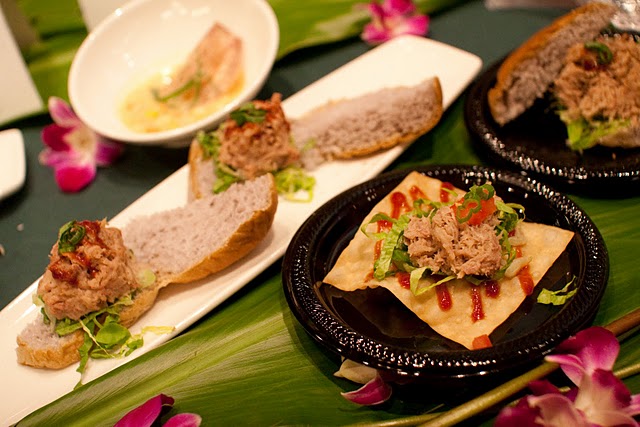
It was a February night of island breezes and mai tais with three of Hawaii’s biggest chefs, Roy Yamaguchi (yes, that Roy of Roy’s restaurants), Alan Wong and D.K. Kodama, plus a mixologist, winemaker, Hawaiian products (like sweet and spicy Kilauea hot sauce), transforming Sub Zero’s kitchens into a Hawaiian luau.


Roy Yamaguchi serves us his latest


Fresh-flower leis were draped over our necks as we were handed shiso, ginger, and elderflower soju-based cocktails, then escorted to a three-course tasting in a back room before other guests joined us in the main areas. The table was laden with flowers and artistic fish dishes from all three chefs. I was pleasantly surprised at the range and quality of tastes. Proud of Hawaii’s recent resurgence in locally grown produce and sustainable, local seafood and animals (they’re even raising Maine lobsters on the islands), everyone from chefs to farm owners (brought together by Hawaii’s Visitors Bureau) talked of Hawaiian grass-fed cows and a new iPhone app, What Chefs Eat, which gives Hawaiian chefs’ recommends for the best in non-touristy food joints. Keep up with Hawaiian food news at Share Your Table, and head to Gordon Biersch this Saturday, transported to Hawaii via the Bay. 


La guerra de los Jarritos

4

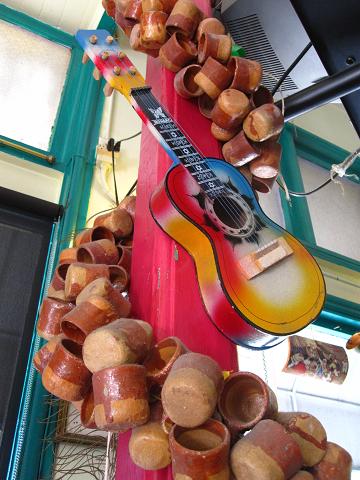
In the mid-Pacific Mexican state of Jalisco, jarritos, small earthenware pots, are used for many things– drinking and decoration of homes, primarily. But multi national corporation Novamex has claimed the word for itself — and is forcing small businesses, like Los Jarritos Restaurant on South Van Ness Avenue, to change their longheld names to accommodate that fact.

Dolores Reyes opened her family run Mission District restaurant in 1988, about the same year that Novamex began importing their popular fruit sodas into the United States. Though the Reyes initially stocked the drink, the decision to name their restaurant ‘Los Jarritos’ was based on their family’s heritage down south. Los Jarritos became a neighborhood fixture, famous for their breakfast chilaquiles.

“Jarritos are an important cultural item in Jalisco,” says Roy Gordet, the Reyes’ attorney. “By naming her restaurant after them, Dolores felt more connected to her family back in Mexico.” 

She could have hardly expected that, 15 years later, she’d be fighting her soda supplier over use of this cultural invocation. And they weren’t the only ones. Novamex targeted restaurants and taquerias with the name all over the country with legal action — approximately 30 by Gordet’s count.

“In my situation, I think they brought the lawyer because they move by money, not by anything else,” says Edith Marisol-Rivera. Marisol-Rivera’s own Los Jarritos taqueria in Eugene, Oregon, had been open for seven years when she received news from Novamex that she would have to change her businesses’ name- or else.

No one’s drinking soda with their late afternoon lunch at Los Jarritos Restaurant

“They were suing us for more than $50,000 if we didn’t change our name,” she says. “We are a small business, and we don’t have a lot of money, so I didn’t think there was a good reason to fight them.” Edith, whose mother had brought hundreds of jarritos when she moved from El Salvador, still decorates her taqueria with the jars- but the sign over the door now read El Jarro Azul. “We thought if they’re located in Texas, they should let people have their own name. But I guess not,” she gives a rueful laugh. “They’re thinking we’re going to steal their name and start making sodas or something like that.”

In contrast, Reyes decided to stand her ground. “We claimed some of their trademark registrations were invalid,” says Gordet. Reyes filed counter claims against Novamex’s, hoping to show that the restaurant had committed no legal infringement on the name Jarritos. The corporation’s case was thrown out by federal judge Jeffery White, but then reinstated by the Ninth Circuit Court. It had been a lengthy legal battle.

Dolores’ struggle resonated with other small business owners. “I talked to Dolores and she said she had the business for 18 years. I told her if she has the money she should fight,” says Marisol-Rivera. “It’s hard to fight these big companies, they’re everywhere now. I gave up because it was a lot of stress for me, but I was glad Senora Dolores kept doing it.”

But eventually, the wearing court battle was too much for Reyes. “The case has now been dismissed by the court,” says Gordet. According to the dismissal filed with the court, all claims have been dropped and the restaurant will change its name. “They didn’t expect Dolores Reyes to fight as valiantly as she did,” says Gordet. “But now everybody is going to move on. Generally, that’s considered a good thing.” Novamex refused to comment on the case for this article, saying they were under a confidentiality agreement to remain silent.

Times va cambiando for Los Jarritos Restaurant

On a recent sunny afternoon, a diverse crowd sat in Los Jarritos, enjoying a late lunch. Construction workers, Latino and White, sat at the lunch counter with plates of food and a beer (not surprising, the restaurant stopped carrying the Jarritos soda five or six years ago- around the time the legal battle began). Families lounged at tables, enjoying the sunny atmosphere imparted by the dining room’s colorful decorations- shelves upon shelves of traditional pottery, and strings of small jarritos looped around pillars.

But stuck to the front door, there is a bilingual sign that invokes Novamex’s legal challenge. “Los Jarritos restaurant will be changing its name… but we will be run by the same family members and owners. Thank you for understanding.”

Los Jarritos Restaurant (for now)

901 South Van Ness, SF

(415) 648-8383

www.losjarritos.com


Neighborliness

0

le.chicken.farmer@gmail.com

CHEAP EATS My soccer team is good. They win without me by gaudy scores like 18-1. When I’m there we still win, mostly, but with better manners. And sometimes we tie or even lose, but only when I’m there. This makes me feel needed.

After games the guys drink beer out of Dixie cups then go grocery shopping, because they’re married, and the girls, being single, go out for brunch or lunch or breakfast and talk about the guys. We wonder what they said, since they speak Portuguese and we don’t. My assumption has always been that they are yelling at me.

They play hard, but then they seem so nice, with their Dixie cups and shopping lists. Of course I am in love with my city right now, and all the people, grocery stores, and restaurants in it.

Even Tartine, which is the view from my new window, and on weekends especially is loused with line-loving wahoos. I love Tartine because I ate a sandwich from there once, a few years ago, and as I recall it was pretty fucking great. But also I love them because they represent a very special challenge to me, and you all know how I appreciate a good challenge.

So: my long-term goal in my new go-round at 18th and Guerrero streets is to annoy Tartine out of business. Just for fun! And not by saying mean things about them either. Obviously some talented folks are putting out some cool beans over there, to line ’em up like they do. No, I have in mind a more neighborly way to undo them.

First, let me fire up my tiny shitty old studio-size gas oven, then I will have to learn how to make morning buns better than theirs. Check that, then I will have to learn what a morning bun is. Hold on a second.

(Insert sound of idle whistling here)

I’m back. OK, mmm, hold on a second, my fingers are pretty sticky. OK, don’t worry, this is not a review of Tartine. I’m not going to say a word about their morning buns, only that it might take me a long time to put them out of business. But that’s fine, because time is a thing I have. Time, a tiny oven, and the means to make a cup or two of coffee.

My plan, then: to swing my gated window open and play my steel drum so enticingly that everyone standing in Tartine’s line will cross the street to see what gives. Then … I will give. I will offer them morning buns, mugs of coffee, and semi-intelligent conversation, for free of course, and so dazzled will they be by my neighborliness that they will eventually forget all about why they came to the Mission in the first place.

It’s a dream, and a distant and misty one at that, I know.

Meanwhile, for the last couple Sundays while all of Chestnut Street has been lined up outside my Mission District window, I have been on Chestnut Street having brunch, lunch, and breakfast at the wonderful and empty Chestnut Diner.

My new favorite restaurant! It was turned on to me by Alice Shaw the Person, who, having a car, carts us to and from our soccer games, which have been conducted lately in the Marina.

The omelets are great. The hash browns are fine. The décor is fantastic: light-blue-topped chrome stools around a J-shaped counter, with booths on either side.

I just can’t recommend the burgers, because they don’t understand rare there. Listen:

Me: Can I have that rare please?

Waitressperson: Half?

Me: (thinking, half?) Huh? No, Rare.

She: Oh, well.

Me: No, rare.

She: Half?

And so on until I gave up and ordered an omelet. But she looked sad about this, so I explained what rare meant and ordered a bacon burger. That way, when it came overcooked (which of course it did), it would still taste good. Which of course it did. *

CHESTNUT DINER

Daily: 7 a.m.–3 p.m.

1312 Chestnut, SF

(415) 441-1168

MC/V

No alcohol

L.E. Leone’s new book is Big Bend (Sparkle Street Books), a collection of short fiction.

Urban Tavern

1

paulr@sfbg.com

DINE A cardinal rule of urban living is that hotel restaurants are to be approached with caution, especially if the hotel is a tentacle of one of the national chain monsters. Some of San Francisco’s best restaurants are in hotels, but those hotels tend to be chic and boutique-y. In the bigger, blander establishments, you’re likely to find yourself eating cioppino from a hollowed-out round of sourdough bread while the whole restaurant spins slowly, like a sideways Ferris wheel in some sad circus.

Urban Tavern is in the Hilton near Union Square — an ominous portent — but once you’re inside, you’d never know you were on the ground floor of a gigantic corporate box. The space doesn’t look like any tavern I’ve ever been in, but it certainly is urban in the best sense: designed but not over-designed, with a few big touches — such as the multicolored horse, sculpted of metal — and plenty of small ones, such as the lampposts made to look like the trunks of slender trees. The restaurant is also bigger than it looks from the street; it runs deep into the building, and maybe this is one reason that noise, which from the signs (many hard surfaces and a general modernist edge) should be a horrific problem, is hardly an issue at all.

Urban Tavern styles itself a “gastropub,” but it could as well be a wine bar since the wine list is extensive and interesting — and, as an added fillip, all bottles are half-price on Sundays. (The mark-down includes half-bottles, which are as well-represented here as any place I’m aware of.) But whether your fancy is beer, wine, or a soigné cocktail, chef Colin Duggan’s cooking holds up its end of the deal, and then some. Duggan was present at the restaurant’s creation in August 2008, and his current menu reflects a tasty dynamism with, as seems to be de rigueur at the moment, a German touch or two, such as a wonderful fresh pretzel ($11), served with slices of grilled caggiano beer sausage (garlicky, like kielbasa), and a broad smear of country mustard.

If your heart lies on the other side of the Rhine, you’ll certainly respond to the cheese puffs (a.k.a. gougères, $5 for three), which are indeed puffy — like little domed stadiums with big pockets of warm, fragrant air inside — and also impressively glazed, I would guess from a proper egg wash. In a similar vein we find a pair of turnovers ($10), pastry triangles the size of sandwich halves filled with crab and king trumpet mushrooms for a sea-sweet, if slightly muted, effect.

The main courses do tend toward tavernishness. There is a burger, along with steak frites and a couple versions of ribs, baby-back and spare, the last being served with a red-wine-based jus we found meaty and slightly sweet. But there is plenty of sophistication too, as in a sturgeon filet ($22) plated atop a jumble of green lentils, sun-dried tomatoes, and braised winter greens. Sturgeon are best-known for their roe, which we call caviar, but their white flesh is dense, meaty, and possibly the most delicious of the freshwater fish. In this country, sturgeon are also farm-raised to an environmental standard that makes them a “good alternative,” according to the Seafood Watch program of the Monterey Bay Aquarium.

Of course, no gastropub menu would be complete without a vegetarian option, which at Urban Tavern is called a stew ($15) and consists of an iron skillet filled with a variety of roasted vegetables, including broccoli and cauliflower florets, butter beans, carrots, butternut squash, split brussels sprouts, and zucchini, all liberally seasoned with Parmesan cheese and moistened, at your discretion, from the pitcher of vegetable reduction on the side. It takes a certain nerve to do so little to vegetables and a certain faith that from the babble of different voices, a melody will emerge. But it does.

Desserts seem a little pricey at $9 a pop. We very much liked the peanut butter cup, a big disk of peanut butter mousse lacquered with dark chocolate in perhaps the ultimate marriage of New World delectables. The cup was presented with a wafer of peanut brittle and pat of peanut butter ice cream, which we found creamy and peanut buttery but slack somehow, as if a contrasting ingredient had gone missing. The banana trifle, served in a milk jar, was like a slice of banana-cream pie transformed into a parfait with good banana flavor but a bit too much sweetness. Even sweeter than German wine, and that’s pretty sweet.

URBAN TAVERN

Breakfast: 8:30–11 a.m.;

Lunch: 11:30 a.m.–2:30 p.m.; Dinner: 5:30–10 p.m.

333 O’Farrell, SF

(415) 923-4400

www.urbantavernsf.com

Full bar

AE/DC/DS/MC/V

Well-controlled noise

Wheelchair accessible


Sit-lie gets skeptical reception

35

By Skyler Swezy

On Wednesday, the Coalition on Homelessness held a press conference on City Hall’s front steps to denounce the proposed sit-lie ordinance shortly before the Police Commission convened to discuss the topic. Symbolically choosing to sit, more than 35 members of various San Francisco rights and neighborhood organizations. Speakers passed the microphone before a sparse group of journalists.

Joey Cain, representing the Haight-Ashbury Neighborhood Council, told the gathering, “There’s a lot of people from the Haight who oppose this law and we’re going to show up at every meeting to fight this thing.”

Inside City Hall, Assistant Chief Kevin Cashman gave a power point presentation before the Police Commission, explaining the sit-lie ordinance would prohibit sitting or lying on a public sidewalk between 7 a.m. and 11 p.m. and emphasized a warning would be issued before a citation.

“Our goal with this ordinance is not to cite everyone. Our goal is to change behavior,” Cashman said.

He said the police receive constant complaints from business owners in the Haight about people lying in front of their stores, however these owners rarely file an official complaint because they say they fear retaliation. He said that under current law, willful intent to obstruct must be proven in court and a third party must testify, thus the law is ineffectual.

Commissioner Petra DeJesus was the most skeptical of the proposal and thorough in her questioning of the police. “So under this new law, just the act of sitting would be a criminal act?” she asked, drawing laughter from the audience.

“Do you have any examples of how many people are blocking the sidewalks and what their status is?” she asked.

The police could not provide related statistics.

Police Capt. Teresa Barrett, whose jurisdiction includes the Haight, said local business owner and resident complaints at community meetings prompted the push for a new ordinance.

“In November, we were starting to see a trend they [community members] had not seen in many years in the Haight,” she said. However, when pressed by Commissioner Dejesus, Capt. Barret could not produce statistics or numbers that would indicate a rise in thuggish behavior or community complaints.

“Let’s do our homework and gather statistics, and see whether or not we are really having serious problems,” said Commissioner Dejesus. She remained doubtful that proper enforcement of current laws would be unable to solve aggressive or criminal behavior in the Haight.

During public commentary, anti sit-lie speakers far outnumbered those in support of a new ordinance. The creation of a “forced march”, further marginalization of troubled youth and an open-ended law that could be abused in the future, were among the fears voiced.

One long-time resident in favor of the ordinance said 20-somethings she knew avoided the bars and restaurants of Haight because of the panhandlers. “Our economy is failing because of these aggressive thugs,” she said.


Ultimately, it is the Board of Supervisors who will vote on the issue, which was filed by the Mayor’s office on March 1 and is currently under 30 day rule.


Appetite: Don’t forget to remember

0

In the wake of a number of January closings, including some long-timers I’d rather not see go (like Vivande Porta Via), I’ve been reflecting on those neighborhood spots or classic restaurants we often forget are there but don’t want to lose. From time to time, I’d like to share reviews of places we’d do well to re-visit… or get to for the first time. They might be receiving a fresh infusion of flavor from recent chef or menu changes, or are good enough to remain noteworthy, despite the flood of new openings and (over)hyped hot spots. The Grand Cafe is one of them.


Elegant but relaxed, Grand Cafe is easy to overlook. For starters, it’s in a hotel (Hotel Monaco) which gives it the tourist stigma. It’s been there for years and is so centrally located right next to Union Square and ACT theaters, that locals often forget about it. It’s long been a solid place for a meal, but with new Lyon chef de cuisine, Sophiane Benaouda, at the helm, there’s new life being infused into every corner… whether you have a martini lunch in the grand dining room or wine and appetizers in the cafe/tavern area. Benauouda comes from France’s three-star Michelin restaurant, L’Auberge de L’Eridan, and was trained at none other than Paul Bocuse’s Chateau du Vivier.

His energy is infectious, amping up classic Provençal dishes as well as fresh takes on specials like dark, pink, medium-rare buffalo with artistically-arranged scalloped potatoes. Benauouda’s scallops are seared perfectly, and a glass of champagne with garlicky escargots de Bourgogne is a fine respite all by itself. Maybe you add in a round of oysters or king crab legs. Or it’s an espresso and dessert break with a Lemon Meringue Tart (ask about pastry chef, Jessica Miller’s chocolates, particularly the buttery sea salt truffle). Whatever way you use the cafe, as a quick stop or a full meal, it’s truly a downtown asset and one of those touristy locations locals can appreciate.

501 Geary Street
in Hotel Monaco
415-292-0101
www.grandcafe-sf.com

Bin 38

1

paulr@sfbg.com

DINE If we agree that the Marina District is a sort of Castro District for heterosexuals — the het ghetto, or hetto — it should follow that food in the neighborhood’s restaurants is something of an afterthought. Restaurant food in the Castro has long been a swamp of mediocrity (though there are signs of improvement), and restaurants in the Marina have likewise tended to be more about convenience, speed, and affordability — like refueling race cars — than an experience in their own right.

At a glance, Bin 38 would seem to conform to this pattern. The restaurant and wine-beer bar occupies a narrow storefront space on a run of Scott Street between Lombard and Chestnut streets already chockablock with eating places pitched to the young. From outside it looks like a typical box, but once you’re inside the door, you find a dodge-and-weave of rectangles: an entryway with host or hostess, a bar with a nest of intimate tables opposite, a passageway, another dining room rich in alcoves, yet another passageway, and a garden. There is a snug, cave-like quality to the layout — it reminded me of a lost beloved, Rendezvous du Monde, which back in the 1990s occupied a similarly burrow-like abode on Bush Street in which splendid food was served.

I could say that Bin 38’s food is as good as Rendezvous du Monde’s. That’s saying something, and it is as good, but what is most immediately notable about the dishes emerging from head chef Matt Brimer’s kitchen is how gorgeously everything is composed and plated. The designs aren’t so fussy that you feel like a Visigoth trashing the treasures of Rome when you start eating them, but they are striking in their combinations of shape, color, and texture. I hesitate to describe food as art, but I hesitate a little less here.

Color is perhaps the most arresting aspect of food that has yet to be eaten, and winter, the bleakest season, offers surprising possibilities to the color-minded chef. Beets, for instance, of gold, ruby, and rose. Bin 38’s roasted-beet salad (part of a $29, three-course prix-fixe) looked like the contents of a jewel box: an array of richly gleaming disks, arranged on mache with dabs of mild, creamy French feta, and scatterings of equally jewel-like pomegranate seeds. The whole thing is dressed with a citronette, basically a vinaigrette made with lemon juice instead of vinegar. The finishing touch was the platter itself, a long narrow rectangle such as might be used for presenting a sushi roll.

Just as colorful was a wide, shallow bowl of hand-cut tagiolini (also a prix-fixe item), ribbons of pasta a little wider than fettucine, tossed with a colorful mélange of spinach, tomato, baby carrot, turnip, and chunks of braised pork, with flavor amendment provided by olio nuovo and square flaps of Parmesan cheese. What was most remarkable about the sauce was the way in which the various ingredients kept their individual identities while managing, at the same time, to become part of a greater whole.

If I mark down the winter salad — again, prix-fixe — a bit, it’s mainly because the color scheme wasn’t quite as intense: Belgian endive (white with hints of green), fennel shreds (white with even fewer hints of green), sprigs of watercress (green but small), sections of blood and mandarin orange (gorgeous), and pink peppercorns (too small to add much visually). The arrangement was appealing, though, with the leaves of endive neatly lined up along the platter like canoes tied up in the marina of a summer camp. Dressing: cherry vinaigrette.

Bin 38 enters the burger derby with the BIN burger ($13), a well-seasoned disk of ground beef enhanced with smoked gouda and mayonnaise, served on an English muffin and presented with a heap of sliced cornichons. You have to order fries separately, which isn’t the worst thing. You might want a small bowl of spiced nuts ($3) instead — better for you — though they’re at least as sweet as spicy. Or you might want neither, if you opened with wild Gulf prawns ($12), served sizzling on a fajitas-like cast-iron platter with chile arbol oil, very spicy, and garlic, and levain slices for mopping up.

Desserts are also arty. A toasted almond panna cotta arrives as little hemispheres that resemble white-chocolate truffles, topped with chunks of strudel, interspersed with blood-orange segments, and bathed with a reduced hibiscus tea that looks as if it leaked out of a joint of beef. Chocolate pudding cake is distinguished mainly by the pat of brown-butter gelato on the side, tasting rather caramely. Hetto heaven!

BIN 38

Dinner: Mon.–Thurs., 5:30–10:30 p.m.;

Fri.–Sat., 5:30–11 p.m.; Sun., 5:30–9 p.m.

3232 Scott, SF

(415) 567-3838

www.bin38.com

Beer and wine

AE/DS/MC/V

Wheelchair accessible

The battle for the forgotten district

24

sarah@sfbg.com

This November, when voters in District 10 — the largest, sunniest, and most diverse of the city’s 11 supervisorial districts — replace termed out Sup. Sophie Maxwell, they’ll be making a selection that could have pivotal implications for the entire city.

That’s because the next supervisor from southeast San Francisco inherits a district that is home to some of the city’s biggest environmental and public health challenges, as well as the most potential for development that will determine what kind of city San Francisco becomes.

District 10 is where you’ll find the most polluted and most underdeveloped lands in San Francisco, areas that could either be transformed into models of a sustainability or, in the words of Tony Kelly, the president of Potrero Boosters Neighborhood Association, “be turned into a toxic Foster City.”

District 10 is where the slaughterhouses, tanneries, and glue factories set up shop and used the bay as a dumping ground. It’s where the smokestacks of coal and oil fired power plants polluted the air. It’s where the Navy filled the Bay, built a shipyard at Hunters Point and loaded parts of the first atomic bomb onto the USS Indianapolis in 1945.

District 10 is where the bottom fell out of this industrial economy in 1974, when the Navy left, taking with it people’s jobs, pay, and hopes for a home of their own and a better future, particularly for what was then a predominantly African American population.

And District 10 is ground zero for plans that will triple the population and double the number of homes — homes that likely will only be “affordable” to Google executives and retirees from Marin, forever changing the face of San Francisco’s southeast sector. Critics fear that will accelerate what has been a steady exodus of black residents, replaced by megadeveloper Lennar’s vision for a new D10.

It’s against this dark history and difficult present that a wide open field of more than a dozen candidates are vying to replace Maxwell, who came to power in 2000 and has had a mixed voting record in her decade on the board. Sometimes, Maxwell was the eighth vote that let the progressive majority on the Board override Mayor Gavin Newsom’s veto and pass trailblazing legislation. Other times, she was the swing vote that allowed the moderate minority to carry Newsom’s water.

So, in addition to D10’s many internal challenges, this seat could determine the political balance of power on the Board of Supervisors, placing all the more importance on voters in this long-marginalized part of town.


DISTRICT OF DISCONTENT

Eric Smith, a biodiesel activist who has thrown his hat in the D10 ring, says that there is a lot of frustration in the air, and looking at the problems the district is facing, it’s hardly surprising that it has what nearly every candidate agrees is a fractured political culture.

“The Bayview, the Hunters Point Shipyard’s toxic Superfund site, the homicide rate, unemployment, poor public transportation, dwindling services and community resources have made D10 one of the city’s largest melting pots of discontent,” Smith said.

Smith’s words were spoken while the Elections Department was verifying signatures earlier this month on a second failed effort to qualify a petition to recall Maxwell.

Bayview resident and D10 candidate Marie Franklin didn’t support the attempt to recall Maxwell, but she understood it as “a frustration movement.”

“People are sinking in the sand, we’ve already lost so many of them, and they felt Sophie wasn’t doing anything for them,” said Franklin, who praised Maxwell for helping get Franklin’s apartment building complex renovated — a job that was completed 18 months ago, at a cost of $65 million, creating 500 local jobs.

“There are 654 units here, and they were uninhabitable,” Franklin said. “There was black mold, rain falling inside. We had people living worse than Haiti.”

Franklin, who said she is running because she “knows the history,” came here in 1978, when she and her son were living in a car after a fire left them homeless. She said the Bayview was a totally isolated area, barely part of mainstream San Francisco.

“There were no taxis, no services,” she recalled. “Nobody would come here, it was the stigmatized area where no one was accountable to provide services.”

The Bayview — which in some ways is the heart of D-!0 — wasn’t always a black community. But African Americans have been living here for 70 years, dealing with all the racism, denial of services, poverty, and pollution. And it bothers Franklin that 85 percent of the 10,500 homes that Lennar plans to develop won’t be affordable to the elderly, disabled, unemployed and low-income people who currently live in the Bayview.

“We need to preserve the diversity of the community and make sure their issues and information will flow to City Hall,” she said. “You must give the people a handle. If you don’t reach out, they’ll slip. That’s why folks out migrated.

Whoever succeeds Maxwell will be a central player in addressing some very big and dirty issues: the future of the Navy’s radiologically impacted shipyard at Hunters Point, Lennar’s massive redevelopment plan for the Shipyard and Candlestick Point, the polluting power plants, replacement of stinky digesters at the sewage plant, and the SF Hope public lousing rebuild.

There’s also the chance to address violence and crime. James Calloway, a candidate who has long worked in Bay Area schools, told us he believes that education and jobs are part of the keys to rejuvenating the district.

“Job opportunities are not as plentiful in the district,” Calloway said. “When I was a kid, you could walk down Third Street at 2 a.m. Now I wouldn’t walk down it at 9 p.m., and I know the area.”

Calloway is hopeful that the massive redevelopment plan, if done correctly, could start the district’s comeback. “Not a lot of black folks stay here when they have extensive education,” he said. “But it’s not only them. Many were displaced by redevelopment and had no way to go back.”


ELECTION UP FOR GRABS

The largest of the city’s 11 electoral districts, D10 is a huge triangular piece of land in the city’s southeast sector that was used as an industrial dumping zone for decades. Today, the district runs from the Giants stadium at AT&T Park to the 49ers stadium at Candlestick Point and encompasses Mission Bay, Potrero Hill, Dogpatch, India Basin, Portola, Little Hollywood, and Visitacion Valley. It’s also crossed by two freeways that isolate it from the rest of the city, and is home to a large number of crumbling housing projects that are in the process of being rebuilt.

Candidate Ed Donaldson grew up in the projects until he was 10 years old, when the Redevelopment Agency kicked his family out in the 1970s. “We landed on our feet, but others weren’t so lucky,” said Donaldson, who works as a housing counseling director at the San Francisco Housing Development Corporation.

“There is a sense that the Bayview and Visitacion Valley have not been included within the San Francisco family,” Donaldson said. “There is a sense of being forgotten.”

In 2007, Donaldson co-founded the Osiris Coalition to tackle the city’s dormant Certificate of Preference program, in which the Redevelopment Agency issued a document to displaced residents and businesses in the 1960s promising that they could return.

He also tried to rescue some 700 foreclosed properties and recycle them as affordable housing stock. And now he is trying to prevent the city from bulldozing seven SF Hope projects without guaranteeing residents that they have right to remain.

In 2007, Mayor Gavin Newsom and Maxwell convened an African American Outmigration Task Force that didn’t get a public hearing about its findings until August 2008. The timing angered some, who questioned why the report’s findings and implications for urban planning weren’t released before June 2008, when the residents of San Francisco voted for the Lennar-led Proposition G, a proposal to build 10,000 market rate homes at one of San Francisco’s last remaining black communities, which Newsom and Maxwell endorsed.

The taskforce didn’t publish its recommendations until the end of 2009, allegedly because of insider squabbling. Meanwhile, gentrification was going on actively, and many blamed Newsom, and by extension Maxwell, for failing to do anything with the group’s findings as D10 residents continued to suffer from high rates of asthma, cancer, unemployment and an ongoing black exodus.

It wasn’t always this way. In the 1940s, the district’s black population exploded when migrants from the south and World War II veterans came to work at the Hunters Point Naval Shipyard. Some moved to Alice Griffith Public Housing complex, or Double Rock, which was built as military housing in 1962. Others relocated to the Bayview when the Redevelopment Agency took over the Fillmore/Western Addition in the ’60s and ’70s as part of a controversial urban renewal effort.

But when the Navy abandoned the shipyard in 1974, unemployment hit the black community hard. Today, hundreds of the city’s lowest income residents live in Alice Griffith’s crumbling units and endure sewage backups, no heat, cloudy drinking water and leaking ceilings, as they wait for the projects to be rebuilt.

“Generations have been trapped in the silo of public housing and cannot get out, because of lack of opportunity and education, so when we legislate, we need to take that into consideration,” said candidate Malia Cohen, whose grandfather came from Texas to work at the shipyard where he met her grandmother, whose family came from New Orleans.

“My grandfather’s father was a longshoreman. He worked with the infamous Leroy King [a commissioner at the city’s Redevelopment Agency] and he has fantastically vivid stories of racism,” said Cohen, who works for the Federal Reserve Bank of San Francisco, previously served on the executive staff of Mayor Gavin Newsom, and has already raised over $18,000 in the D10 race and qualified for public matching funds.

“My family came here to work hard, they lived on Navy road in the projects, and then they bought a house here. My parents were born here, and we were all public schooled,” Cohen recalled as she took me on a tour of D10 that ended up in Visitacion Valley, an increasingly Chinese-American neighborhood that reflects a district-wide trend.

Census data show that by 2000, Asians were the largest racial group in the district (30 percent), followed by blacks (29 percent), whites (26 percent), and Latinos (19 percent). By 2003, according to the California Urban Issues project, the trend continued. Asians were the largest racial group (32 percent), followed by blacks (27 percent), whites (21 percent) and Latinos (17 percent) of the population.

This means that D10 candidates will have to garner support from more than one ethnic group to win. Over a dozen candidates have already filed papers in the race, but so far there is no clear front-runner.

Also frustrating the prognosticators is that fact that D10 has had the lowest voter turnout in the city, so the winner will also depend on who goes to the polls.

D10 candidate Geoffrea Morris, who is the grand daughter of longtime Bayview activist Charlie Walker, has been knocking on doors and participating in voter registration drives.

“We need new blood,” Morris said

Getting elected will be a complicated equation. Although Bayview’s population was 50 percent African American at the time of the 2000 census, it didn’t turn out the vote. In the 2006 election, only 14,000 of the district’s 37,000 registered voters went to the ballot, and 50 percent were from whiter, richer, and more Asian neighborhoods.

“It’s very important to the future of the city that the ethnicity diversity of the board be maintained and that the African American community have representation,” former Board President and current Democratic Party chair Aaron Peskin told the Guardian.

Maxwell recently told the Guardian that she’s not ready to endorse any D10 candidates yet. “I’m waiting for people to have a better understanding of what this community is, what the common thread running through it is, and how to use rank choice voting,” she told us.

The only candidate who currently holds elected office is BART director Lynette Sweet, who had her answers down pat when we reached her by phone, and even used wording that was eerily similar to Maxwell’s words.

“D10 is a pretty diverse district, but there is only one common thread: the need for economic development,” Sweet told me. “That’s true in Potrero Hill, Portola, Dog Patch and the Bayview. It’s the same mantra: a lot of small businesses need help, and the only way to help them is through economic development. In Potrero Hill it’s about land use. In the Bayview, it’s about the shipyard and better transportation and truancies.”


THE COMMON THREAD

District 10 is ground zero for the Lennar’s $2.2 billion plan to develop 10,500 market rate condos at the Shipyard and Candlestick Point. The plan will allegedly create thousands of jobs and new parks, deliver on an historic community benefits agreement that labor groups claim is so “lawyered up” that the developer can’t renege on its promises.

The package is framed as the one and only way to revitalize the southeast’s formerly vibrant economic engine. Indeed, any time anyone tries to slow down the process—to take time to thoroughly read the draft EIR and see if it adequately addresses the impacts of this massive urban reengineering project — a chorus of “no delays” starts up, either from residents of the housing projects desperate to see their homes rebuilt, or the labor contractors who hope to get jobs.

“It’s as if the city is playing checkers, while Lennar is playing three-dimensional chess,” Eric Smith observed.

Lennar has stated that it will contribute $711 million to finance this massive project. The remainder will be leveraged by Mello-Roos bonds, state taxes based on the use and size of a property and intended to raise money for needed services, and tax increment financing, which creates funding for projects by borrowing against future property tax revenues.

The conceptual plan won Maxwell’s backing but environmental groups are critical of the draft EIR.

During DEIR hearing, environmentalists questioned the wisdom and the cost of filling the Bay to build a bridge over Yosemite Slough, and building condos on Candlestick Point state recreation area, the only open major open space in the district.

But the city’s Planning Department also has 20,000-30,000 units of housing in its pipeline. This means that if all these plans get approved in the next decade, they’d account for 80 percent of residential development citywide. And D10’s population could triple, further skewing the district’s already shifting demographics.

In other words, D10 as we know it could become nothing more than a historic relic in a few years, and the next supervisor will play a key role in deciding whether that happens. SFHDC’s Ed Donaldson warns that any supervisor who does not understand the complexity of the city’s largest district can expect a similar recall backlash in future.

“There is no one homogenous voice in the community,” Donaldson said. “The grass-roots organizing that brought about the recall effort was a result of a changing political structure in the area, but is not yet on par with other districts in town. We still allow our politics to be controlled from downtown.”

Fellow candidate Eric Smith warns that the issues—and politics—are complex.

“People were emotional, angry, and desperate because they feel no one listens to them,” Smith said. “That’s part of the problem here; they would rather have a supervisor go down swinging for them, rather than watch one seemingly side with Lennar, PG&E and the mayor on issues contrary to their interests. That’s the terrible irony and one of the biggest problems in District 10. Folks are so mad, they’re willing to do whatever it takes to make them feel they have a voice in the outcome, even if it’s potentially worse.”

Smith cited the sequence of events that culminated last year in the Navy dissolving the community-based shipyard Restoration Advisory Board (RAB), which for years has reviewed technical documents and commented on the Navy’s clean-up proposals. But in December, the Navy made its official decision to disband the RAB, citing dysfunctional behavior and off-topic discussions that got in the way.

“Some of the same folks who were frustrated by the process, tried to send a signal to the Navy that they weren’t being heard and for all their well-intentioned efforts got the RAB dissolved,” Smith said. “I truly feel for them, it’s absolutely heartbreaking, but at times, they can be their own worst enemy.”

One of the looming issues about the shipyard is that the land has been polluted and needs to be cleaned. The shipyard contains radioactive debris from ships towed to the shipyard, after a 90-foot wave washed over them during an atomic test gone awry. The Navy burned 610,000 gallons of radioactively contaminated ship fuel at the shipyard, and workers showered on the shipyard, raising concerns that radioactive materials got into the drains and sewers. And questions have been raised about radiological tests on animals at the yard.


LEAKS AND FLOODS

It’s not just the shipyard that’s toxic. Even the buildings that were constructed to house workers 50 years ago are a serious mess.

Realtor Diane Wesley Smith, who grew up in public housing projects, took me on a walking tour of Alice Griffith last week to see conditions that tenants will likely have to endure until at least 2014, if the city sticks to its plan to relocate people into a new replacement unit in the same geographical area, if not the exact same site.

What we found was pretty messed up.

“The water sometimes comes out brown and feels like sand. It’s been like that for a year,” one resident said.

“The water is cloudy, the bath tub isn’t working and the sink keeps stopping up,” said another.

A woman named Silvia showed us how the water from the tap in her elderly mother’s kitchen flows out cloudy and then doesn’t settle properly, like foamy beer.

“The roof’s been leaking for years, the sewage backs up, but they just fixed the lights,” Silvia said. A neighbor named Linda was using her oven as a heater.

“The toilet backs up a lot, and my grandson’s been coughing a lot from asthma,” Linda said.

“Roaches is always a problem,” said a woman named Stormi, dressed in black sweats and a black T-shirt that read, “Can’t knock the hustle.”

“They’re trying,” said Stormi, a member of the Alice Griffith Residents Association, as a couple of Housing Authority trucks pulled up to do repairs.

“They promise that you will not have to leave your unit, but if they try to move us down to the waterfront, well, there’s a reason there’s no housing there, and it’s because the land will flood,” Stormi said.

“If we don’t end up at the table, we’ll end up on the menu,” Wesley Smith warned, as she stopped to chat with a group of young men, who were worried they would pushed out of the Alice Griffith rebuild through the criteria being established.

“Fred Blackwell, the executive director of the Redevelopment Agency, assures me that’s not the case, but Alice Griffith is a Housing Authority property, and empty promises have the potential to be great promises provided they are made in writing,” Wesley Smith said as we walked out of the projects and onto the road where a yellow and black sign announced “flooded” next to Candlestick Point park, where Lennar wants to build.

Malia Cohen expressed concern about Hope SF residents, as we drove through the Sunnydale housing project.

“We have to be diligent and mindful that people are not pushed out,” Cohen said, noting the sweeping views at Gleneagles golf course above Sunnydale, and the value of housing for a golf course community. “When public housing gets taken offline, we must work with Redevelopment and the Housing Authority to make sure no one is changing the rules halfway. We have to make sure the talks and walks line up. We need to be equal partners. We cannot be bulldozed by City Hall.”

Geoffrea Morris is a Calworks employee, at the Southeast Community College facility on Oakdale, which was built to mitigate the city’s expansion of the sewage plant in 1987. She cited concerns about the literacy levels of people who live in the 2200 public housing units that cluster D10. “A lot of people in Alice Griffith don’t even know the dates or when it’s going to be reconstructed,” Morris said. “Folks like to be told stuff like that, but the city gives you a stack of papers. Some will read them, but others rely on folks they think are trustworthy. They need stuff in layman’s terms written on one sheet of paper.”

Morris is a fan of the Internet who posted a community survey online, and made sure every housing project got some literature telling people to get informed. She worries about the digital divide in D10:

“A lot of folks don’t have computers and access to important information,” Morris said. “And let’s talk about the way ‘affordable’ is used to trick people.”

Michael Cohen, Newsom’s top economic adviser, recently stated in a memo that over the expected 15-20 year phased build out, Lennar’s Candlestick-Shipyard development would include, “up to 10,500 residential units, about 32 percent of which (3,345) will be offered at below market rates.”

“But 892 units of this ‘affordable category’ will be sold to folks earning $100,000,” Morris said. “So if you subtract 892 units from affordable unit category, you’re back to 25 percent affordable.”

Candidate Kristine Enea, an attorney and a former RAB member, chairs the India Basin Neighborhood Association, which administers a US EPA grant to hire experts to translate the Navy’s cleanup documents into plain English and comment on them She was frustrated by the Navy’s decision to dissolve the RAB.

“The lack of a forum does nothing to bolster the community’s trust in the cleanup or the redevelopment process,” Enea said.

Enea generally supports the Lennar project, but has concerns about whether it will adequately mitigate increased car traffic, or result in commercial development that benefits her neighborhood.

“India basin is a pocket of Hunters Point right along the shoreline,” Enea said. “Right now, we have no shops or restaurants, no ATM, no groceries, nothing beyond one liquor store and a few industrial businesses.

Potrero Boosters president Tony Kelly told us that District 10 residents can think for themselves. “D10 residents don’t need to rely on corporations to solve their problems,” he said.

“Folks in the eastern neighborhoods came up with a better revitalization plan than what the city proposed and community activists managed to close the power plant, after the city said it was impossible,” Kelly recalled.

And there’s no shortage of good ideas.

Kelly suggested that an urban agriculture center could immediately put low-skilled folks to work by erecting greenhouses on unused land. Smith said the industrial zone could be “incredible eco-park made from sustainable sources.

‘D 10 is the dumping ground for everything, including all the city’s waste,” he said. “We could be a shining example, not just for D 10, but the rest of the state.”

The D 10 candidate line up includes Calloway, Cohen, Donaldson, Smith, Enea: civil rights attorney Dewitt Lacy, Morris, Potrero View publisher Steve Moss; District 7 BART director Lynette Sweet, Wesley-Smith. Bill Barnes, who works for Sup. Michela Alioto-Pier, and Linda Richardson, who was appointed to the Human Rights Commission in 2007 by Mayor Newsom, have also expressed interest in the race.

In such a huge field, name identification will play a major role. Sweet is in office, but BART Board is not a high-profile job and won’t give her a huge advantage.

Cohen has a slight edge right now in that she’s raised $18,505, including $500 from former Newsom flak Peter Ragone, making her the first D. 10 candidate to qualify for campaign financing. The oldest of five girls, Cohen recalls how her mother got laid off from her city job as a school-based mental health worker and then rehired, as part of the city’s budget cuts.

“We felt that pinch and the frustrating games that are played out between the leadership and the rank and file,” she said.

Cohen who worked for Newsom in his first term as mayor, but has since left his administration , said she is uncomfortable at being framed as Newsom’s candidate.

“Because I’m not, but I am one of the few candidates who has seen how the mayor and the Board work—and don’t work—together,” she said.

Moss sees the city’s southeast as a “district in transition.” Over coffee at Farley’s in Potrero Hill, he told me that the southeastern neighborhoods could be “launching pads for environmentally sustainable growth.”

“The district’s been in a frozen period for 30 years, But despite the problems, people are deeply committed to and in love with their community.

“This district is the future of San Francisco and its social fabric—the diversity, income –and its problems are leftovers from the city’s industrial age.”


DISTRICT 10, BY THE NUMBERS

Total Acres: 5,650

Average household income: $85,000

Population: 73,000

Registered voters: 37,700

Average housing price: $335,000

Ethnicity (2003 figures): Asian 32%, African American, 27%, white 21%, Hispanic 17%

Development status of land: 18% residential, 38% is commercial, 38% undevelopable

All figures the latest available. Sources: SFGIS, Association of Bay Area Governments, U.S. Census, California Urban Issues Project. Ethnicity and income data is from 2003 and almost certainly has changed.