Republicans

Editorial: Taxes — without the GOP

0

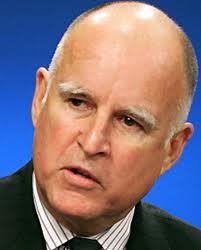
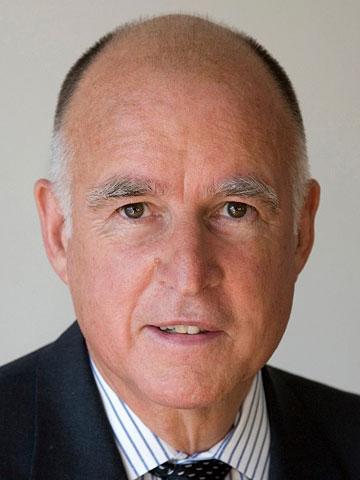
Gov. Jerry Brown did everything he promised to do. He negotiated in good faith with the Republicans. He listened to their ideas. He made it clear he was willing to accept concepts (pension reform, for example) that his biggest campaign supporters wouldn’t like. And he got absolutely nowhere.

The Republicans in Sacramento have demonstrated over the past two months that they have no interest in solving the state’s budget crisis and that they’re nothing more than obstructionists. It’s time for the Democratic Party leadership to give up on all this talk of bipartisanship and craft a budget solution that works — without the GOP.

There are several possible alternatives, but they all require Brown and the Democratic leadership in the Legislature to acknowledge that there’s no way to keep the state solvent and functional without at least extending existing taxes — and no way to get two-thirds support in the Assembly or Senate for any tax measure.

There’s some talk among progressives in Sacramento of using a creative legal strategy to put the extension of temporary sales and car taxes on the ballot with a simple majority vote. In essence, the Legislature can amend any existing law with a simple majority vote — and amending the current tax code to extend the temporary taxes for a year might work. Republicans will howl and sue, and it’s possible that the courts will side with them — but it’s worth a try. At the very least, the Democrats will be highlighting the difference between the two parties, giving the public a clear choice — and putting the GOP legislators on notice that if they won’t help find a solution, they’re going to be irrelevant.

The other option is to start gathering signatures immediately for a ballot initiative, or series of initiatives, that not only extends the temporary taxes but increases taxes on big corporations and the very rich. It’s too bad Brown didn’t start that process months ago; it would have given him immense bargaining clout with the Republicans. As it is, any initiative would have to wait until November; there’s nowhere near enough time to qualify a measure for a special June election.

Still, a lot of the projected state cuts could be delayed until after the voters have a chance to weigh in — and the politics are clearly on the side of progressive taxes. In fact, a poll commissioned by the California Federation of Teachers shows that 78 percent of Californians support a 1 percent increase in income taxes for Californians earning more than $500,000 a year. Even Republicans back the notion by a 60 percent majority.

With Brown leading the charge, raising the money for a signature-gathering effort and a strong campaign shouldn’t be a problem. And if California can start clearing up its red ink with taxes on the very wealthy, it will send a profound message nationwide.

Brown, to his credit, is finally starting to travel around the state and preach his message. He’s hitting Republican districts and trying to get voters to pressure their representatives to work with him. It’s a nice idea, two months too late — and it’s unlikely to turn any legislators around at this point.

On the other hand, the governor, whose popularity is high, would do wonders for the politics of the state and the nation by resuming the old populist stance he took in the early 1990s when he campaigned for president as a foe of corporate power and concentrated wealth. The folks at Calbuzz, the Santa Barbara political blog, put it nicely, suggesting that Brown start channeling the legendary former Wisconsin governor, Bob La Follette.

“As a political matter, it’s time for Jerry Brown to reach for his inner La Follette and start sounding some good, old-fashioned, Wisconsin-style populism. Instead of going after the railroads, as La Follette did, however, Brown should aim at the ultrawealthy, the oil companies, and other greedy corporate interests that have a) allowed the California Republican Party to gridlock the budget process and b) fought to keep special corporate loopholes, including outrageously low property tax rates from Prop. 13.”

That’s how you turn California around.
 

A creative way out of the state budget mess

36

With no Republicans willing at this point to go along with the governor’s June election plans, Jerry Brown has quite the problem on his hands. There never really was a Plan B. And now he’s got to find one, fast. He’s already made the cuts, and they’re awful. He’s not going to get his own party to go along with much more. But it’s legally dubious whether he can put taxes on a special election ballot without any Republican support, and he clearly doesn’t want to.


So what’s the best option? Well, the deep thinkers over at CalBuzz have a brilliant scheme. The idea: Pass an all-cuts budget, a devastating, ugly, puke-inducing thing — then


gather signatures to place that on the November ballot, with a provision that if the measure fails the cuts will not occur because the 2009 taxes and fees will be re-instated for five years. As a practical matter, cuts can be delayed to occur after November. And costs can be shifted to local government for local responsibilities whether the measure wins or loses.


Then let Grover Norquist, Jon Fleischman, radio heads John and Ken and the rest of their not-our-problem cadre be forced to argue for the budget ballot measure while Democrats and labor argue against it.


It’s much easier to get a vote against something in California — particularly when that something contains provisions that nobody wants. A No vote means Yes on taxes and No on cuts.


Man, why aren’t these guys running for office?


Is the California GOP done?

16

The folks at CalBuzz — veteran political reporters who know their shit — thing the CAGOP is teetering on the brink of irrelevance:


Like a herd of wooly mammoths at the end of the Pleistocne epoch, the California Republican Party is on the verge of extinction.


It may still recover. The CRP has come back from near death before. And redistricting, alongside the top-two primary system may yet revive it. But judging from the infighting, narrow thinking and rigid ideological positioning on display at the party’s organizing convention last weekend in Sacramento, the signs are not good.


But that assumes that the party wants to recover, wants to be part of governing the state and actually has a plan to do that. Right now, Republicans in Sacramento are standing up and denouncing some of Gov. Brown’s proposed cuts — while refusing to even allow a public vote on extending taxes.


Over at Calitics, David Atkins suggests another perspective:


In reality, the GOP at a national and state level exists to 1) deliver money from the poor and middle class to the rich; and 2) feed enough red meat to their prejudiced and unthinking base to garner just enough votes to continue achieving objective #1. That’s pretty much it.


Right now, the GOP doesn’t actually need to win any of the statewide elections in order to accomplish those goals. Winning them would be helpful, but is ultimately unnecessary. Knowing that the chances of anyone overturning Prop 13 and the 2/3 requirement on revenues are slim to none, all they need is at least 1/3 of the members of just one of the statehouse chambers. To ram through all cuts budgets and destroy faith in government, they need do nothing more.


In fact:


There’s nothing that serves Republican interests at a state and national level more than to see California fiscally collapse. That means shock doctrine, a transfer of wealth from the middle class to the rich, an ability to end all state labor contracts in a way Governor Walker would only dream of, and ultimately the ability to crush the belief of the People in the power of their government to do good on their behalf.


I’m not sure everyone in the GOP thinks this way, but on a macro level, it certainly makes sense. That’s exactly what the Repubicans are doing in Congress — make it impossible for the Obama Administration to succeed, and you’ve done your job. It doesn’t hurt that Obama is allowing that to happen.


Brown continues to say that he doesn’t want to pull any legal chicanery, that he wants Republican support for his plan to but the tax extensions before the voters in June. But if this is the game they’re playing, he may have to reconsider.

Jaded activist attends rally in Madison

3

Jess Brownell is a freelance writer living in Milwaukee.

So here you are, 75 years old, tired, bitter, after many years of political semi-activism deeply cynical about that process (and most others as well), in a car on a blustery March morning on the way to Madison, Wisconsin, a town you’ve never much liked, to participate in a goddamn protest rally. Why are you doing this?

Could be that the celebratory “Walker Wins” headline in what passes locally for a daily newspaper, the Milwaukee Journal-Sentinel (your Bay Guardian publisher once worked in those precincts, but that was long, long ago) had something to do with it. “Packers Win” is fine any time it happens. Everybody loves the Packers. Everybody does not love Scott Walker. On the other hand, the paper actually endorsed Walker, so what could you have expected?

Your wife, with you today, has been here several times before to protest Walker’s budget, as have many friends and neighbors. You could say that you owe them this one. But then, you owe a lot of people a lot of things, and it doesn’t often get you off the couch.

Maybe you’re just looking for a chance to call a Republican legislator an ass-licking whore; there would be some satisfaction in that. But it’s the weekend and the ass-licking whores will all be in some safe place where crazy old men can’t call them names. And that’s probably for the best. You have always tried to be a mannerly person and a phrase like “ass-licking whore” is hard to work into polite conversation.

Or maybe it’s the involvement in Wisconsin of the Koch brothers, those strange and malevolent creatures who have burst in a most unseemly way into the national spotlight. Time enough on the ride to consider the eagerly gobbled-up myths they have spread about themselves. They are Libertarians, they claim, and global warming skeptics. If they are Libertarians, why are they spending millions of dollars in the hope that government will restrict the freedom of people in Wisconsin? As Libertarians, shouldn’t they just leave us alone? And if they are global warming skeptics, why are they so anxious to destroy whatever vestiges of the labor movement are left in the Great Lakes states? Have they not in fact realized that as the south and southwest become less and less habitable the real money will have to be made in places with ample water? Sure they have. They’re evil, not stupid. They are not here, though, to vocally accost, and are not likely ever to be.

Hey, it’s tractorcade day. Are you by any chance here to see the tractors? There’s a long parade of them. Haven’t seen this many tractors since the Centennial in your hometown in Nebraska. Some of them are huge, today’s models, designed as much for combat as agriculture, it seems, and thus in the right place today — or would be if there were any ass-licking whores here to run over. Others are vintage and have names you had all but forgotten – Case and Oliver and Massey-Ferguson. A little twinge of nostalgia there, yes, but hardly enough to justify your presence.

All of them seem to be driven by real farmers, too, and it’s nice to think so many farmers took the time and effort to show support for the rights of teachers and public employees. But you grew up on a farm. You’ve seen a lot of farmers. Not here for that.

Tony Shalhoub is at the rally today. He’s the actor best known for starring in “Monk,” though his career would be substantial without that. He’s from Green Bay and has a sister who’s a teacher there. Apparently he doesn’t like the way Scott Walker and the Republicans are fucking over his sister. Not that they care about anybody’s sister. Dalai Lama got a sister? Bring her on. (Have they thought ahead on this? Scott Walker has promised to create 250,000 jobs. What if the teachers take 59,000 of them? What then, Scott?)

Good for Tony Shalhoub, but you have worked in the theater and met a lot of actors and liked most of them. You’re not here to see another one.

Is it the Capitol itself, that beautiful and venerable building? On the whole you think not. Your most vivid recollection of the Capitol is of a day spent years ago as part of a group lobbying for money for the arts, a laughable notion in today’s political climate but not unthinkable at the time. You had a sore back, spent hours walking those marble floors, and as far as you can remember the only tangible result was the worst case of sciatica you have ever had. Don’t want to go back in. Might not want to go in even if there were ass-licking whores in there to yell at.

If it’s not actors or tractors, buildings or buddies, what is it? Might as well face the facts. It’s the people. You’ve always had a taste for low-life, for cheap saloons and marginal characters. You’re really here to mingle with the thugs and slobs who have turned out in full force – some 70,000 or more – to march and protest and chant. These greedy parasites are your kind. You are one with the venal and self-serving pair carrying that Solidarity banner around Capitol Square, one with the misfits in the firemen’s uniforms and the drop-outs pretending to be retirees. Don’t let the friendly smiles fool you, all this “excuse me” and “thank you” business. These are the dregs of society, unproductive at best, vicious when aroused, in need of a firm hand. Why, if there were still a Welfare program you could all be Welfare cheats together. You have found your place, you fall into step, you stride out purposefully . . .

Damn. Felt that in the back, didn’t you?


SFBG Radio: Good news from Wisconsin — maybe

0

A judge in Wisconsin has tossed out the governor’s anti-labor law — but does that just mean the Republicans are going to go back and do it again? And what’s going on in Michigan, where the governor wants to get rid of labor contracts by taking control of local government? Check out our discussion after  the jump.


sfbgradio3182011 by endorsements2010

The GOP convention dilemma

9

Word in Sacramento is that five Republicans may be close to going along with the governor’s plan to put $12 billion in tax extensions (NOT tax increases, just extensions of existing taxes) before the voters. The problem: They don’t want to vote for taxes and then have to show up at the state convention March 18 — where there’s a move afoot (I kid you not) to pass a resolution (thanks, CalBuzz) that calls on the party to censure any “traitorous Republicans-in-Name-Only, ask for their resignation from their positions within the California Republican Party, pledge to endorse and support efforts to recall them from office, and direct the California Republican Party staff, agents and officers to refuse to provide them with funding or assistance in future elections.”


Why can’t the Democrats do shit like this? Censure and abandon any Democrat-in-Name-Only who supports continuing the wars in Iraq and Afghanistan and refuses to increase taxes on the rich? (Oh, wait — then we wouldn’t have very many Democrats left. Which, I guess, is the GOP problem.)


At any rate, the Legislature is going into session this afternoon to try to push this package through — and it could be one of those marathon sessions that lasts all night. Or maybe the Republicans will vote for the budget plan — but only if they can wait until Monday.


By the way: Isn’t it odd that two crazy talk-show hosts in L.A. can hold an entire state hostage? How come we don’t have a couple of crazy talk show hosts in San Francisco who can make very Democrat in Sacramento pay attention?

The madness of nuclear power

0

By Norman Solomon

Norman Solomon is president of the Institute for Public Accuracy and a senior fellow at RootsAction. His books include “Killing Our Own: The Disaster of America’s Experience with Atomic Radiation” (1982), co-authored with Harvey Wasserman.

Like every other president since the 1940s, Barack Obama has promoted nuclear power. Now, with reactors melting down in Japan, the official stance is more disconnected from reality than ever.

Political elites are still clinging to the oxymoron of “safe nuclear power.” It’s up to us — people around the world — to peacefully and insistently shut those plants down.

There is no more techno-advanced country in the world than Japan. Nuclear power is not safe there, and it is not safe anywhere.
As the New York Times reported on Monday, “most of the nuclear plants in the United States share some or all of the risk factors that played a role at Fukushima Daiichi: locations on tsunami-prone coastlines or near earthquake faults, aging plants and backup electrical systems that rely on diesel generators and batteries that could fail in extreme circumstances.”

Nuclear power — from uranium mining to fuel fabrication to reactor operations to nuclear waste that will remain deadly for hundreds of thousands of years — is, in fact, a moral crime against future generations.

But syrupy rhetoric has always marinated the nuclear age. From the outset — even as radioactive ashes were still hot in Hiroshima and Nagasaki — top officials in Washington touted atomic energy as redemptive. The split atom, we were to believe, could be an elevating marvel.

President Dwight Eisenhower pledged “to help solve the fearful atomic dilemma” by showing that “the miraculous inventiveness of man shall not be dedicated to his death, but consecrated to his life.”

Even after the Three Mile Island accident in 1979 and the Chernobyl disaster in 1986 — and now this catastrophe in Japan — the corporate theologians of nuclear faith have continued to bless their own divine projects.

Thirty years ago, when I coordinated the National Citizens Hearings for Radiation Victims on the edge of Capitol Hill, we heard grim testimony from nuclear scientists, workers, downwinders and many others whose lives had been forever ravaged by the split atom. Routine in the process was tag-team deception from government agencies and nuclear-invested companies.

By 1980, generations had already suffered a vast array of terrible consequences — including cancer, leukemia and genetic injuries — from a nuclear fuel cycle shared by the “peaceful” and military atom. Today, we know a lot more about the abrupt and slow-moving horrors of the nuclear industry.

And we keep learning, by the minute, as nuclear catastrophe goes exponential in Japan. But government leaders don’t seem to be learning much of anything.

On Sunday, even while nuclear-power reactors were melting down, the White House issued this statement: “The president believes that meeting our energy needs means relying on a diverse set of energy sources that includes renewables like wind and solar, natural gas, clean coal and nuclear power. Information is still coming in about the events unfolding in Japan, but the administration is committed to learning from them and ensuring that nuclear energy is produced safely and responsibly here in the U.S.”

Yet another reflexive nuclear salute.

When this year’s State of the Union address proclaimed a goal of “clean energy sources” for 80 percent of U.S. electricity by 2035, Obama added: “Some folks want wind and solar. Others want nuclear, clean coal and natural gas. To meet this goal, we will need them all — and I urge Democrats and Republicans to work together to make it happen.”

Bipartisan for nuclear power? You betcha. On Sunday morning TV shows, Republican Sen. Mitch McConnell voiced support for nuclear power, while Democratic Sen. Chuck Schumer offered this convoluted ode to atomic flackery: “We are going to have to see what happens here — obviously still things are happening — but the bottom line is we do have to free ourselves of independence from foreign oil in the other half of the globe. Libya showed that. Prices are up, our economy is being hurt by it, or could be hurt by it. So I’m still willing to look at nuclear. As I’ve always said it has to be done safely and carefully.”

Such behavior might just seem absurd or pathetic — if the consequences weren’t so grave.

Nuclear power madness is so entrenched that mainline pundits and top elected officials rarely murmur dissent. Acquiescence is equated with prudent sagacity.

In early 2010, President Obama announced federal loan guarantees — totaling more than $8 billion — to revive the construction of nuclear power plants in this country, where 110 nuclear-power reactors are already in operation.

“Investing in nuclear energy remains a necessary step,” he said. “What I hope is that, with this announcement, we’re underscoring both our seriousness in meeting the energy challenge and our willingness to look at this challenge, not as a partisan issue, but as a matter that’s far more important than politics because the choices we make will affect not just the next generation but many generations to come.”

Promising to push for bigger loan guarantees to build more nuclear power plants, the president said: “This is only the beginning.”

_______________________________________

Norman Solomon is president of the Institute for Public Accuracy and a senior fellow at RootsAction. His books include “Killing Our Own: The Disaster of America’s Experience with Atomic Radiation” (1982), co-authored with Harvey Wasserman.

SFBG Radio: The end of Democrats?

11

Today, Johnny Angel (check out his new tune here) and Johnny Venom talk about the situation in Wisconsin, how the Republicans are trying to defund the Democratic Party — and why they may live to regret it. Listen after the jump.

EndOfDemocrats by endorsements2010

More than 80 percent of Americans want to tax the rich

9

Senator Bernie Sanders (I-VT) is calling for an emergency surtax on millionaires as a way to combat the deficit. Which, of course, is a great idea. His colleague Chuck Schumer (D-NY) is on the same page. And the polls show that most of the country agrees with the concept; in fact, a Wall Street Journal/NBC News poll says that a staggering 81 percent of Americans think it’s basically a good idea to increase taxes on incomes of more than $1 million a year.


I imagine that the population of San Francisco is somewhat more liberal on the issue of taxes than the nation as a whole, which leads me to believe that a very substantial percentage of the city’s residents (including some of the very rich ones) was support increased local taxes that would require the wealthy to pay more to preserve city services.


There are, I’m sure, plenty of creative ways to do that. But it doesn’t seem to be at the top of the budget discussion at City Hall.


I realize that it would require a two-thirds vote in November for any tax hikes — unless the supervisors declared a financial emergency. And it certainly seems as if we’re in a state of emergency — and if the governor can’t find a couple of Republicans to vote for his budget package, it’s going to get much worse, very quickly.


If we can’t do that, and we have to wait a year and do it next fall, we still ought to be starting now — and the supervisors ought to be telling every community that’s facing cuts that there won’t be any more reductions without at least a plan for new revenue.


A game of GOP chicken in Sacto

2

Will any Republicans crack and allow a vote on taxes in June? That’s what everyone in Sacramento is wondering, and the insiders I’ve talked to say they think it’s an even bet. Without a couple of GOP votes, Gov. Brown and the Legislature won’t have the two-thirds majority they need to put a measure before the voters that would stave of horrifying cuts.


But there’s plenty of backroom intrigue: Calitics points out that


The Republicans understand that there have to be some additional revenues.  They know that even they couldn’t come up with the full $25 Billion in cuts in any way that could possibly help them politically. But, on the other side, they are terrified of their own base.


So what they’re trying to do is force the Democrats to do it without a two-thirds majority. There are some tricky legal ways to maybe make that happen — to place the measure on the ballot with a simply majority vote — and it now looks as if the GOP is actually pushing that alternative. The idea: Accept taxes that they know the state needs — but blame the Democrats for it and keep the no-new-taxes types happy.


And the Assembly speaker isn’t going for it. From the Sacramento Bee:


“I know that Senator Dutton has suggested that there’s a way for us to do this as a simple majority effort. Had I proposed it, the Republicans would have been up in arms, saying that I was trying to thwart the will of the public,” Pérez said.


The Assembly speaker accused Republicans of “trying to abdicate their responsibility as elected officials” by suggesting that Democrats could decide the issue without Republican support.


Yep: That’s exactly what they’re doing.


The problem, of course, is that the Dems need the tax vote, too (and I think some of them actually care about the future of the state, which no Republicans do). Who’s going to blink first?


The mayor’s race: beyond compromise

0

EDITORIAL The race for mayor is now fully underway, with eight candidates declared — and at least four are fighting for the progressive vote. It’s a remarkably open field — and the fact that there’s no clear frontrunner, no candidate whose money is dominating the election, no Willie Brown or Gavin Newsom, is the result of two critical progressive reforms: public financing and ranked-choice voting.

In fact, those two measures — promoted by the progressive, district-elected supervisors — have transformed the electoral process in San Francisco and undermined, if only somewhat, downtown’s control.

As Steven T. Jones points out in this week’s issue, the leading candidates are all sounding similar, vague themes. They all say the city can work better when we all work together. That’s a nice platitude, but it reminds us too much of President Obama’s promise to seek bipartisan consensus, and it’s likely to lead to the same result.

On the big issues, the Republicans don’t want to work with the president, and big downtown businesses, developers, and landlords don’t want to work with the progressives. In the end, on some key issues, there’s going to be a battle, and candidates for mayor need to let us know, soon, which side they’re going to be on.

Sup. David Chiu, who entered the race Feb. 28, may have the hardest job: he actually has to help balance the city budget. As board president, he’ll be involved in the negotiations with the Mayor’s Office and the final product will almost certainly carry his imprimatur. It’s unlikely the progressives on the board will agree with the mayor on cuts; it’s much more likely that some will seek revenue enhancements as an alternative. Whatever Chiu does, he’ll be on the record with a visible statement of his budget priorities.

We’d like to hear those priorities now, instead of waiting until June. But either way, the remaining candidates, particularly those who want progressive and neighborhood support, need to start taking positions, now. What in the city budget should be cut? What new revenue should be part of the solution? What, specifically, do you support in terms of pension reform? How would you, as mayor, deal with the budget crisis?

Every major candidate in the race has enough familiarity with city finance to answer those questions. None should be allowed to duck or resort to empty rhetoric about everyone working together.

The same goes for community choice aggregation and public power. There is no consensus here, and will never be. Either you’re for public power and against Pacific Gas and Electric Co., or you’re opposed, weak, or ducking — all of which put you in PG&E’s camp.

There are many more issues (condo conversions, tax breaks for big corporations, housing development, help for small business, etc.) on which there has never been, and likely never will be, agreement. The people who make money building new condos will never accept a law mandating that 50 percent of all new housing be affordable (although the city’s own Master Plan sets that as a goal). The landlords will never accept more limits on evictions and condo conversions.

We’re all for working together and seeking shared solutions, but the next mayor needs to be able to go beyond that. When the powerful interests refuse to bend, are you ready to fight them?

Editorial: The mayor’s race: beyond compromise

0


The litmus test issue: Either you’re for public power and against Pacific Gas and Electric Co., or you’re opposed, weak, or ducking — all of which put you in PG&E’s camp.

The race for mayor is now fully underway, with eight candidates declared — and at least four are fighting for the progressive vote. It’s a remarkably open field — and the fact that there’s no clear frontrunner, no candidate whose money is dominating the election, no Willie Brown or Gavin Newsom, is the result of two critical progressive reforms: public financing and ranked-choice voting.

In fact, those two measures — promoted by the progressive, district-elected supervisors — have transformed the electoral process in San Francisco and undermined, if only somewhat, downtown’s control.

As Steven T. Jones points out on page 11, the leading candidates are all sounding similar, vague themes. They all say the city can work better when we all work together. That’s a nice platitude, but it reminds us too much of President Obama’s promise to seek bipartisan consensus, and it’s likely to lead to the same result.

On the big issues, the Republicans don’t want to work with the president, and big downtown businesses, developers, and landlords don’t want to work with the progressives. In the end, on some key issues, there’s going to be a battle, and candidates for mayor need to let us know, soon, which side they’re going to be on.

Sup. David Chiu, who entered the race Feb. 28, may have the hardest job: he actually has to help balance the city budget. As board president, he’ll be involved in the negotiations with the Mayor’s Office and the final product will almost certainly carry his imprimatur. It’s unlikely the progressives on the board will agree with the mayor on cuts; it’s much more likely that some will seek revenue enhancements as an alternative. Whatever Chiu does, he’ll be on the record with a visible statement of his budget priorities.

We’d like to hear those priorities now, instead of waiting until June. But either way, the remaining candidates, particularly those who want progressive and neighborhood support, need to start taking positions, now. What in the city budget should be cut? What new revenue should be part of the solution? What, specifically, do you support in terms of pension reform? How would you, as mayor, deal with the budget crisis?

Every major candidate in the race has enough familiarity with city finance to answer those questions. None should be allowed to duck or resort to empty rhetoric about everyone working together.

The same goes for community choice aggregation and public power. There is no consensus here, and will never be. Either you’re for public power and against Pacific Gas and Electric Co., or you’re opposed, weak, or ducking — all of which put you in PG&E’s camp.

There are many more issues (condo conversions, tax breaks for big corporations, housing development, help for small business, etc.) on which there has never been, and likely never will be, agreement. The people who make money building new condos will never accept a law mandating that 50 percent of all new housing be affordable (although the city’s own Master Plan sets that as a goal). The landlords will never accept more limits on evictions and condo conversions.

We’re all for working together and seeking shared solutions, but the next mayor needs to be able to go beyond that. When the powerful interests refuse to bend, are you ready to fight them?


Time to start building a cold frame

4

No, I’m not talking about Democrats building shelters against the big chill that the Republicans are trying to bring down on public sector workers, and the impact of that push on folks engaged in pension reform debates in San Francisco. Instead, I’m looking at the possibility that snow could fall at sea level around San Francisco this weekend for the first time in 35 years–and wondering if gardeners need to start worrying about protecting crops and plants that don’t like icy climes.

Hardy winter vegetables and bulbs typically do fine under a warm blanket of snow. But a lot of folks in the Bay Area start growing stuff in January and February that’s not cut out for snow.
 
I’ve read that you can use empty coffee cans, milk jugs with the bottom cut out, or sandwich bags as makeshift plant protection, provided there’s enough space in these containers for your plants to breathe. But just as I was planning to raid the recycle bins, Adam, a fellow gardener and Guardianista, pointed out that such measures won’t withstand high winds, and that if I’m serious about protecting buds and blooms, I should consider building a cold frame

Hmm. Maybe I’ll get around to buying untreated lumber, fastening it with galanized screws, pounding wooden stakes into the ground, and battling sheets of plastic film, all before Saturday’s threat of snowflakes. Or maybe I’ll simpy pop sandwich bags over my plants by torch light Friday night.. Or say a Hail Gaia, and hope that my plants survive regardless, just like they did last week’s hail storms.

And I suspect the snow won’t last too long here, unlike the East Coast, where, as the Farmers Almanac notes, native tribes called the February full moon, which occurred Feb. 17 this year, the Full Snow Moon, since the heaviest snows usually fall in February.  In fact, reading the Farmer’s Alamanac made me recall the 12 years I spent shoveling snow in eastern Canada, and I’m once again reminded just how good we have it here. at least on the weather front.

“Some tribes also referred to it as the Full Hunger Moon or Little Famine Moon, since harsh weather conditions in their areas made hunting very difficult,” the Farmer’s Almanac observes. “Forced to gnaw on bones and sip bone marrow soup for sustenance, the Cherokee named it the Full Bony Moon.”

The Celts called February’s moon the Moon of Ice, the Chinese named it the Budding Moon in anticipation of spring. Here in the Bay Area, maybe we should call our February moon, the Full Hail Moon, since that’s what fell from the skies last week.

Is Adachi’s pension reform a Tea Party initiative?

54

With all eyes on Wisconsin, local labor leaders are suggesting that Public Defender Jeff Adachi’s proposed retirement/health plan reforms are really Tea Party initiatives, even as Adachi threatens to place another Measure B-like initiative on the fall ballot if city leaders can’t agree on a fix for the city’s fiscal problems

Last fall, Adachi started a war with the local labor movement when he placed Measure B on the November ballot. Measure B proposed increasing employee contributions for retirement benefits, decreasing employer contributions for heath benefits for employees, retirees and their dependents, and changing rules for arbitration proceedings about city collective bargaining agreements,

Measure B ultimately failed, but not after both sides spent a ton of cash. And now labor is refusing to have Adachi sit in on their pension reform talks with Mayor Ed Lee, former SEIU President Andy Stern is describing the fight in Wisconsin as a ’15 state GOP Power grab,” and SEIU Local 1021 leader Gabriel Haaland is pointing to Wisconsin as a reason for excluding Adachi from pension reform talks

“Adachi’s obviously scapegoating a group that’s part of a national agenda,” Haaland said, noting that in the states where Republicans gained statehouse control in 2010, there’s talk about eliminating collective bargaining, and ending defined benefit plans and paycheck protection.

“The problem is that pension reform has been blowing on the anti-public sector worker winds that are blowing in Wisconsin and other states, whether progressives want to acknowledge it or not,” Haaland continued. “There is a reason that Adachi got so much money last year, and the corporate interests behind him are part of this effort to bash public sector workers.”

Prop. B’s campaign finance records show the campaign raised $1.125 million in 2010, and that the lion’s share came from wealthy individuals.

Billionaire venture capitalist, former Google board member and Obama supporter Michael Moritz gave $245,000. Author Harrier Heyman, Moritz’ wife, donated $172,500. financial analyst Richard Beleson donated $110,000. George Hume of Basic American Foods donated $50,000. Gov. Schwarzenegger’s former economic policy advisor David Crane gave $37,500. Philanthropist Warren Hellman donated $50,000. Republican investor Howard Leach, who co-hosted a Prop. B fundraiser with former Mayor Willie L. Brown, gave $25,000. Investor Joseph Tobin gave $15,750. Maverick Capital partner David Singer gave $15,000. JGE Capital Partners donated  $15,000; Bechtel owner  Stephen Bechtel Jr gave $10,000: Matthew Cohler, a general partner of Benchmark Capital, donated $10,000; the California Chamber of Commerce donated $5,000 and philanthropist Dede Wilsey gave $1,000.

But records also show that Measure B opponents, which included San Francisco Firefighters, SF Police Officers Association, SF First Responders, the California Nurses Association, United Educators, San Francisco Gardeners, San Francisco Teachers, Library Workers, laguna Honda Workers, donated over $1 million in their successful bid to squash Adachi’s reform. And that just about every elected Democrat, including Assemblymember Tom Ammiano, then mayor Gavin Newsom, Sheriff Mike Hennessey, and Board President David Chiu, came out against Adachi’s original plan.
 
Haaland acknowledged that the argument could be made that the progressives’ version of the hotel tax didn’t pass and less attention was paid to the district elections last fall, because labor focused primarily on defeating Adachi’s Measure B.

“But at the end of the day, we did get the real estate transfer tax and we defeated Measure B,” Haaland observed. “So, we need to keep fighting anti-worker pressure. It’s challenging times, but I feel like the connections need to be made.”

Adachi was swift to refute Haaland’s claim that his Measure B pension reform is and was a Tea Party initiative.
“What’s not been reported is the fact that there are all these people supporting pension reform who are progressive Democrats,” Adachi said, pointing to Moritz, Crane and former Board President and Green Party member Matt Gonzalez, who all supported Measure B last fall.

“You are talking about saving basic services and that’s a progressive cause,” Adachi continued. “You might argue that pension reform isn’t a progressive solution. But then you are saying that the needs of one group of workers are subservient to the needs of other workers. And even if you raised every tax in the city, you’d not be able to keep up with pension and healthcare costs.”

“Even if we could raise parking tickets to $200 a pop, and tax folks who make more than $100,000 a year, that still wouldn’t solve the problem, because the problem is so huge,” Adachi added. “When you look at this crisis, you can’t simply redbait and say, you are a Republican, or Sarah Palin. Matt Gonzales has always spoken for progressive values, but because he supports pension reform, he’s suddenly a member of the Tea Party? At a certain point, it begins to become absurd.”

Haaland countered that he’s  “challenged by the notion that thousands show up in Wisconsin to fight some of the same people behind Measure B, but our discourse has lowered to whether or not Jeff Adachi is a good guy.”

And Adachi expressed doubt that Mayor Ed Lee can come up with a suitable pension reform plan.

“I’ve heard Lee say there has to be a solution involving pension reform and underfunded healthcare benefits that would save $300 million to $400 million in annual savings, and that corresponds with the solution he needs to come up with to close the budget deficit,” Adachi said.

Adachi said that he has met with Lee on his own to discuss pension reform, but the new mayor did not list specifics.
“He didn’t tell me what his plan was,” Adachi said, “The Prop. B supporters have a plan, but Lee did not ask what that was. But he said he sincerely wants to solve that problem, and that his preference would be one ballot initiative that everyone would agree on. And I fully support a solution that is going to truly solve the problem. I’ve always believed it’s important for the public to understand the gravity of the situation. For too long, it’s been the elephant in the room and there hasn’t been enough public information.”

Adachi said he had a beef with the idea of “groups of labor unions holding meetings at City Hall and deciding who can participate.”

“It’s also troubling that there is no information publicly available about what the ideas on the table are, no explanation of how they got there, and no documenting of the extent of the problem,” Adachi continued. “And that’s what got us here in the first place: a lack of transparency, and voters being asked to weigh in without the full information.”

Adachi said he has an upcoming meeting with Lee, the Department of Human Resources and Sup. Sean Elsbernd about pension reform that is separate from the working group that includes labor and philanthropist Warren Hellmann.

And Elsbernd told the Guardian he believes the pension reform process would go smoother if Adachi were at the table.
“I have no problem with Jeff at the table, it makes sense to have him there to avoid two ballot measures,” Elsbernd said.

Elsbernd added that it was too early to cite numbers when it comes to talk of capping pensions.
“It’s a mistake to pick a number right now because you don’t know what it’s worth,” he said, noting that the pension reform working group has sent a bunch of different scenarios to retirement actuaries to crunch the numbers to see how much they would save the city.

“I can see a case being made for asking the highest paid city workers to contribute higher amounts for healthcare benefits,” Elsbernd said. “But I’m not sure that’s equitable on retirement benefits, though I could see a situation where safety pays more, regardless, because they have better pensions.”

Wisconsin, unions, and defunding the left

21

Mother Jones mag this month has a GREAT story about the battle in Wisconsin, the history of unions and the Democratic Party, and the real aim of the move to bust public-sector unions. Writer Kevin Drum notes:

In the past, after all, liberal politicians did make it their business to advocate for the working and middle classes, and they worked that advocacy through the Democratic Party. But they largely stopped doing this in the ’70s, leaving the interests of corporations and the wealthy nearly unopposed. The story of how this happened is the key to understanding why the Obama era lasted less than two years.

He describes the history of the post-War era and the rise of the New Left, explains how the rift between big labor and the hippie/radical/antiwar folks culminated in the AFL-CIO refusing to endorse George McGovern in 1972, the decline of private-sector union membership and power and thed shift rightward of the Democratic Party.

At one point, he explains, unions were the only organized force with the resources to act as a counterforce to corporate America in political campaigns. Once that went away, the Dems had no choice:

In the real world, political parties need an institutional base. Parties need money. And parties need organizational muscle. The Republican Party gets the former from corporate sponsors and the latter from highly organized church-based groups. The Democratic Party, conversely, relied heavily on organized labor for both in the postwar era. So as unions increasingly withered beginning in the ’70s, the Democratic Party turned to the only other source of money and influence available in large-enough quantities to replace big labor: the business community.

You can blame the Sixties radicals for not understanding the importance of labor (and you’d be right). you can blame George Meany and the AFL-CIO folks for not realizing that those acid-abortion-gay rights folks were their real allies (and you’d be right). But in the end, the bad guys took advantage of the split, and of sweeping changes in the economy, and now we live in the most economically unequal society in the Western world. (Remember: Unions bring up wages and improve working conditions not just for their own members but for everyone else, too.)

So now the only major sector where organized labor is healthy and growing is the public sector — and that’s why the Republicans want to get rid of public-sector unions. In San Francisco, it’s often the case that the city employee unions (excluding police and fire) are the major donors to progressive causes — and are often the only institutional base with the kind of money to counter the Chamber of Commerce/Committee on JOBS/downtown developer bloc. Bust that up and you get corporate hegemony.


Editor’s Notes

1

tredmond@sfbg.com

In a heartwarming Valentine’s Day blog, Paul Krugman, the Nobel Prize-winning economist, talks about an old cartoon that ran in the 1980s showing Democrats trying to develop a centrist economic policy that cut spending on social programs. “How is this different from Republicans?” one Democrat asks. The answer: “We care about the victims of our policies.”

That, Krugman says, “is pretty much my reaction to the Obama budget.” The president talks about how awful the cuts will be, how programs he cares about will have to go, how painful this all is for him. Not that he’s going to miss any meals or wind up homeless, but whatever: we can all feel his pain.

It’s also pretty much my reaction to The Bay Citizen report that ran in The New York Times Feb. 13 on the pension reform negotiations going on at City Hall and in the office of billionaire financier Warren Hellman.

Hellman, Mayor Ed Lee, Sup. Sean Elsbernd, and some labor leaders are talking about how to avoid another bruising ballot measure fight this fall. Hellman backed off from supporting Public Defender Jeff Adachi’s Proposition B last year after some labor folks convinced him they could come up with a better plan.

Hellman’s new bottom line: the group needs to find between $300 million and $400 million in savings. He is quoted as saying: “I hate that it comes out of the hide” of city workers. “It is going to be really painful.”

Warren Hellman’s not a bad guy. I’ve met him, he’s polite and friendly, sometimes even almost sort of a liberal on some issues, and I think he does feel bad about cutting the pensions of low-level city employees. I even agree with him that the pension system needs reform.

But here’s the problem: nothing ever comes out of the hides of the rich.

Over the past five years, San Francisco has cut hundreds of millions in city spending. City employees have given back many millions more in concessions. Nonprofits have cut back services to the poor, the disabled, the sick.

But we haven’t asked big business and wealthy people to give up anything. Hellman hasn’t had to tighten his belt. Corporate executives in the city still make huge salaries. They’re not closing the swimming pool at the Olympic Club.

I could support pension reform — if Hellman, Elsbernd, and Lee would support tax reform. Then we can all feel each other’s pain. For once.

Leno forces GOP hand

5

For whatever tactical reason (or other inexplicable Jerry Brown rationale), the governor has refused to tell Californians what he would cut if he can’t get his tax extensions approved. And the Republicans refuse to say what they would cut instead of letting the taxes continue.


So Sen. Mark Leno did it for them. Leno asked the Legislative Analyst to explain what $13 billion in budget cuts — the “no-new-taxes” budget the GOP wants — might look like.


It’s really, really scary.


For starters, take $4.5 billion away from K-12 education. That means the end to class-size limits for K-3. It’s a huge deal: The Gray Davis measure that limited those classes to 20 students probably did more than anything in decades to save public education in California. You want 40 kids in a kindergarten class with one teacher? You think any of them will be learning to read? Oh, and the state could save $700 million by delaying kindergarten for kids; guess who that impacts? Those kids are going to spend more time in pre-school which either (a) is subsidized by the taxpayers or (b) comes out of the hides of working parents.


Oh, and we’d eliminate food stamps for noncitizens. So people won’t be able to feed their kids. You think crime might become more of a problem? But wait: No room in the prisons.


Then we put college out of the financial reach of middle-class kids and expect to build a 21st century economy. And that’s just the beginning.


Leno deserves thanks for putting this list out; it ought to be in the ballot handbook along with the proposal to continue (not RAISE, just continue) some taxes. And we should all be asking every Republican in Sacramento: Is this what you want? If not, give us an alternative. 


Editor’s Notes

0

tredmond@sfbg.com

I had fun with the state budget the other day. The Sacramento Bee has a pretty good online simulation that lets you pick programs to cut and revenues to raise to see if you can get rid of a $26.4 billion deficit, and I gave it a shot. It took me exactly seven minutes to turn the red ink into a $2.1 billion surplus.

See, it’s not that hard. Extend the 2009 tax increases, as Gov. Jerry Brown has suggested. Force multistate corporations to pay taxes based on sales in California. Increase the corporate income tax rate to the same level as the personal income tax rate. Eliminate the Prop. 13 loophole for nonresidential property. Pass an oil severance tax. A few more mouse clicks and bingo: I’ve got $28 billion, without cutting much of anything. (Well, I cut prison spending.)

The lesson you get from playing, of course, is that cuts alone will never do the job; there’s not enough left to cut.

When I finished, I called the office of Asemblymember Connie Conway (R-Tulare). She chairs the Republican Caucus gave the formal GOP response to Brown’s State of the State speech and insisted that new taxes were not acceptable.

Her press spokesperson, Sabrina Lockhart, was very friendly and nice. I told her about the Bee game and asked: If you don’t like Brown’s taxes, what specifically should the state cut?

Lockhart’s response: “Our focus has been on creating jobs to bring in new revenue.”

Okay, I’m for that, too, but let’s be real. Even if 1 million new jobs materialized tomorrow, that wouldn’t bring in enough money this year to balance the budget. Brown’s proposing $12 billion in cuts. If that’s not enough, what else do the Republicans think should go?

Lockhart: “The Republicans are engaged in the subcommittee process and will be reviewing the governor’s proposals.”

But your boss said no taxes, I told her. There are really only two options; taxes or more cuts, right? Am I missing something here?

Lockhart hemmed and hawed for a moment. “That’s why we think job creation has to be a part of this,” she finally said.

Well, I do, too, but it’s just not that simple. If the Republicans don’t want taxes, why won’t they tell us what they want to cut instead? Seriously, what Brown is offering is brutal, bloody — what else would the GOP members put on the chopping block?

Answer: They have no proposals. Nothing at all. Just no new taxes. If I were Jerry Brown, I’d be drinking heavily.

Brown goes nonpartisan while Obama stays the course

6

Gov. Jerry Brown gave a brilliant State of the State speech this evening, validating those who hoped that he would have the wisdom, courage, and candor to properly frame this difficult political moment. And it was great because he abandoned tired calls for bipartisanship and opted to go straight to the people, even citing Egypt and Tunisia as cautionary examples of the peril and potential of real democracy.
Contrast that with President Barack Obama, whose White House today indicated it would plow forward with a health care reform package – crafted entirely by politicians and corporate lobbyists – that nobody really likes even after another federal judge ruled its central tenet unconstitutional and House Republicans have threatened jihad over.

Liberals never did buy into this reform after Obama abandoned single payer and even the public option compromise, and its seems conservatives and teabaggers have been whipped up into a froth over its real and imagined provisions. So Obama has some pretty thin backing to fight through the fairly reasonable ruling that the federal government can’t make it a crime not to want to be health insurance company customers.

Both Brown and Obama correctly gauge that “something is profoundly wrong,” as Brown put it. “They see that their leaders are divided when they should be decisive and acting with clear purpose.”

Obama’s solution is bipartisanship, even though Republicans seem incapable of dealing with him or the public in good faith these days. So he makes attempts at bland compromises that please nobody – from escalating war in Afghanistan with a fake exit strategy to extending jobless benefits and billionaire tax cuts – feeding the public perception that both major parties are hopelessly corrupt and ineffective.
Brown is taking a different tact: nonpartisanship. He’s crafted a bold effort at compromise that neither political party likes, but one that will probably prove reasonable to most people if sold properly (unless we are indeed incapable of self-governance at this point, a possibility the I allow and which would require solutions like breaking California up into multiple states or accepting anarchy). And hopefully creative progressive legislators will even give multiple options to the people, including increasing taxes on the richest individuals and corporations to lessen the cuts even more, as long as we’re placing our faith in the people. Hell, I don’t even mind putting a conservative package of deep cuts to government on the ballot as well, just so we can show them how unpopular the right-wing stance really is in California.
Brown doesn’t preclude the future possibilities of bipartisanship, but he also correctly says that the political gridlock is just too strong in Sacramento right now. After punting the budget to the people, maybe they can start doing old-fashioned governance again.

“But let’s not forget that Job Number 1 – make no mistake about it – is fixing our state budget and getting our spending in line with our revenue. Once we do that, the rest will be easy—at least easier because we will have learned to work together and earned back the respect and trust of the people we serve,” he closed. “I look forward to working with all of you.”

Medi-Cal and cell phones: The ugly truth

3

There’s a chilling comment from political consultant Dan Schnur in the Los Angeles Times. In a fascinating story by Tony York, Schnur talks about the difference between image and reality in California’s budget wars:


“Cut $1 billion out of Medi-Cal and most voters won’t notice. Take away some cellphones and make legislators sit on a picnic bench, and they pay attention,” he said.


Yep: Jerry Brown is saving the state a few million dollars by cutting cell phones for state workers and replacing a fancy conference table in his office with a cheap one. And that’s gotten a lot of press — as Jerry, the old master, knew that it would. We still live in a state, and a nation, where symbolism matters more than substance.


Republicans still get away with saying that the governor needs to cut state employee pay and benefits — although you could fire (that is, cut all pay and benefits) for every one of the state’s 240,000 employees and you wouldn’t be close to balancing the budget. (What nobody says is that the majority of state spending in California goes for local programs — what legislator wants to call on the governor to cut funding for his or her district? Not even the Republicans do that.) Little cuts like Brown’s mean nothing, and are easily wiped up by the daily, unpredictable ebb and flow of tax receipts.


And yet, Brown has to send a message that he’s being frugal, so he gets rid of his conference table (did he sell it? For how much?) And it works.


And, of course, nobody ever talks about how much the state wastes in corporate tax breaks; it’s much easier to take away some Caltrans worker’s phone.


I wish Brown could really tell the truth in his State of the State speech — that the stuff people get agitated about is chump change, that a huge cut to Medi-Cal means people dying (but not today, and you can’t prove the link, and poor people die all the time and the press never notices), that cuts to education mean more poverty (and crime, and public expense) in the future, that we’ve already cut (or pupt off with gimmicks) about $30 billion in spending, and that the state has a serious revenue problem.


But he knows he can’t do that. People won’t vote for his tax plan unless he looks like he’s somehow punishing state workers and flagellating himself. Good thing the Jesuits trained him.


GOP is wrong: Most Californians want taxes

50

The Public Policy Institute of California generally has some of the most reliable polls in the state. It’s not a partisan group or part of anyone’s campaign, and the questions tend to be framed in a fair manner. So I take the results of the PPIC polls as a decent indicator of where the state is going.


And where it’s going right now could not be more clear: A vast majority of Californians in the latest PPIC poll want to see a June ballot measure to address the state budget, and they support higher taxes, particularly to save education. And 60 percent think the state should raise taxes on corporations.


It’s going to be tricky: Gov. Brown will need two Republicans in each house to go along if he wants to get a tax measure on the ballot. And the GOP is holding out for changes in the state pension system, which is a complex issue and will be hard to nail down in the short time that remains before the Legislature would have to vote on a June ballot measure. But Brown has the support of the public — even the support of most Republican voters — so it’s possible.


“I’m crossing my fingers,” Assembly member Tom Ammiano told me. “But I think we can get there.”

Republicans worry about their “brand”

12

Like every political junkie in this state, I was fascinated to hear that Republican operatives think there’s a problem with their “brand.” It’s simple: Even when the state’s voters approve horrible right-wing anti-tax measures, they don’t seem willing to vote for Republicans. The way the operatives discuss the situation, it’s all about messaging; I think Robert Cruickshank at Calitics has a better analysis: “The CAGOP has made itself unelectable by being a white man’s party.”


It runs even deeper, though. In order to win a statewide GOP primary, you have to:


1. Oppose all taxes


2. Oppose gun control, even to the point of insanity


3. Support harsh crackdowns, bordering on open racism, on immigration and immigrants


4. Either be rich or toady up to the rich


And those positions aren’t winners in a statewide race.


The Democratic Party, for better or for worse (often for worse) has no such litmus tests. Yeah, it’s hard to get elected without labor support, but the Demos are much more of a “big tent” these days. Jerry Brown is more of a fiscal conservative than a lot of Republicans (who love to cut waste as long as it doesn’t hurt their rich supporters), but the tax-and-spend types like me all voted for him. Our senior senator, who happens to be the most popular politician in California in poll after poll, is only barely to the left of Joe Lieberman.


As long as the far right controls the part in what’s very much a centrist kind of state, the GOP isn’t going anywhere. Brand or no brand. 

Notes on tragedy in Tucson

A dear friend and former classmate of mine, Sarah “Uppie” Updegraff, recently began working the night shift as a nurse at the NICU, the Tucson hospital where Rep. Gabrielle Giffords is in intensive care.
 
Today, Uppie sent me a link to a blog she recently created to post her personal reflections on life as she makes the transition from nursing school to a career in health care. Just days after she began writing, she found herself processing not only what it’s like to be up all night caring for patients, but doing so in a highly charged atmosphere and media zoo that’s been thrust into the center of a national tragedy. I thought I’d share some excerpts, which offer a real-life, on-the-ground glimpse into what it’s like to be in Tucson in the wake of this horrific incident.

Here are a few of the thoughts and reflections from her blog, “The Uppie Update.”

From an entry titled, Sad Times in Tucson, City that I Love …

“Of course, then there are politics.  Our liberal wild-west gun laws.  The overall culture of dislike for Sarah Palin (with a comparable vigor to any liberal small college town), and my beloved NPR, blaming Republicans as usual. Usually I find it consoling to listen to news that agrees with me, but I’ve been rolling my eyes all morning, exhausted and unsatisfied.

“And then I think about this young man’s parents.  And this little girl’s parents. How terrible. It’s hard for me to understand these actions, to make sense of anything, other than to believe this boy must have had some psychological issues which compelled him. I can’t believe that a ‘regular’ person could just wake up one day and decide to shoot some people they have decided not to like. … I want to know more about this boy. What systems  have failed? I’ve been obsessively listening to the news, as though I’ll find an answer there. Instead, I find just more politics.”

Here’s more, from an entry titled, My First Week of Night Shift Amidst Tragedy.

“I just move through it, making too much eye contact or none – waiting in line to have multiple security people check my badge on my way to my floor. The Obama hospital parade – a pensive fanfare. 

“They show the little girl, smiling with her milk-carton-worthy optimism, making me notice feeling nauseous. 

“In my time off, I’m unable to focus on anything requiring attention. I find myself, wandering Target alone, watching people, eavesdropping. Listening to chatter, chatter about groceries, children, and shootings woven by many mouths – so strange. Is Target always this strange and solemn, or is it just me, in a disconnected haze of exhaustion? And of course everyone knew someone, everyone’s comparing notes on who they knew and how – as they do in newsworthy tragedies like these. Tucson is so small.  I haven’t met anyone yet who had no connection to the people killed or shot. Droning punctuated by sentences that seem to lift out of the shoppers around me: ‘It could have happened here, it could have happened anywhere.’ ‘I had just been at that Safeway the day before.’ ‘My brother works there.’ conversations laced in and out. This is my community after all, even at Target in the middle of the day/night. It feels lonely and connected at the same time.”

Michael Mina

24

paulr@sfbg.com

DINE When Michael Mina closed his eponymous restaurant in Union Square last year, I did not mourn. I had visited the place early in its run, toward the end of the summer of 2004, and felt as if I’d been seated inside a giant pillowcase, with awkward ergonomics and over fussy food — good food, of course, but expensive and show-offy. The desire — I might say the lust — of human beings to leave their mark on the world, whether by making rivers run backward or carving radishes into rose blooms, is a constant, for better or worse, and one notes its manifestations with wary neutrality. But as a philosophical matter I subscribe to the Alice Waters school of letting foods speak in their own voices instead of turning them into chefly statements, and in this sense a certain sort of high-style cooking poses issues for me.

In October, Michael Mina reopened in the old Aqua space, and a circle was closed, since Mina had been Aqua’s chef for a decade, through the 1990s and into the new millennium. How, I wondered, did they actually move the restaurant? Did they pack it into moving vans and speed off in the middle of the night, the way the Baltimore Colts did in 1984? However the move was accomplished, it was well worth making. The new space, while vault-like, is softened by curvature of the spine; it’s also quiet enough for comfortable conversation even when full. The ergonomics are much improved.

And the food? Well, Mina still likes his flights, his arrays of one- or two-bite treats, but the general tone of things is more muscular — an amuse-bouche of beluga-lentil soup, say, served in a demitasse with a small square of grilled-cheese sandwich on the side — and at times even rustic, as with the baskets of grilled levain to be spread with ricotta cheese enhanced by honey and pepper.

The smaller courses are mostly wondrous. A platter of hors d’oeuvres ($16/person) was a blitzkrieg of sensory experience, including a sublime crab fritter nested in a lettuce cup, a small filet of cured ocean trout propped on a mini-blini, a sensuous round of blood-red steak tartare, and (tasting mainly of fat), a foie gras “pb&j” with a buckwheat cake and huckleberry preserves.

The spell did weaken some with the main courses; a “five seas” tasting of Japanese fish ($42) could have been an appetizer plate, as could a duo of crispy fish ($39). A frenched rack of Prather Ranch lamb ($39), on the other hand, offered real ooomph, although views were divided about the niçoise-style fregola pasta, mixed with shreds of lamb osso buco served in an elegant little pot on the side — too rustic and not part of the greater whole? Maybe, but I liked it anyway.


Although the eagle-eyed will note that Michael Mina’s prices are top-tier, I hesitate to describe the restaurant as a haven for the rich, if only because an experience there is actually available to people whose incomes don’t reach past the payroll-tax cap. I have no issue with the rich per se — they, like the poor, will be with us always — but I feel no special urge to worship them or their achievements. I leave that task to them, since they seem to be well-equipped for it.

It is a writer’s job to afflict the comfortable and complacent, and so a few weeks ago I noted the absurdity of Senate Republicans’ waging all-out legislative war to extend the so-called Bush tax cuts on adjusted incomes over $250,000 when doing so requires us to borrow yet more money from foreign creditors, chief among them China. This brief noting of the obvious occasioned a hail of furious, invective-laden email — “cheesy,” “socialist” — hurled by web trolls from as far afield as Cape Cod.

I recognize such outbursts of right-wing media thugs because I’ve seen them before. In October 2008, when I dared to mention other obvious absurdities — Sarah Palin, our antediluvian Cuba policy — abuse also poured in from afar and I was even denounced by noted high school graduate James Taranto in the politics blog he writes for The Wall Street Journal. The wing nuts of the right perceive, I guess, that tax cuts for the rich — following bail-outs for reckless Wall Streeters — are politically touchy in a time when the federal deficit has become an aneurysm. They believe that media intimidation, even of small fry like me, is always worth a try. And plainly they believe that the next presidential campaign is already on. There, I agree with them. *

MICHAEL MINA

Dinner: Sun.–Thurs., 5:30–10 p.m.; Fri.–Sat., 5:30–10:30 p.m.

Lunch: Mon.–Fri., 11:30 a.m.–2:30 p.m.

252 California, SF

(415) 397-9222

www.michaelmina.net

Full bar

AE/DS/MC/V

Comfortable noise level

Wheelchair accessible