

As part of my effort to compile a list of most roastable moments of Sup. Chris Daly‘s decade-long career at City Hall, I asked the termed-out D6 supervisor if he would sit down for an exit interview. And shortly before Christmas, when there was still hope the Board would select a progressive interim mayor, and Daly had not yet vowed to politically haunt Board President David Chiu with shouts of, “It’s on like Donkey Kong” , we arranged to meet me at the Buck Tavern on Market Street, which Daly, who now holds the liquor license, is threatening to rename “Daly’s Dive.”
As it happens, the lion’s share of our conversation ended up taking place by cell, since Daly got stuck in late afternoon commuter traffic, as he drove to San Francisco from Fairfield, where his wife and children have lived since April 2009, making him a fitting symbol of the East-Bay-and-beyond migration pattern of couples who live in San Francisco, until they have more than one kid.
Except not all couples with two small kids get to move into one of two foreclosed properties that the in-laws bought with $545,000 cash in spring 2009. At the time, Daly’s critics accused him making such a mess of governing the city that he had decided against raising his own family here. Daly predictably disagreed. “There are few people who think about the future of San Francisco and the health of the city more than me,” Daly told reporters, explaining that his wife wanted family support raising their children, so she had moved to the same cul-de-sac as her parents, as Daly continued to live in a condo in San Francisco with roommates and to see his family on weekends.
Anyways, on the dark and stormy night that I interviewed Daly in mid-December, he acknowledged that he was going to be in for one helluva roast at the Independent on Jan. 5. in the worst possible sense of the tradition.
“Will there be controversial subjects, things that on the face of it, are not very nice? Yes,” Daly said.
And then he claimed he had agreed to this ordeal, because, under the roast’s traditional format , he would get to go last—and thus would get to have the last word.
“Why would I want to end my City Hall career like this? Because I get to go last, and can really say what’s on my mind,” Daly said. “Unless the D.J. wants to say something as he’s spinning.”
Daly’s comment suggests that folks who attend his roast at the Independent will witness a historically vicious verbal drubbing on all sides, since no one has ever accused Daly of holding back from saying what was on his mind. Even if it has led to seemingly counterproductive “We are shocked, SHOCKED!” responses. Like the time Sup. Michela Alioto Pier introduced an ultimately doomed etiquette ordinance, after Daly swore at a constituent during a City Hall meeting, in 2004.
Daly said at the time that he comes from a background as a housing-rights organizer on the streets of Philadelphia and San Francisco, where confrontation was an effective political tool. But he also claimed that he had learned an important lesson.
“In the future it’s going to be better for me personally and politically to focus my energy positively on the people I care about instead of negatively on the people I think are doing them harm,” Daly reportedly said.
Fast forward six years, and Daly is unrepentant about his record of fighting for low-income people, while openly defying City Hall’s unwritten rules of etiquette.
“Etiquette always seemed a little silly, something for the ‘other’ San Francisco, for the prim and the proper and that’s not what I am concerned about,” Daly said. “I’m aware of the turn-the-other-check philosophy, and, if I were religious, I’d be out of the Old Testament. I’d be, if someone pokes you in the eye, I’d poke back.”
Daly says he stopped caring about etiquette towards the end of his first year in office. “When those in power use that power to put down those who are less advantaged, when I see that, I respond quickly and with as much force as I can to prevent them from doing that kind of thing again,” he said. “ If you want to attack homeless people for political advantage, I’m going to attack you right back. That’s not ‘proper,’ but I think it’s just.”
Daly says he also soon realized tthat the truth wasn’t the driver.
“I already knew that money, power and significant forces would be pushing back against me but then I discovered that the actual truth wasn’t what played out there in the world of spin. It’s like when the Examiner’s Josh Sabatini asked me how I want to be remembered, and I said, “Not as the caricature the Examiner created of me.”
Daly, who moved to San Francisco in 1993 to work on homeless and affordable housing issues, was at the heart of the movement around Ammiano’s 1999 write-in campaign for mayor, and part of the progressive sweep onto the Board, in 2000.
“For me, it’s never been about being a ‘good’ vote. I breathe leftist progressive politics,” Daly said. “Where I can make more of a mark is in terms of setting the stage for those votes and holding the line in districts that are not progressive. I’m very proud of my attempts to hold the line on issues, but the work doesn’t make any friends.”
Daly noted that after he made comments about Newsom’s alleged cocaine use during the 2007 Mayor’s race, downtown interests threw everything they had left at him.
‘They got a lot of hits in, but no total blows,” he opines. “Last time I checked, I saved the city $150 million on the Americas Cup deal that they were going to ram rod through.”
And so, as he prepares to begin life as a bar owner, don’t expect Daly to pass up opportunities to launch verbal attacks, if he believes they are warranted, political consequences be damned.
“People want to have the power without any of the negativity they associate with all the shit we have to deal with to build this power,” Daly added. “So, it’s all, Daly and [former Board President Aaron] Peskin took control of the Democratic Party at midnight. Well, how did you want us to take over? “
Daly claims if you take away “negatives” attributed to him, you take away his wins. “People call me a lot of things, but I’m not a loser, I win a lot” Daly added, noting that Democrats being nice to Republicans has led to losses in D.C., not gains. “So, yes, I’ve got a lot of negatives, and they’ve clearly been made into a target, but if I can take the hits, and help people I care about, I’m happy to do it. That’s what I’ve done for ten years.”
Daly says he’s become “pretty desensitized to criticism,” even as he admits to being a sensitive person, deep inside. “I don’t think I’d have quite the visceral response to poverty and oppression, if I wasn’t sensitive,” he said. “I care deeply about people’s struggles. That’s why I’m here, but I also have a pretty solid critique of capitalism and I know how to follow the money, so when I get criticized by some downtown mouthpiece, I know what time it is.”
Daly says he started the Daly Blog several years ago, to push back against what he felt was unfair treatment in the media. And he says he endorsed outgoing mayor Newsom for Lt. Governor, despite their long and antagonistic history, so progressives could have a shot at installing a mayor in Room 200.
“My money now is on the selection of the mayor going to the new Board, and Avalos getting it in the 13th round of voting,” Daly said.
Daly made that prediction three weeks before the progressives on the Board seem poised to hand the keys to R.200 to City Administrator Ed Lee—thereby eliciting Daly’s ballistic “Donkey Kong” outburst.
With the outgoing Board set to meet Friday to make a selection, here’s another Daly roastable moment, this time from Peskin, related to the fall-out that ensued after Daly made two appointments to the SFPUC, while serving as acting mayor for one day, while then Mayor Willie Brown was out of the country, on a trip to Tibet.
“When Mayor Willie Brown left office, Charlotte Schultz had an unveiling ceremony of Brown’s picture. Newsom, who by then was mayor, was presiding. And Charlotte had a beautiful easel with a golden drape over it. When she pulled back the curtain there was a picture of Daly, who was listed as “41st and a half” mayor presiding from 9 a.m. to 2 p.m. on October 22,” Peskin recalled, noting that under Daly’s picture there was another curtain that contained Brown’s actual portrait.”
And while Daly’s controversial statements and outbursts always make headlines, there is no denying that he helped make the progressive agenda, including establishing mandatory paid sick days, universal healthcare, and forcing developers to contribute in affordable housing or services for poor, an integral part of city policy.
“The Chronicle used him as the poster child to try and dissuade anyone from supporting a progressive agenda,” former Sup. Jake McGoldrick observed. “He was used to smear any of our good ideas. And Chris never seemed to understand that some of us needed to be a little more sensitive, since we needed to get re-elected and didn’t represent districts that were as progressive as his. Personal attacks make the whole situation smell bad.”
Sup. John Avalos, who served as Daly’s legislative aide until he was elected as D11 supervisor, acknowledged that a lot of folks have accused Daly of doing irreparable harm to the progressive movement and being a gift to Newsom and the moderates at City Hall.
“People try and make hay out of it,” he said. “But his antics have probably hurt him more than anyone,” Avalos added, noting that he ran in 2008 as Daly’s former legislative aide.
‘And it didn’t hurt me, and I made no bones about where I came from.”
And then there’s the fact Daly defeated the Chamber ’s Rob Black in the 2006 election. “We don’t do enough to have better relationships between ourselves,” Avalos added , reflecting on the divided progressive movement. “It’s more than just one person.”
Peskin for his part acknowledges that Daly will be missed on the Board.
“He sucked the oxygen out of the room and made it all super lefty and caustic, and it certainly did not allow a better conversation to evolve,” Peskin said. “But it’s still going to be a pretty profound loss.”
Republicans
Chris Daly’s Final Say
Welcome, new Republican overlords! Please bend over
Our fuzzy friends over at Daddyhunt.com just popped this ‘tube in our box. To welcome the incoming House majority, here’s a video countdown of their top 10 RILFs (Republicans They’d Like to … Filibuster?) — many significantly less Droopy-looking in Daddyhunt’s representation. Spank ’em redder!
2010 Offies!

tredmond@sfbg.com
When a major conservative political movement starts using a name that typically refers to the act of scrotal fellatio, you know it’s morning again in America. In 2010, the teabaggers came home. They nominated candidates who think masturbation is selfish and wonder why monkeys aren’t still evolving into humans. They held rallies urging the government to “get out of my Medicare,” which happens to be a government program. Their leaders praised dictators and urged women who had been raped to look at the bright side of things.
And those were just the headlines.
It’s hard to imagine a year that could be worse than 2010 — but it was a great vintage for the Offies.
Presenting the Off Guard awards for the silliest, most insane, and absolute worst of the year that was.
AND SHE FIGURES IF WE ARREST EVERYONE WITH BROWN SKIN, WE CAN FINALLY GET THIS SORT OF BEHAVIOR UNDER CONTROL
Arizona Governor Jan Brewer told reporters that illegal immigration resulted in beheadings in the desert.
BUT AS LONG AS YOU DON’T TOUCH YOURSELF WHEN YOU THINK OF THE DEVIL, IT’S GOING TO BE OKAY
Christine O’Donnell, the Republican candidate for Senate in Delaware who decried masturbation as a “selfish act,” said she only dabbled in witchcraft and had just one date on a satanic altar.
EXCEPT THAT WE ALREADY ARE, AND WE ALREADY ARE
Jerry Brown said he opposed the state’s marijuana legalization measure because “we can’t compete with China if we’re all stoned.”
LOOK BUSY
A Pew Research Center poll showed that 41 percent of Americans think Jesus will return in the next 40 years.
HEY, IF WE’D JUST CREATED THE WORST ENVIRONMENTAL DISASTER OF THE DECADE, WE’D WANT A LITTLE BREAK, TOO
A few days after the worst oil spill in U.S. history, BP Chief Executive Tony Hayward complained that he wanted his life back.
BUT HE SWEARS HE’LL STOP AT BEHEADINGS
Insurance Commissioner Steve Poizner said if he were governor he’d give the National Guard live ammunition to shoot at immigrants on the border.
AFTER ALL, IF THEY’RE NOT IN AN AIRPLANE, THEY CAN’T DO ANY DAMAGE
GOP Senate candidate Carly Fiorina said that people on the federal no-fly list should have the right to own guns.
OOH, WHEN YOU TALK TOUGH LIKE THAT YOU ALMOST SOUND LIKE SOMEONE WHO COULD STAND UP TO THE REPUBLICANS. OR MAYBE NOT
President Obama asked whose ass he should kick at BP.
IT’S OKAY, THOUGH, AS LONG AS THEY WEREN’T ENGAGING IN ANY SELFISH ACTS
Staffers at the Securities and Exchange Commission got caught spending as much as eight hours a day downloading porn at the office.
AND SOMETIMES GOP CANDIDATES ARE NITWITS
Nevada GOP Senate candidate Sharron Angle praised Chilean dictator Augusto Pinochet for his efforts to privatize that country’s retirement system, saying “sometimes dictators have good ideas.”
YEAH, COME ON, WHY CAN’T YOU LOOK AT THE BRIGHT SIDE OF THINGS?
Sharron Angle said that women who have become pregnant as the result of rape or incest should “turn lemons into lemonade.”
DAMN GUMMINT TRYING TO INTERFERE WITH PRIVATE BIDNESS
GOP Congressman Joe Barton of Texas apologized to BP for a White House “shakedown.”
YES, AS A MATTER OF FACT I DO OWN THE WHOLE GODDAM SCHOOL
Meg Whitman’s son threw softball equipment over a fence to kick a group of computer science and physics students off the Princeton rugby field.
NICE, SINCE THOSE GROUPS ALL GOT ALONG SO WELL
GOP Senate candidate Chuck DeVore compared Palestinian activists to Nazis, Fascists, and Communists.
AND OF COURSE, THAT WORKS SO WELL WITH MODERN MANAGED CARE
Nevada banned chicken costumes from the polls after Nevada Senate candidate Sue Lowden said that people should barter with doctors for health care the way “our grandparents would bring a chicken to the doctor.”
ANOTHER GREAT MOMENT IN THEOLOGY FROM THE MAN WHO BROUGHT YOU THE PEDOPHILE PRIEST COVER UP
Pope Benedict said it was okay for male prostitutes to wear condoms.
SO HE’S GOT THAT GOING FOR HIM. WHICH IS NICE
Formerly classified State Department cables revealed that the premier of Korea is still an excellent drinker.
ACTUALLY, THEY TOOK ONE LOOK AT THE TEA PARTY AND DECIDED THEY WERE BETTER OFF AS THEY ARE
Senate candidate Christine O’Donnell said that evolution was a myth; after all, she wondered, “why aren’t monkeys still evolving into humans?”

THE CHURCH HAS ALWAYS BEEN KNOWN FOR ITS SENSE OF PERSPECTIVE
The Vatican announced that the ordination of women and the abuse of children were both “grave crimes.”
THAT’S OKAY, IT WILL LOOK GOOD ON HIS RESUME
Gavin Newsom decided to run for lieutenant governor after saying he didn’t know what the job was.
YOUR TAX DOLLARS AT WORK, CIA EDITION
The United States held high-level negotiations with a supposedly senior Taliban operative who turned out to be a Pakistani shopkeeper.
BUT WAIT — HOW WILL WE KNOW IF WE’RE SUPPOSED TO WORRY OR NOT?
The Department of Homeland Security abandoned color-coded safety alerts.
THE INTELLIGENCE AND CULTURAL TASTE OF THE AMERICAN PEOPLE IS SIMPLY STAGGERING
Sarah Palin’s daughter, Bristol, made it to the final round of Dancing with the Stars.
WHICH MAKES HIM ENTIRELY QUALIFIED TO SERVE AS A REPUBLICAN POLITICIAN
Dan Quayle’s son ran for Congress in Arizona and admitted that he had been posting on “dirty Scottsdale” under the name of Brock Landers, a sidekick to porn star Dirk Diggler.
IS HE ONE OF THE NAZI FASCIST COMMUNISTS, TOO?
Rand Paul said Obama’s criticism of BP was “un-American.”
WAIT — WAS THAT A BROWN ALERT?
The California Highway Patrol shut down its South Lake Tahoe office after officers found an anal vibrator and thought it was a bomb.
HONESTY IS JUST PART OF THE PROCESS OF RECOVERY
Tiger Woods admitted that he sucked.
EXCEPT THAT IT MOSTLY BENEFITS THE INSURANCE INDUSTRY
Vice President Joe Biden called the health reform bill “a big fucking deal.”
IT’S THOSE CUTE WOODEN SHOES, YOU SEE
NATO Commander John Sheehan said Dutch soldiers were too gay.
DAMN, AND HE’S SUCH AN ATTRACTIVE MAN. I’M SURE THE TSA FOLKS WERE REALLY LOOKING FORWARD TO IT
John Tyner told Transportation Security Administration officials in San Diego that if “you touch my junk, I’ll have you arrested.”
AND HE WASN’T EVEN TALKING ABOUT HER
Sarah Palin demanded that Rahm Emanuel apologize for using the term “fucking retarded.”
SINCE WE ALL KNOW THOSE PEOPLE DON’T KNOW HOW TO SPEAK IN PUBLIC
MSNBC Host Chris Matthews was so excited by an Obama speech that he said he “forgot he was black.”
THE CUSTOMER IS ALWAYS RIGHT
Pacific Gas & Electric Co. spent $50 million on a ballot initiative to stop public power, and lost after getting soundly defeated in every county where the utility has customers.
YOU MAY BE PART OF THE FAMILY, BUT WHEN IT COMES TO MY POLITICAL CAREER, HONEY, YOU’RE OUT THE DOOR
Meg Whitman fired her housekeeper when she found out she was in the country illegally.
BUT THEY’RE ALIKE ANYWAY, RIGHT?
Sharron Angle defended a campaign ad depicting menacing-looking Hispanic men by telling members of the Hispanic Student Union at the University of Nevada, Las Vegas that many of the members looked Asian.
OF COURSE, SHE SKIPPED THE FIRST FEW AMENDMENTS — BOOORING!
Christine O’Donnell said she couldn’t find anything about the separation of church and state in the Constitution.
BECAUSE IN A FIREFIGHT, THE FIRST THING ANYONE WOULD BE THINKING ABOUT IS HIS SERGEANT’S CUTE ASS
Sen. John McCain said he opposed ending “don’t ask, don’t tell,” talked about all the soldiers and Marines who lost limbs, and said that “when your life is on the line, you don’t want anything distracting.”
SINCE WE ALL KNOW THAT HEALTH INSURANCE MAKES YOUR PEE SMELL FUNNY
Federal judge Henry Hudson asked Obama administration officials whether the new health care plan was similar to forcing all Americans to eat asparagus.
SO IT’S JUST AS WELL THOSE PEOPLE ON THE NO-FLY LIST HAVE THE RIGHT TO KEEP AND BEAR ARMS
Sharron Angle said that the Obama administration’s policies might require “Second Amendment solutions.”
IT’S PERFECTLY FINE FOR HOMOSEXUALS TO ATTEND MARRIAGE CEREMONIES, AS LONG AS THEY’RE JUST THE HIRED HELP
Sir Elton John played at Rush Limbaugh’s wedding.
SURE, GREAT FUN. JUST LIKE SHOOTING YOUR FRIENDS WITH A HUNTING RIFLE
Dick Cheney said he had been a “big supporter of water boarding.”
DAMN, SUPERVISOR, THE OFFIES WILL MISS YOU
Chris Daly vowed to say “fuck” at every single board meeting in 2010.
Ma seeks to ban raves in latest War on Fun offensive
Someone needs to tell Assembly member Fiona Ma that the ’90s – with its myopic War on Drugs mentality, ascendant rave scene, and chest-beating “tough on crime” political one-upsmanship – are over, even though we’re still paying that era’s bills. Because Ma just introduced AB 74, which seeks to bans raves in California.
Why now? Well, her website says this “historic legislation” was written “on the heels of recent drug-related tragedies in Los Angeles and the Bay Area,” referring to three drug-related deaths at two events last May and June. And even though the same statement claims “attendance at raves can range from 16,000 to 185,000 people,” Ma somehow thinks that a few overdoses justifies a broad ban on dance parties (although she pointedly exempts live concerts, for reasons she doesn’t explain, even though the exact same argument can be made about concerts).
As a representative from the vibrant city of San Francisco, Ma (who did not return our calls for comment) is an embarrassment, taking the already-regressive War on Fun efforts by so-called “moderate” politicians to a new low. But unfortunately, the effort to ban public dance parties has already gained traction at the federal level with provisions of the long-controversial RAVE Act – promoted by top Democrats as well as Republicans — finally sneaking their way onto the books last year.
And now, Ma wants to get into the act, as always seeking to curry favor with the cops in the process (not to mention the alcohol industry, a prime funder of the War on Drugs and the ambitions of its political foot soldiers such as Ma). If they get their way, nothing short of our basic constitutional right of freedom of assembly is at risk, and that should be of concern to people of all ideological stripes.
Could California go bankrupt?

Not today, not under current federal law. But Calitics alerts me to a really disturbing story that I didn’t know about: Congressional Republicans are pushing legislation that would allow (and actually encourage) state bankruptcies. The idea, of course, is to break public-employee unions and wipe out pensions that people have paid into and earned.
Oh, and by the way: The bill would almost certainly make it harder for states to borrow money for infrastructure projects. The cost of bonds would go up, California would have less money to build new schools, roads, high-speed rail etc. Again, something the Republicans like.
It’s crazy: California is such a wealthy state, and should be nowhere near bankruptcy. I heard on the radio the other day that Jerry Brown is going to have to do now what he should have done in 1978: Make Californians feel the affects of Prop. 13. Back then, after warning that the tax-cutting measure would have calamitous results, he used state money to bail out local governments and prevent the impacts from being felt. Now, when there’s no state money left, local governments are going to get hit really hard. The disaster that Prop. 13 opponents warned about 32 years ago is finally going to hit.
At the very least, if that’s Brown’s approach, he’s going to have to work to allow local governments more freedom to raise revenue on their own. Unless he wants cities and counties (which by law CAN go bankrupt) to follow that route. And I don’t think he does.
The politics of the last great depression
The American economy’s worse now than at any time since the Great Depression — and whatever the Republicans say in Congress (and the president signs on to) the private sector alone can’t possible pull us out. The only reason we’re not at 1930s levels of unemployment is that we’ve had some modest federal stimulus money over the past two years.
But we’ve got this dilemma: Although every smart economist agrees that it will take more massive federal spending to turn things around, all we’re getting out of Washington is the worst kind of spending — tax cuts for the rich, which will cost $900 billion and do very little to help the economy.
Part of what’s going on — and Jerry Brown talked about it at his education summit — is that the public doesn’t trust government to spend their money wisely. Brown cited a poll saying that nearly half of Californians still think we can solve most of the budget problems in the state by getting rid of government waste.
The Pew Research Center has put together a couple of fascinating papers on attitudes toward the public sector, and they’re worth a rad. (Thanks, Gabriel Metcalf at SPUR for tipping me off about this.) The first one is called “How a different America responded to the Great Depression.” Researcher Jodie Allen’s conclusion:
Quite unlike today’s public, what Depression-era Americans wanted from their government was, on many counts, more not less. And despite their far more dire economic straits, they remained more optimistic than today’s public. Nor did average Americans then turn their ire upon their Groton-Harvard-educated president — this despite his failure, over his first term in office, to bring a swift end to their hardship. FDR had his detractors but these tended to be fellow members of the social and economic elite.
More:
The most striking difference between the 1930s and the present day is that, by the standards of today’s political parlance, average Americans of the mid-1930s revealed downright “socialistic” tendencies in many of their views about the proper role of government.
True, when asked to describe their political position, fewer than 2% of those surveyed were ready to describe themselves as “socialist” rather than as Republican, Democratic or independent. But by a lopsided margin of 54% to 34%, they expressed the opinion that if there were another depression (and fears of one were mounting), the government should follow the same spending pattern as FDR’s administration had followed before.
And, those surveyed said they supported Roosevelt, the architect of the New Deal’s expansive programs, over his 1936 Republican opponent, Alfred Landon by more than two-to-one (62%-30%).
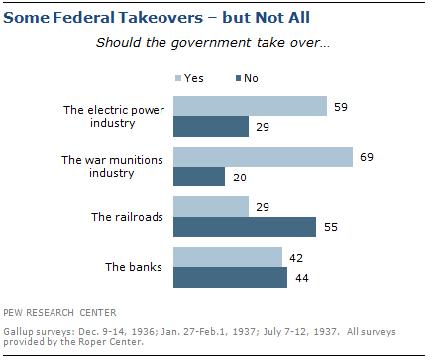
The charts are fascinating. A full 73 percent of Americans polled in 1936 thought government should provide free medical care to the poor. Sixty-four percent thought government should regulate and control war-time profits. In fact, 59 percent thought the government should take over the electric power industry and 69 percent favored nationalizing the wartime munitions industry.
And the people who were polled in these early surveys were overwhelmingly white, male and relatively well off. They were also socially conservative — 60 percent favored the death penalty and 67 percent wanted to deport all immigrants who were on public relief. Allen:
Is there a message in this for today’s America? Two possible lessons: First, it’s worth remembering that the social programs and banking controls that the New Deal era produced stood the nation in good stead over many decades of unprecedented prosperity. Second, Depression-era Americans’ faith in the country and its guiding institutions steeled them against the challenges of a double-dip recession and, years later, World War II. They had it worse, but they also expected it to get better, faster.
Compare that to a 1983 poll taken in the depth of the Reagan Recession, when 65 percent said that government had gone too far in regulating business, 62 percent rarely trusted the government in Washington and 78 percent opposed raising income taxes.
Fifty years, two generations, and the entire attitude of the American public toward government was turned on its head. It’s one of the fundamental dilemmas of American life, and one of the central reasons we’re in this mess.
Republicans are hypocrites, Democrats are spineless

Adding $800 billion to the federal deficit and exacerbating the inequitable, unprecedented, and unsustainable concentration of wealth in the richest 1 percent of Americans, Congress overwhelmingly approved a package of reckless tax cuts that President Barack Obama asked for and is expected to sign today.
The only saving grace in this dismal debacle is the fact that almost the entire Bay Area congressional delegation voted against the deal (while Speaker Nancy Pelosi didn’t vote at all), once again showing that if there’s even a glimmer of hope for saving the country from further descending into myopic and cowardly self-indulgence, it’s going to have to come from us.
Sure, I’ll happily spend the crumbs that they’ve dropped on me in the form of a payroll tax cut, and extending unemployment payments for the lingering victims of this stubborn recession isn’t a bad thing. But the vast majority of the benefits of this bill went to the wealthy, people who don’t need to be stealing from future generations.
Let’s be clear, as Sen. Bernie Sanders (I-Vermont) was during his nine-hour, one-man filibuster of the bill last week: this is about the greedy rich, who have purchased our political system, taking what they want and showing an indefensible disregard for the interests of this country and the vast majority of its citizens. And they have found a partner in President Obama, who was elected to office largely by criticizing Bush’s tax cuts for the wealthy that he’s now extending and the wasteful wars that he’s escalating.
Happy holidays, and please pass the egg nog, with extra brandy, please.
The mayoral roulette
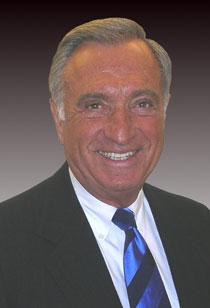
At the San Francisco Tomorrow holiday party Dec. 8th, David Chiu, Dennis Herrera, John Rizzo, Jake McGoldrick and a host of others who I’ve seen at these events for at least the past few years were doing their usual schmoozing — when Ross Mirkarimi, a former SFT board member, showed up with …. Art Agnos. I haven’t seen the former mayor at an SFT event since … I don’t know. Since a long long time ago.
Agnos made a short speech and talked about all of the rising stars in the San Francisco progressive movement — Mirkarimi, Chiu, Rizzo, David Campos, Eric Mar, John Avalos … and it was all very nice and low key. But there was a message in his appearance, in his connection with Mirkarimi, and even in the overall tone of his remarks, which amounts to this:
If the supervisors have trouble finding a progressive who can get six votes — and if they want an old hand, someone who has been through a brutal recession as mayor of San Francisco and dealt with awful budgets and nasty politics, someone who will serve for a year and then walk away — Agnos is open to being asked.
Well, maybe a little more than open to being asked. I wouldn’t say he’s actively, publicly campaiging for the job, but he has met with most of the supervisors, and dropped them all a 13-page memo listing all of his accomplishments, and his supporters (maybe his emissaries) are making the rounds and making the case for Agnos. Which amounts to this:
None of the progressives now more-or-less openly in the mix (Campos, Chiu, Mirkarimi, even Aaron Peskin) can realistically take on all the sacred cows (esp. police and fire), make a bunch of other cuts, and push for all sorts of revenue increases — and at the same time try to run for re-election in November (when the tax hikes would be on the ballot). The only way to do “what needs to be done” is to put in a progressive caretaker who can then take the political heat for the tough decisions — and help set up a campaign for another progressive in November.
I’m not sure I entirely agree — the right person, with the right leadership and agenda, could set up a five-year plan for fiscal stability, launch year one immediately and tell the public that he/she needs a full term to finish the job. But it’s true that it will be tough — and it’s also true that none of the obvious alternatives have ever run citywide.
If Tom Ammiano were interested, we wouldn’t be having this discussion. Tom has run citywide numerous times (for School Board, pre-district elections supervisor and mayor), has been elected by half the city (to the Assembly), and has the credibility to deal with the budget crisis and still win in November. But he’s not, and we have to respect that.
Right now, the progressives can’t seem to unite on a candidate. None of the current board members has six votes today. And Campos, Chiu, Mirkarimi and everyone else in the game knows full well how hard it will be to win in November, particularly against State Sen. Leland Yee, who will be a formidable candidate, and possibly City Attorney Dennis Herrera (who has won citywide), State Sen. Mark Leno (who is popular all over town) and others.
So if a couple rounds pass and there’s no winner, the “progressive caretaker” concept will be in play. It’s possible Mirkarimi would give up his seat two years early and take that job; it’s likely Peskin would agree to serve one year and then step down. But it’s also possible that neither scenario works out — at which point Sheriff Mike Hennessey and Agnos will be in play.
(I hear through the grapevine that Willie Brown is nosing around, too — and let’s remember that he became Assembly speaker by cutting a deal with the Republicans.)
Hennessey’s got a strong progressive record, but has never had to deal with anything remotely as awful as what the next mayor will face. So Agnos backers will make the case that their guy has the experience and gravitas to pull it off.
Given all of that, let me say a couple of things about Agnos, since I was around and watching City Hall when he was mayor (and some of the people who will be voting on this weren’t.)
Art’s a mixture. He was a great progressive member of the state Assembly. When he ran for mayor, we backed him strongly; he seemed to be the great progressive hope. Then his long list of wonderful promises ran into the buzz saw of a deep recession — and made things much worse with his arrogant, imperious style. His first major act in office was to sign a set of contracts that gave away the store to PG&E. He never lifted a finger for public power. And it quickly became clear that he wasn’t a fan of open government or public process. We were all supposed to “Trust in Art” and shut up if we didn’t like it.
That’s why — despite what was at the time and is in retrospect a pretty darn progressive record, a lot of solid accomplishments and absolutly no hint of corruption or scandal — the progressives just weren’t all that excited about his re-election. So he lost to Frank Jordan, who was way worse.
The thing is, Agnos these days is a lot more mellow. He’s 72, knows he’s not going anywhere else in politics, and has essentially admitted to me that he made a lot of mistakes, and his arrogance and closed-door attitude were top on the list. A reformed Agnos — willing to serve with a degree of humility and an acceptance that progressive politics in this town demands inclusiveness, and that even though he’s a former mayor, he’s not by definition the most important person in any room he walks into — would present an interesting option.
Of course, we still don’t know exactly where he would be on the issues, since, like Chiu, he hasn’t even publicly called himself a candidate for the job. I still think anyone who is a serious contender ought to be willing to appear before the supervisors and answer questions.
We all know where to start: What’s your plan for raising a quarter billion dollars in new revenue in 2011?
Progressives oppose Obama’s deal with Republicans
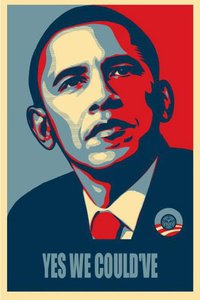
With San Francisco’s own Rep. Nancy Pelosi leading the way, House Democrats have voted to oppose the tax cut deal that President Barack Obama cut with the Republicans – a deal most Americans oppose because of its expensive extension of tax cuts for the wealthy – demonstrating that progressives and even mainstream liberals are increasingly willing to push back against a president that has take their support for granted.
During his press conference this week, Obama adopted a belittling attitude toward his progressive critics who have pointed that Obama ran for office overtly opposing President George W. Bush’s policy of slashing taxes on the super-rich, which ballooned the federal deficit. And now, in interests of “getting things done,” Obama is standing with Republicans to promote that very policy.
Obama even boasted “the polls are on our side on this,” a statement polls taken since then have shown is simply untrue, as he ridiculed his progressive critics as willing to let unemployment payments expire and middle class tax cuts expire, as Republicans have threatened if Democratic are unwilling to extend tax cuts for the wealthy.
Speaking on PBS’s NewsHour the other night, Nobel Prize winning economist Paul Krugman said he was appalled that Obama would echo this right-wing way of looking at the world, saying, “The president going after his progressive critics is enormously self-indulgent.”
Indeed it was, and those progressive critics now seem to have the upper hand, leaving Obama in the position of either working with Republicans to “ram this down the throats of the American people” (to borrow the GOP description of his health care reform measure) or to finally start working cooperatively with progressives to oppose the Republicans’ transparently hypocritical and unsustainable fiscal policy.
This is a big test for the Democratic Party and it’ll be interesting to see how it plays out in the coming days.
Pass the DREAM Act, now

by Eric Mar and Eric Quezada
news@sfbg.com
OPINION Imagine for a moment that you are 14 years old. Your parents, stuck in perpetual poverty and unemployment (or perhaps worse), move your family to a foreign country to begin a new life.
You work hard, struggle to fit in, study constantly, and fill your spare time with school activities. Maybe you even work a little on the side to chip in. You are a parent’s dream, and a model of young citizenship.
Except that you’re not a citizen. And one day, even as you’ve mastered English and flourished in school and in the community, you are stopped like a criminal by federal authorities.
This is what happened to Steve Li, an engaging and industrious 20-year-old student at City College of San Francisco and a graduate from George Washington High School. He always thought he was an average San Franciscan until the morning of Sept. 15, when Immigration and Customs Enforcement agents suddenly raided his home and arrested him and his parents. Steve was incarcerated in Arizona for more than 60 days, far from his friends and family. Through a full-court legal and legislative press, and a groundswell of immigrant community organizing leading to a private emergency bill by Sen. Dianne Feinstein, Li has temporarily staved off deportation. But Li and thousands of other hard-working young immigrant Americans could soon be summarily tossed out of the country if Congress doesn’t act now to pass the Development, Relief, and Education for Alien Minors (DREAM) Act.
The DREAM Act is a common-sense, bipartisan measure that is urgently needed to avoid countless other Steve Li cases. Despite congressional wavering on comprehensive immigration reform (which a consistent majority of Americans support), everyone should be able to agree on the basic right of undocumented immigrant minors, who are moved here by their parents, to gain steps toward obtaining citizenship.
In brief, the DREAM Act would enable some immigrant students who have grown up in the U.S. to apply for temporary legal status and to eventually obtain permanent status and become eligible for U.S. citizenship if they go to college or serve in the U.S. military.
According to the National Immigration Law Center (NILC), about 65,000 U.S.-raised high school students could qualify for the DREAM Act’s benefits each year. As NICL puts it, “These include honor roll students, star athletes, talented artists, homecoming queens, and aspiring teachers, doctors, and U.S. soldiers. They are young people who have lived in the U.S. for most of their lives and desire only to call this country their home … they face unique barriers to higher education, are unable to work legally in the U.S., and often live in constant fear of detection by immigration authorities.”
It makes no moral, economic, or social good sense to continue tearing apart families and communities and disrupting young people’s lives — all at great expense to the American public and taxpayers.
The time to act is now: please call your congressional representatives today and urge them to vote yes on the DREAM Act — without any amendments that might undermine its effectiveness. Although Nancy Pelosi and most Bay Area Democrats support the bill, Rep. Jerry McNerney (D-Stockton) and the Republicans are either on the fence or opposed. There’s no time to waste in giving hard-working young immigrant students this most American ideal — the opportunity to make their dreams a reality.
Eric Mar is a member of the San Francisco Board of Supervisors. Eric Quezada is executive director of Dolores Street Community Services in San Francisco.
Class conflict in DC and SF

There’s an unmistakable whiff of class warfare in the air this holiday season, most obviously on the national level where President Barack Obama and congressional Republicans are helping the ultra-rich steal hundreds of billions of dollars from future generations and the country’s current needs. But we’re also seeing it right here in San Francisco, subtly playing out around who will be our next mayor.
During yesterday’s scheduled discussion at the Board of Supervisors on choosing a new mayor, members of the public – from African-American mothers of slain youth to representatives of immigrant communities to those representing labor and progressive groups – urged the board to choose a mayor who would finally represent all of San Francisco, not just the wealthy and the business community.
Then the progressive supervisors who represent the city’s working class districts talked about getting the process underway and voiced some of the things they’d like to see in a new mayor, such as compassion and a willingness to work with the board and community groups. It seemed like a good faith effort at having an open public discussion about the city’s needs.
But on the other side of the aisle, the supervisors who represent the city’s wealthiest neighborhoods voted to delay the discussion without offering a reason why. Sup. Chris Daly made good points about how incoming mayors usually have time to prepare for assuming this powerful office at a time of pressing city needs and tricky political dynamics, arguing for making this decision sooner than later.
And from the Establishment representatives: nothing. Not a word. Instead, we have Mayor Gavin Newsom threatening to delay his swearing in as lieutenant governor to thwart the current board from picking a successor, and being overtly urged to do so in a San Francisco Chronicle editorial and in disingenous, sanctimonious ruses from SF Chamber of Commerce officials.
Why? Well, here’s the closest thing the editorial offered to a reason: “It makes all the sense in the world to have the supervisors who will be working with the interim mayor make the selection. They are the ones who will have to find common ground and develop a working relationship with Newsom’s successor.”
But does it really make any sense to have an inexperienced group of new supervisors (as our current cover stories shows, none of the four new supervisors have held municipal office and two are new to politics) pick a mayor on their first day on the job, and then have that person immediately take on the complicated job of running the city with no staff in place? And to do that by flouting the the California Constitution and the City Charter?
That sounds like a recipe for disaster – and an opportunity for downtown power brokers to make mischief and ensure their interests aren’t threatened as part of whatever backroom deal gets cut to choose a new mayor, district attorney, and board president. Why else would they so vehemently oppose a deliberative public process that would lead to a decision by those who know the workings of City Hall better than anyone?
As we saw in the last election, wealthy San Franciscans are scared to death of progressive malcontents like Chris Daly, and they’re doing whatever they can to prevent him from being involved in this decision. They see, probably correctly, that the current political dynamics of the city could lead to perhaps the most progressive mayor since George Moscone, or maybe ever, and they’ll do whatever they can to prevent that from happening.
The rich of this city and this country have overplayed their hands, crippled the public sector, and, as Sen. Bernie Sanders so eloquently said recently on the floor of the US Senate, shown a selfish disregard for the needs and interests of the vast majority of citizens. The only question now is this: are we ready to finally stand up, fight back, and really give them something to fear? Or are we going to take our cues from Obama and treat anti-government conservatives as good faith actors when they have shown only contempt for our most cherished democratic processes and values?
I suppose next week, when this board reconvenes to try to choose a successor mayor, we’ll find out.
The end of Obama’s presidency?
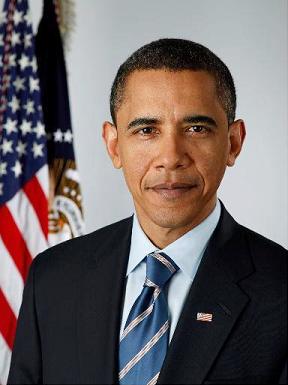
The tax-cut deal with the Republicans is almost unfathomable. It’s the most dramatic sign of President Obama’s failure as a leader, his refusal to stand up for the platform he ran on — and it could mark the end of his presidency. I mean, he’ll still be in office for two more years — but now that he’s rolled over and given the Republicans everything they want, he has no moral or political authority left, no national constituency to back him up and he might as well be a lame duck. He’s certainly finished as far as most of the progressive movement is concerned. Kos:
This shouldn’t be worrisome to the White House because these people won’t vote for him in 2012. They probably will. But will they give money and knock on doors and make phone calls and drag their social circle to the polls? Nope. They didn’t in 2010. And at this rate, they sure as hell won’t in 2012.
Already, some Obama supporters are starting to ask whether we all should have backed Hillary Clinton.
So far, Nancy Pelosi is standing up to the “compromise,” which essentially gives the Republicans everything they want. And the House can still call the GOP bluff: Refuse to reauthorize tax cuts for the rich — and force the Republicans to vote to raise taxes on the middle class and deny unemployment benefits to a few million Americans. That’s the only way to salvage the situation.
The Dec. 7 press conference was terribly disappointing. Obama said, in effect, that he — the president of the United States — is powerless against a Republican minority in the Senate. “I have been unable to budge them,” he announced. He’s decided to negotiate with terrorists, to let a few right-wingers hold him and the millions of unemployed Americans hostage. The polls are on his side, the public sentiment is on his side — and he’s acting as if he’s being forced to negotiate from weakness.
The real-time Washington Post poll shows that 66 percent think Obama made a bad deal.
The big problem here is that Obama looks shaken, doesn’t look tough, is on the defensive. A very sad moment.
SF Weekly gets it all wrong
This is a few days late, but still worth noting. After the Supreme Court ruled in our favor and shot down SF’s Weekly’s final appeal in our predatory pricing lawsuit, the Weekly’s Andy Van De Voorde launched another of his notorious screeds aimed at dismissing all of the proven, factual assertions in our case. Fron day one, Van De Voorde’s been wrong about everything — he said the case was stupid and would be quickly dismissed, he said we’d lost at trial, he said we’d lose on appeal … and every step of the way, he’s been proven wrong. Now he’s going after the judges:
Brugmann certainly has been treated like royalty by the city’s elected judges, who function as the legal arm of the local Democratic machine.
But as Bob Egelko, the Chron’s widely respected court reporter, noted in a remarkable blog post, Van De Voorde is simply factually wrong:
The judge who presided over the trial in San Francisco Superior Court, and more than doubled the jury’s damage award against the Weekly, was Marla Miller — appointed by Republican Gov. Arnold Schwarzenegger. The appeals court justice who wrote the ruling upholding the verdict was Robert Dondero — first appointed to the bench by Republican Gov. Pete Wilson, and named to the appeals court by Schwarzenegger. And of the six Supreme Court justices who voted to deny a hearing on the Weekly’s appeal, five were appointed by Republican governors.
I can go even further. The first judge who handled the case, Richard Kramer — who refused to dismiss the suit and tossed most of the Weekly’s pre-trial motions out the door — was appointed by a Republican (Pete Wilson). Of the three judges on the Appeals panel, two — Dondero and James Marchiano — were appointed by Republicans. And while the third justice, Sandra Margulies, was elevated to the appelate bench by Gray Davis, her first judicial appointment to the Superior Court came from a Republican, George Deukmejian.
So there really weren’t any elected Democratic judges in the mix. (And the judges certainly aren’t part of any political machine; the entire local bench, including every single judge, Democrat, Republican or Independent, supported the re-election of Judge Richard Ulmer in November, while the Democratic Party, and the Bay Guardian, supported challenger Michael Nava.)
Sorry, Andy — as has been the case from day one, the facts speak louder than your ranting. The Guardian won this case on the evidence and the legal merits, all the way along.
Paging zombie Jesse Helms: AIDS art scapegoating, political showboating returns
Well, the ’80s are back (again and again and forever). Here’s an echo of the tedious, right-bred “Culture Wars” of that decade. Republicans John Boehner and Eric Cantor have successfully pressured the National Portrait Gallery to remove this beautifully rage-filled, pretty-innocuous-for-nowadays (and NSFW) 1987 video work by late AIDS acivist and artist David Wojnarowicz, with singer Diamanda Galas, from LGBT-centered “Hide/Seek” exhibition. On World AIDS Day. Because there are ants on a crucifix. As one astute Gawker commentor noted: “Why not just wash them off with some piss?”
Obviously, this situation is sickening and ridiculous. But the silver lining is it puts Wojnarowicz (and Galas, and early video art, and the fading gay-AIDS communal memory) back in the spotlight. The work may not seem like much in our video-drenched, commodified-rebellion now, but back then, this was a spectacular instance of protest art during an actual civil war, a period when the religious right and the government laughed as gay people and people of color died horrible deaths, and blamed them publicly for bringing it upon themselves. People did these things! And blood itself was terrifying.
Also, it wasn’t like Wojnarowicz could just pop open iMovie and cruise the net for Youtube clips he wanted to stitch together. All of this archival crate-digging and self-filming had to be produced, edited, duplicated, distributed, and promoted by hand and word-of-mouth, by someone who was often penniless, infected with AIDS, and who never knew how much time he had. It was as much a work of craft, underground networking, and temporal investment as an act of pure expression. (Plus, the team-up of downtown heroes Diamanda and David at the time was orgasmically exciting.)
Protest this douche move! This is a valuable document of American art and deserves to be shown, especially on today of all days. No censorship, right? The “Support Hide/Seek” Facebook page is here. And here are the addresses to voice your complaints and disgust:
Martin Sullivan, National Portrait Gallery Director:
sullivanm@si.edu.
Richard Kurin, Undersecretary for the Arts and Humanities:
KurinR@si.edu.
Wayne Clough, Secretary of the Smithsonian Institute:
Cloughw@si.edu
DREAM on

sarah@sfbg.com
Spurred by congressional Democratic leaders’ promises to hold a vote on the DREAM (Development, Relief, and Education for Alien Minors) Act before the end of Congress’ lame-duck session this month, immigrant and civil rights advocates are pushing for the passage of bipartisan legislation that would give undocumented youth a shot at citizenship if they go to college or serve in the military for two years.
On Nov. 29 in San Francisco, several undocumented young people joined members of the Bay Area Coalition for Immigration Reform outside Mission High School — where as much as 20 percent of the student population may be undocumented, according to principal Eric Guthertz — to explain why it makes sense to give youth who grew up in the United States a shot at legal status.
“We are not asking you to give us a green card,” Anna, a student from Guatemala, said at the event. “All we want is a chance to succeed and give back to this country. We live here, we pay taxes, we’re smart, we go to college, but afterward we can’t work and give back.”
Mario, a 22-year-old gay student who was born in Peru to a Chinese father and Peruvian mother, graduated from UC Berkeley with a civil engineering degree. He explained that because of his lack of documentation, he can’t get a job to pay his bills or save up to pursue a master’s degree, and fears being deported to a homophobic country.
“It would be a waste of talent because I’ve learned California-specific engineering rules and the U.S. building code,” Mario said. “Sometimes I wake up from a nightmare about being detained. I came out here, but in Peru, I’d probably be back in the closet.
Joining Anna and Mario was Shing Ma “Steve” Li, a nursing student at City College, who was released Nov. 19 after two months in federal detention, shortly before he was to be deported to Peru. San Francisco Democrat Sen. Dianne Feinstein introduced legislation to halt his removal, saying it would be “unjust” to deport Li before a DREAM Act vote takes place.
Li, who speaks Cantonese, English, French, and Spanish, grew up reciting the Pledge of Allegiance and dreams of opening a clinic to serve low-income San Franciscans. But recently, federal immigration authorities flew him 800 miles to a jail in Arizona, all because his parents brought him here when he was 12 and he lacks documentation.
“We were handcuffed and shackled to our seats, and I wondered what would happen if the plane went down,” Li recalled.
Li believes the main barriers to the legislation’s passage is lack of accurate information. “People need to know the facts, see the people, and hear their stories,” Li said. “Then they’ll know it is a human rights issue.”
Guthertz said that as principal of Mission High, every year he sees undocumented youth who have great grades and lots of advanced placement classes “hit the wall” of their status. “Over and over, I’ve seen the heartbreaking effect of their situation,” Guthertz said. “The DREAM Act is yet another avenue to help these students.”
Eric Quezada, executive director of Dolores Street Community Services, noted that congressional leaders did not agree to the DREAM Act vote “out of the goodness of their heart — it’s because of the hard work of immigrant advocates.”
Quezada said the push to force a DREAM Act vote in Congress this year began when undocumented youth staged a sit-in in Sen. John McCain’s (R-Ariz.) office in May. “And the vote of Latinos saved the Senate from a Republican takeover on Nov. 2,” he said.
“But we understand this window is closing,” Quezada added, referring to the reality that Republicans will take control of the House in January. “So we’re not taking one vote for granted. And this is the first step. If we are able to pass the DREAM Act, it will be a downpayment for comprehensive immigration reform.”
Sup. John Avalos says the DREAM Act recognizes the contribution immigrants make to the community, and to the creation of economic opportunities for everybody. “Immigrants here support themselves and their families across the water, so it makes sense that we make proper investments and support,” Avalos said. “Education is one way to make the world a more stable place.”
Sup. David Campos, who came to the U.S. from Guatemala as an undocumented teenager, sees the DREAM Act as a piece of commonsense legislation.
“It’s so modest,” Campos said. “Even those who are against comprehensive immigration reform should be for something that recognizes that young people, who came here not by choice but because of their parents’ issues, should be given a chance to give back.”
Campos said his father was able to gain legal status for his whole family because of his employment, but that many undocumented youth aren’t so lucky.
“We open the doors to our public schools, we invest in their education, and then, when they are ready to give back to us, we say, ‘No, we don’t want you here,'” Campos said. “The best and brightest, the risk-takers, come here. As a country, we cannot go forward unless we realize that this influx of creativity and entrepreneurship made this country what it is.”
Released, Steve Li urges passage of DREAM Act
On a cold and sunny morning in late November, as sharp winds stirred up fallen leaves, and most folks were beginning to slow down in anticipation of Thanksgiving, Shing Ma “Steve” Li, a 20-year-old nursing student from San Francisco who narrowly avoided deportation to Peru, whipped the local media into a energized frenzy by advocating for the passage of the DREAM Act during a press conference at the Asian Law Caucus, whose offices sits close to the Transamerica Pyramid, and a stone’s throw from the lantern-decorated streets of Chinatown and the neon-lit strip clubs of North Beach, in San Francisco.
The purpose of the press conference was to give thanks for Li’s release four days earlier from a federal detention facility in Arizona, outline why a hardworking student who has lived in San Francisco since he was 12, has no criminal record, and speaks Cantonese, English, French and Spanish, was incarcerated for two months and threatened with deportation. And ultimately, the event was aimed to stir up support for the DREAM ((Development, Relief and Education for Alien Minors) Act, bi-partisan legislation that leading congressional Democrats plan to put to a vote this month.
Senate Majority leader Harry Reid and House Speaker Nancy Pelosi have promised to move to a vote on the DREAM Act on November 29, during Congress’ lame duck session, a brief window of opportunity to complete action on stalled bills, before Republicans take charge of the House, and Democrats see their majority in the Senate shrink, come January 2011.
Li, his family and his legal counsel Sin Yen Ling, a senior staff attorney at the Asian Law Caucus, kicked off the press conference by acknowledging the many supporters whose phone-calling, letter writing and protesting outside Sen. Barbara Boxer’s offices in San Francisco, helped secure Li’s Nov. 19 release from a federal detention center in Arizona, after Sen. Dianne Feinstein introduced a private bill to delay Li’s deportation.
“I believe his removal would be unjust before the Senate gets to vote on the DREAM Act,” Feinstein said in a Nov. 19 press statement. Feinstein’s bill guarantees Li protection for 75 days after Congress’ lame-duck session end. And Li’s attorney Ling says Feinstein may reintroduce her private bill next year, and that ICE isn’t likely to deport Li in future, now that he is no longer considered a fugitive.
“We don’t feel that Feinstein’s private bill will pass, because of the result of the Nov. 2 election and the reality of partisan politics, but it’s unlikely that Steve will get deported again,” Ling said.
If passed, the DREAM Act would grant undocumented immigrants a pathway to citizenship, if they entered the United States before age 15 and have attended college or served in the military for two years.
Li’s ordeal—and his ensuing conversion to an ardent DREAM Act advocate—is happening against the backdrop of an increasingly anti-immigrant mood in the United States, as witnessed in Arizona, where state legislators passed SB 1070 earlier this year, and now in California, where a Tea Party member from Belmont wants California voters to weigh in on a similar initiative in 2012. And then there’s the sobering reality that come January, congressional Republicans, who are facing challenges from the far right-wing Tea Party, take control of the House and are unlikely to advocate for immigration reform.
But Li, who is ethnically Chinese, and was born and raised in Peru until he was eleven years old, after his parents left China in the 1980s to escape its one-child policy, remained optimistic, as he drew on his recent experience to illustrate why Congress needs to passes the bi-partisan DREAM Act now.
“I’m still at risk of being deported,” Li said, noting that, each year, about 65,000 U.S.-raised students graduate from high school and would qualify for the DREAM Act, which addresses the fact that federal immigration law has no mechanism to consider the circumstances of youth who were brought here as minors and call the U.S. home, but can’t work legally, face barriers to accessing higher education, and live in constant fear of deportation.
“We have to work to do something to stop these students from being deported,” said Li, who wasn’t aware that a final deportation order had been issued against his family, when he was 14 years old and the U.S. denied his parents’ application for political asylum. “It’s important we push Congress, so no other student has to go through the same thing I did.”
“How many future doctors, engineers and scientists will the US lose,” Li added, questioning whether the US could end up deporting geniuses who might otherwise have discovered a cure for cancer, or invented ground-breaking sustainable energy technologies. “We are America’s future and we want to make a difference,” he said. “I still believe America is a great nation, a moral nation, and that Americans, if given all the information, will do the right thing.”
Li’s legal counsel Ling, recalled how Li and his parents were arrested on Sept. 15 by Immigration and Customs Enforcement (ICE) agents, and detained at ICE’s offices in downtown San Francisco, before being transferred to a jail in Sacramento County. “They were arrested as part of ICE’s fugitive operations program, which targets people who have failed to comply with final deportation orders,” she said.
The family was held there for three weeks, Ling said, before Li’s parents were released back to San Francisco, wearing electronic monitoring anklets. But Li was involuntarily transferred to a federal detention facility in Florence, Arizona, where he remained until mid-November. His transfer also made it impossible for his parents to visit, since, under the terms of their electronically monitored release by ICE, they are not allowed to leave San Francisco.
Ling said ICE blames a lack of bed space in the Bay Area for why they must transfer folks from San Francisco to Arizona, Texas or a facility near Bakersfield, California. But either way, the practice serves to isolate immigrant detainees from family and friends as they await deportation.
“Steve was released from Florence, Arizona, on Friday, Nov. 19, and then took a Greyhound bus, which arrived in San Francisco Saturday afternoon,” Ling said, noting that ICE wasn’t planning to notify her or Li’s family of his release, and that they typically drive folks to Phoenix and drop them off at the bus station.
Li’s mother Maria addressed the media in Cantonese, as she thanked Sen. Feinstein for allowing her son “to return to his mother’s embrace.”
And then Li, who says he is “a huge Giants fan” and “grew up reciting the pledge of allegiance at school, just like everybody else”, described his ordeal
.
“I always viewed myself as an American,” Li said, recalling how that perception was challenged when ICE raided his home and threw him in jail, this fall.
“I was shocked and confused, I felt it must have been a mistake” Li said, recalling that he was in the bathroom getting ready for school when the doorbell rang on Sept. 15.
“I didn’t expect anyone, so I woke up my mother, and she answered the door,” Li said.“Next thing, immigration agents came into the house. I didn’t know what was going on.They said they had to take me somewhere, that I had to be deported. “
Li said he was immediately separated from his mother and not allowed to ask ICE questions.
‘They searched me, threw me in the car, handcuffed me and took me to the immigration center,” Li said, referring to ICE’s office in downtown San Francisco.
“It was intimidating. I was scared of what was going to happen to me,” Li continued, describing how he was held for the rest of the day in a cell that contained 20 other people, some of whom had been transferred from other detention facilities and were already wearing prison clothing.
“I was fingerprinted, my photograph was taken and my situation was explained to me,” Li said, describing his shock at then being transferred in handcuffs and shackles by bus to a jail in Sacramento County with his parents, who were also handcuffed and shackled.
“It was traumatic to see my parents, who are hard-working people, be treated like that,” he said,
In Sacramento County, Li and another detainee were placed in a cell that contained bunk beds, a small table, a toilet and a sink.
“We could only go to the day room and watch TV for one hour a day,” he said. “The immigration authorities didn’t tell me anything, they just threw me from place to place.”
After three weeks, Li thought he was going to be released, when the prison authorities returned his clothes and got him to sign some paperwork. But instead, he was transferred to ICE’s San Francisco office on Sansome Street, put him in a holding cell, and told him he was being sent to Arizona to be processed for deportation,
“My whole world came down,” Li said. “I couldn’t talk to my parents, who had already been released. I thought of never being able to see my family and friends again. It was depressing.”
Things got worse when he was shackled, handcuffed, and loaded onto a bus which took him to Oakland airport, where he was put on a plane with a bunch of other deportation detainees.
“We were handcuffed and shackled to our seats, and I wondered what would happen if the plane went down,” Li said, describing a seemingly interminable journey to Arizona, which involved making landings in Los Angeles and San Diego.
“In San Diego, they took Mexicans off the bus, presumably to drive them to the border,” Li said.
Arriving in Arizona the following morning, Li was driven to an isolated federal detention facility in Florence, which is about 800 miles from San Francisco, where he was only allowed outside his cell for an hour a day.
“We were incarcerated all day and body searched multiple times in a facility, where there were three toilets and four showers between 64 people,” he said.
Locked up with 400 fellow detainees, Li heard a lot of stories that were similar to his: students who’d received a higher education and were very talented, but didn’t have legal status.
In particular, Li remembers one student he met during his Arizona incarceration.
“Like me, he came here with his parents and had no say in that decision, but was picked up as a result of new legislation in Arizona, “ he said.
Li’s arrest means he missed a semester of school, but he vows to continue his studies. And despite his traumatic experience, Li says he is not bitter.
“It went through my mind,” he said, “But I have learned a lot, including the fact that we have a broken immigration system. I urge everyone who qualifies for the DREAM Act to use their voice. They need to find the courage to use it and fight to change the law.”
Investing in the future
Dick Meister, former labor editor of the SF Chronicle and KQED-TV Newsroom has covered labor and politics for a half-century. Contact him through his website, www.dickmeister.com, which includes more than 250 of his columns.
The nation’s crumbling infrastructure is in very serious need of rebuilding. There’s absolutely no doubt about that.
Miles and miles of roads, highways and airport runways need to be repaired or replaced, as do miles and miles of railroad track. Many bridges and other public structures need to be fixed. So do many streets and many street lights, many water and flood control systems, many park and recreation and port facilities’ high speed train systems need developing and so does very much more that’s vital to our daily lives.
Look around you. You can’t possibly miss examples of crumbling infrastructure.
The AFL-CIO and its affiliated unions have been pointing that out for many years, and noting that the obviously needed repair and replacement work would provide jobs for many thousands, if not millions, of the unemployed, who need work as badly as the infrastructure needs it. Those jobs are good, relatively well-paying jobs – exactly what we need to escape the Great Recession that’s continuing to plague the nation.
It’s pretty much what was done during the Great Depression of the 1930s, when President Franklin Roosevelt, with the support of Congress, put together the Works Projects Administration, or WPA, to put millions of jobless Americans to work on building and repairing the infrastructure. It worked then, and it would work now.
Last month, President Obama’s Council of Economic Advisers and the Treasury Department issued a report detailing the benefits of doing the needed infrastructure work, including the “long term economic benefits.” The report also noted that a huge majority of Americans support spending tax money on infrastructure improvement.
President Obama’s labor-endorsed plan for infrastructure improvements over the next six years calls rebuilding 150,000 miles of roads, laying and maintaining 4,000 miles of railroad tracks, and creating a new air traffic control system that would reduce delays.
President Edward Wytkind of the AFL-CIO’s Transportation Trades Department hailed the president’s plan for its promise of “putting millions of Americans to work in the type of good jobs that transportation investments have supported for more than a century.”
Laborers Union President Terry O’Sullivan noted that “time is running out.” He said, “We need to invest in our country, and we need to create jobs as soon as possible. It’s a no-brainer – let’s build our country, create jobs, keep America competitive in the 21st century and leave behind real assets for future generations.”
Author Ezra Klein, writing in the Washington Post, put it this way: “infrastructure investment creates the right jobs, for the right people, doing the right things – and at the right time. Or, to say it more clearly, infrastructure investment creates middle-class jobs for workers in a sector with high unemployment and it puts them to work doing something that we actually need done at a moment when doing it is cheaper than it ever will be again.”
He’s right. Boy, is he right. Yet there’s a considerable body of naysayers in Congress – most of them Republicans, as you might expect – who threaten to block the bills necessary for implementing Obama’s ambitious infrastructure plans.
We need those bills passed in a hurry. We need the millions of jobs they’ll provide. We need to carry out the long delayed modernization of our crumbling infrastructure.
Sync up, time’s come for Zion I’s Atomic Clock
Bay Area hip-hop heads are grateful that Zion I walks these mean streets. Emcee Zumbi and DJ Amp Live have been expanding the boundaries of what dope beats and lifted lyrics can be ever since they fled the industry culture of Atlanta and hit the Oakland scene with 1997’s underground hit Enter the Woods. Their vibe’s stayed positive while resisting major label affliation and a lot of the turf warring that plagues hip-hop in a weird, stereotype-enhancing way around some of the Bay’s venues.
We spoke with Morehouse College grad Zumbi over the phone on the cusp of the duo’s weekend-long Slim’s celebration (Sat/20 and Sun/21) in honor of new album Atomic Clock, and the gig will be the duo’s last before hitting the road on tour. Clock is a bangin’, lifted affair studded with gems like “Always” and “Girlz” featuring Martin Luther’s sweet hook — but all the same, we still found ourselves talking politics. Sheesh.
San Francisco Bay Guardian: What’s your definition of a conscious emcee? I hear a lot of people call themselves “backpack rappers” and then come out with a song telling girls to shake faster, make that money. How can you tell who the conscious rappers are?
Zumbi: For one, I don’t think consciousness is dictated by sexuality. For instance Common is a cat who’s a pretty consistently conscious person. But then he comes out talking about getting head — I think in most of his music there’s an awareness. For me, Jacka has conscious music because he reflects on spirituality and Allah. Even though he’s got the gangster stuff he’s analyzing society and spirituality, mixing it together. It’s about the dominant sense you get from the music. I feel you though, there are people that say they’re a conscious rapper and then their album just doesn’t feel that way. For me, consciousness doesn’t make you dope necessarily, even though most of the people I respect have it.
SFBG: I’ve read in past interviews that your parents attended the March on Washington and that you were at the Million Man March yourself. Can you tell me what your political beliefs are?
Z: I don’t really think of myself as a political person. I don’t totally believe in Democrats and Republicans and voting. I’m not sold on those things. I think there’s manipulation involved in all of that, and I don’t consider myself political, because I don’t think the political system is just. I just think people should be able to get what they need, that they should be able to have a full life. That’s why I’ve chosen music: it’s a little more direct. People have to jump through hoops with politics, I see it as kind of fraternity.

Zion I’s latest, Atomic Clock, tells the time
SFBG: But you have musical talent you can use as a forum to express your beliefs – how do people make a difference who don’t have that platform?
Z: By being present and really standing for what you believe – just show up. I don’t call myself political, but take something like Oscar Grant, I was down there at the BART station, I was at City Hall the second time, I was taking pictures and trying to get footage. I think it’s more about that: standing up and making your voice known. Your clothes, your fashion sense, riding a bike instead of driving cars. There’s a disconnect between what people want and how people live their lives. You don’t want to be a slave to the system, so why do you put on clothes you don’t want to wear and go do something that someone tells you that you don’t want to do every day of your life? That’s what life is about, what you choose to do. Living in the United States, we can pretty much say what we want to say. It’s not a country that’s overly oppressive on the intellectual level. Physically it is, but you can pretty much say what you want. Just get out there and be it instead of complaining about everything, be the change you want to see in the world.
SFBG: Tell me your take on Obama’s presidency so far.
Z: It’s very interesting. You couldn’t write this stuff, this is a movie in action. When he got elected there was this passion, everyone was so over George Bush. It was like we were ushering in this whole level of politics in the US. And then, because things didn’t change… for me, I voted for Obama, but I don’t think the president makes all the decisions. He’s just the face man for the government. It’s not like this guy was going to change all evils in the world! But now reality is setting in. And because he is Black, it’s encouraged this other thing, the Tea Party? That’s just ridiculous, it’s engendered this backlash, there’s this ideal that there is no racism but in reality there’s more racism than before. Michael Vick — whose dog killed a man on his property — he served two years. Obama to me is a symbol of something – I’m not sure what it is yet, some kind of transformation hopefully, but people are pushing back against what change could be because they’re frustrated, there’s no jobs – they’re looking for a way out. It’s a strange story, it’s like a movie I’m watching.
SFBG: I’ve heard that in Zion I, one of you studied to be a doctor and another, a psychologist. Which is which? How’d you chose that course of study?
Z: (laughs) I might again, you never know, I was just looking at grad schools online. The fact that it had to do with the mind in general. In college I was undeclared for the first two years and then I was getting to that point, so I was like psychology. I like the power of the mind, what the new age thing-movement is all about now, meditation, clearing your mind, intuition,
SFBG: Atomic Clock has been described as “moody and emotional.” Are you guys getting moody these days?
Z: Yeah a bit. The record, we did it really quickly in two and a half, three weeks. We proposed it to the label, hoping that they’d pass on it initially but they optioned it. It was a quick sprint all of a sudden, it went from this cool idea to something we had to rush to finish it. Because of that we had a moody attitude to it, the timing added this urgent feeling. Also, like the thing about Obama, it’s where things are, everything is in this transitional period, everyone’s stressed.
SFBG: What do you think of the influx of dance beats in hip hop these days?
Z: I think its cool. I n the beginning, hip hop was always dance music. Sugar Hill Gang was the first quote-unquote rap record. For cats to be doing [dance beats], it’s a natural thing. That’s a part of hip hop. In the late ’90s, early ’00s hip hop kind of left the club, and then the South brought us back into the club. This music is about celebrating, having a good time.
Zion I Atomic Clock CD release parties
Sat/20: featuring Locksmith, Hold Up, Bayliens, DJ Kevvy Kev
8:30 p.m., $20-23
Sun/21: featuring Eligh w/ Scarub, Bang Data, Hold Up, Oakland Faders
8 p.m., $20-23
Slim’s
333 11th St., SF
(415) 255-0333
Gavin Newsom, Republican
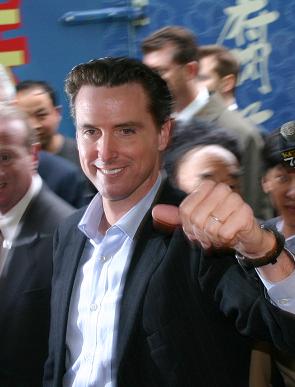
I mean, isn’t this exactly what the Republicans have been saying in Sacramento, paralyzing the state by refusing to accept any new taxes? Is that the attitude Newsom wants to bring to his new job? What’s he going to do when Jerry Brown announces a package of tax hikes for the June ballot and wants his loyal Lt. to go around the state and campaign for them? Or is there a different standard for the state budget?
I don’t get it, Gav.
Will reapportionment change California?

Probably not. The voters confirmed that the job of drawing new district lines next spring will be done by an independent (and unaccountable) commission whose makeup will not reflect California’s. (Five Republicans and five Democrats in a state where Democrats far outnumber Republicans?) But Brian at Calitics makes the case that it won’t matter much — and he’s hit on a really important point about California politics.
The voters have already gerrymandered themselves, in a sense. The liberals tend to live with liberals, the conservatives with conservatives. And any reasonably compact, fair district lines will reflect that.
In fact, the Fall Line Analytics map that Calitics cites makes an excellent case for splitting California into two or three states — one along the coast from Sonoma to Los Angeles, one in the Central Valley (including San Diego) and perhaps a third including the far-northern counties, which have wanted to secede for a while anyway. Then the coastal residents could have a progressive state with taxes on the wealthy to fund services, and the conservatives can try to survive in a low-tax heaven of their own. (And if you really think wealthy people will leave San Francisco and Silicon Valley and L.A. to move to Fresno for lower taxes, you’re as crazy as some of our blog trolls.)
The interesting twist on this all, though, is that there’s pretty good evidence that the population in California has shifted somewhat away from the coasts in the last decade and moved somewhat inland. Which means that Los Angeles and the Bay Area may wind up losing Congressional and state Legislative seats to the traditionally more conservative areas.
The data also suggests, though, that a lot of the new residents of the inland areas are Latino — and the way that Latino vote breaks may play a far more significant role than the redistricting commission.
How to fight the GOP
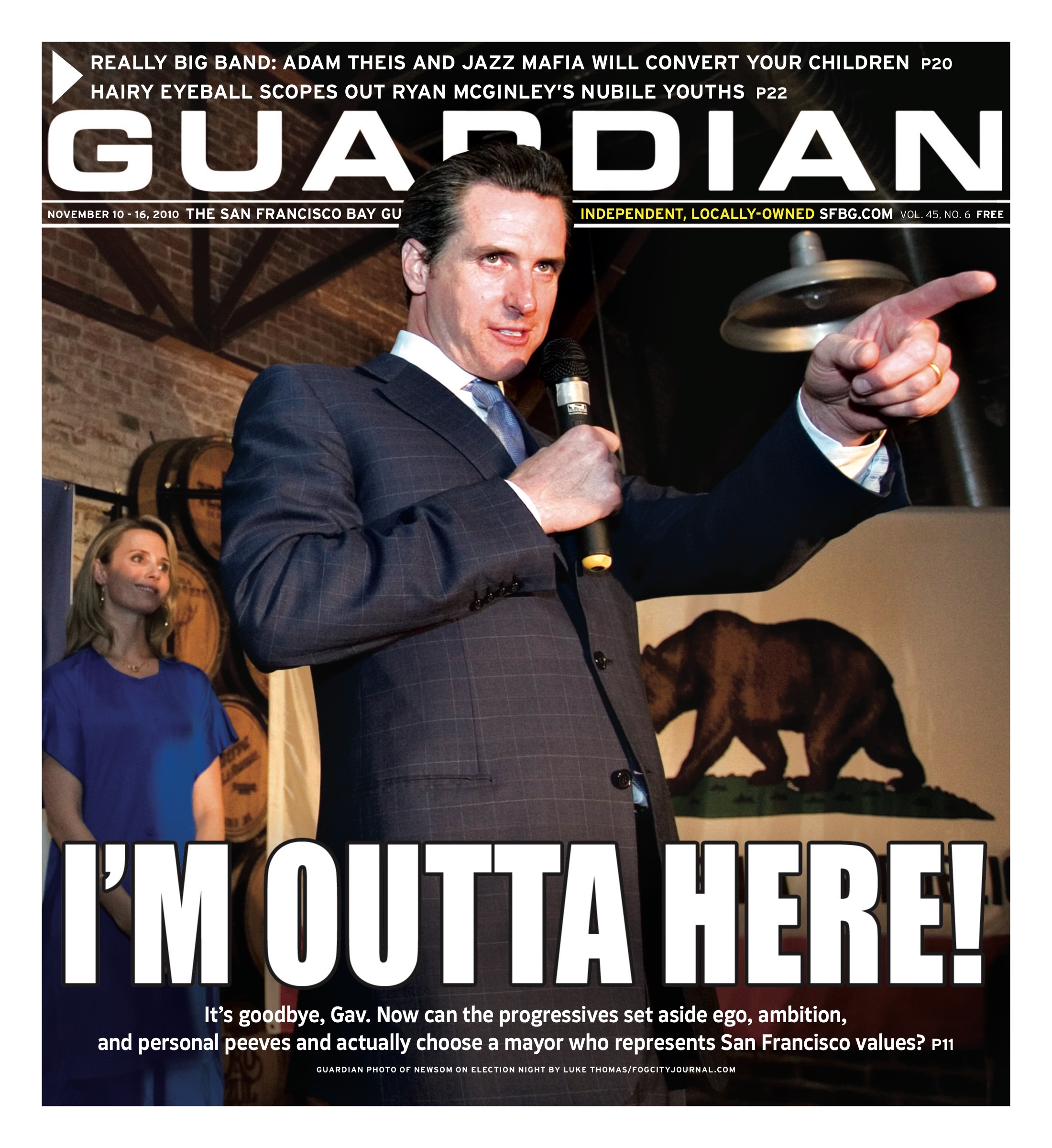
OPINION Now what?
Now we need to build a grassroots progressive movement — wide, deep, and strong enough to fight the right and challenge the corporate center of the Democratic Party.
The stakes are too high and crises too extreme to accept “moderate” accommodation to unending war, regressive taxation, massive unemployment, routine foreclosures, and environmental destruction.
A common formula to avoid is what the Rev. Martin Luther King Jr. called “the paralysis of analysis.” Profuse theory + scant practice = immobilization.
It’s not enough to denounce what’s wrong or to share visionary blueprints. Day in and out, we’ve got to organize for effective and drastic social change, in all walks of life and with a vast array of activism.
Yes, electioneering is just one kind of vital political activity. But government power is extremely important. By now we should have learned too much to succumb to the despairing claim that elections aren’t worth the bother.
Such a claim is false. For instance, consider the many hundreds of on-the-ground volunteers who rejected the paralysis of analysis by walking precincts and making phone calls to help reelect progressive Rep. Raul Grijalva (D-Arizona). Grijalva won a tight race in the state’s southwestern district and will return to Congress next year — much to the disappointment of the corporate flacks and xenophobes who tried to defeat him because of his strong stance against the state’s new racial-profiling immigration law.
The mass-media echo chamber now insists that Republicans have triumphed because President Obama was guilty of overreach. But since its first days, the administration has undermined itself — and the country — with tragic under-reach.
It’s all about priorities. The Obama presidency has given low priority to reducing unemployment, stopping home foreclosures, or following through with lofty pledges to make sure that Main Street recovers along with Wall Street.
Far from constraining the power of the Republican Party, the administration’s approach has fundamentally empowered it. The ostensibly shrewd political strategists in the White House have provided explosive fuel for right-wing “populism” while doing their best to tamp down progressive populism. Tweaks aside, the Obama presidency has aligned itself with the status quo — a formula for further social disintegration and political catastrophe.
The election of 2010 is now grim history. It’s time for progressives to go back to the grassroots and organize with renewed, deepened commitment to changing the direction of this country. If we believe that state power is crucial — and if we believe in government of, by, and for the people — it’s not too soon to begin planning and working for change that can make progressive victories possible in future elections.
Norman Solomon is co-chair of the Healthcare Not Warfare campaign, launched by Progressive Democrats of America. His books include War Made Easy: How Presidents and Pundits Keep Spinning Us To Death.
Pelosi seeks to remain her party’s leader

Nancy Pelosi has announced that she is running for House minority leader, citing the need to defend health care and Wall Street reforms and Social Security and Medicare. And my friend Donnie Fowler, a top national Democratic Party consultant, thinks that’s a very good thing, even if I have a few doubts.
“She is a fighter and can bring the majority back in 2012 and no one more progressive would beat her,” Fowler said as he shared the news of Pelosi’s announcement, responding to my skeptical initial reaction. He said that having Pelosi remain in a leadership position was the best hope for pushing San Francisco values in a tumultuous country that has moved the House far to the right.
The Bay Guardian and other leading San Francisco progressive voices have criticized Pelosi for allowing the wars in Iraq and Afghanistan to drag on, for not taking stronger stands on gay rights (from same-sex marriage to the military’s “don’t ask, don’t tell” policy), and for pushing flawed reforms of Wall Street and the health care system that left big corporations with too much power.
Fowler said Pelosi is “better in term of ideology and she’s a strong fighter,” but he conceded that she’s also a pragmatist, so she’ll often fight for outcomes that are not nearly as progressive as she would prefer, as she’s done recently. “She fights hard for what she can get today,” said Fowler, who has played leading roles in Democratic presidential and other campaigns and came in second in the race to chair the national party a few years ago. “Over the last two years, she has felt throttled by other parts of the Democratic Party and other leaders in Washington.”
But many of the moderate to conservative Democrats who have made Pelosi’s life so difficult were voted out of office on Tuesday, leaving a far more liberal caucus. “The biggest hit was to moderates and Blue Dogs, just because of where they live,” Fowler said, citing people such as Rep. Chet Edwards, who represented George W. Bush’s Crawford, Texas district, which now went Republican. “The caucus is going to be more liberal.”
Does that mean that Pelosi could sound a more full-throated defense of progressive values as minority leader? Yes, Fowler said, she could and should, but he’s still not sure whether she will. “The Democrats have got to say what they believe, they have to stand up for progressive values, and they have to be unashamed about it,” he said, noting that the centrist waffling was a factor in the party’s defeat this week, moreso than a genuine desire of the electorate to bring back the Republicans. “If you won’t stand up for yourself, people won’t believe that you’ll stand up for them.”
Right now, moderate Democrats are already starting to make the case that the party needs to be more economically conservative. Rep. Heath Shuler, a Blue Dog Democrat from North Carolina, has announced his intention to run for minority leader on a pro-business platform. It’s also possible progressives could mount a challenge from Pelosi’s left, such as Reps. Barbara Lee (who was the only vote against invading Afghanistan in 2001), Dennis Kucinich, or Raul Grijalva (the Arizona Democrat who co-chairs the Progressive Caucus with Rep. Lynn Woolsey).
Yet Fowler continues to believe that Pelosi is the best person to lead the party back through what’s expected to be a difficult couple years. But does it play into Republican hands to stick with their greatest foil, someone whose liberal politics and connection to a famously liberal city made her the focus in GOP attack ads?
Fowler dismissed that notion, saying that Republicans are going to demonize whoever leads the party. He said the Democrats could elect the most conservative good ole boy with a thick Southern accent “and they’ll still call him a liberal socialist.”
So then why not nominate an actual liberal socialist, someone who can bring a stronger critique of this country’s economic and political systems and set the country up for a more fundamental shift in 2012, someone like Lee, Kucinich, Grijalva, or Woolsey? To Fowler, that’s a bridge too far. Even with a more progressive caucus, he doesn’t think they could win, and he doesn’t think the party ought to move that far to the left anyway.
But what do you think, Guardian readers? Is this a time for Democrats to stay the course, or is this perhaps a moment for progressives to step up – unafraid of the Tea Party rhetoric – and start pushing everyone from President Obama on down to finally address inherent flaws in this country’s unsustainable economic and political systems?
GOLDIES 2010 LIFETIME ACHIEVEMENT: Marc Huestis
“What a swimmer is Dracula’s daughter!,” exclaims John “the Cool Ghoul” Zacherle, as “Dinner With Drac” blares from the speakers in Marc Huestis’ Redstone Labor Temple office. ‘Tis the season for Huestis’ tribute to Poltergeist‘s Jobeth Williams, and the activist, filmmaker, and camp impresario is in the final stretches of preparing for the big night.
What hasn’t Marc Huestis done? As a youngster, he arrived in San Francisco from Long Island, New York, unafraid to recite poetry while sporting a pompadour that would make any Elvis impersonator feel size envy. Soon you could see him singing in drag or writhing around on stage in a dirty diaper in Angels of Light productions. But from the very beginning, film was at the heart of Huestis’s life. His father was an editor who worked on the ’60s teen music TV show Hullabaloo, while his mother was a showgirl. “I have a little bit of both in me,” he jokes, and it’s the truth — a Marc Huestis extravaganza involves informed editing and explosive creative freedom.
One of Huestis’ first notable celebrations was the San Francisco Gay Film Festival, now known as the Frameline fest, which he and his non-biological twin-of-sorts Daniel Nicoletta (born just three days apart from him) began with other like minds in 1976. “It was fun, a bunch of kooky hippie kids who wanted to get their movies shown,” he remembers. “There was no pretense, and the group of us were able to get together to do it. It’s great to see what it has evolved into, and feel a bit like a patron saint. Some people will always hate you, but at this age” — Huestis is 55 — “you get to the point where some people respect you. And you respect yourself.”
In 1982, after making some short films, Huestis wrote and directed Whatever Happened to Susan Jane?, his distinctly San Francisco answer to the kinds of antic comedies John Waters was making on the East Coast. In recent years, the movie has found a new audience amongst music lovers devoted to San Francisco’s new wave heyday — one of its strongest aspects is its documentation of wild performances from Tuxedo Moon and other groups of the day. “It was a great combination of gay culture and punk culture,” Huestis says of the era. “There’s a kindness to it, and it was very smart.”
Huestis’s next feature-length movie, 1993’s Sex Is… is very much a film of its time. A direct look at and discussion of the experience of gay sex and intimacy amid the AIDS crisis, it was also a do-it-yourself, many-year labor of love, with DIY aesthetics one common thread throughout Huestis’s creative life. “It’s very heartfelt,” he says of the film. “It was an important film when it came out because no one was talking about sex, and if they were, it was really hypocritically. The high point of my life was to be at the Berlin Film Festival for the world premiere, and then several days later, be at the awards presentation with Billy Wilder sitting nearby. For me, having HIV, and not thinking I was going to live, that moment was a gift.”
One year later, Huestis moved into his office in the Labor Temple, a treasure trove of film memorabilia where the walls are lined with autographed photos, and VHS tapes, DVDs, VCRs and DVD players are stacked on top of each other — in a well-organized fashion. The site is his base for the celebrity events that he puts on at the Castro Theatre, theatrical and cinematic programs that have blazed a trail for another generation of movie mayhem purveyors such as Jesse Hawthorne Ficks and this year’s Goldie winner Joshua Grannell, a.k.a. Peaches Christ.
Old media surrounds us as we talk, but there is little doubt that Huestis, experienced at putting together political and community fundraisers, is always focused on the present and future as well. “I love new media,” he says. “I could not do what I do if I didn’t have knowledge. I design the posters, I do the clip reels, I get the music together, I do the PR. I would sell the popcorn if I could. I love it. I never get tired of movies.”
It’s fitting, then, that Huestis gets to call one of this country’s oldest and most beautiful movie palaces, the Castro Theatre, home. “One of the first shows I put on there was when the Republicans took control of Congress, so everything comes around,” he says. “The best thing is seeing someone go there for the first time. To me it’s like the town barn, but it’s an amazing, beautiful place.”
If star power can me measured in size, some of the players that Huestis has brought to the Castro over the years — Debbie Reynolds, Jane Russell, Tony Curtis, Piper Laurie, Patty Duke — rival the size of the fabled venue. He’s also given eccentric talents such as Sylvia Miles and Karen Black the type of spotlight they deserve. In the end, it’s about gratitude, on his part, on behalf of the audience, and hopefully, from the subjects of his tributes. Huestis’ night for Tony Curtis resulted in him being hired by the actor to create a clip retrospective that ultimately wound up being shown at Curtis’s funeral. “I had a great fondness for and connection with him,” he says. “I love it when they’re thankful, because no one shows gratitude, the world is so entitled. After the [Castro] show, he [Curtis] held my hand really hard, looked me straight in the eyes, and said, ‘Thank you.'”
Thank you, Marc Huestis.
www.myspace.com/marchuestispro www.youtube.com/user/hostesshue