Politics

Will partisan agendas shape the redrawing of political lines? — UPDATED

14

UPDATED BELOW In the midst of a political realignment at City Hall that is still shaking out, the Board of Supervisors Rules Committee is today (Thurs/23) considering appointments to the Redistricting Task Force, the body that will redraw supervisorial districts using the latest census data. And its choices will say a great deal about the role of integrity and impartiality in the new “politics of civility.”

This commission will arguably have more influence on the city’s political dynamics over the next decade than any other, so overtly partisan appointees should be viewed with great suspicion. Larry Bush at CitiReport did a nice rundown of the applicants and their backgrounds, but the Rules Committee will be where the real action is.

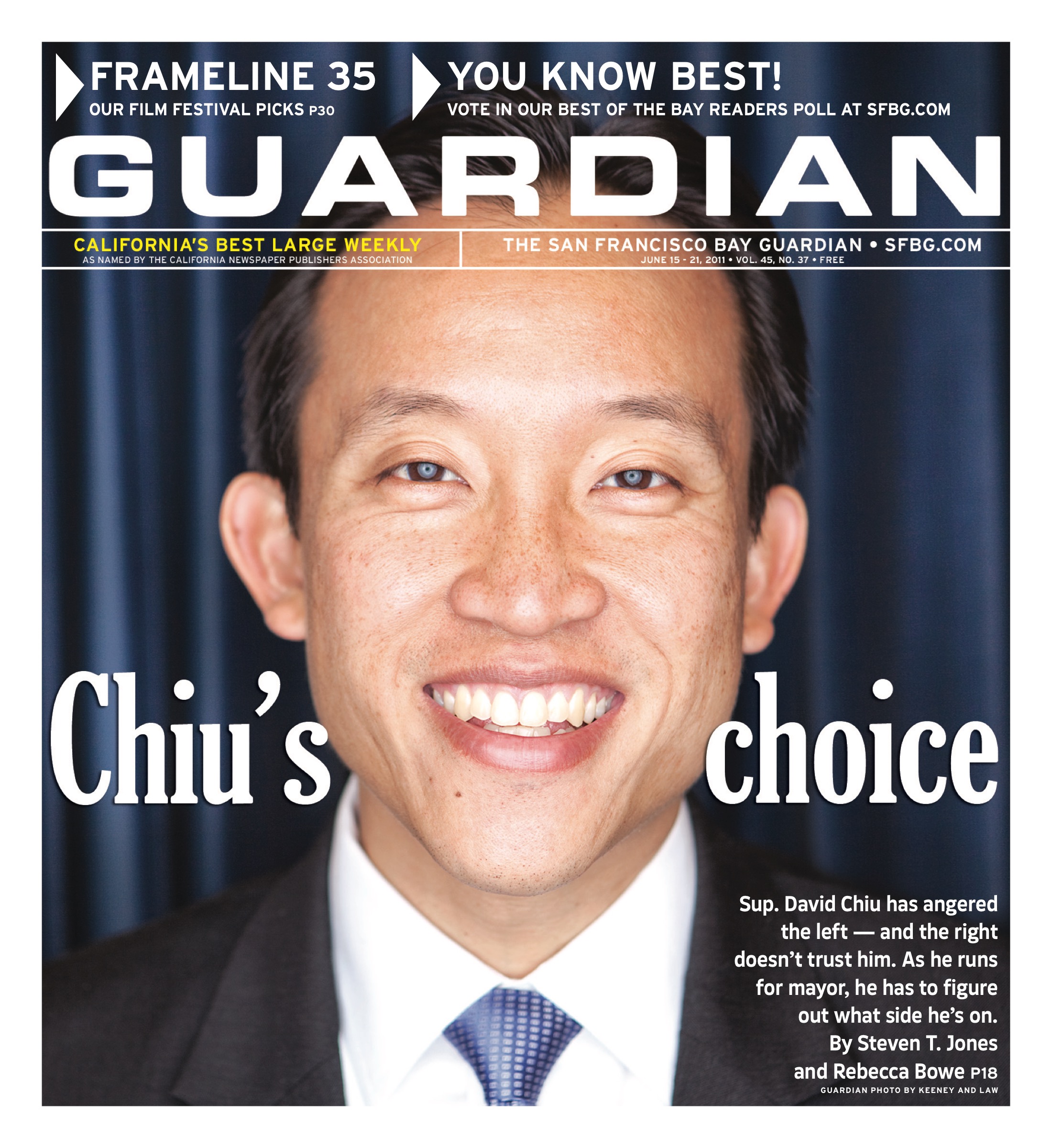
President David Chiu stacked the committee with a conservative majority (Sups. Mark Farrell and Sean Elsbernd) and named a chair (Sup. Jane Kim) whose political loyalties are tough to peg right now. Will she seek an appointee who doesn’t have a political agenda, or will she seek to reward a partisan ally like applicant Paul Hogarth, who worked on her campaign and writes for BeyondChron.org, a propaganda outlet for Kim-backers Randy Shaw and the Willie Brown/Rose Pak/David Ho cabal that elevated Ed Lee into Room 200 and is desperately trying to keep him there.

There are other problematic applicants as well, including Potrero View Publisher Steven Moss, who ran for supervisor in D10 last year and has shown a penchant for seeking payback against his perceived enemies (including the Guardian, which ran articles questioning his residency status). Applicant Ron Dudum has also shown a vindictive streak – following up his failed D2 supervisorial campaigns with an unsuccessful lawsuit challenging the ranked-choice voting system – that would make him a worrisome figure to have on this task force.

So far, three people have been named to the body by the Elections Commission: gadfly/policy wonk David Pilpel, Google attorney Melissa Tidwell, and Mark Schreiber, the managing general partner of Cooper White & Cooper. So already, this is tilting toward a business community bias that will probably get worse once Mayor Ed Lee makes his three appointments to the nine-member commission.

Given how the Rules Committee is stacked, its three recommendations are likely to raise questions that the full board will need to put to rest when it takes the matter up on Tuesday. Voters need to have faith that partisan agendas aren’t shaping the city’s most important political lines, and now is the moment to ensure they have that confidence.

UPDATE: The committee voted unanimously to recommend Eric McDonnell, the chief operating officer of United Way of the Bay Area; Jenny Lam, director of community initiatives for Chinese for Affirmative Action and a board member of Chinatown Community Children’s Center; and Mike Alonso, a “security professional” with Corporate Security Services who got his law degree from New College in 2007 but never worked as a lawyer.

The Guardian Hot Pink List 2011

3

For the past few years, as part of our annual Queer Issue, we’ve rounded up a few of the people who have inspired us with their unique approaches to queer life. Whether they’re activists, artists, performers, or just plain hot-to-trot rabble-rousers, they’ve made our queer hearts beat a little faster (and reminded us of the fantastic diversity and dedication of the community). This year, we’ve gathered together another Hot Pink bunch, and asked them. “What inspires you right now — and what could the queer community use more of?” This year’s Hot Pink List was photographed by Keeney + Law


HONEY MAHOGANY

Singer, performer, social worker, photographer, glamour girl — Miss Honey Mahogany (www.itshoney.com) does it all and leaves you breathless. Catch up with her on the SFMOMA Pride Parade float (a drag salute to Paris, 1928) on Sunday, June 26, and look for her forthcoming EP this summer. “I feel really lucky to be coming of age as a performer at a time when there seem to be more and more queers out there in the public eye. Whether it be in popular media, politics, art, advocacy work, research … we are everywhere! One thing I would really like to see in the next few years is the rise of new, massively popular gay icons … and I mean ICONS, not celebrities. I think the world is ready for that. In fact, I think the world needs it.”


ROSE SLAM! JOHNSON

Have fun or make a difference? Bike-food-community activist Rose Slam! Johnson has found the two can make hot partners. She helped plan SF Bike Coalition’s Bike to School Day, and merrily oversees the Western Addition’s Urban Eating League, Apothocurious (a bike-powered organic food subscription service, www.apothocurious.com), and her own queer adult outdoors camp. This summer, she’s embarking on an multimonth bike ride and camping with Northwest queer youth. “Fear and defensiveness often distract us. By bringing people together around things we are passionate about — food, bikes, community, fun — we are able to move towards love, acceptance, and healing.”


KB BOYCE AND CELESTE CHAN

The masterminds behind Queer Rebels (www.queerrebels.com), an organization that showcases queer artists of color, KB and Celeste are involved in everything from Community United Against Violence (www.cuav.org) to “TuffNStuff: The Last Delta Drag King,” KB’s musical act. Upcoming “Queer Rebels of the Harlem Renaissance” (Friday, July 1 and Saturday, July 2), part of the national Queer Arts Festival (www.queerculturalcenter.org) is a stage extravaganza celebrating that great period. And TuffNStuff performs at the Trans March Rally (www.transmarch.org) Friday, June 24 from 3:30 p.m.-6:30 p.m. “We are inspired by new queer work that creates our own myths, reveals hidden histories, and is unapologetically, riotously gay!”


ALIX P. SHEDD

“It’s very rare to find an aesthetically dedicated queer space that isn’t centered around alcohol, includes queer youth, and is right for all different kinds of performers and performances. Somewhere you can scream, dance, and love everything that’s gay.” So Alix (with help from Lorin Murphy and a ton of volunteers) found a space, painted it pink, and launched the Big Gay Warehouse (www.biggaywarehouse.org). For the past year, the bGw has hosted many of the city’s most intriguing queercentric events, from punk concerts and video nights to sensory derangements and environmental makeovers. Alas, bGw’s days are numbered due to rising rents, but Alix — who’s also involved in trans-women-empowering nonprofit thrift store the Junque Shoppe and designs a clothing line called Apocalypse Vintage — already has the next move in mind.


MICAH TRON (WITH DJ JEANINE DA FEEN)

Super-sharp MC Micah Tron has been rising through the Bay’s hip-hop ranks with a deep electric sound and sexy come-ons. Check her out at www.soundcloud.com/Micahtron and peep her forthcoming EP “Jungle Music,” produced by the HOTTUB crew. She’ll be performing at the Crooked party at the Showdown on Friday, June 24 and on the Pride celebration main stage (www.sfpride.org) on Sunday, June 26 at 11:50 a.m. with her DJ Jeanine Da Feen. “Walking the streets of San Francisco inspire me, there’s nothing like being surrounded by people who aren’t afraid to be themselves. Our community could use more self-acceptance — we’re beautiful people!”


JOCQUESE “JOQ” WHITFIELD

Work! Voguer extraordinaire, Jocquese teaches the wonderful Tuesday night Vogue and Tone class — “a dance class with a party feel” — at Dance Mission Theatre (www.dancemission.com). He’s also part of the raucous Miss Honey nightlife crew and is a collaborator, with Shireen Rahimi, on the West Coast Dopest Outsiders youth life skills program, encouraging “movement through movement.” He’ll be performing at Crooked and Pride with Micah Tron. “I think we live in a society where we place sexuality on everything. I want to strip that away and tell people to just be themselves and dance.”


DIEGO GOMEZ/ TRANGELA LANSBURY

George Washington was due for a kick-ass sex change — so artist and illustrator Diego Gomez (designnurd.blogspot.com) started painting colorful characters like Storm from X-Men, She-Ra, and Jem on dollar bills, a.k.a. “Diego Dollars.” As the designer for Tweaker.org, he gets out valuable information from the San Francisco AIDS Foundation. He’s currently illustrating an “all-Latin porn-graphic novel” called Spicey and a comic book called “CuntBricks,” making clothes and accessories for Barney’s New York and local boutique Sui Generis, crafting with his “Needle X Change” knitting group, performing as his alter ego Trangela Landsbury, and a ton of other neon-bright activities. “I’d like to see more glitter and gold in the future and ‘happy’ surprises (not to mention endings).”


CHRISTOPHER REYNOLDS AND ALYSIA SEBASTIANI

Sustainability was all the queer conceptual rage this past year — but Christopher and Alysia, the powerhouses behind landscape design firm Reynolds-Sebastiani (www.reynolds-sebastiani.com) have been setting the principles in motion by designing and maintaining spaces throughout the city that morph norms to create alternative environments that adapt to change. Recent projects include a redesign of the Phoenix Hotel grounds, to be unveiled at Juanita More’s Pride Party on Sunday, June 26 and a show of amazing terrariums using vintage bottles they unearthed at St. Francis Fountain in the Mission’s new event space, Candy Kitchen, opening Thursday, June 23, 6 p.m.-10 p.m., and continuing for two weeks. “Like any cultural paradigm shift, sustainable practices must reach and change the popular vernacular in order to become truly sustainable — in this way they’re like queer culture,” says Christopher.

Bright on

1

culture@sfbg.com

QUEER Heady, hilarious, heartbreaking: Big Sex Little Death explores legendary sex writer, educator, and instigator Susie Bright’s coming of age from the 1960s to the present. Bright’s memoir focuses on her involvement with The Red Tide, a radical high school newspaper in Los Angeles in the 1970s, and her subsequent membership in a socialist sect that sends her halfway across the country. Her union organizing stint lasts until the Party leadership expels her for “joining or leading a cult of personality.” Personality is certainly one of Bright’s strong points, so perhaps we should be grateful for this particular falling out. It eventually leads to Bright’s role in founding the first lesbian porn magazine, On Our Backs, in San Francisco in 1981, as well as her pioneering work as a fiery spokesperson for free speech and sexual liberation. I spoke with her over the phone about sex and memory and writing.

SFBG You do such a great job of talking about your sexual coming of age as a teenager: describing your sluttiness without shame, your curiosity about bodies and pleasure and the intricacies of sexual positioning.

Susie Bright I think it’s because I wrote my memoir like a storyteller, like a poet — not a polemicist. I wasn’t ashamed; it never occurred to me. Margaret Mead would have found my little teenage tribe to be quite poignant.

SFBG There’s a tendency for many sex-positive spokespeople to glamorize even the most annoying, mundane, or gross sexual experiences as somehow — well — positive. Sometimes this sex-positive rhetoric ends up making those of us who don’t always succeed at having a wonderful sex life feel like failures …

SB I think bad sex — obnoxious, absurd, BIG FAIL sex — is funny, nostalgic, and more endearing as you grow older. It also goes hand in hand with adventurous, rapturous, mind-blowing sex. You actually know the difference. You’ve spanned the spectrum, you’ve lived. The big bummer with American sex right now is the unrelenting banality and flat-out scarcity.

SFBG The most striking part of Big Sex Little Death for me is the way you describe betrayal in the social and political realms you choose to inhabit — places that initially give you so much hope. Like when you helped to start On Our Backs, the first lesbian porn magazine, in the early ’80s. Feminist bookstores refused to carry it, claiming that you were aiding the patriarchy.

SB It was more than that. The whole mainstream feminist movement was calling for our heads. Or, as Barbara Grier of Naiad Press put it, “Everyone I know thinks y’all should be assassinated.”

It’s been a part of every civil rights and social justice movement that I’ve been a part of. We know it — we talk about how the powers that be would prefer to let the weak fight among themselves. We see how divide-and-conquer tactics are so effective, but it’s very hard to resist.

What kills me is the blindness, even years after the fact. Sometimes it’s comical. I got a letter from an ambitious writer the other day who told me that in the ’80s she fought the sex-positive On Our Backs types tooth and nail, no tactic too dirty. “We” were pimping the patriarchy and she was on point to take us down. She asked me if I found it amusing that she’s now in a submissive relationship with a man — no! Then she asked me if I would blurb her new book.

Someone asked me on this tour if I ever got an apology, and I was startled. No, not for the bombings or the death threats or the bannings or the locked doors or the bizarre libels and slanders. No way.

SFBG When the feminist movement refused to support you, you found several surprising allies. Among them were John Preston, at the time the editor of the gay leather magazine Drummer; cult filmmaker Russ Meyer of Faster Pussycat fame; and even the Mitchell brothers of that legendary exploitative straight strip club on O’Farrell Street.

SB Well, those were strange bedfellows, eh? They were all mavericks, iconoclasts, outlaws, film buffs, and we shared that in common. Aside from public librarians and ACLU lead attorneys, these guys were probably the most eloquent defenders of the First Amendment you ever met.

SFBG On Our Backs was started by two strippers who worked at various clubs in the Tenderloin and North Beach. One of the most heartbreaking chapters in Big Sex Little Death is where you show us how so many strippers worked to support their lovers financially, male and female, and then ended up strung out on drugs, homeless, or dead after their lovers used and abused them.

SB “Legalize it,” as Peter Tosh said. That is why these tragedies happen — because sex work is criminalized.

SFBG In your preface, you say, “I’m more preoccupied with people dying than with people coming.” And so of course you want to prevent these unnecessary deaths. Toward the end of the book, you also mention the deaths of friends, lovers, and confidantes to AIDS — but only briefly. It’s as if it’s still too painful to talk about.

SB The main deaths I talk about are my parents’, where I could fit more of the puzzle together; then John Preston, as a small example of what went on in early ’80s plague life; and the dykes I first knew at On Our Backs, some of who died too young. I am angry and too ragged to write about it all yet — I don’t have the distance from it. The last memorial I attended this past fall was [for] one of my greatest inspirations, a total ball-of-fire who ate a Fentanyl patch, choked to death on her vomit, and left a suicide note.

It was the exact one-year anniversary of the death of her father, a Southern fundamentalist preacher who beat and raped her as a child. She left him at 15 to come to California and made her way as one of the first generation of out dyke strippers and punk rockers. My redheaded friend was a leader of a local NA chapter by the time she was 20. What happened to her, all these years later, breaks the heart of everyone who knew her. She was a wonderful, wonderful, caring, radical feminist creative dyke who wanted to be a superhero who would vanquish all the abusers. It’s not fair.

SFBG Fairness is one of the central issues of the book — who lives and who dies, which cultures disappear and which remain. At the end of the book, you talk about deciding to give birth to a child, Aretha, and raising her. I’ll admit I got a bit worried that you would suddenly talk about this trajectory in a way that erased your sexual and political history, the histories of people like the friend you just mentioned.

SB My daughter has a trajectory of her own, now!

SFBG But somehow you’re able to talk about your love for Aretha while making it clear that child rearing certainly isn’t for everyone, and still articulating an anti-assimilationist queer world view focused on sexual liberation and radical politics.

SB I’m just drawn that way.

SFBG Why do you think gay assimilationists emphasize marriage, military inclusion, and child-rearing as the only choices for respectable queers, narrowing the options for everyone and rejecting sexual liberation as something dangerous from the past?

SB They’re squares — what can I say? They’ve always been around. Square used to be a synonym for straight. We’re constantly caught in the middle on this, the boho bunch. Of course we want civil rights for all, duh. I defend anyone’s right to let the state be their pimp, to fight the wars, be the cannon fodder, acquire family assets like a stamp-collecting hobby. Bully for you. But as Peggy Lee said, “Is that all there is?” Christ, I hope not.

Mattilda Bernstein Sycamore (mattildabernsteinsycamore.com) is most recently the author of So Many Ways to Sleep Badly.


Civil rights advocates say S-Comm reforms are spin, part of bigger FBI biometric tracking plan

23

In face of mounting criticism nationwide, the U.S. Department of Homeland Security announced today changes to its Secure Communities (S-Comm) deportation program. These changes include protections for domestic violence victims, and immigrants who are pursuing legitimate civil liberties protections. They give more discretion to ICE prosecutors, create a new detainer form that stipulates in multiple languages that arrestees cannot be detained under an ICE hold for more than 48 hours, except on holiday weekends. The form also requires local law enforcement to provide arrestees with a copy, which has a number to call if they believe their civil rights have been violated. The agency also said it will provide civil rights training related to its S-Comm program at the state and local level.

Immigrant and civil rights advocates said the announcement shows that the administration acknowledges that there are serious problems with S-Comm’s design and implementation. But they charged that the announced reforms fall far short of the S-Comm moratorium that an increasing number of advocates and lawmakers, including California Assemblymember Tom Ammiano, have demanded.

And some advocates expressed concern that the feds’ insistence on expanding S-Comm, in which fingerprints taken by local law enforcement agencies are automatically shared with federal and international databases, is proof that the program is the first step towards rolling out a much larger program called the Next Generation Identification (NGI) initiative.

Under the NGI, the FBI plans to phase-in the deployment of a host of new biometric interoperability capabilities to state and local law enforcement agencies within the next five years. And NGI likely won’t be limited to non-citizens and undocumented immigrants, suggesting that US citizens charged with a crime will also find that once their fingerprints are taken, law enforcement agencies will immediately compile a huge and internationally interconnected dossier on them, regardless of whether they are innocent of the charges.

Civil rights advocates also worry that local enforcement agencies’ participation in S-Comm will become inevitable because S-Comm is simply the first of a number of biometric interoperability systems being brought online by the NGI.
In other words, S-Comm is just the first of many additional information systems that are being made available to local law enforcement agencies to fully and accurately identify suspects in their custody.

And, according to the FBI/CJIS’s own documents, the feds have adopted a three-part strategy to deal with jurisdictions that do not wish to participate:
1.    Deploy S-Comm to as many places as possible in the surrounding locale, creating a “ring of interoperability” around the resistant site.
2.    Deploy S-Comm selectively to state correctional system facilities, permitting identification of Level 1 offenders who may have been arrested and sentenced in the non-participating jurisdiction,
3.    Ensure that the jurisdiction understands that non-participation does not equate to non-deployment.
In other words, though a local law enforcement agency is technically free to shut off, or ignore, the receipt of records related to the fed’s fingerprint-matching capabilities, the feds are already warning local law enforcement agencies that local officers may find themselves “deprived of substantive information relating to an arrested subject’s true identity, place of origin, and other pertinent data of significant law enforcement value.”

Ammiano, who is the author of California’s TRUST Act, which would allow local governments to opt out of S-Comm, said: “Today’s announcement by ICE is simply window dressing. How many more innocent people have to be swept up by the ironically named Secure Communities program before the Obama administration will change course? Talking about the need for comprehensive immigration reform is not an excuse for continuing with a flawed, unjust program that is having tragic consequences for communities across the country. It is time for a moratorium on S-Comm pending a real review of the program not just PR spin from ICE.”

Professor Bill Ong Hing, immigration law expert at the University of San Francisco, stated, “The fact is, under our Constitution, immigration is a federal responsibility. Neither a state like Arizona, nor the federal government itself, can force local governments to act as immigration agents. Such measures compound the injustices of our deeply broken immigration system – and public safety and local resources are among the first casualties.”

And the Asian Law Caucus, the ACLU of California, the Coalition for Humane Immigrant Rights of Los Angeles, the California Immigrant Policy Center, and the National Day Laborer Organizing Network released the following joint statement:  “We are deeply disappointed by the inadequacy of the Administration’s response to the mounting body of evidence that the ‘Secure’ Communities program is damaging public safety and ensnaring community members. The painful stories of domestic violence victims and other innocent community members facing deportation thanks to S-Comm underscore that the program has simply gone off the rails. While today’s announcement acknowledges that problems exist with the program, the measures outlined by the Administration are a far cry from workable solutions these problems. To announce “reform” before review is an exercise in politics, not policy. The administration should suspend the program and wait for the Inspector General report in order to develop fair and transparent policies.” 

“Before vital relationships between local law enforcement and immigrant communities are furthered damaged, before more domestic violence victims, street vendors, family members, and workers who are merely striving for the American dream are swept up for deportation, S-Comm must be reigned in,” the coalition continued. “For the sake of public safety and transparency, we need real solutions. We strongly support California’s TRUST Act, which sets safeguards the federal government has failed to implement and allows local governments out of S-Comm, and we continue to call for a national moratorium on this fundamentally flawed program.”

In recent weeks, Illinois, New York, and Massachusetts, have either pulled out or refused participation in the program while numerous local governments have sought a way out of a deportation dragnet that harms public safety and has operated with no transparency or local oversight. And Ammiano’s TRUST Act, which also sets basic standards for those jurisdictions that do want to participate in S-Comm passed the state Assembly in May and the Senate Public Safety Committee this week.

During today’s press conference, ICE Director John Morton told reporters that “it makes sense to prioritize resources. We don’t have enough resources to remove everyone who is here unlawfully.”

But when the Guardian asked if the reforms address the community criticisms that S-Comm was rolled out as a way to catch serious criminals, but has been largely used to deport non-felons, Morton maintained the S-Comm has always focused on serious criminal offenders, but was never limited to that.
“We remove felony offenders at a higher rate than are convicted in the general population,” he stated. ‘But federal law does not provide that you can come here unlawfully and then commit crimes other than violent crimes.”

True, but local law enforcement agencies have repeatedly observed that you break vital trust with immigrant communities if they believe that contact with police, including  being arrested for crimes they did not actually commit, or arrests for very low-level misdemeanors, will lead to deportation.

“This feels like a non-announcement, and it’s far from reform,” said B, Loewe of the National Day Laborers Organizing Network. “You don’t put a collar around a snake and call it a pet.”

And SF Police Commissioner Angela Chan, a staff attorney at the Asian Law Caucus, said the reason ICE and the FBI, “are so crazy for S-Comm is because it’s the first step in a much bigger loop that will include citizens and non-citizens alike.”

NDLON and the Asian Law Caucus are part of the coalition that is calling on the Obama administration to publicly oppose and terminate all programs that create partnerships between state and local law enforcement and the Department of Homeland Security; halt the development of the vast data gathering infrastructure that houses S-Comm, and inform the public of the current scope and purpose of its data collection and dissemination activities; and allow state and local jurisdictions to opt-out of S-Comm.

After today’s press conference, ICE issued a press release stating that through April 30, 2011, more than 77,000 immigrants convicted of crimes, including more than 28,000 convicted of aggravated felony (Level 1) offenses like murder, rape and the sexual abuse of children were removed from the U.S. after identification through S-Comm.

“These removals significantly contributed to a 71 percent increase in the overall percentage of convicted criminals removed by ICE, with 81,000 more criminal removals in FY 2010 than in FY 2008,” ICE stated. “As a result of the increased focus on criminals, this period also included a 23% reduction or 57,000 fewer non-criminal removals.

ICE also observed that the agency currently receives an annual congressional appropriation that is only sufficient to remove a limited number of the more than 10 million individuals estimated to be in the U.S. unlawfully. “As S-Comm is continuing to grow each year, and is currently on track to be implemented nationwide by 2013, refining the program will enable ICE to focus its limited resources on the most serious criminals across the country,” ICE stated.

ICE further noted that it is creating a new advisory committee that will advise ICE on ways to improve S-Comm, including recommending on how to best focus on individuals who pose a true public safety or national security threat.  This panel will be composed of chiefs of police, sheriffs, state and local prosecutors, court officials, ICE agents from the field and community and immigration advocates.  The first report of this advisory committee will be delivered to the Director of ICE within 45 days.

ICE Director Morton also issued a new memo that directs the exercise of prosecutorial discretion to ensure that victims of and witnesses to crimes are properly protected. The memo clarifies that the exercise of discretion is inappropriate in cases involving threats to public safety, national security and other agency priorities.

And ICE and the DHS Office for Civil Rights and Civil Liberties (CRCL) have created an ongoing quarterly statistical review of the program to examine data for each jurisdiction where S-Comm is activated to identify effectiveness and any indications of potentially improper use of the program. “Statistical outliers in local jurisdictions will be subject to an in-depth analysis and DHS and ICE will take appropriate steps to resolve any issues,” ICE stated.
.

Tribes author burrows into the Big Apple

0

Thanks to the help of burners from at least five different tribes that I’ve covered or camped with at Burning Man, my New York City book tour was a successful adventure in art and community, from the Figment festival on scenic Governors Island to exotic eating and drinking in the East Village and Queens to a great underground party at an old Catholic school in Brooklyn to getting canonized by Rev. Billy and his 25-person choir into the Church of Earthalujah along with SF-based performance artist Guillermo Gómez-Peña.

The June 7-13 trip was in support of The Tribes of Burning Man: How an Experimental City in the Desert is Shaping the New American Counterculture, my book chronicling how an event born in San Francisco has spawned a vast, well-developed culture and ethos that is affecting life in cities around the world, even seemingly impervious megalopolises like the Big Apple.

I arrived on the red eye Wednesday morning just as a heat wave was peaking in New York, showing up mid-morning at the Upper East Side apartment of Jax, a recent transplant from SF who I worked with on last year’s Temple of Flux project. Her air conditioner hadn’t arrived yet, so I sweated through a needed nap before surrendering myself to exploring the city.

That night was my Tribes launch party in a great spot called Casa Mezcal on Orchard Street on the Lower East Side. Fellow Shadyvil campmate Wylie Stecklow had not only arranged the venue, which is owned by one of his law clients, but he moved the weekly Big Apple Burners happy hour and the final planning meeting for Figment (an event he co-founded four years ago) to the venue, giving me a built-in audience of interested burners who seemed to really appreciate my reading and discussion.

Also joining the party were two NYC figures who appear in my book: Not That Dave, Burning Man’s NYC regional contact and a Figment director, and Billy Talen, the former San Francisco performance artist who transformed himself into NYC’s Reverend Billy, pastor of the Church of Stop Shopping, which evolved into the Church of Life After Shopping before becoming the Church of Earthalujah to reflect a mission that expanded from economic justice and anti-consumerism to environmentalism and a holistic way of looking at the perils of our economic system.

As I’ve been doing at some of my Bay Area book events, I read chapters that introduced them and then let them speak, and they each had lively, weird, heart-warming things to say. Several other New Yorkers who I know through Burning Man showed up at the event to join the discussion, wish me well, and buy books. The most surprising guest was Mike Farrah, former Mayor Gavin Newsom’s old right-hand man who did more to facilitate the temporary placement of burner artworks in SF than anyone in City Hall. He now lives in NYC and showed up late, so after talking SF politics and BRC art over beers, we wandered past some of the oldest tenement buildings in the city together as we headed toward the subway.

The city was sweltering the next day (although Jax’s air conditioner had blessedly arrived), so I spent over three hours in the Metropolitan Museum of Art, which makes SF’s museums seem like mere gallery spaces. I walked through Central Park between the reservoir and the Great Lawn, which was being set up for that evening’s Black Eyed Peas concert, all the way to the Upper East Side and my reading at the Columbia University Bookstore (which nobody showed up for, a combination of school being out, the heat, and a freak thunderstorm that was just rolling in as my event began – my first flop after more than a dozen bookstore events).

But New York is a city for nightowls, as I was just beginning to appreciate, particularly after I made my way down to the East Village that night to meet a Garage Mahal campmate who I’ve known for years simply as Manhattan. He’s been living in his apartment for 15 years and the city for 25, developing a detailed knowledge of the best places to eat, drink, and otherwise indulge.

Manhattan won’t go to the Upper East Side, preferring to remain in “civilization,” as he calls the East Village, which earned its storied reputation as the center of the nightlife universe. We ate Japanese curry at Curry Ya, drank hard-to-find German Kolsch beer at Wechsler’s Currywurst, danced with saucy Armenian women on Avenue C, drank cold sake underground at Decibel, indulged in the most decadent fried pork sandwiches at Porchetta, mingled with beautiful young people in the Penny Farthing, and then drank cocktails on his stoop until dawn, the streets never going to sleep in this lively neighborhood.

On Friday in the early afternoon, I met Wylie at The Cube, a public art piece near the 8th Street subway stop, and we hopped a train down to the southern tip of Manhattan to catch the free ferry to Governors Island for the opening day of Figment, an art festival started there by burners in 2007 that has since expanded to Detroit, Boston, and Jackson.

Mayor Michael Bloomberg and other city officials have embraced and facilitated the popular three-day event, which now includes art projects such as a treehouse built of old doors, massive steel sculptures, and an elaborate miniature golf course that will remain on the island through the summer. Most of the projects featured the interactivity that is the hallmark of burner art, such as a sound project in an enclosed courtyard in which passerby had to figure out how they were controlling the sounds they heard.

Wylie and I pedaled on borrowed rental bikes to cover all the projects on a large island that is a decommissioned military base with gorgeous views of the Manhattan and New Jersey skylines. Out on the Picnic Point lawn, with the Statue of Liberty looking on from the bay, the venerable NYC-based Burning Man sound camp Disorient hosted a rocking set of DJs under a massive wooden sculpture that they built for Figment and the playa this year.

Unfortunately, Figment is permitted only as a daytime event that ends at 6 pm, because the energy of the 100-plus organizers and volunteers could have driven this party well into the wee hours. Instead, they all gathered after the event at the 340-year-old White Horse Tavern to discuss the day, celebrate, and share endless ideas for new art projects and ways of measuring and directing all the creative energy that flows through their event and city.

After partying until dawn again, Manhattan and I climbed into his car (yes, a car, in Manhattan, the better to cover more ground, he says) Saturday mid-afternoon, picked up a friend near Wall Street, and crossed the Brooklyn Bridge headed toward Astoria, Queens. There, we drank pitchers of rich Czech beer at the 100-year-old Bohemian Hall and Beer Garden, run by the nonprofit Bohemian Citizens’ Benevolent Society, a fraternal order open only to those with Czech blood. With an outdoor capacity of almost 1,000 people, this place was like my beloved Zeitgeist on steroids.

On the way back to the East Village that night, Manhattan did a sudden U-turn and parked in a bus zone in front of a crowded outdoor eatery called Tavern Kyclades, muttering something about needing octopus and telling us he’d just be a minute. The wait for tables at this amazing Greek seafood spot was 90 minutes, but after less than 10 he was back with a to-go container with three long octopus legs, grilled, tender, and just insanely good.

That night, the plan was to hit an underground party in Brooklyn, thrown in a former Catholic school by Rubulad, a venerable party crew. It was after 1 am when we finally left Manhattan’s apartment for the party, catching the subway at Union Square and arriving to find the party in full swing, with more than a dozen rooms with different offerings: DJ dance parties, avante garde films, a piano bar, live music from a trio that had the beautiful crowd dancing hard and smiling. As the party wound down, I headed to Queens with a new friend and we watched a new day dawn on the Empire State building standing tall in the distance.

Sunday might be a day of rest for some, but not for me, not with the kind of roll I was on. So I caught the last ferry to Governors Island at 3 pm and spent the afternoon at Figment with some other burner friends, Shanthi and Patty, who came back to the East Village with me afterward for my third and final Tribes event: being canonized by Reverend Billy during the Church of Earthalujah’s regular Sunday evening performance at Theatre 80 on St. Marks Place.

I’ve been covering Billy and his crew for years, from their performances in San Francisco’s Castro Theater and other local venues to their film “What Would Jesus Buy?” to their work at Burning Man, including their touching sendoff of burner work crews to the Gulf Coast in 2005 to do cleanup and rebuilding work after Hurricane Katrina, an effort that became Burners Without Borders.

As I write in my book, Billy and his choir of several dozen were transformed by Burning Man, and they have returned that embrace of a culture that magnifies and perpetuates their values. And after being called from the audience and walking toward the stage during a rousing rendition of the “When the Saints Go Marching In,” I was warmly embraced by the entire 25-member chorus – actually, it was probably closer to a group grope – and I became Saint Scribe.

And after that, it’s all a bit of a blur, and a vibrant, decadent, Big Apple blur. Thanks, everyone, for a truly memorable trip.

Quickies: Short Frameline reviews

0

Below are some reviews of films that intrigued us from the upcoming Frameline Film Festival. Check out more of our coverage here.

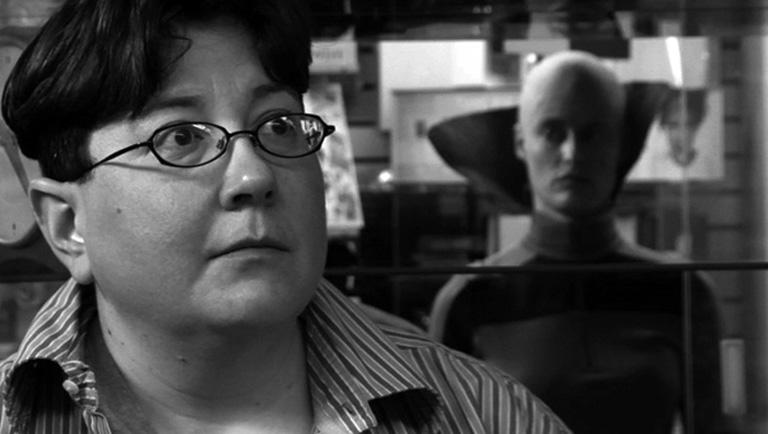
Codependent Lesbian Space Alien Seeks Same (Madeleine Olnek, U.S., 2011) Who can’t identify with that title? Metaphorically speaking, that is. Although Madeleine Olnek’s B&W feature insists on etaking it quite literally, to pretty hilarious results. Lonely stationery-store clerk Jane (Lisa Haas) tells her shrink she dreamed a close encounter in which a space ship dropped a note her way that read “What are you doing later?” Shortly thereafter, she finds herself the object of amorous pursuit by Zoinx (Susan Ziegler), one of several bald-pated, high Peter Pan-collared exiles from planet Zotz who’ve been dumped in Manhattan to seek “hot Earthling action” and get their hearts broken — because it is believed back home that “big feelings” of love are destroying the ozone. Ergo, guilty citizens must be rendered “numb and apathetic” by off-shore interspecies romance before safely returning. Meanwhile two badly mismatched government operatives (Dennis Davis, Alex Karpovsky) are spying upon the intergalactic love intrigue. Go Fish (1994) meets Plan 9 From Outer Space (1959), at last! June 25, 3:30 p.m., Castro. (Dennis Harvey)

The Evening Dress (Myriam Aziza, France, 2009) Everybody’s crushed on a teacher at some point, and indeed everybody in Helene Solenska’s (Lio) sixth grade French grammar class seems to have a crush on her. Why not: she’s attractive, wears sexy clothing (by classroom standards at least), and addresses the occasional sass with challenging provocation rather than simple discipline. But shy, studious Juliette (Alba Gaia Bellugi) has a crush bordering on obsession, particularly once she misinterprets teach’s attentions toward outgoing male student Antoine (Léo Legrand). You’re never too young to have a nervous breakdown, and our heroine’s increasingly reckless actions threaten to make her a pariah. Myriam Aziza’s feature is in that My Life as a Dog (1985) realm of movies about unpleasant childhoods that aren’t exploitative but at times grow truly discomfiting — it’s a worst case-scenario of pubescent imagination run amuck amid the usual teasing and bullying of peers. It’s a very good film if not an especially pleasant one. June 22, 4 p.m., Castro. (Harvey)

A Few Days of Respite (Amor Hakkar, Algeria and France, 2010) Quiet, bespectacled Moshen and his younger lover Hassan have fled Iran in the hopes of starting a new life together in Paris. They have only each other, and yet, because they lack visas, they must keep their distance while traveling to avoid arousing suspicion. While on a train in southern France, Moshen befriends Yolande, an older widow hungry for companionship who offers him a quick job painting her flat in a nearby small town. He agrees, forcing Hassan to continue hiding out, first in plain sight, and later, unknown to Yolande, in her attic, until tragedy drags everything out into the open. Algerian writer-director Amor Hakkar, who also plays Moshen, has crafted a sparse, intimate drama — emotionally enriched by its muted performances and minimal dialogue — about the lengths we are willing to go for love and the price we must pay in the process. Mon/20, 9:30 p.m., Elmwood; June 22, 9:30 p.m., Castro. (Matt Sussman)

How Are You? (Jannik Splidboel, Denmark, 2011) In the past few years Michael Elmgreen and Ingar Dragset, a Berlin-based artistic duo and romantic couple, have become international art world darlings known for their ambitious, playful, and critical large-scale installations, such as turning an exhibition space into a life-size replica of a New York City subway station or building a Prada pop-up shop in the Southwestern art mecca Marfa, Texas. At only 70 minutes, How Are You? can’t help but be a whirlwind tour, air kissing the bigger issues (commodity fetishism, identity politics, commercialism, and the vexed relationship the art world has to all three) Elmgreen and Dragset’s projects touch on while tracing the duo’s career trajectory all the way to their victory lap at the 2009 Venice Biennale. Brief but solid. Sun/19, 6:30 p.m., Roxie. (Sussman)

L.A. Zombie (Bruce LaBruce, Germany/U.S./France, 2010) If you’re going to see one Bruce LaBruce gay zombie erotic film, don’t make it L.A. Zombie. Alas, the latest from the queer Canadian auteur doesn’t hold up alongside its thematic predecessor, 2008’s Otto; or Up With Dead People. Lacking any of Otto‘s subtlety, L.A. Zombie is all sex, no substance. Sometimes that works: LaBruce’s The Raspberry Reich (2004) doesn’t go light on the porn, and that’s surely one of his best. But L.A. Zombie is lacking on all fronts. It stars noted gay porn actor Francois Sagat as a possible zombie (as in Otto, this is never made clear) who makes it his mission to fuck dead men back to life. Insert endless scenes of the zombie sticking his weird alien cock into gaping wounds and ejaculating blood onto corpses. If you can stomach that sentence, you can handle the film, but what’s the point? LaBruce’s past efforts have all the full-frontal male nudity without sacrificing the humor or cultural commentary. June 23, 9:30 p.m., Victoria. (Louis Peitzman)

Miwa: A Japanese Icon (Pascal-Alex Vincent, France, 2011) Chanteuse, star of stage and screen, outspoken champion of gay rights, drag queen: Akihiro Miwa has worn these many titles on her taxi-yellow, hair-like tiaras since she first rose to prominence as an androgynous torch singer at Tokyo jazz clubs in the 1950s. But it wasn’t until her dazzling star turn as the titular jewel thief in the camp classic Black Lizard (1968) that Miwa became a household name throughout Japan. Despite its clear admiration of its subject, Pascal Alex-Vincent’s documentary gives Miwa the Wikipedia treatment, resulting in a film that shares the unfortunate distinction of being both heartfelt and dull. Even his interviews with the lady herself come off as lusterless. Do yourself a favor, and track down a copy of Black Lizard instead. Mon/20, 1:30 p.m., Castro. (Sussman)

The Mouth of the Wolf (Pietro Marcello, Italy, 2009) This experimental narrative is a mix of archival footage and dramatic vignettes depicting the great love between two unlikely entwined souls who met in prison: ex-hood/longtime jailbird Enzo, a.k.a. Vincenzo Motta), and sometimes drug-addicted transsexual Mary Monaco (who died last year after filming). It’s also a lyrical appreciation of Genoa, the fabled northern Italian seaport that’s experienced tumultuous changes for over two millennia. Pietro Marcello’s unpinnable “docu-fiction” — Motta and Monaco apparently play themselves, a highlight being a 12-minute, nearly unbroken-shot dual interview — is frequently gorgeous cinematic poetry. If you seek the more conventional rewards of prose, you’ll probably be bored. However: anybody looking for Daddy should be informed that Enzo is pretty much the last word in unreconstructed macho-manliness. June 22, 9:30 p.m., Elmwood; June 24, 11 a.m., Castro. (Harvey)

Smut Capital of America (Michael Stabile, U.S., 2010) San Francisco. It’s smutty! You already know that, but do you know how deep-down and dirty it really is, in a historical sense? Basically we invented hardcore pornography in the 1960s (OMG, pubic hair!) and this lively local short, soon to expand to full-length, tells that story through fascinating archival footage, no-punch-pulled interviews with folks like John Waters and pornologist John Karr, and titillating naughty bits. Throughout there’s a feeling that a vital part of the story of sexual liberation, gay and straight, is being unearthed. And the raunchy tales of Polk Street hustlers, sticky-floored cinemas, and buck-wild hippie girls throwing open their golden gates will flood you with San Francisco pride. The short plays as part of the “Only in San Francisco” program with Running in Heels: The Glendon ‘Anna Conda’ Hyde Story and Making Christmas: The View From the Tom and Jerry Christmas Tree. Sun/19, 11 a.m., Victoria. (Marke B.)

Weekend (Andrew Haigh, U.K., 2011) The mumblecore-y movie many of us who lived through the 1990s wish was made back then: all that’s missing is the purposefully retro Cure soundtrack. Two scruffy, hipsterish, actually attractive Brit boys enjoy an ideal weekend fling. There is a fixie involved. Commitment-phobes each — one because he isn’t quite into the gay scene, one because he’s too full-on liberated for relationship gibberish — they gradually and adorably deal with their emotional attraction. By no means is this My Beautiful Launderette, and the melancholy self-regard might come a bit thick (Weekend was a big hit at the SXSW film fest, so … ), but it’s a well-acted, lovely film that examines the state of cute white skinny young bearded gay blokes today. Fri/17, 4:15, Castro. (Marke B.)

Without (Mark Jackson, U.S., 2011) This first feature by Seattle’s Mark Jackson (not to be confused with the Bay Area theater talent) is a stark reading of the psyche of 19-year-old Joslyn (Joslyn Jensen), newly arrived as temporarily caretaker to nearly-vegetative, wheelchair-bound Frank (Ron Carrier) while his kids and grandkids are on vacation. Left with this almost completely helpless charge — requiring butt-wiping, wheelchair-to-bed lifting, and regular transfusions of the Fishing Channel as stimulant — Joslyn seems to wallow in rather than escape her problems. Which appear to consist largely of a lesbian relationship whose gasping breaths we witness in occasional flashback. Isolated by no Internet or cellphone reception, not to mention her own powers of repression, Joslyn gradually looses grip as Jackson’s narrative grows more disturbing and ambiguous. Sat/18, 6:30 p.m., Victoria. (Harvey)

Frameline 35: San Francisco International LGBT Film Festival

June 16–26, most films $9–$15

Castro Theatre, 429 Castro, SF

Rialto Cinemas Elmwood, 2966 College, Berk.

Roxie Theater, 3117 16th St., SF

Victoria Theatre, 2961 16th St., SF

www.frameline.org


Alerts

0

ALERTS

By Jackie Andrews


WEDNESDAY, JUNE 15

Golden Wheel Awards

Join the SF Bike Coalition to celebrate and congratulate the movers and shakers who realize the potential for connectedness and comfortable biking in San Francisco. Award recipients include the SFMTA for the safer green bike lanes installed along Market Street, which have attracted new commuter cyclists to the Financial District. Also hear from Leah Shahum about the Bike Coalition’s bold vision of cross-town bikeways.

6–9 p.m.,

$75 individual, group packages available

War Memorial Building

401 Van Ness, SF

www.sfbike.org


THURSDAY, JUNE 16

The Castro and LGBTQ history

Attend this panel discussion called “No Equality Without Economic Equality: The Struggle Against Gentrification and Displacement in the Castro in the Late 1990s” and learn about the tumultuous period of dot-com boom and doom in San Francisco’s Castro District — a time when rents soared, long-term tenants were displaced (many living with HIV and AIDS), and queer youth ended up on the street. But there was a silver lining. Out of the gentrification grew a strong community of activists and much- needed social services, as well as historical milestones like the Tom Ammiano write-in mayoral campaign of 1999 and the progressive takeover of the Board of Supervisors the following year. Speakers include Tommi Avicolli Mecca, Jim Mitulski and Gabriel Haaland, and Paola Bacchetta.

7–9 p.m., $5

GLBT Historical Museum

4127 18th St., SF

www.glbthistorymuseum.org


TUESDAY, JUNE 21

Guardian forum: Budget, Healthcare, and Social Services

This is the second forum in a five-part series that examine local issues that are expected to have a major impact in the upcoming mayoral race. Representatives from labor groups and local nonprofits will be on hand, as will budget experts, to discuss the city budget, access to healthcare for San Franciscans, and other useful and threatened social services. This is sure to be a lively discussion and a unique opportunity to get involved in local politics. Be there.

6–8 p.m., free

Local 2 Hall

309 Golden Gate, SF

www.sfbg.com

Media access here and now

Weigh in on the issue of media access in San Francisco and the controversy around the accessibility of media passes for journalists while out on assignment. Panelists at this conversation with the Society of Professional Journalists will include SFPD’s Lt. Troy Dangerfield, attorney David Greene with the First Amendment Project, interim City Administrator Amy Brown, and a local journalist who has experience going through the process of trying to obtain a press pass.

5:30 p.m., free

SF Public Library

Latino Community Room

100 Larkin, SF

www.spj.com 


Mail items for Alerts to the Guardian Building, 135 Mississippi St., SF, CA 94107; fax to (415) 437-3658; or e-mail alert@sfbg.com. Please include a contact telephone number. Items must be received at least one week prior to the publication date.

Dick Meister: The battle of our generation

0


President Bob King of the United Auto Workers union is proving again that he’s one of our most astute labor leaders, a worthy occupant of the position once held by the legendary Walter Reuther.

King’s latest column in Solidarity, the UAW’s official magazine, certainly proves that. King writes about the severe weakening of the union rights that are supposedly guaranteed all working people – the right to organize. King calls that “the first amendment for workers.”

That basic and essential right was granted U.S. workers by the National Labor Relations Act – the NLRA – that was enacted in 1935 as part of President Franklin D. Roosevelt’s New Deal measures that were designed in part to pull the country out of the Great Depression.

But now, says UAW President King, the NLRA’s basic process for determining whether workers want to organize – having them vote for or against unionization – is “fatally flawed.” King says the National Labor Relations Board ­–­ the NLRB – which is charged with enforcing the NLRA, does not do that – “does not protect workers’ right to organize.”

Workers’ lack of adequate legal protection is not a new development, as King notes. It’s been a serious problem for several decades. Since the 1970s, employers have been allowed to hire anti-union consultants “to design sophisticated ways to intimidate workers trying to organize.”

Boy, have they. Supervisors are trained to put pressure on individual workers to vote against unionizing. Workers are forced to attend meetings where they are warned of the dire consequences they’ll face if they vote for unionizing. Employers threaten to close down if their employees vote for a union. Union supporters are commonly disciplined, sometimes fired. And employer lawyers “find thousands of excuses for delaying elections. “

King needn’t look beyond his own union for examples of the NLRB’s ineffectiveness against the dictatorial actions of employers against unions. He could cite hundreds of cases involving the UAW.

For instance, last August, six years after the UAW lost a union election by just three votes at a facility in North Carolina, the NLRB finally ordered a new election “because the employer violated the law in more than a dozen ways.” The violations included threatening to do away with the jobs held by union supporters, spying on workers’ meetings and interrogating workers about union activity.

By now, however, all 25 members of the union’s organizing committee have left for other jobs, most union supporters have been fired, laid off or quit. And the new election still hasn’t been scheduled.

Another example involves a California facility. Seventy percent of the workers there signed union membership cards, but were so intimidated by management that only 19 workers out of 161 dared vote for UAW representation.

King says the union is “returning to its roots of direct action on behalf of workers rights.” Which is no small matter, given the UAW’s influential position within the labor movement.

The union is demanding that “all corporations, whether American or foreign-owned, allow their workers to freely decide whether to organize.”

King calls that “the battle of our generation,” as it surely is. He says “the battle for the First Amendment right to organize will determine the survival of the labor movement. It is the mission of our generation of trade unionists to secure these rights for future generations. We must win this fight for our children and grandchildren.”

King and other UAW officers are going to “call upon each and every member to give some time – perhaps two hours a week – to participate in public demonstrations for the First Amendment.”

The union also will be seeking the support of workers and their unions in other countries, since the UAW is dealing with companies whose owners are in Japan, Korea and Germany and whose products are sold worldwide. The UAW will in turn support the struggles of foreign workers for union rights in their countries, as part of “the global fight to force corporations to respect workers’ right to organize.”

It’s important to remember the UAW’s crucial role in helping establish a true middle class in this country through its organizing of the auto industry. That led workers in other industries to also demand – and get – decent wages, benefits and working conditions.

UAW President King thinks his union can lead the way again, this time to reforms that will protect and expand the union rights that the autoworkers and others won seven decades ago. Those are the rights that had so much to do with the rise of a true middle class, whose standing is now endangered by the anti-union onslaughts of employers and their government allies.


Dick Meister, former labor editor of the SF Chronicle and KQED-TV Newsroom, has covered labor and politics for more than a half-century. Contact him through his website, www.dickmeister.com, which includes more than 300 of his columns.


SFBG Radio: The politics of sex scandals

0

Does the Edwards scandal hurt the Democrats? No. Does the Schwarzenegger scandal hurt the Republicans? No. It’s old history. But what about Rep. Anthony Weiner? Why does anybody care what he did on his own time? Johnny and Tim discuss after the break.

sfbgradio662011 by endorsements2010

Dick Meister: Unions save lives

1


A miner’s life is like a sailor’s

‘Board a ship to cross the waves

Every day his life’s in danger

Still he ventures being brave

—Traditional labor song

A new study shows that unionization is a sure way to dramatically lessen the many deaths and serious injuries that have been all too common in the nation’s coal mines.

That ‘s the unequivocal conclusion of the independent study of coal mining between 1993 and 2008 conducted by Stanford law professor Allson Morantz and funded by the National Institute for Occupational Safety and Health (NIOSH).

There’s no doubting it: Workers in unionized mines are far less likely to be killed or seriously injured than are workers in non-union mines.

The study indicates that the number of fatalities in individual non-union mines can decline by one-third up to nearly three-fourths and serious injuries decline by as much as one-third if the mines unionize.

It’s no coincidence, notes President Cecil Roberts of the United Mine Workers Union, that several major mine disasters recently were at non-union mines. That includes the explosion at Massey Energies’ Upper Big Branch mine in West Virginia that killed 29 miners last year, the Crandell Canyon, Utah, blast that killed nine miners in 2007 and the Sago explosion in West Virginia in 2006 that killed 12.

“The simple truth,” Roberts concludes, “is that union mines are safer mines, and this study proves that.”

He gets ready agreement for that obvious truth from union leaders and members at all levels of the labor movement, right up to AFL-CIO President Richard Trumka. He was a coal miner himself, as were his father and grandfather.

Trumka says he learned firsthand “the vital importance of workers having a voice on the job through their union.”

Spreading unionization throughout the coal mining industry is a key mission of the United Mine Workers. But though that doubtlessly would lead to greater coal mine safety, the union’s Democratic Party allies must meanwhile continue pressing for stronger mine safety laws – and stronger enforcement of the laws.

Those steps and the labor-management cooperation in collective bargaining and otherwise that the steps would require would guarantee that coal mine job safety would continue to improve – perhaps at even a faster rate than shown by Professor Morantz’ study.

Labor, management and government would be in a far better position to do much more of what’s needed to continue lowering the still high number of mine worker fatalities.

That’s not just a daydream. Listen to the AFL-CIO’s Mike Hall. He knows. Says Hall: “With all we know today, and all the avenues of protection available, there is simply no need for even one life to be lost on the job.”

One of Congress’ most outspoken and effective safety advocates, veteran Democratic Rep. George Miller of California, sees the study as unassailable evidence that unionization leads to greater safety.

Miller, ranking Democrat on the House Education and Workforce Committee, is certain that “when workers have a voice in the mine through their union, they are safer. In union mines, workers are empowered to point out dangerous conditions to inspectors without fear of retaliation from management.”

It clearly demonstrates that “by giving miners the support they need to speak out, unions can save miners lives.”  So can the United Mine Workers’ stepped-up campaign to bring more workers under the direct protection of the union and the union’s expanding safety training programs for miners everywhere.

Saving lives. No union could have a greater purpose.


Dick Meister, former labor editor of the SF Chronicle and KQED-TV Newsroom has covered labor and politics for more than a half-century. Contact him through his website, www.dickmeister.com, which includes more than 300 of his columns.


Dick Meister: The minimum wage is a poverty wage

1

Imagine trying to live on pay of $7.25 an hour. Even if you managed to work full eight-hour days, you’d be making only about  $58 a day, $290 a week, or a measly $15,000 a year.  And out of that would come taxes and other deductions.

According to the standards of the federal government, you’d be living in poverty. Yet $7.25 an hour is the federal minimum wage set by Congress. State legislatures can and do set state minimums higher than the federal rate, but never lower, much as some would like to.

Far too many workers have no choice but to take minimum wage jobs, no choice that is, but to live in poverty. New research out of Columbia University’s law school lays out the sorry details of the minimum wage workers’ very serious situation, one that should never be tolerated in a country with such riches as ours.

In many states, the minimum wage laws are but barely enforced, in part because there’s little or no money budgeted for enforcement. But it’s also because the government agencies charged with enforcing the laws are clearly not much interested in carrying out their mandate.

Equally at fault are the governors and state legislators who’ve done virtually nothing to try to help their state’s neediest workers earn a decent living. They have to be aware that no one can make a decent living at the current minimum wage rates.

The government officials who have been ignoring the problems could at least try to make sure that employers pay workers the legal minimum, however inadequate it might be.  And the government officials could apply effective pressure to raise the minimum. They could, but given their record in such matters, that’s most doubtful.

Congress could raise the federal minimum, but having just recently raised it, that’s extremely unlikely, even though it should be obvious to everyone that a higher rate is needed to effectively help the many working people who badly need help.

It may be hard to believe, but despite the great need of workers and despite the widespread violations of the minimum wage laws, five states – Alabama, Florida, Georgia, Louisiana and Mississippi – have no agency assigned to enforce the minimum wage laws and other laws designed to protect workers rights.

The researchers also found that a majority of states do not fine or penalize employers who violate the minimum wage laws and other wage and hour laws. Which means that employers “have little or no incentive to obey wage and hour laws if the only repercussion for violating them is to have to pay wages owed in the first place.”

The report warns that “without meaningful enforcement by state regulators, some employers will simply disregard their legal obligation if doing so allows them to save time, money or effort, putting the majority who wish t abide by the law at a significant competitive disadvantage, This creates a regulatory race to the bottom by states as they seek to compete to attract businesses.”

Most important, it denies workers the basic rights and protections the law promises them but often fails to deliver.


Dick Meister, former labor editor of the SF Chronicle and KQED-TV Newsroom, has covered labor and politics for more than half-century. Contact him through his website, dickmeister.com, which includes more than 300 of his columns.


Shaking the city

0

arts@sfbg.com

LIT Activist, writer, and fast-talking leftist public intellectual Chris Carlsson, cofounder of the monthly bike happening Critical Mass, spearheads the online local history repository Shaping San Francisco. I recently spoke with Carlsson about Shaping SF and his associated projects, including three collections of cultural and political essays published by City Lights Books, the most recent of which, Ten Years that Shook the City: San Francisco 1968-1978, will be released June 15.

Carlsson began work on Shaping SF — a multimedia digital history project — in 1994 with co-conspirators from his often hilarious dissident magazine Processed World.

Reclaiming San Francisco: History , Politics, Culture, edited by James Brook, Carlsson, and Nancy Peters, was published in conjunction with the first CD and kiosk release of Shaping SF in early 1998. The collection of essays sets the tone for what would become, in Carlsson’s words, “an ongoing series of contrarian history anthologies about San Francisco.”

The second book in the series, The Political Edge (2004), examines cultural and political dynamics behind the popular mobilization to elect Green Party candidate Matt Gonzalez, a surprisingly close mayoral race that Gavin Newsom won in part with massive support from the San Francisco Chronicle and the national Democratic Party.

Carlsson says Ten Years that Shook the City continues his work “to counter our amnesiac culture.” More specifically, the book takes on the argument that the 1960s were filled with experiments that didn’t work out. Carlsson told me that evidence to the contrary “has systematically been flushed down the toilet” by mainstream commentators.

The book begins with a remembrance of the 1968 San Francisco State College strike, but in his introduction Carlsson writes: “From today’s organic food and community gardening movements to environmental justice, gay rights, and other social identity movements, neighborhood anti-gentrification efforts, and much more, the 1970s are the years when transformative social values burrowed deeply into society.”

In more than 30 years of activism, he also has crossed paths with many who became contributors to the series. Carlsson recalls when he attended an anti-nuclear rally in 1979 and was handed a flyer from a group called the “Union of Concerned Commies.” The leaflet featured a drawing of the White House with nuclear cooling towers on either wing, done by veteran underground cartoonist Jay Kinney. Kinney contributed one of the most entertaining pieces in Ten Years, a short history of underground comix (in a move below mainstream radar, “comics” became “comix”).

Former Guardian staffer Rachel Brahinsky contributed a heart-wrenching look at the (ongoing) African American exodus from the City by the Bay in the wake of the neighborhood-destroying process officially called “urban renewal.” In the chapter that follows Brahinsky’s, veteran organizer Calvin Welch describes further tenant victories in the creation of what he refers to as “the community housing movement.”

Carlsson’s chapter, “Ecology Emerges,” parallels a series of green history talks of the same name held this year at Counterpulse, Shaping SF’s home base at 1310 Mission St. Carlsson links the 1990s emergence of the environmental justice movement to David Brower, especially the more radical work Brower began when he left the Sierra Club and cofounded Friends of the Earth in 1969. Brower felt Greens should be antiwar, and was keen on making connections between movements. The ecologically-minded individuals and groupings Carlsson highlights also shared a disinterest in becoming a permanent cheering section for Democrats, working instead to keep pressure building from below.

I asked Carlsson for his take on the Obama administration’s announced plans to allow the mining of millions, possibly billions, of tons of coal on public lands.

“Obama was supported from the beginning by Big Finance an Big Coal,” Carlsson responded. He has never shown any indication he is anything but their front man. His lack of imagination on the energy crisis, the economic crisis, the military-empire crisis, and the social crisis is nothing less than remarkable.”

CHRIS CARLSSON

Thurs/2, 7 p.m., free

City Lights Bookstore

261 Columbus, SF

(415) 362-8193

www.citylights.com


Alerts

0

ALERTS

By Jackie Andrews


WEDNESDAY, JUNE 1

Awarding human rights

Join Global Exchange for its ninth annual awards ceremony to celebrate the people and organizations that honor human rights and work for change with dinner, activities, and a silent auction. This year’s winners include Bolivian U.N. Ambassador Pablo Solon, U.S. gulf coast toxicologist Wilma Subra, and more..

6:30 p.m., $125

Bimbo’s 365 Club

1025 Columbus, SF

www.humanrightsaward.org


FRIDAY, JUNE 3

Bluegrass for the Greenbelt

Help raise funds for local eco-heroes Greenbelt Alliance with a foot-stomping hoedown featuring Marley’s Ghost, Kathy Kallic Band, the Wronglers, and more. Show up a day early and camp out with your family. Proceeds benefit an organization that works to preserve the region’s natural ecosystems and sustainable farms.

Fri/3–Sat/4, $25–$50

Dunsmuir-Hellman Estate

2960 Peralta Oaks Court, Oakl.

www.greenbelt.org


SATURDAY, JUNE 4

Walk for hope

Get a group of friends together and raise funds — check out the online tips on how–for breast, ovarian, and cervical cancer research. Meet at Justin Herman Plaza and walk in solidarity down the Embarcadero and around AT&T Park. Enjoy lively music and other entertainment along the way.

9 a.m., free

Justin Herman Plaza

Market and Embarcadero , SF

800-888-5323

www.cityofhope.org


Cuba-U.S. relations

Find out what the 50th anniversary of the failed Bay of Pigs invasion means and how recent changes in Cuban politics will affect the country’s relationship with the U.S. Go online or call the library to receive readings to prepare yourself for this interesting discussion.

10 a.m., free

Niebyl-Proclor Library

6501 Telegraph, Oakl.

(510) 595-7417

www.marxistlibr.org


SUNDAY, JUNE 5

Sonoma County Pride Parade

Just can’t wait for the SF Pride Parade, huh? We can’t either. Come march with our LGBTQ neighbors by the Russian River for what is promised to be a fun and outrageous event featuring a parade followed by a party with food, drinks, and loads of entertainment for the whole family.

11 a.m. –6 p.m., free

Guerneville Lodge

15905 River Road, Guerneville

www.sonomacountypride.org


TUESDAY, JUNE 7

Radical SF History

Former Bay Guardian reporter Rachel Brahinsky reads her chapter from the book Ten Years That Shook the City: San Francisco 1968-1978, a selection of essays about the city’s gay rights and other identity-based social movements, anti-gentrification efforts, and more.

7:30 p.m., free

Green Arcade Books

1680 Market, SF

www.shapingsf.org 

Mail items for Alerts to the Guardian Building, 135 Mississippi St., SF, CA 94107; fax to (415) 437-3658; or e-mail alert@sfbg.com. Please include a contact telephone number. Items must be received at least one week prior to the publication date.


Dick Meister: A Memorial Day Massacre

1


It’s a dramatic, shocking and violent film. Some 200 uniformed policemen armed with billy clubs, revolvers and tear gas angrily charge an unarmed crowd of several hundred striking steelworkers and their wives and children who are desperately running away. The police club those they can reach, shoving them to the ground and ignoring their pleas as they batter them with further blows. They stand above the fallen to fire at the backs of those who’ve outraced them.

Police drag the injured along the ground and into patrol wagons, where they are jammed in with dozens of others who were also arrested. Four are already dead from police bullets, six others are to die shortly. Eighty are wounded, two-dozen others so badly beaten that they, too, must be hospitalized.

The close-ups are particularly brutal. As one newspaper reviewer noted, “In several instances from two to four policemen are seen beating one man. One strikes him horizontally across the face, using his club as he would a baseball bat. Another crashes it down on top of his head and still another is whipping him across the back.”

The film ends with a sweaty, fatigued policeman looking into the camera, grinning, and motioning as if dusting off his hands.

The film was made in 1937. It was not, however, one of those popular cops and robbers features of the thirties. It was not fictional. It was an on-the-scene report of what historians call “The Memorial Day Massacre,” a newsreel segment filmed by Paramount Pictures as it was happening on the south side of Chicago on May 30, 1937.

We’re accustomed these days to the use of videotaped evidence to show wrongdoing by abusive law enforcement officers. Video technology was unknown in 1937, of course, and though film was available, it had rarely – if ever – been used for that purpose. The 1937 film, in fact, was initially kept from the general public by Paramount’s executives. Fearful of “inciting riots,” they refused to include it in any of their newsreels that were shown regularly in movie theaters nationwide.

But the film was shown to a closed session of a Senate investigating committee chaired by Robert LaFollette Jr. of Wisconsin. The committee, concerned primarily with civil liberties, was outraged – particularly since the Chicago police had acted in violation of the two-year-old federal law that guaranteed workers the right to strike and engage in other peaceful union activities.

The committee found that strikers and their families, while noisily demanding collective bargaining rights as they massed in front of the South Chicago plant operated by Republic Steel, had indeed been generally peaceful.

But that was beside the point to the police in Chicago and other cities with plants operated by Republic and two other members of the “Little Steel” alliance that also were struck.  For, as the committee concluded, the police had been “loosed … to shoot down citizens on the streets and highways” at the companies’ behest. The companies even supplied them with weapons and ammunition from their own stockpiles.

The committee said the companies had spent more than $40,000 on machine guns, rifles, shotguns, revolvers, tear gas canisters and launchers and 10,000 rounds of ammunition to use against strikers. Republic alone had more supplies than any law enforcement agency in the entire country.

The companies were prepared to go to any extreme to remain non-union. Two closed their plants temporarily, anticipating that most of the 85,000 strikers would soon be forced to return to work because they had little – if any – savings. But though Republic Steel closed most of its plants, it continued to operate the Chicago plant and a few others.

Republic fired union members at the plants that remained open and, with police help, cleared out union sympathizers and brought in strikebreakers to replace them. The strikebreakers, guarded by police day and night, ate and slept in the plants to avoid confronting the pickets outside.

Municipal police, company police and National Guardsmen harassed and often arrested pickets for doing little more than lawfully picketing. Six strikers were killed outside Republic’s Ohio plants in Cleveland, Youngstown, Canton and Massillon.

The killings and other violence, the steadily increasing financial pressures on strikers, unceasing anti-union propaganda – all that and more combined to end the strike in mid-July, two months after it had begun.

But the steelworkers didn’t give up.  Determined to not have made such great sacrifices in vain, they turned to the labor-friendly administration of President Franklin D. Roosevelt for help. They got it in 1941, when heavy pressures from the administration finally forced the steel companies to recognize their employees’ legal right to unionization and the many benefits, financial and otherwise, that it brought them and the many other industrial union members who followed their lead.

Dick Meister, former labor editor of the SF Chronicle and KQED-TV Newsroom, has covered labor and politics for more than a half-century. Contact him through his website, dickmeister.com, which includes more than 300 of his columns.


Kindred spirits

0

arts@sfbg.com 

Heady, hoppy, smoky with the musky tang of interstellar, international exotica shot through a post-hardcore prism. Oakland psych-space-rock-drone outfit Lumerians’ sound is intoxicatingly addictive enough to inspire that imaginary brewski review, even in the thick of the raging patio at Jack London Square’s Beer Revolution. And if the band was a glass of sheer liquid refreshment, what would it be? A complex Cab, a supernatural Super Tuscan, or a solid stout?

I’m guessing a highly groovy gruit, as drummer Christopher Musgrave takes another gulp of his herbaceous, hops-free custom-crafted Two Weeks Notice. “It’s really weird, but after a few sips it gets really good,” he tells newly arrived bass player Marc Melzer. Musgrave should know: he makes beer by the keg in the former Murder Dubbs church he now calls home — and Lumerians’ recording studio. “I’m changing my mind. I might order it again.”

We swap slugs of our selections from the pub’s massive menu — Melzer’s Big Eye IPA and my Sweetgrass pale ale. It’s all in keeping with Lumerians’ shared approach to life and music-making: card that ego at door, share your inspirations — be they musical, painterly, or brew-crafted — and strive to work as one fluidly intuitive, wholly non-derivative whole.

Taking in Lumerians’ recently released, long-awaited debut, Transmalinnia (Knitting Factory), I’ve been sucked into the burly, bass-smudged biker boogie of “Burning Mirrors,” the witchy organ-shimmy and sex-magik drone of “Black Tusk,” and feathery woodwind textures and unholy shrieks of “Calalini Rises.” The LP shares its name with its artwork, a glorious finger-painting from the “Voyage Into Space” series by outsider artist Eugene Von Bruenchenhein — a vision borrowed by a band just a vowel or two away from the lost world of Lemuria, undertaken to turn kindred spirits onto the late self-taught surrealist’s mind-blowing art.

“One of the foundations of our band is we do try and make egoless music,” explains Melzer with equanimity while a birthday party brays in the background. “It’s not about one person writing the music, and it’s not about guitar solos or bass solos or drum solos. It’s about us, where all these different personalities meet and what develops after that.”

Of course, adds Musgrave, “it’s not all sunshine and puppy dogs.” Lumerians’ origins began humbly, with Melzer and Musgrave vowing to play together after a “strange hiatus” from music: they were disillusioned by the band politics in their old indie and hardcore groups. Guitarists-organists-synth-players Tyler Green and Jason Miller had begun to make music in 2006 when Musgrave joined in and enlisted Melzer, a guitarist now playing bass for the first time. “We hold it down,” Musgrave exclaims proudly. “We’re the earthbound ones. We’re like the tractor and the plow.” Soft Moon voyager Luis Vasquez eventually rounded out the fivesome on conga and synth.

The group took its time, hoping to create a “sustainable” environment — a world of its own, if you will — and built a studio in SF’s South Park where it recorded Transmalinnia, the follow-up to its self-titled, self-released, now-out-of-print, much-praised 2008 EP, forging the songs via jams that they’re reluctant to call jams. “The difference is everything we play in the band is pretty simple, but it combines to create a greater whole,” says Melzer. “We also play repetitive stuff — we’re either trying to trance out our audience or ourselves or both. I don’t think that’s one of the aims of a jam band.” They’ve succeeded to the point where Melzer confesses he’s more than once almost fallen off the stage.

The tough part was capturing the songs in their perfectly imperfect “nascent state,” as Musgrave puts it. “We’ve always tried to capture those ephemeral moments — it’s proven to be very difficult,” he explains. “Hard drives crash. Or we’ll think we’re recording and look over and it’s stopped. But the power of inspiration is so powerful you can’t pull away — it’s like you’re in a tractor beam!”

Fortunately, Lumerians doesn’t seem destined to perish in obscurity à la Von Bruenchenhein — the combo had just returned from the Austin Psych Fest, where by their accounts, they were the underdog belles, hampered by two power outages during their set. Will bands of the future find their minds blown by dog-eared Lumerians LPs? “I don’t know if that’s the way I think about it,” Musgrave says, “but any artifacts we put out are hopefully worthy of discovery.”

“So when the blogosphere forgets about us,” adds Melzer, tongue lodged in cheek, “and three months later, we get rediscovered!”  


LUMERIANS

With Young Prisms and Bronze

July 2, 9 p.m., $13

Great American Music Hall

859 O’Farrell, SF

(415) 885-0750 www.gamh.com


Editor’s notes

3

tredmond@sfbg.com

When Cornel West blasted President Obama May 16 in an interview with the website Truthdig, it set off a pretty wild debate on the left. For the most part, it’s been more heat than light (imagine that happening on the left!), but it raises a crucial question about the role progressives play in the Democratic Party — particularly in the 2012 election season.

The best analysis so far comes from Robert Cruikshank, who writes for the blog Calitics. In a May 23 piece, he noted that the right keeps winning battles because the conservatives know how to play coalition politics:

“Conservative communication discipline is enabled only by the fact that everyone in the coalition knows they will get something for their participation…. Everyone knows they will get their turn. Why would someone who is primarily motivated by a desire to outlaw abortion support an oil company that wants to drill offshore? Because the anti-choicers know that in a few weeks, the rest of the coalition will unite to defund Planned Parenthood. And a few weeks after that, everyone will come together to appease Wall Street and the billionaires by fighting Elizabeth Warren. And then they’ll all appease the U.S. Chamber by fighting to break a union.”

Not so with the Democratic Party under Obama. The Wall Street Democrats (the neoliberals, the DLC types, and the power-at-any-price folks) get their way all the time. And those us of who consider ourselves part of the economic left (also known as progressives) not only get thrown under the bus — we see our existing gains rolled back, in exchange for nothing.

Sure, we all agree on a lot of social issues. The neolibs and the progressives support abortion rights and gays in the military and, for the most part, same-sex marriage. We agree that evolution is science and creation is religion.

But on basic economic issues — who pays the taxes, who gets the money, military spending vs. education spending, radical inequality, concentration of wealth, corporate power — we might as well be on different political planets. And while we’re the most active, hard-working members of the Democratic coalition, we get completely ignored on national policy.

Obama ought to be worried — not just by West’s criticism (any president ought to expect some allies to be pissed off) but by the fact that he has created an unsustainable coalition. And some of the San Francisco politicians who call themselves progressives ought to be paying attention too: When your political partners get nothing, they eventually walk. 


Alerts

0

ALERTS

By Jackie Andrews


WEDNESDAY, MAY 25

The true cost of Chevron

Join the global resistance movement against Chevron’s callous methods of operation and confront the oil giant at its annual shareholders meeting. Representatives from communities that have suffered the dire impacts of the company’s reckless pursuit of profits will be on hand to testify, including Humberto Piaguaje of the Amazon Defense Coalition in Ecuador and Elias Isaac of the Open Society Initiative in Angola.

7–11 a.m., free

Chevron’s World Headquarters

6001 Bollinger Canyon Road., San Ramon

www.truecostofchevron.com


Fundraiser for at-risk youth

The John Burton Foundation for Children Without Homes hosts this food truck fundraiser to support former foster youth in their pursuits of higher education. The event features tastings from favorite local food trucks, breweries, and wineries, as well as live music and a silent auction.

6–9 p.m., $150

Herbst Pavilion, Fort Mason

Buchanan and Marina, SF

(415) 348-0011

www.brownpapertickets.com

www.johnburtonfoundation.org


FRIDAY, MAY 27

Critical Mass

Take part in this peaceful, leisurely bike parade that follows no set route and obeys no traffic laws or authorities except yielding to pedestrians and emergency vehicles.

6 p.m., free

Justin Herman Plaza

Market and Embarcadero, SF

Facebook: SF Critical Mass


SATURDAY, MAY 28

Sit-in against violence and intolerance

In response to the brutal beating of a transgendered woman in a Maryland McDonalds, where employees filmed and heckled the incident, demonstrations have been organized around the country. Attend this peaceful sit-in to help spread the message that the franchise needs to update its polices and employee training.

10 a.m.–1 p.m., free

McDonalds

5454 Mission, SF

inoculatedcityblog@gmail.com


SUNDAY, MAY 29

Library fundraiser

Help raise funds for the Niebyl-Proctor Library, whose goal is to preserve the history of radical politics, labor movements, and social struggles with a book sale featuring a good selection of novels, poetry, art, pamphlets, and books, including selected works by Marx, Lenin, and Mao.

10 a.m.–2 p.m., free

Niebyl Proctor Marxist Library 6501 Telegraph, Oakl.

(510) 595-7417

www.marxistlibr.org


TUESDAY, MAY 31

Talkin’ Trotsky

This is the first session of a 12-week course to discuss Leon Trotsky and the concept of “Permanent Revolution,” including workers’ power, internationalism, and social transformation.

7–-8:30 p.m., $2 suggested donation

New Valencia Hall 625 Larkin, No. 202, SF

415-864-1278

www.socialism.com 


Mail items for Alerts to the Guardian Building, 135 Mississippi St., SF, CA 94107; fax to (415) 437-3658; or e-mail alert@sfbg.com. Please include a contact telephone number. Items must be received at least one week prior to the publication date.

Why the right keeps winning

6

Robert Cruikshank, who is one of the best political bloggers around, has a fascinating piece today on Calitics about Cornel West’s attack on Obama, the politics of coalitions, and the fate of the Democratic Party. His thesis: The Republicans know how to make a coalition work, and the Democrats don’t.


Conservative communication discipline is enabled only by the fact that everyone in the coalition knows they will get something for their participation. A right-winger will repeat the same talking points even on an issue he or she doesn’t care about or even agree with because he or she knows that their turn will come soon, when the rest of the movement will do the same thing for them.


Progressives do not operate this way. We spend way too much time selling each other out, and way too little time having each other’s back. This is especially true within the Democratic Party, where progressives share a political party with another group of people – the corporate neoliberals – who we disagree with on almost every single issue of substance. But within our own movement, there is nothing stopping us from exhibiting the same kind of effective messaging – if we understood the value of coalitions.


More:


 If one part of the coalition gets everything and the other parts get nothing, then the coalition will break down as those who got nothing will get unhappy, restive, and will eventually leave. Good coalitions understand that everyone has to get their issue taken care of, their goals met – in one way or another – for the thing to hold together.


He points out, correctly, that the Democratic Party these days is actually two parties, and the only thing that holds them together is social issues. The neoliberals generally support same-sex marriage and abortion rights and can’t join the religious nuts who have taken over the GOP. But on economic issues, they might as well be two entirely distinct parties with very different messages.


It’s worth thinking about in the context of San Francisco politics, where a lot of people — including Board President David Chiu — talk about being part of a progressive coalition. And on a lot of issues, six of seven members of the board — and most people who call themselves progressives — agree. There ought to be a progressive coalition tha controls the political agenda in San Francisco, and there’s no reason that can’t happen.


But those of us who are part of what we can only call the economic left — the people who believe that the rich don’t pay enough taxes and the poor don’t get enough services and the public sector (yes, Government) is part of the solution — aren’t getting much of anything out of the coalition right now. Our issues (new revenue that matches or exceeds any cuts and a vigorous campaign by our elected leaders to make that happen) always disappear when the final deals are cut.


We’re always there on the non-economic issues — there was some grumbling, but in the end the progressives on the board all voted for Chiu’s yellow pages ban — but when it comes to budget time, we get thrown under the bus. And in the long term, that’s not going to hold a progressive coalition together.

Chronicle pushes fake campaign to “draft” Ed Lee

83

Downtown is clearly nervous about not having a reliable horse in the mayor’s race, so much so that a few power brokers are using the Chronicle to drum up a fake “campaign” to convince Mayor Ed Lee to break his word and run to keep the job. And the fact that these liars – those who just six months ago earnestly argued we need a caretaker mayor who won’t run for the office – are pushing this with a front-page, above-the-fold “news” story shows just how shameless they are.

Say what you will about this year’s field of mayoral candidates, but they do represent a broad range of constituencies and they include several seasoned politicians who are well-qualified to be mayor. Sen. Leland Yee has served in a variety of public offices for decades, Sup. John Avalos is a reliable progressive intimately familiar with the workings of City Hall, Dennis Herrera and Phil Ting each hold citywide offices to which the Mayor’s Office is the logical next step, Michela Alioto-Pier is a consistent supporter of ruling class interests, and David Chiu has proven his political skills by engineering his reelection as board president and installing Lee as mayor.

So why exactly do people want to convince Lee to go back on his word, as well as giving up the city administrator position that the board just cleared the way for him to return to with an ethics exemption? Well, the Chronicle article doesn’t really make that clear, all it makes clear is that’s what Willie Brown and Rose Pak – as well as their errand boys, former Sup. Michael Yaki and downtown consultant Jim Ross – want.

And why do they want Lee to remain in the Mayor’s Office? Because they’re the ones who put him there and he has done nothing to challenge the corrupt status quo at City Hall, where corporate desires trump people’s needs every time. Chief-of-staff Steve Kawa is still calling the shots, Brown’s clients and developer buddies are still getting what they want, and Pak still gets to be the de facto leader of Chinese-American interests in City Hall.

They desperately fear that Yee will win the mayor’s race and clean house, kicking out Kawa and all of the Brown and Pak cronies, greatly reducing their power in San Francisco. And the rest of the candidates are too independent and broad-based to guarantee the continued power of Brown and Pak and the downtown interests they represent. Their only hope is that they can cut some kind of deal with Chiu to maintain their influence in the next administration by applying pressure through this article and the others likely to follow in this fake draft-Lee campaign.

To his credit, Sup. Sean Elsbernd isn’t taking part in this shameless charade, instead sticking by the statements he made when he nominated Lee to be mayor, telling the Chronicle that in a year with tough political decisions on the budget, pension reform, and other pressing issues, “this city desperately needed someone who wasn’t going to play election-year politics,” and that, “if he files papers to run for mayor, all that goes away.”

That’s true, along with any illusions that Lee and those who back him have any integrity.

Where’s Gascon on Ammiano’s pot bill?

4

Some very good news from Sacramento (and since good news from that part of the world is rare these days, let’s celebrate it). Assembly Member Tom Ammiano has a bill that would eliminate the mandatory felony charges for marijuana cultivation and allow district attorneys to charge some pot farmers with misdemeanors. And it’s cleared committee and is headed to the Assembly floor. The Bay Citizen has a decent wrapup on the politics (including the fact that the prison guards union isn’t going to like it — less customers).


It’s likely the Senate will go along with the bill, too — particularly since most of the district attorneys in Pot Country are supporting it. Mendocino DA David Eyster is the main sponsor. His colleagues in Humboldt, Del Norte and Lake Counties are all on board.


Oddly enough, the California District Attorneys Association still opposes the bill. The board of this august group seems to be dominated by the more conservative counties, but still: The DAs who have to deal with this issue regularly all want the bill passed. What’s up with that? Well, the spokesman for the group, Cory Salzillo, told me that the bill “send the wrong message with controlled substances generally” and that it would also give not only a prosecutor but a judge the ability to turn a potential felony into a misdemeanor. “We’re concerned about that judicial discretion,” he said.


Which seems, frankly, a little nuts — again, the four DAs who are most involved in charging people for cultivation of marijuana — the folks on the front lines, so to speak — want the bill to pass. So who decided the association position?


Salzillo says there’s a legislative committee, but since this one was controversial, it went to the full board. And guess what? There’s a San Francisco rep. on the board — Assistant D.A. Jerry Coleman. I called him to ask how the vote went down. Here’s our conversation:


Me: Hi, Mr. Coleman, I understand you’re on the board of the California DAs association and I wanted to talk to you about why that group is opposing the Ammiano marijuana bill, which the DAs of the north counties that deal with the issue all support.


Coleman: “I’m not the spokesman for that association.”


Me: Yes, but you’re on the board and I’m wondering if you voted in favor of opposing AB 1017.


Coleman: “I can’t give you an answer to that. I won’t discuss any vote. I don’t remember this one, but if I did I wouldn’t talk to you about it anyway.”


That was helpful.


Meanwhile, where’s Coleman’s boss, the San Francisco DA, George Gascon? This is a city that supports medical marijuana, has perhaps a few growers living in its city limits — and if I had to guess, about, maybe, 93 percent of the voters would agree that marijuana cultivation shouldn’t be an automatic felony. Why isn’t Gascon’s name on the list of supporters?


I dunno. His office hasn’t called me back. I’ll let you know when they do.

Finally, a prosecutor leaps into D.A.’s race

73

From the moment I walked into Sharman Bock’s District Attorney campaign launch and saw the roomful of “signs proclaiming, “A prosecutor for District Attorney”, I realized that Bock isn’t the type of candidate to hold her punches. And that makes perfect sense, because unlike the other candidates in the D.A.’s race, Bock, 48,  is a seasoned prosecutor.


Bock, as I soon found out, is also a longtime San Francisco resident, who moved here from Iran when she was four and has lived in the city for more than four decades. She went to high school here, returned after graduating cum laude from Georgetown University Law Center, and earned a clerkship with the Hon. D. Lowell Jensen of the Northern District of California, before starting her prosecutorial career in Alameda County, where she has served as an Assistant D.A. since 1989.  And she continues to live in San Francisco, where she is currently raising two kids with her husband in the Richmond District.


Joined by Congressmember Jackie Speier, Lulu Flores, President of the National Women’s Political Caucus, and Shronda Wallace, whose mother was brutally murdered in 1989, Bock made no bones about why she has decided to spring into the race.


“I’m running for San Francisco District Attorney because this is a job that requires a seasoned prosecutor who knows what it takes to put the most violent and dangerous criminals behind bars and keep them there,” Bock said. “I am a professional prosecutor. I want to give voters a real choice. No other candidate in this race has prosecuted even a single criminal case. This is no job for rookies. The stakes are too high and rookies make mistakes.”


When Bock noted that her conviction rate is over 90 percent, and that she has never lost a serious or violent jury trial, I wondered how successful the other main contenders–former SFPD Chief George Gascón, who Mayor Gavin Newsom appointed as D.A. in January, and former San Francisco Police Commissioner David Onek, are going to be when it comes to downplaying the fact that neither, as Bock wasn’t afraid to remind reporters, “has ever prosecuted a criminal case.”


“This is not a managerial, police or career job,” Bock continued, confronting head-on the arguments Gascón and Onek have already tossed out in response to questions about how they can be D.A. given their complete lack of prosecutorial experience.


“It’s certainly not a job for a rookie, and with 22 years of experience, I’m ready,” Bock commented.


“To lead an office of trial lawyers, you’d have to walk a mile in their shoes,” Bock added, noting that currently she is doing just that. “I’m responsible for supervising extremely experienced trial lawyers each day,” she said, referring to her job as Assistant D.A. in Alameda County.


Praising the record of former D.A. Kamala Harris, who was elected Attorney General in November, Bock observed that San Francisco “sets the national standard. Kamala did a good job, and I’d like to keep the momentum going. We can’t lose it.”


Next, Bock outlined some of the highlights of her prosecutorial career.


A national expert on efforts to combat human trafficking, Bock leads the Human Exploitation and Trafficking (HEAT) Unit, which prosecutes complex trafficking cases. In fact, Bock actually prosecuted the first human trafficking case in California.


Based on her expertise with DNA and other forensic evidence, Bock was tapped to lead the Cold Case Unit, which focuses on solving old murder and sexual assault cases.


Bock also oversees other specialized felony units, including Public Integrity, Child Sexual Assault, Sexually Violent Predator and Restitution, which recovered more than $15 million for victims of violent crime last year.


In 2009, Bock received the Fay Stender Award from the California Women’s Lawyers Association for her “ability to affect change and her commitment to representing the underprivileged. And in 2010, the California Legislature recognized Bock as “Woman of the Year” for her groundbreaking work to stop human trafficking.


“American children are being sold for sex in our own backyard,” Bock warned, as she talked about what she has learned from her decades as a prosecutor. She said solving cold cases “provides closure that is priceless for families of victims” and is part of keeping the community safe. She talked about the fact that she is an independent prosecutor, who won’t be conflicted by police misconduct and crime lab scandals, unlike our current D.A. And she wrapped up by voicing her desire to serve—and remain in—San Francisco. “I am committed to giving back and serving the city I love,” Bock said.


Meanwhile, across the city, D.A. Gascón had just a neighborhood prosecution program in the Bayview and Mission districts. According to a Gascón press release, the program, “brings immediacy to the resolution of crimes that diminish the livability of local communities by employing a restorative justice model” and “brings the D.A.’s Office into the community, positioning the office to be more directly and immediately responsive to the needs of community members.”


Gascón promised that the program will engage “residents in the process of determining an appropriate sanction focused on repairing the harm done to the community and setting the offender on the path to long-term productivity. This approach will bring a swifter and more certain resolution to offenses that have repeatedly gone unchecked for too long.”


The idea is that designated Assistant D.A’s will be assigned to  local police station to pre-screen eligible individuals and determine if the offenses they have been cited for by police are suitable to be heard in neighborhood courts. “Under the supervision of the District Attorney’s Office local residents are trained in restorative justice to adjudicate matters, instead of having cases charged and heard in criminal courts,” Gascón stated. “The adjudicators represent a wide swath of the community and include merchants, home owners retirees and students.”


Gascón says a range of non-violent offenses, including drinking in public, vandalism and petty theft, fit the criteria for matters that can be reviewed in the neighborhood court.“Eligible individuals cannot be under the supervision of the criminal justice system,” he stated. “Individuals who volunteer to have their matters heard in the neighborhood courts agree to abide by the prescribed outcomes that focus on restoring both the community and the offender. Individuals who are successful in meeting the terms avoid the blight of a mark on their criminal record. By taking this restorative justice approach, the program seeks to break the cycle of crime. It increases the accountability of the offenders to the community and the community’s stake in the offenders’ rehabilitation.”


Gascón claimed the program saves money by significantly shortening the length of time it takes to resolve offenses. “Typically the offenses being heard in a neighborhood court in one to two weeks from the time a citation is written would take nine months to a year to be heard in a criminal court,” he stated. “The average cost of having these cases charged and heard in a traditional criminal court would be $1500 per misdemeanor compared to $300 in a neighborhood court.”


Gascón concluded by noting that this new neighborhood prosecution program will operate under the direction of the newly-formed Collaborative Courts Division of the D.A.’s Office and is scheduled to spread citywide. “The Bayview and Mission district launches are part of D.A. Gascón’s initiative to increase accountability and integration of the former Community Court programs,” Gascón’s press release stated. “The neighborhood prosecution program model will eventually be adopted and employed city-wide, district by district as a replacement for the former model.”


Bock for her part seemed less than impressed by the fairness of Gascón’s program. “People dealing with quality of life crimes deserve a District Attorney,  a defense attorney and a judge,” she said. “You can’t shortchange justice “


And she wasn’t shy about sharing her thoughts on the conflict of interest Gascón faces when dealing with the ongoing police misconduct and crime lab scandals.“George Gascón is between a rock and a hard place,” Bock said. “He was in charge of the police district during that time period,” she observed. “And it’s important that the police don’t get thrown under the bus in the process.”


And unlike Gascón, Bock is personally opposed to the death penalty.“I will oppose any effort to further that law, and I would support ballot measures to change it,” Bock said. “It hasn’t had a deterrent effect, it doesn’t make the community safer, but it is the law of the state.”


As D.A., Bock would implement the same procedures that former D.A. Kamala Harris had in place—a committee where each case is reviewed in fact and law, and not reflective of a personal opinion. “I would look at each case,” Bock said.


“I want to make this city as safe to live in as I have fought in Oakland to achieve,” Bock continued, noting that when she graduated, she faced a choice of a corporate job or public service. “I chose public service,” she said.


Unlike Gascón, Bock does not think the city’s recently enacted sit-lie legislation has resolved anything. “Sit-lie is a perfect example of why political hot-button measures don’t work,” Bock said. “People should be able to use the sidewalks. But at the same time, there are people with serious mental health issues. Sit-lie hasn’t solved any problem. And the good news about me is that I am not a politician.”


Congressmember Jackie Speier enthusiastically endorsed Bock. “This is a very important race for San Francisco, and it’s not a political race,” Speier said. “It’s a race about safety and prosecution and making sure we have a District Attorney who is going to be here for thecommunity.”


Speier noted that Bock has worked for some of the finest law firms, has dedicated more than 20 years of her life to prosecuting heinous criminals, has deep roots in San Francisco, and is on the board of numerous non-profits.


“She has been successful in over 1,000 cases—tough cases, including murder, torture and sex trafficking,” Speier continued. “She is someone who has the capacity to handle this job like no one I’ve ever seen. Her passion for her work knows no bounds.”


“And she is truly committed to San Francisco,” Speier added. “It’s no secret that the present occupant of the D.A.’s office is interested in being a highly placed person in the F.B.I. I think Gaston will be good in some respects should he seek that.”


“Politics is a funny thing, the process works the way it does, but the people of San Francisco have an opportunity to compare and contrast—and this is a stark contrast,” Speier concluded, pointing to Bock’s “impeccable credentials and proven track record in the prosecution of criminals,” and describing her as “the best and brightest” as she lauded Bock’s leadership skills and talent as a prosecutor.


Lula Flores, who flew in from Washington, D.C. to announce the National Women’s Political Caucus early endorsement of Bock, described Bock as a “progressive forward-thinking candidate.”


“We need more women in leadership safety positions,” Flores said, noting that Bock “represents diversity and is the most qualified and most experienced candidate.”


“She will do the best job,” Flores continued. “San Francisco is home to a myriad of leaders, it is the place that has grown so many of our national leaders.”


And Shronda Wallace recalled how her mother’s 1989 murder had been “all but forgotten, but then Sharman Bock took charge.”
Wallace described how, using DNA from the crime, Bock “re-created the scene, identified the killer, proved he intended to kill my mother, convicted him, and put him in prison without parole for the rest of his life. Through her determined and relentless prosecution of this cold case, not only did Sharman Bock make me feel safer, but she brought me desperately needed closure, and that is something I will never forget.”