Politics

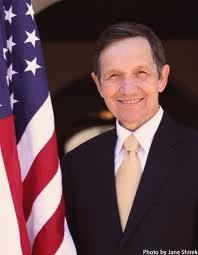
Kucinich v. Palin: Guess who wins?

5

Boy, wouldn’t this be fun?


 Trump is not the weakest Republican in the two hypothetical match ups we tested with Dennis Kucinich. Kucinich’s lead over Sarah Palin if they were to face off would be 43-36. In that scenario Kucinich gets 16% of Republicans to Palin’s 12% of Democrats and leads her by 10 points with independents at 42-32.


I think Rep. Kucinich has enough to worry about just keeping his own seat, but it shows how weak the GOP field is right now. (On the other hand: Two years before the 1992 election, Bush The First was considered unbeatable and no less an authority than the Almanac of American Politics said it was “ridiculous” that anyone would take the young governor of Arkansas seriously as a candidate for president.)


Still: Not good news for Sarah Palin. 

Civil Grand Jury report rips Parkmerced plan

One week before the massive Parkmerced redevelopment project is slated to go before the Board of Supervisors for a second shot at approval, the San Francisco Civil Grand Jury has issued a scathing critique of the plan in a report titled “The Parkmerced Vision: Government-by-Developer.” The assessment charges that the project’s development agreement fails to guarantee adequate rent-control protections for current tenants whose homes will be razed and replaced with new units as part of the ambitious, 20-to-30 year overhaul.

The Civil Grand Jury report charges that the development agreement “is fundamentally unable to deliver such assurances because of overarching state laws that are changeable and subject to court interpretation. Through its call for demolition of existing units, the agreement eliminates existing statutory rights of tenants, replaces them with a contractual agreement from the owner/developer, and bypasses due process in the face of eviction.”

The report appears to reject the claim that the tenant protections are “ironclad,” an assurance that was repeated often in public hearings by representatives of the developer and the city’s Office of Economic and Workforce Development. “As it is stated, the agreement claims it can cause newly constructed units to be protected under the same rent stabilization ordinance previously applied to the demolished dwellings,” the report notes. “In reality, current laws appear to contravene this claim.”

When a discussion about Parkmerced was continued several weeks ago at a Board of Supervisors meeting, several members of the board voiced concerns that they did not have enough clarity on the question of whether renter protections could be guaranteed for tenants who reside in the complex’s 3,221 rent-controlled units, some of whom have lived there for decades.

“Never before has a redevelopment project of this size and length been undertaken in San Francisco in an existing community where more than 9,000 people live,” the report notes. It acknowledges the enormous tax revenues that the city stands to gain from the development, but cautions that “this windfall, no matter how promising, should not come at the expense of citizens’ legal rights.”

To remedy the flawed agreement, the Civil Grand Jury recommends that the city “enact legislation prior to signing the Development Agreement that adequately assures the statutory rights of existing tenants to remain at Parkmerced and enjoy undisturbed continued tenancy,” and goes onto suggest language providing that “If a landlord demolishes residential property currently protected under the City’s Rent Stabilization and Arbitration Ordinance, and builds new residential rental units on the same property within five (5) years, the newly constructed units are subject to the San Francisco Rent Stabilization Ordinance.”

Meanwhile, Parkmerced spokesperson P.J. Johnston has already issued a response the hot-off-the-presses report, sending out a press release calling it “flawed,” and charging that the Civil Grand Jury is “calling for a solution to a problem San Francisco has already solved.”

Johnston contends that San Francisco already has a provision in the local municipal code that would do exactly what the Civil Grand Jury is asking city government to enact as a remedy for the shortcomings of the development agreement. Is Johnston’s interpretation of the local ordinance an accurate assessment? Not being lawyers ourselves, the Guardian phoned the office of the City Attorney to find out. We’ll post a response as soon as we receive one.

Johnston criticized the Civil Grand Jury report as “a highly political stink bomb,” saying, “I believe we’ve been able to address those concerns over the past several weeks, and I hope our leaders are able to see past this kind of last-minute distraction.” Johnston, who previously served as former Mayor Willie Brown’s press secretary, added, “This reeks of the nasty side of San Francisco politics.”

**UPDATE** The Guardian just received a call from an official from the City Attorney’s office, who said they did not want to be quoted because Parkmerced is a highly politicized issue. This person confirmed that the existing code Johnston pointed to does in fact do just what the Civil Grand Jury was asking for, and added that the local law had been referenced in a Parkmerced board file from last week. Seems the Civil Grand Jury didn’t have that information when it issued the report.

Dick Meister: Child Labor-Back to the 19th Century?

3

Dick Meister, formerly labor editor of the SF Chronicle and KQED-TV Newsroom, has covered labor, politics and other matters for a half-century.

Even the most casual students of American labor history undoubtedly have come across the appalling accounts of child labor, accompanied by photos of exhausted, grime-covered teen and pre-teen children staring sad-eyed into the camera.

The children stand outside the mines, mills, farms and other often highly dangerous places where they worked 10, 12, 15 hours a day, sometimes even more. They worked at home as well, in their impoverished families’ dilapidated tenement flats, rolling cigars, stitching garments and doing other work for long, miserably paid hours.

It began with the New England colonists, who brought the practice of child labor with them from England. Use of child labor regardless of the age or frailty of the child was common throughout the colonies, and remained common after independence – including in the southern U.S., where the black slaves’ children were ordered to work along with their captive parents.

Finally, in the 1840s, reform groups managed to pressure several state legislatures in New England to ban the labor of minors under 15 for more than 10 hours a day without their parents’ written consent. Yes, that’s how bad it was – so bad that allowing kids under 15 to work more than 10 hours a day was OK. All they needed was the agreement of their economically desperate parents.

The ten-hour, six-day workweek became standard for minors in most states. Again, that was considered a major reform. Most states also adopted reforms that prohibited children from working in hazardous industries. That was ignored, however, in the particularly dangerous coal mines of Pennsylvania and Appalachia.

In 1914, the federal government stepped in to levy a 10 percent excise tax on employers who hired 14-year-olds. In 1916, President Woodrow Wilson signed a law prohibiting some employers from hiring anyone under 16. But, believe it or not, the Supreme Court voided both laws.

Child advocates couldn’t even get congressional approval for a law empowering the government to regulate the labor of minors under 18, mainly because of a business campaign that called that idea “socialism.” Sound familiar? Then, as now, that could be enough to defeat progressive measures.

But finally, with the coming of President Franklin D. Roosevelt’s New Deal reforms in the 1930s, decisive steps were taken to regulate the use of child labor. They came mainly with passage of the Fair Labor Standards Act in 1938. The law, which covers workers under 18, limits the hours they can work, depending on their age and occupation.  They must be paid at least as much as the legal minimum wage, and they must be covered by the protective laws that apply to adult workers.

The idea was not only to protect children from the harmful exploitation they commonly suffered but specifically to give them the time and opportunity to get a decent education, to get enough rest and time for study.

Passage of the Fair Labor Standards Act obviously did not end the misuse of child labor. Yet it did set a standard for protecting young workers that’s been followed by states that have enacted their own versions of the act, some more liberal than the federal law.

But now come business trade associations, employer groups, reactionary Republican politicians and Tea Party activists to urge severe weakening of the state laws, and, ultimately, of the federal law. They agree with Supreme Court Justice Clarence Thomas that the child labor laws are unconstitutional for a variety of obscure legal reasons. They’ve begun their legal attacks on state laws with the laws in Maine and Missouri.

In Maine, which was among the first states to enact child labor laws, they’ve been pushing a bill that would allow employers to pay anyone under 20 a six-month “training wage” that would be more than $2 an hour below the minimum wage. They’d also eliminate rules setting a maximum number of hours kids 16 and older can work during school days and allow those under 16 to work up to four hours on school days and up to 11 p.m.

The Missouri bill is even worse. It would lift provisions in the current state law that bar children under 14 from employment, They’d be allowed to work all hours of the day and no longer need work permits from their schools. What’s more, businesses that employ children would no longer be subject to inspections by the federal agency that enforces the child labor laws.

By the time you read this, the proposed laws in Maine and Missouri may have been passed – or, hopefully, rejected. But that’s almost beside the point. What’s worse is that 11 years into the 21st century, people are actually taking seriously proposals that would send us back into the 19th century.

Dick Meister, former labor editor of the SF Chronicle and KQED-TV Newsroom, has covered labor and politics for a half century. Contact him through his website, www.dickmeister.com, which includes more than 300 of his columns.


SFBG Radio: The politics of the debt ceiling

0

Today, Johnny and Johnny talk about the economics and politics of the debt ceiling — and what happens if the Republicans get their way and Congress refuses to raise it. Listen after the jump.

DebtAgain by endorsements2010

Draft Kucinich to run against Pelosi

20

Bay Area progressives are constantly searching for a solid candidate to run against Rep. Nancy Pelosi, an Establishment figure who has helped lead this country down a disastrously unsustainable path, but nobody has ever been able to mount a serious challenge to this powerful incumbent. So here’s an idea: how about recruiting Dennis Kucinich, the representative from Ohio whose principled politics have made him a hero to progressives.

As Kucinich himself confirmed today in an email blast to supporters, there’s an effort underway in Ohio right now to carve up his district through reapportionment and he is actively looking from a new base of operations should that come to pass. While he’s rumored to be considering a move to Washington state, which will get another seat in Congress, I can’t imagine a better ideological fit for Kucinich than San Francisco.

So what do you say, comrades, is it time to launch a campaign to lure Kucinich to the Bay Area?

His message — entitled “My next move?” — follows:

You may have heard some rumors over the past week, so I wanted to set the record straight with you: While I’m committed to representing the 10th District of Ohio, I will not rule out a run elsewhere should my district be eliminated or radically altered through redistricting.

From Afghanistan to workers rights, Libya to climate change, there’s simply too much at stake for our voice to be eliminated. We cannot let a group of downstate politicians silence me and our movement – they would like nothing more than to stop hearing our calls for peace over violence and the people’s interests over corporate handouts.

So, no, we’re not going to quietly fade away, and let the corporate interests and status quo have its way. Instead, we’re gearing up for a long and difficult campaign in 2012 – wherever that may be. I know it’s worth it, and I know we can prevail. But I’ll need your help. Can you donate $25, $50, or $100 dollars today?

http://kucinich.us/contribute

I’ve been approached by supporters across the country – from Washington to Maine – to explore options outside Ohio should redistricting force me out of my current district. It has been truly humbling to see the support that has been expressed for me to continue my work in Congress. Right now, my efforts and focus remain on representing my constituents in the 10th District and fighting for peace and justice, but as we plan for our movement’s future, I will consider all of these ideas to keep our voice in Congress.

And I say the same to you right now. Do you have a comment or idea I should consider? Is there a option you would like me to explore? If so, let me know by clicking here: options@kucinich.us

Thanks for being with me.

With respect,

Dennis Kucinich

Our Weekly Picks: May 11-17, 2011

0

WEDNESDAY 11

PERFORMANCE

“Mayday! Mayday! Mayday!”

Studio Gracia artist-in-residence Bianca Cabrera employs her saucy cabaret style in orchestrating a series of lusty hump days in May. On Wednesday evenings this month, Cabrera performs among “contemporary dance, cover bands, showgirls, cowgirls, and boygirls,” plus “drinking and feasting.” Guest performers for this week’s installment, themed “Camp Songs,” include the Fossettes, Hailey Gaiser, Rasa Vitalia, LevyDance, and Serpent and the Rainbow. Come back the following Wednesdays for “May I be Frank?” and “Dance off! Hands On!” Like a huge airy living room with a dance floor, bar, and comfy couches, Studio Gracia is ideal for salon-type performance gatherings like these. Hedonists welcome. (Julie Potter)

Wed/11, May 18, and May 25, 9 p.m., $10

Studio Gracia

19 Heron, SF

(206) 293-6630

www.studiogracia.com


FRIDAY 13

MUSIC

The Cars

Assuming we all just go ahead and overlook the Ric Ocasek-less, Todd Rundgren-fronted cash cow absurdity that was the New Cars, 2011 marks the first legitimate Cars reunion in more than two decades. With the original lineup intact (minus bassist-vocalist Benjamin Orr, who lost a battle with pancreatic cancer in 2000), the Boston new wave and synthpop innovators have even managed to record an album of all new material. Move Like This is surprisingly solid not just in its execution, but in its avoidance of the trappings of modern trend piggybacking that can often afflict older bands trying to regain relevance. Instead, the group has gone the tasteful route and made an album that perfectly adheres to the style, instrumentation, and production of its classic work. (Landon Moblad)

8 p.m., $49.50

Fox Theater

1807 Telegraph, Oakl.

(510) 302-2277

www.thefoxoakland.com


MUSIC

Peter Bjorn and John

There are some things I will never get sick of. Peanut butter and jelly, for instance: if stuck on an uninhabited, heretofore uncharted island I hope that the coconuts are full of that slightly salty, sweet combination. I want to unabashedly say the same about the other PB&J, but there was a period where “Young Folks” became so oversaturated that just hearing someone whistle made me wish I were marooned. But let’s be honest, someone had to write that song, and the Swedes went for it then as much as now, saying on their cowbell-smacking recent single “You can’t, can’t count on a second chance. A second chance will never be found.” (Ryan Prendiville)

With Bachelorette

9 p.m., $26

Great American Music Hall

859 O’Farrell, SF

(415) 885-0750

www.gamh.com


EVENT

“Go Go Mania!”

All right all you hip cats and crazy chicks — you know you’re still out there — it’s time to grab your dancin’ shoes, slick back your hair, and get ready for a blistering blast from the past tonight at “Go Go Mania!”, a show featuring seductive burlesque set to the rollicking sounds of live rockabilly. The lovely ladies of San Francisco’s Devil-Ettes will strut their stuff; Burlesque A Go Go with La Chica Boom, Kellita, and Kiki Bomband dazzle the eyes; and a who’s who of excellent musicians including Deke Dickerson, Los Shimmy Shakers, Royal Deuces, and more provide the sultry soundtrack. (Sean McCourt)

8 p.m., $10

Rickshaw Stop

155 Fell, SF

(415) 861-2011

www.rickshawstop.com


DANCE

Body Evidence

Choreographer Opiyo Okach presents a work-in-progress showing of his latest solo, Body Evidence — offering an opportunity to engage with the artist in an informal setting and learn about his creative process. Currently working in Kenya and France, Okach’s influences trace back to mime and physical theater training in London, as well as memorable exchanges with legendary Senegalese and French choreographer Germaine Acogny. Okach demonstrates simplicity and elegance through his improvisation style, which examines the role of the body in shaping 21st century global culture and the power of the individual. The artistic director of the first contemporary dance company in Kenya, Okach continues to be a dance leader for the country. (Potter)

Fri/13–Sat/14, 8 p.m., $10

Yerba Buena Center for the Arts

701 Mission, SF

(415) 978-2787

www.ybca.org


MUSIC

Prizehog

After a long five days of work, what’s your preferred Friday night: rocking out or zoning out? Noisy, sludgy, even ambient at times, Prizehog satisfies both. Formed in 2006, the San Francisco foursome resides in the realm of the low and weighted, where droning heaviness is prerequisite. Headliner Diesto, hailing from our sister city Portland, Ore., is similarly massive, having been compared more than once to the uncompromisingly experimental band, the Jesus Lizard and the deep, dark Eyehategod. This show will be the whole bill’s second performance of the evening (following an earlier set at an Oakland café), and just might, or might not, be Prizehog’s first LP release show. (Kat Renz)

With Diesto and Attitude Problem

9:30 p.m., $6

Hemlock Tavern

1131 Polk, SF

(415) 923-0923

www.hemlocktavern.com


PERFORMANCE

CubaCaribe Festival

The sizzling CubaCaribe Festival has become a growth industry. It has jammed Dance Mission Theater with enthusiastic back-talking crowds for the last six years. Now the three-weekend event is expands to the East Bay while also increasing the range of its programming. This year it includes spoken word artist Marc Bamuthi Joseph and Jacinta Vlach’s urban Liberation Dance Theater. The first weekend at the home base in the Mission is dedicated to Haitian-influenced dance and choreography from the New York City-based Danis “La Mora” Pérez’s Oyu Oro and Collete Eloi’s El Wah Movement. The following week offers a kaleidoscopic diaspora mix, and as is the tradition, the last weekend focuses on CubaCaribe artistic director Ramon Ramos Alaya’s own choreography, including the deeply felt 2005 La Madre. (Rita Felciano)

Fri/13–Sat/14, 8 p.m.; Sun/15, 7 p.m., $12–$24

Dance Mission Theater

3316 24th St., SF

May 20–21, 8 p.m.; May 22, 3 p.m., $10–$24

Malonga Casquelourd Theater

1428 Alice, Oakl.

May 26–28, 8 p.m., $12–$24

Laney College Theater

900 Fallon, Oakl.

www.cubacaribe.org


SATURDAY 14

MUSIC

Man Man

Philadelphia’s Man Man is one of the more unabashedly fun bands to operate under the often gaudy guise of “experimental rock.” Mashing up some Rain Dogs-era Tom Waits with bits of Balkan street folk, 1950s doo-wop, and carnival punk, the four-piece somehow manages to craft a recognizable sound despite the eclecticism in its influences. But Man Man’s real strength is never losing sight of song structure and its knack for strong vocal hooks. Stylistic left turns that may initially seem jarring quickly begin to start making sense, as ringleader Honus Honus propels the band’s high-energy live shows with his piano playing and suitably hoarse vocals. The band is touring in support of its new album, Life Fantastic, which it recorded with Mike Mogis from Bright Eyes and Monsters of Folk. (Moblad)

With Shipa Ray and Her Happy Hookers

9 p.m., $18

Bimbo’s 365 Club

1025 Columbus, SF

(415) 474-0365

www.bimbos365club.com


SUNDAY 15

MUSIC

“Vocal Alchemy”

Interdisciplinary performer Meredith Monk joins forces with the eight-member Bay Area women’s vocal arts ensemble, Kitka, in performance. For their first concert together, Monk, a pioneer in extended vocal technique, and Kitka, known for its haunting ancient and contemporary-sounding vocal effects, perform a program of Monk’s trailblazing work, which includes the world premieres of Phantom Voices and Quilting, the West Coast premieres of selections from Quarry, Volcano Songs, American Archeology #1: Roosevelt Island, and The Politics of Quiet, and excerpts from Atlas, Book of Days, Facing North, impermanence, and The Games. Monk’s work invites you to hear the amazing capabilities of the voice. Get ready for an evening of distinct and astonishing sound. (Potter)

7 p.m., $36–$41

Jewish Community Center of San Francisco

Kanbar Hall

3200 California, SF

(415) 292-1200

www.jccsf.org FILM


20,000 Leagues Under the Sea

Walt Disney’s 1954 film adaptation of Jules Verne’s classic novel 20,000 Leagues Under The Sea is a classic in its own right. It’s a picture from the days when the Disney studio pushed the envelope of filmmaking with innovative special effects and visual design — the Nautilus and giant squid among the iconic images — but added a magical mix of a great story and a stellar cast as well. James Mason’s performance as the intensely driven and disturbed Captain Nemo remains the standard for all other portrayals, and Kirk Douglas clearly enjoyed playing the swingin’ and singin’ (“Whale of a Tale!”) harpooner Ned Land. And who can forget his fine, flippered female companion Esmerelda? Not every sea lion gets wined, dined, and serenaded by Hollywood royalty! (McCourt)

2 and 6:40 p.m., $7.50–$10

Castro Theatre

429 Castro, SF

(415) 621-6120

www.castrotheatre.com


MUSIC

Saviours

Local metal darlings Saviours have been diligently writing the band’s fourth full-length record, says vocalist-guitarist Austin Barber. The band is debuting at least half its new songs along this balls out, week-long West Coast tour, a road test to get ready to record next month. Barber called the new tracks “epic and doomy — we pulled back the reins a little bit,” compared to the blatantly thrashy Accelerated Living (Kemado, 2009). Note that it’s an evening show, and Eli’s hardly hesitates to sweep everyone out by 10:59 p.m. (And yeah, there’s an Elbo Room show on Monday, but don’t you love Eli’s back patio?) Regardless, heed Barber’s warning: “The other bands are sick, so get there early.” (Renz)

With Midnight, Lightning Swords of Death, Archons

6 p.m., $10

Eli’s Mile High Club

3629 Marin Luther King Junior Blvd., Oakl.

(510) 350-7818

www.elismilehigh.com

Also Mon/16

9 p.m., $10

Elbo Room

647 Valencia, SF

(415) 552-7788

www.elbo.com


MONDAY 16

MUSIC

“Magic 8-Ball Tour with A-Trak, Kid Sister, Gaslamp Killer, and Jeffrey Paradise”

Half of Kanye West’s success has been in picking collaborators. (The other half is their agreeing to work with him.) West certainly scored a coup bringing A-Trak into his entourage as tour DJ in 2004. Already an honorary member of Invisibl Skratch Piklz, A-Trak had won a DJ World Championship by age 15. Now he’s at the center of the New York City party scene, with the Fool’s Gold label and Armand Van Helden production collab Duck Sauce. (Their song “Barbra Streisand” will either make them your savior or the Antichrist.) This will be a relatively intimate (insane) show for the arena DJ. (Prendiville) With Sleazemore, Eli Glad, and Shane King

8 p.m., $25

Mezzanine

444 Jessie, SF

(415) 625-8880

www.mezzaninesf.com


The Guardian listings deadline is two weeks prior to our Wednesday publication date. To submit an item for consideration, please include the title of the event, a brief description of the event, date and time, venue name, street address (listing cross streets only isn’t sufficient), city, telephone number readers can call for more information, telephone number for media, and admission costs. Send information to Listings, the Guardian Building, 135 Mississippi St., SF, CA 94107; fax to (415) 487-2506; or e-mail (paste press release into e-mail body — no text attachments, please) to listings@sfbg.com. Digital photos may be submitted in jpeg format; the image must be at least 240 dpi and four inches by six inches in size. We regret we cannot accept listings over the phone.

Clare Rojas’ safe space

3

As far as books go, Everything Flowers (Chronicle Books, $22.95) may just be my favorite to come out of the Bay Area this year. And not for its revelatory prose or whip-smart characters (it has neither). The small volume is filled with Clare Rojas’ quietly woman-centric, garden-toned designs that – can a book do this? – make me feel supported. I found myself breathing deeply while reading it, as if I’d just shook an asymmetrically packed satchel from my shoulders.

Resolved: I’d either get the heliotropic flower design tattooed on my skin, or I would meet the illustrator. Life being what it is, the latter proved to be the most accessible mission — and I’m glad that it was. Being in a room with Mission School vanguard Rojas is an experience akin to sitting quietly with Everything Flowers – or for that matter, listening to the breathy guitar folk of her alter ego, singer Peggy Honeywell. She creates calming, deep, feminine moments. 

“I feel so much pain being a woman in this world that I just wanted to create a safe place for them.”

Rojas barely seems to take up space in the interview room we’ve somewhat incongruously occupied at Chronicle Books, the company that published her most recent bound project. But behind her quiet presence, there’s a solidity. You have to lean in close to hear what she’s saying – in making you come to her, it’s like she’s subverting the model of self-promotional artist.

Everything Flowers, like the rest of Rojas’ canon, draws on the “super Americana, super Ohio” quilt art she saw her mother create when she was young. Rojas is fond of telling a story about visiting the place her mother used to attend quilting circles. All the cars in the parking lot, she says, were of the radical bumper sticker variety.

“There’s a certain energy and power with the way women express themselves,” she reflects when I ask her why she draws on these historical forms for her own very modern work. “When you make somebody lasagna it’s like love – and not sexy-time love either.”

When Chronicle Books approached her to do a book from which they could also cull art for pretty notecards and a gardening journal, it seemed a perfect fit for Rojas. After many years of what she felt to be acutely political work – the feminist mythology obliquely present behind her past gallery shows – she was ready to “let go of politics and just focus on beauty.” She was ready to draw some flowers, to heal for a moment.

She says. But as she takes me through the gorgeous pages of the book, it’s clear that some of the images (which were created between 2004 and 2010), hold significance for her past the simple desire to represent beauty. But good luck finding out the dirt on them – Rojas is an extraordinarily private person for our world of status updates and “about the author” pages. She tells me she’s “shy” about the paintings in the book, their hidden meanings so deeply personal that she feels weird seeing them on the page for others to examine. The most I get are small chinks in the armor I can peek through if I feel so inclined:

“Becoming an adult, figuring out what you stand for – the garden couldn’t be a better metaphor for growth.” 

Turning to a page with a fuschia design: “That one, I just enjoy painting flowers.” 

A radiating eye: “This one’s political for me.”

What are these politics Rojas keeps talking about? Again, personal. “I always feel like politics start in the home. If we can’t get it straight there…” she shrugs her shoulders, and holds my gaze.

It could have made for a real boring interview. But there’s something about Rojas that put me at ease, even if I didn’t understand quite what she was talking about, or even if we were talking about anything at all besides the literal words coming out of our mouths. After so many years of creating art in San Francisco, she is comfortable in her work. I’d entered the safe space.

“Blue Deer,” whose original now hangs in gate room G of SFO’s international terminal

Now, I’ll look at Everything Flowers and read my own stories on its pages, my frustrations and quiet victories as a female. This too, it seems, is part of Rojas’ plan. “You can only tend your own garden. If you’re happy and taking care of yourself, that resonates too.” 


Everything Flowers book release

Fri/6 6-8 p.m., free

Park Life

220 Clement, SF

(415) 386-7275

www.parklifestore.com


TV eye

0

arts@sfbg.com

HAIRY EYEBALL In 1976 artist Clive Robertson reflected on a performance he gave that same year, in which he dressed up as and restaged pieces by the famous postwar German performance artist Joseph Beuys. “We have to adapt legends so that they become portable and can fit into our pockets,” he wrote. “Unfortunately for the artist, that is the fight we label history.”

Robertson was addressing his own anxiety of influence in the face of Beuys’ then-ascendant status within the art world, but his comments also provide a gloss on the struggle that curators and art historians face in their own practice. In the case of “God Only Knows Who the Audience Is,” a parting gift from the graduating students of California College of the Arts’ Graduate Program in Curatorial Practice, currently on view in the galleries of the school’s Wattis Institute, it is a struggle undertaken with great intelligence and economy.

Smartly conceived and staged, “God Only Knows” is a dialogic tale of two histories. One is a survey of the nonprofit artist-run organization and gallery space La Mamelle (which became ART COM in the 1980s) that existed in various incarnations from 1975 through 1995 and forms an important, if under-recognized, chapter of Bay Area art history. The other traces a concurrent shift in performance art, largely made possible by the advent of video technology, away from the artist’s body and toward the disembodied artist.

La Mamelle was, appropriate to its name, a nurturing organ for the local art scene. In addition to hosting events and organizing exhibits, the organization released videos, audio-zines, and microfiches, and published anthologies as well as the regular magazine in which pieces such as Robertson’s “The Sculptured Politics of Joseph Beuys,” quoted above, first appeared.

The constant proliferation of publications and media put local artists such as Chip Lord, the video collective Ant Farm, Lynn Hershman, and Bonnie Sherk — who all have pieces or documentation of early performances on display here — in touch with other artists around the world and vice versa. The aforementioned artists had wandered to the end of the conceptual inroads that had been laid down by the likes of Andy Warhol and Beuys, and were now operating in a new media wilderness, with only their VHS cameras to guide them.

“God Only Knows” successfully locates these artists and their work within a continuum of practices that stretches into the present. Others have followed Robertson in treating Beuys and his practice as source material (“identity transfer” in his words), as evinced by nearby pieces in the first floor’s survey of performance art that de-centers the artist’s body as both a performance’s agent and its living trace, such as Whitney Lynn’s 2010 re-do of another Beuys performance, or Luis Felipe Ortega and Daniel Guzmán’s 1994 video Remake, in which the duo stages “improved upon” versions of canonical performance art pieces.

The exhibit’s second floor takes us into the ’80s and ’90s, where the message is clear: television opened up the potential for art to reach new audiences. Greeted by the ponderous, mustachioed visage of Douglas Davis in his The Last Nine Minutes, a live-to-video performance realized in 1977 for Documenta 6, we immediately see how video dissolved the time lag between action and its documentation. Bill Viola’s 44 portraits of television viewers (1983-84) staring silently into their TV sets, made for WGBH in Boston, screens on the other side of the entrance.

In the middle of the gallery, playing across what the accompanying brochure calls an “archipelago” of viewing stations, are various video pieces by La Mamelle and ART COM artists, as well as those by artists such as the Borat-like Olaf Breuning, whose work plays off of the spectacle of TV shows. Meanwhile, at the back of the room, Mario Garcia Torres’ jarring 2008 nine-channel compilation of artists’ TV cameos from the past four decades (Dali doing a car commercial; Warhol appearing as himself on The Love Boat) tabulates the increasing banality of art’s intersection with television.

Yet despite the histories laid out in “God Only Knows Who the Audience Is,” Bravo’s Work of Art, YouTube, and the continual meddling presence of James Franco, video has yet to kill the performance art star — or at least the demand for the star’s body, as demonstrated by Marina Abramovic’s recent MOMA retrospective, in which the real attraction was not the controversial restagings of her greatest hits, but her daily physical presence.

The irony, of course, is that exhibit’s online half-life, which continues today. The Flickr and Tumblr are still there. The artist is still present to those who navigate to those pages, even though Abramovic left the building long ago. God only knows who’s still watching.


DISAPPEARING ACTS

The title of German painter Christoph Roßner’s current solo show at Romer Young, “The Hat, That Never Existed,” is a tip-off. Roßner’s smudged, over-painted, and half-erased depictions of things and people — trees, candles, top hats, houses, old men — scan as disappearing acts rather than fixed portraits (the way the canvases have been hung even suggests that a few have gone missing from the gallery). “Ghoulish” is the operative word here. Not much separates the faceless specter of Ghost from the skeletal visage in Grinser; and Roßner can make even a rock look like an Expressionist coffin. That’s not lazy journalistic shorthand, either: Roßner’s rough-hewn bleakness is of a piece with the Old World aesthetics of, say, George Grosz. The séance lasts only one more week, though, so act fast.

GOD ONLY KNOWS WHO THE AUDIENCE IS

Through July 2

CCA Wattis Institute for Contemporary Art

1111 Eighth St.

(415) 551-9210

www.wattis.org

THE HAT, THAT NEVER EXISTED

Through May 14

Romer Young Gallery

1240 22nd St., SF

(415) 550-7483

www.romeryounggallery.com


USF hosts mayoral forum focused on service

2

The University of San Francisco’s Leo T. McCarthy Center for Public Service will host the political season’s first major mayoral candidate forum – this one focused on public service and staged in partnership with the nonprofit group buildOn – on Thursday, May 5, at 6 pm.

Candidates Michela Alioto-Pier, John Avalos, David Chiu, Bevan Dufty, Tony Hall, Dennis Herrera, Joanna Rees, Phil Ting, and Leland Yee are expected to attend. Admission is free and the public is encouraged to attend this event held at USF’s McLaren Conference Center, 2130 Fulton Street.

“The intent of the forum is to help frame the mayoral campaign and also encourage candidates to talk about what drove them to service and how people can get involved in San Francisco, especially the youth,” Corey Cook, assistant professor in the USF Department of Politics, told us. Cook will moderate the event, which will include questions from high school students participating in buildOn and McCarthy Center service programs.

Carrie Pena, buildOn’s communications director, told us, “Students from public high school will ask questions based on bare thoughts on public service and what it means to be a good public servant.”

BuildOn provides programs for students to break the cycle of poverty and illiteracy. About 90 percent of buildOn students go to college. There are 19 schools in the Bay Area working with buildOn and in the previous year, the students contributed more than 24,000 hours to the Bay Area community.

At USF, service learning is a core class part of the graduation requirement where each student dedicates at least 20-25 hours of service per 15-week semester. “Co-hosting a mayoral forum is a fitting project for USF and buildOn because it will engage high school and college students, as well as the greater community, into the process of local politics,” Cook said on the USF website.

Catarina Schwab, buildOn’s vice president of development, said the partnership is a good match: “We aligned with USF because they focus a lot on service. Both were interested in a forum on service. We are even going to have a buildOn chapter at USF.”

Mirkarimi running for sheriff

27

OPINION Serving as San Francisco Sheriff is a huge civic responsibility. The sheriff has 1,000 employees, more than 2,000 pretrial and sentenced prisoners daily, and management responsibility for a budget of more than $150 million. And, like all department heads, the sheriff’s involved in a lot of politics.

I believe Sup. Ross Mirkarimi is the person best prepared to serve as San Francisco’s next sheriff.

Mirkarimi has the law enforcement experience of graduating from the San Francisco Police Academy (as class president) and more than eight years of on-the-job experience as an investigator for the San Francisco District Attorney. He was the lead investigator in one of the city’s all-time biggest white collar crime cases, against Old Republic National Title Insurance Company.

As a union labor representative in the D.A.’s office, he picked up some significant experience negotiating contracts for public safety personnel under the CALPERS retirement system.

He’s no stranger to the training and discipline of a paramilitary institution, having been certified in advanced environmental crime forensics from the Federal Law Enforcement Training Center in Glynco, Ga., as well as earning an honorable discharge from the U.S. Navy for serving in the reserves.

Equally important, Mirkarimi has demonstrated the progressive values required to maintain and expand San Francisco’s outstanding track record of diversity in hiring, innovation in criminal justice, and commitment to rehabilitation San Francisco deserves in our next sheriff.

Elected supervisor in 2004, and reelected in 2008 with 77 percent of the vote, Mirkarimi has been a very effective advocate for his district and for San Francisco — especially on public safety issues.

As a member of the Budget Committee for five years and twice chair of the Public Safety Committee, he is intimately familiar with the complicated issues confronting all partners in San Francisco’s criminal justice system, whose combined budgets account for well over $1 billion.

Mirkairmi and I have worked together on many criminal justice issues, including the creation of San Francisco’s Reentry Council and an innovative community-based program that provides case management services to ex-offenders who have a history of violence. That program — the No Violence Alliance — has significantly reduced recidivism among the program’s participants. It was a risky venture to take on violent offenders as a case management study, but both Mirkarimi and I felt that it was time San Francisco expanded its approach toward effective reentry.

It is this type of thoughtful, yet courageous approach to our criminal justice challenges that leads me to endorse Ross Mirkarimi to be my successor.

The San Francisco Sheriff’s Department has many difficult challenges ahead: a diminishing budget; the governor’s “prison realignment,” which will put many state prisoners in the county jail; preserving the jail’s rehabilitation programs; and finding cost-effective ways of managing the 40,000 individuals who come through San Francisco’s jails each year.

I believe Ross Mirkarimi brings the right combination of law enforcement training, legislative experience, and political acumen to meet these challenges. I am proud to support him in his bid to become our next sheriff.

Mike Hennessey is sheriff of San Francisco.

Music Listings

0

Music listings are compiled by Cheryl Eddy. Since club life is unpredictable, it’s a good idea to call ahead to confirm bookings and hours. Prices are listed when provided to us. Submit items for the listings at listings@sfbg.com. For further information on how to submit items for the listings, see Picks.

WEDNESDAY 4

ROCK/BLUES/HIP-HOP

Pryor Baird and the Deacons Biscuits and Blues. 8 and 10pm, $15.

Between the Buried and Me, Job for a Cowboy, Ocean, Cephalic Carnage Slim’s. 8pm, $19.

Gas Mask Colony, Fist Fam, DJ Okeefe Elbo Room. 10pm, $10. With comedians Chris Storin, Kaseem Bentley, and Joseph Anolin.

Janks, Shivers Café Du Nord. 9:30pm, $10.

J Mascis, Black Heart Procession Independent. 8pm, $20.

Shelley Short, Darren Hanlon Hemlock Tavern. 9pm, $7.

Frank Turner, City Bottom of the Hill. 9pm, $12.

Vivian Girls, No Joy, Lilac Rickshaw Stop. 8pm, $14.

JAZZ/NEW MUSIC

Cosmo Alleycats Le Colonial, 20 Cosmo, SF; www.lecolonialsf.com. 7pm.

Dink Dink Dink, Gaucho, Michael Abraham Amnesia. 7pm, free.

Ben Marcato and the Mondo Combo Top of the Mark. 7:30pm, $10.

Tom Jonesing Café Royale, 800 Post, SF; (415) 641-6033. 8pm, free.

FOLK/WORLD/COUNTRY

Jesse Cook Yoshi’s San Francisco. 8 and 10pm, $16-22.

Wanda Jackson, Red Meat, DJ Britt Govea Great American Music Hall. 8pm, $21.

DANCE CLUBS

Booty Call Q-Bar, 456 Castro, SF; www.bootycallwednesdays.com. 9pm. Juanita Moore hosts this dance party, featuring DJ Robot Hustle.

Cannonball Beauty Bar. 10pm, free. Rock, indie, and nu-disco with DJ White Mike.

Jam Fresh Wednesdays Vessel, 85 Campton, SF; (415) 433-8585. 9:30pm, free. With DJs Slick D, Chris Clouse, Rich Era, Don Lynch, and more spinning top 40, mash-ups, hip-hop, and remixes.

Mary-Go-Round Lookout, 3600 16th St, SF; (415) 431-0306. 10pm, $5. A weekly drag show with hosts Cookie Dough, Pollo Del Mar, and Suppositori Spelling.

No Room For Squares Som., 2925 16th St, SF; (415) 558-8521. 6-10pm, free. DJ Afrodite Shake spins jazz for happy hour.

Respect Wednesdays End Up. 10pm, $5. Rotating DJs Daddy Rolo, Young Fyah, Irie Dole, I-Vier, Sake One, Serg, and more spinning reggae, dancehall, roots, lovers rock, and mash-ups.

THURSDAY 5

ROCK/BLUES/HIP-HOP

Beach Fossils, Craft Spells, Melted Toys Slim’s. 9pm, $15.

James Blunt, Christina Perri Warfield. 8pm, $40-50.

Dessa, Sims and DJ Lazerbeak, Sister Crayon Bottom of the Hill. 9pm, $10.

Dredg, Dear Hunter, Balance and Composure, Trophy Fire Great American Music Hall. 8pm, $20.

Glass Trains, Ugly Winner, Books on Tape Knockout. 9:30pm, $6.

Hundred in the Hands, Silver Swans, DJs Aaron Axelsen and Nako Rickshaw Stop. 9pm, $10.

Inferno of Joy, Jesse Morris and the Man Cougars Thee Parkside. 9pm, $6.

Cass Mccombs, Frank Fairfield Swedish American Hall (upstairs from Café Du Nord). 8pm, $15.

Pigeon John, Chicharones, Rocky Rivera Rock-it Room. 9pm, $12.

Ron Pope, Ari Herstand Café Du Nord. 8pm, $15.

Stop Motion Poetry Sub-Mission Art Space, 2183 Mission, SF; www.sf-submission.com. 8:30pm, $6.

Ty Curtis Band Biscuits and Blues. 8 and 10pm, $15.

JAZZ/NEW MUSIC

“From New Orleans to Now” Jewish Community Center of San Francisco, 3200 California, SF; www.sfjazz.org. 7:30pm, $5-15. With the SF Jazz High School All-Stars Jazz Orchestra.

Manhattan Transfer Yoshi’s San Francisco. 8 and 10pm, $35-45.

Organsm featuring Jim Gunderson and “Tender” Tim Shea Bollyhood Café. 6:30-9pm, free.

Stompy Jones Top of the Mark. 7:30pm, $10.

FOLK/WORLD/COUNTRY

Country Casanovas Atlas Café. 8-10pm, free.

“Twang! Honky Tonk” Fiddler’s Green, 1330 Columbus, SF; www.twanghonkytonk.com. 5pm.

DANCE CLUBS

Afrolicious Elbo Room. 9:30pm, $5. Cinco de Mayo celebration with DJs Pleasuremaker and Señor Oz, plus guests El Kool Kyle and Roger Mas, spinning Afrobeat, Tropicália, electro, samba, and funk.

CakeMIX SF Wish, 1539 Folsom, SF; www.wishsf.com. 10pm, free. DJ Carey Kopp spinning funk, soul, and hip-hop.

Caribbean Connection Little Baobab, 3388 19th St, SF; (415) 643-3558. 10pm, $3. DJ Stevie B and guests spin reggae, soca, zouk, reggaetón, and more.

Club Jammies Edinburgh Castle. 10pm, free. DJs EBERrad and White Mice spinning reggae, punk, dub, and post punk.

Drop the Pressure Underground SF. 6-10pm, free. Electro, house, and datafunk highlight this weekly happy hour.

80s Night Cat Club. 9pm, $6 (free before 9:30pm). Two dance floors bumpin’ with the best of 80s mainstream and underground with Dangerous Dan, Skip, Low Life, and guests.

Guilty Pleasures Gestalt, 3159 16th St, SF; (415) 560-0137. 9:30pm, free. DJ TophZilla, Rob Metal, DJ Stef, and Disco-D spin punk, metal, electro-funk, and 80s.

Jivin’ Dirty Disco Butter, 354 11th St., SF; (415) 863-5964. 8pm, free. With DJs spinning disco, funk, and classics.

Lacquer Beauty Bar. 10pm-2am, free. DJs Mario Muse and Miss Margo bring the electro.

Mestiza Bollywood Café, 3376 19th St, SF; (415) 970-0362. 10pm, free. Showcasing progressive Latin and global beats with DJ Juan Data.

1984 Mighty. 9pm, $2. The long-running New Wave and 80s party has a new venue, featuring video DJs Mark Andrus, Don Lynch, and celebrity guests.

Peaches Skylark, 10pm, free. With an all female DJ line up featuring Deeandroid, Lady Fingaz, That Girl, and Umami spinning hip hop.

Thursday Special Tralala Revolution Café, 3248 22nd St, SF; (415) 642-0474. 5pm, free. Downtempo, hip-hop, and freestyle beats by Dr. Musco and Unbroken Circle MCs.

FRIDAY 6

ROCK/BLUES/HIP-HOP

Avant Yoshi’s San Francisco. 8 and 10pm, $32.

Curren$y, Trademark, Young Roddy, Fiend, Corner Boy P Regency Ballroom. 9pm, $20.

Diddy Dirty Money featuring P. Diddy, Lloyd, Tyga Warfield. 9pm, $38-58.

Donkeys, Social Studies, Rademacher Bottom of the Hill. 10pm, $10.

Dredg, Dear Hunter, Balance and Composure, Trophy Fire Great American Music Hall. 8pm, $20.

Eddie and the Hot Rods, Prima Donna, Midnite Snaxx Thee Parkside. 9pm, $12.

Glitter Wizard, Hot Lunch, Gypsyhawk, El Topo Café Du Nord. 9:30pm, $8.

Groggs, True Foes, Shrouds Hemlock Tavern. 9:30pm, $6.

Mission Players Brick and Mortar, 1710 Mission, SF; (415) 371-1631. 9:30pm, $5.

RU36, Saint Vernon, Almost Dead, Kick Rocks Slim’s. 9pm, $14.

Telekinesis, Unknown Mortal Orchestra Fillmore. 9pm, $20.

Zola Jesus, Naked on the Vague, DJ Omar Rickshaw Stop. 9pm, $14.

JAZZ/NEW MUSIC

Black Market Jazz Orchestra Top of the Mark. 9pm, $10.

CéU Herbst Theatre, 401 Van Ness, SF; www.sfjazz.org. 8pm, $30-75.

Lavay Smith and Her Red Hot Skillet Lickers Biscuits and Blues. 8 and 10pm, $20.

FOLK/WORLD/COUNTRY

Sierra Leone’s Refugee All Stars, Youssoupha Sidibe with the Mystic Rhythms Band Independent. 9pm, $15.

DANCE CLUBS

Afro Bao Little Baobab, 3388 19th St, SF; (415) 643-3558. 10pm, $5. Afro and world music with rotating DJs including Stepwise, Steve, Claude, Santero, and Elembe.

Bikes and Beats Public Works, 161 Erie, SF; www.brownpapertickets.com. 10pm, $10. With Polish Ambassador, Party Ben, Non Stop Bhangra, M.O.M., and more, plus DIY bike crafts, street food vendors, a bike fashion show, and other attractions.

Deeper 222 Hyde, 222 Hyde, SF; (415) 345-8222. 9pm, $10. With rotating DJs spinning dubstep and techno.

Dirty Rotten Dance Party Madrone Art Bar. 9pm, $5. With DJs Morale, Kap10 Harris, and Shane King spinning electro, bootybass, crunk, swampy breaks, hyphy, rap, and party classics.

Exhale, Fridays Project One Gallery, 251 Rhode Island, SF; (415) 465-2129. 5pm, $5. Happy hour with art, fine food, and music with Vin Sol, King Most, DJ Centipede, and Shane King.

Fubar Fridays Butter, 354 11th St., SF; (415) 863-5964. 6pm, $5. With DJs spinning retro mashup remixes.

Good Life Fridays Apartment 24, 440 Broadway, SF; (415) 989-3434. 10pm, $10. With DJ Brian spinning hip hop, mashups, and top 40.

Hot Chocolate Milk. 9pm, $5. With DJs Big Fat Frog, Chardmo, DuseRock, and more spinning old and new school funk.

Hot Pink Feathers: Ten Year Anniversary DNA Lounge. 9pm, $10-75. Burlesque performances and live music by Blue Bone Express and the Hot Pink Feathers All-Star Marching Band.

120 Minutes Elbo Room. 10pm, $5-10. Goth and witchhouse with Whitch, oOoOO, and Nako.

Rockabilly Fridays Jay N Bee Club, 2736 20th St, SF; (415) 824-4190. 9pm, free. With DJs Rockin’ Raul, Oakie Oran, Sergio Iglesias, and Tanoa “Samoa Boy” spinning 50s and 60s doo-wop, rockabilly, jive, and more.

Some Thing Stud. 10pm, $7. VivvyAnne Forevermore, Glamamore, and DJ Down-E give you fierce drag shows and after-hours dancing.

Strangelove: Sacrilege Cat Club. 9:30pm, $6 (free before 10pm). Goth and industrial with DJs Tomas Diablo, Decay, Xander, and Ms. Samantha.

Vintage Orson, 508 Fourth St, SF; (415) 777-1508. 5:30-11pm, free. DJ TophOne and guest spin jazzy beats for cocktalians.

SATURDAY 7

ROCK/BLUES/HIP-HOP

Crystal Stilts, Mantles Rickshaw Stop. 9pm, $12.

English Beat Bimbo’s 365 Club. 9pm, $25.

Rick Estrin and the Nightcats Biscuits and Blues. 8 and 10pm, $20.

It Thing, Verms, Okie Rosette Café Du Nord. 9:30pm, $10.

Manic Hispanic, Old Man Markely, Hounds and Harlots Slim’s. 9pm, $18.

Rhett Miller, Robert Francis Swedish American Hall (upstairs from Café Du Nord). 8pm, $25.

Jonas Reinhardt, Cloudland Canyon, White Cloud Hemlock Tavern. 9:30pm, $8.

Corin Tucker, Billy and Dolly, Bruises Bottom of the Hill. 9:30pm, $14.

Wolfshirt, Paranoid Freakout Thee Parkside. 3pm, free.

Y&T, Kip Winger Fillmore. 9pm, $36.50.

JAZZ/NEW MUSIC

Manhattan Transfer Yoshi’s San Francisco. 8 and 10pm, $35-45.

Yanni Warfield. 8pm, $39-89.

DANCE CLUBS

Afro Bao Little Baobab, 3388 19th St, SF; (415) 643-3558. 10pm, $5. Afro and world music with rotating DJs including Stepwise, Steve, Claude, Santero, and Elembe.

Bootie SF DNA Lounge. 9pm, $6-12. Mash-ups.

Everlasting Bass 330 Ritch. 10pm, $5-10. Bay Area Sistah Sound presents this party, with DJs Zita and Pam the Funkstress spinning hip-hop, soul, funk, reggae, dancehall, and club classics.

Gemini Disco Underground SF. 10pm, $5. Disco with DJ Derrick Love and Nicky B. spinning deep disco. HYP Club Eight, 1151 Folsom, SF; www.eightsf.com. 10pm, free. Gay and lesbian hip-hop party, featuring DJs spinning the newest in the top 40s hip hop and hyphy.

Kontrol Endup. 10pm, $20. With resident DJs Alland Byallo, Craig Kuna, Sammy D, and Nikola Baytala spinning minimal techno and avant house.

Leisure Paradise Lounge. 10pm, $7. DJs Omar, Aaron, and Jet Set James spinning classic britpop, mod, 60s soul, and 90s indie.

Rock City Butter, 354 11th St., SF; (415) 863-5964. 6pm, $5 after 10pm. With DJs spinning party rock. Same Sex Salsa and Swing Magnet, 4122 18th St, SF; (415) 305-8242. 7pm, free.

Saturday Night Soul Party Elbo Room. 10pm, $10. DJs Lucky, Paul Paul, and Phengren Oswald spin butt-shakin’ ’60s soul on 45.

Souf Club Six. 9pm, $7. With DJs Jeanine Da Feen, Motive, and Bozak spinning southern crunk, bounce, hip hop, and reggaeton.

Soundscape Vortex Room, 1082 Howard, SF; www.myspace.com/thevortexroom. With DJs C3PLOS, Brighton Russ, and Nick Waterhouse spinning Soul jazz, boogaloo, hammond grooves, and more.

Spirit Fingers Sessions 330 Ritch. 9pm, free. With DJ Morse Code and live guest performances.

SUNDAY 8

ROCK/BLUES/HIP-HOP

Cowboy and Indian, Gentleman Coup Hemlock Tavern. 9pm, $6.

Dirty Heads, New Politics, Pacific Dub Fillmore. 8pm, $18.50.

William Fitzsimmons, Slow Runner Independent. 8pm, $18.

Symphony X, Powerglove, Blackguard Regency Ballroom. 8pm, $30.

KT Tunstall, Charlie Mars, Miggs Great American Music Hall. 8pm, $24.

JAZZ/NEW MUSIC

New York Voices, Alan Paul Trio Yoshi’s San Francisco. 6 and 8:30pm, $25.

Swing-out Sundays Milk Bar. 9pm, $7-15. With beginner swing lessons.

Tom Lander Duo Medjool, 2522 Mission, SF; www.medjoolsf.com. 6-9pm, free.

FOLK/WORLD/COUNTRY

Joe and the Sons of Emperor Norton Thee Parkside. 4pm, free.

DANCE CLUBS

Afterglow Nickies, 466 Haight, SF; (415) 255-0300. An evening of mellow electronics with resident DJs Matt Wilder, Mike Perry, Greg Bird, and guests.

Batcave Cat Club. 10pm, $5. Death rock, goth, and post-punk with Steeplerot Necromos and c_death. Call In Sick Skylark. 9pm, free. DJs Animal and I Will spin danceable hip-hop.

Dub Mission Elbo Room. 9pm, $6. Dub, roots, and classic dancehall.

Gloss Sundays Trigger, 2344 Market, SF; (415) 551-CLUB. 7pm. With DJ Hawthorne spinning house, funk, soul, retro, and disco.

Honey Soundsystem Paradise Lounge. 8pm-2am. “Dance floor for dancers – sound system for lovers.” Got that?

La Pachanga Blue Macaw, 2565 Mission, SF; www.thebluemacawsf.com. 6pm, $10. Salsa dance party with live Afro-Cuban salsa bands.

MONDAY 9

JAZZ/NEW MUSIC

Fred Frith, Beth Custer Yoshi’s San Francisco. 8pm, $12.

Mogwai, Errors Regency Ballroom. 8pm, $26.

DANCE CLUBS

Death Guild DNA Lounge. 9:30pm, $3-5. Gothic, industrial, and synthpop with Joe Radio, Decay, and Melting Girl.

Krazy Mondays Beauty Bar. 10pm, free. With DJs Ant-1, $ir-Tipp, Ruby Red I, Lo, and Gelo spinning hip hop.

M.O.M. Madrone Art Bar. 6pm, free. With DJ Gordo Cabeza and guests playing all Motown every Monday.

Network Mondays Azul Lounge, One Tillman Pl, SF; www.inhousetalent.com. 9pm, $5. Hip-hop, R&B, and spoken word open mic, plus featured performers.

Sausage Party Rosamunde Sausage Grill, 2832 Mission, SF; (415) 970-9015. 6:30-9:30pm, free. DJ Dandy Dixon spins vintage rock, R&B, global beats, funk, and disco at this happy hour sausage-shack gig.

Skylarking Skylark. 10pm, free. With resident DJs I & I Vibration, Beatnok, and Mr. Lucky and weekly guest DJs.

TUESDAY 10

ROCK/BLUES/HIP-HOP

Fat Tuesday Band Biscuits and Blues. 8 and 10pm, $15.

Ghostland Observatory Regency Ballroom. 8pm, $30.

Kina Grannis featuring Misa and Emi Grannis, Imaginary Friend Swedish American Hall (upstairs from Café Du Nord). 8pm, $15.

David Liebe Hart, Cool Ghouls Hemlock Tavern. 9pm, $7.

My Jerusalem, Michael Kingcaid, Dead Ships Bottom of the Hill. 9pm, $10.

Raveonettes, Tamaryn Bimbo’s 365 Club. 9pm, $25.

DANCE CLUBS

Eclectic Company Skylark, 9pm, free. DJs Tones and Jaybee spin old school hip hop, bass, dub, glitch, and electro.

Share the Love Trigger, 2344 Market, SF; (415) 551-CLUB. 5pm, free. With DJ Pam Hubbuck spinning house.


 

Dick Meister: Hey, Nike — Pay up!

7

Dick Meister, formerly labor editor of the SF Chronicle and KQED-TV Newsroom, has covered labor, politics and other matters for a half-century.

OK, Nike, pay up! You owe me big. Exactly how much, I can’t say, since I don’t know the going rate for athletes and others who act as human billboards for you. You know, those whose team uniforms, workout gear and other garments display your swoosh brand symbol prominently.

I assume the swoosh-marked college athletes are not paid openly, lest they lose their amateur status, although their colleges, while profiting from the athletes’ play and display of the swoosh and other brand symbols, of course face no penalties for doing so.

My days as an athlete are long gone and, sad to say, there were no swoosh contracts back in those days. But now, I think, it’s time for me to collect a little.  You see, I was recently quite ill, and on leaving the hospital was under strict orders to go easy and, among other things, to wear light, loose fitting clothing.  No tight jeans and such.

But sweatpants, they’d be perfect. So I popped into by favorite clothing establishment and grabbed a pair of sweatpants off the rack without bothering to check anything but the size. Didn’t even try them on.

Oh, but when I got the pants home. The shock, the shock. There it was on the side of the left leg, the dreaded swoosh for all the world to see on my daily doctor-prescribed walks and other sweatpants-clad forays into the community. I had become a walking billboard for Nike.

So where’s my endorsement money, Nike? My pay. I’m working for you, after all. Do I have to bring in a union to get me what I ‘m owed? I’m not asking for much, just whatever you’re paying other human billboards. I’m not exactly a celebrity, but I am known rather well . . . and highly regarded, I like to believe, in some parts of my community. Seeing me wearing the swoosh might influence some of my neighbors to rush out and buy their own Nike gear. Naturally.

But realistically, I must tell you it’s not likely I’ll get paid for my valuable work on behalf of Nike. Big time athletes are paid, and paid well for wearing and endorsing the swoosh. But not us plain folks who wear the Nike brand.  We need a union to demand decent pay . . . to demand decent treatment.

That’s it, a union to demand decent treatment for all who wear the Nike brand . . . plus the money they should be owed by Nike for doing so. There are, of course, unions of professional athletes. But their concern, as I guess it should be, is for their members. We need to form a union of our own to also get the big bucks for wearing the swoosh.

And while we’re at it, we could use the leverage of our union to effectively demand much better treatment for the workers in Nike sweatshops in poor countries who produce most of the swoosh brand stuff.  Nor should we forget the celebrity athletes whose huge pay for endorsement of Nike products drives up the price we ordinary folks have to pay for sweatpants and other gear that the celebrities endorse only because they are paid to endorse them.

It’s highly doubtful that any of our spoiled, hugely paid athletes would readily agree to share their endorsement money with lesser-paid citizens. But with a union, who knows? Professional athletes have their own powerful unions, so why don’t their unions take up the cause of unpaid Nike endorsers?

That’s one of the basic principles of unionism, unions seeing that their members get a fair share and helping members of other unions get their fair share. You know, solidarity and all that.

So, swoosh wearers, unite! Unionize! We have nothing to lose but our swooshes!


Dick Meister,  former labor editor of the SF Chronicle and KQED-TV Newsroom, has covered labor and politics for a half-century. Contact him through his website, www.dickmeister.com which includes more than 300 of his columns.

Dick Meister: The Real May Day

0

Dick Meister, formerly labor editor of the SF Chronicle and KQED-TV Newsroom, has covered labor, politics and other matters for a half-century.

May Day. A day to herald the coming of Spring with song and dance, a day for children with flowers in their hair to skip around beribboned maypoles, a time to crown May Day queens.

But it also is a day for demonstrations heralding the causes of working people and their unions such as are being held on Sunday that were crucial in winning important rights for working people. The first May Day demonstrations, in 1886,  won the  most important of tthe rights rever won by working people – the right demanded above all others by the labor activists of a century ago:

“Eight hours for work, eight hours for rest, eight hours for what we will!”

Winning the eight-hour workday took years of hard struggle, beginning in the mid-1800s. By 1867, the federal government, six states and several cities had passed laws limiting their employees’ hours to eight per day. The laws were not effectively enforced and in some cases were overturned by courts, but they set an important precedent that finally led to a powerful popular movement.

The movement was launched in 1886 by the Federation of Organized Trades and Labor Unions, then one of the country’s major labor organizations. The federation called for workers to negotiate with their employers for an eight-hour workday and, if that failed, to strike on May 1 in support of the demand.

Some negotiated, some marched and otherwise demonstrated.  More than 300,000 struck. And all won strong support, in dozens of cities – Chicago, New York, Baltimore, Boston, Milwaukee, St. Louis, San Francisco, Pittsburgh, Denver, Indianapolis, Cincinnati, Detroit, Washington, Newark, Brooklyn, St. Paul and others.

More than 30,000 workers had won the eight-hour day by April. On May Day, another 350,000 workers walked off their jobs at nearly 12,000 establishments, more than 185,000 of them eventually winning their demand. Most of the others won at least some reduction in working hours that had ranged up to 16 a day.

Additionally, many employers cut Saturday operations to a half-day, and the practice of working on Sundays, also relatively common, was all but abandoned by major industries.

“Hurray for Shorter Time,” declared a headline in the New York Sun over a story describing a torchlight procession of 25,000 workers that highlighted the eight-hour-day activities in New York. Never before had the city experienced so large a demonstration.

Not all newspapers were as supportive, however. The strikes and demonstrations, one paper complained, amounted to “communism, lurid and rampant.” The eight-hour day, another said, would encourage “loafing and gambling, rioting, debauchery, and drunkenness.”

The greatest opposition came in response to the demonstrations led by anarchist and socialist groups in Chicago, the heart of the eight-hour day movement. Four demonstrators were killed and more than 200 wounded by police who waded into their ranks, but what the demonstrators’ opponents seized on were the events two days later at a protest rally in Haymarket Square. A bomb was thrown into the ranks of the police who had surrounded the square, killing seven and wounding 59.

The bomb thrower was never discovered, but eight labor, socialist and anarchist leaders – branded as violent, dangerous radicals by press and police alike – were arrested on the clearly trumped up charge that they had conspired to commit murder.  Four of them were hanged, one committed suicide while in jail, and three were pardoned six years later by Illinois Gov. John Peter Altgeld.

Employers responded to the so-called Haymarket Riot by mounting a counter-offensive that seriously eroded the eight-hour day movement’s gains. But the movement was an extremely effective organizing tool for the country’s unions, and in 1890 President Samuel Gompers of the American Federation of Labor was able to call for “an International Labor Day” in favor of the eight-hour workday. Similar proclamations were made by socialist and union leaders in other nations where, to this day, May Day is celebrated as Labor Day.

Workers in the United States and 13 other countries demonstrated on that May Day of 1890 – including 30,000 of them in Chicago. The New York World hailed it as “Labor’s Emancipation Day.” It was. For it marked the start of an irreversible drive that finally established the eight-hour day as the standard for millions of working people.


Dick Meister, former labor editor of the SF Chronicle and KQED-TV Newsroom, has covered labor and politics for more than a half-century. Contact him through his website, www.dickmeister.com, which includes more than 300 of his columns.

Blast rocks Marrakech tourist restaurant: live report

4

Chaos here on the giant, tourist-packed Djemaa El Fna square in Marrakech, Morocco as an explosion has just rocked the Argana terrace restaurant two stories above the square at around noon local time.

We’ve seen apparent evidence of casualities being pulled from the wreckage of the dining room. A Reuters photographer has found out from the police that the source was gas, specifically reserve cannisters stored along the staircase (also, everyone here smokes a lot). Al Jazeera is reporting this now — as well as 10 dead. If we learn more we will update this post.

A previous large explosion at a Moroccan tourist cafe occurred in Casablanca in 2003, part of a series of Islamist suicide bombings that left 45 people dead.

UPDATE 1:56 p.m. local time: AP is now reporting 14 dead and word is still going around that the cause was a gas canister explosion, although AP is also reporting that the explosion resulted from a “concentration of gas in the basement” and that the state news agency MAP quotes an Moroccan interior ministry statement calling the explosion a “criminal act.” This raises concern among some observants, because two weeks ago in response to public demonstrations, King Mohammed VI “pardoned or reduced the sentences of 190, mainly Salafi jihadist, prisoners — roughly one in 10 of the 2,000 or so people tried, sentenced and jailed after the Casablanca bombings” according to the New York Times.

Our own observation of the damage suggests that a basement explosion is questionable. Damage appears to be concentrated on the second level (and the third floor windows were blown out), yet hawkers’ stalls on the square near the first floor seemed undamaged, although we were unable to get too close to the building. Also, the building itself is still standing.

Whatever the cause, after the concussive blast the scene itself was incredibly grisly, with injured staff and patrons, some visibly dismembered, being removed on yellow tablecloths or curtains, bodies strewn over railings, and members of the public frantically gesturing from the blackened terrace for assistance. Beams and sections of roofing were dangling from above the terrace, and crowds below watched helplessly until a fleet of ambulances tore through the packed square. Locals attempted to assure foreigners who had made their way to Cyber Parc Arsat Moulay Abdeselam — the city’s public wi-fi hotspot and rare green space — of their nation’s safety for tourism and lack of terrorist violence. 

UPDATE 7:15 p.m. local time: A tense and eventful day here in Marrakesh, as much of the Djemaa el Fna — usually writhing with snake charmers, storytellers, Berber musicians, and juice vendors — has been cordoned off by police for the blast investigation. A largely Moroccan crowd gathered to watch in silence; the tourists (a group of Welsh charity hitchhikers at our hotel, for example) mostly seemed to hole up in their hotels and share stories of near-misses and might-have-beens.

The word on the “Arab street” — literally, as we ate shwarma on Rue Bab Agnaou — veered from gas canisters as a cause to a basement water heater to a bomb. The Moroccan government is now officially investigating it as a bomb attack, but is stopping short from calling it terrorism. The death toll is now at 15, and the square is lined with police anti-riot vehicles. Shops remain open in the souks but the mood is somber, and even the more aggressive street vendors have dialed back their hustle, offering supportive words and plentiful information.

Both Al Qaeda in the Islamic Maghreb and the Polisario Front, which seeks to drive Morocco out of Western Sahara, are on the list of initial suspects in the explosion. Should the blast prove to be a terrorist bombing, it would be “the largest in Morocco since 2003, when 12 suicide bombers attacked five targets in Casablanca, killing 33 people,” the New York Times says in an article on the explosion. The King has promised a full investigation, as well as to pay for burial of the dead, according to the official Moroccan MAP news agency.

UPDATE AND WRAP-UP, May 1, Madrid, SpainWith the bombing now being blamed on Al Qaeda in the Maghreb, and the victims of this heinous attack all identified, I wanted to answer some readers’ questions. David and I were about 200 meters from the Argana Cafe, at a locutorio (cyber cafe), when we heard the blast. We finished up quickly and walked out onto the square, where we saw the immediate aftermath. We had spent the previous nine days traveling all over Morocco (it’s huge and incredibly diverse) and talking to people. Although we sensed much frustration with the country’s economic situation, and even a little with its politics, we never felt threatened in any way. Even after the explosion, Moroccan life proved especially resilient — there’s just too many people, including tourists, and too much going on to stop everything in its tracks for long.  Below is my original report.

This place

0

arts@sfbg.com

LIT Begun in part as a series of maps accompanying public lectures, Rebecca Solnit’s Infinite City: A San Francisco Atlas (University of California Press, 167 pages, $24.95) is a remarkable act of gathering, one that presents myriad versions and visions of San Francisco and its surrounding areas that can inform a reader’s experience.

Infinite City was recently selected by the Northern California Independent Booksellers as one of its 2011 winners. Duality is a fundamental aspect of the book’s breadth and depth and sense of sharply critical appreciation — structurally, Solnit pairs distinct maps with corresponding chapter-length essays. In keeping with that characteristic, and also with the book’s group spirit (though admittedly on a much smaller and less intensive scale), I asked different Guardian contributors to share appraisals of one, or in most cases two, of the 22 sections. The result provides just a hint of what can be found within Infinite City. (Johnny Ray Huston)

MAP 3. “Cinema City: Muybridge Inventing Movies, Hitchcock Making Vertigo

The map for this chapter tracks the San Francisco life of Eadweard (sic) Muybridge, alongside landmarks from Alfred Hitchcock’s Bay Area masterpiece Vertigo. In “The Eyes of the Gods,” Solnit, who won the National Book Critics Circle award for her 2003 Muybridge bio River of Shadows, writes of the 19th century artist’s breakthrough high-speed photography, “It was as though the ice of frozen photographic time had broken free into a river of images.”

Many such rivers flowed all over this fair city when Vertigo premiered at the Stage Door Theatre at 420 Mason St. on May 9, 1958. Alas, only 10 of the more than 60 single-screen venues extant that year, all demarcated on Shizue Seigel’s fine map, are still functioning. Solnit rightly describes the shift to watching films on various digital delivery mechanisms as leaving contemporary culture with a “curious imagistic poverty.” As she concisely describes watching Milk and Once Upon a Time in the West on the Castro Theatre’s giant screen, we’re reminded that there is no comparison between enjoying cinema in such a grand setting and staring at a laptop. The great 20th century memoirist and observer Quentin Crisp wrote, “We ought to visit a cinema as we would go to a church. Those of us who wait for films to be made available for television are as deeply suspicious as lost souls who claim to be religious but who boast that they never go to church.”

That applies to you too, Netflix subscribers! The Roxie, Castro, Red Vic, Clay, and a small number of other houses of worship are still in business, so what are you waiting for? (Ben Terrall)

MAP 4. “Right Wing of the Dove: The Bay Area as Conservative/Military Brain Trust”

In “The Sinews of War are Boundless Money and the Brains of War Are in the Bay Area,” Solnit argues that antiwar, green, and left Bay Area hotspots are well known and don’t need to be charted again — unlike military contractors and assorted other forces of reaction in the region.

Solnit notes that many military bases that used to operate in the Bay Area are closed, “but the research, development, and profiteering continue as a dense tangle of civilian and military work, technological innovation, economic muscle, and political maneuvering for both economic and ideological purposes.”

Among the hard-right compounds providing counterevidence for that demonstration chestnut “the people united will never be defeated”: Lawrence Livermore National Labs (birthplace of Star Wars — the Reagan era money pit, not the George Lucas movie); Lockheed Martin, world’s largest “defense” contractor; the Hoover Institution, Stanford’s reactionary think tank; and Northrop Grumman, missile component designer. It’s useful to have so many of them in one place, if queasy-making.

On the lower left of the map sits Sandow Birk’s beautifully warped code of arms, which features the Cicero quote (Nervi belli pecunia infinita) that Solnit cites in her chapter title, under a half eagle/half dove, a rifle-toting soldier, and a scythe-clutching skeleton. It should be on the door of every U.S. military recruiting center. (Terrall)

MAP 6. “Monarchs and Queens: Butterfly Habits and Queer Public Spaces”

“How thoroughly the lexical landscape of gay history is invested with [a] paradigm of emergence,” notes poet Aaron Shurin in “Full Spectrum,” the chapter accompanying Infinite City‘s sixth map. Like one of the dazzlingly-named butterfly species rendered by Mona Caron on the map, Shurin flits gracefully between memoir and historiography as he tracks San Francisco’s ongoing evolution as a locus for queer emergence.

From North Beach to Polk Gulch, from Folsom to Castro, LGBT folk — be they American painted ladies, Satyr angel wings, or Mission blues — have continually migrated to and within the city to shed their cocoons and show their true colors. Local faux-queen Fauxnique traced this metamorphosis at the 2003 Miss Trannyshack Pageant when she climatically emerged as a regal butterfly to Elton John’s “Someone Saved My Life Tonight” (apropos to Shurin’s royalty motif, she won the crown). So too did the late Age of Aquarius painter Chuck Arnett, who often nestled butterfly imagery into his portraits of SoMa’s leather demimonde, and whose murals once adorned some of the many now-extinct bars also denoted by Ben Pease’s cartography. Only more than half a dozen of these “wildlife sanctuaries,” in Shurin’s parlance, have survived, with the Eagle Tavern’s announced closure marking another loss of habitat. Queers, though, are if anything adaptive, and my hope is that the future fluttering tribes of San Francisco will keep alighting on new ground to unfurl their wings. (Matt Sussman)

MAP 7. “Poison/Palate: The Bay Area in Your Body”

“Food is part of the Bay Area you hear about nowadays, exquisite upscale food at famous restaurants and gourmet markets. But it’s so boring we couldn’t stay focused on it in this map.” These refreshing, if rarely uttered words come two-thirds of the way through the chapter that accompanies the “Poison/Palate” map, Rebecca Solnit’s “What Doesn’t Kill You Makes You Gourmet.”

The phony Tuscany of Napa and the once-orchard-filled, now-EPA-Superfund-site-speckled Silicon Valley are wisely singled out for derision, a convenient duality in both geography and culture and the perfect framework on which to hang a critique of the local culinary community’s smug, myopic self-indulgence, by raising the not-so-elite-specters in Bay Area food history (the It’s It, the Popsicle, the Hangtown Fry, the Rice-a-Roni), and reintroducing the politics of food into the conversation, in the form of the chemical tonnage used to produce wine grapes, food giveaways at community gardens, Diet for a Small Planet, and Black Panther breakfast programs for school-kids. The sprawling topic is almost given too short a shrift, threatening to leap its mutant-mermaid-bedecked map.

Better is the 18th chapter, “How to Get From Ethiopia to Ocean Beach.” Solnit begins by loosely charting the ingredients that go into your cuppa joe: the water from Hetch Hetchy, the milk from West Marin, the coffee that courses through the port of Oakland, and, impishly, the leavings that flow toward the Southeast Water Pollution Control Plant. All that’s missing from the equation is the sugar that I need to make the darkest, brandy-and-cherry-tinged brew palatable. SF’s cafe culture is also deservedly lionized — though some might want to hurl china due to the exclusions on the accompanying map: why, for instance, call out Blue Danube Coffee House and not the grungier, more Chinese-populated Java Source? (Kimberly Chun)

MAP 8. “Shipyards and Sounds: The Black Bay Area since World War II”

Though author Joshua Jelly-Schapiro opens this chapter, subtitled “High Tide, Low Ebb,” with an eloquent invocation of Otis Redding’s “(Sittin’ on) The Dock of the Bay” — penned in Sausalito, by the way — it was the slight mention of Lowell Fulson’s “San Francisco Blues” that most resonated with me. “Ohh, San Francisco,” the lyric goes, “Please make room for me.” The facts presented in “Shipyards and Sounds” record The City’s answer as a genteel and progressive “No nigger.”

Beginning at the start of WWII, when Southern blacks migrated to the Bay Area to build ships in Hunters Point, Jelly-Schapiro points out that the main areas of wartime shipbuilding (Richmond, Hunters Point, Marin City) are “places that today remain centers of black population and of black poverty.” Indicating, to me, that little has changed since the 1940s in some significant ways. Don’t get mad at me, I didn’t say it. Jelly-Schapiro did.

Jelly-Schapiro also shows how terms like “redevelopment” displaced black Fillmore District residents to housing projects they’d been banned from during the war and land-grab euphemisms like “urban renewal” decimated black neighborhoods such as West Oakland. Electoral laws mandating that the SF Board of Supervisors be elected by citywide contests and not by district allowed a city that desegregated its schools and transit system in the 1860s to remain progressive and very, very white.

Jelly-Schapiro’s conclusion contains a critique of Bay Area celebrations when “Negro president” Barack Obama was elected in 2008. What he won’t say is covered in Shizue Seigel’s map. A sidebar shows the dwindling soul of a city, while the headers cover the founding of the Black Panthers and Sylvester’s solo debut at Bimbo’s. (D. Scot Miller)

MAP 9. “Fillmore: Promenading the Boulevard of Gone”

After the damned disheartening facts presented in the previous chapter, it’s both merciful and hopeful that “Little Pieces of Many Wars” — though just as rage-inducing — establishes some kind of equilibrium.

Gent Sturgeon’s incredible Rorschach-inspired artwork opens a thoroughly-researched piece on Fillmore Street and its many incarnations. Mary Ellen Pleasant’s abolitionist work and her eucalyptus trees — which still stand on the corners of Bush and Octavia streets — are a starting point for a leisurely stroll with Solnit, who runs the voodoo down, “The war between the states left its traces here,” she says, “as did the Second World War, and the war on poverty, the war on drugs, the stale and ancient war of racism, and the various forms of freelance violence.”

She remembers San Francisco as an abolitionist headquarters, and Fillmore Street as the first place Allen Ginsberg read “Howl.” Recalling the Fillmore’s rich heritage of jazz, poetry, and art, Solnit takes it even further, adding, “The wealthy sometimes claim to bring civilization to rough neighborhoods, but the Upper Fillmore neighborhood that was so culturally rich when it was the property of poor people in the 1950s is smoothed over in significance now.”

The tragedy of Japanese internment, and the cross-cultural exchange that was demolished by it and redevelopment loom like white sheets over the city to this day. But Solnit closes with an optimistic sense of resurgence, even though Nickie’s has gone Irish.

Ben Pease’s cartography shows the cross-currents of culture of yesterday’s Fillmore Street, but not much else. That’s not a complaint, really. (Miller)

 MAP 13. “The Mission: North of Home, South of Safe”

Two 2009 shootings on 24th Street pop out, in blood red, on the map accompanying Adriana Camarena’s “The Geography of the Unseen,” in much the same way that the spate of shooting deaths the previous year marked my brief time spent living in the Mission. In ’08, I lived in a Victorian flat at Treat and 23rd, distinguished by the fact that it was a favorite hang for the teenaged homies — its steps were slightly tucked back off the street, ideal when it came to hiding out, smoking dope, and snacking out — until my landlords installed a fence, ostensibly to keep the steps free of spit.

We were on the same block as an appliance-loaded junkyard; the last stop of an ancient Mission industrial railroad; and the Parque Niños Unidos, with its swampy, grassy corner, so often cordoned off to keep the tots from wading in the mud, its circling ice cream carts and its de facto refreshment stand, El Gallo Giro taco truck; and the community garden, where the feral kittens tumbled and hid and fresh produce was given away free every Sunday afternoon.

The Parque likely was the last thing 18-year-old poet Jorge Hurtado saw when he was shot and killed on our corner at 1 a.m. that year. I remember waking up that night to what sounded like a cannon boom, only the first of a slew that sweltering, ominous summer — Mark Guardado, president of the SF chapter of the Hells Angels, was killed a little over a week later, down Treat, in front of Dirty Thieves. The tension was thick and gooey in the air — who was next? The beauty of Shizue Seigel’s Mission map lies in how intimate it is, how it’s threaded around the shaggy-dog snatches of yarns Camarena catches among the day laborers waiting at Cesar Chavez and Bayshore, from the long litany of splintered families, time spent in the refuge of gangs at 24th and Shotwell, and then, in Frank Pena’s case, lives cut sadly short farther up 24th at Potrero. The included stories, rarely straying beyond the tellers’ voices and the facts they choose to reveal, stay with you — even if her sources’ internal lives remain, as the chapter’s subtitle goes, “the Geography of the Unseen.” (Chun)


NORTHERN CALIFORNIA INDEPENDENT BOOKSELLERS 2011 BOOK OF THE YEAR AWARDS


FICTION


Gold Boy, Emerald Girl, stories, Yiyun Li (Random House, 240 pages, $25)

Nonfiction

Packing for Mars: The Curious Science of Life in the Void, Mary Roach (W.W. Norton and Company, 336 pages, $15.95)

Honorable Mention: Autobiography of Mark Twain, Vol. 1, (University of California, 760 pages, $34.95)


POETRY

Come On All You Ghosts, Matthew Zapruder (Copper Canyon, 96 pages, $16)

Food Writing

My Calabria: Rustic Family Cooking from Italy’s Undiscovered South, Rosetta Costantino, Janet Fletcher, and Shelley Lindgren (W.W. Norton and Company, 416 pages, $35)

Children’s Picture Book

The Quiet Book, Deborah Underwood and Renata Liwska (Houghton Mifflin Books for Children, 32 pages, $12.95)

Honorable mention: Zero, Kathryn Otoshi (KO Kids, 32 pages, $17.95)


TEEN LIT

The Sky is Everywhere, Jandy Nelson (Dial, 288 pages, $17.99)

Honorable mention: The Mockingbirds, Daisy Whitney (Little, Brown Books for Young Readers, 352 pages, $16.99)


REGIONAL TITLE

Infinite City: A San Francisco Atlas, Rebecca Solnit (University of California, 167 pages, $24.95)

Honorable mention: A State of Change: Forgotten Landscapes of California, Laura Cunningham (Heyday, 352 pages, $50)


Dark slice of life

0

arts@sfbg.com

SAN FRANCISCO INTERNATIONAL FILM FESTIVAL Despite the incredible current spread of festivals and formats by which art films can be exposed internationally, it’s still possible for masterful directors with considerable resumes to remain largely ignored outside their own country. Certainly that’s been the case with Agustí Villaronga, a fascinating Spanish director whose new film, Black Bread, is the latest in a career of superbly crafted films almost-commercial enough to gain U.S. release. Yet seldom quite enough.

Villaronga’s cinema is gorgeously cinematic, often historical, high in strikingly managed melodramatic content, sexually (often homoerotically) charged, frequently tinged by the fantastical, very interested in children’s perceptions of adult corruption. He’s a middleman between Luis Buñuel and Guillermo del Toro — less abstract than Buñuel, but evidently less accessible than del Toro, even if the ambitious Black Bread possibly got green-lit because in many respects it resembles del Toro’s international success Pan’s Labyrinth (2006).

Black Bread isn’t its director’s best work, though as usual it sports his aesthetic assurance, flair for alarming set pieces, and potency in juggling disparate tonal-thematic elements. It’s another very dark story — he’s never made a frivolous one — addressing sex, politics, and violent suppression toward both that manages to be expansive rather than claustrophobic, or simply depressing. It is, like many of his films, a great movie … nearly.

He started out, however, with a feature that was absolutely great, and could hardly have been more upsetting: 1987’s In a Glass Cage, about Klaus (Günter Meisner), a Nazi doctor who conducted World War II “experiments” on children. Years later, he is discovered hiding out by one of his surviving victims. Angelo (David Sust) is now an Angel of Death himself, committed to punishing his erstwhile tormentor by perversely reenacting his worst crimes — with the sickly doc, now helpless prisoner of a primitive “iron lung,” as captive witness.

Angelo invades Klaus’ home with alacrity, appointing himself sole attendant “nurse,” dispatching anyone who gets between him and his goal. This goal is a sadistic tables-turning that the pale, handsome-yet-ghoulish teenager wreaks upon his host family, to the extreme peril of its members and any unwilling “guests.”

Hitchcockian in their perfect storyboarded discipline, yet without his gloating chortle, the unforgettable set piece highlights of In a Glass Cage are excruciatingly tense, prolonged death-knells for characters Angelo chooses to eliminate. Yet there’s a terrible poignancy to the cruel proceedings.

After horrifying San Francisco International Lesbian and Gay Film Festival audiences 25 years ago — there is a certain thread of malevolently closeted homoeroticism — this cult object remained long absent from North American access until a 2003 DVD release. It remains an astonishing peak in sick but brilliantly accomplished cinema.

Villaronga should have shot to the fore of international auteurs with that extraordinary debut. But instead he’s enjoyed just sporadic exposure and (I’d assume) a lot of frustration, given just four features realized in the near quarter-century since. Most are barely known here, if at all — 1989’s atmospheric if slightly overcooked fantasy Moonchild, 1997’s quasi-horror 99.9, or 2000’s The Sea, a sometimes shattering drama about three children who share a traumatic secret, then meet again as young adult patients at a sanitarium. All of them were arresting, however, and none were seen in the U.S. beyond a handful of festivals and (at best) extremely limited VHS or DVD exposure. (In a Glass Cage is showing at the Yerba Buena Center for the Arts Screening Room in May.)

Black Bread is, incredibly, Villaronga’s first theatrical feature in a decade. (He’s made the rare short, documentary, and TV project in the meantime, and is currently planning a miniseries about Eva Peron’s visit to Spain.) Based on a novel by Emili Teixidor, Black Bread is a complex narrative and stylistic hybrid blending history, homophilia-phobia, humanism, and horror, even more accessibly than before. It’s a festival crowd-pleaser that pretty much swept Spain’s Goya Awards in February, albeit sadly still no shoo-in for theatrical release hereabouts.

Largely about how childish emotions betray adult hypocrisies — a la To Kill a Mockingbird — the 1944-set Black Bread operates on several levels, all thorny but vivid. Their core is the bewildered perspective of almond-eyed Andreu (Francesc Colomer), an 11-year-old peasant child who witnesses a gruesome crime at the beginning, only to find his father (Roger Casamajor) accused by a corrupt Fascist mayor eager to scapegoat a former Republican rebel. Dad must flee, and Andreu is sent by mom (Nora Navas) to live with his grandmother and aunts until the heat dies down.

Cramming an epic agenda into 108 minutes, Black Bread encompasses roiling coming-of-age emotions, folkloric streaks, a few shocking revelations (including pederasty), and hints of fabulism in a nearby asylum-slash-death camp whose inmates include an angelic young man without (or possibly with) wings. It’s a terrifically orchestrated film, even if it feels somewhat overstuffed with ripe elements, almost over-accomplished in terms of slick showcase sequences — including a grotesque fever-dream of fag-bashing sadism — whose variably florid, stirring parts are less effective as a whole.

Still, those parts are often very stirring indeed, with excellent performances by the juvenile and adult actors. It’s a movie most viewers will find unusually rich in complication and artistry. Why Villaronga hasn’t had a half-dozen more opportunities to impress us over his skinny quarter-century output is anyone’s guess. But it’s surely everyone’s loss.


BLACK BREAD

Fri/29, 3 p.m.; Mon/2, 6 p.m.;

May 4, 9:15 p.m., $13

Sundance Kabuki

1881 Post, SF

www.sffs.org

Alerts

0

ALERTS


By Jackie Andrews

alert@sfbg.com

WEDNESDAY, APRIL 27


Benefit for Afrikanation Artists Organization

Support the mission of this Hargeysa-based NGO, which is to restore and support Somali art and culture through education and community outreach, with a delicious Senegalese dinner. The restaurant will donate part of the proceeds for much-needed art supplies in Somalia.

6–10 p.m., cost of dinner

Bissap Baobab

2323 Mission, SF

(415) 826-9287

THURSDAY, APRIL 28


Book discussion

Jeffrey Webber presents his book, From Rebellion to Reform in Bolivia: Class Struggle, Indigenous Liberation, and the Politics of Evo Morales, and will bring you up to speed on contemporary social movements in Bolivia and across the planet.

7 p.m., free

The Green Arcade

1680 Market, SF

(415) 431-6800

FRIDAY, APRIL 29


Rally to restore Sharp Park

Protest wasteful spending and environmental destruction caused by the Sharp Park Golf Course in Pacifica, which is owned by San Francisco. The city drains Sharp Park year-round so people can play golf, but at the expense of the wildlife that lives there. Demand that the golf course be transformed to a public park that is open to all and restore the wetland and lagoon habitats that have been compromised.

12–1 p.m., free

Outside City Hall

1 Dr. Carlton B. Goodlett Place, SF

www.wildequity.org

SATURDAY, APRIL 30


“Walk Against Rape”

Join San Francisco Women against Rape (SFWAR) in their annual Walk Against Rape and help raise awareness of sexual assault and violence toward women. This 5K walk culminates in a festival at Potrero del Sol Park with food, drink, and performances.

10 a.m., free

Meet at the Women’s Building

3543 18th St., SF

www.sfwar.org

SUNDAY, MAY 1


May Day march

Honor the remarkable struggles and sacrifices of workers around the world by marching to Civic Center in support of collective bargaining, equal rights, and equal pay — at a time that couldn’t be more appropriate given the current assault on workers’ rights around the country.

11:30 a.m.–2:30 p.m., free

Meet at 24th St. BART

Mission and 24th St., SF

www.maydayunited.org

MONDAY, MAY 2


Climate action workshop

Put the gloom and doom of climate change aside and focus on how to reverse the problem by learning how to minimize your carbon footprint and maximize your sense of community at this informative workshop. The workshop is free, however there will be a $10 fee for the Low Carbon Diet workbook if you don’t already have one.

7–9 p.m., free

Ecology Center

2530 San Pablo, Berk.

www.ecologycenter.org

TUESDAY, MAY 3


What your boss doesn’t want you to know

At this ongoing Free University course, students will learn about some of the basic protections afforded to California workers. Tonight’s topic covers your right to take time off from work, including family and medical leaves .

8–10 p.m., free

Free University of San Francisco

Five Points Arthouse

72 Tehama, SF

www.freeuniversitysf.org 

Mail items for Alerts to the Guardian Building, 135 Mississippi St., SF, CA 94107; fax to (415) 437-3658; or e-mail alert@sfbg.com. Please include a contact telephone number. Items must be received at least one week prior to the publication date.

Follow the pension reform money to Wisconsin

3

For those tracking pension reform, here’s a handy way to follow the money in Wisconsin, which arguably birthed a heated nationwide discussion about public workers’ collective bargaining rights: MapLight.org, a nonpartisan organization that tracks the influence of money in politics, has launched a new website that provides what it calls “transparency tools that show a simple dashboard view of money’s role in the Wisconsin State Legislature.”

“The goal of our Wisconsin site is to provide quick and easy access to information about campaign contributions, the interests of the groups that make them, and how the lawmakers that receive them vote, drawing back the curtain on how money influences legislation around the issues that people care most about,” said Daniel Newman, MapLight.org’s executive director.

This isn’t the first time that MapLight has tracked the money in key issues, but it is the first occasion that its engineers have combined three crucial databases—campaign contributions, legislative votes, and interest group support and opposition—to reveal the intersection between money and votes in the Wisconsin State Legislature.

“By centralizing data on contributions and votes, and combining that information with research on interest group bill support and opposition, MapLight.org will provide Wisconsin’s watchdogs with insights critical to the functioning of our democracy, in a fraction of the time it would take to otherwise assemble these facts from disparate sources,” said Andy Hall, executive director of the Wisconsin Center for Investigative Journalism.

Under an agreement with MapLight.org, the Wisconsin Center For Investigative Journalism will investigate money and politics issues and serve as a resource to news organizations in Wisconsin, supported with a grant from the Open Society Institute, which philanthropist George Soros founded in 1984.

MapLight.org’s data partner for campaign contributions is the Wisconsin Democracy Campaign. Mike McCabe, WDC’s executive director, said “This collaboration creates new opportunities for investigative journalism and citizen exploration of the impact of special interest money in Wisconsin politics”

One of the new website’s legislative data tools shows detailed records of bills, votes, legislators and interest group support and opposition. And the first example it provides is an analysis of, you guessed it,  JR1AB 11—“an act relating to state finances, collective bargaining for public employees, compensation and fringe benefits of public employees, the state civil service system, the medical assistance program, etc.
:
And so far, the analysis reveals that opponents of the bill, which include major unions, have spent $280,000, or 6.7 times as much as supporters, who spent $42,000 and include residential construction, general business advocates, Conservative/Republican groups and Chambers of Commerce.

Covering the royal wedding

5

The New York Times has a revealing article about how US networks have been adding Britons to their coverage of the royal wedding this coming weekend.

“As long as you have an English accent, you’ll work,” joked Rob Silverstein, executive producer of “Access Hollywood,” which is moving to London for a week.

Actually, if Silverstein really wanted to impress, he should have said, “As long as one has an English accent.”

But then who in the US gives a flying fig about the royal wedding?

Apparently, a disturbing number of people who otherwise like to brag about how the US gave the Brits a royal boot up the ass around the Boston Tea Party.

Now, I get the fascination in the U.K. itself,  where the royal family is the Brits’ version of Hollywood. Just without the sunny locations and with the good looks supplied by aristocratic outsiders, like Diana, or non-royals, like Kate, who the royals, I kid you not, call “commoners.”

But as a commoner who left rain-soaked Britain shortly before Charles and Diana tied their ill-fated knot, I’m relieved to be escaping royal wedding fever for the second time in my life.

And while I do so hope the latest royal pair have a happier and more honest relationship than Charles and Di, I don’t plan to spend time cooing over the details of their carriages and tiaras. In fact, the latest episode in the never-ending royal saga reminds me that Queen Elizabeth only agreed to pay income taxes, give up the royal yacht, and limit the number of royals receiving government money in my own lifetime…

Besides, isn’t covering politics in California, where folks seem to like to elect celebrities as their governors and mayors, enough royal-watching for anyone?

Photo: 1,000 bottles of Royal Virility beer — containing herbal viagra, chocolate, goat weed and “a healthy dose of sarcasm” — is now available at www.brewdog.com

Dick Meister: 11 Million a Year Bandits

5

Dick Meister, formerly labor editor of the SF Chronicle and KQED-TV Newsroom, has covered labor, politics and other matters for a half-century.

AFL-CIO President Richard Trumka has an important question for you.

“How much,” he asks, “did your pay go up last year? How about your friends and family?”

Before you answer, Trumka asks that you consider this: In 2010, the CEOs of major companies averaged $11.4 million for their year’s work. That was an increase of  an increase of 23 percent over their pay in 2009.

All told, the CEOs were paid $2 trillion last year.  That, of course. was during a recessionary time like now when working people were lucky to have jobs at all, whatever the pay. And the pay of those who did have jobs stayed pretty much the same, or actually went down.

The CEOs of major companies faced no such problems, obviously, with their pay increasing hugely to more than $11 million a year.  Which leads the AFL-CIO to wonder “how many firefighters, nurses, teachers or construction workers does it take to equal the pay of one CEO today?”

I’d also like to know how many CEOs do work as important as that of rank-and-file firefighters, nurses, teachers and construction workers?

The AFL-CIO’s Trumka notes that despite the collapse of financial markets three years ago at the hands of many of those same astronomically paid CEOs, the “disparity between CEO and workers’ pay has continued to grow to levels that are simply stunning.”

Think of it. Those CEOs collecting enormous pay were in charge when we sunk into the worst financial crisis since the Great Depression. When we lost 8 million jobs and millions of small businesses. When housing prices plummeted and millions of dollars in personal savings were wiped out.  Yet at the same time those in charge of the economy, notes Trumka, “still found a way to make out like bandits.”

Rich Trumka is a pretty outspoken guy, not known for understatement. But in this case, he probably is understating the situation.  The difference between CEO pay at major companies and workers’ pay is beyond stunning, beyond outrageous.

I’d say it’s virtually beyond human understanding. How could we let that happen? Is this not a democracy in which the great wealth generated here is spread more or less equally?

Hah!

OK, I’m asking foolish questions. But if ours was a true economic democracy, the spread between CEO and workers’ pay would be far less than it is. How many workers got pay raises of more than 20 percent last year? How many were paid more than $11 million?

How many needed that much money to live comfortably?

Trumka, notes that corporate CEOs “are hoarding $2 trillion in cash.” Indeed, the money-grubbing CEOs chose to take their $2 trillion in raises rather than use the money, or at least part of it, to create decent -paying jobs for their fellow citizens who are so much less fortunate than they.

To describe the CEOs as greedy would be a gross understatement.

I know I’m laying it on thick, but I’m mad – damn mad – and think you should be, too. The CEOs and their companies are stealing us blind and getting way with it.

The AFL-CIO’s Trumka does offer the possibility of better times, however. He says that “although pay is more out of balance than it has been during most of our lifetimes, for the first time there is hope that things are changing.”

That, says Trumka, is because of a new law, the Wall Street Reform and Consumer Protection Act. The act, as President Obama said when signing it into law last year, is “a sweeping overhaul of the United States financial regulatory system on a scale not seen since the reforms that followed the Great Depression.”

The lack of sufficient financial regulations sufficiently enforced was, or course, the main factor in the continuing Great recession, just as it was during the Great Depression of the 1930s.

The new law is already under attack by Congressional Republicans who have announced their intention to try to repeal it. They particularly object to provisions that would give shareholders a vote on CEO pay and require companies to publicly disclose the ratio between the pay of their CEOs and their workers.

Trumka says it truly shocks him that companies and their GOP allies “have the nerve to argue against those provisions in public, and lobby against them – after the companies drove our country off an economic cliff.”

Trumka says the AFL-CIO “is ready to have this debate. We will take on Wall Street and we will win.”

Strong words, but the AFL-CIO has the powerful political allies, the funding and the troops to carry out Trumka’s bold promise. Let’s hope fervently that labor and its supporters can indeed win the debate, If not, we could be in line for more serious Wall Street-based troubles  – an extended recession for sure, maybe worse.

Dick Meister, former labor editor of the SF Chronicle and KQED Newsroom, has covered labor and politics for a half-century. Contact him through his website, www.dickmeister.com, which includes more than 300 of his columns.

1964 all over again?

16

Outstanding piece on Calbuzz about the new Belva Davis book, “Never in My Wildest Dreams: A Black Woman’s Life in Journalism.” The Calbuzzers recount the vicious racist attacks Davis endured during the 1964 Republican convention in San Francisco, when the Goldwater forces were in control:


As we began our descent down the ramps of the Cow Palace, a self-appointed posse dangled over the railings, taunting. “Niggers!” “Get out of here, boy!” “You too, nigger bitch!” “Go on, get out!” “I’m gonna kill your ass!”


I stared straight ahead, putting one foot in front of the other like a soldier who would not be deterred from a mission. The throng began tossing garbage at us: wadded up convention programs, mustard-soaked hot dogs, half-eaten Snickers bars. My goal was to appear deceptively serene, mastering the mask of dispassion I had perfected since childhood to steel myself against any insults the outside world hurled my way.


Then a glass soda bottle whizzed within inches of my skull. I heard it whack against the concrete and shatter. I didn’t look back, but I glanced sideways at Louis and felt my lower lip began to quiver. He was determined we would give our tormentors no satisfaction.


“If you start to cry,” he muttered, “I’ll break your leg.”


Davis, of course, survived and when on to a storied career locally. The scary thing: There are a lot of parallels between the 1964 Goldwaterites and the tea partiers of today. Calbuzz:


Nearly 50 years later [the Goldwater platform] might serve as a manifesto for today’s Tea Party Republicans.


Attacking Democrats as “Federal extremists,” who have “enslaved” and “seek to master” ordinary Americans, the platform vowed , among other things, that Republicans would make deficit reduction their highest economic priority, oppose the “compulsory Democratic scheme” of Medicare and roll back actions of the Kennedy-Johnson Administration that “violently thrust Federal power into the free market.”


And race is still very much a part of what’s going on:


As evidence of the role that race still plays in conservative politics, Davis cited the Tea Party’s embrace of “birthers,” the slurs and spittle hurled by activists at Representatives and civil rights leaders John Lewis and James Clyburn at health care bill protests, and the recent email depicting Obama as a chimpanzee that was sent out by Tea Partier and Orange County Republican Central Committee member Marilyn Davenport.


 Back to the future. And it isn’t pretty.