Police

How many suspects did SF cops frame?

1

EDITORIAL The job of a district attorney is bringing criminals to justice; everybody knows that. But it’s also the job of the city’s top law enforcement agent to make sure the innocent are protected — and that’s a part that many DAs ignore.

There’s considerable evidence that the San Francisco police have framed suspects, set up evidence, and illegally manipulated the legal system to put the wrong people behind bars. Repeatedly. That’s a crisis that requires active intervention from the District Attorney’s Office — and since Kamala Harris is on her way out the door, it has to be a top priority for her successor.

The latest example: Superior Court Judge Marla Miller ruled Dec. 14 that Caramad Conley was denied his constitutional rights and convicted of murder after San Francisco cops allowed a paid witness to lie on the stand.

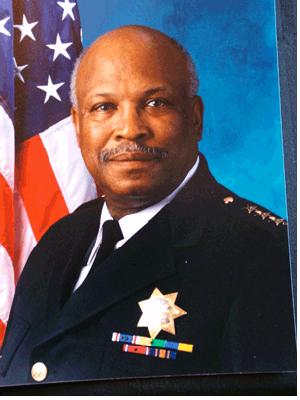
Miller concluded that homicide inspector Earl Sanders, who later became police chief and is now retired on a nice pension, knew that witness Clifford Polk was lying and made no effort to correct it.

That’s not the first time Sanders has been tied to an improper conviction. John Tennyson and Antoine Goff were sentenced to 25 years to life in 1990 — and spent 13 years in prison for a crime they didn’t commit. They were convicted after Sanders, and his then-partner Napoleon Hendrix, failed to inform the defense about key evidence.

Tennison and Goff would still be behind bars — except that Tennison’s brother read a Guardian story about the case and put a copy on the windshield of every car in the parking lot where he worked. And some of the people who parked there were lawyers for the top-flight criminal defense firm of Keker & Van Nest LLP.

The lawyers helped Jeff Adachi, then a deputy public defender, convince a federal judge that Tennison and Goff were wrongly convicted, and the two left prison in 2003. The case has now cost the San Francisco taxpayers $7.5 million.

The evidence that may soon free Conley came to light during the Tennison/Goff case — and it looks an awful lot like there’s a pattern here. Sanders and Hendrix (who died of cancer in 2009) worked some 500 homicide cases — and it’s unlikely that these two are isolated instances.

Conley has a shot at leaving prison after 18 years only because lawyers working on another case stumbled on old files, some of them literally buried under debris in a police warehouse. We have to wonder: how many other innocent people are rotting away (at considerable cost to the state) because SF cops helped frame them? And how many killers are still wandering the streets because homicide inspectors and prosecutors took the easy way out and manufactured or suppressed evidence against the first obvious suspect — and sent away the wrong person?

When Harris leaves office next month, a new district attorney will take over responsibility for this mess. It’s not possible, given the limited resources of the department, to go back and review every single case that Sanders and Hendrix worked. But the Conley case involved a key witness who was paid by the cops — that is, an informant getting public money. It’s perfectly legal to pay informants — as long as defense lawyers know that a witness was on the tab at the time of trial. But that didn’t happen in Conley’s case — and there may be many others.

Harris’ successor will have to take on the problems of the crime lab mess and continue to review cases that may be tainted by bad forensic techniques. But he or she needs to assign someone to go back over all of the cases in which Sanders and Hendrix used paid informants and see if any of those convictions need to be reviewed.

In the meantime, Chief George Gascón ought to take the opportunity to review police policies for paying snitches who then take the stand in court. There’s abundant evidence that the current system has serious problems.

EDITORIAL: How many suspects did SF cops frame?

1

The job of a district attorney is bringing criminals to justice; everybody knows that. But it’s also the job of the city’s top law enforcement agent to make sure the innocent are protected — and that’s a part that many DAs ignore.

There’s considerable evidence that the San Francisco police have framed suspects, set up evidence, and illegally manipulated the legal system to put the wrong people behind bars. Repeatedly. That’s a crisis that requires active intervention from the District Attorney’s Office — and since Kamala Harris is on her way out the door, it has to be a top priority for her successor.

The latest example: Superior Court Judge Marla Miller ruled Dec. 14 that Caramad Conley was denied his constitutional rights and convicted of murder after San Francisco cops allowed a paid witness to lie on the stand.

Miller concluded that homicide inspector Earl Sanders, who later became police chief and is now retired on a nice pension, knew that witness Clifford Polk was lying and made no effort to correct it.

That’s not the first time Sanders has been tied to an improper conviction. John Tennyson and Antoine Goff were sentenced to 25 years to life in 1990 — and spent 13 years in prison for a crime they didn’t commit. They were convicted after Sanders, and his then-partner Napoleon Hendrix, failed to inform the defense about key evidence.

Tennison and Goff would still be behind bars — except that Tennison’s brother read a Guardian story about the case and put a copy on the windshield of every car in the parking lot where he worked. And some of the people who parked there were lawyers for the top-flight criminal defense firm of Keker & Van Nest LLP.

The lawyers helped Jeff Adachi, then a deputy public defender, convince a federal judge that Tennison and Goff were wrongly convicted, and the two left prison in 2003. The case has now cost the San Francisco taxpayers $7.5 million.

The evidence that may soon free Conley came to light during the Tennison/Goff case — and it looks an awful lot like there’s a pattern here. Sanders and Hendrix (who died of cancer in 2009) worked some 500 homicide cases — and it’s unlikely that these two are isolated instances.

Conley has a shot at leaving prison after 18 years only because lawyers working on another case stumbled on old files, some of them literally buried under debris in a police warehouse. We have to wonder: how many other innocent people are rotting away (at considerable cost to the state) because SF cops helped frame them? And how many killers are still wandering the streets because homicide inspectors and prosecutors took the easy way out and manufactured or suppressed evidence against the first obvious suspect — and sent away the wrong person?

When Harris leaves office next month, a new district attorney will take over responsibility for this mess. It’s not possible, given the limited resources of the department, to go back and review every single case that Sanders and Hendrix worked. But the Conley case involved a key witness who was paid by the cops — that is, an informant getting public money. It’s perfectly legal to pay informants — as long as defense lawyers know that a witness was on the tab at the time of trial. But that didn’t happen in Conley’s case — and there may be many others.

Harris’ successor will have to take on the problems of the crime lab mess and continue to review cases that may be tainted by bad forensic techniques. But he or she needs to assign someone to go back over all of the cases in which Sanders and Hendrix used paid informants and see if any of those convictions need to be reviewed.

In the meantime, Chief George Gascón ought to take the opportunity to review police policies for paying snitches who then take the stand in court. There’s abundant evidence that the current system has serious problems.

Holy high whoreiday

0

caitlin@sfbg.com

SEX It started with a serial killer. Porn star-feminist Annie Sprinkle was reading about mass murderer Gary Ridgeway slaughter of, on his count, 71 prostitutes in the 1980s and ’90s. She came across this in Ridgway’s explanation of his choice of victims: “I picked prostitutes because they were easy to pick up without being noticed. I knew they … might never be reported missing. I thought I could kill as many of them as I wanted without getting caught.”

It was a wake-up call for Sprinkle. “We don’t have equal protection,” says the busty self-termed “ecosexual,” who was a sex worker for 20 years and now serves as a role model to many in the radical sex community. Sprinkle reacted by organizing the first International Day to End Violence Against Sex Workers on Dec. 17, 2003. It’s an event that is now recognized in cities around the world.

In San Francisco, Sprinkle’s “whore holy high holiday” will be marked by a City Hall vigil for all the sex workers affected by discrimination and violence this year and performance art, followed by a march to the Center for Sex and Culture (sexandculture.org). All the events are free and open to anyone who wants to stand up for those that get paid to lay down.

This year, event organizers have a dangerously prude city policy in their sights: the toxic San Francisco Police Department practice of checking suspected prostitutes’ pockets for condoms to serve as proof of intent to have sex for money. It’s a policy that Mayor Gavin Newsom and the state’s first Latina attorney general, Kamala Harris, support. Sprinkle finds it completely at odds with the mission of promoting safe sex among anyone who could be walking down the street with a rubber in their pocket, as well as dangerous to sex workers. “It’s nasty, and really stupid, and so counterproductive — is that the message that we want to be sending?”

Which is not to say that Friday will be devoid of sweet, sexy joy entirely. After all, where would be the fun in gathering up SF’s sex-positive community if no one got naked? Later that evening, the Center for Sex and Culture will host a special edition of the national literary series Naked Girls Reading showcasing — yep — naked girls reading literature written by those who spread their legs to make their living.

“It’s a great opportunity for feminism and art,” says event organizer Lady Monster, who heard about Miss Erotic World 2005 Michelle L’amour’s original Naked Girl Chicago series and thought it a perfect fit for our pervy-intellectual burg. She held the first event in April and “it took off like wild blazes,” packing venues across town.

An ex phone sex operator who dabbled in private peep shows in her home state of Ohio without being told that the work was illegal, Lady Monster notes that the poor economy and demise of Craigslist escort ads in response to outside pressure has introduced even greater risks to sex workers, pressure that can lead them to accept unsafe working conditions. She feels that the nationwide observance of Dec. 17 “is a way to give people an opportunity to celebrate sex workers’ rights.”

On stage, her reading event will celebrate their contribution to arts and literature. Sexologist Dr. Carol Queen will be leafing through a book at the night’s nudie show; as well as burlesque star Dottie Lux; sex worker activist Robyn Few; Lady Monster herself (who’ll be reading from Some Girls, the memoir of Jillian Lauren, the American who lived and worked in a Brunei harem); and Sprinkle, among others. Lady Monster says the requirements needed to be onstage fall into three categories: readers must be accomplished writers, have public speaking experience, and — perhaps the most obvious — they’ve got be down to make the scene in the all together.

“Three hundred and sixty-four days a year we talk about how much we like our work, and one day a year we take time to realize that there are real victims out there,” Sprinkle says. It may be the oldest profession, but even in Gomorrah by the Bay, sex work is still a far cry from society’s respected elder.

INTERNATIONAL DAY TO END VIOLENCE AGAINST SEX WORKERS

Fri., Dec. 17

4 p.m., free

City Hall

Civic Center, SF

www.swopusa.org

NAKED GIRLS READING

9 p.m., $15–$20

Center for Sex and Culture

1519 Mission, SF

(415) 552-7399

www.nakedgirlsreading.com/sanfrancisco


More innocents in prison

3

It sounds like the Tennison and Goff story all over again: An innocent man has been locked up for 18 years on the basis of highly flawed testimony from a police informant. I know, I know, Caramad Conley hasn’t been proven innocent — but a Superior Court judge thinks he hasn’t been proven guilty, either. And it all traces back to retired homicide inspector and later police chief Earl Sanders.


District Attorney Kamala Harris is still talking about retrying Conley, but I don’t think that’s going to go anywhere — the one key witness is dead and his testimony has been utterly impeached be revelations that he lied on the stand.


What’s interesting is that none of this would have ever come out it the lawyers at Keker and Van Nest, along with Public Defender Jeff Adachi, hadn’t pursued the Tennison and Goff cases — and even then, a lot of the evidence was (literally) buried. So this makes two cases — so far — in which Sander and his partner, the late Napolean Hendrix, were accused of framing a defendant. I suspect there have to be more.


“When something like this happens, it’s usually a pattern and practice,” Adachi told me.


Dan Purcell, the Keker attorney who represented Conley, told me he thinks the district attorney should go back and review some of the other similar cases involving Sanders and Hendrix. “The documents show that there are other cases where they paid witnesses,” Purcell said. “Now, that’s perfectly fine if you inform the defense, but in this case they clearly didn’t.”


Adachi complained that “nothing happens to the inspectors” — and he’s right. Sanders is comfortably retired on a nice pension and Hendrix died of cancer in 2009. And since the pair handled more than 500 murders, it’s hard to imagine reviewing all of their cases.


But the district attorney can certainly go back and review the other cases in which Sanders and Hendrix paid witnesses — and any others where the evidence was slim. That’s a matter of basic justice. 

Q&A: The unexpurgated Books

0

Accurately summing up the music The Books create is a tall order. Folktronica, indie-pop, cut & paste, experimental — all these tags can loosely be assigned to it, but none can fully capture the group’s mix of acoustic virtuosity and trippy electronics. First meeting in New York City in 1999, Nick Zammuto and Paul de Jong soon began crafting their unique combination of found sounds, cello, guitars, vocals and studio experimentation. Their work has led to four albums, a remix collaboration with Prefuse 73, and a commission to create elevator music for the Ministry of Culture in Paris. Zammuto took some time to chat about the group’s use of samples and its newest release, The Way Out (Temporary Residence Limited). Below is a longer version of a Q&A that recently ran in the Guardian.

SFBG You guys seem to put a lot of thought into the venues you perform at. How do you choose?

Nick Zammuto At first, beggars can’t be choosers, so we kinda just played wherever people would have us. And then I think the promoters started to realize that our show just works better when there’s a little more focus and when the ceiling is high enough for our projection to look the way it should. More than anything, the venue — the shape of it and the sound of it — creates the evening. And it’s amazing how it brings out different characteristics in an audience. Part of it is what they bring and part of it is what we do. But there’s that third element, which is the venue. It’s a mysterious thing. I love shows that are sitting down because I think it brings out this more careful detail that we try to bring out in our records, which is difficult to translate to the stage when it’s a noisy environment and beers bottles clinking and stuff like that. But then again, I love the energy of shows that are standing up because people can express themselves easier and we get more feedback from the audience. So both have their benefits.

SFBG You’re playing with Gene Back this tour, which will be the first time you’ll be performing as a three-piece. How did this come about?
 
NZ He’s a guy from Brooklyn who we met through a project we did with a cellist named Zach Miskin. He was kinda Zach’s right-hand man for this project and he came up to record at my place and I was just really taken with his playing. He can play anything you put in front of him. He learns really fast, so it’s been great to throw stuff at him to see what he can do. He doesn’t disappoint.

SFBG How much of a collaborative process was it in terms of him adding or not adding his own touches to the existing material you guys will be performing?

NZ It depends on your definition of collaboration, but I think the energy he brings with his playing, it changes our set drastically and that’s definitely something we have no control over, you know. That’s his thing. He’s tried to execute the parts that we’ve created for him, but he’s also solved a lot of problems that we wouldn’t have foreseen, not being able to play them ourselves. And he loves to dive into things. For example, he can actually play the guitar riff on “Tokyo.” He came up to us and was like, “Hey, look what I can do.” That’s something we never expected to be able to play live, and sure enough, it’s in the set now because of him.

SFBG Speaking of the guitar line on “Tokyo,” that’s one of many parts on your guys’ albums that makes you wonder how exactly it was created and recorded.

NZ I think nothing is really what it seems on our records and we do a lot of work to cover our tracks in terms of where things come from and how things were made. But essentially, I played that guitar line just as it appears on the record, except it was about half the speed when I originally played it. I just sped it up to see what it would sound like. And it turned the tambour of the guitar into this high-strung, mandolin kind of sound, which was cool, so we kept it. My fingers just don’t move that fast. But luckily there are people out there who can execute my ideas (laughing).

SFBG As diverse as your music can be, there is still a very recognizable overall sound. But it’s not always easy to describe. After all these years, have you guys settled on a fallback response when someone asks what kind of music you make?

NZ The word we go back to because it’s kind of open-ended is “collage.” We pull things from all different places and try to put them together in some compelling way, and I guess the most basic word for that is collage. I think people try to attach all kinds of genre names to it, but none of it has really felt comfortable to us. We just kinda do what we do. But you know, sampling is a big part of what we’ve always done. Figuring out a way to connect all these disparate elements is the basic work we do. So, it feels like collage.

SFBG I’ve always been curious about how you find the material you sample. Where did the material featured on The Way Out come from?

NZ During our tours in 2006 and 2007, we stopped at thrift shops all along the way, wherever we could. We’d pick [up] VHS tapes and audio tapes. Paul is kind of in charge of the audio side of the collection and I do more of the video side. Basically, we take the tapes and digitize them and then go through them and save all the stuff we think might be useful, having no idea what it might be used for. If it kind of has this memorable, emotional quality, we save it and keep it around. And the cream rises to the surface, in a way. We end up with these samples that are so far and above anything that anyone would expect, and you just have to use them. So, we throw all those in a folder called “Must Be Used.” And that’s what starts a lot of the ideas for the compositions.

SFBG The answering machine messages in “Thirty Incoming” are simultaneously touching and kind of silly. How do you decide what musical tone and context you’re going to frame a sample in once you decide to use it?

NZ A sample like that just speaks to everyone, you know. And it’s interesting how the interpretation of that phone message varies from “Wow, this is the most sincere man I’ve ever heard in my life” — which was my interpretation when I first heard it — to “That’s creepy. I don’t know what I’d think if I got that message on my phone.” So, it just has this sort of supercharged quality to it where it means a lot to everyone who hears it, but for different reasons. You can’t really go wrong with it, unless you were to counteract its tone somehow. What it suggested to me was this oceanic kind of sound. Those lines go so deep, that it had to be this wave after wave of pulsating sound coming in and then receding. Then we tried to find musical elements that could achieve that sound. So, we ended up using cello and effected vocals, electric guitar and bass to pull it all together. And also this drum tom that I recorded last summer while we were in London. This is the first time we’ve used real drum sounds in forever. It was fun to work with that quality of sound.

SFBG Hearing drums sprinkled throughout was a nice surprise on this album. I particularly like the hi-hat pattern throughout “I Didn’t Know That.”

NZ That was a lucky find. It was from a rare record with only like 500 copies made in the 1970s. It’s from this black history record. And it’s just this great hi-hat riff that’s just there between these two spoken word tracks. When we heard it, we were like, “Wow, that’s totally amazing.”

SFBG Have you ever been contacted by someone who appears in one of the found samples you’ve used throughout your career?

NZ People ask this a lot, and we haven’t, I think for a couple of reasons. Like going back to the “30 Incoming” samples, that tape must be 20 years old already, so who knows how old those people are now. And you know, we’re a pretty small band and it doesn’t really go outside of a certain circle of people who listen to this kind of thing. So, I don’t know how it would get to them, unless it was through some crazy kind of way. Maybe it will happen someday.

It would probably take some crazy series of connections. But it’d have to be a crazy feeling for someone to stumble upon a song that contains something they said or did and most likely forgot about 20 or 30 years ago.

It feels like archeology, even though it’s of the recent past. It feels like there’s some distance between now and then, so it takes on a totally different meaning. There’s all this inadvertent cultural information in these tapes. Stuff that was in the background when people were making them, but now they become the foreground because it’s so different from how we are now. And it often comes across as funny. But it also has this unconscious quality to it, which is what I like about it. That none of this stuff is planned. It’s not preconceived what this stuff means. It’s really honest in the way it comes though. It’s just people being themselves.

SFBG As meticulous as you guys seem to be at crafting albums and each individual song, do you ever struggle with deciding when something is done being worked on?

NZ Yeah. I mean, I compose the stuff and it takes forever (laughing). And it’s a completely exhausting process. But you just kinda know when you’re done, because you don’t want to work on it anymore. It becomes like a zero-sum game. Nothing you can do can make it any better than what it is, so you just let it go. Tracks are never finished, they just kind of escape.

SFBG You switched from the European label Tomlab to the US-based Temporary Residence Limited for The Way Out. Is there a difference between how Europeans and Americans approach your music?

NZ I think Europeans think of us as kind of like a freak show (laughing). And they like us for that reason. But I think when we play in the US, there’s this familiarity because there’s more nostalgia to it. Because we all grew up in the times that we’re sampling from, the ’80s and ’90s mostly. It’s less of a freak show and more of a warm look at the past and where we came from. Kind of reclaiming our childhoods in a way.

SFBG What kind of music inspired you both during the creation of the new album? And is there something you’ve been particularly into as of late?

NZ Me personally, I’ve been on a big Police kick. I don’t know why. But going back to their catalog, I love the way their records are produced. And I especially love Stewart Copeland’s contribution. He can play the drums like no one else. It all has this clarity and precision and energy to it that I really love. So, I’ve kind of been studying that from more of a production standpoint. As for inspiration during The Way Out, during our visit to London in 2009, Nigel Godrich’s engineer Drew Brown invited us to Nigel’s studio for about a week. Nigel was away working on something else and Drew was like, “You should just go and play,” and we were like, “Are you kidding me?” (laughing). And seeing how that studio is put together and the music that has come out of it, Nigel’s and Drew’s way or working is really inspiring to me in terms of getting a mix that’s kind of warm and transparent but also really powerful. I think that had a direct effect on our record.

Holy high whoreiday

0

caitlin@sfbg.com

SEX It started with a serial killer. Porn star-feminist Annie Sprinkle was reading about mass murderer Gary Ridgeway slaughter of, on his count, 71 prostitutes in the 1980s and ’90s. She came across this in Ridgway’s explanation of his choice of victims: “I picked prostitutes because they were easy to pick up without being noticed. I knew they … might never be reported missing. I thought I could kill as many of them as I wanted without getting caught.”

It was a wake-up call for Sprinkle. “We don’t have equal protection,” says the busty self-termed “ecosexual,” who was a sex worker for 20 years and now serves as a role model to many in the radical sex community. Sprinkle reacted by organizing the first International Day to End Violence Against Sex Workers on Dec. 17, 2003. It’s an event that is now recognized in cities around the world.

In San Francisco, Sprinkle’s “whore holy high holiday” will be marked by a City Hall vigil for all the sex workers affected by discrimination and violence this year and performance art, followed by a march to the Center for Sex and Culture (sexandculture.org). All the events are free and open to anyone who wants to stand up for those that get paid to lay down.

This year, event organizers have a dangerously prude city policy in their sights: the toxic San Francisco Police Department practice of checking suspected prostitutes’ pockets for condoms to serve as proof of intent to have sex for money. It’s a policy that Mayor Gavin Newsom and the state’s first Latina attorney general, Kamala Harris, support. Sprinkle finds it completely at odds with the mission of promoting safe sex among anyone who could be walking down the street with a rubber in their pocket, as well as dangerous to sex workers. “It’s nasty, and really stupid, and so counterproductive — is that the message that we want to be sending?”

Which is not to say that Friday will be devoid of sweet, sexy joy entirely. After all, where would be the fun in gathering up SF’s sex-positive community if no one got naked? Later that evening, the Center for Sex and Culture will host a special edition of the national literary series Naked Girls Reading showcasing — yep — naked girls reading literature written by those who spread their legs to make their living.

“It’s a great opportunity for feminism and art,” says event organizer Lady Monster, who heard about Miss Erotic World 2005 Michelle L’amour’s original Naked Girl Chicago series and thought it a perfect fit for our pervy-intellectual burg. She held the first event in April and “it took off like wild blazes,” packing venues across town.

An ex phone sex operator who dabbled in private peep shows in her home state of Ohio without being told that the work was illegal, Lady Monster notes that the poor economy and demise of Craigslist escort ads in response to outside pressure has introduced even greater risks to sex workers, pressure that can lead them to accept unsafe working conditions. She feels that the nationwide observance of Dec. 17 “is a way to give people an opportunity to celebrate sex workers’ rights.”

On stage, her reading event will celebrate their contribution to arts and literature. Sexologist Dr. Carol Queen will be leafing through a book at the night’s nudie show; as well as burlesque star Dottie Lux; sex worker activist Robyn Few; Lady Monster herself (who’ll be reading from Some Girls, the memoir of Jillian Lauren, the American who lived and worked in a Brunei harem); and Sprinkle, among others. Lady Monster says the requirements needed to be onstage fall into three categories: readers must be accomplished writers, have public speaking experience, and — perhaps the most obvious — they’ve got be down to make the scene in the all together.

“Three hundred and sixty-four days a year we talk about how much we like our work, and one day a year we take time to realize that there are real victims out there,” Sprinkle says. It may be the oldest profession, but even in Gomorrah by the Bay, sex work is still a far cry from society’s respected elder.

INTERNATIONAL DAY TO END VIOLENCE AGAINST SEX WORKERS

Fri., Dec. 17

4 p.m., free

City Hall

Civic Center, SF

www.swopusa.org

NAKED GIRLS READING

9 p.m., $15–$20

Center for Sex and Culture

1519 Mission, SF

(415) 552-7399

www.nakedgirlsreading.com/sanfrancisco

Ammiano wants to change bike laws

29

Assemblymember Tom Ammiano wants to change the way bicycles and cars are treated under state traffic laws.


He’s responding in part to the furor over the bike crackdowns in Berkeley, but it’s nothing new for Ammiano — he also tried to get bicycle traffic legislation through last year. This time, though, he told me, “I think we’re going to be able to pass something.” And incoming Gov. Jerry Brown ought to be willing to sign it.


Matt Bunch, an Ammiano staffer, told me that the bill isn’t final, but will certainly address the penalty for cars hitting bicycles. “A lot of these are preventable, but they’re treated as accidents,” he said. “They aren’t punished adequately.”


The measure could also address the wide disparity in traffic fines that bicyclists face in different cities and take on the Berkelely problem. “The fine you get depends on what they charge you with, and it’s all over the map,” Bunch said.


Bunch also suggested that Ammiano might be looking at the way some police officers in some jurisdictions charge bicyclists with vehicle-code violations that were written to apply to cars. “The vehicle code isn’t specific to bikes,” he said. “There’s a clear deficiency in law, and we’re going to look at it.”


One of the things they ought to be checking out: Why is it okay to make a biker get a point on his or her drivers license when he or she isn’t driving a motor vehicle?


Go, Tom. I’ll keep you posted when the bill is introduced.


Libidinous literature with Naked Girls Reading

1

I had asked Lady Monster, over a pair of red wine glasses and the pleasant buzz of nearby patrons at Revolution Cafe, to tell me what story she’d read at the Halloween installation of her Naked Girls Reading literary series. We were chatting in anticipation of her International Day to End Violence Against Sex Workers edition of NGR (Fri/17) which will take place at the Center for Sex and Culture after the day’s City Hall vigil and march.

The curvaceous redhead is quite the story teller, even clothed. “I did the elevator scene from The Shining,” she told me, launching into a brief summary of the Torrance family’s elevator travails. By the end of it I had the crap scared out of me – and she was fully clothed! Imagine what this lady can get done in the buff – surely, a live literary luminary not to be trifled with.

Lady Monster first heard of the Naked Girls Reading series circa its Chicago inception by burlesque showgirl Michelle L’Amour in 2009. The series sits down sex-positive female role models (SF’s chapter features sexologist Carol Queen, sex activists, and burlesque beauty Dottie Lux among others) for a theme night of literary lustiness. The event struck a chord (books and boobies yay!), and not just among Chicago pervs – the series has been featured on the Carson Daly show and has spread to nine other cities. “Like wild blazes,” says Monster.

“Almost immediately Michelle had people wanting to franchise the series,” she continues. Naked girls getting brainy? Lady Monster had an inkling that her own San Francisco community would gag for a NGR chapter of their own. She scheduled NGR’s SF breakout in May of this year and the show’s played to packed houses every two months since – and will score a regular monthly gig at Viracocha come the new year. “It’s so much fun, so silly. It’s all about being comfortable in your own skin,” Monster asserts.

That’s something that she’s had little trouble with – even growing up on an Ohio farm, Monster started hosting her (initially PG-13 rated) play parties in fifth grade. “I’d have all my friends over and make sure everyone was coupled off. Then we’d go into my room and close the door. At first we’d all just make out, but as we got older it got more serious. I was my own sexually liberated role model!” With a little help from some open-minded parents, of course. “They didn’t bother us, they let us have our time together.”

From grade school groping, Monster graduated to more advanced expressions of sexuality. She worked the graveyard shift at a phone sex line and loved the intimacy and honesty she could find in horny men just getting home from last call. “I wanted to hear their secrets all the time,” she confesses. But she wanted it to happen face to face, so she tripped her way into a job doing “legal escort work.” Private peep show stuff, for which Monster would strip or faux-masturbate for a paying customer. 

Only it wasn’t legal, a fact that her employer neglected to tell her. And even though she was getting face to face time, the sexual intimacy she’d felt with men on the other end of the phone line was gone. “There was no talking! Yeah, the money was a lot better but I had to get out of there.” All the way to San Francisco, in fact – where Monster has put her open sexuality to work in service to SF Sex Information and pens sex stories and erotic poetry. She’s also a long time performer in the burlesque scene – she’s been known to create her own astronomically-inspired LED-lit costumes and accesorize with glitter-dipped viking axes. Oh, and she toured with Ministry.

Like NGR, The International Day to End Violence Against Sex Workers was created by an empowered sexual superstar and has grown into a far-reaching event, marked by vigils in cities around the globe and marches of men and women carrying red umbrellas (the adopted symbol of the movement). It was started by the Bay’s own feminist porn star Annie Sprinkle, an ex-sex worker who Monster counts amongst her role models: “she’s not really a mother figure, more like a respected aunt,” Monster says.

“Sex workers need protection,” she continues, noting that Sprinkle started the annual day of memorial after reading a serial killer’s confession that he killed over 40 prostitutes because he knew they were less likely to be reported missing or inspire dedicated police investigations.

Lady Monster’s convinced that sex worker safety is an issue that carries particular import this year for a variety of reasons. First: shitty profits. “Business is definitely being affected by the economy,” she says. “And on top of that the market’s flooded,” with all the men and women out of work in other industries. Lack of work can make it harder to avoid risky working situations that put sex workers at risk of withheld wages, assault, or rape. The shut-down of Craigslist’s casual encounters listings has made it more difficult to find clients in the first place, and in the midst of all of this, SFPD has adopted an evidenciary policy that discourages condom usage: if cops find a rubber on a suspected prostitute, they’ll use it as evidence of intent to have sex for money. 

That’s why Monster’s event Friday (which follows a vigil and march from City Hall that starts at 4 p.m.) will give voice to those that often go unheard in our society. Monster, her regular NGR cast, and Sprinkle will all read from literature penned by sex workers, including Jillian Lauren’s memoir of her time in the prince of Brunei’s harem and Scarlet Harlot’s account of becoming a radical prostitute, Unrepentant Whore.

“This is such a great opportunity for feminism and art,” Monster says. Undeniably, giving naked women a stage on which to talk about reclamation of body and sex issues is a unique approach. NGR, sex worker edition: sure to be a hot night, but also a reflection of the power of corpus woman when framing its own literary discourse. 


Naked Girls Reading: International Day to End Violence Against Sex Workers 

Fri/17 9 p.m., $15-20

Center for Sex and Culture

1519 Mission, SF

(415) 255-1155

www.nakedgirlsreading.com


The mayoral roulette

23

At the San Francisco Tomorrow holiday party Dec. 8th, David Chiu, Dennis Herrera, John Rizzo, Jake McGoldrick and a host of others who I’ve seen at these events for at least the past few years were doing their usual schmoozing — when Ross Mirkarimi, a former SFT board member, showed up with …. Art Agnos. I haven’t seen the former mayor at an SFT event since … I don’t know. Since a long long time ago.


Agnos made a short speech and talked about all of the rising stars in the San Francisco progressive movement — Mirkarimi, Chiu, Rizzo, David Campos, Eric Mar, John Avalos … and it was all very nice and low key. But there was a message in his appearance, in his connection with Mirkarimi, and even in the overall tone of his remarks, which amounts to this:


If the supervisors have trouble finding a progressive who can get six votes — and if they want an old hand, someone who has been through a brutal recession as mayor of San Francisco and dealt with awful budgets and nasty politics, someone who will serve for a year and then walk away — Agnos is open to being asked.


Well, maybe a little more than open to being asked. I wouldn’t say he’s actively, publicly campaiging for the job, but he has met with most of the supervisors, and dropped them all a 13-page memo listing all of his accomplishments, and his supporters (maybe his emissaries) are making the rounds and making the case for Agnos. Which amounts to this:


None of the progressives now more-or-less openly in the mix (Campos, Chiu, Mirkarimi, even Aaron Peskin) can realistically take on all the sacred cows (esp. police and fire), make a bunch of other cuts, and push for all sorts of revenue increases — and at the same time try to run for re-election in November (when the tax hikes would be on the ballot). The only way to do “what needs to be done” is to put in a progressive caretaker who can then take the political heat for the tough decisions — and help set up a campaign for another progressive in November.


I’m not sure I entirely agree — the right person, with the right leadership and agenda, could set up a five-year plan for fiscal stability, launch year one immediately and tell the public that he/she needs a full term to finish the job. But it’s true that it will be tough — and it’s also true that none of the obvious alternatives have ever run citywide.


If Tom Ammiano were interested, we wouldn’t be having this discussion. Tom has run citywide numerous times (for School Board, pre-district elections supervisor and mayor), has been elected by half the city (to the Assembly), and has the credibility to deal with the budget crisis and still win in November. But he’s not, and we have to respect that.


Right now, the progressives can’t seem to unite on a candidate. None of the current board members has six votes today. And Campos, Chiu, Mirkarimi and everyone else in the game knows full well how hard it will be to win in November, particularly against State Sen. Leland Yee, who will be a formidable candidate, and possibly City Attorney Dennis Herrera (who has won citywide), State Sen. Mark Leno (who is popular all over town) and others.


So if a couple rounds pass and there’s no winner, the “progressive caretaker” concept will be in play. It’s possible Mirkarimi would give up his seat two years early and take that job; it’s likely Peskin would agree to serve one year and then step down. But it’s also possible that neither scenario works out — at which point Sheriff Mike Hennessey and Agnos will be in play.


(I hear through the grapevine that Willie Brown is nosing around, too — and let’s remember that he became Assembly speaker by cutting a deal with the Republicans.)


Hennessey’s got a strong progressive record, but has never had to deal with anything remotely as awful as what the next mayor will face. So Agnos backers will make the case that their guy has the experience and gravitas to pull it off.


Given all of that, let me say a couple of things about Agnos, since I was around and watching City Hall when he was mayor (and some of the people who will be voting on this weren’t.)


Art’s a mixture. He was a great progressive member of the state Assembly. When he ran for mayor, we backed him strongly; he seemed to be the great progressive hope. Then his long list of wonderful promises ran into the buzz saw of a deep recession — and made things much worse with his arrogant, imperious style. His first major act in office was to sign a set of contracts that gave away the store to PG&E. He never lifted a finger for public power. And it quickly became clear that he wasn’t a fan of open government or public process. We were all supposed to “Trust in Art” and shut up if we didn’t like it.


That’s why — despite what was at the time and is in retrospect a pretty darn progressive record, a lot of solid accomplishments and absolutly no hint of corruption or scandal — the progressives just weren’t all that excited about his re-election. So he lost to Frank Jordan, who was way worse.


The thing is, Agnos these days is a lot more mellow. He’s 72, knows he’s not going anywhere else in politics, and has essentially admitted to me that he made a lot of mistakes, and his arrogance and closed-door attitude were top on the list. A reformed Agnos — willing to serve with a degree of humility and an acceptance that progressive politics in this town demands inclusiveness, and that even though he’s a former mayor, he’s not by definition the most important person in any room he walks into — would present an interesting option.


Of course, we still don’t know exactly where he would be on the issues, since, like Chiu, he hasn’t even publicly called himself a candidate for the job. I still think anyone who is a serious contender ought to be willing to appear before the supervisors and answer questions.


We all know where to start: What’s your plan for raising a quarter billion dollars in new revenue in 2011?    

Class of 2010: Scott Wiener

3

rebeccab@sfbg.com

Scott Wiener, who is 40, gay, soft-spoken, and remarkably tall, seems to have made an impression on voters with his successful campaign for District 8 (the Castro, Noe Valley) supervisor. On a recent Wednesday afternoon, several patrons of a Market Street café stopped to say hello and congratulate him. “I saw millions of signs about you!” one exclaimed.

A deputy city attorney, Wiener claimed one of the most decisive victories among contenders vying for seats on the San Francisco Board of Supervisors. He’s more fiscally conservative than Rafael Mandelman, who was his progressive opponent in the race, and is more in step politically with Mayor Gavin Newsom than San Francisco progressives. Yet Wiener stressed to the Guardian that he should ultimately be viewed as an independent thinker. “For me, it’s about having mutual respect for everyone,” he said. “Even if you disagree on some issues, and even if you disagree on a lot of issues, you can always find areas of agreement.”

Asked about his priorities in office, Wiener put public transit at the top of the list. Over the next few decades, the population of San Francisco and the Bay Area will dramatically increase, he said. “And at the same time, we’ve been underfunding public transportation, and particularly our roads. It could potentially be a catastrophe if we’re not able to not just keep the system as it is, but actually expand it. That is a really big priority.” To raise money for Muni, he doesn’t support extending parking meter hours, but does support a local vehicle license fee. There’s some question surrounding that prospect since California voters approved Proposition 26, which requires a two-thirds majority vote for fees. But Wiener said he wanted to be involved in efforts to implement a VLF in San Francisco.

Another priority is finding ways to stimulate job growth. He approves of the city’s move to use a tax credit for biotech industry businesses as a means of encouraging job creation, but said that mechanism should be used sparingly since it creates a revenue hole. Instead, Wiener said he was more in favor of looking at payroll-tax reform — but only if it doesn’t result in a tax increase.

Wiener also places importance on supporting the city’s Entertainment Commission and preserving San Francisco’s vibrant nightlife. “That’s an issue that I’ve always worked on and I’ll be speaking at [the California Music and Culture Association] next Friday, which I’m hoping will become a really effective voice for that community,” Wiener noted. “It needs a really unified and strong voice. and I want to make sure that we are really prioritizing having a vibrant nightlife and outdoor festival scene, and that we’re not blaming the entertainment community for societal ills like gun violence.” He also mentioned bolstering the Entertainment Commission’s budget.

But might that pro nightlife stance place him at odds with the San Francisco Police Department? “In some ways, I’m from a public-safety background,” he said in response. “I’ve been involved in a lot of safety issues on a neighborhood level. I’ve worked closely with SFPD and I am supportive of Chief [George] Gascon. In a way, I think that gives me some credibility.”

Speaking of working closely with people, whom does Wiener see himself forming alliances with on the new board? “I definitely have a great relationship with Sean Elsbernd and Carmen Chu, and I will be working closely with them. But I don’t agree with them on everything,” he said. Board President David Chiu and Sup. David Campos were both his classmates at Harvard, he noted, so he feels confident in his ability to work with them even if they don’t always see eye to eye. “One thing I see about this board that I’m optimistic about is that I think it’s going to be a more collegial board,” he added.

On the question on everyone’s mind — who will succeed Mayor Gavin Newsom to serve as the interim mayor? — Wiener said he thinks the best idea is to appoint a caretaker mayor. “Next year’s going to be really hard year,” he said and a caretaker mayor could “help make some really hard choices that need to be made. I may not like all of those choices, but they can do something that someone who’s a brand new mayor seeking reelection may be timid about doing.”

Who might he support if the new board selects the successor mayor? “There are some really solid names that have been bandied about, like [San Francisco Public Utilities Director] Ed Harrington or [Sherriff] Mike Hennessey,” he replied.

Wiener’s going to be mostly a fiscal conservative when it comes to the budget. Any new revenue, he said, “should be very policy-based,” for example transit-oriented instead of raising business taxes.

And he has plenty of cuts in mind, including “the way we contract for nonprofits,” looking at shared overhead, and consolidation. He also said that “we need to continue moving forward with pension and benefit reform [and] aggressively address overtime in all departments.” And what can voters expect from Sup. Scott Wiener that’s different from Sup. Bevan Dufty, a mayoral hopeful who currently represents D8? Wiener didn’t go too far out on a limb on that one. “There have been some tenant issues that Bevan voted against and I supported,” he said. “We’ve had times where he’s been to my left, or I’ve been to his left, but I can’t speculate as to the future. It’s going to be case by case.” *

America’s next top band

0

arts@sfbg.com

MUSIC Gary Gregerson of Puce Moment has made an important discovery about bears of the human variety — many of them used to be new romantics. “Back in the day, they were wearing broaches, long shirts, and stirrup pants,” he says, discussing friends’ teenage photos in the kitchen of bandmate Jon Rueter.

The season finale of America’s Next Top Model is about to begin, but for now, it’s interview time, and there’s no better moment than the present to discuss the origins of Puce Moment. “I wanted to do an Altered Images-type band, and I told Jon, because he knows how to synth it up,” Gregerson explains, when asked about the group’s beginnings. “I said, ‘I want to be Claire Grogan!’ Then we decided we’d be more like Belinda [Carlisle] and Jane [Wiedlin].”

“Right, you said, ‘As long as I get to be Belinda,'” Rueter concurs.

The referential and the reverent (and irreverent) commingle in the world of Puce Moment. It couldn’t be any other way, considering Gregerson’s and Rueter’s intense and specific appreciations of pop music and culture. (When it comes to vintage TV, Rueter is a Knot’s Landing and Family guy, while Gregerson favors Police Woman.) Their band — with bassist Suresh Chacko and drummer Tom Marzella — takes its name from a 1949 fabric-fetish film by Kenneth Anger. It’s a brash gesture, considering Anger’s hostility toward those influenced by him. “Someone was like, ‘You don’t want to be cursed by Kenneth Anger!’,” Gregerson admits.

Puce Moment’s name is emblazoned on not one, not two, but three new four-song cassettes: Ready for a Date, Essence of Mann and Avoiding Certain Topics. Recorded at Wally Sound in Oakland, the collections showcase a sound that Gregerson labels “neo-psychedelic” and Rueter calls “swingin’ and groovy.” Ironically attuned to what one song title calls “Changing Formats,” as well as the current tape revival, the releases also suit Puce Moment’s affinity for C86-era Creation label bands such as Revolving Paint Dream. Rueter’s numbers use striking everyday images to tell stories of wavering friendship and love. Gregerson directs his attention to specific memorable characters: an activist named Maryanne; a prissy and meddlesome downstairs neighbor; and the artist Christo, who his lyric deems an “active Greek” just for the fun of it, since Christo is actually Bulgarian.

Puce Moment’s two songwriters trade off lead vocals in a manner similar to the early days of Orange Juice, when comical Edwyn Collins (that would be Gregerson) and effete James Kirk (that would be Rueter) took turns at the mic. The pair’s very first songwriting effort became Ready for a Date‘s opening track, “The Citrus Smelling Man with a Tight Wristwatch.” Its lengthy title is inspired by a real-life person. “Jon figured out [the background of] that song when we recording it,” says Gregerson. “It’s about having sex with a married man who wanted me to drive him and his wife and kids to the mall when I had a van.”

Both Rueter and Gregerson have performance punk backgrounds, Gregerson in Sta-Prest and Rueter with way-ahead-of-their-time new wave revivalists the Primadonnas, the best band from “Sussex, U.K.” ever to be based in Austin, Texas. Rueter’s moniker in the Primadonnas was Nikki Holiday, but he insists that when he was singing with crushed-velvet Martin Gore softness about being “stoned like a white balloon,” he was serious. “It’s harder for me to depersonalize lyrics, though our song ‘Girl’ is actually about a boy — a gay friend.”

“Even in the Primadonnas, my lyrics were sincere,” Rueter continues. “There was this contrast of my bandmate Otto being an asshole, a total jerk, and I was his foil. I still feel like I’m doing that, a little bit.”

“Um, I’m the hyper asshole?” Gregerson asks.

“No, but I’m the straight man, for sure.”

Lyrically, some subject matter is off-limits for Gregerson. “I really try not to write about love, and definitely not about wieners,” he says. “That’s why I like it that Puce Moment is starting to get into ’60s baroque pop, because it’s all about the path of humankind.”

True, but the time has come for Puce Moment and me to turn our attention to the path of model-kind. As Andre Leon Talley makes his guest judge outfit more and more voluminous, what Rueter labels the “high fashion cycle” of America’s Next Top Model grinds toward an inevitable a conclusion. During one commercial break, Rueter talks about Tyra’s performance as a Barbie-come-to-life in the 2000 Lindsay Lohan vehicle Life-Size. During the next, Gregerson says my imitation of Ke$ha’s rapping sounds like Granny from The Beverly Hillbillies.

So, who won ANTM? High fashion Ann, of course. Still, Tyra and company’s antics pale in comparison to the final star of our evening’s viewing: YouTube guru Katherine Chloé Cahoon, author of The Single Girl’s Guide to Dating European Men. Want to date a Bulgarian man like Christo? Cahoon will explain how — with an accent that’s pure East Coast private school lockjaw.

PUCE MOMENT

Thurs/16, 9 p.m.; $5

with Bronze, Sam Flax Keener and the Higher Color, and Lairs

The Eagle

398 12th St., SF

www.myspace.com/pucemomentsf

Going to a club — or boarding an airplane?

12

news@sfbg.com

The War on Fun — a term coined by the Guardian in 2006 to describe the crackdowns on nightclubs, special events, and urban culture by police, NIMBY neighbors, and moderate politicians — continues to grind on in San Francisco.

The latest attack was launched by Mayor Gavin Newsom and the San Francisco Police Department, which has proposed a series of measures to monitor and regulate individuals who visit bars or entertainment venues, proposals that the embattled Entertainment Commission will consider at its Dec. 14 meeting.

Perhaps most controversial among the dozens of new conditions that the SFPD would require of nightclubs is an Orwellian proposal to require all clubs with an occupancy of 100 persons or more to electronically scan every patron’s identification card and retain that information for 15 days. Civil libertarians and many club owners call this a blatantly unconstitutional invasion of privacy.

Driving the latest calls for a crackdown is a stated concern over isolated incidents of violence outside a few nightclubs in recent years, something Newsom and police blame on the clubs and that they say warrants greater scrutiny by police and city regulators.

But the proposals also come in the wake of overzealous policing of nightclubs and parties — including improper personal property destruction and seizures, wrongful arrests and violence by police, harassment of disfavored club operators, and even dumping booze down the drain — mostly led by SFPD Officer Larry Bertrand and his former partner, Michelle Ott, an agent with the California Department of Alcoholic Beverage Control.

Those actions were documented in back-to-back cover stories by the Guardian (“The New War on Fun,” March 24) and SF Weekly (“Turning the Tables,” March 17), and they are the subject of multiple ongoing lawsuits by nightclub owners, patrons, and employees, including a racketeering lawsuit alleging that officials are criminally conspiring against lawful activities.

Yet rather than atoning for that enforcement overreach, Newsom and SFPD officials seem to be doubling down on their bets that San Franciscans will tolerate a more heavily policed nightlife scene in the hopes of eliminating the possibility of random violence.

A series of nighttime shootings this year has grabbed headlines and prompted calls to action by the Mayor’s Office and Board of Supervisors President David Chiu, whose District 3 includes North Beach. In February, there were shootings at Blue Macaw in the Mission and Club Suede at Fisherman’s Wharf, followed by a shooting at the Pink Saturday fair in June, one outside Jelly’s in SoMa in July, and the high-profile murder of a German tourist near Union Square in August.

Chiu responded with legislation to give the Entertainment Commission greater authority to close down problem nightclubs and, more recently, with legislation to require party promoters to register with the city so that officials can take actions against those who act irresponsibly.

In September, Newsom asked the SFPD for its recommendations and he received a laundry list of proposals now before the Entertainment Commission. That body held a closed session hearing Nov. 30 to discuss a confidential legal opinion by the City Attorney’s Office on whether the identification scan would pass constitutional muster, an opinion that has so far been denied to the Guardian and the public, although officials say it may be discussed in open session during the Dec. 14 hearing.

“Everything is being considered,” Jocelyn Kane, acting executive director of the Entertainment Commission, told the Guardian. Her office already has looked at the different types of scanners that clubs could use and has discussed the idea with several technology companies.

SFPD Inspector Dave Falzon, the department’s liaison to the nightclubs and ABC, told the Guardian that he believes the data gathered from nightclub patrons would allow police to more easily find witnesses and suspects to solve any crimes committed at or near the nightclubs.

“It’s not intended to be exploited,” Falzon said, stressing that the recommendations are a work in progress and part of an ongoing dialogue with the Entertainment Commission — an agency Newsom, SFPD officials, and some media voices have been highly critical of over the last two years.

Along with the proposal for the ID scanners, SFPD proposed many other measures such as increased security personnel (including requiring clubs to hire more so-called 10-B officers, or SFPD officials on overtime wages), metal detectors at club entrances, surveillance cameras at the entrances and exits, and extra lighting on the exterior of the night clubs.

Though this may sound to many like heading down the dystopian rabbit hole with Big Brother potentially watching your every move, Falzon thinks it’s the opposite. “It isn’t that police department is acting as a militant state,” Falzon said. “All we’re trying to do is to make these clubs safer so they can be more fun.”

Yet critics of the proposals don’t think they sound like much fun at all, and fear that employing such overzealous policing tools will hurt one of San Francisco’s most vital economic sectors while doing little to make anyone safer.

Jamie Zawinski is the owner of the DNA Lounge, which recently celebrated its 25th anniversary. He has been a leading voice in pushing back against the War of Fun, including running a blog that chronicles SFPD excesses. He said the proposed regulations go way too far.

“It’s gang violence happening on the street. The nightclubs are being scapegoated. You don’t solve the problem by increased security in the clubs,” Zawinski told us, adding that the lack of proper policing on the streets should be addressed before putting the financial strain on the entertainment industry.

“It’s ridiculously insulting. I will not do that to my customers. It’s not a way to solve any problems,” Zawinski said. “It sets the tone for the evening when you start demanding papers.”

It’s also a gross violation of people’s rights, says Nicole Ozer, the director of Technology and Civil Liberties Policy for the American Civil Liberties Union of Northern California. She said that recording people’s personal information when they enter a public venue raises troubling legal issues.

“There are some real implications of tracking and monitoring personal data. The details of what you visit reveal things about your sexuality and political views,” Ozer said, adding that the ACLU would also have issues with how that information is used and safeguarded.

In response to police crackdowns on nightlife, club owners and advocates earlier this year formed the California Music and Culture Association (CMAC) to advocate for nightlife and offer advice and legal assistance to members. CMAC officials say they are concerned about the latest proposals.

“The rise in violence has to be looked at from a societal point of view,” said Sean Manchester, president of CMAC and owner of the nightclub Mighty. He noted that most of the violence that has been associated with nightclubs took place in alleys and parking lots away from the bars and involved underage perpetrators. “In many instances [the increased security measures] wouldn’t have done anything to stop it,” he said.

While there are plenty of ideas to combat crime at nightclubs, nightlife advocates say the city is going to have to look beyond club venues to address what can be done to combat crime without infringing on any civil liberties or damaging the vibrant nightlife. Or officials can just listens to the cops, act on their fears, and make the experience of seeing live music in San Francisco more like boarding an airplane.

The Entertainment Commission meets Dec. 14 at 6:30 p.m., Room 400, City Hall.

Saint Gravy

2

There is a certain faction of society — I think it’s pretty large, if you judge by NorCal standards — that regards Wavy Gravy as some sort of mystical deity from their parents’ generation. We’re not sure what he did, but you should probably address him as Mr. Gravy ’til he tells you not to.

This is a perception that is left unquibbled-with by director Michelle Esrick’s ten year labor of docu-love, Saint Misbehavin’: The Wavy Gravy Movie (opening Fri/3 in Bay Area theaters), and further untouched by my interview with Esrick and the man himself.

Saint Misbehavin’ opening scenes are an iteration of a tie-died holy man’s daily routine. We start out in Wavy’s corner bedroom, awash in sitting Buddha figurines, plastic Disney toys, beads, books, and other sacred objects. Wavy enters, and says a pray and a brief recitation of his heroes. 

This spoken list serves as a blueprint for the bio-pic to come: Jesus, Mohammed, Ghandi, MLK Jr., Jerry Garcia are among those name-dropped. They serve as a background compass for the movie’s neatly plotted trajectory of Wavy’s life: Gravy is born in New York, goes from folk-beatnik Greenwich Village, to acid be-ins with Kesey in California, to the Further Bus.

And then: a stint with the Hopi tribe, and later, off to the East: to Nepal to heal blindness (with the aide of his international medical non-profit Seva). Of course, his creation of Camp Winnarainbow, a summer camp that has been teaching West Coast flower children how to play for three generations now. Today, Wavy is an elder statesman of hippies and their descendents as well as a frozen dessert. His sold-out birthday spectaculars attract crowds like a Phish concert. 

A more recognizable Gravy. Photo Courtesy of Ripple Effect Films

But for our movie-viewing purposes those names at the start also essential because we don’t get to hear a whole lot about Wavy’s inner monolouge in the flick – he’s onstage here, clowning away as he does, well everywhere, not really dishing per se. Saint Misbehavin’ is no E! True Hollywood Story

So when I got the chance to sit face to face with the man (I wore a Ringling Brothers clown hat, he had on a blue bowler and carried his familiar fish on a leash), I thought maybe we’d talk a little about how he got so Gravy. “It’s not too many kids that grow up to be a seminal member of so many artistic scenes,” I say. “Washington Park in the early ’60s, SF during the ’60s, Woodstock… but what was special about Hugh Romney (that was his square name from before he was Wavy — even before his first nom de nonsense Al Dente), how’d you get to where you are today?”

Gravy, just a little sleepy-looking in the warm office building where our interview takes place, tells me “one thing just followed from another, listing off his general path across the world.” Such is the role of a tribe elder talking to a youngster: there are things that we are not to know. What more do we need to know, really? He quotes Thelonius Monk, a friend who stand-up comedian Hugh Romney opened for. “Everyone is a genius by just being themselves.”

That’s his deal: the rainbow he travels on is available to us all, if we can only see it and trust to it’s pretty suspended bands of color. Luckily, we do have Saint Misbehavin’ to get literal with. Esrick has put together a wild ride and the information it contains teaches about Wavy’s contributions to the hippie and anti-Vietnam war movement. He was on the front lines back then – Esrick tells me that the way he deals with the chronic pain he sustains from police beatings from those days is one of the most impressive things she learned about Wavy in the 10 years she spent researching for the film with him. 

I ask Wavy his reaction to seeing his epic life laid out on celluloid for thousands of strangers’ viewing pleasure. He refused to see early versions of the film when Esrick was still editing: what was it like to finally view the real thing? “You realize what a long strange trip it was – and continues to be,” he says after a moment’s pause. “It was the only time I’ve ever seen Wavy speechless,” Esrick smiles.

And so I leave our interview without really having gained any insider info on the life of Gravy. But I haven’t departed without a few gems, the primos being the story of meeting his wife (“she put peanuts in my hamburger and I fell in love,”) tips for graceful protests: “I always gave the best cop my rose. They were always very touched,” vegetarianism: “remember you are not what you eat, you are what you don’t shit,”and the truth about relations with the Middle East, spoken by a man who traveled through Iraq and Afghanistan on a rainbow bus in the 1970s: “They know the difference – there are ugly Americans that you see, and there are fellow travelers on the path of life. They recognized us as the latter.”

This from Michelle: “A full biography of Wavy’s would be 10 movies. I was interested in stringing a necklace of pearls together.” Maybe there are things we’re not supposed to know about those on high, or rather, that we don’t have to in order to know that they’re up there.

Epilogue: To gauge what maybe I am missing from the story of Wavy by virtue of not having been there in the glory days, I texted my mom today. “What did Wavy Gravy mean to you back in the day? Was he cool?” She wrote back “I don’t remember him!” Which of course, means she was really there. 


Saint Misbehavin’: The Wavy Gravy Movie opens Fri/3 in Bay Area theaters.  


Cash and Carrey

0

arts@sfbg.com

FILM You had to forgive most of the gay press for getting a little too excited over Brokeback Mountain (2005). Oh, no doubt it’s a great movie, or that the Oscar going to the fraudulent Crash (2004) said less about that film’s virtues than a skittishness that other movie stirred. But its excellence and commercial success induced widespread bouts of wishful thinking in the form of announcing new trends that never came to pass.

Five years later, there hasn’t been another mainstream American film in which a gay relationship is taken seriously and granted central importance. (You could argue for The Kids Are All Right, but that’s mostly a comedy, a big arthouse hit rather than even a modest mainstream one — and the fact remains that lesbians played by attractive actresses aren’t nearly as threatening to the sanity, morality, masculinity, and private parts of many Americans as gay men.) Nor has a single major movie star come out as gay or bi, despite the hilarity induced by excuses for such police-intervention activities as “offering a ride” to transgender sex workers at 4 a.m. or getting mugged while “walking the dog” in a well-known cruising park (also at 4 a.m.). In all these regards, television has leapt well ahead of the big screen.

Given typically imitation-crazed Hollywood’s failure to built on Brokeback‘s success — or see it as anything more than a fluke — the case of I Love You Phillip Morris is interesting for what it is and isn’t. It is, somewhat by default, the biggest onscreen gay romance (not including foreign and indie productions, which are always ahead of the curve) since that earlier film, even if it is (again) primarily a comedy, and one whose true-story basis provides the leavening element of stranger-than-fiction curiosity. (Nobody’s bothered by the gayness of movies like 2005’s Capote because we accept the otherness of real people too famous and/or peculiar to be relatable.)

What Phillip Morris is not, however, is a Hollywood or even American film, all appearances to the contrary. Its financing was primarily French — presumably because there wasn’t enough willing coin on this side of the Atlantic. Yes, not even for a comedy starring Jim Carrey. And for a while it didn’t even look like Phillip Morris would be an American release, even after it had played (and done pretty well) virtually everywhere else, from Europe to Latin America to Southeast Asia to frikkin’ Kazakhstan. The reasons (some legal) are unclear, but it seems pretty certain the aforementioned squeamishness around guys kissing and cuddling and diddling factored in — never mind that those guys are Carrey and Ewan McGregor.

Free at last, albeit without much fanfare, Phillip Morris proves to have a whole lot more in common with Steven Soderburgh’s The Informant! (2009) — true tale turned farcical caper, to diverting if mixed results — than to tragic Brokeback, even if love runs a rather sad, thwarted course here, too. We meet Steven Jay Russell as an uber-perky all-American lad — a nascent Jim Carrey — perhaps permanently warped at age eight by the discovery that he’s adopted. Nonetheless he proceeds along the road of dead-center normality, getting married (Leslie Mann manages to be both very droll and very Christian as Debbie), having kids, being a loveable Mr. Policeman, and fucking guys only on the QT.

A near-fatal accident, however, induces him to merrily chuck it all — he’s so nice the family can’t help wishing him well — and live life to the fullest by moving from Georgia to South Beach and becoming a “big fag.” He soon discovers that “being gay is really expensive,” or at least his chosen A-lister lifestyle is. Having been schooled by his adoption trauma, Steve figures if everything you think you know can so easily turn out to be a lie, why not becoming a fibbing superstar? He begins diverting funds from his corporate employer, amazed at what a chief financial officer position and a golf-playing, polo-shirt-wearing front can get away with. At least to a point — the point that commences several ensuing revolving-door years of cons, captures, prison stints, and ingenious escapes.

It is during one hoosegow stay that he meets the non-tobacco-related Phillip Morris (McGregor), a sweet Southern sissy who got there by sheer haplessness rather than criminal guile. Steven is an ardent, protective lover — if he’s also slippery as an eel, that’s at least partly because he thinks his lies protect those he loves — and Phillip is a slavishly adoring 1950s housewife who just happens to have been born with a penis.

Like The Informant!, Phillip Morris fudges the facts a bit for narrative convenience and strains at times for an antic tone that makes life itself a sort of genre parody. In his genius-IQ mind, does Russell see himself as the hero of a perfect if artificial sitcom-type world? Or does casting Carrey require the same sort of hyperreal gloss routinely applied to gimmick-driven vehicles like Yes Man (2008), Bruce Almighty (2003), and Liar Liar (1997), because he bends any context like a funhouse mirror? (Only once, in 1998’s The Truman Show, did that context meaningfully amplify his cartoonishness; and only once, in 2004’s Eternal Sunshine of the Spotless Mind, has he calmed down to ordinary human proportions.) Glenn Ficarra and John Requa, making their directorial debut after team-writing a bewildering trio of mainstream comedies (2001’s Cats and Dogs, 2003’s Bad Santa, and 2005’s The Bad News Bears), approach their fascinating material with brashness and some skill, but without the control to balance its steep tonal shifts.

Surprisingly, it’s in the “love” part that they often succeed best. While their comic aspects sometimes tip into shrill, destabilizing caricature — the excess that brilliant but barely-manageable Carrey will always drift toward unless tightly leashed — this movie’s link to Brokeback is that it never makes the love between two men look inherently ridiculous, as nearly all mainstream comedies now do to get a cheap throwaway laugh or three.

Russell’s scenes with AIDS-fallen first boyfriend Jimmy (Rodrigo Santoro) are very poignant. And the many more with McGregor, who plays white-trash nelly with an uncondescending delicacy that’s both amusing and wistful, are quite lovely. There’s one scene of them chatting in their prison cell — viewed overhead in bed, Phillip’s head in the crook of Steven’s arm — that’s so affectionately intimate you can see exactly why the movie took two years to get a U.S. release. Even the prior scene of Carrey riding a different man’s ass like a bucking bronco isn’t as half so threatening as this, an utterly unguarded moment with two famous faces that both happen to be male conveying a perfectly synched love.

I LOVE YOU PHILLIP MORRIS opens Fri/3 in San Francisco.


The biggest fish

6

rebeccab@sfbg.com

Shortly after Larry Ellison, the billionaire CEO of Oracle Corp. and owner of the BMW Oracle Racing Team, won the 33rd America’s Cup off the coast of Valencia, Spain, in February 2010, a reception was held in his honor in the rotunda at San Francisco City Hall.

The event drew members of Ellison’s sailing crew, business and political heavyweights such as former Secretary of State George Schultz, and other VIPs. Attendees posed for photographs with the tall, glittering silver trophy at the base of the grand staircase.

As part of the celebration, Ellison helped Mayor Gavin Newsom into an official BMW Oracle Racing Team jacket, and Newsom granted Ellison a key to the city, a symbolic honor usually reserved for heads of state and the San Francisco Giants after they won the World Series. Shortly after, the mayor and the guest of honor, whom Forbes magazine ranked as the sixth-richest person in the world, sat down for a face-to-face.

That meeting marked the beginning of the city’s bid to host the 34th America’s Cup in San Francisco in 2013. Since securing the Cup, Ellison has made no secret of his desire to stage the 159-year-old sailing match against the iconic backdrop of the San Francisco Bay, a natural amphitheater that could be ringed with spectators gathered ashore while media images of the stunningly expensive yachts are broadcast internationally.

Newsom and other elected officials have feverishly championed the idea, touting it as an opportunity for a boost to the region’s anemic economy. The city’s Budget & Legislative Analyst projects roughly $1.2 billion in economic activity associated with the event — the real prize, as far as business interests are concerned. It would also create the equivalent of 8,840 jobs, mostly in the form of overtime for city workers and short-term gigs for the private sector.

While the idea has won preliminary support from most members of the Board of Supervisors, serious questions are beginning to arise as the finer details of the agreement emerge and the date for a final decision draws near.

Ellison and the race organizers would be granted control of 35 acres of prime waterfront property in exchange for selecting San Francisco as the venue for the Cup and investing $150 million into Port of San Francisco infrastructure. But the event would result in a negative net impact to city coffers.

Hosting the event and meeting Ellison’s demands for property would cost the city about $128 million, according the Budget & Legislative Analyst, just as city leaders grapple with closing a projected $712 million deficit in the budget cycle spanning 2011 and 2012.

Part of the impact is an estimated $86 million in lost revenue associated with rent-free leases the city would enter into with Ellison’s LLC, the America’s Cup Event Authority (ACEA). In exchange for selecting San Francisco as a venue and investing in port infrastructure, ACEA would win long-term control of Piers 30-32, Pier 50, and Seawall Lot 330 — waterfront real estate owned by the Port of San Francisco, with development rights included. Seawall Lot 330, a 2.5-acre triangular parcel bordered by the Embarcadero at the base of Bryant Street, would either be leased long-term or transferred outright to ACEA.

The most vociferous opponent of the America’s Cup plan is Sup. Chris Daly, who has voiced scathing criticism of the notion that the city would subsidize a billionaire’s yacht race at a time of fiscal instability. “The question is whether or not the package that San Francisco’s putting together is good or bad for the city,” Daly told the Guardian, “and whether or not it’s the best deal the city can get.”


THE CREW

According to a Forbes calculation from September 2010, Ellison’s net worth is $27 billion, making him several times wealthier than the City and County of San Francisco, which has a total annual budget of about $6 billion. Ellison reportedly spent $100 million and a decade pursuing the Cup.

As soon as Ellison expressed interest in bringing the Cup to San Francisco, Newsom began charting a course. Park Merced architect and Newsom campaign contributor Craig Hartman of the firm Skidmore, Owings & Merrill was tapped to reimagine the piers south of the Bay Bridge as the central hub for the event, and soon Hartman’s vision for a viewing area beneath a whimsical sail-like canopy was forwarded to the media.

The mayor also issued letters of invitation to form the America’s Cup Organizing Committee (ACOC), a group that would be tasked with soliciting corporate funding for the event. ACOC was convened as a nonprofit corporation, and it’s a powerhouse of wealthy, politically connected, and influential members.

Hollywood mogul Steve Bing, who’s donated millions to the Democratic Party and funded former President Bill Clinton’s 2009 trip to North Korea to rescue two imprisoned American journalists, is on the committee. So is Tom Perkins, a Silicon Valley venture capitalist, billionaire, and former mega-yacht owner who was once dubbed “the Captain of Capitalism” by 60 Minutes. George Schultz and his wife, Charlotte, are members. Thomas J. Coates, a powerful San Francisco real estate investor who dumped $1 million into a 2008 California ballot initiative to eliminate rent control, also has a seat. Coates resurfaced in the November 2010 election when he poured $200,000 into local anti-progressive ballot measures and the campaigns of economically conservative supervisorial candidates.

Billionaire Warren Hellman, San Francisco socialite Dede Wilsey, and former Newsom press secretary Peter Ragone are also on ACOC. There are representatives from Wells Fargo, AT&T, and United Airlines. One ACOC member directs a real estate firm that generated $2.5 billion in revenue in 2009. Another is Martin Koffel, CEO of URS Corp., an energy industry heavyweight that made $9.2 billion in revenue in 2009. There’s Richard Kramlich, a cofounder of a Menlo Park venture capital firm that controls $11 billion in “committed capital.” And then there’s Mike Latham, CEO of iShares, which traffics in pooled investment funds worth about $509 billion, according to a BusinessWeek article.

There’s also an honorary branch of ACOC composed of elected officials including House Minority Leader Nancy Pelosi, Gov. Arnold Schwarzenegger, Sen. Dianne Feinstein, and others. Their role is to help the Cup interface with various governmental agencies to control air space, secure areas of the bay exclusively for the event, set up international broadcasts, and bring foreign crew members and fancy sailboats into the United States without a hassle from immigration authorities.

ACOC is expected to raise $270 million in corporate sponsorships for the America’s Cup. That money will be funneled into the budget for ACEA. It’s unclear whether the $150 million ACEA is required to invest in city piers will be derived from ACOC’s fund drive.

The city also anticipates that ACOC would raise $32 million to help defray municipal costs. “However,” the Budget & Legislative Analyst report cautions, “there is no guarantee that any of the anticipated $32 million in private contributions will be raised.”

A seven-member board, chaired by sports management executive Richard Worth, will direct the ACEA, according to Newsom’s economic advisors, but the other six seats have yet to be filled. ACEA’s newly minted CEO is Craig Thompson, a native Californian who previously worked with a governing body for the Olympics and has helped coordinate major sporting events internationally. In an interview with sports blog Valencia Sailing, Thompson provided some insight on why major corporations might be inspired to donate to the cause. Basically, the Cup is the holy grail of networking events.

“It’s a very difficult economic situation we are going through, and it’s not the best time to be looking for sponsors for a major event,” Thompson acknowledged. “On the other hand, the America’s Cup is one of the very few activities … that offer access to really top-level individuals in terms of education or economic situation. The America’s Cup is a unique platform for a lot of companies that want access to those individuals that are very difficult to reach under normal circumstances. I can tell you for example that Oracle is very pleased with the marketing opportunity the America’s Cup has presented to them. They invite their best customers and are very successful in turning the America’s Cup into a platform for generating business. The same thing can be true for a lot of different companies that need access to wealthy individuals.”

But should San Francisco taxpayers really be subsidizing a networking event for the some of the business world’s richest and most powerful players?


TRANSFORMING THE WATERFRONT

Over the past four months, Newsom’s Office of Economic and Workforce Development (OEWD) has been negotiating with race organizers to hash out a Host City Agreement outlining the terms of bringing the America’s Cup to San Francisco.

The proposal will go before the Board of Supervisor’s Budget & Finance Committee on Dec. 8, and to the full board Dec. 14. A final decision on whether San Francisco will host the race is expected by Dec. 31. ACEA and ACOC will each sign onto the agreement with the City and County of San Francisco.

From the beginning, the event was envisioned as “the twin transformation,” according to OEWD — the America’s Cup would be transformed by attracting greater crowds and heightened commercial interest while San Francisco’s crumbling piers would be revitalized through ACEA’s $150 million investment in port infrastructure.

The plan paints downtown San Francisco as the “America’s Cup Village” during the sailing events, and a study produced by Beacon Economics estimates that the financial boost would come primarily from hordes of visitors flocking to the event — more than 500,000 are expected to attend. The city expects a minimum of 45 race days, including one pre regatta in 2011 and one in 2012 (or two in 2012 if the one in 2011 doesn’t happen), a challenger series in 2013, and a final match in 2013.

The transformation of the city’s waterfront would be dramatic. In addition to the rent-free leases for Piers 30-32, 50, and Seawall Lot 330, ACEA would be granted exclusive use of much of the central waterfront, water, and piers around Mission Bay, and water and land near Islais Creek during the course of the event. Under the Host City Agreement, race organizers would have use of water space spanning Piers 14 to 22 ½; Piers 28, 38, 40, 48, and 54, a portion of Seawall Lot 337, and Pier 80, where a temporary heliport would be sited.

Seawall Lot 330, a 2.5-acre parcel valued by the Port at $33 million, lies at the base of Bryant Street along the Embarcadero and has a nice unimpeded view of the bay. Piers 30-32 span 12.5 acres, and Pier 50 is 20 acres.

The Budget & Legislative Analyst’s study predicts that the ACEA could opt to build a 250-unit condo high-rise on Seawall Lot 330, deemed the most lucrative use. Under the Host City Agreement, the city would be obligated to remove Tidelands Trust provisions from Seawall Lot 330, which guarantee under state law that waterfront property is used for maritime functions or public benefit. Tweaking the law for a single deal would require approval from the State Lands Commission, but Newsom, in his new capacity as lieutenant governor, would cast one of the three votes on that body.

The combination of construction, demolition, lost rent revenue, police and transit, environmental analysis, and other event costs would hit the city with a bill totaling around $64 million, according to the Budget & Legislative Analyst study. Since city government would recoup around $22 million in revenue from hosting the Cup, the net impact would be around $42 million. That doesn’t include the potential $32 million assistance from ACOC.

At the same time, the city would stand to lose another $86.2 million by granting long-term development rights to 35 acres of Port property for 66 to 75 years without charging rent, bringing the total cost to $128 million. OEWD representatives played down that loss in potential revenue, saying past attempts to redevelop piers hadn’t been successful because none could handle the upfront investment to revitalize the crumbling piers.

The Host City Agreement has raised skepticism among Port staff and the Budget Analyst that tempered initial enthusiasm for the event. “The terms of the Host City Agreement will require significant city capital investment and will result in substantial lost revenue to the Port,” a Port study determined. Faith in that plan seems to be eroding and it may be scrapped for an alternative plan that’s cheaper for the city.

The Northern Waterfront alternative substitutes Piers 19-29 as the primary location for the event and eliminates the Mission Bay piers from the equation. Under this scenario, ACEA would invest an estimated $55 million, instead of $150 million. In exchange, it would receive long-term development rights to Piers 30-32 and Seawall 330 on “commercially reasonable terms,” according to a Port staff report.

Board of Supervisors President David Chiu requested that the Port explore that second option more fully, and the Port report notes that it would reduce the strain on Port revenue. The Northern Waterfront plan would cost the Port a total of $15.8 million, instead of $43 million, the report notes. Port staff recommended in its report that both the original agreement and the alternative be forwarded to the full board for consideration.


PHANTOM BIDS?

Under the competition’s official protocol, Ellison, as defender of the Cup, has unilateral power to decide where the next regatta will be held. Race organizers have said it’s a toss-up between San Francisco and an unnamed port in Italy — though it’s anyone’s guess how seriously a European site is being considered by a team headquartered at the Golden Gate Yacht Club, a stone’s throw from the Golden Gate Bridge.

According to a San Francisco Chronicle article published in early September, Newsom issued a memo stating that San Francisco was competing against Spain and Italy to become the chosen venue. Valencia was said to be offering a “generous financial bid,” and a group in Rome was rumored to have offered some $645 million to bring the Cup to Italian shores, the memo noted. It was a call for the city to present Ellison with the most attractive deal possible to compel him to pick San Francisco.

Speaking at an Oct. 4 Land Use Committee hearing, OEWD director Jennifer Matz told supervisors: “San Francisco was designated the only city under consideration back in July. Now we are competing against the prime minister of Italy and the king of Spain.”

However, the veracity of those claims came into question in mid-November. Daly, incensed that the Mayor’s Office never communicated with him about the Cup despite wanting to hold it in his sixth supervisorial district, launched his own personal investigation. He fired off an e-mail to Team Alinghi, a prior America’s Cup winner, and began communicating with other European contacts until he got in touch with someone in Valencia’s municipal government.

“I got a call back from a representative who basically said I should know something,” Daly recounted. Valencia, his source said, never submitted a bid to host the Cup. At a Nov. 13 press conference, Valencia’s mayor Rita Barbera confirmed this claim, according to a Spanish press report, expressing disappointment that the city had been eliminated from consideration as a host venue. “There was no formal bidding process,” she charged. She also denied reports that any money had been offered.

Meanwhile, the Budget Analyst was unable to find any concrete evidence that other host city bids had been submitted. “We have nothing to confirm that other offers have been made,” Fred Brousseau of the Budget Analyst’s office told the Guardian.

In response to Guardian queries about whether the Mayor’s Office had evidence that Italy had indeed submitted a bid, Project Manager Kyri McClellan of the OEWD forwarded a one-page resolution from the Italian prime minister assuring race organizers that there would be tax breaks, accelerated approvals, and other perks guaranteed if the Cup came to Italy. However, an Italian journalist who looked over the resolution told the Guardian that the document didn’t appear to be a formal bid, merely a response to a query from race organizers.

Daly has his doubts that either Valencia or the Italian port were ever seriously considered. “I think they were phantom bids,” he said, “created by either Larry Ellison or the Newsom administration … to place pressure on the Board of Supervisors.”

A representative from OEWD told the Guardian that officials have no reason to doubt that the European bids, and accompanying offers of money, were real. However, the city wasn’t privy to race organizer’s discussions about possible European venues. A final decision is expected before the end of the year.

Daly hasn’t held back in voicing opposition to the America’s Cup and blasted it at an Oct. 5 Board meeting. “This tacking around Sup. Daly will not get you in calmer waters,” Daly said. “I told myself I was not going to make a yachting reference. But I will bring a white squall onto this race and onto this Cup, and I will do everything in my power starting on Jan. 8 to make sure these boats never see that water.”


WIND IN WHOSE SAILS?

The America’s Cup would undoubtedly bring economic benefit to the area and create work at a time when jobs are scarce. Police officers would get overtime. Restaurant servers would be scrambling to keep up with demand. Construction workers seeking temporary employment would get gigs. Hotels would rake it in. Pier 39 would be booming. However, the Budget Analyst report cautioned: “It is unlikely that any labor benefits would remain in the years after the America’s Cup event is completed.”

Certain small businesses would catch a windfall. John Caine, owner the Hi Dive bar at Pier 28, didn’t hesitate when asked about his opinion on the city hosting the Cup. “Please come fix our piers. It’s a shout-out to Larry Ellison,” he said. Caine said he supports the America’s Cup bid 100 percent, and is excited about the boost it could give his business. The Hi Dive would not be required to relocate under the proposal, he added.

At the same time, other small business would be negatively affected, particularly those among the 87 Port tenants who would be forced to relocate to make way for the America’s Cup. The Budget Analyst’s report also notes that retail businesses in the area whose services had no appeal to race-goers might suffer from reduced access to their stores, since crowding and street closures would shut out their customers.

The sailing community has rallied in support of the Cup, and Newsom has received hundreds of e-mails from yachting enthusiasts from as far away as Hawaii and Florida promising to travel to San Francisco with all their sailing friends to watch the world-famous vessels compete.

Ariane Paul, commodore of a classic wooden boat club called the Master Mariners Benevolent Association, told the Guardian that she was excited about the opportunity for the America’s Cup to showcase sailing on the bay. “In the long term, it’s a win-win,” Paul said. “It would be great to have that boost.” As for the financial terms of the deal, she remained confident, saying, “I don’t think that the city is going to let Larry Ellison walk all over them.”

Sup. Ross Mirkarimi is often politically aligned with Daly, but not when it comes to the issue of the America’s Cup. As a kid growing up on the island of Jamestown, a tiny blue-collar community located off the coast of Rhode Island, Mirkarimi learned to sail and occasionally spent summers working as a deckhand. Every few years, the America’s Cup would come to nearby Newport, transforming the area into a bustling hub and bringing the locals into contact with famous sailors. It left an everlasting impression. When the BMW Oracle Racing Team secured the 33rd Cup off the coast of Valencia, Mirkarimi did a double-take when he saw a photograph of the winning team — his childhood friend from Rhode Island was on the crew.

Mirkarimi told the Guardian he supports bringing the Cup to San Francisco because of the economic boost the area will receive — if the Cup continues to return to San Francisco as it did for 53 years in Newport, he said, the city could look forward to a free gift in improved revenue associated with the event, and that could help quiet the tired annual debates over painful budget cuts.

At the same time, he acknowledged that the Budget Analyst report had prompted what he called healthy skepticism. “I think the onus is on the city and Cup organizers to make sure the benefits far, far outweigh the investment,” Mirkarimi said. “This effort is not just about making one of the wealthiest men in the United States that much more wealthy … That can’t be the case,” he said. “It has to be about what will the Cup do in order to be a win-win for the people of San Francisco.” Mirkarimi said he expected scrutiny of the details of the agreement at the Dec. 8 Budget and Finance Committee hearing: “Naturally, in this time of economic downturn … people want to know, what’s the outlay of cost, and what are we going to get in return?” 

Emergency forum Tues. / 30 on HANC recycling center eviction

8

An emergency community forum will be held tonight, Nov. 30, about the Recreation and Parks Department’s plan to evict the Haight Ashbury Neighborhood Council (HANC) Recycling Center from a parking lot in Golden Gate Park. If Mayor Gavin Newsom and his former chief of staff, Rec & Park General Manager Phil Ginsburg, succeed in their plan to evict the 36-year old recycling center, they’ll kill 10 green jobs, eliminate a rare source of income for poor people, and put an end to a community resource that costs San Francisco taxpayers nothing.

HANC believes the recycling center is being targeted by Newsom’s administration as a form of political payback, since the progressive organization opposed Proposition L, the sit / lie ordinance, which Newsom supported.

Ginsburg wants to evict the recycling center, which pays rent to the city, and replace it with a community gardening center that would cost $250,000. The shaded lot doesn’t seem like an ideal site for growing produce.

A memo issued Nov. 29 from Ginsburg to Rec & Park Commissioners notes that it is legal for the department to move forward with the eviction without commission approval. Apparently, Newsom’s administration intends to send 10 people to the unemployment line and kick a 36-year-old green resource to the curb without any public input, despite receiving 400 postcards from San Francisco residents opposing the eviction. The Rec & Park Commission will take up the issue of the new community garden center at its Thurs., Dec. 2 meeting.

Tonight’s emergency forum, organized by Keep Arboretum Free, is an attempt to open up a space for public dialogue.

A stakeholder meeting took place this afternoon with Ginsburg, District 5 Sup. Ross Mirkarimi, Department of the Environment Director Melanie Nutter, representatives from the San Francisco Police Department, represenatives from the offices of Assembly Member Tom Ammiano and City Attorney Dennis Herrera, HANC, and area residents.

Jim Rhoads of the HANC Recycling Center told the Guardian just after the meeting, “They’re going to evict us by the end of December. That’s their goal. The mayor has it in for us and he wants to get us out before he leaves.”

The recycling center, located at Frederick and Arguello streets, operates a buyback program for recyclable materials as well as a San Francisco native plant nursery. Residents from the Inner Sunset Park Neighbors have voiced complaints about “quality-of-life issues” that they link with some of the center’s patrons. During buyback hours, held from 10 a.m. to 3 p.m., people arrive with shopping carts filled of cans and bottles to exchange for small amounts of cash. Some of them are homeless.

Representatives from HANC, Rec & Park, and the Inner Sunset Park Neighbors have been invited to speak at tonight’s forum. “There are strongly felt opinions on both sides,” a flier for the event notes. “In the interest of a broad discussion, a number of long time local residents organized this forum for a full public airing of the issues prior to the Dec. 2 Commission meeting.”

The forum will be held tonight, Tuesday, Nov. 30, from 7 to 9 p.m. at St. John of God, 5th Avenue at Irving St.

To voice your opinion about Rec & Park’s plan to evict HANC, call Phil Ginsburg at 415-831-2701 or email him at Philip.Ginsburg@sfgov.org.

Mädchen gone wild

1

Every nation had its distinct cinematic response to the sexual revolution of the 1960s and ’70s. Germany’s was characteristic in offering the pretense of order, “scientific” educational value, and encouraging a healthy collective morality — even if all this was usually mere gloss over the usual, more marketable qualities of copious T&A.

Encouraged by Scandinavian films already tearing down censorship barriers worldwide, Deutschland screens (the free-Western ones only, needless to say) began addressing the matter directly in 1968. Then, Oswalt Kolle, a psychiatrist’s son and tabloid journalist turned celebrity sex educator, commenced making features like Sexual Partnership (1968), The Sensual Male (1970), and Your Child, That Unknown Creature (1970). These fairly sober mixtures of documentary and dramatized “case histories” were as widely translated as his writings. (Nonetheless, Kolle and his family relocated to Amsterdam, citing constant harassment by conservative German politicians and media as the cause.)

Such success inevitably attracted imitation. Dr. Gunther Hunold’s Schulmädchen-Report had made best-seller waves with its collection of interviews with 14- to 20-year-old women about their sexual experiences and opinions. Enter Wolf C. Hartwig of Rapid Film, producer-distributor of such savory titles as Satan Tempts With Love (1960) and Your Body Belongs to Me (1959). He bought the book’s film rights, retaining Hunold as co-scenarist and consultant for 1970’s Schoolgirl Report: What Parents Don’t Think Is Possible, which proved so enormously popular that an entire national subgenre was born.

The resulting series of Schoolgirl Report features stretched through the entire Me Decade. All 13 are being issued on DVD by the Impulse Pictures label of South San Francisco’s CAV Distributing Corporation, a project that reaches its precise midpoint next month with 1974’s Schoolgirl Report Volume 7: What the Heart Must Thereby …. Watching too many of these interchangeable vintage sexploitation “documentaries” in close succession can be hazardous to your mental health, but in moderation — as with most things – — they prove instructive.

Volume 1 set the mold, sometimes in stone: factors like the groovy Farfisa-acid guitar-flute rock instrumental theme by Gert Wilden and His Orchestra (whose original soundtracks would continue to run a delightfully dated gamut from go-go discotheque to cocktail jazz to Mantovani-like schmuzak), cheap production values, Ernst Hofbauer’s on-the-nose direction, the wooden acting (despite allegedly “starring many anonymous youths and parents”), and an entire opening credits sequence would scarcely budge in film after film. More flexible within a limited range were the bodies bared by 20-something actors playing teens (seldom convincingly) and the framing devices for each installation of variably comic, dramatic, and tragic vignettes.

The first movie started with a flower-decal-covered VW full of hippie chicks and dudes driving by as a female voice says “That’s us: today’s youth. We want a new morality without hypocrisy.” Then an actor playing a reporter announces this “effective and spontaneous documentary shows our youth as they really are. [It] will open many parents’ eyes.”

More likely the Schoolgirl films opened a lot of men’s pants. For all the earnest jabber about “sexual prejudice and why German families hang on to it,” Hartwig, Hofbauer, scenarist Gunther Heller (Hunold split after the series’ launch) and company weren’t interested in liberating minds — let alone promoting feminism — so much as wrapping age-old male fantasies in a cloak of socioanthropological inquiry.

Women are occasionally victimized in the Schoolgirl universe: a lone black girl is set up for gang rape by racist classmates, a country lass is forced into prostitution by loutish dad, etc. But such instances usually end up with the protagonist rescued by a convenient Prince Charming, often as our narrator urges us to question whether they brought the abuse on themselves.

The overwhelming majority of tales present a brave new world of brazenly aggressive females demanding satisfaction whenever, wherever, with whomever. Particularly with older men, including priests, teachers, bus drivers, family friends, guest workers (Rinaldo Talamonti often appears as a comedy-relief Italian stereotype addressed in terms like “Hey, spaghetti! Show us your macaroni!”), even sexy older brothers.

Their behavior sometimes edges from fantasy fodder into the fanatical, as when a married fencing instructor tells his obsessed student, “You must be reasonable!” and she replies “I’ll be reasonable when I’m 75!” Or when another underage lassie brags that beyond regular partner sex, “I also do myself four or five times a day.” Most disturbing is a frequent refrain of blackmail, almost invariably used by nymphets on a reluctant authority figures to maintain a sexual relationship (and/or good grades). In the ickiest instance, Volume 5‘s 15-year-old Margit seduces Grandpa, saying if he refuses she’ll say he raped her; three months of action later he confesses to parents and police rather than endure more shame.

Ostensibly celebrating women’s newfound sexual freedom, the Schoolgirl Reports often seem to regard that as a menace to society as well. (At one curious point we’re informed “They’re all reading Valerie Solanas’ SCUM Manifesto, which turns men into slaves and a necessary evil for sex.”) Needless to say, the series’ major off-camera collaborators were an entirely penis-bearing roll call.

These films made tens of millions, not just in Western Europe but in overseas locations where their copious full-frontal nudity (nearly all female, of course) required cutting or fogging to meet local standards. Entries appeared around the globe under titles like Campus Pussycats, Smartie Pants, Further Confessions of a Sixth Form Girl, and Super Sexy Show. The 1980 final chapter didn’t hit American screens until three years later as Making Out — quite the reduction from an original German title translating as Don’t Forget the Love in Sex. Meanwhile Germany had been flooded with copycat “reports” (housewife, schoolboy, nurse, etc.), and in 1975 saw the legalization of hardcore porn. So a once ubiquitous, now quaint and bizarre example of mainstream softcore slowly petered (ahem) out.

The Impulse-CAV discs are notably stingy with extras — there aren’t any, not even trailers or a horrible-English-dubbing option — but in a way that suits their blunt appeal. After all, one shouldn’t expect many frills from movies wherein a dessert-spooning virgin (sex aside, ice cream appears this generation’s predominant onscreen indulgence) muses that a passing motorist “could help me get rid of that bothersome hymen,” or the “pathological dream world” of a girl troubled by incestuous thoughts features psychedelic imagery of Daddy menacing her nubile naked self with a shish kabob.

Breaking down the cost of hosting the America’s Cup

0

San Francisco’s Budget and Legislative Analyst has released a report outlining the costs and benefits of hosting the 34th America’s Cup in San Francisco. Bottom line: If the world-famous yacht race is held here, it will cost the city an estimated $42 million.

The Guardian will publish a more detailed report in coming weeks, but for now, here are a few highlights from the report, which was requested by Sup. Chris Daly and released to the media on Nov. 18.

* The overall cost breaks down like this: The Budget Analyst estimates that the city would receive an estimated $22 million in revenue, and incur new costs of $64 million, resulting in a net loss of $42 million.

* The city would receive an estimated $3.6 million from property tax revenues from new development (probably luxury condos) if the event organizers built on the port properties they’d receive as part of the deal. Billionaire Larry Ellison, who has the ultimate say in selecting the venue for the America’s Cup, would receive several port properties rent-free for 66 to 75 years, under leases which haven’t yet been formally approved. However, if the city obtained a private developer through a competitive process instead, it could receive increased tax revenues of $89.8 million. According to the Budget Analyst, this estimated net loss of $86.2 million “is in addition to the estimated net loss … of $42.1 million.”

* The major benefit to hosting the prestigious yacht race in San Francisco would be an estimated $1.2 billion in new spending in San Francisco’s economy, and the Budget Analyst predicts a range of $928 million to $1.6 billion in economic activity – undoubtedly a good thing for a troubled economy.

* However, the creation of “9,000 jobs” you may have heard about isn’t as simple as it sounds. According to the report: “All ‘jobs’ predicted … are not permanent full time jobs, and therefore would not result in hiring 8,840 employees.” Instead, the Budget Analyst prefers to frame it in terms of work hours, noting that the additional work would be either absorbed by the existing workforce (as in a server waiting on more customers per hour), greater overtime for the existing workforce (think police), or temporary jobs.

The Budget Analyst is careful to state that the report is not meant as a recommendation one way or another for hosting the America’s Cup. “However,” it states, “it is the responsibility of the Budget and Legislative Analyst to report the facts to the Board of Supervisors.”

Inside the UC protests

1

Hundreds of students showed up at the Mission Bay campus Nov. 17 to protest the eight percent tuition hike that UC Regents are expected to approve on Thursday, Nov.18.


The protests turned violent after police tried to prevent students – and members of the public – from attending a public meeting on the finances of a public university.


The latest hike would amount to a cumulative tuition increase of 40 percent this year alone, bringing the cost of what was once a free public education, and as recently as 1995 was just $1,300 a year, to more than $10,000 — pushing a lot of students out.


Nathan Brostom, vice president of UC business operations, told the Regents that although the university’s balance sheet looks good, its liabilities are growing. Future increases are a possibility, he said, in light of a state budget that leaves less and less for public education.


Of course, UC is also lot of money on campus expansion.


The students made it clear where they stand on this issue: they refuse to believe that tuition hikes are the only way. And there’s a strong case to be made that the university has other options; Bob Meister, a professor of political and social thought at UC Santa Cruz and president of the Council of UC Faculty Organizations, released a detailed letter to the Regents explaining several options for avoiding the increase. He spoke to the board during the public comment part of the meeting.


You can read his letter here (PDF)

At a press conference during the event, UCSF Police Chief Pamela Roskowski noted: “I want to acknowledge that tensions are high.” That was an understatement.


Protests lasted all day, leading to 13 arrests.


The first major police backlash happened when protestors attempted to rush a police barricade, which stood between them and the regents inside the community center. Police lined the barricade’s inner wall and pushed back as the wave of sign-holding students swelled against it.


Roskowski referred to the “angry, unruly, aggressive” protestors and said that they picked up a part of the barricade and used it as a weapon, injuring at least one officer. She also said that protestors tried to pull an officer over the railing and onto their own side. This was when police retaliated with pepper spray — and, by the looks of what was caught on camera, loads of the stuff.


Roskowski defended the use of pepper spray, saying it is the least lethal weapon that officers carry, and that police used it here “in lieu of a baton.” The video shows police spraying protesters with what looks like a hose.


In a separate confrontation, a large group of protestors apparently attempted to enter the community center from a walkway in the adjacent parking garage. Video shows protestors pushing against a wall of police officers, who stood as a human barricade.


In another video, one of the officers breaks away and enters the crowd. He then struggles with protesters momentarily before he regains his footing and stands in the crowd’s center — with his gun drawn and pointed at the crowd.


Roskowski said the officer attempted to fend off the protestors, but that they took his baton from him and struck his head with it, and he pulled out his gun in self-defense.


We’ve looked at the video a number of times, though, and while the scene is chaotic and it’s not always possible to see the officer every moment, and he does lose possession of his baton at one point, there’s no clear visible evidence of any protester taking it from him. And there’s no evidence at all of anyone hitting the helmeted officer with the baton.


In fact, it’s hard to figure out why he charged into the crowd in the first place.


Look for yourself.


The student who allegedly attacked the officer with his own baton has been charged with assault with a deadly weapon. The remainder have been charged with obstructing an officer from the discharge of his/her duties, which is a misdemeanor.


When asked whether there would be an investigation into whether today’s police response was appropriate, Roskowski said “There is always an investigation.”


The police force present at the Regents meeting consisted of 60 UC officers and 35 borrowed from the University of San Francisco.

Radical diplomacy: an interview with Guillermo Gómez-Peña

3

“It welcomes hipsters, but advocates for a more intelligent hipsterism.”

Performance artist Guillermo Gómez-Peña is sitting in his unexpectedly luxurious Outer Mission live-work space, surrounded by walls of fake masonry, stacks of props for his work, and velvet paintings of lucha libre wrestlers, police officers, and John Wayne that have accumulated in the 16 years that Gómez-Peña has rent-controlled the place. In anticipation of his upcoming performance at Galeria de la Raza‘s 40th anniversary gala (Sun/21), we’re trying to figure out a few minor details about life in 21st century America.

On the table is our two shot glasses of cachacha (he’s recently returned from a performance in Brazil) immigration politics, the fate of artistic San Francisco, the role of current events in art – just the sort of small talk one always embarks upon when meeting a stranger best known to you for crucifying himself on Ocean Beach and spending time in traditional indigenous Amerindian garb, trapped in a cage stationed in the lobbies of fine art museums’. Gómez-Peña is letting me hold his chihuahua Babalú while he (Gómez-Peña, that is) chain smokes, wearing a black cowboy shirt, bolo tie, and traces of kohl smudged along his lower eyelids.

His hipster comment is about la Galeria. Gómez-Peña has been involved there for 26 years, ever since moving up from Mexico City via Los Angeles. He had heard San Francisco was good for artists, and in Galeria de la Raza, he found spiritual resonance.

“It is one of the most original Chicano-American spaces in the country,” he tells me. Gómez-Peña, whose wife, Carolina Ponce de León, is now the executive director of the gallery, says that he feels a “sentimental connection” with the place. Ever since 1984, when then-director Rene Yañez invited his Border Arts Workshop to stage their first performance in the gallery, he has made a point to bring some version of each of his projects at la Galeria. 

“The Chicano Vampire” shreds border politics, Sun/21

It’s the space’s anti-nationalist viewpoint that draws him. Gómez-Peña, a native of Mexico City, is a man who has made his life on the border, examining the border, erasing the border. In the mid ’90s, the fake masonry that now dominates his ruby-red living room formed a part of “Temple of Confessions,” for which the artist, attired in tribal splendor, and a man dressed as a cholo gang member, sat ensconsed in Plexi-glass – end of the century saints incarnate. They encouraged visitors to approach their “confessionals” and divulge their secret thoughts about Mexico, Mexicans, race, nation.  

I ask him what secrets they told him, how he thinks those secrets would be different now, in the age of SB 1040 and yet another peak of anti-immigrant hysteria. “At that time,” he begins, drawing on his Marlboro, “the pop culture views about Mexico were much more varied. Nowadays the dominant opinion is one of a country of ingovernability, a potential trampoline for drug smugglers and terrorists. There are no longer any redeeming mythologies.”

Gómez-Peña tells me that he thinks that in the age of strife in the Middle East and grave problems within both their interiors, the United States and Mexico are no longer looking at each other. “There is a lot of silence, indifference at the border,” says the man who has staged elaborate stunts at the nations’ fracture point, including a “border wedding” in which the bride and groom stood on either sides of the wall separating us from our neighbors to the south. He says people can’t – or don’t – tell the difference between narco traficantes and migrant workers.

It’s this miasma which makes the art done at Galeria de la Raza all the more important. The space has always been a place where cultures mixed, and where Latinos found ways to enter the psyche of the American zeitgeist. Gómez-Peña says the Chicano spoken word movement got its start there on the corner of 24th Street and Bryant, as did Frida Kahlo-mania. 

But things have been changing, even for this stalwart of the San Francisco neighborhood art scene. For one thing, it’s not so neighborhood anymore. The Mission has transformed into what Gómez-Peña calls, in his typically luminous style, “a bohemian theme park.” Many of the young Chicano artists that “inform the Galeria’s aesthetics” have hightailed it out of here for the easel space and relatively easy rent checks of the East Bay and beyond. 

Obama has disappointed Gómez-Peña. In the wake of a campaign that everyone believed in, wanted to believe in, the arts funding promised hasn’t been delivered. Nowadays, the artist sees fellow creatives having to work two times as hard for their paycheck, even a brain drain of people leaving for the more affordably fertile soils of Buenos Aires and Lisbon. It’s one of the subjects of his performance piece on Sunday, which he calls Strange Democracy. The program will also honor Yañez, House on Mango Street author Sandra Cisneros, and Tomas Ybarra-Frausto, the acclaimed Chicano Studies professor.

But through the slings and arrows of political misfortune, Gómez-Peña has found ways to be proactive. His Pocha Nostra group is one way, a program that hosts artists in both Tempe, Arizona and Oaxaca in forming multi-cultural, politically striking performance pieces – and, as he riffs, contributes to the “trafficking of artists across the border – we’re intellectual coyotes!” 

And on Sunday, he can contribute his unique style to that of Galeria — a place where he says there is “radical cultural diplomacy, a place for different cultures to meet in a time in which the whole country is becoming divided ideologically and when Latinos are being demonized.” A place where we can all meet and talk in the kingdom of confessions, cachaca, and Babalú.


“40 Years Adelante!”: Galeria de la Raza benefit performance and awards ceremony

Sun/21 4-9 p.m., $40-65

Brava Theatre Center

2781 24th St., SF

(415) 826-8009

www.galeriadelaraza.org


Jail bait

0

le.chicken.farmer@gmail.com

CHEAP EATS On a day when I felt really very much like oiling a countertop with my elbows, I oiled a countertop with my elbows! This proves that such a thing as free will exists, I think.

Proving that I’m not a very great thinker, because maybe I was predetermined to want what I wanted, or maybe we all want the same thing: barbecued pork ramen.

Other evidence of my not-greatness, brainwise, includes knocking over the popcorn, letting my bike basket get moldy, and locking myself out of my apartment seven or eight times a day. I’m exaggerating.

The good news is, I have managed to live my life so far entirely in and occasionally locked out of apartments. Or at least vans. I have never been homeless, or, worse, incarcerated against my will. Every time I see a mental institution I think: there, but for the grace of God, go I. Same with jails.

My poor mom, who has been in both of those places, kicking and screaming, is also in me. See? I believe in genetics. I don’t believe in God, but I do believe in “the grace of God,” I guess, because so far I have managed to pass as merely kooky. And in this people tend to humor me and keep spare keys to my apartment.

Still, there’s a certain moodiness with which one walks or bicycles past the Hall of Justice, if one is me. I mean, if I’m driving a car I’m okay, because the sight of all those police just scares me into closing my eyes, thinking about ponies, and stepping on the gas.

Pedically speaking, I stick to the other side of the street, basking in the barrage of bail bondage. It’s San Francisco’s most alliterative block of businesses, you know: Bail Bonds, Bail Bonds, Bail Bonds, Bail Bonds, Sushi, Bail Bonds, Bail Bonds, Bail —

What the? Did I just say sushi?

Yep. Believe it, jurors and judges. Oh, and bad guys, you no longer have to go to jail without first having one last California roll, or meet with your friendly neighborhood bail bondsmanperson over McDonalds. God damn, what a great city this is! What a wonderful and humane criminal justice system we have here, now that Live Sushi is on the block.

Good luck finding the entrance.

I took the trouble because a) they had a counter, although it wasn’t exactly what my elbows had had in mind. On the other hand, there was a cooking show on TV, and b) they had ramen. And soba and udon. For like, $8 or $9 at lunch time. Which it was.

I wished I could afford some sushi too, but, nah. This is not no criminal justice system sushi, pricewise. It’s Potrero Hill, only crammed between a bunch of bail bonds boutiques. So alls I could afford was a bowl of barbecue pork ramen and a glass of ice water.

Gotta say: the water was very very good, and cold, and came with free refills, and the soup was excellent. The pork could have been a bit less cooked, but the broth was delicious, and I loved the little curly pickles and the ginger. And the ramen. Great bowl of soup, new favorite restaurant. And I think I learned something from watching TV, but I forget what it was. Something about chicken bones.

Anyway, I stopped at Trader Joe’s and bought me their cheapest chicken on the way home, because Mr. Wong was coming over for his own private, personal cooking show, his first, and I wanted to show him how to make five meals from one chicken … a trick I learned by listening to Spot 1019 in the old days.

I didn’t want to start cooking dinner without him, although that’s usually what I do as soon as I’m done with lunch. So, to kill time, I decided to clean the mold off of my super cool Toto Too bike basket.

I went upstairs to borrow some bleach off Earl Butter and, of course, locked myself out of my apartment. There’s a couch in the lobby. And a magazine rack. For the rest of the afternoon, I didn’t get anything done.

LIVE SUSHI BISTRO

Mon.–Fri.: 11 a.m.–10 p.m.;

Sat.–Sun.: 4:30 p.m.–10 p.m.

1 Gilbert, SF

(415) 558-8778

D,MC,V

Beer and wine

War on drugs rages on

0

By Pamela A. MacLean

news@sfbg.com

The two Norton brothers thought someone was breaking into their Oakland apartment to kill them one pre-dawn day in October 2007. Instead, a couple dozen well-armed and screaming federal drug agents stormed the place, rousted the pair, and dragged them around the apartment before arresting them.

Winslow and Abraham Norton operated one of the most successful medical marijuana dispensaries in the Bay Area, the Compassionate Patients’ Cooperative of California, in Hayward. In just the first six months of 2007, the operation grossed $26 million.

But if they thought facing a federal indictment on charges of conspiracy to possess and distribute more than 1,000 kilos of marijuana and money laundering was their worst nightmare, the Norton brothers just weren’t dreaming big enough.

The pair — with all-American good looks, close-cropped beards, and infectious smiles — finish each other’s sentences when they describe their run-in with the federal justice system.

“We were 11 and 14 when medical marijuana was legalized, and we grew up in Berkeley,” Abraham said “It may be naïve, but we didn’t understand the legality. Now we know federal law a lot better.”

Abraham, 26, and Winslow, 29, played by the rules in California’s fledgling medical marijuana law. In 2005 they got an Alameda County permit to operate from the former Sheriff Charles Plummer, a seller’s permit from the state, paid taxes, and had random inspections by local police.

They even hired security guards to patrol the place to make sure patients felt safe. After abandoning a couple of security companies as “no good,” they hired a tough bunch that had former Navy SEALS, Marines, and cops in their ranks, SEAL-Mar Security. They rotated a crew of 44 different guards who patrolled outside and carried Glocks, Smith & Wessons, Sig Sauers, and Rugers to make sure no one caused trouble.

“We are very proud we were squeaky clean and examined under a microscope,” Winslow said. “We never did a deal out the back door,” Abraham insisted. They sold so much marijuana to legitimate patients “it never made sense and it would have hurt the company” to do any illegal side deals, Winslow said.

But selling marijuana is still a federal crime, and in negotiations the prosecutor insisted the brothers accept five-year minimum prison terms. They refused, offering to plead guilty to conspiracy and let U.S. District Judge D. Lowell Jensen set the sentence. Assistant U.S. Attorney Steve Corrigan balked. Then, according to the Nortons and their lawyers, Corrigan upped the ante, threatening to indict their mother, who helped out in the co-op by opening up for the early shift.

“We had to tell her over a Thanksgiving,” Winslow said. “It was pretty miserable. We didn’t know what to do.”

Then, in February 2009, the government indicted their father instead, along with a coworker, and added a far more serious charge: aiding in the carrying of a firearm to further a drug crime. That charge alone carries up to life in prison, but no less than five years.

The Nortons had no guns. It was the gun-toting security team that was “aiding” in a drug conspiracy.

“It is plain and simple coercion, nothing less than that,” said Harold Rosenthal, Abraham’s attorney.

“When we heard the charge, we said ‘you must be kidding,'” says Doron Weinberg, the high-profile defense lawyer who defended record producer Phil Spector in his 2007 murder trial. “I have never before heard of a person charged with violation of a gun law because they hired a security guard.”

Although there is a new U.S. attorney, Melinda Haag, she isn’t talking. “It is an ongoing case so we have no comment,” said her spokesman Jack Gillund.

Sheriff Plummer, who retired in 2007 after 50 years in law enforcement, said of the weapons charges: “It’s bullshit.”

“While I don’t favor their type of business, it was legal. I wanted to make damn sure they were protected, people were protected, and the building was protected. I told them to hire a security crew,” he said.

Abraham says Plummer assured them during a county Board of Supervisors meeting that if they did everything he required, the feds would leave them alone. “I could have said that,” Plummer said when asked about that assurance.

Although the new charge is “aiding” use of weapons, the security crew was not charged with a crime. It had no effect on the guards or the company, according to Tom Turner, one of SEAL-Mar’s owners.

The indictment of their father, Michael, was no accident. Michael is a patient of the dispensary, but the brothers and his lawyer, Bill Osterhoudt, say Michael had no ownership interest in the co-op.

What Michael Norton does have is a criminal record. In the 1980s, he went to prison for two years in what was known as the Kona coffee caper. He bought low-cost Guatemalan coffee beans and sold them as pricey Hawaiian Kona coffee.

Piled on to the Norton brothers’ legal problems is a tax bill that went unpaid when the federal agents raided their apartment and the business. When the federal agents swept in three years ago, they seized the brothers’ two cars, a house they just bought, more than 300 pounds of marijuana, and an electronic deposit of nearly $340,000 in sales tax sent to the state Board of Equalization, according to Winslow.

“We thought the wire transfer cleared. We had confirmation, but the government still seized it,” Abraham said. “They stole the money,” Winslow said. That debt, with penalties and interest, is now close to $1 million, according to Abraham.

“The feds snatched the sales tax money and left the Nortons liable for it, and now they have liens against them for the money,” Rosenthal said.

The irony for the brothers is that they believe they were the first dispensary to voluntarily pay sales taxes. “We collected them for six months and took a check for $1 million to the BOE,” Abraham said. “They didn’t want to take money from medical marijuana sales and told us to call it something else,” Winslow said. “We refused. They wanted us to lie and say the bags cost $300 and the contents were free. But that would have screwed up our accounting.”

After accepting the initial payment, within a week the board issued letters to all the dispensaries in the state asking for sales tax, according to the brothers.

Judge Jensen rejected defense efforts to get the gun charges thrown out in September. But Jensen, a Republican former prosecutor, signaled he is not happy and ordered both sides to sit down Dec. 9 for formal talks before a magistrate to see if they can resolve the case.

“It’s not enough to say we want the case dropped,” Abraham said. “Our credit is destroyed. We can’t work.”

“Three years later we are still fighting it,” Winslow said. “We’ve been fighting this almost as long as the dispensary existed.”

As for the brothers’ chances to negotiate a resolution with the feds, Rosenthal said, “I’m somehow hoping the clouds are going to part and sanity is going to set in.”