Police

Is Adachi’s pension reform a Tea Party initiative?

54

With all eyes on Wisconsin, local labor leaders are suggesting that Public Defender Jeff Adachi’s proposed retirement/health plan reforms are really Tea Party initiatives, even as Adachi threatens to place another Measure B-like initiative on the fall ballot if city leaders can’t agree on a fix for the city’s fiscal problems

Last fall, Adachi started a war with the local labor movement when he placed Measure B on the November ballot. Measure B proposed increasing employee contributions for retirement benefits, decreasing employer contributions for heath benefits for employees, retirees and their dependents, and changing rules for arbitration proceedings about city collective bargaining agreements,

Measure B ultimately failed, but not after both sides spent a ton of cash. And now labor is refusing to have Adachi sit in on their pension reform talks with Mayor Ed Lee, former SEIU President Andy Stern is describing the fight in Wisconsin as a ’15 state GOP Power grab,” and SEIU Local 1021 leader Gabriel Haaland is pointing to Wisconsin as a reason for excluding Adachi from pension reform talks

“Adachi’s obviously scapegoating a group that’s part of a national agenda,” Haaland said, noting that in the states where Republicans gained statehouse control in 2010, there’s talk about eliminating collective bargaining, and ending defined benefit plans and paycheck protection.

“The problem is that pension reform has been blowing on the anti-public sector worker winds that are blowing in Wisconsin and other states, whether progressives want to acknowledge it or not,” Haaland continued. “There is a reason that Adachi got so much money last year, and the corporate interests behind him are part of this effort to bash public sector workers.”

Prop. B’s campaign finance records show the campaign raised $1.125 million in 2010, and that the lion’s share came from wealthy individuals.

Billionaire venture capitalist, former Google board member and Obama supporter Michael Moritz gave $245,000. Author Harrier Heyman, Moritz’ wife, donated $172,500. financial analyst Richard Beleson donated $110,000. George Hume of Basic American Foods donated $50,000. Gov. Schwarzenegger’s former economic policy advisor David Crane gave $37,500. Philanthropist Warren Hellman donated $50,000. Republican investor Howard Leach, who co-hosted a Prop. B fundraiser with former Mayor Willie L. Brown, gave $25,000. Investor Joseph Tobin gave $15,750. Maverick Capital partner David Singer gave $15,000. JGE Capital Partners donated  $15,000; Bechtel owner  Stephen Bechtel Jr gave $10,000: Matthew Cohler, a general partner of Benchmark Capital, donated $10,000; the California Chamber of Commerce donated $5,000 and philanthropist Dede Wilsey gave $1,000.

But records also show that Measure B opponents, which included San Francisco Firefighters, SF Police Officers Association, SF First Responders, the California Nurses Association, United Educators, San Francisco Gardeners, San Francisco Teachers, Library Workers, laguna Honda Workers, donated over $1 million in their successful bid to squash Adachi’s reform. And that just about every elected Democrat, including Assemblymember Tom Ammiano, then mayor Gavin Newsom, Sheriff Mike Hennessey, and Board President David Chiu, came out against Adachi’s original plan.
 
Haaland acknowledged that the argument could be made that the progressives’ version of the hotel tax didn’t pass and less attention was paid to the district elections last fall, because labor focused primarily on defeating Adachi’s Measure B.

“But at the end of the day, we did get the real estate transfer tax and we defeated Measure B,” Haaland observed. “So, we need to keep fighting anti-worker pressure. It’s challenging times, but I feel like the connections need to be made.”

Adachi was swift to refute Haaland’s claim that his Measure B pension reform is and was a Tea Party initiative.
“What’s not been reported is the fact that there are all these people supporting pension reform who are progressive Democrats,” Adachi said, pointing to Moritz, Crane and former Board President and Green Party member Matt Gonzalez, who all supported Measure B last fall.

“You are talking about saving basic services and that’s a progressive cause,” Adachi continued. “You might argue that pension reform isn’t a progressive solution. But then you are saying that the needs of one group of workers are subservient to the needs of other workers. And even if you raised every tax in the city, you’d not be able to keep up with pension and healthcare costs.”

“Even if we could raise parking tickets to $200 a pop, and tax folks who make more than $100,000 a year, that still wouldn’t solve the problem, because the problem is so huge,” Adachi added. “When you look at this crisis, you can’t simply redbait and say, you are a Republican, or Sarah Palin. Matt Gonzales has always spoken for progressive values, but because he supports pension reform, he’s suddenly a member of the Tea Party? At a certain point, it begins to become absurd.”

Haaland countered that he’s  “challenged by the notion that thousands show up in Wisconsin to fight some of the same people behind Measure B, but our discourse has lowered to whether or not Jeff Adachi is a good guy.”

And Adachi expressed doubt that Mayor Ed Lee can come up with a suitable pension reform plan.

“I’ve heard Lee say there has to be a solution involving pension reform and underfunded healthcare benefits that would save $300 million to $400 million in annual savings, and that corresponds with the solution he needs to come up with to close the budget deficit,” Adachi said.

Adachi said that he has met with Lee on his own to discuss pension reform, but the new mayor did not list specifics.
“He didn’t tell me what his plan was,” Adachi said, “The Prop. B supporters have a plan, but Lee did not ask what that was. But he said he sincerely wants to solve that problem, and that his preference would be one ballot initiative that everyone would agree on. And I fully support a solution that is going to truly solve the problem. I’ve always believed it’s important for the public to understand the gravity of the situation. For too long, it’s been the elephant in the room and there hasn’t been enough public information.”

Adachi said he had a beef with the idea of “groups of labor unions holding meetings at City Hall and deciding who can participate.”

“It’s also troubling that there is no information publicly available about what the ideas on the table are, no explanation of how they got there, and no documenting of the extent of the problem,” Adachi continued. “And that’s what got us here in the first place: a lack of transparency, and voters being asked to weigh in without the full information.”

Adachi said he has an upcoming meeting with Lee, the Department of Human Resources and Sup. Sean Elsbernd about pension reform that is separate from the working group that includes labor and philanthropist Warren Hellmann.

And Elsbernd told the Guardian he believes the pension reform process would go smoother if Adachi were at the table.
“I have no problem with Jeff at the table, it makes sense to have him there to avoid two ballot measures,” Elsbernd said.

Elsbernd added that it was too early to cite numbers when it comes to talk of capping pensions.
“It’s a mistake to pick a number right now because you don’t know what it’s worth,” he said, noting that the pension reform working group has sent a bunch of different scenarios to retirement actuaries to crunch the numbers to see how much they would save the city.

“I can see a case being made for asking the highest paid city workers to contribute higher amounts for healthcare benefits,” Elsbernd said. “But I’m not sure that’s equitable on retirement benefits, though I could see a situation where safety pays more, regardless, because they have better pensions.”
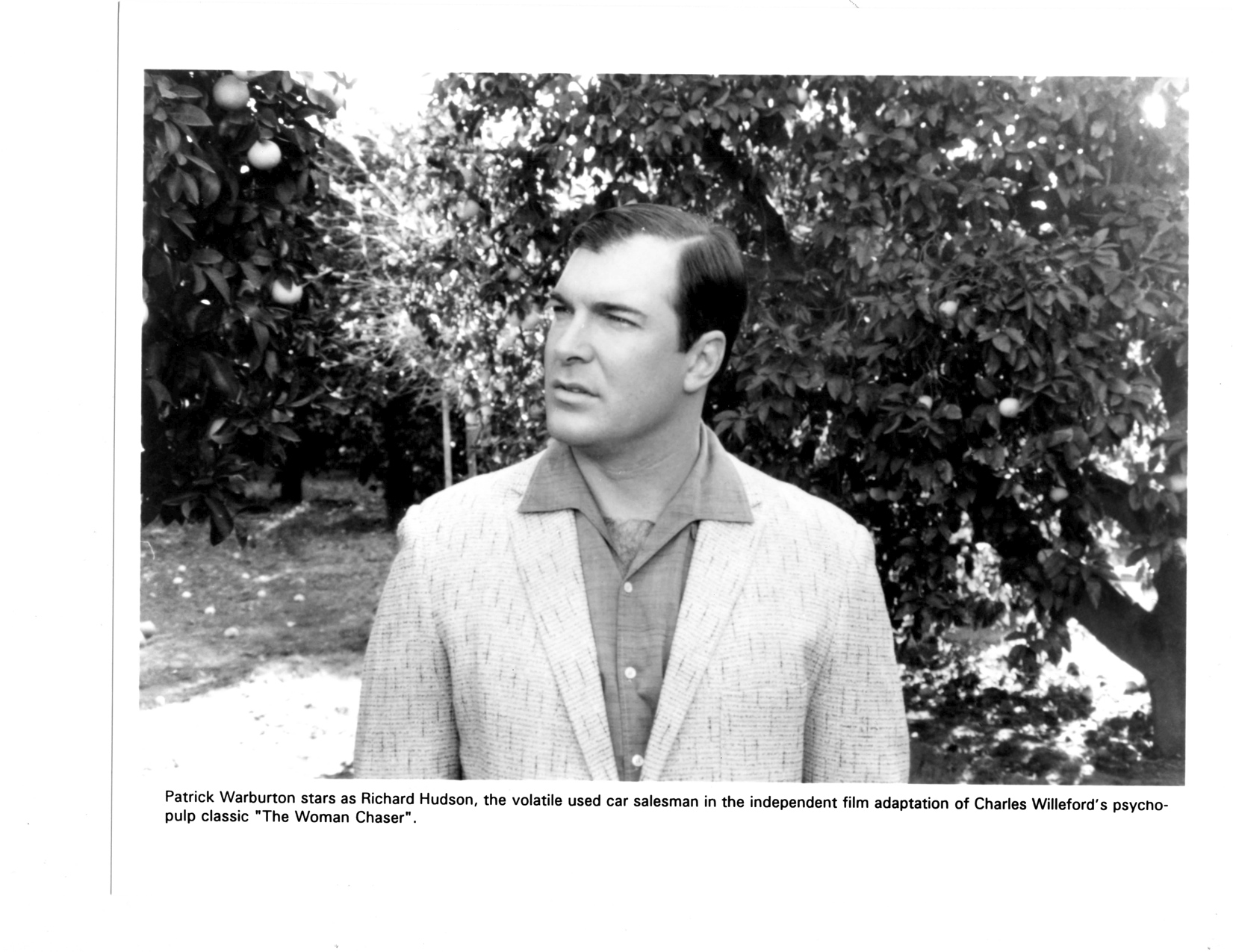

L.A. confidential: Patrick Warburton on “The Woman Chaser” — and “Dragonard”

0

Patrick Warburton occupies his own special niche. He is a big (6 feet, 3 inches), hirsute, square-jawed kinda white guy — the kind who saved screaming ingénues from gorillas or Martians in 1950s B flicks — who’s flourished parodying macho blowhards. Who doesn’t love Warburton? People who don’t know who he is, obviously.

They probably know him regardless, if not by name. First widely noted as Elaine’s emotionally deaf boyfriend on Seinfield, in recent years he’s starred in successful network sitcoms Rules of Engagement and Less than Perfect. They followed The Tick, a short-lived Fox superhero parody series everyone loved but the viewing public. He’s voiced various characters on Family Guy (a man’s gotta work), as well as loftier ’toons including The Venture Bros., Kim Possible, and Scooby-Doo! Mystery Incorporated, playing Buzz Lightyear in Toy Story spinoffs, as well as endearing villain Kronk in The Emperor’s New Groove (2000).

The Emperor’s New Groove reunited him with Eartha Kitt, also a costar in his screen debut: 1987’s WTF Mandingo (1975) rip-off Dragonard, in which he played a race traitor Scottish hunk on an 18th century Caribbean slaving isle populated by such punishing extroverts as boozy Oliver Reed, chesty Claudia Uddy, and creaky Pink Panther boss Herbert Lom. This campsterpiece features steamy sex intercut with chicken sacrifice, a character called “Manroot,” appalling homosexual caricatures, much library music, and other incitements to drinking-game joy. (Start trolling eBay for used VHS copies now.)

These days, Warburton is promoting a past project he’d rather remember: 1999’s The Woman Chaser (opening Fri/25 at the Roxie), billed as both his leading-role debut (hello! Dragonard!!) It was definitely the first feature for Robinson Devor (2005’s Police Beat, 2007’s Zoo), one of the most stubbornly idiosyncratic and independent American directors to emerge in recent years.

Derived from nihilist pulp master’s Charles Willeford 1960 novel, this perfect B&W retro-noir miniature sets Warburton’s antihero to swaggering across vintage L.A. cityscapes. Sloughing off an incestuously available mother and other bullet-bra’d she cats, his eye on one bizarre personal ambition, he’s a vintage man’s man bobbing obliviously in a sea of delicious, droll irony. Warburton appears with Devor at the Roxie for The Woman Chaser‘s theatrical-revival opening night. I caught up with the actor via phone last week.

SFBG Did The Woman Chaser have a significant impact on your career?
Patrick Warburton It should have. We debuted at the New York Film Festival, an amazing experience, then went to Sundance. The film got a nice little art house release in 15 or 20 cities. But after that, there were ownership issues, [and] it never went to DVD. So the audience has been extremely limited.

SFBG Yet a whole lot of people here seem to know and love it.
PW Of course I’ve always known San Francisco and its residents to possess far more beauty and art and culture than this desolate hell-hole we call Los Angeles.

SFBG Were you at all familiar with Charles Willeford before?
PW No, my first peek was Rob Devor’s screenplay adaptation, which was originally entitled King Size, then went back to the original [novel’s] title.

SFBG A strange title, because the hero isn’t chasing women. In fact, he’s completely self-absorbed and alarmingly misogynist.
PW No, this isn’t about a guy chasing women. I guess that’s the way you sold a pulp novel back then, putting a man with a topless woman in a convertible on the cover of a paperback with a title like The Woman Chaser — even though Willeford’s interests were much more psychological. I was [36] years old, playing this role had my sexual interest at an all-time low. I didn’t get it. Meanwhile the actor, Patrick Warburton, was probably knocking one off in his dressing room once a day back then.

SFBG Once?
PW Well, I was eating whatever the fuck I wanted, cuz this guy is a chain-smoking, whiskey-drinking car salesman. I got heavier than I’d ever been in my life, about 250 pounds. My wife was not pleased. [This character] was certainly an odd fellow, a misogynist.

SFBG How did you get involved?
PW My agent said “Here’s a script,” I met Rob, and we clicked. What’s interesting is it was right after the ninth season of Seinfeld. Anything else coming my way was because of that. But [Devor] had never seen an episode — I still don’t know if he has.

SFBG The movie does an incredible job recreating 1960 L.A. on a budget.
PW It was a grind. We’d procured a handful of permits, but mostly just ran into locations with our guerilla crew and stole shots. Rob really did have a vision. When you’re working long hours, you’re not getting paid a dime, you’re working with a director who has such a specific idea what he wants — he’s going to be a little bit of a pain in the ass. But it’s an experience I’ve come to appreciate over time. Because I’ve been on the other side, where you can’t believe what a piece of garbage you’re a part of. That movie was what it was wholly because of Rob. He’s truly an artist. You don’t get such opportunities very often in this business. We’ve talked about [working together] again, and the right thing hasn’t come up. But I would love that more than anything.

SFBG On another subject, I must quote 12 words of dialogue: “Sometimes being a slave is a man more dignity than being free!” So ungrammatical, for starters. Please reveal every last thing about Dragonard.
PW Oh, God. It was the first thing I ever did, and I knew after that experience … well. You have to be able to accept it. The most you can ask for [in this industry] are experiences where you learn and in the end get a great product. Like doing The Dish (2000) in Australia was great. I spent quality time with Sam Neill and Geoffrey Wright, then this delightful film came out of it. But with something like Dragonard, if you’re going to grow as an actor, you’ve got to just shit it out. You’ve got to say, not only is this the most awful movie ever made, but I am the worst thing in it.

http://www.youtube.com/watch?v=OKKWHkMlzPc

SFBG It doesn’t even sound like your speaking voice in that film.
PW I tell people I was dubbed.

SFBG You were?
PW No. I just say that to minimize all responsibility. Going down to South Africa at age 22 for my first movie … my very first day was with Oliver Reed, drunk on whiskey as usual at 10 a.m., doing a sword fight. Terrifying. I decided hey, I’m in prime drinking condition, I’ll try to keep up, though I refused to start before 5 p.m. I ended up going on pretty much a two-month bender with him.

SFBG Plus Dragonard had the late Eartha Kitt, another famously trying person to work with.
PW Eartha Kitt was a fascinating woman. When I got back from South Africa, she was performing [in concert] and I went to see her. Afterwards she invited me to her hotel room. I really didn’t know what the fuck I was doing there. I’m on the couch, she’s on the bed, petting one of her cats like Cruella de Vil. “How are you daaahling.” I must have been shaking. Years later we worked together in [Disney cartoon] The Emperor’s New Groove. Looking at the relationship between [her evil queen] Yzma and [his clueless musclehead sidekick] Kronk in that, I had to laugh. It’s so strange sometimes, how life imitates art, or art imitates life.

SFBG I believe there’s an actual website for devotees of onscreen flogging, and you are the absolute champ. [Warburton’s character is lashed for an onscreen eternity.]
PW I guess that was one way they figured to keep the budget down. “Hey, let’s just kill five minutes watching this guy get whipped!”

SFBG It’s funny, because making fun of the kind of heroic jocktard Dragonard takes seriously turned became your metier. Did you always see comedy as your strength, or did it just evolve that way?
PW No, it pretty much just evolved that way. After Dragonard I thought, “No one is ever going to take you seriously as an actor again — do something else!” [In recent years] I’ve watched it, with friends, after a lot of drinks. It definitely takes a few beers. But for a long time, I hoped every copy of that movie had been lost or destroyed, more than Paris Hilton or whoever wishes their sex tapes were just erased. Or maybe they don’t … anyway, I kinda went into hiding after that movie and thought: “OK, you asshole, are you going to be an actor or not?”

SFBG Yet you perservered.
PW I did. I did persevere.

THE WOMAN CHASER
Feb. 25–March 3, 7 and 9:15 p.m. (also Sat/26, 2 and 4:30 p.m.), $5–$9.75
Roxie
3117 16th St., SF
(415) 863-1087
www.roxie.com

Wisconsin, unions, and defunding the left

21

Mother Jones mag this month has a GREAT story about the battle in Wisconsin, the history of unions and the Democratic Party, and the real aim of the move to bust public-sector unions. Writer Kevin Drum notes:

In the past, after all, liberal politicians did make it their business to advocate for the working and middle classes, and they worked that advocacy through the Democratic Party. But they largely stopped doing this in the ’70s, leaving the interests of corporations and the wealthy nearly unopposed. The story of how this happened is the key to understanding why the Obama era lasted less than two years.

He describes the history of the post-War era and the rise of the New Left, explains how the rift between big labor and the hippie/radical/antiwar folks culminated in the AFL-CIO refusing to endorse George McGovern in 1972, the decline of private-sector union membership and power and thed shift rightward of the Democratic Party.

At one point, he explains, unions were the only organized force with the resources to act as a counterforce to corporate America in political campaigns. Once that went away, the Dems had no choice:

In the real world, political parties need an institutional base. Parties need money. And parties need organizational muscle. The Republican Party gets the former from corporate sponsors and the latter from highly organized church-based groups. The Democratic Party, conversely, relied heavily on organized labor for both in the postwar era. So as unions increasingly withered beginning in the ’70s, the Democratic Party turned to the only other source of money and influence available in large-enough quantities to replace big labor: the business community.

You can blame the Sixties radicals for not understanding the importance of labor (and you’d be right). you can blame George Meany and the AFL-CIO folks for not realizing that those acid-abortion-gay rights folks were their real allies (and you’d be right). But in the end, the bad guys took advantage of the split, and of sweeping changes in the economy, and now we live in the most economically unequal society in the Western world. (Remember: Unions bring up wages and improve working conditions not just for their own members but for everyone else, too.)

So now the only major sector where organized labor is healthy and growing is the public sector — and that’s why the Republicans want to get rid of public-sector unions. In San Francisco, it’s often the case that the city employee unions (excluding police and fire) are the major donors to progressive causes — and are often the only institutional base with the kind of money to counter the Chamber of Commerce/Committee on JOBS/downtown developer bloc. Bust that up and you get corporate hegemony.


Mirkarimi running for sheriff

17

Sup. Ross Mirkarimi is going to file papers today (Feb 22) to begin his campaign for sheriff.

Mirkarimi told us he wants to continue the progressive legacy of Mike Hennessey and to work to reduce recidivism. “Eventually, almost everyone who’s incarcerated comes back to the community,” he said, noting that more than 60 percent of people released from the county jail are re-arrested at some point. “We have to work on re-entry programs to lower that number,” he said. “It’s about keeping communities safe.”

Hennessey, long regarded as one of the city’s most progressive elected officials, has served as sheriff for 31 years. He’s been a national leader in progressive law-enforcement programs, and last year made headlines by fighting the federal mandate that local authorities turn over to immigration offices anyone arrested in the city without proper documentation. He announced recently that he won’t seek another term in November.

Since nobody else has announced an interest in the job — and nobody with Mirkarimi’s record and name recognition is even being mentioned — he becomes the instant front-runner. But it won’t be an easy campaign — the last thing downtown wants is another progressive in citywide office — particularly someone who, like Mirkarimi, could one day use the sheriff’s office as a platform to run for mayor.

Mirkarimi is a graduate of the San Francisco Police Academy and former investigator in the district attorney’s office. He’s been a champion of community policing and antiviolence programs — but as someone who has never been part of the local law-enforcement community, he comes to the race with political independence.

“One of the greatest successes of Mike Hennessey was that he was an independent sheriff,” Mirkarimi noted.

We’ll have more details in the Feb. 23 issue.

Herrera’s crackpipe crackdown

45

I lived at Hayes and Fillmore in the 1980s, at the height of the crack epidemic, and a spectacularly unsuccessful dealer hung out on my corner. He was so bad at selling the stuff (or else was smoking so much of it) that he was constantly broke and used to knock on my door late at night ask to borrow a buck to buy a can of beer.


At one point he owed me about $10, and offered to pay me back with “some hubba.” He proceded to open his fist and show me a couple of grimy rocks rolling around in his filthy, sweaty palm.


It looked so appealing. I politely declined.


That was my one and only chance to smoke crack, and I passed it up. So when I heard that city attorney Dennis Herrera was going to sue a bunch of local stores for selling crack pipes, I must admit I was curious: What’s the definition of a “crack pipe?” How can you tell what a piece of smoking apparatus is going to be used for?


I asked Jack Song, a spokesperson for Herrera, and he told me it was pretty clear. “They’re glass, and they have certain characteristics,” he said.


Again: I’ve never actually smoked crack, so I have no personal experience with crack pipes. But I used to have a really nice glass pot pipe, which unfortunately was seized by the police in upstate New York many years ago. I went on Google images, the source for all truth, and checked out “crack pipes,” and some of them looked a little like the one I used to use for what we now consider a legal medical treatment.


According to the press reports, an undercover cop went into these stores and asked to buy a crack pipe. The store owners allegedly offered up a specific device, which would not have been terrible smart; when we used to buy bongs in Connecticut, where selling any sort of drug paraphernalia was illegal, the salespeople would talk loudly about how to load “the tobacco.”


In this case, Herrera’s even going a bit beyond crack pipes:


At all times relevant to this Complaint, up to and including the present, in addition to
the permitted tobacco products, Defendants have also displayed and sold smoking paraphernalia, including a large array of pipes and devices commonly referred to as “bongs.”


But Song told me marijuana devices wouldn’t be targeted.


At any rate, the legal case is now going to rest, I guess, on what defines a “crack pipe.” (Apparently there are “meth pipes,” too, which are a little different from crack pipes. I feel so old and uninformed.)


And while I understand the neighbors griping about the stores attracting a nasty element (my old pal on Hayes and Fillmore was harmless enough, but your typical crackhead isn’t great company), I wonder about the ultimate impact of this particular, uh, crackdown.


Herrera’s lawsuit notes:


By providing their customers with a way to ingest illegal and dangerous narcotics, Defendants are creating and contributing to conditions which are injurious to the health, safety and welfare of their customers, neighbors, and the community at large. Defendants’ conduct causes or contributes to offensive and annoying conditions, including, but not limited to: illegal and dangerous trafficking of controlled substances, illegal and dangerous use and abuse of controlled substances, public intoxication, and the crime and nuisance related thereto.


I get that the city attorney considers these stores a community nusiance, and he may well be right. But I don’t think this is going to do much about crack and meth use.


I mean, can’t you smoke crack out of a pot pipe? Can’t you pretty much smoke it out of anything? When I was in high school people stuck their pencils into apples and made holes to smoke pot out of; in college, I learned that, in a pinch, Tampax wrappers made perfectly adequate rolling papers.


Druggies (of the sort who use crack pipes, anyway) may be violent and otherwise fucked up, but they’re notoriously creative. They may stop hanging around these particular stores in these particular neighborhoods, but they’ll find someplace else.


It seems likely that the only ones who are going to suffer for this are the store owners; the crackheads will be just fine. In a manner of speaking.


Onek to SFPD Chief turned D.A. Gascon: release records of officers cleared in shootings

3

Calitics has a revealing letter from David Onek, a senior fellow at the Berkeley Center for Criminal Justice, a former member of the San Francisco Police Commission and a candidate in the 2011 District Attorney’s race, demanding greater transparency from the D.A.’s office when it comes to explaining why officers have been cleared in officer-related shootings.

“After spending my career working to identify and implement the most effective public safety strategies, I have seen one constant – the community is safest when the police and prosecutors earn and keep the public’s trust,” Onek writes in a letter that is guaranteed to turn up the ante in an already intriguing race. “That’s why I read with real concern that the San Francisco District Attorney’s office would not produce reports related to officer-involved shootings pursuant to a recent public records request from NPR-affiliate KALW.”

(The KALW report shows that the person in the D.A.’s office who penned the letter denying its request for records was Paul Henderson, D.A. Kamala Harris’ chief of staff and her preferred pick as replacement D.A. before Gavin Newsom appointed former SFPD Chief George Gascón as his last act as mayor, shocking just about everyone except Willie Brown, especially when it came out that Gascón used to be a Republican and is not philosophically opposed to the death penalty. And while Gascón, who was registered in recent years as decline-to-state, promptly turned around and registered as a Democrat, he also filed papers in the D.A.’s race that cite the phone number of notorious campaign attorney Jim Sutton.)

In his post on Calitics, Onek notes that as a former Police Commissioner, he was briefed in closed session on the details of officer-involved shootings, and he often heard complaints from community members about how little public information was released about officer-involved shootings.
“This lack of transparency breeds distrust,” Onek observes.

Onek acknowledges that in all officer-involved shootings, the DA’s office conducts an independent review to determine if there is criminal liability, and that if such liability is found, the DA presses charges, which are public. “But when the DA determines that there is no liability, it is equally important that the DA publicly explain the reasons for its decision,” Onek states.

In short, he believes the D.A.’ office should issue a very detailed report on every officer-involved shooting in which it does not file charges and should make the report publicly available on its website. “The report should detail the facts, the law and the reasons for the decision not to file charges,” Onek says, arguing that complete transparency would make the job of police and prosecutors much easier by building trust between law enforcement and the community, making it more likely that community members will work in partnership with police and prosecutors, and that victims and witnesses will come forward to testify.

“Publishing detailed reports that clear officers when they acted within the law can dispel public misconceptions about what actually happened,” Onek concludes. “Of course, officers’ privacy rights need to be respected and investigations cannot be compromised. But once an investigation is complete, and an officer has been cleared, it is imperative that the District Attorney’s office share its findings with the public. “

And as Onek points out, this standard is already in place in communities in California. “The District Attorney’s office in San Diego, hardly a bastion of liberalism, actually lists these cases on its website,” Onek states. “Many other counties – including Los Angeles, Orange and Fresno – also make them matters of public record and available on request. Building trust with the community is the key to enhancing public safety. Let’s not violate that trust by refusing to release documents that the public has the right to see.”

I’ve got a call into D.A. Gascón’s office to learn more about the rationale for denying KALW’s request, and I’ll be sure to post his reply here, so stay tuned.

Warren Hellman: The rich are undertaxed

31

I couldn’t reach financier Warren Hellman before I wrote my column in this week’s paper talking about the employee pension discussions. But he called me yesterday (Feb. 16) after he’d seen it, and I expected he’d give me some shit.


Wrong.


In fact, Hellman had only one problem with my analysis: “Your article is didn’t go far enough.” Turns out he thinks I was a bit too easy on the billionaires.


“When you compare upper-echelon tax rates [in America] to any developed country in the world,” Hellman said, “the rich pay very low taxes here. You’re article is exactly correct — the wealthy are undertaxed.” He told me that he’s stopped trying to amass more personal wealth (“it’s all going into a foundation”) because he realizes that he couldn’t possibly spend all the money he has “and all that happens if you leave it all to the next generation is that you spoil your kids.” 


Quite a statement coming from one of the city’s richest and most influential business leaders.


Of course, putting all the money in a foundation isn’t the only answer.   The only way to address the wealth gap, and the decline in social, education and infrastructure spending, to for the government to get more involved — and that means collecting more tax money from the people who can afford to pay it. Hellman told me that he’s not about to accept a reduction in his lifestyle — but we both agreed that he doesn’t have to. He could pay a lot more in taxes and still be really, really rich.


So we talked about my proposal, which goes like this:


I’ve got a suggestion for the pension reform negotiators. Why not talk a little about parity.


 Yes, pensions have to be fixed; let’s start at the top. Maybe nobody should have a pension of more than $100,000 a year; certainly, a former police chief shouldn’t get $250,000 a year for life. Maybe the highest-paid city employees should have to pay more into the pension system to protect the pensions of the people who make less. I could easily support progressive pension reform that would save the city money.


 I just think tax reform should also be part of the equation.


 Hellman wants $300 million in pension savings? Good — how about pairing it with $300 million in new taxes on the wealthy? How about big business and rich people give up something this time around, instead of all of the cuts falling on public employees and poor San Franciscans?


And Hellman, to his credit, didn’t disagree with the concept. His problem he said, was with the politics. “Taxes are the third rail of politics,” he said. “I’ve gotten my head handed to me three times now when I’ve supported tax increases.” 


But I still think there’s a way to move forward here. The city employee unions agree to some sort of pension reform, which starts with a pension cap and higher payments from higher earners (not with what amounts to a pay cut for lower-wage employees who have already taken pay cuts in the past few years). Then Hellman, Mayor Ed Lee and Sup. Sean Elsbernd agree to support a progressive tax measure that would bring in badly needed revenue for public services and education.


It’s possible that the tax measure would have to wait until Nov. 2012, when it would only require a 50 percent vote. Maybe both measures go on that ballot. And Hellman, Elsbernd and Lee use their clout with downtown to push the Chamber of Commerce and the Commitee on JOBS to at least stay neutral and cut off any big-money campaign against the tax measure. Then they all agree to help raise money and campaign to pass it. And labor agrees to work for both measures.


Hellman said he feared that “one would kill the other” and both measures might fail. But I believe the people of San Francisco are willing to support new taxes — progressive new taxes — if they don’t think the money’s going to waste. And pairing pension refrom with new taxes sends a strong message: We’re all sharing the pain. Particularly if Hellman, Elsbernd and Lee can sell the tax package part of the deal to the business community.


It’s worth a try. Because otherwise, we’re going to have another Prop. B battle, both sides are going to spend a ton of money, and nobody’s going to walk away happy.


“It’s worth thinking about,” Hellman told me. I hope so.

Hellman and Obama feel your pain

29

The Bay Citizen has a detailed report on the backroom discussions taking place around pension reform, and there aren’t any real surprises. The cops and firefighters seem to be leading the talks from the public-employee union perspective, although the other unions are there, and Mayor Lee has taken over the gavel from financier Warren Hellman. Sean Elsbernd is involved, but they’ve kept Jeff Adachi out. (And what the hell is Nathan Ballard doing in this mix?)


But what got me when I read the story this weekend was the quote from Hellman:


In an interview Thursday afternoon, Hellman said the group must come up with annual savings of $300 million to $400 million. (Proposition B was to have saved the city $120 million.)


“I hate that it comes out of the hide” of city workers, particularly those making modest salaries, Hellman said. “It is going to be really painful.”


It reminds me of Obama’s comments on his budget cuts: They’ll be painful and he hates to do it, but these tough decisions have to be made for the good of all of us.


My question: Why doesn’t anything ever come out of the hides of the billionaires?


From the start of this recession, working-class people, public employees and the poor have taken huge hits. Nothing — nothing — has happened to the top echelon of society. If anything, they’ve only gotten richer. The bankers who destoryed the economy with financial instruments even they didn’t understand? They’re not in the poor house. They haven’t had their homes foreclosed. They’re all doing just fine.


In fact, the United States government just kindly allowed them to keep their tax cuts for another two years.


Obama isn’t going to miss any meals. His kids will still have their fancy private school. He won’t have to worry about his pension vanishing or eating cat food in his old age. Same goes for Hellman; there’s nothing in the world that he could possibly want to buy that he can’t have.


So it makes me really mad to hear them talk about feeling bad about budget cuts and reducing pensions. If they feel bad, then why not do something about it?


Hellman’s not a bad guy. I’ve met him, he’s pleasant and polite and sincere about wanting to help the city. I couldn’t reach him on the phone today, but I’ll keep trying, because I have a question:


Over the past five years, city employees have given back hundreds of millions of dollars in wage and benefit concessions. Social programs have been cut by hundreds of millions more. And the rich in this town have given back nothing. Mr. Hellman: Is that fair?


I’ve got a suggestion for the pension reform negotiators. Why not talk a little about parity.


Yes, pensions have to be fixed; let’s start at the top. Maybe nobody should have a pension of more than $100,000 a year; certainly, a former police chief shouldn’t get $250,000 a year for life. Maybe the highest-paid city employees should have to pay more into the pension system to protect the pensions of the people who make less. I could easily support progressive pension reform that would save the city money.


I just think tax reform should also be part of the equation.


Hellman wants $300 million in pension savings? Good — how about pairing it with $300 million in new taxes on the wealthy? How about big business and rich people give up something this time around, instead of all of the cuts falling on public employees and poor San Franciscans?


I’m good with pension reform, really I am. And I’m not involved in the negotiations. But I’m a San Francisco progressive who will have to vote on the ultimate outcome. Give me something to work with here, guys.


Dick Meister: Scapegoating Public Empoyees

7

Dick Meister, formerly labor editor of the SF Chronicle and KQED-TV Newsroom, has covered labor, politics and other matters for a half-century.

Let’s pause for a moment to recognize some of our most important, yet most maligned workers. They are teachers and librarians. Police officers and firefighters. Bus drivers, doctors and nurses. Judges, lawyers, gardeners. They’re laborers and other maintenance and construction workers, and many others who provide us vital services.

They are public employees. There are millions of them, who every day do the essential work that keeps our country going.

It is they who keep our streets and highways, our parks and playgrounds safe and clean, who collect our trash. It is they who help educate our children, who provide emergency health care, who convey us to our jobs and back home after our day’s work, who sometimes risk their very lives to protect us from harm.

Yet despite all that – and more – public employees have come under heavy bipartisan attack by politicians who find them easy targets to blame for the budget shortfalls that have beset government at all levels.  Labor costs, after all, make up the bulk of government spending everywhere.

There’s no way around that basic fact. So if we want all those vital services public employees provide – and we do – that’s the price we must pay, and should be happy to pay. Certainly no group of workers has done more for us, none who are more important to our welfare, none more deserving of their wages.

Yet we seriously shortchange many of those workers. And some people, including political leaders who obviously know better, ludicrously cite public employees as a major cause of the economic recession that just won’t go away.

The blame, of course, clearly rests elsewhere. The culprits, as the Portside Labor website noted, include “the super-rich who will continue to enjoy immensely lucrative tax breaks enacted during the Bush administration,” and the Defense Department officials who want “a budget blowing $78 billion over the next year to fund the endless wars in Iraq and Afghanistan and maintain a military machine that spends more than all its rivals combined.”

No, it’s not obscenely wealthy tax-dodging greedheads or the war-happy folks at the so-called Defense Department who’ve caused  record budget deficits. Oh, no. It’s that “greedy public employee who pulls in an outrageous $19,000-a-year pension.” You know, one of those public employees Gov. Mitch Daniels of Indiana actually characterized as members of  “a new privileged class.”

Public employee unions are striking back at such foolishness. For instance, the American Federation of State, County and Municipal Employees is waging a nationwide “Stop the Lies” campaign. Union President Gerald McEntee has been arguing that “hundreds of thousands of public employees, just like private sector employees, have been laid off, and taken pay and benefit cuts – even as Wall Street executives lined their pockets with taxpayer money and took home huge bonuses.”

The union’s retirees, meanwhile, are getting rich on pensions of, indeed, $19,000 a year.

There’s this, too: Government workers generally get less in pay and benefits than workers holding similar jobs in the private sector. As Portside Labor and others have pointed out, public sector workers don’t seem to resent the fact that their pay lags behind pay in private employment, “because most choose public service for other reasons than pay.” That’s obvious, and another reason to quit scapegoating the under-compensated workers who are among our most valuable.

The latest and perhaps best defense of the scapegoated public employees has come from President Harold Schaltberger of International Alliance of Firefighters .

Schaltberger notes the attacks on public employees are “like a tsunami rolling across the country.” He says the attacks have never been greater, more serious or as vicious.”  As he says, “Wall Street’s recklessness, not public employee pensions, caused our nation’s financial collapse. Scapegoating workers won’t solve anything.”

In a full-page newspaper ad, Schaltberger noted that “Firefighters and paramedics are dedicated to the lives of our neighbors. Whether it’s a natural disaster, terrorist attack or another tragedy, we answer the call. We understand that many Americans are hurting because of the recession, but we will not apologize for putting our lives on the line, the dangerous work we do, or the pensions we’ve earned.”

Part of the reason for the strong attacks on public employee unions is that they have become the vanguard of the labor movement. They’ve been growing as unions in private employment have declined. Union membership overall dropped by about 600,000 last year, lowering the percentage of union members in private and public employment combined from just above12 percent to slightly below that figure.  The percentage of public employees belonging to unions also shrunk slightly, but still stood at about 36 percent.

So, more than one-third of the country’s public employees now belong to unions, but only about 7 percent of workers in private employment are unionized.  Which explains why the country’s anti-union forces are concentrating so heavily on public employees, and seeking to enlist broad public support for their anti-unionism by blaming public employees for our serious economic troubles.

Dick Meister, former labor editor of the SF Chronicle and KQED-TV Newsroom, has covered labor and politics for a half-century. Contact him through his website, www.dickmeister.com, which includes more than 250 of his columns.

Black history, local hire, living color

31

City Hall kicked off its annual Black History month celebrations with a talk by Los Angeles philanthropist and former Xerox Corp. VP Bernard Kinsey about the importance of debunking myths about the absence of blacks in American history. And Mayor Ed Lee, who had just met with five dozen unemployed black construction workers from the Bayview, revealed how, when he was growing up in the projects in Seattle, his neighbors were black, and an African American named Darnell was one of the most loyal patrons of the restaurant that Lee’s father was trying to make succeed.


“And when my dad suddenly died of a heart attack, Darnell was the first person to offer my brother a job at his gas station,” Lee said. “So, this is not just about recognizing African American history, but recognizing what they did for us, and  making sure that no there are jobs and we protect the family structure. I know what it is to be helped by the African American culture.”


Lee’s recollections of Darnell came less than an hour after he met with Aboriginal Blackmen United, a group that represents unemployed construction workers in the Bayview, to discuss how its members can get hired at UCSF’s $1.5 billion hospital complex at Mission Bay and other local building sites.


At that meeting, ABU President James Richards thanked Lee for getting UC to clarify the details of its voluntary local hire plan at the Mission Bay hospitals.
But he warned that the fight is just starting. “We’ve got the unions to deal with,” Richards told Lee, referring to the reality that the unions also want their members to get work at the UCSF site.


Lee said he’d do his best to help.
“The African American community in San Francisco has not got its fair share,” he said. “I can’t say that everyone in the room is going to get a job, but I’ll open up doors and do my best.”


And then Lee confirmed that local hire is one of his top five priorities.
“My top priorities are the budget, pension reform, the America’s Cup, finding a good police chief and local hire,” he said. “I said that directly to every union leader yesterday. Some unions will be there, others will resist.”


ABU’s Richards said the need to have a G.E.D. to get into the city’s ob training programs is a barrier to employment for many in the Bayview.
“We have a lot of people, who are not able to get into CityBuild because they don’t take folks anymore who don’t have their G.E.D,” he said.


And he warned that the city’s black community is in crisis.
“I know there is a budget crisis, but this is a life crisis,” Richards said. “Young people are dying and it’s not even newsworthy any more.”


Lee suggested ABU work with the City to avoid the need to hold protests at construction sites in future,
“Let’s plan together, so you don’t have to go to all the sites,” Lee said. “I am for people getting their GED. But if someone has evidence that they are making an attempt to get their GED, we need to reward that with jobs. So that the GED is not a barrier, it’s a hope.”


And then Lee was off to attend his next round of meetings, which included the city’s Black History month event, where speakers noted that during Bernard Kinsey’s career with Xerox, he helped increase the hiring of blacks, Latinos and women,


Kinsey told the audience that he and Shirley Kinsey, his wife of 44 years, share a passion for African-American history and art. And that their world-famous Kinsey Collection, which contains art, books and manuscripts documenting African American triumphs and struggles from 1632 to the present, is currently on display at the National Museum of American History in Washington D.C, and a number of pieces are at the San Francisco African American Historical and Cultural Society. He noted that the posters of African Americans in the Civil War were reproductions of some of the art in those exhibits. 


Sup. Malia Cohen noted that about 200,000 African Americans participated in that war. Sup. Ross Mirkarimi, who represents the city’s Western Addition, where redevelopment triggered massive displacement of the black community in the 1960s, noted that eight members of the current Board of Supervisors, who selected Lee as the city’s first Chinese American mayor, are people of color.


“This is true representation,” Mirkarimi said, noting that the fact that the city’s African American population continues to drop (reportedly down from 6 percent to 3.9 percent, according to the 2010 Census) to “is a reminder that even the most forward-thinking cities have a lot of work to do.”


And Kinsey urged African Americans to start describing their ancestors as “enslaved.”


‘It will change how you look at your ancestors,” he said, “You don’t have a clue about what they sacrificed to get you to where you are today. We don’t tell you the ‘ain’t-it-awful’ story about slavery. We tell you the story of how we overcame.”


“You need three things for a successful life,” Kinsey added “Something to do. Someone to love. And something to look forward to.”


Kinsey said he and his wife have espoused two life principles, ‘To whom much is given much is required” and live “A life of no regrets.” And then he told a story about an eagle who was raised by a chicken.


The eagle ended up ashamed of his feathers, because the chickens never told him he was an eagle because they were afraid he’d end up ruling the barnyard.“He even grew up ashamed of his daughters,” Kinsey said.


Eventually, the eagle met another eagle, who told him the truth. “You ain’t no chicken,” the other eagle said.


“And this is the message,” Kinsey said. “Don’t think chicken thoughts, or dream chicken dreams. Think like an eagle.”


He warned the audience to be careful of buying into myths that would have them believe that African Americans played no role in building the U.S.
“There are stories that made America and stories that America made up,” Kinsey said. “And too often, the myth becomes the choice.”


And then he concluded by expounding on “the myth of absence.”
‘”African Americans are not seen, not because of their absence, but because of the presence of a myth that prepares and requires their absence,” Kinsey said. “And the manipulation of the myth changes the color of the past. It’s no accident that the dominate images from the past are white. And many of us have swallowed the pill.”


Wiener proposes economic study on nightlife

5

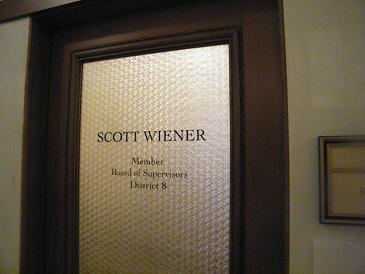
While the basic ideological makeup of the new Board of Supervisors didn’t change much, there are a few notable differences between the newbies and their predecessors. Much has been made of Sup. Jane Kim’s greater willingness than Chris Daly to vote against her progressive colleagues (we have a story in tomorrow’s paper about that), but another significant one is Sup. Scott Wiener’s support for nightlife and concerns about what we’ve called the Death of Fun.

His office has announced that at today’s board meeting, Wiener will call for a study of the economic impacts of entertainment and nightlife in the city. “It’s important that we understand the size and reach of this industry as we consider regulating it,” Wiener in a press release.  “Without this information, it’s difficult to make informed decisions and to enact effective policies concerning entertainment and nightlife, which are a key part of San Francisco’s cultural identity.  Particularly as we attract more young people to San Francisco, as the biotech and other new economy industries grow here, we need to ensure that we are providing them with entertainment opportunities.  Understanding the size and scope of entertainment and nightlife in the City will help us achieve that goal and help us remain a world-class city that attracts people here.”

Contrast that with Wiener’s predecessor, Bevan Dufty, who led the effort to cancel Halloween in the Castro (enforced with hordes of police and water trucks) and presided over the city’s efforts to demonize the nightlife industry, give the cops greater authority to crackdown on clubs, and opposed efforts to create and support street fairs.

Longtime Entertainment Commission member Terrence Alan was an enthusiastic supporter of Wiener’s supervisorial campaign, breaking with many of his progressive allies who were backing Rafael Mandelman. And now, with this study, Wiener seems to be trying to show how valuable this industry really is to San Francisco in the hopes of stopping future crackdowns.

Protest in solidarity with Egypt and Tunisia uprising

30

As President Barack Obama insists that governments must maintain power “through consent and not coercion” organizers have announced a protest this Saturday, January 29, in San Francisco, in solidarity with people in Egypt, Tunisia, and other countries struggling against 30 years of dictatorship, poverty, unemployment and torture–and are condemning what they call Obama’s “refusal to condemn the Mubarak regime.”

In a press release, Mohammed Talat, an Egyptian organizer of Saturday’s protest commented that “Despite the extreme Egyptian government repression of its citizens on the streets, mass police violence, killings, and arrests, the blocking of internet and cell phone communication, the US government is still refusing to condemn the Mubarak regime.  As individuals in the US, we protest this inaction and express support for our brothers and sisters in Egypt.”

The protest begins noon, Saturday, at Montgomery BART, followed by a march to the UN Plaza.

More John Ross poems

2

Thanks to some of the many John Ross fans out there, I’ve begun to collect a treasure trove of his poetry, much of it either unpublished or published in limited-circulation chapbooks. Even John didn’t have all of his work when he died, and there’s no central collection. So I’m going to post a couple more of my favorites here — and at somepoint, we have to figure out a way to publish the whole collection.


Here’s one from Running Out of Coast Lines (1985) called “Ohio.”


The snow is sooted


with the scrapings of burnt toast


and the crumbs of industry.


There are citizens asleep beneath it,


buried alive inside dark cocoons,


out of work and under the quilts


alarm clocks left unwound


to roll back the boozy winter,


just a deep snooze in February


the drifted fields and streets,


unscuffed, untraveled,


unhitched trailers,


going nowhere, no one


can find their car in Toledo anymore.


Snow is stasis, it sticks in Cleveland,


it freezes the veins of venom


inside the Cayahuga, gases


are suspended until further notice.


A man who once turned tractor tires


big as a house both of them


rolls over in the white bed


in Sandusky and tries to dream


only of the good parts.


Here’s “Kansas City” from The Daily Planet (1981)


Just when we absolutely had to split


she stepped up


like she owned a piece of history


and meant to lease it to us


right there on the spot.


I never knew Charlie Parker she said


slipping Bish the pic


in which she looked so slick


in a tophat and tuxedo


but I danced in the line


with June Williams


at the Jockey Club


before she run crazy in the streets


buckass naked up 18th


my she had a beautiful figure


June Williams


she said standing alone


in the doorway of the peeling porch


in the spring thundershower


pelting the helpless shrubbery outside.


O I toedance and play the vibes


and I can dance on tabletops too


only isn’t no work in Kansas City


since they merged the unions


the black union and the white one.


She wore a red beret and talked slow


loke she’d been slipping sweet-toothed wine


or else jamming skag, one.


Nope no work here in Kansas City


the machines play all the music now


they got a clique down at the union hall


things ain’t what


they used to be.


And one of my all time favorites, from The Daily Planet, is called “Wanted.”


 She is wanted


Catherine Louise Como


also known as


Kathleen May Wright


Manon Minette


Catherine Ann James


Manon James


Cathy Wright


Minon Manette


She is wanted


also known as


Catherine Share


Catherine Louise Share


Janice Thompson


Betty Cox


Darleen Cook


also known as


Suzanne Bronson


Donna Todd


Mary Thomas


Janet Gross


Betty Bowers


Jessica Daniels


also known as


Gypsy


she is wanted


born Xmas ’42


France a tough war


a known Caucasian


she is wanted.


She is wanted


and she has


brown eyes, brown hair


and small bullet wound scars


on her right sholder


and her right hip.


In two of the mug shots


taken several years ago


Sacramento Calif


her hair is pulled too taut


atop her ears


and her swollen lower lip


curls defiantly


at the police photographer.


In the third, taken months later,


the unbraided hawsers of her hair


tumble wantonly to her shoulders


and she looks like she wants to bite


the arresting officer


on the fat white folds


of his throat.


There are two sets of


small dangerous fingerprints,


checkforging fingerprints,


mail fraud fingerprints,


tilltapping fingerprints.


She is wanted by the FBI


she is wanted by the federal marshalls,


she is wanted in the U.S. Mails,


she is wanted in California, Oregon, Nevada,


and 47 other states.


She is wanted


and she is armed


and considered to be dangerous


and that small I think crescent-shaped scar


on her smooth white hip


drives me 74 way bananas


every time


I try to buy


a 20-cent stamp.


Don’t nobody give a damn: day 3

1

Unemployed construction workers protested outside UC Mission Bay’s Hospital building for the third day straight—but by early afternoon seemed to have got some clarification from UC officials over upcoming job opportunties at the site.


At issue is the tension between UCSF’s stated desire to be a good neighbor and put local residents to work, and the reality that while unemployment remains high throughout the construction industry, the communities immediately neighboring UC’s Mission Bay campus have been hard hit.


.“I want them to set up a system where we have a referral mechanism that includes CityBuild, and for UC to discontinue using DPR’s subcontractor Cambridge and other consultants,” James Richards, President of Aboriginal Blackmen United (ABU), said shortly before he met with UC officials. “Because if you don’t have a community-based organization helping UC make good on its commitment to be a good neighbor, then you are going to see stuff like UC’s voluntary local hire system. The idea that you can have a voluntary system without someone like ABU, which organizes folks from the community, is why this system is going to fail. And it’s why we only see token folks on the site. Because if you don’t work with the community, you won’t get the community to work. Really it’s an easy proposition: you have unemployed union workers at the gate. So put them to work.”

Just then Dwayne Jones, who worked in the Mayor’s Office when Gavin Newsom occupied Room 200, stopped by to chat with Richards and the ABU crew. 
Jones, who is now with Platinum Advisors, told the Guardian that he works as consultant for DPR Construction, UC’s prime contractor at Mission Bay. Fortune recently ranked DPR number 22 in its list of Top 100 companies to work for in the U. S.


Jones noted that his work with DPR had nothing to do with ABU’s local hire protest. “I’m only involved because I have worked with all these folks in the past and know all the players,” Jones said. “So, I’m helping these folks. At the end of the day, DPR’s concerns and mine are the same: I want to facilitate a process that maximizes opportunities for local folks.”

“These are all great people,” Jones continued. “I’ve worked for them for 15 years.”

Asked what the city can do to get the state-owned UC to hire more folks from economically disadvantaged communities on a project that isn’t financed by city funds, Jones said, “I agree that there is little leverage that the city has, given the constraints of the contract, so people need to be creative.”

Jones said he was not aware that Dr.Arelious Walker and the San Francisco Workforce Collaborative has issued a flier stating that they were gathering lists of names to be submitted to UC for jobs, amove that angered ABU members since they have been protesting for jobs at the site for over a year


“I was not aware of this group but there are a multitude of organizations trying to do good work,” Jones said. “And frankly this [multitude] was one of the things that led to the end of the lead agency methodology, because it caused so much division in the community. I hope we build a really strong coalition in the community that leverages its strengths.”

Jones gave UCSF credit for trying to move the local hire process forward
“I’m glad that they accepted the initial recommendation to do whatever they can to mirror the city’s local hire legislation,” he said. “Because although it’s voluntary, if it’s part of your culture and you embrace it, it’ll get done. And these are the people who have been out here for a year.”

Last December, the Board approved local hire legislation for city-funded projects. Mayor Gavin Newsom did not sign the legislation, which met stiff opposition from the building trades, and it’s fallen to Mayor Ed Lee to mplement this new law, which does not apply to state agencies,but had led to a parallel dialogue with UC.


“Much like any policy, implementation is the biggest challenge,” Jones observed. And until we do some inventory of which organizations, contractors, individuals and groups can do each piece of the work, it’s going to be a struggle. What I’m praying for is that local hire legislation allows us to get a bigger table. What I’m interested in doing is creating a pipeline of qualified workers, so that whenever something like this happens, I don’t have to hear the excuse that folks aren’t ready to work.”

Then Richards took off for a meeting with UC Vice Chancellor Barbara French that lasted two hours during which time rumors started circulated that Mayor Ed Lee had called French to try and help move the conversation along, as ABU members continued their protest and shared stories with reporters of how they came to be standing on a picket line in Mission Bay.

One worker, who preferred to remain anonymous, said he was frustrated by UCSF’s plea for workers to remain patient because jobs are coming soon. “We’ve been out here for one and a half years, so since before they did their demolition, and they have been playing games with us,” he said. “ Folks with ABU were promised jobs. But then they didn’t get anything. That’s what UC does. They try to pacify you and tell you stories, then the money gets taken out of the community, and another year goes by. So, if anybody says, why aren’t you more patient, the answer is that the whole area has been built with only a handful of people from our community. Especially now, when no one has jobs, and everybody wants to work here. We are not going into other communities and trying to steal their jobs. We just want to work here. But we could be protesting every day, until this whole stuff has been built. It’s a city within a city. Just look around you. We was patient. And all this stuff has been built and we got no jobs.”

Michelle Carrington, 58, a flagger and an operating engineer from the Bayview, said Dwayne Jones helped her graduate from Young Community Developers. “He got me in tears, he dropped me in the mud at 5 in the morning and made me do push ups, but I fought and kept on and graduated at the top of my class out of three women and 15 men,” she said. “But now we got people going behind the gate, folks who used to work for Dwayne Jones, like Dr. Arelious Walker, who are trying to say that they are the ones who have got the sign-up list for jobs here. But you ain’t been here marching, or down at City Hall fighting for local hire. And I saw Rodney Hampton Jr. on the number 54 bus, and I let him have it. I said, what’s this I heard about you and Walker? And he said he went to UCSF and tried to get a bid but was told ABU had it. So the only way to get in was for him and Marcellus Prentice to go to God’s house.  But Walker’s not out here. Meanwhile, we see folks coming from Hayward, Sacramento and Vallejo and working on this yard. Why is it such a hard decision to try and put us to work? It’s easy. Just take 5 or 10 of us, put us to work, and we will go away. Work smarter, not harder.

Laborer Sharon Brewer, who was born and raised in the Bayview and has been out of work for two years. She helped her granddaughter, Akira Armstrong, hold a protest sign and talked about losing her apartment because she lost her job.
“I had to move back in with my daughter because nobody lets you live for free,” she said. “I used to work for UCSF as a patient coordinator for physical therapy but I got laid off. Now I have to dummy down my resume to try and get a job making $8 an hour selling coffee and donuts .”

Jesse Holford said he had reached the fourth level of his apprenticeship as a Carpenter.
‘There are eight levels between an apprentice and a journeyman,” he said.

Jason Young and Alonzo McClanahan said they were unemployed laborers from  Bayview Hunters Point resident. Robert English, a carpenter journeyman from the Bayview, had been out of work 6 months. Tina Howards, a carpenter’s apprentice from the Bayview with four kids,  had been out of work for a year. And Keith Williams, a carpenter from the Bayview, had been out of work for nine months.


Fred Green, who has lived in the Bayview for 50 years and has five kids, said protesters were trying to remain as peaceful as possible.


“But an empty belly makes you do strange things,” Green said. “If there’s enough work for everybody, why should we be stuck at home while someone comes into my community and takes food out of my kids’ mouths. I got five kids and they all go hungry.”

Bayview resident Carlos Rodriguez has three kids and has been out of work for two years.
“They called me to work before Christmas but never hired me, “ he said.


Bayview resident Truenetta Webb has two kids and has been out of work for four months.
‘Some guys called me and took my information, but there’s been no work,” she said.

Troy Moor, who has lived in the Bayview for 47 years and has two kids, worked in January on Lennar’s shipyard development for 17 days.


“Two weeks ago, UC said they were going to hire four folks on ABU’s list, but they didn’t,” he said. “We don’t want it to get ugly out here. All we want to do is feed our families.”

Moor said he believes Mayor Ed Lee will ensure local hire is implemented on city-funded projects. “Ed don’t want no problem, we know him personally, we used to work for him when he was at DPW (the city’s Department of Public Works),” he said. “He’s a decent guy, as long as you keep the pressure on him.”

Moor speculated that if ABU blocked both gates to the UC Mission Bay hospital project, it would cost UC thousands of dollars.“Here at the front gates, we are visible, but we figure that if by next week, nothing is happening, we’ll start making them lose money,” he said.

Ed Albert, a retired painter and a Bayview resident for 57 years, said he was protesting for folks in his community.
“I grew up in the Bayview, I’m a servant of the Bayview,” he said. “I went from paperboy to contractor. I was a painter for Redevelopment and the San Francisco Housing Authority. But I don’t want a job. Who’d hire a 67-year-old guy with one eye? But I want to see my people get a job.”

James Amerson, a laborer with Local 261, said he worked on the Transbay Terminal in July, then got transferred to Pier 17.
“But when that was over, they didn’t bring me back to the Transbay, so I’ve been out of work since the end of December,” Amerson said. “They sent me to the Transbay as a flagger, and I rode by the other day, and saw they had an apprentice operator doing flagging.”


“When we are not working, we always come back to James [Richards]’s church at Double Rock,” he continued. “We meet at 9 a.m., Monday through Thursday. James is sick with diabetes. But he ain’t asking for anything. He’s here for the people, coming out here, buying food every day. We feed everybody. Yesterday he was feeding the police officers.”

Finally, Richards emerged from his meeting with UC officials. After he crossed 16th Street slowly, Richards was encouraged take a swig of orange juice from the back of ABU’s flatbed truck before giving folks an update.


“When DPR needs someone for a job, they’re gonna call Dwayne Jones, and then Dwayne will let us know,” Richards finally said. “There’s enough work for everybody. There’s hundreds of jobs, but I don’t know if they are in every trade. So, I feel good. But not so good that I can say that ten carpenters will be hired tomorrow. There’s not enough need for that, right now. But the work that’s there, when they call, you’re going to know it. Laborers, there are going to be no others going first. You guys are going first. So, I suppose next week, more laborers should be going, then more carpenters.”

Asked if ABU was going to continue its protest, Richards ‘said he thought folks needed to regroup.


“I think we got enough to not have to come out here tomorrow again. So, we’ll come back to church on Monday and let everyone know what happened. Then we’ll make a decision about what we are going to do. If the majority says, fuck this man, make ‘em hire 10 or 20 more folks, then that’s what we’ll do. But for now, we gotta regroup.”

Reached by phone, as ABU members prepared to pack up for the day, Cindy Lima, executive director of UC Mission Bay Hospitals Project, said she felt UC’s meeting with Richards was positive


“We clarified some misunderstandings and made some progress,” Lima said. “Our goal is still to create jobs for San Francisco residents and make this project happen. So, we are continuing to try and match people who need to go to work with available job opportunities. The bottom line is that there are a lot of people in this city who are out of work and a lot of groups with different intentions in mind and we get tangled in that process. So, maybe we need to have more dialogue about when jobs will become available. And we have made a commitment to talk more.”


Don’t nobody still give a damn?

33

For the second day in a row, Aboriginal Blackmen United (ABU), a community organization that represents unemployed construction workers from Bayview Hunters Point, embarassed University of California officials by blocking the front gate of UC’s $1.7 billion Mission Bay hospital project.


ABU members claim UCSF is refusing to hire workers from local neighborhoods and they say they are prepared to go to jail if their demands aren’t met.

“At 6: 30 this morning, we were full of energy,” ABU President James Richards said on the first day of the protest. And ABU members recalled that they saw ” nothing but skunks”  when they arrived outside the construction site at 6 a.m.


“They’d locked up everything and guarded back fence, so we stopped everyone from coming in this front entrance, including management and cars,” Richards said, as he stood outside UC’s 16th Street and Fourth Street construction site, while ABU members chanted, “If we don’t work, nobody works.”


Richards said the police told employees to go around to the site’s back entrance, as they made calls, trying to figure out what was going on.

“We’ve been out here every day for almost a year and nothing has changed except the paperwork,” Richards continued. “We have qualified union workers standing outside the job site that are ready, willing, and able to work and if the community doesn’t work, no one works.”

But UC officials say they want the Mission Bay Hospitals project to be a model for the nation of how to put people to work, even though, as a state agency, they cannot mandate local hire requirements or give preference to any particular domicile.

“UC is very committed to maximizing local hire where we can,” Cindy Lima, executive director of the Mission Bay Hospitals project, said. “It’s unfortunate that there is a protest because it gives the sense that we haven’t been working with the community, when in fact we have been working with the Mayor’s Office, CityBuild and every stakeholder interested in this project, including ABU.”

Richards said ABU decided to mount their protest this week for two main reasons: to challenge UC’s claims that it has been hiring more local residents at the site, and to register anger over the distribution of a  flier that encouraged local residents interested in working at the UC site and other construction projects in town to sign up with a group called the San Francisco Workforce Collaborative.


The flier, which fueled suspicions that UC is trying to divide the city’s disadvantaged communities, named Dr. Arelious Walker as President of BayView Hope Community Development Corporation.


“We at the San Francisco Workforce Collaborative partnered with BayView Hope CDC are currently doing sign-ups in ALL trades to afford you the opportunity to work on these projects,” the flier stated.


Richards was particularly outraged that Walker was calling his group “the San Francisco Workforce Collaborative,” since this was the name UC used to describe its community outreach efforts last year.


“We guys were with Walker when he was fighting the Nation of Islam’s attempt to stop development at the shipyard, so it hurts so bad to see this,” he said, pointing to a copy of Walker’s flier, which listed Jan. 25 and Jan. 27 as sign-up dates at Walker’s Gilman Avenue building.

“All I know is that ABU is here for the long run and we’re prepared to go to jail,” Richards said. “Never again will we stand by and let people come into the southeast community and take our jobs. We’re going to fight until the end.”


“When Dwayne Jones was with the City, DPR [which is UC’s construction contractor] was trying to notify him about requirements for job hire, and Jones was supposed to notify ABU for job placements, but now we find out that they have brought in another consultant,” Richards said, noting that Jones has left the city and now works for Platinum Advisors. “And now all of a sudden, UC hires this company and is giving this list to DPR?” Richards continued, noting that UC has hired a consultant called Marinus Lamprecht to handle job submissions at its hospital site, but no one from ABU had been hired, despite the fact that Richards submitted five names to UC, months ago.


“We’ve been demonstrating at this site and marching down the street, and UC was telling us at that time, we’re gonna put some of your folks to work,” Richards said. ” All I know is that ABU is working diligently to try and get our people hired. We want to be the first organization, not the only organization to have people work here. After demonstrating and protesting for over a year, we feel that the people who brought UC to the table and supported the city’s new local hire legislation have the right to work first. But it always seems that the powers-that-be go outside our community to cause division amongst the community.”

“We’ve been here since 6 a.m. today and this is the community,” Richards continued. “No so-called community leaders have joined forces with us, including pastors and political leaders. And that’s why we say, don’t nobody give a damn about us, but us.”

Reached by phone, UCSF’s news director Amy Pyle clarified that in recent weeks UC has committed to voluntary hiring goals at the site. The goals start at 20 percent, and increase 5 percent each year until the completion of the project in 2014, Pyle said.

This means UCSF’s voluntary local hiring plan was put together shortly after the Board of Supervisors approved Sup. John Avalos’ mandatory local hire legislation for city-funded projects. Former Mayor Gavin Newsom refused to sign Avalos’ legislation, leaving Mayor Ed Lee to figure out how to implement Avalos’ legislation, which mandates 20 percent local hire this year, increasing 5 percent each year until mandatory 50 percent goals are reached. And UCSF officials stress that, as a state agency, UC can’t have quotas and isn’t subject to the city’s local hire mandates, since its hospital project is not city-funded. But they note that the university has set voluntary local hiring goals, held monthly meetings with stakeholders, and is currently working on carving out financial incentives to encourage contractors to achieve these voluntary goals.

“Our voluntary goals are not a result of their protest,” UCSF news director Pyle said. “We have been aware of the local hire concerns since before they were protesting. So, I don’t think people should expect there to be a quid pro quo.”

And Lima observed that UC has tried to maximize local hire on construction sites, since 1993. “It’s ranged from 7 to 24 percent, so the average has been about 12 percent,” she said, stressing that a lot has changed in recent years, regarding UCSF, local hire, and the overall economy.

“For a start, this project is six times larger than anything we’ve done,” Lima said. “There’s been a shift in capacity of community groups. The city has centralized its actions, concerning local hire efforts. And now it’s advancing its local hire goals, and then there’s the economy.”

Lima said that it’s because of this changed landscape that UCSF is ramping up its efforts to hire local residents.

“While we cannot mandate that our contractors hire locally, we are holding monthly meetings that are open to all community stakeholders,” she said. “We are doing extensive outreach to offer any stakeholders to submit names. We are keeping a list so as jobs become available. We are able to provide those names to unions for job call opportunities. And we have tried to carve out part of our payment to contractors to put it into an incentive program if they hit those goals.”

Lima said the final details of the incentive plan haven’t been worked out.
“But they are substantial,” she said.

She insisted that ABU did not succeed in completely shutting down UC Mission Bay Hospitals’ construction site in the last two days, and she claimed that if the goals of UCSF’s voluntary local hire program are reached, UC will double its historical local hire average, eventually.

Lima pointed to UC Mission Bay’s website where minutes of a Jan. 13 meeting between UCSF and representatives for the local workforce are posted.

Those minutes show that UCSF has agreed to work with its Mission Bay construction contractor DPR “to ensure that qualified San Francisco residents have access to jobs, Lima said, and that names can be submitted to consultant Marinus Lamprecht, using submission forms available here.

UCSF also intends to prepare trade-by-trade name call opportunities and has promised to report on actual local hiring progress at monthly community workforce meetings to be held the second Thursday of each month, she said.


UCSF’s news director Amy Pyle clarified that under UC’s voluntary local hire program,  “local residents mean people who live in San Francisco generally.”


“Of course we are looking to be good neighbors and hire people from an area we know has been hard hit,” Pyle said.

Meanwhile, Lima said UC has not entered into any contract with BayView Hope CDC and requested a copy of Walker’s flier to see if his group “overstepped.”
“For many years, UC did have a memorandum of understanding with the community and was working with a group called the San Francisco Workforce Collaborative,” Lima clarified. “The name has lasted, but the organization has changed. It was very successful historically, and there’s been an effort in the community to resurrect that group and make it stronger, but the landscape has changed, so we decided to open the doors to everybody.”

According to Lima, any interested party can now submit names to UC’s sign-up list.

“I carry that list around with me,” Lima said, promising folks will be hired in the order their names are received, if they match available opportunities.

“The contractors talk to the subcontractors who give them their best monthly estimates,” Lima said, noting that the subcontractors arrive with a core crew and then call the unions to fill their remaining needs.


Lima said part of the current uproar over local hire at UC Mission Bay’s hospital site stems from the misperception that there are lots of jobs available now.


“Job opportunities should ramp up in May, but right now, they are installing 1,052 structural piles,” she said. “So if there is an opportunity for a carpenter or a laborer to get decks built, we call the union.”

Lima added that folks are welcome to review data that UC’s compliance officer gathers.
‘It’s in our and the community’s best interest to put people to work,” she said.

But so far UCSF’s stance has continued to angered ABU members. They note that the university’s local hiring rates hovered at less than 10 percent until a series of ABU-led community protests in late 2010 forced UCSF and its contractor DPR  to request voluntary reporting of worker residency. 

And while UCSF claims that local employment is on the rise at the site, ABU questions the reliability of the university’s self-reported performance at the site. As a result, ABU imembers continued to protest at the site Jan. 26, even as efforts appeared to be underway to address their concerns.

“Dr. Walker called us, he was apologetic,” ABU’s Ashley Rhodes told the Guardian Jan. 26, referring to BayView Hope CDC’s flier. “And the Mayor’s Office just called, saying they wanted to talk with James [Richards, ABU’s leader]. So, that’s where he is right now. But tomorrow we may go to jail.”

Rhodes noted that on Jan. 26, DPR hired one carpenter from ABU’s list.  “And a female receptionist is being interviewed, but we still have three out of five names we submitted last year to bring in,” he said.

Outside UC’s Mission Bay construction site , Michelle Carrington, a 58-year-old Hunters Point resident, continued her protest for a second day straight.

“I’ve been out of work for ten years,” Carrington said, noting that she has over a decade of construction experience as a flagger and an operating engineer.
“I graduated from YCD in 1999,” she said, referring to Young Community Developers. “Dwayne Jones trained me. He just left the Mayor’s Office and now he is working to help us get jobs.”

Mayor Lee and Big Pharma

0

EDITORIAL A piece of simple, logical legislation that would protect San Francisco consumers, public safety, and the environment appears headed for the desk of Mayor Ed Lee — and his signature would be the first clear sign that he’s not going to let powerful lobbyists (or the legacy of Gavin Newsom) guide his decisions.

The bill, by Sup. Ross Mirkarimi, would establish several secure places where people can drop off unused, unwanted, or expired pharmaceuticals for safe disposal. It seems so simple: every year, huge amounts of prescription meds are flushed down toilets or left around in medicine cabinets or drawers in the city. As much as one-third of all medicine purchased in the country is never used. The stuff that goes down the drain already has had a proven impact on aquatic life; the pills that never get thrown away are a hazard, particularly in households with small children.

But under current law, the only safe way to get rid of old meds is to return them to a pharmacy — and pay a fee. The cost of returning old drugs is enough of a deterrent that most consumers don’t bother.

If you have used motor oil in California, you can drop off and recycle it free. Many hardware stores recycle old batteries, light bulbs, and paint. Computer makers have to pay for recycling their products. Why can’t the city mandate the same rules for medication?

The easy answer: because it would cost about $200,000 a year to set up drop-off sites in drug stores and police stations — and the pharmaceutical industry doesn’t want to pay.

It’s a trivial amount of money, a fraction of what the industry spends on lobbying. In fact, with Big Pharma lobbyists from Washington and Sacramento crawling all over City Hall to block the Mirkarimi bill, it’s possible that the drug companies have already spent more fighting the legislation than it would cost to implement it.

The bill would charge companies that sell pharmaceuticals in the city a very modest fee to pay for the drop-off program. Similar programs in other places (San Mateo County, Washington State) have been highly successful — but nobody yet has asked the companies that make billions of dollars selling these products to underwrite the cost. San Francisco would be the first.

The San Francisco Chamber of Commerce has been fighting hard against the measure, claiming it would discourage biotech firms from investing in the city. That’s a huge stretch, but the chamber’s lobbying had an impact. When the measure came up at the end of 2010, four supervisors — Sean Elsbernd, Carmen Chu, Michela Alioto-Pier, and Bevan Dufty — voted with the Chamber and Big Pharma. So the bill would not have survived a Newsom veto.

But thanks to the oddities of scheduling, the legislation comes up for second reading Jan. 25, giving the new board a chance to weigh in. That will be a test for the new supervisors, but Mirkarimi is confident he’s got the six votes to give the measure final approval.

Then it goes to Lee. And if he can stand up to the chamber and the misinformation campaign from Big Pharma and sign the measure, he’ll not only help San Francisco take a national stand on an important consumer and environmental issue, he’ll also demonstrate that he’s not going to fall in line the way Newsom did every time downtown calls.

Remembering John Ross

0

P>John Ross — poet, journalist, hell raiser, and iconic San Franciscan — died Jan. 16 of liver cancer, on the shores of Lake Patzcuaro in Mexico. He had been writing for the Guardian fairly consistently since 1982, for the last 25 years as our Mexico City correspondent.

I wrote a fairly lengthy obituary for him that’s posted on the politics blog at sfbg.com. There are so many stories to tell about John that it’s hard even to begin, but my favorite was his tale of the day he left Terminal Island, the federal prison near Los Angeles where he served more than two years for refusing the draft during the Vietnam War.

The warden saw him to the gates, he told me, and than shook his head and said, “Ross, you never learned how to be a prisoner.”

And that was pretty much the story of his life. He lived every day in the spirit of freedom and social justice. He was beaten by the police in the streets of San Francisco and lost an eye. He went to Baghdad to stand in the way of the bombs when George W. Bush invaded. He dodged Gen. Augusto Pinochet’s bullets in Chile. He was madly fearless and would go wherever the story was.

I wanted this page to be about his life, not his death, so I’m reprinting some of my favorite John Ross poems. They were all self-published, some in booklets photocopied and stapled together, some done at cut-rate printers, but none still available from anyone. They are all labeled “anti-copyright.” I just hope my copies aren’t the last ones on Earth.

There will be a memorial in San Francisco soon. I’ll publish the details when I have them. you can also e-mail obispa@gmail.com for updates.

P.S.: John, as I expected, left very specific instructions for his remains. I quote:

I ask that my body be rendered into ashes and the ashes distributed in the following locations: Trinidad, California, both flow from the bluffs and sprinkled atop the gravesite of my old comrade, E.B. Schnaubelt, a noted anarchist.

San Francisco, strewn along the Mission 14 route between 24th and 16th streets and deposited in the planter boxes outside the Café Bohème.

Mexico, some of my ashes can be dumped in the ashtrays outside the Hotel Isabel and on the sidewalk outside the Cafe la Blanca. A handful can be spread in the zócalo plaza. Other ashes can be spread at the Zapatista caracol in Oventik, on the shores of Lake Pátzcuaro, and in the boneyard at Santa Cruz Tanaco, where my first-born, Tristram, is buried, both in Michoacán.

New York City, my place of birth: I ask that my ashes be strewn in Washington Square Park and other pertinent venues in the East and West Village in addition to Union Square. The remainder of my ashes should be rolled into marijuana cigarettes and smoked by participants in these scatterings. *


THE VIEW FROM MISSION ROCK

The big gray ships

They move so powerful slow

It almost seems We are not getting There.

This gives one hope.

(From At The Daily Planet, 1981)


RONCO Y DULCE

Coming out of the underground On the BART escalator, The Mission sky Is washed by autumn, The old men and their garbage bags Are clustered in the battered plaza We once named for Cesar Augusto Sandino. Behind me down below in the throat of the earth A rough bracero sings Of his comings and goings In a voice as ronco y dulce As the mountains of Michoacan and Jalisco For the white zombies Careening downtown To the dot coms. They are trying to kick us Out of here Again They are trying to drain This neighborhood of color Of color Again. This time we are not moving on. We are going to stick to this barrio Like the posters so fiercely pasted To the walls of La Mision With iron glue That they will have to take them down Brick by brick To make us go away And even then our ghosts Will come home And turn those bricks Into weapons And take back our streets Brick by brick And song by song Ronco y dulce As Jalisco and Michaocan Managua, Manila, Ramallah Pine Ridge, Vietnam, and Africa. As my compa OR say We here now motherfuckers Tell the Klan and the Nazis And the Real Estate vampires To catch the next BART out of here For Hell.

(from Against Amnesia, 2002)


PINOCHET MEETS THE PRESS

If the eye

inside the camera

offends thee,

pluck it out,

pluck out the eye

pluck out the film,

smash the camera,

slash the images,

pour gasoline over those

who framed the images

then strike a match.

Make sure there are

no witnesses,

that those who look

for witnesses disappear.

Silence the people,

cut out the tongues

of those who would complain

about being silenced.

Swear on blazing bibles

that none of you

will ever tell anyone

what you have seen here.

Empty out the nation.

Bury those who insist on staying

in unmarked graves.

Pretend that no one

will ever know.

Turn off the lights.

Try to sleep.

(from Heading South, 1986)


11TH SUICIDE POEM IN NOVEMBER

The next child I won’t father we will name

Nomathamba. We will call her Thembi for short

She will be exactly like Pharaoh drew her. She

Will smile several hours each day. Her teeth

Will come on like white Christmas. She will crawl

Into bed with us to see if we

Are fucking. She will never be scared. She will

Speak Xhosa. I will buy her a dog named Mardi Gras

And she will learn what it is to lose something

You love. She will grow up.

(Unpublished, undated)

Que tristeza

0

arts@sfbg.com

FILM Whether or not they planned it from the beginning — though there was certainly grandiosity there at the start — Alejandro González Iñárritu and Guillermo Arriaga have been interesting as probably the first major narrative filmmakers to make post-NAFTA globalization their ongoing subject. The three-part Amores Perros (2000), while set entirely in Mexico City, found within it layers of society as remote from one another (if united in a fatalism, brutality, and one “accidental” twist of fate) as if they were continents apart.

Moving north into Hollywood funding and movie stars, the effortfully bleak 21 Grams (2003) again mixed up chronology, crisscrossing multiple story threads, and with big issues — religion, recovery, mortality — crossing literal and figurative borders. Babel (2006) went whole-hog, leaping from sunny SoCal and merely baked Northern Mexico to frenetic Tokyo and the Moroccan desert, finding or manufacturing crises everywhere, hang-wringing out questions you might boil down to “Can’t we all get along?” Or perhaps, to use the name of onscreen director Joel McCrea’s proposed pretentious magnum opus in Sullivan’s Travels (1941), O Brother, Where Art Thou?

These movies played God way beyond the ken of average auteurism, deus ex machinizing all over the joint to place actors in award-worthy emotional extremis and give us extended doses of that feeling experienced by characters in movies who shake their fists at the unforgiving sky and shout “WHHHHYYYY!?!!!” They were fairly humorless, highly contrived, and eager that you appreciate both qualities. They were also structurally ingenious, and in extended passages — like Rinko Kikuchi’s night on ecstasy and the Mexican wedding in Babel — purely cinematically dazzling. All these films speak to social injustice, the rising desperation that turns problem-solving violent, to connectivity (and disconnectivity) across cultures and economies. But what exactly director Iñárritu and scenarist Arriaga were saying was often much less persuasive, or clear, than the sheer bravado of their ambitions.

It was certainly hard to imagine one — intricately mapped screenplays, showily accomplished filmmaking — without the other. But the two indeed had a falling out after Babel, reportedly in part because Iñárritu (whose films are now “A Film By Iñárritu”) was kinda hogging the glory, downplaying his creative partner’s contribution.

So Arriaga wrote and directed 2008’s The Burning Plain, another elaborate multistory miserabilist exercise, albeit one that critics and audiences were catastrophically cold toward. Now Iñárritu is flying solo with Biutiful — oh, you just know that title is hiding a cruel irony — and it, too, is a problem.

Instead of weaving multiple story arcs in different locations to encapsulate man’s inhumanity to man circa now, he (working as scenarist for the first time, with Nicolás Biacobone and the late Armando Bo credited as cowriters) simply unloads several characters and continents’ worth of woe onto one continuous story. Or rather, one sagging man: Uxbal (Javier Bardem), a wearily hustling dude of all trades who seems to be keeping half of Barcelona’s marginalia afloat, if barely. He mediates between corrupt police who require bribes (then still fuck him over), illegal Chinese immigrant sweatshop workers who make designer purse knockoffs, the illegal African immigrants who sell them, and the bosses who just want him to exploit everybody faster and harder. It’s all falling apart even as he keeps slapping fresh papier-mâché on the teetering gray-market apparatus.

Meanwhile, he’s dad to two adorable young children and failed (but still trying) savior to their mother, who is bipolar with a vengeance. He’s also got a fuckup brother and various other satellites revolving around his warm but ebbing sun. Plus Uxbal can talk to dead people. You heard me. They generally tell him to inform surviving friends and lovers “Don’t worry, be happy,” which incites grateful tears. (Though nobody here is ever, ever happy.) All this and bloody urine too — no wonder our hero, reluctantly consulting a doctor, can’t quite believe the news he gets. Cancer? Terminal? Like, soon?!? As if he doesn’t already have enough on his plate. Now they’re just going to take the plate.

Biutiful dumps all this grief on Bardem’s shoulders and danged if he doesn’t just about hold up the whole movie, refusing to ham, marching through this two-hour Passion of Uxbal with enough wry dignity and palpable exhaustion to almost achieve credibility. Still, he’s a movie star, and that becomes one more way in which Iñárritu turns harsh “realism” into excess. This director is at his best in primarily visual set pieces, but his script here provides few such opportunities: the film flickers alive during an early police chase and a shocking later sweatshop discovery (though we’ve seen it coming). The scenes with Maricel Álvarez as crazy ex-wife Marambra are also effective because her character is complicated in ways that go beyond mere schematic usefulness in the movie’s overall whatsit of suffering piled upon suffering.

Biutiful isn’t a bad movie, but it attempts to mean so much there’s something painful in the degree to which it doesn’t move us as planned. Rather than making a universal statement about humanity at millennial wit’s end — with Bardem as Incredible Shrinking Everyman — Iñárritu has made a high-end soap opera teetering on the verge of empathy porn. He was better with Guillermo Arriaga, and vice versa.

BIUTIFUL opens Fri/28 in Bay Area theaters.

Alerts

0

alert@sfbg.com

WEDNESDAY, JAN. 26

Free clinics aren’t free

Nothing like eating and drinking for a cause. To help raise needed funds for the Berkeley Free Clinic, Saturn Cafe will donate 10 percent of your bill to this worthy endeavor.

10 a.m.–midnight, cost of food and drink purchase

Saturn Cafe

2175 Allston, Berk.

pccbfc@gmail.com

FRIDAY, JAN. 28


UNIFEM fundraiser

The United Nations Development Fund for Women is holding a fundraiser for Ninel Babcinschi, a lawyer and advocate for trafficked women in Moldova whose life has been threatened because of her work defending these women. The fundraiser includes an informative lecture and a film screening.

6:30–9:30 p.m., $15 Artists Television Access

992 Valencia, SF www.atasite.org


Rally for Guy Jarreau

Attend a rally demanding a full investigation into the shooting by Vallejo police that resulted in the death of Guy Jarreau, a student and active community member. The Dec. 11 shooting of Jarreau, an unarmed black man, is said to be having a “Mehserle effect” on the community because of its parallels to the Oscar Grant shooting.

1–3 p.m., free Solano County District Attorney’s Office

321 Tuolumne, Vallejo www.northbayuprising.blogspot.com


SATURDAY, JAN. 29

Seattle Solidarity Network discussion

SeaSol, a support group for rights for workers and tenants, holds a discussion about the importance of building solidarity networks and small-scale collective action. Add your two cents to the debate and learn how you may not be getting all that you are entitled to as a worker or tenant.

7–9:00 p.m., free

Station 40

3030B 16th St., SF

www.seattlesolidarity.net


Go, Caltrain

Join the discussion on how to increase Caltrain ridership, improve service, and create sustainable funding. The event offers speakers, panels and workshops. Featured speakers include Sierra Club Executive Director Michael Brune, SF Sup. Sean Elsbernd, and others.

9:00 a.m.–2:30 p.m.

Registration begins at 8:30 a.m., free (RSVP required)

SamTrans Auditorium

1250 San Carlos, San Carlos

www.greencaltrain.com/summit


SUNDAY, JAN. 30

Fred Korematzu Day celebration

In December 2010, California signed a bill into law declaring Jan. 30 the first day in U.S. history named after an Asian American. Honor national civil rights hero and Oakland native Fred Korematzu in at the country’s first Korematzu Day celebration. There will be a reception and film screening, as well as spoken word performance by artist Beau Shea and a keynote speech by the Rev. Jesse Jackson.

1- 5 p.m., $15-100

Wheeler Hall

101 Zellerbach Hall #4800

UC Berkeley, Berk.

(415)882-4673


MONDAY, FEB. 1

Book Club: Trotsky discussion

Read and discuss Leon Trotsky’s History of the Russian Revolution Vol. 1, the Bolshevik revolutionary’s classic book that tells the story of how poor and working class people combined efforts to start the first socialist revolution in history. An optional light supper will be provided.

1–5 p.m., $2/6 donation

625 Larkin, SF

www.socialism.com/sanfrancisco

(415) 864-1278


Mail items for Alerts to the Guardian Building, 135 Mississippi St., SF, CA 94107; fax to (415) 437-3658; or e-mail alert@sfbg.com. Please include a contact telephone number. Items must be received at least one week prior to the publication date.

Editorial: A timely test for new Mayor Ed Lee and four new supervisors

0

B3 Impertinent Question:  And so we have a timely test for the new mayor and the four new supervisors.  Will they support good consumer and environmental legislation, setting a major national precedent, or will they do a Newsom and go with the Chamber of Commerce  and Big Pharma lobbyists from Washington, D.C., dispatched to City Hall to kill this bill?


Mayor Lee and Big Pharma

EDITORIAL A piece of simple, logical legislation that would protect San Francisco consumers, public safety, and the environment appears headed for the desk of Mayor Ed Lee — and his signature would be the first clear sign that he’s not going to let powerful lobbyists (or the legacy of Gavin Newsom) guide his decisions.

The bill, by Sup. Ross Mirkarimi, would establish several secure places where people can drop off unused, unwanted, or expired pharmaceuticals for safe disposal. It seems so simple: every year, huge amounts of prescription meds are flushed down toilets or left around in medicine cabinets or drawers in the city. As much as one-third of all medicine purchased in the country is never used. The stuff that goes down the drain already has had a proven impact on aquatic life; the pills that never get thrown away are a hazard, particularly in households with small children.

But under current law, the only safe way to get rid of old meds is to return them to a pharmacy — and pay a fee. The cost of returning old drugs is enough of a deterrent that most consumers don’t bother.

If you have used motor oil in California, you can drop off and recycle it free. Many hardware stores recycle old batteries, light bulbs, and paint. Computer makers have to pay for recycling their products. Why can’t the city mandate the same rules for medication?

The easy answer: because it would cost about $200,000 a year to set up drop-off sites in drug stores and police stations — and the pharmaceutical industry doesn’t want to pay.

It’s a trivial amount of money, a fraction of what the industry spends on lobbying. In fact, with Big Pharma lobbyists from Washington and Sacramento crawling all over City Hall to block the Mirkarimi bill, it’s possible that the drug companies have already spent more fighting the legislation than it would cost to implement it.

The bill would charge companies that sell pharmaceuticals in the city a very modest fee to pay for the drop-off program. Similar programs in other places (San Mateo County, Washington State) have been highly successful — but nobody yet has asked the companies that make billions of dollars selling these products to underwrite the cost. San Francisco would be the first.

The San Francisco Chamber of Commerce has been fighting hard against the measure, claiming it would discourage biotech firms from investing in the city. That’s a huge stretch, but the chamber’s lobbying had an impact. When the measure came up at the end of 2010, four supervisors — Sean Elsbernd, Carmen Chu, Michela Alioto-Pier, and Bevan Dufty — voted with the Chamber and Big Pharma. So the bill would not have survived a Newsom veto.

But thanks to the oddities of scheduling, the legislation comes up for second reading Jan. 25, giving the new board a chance to weigh in. That will be a test for the new supervisors, but Mirkarimi is confident he’s got the six votes to give the measure final approval.

Then it goes to Lee. And if he can stand up to the chamber and the misinformation campaign from Big Pharma and sign the measure, he’ll not only help San Francisco take a national stand on an important consumer and environmental issue, he’ll also demonstrate that he’s not going to fall in line the way Newsom did every time downtown calls.