Opinion

Outta be in pictures

1

arts@sfbg.com

THEATER Taking ownership of their own image as Irish folk is not a thought that occurs to any character in Martin McDonagh’s The Cripple of Inishmaan. The cranky rural inhabitants of the titular island — one of three hardscrabble Aran Islands off Ireland’s west coast — are more likely to assure themselves that Ireland “can’t be that bad” if others seem to think so. Nevertheless, image-making and self-image, both individual and collective, are important themes bandied about in the London-reared Irish playwright’s dark comedy, which is set in the early 1930s, just as American filmmaker Robert J. Flaherty and his Hollywood crew are shooting the 1934 pseudo-documentary feature, Man of Aran, on neighboring Inishmore.

The thematic shading as well as the humor, reluctant compassion, and musicality in McDonagh’s 1996 play are all shown off to fine effect in the current touring production by Ireland’s renowned Druid Theater Company, coproduced by New York’s Atlantic Theater and running through this weekend at UC Berkeley’s Zellerbach Playhouse. If neither the play or production achieve the surpassing power and beauty of Druid’s last offering in 2009, Enda Walsh’s The Walworth Farce, this is still a worthwhile show, especially for people intrigued by relatively recent and fairly strong productions at the Berkeley Rep of McDonagh’s The Lieutenant of Inishmore (another in the playwright’s Aran Islands trilogy) and The Pillowman.

Druid’s cofounder Garry Hynes, an early and enthusiastic champion of the playwright-turned-filmmaker (writer-director of 2008’s Academy Award–nominated In Bruges) who took home a Tony for Druid’s staging of McDonagh’s The Beauty Queen of Leenane, directs her fine cast with admirable assurance. Indeed, her Cripple of Inishmaan takes ownership of the material without sentimentality, but rather in perfect sync with the brutally honest humor that signals as it sidesteps an underlying sweetness and sorrow.

The story centers on titular hero “Cripple Billy” Claven (the supple, slyly charismatic Tadhg Murphy), a kind-hearted bookworm with a misshapen right foot and hand who desires to secure himself a part in the Hollywood production and escape his treeless island burg. It’s a plan that inspires much ribald laughter from his fellow villagers who can only see Billy — an orphan raised by the two spinsters (Ingrid Craigie and Dearbhla Molloy) who run a half-stocked general store, in which cans of peas are over-represented and eggs and sweets at a premium — as a hopeless, ugly simpleton. Included in this consensus is Slippy Helen (a vivacious Clare Dunne), a disheveled, foul-mouthed yet majestic beauty with a pronounced violent streak who is Billy’s secret love interest.

Billy is plagued by a sense of guilt over the deaths of his parents, who died on the sea in an apparent suicide (a story that has more than one permutation as the play progresses), leaving him as an infant on the shore to be scooped up by local gossip-monger Johnnypateenmike (Dermot Crowley). Billy nevertheless exudes a confidence that belies his background, his handicap, or the general self-deprecating opinion of Irish life by those living it around him.

In the mouths of Hynes’ actors, the coarseness and banality of that life becomes more than an occasion for much humor. In subtle contrast to the self-effacing language of insult and pettiness, it becomes a kind of brilliant naïve music. The opening dialogue between Billy’s aunties, for instance, recalls Beckett as the two women, waiting anxiously for Billy’s return, pass the time side-by-side behind a long freestanding counter, facing blankly out to the audience as they trade a volley of simple lines about a “bad arm” as if the subject were a ping-pong ball, setting up a rhythm that is its own message and meaning, an idle sport marking time in the cadence of a children’s nursery poem.

If looks and words are deceiving here, so too are the initial impressions we have of Billy in others’ eyes: there are layers of unacknowledged perception at work between these characters. We, of course, see right away that Billy, despite an inflated reputation for cow-staring, is anything but vacuous. Indeed, he is easily the island’s most decent, intelligent, and charming inhabitant. And Murphy plays him with a long-suffering cool in which a sweetness and determination will not be silenced, as well as an offbeat physical grace. His Billy shuffles across the floor with a habitual ease that has something like a joy in it, something between a sashay and a swagger, as if he were a jazz musician stroking a set of brushes over a snare top.

The Cripple of Inishmaan makes good sport of the notion of superiority, moral or otherwise, in rural life. Taking his cue from the historical moment flagged and deceptively packaged by Man of Aran (whose depictions of traditional Aran life were in many cases already antiquated by the 1930s), McDonagh wrests his subjects from the premodern caricatures in Flaherty’s stagy documentary. (A late scene has the characters, sans Billy, gathered to watch the completed Flaherty film, marveling with some frustration at a slow-to-unfold shark-hunting sequence as if it were from another world altogether.) McDonagh, however, a boyhood visitor to the region but otherwise a life-long Londoner, does so not exactly in the name of realism, since his comedy is hardly an effort at documentary and trades in caricatures of its own. At the same time, while taking a contagious delight in mocking certain ethnographic and nationalist pretenses, he lets us glimpse in his characters a compassion — heavily guarded beneath an otherwise hearty brutality — that does not lie. 

THE CRIPPLE OF INISHMAAN

Wed/11–Fri/14, 8 p.m.; Sat, 2 and 8 p.m.; $68

Zellerbach Playhouse

UC Berkeley, Bancroft and Telegraph

(510) 642-9988

www.calperformances.org


Superlist 2011: Bottomless mimosas

0

culture@sfbg.com

DRINKS In the murky depths of our foggy past (the ’80s!), the Guardian regularly featured Superlists — as-close-as-it-gets-to-comprehensive guides to a small facet of our beloved city. We were feeling a little dry and reporter-y on a recent Sunday, so we’re bringing the tradition back with bottomless mimosas.

Mimosa. Just the saying the word can bring to light that hard rock inside us whose glitter only catches the light on those sunny, breezy, weekend brunch occasions. Refreshing, sparkling, citrus bastions of happiness, those mimosas — the gift(s) one gives to oneself as a reward for having nothing to do. But where there is one mimosa, we are of the opinion that there should be many mimosas. Here’s our citywide list of the wheres and whens of finding a bottomless mimosa special near you, prices and hours of availability thoughtfully provided. Drink up, and drink often. (Hannah Tepper)


Luna Park Sat.-Sun. 10 a.m.–3 p.m., $13. 694 Valencia, SF. (415) 553-8584, www.lunaparksf.com

Lime Sat. 11a.m.–3 p.m.; Sun. 10:30 a.m.-3p.m., $8 with purchase of meal. 2247 Market, SF. (415) 621-5256, www.lime-sf.com

Circa Sat.-Sun. 10 a.m.-3 p.m., $8 with purchase of meal. 2001 Chestnut, SF. (415) 351-0175, www.circasf.com

Bisou Sat.-Sun. 10 a.m.-3 p.m., $8 with purchase of meal. 2367 Market, SF. (415) 556-6200, www.bisoubistro.com

Paul K Sat.-Sun. 10:30 a.m.–2:30 p.m., $13. 199 Gough, SF. (415) 552-7132, www.paulkrestaurant.com

Nickies Sat. 10 a.m.–2 p.m., $8 with purchase of entrée. 466 Haight, SF. (415) 255-0300,

www.nickies.com

Moussy’s Sat.-Sun. 11 a.m.–2 p.m., $15. 1345 Bush, SF. (415) 346-7029, www.moussys.com

Mercury Lounge Sun. 10 a.m.–3 p.m., $11. 1582 Folsom, SF. (415) 551-1582, www.mercurysf.com

Axis Café and Gallery Sat.-Sun. 10 a.m. — 3 p.m., $12 with purchase of entree. 1201 Eighth St., SF. (415) 437-2947, www.axis-cafe.com

Dell’Uva Sat.-Sun. 11 a.m. — 3 p.m., $15. 565 Green, SF. (415) 393-9930

www.delluvasf.com

El Patio Espanol Sun. 11:30 a.m. — 3 p.m., $24 includes set brunch. 2850 Alemany, SF. (415) 587-5117, www.patioespanol.com

Tangerine Wed.-Sun. 10 a.m. — 3 p.m., $33 per pitcher. 3499 16th St., SF. (415) 626-1700 www.tangerinesf.com

The Sycamore Sat.-Sun. 11 a.m. — 3 p.m., $10. 2140 Mission, SF. (415) 252-7704, www.thesycamoresf.com

Mayes Oyster House Sat.-Sun. 10 a.m. — 3 p.m., $9. 1233 Polk, SF. (415) 885-1233, www.mayessf.com

Café Taboo Sat.-Sun. 9 a.m. — 3 p.m., $10. 600 York, SF. (415) 341-1188,

www.cafetaboo.net

Park Chalet Sun. 10 a.m. — 3 p.m., $25 includes brunch buffet. 1000 Great Highway, SF. (415) 386-8439, www.parkchalet.com

Stable Café Sun. 10 a.m. — 2 p.m., $15. 2128 Folsom, SF. (415) 552-1199, www.stablecafe.com

Oola Sun. 10:30 a.m. — 3 p.m., $10. 860 Folsom, SF. (415) 995-2061, www.oola-sf.com

Don Pisto’s Sat.-Sun. 11 a.m. — 3 p.m., $12. 510 Union, SF. (415) 395-0939, www.donpistos.com

Sugar Sat.-Sun. 8 a.m. — 4 p.m., $10. 679 Sutter, SF. (415) 441-5678, www.sugarcafesf.com

Fresca Sat.-Sun. 10 a.m. — 3 p.m., $12. 3945 24th St., SF. (415) 695-0549, www.frescasf.com

The Republic Sat.-Sun. 11 a.m. — 3 p.m., $14. 3213 Scott, SF. (415) 817-1337, www.republicsf.com

Farmerbrown Sat.-Sun. 10 a.m. — 2:30 p.m., $15. 25 Mason, SF. (415) 409-3276

www.farmerbrownsf.com

Darla’s Sat.-Sun. 10 a.m. — 3 p.m., $8. 822 Irving, SF. (415) 753-3275

Triptych Sat.-Sun. 10 a.m. — 3:30 p.m., $30 includes entree. 1555 Folsom, SF. (415) 703-0557, www.triptychsf.com

Nova Bar and Restaurant Sat.-Sun. 10 a.m. — 3 p.m., $9.50. 555 Second St., SF. (415) 543-2282, www.novabar.com

Ironside Sat.-Sun., 10 a.m. — 2 p.m., $10. 680 Second St., SF. (415) 896-1127, www.ironsidesf.com

Dunya Sat.-Sun. 11:30 a.m. — 3 p.m., $12. 1609 Polk, SF. (415) 400-5770,

www.dunyasf.com

Eastside West Sat. 11 a.m.–3 p.m., Sun. 10 a.m. — 3 p.m., $25 includes entree. 3154 Fillmore, SF. (415) 885-4000, www.eswsf.com

Colibri Mexican Bistro Sat.-Sun. 10:30 a.m. — 2:30 p.m., $10. 438 Geary, SF. (415) 440-2737, www.colibrimexicanbistro.com Spire Sun. 11 a.m. — 2 p.m., $10. 685 Third St., SF. (415) 947-0000

www.spiresf.com

Andalu Sat.-Sun. 10:30 a.m. — 2:30 p.m., $15. 3198 16th St., SF. (415) 621-2211, www.andalusf.com

1300 Fillmore Sat.-Sun. 11 a.m. — 1 p.m., $12. 1300 Fillmore, SF. (415) 771-7100 www.1300fillmore.com 

Mirkarimi running for sheriff

27

OPINION Serving as San Francisco Sheriff is a huge civic responsibility. The sheriff has 1,000 employees, more than 2,000 pretrial and sentenced prisoners daily, and management responsibility for a budget of more than $150 million. And, like all department heads, the sheriff’s involved in a lot of politics.

I believe Sup. Ross Mirkarimi is the person best prepared to serve as San Francisco’s next sheriff.

Mirkarimi has the law enforcement experience of graduating from the San Francisco Police Academy (as class president) and more than eight years of on-the-job experience as an investigator for the San Francisco District Attorney. He was the lead investigator in one of the city’s all-time biggest white collar crime cases, against Old Republic National Title Insurance Company.

As a union labor representative in the D.A.’s office, he picked up some significant experience negotiating contracts for public safety personnel under the CALPERS retirement system.

He’s no stranger to the training and discipline of a paramilitary institution, having been certified in advanced environmental crime forensics from the Federal Law Enforcement Training Center in Glynco, Ga., as well as earning an honorable discharge from the U.S. Navy for serving in the reserves.

Equally important, Mirkarimi has demonstrated the progressive values required to maintain and expand San Francisco’s outstanding track record of diversity in hiring, innovation in criminal justice, and commitment to rehabilitation San Francisco deserves in our next sheriff.

Elected supervisor in 2004, and reelected in 2008 with 77 percent of the vote, Mirkarimi has been a very effective advocate for his district and for San Francisco — especially on public safety issues.

As a member of the Budget Committee for five years and twice chair of the Public Safety Committee, he is intimately familiar with the complicated issues confronting all partners in San Francisco’s criminal justice system, whose combined budgets account for well over $1 billion.

Mirkairmi and I have worked together on many criminal justice issues, including the creation of San Francisco’s Reentry Council and an innovative community-based program that provides case management services to ex-offenders who have a history of violence. That program — the No Violence Alliance — has significantly reduced recidivism among the program’s participants. It was a risky venture to take on violent offenders as a case management study, but both Mirkarimi and I felt that it was time San Francisco expanded its approach toward effective reentry.

It is this type of thoughtful, yet courageous approach to our criminal justice challenges that leads me to endorse Ross Mirkarimi to be my successor.

The San Francisco Sheriff’s Department has many difficult challenges ahead: a diminishing budget; the governor’s “prison realignment,” which will put many state prisoners in the county jail; preserving the jail’s rehabilitation programs; and finding cost-effective ways of managing the 40,000 individuals who come through San Francisco’s jails each year.

I believe Ross Mirkarimi brings the right combination of law enforcement training, legislative experience, and political acumen to meet these challenges. I am proud to support him in his bid to become our next sheriff.

Mike Hennessey is sheriff of San Francisco.

Puke and privatization in Dolores Park

44

Editors note: the vow by Chicken John Rinaldi to vomit in Dolores Park has gotten a lot of media attention — but there’s a real story behind it that the press has missed. Chicken sent us this opinion piece presenting his side of the story.

By Chicken John Rinaldi

It happened pretty quickly, when privatization came to Doritos Park. Sorry; Dolores Park. I keep forgetting they haven’t sold the name yet.

It didn’t come like a wraith with icy fingers or an immense monster with an army of lawyers. Privatization came to Dolores Park in the form of a nonprofit incubator for immigrant women entrepreneurs called La Coucina. For a progressive city like San Francisco, you can’t get much more cuddly than that.

I hear the Trojan horse was adorable, too. It had a cute mane and soft eyes and was made of really high quality lumber. You’d be a fool to criticize that kind of craftsmanship. But it was privatization of a park, even so. Selling space on public land without the public’s consent.

And there was resistance, of course. But the resistance was met with the oddest enemy. The resistance didn’t find itself fighting against people who believed that the park should be privatized. The resistance debated with people who did not know what privatization was. The resistance debated with people who did not know it was coming. The resistance debated with people who knew what it was, but refused to recognize it.

“Yummy tacos!” they chirped, as though that actually was an answer. Enron served tacos, too. Every Tuesday. The problem wasn’t the tacos: it was Enron.

“It’s just a food truck!” they said. “For immigrant ladies! No one who gives work to immigrant ladies could ever be involved in something bad!” This kind of thinking, that anything is okay as long as it also raises money for a good cause, is what will sink our own City of Art and Innovation: San Francisco.

The people who resisted asked questions: Why can’t they park the taco truck on the curb, where cars belong? Why drive a truck on the grass? Why not rent a parking space for the truck? Ummmmmm….. “Yummy tacos!!!” They said, looking around the room for approval.

The people who resisted pointed out that the public outreach that was supposed to be done before this kind of thing is authorized was never done. They told us at the first meeting that it was too late to stop. They did that thing where they create the illusion of inevitability.

Some things are almost impossible to undo once they’ve happened. Sacking the city of Troy, for instance. Or detonating a neutron bomb. Or kissing your best friend. Or doing all the cocaine in the cab before you get back to the party. Privatization is like that. Once a government starts getting easy revenue from a public trust, it doesn’t want to go back. Then it starts taking everything else with it: once one park has a food concession, every park that doesn’t have a food concession starts to look like a drain on the budget. Once one park gets a gift shop, every park needs a gift shop. Pretty soon you end up with a city full of park-themed malls. Well, in the rich neighborhoods anyway. The poor neighborhoods will have fences around the parks. Because they can’t carry their weight.

This is what a class war looks like. Straight up. RPD (mainly the general manager, Philip Ginsburg) has declared class war on San Francisco.

We’ve seen where this leads before: like in the news industry. Back in 1967, network news was almost … almost … a public trust. There was tight regulation. There was no consolidated corporate ownership. The people who owned the stations had zero influence on what was broadcast. Most importantly, no one expected network news to turn a profit. It was something the networks did, for the public good, as a condition of getting access to the public airwaves. It wasn’t perfect, but it tended to be solid news about factual issues that were relevant to the times.

That began to change in 1968, when CBS started a show called “60 Minutes,” and for the first time in network history a news show made a profit. Suddenly all news had to make a profit. And then it had to make a bigger profit, and then a bigger profit. It was a slippery slope. By the 2000 election we had FOX news.

As part of this trend, facts got replaced with opinions – because opinions are cheap and profitable. You want to make more money? Cut your foreign reporters, replace them with a pundit who once visited France. Need to make more money? Cut your congressional reporters and replace them with a couple of hacks arguing about congress.

As a result of the rush to make a profit, news coverage has become completely tabloidized … which is why some idiot with a cause needs to throw a “Puke-In” to get attention to a relevant issue like the privatization of parks. And it worked.

A cleverly worded publicity stunt that claimed I was going to “Fill Dolores park with vomit and watch the trailer of privatization float away on a river of puke” got attention. News organizations that never would have run a headline like “parks department fails to consult with residents” were tripping over themselves to be the first to run headlines like “Incensed man vows to puke on immigrants” and “park activist to puke on vendors.” All told, 57 stories appeared online and in the papers.

 Eventually, most of them mentioned that the park was going to get privatized. It was ugly, but it was a win – and with the media the way it is, everything’s ugly.

After it had been going on for two weeks, I had to explain to people that my cheap and obvious publicity stunt was a cheap and obvious publicity stunt. This lead to more headlines. But come on – “puke in?” That’s funny! But for the record, no, I’m not going to throw up on immigrants. I do have $750 worth of novelty vomit, but all I’m really doing is collecting signatures for my petition: Did anyone really think I could puke on another human being … someone who I didn’t know … just because we had different opinions on the location of a taco truck? After I ran for mayor for second place? After Porneokie? After a career in San Francisco spent producing benefits and rallies and meetings and art incubators and pot luck dinners and bus trips to amazing places?

Well, actually… yes. People thought I was going to go assault someone. Welcome to San Fransandiego. Whatever. The point is: the Recreation and Parks department is trying to rent out public parks to make money, and they’re not consulting the neighborhoods. And while they’ve found the nicest, sweetest, bestest cause they could find to rent the first plot of your land too, the next time it might be FOX news. It might be Exxon. It might be Goldman Sachs. They don’t care: they’re just in it for the money.

Privatization came to Doritos Park. Shit, I did it again. Sorry. Privatization came to Dolores Park. And the progressive left of the Mission showed up. We showed up and we showed that we have a gag reflex. We let Mr. Ginsburg know that privatization makes us nauseous. If they’ve got budget problems, close a few golf courses, they’re horrible for our ecology anyway. Endangered species; frogs and what have you. Lowering kids services 30% and then raising your payroll 670% is not gonna work. Duh. You can’t fire all the kids’ teachers that were making $35K a year, close the clubhouses and then hire thirteen $120K a year bureaucrats and not start a class war. There should be 50 neighborhood groups at your door with torches and pitchforks!

If the Recreation and Parks Department needs more money, they should show good faith and manage what they have better first, before selling our future with privatization. And if they need more money from the General Fund, then lets find it! Lets partner with them to seek solutions or restructure how the financial system works so they get the money they need without ruining our city.

As for us eating each other alive over this issue? I think it’s worth our time to talk this out, argue it out. Work it out. It’s definitely worth poking taco truck sized holes in this moral justification for selfishness. Which is what I think we have here. I think fighting that is worth signing a petition, and worth protesting. And it’s worth a cheap publicity stunt. I bet I can think of another one, too.

Chicken John is a San Francisco showman. Here is the petition:

Approve affordable housing — for youth

1

OPINION Booker T. Washington, born as a slave, risked his life to learn to read and write and went on to found Tuskegee University. At his core, he believed that economic independence and access to education were the keys to equality. He put it best when he said: “There are two ways of exerting one’s strength: one is pushing down, the other is pulling up.”

Since 1919, the Booker T. Washington Community Service Center has worked to lift up San Franciscans of every background, with a particular focus on the African American community. To continue that vision, the center is embarking on a capital project that will provide 50 units of affordable housing to youth and families, along with new athletic and educational space.

The most critical part of the project is providing housing for transitional-age youth. Many of these young people age out of foster care with no family support, few job skills, and no chance to rent a market-rate apartment in this expensive city. The project represents a real commitment to these youth, who are overwhelmingly people of color. With affordable housing funding under threat at the federal and state levels, it’s essential that shovel-ready projects get the green light from City Hall.

That is why we were thrilled when Sups. Ross Mirkarimi, Eric Mar, and Mark Farrell introduced the necessary legislation to allow this project to move forward. Joining hundreds of community leaders, countless families, and prominent African Americans, these supervisors lent their support for a project that continues the ongoing fight for economic justice.

It’s also why we are concerned that a few neighbors are using their influence to push down on the hopes of San Francisco’s youth. Some neighbors have asked that we add additional parking, even though the site is just a few blocks from Geary Boulevard and most low-income youth don’t have cars. Others have suggested that we cut nine units to make the building shorter, even though San Francisco’s housing needs are so acute. As is often the case in San Francisco, those who support progressive values need to speak up to ensure that we can overcome this campaign of misinformation and fear.

On April 28, the Planning Commission will consider whether to certify the environmental impact report for this project, and whether to approve it. We are hopeful that progressive voices speak out so we can provide hope and a future to youth in our community. As Booker T. often said: “Success is to be measured not so much by the position one has reached in life as by the obstacles one has overcome.” 

Julian Davis is president of the board and Patricia Scott is executive director of the Booker T. Washington Community Service Center, located at 800 Presidio Ave. The Planning Commission hearing is Thursday, April 28 at City Hall, Room 400.


Beyond 420

0

steve@sfbg.com

GREEN CITY When the clock or the calendar hits 420 — and particularly at that magical moment of 4:20 p.m. on April 20 — the air of Northern California fills with the fragrant smell of green buds being set ablaze. But this year, some longtime cannabis advocates are trying to focus the public’s attention on images other than stoners getting high.

“I hope the house of hemp will replace the six-foot-long burning joint as the symbol of 420,” says Steve DeAngelo, executive director of Harborside Health Center, an Oakland cannabis collective, and one of the organizers of an April 23 festival in Richmond dubbed Deep Green that offers an expanded view of cannabis culture.

In addition to big musical acts, guest speakers, and vendors covering just about every aspect of the cannabis industry, the event will feature a house made almost entirely of industrial hemp. That exhibit and many others will highlight the myriad environmental and economic benefits of legalizing hemp, as California Sen. Mark Leno has been trying to do for years, with his latest effort, SB676, The California Industrial Hemp Farming Act, clearing the Senate Agriculture Committee on a 5–1 vote April 5.

Public opinion polls show overwhelming support for ending the war on drugs, particularly as it pertains to socially benign substances like industrial hemp, a strain of cannabis that doesn’t share the psychoactive qualities of its intoxicating sister plants. Yet DeAngelo said that after 40 years of advocating for legalization, he’s learned to be patient because “unfortunately, our politicians are lagging behind public opinion.”

In San Francisco and many other cities, marijuana dispensaries have become a legitimate and important part of the business community (see “Marijuana goes mainstream,” 1/27/10), spawning offshoots like the edibles industry that provide more safe and effective ways of ingesting marijuana (see “Haute pot,” 1/25/11).

But the proof that the medical marijuana is about more than just getting people high also continues to grow, from the endless touching tales of cancer, AIDS, and other patients who have been saved from suffering by this wonder weed to the lengths that the industry is going to cultivate cannabidiol (CBD), a compound found in marijuana that doesn’t get people high but offers many other benefits, including acting as an antidepressant and antiinflammatory medicine.

CBD and tetrahydrocannabinol (THC), the main psychoactive compound in marijuana, generally have an inverse relationship in cannabis plants, so the efforts by generations’ worth of pot cultivators to breed strains with higher THC content have almost completely bred the CBD out of the plants. “In the underground markets, it didn’t have any value,” DeAngelo said.

When Harborside Health Center first started laboratory-testing marijuana many years ago, DeAngelo said that of 2,000 strains tested, only nine had “appreciable quantities of CBD.” In addition to efforts by Harborside and the San Francisco Patient and Resource Center (SPARC) to work with growers on bringing back CBD-heavy strains, modern scientific techniques are allowing CBD to be extracted from the strains that do exist.

“It’s not psychoactive, but let me tell you, it is mood-altering,” says Albert Coles, founder of CBD Sciences in Stinson Beach. “A lot of people, when they smoke pot go inward, but that often isn’t good for social interactions.”

His company makes laboratory-tested cannabis tinctures called Alta California that have been increasingly popular in San Francisco, offering three different varieties: high THC/low CBD, low THC/high CBD, and a 50-50 mix. “It’s good for creative thinking because it just clears out all the noise,” Coles said of CBD.

But even when talking about THC, many in the industry dispute the criticism that most marijuana use is merely recreational drug use. Vapor Room founder Martin Olive has said most pot use isn’t strictly medical or recreational, but a third category he calls “therapeutic,” people who smoke pot to help cope with the stress of modern life.

DeAngelo agrees, although he puts it slightly differently: “The vast majority of cannabis users use it for the purpose of wellness.” 

DEEP GREEN FESTIVAL Saturday, April 23. Performances by The Coup, Heavyweight Dub Champion, and more; speakers include pot cultivation columnist Ed Rosenthal, Steve DeAngelo, and business owner David Bronner. $20 advance/$30 door ($20 for bicyclists and carpoolers, $100 VIP).

Craneway Pavilion, 1414 Harbour Way South, Richmond. www.deepgreenfest.com


It’s not so easy building green

34

OPINION The Parkmerced project developers like to talk about how environmentally sound their plans are, but a harder look suggests otherwise.

At a March 29 hearing on the project, Green Pary member Eric Brooks presented graphic evidence of the environmental impacts of the destruction of the garden units and the landscape, and the proposed increase in parking on- site. As a transit-first city, it seems ludicrous to spend so much on below-grade parking. And regrading and replanting the entire site will allow toxins in the soil to become airborne.

Then there’s the question of whether the site is really “blighted,” as the developer claims — and whether so much housing needs to be torn down in the first place. Sup. Eric Mar questioned the issue of the deterioration of the existing units; he said he’d visited the site and noted that many units appear to be in fine shape.

I agree that the western side of town needs more density — but dumping that density disproportionately on one community seems to be a biased approach. Parkmerced is a renter community. Other areas dominated by homeowners seem to be off the table.

San Francisco should take a broader look at west-side zoning. That would include looking seriously at corridors with light-rail lines — Ocean Avenue, West Portal Avenue, Taraval Street, Geary Boulevard, Judah Street, and others — where some one-story buildings are far more deteriorated than the buildings at Parkmerced.

City officials should look at alternatives that allow other sites to be upzoned or allow owners to build on side sites. This would lessen the effects on one community by sharing the growing pains of a city limited on three sides by water.

We all want the projects, work, housing, jobs, and an expanded tax base for the city. But many of us question whether the current plan for Parkmerced does justice environmentally and sustainably when it ignores infill and preservation-based alternatives that could create more jobs and a better long-term green solution.

I have submitted a proposal to the Planning Commission that shows how to improve transit linkages, how infill housing can be done, and how the 11 towers at Parkmerced can be redesigned (the initial concept was to design new, pencil-thin replacement towers and structurally-reinforced new buildings). I suggest that more infill housing can be built by removing parking garages throughout the site — which would lessen displacement and allow a significant density increase.

Assurances by the developer should not placate the city or the supervisors. If the supervisors lean toward approval, they need to be reminded of the transit, sustainability, and open-space concerns of the project to ensure that the design is changed either through revisions of portions or the whole to make more clear the concerns that the project has been greenwashed to promote the developer’s interests.

Aaron Goodman is an architect and Bay Area native.

Rule change for Mayor Ed Lee could expand beyond special case

Last week, the Guardian reported on the Ethics Commission’s decision to waive two post-employment bans for city officials in order to allow mayoral staffer Kyri McClellan to take a job as executive director of the America’s Cup Organizing Committee, a role that will put her into direct contact with the same office she’s departing from as a representative of private-sector interests.

The April 11 Ethics Commission meeting will feature another discussion on whether to bend the rules on post-employment for city officials.

Shortly after former City Administrator Ed Lee was appointed as interim Mayor, Board President David Chiu introduced legislation that would modify post-employment restrictions to allow Lee to go back to his former job directly after serving out his mayoral term. Under the Campaign and Governmental Conduct Code, the mayor and members of the Board of Supervisors must wait a full year after serving office to obtain employment with the city. Unlike in McClellan’s case, this rule cannot be waived for an interim mayor, so the law must to be changed to include an exception to accommodate Lee in this special case.

As it stands, “This rule is designed to restrict these elected officials from using their influence to create golden parachutes as they leave office,” according to a memo issued by Ethics Commission Deputy Executive Director Mabel Ng.

Yet Ng’s memo proposes expanding the reach of the rule change, advocating for it to apply not only to an interim mayor but any appointed member of the Board of Supervisors who does not plan to seek office after filling out a term.

“If the commission approves this legislation, staff recommends that the Commission also extend the exception to a member of the Board of Supervisors in the same circumstances,” Ng’s memo notes. “Staff makes this recommendation because the same arguments supporting an exception for appointed mayors like Mayor Lee apply equally to appointed members of the board.”

Not so fast, says Jon Golinger of San Franciscans for Clean Government, who issued a press release warning of the possible rule change on April 11. While Lee’s case is rare indeed, supervisors are appointed to fill vacant seats far more frequently, Golinger pointed out. “It introduces a whole new level of uncertainty and political abuse,” he charged. “We don’t want our top officials playing games with public funds so that they can have a job with the city” after leaving office.

Golinger said his group thought the provision that would allow for Lee to resume his old post should include a sunset clause to make it a temporary change, since in his view, “there’s no reason that should be a permanent change.”

As for going a step further to include appointed members of the board, “It’s a major change,” Golinger said, “and it does raise the broader issue of whether Ethics Commission reform is needed.”

In order to be approved, the rule change would have to win at least four votes at the Ethics Commission and at least eight votes at the Board of Supervisors.

Ng’s memo noted that a representative of Chiu’s office would attend the April 11 meeting and respond to questions from staff about the proposed legislation to create an exemption from the post-employment ban for Lee. Reached by phone, Chiu’s legislative aide Judson True said his office had not yet formed an opinion on whether the rule change ought to be extended to the Board of Supervisors.

Rent control is sticking point in Parkmerced debate

After a marathon debate at the March 29 Board of Supervisors meeting lasting several hours, a vote to certify the environmental impact report (EIR) for the masssive Parkmerced overhaul was pushed back until May 24.

Sup. David Campos raised concerns about the plan, saying the outstanding issue for him was questions surrounding whether a provision of the development agreement guaranteeing preservation of rent control could be enforced. He said he did not feel supervisors could rule on the EIR without having that issue settled. Campos made the motion to continue, which was seconded by Sup. Sean Elsbernd and agreed upon unanimously.

“I have to say that for me, there is still a question that remains that has to do with the potential loss of rent control housing,” Campos said. “I understand that there are differences of opinion with respect to that issue, but I am still puzzled as to whether or not we have all the information that needs to be had to make an informed decision here. I think that something as important as this project requires that we have as much information as we can.”

Elsbernd, whose District 7 includes Parkmerced, raised concerns about the impact to residents of living in a long-term construction zone, but he said he was convinced that the project could help improve public transit and serve to limit congrestion on the western side of the city. “It’s one step backward to get two steps forward,” he said of the increase in roughly 6,000 parking spaces that would go along with the project. “The west side is dramatically underserved when it comes to public transit, and it’s only going to improve with a project like this.”

But Campos, who sparred with Elsbernd at many turns throughout the lengthy discussion, said it was hard to see how traffic along 19th Avenue would improve with the addition of so many more cars. “You’re talking about 9,450 parking spaces, plus 1,681 street parking spaces, so the total number is 11,131. … So I’m trying to understand how such a significant increase will actually help congestion, which is what was said earlier. How’s that something that will actually make things better, not worse?”

Why I’m pushing pension reform

5

OPINION Some have questioned why I, as a long-time supporter of progressive policies and programs, chose to venture into the uncharted waters of pension reform. The answer is simple: I believe in the value of government, particularly in providing a safety net for the poor and those who need help. When the government no longer has the ability to provide these services, everyone suffers.

I became aware of San Francisco’s pension problem through advocating for my department’s budget. Beginning in 2005, year after year, I saw pension and benefits costs rise, while services and programs were cut or eliminated. Funding for education, parks, street repair, AIDS, senior and after-school youth programs, mental health clinics, drug treatment programs and other basic services have evaporated while pension costs continue to escalate. Today, we spend $1 out of every $7 on pension and benefit costs for city employees; in five years, it will be one out of every $4.

In the next 12 months, pension costs are projected to increase by nearly $100 million more than last year. Think of the number of jobs, programs, and services that will have to be cut to pay this debt. These costs come at a time when the city faces a $360 million budget deficit.

Some may argue that taxes should be raised to pay for these costs. Yet progressives have shied away from tax measures in these difficult economic times. Even if there is a planned tax measure this November, it would have to raise $300 million — 10 times what last November’s millionaire real estate transfer tax raised — over the next three years to keep pace with pension costs.

While conservatives have seized on rising pension and benefit costs as a vehicle to push their anti-union agenda, we cannot cede the responsibility for addressing this fiscal challenge to the right. We must protect collective bargaining for workers, while presenting a solution that strikes an appropriate balance between our obligations to retired workers and the need for continued city services.

Shortly, I will be introducing a new ballot initiative that will help reduce costs while ensuring that the pension and health benefit system is there for future generations of workers. And the initiative will do so in a manner that is fair and equitable. The highest-earning workers, including elected officials, will be asked to contribute more while the lowest-earning workers will be entirely exempt, a lesson learned from the last pension reform effort. The reforms will help eliminate the abuses of the pension system that benefit a few workers at the expense of others. Residents, elected officials, city employees, and labor leaders are invited to review the proposals at www.sfsmartreform.com and provide any comments or ideas.

The fact that pension reform is one critical component of a more comprehensive solution that may include changes to our tax policy, generation of other revenue, and even state or federal cooperation, is no reason to excuse supporting real reform.

Jeff Adachi is San Francisco’s public defender.

Chauncey Bailey killer struggles with testimony

1

Report from The Chauncey Bailey Project, of which the Guardian is a member:

By Thomas Peele and Josh Richman

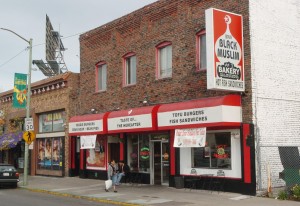
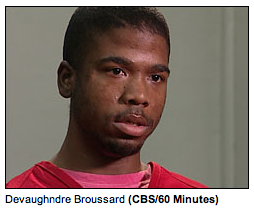
OAKLAND — Devaughndre Broussard, the admitted killer of Oakland Post Editor Chauncey Bailey, struggled through testimony Thursday morning against former Your Black Muslim Bakery leader Yusuf Bey IV, the man he says ordered him to commit two murders.

Broussard entered Judge Thomas Reardon’s courtroom at 11:39 a.m. wearing shackles and a red jail jumpsuit. He passed in front of the defense table where Bey IV and co-defendant Antoine Mackey sat staring at him intently; he didn’t meet their eyes. Bey IV wore a tan suit and a bow tie — the symbol of the Black Muslim movement that Broussard said he himself joined in 2006.

Within minutes, Broussard was asking for questions to be repeated, and seemed to find it difficult to formulate answers. Bey IV court-appointed lawyer, Gene Peretti, made numerous objections in the first few minutes.

Reardon frequently jumped in, trying to clarify and simplify Krum’s questions about how Broussard came to join the bakery.

Broussard said Richard Lewis, a close family friend who was in a San Francisco jail with him, had also spent time with Bey IV when Bey IV was awaiting bail in a vehicular assault case. Broussard was due to be discharged the next day and Lewis asked him his plans.

“Probably going back and hanging out in the streets,” Broussard said he replied. Lewis, though, offered Broussard an alternative: joining the ranks of so-called soldiers working for Bey IV at his bakery in Oakland.

Lewis said Bey IV needed “people he could depend on,” Broussard told a jury of seven women and five men.

When Krum next asked him “what agenda (Bey IV) had,” Broussard said, “I am not understanding.”

The attorney who negotiated Broussard’s plea bargain two years ago, LeRue Grim, watched from the front row.

“That’s just him,” Grim said outside of court about Broussard’s labored answers. “He’s a little bit meticulous.”

Grim said Broussard told his family to stay away from court on Thursday because he feared for their safety.

“He thought they might be in danger,” Grim said of Broussard’s stepfather and half sister, who had wanted to attend.

Speaking in the courthouse lobby during Thursday’s lunch recess, Peretti said he had no idea why Broussard would believe his family would have anything to fear.

“I don’t think he’s going to be found credible,” he said, noting Broussard has to deliver compelling testimony to keep up his part of a plea deal that will keep him from a life sentence. “There is no prosecution case without Broussard … and he’s told many, many versions of what happened.”

“He is a liar, that’s my opinion — he is an admitted liar,” Peretti added.

The lawyer said his client, Bey IV, is “more than disappointed, he’s outraged” at Broussard’s plea deal and testimony. He also said Bey IV “never wanted to be CEO of the bakery.” He reluctantly took the job following his elder brother’s murder and lacked the business experience and maturity to make it work, Peretti said.

As for the bow tie Bey IV wore Thursday, Peretti said, “There’s no significance to that — it was the one tie that matched his suit.”

Earlier Thursday morning, jurors flinched — and some looked away — when shown an autopsy photo of Bailey’s face, blasted away by pellets from a 12-gauge shotgun.

Krum displayed the photo on a large screen as the forensic pathologist who performed Bailey’s autopsy, Dr. Thomas Rogers, described the wound. One juror, a bald man in glasses, grimaced noticeably.

The photo showed what Rogers described as an eight-inch wound of his “face bones, brain, skull, teeth.” Bey IV and Mackey glanced at it and then looked away.

Krum asked Rogers the condition of Bailey’s left eye. “It was basically destroyed,” Rogers replied.

Lawyers for Bey IV and Mackey asked Rogers no questions.


Preaching Tikkun

93

Michael Lerner recently endured death threats, attacks on his house, and a cyber attack that shut down the website of his beloved magazine Tikkun. But it’s nothing new for an outspoken outsider whom infamous former FBI director J. Edgar Hoover once dubbed “one of the most dangerous criminals in America.”

The 68-year-old rabbi jokes that his middle name is chutzpah (Yiddish for audacity, good or bad) and says he has been a magnet for controversy his entire life. But that doesn’t make the recent threats from Zionists and other strong advocates for Israel any less scary.

The latest controversy comes on the heels of Tikkun’s silver anniversary celebration, held March 14, when the progressive Jewish publication honored human rights advocate Judge Richard Goldstone, whose report condemning Israeli war crimes in Gaza was strongly criticized by Jewish leaders. The day after the Tikkun event, vandals plastered posters outside Lerner’s Berkeley home depicting him as a Nazi cooperating with an Islamic extremist to destroy Israel. Previously vandals broke into his home, wreaking havoc inside and leaving graffiti to communicate their message.

After all these years, Lerner bears the threats and accusations with eternal optimism and resilience, preaching the still-radical message of “peace, justice, nonviolence, generosity, caring, love, and compassion.” The message has been at center of the Berkeley-based magazine’s mission for 25 years.

Aside from being a vibrant spiritual community based on traditional Jewish and other humanistic values, Tikkun has deeply influenced the discourse in the wider Jewish community. It has challenged the Jewish community’s automatic support for Israel and Zionism and started a spirited debate, triggering an angry backlash in the process.

As its readership has diversified across religions, so has its mission, leading Lerner to found the Network of Spiritual Progressives in 2005. Dismayed by how conservatives use the notion of family values, Lerner has sought to create a progressive framework to address the human need for spiritual meaning.

“Tikkun is the major thing I did with my life,” Lerner tells us.

The recent celebration included an award ceremony for those Lerner’s team deems most “Tikkunish.” The title of the magazine comes from the old Hebrew phrase tikkun olam, a principle of shared responsibility to “heal, repair, and transform the world.” Previous winners include poet Allen Ginsberg and historian Howard Zinn.

Goldstone is known for helping to dismantle apartheid in South Africa and prosecuting war crimes in the former Yugoslavia and Rwanda. Most recently, Goldstone headed a U.N.-sponsored investigation into Israel’s attack on Gaza two years ago. The investigation concluded that indiscriminate bombing in densely populated areas by Israeli forces amounts to war crimes.

Israel and many Jewish leaders have harshly criticized Goldstone’s report on the Gaza attack for its purported biases, saying it unjustly jeopardizes Israel’s international standing and reputation. But at Tikkun’s award ceremony, Goldstone reaffirmed the findings of his investigation and said that he was compelled to act because he believes in the “right of civilians to be protected even in war.”

Lerner sees Goldstone’s actions as important and deeply Jewish, calling him “a person who takes seriously a central command of Torah: ‘Justice, justice shalt thou pursue.'” The two men have had a relationship since Lerner reached out to Goldstone a year ago. At the time, Goldstone was facing so much backlash that some members of South Africa’s Jewish community sought to bar him from attending his son’s bar mitzvah. That was when the first attack to Lerner’s home occurred.

Berkeley Police Department spokesperson Sgt. Mary Kusmiss said the police have “no leads or identified suspects.” She went on to say that the latest incident may be classified as a hate crime.

“When people start coming to attack your house, you don’t feel safe,” Lerner said. “You don’t know what these crazy people will do next.” But he insists he does not want to make a big deal out of the threats, saying extremists have never altered his actions or politics.

Lerner has always tried to challenge the American Jewish establishment, a term for organizations with an array of religious, cultural, and political concerns but a common hawkish stance on Israel and American foreign policy.

“Israel has been turned into God,” he explains. “You can walk into any synagogue in America and you can tell them ‘I don’t believe in God, I don’t like the Torah, and I’m not following the Ten Commandments’ and be welcomed. But if you go into that same synagogue and say, ‘I don’t support Israel,’ you are kicked out. People are worshiping Israel and God has been abandoned.”

But Lerner notes shifting public opinion, especially among younger Jews. Many are experiencing ethical dissonance between the righteous and heroic Israel commonly portrayed in the Jewish community and the increasingly visible reality of Israel’s military occupation of Palestinian lands, human rights abuses, and violations of international law.

While criticism of Israel coming from non-Jews is often dismissed as anti-Semitism, Jews who express dissent often get called “self-hating.” But Lerner said the illogical conclusion that Israel is the same thing as the Jewish people, and that if you criticize Israel you hate yourself has become less effective in silencing dissent. “It simply isn’t true that people are angry at Israel because of some internal psychological deformation,” Lerner said. “[Increasingly] people are saying ‘If being ethical is the same as being a self-hating Jew, then I choose to be ethical.’ “

But Lerner comes under fierce criticism from Jewish hardliners for his views. Attorney Alan Dershowitz, an outspoken supporter of Israel’s government, famously wrote a 2006 commentary in j., the Jewish news weekly of Northern California detailing Lerner’s “offense against decency and the Jewish people,” concluding that Lerner is a “rabbi for Hamas.” According to Dershowitz, “Tikkun is quickly becoming the most virulently anti-Israel screed ever published under Jewish auspices.”

But Lerner isn’t really on the radical edge in criticizing Israel. Although Tikkun courted controversy in 1988 by denouncing Israel’s occupation of Palestinian territories, the magazine today doesn’t support the movement that is pushing a policy of boycott, divestment, and sanctions of Israel initiated by Palestinian activists in 2005 as a nonviolent tactic to pressure Israel to change its policies. But Lerner still seeks to foster debate on the topic, as he did in the July/August 2010 issue, which featured Rebecca Vilkomerson of Jewish Voice for Peace arguing for at least a partial support of the tactic.

Lerner’s ire has always been directed at powerful institutions, from the military to the white Southern power structure. As a college student, Lerner directly engaged in the nonviolent protests of the 1960s. While working toward his first PhD (philosophy) at UC Berkeley, Lerner was president of Students for a Democratic Society. Later, while working on his second PhD (psychology) in Seattle, Lerner was arrested and found guilty of instigating a riot during a protest against the Vietnam War. The conviction was later overturned, but his reputation as a dangerous radical was solidified in the minds of Hoover and other establishment figures.

Lerner never abandoned his belief in the validity and power of protest. “I would like to see young Jews confront the Jewish institutions,” he said. “I want to see sit-ins and demonstrations to challenge those who are willing to give support to the right-wing governments of Israel.”

Yet he has also grown skeptical of many leftist groups. “As spiritual progressives, we are critical of progressives,” Lerner explains. Although he agrees that a major redistribution of political and economic power is necessary, he argues that something is missing on the left, with its focus on secular ideas and neglect of real spiritual needs.

Lerner says the left’s shortcoming has allowed the right to tap into popular discontent and win support by championing church and family.

While working toward his PhD in psychology, Lerner was part of a team that interviewed thousands of working Americans. “What we discovered was there was a spiritual crisis in peoples lives. There was a deep hunger for a framework of meaning and purpose to life that would transcend the individualism, selfishness, and materialism that people are working all day long in the workplaces,” he said. “People don’t like the message of the work world that the bottom line is to maximize money and power, and to do that you must look out for No. 1 and not care about others.”

His response was to found Tikkun, whose message can attract even agnostics. Alana Price does not describe herself as religious, but she has recently been promoted to be the co-managing editor of the magazine. “I knew Tikkun built a bridge between the religious left and the secular left, so I was excited about that,” Price said. “What drew me was the deeply humane quality of Tikkun.”

Sacramento needs a foreign policy

0

OPINION “The country is rich, but not so rich as we have been led to believe. The choice to do one thing may preclude another. In short, we are entering an era of limits.”

Presidential candidate Jerry Brown said that in 1976. Thirty five years later, second-time-around Gov. Jerry Brown has a profound opportunity to finish the thought — by pointing out that we can no longer afford follies like the Afghanistan war.

Any reluctance Brown might feel about discussing foreign policy — an area of responsibility clearly not assigned to the states by the founding fathers, or anyone else’s fathers — must be weighed against his understanding that when it comes to budget matters, the buck stops at the California statehouse — and the other 49 state houses. The feds can print money, but the states can’t.

California famously faces an immediate budget deficit in the $25 billion range. This, while the federal government burns through taxpayers’ money on a war that even Secretary of Defense Robert Gates acknowledges as insane. He recently told an audience of West Point cadets: “In my opinion, any future defense secretary who advises the president to again send a big American land army into Asia or into the Middle East or Africa should ‘have his head examined,’ as General MacArthur so delicately put it.”

The National Priorities Project puts the current cumulative cost of the war to California taxpayers at $48.5 billion. The $110 billion Washington plans on spending in the upcoming year pencils out to another $14 billion from California taxpayers, while they deal with what the California Legislative Analyst’s Office estimates will be an annual $20 billion state budget shortfall through 2015-16.

Brown, then, has everything to gain from a serious domestic redirection of funds now squandered in this war, yet runs little risk in going out front for a national movement in that direction. After all, it’s not just Robert Gates having second thoughts: A CNN poll found the U.S. population opposing the war by a 63 percent to 35 percent margin last December. Last month, 24 of the 53 members of the California congressional delegation voted in favor of a budget amendment to cut all but $10 billion of the war’s funding, with the remaining money to be used to withdraw troops.(Jackie Speier voted for; Nancy Pelosi against.) The California Democratic Party called for “a timetable for withdrawal of our military personnel” well over a year ago, and last month the Democratic National Committee told the president to get a move on in ending this war.

When Brown first became governor, best-selling author Alvin Toffler’s Future Shock had posed the question of whether the country was suffering from too much change, too fast — a type of thinking the new governor appeared very much in tune with. In the interim, Naomi Klein has written a less known but probably more important book called The Shock Doctrine. New York Times columnist Paul Krugman describes the “shock doctrine” as an ongoing effort to exploit “crises to push through an agenda that has nothing to do with resolving those crises, and everything to do with imposing” a “vision of a harsher, more unequal, less democratic society.”

As the governor of the largest state in the union, with the nation’s biggest deficit, Jerry Brown is in a unique position to influence the national debate by simply pointing out the elephant in the room: A healthy portion of the nation’s economic crisis will melt away if we will just do today what the secretary of defense says we should do tomorrow — get out of Afghanistan. 2

Former Massachusetts state legislator Tom Gallagher is a San Francisco writer and activist.

The song of Ghetto Girl

0

OPINION Editor’s note: POOR Magazine, one of my favorite publications, holds an annual benefit on Valentine’s Day featuring a “Battle of ALL the Sexes” poetry slam. This year’s event, hosted by Alexandra Byerly, had a mixed-martial arts theme and was held in an eight-foot cage built by artist Will Steel in the Submission Gallery in the Mission District. Judges were La Mesha Irizarry, Devorah Major and Laure McElroy. I agreed to publish the first- place winner, which follows. Find the second and third place winners on sfbg.com on the Politics blog. (Tim Redmond)

By Jewnbug

(this Battle came from the battle: Educated Ghetto Gurl vs. The Society)

Educated ghetto gurrl

born in a place

conditioned for death

raised on government cheese

parents targeted to be dope feens

houseless n hungry

society wants me to be ignorant

but ain’t no dummy

got wize to tha mizeducation

of yo surveillance

projects

public skools

prizions

U.S. military enlistings

never assimilating or listening

stay thug life

resisting

rising to tha top

singing ghetto supastar!

Consciousness

cultivated underground

can’t afford yo brand name labels

making my fashion talk of tha town

rebel with a cause

speaking out against

yo policies, protocalls, laws

prohibited my native tongue

pigeon

slang

Ebonics

U ain’t my god

n I ain’t yo son

speaking too loud too fast

causing lyrical whiplash

I smash on u

U thinking u more dignified

cuz I rock a shoelace fo a belt on sum jeans

please!

U put me down

then capitalize on my swagger

like, “that’s hella ghetto”

I don’t play tho

no diplomatic tactful rage

straight up in yo face

u label me

trouble maker

that’s code for

truth teller

fo real for real

no faker

I know tru essence of success

despite the mess

of yo civilized vest

my interest to do more then survive

manifest

came when I held my head high

with no shame

yea I’m from the ghetto

n I’m doing big thangs

educated ghetto gurrl

she was kung fu fighting

she was always writing

educated ghetto gurrl

puttin’ whole society on trial

n bringing them to their knees

The dead fish plan

0

By Patrick Porgans

news@sfbg.com

The recently formed Delta Stewardship Council, charged with protecting the San Francisco-San Joaquin Delta Estuary, released a draft report in February with more bad news about the possible fate of aquatic species.

A number of the fish, which have been the focus of national attention, are already listed as threatened or endangered under the provision of the Endangered Species Act.

This preliminary finding comes after more than $10 billion has been expended over the course of a decade by federal and state officials — who have insisted that their plans would not only restore estuary fisheries but would double the populations of endangered species such as salmon.

But CALFED — the joint federal/state effort — failed to restore fish populations, and now the state says some species may never recover. So it’s hard to have a lot of confidence in the new agency.

The draft report was released by DSC’s executive officer, Joe Grindstaff, former director of CALFED’s Bay-Delta program. At one point, in 2007, Grindstaff acknowledged: “Fundamentally, the system we designed didn’t work.”

That’s an understatement. Tens of millions of fish have been killed by government-operated projects pumping and exporting water from the delta. More than 50 million fish were considered “salvaged” — saved from the pumps — but millions of them also wound up dead. And there are tens of millions, perhaps hundreds of millions, more that are unaccounted for.

Ironically, this unfathomable loss occurred while officials were engaged in several failed fish-doubling plans that spanned decades, cost the public billions of dollars in borrowed money, and contributed the California’s deficit-ridden budget crisis.

And now there’s a new plan, crafted by the same people who bungled the last one. It’s projected to cost as much as $80 billion and take another 90 years to complete.

According to the draft plan, “the funding needed … is large. Capital expenditures required for the delta in the next 10 to 15 years could range from $12 billion to $24 billion, with a high estimate of $80 billion. The annual operating costs of the … council are unknown.”

We’ve been here before. Critics argued from the inception of CALFED that it was doomed to fail because, like the new council, it was composed of many of the same agencies that caused the estuary to become imperiled. And it has, in fact, failed. When I called to find out its status, Eric Alvarez, a spokesperson for the new delta council, responded that CALFED “no longer exists in the conventional sense. It does not have a staff or a location.”

The first draft report of the new council provides some key preliminary findings, all of which ignore the essence of the problem.

First, it states that “California’s total water supply is oversubscribed. California regularly uses more water annually than is provided by nature.” It’s true that California’s water resources are oversubscribed — but that’s the result of the government’s failure to prudently appropriate the water we have.

Next it says, “California’s water supply is increasingly volatile” — a fact that has been made worse by mismanagement.

“Even with substantial ecosystem restoration efforts, some native species may not survive,” it adds, noting that “there is no comprehensive state or regional emergency response plan for the delta.” It doesn’t mention that state officials have had 50 years to come up with such a plan, and have consistently failed.

“Even with substantial restoration efforts, some native species may not survive,” the plan states. “Expert opinion suggests that some stressors are beyond our control and the system may have already changed so much that some species are living on the edge…. In addition, habitat conditions for some species may get worse before they improve.”

That’s an astonishing admission coming, in effect, from the same government agencies that once promised they would double fish populations by the year 2002.

The fact is that anadromous fish and other pelagic species populations, which depend on the delta estuary, have reached alarming all-time lows.

How did the salmonid and other endangered species reach what may be the point of no return? It’s simple — the delta pumps that send water south to irrigate arid land, as approved by CALFED, are by their very nature fish- killers.

According to data from the California Department of Fish and Game (DFG), from 1984 through 2006 an estimated 22 million fish were killed at the State Water Project’s Delta pumping facilities alone. That works out to an annual average of nearly 1 million fish killed as a result of SWP’s water exports from the delta.

And that’s just one pump. The federal Central Valley Project, which also sucks up delta water, provides estimates of federally-listed Chinook salmon and steelhead loss, as well as estimates for salvage rates of delta smelt, Sacramento splittail, and longfin smelt.

Data obtained from government sources indicate that from the period of 1980 through 2002, 54 million fish were salvaged from the SWP Skinner Fish Facility and the federal project’s Tracy Fish Facility. That averages out to 2.4 million salvaged fish, or five per minute, 365 days per year.

What happens to the salvaged fish? Nobody knows for sure. The DFG recently disclosed that it has never conducted a quantitative analysis or study on the topic.

The numbers would not be good. The salvaged fish are placed in tanker trucks and transported from the pumping facilities and dumped back into designated locations in the delta, where eagerly awaiting predators have a daily feeding frenzy. According to a U.S. Fish and Wildlife 2008 report, “salvaged” Delta smelt, which in some years ranged as high as 5 million, are typically written off as dead.

Ironically, in all that time the responsible officials have yet to be held legally accountable for even one dead fish.

Keep David Crane away from your government

24

Sen. Leland Yee continues to strongly push his case against confirming San Francisco venture capitalist David Crane to the UC Board of Regents, finding allies among labor unions and Sen. Ted Lieu (D-Torrance), chair of the Senate Labor Committee, but failing so far to win over legislative leaders that Yee has alienated himself from with his quixotic budget stands of recent years.

It’s a sign of just how bad things have gotten for public employee unions that Crane, a last minute appointment by former Gov. Arnold Schwarznegger, wasn’t immediately rejected by Legislature after writing an op-ed siding with right-wing attacks on public employees in Wisconsin and calling for an end to public employee union’s collective bargaining rights in California.

After all, Crane – while he considers himself a Democrat – is little more than a right-wing shill wielding misleading data to justify his thinly veiled contempt for the public sector. He didn’t return my call about the latest controversy, but I did interview him a few years ago as he and Arnold tried to torpedo the California high-speed rail project before voters could approve it.

I didn’t expect much from a corporate Democrat who was working for a Republican governor, but I was still fairly astounded by his arrogant condemnation of public officials and agencies and his indignation at being challenged in his basic belief in the infallibility of capitalists. Simply put, the guy was a world-class jerk (an opinion that’s widely shared) who has no business working for government agencies because his only interest in them seems to be to weaken or destroy them.

George W. Bush loved to put guys like this in charge of government agencies, which is why Halliburton fleeced taxpayers, FEMA utterly failed New Orleans after Hurricane Katrina, oil companies ran dangerously amuck, and on and on. But in California under Gov. Jerry Brown and a big Democratic majority in the Legislature, someone like David Crane should have the door to government quickly slammed in his face if there’s any integrity left to the political system.

UPDATE: Crane just returned my call, but he did little to forthrightly answer my questions, instead referring me to his interview with KGO’s Ronn Owens last week. When I asked whether he thinks it’s fair that his critics are calling him hostile to the public sector, he told me to read his op-ed. And when I said that I did and the he seemed to be siding with the Republican governor of Wisconsin, he said disdainfully, “That’s an interesting interpretation.”

That seemed to be the clear intention of his piece, to tell readers that they’re simply wrong in seeing Wisconsin (and then Ohio, and other states that might eventually include California) as a right-wing attack on public employee unions, which is itself part of a long-running attack on the public sector by conservative capitalists like Crane. As Crane wrote in his first sentence, “The battle in Wisconsin is not over collective bargaining rights generally but rather the appropriateness of those rights in the public sector.”

Sure, this former attorney tries to couch his narrow, convoluted argument in legalisms and distorted history lessons, but the message seems clear, even if he acts as people just aren’t smart enough to understand his wise point (one that he didn’t use the opportunity of our interview to clarify). And when I noted that he has a history of anti-government animus, including trying to derail the high-speed rail project, he said indignantly, “I’m responsible for that thing making the ballot.”

By which he probably means that after trying and failing to delay the vote, he led the effort to require more detailed financial analysis of the project’s fiscal challenges, which he helped execute — and which had nothing to do with voters approving a measure that the Legislature had placed on the ballot years earlier, only to go along with Arnold’s efforts to delay it twice.

Or maybe I’m wrong and this self-described libertarian really just wants to make government stronger and more efficient. What do you think?

Should Lyon-Martin be saved?

0

OPINION Last month, when the startling news broke that Lyon-Martin Health Services, a community health clinic that serves primarily queer women and transgender people, was about to close its doors forever, the community rose up even before the official announcement was made.

Within hours of first hearing the news, more than 150 clients, former clients, and members of the community gathered at an emergency town hall meeting to fight to save the clinic. People testified about what Lyon-Martin had meant to their health. Many expressed fears it would close and anger that they hadn’t known the clinic was in trouble.

To their credit, two members of the board of directors and interim Executive Director Dr. Dawn Stacy Harbatkin came to the meeting to answer questions from the community. This powerful meeting transformed and dramatically altered the outcome. In response to the opposition, the board backed off closing the center for at least a month and promised the community that there would be at least a month to find ways to save the clinic.

However, the board members also explained that the clinic was in serious trouble and needed to raise more than $500,000 to stay open. By the end of the meeting, a "Save Lyon Martin" coalition was born.

Within a week, more than 700 community members came to a fundraiser that raised more than $60,000, and within a month, more than $300,000 had been raised.

But at the same time, some have asked: should we save Lyon-Martin?

It’s a legitimate question. Over the past two years Lyon-Martin expanded its services, almost doubling its staff and patient load. However, the management failed to build the infrastructure to accommodate these changes. One of the known factors that led to the current situation was Lyon-Martin’s inability to stay current with its Medi-Cal billing, and there was a significant loss in revenue as a result. A substantial amount of debt is owed to the IRS and a long-term bank loan. Given the financial problems, some say, we should close the clinic; other community health clinics could simply incorporate the 3,500 patients served by Lyon-Martin.

While it’s true that the financial issues are troubling, and that hard questions need to be answered, dumping 3,500 patients into a public health system that has been cut to the bone over the last few years would be a disaster in San Francisco. The clinics that serve queer and transgender people are already stretched to the limit. No other place in the city has the capacity and culturally competency to serve this population.

Lyon-Martin has taken on the mission of caring for a group of low-income, mostly uninsured patients who have rarely, if ever, gotten culturally competent care. Almost 90 percent of Lyon-Martin patients are uninsured; 87 percent have incomes below 200 percent of the federal poverty line; 17 percent are homeless; 33 percent are people of color.

As a transgender person who has received poor and even hostile treatment by a health care provider, it doesn’t surprise me that in a recent survey more than 50 percent of transgender individuals reported that they have had to teach their health care providers about transgender health care. More than half of lesbians, bisexual, or transgender people report that they avoid health care for fear of discrimination.

In this context, closing Lyon-Martin is simply not an option.

We have many questions about how Lyon-Martin got into this situation and what needs to be done to avoid it happening again. We want the community to have stronger oversight over this important resource. We want people held accountable. But most of all, we want to ensure that we continue to have access to the excellent care that Lyon-Martin has provided to so many of us.

On March 2 at 4 p.m. at the Budget Committee of the Board of Supervisors, Sup. Ross Mirkarimi will be holding a hearing addressing these questions. We hope you can join us.

Gabriel Haaland is a member of the Save Lyon-Martin Health Coalition, and a former transgender client of Lyon-Martin.

Spirit and soul

0

Having uprooted from his native Atlanta to chase his musical dreams in L.A., Cody ChestnuTT and his band, the Crosswalk, landed a deal with Hollywood Records and got as far as recording and mixing a debut album, Venus Loves a Melody, before things went south. In 2002, ChestnuTT took his bass, drum machine, keyboard, guitar, organ, microphone, and headphones into his bedroom and single-handedly crafted his debut album, The Headphone Masterpiece (Ready Set Go). The 99-minute double CD contained 39 songs that ranged from Southern-fried rock to hip-hop, and was laced with enough dastardly and divine deeds to provoke any listener. All of it was written, produced, and performed by ChesnuTT on his four-track cassette recorder.

The success of the album is evident in how it permeated the American fabric. ChestnuTT’s fame soared when Grammy Award-winning band the Roots decided to cover his song “The Seed” for its 2002 album Phrenology, with ChestnuTT on guitar and vocals. The video for “The Seed (2.0)” was nominated for an MTV Video Music Award and an MTV 2 Award. The Headphone Masterpiece was nominated for the Shortlist Music Prize in 2003. ChesnuTT’s music figured in Miranda July’s Me and You and Everyone We Know (2005), and his performance in the Dave Chappelle movie Block Party (2005) was a throwback to the days of Wattstax. Thom Yorke of Radiohead considers ChesnuTT a musical genius, and the opening riff to Headphone Masterpiece‘s “Look Good In Leather” has become a ubiquitous commercial ditty.

Though ChesnuTT continued to tour and release singles, it wasn’t until his 2010 reemergence project, the six-track EP Black Skin No Value (Vibration Vineyard), that he truly returned, brandishing a lyrical approach that had evolved beyond the more “profane” content of Masterpiece. In his words, “the EP was a social commentary rooted in spiritual and soul traditions.” Due later this year, his next album, Landing On a Hundred, promises to be as passionate and powerful as the rest of his work. On the eve of a show at Yoshi’s, I caught up with him.

SFBG Why did you title your EP Black Skin No Value?

Cody ChesnuTT I wanted to form something that was ironic. To blend all I think could be a literal application to what I feel is going on. We’re facing a low perception of self-worth in the community — from media, the justice system, and so many different things — and at the same time the content of the body of work itself is in stark contrast. We have to recognize that there’s value in acknowledging or addressing the issue. Off the top, it was an ironic approach to deal with what I feel is a crisis in the community.

SFBG Although there’s community focus in the album, most of the songs seem intimate.

CC Yeah, it’s straightforward. I wanted to take a sound-bite songwriting approach. Straight to the point, to cut through all the noise we’re hearing in the media right now. Something that awakens the spirit in some way, or opens chakras that make sure you’re really paying attention to what we’re facing right now.

SFBG Somewhere between rock, funk, folk, soul, hip-hop, and experimental sounds, The Headphone Masterpiece and its success left you in an interesting position in the world of music. I know you didn’t cultivate this crossroad or gray area, so how do you work within it?

CC I don’t think about it. I just create. I do know that the last experience put me in a position where I had some advantages as an artist that gave me room to do what I wanted to do. That’s the beauty of my career — it set me up to go either way. Gave me the freedom to create whatever I wanted to create. What’s your take on it?

SFBG In The Headphone Masterpiece you’re able to show so many sides in an industry that demands two-dimensionality. You go from “Serve This Royalty” to “Smoke and Love,” then you write “Bitch, I’m Broke” and throw in a lullaby to your son. You’re showing yourself as a fully-formed human being. I feel that kind of complexity confuses the machine.

CC I think that is to my advantage. I was hoping, and still hope, that it will inspire other people to look at the humanity of it all. To not be so focused on sure-thing in-the-box marketing. I think exposing the range of human emotion makes the landscape much more interesting. Not to get too deep off into the philosophical aspects of creativity, but I’m reading a piece on Nietzsche’s self-criticism and The Birth of Tragedy, and [Nietzsche is] saying that after the first three Greek tragedies, there were no more to create — the rest are just copies. That’s why we need to expose the range and bring in new content, because, in my opinion, certain subject matter has been exhausted. There’s more to explore within the spirit. It’s what drives me to do what I do.

SFBG What can we expect from your show?

CC I’m playing all new material with a 10-piece band. I’m really interested into tapping into that root soul music. The kind of music that heals, the kind that touches. It’s what I want to feel and hear right now. And there seems to be a consensus that people really want something a little more substantive, closer to that feeling that they had when they were growing up. Right now is an interesting time to bring back that healing vibration, that element. I’m not the only one doing it. I just want to contribute to what I think is a renaissance, a resurgence, a restoration, so to speak, of soul. So much of the soul has been sapped out of our music.

CODY CHESNUTT

Sat./26, 8 and 10 p.m.; $25

Yoshi’s San Francisco

1330 Fillmore, S.F.

(415) 655-5600

www.yoshis.com

Renew yourself

2

culture@sfbg.com

So 2011 is a couple months in, and already your new year’s resolution list reads like so many dreams deferred? Chuck it in the flames — not all rebirths neatly coincide with the Gregorian calendar. This spring, rejuvenate your inner and outer workings with some of these excellent opportunities to renew everything from your chi, to your core strength, to the sweetness of your swagger.


HEAR THE CRY OF THE MIDNIGHT DOWN-DOG

Tripped the light cataclysmic a time too many? The toxic Fernet fumes ooze from your pores, and you’ve left not only your debit, but your credit, library, and frequent bagel-buyer card in various watering holes about time? Time to purge. Take a night off from tippling and toddle to Laughing Lotus, where Friday night’s midnight yoga class (each week from 10 p.m.-midnight) soothes abused chakras — and livers, need be. Each week even features a different live musician: Fri/25’s class will be home to the didgeridoo and sound-healing savasana of Amber Field.

Laughing Lotus, 3271 16th St., SF. (415) 355-1600, www.laughinglotus.com


PARTICIPATE IN A GROUP POKING

What’s community acupuncture, you ask? Small groups of patients are treated in recliners in a quiet, calm room. During the hour-long sessions, those waiting for their pokes receive staggered personalized care (needles are inserted into one’s limbs, face, and head: no disrobing necessary) from a licensed acupuncturist. Learned how to share in kindergarten? Perfect, because the cooperative method means that a single session will only run you $25–$45, including the initial visit’s paperwork fee. Circle Community Acupuncture, 1351 Harrison, SF. (415) 864-1070, www.circleca.com


ALKALINIZE!

Fasting, ugh. It has its place, but not eating anything is a bitter pill in the land of street tacos and gourmet coffee grounds. If you’re asking our opinion, a day of cleanse is best accessorized with Lydia’s raw green soup, a tangy elixir of kale, cucumber, dulse seaweed, avocado, ginger, and other green delicious majicks. Lydia’s sells neatly packaged soup servings, resplendent kale chips, and other yummy raw treats are favorites at the city’s crunchiest festivals, and you can pick them up at health food stores too.

Available at various SF grocery stores, www.lydiaslovinfoods.com


SWEAT IT OUT

Hidden behind hippie-wear emporium P-Kok is a small green garden and a sauna where tired city souls retreat for the store’s patchouli-heavy full moon ceremonies, complete with vibrational sauna singing. Starting in March, the hidden space will go holistic and become Tall Tree Tambo Wholeness Center. Monthly memberships (to encourage the use of the space as a healthy community hub) will be available for $100–$125 including coed and single-sex sauna access, healing events facilitated by other members, and the center’s four on-site healing arts practitioners, small-group classes in spiritual alignment, yoga, and the ever-popular full moon rites.

776 Haight, SF. (415) 430-8285, www.talltreetambo.org


TAKE INSPIRATION FROM A FEMALE FIGHTER

Forget Rocky. For true Bay Area boxing spirit, you couldn’t do better than checking out the super bantamweight championship boxing match of Ana “the Hurricane” Julaton vs. Franchesca “the Chosen One” Alcanter on Fri/25. Julaton, a Daly City and Bayview raised Filipina American, is looking to regain her standing in the pro world after a disappointing loss last year. Regardless of who walks with the belt, the ring’s high-powered punching — and rock hard musculature — is worth checking out if you’re in need of some gym motivation.

Fri/25 6 p.m., $35–$360. Craneway Pavilion, 1414 Harbour, Richmond. www.brownpapertickets.com


SWEAT TO BOLLYWOOD BREAKS

Of course, you could saddle up your most comfortable heels and get your werqout in the club. Should you try this tactic, you could hardly do better than the rum-tum-tum stylings of Non-Stop Bhangra, a night that’s been teaching San Franciscans how to circle wrists and move hips in pure Punjabi mode since 2004. Nights begin with a hour-long class on Bollywood-style dance, continues with ample time to practice to beats by resident DJs and guest scratchers, and now attract a diverse following of races, ages, and ahem, physical aptitudes. Calorie burn and culture learn at the same time, perfect.

Next show: March 19 9 p.m., $10–$20. Rickshaw Stop, 155 Fell, SF. (415) 861-2011, www.nonstopbhangra.com


READ ABOUT OTHER, HEALTHIER PEOPLE

Maria Arellano was gunning for a healthier lifestyle, so she decided to blog about it. “Accountability,” the chipper office manager e-mailed us when we asked her about Oh Healthy Day‘s providence. “Posting your workouts and healthy eating habits with others is a great way to stay motivated.” Her short, addicting posts and sunny photos of her ongoing journey to fitness are also great ways to hold us accountable — how are you going to down that family-sized bag of corn chips after reading Arellano’s upbeat prose about her delicious protein and veggie dinners or inspiring Crossfit workout? Answer: you’re not.

www.ohhealthyday.com


REACH FOR THE SKY

While the spectacularly cool House of Air has added a valuable component to San Francisco’s kid’s-activity-starved landscape (little ones can’t help but explode with glee at the very sight of the humongous “Bounce House”), there’s trampin’ for adults as well. Specifically, the Air Conditioning workout is a 50-minute fly-through that promises to “leave your cheeks just as sore as your quads from smiling so much.” At $16 for a 50-minute session, it’s not a huge leap to “yes.”

926 Mason, SF. (415) 345-9675, www.houseofairsf.com


BUFF YOUR BRAINPOWER

Feel the burn all you want in your thighs, but no fitness program would be complete without a stretching your mind. At vibrantBrains, you’ll exercise that flabby cerebellum in what amounts to a workout for your brain. Improve your memory, tackle abstractions, and fast-track your alertness, literacy, and comprehension skills with programs like “Neurobics,” “Mind Evolve,” “NeoCORTA,” and “Posit Science Cortex with InSight.” Each program concentrates on a different area of mental agility using a combination of cutting edge techniques and personal attention. Even reading about the various vibrantBrains offerings makes us feel smarter.

3235 Sacramento, SF. (415) 775-1138, www.vibrantbrains.com


IMMERSE YOURSELF IN EGGHEAD

Holy smarty-pants, Batman, there’s a ton of intellectually stimulating stuff going down at the Mechanics’ Institute. Any given day you might enjoy a screwball comedy from the 1940s, a talk by a famous fantasist-cartographer, a book club discussion centering on the Harlem Renaissance, a class in beginner Excel, or intensive chess instruction at any level. It’s also a library! The 1854 Mechanics’ Institute building is a mind-blow in itself — but with a wide-ranging and welcoming program of creatively exhilarating (and very inexpensive) events, you may not even notice your intriguing surroundings.

57 Post. # 415, SF. (415) 393-0110, www.milibrary.org


STROKE SOME FUR

Next time you’re about to calculate your checkbook in your head or cry because your (ex-)drummer stole your boyfriend, head over to the Little Farm petting zoo in Berkeley’s Tilden Regional Park. This fully-loaded snuggle gang of cows, goats, rabbits, chickens, and pigs will have you back to your cute self — because petting zoos are restorative for small, whiny children, but they also work for midsized, whiny adults.

Little Farm petting zoo, Tilden Regional Park, Central Park Drive, Berk. (510) 525-2233, www.ebparks.org


MEDITATE STUPA-SIDE

If you want to change your outlook, pay a visit to the Peace Pagoda in Japan Center, an underrated San Francisco landmark. Designed by artist and architect Yoshiro Taniguchi, the pagoda and its subtly Op Art-tinged interpretation of a Buddhist stupa made their debut in the year of the Summer of Love. Walk around and even step inside Taniguchi’s 100-foot-high, five-tiered, many-passaged structure to meditate from an infinite variety of angles. Or better yet, play a quick game of hide and seek with someone you love. 24-7.

1704 Post, SF. (415) 775-1817, www.sfjapantown.org


LET YOUR SPIRIT WANDER

Sometimes the best way to refresh yourself is to get a little lost. When things begin to spiral out of control, let the ancient spiritual meditative paths of the three Bay Area labyrinths lead you to a calmer place. Take a natural journey to the mysterious Eagle Point Labyrinth (Lands End, Sutro Heights Park, SF.). Experience transcendence — and a spectacular quiet zone — with the Labyrinth at Grace Cathedral (1100 California, SF. www.gracecathedral.org). Or amble with playful tots along the colorful circle of the Scott Street Labyrinth near Duboce Park (Scott between Duboce and Waller, SF).


MULTITASK YOUR RETRO BEAUTY FIX

If you want to feel new, sometimes there’s only one thing to do: get a fresh hairdo at Down at Lulu’s. The bass is thumpin’, the clothes are cheap and sexy, and the pop culture treasures and creative energy are abundant at this self-described “hair salon-vintage clothing-record store-junk shop” co-owned by Tina Lucchesi and Seth Bogart, where you can get hot highlights, cuckoo color jobs, and perms with panache.

6603 Telegraph, Oakl. (510) 601-0964, www.downatlulus.com.


PUT CUTE AT YOUR FINGERTIPS

You’ll break your lease in the land of not-so-fresh after an introduction to wonders of kawaii nail art. Let Trang Bui, the manager of Crystal Nail, facilitate your escape from the days of dull French manicures with her signature collage talons of glitter, jewels, and — so popular you should book and specify you want them well in advance — Hello Kitty 3-D art. Don’t be shocked at the price tag — a full acrylic set with designs and tip will run around $65. Worth it for such blingy digits, no? Next challenge: learning to type with horizontal fingers.

2347 Clement, SF. (415) 752-4425


STICK A FEATHER IN YOUR COIF

Still rocking the all-natural look? Shame that — freshen up your do with some feather hair extensions, slim bursts of hue that’ll set you apart from the other land-locked long hairs, but don’t involve the same commitment as a jar of Manic Panic (though they can last for months). You can get a natural or neon-colored bundle of up to four feathers for $30 or single plumes for $10 each at the Mission’s Pretty Parlor. Move fast — once these hit Dolores Park, the trend’s gonna blow up.

Pretty Parlor. 3150 18th St., SF. (415) 556-2883, www.prettyparlorsf.com