Oil

LIT: Beautiful photography exposes crude reality

0

10A LGA05final.jpg
photo by Lou Dematteis

Crude Reflections opens with pastoral scenes of a rainforest lagoon and the looming roots of a giant ceiba tree. Indigenous Ecuadorians are dancing in an open-air hall and traveling by canoe down tributaries of the Amazon River. A placid stretch of water seems threatened by nothing more than a puffy white thunderhead.

Turn the page. The viewer is blasted by roiling flames: the liquid surface of a waste oil pit on fire, the foreground charred to coal, the forest horizon blurred by a shaky haze of heat.

Turn another page and the river has given way to a viscous stream of oil seeping out of a “remediated” pit. A family is walking down a road, sprayed with waste oil to keep down the dust. They are barefoot. They are the Aguindas from Rumipamba, lead plaintiffs in a class action lawsuit against Chevron,

Photographers Lou Dematteis and Kayana Szymczak have put together an unparalleled pictorial account of life in the northern Amazon region of Ecuador, where certain elements of life are cruel and crude. For over 30 years, the land, water, and people have been tossed asunder in favor of a more marketable natural resource: oil.

From 1964 to 1992, Texaco drilled for oil in the Oriente region, but chose not to employ best practices for the industry, instead dumping the waste and byproducts into 627 open, unlined pits, polluting a region three times the size of Manhattan.

Color shots by Dematteis and black and white images from Szymczak are interspersed with profiles, written in English and Spanish, of families and children who have fallen ill from decades of drilling.

“After bathing, our skin was covered with crude,” says Maria Garofalo, whose husband and daughter both suffer from different forms of cancer. “I went to the oil companies, and they said this wouldn’t affect me; that the reason I had cancer was because I didn’t have good personal hygiene.”

Jairo 02.jpg
photo by Lou Dematteis

Beretta

0

› paulr@sfbg.com

Restaurant archaeologists might not have much occasion to use carbon dating, but we do have the space at 1199 Valencia Street as a window into the past, and therein hangs a tale of the city. A decade ago, the occupant was Radio Valencia, a cheerful boho cafe that served art displays, live music, and ecologically sensitive sandwiches. It was, in its faintly grubby coolness, the epitome of the 1990s Mission District. But it closed around the turn of the millennium, first giving way to a Thai restaurant (J.J. Thai Bistro) and then to the Last Supper Club — a nice place and cool in its way, but not at all grubby, just as Valencia Street itself lost much of its jagged urban edge on the way to being the flâneur-friendly promenade we know today.

The Last Supper Club changed hands in 2005, when the original owners, Joe Jack and A.J. Gilbert, bowed out to Ruggero Gadaldi, whose other concerns include Antica Trattoria and Pesce. There is some evidence Gadaldi didn’t like his new restaurant’s name, since earlier this spring he gave the place a makeover and a re-christening. It’s now called Beretta — a name perhaps too redolent of weaponry for some tastes, but less overripe than the other one — and its interior has been given a slick minimalist treatment. The Last Supper Club’s baroque cherubs and fountain are gone, replaced by SoMa-esque black-topped tables, including a large and rather Chaucerian community table in the middle of the dining room, where you might find yourself sitting next to complete strangers with whom you can build some spontaneous social capital.

The menu, meanwhile, is like the love child of SPQR and Pizzeria Delfina. In other words, it hosts a wealth of exquisite small plates — known here by their traditional name, antipasti, since traditionally they’re served before the pasta course — along with salads, risotti, and an impressive list of pizzas. There’s also (in an echo of Gialina) a main course that changes nightly. But for many — if not most — of the tables (not to mention the community table), a pizza is the main event, to judge by the pizzas that seem to come sailing out of the kitchen like Frisbees.

The antipasti divide into vegetable, fish, and meat sections, the last consisting of such usual cured-flesh suspects as prosciutto, mortadella, and soppressata. The vegetable choices are more varied and seasonal. We practically inhaled a plate of bruschetta ($6) — the correct pronunciation, by the way, is "bru-SKATE-ah," not "bru-SHETT-ah" — slathered with a spring-green puree of fresh fava beans and sprinkled with salty-sharp pecorino cheese. And while quarters of artichoke heart ($6), roasted alla romana, are commonly filled with seasoned bread crumbs, they are less commonly spiked, as they are here, with that dynamic duo of spicy Italian-style sausage, hot pepper and fennel seed.

And a tip of the locavore cap to the Monterey Bay sardines ($7), a set of luxuriously plump and oily fish, grilled and plated "en saör," a Venetian technique that combines slivers of white onion and red bell pepper, a generous splash of extra-virgin olive oil, and an equally generous blast of white vinegar.

If white rice strikes you as a little boring, you’ll probably approve of the squid-ink risotto with calamari rings ($13). The briny-sweet flavor is direct, in the best Italian tradition, and the rice grains themselves are cooked nicely al dente — as are the tentacles, for that matter. But it’s the color that commands attention: a purplish-black with a sheen of green, like summer thunderheads billowing over the Mississippi. The color is so profound and unusual as to become tastable.

While the pizzas aren’t precious, they do reflect a thoughtfulness about ingredients. Even more, they remind us that pizza-baking has its subtleties. I was especially pleased to find, when a prosciutto-arugula pie ($14) reached us on its little wire stand, that those two delicate ingredients had been added after the pizza had emerged from the oven, crust abubble with tomato and mozzarella. It would have been simpler to throw everything on at once, but that would have cost the prosciutto and arugula something of their distinctive characters.

Desserts tend heavily toward gelato, and, surprisingly for an Italian restaurant, there is no tiramisù. For those who can’t do without that deathless warhorse, the baba al rum ($8) might do; it consists of spongecake leaves soaked with rum and topped with a cap of simple cream gelato (not even vanilla added as a flavoring, just cream) and a pinch of orange zest looking like bright orange sawdust. Tasty, but plenty of fumes; you would not want to light a match until the bowl had been emptied and cleared and several minutes had passed.

For those who can’t do without chocolate, there’s a dish of chocolate gelato ($7), given textural interest by crumblings of amaretti (the famous almond biscuits) and few squirts of caramel sauce. The sauce cools and becomes chewy on the slopes of the gelato blob, like lava turning to rock on the side of a volcano.

The crowd: familiar-looking. It seemed to me that I’d seen the same group in recent visits to Spork, Dosa, and Range — all of which are within two or three blocks, as the flâneur strolls. Median age I would guess to be in the early 30s; median income, considerably higher. If, like me, you’ve noticed that traffic across the Mission has hugely thickened in the past 10 years and wondered who’s living in all those loft-style buildings that have sprung up as if by magic, the Beretta clientele suggests some answers. Now where did I put my Beretta?

BERETTA

Dinner: nightly, 5:30 p.m.–1 a.m.

Brunch: Sat.–Sun., 10 a.m.–3 p.m.

1199 Valencia, SF

(415) 695-1199

www.berettasf.com

Full bar

AE/DISC/MC/V

Noisy

Wheelchair accessible

No food for you

0

Jan Lundberg, who just resigned from San Francisco’s Peak Oil Task Force, has written a great essay on the end of cheap food and what it means for the cities.

City sues ExxonMobil

0

Picture 4.png
440 Jefferson St. to Exxon: “Clean me!”

Man…city attorney Dennis Herrera is on a roll these days. Gay marriage out of the way, he’s now moved on to the largest corporation in the world. Hot.

The city is suing ExxonMobil for its “defiant refusal to address environmental damage caused by decades of disposal and release of hazardous petroleum products on property owned by the Port of San Francisco in the City’s Fisherman’s Wharf area,” according to a press release.

Mobil Oil operated a fueling facility at 440 Jefferson St. on Fisherman’s Wharf for 54 years. Documentation of leaks and spills from the site dates back to 1986, when a 1000-gallon underground fuel tank was removed. The company formally agreed to remediate the site in 1994. The city’s suit alleges they haven’t.

“The contamination is injurious to the environment, is offensive to the senses, and obstructs the free use, development and comfortable enjoyment of the city’s property,” states the 20-page complaint. [PDF]

You tell ‘em, Dennis. That area is long overdue for some comfortable enjoyment. The complaint outlines a tedious back and forth between the city, the Regional Water Quality Control Board, and ExxonMobil, on getting that shit cleaned up – all to no avail.

“There’s a whole history of broken promises,” said city attorney spokesperson Matt Dorsey. “It’s certainly within the means of ExxonMobil Corporation to remediate the environmental damage its responsible for.”

Currently worth $501.17 billion, the oil company may soon be reaping new profits as a result of no-bid Iraqi oil contracts to be granted to it, Shell, Chevron, and others, at the end of this month. (One under emphasized result of ousting Saddam Hussein is that a state-controlled resource is now open to the free market.)

Dorsey said of the relationship with ExxonMobil, “We had an agreement in 1994. I would leave it to ExxonMobil for the rationale on why it takes 14 years to clean up a site.”

A call to ExxonMobil seeking an answer to that question hasn’t been returned.

The company doesn’t have a great track record on cleaning up their messes or paying for them: they still haven’t coughed up the $2.5 billion they owe for the Valdez spill in Alaska.

They also continue to stand by the “we’ll believe it when we see it argument” when it comes to global warming. That is – when they’re not busy funding skeptics to deliberately obfuscate the truth of the matter.

Hurting herders

0

REVIEW Set in Inner Mongolia’s dry and inhospitable plains, Tuya’s Marriage comments on capitalism’s suffocating ability to suppress other ways of living. Tuya (Yu Nan — last seen in Speed Racer, of all places) is a Mongolian sheep herder struggling to make ends meet. China’s growing economy has made it almost impossible for herders to survive — not only has it forced them to leave their lands, it has created industries that exploit the natural resources herders traditionally have taken advantage of. So when Tuya’s husband Bater (played by a real Mongolian herder) is incapacitated while digging a well, things become even harder. Tuya is left in charge of their two toddlers, the flock, and securing their daily supply of water. When the strained woman suffers a physical breakdown that warns of graver consequences if she keeps exhausting herself, everyone advises her to divorce Bater and marry another man. Unable to deal with the hardships surrounding her, Tuya starts looking for a groom on the outrageous condition that whoever agrees to take her for his wife must also be willing to provide for Bater. Having glimpsed the potential outcome of marrying a Mongolian oil tycoon and living in the city, Tuya chooses to continue the life she knows — at a high price. Aesthetically beautiful and emotionally complex, the film records the customs and mores of a culture that’s slowly disappearing, and the sadness of a people who have become marginalized.

TUYA’S MARRIAGE opens Fri/20 in Bay Area theaters.

The funk this time

0

With gas prices topping four dollars in the United States this summer, Americans are educating themselves on where their fuel comes from. Often it’s from places like Nigeria’s Niger Delta, where multinational petroleum giants face armed resistance from local groups that see foreign oil developments as resource exploitation. So why are groups like Movement for the Emancipation of the Niger Delta (MEND) fighting the Nigerian government, Chevron, and Shell?

As John Ghazvinian points out in Untapped: The Scramble for Africa’s Oil (Harcourt, 2007), "In Nigeria, 80 percent of oil and gas revenue accrues to just 1 percent of the population…. Virtually everybody in the Delta scrambles to get by in shantytowns built of driftwood and corrugated zinc, watching children die of preventable diseases, while their corrupt leaders whiz past behind the tinted windows of air-conditioned BMWs."

Against this backdrop rises 25-year-old Seun Kuti, whose potent self-titled debut for Disorient Records directly addresses Nigeria’s issues. Seun is the youngest son of Fela Anikulapo Kuti, who before his death in 1997 popularized the funk-influenced West African Afrobeat sound worldwide throughout the 1970s and ’80s. Backed by his father’s 20-piece Egypt 80 orchestra, Seun invokes his dad’s fiery political rhetoric on protest songs like "Na Oil" and "African Problem" that lyrically excoriate foreign and domestic oppressors. In keeping with his father’s work, Seun’s backing music is as engaging as his commentary.

Seun Kuti is carrying Fela’s music to a new generation. But unlike his older half-brother Femi, whose recordings incorporate hip-hop and dance motifs, Seun revives Afrobeat’s original big-band blueprint and injects it with a fresh urgency. He’s helped by Fela’s longtime bandleader Baba Ani, along with Adedimeji Fagbemi (a.k.a. Showboy) on saxophone, Ajayi Adebiya on drums, and a dozen or so other Egypt 80 veterans who’ve been playing regularly for nearly three decades at the family’s Kalakuti compound.

The group stretches out on eight-minute songs like "Don’t Give That Shit to Me," where dueling guitars trade jabs, a full brass section swells mightily, and Seun Kuti adds vocal diatribes. Kuti’s sax flourishes lead the charge on that track, one of the album’s most spacious, jazz-improv-driven numbers. Similarly, blazing trumpets and speedy percussion-laden polyrhythms transform "Mosquito"<0x2009>‘s serious anti-malaria message into a rebel-dance anthem.

Kuti closes his first full-length with the punchy, mid-tempo "African Problem," which is replete with street traffic samples and the band leader’s passionate, rapid-fire lyrics. "Make you help me ask them sisters / Why no get houses to stay / Salute my brothers when they fight / Fight for the future of Africa," he sings in a militant call-and-response with the horn section. And like the campaign waged by one of Kuti’s American supporters (Barack Obama, who helped Egypt 80 get visas for a benefit show in Chicago), Kuti’s album resonates as an authentic political expression where expression and message are aligned.

SEUN KUTI AND EGYPT 80

With Sila and the Afrofunk Experience

Sun/22, 2 p.m., free

Stern Grove

Sloat and 19th Ave., SF

www.sterngrove.org

Environmental shake up

0

› news@sfbg.com

GREEN CITY Nothing mobilizes community action like a natural disaster. When the big one hits San Francisco, everyone from the city’s Neighborhood Emergency Response Teams to informal groups of resourceful and community-minded individuals will fly into action to tend the wounded, free the trapped, feed the hungry, and rebuild the community.

When the situation calls for it, San Franciscans have demonstrated over and over again a remarkable capacity for selfless and almost superhuman action, from the earthquakes of 1906 and 1989 to last year’s outpouring of support for the cleanup effort after last year’s big oil tanker spill in the bay.

So why aren’t we bringing that same resolve and community resourcefulness to global problems like climate change, rapid depletion of natural resources, persistent poverty and warfare, declining biological diversity, and the myriad threats to public health? That’s the question being posed at a groundbreaking grassroots event this weekend in Golden Gate Park.

The Big ONE Convergence 2008, scheduled June 21 and 22 from 9 a.m. to 7 p.m., is sponsored by The Big ONE movement, which formed in the wake of San Francisco’s World Environment Day in 2005. The group was inspired by the idea of "the big one," or a massive earthquake, because the goal of the movement is to affect everyone in much the same way that a natural disaster of that size would.

"We emphasized the tectonic idea because tectonic shifts are big," said Sudeep Rao, an event organizer. "We need to make big changes. It can’t just be about light bulbs and shorter showers. We can’t think that’s all we need to know."

Members of The Big ONE have been meeting on a monthly basis and discussing sustainability ideas since 2006. Their home base is a Web site called www.beautifulcommunities.org that is organized into various "neighborhoods." The groups examine issues such as health, housing, social justice, economic justice, energy, and sustainability.

The Big ONE movement is just one part of Beautiful Communities, and this weekend’s convergence includes a massive potluck in between learning how to do everything from building a solar oven to teaming up with a local organic farmer to deliver fresh food to schools.

Event co-chair Tori Jacobs said there are more than 7,500 nonprofits in the San Francisco Bay Area, 3,800 of which deal with sustainability issues. One goal of the convergence is to bring these groups together so they can collaborate.

"So much work is being duplicated, and our efforts need to be collaborated," she said. "The only way to do that is to get to know each other and to dialogue about how we can help each other."

Jacobs said there will be hundreds of nonprofits at the convergence and the intention is to have them all meet, coordinate, and move forward together. There will be break-out sessions from 5 to 6:30 p.m. both days, allowing the general public to meet and brainstorm ideas about community on Saturday, and giving representatives of the nonprofits a chance to meet with one another on Sunday.

"The one thing [The Big ONE participants] said is, ‘Let’s make this event the starting point,’<0x2009>" Jacobs said.

To act on the ideas generated at the convergence, the Peaceful World Foundation has agreed to let participants use its headquarters in San Francisco as a weekly meeting place to hold revolving town hall meetings and gatherings. Rao said the event is about bringing like-minded people together.

"We’ve lost that sense of collective empathy and urgency about what needs to be done," Rao said. "We are inspired, and we want to help others be inspired. We believe in Dr. Martin Luther King’s assertion that the tranquilizing drug of gradualism is unacceptable."

Rao said relying on the commercial and governmental systems to solve pressing global problems through science and technology is a leap of faith that the people shouldn’t be willing to make.

"They do have a large role solving our problems," Rae said, but without collective and individual efforts to bring about change, leverage skills, and pressure governments, the will to take big steps just won’t be there. That requires a convergence like The BIG One.

"Everyone I have spoken with has resonated on that aspect," he said. "They say, ‘Yeah, I want to go and meet individuals face-to-face and build that trust.’<0x2009>" *

Stunning doublespeak on electricity rates

0

amandachartpgerate.jpg

While PG&E is requesting the California Public Utilities Commission allow them a 6.5 percent electricity rate hike over the next six months, ostensibly to cover skyrocketing natural gas prices, they’re telling local citizens they’re expecting prices to drop.

In Marin County, our neighbors to the north have been listening to PG&E lobbyists criticize their county’s plan to provide 100 percent renewable energy to residents through Community Choice Aggregation. Their CCA plan, called Marin Clean Energy, will offer customers 25 percent renewable energy by 2009 twice what PG&E offers, and for the same rate. Customers who want to pay a little more can go 100 percent renewable right out of the gate. Ultimately, they’ll scale the 25 up to 51 percent by 2013, and 100 percent thereafter.

Marin argues that 100 percent renewable energy is a more fiscally responsible way to go – precisely because natural gas prices are volatile and will continue to rise. But PG&E says Marin’s plan is too risky and too costly. You can read PG&E’s critique of the plan, and Marin’s apt rebuttal, here.

But recent testimony from Dawn Weisz, MCE’s planner, sums it up pretty succinctly.

“Their [PG&E’s] main criticism is that we won’t be able to achieve the cost benefits,” Weisz told a May 23, 2008 meeting of San Francisco’s Local Agency Formation Commission, who had invited her to brief them on their CCA’s progress. Weisz said they had an independent third party analyze the CCA plan and PG&E’s critique.

The analyst found a key flaw in PG&E’s logic. “They’re using a gas forecast that assumes gas will be 14 percent cheaper in 12 years,” Weisz said.

At this, the entire LAFCO board broke out in laughter. Any sane person knows that isn’t going to happen. As Weisz pointed out, natural gas prices rose an average of 30 percent over the last five years, and as the San Francisco Chronicle reported today, they’re 63 percent higher than they were a year ago. Natural gas is a fossil fuel just like crude oil, and speculators are having their day with it, too.

But PG&E is using their estimate to contend their prices will be cheaper than MCE’s over the long run, so you best not switch services. And as we can see from the awkwardly placed chart to the left, PG&E”s rates have only and ever gone up.

As PG&E continues to cling to their fossil fuel infrastructure, and combats communities who attempt to prove viable, renewable alternatives are possible, we should expect to see PG&E pleading at the CPUC for more and more rate hikes.

The bicyclist vs. the oil industry’s best friend

0

As I prepare to attend next week’s International Towards Carfree Cities Conference in Portland (from which I’ll be doing daily posts on this blog) — traveling up by train with a big group of bicyclists and alternative transportation activists from San Francisco — the newsgroups and carfree living websites have been abuzz over this simple image:
biking Obama.jpg
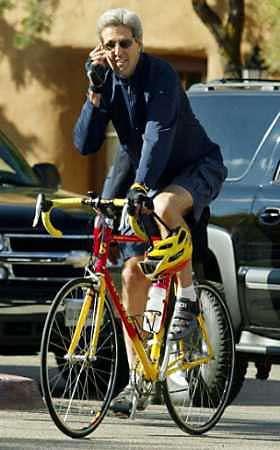
Why go gaga over a presidential candidate on a bike? After all, John Kerry rode one and President Bush reportedly takes regular mountain bike rides. The difference for those who promote bicycling as a viable urban transportation option is that Obama rode in a big city, in street clothes, on an inexpensive bike, and was even hauling something (probably his daughter, although that isn’t clear). And he chose to spend his downtime cycling through Chicago with his family shortly after saying this in Portland: “If we are going to solve our energy problems we’ve got to think long term. It’s time for us to be serious about investing in alternative energy. It’s time for us to get serious about raising fuel efficiency standards on cars. It’s time that the entire country learn from what’s happening right here in Portland with mass transit and bicycle lanes and funding alternative means of transportation.”
Contrast that with today’s news that Senate Republicans have blocked legislation that would have taxed the obscene profits now been reaped by the five big largest American oil companies, which took in a staggering $36 billion in just the first three months of this year. Just imagine how many bike lanes and transit improvements could be funded with the proposed 25 percent tax on unreasonably high profit levels? Or by getting out of Iraq, with its price tag of more than $250 million per day?
Forget the detailed analysis of their economic plans; the differing visions of these two men couldn’t be more clear. We either keep cooking the planet, fighting the world, and begging the rich for crumbs and spare change, or we try something different.

Cyclonudistas unite! World Naked Bike Ride hits SF

1

nakedbike.jpg
Yes, but who’s riding the testicycle?

Put your balls to the Brooks and your petals to the metal, shrinking violets — raucous global event the World Naked Bike Ride hits SF this Saturday at noon (as posted on “nakedwiki.org” — how, oh how, has this wiki escaped me???).

nakedbike3.jpg
I think my gearshaft just shifted

“We face automobile traffic with our naked bodies as the best way to defend our dignity and exposing the unique dangers faced by cyclists and pedestrians as well as the negative consequences we all face due to dependence on oil and other forms of non-renewable energy,” say organizers, who seem to be as comfortable with run-on sentences as baring all on the mean streets of the naked city.

nakedbike2.jpg

But who are we to argue — the pics make the participants look a lot hotter than those way-too-smiley Bay to Breakers nudists. Roll on, 10-speed tatas and phallic fixies.

Coming soon: A movie!

Date: Saturday June 7, 2008
Time: 12 noon
Location: Meet at the Justin Herman Plaza
Web: sanfrancisco.worldnakedbikeride.org

Do people remember Chevron’s abuses? People do

1

logoChevronHome.gif
By Maria Dinzeo
The agenda at Chevron’s annual shareholders meeting will be slightly different this year, as representatives from Nigeria, Ecuador, and Burma descend on the meeting to finally have their say. For years, Chevron has been accused of myriad human rights and environmental abuses, from having nonviolent protestors gunned down in Nigeria to the dumping of toxic waste into Amazon waterways in Ecuador.
Tomorrow, representatives from these countries will voice their concerns directly to shareholders and executives. Amazon Watch Director of Communications Simeon Tegel told us the event was designed to “potentially help shareholders become more active” in pressuring Chevron executives to finally address and rectify Chevron’s abuses.
“One hopes they are human beings too, although sometimes it’s hard to tell. But perhaps they will be motivated to do something, either from pressure from their shareholders or from the kindness of human nature,” said Tegel.
Chevron’s human rights violations are not limited to abuses abroad. Richmond has long felt the sting of Chevron’s environmental negligence, despite the company’s soaring profits. While Chevron promises more energy efficient oil refining methods, they continue to belch toxins into the air over Richmond, and plans for a $1 billion expansion of their Richmond refinery has increased resident’s health and safety concerns.
“Change is a long time coming,” said Rosi Reyes, spokesperson for the Asian Pacific Environmental Network. “Unfortunately, the citizens of Richmond have read through Chevron’s Environmental Impact Report and they feel that there are empty promises. Chevron continues to use equipment that is over 35 years old, and everything in the report points to [Chevron] refining heavier crude oil.”
Reyes said that the City of Richmond’s aims to wean itself of its oil dependent relationship with Chevron: “We want Chevron to put a cap on crude oil and put money into green energy,” she said.
Though contacted repeatedly, Chevron’s Media Relations Department was unavailable for comment.
Although Richmond representatives will not be allowed inside the meeting, they hope to confront Chevron executives through their protest outside. Said Amazon Watch spokesman Mitchell Anderson, “[Chevron] may not be listening, but they will definitely hear us tomorrow.”

Joe Nation’s friends are bad news II

0

joenation.jpg pg&e.jpg landlord1.jpg

More on why Joe Nation’s friends are bad news:

The Mark Leno campaign has done an analysis of the independent expenditure campaigns supporting Nation, and there are some truly nasty bad guys in there. Many of them (for example, our old friends PG&E) gave campoaign cash directly to Nation, then gave more money through the IEs.

Check out the list, taken from a Leno press release:

Civil Justice Association of California (CJAC) $342,544

A group of big oil, insurance, banking, chemical, pharmaceutical companies as well as companies involved in the subprime mortgage meltdown. They were co-sponsors of Proposition 64, which was opposed by consumer and environmental advocates and weakened the general public’s ability to pursue lawsuits over unfair business practices and environmental violations. CJAC works to limit their member’s liability when lawsuits are brought against them from consumers, patients, workers or environmental advocates.

* Joe Nation took $1,000 from Pacific Gas & Electric Co., CJAC member

* Joe Nation took $3,600 from California Apartment Association, CJAC member

* Joe Nation took $1,000 from the CA Hospital Association, CJAC member

* Joe Nation took $3,600 from MEDPAC of the CA Association of Physician Groups, sponsored by the CA Association of Physicians Organizations Los Angeles, CJAC member

* Joe Nation took $3,200 from the San Francisco Apartment Association, California Apartment Association is a CJAC member

* Joe Nation took $7,200 from the California Real Estate Political Action Committee, CJAC member

Cooperative of American Physicians $100,000

A group that provides liability insurance for it’s member physicians and advocates to maintain the liability caps up-held in the Medical Injury Compensation Reform Act (MICRA), which capped their liability in malpractice lawsuits at 1975 levels.

* Joe Nation took $3,600 from Cooperative of American Physicians

Californians Allied for Patient Protection (CAPP) $50,000

A group of corporate hospitals, doctors, insurance companies and others in the medical industry whose priority is to maintain the liability caps up-held in the Medical Injury Compensation Reform Act (MICRA), which capped their liability in malpractice lawsuits at 1975 levels.

* Joe Nation took $3,600 from Californians Allied for Patient Protection

* Joe Nation took $3,600 from MICRA California PAC of NorCal Mutual Insurance Company, member of CAPP

Californians for Jobs and a Strong Economy $3,277

A group of insurance companies, financial-services firms, developers, card clubs and biotechnology companies

I still think it’s a two-person race now, with Carole Migden far behind. And I think the best way to stop Nation is to vote for Leno. But whoever you support, don’t vote for Nation.

Spork

0

› paulr@sfbg.com

Spork’s sporks are surprisingly elegant utensils, considering that the word itself is lovably ugly, like a dog with a crumpled face, hopelessly short legs, and/or absurdly wrinkly skin — and considering that the thing itself, a spoon with a clipped mustache of fork tines, is no lovelier. The spork might be the apotheosis of Southern-fried American cheesiness; it’s easy to picture one replacing the pitchfork in a redraw of Grant Wood’s American Gothic, with Homer Simpson as the farmer. But if your spork is made of handsome stainless steel and has a nice weighty feel in your hand, you have probably drifted into Spork, a Mission restaurant that opened about a year ago in a tired Kentucky Fried Chicken space on Valencia, and you are almost certainly not Homer Simpson, though you might be ravenous.

The KFC was incongruous to the point of camp, and I never saw anybody in it despite my frequent visits to Valencia Cyclery across the street to have broken spokes replaced. Like the Days Inn near the symphony hall, it was a remnant of an earlier time and — in the case of KFC, a greasier one. The Sporkers (led by chef-owner Bruce Binn, whose distinguished vita includes stints at Delfina, Postrio, and Bix) are well aware of the past and, in a series of clever moves, have simultaneously embraced and distanced themselves from it. The interior decor of the restaurant incorporates bits of the previous occupant’s design; the stump of an old venting hood has been turned into a handsome light fixture, while refrigerator cooling fans have been repositioned in a transom above an interior door. There are also plenty of booths along the window with a familiar fast-food angularity, but the color scheme — gray paint and blond wood — isn’t one you’d be likely to find in any fast-food restaurant in the country.

Since the restaurant’s mantra is "slow food in a fast food shell," we were not surprised to learn that the kitchen places a heavy emphasis on sustainability and locavorousness. All the seafood is wild and taken from well-managed fisheries; more than two-thirds of the restaurant’s waste is recycled or composted; and used cooking oil gets turned into biodiesel. Like a child determined not to repeat a parent’s mistakes, Spork corrects for the culinary sins of KFC about as much as it possibly can.

Yet Binn’s food isn’t at all precious or fussy. It’s hearty and vivid — a glimpse of what all-American food might look like in a better world, or at least a better America. There’s even a dish that comes with a spork: mussels and pork ($18), basically a plate of mussels steamed in an unnamed (but dark?) Belgian beer and plated with a slab of slow-roasted pork loin, some whole-wheat toasts dabbed with chipotle aïoli, and a substratum of asparagus. The spork in question is rather handsome; it’s a stainless-steel spoon with the fork tines subtly shaved into the far end of the bowl, like a grille, and more decorative than useful.

For deals on a menu, it’s hard to beat an item that costs $0. That’s the charge — right there, in print! — for Spork’s dinner roll, a tripartite, wonderfully soft bun sprinkled with crunchy sea salt and presented with a pat of whipped honey butter. They’ll bring you more than one, too (as many as you want, probably), but one is plenty for two people and more than satisfies the daily white-flour quota. Softness does have its price.

Given the fresh tartness of strawberries, it’s long surprised me that they aren’t used more as tomato substitutes, particularly in the spring, when such tomatoes as we find around here are coming from distant locales we don’t even want to know about. Binn makes a lovely little salad ($9) from organic strawberries; the slices are marinated in aged sherry and plated with effusions of wild arugula, almond slivers, a syrupy balsamic reduction, and a warm goat cheese fritter on top.

As if to offset the white-flour megadosings in the dinner rolls, the kitchen serves an Alaskan halibut fillet (at $24 the priciest dish on the menu) on the slope of a farro hillock. Farro is an ancient wheatberry much used by the Roman legions; it’s quite similar to barley but different enough from both ordinary wheat and barley to be nutritionally valuable, not to mention tasty, especially when cooked with leek. (Although farro is a whole grain, Binn’s grains were plump and fluffy, which mystified and impressed me until I made my own a few nights later, having first soaked the farro overnight, and voilà.) Apart from the fish itself, sautéed to a golden tender-crispness, the plate held a royal flush of red-beet slices whose vivid, Burgundy-colored sweatings added some welcome color to a floe of fiery but wintry-white horseradish cream.

The Spork experience might be at its most quasi-Southern when your swift and friendly server, clothed in black, presents the dessert menu. Beignets and root beer floats? Elvis would like those, but he’d probably like "Elvis has left the building" ($6) even more. Despite its arty deconstructedness, it was a housemade peanut butter cup beside a blob of vanilla gelato beside a chain of banana slices, with caramel sauce underneath and salted peanuts scattered all around. All of it was good and swirled together nicely, but the peanut butter cup was quite spectacular. It had been warmed through in the oven to the point of melting, and its peanut butter filling was granular and (unlike the blindingly sweet commercial kind) not particularly sugary — a close relation of homemade peanut butter, which you can make in a food processor with good quality unsalted peanuts and some neutral vegetable oil as a binder. You could even scoop it out of the bowl with a spork, if you have one. *

SPORK

Dinner: Mon.–Thurs., 6–10 p.m.

Fri.–Sat., 6–11 p.m.

Lunch: Tues.–Fri., 11:30 a.m.–2 p.m.

1058 Valencia, SF

(415) 643-5000

www.sporksf.com

Beer and wine

MC/V

Loudish but bearable

Wheelchair accessible

Flowers for Kathleen Edwards

0

Being of so-called American Indian and African descent, I have never believed in borders. These imperial lines have only wreaked havoc and sealed our fate. Still, I’m always amused by just how much Canadian roots rockers seem to out amber-wave many Americana acts in the Lower 48. From the Band’s part-Mohawk Robbie Robertson penning classic anthems about Southern history ("The Night They Drove Ole Dixie Down"), to Neil Young’s prurient praise-songs, to my much-removed kinswoman "Pocahontas" and beyond, there’s an outsider quality shared with my outlaw peoples, a sense of being on the margins that triggers keen lyrical and sonic focus. Add to this lineage Young’s aspiring heiress, Kathleen Edwards: on tracks such as the barroom gothic "Goodnight, California," she certainly makes that skill plain.

Edwards has bubbled under since her 2003 debut Failer (Socan/Factor), widely celebrated by music cognoscenti with reliable ears. But her world-weary folkie moves reminded me of Lucinda Williams and other sepia-tone, anachronist comers of the period. With Asking for Flowers (Zoe/Rounder), her finest album to date, she has finally distinguished herself from much of alt-country’s fringe-fetish ghetto . A cinematic sweep and fine Los Angeles sessioneering frame its road songs ("Buffalo") and polemical tales from the heartland ("Oil Man’s War"). "O Canada" revisits themes of drugs and mayhem from Tonight’s the Night (Reprise, 1975), by Young and his famed, unvarnished backing band Crazy Horse. I reckon we’ll be dancing round the ole maple this spring, crowing "B is for bullshit" from Edwards’ "The Cheapest Key" as it abounds on the ever more absurd campaign trail. Other Edwards lyrics should be reserved for rocker girlfriends and women saddled with tired-ass boyfriends. "I’ve been on the road too long to sympathize / With what you think you’re owed."

Nowhere is Edwards’ inherited Great North gift of odd insight more evident than on the disc’s best song: "I Make the Dough, You Get the Glory." One could almost see Ellen Burstyn’s Alice singing, "You’re cool and cred like Fogerty, I’m Elvis Presley in the ’70s" to Kris Kristofferson in some meta-American vérité — that is, if much current US indie cinema wasn’t vastly inferior to films like Sarah Polley’s Oscar-nominated Away from Her (2006). Just as Polley kicked creative ass and Feist has been anointed the "New Joni" by worshipful black Atlantic male musicians, Edwards looks poised to be this year’s sweetheart of the rodeo — although nowhere nearer to Music Row than before. Happy trails, gal.

KATHLEEN EDWARDS

With the Last Town Chorus

Tues/20, 8 p.m., $18

Independent

628 Divisadero, SF

(415) 771-1422

www.theindependentsf.com

The end of the line

0

› a&eletters@sfbg.com

"The film is called RR, but I like to call it ‘Railroad,’ because RR sounds like a pirate movie."

— James Benning

TRAINS A short stretch of celluloid is a representation of a train, one image following the other in rapid succession, connected by essential blocks of black, moving forward in time and space, and, when projected, rotating on a wheel. Cinema began with a train entering a station, shot with a fixed camera, chugging toward the screen. Barring a change of mind or circumstance, the masterful RR will be the last of James Benning’s works shot on 16mm, and how fitting that this 37-year phase closes with the image of a locomotive, pointedly stopped in front of a wind farm outside of Palm Springs, scrapped tires lying in the foreground, the end in a line of 43 trains shot across the United States (and the final frame of 34 extant films).

After a prolific three-year period that has seen Benning produce five crucial works — likely exhausting his stock of 16mm film — while teaching, driving across America, and building a full-scale replica of Thoreau’s Walden Pond cabin, technology has vanquished this last of the old-time filmmakers.

Those familiar with Benning’s landscape films will be comforted by RR‘s fixed camera and continental scope, but the film marks something of a crucial advance. As opposed to the awesome 13 Lakes (2006) — 13 individual lakes, each shot lasting the full 10 minutes of the 16mm cartridge — RR finds Benning adopting another structural principle: the signified (the train) takes over from the signifier (the camera).

Every shot is mesmerizing, yet the film builds, acquiring a cumulative power, as the simplicity of structure gives way to infinite experiences. To some, trains invoke nostalgia; to younger viewers, classical antiquity. To trainspotters, well, RR is Valhalla. And just as Benning’s California Trilogy (2000–01) concerns work and water, RR becomes a film "about" American overconsumption. Benning lets what’s on screen tell the story, with the tumultuous history of railroads and western development only alluded to by songs and words on the soundtrack. Filmed and recorded, as always, by a one-man band, all of its shots captured without permissions or permits, maybe RR is a pirate movie.

SFBG How far back does RR‘s genesis go? Were you into railroads as a kid?

JAMES BENNING Yeah, I like trains a lot. When I was a kid I had a little model train, an American Flyer. When I was a teenager we used to play in the train yards in Milwaukee, and that was fun, because we weren’t supposed to go there. We’d hop on slow freight trains and ride them for like a mile, and then jump off.

SFBG When you started making RR, was there a specific plan? Did you know the exact locations where you wanted to shoot?

JB I was pretty familiar with the major US lines. When I drive from Wisconsin to California, I pass by the lines that run through the Midwest. I know the lines that go up and down the [east] coast from New York to Washington. Other lines I knew through research, by getting a good railroad atlas. I wanted to film according to landscapes, too. I knew I wanted to do a shot across Lake Pontchartrain in Louisiana, and a shot in Mississippi of a train going through the kudzu growth, and [a shot of] this famous park called the Rat Hole in Kentucky. I also used a Web site [www.railpictures.net] that says it has "the best railroad pictures on the Net." It has thousands of still photos by railroad fans.

SFBG Is it accurate to call RR a landscape film?

JB The initial idea was to use railroads to define landscape because they can only go up a 2 percent grade. But as it became apparent to me that the film was going to be about trains more than landscapes, I learned more about different kinds of engines. The second shot is of the only piggyback train — where you take semi trucks and load them onto cars — in the film. Later there’s a RoadRailer, the train that looks like a long white snake. I shot that in the Rat Hole, an area that used to be all tunnels. I was shooting from above, which was the best vantage point [from which] to film it.

For me, the film came to be about consumerism and overconsumption — I could feel the weight of the goods going by me. Especially the oil and automobiles, as I saw a lot of tanker cars and auto trains. They pass each other constantly.

SFBG The mathematical nature of RR is impressive. One comes to realize the number of variables at play — the size and expanse of the train, the number of cars, the colors, the speed, the landscape, the angle where the train comes into the frame and where it leaves. All of these factors pile up.

JB It’s the way I always work: I’ll set up a problem for myself. I basically collaborate with the train in that it’s going to suggest the length of the shot. I thought I could vary the distance the camera was from the train, vary the angle that the train approaches from, and change these angles from shot to shot to build rhythms. The variables make it possible to take this idea that is confining and make it grow. The same thing happens with earlier films like 13 Lakes, where I set up an idea — to shoot a lake with the same amount of sky and water — and the problem is how to show the uniqueness of the lake.

SFBG RR must have been a very different experience from shooting 13 Lakes.

JB That’s true, because in shooting 13 Lakes, I was waiting for the best moment to turn the camera on. In RR, I’m waiting for the train, and hopefully it will correspond with the best moment to turn on the camera.

SFBG One is more your choice, and the other is the train’s choice.

JB Yeah, I enter into this collaboration with the train. It’s going to choose the moment. Of course if I am on a line that has five trains an hour, then I can choose the time of the day. But if I’m at a line that has one train a week, then I’m at the mercy of the train. The one place I shot like that was at the causeway that crosses the spillway outside of Lake Pontchartrain — the Kansas Line. That train comes by once a week. I waited all day, and that train came by at 4 in the afternoon, on a day [when] it was 110 degrees with 100 percent humidity.

SFBG Is everything in RR there as you found it? That last shot with the tires strewn by the tracks seems too good to be true.

JB Yeah, it’s outside of Palm Springs. In the film that Reinhard Wulf made about me [James Benning: Circling the Image (2003)], we stop at the same wind farm. On the soundtrack I talk about going back to places I’ve filmed and seeing how the places change. That area is just littered with stuff, so it wasn’t hard to find a good frame with tires.

SFBG When I saw RR, the audience gasped at that final shot, like they do at the mirrored image of Crater Lake in Oregon in 13 Lakes. It isn’t comparable in beauty. But there is perfection to the composition: the colors of the train match up with the landscape, the blue of the sky and the white of the windmills.

JB The other thing is that as the train gets slower and eventually stops, the sound of the train gives way to the sound of the windmills. There is this slow dissolve between train noise and wind energy that somewhat suggests an alternative way of living, a cleaner energy. After [one] screening, an interviewer said that he found it to be hopeful, but I find it kind of ironic, as it seems too late. The tires lying there like the death of the automobile — the death of our culture, really — and the use of oil, all of that is in play.

SFBG The general perception of RR is that the film’s structure is precisely a function of the length of each train — the shot begins when the train enters the frame and ends when it leaves. But that’s not exactly the case.

JB Most of the time there’s an empty frame, the train enters, it leaves, and then there’s a cut. I would like to have drawn that out. For me the film is very much about time and about waiting, but I didn’t want waiting to become part of the film. I wanted you to realize through the absence of waiting that I had to wait.

SFBG Something else happens within RR. At least twice, maybe three times, there is an optical illusion. After the train leaves the frame what’s left behind seems to vibrate.

JB It happens a lot.

SFBG Were you aware that this would occur?

JB I wasn’t when I made the film, but when I started to project the work print, I was shocked. You don’t need a film to get that optical illusion — you can stand in front of a waterfall, follow the water down, then turn your head. [Likewise,] your eyes will follow the train so that when it’s gone, the effect remains and even kind of warps.

SFBG Most of the trains in the film are freight trains, there are maybe only one or two passenger trains.

JB There are two: one was a commuter train, one was a passenger train. The amount of commuter travel, at least on the West Coast, is minimal — you hardly ever see a train with people in it. Amtrak leases the right to use rails from the companies that operate the freight trains. I’ve taken most of the Amtrak train routes. They’re fun … and slow.

SFBG How long did you shoot?

JB I shot for two and a half years, probably. I had so much fun that I didn’t really want to stop. I still miss it. Sometimes I go back to those same sites and wait for trains, just to have that feeling again.


No peace, no work

0

› news@sfbg.com

Workers, students, immigrants, and antiwar activists came together in historic fashion on May Day in San Francisco, but it was hard to tell from the next day’s mainstream media coverage, which adopted its usual cynical view of the growing movement to end the war in Iraq.

Sure, there were articles in newspapers from the San Francisco Chronicle to the New York Times about how the International Longshore and Warehouse Union shut down all 29 West Coast ports for the day, with far more than 10,000 workers defying both their employers and the national union leadership to skip work.

But each article missed the main point: this was the first time in American history that such a massive job action was called to protest a war.

“In this country, dock workers have never stopped work to stop a war,” Jack Heyman, the ILWU executive board member and Oakland Port worker who spearheaded the effort, told the Guardian.

The ILWU’s “No Peace, No Work” campaign and simultaneous worker-led shutdowns of the Iraqi ports of Umm Qasr and Khor Al Zubair are part of a broader effort, called US Labor Against the War, that labor scholars agree is something new to the political landscape of this country.

Steven Pitts, labor policy specialist at UC Berkeley’s Labor Center, told the Guardian the effort was significant: “It wasn’t simply a little crew of San Francisco radicals. It has a breadth that has spread out across the country.”

In fact, USLAW has about 200 union locals and affiliates with a detailed policy platform that calls for ending war funding, redirecting resources from the military to domestic needs, and boosting workers’ rights — including those of immigrants, who staged an afternoon march in San Francisco following the ILWU’s morning event.

Traditionally labor unions have been big supporters of US wars. But Pitts said the feelings of rank-and-file workers have always been more complex than the old “hard hats vs. hippies” stories from the Vietnam era might indicate.

Blue-collar workers have always been skeptical of war, Howard Zinn, a history professor and author of the seminal book A People’s History of the United States (HarperCollins, 1980), told the Guardian.

“Working people were against the [Vietnam] War in greater percentages than professionals,” Zinn told us, referring to polling data from the time. “There is always a tendency of organizations to be more conservative than their rank and file.”

This time, union members and the public as a whole have more aggressively pushed their opposition to the Iraq War, winning antiwar resolutions among the biggest unions in the country and in hundreds of US cities and counties.

“I think it’s a reflection of how far the nation as a whole has come in our anger at the continuation of this war,” Zinn told us.

The media coverage of the May Day event belittled its significance, noting that missing one day of work had little practical impact to the economy or war machine, while playing up comments by spokespeople for the Pacific Maritime Association and National Retail Federation that the strike was insignificant and perhaps more aimed at upcoming contract talks than the war.

Heyman wasn’t happy about that bias.

The strike “was totally for moral, political, and social reasons. It had nothing to do with the contract,” Heyman told us.

A big factor for the ILWU was the newfound solidarity between dock workers in the United States and those in Iraq, who were prohibited from organizing in 1987 by the Baathist regime, an edict that the US has continued to enforce.

The Iraqi dock workers issued a May Day statement that detailed the horrors of their situation: “Five years of invasion, war, and occupation have brought nothing but death, destruction, misery, and suffering to our people.”

In fact, the banner leading the ILWU procession down the Embarcadero and into Justin Herman Plaza in San Francisco read, “An injury to one is an injury to all.” That theme of solidarity — among all workers, American and Iraqi, legal and illegal — was laced through all the speeches of the day.

Joining labor leaders on the podium were antiwar movement stalwarts such as Cindy Sheehan, who is running an independent campaign to unseat Speaker of the House Nancy Pelosi, now a target of the movement for continuing to fund the war.

“Nancy Pelosi wants to give George [W.] Bush more money [for the Iraq War] than he even asked for,” Sheehan said, drawing a loud, sustained “boo!” from the crowd. At the afternoon rallies at Dolores Park and Civic Center Plaza, which focused on immigration issues, the war was also a big target, with signs such as “Stop the ICE raids, Stop the War,” and “Si se puede, the workers struggle has no borders.”

Even for protest-happy San Francisco, it was an unusually spirited May Day, with more than 1,000 people appearing at each of the four main rallies and two big marches. There were lots of smaller actions as well, including demonstrations at the ICE offices and Marine recruiting center, and activists from the Freedom From Oil Campaign disrupting a Commonwealth Club speech by General Motors CEO Rick Wagoner.

But it was the port shutdown that was unique. Annually the 29 West Coast ports process 368 million tons of goods, averaging more than 1 million tons a day moved by 15,000 registered ILWU workers and a number of other “casuals.” Eight percent of that comes in and out of Oakland, but West Coast trade affects business throughout the country — as many as 8 million other workers come in contact with some aspect of that trade.

Mike Zampa, spokesperson for APL — the eighth-largest container shipping company in the world, with ports in Oakland, Los Angeles, and Seattle — told us, “Over a long period of time a shutdown like this does have an impact on the US economy.”

More port shutdowns are possible, Heyman said. But he hopes the action inspires other workers and activists to increase the pressure for an end to the war.

“We are taking action to swing the pendulum back the other way,” Heyman told us during the march. “We are stopping work to stop the war.”

Small Business Awards 2008: Small Green Business Award

0

As soon as you enter the woman-owned Luscious Garage, you know you’re not in your typical stinky, boys-only auto repair shop. The art-lined walls are painted creamy yellow. Plants and open windows — in place of energy-sucking exhaust systems — act as an air filter. The second-hand furniture, all dark wood, gorgeously contrasts with the light walls and green leaves. A corkboard beckons with fliers from other green businesses like Green Cab, which sends its fleet to Luscious for maintenance.

Beauty meets function on the spotless floor made of nonporous cement, not the usual grease-stained epoxy. It won’t absorb toxins, making it easier to clean and maintain. Natural light fills the room with a sunny glow while soft halogen task lighting shines only on the necessary work areas.

More than just the so-called "women’s touch," it is the culture of hybrids, which are exclusively serviced at the shop, that the appearance of Luscious Garage reflects. That culture acknowledges driving as a necessary evil that’s not going to disappear anytime soonbut one that shouldn’t stop us from being environmentally responsible.

The impetus for all this beauty and responsibility came to owner and lead technician Carolyn Coquillette soon after she got degrees in English and physics from the University of Michigan — when her car promptly broke down. "I thought it was stupid that I couldn’t solve the problem because I didn’t have basic car knowledge," she recalls. She began taking auto repair night classes at a community college and eventually took a job at her instructor’s garage. But she was eager to understand more about advanced hybrid technology and followed that interest to California.

Apparently she wants to pass some of that education onto her customers. At Luscious, a technician uploads car information to the shop’s Web site, which customers can access online to track the repairs. Not only does this practice make the services "fully transparent" to the car-illiterate, it allows Coquillette to follow another important green business practice: keeping her garage paper-free.

That’s not all: Luscious Garage brews its own windshield fluid out of vinegar and water and uses re-refined oil in place of crude-refined oil. All linens are washed on site to monitor water, energy, and chemicals, and a gray water system is being set up to water plants. Rags are used to clean residue off the concrete, and a service launders them off-site so that the chemicals are disposed of properly. Containers are refillable and fabrics are repurposed to make durable, reusable floor mats and fender covers.

When it comes to being green, Coquillette sums it up: "People are like, screw it, there’s nothing I can do. But there are small things you can do: make better choices, make greener choices."

Seems like she’s doing some pretty big things too. (Ailene Sankur)

LUSCIOUS GARAGE

459 Clementina, SF

(415) 875-9030

www.lusciousgarage.com

Loló

0

› paulr@sfbg.com

The turkey is native to Mexico and one of the few animals to have been domesticated by the Indians. Turkey is central to Yucatecan cooking in particular — and by "turkey" I of course mean the bird, the roasted star of so many Thanksgivings, not the country east of Greece. No turkeys there (though plenty of lamb) or really any other connection to Mexico. Which makes Loló difficult to explain.

And what is Loló? A kind of soda? A male stripper? No, it’s a restaurant that opened last fall in the old Vogalonga (and before that, La Villa Poppi) space, with an important addition: the annexation of the storefront immediately to the east. So now, instead of seating fewer than a dozen, the place can accommodate … well, not mobs, but a couple dozen at least, if you factor in the bar. I loved the intimacy of Vogalonga and La Villa Poppi; eating in them was like having been invited into somebody’s home for dinner; only the nearby Gravity Spot was cozier. But Loló does breathe more easily with the added square footage. And the second dining room is done up in newspaper broadsheets that give the Mexican lottery results in mind-bending detail. This is the Mission the way it ought to be: sophisticated but playful and even a little silly, with whimsical improvisation more important than money and all the overdesigning money can buy.

A further point of interest is that Loló serves a kind of hybrid cuisine (I decline to describe it as "fusion") that adds Turkish flourishes and grace notes to what is basically a pan-Latin or nuevo Latino menu. The marriage might be an arranged one, but it reflects the realities of the restaurant’s ownership (the principals are Merdol Erkal and Jorge Martinez) as well as a surprising harmonic convergence between cuisines and cultures that would appear largely unrelated. A Turkey-Mexico combination might be something you’d expect to see in a World Cup soccer final, not on your plate. It’s worth remembering, however, that Mexico’s mother, Spain, was not unfamiliar with the Ottoman Turks. Their relationship might be described as peppery.

Pepper is a binding agent at Loló. The food as it emerges from the kitchen doesn’t lack liveliness, but if you want to do some tweaking, you’ll be given a small dish of crushed black Turkish pepper to brighten up the party. Even if you don’t feel the need, you’ll find plenty of pepper on your plate anyway — in the oily sauce ladled over octopus tiradito ($8), a version of carpaccio. The combination of pepper flakes, lemon juice, and olive oil lent this dish a real presence, and the slices of octopus were too paper-thin to be tough. But the dish was served a little too cold to be fully awake. It was as if it had been plated well ahead of time, then grabbed from the refrigerator.

Just right, temperature-wise, was a handful of what the menu called "dumplings" ($8): fried, empanada-like pockets filled with a mince of huitlacoche (a truffle-like fungus that grows on corn) and served with a pot of thinned ricotta cheese for dipping and a few ribbons of roasted yellow pepper for color and a slight smoky sweetness. An arugula salad ($7) was a flea market of colors, tastes, and textures, a jumble of apple slices, pine nuts, shreds of cherry and crumblings of feta cheese, all drizzled with a deep-voiced orange muscat vinaigrette.

The bigger plates aren’t quite full-size, and — here is a sizable difference from typical Latin-American restaurant practice — they aren’t stuffed to the rafters with starches, either. The only starch on a plate of "three meat bites" ($12) was the trio of grilled bread spears the meat patties were seated on. Those patties, incidentally, were the most purely Turkish items we were able to find on the menu. They could easily have passed for kofte. The accompanying mushroom side sauce seemed neither Turkish nor Mexican — French, if anything.

Seafood sopes ($13), on the other hand, did seem Mexican. This dish consisted of a pair of sopes — disk-shaped corn cakes with a lip, like shortcakes from strawberry-filled summers of yore — topped with a mélange of sautéed bay scallops and shrimp and pipings of guacamole and sour cream. The Mexican bistros we don’t have enough of could probably survive by offering not much more than this dish alone. The braised shreds of red cabbage on the side were a bracingly vinegary, colorful bonus.

The chocolate fondue dessert is a staple at fondue restaurants, where many of us tend to eat too much anyway. Loló, in keeping with its trim-waistline philosophy, takes a quasi-minimalist tack; its version ($7) consists of a modest amount of good dark chocolate melted in a chafing dish, and a fistful of blueberries, raspberries, and squares of banana bread for dunking. Because fondue can’t be gobbled down but must be eaten rather painstakingly, jab by jab, one has the impression of eating more than what is actually being eaten — and is satisfied accordingly. At the end, we were given two spoons to finish off the remnant of the chocolate — about a spoonful each, like a kiss goodnight before heading off to dreamland, where sooner or later we all win the lottery.

LOLÓ

Dinner: Tues.–Thurs., 5:30–10 p.m.; Fri.–Sat., 5:30–11 p.m.

Brunch: Sat.–Sun., 11 a.m.–3 p.m.

3230 22nd St., SF

(415) 643-LOLO (5656)

Wine and beer

AE/MC/V

Noisy

Wheelchair accessible

SPORTS: The F-in’ ballgame

0

By A.J. Hayes

Carbon dioxide, deforestation, and nitrous oxide all shoulder their share of the blame for Global Warming. But what about Lee Elia?

elia.jpg

Now, you won’t find Elia’s name mentioned in any Al Gore lecture. He’s not a greedy corporate bigwig, an eco terrorist, or a clueless oil tanker captain – just a curmudgeonly baseball lifer.

But 25 years ago this week, during a highly unsuccessful two-season stint managing the Chicago Cubs, Elia emitted the most extreme, paint-peeling meltdowns in the history of sports.

When he was done blasting away at Cubs fans with an obscenity-laced rant that included a jaw-dropping 36 F-bombs over the first three minutes, Elia surely had released enough green house gasses to liquidate massive mountain glaciers and multiply the thermal expansion of upper ocean layers from Pacifica to Antarctica. .

A quarter century later, Elia’s diatribe still ranks as the No. 1 outburst in the history of sports – eclipsing Oklahoma State football coach Mike Gundy (I’m a man! I’m 40!”); Indianapolis Colts coach Jim Mora (Playoffs?! Are you kidding?! Playoffs?!) and any number of profanity laced diatribes by former Dodgers skipper Tommy Lasorda.

The Legend of Elia rant has grown so much over the years, that every April 29, sports radio broadcasters from coast- to- coast gather for a moment to celebrate “Lee Elia Day” – popping multi-generational copies of the tirade into their Monrantz tape decks and laughing hysterically.

After dealing with mounds of monotone sports clichés on a daily basis, Elia’s rant allows beleaguered sound bite gathers a moment to smile. Obviously, because of Elia’s unrestrained profanity, only carefully edited versions of Elia’s adult content diatribe have ever made it to the public airwaves.

Now, thanks to the internet of course, Elia’s diatribe can be heard in all its profane glory.

The hapless Cubs were off to a typical dreary start to their ’83, settling into last place in the National League East place after a 4-3 loss to the Dodgers at Wrigley Field that afternoon.

As the Cubs exited the field and the 9,391 fans in attendance filed out of the grand stand, a couple of jerks pelted Chicago’s Keith Moreland and Larry Bowa with stadium trash.

“About 85 percent of the (f-ing) world is working,” Elia growled into the microphone of Chicago radio man Les Grobstein, one of a half dozen reporters to witness the rant first hand. “The other 15 come out here.”

He was far from finished.
Moments later, Elia’s season-long slow burn escalated into an inferno. He lit not only into the debris flinging morons, but each and every Cubs fan that had ever skipped school or work to take in a mid-week day game at the “Friendly Confines.”

Mad jags

0

› kimberly@sfbg.com

SONIC REDUCER "That was just a major experience that I’ll never forget and I never, ever want to have again."

So sayeth 60 Watt Kid’s Kevin Litrow of the mind-render that occurred shortly after he moved to San Francisco from Los Angeles in 2006. "I was contacted — or I might have contacted them. I’m not really sure." He goes on to tell me of being visited one night by a "tornado" of energy that swirled fiercely through his room and knocked him "out of tune," while talking to him in his head. After his guest finally departed, Litrow says he was limping on one side. Finding no corollary for his experience among other UFO reports — "it physically didn’t look like the typically oval-shaped-face kids," he says — he discovered that, nonetheless, the experience "physically and mentally opened some doors." Can the glitch-garnished, knocked-askew psych of Litrow’s band 60 Watt Kid — captured on their intriguing self-titled Absolutely Kosher debut — be partially credited to a brain-tweaking twister from another dimension?

Alien visitations, madness, rehab, and Libya — last week I was lost on a vapor trail, looking down from a star called Planet Hallucinogen Persisting Perception Disorder, and waltzing to a psychogenic fugue only I could hear. But now I’m found. I’m told it’s in the water. One moment you’re staring at the cover of Us Weekly, wondering how onetime pedophile’s-wet-dream Britney Spears came to be transmogrified into Our Lady of Mental Health Issues. The next you’re waking up, kicked to the curb with surgical staples where your kidney once was. The price of gas is high, but tripping — and sometimes falling — through the mind’s eye, gets you even higher. April gusts have blown in a slew of artists, spinning yarns of spirits and out-of-body travels. They lived through this. You will, too.

PROVEN GILTY Free Gold (We Are Free) is the name of Indian Jewelry’s forthcoming recorded game, so surely IJ honcho Tex Kerschen knows how to get baby some bullion. "You’ve got to go and roll the rich," says the Houston experimentalist. "You gotta catch ’em leaving restaurants and saying goodnight to their chauffeurs. Wealth liberation has come to rest in our minds as the answer, since we personally slave for oil barons." Kerschen knows: he says he spent the last year working in a refinery while Indian Jewelry took time off to regroup and record. So Free Gold is simply wishful thinking? "You get pummeled with wealth here in Houston," he explains. "They’re building continuously — literally, gilded fortresses. I’ve had to hang terrible art for terrible people. We decided we’d gild the lily ourselves."

REHABIT IT "It’s nice that people are into it," Kimya Dawson says sweetly about the chart-topping Juno soundtrack that hurled her into the consciousness of the mainstream — or at least that of National Public Radio listeners. "But I’m not really the kind of person who keeps track or cares about numbers and sales. I make music, and it’s just kind of what I have to do. It’s what I’d be doing regardless of who was listening." The Olympia, Wash., artist started crafting tunes as part of Moldy Peaches in 1994, and she’s still writing — albeit with less introspection since the birth of her daughter Panda (she just completed a children’s album). Songwriting has been an outright necessity since she drank herself into a coma and entered rehab more than nine years ago.

"I popped out of rehab, and I was depressed and on medication, and I didn’t know how to function on this planet, and I picked up a guitar, and it made me feel better," Dawson explains. The first Moldy Peaches show happened two weeks after she got out. "It’s always been mutual therapy for me and the people listening to my stuff. I always figured if I stopped doing it I might go crazy."

LIBYA LIBERATION How can a stellar Oakland combo like Heavenly States top their last heroic act as the first US rock band to play in Libya after the lifting of a 30-year travel ban? To start, they spent about a year working on a film about the experience, relying on puppet reenactments and animation, before they woke up and asked themselves, why aren’t we making music? After selling the rights to their Libya adventures (producer Jawal Nga is writing a script tentatively titled Rock the Casbah), the band has come up with their most eclectic and confident recordings to date, Delayer (Rebel Group). The group’s next act? "We got asked to play in Iran at this music festival," vocalist-guitarist Ted Nesseth tells me. "But Genevieve [Gagon] couldn’t sing in public. Then someone e-mailed to say her friend was a journalist living in a North Korean village filled with musicians, so we have to figure out a way to go there and record. There’s absolutely no way any of that crap is going to happen. I think we have a lot of touring to do supporting this album, and then we want to make another one."

SPIRITED "You know," announces Triclops! guitarist Christian Beaulieu, apropos of neither the group’s new CD, Out of Africa (Alternative Tentacles) nor what vocalist John Geek describes as their "bung load of shows," "Sonny [Kay] from GSL recently called me the ghost of Dimebag Darrell."

"It’s really kind of impossible because you were born way before he died," I venture.

"Well, I told my friend I was the ghost of Steve Vai," Beaulieu continues, "and he said, ‘Holy crap! That’s the best news I’ve heard all day: Steve Vai’s dead!’ I’m just trying to figure out how to put a handle on my Telecaster." *

INDIAN JEWELRY Thurs/24, 9:30 p.m., $8. Hemlock Tavern, 1131 Polk, SF. www.hemlocktavern.com

KIMYA DAWSON Fri/25, 8 p.m., $20. Herbst Theatre, 401 Van Ness, SF. www.ticketmaster.com

TRICLOPS! Fri/25, 6 p.m., free. Amoeba Music, 1855 Haight, SF. www.amoeba.com

HEAVENLY STATES Sat/26, 10 p.m., $10. Bottom of the Hill, 1233 17th St., SF. www.bottomofthehill.com

60 WATT KID Sat/26, 9 p.m., $25. Independent, 628 Divisadero, SF. www.theindependentsf.com

7 spring flings

0

San Francisco is such a gosh darn charming place, it often seems as if there are more romantic dining options than available dates. To which we say: Never! Spring has sprung and frisky hormones are back in motion after cozy hibernation. Grab the nearest eligible and hit up the following delightfully intimate (and reasonably priced) eateries, if only to test-drive the menu.

BAR BAMBINO


Mouth-watering charcuterie for your cutie, an extensive wine list to revel in, and an atmosphere that, while occasionally heavy on the decibel level, will douse any diminished conversation expectations in attractive lighting — so at least the potential partner across the table will look irresistible. Factor in a nifty little patio in back and an olive oil tasting menu to lubricate the cooing (plus a plethora of lip-smacking Italian dishes) and the mood is set for, if not love, then perhaps a memorable evening in the Mission.

2931 16th St., SF. (415) 701-8466, www.barbambino.com

CAFÉ ANDRÉE


You, of course, have absolutely no problem "closing the deal" — but it’s always good to have a secret weapon on hand, just in case. Café Andrée is mine. Every time I usher a hottie into Andrée’s intimate, well-appointed librarylike setting in the Rex Hotel downtown (bookshelves line the walls and there are globes galore), I know the rest of the evening will be silky smooth. Executive chef Evan Crandall creates incredible pan-global dishes that never fail to tickle. And his new spring menu is on fire. The best part: if your date bores you to tears, you don’t have to bring a book. Café Andrée does it all!

562 Sutter, SF. (415) 217-4001, www.jdvhotels.com/dining/sanfrancisco_cafeandree

COULEUR CAFÉ


Perfect for a leisurely luncheon prelude to any early-evening nuzzling, this Portrero Hill café’s generous outdoor patio and savory dishes may be responsible for more than a few calls into work begging for the afternoon off. The theme is laidback French with some Mediterranean kick, which is actually the description of many a dream date as well. A come-hither combo that always works for me: assiette de merguez with harissa for starters, followed up by the mussels mariniere and pommes frites. Enjoy.

300 De Haro, SF. (415) 255-1021, www.couleurcafesf.com

1550 HYDE CAFÉ AND WINE BAR


Nob Hill: the dating double-entendres are endless. So is the romance, especially if you duck into the intensely cozy 1550 Hyde for an adventurous wine flight and delectable cheese plate or main dish. (If 1550 is featuring its wondrous Provençal fish stew while you’re there, try it and thank me later). The emphasis here is on locally produced goods — the better to draw you closer — and the restaurant discourages cell phones, so your tête-à-tête is guaranteed to be restricted to sweet nothings.

1550 Hyde, SF. (415) 775-1550, www.1550hyde.com

L’ARDOISE


I can’t lie to you. I’m eating a can of Campbell’s tomato soup while I write this, but I’m dreaming of the escargots in garlic parsley sauce and almond-crusted barramundi at this brand-spanking new French delight near Duboce Park. Needless to say, I’ve already spent many a cherished hour there with my lover-of-the-moment. The space is warm and inviting, and the friendliness of the service puts any haughty stereotypes of the French to rest. "L’Ardoise" means chalkboard, so be sure to check the specials, which usually include a number of creamy cheeses as well as unique entrées that’ll have you’re your date shouting "oui, monsieur."

151 Noe, SF. (415) 437-2600, www.lardoisesf.com

TANGERINE


"Tangerine — she is all they claim / With her eyes of night and lips as bright as flame." So begins the famous jazz song, "Tangerine" — and the Castro restaurant of the same name seduces with an equal amount of yummy crepuscular abandon. Asian influences dot chef Sean Pattansuvoranun’s menu — and a recent pairing of the lemongrass lamb lollipops appetizer with a drunken duck entrée had me begging for Pattansuvoranun’s home phone number. But he knows better. Tangerine’s decor is crisp-yet-amiable, and the service is fluid, allowing you enough privacy to lick each other’s plates.

3499 16th St., SF. (415) 626-1700, www.tangerinesf.com

BITTERSWEET CHOCOLATE CAFÉ


If "bittersweet" describes the tenor of your evening together so far, tune up the ol’ heartstrings with a chocolate-flavored valentine at this cute café, with locations in Upper Fillmore and Oakland. A cocoa cornucopia of tastings, pastries, and specialty drinks — hello, hot steaming cup of chocolate chai — Bittersweet stays open pretty late, and will end any evening on a sumptuous note (even if your sheets remain uncrumpled).

2123 Fillmore, SF. (415) 346-8715; 5427 College Ave, Oakl. (510) 654-7159, www.bittersweetcafe.com *

7 spicy suppers

0

It’s true. Sometimes I can’t help but crave the unforgettable feeling of burning my lips and tongue with my food. Some people call it masochism, but I can’t help it. Eating real spice that makes my glands swell is heavenly — it’s all I could ask for in a meal. Need a better reason? There’s a saying that eating spicy food gives you a fiery personality. Follow that logic and fiery people make for spicy relationships. And what do you suppose comes from spicy relationships? I’ll let you decide. Mmm, tasty. So what are you waiting for? Amp up your life and get your fire on at one of these gems.

SPICES II


Fire fiends all over the Bay Area will tell you that one of the spiciest cuisines is Sichuanese, which is what Spices II in the Richmond District specializes in. They’ll have your sweat glands working on overload with their mapo tofu, cumin lamb, and spicy Chinese bacon. Beware, though. Sichuanese dishes are made with a special tongue-numbing peppercorn. Don’t be surprised if you leave a bit teary.

291 Sixth Ave., SF. (415) 752-8885

MY TOFU HOUSE


If you’re more in the mood for something hearty to fill you up, then move on from the flames of southern China and to My Tofu House’s Korean delights, like its whip-ass kimchi, soondubu, or an order of kalbi. While it can be tough to get a table during peak hours, waiting guarantees a great meal that warms you from the inside out. The stewlike soft tofu soup is especially adept at combating those foggy, wet city nights.

4627 Geary, SF. (415) 750-1818

INDIAN OVEN


Every fire-lover knows that a staple mascot for spiciness is curry, and there’s no better place to find it than at Indian Oven in Hayes Valley. Tikka masalas of all kinds will bowl you over with their exquisite balances of tongue-searing and flavorful. Also be sure to sample its tandoori and samosas. You can even bring friends with mild palates here; just make sure you specify the level of heat when you order.

237 Fillmore, SF. (415) 626-1628

CHABAA THAI


Thai cuisine makes a strong showing in the ring of fire with Chabaa Thai in the Sunset District. Taking no prisoners, Chabaa’s tom yum soup, pad see yu, or any of its curries leave lasting impressions. I admit this is one cuisine I was cowed by after asking for "as spicy as possible," and was soon brought close to tears as I feebly attempted to lift the chili oil–covered chopsticks to my lips. You win, Chabaa. You win.

2123 Irving, SF. (415) 753-3347

EL CASTILLITO


Not in the mood for Eastern-influenced fare? Mosey over to El Castillito in the Castro, which boasts some murderously hot avocado salsa. Add its gigantic super burritos and mouth-wateringly good quesadillas to the other noteworthy tongue sensations of its many meat selections — the carne asada is a winner — and you’ll be begging for more, even with a food-baby ready to be birthed as you walk out the door.

136 Church, SF. (415) 621-3428

CAFÉ COLUCCI


If you’re looking for a more hands-on approach to your spice adventures, Café Colucci offers a kick in the pants with its spicy green lentil soup; the chicken, shrimp, and lamb tibs; and injera for some doughy goodness to balance out the flames. Ethiopian cuisine also gives you a chance to really dig in, using your manos to scoop up the goodies. Vegetarians will find plenty to satisfy their cravings and given such huge portions, consider bringing friends.

6427 Telegraph, Oakl. (510) 601-7999

CHINA VILLAGE


East Bay residents rally around this fabulous addition to the Bay Area spice race. An ideal location for large dining parties, China Village excels at all the typical provincial goodies that make hotheads ecstatic. Their water-boiled beef, appetizer beef tripe and flank (featuring the tongue-numbing peppercorns), and the West-style fish soup with "1,000" chilies will have you crossing the bridge again and again.

1335 Solano, Albany. (510) 525-2285 *