Oil

Funny face, fecal face

0

arts@sfbg.com

FALL ARTS/HAIRY EYEBALL “New Work: R. H. Quaytman” It’s appropriate that the paintings commissioned by SFMOMA for R.H. Quaytman’s first West Coast showing were conceived in response to the museum’s own photography holdings as well as the work of SF Renaissance poet Jack Spicer. I’m curious to see what sort of conversation Quaytman’s precise, labor-intensive, and site-specific silk-screens (in “seven interrelated sizes based on the golden ratio”) stage with Spicer’s salty and spicy verse. Oct. 22-Jan. 16, 2011; San Francisco Museum of Modern Art, www.sfmoma.org.

“Masami Teraoka: The Inversion of the Sacred” Masami Teraoka built his reputation in the 1980s and ’90s on his apocalyptic ukiyo-e-style paintings, which juxtaposed topical content (AIDS, the globalization of fast food) against their faithful reproduction of an older, “traditional” aesthetic. In recent years he’s turned to Renaissance altar painting as the medium of choice to express his disgust over a whole host of new evils. His latest gilded blasphemy — a triptych that reenvisions the Last Supper as a Papal stag party in hell — encompass the ever-mounting sex abuse scandals linked to the Catholic Church and the gulf oil spill. Oct. 2-Nov.13; Catharine Clark Gallery, cclarkgallery.com.

“Tammy Rae Carland: Funny Face, I Love You” For her second solo show at Silverman Gallery, Mr. Lady Records cofounder and visual artist Tammy Rae Carland presents a suite of new work inspired by female comedians. Carland’s photographs of empty stand-up stages give off a slightly forlorn vibe, to be sure, but her anywhere clubs are also sites of possibility to laugh off gender difference as well as to laugh at it. You’ll leave in stitches. Sept. 10-Oct. 23, 2010; Silverman Gallery, www.silverman-gallery.com.

“10 Years of Fecal Face, An Anniversary Show” A decade in Internet years is a long-ass time, so three cheers to founder John Trippe and his army of global correspondents for sticking to their guns these past 10 years and creating an invaluable resource and platform for Bay Area artists and visual art fans. Tripp has pulled together a who’s who of site and Fecal Face Dot Gallery alum — David Choe, Matt Furie, and Jeremy Fish, to name a few — for this epic retrospective. Support the scene that supports you. Sept. 10-Oct. 9, 2010; Luggage Store Gallery, www.luggagestoregallery.org.

“HARVEST: what have you gathered?” Just in time for the lead-up to Thanksgiving, the North of Market/Tenderloin Community Benefit District Gallery lays out quite a spread. “Harvest” asked a diverse group of TL-based artists, “What have you gathered?” Their responses should make for an interesting snapshot of the lives that comprise a neighborhood in flux. Sept. 1–Nov. 30; 134 A Golden Gate, www.nom-tlcbd.org.

“Reclaimed: Paintings From the Collection of Jacques Goudstikker” Fact: the Nazis did many shitty things, such as taking other people’s (wealthy Jews, in particular) cultural property as their own. Such was the fate of the collection of prominent Dutch art dealer Jacques Goudstikker, who had amassed a sizable number of Northern Renaissance rarities. After much effort conservators finally repieced together the collection in 2006, and now SF gets a peek at Goudstikker’s greatest hits. And what hits they are: for starters, Hendrick Avercamp’s Winter Landscape with Iceskaters (1608) could give Breughel’s peasantry a run for their money. Oct. 29-March 11, 2011; Contemporary Jewish Museum, www.thecjm.org.

“Chris Duncan: Eye Against I” Though it takes its title from a seminal album by Washington, D.C., hardcore-legends Bad Brains, “Eye Against I” can also refer to the mind/body split one undergoes when staring down one of Chris Duncan’s refracted whirlpools of color. Fry art by way of Saul Bass is one way to think about Duncan’s carefully hued spirals of isosceles triangles, but some of the guest artists scheduled for a series of accompanying live events might provide some other ways to re-see the work. Sept. 11- Oct. 16, 2010; Baer Ridgway Exhibitions, www.baerridgway.com.

“One Night Stand: A Mills MFA Group Show” Art doesn’t come much cheaper than this. The bright-eyed and bushy-tailed talents in the 2011 Mills MFA class are selling their work for under $50 a pop. Buy now or cry later after they’ve won a SECA award and made the cover of Juxtapoz. Oct. 8, 6-9 p.m.; Branch Gallery, www.branchgallery.com.

“Cliff Hengst and Wayne Smith: New Work” Both Hengst and Smith have been longtime fixtures on the SF art scene, but their work — different as it is in tone and medium — is always refreshing. Here’s hoping Hengst unveils work in line with the small gems in his last showing at 2nd Floor Projects: news photo-sourced images of demonstrations in which everything but the protestors’ signs have been blackened out. Sept. 10-Oct. 29; Gallery 16, www.gallery16.com.

“Suggestions of Life Being Lived” This exciting group show curated by Danny Orendorff and Adriane Skye Roberts promises to live up to the dare laid down by Bikini Kill many moons ago to be “worse than queer.” Bypassing the usual identity politics-centered narratives and concerns that have defined much LGBT art practice, “Suggestions” seeks out new territory for queerness, whether it be in Kirstyn Russell’s photos of gay bars past, Jeannie Simm’s intimate study of an Indonesian maid training agency, or Chris Vargas and Greg Youman’s humorous “real life” Web sitcom Falling in Love With Chris and Greg. Sept. 9-Oct. 23; SF Camerawork, www.sfcamerawork.org.


OUT OF TOWN

Not all fall hits are in the city. Borrow some wheels and head to points north and south to check out these promising shows:

“THE GOLDEN DECADE: PHOTOGRAPHY AT THE CALIFORNIA SCHOOL OF FINE ARTS, 1945-55”

Before SF Art Institute was SF Art Institute, it was known as the California School of Fine Arts and had one of the finest photography programs in post-World War II America. Set up by Ansel Adams, the program counted such celebrated photographers as Dorothea Lange, Homer Page, and Imogen Cunningham among its illustrious faculty. Smith Anderson North in San Anselmo collects an unprecedented showing of photographers who came out of the program at the height of its fame. Sept. 14-Oct. 15; Smith Anderson North, www.smithandersonnorth.com.

“2010 01SJ BIENNIAL”

You may know the way to San Jose, but San Jose knows the way to the future. The 01SJ Biennial has grown into one of the Bay Area’s premier art events, bringing together visual artists, architects, computer programmers, and a whole host of other creative doers and thinkers and unleashing their creations and collaborations across the city, this year, with the prompt to “Build Your Own World.” Sept. 16-19; www.01sj.org.

Alerts

0

ALERTS

By Kristen Peters

alert@sfbg.com

WEDNESDAY, AUG. 25

"This in Itself is A Victory"


Celebrate the community of resistance that met the G8/G20 leaders in Ontario, Canada, in June to support actions for queer and transgender rights; environmental justice; income equity and community control over resources; gender justice, and disability rights; migrant justice; and an end to war and occupation. Attend a panel discussion with queer-identified Canadian activist Gesig Issac and local filmmaker Sarolta Jane as they analyze the convergence, its successes and failures, and post-mobilization issues.

7:30 p.m., $3–$5 donation suggested

Station 40

3030 B 16th St., SF

www.g20.torontomobilize.org/node/432

THURSDAY, AUG. 26

Innovations in Social Justice


Find out more about the cutting-edge social justice work of several leaders and organizations active in the Bay Area and beyond. The event features talks about new approaches to social justice, a Q&A session, and time to share ideas with local activists.

6:30 p.m., $5

David Brower Center

Suite 400

2150 Allston, Berk.

www.socialjusticeinnovation.eventbrite.com

Radical Love Workshop


Hear from educator and spokesperson from the polyamory community Wendy-O Matik as she presents the major concepts and challenges that are faced trying to reinvent relationships outside the dominant social paradigm. The evening includes a briefing of her book, Redefining Our Relationships: Guidelines for Responsible Open Relationships, a feminist critique of love and relationships, and a discussion intended to create a nonjudgmental support group.

7:30 p.m., $5–$10

Gilman Street Project

924 Gilman, Berk.

www.wendyomatik.com

SATURDAY, AUG. 28


Women’s Rights Day Celebration


Join Radical Women as they celebrate Women’s Rights Day with a focus on the struggle for immigrant rights, featuring a screening of the documentary film Made in L.A., in which three garment workers fight against unfair working conditions. Participants will be given the opportunity to deliver statements against SB1070 in an open mic segment following the film. A $7.50 summer buffet with vegetarian options precedes the screening at 6:15 p.m.

7:00 p.m., free

Suite 202

625 Larkin, SF

(415) 864-1278

SUNDAY, AUG. 29


Big Oil Teach-in


Discover the issues surrounding big oil companies, their local impacts, and positive solutions to the problem. The briefing will be followed by a mass show of resistance and an educational segment to prepare participants to join the nonviolent campaign or just learn about what’s involved. Attendees are encouraged to arrive on time and stay the whole time.

1 p.m., free

Frank Ogawa Plaza

Between 14th and Broadway, Oakl.

www.actforclimatejustice.org/west

MONDAY, AUG. 30


Katrina anniversary


Get involved in the efforts to stand up to big oil companies by marching on the five-year anniversary of Hurricane Katrina. The resistance will target the offices of BP and Chevron for their roles in environmental and community destruction in the gulf, the Bay Area, and around the world. The protest will also pressure the EPA to respond to increased drilling and to act on climate change.

11:30 a.m., free

Justin Herman Plaza

1 Market, SF

www.actforclimatejustice.org/west

SFBG Radio: Oil companies, Prop. 23 and Whitman’s decline

0

Today Johnny and Tim talk discuss the oil companies’ attempts to derail California’s Green Law and express gratitude to Meg Whitman for burning the public out on political ads. You can listen after the jump.

sfbgradio8/19/2010 by jangellw

Arnold’s budget casts most vulnerable as The Expendables

5

As California’s Budget Conference Committee moves forward with negotiations for the 2010 budget, Assembly member Nancy Skinner (D-Berkeley) is promoting her movie, “Faces Behind the Governor’s Cuts,” to different Bay Area venues in an effort to send a message to Gov. Arnold Schwarzenegger that his proposed cuts on services ignore the needs of the poor, parents who use child care facilities, and the elderly.
http://www.youtube.com/watch?v=cA3UieZCYj0

Skinner had her first screening of the movie just days after the blockbuster premiere of “The Expendables,” which includes a Schwarzenegger cameo. Yet instead of high packed action featuring a slew of legendary actions stars, Skinner presents a one minute short featuring interviews with home care workers, a single mother, a teacher, and an elder day care provider – all of whom would be severely impacted by the Schwarzenegger’s budget proposals.

The Budget Conference Committee released its balanced budget on August 4, rejecting Schwarzenegger’s cuts on jobs, senior care, and closure of child care centers – exactly the issues that the stars of Skinner’s film address. The committee suggested ways of raising revenue in lieu of cuts on vital services, such as closing the oil drilling loophole and delaying new corporate tax breaks. Despite the Committee settling on a budget with $14 billion in spending reductions and $4 billion in new revenue, Schwarzenegger still wants more cuts.

Yet Skinner says that Schwarzenegger’s plan would cost more than 430,000 private sector, local government and school jobs. The committee’s budget protects these jobs and creates thousands of new jobs from a $300 million private sector jobs fund.

“Unemployment is not the path to economic recovery,” Skinner told the Guardian. “There’s a way to craft a budget that protects people and jobs and it’s going to require a little revenue. There’s no way to do an all cuts budget – at this point in time – that doesn’t bring harm.”

Schwarzenegger spokesman Aaron McLear didn’t see Skinner’s movie, but responded to Skinner’s concerns, telling us, “We understand Assemblywoman Skinner supports a massive tax increase to protect public employee pensions and the status quo for unions. We simply disagree.”

But looking beyond tensions between Schwarzenegger’s camp and the budget committee are the people these budget decisions affect – parents who work full time and use state-subsidized care for their children and the in-home attendants who the elderly rely on for care.

Daniel McGrath is an in-home supportive services (IHSS) caregiver who takes regular trips to Sacramento to speak out about the issue. “Life and death should never be on the table,” McGrath told us. “These disabled, elderly, and sick community members – our grandparents, brothers, sisters, cousins – are the most vulnerable in our society and the fact that they have to fight for themselves is ridiculous.”

McGrath accompanies his clients, Mark Beckwith, to Sacramento despite a health condition that only allows Beckwith to move his fingers. Beckwith comes to Sacramento to send the message that “the IHSS program saves the state so much money. In institutions like nursing homes, it costs five times as more.”

In addition to cuts to elderly care, Schwarzenegger’s budget plan cuts eliminates child care programs – a blow to parents who work full time and cannot afford to pay for market rate child care and will have no choice but to quit their jobs to take care of their children full time.

Michelle Alvarez, an administrative assistant at UC Berkeley, said in a written statement, “I don’t think my family would have been able to survive with out the help of BUSD preschools and after school programs. The state childcare has allowed me to have a stable job here at UC Berkeley for the past 8 years. Without the state childcare, it would be hard for not just my family, but other low income families to keep our jobs or go to school and care for our kids.”

As the budget committee and Schwarzenegger continue to duke out their differences, the fate of these people lingers in the distance. But Skinner poses a question for Schwarzenegger to think about: “For the governor, it appears that the numbers math is easy, but what about the human math – the impact on people, their livelihood, their jobs, and the ability to live independently?”

Smoked dry

7

DRUGS Personally, I’ll smoke any dried-up old horseshit you hand me. I don’t care. Brown buds, flat buds, wet seedy buds, leaves, stems, branches, even stuff that’s already been smoked. You got it, let’s roll it.

But I’m also not stupid: pricey gorgeous buds are the best. The tight-purple supernugs have the best smell and the best taste; they are the ultimate gateway to the total marijuana experience. On the other hand, top-shelf Prada buds will fuck you up, financially and otherwise. A dab will definitely do you.

Except at my house. If there’s weed anywhere near me, I’ll smoke it right up. I don’t care how sacred the bud is, or even if I had to scalp a hippie just to pay for it. I am a high-energy, compulsive, scatterbrained cat-lady freak-out type who isn’t a major boozer, thank God. So I’m basically the perfect candidate for chain-spliffing. And I don’t have a problem with that, in case the church people were wondering. I need my weed and I need it to be abundant and cheap. That’s why being a legal stoner smoked me dry.

It took me about three months in the fully legit scene to finally realize that my zero cash flow was entirely the weed’s fault. Oh, of course, of course: weed doesn’t smoke people; people do. I know all that. But I’m telling you, sister––you need to get a load of this dispensary weed. It will blow your mind and bring you to your knees (and don’t bother getting up, honey, because you’ll have to blow a lot of stoners to make your rent at these rates). The buds at the pot clubs are so purple, so crystal-y and seductive that it’s not offensive in the least to admit they were asking for it — for me to smoke every last one of them, that is. Like Jeffrey Dahmer, I couldn’t help myself.

No, the pressure of constant availability was simply too much. I couldn’t deal with all that convenience. Three blocks away was just too close. Realistically, the pot club would need a moat filled with cannibals and a legion of snipers with perfect aim to keep a person like me away. And imagine — I am just one Roberta Seawhore among many. I was there every other day, talking weed sass with the staff, sampling this, sampling that, always walking out with at least two to three kinds of Cannabis Cup–level bud products and paraphernalia. Long gone were the silly days of yore when I’d have to go through lazy stoner drug mules, who would maybe show up six days later, if ever, with a few scraps of pot-related plant parts that crawled directly out of a witch’s humid crotch. Ga. How plebeian.

So who did I think I was with my fancy-ass buds, anyway — the pope? I’m the kind of broad who shops flip-flops on the Payless sale rack––and now I’m some ganja quality-control expert? Please. “But it’s medicine,” I reminded myself daily. “You legally need to smoke an enormous amount of papal-quality weed, Roberta. That’s why the nice pot-doctor lady prescribed you the EZ Vape2––because you are sick. You have insomnia, dude. Because of your very critical medical-marijuana-necessitating crazy-head condition, you not only deserve the city’s sweetest buds, you simply must have them, 24/7, even if it makes you homeless. Relax, marijuana is good for you.”

Here’s what I learned: Pot clubs are perfect for yuppies who posses a freakish sense of self-control. Everyone else is too low budge.

Which is exactly why, one foggy new-moon morning, I looked deep into my dark Persephone soul and mustered the courage to do the unthinkable: I set fire to my pot card. A few bittersweet tears of relief (mixed with intense pangs of regret and panic) elbowed their way out my left eye as I watched that pretty little pot card burn in the cat dish. Sigh. Heavy is my heart under the weight of the world. Then I rolled a fat one.

From that day forward, however, I resolved to only buy buds, or whatever you call those shriveled, turd-like things, from the renegade marijuana underground — from those brave women and men who boldly said “Never mind!” to the law and scammed PG&E for the noble purpose of getting us all hella stoned. In other words: “Hey, criminals — the bitch is back. Who do I have to blow for some free shake?”

But I’d be lying if I said the financial and self-control fallouts of having unlimited access to superbuds were the only reasons I destroyed my card: In all honesty, I was getting too fucked up, thanks to the edibles.

Indeed, one of the first things I noticed when I became legit is that smoking weed is so last year. Only losers and totally boring Deadheads still smoke it. Everybody else eats it, drinks it, or swallows it, which is where, if you are not careful, you may cross the line from harmless stoner dingbat to depressing drug addict nodding off. Just ask me.

At $15 bucks a pop, the Showstopper hash cookie had better be the shit. It turns out that it is, big time. Although nothing special to look at it, this buttery, chocolate-chip morsel is similar to a ‘ludey combination of MDMA, mushrooms, and weed — a pretty sublime experience for a pot cookie. At first, half a cookie did the trick. But soon I was eating a whole one and contemplating taking two in one afternoon.

Clearly, the point of edibles is to get you majorly fucked up, and I initially had no problem with that concept because, as you will remember, I am sick! But did I really need the $50 container of hash oil, too? You bet I did. As soon as the cute hipster stonerrista at the dispensary finished explaining the proper way to spread the dark, golden oil on my spliff papers, I was thinking, “Three blocks is too far away, man. I need to be lighting this shit up RIGHT NOW.”

I ate my $15 cookie on the way home, where I smeared the hash oil on a Zig Zag with a safety pin, sparked it up, and soon started nodding off on the couch. So early ’90s, right? And it was just noon on a Saturday, and all I had to do was laundry, which prompted me to wonder, “Why am I getting this high? What am I after here? Maybe I should just start using heroin or morphine. Or maybe heroin and morphine together. What the fuck is going on, Seawhore?”

Suddenly, those lightweight days of just huffing whatever crap landed my way seemed so sweet and innocent in contrast to my new life as a hardened doper. And didn’t I feel bad for abandoning my grower peeps? Yes, I did feel bad. And stupid, too. After all, Roberta Seawhore isn’t in this habitual pot-smoking biz to get completely out of her head. I like to think of marijuana as Roberta’s little helper––not as the k-hole heroin-bomb of the plant world.

Don’t get me wrong here, people. I am thankful the dispensaries exist, and the legalization of marijuana is a huge step forward for mankind. But if you are a Payless flip-flop shopper with no self-control like me, I suggest you think twice before getting legal. Can you handle the ease? Or are you better off chasing an unreliable drug mule throughout the Mish just to get an oregano fix? Only you know the answer to that. I wish you the best.

Alerts

0

alert@sfbg.com

THURSDAY, AUG. 19


Celebrating Young Activists

Mingle with environmental activists and community group members of all ages at the networking event Celebrating Young Activists: Building a Green Movement and Changing the World. The event features talks by inspirational young leaders, winners of the Brower Youth Awards, environmental and social justice organization information tables, and live jazz.

6:30 p.m., $10–$20

Richard and Rhoda Goldman Theater

David Brower Center

2150 Allston, Berk.

(510) 859-9100

SATURDAY, AUG. 21


Shoot Hoops, Not Guns

Commemorate the 25th birthday of Elliot Jemar Noble, who was killed by an Oakland police officer in 2005, at this combination march, basketball tournament, and gospel concert. The event is a benefit for the Elliot J. Noble Multiservice Family Organization, a nonprofit that provides support for families affected by violence. The parade begins at 10 a.m. at Eldridge and Darien streets, progresses to a 1 p.m. basketball tournament where players assume the names of slain or incarcerated loved ones, and ends with a gospel concert at 6 p.m.

10 a.m., $5–$10 for the concert

Ira Jinkins Recreation Center

9175 Ededs, Oakl.

(510) 895-5234

SUNDAY, AUG. 22


Tour Alameda Naval Air Station

Find out more about Alameda’s Naval Air Station, which closed in 1997 and remains the subject of much controversy and public debate over what to do with this prime piece of real estate. This guided tour combines a two-hour bus tour followed by a self-guided walking tour of the businesses engaged in adaptive reuse of the buildings. Reservations required.

1 p.m., 3 p.m.; $10

Meet in front of Alameda Naval Air Museum

2151 Ferry Point Road, Alameda

(510) 479-6489


Mobilization for Climate Justice

Get involved in the effort to stand up to big oil companies by attending this public action planning meeting for an Aug. 30 march and protest on the five-year anniversary of Hurricane Katrina. The protests will target the offices of BP and Chevron for their roles in environmental and community destruction in the gulf, the Bay Area, and around the world.

Noon, free

Mission Cultural Center

2868 Mission, SF

www.actforclimatejustice.org/west


Nuevos Horizontes

Attend a benefit dinner and show for Nuevos Horizontes, a domestic violence shelter in Guatemala that provides long-term housing, psychological counseling, legal advice, job training, and health care for women and children. There will be vegan and vegetarian options for dinner, bands, and speakers.

6 p.m., $8–$10

Call (510) 878-8879 or e-mail bigcavecomix@live.com for Oakland location

www.ahnh.org


Street Food Conference

Following the San Francisco Street Food Fest, attend this conference dedicated to the exploration of food, policy and economics. Participants will engage in discussions about the creation of viable economic models that allow small-scale food entrepreneurs to bring the foods they love to the cities in which they live.

Sat. Noon-5pm, Sun. 9 a.m.–3:30 p.m., $20–$50

Hotel Vitale

8 Mission, SF

sfstreetfoodconference.eventbrite.com

Mail items for Alerts to the Guardian Building, 135 Mississippi St., SF, CA 94107; fax to (415) 437-3658; or e-mail alert@sfbg.com. Please include a contact telephone number. Items must be received at least one week prior to the publication date.


Shot therapy

0

le.chicken.farmer@gmail.com

CHEAP EATS Deevee and me were eating polenta with all the colorful vegetables in the world sauced up on top, and meatballs, complaining about shit. Mostly, I confess, it was me doing the complaining, but Deevee and the meatballs were getting in on it too. We all have problems.

Where some of us are better off than others is in the solutions department. For example, meatballs and me just exist, as in: do what we do. We beat our heads and hearts against brick walls and dumbass dudes and dykes then complain about the lumps … and simmer in a sauce and taste real good, respectively.

“You know what I’m going to do?” Deevee said, after dinner, after dishes, after tea. She was making chocolate chip cookies with butterscotch chips. “I’m going to buy a BB gun.”

“That sounds reasonable,” I said.

“I’m going to bring it to your barbecue on Saturday,” she said, “and we’re going to shoot cans.”

“That sounds great,” I said. It sounded, in fact, better than great. It sounded like just the thing. However, had I anticipated (and I should have, really) that shooting cans with BB guns would make Deevee want to have back her pink straw hillbilly cowboy hat that she’d technically given me, my enthusiasm for the idea would have been less unbridled. Or more bridled — however you say that.

Another thought would have been to hide the pink hat before she showed up with her hot shit new BB gun and truly brilliant ideas. But I was at a rehearsal for a 20-minute rock opera about sea monkeys that I had accidentally gotten involved with, and the rehearsal ran late, and Deevee arrived at my shack before I did with a fold-up camping chair, some beers, and, yes, the gun.

The hat, her hat my hat her hat, was sitting outside on an oil drum, where I’d left it, and — even I had to admit — it accessorized the beer, BB gun, and fold-up chair to a T.

T for treachery! I’m kidding. We’re in our 40s. We have a long history, as friends, as sister-in-laws (or sisters-in-love, as we used to say, because she and my brother were never quite married) and then as friends again. Only better. Sisterly friends, like this: If something looks better on one than the other, they can have it. And this pink straw hillbilly cowboy hat most definitely looks better on her, even without the beer can and BB gun. I freely admit this.

I was too busy making food, because people were coming over, including children and dogs, but Deevee and the Jungle set up cans under the apple trees by the street, and were shooting from the log at the edge of the driveway. Some of my guests were afraid at first to turn in. They thought they had the wrong place.

Until they smelled the baby back ribs with blueberry barbecue sauce and hickory smoke. I’m not bragging. I’m just saying. In fact, the chickens came out better than the ribs this time, I thought. As far as I know, everyone got nervous but no one got sick, which is just the way I want it, when the meat’s on me. I want it to be not only on my dime, but on my conscience.

Deevee slept over, I had nightmares, and the next morning I got to shoot cans too, which was almost as therapeutic as therapy, only 10 times more so. Then, while she and the Jungle went skinny dipping in the hippie compound pond down the road, I made breakfast: bacon, eggs, and leftovers.

In fact, I’ve been eating leftovers ever since, so you’re lucky I have anything at all to say about restaurants. Which I do, which is this:

Earl Butter’s new favorite restaurant is Kome, the enormous sushi buffet in Daly City. I went there with him, but it wasn’t for me. Cheaper than SF sushi buffets, yes ($12-ish lunch, $20-ish dinner), but not a lot of things were great there, and some were downright yucky. Plus: it’s popular! Lines! Why???

Ol’ Earl thought Kome was going to change my life, and he meant well, but was wrong. Cans did.

KOME
Mon.-Fri. 11 a.m.-9:30 p.m.;
Sat.–Sun. 10:30 a.m.-9:30 p.m.
1901 Junipero Serra Blvd., No. A
(650) 992-8600
AE/D/MC/V

Will the Potrero power plant be shut down by the end of the year?

At the beginning of 2010, the official word was that an undersea high-voltage power line called the Trans Bay Cable would go live in February, supplying up to 40 percent of San Francisco’s power. This was the missing piece of the puzzle that would finally lead to the shuttering of Mirant’s Potrero power plant, which activists and city officials have railed against for years.

But February came and went. March, April, May, June, and July brought the same story, and the Potrero power plant kept chugging away. Good news for the roughly 30 employees who work there, bad news for nearby residents with lung problems.

August rolled around, and we decided to ask San Francisco Mayor Gavin Newsom what the deal was.

“We’re very close to making an announcement,” Newsom said at an Aug. 9 press conference, and added that he has been working closely with the head of the California Independent System Operator (Cal-ISO), Yakout Mansour, who has “made it a priority.” Then Newsom found a way to work in something about his bid for lieutenant governor. “I made it clear that I’m not leaving till it’s shut down,” he said, and reminded us that he fully intends to leave for Sacramento in January.

Why the seven-month delay? Newsom’s press secretary, Tony Winnicker, chimed in to say the setback had something to do with how the Trans Bay Cable “couldn’t carry capacity,” which didn’t sound too good for a $500 million project. But project spokesperson P.J. Johnston sounded confident in a recent telephone message, saying work crews have identified the problem and corrected it. “We still believe we can go operational this year,” Johnston said.

Apparently, the delay resulted from a technical issue involving some faulty sub-module parts, which have since been replaced. “Hopefully this fix did the trick,” Johnston said.

“We’ve been doing testing since June with Siemens,” he added, referring to Siemens Power Transmission & Distribution, Inc., a partner in the project development. “We started a second round of testing here in August, and we should be doing so for several weeks, well into September.”

If the Trans Bay Cable goes live before the end of 2010 and the Cal-ISO finally releases the Potrero power plant from a requirement that says it “must run,” the result will be an improvement in air quality in San Francisco – particularly for residents in Dogpatch and Bayview Hunter’s Point neighborhoods.

However, the Trans Bay Cable will ultimately be bringing in power from somewhere else, and for now, the bulk of that electricity will still be generated by fossil fuels. The other end of the 53-mile, high-voltage undersea cable will connect to power sources in the city of Pittsburg. Mirant operates two major electricity generation units there — one is 50 years old and the other is 38 years old — for a total capacity of 1,311 megawatts. It sells the power to Pacific Gas & Electric Co. PG&E is seeking state approval to build two more power plants in Antioch and Oakley, located a bit further east of Pittsburg in Contra Costa County.

A report by Pacific Environment explores the potential health impacts of PG&E’s proposed power plants, highlighting the toxic landmarks that already mar the air quality in that area.

“Contra Costa County already contains more than its share of polluting industries,” Pacific Environment notes, “including over a dozen power plants, five oil refineries, several chemical plants, and many other industrial facilities. Due to the volume of pollution already located in Eastern Contra Costa, the increased emissions from these two new power plants are likely to exacerbate already-high rates of respiratory and other diseases. The report also concludes that PG&E does not need the power plants, as the utility already has more than 30 percent of the power needed in ‘peak’ conditions.”

Maybe Newsom will boast someday about being the San Francisco mayor who worked with the Cal-ISO to shut down the Potrero power plant. But at the state level, a sustainable solution is one that would leave residents of Pittsburg, Antioch, and Oakley breathing easier too.

Our Weekly Picks: August 4-10, 2010

0

WEDNESDAY 4

MUSIC

Blondie

Emerging from the early punk and new wave scenes of New York City in the mid-1970s, Blondie incorporated a variety of musical styles into its overall sound, helping to set itself apart from its contemporaries and creating a following that perseveres today. It’s hard to believe that firebrand singer Deborah Harry is now 65, but she, along with founding members Chris Stein and Clem Burke, continues to powerfully rollick through the band’s impressive back catalog of favorites such as “Call Me,” “Heart of Glass,” “Atomic,” and its cover of The Paragons’ “The Tide Is High.” With Gorvette (featuring Nikki Corvette alongside Amy Gore of the Gore Gore Girls). (Sean McCourt)

With Gorvette

8 p.m., $55

Fillmore

1805 Geary, SF

www.thefillmore.com


COMEDY

Tim Lee

There are many career paths available to someone with an advanced degree in biology, but standup comedy usually isn’t one of them. That explains the immediate appeal of Tim Lee, a PhD from UC Davis who’s made his name mining the rich comedic veins of fossil records and molecular geometry. This is actually way better than it sounds — think of the guy as your witty high school science teacher writ large. His use of PowerPoint slides makes him a kind of Demetri Martin for the un-stoned. But what ultimately sets Lee apart is his undeniably charming wonkiness. Sure, you’ve heard a million Larry King jokes, but have you heard one that manages to work in the Cambrian explosion? (Zach Ritter)

8 p.m., $20

Punch Line Comedy Club

444 Battery, SF

(415) 397-7573

www.punchlinecomedyclub.com


THURSDAY 5


DANCE/THEATER

CounterPULSE artists-in-residence

What is feminine? Answering such a broad and loaded question undoubtedly generates some anxiety. Not so for CounterPULSE’s summer artists-in-residence, Laura Arrington and Jesse Hewit. Merging dance and theater, these two emerging choreographers aren’t afraid to dive head-first into notions of sex, gender, and authenticity. Their shared showcase at CounterPULSE (a nonprofit community performance space) features Arrington’s latest piece, Hot Wings — which centers around four women in a cardboard castle — and Hewit’s newest creation, Tell Them That You Saw Me, a work with everything from lipstick and large tanks of water to sacred hymns and sex stories. (Katie Gaydos)

Thurs/5-Sat/7, 8 p.m.; Sun/8, 3 p.m., $15–$20

CounterPULSE

1310 Mission, SF

(415) 626-2060

http://counterpulse.org


THEATER

Sex Tapes for Seniors

If you have a comfortable relationship founded on bridging the generational gap, Sex Tapes For Seniors is a show you can see with your grandparents. They can relate to, or at least chuckle at, the plight of old folks clinging to their libidos before slipping into senility, and you can appreciate it because this is your future. Yet as Mario Cossa –– playwright, director, and choreographer –– fills your imagination, you might realize you don’t want to be sitting with grandma and grandpa after all. Upon retiring, a group of seniors starts making their own instructional sex tapes and thus, the locals get all verklempt. In the words of the late TV series Party Down, this musical is “seniorlicious!” (Lattanzio)

Through Aug. 22

Previews tonight, 8 p.m.

Runs Fri.–Sat., 8 p.m.; Sun, 2 p.m., $20–$40

Victoria Theater

2961 16th St, SF

(415) 863-7576

www.stfsproductions.com


EVENT

“Exploratorium After Dark: Nomadic Communities”

As thousands of Bay Area residents prepare for their annual pilgrimage to the Black Rock Desert for Burning Man, the monthly Exploratorium After Dark series takes on the topic of nomadic communities. “While true nomads are rare in industrialized countries, hybrids of whimsical and economically inventive itinerancies are evolving here in the Bay Area,” notes the program. Burning Man board member and chief city builder Harley Dubois will discuss the evolution of Black Rock City while attendees have the chance to nosh on one of the blue plate specials at the mobile Dust City Diner, a project developed by Burning Man artists that brings the ’40s-style diner experience to the most random spots. Exploratorium biologist Karen Kalumuck will also talk about nomads from the animal world and how they’ve come to live and thrive in the Bay Area, with interactive exhibits. (Steven T. Jones)

6–10 p.m., $15

Exploratorium

3601 Lyon, SF

(415) 561-0360

www.exploratorium.edu


FRIDAY 6


THEATER

The Norman Conquests

The Shotgun Players invade the Ashby Stage with British playwright Alan Ayckbourn’s The Norman Conquests, a triptych of farce, lunacy, and suburban malaise. The Conquests feature three freestanding yet complementary plays set in separate rooms of a house revolving around the same characters: Table Manners happens in the dining room, Living Together in the living room, and finally Round and Round the Garden in the … well, you get it. In 2009, a revival garnered one Tony and five nominations. A three-play package affords you many chances to catch each, but on Aug. 29 and Sept. 5, you can see them all in one marathon. (Lattanzio)

Through Sept. 5

Performance times vary, $20–$25 (three-play package, $50)

Ashby Stage

1901 Ashby, Berk.

(510) 841-6500

www.shotgunplayers.org


VISUAL ART

“Gangsters, Guns, and Floozies”

The cinematic microverse populated by shamuses and femmes fatales is fodder for plenty of critical writing as well as contemporary neo-noir film, but a gallery of visual art inspired by the form stands to capture the shadows from a different angle. Nicole Ferrara’s works depict harsh gray moments in time, with the titular floozies, guns, and gangsters as primary subjects. The immediacy of the faces on Ferrara’s characters is enough to convey the continued relevance of this decades-old aesthetic. Whether painted or caught on film, the desperate acts of desperate people are riveting and revealing. Ferrara also paints B-movie inspired art, apparently drawing inspiration from the alternate visual reality presented in such films. (Sam Stander)

Through Aug. 31

Reception 6 p.m., free

Hive Gallery

301 Jefferson, Oakl.

www.hivestudios.org/hive_gallery.html


VISUAL ART

“Por Skunkey”

Big Umbrella Studios is a cooperative gallery and a community of artists, and with them comes DIY-chic culture to the Divisadero Corridor. “Por Skunkey” brings together the artists-in-residence –– including the abstract, gestural paintings of Umbrella co-owner Chad Kipfer –– along with a few guests to pay tribute to Skunkey, also known as canine-in-residence, also known as Mama Skunk. And if you’d like some oil spill on the side of your oil painting, then under the Umbrella you’ll find artist responses to this summer’s BP disaster. Here’s hoping Skunkey herself shows up, so be nice and pet the pooch. When you’re good to Mama, Mama’s good to you. (Lattanzio)

Through Aug. 31

7 p.m., free

Big Umbrella Gallery

906 1/2 Divisadero, SF

(415) 359-9211

www.bigumbrellastudios.com


SATURDAY 7


MUSIC/PERFORMANCE

Slammin’ All-Body Band

Clap, snap, stomp, slap, step, tap. Try it and you’ll see it’s easy to make sound with your body. Making music though, proves far more difficult. Keith Terry — a trained percussionist and drummer for the original Jazz Tap Ensemble — has mastered what he terms body music. He’s been clapping and stomping his way through awe-inspiring kinetic soundtracks for more than 30 years. In 2008 he founded the International Body Music Festival out of his nonprofit Oakland arts organization, Crosspulse. This benefit show with Slammin’ All-Body Band — plus guest dancers and renowned hambone artist Derique McGee — highlights the artists before they head off to the Lincoln Center Out-of-Doors Festival. Proceeds help fund the group’s NYC debut. (Gaydos)

8 p.m., $25–$100

La Peña Cultural Center

3105 Shattuck, Berk.

(510) 849-2568

www.crosspulse.com


FILM/PERFORMANCE

“Night of 1,000 Showgirls

Can you believe it’s been 15 years since Showgirls was first released? The crowning achievement in a directing career that also included 1997’s Starship Troopers, 1992’s Basic Instinct, 1990’s Total Recall, and 1987’s RoboCop, Paul Verhoeven’s trashiest, most glorious film is, by extension, probably the trashiest, most glorious film of all time. Peaches Christ (now a filmmaker in her own right, thanks to alter ego Joshua Grannell’s All About Evil) hosts “Night of 1,000 Showgirls,” maybe the biggest tribute the tit-tastic classic has ever enjoyed. In addition to a Goddessthemed preshow, there’ll be a contest for Nomi Malone look-alikes — don’t forget the nails! And don’t eat all the chips … or the doggie chow. (Cheryl Eddy)

8 p.m., $18

Castro Theatre

429 Castro, SF

(415) 621-6120

www.peacheschrist.com


SUNDAY 8

DANCE

San Francisco Ballet

An afternoon at the ballet doesn’t come cheap. Rarely ever, free. But thanks to the annual performing series Stern Grove Festival, park-goers can see one of the nation’s top ballet companies, San Francisco Ballet, for a grand total of zero dollars. In its one and only Bay Area summer appearance, SFB performs Christopher Wheeldon’s romantic pas de deux, After the Rain; Mark Morris’ playful ensemble piece, Sandpaper Ballet; the classic pas de deux from act three of Petipa’s Don Quixote; and the neoclassical work Prism by SFB artistic director Helgi Tomasson. So skip out on Dolores Park for one Sunday this summer, trade in your tall can for a bottle of wine, and head to Stern Grove for a tutu-filled midsummer afternoon. (Gaydos)

2 p.m., free

Sigmund Stern Grove

19th Ave. and Sloat, SF

www.sterngrove.org


MONDAY 9


EVENT

“The Evolving Landscape of Local Journalism”

In the face of the ever more hectic state of print journalism, as exemplified by the recent strife at the San Francisco Chronicle and the disappearance of other local publications, new modes of reporting are cropping up to fill the need for engaged investigative coverage. Tonight at the Booksmith, Lisa Frazier from the recently opened Bay Citizen, SF Public Press’s Michael Stoll, and Mission Local’s Lydia Chavez discuss the future of local journalism as a significant alternative to our standard methods of news delivery and consumption. If these three aren’t enough San Francisco journalistic players for you, the panel discussion will be moderated by Christin Evans, co-owner of the Booksmith and a contributor to the Huffington Post. (Stander)

7:30 p.m., free

Booksmith

1644 Haight, SF

(415) 863-8688

www.booksmith.com


TUESDAY 10

MUSIC

Weird Al Yankovic

Must we seek to encapsulate Weird Al Yankovic in 130 words or less? Some would call this treason against the United States of Awesome. Yankovic has been marshaling the ludricrousness of pop culture music into parodies no less farcical since 1979 — and his campaign (surprise!) continues to this day. Certainly, “Eat It,” “I Love Rocky Road,” and “Amish Paradise” — the track that incurred the wrath of Coolio at the height of his celebrity powers — were classics seared into our souls like the brand on a cow’s behind. But rest assured of the future’s brightness by his recent offerings, like an ode to that modern day zeitgeist, “Craigslist.” (Caitlin Donohue)

8 p.m., $36-50

Warfield

982 Market, SF

1-800-745-3000

www.thewarfieldtheatre.com 

The Guardian listings deadline is two weeks prior to our Wednesday publication date. To submit an item for consideration, please include the title of the event, a brief description of the event, date and time, venue name, street address (listing cross streets only isn’t sufficient), city, telephone number readers can call for more information, telephone number for media, and admission costs. Send information to Listings, the Guardian Building, 135 Mississippi St., SF, CA 94107; fax to (415) 487-2506; or e-mail (paste press release into e-mail body — no text attachments, please) to listings@sfbg.com. We cannot guarantee the return of photos, but enclosing an SASE helps. Digital photos may be submitted in jpeg format; the image must be at least 240 dpi and four inches by six inches in size. We regret we cannot accept listings over the phone.

The yellow wallpaper

0

arts@sfbg.com

HAIRY EYEBALL New York City construction workers at the World Trade Center site recently unearthed an 18th-century ship hull. More interesting is that scientists believe that the structure was part of the massive landfill that extended lower Manhattan further into the Hudson River. You don’t have to read too deep to hit on the symbolism of this story, even if the occurrence at its center isn’t so uncommon in a city as densely developed and old as New York (see the 1991 discovery of a 200-year old African burial ground, also in lower Manhattan). Beneath the site where the Twin Towers fell lies further wreckage, older ruins. Nothing is ever truly gone. What lies buried will eventually surface. The present is always haunted by the past.

The same could be said of the art world, which has recently been holding some flashy curatorial séances of its own. Two exhibits don’t necessarily make a trend, but the Berkeley Art Museum’s current “Hauntology,” recently reviewed in this paper, and the Solomon R. Guggenheim Musuem’s ongoing exhibit “Haunted: Contemporary: Photography/Video/Performance,” both summon the specters of late-1980s academic theory (Derrida in name and word, in the case of BAM’s show) in their selection of works that address the unseen yet felt presences — aesthetic, historical, political — floating amid the present.

You can also add “Now, It’s About What You Can’t See” to the list, although this group show at Triple Base Gallery of paintings, drawings, and installations is not as enthralled by its organizing principle — what is absent may not be forgotten — as the previously mentioned exhibits are to critical theory and now-old debates around appropriation in photography. As Triple Base’s statement declares, though the artists vary by age and medium, their works, “provide faint shadowy traces of moments to imagine what once existed and hint at an ever-evolving history.”

The faintest traces belong to Rachel E. Foster’s wall installation, which is practically invisible from certain angles. Only by moving back and forth in front of the surface does the repeatedly painted word “ghost” emerge from the seemingly contiguous white field of the gallery’s wall. As in her older works involving text, here, Foster cleverly collapses medium and message, using a representational strategy to bring a word’s meaning to life. In this case, the word “ghost” becomes just that.

Unfortunately, it’s hard not to read Foster’s installation as a commentary on the small group of Eleanor Kent’s early oil paintings, which are hung on the same wall. Inspired by her life in Noe Valley in the 1960s when she was still associated with the Bay Area Figurative movement, Kent’s small-scale domestic scenes — her son playing, a couple talking over dinner — aren’t by themselves elegiac. But Foster’s apparitional wallpaper imbues Kent’s facelessness figures and rough outlines with an air of loss that might not be present otherwise.

Wallpaper is put to different use in Mara Baldwin’s How to remember where you put something, the sharpest and most moving articulation of the show’s preoccupation with absence and memory. Baldwin, it appears, has removed and rehung a large section of old wallpaper. The yellowish pattern of red and yellow flowers has faded with age, as revealed by two brighter rectangles near the section’s center that suggest the spaces where perhaps art or photos had once been hung (curiously, no nail holes are visible). But looking closer, you realize that the paper in the less-faded sections is not the same paper at all, but a continuation of the wallpaper’s design in watercolor.

The piece’s two painted sections aren’t simply indexes for what’s gone missing (which may not have even existed in the first place). Executed by Baldwin’s steady, patient hand, the painted sections also draw attention to what they are intended to replicate: the banal, mass-produced wallpaper that surrounds them. By flattening background and subject, Baldwin makes painting the aid to memory of the piece’s title, while also suggesting that “putting on a new coat of paint” always involves some form of erasure. Chechu Alava’s soft-focus portrait of a sylph-like young woman in a slip is more conventionally ghostly, but not nearly as haunting as Foster’s hidden graffiti or Baldwin’s yellow wallpaper.


MORE TOPOGRAPHICS

As I wrote two columns ago in my review of the multi-gallery show “They Knew What They Wanted,” the George Eastman House’s 1975 exhibit “New Topographics” — currently hanging in a reassembled version at SFMOMA — continues to cast its shadow over contemporary art and curatorial practice, particularly where landscape is concerned.

“Land Use,” at Oakland’s Swarm Gallery, could easily be a satellite to both exhibits. Bill Mattick’s color photographs documenting the ecological cost of urban and industrial development in Southern California are the closest relatives to the grim indictments of such “New Topographic” participants as Joe Deal, Robert Adams, and Lewis Baltz. Chris Sicat’s pieces of reclaimed wood “colored in” with soft graphite pencils are less successful as sculptures than as documents of the artist’s attempts to work within natural form of his materials. Sculptor Reenie Charrière takes a similar tack with manmade waste, aggregating the plastic bits that don’t make it to the recycling center into playful, biologic forms.

NOW, IT’S ABOUT WHAT YOU CAN’T SEE

Through Aug. 29

Triple Base

3041 24th St., SF

(415) 643-3943

www.basebasebase.com

LAND USE

Through Sept. 12

Swarm Gallery

560 Second St, Oakl.

(510) 839-2787

www.swarmgallery.com

Reinventing San Francisco

8

By Christopher D. Cook, Karl Beitel, and Calvin Welch. 

OPINION It’s hard to trust hope these days — to imagine that our world, or even our city — could be different. But for the next 10 or 15 minutes, as you read this, we invite you to suspend the cynicism and disbelief that hang over contemporary life, and allow your mind to imagine that, yes, a different San Francisco is possible. Just for 15 minutes, although we hope this helps kick-start a much longer-term revival of hope and urban reimagining.

It’s time to create something new in San Francisco — a visionary movement for constructive change that’s bold and unapologetic. Imagine, for instance, if San Francisco became a national model for how cities can reinvest local profits (public and private) and assets to expand economic opportunity and social equity. Imagine if, instead of promoting a dispiriting and volatile blend of corporate development and Darwinian “free-market” anarchy, San Francisco transformed how American cities define success by creating concrete alternatives to the chaos of capitalism.

Now imagine that San Francisco had its own public bank — a fiscally solvent, interest-generating financial force (potentially a half-billion dollars strong) dedicated to public financing and economic stimulus, that functioned as a vigorous incubator for homegrown industries and sustainable, true-green job creation.

We are proposing no less than a reinvention of San Francisco — a dramatic shift in priorities, resources, politics, and culture that marries the very best in both creative innovation and urgently needed reforms to make our city socially equitable and sustainable, both ecologically and economically.

Toward this end, the Community Congress, Aug. 14-15 on the University of San Francisco campus, will stimulate ideas, discussion, and planning to reinvigorate civic engagement and inspiration and create a concrete, locally actionable agenda for reshaping the city. You’re invited. (Visit www.sfcommunitycongress.wordpress.com for more information.) The congress is a conversation starter and idea incubator — an opportunity to begin reimagining San Francisco as a socially equitable, racially inclusive, ecologically sustainable city that grows its own food, supplies its own energy, and is an affordable haven for working-class people, immigrants, artists, and creative folk of all stripes.

We humbly propose a city that embraces cosmopolitanism and international exchange while empowering its residents to achieve a decent and livable quality of urban life. We are not trying to turn back the clock; we are trying to create new forms of social and economic value that give people meaning and sustenance, and hope.


WHY A COMMUNITY CONGRESS—WHY NOW?

Couldn’t we save such sweeping aspirations for a rainy day? The sky isn’t falling yet, is it? Not quite, but the present constellation of crises San Francisco is ensnarled in — massive and rising structural deficits, a boom/bust economy that’s profoundly unstable and inequitable, deepening economic and social divides that destabilize communities, to name a few — is simply unsustainable.

San Francisco’s economic and fiscal crisis is not a passing moment. Rather, it signals long-term structural flaws in the city’s economic policies and planning. San Francisco has lost roughly 45,000 jobs since 2000, and each “recovery” is marked by steadily higher unemployment rates (currently resting at 9.2 percent). More critically, as jobs and wages have grown more precarious and housing prices have steadily risen (over the long term), thousands of San Franciscans have been displaced.

Any serious vision for change must incorporate race and class dynamics. Consider the economic evisceration of much of the city’s African American population, which has plummeted from 13.4 percent of the population in 1970 to just 6.5 percent today (more than 22,000 African Americans left the city between 1990 and 2008). The gutting of communities of color is intrinsically intertwined with issues of job and wage loss and soaring housing costs. This is particularly acute in the geographic and political dislocation of African Americans in San Francisco. Add to this picture intense overcrowding and poverty in Chinatown and in Latino and immigrant communities, and you get a set of inequities that are morally unacceptable and socially untenable.

Like other major American cities, San Francisco faces a crucial historical moment. Global warming and fast-dwindling oil supplies require a transformative shift in how we conceive (and implement) economic development far beyond the city’s current piecemeal approach to “green procurement.” The Peak Oil Preparedness Task Force, appointed by the Board of Supervisors in 2007, concluded that a full 86 percent of San Francisco’s energy use comes from fossil fuels, primarily petroleum and natural gas, and a small amount of coal. Given the world’s fading oil supplies and mounting climate chaos, this is simply unsustainable.

The specter of a looming energy and environmental crisis, combined with economic instability marked by persistently high unemployment, rising income inequality, systemically entrenched homelessness, consumer debt, and the deepening crisis of cutbacks to critically needed human services and affordable housing call for a radical shift in how society — and San Francisco’s economy — are run.

Transforming San Francisco into a truly sustainable city will mean dramatic shifts in what (and how) we produce and consume, and aggressive city policies that promote local renewable energy. Our economy — how our food, housing, transportation and other essential goods are made — will have to be rebuilt for a world without oil.

These and other limits mean we must redefine growth and profit—fast. Work and sustainability must become fully intertwined, and we must think creatively about how jobs can produce social and community value, instead of profits concentrated at the top.

Creating truly sustainable and equitable cities for the 21st century will also mean dramatic shifts in how we produce and consume. There is no better place to begin than here in San Francisco, long an incubator in progressive thinking and genuine grassroots action and innovation. In an earlier Community Congress in 1975, residents and groups from across San Francisco united in a movement of ideas and organizing that led to district supervisorial elections and successful campaigns to stem the tide of downtown corporate development, helping to democratize politics and economics in San Francisco.

The 2010 Community Congress is aimed at reinvigorating local movements for lasting change, both on the policy level and in the relationship between people and their government. We hope to inspire a spirited and creative shift in the city’s culture and politics — with concrete, politically actionable policies to democratize planning and development and a more sweeping transformation of our expectations — toward a far richer and deeper engagement of people and communities in their own governance.


A NEW FRAMEWORK FOR URBAN DEVELOPMENT

What would this City of Hope look like, and how would it work? Consider what we could accomplish with a municipal bank. The City and County of San Francisco currently has almost $2.6 billion in highly liquid reserves, about $500 million of which could be used to fund a Municipal Bank of San Francisco. Once established (and federally insured), the Municipal Bank could take additional deposits and use this to issue more loans. The bank could promote economically viable worker-run cooperatives that produce goods and services addressing community needs — be it day care, urban gardening, or ecologically sustainable light industry that creates meaningful employment for local residents. The bank could provide competitive small-interest loans to help stimulate small-business development — the key economic engine of the city. Currently, access to credit is one of the primary impediments to small business growth in San Francisco.

The city could also start a Municipal Development Corporation to produce goods and services that meet essential needs, boost local employment, and generate surpluses that would be available for local reinvestment. San Francisco could launch itself on the path to local energy self-reliance with funds from the Municipal Bank, together with revenue bonds—raising large pools of capital to finance large-scale alternative energy investments such as solar panels to generate energy for sale to local businesses and households.

The proceeds could help subsidize community-based development such as urban farming projects that could grow food for our public schools. The Municipal Development Corporation could explore other initiatives like large-scale medical marijuana cultivation and development of a commercial fiberoptic network. Other ideas can be developed; we need to engage our collective imagination to envision what can exist if there’s enough people power and political will.

By expanding access to credit, municipalizing a chunk of the city’s assets, establishing an economically viable municipal development enterprise, and democratizing city planning and development, San Francisco can enable long-disenfranchised communities to create sustainable and diversified development — instead of fighting over “jobs versus the environment” and other false choices and getting nowhere for decades.

It’s time for proactive, community-led economic development that addresses urgent needs, from local hiring and training, to creating a diverse base of neighborhood-serving businesses, to ecologically sustainable and healthful development and planning that is driven by communities and residents.

San Francisco’s job creation policies can be transformed to prioritize community needs over corporate profits by linking major development contracts to strict local hiring and training, community benefits agreements that invest in social goods like childcare and in-home health services, and ensuring dramatic increases in the city’s stock of affordable housing.

We need to build new forms of public participation in local government in ways that address people’s everyday needs. For instance, the congress will propose a new partnership between residents and Muni to make Muni work better, involving current riders and drivers in a new, more powerful role in how Muni lines function.

We need to find better ways to sustain a diverse population of working-class, people of color, artists, writers, musicians, and others. We need to make sure development isn’t just code for finding new ways to gentrify neighborhoods and displace existing residents.

Specific proposals will address how the city and community-based nonprofits deliver critical health and human services to our neediest residents. We propose making this an integrated part of the budget process, not a last-minute afterthought. Toward this end, the Community Congress will present actionable proposals to create innovative “resident/government” partnerships to improve local government responsiveness and efficiency.


RAISING—AND SPENDING—THE BENJAMINS

One of the keys to unlocking the city’s stagnating economy is progressive revenue generation and more democratic participation in budgeting. We must enlarge the public pie while reapportioning it in a way that stimulates job creation and shifts the tax burden onto the large businesses that reap vast private benefits from public goods and services. The city’s budget process must be dramatically reshaped and democratized. Communities need a seat at the fiscal table when the budget is being crafted — instead of lobbying tooth and nail at the end of the process just to retain funding that barely keeps programs afloat.

How can we build a participatory budgeting movement that brings residents and communities into the process? For instance, community budget councils composed of elected and appointed residents from every supervisorial district could assess neighborhood needs and incorporate them into drafting the budget. Whatever form this takes, the goal is to put the needs of residents at the forefront of how the city spends its resources.

The Community Congress can also help redefine fiscal responsibility. Taxing and spending must be accountable and transparent and respect the fact that this is the public’s money. Let’s be honest: much of what passes for government excess is due to management and executive bloat at the top, not salaries of frontline workers like bus drivers, social service providers, and hospital workers. True fiscal responsibility also means investing in prevention: education, healthcare, and services that help people build their lives.


RECLAIMING HOPE

It’s time to reclaim the public sector as the sphere of our shared interest. Rather than thinking in terms of the old paradigm that counterpoises “government” and “the market,” let us envision a new citizen movement to create a more participatory, democratic, and accountable system of self-government.

The San Francisco Community Congress is about bringing people together — community activists, those working in the trenches of our increasingly strained social services, our environmental visionaries, our artists, the urban gardeners and permaculturists, poets, bicycle enthusiasts, inventors … in short, assembling our pool of collective knowledge and wisdom, and yes, our differences — in a forum to discuss, debate, share concerns and viewpoints, and ultimately produce a working template that is both visionary and can be implemented.

The Community Congress will create a space for all of us to participate in defining our own vision of San Francisco. It is a first step toward reasserting popular control over economic development. It is an invitation to be visionary, rethinking in fundamental ways what it means to live in the 21st century city, and a forum for creating real, practical platforms and proposals that can be implemented using the powers of local government.

We want to propose a new vision of urban governance. Not more bureaucracy, more commissions, more departments, but the creation of new institutions that are democratically accountable and place new kinds of economic and political resources in the hands of ordinary citizens.

We don’t have any illusions. There are limits to what local government can do. Ultimately, deep change will require actions by higher levels of government. More profoundly, it will require a deeper change in citizen awareness, a rejection of life dominated by the pursuit of narrow self-interest, in favor of a more ecologically sustainable, socially just, and more democratic way of life.

But we can begin at the local level, here and now, to envision and implement the kind of changes that will need to take place if we want to insure that our city, our country, and our planet will be the kind of place we want our children to live. Please come. Bring your hopes, passions, and ideas. This is our collective project, our shared wisdom, our joint vision of the kind of city and society in which we want to live.

Christopher D. Cook is an author, journalist, and former Bay Guardian city editor (www.christopherdcook.com). Karl Beitel is a writer, scholar, and activist. Calvin Welch is the director of the San Francisco Information Clearinghouse and a long-time affordable housing advocate. This story was funded in part by www.spot.us


Alerts

0

alert@sfbg.com

THURSDAY, AUG. 5

Power on


Gather with the public power supporters and advocates who brought us the No on 16 campaign, which blocked PG&E’s attempt to solidify its monopoly. Attend a workshop that will analyze the campaign and election victory, discuss current challenges to public power, and find common ground for the future push for true power to the people. The workshop is followed by a festive buffet, awards ceremony, music, and more.

1 p.m. workshop, 5:30 p.m. party; free

The Merchants Exchange Building

465 California, SF

www.celebrateno16.org

Zero waste lunches


Learn about the impact that your daily lunches have on the environment and become more informed about the amount of waste created by takeout food and prepackaged lunches. Find out how you can change your habits, including what to buy at farmers markets and how to pack your food to create zero- waste lunches.

Noon, free

Green Zebra Environmental Action Center

Suite 9, 50 Post, SF

www.thegreenzebra.org

FRIDAY, AUG. 6

Worker Cooperative Conference


The public is invited to attend this national conference on the increasingly celebrated concept of worker cooperatives (think Cheeseboard and Arizmendi). Workshops and speakers will look at worker cooperatives as a remedy for larger social and economic problems such as job loss and environmental damage and will present innovative approaches to common challenges cooperative businesses face in accountability and management, financing, governance, vision, and growth.

Fri. 9 a.m.–midnight, Sat. 9 a.m.–11 p.m.;

Sun. 9 a.m.–5 p.m.; $90–$300

Clark Kerr Conference Center

UC Berkeley

2601 Warring, Berk.

www.usworker.coop

SATURDAY, AUG. 7

"Choking on Oil"


Get together with others who are frustrated by the BP oil spill catastrophe and learn about the surrounding issues at this networking performance featuring poets, artists, special guest speakers, and a silent auction to help raise funds for charities. Hosted by Out of Our poetry magazine.

7 p.m., free

Viracocha

998 Valencia, SF

www.outofour.com

Lantern ceremony


Commemorate the 65th anniversary of the atomic bombing of Hiroshima at this Japanese-style peace event. Participants are invited to decorate candlelight peace lanterns that will be floated at sunset during a ceremony that includes reading a message sent by the mayor of Hiroshima and Japanese bamboo flute music. Materials provided.

6:30 p.m., free

Berkeley Aquatic Park

Addison at Bolivar, Berk.

(510) 595-4626

TUESDAY, AUG. 10

Chew on this

Examine the journey our food takes before it reaches our plates, in what ways the supply chains are broken, and what we can do to fix it. Hear about food justice best practices from local professionals, experts, and activists using a labor perspective. Presented by Pursue: Action for a Just World.

6:30 p.m., $10

Local Mission Eatery

3111 24th St., SF

www.fruitsofourlabor.eventbrite.com

Mail items for Alerts to the Guardian Building, 135 Mississippi St., SF, CA 94107; fax to (415) 437-3658; or e-mail alert@sfbg.com. Please include a contact telephone number. Items must be received at least one week prior to the publication date.

Safety first!

0

Dick Meister, former labor editor of the SF Chronicle and KQED-TV Newsroom, has covered labor and politics for a half-century. Contact him through his website, www.dickmeister.com, which includes more than 250 of his recent columns.

The number of serious on-the-job accidents this year have yet again made very clear the urgent need for expanded and tightened government safety regulation. The toll on workers has been high, as President Cecil Roberts of the United Mine Workers union told the House Education and Labor Committee in mid-July.

Roberts noted the explosion at a mine in West Virginia that killed 29 coal miners, a blast at a refinery in Washington State that killed seven workers, the BP oil rig blast in the Gulf of Mexico that killed 11, an explosion that killed six workers at an Energy Systems facility in Connecticut.

Those were but a very small sampling of the on-the-job accidents that kill nearly 6,000 U.S. workers every year. More than two million other American workers are seriously injured yearly. And another 50,000 or more die yearly from cancer, lung and heart ailments and other occupational diseases caused by exposure to toxic substances.

The Mine Workers’ Roberts came before the House committee to urge passage of a bill, the Miner Safety and Health Act, that focuses on mine safety but also includes provisions that would strengthen safety protections in all other workplaces.

Joe Main, who heads the federal Mine Safety and Health Agency, said the bill would do nothing less than “change the culture of safety in the mining industry, and put the health and safety of miners first.”  That indeed would be a major shift in focus, a very much needed and most welcome shift.

It’s sad but true that the safety of miners has often been a secondary consideration of many mine owners and government regulators. Greater profit and productivity – not safety – has been the overriding concern, and far too many workers have suffered because of that.

Too many have been maimed, too many killed for lack of proper protections, some required by law but ignored, some not required at all, however essential they are.

The Mine Safety and Health Agency’s Main says the proposed law would give his agency the tools to make employers live up to their legal and moral obligation. And if they don’t meet their obligation, the agency would be empowered to step in to see that they do so.

As the AFL-CIO’s general counsel, Lynn Rinehart, told the House committee, the federal job safety laws – now 40 years old – are way out-of-date. They have never been significantly strengthened, Rinehart noted, and their penalties are slight compared to those imposed for violations of other labor laws.

What’s more, Rinehart said, the law gives workers little protection from employer retaliation against those who raise safety concerns. Current law, he added, “simply does not provide a sufficient deterrent against employers who would cut corners on safety and put workers in harm’s way.”

Among the bill’s most important provisions is one that would guarantee workers the right to refuse to work in unsafe conditions. That right is guaranteed in mineworker union contracts, and for good reason: Non-union miners have long complained that they fear employer retaliation if they speak out about mine safety problems.

The bill would give the mine safety agency authority to close a mine if there’s a continuing threat to workers safety, and would subject mine owners to increased civil and criminal penalties for safety violations.

The AFL-CIO’s Rinehart noted that the median penalty for having working conditions that cause a fatality was a mere $5,000 in 2009. The penalties generally have been mere slaps on the wrist.

One of the most important parts of the proposed safety law would extend coverage of the Occupational Safety and Health Act  – OSHA – to the millions of local and state government employees who are not covered by the law.

Sponsors of the proposed law face formidable opposition – the National Association of Manufacturers, U.S. Chamber of Commerce and nearly two dozen other industry groups whose members aren’t eager to spend money on safer workplaces.

The Bush administration was openly on the side of those groups. Safety laws were only lightly enforced – if enforced at all – by the Bush appointees who ran the federal safety agencies. Peg Seminario, the AFL-CIO’s safety and health director, figures it will take years to reverse and undo the “many bad policies and practices that were put into place” under Bush.

It will indeed be a long time before the government can provide the full protection from on-the-job hazards that will continue to needlessly harm millions of American workers. But the proposed new safety law, and the worker-friendly Obama administration, give us a fighting chance to finally do what must be done if we are to have truly safe workplaces.

Dick Meister, former labor editor of the SF Chronicle and KQED-TV Newsroom, has covered labor and politics for a half-century. Contact him through his website, www.dickmeister.com, which includes more than 250 of his recent columns.

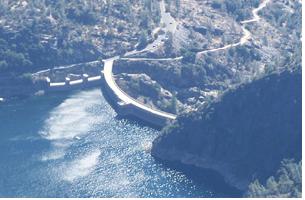
Restore Hetch Hetchy throws another curveball

8

It would be lovely to be able to talk seriously about removing the dam in Hetch Hetchy Valley, to restore John Muir’s “holiest temple” and expand hiking and camping areas in Yosemite. But I’m not ready to go there right now — and to claim that giardia in the water is a good reason to dynamite O’Shaugnessy Dam is a bit beyond silly.


The Chron writes about the Restore Hetch Hetchy movement every now and then, and there’s always a lot of talk about the water system. But the paper never seems to mention the other part of the dam — it generates electricity. And it was, and remains, the lynchpin of what’s supposed to be a public power system in San Francisco.


Congress would never have allowed San Francisco to build the dam if it was just for water. The whole deal, memorialized in the Raker Act of 1913, hinged on the city using the dam for both water and power, and using the power to establish a public-power beachead in Northern California to compete against Pacific Gas and Electric Co. Tear down the dam and the city loses not only a pristine water supply but enough non-fossil-fuel electricity to power a significant part of its electricity needs.


I know that there’s a lot of controversy about large hydro as renewable power, but the dam’s already there, and I think everyone agrees that existing hydro is a better source of electricity than coal, oil, natural gas or nukes.


In a perfect world (and we’ll get there one day), San Francisco would have a municipal power system that relied entirely on solar, wind, and tidal energy. And we’d have a Bay Area water system that reduces use dramatically, recycles gray water, shifts agriculture to drought-resistant sustainable crops, replaces lawns with native ground cover and requires far less fresh-water input every year. At that point, the dam will be redundant and pointless. Bombs away.


But until we no longer rely on a privately-controlled electrical grid based on fossil-fuel and nuclear generation, we just can’t afford to lose the dam. Why the Chron never talks about that side of the equation remains one of the great mysteries of local journalism.


Appetite: NYC Food Cheat Sheet, part two

0

During my latest visit to my beloved New York, I spent eight days gleefully eating my way around the city, as I have done in countless trips past. I am continually asked for NY recommends as many of us in the Bay Area are either East Coast transplants, do business in both cities, or are savvy frequent travelers. Check out my Perfect Spot newsletter-archives for much more NY food and drink, but now I bring you part two. (Check out part one here.) A mini-list of great eats in varying categories:

GREEK SEAFOOD in QUEENS
Taverna Kyclades – You won’t regret trekking to Astoria, Queens, for an unforgettable Greek seafood feast at Taverna Kyclades. The humble, convivial space feels like a casual seafood/fish house, which in fact, it is, serving family-style platters of Greek food. House bread arrives piping hot, addictive with olive oil or one of their house dips, like yogurt-garlic-cucumber ($5.50). Peasant salad ($7.50 small; $10.95 large) is plenty large, even as a small. Plump, red tomatoes, heaping amounts of onions and olives, and a big slab of  fresh feta cheese… a beautiful salad. Mythos beer washed down grilled sardines ($14.95) and lemon potatoes, tasting vividly lemony but with an almost unnatural yellow hue. Filet of sole stuffed with crab meat (19.75) was the one ok dish: old school, not the freshest crab, reminding me of the 1950’s style of seafood entrees you find at SF’s Tadich Grill. The piece de resistance is grilled octopus ($11.95), a succulent spread of plump invertebrates, envigorated by a squeeze of lemon. Opa!

Lookin’ good at Luke’s

CHEAP, AUTHENTIC LOBSTER ROLLS
Luke’s Lobster Shack – In the heart of the East Village you’ll find Luke’s Lobster Shack, a humble hole-in-the-wall with a couple stools, take-out Maine seafood and a second location on the Upper East Side. Operating on principles of sustainability and New England authenticity, the prices are “cheap” for NY and for lobster rolls: get a whole Lobster Roll for $14 or an ideal “snack size” for $8. Loaded with buttery lobster from Maine and a light coating of mayo, it may not be my beloved (and the ultimate seafood stop) Pearl’s in the Village, but it’s a tasty steal. For an extra $2, get the roll with Maine Root Soda, Miss Vickie’s chips and a pickle.

Aquavit’s aquavit.

SCANDINAVIAN FEAST
Aquavit Bistro – Aquavit, the restaurant through which chef Marcus Samuelsson left a mark on modern Scandinavian cooking, has become one of the great Scandinavian restaurants, a cuisine not easy to find in the US. I adore the region’s focus on fresh fish, salmon, caviar, herring and, of course, the namesake spirit, aquavit. Looking for deals, I dined in the spare, upscale IKEA bistro, versus the more stuffy, pricey dining room. Quality does not suffer in the bistro, while service is gracious and well-orchestrated. I ordered a $17 flight of three (or $7 each) of the house-infused aquavits, though narrowing down flavors was problematic, as all three were all lovely, from a crisp cucumber, hot mango-lime-chili, to my favorite: horseradish. Each dish delights and portions are generous. Gravlax is heaping slices of bright, cured salmon in hovmastar (a mustard/white vinegar based sauce) with dill and lemon. I equally fell for matjes herring: thin slices of herring with finely diced yellow beets, red onions and sour cream. Swedish meatballs were the best I’ve ever had, redolent with cinnamon and gentle spicing in the meat, piled next to whipped potato puree, pickled cucumbers, sweet lingonberries, and addictive cream sauce. This is a New York favorite and I’m more than a little sad not to have a place like it here in SF.

Our Weekly Picks: July 21-27, 2010

0

WEDNESDAY 21

MUSIC

Nobunny

There’s no telling where Justin Champlin, clad in tighty-whiteys and a bunny mask, got his rabbit obsession, though Bunnicula comes to mind. Known for his stage antics, the Nobunny leader — and sole member, really, if you exclude the backing musicians shuffling in and out — is something of a rock ‘n’ roll animal classified in the punk rock phylum (or garage rock class). Love Visions (2008), with homages like “Chuck Berry Holiday,” produced catchy tracks faster than a rabbit could procreate. Champlin’s histrionics, and even messier sound, recall the Ramones or more recently, Hunx and His Punx. (Ryan Lattanzio)

With Spits, Scumby, and Carolyn the DJ

9 p.m., $12

Bottom of the Hill

1233 17th St., SF

(415) 621-4455

www.bottomofthehill.com


THURSDAY 22

FILM

Five Easy Pieces

A few years after creating wannabe-pop group the Monkees, Bob Rafelson wrote — along with Carole Eastman — and directed 1970’s Five Easy Pieces. Like Easy Rider (1969), it’s a man-is-a-lonely-island-unto-himself picture starring Jack Nicholson and the squalid splendor of the American landscape. Bobby leaves his affluent family for the life of an oil rigger, but what he finds are consequences both understated and overwhelming. Nominated for four Oscars, Pieces is not an easy film. Like the literature of Cormac McCarthy or Hemingway, it’s biblical, masculine stuff. Yet for all its ruggedness, it has a bittersweet side worth noting for Laszlo Kovacs’ muted cinematography, as well as the weepy country tunes of Tammy Wynette. (Lattanzio)

7 p.m., $5.50–$9.50

Pacific Film Archive

2575 Bancroft, Berk.

(510) 642-5249

www.bampfa.berkeley.edu


VISUAL ART

“Wondrous Strange: A Twenty-First Century Cabinet of Curiosities”

The medieval notion of a cabinet of curiosities or Wunderkammern holds great fascination to this day, even though a room filled with animal bones, coins, and unmarked pottery shards would seem a fairly undisciplined display format for scientific artifacts at this point. But if the Wunderkammern is academically anachronistic, the folks at SFMOMA Artists Gallery still find it a useful vehicle for conveying art and culture. The opening of “Wondrous Strange” will feature a time traveler costume contest, burlesque performance by the Burley Sisters, and music from the Grannies. The opening ceremonies will also extend to the nearby Long Now Foundation (also in Fort Mason’s Building A), where interested parties can check out their prototypes for the 10,000 Year Clock. (Sam Stander)

Through Aug 28

5:30 p.m., free

SFMOMA Artists Gallery

Bldg. A, Fort Mason Center

Marina at Laguna, SF

(415) 441-4777

www.sfmoma.org


FILM

Behind the Burly Q

While relatively tame by today’s standards, burlesque was once perceived as a scandalous art form. Featuring comedians, strippers, and satire, burlesque threatened conservative views about sex and sought to undermine accepted social norms. Even though vaudeville-inspired acts have recently made a nostalgic comeback, their roots remain widely misunderstood. Director Leslie Zemeckis’ documentary Behind the Burly Q goes straight to the source to uncover more than just pasties. By interviewing many of the women and men who starred and worked in the industry, Zemeckis traces the often overlooked history of American burlesque and honors all those who managed to use a g-string as a political weapon. (Katie Gaydos)

Thurs/22-Sat/24, 7:30 p.m.;

Sun/25, 4 and 6 p.m., $6–$8

Yerba Buena Center for the Arts

701 Mission, SF

(415) 978-2787

www.ybca.org


FRIDAY 23

MUSIC

Cynic

Along with most of the rest of his band, Cynic guitarist Paul Masvidal avoided an awkward ’90s-metal swan song by disappearing into the jazz scene. Suddenly, in 2006, Masvidal and his main collaborator, drummer Sean Reinert, resurfaced with a renewed sense of purpose, and the release of 2008’s Traced in Air ushered in an era of relentless touring that saw the prog-metallers quickly reestablish their towering reputation. This summer’s Decibel-sponsored headlining tour features the band playing its 1993 classic Focus in its entirety, so prepare for Mixolydian assault. (Ben Richardson)

With Intronaut, Dysrhythmia

8 p.m., $17

Slim’s

333 11th St., SF

(415) 255-0333

www.slims-sf.com


DANCE

Carmina Burana: Revisited

For a few years, choreographer Enrico Labayen disappeared from the local radar screen. He now has reemerged with an ambitious full-evening work based on two rituals from opposing sides of the planet. Turns out that Labayen, an early member of Alonzo King’s LINES Dance Company who also has 15 years’ experience as an independent choreographer, spent the intervening years in his native Philippines to study the matriarchal aspects of its culture that have long fascinated him. His new Carmina Burana: Revisited delves into Carl Orff’s raucous reimagining of Medieval European Christianity for a work that explores the choreographer’s own memory of Tadtarin, a Philippine ritual that celebrates femininity. (Rita Felciano)

Fri/23-Sat/24, 8 p.m.; Sun/25, 7 p.m., $30

Dance Mission Theater

3316 24th St., SF

(415) 273-4633

www.brownpapertickets.com


MUSIC

Grouper

Portland, Ore.’s Liz Harris, who records and performs ambient drone music as Grouper, has composed a new piece specifically for the Berkeley Art Museum, which incorporates video as well as tape music and live instrumentation. This continues the “L@TE: Friday Nights @ BAM/PFA” series’ dedication to avant-garde performance. Previously, L@TE has brought in such luminaries as Terry Reilly and the Residents; later this summer the series features sometime Grouper collaborator Jamie Stewart of Xiu Xiu. Grouper’s premiere of “SLEEP” will be preceded by music from Eugene Petrushansky, who plays early music on a harpsichord of his own construction, an interesting juxtaposition and perhaps fitting complement to Harris’ intense soundscapes. (Stander)

7:30 p.m., $5

Berkeley Art Museum, Gallery B

2625 Bancroft, SF

(510) 642-0808

www.bampfa.berkeley.edu


SATURDAY 24

EVENT

Tori Spelling

The Oxygen Network — the equivalent of an unclaimed baggage room for celebrities past their prime — still airs Tori and Dean: Home Sweet Hollywood, where Tori Spelling can be seen redecorating her house or renewing her vows (eep!) But unlike most stars in the dreary constellation of reality TV, Spelling actually isn’t that dumb. With a resume longer than the New York Times best seller list she topped in 2008, she’s the ultimate media mogul. In her new book, uncharted terriTORI, she returns to the Narcissus pool of sTORI Telling with some fresh anecdotes like her bout with H1N1 and her life as a Twit. Err … I mean, a Tweeter. (Lattanzio)

7 p.m., free

Books, Inc.

2251 Chestnut, SF

(415) 931-3633

www.booksinc.net


DANCE/MUSIC

“Salsa on the Fillmore”

Why watch Dancing With the Stars when you can dance under the stars? All right, the summer fog might not stay away long enough for us to actually see any stars, but thanks to dance festival “Salsa on the Fillmore,” we can safely say, for once, a night in SF will be hot and sweaty. Forget bar hopping in the Mission. With open dance floors and live music at Yoshi’s, Rasselas Jazz Club, Sheba Piano Lounge, and 1300 on Fillmore, it’s time to go rumba hopping! Start off the night at Fillmore Center Plaza with free salsa lessons by Bay Area Latin dance instructors Juan Gil and Rebecca Miller, and live music by Los Bolores. (Gaydos)

7 p.m.–2 a.m., free–$25

Fillmore between Eddy and Geary, SF

(808) 352-4315

www.salsaonfillmore.com


MUSIC

Bay Area Rockin’ Solidarity Labor Chorus

If you have any affinity at all for the American labor movement, these are depressing times. All that populist energy generated in the wake of 2008’s financial meltdown seems to have been wasted on fruitless antigovernment paranoia, while essential state services are being eliminated nationwide, taking thousands of union jobs with them. Those sympathetic to the cause of social justice can be forgiven for not feeling much like singing. On the other hand, nothing rabble-rouses like a good anthem, and no movement ever got far on despair. The Bay Area Rockin’ Solidarity Labor Chorus realizes this, and is presenting, as part of the Bay’s yearly LaborFest, a program of union songs old and new, celebrating victories won and anticipating those still to come. (Zach Ritter)

7 p.m., $5

ILWU 34 Hall

801 Second St., SF

(415) 648-3457

www.laborfest.net


SUNDAY 25

MUSIC

Queensryche

Queensryche and burlesque. On the one hand, it’s a completely arbitrary juxtaposition, akin to, say, “submarines and kumquats.” On the other, it makes perfect sense. The veteran Seattle prog-metal act have always had a flair for the theatrical, the lushly orchestrated, the ever-so-slightly over the top. And during a break in the recording of its new album, the band decided to really go for broke, setting out on the road with the “world’s only adults-only rock show,” featuring contortionists, trapeze artists, jugglers, and other delights. If you’ve been waiting your entire life to combine scantily clad women and immaculately composed concept albums, wait no longer. (Richardson)

8 p.m., $40

Regency Ballroom

1290 Sutter, SF

(415) 673-5716

www.theregencyballroom.com


MUSIC

Bomba Estéreo

While our government issues frantic safety advisories to Colombia-minded travelers, Locumbia ticks out a merry beat toward a perch atop South America’s creative culture heap. Medellín, Bogotá, Chico Trujillo, the via-L.A. party tunes of Very Be Careful — this a land where you festivate like you mean it, even if a decades-long battle between the guerrillas and army rages in the hinterlands. Lucky for media-boozled us: the international tour. Bomba Estéreo mixes hawt psychedelic cumbia beats with Caribbean folkloric sound and enough echo to qualify as a dance group. Speaking of dance group — start one under the Stern Grove green at the group’s free show. (Caitlin Donohue)

  With Jovanotti

2 p.m., free

Sigmund Stern Grove

Sloat and 19th Ave., SF

(415) 252-6252

www.sterngrove.org


TUESDAY 27

MUSIC

Obits

The album cover for Obits’ I Blame You claims it is “Xtra Compressed for Maximum Listener Fatigue,” and, while 41 minutes doesn’t seem like such a short album these days, the music itself has a tight, claustrophobic intensity that really good garage rock delivers so well. Lead guitarist Rick Froberg, formerly of Hot Snakes and Drive Like Jehu, journeys through all manner of rock in those 41 minutes, skewing the familiar sounds of surfer twang and post-punk into a nonstop groove that leaves the listener just as breathless as the cover promises. Obits knows you don’t have to break any musical barriers to crack a few eardrums. (Peter Galvin)

With Night Marchers and Moonhearts

9 p.m., $14

Bottom of the Hill

1233 17th St, SF

(415) 621-4455

www.bottomofthehill.com


EVENT

“Visions of the Gameocalypse”

In a world where gaming is “no longer just for kids!” or nerds, and where major members of the artistic establishment (cough-Ebert-cough) take up arms against the perceived aesthetic immaturity of videogames for no good reason, it would do us all a little good to get a firmer grasp on how computerized gaming has developed. Jesse Schell, CEO of Schell Games and author of The Art of Game Design: a book of lenses, will be presenting his thoughts on the “social, cognitive, and technological trends” in gaming. We can only hope the event’s gloomy title, “Visions of the Gamepocalypse,” is tongue-in-cheek, though it definitely implies a refreshingly futurist approach to games. (Stander)

7:30 p.m., $10

Novellus Theater

Yerba Buena Center for the Arts

700 Howard, SF

(415) 978-2787

www.ybca.org 


The Guardian listings deadline is two weeks prior to our Wednesday publication date. To submit an item for consideration, please include the title of the event, a brief description of the event, date and time, venue name, street address (listing cross streets only isn’t sufficient), city, telephone number readers can call for more information, telephone number for media, and admission costs. Send information to Listings, the Guardian Building, 135 Mississippi St., SF, CA 94107; fax to (415) 487-2506; or e-mail (paste press release into e-mail body — no text attachments, please) to listings@sfbg.com. We cannot guarantee the return of photos, but enclosing an SASE helps. Digital photos may be submitted in jpeg format; the image must be at least 240 dpi and four inches by six inches in size. We regret we cannot accept listings over the phone.

Deal time

1

sarah@sfbg.com

Lennar Corp.’s massive redevelopment plan for Candlestick Point-Hunters Point cleared a critical hurdle July 14 when the Board of Supervisors voted 8-3 to affirm the Planning Commission’s certification of the project’s final environmental impact report, with Sups. John Avalos, Chris Daly, and Eric Mar opposed

Board President David Chiu called the vote "a milestone." Termed-out Sup. Sophie Maxwell, whose District 10 includes Candlestick Point and the former Hunters Point Naval Shipyard, saw the vote as evidence that city leaders support the ambitious plan. Yet many political observers saw the vote as proof that Lennar and its Labor Council allies have succeeded in lobbying supervisors not to support opponents of the project.

"I’m concentrating on pushing this over the finish line," Maxwell said at the hearing in the wake of the vote, which came in the wee hours of July 14 after a 10-hour hearing. Supervisors can still amend Lennar’s development plan during a July 27 hearing and project opponents are hoping for significant changes.

Mar said he wants to focus on guaranteeing that the city has the authority to hold Lennar responsible for its promises. "I want to make sure that we have the strongest enforcement we can," he said.

Lennar’s plan continues to face stiff opposition from the Sierra Club, the Golden Gate Audubon Society, the California Native Plant Society, San Francisco Tomorrow, POWER (People Organized To Win Employment Rights) and CARE (Californians for Renewable Energy).

Representatives for these groups, whose appeals of the EIR certification were denied by the board, say they are now weighing their options. Those include taking legal action within 30 days of the board’s second reading of and final action on the developer’s final redevelopment plan, which will be Aug. 3 at the earliest.

Supervisors are expected to introduce a slew of amendments July 27, when they consider the details of the proposal and its impacts on the economically depressed and environmentally polluted.

Michael Cohen, Mayor Gavin Newsom’s top economic advisor, admitted July 19 that all these various demands will likely delay project construction. "But 702 acres of waterfront land in San Francisco is an irreplaceable asset," Cohen reportedly told the San Francisco Chronicle. "It’s not a question of if — but when — it gets developed."

Chiu already has introduced five amendments to the plan in an effort to alleviate concerns about shipyard toxins, Lennar’s limited financial liability, a proposed bridge over Yosemite Slough, and the possibility that local residents will need more access to healthcare and training if they are to truly benefit from the development plan.

Sup. Ross Mirkarimi told the Guardian that he expects the board will require liquidated damages to ensure the city has some redress if the developer fails to deliver on a historic community benefits agreement that labor groups signed when Lennar was trying to shore up community support for Proposition G, the conceptual project plan voters approved in June 2008.

Mirkarimi said the board would also seek to increase workforce development benefits. "Thirty percent of the target workforce population are ex offenders. So while they might get training, currently they won’t get jobs other than construction," Mirkarimi observed.

He supports the health care access amendment and the public power amendment Chiu introduced July 21, pointing to Mirkarimi’s previous ordinance laying the groundwork for public power in the area. "This ordinance established that where feasible, the City shall be the electricity provider for new City developments, including military bases and development projects," Mirkarimi said. "PG&E was ripped when we pushed that through."

But Sierra Club activist Arthur Feinstein isn’t sure if additional amendments will help, given intense lobbying by city officials and a developer intent on winning project approvals this summer before a new board and mayor are elected this fall.

"Chiu’s amendments gave us what we asked for over Parcel E-2" Feinstein said, referring to a severely contaminated section of the shipyard for which Chiu wants an amendment calling for a board hearing on whether it’s clean enough to be accepted by the city and developed on.

But Feinstein is less than happy with Chiu’s Yosemite Slough amendment, which would limit a proposed bridge over it to a width of 41 feet and only allow bike, pedestrian, and transit use unless the 49ers elect to build a new stadium on the shipyard. In that case, the project would include a wider bridge to accommodate game-day traffic.

"The average lane size is 14 feet, so that’s a three-lane bridge. So it’s still pretty big. And it would end up filling almost an acre of the bay," Feinstein said.

Feinstein thanked Mirkarimi and Campos for asking questions that showed that the argument for the bridge has not been made. "But it’s disappointing that a progressive Board would be willing to fill the Bay for no reason," Feinstein said.

He concurred with the testimony of Louisiana-based environmental scientist Wilma Subra and environmental and human rights activist Monique Harden, who challenged the wisdom of the Navy digging out toxins while the developer installs infrastructure at the same site.

Subra said contamination is often found at Superfund sites after they have been declared clean when contractors to later dig into capped sites and expose workers and the community to contamination. Harden said the plan to begin construction on some shipyard parcels while the Navy removes radiological-contamination from shipyard sewers is "like a person jumping up and down on a bed that another person is trying to make."

But Cohen, who has aggressively pushed the project on Newsom’s behalf, countered that there is no scientific evidence to support such concerns. "It’s a very common situation," Cohen said. "It’s the basis for shipyard artists and the police being on the site for many years … It’s safe based on an extraordinary amount of data."

But Feinstein pointed to his experience working for the Golden Gate Audubon Society at the former Alameda Naval Station. He recalls how a remediation study was completed, but then an oil spill occurred at the site, which had been designated as a wildlife refuge.

"The military didn’t know about everything that happened and was stored on site, and it’s easy to miss a hot spot," he said. "And who’ll be monitoring when all these homes are built with deeds that restrict the renters and owners from digging in their backyards?"

Feinstein said he’s concerned that only Campos seemed to be asking questions and making specific requests for information around the proposed project’s financing

"Lennar is paying city staff and consultants and promising labor huge numbers of jobs. When you are throwing that much money around, it’s hard for people to resist — and the city has been co-opted," Feinstein said. "And how much analysis and resistance can you expect from city commissions when the Mayor’s Office is the driving force behind the project? So we don’t have a stringent review. The weakness of the strategy of ignoring our bridge concerns is that when we sue, we may raise a whole bunch of issues."

Arc Ecology director Saul Bloom says Chiu’s bridge proposal "screwed up the dialogue. We were close to a deal," Bloom claims. "But while that amendment allowed one board member to showboat, it prevented the problem from being solved."

Bloom is concerned that under the financing deal, the project won’t make any money for at least 15 years and will be vulnerable to penalties and bumps in the market — an equation that could lead the developer to build only market rate housing at the site.

"It’s a problematic analysis at best," he said.

"The bigger the development, the more it benefits people who have the capacity to address it — and that’s not the community," Bloom said. "So there’ll be more discussion of the bridge, and that’s where the horse-trading is going to be."

He also said the bridge has now taken on a symbolic value. "The thing about the bridge is that it’s not actually about the bridge any more," Bloom added. "It’s about Lennar telling people, ‘You will support us.’ If they get the bridge, it will give them free rein, an unencumbered capacity to do as they see fit. They are willing to make deals, but they have to have the bridge because it defeats the people who have been the most credible and visible — and then they have no opposition."

Group think

0

arts@sfbg.com

HAIRY EYEBALL “Calder to Warhol,” San Francisco Museum of Modern Art’s giant introductory survey of the Fisher collection, isn’t the only big summer show happening right now. With its wanted poster-style flyer design and a menacing title that could have come from a hardboiled paperback, “They Knew What They Wanted” is an exquisite corpse of a group show, pieced together and then strewn across town by four artists at four different galleries: Shannon Ebner at Altman Siegel, Robert Bechtle at John Berggruen, Katy Grannan at Fraenkel Gallery, and Jordan Kantor at Ratio 3.

Allusions to criminality aside, the artists/curators of “They Knew What They Wanted” would more likely be found on the forensics team than the wrong side of the law. All are steely observers whose art could broadly be said to share a focus on the dynamics of surveillance at work within postwar portrait and landscape photography, particularly photography that looked at what was booming outside of America’s urban centers. Although Grannan is the sole photographer in the group, Ebner’s temporary installations of handmade signage placed in public settings — which she then photographs in black and white — and Bechtle and Kantor’s photo-based oil paintings also fall under the sign of the photography.

It’s not surprising then that multiple pieces by each of the curators can be found across all four galleries, as well as certain names (Lee Friedlander, Miriam Böhm, Trevor Paglen, and Ed Ruscha in particular) whose work shares an aesthetic affinity with that of the curators. This form of cross-gallery display gives “They Knew What They Wanted” a cohesion that is often rare in group shows, while still not being so insular as to make it hard to differentiate each artist-curator’s own aesthetic sense.

Bechtle’s selections offer the least surprises, summoning the same post-1960s Western suburban milieu evoked by his photorealistic paintings of driveway-bound vintage cars. After a few rounds of viewing, though, Robert Adams’ vintage snaps of Colorado ‘burbs, Friedlander’s skewed takes on small town architecture, Isca Greenfield-Sanders’ aquatint etchings of backyard swimmers, and Tom McKinley’s oils of cool modernist interiors start to add up to the visual equivalent of tract housing.

Ebner and Kantor’s picks are more interior-minded than the mainly street-level and exterior scenes crowding John Berggruen. They also veer the furthest from each artist’s own work. For example, Sol LeWitt’s blink-and-you’ll-miss-it painted electrical wall plate at Altman Siegel is just a few Home Depot aisles away from Rachel Whiteread’s stainless steel castings of light switches over at Ratio 3. Back at Altman Siegel, Fletcher Benton’s 1983 bronze tennis racket, “Adjustable Racket for Short Heavy Hitters,” leans dejectedly in a corner, in wait for a yard sale that will never come. Grannan’s grab bag at Fraenkel is the most photo-heavy, and her selection ventures furthest — with mixed success — from the thematic territory staked out by Bechtle, Ebner, and Kantor.

In a way, Ebner, Bechtle, Grannan, and Kantor have beat SFMOMA to the punch. The museum is set to restage the landmark 1975 photography exhibit “New Topographics: Photographs of a Man-Altered Landscape” — which presented dispassionate documentation of parking lots, construction sites, and other forms of ex-urban development — at the end of the month. But for a sustained exploration of the meteor-like impact of “New Topographics” on the photography and painting that followed in its wake, one couldn’t ask for a better art historical crash-course than “They Knew What They Wanted.” *


THEY KNEW WHAT THEY WANTED

Through July 31, free

John Berggruen Gallery

228 Grant, SF

(415) 781-4629

www.berggruen.com

Through Aug. 7, free

Altman Siegel Gallery

49 Geary, SF

(415) 576-9300

www.altmansiegel.com

Through Aug. 13, free

Ratio 3

1447 Stevenson, SF

(415) 821-3371

www.ratio3.org

Through Aug. 21, free

Fraenkel Gallery

49 Geary, SF

(415) 981-2661

www.fraenkelgallery.com

Pera

0

paulr@sfbg.com

DINE If books and movies can have subtitles, then why not restaurants? A subtitle is like a bit of extra seasoning, a way of emphasizing certain meanings, and this is particularly important at a time when restaurant names can seem increasingly whimsical or obscure.

Pera’s subtitle (printed at the top of the bill and on its website) is “a Mediterranean affair,” which makes it sound like a cheesy movie about poor, doomed Princess Grace of Monaco. “Turkish cuisine” would be a bit more exact, but “Mediterranean affair” certainly sounds a romantic note, and Pera does have its low-key atmospherics, especially on summer evenings when elongated twilight stretches over the north face of Potrero Hill and glints through Pera’s windows.

Pera opened last November, under the auspices of Irfan Yalcin and his wife, in a space held by the Chinese restaurant Eliza’s since the early 1990s. (Eliza’s still exists at its longtime California Street location.) Turkish cuisine seems to be enjoying something of a boomlet around here in recent years, and why this is so is nearly as great a mystery to me as why we have so few Greek restaurants.

As it happens, and despite the long-term tensions between Greece and Turkey, Greek and Turkish cuisines are plainly related. Pera, whose menu tilts toward foods from Turkey’s Aegean coast, even offers versions of pastitsio, the baked pasta dish that is Greece’s answer to lasagne, and moussaka, the pastitsio-like dish of layered eggplant. But chef Muhammet Culha also turns out items I haven’t seen before on Turkish (or Greek!) menus around town.

Conspicuous among these is the talas boregi ($16), whose closest relation in the American food lexicon is probably chicken pot pie. The dish arrived as a triangle of phyllo wading in a shallow pool of coconut curry sauce (I had never before come across coconut milk in Turkish cooking). Within the pastry envelope was a piece of smoked, boneless chicken breast, while elsewhere on the plate lay a garnish of green apple, sliced thin, and some currants. In a sense, this dish was the philosophical opposite of that other great Mediterranean cuisine, Italy’s. The Italian kitchen emphasizes simplicity, directness, and the primacy of a particular ingredient or seasoning. By contrast, Pera’s talas boregi orchestrated a diverse cast of characters into a bewitching harmony, a sum greater than its parts.

But Turkish cooking can be just as direct and simple as Italian. Sometimes, in fact, it can seem Italian, as with spanaki ($6.50), spinach sautéed with garlic and pine nuts just as it is in Sicily. (“Spanaki,” we should note, is the Greek word for spinach — the Turkish word is “ispanak” — and Sicily was settled by Greeks in pre-Roman times.) The condiment consisting of yogurt, cucumbers, dill, garlic, and olive oil, whether called tzatziki or cacik ($2.50) is also about as basic as it gets and shares a deep and obvious root with the Indian yogurt sauce raita.

You can get the tzatziki, along with a host of treats to dunk in it, as part of the meze platter ($14), which is a sampler and therefore irresistible. The ensemble includes dolmades (stuffed grape leaves), saksuka (roasted eggplant with bell pepper, potato, and caramelized onion in a garlic tomato sauce — a lot like caponata), and zucchini cakes, along with olives, feta cheese, and triangles of warm pita.

Since the Aegean is a sea, we might expect to find seafood on the menu, and we do, including wonderful fish patties, or balik kofte ($10), a pair of hamburger-flat disks presented with concasse tomatoes and mango dice. (Do the Turks grow mangoes?) Also quite nice was a filet of grilled salmon ($18), topped with a Meunière-like sauce of white wine, lemons, garlic, and capers and plated with vegetables and what the menu card called (in Greek) patates tiganites, or fried potatoes — sautéed cubes, really.

For dessert you can have baklava, if you like your phyllo drenched with honey, but the more compelling choice is yogurt with honey ($6), which must be counted as a dessert that is actually, definitely good for you. (Both yogurt and honey are fermented foods, rich in probiotics.) Yogurt from the eastern Mediterranean is especially creamy and rich, as here — almost like tangy-sour cake frosting. One small surprise: no cherries on the menu, for dessert or otherwise, though the cherry is profoundly — or we might even say majorly — associated with Asia Minor.

PERA

Dinner: nightly, 5–10 p.m.

Lunch: daily, 11:30 a.m.–2:30 p.m.

1457 18th St., SF

(415) 796-3812

www.perasf.com

Beer and wine

AE/DS/MC/V

Manageable noise

Wheelchair accessible


Alerts

0

alert@sfbg.com

WEDNESDAY, JULY 14

Anarchists abound


This summer in Detroit nearly 20,000 people attended the June 2010 U.S. Social Forum, a conference and collaboration to build a platform for an international political movement that unites oppressed communities. Hear about the forum from attendees Sarolta Jane, Sarah Lazare, Sam Brown, and Marshall Hillton as they discuss the role anarchists played at the forum.

7:30 p.m., $2–$5 suggested donation

Station 40

3030B 16th St., SF

(415) 661-1852

THURSDAY, JULY 15

"In Deepwater"


Hear about what’s really happening with the oil spill in the gulf from two experts who have been in the region since the blowout occurred: Texas shrimper turned activist Diane Wilson and Riki Ott, a marine biologist who worked on the Exxon Valdez spill. Hear about the projected long-term effects on the environment, human health, and local communities as well as more ways BP can be held accountable.

7 p.m., $10–$20 sliding scale

Richard and Rhoda Goldman Theater

The David Brower Center

2150 Allston, Berk.

(510) 859-9100

FRIDAY, JULY 16

Peaceful warriors


Demand that we bring our troops home from Iraq and Afghanistan now at this rally for peace. The total cost of the U.S. wars has already surpassed the $1 trillion mark during the worst economic recession since the Depression. Join the East Bay Grey Panthers in protest.

2 p.m., free

Corner of Action and University, Berk.

(510) 548-9696

SATURDAY, JULY 17

General Strike Walk


Tour key historical sites of the 1934 San Francisco General Strike with historian Luis Prisco, ILWU Local 10 longshoreman Jack Heyman, and others and learn why the strike was successful, how it was organized, and why the issues of the strike are still relevant to working people today. Bring lunch and prepared for a long walk.

10:30 a.m., free

Meet at Harry Bridges Plaza

Ferry Building

Embarcadero at Market, SF

(415) 841-1254

Streetsweeper for a day


Help beautify one of San Francisco’s most popular tourist destinations by joining other volunteers and the San Francisco Department of Public Works to plant trees, work on greening projects, remove weeds, paint over graffiti, and pick up litter. Students can accumulate hours for community service.

9 a.m., free

Fisherman’s Wharf

Embarcadero at Bay, SF

(415) 641-2600

MONDAY, JULY 19

Revolution remembered

Hear Alejandro Murguia, cofounder of the Mission Cultural Center, read from his new book, Southern Front. In the book, Murgiua describes his experience fighting in the international guerrilla Southern Front of the Sandinista National Liberation Front. Murguia will also read some of his poetry and discuss the legacy of the Sandinista revolution on its 21st anniversary.

7 p.m., free

Modern Times Bookstore

888 Valencia, SF

www.mtbs.com

Mail items for Alerts to the Guardian Building, 135 Mississippi St., SF, CA 94107; fax to (415) 437-3658; or e-mail alert@sfbg.com. Please include a contact telephone number. Items must be received at least one week prior to the publication date.

Sorting out the Adachi initiative

37

Lots of press on the Adachi pension-reform measure, a proposal that would amount to cutting the pay of city workers during a recession. It turns out even Gavin Newsom doesn’t like the plan:


The mayor also attacked Adachi’s pension plan, arguing that the public defender never discussed it with the employee unions, city officials or others affected by the measure and that it could have “unintended consequences” for the city.


And while I think it’s a bit of a stretch to say that the Adachi measure “could reshape national politics,” Randy Shaw makes a good point:


Adachi’s measure would join with Sean Elsbernd MUNI charter amendment to create a one-two punch against public employees on San Francisco’s November ballot. The national media will have a field day with the prospect of “liberal” San Francisco, and Nancy Pelosi’s home turf, voting to cut public employee compensation.

While this is not the message Adachi wants to send, it will likely be the one that is heard. It emerges at a time when the entire Republican Party and corporate Democrats are in a full-fledged media campaign to redirect public anger over the fiscal crisis toward excessively compensated public employees, and away from banks, oil companies, hedge fund managers, and an under taxed and poorly regulated private sector.


Shaw also says that the campaign will “bitterly divide progressives,” and I’m not sure it has to turn out that way. There’s always the danger that liberal voters who work in the private sector, and are struggling to keep their jobs and health insurance, will be seduced by the notion that public-sector employees are too well paid already. And the donwtown folks, who will soon be fully on board with the Adachi measure, will seek to divide the nonprofit sector and labor by arguing that nonprofit workers don’t get the same benefits as city employees — and city funding for nonprofits is threatened by the budget deficit. Both those things are true, but it’s also true that there’s a growing movement to challenge that approach. This battle will be a test for the city’s progressive movement, but I think the overwhleming majority of progressive leaders, activists and nonprofits will stick together and oppose Adachi.


The more important political impact will be felt in the tightly contested district-election contests, where city-employee pensions could join the sit-lie measure as wedge issues that the moderates will use against progressives. When Adachi came down to see us, I asked him if he was worried about that; he didn’t really seem to think it was important.


But there’s a reason we talk about a “progressive movement” (and don’t start on the “machine” stuff again, we had that debate over here). We all ought to be concerned about how one campaign affects the larger goal of building a better and more sustainable city. And while I hate to say it, I have to agree with Gavin Newsom: This thing could have “unintended consequences.”


Appetite: Rogue wines and hearty burgers

0

B3 — or B-cubed, as in “Bottles, Burgers and Bites” — should finally see the light of day on July 20 (call to confirm as this is the hoped-for grand opening). I had the privilege a couple months ago of being part of a test dinner for B3, which set up shop in the former Senses space on Valencia, redone in warm, neutral tones. I’m delighted to give you the preview scoop (see original details in The Perfect Spot), as I have been following this concept since inception.

Basically, B3 is part wine tasting spot, part full-service restaurant with a burger and sausage emphasis as well as a retail wine source. You taste wines as if you were at a tasting room (don’t call it a wine bar!) and can purchase what you’re tasting by the bottle or case at retail prices rather than at restaurant mark-up.

Rogue wines for days. Photo by Virginia Miller

Wine guys Johnny Gato and Ron Elder invested personal passion into a hand-selected list of affordable local bottles difficult to procure from small-production winemakers — most don’t even have a wine tasting facility. Many are influenced by Old World technique with modern interpretations. Just start talking to Gato and Elder and you’ll begin to discover all kinds of Wine Country gems you had no idea were there… not your typical California wines. Initially the focus will be Napa and Sonoma producers, but they eventually plan to showcase wines (roughly 50 on hand at any given time) from regions like Dundee Hills, Willamette Valley, or Santa Barbara, with a goal to rotate wines monthly.

The wine aspect of B3 is called the Winemakers’ Speakeasy, an idea in development since 2008, referring to the underground status of the type of wines they want to share with the consumer… truly “small batch”, without wine tasting facilities, “by appointment” tours, or major distributors. In many cases, you wouldn’t be able to try the kind of wines served here unless you bought a bottle at one of the few restaurants or shops that carry them. They’re what Gato calls “rogue” or “punk rock” wines.

Through Gato, who has worked at Moussy’s and Bouchon in Napa, I’ve discovered incredible wineries such as Napa’s Forlorn Hope, bittersweetly named after the term used to describe the front line of soldiers in a high-risk military operation. I’m smitten with their floral, bright ‘08 La Gitana Torrontes, fabulously layered ‘07 Nacre Semillion, and ‘05 Gascony Cadets Petit Verdot. Then there’s Poem Cellars in Yountville, who’s wines are often sold out completely, particularly their light and spicy 2006 Tastevin Napa Valley Red (only 140 cases produced). Or Beaucanon’s ‘07 Cabernet Franc, Y. Rousseau’s ‘08 Russian River Valley Colombard and ‘08 ‘Milady’ Mount Veeder Chardonnay, Peripolli’s ‘06 Sauvignon Blanc. Just ask Gato, who has followed these wineries closely in his Napa years with a dream to bring them “on the road” to the general public, and he’ll tell you about the wine itself but also stories behind winemakers and wineries. Each glass becomes something personal, fascinating.

Chef Kevin Ahajanian, who worked with Gato at Bouchon, is keeping it solid with a burger and sausage menu. If the test dinner and initial menu is any indication, you won’t suffer on the food front. You can top your burger with everything from a fried Petaluma egg to Humboldt Fog cheese. There’s lush salads, like a B-Cubed cobb with chicken breast confit, bourbon brown sugar Hobbs bacon and Point Reyes blue cheese.

Yep, there’s some luscious salad in there, too. Photo by Virginia Miller

Or maybe you want a Boudin Noir (aka blood) sausage with choice of pineapple salsa, roasted apples, roasted red peppers or house slaw on top? Ahajanian doesn’t leave vegans and vegetarians out — there will be burgers for them. He has fun with the details, like making his own ketchup, blanching fresh-cut potatoes in rice bran oil, or serving sausages in buns layered with mashed potatoes. In a nod to all things local, dessert is Humphry Slocombe ice cream (including those addictive foie gras ice cream sandwiches), Mission Mini cupcakes or Recchiuti chocolates.

The B3 crew eventually plans to launch lunch and weekend brunch, becoming a go-to for wine lovers and a pre and post-shift source for industry types to stop in for a bite or drink. Though wine is clearly the focus, they’ll also offer six beers on tap, another 8-10 by the bottle. And with a twice nightly happy hour, it’s going to be an unusual wine and burger spot where you can meet lovingly-made, truly small batch wines… and even take them home with you.

Tue-Sun, 3pm-2am (wine happy hours: 3-6pm, 10pm-12am)
1152 Valencia, SF.
415-401-7258
Reservations: should have Open Table reservations by opening date