Oil

Osteria Stellina

0

paulr@sfbg.com

DINE If you think food Valhalla is the Ferry Building, you haven’t been to Point Reyes Station lately. The Ferry Building is just a building full of food — a nice building with interesting food, I concede — whereas Point Reyes Station is basically a village consecrated to food, Foodville USA. It’s full of produce markets, butchers, bakeries, creameries, and restaurants, seemingly to the exclusion of everything else. The village, which sits on Highway 1 near the foot of Tomales Bay in the far west of Marin County, is just a few blocks’ square, but those blocks are chockablock with people wandering on foot from one little food heaven to the next.

If Marin County doesn’t make my list of favorite places, it’s mainly because of the dense population corridor along U.S. 101 in the east. To the west, though, beyond the Mercedes-clogged tracts of Fairfax and San Anselmo, the land relaxes into open, rolling country plied by cyclists and dotted with stands of oak trees and boutique agricultural concerns, many carrying the “Marin Organic” label. And the capital of this peaceable (if kingless) kingdom is Point Reyes Station.

Given the bucolic setting, I was a little surprised to step into Osteria Stellina, one of the newer and most heralded restaurants, and find myself in a rather plain gunmetal-gray dining room. It was like being in the officers’ mess on a battleship. Gray is a nice color for flannel suits, but on the walls of a restaurant — a restaurant, moreover, serving a Cal-Ital menu that bursts with flavor — it struck me as overcautious.

Still, the nautical hint isn’t entirely misplaced. Point Reyes Station was once a port, and nearby Tomales Bay produces a wealth of farmed oysters. Naturally, Osteria Stellina offers these (from Hog Island) raw, and also (from Drake’s Bay Family Farms) atop a pizza ($18). This was as improbable a home for oysters as I’ve ever come across, but it did work. It helped that the rest of the pie was liberally spread with leeks braised in cream (from neighboring Straus Creamery), lemon thyme, and parsley — a tasty, green-yellow paste like a less manic gremolata. A small downside: the paste made the crust slightly soggy.

Damp bread isn’t always a disaster. We were smitten with Stellina’s version of panzanella ($18), the salad whose key ingredient is stale bread, moistened with vinegar and proof that thrift need not be dull nor otherwise feel like deprivation. This panzanella was the kind the king might be served, if west Marin had a king; it was made with heirloom tomatoes and (non-stale but perhaps toasted) Brickmaiden sourdough bread and further fortified with shreds of local chicken, Point Reyes mozzarella, greens, olives, and a balsamic vinaigrette. Panzanella is irresistibly flavorful, easy to make and share, and wonderfully redolent of both summer and elegant frugality, and I wonder why we don’t see it offered more often on menus.

Another Italian favorite that seems underrepresented in this country is the combination of cannellini beans and tuna. At Stellina this dish ($13) was made with conserved tuna (which I supposed to have been poached in olive oil), and it took an additional charge from celery and organic baby fennel, along with lemon quarters to squeeze over the top.

Even something as unassuming as a grilled-cheese sandwich ($14) can become special if it’s made with superior bread and interesting cheeses (fontina and, from Valley Ford, Estero Gold) and plumped up with braised veal shanks and caramelized onions. A kind of osso buco sandwich.

Stellina’s desserts have an artisanal intensity. The strawberry “pop tarts” ($10), a pair of shortbread-like pastry squares wrapped around a layer of fruit preserves, were enhanced by a scoop of lemon-buttermilk ice cream. This dessert was a whimsical reimagining of a Saturday-morning breakfast favorite from the 1960s. The fig crisp ($10), on the other hand, was direct and powerful — mostly fruit (including some blackberries) with just enough pastry and ground almonds to give context through texture.

The wine list is neither too long nor too short, and it offers local and Italian wines at moderate prices. Organic house wines (sauvignon blanc and zin) are available on tap, and all the wines except the sparkling are available in carafe or bottle. I was thrilled to find a greco di tufo, an obscure Italian varietal grown mainly on the far side of Mount Vesuvius. It goes well with oysters, and pizza too.

OSTERIA STELLINA

Dinner: nightly, 5–9 p.m.

Lunch: Mon.–Fri., 11:30 a.m.–2:30 p.m.

Brunch: Sat.–Sun., 10 a.m.–2:30 p.m.

11285 Hwy. 1, Point Reyes Station

(415) 663-9988

www.osteriastellina.com

Wine and beer

DS/MC/V

Somewhat noisy

Wheelchair accessible


Dizzy dazzle

0

arts@sfbg.com

ART Let’s start with the obvious: the massive art collection of Gap Inc. founders Doris and the late Don Fisher is by far one of the largest and most significant windfalls SFMOMA has received in its 75-year history. More important, the collection — which had primarily been viewable throughout the Gap’s SF headquarters only by company employees and visiting tour groups — is finally being made accessible to the general public.

Gary Garrels, SFMOMA’s senior curator of painting and sculpture, has selected 160 works — a mere fraction of the 1,100 total — for “Calder to Warhol: Introducing the Fisher Collection,” a Fishers’ Greatest Hits that aims to provide an overview of the breadth of their holdings as well as highlight their in-depth focus on certain artists. During the exhibits media preview, Garrels mentioned that the Fishers acquired pieces without the help of advisers, jointly choosing works that “spoke to them.” Clearly, they had a taste for big game.

Primarily comprising paintings and sculpture, “Calder to Warhol” is, as its title indicates, a veritable who’s who of mid-to-late 20th century modern art that takes over the museum’s top two floors and spills out into the rooftop sculpture garden. I’m not being facetious when I say there’s something for everyone. Aside from extensive collections of Calder and Warhol, the show is chockablock with iconic pieces by Ellsworth Kelly, Gerhard Richter, Cy Twombly, Richard Serra, Roy Lichtenstein, Chuck Close … and the list goes on.

The range of artists and quality of the pieces assembled is dizzying. Take the fourth floor, for instance. The shock of several hideous, large-scale mixed media on aluminum DayGlo monstrosities by Frank Stella from the late 1970s and ’80s is largely soothed by the blushing, meaty pinks and reds of The Street, a remarkable 1956 Philip Guston abstract canvas in an adjoining gallery (Guston gets an additional gallery all to himself), which then leads to the downy embrace of Lee Krasner’s equally stunning 1961 oil Polar Stampede — a palimpsest of brown and gold hatch-marked feathers — and from there a gallery of four decades of Twombly’s looped scribbles.

Then there’s the small collection of Agnes Martin paintings, which by itself would be worth the price of admission. Martin is an artist who particularly suffers in reproduction: the delicate lines and gentle washes of color in her paintings get lost, and all one sees are their grid-like skeletons. Being able to study up close the subtle pop effect of the squares in Night Sea (1963) — the way in which the gold leaf underneath the oil causes the canvas’ tiny bluish squares to flash teal — is a revelation.

Or, starting from the floor’s north end, one encounters a crash course in Pop Art and its kin. The Lichtensteins and the Claes Oldenburg apple core are all well and good, but the Warhols are where it’s at: standouts are early 1960s silkscreens such as Tunafish Disaster and two of the handsome criminals in the “Most Wanted Men” series, and lesser-famous portraits of Joseph Beuys and Robert Mapplethorpe alongside Dolly and Jackie’s familiar visages. These aren’t the usual Factory hits.

Around another corner, past a room crowded with Close portraits, is another must-see: two enormous Sigmar Polke canvases from his alchemical 1988 series, “The Spirits That Lend Strength to the Invisible,” on which the German artist applied unconventional materials such as tellurium, chemical resin, and ground-up meteors. Their wild, particulate sprays evoke both the Hubble Telescope’s images of space, as well as the crude plumes currently floating off the Gulf Coast.

And I haven’t even started in on the fifth floor, with its showcases of Important Works by Calder, Kelly, Serra, Kiefer, Richter, and some particularly wonderful Lewitt wall drawings.

Yes, “Calder to Warhol” is dizzying. It is also frequently dazzling. But I can’t help but feel a little squeamish in the face of such a grand and copious cache; one that until recently had been displayed as an act of corporate largesse to those in the service of the empire that funded its acquisition.

Art collecting is a form of investment, capital put down toward ensuring the collector’s future legacy as much as it is a reflection of aesthetic tastes. The Fishers rarely sold pieces, and the equal attention they paid to collecting both figurative and abstract works — as well as an earlier failed bid to construct a private museum in the Presidio — suggests that the collection was developed increasingly with an eye toward creating the very sort of jaw-dropping endowment of which SFMOMA now finds itself the very fortunate recipient.

Certainly for SFMOMA, the benefits of this gift are clear. The museum’s profile has undoubtedly risen, and will continue to rise once the planned expansion set to house the remaining 90 percent of the collection’s holdings is complete. What remains less apparent throughout “Calder to Warhol” is a sense of the Fishers’ personal investment in the pieces they so assiduously acquired. To simply say that the art — so much amazing work, now finally on view — speaks for itself is only half true. As with any major private collection, it also speaks to a long campaign waged over the peaks and valleys of the art market.

Still, the Fishers aren’t merely the sum of their deep pockets. I wish the wall panels revealed when each piece had been bought, and whether Don or Doris had singled it out first (Imagine their dinner conversations: “Honey, would you like to buy a Dan Flavin?”). That information would put a different, perhaps more humanizing, spin on the story “Calder to Warhol” currently tells: a testament to the Fishers’ wide-reaching, frequently well-informed, and relatively safe taste for blue chip names.

CALDER TO WARHOL: INTRODUCING THE FISHER COLLECTION

Through Sept. 19, $9–$15

(children under 12 free; first Tuesday of every month free)

SFMOMA

151 Third St., SF

(415) 357-4000

www.sfmoma.org

D. 10 candidates DeWitt Lacy, Tony Kelly and progressive planners blast Lennar’s plan

8

Recently, I spent some time talking with D. 10 candidates DeWitt Lacy and Tony Kelly about Lennar’s redevelopment plan for the shipyard and Candlestick Point. I also attended a Progressive Planners forum that addressed the massive development proposal. Those conversations and the issues they raised seem timely in light of the city’s crazily tight schedule for trying to ram final approvals for the project past government agencies this summer. And in light of three appeals that have been filed against the city’s recently certified final environmental impact report for the plan, raising concerns that the city will get bogged down in expensive and time-consuming litigation if it doesn’t get the plan right, while it still can.

(Lest other D. 10 candidates complain that they weren’t interviewed, too, I’d like to clarify that I’ll be covering the race between now and November, and I look forward to hearing what they all think at the Board’s July 13 meeting to hear appeals of the city’s final environmental impact report (FEIR) for the project. )

Both Lacy and Kelly are critics of Lennar’s plan, but not in a knee-jerk obstructionist way. Instead, they bring considered and informed critiques to the table at a time when the community desperately needs good advice and a workable strategy, if residents are to get needed amendments and concessions, before the developer get the green light, or before the Board puts  a moratorium on the project until the city’s FEIR flaws are ironed out.

Lacy is a bright and earnest candidate who learned lessons from the school of life, while growing up in San Jose in a working class family. Lacy says his father worked in an Adidas warehouse until he was injured on the job, and his mother worked as a secretary in Atari’s corporate office, but was laid off after two years.

Lacy recalls how his parents opened their own janitorial business, in the hope of making a better life for their six children.  He says that it was while cleaning homes alongside his mother, that he began to recognize the need for working class improvement and growth.

 In 1995, Lacy moved to San Francisco, where he has worked in the District Attorney’s office and formed his own law practice—experience that could serve District 10 well, since it’s home to many working-class residents and will be ground zero in the battle for construction-related contracts and environmental and economic justice, if Lennar’s massive redevelopment plan goes ahead,

“I know how to craft legislation for social justice,” Lacy said.

Lacy observes how Michael Cohen, Gavin Newsom’s top economic advisor in the Mayor’s Office of Economic and Workforce Development, has repeatedly told folks that land transferred to Lennar will be subject to a “right of reverter.”
This means the Redevelopment Agency may re-take ownership of the land, if the developer fails to substantially complete the infrastructure in the time frame set forth in the city’s development and disposition agreement (the DDA)

But Lacy observes that this “nuclear option” isn’t likely to happen with so much riding on the Lennar deal, and he stresses that additional controls are needed, if the city is to ensure that the deal remains in the best interest of San Francisco, not just the developer.

Lacy’s probably right about that. (Remember how hard the community had to fight to just get an extra 15 days to read and comment on the project’s six volume draft EIR over the winter holidays?)

And how much political pressure was exerted to ram the city’s EIR for this project across the certification line on June 3, five days before Santa Clara voters decided to support a stadium for the 49ers near Great America.

“What’s needed is an impartial arbiter,” Lacy said. “The city needs regulatory controls and the capacity to fine Lennar if it breaks promises to build affordable housing, create jobs and hire locals. You’re not going to be able to hold their feet to the fire without that.”

“I’m not saying that we should be obstructionists, critics who are trying to prevent stuff for the sake of a political battle,” Lacy added. “But we need new blood. The benefit of my campaign is that I’m not downtown’s candidate. I’m a civil rights attorney, who can help the district by figuring out what battles we need to be fighting and which battles are winnable. And I want to make sure there are jobs and business opportunities for working-class folks in San Francisco. You shouldn’t have to be a doctor or lawyer to afford to live here.”

Lacy believes the Navy should remove the radiologically impacted landfill on the shipyard’s Parcel E2.
“That ground has to be taken out of there,” Lacy said. “I would hope the City Attorney’s Office would get involved and advocate for the people. But leadership is about taking a stance when no one else is.”

With the city suggesting that it can still win back the 49ers, Lacy said that he too, would love it if the 49ers decided to stay.
 
“But not at the cost of our health and safety,” Lacy said, referring to the city’s repeated claim that it needed to rush certification of the final EIR for Lennar’s project, if there was to be any hope of winning back the team.

“ I don’t think the solution is the rush,” Lacy said. “I say, let’s make sure we clean up the shipyard properly—and bring back the Warriors [a professional basketball team that relocated to San Francisco in 1962, until 1971, when it moved to Oakland].”

I also hung out with D. 10 candidate Tony Kelly, at an event that POWER hosted as part of a Progressive Planners Forum, the day after Lacy and I unsuccessfully tried to access the shipyard, and the same day that POWER was also blocked from the yard.

Kelly has been tracking issues in and around District 10 for years, and, much like Lacy,  he’s not afraid to speak his mind on the issues.

For instance, Kelly is incensed by the city’s attempt to ram through approval of the final EIR for Lennar’s development, when the Navy has yet to complete an environmental impact statement related to its proposed clean up activities at the shipyard..
“Is the EIS ever a trailer to the EIR?” Kelly asked. “It’s like planning on Mars.”

Kelly has also expressed concern over the developer’s plan to build two peaker plants in the community.

And he is worried about the consequences of the city’s plan to turn the entire Bayview into a project survey area for Lennar’s Candlestick/Shipyard plan.

“How do you pay for any other improvements in the Bayview, when the shipyard redevelopment plan sucks all the air out of the room?” Kelly said

But Kelly’s biggest concern right now is that once Lennar gets its final approvals this summer, “the developer will never talk directly to the community again.”

At the Progressive Planners Forum that Kelly attended, speakers also voiced measured criticisms of Lennar’s plan.

“The plan has some important elements, especially in the job areas, but I think it adds up to gentrification, which is disruptive to the surrounding community, families and the last bastion of the black community in San Francisco,” said Chester Hartman, who has authored over 18 books on race and urban planning, including the acclaimed City For Sale: The Transformation of San Francisco.

“There is a need for a response in terms of an alternative approach,” Hartman advised.
“It doesn’t have to be a detailed, but it should include a basic philosophy and goals, and retain good parts of the original plan.”

Peter Marcuse, Professor of Urban Planning at Colombia University, said the situation at the shipyard reminded him of the ongoing oil disaster in the Gulf.

“Cap the land sounds like cap the spill,” Marcuse said, noting that in both cases the community is fighting to get folks who dumped toxins to clean them up.

Marcuse criticized the privatization of the planning process, as illustrated by the City’s claim that it has entered into a “public-private” partnership with Lennar,  and the community’s experience that the city and the developer keep ignoring or dismissing the public’s feedback and opinions.

 “There should have been a range of alternatives open for discussion,” Marcuse said. “Instead, there is a sense, of this mega project’s inevitability. And once the developer has title to the land, the city has to negotiate what should be a public matter.”

Marcuse critiqued the use of tax increment financing, which will use increased taxes on property throughout the Bayview to finance improvements in one relatively small area, the 770 acres of land that, as Marcuse put it, “got sold to Lennar for $1.”

“This is a form of government subsidy,” Marcuse warned.

“There have been some negotiations,” Marcuse continued. He pointed to the community-led Prop. F, which in the spring of 2008 sought to establish 50 percent affordable housing in the development. And the community benefits agreement (CBA) that the San Francisco Labor Council hammered out at in May 2008, in an attempt to nail down benefits for the community in exchange for the Council’s support for the Lennar-financed Prop. G in June 2008.

“But these negotiations with Lennar start on basis that Lennar’s interests have to be protected equally with those of the City and its residents,” Marcuse commented. “It ought to be a public responsibility to show the community what the alternates to Lennar’s vision are.”

Marcuse concluded by suggesting a moratorium on Lennar’s plan to allow for a community-based visioning process, in which residents could express their desire for housing, diversity, open space and protection against environmental hazards

‘The City should then come up with an alternative to Lennar’s plan—and listen to Lennar,” he said. “But this is a public responsibility, rather than a private negotiation with a corporation that has been a beneficiary of a huge subsidy and starts to make a huge profit, the minute its housing units begin to sell.”

Miriam Chion, who works for the Association of Bay Area Governments (ABAG), also expressed concerns with Lennar’s massive plan, which proposes to build thousands of mostly luxury condos at Candlestick Point, with a smaller number on the shipyard.

“We are in the 21st century, how can we continue to use same mechanisms of displacement?” Chion said. “And how can we do that to the African American community, which we have displaced over and over, and which has managed to build a community here, in spite of everything?”

According to Lennar’s plan, 68 percent of its proposed 10,000 units will be built at market rate. Of the remaining 32 percent of units, only 15 percent will be built at truly affordable rates, with an additional 15 percent geared towards the working middle-class income levels, such as those enjoyed by police, fire fighters, nurses and teachers.

But two Bayview residents who attended POWER’s progressive planners’ forum expressed frustration at what they perceived as outsiders trying to tell locals what’s best.

“If you haven’t lived here, you don’t know about the Bayview,” one resident said. “If they are going to do what they are going to do, they should do it all the way, and change things for the better. I’m tired of seeing kids under 12, playing outside at 11 p.m. So, if you are not from here, you can’t come on my ground and pass judgment. If you’d been and lived here, I don’t think you’d see this negatively.”

“$700 million has been spent on cleaning up shipyard, and producing highly technical reports on it,”  another local resident said. “Highly intellectual discussions are not helping, we need some action today.”

“No one here is against development,” countered long-term Bayview resident Espanola Jackson, while a Bayview resident named Nyese resurrected longstanding concerns that the developer fatally broke community trust when it failed to control asbestos dust at the site, when it began grading the shipyard’s Parcel A .

“Four years ago, I found out that they were sending home workers at the shipyard, without informing the surrounding community,” Nyese recalled. “My son was having excessive nosebleeds, so it was phenomenally insulting that they didn’t not notify us.”
“Lennar is just a name, a conglomeration of shareholders,” Nyese further noted. “We need development. But we don’t need it on chemically toxic land.”

These competing concerns indicate that all the candidates in the D. 10 race are going to have to be asking critical questions as they track the progress of Lennar, the city and the Navy’s plans this summer. Failure to do so will cost them credibility within the community—and possibly the supervisor’s race this fall, though downtown money will pour in to support whichever candidate is deemed most likely to rubberstamp present and future development and contracting plans. Stay tuned. It’s going to be a (politically) hot July.


SFBG Radio: Meg ducks debates, Gav’s oil money and crazy CEO pay

2

Today, Johnny and Tim talk about why Meg Whitman is ducking debates, why Gavin Newsom has money invested in oil company stocks — and why a corporate CEO can buy an $8 million resort property the same week he lays off 8,000 workers. You can listen after the jump.

sfbgradio6/30/2010 by bgedit

Stories highlight Newsom’s hypocrisy

4

A pair of interesting stories in today’s Chronicle paint Mayor Gavin Newsom as a self-serving hypocrite, highlighting how his cuts-only budget proposals ignore the city’s long-term needs and have led Moody’s to lower the city’s credit rating, and how his green rhetoric is belied by his oil industry investments, including in the company responsible for the ongoing oil leak in the Gulf.

The Guardian has long noted how fiscally irresponsible Newsom’s budgets have been, with our latest editorial calling for Newsom to finally offer support for some of the revenue measures now being explored by the Board of Supervisors, which will need strong support from everyone in City Hall to have a chance of winning voter approval.

The Controller’s Office and now Moody’s have confirmed that Newsom’s reckless and gimmicky budget leaves a long-term budget hole even as it does short-term damage to the city’s social safety net and public health programs. But instead of acknowledging that reality, Newsom flak Tony Winnicker is still offering snide, Republican-style put-downs of the supervisors who are actually working hard to improve the city’s fiscal health while Newsom is out running for state office, afraid he will be criticized for supporting the tax revenue this city desperately needs.

As for Newsom’s oil industry investments, well, they speak for themselves. His whole political career, and even the restaurant and bar career before that, was built on a foundation of oil money heaped upon him by the Gettys. And even after he found there was political gold to be mined from green rhetoric, he has continued to financially support and profit from the oil industry.

Many Guardian readers have long said that we should just give up on Newsom, calling him a shameless and self-serving politician of the very worst sort. Maybe they’re right. But if Newsom wants to earn our support in his race for lieutenant governor – whose most important responsibilities are his key votes in deciding whether to support new offshore oil drilling in California and whether to continue pushing myopic cuts-only budgets for the public university systems – then now is the time for him to show some political courage by disinvesting from the oil industry and supporting a responsible city budget that includes new revenue measures for which he should actively campaign this fall.

La Briciola

0

paulr@sfbg.com

DINE Seven years ago — I long to say, “four score and seven years ago” but that would be stretching a point — I considered an Italian restaurant, Vino e Cucina, on a SoMa stretch of Third Street notable for its grit. After dark, in the shadows of the crumbling viaduct carrying traffic to and from the Bay Bridge, you could easily imagine yourself being inside one of Tim Burton’s Batman movies, and to step into Vino e Cucina was to find refuge.

These days the neighborhood’s aspect is quite different. The viaduct has been rebuilt, tony-looking housing has popped up all over, and Vino e Cucina is now La Briciola. The refuge angle is less sharp now, but La Briciola is still welcoming in that distinctive Italian way that manages to be informal and formal at the same time. The interior is done in shades of brown and cream; if it were a cup of coffee, it would be a macchiato, an espresso marked with some foamed milk. And the service staff practices a well-mannered demonstrativeness that will probably seem familiar to anyone who’s ever eaten at a trattoria in Rome.

The food, rooted mostly in the cuisines of Tuscany and Piemonte, tells us a nuanced tale about Italian cuisine’s complex relationship with innovation. If a dish has been made the same way for generations — has, in effect, been perfected — then why tamper or fiddle around with it? Yet this is America, where newness is celebrated with an almost religious fervor. So which will it be, perfection or newness?

Executive chef Gian Luca Toschi’s best dishes are the traditional ones, though these aren’t necessarily old warhorses. For instance, I’ve never seen fagottini ($14) or Italian crepes on a menu before; these turned out to resemble a pair of giant dim sum pouches, wrapped up like gunny sacks and filled with chopped mushrooms and carrots. The earthiness of the filling was enhanced (and that’s putting it mildly) by a cream sauce of mushroom and truffle oil.

Veal, on the other hand, tends to be ubiquitous in north Italian cooking, and La Briciola offers a lovely version “alla valdostana” ($22), the name referring to an alpine region known for its fontina cheese. The veal was cutlets, pounded thin and rolled around a core of fontina cheese and speck (smoked prosciutto) into stubby cigars. If you like chicken kiev, you’d like this.

At the side of the plate lay a berm of vegetables, lightly steamed but still bright with color — broccoli, carrots, quartered new potatoes. If food were a game of chess, they would be pawns, worthy but not of enormous interest. These pawns did attract my interest, though, because they were exactly the same as those on a plate of food across the table, seared tuna with sesame sauce ($22).

The fish was fine. The sauce, like liquid amber dotted with black sesame seeds, was beautiful rather than flavorful despite the presence of shallots and vin santo. Sesame belongs mainly to the cuisines along the rim of the Indian Ocean; it’s not a natural part of the Italian kitchen, so it wasn’t shocking that the kitchen didn’t do much with it. But it was the sameness of the vegetables that captured my attention. It was as if they’d been slung onto passing plates in some kind of hash line. Of course restaurant kitchens are assembly lines, and of course economies of scale are important — but so too is the illusion that each plate has been carefully and lovingly assembled by hand, like a Louis Vuitton bag. And the illusion is so easy to create; a single variation — green beans instead of broccoli — would do it.

And speaking of green: green is a color, and a little color would have been welcome in the octopus salad ($12), which consisted of pale white octopus flesh, (white) cannellini beans, and whitish barley kernels. Some color was provided by pickled carrot shavings, but these were ungainly and awkward to eat. Still, the salad, as amended with squeezes of fresh lemon, satisfied, and it did reflect the Italian ethic of simplicity.

Chocolate volcano cake ($8) has been widely done, but it seemed strangely appropriate to find it in an Italian restaurant since Italy is among the more volcanic of lands, and Italians do love their chocolate. An issue with these cakes is that the chocolate magma can sometimes be molten enough to burn your tongue, but here it was pleasantly very warm, not hot. This was a welcome variation.

LA BRICIOLA

Dinner: Sun.–Thurs., 5:30–10 p.m.; Fri.–Sat., 5–10:30 p.m.

Lunch: Mon.–Fri., 11:30 a.m.–2:30 p.m.

489 Third St., SF

(415) 512-0300

www.labriciola-sf.com

Beer and wine

AE/DC/DS/MC/V

Reasonable noise

Wheelchair accessible


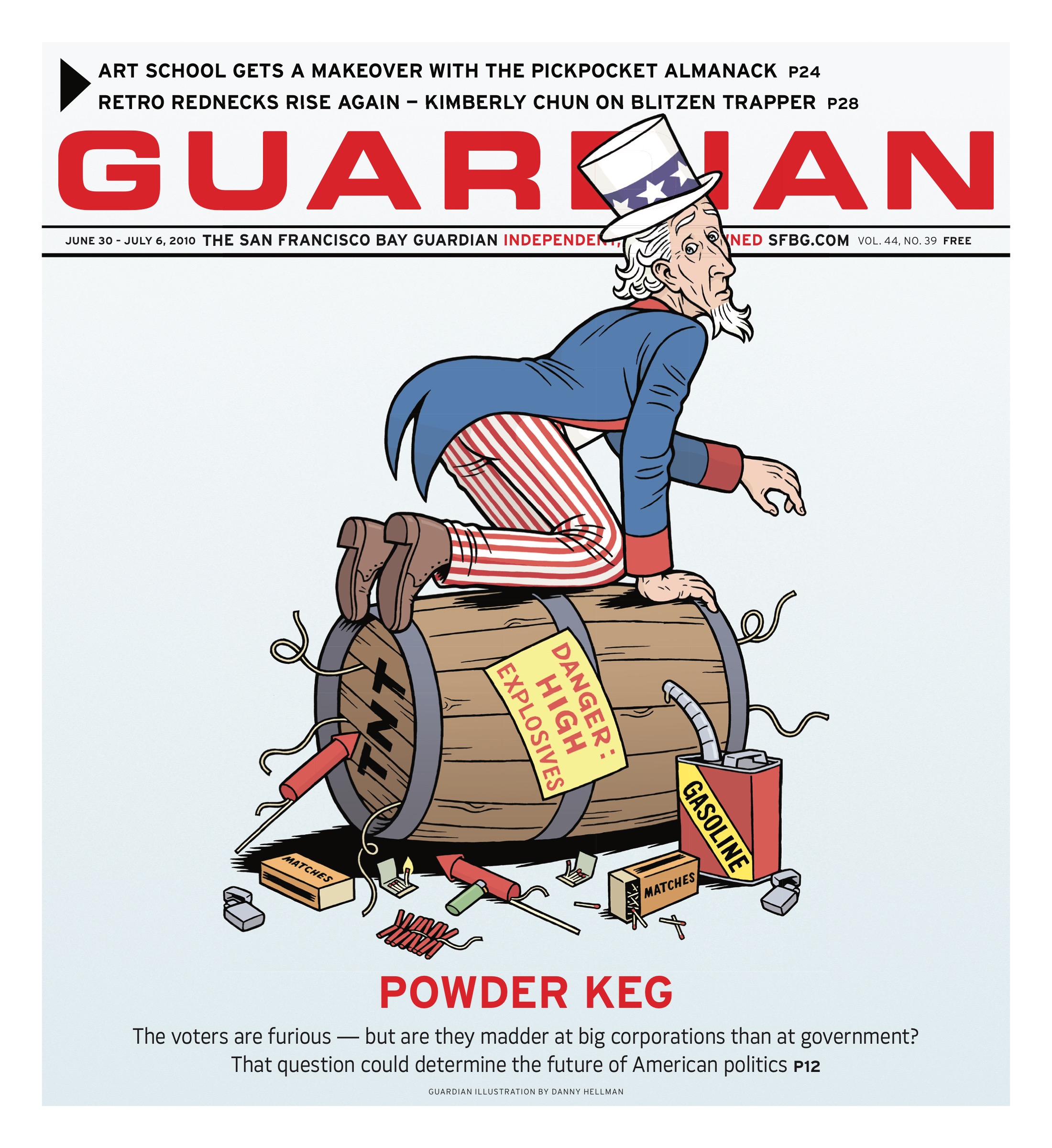
Powder keg

5

news@sfbg.com

Ask any pollster, political consultant, or academic who studies the American electorate about the mood of the voters this year and you’ll get the same one-word answer: Angry.

Everyone’s pissed — the liberals, the conservatives, the moderates, the people who don’t even know where they fit in. It’s an unsettled time and, potentially, very bad news for a progressive agenda that seeks to address issues ranging from poverty and war to the long-term health of the public and the planet.

The Democrats, who swept into power with an enormously popular president just 18 months ago, may lose control of Congress. The tea partiers have driven the Republicans so far to the right that some candidates for Senate are openly talking about eliminating Social Security. The unemployment rate — the single most important factor in the politics of the economy — remains high and doesn’t show any signs of improving.

And the progressive left seems frustrated and demoralized, particularly in California. The Golden State, which once led the nation in innovation and enlightened social policy, now seems to be leading the politically dysfunctional race to the bottom.

The nation could be headed for a dangerous era, rife with the potential for right-wing demagoguery and other nasty political schisms. The state of the economy could easily fuel a more powerful movement to shrink the scope of government and a continuing backlash against the public sector — and the financial backers of the antitax and antiregulation movement are drooling at the prospect.

But there’s also a chance for progressives to seize a populist narrative and shift the discussion away from traditional disagreements and toward those areas, particularly the destructive influence on government by powerful corporations, where the grassroots right and grassroots left might actually agree.

The anger that voters feel toward a government that isn’t meeting their needs is starting to find other outlets. People are as mad about the abuses of big business — the Wall Street meltdown, the bailouts, the BP oil spill, the political manipulation — as they are about the failures of Congress and the president. If you ask Americans of every political stripe who they least trust — big government or big business — even conservatives aren’t so sure anymore.

For 30 years, the central narrative of American politics has revolved around the size and effectiveness of government. Now there’s a chance to shift that entire debate in American politics toward the largely unchecked power of corporations. It is, populist writer Jim Hightower told us, “an enormous opportunity handed to us by the bastards.”

But so far, none of the Democratic leaders in California are taking advantage of it to start dispelling damaging myths and crafting political narratives that might begin to create some popular consensus around how to deal with society’s most pressing problems.


THE PEOPLE WANT TAXES

There have been many polls gauging voter anger, but one of the most comprehensive and interesting recent ones was “Californians and Their Government,” a collaborative study by the Public Policy Institute of California and the James Irvine Foundation that was released in May.

It shows that Californians are mad about the state’s fiscal problems, disgusted with their political leaders, divided by ideology, and deeply conflicted over the best way forward. An astounding 77 percent of respondents say California is headed in the wrong direction and 81 percent say the state budget situation is a “a big problem.”

But the anti-incumbent message isn’t necessarily an anti-government message. Most Californians are willing to put more of their cash into public-sector programs, even during this deep recession. When asked to name the most important issues facing the state, 53 percent mentioned jobs and the economy . The state budget, deficit, and taxes only got the top billing of 15 percent.

And contrary to the conventional wisdom espoused by moderate politicians and political consultants, most voters say they are willing to pay higher taxes to save vital services. “Californians tell us they continue to place a high value on education and want education to be protected from cuts. And they’re willing to commit their money to help fund that,” PPIC director Mark Baldassare told the Guardian.

The survey found that 69 percent of respondents say they would pay higher taxes to protect K-12 education from future cuts, while 54 percent each say they would pay higher taxes to prevent cuts to higher education and to health and human services programs. In other words, voters seem to recognize where we’ve cut too deeply — and where we haven’t cut enough: only 18 percent of respondents would be willing to pay higher taxes to prevent cuts to prisons and corrections.

Baldassare said the June primary results also showed that people are willing to pay more in taxes for the services they value. “Around the state, there was a lot of evidence that people responded favorably to requests by their local governments for money, particularly for schools,” he said.

Both the California Legislature and Gov. Arnold Schwarzenegger are held in very low esteem with voters, according to the PPIC study, and Schwarzenegger’s 23 percent rating is the lowest in the poll’s history.

Barbara O’Connor, political communications professor who heads the Institute for the Study of Politics and the Media at Sacramento State University, told us that voter unhappiness with elected leaders is no surprise. Right now, most people are afraid that their basic needs won’t be met over the long run.

“The common narrative is fear, and fear channels into anger,” O’Conner said.

And that fear is being tapped into strongly this year by the Republican candidates, who are trying to scare voters into embracing their promises to gut government and keep taxes as low as possible.

“If there’s any lesson to be learned from Meg and Carly’s early ads, it’s fear-mongering, fear-mongering all the time — and that doesn’t create a very positive narrative,” O’Connor said of gubernatorial candidate Meg Whitman and U.S. Senate candidate Carly Fiorina.

O’Connor noted that Barack Obama’s campaign had great success in using a positive, hopeful message and said she believes the right leader can also do so in California. “I talked to Jerry [Brown]’s people about it and said you can’t just run a negative campaign because that’s what Meg is doing.”

Despite the tenor of the times, O’Connor said she’s feeling hopeful about hope. She also believes Californians would respond well to a leader like Obama who tried to give them that hope — if only someone like Brown can pick up that mantle. “I think the environment is right for a positive message. But the question is: do we have people capable of delivering it?”

She said the no-new-taxes, dismantle-government rhetoric has started to wear thin with voters. “The real fiscal conservatives are badly outnumbered in Californian,” O’Connor said. As for the corporate sales jobs, O’Connor said voters have really started to wise up. “They aren’t going to be scammed.”

The results of the June primary election showed that voters across the spectrum were also disturbed by big special-interest money. Proposition 16, backed by $46 million from Pacific Gas and Electric Co., went down to defeat — even in counties that tend to vote Republican.

And this fall, with two rich former CEOs spending their personal wealth to win two of California’s top elected offices and energy companies pushing a measure to roll back California’s efforts to combat global warming, there could be great opportunity in a narrative targeting those at the top of our economic system.


THE TOP AND THE BOTTOM

Some observers say that whatever their shared feelings about corporate scams, conservatives and liberals in the state are just too far apart, and that there’s little hope for any substantive agreement. “People are becoming more polarized,” said consultant David Latterman, who often works for downtown candidates and interests. “I think we’re beyond compromise.”

Allen Hoffenblum, a Los Angeles-based Republican strategist, agreed. “The voter are all mad, but they’re mad at different things. I just don’t see where they come together.”

But Hightower, who has spent a lifetime in politics as a journalist, elected official, author, and commentator, has a different analysis.

“As I’ve rambled through life,” he wrote in a recent essay, “I’ve observed that the true political spectrum in our society does not range from right to left, but from top to bottom. This is how America’s economic and political systems really shake out, with each of us located somewhere up or down that spectrum, mostly down.

“Right to left is political theory; top to bottom is the reality we actually experience in our lives every day — and the vast majority of Americans know that they’re not even within shouting distance of the moneyed powers that rule from the top of both systems, whether those elites call themselves conservatives or liberals.”

In an interview, he told us he sees a lot of hope in the fractured and potentially explosive political ethos. “There’s all this anger,” he said. “People don’t know what to do. And I think the one focus that makes sense is the arrogance and abuse of corporate executives.”

In fact, Hightower pointed out, the teabaggers didn’t start out as part of the Republican machinery. “Wall Street and the bailouts sparked the tea bag explosion,” he said. It wasn’t until big right-wing outfits like the Koch brothers, who own oil and timber interests and fund conservative think tanks, started quietly funding tea party rallies that the anti-corporate, anti-imperial edge came off that particular populist uprising.

“At first, the teabaggers didn’t even know where the money was coming from,” Hightower said. “You can’t be mad at the teabaggers; we should have been out there organizing them first.”

There’s plenty of evidence that anger at big business is growing rapidly — and rivals the distrust of big government that has defined so much of American politics in the past 30 years. The bailouts were “the first time in a long time that people have been slapped in the face by collusion between big business and its Washington puppets,” Hightower noted.

Then there’s the Supreme Court decision in Citizens United v. Federal Elections Commission. In January, a sharply divided court ruled 5-4 that corporations had the right to spend unlimited amounts of money supporting or opposing political candidates. Progressives were, of course, outraged — but conservatives were, too.

Polls show that more than 80 percent of Democrats think the decision should be overturned. So do 76 percent of Republicans. “This is a winner for our side,” Hightower noted. “But our side’s not doing anything about it.”

Sure, President Obama denounced the ruling in his State of the Union speech and promised reform. But the bill the Democrats have offered in response does nothing to stop the flow of money; it would only increase disclosure requirements. And in response to furor from the National Rifle Association, it’s been amended and is now so full of holes that it doesn’t do much of anything.

Political consultants advising Whitman are clearly looking for ways to direct the voter unhappiness into a demand for lower taxes and smaller budgets. She’s already vowed to fire 40,000 state workers, and her most recent campaign ad attacks Brown for expanding public programs and raising the state deficit.

So far Brown hasn’t challenged that narrative — and some Democrats say he shouldn’t. It would be safer, they say, for Brown to get out front and demand his own cuts in Sacramento. “Going after public-sector pensions is a winner,” one Democratic campaign consultant, who asked not to be named, told us. “If Whitman beats Brown on those issues, she wins.”

But that approach is never going to be effective for Democrats. If the argument is over who can better cut government spending, the GOP candidates will always win. The better approach is to see if progressives can’t shift the debate — and the anger — toward the private sector.

As Hightower put it: “You can yell yourself red-faced at Congress critters you don’t like and demand a government so small that it’d fit in the backroom of Billy Bob’s Bait Shop and Sushi Stand, but you won’t be touching the corporate and financial powers behind the throne.”

That’s where the discussion has to start. And there’s no better place than California.

The Golden State is a great example of what happens when the tax- cutters win. In 1978, the liberals in Sacramento, operating with a huge state budget surplus, couldn’t figure out how to derail the populist anger of property tax hikes. So Proposition 13, the beginning of the great tax revolt, passed overwhelmingly. Over the next decade, more antitax initiatives went before the voters, and all were approved.

Now the state is heading toward fiscal disaster. The schools are among the worst-funded in the nation. The world-famous University of California system is on the brink of collapse. Community colleges are turning away students. The credit rating on California bonds have fallen so far that it’s hard for the state to borrow money. And there’s still a huge budget gap.

The tax-cut mentality that led to the so-called Reagan revolution started in California; a political movement that shifts the blame for many of the state’s problems away from government and onto big business ought to be able to start here as well. And it’s potentially a movement that could bring together people who normally find themselves on opposite sides of the fence.

A case in point: the measure the oil companies have put on the November ballot to repeal the state’s greenhouse gas limits. The corporations backing the initiative, led by Valero, argue that California’s attempts to slow climate change will cost jobs. That’s a line we’ve heard for decades. Every tax cut, every move toward deregulation, is defended as helping spur job growth.

But the past four presidents have done nothing but cut taxes and reduce regulations — and the result is facing Americans on the streets every day. There is also growing evidence that even Republican voters don’t believe everything big businesses tell them anymore. And they’re starting to grasp that sometimes deregulation leads to outcomes like larcenous CEOs and unstoppable oil leaks.

So the potential for a successful progressive populist movement is out there. But it’s not going to happen by spontaneous combustion.


SF SHOWS THE WAY

On the national level, one of the factors creating this gloomy electorate is the failure of President Obama to keep the coalition that elected him active and engaged. The intense partisanship in Washinton has turned off many independent Obama voters, while his progressive supporters have been disappointed by issues ranging from his escalation in Afghanistan to tepid reforms on health care and Wall Street.

“One of the narratives now is where are the Obama voters and will they participate?” Jim Stearns, a San Francisco political consultant who works mostly on progressive campaigns, told us. “They still love Obama but they’re not moved by him anymore.”

Perhaps more important, they have lost the sense of hope that he once instilled. The Republican Party’s descent into right-wing extremism and the strong anticorporate narratives that have emerged in the last year — from BP’s oil spill to PG&E’s political manipulation to Goldman Sachs’ self-dealing to the prospect of unrestricted corporate campaign propaganda unleashed by the Citizens United ruling — have created the possibility that the negative narratives by the left may crowd out the positive ones.

“Meg Whitman is someone you can hate. She’s the rich Republican CEO trying to buy her way into office,” Stearns said. “But it’s a depressing message.”

But Stearns said there is another, most hopeful political narrative that is emerging in San Francisco, one that might eventually grow into a model that could be used at the state and federal levels. “We’re lucky in San Francisco. Progressive voters are engaged.”

He noted that San Francisco’s voter turnout was higher than expected in the June primary, and far higher than the record low state number, even though there really weren’t any exciting propositions or closely contested races on the local ballot — except for the Democratic County Central Committee, where progressives maintained their newfound control. And it’s because of the organizing and coalition-building that the left has done.

“What you’ve seen over the last few years is a coalition of labor, neighborhood groups, environmentalists, and the progressives now operating through the Democratic Party. That’s a great coalition with a lot for people to trust,” Stearns said.

Meanwhile, downtown has all but collapsed as a unified political force. “They don’t really have a political infrastructure,” Stearns said of downtown. “Normally it would be the mayor who gets everyone in line and working together.”

Even Latterman, the downtown-oriented consultant, agrees that the business community is no longer setting San Francisco’s agenda because it’s become fractured and unable to push a consistent political narrative: “There’s certainly been a lack of coordination.”

He also agrees that progressives have become more organized and effective. “Clearly, the Democratic Party of San Francisco has become a conduit for progressive politics and politicians, but not issues,” Latterman said. “What a lot of people get wrong in the city is the difference between politics and policy.”

Part of the reason is economic. With scarce resources, a high threshold for approving new revenue sources, and a fiscally conservative mayor unwilling to talk taxes, it’s been difficult to move a progressive agenda for San Francisco. And in Sacramento, it’s barely part of the discussions.

“The people of California have been held hostage by a handful of Republicans who are making us cut everything we care about,” while in San Francisco “Newsom is taking an entirely Republican approach to the budget,” Stearns said.

Looking toward the fall races, Stearns said the progressive coalition and majority on the Board of Supervisors will be tested on issues such as Muni reform, and the question will be whether fiscal conservatives like Sup. Sean Elsbernd can blame Muni’s problems on drivers, or whether progressives can create and sell a broader package that includes new revenue and governance reforms.

“The drivers are going to get their guarantee taken out of the charter, that’s going to happen. But people know that isn’t all that’s wrong with Muni,” Stearns said.

But to craft a more comprehensive solution, he said the progressives are going to need to use their growing coalition to connect the dots for voters. “We need to run a citywide campaign around a whole constellation of issues,” Stearns said, citing Muni, schools, taxes, resistance to mean-spirited measures like sit-lie, and the larger issues raised by the Brown and Barbara Boxer campaigns. “We need to figure out a way to put all that in the same coalition and run one campaign around it. And we can do that because progressives retained control of the DCCC.”


THE STRUGGLE AHEAD

Although they’ve made great strides, San Francisco progressives are still struggling with a mayor who sees the solution to every budget crisis as cuts — and with a growing number of efforts to blame public employees for the city’s fiscal problems. Even Jeff Adachi, the public defender once considered a standard-bearer for progressive causes, is pushing a ballot measure that would require city workers to pay more for their pensions.

Gabriel Haaland, who works with Service Employees International Union Local 1021, made the right point in the pension debate. “Big financial institutions crashed the stock market,” he said recently, “and now they want to blame city workers.”

In a blog post on the political website Calitics, Robert Cruickshank put it clearly: “The notion that ‘everyone needs to give back’ just doesn’t make sense given our economic distress. We’ve already given back too much. We gave back our wages. We gave back our ability to afford health care and housing and transportation. We gave back the robust public- sector services that created widespread prosperity in the 1950s and 1960s. We gave back affordable, quality education. And too many of us have given back our future.

“No, it’s time for someone else to give back. It’s time for the wealthiest Californians and the large corporations to give back. For 30 years now they have benefited from economic policy designed to take money and benefits from the rest of us and give it to those who already have wealth and power.”

That’s a message that ought to appeal to anyone who’s hurting from this recession. It ought to cross red and blue lines. It ought to be the mantra of a new progressive populism that can channel voter anger toward the proper target: the big corporations that created the problems that are making us all miserable.

If Jerry Brown could adopt that narrative, he could change the state of California — and the state of the nation.


Bill Clinton suggests Navy blow up BP well

5

Holy smokes! Clinton wants Navy to bomb B.P.’s well. He’s not talking nuclear. Yet. Guess fireworks won’t be the only thing going off July 4.

Appetite: Elizabeth Falkner’s fantastic new dessert menu at Bubble Lounge

0

Elizabeth Falkner is easily one of the widely acknowledged pastry greats in the US and chef of two SF restaurants, including Citizen Cake, which is moving to Fillmore Street, hopefully open by the beginning of July. Bubbly lover Falkner has created something sweet at Bubble Lounge, eager to take on creating desserts meant to pair with champagne/sparkling wine. She trained Bubble Lounge’s crew on preparing the menu which launched on 6/16.

At a sneak preview tasting of the entire menu with Falkner, I was impressed by the range of tastes covered in these five unique desserts, as well as their approachability. It gets even better when paired with Bubble Lounge Wine Director, Sabawun Kakar’s fine champagne pairings (more on Kakar and Bubble Lounge in my Perfect Spot newsletter).

Falkner says, “I love the balance of acid, sweetness and richness these desserts offer and it makes pairing with champagne really fun. I want to wake up the palate with refreshing flavors, no overkill anywhere.” Her creative whimsy shows in the Spring menu:

LEMON DROP

Ingredients: lemon curd, yogurt, blueberry sauce, maple crunch, champagne granita – bright, tart dessert in a glass

Pairing: Fleury Carte Rouge – organic, biodynamic champagne, lovely and crisp on its own, but the only one that didn’t work for me with the dessert

UPSIDE-DOWN CHEESECAKE: A little sweet in the big city

Ingredients: creamy cheesecake-like dessert topped with buttery graham crust and amarena cherries – almost savory, strong, silky cheese; the most unique item on the menu and one of my favorites

Pairing: Gaston Chiquet Blanc de Blancs – lovely small producer; clean, with notes of herbal tea, tangy apple

OLIVE OIL MADELEINES (pictured above)

Ingredients: madeleine baked in brown butter and grassy olive oil, with olive oil ice cream, a Spring-fresh strawberry and fennel salad in rose vinaigrette; probably my favorite all around dessert for unique combination of savory/sweet salad with baked madeleine

Pairing: Pol Roger Brut – a gorgeous, flowery/toasty nose, dry with fruit and cream, bringing out the earthiness in the fennel; possibly my favorite pairing of the menu

ICE CREAM SANDWICH

Ingredients: pizzelle wave cookies, layered with three sorbets/ice creams: chocolate (with a brilliant whiff of tobacco), passion fruit, pistachio

Pairing: Jean Milan Blanc de Blancs – acidic, fruity, with light balance of toast

DARK CHOCOLATE PAIN PERDU

Ingredients: dark chocolate “French toast” in delicate orange-caramel sauce with genius pink peppercorn chantilly

Pairing: Bruno Paillard Brut – family run, small production; fresh fruit and spice

Alerts

0

alert@sfbg.com

WEDNESDAY, JUNE 23

Remembering torture victims


Commemorate U.N.-enacted International Day in Support of Victims of Torture at this screening of The Response, a courtroom drama based on the transcripts of the Guantanamo Bay military tribunals. Featuring guest speakers from UCSF and SF State, members of Survivors International, Amnesty International, and Health Professionals Against Torture.

6 p.m., free

Amnesty International SF Office, Suite 210

350 Sansome, SF

(415) 546-2080

Water bond happy hour


Join the Food and Water Watch team in helping to get voters to reject the California water bond on the November ballot. Meet others who care about the issues and discuss a sustainable water future for California and how water issues effect us all. Raffles of stainless steel water bottles benefit Food and Water Watch, a local nonprofit corporate accountability organization.

6 p.m., free

Elixir Bar

3200 16th St., SF

www.foodandwaterwatch.org

THURSDAY, JUNE 24

Radically queer


Radical Women celebrates LGBTIQ month with a panel discussion titled "Queer Radicals: Strategies for Our Movement." Queer and transgender activists will discuss how to build a militant movement for LGBT liberation. Pre-discussion buffet with vegetarian options available at 6:15 p.m. for $7.50. Call for information about childcare.

7 p.m., free

New Valencia Hall

Suite 202

625 Larkin, SF

(415) 864-1278

SATURDAY, JUNE 26

Protest Big Oil


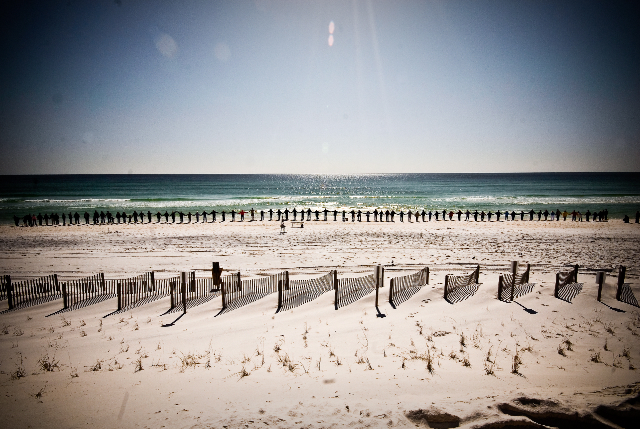
Join thousands for a beach lie-in to create a "slash oil" image that will be photographed from a helicopter. Arrive no later than 10:30 a.m. to participate. Attendees will receive an overhead postcard of the event. Then at noon, join Hands Across the Sand, an international statement on protecting coastlines from oil pollution. Carpooling, biking, or taking public transit to the events is highly encouraged.

10 a.m.; free, donations accepted

Ocean Beach

1000 Great Highway, SF

www.slashoil.blogspot.com

www.handsacrossthesand.org

SUNDAY, JUNE 27

Have a good cry


Attend this "cry-in" against the commercialization and corporate sponsorship of the Gay Pride festival. Wear your most morbidly gothic clothing, bring your favorite sad songs, and share your best morose attitude with other queer people and allies eulogizing the demise of the grassroots queer community.

2 p.m., free

San Francisco LGBT Center

1800 Market, SF

www.gayshamesf.org

MONDAY, JUNE 28

Honduras resistance


Watch three videos presented by the Bay Area Latin America Solidarity Coalition (BALASC) on the 2009 military coup in Honduras. Proceeds benefit the Popular Resistance in Honduras.

8 p.m., $6

Artists’ Television Access

992 Valencia, SF

www.balasc.org

A tale of animal liberation


Hear activist and former prisoner Andy Stepanian tell how he stood up to one of the world’s largest contract animal testing labs, was charged with terrorism, and served three years in federal prison.

7 p.m., free

Station 40

3030B 16th St., SF

www.sparrowmedia.net

Mail items for Alerts to the Guardian Building, 135 Mississippi St., SF, CA 94107; fax to (415) 437-3658; or e-mail alert@sfbg.com. Please include a contact telephone number. Items must be received at least one week prior to the publication date.

Hands Across the Sand says “No to offshore drilling, yes to clean energy”

0

I got an email today from Moveon.org advising me, “There’s a huge event happening this weekend at a beach near you.”
“In the wake of the giant BP oil spill in the Gulf, tens of thousands of people are getting together on beaches around the world for a massive event called “Hands Across The Sand,” the moveon.org folks said.
And so far, I’ve seen press advisories saying a Hands Across the Sand event is happening at Ocean Beach and China Beach In San Francisco, and at Crown Memorial Beach on Alameda Island, with folks gathering around 11 a.m. in preparation for non-violent hand-holding at 12 noon, on Saturday, June 26.
And the really cool and catchy part of this idea is that anyone on any beach anywhere in the world can join in, simply by grabbing the nearest person’s hand.

Dave Rauschkolb, who founded the first Hands Across the Sand event earlier this year, is a surfer and owner of three restaurants on the beach in Seaside, Florida, on the northern Gulf Coast between Pensacola and Panama City.
Rauschkolb spoke to me by phone today, shortly after US District Court Judge Martin Feldman ruled against  Obama’s deepwater drilling moratorium, claiming the Obama Admin “overreached”. and just the tar balls were starting to come up on the beach near Rauschkolb’s restaurants in Florida.

These incoming tar balls are an especially heartbreaking sight for Rauschkolb, given that he helped successfully organize the first Hands Across the Sand event on Feb. 13, 2010, when over 10,000 people joined hands on nearly 100 beaches along the coastline to stop the expansion of offshore oil drilling. But hopefully, terrible sights like this will be the impetus that finally gets U.S. citizens to break their addiction to oil.

“We gathered to stop the expansion of oil drilling in our coastal waters,” Rauschkolb said, referring to how folks protested efforts by the Florida Legislature and the U.S. Congress to lift the ban on offshore oil drilling.

“Now, just a few months later our entire Gulf of Mexico marine environment and
coastal economy is at risk from the very thing we tried to stop: offshore oil drilling off
our coast,” he continued. “The Deepwater Horizon disaster is a wake up call. Even as the Gulf disaster grows, British Petroleum and other oil companies continue to push for new offshore drilling anywhere oil might be found regardless of the risks they pose. The offshore drilling industry is a dirty, dangerous business and no one industry should be able to place entire coastal economies and marine environments at risk. Why is this allowed to happen?”

Rauschkolb said he blames BP to the extent that we should hold them accountable for what happened with the Deepwater Horizon disaster,
“However, I also hold the entire offshore oil industry accountable as well, because any company could have had this happen, “ he told me, pointing to a blow out off the Australian coast that took three months before a relief well could be drilled.

Concerned that the U.S. government and the oil industry will seek to make BP the scapegoat, in an effort to avoid imposing stricter regulations, Rauschkolb said such a response wouldn’t be a good outcome.

“America could be, should be one of the world’s leaders in expanding cleaner energy sources yet, our political process is paralyzed by oil money and influence. It is time for our leaders in all countries to take bold, courageous steps and open the door to clean energy and renewables and finally extend a hand to free our countries from our addiction to oil.”

“This is a critical turning point in finally changing our prehistoric energy policy towards the light of clean energy,” Rauschkolb concludes. “ Let us work together and share our passion and energies to protect our coastal economies, our oceans, our beaches, our waterfowl and our marine life. On behalf of those who have been and continue to be affected by this disaster of epic proportions in our Gulf of Mexico we extend our deepest appreciation to all of you for Joining Hands across America and the world on June 26.”

Rauschkolb invites folks to visit the Hands Across the Sand website and sign up to organize a beach or city.
Sounds like a great way to spend a Saturday. And if you do, you’ll be joining a movement that’s exciting interest around the world. According to Rauschkolb, as of today, 627 events are scheduled to take place on June 26 in 451 U.S. cities, with another 45 events scheduled outside the U.S. in 20 separate countries.

Think Global. Go clean energy.

SFBG Radio: Johnny and Tim on the Whitman clan and class privilege

2

Today, Johnny and Tim talk about the Whitman family — and why the rich are different from you and I. Not to mention some choice GOP oil spill commentary. You can listen after the break.

sfbgradio6182010 by sfbgradio

The Daily Blurgh: Ethnic Frensing, a bear suns in Oakland

0

Fake trend alert! “Ethnic Frensing.” Quick! Get it into circulation before Tyra Banks tries to copyright it.

*****

WTF Headline of the day: “Ghoulish cargo of 60 severed heads found at airport.

*****

Couldn’t the Chronicle‘s editors have worked a “crypt keeper” pun into this profile of UC Santa Cruz’s resident Grateful Dead scholar?

*****

Fantasy casting the inevitable BP oil spill movie. (But no Kevin Costner???).

*****

Welcome Oakland’s newest ursine resident, Pagi.

*****

Is demonstrating part of “The Berkeley Experience?”

*****

Anthony Bourdain on Alice Waters: “I respect her, but … well, that’s comedy gold, let’s put it that way …” Amen.

*****

Mission Street Food to try its hand at “Americanized Oriental Food.” Bring on the free range Egg foo young!

*****

Stay cool this weekend:

SF’s bike project ban is coming to an end

5

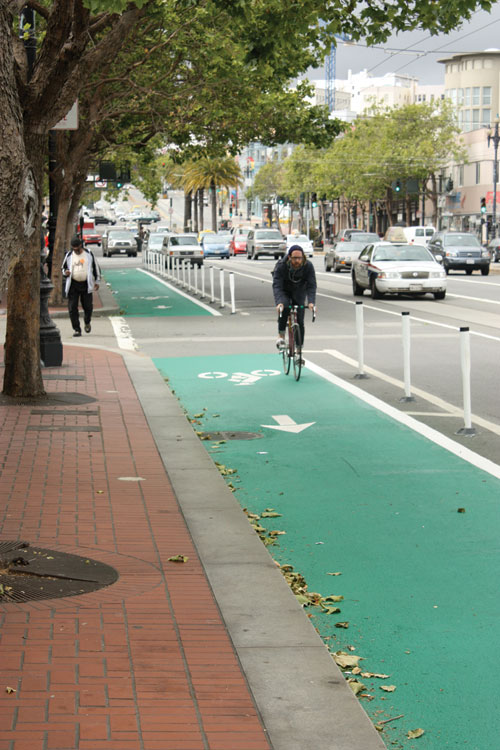
Despite high-profile recent improvements to San Francisco’s bicycle network – including a half-dozen new bike lanes since last fall, a green bike lane on Market Street separated from cars, and new on-street bike parking on Valencia and Divisidero streets – the city is still prevented by a court injunction from creating bike lanes that have been sought for a decade. But that could change as early as next week.

On Tuesday, June 22, Superior Court Judge Peter Busch will hear oral arguments and consider whether to end the four-year-old injunction against the city executing any of the projects or policies outlined in its Bicycle Plan, a ban perversely created by the court finding the plan violated the California Environmental Quality Act because it wasn’t subjected to a full-blown environmental impact report, which cost more than a million bucks and took two years.

Despite the fact that EIR was completed and certified last year, the plaintiffs who sued the city over the plan five years ago – anti-bike activist Rob Anderson and his attorney, Mary Miles – sued again, claiming the study was inadequate and decrying how the plan would take space from cars to improve bicycle safety.

In her brief, Miles noted how the EIR finds “89 significant impacts of traffic, transit, and loading but fails to mitigate or offer feasible alternatives to each of these impacts.” Referring to the near universal political support in San Francisco for making improvements to the bike network despite these impacts, Anderson told the Guardian last month,“It’s a leap of faith they’re making here that this will be good for the city.”

But the brief that the city filed in the case argues that leap of faith is a decision for policymakers, whether or not Anderson and Miles agree with it. The city position is that cars have ruled the roads for long enough and now it’s time they shared some space with the fastest growing transportation choice in San Francisco, where the number of regular cyclists has nearly doubled in recent years.

“Petitioners are clearly disappointed that, despite the disproportionate number of drivers over bicyclists, City decisionmakers chose to implement improvements to the bicycle network that may inconvenience some drivers and some transit riders on certain streets at certain times. But the CEQA process does not approve or deny projects; it merely requires that decisions be made with environmental consequences in mind. By improving the City’s bicycle network, the decisionmakers determined that the City would encourage more people to use a bicycle for everyday transportation,” Deputy City Attorney Audrey Williams Pearson wrote in her brief.

With oil continuing to spew into the Gulf of Mexico, the atmosphere becoming steadily more concentrated with planet-threatening fossil fuel emissions, and the politicians in Washington DC offering only hollow rhetoric about our stubborn addiction to oil-powered convenience, San Francisco elected officials from across the ideological spectrum took a small but important step in promoting safer bicycling.

Now, it’s up to Judge Busch (who partially lifted the injunction last fall, allowing the handful of projects I mentioned above) to take the next step, which he will do probably within days (or weeks at the latest) after hearing from both sides June 22 starting at 9:30 a.m. in Superior Court, Department 301, at the corner of Polk and McAllister streets.


P.S. If you want to celebrate the impending end of the bike injunction with thousands of other bicyclists, walkers, dancers, and other non-motorized movers and shakers, show up on car-free Valencia, Harrison, and 24th streets this Sunday from 10 a.m. to 3 p.m. for the latest installment of Sunday Streets.

Elsbernd blocks state budget resolution

1

The Democratic leadership in the state Assembly has a budget plan that challenges the entire approach Gov. Schwarzenegger is taking on the state budget. It’s not perfect; it relies on borrowing (although it’s borrowing against the revenues from a new oil severance tax). But it will, Speaker John Perez says, save more than 400,000 jobs. And it’s way, way better than what the governor wants to do. “It’s good,” Assembly member Tom Ammiano, who has always been willing to challenge party leadership and take progressive stands. “It’s something we can support.”

Among other things, it would bring San Francisco another $40 million next year as part of a plan to end the raids on city and county treasuries.

So the Dems in the Assembly are trying to get cities, counties and school boards to endorse their plan. Sup. David Chiu did the honors in San Francisco, asking the supes to approve, on consent calendar, a fairly innocuous resolution endorsing the so-called “Jobs Budget.” Nobody objected — except Sup. Sean Elsbernd, who demanded that the measure be sent to committee for further review.

I don’t get that; San Francisco’s support won’t determine the future of this budget, and it’s not a huge deal — but Elsbernd’s a Democrat, he doesn’t like what the governor is doing, and if this could help even a little bit with the forces pushing for an alternative, what’s the big deal?

Well, I talked to Elsbernd about it (one of the things I respect about Elsbernd is that he never ducks questions; unlike some politicians I know, he always returns my calls, always responds, is willing to have an intelligent discussion and doesn’t try to hide). His argument: “I’m not following the details of the state budget yet. I would love to hear a little more about it.” His concern is with the borrowing; “I’m sure,” he said (perhaps a bit sarcastically) “that President Chiu will be able to explain to me why this isn’t just kicking the can down the road.”

He went further: “If the mayor tried to balance the budget by borrowing money with general obligation bonds, you guys would blast him, right?” Well, not necessarily, I told him. Sometimes, governments ought to borrow money, to save and create jobs during an economic downtown. In fact, that’s exactly what President Obama did, borrowing heavily and adding to the already massive federal debt with a stimulus plan that probably prevented the recession from becoming another depression.

I mean, didn’t Sup. Elsbernd support the Obama stimulus package?

“Frankly, Tim,” he said, “I’ve been too busy trying to do my job in San Francisco to be taking a stand on state and federal issues.”

Okay, Sean — it’s a good line. But every elected official in every city in America was paying attention to the Obama economic plans. And SF supervisors have to be paying attention to the state budget. Counties are, in part, the local arms of the state; making sure there’s money to do what the state tells us is part of the job.

Obama blows his chance to confront oil addiction

1

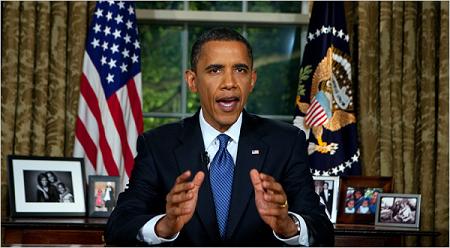
President Obama had the right Oval Office setting, a moment in time of genuine public outrage with the oil industry, and even an eloquent setup, telling Americans “the time to embrace a clean energy future is now” and saying we shouldn’t deterred from bold action by “a lack of political courage and candor.” And then…nothing. Once again, Obama has failed to follow up his rhetorical candor with the courage to do what needs to be done.

As with the health care debate and casino culture on Wall Street, Obama did a good job of diagnosing the problem. In this case, he cited the billions of dollars we send to despots in oil-rich countries, how China is leaving us in the dust in developing clean energy, and the myriad problems created by Americans accounting for 20 percent of world oil consumption, from global warming to the BP spill.

With that kind of setup, he could have just said the magic words — carbon tax – and completely changed the national debate over energy and environmental policy, finally linking the two interconnected realms. He could have called for a steep tax on oil companies and a gasoline tax on consumers, correctly arguing that subsidies on fossil fuels must end now and those who have long benefited from them need to help fund our transition to renewable energy.

Instead, he mentioned a few tepid reforms, and he wouldn’t even pledge his support for any of those ridiculously inadequate half-measures, telling the audience, “The one approach I will not accept is inaction. The one answer I will not settle for is the idea that this challenge is too big and too difficult to meet.”

Pretty words and a fine sentiment, but it means nothing in a political climate in which leaders of both major parties are more concerned with maintaining the flow of political contributions than stopping the flow of oil. Meanwhile, climate scientists say we need to cut our use of fossil fuels in half in the next couple decades to avoid the worst global warming impacts, and all that even the most ambitious legislation in the country would do now is slow the rate of growth over that time.

The only person in this country who could change the political dynamics to really meet this challenge is Obama, and last night, when he had the best chance to do so, he failed.

Voters are pissed

0

By Guardian News Staff

news@sfbg.com

After spending more than $70 million, two big corporations failed to convince Californians to vote their way. After spending nearly $70 million, the former head of a big corporation easily convinced Californians to vote her way. And that outcome is not as schizophrenic as it sounds.

On one level, the outcome of the June 8 election was a sign of the anti-corporate anger seething through the California electorate. “BP, Goldman Sachs, PG&E — anything that seems connected to a big corporation is in serious trouble right now,” one political insider, who asked not to be named, told us.

Yet two candidates who were very much corporate icons — Meg Whitman and Carly Fiorina — won handily in the Republican primaries and now have a real chance to become the state’s next governor and junior senator. What’s happening? It’s fascinating. The voters in the nation’s most populous state are pissed off — at big business, at government, at the oil spill, at 10 percent unemployment, at Washington, at Sacramento, at Wall Street. It’s an unsettled electorate, uncertain about its future and looking for something new, and definitely despising power.

There’s a populist fervor out there, and it’s going to define this fall’s expensive, dirty, and high-stakes battle for California’s future.


THE MAYOR GOES STATEWIDE

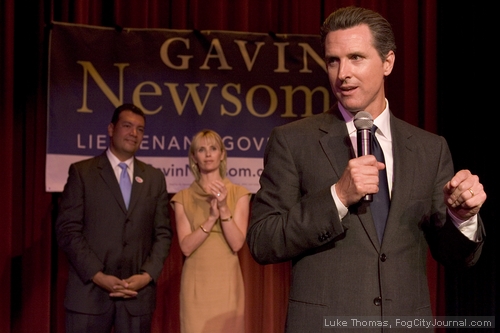
Addressing a crowd of supporters gathered at Yoshi’s San Francisco on election night, San Francisco Mayor Gavin Newsom — who easily beat opponent Janice Hahn to claim the Democratic nomination for lieutenant governor — said he was excited to be part of a crucial political year for the Golden State.

“We’re very proud to be in a position to be the Democratic nominee and to work with the other Democratic nominees,” Newsom told supporters. He lavished praise on the Democratic nominee for governor, Jerry Brown — the man who just last year he was trying to beat in a primary — telling stories about his father’s long relationship with the former governor and expressing his admiration. “I couldn’t be more proud to quasi- be on a ticket with Jerry Brown,” he said.

The race for lieutenant governor may prove one of the most interesting this election season — and not just because a victory for Newsom would transform San Francisco politics. Newsom’s opponent is Abel Maldonado, a moderate Republican who enjoys popularity among the growing, influential Latino community, and who Newsom’s team said will be a formidable challenge.

The campaign could revolve around an intriguing question. At a time when the Republican Party has been taken over by virulent anti-immigrant politicians — Whitman and Fiorina have both made harsh statements about illegal immigrants and vowed never to support “amnesty” (that is, immigration reform) — will Latino voters go for a white Democrat over a Latino Republican?

“You talk to them about all the same issues you talk to all voters about: jobs, education, and health care,” Newsom political strategist Dan Newman said when asked whether Newsom could win over Latino voters. “Latinos, like all voters, will appreciate someone with a proven record of success.”

Pollster Ben Tulchin also downplayed the trouble Newsom could encounter in winning the Latino vote. “With what’s going on in Arizona, they are very wary of Republicans,” Tulchin said, but then added: “We don’t want to underestimate the challenge we have. There’s never been a moderate Latino on the statewide ballot.”

Newsom sounded another alarm. If Whitman decides to help Maldonado, the race will get even tougher. “We’re running against Meg Whitman’s checkbook,” the mayor said.

“Expect to see Meg and Abel together a whole lot in the next few months,” one consultant predicted.

If Newsom wins, San Francisco will get a new mayor a year early — and the district-elected Board of Supervisors will choose the person to fill out the last year of Newsom’s term. Technically, the current board will still be in office then, but the task may well fall to the next board — which makes the local November elections even more important.

“Everyone is gaming this out and trying to figure out what happens,” political consultant Alex Clemens said during a post-election wrap-up at the San Francisco Planning and Urban Research Association office. “There will be a lot of dominoes to fall and deals to be cut.”

Meanwhile, Newsom’s nomination for lieutenant governor places many San Franciscans in an uncomfortable position, one that was illustrated well by Newsom’s victory speech, in which he proudly rejected taxes. Although most San Francisco progressives are disenchanted with their fiscally conservative mayor, few would rather vote for Maldonado.

Tim Paulson, the SF Labor Council president, was at the Newsom event gritting his teeth as he talked about the opportunity progressives now have to work with “a mayor of San Francisco we have issues with.” Now, he noted, “There is going to be a real campaign around this man. It could establish a narrative for what California is about.”


POWERFUL WOMEN

At Delancey Street on election night, San Francisco District Attorney Kamala Harris talked about getting “tough and smart on crime,” addressing gang-related criminal activity but also focusing on corporate criminals. She talked about cracking down on predatory lenders, supporting health care reform, and protecting California’s environment. And she made a point of dragging in BP.

“It must be the work of the next attorney general to ensure that the disaster and tragedy that happened in the Gulf of Mexico never happens in California,” she said, warning of attacks on AB 32, which set California’s 2020 greenhouse gas emissions reduction goal into law in 2006.

Of course, Harris now has to take on her southern counterpart, Los Angeles DA Steve Cooley, who is a moderate but comes in with much stronger law enforcement support. If Harris wins, it will go a long way to prove that opposition to the death penalty isn’t fatal in California politics, and that voters are finally ready for a women of color as the top law enforcement official — a first in state history.

But she and Newsom will both have to overcome likely attacks for the San Francisco’s crime lab scandal, one of many hits to be magnified by the size of Whitman’s war chest.

Whitman, who trounced opponent Steve Poizner in the primary, is riding the crest of a new wave of Republican-style “feminism,” starring her, Fiorina, and Fox news pundit Sarah Palin as female champions of the right-wing agenda. A few short months ago, it looked as if Brown was in serious trouble. But that was before Whitman and Insurance Commissioner Steve Poizner got into an $85 million bloodbath that left the winner of the GOP primary badly wounded. Whitman wants to play off the populist uprising by portraying herself as an outsider running against a career politician; Poizner gave her a huge scare by hammering her ties to Goldman Sachs.

That Wall Street narrative is one Democrats will push against Whitman and Fiorina. “I think it is stunningly politically tone deaf to nominate two Wall Street CEOs to the top of the ticket,” Newman said. Voters will decide whether they are fresh voices with new ideas or corporate hacks who laid off Californians and made fortunes with dubious stock market deals.

Brown leads in the polls — narrowly — but he’s vulnerable. He’s taken so many stands over so many years and Whitman’s fortune will hammer any openings they see. Brown is only slowly getting into campaign mode, but it’s no secret what he has to do. If the campaign is about Jerry Brown, unconventional politician, against Meg Whitman, Wall Street darling, then he wins.

But to take advantage of that, Brown has to offer some concrete solutions to the state’s problems — and he has to start acting like the progressive he once was. “If I were him, I’d run hard to the left,” a consultant who isn’t involved in any of the gubernatorial campaigns said.

The conventional wisdom had Barbara Boxer in trouble, too — but she’s a savvy campaigner who has beaten the odds before. And while the senator appears ripe for attack — almost 30 years in Washington, a voting record perhaps a bit more liberal than the state as a whole — her opponent, Fiorina, has baggage too.

For starters, Fiorina’s entire pitch is that she — like Whitman — would bring business-world savvy to politics. But as CEO of HP, “she was about perks and pink slips,” Newman said. “She laid off Californians and shipped those jobs overseas while enriching herself.”

Her own primary pushed her far to the right (at one point, in an embarrassing sop to the National Rifle Association, she actually argued that suspected terrorists on the federal no-fly list should be able to buy handguns). And speaking of feminist values, her anti-abortion positions won’t help her in a decidedly pro-choice state.


PROP. 16 GOES DOWN

The defeat of Proposition 16 will go down in history as one of the most remarkable campaigns ever. It was, Sup. Ross Mirkarimi noted, “a righteous win:” The No on 16 campaign spent less than $100,000 and still captured 52 percent of the vote. Another narrow corporate-interest measure, Mercury Insurance’s Prop. 17, faced a similar fate.

One reason: PG&E’s $50 million campaign backfired, making voters suspicious of the company’s propaganda. Another: it lost overwhelmingly in its own service area, the company rejected by those who know it best.

Now PG&E CEO Peter Darbee, who pushed to mount the expensive campaign, must return to his shareholders empty-handed — and that’s going to cause problems. “I assume the leadership of PG&E will be called to task,” Clemens said. “They truly rolled the dice.”

The day after the election, PG&E shares dropped 2.2 percent, a possible sign of shaken investor confidence. Mindy Spatt of the Utility Reform Network (TURN), a nonprofit that worked on the No on 16 effort, described the situation succinctly. “Peter Darbee’s got egg on his face,” she said. “Big-time.”

Mirkarimi has witnessed other battles with PG&E, and said this probably wouldn’t be the last. “PG&E, every time we want to have a seat at the table, tries to take us out, like assassins,” he said. “If they were smart, they would take us up on what we asked many years ago, and that is to abide by peaceful coexistence.”

On the statewide level, the bold and expensive deceptions pushed by PG&E and Mercury Insurance were countered by only a handful of super-committed activists and a broad cross-section of newspaper editorials, a reminder that newspapers — battered by the economy and technological changes — are neither dead nor irrelevant.

One of the wild cards of the election was Prop. 14, which will eliminate party primaries for state offices — and potentially shake up the state’s entire political structure. “This is a big deal even if we don’t know how it’s going to play out,” consultant David Latterman said at the SPUR event.

Interestingly, the only two counties that voted No on 14 were the most progressive — San Francisco — and the most conservative, Orange.

Progressives did well in San Francisco, expanding their majority on the Democratic County Central Committee. “In an environment where it was about hundreds of millions of dollars from PG&E and Meg Whitman and Chris Kelly outspending us, we showed that San Francisco is San Francisco and we support San Francisco values,” DCCC chair Aaron Peskin told us.

Money used to define the debates in San Francisco, but the dominant narratives are now being written by the coalition of tenants, environmentalists, workers, social justice advocates, and others who backed a progressive slate of DCCC candidates, which took 18 of the 24 seats on a body that makes policy and funding decisions for the local Democratic Party.

“This time it was the coalition that really made the difference,” DCCC winner Michael Bornstein said on election night. “Frankly, our people worked harder.”

Board of Supervisors President David Chiu agreed, telling us, “For the Central Committee, the message is people power wins.”

The lesson from this election is that people are starting to get wise to corporate deceptions. And they’re realizing that with hard work and smart coalition-building, the people can still prevail.

Steven T. Jones, Rebecca Bowe, Sarah Phelan, and Tim Redmond contributed to this report.


BP’s stock rises. How about Obama’s?

3

A month ago, when BP ascended to the top of the list of corporate villains, the company’s stock took a thrashing. But now the panic selling seems to have gone into reverse: BP’s stock rose today, even as lawmakers in Washington intensified their criticism, other oil companies claimed they would have done a better at handling the spill, and BP said it was speeding up payment of large commercial losses due to the Gulf of Mexico disaster.

So, is this just a temporary lull in BP’s stock market storm? Or will our addiction to the black stuff keep oil companies afloat, no matter how bad the environmental disaster? And how will Obama’s stock fare?

With the President set to address the American people from the Oval Office tonight, the first time since he was elected and nearly two months after the worst environmental catastrophe in U.S. history, tonight is being framed as a defining moment that could determine Obama’s relevancy.

The “Drill, baby, drill!” crowd would love it if this disaster brought Obama down, and his poll numbers have definitely  taken a beating in recent weeks. My money is on Obama to make a kickass speech tonight—and kick B.P. CEO Tony Hayward’s ass when they meet Wednesday, a day before Hayward testifies before Congress. How it goes after that will depend on the follow through, and that’s where Obama has an opportunity that he better not blow.


Activists angry about BP spill target Arco stations

2

People have felt powerless to counter BP’s devastating and unstoppable oil leak, but Bay Area activists have finally settled on a target for their outrage: BP-owned Arco gas stations, which sell some of the cheapest gas around. On Friday, protesting activists blocked an entrance to the Arco on Fell Street, and tomorrow (6/16), the Sierra Club will hold an 11 a.m. protest outside the Arco at 3400 San Pablo Avenue in Oakland.

“There’s a reason why it’s so cheap, because they skimp on safety,” Josh Hart, one of the main organizers of Friday’s event, told the Guardian. That event targeted an Arco station that had already earned the ire of the bicycling community because motorists there regularly block the bike lane as they wait in line to fill their tanks.

Yet Hart said the protest is about more than just BP, but about Americans’ unquenchable reliance on cheap fossil fuels and an automobile-dependent lifestyle. “It’s not about boycotting BP,” Hart said. “It’s about boycotting oil.”

Tomorrow’s event in Oakland will feature a “mock oil spill” comprised of a black tarp surround by caution tape, a protest designed to send the message, “President Obama move us Beyond Oil.” Meanwhile, at 5 p.m. today, Obama plans to address the country about his adminstration’s so-far-futile efforts to address the spill.

The Daily Blurgh: Poisoned fruit cocktails, tipsy crafts

0

Curiosities, quirks, oddites, and items from around the Bay and beyond

The moral imperative of the BP oil spill: Drive 20 percent less.

*****

Former gourmet chocolatier goes vegan.

*****

The crafting potential of the mini bar is limited only by your imagination/liver.

*****

Local punks clean up on Broadway’s big night

*****

What makes that children’s juice drink so delicious? Lead!

*****

Apple isn’t into (male) cartoon nudity or gay sexiness. What prudes.

*****

Wanna be the Greyson Chance of the art world? Then get to work! The Guggenheim is scouting Youtube for the next Ryan Trecartin. How democratic.

Bread and Circuses: Mexico and the World Cup

0

MEXICO CITY (June 11th) — The Caliente Sports Book down the street is buzzing with betters studying dog and horse races, Major League Baseball, even golf, on the multiple screens. Of particular interest are those channels running wrap-ups of the afternoon match between Mexico and 2006 World Cup champion Italy, from which the national team emerged victorious in a final prelim before this year’s edition of the Copa del Mundo gets underway later this week.


Italy, it may be remembered, won the much-coveted cup four years ago on penalty kicks after France was reduced to playing with ten men on the field when super-star Zenedine Zidane was disqualified for ferociously head-butting a rival who purportedly called his mother and sister “whores.” Beating Italy was a decided plus for Mexico’s downtrodden spirits as the Mundiales approach.


One group of aficionados was not much interested in Mexico’s fortunes in the upcoming fandango in South Africa. Instead, they gathered around a big screen in one corner of the betting parlor cheering on the Los Angeles Lakers in a National Basketball Association Finals match-up with the Boston Celtics. “Forget about football,” sneered “El Guerro” Gonzalez, a regular, “this is where the real money gets made.” Because pro basketball games routinely rack up hundred-point scores, betters have multiple opportunities to wager on winners and losers, over and under point spreads, total points in a quarter, and whether Kobe Bryant will hit the next three-pointer.


But the basketball euphoria will dissipate post haste as the World Cup takes center stage. Although the NBA’s despotic commissioner David Stern promotes his product as the world game, basketball hardly holds a candle to what the U.S. provincially terms “soccer” and the rest of the Planet Earth calls football.


Indeed, the “Copa del Mundo” (“Cup of the World”) will soon sweep every other sporting event from the screens — let alone political scandal, of which there is plenty in this distant neighbor nation, including the upcoming Super Sunday gubernatorial elections July 4th, and even droughts, floods, and other natural disasters. The interminable drug war that has taken 23,000 lives in the past three years will move to the backburner. Ditto an economy that is tailspinning out of control — a million workers lost their jobs in the first three months of this year alone despite President Felipe Calderon’s rosy claims of “recovery.”


Speculation about the disappearance of one of the nation’s most powerful politicians will fade from the primetime news, and the first year anniversary of the incineration of 49 babies in a government-run day care center owned in part by the first lady’s cousin will not even be noticed. The military takeover of the great Cananea copper mine and the dissolution of the miners union, is not news. New revolutions — this is, after all, the hundredth year anniversary of our landmark revolution — could rock the land, but for the next month, Mexico will live and die on what happens to the national team in South Africa.
“In football, we find our revenge against the adversaries of our lives,” philosophizes sociologist Jose Maria Candia in a recent Contralinea magazine interview, “if it goes badly at work, in the economy, politics, the project of the nation, when 11 boys put on the green jersey and do well in an international tournament, we feel vindicated by life.”
With 32 national teams from all five continents in the competition for the World Cup, the fate of the “seleccion” will have palpable impact on domestic tranquility. The political outfall of the Mundiales is unpredictable. Pumped up on toxic nationalism and xenophobia, football is a blood sport in southern climes. Honduras and El Salvador once fought a full-fledged war over soccer.


If the national team wins or acquits itself well, success will strengthen the government in charge no matter how poorly it has served the country. Likewise, a shoddy performance can topple rulers. In Mexico, increasingly unpopular president Felipe Calderon, who won high office in fraud-marred elections three years ago, is banking on the national selection’s triumphs in the opening round to invigorate his deteriorating image. Calderon’s bet is hardly a sure thing.


Mexico, Number 17 on the Federation of World Football Federation’s rankings (now the Coca Cola FIFA rankings), plays host South Africa in the inaugural match of the tournament, and “His Excellency” Felipe Calderon (dixit South African president Jacob Zuma) will be a guest of honor. The “Bafana Bafana” (“Boys Boys”) as the locals are worshipped, have won their last four prelim matches and in the 2009 Confederation Cup took Spain, which some football gurus fix as the best team in the world, into overtime. Their fanatics’ incessantly droning “vuvazelas” or plastic trumpets are said to drive opponents mad.


On the other hand, should Mexico beat sentimental favorite South Africa, it will make Calderon few friends on the African continent — five other African teams are in the draw, with war-torn Cote d’Ivoire the cream of the crop.


Aside from the Bafana Bafana, France and Uruguay are the real class of Mexico’s four-team group — while the French have appeared lackadaisical of late, whipping the South Americans is improbable. Anything less than reaching the quarterfinals will not rehabilitate Calderon’s popularity.


Mexico has a young team that fluctuates between indifference and playing out of control. It is anchored by seven Mexican players from the European and Turkish leagues, and the wily but slow-footed veteran Cuauhtemoc Blanco. Burned repeatedly by the national team’s poor performances in the Mundiales, many fans such as Manuel Garcia, a waiter at the old quarter Mexico City eatery Café La Blanca, consider that only divine intervention can save Mexico — and Calderon — from ignominious elimination.


When and if Mexico wins its matches though, wild celebrations are guaranteed to erupt around the gilded Angel of Independence on the bustling Paseo de Reforma — drunkenness, fisticuffs, and hooliganism are de rigor. Flag-draped caravans of honking cars will jam the boulevards of this conflictive megalopolis. On game days, half the population of Mexico, led by its president, will don green jerseys and play hooky from work and school. Saloons will fill to the brim with fans spilling out into the streets, jostling for a peek at the plasma screens. Masses to insure that God is on Mexico’s side will be pronounced from the altars and saints dressed up in the national colors.


Although football is tantamount to religion in this country where 70% of the population lives in and around the poverty line, only the super rich will have the wherewithal to jet off to Africa. Instead, the underclass will monitor the Mundiales at the “FIFA Fan Fest” on giant screens erected in the great Zocalo plaza from which nearly a hundred hunger-striking members of the Mexican Electricity Workers Union (SME), near death after a month of voluntary starvation, will no doubt be evicted so as not to dampen the fiesta.


Televisa and TV Azteca, Mexico’s two-headed television monopoly, which will transmit the games (the premium package includes 3-D) will have the nation eating out of its hands (and guzzling Corona beer.)  The TV monoliths have leased rights to broadcast the Mundiales from the Swiss-based FIFA, the absolute dictator of the sport for the past 106 years that counts 204 out of 208 football federations worldwide on its roster. FIFA TV revenues are expected to top $167,000,000 for the 2010 World Cup.


This year’s Copa del Mundo is awash with drama. Will the Argentine selection, a perennial favorite, graced by the world’s best player, Leonel “the Flea” Messi, blow up under their sometimes psychotic coach Diego Maradona, himself a Mundiales’ immortal? Will the first round match between England and the U.S. (14th on the FIFA listings with a world-class star, Landon Donovan, to prove it) invoke the star-crossed Yanqui upset of the Brits 60 years ago in 1950 in Brazil, the only time these two teams have ever met in the World Cup?


If the U.S. gets by England, a match between Mexico and its hated gringo rival would up the drama quotient here considerably. A face-off between South Korea and North Korea, both of which are in the draw albeit in separate groups, could lead to nuclear confrontation.


How will tiny, bruised Honduras, which played through a coup d’etat to qualify, fare against the big guns? What kind of karmic reward is in store for France, which slimed its way into the World Cup with mega-star Thierry Henry’s illegal hand-slap goal against the Irish? Will Germany be dispirited by the suicide of its troubled veteran goalie (is this a Wim Wenders’ film)? Will five-time champ Brazil, which is hosting both the 2014 World Cup and the 2016 Olympics, be so overloaded with hubris that the selection will forget to play football?


But unquestionably the drama of dramas is focused on host South Africa, the land of blood and gold, Nelson Mandela, Steve Biko, Joe Slovo, and the last great struggle for liberation from colonialism.


South Africa, an unlikely site for the World Cup, was promised the games by Swiss football impresario Joseph Batter during his 1998 campaign to become the czar of the FIFA. Blatter, who was said to have been backed by Middle East oil money, needed African votes to put him over the top. Although Nigeria and Morocco were also proposed to host the 2010 Cup, South Africa, the continent’s fastest-growing economy, was chosen both as a tribute to African football and to Nelson Mandela. Blatter even flew the frail, aging apostle of African liberation, to London to ballyhoo the designation.
Whether the beloved Mandiba will be well enough to attend the inauguration is the drama within the drama.


In his youth, Nelson Mandela was a keen amateur boxer and enthusiasm for sports has colored his life. Football is indeed the national sport of black South Africans, 75% of the population. During Mandela’s 28 years of imprisonment on Robbin Island for the crime of defying apartheid, his fellow prisoners and comrades in the African National Congress (ANC), played football incessantly, taping up rags into balls, and booting them up and down the narrow prison corridors. But Madiba was held in isolation and could never participate.


Nelson Mandela’s vision for the new South Africa encompassed sports as a path to racial reconciliation. If football was a black sport in South Africa, rugby is an Afrikaner obsession — the Springboks were the maximum icon of the apartheid regime. As president, Mandela brought the 1995 World Rugby Cup to Johannesburg, a story fictionalized in the film “Invictus,” and won the hearts and minds of his former persecutors. Now the World Cup 2010 is slated to project South Africa before the world as a dynamic, multi-racial powerhouse.


The truth is always more diffuse. Jacob Zuma, the country’s very corruptible third president, and his predecessors have sunk between $3.7 and $6 billion USD in infrastructure to burnish their images in a nation where 43% of South Africa’s 45.000.000 peoples live on $2 or less a day. The gleaming $300,000,000 Soccer City Stadium where the July 11th finals will be staged, abuts Soweto, the festering high-crime enclave of 3,000,000 mostly threadbare citizens, 30% of whom suffer from AIDS, according to the World Health Organization. Gangs of orphaned children rule the street.


Similarly, the stadium at Port Elizabeth on Nelson Mandela Bay, which came in at $287,000,000, was built over a slum from which hundreds were evicted. A school complex was demolished to make way for the Neusprot venue (only $140,000,000) — 13 such stadiums have risen from the dust amidst a storm of charges of kickbacks, bribery, and favoritism.
If recent history is any hint, the new stadiums will quickly become certifiable white elephants. Even Beijing’s much-praised “Birds’ Nest” coliseum designed for the 2008 Olympics is reportedly tenantless, and the Greek economy just collapsed in part thanks to  the burden of debt incurred for infrastructure for its Olympic Games. 


With a population scuffling just to feed itself, filling all this dazzling stadia with paying customers is problematic. Even the $18 cheap seats — a week’s wages in the cities and a month’s income in some rural areas — are mostly out of reach in a country where 50% of the work force is out of work. To deflect a grave social crisis in the making, the FIFA is offering 120,000 free admissions, about 2,200 seats for each of the World Cup’s 62 contests. Riots have already occurred at “friendly” preliminary games.


Ever since the bad old days of ancient Rome, bread and circuses have been a powerful formula for social control. In South Africa, as in Mexico, the World Cup is designed to make the discontented forget their discontent. For the next month, the violence, corruption, and class and race hatreds that dominate daily life in Mexico, South Africa, and the rest of what used to be called the third world will disappear beneath the social surface.


Although conflict is my bread and butter, I’m not going to miss the 2010 Mundiales for the world. 


John Ross is at home in the maw of the Monstruo watching the World Cup. You can complain to him at johnross@igc.org


Newsom’s fiscal conservatism undermines his agenda

15

Gavin Newsom’s nomination for lieutenant governor places many San Franciscans in an uncomfortable position, one that was illustrated well by the victory speech that he gave last night just as our story our on his latest budget – in which he proudly rejected taxes in favor of deep spending cuts and future budget deficits — was coming off the presses.

Even though most San Francisco progressives don’t like our fiscally conservative mayor, few of us would rather vote for his Republican challenger, Abel Maldonado, despite the fact that this moderate Latino is actually fairly close to Newsom ideologically. “We don’t want to underestimate the challenge we have. There’s never been a moderate Latino on the statewide ballot,” Newsom pollster Ben Tulchin told me last night.

SF Labor Council President Tim Paulson was at the Newsom event gritting his teeth as he talked about the opportunity progressives now have to work with “a mayor of San Francisco we have issues with,” noting that, “What I find interesting in the easy win for Newsom is how there is going to be a real campaign around this man. It could establish a narrative for what California is about.”

And he’s right, but the danger is if Newsom sticks with his inflexible and longstanding “no new taxes” stance then the narrative could be that neither major political party’s top nominees are willing to tap millionaires, oil companies, and other entities that can afford it in order to fund education, health care, and the development of a green economy, which Newsom said are his top priorities. That and “jobs,” by which he means only private sector jobs, based on his past statements and actions and current failure to support new tax measures.

But Newsom doesn’t seem to see the glaring contradiction in his political philosophy, which he illustrated as he told a story about the potential to achieve strong economic growth while aggressively pursuing solutions to global warming and other environmental challenges, which he and progressives both seem to believe are not just possible, but “the opportunity of a lifetime.”

Newsom noted that the only four wealthy countries that signed the Kyoto Protocols and met their greenhouse gas reduction goals – Sweden, Denmark, United Kingdom, and Germany – have similar economic strategies. “All four of these countries had three things in common vis-a-vis the United States: Lower unemployment, higher growth, and lower income disparities,” he said.

Yet Newsom left out another key commonality that was even more central to their success, and big reason for two of Newsom’s three items: All have far higher tax rates than the U.S. and a more vibrant, respected, and well-funded public sector that was able to guide that economic transformation and ensure a smart, equitable distribution of the country’s wealth – something Newsom has been overtly hostile to as mayor and while campaigning for statewide office.

Nonetheless, he continued, “What’s interesting about these four countries is they dramatically shifted their framework in terms of economic growth and economic development towards a cleaner and greener energy future and they were rewarded with higher growth and lower unemployment. I think that’s suggestive, in the context of this debate.”

So do I, suggestive of the need for Newsom (and Jerry Brown) to finally realize it’s going to take money and a rejuvenated public sector to meet his stated goals for education, health care, and the environment. In San Francisco, his reluctance to challenge the Chamber of Commerce fallacy that taxes kill growth has left a legacy of dangerously diminished social services and increasing budget deficits running indefinitely into the future.

But the four countries that Newsom claims to admire don’t think that way. They don’t boast of cutting social services while proposing even more business tax cuts, and they don’t say things like, “It’ll take an entrepreneurial look at solving problems in this state.” He’s sounds like Meg Whitman and the Republicans.

What we need is the other Gavin Newsom, the one who last night also said, “Now is the time for serious problem solving in California….It is a time for California to fundamentally change.”

But first, Mr. Mayor, you’re going to need to embrace a few fundamental changes of your own.


Alerts

0

alert@sfbg.com

THURSDAY, JUNE 10


“This Bridge Called My Back”

Radical Women, an international socialist feminist organization, begins its summer Fiery Feminist Theory Series with selected readings from This Bridge Called My Back: Writings by Radical Women of Color. Home cooked dinner with vegetarian options available at 6:15 p.m. for $7.50.

7 p.m., free

New Valencia Hall

Suite 202

625 Larkin, SF

(415) 864-1278

FRIDAY, JUNE 11


ARCO/BP Boycott Party

Join this peaceful protest calling for the shut down of BP franchises. If you feel helpless as oil continues to kill wildlife and poison the Gulf of Mexico and its shores, make your voice heard with your dollars. Boycott BP and it’s franchises, including Amoco, Castrol, ARAL, ARCO, AM/PM, and Wild Bean Café.

5:30 p.m., free

ARCO Gas Station

1175 Fell, SF

Berkeley Critical Mass

Advocate for the creation of human speed transportation zones while having fun with other members of the bicycling community at this “bike prom” themed critical mass through the streets of Berkeley.

6 p.m., free

Gather at Berkeley BART

Center and Shattuck, Berk.

www.berkeleycriticalmass.org

SATURDAY, JUNE 12


Drone Warfare

Join this community forum on the moral, ethical, and legal implications of drone warfare. Use of drones by the U.S. military has increased and is responsible for the deaths of numerous civilians. The U.S. military argues that using drones in sensitive areas reduces the risks to American lives. Hear experts and activists against drone warfare weigh in on this debate.

1:30 p.m., free

Berkeley Public Library

Third Floor Community Room

2090 Kitteredge, Berk.

(510) 845-3815

www.gawba.org


Toxic Triangle Hearing

Speak out against the environmental racism and cumulative pollution affecting poor communities in San Francisco, Oakland, and Richmond. Demand action from the Environmental Protection Agency, Bay Area Air Quality Management District, State Department of Toxics, Health Department, Navy, and elected officials.

9 a.m., free

St. John’s Baptist Church

825 Newhall, SF

(415) 284-5600


World Naked Bike Ride

Help get the message out about America’s inadequate energy policy, which is harming our economy, the environment, and the planet by catering to oil cartels and increases dependency on oil imports. Go as bare as you dare and arrive early for body paint. Special attention will be paid to protesting BP. Simultaneous worldwide bike rides also scheduled.

Noon, free

Meet at Justin Herman Plaza

Market at Embarcadero, SF

wiki.worldnakedbikeride.org

TUESDAY, JUNE 15


Peace Pie Cookbook

CodePink tells the story of women “waging peace” in a new book, Peace Never Tasted so Sweet: Deliciously Sweet and Savory Pie Recipes from Women around the World. Attend this release party and pie-tasting featuring speakers Medea Benjamin, cofounder of CodePink and Global Exchange; recipe contributor Samina Faheem, founder of American Muslim Voice; and recipe contributor Lorene Zouzounis reading poetry.

6 p.m.; free, $5–$10 suggested donation pies

Mission Pie

2901 Mission, SF

www.codepinkalert.org

Mail items for Alerts to the Guardian Building, 135 Mississippi St., SF, CA 94107; fax to (415) 437-3658; or e-mail alert@sfbg.com. Please include a contact telephone number. Items must be received at least one week prior to the publication date.


Editor’s Notes

1

Tredmond@sfbg.com

What’s the real price of a gallon of gas? Think about it — because it’s not $3.12, which is what I paid the last time I filled my tank. See, that price didn’t include the gulf oil spill.

Americans use about 130 billion gallons of gas a year. When all is said and done, the cash cost of cleaning up the spill and repairing the economic damage to the coastlines of several states is probably going to exceed $20 billion, whether BP pays it all or not (Florida alone could lose $10 billion a year in tourism if its Gulf Coast beaches are fouled.) That’s an additional 15 cents a gallon. Add in the long-term economic damages, and the incalculable environmental damages, and you’d have to kick up the price another dollar. Which doesn’t even begin to account for the costs of global climate change, the poisoning of the Niger basin, the destruction of large parts of the Amazon, and all the other damage that oil drilling does. Gas is pretty pricey; we just don’t pay for it at the pump.

So it’s infuriating to see Matier and Ross in the June 7 Chronicle saying that electricity from the city’s community choice aggregation program will be more expensive than what we pay now to Pacific Gas and Electric Co. (see editorial).

Sticker prices are a lie. That cheap plastic stuff from Walmart costs third world kids their childhood. The price of non-organic strawberries at Safeway doesn’t include the damage pesticides do to the soil, the damage water diversions do to the delta and the fisheries — or the damage nonunion farm workers suffer in the fields.

Economists have all kinds of words for this — externalities, spillover costs — but when I hear that coal energy and Walmart toys are cheaper, the only one I can think of is: bullshit.