Occupy

AIDS vigil returns at Occupy SF

3

A coalition has come together to bring a striking new component to OccupySF: a rebirth of the ARC/AIDS Vigil. The vigil created an encampment similar to OccupySF’s at UN Plaza in the 1980s and remained there for ten years, protesting the federal government’s refusal to put resources into research and support for people with HIV/AIDS. Some who were involved in the vigil are currently part of the OccupySF encampment as individuals. Now, many hope to make that relationship more direct and active.


Brian Basinger, a longtime activist in several capacities including work with the AIDS Housing Alliance, is one of those involved in this effort. Says Basinger, “We are resurrecting the ARC/AIDS Vigil at 11/11/11 at 11:11 am. We are going to provide housing counseling, bring needle exchange, providing HIV testing, distributing organic vegetarian brown bag lunches, holding a speak-out, and presenting our demands to mayor Ed Lee to cure homelessness for people with HIV/AIDS, LGBT youth and transgender San Franciscans.”

All of this will take place tomorrow from 11am-2pm at Justin Herman Plaza, the site of Occupy SF’s encampment. Or, says Basinger, “Ethel Merman Plaza, as we like to call it.”

Those interested in the speak-out should be sure to get there by 11:11, as that will likely be first on the agenda. The food distribution is planned for the end of the kick-off event.

The group will provide services to the OccupySF encampment and anyone who comes through it. “We’re looking to create a safe space for homeless LGBT youth to gather…queer homelessness is invisible. We experience homelessness differently than the non-gay world.”

Like the ARC/AIDS Vigil of the 1980s and the Occupy Movement today, this event has the potential to be ongoing. Said Basinger plainly, “We won’t leave until we get our demands are met.”

Basinger warns: “It’s going to rain. But we want to highlight that people with fullblown AIDS and cancer are out in the goddamn rain everyday because the mayor has failed. ‘Ed Lee gets it done’- he’s not ‘getting it done’ for people with AIDS.” Basinger added that San Francisco “has the highest rate of homelessness for people with AIDS in the country.”

The group is putting out a call for “Rain gear to keep us warm- tarps and umbrellas.” Added Basinger, “Umbrella, ella, ella. Also, we put out a call for Rhianna. Rhianna, if you’re listening, come tomorrow.”

And with the impossible to predict explosion of the Occupy Movement- hey, anything could happen.


San Francisco’s political spectrum: a primer

120

During yesterday’s post-election wrap-up at the San Francisco Planning and Urban Research Association, political consultant and analyst David Latterman cited the ideological breakdown of San Francisco voters: 19 percent are progressive, 36 percent are liberal, 39 percent are “moderate,” and 6 percent are conservative. I cited those figures in a post I wrote yesterday on the latest election results, and some people responded by asking me to explain those terms, so let me take a crack at that because I think it’s important to understanding the city’s political dynamics.

I even discussed the matter with Latterman – who self-identifies as moderate, whereas I and the Guardian have a progressive worldview. “That’s a fantastic question and I don’t think any of us can give suitable answers,” Latterman said. “These aren’t hard lines. It’s like: I don’t know how to define pornography, but I know it when I see it.” Nonetheless, we agreed on the basic outlines and borders between the labels, even though we might frame them and value them a little differently.

In San Francisco, there is general agreement on most social issues among the moderates, liberals, and progressives, although we may disagree on political tactics. We all basically support gay rights, reproductive freedom, the value of diversity, environmentalism, and freedom of expression. That’s why most people consider San Francisco to be a famously liberal city, because of our tolerance on social issues, which only that 6 percent who are conservatives don’t share.

Yet San Francisco is still a deeply divided city on economic issues, including land use and the role of government. This is where most of the political conflicts and divisions occur, and it is here where our political spectrum is as wide as anywhere – perhaps even wider given the extreme wealth and poverty here, as well as the long history of political activism and the setting of national political trends. And it is in this realm that our labels come from.

A “moderate” in San Francisco – which is a real misnomer despite its widespread usage – is a fiscal conservative: anti-tax, anti-regulation, an almost religious faith in the free market, and a resentment of the poor (particularly the homeless and the jobless) and those who advocate for them. They want bare minimal government and see the role of government as primarily to facilitate economic activity in the private sector and to provide the basic infrastructure that the private sector needs to operate efficiently. They even believe social services should be provided by the private sector, such as nonprofits, rather than by government. On economic issues, they’re almost indistinguishable from conservatives, with whom they disagree on social issues.

On the other end of the spectrum are the progressives, who don’t trust capitalists and large corporations and believe they need to be heavily regulated and taxed to provide for the common good. We believe in progressive taxation and a redistribution of wealth, particularly from the richest 1 percent, and that government has an important role to play in leveling the economic playing field and playing referee. Progressives generally believe this country has been drifting to the right for at least the last 31 years and that this is a dangerous trend that needs to be addressed with fundamental, systemic reforms. And at this point, we’re willing to adopt radical strategies for triggering that change, such as Occupy Wall Street or other forms of civil disobedience.

The liberals of San Francisco are somewhere in the middle. They’re Democrats (or DTS) who don’t believe in radical change or anything that might disrupt the existing order, preferring incremental reforms over long period of time. They accept the legitimacy of the two-party political system and an economic system governed by Wall Street and powerful corporations, and they believe we need to do what we can within that framework. They use neoliberal economic policies like business tax cuts and incentives to encourage private sector job creation and housing development, and they accept a shrinking public sector, which they expect to operate more like the private sector, and a waning labor movement.

The reactions to the OccupySF movement is an interesting illustration of the dividing lines. Moderates have voiced tepid support for the movement’s critique of the growing gap between rich and poor, but they’re appalled at the tactic of occupation, believing curfew and anti-camping laws are more important. Progressives have been the most enthusiastic supporters of a movement that echoes their core values and physically challenges the status quo. Liberals basically support the movement, but they’ve been very uneasy with the tactic of occupation and have been vacillating on how to deal with it.

Latterman and the moderates – as well as many liberals – see ideology as a dirty word, and he was happy that in this election “it was the least ideological race we’ve seen in a long time.” Mayor Ed Lee and Board President David Chiu – both of whom hover in the liberal to moderate range, depending on the issue – also treat the notion of ideology with disdain, claiming to support practical, pragmatic, or common sense solutions to problems.

But progressives see ideology as the essence of politics. They understand the world in terms of class struggle, and believe that the very rich have been aggressively exploiting the people and the planet for too long, and that the only real way to make progress is to fight them and win. They believe in the Occupy paradigm that the 1 percent – the greedy rich who have corrupted our political and economic systems – are actively hostile to the interests of the 99 percent. We know that’s an unsustainable system and we’re hopeful that this is the moment when progress – the core of our belief system, that it’s possible to devise better economic and political systems than the ones we’ve inherited – could finally be attainable if we continue to organize and challenge the system.

That’s my general analysis of San Francisco’s political dynamics. What’s yours?

Dick Meister: Labor and the occupiers: a natural fit

0

LABOR & THE OCCUPIERS: A NATURAL FIT

By Dick Meister

Dick Meister, former labor editor of the SF Chronicle and KQED-TV Newsroom and a former city editor of the Oakland Tribune, has covered labor and politics for a half-century as a reporter, editor, author and commentator. Contact him through his website, dickmeister.com, which includes more than 300 of his columns.

Think of what a combined effort by unions and the Occupy Wall Street movement could do to weaken the tight grip of corporate greed on the economy. Think of how it could greatly strengthen both the labor movement and the occupiers.

OWS and labor have worked together in some locations. But many occupiers consider labor a part of the economic and political establishment that they’re protesting, and fear that union leaders might try to take control of their movement, which, unlike unions, is based on direct rather than representative democracy.

And labor is not happy that OWS has no clearly identified leaders or formal demands, which of course is how unions operate.

Unions and the occupiers, however, have the same powerful enemies. They need each other if they are to overcome them. It seems to me that unions are in the best position to bring the two much closer together.

So, how to go about it? Unions need to make clear, in words and deeds, that they are indeed facing the same problems and opponents as the occupiers and that they need to join together so as to act as forcefully as possible to overcome their mutual enemies. They must make clear as well that union leaders do not want to take over their movement, but seek to strengthen it.

There’s an old, but still highly effective tactic that labor must stress to its potential OWS friends. It’s called solidarity.

Clearly identified unionists must march and otherwise demonstrate with occupiers, join them in their rallies and in their tent cities and elsewhere. They should provide them with food, blankets, medical care and other necessities. They should organize joint actions and show that labor leaders are doing important work in the occupiers’ behalf.

At the same time, unions should make clear that they do not support the destructive vandals who’ve tried to attach themselves to the OWS movement.

If necessary, labor should also take dramatic actions such as were taken November 2nd by Occupy Oakland protestors who had been camped in front of Oakland’s City Hall for close to a month. They led a rally and then a march of some 7,000 people through downtown Oakland to the city’s port, one of the most important on the West Coast.

Occupiers and their supporters forced the port to close by blocking delivery trucks from loading or unloading cargo on the docks. At any rate, many dock workers, union members all, didn’t show up for work.

The march and port closure were planned as part of a citywide general strike that, while drawing many words of support from Oaklanders and others, was not widely supported otherwise.

Most notable among those who showed their support physically as well as verbally were more than 300 teachers who did not report to school. Some other teachers used the day to explain the nature of such protests to their students.

Unions certainly have had a long experience in doing what needs to be done to build the strength for battling powerful economic and political enemies. During the Great Depression, for instance, unions waged massive organizing drives to recruit workers and give them the strength they needed to overcome the greedy oppressors of the 1930s. That led to the laws that guarantee workers the right to unionization and regulate their hours and other working conditions.

Like the union activists of the thirties, occupiers have helped focus widespread attention on the financial interests which are responsible for battering the economy and on what the financial interests must do to make it right.

That has helped OWS gain support from the AFL-CIO, and from more than two dozen national unions and many of their local affiliates. Some of the unions have made participation in the occupy movement a major activity.

Unions already have spent lots of money and put lots of members into the occupiers battles to win much better treatment for workers from the same forces that are denying decent treatment to unionists.

A partnership of labor and the Occupy Wall Street movement could very well lead to reforms as far-reaching and vital as those won by activists eight decades ago.

Dick Meister, former labor editor of the SF Chronicle and KQED-TV Newsroom and a former city editor of the Oakland Tribune, has covered labor and politics for a half-century as a reporter, editor, author and commentator. Contact him through his website, dickmeister.com, which includes more than 300 of his columns.

Avalos campaign revives the progressive movement

40

As I walked into the John Avalos campaign party in Roccapulco around 11 pm, Sup. David Campos told me, “It’s the best party in town!” And he was right. The speeches were just getting underway on the stage and there was a palpable energy in the large crowd even though many of them had been out campaigning since early in the morning.
Avalos’ wife, veteran progressive organizer Karen Zapata, set the tone. First, she recognized Eric Quezada, the longtime housing rights activist who died in August, and the rest of the progressive leaders, such as Tom Ammiano and Chris Daly, who laid the foundation for a campaign that finished the night strongly in second place, less than 13 percentage points behind with voters’ second and third choices still to be tallied.
If Ed Lee hangs on to win, she said, “We could be screwed unless we work together and organize.” It was a theme and a feeling that would permeate the event, this sense that Avalos and the progressives are enjoying a resurgence in the last month thanks to what’s happening in the streets, both with this campaign and the OccupySF movement that Avalos has taken a lead role at City Hall in supporting.
“We have to stick together and we have to push from outside the system. We have to push John and we have to push everyone in the system,” Zapata said, firing up the young crowd as she introduced her husband.
Avalos praised the campaign for having so much heart and with filling his. “This has been a campaign of the people,” Avalos said, seeming genuinely touched by the energy in the room.
The progressive movement has been fighting for the soul of this city for a long time, he said, citing the anti-displacement movement that became a political force in 2000-01, a struggle that continues today with the latest tech boom. “In a way, we’re embracing change that is accelerating our displacement here in San Francisco,” Avalos said.
But he said people are waking up to the idea that the people need to stand up to the super rich and their political enablers. “The Occupy Wall Street movement is changing the consciousness of this country,” Avalos said, noting how it is echoing themes that progressive San Franciscans have been sounding for years. “Everyone is talking the same language we’ve been talking, because we’ve been talking about the 99 percent for a long time.”
But between that movement and this campaign, he said the battle was just beginning, praising the “new generation of leadership, that’s what this campaign is about. We’re going to take back this city one way or another!”
And he closed with a chant from the streets: “Whose city?” Avalos shouted, and the crowd roared back, “Our city!”

Occupy Yolkland

0

le.chicken.farmer@gmail.com

CHEAP EATS While everyone else in Oakland was occupying Oakland, Hedgehog and me took a vote and decided unanimously to occupy Montclair Village. Oscar Ogawa Plaza didn’t scare us, head-wound-wise; it was just that, from the sound of it, we didn’t think there’d be room to play catch.

Whereas Montclair Playground has a whole empty ball field, and a pond with a fountain, and birdies. And the Montclair Egg Shop is only just a block away.

It feels and sounds like its own little town, but Montclair Village is still technically Oakland, after all. So, OK, we occupied it. If anyone interviewed us, we would say that our protest was peaceful — so peaceful it didn’t even include any signs or slogans. Just mitts. Our demands were simple: a catch, and some yummy egg dishes. (I had wanted to hit her grounders, too, but we couldn’t reach a consensus, so the bat stayed in the car.)

While we warmed up our arms, we talked about what we always talk about: Bloomsburg, Pennsylvania, where Hedgehog was borned and breaded. Like New Orleans — where she was, of course, fried — Bloomsburg has a bad habit of getting underwater up to its kitchen cabinets, and this fall’s flood, as reported in this very column, was its very worst one ever.

Another worst-ever thing about Bloomsburg, turns out, is its daily paper, the Press-Enterprise, whose sophisticated online version consists of unsearchable, unshareable PDFs of the paper paper, and (get this) you have to pay to see them!

Actual quote, from that paper’s publisher to a Poynter reporter: “If it’s important to people, they can go out and pick up a newspaper.”

As a result of such forward thinking, for a time the most extensive “national” news coverage of Hedgehog’s home town’s historic calamity could be found (gasp) in Cheap Eats! Because we was there, and I was personally and catastrophically affected: The fair was cancelled, and with it my first taste of what Hedgehog calls “real” chicken and waffles.

She and a handful of news hungry ex-Blooms, realizing their beloved hometown’s story was in absurdly incapable hands (i.e. mine, and the Press-Enterprise’s) accidentally started their own on-line rag, the Bloomsburg Daily, which has ever since been scooping the living daylights out of Mr. If-It’s-Important-To-People-They-Can-Go-Out-And-Pick-Up-A-Newspaper — live-streaming public meetings, posting original and professional quality videos, reporting on both sides of the great flood wall debate, and just generally kicking ass.

Problem: It’s Bloomsburg. Fucking. PA. I get tired of hearing about it, frankly, and now maybe you can relate.

I mean, I would like for my girlfriend to occupy Oakland with me, so long as we’re here.

“Hey,” I say, whenever enough gets to be, in a word, enough. “Let’s live where we live.”

We live down the hill, closer to the Dimond District, in Glenview, but I have always been fascinated by Montclair Village the same way Brisbane grabs me in San Francisco. I guess I’m a fan of anomalousness over quintessentiality.

Speaking of which, my old friend and favorite country song singer Hambone, she’s who told me about the Egg Shop. She lives in West Oakland but cleans house up in Montclair. “The Egg Shop!” she said.

So I invited her to occupy the Montclair Egg Shop with us one morning. She showed up fashionably late, and even more fashionably sporting the most farmerly overalls I ever seen on a cleaning woman. Driving a red pickup truck, to boot. Which is to say, our Hambone is the real deal, exactly.

And she was exactly right about the Egg Shop: excellent, and odd! A model BART train scooting back and forth along a track behind the counter. A real motorcycle in a Plexiglas case upstairs amidst a collection of antique rolltop desks, homemade apricot jam centerpiecing each table, and ham and cheese potato pancakes with cilantro and tomatoes. They were more like fancy hash browns than what Hedgehog would call “real” potato pancakes. But what the hell? I love hashbrowns! And eggs . . . 

MONTCLAIR EGG SHOP

Lunch: Mon.-Sat. 11 a.m.-3 p.m. Dinner: Sun.-Thu. 4:30-9:30 p.m.; Fri.-Sat. 4:30-10 p.m.

6126 Medau Place, Oakl.

(510) 339-9554

AE/MC/V

Beer & wine


The growing 99 percent

0

steve@sfbg.com

In recent weeks, the Bay Area has been roiled by anger and frustration with how the rich have grown richer while the rest of us endure underemployment, foreclosures, and deep cuts to public education and services, peaking with the Nov. 2 Oakland General Strike that drew more than 10,000 people into the streets to demand economic justice.

The Occupy Wall Street movement — and its many local manifestations, including OccupySF and Occupy Oakland — has been the main vehicle for those populist passions for the last two months, with the support of the labor movement. But now, student and faculty groups from California’s three public university systems are about to get involved in the fight in a big way.

Student and labor groups allied with the ReFund California coalition are planning a week of action for Nov. 9-16, culminating that final day in demonstrations outside the California State University Board of Trustees meeting in Fullerton and University of California Board of Trustees meeting at the UCSF campus in San Francisco’s Mission Bay.

Those protests aim to connect the problem of deep cuts and tuition hikes in the public university systems with the larger issue of wealthy individuals and corporations that haven’t been paying their fair share. The coalition wants the boards to pledge support for a five-point action plan that includes taxes on the wealthy, removing commercial property from Prop. 13 caps on property taxes, restoration of cuts to higher education, a sales tax on Wall Street financial transactions, and pressuring banks to reduce mortgage debt on underwater homes.

Charlie Eaton, a ReFund California organizer from United Auto Workers Local 2865, which represents teaching assistants at UC, notes that many UC and CSU board members also sit on the boards of major banks and corporations that have contributed to the current financial crisis and which have been in the crosshairs of the Occupy Wall Street movement.

“It’s really a club of California’s corporate elites,” Eaton said. “It’s about saying to these folks: if you aren’t willing to actively support paying your fair share, or at least get out of the way, we can’t let it be business as usual at the Wall Street institutions that you help run.”


NO BUSINESS AS USUAL

He said there’s a direct connection between the actions of these corporate boards and lack of resources in California for public education and services, so it’s only right that these powerful board members — from Regent Richard Blum, the investment banker husband of Sen. Dianne Feinstein, to Trustee Bill Hauck, former head of the California Business Roundtable — support the needs of the 99 percent.

“We’ll be there to call on them to sign the pledge,” Eaton said of the Nov. 16 meetings. “And if they aren’t prepared to make that pledge, we’re headed to the Financial District to make sure there is no business as usual for these corporations.”

That day of action will echo the last ReFund California protest in San Francisco, the Sept. 29 “Make Banks Pay” march through the Financial District that was one of the first high-profile demonstrations involving OccupySF. The march was several hundred strong, targeting major financial institutions including a Chase Bank branch on Market Street that was occupied by protesters, resulting in six arrests.

When we asked Eaton whether the Occupy movement would lend its energy and numbers to these ReFund California protests, he said, “We’re embedded in the Occupy movement, so it’s not quite right to say it’s something the Occupy movement might help with…I think the Occupy Wall Street movement shows we can make them pay.”

Meanwhile, the next day (Nov. 17), Occupy Wall Street plans to march the 11-mile length of Manhattan in a day of action that will be supported by solidarity marches by Occupy encampments across the country. That is also the day that a two-campus strike is being threatened by the California Faculty Association.

“I think that day is going to be a busy day all around the nation,” Kim Geron, a political science professor at CSU East Bay and vice president of the CFA, told us.

On Nov. 7, the CFA Board of Directors authorized one-day strikes for Nov. 17 at the CSU East Bay and CSU Dominguez Hills campuses to protest CSU Chancellor Charles B. Reed’s decision to withhold negotiated faculty pay raises. It would be the first faculty strike in the system since 1983, although a strike was authorized in 2007 but called off after a negotiated settlement.

After the vote, according to a statement put out to members, CFA President Lillian Taiz told her board, “We hope this carefully targeted strike, which symbolizes both our anger and our commitment to fairness, will lead to changes in his priorities and his positions. If it does not, the CFA leadership—and the CSU faculty we represent—are prepared to escalate the fight.”


DUCKING THE TAX ISSUE

CSU spokesperson Mike Uhlenkamp said the campuses will remain open despite the strikes. “We expect it to be business as usual,” he said. As for the pledge that ReFund California is seeking, “We don’t get into advocating between taxing and not taxing,” he said, saying that’s a state decision and “we’re not going to push them to make that determination.”

Guardian calls to the UC President’s Office were not returned by press time. A spokesperson for Gov. Jerry Brown, who is the subject of a student letter-writing campaign urging him to tax the rich and stop cutting public services, continued to blame Republicans.

“We too are deeply concerned about cuts to the state’s universities and colleges, which is why the Governor pushed for a solution to our budget deficit that included extending revenues. Unfortunately, Republicans in the Legislature refused to even allow the people of California to vote on the measure, which could have helped prevent future cuts,” Brown spokesperson Evan Westrup responded via email.

When we asked whether Brown was simply giving up, how he planned to deal with the problem, and why Brown has not followed up his campaign pledge to tax the rich with any proposals to do so, he wrote simply, “There are a number of ways to pursue additional revenue moving forward and these options are being considered.”

Geron said there is a clear connection between problems in the CSU system and the hoarding of resources by the richest one percent of Americans, the main critique of Occupy Wall Street, a movement driven largely by current and recent college students.

“We are part of it. One of our slogans is we are the 99 percent and we teach the 99 percent,” Geron told us.

While the CFU is focused on decisions by the Chancellor’s Office — indeed, the strike is legally allowed only because the chancellor broke the contract by withholding negotiated pay increases — Geron said those decisions were made in a climate of deep funding cuts prompted by the state budget crisis.

“Obviously, the economic crisis is a lot of the reason why all this happened. It’s part of a larger crisis that is going on about how to fund the public good, including higher education,” Geron said. “Students are paying a lot more and getting a lot less. That’s the heart of what’s going on.”

The UC Student Association is taking part in the ReFund California week of action, but has not yet voted to participate in direct action against corporations on Nov. 16, Executive Director Matt Haney told us. But he said that many UC students will still take part in that action, just as they’ve been taking part in the Occupy movement.

“It’s the same frustrations. We have to get out there and start pushing this ourselves,” he told us. “We need to show the state that things can’t just keep moving along as they have. We have to put a stop to business as usual. The economic collapse is what destroyed the UC system.”

Haney sees the student, labor, and Occupy movements starting to come together in a very natural way. “It has really put the wind in the sails of student activists to see the energy of the Occupy movement,” Haney said. “There is a coming together of students and labor, and it’s overlapping with the Occupy movement in a powerful way.” *

Find details about the ReFund California Week of Action at www.makebankspaycalifornia.com.

Stage Listings

0

Stage listings are compiled by Guardian staff. Performance times may change; call venues to confirm. Reviewers are Robert Avila, Rita Felciano, and Nicole Gluckstern. Submit items for the listings at listings@sfbg.com. For further information on how to submit items for the listings, see Picks.

THEATER

OPENING

Fela! Curran Theatre, 445 Geary, SF; www.shnsf.com. $31-200. Opens Tues/15, 8pm. Runs Wed-Sat, 8pm (also Wed and Sat, 2pm; no show Nov 24); Sun, 2pm (also Nov 27, 7:30pm). Through Dec 11. The life and music of Nigerian superstar Fela Kuti is captured in this show with choreography by Bill T. Jones.

Forgetting the Details Bindlestiff Studio, 185 Sixth St, SF; www.nicolemaxali.com. $20. Opens Thurs/10, 8pm. Runs Thurs-Sat, 8pm; Sun/13, 3pm. Through Nov 19. Nicole Maxali performs her solo work about the effects of Alzheimer’s.

The Importance of Being Earnest Notre Dame Senior Plaza, Community Room, 347 Dolores, SF; (650) 952-3021. Free. Opens Fri/11, 7:30pm. Runs Fri, 7:30pm; Sat-Sun, 3pm. Through Nov 20. 16th Street Players perform the Oscar Wilde classic.

Language Rooms Thick House, 1695 18th St, SF; www.brownpapertickets.com. $20-28. Previews Thurs/10-Fri/11, 8pm. Opens Sat/12, 8pm. Runs Thurs-Sat, 8pm (no show Nov 24); Sun, 7pm (no show Sun/13). Through Dec 4. Golden Thread Productions and Asian American Theater Company present the West Coast premiere of Yussef El Guindi’s dark comedy.

SexRev: The José Sarria Experience CounterPULSE, 1310 Mission, SF; (415) 552-4100, www.therhino.org. $10-25. Previews Thurs/10-Sat/12 and Nov 17-18, 8pm (also Sat/12, 10:30pm); Sun/13, 3pm. Opens Nov 19, 8pm. Runs Thurs-Sat, 8pm (also Sat, 10:30pm; no show Nov 24); Sun, 3pm. Through Nov 27. Theatre Rhinoceros performs John Fisher’s musical celebration of America’s first queer activist — a hit for the company in 2010.

BAY AREA

The Soldier’s Tale Aurora Theatre, 2081 Addison, Berk; (510) 843-4822, www.auroratheatre.org. $10-55. Previews Fri/11-Sat/12 and Nov 16, 8pm; Sun/12, 2pm; Tues/15, 7pm. Opens Nov 17, 8pm. Runs Tues, 7pm; Wed-Sat, 8pm; Sun, 2 and 7pm. Through Dec 18. Aurora Theatre presents a re-imagined version of Igor Stravinsky’s 1918 musical by Tom Ross and Muriel Maffre.

ONGOING

Absolutely San Francisco Alcove Theater, 414 Mason, Ste 502, SF; (415) 992-8168, www.thealcovetheater.com. $32-50. Sun, 6pm; starting Nov 19, Thurs and Sat, 8pm. Through Dec 29. Not Quite Opera Productions presents Anne Nygren Doherty’s musical about San Francisco, with five characters all portrayed by Mary Gibboney.

Almost Nothing, Day of Absence Lorraine Hansberry Theatre, 450 Post, SF; (415) 474-8800, www.lhtsf.org. $43-53. Wed-Sat, 8pm (also Sat, 2pm); Sun, 2pm. Through Nov 20. The Lorraine Hansberry Theatre christens its grand new home near Union Square with two well-acted one-act plays under sharp direction by artistic director Steven Anthony Jones. Almost Nothing by Brazilian playwright Marcos Barbosa marks the North American premiere of an intriguing and shrewdly crafted Pinteresque drama, wherein a middle-class couple (Rhonnie Washington and Kathryn Tkel) returns home from an unexpected encounter at a stop light that leaves them jittery and distracted. As an eerie wind blows outside (in David Molina’s atmospheric sound design), their conversation circles around the event as if fearing to name it outright. When a poor woman (Wilma Bonet) arrives claiming to have seen everything, the couple abandons rationalization for a practical emergency and a moral morass dictated by poverty and class advantage — negotiated on their behalf by a black market professional (Rudy Guerrero). Next comes a spirited revival of Douglas Turner Ward’s Civil Rights–era Day of Absence (1965), a broad satire of Southern race relations that posits a day when all the “Neegras” mysteriously disappear, leaving white society helpless and desperate. The cast (in white face) excel at the high-energy comedy, and in staging the text director Jones makes a convincing parallel with today’s anti-immigrant laws and rhetoric. But if the play remains topical in one way, its too-blunt agitprop mode makes the message plain immediately and interest accordingly pales rapidly. (Avila)

Annapurna Magic Theatre, Bldg D, Fort Mason Center, Marina at Laguna, SF; (415) 441-8822, www.magictheatre.org. $20-60. Opens Wed/9, 8pm. Showtimes vary, through Dec 4. Magic Theatre performs Sharr White’s world premiere drama about love’s longevity.

How to Love Garage, 975 Howard, SF; www.pustheatre.com. $15. Fri-Sat, 8pm; Sun, 2pm. Through Nov 20. Three demigod-like personalities at the center of the earth are charged with answering life’s mysteries, big and small, but find themselves stymied by their latest task, namely, explaining “how to love.” They have only a week to do it, for some reason, or humanity will be consigned to everlasting consternation, or something like that — coherence is not a priority here — anyway: stakes are high. Their boss, the Magistrate (Geo Epsilanty), has them present their findings each day, but each of them — the Very Sexy One (Jessica Schroeder in sassy lingerie), the Stern One (Gloria MacDonald in girl-school uniform), and the Young One (Brian Martin in caped crusader outfit) — comes up with bupkus. Finally, the Young One gets the inspiration to kidnap a surface-dwelling earthling (Valerie Fachman) to help them figure it all out. Local playwright Megan Cohen’s mumbling comedy, directed with robust attention to blocking and movement by Scott Baker for Performers Under Stress, is far too skit-like a conceit to merit its two plodding acts. More to the point, its humor is very silly but generally dim. Despite being set at the center of the earth, this is too shallow and glancing an investigation of love to intrigue or tickle the genuinely curious. (Avila)

*The Kipling Hotel: True Misadventures of the Electric Pink ’80s Marsh San Francisco, 1062 Valencia, SF; (415) 282-3055, www.themarsh.org. $15-50. Sat/12, 8:30pm; Sun/13, 7pm. This new autobiographical solo show by Don Reed, writer-performer of the fine and long-running East 14th, is another slice of the artist’s journey from 1970s Oakland ghetto to comedy-circuit respectability — here via a partial debate-scholarship to UCLA. The titular Los Angeles residency hotel was where Reed lived and worked for a time in the 1980s while attending university. It’s also a rich mine of memory and material for this physically protean and charismatic comic actor, who sails through two acts of often hilarious, sometimes touching vignettes loosely structured around his time on the hotel’s young wait staff, which catered to the needs of elderly patrons who might need conversation as much as breakfast. On opening night, the episodic narrative seemed to pass through several endings before settling on one whose tidy moral was delivered with too heavy a hand, but if the piece runs a little long, it’s only the last 20 minutes that noticeably meanders. And even with some awkward bumps along the way, it’s never a dull thing watching Reed work. (Avila)

Making Porn Box Car Theatre Studios, 125A Hyde, SF; www.brownpapertickets.com. $25-50. Thurs, 8pm; Thurs, 8pm; Fri-Sat, 9pm; Sun, 7pm. Extended through Nov 27. Ronnie Larsen brings back his crowd-pleasing comedy about the gay porn industry.

*”Master Harold” … and the Boys Phoenix Theater, 414 Mason, Ste 601, SF; 1-800-838-3006, www.offbroadwaywest.org. $18-40. Thurs-Sat, 8pm. Through Nov 19. Based loosely on personal history, Athol Fugard’s drama explores institutionalized racism in South Africa’s apartheid era ensconced in the seemingly innocuous world of a Port Elizabeth tea room. The play opens during a rainy afternoon with no customers, leaving the Black African help, Willie (Anthony Rollins-Mullens) and Sam (LaMont Ridgell), with little to do but rehearse ballroom dance steps for a big competition coming up in a couple of weeks. When Hally (Adam Simpson), the owner’s son, arrives from school, the atmosphere remains convivial at first then increasingly strained, as events happening outside the tea room conspire to tear apart their fragile camaraderie. The greatest burdens of the play are carried by Sam, who fills a range of roles for the increasingly pessimistic and emotionally-stunted Hally — teacher, student, surrogate father, confidante, and servant — all the while completely aware that their mutual love is almost certainly doomed to not survive past Hally’s adolescence, and possibly not past the afternoon. Ridgell rises greatly to the challenges of his character, ably flanked by Rollins-Mullens, and Simpson; he embodies the depth of Sam’s humanity, from his wisdom of experience, to his admiration for beauty, to his capacity to bear and finally to forgive Hally’s need to lash out at him. It is a moving and memorable rendering. (Gluckstern)

More Human Than Human Dark Room Theater, 2263 Mission, SF; (415) 401-7987, www.brownpapertickets.com. $25. Thurs-Sat, 8pm. Through Nov 19. B. Duke’s dystopian drama is inspired by Philip K. Dick.

Not Getting Any Younger Marsh San Francisco, Studio Theater, 1062 Valencia, SF; (415) 826-5750, www.themarsh.org. $15-50. Thurs-Fri, 8pm; Sat, 8:30pm; Sun, 3pm. Extended through Dec 17. Marga Gomez is back at the Marsh, a couple of too-brief decades after inaugurating the theater’s new stage with her first solo show — an apt setting, in other words, for the writer-performer’s latest monologue, a reflection on the inevitable process of aging for a Latina lesbian comedian and artist who still hangs at Starbucks and can’t be trusted with the details of her own Wikipedia entry. If the thought of someone as perennially irreverent, insouciant, and appealingly immature as Gomez makes you depressed, the show is, strangely enough, the best antidote. (Avila)

*The Odyssey Aboard Alma, Hyde Street Pier, San Francisco Maritime National Historic Park, SF; www.weplayers.org. $160. Fri/11-Sat/12 and Nov 18, 12:30pm. Heralding their hugely ambitious Spring 2012 production of The Odyssey, which will take place all over Angel Island, the WE Players are tackling the work on a slightly smaller scale by staging it on the historic scow schooner Alma, which is part of the Maritime National Historical Park fleet docked at the end of Hyde Street Pier. Using both boat and Bay as setting, the essential chapters of the ten-year voyage — encounters with the Cyclops, Circe, the Underworld, the Sirens, Aeolus, the Laestrygonians, and Calypso — are enacted through an intriguing mash-up of narration, choreography, sea chanteys, salty dog stories (like shaggy dog stories, but more water-logged), breathtaking views, and a few death-defying stunts the likes of which you won’t see on many conventional stages. High points include the casual swapping of roles (every actor gets to play Odysseus, however briefly), Ross Travis’ masked and flatulent Prometheus and sure-footed Hermes, Ava Roy’s hot pants-clad Circe, Charlie Gurke’s steady musical direction and multi-instrumental abilities, and the sail itself, an experiential bonus. Landlubbers beware, so much time facing the back of the boat where much of the action takes place can result in mild quease, even on a calm day. Take advantage of the downtime between scenes to walk around and face forward now and again. You’ll want to anyway. (Gluckstern)

Oh, Kay! Eureka Theatre, 215 Jackson, SF; (415) 255-8207, www.42ndstmoon.org. $20-50. Wed, 7pm; Thurs-Fri, 8pm; Sat, 6pm; Sun, 3pm. Through Nov 20. 42nd Street Moon performs George and Ira Gershwin’s Prohibition-set comedy.

*On the Air Pier 29 on the Embarcadero (at Battery), SF; (415) 438-2668, love.zinzanni.org. $117 and up (includes dinner). Wed-Sat, 6pm; Sun, 5pm. Through Dec 31. Teatro ZinZanni’s final production at its longtime nest on Pier 29 is a nostalgia-infused banquet of bits structured around an old-time radio variety show, featuring headliners Geoff Hoyle (Geezer) and blues singer Duffy Bishop. If you haven’t seen juggling on the radio, for instance, it’s pretty awesome, especially with a performer like Bernard Hazens, whose footing atop a precarious tower of tubes and cubes is already cringingly extraordinary. But all the performers are dependably first-rate, including Andrea Conway’s comic chandelier lunacy, aerialist and enchanting space alien Elena Gatilova’s gorgeous “circeaux” act, graceful hand-balancer Christopher Phi, class-act tapper Wayne Doba, and radio MC Mat Plendl’s raucously tweeny hula-hooping. Add some sultry blues numbers by raunchy belter Bishop, Hoyle’s masterful characterizations (including some wonderful shtick-within-a-shtick as one-liner maestro “Red Bottoms”), a few classic commercials, and a healthy dose of audience participation and you start to feel nicely satiated and ready for a good cigar. Smoothly helmed by ZinZanni creative director Norm Langill, On the Air signals off-the-air for the popular dinner circus — until it can secure a new patch of local real estate for its antique spiegeltent — so tune in while you may. (Avila)

*Pellas and Melisande Cutting Ball Theater, Exit on Taylor, 277 Taylor, SF; 1-800-838-3006, www.cuttingball.com. $10-50. Thurs, 7:30; Fri-Sat, 8pm (also Sat, 2pm); Sun, 5pm. Through Nov 27. The Frog Prince, Rapunzel, the Swan Maiden: shimmering strands of each timeless tale twist through the melancholy tapestry of the Maurice Maeterlinck play Pelleas and Melisande, which opens Cutting Ball Theater’s 12th season. Receiving a lushly atmospheric treatment by director and translator Rob Melrose, this ill-fated Symbolist drama stars Joshua Schell and Caitlyn Louchard as the doomed lovers. Trapped in the claustrophobic environs of an isolated castle at the edge of a forbidding forest and equally trapped in an inadvertent love triangle with the hale and hearty elder prince Golaud (Derek Fischer), Pelleas’ brother and Melisande’s husband, the desperate, unconsummated passion that builds between the two youngsters rivals that of Romeo and Juliet’s, and leads to an ending even more tragic — lacking the bittersweet reconciliation of rival families that subverts the pure melodrama of the Shakespearean classic. Presented on a spare, wooden traverse stage (designed by Michael Locher), and accompanied by a smoothly-flowing score by Cliff Caruthers, the action is enhanced by Laura Arrington’s haunting choreography, a silent contortionism which grips each character as they try desperately to convey the conflicting emotions which grip them without benefit of dialogue. Though described by Melrose as a “fairy tale world for adults,” the dreamy gauze of Pelleas and Melisande peels away quickly enough to reveal a flinty and unsentimental heart. (Gluckstern)

*Race American Conservatory Theater, 415 Geary, SF; (415) 749-2228, www.act-sf.org. $10-85. Opens Wed/26, 8pm. Wed/9-Sat/12, 8pm (also Wed/9 and Sat/12, 2pm); Sun/13, 2pm. A very rich older white guy (Kevin O’Rourke) accused of sexually assaulting a poor woman of color looks for representation from the racially diverse firm headed by Jack (Anthony Fusco) and Henry (Chris Butler) with assistance from Jack’s African American protégé, Susan (Susan Heyward). With shades of Oleanna and Speed the Plow, David Mamet’s fleet new play mixes race and gender in the so-called justice system (in fact solely adversarial in the playwright’s unsurprising view, with winning being the only point). The result is an ultimately vindictive struggle both volatile and familiar. Some of that familiarity naturally stems from the world beyond the playwright’s immediate control — especially with the odor of the Dominique Strauss-Kahn affair still in the air — but the play’s action feels managed throughout by a political worldview too, um, black-and-white to register as up-to-the-moment. That said, muscular writing and the strong and appealing cast under intelligent direction by Irene Lewis guarantee an enjoyable, crackerjack production from American Conservatory Theater. (Avila)

Savage in Limbo Actors Theatre of San Francisco, 855 Bush, SF; (415) 345-1287, www.actorstheatresf.org. $26-38. Wed-Sat, 8pm. Through Dec 3. Actors Theatre of San Francisco performs John Patrick Shanley’s edgy comedy.

“Shocktoberfest 12: Fear Over Frisco” Hypnodrome Theatre, 575 10th St, SF; (415) 377-4202, www.thrillpeddlers.com. $25-35. Thurs-Sat, 8pm. Through Nov 19. In its annual season-scented horror bid, Thrillpeddlers joins forces with SF’s Czar of Noir, writer-director Eddie Muller, for a sharply penned triplet of plays that resurrect lurid San Francisco lore as flesh-and-blood action. In the slightly sluggish but intriguing Grand Inquisitor, a solitary young woman modeling herself on Louise Brooks in Lulu (an alluringly Lulu-like Bonni Suval) believes she has located the Zodiac killer’s widow (a sweet but cagey Mary Gibboney) — a scenario that just can’t end well for somebody, yet manages to defy expectations. An Obvious Explanation turns on an amnesiac (Daniel Bakken) whose brother (Flynn de Marco) explains the female corpse in the rollaway (Zelda Koznofski) before asking bro where he hid a certain pile of money. Enter a brash doctor (Suval) with a new drug and ambitions of her own vis-à-vis the hapless head case. Russell Blackwood directs The Drug, which adapts a Grand Guignol classic to the hoity-toity milieu of the Van Nesses and seedy Chinatown opium dens, where a rough-playing attorney (an ever persuasive Eric Tyson Wertz) determines to turn a gruesome case involving the duplicitous Mrs. Van Ness (an equally sure, sultry Kära Emry) to his own advantage. The evening also offers a blackout spook show and some smoothly atmospheric musical numbers, including Muller’s rousing “Fear Over Frisco” (music composed by Scrumbly Koldewyn; accompaniment by Steve Bolinger and Birdie-Bob Watt) and an aptly low-down Irving Berlin number — both winningly performed by the entire company. (Avila)

Shoot O’Malley Twice StageWerx, 446 Valencia, SF; www.viragotheatre.org. Thurs-Sat, 8pm (no show Nov 24). Through Nov 26. Virago Theater Company performs Jon Brooks’ world-premiere existential comedy.

Sitting in a Circle Intersection for the Arts, 925 Mission, Ste 109, SF; www.brownpapertickets.com. $15-25. Fri/11-Sat/12, 8pm. We are here to question the ways we present ourselves, communicate, and commune, but the masks never really come off and — unlike, say, a general assembly meeting down at Occupy SF — a circle of equals never really forms in this new work by the Erika Chong Shuch Performance Project, debuting at Intersection for the Arts’ new downtown space. The audience sits in or around a large circle of chairs, initially bathed in the harsh glow of office-space fluorescence. This much is as expected. But as the room transforms (amid production designer Allen Willner’s protean, mood-shifting lighting scheme) into some in-between world of personal-transformation workshop, talk show confessional, art therapy session, and psychic retreat, the accompanying conceit of spontaneous open-ended “coming together” gives way to a highly choreographed, largely jocular entertainment managed by a group of seven performers planted among the assembled. The results are varied, sometimes amusing, sometimes pushy, and usually too stylized or arch to be very moving or discerning. But a dance solo by adroit 13-year-old Rio Mezey Anderson comes as an unexpected, mesmerizing moment that — in its channeling of pure, unguarded expression — is also the evening’s most authentic. (Avila)

Sticky Time Brava Theater, 2781 24th St, SF; www.vanguardianproductions.com. $15-40. Wed-Sat and Mon/14, 8pm. Through Nov 18. Crowded Fire and Vanguardian Productions present playwright-director Marilee Talkington’s multimedia science fiction about a woman running out of time in the worst way. The prolix and histrionic story is the real sticking point, however, in this otherwise imaginatively staged piece, which places its audience on swivel chairs in the center of Brava’s upstairs studio theater, transformed by designer Andrew Lu’s raised stage and white video screens running the length of the walls into an enveloping aural (moody minimalistic score by Chao-Jan Chang) and visual landscape. Thea (Rami Margron) heads a three-person crew of celestial plumbers managing a sea of time “threads,” an undulating web of crisscrossing lines (in the impressive video animation by Rebecca Longworth). The structure is plagued by a mysterious wave of “time quakes” that Tim (Lawrence Radecker) thinks he may have figured out. Coworker Emit (Michele Leavy), meanwhile, goofing around like a hyperactive child, spots some sort of beast at work in the ether. When Thea gets stuck by a loose thread, she becomes something of a time junky, desperate to relive the color-suffused world of love and family lost somewhere in space-time as reality starts to unravel (with a dramatic assist from cinematographer Lloyd Vance) and the crew seeks help from a wise figure in a tattered gown (Mollena Williams). A little like a frenetic, stagy version of Andrey Tarkovsky’s Solaris (1972), the story gets credit for dramatizing some confounding facts about time and space at the particle level but might have benefited from less dialogue and more mystery — just as the audio-visual experience works best when the house lights are low. (Avila)

The Temperamentals New Conservatory Theatre Center, 25 Van Ness, SF; (415) 861-8972, www.nctcsf.org. $25-45. Previews Wed/9-Fri/11, 8pm. Opens Sat/12, 8pm. Runs Wed-Sat, 8pm; Sun, 2pm. Through Dec 18. New Conservatory Theatre Center performs Jon Marans’ drama about gay rights during the McCarthy era.

Totem Grand Chapiteau, AT&T Park, Parking Lot A, 74 Mission Rock, SF; cirquedusoleil.com/totem. $58-248.50. Tues-Sun, schedule varies. Extended through Dec 18. Cirque Du Soleil returns with its latest big-top production.

Two Dead Clowns Box Car Theatre Studios, 125A Hyde, SF; www.brownpapertickets.com. $20. Fri-Sat, 7pm. Through Nov 26. Ronnie Larsen’s new play explores the lives of Divine and John Wayne Gacy.

The Waiting Period MainStage, Marsh San Francisco, 1062 Valencia, SF; (415) 282-3055, www.themarsh.org. $15-35. Fri, 8pm; Sat, 5pm. Through Nov 26. Brian Copeland (Not a Genuine Black Man) presents a workshop production of his new solo show.

*Working for the Mouse Exit Theatre, 156 Eddy, SF; www.brownpapertickets.com. $22. Thurs-Sat, 8pm (no performances Nov 24-26). Through Dec 17. It might not come as a surprise to hear that even “the happiest place on earth” has a dark side, but hearing Trevor Allen describe it during this reprise of 2002’s Working for the Mouse will put a smile on your face as big as Mickey’s. With a burst of youthful energy, Allen bounds onto the tiny stage of Impact Theatre to confess his one-time aspiration to never grow up — a desire which made auditioning for the role of Peter Pan at Disneyland a sensible career move. But in order to break into the big time of “charactering,” one must pay some heavy, plush-covered dues. As Allen creeps up the costumed hierarchy one iconic cartoon figure at a time, he finds himself unwittingly enmeshed in a world full of backroom politics, union-busting, drug addled surfer dudes with peaches-and-cream complexions, sexual tension, showboating, job suspension, Make-A-Wish Foundation heartbreak, hash brownies, rabbit vomit, and accidental decapitation. Smoothly paced and astutely crafted, Mouse will either shatter your blissful ignorance or confirm your worst suspicions about the corporate Disney machine, but either way, it will probably make you treat any “Casual Seasonal Pageant Helpers” you see running around in their sweaty character suits with a whole lot more empathy. (Note: review from the show’s recent run at La Val’s Subterranean in Berkeley.) (Gluckstern)

BAY AREA

Annie Berkeley Playhouse, Julia Morgan Center for the Arts, 2640 College, Berk; (510) 845-8542, www.berkeleyplayhouse.org. $17-35. Thurs-Sat, 7pm; Sun, noon and 5pm. Through Dec 4. Berkeley Playhouse performs the classic musical.

Doubt: A Parable Live Oak Theatre, 1301 Shattuck, Berk; www.aeofberkeley.org. $12-15. Fri-Sat, 8pm; Sun/13, 2pm. Through Nov 19. Actors Ensemble of Berkeley performs John Patrick Shanley’s Pulitzer-winning drama.

How to Write a New Book for the Bible Thrust Stage, 2025 Addison, Berk; (510) 647-2949, www.berkeleyrep.org. $14.50-73. Tues, Thurs-Sat, 8pm (also Sat, 2pm; no show Nov 18); Wed and Sun, 7pm (also Sun, 7pm). Through Nov 20. An aspiring writer who later becomes a priest, Bill (Tyler Pierce) is the caregiver for his aging mother (Linda Gehringer) during her long bout with cancer. His father (Leo Marks), though already dead, still inhabits his mother’s flickering concept of reality, made all the more dreamlike by her necessary dependence on pain medication. His brother (Aaron Blakely), meanwhile, has returned from Vietnam with survivor guilt but lands a meaningful career as a schoolteacher in the South. The latest from playwright Bill Cain (Equivocation, 9 Circles) is a humor-filled but sentimental and long-winded autobiographical reflection on family from the vantage of his mother’s long illness. It gets a strong production from Berkeley Rep, with a slick cast under agile direction by Kent Nicholson, but it plays as if narrator Bill mistakenly believes he’s stepped out of an Arthur Miller play, when in fact there’s little here of dramatic interest and far too much jerking of tears. (Avila)

Rambo: The Missing Years Cabaret at Marsh Berkeley, 2120 Allston, Berk; (415) 282-3055, www.themarsh.org. $15-50. Thurs-Fri, 7pm; Sat, 8:30pm. Through Dec 10. Howard “Hanoi Howie” Petrick presents his solo show about being an anti-war demonstrator — while also serving in the Army.

*Rita Moreno: Life Without Makeup Berkeley Repertory Theatre, Roda Theatre, 2015 Addison, Berk; (510) 647-2949, www.berkeleyrep.org. $14.50-73. Wed/9, 7pm; Thurs/10 and Sat/12-Sun/13, 2pm; Fri/11, 8pm. The life of stage and screen legend Rita Moreno is a subject that has no trouble filling two swift and varied acts, especially as related in anecdote, song, comedy, and dance by the serene multiple–award-winning performer and Berkeley resident herself. Indeed, that so much material gets covered so succinctly but rarely abruptly is a real achievement of this attractively adorned autobiographical solo show crafted with playwright and Berkeley Rep artistic director Tony Taccone. (Avila)

Sam’s Enchanted Evening TheaterStage at Marsh Berkeley, 2120 Allston, Berk; (415) 282-3055, www.themarsh.org. $15-50. Thurs-Fri, 8pm; Sat, 8:30pm. Through Nov 26. The Residents wrote the script and did the musical arrangements for this musical, featuring singer Randy Rose and pianist Joshua Raoul Brody.

The World’s Funniest Bubble Show Marsh Berkeley, TheaterStage, 2120 Allston, Berk; (415) 826-5750, www.themarsh.org. $8-50. Sun, 11am. Through Nov 20. Louis “The Amazing Bubble Man” Pearl returns with this kid-friendly, bubble-tastic comedy.


Helping the 99 percent — with less

2

OPINION La Raza Centro Legal, an organization central to the empowerment of San Francisco’s low-wage immigrant workers, finds common cause with the Occupy movement during a time when our programs combining legal services and worker organizing are in jeopardy. Our hour of need falls within a window of tough times, but heightened political awareness, and we are calling out to the community to join us in solidarity as members of the 99 percent.

La Raza’s resonance with Occupy shows on a bilingual sign printed for the movement. Under a day laborer’s face, the sign reads, “We are the 99 percent. I’m blamed for the economic crisis, but what about the Wall Street banks?” Immigrants pay more in taxes than they use in government services, generate revenue exceeding the services they receive, subsidize the Social Security system, and provide labor that supports entire industries.

Contrary to the red herring propaganda generated by the 1 percent, the scapegoated low-wage immigrant worker is not the cause of the financial crisis in the United States. Occupy has resuscitated public discourse with the plain facts of shocking economic inequity and the corruption of our democracy. Immigration debate can now rise to the surface after nearly drowning in the lies that spawned the recent legal abominations in Arizona, Alabama, and Georgia.

In the current political and economic climate, immigrant rights organizations face an intractable three-pronged challenge: dangerous policies born of anti-immigrant zeal, a crushing economic crisis that disproportionately impacts low-income communities of color, and dwindling funds from the government and foundations that used to support our work. The Obama administration’s Orwellian-named “Secure Communities” deportation program creates an unprecedented stream of profits for privately contracted immigration detention facilities rife with human rights abuses. At the same time, employers take advantage of job scarcity to exploit low-wage immigrant workers. On the same days that our advocacy and services are needed more than ever, we’ve receive news that a grant that we depend on will not be renewed in the coming year.

Just like so many other members of the 99 percent, La Raza Centro Legal is in financial crisis. If the organization cannot find immediate support, some of La Raza’s programs that help so many people in the immigrant community could die. If La Raza is diminished, who will reunite a family unjustly torn apart, or take an employer to task for ripping off a day laborer so that the worker can feed his children? Who will organize the community so that, through La Raza’s Day Labor Program and Women’s Collective, low-wage immigrant workers can find their voice and build their own innate capacity for leadership in their community?

We aren’t giving up. Because the Occupy movement has pushed into public consciousness the well-established but long-ignored truth of how the status quo is hurting us all, it offers incredible hope. An October 20 community meeting kicked off a new fundraising drive for La Raza. San Franciscans and the city must join us in solidarity to help us find ways to support community nonprofits in declining economies and increasing civil rights abuses — which is when they are needed most.

Kate Hegé and Kate Deeny work in the Workers’ Rights Program at La Raza Centro Legal. For more information about how to help, contact Genevie Gallegos, Executive Director of La Raza Centro Legal at Genevie@lrcl.org.

Editor’s notes

0

tredmond@sfbg.com

I really can’t get that upset about the broken bank windows in Oakland. This is minor stuff, a tiny part of what has been largely a peaceful Occupy movement. The windows have been replaced, the banks and their insurance companies have paid for it, the Occupy people helped clean up … whatever.

The problem was that the folks who went a bit Seattle ’99 on Oakland weren’t thinking too clearly — or else they didn’t care about the differences between then and now, and here and there, and why property destruction in downtown Oakland in the fall of 2011 is a bad strategic idea.

There are always folks at a big Bay Area demonstration who want to cause some mayhem. It happened during the protests against the Iraq War, and it happened during the Oscar Grant protests, and I figured it would happen when thousands of people convenened in the East Bay for what was dubbed a general strike. Sometimes it’s spontaneous anger (see: Oscar Grant), and it’s hard to argue with; sometimes it’s sparked by police riots and violence, and while it’s hard to blame protesters for fighting back.

I’m not here to attack the black bloc or denounce anarchists or get into the whole battle over whether property destruction counts as violence. Been there, done that, got the circle-A t-shirt. I just want the Occupy movement, in Oakland and San Francisco and the rest of the country, to continue to grow and develop and become an agent of real change in a way that we haven’t seen in decades. The potential is there; this could really happen.

And that requires not just debate and discussion and theory and action; it requires political strategy.

I’m not talking about turning the refreshingly leaderless and nonhierarchical, consensus-based structure into something more traditional. I’m talking about the protesters considering the way their actions are portrayed in the news media, their ability to build crucial alliances — and frankly, their willingness to be good neighbors.

Folks: You now live in downtown Oakland and downtown San Francisco. You’ve turned empty public spaces into lively, exciting communities. That’s a positive thing.

There are other people who share downtown Oakland, and some of them are evil corporations but some are small local businesses who are hurting, just like the rest of the 99 percent. So make alliances, shop local, and don’t trash the place. That’s just smart politics.

Alerts

0

alert@sfbg.com

WEDNESDAY 9

Student Day of Action

ReFund California begins its Make Banks Pay week of action by organizing a protest to shut down a local branch of Wells Fargo, a contributor to the financial collapse of 2008 and the current foreclosure crisis. Students from City College and the San Francisco State University will join forces to call for banks to help restore the deep cuts to higher educations that they helped cause.

Noon, free

Gather at SFSU Quad to take the M bus to West Portal and march to the bank

www.makebankspaycalifornia.com


THURSDAY 10

Poor People’s Decolonization

Join Occupy Oakland, POOR Magazine, and other groups for a march on four government offices that promote the criminalization and deportation of poor people from around the world: the Oakland Police Department, Oakland Housing Authority, Alameda County Social Services, and U.S. Department Immigration and Customs Enforcement.

Noon, free

Gather at the OPD

455 Seventh, Oakl.

www.occupyoakland.org


Picket Hotel Frank

Wells Fargo and its Hotel Frank management company, Provenance, refused to recognize the Unite Here Local 2 contract, increased the workload for employees, and haven’t paid any medical or pension coverage. The National Labor Relations Board has found Hotel Frank guilty of violating federal labor laws, including firing and disciplining workers for engaging in union activities, but only this daily picket seems capable of making a difference.

3-5:30pm, free

Hotel Frank Geary and Mason, SF

www.hotelfranksf.info


FRIDAY 11

Bay Area Resilience

Help formulate regional plans by community groups, social movements, and public planners for a strong economy, climate adaptation, and emergency preparedness. Bay Localize, Communities for a Better Environment, Global Exchange, and other groups are coming together for this Bay Area Convening on Resilience and Equity. Come and join the movement.

9am-3pm, $7-10 (includes lunch)

California Endowment Conference Center 1111 Broadway, Oakl

leanne@baylocalize.org

colin@baylocalize.org


SATURDAY 12

OccupySF Teach-In

Learn about the OccupySF movement and what it’s all about by attending the General Assembly at noon followed by a march to downtown at 3pm. Meet at the “SF Free School” poster.

Noon- 4:30 p.m., free

Justin Herman Plaza

Embarcadero and Market, SF

www.occupysf.com


Mail items for Alerts to the Guardian Building, 135 Mississippi St., SF, CA 94107; fax to (415) 437-3658; or e-mail alert@sfbg.com. Please include a contact telephone number. Items must be received at least one week prior to the publication date.

Why Occupy? Here’s why

2

The Chron buried the story below an item about Chevron cutting its grants to PBS, but if you want to see the case for the Occupy movement, it’s laid out perfectly in a powerful new report by the California Budget Project. Read it here (PDF) The data is solid; the policy impacts are clear.

For starters, California’s 33,900 millionaire taxpayers (people reporting more than $1 million in income in 2010) — that’s two-tenths of the top one percent — earned $104 billion — 11 times the amount needed to lift every single California out of poverty. That’s right — a ten-percent surtax on incomes of more than $1 million could end poverty in California.

California, the report states, has the 7th worst income gap in the nation, between Alabama and Texas.

The San Francisco/Marin/Oakland metropolitan area has the 7th worst income disparity of any major urban area in America.

And it’s not the Invisible Hand of Adam Smith that caused the problem: “Public policy,” the report states, “narrow income gaps less today than they did a generation ago.”

San Francisco’s electing a new mayor today. When you go to the polls, think about economic justice. And when you hear complaints about Occupy SF, think about the fact that before the Occupy movement, the wealth and income gap was barely on the political agenda.


The Black Bloc is always with us

23

I learned about how a handful of people could screw up a major demonstration back in 1984, when the Democratic National Convention was in San Francisco and a fairly large number of peace activists had arranged a protest called the “War Chest Tour.” The idea was to draw attention to the fact that Democrats as well as Republicans got big campaign donations from defense contractors whose business was making war. Back then, a bunch of the biggest war profiteers had offices in San Francisco, and the demonstration — which attracted hundreds of people — wound through the financial district with signs and banners. It was, generally, a great success — except in the national press.

The thing is, the protest (like occupy Oakland) was prety anarchic, which a small “a” — peaceful, but leaderless. There was no organization with an office and a phone that the press could call for comment, no easy way to identify the coalition that had put it together.

Oh, but there was one very organized group present: The Revolutionary Communist Party had maybe a dozen members marching (which may have been the entire local membership of that particular group, which has been on the margins of the American left for many years). The RCP members had T-Shirts, newspapers, people designated to speak to the media, handouts with an office phone number — all the stuff that made lazy reporters’ lives easier. So when the story broke, both locally and nationally, the first paragraph read:

“Revolutionary Communists protestested yesterday in San Francisco ….” And the whole point of the War Chest Tour, which my friends had worked on for months, was lost.

Those of us who have been around awhile knew, and know, that the RCP is always with us. There may only be a handful of them still around, but they show up for everything — and don’t seem to care if they undermine the message that event organizers are trying to put out.

The Black Bloc — the “big A” Anarchists who broke windows in Oakland —  are becoming part of the same tradition. It’s a relatively small group, but it’s always around. The marches against the War in Iraq were huge, with tens of thousands of people, and entirely peaceful — except for a few Black Bloc-ers who broke windows and set fires.

Now: I’m not here to blast the Anarchists, or even the RCP. The Maoist/Bob Avakian types have become almost a parody of themselves in recent years, but if that’s what you’re into, go for it. I’m not even going to get into the argument over whether property damage counts as violence; been there, done that, got the circle-A T-shirt. Destroying stuff and causing mayhem can be a powerful political statement, and there have certainly been times when it was appropriate, effective and considered more than acceptable.

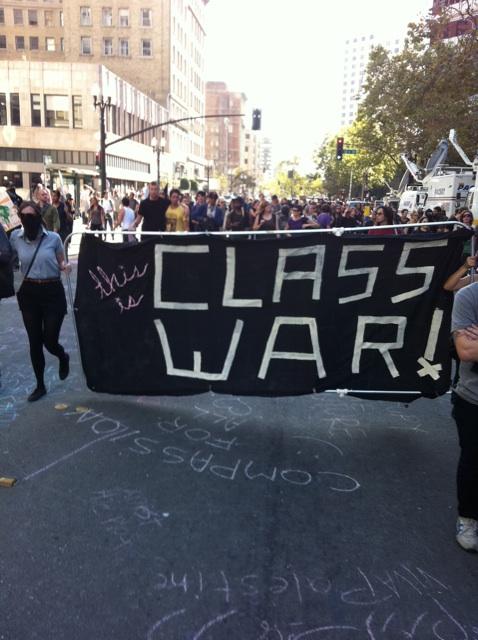
But it’s not always the right strategy, and in Oakland in 2011, I think it wasn’t. I recognize that this is an emergency situation, that the class warfare has already begun, and that extreme tactics are necessary to fight back. And hell, I don’t think smashing a bank window is so awful; smash enough of them and you put a lot of unemployed glaziers back to work. But in downtown Oakland, that tactic can too quickly backfire and lead to stuff like this. (Here’s an idea — how about a Shop Local day at Occupy Oakland, where everyone agrees to patronize small local businesses downtown? It fits right into the plan to withdraw your money from the big banks and put it in local credit unions.)

The problem with the Black Bloc (which isn’t really a bloc at all, it’s just a loose group of people who (a) think their tactics are appropriate and (b) love this shit) is that it’s acting in direct conflict with the many, many people who worked really, really hard to organize what was supposed to be a peaceful event. Like the RCP, they’re too quick to piss in the well.

You want to get violent? You want to break stuff? Show up for the general assembly, make your case, and see if you can convince the rest of the group that this is a good idea, right now, one that sends the right message and promotes the cause. Maybe you can do that; maybe everyone agrees. But if the majority of the group says no — that respect for property (much as we may hate private property, particularly bank property, and all that) is a better way to go right now, today, in this situation — then back off, dudes, and get with the program.

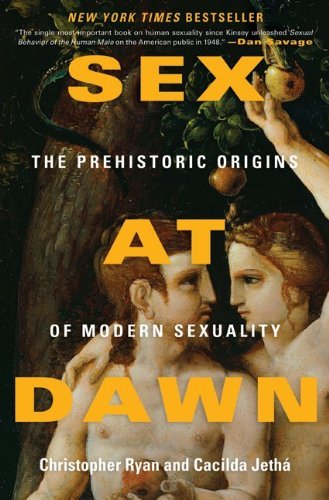
Author Christopher Ryan and the socio-evolutionary reasons for non-monogamy

0

Love your partner and love to fool around with other people? Author Christopher Ryan says that’s perfectly natural. A psychologist and historian who insists that human beings are not cut out for sexual monogamy, Ryan’s hitting SF next week (Wed/9-Thu/10) to talk about the evolutionary reasons for why that’s so.

Sure the freaks will be out in force for his events, but Ryan says that his book’s message is not just for people who already embrace alternative sexuality identities. 

Sex At Dawn shows that they’re not freaks because they find so-called traditional, strict monogamy to be stilted and unnatural for them. There’s a good reason for that, it is unnatural for them, and for the rest of us.” Ryan told the Guardian in a recent interview.  

But Sex at Dawn is not about modern non-monogamous types. It’s an ancient history that traces human evolution and focuses on pre-agricultural societies. Ryan explains, “Our ancestors evolved for 95 percent or more of our existence as a species of nomadic hunter-gatherers. In nomadic hunter-gatherer society, the central organizing principle is sharing. Sharing of childcare, sharing of food, defense, shelter, access to the sprit world, medical shamanic principles.”

His book argues that sexual pleasure was a no less communal practice for these early humans. 

“You look at our bodies, you look at anthropology, you look at all these different sources of information and you see, no, they weren’t possessive about sexuality in a way that they weren’t about anything else.”

But he has little idea on how to apply these historical tendencies to a modern society hooked on the one-plus-one-equals-two arrangement.

That’s partly why Andrew Sullivan, the organizer of next weeks’ events, wanted to present Ryan’s theories with the work of San Francisco’s esteemed sex activists. The expert panel backing up the author at Club Exotica will include relationship coach Marcia Baczynski, the founder of Kinky Salon Polly Pandemonium, and sex-positive icon and founder of the Center for Sex and Culture Carol Queen.

Says Sullivan: “Ryan talks about this pre-agricultural state, but he doesn’t really talk about — well, what do you do. He doesn’t deal with that. And that’s why I wanted to have him do this presentation, provide the science, provide the motivation for the work.”

He thinks these events will attract Bay Area residents from all walks of life.

“The cross-sections of life that are intersecting around this book are extremely diverse. You’ve got Republicans on the other side of the tunnel who are coming to an event like this because it hits them. They’re like, that’s part of my life, but its something they hide from out there, and they’re afraid of. All of a sudden they’re at the same event with somebody whose got a whip and rope and somebody else who is in a completely different socio-political mindset than they are, but they’re all going ‘we share something in common here.’”

The party that follows the Nov. 9 panel is sure to bring people together on whole other level. Sullivan says the event will “transition into an actual environment, this essential erotic environment that actually facilitates these kinds of connections. That’s why I call it the full spectrum event. It’s all right here. It’s like Woodstock for alternative relationships.”

On Nov. 10, economists and alternative currency advocates will gather to discuss sex and scarcity. Ryan says the talk will compare pre-agricultural society to our current system. “Our ancestors’ societies were based on sharing resources, which means they’re based on a notion of plenty — there will always be enough. Whereas post-agricultural societies, like our own, shifted 130 degrees to an orientation of scarcity. There’s never enough.” 

Ryan applies this scarcity theory to modern-day relationships. 

“You say well, I have to have my sex partner, I have to have my lover because she’s the one who gives me sexual pleasure, the stuff that I need, companionship, intimacy, security. If I lose her, I’m screwed, I’m alone. Because we live in that sort of fractured world. But our ancestors didn’t live in that sort of world, they lived in a world where hey, it doesn’t matter. I’m with her, I’m with her, she’s with her, she’s with him. You know we’ve all got multiple lovers, so if one relationship isn’t working, it’s not the end of the world.  It allows the social groups to function much more smoothly without all this conflict.”

He’s even found a way to connect this scarcity-plenty conundrum with the zeitgeist of our times.

Says Ryan, “I think that the message from the Occupy Wall Street movement, and Occupy different cities all around the country, is that no society can last if we lose sight of the fact that we’re in this together. That we are a species that evolved sharing resources and taking care of one another. And the more we lose sight of that, the more miserable we become. I don’t care how rich you are. I’ve known a lot of very wealthy people in my life, and they are not the happiest people I’ve known. The happiest people I’ve known are the ones who are living in communities where they’re taking care of each other and there’s a sense of unity and fairness that people respect. So I think that’s their message. That we have to get back to this understanding of what sort of animal we are and what sort of social system works best for us.”


Club Exotica presents Sex at Dawn

Wed/9 8 p.m.-2 a.m., $10-$35

Supperclub

657 Harrison, SF

www.clubexoticapresents.com


“Sex at Dawn: Modeling a New Culture of Sharing”

Thurs/10 free for members, guests $20 

Mission Control 

www.missioncontrolsf.org


Powerful, mostly peaceful Oakland action ends badly

19

After a long day of mostly peaceful demonstrations by thousands of protesters who joined OccupyOakland’s General Strike and Day of Action yesterday, it’s still unclear why the Oakland Police – which had stood down the entire day, leaving the movement to self-police – massed in riot gear around midnight and used tear gas and other projectiles to clear the streets and make a reported 80 arrests.

Spokespersons for the Oakland Police Department and Mayor Jean Quan haven’t returned Guardian phone calls, and reports in the Oakland Tribune and other media outlets don’t indicate exactly what prompted police to change tactics and aggressively confront the demonstration. Protesters had taken over a vacant building and erected barricades in the streets shortly before riot police showed up, and it appears from a Tribune video that a dumpster was set on fire after the police showed up.

Before the standoff between city officials and demonstrators in Oakland again took a violent turn, the day was notable for its lack of police presence around the occupied Oscar Grant Plaza and nearby 14th and Broadway epicenter. And despite a small number of masked agitators who broke bank windows and sprayed graffiti – much to the chagrin of most protesters who actively opposed such tactics – the movement was remarkably nonviolent and self-policing, particularly given a crowd of what seemed to be around 10,000 people at its peak. Protesters even handled traffic control, using a megaphone to help motorists through intersections congested with passing demonstrators.

“This is an extraordinarily peaceful collection of diverse people,” Sen. Loni Hancock (D-Oakland) told the Guardian just after 5 pm as a massive march left the encampment to shut down the Port of Oakland. “I feel like they’re doing what no elected person can do: they’re putting economic equity issues in front of the American people.”

“This is beautiful and powerful. This I love,” agreed Oakland City Council member Libby Schaaf, beaming as the peaceful march took off, although she told us that she was disappointed to see Oakland businesses vandalized, including her beloved Noah’s Bagels. “Fight greed, not bagels.”

Most of the crowd condemned the violence, and many openly worried that it would undercut the positive demonstration of people power and the airing of frustration with economic injustices in the country. But even Hancock said a few bad apples shouldn’t spoil people’s understanding of what an important day it was.

“I’m very grateful to them for calling attention to economic inequality. It is in the interests of cities that this issue take center stage,” Hancock told us. “There are so many things that have been talked about that are now on the stage and it’s a very important conversation to have.”

But many in the movement were disappointed nonetheless, despite the myriad successes in shutting down business nonviolently. Around 3 pm, a crowd of thousands marched past a Chase Bank at 20th and Berkeley streets where the front window had been shattered, as was the case with at least six other businesses. Taped to the windows were signs reading “We are better than this” and “This is not the 99%. Sorry, the 99%”.

As the huge crowd repeatedly chanted “peaceful protest,” Ryan, a 31-year-old Oakland resident, expressed his frustration over vandalism he blamed on out-of-town instigators. “People from Oakland would not damage their city like that,” he told me. “Last week was beautiful, we were dancing and singing in the streets,” he said, referring to the largely nonviolent response to police violence, “but this is bullshit.”

Large protests almost always have members who want to escalate the conflict and who see breaking windows as a legitimate tactic, and yesterday there were sometimes tense conflicts between protesters who disagreed on the issue. Another complex issue is how to now view Oakland Mayor Jean Quan, whose support for last week’s violent police crackdown prompted calls for her recall or resignation, although her subsequent apology, the re-encampment of Frank Ogawa Plaza, and yesterday’s police stand down caused some to rethink whether to actively oppose her.

“My goal for today is to spur the international movement forward and to show what we’re capable of,” said 23-year-old Iris Brilliant, who got more actively involved in OccupyOakland after the crackdown and said she was happy to see the police kept at bay. “It’s important to push this forward.”

But Tania Kappner, a 41-year-old teacher from Oakland, still hadn’t forgiven Quan or the police for the violent excesses in last week’s raid. She was camped out in Oscar Grant Plaza in a tent with the sign “Mayor Quan Must Go!”

“It’s good she’s not sending them in on us today, but she never should have done it in the first place,” Kappner told us. “We’re calling for her to go and the police who did it to be jailed.”

With the decision to again unleash the riot police and tear gas and arrest big numbers of people – which was the very thing that prompted such huge numbers of people to turn out yesterday, giving OccupyOakland the numbers and power to easily shut down the port and dozens of businesses – Oakland and the larger Occupy movement might again find itself back at square one.

The National Lawyer’s Guild, which had observers on hand to witness the late-night police crackdown, issued a statement today condemning the city’s actions and saying they violate a crowd control police the NLG helped the city write to settle lawsuits stemming from the OPD’s use of rubber bullets to clear anti-war protesters from the Port of Oakland back in 2003.

“Like we saw last Tuesday, the OPD actions in the late night hours violated numerous provisions of the Crowd Control Policy and the Constitutional rights of activists,” explained NLG’s San Francisco Bay Area chapter president Michael Flynn. “Our legal observers did not disobey any police orders and neither did many of the other arrestees.”
“The Crowd Control Policy clearly prohibits shooting munitions into a crowd,” added NLG attorney Rachel Lederman. “While the police are allowed to use tear gas, they are supposed to use a minimum amount and only where other crowd control tactics have failed.  It is not at all clear that less violent and less provocative measures would not have sufficed to achieve any legitimate law enforcement objectives last night.”

Meanwhile, in San Francisco, Mayor Ed Lee has reportedly assured OccupySF that he won’t follow through on threats to raid the camp if tents aren’t removed, at least not anytime soon (many observers speculate that he’ll at least wait until after next week’s mayoral election). But Lee has been unwilling to make a clear public statement that raids are now off the table.

When we sought to clarify Lee’s position and get his reaction to a Board of Supervisors resolution calling for the city to allow a 24/7 encampment, his Press Secretary Christine Falvey wrote: “The mayor has not focused on the resolution, but has been focusing on meeting with clergy, labor, occupysf demonstrators and his department heads to make sure that the site is kept clean, safe and accessible for everyone. He remains concerned about overnight camping and the public health and safety issues that brings. That said, he has seen some good progress over the last few days because of his open communication with the group. DPW cleaned up the site over the weekend and the demonstrators helped facilitate the cleanup. Tents were moved off the Bocce Ball Court as well. The group is working with Fire and Public Health officials to make some improvements. The dialogue is ongoing.”

Photos by Steven T. Jones

Atari Teenage Riot releases second “Black Flags” edit with footage from Boots Riley and Steve Aoki

0

Notorious German electro-hardcore group Atari Teenage Riot teamed up with Anonymous to release this second video edit for its song, “Black Flags” late last month, with footage culled from Boots Riley, Steve Aoki, and other Occupy Wall Street supporters. It’s an ongoing video project; submit your statement here.

When Occupy Oakland shut down the port (VIDEO)

The grand finale of a day of rallies and marches scheduled for Oakland’s Nov. 2 General Strike was a shutdown of the Port of Oakland, in which hordes of protesters accessed the property from different entry points, standing atop train cars and trucks while whooping and chanting. Clusters of groups blocking each gate of the sprawling property featured something different: Brass bands, small assemblies using the “human mic” style of communicating as a crowd, dance parties, and impromptu reunions.

Hours later, things had taken a far more serious turn, as police were amassed near 14th and Broadway and dispersing teargas and reportedly firing rubber bullets in yet another nighttime clash in the streets.

But in the hour or so just before sunset, the march was happily advancing toward the protesters’ intended target, causing delays to the 7 p.m. longshoremen shift. Here’s a video of scenes from the port shut down, including an interview with a truck driver, Andres, who had several people standing atop his truck and flying signs while we interviewed him.

Video by Rebecca Bowe