obama

Editorial: The mayor’s race: beyond compromise

0


The litmus test issue: Either you’re for public power and against Pacific Gas and Electric Co., or you’re opposed, weak, or ducking — all of which put you in PG&E’s camp.

The race for mayor is now fully underway, with eight candidates declared — and at least four are fighting for the progressive vote. It’s a remarkably open field — and the fact that there’s no clear frontrunner, no candidate whose money is dominating the election, no Willie Brown or Gavin Newsom, is the result of two critical progressive reforms: public financing and ranked-choice voting.

In fact, those two measures — promoted by the progressive, district-elected supervisors — have transformed the electoral process in San Francisco and undermined, if only somewhat, downtown’s control.

As Steven T. Jones points out on page 11, the leading candidates are all sounding similar, vague themes. They all say the city can work better when we all work together. That’s a nice platitude, but it reminds us too much of President Obama’s promise to seek bipartisan consensus, and it’s likely to lead to the same result.

On the big issues, the Republicans don’t want to work with the president, and big downtown businesses, developers, and landlords don’t want to work with the progressives. In the end, on some key issues, there’s going to be a battle, and candidates for mayor need to let us know, soon, which side they’re going to be on.

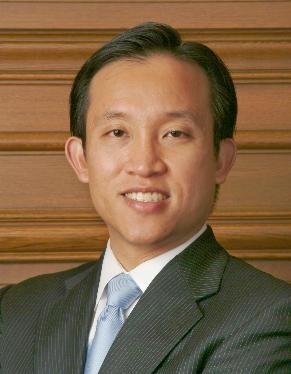
Sup. David Chiu, who entered the race Feb. 28, may have the hardest job: he actually has to help balance the city budget. As board president, he’ll be involved in the negotiations with the Mayor’s Office and the final product will almost certainly carry his imprimatur. It’s unlikely the progressives on the board will agree with the mayor on cuts; it’s much more likely that some will seek revenue enhancements as an alternative. Whatever Chiu does, he’ll be on the record with a visible statement of his budget priorities.

We’d like to hear those priorities now, instead of waiting until June. But either way, the remaining candidates, particularly those who want progressive and neighborhood support, need to start taking positions, now. What in the city budget should be cut? What new revenue should be part of the solution? What, specifically, do you support in terms of pension reform? How would you, as mayor, deal with the budget crisis?

Every major candidate in the race has enough familiarity with city finance to answer those questions. None should be allowed to duck or resort to empty rhetoric about everyone working together.

The same goes for community choice aggregation and public power. There is no consensus here, and will never be. Either you’re for public power and against Pacific Gas and Electric Co., or you’re opposed, weak, or ducking — all of which put you in PG&E’s camp.

There are many more issues (condo conversions, tax breaks for big corporations, housing development, help for small business, etc.) on which there has never been, and likely never will be, agreement. The people who make money building new condos will never accept a law mandating that 50 percent of all new housing be affordable (although the city’s own Master Plan sets that as a goal). The landlords will never accept more limits on evictions and condo conversions.

We’re all for working together and seeking shared solutions, but the next mayor needs to be able to go beyond that. When the powerful interests refuse to bend, are you ready to fight them?


Is Adachi’s pension reform a Tea Party initiative?

54

With all eyes on Wisconsin, local labor leaders are suggesting that Public Defender Jeff Adachi’s proposed retirement/health plan reforms are really Tea Party initiatives, even as Adachi threatens to place another Measure B-like initiative on the fall ballot if city leaders can’t agree on a fix for the city’s fiscal problems

Last fall, Adachi started a war with the local labor movement when he placed Measure B on the November ballot. Measure B proposed increasing employee contributions for retirement benefits, decreasing employer contributions for heath benefits for employees, retirees and their dependents, and changing rules for arbitration proceedings about city collective bargaining agreements,

Measure B ultimately failed, but not after both sides spent a ton of cash. And now labor is refusing to have Adachi sit in on their pension reform talks with Mayor Ed Lee, former SEIU President Andy Stern is describing the fight in Wisconsin as a ’15 state GOP Power grab,” and SEIU Local 1021 leader Gabriel Haaland is pointing to Wisconsin as a reason for excluding Adachi from pension reform talks

“Adachi’s obviously scapegoating a group that’s part of a national agenda,” Haaland said, noting that in the states where Republicans gained statehouse control in 2010, there’s talk about eliminating collective bargaining, and ending defined benefit plans and paycheck protection.

“The problem is that pension reform has been blowing on the anti-public sector worker winds that are blowing in Wisconsin and other states, whether progressives want to acknowledge it or not,” Haaland continued. “There is a reason that Adachi got so much money last year, and the corporate interests behind him are part of this effort to bash public sector workers.”

Prop. B’s campaign finance records show the campaign raised $1.125 million in 2010, and that the lion’s share came from wealthy individuals.

Billionaire venture capitalist, former Google board member and Obama supporter Michael Moritz gave $245,000. Author Harrier Heyman, Moritz’ wife, donated $172,500. financial analyst Richard Beleson donated $110,000. George Hume of Basic American Foods donated $50,000. Gov. Schwarzenegger’s former economic policy advisor David Crane gave $37,500. Philanthropist Warren Hellman donated $50,000. Republican investor Howard Leach, who co-hosted a Prop. B fundraiser with former Mayor Willie L. Brown, gave $25,000. Investor Joseph Tobin gave $15,750. Maverick Capital partner David Singer gave $15,000. JGE Capital Partners donated  $15,000; Bechtel owner  Stephen Bechtel Jr gave $10,000: Matthew Cohler, a general partner of Benchmark Capital, donated $10,000; the California Chamber of Commerce donated $5,000 and philanthropist Dede Wilsey gave $1,000.

But records also show that Measure B opponents, which included San Francisco Firefighters, SF Police Officers Association, SF First Responders, the California Nurses Association, United Educators, San Francisco Gardeners, San Francisco Teachers, Library Workers, laguna Honda Workers, donated over $1 million in their successful bid to squash Adachi’s reform. And that just about every elected Democrat, including Assemblymember Tom Ammiano, then mayor Gavin Newsom, Sheriff Mike Hennessey, and Board President David Chiu, came out against Adachi’s original plan.
 
Haaland acknowledged that the argument could be made that the progressives’ version of the hotel tax didn’t pass and less attention was paid to the district elections last fall, because labor focused primarily on defeating Adachi’s Measure B.

“But at the end of the day, we did get the real estate transfer tax and we defeated Measure B,” Haaland observed. “So, we need to keep fighting anti-worker pressure. It’s challenging times, but I feel like the connections need to be made.”

Adachi was swift to refute Haaland’s claim that his Measure B pension reform is and was a Tea Party initiative.
“What’s not been reported is the fact that there are all these people supporting pension reform who are progressive Democrats,” Adachi said, pointing to Moritz, Crane and former Board President and Green Party member Matt Gonzalez, who all supported Measure B last fall.

“You are talking about saving basic services and that’s a progressive cause,” Adachi continued. “You might argue that pension reform isn’t a progressive solution. But then you are saying that the needs of one group of workers are subservient to the needs of other workers. And even if you raised every tax in the city, you’d not be able to keep up with pension and healthcare costs.”

“Even if we could raise parking tickets to $200 a pop, and tax folks who make more than $100,000 a year, that still wouldn’t solve the problem, because the problem is so huge,” Adachi added. “When you look at this crisis, you can’t simply redbait and say, you are a Republican, or Sarah Palin. Matt Gonzales has always spoken for progressive values, but because he supports pension reform, he’s suddenly a member of the Tea Party? At a certain point, it begins to become absurd.”

Haaland countered that he’s  “challenged by the notion that thousands show up in Wisconsin to fight some of the same people behind Measure B, but our discourse has lowered to whether or not Jeff Adachi is a good guy.”

And Adachi expressed doubt that Mayor Ed Lee can come up with a suitable pension reform plan.

“I’ve heard Lee say there has to be a solution involving pension reform and underfunded healthcare benefits that would save $300 million to $400 million in annual savings, and that corresponds with the solution he needs to come up with to close the budget deficit,” Adachi said.

Adachi said that he has met with Lee on his own to discuss pension reform, but the new mayor did not list specifics.
“He didn’t tell me what his plan was,” Adachi said, “The Prop. B supporters have a plan, but Lee did not ask what that was. But he said he sincerely wants to solve that problem, and that his preference would be one ballot initiative that everyone would agree on. And I fully support a solution that is going to truly solve the problem. I’ve always believed it’s important for the public to understand the gravity of the situation. For too long, it’s been the elephant in the room and there hasn’t been enough public information.”

Adachi said he had a beef with the idea of “groups of labor unions holding meetings at City Hall and deciding who can participate.”

“It’s also troubling that there is no information publicly available about what the ideas on the table are, no explanation of how they got there, and no documenting of the extent of the problem,” Adachi continued. “And that’s what got us here in the first place: a lack of transparency, and voters being asked to weigh in without the full information.”

Adachi said he has an upcoming meeting with Lee, the Department of Human Resources and Sup. Sean Elsbernd about pension reform that is separate from the working group that includes labor and philanthropist Warren Hellmann.

And Elsbernd told the Guardian he believes the pension reform process would go smoother if Adachi were at the table.
“I have no problem with Jeff at the table, it makes sense to have him there to avoid two ballot measures,” Elsbernd said.

Elsbernd added that it was too early to cite numbers when it comes to talk of capping pensions.
“It’s a mistake to pick a number right now because you don’t know what it’s worth,” he said, noting that the pension reform working group has sent a bunch of different scenarios to retirement actuaries to crunch the numbers to see how much they would save the city.

“I can see a case being made for asking the highest paid city workers to contribute higher amounts for healthcare benefits,” Elsbernd said. “But I’m not sure that’s equitable on retirement benefits, though I could see a situation where safety pays more, regardless, because they have better pensions.”

Wisconsin, unions, and defunding the left

21

Mother Jones mag this month has a GREAT story about the battle in Wisconsin, the history of unions and the Democratic Party, and the real aim of the move to bust public-sector unions. Writer Kevin Drum notes:

In the past, after all, liberal politicians did make it their business to advocate for the working and middle classes, and they worked that advocacy through the Democratic Party. But they largely stopped doing this in the ’70s, leaving the interests of corporations and the wealthy nearly unopposed. The story of how this happened is the key to understanding why the Obama era lasted less than two years.

He describes the history of the post-War era and the rise of the New Left, explains how the rift between big labor and the hippie/radical/antiwar folks culminated in the AFL-CIO refusing to endorse George McGovern in 1972, the decline of private-sector union membership and power and thed shift rightward of the Democratic Party.

At one point, he explains, unions were the only organized force with the resources to act as a counterforce to corporate America in political campaigns. Once that went away, the Dems had no choice:

In the real world, political parties need an institutional base. Parties need money. And parties need organizational muscle. The Republican Party gets the former from corporate sponsors and the latter from highly organized church-based groups. The Democratic Party, conversely, relied heavily on organized labor for both in the postwar era. So as unions increasingly withered beginning in the ’70s, the Democratic Party turned to the only other source of money and influence available in large-enough quantities to replace big labor: the business community.

You can blame the Sixties radicals for not understanding the importance of labor (and you’d be right). you can blame George Meany and the AFL-CIO folks for not realizing that those acid-abortion-gay rights folks were their real allies (and you’d be right). But in the end, the bad guys took advantage of the split, and of sweeping changes in the economy, and now we live in the most economically unequal society in the Western world. (Remember: Unions bring up wages and improve working conditions not just for their own members but for everyone else, too.)

So now the only major sector where organized labor is healthy and growing is the public sector — and that’s why the Republicans want to get rid of public-sector unions. In San Francisco, it’s often the case that the city employee unions (excluding police and fire) are the major donors to progressive causes — and are often the only institutional base with the kind of money to counter the Chamber of Commerce/Committee on JOBS/downtown developer bloc. Bust that up and you get corporate hegemony.


Dick Meister: Shades of the Thirties

4

Dick Meister, formerly labor editor of the SF Chronicle and KQED-TV Newsroom, has covered labor, politics and other matters for a half-century.

By now, there’s can be no doubting it: What’s happening in Wisconsin is one
of the most important labor developments in decades. It’s of major
importance to unions and their members, of major importance to working
people generally ­ of major importance to us all.

In  many ways, it’s the 1930s again. Just as then, workers and their
political allies and other  supporters are demonstrating, picketing,
marching, striking and otherwise forcefully demanding the basic civil right
of collective bargaining ­ the unfettered right for workers’ representatives
to negotiate with employers on setting their wages, hours and working
conditions.

Eventually, workers and their millions of supporters won the 1930s struggle.
Congress, acting closely with President Franklin D. Roosevelt, granted the
legal right of collective bargaining to most workers. Farm workers,
domestics and a few other groups were excluded from the law, but all others
finally had that vital right.

The 1930s struggle arose primarily because of the economic pressures of the
Great Depression that led to massive protests, just as today’s struggle can
be traced to the pressures of the Great Recession that also have led to
massive protests.

There are key differences between then and now, however. In the thirties,
the struggle was to win union rights for workers in the face of strong
opposition from large financial interests, powerful conservative politicians
and other anti-labor forces. Today, the struggle is to keep union rights
from being taken away from workers by today’s anti-union forces. Their main
targets are public employees and the pensions and other benefits they won in
past bargaining with their government employers.

The governments’ aim, of course, is to use the savings from that to make up
for budget shortfalls resulting from the recession and, in many cases, from
poor government management.

But there’s another important reason: Public employees have become the
vanguard of the labor movement. Their numbers and the percentage of them
belonging to unions have been growing steadily, while the number and
percentage of unionized workers in private employment have been shrinking.
That’s caused anti-union forces to shift their major efforts into attempting
to curb the escalating spread of unionization among public employees.

Which explains what’s happening in Wisconsin, where Republican Gov. Scott
Walker has moved to all but eliminate the bargaining rights of most state
employees.
Walker is pushing bills through the GOP-controlled Legislature that would
bar state employees from bargaining on anything except their pay, and limit
any pay increases to the level of Consumer Price Index increases.

Employees would have no say in determining  their benefits or working
conditions, although most would have to increase their contributions to
pension and health care funds by up to 50 percent. What’s more, their
contracts would have to be re-negotiated yearly, and union dues could no
longer be deducted from employee paychecks.  It’s hard to imagine a union
surviving under such restraints.

The pay and benefits of Wisconsin state workers may be too high, or too low,
depending on who’s measuring. But that could be addressed through
negotiations between Gov. Walker and union representatives. But like some
petty dictator, Walker insists, “I don’t have anything to negotiate.”

Peaceful negotiations are how it’s done in civil societies, but that’s not
the style of union-busting Walker and his cohorts.  And if anyone doesn’t
like Walker’s approach, look out! He’s alerted the National Guard to be
armed and ready should Wisconsin state workers strike, disrupt state
services or otherwise rise in protest.

Shades, again, of the 1930s. In fact, the last time the Guard was called out
to quell a labor dispute in Wisconsin was during a United Auto Workers
strike in 1934.

Workers eventually won that and many other struggles of the thirties, thanks
to their courage and fierce determination and the broad public support they
inspired. And that’s precisely what it will take to overcome today’s
anti-worker onslaught by Walker and others like him.

The good news ­ and it’s very good news ­ is that such help is here and
growing fast. Crowds of as many as 70,000 labor supporters have been
gathering daily outside the Wisconsin State Capital in Madison to demand
that Walker and his fellow reactionaries return to the 21st century.

But give Walker this: Like the anti-labor politicians of the 1930s, he has
aroused public outrage that has brought important new strength and
solidarity to the cause of working people and their unions nationwide.

Certainly they’ll need all the strength they can muster, with major efforts
similar to Walker’s in Wisconsin underway in at least 17 other states.  In
more than a dozen. , Republican anger over labor’s strong support for
Democrats in last year’s elections have led directly to measures curbing
union political activities.

President Obama is correct. There is indeed a nationwide “assault on
unions.” But as the assaults increase, so will the public outrage that’s
winning unions the broad support they so badly need ­ and so richly deserve.

Dick Meister is a San Francisco-based columnist who has covered labor and
politics for a half-century as a reporter, editor, author and commentator.
Contact him through his website, www.dickmeister.com

Grub

4

paulr@sfbg.com

DINE When cultural historians of the future gather to argue the question of when and where Valencia Street finally jumped the shark, they might find themselves concentrating on the changes that came to a single block, between 18th and 19th streets, early in the presidency of Barack Obama. They might, in particular, find themselves considering a place called Grub, which sounds like a greasy joint of some kind where people eat with their fingers but is in reality a gorgeously designed restaurant that flows from a plate-glass façade through a nouveau-mod dining room to a glowing blue bar that looks like something from Star Wars, or Las Vegas.

It’s the sort of place you wouldn’t have found on Valencia as recently as five years ago, and it suggests, to me — along with the nearby The Summit, with its matching plate-glass façade — that a basic shift in sensibility is occurring. Like the Ferry Plaza farmers market, Valencia Street and its establishments now get mentioned in the travel section of The New York Times, and this kind of publicity means tourists, coming as if to some exotic game preserve. Tourists fundamentally change the nature of whatever it is they’re coming to experience, almost as in a chemical reaction.

None of this is to imply that Grub itself is an unworthy restaurant. It is highly worthy, with a value-intensive menu that includes authentic grub like burgers and mac ‘n’cheese, as well as such highfalutin treats like osso buco. (Is it just me, or has osso buco suddenly become trendy?)

Both the burgers and mac ‘n’ cheese are offered in “bar” (ie, design your own) mode. Your burger choices include beef, buffalo, vegetarian, ahi tuna, and portobello mushroom. The ahi burger ($12) consists of five ounces of seared filet. You can add cheeses and condiments to your heart’s content, but given the priciness and quasi-delicacy status of ahi, we thought it decadent to slather it with pickled red onions and bacon. Our suave server (a godlet who might have just stepped from the set of one of those Twilight movies) recommended the wasabi aioli, which did indeed bring a moistening intensity, though the sandwich remained a little frail, pale, and delicate, like a child who needs to get outside more.

Plunging into the mac ‘n’ cheese bar, by contrast, is like going to a gym where everyone is insanely worked out. All the variations (base price $9) include white and sharp cheddar cheeses and a gratin of grana padano breadcrumbs — more than enough flavor thrust to reach escape velocity. But you can tart up your crock with everything from truffle oil to grilled steak ($1 per extra ingredient) and some savories in between. Truffle oil is, for me, one of the world’s most overrated (and overpriced) food items — with lobster (a favorite of the godlet) not far behind — and I thought it more or less got lost amid the meatiness of the mushrooms and bite of the cheese. The steak stood up better, adding a hint of smokiness and enough weight to make the dish a meal unto itself.

But the menu offers other meals unto themselves, too, with a bit more polish. Grilled tiger prawns ($15) were arranged atop a butternut squash risotto heavily leavened with Parmesan cheese, whose tang balanced what otherwise might have become a cloying sweetness. A filet of Pacific snapper ($16) was “crusted” — “smeared” would have been more accurate — with what seemed like crab-cake batter and seated on a pad of celery-root puree with a pool of carrot-butter-white wine sauce and watercress salad. And the osso buco ($17) arrived in autumnal, rather grave guise atop mashed potatoes with a burgundy-charged sauce and fried shoestring carrots. The meat was fork-tender, and as someone who’s been making osso buco for years (from the same Patty Wells recipe), I can tell you this isn’t a given, even with long simmering. As for mashed potatoes instead of the more traditional risotto: eh. The potatoes did have a dense, mousseline-like velvetiness, which led me to suspect the involvement of tons of butter. But then, at higher-end sort of greasy spoon, you would expect a higher grade of grease, and butter is the grease of the gods, or at least godlets.

GRUB

Dinner: nightly, 6 p.m.–12:30 a.m.

Brunch: Sat.–Sun., 10 a.m.–2:30 p.m.

758 Valencia, SF

(415) 431-GRUB (4782)

www.grubsf.com

Beer and wine

AE/MC/V

Noisy

Wheelchair accessible


Editor’s Notes

1

tredmond@sfbg.com

In a heartwarming Valentine’s Day blog, Paul Krugman, the Nobel Prize-winning economist, talks about an old cartoon that ran in the 1980s showing Democrats trying to develop a centrist economic policy that cut spending on social programs. “How is this different from Republicans?” one Democrat asks. The answer: “We care about the victims of our policies.”

That, Krugman says, “is pretty much my reaction to the Obama budget.” The president talks about how awful the cuts will be, how programs he cares about will have to go, how painful this all is for him. Not that he’s going to miss any meals or wind up homeless, but whatever: we can all feel his pain.

It’s also pretty much my reaction to The Bay Citizen report that ran in The New York Times Feb. 13 on the pension reform negotiations going on at City Hall and in the office of billionaire financier Warren Hellman.

Hellman, Mayor Ed Lee, Sup. Sean Elsbernd, and some labor leaders are talking about how to avoid another bruising ballot measure fight this fall. Hellman backed off from supporting Public Defender Jeff Adachi’s Proposition B last year after some labor folks convinced him they could come up with a better plan.

Hellman’s new bottom line: the group needs to find between $300 million and $400 million in savings. He is quoted as saying: “I hate that it comes out of the hide” of city workers. “It is going to be really painful.”

Warren Hellman’s not a bad guy. I’ve met him, he’s polite and friendly, sometimes even almost sort of a liberal on some issues, and I think he does feel bad about cutting the pensions of low-level city employees. I even agree with him that the pension system needs reform.

But here’s the problem: nothing ever comes out of the hides of the rich.

Over the past five years, San Francisco has cut hundreds of millions in city spending. City employees have given back many millions more in concessions. Nonprofits have cut back services to the poor, the disabled, the sick.

But we haven’t asked big business and wealthy people to give up anything. Hellman hasn’t had to tighten his belt. Corporate executives in the city still make huge salaries. They’re not closing the swimming pool at the Olympic Club.

I could support pension reform — if Hellman, Elsbernd, and Lee would support tax reform. Then we can all feel each other’s pain. For once.

Hellman and Obama feel your pain

29

The Bay Citizen has a detailed report on the backroom discussions taking place around pension reform, and there aren’t any real surprises. The cops and firefighters seem to be leading the talks from the public-employee union perspective, although the other unions are there, and Mayor Lee has taken over the gavel from financier Warren Hellman. Sean Elsbernd is involved, but they’ve kept Jeff Adachi out. (And what the hell is Nathan Ballard doing in this mix?)


But what got me when I read the story this weekend was the quote from Hellman:


In an interview Thursday afternoon, Hellman said the group must come up with annual savings of $300 million to $400 million. (Proposition B was to have saved the city $120 million.)


“I hate that it comes out of the hide” of city workers, particularly those making modest salaries, Hellman said. “It is going to be really painful.”


It reminds me of Obama’s comments on his budget cuts: They’ll be painful and he hates to do it, but these tough decisions have to be made for the good of all of us.


My question: Why doesn’t anything ever come out of the hides of the billionaires?


From the start of this recession, working-class people, public employees and the poor have taken huge hits. Nothing — nothing — has happened to the top echelon of society. If anything, they’ve only gotten richer. The bankers who destoryed the economy with financial instruments even they didn’t understand? They’re not in the poor house. They haven’t had their homes foreclosed. They’re all doing just fine.


In fact, the United States government just kindly allowed them to keep their tax cuts for another two years.


Obama isn’t going to miss any meals. His kids will still have their fancy private school. He won’t have to worry about his pension vanishing or eating cat food in his old age. Same goes for Hellman; there’s nothing in the world that he could possibly want to buy that he can’t have.


So it makes me really mad to hear them talk about feeling bad about budget cuts and reducing pensions. If they feel bad, then why not do something about it?


Hellman’s not a bad guy. I’ve met him, he’s pleasant and polite and sincere about wanting to help the city. I couldn’t reach him on the phone today, but I’ll keep trying, because I have a question:


Over the past five years, city employees have given back hundreds of millions of dollars in wage and benefit concessions. Social programs have been cut by hundreds of millions more. And the rich in this town have given back nothing. Mr. Hellman: Is that fair?


I’ve got a suggestion for the pension reform negotiators. Why not talk a little about parity.


Yes, pensions have to be fixed; let’s start at the top. Maybe nobody should have a pension of more than $100,000 a year; certainly, a former police chief shouldn’t get $250,000 a year for life. Maybe the highest-paid city employees should have to pay more into the pension system to protect the pensions of the people who make less. I could easily support progressive pension reform that would save the city money.


I just think tax reform should also be part of the equation.


Hellman wants $300 million in pension savings? Good — how about pairing it with $300 million in new taxes on the wealthy? How about big business and rich people give up something this time around, instead of all of the cuts falling on public employees and poor San Franciscans?


I’m good with pension reform, really I am. And I’m not involved in the negotiations. But I’m a San Francisco progressive who will have to vote on the ultimate outcome. Give me something to work with here, guys.


Obama’s going to screw California

6

The giant cuts proposed by the Obama Administration (and worse ones suggested by the GOP) will hurt the economic recovery, hurt the poor, hurt the nation’s future — and hurt California. Let’s remember, as Brian Leubitz notes at Calitics, we live in a net donor state — for every dollar Californians send to Washington, the state gets 80 cents back. And now the president wants to make cuts that will further mess up the state budget — and since Gov. Jerry Brown is sending a lot of Sacramento’s work back to the counties, the shit will keep rolling downhill.


It’s true that Obama is also talking about tax hikes, but that’s going to be hard to get through the House. And even if he gets his higher taxes on oil and gas producers and high-income individuals, he still wants to cut spending — that is, non-military spending.


So over the next few months, as Washington politicians try to out-cut each other and talk about “living within our means” (except for wars that nobody wants to pay for but we keep fighting anyway), look for the budget crisis in Sacramento and San Francisco to get worse.


One ray of hope: If Jerry Brown is willing to back up his “local-government-does-it-better” campaign by giving local government the right to raise taxes abit more easily, then he’ll support Sen. Mark Leno’s bill to allow counties to raise the Vehicle License Fee. That might even come close to saving SF what Washington and Sacramento take away.

We are worse than Egypt

5

The revolution in Egypt was about a demand for democracy and resistance to repression — but it was also spurred in part by legions of angry young people who have no economic opportunity. And since the dramatic inequalities in Egypt were a factor in a stunning popular uprising, it’s worth noting an interesting fact:


Things are even worse here. According to Richard Eskow at the Campaign for America’s Future:


Here’s the reality: Income inequality is actually greater in the United States than it is in Egypt. Politicians here have close financial ties to big corporations, both personally and through their campaigns. Corporate lawbreakers often do go unpunished. Poverty and unemployment statistics for US minorities are surprisingly similar to Egypt’s.


Now, I’m not saying that poverty in the U.S. is worse than Egyptian poverty — the poor in Cairo are way worse off than the poor in New York or San Francisco. But when you compare the two countries, you get some disturbing similarities:


19.6% of Egyptians and 14.5% of Americans live below the poverty line. 21% of Egyptians are considered “near poor,” and 40% of Americans will fall below the poverty line at some point in their lives. One in six American children lives in poverty. So do one in four African Americans, which means the poverty rate for African Americans is greater than it is for Egyptians.


So why aren’t we out marching in the streets and demanding change? (Oh, wait, we did that two years ago, when we elected President Obama.)

Brown goes nonpartisan while Obama stays the course

6

Gov. Jerry Brown gave a brilliant State of the State speech this evening, validating those who hoped that he would have the wisdom, courage, and candor to properly frame this difficult political moment. And it was great because he abandoned tired calls for bipartisanship and opted to go straight to the people, even citing Egypt and Tunisia as cautionary examples of the peril and potential of real democracy.
Contrast that with President Barack Obama, whose White House today indicated it would plow forward with a health care reform package – crafted entirely by politicians and corporate lobbyists – that nobody really likes even after another federal judge ruled its central tenet unconstitutional and House Republicans have threatened jihad over.

Liberals never did buy into this reform after Obama abandoned single payer and even the public option compromise, and its seems conservatives and teabaggers have been whipped up into a froth over its real and imagined provisions. So Obama has some pretty thin backing to fight through the fairly reasonable ruling that the federal government can’t make it a crime not to want to be health insurance company customers.

Both Brown and Obama correctly gauge that “something is profoundly wrong,” as Brown put it. “They see that their leaders are divided when they should be decisive and acting with clear purpose.”

Obama’s solution is bipartisanship, even though Republicans seem incapable of dealing with him or the public in good faith these days. So he makes attempts at bland compromises that please nobody – from escalating war in Afghanistan with a fake exit strategy to extending jobless benefits and billionaire tax cuts – feeding the public perception that both major parties are hopelessly corrupt and ineffective.
Brown is taking a different tact: nonpartisanship. He’s crafted a bold effort at compromise that neither political party likes, but one that will probably prove reasonable to most people if sold properly (unless we are indeed incapable of self-governance at this point, a possibility the I allow and which would require solutions like breaking California up into multiple states or accepting anarchy). And hopefully creative progressive legislators will even give multiple options to the people, including increasing taxes on the richest individuals and corporations to lessen the cuts even more, as long as we’re placing our faith in the people. Hell, I don’t even mind putting a conservative package of deep cuts to government on the ballot as well, just so we can show them how unpopular the right-wing stance really is in California.
Brown doesn’t preclude the future possibilities of bipartisanship, but he also correctly says that the political gridlock is just too strong in Sacramento right now. After punting the budget to the people, maybe they can start doing old-fashioned governance again.

“But let’s not forget that Job Number 1 – make no mistake about it – is fixing our state budget and getting our spending in line with our revenue. Once we do that, the rest will be easy—at least easier because we will have learned to work together and earned back the respect and trust of the people we serve,” he closed. “I look forward to working with all of you.”

Protest in solidarity with Egypt and Tunisia uprising

30

As President Barack Obama insists that governments must maintain power “through consent and not coercion” organizers have announced a protest this Saturday, January 29, in San Francisco, in solidarity with people in Egypt, Tunisia, and other countries struggling against 30 years of dictatorship, poverty, unemployment and torture–and are condemning what they call Obama’s “refusal to condemn the Mubarak regime.”

In a press release, Mohammed Talat, an Egyptian organizer of Saturday’s protest commented that “Despite the extreme Egyptian government repression of its citizens on the streets, mass police violence, killings, and arrests, the blocking of internet and cell phone communication, the US government is still refusing to condemn the Mubarak regime.  As individuals in the US, we protest this inaction and express support for our brothers and sisters in Egypt.”

The protest begins noon, Saturday, at Montgomery BART, followed by a march to the UN Plaza.

Activists and former prisoner call for Obama to close Guantánamo

0

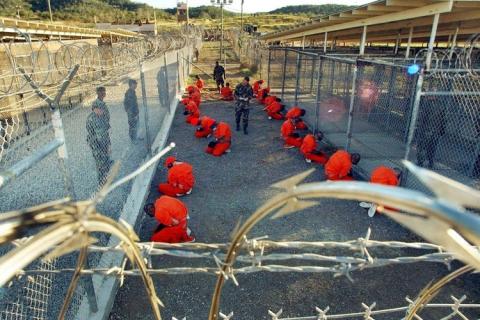
The second anniversary of President Obama’s promise to close the Guantánamo Bay detention center was recognized this week at an event about torture and human rights abuse that continue to take place there.

“There doesn’t seem to be an end in sight…as far as we can tell the [Obama] administration has no intention to close it at this point.,” Rini Chakraborty, Western Regional Director of Amnesty International USA, said at a panel discussion about Guantánamo Bay human rights abuses Wednesday at UC Berkeley.

That conclusion contradicts the assertion by White House spokesperson Adam Abrams that closing Guantánamo is still a “national security imperative.” While the White House says President Obama remains unwavering in his commitment to eventually close the center, more than a hundred detainees remain locked up for years without so much as charges brought against them, according to Chakraborty.

Among those featured at the Amnesty International event was former detainee Omar Deghayes who spoke via video conference from the United Kingdom, where he is a citizen. He spent six years at Guantánamo and was released in what even United States officials eventually considered a case of mistaken identity. He was living in Pakistan in 2002 when one night he was abducted from his home by Pakistani security personnel and later taken into American custody.

“They didn’t know anything about us, ” he said, recalling his first interrogations by Americans at the U.S detention center in Bagram, Afghanistan. “They never accused us of anything…then every year they alleged something and then realized it is completely false…then the next year they would make something up that was more believable.”

What led to Deghayes’ release was a deal with the United Kingdom, where his family conducted a wide campaign to pressure British politicians into action. President Obama has made two recent statements about Guantánamo, stressing the importance of and difficulties inherent in closing Guantánamo Bay, but neither statement gave any indication of when the closure would happen.

“[We need to close it] to make sure that we’re also living up to our values and our ideals and our principles. And that’s what closing Guantánamo is about — not because I think that the people who are running Guantánamo are doing a bad job, but rather because it’s become a symbol,” Obama said in a Dec. 22 news conference.

He failed to specify what Guantánamo might symbolize. It is fair to assume President Obama was referring to widespread allegations of torture and human rights abuse that take place in Guantánamo and U.S. facilities all over the world.

Deghayes shared horrid details of his treatment at the hand of U.S. prison guards. He lost vision in one eye in a beating and had his nose, finger and ribs broken in other instances of abuse. “There were physical beatings, interrogations, chains…we were not allowed to speak to anyone for days and months,” he said.

He also said other cases were worse than his. “Some died under torture, some were sexually abused, they were raped.”

Chakraborty said that Guantánamo’s closing would not spell an end to torture and abuses because there is an unknown number of overseas and secret U.S. interrogation and detention facilities. But she called closing Guantánamo “one very important first step,” adding that it would “show we have the kind good political will to ensure justice for detainees.”

Currently, Deghayes works with lawyers and activists to fight for accountability. “We want help from lawyers in the United States to bring cases [to trial] and help accountability…not just damages to rebuild shattered lives of [former prisoners],” he said.

Next month, the Berkeley City Council will vote on a resolution to welcome Guantánamo detainees who have been released and cleared as not posing a threat. Many such detainees have no country to be released to because of political circumstances. So far, the United States has refused to let these former detainees live in the United States and so a vote in favor of the resolution would have only symbolic value.

Can they shut off the Internet?

20

Proverbs for paranoids: If they can catch you asking the wrong questions, they don’t have to worry about answers.


— T. Pynchon


Indulge me here while I get a little paranoid and venture into a realm where it’s easy to get dismissed as a nutcase. And I’ll say this upfront: I really don’t know how much I ought to worry about this.


But: The Egyptian government just tried to decapitate the protests in the streets by shutting down the Internet, and it was relatively easy; four ISPs threw the switches at government command, and bingo — no more email or websites talking about how to toss the bums out. John Weber at the Bay Citizen (who is neither a nutcase nor a paranoid) says this is a first (although China and other countries have censored internet traffic and limited use, this is different; it’s a total sudden shutdown of what was an open service).


So it’s worth asking, anyway: Could that happen in other countries, including ours?


Well, you don’t have to be way out in loony land to be worried about the Lieberman Protecting Cyberspace as a National Asset Act. Yes, I realize all the talk of an Internet Kill Switch sounds batty. We talked about this today on sfbg radio, and Johnny told me I was way wacko: the Internet is so essential to commerce in this country that the corporate powers that be would never allow it to be throttled. Tens of billions of dollars would be lost in moments; the stock market and the banking system couldn’t function.


But the scary thing is that it wouldn’t be all the difficult. All you’d have to do is cut off the domain name servers and nobody could find anything. (Yeah, you can bypass that with website numbers — IP addresses — but most people don’t have those handy.) And one company, Sprint (I think) owns most of the switches that direct all the traffic in this country; shut them off and every city would be isolated.


The web was designed to be redundant; a natural (or unnatural) disaster in New York or Chicago wouldn’t cripple Internet traffic around the country. And I’m not saying that Obama (or his successors) would ever actually try to squelch protest in the U.S. by taking such a drastic step.


But the fact remains that technically, it wouldn’t be that hard to do what Egypt did, and shut things down for a while. And since so much of our political communication in this country is based on the web, it seems somehow that our ability to talk to each other in times of crisis is a wee bit fragile.


Or am I out of my mind here? It wouldn’t be the first time.


Obama addresses DREAMer Steve Li’s video

0

Earlier this week, I posted a video clip that Community College nursing student Steve Li, who narrowly avoided deportation from San Francisco to Peru last year, submitted to the White House in answer to Obama’s groundbreaking online State of the Union outreach effort. And yesterday, Obama addressed Li’s video (featured at 33.10 minutes into a Jan. 27 interview that YouTube’s Steve Grove moderated) as he answered questions on a wide range of issues submitted by and voted on by YouTube users.

Li is a supporter of the DREAM Act, which would allow undocumented youth who attend college and/or serve in the military to apply for citizenship. And while the DREAM Act failed to get the necessary votes last year, advocates like Li have vowed to keep up the pressure until it becomes law. And Obama indicated yesterday that he believes expelling undocumented youth who are ready to serve in the military or at college makes no sense.

“Let’s stop expelling talented, responsible young people who can staff our research labs, start new businesses and further enrich this nation,” Obama said

DREAMers like LI and their allies will doubtless take Obama’s words and try to get the president to back them up with concrete actions, so stay tuned as the seemingly endless fight to reform the federal immigration system in a humane way continues.

SFBG Radio: Obama is like the Seattle Seahawks

1

Okay, these webcasts have been getting long, and nobody has the time, and we get it. So it’s a new era for SFBG Radio: This one’s less than nine minutes. Here Johnny explain why Obama is like the Seattle Seahawks (really, it makes sense). Take eight minutes to check it out after the jump.

sfbgradio1/27/2100 by endorsements2010

Obama can’t “win” the future

5


Most of the pundits in the center, like the New York Times, liked Obama’s State of the Union Speech. And for good reason: It was a centrist, cautious speech that promised lower corporate taxes, conservative education policy, lots of money for the military and cuts for everyone else. Two things, thought, that stood out for me:


1. Obama still believes in government. He made it very clear that he thinks the public sector has an important role to play, not just in regulation but in spurring and stimulating economic growth. He’s going about it all wrong, but he did remind people that government — the public sector — won the space race, gave birth to the internet, built the interstate highway system and in the process created tens of millions of jobs. The GOP is already going batshit about it; they got the message.


2. The crux of the speech, the “Sputnik Moment,” was this line: “To win the future, we’ll have to take on challenges that have been decades in the making.” Win the future. In fact, over and over, all night, we heard about “winning the future.”


But since when was the future a war, something to be fought with an enemy? To “win” the space race we had to “beat” the Soviets, which we did (ha ha, we got to the moon first). To “win” the future, do we have to beat someone else? The Russians aren’t up for winning much of anything these days, but Obama seems concerned about competing with China; do the Chinese have to “lose” the future for us to “win?”


It wasn’t a random choice of words. The White House speechwriters take this stuff very seriously. “Winning the future” is a catchphrase that the Obama administration wants to be attached to. And it’s a bad one.


The future of the planet can’t be about winning. When you look at the serious crisis facing the world — climate change that’s going to transform agriculture, put the homes of hundreds of millions of people under water and alter the way every single human being lives — beating China isn’t really relevant. Thomas Friedman says the world is flat, and he’s got a point — if Obama were able to articulate a message of cooperation, of seeking peace and working together with other nations, it would have been a remarkable speech.


Instead: Winning the future. What a loser.


Getting free

3

rebeccab@sfbg.com

Shane Bauer and Josh Fattal have been held captive in Evin Prison in Tehran for more than 540 days, and their friends and supporters in the Bay Area have been mounting an extraordinary campaign pushing for their release.

On July 31, 2009, Bauer and Fattal were hiking with Sarah Shourd, who is Bauer’s fiancée, through green mountains in Iraqi Kurdistan. The three UC Berkeley graduates had traveled from Damascus for a recreational visit. They were wandering nearby Ahmed Awa, a popular tourist destination where hundreds of people had flocked to camp, to visit a waterfall and enjoy the peace and quiet of the mountains.

They say they didn’t realize how close they were to Iran, which has no diplomatic ties to the United States.

Shourd told the Guardian she’s not sure whether they accidentally traversed the Iranian border, because it was unmarked. “We had no intention of being anywhere near Iran,” she said. “And if we were, we’re very sorry.”

Iranian officials surrounded them, speaking in Farsi, which they couldn’t understand. They were arrested on suspicion of spying and taken into custody. Before being taken to prison, one phoned a friend, Shon MeckFessel — who had been traveling with them but opted not to go on the hike because he wasn’t feeling well — to alert him that something had gone wrong. That would be the last communication any of them would have with close friends or family members for months.

Shourd was finally released on bail Sept. 14, 2010 on humanitarian grounds after spending 410 days in solitary confinement. She was reunited with family and friends — but Bauer and Fattal have remained in detainment ever since.

Since returning to the United States, Shourd has thrown her energy into advocating for their release — and she’s not alone. “Everyone in the family has been working tirelessly for all 18 months,” she said, “which is far, far longer than we ever imagined in our worst nightmares.”


FIGHTING FOR FREEDOM

While Shourd was still in prison, her mother, Nora, gave up her home and job to move in with Bauer’s mother, Cindy Hickey, and work for their release full-time. Fattal’s older brother, Alex, suspended his graduate studies at Harvard to dedicate himself to the campaign. His mother, Laura Fattal, stopped working to devote herself to the campaign.

“That’s just family alone,” Shourd noted. “If you start to look to how many people have contributed to our campaign and how many ways, it just blows your mind.” Soon after her release, Shourd put out a call for people to hang banners proclaiming the innocence of Bauer and Fattal and calling for their release. In response, nearly 60 banners were unfurled in 25 different countries.

Shourd has made countless media appearances since her release, and even put out an MP3 of a song she composed while in solitary confinement, which can be downloaded as a way to support the Free the Hikers campaign. Their story has drawn the interest of prominent figures. On Jan. 19, Noam Chomsky released a video offering to testify on their behalf if a trial is held, saying Bauer and Fattal “have dedicated themselves to advocating for social and environmental justice in Africa and elsewhere, and they truly embody the spirit of humanitarianism.”

Others who have publicly defended the trio include President Barack Obama, who issued a statement in July saying none of the hikers ever worked for the U.S. government, addressing Iranian accusations that they were there to commit espionage. United Nations Secretary General Ban Ki-Moon and the Archbishop Desmond Tutu have called for their release. A documentary has been produced about their plight, and a second one is in the works.

In San Francisco, artists and musicians have responded in droves to a call for support. An art auction that will benefit the campaign is planned for Jan. 29, featuring the work of more than 80 artists, plus live musical performances. As a nod toward Bauer’s work in photojournalism, the event will emphasize photography, and notables such as Mimi Chakrova, Taj Forer, Roberto Bear Guerra, Ken Light, the LUCEO Photo Collective, Susan Meiselas, Lianne Milton, Mark Murrmann, Alec Soth, and others have donated work. Among the artists who donated pieces are Marianne Bland, Mark Brecke, Teresa Camozzi, Andreina Davila, Eric Drooker, and former Board of Supervisors President Matt Gonzalez.

In early February, a music benefit will be held at the Bottom of the Hill to benefit the campaign. Titled “They Sing These Songs In Prison,” the event will feature performances of The Nightwatchman — that’s Tom Morello of Rage Against the Machine — plus Jolie Holland, accordionist Jason Webley, and Ryan Harvey & Lia Rose.

“The funding is to support the campaign to free Shane and Josh, and it goes to a wide array of needs that we have, like translation into Farsi, travel for media, and meeting with some various embassies and governments that are involved in advocating for Shane and Josh’s release,” Shourd explained. “Also, some of the money will probably go toward legal fees, and website fees, and materials for the campaign from flyers to business cards to t-shirts.”


WHO ARE THE HIKERS?

The campaign to advocate for their release has been tagged Free the Hikers, but the identities of the three young people (Bauer and Fattal are both 28, Shourd is 32) go much deeper than that. They’re social-justice advocates, antiwar activists, writers, environmentalists, travelers, and creative thinkers with deep ties to the Bay Area.

Shourd, who lives in Oakland, was teaching English to Iraqi refugees when she was in Syria, as well as practicing some journalism. Fattal, who taught at Aprovecho — an education center in Oregon focused on sustainability and permaculture — had been traveling to India, South Africa, and other places through the International Honors Program to lead workshops on health and sustainable technology before visiting his friends in Syria.

“Josh is an environmentalist, he’s a teacher, he’s an incredible, incredible, generous and selfless man,” Shourd said. “As soon as you meet him, you feel what an extraordinary and unique human being he is. I was friends with him for years before he came to visit us in Damascus, and he decided to travel with us to Northern Iraq to Iraqi Kurdistan to learn about Kurdish culture, to see another diverse aspect of the Middle East.”

Bauer wrote for publications such as The Nation, Mother Jones, and the Christian Science Monitor. A photojournalist who has won multiple awards and had his work published internationally, Bauer has documented everything from tenant conditions in San Francisco SROs to conflict-ridden regions in Africa and the Middle East. Bauer also wrote an article for the Guardian about an Oakland residence that is famous among East Bay anarchists (See “Hellarity burns,” May 27, 2008).

“Shane has an incredible passion for pursuing truth and complicating our ideas about other parts of the world, about conflicts around the world and at home,” Shourd noted. She added that many of his stories serve to highlight “some of the very specific ways that the U.S. presence in Iraq has taken a toll on innocent people.”

Before their ill-fated excursion, Shourd said she’d heard from multiple westerners and her Arabic tutor that Iraqi Kurdistan was a safe and enjoyable place to visit. “It’s often referred to as ‘the other Iraq’ because it’s a semiautonomous region designated as a no-fly zone by the U.S. government,” she explained. “It’s actually a part of the Middle East that has a very positive fingerprint from the U.S. government because they helped protect the Kurdish people from Saddam Hussein. So Northern Iraq is not a dangerous place for Americans or westerners to go, and no American has ever been killed in Northern Iraq, which is just phenomenal after a decade of war and occupation.”

She said Bauer, Fattal, and MeckFessel were all enthusiastic about the trip, and after researching it online, the four felt they had enough information to travel there. “We ordered a special Lonely Planet guide of Northern Iraq, and a friend of ours who went a month before we did borrowed it and lost it, so we didn’t have the Lonely Planet guide,” she noted. “But we still felt we had enough information about it to travel there and really believed we had nothing to fear.”


SOLITARY

Shourd credits her fiancé and her friend with helping her through “every minute of prison,” even though she was alone in her cell for 23 hours a day. At first she wasn’t allowed to see them at all, but after some time had passed, guards allowed her to visit with them in an outdoor courtyard for 30 minutes a day. Later, that brief time together was increased to an hour.

“There’s no way I could have maintained hope and maintained my own sanity and the strength that it took to get through every day of isolation and depravity and uncertainty and fear,” she said. “The emotional strength that that took, and the discipline that it took, really Shane and Josh and I all created together in the little time that we had, through the unconditional support and love we had for each other.”

Since they didn’t speak Farsi and the guards spoke very little English, it was difficult to communicate basic needs, and Shourd described the experience as being surrounded by hostility.

“Whenever I just started to slip away mentally, Shane and Josh would bring me back, and the knowledge that they were going to be there for me was the only thing that got me through 410 days of solitary confinement,” she said. The three thought up activities to give themselves something to look forward to, like marking time with small courtyard celebrations and special food they saved to share together or discussing topics in an organized format. “We had almost like a curriculum that we followed of study, and sort of intellectual exploration,” she explained.

They were only allowed to have pens for one month — that was the easiest month, Shourd said. But the rest of the time, even though they weren’t permitted to write things down, they were allowed to read. “Books were our lifeline. We read the same books in concert, we took turns reading books and passed them back and forth when we saw each other in the courtyard. And we would memorize dates and memorize poetry and recite poetry to each other and test each other on dates,” Shourd said.

“Josh would give me math problems to do in my head because he knew I was trying to get better with algebra. We had a dictionary that we passed back and forth, and we would make stories from words in the dictionary and tell each other these really intricate fantastical stories that we came up with. Anything to keep your mind busy.”

Beginning in her second month in prison, Shourd also passed the time by composing songs. A month went by before she was able to share the first one with Bauer and Fattal, but when she did finally sing it for them, they learned the words and sang it with her. “When we were together in the outdoor courtyard, they would just tell me to sing louder,” Shourd said. “I know they’re singing those songs now.”

The intellectual drills, storytelling, math problems, and singing weren’t merely a remedy for boredom. “You have to really keep your mind strong and busy so that you don’t get sort of swallowed up by the abyss of fear and loneliness that encroaches on you day by day in that kind of situation,” she said.


LOOKING AHEAD

Despite the time, energy, and effort spent on the campaign to free all three, no one can say for sure just when Bauer and Fattal will finally be reunited with family and friends. In November, Iranian authorities said that a trial previously scheduled for that month had been postponed, but the Free the Hikers campaign is calling for them to be released without a trial.

“They don’t deserve to be there one minute longer than I was, and they never deserved to be there in the first place,” Shourd said. “They should be shown the same kind of humanitarianism that they have put into action in their lives, through their work.”

Amnesty International is among many of the groups that have called for the Iranian government to release the two young men. “One year after their arrest, the Iranian authorities’ failure to charge them with illegal entry into Iran or more serious charges, such as espionage, has fueled speculation that the Iranian authorities are holding them as a bargaining chip,” notes a statement released July 2010 by Amnesty International, an international human rights organization.

Meanwhile, Shourd has been contemplating what her experience would have been like if the U.S. and Iran actually maintained diplomatic ties, and she published an opinion piece on CNN International calling for greater communication between the governments.

“I think it’s their responsibility to their people to do that, and I think it’s a tragedy that there’s been 30 years of practically no relationship between Iran and the U.S.,” Shourd said. “It’s a tragedy for countless Iranian Americans in this country who have a hard time visiting their relatives in Iran, sending them money, even just getting information about them or visiting their homeland.”

She began her opinion piece by recounting the time that a prison guard brought her freshly picked roses, an uncommon gesture of kindness during her incarceration. “In the worst of circumstances, the most extraordinary acts of human kindness emerge,” she told the Guardian. “They were rare. The vast majority of my experience was empty and desolate. But the times that the guards were kind to me … will stay with me for the rest of my life.” *

ART AUCTION TO FREE ALL THREE

Saturday, Jan. 29, 7 p.m.

SomArts Cultural Center

934 Brannan, SF

Musical performances by The Ferocious Few, Devon McClive and Sons, Grant Hazard and Lorin Station

www.artforssj.tumblr.com/#about

THEY SING THESE SONGS IN PRISON

Featuring The Nighwatchman, Jolie Holland, Jason Webley, Ryan Harvey & Lia Rose

Thursday, Feb. 10, 8:30 p.m., $12–$18

Bottom of the Hill

1233 17 St., SF

www.bottomofthehill.com

To learn more, visit www.freethehikers.org, www.freeourfriends.eu

DREAMer Steve Li asks Obama for a moratorium

0

Steve Li is a nursing student at San Francisco’s City College who narrowly avoided deportation to Peru last November, after a massive outpouring of community support and Sen. Dianne Feinstein’s decision to introduce a private bill to delay his removal from the United States. Now,  Li has issued a short video in anticipation of the President’s State of the Union address, in which he asks Obama  if he can commit to a moratorium on deportations of DREAM Act-eligible youth.

Watch Li’s video:

then watch the President’s address to see what happens.

Why is Guantánamo Bay still open?

5

Amnesty International reminds us that despite President Obama’s promise two years ago to shut down the Guantánamo Bay detention center, it remains open. The activist organization will hold a panel discussion on torture and human rights tomorrow (Wed/26), which is the second anniversary of his promise.

The event is free and open to the public will take place at 7:30 p.m. at 2050 Valley Life Sciences Building on the UC Berkeley Campus. The panel will provide detailed summary of human rights crimes that continue to take place at the detention center. Among the panelists participating is former Guantánamo detainee Omar Deghayes, who has never been charged with or convicted by the United States. (Asaf Shalev)

Daly’s Dive has become a progressive gathering place

36

In the three weeks since Chris Daly left the Board of Supervisors, the bar he bought – Buck Tavern, to be renamed Daly’s Dive next month – has become a popular place for progressives to commiserate and conspire with one another. And many of them plan to gather there this evening for the State of the Union speech by President Obama, who has been a disappointment to many leftists.

“The good news is for this year’s State of the Union, we have a pub, we’ll be serving the hard stuff, and the faithful might need that,” said Daly, who will be behind the bar.

Daly and allies like Aaron Peskin were an early supporters of Obama’s presidential aspirations, back in the primaries when Gavin Newsom and most of San Francisco’s political moderates were backing Hillary Clinton. So how does Daly feel about Obama now that the president has capitulated to conservatives on tax cuts for the rich, requiring all Americans to sign up with health insurance companies, and maintaining his predecessor’s approach to “fighting terrorism”?

“I can’t say that I’m disappointed because I didn’t have the same expectations other people had,” Daly said. And he maintains that supporting Obama in 2008 was the right thing to do for the country, and a smart political move for San Francisco progressives.

“Barack Obama gave us two more years in San Francisco City Hall,” Daly said, arguing that his campaign maintained the ascendancy of progressives in San Francisco and helped Sups. John Avalos and Eric Mar (and probably Board President David Chiu, although Daly didn’t mention the man he has likened to Judas for betraying the progressive movement) win close races for the Board of Supervisors and for progressives to take over the DCCC. “Obama and the campaign around him helped us very much in San Francisco in 2008.”

But like most progressives, Daly does admit that Obama hasn’t realized his potential as president. While Daly thinks health reform was important, even without a public option, “he was too quick to compromise and the rest of his agenda is in the shitter.”

And that’s likely to be a fairly mild reaction for what could be a cantankerous crowd bellying up to the bar (1655 Market St.) for tonight’s speech, which starts at 6 p.m.

Notes on tragedy in Tucson

A dear friend and former classmate of mine, Sarah “Uppie” Updegraff, recently began working the night shift as a nurse at the NICU, the Tucson hospital where Rep. Gabrielle Giffords is in intensive care.
 
Today, Uppie sent me a link to a blog she recently created to post her personal reflections on life as she makes the transition from nursing school to a career in health care. Just days after she began writing, she found herself processing not only what it’s like to be up all night caring for patients, but doing so in a highly charged atmosphere and media zoo that’s been thrust into the center of a national tragedy. I thought I’d share some excerpts, which offer a real-life, on-the-ground glimpse into what it’s like to be in Tucson in the wake of this horrific incident.

Here are a few of the thoughts and reflections from her blog, “The Uppie Update.”

From an entry titled, Sad Times in Tucson, City that I Love …

“Of course, then there are politics.  Our liberal wild-west gun laws.  The overall culture of dislike for Sarah Palin (with a comparable vigor to any liberal small college town), and my beloved NPR, blaming Republicans as usual. Usually I find it consoling to listen to news that agrees with me, but I’ve been rolling my eyes all morning, exhausted and unsatisfied.

“And then I think about this young man’s parents.  And this little girl’s parents. How terrible. It’s hard for me to understand these actions, to make sense of anything, other than to believe this boy must have had some psychological issues which compelled him. I can’t believe that a ‘regular’ person could just wake up one day and decide to shoot some people they have decided not to like. … I want to know more about this boy. What systems  have failed? I’ve been obsessively listening to the news, as though I’ll find an answer there. Instead, I find just more politics.”

Here’s more, from an entry titled, My First Week of Night Shift Amidst Tragedy.

“I just move through it, making too much eye contact or none – waiting in line to have multiple security people check my badge on my way to my floor. The Obama hospital parade – a pensive fanfare. 

“They show the little girl, smiling with her milk-carton-worthy optimism, making me notice feeling nauseous. 

“In my time off, I’m unable to focus on anything requiring attention. I find myself, wandering Target alone, watching people, eavesdropping. Listening to chatter, chatter about groceries, children, and shootings woven by many mouths – so strange. Is Target always this strange and solemn, or is it just me, in a disconnected haze of exhaustion? And of course everyone knew someone, everyone’s comparing notes on who they knew and how – as they do in newsworthy tragedies like these. Tucson is so small.  I haven’t met anyone yet who had no connection to the people killed or shot. Droning punctuated by sentences that seem to lift out of the shoppers around me: ‘It could have happened here, it could have happened anywhere.’ ‘I had just been at that Safeway the day before.’ ‘My brother works there.’ conversations laced in and out. This is my community after all, even at Target in the middle of the day/night. It feels lonely and connected at the same time.”

About pragmatism

8

I want to say a word about pragmatism, about Sup. David Chiu’s contention that “we were voted into office to get things done.” 


I’ll all for pragmatism. I’ve even for compromise sometimes. And I’m certainly in favor of getting things done. But just for a moment, I want to take a step back and remember what Chris Daly (who was actually quite good at getting things done) said during his final board meeting:


“I’ve seen go along to get along. If you want to do more than that, if you think there’s a fundamental problem with the way things are in this world, then go along to get along doesn’t do it.”


Daly’s tactics weren’t always terribly helpful. And working with people who don’t always agree with you doesn’t necessarily mean “going along to get along.” But I share Daly’s basic premise: There are fundamental problemws with the way things are in this city, and “getting things done” has to be about changing the situation. It’s not enough to keep the lights on and the cogs spinning; the city under Mayor Newsom went in the wrong direction, and the new administration has to take a new path.


Civility is good, as far as it goes. Reaching across the aisle and forming a progressive-centrist alliance, as Paul Hogarth suggests, can be useful. But President Obama quickly learned the dangers of an obesssion with bipartisanship, and while we all try to work together, we have to remember: The financial interests that supported Newsom and the conservatives on the Board of Supervisors don’t want to compromise on the big issues. They don’t want substantive change. They want to win, on their terms. And sometimes you just have to fight back.


So the question for 2011 is this: How much is David Chiu a fighter who is willing to use his substantial political capital to push for a progressive agenda? At what point will he say, gee, love working with all of you but some things are right and some things are wrong and there really are two opposing visions of this city and only one of them can win?


I remain the optimist, as always. But naming Carmen Chu, who is strongly opposed to taxes and is one of the most fiscally conservative members of the board, as Budget Committe chair, is enough to make me nervous. 

Joining the journey

0

news@sfbg.com

Malcolm X once said “Tomorrow is for those who prepare for it today.” And today, Malcolm Shabazz, the eldest grandson of Malcolm X, says he is trying to carry on the storied legacy of the radical advocate for African American civil rights and leading voice for the Nation of Islam.

Shabazz, 26, was recently in San Francisco discussing that legacy, as well as his own spiritual and personal journeys, which included making the pilgrimage to Mecca for the hajj in November, a requirement for Muslims that his grandfather also undertook in 1964, the year before he was assassinated.

It was the latest chapter in a long and complicated story. At the age of 12, Shabazz started a fire in his Yonkers home that left his grandmother (Malcolm X’s wife, Betty) with burns over 80 percent of her body, which led to her death a few days later. Shabazz has spent more of his adolescence and adulthood in prisons and other institutions than in the real world.

After serving four years in juvenile correctional facilities for arson and manslaughter charges for the fire, Shabazz pleaded guilty to attempted robbery in 2002. He served three and a half years in prison for that crime and then went back to prison months after his release for punching a hole in a store window.

Although he is often portrayed in media accounts as disturbed, Shabazz seemed calm and reflective during a two-hour interview with the Guardian. A soft-spoken man with few but well-chosen words, Shabazz is not unafraid to speak his mind about the state of the country and his grandfather’s legacy.

“If you want to know anything, then go back to the source,” he told us, which is what we did, reviewing his long, twisted journey to Mecca.

As the oldest male heir to Malcolm X, Shabazz was born into a fascinating family. Media accounts have documented him as a troubled young man, shuttled back and forth among family members. Like his grandfather, he spent time on the streets and in jail. Like his grandfather, it was behind bars that he finally regained his faith and found himself fully immersed in Islam. Shabazz explains that while he was born into Islam, he finally began to fee its presence in his life during his most recent incarceration period. While quarantined in Attica Correctional Facility in New York, Shabazz explained that he “didn’t have any hygiene supplies, I didn’t have any reading materials.”

But it was during his time in Attica that he met another prisoner — half Mexican, half Iranian — who identified himself as a Shia Muslim. “He asked me ‘Are you in a lie? Or are you a real Muslim?’ ” Shabazz recalled. He answered that he was a real Muslim. “He gave me reading materials to read in my cell.”

According to Shabazz, this was the man who discussed and poured over religious texts with him during their time together, and the one who inspired him to convert from the Sunni sect to Shia.

“I was raised a Sunni, everyone in my family was Sunni,” he said. There is much antagonism between the two sects, so his conversion caused a backlash akin to when his grandfather left the Nation of Islam in 1964 and declared himself a Sunni, which let to his assassination the following year.

When word spread of Shabazz’s conversion, various Sunni leaders and community members expressed their discomfort with what he had done. He explained that many people wrote to him asking him, “How could you become a Shia?”

After his release, Shabazz decided to move to Syria to study at an Islamic institute and then spent the following eight months teaching English to children. “I came home from prison [and] I wanted to get away for a little while,” he explained.

After arriving back from Syria in April, Shabazz went to Miami and worked on his memoirs, which he said are due to come out this May. The book discusses Shabazz’s life and tribulations, noting that “there are misconceptions that I would like to clear up.”

Once he returned to the United States, Shabazz decided to follow his grandfather’s footsteps and make the pilgrimage to Mecca, where, he said “the air felt different.” But he also explained how the people he saw on the pilgrimage seemed less willing to impose their rules on Americans.

“It seems like they have more fear [of] Americans than they do for Allah,” he said. “If they know you’re American, I don’t know what it is, but they leave you alone.”

Shabazz said he had the experience of a lifetime and proved his intense vigor for the Islamic faith. He circled the Kaa’ba, and despite swollen feet and a bad case of the flu, carried on his pilgrimage like a true believer. “I never saw this many people at one place at one time. It was much more of a struggle than I had anticipated,” he said. “But everything was earned.”

Decades before, his grandfather Malcolm X made his mark on American culture, taking a radical approach to demanding equal rights. When asked if his grandfather would admire President Barack Obama if he were alive today, Shabazz replied, “Definitely not. To me, Obama is no different than [George W.] Bush.”

He said that democracy in this country is a sham, an illusion effectively perpetuated by the ruling elite. “The U.S. is a land of smoke and mirrors, and they’re the best at doing what they do,” he said. “My grandfather? Hah. He wouldn’t have supported any of those dudes.”

Although Shabazz doesn’t particularly admire Obama so far, he does hope that the election of the first African-American president will “boost the esteem of the young black youth.” And he said that the messages of Malcolm X are more important today than ever.

“My grandfather once stated that there are only two types of power that are respected within the United States of America — economic power and political power — and he went on to explain how social power derives from these two. Unfortunately, the majority of the people [today] are economically illiterate and politically naive. They believe most of what they see on television and read in the papers. I say believe half of what you see, and none of what you hear.”

For his own personal politics, Shabazz said change begins with education and unity. “[Education] could be done through music, spoken word poetry, art, preaching from the pulpit, or putting in physical work right in the trenches,” Shabazz said.

In terms of unity, he cited the European Union, explaining that it is an organization “where nations that don’t necessarily like each other [but] have at least enough common sense to come together for a cause, to achieve a common goal, or to stand up against a common enemy. When it’s time to put niggers in check, they know how to come together.”

Almost 10 years after the 9/11 attacks, Shabazz sees growing potential for Islam to exert an influence in the U.S. “After 9/11, a lot of people did not know too much [about Islam]. But they started to investigate and learn more.”

Although many people’s first reaction was to turn away from the religion of jihad, Shabazz feels that many people also felt the need to educate themselves on the matter — and found that there is much more to Islam than the mainstream media portrays. And for a young man who has already led a turbulent life, Shabazz is seeking something basic from his newfound faith: “I want a peace of mind.”