obama

2010 Offies!

0

tredmond@sfbg.com

When a major conservative political movement starts using a name that typically refers to the act of scrotal fellatio, you know it’s morning again in America. In 2010, the teabaggers came home. They nominated candidates who think masturbation is selfish and wonder why monkeys aren’t still evolving into humans. They held rallies urging the government to “get out of my Medicare,” which happens to be a government program. Their leaders praised dictators and urged women who had been raped to look at the bright side of things.

And those were just the headlines.

It’s hard to imagine a year that could be worse than 2010 — but it was a great vintage for the Offies.

Presenting the Off Guard awards for the silliest, most insane, and absolute worst of the year that was.

AND SHE FIGURES IF WE ARREST EVERYONE WITH BROWN SKIN, WE CAN FINALLY GET THIS SORT OF BEHAVIOR UNDER CONTROL

Arizona Governor Jan Brewer told reporters that illegal immigration resulted in beheadings in the desert.

BUT AS LONG AS YOU DON’T TOUCH YOURSELF WHEN YOU THINK OF THE DEVIL, IT’S GOING TO BE OKAY

Christine O’Donnell, the Republican candidate for Senate in Delaware who decried masturbation as a “selfish act,” said she only dabbled in witchcraft and had just one date on a satanic altar.

EXCEPT THAT WE ALREADY ARE, AND WE ALREADY ARE

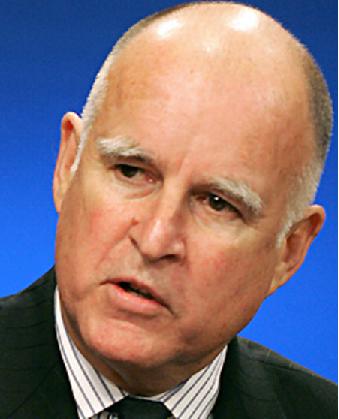
Jerry Brown said he opposed the state’s marijuana legalization measure because “we can’t compete with China if we’re all stoned.”

LOOK BUSY

A Pew Research Center poll showed that 41 percent of Americans think Jesus will return in the next 40 years.

HEY, IF WE’D JUST CREATED THE WORST ENVIRONMENTAL DISASTER OF THE DECADE, WE’D WANT A LITTLE BREAK, TOO

A few days after the worst oil spill in U.S. history, BP Chief Executive Tony Hayward complained that he wanted his life back.

BUT HE SWEARS HE’LL STOP AT BEHEADINGS

Insurance Commissioner Steve Poizner said if he were governor he’d give the National Guard live ammunition to shoot at immigrants on the border.

AFTER ALL, IF THEY’RE NOT IN AN AIRPLANE, THEY CAN’T DO ANY DAMAGE

GOP Senate candidate Carly Fiorina said that people on the federal no-fly list should have the right to own guns.

OOH, WHEN YOU TALK TOUGH LIKE THAT YOU ALMOST SOUND LIKE SOMEONE WHO COULD STAND UP TO THE REPUBLICANS. OR MAYBE NOT

President Obama asked whose ass he should kick at BP.

IT’S OKAY, THOUGH, AS LONG AS THEY WEREN’T ENGAGING IN ANY SELFISH ACTS

Staffers at the Securities and Exchange Commission got caught spending as much as eight hours a day downloading porn at the office.

AND SOMETIMES GOP CANDIDATES ARE NITWITS

Nevada GOP Senate candidate Sharron Angle praised Chilean dictator Augusto Pinochet for his efforts to privatize that country’s retirement system, saying “sometimes dictators have good ideas.”

YEAH, COME ON, WHY CAN’T YOU LOOK AT THE BRIGHT SIDE OF THINGS?

Sharron Angle said that women who have become pregnant as the result of rape or incest should “turn lemons into lemonade.”

DAMN GUMMINT TRYING TO INTERFERE WITH PRIVATE BIDNESS

GOP Congressman Joe Barton of Texas apologized to BP for a White House “shakedown.”

YES, AS A MATTER OF FACT I DO OWN THE WHOLE GODDAM SCHOOL

Meg Whitman’s son threw softball equipment over a fence to kick a group of computer science and physics students off the Princeton rugby field.

NICE, SINCE THOSE GROUPS ALL GOT ALONG SO WELL

GOP Senate candidate Chuck DeVore compared Palestinian activists to Nazis, Fascists, and Communists.

AND OF COURSE, THAT WORKS SO WELL WITH MODERN MANAGED CARE

Nevada banned chicken costumes from the polls after Nevada Senate candidate Sue Lowden said that people should barter with doctors for health care the way “our grandparents would bring a chicken to the doctor.”

ANOTHER GREAT MOMENT IN THEOLOGY FROM THE MAN WHO BROUGHT YOU THE PEDOPHILE PRIEST COVER UP

Pope Benedict said it was okay for male prostitutes to wear condoms.

SO HE’S GOT THAT GOING FOR HIM. WHICH IS NICE

Formerly classified State Department cables revealed that the premier of Korea is still an excellent drinker.

ACTUALLY, THEY TOOK ONE LOOK AT THE TEA PARTY AND DECIDED THEY WERE BETTER OFF AS THEY ARE

Senate candidate Christine O’Donnell said that evolution was a myth; after all, she wondered, “why aren’t monkeys still evolving into humans?”

THE CHURCH HAS ALWAYS BEEN KNOWN FOR ITS SENSE OF PERSPECTIVE

The Vatican announced that the ordination of women and the abuse of children were both “grave crimes.”

THAT’S OKAY, IT WILL LOOK GOOD ON HIS RESUME

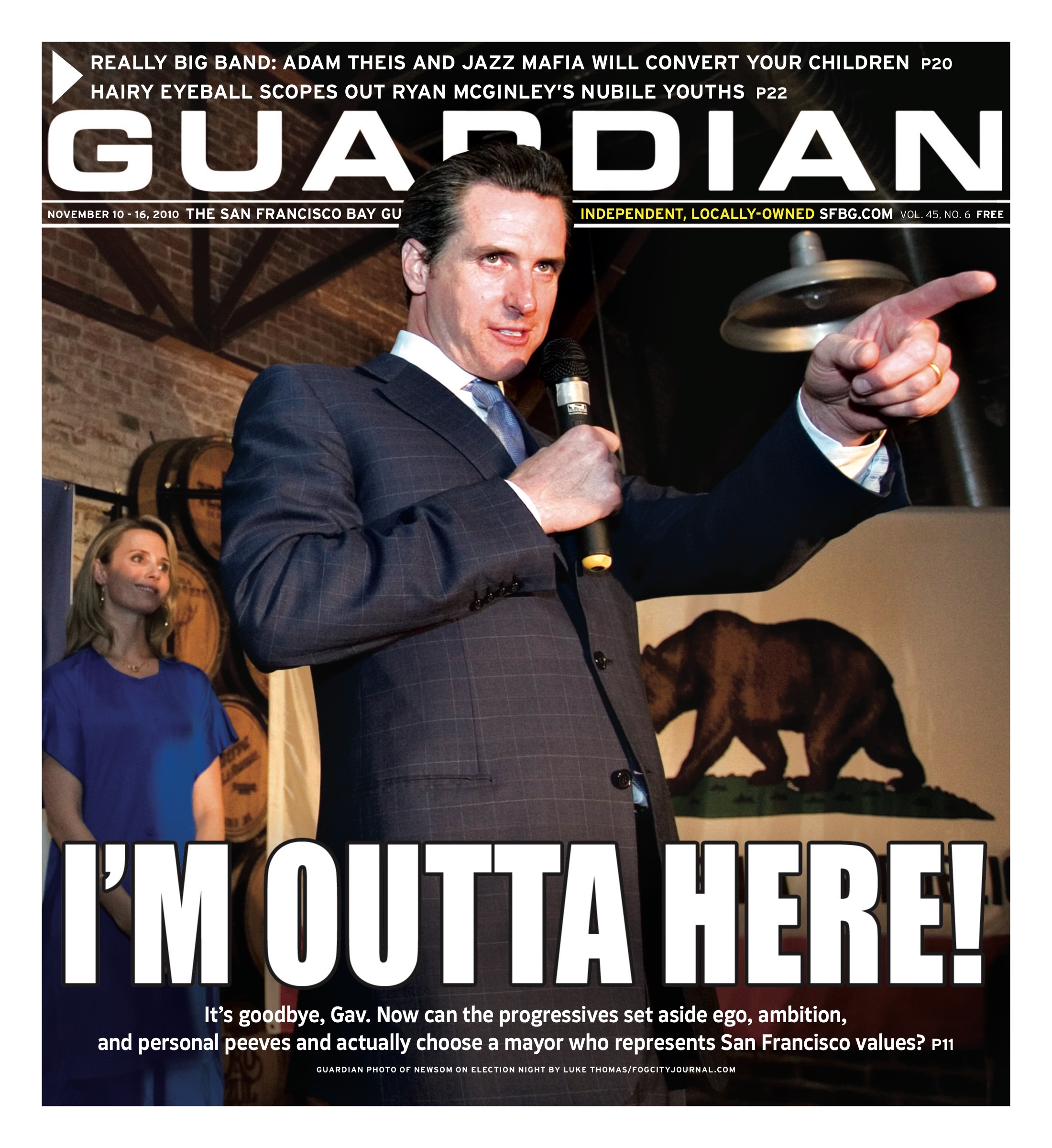
Gavin Newsom decided to run for lieutenant governor after saying he didn’t know what the job was.

YOUR TAX DOLLARS AT WORK, CIA EDITION

The United States held high-level negotiations with a supposedly senior Taliban operative who turned out to be a Pakistani shopkeeper.

BUT WAIT — HOW WILL WE KNOW IF WE’RE SUPPOSED TO WORRY OR NOT?

The Department of Homeland Security abandoned color-coded safety alerts.

THE INTELLIGENCE AND CULTURAL TASTE OF THE AMERICAN PEOPLE IS SIMPLY STAGGERING

Sarah Palin’s daughter, Bristol, made it to the final round of Dancing with the Stars.

WHICH MAKES HIM ENTIRELY QUALIFIED TO SERVE AS A REPUBLICAN POLITICIAN

Dan Quayle’s son ran for Congress in Arizona and admitted that he had been posting on “dirty Scottsdale” under the name of Brock Landers, a sidekick to porn star Dirk Diggler.

IS HE ONE OF THE NAZI FASCIST COMMUNISTS, TOO?

Rand Paul said Obama’s criticism of BP was “un-American.”

WAIT — WAS THAT A BROWN ALERT?

The California Highway Patrol shut down its South Lake Tahoe office after officers found an anal vibrator and thought it was a bomb.

HONESTY IS JUST PART OF THE PROCESS OF RECOVERY

Tiger Woods admitted that he sucked.

EXCEPT THAT IT MOSTLY BENEFITS THE INSURANCE INDUSTRY

Vice President Joe Biden called the health reform bill “a big fucking deal.”

IT’S THOSE CUTE WOODEN SHOES, YOU SEE

NATO Commander John Sheehan said Dutch soldiers were too gay.

DAMN, AND HE’S SUCH AN ATTRACTIVE MAN. I’M SURE THE TSA FOLKS WERE REALLY LOOKING FORWARD TO IT

John Tyner told Transportation Security Administration officials in San Diego that if “you touch my junk, I’ll have you arrested.”

AND HE WASN’T EVEN TALKING ABOUT HER

Sarah Palin demanded that Rahm Emanuel apologize for using the term “fucking retarded.”


SINCE WE ALL KNOW THOSE PEOPLE DON’T KNOW HOW TO SPEAK IN PUBLIC

MSNBC Host Chris Matthews was so excited by an Obama speech that he said he “forgot he was black.”

THE CUSTOMER IS ALWAYS RIGHT

Pacific Gas & Electric Co. spent $50 million on a ballot initiative to stop public power, and lost after getting soundly defeated in every county where the utility has customers.

YOU MAY BE PART OF THE FAMILY, BUT WHEN IT COMES TO MY POLITICAL CAREER, HONEY, YOU’RE OUT THE DOOR

Meg Whitman fired her housekeeper when she found out she was in the country illegally.

BUT THEY’RE ALIKE ANYWAY, RIGHT?

Sharron Angle defended a campaign ad depicting menacing-looking Hispanic men by telling members of the Hispanic Student Union at the University of Nevada, Las Vegas that many of the members looked Asian.

OF COURSE, SHE SKIPPED THE FIRST FEW AMENDMENTS — BOOORING!

Christine O’Donnell said she couldn’t find anything about the separation of church and state in the Constitution.

BECAUSE IN A FIREFIGHT, THE FIRST THING ANYONE WOULD BE THINKING ABOUT IS HIS SERGEANT’S CUTE ASS

Sen. John McCain said he opposed ending “don’t ask, don’t tell,” talked about all the soldiers and Marines who lost limbs, and said that “when your life is on the line, you don’t want anything distracting.”

SINCE WE ALL KNOW THAT HEALTH INSURANCE MAKES YOUR PEE SMELL FUNNY

Federal judge Henry Hudson asked Obama administration officials whether the new health care plan was similar to forcing all Americans to eat asparagus.

SO IT’S JUST AS WELL THOSE PEOPLE ON THE NO-FLY LIST HAVE THE RIGHT TO KEEP AND BEAR ARMS

Sharron Angle said that the Obama administration’s policies might require “Second Amendment solutions.”

IT’S PERFECTLY FINE FOR HOMOSEXUALS TO ATTEND MARRIAGE CEREMONIES, AS LONG AS THEY’RE JUST THE HIRED HELP

Sir Elton John played at Rush Limbaugh’s wedding.

SURE, GREAT FUN. JUST LIKE SHOOTING YOUR FRIENDS WITH A HUNTING RIFLE

Dick Cheney said he had been a “big supporter of water boarding.”

DAMN, SUPERVISOR, THE OFFIES WILL MISS YOU

Chris Daly vowed to say “fuck” at every single board meeting in 2010.

Curtain calls

1

arts@sfbg.com

THEATER Freud called dreams wish fulfillment; or reality, disguised, but basically as we’d like it to be. If you asked the Buddha and Heisenberg about reality, you’d get pretty much the same answer. Not that any of these guys went to the theater a lot in 2010. This year oscillated between quasi-documentary fidelity to facts and burrowing hallucinations like those induced by Gysin and Sommerville’s spinning stroboscopic Dreamachine. (A facsimile of one even graced The Burroughs and Kookie Show, Christopher Kuckenbaker’s Fringe Festival winner and definitely a peak stage encounter in 2010.) But it all amounted to an assault of some kind on the sleepwalking world outside. Dreaming in the theater can be much more lucid.

Best political theater riffs: In the Wake (Berkeley Rep) was not a perfect play, but Lisa Kron’s slightly lopsided new political dramedy had a way of upsetting some fundamental and suspect assumptions of mainstream liberals that was at times electrifying. Dan Hoyle’s The Real Americans, while not as politically provocative, also ventured outside the “liberal bubble” into red state territory, bringing back reportage in the form of deft rapid-fire characterizations, comedy, and music by the young but prodigious solo performer–playwright of Tings Dey Happen and Circumnavigator. And finally, the 51-year-old San Francisco Mime Troupe’s reaffirmed that its brand of agitprop is still a going concern. Posibilidad, or the Death of the Worker, set partly in the USA but inspired by the recent factory takeovers by workers in Argentina, was a shrewd, funny, tuneful plea for cooperatives against the grinning, co-opting tendencies of “capitalism with a human face.”

The most hyped production: Terrell Alvin McCraney’s trilogy, The Brother/Sister Plays. The only one that really worked for me was the second, The Brothers Size, which got a very strong production at the Magic under Octavio Solis. It was lean, focused, a small story with subtle, far-reaching reverberations. The other two plays reached consciously for the grandiose without finally grasping much. Nevertheless, the precedent-setting coordination between the Magic, Marin Theatre Company, and American Conservatory Theater in introducing these plays to the Bay Area was an exciting development.

Boldest venture: Berkeley Rep’s London import, Afghanistan: The Great Game, a seven-hour marathon of short scripts by 12 playwrights on the history and politics of this current critical object of U.S. imperial desire. A mixed bag theatrically, though impressively produced, but the historical perspective — boiling down to a dismal pattern of imperial design and hubris, infamy, and failure — was a point well taken. Indeed, the antiwar protest outside the White House on Dec. 16, where 131 arrests were made ahead of President Obama’s declaration of “progress” in Afghanistan, seemed its logical conclusion.

Best solo performances behind a large desk: Paul Gerrior in Krapp’s Last Tape (Cutting Ball); Joel Israel in Reluctant (Brava).

Best Pas de Donut: Howard Swain and Lance Gardner in Superior Donuts at TheatreWorks.

Best mise-en-scène as meaningful, mindful mess: This Is All I Need by Mugwumpin.

Best visiting productions: Japan’s Zenshinza Theatre Company at Zellerbach (Cal Performances); West Side Story at the Orpheum; Jane Austen Unscripted at BATS’ Bayfront Theater.

Best indefinable night in a theater: Dan Carbone at the Dark Room.

Best experiential fare: Etiquette by London’s Rotozaza (hosted by Yerba Buena Center for the Arts at the Samovar Tea Lounge).

Best extraterrestrial fare: Cynthia Hopkins’ The Success of Failure (or, The Failure of Success) at Yerba Buena Center for the Arts.

Best all-around design: The Tempest at Cutting Ball.

Best productions with death references in the title: Don’t Feel: The Death of Dahmer by writer-performer Evan Johnson; and when i die, i will be dead, a pair of dance/theater pieces by Alicia Ohs. Both Don’t Feel and when i die were nurtured and staged at the now-shuttered queer performance incubator Mama Calizo’s Voice Factory. Until some hoped-for resurrection, R.I.P. Mama Calizo’s.

Best (deconstruction of) Shakespeare: Juliet, directed by Mark Jackson at San Francisco State.

Best Bill Murray: Jody Frandle in Caddyshack Live! at the Dark Room.

Best debut by a new company: Symmetry Theatre with Show and Tell at the Thick House.

Best ensemble casts in a comedy: Learn to Be Latina (Impact Theatre); Shotgun Players’ production of The Norman Conquests (with a special nod to Richard Reinholdt in the title role); Man of Rock (Climate Theater); Scapin (ACT).

Best ensemble cast in a drama: Aurora Theatre Company’s Trouble in Mind (with a special nod to Margo Hall).

Best non-singing lead in a comic opera: Patrick Michael Dukeman in Jerry Springer, the Opera (Ray of Light Theatre).

Republicans are hypocrites, Democrats are spineless

7

Adding $800 billion to the federal deficit and exacerbating the inequitable, unprecedented, and unsustainable concentration of wealth in the richest 1 percent of Americans, Congress overwhelmingly approved a package of reckless tax cuts that President Barack Obama asked for and is expected to sign today.

The only saving grace in this dismal debacle is the fact that almost the entire Bay Area congressional delegation voted against the deal (while Speaker Nancy Pelosi didn’t vote at all), once again showing that if there’s even a glimmer of hope for saving the country from further descending into myopic and cowardly self-indulgence, it’s going to have to come from us.

Sure, I’ll happily spend the crumbs that they’ve dropped on me in the form of a payroll tax cut, and extending unemployment payments for the lingering victims of this stubborn recession isn’t a bad thing. But the vast majority of the benefits of this bill went to the wealthy, people who don’t need to be stealing from future generations.

Let’s be clear, as Sen. Bernie Sanders (I-Vermont) was during his nine-hour, one-man filibuster of the bill last week: this is about the greedy rich, who have purchased our political system, taking what they want and showing an indefensible disregard for the interests of this country and the vast majority of its citizens. And they have found a partner in President Obama, who was elected to office largely by criticizing Bush’s tax cuts for the wealthy that he’s now extending and the wasteful wars that he’s escalating.

Happy holidays, and please pass the egg nog, with extra brandy, please.

Let’s get budget priorities straight

0

OPINION Who will pay for California’s budget woes? For the last three years, Californians have put up with cuts to programs that are critical to our state’s future and our social safety net. Public education, HIV and AIDS programs, state universities, and CalWORKs have all come under the knife. The elephant in the room, as state and federal governments try to balance budgets on the backs of the working and middle class, is the billions of dollars we are wasting on a misguided war in Afghanistan.

Fresh evidence that the war in Afghanistan is failing rolls in on a daily basis. While the administration justifies the cost in lives and dollars as necessary to fight Al Qaeda, it also acknowledges that there are only 50 to 100 Al Qaeda fighters in Afghanistan. Every soldier in Afghanistan costs U.S. taxpayers $1 million per year. With 100,000 soldiers on the ground, that means we’re spending as much as $2 billion a year on each Al Qaeda fighter.

Would we dream of spending $2 billion on every needy child in California? Or even $1 million? As U.S. and Afghan casualties rise along with the dollar amounts, with little success to show for it, we need to get our priorities in check.

At Governor-elect Jerry Brown’s budget forum this week, we were staring down a $28.1 billion budget deficit over the next 18 months. Compare that to the $46.4 billion Californians have already spent on the war in Afghanistan — $1.2 billion of that right out of San Franciscans’ pockets.

The Obama administration is conducting a strategy review this month that is expected to rubber stamp an approach that keeps soldiers in harm’s way — when doing so is not likely to make Americans or Afghans safer. At the same time, the president’s deficit commission chairs are also passing down recommendations to save money by cutting benefits for our most vulnerable citizens.

I would like to tell the taxpayers in my district who are shelling out these dollars that there’s a light at the end of the tunnel, but the president is now proposing ending the “combat mission” in 2014, which could mean there will be tens of thousands of troops on the ground even after four more years have passed.

I will continue to fight for our real needs in Sacramento. But it’s time for our representatives in Washington to put an end to this disastrous war and bring our troops home as quickly and responsibly as possible. Our tax dollars should be making life in California sustainable and safe for all. We can’t afford any other way.

Assemblymember Tom Ammiano represents the 13th District.

Brown’s education summit gives me hope

0

Most of what’s going on is just really, really disturbing — Brown is doing a good job of explaining just how bad the economy is, just how awful things are for education — and what that means for students. But he made one comment that struck me as critical (and that might, maybe, make Brown a great governor) came about an hour into the presentation.


Brown was talking about how the nation got into this crisis — about how people were forced to live on borrowing, and when the real estate market collapsed America became de-leveraged — when he took a slight sidetrack to say:


“Income redistribution upward from the middle class is comparable to the 1920s … it’s a societal crisis. We have to exercise discipline, but also fairness.”


A few points on this:


1. The incoming governor of California actually mentioned the words “income redistribution.” That’s a term almost entirely missing from the current debate. And he made it clear that part of the budget problem — part of the reason the state and the nation are in this crisis — is that the rich have gotten a larger and larger share of the pie.


2. Brown seems to think this is actually a problem, a “societal crisis.” Again: Obama doesn’t talk about that. Other than Bernie Sanders, most politicians in Washington are afraid of it. Just talking about wealth and income inequality (particularly in the context of education funding) is a huge step.


3. Brown talked about “fairness and discipline” together. Yes, we have to understand that resources right now are limited; but we also have to understand that part of the budget debate ought to be about the larger social issue of unfair distribution of wealth.


I know none of this seems like such a huge deal — it’s basic reality. But it’s so unusual that it’s refreshing.


SFBG Radio: What will Jerry do?

0

When Jerry Brown goes to UCLA to talk about education, what’s he going to say? How’s he going to promote the UC system when he’s facing a $25 billion budget crisis? Johnny and Tim talk abou that (and the Obama health care law and a few other things) after the jump.

sfbgradio12132010 by endorsements2010

SFBG Radio: The death drug, Obama’s failure and more

0

In today’s episode, we talk about California’s strange adventures with the death drug — and why the Obama presidency is at stake in the tax debate. Check it out after the jump.

sfbgradio12920109 by endorsements2010

Progressives oppose Obama’s deal with Republicans

10

With San Francisco’s own Rep. Nancy Pelosi leading the way, House Democrats have voted to oppose the tax cut deal that President Barack Obama cut with the Republicans – a deal most Americans oppose because of its expensive extension of tax cuts for the wealthy – demonstrating that progressives and even mainstream liberals are increasingly willing to push back against a president that has take their support for granted.

During his press conference this week, Obama adopted a belittling attitude toward his progressive critics who have pointed that Obama ran for office overtly opposing President George W. Bush’s policy of slashing taxes on the super-rich, which ballooned the federal deficit. And now, in interests of “getting things done,” Obama is standing with Republicans to promote that very policy.

Obama even boasted “the polls are on our side on this,” a statement polls taken since then have shown is simply untrue, as he ridiculed his progressive critics as willing to let unemployment payments expire and middle class tax cuts expire, as Republicans have threatened if Democratic are unwilling to extend tax cuts for the wealthy.

Speaking on PBS’s NewsHour the other night, Nobel Prize winning economist Paul Krugman said he was appalled that Obama would echo this right-wing way of looking at the world, saying, “The president going after his progressive critics is enormously self-indulgent.”

Indeed it was, and those progressive critics now seem to have the upper hand, leaving Obama in the position of either working with Republicans to “ram this down the throats of the American people” (to borrow the GOP description of his health care reform measure) or to finally start working cooperatively with progressives to oppose the Republicans’ transparently hypocritical and unsustainable fiscal policy.

This is a big test for the Democratic Party and it’ll be interesting to see how it plays out in the coming days.

Elizabeth Edwards, breast cancer and the battle for a cure

2

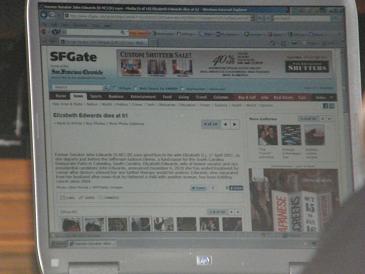
When the news hit that Elizabeth Edwards had died at 61, I was sitting in the press box at San Francisco City Hall listening to the supervisors debate the merits of local hire legislation. In fact, I only became aware that Edwards had passed away, because Sup. Michela Alioto-Pier, who was sitting in front of me, was surfing the Internet on her laptop and I happened to see the headline.

The news immediately reminded me, all too powerfully, of the brave fight that my sister-in-law Leila, 47, lost last year after a six-year battle with the disease. She left behind a husband and two young sons, and I always feel a mix of pride at how hard she fought and desperation at how she still wasn’t able to win, whenever I remember her long slide towards death last fall.

“I have so much to live for,” Leila often told me, reflecting on how much she loved her husband and sons, how she wanted to finish her novel (which she managed to wrap up in the last months of her life) and how she still wanted to visit so many places and people in the world.

An avid advocate for peace, especially in the Middle East, where her father’s family came from, Leila was not one to give up on a cause, once she had it in her crosshairs. She attacked breast cancer with that same dogged determination. She read everything she could on the topic, changing her diet, modifying her lifestyle, going through chemo and the inevitable loss of her beautiful hair, and, at the end, taking a chance with experimental drugs.

I will never forget her telling me, one gut-wrenching afternoon last September, that the doctors had told her there was nothing more they could do. The disease had gone to her liver, and that she was beginning to feel panic and fear. It wasn’t easy to hear that admission, it must have been even harder for her to share it, and it left me hoping that one day, no other woman would ever have to go through this painful battle again.

I wanted Leila to live to see her sons grow up, to enjoy the company of her husband, to write, travel and work for her goal of world peace. But eventually, it became clear that she was not going to make it. When her death finally came, last October, I felt relief that she was no longer suffering, even as I shed tears for her, her family, and all the folks in the world who are going through similar battles.

So, when I got home last night, I immediately went online and wallowed in the huge wave of grief that Edwards’ death evoked as a symbol of the millions of women who live with and die from cancer worldwide.

Some noted that Edwards had not been conducting regular check ups when she found a lump in her breast (an uncomfortable reminder to all of us who haven’t got a check up recently). Others observed that her diagnosis likely fueled her passion for universal health care and helped the passage of Obamacare (a more welcome reminder that despite all the criticisms of Obama, he has pushed through monumental reforms that many will benefit from).

Some wrote about the ever-present fear for survivors that the cancer could come back, and how this awareness had  served to make them more fully appreciate every moment that they do have. Others pointed to the grim reality that even with access to great doctors, advanced treatment options and money, Edwards still could not prevail, because a cure has still not been found.

I’ll end this tribute to Edwards, my sister-in-law, and all the women who have struggled with this terrible disease with a message that landed in my inbox Dec. 7 from California’s First Lady Maria Shriver:

“I was deeply saddened to learn of the passing of my dear friend, Elizabeth Edwards,” Shriver wrote. “My heart goes out to her loving family. Elizabeth was a mighty warrior, and I’ve long admired her courage, her compassion and her personal quest for truth. She was a public servant, a dedicated mother, a tireless advocate and a loyal friend. She showed up to speak at The Women’s Conference every time I asked, and our audience was always moved by the open and honest way she would share the struggles she faced along her journey. I hope her children know their mother was an inspiration to women everywhere — a truly great woman.”

And I’ll add my hope that this nation will intensify its search for a cure for a disease that is the second leading cause of cancer deaths in women today (after lung cancer) and the most common cancer among women, excluding nonmelanoma skin cancers. According to the American Cancer Society, 1.3 million women will be diagnosed with breast cancer annually worldwide, 465,000 will die from the disease, and about 1 in 35 women die from breast cancer in the U.S. Scary? Yes. Curable? Hell, yeah (I hope and pray). Let’s just make sure it remains a national priority.

Class conflict in DC and SF

12

There’s an unmistakable whiff of class warfare in the air this holiday season, most obviously on the national level where President Barack Obama and congressional Republicans are helping the ultra-rich steal hundreds of billions of dollars from future generations and the country’s current needs. But we’re also seeing it right here in San Francisco, subtly playing out around who will be our next mayor.

During yesterday’s scheduled discussion at the Board of Supervisors on choosing a new mayor, members of the public – from African-American mothers of slain youth to representatives of immigrant communities to those representing labor and progressive groups – urged the board to choose a mayor who would finally represent all of San Francisco, not just the wealthy and the business community.

Then the progressive supervisors who represent the city’s working class districts talked about getting the process underway and voiced some of the things they’d like to see in a new mayor, such as compassion and a willingness to work with the board and community groups. It seemed like a good faith effort at having an open public discussion about the city’s needs.

But on the other side of the aisle, the supervisors who represent the city’s wealthiest neighborhoods voted to delay the discussion without offering a reason why. Sup. Chris Daly made good points about how incoming mayors usually have time to prepare for assuming this powerful office at a time of pressing city needs and tricky political dynamics, arguing for making this decision sooner than later.

And from the Establishment representatives: nothing. Not a word. Instead, we have Mayor Gavin Newsom threatening to delay his swearing in as lieutenant governor to thwart the current board from picking a successor, and being overtly urged to do so in a San Francisco Chronicle editorial and in disingenous, sanctimonious ruses from SF Chamber of Commerce officials.

Why? Well, here’s the closest thing the editorial offered to a reason: “It makes all the sense in the world to have the supervisors who will be working with the interim mayor make the selection. They are the ones who will have to find common ground and develop a working relationship with Newsom’s successor.”

But does it really make any sense to have an inexperienced group of new supervisors (as our current cover stories shows, none of the four new supervisors have held municipal office and two are new to politics) pick a mayor on their first day on the job, and then have that person immediately take on the complicated job of running the city with no staff in place? And to do that by flouting the the California Constitution and the City Charter?

That sounds like a recipe for disaster – and an opportunity for downtown power brokers to make mischief and ensure their interests aren’t threatened as part of whatever backroom deal gets cut to choose a new mayor, district attorney, and board president. Why else would they so vehemently oppose a deliberative public process that would lead to a decision by those who know the workings of City Hall better than anyone?

As we saw in the last election, wealthy San Franciscans are scared to death of progressive malcontents like Chris Daly, and they’re doing whatever they can to prevent him from being involved in this decision. They see, probably correctly, that the current political dynamics of the city could lead to perhaps the most progressive mayor since George Moscone, or maybe ever, and they’ll do whatever they can to prevent that from happening.

The rich of this city and this country have overplayed their hands, crippled the public sector, and, as Sen. Bernie Sanders so eloquently said recently on the floor of the US Senate, shown a selfish disregard for the needs and interests of the vast majority of citizens. The only question now is this: are we ready to finally stand up, fight back, and really give them something to fear? Or are we going to take our cues from Obama and treat anti-government conservatives as good faith actors when they have shown only contempt for our most cherished democratic processes and values?

I suppose next week, when this board reconvenes to try to choose a successor mayor, we’ll find out.

The end of Obama’s presidency?

6

The tax-cut deal with the Republicans is almost unfathomable. It’s the most dramatic sign of President Obama’s failure as a leader, his refusal to stand up for the platform he ran on — and it could mark the end of his presidency. I mean, he’ll still be in office for two more years — but now that he’s rolled over and given the Republicans everything they want, he has no moral or political authority left, no national constituency to back him up and he might as well be a lame duck. He’s certainly finished as far as most of the progressive movement is concerned. Kos:


This shouldn’t be worrisome to the White House because these people won’t vote for him in 2012. They probably will. But will they give money and knock on doors and make phone calls and drag their social circle to the polls? Nope. They didn’t in 2010. And at this rate, they sure as hell won’t in 2012.


Already, some Obama supporters are starting to ask whether we all should have backed Hillary Clinton.


So far, Nancy Pelosi is standing up to the “compromise,” which essentially gives the Republicans everything they want. And the House can still call the GOP bluff: Refuse to reauthorize tax cuts for the rich — and force the Republicans to vote to raise taxes on the middle class and deny unemployment benefits to a few million Americans. That’s the only way to salvage the situation.


The Dec. 7 press conference was terribly disappointing. Obama said, in effect, that he — the president of the United States — is powerless against a Republican minority in the Senate. “I have been unable to budge them,” he announced. He’s decided to negotiate with terrorists, to let a few right-wingers hold him and the millions of unemployed Americans hostage. The polls are on his side, the public sentiment is on his side — and he’s acting as if he’s being forced to negotiate from weakness.


The real-time Washington Post poll shows that 66 percent think Obama made a bad deal. 


The big problem here is that Obama looks shaken, doesn’t look tough, is on the defensive. A very sad moment.  


Would ICE deport Superman?

3

Would ICE deport Superman?

That’s a question Erick Huerta, a journalism student in Los Angeles, poses in a timely DREAM Act-related first-person piece about the double life of an undocumented student.

“Once, when I was seven, I fell asleep in Michoacán and woke in Boyle Heights. No joke. Now I am a bewildered 26-year-old undocumented college student, whose life may become a slightly less surreal dream if the DREAM Act ever passes, but only slightly less so,” Huerta writes.

Huerta describes the depression he underwent when he graduated high school in 2002.

“I was horribly depressed because all I had to look forward to in life was selling hot dogs, fruit and shaved ice in a cart my dad owned. Not to mention that a decade of internalized oppression and instilled fear of La Migra traumatized me,” Huerta recalls.

His situation improved somewhat with the passage of state Assembly Bill 540, which allows folks in his situation to pay in-state tuition at college if they are California high school graduates. And inspired by a young woman named Tam Tram, the first undocumented student he ever saw speaking out openly and unafraid, Huerta stopped feeling bad for himself and started to try and make the best of his situation.

This mental shift included finding undocumented students organizing for the DREAM Act.
“I share my story regularly with high school kids because I know my words will resonate with others who are undocumented and afraid,” Huerta concludes. “I let them know they’re not alone and that things will get better if they continue their education. Despite lack of legal status, no one can take away our education.”

Huerta’s words probably won’t stop the haters from leaving offensive comments on the blogs. But as more undocumented youth step forward, tell their stories and put faces on their otherwise shadowy figurres, it’s going to get harder to scapegoat them.

A recent report by the Center for Investigative Reporting suggests the Obama administration has been trying to look tough on immigration enforcement in the past two years, in an effort to appease Republican factions that have been hell-bent on blocking immigration reform. It’s unclear whether personal stories by undocumented students  will be able to transcend partisan politics and give undocumented youth a pathway to citizenship. But if they did, it would be the best gift the nation could give itself this holiday season.

“Greed is an issue we’ve got to deal with”

6

As President Barack Obama and other top Democrats cravenly negotiate a surrender to Republican extortion and class warfare on behalf of the greedy rich, Sen. Bernie Sanders (I-Vermont) took to the floor of the U.S. Senate to give a full-throated denunciation of the effort and the “war being waged by some of the wealthiest and most powerful people in this country against the working families of the United States of America.”

It’s an extraordinary speech that everyone should watch:

http://www.youtube.com/watch?v=H5OtB298fHY

Sanders correctly notes the hypocrisy of right-wingers who complain about the budget deficit when the topic is social programs or extending unemployment insurance, but then turn around and advocate for extending $700 billion in tax cuts to the richest 2 percent of Americans and abolishing the estate tax, which would give $1 trillion to the richest one-third of 1 percent.

“Their greed has no end, and apparently there is very little concern for the country or the people of this country if it gets in the way of the accumulation of more and more wealth and more and more power,” Sanders said as he compared the U.S. to a banana republic and cited statistics showing the grossly unbalanced distribution of income and wealth is at one of the worst points in our history, and far worse than any other industrialized country in the world. “And still they want more!”

Obama and the Democrats: Please listen to Sanders! History, and the working people of this country, are watching. As Sanders said, “Greed is a issue we’ve got to deal with.”

Newsom and downtown groups court Cohen

18

A rogue’s gallery of downtown power brokers and moderate politicians is lining up to give D10 supervisor-elect Malia Cohen money during a fundraiser at Democratic Party money man Wade Randlett’s house tonight (Wed/1). And while the group may be trying to buy the support of a candidate they didn’t support in the election, Cohen and some of her progressive supporters say she’s been open to developing relationships across the ideological spectrum.

“Fear not,” Cohen told us when we raised an eyebrow at the host committee, and she noted that most of those on the list didn’t endorse her candidacy. “It is a fundraiser event, and now that I’m a newly elected supervisor, I look forward to meeting everyone.”

The guest list includes Mayor Gavin Newsom, former Mayor Willie Brown, Sup. Sean Elsbernd, Assembly member Fiona Ma, Building Owners and Managers Association director Ken Cleaveland, lobbyist Sam Lauter, Brook Turner with Coalition for Better Housing, Kevin Westlye of Golden Gate Restaurant Association, Janan New of San Francisco Apartment Association, as well as building trades head Michael Theriault and Tim Paulson of the San Francisco Labor Council.

“That’s not my perception of it,” Randlett – who used to run the downtown political organization SFSOS – told us when we asked about downtown’s attempt to buy influence with a candidate who finished the campaign about $20,000 in debt. He also rejected the characterization that it was a high-roller event, noting that prices initially listed at $100-$500 have since been lowered to $50. “Anyone who wants to attend at any price is welcome,” he said.

“I think it’s smart of their part, because they didn’t support her in the election, to try to give her money in the end,” said Gabriel Haaland of SEIU Local 1021, which did endorse Cohen. “It remains to be seen where she’s going to land [politically], but it seems clear what this group is attempting to do, to influence her votes.”

Cohen also received endorsements from the San Francisco Democratic County Central Committee, its Chair Aaron Peskin, and Board of Supervisors President David Chiu, who says he isn’t concerned about the Randlett fundraiser. “I understand that she has been celebrating with people from across the ideological spectrum,” Chiu said.

Indeed, Cohen said she is anxious to get to know representatives of San Francisco constituencies across the spectrum, borrowing a line from Shirley Chisholm, the first African-American women elected to Congress, in calling herself “unbought and unbossed.” Cohen said, “I will do a great job representing everyone. I will protect the interests of District 10 residents.”

Randlett, who flamed out with SFSOS before reviving his standing as a top-tier Democratic Party fundraiser by being an early backer of Barack Obama’s presidential bid, told us that was a connection he shares with Cohen. “The only reason I supported Malia from the beginning and am hosting the event for her is that like me she was there for Barack from Springfield through election night, never wavered in her support for him, and continues to stick by him now, when fair weather friends are carping from the sidelines,” Randlett told us.

Paulson told us that Cohen asked him to co-host a fundraiser with Newsom – who Cohen once worked for although he didn’t support her in this election – and that he didn’t see the complete roster until a couple days ago. “I am surprised there was this list,” Paulson said of the groups that regularly oppose progressive candidates and legislation.

But Haaland said that labor and the left will also be reaching out to Cohen, whose lack of a strong ideological grounding and representation of a district slated for the city’s most ambitious redevelopment plans will make her a pivotal vote on the new board. “We have to do our best to reach out to her as well,” Haaland said.


There are no secrets

0

I see Hillary Clinton is all indignant about the latest Wikileaks release. And there will be no end of hand-wringing in journalistic and political circles about whether this material should have been leaked, released, published etc. (But you have to admit, it’s great stuff; I particularly like the comments about the the looney leader of North Korea is still “quite a good drinker.”) And there is, of course, important data that the public ought to have, and I think the NY Times did the right thing by publishing the material.


But there’s another side of this, something that Clinton and Obama and the whole CIA/national security/spy apparatus ought to already know: These days, it’s really hard to keep anything secret for long.


Daniel Ellsberg had to make clandestine photocopies of thousands of pages of Pentagon Papers docs, then smuggle them out of his office and slip them to a Times reporter in a hotel room. These days? Click of a mouse. Hard to trace, impossible to stop. Once documents of any sort have gone to more than one or two people, you might as well assume they’re going out to the whole world.


Anyone who uses email on a professional basis has been told that. Think of poor Brad the Cad. About time the secretary of state caught on.


Critical care

5

Sarah@sfbg.com

A complex and controversial project that would involve five San Francisco hospitals — including building a huge showcase facility for the wealthy atop Cathedral Hill — has prompted a debate about what average city residents need from the health care system.

California Pacific Medical Center, an affiliate of Sutter Health, proposes to downsize St. Luke’s Hospital, which primarily serves a low-income population in the Mission District, as part of a $2.5 billion proposal to renovate and retrofit three existing medical campuses, close another one, and build housing and a megahospital on Cathedral Hill that would draw patients from around the country.

CPMC’s grandiose plan was being considered strictly as a land use decision, despite its far-reaching impact on the city’s health care system. So Sup. David Campos created legislation calling for the city to create a citywide health services master plan and to use that as another tool for gauging future medical projects.

Debate over that legislation left some activists on both sides unhappy, with progressives disappointed that it won’t be able to stop a CPMC project they see as neglectful of the poor, and moderates wary of creating a new way to challenge development projects in the face of widespread unemployment in the construction industry.

But it struck a fine enough balance to win 8-3 approval by the board Nov. 16, enough to override a threatened mayoral veto. “I’m really happy and excited about the passage of this legislation,” Campos told the Guardian after the vote.

The legislation has a two-part mandate, with the first part kicking in as soon as it has final approval. It requires the Planning Department, with input from the Department of Public Health, to prepare a health care services master plan to identify current and projected needs for health care services and where they should be provided.

The second part, which begins in 2013, requires Planning to determine whether medical projects are consistent with the findings of this plan. That delay is credited to a last-minute amendment Campos granted during a Nov. 15 committee hearing after the hospital industry complained that the process could jeopardize its ability to meet state-mandated seismic retrofitting deadlines for projects already in the planning pipeline.

The passage of Campos’ legislation comes eight months after President Barack Obama signed the Patient Protection and Affordable Care Act. Hailed by its supporters as the most significant change to the U.S. health care delivery systems in 40 years, the reform package has also been greeted with criticism on both ends of the political spectrum. Progressives complain that it relies too heavily on private insurance companies and medical providers, while Tea Party supporters says that it’s government run amok and they have vowed to “kill the bill.” Senate Minority Leader Mitch McConnell (R-Ky) recently compared so-called Obamacare to “tyranny” in a speech to conservative legal scholars.

But here in San Francisco, the debate over Campos’ legislation — as heated and divisive as it was at times — yielded a surprising amount of consensus around the long-neglected idea that government should play a role in health care planning.


PULLING THE PLUG

The passage of Campos’ legislation marks the first time in 30 years that a government entity has mandated health care services planning in California. That approach West Bay Health Systems Agency, whose creation he opposed as governor of California.

Lucy Johns, a San Francisco-based health care planning consultant who wrote the only health care services master plan California has ever had, recalls what happened in the mid-1970s after President Gerald Ford signed legislation that established health system agencies nationwide.

“California established 14 health systems agencies, including the West Bay Health System Agency, which governed the nine Bay Area counties,” Johns told the Guardian. “The legislation mandated that they be established by every state, with the federal government providing the funding. So every state had to decide how many, how big, and how structured the health system agencies would be.”

Johns notes that state legislators were constrained when it came to the decisions these health service agencies made. “The governing bodies of the health systems agencies had to have a membership that was 51 percent consumer and 49 percent healthcare provider, which included doctors, nurses, and hospital administrators,” she said.

That history served as a backdrop for discussion of the Campos legislation, with the Planning Department staff report noting, “With the elimination of the West Bay Health Systems Agency in 1981, there is no longer a routine or comprehensive analysis of health service resources, needs, trends, and local impacts conducted for changes to or within medical uses.”

“It’s truly a historic moment for San Francisco,” Campos said after his legislation passed its Nov. 16 first reading (the second and final reading is set for Nov. 23, after Guardian press time). “We are the first city in the country to make sure land use decisions are aligned to our health care needs. That’s an unprecedented step that will shape the future of healthcare planning for years to come.”

Campos acknowledged that the passage of Obama’s heath reform package — which includes a mandate to purchase private health insurance beginning in 2014 — was also a catalyst for his legislation, along with the CPMC project.

“But it had more to do with seeing that the city didn’t have the tools it needed to evaluate projects in terms of whether they met the city’s healthcare needs and how they might impact people’s access to healthcare,” Campos said. “The main catalyst came from the community, which felt it was being asked to make decisions that will have long-lasting health care implications, but didn’t have any way to understand those needs. Those concerns were compounded by changes at the national level — and the recognition that these changes offer us an opportunity to engage in planning.”

Campos’ legislative victory came two months after members of the Cathedral Hill Neighbors Association joined nurses, medical workers, patients, and community groups in voicing concerns at a Sept. 23 public hearing about the draft environmental impact report for CPMC’s Cathedral Hill hospital and the other facilities that are part of its proposal.

These groups collectively expressed fear that downsizing St. Luke’s, closing the CPMC California campus, and transforming CPMC Pacific campus to an outpatient-only hospital will force low-income people to travel farther to access health care services while offering better service to the wealthy at Cathedral Hill. And neighbors worried that the proposed complex would increase traffic and require the demolition of rent-controlled apartments.

Formed in 1991 through the merger of Pacific-Presbyterian Medical Center and Children’s Hospital of San Francisco, CPMC has been affiliated with Sutter Health since 1996 and currently has four medical campuses in San Francisco: Pacific in Pacific Heights, California in Presidio Heights, Davies in the Duboce Triangle, and St. Luke’s in the Mission.

But CPMC’s longtime goal was to build a facility intended to be like the Mayo Clinic of the West Coast, a 15-story, 555-bed full-service hospital and specialty care facility at the corner of Van Ness Avenue and Geary Boulevard. Company officials have made approval for that project conditional on keeping St. Luke’s open in the face of the state’s deadline on seismic safety standards that the hospital doesn’t now meet.

“St. Luke’s Hospital was the big issue that got our attention,” Le Tim Ly, lead organizer for the Chinese Progressive Association, told the Guardian. His group has worked with residents in the city’s southeast sector around environmental justice, air quality, and pollution issues when they became aware of the threat to St. Luke’s. “All this, coupled with efforts to downsize Luke’s, left us alarmed by the disproportionate impact on an already impacted area.”

But alarm over CPMC’s plans has now revived the idea of healthcare planning.


MAKING A PLAN

As recently as the beginning of November, representatives for the Hospital Council of Northern and Central California — whose members include CPMC, Chinese Hospital, Jewish Home, Kaiser Permanente, Laguna Honda, St Luke’s, St. Mary’s, San Francisco General Hospital, and Veterans Affairs Medical Center — seemed opposed to any change in the way healthcare planning is done in San Francisco.

At a Nov. 1 hearing on the Campos legislation at the board’s Land Use and Economic Development Committee, Ron Smith, the Hospital Council’s senior vice president for advocacy, said his organization favored maintaining the city’s current procedures. “We would like to propose that the Health Commission does the planning, the Planning Commission does the land use, and that there is a required determination process which is in the current legislation,” Smith said. “We’re proposing that that continue.”

But two weeks later, after Campos amended his legislation so projects now in the planning pipeline are exempt from having to comply with the city’s health care services master plan, some members of the Hospital Council seemed to have a change of heart.

CPMC’s Chief Executive Officer Warren Browner surprised just about everybody when he publicly stated in mid-November that CPMC supports health care planning. “We strongly support the efforts of the city — we are in favor of health planning,” Browner said at a Nov. 15 hearing on the legislation.

“That statement was extraordinary,” said Lucy Johns, recalling CPMC’s history of resisting government control. “The conversation about this legislation has already changed the discourse, at least in public.”

Linda Schumacher, chief executive officer of Chinese Hospital, a community-owned, not-for-profit facility, explained at the same hearing that her organization had been concerned that Campos’ legislation would affect her hospital’s ability to move ahead with a $150 million project that has been in the pipeline since 2003.

“We thank you for that amendment that allows the effective date to be changed,” she said.

“It shows how much progress had been made, even before this legislation goes into effect,” Campos said of the hospital industry’s apparent shift in attitude. “It’s a monumental step, something that was not expected as recently as a few months ago.”

But Ly of the Chinese Progressive Association said he believes the Hospital Council still doesn’t want to see the city getting involved. “As recently as a month ago, their folks were speaking out against any kind of legislation. But I think they started seeing the writing on the wall.”

Ly fretted about the potential negative impact of Campos’ last-minute amendments. Sup. Campos’ plan represents a victory. But we could use that information as soon as possible. The 2013 deadline means the city will be handicapped: it will have information it can’t use yet.”

Ly ventures that the hospital industry’s approach will be to try to lessen the impact of the legislation. “As written, it still provides the Planning Commission and the board with the discretion to approve projects,” Ly said. “Ultimately, the struggle is about values. Just because there are plans and guidance doesn’t mean the healthcare needs of the community will become a top priority — it just provides us with tools to make an assessment.”

Campos counters that his bill will allow the city to create incentives for, and apply pressure on, the hospital industry. “If they truly want their projects to be expedited and approved before state-mandated seismic retrofitting deadlines kick in, they’ll propose plans that work for the community,” Campos explained.

But even as it publicly vows to be supportive, the Hospital Council continues to express concerns about the Campos legislation. “It’s the council’s job is to be supportive now that the board has approved Campos’ plan,” Smith said. “And Sup. Campos was very generous. He started talking to us in June. But we really didn’t get a handle on his proposal until much later. We think the idea of healthcare planning is very good. We still have concerns about the process, but now the board has voted on the legislation, our goal is to do our best to work with the law.”

Concerns that the legislation would be used to mire projects in repeated appeals and give too much weight to critics’ concerns was raised at the Nov. 16 hearing by Sup. Sean Elsbernd.

“Right now, if anyone has concerns, there’s a conditional use process and a CEQA [California Environmental Quality Act] process,” Elsbernd told the Guardian. “But this turns up a brand new appeal. It means the appeals are heard at the same time, but you’ve now created a third route.”

Campos responded to these concerns by amending the legislation to clarify that the board must act on consistency determination appeals at the same time it acts on other related appeals, so projects won’t be delayed.

Evidently this wasn’t enough to appease the San Francisco Chamber of Commerce. “We cannot be supportive of that piece of legislation,” Rob Black, the Chamber’s vice president of public policy, told the Guardian after the legislation was approved. “We believe appeals should be done at the Department of Public Health in conjunction with service providers, since San Francisco provides 20 percent of service, and private organizations provide the remaining 80 percent.”

Black says the Chamber was pleased Campos amended his legislation so as not to slow down projects that are currently in the planning pipeline. But he claimed Campos’ legislation could actually limit access to healthcare services. “The Chamber is concerned that Campos’ legislation will make it harder for doctors to pool together in pods, and if we don’t do that, it won’t make healthcare more available because services will be more expensive,” Black said. “But we absolutely think” the city should analyze gaps in providing health care to San Franciscans.

Campos’ aide Hillary Ronen confirmed that Black is correct in saying that anyone can appeal a hospital project’s consistency determination. “But the final analysis will revolve around asking if the proposed project meets the health care needs of San Francisco,” she said. “If it doesn’t, and the board doesn’t believe there’s a compelling public policy reason to approve the project, [the board] can override the approval.”


PATIENTS VS. PROFITS

Mary Michelucci, a registered nurse for 40 years and a member of the California Nurses Association, is hopeful that Campos’ legislation will rein in the hospital industry.

“I hope that any plan that would favor patient care over profit would be the way to go,” Michelucci said. “Running a hospital is expensive. But with the profits that Sutter and CPMC are making, they can afford this.”

Michelucci says the dispute over St. Luke’s came to a head three years ago, when nurses began to suspect that CPMC was planning to let the facility fail, suspicions that intensified when CPMC closed St. Luke’s neonatal intensive care unit 18 months ago.

“Now the babies who need neonatal special care are transported to CPMC’s California campus, which is in the Richmond,” Michelucci said. “But the moms may be discharged and most of them live in the Mission or Bayview-Hunters Point.”

Michelucchi still fears that CPMC will wage “a horrific campaign” against the California’s Nurses Association as it continues to push the plan for its megahospital. “CPMC wants to be in complete control of the registered nurses,” she said. “We, unfortunately, are their conscience, while they are a business model in the business of healthcare. The decisions they make about healthcare are not in the interests of patients or nurses, and we are the thorn in their side.”

All this is happening against the backdrop of the worst economic recession since the Great Depression, and for construction workers facing high unemployment rates in San Francisco, CPMC’s megaproject clearly represents light at the end of a very dark tunnel.

“CPMC is my future,” William Hestor, a 28-year-old father of two and member of SEIU-United Healthcare Workers, said at the Nov. 15 hearing. “We worked hard on a contract and we just want to make sure our hospital is built on time.”

CPMC media spokesperson Kevin McCormack told the Guardian that the real issue between CPMC and the CNA is union membership at CPMC’s Cathedral Hill facility. “CPMC is reducing beds at St. Luke’s because the beds aren’t in use, but the facility will be able to take care of 90 percent of patients’ needs and if you need specialist care, a shuttle will take you to Cathedral Hill,” McCormack said. “This centralized arrangement is the best way to attract the best staff and equipment.”

McCormack noted that there are union members and 1,200 nonunion nurses working at CPMC facilities in San Francisco. “We are bringing together nonunion and union nurses together at this facility, and we don’t feel we have the right to force our nonunion nurses to join,” he said, adding that since the Teamsters, the Carpenters, and SEIU-United Healthcare Workers (UHW) are already unionized at the Pacific and California campuses, they’ll be allowed to unionize at Cathedral Hill.

CNA member Eileen Prendiville, who has worked in San Francisco as a registered nurse for decades, recalls the negative changes she has already seen at CPMC’s facilities, including eliminating registered nurses and specialty services.

“If you pull services, as they have, of course you’ll have fewer patients. And the physicians start leaving, so it’s a vicious cycle,” she said. “St. Luke’s was a small community hospital but now it’s all about corporate medicine.”

Sup. Eric Mar sided with those seeking to exempt current projects from the city’s health care services master plan. But Sup. Sophie Maxwell noted that the Planning Commission will take a facility’s historical role into account in determining whether projects are consistent with the city’s health care services plan.

“We believe that addressed community concerns,” Maxwell said. “St. Luke’s would never have been targeted for closure had this legislation been on the books in the past.”

Campos insists his legislation is not simply about CPMC. “Ultimately this legislation stems from a number of pleas we have heard in the last couple of years from people throughout the city,” he said. “It takes the institutional master planning process to the next level. We have tried to consolidate the appeal process under existing law. Important as the legislation is, it’s key to make sure we have the right master plan because that’s where the heavy lifting will take place.”

Meanwhile, the final EIR is being completed for the CPMC project, which should go before the Board of Supervisors for approval early next year.


Investing in the future

0

Dick Meister, former labor editor of the SF Chronicle and KQED-TV Newsroom has covered labor and politics for a half-century. Contact him through his website, www.dickmeister.com, which includes more than 250 of his columns.

The nation’s crumbling infrastructure is in very serious need of rebuilding. There’s absolutely no doubt about that.

Miles and miles of roads, highways and airport runways need to be repaired or replaced, as do miles and miles of railroad track. Many bridges and other public structures need to be fixed. So do many streets and many street lights, many water and flood control systems, many park and recreation and port facilities’ high speed train systems need developing and so does very much more that’s vital to our daily lives.

Look around you. You can’t possibly miss examples of crumbling infrastructure.

The AFL-CIO and its affiliated unions have been pointing that out for many years, and noting that the obviously needed repair and replacement work would provide jobs for many thousands, if not millions, of the unemployed, who need work as badly as the infrastructure needs it. Those jobs are good, relatively well-paying jobs – exactly what we need to escape the Great Recession that’s continuing to plague the nation.

It’s pretty much what was done during the Great Depression of the 1930s, when President Franklin Roosevelt, with the support of Congress, put together the Works Projects Administration, or WPA, to put millions of jobless Americans to work on building and repairing the infrastructure. It worked then, and it would work now.

Last month, President Obama’s Council of Economic Advisers and the Treasury Department issued a report detailing the benefits of doing the needed infrastructure work, including the “long term economic benefits.” The report also noted that a huge majority of Americans support spending tax money on infrastructure improvement.

President Obama’s labor-endorsed plan for infrastructure improvements over the next six years calls rebuilding 150,000 miles of roads, laying and maintaining 4,000 miles of  railroad tracks, and creating a new air traffic control system that would reduce delays.

President Edward Wytkind of the AFL-CIO’s Transportation Trades Department hailed the president’s plan for its promise of “putting millions of Americans to work in the type of good jobs that transportation investments have supported for more than a century.”

Laborers Union President Terry O’Sullivan noted that “time is running out.” He said, “We need to invest in our country, and we need to create jobs as soon as possible. It’s a no-brainer – let’s build our country, create jobs, keep America competitive in the 21st century and leave behind real assets  for future generations.”

Author Ezra Klein, writing in the Washington Post, put it this way:  “infrastructure investment creates the right jobs, for the right people, doing the right things – and at the right time. Or, to say it more clearly, infrastructure investment creates middle-class jobs for workers in a sector with high unemployment and it puts them to work doing something that we actually need done at a moment when doing it is cheaper than it ever will be again.”

He’s right. Boy, is he right.  Yet there’s a considerable body of naysayers in Congress – most of them Republicans, as you might expect – who threaten to block the bills necessary for implementing Obama’s ambitious infrastructure plans.

We need those bills passed in a hurry. We need the millions of jobs they’ll provide. We need to carry out the long delayed modernization of our crumbling infrastructure.

Sync up, time’s come for Zion I’s Atomic Clock

0

Bay Area hip-hop heads are grateful that Zion I walks these mean streets. Emcee Zumbi and DJ Amp Live have been expanding the boundaries of what dope beats and lifted lyrics can be ever since they fled the industry culture of Atlanta and hit the Oakland scene with 1997’s underground hit Enter the Woods. Their vibe’s stayed positive while resisting major label affliation and a lot of the turf warring that plagues hip-hop in a weird, stereotype-enhancing way around some of the Bay’s venues.

We spoke with Morehouse College grad Zumbi over the phone on the cusp of the duo’s weekend-long Slim’s celebration (Sat/20 and Sun/21) in honor of new album Atomic Clock, and the gig will be the duo’s last before hitting the road on tour. Clock is a bangin’, lifted affair studded with gems like “Always” and “Girlz” featuring Martin Luther’s sweet hook — but all the same, we still found ourselves talking politics. Sheesh.

San Francisco Bay Guardian: What’s your definition of a conscious emcee? I hear a lot of people call themselves “backpack rappers” and then come out with a song telling girls to shake faster, make that money. How can you tell who the conscious rappers are? 

Zumbi: For one, I don’t think consciousness is dictated by sexuality. For instance Common is a cat who’s a pretty consistently conscious person. But then he comes out talking about getting head — I think in most of his music there’s an awareness. For me, Jacka has conscious music because he reflects on spirituality and Allah. Even though he’s got the gangster stuff he’s analyzing society and spirituality, mixing it together. It’s about the dominant sense you get from the music. I feel you though, there are people that say they’re a conscious rapper and then their album just doesn’t feel that way. For me, consciousness doesn’t make you dope necessarily, even though most of the people I respect have it. 


SFBG: I’ve read in past interviews that your parents attended the March on Washington and that you were at the Million Man March yourself. Can you tell me what your political beliefs are? 

Z: I don’t really think of myself as a political person. I don’t totally believe in Democrats and Republicans and voting. I’m not sold on those things. I think there’s manipulation involved in all of that, and I don’t consider myself political, because I don’t think the political system is just. I just think people should be able to get what they need, that they should be able to have a full life. That’s why I’ve chosen music: it’s a little more direct. People have to jump through hoops with politics, I see it as kind of fraternity. 

Zion I’s latest, Atomic Clock, tells the time

SFBG: But you have musical talent you can use as a forum to express your beliefs – how do people make a difference who don’t have that platform?

Z: By being present and really standing for what you believe – just show up. I don’t call myself political, but take something like Oscar Grant, I was down there at the BART station, I was at City Hall the second time, I was taking pictures and trying to get footage. I think it’s more about that: standing up and making your voice known. Your clothes, your fashion sense, riding a bike instead of driving cars. There’s a disconnect between what people want and how people live their lives. You don’t want to be a slave to the system, so why do you put on clothes you don’t want to wear and go do something that someone tells you that you don’t want to do every day of your life? That’s what life is about, what you choose to do. Living in the United States, we can pretty much say what we want to say. It’s not a country that’s overly oppressive on the intellectual level. Physically it is, but you can pretty much say what you want. Just get out there and be it instead of complaining about everything, be the change you want to see in the world.


SFBG: Tell me your take on Obama’s presidency so far.

Z: It’s very interesting. You couldn’t write this stuff, this is a movie in action. When he got elected there was this passion, everyone was so over George Bush. It was like we were ushering in this whole level of politics in the US. And then, because things didn’t change… for me, I voted for Obama, but I don’t think the president makes all the decisions. He’s just the face man for the government. It’s not like this guy was going to change all evils in the world! But now reality is setting in. And because he is Black, it’s encouraged this other thing, the Tea Party? That’s just ridiculous, it’s engendered this backlash, there’s this ideal that there is no racism but in reality there’s more racism than before. Michael Vick — whose dog killed a man on his property — he served two years. Obama to me is a symbol of something – I’m not sure what it is yet, some kind of transformation hopefully, but people are pushing back against what change could be because they’re frustrated, there’s no jobs – they’re looking for a way out. It’s a strange story, it’s like a movie I’m watching. 


SFBG: I’ve heard that in Zion I, one of you studied to be a doctor and another, a psychologist. Which is which? How’d you chose that course of study?

Z: (laughs) I might again, you never know, I was just looking at grad schools online. The fact that it had to do with the mind in general. In college I was undeclared for the first two years and then I was getting to that point, so I was like psychology. I like the power of the mind, what the new age thing-movement is all about now, meditation, clearing your mind, intuition,


SFBG: Atomic Clock has been described as “moody and emotional.” Are you guys getting moody these days?

Z: Yeah a bit. The record, we did it really quickly in two and a half, three weeks. We proposed it to the label, hoping that they’d pass on it initially but they optioned it. It was a quick sprint all of a sudden, it went from this cool idea to something we had to rush to finish it. Because of that we had a moody attitude to it, the timing added this urgent feeling. Also, like the thing about Obama, it’s where things are, everything is in this transitional period, everyone’s stressed. 


SFBG: What do you think of the influx of dance beats in hip hop these days?

Z: I think its cool. I n the beginning, hip hop was always dance music. Sugar Hill Gang was the first quote-unquote rap record. For cats to be doing [dance beats], it’s a natural thing. That’s a part of hip hop. In the late ’90s, early ’00s hip hop kind of left the club, and then the South brought us back into the club. This music is about celebrating, having a good time. 


Zion I Atomic Clock CD release parties

Sat/20: featuring Locksmith, Hold Up, Bayliens, DJ Kevvy Kev

8:30 p.m., $20-23

Sun/21: featuring Eligh w/ Scarub, Bang Data, Hold Up, Oakland Faders

8 p.m., $20-23

Slim’s

333 11th St., SF

(415) 255-0333

www.slims-sf.com


Radical diplomacy: an interview with Guillermo Gómez-Peña

3

“It welcomes hipsters, but advocates for a more intelligent hipsterism.”

Performance artist Guillermo Gómez-Peña is sitting in his unexpectedly luxurious Outer Mission live-work space, surrounded by walls of fake masonry, stacks of props for his work, and velvet paintings of lucha libre wrestlers, police officers, and John Wayne that have accumulated in the 16 years that Gómez-Peña has rent-controlled the place. In anticipation of his upcoming performance at Galeria de la Raza‘s 40th anniversary gala (Sun/21), we’re trying to figure out a few minor details about life in 21st century America.

On the table is our two shot glasses of cachacha (he’s recently returned from a performance in Brazil) immigration politics, the fate of artistic San Francisco, the role of current events in art – just the sort of small talk one always embarks upon when meeting a stranger best known to you for crucifying himself on Ocean Beach and spending time in traditional indigenous Amerindian garb, trapped in a cage stationed in the lobbies of fine art museums’. Gómez-Peña is letting me hold his chihuahua Babalú while he (Gómez-Peña, that is) chain smokes, wearing a black cowboy shirt, bolo tie, and traces of kohl smudged along his lower eyelids.

His hipster comment is about la Galeria. Gómez-Peña has been involved there for 26 years, ever since moving up from Mexico City via Los Angeles. He had heard San Francisco was good for artists, and in Galeria de la Raza, he found spiritual resonance.

“It is one of the most original Chicano-American spaces in the country,” he tells me. Gómez-Peña, whose wife, Carolina Ponce de León, is now the executive director of the gallery, says that he feels a “sentimental connection” with the place. Ever since 1984, when then-director Rene Yañez invited his Border Arts Workshop to stage their first performance in the gallery, he has made a point to bring some version of each of his projects at la Galeria. 

“The Chicano Vampire” shreds border politics, Sun/21

It’s the space’s anti-nationalist viewpoint that draws him. Gómez-Peña, a native of Mexico City, is a man who has made his life on the border, examining the border, erasing the border. In the mid ’90s, the fake masonry that now dominates his ruby-red living room formed a part of “Temple of Confessions,” for which the artist, attired in tribal splendor, and a man dressed as a cholo gang member, sat ensconsed in Plexi-glass – end of the century saints incarnate. They encouraged visitors to approach their “confessionals” and divulge their secret thoughts about Mexico, Mexicans, race, nation.  

I ask him what secrets they told him, how he thinks those secrets would be different now, in the age of SB 1040 and yet another peak of anti-immigrant hysteria. “At that time,” he begins, drawing on his Marlboro, “the pop culture views about Mexico were much more varied. Nowadays the dominant opinion is one of a country of ingovernability, a potential trampoline for drug smugglers and terrorists. There are no longer any redeeming mythologies.”

Gómez-Peña tells me that he thinks that in the age of strife in the Middle East and grave problems within both their interiors, the United States and Mexico are no longer looking at each other. “There is a lot of silence, indifference at the border,” says the man who has staged elaborate stunts at the nations’ fracture point, including a “border wedding” in which the bride and groom stood on either sides of the wall separating us from our neighbors to the south. He says people can’t – or don’t – tell the difference between narco traficantes and migrant workers.

It’s this miasma which makes the art done at Galeria de la Raza all the more important. The space has always been a place where cultures mixed, and where Latinos found ways to enter the psyche of the American zeitgeist. Gómez-Peña says the Chicano spoken word movement got its start there on the corner of 24th Street and Bryant, as did Frida Kahlo-mania. 

But things have been changing, even for this stalwart of the San Francisco neighborhood art scene. For one thing, it’s not so neighborhood anymore. The Mission has transformed into what Gómez-Peña calls, in his typically luminous style, “a bohemian theme park.” Many of the young Chicano artists that “inform the Galeria’s aesthetics” have hightailed it out of here for the easel space and relatively easy rent checks of the East Bay and beyond. 

Obama has disappointed Gómez-Peña. In the wake of a campaign that everyone believed in, wanted to believe in, the arts funding promised hasn’t been delivered. Nowadays, the artist sees fellow creatives having to work two times as hard for their paycheck, even a brain drain of people leaving for the more affordably fertile soils of Buenos Aires and Lisbon. It’s one of the subjects of his performance piece on Sunday, which he calls Strange Democracy. The program will also honor Yañez, House on Mango Street author Sandra Cisneros, and Tomas Ybarra-Frausto, the acclaimed Chicano Studies professor.

But through the slings and arrows of political misfortune, Gómez-Peña has found ways to be proactive. His Pocha Nostra group is one way, a program that hosts artists in both Tempe, Arizona and Oaxaca in forming multi-cultural, politically striking performance pieces – and, as he riffs, contributes to the “trafficking of artists across the border – we’re intellectual coyotes!” 

And on Sunday, he can contribute his unique style to that of Galeria — a place where he says there is “radical cultural diplomacy, a place for different cultures to meet in a time in which the whole country is becoming divided ideologically and when Latinos are being demonized.” A place where we can all meet and talk in the kingdom of confessions, cachaca, and Babalú.


“40 Years Adelante!”: Galeria de la Raza benefit performance and awards ceremony

Sun/21 4-9 p.m., $40-65

Brava Theatre Center

2781 24th St., SF

(415) 826-8009

www.galeriadelaraza.org


Only a miracle can save Steve Li now

41

Supporters of Shing Ma “Steve” Li, a 20-year-old nursing student, gathered outside the offices of Sen. Barbara Boxer today to urge her to sponsor a private bill in a last ditch effort to halt Li’s deportation to Peru, which is scheduled to take place Monday, November 15—two months after ICE (Immigration and Customs Enforcement) agents arrested Li in San Francisco.

“While we do not introduce private bills, our staff is happy to meet with Mr. Li’s family and his attorneys to discuss his case,” Boxer spokesperson Zachary Coile emailed the Guardian, as protesters delivered stack of letters to Boxer’s office, asking that she intervene in Li’s case.

Unlike Sen. Dianne Feinstein who has sponsored private bills in the past, Boxer has no record of intervening in this way. But advocates were hopeful that now that she has survived the November 2010 election, Boxer will pull off a miracle before Monday.

This afternoon, Li’s attorney Sin Yen Ling texted the Guardian that her request for deferred action had been denied, meaning that Li will be on a plane to Peru on Monday, baring some last minute miracle.

“Our office has been in touch with ICE and is exploring the options,” Gil Duran, media spokesperson for Sen. Dianne Feinstein told the Guardian, half an hour after Li’s request for deferred action was denied.

And Boxer spokesperson Zachary Coile said the senator’s staff met with Li’s mother, his attorney, his City College professor and others, this afternoon.

“While we do not introduce private bills, our staff was happy to meet with Steve Li’s family and his attorney to discuss his case,” Coile stated. “We reiterated Senator Boxer’s strong support for the DREAM Act, which would provide a path to citizenship for tens of thousands of undocumented students who go to college or serve in the military. Senator Boxer will keep working in the Senate until it becomes law.”

And tonight, Drew Hammill, press secretary to Speaker Nancy Pelosi emailed the following statement to the Guardian:

“Speaker Pelosi believes that Steve Li’s case is a textbook example of the pressing need for comprehensive immigration reform and passage of the DREAM Act. Speaker Pelosi is working with other Members to recommend that ICE grant deferred action in this case.”

Boxer, Feinstein and Pelosi, who have both been strong supporters of the DREAM Act, have vowed to keep working until it is passed.

Earlier this fall, on Sept. 14—the day before ICE arrested Li– Senate Majority Leader Harry Reid announced plans to add the DREAM Act as an amendment to the Department of Defense authorization bill.

But that effort was blocked by Senate Republicans. And after the bloodbath that congressional Democrats endured this November, it’s unclear if the DREAM Act has a prayer, though Nancy Pelosi vowed to move it forward during Congress’ upcoming lame-duck session, and it has continued to attract bi-partisan support since it was first introduced in 2001 by Senators Richard Durbin (D-Il) and Richard Lugar (R-IN).

At today’s protest, Li’s legal counsel, Sin Yen Ling, decried the federal government’s decision to deport her client.

“A 20-year-old City College student is not a threat to our national security,” Ling said. “We need to bring Steve Li home as soon as possible.”

According to Ling, Li has not seen his mother Maria, who divorced Li’s dad for years and lives with Li in San Francisco, since his Sept. 15 arrest, when  ICE picked up Li and his mother in Ingleside on Sept. 15 and placed them in separate cars. The car carrying Li then picked up Li’s  father in the Richmond, and all three family members were processed at ICE’s Sansome Street office in downtown San Francisco, before being transferred to Sacramento County Jail. But Li was then involuntarily transferred to an ICE detention facility in Arizona. Meanwhile, Li’s parents were released from detention when ICE determined that China does not want them back because they left China seeking political asylum. But they are now required to wear cumbersome electronic monitoring anklets, because they are deemed a flight risk, and are not allowed to leave San Francisco.

As a result, Li’s parents have been unable to visit their son in Arizona. And should he be deported to Peru, it’s not clear if they will be permitted to follow. And should if they decide to travel to Peru, they will not be allowed to reenter the U.S. for at least ten years, further complicating a complex situation.

At today’s rally, Li’s mother Maria spoke in public for the first time,  breaking down into tears, as she begged Sen. Boxer and the U.S. government to help.

“He has no money, no clean clothes, how will he get by?” she asked, referring to ICE’s plan to put her son on a plane to Lima, Peru, where he reportedly knows no one.  “Sen. Boxer, will you just watch and pretend you didn’t see anything? Today, when you see all of us standing here begging you, will you respond to us? I hope you can understand it from a mother’s perspective and meet with me to discuss how we can help Steve.”

Ling said Li’s mother decided to speak because of the direness of her son’s situation, even though she was wearing a federally-mandated monitoring anklet.
“She felt it was now or never,” Ling said.

Li’s teacher Sang Chi also spoke, praising Li as a model student and a prime example of the kind of person that should be eligible for the DREAM Act. And then the Rev. Norman Fang led Li’s supporters in a prayer.

‘We ask that a miracle take place and that Steve’s mom and San Francisco can be happy again, that the heart and soul of what is morally right can overcome regulations,” Fang said, noting that 100 years, his family members were detained at Angel Island “for no other reason than they were Chinese. ‘There is only one border in our world—the one that separates Heaven and Earth.”

Li’s attorney Sin Yen Ling clarified that she doesn’t believe that ICE singled Li out.
“He’s just been swept up as part of a larger program,” Ling said, noting that actions that split families apart and target folks who came to this country as undocumented children have inspired a movement of DREAMers—folks who support the DREAM Act.

Every year, about 65,000 U.S. raised students, who would qualify for the DREAM Act’s proposed benefits, graduate from high school, according to the National Immigration Law Center (NILC).

“These include honor roll students, star athletes, talented artists, homecoming queens, and aspiring teachers, doctors and U.S. soldiers,” states a NILC press release. “They are young people who have lived in the U.S. for most of their lives and desire only to call this country their home. Even though they were brought to the U.S. years ago as children, they face unique barriers to higher education, are unable to work legally in the U.S. and often live in constant fear of detection by immigration authorities.”

Asked how ICE caught up with Li, who does not have a criminal record, Ling pointed to modern technology
“In this day and age, you can track anyone down,” Ling said.” And it’s a priority for ICE to identify people with final deportation orders,” she continued. Ling was referring to the fact that Li’s parents were denied their request for political asylum from China and issued a removal order, unbeknownst to their son Steve, who was born in Peru, came to the U.S. when he was 12 and was 14, when his parents’ asylum request was denied.

But Ling did not blame President Barack Obama, who promised to bring millions of undocumented residents out of the shadows, when he was running for president in 2008.
“It’s tough to criticize the president when he had five different priorities coming into office, including healthcare. His administration probably miscalculated how long it would take to pass healthcare. And part of the problem is partisan politics around immigration.”

Ling estimates that there are two million young people currently in the U.S. who would benefit from the passage of the DREAM Act, but blamed partisan politics for why the legislation failed to pass by only 3 votes in the Senate in September.

Sup. David Campos showed up at the rally and told Li’s supporters that the Board of Supervisors unanimously approved a resolution Nov. 9 calling for ICE to defer Li’s deportation.

“The Board is not always on the same page, but on this issue we were unanimous,” Campos said. “We get it, we understand the tragedy that this deportation would result in. And we remain hopeful that something will happen. There are millions of young people in the same predicament, and the solution is not deportation. The solution is passing comprehensive immigration reform. Until then, we need an intervention.”

Meanwhile, somewhere in Arizona, Steve Li sits in a jail cell, hoping, praying and dreaming…

How to fight the GOP

0

OPINION Now what?

Now we need to build a grassroots progressive movement — wide, deep, and strong enough to fight the right and challenge the corporate center of the Democratic Party.

The stakes are too high and crises too extreme to accept “moderate” accommodation to unending war, regressive taxation, massive unemployment, routine foreclosures, and environmental destruction.

A common formula to avoid is what the Rev. Martin Luther King Jr. called “the paralysis of analysis.” Profuse theory + scant practice = immobilization.

It’s not enough to denounce what’s wrong or to share visionary blueprints. Day in and out, we’ve got to organize for effective and drastic social change, in all walks of life and with a vast array of activism.

Yes, electioneering is just one kind of vital political activity. But government power is extremely important. By now we should have learned too much to succumb to the despairing claim that elections aren’t worth the bother.

Such a claim is false. For instance, consider the many hundreds of on-the-ground volunteers who rejected the paralysis of analysis by walking precincts and making phone calls to help reelect progressive Rep. Raul Grijalva (D-Arizona). Grijalva won a tight race in the state’s southwestern district and will return to Congress next year — much to the disappointment of the corporate flacks and xenophobes who tried to defeat him because of his strong stance against the state’s new racial-profiling immigration law.

The mass-media echo chamber now insists that Republicans have triumphed because President Obama was guilty of overreach. But since its first days, the administration has undermined itself — and the country — with tragic under-reach.

It’s all about priorities. The Obama presidency has given low priority to reducing unemployment, stopping home foreclosures, or following through with lofty pledges to make sure that Main Street recovers along with Wall Street.

Far from constraining the power of the Republican Party, the administration’s approach has fundamentally empowered it. The ostensibly shrewd political strategists in the White House have provided explosive fuel for right-wing “populism” while doing their best to tamp down progressive populism. Tweaks aside, the Obama presidency has aligned itself with the status quo — a formula for further social disintegration and political catastrophe.

The election of 2010 is now grim history. It’s time for progressives to go back to the grassroots and organize with renewed, deepened commitment to changing the direction of this country. If we believe that state power is crucial — and if we believe in government of, by, and for the people — it’s not too soon to begin planning and working for change that can make progressive victories possible in future elections. 

Norman Solomon is co-chair of the Healthcare Not Warfare campaign, launched by Progressive Democrats of America. His books include War Made Easy: How Presidents and Pundits Keep Spinning Us To Death.

SFBG Radio: How ugly are the next two years?

2

In today’s episode, we talk about how ugly the next two years are going to be — and why Obama absolutely, positively must let the Bust tax cuts for the rich expire. Listen after the jump.

sfbgradio11/6/2010 by endorsements2010

Advocates say Steve Li is DREAM Act eligible

4

The Board of Supervisors plans to introduce a resolution at their Nov. 9 meeting denouncing the deportation of Shing Ma “Steve” Li, a  20-year-old DREAM Act student at City College of San Francisco, calling for Immigration and Customs Enforcement to grant him deferred action status, and urging Congress to pass the DREAM (Development, Relief and Education for Alien Minors) Act.

The move comes the same day San Francisco Unified School District Board President Jane Kim (leading in the as yet unresolved race to replace termed-out D6 Sup.Chris Daly) plans to introduce a similar resolution at the SFUSD Board meeting, and a week after City College Board Trustee Lawrence Wong introduced a resolution supporting Li, who has lived in California since 2002 and is studying to be a nurse , but is now in an immigration detention center in Arizona.

“It’s unreal how fast things change”, Li said in a statement made from Arizona, just seven weeks after ICE raided his home and arrested him.

Li, who is ethnically Chinese, was born in Peru as his parents fled political persecution in China. And  ICE is allegedly preparing to deport him to Peru, which he left when he was 12. (Calls to ICE had not been returned as of blog post time, but I’ll update this blog, when I get a reply.)

“He knows no one in Peru,” said Li’s lawyer, Sin Yen Ling, senior staff attorney at the Asian Law Caucus, as she described how Li’s grandma returned to China, when his grandfather died.

Five years ago, the U.S. denied Li’s parents political asylum from China and issued a removal order. But Li says he was unaware of his immigration situation until his home was raided, and advocates and community members believe his case illustrates how the U.S.’s immigration system tears up families and targets contributing members of society.

Li’s Sept. 15 arrest occurred one week before Congress failed to vote on the DREAM Act, which would provide a pathway to legalization to undocumented students who’ve grown up in the US and atten two years of college or served two years of the military.

“It’s critical to pass the DREAM Act before the new Congressional session, but Steve literally cannot wait and is set for deportation any day now, that’s why we need our Senators’ leadership today,”  Li’s attorney Sin Yen Ling told me, noting that so far their has been no response from Sen. Dianne Feinstein, and that advocates are planning to target Sen. Barbara Boxer, now that the election is over.

In their resolution, Board President David Chiu and Sups. Eric Mar, John Avalos, David Campos and Ross Mirkarimi note that the DREAM Act is “bipartisan legislation that addresses the situation faced by young people who were brought to the United States years ago as undocumented immigrant children, and who have since grown up here, stayed in school, and kept out of trouble.”

These five supervisors note that each year, 65,000 U.S.-raised students who qualify from the DREAM Act’s benefits graduate. They also note that Democratic Sen. Dick Durbin and Republican Sen. Richard Lugar asked Department of Homeland Security Secretary Janet Napolitano on April 21, 2010 to halt the deportation of immigrant students who could earn legal status under the DREAM Act, which has the support of the House and Senate leadership, all of the relevant committee chairs, the nation’s military leaders, and President Barack Obama.

“I will do whatever it takes to support efforts to pass this bill so I can sign it into law on behalf of students seeking a college education and those who wish to serve in our country’s uniform. It’s the right thing to do,” Obama told the Congressional Hispanic Caucus on September 15, 2010—the same day that Li was arrested in San Francisco.

Update: Since writing this blog, I got a call back from ICE’s Lori Haley, who said she was limited in how much information she could share, but sent me this statement concerning Li:

“Shing Ma Li was taken into custody by ICE Fugitive Operations team officers on September 15, 2010, based upon a final order of removal issued by an immigration judge in 2004.  In 2005, the Board of Immigration Appeals (BIA) reviewed his case and upheld the immigration judge’s decision.  Shing Ma Li currently remains in ICE custody while the agency seeks to make arrangements for his removal.”