obama

Spies in blue

19

sarah@sfbg.com

San Francisco cops assigned to the FBI’s terrorism task force can ignore local police orders and California privacy laws to spy on people without any evidence of a crime.

That’s what a recently released memo appears to say — and it has sent shockwaves through the civil liberties community.

It also has members of the S.F. Police Commission asking why a carefully crafted set of rules on intelligence gathering, approved in the wake of police spy scandals in the 1990s, were bypassed without the knowledge or consent of the commission.

“It’s a bombshell,” said John Crew, a long-time police practices expert with the American Civil Liberties Union of Northern California.

The ACLU obtained the document April 4 under the California Public Records Act after a long battle. It’s a 2007 memorandum of understanding outlining the terms of an agreement between the city and the FBI for San Francisco’s participation in the Joint Terrorism Task Force.

And, according to Crew, it effectively puts local officers under the control of the FBI. “That means Police Commission policies do not apply,” Crew said. “It allows San Francisco police to circumvent local intelligence-gathering policies and follow more permissive federal rules.”

Veena Dubal, a staff attorney at the Asian Law Caucus, agreed: “This MOU confirms our worst fears,” she said.

Dubal noted that in the waning months of the Bush administration, the FBI changed its policies to allow federal authorities to collect intelligence on a person even if the subject is not suspected of a crime. The FBI is now allowed to spy on Americans who have done nothing wrong — and who may be engaged in activities protected by the First Amendment.

FBI activity under this new “assessment” category has since come under fire, and a recent report in The New York Times showed that the FBI has conducted thousands of assessments each month, and that these guidelines continue under Obama.

And if the feds do control San Francisco police policy, then the San Francisco cops could be spying on innocent people — a dramatic change from longstanding city policy. “The MOU is disturbing,” Police Commission member Petra DeJesus told the Guardian. “The department is assuring us that local policies are not being violated — but it looks as if it’s subject to interpretation.”

It’s the latest sign of a dangerous trend: San Francisco cops are working closely with the feds, often in ways that run counter to city policy.

And it raises a far-reaching question: With a district attorney who used to be police chief, a civilian commission that isn’t getting a straight story from the cops, and a climate of secrecy over San Francisco’s intimate relations with outside agencies, who is watching the cops?


SPIES LIKE US

San Francisco has a long — and ugly — history of police surveillance on political groups. SFPD officers spied on law-abiding organizations during the 1984 Democratic National Convention; kept files in the 1980s on 100 Bay Area civil, labor, and special interest groups; and carried out undercover surveillance of political groups focused on El Salvador and Central America.

Those abuses led the Police Commission to develop a departmental general order in 1990 known as DGO 8.10. The local intelligence guidelines require “articulable and reasonable suspicion” before SFPD officers are allowed to collect information on anyone.

Even those rules weren’t enough to halt the spies in blue. In 1993, police inspector Tom Gerard was caught spying on political groups — particularly Arab American and anti-apartheid organizations and groups Gerard described as “pinko” — and selling that information to agents for the Anti-Defamation League.

As the ACLU and Asian Law Caucus noted in a December 2010 letter to Cdr. Daniel Mahoney: “That scandal was not just about the fact that peaceful organizations and individuals were being unlawfully spied upon and their private information sold to foreign governments, but that the guidelines adopted in 1990 had never been fully implemented by SFPD. No officers had been trained on the new guidelines and no meaningful audit had ever been implemented.”

Over the years, the commission has tried to keep tabs on police intelligence and prevent more spy scandals. The general order mandates that local police officials have to request general authority from a commanding officer and the chief to investigate any activity that comes under First Amendment protections — and must specify in the request what the facts are that give rise to this suspicion of criminal activity. The order also states that the chief can’t approve any request that doesn’t include evidence of possible criminal activity.

Those requests are reviewed monthly by the Police Commission and there are annual audits of the SFPD files to monitor compliance — so the notion that the local cops are joining the FBI spy squad without commission oversight is more than a little disturbing.

Officials with the FBI and SFPD are doing their best to reassure the local community that there’s nothing to worry about. But so far their replies seem to duck questions about whether FBI guidelines trump local policies. For example, the MOU states that “when there is a conflict, [task force members] are held to the standard that provides the greatest organizational benefit.”

We asked Mahoney to clarify: does that mean the local cops could be held to the FBI’s standards?

“The San Francisco Police Officer(s) who are assigned to the Joint Terrorism Task Force always have and continue to be required to follow all SFPD’s policies and procedures,” Mahoney replied in a statement.

That’s confusing; do they follow SFPD policies, or obey the MOU?

We asked FBI special agent-in-charge Stephanie Douglas whether SFPD officers are involved in surveillance and “assessments” (that FBI code word for creating spy files on individuals and groups) and whether they are identifying as SFPD or FBI officers.

“The FBI only initiates investigations on allegations of criminal wrongdoing or threats to our national security,” Douglas replied April 21. “Our investigations are conducted in compliance with the Constitution, the laws of the United States, the Attorney General Guidelines, the Domestic Investigation and Operations Guide, and all other FBI policies.”

Okay, that’s typical FBI-speak. Here’s more: “The JTTF is a task force comprised of FBI special agents, agents from other federal agencies, and local police officers who have been officially deputized as federal task force officers (TFOs) who have the power and authority of a federal agent. Because all JTTF TFOs are actually de facto federal agents, they are required to operate under federal laws and policies when involved in a JTTF case.”

So the cops are actually feds. But wait: “Our standard JTTF MOU recognizes, however, that the JTTF TFOs do wear two hats, as it were, and directs JTTF TFOs to follow his or her own agency’s policy when it is stricter than the FBI policy under certain circumstances,” Douglas concluded.

Again: not exactly clear, and not exactly reassuring.

“At some point they need to say whether SFPD officers are engaged in assessments,” Crew said.

These questions have spurred the Police Commission and Human Rights Commission to schedule a joint hearing in May to discuss what the document means, why SFPD never alerted the civilian oversight authorities, and whether a clarifying addendum can be tacked onto the agreement.


SPY FOR US OR LEAVE

The concerns are likely to be intensified by recent developments in Portland, Ore.

Portland dropped out of the Joint Terrorism Task Force in 2005 over concerns that local cops would be violating privacy laws. But in November 2010, the FBI thwarted a bomb plot allegedly linked to terrorists, and city officials came under pressure to rejoin the JTTF.

But Mayor Sam Adams has insisted on language that would bar local cops from doing surveillance and assessments, which, apparently, won’t fly with the feds.

On April 20, Willamette Week, the Portland alternative paper, wrote that Adams “effectively scuttled” Portland’s reentry into its local JTTF because of his anti-spying language.

In an April 19 letter to Adams, U.S. Attorney for Oregon Dwight Holton stated that Adams’ proposal of only allowing officers with the Portland Police Bureau to be involved in investigations and not in FBI assessments was a deal-breaker.

“Unfortunately, as currently drafted, the proposed resolution does not provide a way in which the PPB can rejoin the team,” Holton wrote. “There is a single provision that stands as a roadblock to participation — specifically the provision that seeks to have the City Council delineate only certain investigative steps a task force officer can take part in. Specifically, the resolution seeks to dictate for the JTTF which stages of an investigation task force officers from the [Portland police] can work on.”

“Investigation and prevention of complex crimes and terrorism are typically fluid and fast-moving,” he added. “It makes no sense to ask [Portland police] officers to be in for one part of a conversation, but out for another part of the same conversation as investigators discuss findings from assessments, investigations, etc. in evaluating and addressing terrorist threats in Portland and beyond.”

The message isn’t lost on San Francisco civil liberties activists. If you don’t let your cops join the spy squad, they can’t be a part of the task force.

“It was one thing to join the JTTF 10 years ago when they were operating under guidelines that, while not to the ALCU’s taste, were at least tied to some level of suspicion,” Adams said. “But they have taken their procedures and guidelines and moved them to the far right. It’s one thing to say that it’s necessary for the FBI to do that, and quite another to say that local agencies have to forfeit their own policies — and with no public debate or decision-making.”


ASK THE FEDS FIRST

Further complicating the question of police oversight is the fact that George Gascón, who was police chief when civil liberties groups started asking for a copy of the MOU last fall, refused to turn over the document without asking the feds first.

In a Jan. 4 letter to the ACLU and ALC, Gascón and Mahoney stated that the SFPD could not speak to information about the duties, functions, and numbers of officers assigned to the Joint Terrorism Task Force “without conferring with our partners in the Federal Bureau of Investigation.”

“I am sure you can appreciate the delicate balance we hold in crafting policy that not only supports our mission in the ultimate protection of life, but also in advancing democratic values through collaboration with the communities we serve,” Gascón and Mahoney wrote.

And Gascón is now district attorney.

“It raises the question of accountability,” said Public Defender Jeff Adachi “We want to make sure that police officers working in the city, regardless of whether it be for the feds or the SFPD, are complying with general orders and policies established by the department. But when officers go on an assignment with the feds, we don’t know if they are operating under parameters set by local law.”

Unearthing the FBI’s hitherto clandestine MOU with the SFPD appears to be yet another sign that local police are increasingly being subjected to federal policies not in keeping with local procedures.

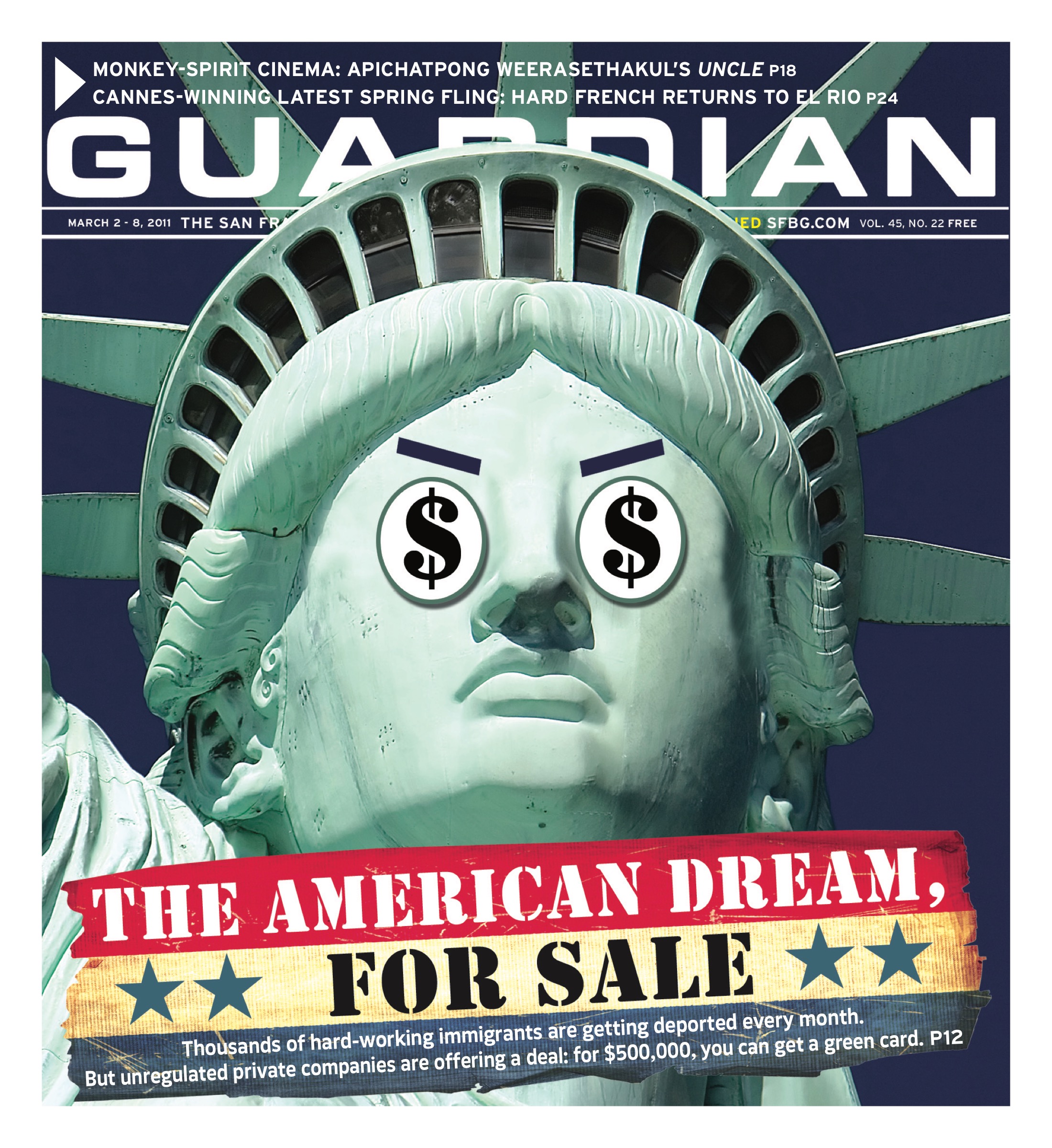
As the Guardian previously reported, the 2008 decimation of San Francisco’s sanctuary city legislation and the 2010 activation of the federal government’s controversial Secure Communities program, which both happened during former Mayor Gavin Newsom’s tenure, means that the city of St. Francis now ranks among the top 38 counties nationwide that are deporting “noncriminal aliens.”

Dubal also noted that the FBI came to the SFPD in 1996 asking for help with the task force, but also sought a waiver from the Police Commission so officers could participate without having to follow local rules. “And within two weeks, then Mayor Willie Brown said, not in our town,” Dubal said. “So in 1997, the SFPD said we are not going to join unless we can follow our own rules. And in 2001, when the SFPD joined, it was under an MOU that required them to comply with SFPD rules and was signed in 2002 by then-SFPD Chief [Earl] Saunders.”

Dubal said that after local law enforcement agencies sign an MOU with the FBI, they designate and assign officers to work from FBI headquarters. “In the past, two SFPD officers, paid with San Francisco tax dollars, physically worked in the FBI’s office in a secure room where you can only go if you have security clearance. But they still can’t spy without reasonable suspicion, and they also need audits.”

Crew and Dubal said that in a recent meeting, SFPD officials assured them that local police were following General Order 8.10, but that they are open to creating an MOU addendum to clarify this.

Crew and Dubal remain unsure if the FBI would be agreeable to signing off on that. They note that the FBI has previously stated that its JTTF has sensitive investigations going on so it can’t give the public all the information. “Fine, but the issue is, Are these investigations based on suspicion, or are they based on religious background, associations, ethnicity, and travel patterns?” Dubal said.

They also doubt that the MOU would even have surfaced if not for comments that then SFPD Chief Gascón made, first in October 2009, then in March 2010, that triggered an uproar in the local Muslim, Arab, and Pakistani and Afghani communities.

At the time, Gascón, who has a law degree and graduated from the FBI Academy, had just landed in San Francisco fresh from a stint as police chief for Meza, Ariz., where he drew praise for speaking out against Maricopa County Sheriff Joe Arpaio’s inhumane treatment of undocumented immigrants Given this seemingly progressive stance, Gascón shocked civil libertarians in San Francisco when he said he wanted to unearth SFPD’s intelligence unit, which was disbanded amid scandal in the early 1990s.

“We have to realize that in the post-9/11 world, San Francisco is an iconic city, like New York, Washington. and Los Angeles,” Gascón said. “If somebody wanted to make a big statement about something they disliked about America, doing it here would definitely get attention. We need to know what is going on under the surface of the city.”

But Gascón did not say how a revived police spy unit, which had been shut down in large part due to Crew’s work, would operate. And six months later, he upset Bay Area Muslims during a March 2010 breakfast by reportedly saying that the Hall of Justice building was not just susceptible to earthquakes, but also to an attack by members of the city’s Middle Eastern community who could park a van in front of it and blow it up.

Gascón subsequently claimed that he “never referred to Middle Easterners or Arab Americans,” but that he had instead singled out the Afghanistan and Yemen communities because they pose “potential terrorism risks”

“In light of Gascón’s comments and his desire to resurrect the intelligence unit, people were asking, ‘Is it possible that the SFPD is also doing the same thing?'” Dubal asked, noting that she started getting complaints in 2009 and throughout 2010 about the FBI.

“Folks were saying that the FBI was asking about their religious identity, their family situation, and their political activities,” she recalled. “I certainly saw an upswing in innocent people being contacted. People were saying, ‘What the hell? — the FBI knocked on my door at 5 a.m.'”


COMMUNITIES UNDER SIEGE

A 2011 Human Rights Commission report documents frequent complaints from Arab, Muslim, and South Asian communities facing racial and religious profiling while traveling and unwaraanted interrogation, surveillance, and infiltration by local and federal law enforcement personnel at their homes, places of worship, and workplaces.

The report recommended asking the supervisors and the Police Commission to “ensure that all SFPD officers, including those deputized to the Joint Terrorism Task Force, follow and comply with local and state privacy laws, including DGO 8.10.”

On April 5, the Board of Supervisors voted 10-0 to approve a resolution, sponsored by Sup. Ross Mirkarimi and cosponsored by Sups David Chiu, Eric Mar, David Campos, and John Avalos, to endorse the HRC report.

All this is happening against the backdrop of FBI guidelines that have been loosened twice since September 2011, first by U.S. Attorney General John Ashcroft in the wake of the 9/11 terrorist attacks, then by Attorney General Michael Mukasey in the dying days of the Bush administration, and now by the Obama administration.

And as The New York Times reported in March, records obtained through a Freedom of Information Act request show that between Dec. 2008 and March 2009, the FBI began 11,667 assessments of people and groups for criminal/terror links, completed 8,605 assessments, and launched more than 400 intensive investigations based on the assessments. The FBI also told the Times that agents continue to open assessments at about the same pace

Crew noted that Mukasey’s guidelines marked the first time since 1976 that the FBI has been allowed to do assessments and collect files without a suspicion that a crime has occurred.

Dubal observed that the most relevant documents to emerge from a recent FOIA request to determine if the FBI has engaged in disturbing intelligence gathering activities are those related to “geomapping.”

“The materials are not particular to Northern California, but they show how FBI maps communities based in ethnic concentrations,” Dubal said.

Dubal also pointed to the case of Yasir Afifi, an Egyptian American student from Santa Clara, who found an FBI tracking device on his car when he took it in for an oil change. In March 2011, CAIR filed suit in Washington, D.C., alleging that the FBI violated Afifi’s First, Fourth, and Fifth Amendment rights by failing to obtain a warrant.

DeJesus recently told the Guardian that the Police Commission was never made aware of the MOU’s existence. “The chief should have checked in with the commission president, at the very least,” she said. “The idea that they were not reporting this to anyone is disconcerting.”

“The SFPD does not have the authority to enter into a secret agreement with the FBI whereby some of its officers are allowed to conduct intelligence operations in violation of the Police Commission’s General Order 8.10,” Crew added.

In a Jan. 25 letter to Mahoney, representatives from the ACLU and the ALC noted that “in the past, the SFPD had not previously deferred to the FBI on whether or how to openly address how San Francisco police officers will be supervised and held to well-established and painstakingly and collaboratively crafted San Francisco general orders.”

“These are low-level investigations that require no criminal predicate, meaning that when initiating an assessment, FBI agents can conduct intrusive forms of investigation without any criminal suspicion,” Dubal said. “These include interviewing innocent Americans, infiltrating organizations, using open source data to spy and surveil, going into religious centers such as mosques to spy and surveil, and recruiting and using informants.”



Busy week for immigration reform advocates

12

On Tuesday, April 26, the California Assembly’s Public Safety Committee holds a hearing on AB 1081, Assemblymember Tom Ammiano’s Transparency and Responsibility Using State Tools (TRUST) Act. The TRUST Act seeks to allow local governments to opt out of US Immigration and Customs Enforcement (ICE’s) controversial “Secure Communities” program and to set standards for jurisdictions that chose to participate in S-Comm.

Also on Tuesday, Congressmember Luis Gutierrez kicks off his “Change Takes Courage” immigrant rights tour in seven California cities. Gutierrez lands in San Francisco Wednesday, April 27, and the Bay Area immigrant community and LGBT leaders will host him on the steps of City Hall, as Gutierrez asks President Obama to stop the record number of deportations of immigrant families and students that have already occurred under the Obama administration.

Joining Ammiano in Sacramento on Tuesday as co-sponsors of the TRUST Act are Assemblymembers Gil Cedillo (D-LA) and Bill Monning (D- Carmel) and Sen. Leland Yee (D-SF). Endorsers include 80 organizations, local governments and elected officials, including the Santa Clara and Santa Cruz County Boards, San Francisco Sheriff Michael Hennessey and retired Sacramento Police Chief Arturo Venegas, and civil rights and faith groups, including the California Partnership to End Domestic Violence, the California Labor Federation, the San Bernardino Catholic Diocese and Equality California.

SF Sheriff Michael Hennessey blew the whistle on S-Comm last May, but was unable to stop the feds from activating the program in San Francisco last June. And the most recent batch of S-Comm statistics show that San Francisco, once famed as a sanctuary city, now ranks in the top 38 counties nationwide that deport “non-criminal aliens,” which is ICE-speak for immigrants whose primary misstep is that they are in the country without the requisite paperwork.

Ammiano’s Trust Act hearing comes just days after Congressmember Zoe Lofgren (D- San Jose) called for an investigation into the conduct of ICE officials around advising local municipalities whether they are required to participate in ICE’s S-Comm program.

“You can’t have a government department essentially lying to local government and to members of Congress. This is not OK,” Lofgren said April 22, following the disclosure of hundreds of ICE documents that allegedly show that the agency has been giving intentionally contradictory and misleading information about S-Comm to local officials.

“From then-Attorney General Brown on down, it’s painfully clear ICE deceived Californians about S-Comm,” said Angela Chan, a staff attorney with the Asian Law Caucus. “That’s unacceptable behavior for a government agency in a democracy.”

Advocates hope that Ammiano’s TRUST Act will restore balance and accountability to the nation’s otherwise broken immigration system. They charge that S-Comm’s misleading focus, over-broad reach and lack of transparency have eroded trust between police and immigrant communities, making victims and witnesses to crimes reluctant to come forward.

The TRUST Act would make S-Comm an “opt-in” program so local governments can tailor their participation based on local needs.

The bill would also set safeguards for municipalities that do elect to participate in S-Comm to guard against racial profiling and would ensure that children and domestic violence survivors are not swept up by S-Comm.

The TRUST act also upholds the right to a day in court by only reporting for deportation individuals convicted – not merely accused – of crimes.

Tuesday’s hearing will be followed by Congressman Luis Gutierrez’s Wednesday appearance in San Francisco, which the African Advocacy Network, Asian Law Caucus, Central American Resource Center, Chinese for Affirmative Action, People Organized to Demand Environmental and Economic Rights, Out4Immigration, San Francisco Interfaith Coalition on Immigration, and Dolores Street Community Services sponsored.

Sups David Campos, John Avalos, and David Chiu will join Gutierrez and their message to President Obama is laid out in the following press statement:

“We need administrative relief to uphold the values of opportunity, justice, and human rights for all to move our country forward. With the stroke of a pen, President Obama could put a halt to the rapidly increasing deportations that are taking place. We need to stop deporting parents and ripping apart all families, including same-sex partners. We need to stop deporting students who would have been eligible for the DREAM ACT. Last year, the U.S. deported an estimated 400,000 immigrants, the highest number of deportations per year in the history of our nation. We must allow our counties to opt out of  “S-Comm” (Secure Communities), which is making our communities less secure, and we support Congressman Gutierrez in these courageous requests. Immigrants are part of the fabric of our communities, and we need to fix our immigration system so everyone who lives here can continue to live as a full member of society without constant fear of safety, security, and livelihood being jeopardized at any moment.”


Dick Meister: 11 Million a Year Bandits

5

Dick Meister, formerly labor editor of the SF Chronicle and KQED-TV Newsroom, has covered labor, politics and other matters for a half-century.

AFL-CIO President Richard Trumka has an important question for you.

“How much,” he asks, “did your pay go up last year? How about your friends and family?”

Before you answer, Trumka asks that you consider this: In 2010, the CEOs of major companies averaged $11.4 million for their year’s work. That was an increase of  an increase of 23 percent over their pay in 2009.

All told, the CEOs were paid $2 trillion last year.  That, of course. was during a recessionary time like now when working people were lucky to have jobs at all, whatever the pay. And the pay of those who did have jobs stayed pretty much the same, or actually went down.

The CEOs of major companies faced no such problems, obviously, with their pay increasing hugely to more than $11 million a year.  Which leads the AFL-CIO to wonder “how many firefighters, nurses, teachers or construction workers does it take to equal the pay of one CEO today?”

I’d also like to know how many CEOs do work as important as that of rank-and-file firefighters, nurses, teachers and construction workers?

The AFL-CIO’s Trumka notes that despite the collapse of financial markets three years ago at the hands of many of those same astronomically paid CEOs, the “disparity between CEO and workers’ pay has continued to grow to levels that are simply stunning.”

Think of it. Those CEOs collecting enormous pay were in charge when we sunk into the worst financial crisis since the Great Depression. When we lost 8 million jobs and millions of small businesses. When housing prices plummeted and millions of dollars in personal savings were wiped out.  Yet at the same time those in charge of the economy, notes Trumka, “still found a way to make out like bandits.”

Rich Trumka is a pretty outspoken guy, not known for understatement. But in this case, he probably is understating the situation.  The difference between CEO pay at major companies and workers’ pay is beyond stunning, beyond outrageous.

I’d say it’s virtually beyond human understanding. How could we let that happen? Is this not a democracy in which the great wealth generated here is spread more or less equally?

Hah!

OK, I’m asking foolish questions. But if ours was a true economic democracy, the spread between CEO and workers’ pay would be far less than it is. How many workers got pay raises of more than 20 percent last year? How many were paid more than $11 million?

How many needed that much money to live comfortably?

Trumka, notes that corporate CEOs “are hoarding $2 trillion in cash.” Indeed, the money-grubbing CEOs chose to take their $2 trillion in raises rather than use the money, or at least part of it, to create decent -paying jobs for their fellow citizens who are so much less fortunate than they.

To describe the CEOs as greedy would be a gross understatement.

I know I’m laying it on thick, but I’m mad – damn mad – and think you should be, too. The CEOs and their companies are stealing us blind and getting way with it.

The AFL-CIO’s Trumka does offer the possibility of better times, however. He says that “although pay is more out of balance than it has been during most of our lifetimes, for the first time there is hope that things are changing.”

That, says Trumka, is because of a new law, the Wall Street Reform and Consumer Protection Act. The act, as President Obama said when signing it into law last year, is “a sweeping overhaul of the United States financial regulatory system on a scale not seen since the reforms that followed the Great Depression.”

The lack of sufficient financial regulations sufficiently enforced was, or course, the main factor in the continuing Great recession, just as it was during the Great Depression of the 1930s.

The new law is already under attack by Congressional Republicans who have announced their intention to try to repeal it. They particularly object to provisions that would give shareholders a vote on CEO pay and require companies to publicly disclose the ratio between the pay of their CEOs and their workers.

Trumka says it truly shocks him that companies and their GOP allies “have the nerve to argue against those provisions in public, and lobby against them – after the companies drove our country off an economic cliff.”

Trumka says the AFL-CIO “is ready to have this debate. We will take on Wall Street and we will win.”

Strong words, but the AFL-CIO has the powerful political allies, the funding and the troops to carry out Trumka’s bold promise. Let’s hope fervently that labor and its supporters can indeed win the debate, If not, we could be in line for more serious Wall Street-based troubles  – an extended recession for sure, maybe worse.

Dick Meister, former labor editor of the SF Chronicle and KQED Newsroom, has covered labor and politics for a half-century. Contact him through his website, www.dickmeister.com, which includes more than 300 of his columns.

1964 all over again?

16

Outstanding piece on Calbuzz about the new Belva Davis book, “Never in My Wildest Dreams: A Black Woman’s Life in Journalism.” The Calbuzzers recount the vicious racist attacks Davis endured during the 1964 Republican convention in San Francisco, when the Goldwater forces were in control:


As we began our descent down the ramps of the Cow Palace, a self-appointed posse dangled over the railings, taunting. “Niggers!” “Get out of here, boy!” “You too, nigger bitch!” “Go on, get out!” “I’m gonna kill your ass!”


I stared straight ahead, putting one foot in front of the other like a soldier who would not be deterred from a mission. The throng began tossing garbage at us: wadded up convention programs, mustard-soaked hot dogs, half-eaten Snickers bars. My goal was to appear deceptively serene, mastering the mask of dispassion I had perfected since childhood to steel myself against any insults the outside world hurled my way.


Then a glass soda bottle whizzed within inches of my skull. I heard it whack against the concrete and shatter. I didn’t look back, but I glanced sideways at Louis and felt my lower lip began to quiver. He was determined we would give our tormentors no satisfaction.


“If you start to cry,” he muttered, “I’ll break your leg.”


Davis, of course, survived and when on to a storied career locally. The scary thing: There are a lot of parallels between the 1964 Goldwaterites and the tea partiers of today. Calbuzz:


Nearly 50 years later [the Goldwater platform] might serve as a manifesto for today’s Tea Party Republicans.


Attacking Democrats as “Federal extremists,” who have “enslaved” and “seek to master” ordinary Americans, the platform vowed , among other things, that Republicans would make deficit reduction their highest economic priority, oppose the “compulsory Democratic scheme” of Medicare and roll back actions of the Kennedy-Johnson Administration that “violently thrust Federal power into the free market.”


And race is still very much a part of what’s going on:


As evidence of the role that race still plays in conservative politics, Davis cited the Tea Party’s embrace of “birthers,” the slurs and spittle hurled by activists at Representatives and civil rights leaders John Lewis and James Clyburn at health care bill protests, and the recent email depicting Obama as a chimpanzee that was sent out by Tea Partier and Orange County Republican Central Committee member Marilyn Davenport.


 Back to the future. And it isn’t pretty.


Get baked with Obama

2

Whoa, dude. Back up. What?

Well, sort of. We all have heard about the $35,800 dinner that President Obama will be feasting upon tonight in Nob Hill, so needless to say, the man is in town. And the Green Door, one of San Francisco’s premier marijuana dispensaries, has tipped their patients off to some very top secret information – The president’s motorcade, according to the Green Door’s website, is expected to serendipitously drive past the shop, located at 843 Howard, at approximately 4:20 p.m., on this, the unofficial stoner holiday we affectionately call 4/20.

Just about every marijuana dispensary in the city is having some sort of patient appreciation party and tokefest, and the Green Door is no exception. All day they will be offering product deals and giveaways with raffle prizes, Djs, and munchies, so if you’re lucky enough have made it inside the shop before the police temporarily close off Howard – sometime between 3 and 4 p.m., the Green door says, though we were unable to verify any specifics with the SFPD – you will be able to “inhale to the chief.”

Happy 4/20!

Calvin Trillin, Deadline Poet

0

Donald Trump Demands That Obama Show His Birth Certificate

By Calvin Trillin

All White House hopefuls we forewarn:

You’ll have to prove that you were born.

Before Trump hits the state of granite,

He’ll have to tell us all the planet

Upon which he was born and reared —

Where loudmouths reign and hair is weird.

The failed experiment

27

news@sfbg.com

For three decades we have conducted a massive economic experiment, testing a theory known as supply-side economics. The theory goes like this: Lower tax rates will encourage more investment, which in turn will mean more jobs and greater prosperity — so much so that tax revenues will go up, despite lower rates.

The late Milton Friedman, the libertarian economist who wanted to shut down public parks because he considered them socialism, promoted this strategy. Ronald Reagan embraced Friedman’s ideas and made them into policy when he was elected president in 1980.

For the past decade, we have doubled down on this theory of supply-side economics with the tax cuts sponsored by President George W. Bush in 2001 and 2003, which President Barack Obama has agreed to continue for two years.

You would think that whether this grand experiment worked would be settled after three decades. You would think the practitioners of the dismal science of economics would look at their demand curves and the data on incomes and taxes and pronounce a verdict, the way Galileo and Copernicus did when they showed that geocentrism was a fantasy because the Earth revolves around the sun (known as heliocentrism). But economics is not like that. It is not like physics with its laws and arithmetic with its absolute values.

Tax policy is something the framers of the Constitution left to politics. And in politics, the facts often matter less then who has the biggest bullhorn.

The Mad Men who once ran campaigns featuring doctors extolling the health benefits of smoking are now busy marketing the dogma that tax cuts mean broad prosperity, no matter what the facts show.

As millions of Americans prepare to file their annual taxes, they do so in an environment of media-perpetuated tax myths. Here are a few points about taxes and the economy that you may not know, to consider as you prepare to file your taxes. (All figures are inflation adjusted.)

1. Poor Americans do pay taxes.

Gretchen Carlson, the Fox News host, said last year “47 percent of Americans don’t pay any taxes.” John McCain and Sarah Palin both said similar things during the 2008 campaign about the bottom half of Americans.

Ari Fleischer, the former Bush White House spokesman, once said “50 percent of the country gets benefits without paying for them.”

Actually, they pay lots of taxes — just not lots of federal income taxes.

Data from the Tax Foundation shows that in 2008, the average income for the bottom half of taxpayers was $15,300.

This year the first $9,350 of income is exempt from taxes for singles and $18,700 for married couples, just slightly more than in 2008. That means millions of the poor do not make enough to owe income taxes.

But they still pay plenty of other taxes, including federal payroll taxes. Between gas taxes, sales taxes, utility taxes and other taxes, no one lives tax free in America.

When it comes to state and local taxes, the poor bear a heavier burden than the rich in every state except Vermont, the Institute on Taxation and Economic Policy calculated from official data. In Alabama, for example, the burden on the poor is more than twice that of the top 1 percent. The one-fifth of Alabama families making less than $13,000 pay almost 11 percent of their income in state and local taxes, compared with less than 4 percent for those who make $229,000 or more.

2. The wealthiest Americans don’t carry the burden.

This is one of those oft-used canards. Senator Rand Paul, the tea party favorite from Kentucky, told David Letterman recently that “the wealthy do pay most of the taxes in this country.”

The Internet is awash with statements that the top 1 percent pays, depending on the year, 38 percent or more than 40 percent of taxes.

It’s true that the top 1 percent of wage earners paid 38 percent of the federal income taxes in 2008 (the most recent year for which data is available). But people forget that the income tax is less than half of federal taxes and only one-fifth of taxes at all levels of government.

Social Security, Medicare, and unemployment insurance taxes (known as payroll taxes) are paid mostly by the bottom 90 percent of wage earners. That’s because, once you reach $106,800 of income, you pay no more for Social Security, though the much smaller Medicare tax applies to all wages. Warren Buffett pays the exact same amount of Social Security taxes as someone who earns $106,800.

3. In fact, the wealthy are paying less taxes.

The Internal Revenue Service issues an annual report on the 400 highest income-tax payers. In 1961, there were 398 taxpayers who made $1 million or more, so I compared their income tax burdens from that year to 2007.

Despite skyrocketing incomes, the federal tax burden on the richest 400 has been slashed, thanks for a variety of loopholes, allowable deductions and other tools. The actual share of their income paid in taxes, according to the IRS, is 16.6 percent. Adding payroll taxes barely nudges that number.

Compare that to the vast majority of Americans, whose share of their income going to federal taxes increased from 13.1 percent in 1961 to 22.5 percent in 2007.

(By the way, during seven of the eight Bush years, the IRS report on the top 400 taxpayers was labeled a state secret, a policy that the Obama overturned almost instantly after his inauguration.)

4. Many of the very richest pay no current income taxes at all.

John Paulson, the most successful hedge fund manager of all, bet against the mortgage market one year and then bet with Glenn Beck in the gold market the next. Paulson made himself $9 billion in fees in just two years. His current tax bill on that $9 billion? Zero.

Congress lets hedge fund managers earn all they can now and pay their taxes years from now.

In 2007, Congress debated whether hedge fund managers should pay the top tax rate that applies to wages, bonuses and other compensation for their labors, which is 35 percent. That tax rate starts at about $300,000 of taxable income; not even pocket change to Paulson, but almost 12 years of gross pay to the median-wage worker.

The Republicans and a key Democrat, Sen. Charles Schumer of New York, fought to keep the tax rate on hedge fund managers at 15 percent, arguing that the profits from hedge funds should be considered capital gains, not ordinary income, which got a lot of attention in the news.

What the news media missed is that hedge fund managers don’t even pay 15 percent. At least, not currently. So long as they leave their money, known as “carried interest,” in the hedge fund, their taxes are deferred. They only pay taxes when they cash out, which could be decades from now for younger managers. How do these hedge fund managers get money in the meantime? By borrowing against the carried interest, often at absurdly low rates — currently about 2 percent.

Lots of other people live tax-free, too. I have Donald Trump’s tax records for four years early in his career. He paid no taxes for two of those years. Big real-estate investors enjoy tax-free living under a 1993 law President Clinton signed. It lets “professional” real-estate investors use paper losses like depreciation on their buildings against any cash income, even if they end up with negative incomes like Trump.

Frank and Jamie McCourt, who own the Los Angeles Dodgers, have not paid any income taxes since at least 2004, their divorce case revealed. Yet they spent $45 million one year alone. How? They just borrowed against Dodger ticket revenue and other assets. To the IRS, they look like paupers.

In Wisconsin, Terrence Wall, who unsuccessfully sought the Republican nomination for U.S. Senate in 2010, paid no income taxes on as much as $14 million of recent income, his disclosure forms showed. Asked about his living tax-free while working people pay taxes, he had a simple response: everyone should pay less.

5. And (surprise!) since Reagan , only the wealthy have gained significant income.

The Heritage Foundation, the Cato Institute, and similar conservative marketing organizations tell us relentlessly that lower tax rates will make us all better off.

“When tax rates are reduced, the economy’s growth rate improves and living standards increase,” according to Daniel J. Mitchell, an economist at Heritage until he joined Cato. He says that supply-side economics is “the simple notion that lower tax rates will boost work, saving, investment, and entrepreneurship.”

When Reagan was elected president, the marginal tax rate for income was 70 percent. He cut it to 50 percent and then 28 percent starting in 1987. It was raised by George H.W. Bush and Clinton and then cut by George W. Bush. The top rate is now 35 percent.

Since 1980, when President Reagan won election promising prosperity through tax cuts, the average income of the vast majority — the bottom 90 percent of Americans — has increased a meager $303, or 1 percent. Put another way, for each dollar people in the vast majority made in 1980, in 2008 their income was up to $1.01.

Those at the top did better. The top 1 percent’s average income more than doubled to $1.1 million, according to an analysis of tax data by economists Thomas Piketty and Emmanuel Saez. The really rich, the top 10th of 1 percent, each enjoyed almost $4 in 2008 for each dollar in 1980.

The top 300,000 Americans now enjoy almost as much income as the bottom 150 million, the data show.

6. When it comes to corporations, the story is much the same — less taxes.

Corporate profits in 2008, the latest year for which data is available, were $1.8 billion, up almost 12 percent from $1.6 billion in 2000. Yet even though corporate tax rates have not been cut, corporate income-tax revenues fell to $230 billion from $249 billion — an 8 percent decline, thanks to a number of loopholes. The official 2010 profit numbers are not added up and released by the government, but the amount paid in corporate taxes is: in 2010 they fell further, to $191 billion — a decline of more than 23 percent compared with 2000.

7. Some corporate tax breaks destroy jobs.

Despite all the noise that America has the world’s second highest corporate tax rate, the actual taxes paid by corporations are falling because of the growing number of loopholes and companies shifting profits to tax havens like the Cayman Islands.

And right now America’s corporations are sitting on close to $2 trillion in cash that is not being used to build factories, create jobs or anything else, but act as an insurance policy for managers unwilling to take the risk of actually building the businesses they are paid so well to run. That cash hoard, by the way, works out to nearly $13,000 per taxpaying household.

A corporate tax rate that is too low actually destroys jobs. That’s because a higher tax rate encourages businesses (who don’t want to pay taxes) to keep the profits in the business and reinvest, rather than pull them out as profits and have to pay high taxes.

The 2004 American Jobs Creation Act, which passed with bipartisan support, allowed more than 800 companies to bring profits that were untaxed but overseas back to the United States. Instead of paying the usual 35 percent tax, the companies paid just 5.25 percent.

The companies said bringing the money home — “repatriating” it, they called it — would mean lots of jobs. Sen. John Ensign, the Nevada Republican, put the figure at 660,000 new jobs.

Pfizer, the drug company, was the biggest beneficiary. It brought home $37 billion, saving $11 billion in taxes. Almost immediately it started firing people. Since the law took effect, it has let 40,000 workers go. In all, it appears that at least 100,000 jobs were destroyed.

Now Congressional Republicans and some Democrats are gearing up again to pass another tax holiday, promoting a new Jobs Creation Act. It would affect 10 times as much money as the 2004 law.

8. Republicans like taxes too.

President Reagan signed into law 11 tax increases, targeted at people down the income ladder. His administration and the Washington press corps called the increases “revenue enhancers.” Among other things, Reagan hiked Social Security taxes so high that by the end of 2008, the government had collected more than $2 trillion in surplus tax.

George W. Bush signed a tax increase, too, in 2006, despite his written ironclad pledge to never raise taxes on anyone. It raised taxes on teenagers by requiring kids up to age 17, who earned money, to pay taxes at their parents’ tax rate, which would almost always be higher than the rate they would otherwise pay. It was a story that ran buried inside The New York Times one Sunday, but nowhere else.

In fact, thanks to Republicans, one in three Americans will pay higher taxes this year than they did last year.

First, some history. In 2009, President Obama pushed his own tax cut—for the working class. He persuaded Congress to enact the Making Work Pay Tax Credit. Over the two years 2009 and 2010, it saved single workers up to $800 and married heterosexual couples up to $1,600, even if only one spouse worked. The top 5 percent or so of taxpayers were denied this tax break.

The Obama administration called it “the biggest middle-class tax cut” ever. Yet last December the Republicans, poised to regain control of the House of Representatives, killed Obama’s Making Work Pay Credit while extending the Bush tax cuts for two more years — a policy Obama agreed to.

By doing so, Congressional Republican leaders increased taxes on a third of Americans, virtually all of them the working poor, this year.

As a result, of the 155 million households in the tax system, 51 million will pay an average of $129 more this year. That is $6.6 billion in higher taxes for the working poor, the nonpartisan Tax Policy Center estimated.

In addition, the Republicans changed the rate of workers’ FICA contributions, which finances half of Social Security. The result:

If you are single and make less than $20,000, or married and less than $40,000, you lose under this plan.

But the top 5 percent, people who make more than $106,800, will save $2,136 ($4,272 for two-career couples).

9. Other countries do it better.

We measure our economic progress, and our elected leaders debate tax policy, in terms of a crude measure known as gross domestic product. The way the official statistics are put together, each dollar spent buying solar energy equipment counts the same as each dollar spent investigating murders.

We do not give any measure of value to time spent rearing children or growing our own vegetables or to time off for leisure and community service.

And we do not measure the economic damage done by shocks, such as losing a job, which means not only loss of income and depletion of savings, but loss of health insurance, which a Harvard Medical School study found results in 45,000 unnecessary deaths each year

Compare this to Germany, one of many countries with a smarter tax system and smarter spending policies.

Germans work less, make more per hour and get much better parental leave than Americans, many of whom get no fringe benefits such as health care, pensions or even a retirement savings plan. By many measures the vast majority live better in Germany than in America.

To achieve this, single German workers on average pay 52 percent of their income in taxes. Americans average 30 percent, according to the Organizations for Economic Cooperation and Development.

At first blush, the German tax burden seems horrendous. But in Germany (as well as Britain, France, Scandinavia, Canada, Australia, and Japan), tax-supported institutions provide many of the things Americans pay for with after-tax dollars. Buying wholesale rather than retail saves money.

A proper comparison would take the 30 percent average tax on American workers and add their out-of-pocket spending on health care, college tuition, and fees for services and compare that with taxes that the average German pays. Add it all up and the combination of tax and personal spending is roughly equal in both countries, but with a large risk of catastrophic loss in America, and a tiny risk in Germany.

Americans take on $85 billion of debt each year for higher education, while college is financed by taxes in Germany and tuition is cheap to free in other modern countries. While soaring medical costs are a key reason that since 1980 bankruptcy in America has increased 15 times faster than population growth, no one in Germany or the rest of the modern world goes broke because of accident or illness. And child poverty in America is the highest among modern countries — almost twice the rate in Germany, which is close to the average of modern countries.

On the corporate tax side, the Germans encourage reinvestment at home and the outsourcing of low-value work, like auto assembly, and German rules tightly control accounting so that profits earned at home cannot be made to appear as profits earned in tax havens.

Adopting the German system is not the answer for America. But crafting a tax system that benefits the vast majority, reduces risks, provides universal health care and focuses on diplomacy rather than militarism abroad (and at home) would be a lot smarter than what we have now.

Here is a question to ask yourself: We started down this road with Reagan’s election in 1980 and upped the ante in this century with George W. Bush.

How long does it take to conclude that a policy has failed to fulfill its promises? And as you think of that, keep in mind George Washington. When he fell ill his doctors followed the common wisdom of the era. They cut him and bled him to remove bad blood. As Washington’s condition grew worse, they bled him more. And like the mantra of tax cuts for the rich, they kept applying the same treatment until they killed him.

Luckily we don’t bleed the sick anymore, but we are bleeding our government to death.


ABOUT THE AUTHOR:

David Cay Johnston is a columnist for tax.com and teaches the tax, property, and regulatory law of the ancient world at Syracuse University College of Law and Whitman School of Management. He has also been called the “de facto chief tax enforcement officer of the United States” because his reporting in The New York Times shut down many tax dodges and schemes, just two of them valued by Congress at $260 billion.

Johnston received a 2001 Pulitzer Prize for exposing tax loopholes and inequities. He wrote two bestsellers on taxes, Perfectly Legal and Free Lunch. Later this year David Cay Johnston will be out with a new book, The Fine Print, revealing how big business, with help from politicians, abuses plain English to rob you blind.


No cuts-only pension deal

5

EDITORIAL Mayor Ed Lee has released a draft set of proposals for pension reform, and union leaders continue to meet with financier Warren Hellman to try to craft an alternative. Meanwhile, Public Defender Jeff Adachi is narrowing his options and appears ready to move forward to put his own plan on the ballot.

Everyone involved claims to be interested in a compromise, in some proposal that would reduce the city’s burden of paying $350 million this year (and potentially as much as $790 million in five years) into the employee pension fund. We support that idea, too — there are plenty of necessary, progressive moves to fix the city’s pension system and free up more cash for local programs.

But so far, none of the proposals on the table include any new revenue sources — which means, in effect, that the mayor, Hellman, and Adachi all want city workers to bear the entire brunt of the impact of a Wall Street-driven recession. The message: only city employees should share the pain; the wealthiest San Franciscans and biggest, richest businesses don’t have to contribute at all.

It’s a dangerous part of the tax mythology that Pulitzer Prize-winning reporter David Cay Johnston discusses in his article in the Guardian this week. He notes that the argument in favor of tax cuts for the rich — that lower taxes will lead to more investment and thus more jobs — has been tested in this country for 30 years. And it hasn’t worked.

Most San Franciscans probably realize that. Most city officials vote for Democrats, opposed the Bush-era tax cuts on the rich, and argue for more federal aid to cities. This is a progressive town.

But when it comes to something as fundamental as local economic policy — who pays for city services and who gets the benefits — the story becomes completely different.

The mayor and eight of the 11 supervisors are celebrating a broad-based tax cut as a way to create jobs in the Tenderloin and mid-Market (although the evidence that tax cuts don’t create jobs is overwhelming). The mayor is looking at the equivalent of a cuts-only budget (although everyone at City Hall opposes the notion of a cuts-only budget in Sacramento). And while it’s almost certain that some sort of pension reform will be on the November ballot, none of the players involved in the negotiations have openly taken what seems to us to be the only logical position:

Pension reform has to be linked to tax reform — a commercial rent tax, a progressive gross receipts tax, a city income tax, an increase in the Pacific Gas and Electric Co. franchise fee or something else that hits those who can afford to pay. Otherwise, we can’t support it.

Even the city employee unions are being awfully quiet about the need for a deal that includes new taxes. They ought to be leading the charge here, telling everyone that a cuts-only pension deal isn’t going to be acceptable. (The tax measures could hold until the November 2012 budget, when they’ll be easier to pass — if there’s a firm assurance that the mayor, Hellman, Adachi, the supervisors, and all the other players will support them.)

City employees are being asked to take what amount to pay cuts — which will reduce their purchasing power and have a depressing impact on the local economy. Taxing the wealthy (who spend a much smaller percentage of their income) has no such depressing impact. Those are hard, cold facts. They need to be part of the discussion.

Robert Reich, the former labor secretary who now teaches at the University of California, Berkeley, has an interesting essay on his blog April 9 that discusses Obama’s budget capitulations. The president, he notes, “is losing the war of ideas because he won’t tell the American public the truth: that we need more government spending now — not less — in order to get out of the gravitational pull of the Great Recession. That we got into the Great Recession because Wall Street went bonkers and government failed to do its job at regulating financial markets … That the only ways to deal with the long-term budget problem is to demand that the rich pay their fair share of taxes.

“And that, at a deeper level, the increasingly lopsided distribution of income and wealth has robbed the vast working middle class of the purchasing power they need to keep the economy going at full capacity.”

That’s as true here as it is in Washington. And if city officials want progressive support for pension reform, they need to acknowledge it.


Our Weekly Picks: April 13-19, 2011

0

THURSDAY

APRIL 14

MUSIC


Two Door Cinema Club

Featured as a “You Oughta Know” artist on VH1, Northern Ireland’s Two Door Cinema Club is an indie electropop trio comprised of Alex Trimble (lead vocals/guitar), Sam Halliday (vocals/guitar), and Kevin Baird (bass/vocals). (What of the drummer, you ask? Sometimes human, sometimes a computer.) The band’s Tourist History recently picked up the 2010 Choice Music Prize for Irish album of the year, suggesting its making good on the promise shown by opening for indie rock greats like Foals, Phoenix, and Delphic. If you’re one of the working schmucks who can’t take the time off for Coachella, catch Two Door Cinema Club before it goes to Indio. (Jen Verzosa)

With Globes and Work Drugs

8 p.m., $20

Fillmore

1850 Geary, SF

(415) 346-6000

www.livenation.com

EVENT


“Charles Phoenix Retro Slide Show”

Oddball Americana guru Charles Phoenix has explored and celebrated the best in kitschy, cool, kooky artifacts and history for many years now, having written several books on mid-20th century deep-fried pop culture, fashion, lifestyles, and more. The author of tomes such as Southern California In The ’50s and Americana The Beautiful brings his hilarious slide show and talk to the city, set to roast the imagery found in some of the thousands of vintage Kodachrome slides has collected at flea markets over the years. Be sure to keep an eye out for some familiar places and things — Phoenix has promised to include a bevy of vintage San Francisco slides for this entertaining ode to the odd and unique. (Sean McCourt)

8 p.m., $25

Roxie Theater

3117 16th St., SF

(415) 863-1087

www.roxie.com

PERFORMANCE


Our Daily Bread

Carb load on this: in a collaboration between Amara Tabor-Smith’s Deep Waters Dance Theater, director Ellen Sebastian Chang, and visual artist Lauren Elder, Our Daily Bread delves into the folklore and stories surrounding food traditions. The socially conscious hybrid theater experience draws from a family gumbo tradition, examining how industrialized agriculture, fast food culture, and our global food crisis affect current food practices. In addition, CounterPulse resident artist Tabor-Smith also considers who is missing from the sustainable food movement. With red beans and rice on the mind, expect to fill your plate with individual food legacies and questions regarding your own relationship to food. You are what you eat. (Julie Potter)

Thurs/14–Sun/17, 8 p.m., $18–$22

CounterPulse

1310 Mission, SF

(415) 626-2060

www.counterpulse.org

EVENT


Nikki Sixx

Known not only for his fiery stage presence and key songwriting contributions as bassist for Mötley Crüe, Nikki Sixx also gained a notorious reputation for his off-stage antics, particularly his legendary appetite for drugs and debauchery. Sober now for several years, Sixx detailed many of these early escapades and horrors in his 2007 book The Heroin Diaries. He returns — just before a major summer tour, which includes a June stop in SF — with the follow-up, This Is Gonna Hurt: Music, Photography, and Life through the Distorted Lens of Nikki Sixx, a look at his post-addiction life that finds him a successful author, radio host, and of course, still rocking the stage with the Crüe. (McCourt)

6 p.m., $29.99 (includes book)

Book Passage

One Ferry Building, SF

(415) 835-1020

www.bookpassage.com

FRIDAY

APRIL 15

DANCE


Alonzo King’s Lines Ballet

The longer I watch Alonzo King’s Lines Ballet, the more this choreographer manages to surprise me. What intrigues is not so much his language — intricate, idiosyncratic, and demanding — or even the way he uses it on his dancers. But there is a vision, a philosophy behind his work, that we get glimpses of in every new piece. That’s what good dance is supposed to do. King also goes out of his way to find collaborators who can envelop his choreography in the mantle of new contexts. Of course, it helps that these other-than-dance contributions, in particular, are often spectacular on their own. But to get Mickey Hart, who actually is philosophically pretty close to King, create a score for Lines Ballet is a coup even for a choreographer with a growing international reputation. Architect Christopher Haas, who worked on the de Young Museum, created the set. (Rita Felciano)

Through April 24

Fri.–Sat., 8 p.m.; April 20–21, 7:30 p.m.;

April 24, 5 p.m., $25–$65

Yerba Buena Center for the Arts

Novellus Theater

700 Howard, SF

(415) 978-2787

www.linesballet.org

MUSIC


The Residents

Hang on to your eyeballs, San Francisco’s most enigmatic art-rock collective the Residents will storm the stage at Bimbo’s in support of its for-no-particular-reason, ghost-story themed “Traveling Light” tour. The calculatedly anonymous group (currently a trio), as well known for its elaborately costumed stage personae and mixed-media presentations as for its deconstructed lyrics and dystopian musical baditude, is fast approaching its fourth decade. But don’t expect a set stuffed merely with humdrum nostalgia. Actually, don’t expecting any particular thing, because defying expectations is what the Residents do best. Word is the group will be recording the proceedings in three (possibly four ) dimensions, so wearing your very best top hat to the show might not be a bad idea. (Nicole Gluckstern)

Fri/15–Sat/16, 9 p.m., $30

Bimbo’s

1025 Columbus, SF

(415) 474-0365

www.bimbos365club.com

PERFORMANCE


Zaccho Dance Theatre

With a title — The Monkey and the Devil — taken from racial slurs, Joanna Haigood’s dance theater performance installation, performed by Zaccho Dance Theatre, addresses lingering contemporary racism, rooted in the lasting effects of America’s slave trade. Even in the age of Obama, the performance acknowledges how Americans grapple with the residue of slavery and reunite a split house. Surrounded by two massive, rotating set pieces designed by visual artist Charles Trapolin, audience members are free to navigate the continuously running performance installation in the Yerba Buena Center for the Arts Forum. A post-performance discussion follows Friday’s installment. Don’t miss this immersive, compelling work. (Potter)

Fri/15, 8–10 p.m.;

Sat/16-Sun/17, 12-2 p.m. and 3–5 p.m., free

Yerba Buena Center for the Arts Forum

701 Mission, SF

(415) 978-5210

www.ybca.org

SATURDAY

APRIL 16

EVENT


“How-to Homestead: 11 in 11 Tour”

You can go on tour without ever leaving your city. That’s the idealistic message of How-to Homestead’s “11 in 11 Tour,” a yearlong barnstorming series with dates planned for each of San Francisco’s districts. Spearheaded by Melinda Stone, a University of San Francisco professor equally knowledgeable in matters of celluloid and soil, How-to Homestead’s homebrew of entertainment and education draws on alternative cinema, practical workshops, and live music to create a distinctly flavorful commons. The fourth “11 in 11” program takes place at the historic Bayview Opera House and features a “Chickens in the City” workshop and contra dance call, in addition to the usual potluck dinner and film treats. With spring in the air, it should be an especially lively installment. (Max Goldberg)

4–10:30 p.m., $5 suggested donation

Bayview Opera House

4705 Third St., SF

www.howtohomestead.org

DANCE


ODC Dance Jam

At first the ODC Dance Jam consisted of half a dozen cute kids showing their prowess on an ODC/Dance opening night. Today ODC’s youth program is much too big for such capers, and the tables have been turned. This year the professional company will make an appearance — with Brenda Way’s John Somebody — at ODC Dance Jam’s own concert, “Make the Road by Walking.” Taking classes five times in addition to rehearsing, the 14-member troupe, ages 13-18, may not call itself pre-professional, but its dancers surely are on the way. KT Nelson, Kimi Okada, Bliss Kohlmeyer-Dowman, Greg Dawson, and Kim Epifano, about as professional a group as any, created choreography for them. (Felciano)

Sat/16, 8 p.m.; Sun/17, 4 and 7 p.m., $12

ODC Dance Commons

351 Shotwell, SF

(415) 863-9830

www.brownpapertickets.com/event/166923

SUNDAY

APRIL 17

MUSIC


Foxtails Brigade

(((folkYeah!))) and Antenna Farm Records host a release party in honor of San Francisco duo Foxtails Brigade’s full-length debut, The Bread and the Bait. On its surface, The Bread and the Bait is as delicate as lace — the album art depicts a ladylike tea party in progress. But look closer (why are two of the women blindfolded? And why is one clutching a knife?) and listen closely: there’s an underlying darkness cloaked in those ethereal vocals set against simple cello and violin melodies. Join in the celebration with musical performances by ‘Tails and Rachel Fannan of Sleepy Sun, plus comedy by Brent Weinbach and Moeshe Kasher, and a fashion show featuring designs by Verriers and Sako, Lecon de Vetement, and Zoe Hong. (Verzosa)

With Rachel Fannan

8 p.m., $15

Swedish American Music Hall

2174 Market, SF

(415) 861-5016

www.swedishamericanhall.com MUSIC


Wire

On a recent trip to New York City, I won tickets to watch Wire from the “Band Bench” on Late Night with Jimmy Fallon. Arriving at 30 Rock, I found a few other awkward music nerds who refused to take off their jackets looking forward to the performance. In a bit of TV magic, they filled out the 30 or so “hardcore fans” with tourists eager for a glimpse of Fallon guest Keanu Reeves. It could just be the standard practice, but it’s also typical of the U.K. band’s U.S. reception, remaining relatively unknown despite being perpetual critical darlings and inspiring alternative rock bands throughout a career spanning from the release of 1977’s influential punk album, Pink Flag, to their most recent, Red Barked Tree. (Ryan Prendiville) With Lumerians and DJ Callum McGowan

8 p.m., $21

Slim’s

333 11th St., SF

(415) 255-0333

www.slims-sf.com 

The Guardian listings deadline is two weeks prior to our Wednesday publication date. To submit an item for consideration, please include the title of the event, a brief description of the event, date and time, venue name, street address (listing cross streets only isn’t sufficient), city, telephone number readers can call for more information, telephone number for media, and admission costs. Send information to Listings, the Guardian Building, 135 Mississippi St., SF, CA 94107; fax to (415) 487-2506; or e-mail (paste press release into e-mail body — no text attachments, please) to listings@sfbg.com. Digital photos may be submitted in jpeg format; the image must be at least 240 dpi and four inches by six inches in size. We regret we cannot accept listings over the phone.

Editor’s notes

1

tredmond@sfbg.com

Does anybody else feel as if the whole country is collapsing around us?

I mean, I’m not an apocalypse fan. I remember when Ronald Reagan was elected and we had a big meeting at the Connecticut Citizen Action Group, where I worked, and a lot of people were on the edge of a serious panic, and Miles Rapoport, the staff director, told us all to calm down: the organization, and our work, would survive. So would the nation. I spent a lot of time with serious anarchist types in the 1980s, and I never really bought the notion that the revolution was at hand (alas, it was not) or that the United States of America and the corporate world order were on the brink of collapse (alas, again).

I think I slept through the great Harmonic Convergence on Aug. 17, 1987 (“the point at which the counterspin of history finally comes to a momentary halt”) and I’m not terribly concerned about the Mayan calendar.

But I’m getting so I wake up every morning these days asking myself exactly what the fuck is going on.

I called my old friend Calvin Welch the other day to talk about the San Francisco mayor’s race, and when I asked him how he was doing, he told me: “Well, other than the fact that America is falling apart everywhere I look, I’m doing fine.” And he’s not any crazier than me.

It’s funny. I never felt as nervous about the state of the nation under Reagan or Bush as I’m feeling right now under President Obama. And I wasn’t as scared about California when Arnold Schwarzenegger was governor as I am now, with Jerry Brown in charge.

Not that Reagan and Bush weren’t far, far worse, or that Brown isn’t doing a decent job, all thing considered. But when our folks are in charge — decent, smart folks who, for all their flaws, have essentially decent ideas about politics and humanity — and they can’t seem to make anything better … I guess that’s when I start to wonder if anyone can.

I’m not one to make sweeping generalizations (well, not usually), but in 2011, the country, and the state, are being run by a handful of bullies. They’re wrecking the economy, wrecking the schools, wrecking the future — and nobody seems to be able to stand up to them. And even this diehard optimist is starting to wonder when it will ever end.

Editorial: Link pension reform to tax reform (Second in a series on pension reform)

14

Mayor Ed Lee has released a draft set of proposals for pension reform, and union leaders continue to meet with financier Warren Hellman to try to craft an alternative. Meanwhile, Public Defender Jeff Adachi is narrowing his options and appears ready to move forward to put his own plan on the ballot.

Everyone involved claims to be interested in a compromise, in some proposal that would reduce the city’s burden of paying $350 million this year (and potentially as much as $790 million in five years) into the employee pension fund. We support that idea, too — there are plenty of necessary, progressive moves to fix the city’s pension system and free up more cash for local programs.

But so far, none of the proposals on the table include any new revenue sources — which means, in effect, that the mayor, Hellman, and Adachi all want city workers to bear the entire brunt of the impact of a Wall Street-driven recession. The message: only city employees should share the pain; the wealthiest San Franciscans and biggest, richest businesses don’t have to contribute at all.

It’s a dangerous part of the tax mythology that Pulitzer Prize-winning reporter David Cay Johnston discusses on page 10. He notes that the argument in favor of tax cuts for the rich — that lower taxes will lead to more investment and thus more jobs — has been tested in this country for 30 years. And it hasn’t worked.

Most San Franciscans probably realize that. Most city officials vote for Democrats, opposed the Bush-era tax cuts on the rich, and argue for more federal aid to cities. This is a progressive town.

But when it comes to something as fundamental as local economic policy — who pays for city services and who gets the benefits — the story becomes completely different.

The mayor and eight of the 11 supervisors are celebrating a broad-based tax cut as a way to create jobs in the Tenderloin and mid-Market (although the evidence that tax cuts don’t create jobs is overwhelming). The mayor is looking at the equivalent of a cuts-only budget (although everyone at City Hall opposes the notion of a cuts-only budget in Sacramento). And while it’s almost certain that some sort of pension reform will be on the November ballot, none of the players involved in the negotiations have openly taken what seems to us to be the only logical position:

Pension reform has to be linked to tax reform — a commercial rent tax, a progressive gross receipts tax, a city income tax, an increase in the Pacific Gas and Electric Co. franchise fee or something else that hits those who can afford to pay. Otherwise, we can’t support it.

Even the city employee unions are being awfully quiet about the need for a deal that includes new taxes. They ought to be leading the charge here, telling everyone that a cuts-only pension deal isn’t going to be acceptable. (The tax measures could hold until the November 2012 budget, when they’ll be easier to pass — if there’s a firm assurance that the mayor, Hellman, Adachi, the supervisors, and all the other players will support them.)

City employees are being asked to take what amount to pay cuts — which will reduce their purchasing power and have a depressing impact on the local economy. Taxing the wealthy (who spend a much smaller percentage of their income) has no such depressing impact. Those are hard, cold facts. They need to be part of the discussion.

Robert Reich, the former labor secretary who now teaches at the University of California, Berkeley, has an interesting essay on his blog April 9 that discusses Obama’s budget capitulations. The president, he notes, “is losing the war of ideas because he won’t tell the American public the truth: that we need more government spending now — not less — in order to get out of the gravitational pull of the Great Recession. That we got into the Great Recession because Wall Street went bonkers and government failed to do its job at regulating financial markets … That the only ways to deal with the long-term budget problem is to demand that the rich pay their fair share of taxes.

“And that, at a deeper level, the increasingly lopsided distribution of income and wealth has robbed the vast working middle class of the purchasing power they need to keep the economy going at full capacity.”

That’s as true here as it is in Washington. And if city officials want progressive support for pension reform, they need to acknowledge it.

SFBG Radio: Obama is no Chicago politician

4

If Barack Obama has his roots in Chicago poltiics — where people play for keeps — why is he such a candyass who gets rolled by an orange-faced guy who’s half in the bag? Johnny Angel and Johny Venom discuss after the break.


ObamaCandyassOrRepublican by endorsements2010

Working on it

4

caitlin@sfbg.com

GREEN ISSUE With the recession fast seeping into the everyday fabric of American life (or at least Monday through Friday’s fabric), the enthusiasm that the term “green jobs” generates can be well understood. But can we really call a $10 hourly pay rate for installing solar panels sustainable? And what would be the bigger of the two triumphs: creating a carbon-free country or a more equitable nation? With partnerships springing up across the country like the Blue Green Alliance, created by the United Steelworkers and the Sierra Club, maybe the two goals aren’t so separate after all. Here are some West Coast organizations fighting to make sure that the environmentally-friendly jobs that do exist — and have yet to be created — pay a decent wage.


OAKLAND GREEN JOBS CORPS

Created by the long-time civil rights champions at the Ella Baker Center and other community partners, this program recruits poor young adults to a 38-week course of study that recognizes what it takes to break the cycle of unemployment. Participants begin with classes in basic job skills, literacy, and substance abuse counseling, then continue on to classes at Laney College in basic construction skills, eco-literacy, and specialized green building practices. At graduation, participants are hooked up with well-paying jobs in the green construction sector or traditional building trade union apprenticeships — where their newfound environment-saving skills will make them leaders in the years to come.

www.ellabakercenter.org


CALIFORNIA INTERFAITH POWER AND LIGHT

Pray for change — or change the way you pray? Created 10 years ago in SF, CIPL, whose work has since spread to 38 state affiliates, aides faith communities of all denominations in greening their place of worship. Greatest hits include installing a geothermal heating system in a Berkeley synagogue, work on First Chinese Baptist Church in San Francisco, and tricking out a Bayview-Hunters Point church with solar panels on the congregation’s extremely limited budget. Workers hired to make the holy places sing a song of sustainability are usually sourced from organizations like Richmond Build, which provides training to many people living in public housing and with criminal records.

www.interfaithpower.org


APOLLO ALLIANCE

Apollo Alliance, another nationwide coalition-building organization that got its start in SF, is making green jobs happen in Los Angeles — with or without federal dollars. The group sponsored the city’s Green Retrofit and Workforce ordinance, which required that municipal buildings achieve LEED certification at the silver level or higher, prioritizing updates on the buildings that were near areas with low income and high unemployment rates. Linked directly to workforce training programs, the ordinance is already under attack in Washington by H.R.1, a bill that would strip its funding. But L.A. is making the first move on the threat — the city is hoping to fund the successful program through energy conservation bonds.

www.apolloalliance.org


GREEN FOR ALL

Erstwhile Obama appointee, environmental rock star, and Ella Baker Center founder Van Jones started this organization in 2008 to place the war on poverty at the heart of the sustainability movement. Sure, with offices around the country, it’s not exactly local. But the group plays an important role supporting nationwide policies that will make green jobs fair and just for workers. Plus, it led the charge against last year’s Prop. 23 challenge to the growth of green technologies, taking to the road in a bus that interviewed community members and green energy experts in 10 Californian cities. Plus, it kicked ass with a media campaign smart enough to best the bummers at PG&E and other public utilities.

www.greenforall.org


SFBG Radio: Will Obama be re-elected?

4

Will Obama be re-elected in 2012? Will you want to work for him, or give him money, or vote for him? Johnny and Tim talk about the future of the president. Listen after the jump.


sfbgradio442011 by endorsements2010

Is the California GOP done?

16

The folks at CalBuzz — veteran political reporters who know their shit — thing the CAGOP is teetering on the brink of irrelevance:


Like a herd of wooly mammoths at the end of the Pleistocne epoch, the California Republican Party is on the verge of extinction.


It may still recover. The CRP has come back from near death before. And redistricting, alongside the top-two primary system may yet revive it. But judging from the infighting, narrow thinking and rigid ideological positioning on display at the party’s organizing convention last weekend in Sacramento, the signs are not good.


But that assumes that the party wants to recover, wants to be part of governing the state and actually has a plan to do that. Right now, Republicans in Sacramento are standing up and denouncing some of Gov. Brown’s proposed cuts — while refusing to even allow a public vote on extending taxes.


Over at Calitics, David Atkins suggests another perspective:


In reality, the GOP at a national and state level exists to 1) deliver money from the poor and middle class to the rich; and 2) feed enough red meat to their prejudiced and unthinking base to garner just enough votes to continue achieving objective #1. That’s pretty much it.


Right now, the GOP doesn’t actually need to win any of the statewide elections in order to accomplish those goals. Winning them would be helpful, but is ultimately unnecessary. Knowing that the chances of anyone overturning Prop 13 and the 2/3 requirement on revenues are slim to none, all they need is at least 1/3 of the members of just one of the statehouse chambers. To ram through all cuts budgets and destroy faith in government, they need do nothing more.


In fact:


There’s nothing that serves Republican interests at a state and national level more than to see California fiscally collapse. That means shock doctrine, a transfer of wealth from the middle class to the rich, an ability to end all state labor contracts in a way Governor Walker would only dream of, and ultimately the ability to crush the belief of the People in the power of their government to do good on their behalf.


I’m not sure everyone in the GOP thinks this way, but on a macro level, it certainly makes sense. That’s exactly what the Repubicans are doing in Congress — make it impossible for the Obama Administration to succeed, and you’ve done your job. It doesn’t hurt that Obama is allowing that to happen.


Brown continues to say that he doesn’t want to pull any legal chicanery, that he wants Republican support for his plan to but the tax extensions before the voters in June. But if this is the game they’re playing, he may have to reconsider.

Rand Paul’s baby talk

17

Last week, Rand Paul (R-KY) — man, there’s a double entendre just waiting to happen — went shithouse ballistic (pun intended) over what he sees as one of the most pressing issue in the nation today — low-flush toilets.

At a hearing while grilling a lower level Obama Administration Energy department spokesperson, Paul was in full fury.


“Frankly, the toilets don’t work in my house,” Paul said. “And I blame you, and people like you who want to tell me what I can install in my house, what I can do.”


Be it low flush crappers nouveau, newer and costlier and more energy efficient light bulbs, recycling (the new House leadership got rid of biodegradables in the House caff as a remnant of the despised Pelosi era), the angry and seething Libertarian and his followers are a bizarre variation on the Patrick Henry ethos that could have only sprung from the lunacy of our era–“Give me the liberty to waste the planet’s resources frivolously or give me…well, all of us are draft-dodging chicken-hawks anyway, so death may be extreme, let’s just say we’re gonna whine loudly about it.”

One would think that “conservatism” (Paul claims to be conservative) would include the classical definition, like prudence and caution and recognition that the finite resources of the planet have to be, well, conserved. Instead, he and his ilk rail about “treehuggers” and “environazis” and their mouthpieces mock people accustomed to husbanding their resources as silly.


But this is not conservatism. It is, as any parent whose ever seen a fou- year-old in action, the mindlessly childish defiance of anyone that dares impose anything for one’s own good, even when it makes complete sense to do so–this is not a drug or alcohol law of a prohibitionary stripe, nor a ban on the salacious, nor even an actual imposition–today’s “conservative” gets irate over any restriction, because, how dare you tell me what I can or can’t purchase even if it will make future generations (ie, the “unborn” that they claim to care about so much) miserable.


In other words, baby talk. This is kiddie shit–”I will stand up to those who would see me as a child because I, well, am being childish.” Defiance over not only the trivial, but the desire to make other people miserable by one’s own lack of sense and control. No wonder the American Right uses the expression “nanny state” so much–they are stuck in perpetual infanthood and see even the most modest measures to cut down on resource overuse as a kind of totalitarian, grown-up imposed austerity.


It isn’t a sacrifice to have less water in your john, Rand. It isn’t an imposition to put in them curly lightbulbs or to haul your own bags to the Safeway or to put recyclables in a different colored barrel. It’s called “accepting reality.” Which is probably why Senator Paul wouldn’t recognize it if it bit him on his toupeed ass.


Johnny Angel Wendell is a talk show host in LA at KTLK AM1150 and here on SFBG.com, as well as a musician  and actor

The madness of nuclear power

0

By Norman Solomon

Norman Solomon is president of the Institute for Public Accuracy and a senior fellow at RootsAction. His books include “Killing Our Own: The Disaster of America’s Experience with Atomic Radiation” (1982), co-authored with Harvey Wasserman.

Like every other president since the 1940s, Barack Obama has promoted nuclear power. Now, with reactors melting down in Japan, the official stance is more disconnected from reality than ever.

Political elites are still clinging to the oxymoron of “safe nuclear power.” It’s up to us — people around the world — to peacefully and insistently shut those plants down.

There is no more techno-advanced country in the world than Japan. Nuclear power is not safe there, and it is not safe anywhere.
As the New York Times reported on Monday, “most of the nuclear plants in the United States share some or all of the risk factors that played a role at Fukushima Daiichi: locations on tsunami-prone coastlines or near earthquake faults, aging plants and backup electrical systems that rely on diesel generators and batteries that could fail in extreme circumstances.”

Nuclear power — from uranium mining to fuel fabrication to reactor operations to nuclear waste that will remain deadly for hundreds of thousands of years — is, in fact, a moral crime against future generations.

But syrupy rhetoric has always marinated the nuclear age. From the outset — even as radioactive ashes were still hot in Hiroshima and Nagasaki — top officials in Washington touted atomic energy as redemptive. The split atom, we were to believe, could be an elevating marvel.

President Dwight Eisenhower pledged “to help solve the fearful atomic dilemma” by showing that “the miraculous inventiveness of man shall not be dedicated to his death, but consecrated to his life.”

Even after the Three Mile Island accident in 1979 and the Chernobyl disaster in 1986 — and now this catastrophe in Japan — the corporate theologians of nuclear faith have continued to bless their own divine projects.

Thirty years ago, when I coordinated the National Citizens Hearings for Radiation Victims on the edge of Capitol Hill, we heard grim testimony from nuclear scientists, workers, downwinders and many others whose lives had been forever ravaged by the split atom. Routine in the process was tag-team deception from government agencies and nuclear-invested companies.

By 1980, generations had already suffered a vast array of terrible consequences — including cancer, leukemia and genetic injuries — from a nuclear fuel cycle shared by the “peaceful” and military atom. Today, we know a lot more about the abrupt and slow-moving horrors of the nuclear industry.

And we keep learning, by the minute, as nuclear catastrophe goes exponential in Japan. But government leaders don’t seem to be learning much of anything.

On Sunday, even while nuclear-power reactors were melting down, the White House issued this statement: “The president believes that meeting our energy needs means relying on a diverse set of energy sources that includes renewables like wind and solar, natural gas, clean coal and nuclear power. Information is still coming in about the events unfolding in Japan, but the administration is committed to learning from them and ensuring that nuclear energy is produced safely and responsibly here in the U.S.”

Yet another reflexive nuclear salute.

When this year’s State of the Union address proclaimed a goal of “clean energy sources” for 80 percent of U.S. electricity by 2035, Obama added: “Some folks want wind and solar. Others want nuclear, clean coal and natural gas. To meet this goal, we will need them all — and I urge Democrats and Republicans to work together to make it happen.”

Bipartisan for nuclear power? You betcha. On Sunday morning TV shows, Republican Sen. Mitch McConnell voiced support for nuclear power, while Democratic Sen. Chuck Schumer offered this convoluted ode to atomic flackery: “We are going to have to see what happens here — obviously still things are happening — but the bottom line is we do have to free ourselves of independence from foreign oil in the other half of the globe. Libya showed that. Prices are up, our economy is being hurt by it, or could be hurt by it. So I’m still willing to look at nuclear. As I’ve always said it has to be done safely and carefully.”

Such behavior might just seem absurd or pathetic — if the consequences weren’t so grave.

Nuclear power madness is so entrenched that mainline pundits and top elected officials rarely murmur dissent. Acquiescence is equated with prudent sagacity.

In early 2010, President Obama announced federal loan guarantees — totaling more than $8 billion — to revive the construction of nuclear power plants in this country, where 110 nuclear-power reactors are already in operation.

“Investing in nuclear energy remains a necessary step,” he said. “What I hope is that, with this announcement, we’re underscoring both our seriousness in meeting the energy challenge and our willingness to look at this challenge, not as a partisan issue, but as a matter that’s far more important than politics because the choices we make will affect not just the next generation but many generations to come.”

Promising to push for bigger loan guarantees to build more nuclear power plants, the president said: “This is only the beginning.”

_______________________________________

Norman Solomon is president of the Institute for Public Accuracy and a senior fellow at RootsAction. His books include “Killing Our Own: The Disaster of America’s Experience with Atomic Radiation” (1982), co-authored with Harvey Wasserman.

The mayor’s race: beyond compromise

0

EDITORIAL The race for mayor is now fully underway, with eight candidates declared — and at least four are fighting for the progressive vote. It’s a remarkably open field — and the fact that there’s no clear frontrunner, no candidate whose money is dominating the election, no Willie Brown or Gavin Newsom, is the result of two critical progressive reforms: public financing and ranked-choice voting.

In fact, those two measures — promoted by the progressive, district-elected supervisors — have transformed the electoral process in San Francisco and undermined, if only somewhat, downtown’s control.

As Steven T. Jones points out in this week’s issue, the leading candidates are all sounding similar, vague themes. They all say the city can work better when we all work together. That’s a nice platitude, but it reminds us too much of President Obama’s promise to seek bipartisan consensus, and it’s likely to lead to the same result.

On the big issues, the Republicans don’t want to work with the president, and big downtown businesses, developers, and landlords don’t want to work with the progressives. In the end, on some key issues, there’s going to be a battle, and candidates for mayor need to let us know, soon, which side they’re going to be on.

Sup. David Chiu, who entered the race Feb. 28, may have the hardest job: he actually has to help balance the city budget. As board president, he’ll be involved in the negotiations with the Mayor’s Office and the final product will almost certainly carry his imprimatur. It’s unlikely the progressives on the board will agree with the mayor on cuts; it’s much more likely that some will seek revenue enhancements as an alternative. Whatever Chiu does, he’ll be on the record with a visible statement of his budget priorities.

We’d like to hear those priorities now, instead of waiting until June. But either way, the remaining candidates, particularly those who want progressive and neighborhood support, need to start taking positions, now. What in the city budget should be cut? What new revenue should be part of the solution? What, specifically, do you support in terms of pension reform? How would you, as mayor, deal with the budget crisis?

Every major candidate in the race has enough familiarity with city finance to answer those questions. None should be allowed to duck or resort to empty rhetoric about everyone working together.

The same goes for community choice aggregation and public power. There is no consensus here, and will never be. Either you’re for public power and against Pacific Gas and Electric Co., or you’re opposed, weak, or ducking — all of which put you in PG&E’s camp.

There are many more issues (condo conversions, tax breaks for big corporations, housing development, help for small business, etc.) on which there has never been, and likely never will be, agreement. The people who make money building new condos will never accept a law mandating that 50 percent of all new housing be affordable (although the city’s own Master Plan sets that as a goal). The landlords will never accept more limits on evictions and condo conversions.

We’re all for working together and seeking shared solutions, but the next mayor needs to be able to go beyond that. When the powerful interests refuse to bend, are you ready to fight them?

The American dream, for sale

14

news@sfbg.com

For Mao Huajun and Wen Lin, a trip to San Francisco is a chance to stock up on American retail. With at least five bags in each arm, the couple from China is all smiles. Through an interpreter, they point to the tags on their new clothes and cologne and explain: "Made in China."

Consumer products devised here and made there are too expensive or not available for Chinese shoppers, so Mao and Wen, who come from Wenzhou, where Mao made a fortune in wood products and real estate, are taking full advantage of their trip.

But don’t confuse them with typical tourists. The two are on a boutique pre-immigration tour of the Bay Area, tailored for rich people who want to move to this country — without the typical problem of getting documents.

An anti-immigration wave is sweeping across the country. The Obama administration has overseen the deportation of a record 390,000 people in the past year. College kids who came here as young children are finding they can’t stay and work. The much-anticipated DREAM Act, which would allow college graduates a chance at citizenship, is in a Republican-induced limbo. Poor and working-class immigrants are getting kicked out of the country every day.

But private companies are going overseas and recruiting investors with the promise of a little-known federal program: For half a million bucks, you can get yourself a green card.

If you’ve got the cash, the promoters say it’s easy. Invest that sum with a broker who’s doing some sort of development in a low-income area and you’re guaranteed the right to move to the United States, immediately, with your entire family. You can live anywhere you want (not just in the area where you invested). And you’re on track to become a U.S. citizen.

But the program, known by its federal moniker of EB-5, is riddled with loopholes and lack of oversight. It has a history of creating few or no jobs, and the projects it funds can harm low-income communities. The immigrant investors aren’t safe, either. They put their fate in the hands of brokers and immigration officials, and if everything doesn’t go according to plan (and sometimes they have no control over that plan), they lose their money and face deportation — sometimes years after settling into their new lives.

In truth, the real winners in this program are the private brokers who profit by connecting immigrant investors with projects that desperately need funding.

San Francisco has been late to enter the EB-5 game — but now long-time political figures, including former Redevelopment Commissioner Benny Yee, are getting in on the action. Oakland has several EB-5 centers looking for money.

THE RICH ARE DIFFERENT


The federal government has long offered employment-based visas that allow people with exceptional skills or who are otherwise valuable to the American economy to immigrate to the U.S. But EB-5, created in 1990, is different: it places value on immigrants based on their wallets, not on their brains.

When Congress debated the creation of EB-5, politicians and members of the public saw it as a bona fide way to create citizenship opportunities. The rationale: people who create jobs with their money deserve to live here.

Federal officials and EB-5 experts told us how it works, at least in theory. To gain initial residence visas for themselves and their families, would-be immigrants have to invest $1 million in a new business or an existing and struggling one. If the business is in a Targeted Employment Area — defined by law as "a rural area or an area that has experienced high unemployment of at least 150 percent of the national average" — the investment requirement drops to $500,000.

The EB-5 applicants can invest on their own or they through a broker, known as a regional center. Regional centers make the process easier for investors; they also pool investment to generate the capital necessary for big projects.

Each investor must create or preserve at least 10 full-time sustainable jobs within two years to stay in the country permanently.

Exact numbers aren’t available, but government data shows that the vast majority of investors opt for the $500,000 plan — and few invest on their own. Luz Irazabal, spokesperson for United States Citizenship and Immigration Services, the agency overseeing EB-5, estimates that 80 percent to 90 percent of visas are granted through the regional centers.

So in practice, the program allows private, unregulated brokers to take the money of wealthy people and invest it in projects that are supposed to create jobs in low-income areas. It’s not necessarily a bad idea, and there’s nothing wrong with opening the most possible paths to legal residency.

But it doesn’t always work out — for the immigrants or the community.

WIN-WIN-WIN-WIN?


The EB-5 program is booming. Only 11 regional centers existed in 2007. Today 133 businesses are designated as regional centers allowed to offer EB-5 visas to foreigners in exchange for their cash and 180 applications for the status are pending.

And while EB-5 started out slowly (only a few hundred green cards were issued in the first few years) and still isn’t a huge factor in immigration (1,886 permits were issued last year), most observers agree it’s on the rise.

"As domestic money has gotten tighter, project developers have discovered the EB-5 program as a possible way to obtain foreign capital," said Stephen Yale-Loehr, a professor at Cornell University Law School, veteran immigration lawyer, and self-described "guru" of EB-5."

Some are dubious. Henry Liebman, the Seattle-based CEO of one of the oldest and most successful regional centers, told us that "most of these [new] regional centers aren’t going to raise a nickel." He added that EB-5 is "not going to be the panacea that’s going to lift us out of the great depression."

And it’s something of a Wild West. The federal agency that runs the program doesn’t regulate the regional centers once they’re approved for business. And even though the centers make loans and invest money, the Securities and Exchange Commission doesn’t monitor them. Indeed, there’s no real regulation at all.

Yale-Loehr says the program helps everyone. "Project developers can win because they can get access to capital for their projects. U.S. workers win because the EB-5 money will create jobs. U.S. taxpayers win because EB-5 money stimulates the economy and creates jobs at no expense to taxpayers. And foreign investors win because they get a green card through their investments."

Not exactly. A Dec. 22, 2010 Reuters news service report notes that "thousands of immigrants have been burned by misrepresentations that EB-5 promoters make about the program, inside and outside the United States. Many have lost not only their money, but their chance at winning U.S. citizenship."

In fact, the news service found that in 2009 "four Koreans who invested in a South Dakota dairy farm through EB-5 lost their entire investment when the price of milk collapsed and the operators of the farm stopped paying the mortgage. When the four, who had invested a total of $2 million in the dairy, tried to step in and save the venture, they discovered their partner had left their names off the title. When they tried to sue in state court, the case went nowhere."

If a project falls apart and no jobs are created, the immigrants face deportation.

And there’s little guarantee that the projects these investors fund actually create any jobs for the communities where they’re located.

Regional centers have plenty of ways to win. According to center executives, they typically charge the investors a fee for facilitating the program they charge their clients. In some cases, the immigrant investors become part owners of a business enterprise; the investors and the regional center gets paid when the business turns a profit. But it’s far more common for the regional center to lend the money for projects and collect the interest. Usually immigrant investors get paid only around 1 percent in interest and the regional center picks up the rest.

It’s certainly worked for Liebman. He owns and runs 10 regional centers with offices throughout the United States and one in Tokyo. All his investments have gone into commercial real estate. "You don’t get to be Bill Gates through EB-5, but it certainly raises your game," he said.

Yale-Leohr did say the program must be "done correctly" and that it’s no piece of cake. "It is hard to set up a project that meets all immigration and securities-related requirements."

JOBS? WHERE?


Everyone agrees that the program exists primary because it’s supposed to create jobs. "There is a lot of scrutiny of job creation because that is the foundation of the program," Irazabal said.

But that scrutiny is actually limited.

It shouldn’t be hard to determine if an investment is creating jobs in the community; either there are people working in a local business or not. But EB-5 experts told us that most of the EB-5 investment doesn’t create direct jobs. Sharon Rummery, also a spokesperson for the Citizenship and Immigration Service, said she suspects most of the jobs are indirect. But after checking with agency staff, she told us there’s no data.

The difference is critical. Say, for example, some investors build an electric car factory in a neighborhood with high unemployment. They hire 10 people to build cars, and create 10 direct jobs.

But when the workers go out to lunch and the deli counter down the street hires more help, that’s indirect job-creation — and how one specific investment creates other jobs is essentially guesswork.

Of course, the electric car factory has to buy materials and parts — say, computer chips — that might be made halfway across the country (and possibly in an area that doesn’t have high unemployment). Those jobs count, too. According Irazabal, USCIS has "no requirement for the [indirect] jobs to be in the geographic area" that is struggling economically.

The geographic flexibility USCIS allows is interesting considering that, according USCIS rules, regional centers must have "plans to focus on a geographical region within the United States and must explain how the regional center will achieve economic growth within this regional area."

The most interesting question is whether any of the indirect jobs are ever really created. And the bottom line is, USCIS never checks.

Here’s the process, according to USCIS officials. Regional centers create business plans. Then they hire consulting firms to evaluate how many indirect jobs will be created if the business plan all goes as projected. USCIS signs off on the report and the E-5 visas are approved.

The government never does its own studies or reports, never tracks actual indirect job creation, and rarely questions what the private consultants say.

Economist Peter Donahue, who runs PBI Associates in San Francisco, told us the job creation promises under EB-5 amount to a "parable." Models used to track indirect jobs "give the appearance of the science but its probably someone’s best guess," he said. "I’m not persuaded this stuff adds up."

Assumptions inherent in the models are not commonly verified, he added, and often fail to calculate the net effect of an investment, like when a new firm crowds out existing firms.

Tom Henderson, who’s setting up an EB-5 center in Oakland, told us the indirect jobs model "is all smoke and mirrors — it’s bullshit" (see sidebar).

Still, Irazabal says, "numbers don’t lie." USCIS checks that business plan and the job creation strategy is "viable, can be reproduced, and is practical. We have people whose area of specialty is looking at this."

To make things more complicated, most EB-5 money isn’t going into creating goods or services. It’s going into real estate development. And unlike a factory, a new building by itself creates barely any direct jobs.

It may have the opposite effect. High-end office development often displaces existing businesses, particularly industrial ones. And those lost jobs aren’t taken into account.

THE AMERICAN DREAM


Mao said his No. 1 reason for seeking residency in the United States is the prospect of better education for his two sons, 5 and 17.

It’s ironic. Mao’s American Dream for his children is no different from the dreams of immigrants like Shing Ma "Steve" Li, a 20-year-old nursing student in San Francisco.

Li has lived in San Francisco since he was 12. speaks Cantonese, English, French and Spanish. He was arrested Sept. 15, 2010 by ICE agents, held in a detention center for two months, and threatened with deportation because his parents lacked the proper documentation.

Li, like tens of thousands of others, has talent and education and a lot to offer the United States. But he doesn’t have $500,000.

Immigration activists like Ali Noorani, executive director of the National Immigration Forum, aren’t against EB-5 just because its immigrants are privileged. "We don’t believe there are good immigrants or bad immigrants when it comes to folks who contribute to this nation," he said.

But, he added, "We are looking for equity in our immigration system."

Immigrant-rights activists properly support almost any program that helps open the doors, particularly at a time when the right-wing is exploiting anti-immigrant sentiment. But it seems unfair that one class of immigrants, the ones with large sums of extra money to invest, are getting recruited to come to the U.S. while a much larger group — including people who have lived here for years, worked hard, built businesses and contributed to the nation — is being shown the exit door.

Francisco Ugarte, an attorney with the San Francisco Immigrant Legal and Education Network, made the point: "We disagree with legal standards that make it easier for rich people to immigrate than poor people.

"Our legal system is designed to protect the rich and powerful," he added. "People who are coming out of necessity have a much harder time immigrating than wealthy people looking to move."

"It is," he added, indicative of a broken immigration system." *


EB-5 COMES TO SAN FRANCISCO

Tom Henderson’s clients call San Francisco jiou jin shan, meaning "old gold mountain" in Mandarin and referring to the Gold Rush era impression that San Francisco must be awash in opportunity.

His soon-to-be-unveiled San Francisco Regional center is still waiting on final government approval, but Henderson has already been lining up investors to participate in the program.

He spends a third of his year in China and has done business there for decades. Armed with an international network of business relationships and a quirky charisma, Henderson has won over people like Mao Huajun, low profile but extremely wealthy potential investors with sights on America.

Although more than 20 regional centers are certified to do work in Southern California, only a handful are operating in the Bay Area — although applications for more regional centers are in the pipeline.

Featured prominently on the website of the Synergy Regional Center are two prominent local figures: former Mayor Willie Brown and former Redevelopment Commission member Benny Yee.

The website has pictures of the Synergy management "meeting former San Francisco Mayor Willie Brown, to discuss about how EB-5 investment can stimulate the local economy."

Yee is listed as one of six principals at the firm. He didn’t return our phone calls seeking comment. Neither did Brown (who, to be fair, may have simply been part of a photo op since it appears the picture was taken at a fund-raising event for his institute).

According to Synergy CEO Simon Jung, Yee joined after initially "giving [Jung] advice on how to do business. He can help us bring deals in San Francisco we don’t have access to otherwise."

James Falaschi heads the Bay Area Regional Center in Oakland. His website that features three potential projects — all real estate developments in downtown and east Oakland.

Sunfield Development is the company building at the Fox Uptown and at Seminary and Ninth streets, two of the projects the Bay Area Regional center is working on. Sunfield CEO Sid Afshar said EB-5 is "a very good idea because it is a win-win for everyone."

The new player on the scene is Henderson, and he is unveiling an EB-5 vision with a lot of promise.

Mao was bombarded with options when he first heard of EB-5. As a savvy businessman, he was wary of jumping into something sketchy. Through an interpreter, he told us he went with Henderson because he "can see the way Tom is doing this business is transparent, so [he] know[s] the step by step."

Henderson has yet to reveal what his projects will be, but he says they are all businesses, not real estate projects. He said all the companies he is setting up will inhabit industries the city has identified as central to Oakland’s economic growth.
"I was born in Oakland. I work in Oakland. I live in Oakland," he said. "I won’t do projects that don’t create direct jobs."

Burn this culture

0

caitlin@sfbg.com

LIT “I didn’t want to write a love letter to Burning Man.” Those words may come as a surprise out of the mouth of Guardian City Editor Steven T. Jones, who has been covering the freaky desert art festival and its year-round scene for nearly seven years in these very pages. They’re also surprising given that news of the book has already spread across the country by the vast Burning Man network: listserves, counterculture word-of-mouth, and through an important nod by the festival itself, which included a mention of Jones’ in-depth exploration of 2004-10 burner culture, The Tribes of Burning Man (Consortium of Collective Consciousness, 312 pages, $17.95) in its Jack Rabbit Speaks newsletter, which lands in 70,000 inboxes across the country.

Although Jones critiques many aspects of playa life, the book seems to be resonating with people immersed in the DIY, creativity a-go-go, Black Rock City milieu. “Man,” a burner friend told me on a recent trip to Washington, D.C. “You just don’t see books about Burning Man around these parts!” Which is kind of the point — Jones wanted to highlight a culture he says is vastly underreported yet culturally significant (and have a good time in the process). The book may be the most researched history of the festival to date, and romps through some of the biggest parties and most innovative art experiments on the playa in first person. “I was lucky to be reporting on this event at this time,” Jones says. “It was really epic stuff.”

Love the burn? Find yourself in the book’s pages — and at Jones’ series of readings all over town, he’ll be holding to celebrate its release. Hate everything it stands for? Read it and you’ll never have to go. I sat down with Jones at the newly remodeled Zeitgeist last week to learn more about the Man.

SFBG Why did you write this book?

Steven T. Jones Burning Man has been largely misunderstood and marginalized. Even those who know something about the event assume that its moment has past, that it’s “gone corporate” or otherwise lost its essential energy and appeal. Those who aren’t familiar think of it as just a festival. But it still absolutely floors newcomers, giving them what many describe as a chance to rediscover some more authentic sense of self in this strange and challenging new world. In recent years, this culture has expanded outward all over the world, a development that has begun to be even more important than the event itself to many people. It’s spawned vast social networks of creative, engaged people pursuing really interesting projects, and I’m honored to be able to tell their stories.

SFBG What initially drew you to write about Burning Man? You’re the Guardian city editor and most of your pieces are about politics.

SJ I think it’s hard to separate political culture from the counterculture. This book is probably more about San Francisco than it is about Black Rock City. Burning Man is the most significant culture to come out of San Francisco in years, especially considering its longevity and reach. I mean, some of our progressive political views have spread, but there are groups of burners in every major American city.

SFBG Who are the burners?

SJ There’s a census taken every year, so we know exact demographics on this one. There’s a wide age range and a wide cultural range in terms of ethnicities and geographic regions, and a range of how people live. There are the super-conservatives …

SFBG Really?

SJ Yeah, there are plenty of libertarians there. That’s how it was founded — the gun nuts and the freaks. Then the hippies discovered it. There’s the old hippie-punk divide at Burning Man that we see play out in San Francisco politics all the time over the last 40 years.

SFBG Throughout much of the book, you’re struggling with Burning Man’s political significance. In 2008 you even took a break in the middle of the festival to attend the Democratic National Convention and Barack Obama’s nomination. What was your final conclusion — is Burning Man important, politically speaking?

SJ It’s a good question. I wanted it to be. Larry Harvey wanted it to be, given what was going on with the rest of the country at the time. Ultimately, it just is what it is. I think it’s at least as relevant as the Tea Party — it’s got a better thought-out ethos and value system, but it doesn’t get as much press. It is a city, and the example the city offers is very relevant to the rest of the country.

SFBG Let’s say I’ve never gone to Burning Man and I’m never going to go. What does this book have for me?

SJ Burners are my main target audience, but it was important to me to make this book interesting and accessible to those who don’t go to Burning Man. I firmly ground this book in an intriguing sociopolitical moment in 2004, when the country really lost its mind. Bush was being reelected president and things were about to turn really ugly with the Iraq War and Hurricane Katrina, events that would further divide an already fractured country. I don’t think it’s an accident that the country hit its nadir just as Burning Man hit its zenith. People were desperate for authenticity, creativity, and a life-affirming way to spend their time. The most innovative and impactful cultural developments often happen on the margins, so to ignore Burning Man is to be incurious about what is animating the counterculture in San Francisco and other cities — people who will help lead this country back from this cultural desert we’re in, if that is ever going to happen.

SFBG Are you going to continue to write about burner culture as extensively as you’ve been doing?

SJ No, I think I’ll back off on it. I’ve got a few ideas for the next project — I’m fascinated by bike culture. I think it’d be fascinating to explore the international bike movement in the fashion of this book.

STEVEN T. JONES READS FROM TRIBES OF BURNING MAN

“Burning Man and the Art of Urbanism”

Tues/8 6 p.m., free for SPUR members, $20 for nonmembers

SPUR

654 Mission, SF

(415) 781-8726

www.spur.org

“Tribes of Burning Man Reading and Powwow”

Fri/11 7:30-10 p.m., $5–$20

Westerfield House

1198 Fulton, SF

Facebook: Tribes of Burning Man Reading and Powwow