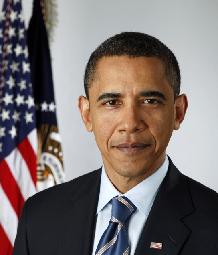
obama

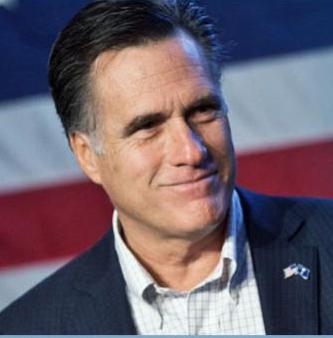
Romney has lost. Unless ….

41

Polls aren’t perfect, but a lot of polls that come to the same conclusion are rarely wrong, at least not by much, and all the polling data suggests that in the critical swing states, Mitt Romney is SOL. Sure, the GOP camp is keeping up hope, but everyone knows that the odds are heavily in favor of the re-election of Barack Obama. In the spring of 2010, I bet on the Giants winning the World Series at 20-1 (nice payoff, that one), but I wouldn’t even take those odds on Romney today.

And since Hurricane Sandy has left Ohio and Pennsylvania relatively intact (no massive poll closures for lack of electrict power), and the voter-suppression laws have been put on hold by the courts, there’s really nothing game-changing available to Romney’s gang of crooks — except this.

I’m with the Wonkette folks — I don’t typically buy into the voting-machines-are-rigged-by-secret-Bain-operatives kinds of theories. But we all know the 2000 election was stolen, and I’m pretty sure that Willie Brown and his appointed elections chief, Tammy Haygood, did something fishy (maybe very fishy, judging by ballot boxes floating in the Bay) to prevent a public-power measure from passing in 2001. And we know that the voter ID laws were carefully designed to keep African Americans, Latinos, seniors and students away from the polls this fall. And we know that Romney’s backers are among the most powerful and secretive people in the world; if there really were groups like the Bilderbergs and the Masons running the world, Romney wouldn’t be allowed in the back rooms (too dumb) but his big-money allies would be there.

Could it be possible that somebody in Romneyland is going to try to pull a modern-day version of the hanging-chad caper?

We’d be fools not to think it’s on the agenda. Doesn’t mean they can pull it off (and seriously, if the president of the United States doesn’t have people who can monitor and put a check on this shit, then he doesn’t deserve the title). But if some of those swing states suddenly go all Florida, 2000 on us and start showing up red on the electoral map, it won’t be because of Obama’s college transcripts.

So go ahead, trolls, tell me how nuts I am. You’re probably right; everything’s going to be Just Fine.

Halloween 1951: Fast times in Rock Rapids, Iowa

1

The tale of what really happened on Halloween Eve in 1951 in Rock Rapids, Iowa.  (Reprinted by popular demand.)

As I was preparing to update my annual Halloween blog, I checked Tuesday’s San Francisco Chronicle to see what the action looked like for Halloween on Wednesday.

The Giants had just swept the World Series and Kevin Fagan’s front page story caught the spirit of  Wednesday’s parade and celebration, “We’re No. 1, let’s party, Celebration likely to bring a million to downtown SF.”  There was no mention of Halloween in his story and the only reference to mischief on Halloween was a dire warning from Police Chief Gregg Suhr.  “If you’re coming (to San Francisco) to do mischief, don’t come.”
Well, back where I come from in the Halloweens of my youth, we didn’t have parades on Halloween and the cops never issued any public warnings about mischief. But we did have some fast times and created some almost famous smalltown  legends on Halloween. This was in my hometown of Rock Rapids, a small farming community nestled along the Rock River in northwest Iowa. I can speak for a generation or two back in the early 1950s when Halloween was the one night of the year when we could raise a little hell and and hope to stay one step ahead of the cops.

Or, in the case of Rock Rapids, the one and only cop, who happened to be Elmer “Shinny” Sheneberger. Shinny had the unenviable job of trying to keep some semblance of law and order during an evening when the Hermie Casjens gang was on the loose. Somehow through the years, nobody remembered exactly when, the tradition was born that the little kids would go house to house trick and treating but the older boys could roam the town looking to make trouble and pull off some pranks.

It was all quite civilized.

The Casjens gang would gather (no girls allowed) and set out about our evening’s business, being careful to stay away from the houses of watchful parents and Shinny on patrol. Dave Dietz and I specialized in finding cars with keys in the ignition and driving them to the other end of town and just leaving them. We tipped over an outhouse or two, the small town cliche, but one time we thought there was someone inside. We never hung around to find out. There was some mischief with fences and shrubs and lawn sprinklers and potted plants on porches.

After an evening of such lusty adventures, we would go home about 11 p.m. and tell our parents what we had been up to and how we evaded Shinny the whole evening and they would (generally) be relieved. Shinny would just drive around in his patrol car and shine his lights here and there and do some honking. But somehow he never caught anybody or made any serious followup investigation. And the targets of our pranks never seemed to make police complaints. I once asked Paul Smith, the editor of the celebrated Lyon County Reporter, why he never wrote up this bit of zesty small town lore. “Bruce,” he said, “I don’t want things to get out of hand.” During my era, they never did. As a Rock Rapids reporter on special assignment, I feel an obligation to retell this story on Halloween and bring some Rock Rapids values to San Francisco.

Nonetheless, the city elders decided to keep Halloween devastation to a minimum and scheduled a dance in the Community Building, with the misbegotten idea the pranksters would give up their errant ways and come to the dance. The Casjens Gang would have none of this. In fact it was the year of the dance diversion that we made our most culturally significant contribution to Halloween lore in Rock Rapids. We happened upon a boxcar, loaded with coal, parked on a siding a block or so from Main Street, which also served as a busy main arterial highway for cars coming across northwest Iowa.

It is not clear to this day who came up with the idea of rolling the boxcar across Main Street and blocking all traffic coming from both directions. We massed behind the car and pushed and pushed but it wouldn’t budge. Then Bob Babl came up with a brilliant idea:  to use a special lever his dad used to move boxcars full of lumber for his nearby lumberyard. Bob slipped through a fence behind the yard and somehow managed to find the lever in the dark.

We massed again, now some 20 or so strong, behind the car and waited for the signal to push. Willie Ver Meer climbed to the top of the car and wrenched the wheel that loosened the brakes. We heaved in unison and the car moved slowly on the tracks until it reached the middle of Main Street. Willie gave a mighty heave and ground the car to a dead stop, bang, square in the middle of the street. Almost immediately, the cars started lining up on both sides of the car, honking away. Grace under pressure. An historic event. Man, were we proud.

We slipped away and from a safe distance watched the fruits of our labor unfold. Shinny, the ever resourceful police chief, soon came upon the scene. He strode into the dance in the nearby Community Building and commandeered enough of the dancers to come out and help him move the car back onto its siding. We bided our time and then went back and pushed the car once again into the middle of the street. Jerry Prahl added a nice touch by rolling out a batch of Firestone tires onto the street from his Dad’s nearby store. Suddenly, Main Street was a boxcar- blocked, tire-ridden mess. Again, the cars started lining up, honking away. Then we fled, figuring we were now wanted pranksters and needed to be on the lam.

The Casjens gang and groupies have retold the story through the years at our regular get togethers at the Sportsmen Club bar at Heritage Days in Rock Rapids and at our all-Rock Rapids Cocktail Party and Beer Kegger held for years in a Long Beach park and then in the back lawn of the Mary Rose Babl Hindt house in Cupertino. We would jokingly say that the statute of limitations never runs out in Rock Rapids and so we needed to be careful what we said and ought not to disclose fully the involvement of Dave Dietz, Hermie Casjens, Ted Fisch, Ken Roach, Jerry Prahl, Bob Babl, Romain Hahn, Willie Ver Meer, and lots of others, some who were there working in peril, others who declared they were there safely after the fact.

A few years ago, just before Halloween, I was invited back to Rock Rapids to speak to a fund-raising event for the local high school. It was a a crisp clear night just like the night of Halloween in l95l and a perfect setting to tell the story publicly in town for the first time. The event was at the new community building, on Main Street, just a block or so from the old Community Building, and a block or so from the siding where we found the boxcar. I told the audience that Shinny had assured me the statute of limitations had run out in Rock Rapids and that I could now,  five decades later, tell the boxcar- across -Main -Street caper with no fear of prosecution. And so I did, with relish.

Chuck Telford was in the audience and I recalled that he had driven up to us that night, as part of a civilian patrol, and inquired as to what we were doing. When he could see what we were doing, he just quietly drove off. “Very civilized behavior,” I told the audience.  Afterward, I told Chuck I would back him for mayor, on the basis of that incident alone. Craig Vinson, then the highway patrolman for the area, came up to me and said he remembered the incident vividly because he was on duty that night and came upon the boxcar blocking the highway with long lines of honking cars. “I got ahold of Shinny that night and told him it was his job to move the boxcar and get it off the highway,” he said. Others in attendance said they had gotten a whiff of the story but were never able to pin it down and were glad to get the real story.  The high school principal and superintendent didn’t say much and, I suspect, were worried my tale might lead to the Rock Rapids version of the movie “Ferris Buhler Takes A Day Off.”

For years, I said in my talk, I didn’t think that Shinny ever knew exactly what happened or who was involved in the caper or how we pulled it off, twice, almost before his very eyes. Shinny retired in Rock Rapids and I saw him twice a year when I came back to visit my parents. But I never said anything and he never said anything but I finally found the right moment and cautiously filled him in. He chuckled and said, “Let’s drink to it.”  And we did,  for years.

At the 55th reunion of the famous Dream Class of l953, I invited Shinny to sit in with us. He was still going strong at 89. He assured us once again that the statute of limitations had run out and we could speak openly about the Halloween caper in his presence and in front of witnesses. So Dave Dietz and I retold the story with expansiveness and gusto. Shinny supplied some key missing details. For example, he said that he didn’t get his troops out of the dance but out of the nearby movie theater with the threat that he would arrest them if they didn’t help him move the boxcar. However, Dave and I didn’t pin down some key details, such as how Shinny got someone nimble and brave enough to undo the work of Willie Ver Meer, climb to the top of the boxcar, twice, and wrench loose the brake. The boxcar would not budge until that brake was undone. That would have required some  expertise with boxcars, plus some physical skills, and would have been quite a feat to do at night with a gallery of a crowd and honking cars. Thus, there are some tantalizing questions that may never get answered.

So there we were, five decades later, working to make the fast times even faster on Halloween in Rock Rapids. Did Shinny  ever arrest anybody on Halloween? “No,” he said. “I would just shine my car lights and honk my horn and everybody would run.” Any hard feelings? Shinny chuckled. “Naw,” he replied. “Let’s drink to Halloween in the good old days.”

And so we did. Shinny often called me at my office in San Francisco and he always told  the receptionist, “Tell Bruce, it’s Shinny. I’m his parole officer in Rock Rapids.”  I”m glad that we were able to confess properly to the top cop of Rock Rapids in l951 and to hear Shinny’s side of the story.  We plan to go over the story again at our 60th class reunion, coming up next June at the country club in Rock Rapids. Alas, Shinny has died, but his fame as an enlightened, humane, non-arresting peace officer continues on and we will remember him and toast him properly.

Those were the days, my friends. The days of fast times and safe Halloweens in Rock Rapids, Iowa. Let’s hope they never end.  B3

P.S.: Ted Fisch, a key conspirator, and I talk regularly about Rock Rapids. He was the center and I was the left-handed quarterback on our 195l football  team. He became a colonel in the Air Force and loved to say that he was the only field grade officer he knew of who was a solid Democrat. He lives in Redondo Beach and we talk often on the phone and I visit him and and the rest of the Casjens gang now living in Southern California. We discuss Obama’s prospects and the campaign in detail and the eternal question why there are so few Democrats in Rock Rapids. In  one conversation, he said, Bruce, a friend of mine googled my name the other day and found that I was mentioned in your Halloween story. How could that be? Does that mean I am up there forever? Does that mean the boxcar story will be up there forever? Somehow, the news made me feel good.

P.S.1 I love smalltown lore and from time to time lay out the life and fast times and wild adventures of my hometown, the best little town in the territory. I invite others to do the same. B3

Labor money fighting Prop. 32

0

Modern California politics can be tug of war between corporate interests and the public interest. On one side is a gang of the biggest, toughest, strongest kids on the playground. On the other side is everyone else.

The labor movement isn’t always on the side of the disenfranchised — the prison guards union, for example, has long used its clout to push for greater incarceration levels, costing the taxpayers hundreds of millions and destroying lives in the process.

But overall, with the huge expense that’s now involved in running a political campaign in this state, labor — using the combined money of millions of dues-paying members — is often the only force that can stand up to the big-business bullies.

“The working class doesn’t have enough institutions through which to makes its voice heard,” says Nelson Lichtenstein, Director of the Center for the Study of Work, Labor and Democracy at UC Santa Barbara.

That’s why some of the richest and most powerful corporate interests in the country are trying, once again, to cut labor money out of politics — and why the battle over Proposition 32 is so critical for the state’s future.

And, ironically, the fight over an initiative whose backers say it’s aimed at limiting campaign spending by special interests has become one of the most expensive ballot battles in state history.

BILLIONAIRE’S BANQUET

Prop. 32, to put it bluntly, is backed by a handful of rich people. Billionaire Republican Charles Munger, hedge fund manager William Oberndorf, and investment manager Jerrold Perenchio have between them put up nearly $24 million to get the measure on the ballot and pass it.

The Yes on 32 campaign talks about limiting both corporate and union spending. Again, in a biting irony, backers capitalized on the public’s concern with Citizen’s United, which gave corporations the same constitutional rights as people and enabled them to spend unlimited amounts of money on political campaigns.

But the measure really only affects one side. Corporations don’t use paycheck deductions to collect political money — and partnership, limited liability companies and many other entities could give as they wish. So, of course, could rich individuals, like the ones behind Prop. 32.

“All we’re doing is exposing the truth,” says Eric Heins, Vice President of the California Teachers Union, which has thrown more than $20 million dollars to block 32. The truth, he says, is that it will exempt corporations while limiting the voice of unions. “All you really need to do is just follow the money and follow who is exempted from it. We’re not doing anything other than telling it like it is.”

Labor’s efforts seem to be working. A September 21 survey by UC Berkeley and the Field Poll showed that just 38 percent of voters favored the measure while 44 percent opposed it. Another late September poll from USC and the Los Angeles Times showed similar results. The latest numbers from the Public Policy Institute of California show labor’s efforts have made more gains with just days before the election.

“The No on 32 campaign has been working overtime,” says Chris Daly, political director for the Service Employees International Union local 1021. “I think in the beginning the feeling was 32 started with a lead and as we educated voters about what it really is, support evaporated.”

Part of the labor effort has been to remind voters that they have seen this kind of proposition before. In 1998 it was called the “Paycheck Protection” initiative that aimed to establish new requirements with regard to payroll deductions for political activity. It was defeated at the polls. A 2005 measure aimed to do the same thing, but after a hard fought campaign and millions of dollars spent, it too was blocked.

Unions have also reached out to young people. “Voters 18 to 35 are a key demographic,” says Daly. “They tend to be much more progressive voters and more concerned about corporate power.”

For years the anti-union movement has argued that payroll deductions for political use without consent from employees is unethical and corrupt. They’re also one of the few ways working people can compete with wealthy corporate donors in politics and are necessary to keep the playing field somewhat balanced.

So while the corporate world is contributing money to silence one side of the debate, the other is using money to keep its voice alive. According to Maplight — a nonpartisan research group that tracks money in politics — spending on 32 has surpassed $100 million, with supporters spending roughly $45 million and the opposition $58 million.

THE FINAL PUSH

And there’s still a significant amount of money to be spent before November 6. The campaign finance database on Secretary of State Debra Bowen’s official website breaks down the 18 committees formed to support or oppose the measure. Of the five pro-32 committees, three have a combined $7 million dollars left to spend on their agenda while eight of the 13 opposition committees have roughly $9.7 million left.

The labor folks argue that their big money is different than big corporate money. “When we put money into a campaign its money that’s been cobbled together from a lot of people,” says Heins. “There’s a big difference with CTA putting in money as opposed to Munger putting in a check of $20 million that he won’t even miss.”

In addition to direct support from wealthy individuals like Munger, Prop. 32 has received money from a number of political action committees that aren’t required to disclose their donors. So while it’s pretty clear who the teachers union is and what its members want, its hard for voters to know the agenda of The American Future Fund — a PAC that’s donated $4 million raised from anonymous sources.

AFF has close ties to right-wing billionaires Charles and David Koch — but their names aren’t anywhere on any disclosure forms. “The ability to hide behind large PACS is corrosive and I think everybody knows it,” says Barbara O’Connor, Emeritus Professor of Communications at California State University, Sacramento.

The campaign financing behind Prop 32 is symptomatic of what’s happening across the country in the world the US Supreme Court has created with its Citizens United decision. At the national level, the Obama and Romney campaigns combined will have spent more than $1 billion by Election Day. While the President’s campaign has spent more money, Romney’s camp has benefited from enormous amounts of outside cash from super PACS, erasing Obama’s edge.

Could this be a new normal for election spending and campaigning?

O’Connor says change will likely come sooner than later. But as Prop. 32 demonstrates, that change will be tricky. What would happen if 32 passed? Would other states follow? Would one-sided campaign laws be the next frontier in reform?

“Discourse has gotten more bipolar,” says O’Connor, noting the change in the political atmosphere since Citizens United became law.

What everyone wants to know is whether or not this is the new normal for elections. “I think people on both sides are seeing the impact and skewing of citizen voting and once the fury calms down it will change. You’re going to see a big shift in how we campaign after this election.”

The Clear and Present Danger to Prop. 30 (and all of us)

36

This is suddenly getting serious, very serious. A secretive super PCA out of Arizona, where all bad things seem to originate, just put $11 million into a No on 30/Yes on 32 operation, and while it’s likely not enough to pass 32, which is trailing pretty far behind in the polls — and might actually benefit from news that a group allegedly pushing for campaign transparency is living off shadowy money, the money’s already hurting 30.

Let us remember: If Prop. 30 goes down, the state goes off a fiscal cliff. Schools get his with cuts so brutal that the school year my have to be cut by a couple of weeks or more. The University of California and California State University systems will cease to function in anything remotely resembling their current state, which is already a disaster. Cities and counties will get hit, social services will suffer, more parks will close — it’s almost too awful to think about.

I didn’t write Prop. 30; I would have left out the sales tax and hiked the rate even more on the wealthiest. But it’s a compromise deal, and it’s not only good for the state it’s absolutely essential. And the Big Boys out of the state of Joe Arpaio are trying to undermine it.

Add that in to Molly Munger’s unconscionable efforts to take down Prop. 30 (at this point, it seems like nothing but sour grapes since her Prop. 38 is clearly going to lose) and you have a recipe for disaster.

Look, we all know Obama’s going to win California, and some of us don’t have a contested supervisorial election. But there’s lots of stuff on the local ballot that matters — and if Prop. 30 goes down, nothing else is going to matter because (unless by some miracle the Dems get a two-thirds majority in both houses and can pass other taxes) this state’s going down the tubes.

So go vote Yes on 30. Vote yes on 38, too, if you want, although a lot of people are mad enough at Munger to vote no. But 30 is the one that matters. Vote early and often.


This week in sex events: Free Internet anti-porn and sex nerd heaven

7

What to do when Halloween rolls around, but you’re already slutty 365 days a year? Up the ante with one of this week’s sex events, because you’re more than just an awkwardly-gender-coded bag of crap from Spirit.

Quickies Indie Erotic Short Film Festival

Once a year, locally-born sex toy behemoth Good Vibrations gives us an opportunity to don a Halloween costume, kick back in a historic theater, and watch ourselves have sex. This would be Good Vibes’ annual erotic short film competition, which welcomes sensual submissions featuring sexualities of all stripes, vanilla and kink alike, and all manner of core, rock-hard to whisper-soft. This year, sexologist-about-town Carol Queen and drag cinenova Peaches Christ host the affair, whose audience-selected winner will take home a cool $1,500.  

Pre-party 7pm, $10; screening 8pm, $10

Castro Theatre

429 Castro, SF

(415) 621-6120

www.castrotheatre.com

Australian animated genitals await you at Quickies

Good Vibrations Sex Summit

And the fun need not end in the Castro. “Sex nerd” is becoming one of those that’s-so-San-Francisco identities, right up there with “proud wearer of cock rings.” Bawdy Storytelling based an entire show ‘n’ tell session around the concept this year, and now you can spend an entire Saturday (bonus if it’s bright and sunny out) getting into the nitty-gritty of desire, lecture style! Good Vibes hosts this day of panels and keynote talks by all kinds of sexperts. Topics up for discussion include “Regulating Pleasure: Sex, Politics and Censorship,” “Outspoken/Unsaid: Sex and Media,” “Pills, Profits and Pleasures: Sexual Health and Pharmaceuticals,” and “Sexual Stargazing: Sex and Pop Culture.” Attendees get in free to Friday night’s erotic film festival at the Castro. Make a weekend of it, nerd!

Sat/27 8:30am-9pm, $69-99

Marriot Marquis Hotel

www.goodvibessexsummit.com

XXX Apocalypse Funhouse 

This Halloween season, hightail to the one haunted house where you don’t have to be embarassed about getting the pants scared off you (and yes, this is the perfect opportunity to look at those photos again.) Kinky Salon hosts a spooky, two-night edition of its vampire kink orgy (all orientations, all the time.) This weekend look for zombie strippers, Satanic rituals gone sexy, and tunes by DJ Fact 50.

Fri/26 Sat/27, 10pm, $25-35

Mission Control

2519 Mission, SF

www.missioncontrolsf.org

Poetry class for sex workers

Poet Zhayra Palma is teaching four sessions (they started Oct. 23) of writing workshops for people in the sex industry, because really who has better stories than them? (Sorry, Muni drivers.) Come if you’d like your poetry demystified, your voice unleashed, your writing workshops taking place in the most amazing library of sex lit in San Francisco. 

Tuesdays through Nov. 13, 4-6pm, free 

Center for Sex and Culture

1349 Mission, SF

www.sexandculture.org

As this trailer of Somebody’s Daughter clearly shows, when women become sex workers they become mice.

White Ribbon Against Pornography Week

Through some odd vagary in conservative PR-think, I am on the press list for Morality in Media, a batshit crazy anti-porn organization who sends me important tidings like the fact that adult filmmakers are voting for Obama. Thusly, I have been alerted to the fact that next week will be chockful of free livestreams of sure-to-be-hilarious-if-you’re-not-terrified anti-porn flicks (like this documentary of a real-life pastor’s son who “felt a call from God” to marry a sex worker. Lucky her), seminars on how to spy on your child/limit their ability to access information, and psuedo scientific talks on porn addiction. I suggest masturbating to all of it. 

Various online events, Sun/28-Nov.4, free

www.pornharms.com

Protest the Weiner bill

Though public nudity is currenty legal in our fair city, your right to strut like a peacock may be in danger — Supervisor Scott Weiner has submitted an anti-nudity piece of legislation that woud make everyone put their clothes on. Should that rub you the wrong way, join this protest in the middle of the city to show your true colors. Clothing very much optional. After the chanting, head to the Center for Sex and Culture to estatic dance the night away with Seattle DJ Jules O’Keefe. 

Protest: Tue/30, noon, free

City Hall

1 Dr. Carlton B. Goodlett 

After-party: Tue/30, 7pm, free (all-ages)

Center for Sex and Culture

1349 Mission, SF

www.mynakedtruth.tv


Dick Meister: Missing a vital election issue!

2

By Dick Meister 

Dick Meister, former labor editor of the SF Chronicle and KQED-TV Newsroom has covered labor and politics for more than a half-century. Contact him through his website, www.dickmeister.com, which includes more than 350 of his columns.


Repeal the Taft-Hartley Act!  That’s a cry working people and their unions very much need to hear, but have not heard in this year’s election campaigning.

It’s hardly surprising that Republican candidates are silent, since repeal would be a great boost to labor. But if only for that reason, President Obama and other pro-labor Democrats should demand immediate repeal.

The law was passed in 1947 in response to a wave of strikes that were called just after World War II by workers attempting to make up for pay lost because of wage controls during the war. President Truman vetoed Taft-Hartley, but Congress overrode the veto to enact what unions of the time denounced as “the slave-labor bill.”

Taft-Hartley drastically amended the National Labor Relations Act (NLRA), which was enacted during the Great Depression to encourage unionization. It reversed the NLRA’s intent by authorizing employers to take a wide variety of anti-union actions.

Most significantly, employers were granted the legal right to intervene in union organizing campaigns. Rather then remaining neutral as before, employers are allowed to wage anti-union campaigns that include requiring workers to listen to their arguments against unionization during working hours, often at mandatory meetings.

Taft-Hartley seriously limits workers’ ability to act in solidarity with others by prohibiting workers from waging sympathy strikes – secondary boycotts – in support of striking members of other unions.

Another key provision outlaws the closed shop, which required workers seeking jobs with unionized employers to join the union representing the workers before they could be hired. The law does allow the union shop, which requires workers to join the union after being hired, but allows states to enact so-called right-to-work laws that ban the union shop.

Twenty-two states, including Texas, the country’s second largest, have such laws. They greatly weaken unions by allowing workers to reap the benefits that unions get in negotiating contracts with unionized employers, but without having to help pay the unions’ costs by joining the unions and paying dues.

Taft-Hartley denies union rights to workers designated by employers as “supervisors,” a category of workers that has been growing steadily. What’s more, employers can fire supervisors who nevertheless try to unionize.

Employers also can use a wide assortment of devices to delay for months, sometimes for years, negotiating contracts with unions that win representation elections.  They also have the right to call for new elections to take away the union rights of election winners.

Unions calling strikes with potentially great national impact face the prospect of the federal government moving in to require an 80-day cooling off period while mediators try to bring about a settlement.

There’s more, none of it designed to further the basic civil right of unionization, but rather to hinder it. Repealing Taft-Hartley obviously should have been a prime issue throughout the 2012 election campaign.

Dick Meister, former labor editor of the SF Chronicle and KQED-TV Newsroom has covered labor and politics for more than a half-century. Contact him through his website, www.dickmeister.com, which includes more than 350 of his columns.


Dick Meister: Labor’s wise election choices

2

By Dick Meister

Dick Meister, former labor editor of the SF Chronicle and KQED-TV Newsroom, has covered labor and politics for more than a half-century. Contact him through his website, www.dickmeister.com, which includes more than 350 of his columns.

No issue on the November election ballot anywhere is of greater importance to working people and their unions than Proposition 32 on the California ballot.

As the State AFL-CIO notes in its call for an all-out campaign against Prop 32, it’s “a brazen power play” by billionaire corporate interests and other anti-union forces to all but silence labor’s political voice, while at the same time greatly increasing the political strength of labor’s wealthy opponents.

Prop 32’s corporate sponsors deceptively call their measure an even-handed attempt to limit campaign spending. Yet it would only limit – and severely limit – the political spending of unions. There would be no limit on the political spending of corporations and other wealthy interests.

A Prop 32 victory would have a serious national impact, since passage of the measure in the country’s largest state would certainly lead to attempts to enact similar measures elsewhere.

California Propositions 30 and 38 also could have major, though less direct, effects nationally.  Both measures would raise badly needed new funds for education.

Prop 30, which is widely supported by unions and a broad base of community organizations, would do it through a tax increase that would be levied on wealthy Californians with annual incomes of $250,000 or more.

But Prop 38, bankrolled by some of the same billionaire interests that are contributing heavily to the Yes on 32 campaign, would raise money by taxing everyone, including the poor. And while Prop 30 specifically calls for added education funds to go to schools at all levels, including the community colleges that train workers for jobs that are heavily unionized, Prop 38 does not apply to community colleges.

There are, of course, other state as well as local and national issues and candidates that are of particular interest to labor. That includes, as it very well should, labor-friendly President Obama and just about any other Democrat.

Although the odds are heavily against Democrats regaining control of the House or adding to their narrow margin in the Senate, that has not kept labor and its supporters from trying to beat the odds.

National Democratic strategists are relying on California to be a leader in raising funds to make that happen. They’re sending out an unprecedented barrage of requests to Californians for money for Democratic candidates in general and especially for candidates in battleground states.

Unions are playing an important role in that effort and in many local elections as well. That naturally includes the voting in San Francisco, long one of the country’s premier labor cities and national pacesetter for labor.

As usual, the SF Labor Council and SF unions generally have endorsed all of the Democrats running for national and state offices. It would be hard to quarrel with that or with most of labor’s other choices of who and what to back and oppose on the city’s election ballot.

Locally, labor is backing incumbent Supervisors Eric Mar (District One) and David Campos (District Nine) and newcomer F.X. Crowley, a longtime union leader and activist who’s running in District Seven. All have consistently supported labor.

Labor is rightly eager to defeat Crowley’s opponent, Mike Garcia, a candidate of the downtown interests that have consistently opposed labor.

Voters would be wise to follow the guidance of the teachers union on candidates for the SF Board of Education. The union has endorsed Matt Haney, Beverly Popek, Sam Rodriguez and Shamann Walton. All would be new to the board.

The teachers union and the Service Employees Union local that represent SF City College workers agree that the best candidates for the Community College Board that governs City College are Hanna Leung, Rafael Mandelman and incumbents Natalie Berg and Chris Jackson.

As far as local propositions go, labor’s support for a parcel tax to raise badly needed funds for City College (Prop A) and for a trust fund to help lower and middle income families secure affordable housing (Prop C) makes very good sense.

Unfortunately, labor did not take an official position on Prop G, the policy statement that calls for a Constitutional amendment to reverse the U.S. Supreme Court’s Citizens United decision that has allowed unlimited political spending by corporations and wealthy individuals.

Otherwise, however, labor has provided voters with an invaluable election guide.

Dick Meister, former labor editor of the SF Chronicle and KQED-TV Newsroom, has covered labor and politics for more than a half-century. Contact him through his website, www.dickmeister.com, which includes more than 350 of his columns.

Stage Listings

0

Stage listings are compiled by Guardian staff. Performance times may change; call venues to confirm. Reviewers are Robert Avila, Rita Felciano, and Nicole Gluckstern. Submit items for the listings at listings@sfbg.com. For further information on how to submit items for the listings, see Picks.

THEATER

OPENING

And That’s What Little Girls Are Made Of Tides Theatre, 533 Sutter, SF; www.whatgirlsaremadeof.com. $20-30. Opens Thu/19, 8pm. Runs Thu-Sat, 8pm; Sun, 2pm. Through Nov 4. Jennifer Wilson’s multimedia play chronicles her attempts to break into the male-dominated world of venture capital funds.

Fat Pig Boxcar Theatre Studio, 125A Hyde, SF; www.brownpapertickets.com. $20. Opens Thu/18, 8pm. Runs Thu-Sat, 8pm. Through Nov 10. Theater Toda presents Neil LaBute’s dark comedy about a man who faces scrutiny from his friends when he falls for a plus-sized woman.

Fierce Love: Stories From Black Gay Life New Conservatory Theatre Center, 25 Van Ness, SF; www.nctcsf.org. $25-37. Previews Wed/17-Thu/18, 8pm. Opens Fri/19, 8pm. Runs Wed-Sat, 8pm; Sun, 2pm. Through Oct 28. Pomo Afro Homos performs a revival of of its 1991 hit about the struggles of African American gay men in America.

BAY AREA

Richard III Live Oak Theatre, 1301 Shattuck, Berk; www.aeofberkeley.org. $12-15. Opens Fri/19, 8pm. Runs Fri-Sat, 8pm. Through Nov 17. Actors Ensemble of Berkeley performs the Shakespeare classic.

Within the Wheel Live Oak Park, 1301 Shattuck, Berk; www.raggedwing.org. Free. Previews Wed/17, 6pm. Opens Thu/18, 6pm. Runs Thu-Sat, 6pm (last entry 7:30pm; special Halloween show Oct 31). Through Nov 3. Ragged Wing Ensemble presents an immersive performance experience inspired by the Tibetan Book of the Dead.

ONGOING

Bound By Blood Boxcar Theatre Playhouse, 505 Natoma, SF; www.ianiroproductions.com. $20. Thu-Sat, 8pm. Through Oct 27. Opening on the heels of ACT’s production of The Normal Heart, local theater-maker Eric Inman’s Bound By Blood also explores the devastating human fallout of the AIDS crisis as experienced by the two families — one of blood relations and one of chosen friends — of a young gay man, whose death affects them all. Appearing onstage both as a ghost and in a series of flashbacks, Justin Walker (played by Inman) deals with his fear of dying by ditching his meds in favor of drink, and his fear of coming out to his conservative family by postponing the inevitable until it’s too late, leaving his friends holding the burden of his inconvenient truth in their unwilling hands. Awkward moments abound as Justin’s buddies ponder the ethics of outing him posthumously, as his mother (Sally Hogarty) and sister (CC Sheldon) bicker incessantly and his erstwhile "beard" Alice (Abigail Edber) pluckily spearheads the funeral planning. This is Inman’s first full-length play, which helps to explain the often-clunky dialogue and under-developed characters that unfortunately obscure the play’s dramatic potential, but the ideals he champions within — tolerance, self-acceptance, integrity, loyalty, love — are ones well worth exploring, even imperfectly. (Gluckstern)

Elect to Laugh Marsh San Francisco, 1062 Valencia, SF; www.themarsh.org. Tue, 8pm. Through Nov 6. $15-50. Veteran political comedian Will Durst emphasizes he’s watching the news and keeping track of the presidential race "so you don’t have to." No kidding, it sounds like brutal work for anyone other than a professional comedian — for whom alone it must be Willy Wonka’s edible Eden of delicious material. Durst deserves thanks for ingesting this material and converting it into funny, but between the ingesting and out-jesting there’s the risk of turning too palatable what amounts to a deeply offensive excuse for a democratic process, as we once again hurtle and are herded toward another election-year November, with its attendant massive anticlimax and hangover already so close you can touch them. Durst knows his politics and comedy backwards and forwards, and the evolving show, which pops up at the Marsh every Tuesday in the run-up to election night, offers consistent laughs born on his breezy, infectious delivery. One just wishes there were some alternative political universe that also made itself known alongside the deft two-party sportscasting. (Avila)

The Fifth Element: Live! Dark Room Theater, 2263 Mission, SF; www.darkroomsf.com. Fri-Sat, 8pm. Through Oct 27. Comedic adaptation of the 1997 Luc Besson sci-fi epic.

Foodies! The Musical Shelton Theater, 533 Sutter, SF; www.foodiesthemusical.com. $30-34. Fri-Sat, 8pm (no show Nov 17). Open-ended. AWAT Productions presents Morris Bobrow’s musical comedy revue all about food.

Geezer Marsh San Francisco, 1062 Valencia, SF; www.themarsh.org. $30-100. Sat, 8pm; Sun, 7pm. Through Nov 18. Geoff Hoyle’s popular solo show about aging returns.

Love in the Time of Zombies Café Royale, 800 Post, SF; sftheaterpub.wordpress.com. Free ($5 donation suggested). Mon-Tue, 8pm. Through Oct 30. San Francisco Theater Pub performs Kirk Shimano’s "rom-zom-com."

Of Thee I Sing Eureka Theatre, 215 Jackson, SF; www.42ndstmoon.org. $25-75. Wed, 7pm; Thu-Fri, 8pm; Sat, 6pm; Sun, 3pm. Through Oct 21. 42nd Street Moon performs George and Ira Gershwin’s classic political satire.

The Real Americans Marsh San Francisco, 1062 Valencia, SF; www.themarsh.org. $25-50. Fri, 8pm; Sat, 8:30pm. Extended through Oct 27. Dan Hoyle’s hit show, inspired by the people and places he encountered during his 100-day road trip across America in 2009, continues.

Roseanne: Live! Rebel, 1760 Market, SF; www.brownpapertickets.com. $25. Wed, 7 and 9pm (no shows Oct 31). Through Nov 14. Lady Bear, Heklina, D’Arcy Drollinger, and more star in this tribute to the long-running sitcom.

The Scotland Company Exit Theatre, 156 Eddy, SF; www.thunderbirdtheatre.com. $15-25. Thu-Sat, 8pm; Sun, 3pm. Through Oct 27. Thunderbird Theatre Company performs Jake Rosenberg’s new comedy.

Shocktoberfest 13: The Bride of Death Hypnodrome, 575 10th St, SF; www.thrillpeddlers.com. $25-35. Thu-Sat, 8pm. Through Nov 17. Thrillpeddlers’ seasonal assortment of yeasty Grand Guignol playlets is a mixed bag of treats, but it all goes so nicely with the autumnal slink into early nights and dark cravings. Fredrick Whitney’s Coals of Fire is lightly amusing, if far from smoking, as a two-hander about a blind older matron (Leigh Crow) who discovers her young companion (Zelda Koznofski, alternating nights with Nancy French) has been secretly schtupping her husband. I’m a Mummy is a short, not very effective musical interlude by Douglas Byng, featuring the bright pair of Jim Jeske and Annie Larson as Mr. and Mrs., respectively. The titular feature, The Bride of Death, written by Michael Phillis and directed by Russell Blackwood, proves a worthy centerpiece, unfolding an intriguing, well-acted tale about a reporter (Phillis) and his photographer (Flynn DeMarco) arriving at a stormy castle to interview a strangely youthful Grand Guignol stage star (Bonni Suval) making her film debut. After another, this time more rousing musical number, Those Beautiful Ghouls (with music and lyrics by Scrumbly Koldewyn; directed and choreographed by D’Arcy Drollinger), comes the evening’s real high point, The Twisted Pair by Rob Keefe, acted to the bloody hilt by leads Blackwood and DeMarco as the titular duo of scientists driven mad by an experimental batch of ‘crazy’ glue. All of it comes capped, of course, by the company’s signature lights-out spook show. (Avila)

"Strindberg Cycle: The Chamber Plays in Rep" Exit on Taylor, 277 Taylor, SF; www.cuttingball.com. $10-50 (festival pass, $75). Previews Oct 25, 7:30pm and Oct 26, 8pm (part two); Nov 1, 7:30pm and Nov 2, 8pm (part three). Opens Thu/18, 7:30pm (part one); Oct 27, 8pm (part two); and Nov 3, 8pm (part three). Runs Thu, 7:30pm; Fri-Sat, 8pm (also Sat, 2pm); Sun, 5pm. Through Nov 18. Cutting Ball performs a festival of August Strindberg in three parts: The Ghost Sonata, The Pelican and The Black Glove, and Storm and Burned House.

The Waiting Period Marsh San Francisco, 1062 Valencia, SF; www.themarsh.org. $15-50. Thu-Fri, 8pm; Sat, 5pm. Extended through Oct 27. Brian Copeland (comedian, TV and radio personality, and creator-performer of the long-running solo play Not a Genuine Black Man) returns to the Marsh with a new solo, this one based on more recent and messier events` in Copeland’s life. The play concerns an episode of severe depression in which he considered suicide, going so far as to purchase a handgun — the title coming from the legally mandatory 10-day period between purchasing and picking up the weapon, which leaves time for reflections and circumstances that ultimately prevent Copeland from pulling the trigger. A grim subject, but Copeland (with co-developer and director David Ford) ensures there’s plenty of humor as well as frank sentiment along the way. The actor peoples the opening scene in the gun store with a comically if somewhat stereotypically rugged representative of the Second Amendment, for instance, as well as an equally familiar "doood" dude at the service counter. Afterward, we follow Copeland, a just barely coping dad, home to the house recently abandoned by his wife, and through the ordinary routines that become unbearable to the clinically depressed. Copeland also recreates interviews he’s made with other survivors of suicidal depression. Telling someone about such things is vital to preventing their worst outcomes, says Copeland, and telling his own story is meant to encourage others. It’s a worthy aim but only a fitfully engaging piece, since as drama it remains thin, standing at perhaps too respectful a distance from the convoluted torment and alienation at its center. (Avila)

BAY AREA

Acid Test: The Many Incarnations of Ram Dass Marsh Berkeley, 2120 Allston, Berk; www.themarsh.org. $15-50. Thu-Fri, 8pm; Sat, 5pm. Through Nov 24. Lynne Kaufman’s new play stars Warren David Keith as the noted spiritual figure.

Assassins Ashby Stage, 1901 Ashby, Berk; www.shotgunplayers.org. $20-30. Wed-Thu, 7pm; Fri-Sat, 8pm; Sun, 5pm. Through Nov 4. Shotgun Players interrupts this season of dreary electoral debates with an important announcement about the country you live in, as the sure and provocative 1990 musical by Stephen Sondheim (music and lyrics) and John Weidman (book) stitches together American history’s odd assortment of successful and failed presidential assassins to explore the darker recesses of the national mythos. Through an eclectic score of deft period-specific songs and the narrative framework of a feverish carnival shooting gallery — overseen by a nefarious proprietor (Jeff Garrett) — a pageant of kooks and rebels parades, beginning with pioneer assassin John Wilkes Booth (an aptly imposing Galen Murphy-Hoffman). He, in turn, acts as a sort of patron saint to those that follow in his footsteps — including Charles Guiteau (Steven Hess), Leon Czolgosz (Dan Saski), Giuseppe Zangara (Aleph Ayin), John Hinckley (Danny Cozart), Sam Byck (Ryan Drummond), Sara Jane Moore (Rebecca Castelli), Squeaky Fromme (Cody Metzger), and of course Lee Harvey Oswald (Kevin Singer, in a part that doubles with that of the Balladeer). Throughout, director Susannah Martin’s strong cast and musical director David Möschler’s lively eight-piece band insure a raucous, thoughtful, and intimate American fever dream. (Avila)

An Iliad Berkeley Repertory Theatre, Roda Theatre, 2015 Addison, Berk; www.berkeleyrep.org. $14.50-77. Opens Wed/17, 8pm. Runs Tue and Thu-Sat, 8pm (also Sat, 2pm); Wed and Sun, 7pm (also Sun, 2pm). Through Nov 11. Berkeley Rep performs Lisa Peterson and Denis O’Hare’s Homer-inspired tale.

The Kipling Hotel: True Misadventures of the Electric Pink ’80s Marsh Berkeley, 2120 Allston, Berk; www.themarsh.org. $20-50. Sat, 8:30pm; Sun, 7pm. Extended through Dec 16. This new autobiographical solo show by Don Reed, writer-performer of the fine and long-running East 14th, is another slice of the artist’s journey from 1970s Oakland ghetto to comedy-circuit respectability — here via a partial debate-scholarship to UCLA. The titular Los Angeles residency hotel was where Reed lived and worked for a time in the 1980s while attending university. It’s also a rich mine of memory and material for this physically protean and charismatic comic actor, who sails through two acts of often hilarious, sometimes touching vignettes loosely structured around his time on the hotel’s young wait staff, which catered to the needs of elderly patrons who might need conversation as much as breakfast. On opening night, the episodic narrative seemed to pass through several endings before settling on one whose tidy moral was delivered with too heavy a hand, but if the piece runs a little long, it’s only the last 20 minutes that noticeably meanders. And even with some awkward bumps along the way, it’s never a dull thing watching Reed work. (Avila)

Richard the First: Part One, Part Two, Part Three Berkeley City Club, 2315 Durant, Berk; www.centralworks.org. $14-25. Opens Thu/18, 8pm (part one); Fri/19, 8pm (part two); and Sat/20, 8pm (part three). Runs Thu-Sat, 8pm; Sun, 5pm (three-part marathon Sundays, Nov 11 and 18, 2, 5, 8pm). Through Nov 18. This Central Works Method Trilogy presents a rotating schedule of three plays by Gary Graves about the king known as "the Lionheart."

Sex, Slugs and Accordion Marsh Berkeley, 2120 Allston, Berk; www.themarsh.org. $10. Wed, 8pm. Through Nov 14. Jetty Swart, a.k.a. Jet Black Pearl, stars in this "wild and exotic evening of song."

33 Variations TheatreWorks at the Mountain View Center for the Performing Arts, 500 Castro, Mtn View; www.theatreworks.org. $23-73. Tue-Wed, 7:30pm; Thu-Sat, 8pm (also Sat, 2pm); Sun, 2 and 7pm. Through Oct 28. TheatreWorks performs Moisés Kaufman’s drama about a contemporary musicologist struggling to solve one of Beethoven’s greatest mysteries, and a connecting story about the composer himself.

Topdog/Underdog Marin Theatre Company, 397 Miller, Mill Valley; www.marintheatre.org. $36-57. Wed/17, 7:30pm; Thu/18-Sat/20, 8pm (also Sat/20, 2pm); Sun/21, 2 and 7pm. Marin Theatre Company performs Suzan-Lori Parks’ Pulitzer Prize winner about a contentious pair of brothers.

The World’s Funniest Bubble Show Marsh Berkeley, 2120 Allston, Berk; www.themarsh.org. $8-50. Sun, 11am; Nov 23-25, 11am. Through Nov 25. Louis "The Amazing Bubble Man" Pearl brings his lighter-than-air show back to the Marsh.

PERFORMANCE/DANCE

Alonzo King LINES Ballet Yerba Buena Center for the Arts Theater, 700 Howard, SF; www.ybca.org. Fri/19-Sat/20 and Oct 24-27, 8pm; Sun, 5pm. Through Oct 28. The company celebrates 30 years with its fall home season.

BATS Improv Bayfront Theater, B350 Fort Mason Center, SF; www.improv.org. Fri, 8pm, through Oct 26: "This Just In!," $20. Sat, 8pm, through Oct 27: "Improvised Horror Musical," $20.

"Comedy Bodega" Esta Noche Nightclub, 3079 16th St, SF; www.comedybodega.com. Thu, 8pm. Ongoing. No cover (one drink minumum). This week: Amy Miller, Kurt Weitzmann, Martini Paratore, and Jessica Sele.

"Comikaze Lounge" Café Royale, 800 Post, SF; www.comikazelounge.com. Wed/17, 8pm. Free. Stand-up with Casey Ley and more.

"Crooked Little Hearts" Dance Mission Theater, 3316 24th St, SF; www.brownpapertickets.com. Fri/19-Sat/20, 8pm. $20. The Ananta Project’s home season includes a world premiere that uses dance to explore the nuances of human intimacy.

"Gravity (and other large things)" NOHspace, 2840 Mariposa, SF; www.performancelab.org. Fri/19-Sat/20, 8pm; Sun/21, 4pm. $12-25. Right Brain Performancelab present this evening-length dance-theater piece.

"Halloween! The Ballad of Michele Myers" CounterPULSE, 1310 Mission, SF; michelemyers2012.eventbrite.com. Fri-Sun and Oct 31, 8pm. Through Oct 31. $25. Drag superstar Raya Light returns in the seasonally-appropriate horror musical.

"The Hula Show 2012" Palace of Fine Arts, 3301 Lyon, SF; www.naheihulu.org. Sat/20 and Oct 26-27, 8pm; Sun/21 and Oct 28, 8pm (children’s matinee Oct 28, noon). $35-90. Na Lei Hulu I Ka Wekiu performs its annual show, featuring a hula satirizing President Obama’s birth certificate controversy.

"Let Us Find the Words" Contemporary Jewish Museum, 736 Mission, SF; www.thecjm.org. Thu/18, 6:30pm; Fri.19, 1pm. Free with museum admission ($5-12). Actors Dominique Frot and Alexander Muheum present a dramatic reading of letters between poets Ingeborg Bachmann and Paul Celan.

"Perverts Put Out: The Election Erection Edition" Center for Sex and Culture, 1369 Mission, SF; www.sexandculture.org. Sat/20, 7:30. $10-20. Dr. Carol Queen and Simon Sheppard host performances by Jen Cross, Greta Cristina, Gina de Vries, and more.

"San Francisco Magic Parlor" Chancellor Hotel Union Square, 433 Powell, SF; www.sfmagicparlor.com. $40. Thu-Sat, 8pm. Ongoing. Magic vignettes with conjurer and storyteller Walt Anthony.

"San Francisco Trolley Dances 2012" 925 Mission, SF; www.epiphanydance.org. Sat/20-Sun/21, tours leave at 11am, 11:45am, 12:30pm, 1:15pm, 2pm, and 2:45pm. Free with Muni fare ($2). Climb aboard Muni for a unique performance experience at this annual event presented by Kim Epifano’s Epiphany Productions.

ShadowLight Theatre St. Cyprian’s Church, 2097 Turk, SF; www.noevalleymusicseries.com. Sat/20, 8pm. $15. Balinese shadow puppet theater with live gamelan accompaniment.

"Smack Dab" Magnet, 4122 18th St, SF; www.magnetsf.org. Wed/17, 8pm. Free. Open mic featuring local authors Belo Cipriani and Jim Provenzano.

"Times Bones" Kanbar Hall, Jewish Community Center of San Francisco, 3200 California, SF; www.mjdc.org. Thu/18-Sat/20, 8pm; Sun/21, 7pm. $18-31. Margaret Jenkins Dance Company previews a new work that will premiere in 2013.

Judges consider whether the feds have ignored medical evidence on marijuana

4

Tomorrow (Tues/16), for the first time in more than 20 years, a court will consider whether the federal government has improperly ignored evidence of marijuana’s medical value in continuing to classify it as a Schedule 1 narcotic, the category of dangerous drugs with no medicinal value.

“This is a very big deal,” said David Goldman, a San Francisco representative of Americans for Safe Access, part of the coalition that brought the lawsuit that will be heard by the US Court of Appeals in Washington DC. “I am personally optimistic given the three judges [that will hear the case] are Clinton appointees.”

The federal government has consistently maintained a hardline on marijuana, through both Republican and Democratic administrations, rejecting various efforts to get it rescheduled in the face of a growing body of research that it has a wide range of medical benefits, from simple alleviation of anxiety to treatment for diseases such as cancer, AIDS, and glaucoma.

In fact, Goldman said federal officials who doubt marijuana’s medical affects should come to “Cannabis in Medicine: A Primer for Health Care Professionals,” a training session for medical professionals that the University of California at San Francisco is hosting Oct. 24-25. It will feature doctors discussing their research on the “endocannabinoid system” and using marijuana to treat cancer and pain, among other sessions.

Tomorrow’s court hearing and subsequent ruling could undermine the Obama Administration’s current crackdown on medical marijuana dispensaries in California and other states that have legalized it for medical use, giving patients the right to bring a medical necessity defense in federal courts and possibly raising medical marijuana as an issue in the presidential campaign.

As we reported in August, local and state officials have been strongly resisting the federal crackdown, which has shuttered a third of San Francisco’s two dozen licensed clubs. More recently, the city of Oakland has intervened on behalf of Harborside Health Center – one of the country’s biggest and highest profile marijuana dispensaries – which was raided by the feds earlier this year. Among other defenses is Oakland’s citing of a court ruling that the federal government can’t turn a blind eye to something for more than five years and then suddenly swoop in, bust people, and seize assets.

California was the first of 17 states that have legalized marijuana for medical use, allowing localities to set up system for regulating its distribution and giving patients the cite that right in court. But on the federal level, the war on drugs has continued unabated, something that this hearing could begin to change.

Guess who pornographers are voting for in November

0

Surprise! It’s Obama, by a whopping 55 percentage point differential.

Porn PR conglomerator Xbiz conducted the poll of adult filmmakers (details are hazy regarding when and by what method the poll was administered), whose results says that only 13 percent of the XXX-ers asked would be voting for Mitt Romney, compared to Obama’s 68 percent.

The news here being that 13 percent of pornographers would vote for a guy who signed an anti-porn pledge and appears to be deadset on curtailing access to adult material by the “promotion of parental software controls” and “strict enforcement of our nation’s obscenity laws.”

Said Morality in the Media president Patrick Trueman in a press release, “the porn industry is flourishing because the Obama Administration has given it a green light to distribute hardcore porn to every man, woman, and child in America.

[h/t Morality in the Media (scary ones!)]

PROJECT CENSORED 2012

6

yael@sfbg.com

People who get their information exclusively from mainstream media sources may be surprised at the lack of enthusiasm on the left for President Barack Obama in this crucial election. But that’s probably because they weren’t exposed to the full online furor sparked by Obama’s continuation of his predecessor’s overreaching approach to national security, such as signing the 2012 National Defense Authorization Act, which allows the indefinite detention of those accused of supporting terrorism, even US citizens.

We’ll never know how this year’s election would be different if the corporate media adequately covered the NDAA’s indefinite detention clause and many other recent attacks on civil liberties. What we can do is spread the word and support independent media sources that do cover these stories. That’s where Project Censored comes in.

Project Censored has been documenting inadequate media coverage of crucial stories since it began in 1967 at Sonoma State University. Each year, the group considers hundreds of news stories submitted by readers, evaluating their merits. Students search Lexis Nexis and other databases to see if the stories were underreported, and if so, the stories are fact-checked by professors and experts in relevant fields.

A panel of academics and journalists chooses the Top 25 stories and rates their significance. The project maintains a vast online database of underreported news stories that it has “validated” and publishes them in an annual book. Censored 2013: Dispatches from the Media Revolution will be released Oct. 30.

For the second year in row, Project Censored has grouped the Top 25 list into topical “clusters.” This year, categories include “Human cost of war and violence” and “Environment and health.” Project Censored director Mickey Huff told us the idea was to show how various undercovered stories fit together into an alternative narrative, not to say that one story was more censored than another.

“The problem when we had just the list was that it did imply a ranking,” Huff said. “It takes away from how there tends to be a pattern to the types of stories they don’t cover or underreport.”

In May, while Project Censored was working on the list, another 2012 list was issued: the Fortune 500 list of the biggest corporations, whose influence peppers the Project Censored list in a variety of ways.

Consider this year’s top Fortune 500 company: ExxonMobil. The oil company pollutes everywhere it goes, yet most stories about its environmental devastation go underreported. Weapons manufacturers Lockheed Martin (58 on the Fortune list), General Dynamics (92), and Raytheon (117) are tied into stories about US prisoners in slavery conditions manufacturing parts for their weapons and the underreported war crimes in Afghanistan and Libya.

These powerful corporations work together more than most people think. In the chapter exploring the “Global 1 percent,” writers Peter Phillips and Kimberly Soeiro explain how a small number of well-connected people control the majority of the world’s wealth. In it, they use Censored story number 6, “Small network of corporations run the global economy,” to describe how a network of transnational corporations are deeply interconnected, with 147 of them controlling 40 percent of the global economy’s total wealth.

For example, Philips and Soeiro write that in one such company, BlackRock Inc., “The eighteen members of the board of directors are connected to a significant part of the world’s core financial assets. Their decisions can change empires, destroy currencies, and impoverish millions.”

Another cluster of stories, “Women and Gender, Race and Ethnicity,” notes a pattern of underreporting stories that affect a range of marginalized groups. This broad category includes only three articles, and none are listed in the top 10. The stories reveal mistreatment of Palestinian women in Israeli prisons, including being denied medical care and shackled during childbirth, and the rape and sexual assault of women soldiers in the US military. The third story in the category concerns an Alabama anti-immigration bill, HB56, that caused immigrants to flee Alabama in such numbers that farmers felt a dire need to “help farms fill the gap and find sufficient labor.” So the Alabama Department of Agriculture and Industries approached the state’s Department of Corrections about making a deal where prisoners would replace the fleeing farm workers.

But with revolutionary unrest around the world, and the rise of a mass movement that connects disparate issues together into a simple, powerful class analysis — the 99 percent versus the 1 percent paradigm popularized by Occupy Wall Street — this year’s Project Censored offers an element of hope.

It’s not easy to succeed at projects that resist corporate dominance, and when it does happen, the corporate media is sometimes reluctant to cover it. Number seven on the Top 25 list is the story of how the United Nations designated 2012 the International Year of the Cooperative, recognizing the rapid growth of co-op businesses, organizations that are part-owned by all members and whose revenue is shared equitably among members. One billion people worldwide now work in co-ops.

The Year of the Cooperative is not the only good-news story discussed by Project Censored this year. In Chapter 4, Yes! Magazine‘s Sarah Van Gelder lists “12 ways the Occupy movement and other major trends have offered a foundation for a transformative future.” They include a renewed sense of “political self-respect” and fervor to organize in the United States, debunking of economic myths such as the “American dream,” and the blossoming of economic alternatives such as community land trusts, time banking, and micro-energy installations.

They also include results achieved from pressure on government, like the delay of the Keystone Pipeline project, widespread efforts to override the US Supreme Court’s Citizens United ruling, the removal of dams in Washington state after decades of campaigning by Native American and environmental activists, and the enactment of single-payer healthcare in Vermont.

As Dr. Nafeez Mosaddeq Ahmed writes in the book’s foreword, “The majority of people now hold views about Western governments and the nature of power that would have made them social pariahs 10 or 20 years ago.”

Citing polls from the corporate media, Ahmed writes: “The majority are now skeptical of the Iraq War; the majority want an end to US military involvement in Afghanistan; the majority resent the banks and financial sector, and blame them for the financial crisis; most people are now aware of environmental issues, more than ever before, and despite denialist confusion promulgated by fossil fuel industries, the majority in the United States and Britain are deeply concerned about global warming; most people are wary of conventional party politics and disillusioned with the mainstream parliamentary system.”

“In other words,” he writes, “there has been a massive popular shift in public opinion toward a progressive critique of the current political economic system.”

And ultimately, it’s the public — not the president and not the corporations—that will determine the future. There may be hope after all. Here’s Project Censored’s Top 10 list for 2013:


1. SIGNS OF AN EMERGING POLICE STATE

President George W. Bush is remembered largely for his role in curbing civil liberties in the name of his “war on terror.” But it’s President Obama who signed the 2012 NDAA, including its clause allowing for indefinite detention without trial for terrorism suspects. Obama promised that “my Administration will interpret them to avoid the constitutional conflict” — leaving us adrift if and when the next administration chooses to interpret them otherwise. Another law of concern is the National Defense Resources Preparedness Executive Order that Obama issued in March 2012. That order authorizes the President, “in the event of a potential threat to the security of the United States, to take actions necessary to ensure the availability of adequate resources and production capability, including services and critical technology, for national defense requirements.” The president is to be advised on this course of action by “the National Security Council and Homeland Security Council, in conjunction with the National Economic Council.” Journalist Chris Hedges, along with co-plaintiffs including Noam Chomsky and Daniel Ellsberg, won a case challenging the NDAA’s indefinite detention clause on Sept. 1, when a federal judge blocked its enforcement, but her ruling was overturned on Oct. 3, so the clause is back.


2. OCEANS IN PERIL

Big banks aren’t the only entities that our country has deemed “too big to fail.” But our oceans won’t be getting a bailout anytime soon, and their collapse could compromise life itself. In a haunting article highlighted by Project Censored, Mother Jones reporter Julia Whitty paints a tenuous seascape — overfished, acidified, warming — and describes how the destruction of the ocean’s complex ecosystems jeopardizes the entire planet, not just the 70 percent that is water. Whitty compares ocean acidification, caused by global warming, to acidification that was one of the causes of the “Great Dying,” a mass extinction 252 million years ago. Life on earth took 30 million years to recover. In a more hopeful story, a study of 14 protected and 18 non-protected ecosystems in the Mediterranean Sea showed dangerous levels of biomass depletion. But it also showed that the marine reserves were well-enforced, with five to 10 times larger fish populations than in unprotected areas. This encourages establishment and maintenance of more reserves.


3. US DEATHS FROM FUKUSHIMA

A plume of toxic fallout floated to the US after Japan’s tragic Fukushima nuclear disaster on March 11, 2011. The US Environmental Protection Agency found radiation levels in air, water, and milk that were hundreds of times higher than normal across the United States. One month later, the EPA announced that radiation levels had declined, and they would cease testing. But after making a Freedom of Information Act request, journalist Lucas Hixson published emails revealing that on March 24, 2011, the task of collecting nuclear data had been handed off from the US Nuclear Regulatory Commission to the Nuclear Energy Institute, a nuclear industry lobbying group. And in one study that got little attention, scientists Joseph Mangano and Janette Sherman found that in the period following the Fukushima meltdowns, 14,000 more deaths than average were reported in the US, mostly among infants. Later, Mangano and Sherman updated the number to 22,000.


4. FBI AGENTS RESPONSIBLE FOR TERRORIST PLOTS

We know that FBI agents go into communities such as mosques, both undercover and in the guise of building relationships, quietly gathering information about individuals. This is part of an approach to finding what the FBI now considers the most likely kind of terrorists, “lone wolves.” Its strategy: “seeking to identify those disgruntled few who might participate in a plot given the means and the opportunity. And then, in case after case, the government provides the plot, the means, and the opportunity,” writes Mother Jones journalist Trevor Aaronson. The publication, along with the Investigative Reporting Program at the University of California-Berkeley, examined the results of this strategy, 508 cases classified as terrorism-related that have come before the US Department of Justice since the 9/11 terrorist attacks of 2001. In 243 of these cases, an informant was involved; in 49 cases, an informant actually led the plot. And “with three exceptions, all of the high-profile domestic terror plots of the last decade were actually FBI stings.”


5. FEDERAL RESERVE LOANED TRILLIONS TO MAJOR BANKS

The Federal Reserve, the US’s quasi-private central bank, was audited for the first time in its history this year. The audit report states, “From late 2007 through mid-2010, Reserve Banks provided more than a trillion dollars… in emergency loans to the financial sector to address strains in credit markets and to avert failures of individual institutions believed to be a threat to the stability of the financial system.” These loans had significantly less interest and fewer conditions than the high-profile TARP bailouts, and were rife with conflicts of internet. Some examples: the CEO of JP Morgan Chase served as a board member of the New York Federal Reserve at the same time that his bank received more than $390 billion in financial assistance from the Fed. William Dudley, who is now the New York Federal Reserve president, was granted a conflict of interest waiver to let him keep investments in AIG and General Electric at the same time the companies were given bailout funds. The audit was restricted to Federal Reserve lending during the financial crisis. On July 25, 2012, a bill to audit the Fed again, with fewer limitations, authored by Rep. Ron Paul, passed the House of Representatives. HR459 expected to die in the Senate, but the movement behind Paul and his calls to hold the Fed accountable, or abolish it altogether, seem to be growing.


6. SMALL NETWORK OF CORPORATIONS RUN THE GLOBAL ECONOMY

Reporting on a study by researchers from the Swiss Federal Institute in Zurich didn’t make the rounds nearly enough, according to Censored 2013. They found that, of 43,060 transnational companies, 147 control 40 percent of total global wealth. The researchers also built a model visually demonstrating how the connections between companies — what it calls the “super entity” — works. Some have criticized the study, saying control of assets doesn’t equate to ownership. True, but as we clearly saw in the 2008 financial collapse, corporations are capable of mismanaging assets in their control to the detriment of their actual owners. And a largely unregulated super entity like this is vulnerable to global collapse.


7. THE INTERNATIONAL YEAR OF COOPERATIVE

Can something really be censored when it’s straight from the United Nations? According to Project Censored evaluators, the corporate media underreported the UN declaring 2012 to be the International Year of the Cooperative, based on the coop business model’s stunning growth. The UN found that, in 2012, one billion people worldwide are coop member-owners, or one in five adults over the age of 15. The largest is Spain’s Mondragon Corporation, with more than 80,000 member-owners. The UN predicts that by 2025, worker-owned coops will be the world’s fastest growing business model. Worker-owned cooperatives provide for equitable distribution of wealth, genuine connection to the workplace, and, just maybe, a brighter future for our planet.


8. NATO WAR CRIMES IN LIBYA

In January 2012, the BBC “revealed” how British Special Forces agents joined and “blended in” with rebels in Libya to help topple dictator Muammar Gadaffi, a story that alternative media sources had reported a year earlier. NATO admits to bombing a pipe factory in the Libyan city of Brega that was key to the water supply system that brought tap water to 70 percent of Libyans, saying that Gadaffi was storing weapons in the factory. In Censored 2013, writer James F. Tracy makes the point that historical relations between the US and Libya were left out of mainstream news coverage of the NATO campaign; “background knowledge and historical context confirming Al-Qaeda and Western involvement in the destabilization of the Gadaffi regime are also essential for making sense of corporate news narratives depicting the Libyan operation as a popular ‘uprising.'”


9. PRISON SLAVERY IN THE US

On its website, the UNICOR manufacturing corporation proudly proclaims that its products are “made in America.” That’s true, but they’re made in places in the US where labor laws don’t apply, with workers often paid just 23 cents an hour to be exposed to toxic materials with no legal recourse. These places are US prisons. Slavery conditions in prisons aren’t exactly news. It’s literally written into the Constitution; the 13th Amendment, which abolished slavery, outlaws  slavery nor involuntary servitude, except as a punishment for crime whereof the party shall have been duly convicted.” But the article highlighted by Project Censored this year reveal the current state of prison slavery industries, and its ties to war. The majority of products manufactured by inmates are contracted to the Department of Defense. Inmates make complex parts for missile systems, battleship anti-aircraft guns, and landmine sweepers, as well as night-vision goggles, body army, and camouflage uniforms. Of course, this is happening in the context of record high imprisonment in the US, where grossly disproportionate numbers of African Americans and Latinos are imprisoned, and can’t vote even after they’re freed. As psychologist Elliot D. Cohen puts it in this year’s book: “This system of slavery, like that which existed in this country before the Civil War, is also racist, as more than 60 percent of US prisoners are people of color.”


10. HR 347 CRIMINALIZES PROTEST

HR 347, sometimes called the “criminalizing protest” or “anti-Occupy” bill, made some headlines. But concerned lawyers and other citizens worry that it could have disastrous effects for the First Amendment right to protest. Officially called the Federal Restricted Grounds Improvement Act, the law makes it a felony to “knowingly” enter a zone restricted under the law, or engage in “disorderly or disruptive” conduct in or near the zones. The restricted zones include anywhere the Secret Service may be — places such as the White House, areas hosting events deemed “National Special Security Events,” or anywhere visited by the president, vice president, and their immediate families; former presidents, vice presidents, and certain family members; certain foreign dignitaries; major presidential and vice presidential candidates (within 120 days of an election); and other individuals as designated by a presidential executive order. These people could be anywhere, and NSSEs have notoriously included the Democratic and Republican National Conventions, Super Bowls, and the Academy Awards. So far, it seems the only time HR 347 has kicked in is with George Clooney’s high-profile arrest outside the Sudanese embassy. Clooney ultimately was not detained without trial — information that would be almost impossible to censor — but what about the rest of us who exist outside of the mainstream media’s spotlight? A book release party will be held at Moe’s Books, 2476 Telegraph, in Berkeley, on Nov. 3. You can listen to Huff’s radio show Friday morning at 8pm on KPFA.

Is Obama in trouble?

7

There’s no doubt that Mitt Romney got a nice, juicy bounce from the first presidential debate. There’s no doubt that President Obama’s performance was so bad that even his friends call it a world-class fuckup.

Is it time to seriously start believing that if we don’t all get our shit together, we could be looking at this?

Well, yes and no.

Yes in the sense that momentum is a huge deal in a presidential race — the more it appears Obama might lose, the more money pours into the Romney camp and the more Romney partisans get active and the more the reluctant right that never really trusted him starts to perk up. The Obama folks hope the opposite happens — that fear will motivate a lot of progressives who’ve been pissed at the president to get back into the game.

But let’s remember — the winner in November will not be the one who finished first in the Gallup poll. This is not a national election. It’s a state-by-state election, for better or for worse, and the polling we ought to be looking at is in the swing states. And so far — even in the days right after the debae, when Romney was seeing the most dramatic improvement — the swing states are looking okay. Not great, but not a disaster.:

In what were the worst polling days for the president all cycle, the GOP’s hack pollster Rasmussen found Nevada tied 47-47, Obama up in Iowa 49-47, Obama up in Colorado 49-48, and Obama up in Ohio 50-49. He also found Romney up 49-47 in Florida and 49-48 in Virginia. PPP found Obama winning Virginia 50-47 and Wisconsin 49-47. Ann Selzer, one of the best pollsters in the biz, found Obama leading in Colorado 47-43.

Yes, the polls in Texas show even more support for Romney, and Obama’s support in California has softened a little, but that’s irrelevant — the only way the solid-color states are shifting columns is if something really cataclysmic happens.

Fox News thinks Romney has already won — but check out the popular vote v. the electoral vote rundown here. Romney’s got a nearly 50-50 chance of winning the popular vote — but his odds of winning the election are stil below 30 percent.

Just for fun, check out the second map here, which shows a plausible scenario for a deah heat, a tie that would be broken by the House of Representatives. Plausible, but pretty unlikely.

So don’t file your application for Canadian residency yet; Obama needs to fight back a little more and realize that this isn’t a time for nonpartisanship, but he’s still the odds-on favorite to win.


David Lee and his landlord backers raise the stakes in District 1

29

Realtors and commercial landlords have transformed the supervisorial race in District 1 into an important battle over rent control and tenants’ rights, despite their onslaught of deceptive mailers that have sought to make it about everything from potholes and the Richmond’s supposed decline to school assignments and economic development.

It’s bad enough that groups like the Coalition for Sensible Government – a front group for the San Francisco Association of Realtors, which itself is in the middle of internal struggles over its increasing dominance by landlords rather than Realtors – have been funding mailers attacking incumbent Eric Mar on behalf of downtown’s candidate: David Lee. Combined spending by Lee and on his behalf is now approaching an unheard of $400,000 (we’ll get more precise numbers tomorrow when the latest pre-election campaign finance statements are due).

What’s even more icky and unsettling is the fact that Lee – a political pundit who has been regularly featured in local media outlets in recent years, usually subtly attacking progressives while trying to seem objective – has refused to answer legitimate questions about his shady background and connections or the agenda he has for the city. He refused to come in for a Guardian endorsement interview or even to respond to our questions. His campaign manager, Thomas Li, told me Lee is too busy campaigning to answer questions from reporters, but he assured me that Lee will be more accessible and accountable once he’s elected.

Somehow, I don’t find that very reassuring. But I can understand why Lee is ducking questions and just hoping that the avalanche of mailers will be enough to win this one. In a city where two-thirds of residents rent, but where landlords control most of the city’s wealth, it’s politically risky to be honest about a pro-landlord agenda.

“It’s pretty clear that is a real estate-tenant battleground,” Ted Gullicksen, executive director of the San Francisco Tenants Union, told us. “District 1 is all about rent control, really. If David Lee wins, we’ll see the Board of Supervisors hacking away at rent control protections. The only question is whether it will be a severe hack or outright repeal.”

Real estate and development interests have already been able to win over Sups. Jane Kim and Christina Olague on key votes – and even Mar, who has disappointed many progressives on some recent votes, which many observers believe is the result of the strong challenge by Lee and his allies – but an outright flip of District 1 could really be dangerous.

“I want people to know how high the stakes are in this election. I want people to know that outside special interests are trying to buy this election,” Mar told us.

Mar is far from perfect, but at least he’s honest and accessible. With all the troublesome political meddling that we’ve seen in recent years from Willie Brown and Rose Pak on behalf of their corporate clients, particularly commercial landlords – which has been a big issue in District 5 this election and the mayor’s race last year – progressives were disturbed by rumors that Pak is helping Mar.

When we asked him about it, he didn’t deny it or evade the issue. “Yes, I have the support of just about all the Chinatown leaders, including Rose Pak,” Mar told us. “I’m proud to have a strong Chinese base of support.”

When asked about that support and how it will shape his votes, Mar noted that he also has strong support from labor and progressives, and that he will be far stronger on development and tenants issues than Lee. “I view myself as an independent, thoughtful supervisor who works very hard for the neighborhood,” Mar said. “There’s an accusation [in mailers paid for the Realtors] that the Richmond has become unlivable, and that’s just not true.”

We have a stack of official documents showing how Lee has used his Chinese-American Voter Education Project and his appointment to the Recreation and Parks Commission to personally enrich himself and his wife, using donations from rich corporations and individuals whose bidding he then does, and we mentioned some of that in our endorsements this week. We’ll continue seeking answers from Lee and his allies about their agenda for the city.

In fact, just as I was writing this post, Lee sent a message to supporters responding to our editorial and other efforts to raise these issues. “I know it is shocking, but while working as a full-time employee for CAVEC for the last twenty years, I was paid a salary. But let me tell you this was no six figure job with benefits,” he wrote. Actually, CAVEC’s federal 990 form shows he was paid $90,000 per year, while his wife, Jing Lee, was paid up to $65,000 per year as “program director” up until 2006. 

“We did not receive any money from the government. All of our activities were funded by private donations and grants and our finances were audited on a regular basis,” Lee wrote, not noting that he has refused to make public a full list of his donors, although we know from a 2001 report in Asian Week that they included Chevron, Wells Fargo, Anheuser-Busch, Bank of America, Marriott, Levi Strauss, Norcal Waste Management (now known as Recology), State Farm, and the late philanthropist Warren Hellman, who at the time was funding downtown attacks on progressives through groups including the Committee on Jobs.

District 1 has always been an important San Francisco battleground. During the decade that progressives had a majority on the Board of Supervisors, District 1 was represented first by Jake McGoldrick and then by Mar. Neither McGoldrick nor Mar always voted with the progressives, yet McGoldrick had to endure two failed recall drives funded by business and conservative interests.

Now, they have increased their bet, raising the question that President Barack Obama posed in last night’s presidential debate: “Are we going to double down on the top down policies that got us into this mess?”

Let’s hope not.

Obama choked. Big time.

38

I realize Romney lied, over and over. I realize that the Democrats are trying to point that out, and the president is trying to spin his way out of it. And some people actually think Obama “won” the debate. But debates are about image as well as substance, about appearing confident and presidential — and speaking in a way that reaches the average undecided voter. That means using stories and simplifying things and delivering information in an understandable, linear way. Romney did that, beautifully. Obama did not.

I kept trying to find reasons to think Obama was doing well, but after an hour or so it was like watching a bad boxing match where one of the fighters is so punch drunk you with the ref would just step in and end it. And that’s scary — Romney is a dangerous candidate whose vision for the nation is as bad as GW Bush. Our guy needs to do a little better here.

And the killer is, he could have done it so easily:

Obama let him sail through 90 minutes with no mention of General Motors, choice, the 47%, union rights, dumping patients in the emergency room, the phony $716 million cut in Medicare, privatizing Social Security, Paul Ryan’s budget, Bain — you name it.

It’s disturbing — Obama can be such an inspiring speaker.I don’t think he lost the election last night — nothing that dramatic happened. But he could have pretty much clinched the victory if he’d been on his game.

And next time, can we have a real moderator who doesn’t let Romney stomp on him like last year’s grapes?


Endorsements 2012

36


>>CLICK HERE FOR OUR CLEAN SLATE ENDORSEMENT GUIDE TO PRINT OUT AND TAKE TO THE POLLS

Every four years, we’re told it’s the most important election of our lives — and in 2008, it felt as if maybe it was. A lot of the excitement has worn off since, but the presidential race is still crucial, a going-forward-or-going-back moment for the United States. For California, it seems less dramatic — this true blue state will go for President Obama by ten points. But that’s not a reason to sit this out — there are critical state and local propositions and candidates that could change the direction of the state and the city. On Nov. 6, vote early and often. 

>>NATIONAL AND STATE RACES

>>STATE BALLOT MEASURES

>>SAN FRANCISCO RACES

>>SAN FRANCISCO PROPOSITIONS

>>EAST BAY ENDORSEMENTS

Endorsements 2012: State and national races

25

National races

PRESIDENT

BARACK OBAMA

You couldn’t drive down Valencia Street on the evening of Nov. 4, 2008. You couldn’t get through the intersection of 18th and Castro, either. All over the east side of the city, people celebrating the election of Barack Obama and the end of the Bush era launched improptu parties, dancing and singing in the streets, while the cops stood by, smiling. It was the only presidential election in modern history that create such an upwelling of joy on the American left — and while we were a bit more jaded and cautious about celebrating, it was hard not to feel a sense of hope.

That all started to change about a month after the inauguration, when word got out that the big insurance companies were invited to be at the table, discussing health-care reform — and the progressive consumer advocates were not. From that point on, it was clear that the “change” he promised wasn’t going to be a fundamental shift in how power works in Washington.

Obama didn’t even consider a single-payer option. He hasn’t shut down Guantanamo Bay. He hasn’t cut the Pentagon budget. He hasn’t pulled the US out of the unwinnable mess in Afghanistan. He’s been a huge disappointment on progressive tax and economic issues. It wasn’t until late this summer, when he realized he was facing a major enthusiasm gap, that he even agreed to endorse same-sex marriage.

But it’s easy to trash an incumbent president, particularly one who foolishly thought he could get bipartisan support for reforms and instead wound up with a hostile Republican Congress. The truth is, Obama has accomplished a fair amount, given the obstacles he faced. He got a health-care reform bill, weak and imperfect as it was, passed into law, something Democrats have tried and failed at since the era of FDR. The stimulus, weak and limited as it was, clearly prevented the recession from becoming another great depression. His two Supreme Court appointments have been excellent.

And the guy he’s running against is a disaster on the scale of G.W. Bush.

Mitt Romney can’t even tell the truth about himself. He’s proven to be such a creature of the far-right wing of the Republican Party that it’s an embarrassment. A moderate Republican former governor of Massachusetts could have made a credible run for the White House — but Romney has essentially disavowed everything decent that he did in his last elective office, has said one dumb thing after another, and would be on track to be one of the worse presidents in history.

We get it: Obama let us down. But there’s a real choice here, and it’s an easy one. We’ll happily give a shout out to Jill Stein, the candidate of the Green Party, who is talking the way the Democrats ought to be talking, about a Green New Deal that recognizes that the richest nation in the history of the world can and should be doing radically better on employment, health care, the environment, and economic justice. And since Obama’s going to win California by a sizable majority anyway, a protest vote for Stein probably won’t do any harm.

But the next four years will be a critical time for the nation, and Obama is at least pushing in the direction of reality, sanity and hope. We endorsed him with enthusiasm four year ago; we’re endorsing him with clear-eyed reality in 2012.

UNITED STATES SENATE

DIANNE FEINSTEIN

Ugh. Not a pleasant choice here. Elizabeth Emken is pretty much your standard right-wing-nut Republican out of Danville, a fan of reducing government, cutting regulations, and repealing Obamacare. Feinstein, who’s already served four terms, is a conservative Democrat who loves developers, big business, and the death penalty, is hawkish on defense, and has used her clout locally to push for all the wrong candidates and all the wrong things. She can’t even keep her word: After Willie Brown complained that London Breed was saying mean things about him, Feinstein pulled her endorsement of Breed for District 5 supervisor.

It’s astonishing that, in a year when the state Democratic Party is aligned behind Proposition 34, which would replace the death penalty with life without parole, Feinstein can’t find it in herself to back away from her decades-long support of capital punishment. She’s not much better on medical marijuana. And she famously complained when then-mayor Gavin Newsom pushed same-sex marriage to the forefront, saying America wasn’t ready to give LGBT couples the same rights as straight people.

But as chair of the Senate Intelligence Committee, Feinstein was pretty good about investigating CIA torture and continues to call for the closure of Guantanamo Bay. She’s always been rock solid on abortion rights and at least decent, if not strong, on environmental issues.

It’s important for the Democrats to retain the Senate, and Feinstein might as well be unopposed. She turns 80 next year, so it’s likely this will be her last term.

HOUSE OF REPRESENTATIVES, DISTRICT 8

NANCY PELOSI

The real question on the minds of everyone in local politics is what will happen if the Democrats don’t retake the House and Pelosi has to face two more years in the minority. Will she serve out her term? Will her Democratic colleagues decide they want new leadership? The inside scuttle is that Pelosi has no intention of stepping down, but a long list of local politicians is looking at the once-in-a-lifetime chance to run for a Congressional seat, and it’s going to happen relatively soon; Pelosi is 72.

We’ve never been happy with Rep. Pelosi, who used the money and clout of the old Burton machine to come out of nowhere to beat progressive gay supervisor Harry Britt for the seat in 1986. Her signature local achievement is the bill that created the first privatized national park in the nation’s history (the Presidio), which now is home to a giant office complex built by filmmaker George Lucas with the benefit of a $60 million tax break. She long ago stopped representing San Francisco, making her move toward Congressional leadership by moving firmly to the center.

But as speaker of the House, she was a strong ally for President Obama and helped move the health-care bill forward. It’s critical to the success of the Obama administration that the Democrats retake the house and Pelosi resumes the role of speaker.

HOUSE OF REPRESENTATIVES, DISTRICT 9

BARBARA LEE

Barbara Lee represents Berkeley and Oakland in a way Nancy Pelosi doesn’t represent San Francisco. She’s been a strong, sometimes lonely voice against the wars in Iraq and Afghanistan and a leader in the House Progressive Caucus. While Democrats up to and including the president talk about tax cuts for businesses, Lee has been pushing a fair minimum wage, higher taxes on the wealthy, and an end to subsidies for the oil industry. While Oakland Mayor Jean Quan was struggling with Occupy, and San Francisco Mayor Ed Lee was moving to evict the protesters, Barbara Lee was strongly voicing her support for the movement, standing with the activists, and talking about wealth inequality. We’re proud to endorse her for another term.

HOUSE OF REPRESENTATIVES, DISTRICT 12

JACKIE SPEIER

Speier’s an improvement on her predecessor, Tom Lantos, who was a hawk and terrible on Middle East policy. Speier’s a moderate, as you’d expect in this Peninsula seat, but she’s taken the lead on consumer privacy issues (as she did in the state Legislature) and will get re-elected easily. She’s an effective member of a Bay Area delegation that helps keep the House sane, so we’ll endorse her for another term.

State candidates

ASSEMBLY DISTRICT 13

TOM AMMIANO

Tom Ammiano’s the perfect person to represent San Francisco values in Sacramento. He helped sparked and define this city’s progressive movement back in the 1970s as a gay teacher marching alongside with Harvey Milk. In 1999, his unprecedented write-in mayoral campaign woke progressives up from some bad years and ushered in a decade with a progressive majority on the Board of Supervisors that approved landmark legislation such as the universal healthcare program Ammiano created. In the Assembly, he worked to create a regulatory system for medical marijuana and chairs the powerful Public Safety Committee, where he has stopped the flow of mindless tough-on-crime measures that have overflowed our prisons and overburdened our budgets. This is Ammiano’s final term in the Legislature, but we hope it’s not the end of his role in local politics.

STATE ASSEMBLY, DISTRICT 19

PHIL TING

Phil Ting could be assessor of San Francisco, with a nice salary, for the rest of his life if that’s what he wanted to do. He’s done a good job in an office typically populated with make-no-waves political hacks — he went after the Catholic Church when that large institution tried to avoid paying taxes on property transfers. He’s been outspoken on foreclosures and commissioned, on his own initiative, a study showing that a large percentage of local foreclosures involved at least some degree of fraud or improper paperwork.

But Ting is prepared to take a big cut in pay and accept a term-limited future for the challenge of moving into a higher-profile political position. And he’s the right person to represent this westside district.

Ting’s not a radical leftist, but he is willing to talk about tax reform, particularly about the inequities of Prop. 13. He’s carrying the message to homeowners that they’re shouldering a larger part of the burden while commercial properties pay less. He wants to change some of the loopholes in how Prop. 13 is interpreted to help local government collect more money.

It would be nice to have a progressive-minded tax expert in the Legislature, and we’re glad Ting is the front-runner. He’s facing a serious, well-funded onslaught from Michael Breyer, the son of Supreme Court Justice Breyer, who has no political experience or credentials for office and is running a right-wing campaign emphasizing “old-style San Francisco values.”

Not pretty. Vote for Ting.

SENATE DISTRICT 11

MARK LENO

Mark Leno wasn’t always in the Guardian’s camp, and we don’t always agree with his election season endorsements, but he’s been a rock-solid representative in Sacramento and he has earned our respect and our endorsement.

It isn’t just how he votes, which we consistently agree with. Leno has been willing to take on the tough fights, the ones that need to be fought, and shown the tenacity to come out on top in the Legislature, even if he’s ahead of his time. Leno twice got the Legislature to legalize same-sex marriage, he has repeatedly gotten that body to legalize industrial hemp production, and he’s twice passed legislation that would give San Francisco voters the right to set a local vehicle license fees higher than the state’s and use that money for local programs (which the governor finally signed). He’s also been laying an important foundation for creating a single-payer healthcare system and he played an important role in the CleanPowerSF program that San Francisco will implement next year. Leno will easily be re-elected to another term in the Senate and we look forward to his next move (Leno for mayor, 2015?)


BART BOARD DISTRICT 9


TOM RADULOVICH

San Francisco has been well represented on the BART Board by Radulovich, a smart and forward-thinking urbanist who understands the important role transit plays in the Bay Area. Radulovich has played leadership roles in developing a plan that aims to double the percentage of cyclists using the system, improving the accessibility of many stations to those with limited mobility, pushing through an admittedly imperfect civilian oversight agency for the BART Police, hiring a new head administrator who is more responsive to community concerns, and maintaining the efficiency of an aging system with the highest ridership levels in its history. With a day job serving as executive director of the nonprofit Livable City, Radulovich helped create Sunday Streets and other initiatives that improve our public spaces and make San Francisco a more inviting place to be. And by continuing to provide a guiding vision for a BART system that continues to improve its connections to every corner of the Bay Area, his vision of urbanism is helping to permeate communities throughout the region

BART BOARD, DISTRICT 7

ZACHARY MALLETT

This sprawling district includes part of southeast San Francisco and extends all the way up the I-80 corridor to the Carquinez Bridge. The incumbent, San Franciscan Lynette Sweet, has been a major disappointment. She’s inaccessible, offers few new ideas, and was slow to recognize (much less deal with) the trigger-happy BART Police who until recently had no civilian oversight. Time for a change.

Three candidates are challenging Sweet, all of them from the East Bay (which makes a certain amount of sense — only 17 percent of the district’s population is in San Francisco). Our choice is Zachary Mallett, whose training in urban planning and understanding of the transit system makes up for his lack of political experience.

Mallett’s a graduate of Stanford and UC Berkelely (masters in urban planning with a transportation emphasis) who has taken the time to study what’s working and what isn’t working at BART. Some of his ideas sound a bit off at first — he wants, for example, to raise the cost of subsidized BART rides offered to Muni pass holders — but when you look a the numbers, and who is subsidizing who, it actually makes some sense. He talks intelligently about the roles that the various regional transit systems play and while he’s a bit more moderate than us, particularly on fiscal issues, he’s the best alternative to Sweet.

Why the debate will be meaningless

3

Other than not making any stupid mistakes, the presidential candidates have one goal for the Oct. 3: “debate” — and it’s the reason not much of substance is going to come out of either one’s mouth.

See, this isn’t a national campaign at this point; it’s all about winning over a few hundred thousand undecided voters in about nine states. Which means that Romney and Obama are going to be talking to a few hundred thousand people mostly in Pennsylvania, Florida, and Ohio.

And who, exactly, are “undecided voters” at this point? Who, after everthing that’s been said and done in a campaign that features two very different candidates with completely different visions for the country, still can make up his or her mind?

Think about that. Think about what kind of a cautious, all-things-to-all-people, America-is-great-if-we-all-work-together kind of message Obama and Romney have to craft to reach the tiny and politically bizarre group that could still change this election. That’s what you’re going to see on the TV screen.

Oh, you’ll see Romney try to knock Obama off balance with some sort of attack or quip or zinger. Not likely to work. You’ll see Obama try to be as presidential as possible, and Romney trying to look august and presidential, too. A lot of it’s visuals.

But really, there won’t be much “debate,” since both candidates have memorized canned responses to every possible question.

It’s a show for a micro-audience. Just remember that when you tune in.


Calvin Trillin: A rallying cry from the Obama camp

0

“Amid discord, Romney Seeks to Sharpen Message on his Agenda.”

–The New York Times

We’ve got to go now hell for leather.

We’ve got to get our act together,

‘Cause even right-wing pundits say

That this campaign’s in disarray.

With our endeavor such a mess

We find it difficult to press

Our message that this country needs

A man who’s proven by his deeds

That he can turn a firm around,

That he is someone who’s renowned

For skills in management writ large.

But wait: that’s who we’ve got in charge.

Calvin Trillin: Deadline Poet: The Nation (10/8/2012)


This year, Banned Books Week matters more than ever

25

Have you ever listened to KPFA’s “Flashpoints”? A friend described it to me, as we listened to an episode featuring San Francisco’s newest poet laureate – our first Latino laureate – Alejandro Murgía, as a “very pointed” radio show. The host, poet Dennis Bernstein, asked a very pointed question about Obama and Romney’s reactions to the anti-Muslim video that’s causing uproar in the Middle East. 

But Murgía changed the subject. What about the racism of the Tucson Unified School District, he asked? Why doesn’t its removal of the Mexican American studies program, and with it books like The Tempest and Pedagogy of the Oppressed, and other books that “emphasize students’ ethnicity rather than their individuality” get talked about more? The more he talked, the more I became convinced that yes, this was a very big deal. 

Luckily, the country has an opportunity to talk about the issue of free speech repression via next week’s 30th annual national celebration of Banned Books Week, Sun/30-Oct. 6.

Ethnic studies isn’t the only literature with targets on its back. The national Banned Books Week site has a handy list of the top 10 titles banned in 2011. People get riled up about Hunger Games? Whoa, we’re still incensed by To Kill A Mockingbird and Brave New World?

Free speech suppression is real! Here’s where you can go to break the ban next week. You’ll also want to keep your eyes on the City Lights blog, where you’ll see talks by famous authors on their fave banned books – we’re waiting eagerly for them to post the John Waters’ reading of Lady Chatterly. On a national level, check the Banned Books Week website for information on joining the country-wide “virtual read-out” that the group is organizing.

“Cracking the News with Project Censored”

Every year, the Guardian publishes Project Censored’s list of the top most suppressed stories in the news. (Because sometimes banning starts before publishing does.) On Monday, get a sneak peek with Mickey Huff from PC, who will break down the big events of the year that you didn’t get to hear about. 

Mon/1, 7:30pm, free

The Booksmith

1644 Haight, SF

www.booksmith.com

“Let’s Talk 50 Shades of Grey”

Perhaps, given the issues we’ve already discussed, the fact that the soccer mom version of a BDSM novel getting restricted in libraries across the country doesn’t seem quite so dire. But sexuality, of course, is still very much a part of us. The library’s conscripted Emily Morse, star of Bravo’s Miss Advised reality show and local self-styled sexpert, to lead a discussion of this bestselling, racy tale of a CEO and his virginal submissive. 

Tue/2, 6pm, free

San Francisco Main Library

100 Larkin, SF

www.sfpl.org

“Out of Print” art reception

The students at City College respond to free speech issues with their art at this Banned Books Week group show.

Tue/2-Wed/5, opening reception Tue/2, 5-8pm, free

Cesar Chavez Student Center gallery, City College of San Francisco 

1650 Holloway, SF

www.ccsf.edu

“Read Banned Books Naked”: Naked Girls Reading 

Ophelia Coeur de Noir, Carol Queen, and members of the Twilight Vixen Revue strip down and start turning pages for you from their favorite piece of restricted literature at the SF edition of this national network of nudie-bookworm readings. 

Tue/2, 8pm, $20-25/$35 for two

Stagewerx Theater

446 Valencia, SF

www.nakedgirlsreading.com

Calvin Trillin: Convention bounce for Obama

0

From Charlotte, Obama had hoped for a bounce.

It came in a way unforeseen.

When William J. Clinton had spoken his piece,

He’d furnished a strong trampoline.

Calvin Trillin, Deadline Poet (The Nation 10/1/2012)