Oakland

Diamonds on the soles of their shoes: Bay Area artists start a dance party in the street with ‘Graceland’ tribute

0

By Jeff Kaliss

For Paul Simon’s 1986 hit album Graceland, both its production and its long-time success moved across boundaries of space, time, and genre. The movement continued this past weekend inside the San Francisco Jewish Community Center’s Kanbar Hall, where the quarterly UnderCover project and Faultline Studios presented a tantalizing tribute to Graceland, with each of 11 groups/artists performing one of the album’s 11 tracks.A bit about the album: Simon, recovering from an artistic slump and a failed marriage to Carrie Fisher (aka Princess Leia), had been turned on in the mid-1980s to the black South African pop music genre known as township jive, an infectious stew of early rock, jazz, and tribal syncopation. The songwriting and arrangements on Graceland formed an homage to a variety of South African music, and to that nation’s musicians, including Zulu Sipho Mchunu and his white bandmate Johnny Clegg. Simon traveled to the source of those sounds, recording input to the album from the a cappella township men’s choir Ladysmith Black Mambazo and others. As on his future albums showcasing world music, Simon had no problem integrating material and musicians from his own country, who on Graceland included jazzmen Randy Brecker and Steve Gadd, the Everly Brothers, Linda Ronstadt, the Rubin family of Zydeco fame, and members of Los Lobos.

fely
Fely Tchaco. Photo by Steve Roby.

Following Simon’s example, the Oakland-based Rob Shelton, serving as music director for Friday and Saturday’s Graceland tribute concerts, culled an eclectic array from the Bay Area’s xenophillic talent pool; they were emceed throughout the evening by ebullient UnderCover founder Lyz Luke. As on Simon’s Graceland, horns and vocals played major roles throughout the evening. First up was Fanfare Zambaleta, a Balkan brass band who buoyed “The Boy in the Bubble,” the album’s opening track, on bursts of trumpet and euphonium. By contrast, the album’s title tune was given to guitarist and singer John Vanderslice, the closest thing to the songwriter’s solo act. Also changing from act-to-act throughout the evening were the projections on a large screen behind the performers, assembled by Elia Vargas. Zambelata got pulsing patterns; Vanderslice was backed by scenes of a road trip.

Fely Tchaco took “I Know What I Know” to a different but sympathetic corner of the vast African continent — her native Ivory Coast — dancing as well as singing, with booty-shaking impetus from conga player Paul Sonnabend and rest of her band. Mexican-born Diana Gameros put a folksy, slightly Latinized tinge on “Gumboots,” the song which first turned Simon towards South Africa and one of the few on the album not written by him. Music director Shelton appeared on keyboards with DRMS in their somewhat loungey version of “Diamonds On the Soles of Her Shoes.” Bill Baird, rather resembling Dana Carvey in a poncho, did “You Can Call Me Al,” but I wouldn’t know what to call his mixture of musical madness and madcap theater.

vanderslice
John Vanderslice. Photo by Don Albonico.

The Afrofunk Experience put “Under African Skies” under their soulful spell, with Sandy House and David James trading vocals. Sung by the thrilling, all-male, all-adult Ladysmith Black Mambazo on the album, “Homeless” had been co-written and arranged by that group’s leader, Joseph Shabalala. For UnderCover’s tribute, it was rearranged by Kevin Fox, Deke Sharon, and Eric Hagmann for the wide-ranged voices at various of points of puberty, constituting Fox’s Oakland-based Pacific Boychoir. They preserved the heavenly magic and the partly Zulu lyrics of Ladysmith, and brought tears to the eyes of proud parents and others.

Guy Fox and his quartet kept the “crazy” in “Crazy Love,” rocking up a storm. But it wasn’t they who triggered the fire alarm which temporarily drove audience and musicians onto the sidewalks Saturday evening. It was, reportedly, a rabbi, “kosherizing” the premises with a blowtorch. Outdoors, the pre-Pesach spirits stayed high, even among the goyim, and the music continued in informal festival mode.
After a blessing from the fire department, everyone returned to the Kanbar, where the Trio Zincalo, with vocalist Katie Clover, evoked the Hot Club de France with their take on “That Was Your Mother.” The Midtown Social closed the show with their soul-shaking send-up of “All Around the World Or the Myth of Fingerprints,” summoning the rest of the evening’s performers to join them on stage and the audience to dance in the aisles.

afrfofunk
Afrofunk Experience. Photo by Steve Roby.

The Graceland tribute will hop across the Bay to the Freight & Salvage this coming weekend, Sat/19 and Sun/20, performances added after the JCCSF shows quickly sold out. There’s also a recorded album of the tribute, mixed and mastered by Faultline Studios’ Yosh! (an UnderCover co-presenter) — but for any vital fan of Paul Simon and the vast menagerie of Bay Area talent, seeing this live is highly recommended.

Ed note: San Francisco journalist Jeff Kaliss, author of I Want to Take You Higher: The Life and Times of Sly & the Family Stone, has been a fan of UnderCover since consulting on their Sly tribute show in January.

Watch: Can you spot all the East Bay locales in this new Atmosphere video?

0

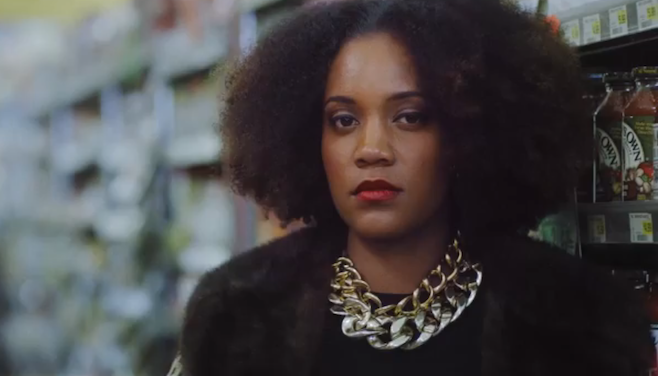
Okay, so maybe I’m a little biased because how often does a music video shoot take place in yours truly’s little podunk hometown of Albany, California — which is where the dollar-beer-covered racetrack glory that is Golden Gate Fields technically lies, friends, not Berkeley — but this new Atmosphere video for the song “Kanye West,” which the hip-hop duo premiered today on Noisey, does feel a little like a “spot the East Bay shooting location” rendition of Where’s Waldo.

There’s plenty else to like, though: That’s also Oakland writer-superstar Chinaka Hodge in the role of leading lady, and local comedian/erstwhile Guardian opiner Nato Green as a scared-shitless corner store worker. Check it out below.

The duo’s new album Southsiders drops May 6 on Rhymesayers; this song will also be on The Lake Nokomis Maxi Single, released exclusively on vinyl for Record Store Day (that’s next Saturday, April 19, kiddos). They’ll be in town in August for Outsidelands


Avalos: Should SFPD officers wear body mounted cameras?

The fatal shooting of Alejandro Nieto, a man who possessed a Taser that was mistaken for a firearm who was killed in Bernal Heights Park, produced a backlash of community anger toward the San Francisco Police Department. It was the first thing Sup. John Avalos mentioned when he called for a hearing on equipping officers with body-mounted video cameras at the April 8 Board of Supervisors meeting.

Avalos knew Nieto, and the incident struck close to home. He mentioned another recent incident of police violence at City College of San Francisco in which officers targeted student protesters; video footage from a bystander shows an officer releasing his nightstick, making a fist, and throwing a punch at someone already being restrained.

“These incidents show that there’s a great deal of work we need to do … to build trust between members of the community and the police department,” Avalos said. “These incidents involved people I knew and it almost makes me feel how widespread the problem can be.”

Police body-mounted cameras have been tried in New York, Los Angeles, New Orleans and other places as a way to shore up police accountability and provide a record of officer interactions with targeted suspects, Avalos said, and there is support for the technology both among law enforcement communities and civil liberties watchdog organizations.

“Many police support these cameras because they can help protect police officers against false accusations,” Avalos noted. “Watchdog groups support police body-mounted cameras because they can help reduce incidents of police misconduct. The [American Civil Liberties Union] supports the cameras because they allow the public to monitor the government, instead of the other way around.”

Avalos’ request called for a review of the feasibility of equipping police officers with body cams, taking concerns about cost and privacy into consideration, plus a cost-benefit analysis to show how the cost of the cameras would compare with potential savings from reductions in citizen complaints and use-of-force lawsuits.

SFPD spokesperson Sgt. Danielle Newman noted that the SFPD is already in contract negotiations for a pilot program that would equip 50 plainclothes sergeants with body-mounted cameras. The program would be funded through a federal grant, Newman said, and the department has not yet received the cameras or hashed out policies spelling out how long data would be stored, how often they would be used, or whether officers would be able to switch them on and off at will.

Newman said the pilot program grew out of allegations that undercover officers had stolen property and violated the civil rights of SRO residents during searches of their units, incidents that were initially brought to light by the San Francisco Public Defender and more recently became the subject of a federal indictment.

“When Chief Suhr took over, he was looking at ways to ensure that those things don’t happen again,” Newman explained. The department was under the leadership of former Police Chief George Gascon when the officers now facing charges were caught on film by SRO surveillance cameras.

Despite the planned pilot, Newman said Suhr was less certain about the idea of equipping 1,500 to 2,000 officers with body cameras, as Avalos’ request is geared toward.

“The concern with the chief is that with San Francisco, we haven’t been able to get crime cams put up,” she said, let alone having all officers record all police contact with the public. “That’s something that would need to be ironed out.”

Newman added that there were cost and logistical concerns associated with storage of bulk data generated by the cameras.

Rachel Lederman, an attorney with the National Lawyers Guild who represented Occupy protester Scott Olsen in a police misconduct case that left Olsen with lasting brain injuries and resulted in a $4.5 million settlement, said she was skeptical of body cams as a “quick fix” for police violence.

Oakland police officers are equipped with personal digital recording devices, she noted, but in the incident the left Olsen permanently injured, “there were 11 police officers with less-lethal weapons who were supposed to have PDRDs on – but didn’t.”

Lederman said that based on her experience, the footage that is captured on body cams is kept under lock and key by police, and remains hidden to all but doggedly persistent criminal attorneys. In practice, “journalists and affected people can’t get it without a lawyer,” she said, because police departments tend to withhold the footage with the excuse that it pertains to ongoing investigations.

In order to serve as an effective tool for holding law enforcement accountable, Lederman said, body-cam videos “have to be produced under the Public Records Act.”

Lederman added that the video quality tends to be low, officers can turn them on and off at will, and “they try to use them as evidence against people they are arresting.”

Still, a study in Rialto, California that was undertaken by a group of Cambridge University researchers determined that police use-of-force and complaints against police officers declined dramatically after officers were outfitted with the recording devices.

“The findings suggest more than a 50 percent reduction in the total number of incidents of use-of-force compared to control-conditions, and nearly ten times more citizens’ complaints in the 12-months prior to the experiment,” the authors concluded.

Lederman believes those findings are somewhat misleading, however. “Rialto has 66 police officers,” she pointed out. “It’s not really comparable to San Francisco or Oakland.”

Report details how brown and black communities are decimated, step by step

104

Gentrification is a word so oft-used in conversations about San Francisco that it’s easy to forget what it means.

A report released yesterday by the advocacy group Causa Justa/Just Cause titled “Development Without Displacement” breaks down gentrification into a set of digestible, understandable policy decisions, while identifying which communities even now are still at risk of displacement.

“This report shows that there are many reasonable policies at the local and regional levels that can help hold back the tide of gentrification and modify the worst effects of urban transformation,” said one of its authors, UC Berkeley Geography Professor Richard Walker, in a statement on its site.

The report provides many solutions, but is largely a 100-plus page tale of 20 years of the destruction of brown and black communities in San Francisco, beginning in 1990, and the ripple effects of that displacement on the people of Oakland.

The “Stage of Gentrification” map in particular details San Francisco and Oakland Neighborhoods as being in early, middle, late and ongoing stages of gentrification. Each of these classifications is determined by the population — are they susceptible to displacement? — as well as the housing market prices in the neighborhood. Not surprisingly, the Mission and the panhandle are labeled as ongoing gentrification zones, with the southern neighborhoods of San Francisco are labeled as in early stages of gentrification marked by a rise in property value.

Robbie Clark, 33, the housing rights campaign lead organizer at Causa Justa, said the map details the challenges facing the Latino and African American communities today, a challenge she’s also facing herself.

“For me, I’m born and raised in Oakland, and it’s been a challenge as an adult to find stable affordable housing,” she told the Guardian. She has a huge family that used to live in Oakland right near one another. The displacement broke them up. “Everyone is spread out throughout the greater Bay Area and beyond. It used to be very normal for every weekend to have family dinners, and now that happens much less.”

In recent years she’s moved seven times as rents in both cities skyrocketed, and she was even in the process of moving again while we interviewed her. The need for the report, she said, was stark.

The findings put specific numbers to a story of loss we all know well. Between 1990 and 2011, over 1,400 Latinos left the Mission district. In the same time, white households increased by 2,900 in the Mission. In the same period, Oakland’s black population declined from 43 percent of the city to 26 percent. Many in San Francisco argue that increased affluence helps beautify neighborhoods and makes them safer, but that misses the point: the neighborhoods may be safer for newcomers, but the old residents get kicked out in the process.

The report states that outright: “While gentrification may bring much-needed investment to urban neighborhoods,” it states, “displacement prevents these changes from benefitting residents who may need them the most.”

Causa Justa Just Cause displacement report EXECUTIVE SUMMARY by FitztheReporter

A summary version of the 110 page report.

And the responsibility of these injustices should be laid squarely at the feet of neoliberal policies, the report states, including reduced public funding, privatization of public programs, relying too much on the private sector to drive economic growth, and a political system susceptible to hugely influential private corporations. 

But ultimately, Causa Justa concludes, there is still hope.

“Gentrification can be stopped!” the report states. To right the wrongs done to communities, “We also recommend policies that regulate government, landlord and developer activity to promote equitable investment, affordability and stability, and maximum benefits for existing residents.” 

Causa Justa, Just Cause, is selling the report for $25, but also includes a form for those who cannot afford it to apply for a free copy.

A high resolution version of the “Stage of Gentrification” map: 

map1


Mozart meets Method Man

0

By Micah Dubreuil

arts@sfbg.com

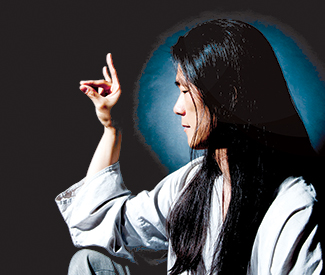
Sitting cross-legged on a pillow on the hardwood floor of a bare room in East Oakland, Korean-born, conservatory-trained composer JooWan Kim is doing two things that aren’t usually paired together: Conducting an elaborate, traditional tea ceremony and expressing his passion for N.W.A. Kim thrives on unexpected combinations: The composer, who spent seven years in Berkeley studying Zen meditation and Taoist internal alchemy (breathing exercises, he explains), has just finished his second of three arrangements of songs from Enter the 36 Chambers, the Wu-Tang Clan‘s seminal 1993 debut.

Kim leads Ensemble Mik Nawooj (his name backwards), a composer’s ensemble that could be termed a hip-hop orchestra, a chamber rap group, or maybe just the oddest band west of the Mississippi. Kim simply says: “We play pop music.” Of course, most people don’t imagine a pop group consisting of flute, clarinet, violin, cello, piano, a Soprano opera singer, upright bass, drums, and two MCs.

Most people are not JooWan Kim.

The result is a sound that juxtaposes the rapid-fire staccato of rap with the bombastic percussiveness and dramatic tension of western classical music. It’s unapologetic and truly like nothing else.

Kim, who moved to the US from Korea at age 20, had a somewhat different upbringing from your average hip-hop enthusiast. “My parents listened to classical music, and just like all Asian kids, I had the choice of playing piano or violin,” he says. ” I liked the piano.” He emigrated to study at Boston’s prestigious Berklee College of Music, then followed it up with a masters in composition from the SF Conservatory of Music. It was while at the Conservatory that Kim first began experimenting with a classical/hip-hop hybrid, presenting the first live piece “as a joke” in 2005. He began to consider doing it seriously when the performance received some unexpected attention from local press and musicians.

His first experience as a hip-hop listener, however, was less encouraging. “I hated them. I hated them so much, with a passion,” Kim says of the first songs he heard. Not a native to the language, he struggled to interpret the music. As his English began improving, however, his attitude towards hip-hop changed. “Once I realized the social context and the kind of things that they were saying, it blew me away. I could understand the necessity in the music — it’s a very sincere and powerful expression,” he says. “If you listen to concert music, it doesn’t have the same urgency,” says Kim, who has decided to prioritize making music for a broad audience (what he calls “pop”).

A broad audience is indeed front and center for EMN. The orchestra is returning to Yoshi’s Oakland on April 17 to preview the Wu-Tang arrangements, in addition to an upcoming residency at the Red Poppy Art House. The group has been performing in rooms normally considered rock clubs — Milk Bar, Brick & Mortar Music Hall, The New Parish — and are raising funds for their debut EP.

Kim’s hardly alone in his embrace of cross-cultural pollination. To celebrate their 21st anniversary, the Yerba Buena Center for the Arts commissioned the orchestra to arrange a total of six pieces for a November show called Clas/Sick Hip Hop II: 93 Til’ (a nod to local hip-hop legends Souls of Mischief, and the significance of the year 1993 in hip-hop). YBCA Director of Performance Marc Bamuthi Joseph affirms: “It is part of my gig to authentically recognize hip-hop as a great canonical American form.”

Joseph picked Kim as an arranger for his project in part because of his fresh perspective, coming from Korea and the conservatory — “there’s a playfulness that’s possible,” not being weighed down by certain historical precedents, he says. Though Joseph recognizes the s substantial history of both hip-hop and classical music in the Bay Area, he says he wasn’t entirely surprised that it took an outsider to fuse the two.

“When I came here, I realized it was very different in the sense that pop music was deeply associated with subcultures,” explains Kim. “Koreans don’t have that. Europeans don’t even have that either, in terms pop music. I thought that was weird, so I continued to listen to whatever I wanted to.” What marks EMN as unique is the marriage of classical techniques to this omnivorous disregard for cultural authority (a definitively hip-hop attitude).

mik nawooj

Indeed, JooWan Kim has a bit of a rebellious streak. “I decided to add drums and MCs to make people pissed off, and certainly I did,” Kim says of his first performance with the Ensemble. As he walks over to a grand piano to play selections of Wu-Tang’s “Shame on a Nigga,” there is a striking contrast between Kim’s clear delight in ruffling feathers and his calm, controlled demeanor, maintained through two to three hours of meditation each morning — a practice Kim began after studying with Taoist master Hyonoong Sunim at the Zen Center in Berkeley.

Kim believes meditating has transformed both him and his music. “It’s the most valuable thing I’ve ever done,” he says. “I don’t feel angry or depressed that often anymore. I’m at a point where I can let things pass.”

He reflects on the artistic potential that has opened up as he finishes his tea. “A lot of times people have it backward in terms of understanding art or music — that you’re learning all these techniques and then you’ll somehow write this great music,” he says. “It’s actually the other way around. All these qualities that you have, anger or depression or love: they come out in the music. That’s why people who didn’t learn anything about music can write great music, because they somehow overcame themselves.”

Ensemble Mik Nawooj

Thu/17, 10pm, $15
Yoshi’s Oakland
510 Embarcadero West, Oak.
(510) 238-9200
www.yoshis.com

https://www.youtube.com/watch?v=O84Yv6OVP8s

The Milkman delivers

1

esilvers@sfbg.com

LEFT OF THE DIAL It’s a question most musicians are all too familiar with. If you tell someone at a party that you’re a working musician, that person is inevitably going to ask — after a few polite questions about your hardcore band/classical jazz quartet/street-corner performance art where you alternate reading Blake passages with playing the accordion — “So, you have a day job?”

In a city like San Francisco, especially, the answer is almost always “yes.” And there’s no shame in that! Bartender, barista, Whole Foods cashier, teacher, graphic designer, marijuana dispensary employee — I’ve heard all of these in just the last month or so of musician interviews. A person’s gotta eat.

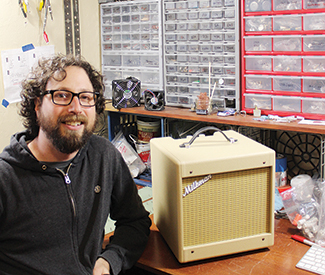
And then there’s Tim Marcus. On a recent, rainy Tuesday afternoon, the guitarist was hunkered down in a small bedroom-turned-electrical engineering workshop in the Lower Haight apartment he shares with his girlfriend. Marcus, 35, is one of the most sought after steel guitar players in the Bay Area. He spent the latter half of the aughts with the now-defunct (but much loved) San Francisco Americana band Or, the Whale. A few hours after this interview, he’ll be playing Amnesia with alt-country rocker Tom Rhodes; two days later he’s heading out on the road for a three-week East Coast tour with San Francisco folk songstress Kelly McFarling. But right now he’s at his day job: Flanked by stacks of glass tubes, fuses, and various tiny metal parts whose purpose we can only guess at, he’s building an amplifier. And not just any amplifier. An amplifier of pedal steel dreams.

amp

As the founder, owner, and sole employee of Milkman Sound, Marcus has created a living from building toys — and he’s the first to call them that — for musicians who are just as choosy as he is.

“I started playing guitar when I was 10, and played in bands all through middle school, high school, college,” says Marcus. “I started doing it professionally in the early 2000s. And there just wasn’t what I’d consider to be a boutique option [for amplifiers] for pedal steel guitars. If you drive a car, most people buy a Ford or a Subaru, but you have the option to buy a Ferrari. As a pedal steel player, in particular, you really wound up shoehorned into buying Fords and Chevrolets, things that are made for [regular] guitar players.”

He gained the technical know-how required to build amplifiers from a couple places. Back East, he worked for a company that did repairs on audio-visual equipment, where he’d hand off old or unused parts to a friend who built amps in exchange for his tutelage. After moving out to San Francisco, Marcus went to work for BBI Engineering, an SF company that installs AV and theatrical systems for museums “and other places that use automated amps, where you walk in, push a button and everything happens,” he says. “I learned a lot about making things that work well, that aren’t going to break if they’re subjected to kids poking at them day, in day out.”

Frustrated at being unable to get the clarity and quality of sound he wanted out of his guitar, Marcus started small, ordering the best parts he could find — some vintage, some new, with a priority on materials made in America — to build one amplifier for himself. He still has it (it’s sitting in a custom Milkman slipcover in the corner of the workshop, which, Marcus notes, is more easily navigated than usual — he just shipped out a bunch of amps) but he’s revamped that first one more times than he can count.

He’s an admitted perfectionist as well as a workaholic, he says, but it runs in the family: the name “Milkman” is a nod to his longstanding family business in Connecticut, starting with a small dairy farm his great-grandfather bought and built out. “The spirit of my great-grandfather was like ‘I’m going to sell something that I make,’ and my family’s always continued that,” says Marcus. “That definitely plays a role in my work ethic.”

Since he built that first amp four years ago, he’s been crafting custom amps for guitar and steel players all over the country. He does every part of production himself — friends have asked to help so they can learn, but he’s “crazy OCD about doing everything” with his own hands — and he builds each amp to a customer’s specifications, one at a time. He’s branched out into amplifiers for regular guitarists, and for bass players. Each amp takes him a couple of days to build, and then he tests it meticulously by (someone’s gotta do it) playing guitar through it lots of different ways.

Marcus still buys parts from small US-based companies where possible, including many in California, which he says is expensive but worth it for the quality. They don’t manufacture the glass tubes that go into amplifiers in the US at all, anymore, he explains, which is a shame, because the ones produced here in the ’50s and ’60s were great — they played an unsung role in creating what we think of as the early American rock ‘n’ roll sound. (Marcus can and will explain the history of amplifiers to you, as well as the differences between every iteration of each part that goes into them, at the drop of a hat.) The majority of his cabinets come from a revered one-man shop in Nashville, though Marcus has just begun working with a family business in Oakland to try to make the operation even more local.

amp

The price for all this care and OCD-level handiwork? Milkman amps run from $900 for a five-watt “half pint” amp to $3000 for the more powerful models. But for the musicians Marcus is catering to, that’s well worth it — last year, he sold 40 amplifiers; this year, by the end of March, he’d already shipped 20. Milkman amps have been out on tour in Eric Clapton’s band, thanks to acclaimed steel player and producer Greg Leisz taking a liking to Marcus’ simple, vintage rock ‘n’ roll aesthetic and careful technical work; they can also be heard on the most recent Daft Punk and Norah Jones records.

Maybe most impressively: Marcus seems to have cracked a code. He’s surviving in San Francisco by doing something he loves — and something that allows him to stay here as a working musician. He stopped working for his old audio-visual company about a year ago.

“I know I’m extraordinarily lucky that I’ve figured out a way to have music be something I can make a living off of,” he says. “I mean, I don’t get rich playing pedal steel. I wouldn’t be able to pay my rent playing pedal steel. If I lived in Nashville, or even LA, maybe; not here.

“But there’s also pride in that,” he says. “That’s why it says ‘Made in San Francisco, USA’ on the front. It’s not easy to do things in San Francisco, so when you do I think it’s just that much more awesome. I kind of got into the pirate ship mentality, and working for myself is great. I get up early — but I haven’t set an alarm clock in a long time.”

tUnE-yArDs Tuesday

0

Oh, Merrill Garbus. Remember the days when the endearingly weird, weirdly endearing, predictably unpredictable tUnE-yArDs felt like an open Oakland secret, an East Bay girl (by way of the East Coast) who slowly but surely started to outgrow us?

Well, it’s official, she has — but in a good way. If the first couple singles off Nikki Nack are any indication, the album (out May 6 on 4AD) will be more slick, more produced, and just a little less all-over-the-place than her previous two records, 2009’s lo-fi debut Bird Brains and the album that launched her onto the national stage, 2011’s excellent Whokill.

But that’s not to say the new direction sounds boring — far from it. With dancefloor-ready synths front and center and a Janet Jackson-like callback, “Wait For A Minute,” which 4AD released today, sounds like Garbus has been listening to some ’90s R&B, which is (duh) always a choice we endorse. Give it a listen below .

She also just announced tour dates — catch her at the Fillmore June 6 with the Durham, NC-based Sylvan Esso.

True House: Where to celebrate Frankie Knuckles’ legacy this weekend

0

I have so much to say about how much influence house originator Frankie Knuckles had on the SF scene (and basically the entirety of my life) — but I’m still so much affected and in shock at his passing, that I think the best way to work it all out is, as usual, hitting the dancefloor. Let’s come together this weekend and celebrate the Godfather’s warm and joyous gift of music.

I’m figuring the spirits will be coming down at every party happening this week, but these are my personal recommendations:

THURSDAY

Tubesteak Connection: Disco purist DJ Bus Station John is expert at revealing house’s underground gay roots at his weekly party in the glorious depths of the Tenderloin.


FRIDAY

Taboo: Frankie’s #1 SF connection is our own incredible David Harness, the one person here who most embodies Frankie’s sound and spirit. He and Frankie played together innumerable times. This Oakland party, which Harness has put on for more than a 15 years now, will be a reunion and a true tribute.

House Dance Conference: Three days of insanely talented house dancers hosting open sessions, lessons, and positive interaction — all culminating in a huge party, of course. Bring your sneakers.

Throwback: This huge and perfect monthly tribute to ’90s house music at Mighty is coming at the right time to indulge in Frankie’s signature sounds. With DJs Galen, Jacob Sperber, Renoir, Jayvi Velasco, and Miguel Solari.

SATURDAY

Blessed 5-Year Anniversary: One of the best soulful house parties on the planet, this incredibly diverse and moving Oakland jam rings in a fiver with David Harness, Discaya, and Rafi Acevedo.

GO BANG!: Our own legendary Steve Fabus was spinning at the Trocadero Transfer as Frankie was coming up in Chicago and New York. This is the monthly, fabulous disco explosion he puts on with DJ Sergio, this time featuring the really, really good Apt One and Emily Coalson.    


SUNDAY

Sunset season opener: This enormous old school house family reunion picnic in Stafford Lake Park from the Sunset crew will overflow with hugs, tears, smiles.


Locals Only: Teenager

0

If the music industry gave out awards for patience or persistence, Bevan Herbekian would have a healthy handful of trophies to his name. The multi-instrumentalist has lent his songwriting and frontman skills to everything from loose punk bands to a highly orchestrated indie pop quartet over the course of the past decade and a half, in addition to playing bass on other people’s songs — at the moment, he’s part of fellow Berkeleyite M. Lockwood Porter‘s band — so he’s no stranger to the realities of trying to “make it” as a musician. But Teenager, the moniker under which Herbekian has decided to release his first truly solo album, represents something new for the songwriter: A chance to blend every genre he’s ever loved, to talk about his travels to New York and subsequent, requisite disllusionment with it, a musical space where he doesn’t have to bend to anyone else’s desires.

The resulting joy is contagious — The Magic of True Love, which comes out April 29, is full of unabashedly earnest, tightly crafted pop songs with seriously big instrumentation. There are head-bobbers, there’s high-flying falsetto, there are shout-along soul choruses. His voice carries the energy of someone very young, but these aren’t songs written by a newbie. Herbekian decided to realease one new song off the album each week leading up to the release, which means you can listen to quite a bit of it online. To be real, though, you should probably buy it. It’s catchy as shit, and the guy’s been at it long enough.

We caught up with him this week to hear about songwriting influences, going solo, and exactly how much time he spent listening to Nevermind.

San Francisco Bay Guardian Your bio says you’re from a small Northern California town. Where, exactly?

Bevan Herbekian I was born in Bennett Valley and raised there until I was 13. It’s that small stretch of countryside/small town between Petaluma & Santa Rosa proper that hides behind the hills off the 101. When I was in junior high, my family moved to Avila Beach, which is a tiny beach town on the central coast. It’s got two streets and a population of a few hundred. It made Bennett Valley look like a real urban center.

SFBG When and how did you first start playing music? What instrument was the first? How many do you play now?

BH I started playing music when I was about 12. My dad taught me the riff to Nirvana’s “Come As You Are” and I urgently learned the rest of the album on an acoustic guitar. It was one of those aha! moments for me. I was totally hooked and immediately wanted to start a punk band, but everyone I knew played guitar, so I hopped over to bass. Since then I’ve taken to the other rock ‘n’ roll instruments — piano, organ/keyboards, simple synth stuff, various percussion — I humor myself on drums and basically anything else I can get my hands on.

SFBG What’s the first record you really remember loving?

BH Unquestionably, Nirvana’s Nevermind. Around the same time I picked up the guitar, I borrowed a cassette of Guns & Roses’ Use Your Illusion from a friend’s ‘cool’ older brother — he was in high school so he was automatically cool. My dad caught me walking through the front door with it and said something along the lines of ‘you don’t want to listen to that garbage’ and took the tape, but not in the normal parents-are-a-drag sort of way. An hour later he gave it back to me having recorded Nevermind over it. I remember sitting on the floor of my room hearing those drums kick in and thinking what is this?! It was so loud and aggressive and passionate and vulnerable and somehow just as catchy as the early Beatles stuff that I loved as a little kid. Overnight, I became obsessed. I couldn’t stop listening to it. I literally listened to it every day before school for a year.

SFBG Can you name some of the bands you’ve been in before? The last time the Bay Guardian checked in with you, you were in The 21st Century.

BH Yeah, I’ve spent much of the last 15 years playing in bands. Prior to Teenager I was leading The 21st Century which was this highly orchestrated Indie-Pop/Rock octet with horns and harmonies and big songs in general. Before that I was working on solo stuff similar to what I’m doing now and playing in a fun experimental art-rock(?) band called The Tea Set and of a band/friendship club called World’s Best Dad. Right now, I’m also playing bass in M. Lockwood Porter which is a really sweet Americana/rock ‘n’ roll band led by fellow 21st Centurier Max Porter.

SFBG How was making an album on your own different from with a group? What made it feel like time to do that? It’s interesting, because so many people, when they decide to “go solo,” put out a really stark and stripped-down album, but this record sounds really BIG on all levels, in the best possible dramatic power-pop sense….got some ’70s arena-rock guitar riffs, soul jams with big backup vocals, some choruses that sound like younger (less cheesy) Billy Joel stuff.

BH Ha, that’s funny and pretty true! Yeah, this album came on the heels of being in a band with a lot of people. As is the case whenever working with a large group, there are many competing ideas and opinions. This can be a tremendous strength, but the songs that became this record were incredibly personal and I just found myself wanting to work on them in a solitary way. I had a strong sense of where I wanted to take them — kind of a ‘more is more’ philosophy — and when you have that sort of clarity, it’s best to do it yourself. It’s true, many of these songs are BIG and that’s been something I’ve been chasing for a few years. These songs grew out of some very big feelings so it seemed like the right way to bring them to life. There’s love and loss and desire and deep disappointment running through them so I wanted them to sound as large as it all felt.

SFBG On that note — how would you describe your genre on this album? Who would you point to as your biggest influences?

BH I love so much music and I like trying my hand at a lot of different types, so there’s a handful of genres represented here. I see this album almost like a mixtape of my life. There’s nods to many of my musical loves. There’s some rock ‘n’ roll, ’60s soul, indie pop, folk, and ’90s alternative (do people still say that?). In terms of musical influences, I gravitate towards songwriting. I love the melodies and arrangements of Brian Wilson and Motown. The literary and lyrical precision of Leonard Cohen and Belle & Sebastian blow my mind. Bands like The Pixies, Big Star, Harry Nilsson, and Beck — they’re all staples too…and like many of us, I was indoctrinated at an early age into the ultimate Beatles fan club by my dad so that’s a part of my musical DNA too.

SFBG Where does the moniker Teenager come from?

BH With The 21st Century, I was unapologetically ambitious. Even the band name was a kind of over-the-top statement of bravado and staking claim on something bold and large. Coming out of that, I veered the opposite direction. I thought, what’s one of the more misunderstood, under-appreciated, and generally dismissed groups around? And I arrived at Teenager. I think it was also a chance to acknowledge how long I’ve been writing and recording music at home. In a lot of ways, I’ve been doing the same thing for about 16 years so I thought in a way, my time as a musician and songwriter is dead center in those teenager years. Given the pair of meanings, it somehow felt strangely appropriate.

SFBG Plans for the next year? 

BH Well, I’ve been putting together a new lineup to play these songs out. I’m quite excited about that. I’m eager to tour come early Fall. Also, because this album was such a labor of love and took such a long time, I’m sitting on a lot of backlogged material. My hope is to get into the studio and cut it all by the end of the year and then whittle it down — maybe to a double album. I’ve never made one and have always been a bit against them in principle — I like editing – -but I think it might be time to give it a try.

SFBG Where do you live in the Bay Area? How does being from Northern California/living here influence your music?

BH I lived in San Francisco for a few years and had a stint in Oakland, and now I’m living in Berkeley. Honestly, I’m not sure how Northern California plays a part in my music. To me, it’s home and sometimes it’s hard to see your home for what it really is. But I love the city and the redwoods and the ocean and the mountains. Being surrounded by all that beauty can really instigate some large dreams and make you feel like the world is an astounding place.

SFBG Bay Area meal/restaurant/food item you couldn’t, hypothetically, live without?

BH Without hesitation, La Taqueria followed by banana cream pie and a cup of coffee from Mission Pie. I’ve dubbed it the ‘double threat’ and there are times when I do it twice a week. No joke, I did it today.

;

Sweet, psyched-out, and dirty

2

esilvers@sfbg.com

LEFT OF THE DIAL Setting aside the darkly ear-wormy melodies, haunting vocals, and refreshingly crisp grunge-pop that goes into Everyone Is Dirty‘s sound, it’s singer Sivan Gur-Arieh’s violin — slicing sweetly above the chaos of a final chorus, adding a heightened sense of gothic romance to a bridge — that sets the Oakland art-rock quartet apart from the current fuzzy, grungey masses.

Good thing Gur-Arieh’s come to peace with the fact that she plays it.

“I’ve had a love-hate relationship with my violin since I was a kid,” says the singer, an Oakland native whose father taught her play when she was in elementary school. “I mean, growing up, you don’t always want to be staying home standing in front of a music stand, playing scales for two hours at a time. I’ve definitely put my violin under the bed and not played it…but it always came back out.

“I’m at a point where I realize it’s a tool, and it’s a tool I know how to use, and you don’t always get to choose that,” she says, earnestly, like someone speaking about a handicap. “Now, I’m just at, I play the violin. Whether it’s a nerdy instrument or not, I do it and it’s a part of me.”

It’s also a big part of the band’s charisma, an invitingness coming through music that technically should feel cold — sure, Gur-Arieh’s distinctive whisper-wail would be at home providing the soundtrack to an artsy vampire flick, but you also trust her, and the weirdness, in the same way you trust the Pixies‘ or Sonic Youth‘s weirdness; it doesn’t seem to be an affectation.

Then there’s a very ’90s sensibility about pop’s borders, reminiscent of SF’s own Imperial Teen, maybe Sleater-Kinney, and I want to say a more jagged Veruca Salt but maybe I’m just ridiculously excited that they’re reuniting so I’m hearing them everywhere? Regardless: Add in psyched-out guitar riffs from Christopher Daddio, a super warm, strong rhythm section courtesy of Tony Sales on drums and Tyler English on bass, and you start to understand why the four-piece, at just a year and a few months old, has earned serious devotees around the Bay Area as well as highly coveted free studio time at Different Fur via Converse’s Rubber Tracks pop-up — all before releasing a full-length record.

That’s in the works, Gur-Arieh assures me. This January marked both the band’s one-year anniversary (its first show as a four-piece rocked Cafe Du Nord, sigh) and another major milestone: They signed with Breakup Records, the husband-and-wife-run label, formerly out of Oakland (now out of Portland but with a heavy bias toward bands from their former hometown); the label will be producing EID’s first full-length at the end of May.

In the meantime, the band has been releasing teasers of what we can expect, like “California” — a full psych-rock sprint that gets undeniably reminiscent of the Dead Kennedys‘ “California Uber Alles” in its chorus, when the layers of sci-fi guitar drop out for Gur-Arieh to admonish “California, put your pants on/you’ve had too much to drink.” They just re-recorded that one for the full-length, at Daddio’s home studio, where they do most of their recording. “He’s an engineer, and he’s a perfectionist,” says the singer. “The fact that he’s able to make everything sound so good just using mic placement…it’s incredible to me.” On “Mama, No!!!” things take a turn for the Nirvana-esque, though the band keeps it dynamic by playing expertly with contrasts — the sing-song of Gur-Arieh’s voice with unrestrained drum crashes, the urgent peal of violin over fuzzed-out guitar.

She and Daddio, who met when Gur-Arieh was in film school in Chicago and New York (he did sound design for her thesis film), share primary songwriting duties; when the singer moved back to the Bay Area, they started seeking out the band’s rhythm section. Film still plays a big part in how the singer thinks about music, she says. “I make our videos for the most part,” she says. “They’re very connected to me. I’ve always been a musician, but I’ve also always been painting, writing poetry&ldots;film is kind of an extension of music, to me.”

Everyone Is Dirty will be sharing a bill on April 5 with a pair of similarly dramatic, cinematic, female-fronted bands: Rich Girls, the new(ish) gothy garage project from Luisa Black (formerly of The Blacks) opens, and Happy Fangs, whose contrasting male-female vocal dynamic, courtesy of Rebecca Bortman and Mike Cobra, has just been supplemented by the addition of Sacramento drummer Jess Gowrie. It’s the kind of lineup that has the potential to kick your ass, then wrap it up and hand it back to you with a sweet smile as an experimental art project. I mean this in an entirely positive way.

“I’ve been really into this violin player from Chicago named Leroy Jenkins lately,” says Gur-Arieh, when asked what she’s been listening to. “If you look him up on YouTube, his playing was so weird and messy and imperfect, and that’s super inspirational to me. That’s unique especially for violin players, because they tend to be so focused on perfection, on playing other peoples’ music perfectly, and he was an emotional player — not afraid to make the violin sound piercing,” she says, “and dirty.”

Happy Fangs w/ Everyone Is Dirty and Rich Girls
Sat/5, 8pm, $10
Bottom of the Hill
1233 17th St, SF
www.bottomofthehill.com


While we’re riding high on the female-fronted band kick, a few other kick-ass ladies to look out for this month:

Given the current classic funk-soul revival — see Sharon Jones‘ sold-out stint at the Fillmore last week — there’s just no good reason why Wicked Mercies hasn’t blown up yet. Fronted by three seriously talented female vocalists, with a brass section that culls from the best of the old-school San Francisco soul scene, the band – which bills itself as “working class talent” that brings “the sound of San Francisco street soul to the people” — has been a dance party-starting staple at funk-friendly venues like the Boom Boom Room for a few years now, so there’s little doubt that a room as small as Amnesia is going to get sweaty very quickly. Remember to drink water.

Wicked Mercies
With the Go Ahead
Sat/5, 9pm, $8-$10
Amnesia
853 Valencia, SF
www.amnesiathebar.com

Forming a band when you’re in middle school that actually goes on to critical praise and some commercial success before you’ve graduated from high school means a few things. For The She’s, which the Bay Guardian ever-so-aptly identified as a band On the Rise in 2013, one thing it means is giving interviews about your upcoming second EP that involves quotes like this one, from singer-guitarist Hannah Valente in a recent Bay Bridged interview: “It’s going to sound a lot different. On our first album, there are songs that we wrote in eighth grade.”

All good-natured (and, let’s be real, envious) ribbing aside, there’s no question that The She’s have pretty much won the hearts of any red-blooded San Franciscan with an affinity for summery dream-pop; they’re also entering a stage of band-life reserved for artists who achieve a certain level of success while so young that their age becomes part of the shtick. This next stage is when they’re going to have to prove that they’re talented songwriters and performers, period, as opposed to being really, really good for a band made up of high school kids. For the record, I think the former is true, but their sophomore EP, Dreamers, due out April 15, will have to do the talking. Catch ’em for free at Amoeba on April 12, or the official (all ages!) release show at the Rickshaw Stop.

The She’s
With TV Girl, Lemme Adams, and Cocktails
April 18, 9pm, $10-$12
Rickshaw Stop
155 Fell, SF
www.rickshawstop.com

All (really, all) are welcome

0

By Whitney Phaneuf

arts@sfbg.com

Mark Growden had a passion for jazz and classical music from a young age, growing up in the small northeast California mountain town of Westwood. So he set out to be a composer. He only learned to sing as an adult — out of necessity, when his instruments were stolen — and only then did his rich baritone vocals become a way to book gigs and get his music heard.

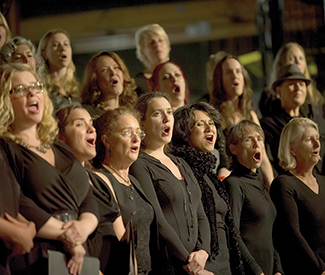
Now he’s teaching others to sing — often, amateurs who have never sung before — and writing original songs for them to perform. His Calling All Choir, now in its second season, is a 150-person choir made up of singers who, for the most part, have never taken the stage before in their lives.

Growden has always found inspiration in unexpected places. His take on American roots music blends his love of jazz with influences as varied as Appalachian folk, cabaret, and prison work songs from the old South. He started out composing for local dance companies, mainly on saxophone, before learning to play more folk-oriented instruments such as banjo and accordion. He’s spent the last 20-some years nomadically touring the country as a one-man band and in ensembles. In between shows, he’d stick around a city long enough to hold a singing workshop, which was as much about technique as it was about playful exercises that opened people up to music. Soon, Growden was known for both his songwriting and teaching abilities.

“The people in SF [in particular] kept coming back to the workshop,” said Growden, now an Oakland resident. “They asked ‘why do we have to stop for two months while you go on tour?’ I had it in my mind that I had to be on the road to make money.”

In September of last year, having just moved back to Oakland to settle down, Growden told his San Francisco workshop members, “Let’s try it.” He studied the community choir model, in which members pay dues to compensate the director, and started designing a program around his original compositions. He knew from the beginning that there would be no auditions; to reinforce its inclusive nature, he called it The Calling All Choir.

Growden spread the word online and through his previous workshop attendees, forming chapters in Sonoma and the East Bay, in addition to San Francisco. He set the dues on a sliding scale, ranging from $0 to $500 per person for the 18-week season. The inaugural season last year kicked off with about 40 members in each location. The three groups rehearsed separately — once a week for two hours a night — before coming together in January for dress rehearsals and final performances at The Sebastopol Center for the Arts and The Crucible in Oakland. The choir also performs at local hospitals and retirement homes.

First season member Gianna Smart had never heard Growden’s music before joining, but it ended up being part of the appeal.

“I imagined I’d find a Christmas choir in a church basement somewhere, and was okay with that, but when I met Mark and discovered that he wrote all of his own original compositions, I was really excited,” said Smart, who lives in Healdsburg. “The choir is a safe place to explore your own voice and be a part of a bigger sound. You don’t have to hit all the notes because you’re supported — someone always has your back.”

The second season is already five weeks under way, with 150 members. They’re set to perform four compositions by Growden in the coming weeks, plus a 1936 cantata by Ralph Vaughan Williams called “Dona nobis pacem.”

“It’s a classic round that the older generations know,” Growden said. “It’s important to keep those rounds alive in our culture.” So how do amateurs go from zero experience to singing in Latin? Growden said it usually comes down to practice: “There were people who couldn’t match pitch, but I kept having them come in early to work with them one-on-one or with a buddy,” he said. “People who I thought absolutely couldn’t sing, end up being able to sing.”

During a recent rehearsal, his patience seemed endless and his energy infectious. When the choir formed a circle grouped by vocal ranges — sopranos, altos, tenors, and basses — Growden sprinted from section to section, signaling with his arms and voice when and how to sing. He encouraged them “to lean” into their next notes, reminded them not to bury their heads in their black binders filled with sheet music, and even stopped them when they sounded flat. Sure, there were a few off-key, cringe-worthy moments.

But there was also something beautiful in those imperfections. “I don’t like to use the word spiritual – it’s way overused – but there is something sacred in people singing together. Even if they’re just drinking together,” Growden said later by phone.

Each rehearsal begins with vocal exercises, many of which Growden borrowed from theater, and usually some form of dancing to encourage people to use their entire body as an instrument. The rehearsals also end with a dance party, for which Growden lowers the lights and blasts everything from hip-hop to ABBA. For the rehearsal he let us sit in on, it happened to be James Brown.

The second season will culminate with a finale June 20, at a venue TBD, and the third season will begin in September 2014. The choir accepts members within the first three weeks of the season, though Growden said he makes exceptions for experienced singers who know how to read music.

“When you’re writing for amateurs, it’s harder. I’ve got to set them up for success,” he said. “But as a composer, I am really lucky. Vivaldi was a music teacher at an all-girls orphanage, Duke Ellington had his band…I mean, do you know how hard it is for composers to have their music made?”

For upcoming shows and more information: www.callingallchoir.org

Late entries: !!!, Janet Mock, DJ Shadow, Joey Negro, Kadet Kuhne, more

0

Sometimes we get word of cool things after press time, things you should totally go to. Here are some.

FRIDAY 28

>>JANET MOCK — author, trans activist, and inspiration — will appear tonight at the LGBT Center. She’s kicking off a weekend-long celebration that will culminate in SF’s first Trans Visibility Day on Monday. 

>>DJ SHADOW: The legendary SF turntablist has just been added to a killer lineup at 1015 Folsom.


SATURDAY 29

>>!!! DJs — the revered dance-punk band (and all-around cool guys) shows us what it’s got on the tables, late-night at Audio SF.

>>KADET KUHNE — fave local artist, who takes contemporary concepts like virtual reality and 3-D printing and gives them an artistic spin, will give a live sound performance to accompany her current show at Krowswork in Oakland.

>>JOEY NEGRO — Storied disco and house DJ brings 25 years of experience to Mighty, and the party will be amazing. 

https://www.youtube.com/watch?v=3MLNWhqdNn8


SUNDAY 30

>>“LIKE A PRAYER” — The wonderful San Francisco Album Project concludes its run with this Madonna album, as usual reinterpreted by crazy drag queens into an arty masterpiece. At the Stud.


Port of Oakland rejects deceptive contract bid by Black Muslim security firm

11

Editor’s Note: This report, which appears in today’s Oakland Tribune, is part of the continuing efforts of the Chauncey Bailey Project, a joint investigation by various media outlets (including the Bay Guardian) into the 2007 murder of Oakland journalist Chauncey Bailey by members of Your Black Muslim Bakery.

By Thomas Peele and Matt O’Brien, Bay Area News Group

OAKLAND — Admitting they nearly entered into a deal with a questionable security company now under investigation, Port of Oakland commissioners on yesterday [Thu/27] Thursday vowed to revamp their contracting process.

“We came very close to approving a bad contract,” Commissioner Michael Colbruno said. “The whole procurement process” should be reviewed.

The commissioners voted 6-0 to back out of a contract with BMT International Security Services, which had submitted bogus references and credentials to win a $450,000 deal to patrol two shoreline parks.

The port has extended its existing contract with ABC Security to guard a 42-acre shoreline through the end of the year. Colbruno added that the port needs to have a better screening process.

Commission President Cestra Butner agreed.

“This commission will take our lumps if we did anything wrong,” he said. “We want to make sure we get things right. … I don’t want anything slipped under the rug.”

BMT, which is linked to Oakland’s defunct Your Black Muslim Bakery, had been in final negotiations with the port when this newspaper reported that its proposal contained references to work at other government agencies that had no record of ever doing business with it. The firm also appears to have inflated the credentials of its managers.

The company is now being investigated by the Alameda County District Attorney’s Office and the state Department of Consumer Affairs. A former Oakland police officer also said in court papers that he believes the company stole a security company license number from him that he let lapse in 2008 when he retired.

BMT told the port that it had worked for BART, the San Joaquin County Housing Authority and the Riverside Transit Agency, but those agencies had no record of hiring the company. The firm also lost contracts with Alameda County and the Housing Authority of the City of Los Angeles when staff at those agencies discovered the Oakland company submitted apparently false insurance certification.

At least one Bay Area government noticed before awarding a contract that something appeared wrong with BMT’s credentials.

In 2011, the Vallejo City Council rejected a BMT proposal after city staff reported that the listed references were not calling back and one claimed to not know the company. BMT unsuccessfully appealed and some of its employees spoke out at a public meeting.

BMT sought another Vallejo contract in 2012 but again failed to win it. BMT owner Rory Parker sued the North Bay city in December, claiming she and her company experienced disparate treatment “because of their race, which is Black, and because of their religion, which is of the Islamic faith.”

The firm is run out of a Black Muslim temple in West Oakland whose minister, Dahood Sharieff Bey, was an associate of Your Black Muslim Bakery and a disciple of its founder, Yusuf Bey. Yusuf Bey touted his business enterprise as empowering African Americans, but prosecutors have described it as a wide-ranging criminal organization involved in violent crimes, real estate fraud and identity theft.

The bakery collapsed in 2007 when its members, led by Yusuf Bey IV, killed three men, including Oakland journalist Chauncey Bailey. Bey IV is now serving a life prison term without parole. Prosecutors and police have linked five unsolved homicides to the bakery.

Dahood Bey, the minister who identified himself at a recent Oakland council meeting as “Mr. Pasha,” was tried for torture in 2010 but pleaded guilty to lesser charges when the jury could not reach a verdict. His co-defendant in that case, Basheer Fard Muhammad, has been the public face of BMT at port and other government meetings, urging officials to give it contracts.

BMT owner Rory Parker is Dahood Bey’s mother. The company also claimed in its port proposal to have a retired, Harvard-educated FBI agent serving as its chief financial officer and that its guards include former Secret Service agents.

Law enforcement records show San Francisco police officers arrested Muhammad in Oakland on Feb. 25 on suspicion of receiving stolen property, which was described as a “refrigerated sandwich table.” He was jailed for two days and released after the Alameda County District Attorney’s Office declined to prosecute him. San Francisco police spokesman Sgt. Eric O’Neal has refused to release details about the case despite repeated requests.

BMT is also seeking a contract to work for the Los Angeles County Metropolitan Transportation Authority, but transit officials there would not disclose any information about the bid until they finish evaluating all the proposals in May.

– See more at: http://www.chaunceybaileyproject.org/2014/03/28/port-of-oakland-unanimously-rejects-black-muslim-security-firms-bid-to-guard-shoreline-parks/#sthash.u7PagzEY.dpuf


One Lorde to rule them all: An evening at the Fox with one seriously royal 17-year-old

15

I woke up this morning wondering if I could pull off an orange jumpsuit. I wasn’t contemplating how I would fare in a state penitentiary, mind you, but rather whether or not I was as cool as Lorde.

It’s Wednesday night at the Fox Theater in Oakland and, clad in an wide-legged orange jumpsuit, Lorde looks like the newest addition to Orange Is the New Black. The oversized one-piece cinches at the waist and is cropped at the elbow and calf. It’s not particularly flattering, but Lorde rocks it. She marches on stage in her signature footwear: clunky black leather platform boots. When the singer turns around the suit reveals a horizontal cutout in the middle of her back — just a hint of sex appeal.

She’s not trying to impress the boys, though. The jumpsuit at times gives the singer a slight camel toe. In stark contrast to her peers, the Disney princesses and even the post-Disney Miley Cyrus, Lorde revels in darkness, growing pains, and awkward dancing.

When she’s performing on stage, it’s easy to forget that Ella Marija Lani Yelich-O’Connor is only 17 years old. The New Zealand singer known as Lorde was launched into international fame when her first single, “Royals,” became radio’s most played song last summer. What began as the summer’s catchiest tune quickly turned into an overplayed hit that even Lorde herself tried to ban from the radio.

From the first song of the set, Lorde commands her audience into a deep trance with “Glory and Gore.” She walks to the center of the stage, where she meets the microphone, and dives right in. A single spotlight shining from above shadows the singer’s face as she chants the opening verse. All you have is her voice, the silhouette of her long curly mane and hints of spastic movements. The awkward dancing is utterly relatable, a combination of an epileptic fit and teenage white girl dance that I’ve certainly been a victim of. In the split second that the bass drops, strobe lights shine directly onto Lorde’s face. When the strobes hit, she sings out to the audience, dramatically unveiling her signature pale complexion and dark lipstick.

lorde
Lorde. All photos by Charles Russo.

Curly-haired, black lipstick-sporting clones squeal in excitement after her opening song. The curtain rises as Lorde launches into “Biting Down,” the darkest track on the extended issue of her debut album, Pure Heroine. The trance-like song is layered with deep synths and repetitive vocals. “It feels better biting down,” she repeats over psychedelic instrumentals. Her two-person band sports an all-white ensemble. The keyboard player and drummer’s outfits resemble straightjackets, furthering the correctional institution feel. White kaleidoscope lights project out to the audience, onto the ornate walls of the Fox Theatre and onto the ostentatious chandelier balancing above stage. The monochromatic strobe lights and costumes put all eyes on the lady in red. Tonight, we are in the Dark Lorde’s world and she is the ruler.

“It’s so good to see you again,” she croons. Last time she was in San Francisco was for Not So Silent Night; this time, it’s for the last leg of her US tour. “Beautiful city by the way, so green.” A definite reference to the city’s favorite pastime.

With “Buzzcut Season,” three screens display a daze of water reflections. The poetic lyrics written by the singer herself builds imagery of serenity and solace. Lorde hides behind a sea of lights. Her silhouette sways back and forth in a dreamlike state. She brings us away from the dreariness of the world and into the beautifully twisted realm of her dreams. Lorde glides her hands through the air to the rhythm of the music. The deep trance sets in with “Swinging Party,” a track that exposes the natural vibrato of Lorde’s dark voice over soft synths. Mirrored projections of Lorde’s performance hit the screen, creating a kaleidoscope of her face.

lorde

The visuals build throughout the show, from all-white lights to rich purple, red, and orange hues that saturate the stage. Smoke machines create a dark playground for the young ruler. Lorde comfortably plays with the shadows, dances in the smoke, and hides from the light. She touches the security blanket that is her hair and whips it back and forth as she bends over in song.

The familiar horn of the opening of “400 Lux” signals my favorite song. The bass drops, and visuals of moving landscapes hit the screen as she belts out exceptional vocals. “We’re never done with killing time / Can I kill it with you?” The poetic lyrics dismiss any feelings of unworthiness — she likes you. The Lorde then covers Son Lux’s “Easy” as she sways in and out of the eerie smoke. Later, the spectacular rendition of “Royals” makes the song bearable, retrieving memories of summer bliss. The slight remix carries entrancing vocals and repetitive verses. Her voice echoes phenomenally through the hollow hall, and giant ornate digital crowns are displayed on the screen during the chorus, cementing Lorde’s title as our ruler.

“Oakland, you’re here,” the Dark Lorde hums affectionately. The crowd wails back in admiration. “You sold out this theater tonight, because you’re 17 or you’re 15 or you’re 22. You’ve gone through it. You understand what it’s like to feel like this. And I’m so lucky that every night I get to play in a different city, a different theater full of people who understand what I’m talking about…who get it. There is nothing more important that that connection.”

lorde

After singing “Ribs,” Lorde dives into her finale. She performs her third single, “Team,” which becomes a psychedelic rave. A rain of purple, white, and pink lights shower the stage and the singer sneaks offstage in a mesmerizing 30-second interlude of instrumentals and beautifully entrancing lights.

She reemerges, not in her plebeian jumpsuit but in an ostentatious metallic lamé number. Lorde opens her arms to reveal a gold gown with a long gold cloak attached to her hands. The cape gives her gold wings — only the best for our queen. Like a phoenix, the awkward teenager dies and is reborn into full-fledged royalty. She belts out the chorus to “Team” one final time. Shots of Lorde-stamped confetti jet into the air, floating majestically down to her worshippers.

Lorde closes the show fittingly with the final song from Pure Heroine, “A World Alone.” The stark guitar, dreamy beats, and symbolic lyrics bring the sublime performance to its end. “You’re my best friend and we’re dancing in a world alone,” she tenderly sings to the crowd. The 15-year-olds, 17-year-olds, the 22-year-olds gaze at the teenager onstage, mesmerized by her honesty, poetic genius, and ability to transcend puberty. If only we could all come out of our awkward teenage years in a gold lamé cape.

Theater Listings: March 26 – April 1, 2014

0

Stage listings are compiled by Guardian staff. Performance times may change; call venues to confirm. Reviewers are Robert Avila, Rita Felciano, and Nicole Gluckstern. Submit items for the listings at listings@sfbg.com.

THEATER

OPENING

Every Five Minutes Magic Theatre, Fort Mason Center, Marina at Laguna, SF; www.magictheatre.org. $20-60. Previews Wed/26-Sat/29 and April 2, 8pm; Sun/30, 2:30pm; Tue/1, 7pm. Opens April 3, 8pm. Runs Tue, 7pm; Fri-Sat, 8pm (also April 9, 2:30pm); Sun, 2:30pm (also April 6, 7pm). Through April 20. Magic Theatre presents the world premiere of Linda McLean’s drama about a man’s homecoming after years behind bars.

The Habit of Art Z Below Theatre, 470 Florida, SF; www.therhino.org. $15-25. Previews Thu/27-Fri/28, 8pm. Opens Sat/29, 8pm. Runs Wed-Sat, 8pm; Sun, 3pm. Through April 13. Theatre Rhinoceros performs a “very British comedy” by History Boys author Alan Bennett.

I Never Lie: The Pinocchio Project Phoenix Theatre, 414 Mason, SF; www.99stockproductions.org. $15. Previews Fri/28, 8pm. Opens Sat/29, 8pm. Runs Fri-Sat and April 10, 8pm; Sun, 5pm. Through April 12. 99 Stock Productions performs Meredith Eden’s bold fairytale retelling.

“Standing On Ceremony: The Gay Marriage Plays” New Conservatory Theatre Center, 25 Van Ness, SF; www.nctcsf.org. $25-45. Previews Wed/26-Fri/28, 8pm. Opens Sat/29, 8pm. Runs Wed-Sat, 8pm; Sun, 2pm. Through April 27. New Conservatory Theatre Center performs short plays about marriage equality by Mo Gaffney, Neil LaBute, Wendy MacLeod, Paul Rudnick, and others.

BAY AREA

East 14th Marsh Berkeley, 2120 Allston, Berk; www.themarsh.org. $20-50. Opens Fri/21, 8pm. Runs Fri, 8pm; Sat, 8:30pm. Through April 26. Don Reed’s hit autobiographical solo show returns to the Marsh Berkeley.

Johnny Guitar, the Musical Masquers Playhouse, 105 Park Place, Point Richmond; www.masquers.org. $22. Opens Fri/28, 8pm. Runs Fri-Sat, 8pm; Sun, 2pm (no show Sun/30). Through April 26. Masquers Playhouse performs the off-Broadway hit based on the campy Joan Crawford Western.

Sleuth Center REPertory Company, 1601 Civic, Walnut Creek; www.centerrep.org. $33-54. Previews Fri/28-Sat/29, 8pm; Sun/30, 2:30pm. Opens Tue/1, 7:30pm. Runs Wed, 7:30pm; Thu-Sat, 8pm (also April 26, 2:30pm); Sun, 2:30pm. Through April 26. Center REPertory Company performs Anthony Shaffer’s classic, Tony-winning thriller.

Vampire Lesbians of Sodom and Sleeping Beauty or Coma Live Oaks Theater, 1301 Shattuck, Berk; www.viragotheatre.org. $28. Previews Fri/28, 8pm. Opens Sat/29, 8pm. Runs Thu-Sat, 8pm; Sun, 2pm. Through April 19. Virago Theatre Company performs Charles Busch’s outrageous double bill.

ONGOING

Bauer San Francisco Playhouse, 450 Post, SF; www.sfplayhouse.org. Tue-Thu, 7pm; Fri-Sat, 8pm (also Sat, 3pm); April 13, 2pm. Through April 19. San Francisco Playhouse presents the world premiere of Lauren Gunderson’s drama about artist Rudolf Bauer.

Feisty Old Jew Marsh San Francisco Main Stage, 1062 Valencia, SF; www.themarsh.org. $25-100. Sat, 8pm; Sun, 7pm (Sun/30 show at 2pm). Extended through May 4. Charlie Varon performs his latest solo show, a fictional comedy about “a 20th century man living in a 21st century city.”

Foodies! The Musical Shelton Theater, 533 Sutter, SF; www.foodiesthemusical.com. $32-34. Fri-Sat, 8pm. Open-ended. AWAT Productions presents Morris Bobrow’s musical comedy revue all about food.

Hundred Days Z Space, 450 Florida, SF; www.zspace.org. $10-100. Wed and Sun, 7pm; Thu-Sat, 8pm. Through April 6. Married musical duo the Bengsons (Abigail and Shaun) provide the real-life inspiration and guiding rock ‘n’ roll heart for this uneven but at times genuinely rousing indie musical drama, a self-referential meta-theater piece relating the story of a young couple in 1940s America who fall madly in love only to discover one of them is terminally ill. As an exploration of love, mortality, and the nature of time, the story of Sarah and Will (doubled by the Bengsons and, in movement sequences and more dramatically detailed scenes, by chorus members Amy Lizardo and Reggie D. White) draws force from the potent musical performances and songwriting of composer-creators Abigail and Shaun Bengson (augmented here by the appealing acting-singing chorus and backup band that also feature El Beh, Melissa Kaitlyn Carter, Geneva Harrison, Kate Kilbane, Jo Lampert, Delane Mason, Joshua Pollock). Playwright Kate E. Ryan’s book, however, proves too straightforward, implausible, and sentimental to feel like an adequate vessel for the music’s exuberant, urgent emotion and lilting, longing introspection. Other trappings of director Anne Kauffman’s elaborate production (including an inspired set design by Kris Stone that echoes the raw industrial shell of the theater; and less-than-inspired choreography by the otherwise endlessly inventive Joe Goode) can add texture at times but also prove either neutral figures or distracting minuses in conveying what truth and heft there is in the material. Ultimately, this still evolving world premiere has a strong musical beat at its core, which has a palpable force of its own, even if it’s yet to settle into the right combination of story and staging. (Avila)

Lottie’s Ghosts Brava Theater Center, 2781 24th St, SF; www.brava.org. $20. Thu-Sat, 8pm (no show Fri/28); Sun, 3pm. Through April 6. Dancer, storyteller, and Brava artist-in-residence Shakiri presents a new work based on her novel of the same name.

Lovebirds Marsh San Francisco Studio, 1062 Valencia, SF; www.themarsh.org. $15-50. Thu-Fri, 8pm; Sat, 8:30pm. Extended through April 12. Theater artist and comedian Marga Gomez presents the world premiere of her 10th solo show, described as “a rollicking tale of incurable romantics.”

Mommy Queerest Exit Studio, 156 Eddy, SF; www.divafest.info. $15-25. Fri/28-Sat/29, 8pm. Sex scenes in solo shows might sound a little onanistic, but in the right circumstances a door jam or a love seat can serve as a fine co-star. Stand-up comic and actor Kat Evasco demonstrates as much in this raunchy and high-spirited story of her sexual awakening as a lesbian-identifying bisexual, coming out in a household dominated by her closeted mother, a Filipina American drama queen with a long-term female companion she insists is the “gay” one. Presented by Guerrilla Rep and the Exit Theatre’s DIVAfest, and directed by Guerrilla Rep’s John Caldon (who co-wrote the play with Evasco), the story follows a familiar and predictable arc in some ways — familial hypocrisy giving way to inspirational cross-generational understanding — and the characterizations and set-ups (including a family feud on Jerry Springer) come with not always inspired choices. Moreover not all the jokes land where they should in a performance that starts as stand-up but immediately shifts into the style of a solo-play confessional. (A more thoroughgoing subversion of the stand-up format might have produced more complex, less foreseeable results.) At the same time, there’s no denying Evasco’s charm and energy, or her buoyant comedic talent, which makes it easier to forgive the play’s structural shortcomings. (Avila)

Pearls Over Shanghai Hypnodrome Theatre, 575 10th St, SF; www.thrillpeddlers.com. $30-35. Thu-Sat, 8pm. Through May 31. Thrillpeddlers present the fifth anniversary revival production of its enormously popular take on the 1971 Cockettes musical.

“Risk Is This … The Cutting Ball New Experimental Plays Festival” Exit on Taylor, 277 Taylor, SF; www.cuttingball.com. Free ($20 donation for reserved seating). Fri/28-Sat/29, 8pm. Five new works in staged readings, including two from Cutting Ball resident playwright Andrew Saito.

The Scion Marsh San Francisco, 1062 Valencia, SF; www.themarsh.org. $15-60. Thu-Fri, 8pm; Sat, 5pm. Through April 18. In his latest solo show, Brian Copeland (Not a Genuine Black ManThe Waiting Period) explores an infamous crime in his hometown of San Leandro: the 2000 murder of three government meat inspectors by Stuart Alexander, owner of the Santos Linguisa Factory. The story is personal history for Copeland, at least indirectly, as the successful comedian and TV host recounts growing up nearby under the common stricture that “rules are rules,” despite evidence all around that equity, fairness, and justice are in fact deeply skewed by privilege. Developed with director David Ford, the multiple-character monologue (delivered with fitful humor on a bare-bones stage with supportive sound design by David Hines) contrasts Copeland’s own youthful experiences as a target of racial profiling with the way wealthy and white neighbor Stuart Alexander, a serial bully and thug, consistently evaded punishment and even police attention along his path to becoming the “Sausage King,” a mayoral candidate, and a multiple murderer (Alexander died in 2005 at San Quentin). The story takes some meandering turns in making its points, and not all of Copeland’s characterizations are equally compelling. The subject matter is timely enough, however, though ironically it is government that seems to set itself further than ever above the law as much as wealthy individuals or the bogus “legal persons” of the corporate world. The results of such concentrated power are indeed unhealthy, and literally so — Copeland’s grandmother (one of his more persuasive characterizations) harbors a deep distrust of processed food that is nothing if not prescient — but The Scion’s tale of two San Leandrans leaves one hungry for more complexity. (Avila)

She Rode Horses Like the Stock Exchange Thick House, 1695 18th St, SF; www.crowdedfire.org. $15-35. Wed-Sat, 8pm. Through April 12. Crowded Fire kicks off its 2014 season with the world premiere of Amelia Roper’s dry comedy about financial disaster.

Shit & Champagne Rebel, 1772 Market, SF; shitandchampagne.eventbrite.com. $25. Fri-Sat, 8pm. Open-ended. D’Arcy Drollinger is Champagne White, bodacious blond innocent with a wicked left hook in this cross-dressing ’70s-style white-sploitation flick, played out live on Rebel’s intimate but action-packed barroom stage. Written by Drollinger and co-directed with Laurie Bushman (with high-flying choreography by John Paolillo, Drollinger, and Matthew Martin), this high-octane camp send-up of a favored formula comes dependably stocked with stock characters and delightfully protracted by a convoluted plot (involving, among other things, a certain street drug that’s triggered an epidemic of poopy pants) — all of it played to the hilt by an excellent cast that includes Martin as Dixie Stampede, an evil corporate dominatrix at the head of some sinister front for world domination called Mal*Wart; Alex Brown as Detective Jack Hammer, rough-hewn cop on the case and ambivalent love interest; Rotimi Agbabiaka as Sergio, gay Puerto Rican impresario and confidante; Steven Lemay as Brandy, high-end calf model and Champagne’s (much) beloved roommate; and Nancy French as Rod, Champagne’s doomed fiancé. Sprawling often literally across two buxom acts, the show maintains admirable consistency: The energy never flags and the brow stays decidedly low. (Avila)

The Speakeasy Undisclosed location (ticket buyers receive a text with directions), SF; www.thespeakeasysf.com. $70 (gambling chips, $5-10 extra; after-hours admission, $10). Thu-Sat, 7:40, 7:50, and 8pm admittance times. Extended through May 24. Boxcar Theater’s most ambitious project to date is also one of the more involved and impressively orchestrated theatrical experiences on any Bay Area stage just now. An immersive time-tripping environmental work, The Speakeasy takes place in an “undisclosed location” (in fact, a wonderfully redesigned version of the company’s Hyde Street theater complex) amid a period-specific cocktail lounge, cabaret, and gambling den inhabited by dozens of Prohibition-era characters and scenarios that unfold around an audience ultimately invited to wander around at will. At one level, this is an invitation to pure dress-up social entertainment. But there are artistic aims here too. Intentionally designed (by co-director and creator Nick A. Olivero with co-director Peter Ruocco) as a fractured super-narrative — in which audiences perceive snatches of overheard stories rather than complete arcs, and can follow those of their own choosing — there’s a way the piece becomes specifically and ever more subtly about time itself. This is most pointedly demonstrated in the opening vignettes in the cocktail lounge, where even the ticking of Joe’s Clock Shop (the “cover” storefront for the illicit 1920s den inside) can be heard underscoring conversations (deeply ironic in historical hindsight) about war, loss, and regained hope for the future. For a San Francisco currently gripped by a kind of historical double-recurrence of the roaring Twenties and dire Thirties at once, The Speakeasy is not a bad place to sit and ponder the simulacra of our elusive moment. (Avila)

Tipped & Tipsy Marsh Studio Theater, 1062 Valencia, SF; www.themarsh.org. $15-50. Sat, 5pm; Sun, 7pm. Through April 6. Last fall’s San Francisco Fringe Festival began on a high note with Jill Vice’s witty and deft solo, Tipped & Tipsy, and the Best of Fringe winner is now enjoying another round at solo theater outpost the Marsh. Without set or costume changes, Vice (who developed the piece with Dave Dennison and David Ford) brings the querulous regulars of a skid-row bar to life both vividly and with real quasi–Depression-Era charm. She’s a protean physical performer, seamlessly inhabiting the series of oddball outcasts lined up each day at Happy’s before bartender Candy — two names as loaded as the clientele. After some hilarious expert summarizing of the do’s and don’ts of bar culture, a story unfolds around a battered former boxer and his avuncular relationship with Candy, who tries to cut him off in light of his clearly deteriorating health. Her stance causes much consternation, and even fear, in his barfly associates, while provoking a dangerous showdown with the bar’s self-aggrandizing sleaze-ball owner, Rico. With a love of the underdog and strong writing and acting at its core, Tipsy breezes by, leaving a superlative buzz. (Avila)

Twisted Fairy Tales Shelton Theater, 533 Sutter, SF; www.leftcoasttheatreco.org. $15-25. Thu-Sat, 8pm. Through April 5. Left Coast Theatre Co. performs the world premiere of seven one-act LGBT-themed plays based on classic children’s stories.

The Two Chairs Bindlestiff Studios, 185 Sixth St, SF; www.performersunderstress.com. $10-30. Thu-Sat, 8pm; Sun, 2pm. Through April 13. Performers Under Stress performs Charles Pike’s new play, described as “No Exit as a love story set in Napa on the Silverado Trail.”

Venus in Fur Geary Theater, 415 Geary, SF; www.act-sf.org. $20-120. Opens Wed/26, 8pm. Runs Wed-Sat and Tue, 8pm (also Sat, 2pm; Tue/1, show at 7pm); Sun, 7pm. Through April 13. American Conservatory Theater performs a new production of David Ives’ 2012 Tony-nominated play.

The World of Paradox Garage, 715 Bryant, SF; www.paradoxmagic.com. $12-15. Mon, 8pm. Through April 7. Footloose presents David Facer in his solo show, a mix of magic and theater.

The World’s Funniest Bubble Show Marsh San Francisco, 1062 Valencia, SF; www.themarsh.org. $8-11. Sun, 11am. Extended through May 25. The popular, kid-friendly show by Louis Pearl (aka “The Amazing Bubble Man”) returns to the Marsh.

Wrestling Jerusalem Intersection for the Arts, 925 Mission, SF; www.theintersection.org. $20-30. Thu-Sat, 7:30pm; Sun, 2pm. Through April 6. Intersection for the Arts presents Aaron Davidman in his multicharacter solo performance piece about Israel and Palestine.

BAY AREA

Accidental Death of an Anarchist Berkeley Repertory Theatre, Roda Theatre, 2015 Addison, Berk; www.berkeleyrep.org. $29-99. Tue and Thu-Sat, 8pm (no show April 18; also Sat and April 17, 2pm); Sun, 2 and 7pm. Through April 20. Berkeley Rep presents comic actor Steven Epp in Dario Fo’s explosive political farce, directed by Christopher Bayes,

Arms and the Man Barn Theatre, 30 Sir Francis Drake, Ross; www.rossvalleyplayers.com. $13-26. Thu, 7:30pm; Fri-Sat, 8pm; Sun, 2pm. Through April 13. Ross Valley Players perform George Bernard Shaw’s romantic comedy.

Bread and Circuses La Val’s Subterranean, 1834 Euclid, Berk; www.impacttheatre.com. $20-25. Thu-Sat, 8pm; Sun, 7pm. Through April 6. Impact Theatre performs “a cavalcade of brutal and bloody new short plays” by various contemporary playwrights.

The Coast of Utopia Ashby Stage, 1901 Ashby, Berk; www.shotgunplayers.org. $20-35 (three-show marathon days, $100-125). Previews Wed/26-Fri/28. Opens Sat/29. Part Three: Salvage runs through April 27; Part One: Voyage runs March 26-April 17; Part Two: Shipwreck runs March 27-April 19. Three-play marathon, April 5 and 26. Through April 27. Check website for showtime info. Shotgun Players performs Tom Stoppard’s epic The Coast of Utopia trilogy, with all three plays performed in repertory.

Fool For Love Pear Avenue Theatre, 1220 Pear, Mtn View; www.thepear.org. $10-35. Thu-Sat, 8pm; Sun, 2pm. Through April 6. Pear Avenue Theatre performs Sam Shepard’s iconic play, about a pair of former lovers who reunite at a lonely desert motel.

Geezer Marsh Berkeley, 2120 Allston, Berk; www.themarsh.org. $25-50. Thu, 8pm; Sat, 5pm. Through April 26. Geoff Hoyle moves his hit comedy about aging to the East Bay.

The Lion and the Fox Berkeley City Club, 2315 Durant, Berk; www.centralworks.org. $15-28. Thu/27-Sat/29, 8pm; Sun/30, 5pm. Central Works performs a prequel to its 2009 hit, Machiavelli’s The Prince, which depicts a face-off between Niccolo Machiavelli and Cesare Borgia.

Once On This Island Lucie Stern Theatre, 1305 Middlefield, Palo Alto; www.theatreworks.org. $19-73. Wed/26, 7:30pm; Thu/27-Sat/29, 8pm (also Sat/29, 2pm); Sun/30, 2 and 7pm. TheatreWorks performs the Tony-nominated musical about a star-crossed love affair in the tropics, inspired by Hans Christian Andersen’s The Little Mermaid.

PERFORMANCE/DANCE

Caroline Lugo and Carolé Acuña’s Ballet Flamenco Peña Pachamama, 1630 Powell, SF; www.carolinalugo.com. Sat/29-Sun/30, April 6, 12, 19, and 30, 6:15pm. $15-19. Flamenco performance by the mother-daughter dance company, featuring live musicians.

“Dance Anywhere” Various locations; www.danceanywhere.org. Fri/28, noon. Free. Add yourself to this international public-art happening — or catch performances by local pros, busting loose at public venues like the Yerba Buena Gardens (Lizz Roman and Dancers) and the Embarcadero in Oakland (Pink Puppy Project). Check the website for a complete list.

Dandelion Dancetheater with Ysaye M. Barnwell ODC Theater, 351 Shotwell, SF; www.dandeliondancetheater.org. Wed/26, 7:30pm. $7-12. One-night-only collaboration between the dance company and the Sweet Honey and the Rock vocalist, performing Tongues/Gather.

“Drag Queens of Comedy” Castro Theatre, 429 Castro, SF; thedragqueensofcomedy.eventbrite.com. Sat/29, 7 and 10pm. $35-100. With Coco Peru, Sasha Soprano, Lady Bunny, Shangela, Pandora Boxx, Bianca Del Rio, and DWV, plus hosts Heklina and Peaches Christ.

“Dream Queens Revue” Aunt Charlie’s Lounge, 133 Turk, SF; www.dreamqueensrevue.com. Wed/26, 9:30pm. Free. Drag with Collette LeGrande, Ruby Slippers, Sophilya Leggz, Bobby Ashton, and more.

Daisy Eagan Society Cabaret, Hotel Rex, 562 Sutter, SF; www.societycabaret.com. Fri/28-Sat/29, 8pm. $25-45. The Tony winner performs her new solo show, One For My Baby.

“Honest to God” Dance Mission Theater, 3316 24th St, SF; www.dancemission.com. Fri/28-Sat/29, 8pm; Sun/30, 7pm. $20. Dance company Number9 performs its latest evening-length work.

Jim Jeffries Warfield, 982 Market, SF; www.thewarfieldtheatre.com. Fri/28, 8pm. $37.50. The actor-comedian (Legit) performs his new live show, Day Streaming.

Sean Keane Purple Onion at Kells, 530 Jackson, SF; www.purpleonionatkells.com. Fri/28-Sat/29, 7:30pm. $10. The SF comedian performs.

“A Killer Story” Mechanics’ Institution, 57 Post, SF; www.milibrary.org. Wed/26-Thu/27, 7pm. $15-25. Staged dramatic reading of Dan Harder’s noir play.

“Luster: An American Songbook” Davies Symphony Hall, 201 Van Ness, SF; www.sfgmc.org. Wed/26, 8pm. $25-75. San Francisco Gay Men’s Chorus performs works by Gershwin, Porter, Ellington, and Berlin, as well as the world premiere of a tribute to Tyler Clementi.

“Magic at the Rex” Hotel Rex, 562 Sutter, SF; www.magicattherex.com. Sat, 8pm. Ongoing. $25. Magic and mystery with Adam Sachs and mentalist Sebastian Boswell III.

Mona Khan Company Garage, 715 Bryant, SF; ticketfly.com/event/475517. Sun/30, 5:30 and 7:30pm. $20. The Indian contemporary dance company presents Soch, a night of vignettes.

“The Naked Stage” Bayfront Theater, B350 Fort Mason Center, SF; www.improv.org. Sat/29, 8pm. $20. BATS Improv performs a completely improvised play.

“ODC/Dance Downtown” Yerba Buena Center for the Arts Theater, 700 Howard, SF; www.ybca.org. Wed/26-Thu/27, 7:30pm; Fri/28-Sat/29, 8pm; Sun/30, 4pm. $20-75. The acclaimed contemporary dance company marks its 43rd season with world premiere boulders and bones, inspired by the work of artist Andy Goldsworthy, among other works.

“Pilot 64 — Sound Bodies: New Dance and Live Music” ODC Theater, 3153 17th St, SF; www.odcdance.org. Fri/28-Sat/29, 8pm. $15. Choreographers work in close collaboration with composers and musicians.

“Point Break Live!” DNA Lounge, 373 11th St, SF; www.dnalounge.com. April 4, 7:30 and 11pm. $25-50. Dude, Point Break Live! is like dropping into a monster wave, or holding up a bank, like, just a pure adrenaline rush, man. Ahem. Sorry, but I really can’t help but channel Keanu Reeves and his Johnny Utah character when thinking about the awesomely bad 1991 movie Point Break or its equally yummily cheesy stage adaptation. And if you do an even better Keanu impression than me — the trick is in the vacant stare and stoner drawl — then you can play his starring role amid a cast of solid actors, reading from cue cards from a hilarious production assistant in order to more closely approximate Keanu’s acting ability. This play is just so much fun, even better now at DNA Lounge than it was a couple years ago at CELLspace. But definitely buy the poncho pack and wear it, because the blood, spit, and surf spray really do make this a fully immersive experience. (Steven T. Jones)

Push Dance Company Museum of the African Diaspora, 685 Mission, SF; push.eventbrite.com. Sat/29-Sun/30, 1 and 3pm. $10-25. The company presents the premiere of a dance installation, Point Shipyard Project, inspired by the community living near the toxic Hunters Point Naval Shipyard.

Right Now Improv Trio Exit Theatre, 156 Eddy, SF; therightnowatexittheatre.eventbrite.com. Fri/28-Sat/29, 8pm. $20. The all-female comedy improv troupe performs, plus special guest Huge, an improv musical comedy duo.

“The Romane Event Comedy Show: Grand Hiatus Show” Make-Out Room, 3225 22nd St, SF; www.pacoromane.com. Wed/26, 8pm. $10. Comedian Paco Romane hosts his ninth-anniversary show, the last regular entry in his “Romane Event” series, with an all-star lineup that includes Marga Gomez, Joe Tobin, Kaseem Bentley, Sean Keane, David Gborie, and others.

“Women on the Move” Brava Theater, 2781 24th St, SF; www.dancemission.com. Fri/28, 8pm. $15-30. Singers Holly Near and Gina Breedlove, plus Dance Brigade and Grrrl Brigade, perform at this Grrrl Brigade benefit. Come early (7pm) for the silent auction and raffle.

“Work MORE! #6” SOMArts Gallery, 934 Brannan, SF; cargocollective.com/workmore. Fri/28, 7pm. Free. Mica Sigourney (a 2014 SOMArts Commons Curatorial Residency recipient) presents the opening-night party and interactive drag show to celebrate a new exhibit of drag performer and artist collaborations.

BAY AREA

“MarshJam Improv Comedy Show” Marsh Berkeley, 2120 Allston, Berk; www.themarsh.org. Fri, 8pm. Ongoing. $10. Improv comedy with local legends and drop-in guests.

“Placas: The Most Dangerous Tattoo” Laney College Theater, 900 Fallon, Oakl; www.sfiaf.org. Wed/26-Sat/29, 8pm. $12-40. Ric Salinas of Culture Clash stars in Paul S. Flores’ acclaimed play about one man’s struggle to keep his family together amid street violence in the Mission. *


 

Unanswered question on SF housing

3

Nobody has a good answer to San Francisco’s most basic housing problem: How do we build the housing that existing city residents need? It was a question the Guardian has been posing for many years, and one that I again asked a panel of journalists and housing advocates on March 14, again getting no good answers.

The question is an important one given Mayor Ed Lee’s so-called "affordability agenda" and pledge to build 30,000 new housing units, a third of them somehow affordable, by 2020. And it’s a question that led to the founding 30 years ago of Bridge Housing, the builder of affordable and supportive housing that assembled this media roundtable.

"There really isn’t one thing, there needs to be a lot of changes in a lot of areas to make it happen," was the closest that Bridge CEO Cynthia Parker came to answering the question.

One of those things is a general obligation bond measure this fall to fund affordable housing and transportation projects around the Bay Area, which Bridge and a large coalition of other partners are pushing. That would help channel some of the booming Bay Area’s wealth into its severely underfunded affordable housing and transit needs.

When I brought up other ideas from our March 12 Guardian editorial ("Lee must pay for his promises") for capturing more of the city’s wealth — such as new taxes on tech companies, a congestion pricing charge, and downtown transit assessment districts — Parker replied, "We’d be in favor of a lot of that."

Yet it’s going to take far more proactive, aggressive, and creative actions to really bridge the gap between the San Francisco Housing Element’s analysis that 60 percent of new housing should be below-market-rate and affordable to those earning 120 percent or less of the area median income, and the less than 20 percent that San Francisco is actually building and promoting through its policies. (Steven T. Jones)


No charges in CCSF protest

The two formerly jailed City College student protesters can now breathe a sigh of relief, as they learned March 19 that the District Attorney’s Office won’t be filing criminal charges against them.

Otto Pippenger, 20, and Dimitrios Philliou, 21, were detained by SFPD following a violent clash during a City College protest on March 13. Their ideological and physical fight for democracy at their school is also the subject of one of our print articles in this week’s Guardian ("Democracy for none," March 18). Philliou’s attorney confirmed to the Guardian that charges were not pursued by the District Attorney’s Office.

"The charges have been dropped for now, in terms of the criminal case," said Rachel Lederman, president of the San Francisco chapter of the National Lawyers Guild, which is representing Philliou.

But, she noted, they’re not out of the fire yet.

"The fight is not over for them," she said, "as it’s possible they’ll face school discipline."

Heidi Alletzhauser, Pippenger’s mother, told the Guardian that Vice Chancellor Faye Naples indicated the two would face some sort of disciplinary hearing, though Naples told Alletzhauser that Pippenger would not be expelled. (Joe Fitzgerald Rodriguez)


Activists cross the border

Last November, the Guardian profiled Alex Aldana, a queer immigration activist who was born in Mexico but came to Pomona, California with his mother and sister on a visa at the age of 16 ("Undocumented and unafraid," 11/12/14).

On March 18, Aldana joined a group of undocumented immigrants in a protest at the US border crossing at Otay Mesa in San Diego. Chanting together as a group, they marched over the border and presented themselves to U.S. Immigration and Customs and Border protection agents, whom they asked for asylum.

Among the immigrants who surrendered to immigration agents were women, children, and teens. Some are separated from their husbands, children, and families in the US and, like my own mother (see "They deported my mom," March 11), wish to be reunited.

The youth protesters were brought to the US earlier in childhood, but deported to Mexico after being taken into custody and detained by US Immigration and Customs Enforcement. Some would have qualified to remain under the Dream Act, but were forced to leave the country before it was signed into law.

The protesters marched toward the turnstiles that separate Mexico and the US, chanting "Yes we can," and "No human is illegal."

A few feet from the gates, the group paused to listen to a final pep talk from Aldana.

The action was captured and recorded in real time on U-Stream. About 16 minutes into the video, he can be seen addressing the crowd, fist raised. "We have nothing to lose but our chains," Aldana told the group. Then, in Spanish, he said, "Without papers," to which his fellow protesters responded, "without fear."

They made their way to the turnstiles and one by one they walked through, straight into custody of US border guards. As they crossed the border, they told a cameraperson where they hoped to go. They named cities, such as Phoenix and Tucson, and states, such as Alabama, Oregon, and North Carolina. But each one said, in English or Spanish, "we’re going home."

It was part of a series of organized border crossings by the National Immigrant Youth Alliance, to highlight the experiences of young people who lived for years in the United States but were deported due to their immigration status. In Aldana’s case, he traveled to Mexico voluntarily, due to a family emergency. (Francisco Alvarado)


Oakland settles with injured Occupier

Iraq War veteran and injured Occupy Oakland protester Scott Olsen, 26, won a settlement of $4.5 million from the city of Oakland in a federal lawsuit, his attorneys announced March 21.

At the tail end of a thousands-strong 2011 Occupy Oakland protest, an Oakland Police Department officer fired a beanbag directly into Olsen’s head, causing serious and lasting brain injury. His attorney, Rachel Lederman, said that was why the payout was so high.

"His bones were shattered, part of his brain was destroyed," she told the Guardian. "He’d been working as a computer system network administrator. He’s not going back to that kind of work, and it compensates him for his wage loss for his lifetime."

But in the end, she said, "No amount of money can put his head back together." (Joe Fitzgerald Rodriguez)


Guardian seeks columnists

The Bay Guardian is looking for a pair of new freelance writers to do separate monthly columns covering the technology industry and economic/social justice issues. The two new columns would go into a rotation we’re tentatively calling Soul of the City, along with Jason Henderson’s Street Fight column and a new environmental column by News Editor Rebecca Bowe that we’ll debut in our Earth Day issue.

For the technology column, we want someone with a deep understanding of this industry, its economic and personality drivers, and the role it could and should play in the civic life of San Francisco and nearby communities. We aren’t looking for gadget reviews or TechCrunch-style evangelizing or fetishizing of the tech sector, but someone with an illuminating, populist perspective that appeals to a broad base of Guardian readers.

The other column, on economic and social justice issues, would cover everything from housing rights to labor to police accountability issues, with an eye toward how San Francisco can maintain its diversity and cultural vibrancy. We want someone steeped in Bay Area political activism and advocacy, but with an independent streak and fearless desire to speak truth to power.

We strongly encourage candidates of color, young people, and those representing communities that need a stronger voice in the local political discourse to apply.

If you’re interested, please sent your qualifications and concepts, along with one sample column and ideas for future columns, to Editor-in-Chief Steven T. Jones at steve@sfbg.com. Help us escalate this fight for the soul of the city by adding your voice to the Guardian’s mix.

San Francisco’s untouchables

64

Rebecca@sfbg.com

In one sense, San Francisco’s homeless residents have never been more visible than they are in this moment in the city’s history, marked by rapid construction, accelerated gentrification, and rising income inequality. But being seen doesn’t mean they’re getting the help they need.

Not long ago, Lydia Bransten, who heads security at the St. Anthony’s Foundation on 150 Golden Gate, happened upon a group of teenagers clustered on the street near the entrance of her soup kitchen. They had video cameras, and were filming a homeless man lying on the sidewalk.

“They were putting themselves in the shot,” she said.

Giggling, the kids had decided to cast this unconscious man as a prop in a film, starring them. She told them it was time to leave. Bransten read it as yet another example of widespread dehumanization of the homeless.

“I feel like we’re creating a society of untouchables,” she said. “People are lying on the street, and nobody cares whether they’re dead or breathing.”

Condominium dwellers and other District 6 residents of SoMa and the Tenderloin are constantly bombarding Sup. Jane Kim about homelessness via email — not to express concern about the health or condition of street dwellers, but to vent their deep disgust.

“This encampment has been here almost every night for several weeks running. Each night the structure is more elaborate. Why is it allowed to remain up?” one resident wrote in an email addressed to Kim. “Another man can be found mid block, sprawled across the sidewalk … He should be removed ASAP.”

In a different email, a resident wrote: “The police non-emergency number is on my quick dial because we have to call so often to have homeless camps removed.”

It’s within this fractious context that the city is embarking on the most comprehensive policy discussions to take place on homelessness in a decade.

In 2004, city officials and community advocates released a 10-Year Plan to Abolish Chronic Homelessness. One only needs to walk down the street to understand that this lofty objective ultimately failed; people suffering from mental illness, addiction, and poverty continue to live on the streets.

Most everyone agrees that something should be done. But while some want to see homelessness tackled because they wish undesirable people would vanish from view, others perceive a tragic byproduct of economic inequality and a dismantled social safety net, and believe the main goal should be helping homeless people recover.

“The people living in poverty are a byproduct of the system,” said Karl Robillard, a spokesperson for St. Anthony’s. “We will always have to help the less fortunate. That’s not going to go away. But we’re now blaming those very same people for being in that situation.”

sabrina

Sabrina: “The streets can be mean.”

Guardian photo by Rebecca Bowe


HOMELESS MAGNET?

A common framing of San Francisco’s “homeless problem” might be called the magnet theory.

The city has allocated $165 million to homeless services. Over time, it has succeeded in offering 6,355 permanent supportive housing units to the formerly homeless. Nevertheless, the number of homeless people accounted for on the streets has remained stubbornly flat. The city estimates there are about 7,350 homeless people now living in San Francisco.

Since the city has invested so much with such disappointing results, the story goes, there can only be one explanation: Offering robust services has drawn homeless people from elsewhere, like a magnet. By demonstrating kindness, the city has unwittingly converted itself into a Mecca for the homeless, spoiling an otherwise lovely place for all the hardworking, law-abiding citizens who contribute and pay taxes.

That theory was thoroughly debunked in a Board of Supervisors committee hearing on Feb. 5.

“The idea of services as a magnet, … we haven’t seen any empirical data to support that,” noted Peter Connery of Applied Survey Research, a consultant that conducted the city’s most recent homeless count. “The numbers in San Francisco are very consistent with the other communities.”

He went on to address the question on everyone’s mind: Why haven’t the numbers decreased? “Even in this environment where there have obviously been a tremendous number of successes in various departments and programs,” Connery said, “this has been a very tough economic period. Just to stay flat represents a huge success in this environment.”

As former President Bill Clinton’s campaign team used to say: It’s the economy, stupid.


LIFE OUTSIDE

For Sabrina, it started with mental health problems and drug addiction. She grew up in Oakland, the daughter of a single mom who worked as a housecleaner.

“Drugs led me the wrong way, and eventually caught up with me,” she explained at the soup kitchen while cradling Lily, her Chihuahua-terrier mix.

“I had nothing, at first. You have to learn to pick things up. Eventually, I got some blankets,” she said. But she was vulnerable. “It can get kind of mean. The streets can be mean — especially to the ladies.”

She found her way to A Woman’s Place, a shelter. Then she completed a five-month drug rehab program and now she has housing at a single room occupancy hotel on Sixth Street.

“You don’t realize how important those places are,” she said, crediting entry into the shelter and the drug-rehab program with her recovery.

Since the 10-year plan went into effect, Coalition on Homelessness Director Jennifer Friedenbach told us, emergency services for homeless people have been dramatically scaled back. Since 2004, “We lost about a third of our shelter beds,” she explained. About half of the city’s drop-in center capacity was also slashed.

“Between 2007 to 2011, we had about $40 million in direct cuts to behavioral health,” she said at the Feb. 5 hearing, seizing on the lack of mental health care, one of the key challenges to reducing homelessness.

“The result of all three of these things, I can’t really put into words. It’s been very dramatically negative. The increase in acuity, impact on health,” she said, “those cannot be overstated.”

The need for shelters is pressing. The city has provided funding for a new shelter for LGBT homeless people and a second one in the Bayview, but it hasn’t kept up with demand. And for those who lack shelter, life is about navigating one dilemma after another, trying to prevent little problems from snowballing into something heinous.

Consider recent skirmishes that have arisen around the criminalization of homelessness. Department of Public Works street cleaning crews have sprayed homeless people trying to rest on Market Street. Sitting or lying on the sidewalk can result in a ticket. There are few public restrooms, but urinating on the street can result in a ticket. There are no showers, but anyone caught washing up in the library bathroom could be banned from the premises. Sleeping in a park overnight is illegal.

“The bad things that happen are when people don’t see homeless people as people,” said Bevan Dufty, the mayor’s point person on homelessness. “That’s the core of it — to be moved away, to be pushed away, citing people, arresting people.”

Friedenbach said the tickets and criminalization can ultimately amount to a barrier to ending homelessness: “You’re homeless, so you get a ticket, so they won’t give you housing, because you wouldn’t pay the ticket. And so, you’re stuck on the streets.”


ORDINARY EMERGENCIES

A man slumped over his lunch tray and fell to the floor. Within minutes, a medical crew had arrived on the scene, set up a powder-blue privacy screen, and cleared away a table and chairs to administer emergency care.

Throughout the dining hall, most continued lifting forkfuls of mashed potatoes, broccoli, and shredded meat to their mouths, unfazed. Volunteers clad in aprons continued to set down heaping lunch trays in front of diners who held up laminated food tickets. At St. Anthony’s, where between 2,500 and 3,000 hot meals are served daily to needy San Franciscans, this sort of thing happens all the time.

“A lot of our guests are subject to seizures, for one reason or another,” Robillard told me by way of explanation. Behind him, a pair of medics hovered over the man’s outstretched body, his face invisible behind the screen. “In almost all cases, they’re fine.”

Seizures are just one common ailment plaguing the St. Anthony’s clientele, a mix of homeless people, folks living on the economic margins, and tenants housed in nearby single room occupancy hotels.

Jack, an elderly gentleman with a gray beard and stubs on one hand where fingers used to be, told me he’d spent years in prison, battled a heroin addiction, and sustained his hand injury while serving in the military. He previously held jobs as a rigger and a train operator, and said he became homeless after his mother passed away.

St. Anthony’s staff members mentioned that Jack had recently awoken to being beaten in the head by a random attacker after he’d fallen asleep on the sidewalk near a transit station.

A petite woman with a warm demeanor, who introduced herself as Kookie, said she’d been homeless last August when she faced her own medical emergency. “I was in the street,” she said. “I didn’t know I was having a stroke.”

She’d been spending nights on the sidewalk on Turk Street, curled up in a sleeping bag. When she had the stroke, someone called an ambulance. Her emergency had brought her unwittingly into the system. At first, “They couldn’t find out who I was.”

She said she’d stayed in the hospital for six months. Once she’d regained some strength, care providers connected her with homeless services. Now Kookie stays at a shelter on a night-by-night basis, crossing her fingers she’ll get a 90-day bed. She’s on a wait-list to be placed in supportive housing.

Kookie unzipped a tiny pouch and withdrew her late husband’s driver’s license as she talked about him. Originally from Buffalo, NY, she lived in Richmond while in her early 20s and took the train to San Francisco, where she worked as a bartender. She’s now 60.

“When I was not homeless, I used to see people on the ground, and I never knew I would live like that,” she said. “Now I know how it is.”

kookie

Kookie: “I used to see people on the ground, and I never know I would live like that.”

Guardian photo by Rebecca Bowe

HOUSING, HOUSING, HOUSING

Way back in 2003, DPH issued an in-depth report, firing off a list of policy recommendations to end homelessness in San Francisco once and for all. The product of extensive research, the agency identified the most important policy fix: “Expand housing options.”

“Ultimately, people will continue to be threatened with instability until the supply of affordable housing is adequate, incomes of the poor are sufficient to pay for basic necessities, and disadvantaged people can receive the services they need,” DPH wrote. “Attempts to change the homeless assistance system must take place within the context of larger efforts to help the very poor.”

Fast forward more than a decade, and many who work within the city’s homeless services system echo this refrain. The pervasive lack of access to permanent, affordable housing is the city’s toughest nut to crack, but it doesn’t need to be this way.

At the committee hearing, Friedenbach, who has been working as a homeless advocate for 19 years, spelled out the myriad funding losses that have eviscerated affordable housing programs over time.

“We’ve had really huge losses over the last 10 years in housing,” she said. “We’ve lost construction for senior and disability housing. Section 8 [federal housing vouchers] has been seriously cut away at. We’ve lost federal funding for public housing. There were funding losses in redevelopment.”

A comprehensive analysis by Budget and Legislative Analyst Harvey Rose found the city — with some outside funding help — has spent $81.5 million on permanent supportive housing for the formerly homeless.

That money has placed thousands of people in housing. Nevertheless, a massive unmet need persists.


WAITING GAME

Following the hard-hitting economic downturn of 2008 and 2009, San Francisco saw a spike in families becoming homeless for the first time. Although a new Bayview development is expected to bring 70 homeless families indoors, Dufty said 175 homeless families remain on a wait-list for housing.

Yet the wait-list for Housing Authority units has long since been closed. And many public housing units continue to sit vacant, boarded up. Sup. London Breed said at a March 19 committee hearing that fixing those units and opening them to homeless residents should be a priority.

DPH’s Direct Access to Housing program, which provides subsidized housing in SROs and apartments, was also too overwhelmed to accept new enrollees until just recently. Since the applicant pool opened up again in January, 342 homeless people have already signed up in search of units, according to DPH. But only about a third of them will be placed, the results of our public records request showed.

Meanwhile, the city lacks a pathway for moving those initially placed in SROs into more permanent digs, which would free up space for new waves of homeless people brought in off the street.

City officials have conceptualized the need for a “housing ladder” — but if one applies that analogy to San Francisco’s current housing market, it’s a ladder with rungs missing from the very bottom all the way to the very top.

In the last fiscal year, HSA allocated $25 million toward subsidized housing for people enrolled in the SRO master-lease program. “It’s often talked about as supportive housing,” Friedenbach notes. “But supportive housing under a federal definition is affordable, permanent, and supportive.”

In SROs, which are notoriously rundown — sometimes with busted elevators in buildings where residents use canes and wheelchairs to get around — people can fork over 80 percent of their fixed incomes on rent.

“An individual entering our housing system should have an opportunity to move into other different types of housing,” Dufty told the supervisors. “It’s really important that people not feel that they’re stuck.”

Amanda Fried, who works in Dufty’s office, echoed this idea. “Our focus has to be on this ladder,” she told us. “If people move in, then they have options to move on. What happens now is, we build the housing, people move in, and they stay.”


START OF THE CYCLE

Homelessness does begin somewhere. For Joseph, a third-generation San Franciscan who grew up in the Mission and once lived in an apartment a block from the Pacific Ocean, the downward spiral began with an Ellis Act eviction.

After losing his place, he stayed with friends and family members, sometimes on the streets, and occasionally using the shelter system (he hated that, telling us, “I felt safer in Vietnam”). He now receives Social Security benefits and lives in an SRO.

Homelessness is often a direct consequence of eviction. Last year, the city allocated an additional $1 million for eviction defense services. Advocates hope to increase this support in the current round of budget talks. The boost in funding yielded measurable results, Friedenbach pointed out, doubling the number of tenants who managed to stave off eviction once they sought legal defense.

There’s also a trend of formerly homeless residents getting evicted from publicly subsidized housing. Since 2009, the Eviction Defense Collaborative has counted 1,128 evictions from housing provided through HSA programs. Since most came from being homeless, they are likely returning to homelessness.

Dufty said more could be done to help people stay housed. “Yes, we’re housing incredibly challenged individuals. And we have to recognize that allowing those individuals to be evicted, without the city using all of our resources to intervene to help that person, that’s not productive,” he said. “It’s debilitating to the person. It’s just not good.”

Fried said the city could do more to provide financial services to people who were newly housed. “You were homeless on the street — you know you didn’t pay some bill for a long time. Really that’s the time, once you’re housed and stable, to say, ‘let’s go back and pull your credit.’ Once we have people in housing, how are we increasing their income?”

Gary

Gary: “If I knew how to fix it, I would.”

Guardian photo by Mike Koozmin

SEARCH FOR SOLUTIONS

The reopening of [freespace], a community space at Sixth and Market temporarily funded by a city-administered grant, attracted a young, hip crowd, including many tech workers. A girl in a short white dress played DJ on her laptop, against a backdrop where people had scrawled their visions for positive improvements in the city. Some of the same organizers are helping to organize HACKtivation for the Homeless, an event that will be held at the tech headquarters of Yammer on March 28. The event will bring together software developers and homeless service providers to talk about how to more effectively address homelessness.

“The approach we’re talking about is working with organizations and helping them build capacity,” organizer Ilana Lipsett told us. The idea is to help providers boost their tech capacity to become more effective. And according to Kyle Stewart of ReAllocate, an organization that is partnering on the initiative, “The hope is that it’s an opportunity to bridge these communities.”

Other out-of-the box ideas have come from City Hall. Sup. Kim, who stayed at a homeless shelter in 2012 during a brief stint as acting mayor, said she was partially struck by how boring that experience was — once a person is locked into a shelter, there is nothing to do, for 12 hours.

She wondered: Why aren’t there services in the shelters? Why isn’t there access to job training, counseling, or medical care in those facilities? Why are the staffers all paid minimum wage, ill-equipped to deal with the stressful scenarios they are routinely placed in? Her office has allocated some discretionary funding to facilitate a yoga program at Next Door shelter, in hopes of providing a restorative activity for clients and staff.

More recently, Sup. Mark Farrell has focused on expanding the Homeless Outreach Team as an attempt to address homelessness. Farrell recently initiated a citywide dialogue on addressing homelessness with a series of intensive hearings on the issue. He proposed a budgetary supplemental of $1.3 million to double the staff of the HOT team, and to add more staff members with medical and psychiatric certification to the mix.

But the debate at the March 19 Budget and Finance Committee hearing grew heated, because Sup. John Avalos wanted to see a more comprehensive plan for addressing homelessness. “I’m interested in people exiting homelessness,” he said. “I’d like there to be a plan that’s more baked that has a sense of where we’re going.”

Farrell was adamant that the vote was not about addressing homelessness in the broader sense, but expanding outreach. “We have to vote on: do we believe, as supervisors, that we need more outreach on our streets to the homeless population or do we not?” he said.

Sup. Scott Wiener defined it as an issue affecting neighborhoods. “When we’re actually looking at what is happening on our streets, it is an emergency right now,” he said. “It’s not enough just to rely on police officers.”

When other members of the board said homeless advocates should be integrated into the solution, Wiener said, “The stakeholders here are not just the organizations that are doing work around homelessness, they are the 830,000 residents of San Francisco … It impacts their neighborhoods every day.”

Asked what she thought about it, Kim told us she believed sending more nurses and mental-health service providers into the city’s streets was a good plan — but she emphasized that it had to be part of a larger effort.

“If you’re just going to increase the HOT team, but not services,” she said, “then you’re just sending people out to harass homeless people.”


STILL OUT THERE

Mike is 53, and he’s lived on the streets of San Francisco for five years. He was born in Massachusetts, and his brothers and sisters live in Napa. We encountered him sitting on the sidewalk in the Tenderloin. “I don’t like shelters,” he explained. “I got beat up a couple times, there were arguments.” So he sleeps under a blanket outside. “It’s rough,” he said. “I do it how I can.”

A few blocks away we encountered Gary, who said he’s been homeless in San Francisco for 17 years. He was homeless when he arrived from Los Angeles. He said he’d overdosed “a bunch of times,” he’s gone through detox five times, and he’s been hospitalized time and again. “Call 911, and they’ll take care of you pretty good.”

Gary is an addict. “If I knew how to fix it, I would,” he said. “Do yourself a favor, and lose everything. It’s like acting like you’re blind.”

Gary and Mike, chronically homeless people who have been on the streets for years, are HOT’s target clientele. “My slice of the pie is the sickest, the high-mortality, they’re often the ones that are laid out in the street,” said Maria Martinez, a senior staff member at DPH who started the HOT program.

“I went through years of the 10-Year plan,” she added. “Do I feel like I could take this money [the HOT team supplemental] and do something effective with it? Yes. Do I think there’s a lot of other things that we could address? Yes.”

Pressed on what broader solutions would look like, she said, “There has to be an exit into permanent housing. I’ve seen that we’ve been creative around that. We can make lives better. I say that vehemently. And permanent housing is critical to exiting out of homelessness.”

Mike

Guardian photo by Mike Koozmin

Draining the tank

0

rebecca@sfbg.com

When University of California Berkeley students Ophir Bruck and Victoria Fernandez first made contact with the University of California Board of Regents, it was a far cry from the genial hobnobbing they engaged in over lunch at the March 19 Regents meeting in San Francisco, as special guests called Student Advocates to the Regents.

About a year ago, they were outside a Regents meeting in Sacramento and, joined by about 60 other students, symbolically locked to a pair of handmade, 10-foot-tall models of oil rigs they’d set up outside the conference center.

“The idea was the symbolism of us being chained to an extractive economy that’s not sustainable,” Bruck explained to us. The message they hoped to impart to the Regents was: “They have the keys to our fossil freedom.”

Taking advantage of the public comment session to get their point across, the students were there to call on the Regents to withdraw UC investment holdings in companies such as Exxon, Chevron, BP, and other leading fossil fuel companies. The campaign, Fossil Free Cal, is just one of dozens of student-led efforts nationwide seeking to convince campus administrations to withdraw funds from oil and gas companies as a way of curbing greenhouse gas emissions and fighting climate change.

Some local institutions of higher education have already committed to divestment from fossil fuels. Oakland’s Peralta Community College District, the Foothill-DeAnza Community College Foundation, and the San Francisco State University Foundation have made commitments to divest.

But other prominent schools have declined. Last October, Harvard University announced that it would not honor students’ request to withdraw investment holdings from the fossil fuel sector, saying such a move would “position the university as a political actor rather than an academic institution,” and could “come at a substantial economic cost.” A student effort to have Brown University divest from fossil fuels also went down the tubes.

Divestment by California’s flagship public university system would have a significant impact. UC Berkeley’s endowment is $3 billion, while the total UC system endowment is $11 billion. Fossil Free Cal organizers estimate that about 5 percent of that money is tied up in the fossil fuel sector.

Beginning with the kickoff to their divestment campaign at that first Regents’ meeting in Sacramento, the students’ message seems to have resonated. In the time since, they’ve attended every Regents meeting, met individually with certain board members, submitted reports in support of divestment, and earned an official endorsement from the UC Students’ Association, a student government that spans all UC campuses. Some individual regents have been receptive — but so far, the powerful UC governing board has not seriously taken up the question of divestment.

“We’re worried about what our future looks like, and what they are doing with our money,” Fernandez said. “We’re saying, if we’re invested in fossil fuels, we’re inherently invested in the destruction of students’ future.”

Nationwide, the campaign to divest from fossil fuels is a proactive, youth-led movement hinged on a moral argument: Since climate scientists have said it is dangerous to continue burning fossil fuels at current rates, universities have an ethical obligation to withdraw support from those corporations sticking to existing business models for extracting and burning fossil fuels.

To argue their case, the students are highlighting a quandary. There’s global scientific consensus that burning fossil fuels is the reason climate change is occurring, and this has led the international community to take action. In 2010, members of the United Nations agreed to take steps to prevent an average global temperature increase above 2 degrees Celsius.

But according to a 2012 report issued by the Carbon Tracker Institute, a London-based think tank, the amount of carbon stored in reserves by the world’s leading 200 leading fossil fuel companies is enough to trigger that temperature increase five times over, if all the reserves were extracted and burned. That would severely alter the global climate with dangerous and irreversible impacts, according to climate modeling scenarios.

To lessen that damage, students are advising their campus administrators to withdraw from fossil fuels, arguing that it makes good business sense. Internationally, some economists have begun referring to a “carbon bubble,” with Green Party members of the European Parliament releasing a study last month to warn of the effect it could have on the pension funds, banks, and insurance companies in the European Union.

Even with the dawning realization that fossil fuel companies’ holdings can’t be burned if the international community is to meet its goals to fight climate change, the UC Regents have yet to make any clear indication on whether they will continue to keep millions of dollars tied up in that sector.

“All successful student movements took sit-ins and mass mobilizations,” Bruck said during an interview at UC Berkeley’s Free Speech Café, named for the historic campus movement.

It may well go there, but at this stage, organizers are still hoping the Regents will take leadership in response to their campaign. Specifically, they’re pushing for UC to drop all existing investments in fossil fuel companies over the next five years, and roll out a climate change investment strategy.

On April 4, organizers behind this effort will host 300 students representing 100 schools from across the United States and Canada, for a conference on the fossil fuel divestment movement. The two-day strategy session, which will be held at San Francisco State University, aims to strengthen the youth-led movement to fight climate change by getting at the economic root of the problem, through divestment.

“Our goal is divesting in the next two semesters,” Fernandez said. But since students cycle out of the universities over four years, and Regents are appointed for terms lasting 12 years, she realizes accomplishing this goal might mean relying on newly engaged students: “Maybe our freshmen right now will have to bring it home.”

Gimme 5: Must-see shows this week

0

Spring has sprung, kiddos, and you know what that means: Rebirth. Renewal. Easter, or Passover, or your special garden ritual where you fashion yourself a bedsheet-toga and weave plant wreaths to celebrate the Roman goddess of flowers while chanting for rain (keep doing it! It’s working!). Kate Bush is touring for the first time in 35 years, Veruca Salt is getting back together, and the Pixies are putting out their first new full-length since 1991. By happy coincidence, most of the shows our Guardian music writers recommended this week are in the same boisterous, rejuvenating spirit. Get out there and dance until you’ve sweated out the winter’s whiskey consumption, and let the rain wash you clean on your way home.

WED/26

Linda Perhacs
In 1970 a dental hygienist living in LA’s Topanga Valley cut a record called Parallelograms. This album, Linda Perhac’s debut, went on virtually unlistened-to for the next 35 years. Dug up by diligent audiophiles, the record was passed around, becoming a cult-classic gem of hippie-era folk. One of these newfound fans was indie musician Devandra Banhart, who coaxed Perhacs into the studio with him in 2003. Seven years later, she would play her first live show…ever. Now Perhacs has been sampled by Daft Punk, covered by Opeth, and adored by many more fans than anyone could have predicted. This year, the 44-years-in-the-making follow-up to Parallelograms has finally been released of Sufjan Stevens’ Asthmatic Kitty label, and Perhacs is hitting the road, finally getting the recognition her deeply resonant and ethereally beautiful songwriting deserves. — Haley Zaremba

[Check out our 2010 feature on Parallelograms here for more.]

9pm, $20
The Chapel
777 Valencia, SF
(415) 551-5157
www.thechapelsf.com

Carcass
For nearly 30 years now, British metal titans Carcass have been a pioneer in the grindcore and melodic death metal genres, from their musical style and sound to lyrical content and artwork. After releasing a slew of records now considered classics, including 1993’s landmark Heartwork (Earache) the band eventually called it quits for 10 years before reforming in 2007. With original members Jeff Walker and Bill Steer still bashing out vocals, guitar, and bass, the foursome released Surgical Steel (Nuclear Blast) last year, their first new record in a decade and a half. The Black Dahlia Murder, Repulsion, Gorguts and Noisem also appear tonight, as part of the Decibel Magazine Tour. — Sean McCourt
6:30pm, $28.50-$30
Regency Ballroom
1300 Van Ness, SF
www.theregencyballroom.com

https://www.youtube.com/watch?v=wevkyUlwFFg

THU/27

Sharon Jones and the Dap-Kings
Last year, just three months before the Dap-Kings’ fifth studio album was slated for release, frontwoman Sharon Jones was diagnosed with stage two pancreatic cancer. But Jones is a fighter. A former bank security guard, corrections officer, and starving artist, Jones is no delicate flower. Now, after surgery and chemo, Jones and company are back on the road to support the rip-roaring Give the People What They Want, the most unintentionally aptly titled album ever. For those who have never seen Sharon Jones and the Dap-Kings in their 12-year career, know this: they are inhuman. Their musicianship is impeccable, their energy unstoppable, their groove makes it impossible to stand still. And then there’s Jones. She didn’t achieve commercial success until middle age, and she dances like she’s been storing up energy and radiance for her entire life. As she’s proven through her career and in her battle with cancer, she is a force of nature — wild, unflappable, and unbeatable. — Haley Zaremba
With Valerie June
8pm, $35
Fillmore
1805 Geary, SF
(415) 346-3000
www.thefillmore.com

FRI/28

Sheila E.
Behind every Prince — not to mention Marvin Gaye, Diana Ross, Herbie Hancock, Lionel Richie, Stevie Nicks, Beyoncé, J-Lo, and a relatively insane list of other pop and R&B mega-stars — there’s been Sheila E. The Oakland native and indisputable queen of drummers, so well-known for lending her percussion and sass to support some of the great vocalists and guitarists of the past three decades, has put out her first solo album in 12 years, the aptly titled Icon. She’s celebrating with three consecutive nights at Yoshi’s (Oakland, of course); each includes a meet-and-greet portion of the evening in the club, as well. If you can think of anything to say other than “UM HI DID YOU KNOW THAT YOU’RE THE COOLEST LADY EVER” — we can’t — you should probably hit that, too. — Emma Silvers
8pm and 10pm, $33
Yoshi’s Oakland
510 Embarcadero West, Oak.
(510) 238-9200
www.yoshis.com

SAT/29

The Apache Relay
Since getting their start just a few short years ago, Nashville-based band The Apache Relay have come a long way — they’ve released several well-received albums, and toured with acts such as Mumford and Sons. Mixing Springsteen-esque rock with the sweet country sounds of their adopted hometown, the band’s new, self-titled album, out on So Recordings, was put to tape at Fairfax Recordings — the former location of legendary Sound City Studios. The first single from the record (which hits stores April 22), “Katie Queen of Tennessee,” takes inspiration from another icon of the recording industry, namely Phil Spector and his “Wall of Sound.” — Sean McCourt
With The Lonely Wild and The Soil & The Sun
9pm, $12
The Chapel
777 Valencia, SF
(415) 551-5157
www.thechapelsf.com