News

Calvin Trillin: A guide to discussing the news for responsible citizens

0


Calvin Trillin: Deadline Poet

A guide to discussing the news for responsible and serious-minded citizens

Our healthcare’s finally getting well

But houses still are hard to sell.

Employment programs still won’t gel.

And ice caps melt away pell-mell.

One shouldn’t dwell upon Rielle.

But, still…

The Nation 4/12/2010

SF smokers kicked to curb, by the cars

9

By Adam Lesser

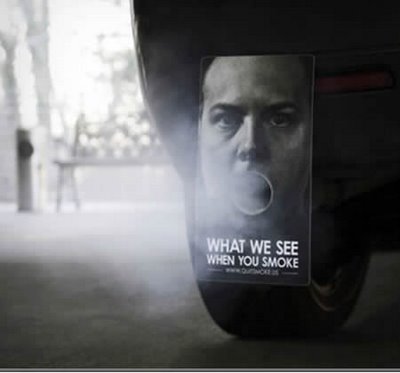
San Francisco smokers will be hit with the latest in a long lines of restrictions starting April 25, when they’ll be kicked to the curb, out by the cars whose tailpipes are at least as dangerous as secondhand smoke.

But drivers haven’t been as easy to demonize as smokers. Light up within 15 feet of a building entrance and you’ll be breaking the law. Other spots where smokers will be barred include outdoor areas at cafes and restaurants, farmer’s markets, and charity bingo games (grandma can take her wheelchair to the curb if she needs a puff).

But pot smokers need not fear. The new law maintains a provision allowing you to light up in licensed dispensaries. Smoking patios at bars are still okay, though smokers probably shouldn’t get too comfortable.

            The San Francisco Department of Public Health frames the smoking debate in terms of the impacts of secondhand smoke. And there’s some good data there. People tend to think lungs and cancer when they think smoking, but the real problem with second hand smoke is heart attacks.  A 2005 estimate from the California EPA put the number of heart attack deaths from second hand smoke at 3,600 annually. Second hand smoke contains a host of toxins from benzene to arsenic.

But it’s hard to know the incremental benefits of moving smokers to the curb. Almost all of the positive data on public health improvements from smoking bans has come from measures the city has already taken. But Mele Lau-Smith of DPH gave me a preview of the potential next battleground: third hand smoke.

“The new science that’s coming out on third hand smoke is interesting. Third hand smoke is everything that clings to furniture and hair and takes longer to dissipate. They’re smaller particles that get deeper into the lungs,” she says. The term was coined last year in the journal Pediatrics and a 2010 paper showed that nicotine reacts with nitrous acid to form carcinogenic molecules that hang around long after a smoker has left the room.

            So the news gets worse for smokers, and the anti-smoking crusade to completely eliminate smoking gains an inch. The smoking prevalence rate in California is among the lowest in the country at 14.3 percent. Most states are in the 18-20 percent range.

            And while it’s all well and good, one wonders if there are other problems in the air besides second hand smoke. Choosing to live in an urban area like San Francisco lowers one’s life expectancy by two years, and one of the major reasons for that is auto exhaust and illnesses related to poorer air quality.

            Mark Jacobson, Professor of Civil and Environmental Engineering at Stanford University, believes the government should keep regulating until smoking is eliminated. But when comparing deaths from automobile emissions versus second hand smoke, he added, “If you look at the mass of the automobile exhaust, then you’re looking at a much bigger figure than second hand smoke. Vehicle exhaust is still way under regulated for addressing health concerns.” Over 2 million people die globally from air pollution each year. About 500,000 die from second hand smoke.

            In the end, Jacobson says it comes down to combustion. When you start burning, you release toxins that eventually hurt or kill people. It doesn’t matter if it’s diesel fuel, gasoline, or tobacco. Combustible products harm public health, and in the case of oil, the environment.

Smokers have proven ideal targets for taxes. San Francisco smokers pay $2.08 in taxes on every pack of cigarettes. When you’re in the minority and the government needs cash, it’s a political no brainer. A 20 cent cigarette tax was tacked on by the Board of Supervisors last October, done under the argument that the money was needed to clean up cigarette butts. Recent proposals to add a local 10 cent tax on gasoline in order to help various cash strapped public transit agencies haven’t found much traction.

So smokers, enjoy the summer. It’ll be the last summer you can light up after an outdoor sunset meal. The smoking ban at restaurants won’t be implemented for another six months.

But come November you’ll be enjoying that smoke out by the curb, where you’ll also be treated to some car exhaust. But, hey, at this point you’re probably all in anyways.

No time for a trade war

1

By Joseph E. Stiglitz

Here is our monthly installment of Joseph E. Stiglitz’s Unconventional Economic Wisdom column from the Project Syndicate news series. Stiglitz is University Professor at Columbia University, the winner of the 2001 Nobel Prize in economics and has a recently published book, Freefall .

NEW YORK – The battle with the United States over China’s exchange rate continues. When the Great Recession began, many worried that protectionism would rear its ugly head. True, G-20 leaders promised that they had learned the lessons of the Great Depression. But 17 of the G-20’s members introduced protectionist measures just months after the first summit in November 2008. The “Buy America” provision in the United States’ stimulus bill got the most attention. Still, protectionism was contained, partly due to the World Trade Organization.

Continuing economic weakness in the advanced economies risks a new round of protectionism. In America, for example, more than one in six workers who would like a full-time job can’t find one.

These were among the risks associated with America’s insufficient stimulus, which was designed to placate members of Congress as much as it was to revive the economy. With soaring deficits, a second stimulus appears unlikely, and, with monetary policy at its limits and inflation hawks being barely kept at bay, there is little hope of help from that department, either. So protectionism is taking pride of place.

The US Treasury has been charged by Congress to assess whether China is a “currency manipulator.” Although President Obama has now delayed for some months when Treasury Secretary Timothy Geithner must issue his report, the very concept of “currency manipulation” itself is flawed: all governments take actions that directly or indirectly affect the exchange rate. Reckless budget deficits can lead to a weak currency; so can low interest rates. Until the recent crisis in Greece, the US benefited from a weak dollar/euro exchange rate. Should Europeans have accused the US of “manipulating” the exchange rate to expand exports at its expense?

Although US politicians focus on the bilateral trade deficit with China – which is persistently large – what matters is the multilateral balance. When demands for China to adjust its exchange rate began during George W. Bush’s administration, its multilateral trade surplus was small. More recently, however, China has been running a large multilateral surplus as well.

Saudi Arabia also has a bilateral and multilateral surplus: Americans want its oil, and Saudis want fewer US products. Even in absolute value, Saudi Arabia’s multilateral merchandise surplus of $212 billion in 2008 dwarfs China’s $175 billion surplus; as a percentage of GDP, Saudi Arabia’s current-account surplus, at 11.5% of GDP, is more than twice that of China. Saudi Arabia’s surplus would be far higher were it not for US armaments exports.

In a global economy with deficient aggregate demand, current-account surpluses are a problem. But China’s current-account surplus is actually less than the combined figure for Japan and Germany; as a percentage of GDP, it is 5%, compared to Germany’s 5.2%.

Many factors other than exchange rates affect a country’s trade balance.  A key determinant is national savings. America’s multilateral trade deficit will not be significantly narrowed until America saves significantly more; while the Great Recession induced higher household savings (which were near zero), this has been more than offset by the increased government deficits.

Adjustment in the exchange rate is likely simply to shift to where America buys its textiles and apparel – from Bangladesh or Sri Lanka, rather than China. Meanwhile, an increase in the exchange rate is likely to contribute to inequality in China, as its poor farmers face increasing competition from America’s highly subsidized farms. This is the real trade distortion in the global economy – one in which millions of poor people in developing countries are hurt as America helps some of the world’s richest farmers.

During the 1997-1998 Asian financial crisis, the renminbi’s stability played an important role in stabilizing the region. So, too, the renminbi’s stability has helped the region maintain strong growth, from which the world as a whole benefits.

Some argue that China needs to adjust its exchange rate to prevent inflation or bubbles. Inflation remains contained, but, more to the point, China’s government has an arsenal of other weapons (from taxes on capital inflows and capital-gains taxes to a variety of monetary instruments) at its disposal.

But exchange rates do affect the pattern of growth, and it is in China’s own interest to restructure and move away from high dependence on export-led growth. China recognizes that its currency needs to appreciate over the long run, and politicizing the speed at which it does so has been counterproductive. (Since it began revaluing its exchange rate in July 2005, the adjustment has been half or more of what most experts think is required.) Moreover, starting a bilateral confrontation is unwise.

Since China’s multilateral surplus is the economic issue and many countries are concerned about it, the US should seek a multilateral, rules-based solution. Imposing unilateral duties after unilaterally labeling China a “currency manipulator” would undermine the multilateral system, with little payoff. China might respond by imposing duties on those American products effectively directly or indirectly subsidized by America’s massive bailouts of its banks and car companies.

No one wins from a trade war. So America should be wary of igniting one in the midst of an uncertain global recovery – as popular as it might be with politicians whose constituents are justly concerned about high unemployment, and as easy as it is to look for blame elsewhere. Unfortunately, this global crisis was made in America, and America must look inward, not only to revive its economy, but also to prevent a recurrence.

Joseph E. Stiglitz is a professor of economics at Columbia University and winner of the 2001 Nobel Memorial Prize in Economics. His most recent book, Freefall: Free Markets and the Sinking of the World Economy, is now available in French, German, and Japanese, and will be shortly available in Spanish, Italian, and Chinese.

Copyright: Project Syndicate, 2010.
www.project-syndicate.org

Force is the weapon of the weak: decrying the right’s violent rhetoric

16

American political discourse is being poisoned by some truly scary rhetoric from the right-wing, which is increasingly resorting to threats and condoning of violence, a trend that has played out in recent weeks right here on the Guardian’s Politics blog. Now is the time to recognize and stop it, just as a new coalition is calling for

San Francisco resident Greg Lee Giusti was arraigned in federal court this morning for making threatening phone calls to House Speaker Nancy Pelosi, one day after the arrest of Charles Alan Wilson for threatening to kill Sen. Patty Murray (D-Wash.). In both cases, the subject was the recent health care reform bill, the anger of the suspects stoked by misinformation and inflammatory rhetoric from top conservative politicians and media figures, as well as the Tea Party movement.

But these cases – along with the recent domestic terrorism plot by Christian fundamentalists and other incidents of overt and implied threats of violence – aren’t isolated examples; they are closer to the norm of rhetoric emanating from the right-wing these days, a trend not seen in this country since the months that led up to the bombing of the Oklahoma City federal building by right-wing radical Timothy McVeigh, the biggest act of domestic terrorism before 9/11.

Consider Giusti, who also wrote a scary letter to me and the Guardian in the midst of his threats against Pelosi, taking issue with our recent cover story that was critical of police crackdowns on SF nightlife. In additional to praising police violence and encouraging cops to “crack a few skulls open,” just like his NYPD cop uncle, who “knows how to inflect [sic] excruciating Paine [sic] on someone without leaving any signs of what happened.”

But Giusti was far from alone in promoting violence over the issues we’ve raised. SFPD Southern Station Capt. Daniel McDonough praised the sometimes-violent tactics of the two undercover cops who bust parties and nightclubs, strongly implying those tactics were justified to counter the unspecified threats of violence that nightclubs represent. “Because of their diligence and professionalism the amount of violence and disorder has been reduced,” McDonough wrote, echoing a troubling strain of right-wing political thought that condones violence to prevent even speculative threats of violence, a perspective that led us to invade Iraq.

And when I wrote about McDonough’s response yesterday, a commenter wrote that aggressive police tactics are justified because, “The unprecedented ascendancy of nightclubs and violation of the Constitutional rights of residents to peaceful use of their property calls for drastic measures.”

In a similar vein, our blog post this week on a newly released video of American soldiers in a helicopter opening fire on a crowd in Baghdad that included journalists and children while making disturbing comments that seemed to relish the opportunity to kill people also provoked some equally disturbing comments.

“So a couple of journalists embedded with terrorists killing Americans got wiped out…congrats to the shooters! A couple of terrorists in training got shot up in a terrorist rescue attempt…congrats to the shooters! Everyone on scene who died got what was coming to them,” one wrote, while another warned, “Raise a weapon against America or Americans and prepare to experience the worst day in the rest of your life. Hoowa!”

Even though the helicopter was miles away and the video showed no credible threats toward it or anyone else, supporters of the war seemed to think that quickly resorting to violence is acceptable. “This is the price we pay for are [sic] freedom. put yourself in that chopper and then put yourself on the ground they all no [sic] what can and will happen. It will happen at home again 911 just give it time. We will do are [sic] best to defend are [sic] country. GOD BLESS USA.”

And I will do my best to defend this country from right-wing extremists. That effort starts with challenging Sarah Palin’s winking exhortation for her followers to “lock and load,” and with letting commentators like Glenn Beck and Bill O’Reilly, on a nightly basis, cast liberals as enemies of the state to their well-armed listeners.

This is simply not OK, a point that’s being made by the prosecutors of Giusti and Wilson, as well as the new Stop Domestic Terrorism campaign by a coalition of organization concerns about the increasing violent rhetoric of the rights. 

“Law abiding Americans do not advocate violence against fellow Americans,” campaign spokesperson Brad Friedman said in a public statement. “As Americans, we all need to engage in a vigorous debate of the issues based on facts and reason rather than fear and prejudice.”

But even in San Francisco, it’s common for conservatives and so-called “moderates” to condone violence against the homeless, drug users, petty criminals, ravers, Critical Mass bicyclists, “illegal immigrants,” or others that they dismiss as “getting what’s coming to them” for daring to violate laws or social mores. I’ve personally had violence wished on me more times than I can count, in letters, phone messages, and to my face. 

As a full-time newspaper journalist for almost 20 years, I’ve dealt with right-wing crazies for a long time, but there are times when you can sense their indignation getting ratcheted up to dangerous levels. In 1994, I wrote stories for the Auburn Journal and Sacramento News & Review about right-wing “patriots” and “constitutionalists” that were part of the militia movement in Placer County.

They warned me that then-President Bill Clinton was an agent of the “New World Order” who was plotting a socialist takeover of the “real Americans,” and that violent resistance was necessary. They spun elaborate fantasies about the impending civil war, which they said the federal government had already started with their raids in Ruby Ridge and Waco. 

“You won’t be able to write an article like this anymore because the government will come and kick in your door and murder you and your children,” one militia member told me after my first article came out.

On April 19 of the next year, while I was working for the Santa Maria Times, I remember vividly when the federal building in Oklahoma City was bombed, killing 168 people. For the first 24 hours, most media outlets speculated that it was an attack by terrorists from the Middle East, but as soon as I heard it was the anniversary of the Waco incident, I knew exactly who was really responsible: the dangerous right wing extremism that pushed militia member Timothy McVeigh to attack his own country.

And now, it’s happening again. Overheated rhetoric on the right is casting Pelosi and fellow Democrats not just as political opponents, but as dangerous enemies of the “real Americans” that Palin claims to champion. They have, like Wilson said of Murray, “ a target on her back.”

When Sen. Leland Yee tried to find out how much Palin was being paid to speak at California State University-Stanislaus, he was aggressively attacked by her acolytes for trying to “take away her constitutional right to free speech,” according to an anonymous message left on his answering message yesterday, which his office shared with the Guardian. “Maybe we ought to have a homosexual with a long enough dick so he can stick it up his ass and fuck himself while he’s on stage giving a speech.”

Such crass, semi-literate, weirdly homophobic comments might be funny if they weren’t part of a larger, more dangerous trend in this country. Once again, a Democratic president is being actively accused of treasonous hostility to “real Americans” by major conservative figures with huge audiences, and once again, the lunatic fringe is being worked up into a frenzy.

The recently uncovered plot by Michigan militia members to murder police officers in the hopes of starting a holy war with the enemies of Christianity is just one indication for what this kind of rhetoric is leading to in isolated pockets around the country. Now is the time to put a stop to condoning violence in any of its forms, whether it’s cops cracking the skulls of clubbers or street denizens, soldiers firing on crowds of people, or citizens threatening our elected representatives.

“Force is the weapon of the weak,” said the radical pacifist-anarchist Ammon Hennacy, a quote that was often repeated by folk singer and progressive writer Utah Phillips, who I had the honor of covering at the same time I was covering the militia movement. It’s true, and at this difficult moment in our country’s history, let’s all try to stay strong.  

Recology’s Nevada landfill blocked

6

The Las Vegas Review-Journal is reporting that the Planning Commission in Humboldt County, Nevada blocked Recology’s landfill expansion application in Winnemucca, which is halfway between San Francisco and Salt Lake City.

The news comes close on the heels of the Guardian’s report that San Francisco has tentatively selected Recology to dispose of the city’s waste in Yuba County.

The LVRJ articles notes that “Recology wants to haul in 4,000 tons of garbage a day from Northern California communities for the next 95 years and dump it on the desert playa about 28 miles west of Winnemucca.”

Adam Alberti, a spokesman for Recology and the Jungo Land Co., is quoted as saying that the commission’s decision “could cost the region more than $660 million and new jobs.”

And U.S. Senate Majority Leader Harry Reid, D-Nev., is quoted as calling the proposed dump a threat to Nevada’s “sovereignty and dignity.”

“The proposal to dump a mountain of California trash in Nevada is a lose-lose proposition for our state,” Reid said. “The people of Humboldt County have made it clear they don’t want other states dumping trash in their backyards, and I applaud their decision. “

Asked if there was a connection between the proposed Nevada dump and San Francisco’s trash, given that the city is only proposing a ten-year contract with Recology in Yuba County, Alberti said the landfill Recology was pursuing in Nevada is a “speculative effort” and that San Francisco “prohibits its waste from being taken out of state.”

“Recology has no contract in Winnemucca, and you have to have a landfill open before you can enter into a contract,” he said.

Here in San Francisco, District 10 candidate Eric Smith said he wants to see a whole lot more light being shone on the debate about what to do with the city’s trash.

“There needs to more transparency and accountability in the debate, which needs to include looking at all aspects of the issue, including where and how we transport our trash,” Smith said. “Should we barge, rail or truck it? What are the economic and environmental consequences? And is this something the citizens and ratepayers of San Francisco can support? Instead, there appear to be three main companies duking it out under cloak of darkness.”

Where’s teacher?

4

By Brady Welch

news@sfbg.com

Horace Mann Middle School principal Mark Sanchez sounded exhausted when we reached him on March 26. It wasn’t because Horace Mann is such a tough school, although the Mission District campus does have a disproportionate number of at-risk students. And it wasn’t because it was the Friday before spring break, although that might have had something to do with it.

All week Sanchez had been reeling from news that a whopping 10 out of his 20 full-time teachers had been issued pink slips by the San Francisco Unified School District. Including counselors, a vice principal, and other staff, the budget cuts essentially lopped off 24.6 percent of the school’s workforce, an unprecedented blow that speaks volumes about the state of California public education.

“A lot of the kids were wondering if the school was getting shut down,” Sanchez said. And although Horace Mann isn’t closing, with so many axed teachers, it might seem like a new school to many students come August. “If a significant number [of teachers] are moved, we don’t know what we’re in for.”

There is a legend that you will meet the person who will seal your fate long before the final event happens. And in an interesting turn of events, it was Sanchez who, as president of the Board of Education in 2007, hired current SFUSD Superintendent Carlos Garcia. Attempting to close a staggering $113 million budget gap over the next two years, it fell to Garcia on Feb. 23 to send out 645 layoff notices across the district in a list that included 163 administrators, 239 elementary school teachers, 124 high school teachers, and 104 middles school positions. Horace Mann was hit particularly hard because so many of its staff lacked seniority. Final decisions on layoffs will be made next month by the school board.

The first indications of this massive fiscal blood-letting came Jan. 20, when Garcia sent a letter to the entire district on learning of Gov. Arnold Schwarzenegger’s budget. The document was a glaring reminder of how bad things had gotten in Sacramento, and the superintendent wrote candidly of what he saw and what it meant for the district. “These numbers are large, and they will be devastating.”

Aside from the extraordinary blow to personnel, the proposed SFUSD budget will increase class sizes, freeze salaries, cancel summer school except for those who need credits to graduate, and reduce the number of days of classroom instruction to 175 annually, putting the district in conflict with a state law mandating at least 180 days. Given its deep cuts, Sacramento probably won’t enforce the statute.

“The state itself is in such a budget crisis,” Sanchez told us. “And [it’s] refusing to raise taxes. The fix has to be at the state level.”

But that’s been difficult since the passage of Proposition 13, the 1978 measure that limits property tax increases and gives control of whatever revenue is generated directly to the state. Because all state budgets must pass the Legislature with a two-thirds super-majority vote, a disciplined minority of virulently antitax Republicans block budgets that adequately fund education nearly every time.

Yet now, the bill for that political stalemate is coming due at schools like Horace Mann.

Beyond the numbers and politics, the Guardian wanted to get a closer look at how this regular cycle of cuts and layoffs is affecting teachers and students, so we spoke to a couple of eighth grade English teachers at Horace Mann who described it as dismal.

“I try to put it at the back of my mind, to be honest,” said Matt Borowsk, one of the 10 teachers at Horace Mann who received a pink slip. Borowsk reiterated a common sentiment that all teachers — potentially laid off or not — just want to do their jobs and focus on their classes. “I want to be able to stay and do my work and make improvements. And I want to do what I can for the school community and work with students,” he said. “I’m still in it, and I’m in it for the long run, despite what issues the district has about keeping their teachers.”

Gail Eigl, a teacher at Horace Mann for eight years who is tenured and therefore not at risk of a layoff, concurred. “No one I know who got a pink slip has changed their attitude. People are trying to stay focused on the present and teach.”

It’s an admirable response, and one Eigl understands well. She was laid off after her first year there in 2001. “Six of us got pink slips,” she recalled. “It was terrible.” She went looking for a job in South San Francisco, but in a strange turn of events, SFUSD called and offered her a job at Argonne Elementary in the Richmond District. A year later, she was back where she started at Horace Mann, and until now, she hadn’t really looked back.

“It’s like the school keeps having problems,” she said, an opinion that also hints at SFUSD’s skewed notion of teaching as a stable career path.

Borowski offers a similar story. This year’s pink slip is his second. Last year he received one after teaching only a year in Burlingame, which is how he ended up in San Francisco. Such rampant doling out of pink slips has nothing to do with Borowski’s performance. Rather, it has everything to do with seniority. And because the state is in such a crunch, it’s hard to stay in any school long enough before the budget’s grim reaper comes to collect.

“People who are able to stick through the first five years, they genuinely want to be a good teacher, make seniority, and not have to worry about it,” he said. And “because Horace Mann is a school where new teachers go, because it’s a tough school, then they’re the most vulnerable to layoffs. Which starts this vicious cycle.”

It’s classic Catch-22. Facing such a budget shortfall, how does SFUSD keep teachers who have little or no seniority teaching in the very schools whose litany of needs put those teachers there in the first place? In many ways, these are the most committed and passionate teachers the district has, and they represent for their classes a level of discipline and stability absent in many of their students’ home lives.

Many of Eigl’s students are low-income, speak English as a second language, or both. Some of their parents are deceased, others are undocumented immigrants, and a few are in jail.

“I honor tenure,” she told us. “I know there’s a reason for it. But right now, it doesn’t seem to be working for us.” Eigl brings up the case of a new parent liaison the school received this year, a critically important position that takes time building solid relationships with students’ families. “She got a pink slip too,” Eigl told us, the exasperation evident in her voice.

“I think people are really defeated inside. It’s so frustrating,” she continued. When asked what she meant by that, Eigl became heated. “It’s California! We’re supposed to be the richest economy. We should have money for schools. Why are other states doing so much more? We’re at the bottom. Where’s the money?” She suggested that Horace Mann should be granted special status because of its high-needs student body.

“It’s almost predictable that students who have a lot of unpredictability in their lives will suffer for this,” Sanchez told us. “It will be destabilizing for them. Teachers will get disrupted as well. A lot of what you do in schools has so much to do with outside the classroom, and it takes a lot of time to get acclimated.” At a tough school like Horace Mann, he says, “there’s been a lot of professional development and new programs.”

Borowski stresses the sentiment forcefully. “It’ll be devastating if the pink slips go through. It’ll be a huge mess.”

Both teachers participated in the massive statewide protests against the cuts on March 4. But other than letting Sacramento know how public educators feel, nothing concrete has come out of it. Sanchez suggested that it might be possible to sue the state for violating its statute on the minimum number of school days. Even SFUSD, at the last Board of Education meeting on March 23, didn’t rule out the possibility of suing the state for lack of adequate funding.

Negotiations are ongoing between the district and the United Educators of San Francisco teachers union about final layoffs. Those will be finalized May 15. Meanwhile, teachers at Horace Mann and across the district will continue to do their jobs despite how grim the outlook may be. As Eigl puts it, “It’s like out of a book from a bad future.”

Our stuff, our planet

1

Sarah@sfbg.com

Annie Leonard, author of The Story of Stuff (Free Press, 2010), sat in her office in Berkeley explaining why we must direct our energy toward making policy and reforming laws, not just individual green lifestyles, to avoid destroying the planet.

Leonard recalled how, at a recent reading to promote her book, she was presented with the claim that people in Berkeley are environmentally superior to other folks. “But people shouldn’t point the finger at other individuals unless those individuals are the heads of Chevron, Dow Chemical, Disney, Fox News, Halliburton, McDonald’s, Shell, or the World Bank,” Leonard warned.

Her point is that the planet’s biggest problems are systemic, not a result of personal choices. “Because our choices are limited to the forces outside the store. We have this big illusion of that ‘free market,’ but I can’t choose pajamas for my kid without them containing neurotoxins because of the law. And I cannot choose an electrical appliance that lasts for more than a year. The overall structure encourages people to use toxics. We have to start looking at these harder issues,” she said. “It’s so easy to think it’s an individual’s fault.”

Leonard’s quest to shine some cleansing light on the toxic effects of capitalism started with her short film, The Story of Stuff, which became an Internet sensation with more than 10 million viewings. It showed how our obsession with buying stuff is trashing our planet, communities, and health, thanks to the hidden costs in how we organize our economy.

Her book goes into the details of how these costs come at the expense of millions of people who live and work in dangerous, unhealthy circumstances. Leonard isn’t saying that people shouldn’t be responsible and smart in their individual and household actions. But she is critical of the idea that we can solve the problems caused by “our take-make-waste paradigm” entirely through green living.

“Unfortunately, there are no 10 easy things individuals can do to save the planet,” Leonard said. “We definitely should engage in these actions, as long as we don’t let them lull us into a false sense of accomplishment or let the effort of maintaining this constant, uptight, rigorous green screen on our life exhaust us. And as long as taking these actions doesn’t stand in the way of engaging in the broader political arena for real change.”

Leonard includes a list of “recommended individual actions” in her book, but it’s tucked behind examples of “promising policies, reforms, and laws” and ahead of a sample political letter warning that “PVC is the most hazardous plastic at all stages of its lifecycle.”

What worries Leonard is that the planet is already bumping up against ecological limits. “If we don’t change, we’ll have change forced upon us,” she said. “If change is by design, it’ll be much more compassionate and strategic. If it’s by default, it’ll be a lot uglier, a lot more violent, and a lot less fair.”

Leonard says our planetary problem stems from approaching product purchases as if we were exempt from the ecological system. “If you think as a consumer, you want the best product and the best price. But if you think as a citizen, you want what’s best for your community, your environment.

“We all know how to be good consumers, but our citizen muscle has atrophied,” she added. “That has limited our ability to know how to solve problems. And often environmental victories here become problems elsewhere, like e-waste that gets taken to third world countries.”

Fox News has labeled Leonard anticapitalist, describing her as “Karl Marx with a ponytail.” But Leonard stresses that she is not anti-stuff, just stuff that trashes the planet, poisons people, and that people confuse with personal self-worth.

“I’m pro stuff,” she said. “But I want us to have a reverence for it, to ask, ‘Who made this, and where did it come from?’ Because someone mixed those metals, felled that forest. And I’ve become fascinated by why folks in the U.S. can’t talk about capitalism. It’s the economic system that must not be named. It’s like we’re in an ice cream shop that serves only one flavor and we’re not allowed to look over the counter.”

Quick Lit: April 7-April 13

0

Literary readings, book tours, and talks this week

Wednesday, April 7

How to Defeat Your Own Clone
Hear authors Terry Johnson and Kyle Kurpinsky deliver educational and entertaining advice on how to survive the not too distant bioengineered future at this reading of their recent book, How to Defeat Your Own Clone And Other Tips for Surviving the Biotech Revolution.
7:30 p.m., free
Booksmith
1644 Haight, SF
(415) 863-8688


The Racial Discourses of Life Philosophy: Négritude, Vitalism, and Modernity
Attend this reading and discussion on this new book by author Donna V. Jones, where she revisits narratives on life produced in the early twentieth century and shows how Bergson, Nietzsche, and the poets Léopold Senghor and Aimé Césaire fashioned the concept of life into a central aesthetic and metaphysical category while also implicating it in discourses on race and nation.
5:30 p.m., free
University Press Books
2430 Bancroft, Berk.
(510) 548-0585

Spiritual Life of Bay Area Tribes
Attend this lecture on the spiritual life of Bay Area native tribes by Richie Richards of Lakota descent, who is a Native American specialist dedicated to bringing Native American studies to elementary schools.
7:30 p.m., free
Northbrae Community Church
941 The Alameda, Berk.
(510) 526-3805

Thursday, April 8

Manwha For Girls
Join authors Trina Robbins, Mike Madrid, and curator Andrew Farago as they discuss the role of girls and women in comics and female comics artists in conjunction with the current exhibit, “Korean Comics: A society through small frames,” in the Jewett Gallery open through June 13.
6 p.m., free
San Francisco Main Library
Lower level, Latino/Hispanic community meeting room
100 Larkin, SF
(415) 557-4400

 
Mystery Panel
Check out this mystery panel featuring Shirley Tallman, author of Scandal on Rincon Hill, and Ronald Tierney, author of Death in Pacific Heights.
7 p.m., free
Books Inc. Laurel Village
3515 California, SF
(415) 221-3666


“Why there are words”

Hear a diverse group of award winning authors read selections from their work that fall under the theme “crazy.” Featured writers to include Ethan Watters, Tom Barbash, Wendy Tokunaga, Allison Landa, Ryan Sloan, and Aggie Zivaljevic.
7 p.m., $5
Studio 333
333A Caledonia, Sausalito
(415) 331-8272

Saturday, April 10

Amy Goodman
Investigative journalist Amy Goodman says, “The role of reporters is to go where the silence is and say something,” and she does exactly that. Goodman is known for her dedication to looking beyond mainstream media news to expose human rights violations and political injustice. Hear her discuss her views and recent book, Breaking the Sound Barrier.
5:30 p.m., $20
Commonwealth Club
595 Market, 2nd floor, SF
(415) 597-6700

Diet for a Hot Planet
Author Anna Lappe believes that if we are serious about addressing climate change, we have to talk about food. Hear more about this theory at a reading of her new book, Diet for a Hot Planet: the climate crisis at the end of your fork and what you can do about it. Sponsored by the Center for Urban Education about Sustainable Agriculture (CUSA).
11 a.m.; $10, proceeds to benefit the Small Planet Fund
Port Commission Hearing Room
Ferry Building
101 Embarcadero, SF
(415) 291-3276 ext. 106

Kings of Poetry
Attend this spoken word poetry event featuring African American poets from throughout the Bay Area. Open mic to follow.
2 p.m., free
San Francisco Main Library
3rd floor, African American Center
100 Larkin, SF
(415) 557-4400

Pearl of China
Hear Anchee Min discuss her latest novel about Nobel Prize winning author Pearl S. Buck, a writer that Min was forced to denounce during the Cultural Revolution in China. Part of the Asian Art Museum’s current exhibit celebrating Shanghai, through Sept. 5.
2:30 p.m., free
Chinatown Branch Library
1135 Powell, SF
(415) 355-2888

Sunday, April 11

Phillip Schultz
Hear Pulitzer Prize winning poet Philip Schultz read and discuss selections from his recent book of poetry, The God of Loneliness, at this celebration of the third anniversary of Writers Studio Workshops in San Francisco.
3 p.m., free
Space Gallery
1141 Polk, SF
(415) 377-3325

Judith Tannenbaum
Hear Judith Tannenbaum discuss her new book of poetry, By Heart: Poetry, prison, and two lives, about her relationship with poet Spoon Jackson, an inmate in the California prison system serving life without parole, as she examines injustices in our prison system.
4 p.m., free
Booksmith
1644 Haight, SF
(415) 863-8688

Monday, April 12

Mark Danner
Hear journalist and author Mark Danner discuss his new book, Stripping Bare the Body, written from and about the world’s war zones, with New York Times Op-Ed columnist Frank Rich.
8 p.m., $20
(415) 392-4400
www.cityboxoffice.com

Get Lit!
Bring your own literary contributions or those of your favorite authors to share at this candle lit, wine bar literary salon.
7 p.m., free
1550 Hyde Café and Wine Bar
1550 Hyde, SF
(415) 775-1550

Legend of a Suicide
Hear author David Vann discuss his new collection of five short stories and one novella that center around the story of an Alaskan father’s suicide.
7 p.m., free
Books Inc. Berkeley
1760 4th St., Berk.
(510) 525-7777

No Rich, No Poor!
Join Charles Andrews in this discussion based on his new book about whether capitalism can be repaired or if it needs to be replaced and what a potential new “program of common prosperity” could look like.
7 p.m., free
Modern Times Bookstore
888 Valencia, SF
(415) 282-9246
www.mtbs.com

Wordcatcher
Take a tour into the obscure territory of word origins in Phil Cousineau’s new book, Wordcatcher: An odyssey into the world of weird and wonderful words.
7:30 p.m., free
Booksmith
1644 Haight, SF
(415) 863-8688

Tuesday, April 13

The Collected Poetry of Dahlia Ravikovitch
Hear translators Chana Bloch and Chana Kronfeld discuss the poetry of Israel’s leading female poet Dahlia Ravikovitch and the newly released collection of her verse, Hovering at a Low Altitude: The collected poetry of Dahlia Ravikovitch. Ravikovitch’s innovative and political poetry provides an inspiring window into the writer’s tortured life as an activist in Israel.
12:30 p.m., free
111 Minna Gallery
111 Minna, SF
(415) 974-1719

“Andy Warhol: Good for the Jews?”
Hear author and performer Josh Kornbluth discuss his process in creating his one-man show, Andy Warhol: Good for the Jews?, in response to Warhol’s 1980 series of paintings of prominent Jewish historical figures.
7:30 p.m., free
Jewish Community Library
1835 Ellis, SF
(415) 567-3327, ext. 704

Roundup of depressing environmental news

At the Guardian, we’re busy putting together our annual Green Issue to commemorate Earth Day. It’s great that recycling and general concern for the planet have been on the rise over the past 40 years, but I can’t help but notice a few Prozac-worthy reports on the environmental front recently.

First there was the bomb President Barack Obama dropped on environmentalists last week with plans to open up vast areas off the coast of the eastern seaboard and Alaska for offshore oil drilling.

Then there was the news that a host of Texas oil companies, in league with the Tea Party (Teabaggers?) and a group named for the guy who dreamed up Prop 13, are bankrolling an effort to suspend California’s landmark global warming legislation, AB 32, with a ballot initiative. (A few brave souls have launched a Boycott Valero campaign against Valero Oil Co., a major source of funding for the initiative to suspend AB 32.)

And finally, another tragic reminder that extracting and burning coal is a perilous way to keep the lights on: An explosion at a West Virginia coal mine owned by Massey Energy has killed six mine workers and trapped 21. This is why some communities in the coal-mining regions of Southern Appalachia think of themselves as residents of a national “sacrifice zone” for U.S. energy demand.

Let’s all hope the upcoming Green Festival in San Francisco this weekend is more inspiring than these headlines.

The Daily Blurgh: But will it blend?

2

Curiosities, quirks, oddites, and items from around the Bay and beyond

Last Wednesday (forgive our slowness) the New Yorker offered a tantalizing sneak peak at Andrew Pilara’s soon-to-be-not-so-private collection of more than 2000 photographic works, a rotating selection of which will be displayed at Pier 24. Not only is the speed at which Pilara — the president and senior portfolio manager of the RS Value Group and a member of SFMOMA’s Board of Trustees – has amassed his staggering collection astounding (six years!), but the quality and breadth of his holdings would send any photography curator worth their salt into apoplectic fits. In addition to name-dropping Jackie Nickerson, Vera Lutter, Hiroshi Sugimoto, Marilyn Minter, and Dorothea Lange, the New Yorker also mentions that Pilara owns all fifty-two of Lee Friedlander’s “Little Screens” (which SF’s Fraenkel Gallery last displayed in 2001) and all of Garry Winogrand’s “The Animals.” In the words of Rachel Zoe, “I die.”

Also of interest: “Each work is installed without any caption information, so looking becomes an exercise in recognition and speculation, and ultimately conversation.” I like this approach, in theory. And based on the caption information in the article’s accompanying slide show, it seems that whoever hung the photographs has an eye for not only what’s visually resonant, but more importantly, for what will spark a conversation. One example: Vanessa Beecroft’s highly theatrical and controversial portrait of a Sudanese woman nursing two malnourished infants hangs next to Dorothea Lange’s famous “Migrant Mother.”

Joe public will have to wait until “later this spring” to check out Mr. Pilara’s goods, but for those curious as to the look of the place, Envelope A+D, the firm responsible for renovating the old pier, has posted artist renderings and a description of their projected re-design. Coupled with SFMOMA’s recent announcement (http://www.sfmoma.org/exhibitions/407) that the museum will re-stage the influential 1975 George Eastman House exhibit New Topographics in June, SF looks like the place to be for photo buffs this S-S season.


In tech news, the only question I have about the iPad is: will it blend?


I want to second the Awl’s gay-dazzled love for the I Am Love trailer. The trailer is almost so perfect as to make watching the actual film (which screens at this year’s SFIFF) pointless. Cut at the speed of any contemporary fantasy-action-CGI-craptacular, the I Am Love trailer has everything: Tilda Swinton in fitted rich lady clothes; the Italian countryside; suggestive food preparation; a hunky and hirsute otter-chef; references to family (just like the Olive Garden!); references to Vertigo; Tilda Swinton’s cheekbones; furtive glances; lovemaking! You’ll laugh, you’ll cry, you’ll swoon. I die.

http://www.youtube.com/watch?v=XhbTeBneRVU

Chilling footage of journalists getting shot in Iraq

77

By Nima Maghame and Rebecca Bowe

On July 12th, 2007 two apache helicopters attacked the small suburb of Al-Amin, Iraq. More than two dozen people were killed, including two Reuters journalists, driver assistant Saeed Chmagh and war photographer Namir Noor-Eldeen.

And the entire incident was recorded on video — from the helicopters.

Reuters demanded an investigation in the summer of 2007, and asked for copies of the video the choppers took. The government refused. But after three years, a copy of the video has finally been released — through Wikileaks. The chilling footage shows the helicopters firing on seemingly unsuspecting Iraqi civilians — and includes the helicopter crews’s comment, which are even more chilling.

It’s as if the gunners were playing a video game, as if they didn’t consider the people on the ground to be living human beings. “Oh, look at those dead bastards,” one crewman says. At another point, the gunners — who aren’t allowed to fire at unarmed targets — practically beg a wounded man to pick up a weapon so they can finish him off. And when the man gets into a van that arrives to help him, they ask for permission to open fire: “Come on, let us shoot!”

The U.S. Military released a memo explaining that the actions taken by the soldiers were in accordance with its own Rules of Engagement.


The 17-minute video was posted online at Wikileaks.org, an investigative Web site that publicizes sensitive documents and
information leaked by anonymous sources in order to expose corruption and wrongdoing. Wikileaks obtained the footage “from a number of military whistleblowers,” according to a description accompanying the footage on the Web site CollateralMurder.com. Wikileaks editors had to decode the encrypted version of the leaked video in order to view its contents and air it.

In the video, when shooters inside the helicopter start to zero in on the pedestrians below, they can be heard identifying the objects they are carrying as an AK-47 and an RPG. But according to an Associated Press article quoting an unnamed U.S. military official, “a military investigation later concluded that what was thought to be an RPG was really a long-range photography lens; likewise, the camera looked like an AK-47.”

Reuters stopped short — way, way short — of making a big issue of the killings. “The deaths of Namir Noor-Eldeen and Saeed Chmagh three years ago were tragic and emblematic of the extreme dangers that exist in covering war zones,” said David Schlesinger, editor-in-chief of Reuters news We continue to work for journalist safety and call on all involved parties to recognise the important work that journalists do and the extreme danger that photographers and video journalists face in particular.”

David Finkle wrote about the incident in his 2009 book The Good Soldiers. Finkle, who was following military personnel in charge of training Iraqi national forces, had only been a few streets away when the attack took place. The author had also been friends with Noor-Eldeen and Chmang.

Finkle wrote that both Reuters staff were working independently — that is, they weren’t officially embedded with the U.S. forces — and he claims that’s is why the military didn’t know of their existence. “There had been reports of sniper rifle, rooftop chases, and rocket-propelled grenades being fired at Bravo Company, and as the fighting continued, it attracted the attention of Namir Noor-Eldeen, a 22-year-old photographer for Reuters news agency who lived in Baghdad, and Saeed Chmangh, 40, his driver and assistant,” wrote Finkle, who was close to where the Apaches attacked but not an eyewitness.

“There was a one-second pause and then came the fourth burst. In the cloud, NE could be seen trying to stand, and then he simply seemed to explode,” wrote Finkle. Chmang tried to stand up and run away before falling down again. The video’s audio picked up two of the drivers urging Chmang to arm himself so they can kill him.

“Come on, buddy” says one driver. “All you gotta do is pick up a weapon,” says the other driver.

A Kia passenger van stopped by Chmang and attempted to rescue him. The helicopters radioed for permission to fire on the van and received confirmation just as Chmang was being helped into the van. The soldiers blasted the van just as it started to roll away.

Two children were wounded in the attack as well, and were evacuated by US. Military personnel.

One question for Tiger Woods

1

So Tiger Woods is finally talking to the press. I don’t get invited to the press conferences at Augusta National (imagine that), but if I were there, I’d have tried to ask exactly one question:


Mr Woods: Can you explain why your personal life is any business of anyone in this room — and if you can’t, then why don’t you stop answering questions about it?


Seriously: I’m tired of it. The guy has sex with people to whom he wasn’t married. His wife got pissed about it. Is that not the story of millions of couples all over the world? Just shut up and ask him about his practice rounds, or his new swing, or why Augusta still doesn’t have any women members.


The cover story in the American Journalism Review this month is called “Lost in the Woods: Sinking standards, the Media and Tiger Woods.” It’s by Washington Post reporter Paul Farhi. AJR is pretty stodgy for my taste most of the time, but Farhi has it right:


For all its lurid aspects, the Woods scandal may have constituted a watershed in American journalism: A major news story in which many “respectable” news outlets ditched traditional newsgathering methods and standards of fair play and piggybacked on aggressive but not always accurate tabloid reporting. The distinction between “mainstream” and “tabloid” may never have been so blurred as it was in the whirlwind of reporting on Woods.


I don’t fucking care who Tiger fucked. As John Madden might say, just let the guy play the game.

Did Fox dump Yee to spare Palin?

29

Fox News seems to be having a hard time playing the victim card in the controversy over Sarah Palin’s upcoming speech at a cash-strapped California State University campus, for which she’s being paid an undisclosed — but likely huge — amount of money. And the network has been jerking around the chief critic of the deal, Sen. Leland Yee (D-SF), as it looks for a way to martyr poor Palin, a new Fox News commentator.

As we wrote, the issue that Yee raised and generated media attention for was why CSU-Stanislaus and its foundation were able to cut a secret deal with Palin. Yee was scheduled to appear on Fox’s America Live with Megyn Kelly on Wednesday about the controversy, but Yee chief of staff Adam Keigwin told us Fox News cancelled the appearance less than an hour before taping.

“They probably saw that this was indefensible and they didn’t want negative publicity for Palin,” Keigwin speculated.

But then Fox News representatives called again, and this time they wanted Yee to appear on tonight’s (April 2) The O’Reilly Factor with Bill O’Reilly, and Keigwin said Yee reluctantly agreed to do so: “I was a little hesitant to do it, knowing it’s a no-win situation, but we decided to do it,” Keirwin said of the show that O’Reilly dominates in bullying fashion.

But then, a couple hours later, Fox called back. “The producer called to ask, ‘Now you’re saying she shouldn’t speak, right?’” No, Keigwin explained, the issue was one of disclosing how much she was being paid and whether public funds were involved, and nobody was trying to censor her.

“So he said, ‘We’re looking for someone who doesn’t think she should speak at all,’” Keigwin said. Eventually, the producers decided to nix Yee again and instead tap some CSU students who were allied with Yee. They’ve already taped their interviews, so we’ll see what happens once they’re edited over several hours and turned into tonight’s broadcast.

Meanwhile, Yee is still waiting for a response from CSU officials about the Palin gig, and Keigwin said CalAware and the California First Amendment Coalition have also formally requested public records associated with the appearance, the disclosure deadline for which is next week.

Yee is the chair of the recently created Senate Select Committee on California’s Public Records and Open Meeting Laws, and Keigwin said, “This could be the subject of our first hearing.”

Catholic Church equates bad press with the Holocaust

2

On the anniversary of the day when Jesus Christ was supposedly crucified, the Catholic Church has ratcheted up its counterattack on the journalists and victims’ advocates who have the gall to be concerned about the church covering up an epidemic of pedophilia by priests, taking its feelings of persecution to a ridiculous extreme.

The New York Times reports that during the Good Friday services at the Vatican, with Pope Benedict sitting in attendance, Rev. Raniero Cantalamessa equated negative news articles about the still-unfolding pedophilia scandal with the history of persecution suffered by the Jews, saying, “They know from experience what it means to be victims of collective violence and also because of this they are quick to recognize the recurring symptoms.”

Are you fucking kidding me?!?! Did he really equate valid criticism of a very real church scandal to the Holocaust, in which more than 6 million Jews were killed by a Nazi regime that was playing footsies with the Catholic Church at the time? Shameless, utterly shameless.

The Daily Blurgh: San Fran pranksters

0

Curiosities, quirks, oddites, and items from around the Bay

As Laughing Squid wisely reminds us, today is Internet Annoyance Day. So, rather than annoy you with fake news items that SURPRISE! Link to NSFWLOLfunnytimes, here’s a compedium of some of my favorite moments in which our city has played the fool at the hands of some trickster, egghead-with-a-funny bone, practical joker, anonymous collective, or plain ‘ol sick fuck.


“The Stockton Street Tunnelway, running South below this ‘Tunnel Top,’ is recognized as the first of 200 ‘Oriental labor tunnels’ dug within the state of California. Dating to the year 1894, the Oriental labor force indentured by the Moorlock-Datsun Company worked tirelessly in deep water and suffered many deaths in the pursuit of easy, underground passage for the residents of San Francisco.

This Plaque was erected in July 2002 in memoriam for the 3 men who lost their lives digging here, having succumbed to a sudden and terrible subterranean whirlpool.”


“Enter the world of the samurai, where more than seven centuries of martial rule are reduced to a single Disney-like trope of gentleman-warrior myth. Military prowess  meets cultural connoisseurship in an ideal of masculine perfection–selling militarism as beauty in a time of war.”


www.youtube.com/watch?v=MFHxn_9aVq8


“It’s Official…I am Running for Governor of California”


“Back in 1998 several San Francisco Bay Area radio stations had April Fool s-themed programming, including commercial station KITS (aka Live 105), which changed to KGAY for a day, airing gay-themed music. That same year college station KUSF read an announcement over the air stating that the university was selling off the station and commercial rock station KFOG devoted their 10 at 10 3 segment to big band music. Another year KFOG spent part of their program day playing the best 15 seconds of songs as their new format.”

(Yeah, yeah. “KGAY” is about as funny as Rudy Giuliani in drag, but props to KFOG’s 15 second rule)


For a true education pick up a copy of Re-Search #11: Pranks, as well as the follow-up volume, for interviews and invaluable tips from past and current local funny folks as Jello Biafra, Monte Cazazza, Mal Sharpe, and Bruce Conner, among many others.

Alice Waters protested for supporting using human waste as compost

8

By Brady Welch

In a story that continues to amuse and fascinate, it appears that the human biosolids compost shit show we wrote about last week has left town… and ended up in, of all places, Alice Waters’ own backyard garden. That’s right: the seasonal, local, and cage-free proprietor of Berkeley’s fabled Chez Panisse has emerged as a staunch and unlikely defender of fertilizing your garden with sewage sludge compost, which San Francisco officials have recently discontinued giving away because of environmental concerns.

It all started when the Organic Consumers Association found out that Francesca Vietor, executive director of Chez Panisse’s non-profit arm promoting safe and healthy food for kids, was the same Francesca Vietor who is vice president of the SFPUC Board of Commissioners, which had until very recently been pawning off toxic compost made from human waste contaminated with industrial chemicals and heavy metals.

The news was like finding Mom (Chez Panisse) in bed with a Hells Angel (the SFPUC).

But we understand organizational slip-ups happen, and we trusted Waters to do the right thing, issue an apology, and figure out what to do with Vietor. But it turns out that the Bay Area’s advocate for a slow food economy that is “good, clean, and fair,” has decided instead to stand in defense of a system that is, frankly speaking, fast, cheap, and out of control.

On March 23, OCA National Director Ronnie Cummins wrote a letter to Waters asking how this could be. The letter reads, in part:

“Considering that the sludge was given to several local schools for use on their educational gardens, your work with the Edible Schoolyard should especially elicit your concern. This is certainly in direct opposition to the standards that Chez Panisse Foundation and the Edible Schoolyard encourage and uphold. It seems to us a clear conflict of interest that Francesca Vietor should serve as both the Executive Director of the Chez Panisse Foundation and the Vice President of the PUC.”

Waters wrote back March 30:

“I have been involved with the organic garden movement for 40 years. I believe in the transparency of public institutions and count on the government to offer the highest standards outlined by the Organic Consumers Association and other reliable advocates. I look forward to reviewing the science and working with the SFPUC to ensure the safety of composting methods.”

Well, the science is already in, and as we reported, it isn’t pretty; and more, our public institutions aren’t that transparent either, especially when it comes to sewage sludge compost. So on April 1, the OCA plans to hold a protest at noon to commemorate Chez Panisse Café’s 30th anniversary and perhaps remind the East Bay bastion of sustainability why diners have patronized them for so long.

The Daily Blurgh: Bee warned, Purple Sylvester

0

Curiosities, quirks, oddites, and items from around the Bay

I’m all for local businesses and delicious honey and getting to use the word “apiarist” in a sentence, but if any kind of this shit goes down you’ll know which type of urban farmer to give the stink eye. You say 15 beehives hidden in “‘borrowed spaces’ around SF,” NY Times — I say bio-terrorist cells. Hell, if you can train bees to detect bombs, who’s to say they also couldn’t be trained to detonate them?

Meanwhile in Science: “While dominant hyenas have a steady, confident-sounding giggle, subordinate ones produce a more variable call, allowing the animals to keep track of their social hierarchy, according to a new University of California, Berkeley, study.” Who’s laughing now, bitch?


Remember in Basquiat when David Bowie’s Andy Warhol crows, “you always get the good stuff,” to dealer Bruno Bischofberger (Dennis Hopper, in an equally meta bit of casting) over their power lunch? Well, that’s how I felt when I read the news on Fecal Face that uber-cool-for-Mission-School gallery Jack Hanley is closing shop in SF to focus on its New York space. If you want to pour out some beer on the corner of 15th and Valencia, the SF institution’s final show opens this Saturday. It’s a family affair, including work by old and new Hanley favorites such as Tauba Auerbach, Chris Johanson, Alicia Mccarthy, Shaun O’Dell, and Leslie Shows.

In more encouraging gallery-related news: last Friday, the GLBT Historical Society’s Dom Romesburg sent out an email announcing that the org just signed a lease for, “a new Gay, Lesbian, Bisexual, and Transgender Historical Society History Museum in the Castro.” Romesburg continues, “The new exhibit space is on 18th near Castro, in the old laundromat right across from Magnet.” This is indeed exciting news, as the rotating exhibits at the Society’s intimate downtown space, along with Passionate Struggle, last year’s long-running panorama of SF LGBT history in the old Wolf Camera shop on Castro Street, have largely been great, but have also felt like so many amuse-bouches for what must be some pretty fabulous main-course holdings (Sylvester’s Purple People Eater sequined stage costume, one of Passionate Struggle’s highlights, notwithstanding).

A very special piece of fan mail

The Guardian recently received a hostile letter in response to last week’s cover story, The New War on Fun, which spotlighted the aggressive tactics of two undercover officers at the center of a crackdown on San Francisco nightlife.

Unable to verify the author’s identity, we’ve withheld his name. As champions of free speech, however, we decided to give this writer an opportunity to share his opinion not just with the writers he seeks to attack, but a wider audience of readers, who undoubtedly also hold strong opinions. While this letter might amount to hot air from one individual whose opinion holds about as much sway as any internet troll creeping across the blogosphere, airing it can perhaps shed some light on the mindset of someone who would position progressive values — not to mention fun in San Francisco — squarely in the crosshairs. And it’s kind of funny, too.

The other thing is that the far right has touched off a great deal of discussion as of late, with its bizarro streak on full public display. Receiving a letter crammed with hate-filled speech while witnessing pockets of far-right extremists grab headlines, we thought it best not to ignore it, but to call attention to it.

Without further ado, here is the colorful opinion of one pissed-off Guardian reader, in mostly raw form. 

Dear MR Jones and MRS Bowe
I am writing to you about your story in the SF Bay Guardian Titled The New War On Fun. I think it is in bad taste the way you are putting down fine
officers like Larry Bertrand from the San Francisco police Dept And officer Michelle Ott from the Alcohol Beverage and Control these two officers are doing what they are paid to do and that is to protect the citizens of the city and County of San Francisco. And if they have to CRACK A FEW SKULLS OPEN TO DO IT SO BE IT. I wish this city had a few dozen more OFFICERS like Bertrand and OTTS. Then this city would be a much safer place to live. I mean if these promoters of theses events obey by the laws then everything would be fine but in my opinion these parties should not be allowed in the first place. For where ever A large Group of people gather and there is Booze present there bound to be trouble. and if these promoters are to STUPID to realize that then i say to bad for them if POLICE OFFICERS LIKE BERTRAND AND OTT HAVE TO BUST UP THE PARTY AND START DOING SOME HEAD BUTTING AND ARRESTING ALL THOSE INVOLVED all I can say to that is OH WELL MORE POWER TO THESE FINE EXAMPLES OF POLICE OFFICERS . Even if it means confiscating every piece of equipment there. And making a few arrest even better.

For I know that a lot of the people that attend these after hour events are MINORS and way under the legal drinking age. I know this for a fact for I have a good friend that use to be a bartender in one of these after hour clubs and he told me he has seen more teenagers in these clubs getting loaded to the gills. he told me that some of the other bartenders never asked to see there id’s they just took there money and gave them there drinks. My friend got reprimanded several times from the promoters of the event as well as his boss for asking for there ID’S. Look these places will let any one in if they just look older. OR they slip the Doorman a few bucks and he looks the other way. And all i can say about the Promoter’S AND THE OWNERS OF THE PLACES WHERE THESE PARTIES TAKE PLACE THEY SHOULD KNOW THAT FINE OUTSTANDING OFFICES LIKE LARRY BERTRAND AND MICHAEL OTT show up knowing there record for doing so is TOO BAD FOR THEM..

But on the other hand what can i expect from a LIBERAL YELLOW JOURNALISTIC RAG LIKE THE SF BAY GUARDIAN TO RUN A ONE SIDED PIECE OF TRASH STORY AND MAKING THE COPS LOOK LIKE THE BAD GUYS. AND MAKING THESE POOR PROMOTERS AND CLUB OWNERS AND PARTY GOER’S INNOCENT VICTIMS OF CIRCUMSTANCES. HELL THESE CLUB OWNERS ARE BREAKING THE LAW BY SELLING BOOZE TO UNDER AGE MINORS THEN THESE GUYS GET DRUNK AND THEN TRY TO DRIVE HOME WHERE SOME OF THESE IDIOTS BLOOD ALCOHOL IS WAY ABOVE THE LEGAL LIMIT. SO THEN THEY EITHER KILL SOME INNOCENT PERSON OR KILL THEM SELVES. AND ITS LIBERAL REPORTERS LIKE YOURSELVES AND THE BOARD OF STUPID-VISORS IN THIS CITY THAT AGREE TO THESE EVENTS.

If I were Mayor of this City I would call a press conference with every major news paper TV And Radio and make EXCELLENT EXAMPLES OF THESE TWO FINE OFFICERS. And to give them each a certificate of Merit and Valor in going beyond there call and line of duty. MR JONES AND MRS BOWE I bet you would be singing a different tune if someone you know and love got hurt or killed by someone who left one of these after hours events loaded with BOOZE and tried to drive home and got in to a wreck and killed themselves or killed or crippled an innocent person and that person could be someone you know. And then again knowing liberals like i do you might say oh-well they were just in the wrong place at the wrong time.

I Emailed a copy of yourarticle To my Uncle who is a retired NY CITY Police OFFICER of 40 years. And he has several awards and medals for Valor and Bravery and for doing things beyond the CALL OF DUTY. He Said if these STUPID PROMOTERS tried that in HIS CITY not only would they be facing jail time and major fines. they might have a little accident on the way to the squad car and to the station-house. He did not say what kind of accident but knowing him it would be one they would not forget. For my uncle is also an ex UNITED STATES NAVY SEAL TRAINER. SO he knows how to inflect excruciating Paine on someone without leaving any signs of what happened. My Uncle hates these SOB’S who throw these types of parties for legal reasons and for personal reasons. and he got infuriated when he read your article. HE called your paper A PIECE of SHIT paper that he would not even let his bird CRAP ON.

but he said what do you expect from a STUPID CITY LIKE SAN FRANCISCO WHERE THE F—– PRACTICALLY RUN THE TOWN. AND WHERE MOST OF THE PEOPLE VOTED FOR THAT N—– OBAMA. AND THAT UGLY WITCH NANCY PELOSI. WELL IKE I SAID I HOPE THAT THESE
PROMOTERS AND CLUB OWNERS GET MORE THEN JUST A SLAP ON THE WRIST AND A FINE I SAY THAT THEY SHOULD BE TOSSED IN JAIL AND OR PRISON FOR WHAT THEY ARE DOING HOLDING THESE EVENTS AND LETTING MINORS IN TO THESE EVENTS AND LETTING THEM GET STONED. BUT THEN IF IT WERE NOT FOR LEFTIST MAGAZINES LIKE THE SAN FRANCISCO BAY GUARDIAN THEY WOULD NOT GET ANY PUBLICITY AT ALL. AND IF THESE STUPID PROMOTERS AND CLUB OWNERS DON’T LIKE BEING FORCED TO OBEY THE LAW THEN LET THESE STINKING PROMOTERS AND CLUB OWNERS FACE THE FULL WRATH OF THE LAW . .

SO ALL I CAN SAY ABOUT YOUR ARTICLE IS IT IS A LEFT WINGED PIECE OF YELLOW JOURNALISM. THE SAME TYPE OF LEFT WINGED COMMUNISTIC PROPAGANDA THEY USE TO PUT OUT IN THE 60’S SO TAKE CARE YOU TWO PINKO COMMY AND TO YOUR LEFT WINGED COMMY PAPER YOU WRITE FOR. NO WOUNDER IT’S FREE NO ONE WOULD WANT TO BY IT. AND YOU HAVE TO PAY FOR YOUR PAPER BY LETTING SICK PROMOTERS OF PERVERTED PORNOGRAPHY ADVERTISE IN IT AND THESE SO CALLED DOPE DESPNCERIES WHO I THINK SHOULD BE ALL SHUT DONE PERMANENTLY AND THE PEOPLE WHO OWN THEM BE THROWN IN TO A MAXIMUM FEDERAL PRISON FOR AT LEAST 40 YEARS WITH NO CHANCE OF PAROLE.

SINCERELY,

[name withheld]

Ross on the road: The great white north

1

Editors note: Guardian correspondent John Ross is traveling across the nation pomoting his new book, El Monstruo — Dread & Redemption in Mexico City, and is sending us dispatches from the road. This week: Twin Cities, Madison and Northern Michigan.


 1. BLUE IGLOO


As I deplaned the Southwest Shuttle from Denver wrapped in my blue igloo, a puffed up garment that doubles my skeletal girth, a sudden spasm of panic punched me in the gut. Had I slept through my stop and disembarked in Fargo, North Dakota instead?
Minneapolis might just as well have been Fargo. The dead winter landscape lay frozen under week-old snowdrifts and the Twin Cities shivered in negative wind chill numbers beneath a leaden sky from which a cold hard rain would pelt down for a week. Fargo or Minneapolis? It didn’t much matter where I had landed – just don’t toss me into the wood chipper.


On my first evening in this desolate region, I was invited to dialogue with the Minnesota Immigrant Freedom Network at a community center in St. Paul. About 15 transplanted Mexicans, many of them related by marriage or friendship, pulled together in a circle in the gymnasium while the kids romped in the other room. Each called out his or hers’ “patria chica,” their home state or region or town. I talked about Mexico down on the ground today in the cheerless winter of 2010, the 100th anniversary of a distant revolution. How four out of every ten heads of households are out of work. 10,000 farmers and their families forced to abandon their milpas as millions of tons of NAFTA corn inundate the country. 19,000 dead in Felipe Calderon’s disastrous attempt to beat down the drug cartels. Who will be next?


Those in the circle leaned forward on their folding chairs, bending into my words as if I was a messenger bringing bad news from home. One woman began to weep and another rose to comfort her.


Later, I pulled out my book, El Monstruo – Dread & Redemption in Mexico City to show them what I had written. Families who would probably not eat meat for a week if they bought one snapped up three Monsters and asked me to sign them for their children — Alejandra, Yesica, Jeni, Alfonso, Jonaton — so that they could learn about the country they had been forced to abandon, in their new language.


As the session wound down, Mariano (not his real name) invited the families to a Jewish Seder the next week at a progressive Minneapolis schul. Then they would get on the buses and head for Washington D.C., a 150 hour round trip, to march for immigration reform on March 21st, the first day of spring. In the nooks and crannies of Obama’s America, Mexicans were beginning to come out of four years of social hibernation to rally for immigration reform, not a hot button issue in this economically strewn landscape.


I hung up with my old camarada Tomas Johnson, one of the apostles of fair trade Zapatista coffee — similar dispensaries like Just Coffee in Madison and Higher Grounds in Michigan are sprinkled over the frigid Midwest. Café has played a diminished role in the slender Zapatista economy ever since Muk’Vitz, a Tzotzil Indian cooperative, imploded when coffee prices soared — coyotes, bottom-feeder speculators, started showing up on the members’ doorsteps offering a few pesos more than the fair trade price.


Coffee is not an ideal resource upon which to build Zapatista autonomy — the price is set far away on commodity exchanges in London and New York and the product itself is destined for the jaded palettes of the connoisseur class in the cities of the north. Moreover, the coffee crop soaks up corn land and adds nothing to indigenous nutrition.


I marked my journey into my 73rd year at a house fiesta hosted by Tomas’s steady squeeze, an audiologist who gifted me with a hearing aid so that I might be able to decipher that questions hurled at me from the small audiences I address. This time last year, I was being wheeled into a green, antiseptic operating room for a round of chemotherapy that would k.o. the tumor that had taken over my liver. This birthday is the real gift.


I entertained privileged white students at several universities during my stay in the Twin Cities, got hopelessly lost in a frigid wasteland trying to find a Lutheran college, told tall tales to a handful of Raza at the U. of Minn, and attended a showing of the Benny More bio-pic at a jam-packed local theater. Benny’s scintillating calor radiating from the screen in waves of tropical heat juxtaposed oddly against the backdrop of the frozen north. Minneapolis-St Paul, with their new populations of color – Somalis, Ethiopians, Eritreans, Hmung, and Latinos – spice up this staid old state with exotic flavors. The music has changed: Reggaeton and Rancheros have replaced Spider John Koerner. I drink in the Albert Ayler-like contortions of a longhaired white boy at a jam session downstairs at the Clown Lounge.


Politics too are not as usual in this once-upon-a-time farmer-labor socialist paradise: Keith Ellison is the nation’s first Muslim congress person and a middle-of-the-road Democrat comedian stands small in the shoes of Paul Wellstone. In the other corner, the pit viper Michelle Bachman spits her venom into the black lagoons of Obamalandia.


II. TURKEY MOLE


I’m back on the Big Dog — there are plenty of Mexicans here but no Mexican bus. On the jump over to Madison, I chat with a well-seasoned black man during a smoke break. He wants to know where I’m headed. I’m on a low-rent book tour, I explain, I move from city to city to sell my books. “I’m on a book tour myself,” he laughs, “I get off where I want to and see if I like it or not. Hung up in Oswego for eight days but wasn’t anything there for me…”


There is a down-at-the-heels traveling class — the evicted and foreclosed, laid off and uprooted — rolling around the underbelly of this damaged country with no fixed destination in mind, looking for a place to light, some place that feels like home.


Norm Stockwell, who keeps WORT-FM, the Voice of Madison’s Voiceless, choogling, picks me up at the Greyhound depot, a furniture-less warehouse that resembles an immigrant detention center on the outskirts of town, and drives me over to the once-a-month Socialist pot-luck, but only scraps and few stained paper plates are left. A few hours earlier, the Madison P.D. visited the premises at the behest of the Wisconsin Socialist Party to remove a truculent member who had been abruptly expelled from its ranks, an astonishingly unpolitical resolution to a political dispute.


Madison is a city that doesn’t leave much up to chance. Cops are ever at the ready to surveil radical meetings. One cannot post a hand-scrawled street sign protesting injustice without first obtaining a permit from the city. No household is allowed to house more than three chickens (no roosters), a law that necessitates chicken inspectors and has given birth to the Chicken Liberation Front.


The State Capitol, a knock-off the Nation’s, is forever on the eyeline in Madison to remind one of the power of the State, I expect. The city is laid out on a grid so that all avenues spoke off from its monstrous dome – you have to move out of town to escape the radiation.


On Saturday, March 20th, a fistful of eternal protestors gathered at the foot of this granite beast to mark the start of the eighth year of the illegal invasion and occupation of Iraq and the decimation of millions of its people. As I trudged up State Street towards the Capitol, I flashed back to our feverish days as Human Shields in Baghdad in March 2003 and thought about Sasha for whom the war never goes home, climbing the hills of Amman, delivering collateral repair from dawn to dusk to the million Iraqi refugees that forgotten war has exiled to the Jordanian capitol.


Our presidents invade so many foreign countries that they can’t even remember the name of the last one they destroyed. Iraq has been erased from the North American mind screen in favor of Afghanistan, the Good War on Obama’s agenda. Last month, Sasha and Mary’s Collateral Repair Project took in just $50 in donations and CRP is in danger of folding. Send them some Yanqui shekels at (www.collateralrepairproject.org.)


The annual commemoration of the Iraqi genocide draws smaller and smaller knots of humanity each year — 80 or so souls in Madison, 500 in San Francisco, not 10,000 in Washington. But the next day, as Baracko’s Dems braved the racist jibes and hard fruit of the Teabaggers to enter the hallowed halls of Congress and narrowly vote up a phony health care reform bill that excludes immigrants from coverage and leaves the insurance congloms on top, 200,000 assembled outside to back up a proposed immigration reform that smells just as cheesy as Obamacare.


The rally proved to be the largest confluence of immigrant workers since that miraculous May 1st four years ago when millions came out of the shadows to shout “aqui estamos y no nos vamos.” After that milestone moment, the immigrant rights movement was driven into the underground by Bush’s ICE raids, Lou Dobbs, the Minutemen, real-time Mexico bashing with knives and bottles, Sheriff Joe’s Arizona storm troopers, good ol’ American-as-apple-pie racism, and the squeamish response of the official Latino leadership.


Now the indocumentados are taking their first baby steps back into the maelstrom of U.S. politics. Hundreds of grassroots groups like the Minnesota Immigration Freedom Network rented buses and drove off to Washington on the first day of spring and May 1st, the day on which immigrant workers first took to the streets of America 124 years ago in the battle for the eight hour day, now looms large on the calendar of resistance.


Lester Dore is a graphic artist who operates under the influence of the king of the calaveras Jose Guadalupe Posada, the brothers Flores Magon, and the breathtaking explosion of popular art that detonated on the walls of Oaxaca during the 2006 uprising in that southern city. Lester whips up a pair of prints to celebrate the publication of “El Monstruo” and the life after death of Praxides G. Guerrero, the first anarchist to fall in the 100 year-old-this-year Mexican revolution. He serves up a big pot of Mole de Guajalote (Turkey) and invites us over. Three compas from Toluca in Mexico State share the sumptuous repast and the conversation quickly slides into Mexican. I learn the origin of the Chilango-ismo “teparocha” (falling down drunk) but eschew the vino (the liver lives on.)


III. SANCTUARY IN THE HEARTLAND


Driving the long route around Lake Superior into northern Michigan, the first tentative fingers of spring have brought a thawing to the land. The cherries that draw thousands of migrant workers to the Lower Peninsula are threatening to burst into bud. Gladys Munoz (her real name) directs Migrant Health Services for seven northern Michigan counties. She is based in Traverse City, a comfortable upper crust enclave — the billion buck mansions out on the peninsula are in the El Chapo Guzman category of ostentation (Michael Moore is rumored to be in residence in the environs ensconced in a lavish log cabin roughly the size of downtown Flint.)


Gladys knows where the bodies are buried. We ply the backroads to the labor camps hidden away down in the dank gullies. Guatemalans and Mexicans stream into this region each spring to do the stoop labor no gringo will do and pick the Maraschinos that top off the parfaits of the few upwardly mobile Americans left in the wake of the ravaged economy (Michigan unemployment clocks in around 15%.) Gladys tells me about three babies born without brains — she suspects pesticides. She speaks about a man from Chiapas who hung himself when he found out that he had contacted AIDS — a priest was called upon to perform an exorcism at the house where he expired. And a young Triqui Indian mother from Oaxaca picking cucumbers for a Vlasic pickle contractor who was stranded in a country that doesn’t recognize her language after her husband went fishing for supper without a license and Fish & Game turned him over to the Migra.


We visit with Liliana (not her real name) from the drug war-riddled hot lands of Guerrero state. The patron is a kindly old farmer who has installed cable TV for the workers and we watch Barack Obama extol the wonders of his tarnished health care bill. Liliana’s husband is picking oranges in Florida but will soon return to work the cherry. She says he doesn’t much believe that an immigration reform measure will make it out of congress – “just some more blahblahblah…” But Liliana will march this May 1st if she can get a ride — undocumented workers are not permitted drivers’ licenses in the state of Michigan.


Traverse City is good to me. I perform at a local organic coffee roaster for a roomful of social change agents. The next morning, Jody T. who gave up her life to drive this garrulous old gaffer around the bioregion, steers the Viva into a trepidatious triangle. Cadillac was once the home base for Timothy McVeigh and the Michigan Militia, a recent flashback on the Ten O’clock News after a Christian posse purportedly targeted cops for blood sacrifice in preparation for the appearance of the Anti-Christ. To the west, small towns with Dutch-inflected names like Holland and Zeeland and Vreland dot the lakeside.


White clapboard outposts of the Dutch Reform Church, the architect of South African apartheid, their steeples spiring piously into the spring breeze, hug the highway. The Dutch Reform Church is the spiritual home of the Prinz family whose most celebrated spawn, Eric, is the go to guy at Blackwater. Further south we slide into Grand Rapids where the similarly affiliated DeVos dynasty’s Amway holds sway. The Prinzes and the DeVoses (a good reason not to root for the Orlando Magic) finance such repositories of right-wing fanaticism as Focus On The Family and Operation Rescue. The largesse of Dick DeVos rivaled the Mormon Church in putting California’s homophobic Proposition 8 over the top.


Grand Rapids, once the furniture capitol of the known universe and now the home of the Gerald Ford Museum of Presidential Imbeciles, is a good boxing town (Buster Mathis and Roger Mayweather have gyms here) and a swelling Latino population has changed the complexion of the city. Despite the downturn, Grand Rapids is trying to upgrade its downtown but the further one gets from the core of the city, the seedier things look.


Koinonia House is a sanctuary near the old demolished heart of Grand Rapids — in fact, it is the only structure left standing on its block. Established by disaffected seminarians like Jeff Smith in the early 1980s when the U.S. waged war on Central America, K House became a station on the underground railroad built by the Sanctuary Movement. The first refugees were Guatemalan Indians fleeing the scorched earth genocide of Efrain Rios Montt. In recent years, K House has taken in Mexicans fleeing that “desgraciada pobreza” back home, like Carlos and Alynn (their real names) who have brought their remarkable art with them to El Norte.


Jeff kicks back and reminisces about the fates of former tenants. The big-bellied wood stove belches out waves of warmth on a chill late March morning. The big arms of the fluffy old lounger envelop a weary traveler and hold him close. K House remains a sanctuary deep in the heart of a wounded land.


Stay tuned. Chicago, St Louis, Jackson Mississippi – there is still a whole lot of traveling to do as the Monstruo tour moves eastwards.               


FIN


John Ross and “El Monstruo – Dread & Redemption in Mexico City” will visit St. Louis April 4th-7th, and Millsaps College Jackson Mississippi April 9th for a symposium on Mexico City – he will tour Baltimore, Washington, New York, and Boston April 19th through May 1st. For details write johnross@igc.org.


Building better buses

3

By Adam Lesser

news@sfbg.com

GREEN CITY To hear Jaimie Levin talk is to understand that his cause is larger than just promoting alternative fuels for public transportation. “We either pay the tax ourselves or we pay the tax of sending money to the Middle East,” he said as we walked through the noisy AC Transit bus yard in East Oakland. “There’s a human cost of lives lost in a foreign war.”

AC Transit uses 6.5 million gallons of diesel per year. As the agency’s director of alternative fuels policy, it’s Levin’s job to lower that number. He has experimented with biodiesel and gas-electric hybrid buses. But the passion that consumes him these days is hydrogen. He has spent the last 10 years testing and deploying three hydrogen fuel cell buses for AC Transit, and he’s ready for more.

The first of 12 new hydrogen fuel cell buses begin arriving from Belgium at the end of April, doubling the number of fuel cell buses operating in the United States. They will run on multiple lines, including the 57, 18, and the NL transbay route, which runs between San Francisco and Oakland.

Levin promotes a mix of energy sources, but he argues that hydrogen is the best way to go, even if there’s a big near-term problem: the price of a hydrogen fuel cell bus. The new buses cost $2.5 million each compared to a standard diesel bus, which runs $400,000. Levin describes the buses as research vehicles and works with the National Renewable Energy Laboratory to monitor their performance.

“It’s not cheap. We understand that. These are still hand-made. We’re talking about making less than 20 vehicles,” he says. Levin is hopeful that if orders for hydrogen fuel cell buses could reach even 200, the cost of the fuel cells would come down by 45 percent. Levin has secured 16 different grants from federal, state, and regional agencies, ranging from the Federal Transportation Administration to the California Air Resources Board, to cover the $57 million program. The use of outside funds has been critical at a time when AC Transit is cutting service to deal with its budget shortfall.

The cost of the hydrogen fuel itself has caused some to ask if it’s a viable alternative to gasoline. A kilogram of hydrogen, which is equivalent to a gallon of gas in terms of energy content, typically costs $7-$8. But hydrogen fuel cells are twice as energy efficient as internal combustion engines.

AC Transit currently gets its hydrogen fuel from its own production facility that it built with Chevron, which is regularly criticized by environmental and human rights groups for everything from pollution to obscene profits to support for despotic regimes. “Chevron Hydrogen” billboards plaster the bus yard, and the logos are yellow and baby blue, a noticeable difference compared to the traditional blue and red Chevron insignia. There’s an ecofriendly, sunny quality to the branding.

But come September, Chevron will exit its collaboration with AC Transit, which will begin purchasing its hydrogen from a Linde plant in Southern California. Part of the reason is that the Chevron-designed system does not have the capacity to produce hydrogen for 12 buses. Industry watchers note that oil companies have scaled back initial forays into hydrogen, perhaps not wanting to facilitate the transition from fossil fuels.

“The big issue is the infrastructure side. What’s cooling it off right now is how far the oil companies have backed off,” said Tim Lipman, codirector of the UC Berkeley Transportation Sustainability Research Center. “If you’re an oil company, you’ve got to figure you’re going to lose money for a while — and you’re making tons of money in your existing business. It’s not broken right now. They don’t see an advantage of being the first to market. We’re not running out of oil.”

Maybe not yet, but between the global warming impacts of oil and the increased cost of extracting oil after the most readily available supplies peak, there is a pressing need to develop alternatives to fossil fuels.

“The oil companies were getting all sorts of pressure to get off oil and carbon so they go out looking for an alternative that looks good and takes the longest to implement. Hydrogen is perfect,” said David Redstone, editor of Hydrogen and Fuel Cell Investor, who has covered hydrogen for more than 10 years.

After studying hydrogen for so many years, Redstone has become skeptical about its real potential. “I was a believer when I started,” he told us. “I learned a lot. I knew a lot less when I started. I knew a lot less about the engineering and cost issues involved.”

For example, fuel cells require platinum, which acts as a catalyst to help burn hydrogen fuel. There is ongoing research to reduce the amount of platinum needed in a fuel cell, and exploratory work with less expensive catalysts like nickel. But for now and in the foreseeable future, hydrogen is still a very expensive technology. “They’ve been demonstrating these fuel cell buses for 20 years. It’s like the mentality at the companies involved is that it’s perfectly normal to be a demonstration technology forever,” added Redstone.

He believes that the realistic solutions to the overuse of fossil fuels lie in a mix of behavioral changes and economic incentives, not technological silver bullets. Stop suburban sprawl, get people to live closer to work, and start taxing carbon. Or in Redstone’s simpler terms, you’ve got to put an end to “assholes commuting 75 miles to work in a Hummer.”

The International Panel on Climate Change estimates that surface temperatures will rise 2 degrees to 11.5 degrees Farenheit in the 21st century. Greenhouse gas emissions are a major contributor to global warming.

The promise of hydrogen fuel is that its only emission is water. The major criticism of the move toward battery electric plug-in vehicles has been that the power to charge batteries comes from a power grid that is frequently a heavy greenhouse gas emitter. Half of the electricity generation in the U.S. comes from coal, the dirtiest of the fossil fuels.

But the hitch with hydrogen fuel is how to make it. You can’t drill for hydrogen, you have to create it in a process that requires energy. The predominant source for hydrogen fuel is natural gas, which emits less carbon than gasoline but is still a fossil fuel.

The holy grail of alternative energy is an efficient method for making hydrogen fuel from water instead of natural gas. The problem has been the significant amount of energy required to electrolyze water, to split apart H2O to make hydrogen fuel.

Levin believes he has the beginning of an answer. Before the end of 2010, AC Transit will complete its installation of a solar-powered proton electrolyzer in Emeryville. Solar panels will be built atop the roof of the hydrogen fueling station and the solar energy trapped will power the electrolyzer, in turn producing hydrogen fuel from water, hopefully about 60 kilograms per day, enough to power two buses. Levin received $6.4 million from the American Recovery and Reinvestment Act for the project. The remaining 10 hydrogen fuel cell buses will rely on hydrogen fuel made from natural gas.

As important as the production of hydrogen fuel are the pump stations to deliver it. Gov. Arnold Schwarzenegger’s promised “hydrogen highway” hasn’t happened. The initial plans called for 50 to 100 stations by the end of 2010, and a station every 50 miles, but there are now just 21 stations clustered in urban areas. And with oil companies withdrawing their support and government agencies hurting for resources, the hydrogen highway remains as far off as ever.

“I see the power of corporations growing and the power of politicians actually waning,” Lipman said. “Who is really going to benefit the most? It’s society and consumers, but they’re not going to lobby for it.”

When it comes to lobbying, few can outgun the power of the Western States Petroleum Association. WSPA is consistently among the top few lobbyists in California, spending $10.5 million to influence the Legislature in 2007-08. Even with the push for alternative energy options, it’s oil that really governs the debate. Relatively inexpensive and easily storable, oil is still king even as gasoline prices hover at $80 a barrel.

“We will never run out of oil, but the question is, can we afford it?” said WSPA spokesperson Tupper Hull. Rising oil prices have helped proponents of alternative energy because the cost spread between gasoline and other energy options has narrowed. But they worry that momentum will be lost if the recession lingers and oil drops in price.

Proponents of the “peak oil” theory say we are approaching a point at which global oil production will start declining, necessitating a rapid and potentially painful transition to new fuels. But identifying the peak is difficult, complicated by events such as the 2007 discovery of more than 5 billion barrels of oil off the coast of Brazil. The oil field was found under 7,060 feet of water, 10,000 feet of sand, and another 6,600 feet of salt. What the oil industry is ultimately worried about is whether we will hit a point where extracting oil gets so expensive that the cost of oil starts to cripple the global economy. Drilling four miles under the sea isn’t cheap.

In an e-mail exchange about Chevron’s AC transit hydrogen fueling station, Chevron spokesperson Brent Tippen wrote, “Hydrogen has potential as a transportation fuel in the long term, but significant technical and economic obstacles prevent it from being a widespread commercial fuel option right now.”

Levin is cautiously optimistic that it could be the gas companies like Linde and Praxair, and not the oil companies, that carry the hydrogen torch forward.

After a brief ride in a hydrogen fuel cell bus, Levin noted how quiet they are. At one point, he bought Tibetan bells and had them welded to the bus so it would be audible as it moved, but there wasn’t enough vibration to make them ring.

Therein lies Levin’s dream: a quiet, nonemitting vehicle for public transportation. And maybe even someday an entire society running on a clean, renewable, domestic fuel source. But for now he’ll start with what he’s got: a $2.5 million bus that emits water from the tailpipe and doesn’t make any noise.

Finding the right dog walker

8

news@sfbg.com

If you wake up every morning and begin your day with a leisurely stroll to the park to spend time frolicking with your beloved pup and other pup friends, you’re blessed. But if your schedule isn’t so flexible — and you’ve got a little cash to spare — there’s an easy way to keep your BFF (best furry friend) exercised, socialized, trained, and happy.

Hundreds of dog walkers in this city are looking for your business. There are companies and independent walkers, playgroups and privates. Some pet sit, some don’t. Some even bathe your pooch if it happens to get too dirty while out on the town.

But there are also some operators who cram too many dogs into small vehicles, pay little attention to them while they run amok on public land, and don’t show much concern for your pet’s overall health. So it’s important to take some time finding someone who has a good reputation, a good rapport with your dog, and has a training philosophy you either share or would like to learn.

Start with your doggie’s temperament. If she thrives with other dogs, go playgroup. If not, one-on-one time is best. Endless energy and in need of a vigorous workout? Maybe a daily jogging session is required. Dogs who don’t get along with other dogs won’t be accepted by most dog walkers — although some specialize in behavior problems.

Next, pick a setting. It’s not always the case that off-leash park romps are the best option. If your pooch has anxiety in new places, say due to poor eyesight, maybe a neighborhood haunt is best. If she is limited by arthritis, a stroll close to home might be ideal.

Then go observe the dog walkers in action. Find someone whose energy fits your dog’s and start asking questions. Ask for references. Ask happy dog owners or your veterinarian’s office for recommendations.

Transparency, friendliness, and willingness to spend time answering your questions are good signs; nevertheless, the proof is in the meeting. Make sure you have an interview with all potential dog walkers. Most dogs get driven together to parks, so make sure the vehicle is safe, large, and cool enough.

Good dog walkers train their charges during their time with them. Great ones become extended family members. And remember: you’re trusting this person with the keys to your home. There’s no state or city licensing required, so make sure your dog walker is bonded and insured. Top-end dog walkers are often members of the Association of Pet Dog Trainers and have taken classes in animal behavior.

I recently spent an hour romping around in the Presidio with 10 ecstatic dogs and walker Andrew Frye. Frye is the newest partner of Who Let the Dogs Out (WLTDO). Lauren Goldboss, who started the company seven years ago after deciding she’d rather be outside with dogs than inside with bankers, calls Frye "the best dog walker in the city."

Frye takes out two playgroups a day, and Goldboss says people beg to be in his group. After 30 minutes of picking up the pups and getting to the park — favorites are Crissy Field, the Presidio, Bernal Heights, and McClaren Park — he runs around with the dogs playing ball and teaching them tricks. He taught Birdie the cattle dog to weave in and out of his legs as he walks.

Frye loves his job and is great at training the pups to behave while showing them a fabulous time. He has no formal education in dog training, but reads extensively about classical conditioning and spends his free time talking to other people and dog walkers about tips for making the animals learn and behave.

Goldboss says the most important thing she looks for when hiring dog walkers is the way they interact with the dogs. They need to be willing, able, and happy to run around with the dogs everyday — rain or shine.

For an hour of park time five days a week WLTDO charges a monthly rate of $385 — a relative bargain. Some independent walkers I spoke with charge $15– $30 per trip, depending on the details, so you can spend as much as $600 a month for a daily walk. Typically, there are discounts for households with multiple dogs.

One benefit of hiring an established company is consistency. If your dog walker gets sick or takes a vacation, other staff can fill in, leaving your schedule is undisturbed.

But if your own schedule is flexible or is subject to sudden changes, make sure your dog walker is open to that and won’t charge you for days when you don’t need the services. Individual dog walkers are often willing to be accommodating.

Finally, different companies offer different services: SF Puppy Prep, for example, (sfpuppyprep.com) specializes in adolescent dogs.

On a beautiful, sunny Tuesday, it definitely didn’t suck going out to the park to bounce around with the dogs. As Ernie the bulldog rolled around on the beach, covering his wrinkly face with a thin brown mask of sand, I knew he had found the perfect dog walker in Frye. Earlier that morning, I saw the same honest grin on Jack the standard poodle as he wrestled with his neighborhood friends in the run. That’s one of the best standards of all — your dog walker is having fun, and so is your BFF.

Radio: It’s about local, dammit

8

By Johnny Angel Wendell


arts@sfbg.com

As the 2010 midterm elections approach, so rises the heat level in one of the American news media’s most vitriolic battlegrounds: AM (and increasingly FM) news/talk radio. Dominated almost entirely by the American right in all its permutations, the genre is part of what Hillary Clinton once deemed a "vast right-wing conspiracy." And while she may have overstated the case somewhat, talk radio is the angry white male’s jungle drum. As the broadcast point for the economic and social theorizing emanating from billionaire-funded think tanks like the Heritage Foundation and American Enterprise Institute, as well as repeating anti-government (when the government is not being run by Republicans) doggerel whose roots run all the way back to Father Coughlin’s screeds in the 1930s, it’s as effective a tool for mounting outrage (which is never aimed at corporate America, a telling sign, populism-wise).

Because of this obvious one-sidedness masquerading as news, many media critics on the left have demanded the reinstatement of the Fairness Doctrine — a law enacted in 1949 that required the holders of broadcast licenses to present issues of public importance in a way that a government commission deemed fair and equal, so both sides of an issue got equal time. The doctrine remained the standard by which talk radio operated until it was repealed in the late 1980s. Shortly after that, Rush Limbaugh began his ascent to the summit of talk radio, becoming its most popular voice. If the Fairness Doctrine was still in place, however, that might never have happened.

President Obama has said that he has no interest in restoring the doctrine, claiming it’s a distraction. Despite the fact that reinstating it would personally benefit yours truly as a left-leaning talk show host, I’m also opposed to it — it does not solve what truly ails talk radio today.

What’s really wrong with talk isn’t the imbalance between right and left — it’s local vs. national, live vs. syndicated. Tune in to nearly 80 percent of talk outside of morning and afternoon drive time, and it’s one national show after another: Rush Limbaugh, Sean Hannity, Glenn Beck, Dr. Laura. Their politics are irrelevant — they’re broadcasting on local frequencies and not discussing local events.

Talk radio does not need partisan balance. At this point, half the country gets its news from the Internet, where thousands of Web sites provide every conceivable point of view. What talk does need — and badly — is a requirement that stations devote at least half their time to local issues. Most of the day or part of the evening should be devoted to what actually affects the audience — schools, traffic, cops, corruption, our kids, our money, what we see and hear right in front of us.

Radio chains might scream bloody murder at this because syndication is cheaper. But the two most popular AM stations in the state — KFI AM640 in Los Angeles and KGO 810 in San Francisco — are locally-based stations. KGO has no syndicated programming at all Monday through Friday, and consistently has been the top-rated station in the city.

A Fairness Doctrine would be seen (rightfully so) as a way to shut up the right. But a 50/50 Doctrine would not — and given that the polarity of opinion on local issues is less (because it’s real and present), the blatant disregard for fact would evaporate quickly. This is worth lobbying for — if anything meant "bringing it all back home," local talk would be the optimal place to begin. *

Johnny Angel Wendell is a talk show host at KTLK AM 1150 in Los Angeles and has been on Green 960 and KIFR 106.8 in SF.

Hammers of fortune!

0

Big news on the local metal scene: San Francisco prog-shredders Hammers of Misfortune have just signed to Metal Blade Records. Hot off the Metal Blade press-release telegraph:

“Metal Blade Records is pleased to announce the signing of San Francisco’s progressive metal outfit HAMMERS OF MISFORTUNE. Metal Blade Records will release four of the band’s previous releases in late summer 2010 with a new studio album expected in 2011.”

According to the release, the band (conceived as “break-up proof” by band founder John Cobbett) will continue to produce their own albums. Along with Cobbett (who’s also in Ludicra) on guitar, Hammers’ regular members include Chewy Marzolo on drums (also a member of swingin’ side project King City), multi-instrumentalist (keyboards, flute, and haunting vocals) Sigrid Sheie, and bassist Max Barnett (of Old Grandad fame). News to me, thanks to Metal Blade’s PR, is that guitarist-vocalist Leila Abdul-Rauf (whose previous band, solid black-metal outfit Saros, is on “indefinite hiatus,” according to their Myspace page) has joined the Hammers line-up.

http://www.youtube.com/watch?v=DwPZ3lqg19g

Frankly, I’m stoked — in a world where far too many shitty, quasi-metal bands get record contracts, this is great news for one of San Francisco’s most innovative, talented, hardworking, and (lest we forget) awesomely furious bands. Horns up, Hammers!

Read Josh Wilson’s 2007 profile of the band in the Guardian here; check out the full press release on Metal Blade’s site here.