News

Editor’s Notes

1

Tredmond@sfbg.com

Even the San Francisco Chronicle, which is not know for its fiery progressive editorials, took all of the major candidates for governor to task May 22 for failing to offer any real solutions to the horrific budget problem: “[A]ll three are presenting the types of phantom savings (‘Let’s slash waste, fraud, and abuse! Cut across the board!’) and the panacea of collaboration (‘Everyone to the table! Appoint a blue-ribbon commission!’) that substitute for real leadership on the campaign trail.”

It makes me want to throw up. This is not a game; there are literally people’s lives in the balance. Even Jerry Brown, the Democrat’s best hope, is ducking madly. Jerry says that the folks “with the biggest belts should tighten them.” Sounds good, but what the hell does it mean?

Well, according to his press spokesman, it means nothing at all. I called the Brown for Governor campaign last week, and asked Sterling Clifford, who handles press for Jerry (that’s got to be a tough job) whether his boss was talking about higher taxes. No: “I think he has been very clear that there will be no new taxes unless the people vote on them.” (Actually, since the Public Policy Institute says two-thirds of Californians would support raising taxes on the rich to pay for education, a vote would likely be positive — but the campaign would be expensive and Brown would have to lead it.)

But he’s not willing to commit to any specific cuts in any specific programs. He’s not saying which belts he wants to tighten.

Here’s the hard, cold fact: You can’t solve California’s budget crisis by cuts alone, not unless you want to utterly abandon the state’s commitment to public education and social services (oh, and let about half the people in prison go free). Meg Whitman wants to lay off thousands of state workers (and create more unemployment). But even if you fired every single one of the 238,575 people who work for the state of California, you still wouldn’t cover a $19 billion hole. (The state’s total payroll in April was about $1.4 billion, or $17 billion a year.)

And we’re still stuck with billions in debt from the past few years when the governor couldn’t deal with reality and bumped it off into the future.

Maybe Brown thinks the economy will magically improve when he takes office, and the problem will solve itself. But it won’t. This is a structural issue, and until everyone, including the news media, accepts that, we’re just going to get into deeper and deeper doo-doo.

The Daily Blurgh: Blue in the face, Twain lives

0

Curiosities, quirks, oddites, and items from around the Bay and beyond

Blue is beautiful, but Yves Klein’s International Klein Blue is especially so. Local experts explain why.

*****

John Mark Karr, who falsely confessed to the murder of JonBenet Ramsey in 1996, is back the news. This time, he is the subject of, “an unofficial nationwide manhunt,” in the face of allegations that he, “has been trying to create a cult of JonBenet Ramsey lookalikes he is calling ‘the Immaculates’ — blond girls as young as 4 years old with small feet — and has been threatening harm to one of the girls, whom he used to recruit others and who escaped from his influence.” Yikes! And the topper: Karr claims to have had sex reassignment surgery within the past two years.

*****

Mark Twain’s autobiographical writings to be released after century-long wait.

*****

Small mammal fossils excavated around Shasta County demonstrate that climate change has impacted biodiversity for thousands of years.

*****

Jews for Jesus founder (and SF resident) Moishe Rosen dies at 78.

*****
People on poppers.

The Daily Blurgh: No monkey business from Hollywood

0

Curiosities, quirks, oddites, and items from around the Bay and beyond

Boooo! SF-set Planet Of The Apes prequel probably won’t be shot in SF.

*****
Sea lion thinks it’s people!

*****


See San Francisco in glorious color, thanks to the wonderful online archive of Charles W. Cushman’s Kodachrome slides of the city, shot between 1938 and 1969 (Caliber SF via Eye on Blogs).

*****
The origins of Mission Carnaval.

*****
Things women in the news have done recently: impersonated an FBI supervisor, smuggled meth inside a bible, and hid in a coffin to escape custody.

*****
Richmondsf
takes a tour of the architectural marvel that is the Neptune Society’s Columbarium.

*****

In honor of the upcoming Harvey Milk Day, here’s a clip of Harvey schooling local, former News Talk host Juana on religious hypocrisy and the Briggs Initiative with plenty of passion and charm:

Don’t touch Dan Noyes!

3

Beth Spotswood has a very funny piece on SF Appeal about Channel 7 news reporter Dan Noyes and a very odd press flak at Laguna Honda who keeps trying to feel up Noyes’s shoulder. Over and over again, until Noyes finally slaps his hand away. Then the guy tries to do it again.


There’s an actual story here, about how the Laguna Honda patients’ fund is spent, but the video of the touchy-feely session has already overwhelmed the actual news. You gotta watch:

Most Californians want legal weed

1

By Brady Welch

Puff, puff, pass on the good news. A new poll finds that a majority of California voters—51 percent—support the fall ballot measure to legalize, tax, and regulate marijuana for even strictly recreational uses (40 percent opposed it). And support rises a point when respondents are asked about its various benefits.

According to the poll by Oakland-based firm EMC, 69 percent agree that the initiative “will raise needed tax revenue,” arguably its largest selling point. Supporting this notion of turning green into more green, the state’s tax regulator, the Board of Equalization, issued a study last summer noting that taxing pot could bring in an estimated $1.4 billion to state and local governments’ starved coffers.

“We only need fifty plus one,” Dale Sky Clare, Executive Chancellor of Oaksterdam University, told us referring to the percentage needed to pass the initiative. “We’re excited. Even with conservative questions, the poll numbers still show support.”

Six in 10 voters believe the initiative “will save the state money.” This is in line with the nonpartisan Legislative Analyst’s office estimation of “savings of several tens of millions of dollars annually… on the costs of incarcerating and supervising certain marijuana offenders,” according to a report on its website. Even a number of state law enforcement figures have come out in support of the initiative, including Oakland City Attorney John Russo.

“Folks are becoming frustrated with the politics of pure symbols,” Russo told us, referring to the failed War on Drugs. “Marijuana is widespread among otherwise law-abiding people, and it’s viewed by people morally as no different from alcohol. We should stop pretending.”

Other polls have been floating around recently, some slightly higher in one direction or the other, but overall, the numbers suggest the political winds are moving in the right direction. More than three in four voters (77 percent) have heard of the initiative, according to EMC, and awareness is particularly high among newer voters, young folks, and independents—exactly the kind of people who voted for change in 2008, and exactly the kind of voters that will move California, and the country, into a greener (in more ways than one) and brighter future.

The Daily Blurgh: Straight talk and space calcium

0

Curiosities, quirks, oddites, and items from around the Bay and beyond

Local, totally awesome new media experiment 48 H — a print magazine produced, as its title suggests, in just two days using online social networking and publishing resources — was sent a cease and desist letter by old media dinosaur CBS, which owns the television news magazine 48 Hours. Come on folks. We’re all journalists here. Can’t we all just get along?

*****
The only dating formula you need.

*****
It’s hard out there for small to medium-sized museums (especially local ones).

*****

“[…] Let me start by telling you what it is that sounds ‘straight.’ Straight  actually turns out to be the perfect word to describe what straight guys do. It’s very straight—it has no curlicues, it has no frills or any kind of melodic turns. So they say, ‘Hi. How are you?’ It’s simple, and the lines are very straight, instead of ‘Hi, how are yOOuu?’ You know, women are much more melodic—their voices go up and they go down, and they even move their mouths more. There’s a lot more animation. A straight guy just goes, ‘Hey—this is as much energy and animation as I’m putting out for this thing.'”

*****

Supernovae: They do a body good?

*****
Awkward! (Especially considering that tonight was the State Dinner honoring Mexico.)

*****

Congratulations! Two giant gay metallic penises are your new Olympic mascots, Great Britain.

Immigration 101: Out of the mouth of babes

3

The Internet is abuzz with the news that a second-grader asked Michelle Obama about immigration during a visit to a Washington-area school–and in the process revealed that her mother is here without paperwork.

“My mom said, I think that she says that, Barack Obama is going to take away everybody that doesn’t have papers,” Margarita Zavala said.

“Yeah well that’s something that we have to work on, right?” the first lady replied. “To make sure that people can be here with the right kind of papers, right? That’s exactly right.”

“But, my mom doesn’t have any,” Zavala replied.

So, what will happen now that everybody in the world knows that Margarita’s mom is here without legal paperwork?

A) The feds descend on the Zavala household and slap an electronic monitoring bracelet on Margarita’s mother’s ankle, until they determine if she is deportable?

B) The Arizona-inspired alien-bashers cite Margarita’s mother as one more example of what is wrong with Obama’s administration, if the feds don’t haul her off pronto?

C) Margarita puts a human face on the people (and their kids) who are being terrorized by Arizona-style policies and helps the Obama administration move ahead with overdue immigration reform?

I don’t know what will happen. But I do know that it’s easy to rant about “illegal aliens” when they’re not your mother, the woman who tucks you into bed each night and helps you get to school on time, so you can open your mouth and speak truth to power.

Loving LaHood

0

By Jobert Poblete


news@sbg.com

GREEN CITY U.S. Department of Transportation Secretary Ray LaHood wowed urban cycling advocates at the National Bike Summit in Washington, D.C., in March when he climbed atop a table to praise them for their work promoting livable, bike-friendly communities. LaHood followed up that connection with a blog post in which he announced a "sea change" in federal policy, declaring: "This is the end of favoring motorized transportation at the expense of nonmotorized."

The groundbreaking post was accompanied by a DOT policy statement urging local governments and transportation agencies to treat walking and bicycling as equal to other modes of transportation. The statement concluded that "increased commitment to and investment in bicycle facilities and walking networks can help meet goals for cleaner, healthier air; less congested roadways; and more livable, safe, cost-efficient communities."

Since then, LaHood has come under fire for his pro-bike statements. The National Association of Manufacturers’ blog said that the policy would result in "economic catastrophe." At a House hearing, a representative implied that the secretary was on drugs.

But bike advocates, who were initially wary of having this key post occupied by one of the few Republicans in the Obama administration, have rallied to LaHood’s defense. In San Francisco, bike and livability advocates are optimistic that LaHood’s statements will be backed up with meaningful action.

"LaHood is not just talking the talk," San Francisco Bicycle Coalition program director Andy Thornley told the Guardian. "He seems to be actively moving federal transportation policy toward a broader, more sustainable program."

As DOT secretary, LaHood has enormous influence on how federal money is spent and on the Obama administration’s transportation policies. Thornley is hopeful the new policy direction will free more money for bikeways and other alternatives to the automobile. The federal government doles out billions of dollars for transportation, and beyond some direct funding of bike and transit projects, removing conditions that have forced recipients of federal transportation dollars to spend it on roads and highways could have a big impact on bike and pedestrian-friendly regions like the Bay Area.

"We’re already doing a good job regionally of prioritizing how we spend our money," Thornley said. "But on the federal end, the money comes out already conditioned and has to be spent on highways."

Tom Radulovich, executive director of Livable City, echoed Thornley’s enthusiasm for the DOT’s new policy direction. "If livable, walkable communities become a priority of the federal government, that could be really revolutionary," he said.

But Radulovich acknowledged that much of this depends on the outcome of a new surface transportation bill being drafted in Congress. The bill would allocate hundreds of billions in federal transportation dollars, and bike and transit advocates are already mobilizing to make sure it’s written in a way that promotes livability and sustainability. Transportation for America, a national coalition that includes a number of Bay Area groups, is lobbying Congress and the Obama administration to create a "21st century transportation system" that supports walking, biking, and sustainable development.

To succeed, advocates will have to overcome a number of other challenges. Thornley pointed out that outside of urban centers like the Bay Area and Seattle, bikes aren’t taken seriously as a form of transportation. He also warned that the industries that benefit from automobiles will be pushing back and telling the public that more bikes and transit will cost their industries jobs.

But Thornley is hopeful that other industries are getting the message that sustainable development is good for business. He said people are returning to cities and developers are taking note. "Developers are casting positive votes by investing in the city, building up residential options, and recognizing that the market wants these choices."

If new bike-friendly and pro-livability policies are to gain traction, Thornley said, "it will be about showing folks that spending money on transit, biking, and walking is just as productive for jobs and building communities. In the long run, it’s a much better investment."

Supes to SF: Let’s opt out of ICE’s automatic fingerprint referral program

8

Just two weeks before a controversial collaboration between local police and ICE is set to get switched on in San Francisco, Sups. Eric Mar, John Avalos, David Campos, Chris Daly and Sophie Maxwell are introducing a  resolution that calls on the city to opt out of a program that could undermine public safety and threaten innocent community members with deportation.

Sheriff Michael Hennessey, who blew the whistle on this program, and Labor Council Executive Director Tim Paulson will join the supervisors May 18,  9 a.m. on the steps of City Hall. The resolution will be formally introduced at the Board’s afternoon meeting.

Sup. Mar’s legislative aide Lin-Shao Chin told the Guardian that it looks like an opt-out option is possible.
“It’s very vague, the way it’s written,” Chin said, referring to the contract that the Department of Homeland Security has drafted and that cities are required to sign onto, via a statement of intent.”So, while it doesn’t say you can opt out, it’s very vague, and from what we’ve heard, so far it’s all just been verbal communication between the law enforcement agencies.”

The fed’s proposed Secure Communities Initiative (SCI) has been criticized by civil rights experts.They say the program causes immigrants to be reported for deportation without due process and that it destroys trust between the police and immigrant communities.

The program seeks to check the immigration status of anyone whose fingerprints are taken by law enforcement personnel by cross-checking fingerprints through a federal database. They warn that  immigrants who are simply charged with very  minor charges – such as selling ice cream bars without a permit– or those who are overcharged on arrest–could end up torn from their families without due process and reported for deportation.
 
Advocates see similarities between the program and Arizona’s SB1070, since SCI gives discretion to individual police officers, who may mistakenly arrest or overcharge innocent immigrant residents, thereby triggering their deportation. 

“ICE’s own statistics, cited in news reports, indicate that some 88 percent of the 33,000 immigrants deported to date under the program had committed non-violent offenses or no offense at all,” community advocates note.

“Five percent of people tagged are actually documented, and only 10 percent are actually felons,” Chin claimed, warning that there is also, “the  potential for a whole bunch of databases, including those containing information on legal citizens, to be hooked together in ways that pose civil liberty concerns.”

Earlier this month, Washington, DC’s City Council unanimously introduced legislation that would prohibit local police from sharing arrest and booking information with ICE. But the Board’s resolution will be the first in the nation to urge an opt-out.

“The feds didn’t present opting-out as an option, they made it sound compulsory, but immigrant groups who met with ICE were verbally told the could opt out,” Chin claimed.
“Immigrant advocates in Contra Costa and Alameda counties didn’t even know their cities had opted into the program, until folks were referred to ICE. The good news is that we are touching this before we have been hooked into the program.”

Chin said it seems the SFPD CHief George Gascon’s office is “under the impression that the program is mandatory, but that’s not the impression we get from ICE.”
Chin also noted that the SCI is an “unfunded mandate,” since there could be costs to cities and municipalities who have to hold folks in jail longer than usual, while they wait for the feds to come and pick them up.

“From what we have heard, these [SCI] contracts are negotiated at the state level,” Chin added, suggesting that the ball on this issue in California lies within Attorney General and gubernatorial candidate Jerry Brown’s court.
 

Benefits: May 12-May 18

0

Ways to have fun while giving back this week

Wednesday, May 12

Eat Drink Change
Enjoy some of the best Peruvian food in the Bay Area while helping to raise money for Small Schools for Equity (SSE), an organizing project that implements innovative education reform policies and programs to help diverse urban youth achieve their full scholastic potential and develop socially just communities. The June Jordan School for Equity, the pilot school for this project, boasts a 75% college acceptance rate for it’s graduates, ninety-nine percent of which are minorities. So raise a glass of sangria for social justice and 25% of the proceeds will benefit SSE and the leaders of tomorrow.
5:30 p.m., free admission
Mochica
937 Harrison, SF
(415) 278-0480
Piqueos
830 Cortland, SF
(415) 282-8812

www.jjse.org
www.smallschoolsforequity.org

Thursday, May 13

The Arc of San Francisco
Celebrate disability, diversity, and pride at this LGBTQQ community fundraiser for the Arc of San Francisco, a non-profit that serves adults with developmental disabilities. Featuring circus performers, cocktails, a drag show, and a special guest San Francisco Supervisor Bevan Dufty.
7 p.m., $100
Cirque de l’Arc
1500 Howard, SF
www.thearcsf.org/cirque

Bubbles and Bivalves
Learn more about native oysters while helping to support the Oysters on the Half Shell program and efforts to restore the critical underwater ecosystem of the San Francisco Bay. Featuring emcee Wendy Tokuda, CBS 5 news anchor, oysters, hors d’oeuvres, champagne, and libations from regional sustainable restaurants.
7 p.m., $50
The Aquarium of the Bay
Pier 39, SF
www.thewatershedproject.org

Rendezvous of Victory
Attend this benefit for the Middle East Children’s alliance featuring historian Norman Finkelstein, author of This Time We Went Too Far: Truth and Consequences of the Gaza Invasion, and a performance by Iraqi/UK hip hop artist Lowkey.
7:30 p.m., $15
Martin Luther King Jr. Middle School
1781 Rose, Berk.
(510) 548-0542
www.mecaforpeace.org

Friday, May 14

Inside/Out #20
Attend this issue release party and fundraiser for Hyphen, a volunteer-run non-profit magazine that focuses on the Asian American community, including cultural trends, art, and politics. Featuring DJs Franchise, Esquire, and Citizen Ten, a food cart appearance by Adobo Hobo, live art, and more.
9 p.m.; $10, $20 with subscription
Som. Bar
2925 16th St., SF
www.hyphenmagazine.com

Marin Services for Women Benefit Dinner
Attend this dinner themed “Celebrating Strong Women,” featuring Emmy Award winning actor Mariette Hartley, Jan Wahl, live music, a delicious meal, live and silent auctions, and more. Marin Services for Women is a non-profit that provides a full continuum of alcohol and drug treatment programs specifically designed for women, their children, and their families.
6:30 p.m., $150
Mill Valley Community Center
180 Camino Alto, Mill Valley
(415) 924-5995, ext. 128
www.marinservicesforwomen.org

Saturday, May 15

Beautiful Dreamers
Help keep art alive in Alameda at this benefit for Autobody Fine Art Inc., a non-profit that helps emerging and mid-career artists from the East Bay and surrounding areas, featuring a silent auction, a raffle of art related gifts, services, and local restaurants, cocktails and hors d’oeuvres, and live music.
5 p.m., $15
Autobody Fine Art
1517 Park Street, Alameda
(510) 865-2608
www.autobodyfineart.com

Paul “The Lobster” Wells’ Birthday Bash
Enjoy readings, a silent auction, rare rock n’ roll memorabilia, and live entertainment with David Denny, Barry “the Fish” Melton, Joli Valenti, Mitchell Holman, Carlos Reyes, Mindy Canter, Thrasher, Jamie Clark and the Players, and more. Proceeds to benefit the Leukemia and Lymphoma Society.
8:30 p.m., $30-$50
Broadway Studios
435 Broadway, SF
(415) 291-0333‎

Petchitecture 15
Attend this auction of dog houses and cat condos, created by San Francisco architects and designers, to benefit Pets Are Wonderful Support (PAWS), a non-profit that helps people with illnesses keep their pets. Featuring food, drinks, pups, and live and silent auctions of unique pet habitats. Fully licensed and vaccinated pups on leash are welcome.
6:30 p.m., $150
Palace Hotel
2 New Montgomery, SF
www.pawssf.org

Sunday, May 16

Lagunitas Beer Circus
Attend this fundraiser for the Petaluma Music Festival featuring carnival games, aerialists, contortionists, sideshow freaks, great food, beer from ten local breweries, live music, and more.
1 p.m., $35
Lagunitas Brewery
Parking lot and beer sanctuary
1280 N. McDowell, Petaluma
(707) 769-4495

Monday, May 17

Spelling “Bee-In”
Attend this spelling bee to benefit Small Press Distribution (SPD), a non-profit distributor of small press books, featuring local literati attempting to show off their spelling acumen.
7:30 p.m., $75
Crown Point Gallery
20 Hawthorne, SF
www.spdbooks.org/bee

Goat news

4

City Grazing, the adorable weed-eating goat herd in Bayview, has a ton of upcoming events, starting tomorrow, May 12, at 6 p.m., when City Grazing founder David Gavrich will talk at a community forum on the urban farming movement at the Commonwealth Club.

Other speakers include Novella Carpenter (author of Farm City), Jason Mark, manager of Alemany Farm and editor of Earth Island Journal. Tickets are $20 and the price includes local, sustainable food. 

On Sunday, June 20, City Grazing’s ambassador Momma Goat will be at the Giants County Fair with her two 3-month-old kids as part of CUESA’s Urban Eats program

And on Sunday June 27, City Grazing will make goat history by providing the first goats ever to join the SF Pride Parade!  So, keep an eye out for their Goat Float.

The organization is also finalizing its new state of the art goat shelter design, redesigning its website, and looking for volunteers. Maa!

John Ross: To stop is to die

1

Editors note: John Ross is finishing up a book tour across the United States, and sending us his impressions of Obamalandia. You can read some of his previous posts here, here and here.


I. Baltimore/Washington


The Amtrak rumbles into the back end of Baltimore past block after block of abandoned, boarded-up row houses ripe for burning. This city of such magnificent renegades as Edgar Allen Poe, John Wilkes Booth, and Billie Holliday is mapped by grimy pocket ghettoes that made Baltimore a perfect stage-set for “The Wire.” When contrasted against the gleaming, refurbished downtown, these crime-scene neighborhoods incubate urban uprising.  Red Emma’s is one of a skein of anarcho bookstores with names like Sedition, Monkeywrench, and Bluestockings that have welcomed me on this grueling odyssey across the underbelly of Obamalandia. I’m enlivened by the energies these oases exude. Contemporary anarchists seem to have little time for the crippling ideological jousting that drained the lifeblood of my generation. Those bad old days of Marxist Leninist Maoist Trotskyist Stalinesque backbiting seem an absurd nightmare on the barricades of change these days.  

Tiffany, a tenor saxophonist who day gigs at OSHA over in D.C. and puts in after hours at the bookstore-cafe, and I pitch in to unload a busload of Bread & Puppet props for a zany, Zen show at a cavernous performance space Red Emma’s maintains in a vacated church. I get to trundle in the head of Ben Franklin, the villain in B&P’s latest mini-extravaganza in which $100 bills are the most pertinent puppets. A half century after its founding even before Vietnam caught fire, the puppeteers are still serving bread and aoeli to grateful audiences.

In D.C., I speak at the Institute for Policy Studies, a perennial leftist sounding board four blocks north of the White House and a billion light years from power, about how Washington has hooked Mexico on drug war. It is my first visit to the nation’s capitol with a black president in residence in the house that slaves once built. The Capo de Tutti Capos of the most grotesque criminal conspiracy on earth is too overwhelmed by swelling catastrophe offshore in the Gulf that will make Katrina look like a summer squall, impending car bombs in Times Square, and an economy that continues in freefall, to take time out for a chitchat.

On the day I speak in Washington, Teabaggers and their ilk are massing across the Potomac in an open-carry anti-Obama rally — newspaper photos depict white American males with what look like rocket launchers slung over their shoulders. The threats of this nativist scum are not idle ones. The economic collapse has stoked the bumfires that burn fiercely in the dormant craters of the American volcano.


II. New York
My roots on the North American landmass snake under the lower east side of Manhattan. The Ross (nee Grossinsky) DNA is imprinted everywhere on these mean streets. My grandma Mamie Zief (Ellis Islandese for “Jew”) relocated from Poland to a Rivington Street tenement at the turn of the 20th Century. Although I grew up in the West Village, I went east at an early age; after fleeing the family nest I squatted in the Shastone Monument building on Essex and Houston before escaping to Mexico in the late 1950s. Two of my kids grew up on Second Street and Avenue A, and my son the hiphop mogul still lives 500 yards away from the old homestead (Dante and I are working on a book that bounces off our mutual addictions to black music.)  

My presentations in the Big Apple fit neatly into this geographical schema. I lecture at NYU’s King Juan Carlos Center, once the site of concrete basketball courts where I expanded oodles of adolescent energies. I talk to the Friends of Brad Will at the Sixth Street Community Center where the slain Indymedia journalist, a lower east side rabble-rouser during the darkest days of the Giuliani dictatorship, regularly practiced yoga. Justice for Brad Will remains undone.
And I am lured into Amy Goodman’s state-of-the-art lair for 20 minutes of fame. Democracy Now even sends a car to fetch me up to Chelsea and I induce the stern goddess of left radio to smile — but perhaps it was merely a grimace.  

New York is chockablock with “I Love/Hate New York” minutes. One morning I descend from Dante’s sixth story inferno for a double espresso and the Lowisaida is infested with cops. I approach one of New York’s Finest, an amiable Caucasian, and inquire about the blue plague: “it’s the Will Smith show,” he smiles mischievously. Just then a motorcade of 50 bullet-proofed black vehicles swings off Houston with their lights flashing and sirens screaming and heads down the Bowery to Cooper Union where our commander-in-chief is to make a major speech addressing financial “reform” (in Mexico, we call this “plugging up the hole after the baby has drowned.”)

Goldman Sachs vultures in dark suits and furrowed brows listen intently but go mum to the press when they deadhead downtown back to Wall Street to continue fleecing the public’s pocket.

I step around the corner onto Houston, where a large enigmatic Shepard Fairey montage that references climate change has just been tagged (Dante who is well-versed in such iconography, speculates that the culprit is a tagger named “Nah” who is dedicated to dissing the public art of the stars of this genre.) Gallery slaves have been bussed in to erase the offending stains.  I am wearing my Mexican Electricity Workers tee-shirt, whose black and red colors and clenched fist logo match Fairey’s throw-up, and I am suddenly surrounded by a bevy of documenterians, at least one of whom is just off the boat from Andalusia. They pose me against Fairey’s wall for a thousand-click fashion shoot. New York New York!

Ironically (a word that doesn’t have much scratch here in Gotham), the Banksy flick “Exit Through The Gift Shop” is playing at a grind house across Houston, a cheese ball mockumentary that destroys this world-famous outlaw’s once-pristine reputation for thumbing his nose at power. Indeed, the best thing about the movie is that it is playing right next door to the Yonah Schimmil knishery. I order a kasha knish and sign the guest book with Subcomandante Marcos’s rubric.  

Also a mandatory dining stop in the old neighborhood: the immortal Katz’s (“Send a salami to your boy in the Army”) where pushy New Yorkers of the Hebraic persuasion scuffle to be next in line at the counter of this now 100% Puerto Rican-run deli. The brisket is still to die for.

New York City and environs is now home to a half million Mexicans, mostly from Puebla state, whose slow country drawls are a foil for the tropical machine-gun accents of Puerto Ricans and Dominicans. The Poblanos work in the kitchens of yupped-up food palaces (16 Oaxaquenos were burnt to a crisp walloping pots up in “Windows On The World” on the 108th floor of the Twin Towers on 9/11 day) or slave in 24-hour grocery stores run by Arabs and Hindus and Koreans.  

Mexican elites who have fled here from their imploding fatherland do not much rub elbows with their impoverished compatriots, except when they employ them as maids and babysitters One of the few upsides of the new Arizona Breathing While Brown law is that former pundit and Foreign Minister Jorge Castaneda might be jailed by Sheriff Joe Arpaio and his storm troopers and forced to don pink underwear if he were to be stopped without papers in Maricopa County.

III. BOSTON

The new Boston Tea Party that catapulted Scott Brown into the suddenly Kennedy-less Senate is not an anomaly in a city where the name of Charles Stuart (Google him up) still rings a bell.  

I speak at the Harvard Coop to a handful of bedraggled Harvard Square denizens who have found sanctuary from a driving rainstorm in this hallowed readery. I am invited to the David Rockefeller Center for Latin American Studies to rant at the future leaders of Latin America — but none show up. I spend an engaging evening with Jack Womack, whose “Zapata & The Mexican Revolution” is still the definitive text on the struggle of the incorruptible revolutionary. Jack, now emeritus in Harvard Yard, recently rebuked the Mexican government by turning down a literary prize because of President Felipe Calderon’s role in the firing of 43,000 workers in an undisguised ploy to privatize electricity generation in Mexico, and is currently chipping away at his life work, a history of working class struggle in the state of Veracruz. Jack and I converse in an argot stippled with so many arcane references to social upheaval south of the border that FBI eavesdroppers could surmise we are planning a new Mexican revolution — which, 100 years to the date of the last one, is not such a bad idea.    

I warm up for May 1st rallies by urging attendees at community meetings at the UNITE building in Chinatown and a U-U church in Jamaica Plains to join the protests. There are two marches and rallies set for International Workers Day in Beantown, the bitter fruit of a split in the movement the seeds of which I could not divine.  

On the Boston Commons, I spiel about the first May 1st back in 1886 when 80,000 immigrant workers stomped through Chicago to demand the eight-hour day, a day of solidarity and struggle around the world everywhere except in the country where it was birthed. The Haymarket Martyrs join us for a stroll through the streets of downtown Boston, held aloft by the ubiquitous Bread & Puppet comrades.  

All across Amerikkka, immigrant workers, incensed by the enactment of a law that makes inhaling the air of Arizona a jailable crime if you are a person the color of the earth, were on the march, perhaps a half million (high end estimates) strong — as many as 200,000 in Los Angeles and another 100,000 in Chicago; 25,000 more in Dallas and significant turnouts in New York and Washington but only 6,000 or so in Boston to which Mexicans have migrated in smaller numbers.  

This year’s surge, which was dwarfed by the gargantuan outpourings of 2006, featured a marked absence of Mexican flags as undocumented workers chose to cloak themselves in the Stars and Stripes in response to the feeding frenzy of the Fox News lynch mob.  

Although the condemnation of Arizona Goddamn was vibrant, it must be noted that there have been as many ICE raids under the Obaminators as under Bush and the crackdown on employers is targeting union-organized janitors. David Bacon, whose reportage remains a light in this darkness, recently noted that 175 SEIU janitors are about to be fired in San Francisco, once a sanctuary city for labor.

The People the Color of the Earth rolled through the streets of east Boston with gusto. “No One Is Illegal!” Sandra, my displaced Chilanga guardian angel, and I yodeled in unison with the compas.  “Do I Look Illegal?” read the homemade banner draped around the shoulders of a skinny pre-teener. Many high schoolers wore caps and gowns to highlight the prohibitions on financial aid that doom their college educations to MacDonald’s Hamburger U.

Speaker after speaker in a park down by the harbor  — where, indeed a few hundred years back down the pike the original Boston Tea Party was staged — raged against a system that still consigns immigrant workers to the lowest step on the American food chain. “Justicia! Justicia!” they clamored and their cries were no less relevant than those uttered by the “Martires de Chicago,” as the Haymarket martyrs are known throughout Latin America. By the time I took the mic, all the words had already been spoken but I finished up with the chant of the pensioners’ movement in Mexico City in whose ranks I am enrolled: “Parar Es Morir!” — To Stop Is To Die!

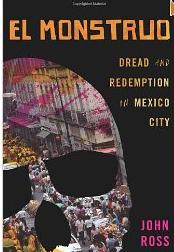
Me and the Monstruo have come to the end of our three month 66 performance journey through Obamalandia but there’s one thing you can count on: “Parar Es Morir.”  I’m not planning on stopping (or dying) any time soon.
  
John Ross will be returning to Mexico in mid- May to begin work on a new book, “From Bebop To HipHop – Fathers & Sons.”  You can consult him on particulars at johnross@igc.org  
        

Moyers: Plutocracy and democracy can’t co-exist

0

The great public-interest journalist Bill Moyers, 75, ended his long-running Journal program on Friday with a warning: Plutocracy and democracy don’t mix. And these days, it appears that the former has all but destroyed the latter, turning American democracy into a cruel and deceptive farce. The fact that many readers will need to scramble to their dictionaries or computers to look up “plutocracy” is a good sign of how unaware the average citizen is of what ails this country and keeps them down. So let me save y’all the trouble, it means rule by the rich, and it’s what we now have in this country.

I got a lot of criticism last week when I raised the issue of how Meg Whitman, Goldman Sachs, and the other scions of our plutocracy have fatally undermined our democratic values, which used to involve taxing the rich adequately enough to fund our infrastructure, alleviate poverty, and protect the planet. So rather than repeating that point, I thought I’d just let Moyers carry the argument, as he did so effectively on his final Journal broadcast, calling for a kind of public-interest journalism, biased in favor of the people and the planet, that I firmly believe in. He’ll be missed, and we would all be wise to heed his words and his warning.

Moyers said: 

You’ve no doubt figured out my bias by now. I’ve hardly kept it a secret. In this regard, I take my cue from the late Edward R. Murrow, the Moses of broadcast news.

Ed Murrow told his generation of journalists bias is okay as long as you don’t try to hide it. So here, one more time, is mine: plutocracy and democracy don’t mix. Plutocracy, the rule of the rich, political power controlled by the wealthy.

Plutocracy is not an American word but it’s become an American phenomenon. Back in the fall of 2005, the Wall Street giant Citigroup even coined a variation on it, plutonomy, an economic system where the privileged few make sure the rich get richer with government on their side. By the next spring, Citigroup decided the time had come to publicly “bang the drum on plutonomy.”

And bang they did, with an “equity strategy” for their investors, entitled, “Revisiting Plutonomy: The Rich Getting Richer.” Here are some excerpts:

“Asset booms, a rising profit share and favorable treatment by market-friendly governments have allowed the rich to prosper…[and] take an increasing share of income and wealth over the last 20 years…”

“…the top 10%, particularly the top 1% of the US– the plutonomists in our parlance– have benefited disproportionately from the recent productivity surge in the US…[and] from globalization and the productivity boom, at the relative expense of labor.”

“…[and they] are likely to get even wealthier in the coming years. [Because] the dynamics of plutonomy are still intact.”

And so they were, before the great collapse of 2008. And so they are, today, after the fall. While millions of people have lost their jobs, their homes, and their savings, the plutonomists are doing just fine. In some cases, even better, thanks to our bailout of the big banks which meant record profits and record bonuses for Wall Street.

Now why is this? Because over the past 30 years the plutocrats, or plutonomists — choose your poison — have used their vastly increased wealth to capture the flag and assure the government does their bidding. Remember that Citigroup reference to “market-friendly governments” on their side? It hasn’t mattered which party has been in power — government has done Wall Street’s bidding.

Don’t blame the lobbyists, by the way; they are simply the mules of politics, delivering the drug of choice to a political class addicted to cash — what polite circles call “campaign contributions” and Tony Soprano would call “protection.”

This marriage of money and politics has produced an America of gross inequality at the top and low social mobility at the bottom, with little but anxiety and dread in between, as middle class Americans feel the ground falling out from under their feet. According to a study from the Pew Research Center last month, nine out of ten Americans give our national economy a negative rating. Eight out of ten report difficulty finding jobs in their communities, and seven out of ten say they experienced job-related or financial problems over the past year.

So it is that like those populists of that earlier era, millions of Americans have awakened to a sobering reality: they live in a plutocracy, where they are disposable. Then, the remedy was a popular insurgency that ignited the spark of democracy.

Now we have come to another parting of the ways, and once again the fate and character of our country are up for grabs.

So along with Jim Hightower and Iowa’s concerned citizens, and many of you, I am biased: democracy only works when we claim it as our own.

Luis Echegoyen’s old school Mission cool

3

Back when he was a television star in El Salvador, Luis Echegoyen could have little guessed that fifty year later he’d be performing in his own poetry reading in San Francisco of classic Spanish authors (Sat/8, Mission Cultural Center for Latino Arts). But it’s not the least probable feat that legendary Spanish language Bay area news anchor Echegoyen has accomplished — after all, poetry is his retirement project.

Echegoyen was famous in El Salvador when he made his first trip to the United States. A television and stage star, he had joined a troupe of artists who were performing in high schools and colleges across the country in a sort of cultural education tour for North American students. But when he arrived in San Francisco in November of 1962, he stayed. His sister lived here, and he heard that San Francisco State had a top-shelf drama program, where he planned on continuing the five years of formal stage education he had received back home.

But “I didn’t have the English,” Echegoyen tells me. He’s now a stately older gent in a turned-out suit, reminiscent of his days as a storied San Franciscan Spanish language news anchor. He shares his memories with me in a room at the Mission Cultural Center, and they’re fascinating, scenes set in the familiar streets of the Mission, but with reality set at a different angle from historical currencies.

With the education system unassailable, he turned to what he knew best; Spanish language show biz. His first major project was a radio show called Escala de Fama, which was being recorded in front of a live audience at the Victoria Theater. Echegoyen was a rookie at KOFY, which broadcasted Escala, but he could tell the hosts of the variety show needed help.

“The audience was very rowdy,” he recalls. “The announcers were afraid of the audience, they would hide behind the curtains!” He grabbed the mic, and drew on his years of experience during El Salvador‘s golden age of show business, cracking jokes and walking through the aisles of the Victoria. The spotlights followed him, and he hosted Escala for the next 13 years. Luis had arrived in San Francisco.

It’s fascinating to hear someone talk, as Luis does, about the way the Mission neighborhood was generations ago. It doesn’t sound so very different — sure, less fixed gear bikes — but the immigrant families packed into subdivided Victorians were already there, without many of the resources they needed to thrive. This was back before the advent of the social organizations that today call the Mission home. “Kids didn’t have anywhere to go; no parks, no gyms, no after school programs. I said, ‘okay, we need a park, we need a gym,’” says Luis.

Avance Luis! The man in magazine covers

And if talking with the man taught me one thing, it was this; what Echegoyen decides to do, Echegoyen does. To fix the issues he saw, he got in deep with a whole laundry list of community organizations; Bay Area Neighborhood Development, Mission Coalition Organization, and the Economic Opportunity Council, to name a few. He started working on seniors’ issues, delinquency issues, economic issues. Most importantly, he parlayed his growing radio and television celebrity into making change.

At one point, the Parks & Recreation department responded to his entreaties to build a park almost sarcastically, saying that if he wanted a park for his adopted neighborhood, they’d build it — if he could find an empty lot in the well-populated Mission neighborhood. On his way to shoot a news story with his camera crew, Echegoyen saw one, a dump site in the outer Mission/Bernal Hieghts.

He broadcasted from the site, sitting amidst the rubble. “I said ‘this is an empty lot, and we can use it to build a park. Let’s go to City Hall, and ask for a park to be built in this place.” Which of course, he did himself, only to find that Parks & Rec themselves were the property’s owners. Today, the park is there, testament to Echegoyen’s ability to use his broadcast skills and community position to effect change.

“You have to use the media to benefit the community. I went out on the streets, I found problems. Some of the problems were solved, some not,” he says, looking back at his activist career.

Today Echegoyen is retired, the first Latino inductee in the silver and gold circles of the National Academy of Television Arts and Sciences, a winner of a Lifetime Achievement Special Emmy.

“Luis has always been a leader in the community,” says Cynthia Harris, anchor of Univision KDTV’s En la Bahia, a local Spanish language news show of which Echegoyen was producer and host for many years. During his tenure, Luis brought in neighborhood leaders, as well as  local and international Latino artists. Harris says it was projects like these that reflect Echegoyen’s startling impact on San Francisco. “It was an opportunity for the Latino community to have a say — something that previously that hasn’t existed.”

Clearly, this is a man who’s earned his retirement. Although Echegoyen is active in senior education through AARP, two scholarship organizations for low income students, and is currently toying with the idea of organizing an artists’ flea market in the Mission, his pet project of the moment takes the stage at Mission Cultural Center for Latino Arts this weekend.

He’ll be reading poetry, the Spanish language masters. He’s a connoisseur of the art form, having recently recorded four volumes of poetic anthologies he‘s releasing one at a time on CD. “Poetry is so ample,” he tells me, proudly handing over a copy of volume one. “It’s really painful to be choosing which to include on the CDs.”

Sat/8 7 p.m., $15
Mission Cultural Center for Latino Arts
2868 Mission, SF
(415) 643-5001
www.missionculturalcenter.org

Dude, where’s my car share?

2

By Brady Welch


news@sfbg.com

GREEN CITY Owning and storing a car in San Francisco is neither cheap nor efficient, so car-sharing companies have become increasingly popular in recent years. So why can’t individual car owners share or rent their vehicles? Right now, insurance law makes that difficult, but new legislation could make it easier for people to share their cars.

California Assembly Member Dave Jones (D-Sacramento), a candidate for Insurance Commissioner, unveiled the legislation during an April 28 press conference in San Francisco. Flanked by City CarShare CEO Rick Hutchinson and Sunil Paul, chief of a car-sharing start-up called Spride, Jones outlined legislation that would allow car owners to rent their vehicles to car-sharing organizations without risk of losing their individual auto insurance. Think of the idea as a more decentralized — but not quite DIY, at least not yet — version of other successful car-sharing organizations.

Hutchinson said there would likely be little difference between current City CarShare members’ experience and these new ventures. The change would be most significant in less dense areas where economic and logistical conditions prevent companies like City CarShare from expanding. By contracting with individual car owners, Spride is proposing to cut out much of the financial and logistical overhead, bringing the benefits of car sharing to a wider array of people. Folks would still reserve vehicles online or over the phone, and the cars would be maintained and tracked using City CarShare’s technology.

Vehicle owners could potentially earn "hundreds of dollars" per month through Spride, Paul said. Although owners wouldn’t be able to set their own rates under Spride’s pilot program, Paul did mention the possibility of pricing "flexibility" if the model proves successful. Owners would set the hours for the vehicle’s availability.

California law is unclear about the insurance ramifications of individual car sharing. The snags concern commercial use of the vehicle and insurance liability. Currently, if you charge people to borrow your car, insurance companies can technically revoke your insurance. This, in turn, leads to the issue of whose insurance policy covers the person who is driving at any given time.

Jones’ bill would clarify that. "Participating in car sharing is something we want to encourage," he said. The legislation would specifically define personal vehicle sharing in car sharing organizations as noncommercial usage. This is significant because commercial insurance is more expensive than personal insurance. By "expanding what City CarShare has pioneered" with the company’s technology and network of members, Jones said that California can "take it to the next level" by promoting and expanding the practice to new markets and individuals.

Even so, the bill still doesn’t address the ramifications of person-to-person car sharing, so don’t rush off to Craigslist in hopes of renting out your Pinto for some extra scratch. It’s still legal to lend your car to friends and family for free, but if donations are offered, you might want to keep that secret from your insurer.

The Association of California Insurance Companies opposes Jones’ legislation. But according to ACIC vice president Mark Sektnan, amending it could bring the group’s members on board. "We want to make sure that people who put their cars into these operations are protected. And we want to make sure the car sharing organization fixes" the vehicle if it’s involved in a crash. As currently written, the bill only provides the car owner with liability insurance. Sektnan wants something more comprehensive. "The car sharing club has to provide appropriate insurance to the people who lend the cars," he said.

Sarah Moussa, a field representative in Jones’ office, said it’s an issue Jones is working on. "The bill only addresses liability, but they want to see more comprehensive coverage," she said. "Right now, we’re working closely with the insurance industry to make sure those amendments are addressed."

Jones noted that the legislation would play a big role in promoting clean air and mitigating traffic congestion. If this change passes and works well, it could be the first step toward getting the most efficiency out of the least green transportation option.

The Daily Blurgh: The prenup claws

Curiosities, quirks, oddites, and items (plus a lot about kitties) from around the Bay and beyond

Make all the catty jokes you want about Uwe Mitzscherlich, the German man who married his asthmatic cat Cecilia to honor their decade of companionship. Seriously, though, if you’ve ever bonded with a pet, the whole thing is just heartbreaking. In happier animal news, the Bay Area’s baby peregrine falcons got tagged today.

*****

Totally un-cool headline of the day: “San Francisco may cut funding to transgender job center”

*****

Totally cool headline of the day: “Looking For Burritos in All the Wrong Places”

*****

“A group of Second Life users is suing Second Life’s creator over a virtual land dispute. They say their contractual property ownership rights have been changed and that this alteration of the terms of service constitutes fraud and violates California consumer protection laws.”

*****

1984-meets-Avatar: Berkeley computing professor’s vision of Earth sprinkled with “countless tiny sensors” becoming a reality thanks to tech juggernaut.

*****

This week is Scopitone week on the Daily Blurgh. “What’s a Scopitone?” you ask. The Scopitone was a type of jukebox popular in the ’60s that synced 16mm short films (also known as “Scopitones”) to magnetic soundtracks, effectively creating music videos long before MTV was around. To learn more, check out Robin Edgerton’s excellent history of the device, as well as the bountiful blog Scopitones.com. To start us off, here is handsome rogue Serge Gainsbourg singing “Le Poinçonneur Des Lilas” in one of the earliest Scopitones made in France (the clip is from 1958 and was shot in the Porte des Lilas Métro station):

http://www.youtube.com/watch?v=A7LVx-HeW10

Welcome to Elm Street: Part Seven

0

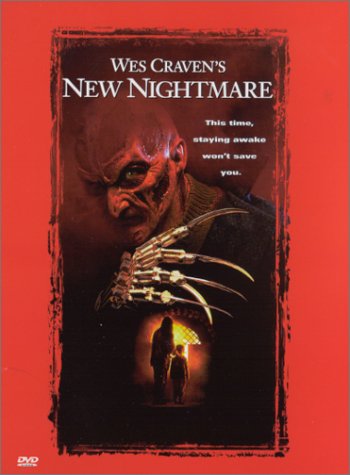
Before Wes Craven got meta with Scream (1996), he tried his self-referential hand at the Nightmare on Elm Street series. The result was New Nightmare (1994), which reunited Heather Langenkamp and Robert Englund as … Heather Langenkamp and Robert Englund. Also playing themselves: actor John Saxon, writer-director Wes Craven, producer Robert Shaye, and Freddy Krueger. Yep, that’s how he’s credited.

Where was there to go after the dreadful Freddy’s Dead (1991)? Not because of the title’s finality — see also: the so-called Final Chapter (1984) of Friday the 13th — but rather its inescapable shittyness. Part six offered more comedy than horror, with lazy deaths, bad acting, and weak puns — even by Freddy standards. But New Nightmare was a reinvention in the truest sense. It’s a film that, while far from perfect, was well ahead of its time. In fact, Craven pitched it as the plot for part three, but the studio decided against it.

That’s probably for the best. New Nightmare works well when it’s referencing its predecessors: that’s kind of the whole point. Part three would have been too soon — that film could have been clever, but it wouldn’t be full of the Easter eggs that make New Nightmare such a treat for longtime fans. And, yes, I’ve been rewatching these movies for the past week and am, in general, above-average geeky: this film works for me in a way it might not work for others. But I think that’s OK. Scream is broader (and better) because it appeals to fans of all ‘80s horror — New Nightmare is just for Freddy Krueger devotees.


Here are 20 references that I picked up on. Some were certainly intentional. Others are the product of my overactive imagination.

1.    The first few shots show the creation of Freddy’s new animatronic glove. A Nightmare on Elm Street (1984) begins with Freddy fashioning his glove.
2.    At the talk show where Robert Englund surprises Heather in full Freddy regalia, he taunts the audience with, “You are all my children now,” a line from Freddy’s Revenge (1985).
3.    Heather’s son Dylan (Miko Hughes) repeats “Never sleep again” and other lines from the rhyme first heard in part one and chanted in all Nightmare films.
4.    Robert Shaye jokes, “I guess evil never dies, right?” One of the taglines to part four, The Dream Master (1988), was “Pure evil never really dies.”
5.    Heather’s husband Chase (David Newsom) crashes his car when he falls asleep and gets attacked by Freddy. Dan (Danny Hassel) died similarly in part five, The Dream Child (1989).
6.    Just as Freddy made Dan’s corpse speak to Alice (Lisa Wilcox), he has Chase talk to Heather when she falls into his coffin.
7.    Heather and Dylan’s conversation about God recalls Tina (Amanda Wyss) pleading for God in part one. Freddy’s response? “This is God.”
8.    Dylan invites Heather to join him in his dreams. Bringing people into dreams was the power Kristen (Patricia Arquette/Tuesday Knight) displayed in Dream Warriors and Dream Master.
9.    When Heather calls Robert, he’s painting freaky Freddy art. Kristen couldn’t stop drawing Nancy’s house (and Freddy) in part three.
10.    To replicate Freddy’s glove, Dylan tapes knives to his fingers. In the first Nightmare, the glove is referred to as his “fingerknives.”
11.    The phone receiver turns into Freddy’s mouth and tongue, as it did in part one.
12.    Freddy needs to cross over into our world by getting past Heather, the gatekeeper. There was plenty of talk about gates and gatekeepers in Dream Master, but to be honest, I wasn’t paying much attention to the plot by that point.
13.    Heather wakes from a nightmare with a grey streak in her hair, just like Nancy in part one.
14.    A nurse tells Heather she’ll need a pass to get into the hospital’s restricted area, to which Heather replies, “Screw your pass.” This is another line from part one.
15.    Heather reminds Dylan, “Whatever you do, don’t fall asleep.” She said the same thing to Glen (Johnny Depp) as Nancy in the first Nightmare.
16.    An invisible Freddy lifts Julie (Tracy Middendorf) into the air, then drags her up the wall and onto the ceiling. This is almost exactly how Tina died in part one.
17.    Dylan’s a sleepwalker, which is bad news in these movies. In Dream Warriors, Phillip (Bradley Gregg) suffered from the same problem.
18.    Heather tells John Saxon that Fred Krueger killed Chase. By part two, Krueger was known as “Freddy,” so this is likely an allusion to part one. Of course, that’s underscored by the TV playing a similar scene from the first movie.
19.    The references get even more overt when Heather and John take on their original roles as Nancy and Lt. Thompson, down to wearing the same clothes they had on at the end of the first Nightmare.
20.    While trying to rescue Dylan from Freddy, Heather gets caught climbing the stairs, which turn into goop. This also happened in part one.

Be still, my nerdy heart. I have to admit that New Nightmare isn’t quite as good as it could have been. Freddy’s new makeup, which is supposed to be scarier, pales in comparison to his earlier incarnations. In fact, all of the scenes involving Freddy are somewhat lacking: this is really Heather Langenkamp’s movie. Still, without this film, there would be no Scream. And without Scream — well, I don’t even want to think about that.

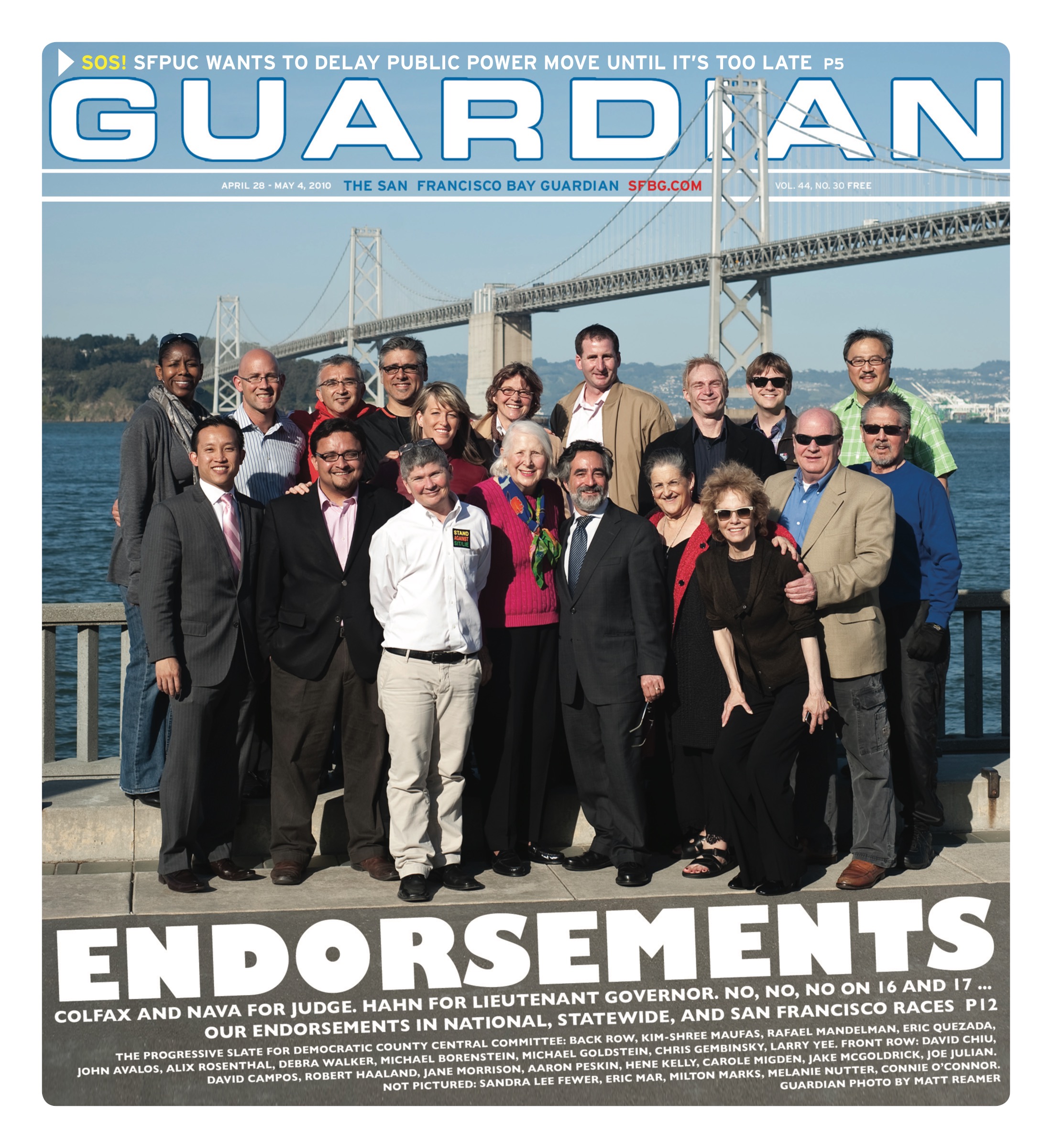
ENDORSEMENTS: State ballot measures

8

PROPOSITION 13

LIMITS ON PROPERTY TAX ASSESSMENT FOR SEISMIC RETROFITS

YES

The primary sponsor of Prop. 13 is Republican Sen. Roy Ashburn, who dominated the news for several days after he was arrested for drunk driving on his way home from a Sacramento gay bar. Needless to say, Ashburn’s dramatic coming out has whipped up far more attention than his noncontroversial ballot initiative.

We’re generally opposed to anything that gives tax cuts or tax deferrals to property owners; thanks to a 1978 measure also called Prop. 13, much of the commercial and residential property in California is badly under assessed. And Prop. 13, 2010 style, is indeed a tax break. But it’s probably justified.

Buildings in this state are typically reassessed for property taxes after they’ve been modified with new construction, except in cases where the modifications are made to comply with earthquake-safety standards. While most buildings that undergo seismic retrofitting are exempt from reassessment until the property is transferred to a new owner, the exemption for unreinforced masonry buildings is limited to 15 years. Prop 13 would remove that 15-year cap.

The fiscal impact on cities is likely to be pretty minor, and the measure might encourage both commercial and residential landlords to bring their buildings up to standard. Vote yes.


PROPOSITION 14

OPEN PRIMARIES

NO

At the height of a royal mess last year when the state budget was long overdue and the two-thirds majority needed to pass it was still out of reach by one vote, Republican Sen. Abel Maldonado struck a deal with Democrats. He said he’d support the budget — if the majority party would meet a few of his demands. One thing he insisted on was Prop. 14 — a ballot measure that would effectively remove political parties from the primary elections process, allowing all voters to cast ballots for any candidate regardless of party affiliation.

Under Maldonado’s plan, all candidates would run on a single primary ballot, and the top two vote-getters would face off in the general election. Heavily funded by the California Chamber of Commerce and marketed by the same spin doctors and corporate lawyers who are rolling in Yes on 16 campaign money, Prop. 14’s backers say it will result in more centrist elected officials.

There are plenty of pitfalls here, the most worrisome being that it would drive up the cost of elections and give more moneyed (and corporate-allied) candidates a sharper competitive edge while elbowing out progressives. It would allow Republicans to play a role in what would normally be Democratic primaries (and vice versa.) The measure would also make it nearly impossible for smaller parties — the Green Party, for example — to offer candidates in the November elections.

Bad idea, bad process, Vote no.


PROPOSITION 15

FAIR ELECTIONS ACT

YES

California desperately needs electoral reform. Corporate campaign spending and lobbyists have poisoned the decision-making process and muzzled the voice of the people. Something radical needs to be done — and while this measure is only a small, measured step in the right direction, it’s an important and promising experiment.

Prop. 15 would create a pilot public financing program for the 2014 and 2018 races for California Secretary of State — and the program would be funded by a tax on lobbyists. Right now lobbyists pay only $12.50 per year to register with the state. This measure would increase that fee to $350 annually and use the money to create a fund of about $6 million that candidates for the crucial office overseeing elections in the state could tap after demonstrating their popular support by gathering a number of small contributions. All candidates who qualify would be given the same amount of money and left to compete on the issues. Ideally this public financing program would prove successful and eventually be expanded to other offices. Public financing of election campaigns, which is currently working well in Arizona and Maine, is certainly worth a try in California. Vote yes.


PROPOSITION 16

MONOPOLY PROTECTION FOR PG&E

NO! NO! NO!

The deceptively titled “Taxpayer’s Right to Vote Act” was dreamed up and funded entirely by Pacific Gas and Electric Co., the monopolistic utility that is worried it could face actual competition here in San Francisco (and elsewhere) from municipal electricity programs that would offer customers a greener energy mix and more accountability than PG&E executives will ever demonstrate.

Rather than accept some healthy competition, this sleazy corporation has opted to spend some $35 million to exterminate all possibilities of municipal electricity programs cropping up anywhere in the state in a bid to preserve its octopus-like grip on the energy market in Northern California. Prop. 16 would require a two-thirds majority vote at the ballot before any community choice aggregation (CCA) program — or any attempt at creating or expanding a public-power system — could move forward. That’s an extreme hurdle — -and PG&E knows it.

In effect, PG&E is trying to buy public policy here, trying to pass a law that will protect its own monopoly interests.

In San Francisco, the CCA being proposed would offer customers 51 percent renewable power by 2017, which means it would blow PG&E out of the water in the green arena and mark S.F. as taking greater strides toward combating climate change than any other major U.S. city. This example could set a precedent for others, which, in turn, could create favorable market conditions for green energy startups that want to harness wind, solar, biomass, geothermal, tidal, and energy efficiency alternatives.

The very existence of Prop. 16 is already threatening the San Francisco CCA; the city’s Public Utilities Commission is trying to delay a final contract until after the June 8 vote on the measure (see editorial, page 5)

Vote no on Prop 16. Not just because it’s an example of a big business single-handedly trying to alter the state constitution for its own economic benefit by pouring millions of dollars into a deceptive advertising campaign. Not just because a two-thirds majority vote requirement is anti-democratic. Not just because there were reports that the signature gatherers who got people to sign on in support of placing Prop. 16 on the ballot were telling people that its purpose was to limit PG&E expansion or encourage solar power. Not just because Senate Pro Tem Darrell Steinberg and a half dozen members of the Legislature sent a letter rebuking PG&E CEO Peter Darbee for disrespecting the democratic process by going straight to the ballot to undermine legislation it initially supported that enabled the creation of CCA programs. Not just because PG&E is using $35 million of ratepayer dollars (that’s the check you wrote them for your electricity bill!) to put out slick TV ads for this campaign when it should have been repairing the pipelines under those manholes that keep exploding and messing up your morning commute. Not even just because with CCA, you already have the right to vote whether or not you want to be part of it, a choice PG&E will never give you. And not just because PG&E keeps trying to raise rates, which is much more difficult for municipal energy agencies to do.

If for no other reason, vote no because Prop. 16 flies in the face of everything environmentalists stand for. It’s a measure that will thwart progress on fighting climate change, brought to you by the company that practically invented green-washing. PG&E is a huge nuclear power player; it purchases coal from mountaintop-removal coal mines in West Virginia that are completely devastating biodiverse landscapes in Southern Appalachia and screwing over poor people by tainting their drinking water; and it’s in the process of building fossil fuel-fired power plants in poor communities of color in California. The CCA programs at least represent a glimmer of hope for an alternative model; Prop. 16 kills off that possibility with one fell swoop motivated by pure greed. For the love of justice, democracy, and the planet, vote no on Prop 16.


PROPOSITION 17

CAR INSURANCE SCHEME

NO, NO, NO!

Mercury Insurance sponsored this measure and is campaigning for it with tens of millions of dollars, betting it can fool voters and make hundreds of millions of dollars in profits by doing so. And if the company is right, insurance rates will skyrocket for new drivers and those who haven’t had continuous insurance coverage, which experts say will increase the number of uninsured drivers on the roadways and end up increasing insurance rates for everyone.

Mercury and its founder George Joseph have been truly malevolent players in California, exploiting their customers to make billions of dollars in profits, attacking California’s landmark insurance reform measure Prop. 103 with lawsuits and corrupting campaign contributions over more than 20 years, and flouting insurance regulators in such brazen fashion that even Insurance Commissioner Steve Poizner, a conservative Republican, recently chastised the company for its “lengthy history of serious misconduct” (see “Buying power,” March 17).

Now, however, the company is hoping its promise to cut the insurance premiums of drivers who have maintained continuous coverage by “as much as $250 per year” will buy their votes and that they’ll overlook the myriad negative impacts of increasing everyone else’s premiums by $1,000 per year or more, based on Mercury’s own estimates.

Think about that. If you’re a driver who missed an insurance payment by even one day, or a soldier returning from boot camp, or someone with a low-income getting insurance for the first time or after ditching your car for a while, what are you going to do when you discover already-expensive car insurance comes with a $1,000 annual surcharge?

Many Californians, those who share our roads, will choose to drive without insurance. Then they’ll be more likely to leave the scene of accidents or declare bankruptcy rather than paying out-of-pocket for their accidents, both of which increase the cost of insurance for everyone else.

That’s how insurance works. If someone pays less, someone else pays more; and the only entity guaranteed to really make money over the long term is the insurance company. Don’t fall for this scam. Vote no on 17.

Burning the Man

14

steve@sfbg.com

Paul Addis is like the Man he burned: a symbol onto which people project their views of Burning Man, the San Francisco-born event that has become the most enduring countercultural phenomenon of this era. This summer, with the building of Black Rock City in the Nevada desert, marks the 25th annual event.

When Addis illegally torched Burning Man’s eponymous central icon during the Monday night lunar eclipse in 2007, he was either injecting much-needed chaos back into the calcified event; indulging in a dangerous, destructive, and delusional ego trip; or he was simply crazy, depending on the perspective of current and former burners who are still quite animated in their opinions about Addis and his act in online forums.

But Addis is also just a man, one who paid a heavy price to make his statement. After pleading guilty to a destruction of property charge in Nevada court, which became a felony after Burning Man leaders testified to more than $30,000 in damages from having to rebuild the icon, Addis served nearly two years in prison.

Addis was released late last year and recently returned to San Francisco, where this performance artist will debut his new solo show, “Dystopian Veneer,” at The Dark Room on April 30 (a second show is set for May 7). While Addis insists he didn’t seek the notoriety that came from getting caught, it’s clear he relishes this outlaw role, which follows naturally from his last stage incarnation as gun-loving journalist Hunter S. Thompson.

In a nearly three-hour interview with the Guardian, Addis described that fateful night and its implications, as well as why he turned on an event he once loved.


BURNING MAN GROWS UP

Addis first attended Burning Man in 1996, the last year in which anarchy and danger truly reigned, when a tragic death and serious injuries caused Burning Man organizers to impose a civic structure and rules, such as bans on firearms and high-speed driving, on future events.

Addis said he immediately became “a true believer,” seeing Burning Man as both a revolutionary experiment in free expression and political empowerment, and as a “wild, risk-taking thing for pure visceral power.” He came from what he called the “San Francisco arts underground” and had a libertarian’s love for guns, drugs, and explosives, but a progressive’s opposition to war and consumer culture.

“When you go to Burning Man, everyone has that feeling at a certain point in time. It is the most incredible thing you’ve been at. You do see the possibilities laid out in front of you,” Addis told me.

Addis poured himself into the event, but became frustrated with the rules and restrictions after three years and stopped going to Burning Man, although he remained in its orbit and closely followed it.

“There are some people who go to Burning Man who have extraordinary ideas and they are extraordinary people. They embody the type of concern and substantial action that I found so wonderfully possible in those early years. And to those people, thank you for what you do. But they are a minority,” Addis said.

Addis shared the anarchist mindset of John Law, who led Burning Man to the Black Rock Desert then left the event in frustration with its growing scale and popularity and never returned after 1996.

“Paul Addis’ early burning of the corporate logo of the Burning Man event last year was the single most pure act of ‘radical self expression’ to occur at this massive hipster tail-gate party in over a decade,” Law wrote on a Laughing Squid blog post after Addis’ sentencing hearing in 2008, one of 185 spirited comments on both sides of the debate.

Among this growing group of Burning Man haters and malcontents, which included self-imposed exiles like Law and provocateur attendees like Chicken John (see “State of the Art,” 12/20/04), there was always talk about burning the Man early as the ultimate strike against how ordered the event had become.

“Everyone knew it needed to be done for lots of reasons,” Addis said of his arson attack. So he returned to Burning Man in 2007 with the sole purpose of torching the Man in order to “bring back that level of unpredictable excitement, that verve, that ‘what’s going to happen next?’ feeling, because it had gotten orchestrated and scripted.”


TORCHING THE ICON

Addis can be very grandiose and self-important, prone to presenting himself in heroic terms or as the innocent victim of other people’s conspiracies, such as the police in Seattle and San Francisco who arrested him for possession of weapons and fireworks in separate instances within weeks of his arrest at Burning Man. But when it came to burning the Man, Addis was purposeful.

“Obviously a gesture like burning down Burning Man is very dangerous and very provocative. From my perspective, the No. 1 concern was safety. No one could get hurt unless it was me,” Addis said. Critics of the arson attack often note how dangerous it was, pointing out that there were a dozen or so people under the Man when it caught fire. But Addis said that he was on site for at least 30 minutes beforehand, encouraging people to move back with mixed results, shirtless and wearing the red, black, and white face paint that would later make for such an iconic mug shot.

As a full lunar eclipse overhead darkened the playa and set the stage for his act, Addis waited for his cue: someone, whom Addis won’t identify, was going to cut the lights that illuminated the Burning Man and give him at least 15 minutes to do his deed in darkness.

“I didn’t do this alone,” Addis said. “The lights were cut by someone else… The lights were cut to camouflage my ascent.”

Unfortunately for Addis, the operation didn’t go as smoothly as he hoped. He miscalcuated the tension in a guide-wire he planned to climb and the difficulty in using the zip-ties that attached a tent flap to it as steps, slowly pulling himself up the wire “hand over hand.”

Once he reached the platform at the bottom of one leg, “I reached for this bottle of homemade napalm that I made for an igniter and it’s gone,” dropped during his ascent. And his backup plan of using burlap and lighter fluid took a long time when he couldn’t get his Bic lighter to work under the 15 mph wind.

Then the lights came back on. “And now I know I’m exposed. Because the whole thing was not to get famous for doing this. It was to get away and have it be a mystery. That was the goal,” Addis said.

But then Addis got the fire going and it quickly spread up the Man’s leg, and Addis used nylon safety cables to slide down the guide-wire like a zip-line. “I landed perfectly right in front of two Black Rock Rangers who watched me come down,” Addis said. “And I turned to them and said, ‘Your man is on fire.'<0x2009>”

Addis said he was “furious” to see about nine people still under the burning structure, blaming the rangers and yelling at the people to clear the area before declaring, “This is radical free speech at Burning Man” and taking off running. Addis said he stopped at the Steam Punk Treehouse art exhibit, hoping to get lost in the crowd, but headlights converged on his location. He ran again, with a ranger close behind, and was finally caught, arrested, and taken to Pershing County Jail.


AFTERMATH

The arson attack made international news, and there were enough Addis’ supporters out there to convey the message that this was a political statement against the leadership of event founder Larry Harvey and Black Rock City LLC.

But those who run the event didn’t buy into Addis’ narrative. Instead, they ordered new materials to have the Man rebuilt and burned on schedule. And when it came time to testify at his sentencing hearing a year later, they sent LLC board member Will Roger and a tally for replacement costs that greatly exceeded the $5,000 level that bumped the charges up to a felony.

“They didn’t have to do this,” Addis said. “Instead, they decided to deliberately take action they knew would send me to prison.”

Burning Man spokesperson Marian Goodell wouldn’t discuss the charge. “It doesn’t do us or him any good to open that wound again.”

But an internal memo written by Executive Project Manager Ray Allen shortly after the hearing argued that they were required to respond honestly to requests for information from prosecutors and to do otherwise would have required perjury on behalf of an adversary.

“Part of putting on the Burning Man event means maintaining good relations with Pershing County so that we can continue to have the Burning Man event on BLM land within that county. Good relations means cooperating with criminal prosecutions,” Allen wrote to Burning Man employees.

Many of those employees remain profoundly offended by Addis and his act, mostly for the extra work it caused and the principle of such a selfish gesture. “The basic ethos out there is build your own stuff, burn your own stuff,” said Andy Moore, a.k.a. Bruiser, an employee since 2001 who helps build the city. “How would you have felt if he went to your house and burned it down because he didn’t like you?”

Yet as viscerally angry as Moore can still get when speaking of Addis, he also agreed that two years is a long prison term for this. “It seems a bit over the top. After all, it was a structure made of wood that was meant to burn.”

But Addis said that he has let go of the bitterness he felt toward Burning Man and is looking forward to being back on stage, something that he said was his main focus in prison. “It’s a brand new life, and I’ve got all this potential,” Addis said. “And I want to make the most out of it.”

Burning Man announces its funded art projects

3

Black Rock City LLC has announced its art grants for Burning Man 2010, with its theme “Metropolis: The Life of Cities.” Thirty-five projects were funded to the tune of almost $440,000, which is more than most years but not its peak.

Those receiving funding include well-known burner artists such as Michael Christian, Karen Cusolito and Dan DasMann, Kate Raudenbush, and Doctor Megavolt. The venerable SF-based fire arts collective Flaming Lotus Girls isn’t doing a funded project this year, but veteran FLGs Rebecca Anders and Jessica Hobbs (along with PK Kimelman, an architect and principal member of the local Space Cowboys sound collective) are leading construction of this year’s Temple (known as the Temple of Flux) with support from a gaggle of FLGs and many other Bay Area collectives in Oakland’s American Steel warehouse (the home base for Cusolito and DasMann).

I’ll be working with the Temple crew this year and profiling the project in the Bay Guardian later this summer, just as I did for the FLG’s Angel of the Apocalypse project in 2005 (all of which will be part of my upcoming book, “The Tribes of Burning Man: How an Experimental City in the Desert is Shaping the News American Counterculture,” due to be released in November by CCC Publishing).

Like many of the projects, the Temple of Flux is only getting a small portion of its funding through the art grants (which are funded through ticket sales) and will be holding a series of fundraisers in the coming months, the first being this Saturday night, May 1, at Kelly’s Mission Rock.

Meanwhile, Burning Man founder Larry Harvey will be speaking tonight (April 27) at the offices of the San Francisco Planning and Urban Research Association, which has been excitedly promoting this year’s Burning Man focus on urbanism.