MUNI

Don’t miss the free MUNI youth bus pass!

4

If you do down to the BART station at 16th and Mission today (Thursday) from 3-5 p.m., you’ll see banners that read ‘Get Your Free Fast Pass.” The PR blitz is the work of the MORE Public Transit Coalition, which is conducting a series of community bus pass clinics in the Mission, the Bayview and Chinatown in the coming weeks to help low-income families apply for free MUNI youth passes. 

Last week, at the urging of the MORE Public Transit Now Coalition and Sup. David Campos, the MTA Board approved the Youth Lifeline Program, which will provide 12,000 low-income youth with free MUNI bus passes in April, May and June.

But to access the free bus pass program, low-income families need to fill out an application and return it to the MTA Office. As a result, community organizers are setting up the bus pass clinics to inform low-income parents and students about the program and to help them to apply.

“We fought hard to get these free bus passes,” Gloria Esteva of POWER (People Organized to Win Employment Rights) said in a press release. “Now we want to make sure that children get these passes in their hands and don’t have to worry having bus fare in order to make it school each day.”

More than 20,000 transit dependant students in San Francisco rely on public transit to travel to and from school daily. But last year, the price of the Youth Fast Pass doubled from $10 to $20.

“We take the bus everywhere we go,” Un Un Che from the Chinese Progressive Association. Said. “My family depends on MUNI to get to school, to work, to the doctor.  Buses are not a luxury; they are a necessity.”

A similar clinic will be held in the Bayview on Monday March 14 at the Mandela Plaza at the corner of 3rd Street and Palou. A second clinic will be held in the Mission on Thursday March 17 and a second in the Bayview on Monday March 21. Future clinics are planned for Chinatown, though dates are not yet available. But applications will be available at all locations in English, Spanish, and Chinese, and assistance will be provided in all three languages.
 Organizers note that while the program is a positive step, the 12,000 passes still fall short of meeting the need for affordable public transportation in San Francisco.
 
“We know that next year the city plans to continue to cut yellow school buses,” POWER organizer Beatriz Herrera said.  “We need a permanent program that will ensure that our children can travel safely around the city, get to school each day, and meet their basic transit needs.”

Editor’s Notes

1

Tredmond@sfbg.com

Back in the early 1990s, when the city was hurting for money even more than usual, Sue Hestor, the environmental lawyer who is always full of good ideas, called me up and suggested that the city start charging banks a fee for every storefront ATM. "They have turned the public sidewalks into their bank lobbies," she said. ATMs can lead to congestion and are magnets for crime; why shouldn’t the banks (which made a lot of money replacing human tellers with machines and costly private space with public property) help pay for some of those impacts? After all, banks escaped most local business taxes.

I ran that one up the old flagpole, and got nowhere. Back then, the city attorney was Louise Renne, who wasn’t known for aggressive approaches to revenue generation; she immediately told me it wasn’t legal. Back then, at least nine of the 11 supervisors were guaranteed to vote against anything that would offend big business.

A few years later, Tom Ammiano, who had become the only supervisor serious about brining in new money for San Francisco, suggested that the city put a tiny tax on transactions at the Pacific Stock Exchange. A similar tax in New York City had brought in millions. The exchange quickly marched up to Sacramento and got the state to outlaw the idea.

Down in Los Angeles, they’re trying to put a severance tax on oil production. Great idea. Too bad (not really) we have no oil wells here.

Lots of good ideas. It’s time for some more.

Things in San Francisco are really, really dire, and the district-elected supervisors are far more open to progressive approaches to the budget crisis. And if you’re willing to stipulate — as I am — that San Francisco has a revenue problem as much as a spending problem, and that the rich and big businesses are radically undertaxed, then its time for a comprehensive look at the ways this city might bring in some more money.

There are some nice concepts floating around. David Chiu, the Board of Supervisors president, is talking about reforming the city’s business tax. Sup. John Avalos tried to put a nickel-a-drink impact fee on alcohol wholesalers. Sup. David Campos thinks downtown should help pay for Muni service. I still like the notion of a city income tax.

But what we need is a long list of options — a complete guide to how a charter city and county in California in 2011 is legally allowed to raise money.

Dennis Herrera, the city attorney, is a smart guy; he’s figured out all kinds of ways to use his office to go after polluters, scam artists, and crooks. I suspect that with a bit of a nudge, he could help develop a few dozen legally sound ways to tax the wealthy individuals and institutions. That ought to be priority one for the Budget Committee.

I’m not sure what would work best, and nobody else is either. But we ought to have all the options.

Health class, without the STD slideshow

0

caitlin@sfbg.com

RENEW For a brief moment, we here at the Guardian are taking a break from listing the best places to host more damage to your liver to give some soapbox time to a health care professional. Meet Dr. Julie Chen, who has a private practice in San Jose that specializes in integrative medicine, an approach combining conventional Western health knowledge with holistic care options. That’s right, just like Tron‘s Kevin Flynn, Chen is able to operate in multiple dimensions when it comes to your physical well-being. We asked her some big-kid questions about health and her innovative brand of medicine that you should probably know the answers to.

SFBG What’s the most commonly held misconception about integrative medicine?

Julie Chen The fine line between “alternative” and “conventional” medicine is frequently erased and redrawn. For example, fish oil used to be “alternative.” So was vitamin D supplementation. But now we have Lovaza and vitamin D prescription versions that insurance companies will pay for.

Integrative medicine is frequently seen as “alternative medicine,” but — especially if the physician is fellowship-trained and board-certified — it is heavily evidence-based, just like “conventional” medicine. We utilize clinical research as a basis for treatment plans that integrate aspects of conventional and complementary medicine like supplements and herbs, energy medicine, manual therapy, acupuncture, and hypnotherapy. It’s not about one or the other, it’s about utilizing all appropriate modalities available out there to achieve optimal health outcome.

SFBG You’re an expert on stress-reducing mind-body exercises, so let’s get practical here. Recommend one for people sitting on Muni or at a computer.

JC Breath work is relatively unobtrusive and inconspicuous, as is meditation or self-hypnosis. You may even try abridged versions of progressive muscle relaxation: tightening shoulder and upper back muscles, then relaxing; tightening hands and arms, then relaxing; tightening gluteal muscles, then relaxing; tightening leg and feet muscles, then relaxing.

For people who say they can’t sit still long enough to do meditation or self-hypnosis, this exercise may be an option — it offers something active to focus on.

SFBG Eating healthy is hard. What are some ways people eat wrong?

JC Patients frequently think they have to make all the right changes all at once with their diet, and then feel defeated when they can’t sustain them. I’m a big fan of setting smaller, more attainable goals, and using positive reinforcement that helps you to move onto the next.

I’m also a big fan of mixing foods if you’re not ready for a complete change. For people who don’t like brown rice, mix brown and white or use less white rice and mix it with vegetables. That way you can increase complexity of the food you are eat and decrease simple carbohydrate intake with food that is still palatable. Many patients also think that as long as they eat vegetables at one main meal, that’s enough for the day. But our bodies function better if we can provide those phytonutrients and flavonoids all day long. That means that we should incorporate healthy foods like whole grains and vegetables into every meal.

SFBG We live in an age of health info oversaturation. With all the conflicting theories out there, how can we tell if we’re living healthily or not?

JC This is a great question. First, it’s important to educate ourselves about what’s considered “healthy.” At the end of the day, we physicians do not go home with you. Your readers should know that they are the most important member in their health care team, and that they should utilize their doctors as informational tools. Second, our bodies usually will tell us if we are living as healthy as we can. If you feel chronically fatigued, or have insomnia, or a “foggy” mind, there are probably steps you can take to improve your overall health by evaluating and maximizing aspects of your lifestyle, nutritional intake, or health status.

SFBG What should someone do if the advice they are getting from their HMO differs from or conflicts with what is prescribed by their holistic health care provider?

JC In this situation, it would be beneficial for the physician to speak with the holistic health care provider. The extent of training among holistic care providers can be vastly different — it can range from those who have taken weekend courses or are self-taught versus those who are board-certified or fellowship-trained. By increasing communication between physicians and holistic practitioners, it provides an additional level of protection for the patient in case the holistic provider is suggesting something medically dangerous. On the other hand, if the treatment plan from the holistic provider is medically appropriate, then it provides an opportunity for the physician to learn more about holistic care and how it can augment conventional care.

SFBG Are there real health benefits to going vegetarian?

JC There are tremendous benefits to a vegetarian or vegan diet. Plant-based diets tend to be much more anti-inflammatory and thus are more beneficial. The trick is to make sure that the diet is high in plant-based proteins, minerals, vitamins, and phytonutrients, and not processed or fried fatty foods. If the vegetarian or vegan diet is composed of things like steamed vegetables, legumes, and whole grains, it has tremendous health benefits like improving cholesterol levels, insulin sensitivity, and decreasing inflammation.

SFBG Are there positive health benefits of living in a big city?

JC San Francisco is one of the healthiest cities in America — access to healthy, organic, and diverse foods allows us to eat well throughout the year. Another tremendous benefit of living in San Francisco is the easy access to hiking, biking, and other forms of outdoor exercise. Even for those who aren’t interested in outdoor activities, the simple act of getting around the city allows us to get in regular exercise thanks to the hilly streets.

Muni looks for money — but not downtown

12

The San Francisco Municipal Transportation Agency is looking for new ways to bring in money, which is a fine thing. I think taxes for transportation make perfect sense. And while not everything in government gets better when you throw money at it, Muni generally does. Some of the ideas are pretty sound and take a progressive approach; it’s hard to argue against a vehicle impact fee, since private cars on the road increase traffic and slow down the buses. I’m all for higher parking rates, and an off-street commercial parking fee is a great idea (even though the Guardian, which owns a building that has a small parking lot, would have to pay the fee).


But the list is missing the most obvious and the most fair element: A special tax assessment for downtown commercial property. We know, because the city has done numerous reports on this, that office developers don’t pay anywhere near the real cost of providing Muni service to their buildings. We know that most of the Muni lines, and certainly the ones with the heaviest traffic, exist to take commuters downtown. We know that decent transit is critical to the success of the entire central office district.


So why is there nothing on this list to address that? Why not an annual fee per square foot of commercial office space in the area zoned C-3-0 (highrise offices)? That ought to be part of any Muni funding plan.


I tried to get the folks at Muni to respond to my question, but I haven’t heard back. I’ll update as soon as I do.

Work the throne: Interviews with the San Francisco Empress 2011 candidates

25

Update: Saybeline has been crowned the new Empress. Congratulations to both the outstanding candidates, and warm wishes for the future.

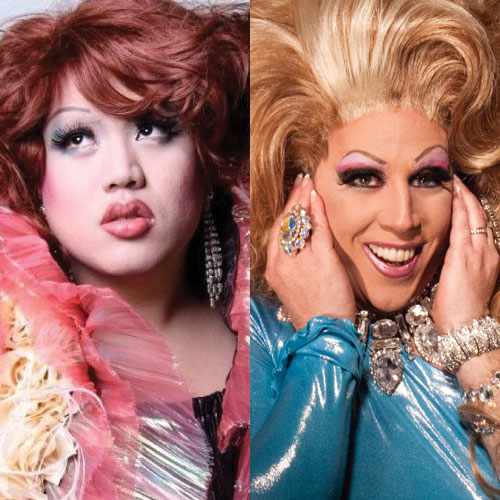
In this week’s Super Ego column in the paper, I give a grateful nod to our esteemed – if little acknowledged — Imperial Court system, an incredible, drag-based 45-year-old institution that raises tens of thousands of dollars for charitable Bay Area causes. (Really, do yourself a historical favor and check out the recently revamped Imperial website.) Below are my full interviews with the candidates, Saybeline and Monistat.

The annual elections for Empress of San Francisco are coming fast upon us (Sat/19, free. Noon–7 p.m. at Castro Muni Station, Castro and Market, and 11 a.m.–6 p.m. at Project Open Hand, 730 Polk, SF.) The winner will devote the next year of her life to raising funds and repping SF — after she graciously endures a daylong coronation ceremony on Sat/26, one of the city’s true mind-blowing spectacles. (The winner will be announced at Coronation.)

I emailed a series of questions to both candidates in order to get a better sense of who they are and why we should vote for them. They each bring a different, welcome perspective to the competition that ultimately helps refresh this cherished local tradition.

SFBG  What is your Empress platform?

MONISTAT My mission to become Empress is to bridge communities together. We all know that Marlena’s [Bar in Hayes Valley] is the seat of power for the Imperial Court of San Francisco, and I being the outsider candidate promise to outreach to the members of this community. As Empress, I will be the Empress of San Francisco, not just the Castro, but the entire city. There are so many great facets of this town, and so much talent that I can use at my disposal to do some really good work! Being part of an amazing club scene in this town, I have been fortunate enough to work with some of the best promoters, DJs, performance artists, and venues, so why not refresh their eyes and give them something a little different.

SAYBELINE First and foremost, I offer an experienced continued commitment to service in our community. Additionally, I offer a continued commitment to honoring the 45-year history and traditions of the Imperial Council of San Francisco and the many Empresses and Emperors that have paved the way for many like myself, making a difference and serving in our community. Most importantly, my motivation comes from wishing to take on an expanded leadership role spearheading much needed grass roots community fundraising for our local network of diverse community based charitable organizations struggling to make ends meet.

I have actively been involved (both as a gay man and the persona of Saybeline Fernandez) in some way serving the LGBT community of San Francisco for over two decades. In those 20-plus years, I have giving my own money and served the community volunteering on the front lines for our LGBT political and human rights causes, volunteering for HIV/AIDS support services, services for our LGBT youth and services for our marginalized diverse communities. Additionally, I have lent my professional experience in event-planning to many fundraising events that have raised thousands of dollars and awareness, supporting and serving San Francisco. I also feel that one of the biggest differences in this campaign is that I have the ability and experience to energize and engage younger members of our community to become more actively involved in serving the community.

SFBG What would your first act as Empress be?

MONISTAT OMG Coronation is usually six hours long, and ends at midnight with the crowning of the new Empress. Its a long-held tradition. But of course win or lose, I’ll be out that night after the ball partying my brains out, to thank myself for finishing this amazing campaign. I will probably never sleep that night if I win, because usually I have to cart myself to all the bars that have sponsored me with the crown on my head, then have to be up and ready by 7am to go the Emperor Norton’s Cemetery all the way in Colma, in full mourning drag, with a veil on and everything (I secretly love all this pomp and circumstance). Then after a round of partying for three more days, I have to get working on my official Investiture, which naturally will be a fundraiser.

SAYBELINE This is easy for me. It’s sooo important to me that we get more younger members of our community actively involved in serving our community…. So many want to be involved but don’t know how. We have to open the doors, and engage and encourage them to have a greater presence in being of service.

SFBG How long have you wanted to be Empress?

MONISTAT What a loaded question. I believe that every queen is royalty and should be treated that way. The title of Empress just means you have to be in drag more than everyone else. I went to coronation last year. I’ve never won a title in my entire my life — all of my friends have kind of created their own niches and scenes in the city, so I thought, “Hey, why not do something my friends will never do?” So after talking to my closest pals, I decided to go for it and take the bull by the horns. Trust me, running for Empress is harder than most people think.. and it has taught me a lot of lessons about myself and growing up. It’s incredibly challenging to be put under a microscope 24/7 when everyone is watching you and every mistake you make is blown up 20,000 percent.

SAYBELINE I have been actively involved with the Imperial Council of San Francisco for a little over five years. And the thought of becoming Empress first crossed my mind some three years ago. As much as I may have wanted to run in previous years, I knew it was important to gain more experience within the court of San Francisco and the International Court System. Being Empress means both making a large personal financial committment and an expanded committment of one’s personal time. One has to have both in place in order to be successful. And after planning and getting things in order personally, the timing was finally right for me to throw my hat in and become a candidate and with the support of our community hopefully become the next elected Empress.

SFBG In one sentence, why should we vote for you as empress?

MONISTAT I’m young — my youthful energy combined with fresh ideas and the willingness to learn, plus my hands-on approach to things, is the perfect cure to a traditional court that needs to be shaken up a bit. My experience as a club promoter and my connections in this city will make for a great year as Empress. the Imperial Court is nearing its 50th year, there is need for new blood. I’m that queen. Oh yeah, I was also voted Best Drag Queen by the readers of SF Bay Guardian, enough said.

SAYBELINE A vote for Saybeline Fernandez is a vote for someone that offers leadership and experience — and someone committed to welcoming and encouraging younger members of our community to become more actively involved serving the community, raising much-needed funding for our local network of community-based charitable organizations.

Empress yourself

0

marke@sfbg.com

SUPER EGO It certainly has not escaped my attention that this whole amazing Arab youth uprising thing is taking place during Fashion Week. It’s a mitzvah! But while Hunky Beau and I have been busily rooting through Reuters for inspiring pics of various hipster Egyptsters and Tunisians turnin’ in out (or, conversely, signs of any uprising under the Manhattan tents — watch out for Joseph Altuzarra, y’all), I’ve tried to have more than fast-forward fashionistas in my forethoughts and yummy Yemenis on the Bahrain.

Specifically: gay democracy. It’s time once again for an annual event that still remains charmingly underground here, yet has a heavy impact on San Francisco’s charitable community and global gay image. For serious, the wigs alone weigh like 20 pounds. Yes, it’s time to elect a new Empress of San Francisco — and this year the candidates have come out fighting, but graciously.

If you’re unfamiliar with our nearly 50-year-old Imperial Court system, which originally took ironic inspiration from beloved-yet-deranged San Francisco scallywag Joshua Norton, who in 1859 declared himself Emperor of the United States — and which first found full flower in 1965 with majestic Absolute Empress Jose Sarria I, The Widow Norton, while later helping to lead the community through gay liberation and the AIDS crisis — then hie thee ho to the newly revamped www.imperialcouncilsf.org website for a highball full of essential history.

Empress 2011 will wholly dedicate the next year of her life raising tens of thousands of dollars for good causes through nightlife affairs and traveling to regally represent our fair burg at Imperial Courts around the world. And this year’s candidates make for a feisty ballot: Saybeline, glamorous longtime luminary of the LGBT fundraising scene, and rousing dark horse Monistat, the party promoter voted Best Drag Queen in the Guardian’s Best of the Bay poll.

If elected, the youthful Monistat promises to tap her extensive database of “promoters, DJs, performance artists, and venues” to “refresh” the institution. She also invokes her considerable party stamina, promising to give us night after night (after night) of fundraising in face.

Saybeline vows to throw “open the doors to younger members of our community” and to “engage and encourage them” to become more involved in community service. She puts forth her “two decades of experience in volunteering and organizing fundraising events” as one of the main reasons to grant her the crown.

The crown is stunning, btw.

There are two great guys running for emperor as well, Frankie Fernandez and Ray MacKenzie, and voting should be hot and heavy. Everyone 21+ who lives in San Francisco, Marin, and San Mateo is welcome to vote. So hit the polls and enjoy our freedoms while we wait for that exhilarating youth uprising to finally spread to Iraq! Oh wait …

SAN FRANCISCO EMPRESS 2011 VOTING DAY Sat/19, free. Noon–7 p.m. at Castro Muni Station, Castro and Market, and 11 a.m.–6 p.m. at Project Open Hand, 730 Polk, SF. www.imperialcouncilsf.org

>>Read Marke B.’s full interviews with the Empress 2011 candidates here


SLUMPFEST

“Slumps” = Cali-meets-Detroit (a.k.a. Calitroit) hip-hop beats. And this massive charitable beat battle, featuring two dozen future underground hitmakers, will surely tease out more than a few sublime J. Dilla apostles.

Fri/18, 9 a.m., $10 or $7 with can of food. Club Six, 60 Sixth St., SF. www.clubsix1.com


HOTTUB

Gotta give shouties to my fave Oakland female electro-hop terrors, rapping us up in cataclysmic Four Loko bliss. They’ll demolish the stage with the Tenderlions, Kool Karlo, and Frite Nite DJs.

Fri/18, 10 p.m.–3 a.m., $5 before 11 p.m., $10 after. Public Works, 161 Erie, SF. www.publicsf.com

It’s a sign: MUNI passsenger angst

7

It’s raining for the first time in weeks, and you know what that means. Somewhere in San Francisco, someone is standing on an outdoor MUNI platform and wondering why those stylish, clear sloping roofs fail so miserably when it comes to keeping the rain out. And while MUNI drivers should not take the blame for this and other transit-system flaws, we cannot help but feel the pain of the passenger who vented their frustration by leaving this bombastic complaint at the T-Third 20th Street station.

5 things you didn’t know about cable cars

6

Get it out of the way now: roll those eyes. The cable cars are something no native San Franciscan would ever bring up in polite (that is, local) company, let alone write about in a blog post. But fact is, there’s a reason why these things are iconic. Those cars have as speckled and quirky a history as the City by the Bay. 

San Franciscans steeped in facts and figures about the tourist-movers probably know that ours is the last operating cable car system in the world and that its design hasn’t changed much since Andrew Hallidie devised it upon seeing an overloaded horse-car slip down a hill in the rain. Perhaps you’ve heard that the four remaining lines each rely on a continuous loop of cable running under your feet at a constant 9.5 miles per hour, powered by electrical motors and a system of pulleys and huge wheels. If you’ve ever visited the Cable Car Museum (c’mon folks, it’s free) you’ve seen the sheaves pulling the cable along, and you’ve learned that the cars operate by grabbing the cable with giant pliers that reach through the floor and into a slot in the street where the cable runs. 

Bored yet? Stifle that yawn, we’re just getting started. Read on for five things you haven’t heard about those postcard pretties.


I know why the caged bird . . . rings?

The famous author, poet, and social activist Maya Angelou dropped out of Mission High School at 15 to work the cable cars. “The thought of sailing up and down the hills of San Francisco in a dark-blue uniform, with a money changer at my belt, caught my fancy,” she later recalled in 1969’s I Know Why the Caged Bird Sings. Angelou won the job as San Francisco’s first African American (and female) cable car conductor by heckling reluctant company managers until they caved and she was hired to ring the cars’ bells and swing “on the back of the rackety trolley, smiling sweetly and persuading [her] charges to ‘step forward in the car, please.’”

Smokin’ tracks

Ever noticed a certain funk riding in a cable car? It wasn’t the guy next to you. It’s caused by two materials that play a critical role in starting and stopping the car: the pine resin that greases the cable and the wooden brake shoes, made from Douglas fir, that press against the tracks to stop the car. Friction causes the wooden brakes to smoke, meaning they must be replaced every three days with new ones milled locally at a shop on 22nd Street and Indiana. Friction from the pliers-like grip grabbing the cable likewise melts and then vaporizes the pine tar. This results in a smooth, lubricated start-up, but is also responsible for the burning and odor. (And if that sounds a bit too familiar, perhaps you should call your doctor…) Like the wooden brakes, the grip that grabs the cable must be replaced every three days for wear.

The cable car: the Imelda Marcos of public transportation. (Stack of brake shoes at the Cable Car Museum). Photo by Emily Appelbaum

Move over, men

Working as a grip operator requires incredible dexterity and also the nuanced ability to feel the cable, picking it up slowly to ease the car to full speed. Though well over half of trainees drop from the teaching program each year, the required combination of subtlety and strength make gripping the perfect job for powerful women like Fannie Mae Barnes, who became the city’s first female grip in 1997. 

“A lot of guys will try to muscle the grip, but it’s really more a finesse thing – you have to leverage it with your body weight,” Barnes told the Guardian in an interview last fall. Barnes retired in 2007, but when San Francisco’s second female grip, Willa Johnson, took the post last April, Barnes presented her with a pair of custom-made pink leather grip gloves, emblazoned with her name.

Beyond the bells

The Slot Blades, named for the cars’ emergency braking system, is a band composed entirely of SF Muni workers who conduct and grip the city’s cable cars. Their moniker is a tongue of metal that, when deployed, wedges itself so tightly against the tracks it must be removed with a torch. The cable-proud band gets together for practices and jam sessions in addition to playing at Muni and cable car-related events like the annual Cable Car Bell Ringing Contest – now in its 49th year.

Falling cars and free love

Forget stranded cables and smashed cars: San Francisco’s most infamous cable car victim may be Gloria Sykes, who claimed that a 1964 accident left her with a black eye, bruises, and an unquenchable sex drive.

When a mechanical failure caused the car she was riding to slide backwards down a hill, Sykes – later dubbed the “cable car nymphomaniac” by the daily newspapers — sued the City of San Francisco for a half million dollars. Her lawyers argued that the sexual abuse she suffered as a child combined with the stress of the accident caused her to seek the company of up to 50 sexual partners a week. After listening to 44 taped transcripts of an electrically hypnotized Sykes, the jury awarded the insatiable (ha) plaintiff $50,000 in damages. Sykes’ case is cited as one of the earliest court-recognized examples of post-traumatic stress disorder.


San Francisco Cable Car Wheelhouse from Emily Appelbaum on Vimeo.

Check out the inner wheelings and dealings of the SF Cable Car Museum. Here, the whirling electric motors that power the cars. Video by Emily Appelbaum


Free Muni for kids

19

Sup. David Campos is talking about offering free Muni rides for some of San Francisco’s youth, and he’d like free passes for all school kids next year. That’s a great way for the city to work with SFUSD; the school district spends a huge amount of money on buses. In fact, transportation is the second biggest item in the district’s budget (after salaries). There ought to be a way for kids (above a certain age; maybe fifth grade) who now take SFUSD buses to get on Muni instead.


And let me tell you all a little secret: Most of the middle-school kids who ride Muni never pay anyway. They all pile on the bus after school and some have passes and some don’t and the driver can’t possibly keep up with who’s got what when 50 young people are climbing aboard all at once.


So if we can let them all ride free we can save money for the schools, which can go into the classrooms, and make life easier on the drivers and kids who can avoid the crazy scramble.


And if we can’t do that, or if the city wants some sort of reimbursement, there’s an easy solution: Sell Muni passes in the schools. Not to get too bureaucratic, but SFUSD already keeps track of family income levels (that’s how they do the free lunches) and it wouldn’t be that hard to issue Clipper cards that allow low-income kids to ride free. Kids who can afford it would get a card at the beginning of the year and their parents could put money on it at the Clipper web site (or the kids could do it themselves with a machine in the school office.)


I know it sounds complicated, but it’s way more complicated now; you have to take your kid in person to buy a youth pass and present a birth certificate. Way easier to do it at the schools, where that data is already in the system. A good deal for all: SFUSD agrees to devote one staffer at each middle and high school to the (part-time) job of issuing bus cards, and in exchange SFUSD students get to ride Muni free or cheap — and SFUSD gets to cut its transportation budget.


Why is this not a no-brainer?  


Ting’s “knee-jerk car populism”

31

By Asaf Shalev

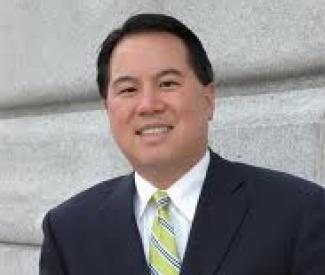
Assessor-Recorder Phil Ting’s campaign for mayor is trying to rile up San Francisco’s car drivers with a new petition called “San Francisco Parking Ticket Overload,” but it seems to be misrepresenting the situation to score election season points.

In the recent email launching the petition, Ting provoked drivers to help “tear up the unfair ticket plan” in order to prevent “turning the whole city into a ‘parking trap.’” Ting said he opposes the MTA’s plan to jack up the enforcement of parking restriction by dolling out more tickets, which was reported in C.W. Nevius’s column. But Ting’s email also made it sound as if parking fines were going up and the MTA was launching a new initiative targeting drivers.

MTA spokesperson Kristin Holland told us that it isn’t true the agency has any intention to increase the cost of parking fines. In response, Ting spokesperson Eric Jaye (who ran Gavin Newsom’s two mayoral campaign) told us, “We are taking [the MTA] at their word and we are very happy to hear that,” insisting the campaign honestly thought that rates were going up.

Tom Radulovich, a transportation policy expert who founded Livable City, called Ting’s messaging and the stance behind it “knee-jerk car populism” and a “saber-rattling election stunt.” He said Ting’s campaign is playing to the fears of drivers who are the more privileged commuters of the city, with most studies showing motorists don’t pay the full costs of their impact to society.

“Even if [Ting’s claim] was true, the premise that motorists have an undue burden is untrue,” Radulovich said. Even with increased enforcement, drivers can still avoid fines by obeying the laws whereas all Muni passengers have had to bear the brunt of higher fares, which doubled under Newsom’s tenure. “I’d like to see someone saying how transit passengers have an unfair deal,” Radulovich said.

Jaye takes a different tone than some of the campaign missives. According to Jaye, what Ting opposes is that the increase in tickets is not the result of policy or enforcement considerations but specifically meant to increase revenue for the city. “We are just trying to pursue a revenue generating policy that is a little more progressive,” Jaye said. Guardian Executive Editor Tim Redmond also recently made the point that parking tickets were meant primarily to keep cars flowing in urban areas and not as a revenue source, but he also noted that motorists don’t pay for their impacts and should pay far higher car taxes.

But Radulovich’s question is left unanswered: “Are any of the candidates going to talk about the plight of transit passengers?”

MUNI gets beastly, in a nice way

0

A horde of salt marsh mice scurry down Market Street. Salmon leap across Divisadero traffic. Blue Mission butterflies cover your #22 Fillmore. If you haven’t been doing any wildlife-spotting recently, keep those binoculars close by. A new MUNI art program seeks to bring endangered species to the forefront of our transit consciousness — making our much-maligned buses prettier to look at, and bringing Bay nature back into our daily lives all in one fell swoop.

Visual artist Todd Gilens and an installation team wrapped four city buses with large-scale images of local endangered wildlife in their natural abodes as part of a project called “Endangered Species.” In a space normally reserved for advertisements for bail bondsmen or the new season of Real Housewives, you can now peep aforementioned mice broods and threatened fish and bugs. Gilens came up with the idea after the publication of a municipal transportation agency’s transit effectiveness project. The report used stats to measure the efficacy of SF public transit, but the visual artist felt that something was missing from the survey’s findings: namely, the community presence of our modes of public transportation. 

“I’m a ‘thing’ guy,” says Gilens. “Objects have lives and tell interesting stories. I wanted to think more about what buses are, beyond their technical character.” In the case of buses, Gilens thought it possible that they could be more than just people containers from here to there. “Endangered Species,” a project that took years for him to research and secure funding for, is his aesthetic reclamation of public space.

He eventually found a partner in The Bay Nature Institute, a Berkeley-based publication and project dedicated to celebrating and conserving nature and wildlife in the Bay Area. The group’s website is now the online home for  “Endangered Species,” and houses a bus tracker application that give fauna fans the current locations of all four Endanger buses.

It would stand to reason that the Endanger buses would have some direct conservationist agenda. But for Gilens, the moving art is only about calling attention to the natural beauty in and around the Bay Area. When asked if the project was meant to engage with the public on an ethical level, he said the Endanger buses purpose was really in the eyes of the beholder. “Art helps us to refine our noticing, and from there we can respond according to our capacities.” 

MUNI gets mousey. Photo by Todd Gilens

But Gilens choice to focus on the Bay’s circumscribed members of the animal kingdom might have another reading, one that strikes close to home for creative types being priced out of the city’s stubbornly sky-high rent prices. He made an interesting connection between art and endangered species: “Art is also not very ‘useful,’ perhaps in a similar way that a unique butterfly species or a marsh mouse is superfluous in their environment — But without them we have a flatter, duller, and certainly less robust world.”

Gilens hopes that seeing Endanger buses amongst the city hustle and bustle, will promote new ways of assessing personal experience – and one’s morning commute. “I hope that the beauty and unexpectedness of the images in different situations will invite playful associations. Perhaps the project will encourage a more connected and creative approach to everyday life,” he says. “Whether it’s allowing oneself to be moved by something beautiful, making room for another stranger on a bus, or becoming curious about even stranger life forms beyond urbanization.” Endangered artist or domesticated office rat, at least San Franciscans can agree that Endanger buses will be a refreshing sight to see amongst the city’s urban forest.

The Endanger buses will be out and about until April on different city lines each day. For more information on them – and how you can participate in MUNI’s bus-spotting game for prizes — go to www.baynature.org/endangerbus


They have issues: Members of the new Board speak

20

Board President David Chiu touched off a broad political discussion in recent weeks with his statement that officials were elected “not to take positions, but to get things done.” Delivered just before his reelection as Board President with the solid backing of the board’s moderate faction, Chiu’s comment has been viewed in light of City Hall’s shifting political dynamic, a subject the Guardian explores in a Jan. 19 cover story. Politics aside, Chiu’s statement also begs the question: Just what do members of the board hope to get done, and how do they propose to accomplish the items on their agenda?
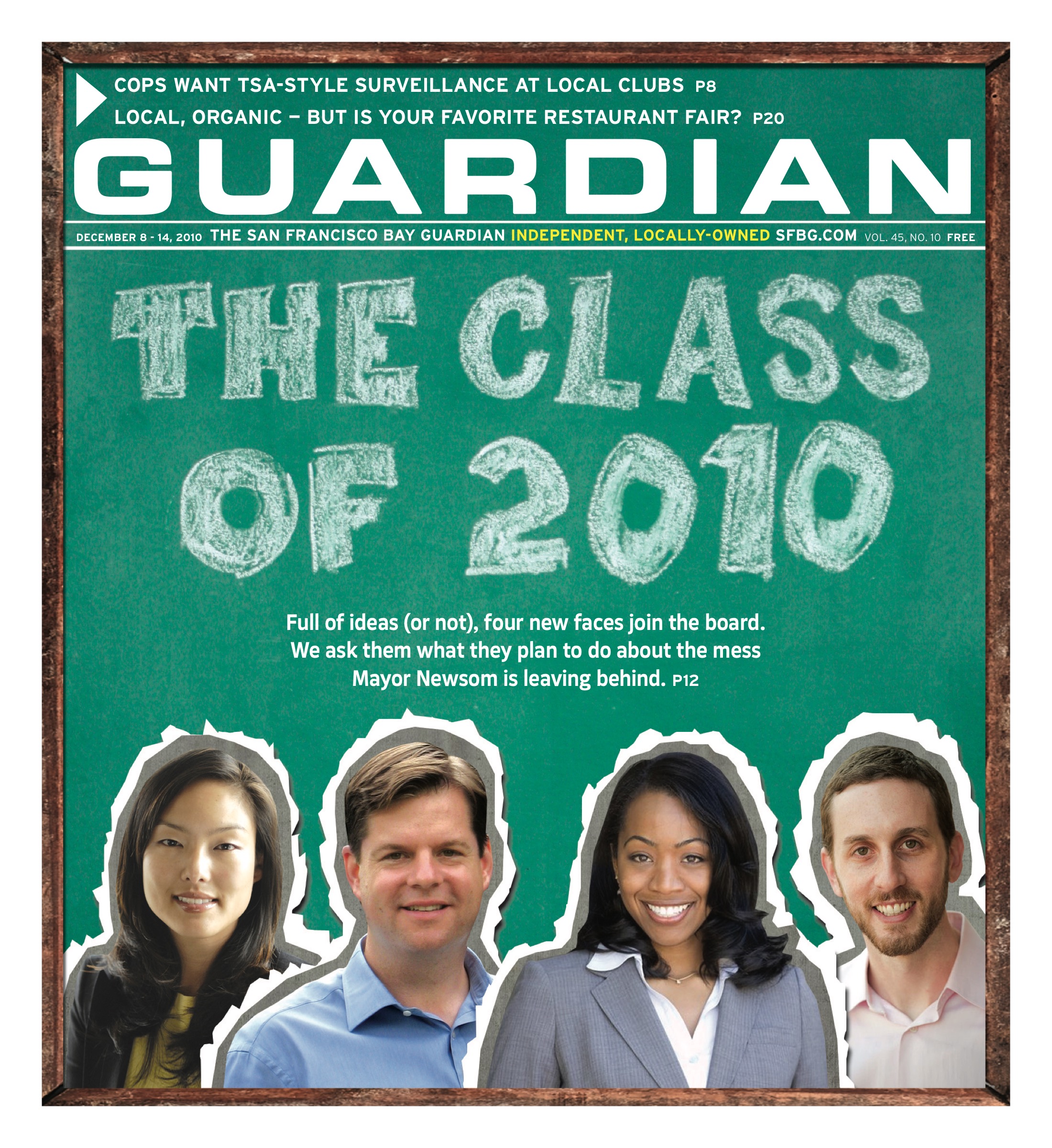
Last week, Guardian reporters tracked down every member of the board to find out. We asked, what are your top priorities? And how do you plan to achieve them? Some spoke with us for 25 minutes, and others spoke for just 5 minutes, but the result offers some insight into what’s on their radar. Not surprisingly, getting the budget right was mentioned by virtually everyone as a top priority, but there are sharp differences in opinion in terms of how to do that. Several supervisors, particularly those in the moderate wing, mentioned ballooning pension and healthcare costs. Aiding small business also emerged as a priority shared by multiple board members.

Sup. Eric Mar
District 1

Issues:
*Budget
*Assisting small businesses
*Programs and services for seniors
*Food Security
*Issues surrounding Golden Gate Park

Elected in 2008 to represent D1, Sup. Eric Mar has been named chair of the powerful Land Use & Economic Development Committee and vice chair of the City Operations and Neighborhood Services Committee.

Asked to name his top priorities, Mar said, “A humane budget that protects the safety net and services to the must vulnerable people in San Francisco is kind of the critical, top priority.”

It’s bound to be difficult, he added. “That’s why I wish it could have been a progressive that was chairing the budget process. Now, we have to work with Carmen Chu to ensure that it’s a fair, transparent process.”

A second issue hovering near the top of Mar’s agenda is lending a helping hand to the small businesses of the Richmond District. “There’s a lot of anxiety about the economic climate for small business. We’re trying to work closely with some of the merchant associations and come up with ideas on how the city government can be more supportive,” he said. Mar also spoke about the need to respond to the threat of big box stores, such as PetCo, that could move in and harm neighborhood merchants. “I’m worried about too many of the big box stores trying to come in with an urban strategy and saying that they’re different — but they sure have an unfair advantage,” he noted.

Programs and services for the senior population ranked high on his list. Mar noted that he’d been working with senior groups on how to respond to a budget analyst’s report showing a ballooning need for housing – especially affordable housing – for seniors. “It’s moving from the Baby Boom generation to the Senior Boomers, and I think the population, if I’m not mistaken, by 2020 it’s going up 50 percent,” he said. “It’s a huge booming population that I don’t think we’re ready to address.”

Addressing food security issues through the Food Security Task Force also ranked high on Mar’s list, and he noted that he’s been working with a coalition that includes UCSF and the Department of Public Health to study the problem. “We’ve had a number of strategy meetings already, but we’re trying to launch different efforts to create healthier food access in many of our lowest income neighborhoods,” Mar said.

Finally, Mar talked about issues relating to the park. “I do represent the district that has Golden Gate Park, so I’m often busy with efforts to preserve the park, prevent privatization, and ensure enjoyment for the many residents not just in the Richmond but throughout the city that enjoy the park.” Although it’s not technically in his district, Mar noted that he is very supportive of HANC Recycling Center – and plans to advocate on their behalf to Mayor Lee.

Sup. Mark Farrell
District 2
Issues:
*Pension reform
*Long-term economic plan for city
*Job creation
*Quality-of-life issues

Elected to replace termed-out D2 Sup. Michela Alioto-Pier, Farrell has been named vice-chair of the Government Audits & Oversight Committee and a member of the Rules Committee. A native of D2, Farrell told the Guardian he believes his roots in the city and background as a venture capitalist would be an asset to the city’s legislative body. “I know at the last board, Carmen [Chu] was the only one who had any finance background,” he said. “To have someone come from the private sector with a business / finance background, I really do believe … adds to the dialogue and the discussion here at City Hall.”

Along those lines, Farrell said one of his top priorities is the budget. “I’m not on the budget and finance committee this time around, but given my background, I am going to play a role in that,” he said.

So what’s his plan for closing the budget deficit? In response, he alluded to slashing services. “In the past, there have been views that we as a city don’t provide enough services and we need to raise revenues to provide more, or the perspective that we first need to live within our means and then provide more services. Everyone’s going to disagree, but I’m in the latter camp,” he said. “I do believe we need to make some tough choices right now – whether it be head count, or whether it be looking at …pension reform. I do believe pension reform needs to be part of the dialogue. Unfortunately, it’s unsustainable.”

He also said he wanted to be part of “trying to create and focus on a framework for a long-term financial plan here in San Francisco.”

Secondly, Farrell discussed wanting to put together a “jobs bill.”

“Jobs is a big deal,” he said. “It’s something I want to focus on. There are only so many levers we can pull as a city. I think the biotech tax credits have spurred a lot of business down in Mission Bay.”

Next on Farrell’s agenda was quality-of-life issues, but rather than talk about enforcing San Francisco’s sit/lie ordinance – supported by political forces who organized under the banner of maintaining ‘quality-of-life’ – Farrell revealed that he is incensed about parking meter fines. “It is so strikingly unjust when you are 1 minute late to your parking meter and you have a $65 parking fine,” he said.

Farrell also mentioned development projects that would surely require time and attention. “CPMC is going to be a major dominant issue,” he said. He also mentioned Doyle Drive, and transitional age youth housing projects proposed in D2 – but as far as the housing project planned for the King Edward II Inn, which has generated some controversy among neighborhood groups, he didn’t take a strong position either way, saying he wanted to listen to all the stakeholders first.

Board President David Chiu
District 3
Issues:
*Budget
*Preserving neighborhood character
*Immigrant rights
*Preserving economic diversity
*Transit

Elected for a second two-year term as President of the Board, D3 Sup. David Chiu is rumored to be running in the mayor’s race, after he turned down former Mayor Gavin Newsom’s offer to appoint him as District Attorney. That offer was made after Kamala Harris won the state Attorney General’s race this fall. And when Chiu turned it down, former Mayor Gavin Newsom shocked just about everybody by appointing San Francisco Police Chief George Gascon, who is not opposed to the death penalty and was a longtime Republican before he recently registered as a Democrat, instead.

A temporary member of the Board’s Budget acommittee, Chiu is also a permanent member of the Board’s Government Audits & Oversight Committee.

Asked about his top priorities, Chiu spoke first and foremost about  “ensuring that we have a budget that works for all San Franciscans, particularly the most vulnerable.” He also said he wanted to see a different kind of budget process: “It is my hope that we do not engage in the typical, Kabuki-style budget process of years past under the last couple of mayors, where the mayor keeps under wraps for many months exactly what the thinking is on the budget, gives us something on June 1 for which we have only a couple of weeks to analyze, and then engage in the tired back-and-forth of debates in the past.” Chiu also spoke about tackling “looming pension and health care costs.”

Another priority, he said, was “Ensuring that our neighborhoods continue to remain the distinctive urban villages that they are, and protecting neighborhood character,” a goal that relates to “development, … historic preservation, [and] what we do around vacant commercial corridors.”

*Immigrant rights also made his top-five list. “I was very sad that last November we didn’t prevail in allowing all parents to have a right and a voice in school board elections,” he said, referencing ballot measure Proposition D which appeared on the November 2010 ballot. “I think we are going to reengage in discussion around Sanctuary City, another topic I have discussed twice already with Mayor Lee.”

Another issue for Chiu was  “ensuring again that hopefully San Francisco continues to remain an economically diverse city, and not just a city for the very wealthy.” He spoke about reforming city contracts: “In particular, dealing with the fact that in many areas, 70 to 80 percent of city contracts are awarded to non-San Francisco businesses. … I think there is more significant reform that needs to happen in our city contracting process.” Another economic-diversity measure, he said, was tax policy, “particularly around ensuring that our business tax is incenting the type of economic growth that we want.”

Finally, Chiu spoke about “Creating a transit-first city. This is not just about making sure MUNI is more reliable and has stable funding, but ensuring that we’re taking steps to reach a 2020 goal of 20 percent cycling in the city. Earlier this week I called for our transit agencies to look at pedestrian safety, because we are spending close to $300 million a year to deal with pedestrian deaths and injuries.”

Sup. Carmen Chu
District 4
*Budget
*Core Services
*Jobs
*Economy

Chiu has just named Sup. Carmen Chu as chair of the powerful Board and Finance Committee. And Chu, who worked as a budget analyst for Newsom’s administration, says the budget, core services, employment and the economy are her top priorities.

“My hope is that this year the budget is going to be a very collaborative and open process,” Chu said.

Chu believes workers benefits will be a central part of the budget-balancing debate.
“Any conversation about the long-term future of San Francisco’s budget has to look at the reality of where the bulk of our spending is,” she said.

Chu noted that the budget debate will have to take the state budget into account.
“At the end of the day, we need to take into account the context of the state budget, in terms of new cuts and taxes, because anything we do will be on top of the state level.

“We need to ask who do these measures really impact,” she added, noting that there were attempts to put revenue measures on the ballot last year.

Sup. Ross Mirkarimi
District 5
* Local Hire / First Source / Reentry programs
* Budget / generating revenue
* Infrastructure improvements
*Reversing MTA service cuts

With only two years left to serve on the Board, D5 Sup. Ross Mirkarimi has been named chair of the Board’s Public Safety Committee and vice-chair of the Budget and Finance Committee.

“One of my top priorities is building on and strengthening the work that I’ve already done and that Avalos is doing on mandatory local hire and First Source programs,” Mirkarimi said. He also spoke about “strengthening reentry programs for those coming out of the criminal justice system, because we still have an enormously high recidivism rate.”

The budget also ranked high on Mirkarimi’s list, and he stressed the need for “doing surgical operations on our budget to make sure that services for the vulnerable are retained, and looking for other ways to generate revenue beyond the debate of what’s going on the ballot.

“For instance, I helped lead the charge for the America’s Cup, and while the pay-off from that won’t be realized for years, the deal still needs to be massaged. What we have now is an embryonic deal that still needs to be watched.”

Mirkarimi mentioned safeguarding the city against privatization, saying one of his priorities was “retooling our budget priorities to stop the escalating practice of privatizing city services.”

 He spoke about “ongoing work citywide to make mixed-use commercial and residential infrastructure improvements, which coincide with bicycle and pedestrian improvements.”

Finally, Mirkarimi said he wanted to focus on transportation issues. “As Chair of the Transportation Authority, if I even continue to be chair, to take the lead on signature transit projects and work with the M.T.A. to reverse service cuts.”

Sup. Jane Kim
District 6
Issues:
*Jobs
*Economic Development
*Small Business
*Pedestrian Safety
*Legislation to control bedbug infestations

Elected to replace termed-out D6 Sup. Chris Daly, Kim has been named chair of the Rules Committee and a member of the Budget & Finance committee.

Kim believes that she will prove her progressive values through her work and she’s trying to take the current debate about her allegiances on the Board in her stride.

“The one thing I learned from serving on the School Board was to be really patient,” Kim told me, when our conversation turned to the issue of “progressive values.”

“I didn’t want to be President of the School Board for the first few years, because I loved pushing the envelope,” Kim added, noting that as Board President David Chiu is in the often-unenviable position of chief negotiator between the Board and the Mayor.

But with Ed Lee’s appointment as interim mayor, Kim is excited about the coming year.
“There are a lot of new opportunities, a different set of players, and it’s going to be very interesting to learn how to traverse this particular scene.”

Kim is kicking off her first term on the Board with two pieces of legislation. The first seeks to address bedbug infestations. “Particularly around enforcement, including private landlords,” Kim said, noting that there have also been bedbug problems in Housing Authority properties.

Her second immediate goal is to look at pedestrian safety, a big deal in D6, which is traversed by freeways with off-ramps leading into residential zones.
“Pedestrian safety is a unifying issue for my district, particularly for all the seniors,” Kim said, citing traffic calming, speed limit enforcement and increased pedestrian traffic, as possible approaches.

Beyond those immediate goals, Kim plans to focus on jobs, economic development and small businesses in the coming year. “What can we do to create jobs and help small businesses? That is my focus, not from a tax reduction point of view, but how can we consolidate the permitting and fees process, because small businesses are a source of local jobs.”

Kim plans to help the Mayor’s Office implement Sup. John Avalos’ local hire legislation, which interim Mayor Ed Lee supports, unlike his predecessor Mayor Gavin Newsom.

“Everyone has always liked the idea of local hire, but without any teeth, it can’t be enforced,” Kim observed. “It’s heartbreaking that young people graduate out of San Francisco Unified School District and there’s been not much more than retail jobs available.”

She noted that jobs, land use and the budget are the three overarching items on this year’s agenda. “I’m a big believer in revenue generation, but government has to come half-way by being able to articulate how it will benefit people and being able to show that it’s more than just altruistic. I think we have to figure out that balance in promoting new measures. That’s why it’s important to be strong on neighborhood and community issues, so that folks feel like government is listening and helping them. I don’t think it’s a huge ask to be responsive to that.”

Kim said she hoped the new mayor would put out a new revenue measure, enforce local hire, and implement Sup. David Campos’ legislation to ensure due process for immigrant youth.

“I think Ed can take a lot of the goodwill and unanimous support,” Kim said. “We’ve never had a mayor without an election, campaigns, and a track record. Usually mayors come in with a group of dissenters. But he is in a very unique position to do three things that are very challenging to do. I hope raising revenues is one of those three. As a big supporter of local hire, I think it helps having a mayor that is committed to implement it. And I’m hoping that Ed will implement due process for youth. For me, it’s a no brainer and Ed’s background as a former attorney  for Asian Law Caucus is a good match. Many members of my family came to the U.S. as undocumented youth, so this is very personal. Kids get picked up for no reason and misidentified. People confuse Campos and Avalos, so imagine what happens to immigrant youth.”

Sup. Sean Elsbernd
District 7
Issues:
*Parkmerced
*Enforcing Prop G
*Pension & healthcare costs
*CalTrain

With two years left to serve on the Board, D7 Sup. Sean Elsbernd has been named vice-chair of the Rules Committee and a member of the City Operations & Neighborhood Services Committee. He was congratulated by Chinatown powerbroker Rose Pak immediately after the Board voted 11-0 to nominated former City Administrator Ed Lee as interim mayor, and during Lee’s swearing-in, former Mayor Willie Brown praised Elsbernd for nominating Lee for the job.

And at the Board’s Jan. 11 meeting before the supervisors voted for Lee, Elsbernd signaled that city workers’ retirement and health benefits will be at the center of the fight to balance the budget in the coming year.

Elsbernd noted that in past years, he was accused of exaggerating the negative impacts that city employees’ benefits have on the city’s budget. “But rather than being inflated, they were deflated,” Elsbernd said, noting that benefits will soon consume 18.14 percent of payroll and will account for 26 percent in three years. “Does the budget deficit include this amount?” he asked.

And at the afterparty that followed Lee’s swearing in, Public Defender Jeff Adachi, who caused a furor last fall when he launched Measure B, which sought to reform workers’ benefits packages, told the Guardian he is not one to give up lightly. “We learned a lot from that,” Adachi said. “This is still the huge elephant in City Hall. The city’s pension liability just went up another 1 percent, which is another $30 million.”

As for priorities, Elsbernd broke it down into district, city, and regional issues. In D7, “Hands-down, without question the biggest issue … is Parkmerced,” he said, starting with understanding and managing the environmental approval process. If it gets approved, he said his top concerns was that “the tenant issue. And the overriding concern of if they sell, which I think we all think is going to happen in the near-term – do those guarantees go along with the land?”

Also related to Parkmerced was planning for the traffic conditions that the development could potentially create, which Elsbernd dubbed a “huge 19th Avenue issue.”

Citywide, Elsbernd’s top priorities included enforcing Proposition G – the voter-approved measure that requires MUNI drivers to engage in collective bargaining – and tackling pension and healthcare costs. He spoke about “making sure that MTA budget that comes to us this summer is responsive” to Prop G.

As for pension and healthcare, Elsbernd said, “I’ve already spent a good deal of time with labor talking about it, and will continue to do that.” But he declined to give further details. Asked if a revenue-generating measure could be part of the solution to that problem, Elsbernd said, “I’m not saying no to anything right now.”

On a regional level, Elsbernd’s priority was to help CalTrain deal with its crippling financial problem. He’s served on that board for the last four years. “The financial situation at CalTrain – it is without question the forgotten stepchild of Bay Area transit, and the budget is going to be hugely challenging,” he said. “I think they’ll survive, but I think they’re going to see massive reductions in services.”

Sup. Scott Wiener
District 8
Issues:
*Transportation
*Reasonable regulation of nightlife & entertainment industry
*Pension reform

Elected in November 2010 to replace termed-out D8 Sup. Bevan, Wiener has been named a temporary member of the Board’s Budget and Finance Committee and a permanent member of the Land Use and Economic Development Committee.

“Transportation is a top priority,” Wiener said. ‘That includes working with the M.T.A. to get more cabs on the street, and making sure that the M.T.A. collectively bargains effectively with its new powers, under Prop. G.”

“I’m also going to be focusing on public safety, including work around graffiti enforcement, though I’m not prepared to go public yet about what I’ll be thinking,” he said.

“Regulating nightlife and entertainment is another top priority,” Wiener continued. “I want to make sure that what we do is very thoughtful in terms of understanding the economic impacts, in terms of jobs and tax  revenues, that this segment has. With some of the unfortunate incidents that have happened, it’s really important before we jump to conclusions that we figure out what happened and why. Was it something the club did inappropriately, or was it just a fluke? That way, we can avoid making drastic changes across the board. I think we have been very reactive to some nightclub issues. I want us to be more thoughtful in taking all the factors into consideration.”

“Even if we put a revenue measure on the June or November ballot, we’d need a two-thirds majority, so realistically, it’s hard to envision successfully securing significant revenue measure before November 2012,” Wiener added. “And once you adopt a revenue measure, it takes time to implement it and revenue to come in, so it’s hard to see where we’ll get revenue that will impact the 2012 fiscal year. In the short term, for fiscal year 2011/2012, the horse is out of the barn”

“As for pension stuff, I’m going to be very engaged in that process and hopefully we will move to further rein in pension and retirement healthcare costs.”

Sup. David Campos
District 9
Issues:
*Good government
*Community policing
*Protecting immigrant youth
*Workers’ rights and healthcare

Elected in 2008, D9 Sup. David Campos has been named chair of the Board’s Government Audit & Oversight Committee and a member of the Public Safety Committee. And, ever since he declared that the progressive majority on the Board no longer exists, in the wake of the Board’s 11-0 vote for Mayor Ed Lee, Campos has found his words being used by the mainstream media as alleged evidence that the entire progressive movement is dead in San Francisco.

“They are trying to twist my words and make me into the bogey man,” Campos said, noting that his words were not a statement of defeat but a wake-up call.

“The progressive movement is very much alive,” Campos said. “The key here is that if you speak your truth, they’ll go after you, even if you do it in a respectful way. I didn’t lose my temper or go after anybody, but they are trying to make me into the next Chris Daly.”

Campos said his overarching goal this year is to keep advancing a good government agenda.

“This means not just making sure that good public policy is being pursued, but also that we do so with as much openness and transparency as possible,” he said.

As a member of the Board’s Public Safety Committee, Campos says he will focus on making sure that we have “as much community policing as possible.

He plans to focus on improving public transportation, noting that a lot of folks in his district use public transit.

And he’d like to see interim mayor Ed Lee implement the due process legislation that Campos sponsored and the former Board passed with a veto-proof majority in 2009, but Mayor Gavin Newsom refused to implement. Campos’ legislation sought to ensure that immigrant youth get their day in court before being referred to the federal immigration authorities for possible deportation, and Newsom’s refusal to implement it, left hundreds of youth at risk of being deported, without first having the opportunity to establish their innocence in a juvenile court.
‘We met with Mayor Lee today,” Campos told the Guardian Jan. 18. “And we asked him to move this forward as quickly as possible. He committed to do that and said he wants to get more informed, but I’m confident he will move this forward.”

Campos also said he’ll be focusing on issues around workers’ rights and health care.
“I want to make sure we keep making progress on those fronts,” Campos said.

“It’s been a rough couple of days,” Campos continued, circling back to the beating the press gave him for his “progressive” remarks.“But I got to keep moving, doing my work, calling it as a I see it, doing what’s right, and doing it in a respectful way. The truth is that if you talk about the progressive movement and what we have achieved, which includes universal healthcare and local hire in the last few years, you are likely to become a target.”

Sup. Malia Cohen
District 10
Issues:
*Public safety
*Jobs
*Preserving open space
*Creating Community Benefit Districts
*Ending illegal dumping
Elected to replace termed-out D10 Sup. Sophie Maxwell, Cohen has been named chair of the City & School District committee, vice chair of the Land Use and Economic Development Committee and vice chair of the Public Safety Committee.

Cohen says her top priorities are public safety, jobs, open space, which she campaigned on, as well as creating community benefits districts and putting an end to illegal dumping.

“I feel good about the votes I cast for Ed Lee as interim mayor and David Chiu as Board President. We need to partner on the implementation of local hire, and those alliances can help folks in my district, including Visitation Valley.”

“I was touched by Sup. David Campos words about the progressive majority on the Board,” she added. “I thought they were thoughtful.”

Much like Kim, Cohen believes her legislative actions will show where her values lie.
“I’d like to see a community benefits district on San Bruno and Third Street because those are two separate corridors that could use help,” Cohen said. 

She pointed to legislation that former D10 Sup. Sophie Maxwell introduced in November 2010, authorizing the Department of Public Works to expend a $350,000 grant from the Solid Waste Disposal Clean-Up Site trust fund to clean up 25 chronic illegal dumping sites.
“All the sites are on public property and are located in the southeast part of the city, in my district,” Cohen said, noting that the city receives over 16,000 reports of illegal dumping a year and spends over $2 million in cleaning them up.

Sup. John Avalos
District 11
*Implementing Local Hire
*Improving MUNI / Balboa Park BART
*Affordable housing
*Improving city and neighborhood services

Sup. John Avalos, who chaired the Budget committee last year and has just been named Chair of the Board’s City Operations and Neighborhood Services Committee, said his top priorities were implementing local hire, improving Muni and Balboa Park BART station, building affordable housing at Balboa, and improving city and neighborhood services.

“And despite not being budget chair, I’ll make sure we have the best budget we can,” Avalos added, noting that he plans to talk to labor and community based organizations about ways to increase city revenues. “But it’s hard, given that we need a two-thirds majority to pass stuff on the ballot,” he said.

Last year, Avalos helped put two measures on the ballot to increase revenues. Prop. J sought to close loopholes in the city’s current hotel tax, and asked visitors to pay a slightly higher hotel tax (about $3 a night) for three years. Prop. N, the real property transfer tax, h slightly increased the tax charged by the city on the sale of property worth more than $5 million.

Prop. J secured only 45.5 percent of the vote, thereby failing to win the necessary two-thirds majority. But it fared better than Prop. K, the competing hotel tax that Newsom put on the ballot at the behest of large hotel corporations and that only won 38.5 percent of the vote. Prop. K also sought to close loopholes in the hotel tax, but didn’t include a tax increase, meaning it would have contributed millions less than Prop. J.

But Prop. N did pass. “And that should raise $45 million,” Avalos said. “So, I’ve always had my sights set on raising revenue, but making cuts is inevitable.”


The problem with parking tickets

63

Naturally, C.W. Nevius is outraged that the poor drivers in San Francisco are going to get hit with more parking tickets since the Municipal Transportation Agency has a budget shortfall. We’re going to hear the usual whining form the cars-have-rights-too crowd; why is everybody always picking on the owners of internal combustion vehicles? I mean, they pollute the air and are destroying the planet, but paying for the right to drive in a city is such a horrible oppresive burden. 


But here’s the thing: In this case, I don’t thing Nevius and the gang are entirely wrong.


Parking tickets were never meant to be primarily a revenue source. If you ask any rational urban planner or transporation expert, they’ll tell you that parking meter rates should be designed to encourage turnover of spaces and fines should be used to discourage illegal parking. In a perfect urban setting, the parking fines would be adequate to keep everyone following the rules, and there would be no revenue from tickets at all.


You start depending on illegal behavior as a source of revenue and you get into trouble fast. You get to the point where the city wants you to break the law so there will be enough money to pay for Muni service. Which makes no sense.


The system is also utterly unfair. Some people will never get parking tickets in San Francisco — because they have garages where they live (and garages seriously jack up the cost of housing) and garages where they work (and subsidized parking is an untaxed benefit for the few that harms society as a whole) and large parking lots where they shop (which encourages people to use big chain stores instead of neighborhood merchants.) Those people who never get tickets do just as much damage to the environment — and pay nothing for it.


In the end, parking fines are a somewhat regressive source of revenue. The very rich either don’t pay them or don’t care (in which case the deterrent is missing). Companies that do a lot of deliveries in congested parts of the city just factor the tickets into the cost of doing business — which means the drivers have no reason not to double-park. The average person who is five minutes late to pick the kids at child care (and is getting a $1 a minute penalty for being late; that’s standard in this city) and in desperation sticks the damn car in a yellow zone for just a couple of seconds and gets caught — that person is paying the cost of everyone else’s bad behavior.


But there’s no question that cars have serious negative impacts on the city, and San Franciscans shouldn’t be subsidizing their use. In fact, car users should be subsidizing Muni, big time. It just ought to be fair.


So for once, I’m with Nevius: Let’s use parking fines to discourage illegal parking, free up spaces and stop the damn double-parkers, who screw up everything, particularly Muni service (ever watch a trolley coach try to pull around a double-parked delivery truck downtown?). But when it comes to MTA revenue, we should try to go for a single, annual, progressive car tax. And it should be based on the value of the car.


You own and operate a $50,000 car in San Francisco? Costs you $500 a year in city taxes. Your car’s a 15-year-old beater worth $5,000? Pay $50. Yes, some people will cheat and pretend to live in Berkeley (although once we make this work, every other Bay Area city’s going to join us). Some people always cheat. If they get caught, their car gets towed and impounded. Most people will pay the tax.


Oh, and the neighborhood parking stickers need to be fixed. It costs, what, $300 a month to rent a garage these days — and for $70 A YEAR, you get the equivalent of a city-owned parking space on the street, all yours, all the time. That should be at least doubled. Then in exchange we can cut back on the street sweeping in neighborhoods.


I’ve always suspected that the city’s street-cleaning program was largely a post-Prop.13 way of raising revenue by taxing the people who are well enough off to own a car but not rich enought to have a garage. Sure, the city needs to clean Mission Street three times a week, but where I work, in Potrero Hill, the streets would be fine with a monthly sweeping. Save the city some money, too.


Owning a car in the city should be expensive. But the taxes ought to be fair. That’s all I’m saying.


Chiu and pragmatism win over the new board

13

Despite the re-election of David Chiu as president of the Board of Supervisors today, there was a palpable shift in the political dynamics at City Hall. “Ideology” has been deemed a dirty word by a majority of the Board of Supervisors, while the politics of identity and “getting things done” is the new imperative.
That shift was most evident in the 8-3 vote for Chiu, with progressive Sups. John Avalos, David Campos, and Ross Mirkarimi supporting Avalos for the post through two rounds of voting. Chiu won it on the second round after fiscal conservative Sup. Sean Elsbernd withdrew his nomination, with he and his other three backers – Sups. Carmen Chu, Scott Wiener, and Mark Farrell – all supporting Chiu in the second round.
“This year represents a changing of the guard, a transition,” Chiu told us, noting the departure of both Mayor Gavin Newsom and supervisors that include Chris Daly. “We’re going to have to get past the oppositional politics of personality.”
In place of a progressive politics based on principled positions and aggressively challenging the influence that powerful downtown interests still exert on City Hall, Chiu is advocating for more pragmatic solutions to the considerable challenges facing the city, starting with a projected budget deficit of almost $400 million.
“None of us were voted into office to take positions, we were voted into office to get things done,” Chiu said.
His approach has occasionally earned him the scorn of progressives over the last two years, particularly in Chiu’s high-profile compromises with Newsom over cuts to Muni and city programs, business tax breaks, and other issues, as Avalos noted. But as Avalos told Chiu, “Clearly today, you have been validated in your hard work.”
Chiu was backed in both rounds of voting by progressive Asian-American Sups. Jane Kim and Eric Mar, both of whom also struck pragmatic notes in their comments. But they also noted that the board’s new civility and diversity are progressive values. “I think this new board represents the evolution of the progressive movement in San Francisco,” Mar said.
Newsom has been pointedly criticizing the notion of ideology for years – apparently unaware that his anti-tax, pro-business philosophy is an ideology – and it was echoed by several supervisors, including Farrell, who said he wants “to turn City Hall into a place based on issues and ideas and not ideology.”
Now, we’re all left to wait and see what kinds of issues and ideas take root. We’ll have much more on an extraordinary week at City Hall – with a new board and new incoming Mayor-select Ed Lee – in next week’s Guardian.

Scrooge you can use

0

caitlin@sfbg.com

CULTURE/ALT-XMAS At some point this December, my holiday spirit failed to launch. It’s strange in a way — I love gluttony, formal wear, time with loved ones, and the Latino church procession I saw going down South Van Ness Avenue the other day gave me a little shiver of happiness (not to mention the purple lights bedecking kink.com’s Armory). But I just don’t want to do the tree, the presents, the pressure. Really, this list of Xmas week alternative activities is for me as much as anyone, which I hope means I still get to do the mistletoe thing.


OPTION ONE: HEAD FOR THE HILLS

You ain’t got shit to do, so why not take your melancholy and foist it on nature? The recent spate of rain may make for a wet winter wonderland, but that should suit misanthropes just fine. Wear your best raincoat and mittens and you’ll be snug as the baby JC in his manger.

Where to go? The No. 76 Muni bus can get you to the Marin Headlands Recreational Area (remember, the buses run on the holiday-Sunday schedule on the 25th , check www.511.org for times) where foul weather makes for thrilling, wind-whipping hikes about the hills to the north of Golden Gate Bridge. Or you can take advantage of the greenery within city limits. Glen Canyon Park’s many trails are an excellent place to wait out the tinsel and treacle, as are the startlingly beautiful red rocks jutting out over the city in Corona Heights Park and the idiosyncratic bison paddock in Golden Gate Park.

Bonus round: get your conservation on the day after Christmas in Muir Woods with a free hike called “Get Your Spawn On: Searching for Endangered Salmon.” The hike will take you on a hunt for salmonids and reveals how we can help the fishies swim their way back into species security. (Meets at Muir Woods Dipsea Trail Trailhead, Mill Valley. (415) 349-5787, www.wildequity.org. 10 a.m.–noon, free with $5 park entrance fee)


OPTION TWO: GET A LITTLE CULTCHA IN YA

Sure, many of our venerable cultural institutions stay away from organizing events over the holiday weekend. But with only a small amount of searching, you can dig up the brave souls who see no reason to halt their arty trot on account of jingle bells. These include Yerba Buena Center for the Arts, which will be celebrating Dec. 24 with part one of its two-part exhibition “Audience as Subject,” a multimedia exploration of crowd behavior. Filmmaker Stefan Constantinescu will screen Troleibuzul 92 (2009), an examination of reactions to a planted actor on a crowded bus making abusive phone calls to his “girlfriend,” and visual and video artists investigate variations on the theme. (Yerba Buena Center for the Arts, 701 Mission, SF; (415) 978-2700, www.ybca.org. Noon, $7.)

If self scrutiny’s not your jam, head to the Contemporary Jewish Museum on Christmas Day, where free admission all day means that you can save your bones for New Year Eve’s and still check out the work of H.A. Rey and Margret Rey, the husband and wife who created Curious George. The couple just barely managed to smuggle the early sketches of George (and themselves) in their escape from the Nazi invasion of Paris, which they accomplished by bicycle. The drama might explain George’s penchant for close calls and saving the day. Kind of makes that cycling slog through this week’s foul weather seem less onerous, no? (Contemporary Jewish Museum, 736 Mission, SF; (415) 655-7800, www.thecjm.org. Open 11 a.m.-5 p.m.)


OPTION THREE: GET IT ON FILM

Going to the movies on Christmas has long been the treasured territory of awkward family gatherings, and with the mega-release of Tron: Legacy (playing at various Bay Area theaters) you can take it to the third dimension! Why talk about each others’ lives when you can plop down in the Castro Theatre with a tub of popcorn, affix 3-D glasses to your face and zone … out … for two hours and seven minutes? Hell, you can even skip the fam-fam and bring your girl Mary Jane, because this is one flick that promises to look real cool with a side of herb — soundtrack, acting, and plot notwithstanding.

And there’s no need to be a lonely anime geek by the Christmas tree. Bebop Nights, the recurring get-together of cult classic TV show Cowboy Bebop fans is holding its sixth installment Dec. 25, a day stereotypically characterized by animated features with way, way less cooler characters. Sure, Rudolph and Frosty are bulbous and ebullient, but Spike, Vicious, and Julie are deep space bounty hunters with a penchant for dope background music. Which cast better characterizes your lump of coal attitude this yuletide? (Bridge Theatre, 3010 Geary, SF; (415) 668-6384, www.landmarktheaters.com. Midnight–3 a.m., suggested donation $4)

Other promising showings include Natalie Portman’s psycho-ballet thriller, Black Swan, camp of the year Burlesque, the Coen brothers’ remake of the western True Grit, and Naomi Watts as CIA agent Valerie Plame in Fair Game.


OPTION FOUR: DRINK

And when all else fails, raise a glass to (and of, see how that works?) booze. Many of your watering hole favorites will be open Christmas Eve and day, but why not try on a new barstool and pack of regulars for size? My pick for caroling into the bottom of your glass is Trad’r Sam (6150 Geary, SF; (415) 221-0733. Open noon–late), a kick-ass Outer Richmond tiki bar where I am cautioned that a solo scorpion bowl mission will result in the ability to see reindeers, unless that’s what you’re going for. To make your Christmas denial complete, keep one eye on the jukebox, and your clobbering stick handy for any poor schlub who opts for Mariah Carey’s “All I Want For Christmas.”

School kids and Muni

6

So SFUSD just decided to cut half of its school bus routes (including, I believe, one that my son sometimes takes to Aptos Middle School). I should be outraged — but I’m not. Jerry Brown has made it clear that even if he raises taxes, it’s going to be an ugly year for schools and everyone else, and I’d rather see cuts in transportation than in teachers and classes.


But if this is the approach, then the city and the school district need to do a better job coordinating around Muni.


Elementary school kids shouldn’t be on Muni; I’d save the school bus routes for them. But older kids can use the city system, and many do — and more would, if it were just a little easier.


My son often takes Muni after school — to the library, to his Tae Kwon Do class — and soon I’ll let him ride the bus home. But to buy him a youth pass, I have to take him personally to a Muni pass outlet, once every month, and it’s a pain. I understand why they won’t sell me a youth pass for my kid; I could cheat (well, nobody would really believe I was under 18, sigh; I don’t even get carded in bars). But why don’t they sell youth passes in the schools? 


It would be pretty simple: Muni issues a number of youth passes to each middle school and high school, the schools sell them out of the office and hand kids Muni maps with routes near the school marked off. I can use Nextbus to tell my son when to head out to the bus stop; there’s no reason the schools couldn’t do that, too. Post the schedules; sell the passes. Maybe even change a few Muni routes to make them more convenient for students.


It seems silly for a city as geographically small as San Francisco to have two parallel transportation systems. With a little creativity Muni could work for the schools, too. 

Class of 2010: Scott Wiener

3

rebeccab@sfbg.com

Scott Wiener, who is 40, gay, soft-spoken, and remarkably tall, seems to have made an impression on voters with his successful campaign for District 8 (the Castro, Noe Valley) supervisor. On a recent Wednesday afternoon, several patrons of a Market Street café stopped to say hello and congratulate him. “I saw millions of signs about you!” one exclaimed.

A deputy city attorney, Wiener claimed one of the most decisive victories among contenders vying for seats on the San Francisco Board of Supervisors. He’s more fiscally conservative than Rafael Mandelman, who was his progressive opponent in the race, and is more in step politically with Mayor Gavin Newsom than San Francisco progressives. Yet Wiener stressed to the Guardian that he should ultimately be viewed as an independent thinker. “For me, it’s about having mutual respect for everyone,” he said. “Even if you disagree on some issues, and even if you disagree on a lot of issues, you can always find areas of agreement.”

Asked about his priorities in office, Wiener put public transit at the top of the list. Over the next few decades, the population of San Francisco and the Bay Area will dramatically increase, he said. “And at the same time, we’ve been underfunding public transportation, and particularly our roads. It could potentially be a catastrophe if we’re not able to not just keep the system as it is, but actually expand it. That is a really big priority.” To raise money for Muni, he doesn’t support extending parking meter hours, but does support a local vehicle license fee. There’s some question surrounding that prospect since California voters approved Proposition 26, which requires a two-thirds majority vote for fees. But Wiener said he wanted to be involved in efforts to implement a VLF in San Francisco.

Another priority is finding ways to stimulate job growth. He approves of the city’s move to use a tax credit for biotech industry businesses as a means of encouraging job creation, but said that mechanism should be used sparingly since it creates a revenue hole. Instead, Wiener said he was more in favor of looking at payroll-tax reform — but only if it doesn’t result in a tax increase.

Wiener also places importance on supporting the city’s Entertainment Commission and preserving San Francisco’s vibrant nightlife. “That’s an issue that I’ve always worked on and I’ll be speaking at [the California Music and Culture Association] next Friday, which I’m hoping will become a really effective voice for that community,” Wiener noted. “It needs a really unified and strong voice. and I want to make sure that we are really prioritizing having a vibrant nightlife and outdoor festival scene, and that we’re not blaming the entertainment community for societal ills like gun violence.” He also mentioned bolstering the Entertainment Commission’s budget.

But might that pro nightlife stance place him at odds with the San Francisco Police Department? “In some ways, I’m from a public-safety background,” he said in response. “I’ve been involved in a lot of safety issues on a neighborhood level. I’ve worked closely with SFPD and I am supportive of Chief [George] Gascon. In a way, I think that gives me some credibility.”

Speaking of working closely with people, whom does Wiener see himself forming alliances with on the new board? “I definitely have a great relationship with Sean Elsbernd and Carmen Chu, and I will be working closely with them. But I don’t agree with them on everything,” he said. Board President David Chiu and Sup. David Campos were both his classmates at Harvard, he noted, so he feels confident in his ability to work with them even if they don’t always see eye to eye. “One thing I see about this board that I’m optimistic about is that I think it’s going to be a more collegial board,” he added.

On the question on everyone’s mind — who will succeed Mayor Gavin Newsom to serve as the interim mayor? — Wiener said he thinks the best idea is to appoint a caretaker mayor. “Next year’s going to be really hard year,” he said and a caretaker mayor could “help make some really hard choices that need to be made. I may not like all of those choices, but they can do something that someone who’s a brand new mayor seeking reelection may be timid about doing.”

Who might he support if the new board selects the successor mayor? “There are some really solid names that have been bandied about, like [San Francisco Public Utilities Director] Ed Harrington or [Sherriff] Mike Hennessey,” he replied.

Wiener’s going to be mostly a fiscal conservative when it comes to the budget. Any new revenue, he said, “should be very policy-based,” for example transit-oriented instead of raising business taxes.

And he has plenty of cuts in mind, including “the way we contract for nonprofits,” looking at shared overhead, and consolidation. He also said that “we need to continue moving forward with pension and benefit reform [and] aggressively address overtime in all departments.” And what can voters expect from Sup. Scott Wiener that’s different from Sup. Bevan Dufty, a mayoral hopeful who currently represents D8? Wiener didn’t go too far out on a limb on that one. “There have been some tenant issues that Bevan voted against and I supported,” he said. “We’ve had times where he’s been to my left, or I’ve been to his left, but I can’t speculate as to the future. It’s going to be case by case.” *

Boring through

2

news@sfbg.com

Despite an official groundbreaking ceremony last February, the Central Subway — an underground Muni connection to Chinatown — still doesn’t have its full $1.5 billion in funding lined up yet, and now the project is facing renewed criticism that the high cost isn’t worth the benefits.

The project was a promise by former Mayor Willie Brown to Chinatown leaders who were upset that the Embarcadero Freeway was torn down after the 1989 Loma Prieta earthquake and never rebuilt, leaving that densely populated part of town difficult to access. But not everyone in Chinatown wants the project.

Wilma Pang, founder and co-chair of A Better Chinatown Tomorrow (ABCT) stands firmly against it, while the Rev. Norman Fong, deputy director of programs for the Chinatown Community Development Center, takes a solid stand for building the project, as does Board of Supervisors President David Chiu, who represents the district.

Fong explains that the majority of Chinatown has united to make sure the subway comes through, and that he himself has never seen the community in Chinatown more set on something. “This is an environmental justice movement,” Fong said. “For me, this was the first time Chinatown had ever fought [for such a major infrastructure project].”

City staff is also focused on moving the project forward. “This project has been supported by our state, local, and federal officials,” Brajah Norris, external affairs manager for the Central Subway Project, told the Guardian.

But the group SaveMuni — formed last year by progressives, transit engineers, transit advocates, and other activists “working to reverse Muni’s death spiral” — recently called for the Central Subway to be shelved and its resources put to more efficient projects. “Now that the analysis has been done, it’s time to rethink the situation,” SaveMuni says in a white paper on the Central Subway.

The group argues that using the subway will take longer than other transit options, threatens many businesses on Stockton Street, and doesn’t even connect effectively with the Muni system. Even worse, they point out that Muni would have to spend an additional $4 million a year in local operating expenditures beyond the existing bus service, an expenditure that seems unnecessary to the organization members.

Although creating a subway for the crowded community seemed like a good idea initially, people like Tom Radulovich soon began to realize that a 1.7 mile subway stretch buried 20 feet underground is not the same as the plan he hoped for when considering an economically efficient transportation system for the people in Chinatown.

“People deserve a whole range of alternatives,” said Radulovich, executive director of Livable City and an elected member of the BART Board of Directors. “You have to be mindful of when the [current] project is not the same project you voted for.”

For those at SaveMuni, the project long ago strayed from its original goal. Although they agree that Chinatown community members deserve their own form of reliable transportation, they believe this is not the right way to be spending federal, state, and local money.

“It’s an important corridor, so funding should go there,” Radulovich said. But he thinks the same money could be better used other ways, such as for a dedicated Bus Rapid Transit (BRT) lane.

Jerry Cauthen, a retired SFMTA transportation engineer who cofounded San Francisco Tomorrow and SaveMuni, explained that he initially liked the concept of a subway but then became “bitterly disappointed” as the project progressed.

The subway line has three stops mapped out: one at Moscone Center, one at Union Square/Market Street, and one in Chinatown. From the Chinatown station, the tunnel will continue under Washington Square and remain there for future extensions to the subway, which is projected to begin service in 2018.

“There’s no reason to wait 10 years for a subway,” Cauthen said. “Because it is not going to do what it says it will do.”

Cauthen explained that the route for the Central Subway misses the most important lines anyway, which would be “serving Chinatown poorly.” Cauthen was not alone in his concern that the three-stop subway system will prove to be more of a hassle than a convenience.

But in a committee meeting held Nov. 16 at City Hall, the San Francisco County Transportation Authority (which oversees capital expenditures, while the SFMTA runs Muni) addressed the issue that the city in fact does not have all the money it needs to complete this project. While federal officials have already handed over $72 million out of $948 million, getting the rest of that federal money requires the city and its affected agencies to come up with local matching funds of between $137 million to $225 million.

Malcolm Yeung, public policy manager for the Chinatown Community Development Center, explained that based on the recent hearing, the SFMTA needs to find a viable source for the remaining $137 million. It has until February to inform the Federal Transportation Administration how it will obtain the rest of this money. The SFCTA meeting was an attempt to request an allocation of about $22 million in Proposition K (sales tax) funds.

Now that the city is having trouble meeting its fiscal goal by February 2011, the new question is, if city officials don’t come up with the money, will San Francisco lose the project and its funding?

“I don’t think it means that we lose the whole project,” Yeung said, but there could be delays. And every time there is a delay, there is also an associated cost to be paid.

According to SFMTA, the project received $948.2 million in federal money, $375 million from the state, and $255.1 million in local contributions. Norris explained that since the federal money was given for this specific New Starts program, then it can only be used for this project. And if the project comes to a halt, the money will go somewhere else. “People don’t realize that $948 million is part of the New Starts program,” Norris said. “If we don’t get it, we actually lose it.”

Fong, Chiu, and other supporters of the project rallied in its support outside City Hall on Nov. 15. As Fong told us, “[People against the project] don’t appreciate the hard work, that it takes a decade to get the federal funds … It cannot be simply shifted or “redirected” as some have said.”

For Fong, ending this project would be “disregarding two decades of hard work.” Although the ideas to improve Muni seem fair to Fong, moving forward with the subway is the only option for him right now.


*This article has been corrected from an original version.

Questions for the next mayor

4

EDITORIAL The progressives on the Board of Supervisors are a long way from united on a possible mayoral candidate, and if they can’t come together, the person who finishes Gavin Newsom’s term will be a compromise candidate, either a short-term caretaker (not the greatest option) or someone who’s more in the moderate camp but a candidate the left can work with — for 2011 and possibly four years after that.

We’re glad to see the proposal by Sup. John Avalos to begin the mayoral selection process early. Picking a mayor in a mad scramble on the day Newsom steps down is a recipe for chaos — and potentially a bad outcome. And as the process begins, the last thing the city needs is a mayor chosen through a backroom deal.

But it’s entirely appropriate for progressive board members to set some standards and to ask the people who are angling for the job to make clear exactly what their positions would be on key policy issues.

In other words, anyone who wants to be the interim mayor — and possibly mayor for the next five years or longer — should have to answer, directly and without hedging, question like these:

How much new revenue does San Francisco need to solve its budget problems, and where, specifically, should it come from? This is the central issue facing the city, now and for the indefinite future. San Francisco’s budget has a structural deficit of at least $250 million, and it simply can’t be closed by cuts alone. What taxes will you pledge to support — and put political capital and fundraising clout behind when they go on the ballot?

What specific programs ought to be cut? Everyone likes to talk about the city living within its means, but that ends up leading to a series of death-by-1,000-cuts decisions that year after year devastate services to the poor. Don’t tell us you need to look at budget figures and work it out later; the big-ticket items are no secret. What’s on the chopping block — and what isn’t?

Will you work to promote public power? How will you expedite community choice aggregation, and will you support a ballot measure to replace Pacific Gas and Electric Co. with a full-scale municipal electric utility?

What are your law enforcement priorities? If money’s tight, should the San Francisco police be hassling nightclubs, or should more resources go into the homicide division? How important are foot patrols, and which neighborhoods should get them? Will the SFPD and juvenile authorities continue to turn young people over to federal immigration authorities?

Who should pay to fix Muni? Should the burden of paying for the transit system fall primarily on the riders (through fare increases and reduced services) or should big downtown businesses and retailers (the major beneficiaries of the system) pay more? Should car owners pay higher fees (including parking fees and congestion management fees) to subsidize transit? Which specific fees would you be willing to push for?

Who should the city build housing for? Right now, much of the new housing stock is aimed at the very rich — and San Francisco is turning into a bedroom community for Silicon Valley. Would you set housing policy to conform with the city’s General Plan assertion that more than half of all new housing should be below market rate? How would you make that balance happen? Should the city spend a significant amount of money for affordable housing, and who should pay for it?

Do you agree that public sector jobs are as important as private sector jobs in San Francisco? Would you support the tax plan proposed by Sup. David Chiu?

Do you support giving the supervisors appointments to all major commissions?

Do you think the city should be doing more to stop TICs and condo conversions and to preserve existing rental housing?

That’s just the beginning of a long list of questions — but the progressives on the board should make sure they have answers before agreeing to support anyone, as a caretaker or interim mayor.

SF local artist’s purpose within reach

0

“I wanted to teach people, tell them how to do it. I always dream about taking back the city through art.” Reynaldo Cayetano Jr. is showing me his photographic prints in a Lower Haight coffee shop. He’s explaining to me how a guy who grew up in San Francisco came to be on the brink of his third art show in San Francisco (Purpose: Beyond Reach, coming up on Sat/20 at Rancho Parnassus).

Is it weird that this trajectory needs explaining? Common sense says that growing up in a world-class art city would give you a leg up on an career amidst darkrooms and gallery openings. But that’s not the case in cities, really. Local kids get the boot for all kinds of reasons in today’s 21st century – especially creative types who aren’t ready to divest their days to the rat race necessary to stay and live in our great urban spaces.

Maybe to look for real, SF-grown artists you have to see beyond the standard downtown gallery scene. Cayetano’s art shows take place at non-traditional venues – the most recent of which was Bayanihan Community Center on Sixth Street, in the neighborhood that Cayetano grew up. The 23 year old populates the shows half with friends he grew up with and half simpatico souls he meets around the city (full disclosure: my boyfriend falls into this category for the upcoming Sat/20 show). 

Cayetano (Rey to friends) says he’s always been “a spectator of art.” He began sketching as a teen, copying his older brothers who liked to draw. “But soon I was getting better than they were,” he tells me, smiling over coffee and a pastry at the round table we’re sitting at with fellow Inks of Truth artist, photographer Chris Beale (whose shots illustrate this article). 

We’re passing around the portfolio of the two men, who met in a City College photojournalism class and bonded over being the only ones working with film in a digital world (“making it, like, twice as hard on ourselves,” they tell me, clearly relishing the challenge). Cayetano’s folder of prints shows street scenes from his recent trip to the Phillipines — a journey he’s made only twice since his father, mother, two brother, and he moved to California in 1993. 

Real talk: Reynaldo Cayetano and a new friend downtown. Photo by Chris Beale

I turn the page and there is a black and white closeup of his uncle’s knotted hands, then photos from his life in SF: friends, protesters at immigration rallies, corners and streets he’s walked for years. Beale, a long time SF resident originally hailing from Baltimore, has crisply developed shots of Rey in his own book, a dissenter giving the finger to City Hall’s golden cupola, an image of the two’s friend – and emcee who’ll be playing his new album at Saturday’s event – Patience the Virtuous, gazing into the MUNI bus yards. 

Rey started curating his group shows — which display the work of a loosely bound collective called Inks of Truth — to fight ignorance in the SF community. Ignorance of pedestrians, that is. Spurred by a good friend’s death on the Alemany and San Jose S-curve (the young woman for whose 21st birthday present the camera he shoots with was intended), he brought together creative acquaintances for an event that “was supposed to be an art show, but leaned towards awareness.”

Photos from that show and Rey’s second depict a crowd of young people enjoying themselves amidst the physical evidence of their collective creativity, at one point clearing the floor for some b-boys to get in on the show and tell. It’s hardly the scene you see at many wine and cheese receptions that mark the debut of an artist’s work at other places around the city.

The events’ orchestration were big moves for a guy that has trouble seeing himself as a professional artist. “As soon as I call myself that, it comes with… I don’t want to say baggage, but it implies a lot of knowledge,” Rey tells me. “At first I thought that I shouldn’t have a show because I’m not a photographer, but then I thought no – that’s why I should do it.” When I ask him whether he sees a lot of the peers he grew up with in the Sixth Street neighborhood getting in on the SF art scene, he’s hesitant to make sweeping statements. “I feel like it’s lagging, but it’s not to the point where it’s hopeless.”

Perhaps this lag is what gives Cayetano the motivation for his inclusive shows. Saturday’s will feature works by sixteen artists in a variety of mediums. Cayetano is hungry to give others the adrenaline rush and fufillment that comes from finally, seeing one’s work on the wall. 

But it’s not always easy. In the midst of his own worry over producing events without professional guidance, Rey’s dealing with the varying levels of commitment of artists showing their beloved creative mindsprings for the first time. But overall, the process is one he seems to take inspiration in. “It’s great to give them that kind of anxiety, it’s a good stress. If you’re not stressing in the process, it’s not explosive,” he reasons.

In addition to bringing a taste of artistic involvement to the talented around him, the upcoming Purpose: Beyond Reach show at the Sixth Street cafe has another, even more salient community connection. It’s a food drive for Martin de Porres House of Hospitality, a place that Beale says is the soup kitchen of choice for many of the homeless people he’s spoken with. 

Cayetano elected Martin de Porres as the beneficee for its relatively small capacity. After speaking with representatives from larger shelters like Glide, he discovered “even if you raise a lot of cans, for a big shelter it will be gone within a meal.” Art show attendees are expected to load down their backpacks for entrance: those over the age of 21 are expected to donate at least five cans of food. 

For Cayetano, it was important that his third show reflect the entirety of the community where he was raised.  “It’s a testament of growing up on Sixth Street. The people out on the street now are the same ones that were there when I was growing up.” All the better to reflect the real community of San Francisco — if not that, then what are we painting for?


“Purpose: Beyond Reach”

Sat/20 4-10:30 p.m., free with can donation (21 and up, five to seven; 20 and younger three to five) 

Rancho Parnassus

132 Sixth St., SF

(415) 503-0700

www.wix.com/purposebeyondreach/inksoftruth


Questions for the next mayor

19

 The progressives on the Board of Supervisors are a long way from united on a possible mayoral candidate, and if they can’t come together, the person who finishes Gavin Newsom’s term will be a compromise candidate, either a short-term caretaker (not the greatest option) or someone who’s more in the moderate camp but a candidate the left can work with for 2011 and possibly four years after that.

We’re glad to see the proposal by Sup. John Avalos to begin the mayoral selection process early. Picking a mayor in a mad scramble on the day Newsom steps down is a recipe for chaos and potentially a bad outcome. And as the process begins, the last thing the city needs is a mayor chosen through a backroom deal.

But it’s entirely appropriate for progressive board members to set some standards and to ask the people who are angling for the job to make clear exactly what their positions would be on key policy issues.

In other words, anyone who wants to be the interim mayor and possibly mayor for the next five years or longer should have to answer, directly and without hedging, question like these:

How much new revenue does San Francisco need to solve its budget problems, and where, specifically, should it come from? This is the central issue facing the city, now and for the indefinite future. San Francisco’s budget has a structural deficit of at least $250 million, and it simply can’t be closed by cuts alone. What taxes will you pledge to support and put political capital and fundraising clout behind when they go on the ballot?

What specific programs ought to be cut? Everyone likes to talk about the city living within its means, but that ends up leading to a series of death-by-1,000-cuts decisions that year after year devastate services to the poor. Don’t tell us you need to look at budget figures and work it out later; the big-ticket items are no secret. What’s on the chopping block and what isn’t?

Will you work to promote public power? How will you expedite community choice aggregation, and will you support a ballot measure to replace Pacific Gas and Electric Co. with a full-scale municipal electric utility?

What are your law enforcement priorities? If money’s tight, should the San Francisco police be hassling nightclubs, or should more resources go into the homicide division? How important are foot patrols, and which neighborhoods should get them? Will the SFPD and juvenile authorities continue to turn young people over to federal immigration authorities?

Who should pay to fix Muni? Should the burden of paying for the transit system fall primarily on the riders (through fare increases and reduced services) or should big downtown businesses and retailers (the major beneficiaries of the system) pay more? Should car owners pay higher fees (including parking fees and congestion management fees) to subsidize transit? Which specific fees would you be willing to push for?

Who should the city build housing for? Right now, much of the new housing stock is aimed at the very rich and San Francisco is turning into a bedroom community for Silicon Valley. Would you set housing policy to conform with the city’s General Plan assertion that more than half of all new housing should be below market rate? How would you make that balance happen? Should the city spend a significant amount of money for affordable housing, and who should pay for it?

Do you agree that public sector jobs are as important as private sector jobs in San Francisco? Would you support the tax plan proposed by Sup. David Chiu?

Do you support giving the supervisors appointments to all major commissions?

Do you think the city should be doing more to stop TICs and condo conversions and to preserve existing rental housing?

That’s just the beginning of a long list of questions but the progressives and other supervisors  on the board should make sure they have answers before agreeing to support anyone, as a caretaker or interim mayor.