Mission

Cash your bowl

0

caitlin@sfbg.com

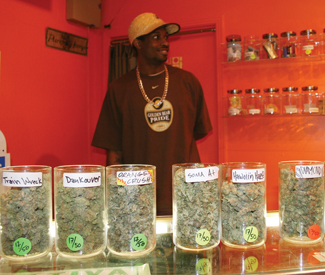
HERBWISE It’s time to get a Discover card. As of July 1, you can no longer use your Visa or Mastercard credit or debit card to buy medical marijuana. And of course, American Express cards have been out of the question since spring 2011. Electronic Merchant Systems, which handles card processing for most of the nation, sent out an announcement last month to its vendors, raising the stakes for dispensaries across the country that seem to be coming under a coordinated federal attack. Cash-only cannabis? That’s pretty bad, maybe just as bad as the next thing I have to tell you about…

MORE BAD NEWS

The Vapor Room is closing. Yes, the perennial Best of the Bay-winning, nine-year old Lower Haight dispensary-lounge (607 Haight, SF. www.vaporroom.com) will be closing its doors as of July 31, according to the nonprofit’s executive director Martin Olive. Olive told the Guardian in a phone interview that the dispensary learned an undisclosed amount of time ago that its landlord had received one of the doom-bearing letters now so familiar to San Francisco dispensaries from US Attorney Melinda Haag declaring that the dispensary was within 1,000 feet of Duboce Park. The city’s permitting laws, Olive told us, are concerned with how far cannabis clubs are from playgrounds, not park grounds. Vapor Room has a long-standing relationship with the Harvey Milk Rec Center that anchors the park — the nonprofit actually sponsors free yoga classes and health counseling that take place in the center itself. Olive wouldn’t confirm rumors that Vapor Room’s stock will continue to be available for delivery, but that’s the word on the street.

PLEASE NO MUNCHIES JOKES

The “bath salts” face-eater didn’t have any bath salts in his system. In fact, the only drug authorities uncovered through post-humous tests was cannabis.

UNDISCLOSED THING

As an events editor, organizations that don’t send us the vital information we need to cover their event are the bane of my existence. It is another thing entirely, however, when an organization requests that vital information be kept out of the newspaper. A sign of the times when it comes to cannabis journalism, I’m afraid. And as such: check out a happy hour benefit at El Rio for “an organization supporting low-income, AIDS-HIV, and cancer patients with free medicine.” Sigh. It’ll be running semi-concurrently with pop-up Mugsy Wine Bar’s hat-tip to Bastille Day (5:30pm-8:30pm). Drown your frustrations with some nice sparkling Blanc de Noir Cremant de Bourgnone, why don’t you.

Fri/13 4pm-6pm, free. El Rio, 3158 Mission, SF. www.elriosf.com

AND FINALLY

Search YouTube for “Conan O’Brien and Martha Stewart Get Crafty with Pot.” Discussion question: for all the weirdness that you just read, is marijuana becoming more or less accepted in mainstream culture?

Stop ‘stop and frisk’

4

EDITORIAL If the San Francisco Police Department put up checkpoints and metal detectors all along lower Market Street and stopped and searched every person who walked by, they’d find some contraband. No question — a certain percentage of people on the city’s main downtown artery are carrying drugs or weapons. Some have warrants out. There would be multiple arrests and criminals taken off the streets.

And it’s hard to imagine that anyone would consider that a good idea.

So how about moving those checkpoints to the Mission and Bayview-Hunters Point? You might get even more weapons and drugs. And it would still be a profound violation of the civil liberties of every San Franciscan.

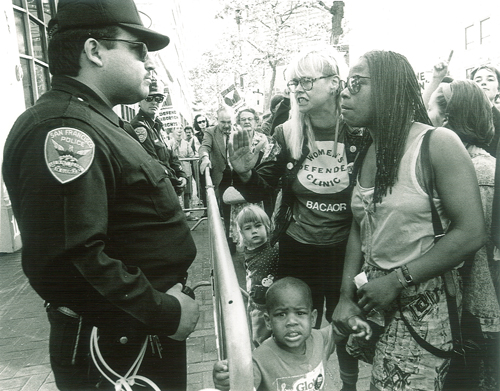
But what Mayor Ed Lee is now talking about — instituting some version of the notorious New York City “stop and frisk” law — isn’t much different. Under New York Mayor Michael Bloomberg, the police have been given the authority to search, without cause or a warrant, anyone who looks suspicious. The goal is to get guns off the street.

The result: The vast majority of people stopped are African American or Latino — and 88 percent are totally innocent.

It is, in other words, a huge waste of police resources as well as a systematic program or racial profiling and harassment.

Lee told the San Francisco’ Chronicle’s editorial board that he realized the problems with the New York system and wants a better model. And he said, correctly, that there are serious problems with gun violence, particularly in Bayview-Hunters Point. “I think we have to get to the guns,” Lee said. “I know we have to find a different way to get to these weapons, and I’m very willing to consider what other cities are doing.”

But San Francisco has spent huge amounts of time and resources trying (not always successfully) to build a community policing program that would increase trust between the police and communities of color — and any version of “stop and frisk” would instantly undermine that effort. It’s a terrible idea, and Lee should make it clear that he is dropping any discussion or consideration of it.

The mayor and his supporters insist that they’ll only pursue this approach if it can be done without profiling. But that’s almost impossible and it’s a fantasy to think the San Francisco cops, once empowered to stop anyone for any reason, would target white people the same way they do blacks and Latinos. There’s never been an example anywhere in the country where this kind of law was anything but a case study in racial profiling. Even Police Chief Greg Suhr sounds dubious.

The fact that Lee would even suggest this is a sign of how far he’s moved from his progressive roots. Moving even a step further toward this sort of wholesale civil-liberties violation would be a disaster for San Francisco.

The good old days in Rock Rapids, Iowa, the Fourth of July, 1940-1953

1

(Note: In July of 1972, when the Guardian was short a Fourth of July story, I sat down and cranked out this one for the front page on my trusty Royal Typewriter. I now reprint it each year on the Bruce blog, with some San Francisco updates and postscripts.)

Back where I come from, a small town beneath a tall standpipe in northwestern Iowa, the Fourth of July was the best day of a long, hot summer.

The Fourth came after YMCA camp and Scout camp and church camp, but before the older boys had to worry about getting into shape for football. It was welcome relief from the scalding, 100-degree heat in a town without a swimming pool and whose swimming holes at Scout Island were usually dried up by early July. But best of all, it had the kind of excitement that began building weeks in advance.

The calm of the summer dawn and the cooing of the mourning doves on the telephone wires would be broken early on July Fourth: The Creglow boys would be up by 7 a.m. and out on the lawn shooting off their arsenal of firecrackers. They were older and had somehow sent their agents by car across the state line and into South Dakota where, not far above the highway curves of Larchwood, you could legally buy fireworks at roadside stands.

Ted Fisch, Jim Ramsey, Wiener Winters, the Cook boys, Hermie Casjens, Jerry Prahl, Elmer Menage, and the rest of the neighborhood gang would race out of  their houses to catch the action. Some had cajoled firecrackers from their parents or bartered from the older boys in the neighborhood: some torpedoes (the kind you smashed against the sidewalk); lots of 2 and 3-inchers, occasionally the granddaddy of them all, the cherry bomb (the really explosive firecracker, stubby, cherry red, with a wick sticking up menacingly from its middle; the kind of firecracker you’d gladly trade away your best set of Submariner comics for).

Ah, the cherry bomb. It was a microcosm of excitement and mischief and good fun. Bob Creglow, the most resourceful of the Creglow boys, would take a cherry bomb, set it beneath a tin can on a porch, light the fuse, then head for the lilac bushes behind the barn.

“The trick,” he would say, imparting wisdom of the highest order, “is to place the can on a wood porch with a wood roof. Then it will hit the top of the porch, bang, then the bottom of the porch, bang. That’s how you get the biggest clatter.”

So I trudged off to the Linkenheil house, the nearest front porch suitable for cherry bombing, to try my hand at small-town demolition. Bang went the firecracker. Bang went the can on the roof. Bang went the can on the floor. Bang went the screen door as Karl Linkenheil roared out in a sweat, and I lit out for the lilacs behind the barn with my dog, Oscar.

It was glorious stuff – not to be outdone for years, I found out later, until the Halloween eve in high school when Dave Dietz, Ted Fisch, Ken Roach, Bob Babl, and rest of the Hermie Casjens gang and I made the big time and twice pushed a boxcar loaded with lumber across Main Street and blocked it for hours. But that’s another story for my coming Halloween blog.

Shooting off fireworks was, of course, illegal in Rock Rapids, but Chief of Police Del Woodburn and later Elmer “Shinny” Sheneberger used to lay low on the Fourth. I don’t recall ever seeing them about in our neighborhood and I don’t think they ever arrested anybody, although each year the Rock Rapids Reporter would carry vague warnings about everybody cooperating to have “a safe and sane Fourth of July.”

Perhaps it was just too dangerous for them to start making firecracker arrests on the Fourth – on the same principle, I guess, that it was dangerous to do too much about the swashbuckling on Halloween or start running down dogs without leashes (Mayor Earl Fisher used to run on the platform that, as long as he was in office, no dog in town would have to be leashed. The neighborhood consensus was that Fisher’s dog, a big, boisterous boxer, was one of the few that ought to be leashed).

We handled the cherry bombs and other fireworks in our possession with extreme care and cultivation; I can’t remember a single mishap. Yet, even then, the handwriting was on the wall. There was talk of cutting off the fireworks supply in South Dakota because it was dangerous for young boys. Pretty soon, they did cut off the cherry bomb traffic and about all that was left, when I came back from college and the Roger boys had replaced the Creglow boys next door, was little stuff appropriately called ladyfingers.

Fireworks are dangerous, our parents would say, and each year they would dust off the old chestnut about the drugstore in Spencer that had a big stock of fireworks and they caught fire one night and much of the downtown went up in a spectacular shower of roman candles and sparkling fountains.

The story was hard to pin down, and seemed to get more gruesome every year – but, we were told, this was why Iowa banned fireworks years before, why they were so dangerous and why little boys shouldn’t be setting them off. The story, of course, never made quite the intended impression; we just wished we’d been on the scene My grandfather was the town druggist (Brugmann’s Drugstore, “Where drugs and gold are fairly sold, since 1902″) and he said he knew the Spencer druggist personally. Fireworks put him out of business and into the poorhouse, he’d say, and walk away shaking his head.

In any event, firecrackers weren’t much of an issue past noon – the Fourth celebration at the fairgrounds was getting underway and there was too much else to do. Appropriately, the celebration was sponsored by the Rex Strait post of the American Legion (Strait, so the story went, was the first boy from Rock Rapids to die on foreign soil during World War I); the legionnaires were a bunch of good guys from the cleaners and the feed store and the bank who sponsored the American Legion baseball team each summer.

There was always a big carnival, with a ferris wheel somewhere in the center for the kids, a bingo stand for the elders, a booth where the ladies from the Methodist Church sold homemade baked goods, sometimes a hootchy dancer or two, and a couple of dank watering holes beneath the grandstand where the VFW and the Legion sold Grainbelt and Hamms at 30¢ a bottle to anybody who looked of age.

Later on, when the farmboys came in from George and Alvord, there was lots of pushing and shoving, and a fist fight or two.

In front of the grandstand, out in the dust and the sun, would come a succession of shows that made the summer rounds of the little towns. One year it would be Joey Chitwood and his daredevil drivers. (The announcer always fascinated me: “Here he comes, folks, rounding the far turn…he is doing a great job out there tonight…let’s give him a big, big hand as he pulls up in front on the grandstand…”)

Another year it would be harness racing and Mr. Hardy, our local trainer from Doon, would be in his moment of glory. Another year it was tag team wrestling and a couple of barrel-chested goons from Omaha, playing the mean heavies and rabbit-punching their opponents from the back, would provoke roars of disgust from the grandstand. ( The biggest barrel-chest would lean back on the ropes, looking menacingly at the crowd and yell, “ Aw, you dumb farmers. What the hell do you know anyway? I can beat the hell out of any of you.”   And the crowd  would roar back in glee.)

One year, Cedric Adams, the Herb Caen of Minneapolis and the Star-Tribune, would tour the provinces as the emcee of a variety show. “It’s great to be in Rock Rapids,” he would say expansively, “because it’s always been known as the ‘Gateway to Magnolia.” (Magnolia, he didn’t need to say, was a little town just over the state line in Minnesota which was known throughout the territory for its liquor-by-the-drink roadhouses. It was also Cedric Adams’ hometown: his “Sackamenna.”) Adams kissed each girl (soundly) who came on the platform to perform and, at the end, hushed the crowd for his radio broadcast to the big city “direct from the stage of the Lyon County Fairgrounds in Rock Rapids, Iowa.”

For a couple of years, when Rock Rapids had a “town team,” and a couple of imported left-handed pitchers named Peewee Wenger and Karl Kletschke, we would have some rousing baseball games with the best semi-pro team around, Larchwood and its gang of Snyder brothers: Barney the eldest at shortstop, Jimmy the youngest at third base, John in center field, Paul in left field, another Snyder behind the plate and a couple on the bench. They were as tough as they came in Iowa baseball.

I can remember it as if it were yesterday at Candlestick, the 1948 game with the Snyders of Larchwood. Peewee Wenger, a gawky, 17-year-old kid right off a high school team, was pitching for Rock Rapids and holding down the Snyder artillery in splendid fashion. Inning after inning he went on, nursing a small lead, mastering one tough Larchwood batter after another, with a blistering fastball and a curve that sliced wickedly into the bat handles of the right-handed Larchwood line-up.

Then the cagey Barney Snyder laid a slow bunt down the third base line. Wenger stumbled, lurched, almost fell getting to the ball, then toppled off balance again, stood helplessly holding the ball. He couldn’t make the throw to first. Barney was safe, cocky and firing insults like machine gun bullets at Peewee from first base.

Peewee, visibly shaken, went back to the mound. He pitched, the next Larchwood batter bunted, this time down the first base line. Peewee lurched for the ball, but couldn’t come up with it. A couple more bunts, a shot through the pitcher’s mound, more bunts and Peewee was out. He could pitch, but, alas, he was too clumsy to field. In came Bill Jammer, now in his late 30’s, but in his day the man who beat the University of Iowa while pitching at a small college called Simpson.

Now he was pitching on guts and beer, a combination good enough for many teams and on good days even to take on the Snyders. Jammer did well for a couple of innings, then he let two men on base, then came a close call at the plate. Jammer got mad. Both teams were off the bench and onto the field and, as Fred Roach wrote in the Rock Rapids Reporter, “fisticuffs erupted at home plate.” When the dust cleared, Jammer has a broken jaw, and for the next two weeks had to drink his soup through a straw at the Joy Lunch. John Snyder, it was said later, came all the way in from center field to throw the punch, but nobody knew for sure and he stayed in the game. I can’t remember the score or who won the game, but I remember it as the best Fourth ever.

At dusk, the people moved out on their porches or put up folding chairs on the lawn. Those who didn’t have a good view drove out to the New Addition or parked out near Mark Curtis’ place or along the river roads that snaked out to the five-mile bridge and Virgil Hasche’s place.

A hush came over the town. Fireflies started flickering in the river bottom and, along about 8:30, the first puff of smoke rose above the fairgrounds and an aerial bomb whistled into the heavens. BOOM! And the town shook as if hit by a clap of thunder.

Then the three-tiered sky bombs – pink, yellow, white, puff, puff, puff. The Niagara Falls and a gush of white sparks.

Then, in sudden fury, a dazzling display of sizzling comets and aerial bombs and star clusters that arched high, hung for a full breath and descended in a cascade of sparks that floated harmlessly over the meadows and cornfields. At the end, the flag – red, white and blue – would burst forth on the ground as the All-American finale in the darkest of the dark summer nights. On cue, the cheers rolled out from the grandstand and the cars honked from the high ground and the people trundled up their lawn chairs and everybody headed for home.

Well, I live in San Francisco now, and I drive to Daly City with my son, Danny, to buy some anemic stuff in gaudy yellow and blue wrapping and I try unsuccessfully each year to get through the fog or the traffic to see the fireworks at Candlestick. But I feel better knowing that, back where I come from, everybody in town will be on their porches and on the backroads on the evening of the Fourth to watch the fireworks and that, somewhere in town, a little boy will put a big firecracker under a tin can on a wood porch, then light out for the lilacs behind the barn.

P.S. Our family moved in l965 from Daly City to a house in the West Portal area of San Francisco. There are, I assure you, few visible fireworks in that neighborhood. However, down at the bottom of Potrero Hill, the professional and amateur action is spectacular.

 From any Potrero Hill height, you can see the fireworks in several directions: the waterfront fireworks in the city, fireworks on the Marin side of the Golden Gate bridge, fireworks at several points in the East Bay, fireworks along the Peninsula coast line.

And for the amateur action, parents with kids, kids of all ages, spectators in cars and on foot, congregate after dusk along Terry Francois Boulevard in San Francisco along the shoreline between the Giants ballpark and Kellys Mission Rock restaurant.

The action is informal but fiery, fast,  and furious: cherry bombs, clusters, spinning wheels, high flying arcs, whizzers of all shapes and sizes. The cops are quite civilized and patrol the perimeter but don’t bother anybody. I go every year. I think it’s the best show in town. B3.

Heads Up: 8 must-see concerts this week

0

You’ve got a midweek day off? You’re stoked. Go see some live music with that hard-earned free time. Oh, and happy independence, America. That’s what we’re celebrating, correct?

Eat a barbecued tofu dog slathered in relish and drink some park beers in celebration of such things as country pride and days without responsibility. Then fill those Bay Area music venues, checking in on America’s favorite proto-punk troubadour, Mali’s favorite virtuoso progeny, the Big Time Freedom Fest, woozy dream poppers, a punk rock museum benefit, and more.

Here are your must-see Bay Area concerts this week/end:

Jonathan Richman
Last time the Modern Lover cult hero Jonathan Richman did a slew of shows at the Make-Out Room, he brought drummer Tommy Larkins to the outings, performed for hours on end, sang in multiple languages, chatted awkwardly, mixed up his pacing and flipped his set list so time floated by without a lull. He also danced samba-like solo – twisting his thin frame as a contortionist. Who’s to say this round should be any different? We know Larkins is back at least.
Mon/2-Tue/3, 7:30pm, $15
Make-Out Room
3225 22nd St., SF
(415) 647-2888
www.themakeoutroom.com
http://www.youtube.com/watch?v=XjFU98mEem4

Vieux Farka Toure
The son of Ali Farka Toure, Malian singer-guitarist is legend in his own right. Oft referenced as a “guitar virtuoso” or more specifically  “The Hendrix of the Sahara,” Vieux’s graceful, quick-fingered guitar skills rival those of the rock’n’roller regime, yet he blends in traditional West African influences. Fresh off the Touré-Raichel Collective (his collaborative album and tour with Israeli musician Idan Raichel), Vieux this time swings into town solo, his strumming again center stage.
Mon/2, 8pm, $22
Yoshi’s SF
1330 Fillmore, SF
(415) 655-5600
www.yoshis.com
http://www.youtube.com/watch?v=IecSMEH9ZVg

“Big Time Freedom Fest”
What’s more deliciously new America than the string-lit back patio at El Rio? That’s where dreams are made and shattered. People fall in momentary beat-fueled lust, cheap beers with lime wedges are sipped en masse, and fried food is gobbled up without a second thought. It’s tradition, years in the making. This seventh annual Big Time Freedom Fest features some awesome local heavy-hitters: Religious Girls, Tartufi, Finn Riggins, Battlehooch, and Night Call, all for $8, in the outdoor heavy-hung fog.
Wed/4, 3:30pm, $8
El Rio
3158 Mission, SF
(415) 282-3325
www.elriosf.com
http://www.youtube.com/watch?v=7mMUsyZY4kA

Giraffage, James & Evander
“Glitchy” seems to be the key word for San Francisco’s electronically-constructed solo project, Giraffage. I’m on board. Those little glitchy effects break up otherwise endless ambient affairs, spinning the act from dream-pop to hip-hop in a cotton candy pillow. Tonight’s a co-headlining set with fellow Bay Area suspected Ambien-poppers, James & Evander. That “synth/stoner pop” Oakland act released magical debut LP Bummer Pop last month. How many more pops can we squeeze in this show description? Pop.
With Astronautica, Young Pharaohs
Thu/5, 9pm, $6
Milk Bar
1840 Haight, SF
(415) 387-6455
www.milksf.com
http://www.youtube.com/watch?v=MrrL0sYLgA0

Liars
“This year’s WIXIW (say wish-you) finds Liars reinventing the wheel again, to produce their most synthified affair yet; picture the rocktronic fusion of Kid A-era Radiohead, approached with the finely calibrated ambience of Bjork’s Vespertine, Trent Reznor’s swagger, and Tom Waits’ lumbering dynamics.” – Taylor Kaplan 
With Cadence Weapon
Thu/5, 8pm, $22.50
Great American Music Hall
859 O’Farrell, SF
(415) 885-0750
www.slimspresents.com
http://www.youtube.com/watch?v=ggR6RuBh8I0

Shana Falana
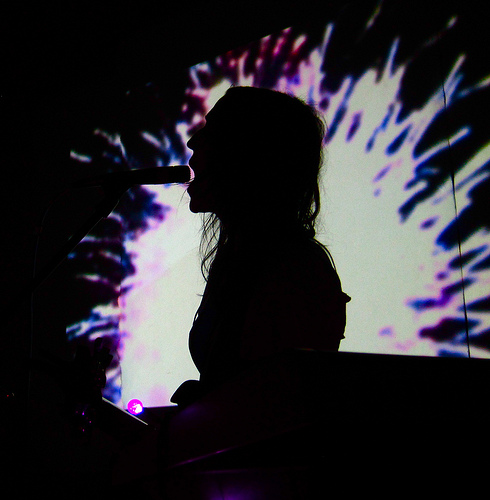
Formerly of San Francisco, the now New York-based psychedelic dream popper Shana Falana returns to her beloved Bay in support of new In the Light EP, bringing along a new multimedia show. Falana’s lilting church choir-like vocals matched to looping guitar and percussion gives the impression of a surreal religious experience deep in the X-Files woods. I want to believe.
With Kelley Stoltz, the She’s, B and Not B
Fri/6, 9pm, $15
Cafe Du Nord
2170 Market, SF
(415) 861-5016
www.cafedunord.com
http://www.youtube.com/watch?v=MUqgXal-knk

Punk Rock Museum Benefit
Given punk’s lasting impact on so many musical branches, and influence on the raw sounds of countless beloved acts, a Punk Rock Museum seems absolutely necessary. Why didn’t we think of this? The new museum – spearheaded by Taquila Mockingbird and based in LA – has been established to “further preserve the punk rock genre.” For this show, parts of the museum travel to San Francisco. There will be a mix pieces (photographs, old fliers, art by the likes of Winston Smith, etc.) from the permanent museum collection, and of course, live music to carry on the legend: Debora Iyall (of Romeo Void), Metal Circus (A tribute to Husker Du), and Meri St. Mary and the Housecoats. Also, DJ Big Nate will be spinning classic punk cuts.
Sat/7, 9pm, $15
Thee Parkside
1600 17th St., SF
(415) 252-1330
www.theeparkside.com
http://www.youtube.com/watch?v=ePIImGMjn_8

Cool Ghouls
Local psych-rockers Cool Ghouls seem to be everywhere lately, opening up Noise Pop retrospective shows, making appearances at lots of local venues, playing Save KUSF benefits; a.k.a traveling around town with beer-fueled, good-time rock’n’roll in tow. They’ve got a bright and free EP currently up for grabs on their Tumblr, an upcoming slot at the Independent before Sonny and the Sunsets, and a full-length LP coming in the fall; this Hemlock show is a good chance to check out the five-piece in smallish setting.
With LA Witch, the Sister Ruby Band
Sun/8, 9pm
Hemlock Tavern
1131 Polk Street, SF
(415) 923-0923
www.hemlocktavern.com

The many lives of Baby Dee

0

Ohio bred singer-songwriter Baby Dee’s biography reads like a collage of about five people’s lives — five very different people. In her 59 years, she has been, among other things: a street musician, Coney Island sideshow act, tree surgeon, church organist, Gregorian chant enthusiast, and touring harpist for fellow transgender musician Antony Heggarty of the Bay Area’s Antony and the Johnsons. Now Baby Dee is living back in Cleveland and has significantly slowed her job-turnover rate, but not to worry — her big personality and sharp wit haven’t suffered for it.

In preparation for her show at Brick and Mortar Music Hall with Carletta Sue Kay this Friday, I caught up with Baby Dee to chat about her favorite SF tourist spots, Tony Bennett, and her upcoming projects:

San Francisco Bay Guardian
Happy Pride Month! Have you done anything to celebrate?
 
Baby Dee Hooray! Well, lets see… I’ve been playing the harp all dolled up in a fluffy red dress and big hair and make-up and singing songs about kinky grizzly bears in Mormon underwear. How’s that for a start?
 
SFBG Will you be doing any tourist activities while you’re in town?
 
BD I’ve always wanted to go to Alcatraz. Do they still do that?

http://www.youtube.com/watch?v=VRJIbvKy-1g
 
SFBG It’s been more than a year since your last album was released. Do you have anything new in the works?
 
BD I just did an album with Little Annie that comes out in October.
 
Also, I’ve started a band called The Big Bumble Bees. Remember the name. The Big Bumble Bees are going to be bigger than the Beatles. We’ve got big plans. We’re hoping to get Tony Bennett to roadie for us. We’ve already started composing a letter to him. We’ve got a good beginning but first impressions are everything and we want to win him over to the idea so we’re taking our time to make the letter perfect. It’s going to start like this.
 
“Dear Mr Bennett,
 
You don’t know us but..”
 
Pretty cool, huh? So far so good. We thought we might tell him that we got Barry Manilow lined up for the job  as well and that if he wants to do it he’ll have to compete with Barry in a fight to the death with Bowie knives. Can you imagine the publicity this would generate? I think it would be a real shot in the arm for both of them.
 
Our only worry is that while having Barry or Tony for our roady would greatly enhance our own prestige, we don’t want them to think it will diminish theirs. That’s why we haven’t finished the letter to Tony yet. We want to put it to him in the very best light. Perhaps your readership could help us with suggestions about how to win him over to the idea.
 
San Francisco is so close to Tony’s heart.
 
SFBG If there’s one thing readers should know before going to your show on Friday, what is it?
 
BD Lots of love songs.
 
SFBG Have you given up street performance for good or can we expect to run into you in a park sometime soon?
 
BD Well, it’s not like I didn’t have heaps of fun out there. The streets of San Francisco were really good to me. But I’m a big girl now and I’ve put away the things of childhood — no more Shirley Temple dresses and 12-foot-tall tricycles for me. Besides, I couldn’t take the hills anymore.

Baby Dee
With Carletta Sue Kay
Fri/29, 8pm, $15
Brick and Mortar Music Hall
1710 Mission, SF
(415) 800-8782
www.brickandmortarmusic.com

CPMC’s new numbers threaten St. Luke’s and the mayor’s deal

9

Can San Franciscans trust California Pacific Medical Center (CPMC) not to shutter St. Luke’s Hospital once the company gets what it wants from the city? And has the Mayor’s Office, in its desire to please the business community and building trades, accepted and promoted a bad deal that doesn’t adequately protect the city’s interests?

Those are some of the questions that arose Monday during a hearing on CPMC’s $2.5 billion, multi-hospital development proposal before the Board of Supervisors Land Use Committee when officials from the Mayor’s Office revealed that the development agreement they negotiated with CPMC might not be good enough to keep St. Luke’s open.

As we’ve reported, CPMC (a subsidiary of Sutter Health, a not-for-profit corporation that nonetheless has a well-earned reputation for profiteering and other bad corporate behavior) is seeking to build a 550-bed regional luxury hospital atop Cathedral Hill. In exchange, the development deal requires CPMC to rebuild St. Luke’s, a seismically unsafe hospital in the Mission District that is relied on by many low-income San Franciscans (as well as the city, which would otherwise have to shoulder more of that burden at General Hospital).

After years of stalled negotiations between CPMC and two consecutive mayors, Mayor Ed Lee announced a deal in March that would have CPMC build a smaller version of St. Luke’s (with just 80 beds) and agree to keep it open for at least 20 years as long as CPMC’s operating margins didn’t dip below 1 percent in two consecutive years.

Activists had criticized the deal as too small, too short, and without enough guarantees, but Mayor’s Office officials have consistently said they were confident it was enough to keep St. Luke’s from being shuttered. But now, based on new revenue projections offered by CPMC, even those officials have lost confidence in the deal and say it needs to be renegotiated.

“These new 2012 projections, while still showing CPMC will not breach the 1 percent margin, do not offer the same comfort level we previously had,” Ken Rich of the Mayor’s Office of Economic and Workforce Development told the committee.

The news hit like a bombshell, shaking the confidence of even supervisors who strongly supported the deal, such as Sup. Scott Wiener, who called it a “surprising, critical piece of information” and said, “It’s very, very important that this issue is quickly resolved.”

For supervisors who were already skeptical of the deal and CPMC – such as Sup. David Campos, whose District 9 includes St. Luke’s – it was further evidence that this was a bad deal that needed more work before being brought to the board. The Planning Commission has already approved the project and the full board was scheduled to consider it in just a few weeks.

“What does that say about the way the negotiation was done?” Campos told us. “How half-baked can something be? What have we done to verify the numbers that CPMC gave us? And what does this say about CPMC?…If the numbers on St. Luke’s aren’t accurate, how can we trust the rest of what they’re telling us?”

Yet during the hearing, when Campos tried to get reassurances from CPMC officials and requested that the board be allowed to review the company’s financial records, he was rebuffed and belittled by CPMC attorney Pam Duffy – who later tersely apologized for her comments after Committee Chair Eric Mar criticized them as “insulting to the board.”

Campos had questioned Rich about why the city was relying on CPMC rather than independently assessing the numbers. “Maybe if you had done an audit, you wouldn’t be in this position of being surprised by the numbers that were given to you,” Campos told Rich.

But Rich said “projections are guesses, we can’t ever guarantee that they are right,” noting that CPMC had revised its revenue estimates downward for the years after St. Luke’s would open (when it would be absorbing the high costs of construction), making its profit margin slimmer. “CPMC took a more conservative approach to forecasting the rate of increase in hospital charges as well as patient volumes in light of the greater uncertainty in health care finance,” Rich said.

So Campos asked whether the supervisors could review CPMC’s data. Rich, who has reviewed it, replied, “The conditions under which we were shown CPMC’s projections is that those are confidential.”

Campos noted that it is the board’s job to review and approval this deal to determine whether it’s in the city’s best interests, which shouldn’t simply involve trusting CPMC. “Why should the executive branch of the government see those numbers but not the legislative branch?” he asked.
“It’s really not our call,” said Rich, noting that he had no objections to the request.

But when Campos asked CPMC’s Duffy, she offered a legalistic refusal, and when Campos tried to explain his reasoning, she said, “I heard your speech a moment ago” and added, “this isn’t really a game of gotcha.”

When Campos said the board was simply exercising its due diligence over an important project. she said “nothing unusual or untoward has occurred here, and the suggestion that might be the case, I think it unfair.”

But Campos wasn’t alone in wanting more reassurance from CPMC, who supervisors, labor leaders, and community activists have criticized for its secrecy and bad faith negotiating tactics with both the city and its employee unions.

“This announcement is shocking, on a number of levels,” Board President David Chiu said at the hearing, noting that he had met with CPMC officials just days earlier and they hadn’t mentioned the new developments, instead assuring him that their operating margins were high and the deal protected St. Luke’s. “It’s not a great way to build the trust we’ll need to move this forward.”

Rich said he had learned of the new numbers 12 days earlier, drawing a rebuke from Campos and others who said the supervisors should have been notified earlier. But Rich said that he was hoping that the problem would be solved through negotiations with CPMC before the hearing, but that talks over the issue have so far been fruitless.

“We would have vastly preferred to have an agreement in hand,” Rich told the committee, reassuring the supervisors that the Mayor’s Office will not support the project until the St. Luke’s issue is resolved to its satisfaction.

But Sup. Malia Cohen criticized CPMC as an untrustworthy negotiating partner. “CPMC has an interesting corporate culture,” she said, noting that the company has repeatedly misled supervisors and community leaders, accusing it of being “disingenuous in its negotiations.”

Chiu emphasized that this is a make-or-break issue: “This is an escape clause that could allow St. Luke’s – and what St. Luke’s means to the city – to not be operational. So this is an incredibly important question.”

Campos said this latest episode only added to his suspicion that CPMC will play games with its finances to shutter St. Luke’s – whose construction must be completed before CPMC can build Cathedral Hill Hospital – once it gets the lucrative regional medical center that it really wants.

“How do we know they aren’t transferring money out of CPMC into Sutter in order to shut down St. Luke’s?” Campos said, adding that he wants to see a clear guarantee that St. Luke’s will remain open as a full-service hospital. “This deal, as far as I’m concerned, is not ready for prime time.”

Localized Appreesh: First Church of the Sacred Silversexual

0

Localized Appreesh is our weekly thank-you column to the musicians that make the Bay. To be considered, contact emilysavage@sfbg.com.

More than just a band, and beyond a tribute act, self-described local “cover cult” First Church of the Sacred Silversexual takes early David Bowie relics and shoots them out of a glitter-packed cannon. Essentially, they provide flamboyant DIY musical theater in an ode to the Thin White Duke and the shiny space cadet in us all.

Led by The Reverent Father Lysol Tony-Romeo, the sacrilegious Bowie church includes sermons and campy sing-along musical performances with choirs of freaky chanters performing cuts from the classic Space Oddity, along with Ziggy Stardustian tracks and far beyond, deep into the catalogue. For San Francisco, it’s part of a long and storied tradition of theatrical antics, performance art, and metaphoric drag. Oh no love, you’re not alone.

Year and location of origin: 2010, Suffragette City Transfer Station, Mission District.

Band name origin: The advanced enlightened state of attraction that transcends gender and centers upon sparkle alone.

Band motto: Wham Bam Thank You Ma’am!

Description of sound in 10 words or less: 12-person worship band delivering blasphemous sermons exalting David Bowie.

Instrumentation: Father Lysol Tony-Romeo (Lysol Tony-Romeo): vocals; Major Tom (Michael Carney): vocals; Uncle Sally (Jillian Dahhling):  vocals; Fancy Nancy (Aoife Davis):  vocals; Careless Cadence (Bryn Laux):  vocals; Alabaster Superior (Alison Niedbalksi):  keys, vocals; Hazy Deranged (Adam Dragland):  guitar, vocals; Akimbo Botswani (Jason Yeatman):  guitar; Lloyd (Ben Chambers):  bass; Raymond T. Gunn (Greg Maximov):  drums; Foxy Frankie Scandal (Teddy Raven):  saxophone

Most recent release: Bowie on Broadway!  The First Church talks Fame.

Best part about life as a Bay Area band: All the young dudes.

Worst part about life as a Bay Area band: All the young dudes.

First album ever purchased: The Rise and Fall of Ziggy Stardust and the Spiders from Mars.

Most recent album purchased/downloaded:  Ha.

Favorite local eatery and dish: The band only ingests cocaine, milk and white peppers, so anywhere that serves that

First Church of the Sacred Silversexual
Fri/29, 8pm, $10
Broadway Studios
435 Broadway, SF
Fecbook: Bowie On Broadway

The economies of desire

0

THEATER Since 2010, This Is What I Want has hitched its program to the National Queer Arts Festival to explore the artistic and social ground between intimacy and performance. Privileging the immediate, even confused elaborations of desire over the canny or slickly theorized, TIWIW (produced by THEOFFCENTER in association with SOMArts, the Center for Sex and Culture, and the Queer Cultural Center) challenges adept, professional performance makers to risk forgoing the usual control or cohesion in the hope of finding new avenues for creation and participation.

TIWIW’s free-ranging curatorial approach, which includes artists operating outside queer or identity-based practices, gets a further boost this year with the inclusion of several Los Angeles–based artists and a symposium at the Center for Sex and Culture moderated by Carol Queen.

San Francisco–based performance artist and choreographer Tessa Wills took over as artistic director this year at the invitation of TIWIW’s founder, choreographer Jesse Hewit. Wills’s own piece caps the five-day program with a “participatory experience” at the Center for Sex and Culture, and in general she brings a particular stamp to this year’s festival, even as TIWIW stretches out within and beyond the Bay Area via a curatorial team that includes Hewit, Rachael Dichter, and Los Angeles–based artists Anna Martine Whitehead and Doran George.

Wills, a thirtysomething whose relaxed mien belies a probing stare, is an internationally produced performance maker who grew up studying music, ballet, and contemporary dance in England before relocating to the Bay Area. She’s one of those artists always worth going out of your way for. In fact, she was behind one of the more memorable contributions to last year’s TIWIW program (more on that below). Wearing a sleeveless T-shirt that nonchalantly compliments the shorn sides of her sandy brown bob, Wills sat down at a Mission café last week to discuss her directorial vision for TIWIW and the economies of desire.

San Francisco Bay Guardian Can you describe briefly the curatorial process this year?

Tessa Wills We asked people to apply, either people whose work we like or with a specific piece in mind, like Sara Kraft’s — Rachael [Dichter] knew exactly what the piece was. [Multimedia artist Sara Kraft’s The Truth employs a pair of dueling narratives in what the artist describes as a desperate search for objectivity, “fueled by the deeply subjective madness of desire, loss and the chaos of experience.” It premiered at Yerba Buena Center for the Arts in 2007.]

I had the curatorial statement underway, and the other curators added to it, enriched it or changed parts, and we invited people from there. About half of them are new commissions from people we are just excited by, like Dia [Dear] and Mica [Sigourney], and half of them are pieces that already exist. There are loads of people coming up from LA this time because two of the curators are down there.

SFBG One of those is British artist Doran George. How did he become involved?

TW I followed his work in England but never met him. Then he came to San Francisco, and we made very fast, intense connections around work and politics, and also a friendship. So we were looking for a way to work with each other.

When Jesse asked me to direct TIWIW and invite in curators, it seemed like that was really where Doran was at. A lot of his work is about somatics as it relates to gender. Because he was [in Los Angeles], it seemed sensible to think about other people that could support him and his choices down there. Anna Martine [Whitehead] is also down there working, and obviously she has this strong history with the festival, and her voice is clear, rich and powerful.

SFBG Can you explain the emphasis on desire and economy in your work and in your directorial approach overall?

TW Broadly, people in this festival [in the last two years] have looked at desire through the lens of sexuality — but they also have not. My artistic direction has put it very specifically; I really wanted to bring in that question of how money and desire weave together, and where the places of empowerment and disempowerment are around that. I’ve brought sex work to the fore in that. Doran also is interested in that. But we were very careful in the curating to broaden that out a lot. The pieces are not all about sex; but the pieces are all about desire. So there is breadth, but also that very specific thing that I’ve brought in.

In my piece, at Center for Sex and Culture on Saturday, there are nine people who are “charging,” they’re doing one-on-one performances with audiences. Basically, they’re facilitating you talking about your desire. But it’s not like straight sex work. It’s not like they’re going to meet your desire. They’re going to interrogate it with you and charge it up.

SFBG So “charge up” has a double entendre.

TW It’s got a double entendre, exactly. All of the chargers are sex workers. I identify as a sex-worker ally, and I identify in the space between performance and sex work. Those are my two communities. So this theme, the value of desire, somehow has those two together.

SFBG Where do you see subversive or radical points of departure in the intersections of desire and economy? 

TW People will take money and then use it for their subversive practices. So there’s that. Then there’s the fact that everybody is working for free to put this festival on. I think that adds a really interesting perspective to the conversation about how desire and money relate. Because the thing that’s really driven this festival is this passionate desire to put it on for its own sake. It defies any economic logic that any of us are working this hard. I mean, it’s ridiculous. I feel stupid how hard I’m working on this.

SFBG That’s the position of a lot of art-making in this society. But then, ridiculousness is a tried-and-true strategy of subversion too. I’m reminded of the argument in Judith Halberstam’s book, The Queer Art of Failure, where a willingness to “fail” — in the terms set by the dominant social and economic order — may offer a way out from under that order, and suggest alternatives beyond its reach or ken.

TW There are all these other economies that come to light when you look at that disconnect or failure [vis-à-vis the dominant economic model]—then it’s like, ok, that’s obviously not working, so what else can be motivating? There are just so many diverse economies at work. Like DavEnds piece, for example. She was really motivated by wanting to have close, intimate exchanges and make more friends. The people she’s brought into her piece, she’s very clear about it, are people that she wants to be friends with.

SFBG There’s a social impulse mixed in there. I also like the idea that desire could be tied to giving away or losing, as opposed to taking, receiving, gaining or possessing. Does that resonate with some of the pieces this year? 

TW Yes, I think that’s right. Mica Sigourney’s piece is one that I was very keen to curate. He’s the only one who’s been in all the iterations of the festival, and I think each time he’s done [TIWIW], it’s gotten a little closer to actually managing to stage desire, in motion, on the stage. His piece is kind of a secret, but there’s a way in which he is working directly with money. He’s trying to figure out his erotic value in the moment, with the audience. There’s a way in which his work always gets right to the heart of the theme for me.

SFBG Back to your piece: Does it build on previous work?

TW Yes. Last year, when I was at the festival, I did this piece with electric butt plugs. [Note: In this piece, Wills and co-performer Harold Burns were naked inside (what looked like) giant pink bath scrunchies (designed by Honey McMoney), wearing electric butt-plugs attached to a microphone set low before a pillow at the front of the stage. Individual audience members could come kneel and whisper their fantasies, their words registering solely in the physical responses and expressions of the performers.]

When they asked me to be in the festival, I identified that what I’m really excited about is the process of saying what you want, the somatic experience of saying what you want — especially if it feels transgressive inside of you. I don’t really care what the content of the thing is. And I don’t care whether society thinks it’s ok or not. I’m not really interested in any of that. I’m just interested in the physical, somatic experience of saying what you want. That seems like the most valuable thing for me.

So what I did in the butt-plug piece was to get the audience to come up and say things, to say what they wanted, and they couldn’t really be heard, and then we would just get the sensation — we would get the quality of how they were talking but we wouldn’t get the content. And we’d experience that in a very intimate, deep way. That’s what I wanted to try and develop a bit further this year. So after this week of people watching other people struggle and interrogate and stage their desire, [in this piece] they get to have all of that research land in their own body. They have their own process of saying what they desire, and they have their own somatic experience.

SFBG So it’s very individual and private, there’s no larger audience, there’s no documentation of the whole thing.

TW Exactly. It’s kind of rough for me as an artist, because I’ve put so much work into it, and it’s a very generous piece in terms of the amount — like we talked about the economic worth and the amount of one-on-one time with the audience. So it’s very sad for me to never get an audience response, actually.

SFBG No payoff?

TW Yeah, I’ll never get that.


THIS IS WHAT I WANT

Performances Wed/27-Fri/29, 8pm, $20

SOMArts Cultural Center

934 Brannan, SF

“Slow Sex Symposium” Sat/30, noon-4pm, free

“This Is What You Want — Experiential” Sat/30, 5-11pm, $15-$25

Center for Sex and Culture

1349 Mission, SF

thisiswhatiwant.eventbrite.com

Rio Grande

0

virginia@sfbg.com

APPETITE Who needs menus when the bartenders are this good? The granddaddy of the speakeasy resurgence, New York’s Milk and Honey, has been doing the menu-less thing since 2000, while places like LA’s Library Bar get their inspiration from daily changing, farmers market produce. Two fascinating new SF bars are serving custom cocktails their own way, only able to go sans menu because of strong talent behind the bar. Reviewed online on the Guardian’s Pixel Vision blog is the intimate, amusingly named Big; here is my take on the other menu-less charmer, Rio Grande.

I’ve written about Bon Vivants (cocktail designers Scott Baird and Josh Harris, operations specialist and behind-the-scenes mover Jason Henton) numerous times over the years, from early days at 15 Romolo to recent cocktail menu creation at Berkeley’s new Comal. Anticipating their long-awaited Mission bar Trick Dog, I’ve been having fun in the meantime with multiple visits to Rio Grande, a bar they just launched as part of ATO (A Temporary Offering) in the Kor Group’s Renoir Hotel, a genius pop-up project where local entrepreneurs can test concepts, from FoodLab restaurants to shops and art events.

Using the hotel’s vacant, three-room space, revolving projects invigorate the stretch of Market near Seventh Street. Rio Grande is unlike any other bar in town. Evoking a South of the Border cantina, or what the Vivants dub “Tarantino and Once Upon a Time in Mexico meet border town roadhouse,” here funky kitsch glitz marries laidback ease, as tequila, mezcal, whiskey, and canned beer flow.

Under the gaze of Wild Turkey bourbon and Espolon tequila logos emphasizing the bar’s whiskey-tequila union, the ceiling sports a Virgin of Guadalupe shrine in front of a painting of 1970s adult film actress Vanessa del Rio, a Baird crush after whom he named the Del Rio cocktail (reposado tequila, fino sherry, St. Germain elderflower, orange bitters). The Del Rio will soon be served on tap, while the current on-tap cocktail is an Old Fashioned.

The bar was initially launched as a pop-up, in keeping with ATO’s rotating offerings, but the Renoir folks like it enough to try and find a way for it to stay. If it can’t, the Vivants will move it to various locales as a gypsy bar. Here’s hoping it remains while they launch other nomadic bars — a fine concept.

Rio Grande was, impressively, built out in three weeks: Henton says there were days they’d still be wielding power saws at 5:30am, building high-top tables or implementing one of Harris’ many estate sale-flea market finds. (He stalks local sales for vintage pieces like the bar’s fascinating ceiling fans and the cowhide splayed in the entrance. Harris even gathered Mexican national newspapers from 1945-’47 to became the wallpaper behind the bar.) The bar itself boasts a pole on either end for whatever shenanigans might ensue, while a mini-stage is set for live music. Even without bands, tunes are perfection: a little hard rock, a lot of classic country — think Waylon, Hank I and II, your general outlaw cowboy musicians.)

To exist sans menu, it’s crucial that bartenders be talented, knowledgeable and versatile. Rio Grande couldn’t be more on the right path with hand-chosen barkeeps Morgan Shick and Russell Davis, assisted by Trick Dog chef Chester Watson. Shick is one half of Jupiter Olympus, a bar-restaurant consulting company that throws some crazy, imaginative parties. I’ve judged a number of cocktail contests where Shick (who’s worked at bars from Marzano to Michael Mina) was an entrant: his sense of balance and ingenuity stand out every time. Davis, besides being named Nightclub and Bar’s 2012 Bartender of the Year, recently crafted a brilliant soda fountain menu at Ice Cream Bar and can be found actually igniting flames at Rio Grande for special cocktails.

According to Harris, the Vivants wanted “to take all the pretentiousness out of the bar scene and make it fun”, which is why Tecate and Dos Equis flow just as freely as Del Maguey. During my visits, I’ve sipped a mezcal and yellow chartreuse winner and a bitter amaro beauty on crushed ice (Julep snow cone-style). Speaking of ice, it’s hand-cut here, a pleasure to watch. During one visit, Shick made a mezcal, grapefruit soda drink accented with crème de cassis (black currant liqueur), lime, Luxardo Maraschino liqueur, and salt: smoky, salty and citrusy. Spiced fall notes shine in his mixture of Siete Leguas anejo tequila, made with Averna for a tinge of bitter balance, Angostura orange bitters, sweet vermouth and apple brandy. I’m in love with a finish of Old Bardstown bourbon, Nocino walnut liqueur, Balcones’ rum-like Rumble (made from Texas wildflower honey, Mission figs, turbinado sugar), plus dry vermouth and triple sec. Dry, sweet, full, it’s still bracing enough to put hair on your chest.

“Watch for some potentially interesting surprises musically,” says Harris of the tiny stage, and for Tarantino Tuesdays, when Tarantino films and soundtracks accompany your pour.

RIO GRANDE

1108 Market, SF

Subscribe to Virgina’s twice-monthly newsletter, The Perfect Spot, www.theperfectspotsf.com


Our Weekly Picks: June 27-July 3

0

WEDNESDAY 27

“Turbulence (a dance about the economy)”

Breaking down the proscenium is one thing. Favoring installations over stage presentation is another. But messing with the distinction of representation and participation is something else entirely. No one I know of so radically questions the very essence of performance as does Keith Hennessy. What do you call it when in the process of creation, the viewer disappears into the action? For Hennessy it’s a political act. “Turbulence, (a dance about the economy),” which he describes as a “collaborative failure,” was already in the making when Occupy Wall Street exploded. Just as in life, during the “Turbulence” presence at CounterPULSE last December, some people stepped up, others left, the majority sat and waited. (Rita Felciano)

8pm, free

CounterPULSE

1310 Mission, SF

(415) 626-2060

www.counterpulse.org


THURSDAY 28

Andy Rourke of the Smiths (DJ set)

Your inner disco dancer better not be dead, because Smiths bassist Andy Rourke is coming to town, with a crate of records in tow. Ever since he moved to NYC from across the pond, Rourke has become a fixture in the city’s DJ circuit. Instead of aiming for a unified sound with his sets, he jumps impulsively between pop, funk, and electronica, compiling a vibrantly erratic patchwork quilt of his musical influences. Will Rourke tip his hat to the Mozfather with a few beloved Smiths numbers when we least expect it? Only one way to find out, so, clubgoers of the world unite! (Taylor Kaplan)

With Aaron Axelsen and Omar

10pm, $12

Rickshaw Stop

155 Fell, SF

(415) 861-2011

www.rickshawstop.com


Russian Circles

These dudes produce a lot of noise for just three people. The Chicago-based Russian Circles employ heavy use of effects pedals to layer their instrumental, wallowing metal, creating a deep pitß of sound. Their songs seamlessly transition from chugging, mathematical guitar riffs to soft, melodic interludes. In concert, the band is impressively able to replicate and expand upon their complex recorded work, which features enough tempo, time signature, and key shifts to awe anyone with a basic understanding of music theory. It’s metal for the thinking (wo)man, but not to worry, it still shreds. (Haley Zaremba)

With Deafheaven, And So I Watch You From Afar

8pm, $14

Great American Music Hall

859 O’Farrell, SF

(415) 885-0750

www.gamh.com


FRIDAY 29

“The Official Blues Brothers Revue”

With an all-star musical cast and the comedic genius of John Belushi and Dan Aykroyd, the beloved 1980 film The Blues Brothers paired one of the best soundtracks of all time with an action packed storyline that continues to thrill. The movie — which screens at the Paramount Theatre in Oakland on Friday night — has also inspired a top notch musical tribute show, “The Official Blues Brothers Revue,” featuring the talents of Wayne Catania and Kieron Lafferty as Jake and Elwood, all with the approval of Belushi’s estate and Aykroyd. So put on your suits, shades, and fedoras and get ready to join the boys this weekend on their “mission from God!” (Sean McCourt)

Fri/29-Sat/30, 8 and 10pm, $25–$35

Yoshi’s

1330 Fillmore, SF

(415) 655-5600

www.yoshis.com


Pepper 19-Year Anniversary

It’s been 19 years since a gaggle of scruffy dance-and-drink fanatics took over Monday nights at Don’s Different Ducks bar in the Lower Haight, spun some funky house records, and imbibed with abandon, often using the plywood-covered pool table as a dance floor. Pepper, they called it, and although it’s moved around a lot since the Don’s days (it was one of the Guardian’s favorite roving parties of the 1990s), it’s still held strong, retaining its ragtag aura even as its players have become lionized. For this installment, at 222 Hyde in the Tenderloin, DJ Charlotte the Baroness returns from her new home in Chicago to join originator Toph One, fresh out of the hospital after a tragic hit-and-run, on the decks with the Pepper family. Good friends, good fortune, new faces, no-holds-barred dancing. (Marke B.)

9pm, $5

222 Hyde, SF

(415) 345-8222

www.222hyde.com


Dent May

She visits from Brooklyn, he attempts to show her a fun time. “You Can’t Force a Dance Party,” from 2009’s The Good Feeling Music of Dent May & His Magnificent Ukulele, wryly introduced May as an affective personality to rival Jonathan Richman and Jens Lekman. It’s not hard to see the autobiographical elements in his music when he sings of his native state, “For you I’ll try so hard to make you see, it ain’t so bad in Mississippi.” Dropping out of NYU, May returned home to work on music and helped found the Cats Purring arts collective/”infotainment cult.” With his new release, Do Things — a slice of sun that sounds like the product of playing with a drum machine after listening to “Wouldn’t It Be Nice” on repeat/acid — May proves that the party is wherever he goes. (Prendiville)

With Quintron and Miss Pussycat

9pm, $9–$12

New Parish

579 18th St., Oakl.

www.thenewparish.com


Sat/30 9:30pm, $10–$12

With Quintron and Miss Pussycat, Shannon and the Clams

Elbo Room

647 Valencia, SF (415) 552-7788

www.elbo.com


Sandwell District

The SF techno scene blossomed nicely in spring, a kaleidoscope of pixellated textures, live experiments, and visiting representatives of a global scene unburdened from any anti-intellectual strains by the rise of pop EDM. There was also some damn good dancing to be had, no lie. Perhaps auguring a summer full of even deeper, and, perhaps, harder sounds, a showcase from Berlin’s Sandwell District label kicks the season off with some sophisticated boom-boom from Function, Rrose, and Silent Servant at Public Works, presented by the As You Like It party crew. Entrancing UK slow-burn disco king Mark E gives something to swing our skirts to upstairs, and the whole shebang kicks off with the debut of Amélie Ravalec’s documentary Paris/Berlin: 20 Years of Underground Techno. (Marke B.)

9pm, $15–$20

Public Works

161 Erie, SF

(415) 932-0955

www.ayli-sf.com


SATURDAY 30

The Slow Motion Cowboys

The music of the Slow Motion Cowboys has a subtle summery ease — it makes you want to pick up a banjo and play along, perhaps while sipping some lemonade out on the porch. You’d close your eyes and strum along to the sounds of upright bass, gentle guitar picking, baritone ukulele, and fiddle. The group’s original songwriting style and arrangements capture that wistful feeling of yearning that so characterizes classic folk and bluegrass music. While contemporary enough to strike interest in a city audience, their sound is country enough to provide you with much needed peace of mind on a Saturday night out on the town. (Shauna C. Keddy)

6pm, $8–$10

Amnesia

835 Valencia, SF

(415) 970- 0012

www.amnesiathebar.com


Kafana Balkan

Admit it: you could use a lot more woozy oompah-pah in your life, a splash of wheeling fiddle-dee-dee, soaring hurrah, and bouncey bass arpeggio. Forget the automated four-four march of your quotidian existence, and whirl away from the rat race like a romanticized gypsy, a musical nomad free of the cubicle, the log-in, the comments section, the endless update. Kafana Balkan, one of our best Romani-inspired parties, mixes gypsy tunes and strong drink with a wee bit of playa dust to conjure non-stop ecstatic dancing: this blowout with live powerhouses Brass Menazeri and Fishtank Ensemble (and fantastic DJ Zeljko) is just the ticket to chase away any reality blues. (Marke B.)

9pm, $15

Great American Music Hall

859 O’Farrell, SF.

www.slimspresents.com


SUNDAY 1

Party Hard(ing)

When it comes to the high stakes game of gentrification, the Divisadero Corridor — lovingly dubbed DivCo by the passels of farmers market-minded individuals that have repopulated the once-African American, once-Western Addition — is betting high. The neighborhood has the critical mass of sustainability activists needed to launch high profile wars against big bank incursion, and drive the conversation on what kinds of new businesses belong on their street. The Harding Theater at 616 Divisadero is a new battle site. Neighborhood groups hope to thwart the efforts of condo developers and make it a community space. Today, come party and fundraise to that end with local vendors, barbers, musicians, and chefs in a gorgeous Alamo Square mansion. (Caitlin Donohue)

7-10pm, $20

Westerfield Mansion

1988 Fulton, SF

Facebook: Party Hard(ing)

www.nddivis.org


Lower Dens

Ever since Lower Dens made some year-end lists with 2010’s Twin Hand Movement, bandleader Jana Hunter has kept Kraftwerk’s Radio-Activity in heavy rotation. And, it shows. The Baltimore outfit’s breakthrough follow-up record, Nootropics, doubles down on thick, Krautrockabilly grooves, with the Zen-like propulsion of Lou Reed cruising the Autobahn. The production aesthetic is fascinating in its ability to sound both dry and soaked in reverb, and the album’s second half reveals a newfound interest in Musique concrète, giving the material an artier edge. Sure, they’ve upped their studio game, but the question remains: how will the band rock these songs in a live setting? (Kaplan)

With No Joy, Alan Resnick

8pm, $15

Independent

628 Divisadero, SF

(415) 771-1421

www.theindependentsf.com


MONDAY 2

The Casualties

Punk’s not dead! The Casualties made sure of it when they formed in New York in 1990 with the purpose of bringing punk back to its roots, in the style of the Exploited and pre-Rollins Black Flag. More than 20 years and eight studio albums later, they’re following through on their proclamation “The punx are fucking here/ You know who we are/ We’re here til the end/ Die hards! Die hards!” With over two decades to perfect their stage dives and liberty spikes, the Casualties are guaranteed to deliver a killer show. Expect some brutal circle pits. (Zaremba)

With Nekromantix, Down By Law, Lower Class Brats, the Sheds

7pm, $16

Oakland Metro Opera House

630 Third St, Oakl.

(510) 763-1146

www.oaklandmetro.org

The Guardian listings deadline is two weeks prior to our Wednesday publication date. To submit an item for consideration, please include the title of the event, a brief description of the event, date and time, venue name, street address (listing cross streets only isn’t sufficient), city, telephone number readers can call for more information, telephone number for media, and admission costs. Send information to Listings, the Guardian Building, 135 Mississippi St., SF, CA 94107; fax to (415) 487-2506; or e-mail (paste press release into e-mail body — no text attachments, please) to listings@sfbg.com. Digital photos may be submitted in jpeg format; the image must be at least 240 dpi and four inches by six inches in size. We regret we cannot accept listings over the phone.

Music Listings

0

Since club life is unpredictable, it’s a good idea to call ahead or check the venue’s website to confirm bookings and hours. Prices are listed when provided to us. Visit www.sfbg.com/venue-guide for venue information. Submit items for the listings at listings@sfbg.com. For further information on how to submit items for the listings, see Picks.

WEDNESDAY 27

ROCK/BLUES/HIP-HOP

Adios Amigo, Dreamdate, Garrett Pierce Rickshaw Stop. 8pm, $10.

Civil War Rust, Air Show Disaster, Why I Hate Bottom of the Hill. 9pm, $8.

Keith Crossan Invitational Pro Blues Jam Biscuits and Blues. 8 and 10pm, $15.

Trini Lopez Rrazz Room. 8pm, $40-$45.

Jason Marion vs. Lee Huff Johnny Foley’s Dueling Pianos. 9:30pm.

Terry Savastano Johnny Foley’s. 9pm, free.

Symbolick Jews, Konichiwa Baby, Impersonations Hemlock Tavern. 9pm, $6.

Tanlines, Aaron Axelsen, Miles the DJ Brick and Mortar Music Hall. 9pm, $10.53.

JAZZ/NEW MUSIC

Cat’s Corner with Nathan Dias Savanna Jazz. 9pm, $10.

Cosmo AlleyCats Le Colonial, 20 Cosmo Place, SF; www.lecolonialsf.com. 7-10pm.

Dink Dink Dink, Gaucho, Michael Abraham Amnesia. 7pm, free.

Ricardo Scales Top of the Mark, 999 California, SF; www.topofthemark.com. 6:30pm, $5.

FOLK/WORLD/COUNTRY

Nachito Herrera Trio Yoshi’s. 8pm, $20.

DANCE CLUBS

Booty Call Q-Bar, 456 Castro, SF; www.bootycallwednesdays.com. 9pm. Juanita MORE! and Joshua J host this dance party.

Coo-Yah! Som., 2925 16th St, SF; (415) 558-8521. 10pm, free. DJs Daneekah and Green B spin reggae and dancehall with weekly guests.

Full-Step! Tunnel Top. 10pm, free. Hip-hop, reggae, soul, and funk with DJs Kung Fu Chris and Bizzi Wonda.

Mary Go Round Lookout, 3600 16th St, SF; www.lookoutsf.com. 10pm, $5. Drag with Suppositori Spelling, Mercedez Munro, and Ginger Snap.

Megatallica Fiddler’s Green, 1333 Columbus, SF; www.megatallica.com. 7pm, free. Heavy metal hangout.

Shutter Elbo Room. 10pm, $5. With DJs Nako, Omar, and Justin.

Southern Fried Soul Knockout. 9:30pm, $3. With Selectors Medium Rare, Psychy Mikey spinning barbecue greasy soul.

THURSDAY 28

ROCK/BLUES/HIP-HOP

Anthem Johnny Foley’s. 9pm, free.

AVICII, Chuckle, Cazzette Bill Graham Civic Auditorium. 8pm, $49.50.

Harper Blynn, Madi Diaz Cafe Du Nord. 8pm, $10.

Butch Whacks & the Glass Packs Bimbo’s. 8pm, $45.

Shane Dwight Biscuits and Blues. 8 and 10pm, $16.

Fake Your Own Death, Glass Trains, Le Panique Hemlock Tavern. 8:30pm, $6.

High and Tight, Flexx Bronco, Lonely Kings, Parachute on Fire Thee Parkside. 9pm, $7.

Lee Huff vs. Jason Marion Johnny Foley’s Dueling Pianos. 9:30pm.

Japonize Elephants Amnesia. 9pm, $7-$10.

J Boog, Katchafire, Irie Dole, Hot Rain Mezzanine. 9pm $35.

Trini Lopez Rrazz Room. 8pm, $40-$45.

Magic Trick California Academy of Sciences, 55 Music Concourse, SF; www.calacademy.org. 6pm, $10-$12.

Russian Circles, An So I Watch You From Afar, Deafheaven Great American Music Hall. 8pm, $14.

Sister Sparrow & the Dirty Birds Boom Boom Room. 8pm, $15.

Terry Malts, Rat Columns, Synthetic ID Bottom of the Hill. 9pm, $10.

JAZZ/NEW MUSIC

Chuchito Valdes Latin Jazz Band Yoshi’s. 8pm, $18; 10pm, $12.

Stompy Jones Top of the Mark, 999 California, SF; www.topofthemark.com. 7:30pm, $10.

Ned Boynton Trio Bottle Cap, 1707 Powell, SF; www.bottlecapsf.com. 7-10pm.

FOLK/WORLD/COUNTRY

Twang! Honky Tonk Fiddler’s Green, 1330 Columbus, SF; www.twanghonkytonk.com. 5pm. Live country music, dancing, and giveaways.

DANCE CLUBS

Afrolicious Elbo Room. 9:30pm, $5-$7. With DJ/host Senor Oz and guests DJ Oneman, B Sears & Coolhands.

Andy Rourke (DJ set) Rickshaw Stop. 10pm, $12. Popscene vs the Smiths.

Afrolicious Elbo Room. 9:30pm, $5. DJs Pleasuremaker and Señor Oz spin Afrobeat, Tropicália, electro, samba, and funk.

Get Low Som., 2925 16th St, SF; (415) 558-8521. 10pm, free. Jerry Nice and Ant-1 spin Hip-Hop, ’80s and Soul with weekly guests.

Ritual Dubstep Thursdays Temple Nightclub, 540 Howard, SF; www.templesf.com. 10pm, $5. Dubstep with alternating DJs.

Thursdays at the Cat Club Cat Club. 9pm, $6 (free before 9:30pm). Two dance floors bumpin’ with the best of 80s mainstream and underground with DJ’s Damon, Steve Washington, Dangerous Dan, and guests.

Tropicana Madrone Art Bar. 9pm, free. Salsa, cumbia, reggaeton, and more with DJs Don Bustamante, Apocolypto, Sr. Saen, Santero, and Mr. E.

FRIDAY 29

ROCK/BLUES/HIP-HOP

Baby Dee, Carletta Sue Kay Brick and Mortar Music Hall. 8pm, $12-$15.

Back Pages Johnny Foley’s. 9pm, free.

Blues Brothers Review Yoshi’s. 8pm, $30; 10pm, $25.

Bpos Showdown, 10 Sixth St, SF; www.showdownsf.com. 9pm, free.

Butch Whacks & the Glass Packs Bimbo’s. 8pm, $50.

Delta Rae, Victoria George, Helena Independent. 9pm, $12.

El-P, Killer Mike, Mr. Muthafuckin’ eXquire, Despot Regency Ballroom. 8pm, $25.

Ian Franklin & Infinite Frequency Rockit Room. 9:30pm, $5.

Noah Griffin Union Room at Biscuits and Blues. 7:30pm, $10.

Growlers, Extra Classic, Cosmonauts Rickshaw Stop. 8:30pm, $13-$15.

Guido, Jason Marion, Lee Huff Johnny Foley’s Dueling Pianos. 9pm.

Paula Harris Biscuits and Blues. 8 and 10pm, $20.

Austin Hastings, Stellar J, Mischa Pollack Brainwash Cafe, 1122 Folsom, SF; www.brainwash.com. 8pm.

Trini Lopez Rrazz Room. 8pm, $40-$45.

Laura Marling Grace Cathedral, 1100 California, SF; www.lauramarling.com. 9pm, $39.50.

Moggs, Sons of Huns, Porch Hemlock Tavern. 9:30pm, $7.

Mrs. Magician, Mantles, Kids on a Crime Spree Bottom of the Hill. 10pm, $12.

Rad Cloud, Assateague, Sean Flinn and the Royal We, Sparrow’s Gate Amnesia. 9pm, $7-$10.

Chris Sprague & His 18 Wheelers, Mitch Polzak and 10-4, Kit & the Branded Men Cafe Du Nord. 9pm, $10-$12.

Justin Townes Earle, Tristen Great American Music Hall. 9pm, $21.

JAZZ/NEW MUSIC

Audium 1616 Bush, SF; www.audium.org. 8:30pm, $20. Theater of sound-sculptured space.

Black Market Jazz Orchestra Top of the Mark, 999 California, SF; www.topofthemark.com. 9pm, $10.

Terry Disely Bottle Cap, 1707 Powell, SF; www.bottlecapsf.com. 5:30-8:30pm, free.

FOLK/WORLD/COUNTRY

El Sonido Callejero, Santos De Los Angeles Slim’s. 8pm, $13-$15.

Taste Fridays 650 Indiana, SF; www.tastefridays.com. 8pm, $18. Salsa and bachata dance lessons, live music.

DANCE CLUBS

Bloke Salutes Roxy Music Truck. 8pm, free. With DJ Bobby Please.

DJ What’s His Fuck Riptide Tavern, 3639 Taraval, SF; www.riptidesf.com. 9pm, free.

Joe Lookout, 3600 16th St.,SF; www.lookoutsf.com. 9pm. Eight rotating DJs, shirt-off drink specials.

Old School JAMZ El Rio. 9pm. Fruit Stand DJs spinning old school funk, hip-hop, and R&B.

Paris to Dakar Little Baobab, 3388 19th St, SF; (415) 643-3558. 10pm, $5. Afro and world music with rotating DJs including Stepwise, Steve, Claude, Santero, and Elembe.

Pledge: Fraternal Lookout. 9pm, $3-$13. Benefiting LGBT and nonprofit organizations. Bottomless kegger cups and paddling booth with DJ Christopher B and DJ Brian Maier.

Sandwell District Showcase Public Works. 9pm, $15. With Function, Silent Servant, RRose, and more.

Sweater Funk Elbo Room. 10pm, $10. With DJs Jon Guillermo, Selecter DJKirk, Sabrina, Chun-Tech, special guests Mark Grusane and Mike Cole, and more.

Teenage Dance Craze Knockout. 10pm, $5. DJs Russell Quan, Okie Oran, and dX the Funky Granpaw spin surf, soul, garage, and more.

SATURDAY 30

ROCK/BLUES/HIP-HOP

Alaric, La Corde, Crimson Scarlet, DJ Brown Amy El Rio. 10pm, $7.

Ben Benkert, Caldecott, Lifted Roots, Speed Goat Slim’s. 9pm, $14.

Big Tree, City Tribe, Yesway Rickshaw Stop. 8pm, $10.

Blisses B, Green Door Hemlock Tavern. 6pm, $5.

Blues Brothers Review Yoshi’s. 8pm, $35; 10pm, $30.

Butch Whacks & the Glass Packs Bimbo’s. 8pm, $50.

Glitter Wizard, Shrine, Hot Lunch Hemlock Tavern. 9:30pm, $8.

Growlers, Extra Classic, Summer Twins Independent. 9pm, $15.

He’s My Brother She’s My Sister, Assemble Head in Sunburst Sound, Strange Vine Cafe Du Nord. 9:30pm, $10.

Kafana Balkan, Brass Menazeri, Fishtank Ensemble Great American Music Hall. 9pm, $15.

Trini Lopez Rrazz Room. 8pm, $40-$45.

Major Powers & the Lo-Fi Symphony, Billy Cramer & Share the Land, Prairiedog Amnesia. 9pm, $8-$10.

New Monsoon, Tim Carbone Brick and Mortar Music Hall. 9pm, $12-$15.

Northerlies, Raven Marcus, Slow Motion Cowboys Amnesia. 5:30pm, $8-$10.

Quintron & Miss Pussycat, Dent May, Shannon and the Clams Elbo Room. 9:30pm, $12.

Royal Deuces, Jinx Jones & the King Tones, Miss Lonely Hearts Knockout. 10pm, $6.

Earl Thomas & the Blues Ambassadors Biscuits and Blues. 8 and 10pm, $22.

Thundercult, Vir, Lotus Moons Thee Parkside. 9pm, $5.

Top Secret Band Johnny Foley’s. 9pm, free.

Trainwreck Riders Riptide Tavern, 3639 Taraval, SF; www.riptidesf.com. 9:30pm, free.

Via Coma, I The Mighty, Atlas Bottom of the Hill. 9pm, $10.

Voco, Minot Thee Parkside. 3pm, free.

Greg Zema, Lee Huff, Jason Marion Johnny Foley’s Dueling Pianos. 9:30pm.

JAZZ/NEW MUSIC

Audium 1616 Bush, SF; www.audium.org. 8:30pm, $20. Theater of sound-sculptured space.

Elliot Simpson Unitarian Universalist Society of San Francisco, 1187 Franklin, SF; www.tangentguitarseries.com. 7:30pm, $15.

Two Grands One Heart: Lynn Yew Evers and Margie Balter Salle Pianos, 1632 C Market, SF; www.lynnyewevers.com. 7-9pm.

FOLK/WORLD/COUNTRY

Craig Ventresco & Meredith Axelrod Atlas Cafe, 3049 20th St, SF; www.atlascafe.net. 4-6pm, free.

DANCE CLUBS

Icee Hot: Robert Hood Public Works Loft. 10pm, $10.

Paris to Dakar Little Baobab, 3388 19th St, SF; (415) 643-3558. 10pm, $5. Afro and world music with rotating DJs including Stepwise, Steve, Claude, Santero, and Elembe.

Woogie Nights with Alex Rose, Alexi Delano, Sammy Bliss, Sex Pixels Public Works. 9pm.

SUNDAY 1

ROCK/BLUES/HIP-HOP

Apparitions, Rat Columns, Bad Backs Hemlock Tavern. 9pm, $6.

Con Brio, Dia, Steer the Stars Cafe Du Nord. 9pm, $10.

Delicate Steve, Yalls, Al Lover Brick and Mortar Music Hall. 8:30pm, $8-$10.

Dream Theater, Crimson Projekct Warfield. 8pm, $52-$65.

Kally Price Old Blues and Jazz Band Amnesia. 8pm, $5.

Trini Lopez Rrazz Room. 5pm, $40-$45.

Lower Dens, No Joy, Ellie Beziat Independent. 8pm, $15.

Terry Savastano Johnny Foley’s. 9pm, free.

Vastum, Whitehorse, Laudanum Elbo Room. 4pm, $6.

JAZZ/NEW MUSIC

Dwaine Spurlin Band Bliss Bar, 4026 24 St, SF; www.blissbar.com. 4:30-7:30pm, $10.

Preservation Hall Jazz Band, Stone Foxes Sigmund Stern Grove, 19th Avenue and Sloat Boulevard, SF; www.sterngrove.com. 2pm, free.

FOLK/WORLD/COUNTRY

Twang Sunday Thee Parkside. 4pm, free. With Lone Star Retrobates.

DANCE CLUBS

Dub Mission Elbo Room. 9pm, $6. Dub, roots, and classic dancehall with DJ Sep, Maneesh the Twister, DJ Shockman.

Jock Lookout, 3600 16th St, SF; www.lookoutsf.com. 3pm, $2. Raise money for LGBT sports teams while enjoying DJs and drink specials.

La Pachanga Blue Macaw, 2565 Mission, SF; www.thebluemacawsf.com. 6pm, $10. Salsa dance party with live Afro-Cuban salsa bands.

MONDAY 2

ROCK/BLUES/HIP-HOP

Bass Drum of Death, DZ Deathrays, Warm Soda Bottom of the Hill. 9pm, $10.

Damir Johnny Foley’s. 9pm, free.

French Cassettes, Butcher Brown, West Wingz Elbo Room. 9pm, $5.

Theo Katzman, Joey Dosik Cafe Du Nord. 8pm, $10.

Mates of State, Stepkids Independent. 8pm, $18.

JAZZ/NEW MUSIC

Bossa Nova Tunnel Top, 601 Bush, SF; (415) 722-6620. 8-11:30pm, free. Live acoustic Bossa Nova.

FOLK/WORLD/COUNTRY

Vieux Farka Toure Yoshi’s. 8pm, $22.

DANCE CLUBS

Death Guild DNA Lounge. 9:30pm, $3-5. Gothic, industrial, and synthpop with Joe Radio, Decay, and Melting Girl.

Krazy Mondays Beauty Bar, 2299 Mission, SF; www.thebeautybar.com. 10pm, free. Hip-hop and other stuff.

M.O.M. Madrone Art Bar. 6pm, free. DJs Timoteo Gigante, Gordo Cabeza, and Chris Phlek playing all Motown every Monday.

Vibes’N’Stuff El Amigo Bar, 3355 Mission, SF; (415) 852-0092. 10pm, free. Conscious jazz and hip-hop from 1960s-early ’90s with DJs Luce Lucy, Vinnie Esparza, and more.

TUESDAY 3

ROCK/BLUES/HIP-HOP

Driftless Pony Club Cafe Du Nord. 8pm, $10.

Family Folk Expolision Amnesia. 9:15pm, free.

Colleen Green, White Fang, Pamela Brick and Mortar Music Hall. 9pm, free.

“Hip Hop, Hope, and Harmony” Elbo Room. 9pm, $10. SF AIDS Walk benefit with Junior Toots, Zamico, DJ Lady Ryan.

Libyans, Adults, Face the Rail Hemlock Tavern. 9pm, $7.

Sad Ladders El Rio. 8pm, $5.

Valient Thorr, Holy Grail, Royal Thunder, Kickass Bottom of the Hill. 8:30pm, $12.

Young Empire, Humans, Rio Rio Thee Parkside. 8pm, $10.

JAZZ/NEW MUSIC

Gaucho Bottle Cap, 1707 Powell, SF; www.bottlecapsf.com. 7-10pm.

DANCE CLUBS

Eclectic Company Skylark, 9pm, free. DJs Tones and Jaybee spin old school hip hop, bass, dub, glitch, and electro.

Post-Dubstep Tuesdays Som., 2925 16th St, SF; (415) 558-8521.10pm, free. DJs Dnae Beats, Epcot, Footwerks spin UK Funky, Bass Music.

Stage Listings

0

Stage listings are compiled by Guardian staff. Performance times may change; call venues to confirm. Reviewers are Robert Avila, Rita Felciano, and Nicole Gluckstern. Submit items for the listings at listings@sfbg.com. For further information on how to submit items for the listings, see Picks.

THEATER

OPENING

Absolutely San Francisco Alcove Theater, 414 Mason, Ste 502, SF; www.thealcovetheater.com. $32-50. Opens Thu/28, 8pm. Runs Thu-Sat, 8pm (no show Fri/29 or July 6). Through Aug 18. A multi-character solo show about the characters of San Francisco.

Hedwig and the Angry Inch Boxcar Playhouse, 505 Natoma, SF; www.boxcartheatre.org. $25. Opens Wed/27, 8pm. Runs Wed-Thu, 8pm; Fri-Sat, 7 and 9:30pm; July 8, 5pm. Through July 8. Boxcar Theatre performs John Cameron Mitchell’s musical about a transgendered glam rocker.

Jip: His Story Marsh San Francisco, MainStage, 1062 Valencia, SF; www.themarsh.org. $8-50. Previews Fri/29, 7:30pm. Opens Sat/30, 5pm. Runs Sun/1, 4:30; Thu-Fri, 7:30pm; Sat, 2pm; Sun, 3pm. Through July 15. Marsh Youth Theater remounts its 2005 musical production of Katherine Paterson’s historical novel.

Waiting… Larkspur Hotel Union Square, 525 Sutter, SF; www.brownpapertickets.com. $69-75. Opens Fri/29, 8pm. Runs Thu-Sat, 8pm; Sun, 2pm. Through Aug 5. Comedy set behind the scenes at a San Francisco restaurant.

ONGOING

Aftermath Stagewerx, 446 Valencia, SF; www.brownpapertickets.com. $25. Thu/28-Sat/30, 8pm. Theatre, Period presents Jessica Blank and Erik Jenson’s docu-drama, based on interviews with Iraqi civilians forced to flee after the US military’s arrival in 2003.

A Behanding in Spokane SF Playhouse, 533 Sutter, SF; www.sfplayhouse.org. $20-70. Wed/27-Thu/28, 7pm; Fri/29-Sat/30, 8pm (also Sat/30, 3pm). If Garth Ennis had been asked to write a comic book about a one-handed sociopath with a dark obsession, he might well have written something similar to Martin McDonagh’s A Behanding in Spokane. And admittedly, approached from that angle, a lot of the script’s dramatic flaws are more easily forgiven. There’s not a whole lot of subtle context or languid metaphor to be found in McDonagh’s criminal caper about the little-known “hand-dealing” trade, but as in Ennis’ best known work, Preacher, the pretty girl (Melissa Quine) is the smartest one in the room; the sociopath (Rod Gnapp) is interested in enacting as vicious a revenge on all humanity while spewing as many blatantly offensive invectives as possible; the boyfriend (Daveed Diggs) has some arrested development issues to work out; and the receptionist (Alex Hurt) takes the caricature of man-child to a whole new level. In fact, while all four actors deliver rock-solid performances of their mostly unsympathetic characters, it’s Hurt’s that impresses most. His spooky intensity and goofily tone-deaf determination plays like a combination of Adam Sandler and Arno Frisch, and if there’s a real sociopath in the room, the evidence suggests it’s probably him. Ultimately though the piece relies too heavily on hollow one-liners to remain interesting — a 20-minute farce stretched to 90 minutes — and quite unlike an Ennis comic, it does not leave one wanting more. (Gluckstern)

Bruja Magic Theatre, Fort Mason Center, Marina at Laguna, SF; www.magictheatre.org. $20-60. Extended run: Wed/27-Fri/29, 8pm; Sun/1, 2:30pm and 7pm. Although San Francisco’s Mission District is inexorably morphing into an empire of twee boutiques and haute cuisine, it’s still the first port of call for many Latin American migrants, and there are plenty of panaderias and botanicas tucked in between the sushi joints. In the Magic Theatre’s production of Bruja, playwright Luis Alfaro transplants the story of Medea to 24th Street by way of Michoacán, exploring the tension between retaining old-country values and staking out a future in a new world. Directed by artistic director Loretta Greco, the title role played by a stunning Sabina Zuniga Varela, this chamber version of the Greek tragedy hits hard, exposing each character’s darkest secrets to an unforgiving light. And every character, save the doomed brothers Acan and Acat (played the night I saw it by Daniel Castaneda and Gavilan Gordon-Chavez), has a secret to hide, even Medea, a curandera or healer by trade, whose powers run deeper and darker than her new world acquaintances, or even her old servant (Wilma Bonet) suspect. And when Jason (Sean San José) and his callous boss Creon (Carlos Aguirre), ruthlessly push Medea to her breaking point, her bloody vengeance proves, if little else, that she can play at ruthlessness better than anyone, whatever the consequences. (Gluckstern)

5 Lesbians Eating a Quiche Phoenix Theatre, 414 Mason, SF; www.tidestheatre.org. $20-38. Thu-Sat, 8pm (also Sat, 10pm). Through July 21. Tides Theatre performs Evan Linder and Andrew Hobgood’s comedy about five women forced into a bomb shelter during a mid-breakfast nuke attack.

The Full Monty Eureka Theatre, 215 Jackson, SF; www.roltheatre.com. $25-36. Thu/28-Sat/30, 8pm (also Sat/30, 2pm). In desperate times, how far would you go to turn a buck? The central premise of the 1997 movie and its namesake musical comedy The Full Monty, the answer to this question is right in the title, which limits the suspense, but amps up the expectations. Set not in Sheffield, England as in the movie, but the similarly economically challenged climate of Buffalo, New York circa the late nineties, the comical romp follows a group of unemployed steel workers who decide, rather optimistically, that spending one night as exotic dancers will solve their immediate financial woes. Banish all notions of a Hot Chocolate sing-along; the soundtrack of the stage musical has little in common with its cinematic predecessor, but there are a couple of toe-tappers, particularly the songs writ for the ladies: a belter’s anthem for their spry but elderly accompanist Jeanette (Cami Thompson), a snarky commentary on male beauty, “The Goods,” for the ensemble. On opening night, Ray of Light’s production ran about 15 minutes long after a late start, and the tempo seemed sluggish in parts, but once it hits its stride, The Full Monty should provide a welcome antidote to the ongoing, we’re-still-in-a-recession blues, red leather g-strings and all. (Gluckstern) Fwd: Life Gone Viral Marsh San Francisco, 1062 Valencia, SF; (415) 282-3055, www.themarsh.org. $20-50. Sat, 8:30pm; Sun, 7pm (July 15, show at 7:30pm). Extended through July 22. The internet becomes comic fodder for creator-performers Charlie Varon and Jeri Lynn Cohen, and creator-director David Ford.

Lips Together, Teeth Apart New Conservatory Theatre Center, 25 Van Ness, SF; www.nctcsf.org. $25-45. Wed/27-Sat/30, 8pm; Sun/1, 2pm. New Conservatory Theatre Center performs Terrence McNally’s play about two straight couples spending July 4 amid Fire Island’s gay community.

100 Saints You Should Know Thick House, 1695 18th St, SF; www.therhino.org. $10-30. Fri/29-Sat/30, 8pm; Sun/1, 3pm. Homespun scenic design notwithstanding, Theatre Rhinoceros and artistic director John Fisher offer a fine, engrossing production of this 2007 play by Kate Fodor (Hannah and Martin, RX), a sturdy comedy-drama about two fractured families colliding awkwardly in a sort of spiritual vacuum. Matthew (an intriguingly restrained Wiley Herman) is a desolate but forbearing Catholic priest sent on a leave of absence after a venial transgression involving some artful nude male photographs. Returning home, he endures a pained relationship with his devout, passively domineering Irish mother (Tamar Cohn, channeling a nicely measured mixture of stony discipline and childlike vulnerability). Soon Matthew gets an unexpected visit from single mom Theresa (a bright but shrewdly self-possessed Ann Lawler), a former Deadhead who now cleans the rectory and finds herself overcome with an urge to ask the gentle priest about prayer — just at the moment his faith seems to have left him. Meanwhile, Theresa’s too-cool-for-school teenager, Abby (a deft and hilarious Kim Stephenson), waits outside and does some preying of her own on a slower-witted but game young man from the neighborhood (a charmingly quirky Michael Rosen), both of them roiling with confused yearnings. The appealing characters and unexpected storyline come supported by some excellent dialogue, developing a searching theme that ultimately has less to do with formal religion than the ordinary but ineffable need it promises (problematically) to meet. “I think I could be religious or whatever if it made any sense,” notes Abby, “but it doesn’t make any sense.” It’s easy to agree with the teenager on this one. 100 Saints is a genuinely funny and compassionate play discerning enough to avoid naming the depths it sounds. (Avila)

Proof NOHspace, 2840 Mariposa, SF; www.proofsf.com. Wed-Sat, 8pm. Through July 14. $28. Expression Productions performs David Auburn’s Pulitzer-winning play about a mathematician and his daughter.

Reunion SF Playhouse, Stage Two, 533 Sutter, SF; (415) 677-9596, www.sfplayhouse.org. $20. Wed/27-Thu/28, 7pm; Fri/29-Sat/30, 8pm. SF Playhouse presents a world premiere drama by local playwright Kenn Rabin.

“Risk Is This…The Cutting Ball New Experimental Plays Festival” Exit on Taylor, 277 Taylor, SF; (415) 525-1205, www.cuttingball.com. Free ($20 donation for reserved seating; $50 donation for five-play reserved seating pass). Fri-Sat, 8pm. Through July 14. Cutting Ball’s annual fest of experimental plays features two new works and five new translations in staged readings.

The Scottsboro Boys American Conservatory Theater, 415 Geary, SF; www.act-sf.org. $20-95. Opens Wed/27, 8pm. Runs Tue-Sat, 8pm (Tue/3 performance at 7pm; also Wed and Sat, 2pm; no matinee July 4); Sun/1 and July 8, 7pm. Through July 15. American Conservatory Theater presents the Kander and Ebb musical about nine African American men falsely accused of a crime they didn’t commit in the pre-civil rights movement South.

Slipping New Conservatory Theatre Center, 25 Van Ness, SF; www.nctcsf.org. $25-45. Wed/27-Sat/30, 8pm; Sun/1, 2pm. Midwestern high-school senior Eli (Evan Johnson), a recent transfer from San Francisco, is a rebellious gay teen with issues — what American teen doesn’t have issues? But then Eli’s, which include the loss of a beloved father and a Hamlet-like resentment for his recently widowed, sexually liberated academic of a mom (a subtle Stacy Thunes), have already driven him over the ledge. Eli’s “slip” into a state of deep grief is further accelerated by the complicated, violently closeted love he left back in San Francisco. In flashbacks, Eli relives this punishing, irresistible relationship with Chris (a coiled, forceful Fernando Navales) as meanwhile new best friend Jake (Benjamin T. Ismail) gradually expresses more than platonic interest and life with mother builds toward a showdown, in New Conservatory’s Bay Area premiere of Bay Area–born playwright Daniel Talbott’s thoughtfully drawn if dramatically underdeveloped play. In contrast to Ron Gasparinetti’s purposefully vague “anywhere” of a monochrome set (consisting of several low or sloped stone slabs), director Andrew Nance’s cast are engagingly precise in their clear-eyed take on adolescent anguish. Johnson proves gracefully multifaceted as Eli, at turns unbearable in his loose, simmering rage and disarming in his helplessness and heartbreak. And a charmingly awkward and earnest Ismail makes wholly convincing Jake’s innocent moth-to-flame attraction. Indeed, the play’s weaknesses — including a dizzying amount of hopping around the time-space continuum and, more critically, a dramatic arc that’s too neat and shallow to be really satisfying — do not completely detract from a worthwhile subject that often feels drawn from life. (Avila)

Vital Signs Marsh San Francisco, 1062 Valencia, SF; (415) 282-3055, www.themarsh.org. $15-50. Sat, 8:30pm. Through July 21. The Marsh San Francisco presents Alison Whittaker’s behind-the-scenes look at nursing in America.

The Waiting Period MainStage, Marsh San Francisco, 1062 Valencia, SF; (415) 282-3055, www.themarsh.org. $15-50. Fri, 8pm; Sat, 5pm. Extended through July 7. Brian Copeland (comedian, TV and radio personality, and creator-performer of the long-running solo play Not a Genuine Black Man) returns to the Marsh with a new solo, this one based on more recent and messier events in Copeland’s life. The play concerns an episode of severe depression in which he considered suicide, going so far as to purchase a handgun — the title coming from the legally mandatory 10-day period between purchasing and picking up the weapon, which leaves time for reflections and circumstances that ultimately prevent Copeland from pulling the trigger. A grim subject, but Copeland (with co-developer and director David Ford) ensures there’s plenty of humor as well as frank sentiment along the way. The actor peoples the opening scene in the gun store with a comically if somewhat stereotypically rugged representative of the Second Amendment, for instance, as well as an equally familiar “doood” dude at the service counter. Afterward, we follow Copeland, a just barely coping dad, home to the house recently abandoned by his wife, and through the ordinary routines that become unbearable to the clinically depressed. Copeland also recreates interviews he’s made with other survivors of suicidal depression. Telling someone about such things is vital to preventing their worst outcomes, says Copeland, and telling his own story is meant to encourage others. It’s a worthy aim but only a fitfully engaging piece, since as drama it remains thin, standing at perhaps too respectful a distance from the convoluted torment and alienation at its center. (Avila)

BAY AREA

Emilie: La Marquise Du Chatelet Defends Her Life Tonight Berkeley City Club, 2315 Durant, Berk; www.brownpapertickets.com. $18-25. Thu/28-Sat/30, 8pm; Sun/1, 2pm. Symmetry Theatre Company presents Bay Area playwright Lauren Gunderson’s romantic drama centering on the life of 18th-century French physicist and mathematician, Émilie du Châtelet (Danielle Levin) and her (here tempestuous) long-term romance with Voltaire (Robert Parsons). In a familiar conceit left accordingly vague, fate rematerializes Emilie from some hazy afterlife so that she may relive key moments in her life and account for herself. A Cartesian mind/body split rules the replay, with Emilie finding herself painfully attenuated from the world of the senses — her flashback self (played by an impressive Blythe Foster) alone able to enjoy sensual contact with her surroundings. Meanwhile, love and loyalty face the test as Emilie goes head-to-head with a male-dominated scientific establishment over a certain theorem she calls “force vivre” — a formula into which Gunderson cleverly folds theoretical physics and the irrational heart. There’s even a visual aid: a running tally is kept throughout on a screen at the back of the stage, where hash marks appear and disappear under the headings “philosophy” and “love” as the scenes wind their desultory way back toward the moment of her demise. Chloe Bronzan directs a cast of strong actors but their work is uneven. Foster alone is consistently commanding in a part that, while minor, suggests what a more muscular approach overall might have accomplished. The normally formidable Parsons seems uncommitted in the part of Voltaire, admittedly a character too simpering and watery as written to merit much credence. Instead of palpable relationships — whether with lovers or ideas — Emilie deploys self-conscious verbiage, strained repartee and heavy thematic underscoring to churn what amounts to thin drama. (Avila)

Emotional Creature Berkeley Repertory Theatre, Roda Theatre, 2025 Addison, Berk; www.berkeleyrep.org. $14.50-73. Tue and Thu-Sat, 8pm (also Sat, 2pm; no show July 13); Wed, 7pm (no show July 4); Sun, 2 and 7pm. Through July 15. Berkeley Rep presents Eve Ensler’s world premiere, based on her best-seller I Am an Emotional Creature: The Secret Life of Girls Around the World.

The Kipling Hotel: True Misadventures of the Electric Pink ’80s New venue: Marsh Berkeley, 2120 Allston, Berk; (415) 282-3055, www.themarsh.org. $20-50. Sat, 8:30pm; Sun, 7pm. Extended through July 15. This new autobiographical solo show by Don Reed, writer-performer of the fine and long-running East 14th, is another slice of the artist’s journey from 1970s Oakland ghetto to comedy-circuit respectability — here via a partial debate-scholarship to UCLA. The titular Los Angeles residency hotel was where Reed lived and worked for a time in the 1980s while attending university. It’s also a rich mine of memory and material for this physically protean and charismatic comic actor, who sails through two acts of often hilarious, sometimes touching vignettes loosely structured around his time on the hotel’s young wait staff, which catered to the needs of elderly patrons who might need conversation as much as breakfast. On opening night, the episodic narrative seemed to pass through several endings before settling on one whose tidy moral was delivered with too heavy a hand, but if the piece runs a little long, it’s only the last 20 minutes that noticeably meanders. And even with some awkward bumps along the way, it’s never a dull thing watching Reed work. (Avila)

Not Getting Any Younger Marsh Berkeley, 2120 Allston, Berk; (415) 282-3055, www.themarsh.org. $15-50. Fri/29, 8pm; Sat/30, 5pm. Marga Gomez is back at the Marsh, a couple of too-brief decades after inaugurating the theater’s new stage with her first solo show — an apt setting, in other words, for the writer-performer’s latest monologue, a reflection on the inevitable process of aging for a Latina lesbian comedian and artist who still hangs at Starbucks and can’t be trusted with the details of her own Wikipedia entry. If the thought of someone as perennially irreverent, insouciant, and appealingly immature as Gomez makes you depressed, the show is, strangely enough, the best antidote. Note: review from the show’s 2011 run at the Marsh San Francisco. (Avila)

The Odyssey Angel Island; (415) 547-0189, www.weplayers.org. $40-76 (some tickets include ferry passage). Sat/30-Sun/1, 10:30am-4pm (does not include travel time to island). We Players present Ava Roy’s adaptation of Homer’s epic poem: an all-day adventure set throughout the nature and buildings of Angel Island State Park.

Salomania Aurora Theatre, 2081 Addison, Berk; www.auroratheatre.org. $30-55. Previews Wed/20, 8pm. Tue, 7pm; Wed-Sat, 8pm; Sun, 2 and 7pm. Throgh July 22. The libel trial of a politically opportunistic newspaper publisher (Mark Andrew Phillips) and the private life of a famous dancer of the London stage — San Franciscan Maud Allan (a striking Madeline H.D. Brown) — become the scandalous headline-grabber of the day, as World War I rages on in some forgotten external world. In Aurora’s impressive world premiere by playwright-director Mark Jackson, the real-life story of Allan, celebrated for her risqué interpretation of Oscar Wilde’s Salomé, soon gets conflated with the infamous trial (20 years earlier) of Wilde himself (a shrewdly understated Kevin Clarke). But is this case just a media-stoked distraction, or is there a deeper connection between the disciplining of “sexual deviance” and the ordered disorder of the nation state? Jackson’s sharp if sprawling ensemble-driven exploration brings up plenty of tantalizing suggestions, while reveling in the complexly intermingling themes of sex, nationalism, militarism, women’s rights, and the webs spun by media and politics. A group of trench-bound soldiers (the admirable ensemble of Clarke, Alex Moggridge, Anthony Nemirovsky, Phillips, Marilee Talkington, and Liam Vincent) provide one comedy-lined avenue into a system whose own excesses are manifest in the insane carnage of war — yet an insanity only possible in a world policed by illusions, distractions and the fear of unsettled and unsettling “deviants” of all kinds. In its cracked-mirror portraiture of an era, the play echoes a social and political turmoil that has never really subsided. (Avila)

Wheelhouse TheatreWorks at the Mountain View Center for the Performing Arts, 500 Castro, Mtn View; (650) 463-1960, www.theatreworks.org. $19-69. Wed/27, 7:30pm; Thu/28-Sat/30, 8pm (also Sat/30, 2); Sun/1, 2 and 7pm. TheatreWorks’ 60th world premiere is a musical created by and starring pop-rock trio GrooveLily.

The World’s Funniest Bubble Show Marsh Berkeley, TheaterStage, 2120 Allston, Berk; (415) 826-5750, www.themarsh.org. $8-50. Fri/29, 6pm; Sat/30, 11am. Louis “The Amazing Bubble Man” Pearl returns with this kid-friendly, bubble-tastic comedy.

PERFORMANCE/DANCE

Alicia Dattner Exit Theatre, 156 Eddy, SF; www.theexit.org. Thu/28-Sat/30, 8pm. $26. The comedian performs.

“DEEPER, Architectural Meditations at CounterPULSE” CounterPULSE, 1310 Mission, SF; www.counterpulse.org. Fri/29-Sun/1, 8pm. $25. Lizz Roman and Dancers perform a site-specific work.

“Elect to Laugh” Studio Theater, Marsh San Francisco, 1062 Valencia, SF; (415) 282-3055, www.themarsh.org. Tue, 8pm. Through Nov 6. $15-50. Will Durst and friends perform in this weekly political humor show that focuses on the upcoming presidential election.

“I Heart Hamas: And Other Things I’m Afraid to Tell You” Exit Theatre, 156 Eddy, SF; www.brownpapertickets.com. Fri/29-Sat/30, 8pm. $20. Jennifer Jajeh performs her solo show, soon to be presented at the Edinburgh Festival Fringe.

“Jillarious Tuesdays” Tommy T’s Showroom, 1000 Van Ness, SF; www.jillarious.com. Tue, 7:30. Ongoing. $20. Weekly comedy show with Jill Bourque, Kevin Camia, Justin Lucas, and special guests.

“Majestic Musical Review Featuring Her Rebel Highness” Harlot, 46 Minna, SF; www.herrebelhighness.com. Sun, 5pm. Through Aug 12. $25-65. Cocktails and hors d’oeuvres, performers in Baroque-chic gowns, music, and more.

“Mission in the Mix” Dance Mission Theatre, 3316 24th St, SF; www.brownpapertickets.com. Fri/29-Sat/30, 8pm; Sun/1, 7pm. $17. SF Hip-Hop DanceFest producer Micaya presents new work by her SoulForce Dance Company, plus guest performances.

“Nerdgasm” Garage, 715 Bryant, SF; wonderdave.wordpress.com. Thu/28, 8pm. $12. Poetry, storytelling, and more, for nerds and by nerds. Part of the National Queer Arts Festival.

“One Night Only Benefit Cabaret” Marines Memorial Theater, 609 Sutter, SF; www.richmondermet.org. Mon/2, 7:30pm. $25-65. Cast members from the American Idiot tour perform original music and comedy to raise money for the Richmond/Ermet AIDS Foundation and Broadway Cares/Equity Fights AIDS.

“Picklewater Clown Cabaret: Robot’s Revenge!” Stage Werx Theatre, 446 Valencia, SF; www.brownpapertickets.com. Mon/2, 8pm. $15. Picklewater and guests perform physical comedy and other circus acts.

“Same Amor” Shotwell Studios, 3252-A 19th St, SF; www.ftloose.org. Fri/29-Sat/30, 8pm; Sun/1, 3pm. $10-20. Flamenco and contemporary dance, comedy, and live music, featuring Acuña Danza Teatro.

San Francisco Ethnic Dance Festival Novellus Theater, Yerba Buena Center for the Arts, 700 Howard, SF; www.worldartswest.org. Sat/30-Sun/1, 3pm (also Sat/30, 8pm). $18-58. This final weekend of programming includes dance from Hawaii, India, Indonesia, Japan, Liberia, Mexico, the Philippines, Spain, Tajikistan, and Uzbekistan.

Sex and the City: Live!” Rebel, 1760 Market, SF; www.brownpapertickets.com. Tue, 7 and 9pm. Through June 26. $25. Heklina, D’Arcy Drollinger, Lady Bear, Trixxie Carr play the fab four in this drag-tastic homage to the HBO series.

“This Is What I Want Performance Festival” SOMArts Cultural Center, 934 Brannan, SF; thisiswhatiwant.eventbrite.com. Wed/27-Fri/29, 8pm. $20. Part of the National Queer Arts Festival, this event features different bills each night of new, multidisciplinary performances from San Francisco and Los Angeles-based artists.

“Walking Distance Dance Festival” ODC Theater, 3153 17th St, SF; www.odctheater.org. Fri/29-Sat/30, 6:30pm; Sun/1, 2pm. $20-75. LEVYdance, inkBoat, Kunst-Stoff, and more participate in this new festival, featuring dance artists performing throughout ODC’s two-building campus.

“When We Fall Apart” Z Space, 450 Florida, SF; www.zspace.org. Wed/27-Sat/30, 7pm (also Fri/29-Sat/30, 9pm). $25-35. Joe Goode Performance Group presents a world premiere, an exploration of “home” with a set designed by architect Cass Calder Smith.

Film Listings

0

Film listings are edited by Cheryl Eddy. Reviewers are Kimberly Chun, Max Goldberg, Dennis Harvey, and Lynn Rapoport. For rep house showtimes, see Rep Clock.

OPENING

The Amazing Spider-Man Spidey returns in a post-Raimi reboot. (Opens Tue/3.) (2:18)

Beyond the Black Rainbow Sci-fi in feel and striking look even though it’s set in the past (1983, with a flashback to 1966), Canadian writer-director Cosmatos’ first feature defies any precise categorization — let alone attempts to make sense of its plot (such as there is). Arboria is a corporate “commune”-slash laboratory where customers are promised what everyone wants — happiness — even as “the world is in chaos.” Just how that is achieved, via chemicals or whatnot, goes unexplained. In any case, the process certainly doesn’t seem to be working on Elena (Eva Allan), a near-catatonic young woman who seems to be the prisoner as much as the patient of sinister Dr. Nyle (Michael Rogers). The barely-there narrative is so enigmatic at Arboria that when the film finally breaks out into the external world and briefly becomes a slasher flick, you can only shrug — if it had suddenly become a musical, that would have been just as (il-)logical. Black Rainbow is sure to frustrate some viewers, but it is visually arresting, and some with a taste for ambiguous, metaphysical inner-space sci-fi à la Solaris (1972) have found it mesmerizing and profound. As they are wont to remind us, half of its original audience found 1968’s 2001: A Space Odyssey boring, pointless and walk out-worthy, too. (1:50) Roxie. (Harvey)

The Connection The first re-release in a project to restore all of quintessential 1960s American independent director Shirley Clarke’s features, this 1961 vérité-style drama was adapted from a controversial off-Broadway play by Jack Gelber. Set exclusively in a dingy Greenwich Village crash pad, it captures a little time in the lives of several junkies there — many off-duty jazz musicians — listlessly waiting for the return of their dealer, Cowboy. To mimic the stage version’s breaking of the fourth wall between actors and spectators, Clarke added the device of two fictive filmmakers who are trying to record this “shocking” junkie scene, yet grow frustrated at their subjects’ levels of cooperation and resistance. With actors often speaking directly to the camera, and all polished stage language and acting preserved, The Connection offers a curious, artificial realm that is nonetheless finally quite effective and striking. A prize-winner at Cannes, it nonetheless had a very hard time getting around the censors and into theaters back home. Hard-won achievement followed by frustration would be a frequent occurrence for the late Clarke, who would only complete one more feature (a documentary about Ornette Coleman) after 1964’s Cool World and 1967’s Portrait of Jason, before her 1997 demise. She was a pioneering female indie director — and her difficulty finding projects unfortunately also set a mold for many talented women to come. (1:50) Roxie. (Harvey)

Corpo Celeste A 13-year-old girl comes of age in Italy’s deeply Catholic Calabrian region. (1:40) SF Film Society Cinema.

Magic Mike A movie about male strippers with an unlikely director (Steven Soderbergh) and a predictably abs-tastic cast: Channing Tatum, Matthew McConaughey, and Joe Manganiello. (1:50)

People Like Us The opening song — James Gang’s can’t-fail “Funk #49” — only partially announces where this earnest family drama is going. Haunted by a deceased music-producer patriarch, barely sketched-out tales of his misadventures, and a soundtrack of solid AOR, this film has mixed feelings about its boomer bloodlines, much like the recent Peace, Love and Misunderstanding: these boomer-ambivalent films are the inverse of celebratory sites like Dads Are the Original Hipsters. Commodity-bartering wheeler-dealer Sam (Chris Pine) is skating on the edges of legality — and wallowing in his own kind of Type-A prickishness — so when his music biz dad passes, he tries to lie his way out of flying back home to see his mother Lillian (Michelle Pfeiffer), with his decent law student girlfriend (Olivia Wilde). He doesn’t want to face the memories of his self-absorbed absentee-artist dad, but he also doesn’t want to deal with certain legal action back home, so when his father’s old lawyer friend drops a battered bag of cash on him, along with a note to give it to a young boy (Michael Hall D’Addario) and his mother Frankie (Elizabeth Banks), he’s beset with conflict. Should he take the money and run away from his troubles or uncover the mysterious loved ones his father left behind? Director and co-writer Alexa Kurtzman mostly wrote for TV before this, his debut feature, and in many ways People Like Us resembles the tidy, well-meaning dramas about responsibility and personal growth one might still find on, say, Lifetime. It’s also tough to swallow Banks, as gifted as she is as an actress, as an addiction-scarred, traumatized single mom in combat boots. At the same time People Like Us isn’t without its charms, drawing you into its small, specific dramas with real-as-TV touches and the faintest sexy whiff of rock ‘n’ roll. (1:55) Shattuck. (Chun)

Pink Ribbons, Inc. This enraging yet very entertaining documentary by Canadian Léa Pool, who’s better known for her fiction features (1986’s Anne Trister, etc.), takes an excoriating look at “breast cancer culture” — in particular the huge industry of charitable events whose funds raised often do very little to fight the cease, and whose corporate sponsors in more than a few cases actually manufacture carcinogenic products. It’s called “cause marketing,” the tactic of using alleged do gooderism to sell products to consumers who then feel good about themselves purchasing them. Even if said product and manufacturer is frequently doing less than jack-all to “fight for the cure.” The entertainment value here is in seeing the ludicrous range to which this hucksterism has been applied, selling everything from lingerie and makeup to wine and guns; meanwhile the march, walk, and “fun run” for breast cancer has extended to activities as extreme (and pricey) as sky-diving. Pool lets her experts and survivors critique misleading the official language of cancer, the vast sums raised that wind up funding very little prevention or cure research (as opposed to, say, lucrative new pharmaceuticals with only slight benefits), and the products shilled that themselves may well cause cancer. It’s a shocking picture of the dirt hidden behind “pink-washing,” whose siren call nonetheless continues to draw thousands and thousands of exuberant women to events each year. They’re always so happy to be doing something for the sisterhood’s good — although you might be doing something better (if a little painful) by dragging friends inclined toward such deeds to see this film, and in the future question more closely just whether the charity they sweat for is actually all that charitable, or is instead selling “comforting lies.” (1:38) Opera Plaza, Shattuck, Smith Rafael. (Harvey)

Ted Here’s that crass comedy about a talking teddy bear from Seth MacFarlane you didn’t ask for. (1:46) California.

To Rome with Love See “Midnight in Woodyland.” (1:52) Albany, Embarcadero.

Tyler Perry’s Madea’s Witness Protection Pretty sure Madea has made more movies than James Bond at this point. (1:54)

ONGOING

Abraham Lincoln: Vampire Hunter Are mash-ups really so 2001? Not according to the literary world, where writer Seth Graham-Smith has been doing brisk trade in gore-washing perfectly interesting historical figures and decent works of literature — a fan fiction-rooted strategy that now reeks of a kind of camp cynicism when it comes to a terminally distracted, screen-aholic generation. Still, I was strangely excited by the cinematic kitsch possibilities of Graham-Smith’s Lincoln alternative history-cum-fantasy, here in the hands of Timur Bekmambetov (2004’s Night Watch). Historians, prepare to fume — it helps if you let go of everything you know about reality: as Vampire Hunter opens, young Lincoln learns some harsh lessons about racial injustice, witnessing the effects of slavery and the mistreatment of his black friend Will. As a certain poetic turn would have it, slave owners here are invariably vampires or in cahoots with the undead, as is the wicked figure, Jack Barts (Marton Csokas), who beats both boys and sucks Lincoln’s father dry financially. In between studying to be a lawyer and courting Mary Todd (Mary Elizabeth Winstead), the adult Lincoln (Benjamin Walker) vows to take revenge on the man who caused the death of his mother and enters the tutelage of vampire hunter Henry (Dominic Cooper), who puts Abe’s mad skills with an ax to good use. Toss in a twist or two; more than few freehand, somewhat humorous rewrites of history (yes, we all wish we could have tweaked the facts to have a black man working by Lincoln’s side to abolish slavery); and Bekmambetov’s tendency to direct action with the freewheeling, spectacle-first audacity of a Hong Kong martial arts filmmaker (complete with at least one gaping continuity flaw) — and you have a somewhat amusing, one-joke, B-movie exercise that probably would have made a better short or Grindhouse-esque trailer than a full-length feature — something the makers of the upcoming Pride and Prejudice and Zombies should bear in mind. (1:45) 1000 Van Ness, SF Center, Sundance Kabuki. (Chun)

Bel Ami Judging from recent attempts to shake off the gloomy atmosphere and undead company of the Twilight franchise, Robert Pattinson enjoys a good period piece, but hasn’t quite worked out how to help make one. Last year’s Depression-era Water for Elephants was a tepid romance, and Declan Donnellan and Nick Ormerod’s belle epoque–set Bel Ami is an ungainly, oddly paced adaptation of the Guy de Maupassant novel of the same name. A down-and-out former soldier of peasant stock, Georges Duroy (Pattinson) — or “Bel Ami,” as his female admirers call him — gains a brief entrée into the upper echelons of France’s fourth estate and parlays it into a more permanent set of social footholds, campaigning for the affections of a triumvirate of Parisian power wives (Christina Ricci, Uma Thurman, and Kristin Scott Thomas) as he makes his ascent. His route is confusing, though; the film pitches forward at an alarming pace, its scenes clumsily stacked together with little character development or context to smooth the way, and Pattinson’s performance doesn’t clarify much. Duroy shifts perplexingly between rapacious and soulful modes, eyeing the ladies with a vaguely carnivorous expression as he enters drawing rooms, dining rooms, and bedrooms, but leaving us with little sense of his true appetites or other motivations. (1:42) Lumiere, Smith Rafael. (Rapoport)

Bernie Jack Black plays the titular new assistant funeral director liked by everybody in small-town Carthage, Tex. He works especially hard to ingratiate himself with shrewish local widow Marjorie (Shirley MacLaine), but there are benefits — estranged from her own family, she not only accepts him as a friend (then companion, then servant, then as virtual “property”), but makes him her sole heir. Richard Linklater’s latest is based on a true-crime story, although in execution it’s as much a cheerful social satire as I Love You Philip Morris and The Informant! (both 2009), two other recent fact-based movies about likable felons. Black gets to sing (his character being a musical theater queen, among other things), while Linklater gets to affectionately mock a very different stratum of Lone Star State culture from the one he started out with in 1991’s Slacker. There’s a rich gallery of supporting characters, most played by little-known local actors or actual townspeople, with Matthew McConaughey’s vainglorious county prosecutor one delectable exception. Bernie is its director’s best in some time, not to mention a whole lot of fun. (1:39) Balboa, Embarcadero, Shattuck, SF Center, Smith Rafael. (Harvey)

The Best Exotic Marigold Hotel (1:42) Albany, Piedmont, Sundance Kabuki.

Brave Pixar’s latest is a surprisingly familiar fairy tale. Scottish princess Merida (voiced by Kelly Macdonald) would rather ride her horse and shoot arrows than become engaged, but it’s Aladdin-style law that she must marry the eldest son of one of three local clans. (Each boy is so exaggeratedly unappealing that her reluctance seems less tomboy rebellion than common sense.) Her mother (Emma Thompson) is displeased; when they quarrel, Merida decides to change her fate (Little Mermaid-style) by visiting the local spell-caster (a gentle, absent-minded soul that Ursula the Sea Witch would eat for brunch). Naturally, the spell goes awry, but only the youngest of movie viewers will fear that Merida and her mother won’t be able to make things right by the end. Girl power is great, but so are suspense and originality. How, exactly, is Brave different than a zillion other Disney movies about spunky princesses? Well, Merida’s fiery explosion of red curls, so detailed it must have had its own full-time team of animators working on it, is pretty fantastic. (1:33) Balboa, 1000 Van Ness, Shattuck, Sundance Kabuki. (Eddy)

A Cat in Paris This year’s Best Animated Film nominees: big-budget entries Kung Fu Panda 2, Puss in Boots, and eventual winner Rango, plus Chico and Rita, which opened just before Oscar night, and French mega-dark-horse A Cat in Paris. Sure, Jean-Loup Felicioli and Alain Gagnol’s film failed to cash in on 2011’s Paris craze, but it’s still a charming if featherweight noir caper, being released stateside in an English version that features the voices of Marcia Gay Harden and Anjelica Huston. A streetwise kitty named Dino spends his days hanging with Zoey, a little girl who’s gone mute since the death of her father — a cop killed in the line of duty. Zoey’s mother (Harden), also a cop, is hellbent on catching the murderer, a notorious crook named Costa who runs his criminal empire with Reservoir Dogs-style imprecision. At night, Dino sneaks out and accompanies an affable burglar on his prowlings. When Zoey falls into Costa’s clutches, her mom, the thief, and (natch) the feisty feline join forces to rescue her, in a series of rooftop chase scenes that climax atop Notre Dame. At just over an hour, A Cat in Paris is sweetly old-fashioned and suitable for audiences of all ages, though staunch dog lovers may raise an objection or two. (1:07) Opera Plaza. (Eddy)

The Dictator As expected, The Dictator is, yet again, Sacha Baron Cohen doing his bumbling-foreigner shtick. Said character (here, a ruthless, spoiled North African dictator) travels to America and learns a heaping teaspoon of valuable lessons, which are then flung upon the audience — an audience which, by film’s end, has spent 80 minutes squealing at a no-holds-barred mix of disgusting gags, tasteless jokes, and schadenfreude. If you can’t forgive Cohen for carbon-copying his Borat (2006) formula, at least you can muster admiration for his ability to be an equal-opportunity offender (dinged: Arabs, Jews, African Americans, white Americans, women of all ethnicities, and green activists) — and for that last-act zinger of a speech. If The Dictator doesn’t quite reach Borat‘s hilarious heights, it’s still proudly repulsive, smart in spite of itself, and guaranteed to get a rise out of anyone who watches it. (1:23) Metreon, Shattuck. (Eddy)

Elena The opening, almost still image of breaking dawn amid bare trees — the twigs in the foreground almost imperceptibly developing definition and the sky gradually growing ever lighter and pinker in the corners of the frame — beautifully exemplifies the crux of this well-wrought, refined noir, which spins slowly on the streams of dog-eat-dog survival that rush beneath even the most moneyed echelons of Moscow. Sixtyish former nurse Elena (Nadezhda Markina) is still little more than a live-in caretaker for Vladimir (Andrey Smirnov), her affluent husband of almost 10 years. She sleeps in a separate bed in their modernist-chic condo and dutifully funnels money to her beloved layabout son and his family. Vladimir has less of a relationship with his rebellious bad-seed daughter (Yelena Lyadova), who may be too smart and hedonistic for her own good. When a certain unlikely reunion threatens Elena’s survival — and what she perceives as the survival of her own spawn — a kind of deadly dawn breaks over the seemingly obedient hausfrau, and she’s driven to desperate ends. Bathing his scenes in chilled blue light and velvety dark shadows, filmmaker Andrey Zvyagintsev (2003’s The Return) keeps a detached but close eye on the proceedings while displaying an uncanny talent for plucking the telling detail out of the wash of daily routine and coaxing magnetic performances from his cast. (1:49) Lumiere. (Chun)

Found Memories The literal Portuguese-to-English translation of this film’s title — “stories that exist only when remembered” — is clunky, but more poignantly accurate than Found Memories. At first, it’s not entirely clear if Brazilian Júlia Murat is making a narrative or a documentary. In an tiny, isolated community populated by elderly people, Madalena (Sonia Guedes) follows a schedule she’s kept for years, probably decades: making bread, attending church, doing chores, tending the cemetery gates, writing love letters to a long-absent partner (“Isn’t it strange that after all these years, I still find your things around the house?”), and grousing at the “annoying old man” who grinds the town’s coffee beans. One day, young photographer Rita (Lisa Fávero) drifts into the village, an exotic import from the outside, modern world. Slowly, despite their differences, the women become friends. That’s about it for plot, but as this deliberately-paced film reflects on aging, dying, and memories (particularly in the form of photographs), it offers atmospheric food for thought, and a few moments of droll humor. Note, however, that viewer patience is a requirement to reap its rewards. (1:38) SF Film Society Cinema. (Eddy)

Headhunters Despite being the most sought-after corporate headhunter in Oslo, Roger (Aksel Hennie) still doesn’t make enough money to placate his gorgeous wife; his raging Napoleon complex certainly doesn’t help matters. Crime is, as always, the only solution, so Roger’s been supplementing his income by stealthily relieving his rich, status-conscious clients of their most expensive artworks (with help from his slightly unhinged partner, who works for a home-security company). When Roger meets the dashing Clas Greve (Nikolaj Coster-Waldau of Game of Thrones) — a Danish exec with a sinister, mysterious military past, now looking to take over a top job in Norway — he’s more interested in a near-priceless painting rumored to be stashed in Greve’s apartment. The heist is on, but faster than you can say “MacGuffin,” all hell breaks loose (in startlingly gory fashion), and the very charming Roger is using his considerable wits to stay alive. Based on a best-selling “Scandi-noir” novel, Headhunters is just as clever as it is suspenseful. See this version before Hollywood swoops in for the inevitable (rumored) remake. (1:40) Lumiere. (Eddy)

The Hunger Games Katniss Everdeen (Jennifer Lawrence) is a teenager living in a totalitarian state whose 12 impoverished districts, as retribution for an earlier uprising, must pay tribute to the so-called Capitol every year, sacrificing one boy and one girl each to the Hunger Games. A battle royal set in a perilous arena and broadcast live to the Capitol as gripping diversion and to the districts as sadistic propaganda, the Hunger Games are, depending on your viewpoint, a “pageant of honor, courage, and sacrifice” or a brutal, pointless bloodbath involving children as young as 12. When her little sister’s name comes up in the annual lottery, Katniss volunteers to take her place and is joined by a boy named Peeta Mellark (Josh Hutcherson), with whom she shares an old, unspoken bond. Tasked with translating to the screen the first installment of Suzanne Collins’s rabidly admired trilogy, writer-director Gary Ross (2003’s Seabiscuit, 1998’s Pleasantville) telescopes the book’s drawn-out, dread-filled tale into a manageable two-plus-hour entertainment, making great (and horrifying) use of the original work’s action, but losing a good deal of the narrative detail and emotional force. Elizabeth Banks is comic and unrecognizable as Effie Trinket, the two tributes’ chaperone; Lenny Kravitz gives a blank, flattened reading as their stylist, Cinna; and Donald Sutherland is sufficiently creepy and bloodless as the country’s leader, President Snow. More exceptionally cast are Woody Harrelson as Katniss and Peeta’s surly, alcoholic mentor, Haymitch Abernathy, and Stanley Tucci as games emcee Caesar Flickerman, flashing a bank of gleaming teeth at each contestant as he probes their dire circumstances with the oily superficiality of a talk show host. (2:22) 1000 Van Ness. (Rapoport)

Hysteria Tanya Wexler’s period romantic comedy gleefully depicts the genesis of the world’s most popular sex toy out of the inchoate murk of Victorian quackishness. In this dulcet version of events, real-life vibrator inventor Mortimer Granville (Hugh Dancy) is a handsome young London doctor with such progressive convictions as a belief in the existence of germs. He is, however, a man of his times and thus swallows unblinking the umbrella diagnosis of women with symptoms like anxiety, frustration, and restlessness as victims of a plague-like uterine disorder known as hysteria. Landing a job in the high-end practice of Dr. Robert Dalrymple (Jonathan Pryce), whose clientele consists entirely of dissatisfied housewives seeking treatments of “medicinal massage” and subsequent “parosysm,” Granville becomes acquainted with Dalrymple’s two daughters, the decorous Emily (Felicity Jones) and the first-wave feminist Charlotte (Maggie Gyllenhaal). A subsequent bout of RSI offers empirical evidence for the adage about necessity being the mother of invention, with the ever-underused Rupert Everett playing Edmund St. John-Smythe, Granville’s aristocratic friend and partner in electrical engineering. (1:35) Opera Plaza. (Rapoport)

The Intouchables Cries of “racism” seem a bit out of hand when it comes to this likable albeit far-from-challenging French comedy loosely based on a real-life relationship between a wealthy white quadriplegic and his caretaker of color. The term “cliché” is more accurate. And where were these critics when 1989’s Driving Miss Daisy and 2011’s The Help — movies that seem designed to make nostalgic honkies feel good about those fraught relationships skewed to their advantage—were coming down the pike? (It also might be more interesting to look at how these films about race always hinge on economies in which whites must pay blacks to interact with/educate/enlighten them.) In any case, Omar Sy, portraying Senegalese immigrant Driss, threatens to upset all those pundits’ apple carts with his sheer life force, even when he’s shaking solo on the dance floor to sounds as effortlessly unprovocative, and old-school, as Earth, Wind, and Fire. In fact, everything about The Intouchables is as old school as 1982’s 48 Hrs., spinning off the still laugh-grabbing humor that comes with juxtaposing a hipper, more streetwise black guy with a hapless, moneyed chalky. The wheelchair-bound Philippe (Francois Cluzet) is more vulnerable than most, and he has a hard time getting along with any of his nurses, until he meets Driss, who only wants his signature for his social services papers. It’s not long before the cultured, classical music-loving Philippe’s defenses are broken down by Driss’ flip, somewhat honest take on the follies and pretensions of high culture — a bigger deal in France than in the new world, no doubt. Director-writer Olivier Nakache and Eric Toledano aren’t trying to innovate —they seem more set on crafting an effervescent blockbuster that out-blockbusters Hollywood — and the biggest compliment might be that the stateside remake is already rumored to be in the works. (1:52) Embarcadero. (Chun)

The Invisible War Kirby Dick’s searing documentary takes a look at the prevalence of rape within U.S. military ranks, a problem whose unbelievably high levels of occurrence would long ago have caused huge public outcry and imposed reform in any other institutional context. Yet because it’s the military — where certain codes of loyalty, machismo, and insularity dominate from the grunt level to the highest ranks — the issue has not only been effectively kept secret, but perpetrators almost never suffer any disciplinary measures, let alone jail time or dishonorable discharges. Meanwhile the women — some studies estimate 20% of all female personnel (and 1% of the men) suffer sexual assault from colleagues — are further traumatized by an atmosphere that creates ideal conditions for stalking, rape, and “blame the victim” aftermaths from superiors. (Indeed, for many the superior to whom they would have reported an attack was the one who attacked them.) Most end up quitting promising service careers (often pursued because of generations of family enlistment), dealing with the serious mental health consequences on their own. The subjects who’ve come forward on the issue here are inspiring in their bravery, and dedication to a patriotic cause and vocation that ultimately, bitterly betrayed them. Their stories are so engrossing that The Invisible War is as compulsively watchable as its topic and statistics are inherently appalling. (1:39) Metreon. (Harvey)

Jiro Dreams of Sushi Celebrity-chef culture has surely reached some kind of zeitgeist, what with the omnipresence of Top Chef and other cooking-themed shows, and the headlines-making power of people like Paula Deen (diabetes) and Mario Batali (sued for ripping off his wait staff). Unconcerned with the trappings of fame — you’ll never see him driving a Guy Fieri-style garish sports car — is Jiro Ono, 85-year-old proprietor of Sukiyabashi Jiro, a tiny, world-renowned sushi restaurant tucked into Tokyo’s Ginza station. Jiro, a highly-disciplined perfectionist who believes in simple, yet flavorful food, has devoted his entire life to the pursuit of “deliciousness” — to the point of sushi invading his dreams, as the title of David Gelb’s reverential documentary suggests. But Jiro Dreams of Sushi goes deeper than food-prep porn (though, indeed, there’s plenty of that); it also examines the existential conflicts faced by Jiro’s two middle-aged sons. Both were strongly encouraged to enter the family business — and in the intervening years, have had to accept the soul-crushing fact that no matter how good their sushi is, it’ll never be seen as exceeding the creations of their legendary father. (1:21) Bridge. (Eddy)

Madagascar 3: Europe’s Most Wanted (1:33) Metreon, 1000 Van Ness.

Marvel’s The Avengers The conflict — a mystical blue cube containing earth-shattering (literally) powers is stolen, with evil intent — isn’t the reason to see this long-hyped culmination of numerous prequels spotlighting its heroic characters. Nay, the joy here is the whole “getting’ the band back together!” vibe; director and co-writer Joss Whedon knows you’re just dying to see Captain America (Chris Evans) bicker with Iron Man (a scene-stealing Robert Downey Jr.); Thor (Chris Hemsworth) clash with bad-boy brother Loki (Tom Hiddleston); and the Hulk (Mark Ruffalo) get angry as often as possible. (Also part of the crew, but kinda mostly just there to look good in their tight outfits: Jeremy Renner’s Hawkeye and Scarlett Johansson’s Black Widow.) Then, of course, there’s Nick Fury (Samuel L. Jackson) running the whole Marvel-ous show, with one good eye and almost as many wry quips as Downey’s Tony Stark. Basically, The Avengers gives you everything you want (characters delivering trademark lines and traits), everything you expect (shit blowing up, humanity being saved, etc.), and even makes room for a few surprises. It doesn’t transcend the comic-book genre (like 2008’s The Dark Knight did), but honestly, it ain’t trying to. The Avengers wants only to entertain, and entertain it does. (2:23) Metreon, 1000 Van Ness. (Eddy)

Men in Black III Why not? It’s been ten years since Men in Black II (the one where Lara Flynn Boyle and Johnny Knoxville — remember them? — played the villains), Will Smith has barely aged, and he hasn’t made a full-on comedy since, what, 2005’s Hitch? Here, he does a variation on his always-agreeable exasperated-guy routine, clashing with his grim, gimlet-eyed partner Agent K (Tommy Lee Jones, and in a younger incarnation, a spot-on Josh Brolin) in a plot that involves a vicious alien named Boris (Flight of the Conchords’ Jermaine Clement), time travel, Andy Warhol, the moon (as both space-exploration destination and modern-day space-jail location), and lines that only Smith’s delivery can make funny (“This looks like it comes from planet damn.“) It’s cheerful (save a bit of melodrama at the end), crisply paced, and is neither a must-see masterpiece nor something you should mindfully sleep through if it pops up among your in-flight selections. Oh, and it’s in 3D. Well, why not? (1:42) 1000 Van Ness, SF Center, Shattuck. (Eddy)

Moonrise Kingdom Does Wes Anderson’s new film mark a live-action return to form after 2007’s disappointingly wan Darjeeling Limited? More or less. Does it tick all the Andersonian style and content boxes? Indubitably. In the most obvious deviation Anderson has taken with Moonrise, he gives us his first period piece, a romance set in 1965 on a fictional island off the New England coast. After a chance encounter at a church play, pre-teen Khaki Scout Sam (newcomer Jared Gilman) instantly falls for the raven-suited, sable-haired Suzy Bishop (Kara Hayward, ditto). The two become pen pals, and quickly bond over the shared misery of being misunderstood by both authority figures and fellow kids. The bespectacled Sam is an orphan, ostracized by his foster parents and scout troop (much to the dismay of its straight-arrow leader Edward Norton). Suzy despises her clueless attorney parents, played with gusto by Bill Murray and Frances McDormand in some of the film’s funniest and best scenes. When the two kids run off together, the whole thing begins to resemble a kind of tween version of Godard’s 1965 lovers-on the-lam fantasia Pierrot le Fou. But like most of Anderson’s stuff, it has a gauzy sentimentality more akin to Truffaut than Godard. Imagine if the sequence in 2001’s The Royal Tenenbaums where Margot and Richie run away to the Museum of Natural History had been given the feature treatment: it’s a simple yet inspired idea, and it becomes a charming little tale of the perils of growing up and selling out the fantasy. But it doesn’t feel remotely risky. It’s simply too damn tame. (1:37) California, Metreon, Piedmont, Sundance Kabuki, Vogue. (Michelle Devereaux)

Oslo, August 31st Heroin movies are rarely much fun, and Oslo is no exception, though here the stress lies not in grisly realism but visceral emotional honesty. Following an abortive, Virginia Woolf-esque suicide attempt during evening leave from his rehab center, recovering addict Anders visits Oslo for a job interview. He reconnects bittersweetly with an old friend, tries and fails to meet up with his sister, and eventually submerges himself in the nightlife that once fueled his self-destruction. Expressionistic editing conveys Anders’ sense of detachment and urge for release, with scenes and sounds intercut achronologically and striking sound design which homes in on stray conversations. A late intellectual milieu is signified throughout, quite humorously, by serious discussions of popular television dramas, presumably an update of similar concerns addressed in Pierre Drieu La Rochelle’s 1931 novel Le Feu follet, on which the film is based. (1:35) Opera Plaza, Smith Rafael. (Sam Stander)

Peace, Love and Misunderstanding How is that even as a bona fide senior, Jane Fonda continues to embody this country’s ambivalence toward women? I suspect it’s a testament to her actorly prowess and sheer charisma that she’s played such a part in defining several eras’ archetypes — from sex kitten to counterculture-heavy Hanoi Jane to dressed-for-success feminist icon to aerobics queen to trophy wife. Here, among the talents in Bruce Beresford’s intergenerational chick-flick-gone-indie as a loud, proud, and larger-than-life hippie earth mama, she threatens to eclipse her paler, less colorful offspring, women like Catherine Keener and Elizabeth Olsen, who ordinarily shine brighter than those that surround them. It’s ostensibly the tale of high-powered lawyer Diane (Keener): her husband (Kyle MacLachlan) has asked for a divorce, so in a not-quite-explicable tailspin, she packs her kids, Zoe (Olsen) and Jake (Nat Wolff), into the car and heads to Woodstock to see her artist mom Grace (Fonda) for the first time in two decades. Grace is beyond overjoyed — dying to introduce the grandchildren to her protests, outdoor concerts, and own personal growhouse — while urbanite Diane and her kids find attractive, natch, diversions in the country, in the form of Jude (Jeffrey Dean Morgan), Cole (Chace Crawford), and Tara (Marissa O’Donnell). Yet there’s a lot of troubled water for the mother and daughter to cross, in order to truly come together. Despite some strong characterization and dialogue, Peace doesn’t quite fly — or make much sense at its close — due to the some patchy storytelling: the schematic rom-com arch fails to provide adequate scaffolding to support the required leaps of faith. But that’s not to deny the charm of the highly identifiable, generous-spirited Grace, a familiar Bay Area archetype if there ever was one, who Fonda charges with the joy and sadness of fallible parent who was making up the rules as she went along. (1:36) Smith Rafael. (Chun)

Prometheus Ridley Scott’s return to outer space — after an extended stay in Russell Crowe-landia — is most welcome. Some may complain Prometheus too closely resembles Scott’s Alien (1979), for which it serves as a prequel of sorts. Prometheus also resembles, among others, The Thing (1982), 2001: A Space Odyssey (1968), and Event Horizon (1997). But I love those movies (yes, even Event Horizon), and I am totally fine with the guy who made Alien borrowing from all of them and making the classiest, most gorgeous sci-fi B-movie in years. Sure, some of the science is wonky, and the themes of faith and creation can get a bit woo-woo, but Prometheus is deep-space discombobulation at its finest, with only a miscast Logan Marshall-Green (apparently, cocky dude-bros are still in effect at the turn of the next millennium) marring an otherwise killer cast: Noomi Rapace as a dreamy (yet awesomely tough) scientist; Idris Elba as Prometheus‘ wisecracking captain; Charlize Theron as the Weyland Corportation’s icy overseer; and Michael Fassbender, giving his finest performance to date as the ship’s Lawrence of Arabia-obsessed android. (2:03) Metreon, 1000 Van Ness, Sundance Kabuki. (Eddy)

Rock of Ages (2:03) 1000 Van Ness, SF Center, Sundance Kabuki.

Safety Not Guaranteed San Francisco-born director Colin Trevorrow’s narrative debut feature Safety Not Guaranteed, written by Derek Connolly, has an improbable setup: not that rural loner Kenneth (Mark Duplass) would place a personal ad for a time travel partner (“Must bring own weapons”), but that a Seattle alt-weekly magazine would pay expenses for a vainglorious staff reporter (Jake Johnson, hilarious) and two interns (Aubrey Plaza, Karan Soni) to stalk him for a fluff feature over the course of several days. The publishing budget allowing that today is true science-fiction. But never mind. Inserting herself “undercover” when a direct approach fails, Plaza’s slightly goth college grad finds she actually likes obsessive, paranoid weirdo Kenneth, and is intrigued by his seemingly insane but dead serious mission. For most of its length Safety falls safely into the category of off-center indie comedics, delivering various loopy and crass behavior with a practiced deadpan, providing just enough character depth to achieve eventual poignancy. Then it takes a major leap — one it would be criminal to spoil, but which turns an admirable little movie into something conceptually surprising, reckless, and rather exhilarating. (1:34) Metreon, Shattuck. (Harvey)

Seeking a Friend for the End of the World A first directorial feature for Lorene Scafaria, who’d previously written Nick and Norah’s Infinite Playlist (2008) — another movie dubiously convinced that sharing its Desert Island Discs equals soulfulness — Seeking is an earnest stab at something different that isn’t different enough. Really, the film isn’t anything enough — funny, pointed, insightful, surprising, whatever. Lars von Trier’s Melancholia (2011), for all its faults, ended the world with a bang. This is the whimper version. An asteroid is heading smack toward Earth; we are fucked. News of this certainty prompts the wife of insurance company rep Dodge Peterson (Steve Carell) to walk out — suggesting that with just days left in our collective existence, she would rather spend that time with somebody, anybody, else. When vandals force Dodge to flee his apartment building, he teams up with “flaky, irresponsible” neighbor Penny (Keira Knightley) for a tepid road-trip dramedy. Carell’s usual nuanced underplaying has no context to play within — Dodge is a loser because he’s … what? Too nice? His character’s angst attributable to almost nothing, Carell has little to play here but the same put-upon nice guy he’s already done and done again. So he surrenders the movie to Knightley, who exercises rote “quirky girl” mannerisms to an obsessive-compulsive degree, her eyes alone overacting so hard it’s like they’re doing hot yoga on amphetamines. It’s an empty, showy performance whose neurotically artificial character one can only imagine a naturally reserved man like Dodge would flee from. That we’re supposed to believe otherwise stunts Scafaria’s parting exhale of pure girly romanticism — admirable for its wish-fulfillment sweetness, lamentable for the extent that good actors in two-dimensional roles can’t turn passionate language into emotion we believe in. (1:41) Metreon, 1000 Van Ness, Piedmont, Shattuck, Sundance Kabuki. (Harvey)

Snow White and the Huntsman It’s unclear why the zeitgeist has blessed us this year with two warring iterations of the Snow White fairy tale, one broadly comedic (April’s Mirror Mirror), one starkly emo. But it was only natural that Kristen Stewart would land in the latter rendering, breaking open the hearts of swamp beasts and swordsmen alike with the chaste glory of her mien. As Snow White flees the henchmen and hired killers dispatched by her seriously evil stepmother, Queen Ravenna (Charlize Theron), and traverses a blasted, virulent forest populated with hallucinogenic vapors and other life-threatening obstacles, Stewart need not act so much as radiate a dazzling benignity, weeping the tears of a martyr rather than a frightened young girl. (Unfortunately, when required to deliver a rallying declaration of war, she sounds as if she’s speaking in tongues after a heavy hit on the crack pipe.) It’s slightly uncomfortable to be asked, alongside a grieving, drunken huntsman (The Avengers’ Chris Hemsworth), a handful of dwarfs (including Ian McShane and Toby Jones), and the kingdom’s other suffering citizenry, to fall worshipfully in line behind such a creature. But first-time director Rupert Sanders’s film keeps pace with its lovely heroine visually, constructing a gorgeous world in which armies of black glass shatter on battlefields, white stags dissolve into hosts of butterflies, and a fairy sanctuary within the blighted kingdom is an eye-popping fantasia verging on the hysterical. Theron’s Ravenna, equipped in modernist fashion with a backstory for her sociopathic tendencies, is credible and captivating as an unhinged slayer of men, thief of youth, destroyer of kingdoms, and consumer of the hearts of tiny birds. (2:07) Metreon, 1000 Van Ness, Shattuck. (Rapoport)

That’s My Boy (1:55) SF Center.

Ultrasonic Is it madness to imagine a stylish new twist on the claustrophobic conspiracy thriller? Multi-hyphenate director, co-writer, and cinematographer (and musician and software engineer) Rohit Colin Rao manages just that with this head-turning indie feature film debut, while managing to translate a stark indie aesthetic encapsulated by Dischord and Touch and Go bands, lovers of Rust Belt warehouses and waffle houses, culture vultures who revere both Don DeLillo and Wisconsin Death Trip, and critics who lean too hard on the descriptor “angular.” Musician Simon York (Silas Gordon Brigham) is one denizen firmly placed in that cultural landscape, but the pressures of funding his combo’s album, coping with the diminishing returns of his music teacher livelihood, and anticipating the arrival of a baby with his wife, Ruth (Cate Buscher), seem to be piling on his murky brow. Simon begins to hear a hard-to-pin-down sound that no one else can detect, though Ruth’s eccentric and possibly certified conspiracy-theorist brother Jonas (Sam Repshas) is quick to affirm — and build on — his fears. Painting his handsome, stylized mise-en-scène in noiry blacks and wintry whites, Rohit positively revels in this post-punk jewel of a world he’s assembled, and it’s a compelling one even if it’s far from perfect and ultimately shies away from the deepest shadows. (1:30) Roxie. (Chun)

Your Sister’s Sister The new movie from Lynn Shelton — who directed star and (fellow mumblecore director) Mark Duplass in her shaggily amusing Humpday (2009) — opens somberly, at a Seattle wake where his Jack makes his deceased brother’s friends uncomfortable by pointing out that the do-gooder guy they’d loved just the last couple years was a bully and jerk for many years before his reformation. This outburst prompts an offer from friend-slash-mutual-crush Iris (Emily Blunt) that he get his head together for a few days at her family’s empty vacation house on a nearby island. Arriving via ferry and bike, he is disconcerted to find someone already in residence — Iris’ sister Hannah (Rosemarie DeWitt), who’s grieving a loss of her own (she’s split with her girlfriend). Several tequila shots later, two Kinsey-scale opposites meet, which creates complications when Iris turns up the next day. A bit slight in immediate retrospect and contrived in its wrap-up, Shelton’s film is nonetheless insinuating, likable, and a little touching while you’re watching it. That’s largely thanks to the actors’ appeal — especially Duplass, who fills in a blunderingly lucky (and unlucky) character’s many blanks with lived-in understatement. (1:30) Embarcadero, Shattuck, Sundance Kabuki. (Harvey)

On the Cheap Listings

0

Submit items for the listings at listings@sfbg.com. For further information on how to submit items for the listings, see Picks.

WEDNESDAY 27

Swing in the Square Union Square Park, SF. www.unionsquarelive.org. Fourth Wednesdays, 6pm-8pm, free. All you jazzy cats can get your groove on in 1930s and ’40s style at this outdoor party. Move to the Western swing sounds of the B-Stars, who will play live all evening. If you show up early, professional dance instructors await to give you lessons.

San Francisco’s 236th birthday Presidio, SF. www.presidio.gov/calendar. 11am-midnight, free. Join Los Californianos in celebrating SF’s anniversary at the location of the city’s founding, the Presidio. Commemorate the people of early California with music and a horse riding ceremony performed by the Amigos de Anza drill team.

Music on the Main 12th Street and Macdonald, Richmond. www.richmondmainstreet.org. 5pm, free. Enjoy some classic rhythm and blues as it floats over the children’s activities and outdoor bazaar at the first installment of this annual concert series. Blues artist Jesse James will lay down his soul, R&B crooner Reed Fromer will make your hair stand tall, and pop performers from the Richmond Police Activities League will keep your feet tappin’

THURSDAY 28

“So You Think You Can Paint” art party Club Six, 60 6th St., SF. www.clubsix1.com. Thursdays, 6pm-11pm, free. All you have to bring is a friend to this self-titled “world’s most creative happy hour.” The venue will provide all the paint, brushes, tunes, and cheap drinks you need to paint a masterpiece on one of Club Six’s walls. The idea is to complete as many eight-foot-long walls as possible prior to the end of the night, as a party.

Jazz Summerfest Citizen Rhythm Project Stanford Shopping Center, 180 El Camino Real, Palo Alto. www.sfjazz.org. 6pm-7:30pm, free. Citizen Rhythm is an award winning Bay Area fusion group. Come jam with Bay Area fusion group Citizen Rhythm – they’ll be infusing the works of Mingus, Monk, Miles, and more with funk, hard rock, and hip-hop.

Costume roller disco party Mighty, 119 Utah, SF. www.mighty119.com. 9pm, $5. Ladies and gents rolling around in revealing disco outfits? Check. Saturday night classics all night long? Check. Bring a pair of quads or rent skates from David “Skate Godfather” Myles who will be at the front desk. Costumes are optional, boogie is mandatory.

Underground Market Public Works, 161 Erie, SF. www.publicsf.com. 5pm, $10. It’s been away for a year (dang health inspectors, let us live!) but ForageSF’s DIY market of mealtime is back, and better than ever. All food items – prepared by such rad local vendors as Rice Paper Scissors and Homeroom – will be under $5, and sustainable sweeties abound. A date auction will go off, another facet of the evening that’ll contribute to a drive for a new community kitchen space run by ForageSF.

FRIDAY 29

Circus Bella in the park Yerba Buena Gardens, Third St. and Mission, SF. www.circusbella.com. Noon, free. It was the shared dream of David Hunt and Abigail Munn to create this open air, one-ring circus, so in 2008 they made it come true. Ever since, lucky park-goers have been known to happen across Munn’s loping aerial acrobatics and ground-level clowning by the rest of Bella’s talented pack. Bring a blanket and enjoy a picnic lunch as you watch their antics set to live music.

Sonny and the Sunsets concert Amoeba Music, 1855 Haight, SF. www.amoeba.com. 6pm, free. Sonny Smith recorded his album Longtime Companion (out June 26 on Polyvinyl Records) directly onto tape in a musty basement that smelt of beer and tobacco. By way of acoustic guitars, intimate lyrics, and pedal steel, Smith explores love and heartache with songs that sound a little like the results of a Johnny Cash-Kinks-Gene Clark jam session. Hear him perform live today.

SATURDAY 30

Flickr photo walk Treasure Island, 1 Avenue of the Palms, SF. www.meetup.com/flickr. 2pm-4pm, $5. Snag your real camera and give Instagram a break for this photo walk through the man-made island in the middle of the Bay. Flickr peeps will guide you to spectacular views of the city, bay, and the construction that’s underway on the eastern span of the Bay Bridge.

Toothpick Golden Gate Bridge Exhibit final day Hyatt Regency, 5 Embarcadero, SF. www.sanfranciscoregency.hyatt.com. 9am-midnight, free. Ripley’s Believe It Or Not presents this 13-foot model of the Golden Gate Bridge, constructed out of 30,000 toothpicks. You can also gawk at a scale model of a cable car made from matchsticks, and enormous 3-D portraits of Jerry Garcia and legendary Spanish guitarist Carlos Santana made from chicken wire.

French cinema night with wine Alliance Francaise, 1345 Bush, SF. www.afsf.com. 6:45pm, $5 donation. This evening was designed to help non-French speakers discover French cinema. Enjoy wine, refreshments, and free popcorn — and learn to speak French through conversing with cinema buffs.

Russian River water carnival and fireworks show Monte Rio Public Beach, Monte Rio. www.mrrpd.org. Enjoy Independence Day in high California-style — at a beach crowded with people and BBQ. This annual event features a water boat parade, and a “water curtain” — patriotic images projected onto a curtain of water that flows from the Monte Rio bridge. Plus, yes, fireworks.

SUNDAY 1

Sonoma Winery charity classic car show B.R. Cohn Winery, 15000 Sonoma Highway, Glen Ellen. www.brcohn.com. Noon-5pm, free. Visitors can enjoy live music as they gaze at a hand-picked collection of vintage cars from various eras. Food from local vendors will be available, and B.R. Cohn wines will abound. Bring your wallet if you’d like to support Redwood Empire Food Bank of Santa Rosa, donations will be accepted on site.

Park electronic dance music party Pioneer Log Cabin picnic area, Stow Lake Dr. East, Golden Gate Park, SF. www.goldengateparkparty.com. 2pm, free. Bring dancing shoes, something to BBQ, face paint, beer to share, perhaps some earplugs, and boogie down with fellow house music fans at this all-day dance extravaganza.

Preservation Hall Jazz Band Stern Grove, 19th Ave. and Sloat, SF. www.sterngrove.org. 2pm, free. Have you gotten your Stern Grove Festival fix yet this summer? The Sunday free concert series is once more in glorious swing – pack up your hummus and homies and head to the leafy glade for Big Easy brass from Preservation Hall, headlining a bill that also includes bluesers the Stone Foxes.

Monday 2

Beatles karaoke night Café Royale, 800 Post, SF. www.caferoyale-sf.com. 8pm, free. Pianist Joshua Raoul Brody plays your blackbird singing in the dead of night – sit back and let the evening go with beer and cocktails at this Tenderloin neighborhood bar. Brody’s turning it into a Beatle-driven piano bar tonight.

Women of Jazz fan appreciation night Yoshi’s Jazz Club, 510 Embarcadero, Oakl. www.yoshis.com. 8pm, $5. Celebrate the female jazz world as you tap your feet (and enjoy delicious sushi, if you like) to the tunes of “Sweet” Sue Terry, an internationally-known soloist on the sax and clarinet. Then hear composer Peggy Stern riff on everything from her original work to re-harmonized standards.

TUESDAY 3

Colleen Green Brick and Mortar Music Hall, 1710 Mission, SF. www.brickandmortar.com. 8pm, free. Colleen Green sings catchy, heart-wrenching songs that range from psychedelic drone to ’80s pop goulash and ’90s power punk. She plays her Daniel Johnston-inspired live shows alone on stage with only an electric guitar and a drum machine to accompany her. Come down to this free show and see.

A’s post-game fireworks show Oakland Coliseum, 7000 Coliseum Way, Oakl. www.oakland.athletics.mlb.com. 10pm, free. As soon as the Athletics (hopefully) defeat the Boston Red Sox, just make sure you’re anywhere near the Coliseum. If you are, you can enjoy this spectacle of fireworks that will boom over the stadium following the game in celebration of our nation’s independence from Great Britain. And baseball, obviously baseball.


The Feds are watching — badly

9

yael@sfbg.com

So, you’re a law enforcement officer in training for participation on a local Joint Terrorism Task Force. Or a student at the United States Military Academy at West Point, involved in the counterterrorism training program developed in partnership with the FBI. Or you’re an FBI agent training up to deal with terrorist threats.

Get ready for FBI training in dealing with Arab and Muslim populations.

Take note that “Western cultural values” include “rational, straight line thinking” and a tendency to “identify problems and solve them through logical decision-making process” — while “Arab cultural values” are “emotional based” and “facts are colored by emotion and subjectivity.”

Be advised that Arabs have “no concept of privacy” and “no concept of ‘constructive criticism'” and that in Arab culture it is “acceptable to interrupt conversations to convey information or make requests.”

“Westerners think, act, then feel,” an FBI powerpoint briefing notes, while “Arabs feel, act, then think.”

Those are some of the most dramatic examples of racial profiling and outright racist stereotyping revealed in thousands of pages of documents obtained under the Freedom of Information Act by the Bay Guardian, the ACLU of Northern California and the Asian Law Caucus.

The documents show a pattern of cultural insensitivity, sometimes bordering on the ridiculous, not only tolerated by promoted as official instructions by the FBI. The records also show a broad pattern of surveillance of people who have engaged in no criminal activity and aren’t even suspected of crimes, but have been targeted because of their race or religion.

Pieces of this story have come out over the past year as the ACLU has charged the FBI with racial profiling and Attorney General Eric Holder has insisted it’s not happening. And some of the documents — which are not always properly dated — may be a few years old.

But none of it is ancient history: All of the material has been used by the FBI in the past few years, under the Obama administration.

This is the first complete report with the full details on a pattern of behavior that is, at the very least, disturbing — and in some parts, reminiscent of the notorious (and widely discredited) COINTELPRO program that sought to undermine and disrupt political groups in the 1960s.

The information suggests that the federal government is using methods that are not only imprecise and xenophobic but utterly ineffective in protecting the American public.

“This is the worst way to pursue security,” Hatem Bazian, professor of Near East Studies at UC Berkeley, told us.

CULTURAL STEREOTYPES

Dozens of documents attempt to describe “Arabs and Muslims” but other groups aren’t left out of the sweeping stereotyping and blatant racism and xenophobia that the FBI has used in its training guides. One training presentation is titled “The Chinese.” The materials give such tips as “informality is perceived as disrespectful.” The presentation warns “expect your gift (money) to be refused” but advises to give “a simple gift with significant meaning- tangerines or oranges (with stems/leaves.)” But “never give a clock as a gift! (death!)”

And if those in the training on “The Chinese” find themselves in “interactions with the opposite sex,” then “touching, too many compliments, may imply a romantic liaison is desired — be careful!”

The vast majority of the “cultural awareness” training materials imply that the authors believe that the law enforcement personnel receiving the training will never be female or interact with female members of the groups they describe. Some warn repeatedly to never ask Arabs how “females in their family” are doing in polite conversation.

A presentation on “Arab and Muslim culture” compares the western thought process with that of all Arabs. According to the FBI, westerners are “rational” thinkers; Arabs, on the other hand, are “emotion based.” A slideshow on cross-cultural interrogation techniques says, “It is characteristic of the Arabic mind to be swayed more by words than ideas and more by ideas than facts.”

Bazian said the FBI’s generalizations about the Arab intellect are “ideological constructs reflective of the orientalist discourse.”

“Many of these individuals have not done any primary sociological, psychological, or historical work in the Arab/Muslim world,” said Bazian, who works on UC Berkeley’s Islamophobia Research & Documentation Project. “What they basically do is take a text from a particular historical period and pick these points and put it as reflective of contemporary Muslim society. Most of these statements have no basis in any critical analysis. They’re not rooted in any type of research.”

Included in the FBI’s recommended reading list for counterterrorism agents-in-training is the “Politically Incorrect Guide to Islam,” in which “Islam expert Robert Spencer reveals Islam’s ongoing, unshakeable quest for global conquest and why the West today faces the same threat as the Crusaders did.”

It’s not exactly an academically sound piece of work, Bazian told us. Spencer and his cohorts are “political hacks,” the professor said. “They come from neo-con backgrounds. Even saying ‘extreme right wing’ is giving them credit; they’re way down below the cliff. They create this contrast between western society and the rest of the world based on a nostalgic idea of western society.”

Arab culture is often the target these days, but the rhetoric recalls that used during the Chinese Exclusionary Act era, and toward Latinos in the United States today, Bazian said.

“They pick on the weakest, most vulnerable people in western society at a particular time and lay blame on them,” he said.

The FBI’s xenophobic approach to interrogation training—which involves warning new agents that “If an Arab is scared, he will often lie to try to avoid trouble”—is not even productive, Bazian said.

“If you go to people with professional training in interrogation and investigation, they’ll say none of this gives them access to security. If anything, it creates a greater global misunderstanding.”

RACIAL MAPPING

And the creation of misunderstanding doesn’t stop there. The FBI is also involved in an intelligence-gathering method known as racial mapping. Racial mapping involves local FBI offices tracking groups in their “domains” based on race and ethnicity.

In blog post, the ACLU writes, “Empirical data show that terrorists and criminals do not fit neat racial, ethnic, nation-origin or religious stereotypes, and using such flawed profiles is a recipe for failure.” In the Counterterrorism Textbook read by all trainees the FBI seems to agree, warning multiple times that there is no such thing as a typical terrorist and that making assumptions based on stereotypes is dangerous and unproductive.

Yet the FBI files we’ve acquired reveal that the bureau consistently does just that. Though the Department of Justice prohibited race from being “used to any degree” in law enforcement investigations in 2003, a convenient and potentially unconstitutional exception allows racial profiling in national security matters.

When the FBI created its Domestic Investigation and Operations Guide in 2008, it used that loophole to permit the mapping of racial and ethnic demographic information and to keep tabs on “behavioral characteristics reasonably associated with a particular criminal or terrorist element of an ethnic community,” the ACLU reported.

Communities in San Francisco have been the victims of this prejudicial loophole more than once. In 2009, the ACLU reported that the FBI justified mapping and investigating the Chinese American population in the city because “within this community there has been organized crime for generations.” Likewise, the bureau collected demographic data on the Russian population because of the “Russian criminal enterprises” known to exist in San Francisco.

The loophole, however, may not even apply to these investigations in the first place.

According to Michael German, a 16-year veteran of the FBI and senior analyst with the ACLU, these investigations don’t fit the national security description. “In intelligence notes on Chinese and Russian organized crime, those are not national security issues,” German told us. “Those are all clearly criminal investigations.”

German has brought attention to another troubling use of racial mapping — documents revealing that the FBI’s Atlanta bureau tracks Georgia’s African American population.

The stated reason is a threat of black separatist groups; the documents name the New Black Panther Party and the Black Hebrew Israelites as the black separatist groups that pose a threat.

German wrote about this problematic practice in a May 29 article on the website Firedoglake.

“The problem with these documents,” German told us, “is that it’s not black separatists or alleged black separatists who are being tracked — it’s the entire black community in Georgia.”

“Those individuals and those communities are being targeted only for their race,” German said. “Were it not for their race they wouldn’t be part of that assessment. There is no reason to do that, accept to treat that community differently than the way it treats other communities. It’s problematic from a constitutional standpoint.”

The New Black Panther Party was founded in Dallas and has mostly East Coast chapters. According to the Southern Poverty Law Center, which tracks hate United States hate groups, “The group portrays itself as a militant, modern-day expression of the black power movement (it frequently engages in armed protests of alleged police brutality and the like), but principals of the original Black Panther Party of the 1960s and 1970s— a militant, but non-racist, left-wing organization — have rejected the new Panthers as a ‘black racist hate group’ and contested their hijacking of the Panther name and symbol.” The Black Hebrew Israelites is another fringe group, an apocalyptic group whose ideology holds that black Americans are God’s chosen people.

Both groups have written and spoken record of racist and violent rhetoric, but record of violent or criminal acts are hard to find.

“I’d say they’re a fairly small part of the radical right, and generally quite small. As far as we know, there is virtually no connection between these groups and criminal activity,” Mark Potok, a senior fellow with the SPLC, told the Guardian.

According to Potok, the center’s list of hate groups in operation in 2011 includes four organizations classified as black separatist, which, between them, have 140 chapters. Those chapters are counted as 140 of the list’s 1,018 groups.

“Most of the rest of the list are white supremacist groups,” Potok notes. “There are some exceptions — anti-gay groups and anti-Muslim groups.” After a quick count, Potok found 688 groups to be “straight-up white supremacist.”

The majority of these hate groups may be white supremacist — but the FBI is not involved in tracking white populations.

Last October, the FBI’s press office responded to the ACLU’s concerns with racial mapping. “These efforts are intended to address specific threats, not particular communities,” the agency’s statement reads.

“These domain management efforts seek to use existing, available government data to locate and better understand the communities that are potential victims of the threats. There must be an understanding of the communities we protect in order to focus our limited human and financial resources in the areas where those resources are most needed.”

With that defense, resources continue to pour into racial mapping efforts.

Black separatist organizations are not the only groups to be targeted for political beliefs. Groups such as “anarchist extremists” and “animal rights/environmental extremists” are also, according to the FBI, groups to watch out for.

A training presentation for the Bay Area’s Joint Terrorism Task Force includes a list of those groups: “animal rights/eco terrorism, anarchists, white separatists, black separatists, militia/sovereign citizens, and ‘lone offender’.”

How do you spot a potential “animal rights extremist”? According to the documents, “ideology and concepts” found among this group includes a “complete vegan lifestyle,” and activities include the promotion of “anti-capitalist literature.” In other words, your roommate is probably a terrorist.

SPYING ON MUSLIMS

Racial mapping is not the only FBI practice that targets people just for being members of groups “associated with crimes.” The FBI routinely gathers information on Muslims through deceptive “community outreach” programs.

Memoranda we’ve obtained reveal that FBI agents, operating under the guise of community outreach, attended various events hosted by local Muslim organizations in order to gather intelligence between 2007 and 2009.

When agents attended Ramadan Iftar dinners in San Francisco, they wrote down participants’ contact information and documented their conversations and opinions. At an alleged outreach event at CSU Chico, they recorded a conversation with a student about the Saudi Student Association’s activities and even took the student’s picture. That information was sent to the FBI in Washington, DC, the ACLU reported.

Writing down information on individuals’ First Amendment activities—in this case without any evidence that they were notified or asked—violates the federal Privacy Act, the ACLU says. Using access to community events to gather personal information undermines the FBI’s stated effort to form relationships with Muslim leaders and community members.

And covert surveillance can also have an immediate and hazardous impact on the unwitting subjects.

“It’s becoming more of a public discourse that these FBI background checks are affecting immigration status, the ability to send money back home, and generally creating an environment of fear,” said Miriam Zouvounis, membership coordinator with San Francisco’s Arab Resource and Organizing Center.

The organization has helped clients who have been detained for months because their names were mistakenly placed on a no-fly list, and others whose immigration processes have taken up to ten years because they were erroneously perceived as threatening, Zouvounis said.

“The process of information collecting on covert and overt levels is accelerating, and definitely a present reality in San Francisco. People don’t want to be civically engaged if that material’s being used against them,” she said.

ONLINE SPYING

“Extremism online is the most serious international terrorist threat in the world.” Or so says FBI training materials in a presentation entitled “Extremism online,” meant for those training to be online covert employees. The documents teach OCEs to scan through comment threads and enter chat rooms, searching for people whose speech may be “operational.”

This surveillance has led to investigations.

Some of the documents are individual files and summaries of individual files, and many note that the person (often someone who was convicted, so the name isn’t redacted in the documents) was “detected via the Internet.” Some examples: “Mohamad Osman Mohamud, detected via the Internet, discussing Jihad plans” and “Hosam Smadi, detected via the Internet: online chats.” Both men were 19 when they were convicted of crimes.

These men — and the many more who have not been accused of any criminal activity but are likely under surveillance or investigation by OCEs — could have been “detected via the Internet” in a variety of ways, according to German.

“It could be that the chats were open source, or that an informant was in the chat room, or a person participating simply turned them over to the FBI, none of which would require any legal process,” German explained.

“It could also be monitored under FISA [ the Foreign Intelligence Surveillance Act] or traditional criminal wiretaps, which would require court warrants (secret ones under FISA). Finally, the stored chat logs retained on third party servers could have been obtained with Patriot Act Section 215 orders, or what’s called a “D” order under the Stored Communications Act (if held for over 180 days),” German detailed in an email.

So what kind of speech are OCEs looking out for to peg potential terrorist threats? The Extremism Online presentation has a list of “major themes and language used in online extremist writings,” which includes Islam-related terms such as “Caliphate, Al-Ansar, Al-Rafidah, Mushrik, and Munafiq” as well as the Arabic words “Akhi, Uhkti, Ameen, Du’aa, Shari’ah, and Iman” (brother, sister, amen, prayer, Islamic law, and faith.) Other words the agents are told to look out for: “crusaders, hypocrites, dogs and pigs,” and any discussion of “occupation of Muslim lands.”

The FBI can really get into your business if agents confiscate your possessions. Personal computers, cell phones, and other electronic devices, according to the documents, are routinely checked out at Regional Computer Forensics Labs.

The nearest one to San Francisco is in Menlo Park, where employees brag of having investigated thousands of pieces of data.

Law enforcement routinely confiscates property after arrests, and if local cops are involved with the FBI through the Joint Terrorism Task Forces or other partnerships, they may very well send the belongings of those arrested to be checked out at a local RCFL. But there are other ways the FBI can obtain your electronics.

“Certainly the FBI has the authority to obtain computers and other devices with search warrants, either traditional search warrants where the individual is given notice or expedited warrants where the person isn’t aware,” German told the Guardian, noting that the second type of warrant is the preferred method, for obvious reasons, when the Feds plan to search a confiscated computer.

“The FBI also works with immigrations and customs enforcement, so laptops and other devices seized at the border the FBI can gain access to. There are myriad ways they can get them.”

“DISRUPTION”

A 2009 FBI memorandum on investigating suspected terrorists reveals that the Bureau encourages its agents to implement a “disruption strategy” that German wrote is “eerily reminiscent” of the COINTELPRO tactics used to stop political organizers in the1960s. “If the risk to public safety is too great, or if all significant intelligence has been collected, and/or the threat is otherwise resolved, investigators may, with substantive desk coordination and concurrence, implement a disruption strategy,” one memo reads. Investigators can conduct interviews, make arrests, or use any number of other undefined “tools” to “effectively disrupt subject’s [sic] activities.” Such disruption strategies have been used in the past to investigate and shut down First Amendment-protected activity, German said. The reintroduction of such tactics could open the door for a major breach of the subjects’ constitutional rights.

A MATTER OF PRIORITIES 

“After September 11th, 2001, the FBI realigned its mission and purpose to reflect the global and domestic threats that face the US,” begins an orientation packet for members of Joint Terrorism Task Forces. “FBI director Robert M. Meuller III defined the following as the top ten priorities (in order of importance) that confront the Bureau today,” Number one on the list: Protect the United States from terrorist attack.

Indeed, after 9/11, the FBI prioritized terrorism investigations, a shift from the previous focus on criminal investigations. Classified as national security threats, these investigations are not subject to the same type of privacy and anti-racial discrimination protections that other criminal investigations might be.

Terrorist threats, apparently, are to be found in mosques, in online conversations that involve criticism of US foreign policy, in entire populations of African Americans or Chinese Americans in given areas. In recent years, simply speaking Arabic online or being black makes a person a suspect and potential target of surveillance.

Look out America, especially members of that celebrated “melting pot.” The feds are watching.

No more fast food: Slow Sex Symposium proposes a love beyond capitalism

0

After a hectic Pride weekend, it’s about time to slow down. A Sat/30 performance-workshop (part of this week’s stellar This Is What I Want performance art fest — read Guardian theater critic Robert Avila’s enlightening interview with artistic director Tessa Wills here) should fit the bill nicely. Introducing “Slow Sex Symposia” and its curator, internationally-acclaimed writer and dancer Doran George. George is planning an afternoon exploration into alternative sexual practices, lifestyles, and unique relationships. Slow sex is a term the artist coined to serve as counterpoint to today’s fast-paced, commercialized notions of sex. Last week, George and I spoke about what it was like to work with a blockbuster lineup of artist, “the economics of queer desire,” and a childhood solo of  “Yankee Doodle.”

San Francisco Bay Guardian: Tell us about the slow sex movement. What makes it important?

Doran George: Slow sex is not a movement as far as I know. It’s a term that I coined for the symposium because I like the idea that communities of alternative sexual practice are engaged in the long-term process of cultivating a culture of sex that takes time, in contrast with the immediacy of practicing conventional ideas about sex. 

Setting up a good SM scene, negotiating non-monogamy, negotiating racist ideas about the sexuality of non-white bodies while still claiming the space for pleasure, these all take time. There is also a parallel [between slow sex and] the slow food movement, in the sense that I believe the radical pleasure community provides a model of sexual practice that is more nourishing, [similar to how] slow food is better than its fast equivalent. 

>>FOR MORE ON THE FESTIVAL, READ “ECONOMIES OF DESIRE”: ROBERT AVILA’S INTERVIEW WITH THIS IS WHAT I WANT‘S ARTISTIC DIRECTOR

SFBG: In your artist statement you reference accessibility to touch, conceptualizing new models of relationships, and the complexities of race in the sex industry. Can the slow sex movement move into mainstream and can queer forms of thought (around sex) be integrated into popular culture?

DG: There are many examples of alternative sexual practice entering mainstream culture. Unfortunately most of them are bitterly disappointing. Mainstream culture constantly needs new images and ideas to make it seem exciting, but at the same time it is usually committed to sustaining convention. Take Madonna’s use of SM imagery in the late 20th century as an example. Although some of the aesthetics were tantalizing, the bodies and constructions of gender were incredibly conservative. There were no sexy butch leather dykes on Madonna’s stage or in her videos. 

I think this is partly because the real power of alternative sexual culture is located in the fact that it is something you have learn and practice — it often entails carefully unpicking and rethinking relationships.. All of this takes careful work that is difficult for the fast consumer culture to contend with. In this sense I’m not sure that existing structures for the production and distribution of mainstream culture are very well designed for alternative sexual culture because radical sex depends upon local economy rather than global corporations. 

SFBG:  You are working with a blockbuster cast of queer artists, sex educators, and performers. What was it like working alongside all these influential queer people?

DG: I first heard about radical sex culture when I was in the fourth year of my dance training, nearly 20 years ago. Rachel Kaplan came to my dance academy and gave me a copy of More Out than In which was writing that came out of 848 space about the intersection between art, sex and community. 

A few years later I came to San Francisco from London with an artist’s grant to research diverse sexual cultures. It was 1999 and I was refusing to use gendered pronouns and regularly getting harassed on those big red buses for looking like a freak. When I first arrived in the Bay Area I felt like a queen. Susan Stryker showed me the hot-spots of transgender history and bought me my first\-ever burrito in the Mission. Pat (now Patrick) Califia and Matt Rice took me out for sushi. Annie Sprinkle gave me a pin badge that said “metamorphosexual” on it, and I met with Carol Queen and a host of other San Francisco folk. 

I was overwhelmed by the culture that had emerged in this city, the ideas and practices that people had pioneered, and the history that was being recorded. Returning to the UK I carried on making my own dance works that were influenced by the knowledge I had gleaned from people in the Bay. Being able to create a symposium that looks at how the unique sex culture of San Francisco has informed and been informed by the practice of art is therefore my own way of honoring the people and the gifts I was given as a young queer artists. 

SFBG: What does the term “the economics of queer desire” mean for you?

DG: I’m interested in how conventional economies of desire are queered, or how the queer dimensions of economies of desire become visible. Someone said to me recently that the extra-marital affair is the straight way to play. It made me laugh and struck me as a beautiful queering of heterosexuality, although Carol Queen’s Bend Over Boyfriend is still my all time favorite queering of straight sex.

SFBG: Where does art, desire, and sex intersect in your opinion?

DG: I don’t think that art, desire, and sex ever don’t intersect. Artistic practice has been involved in representing ideals of gender, desire and sex for centuries, and they inform the way that we practice sex. The symposium provides two different frames in which to think, one of them is

performance, and the other is sexual practice, but in reality these things are not separate. Having two frames is useful because it helps to start a conversation by giving us two different ideas to talk about: Performers make their work to represent or express something, and sex radicals do their practice to connect with people erotically (in all the different dimensions that the erotic can exist).

SFBG: How should attendees of the Slow Sex Symposia expect to walk away feeling? 

DG: I hope that attendees will walk away thinking about their feelings, and feeling about their thinking! I also hope their thinking and feeling moves in lots of different directions. My desire for the symposium is that it will provide a space for discourse about sexual and artistic practice to proliferate. A strong culture is one that can contend with diverse opinions being voiced.

SFBG: I enjoyed reading your bio on the This is What I Want website. You are quite an accomplished artist and scholar. Can you tell us something about yourself most people don’t know?

DG: My first major stage performance was a solo rendition of “Yankee Doodle” at the age of nine in the scout gangshow at the amateur dramatic theatre in a working class hosiery town in the British midlands. I don’t think the audience or I ever really recovered! 

Slow Sex Symposia 

Sat/30 noon-4pm, free with reservation

Center for Sex and Culture

1349 Mission, SF

www.theoffcenter.org

Poverty Scholars Unite

2

This post has been updated. RYME orientation is July 3, not June 27.

July 3 will begin another session of Poor Magazine’s revolutionary youth media education program, or RYME.

Poor Magazine was founded in 1996 as a way to bring together poor people to produce media, teach and learn, and create community. From their space in the Mission, they have launched the printed Poor Magazine, Poor News Network TV and Poor Radio, published dozens of books at Poor Press, and hold programming throughout the year.

One such program is People Skool, sessions for and by the people. Poor rejects status indicators like degrees and job titles in favor of expertise based on experience. People are esteemed as Indigenous Scholars, Poverty Scholars, Youth Scholars, and Mama Scholars share their knowledge at People Skool.

The RYME session is “a multi-generational , mutli-lingual skool,” according to Tiny Gray-Garcia, Poor Magazine’s co-founder.

The program will “teach our children and families back their stolen indigenous languages through art and project based learning– this summer we will be teaching media, radio, music, art and journalism with a focus on eldership, indigenous herstories and histories ” Gray-Garcia said in an email.

Tuition for the program is based on ability to pay, and can range from $90 – 500. There are full scholarships and stipends provided for youth in poverty.

At tomorrow’s orientation, youth can learn about the program, which runs through July 31, and a “healthy homemade lunch” with “vegan and meat options provided” will be served, Gray-Garcia said.

Revolutionary Youth Media Education orientation/registration

July 3, 4pm, free

Poor Magazine

2940 16th St., #301, SF

www.racepovertymediajustice.org

Youth scholars from last summer’s RYME program conduct interviews outside City Hall

Heads Up: 7 must-see concerts this week

0

There must be something about living in California that makes people want to pick up an instrument and strum, pluck, or smash. Be it surf-infused rock’n’rollers in San Diego dedicated to the Church of John Swami Reis (Mrs. Magician), illustrious weirdo harpists (Nevada City, Calif. born Joanna Newsom), San Francisco psych poppers (Magic Trick) or sticky LA streets punks (the Shrine), the sounds of the state continue to boil.

Sure, California boasts hundreds of miles of beachy coast, Hollywood streets lined with gold flecked stars, the bubbling Disney-pocalypse, camp-friendly mountainous ranges, and craggy tourist pits. It’s endless and sunny, (even when it’s foggy). And in different cities throughout this unwieldy giant of a region, scenes of sound have popped up decade after decade. It’s all rather inspiring and decadent if you take a step back and listen.

Here are your must-see Bay Area concerts this week/end:

Joanna Newsom & Philip Glass
It’s a (likely) once-in-a-lifetime opportunity to catch the revered composer and the tree-fairy harpist with pipes of chirping gold, together, in concert. And of course, the show is a benefit for Big Sur’s Henry Miller Memorial Library, which typically hosts forested indie concerts throughout the summer months.
Mon/25, 8pm, $62.50-$140
Warfield
982 Market, SF
(415) 345-0900
www.warfieldtheatre.com
http://www.youtube.com/watch?v=mb5Jp_duKNM

K-Holes
To be in a k-hole is essentially to remain stuck in a drugged, spaced-out soup of one’s own mind. So is all that all that rage funneled into punishing, grinding guitar lines and scratchy howls necessary for K-Holes, the NYC five-piece named after such a state, but which sounds more like an extrovert coke binge than an introvert k-hole? Perhaps not, but it gets the point across. K-Holes (a.k.a Jack Hines of Black Lips, Julie Hines, Sarah Villard, Cameron Michel, and Golden Triangle’s Vashti Windish) have a dragged-from-the-pits-of-hell sonic spark and the anti-capitalist lyrics to back the sludge punk ambiance.
With Dirty Ghosts, Blasted Canyons
Tues/26, 9pm, $8-$10
Brick and Mortar Music Hall
1710 Mission, SF
(415) 371-1631
www.brickandmortarmusic.com
http://www.youtube.com/watch?v=WLgKjlLN-uQ

Gallery Crawl Nightlife: Tim Cohen’s Magic Trick
Here’s yet another win in the brilliant series of Thursday nightlife events at the Cal Academy of Sciences. This time, the earthly sciences wonderland gets transformed into a pop-up museum with guest curators picking the best things to see and hear. Use your senses, friends. Along with a whole lot of bold pop-up art, there’ll be a performance by San Francisco’s own moony rock’n’roll treasure trove Tim Cohen’s Magic Trick, and additional music by folkYEAH! founder-DJ Britt Govea.
Thu/28, 6pm, $10-$12
California Academy of Sciences
55 Music Concourse Drive, SF
(415) 379-8000
www.calacademy.org
http://www.youtube.com/watch?v=zTgs7LjCh60

Mrs. Magician
Check dystopic Zombies-esque single “There’s No God” off this year’s salty Strange Heaven (released by Swami – John “Swami” Reis’ label; FYI, Reis also produced the record). The rolling waves of fuzz, upbeat melodies matched to deathly serious lyrics, and classic surf guitar wobbling should draw you in quick. “There’s no god/la la la la.”
With Mantles, Kids On A Crime Spree
Fri/29, 10pm, $12
Bottom of the Hill
1233 17th St., SF
(415) 621-4455
www.bottomofthehill.com
http://www.youtube.com/watch?v=Bq4r_aBBwC8

Dent May
“With his new release, Do Things — a slice of sun that sounds like the product of playing with a drum machine after listening to “Wouldn’t It Be Nice” on repeat/acid — May proves that the party is wherever he goes.” — Ryan Prendiville
With Quintron and Miss Pussycat
Fri/29, 9pm, $9-$12
New Parish
579 18th St., Oakl.
www.thenewparish.com

Sat/30 9:30pm, $10-$12
With Quintron and Miss Pussycat, Shannon and the Clams
Elbo Room
647 Valencia, SF
(415) 552-7788
www.elbo.com
http://www.youtube.com/watch?v=qXS_C77rbME

The Shrine
LA’s the Shrine just signed to Tee Pee Records, and is about to release growly punk sophomore album Primitive Blast (July 10). From a preliminary and rudimentary listen, I gather the LP is steeped in shredding and skating on sticky Los Angeles nights, which makes sense – the band’s debut album was recorded with the help of pal Chuck Dukowski, he of hardcore punk/City of Lost Angels skateboarders Black Flag fame.
With Glitter Wizard, Hot Lunch
Sat/30, 9:30pm, $8
Hemlock Tavern
1131 Polk Street, SF
(415) 923-0923
www.hemlocktavern.com
http://www.youtube.com/watch?v=r4amJTck5rM

Lower Dens

“The Baltimore outfit’s breakthrough record, Nootropics, doubles down on thick, Krautrockabilly grooves, with the Zen-like propulsion of Lou Reed cruising the Autobahn. The production aesthetic is fascinating, in its ability to sound dry, and soaked in reverb, both at once, and the album’s second half reveals a newfound interest in musique concrete, giving the material an artieredge.” — Taylor Kaplan
With No Joy, Alan Resnick
Sun/1, 8pm, $15
Independent
628 Divisadero, SF
(415) 771-1421
www.theindependentsf.com
http://www.youtube.com/watch?v=GafB7NQvQWg

Telegenic Band Check: Mr. Kind

1

Mr. Kind’s Brian Bergeron and Kyle Kelly-Yahner rocked out on a perfect summer afternoon in an apartment somewhere in the Mission. Catch their EP release at Hotel Utah on July 27.

7 spots for mental regeneration this week

0

Pride is over, and we’re willing to wager your depleted brain cells could stand for some stimulus. Whether you’re into sitting in dimly-lit rooms in North Beach listening to fiction read in a thick Hungarian accent, or dressing to the nines and perusing some edgy new performance art, here are seven cultural hot spots in the city this week.

László Krasznahorka

A Hungarian author emerges from his reclusivity in the hills of Szentlászló in order to present the San Francisco literati with a reading from his novel of scheming, sex, failure, hope, communism, freaky farm collectives, tango, and the devil. Sounds like a can’t-miss situation. City Lights will host celebrated author László Krasznahorka to read Satantango (yes, that’s satan-tango), the book that inspired the seven-and-a-half hour film by remodernist filmmaker, Béla Tarr. 25 years after its original publication date, the novel has finally been translated by George Szirtes, so now we plebeian Californians can get our Hungarian apocalyptic fix. 

Thu/28 7:30pm, free

City Lights Bookstore

261 Columbus, SF

(415) 362-8193

www.citylights.com

Kala Art Institute artist talks 

The busy thoroughfare of Berkeley’s San Pablo Avenue makes an appropriately unsettling backdrop for the Kala Art Institute’s first night of artist talks. From large-scale industrial sculpture, to dystopian watercolor, to engineered photographs of imaginary landscapes, artists Randy Colosky, Vanessa Marsh, and Alison Frost’s work treads an uncanny path between real and surreal. It defamiliarizes the familiar in a fashion of which even Freud would be proud. This series of talks features discussions from Kala fellows during their residencies at the gallery, so look forward to more free inspiration (and free refreshments, which are, um, always a welcome addition for any easel-toting San Francisco artist) in July, August, and September.

Wed/27, 7pm, free 

Kala Gallery 

2990 San Pablo, Berk 

(510) 841-7000

www.kala.org

Raw SF Solstice 

Despite its strictly fashionable cocktail attire mandate and swanky SOMA venue, June’s Raw SF installation offers something for even the freakiest. With a mission to showcase and support emerging, underground artists during the first 10 years of their careers, RAW displays innovative visual art, film, fashion, music, hair and makeup artistry, photography, modeling, and performance art. San Francisco’s installation attendees can also expect henna, organic refreshments, food trucks, a DJ, and a ceremonial tea service.

Thu/28, 7pm-12am, $10 pre-sale tickets, $15 door, $5 after-party (after 9pm)

1015 Folsom, SF

(888) 729-7545

www.rawartists.org

Readers Café and Bookstore poetry series

In support of the San Francisco Public Library, the dusty shelves of Readers Café and Bookstore will be available after hours for the last installment of the shop’s Thursday night poetry readings. Palestinian American poet and historical children’s fiction writer Lorene Zarou-Zouzounis and San Francisco beatnik Martin Hickle will read from their respective collections, and special prices on food and drink will be on offer as you contemplate questions of life and poetry while you gaze out at the Bay from this Fort Mason storefront. 

Thu/28, 6:30pm, free

Readers Bookstore

Building C, Room 165, Fort Mason Center, SF

(415) 771-1076

www.friendssfpl.org

“Evolve: A Woman’s Journey”

Turn what was intended to be a sangria-fueled and nail-painting girls’ night into a celebration of femininity with some real punch. The Fort Mason center showcases Patrick Stull’s work in a diverse series of art from almost all mediums – digital, oil, graphite, sculpture, casting, mixed media, and even original music that chronicles the emotional and physical experience of pregnancy. Much of the art is built to a life-size scale to deal with a subject matter that is as life-large as it gets. 

Fri/29, 9pm, $25

Fort Mason Center

2145 3rd St., SF

www.patrickstull.com

“Only Birds Sing the Music of Heaven in This World”

A million thanks to whoever decided to make food trendy. Combining some of the things NorCal natives hold dear (that’d be food, art, and agriculture) the Museum of Craft and Folk Art hosts a show with curator Harrell Fletcher that displays past and contemporary representations of agriculture, farming, and labor. With a certain focus on alternative farming project imagery, the show links agriculture art with social activism and community building through engaging with various genres, including folk art, outsider art, and craft. 

Sat/30, 11am-6pm, GA $5

Museum of Craft and Folk Art

51 Yerba Buena, SF

(415) 227-4888 

www.mocfa.org

Librotraficante Bay Area Banned Book Reading

As school board officials threaten to ban ethnic studies books and authors — not to mention the subject entirely — in Arizona, Libotraficante is hosting this afternoon of readings from banned books. With more than a dozen performers set to read from controversial tomes, the event is sure to be anything but boring. 

Sun/1 noon-4:30pm, free

Koret Auditorium, San Francisco Public Library

100 Larkin, SF

www.sfpl.org