Mission

Solomon: Our twisted politics of grief

1

By Norman Solomon
Norman Solomon is co-founder of RootsAction.org and founding director of the Institute for Public Accuracy. His books include “War Made Easy: How Presidents and Pundits Keep Spinning Us to Death” and “Made Love, Got War: Close Encounters with America’s Warfare State.”

Darwin observed that conscience is what most distinguishes humans from other animals. If so, grief isn’t far behind. Realms of anguish are deeply personal — yet prone to expropriation for public use, especially in this era of media hyper-spin. Narratives often thresh personal sorrow into political hay. More than ever, with grief marketed as a civic commodity, the personal is the politicized.

The politicizing of grief exploded in the wake of 9/11. When so much pain, rage and fear set the U.S. cauldron to boil, national leaders promised their alchemy would bring unalloyed security. The fool’s gold standard included degrading civil liberties and pursuing a global war effort that promised to be ceaseless. From the political outset, some of the dead and bereaved were vastly important, others insignificant. Such routine assumptions have remained implicit and intact.

The “war on terror” was built on two tiers of grief. Momentous and meaningless. Ours and theirs. The domestic politics of grief settled in for a very long haul, while perpetual war required the leaders of both major parties to keep affirming and reinforcing the two tiers of grief.

For individuals, actual grief is intimate, often ineffable. Maybe no one can help much, but expressions of caring and condolences can matter. So, too, can indifference. Or worse. The first years of the 21st century normalized U.S. warfare in countries where civilians kept dying and American callousness seemed to harden. From the USA, a pattern froze and showed no signs of thawing; denials continued to be reflexive, while expressions of regret were perfunctory or nonexistent

Drones became a key weapon — and symbol — of the U.S. war trajectory. With a belated nod to American public opinion early in the century’s second decade, Washington’s interest in withdrawing troops from Afghanistan did not reflect official eagerness to stop killing there or elsewhere. It did reflect eagerness to bring U.S. warfare more into line with the latest contours of domestic politics. The allure of remote-control devices like drones — integral to modern “counterterrorism” ideas at the Pentagon and CIA — has been enmeshed in the politics of grief. So much better theirs than ours.

Many people in the United States don’t agree with a foreign policy that glories in use of drones, cruise missiles and the like, but such disagreement is in a distinct minority. (A New York Times/CBS poll in late April 2013 found Americans favoring U.S. overseas drone strikes by 70 to 20 percent.) With the “war on terror” a longtime fact of political life, even skeptics or unbelievers are often tethered to some concept of pragmatism that largely privatizes misgivings. In the context of political engagement — when a person’s internal condition is much less important than outward behavior — notions of realism are apt to encourage a willing suspension of disbelief. As a practical matter, we easily absorb the dominant U.S. politics of grief, further making it our politics of grief.

The amazing technology of “unmanned aerial vehicles” glided forward as a satellite-guided deus ex machina to help lift Uncle Sam out of a tight geopolitical spot — exerting awesome airpower in Afghanistan and beyond while slowing the arrival of flag-draped coffins back home. More airborne killing and less boot prints on the ground meant fewer U.S. casualties. All the better to limit future grief, as much as possible, to those who are not us.

However facile or ephemeral the tributes may be at times, American casualties of war and their grieving families receive some public affirmation from government officials and news media. The suffering had real meaning. They mattered and matter. That’s our grief. But at the other end of American weaponry, their grief is a world of difference.

In U.S. politics, American sorrow is profoundly important and revs up many rhetorical engines; the contrast with sorrow caused by the American military could hardly be greater. What is not ignored or dismissed as mere propaganda is just another unfortunate instance of good intentions gone awry. No harm intended, no foul. Yet consider these words from a Pakistani photographer, Noor Behram, describing the aftermath of a U.S. drone attack: “There are just pieces of flesh lying around after a strike. You can’t find bodies. So the locals pick up the flesh and curse America. They say that America is killing us inside our own country, inside our own homes, and only because we are Muslims.

A memorable moment in the film Lincoln comes when the president says, “Things which are equal to the same thing are equal to each other” — in 1865, a daring leap for a white American assessing race. Truly applying the same Euclidean theorem to grief would be just as daring now in U.S. politics. Let’s face it: in the American political culture of our day, all grief is not created equal. Not even close.

We might say ’twas ever thus: countries and ethnic groups mourn their own while yawning or even rejoicing at the agonies of some “others.” And when grief weighs in on the U.S. political scale, the heaviness of our kind makes any other secondary at best. No wonder presidents have always been wary of red-white-and-blue coffins at Andrews Air Force Base. No wonder “Bring our troops home” is such an evergreen slogan of antiwar activism. If the only grief that matters much is American, then just getting Americans out of harm’s way is the ticket. The demand — like empathy for the war-torn grief of Americans — is vital. And grievously incomplete.

The world’s only superpower has been operating with vast impunity to strike targets and, in effect, summarily execute. (President Obama’s big speech on May 23 reasserted that prerogative; as the ACLU’s president Anthony Romero pointed out, Obama “still claims broad authority to carry out targeted killings far from any battlefield, and there is still insufficient transparency.”)  For American politics and mass media — perennially infatuated with the Pentagon’s latest tech advances in military capacities — such enormous power to smite presumptive evildoers has fed into a condition of jingo-narcissism. Some of its manifestations could be viewed as sociopathic: unwilling or unable to acknowledge, or evidently care much about, the pain of others.

Or the terror of others, if we are causing it. In the American political lexicon, terror — the keynote word for justifying the U.S. state of warfare so far in this century — is a supreme epithet, taken as ours to confer and to withhold. Meanwhile, by definition, it goes without saying, our leaders of the “war on terror” do not terrorize. Yet consider these words from New York Times reporter David Rohde, recalling his captivity by the Taliban in 2009 in tribal areas of Pakistan: “The drones were terrifying. From the ground, it is impossible to determine who or what they are tracking as they circle overhead. The buzz of a distant propeller is a constant reminder of imminent death.”

As part of tacit job descriptions, the U.S. network anchor or the president is highly selective in displayed compassion for the grieving. It won’t do to be seen with watery eyes when the Pentagon has done the killing (“friendly fire” a notable exception). No rulebook need be published, no red lines openly promulgated; the gist remains powerfully inherent and understood. If well acculturated, we don’t need to ask for whom the bell tolls; we will be informed in due course. John Donne, meet Orwell and Pavlov.

The U.S. Constitution — if not international law or some tenacious kind of idealism — could prevent presidential “kill lists” from trumping due process. But, as Amy Davidson wrote in a New Yorker online column last year, the operative approach is: “it’s due process if the president thinks about it.” Stephen Colbert summed up: “The Founders weren’t picky. Trial by jury, trial by fire, rock-paper-scissors — who cares?” After all, “Due process just means there’s a process that you do.” Satire from Colbert has been far more candid than oratory from President Obama, whose May 23 speech claimed a commitment to “due process” and declared: “I’ve insisted on strong oversight of all lethal action.”

Bypassing due process and shrugging off the human consequences go hand in hand. At the same time, it can be reassuring when the commander in chief speaks so well. But Obama’s lengthy speech at the National Defense University laid out a global picture with a big missing piece: grief due to U.S. military attacks. The only mention was a fleeting understatement (“for the families of those civilians, no words or legal construct can justify their loss”), instantly followed by a focus on burdens of top perpetrators: “For me, and those in my chain of command, these deaths will haunt us as long as we live…” As usual, the grief of the USA’s victims was quickly reframed in terms of American dilemmas, essential goodness and standing in the world. So, while Obama’s speech called for “addressing the underlying grievances and conflicts that feed extremism, from North Africa to South Asia,” some crucial grievances stoking the conflicts were off the table from the outset; grief and rage caused by U.S. warfare remained out of the picture.

Transcendent and truly illuminating grief is to be found elsewhere, close to home. “The greatest country in the world” presumes to shoulder the greatest grief, with more access to profundities of death. No wailing and weeping at the scene of a drone strike, scarcely reported by U.S. media anyway, can hold a candle. For American grief to be only as weighty as any other just won’t do. We’re number one! A national narrative of emotional supremacy.

Our politics of grief, bouncing off the walls of U.S. media echo chambers, are apt to seem natural and immutable while fueling much of the domestic political rhetoric that drives U.S. foreign policy. The story goes that we’re sinned against yet not sinning, engaged in self-protection, paying to defend ourselves. Consider the Google tallies for two phrases. “U.S. defense budget”: nearly 4,000,000. “U.S. military budget”: less than 100,000.

But for those in communities grieving the loss of people struck down by the USA’s “Defense Department,” the outlook is inverted. To be killed is bad enough. But to be killed with impunity? To be killed by a machine, from the sky, a missile fired by persons unseen who do not see who they’re killing from hundreds or thousands of miles away? To be left to mourn for loved ones killed in this way?

When, from our vantage point, the grief of “others” lacks major verisimilitude, their resentment and rage appear irrational. Heaven forbid that such emotions could give rise to deadly violence approaching the level of our own. People who are uneducated and unclear on the American concept sometimes fail to appreciate that our perception is to be enforced as hegemonic reality. By a kind of fiat we can elevate with fervent validation some — some — others’ grief. As for the rest, the gradations of importance of their grief, and the legitimacy of their resort to violence, are to be determined by our judicious assessment; for further information, contact the State Department.

There may be no worse feeling of human powerlessness than inability to prevent the death of a loved one. The unmatched power of bereavement forces people to cope with a basic kind of human algebra: love + death = grief. Whether felt as a sudden ghastly deluge or as a long series of sleeper waves with awful undertows, real grief can turn upbeat memories into mournful ones; remembering becomes a source of anguish, so that, as Joan Didion wrote, “Memories are what you no longer want to remember.” Ultimately, intimately, the human conditions of loss often move people to places scarcely mapped by standard news coverage or political rhetoric.

Imagine living in a village in Pakistan or Afghanistan or Yemen. From the sky, death has been visited on neighbors, and drones keep hovering. (As now-former Times reporter Rohde pointed out: “Drones fire missiles that travel faster than the speed of sound. A drone’s victim never hears the missile that kills him.”) Overhead are drones named Reaper, shooting missiles named Hellfire. Have the heavens been grabbed by people who think their instruments of death are godly?

“When scientific power outruns moral power,” Martin Luther King Jr. said, “we end up with guided missiles and misguided men.” For America, drones and other highest-tech weapons are a superb technological means of off-loading moral culpability from public agendas; on the surface, little muss, less fuss.

Disembodied killing offers plenty of pluses in U.S. politics, especially when wars become protracted. From Vietnam to Afghanistan, the reduction of troop levels has cut the number of American deaths (easing the grief that “counts”) in tandem with more bombardment from the air (causing the “other” grief). Today’s domestic politics of grief are akin to what emerged after mid-1969, when President Nixon initiated a steady withdrawal of U.S. troops from South Vietnam. During the three years that followed, Nixon reduced the number of soldiers in Vietnam by nearly half a million, to 69,000. During the same three years, the U.S. government dropped 3.5 million tons of bombs on Vietnam — more than all the bombing in the previous five years.

Then, as now, the official scenario had U.S. troops thinning on the ground, native troops taking up more of the combat burden, and the Pentagon helpfully bombing from the sky as only Americans could “know how.” Independent journalist I. F. Stone astutely identified the paradigm in 1970, when the White House struggled with fading public support for the war. The revamped policy, Stone wrote, was “imperialism by proxy,” aiming to buy “low-wage soldier-power,” an approach that “will be seen in Asia as a rich white man’s idea of fighting a war: we handle the elite airpower while coolies do the killing on the ground.” Stone would have swiftly recognized the pattern in President Obama’s upbeat statement on May 23 that “we will work with the Afghan government to train security forces and sustain a counterterrorism force.”

The number of U.S. ground troops in Afghanistan was down by one-third, to 66,000, at the start of this year, when Obama announced plans to gradually withdraw the remaining troops over a period of two years. High-tech warfare would pick up the slack. The outgoing Defense Secretary, Leon Panetta, told a news conference that a key mission in Afghanistan, persisting after 2014, would be “counterterrorism,” a buzzword for heavy reliance on airpower like drones and cruise missiles. Such weapons would give others grief.

A top “national security” adviser to the president, John Brennan, said as much in an April 2012 speech. “As we have seen,” he noted, “deploying large armies abroad won’t always be our best offense. Countries typically don’t want foreign soldiers in their cities and towns.” The disadvantages of “large, intrusive military deployments” were many. “In comparison, there is the precision of targeted strikes.”

But such “precision” is imperfect enough to be an other’s calamity. Likewise, the extreme relativity of “agony.” At his Senate confirmation hearing to become CIA director in February 2013, Brennan spoke of “the agony we go through” in deciding which individuals to target with drones. Perhaps to square some circles of cognitive dissonance, those who inflict major violence often seem moved to underscore their own psychological pain, their own mental wounds. (As if to say, This hurts me as much as it hurts them; maybe even more, given my far more acute moral sensitivities.) When the focus is on the agony of the perpetrators, there may be less room left to consider the grief of their victims.

Shifting the burden of protracted war easily meshes with a zero-sum geopolitical game. Official enthusiasm for air strikes has correlated with assurances that Americans would be facing much less grief than allied others. So, near the end of 2012, the USA Today front page reported that “the number of U.S. deaths in Afghanistan is on track to decline sharply this year, reflecting the drawdown in U.S. forces” — while the death toll for Afghan government forces had climbed to ten times the U.S. level. These developments were recounted as progress all the way around.

As top officials in Washington move to lighten the political load of American grief, their cost-benefit analyses find major strategic value in actions that inflict more grief on others. Political respects must be paid. Elites in the war corps and the press corps do not have infinite tolerance for American deaths, and the Pentagon’s latest technology for remote killing is a perpetual favorite. In the long run, however, what goes around tends to come around.

Advice offered by scholar Eqbal Ahmad before 9/11 bears repeating and pondering: “A superpower cannot promote terror in one place and reasonably expect to discourage terrorism in another place. It won’t work in this shrunken world.”
After the “war on terror” gained momentum, Martin Luther King III spoke at a commemoration of his father’s birth and said: “When will the war end? We all have to be concerned about terrorism, but you will never end terrorism by terrorizing others.” That was more than nine years ago.

Norman Solomon is co-founder of RootsAction.org and founding director of the Institute for Public Accuracy. His books include “War Made Easy: How Presidents and Pundits Keep Spinning Us to Death” and “Made Love, Got War: Close Encounters with America’s Warfare State.”

(The Bruce blog is written and edited by Bruce B. Brugmann, editor at large of The San  Francisco Bay Guardian, and editor and co-founder and co-publisher of the Guardian with his wife Jean Dibble (1966-2012). He can be contacted at Bruce@sfbg.com. b3


Planning for displacement

70

tredmond@sfbg.com

The intersection of Cesar Chavez and Evans Avenue is a good enough place to start. Face south.

Behind you is Potrero Hill, once a working-class neighborhood (and still home to a public housing project) where homes now sell for way more than a million dollars and rents are out of control. In front, down the hill, is one of the last remaining industrial areas in San Francisco.

Go straight along Evans and you find printing plants, an auto-wrecking yard, and light manufacturing, including a shop that makes flagpoles. Take a right instead on Toland, past the Bonanza restaurant, and you wander through auto-glass repair, lumber yards, plumbing suppliers, warehouses, the city’s produce market — places that the city Planning Department refers to at Production, Distribution, and Repair facilities. Places that still offer blue-collar employment. There aren’t many left anywhere in San Francisco, and it’s amazing that this district has survived.

Cruise around for a while and you’ll see a neighborhood with high home-ownership rates — and high levels of foreclosures. Bayview Hunters Point is home to much of the city’s dwindling African American population, a growing number of Asians, and much higher unemployment rates than the rest of the city.

Now pull up the website of the Association of Bay Area Governments, a well-funded regional planning agency that is working on a state-mandated blueprint for future growth. There’s a map on the site that identifies “priority development area” — in planning lingo, PDAs — places that ABAG, and many believers in so-called smart growth, see as the center of a much-more dense San Francisco, filled with nearly 100,000 more homes and 190,000 new jobs.

Guess what? You’re right in the middle of it.

The southeastern part of the city — along with many of the eastern neighborhoods — is ground zero for massive, radical changes. And it’s not just Bayview Hunters Point; in fact, there’s a great swath of the city, from Chinatown/North Beach to Candlestick Park, where regional planners say there’s space for new apartments and condos, new offices, new communities.

It’s a bold vision, laid out in an airy document called the Plan Bay Area — and it’s about to clash with the facts on the ground. Namely, that there are already people living and working in the path of the new development.

And there’s a high risk that many of them will be displaced; collateral damage in the latest transformation of San Francisco.

CLIMATE CHANGE AND “SMART GROWTH”

The threat of global climate change hasn’t convinced the governor or the state Legislature to raise gas taxes, impose an oil-severance tax, or redirect money from highways to transit. But it’s driven Sacramento to mandate that regional planners find ways to reduce greenhouse gas emissions in California cities.

The bill that lays this out, SB375, mandates that ABAG, and its equivalents in the Los Angeles Basin, the Central Coast, the Central Valley and other areas, set up “Sustainable Communities Strategies” — land-use plans for now through 2040 intended to reduce greenhouse gas emissions by 15 percent.

The main path to that goal: Make sure that most of the 1.1 million people projected to live in the Bay Area by 2040 be housed in already developed areas, near transit and jobs, to avoid the suburban sprawl that leads to long commutes and vast amounts of car exhaust.

The notion of smart growth — also referred to as urban infill — has been around for years, embraced by a certain type of environmentalist, particularly those concerned with protecting open space. But now, it has the force of law.

And while ABAG is not a secret government with black helicopters that can force cities to do its will — land-use planning is still under local jurisdiction in this state — the agency is partnering with the Metropolitan Transportation Commission, which controls hundreds of millions of dollars in state and federal transportation money. And together, they can offer strong incentives for cities to get in line.

Over in Contra Costa and Marin counties, at hearings on the plan, Tea Party types (yes, they appear to exist in Marin) railed against the notion of elite bureaucrats forcing the wealthy enclaves of single-family homes to accept more density (and, gasp, possibly some affordable housing). In San Francisco, it’s the progressives, the transit activists, and the affordable housing people who are starting to get worried. Because there’s been almost zero media attention to the plan, and what it prescribes for San Francisco is alarming — and strangely nonsensical.

Under the ABAG plan, San Francisco would approve 92,400 more housing units for 280,000 more people. The city would host 190,000 more jobs, many of them in what’s called the “knowledge economy,” which mostly means high tech. Second and third on the list: Health and education, and tourism.

The city currently allows around eight cars for every 10 housing units; as few as five in a few neighborhoods, at least 10 in many others. And there’s nothing in any city or regional plan right now that seeks to change that level of car dependency. In fact, the regional planners think that single-occupancy car travel will be the mode of choice for 48 percent of all trips by 2040 — almost the same as it is today.

And since most of the new housing will be aimed at wealthier people, who are more likely to own cars and avoid catching buses, San Francisco could be looking for ways to fit 73,000 more cars onto streets that are already, in many cases, maxed out. There will be, quite literally, no place to park. And congestion in the region, the planners agree, will get a whole lot worse.

That seems to undermine the main intent of the plan: Transit-oriented development only works if you discourage cars. In a sense, the car-use projections are an admission of failure, undermining the intent of the entire project.

The vast majority of the housing that will be built will be too expensive for much of the existing (and even future) workforce and will do little to relieve the pressure on lower income people. But there is nothing whatsoever in the plan to ensure that there’s money available to build housing that meets the needs of most San Franciscans.

Instead, the planners acknowledge that 36 percent of existing low-income people will be at risk for displacement. That would be a profound change in the demographics of San Francisco.

Of course, adding all those people and jobs will put immense pressure on city services, from Muni to police, fire, and schools — not to mention the sewer system, which already floods and dumps untreated waste into the Bay when there’s heavy rain. Everyone involved acknowledged those costs, which could run into the billions of dollars. There is nothing anywhere in any of the planning documents addressing the question of who will pay for it.

THE NUMBERS GAME

Projecting the future of a region isn’t easy. Job and population growth isn’t a straight line, at best — and when you’re looking at a 25-year window in a boom-and-bust area with everything from earthquakes to sea-level rise factoring in, it’s easy to say that anyone who claims to know what’s going to happen in 2040 is guessing.

But as economist Stephen Levy, who did the regional projections for ABAG, pointed out to us, “You have to be able to plan.” And you can’t plan if you don’t at least think about what you’re planning for.

Levy runs the Center for the Continuing Study of the California Economy, and he’s been watching trends in this state for years. He agrees that some of his science is, by nature, dismal: “Nobody projects deep recessions,” much less natural disasters. But overall, he told me, it’s possible to get a grip on what planners need to prepare for as they write the next chapter of the Bay Area’s future.

And what they have to plan for is a lot more people.

Levy said he started with the federal government’s projections for population growth in the United States, which include births and deaths, immigration, and out-migration, using historic trends to allocate some of that growth to the Bay Area. There’s what appears at first to be circular logic involved: The feds (and most economists) project that job growth nationally will be driven by population — that is, the more people live in the US, the more jobs there will be.

Population growth in a specific region, on the other hand, is driven by jobs — that is, the more jobs you have in the Bay Area, the more people will move here.

“Jobs in the US depend on how many people are in the labor force,” he said. “Jobs in the Bay Area depend on our share of US jobs and population depends on relative job growth.”

Make sense? No matter — over the years it’s generally worked. And once you project the number of people and jobs expected in the Bay Area, you can start looking at how much housing it’s going to take to keep them all under a roof.

Levy projects that the Bay Area’s share of jobs will be higher than most of the rest of the country. “This is the home of the knowledge industry,” he told me. So he’s concluded that population in the Bay Area will grow from 7.1 million to 9.2 million — an additional 2.14 million people. They’ll be chasing some 1.1 million new jobs, and will need 660,000 new housing units.

Levy stopped there, and left it to the planners at ABAG to allocate that growth to individual cities — and that’s where smart growth comes in.

For decades in the Bay Area, particularly in San Francisco, activists have waged wars against developers, trying to slow down the growth of office buildings, and later, luxury housing units. At the same time, environmentalists argued that spreading the growth around creates serious problems, including sprawl and the destruction of farmland and open space.

Smart growth is supposed to be an alternative: the idea is to direct new growth to already-established urban areas, not by bulldozing over communities (as redevelopment agencies once did) but by the use of “infill” — directing development to areas where there’s usable space, or by building up and not out.

ABAG “focused housing and jobs growth around transit areas, particularly within locally identified Priority Development Areas,” the draft environmental impact report on the plan notes.

The draft EIR is more than 1,300 pages long, and it looks at the ABAG plan and several alternatives. One alternative, proposed by business groups, would lead to more development and higher population gains. Another, proposed by community activist groups including Public Advocates, Urban Habitat, and TransForm, is aimed at reducing displacement and creating affordable housing; that one, it turns out, is the “environmentally preferred alternative.” (See sidebar).

But no matter which alternative you look at, two things leap out: There is nothing effective that ABAG has put forward to prevent large-scale displacement of vulnerable communities. And despite directing growth to transit corridors, the DEIR still envisions a disaster of traffic congestion, parking problems, and car-driven environmental wreckage.

THE DISPLACEMENT PROBLEM

ABAG has gone to some lengths to identify what it calls “communities of concern.” Those are areas, like Bayview Hunters Point, Chinatown, and the Mission, where existing low-income residents and small businesses face potential displacement. In San Francisco, those communities are, to a great extent, the same geographic areas that have been identified as PDAs.

And, the DEIR, notes, some degree of displacement is a significant impact that cannot be mitigated. In other words, the gentrification of San Francisco is just part of the plan.

In fact, the study notes, 36 percent of the communities of concern in high-growth areas will face displacement pressure because of the cost of housing. And that’s region wide; the number in San Francisco will almost certainly be much, much higher.

Miriam Chion, ABAG’s planning and research director, told me that displacement “is the core issue in this whole process.” The agency, she said, is working with other stakeholders to try to address the concern that new development will drive out longtime residents. But she also agreed that there are limited tools available to local government.

The DEIR notes that ABAG and the MTC will seek to “bolster the plan’s investment in the Transit Oriented Affordable Housing Fund and will seek to do a study of displacement. It also states: “In addition, this displacement risk could be mitigated in cities such as San Francisco with rent control and other tenant protections in place.”

There isn’t a tenant activist in this town who can read that sentence with a straight face.

The problem, as affordable housing advocate Peter Cohen puts it, is that “the state has mandated all this growth, but has taken away the tools we could use to mitigate it.”

That’s exactly what’s happened in the past few decades. The state Legislature has outlawed the only effective anti-displacement laws local governments can enact — rent controls on vacant apartments, commercial rent control, and eviction protections that prevent landlords from taking rental units off the market to sell as condos. Oh, and the governor has also shut down redevelopment agencies, which were the only reliable source of affordable housing money in many cities.

Chion told me that the ABAG planners were discussing a list of anti-displacement options, and that changes in state legislation could be on that list. Given the power of the real-estate lobby in the state Capitol, ABAG will have to do more than suggest; there’s no way this plan can work without changing state law.

Otherwise, eastern San Francisco is going to be devastated — particularly since the vast majority of all housing that gets built in the city, and that’s likely to get built in the city, is too expensive for almost anyone in the communities of concern.

“This plan doesn’t require affordable housing,” Cindy Wu, vice-chair of the San Francisco Planning Commission, told me. “It’s left to the private market, which doesn’t build affordable housing or middle-class housing.”

In fact, while there’s plenty of discussion in the plan about where money can come from for transit projects, there’s virtually no discussion of the billions and billions that will be needed to produce the level of affordable housing that everyone agrees will be needed.

Does anyone seriously think that developers can cram 90,000 new units — at least 85 percent of them, under current rules, high-cost apartments and condos that are well beyond the range of most current San Franciscans — into eastern neighborhoods without a real-estate boom that will displace thousands of existing residents?

Let’s remember: Building more housing, even a lot more housing, won’t necessarily bring down prices. The report makes clear that the job growth, and population boom that accompanies it, will fuel plenty of demand for all those new units.

Steve Woo, senior planner with the Chinatown Community Development Center, sees the problem. In a letter to ABAG, he notes: “Plan Bay Area and its DEIR has analyzed the displacement of low-income people and explicitly acknowledges that it will occur. This is unacceptable for San Francisco and for Chinatown, where the pressures of displacement have been a constant over the past 20 years.”

Adds the Council of Community Housing Organizations: “It would be irresponsible for the regional agencies to advance a plan that purports to ‘improve’ the region’s communities as population grows while the plan simultaneously presents great risk and uncertainty for many vulnerable communities.”

Jobs are at stake, too — not tech jobs or office jobs, which ABAG projects will expand, but the kind of industrial jobs that currently exist in the priority development areas.

Calvin Welch, who has been watching urban planning and displacement issues in San Francisco for more than 40 years, puts it bluntly: “It is axiomatic that market-rate housing drives out blue-collar jobs,” he said.

Of course, there’s another potential problem: Nobody really knows where jobs will come from in the next 25 years, whether tech will continue to be the driver or whether the city’s headed for a second dot-com bust. San Francisco doesn’t have a good record of building for projected jobs: In the mid-1980s, for example, the entire South of Market area (then home to printing, light manufacturing, and other blue-collar jobs) was rezoned for open-floor office space because city officials projected a huge need for “back-office” functions like customer service.

“Where are all those jobs today?” Welch asked. “They’re in India.”

TOO MANY CARS

For a plan that’s designed to reduce greenhouse gas emissions by moving residential development closer to work areas, Plan Bay Area is awfully pessimistic about transportation.

According to the projections, there will be more cars on the roads in 2040, with more — and much worse — traffic. The DEIR predicts that a full 48 percent of all trips in 2040 will be made by single-occupant vehicles — just slightly down from current rates. The percentage of trips on transit will only be a little bit higher — and there’s no significant increase in projected bicycle trips.

That alone is pretty crazy, since the number of people commuting to work by bike in San Francisco has risen dramatically in the past 10 years, and the city’s official goal is that 20 percent of all vehicle trips will be by bike in the next decade.

Part of the problem is structural. Not everyone in San Francisco 2040 is going to be a high-paid tech worker. In fact, the most stable areas of employment are health services and government — and hospital workers and Muni drivers can’t possibly afford the housing that’s being built. So those people will — the DEIR acknowledges — be displaced from San Francisco and forced to live elsewhere in the region (if that’s even possible). Which means, of course, they’ll be commuting further to work. Meanwhile, if current trends continue, many of the people moving into the city will work in Silicon Valley.

Chion and Levy both told me that the transit mode projections were based on historical trends for car use, and that it’s really hard to get people to give up their cars. Even higher gas prices and abominable traffic delays won’t drive people off the roads, they said.

If that’s the case — if auto culture, which is a top source of global climate change, doesn’t shift at all — it would seem that all this planning is pointless: the seas will rise dramatically, and San Franciscans ought to be buying boats.

“The projections don’t take into account social change,” Jason Henderson, a geography professor at San Francisco State University and a local transportation expert, told me. “And social change does happen.”

Brad Paul, a longtime housing activist who now works for ABAG, said these projections are just a start, and that the plan will be updated every four years. “I think we’re finding that the number of people who want to drive cars will go down,” he said.

Henderson argues that the land-use policy is flawed. He suggests that it would make more sense to increase density in the Bay Area suburbs along the BART lines. “Elegant development in those areas would work better,” he said. You don’t need expensive high-rises: “Four and five stories is the sweet spot,” he explained.

Most of the transportation projects in the plan are already in the pipeline; there’s no suggestion of any major new public transit programs. There is, however, a suggestion that San Francisco adopt a congestion management fee for downtown driving — something that city officials say is the only way to avoid utter gridlock in the future.

SIDELINING CEQA

ABAG and the MTC have a fair amount of leverage to implement their plans. MTC controls hundreds of millions of dollars in transit money; ABAG will be handing out millions in grants to communities that adopt its plan. And under state law, cities that allow development in PDAs near transit corridors can gain an exemption from the California Environmental Quality Act.

CEQA is a powerful tool to slow or halt development, and developers (and some public officials) drool at the prospect of getting a fast-track pass to avoid some of the more cumbersome parts of the environmental review process.

Under SB 375 and Plan Bay Area, CEQA exemptions are available to projects that meet the Sustainable Community Strategy standards and are close to transit corridors. And when you look at the map of those areas, it’s pretty striking: All of San Francisco, pretty much every square inch, qualifies.

That means that almost any project almost anywhere in town can make a case that it doesn’t need to accept full CEQA review.

The most profound missing element in this entire discussion is the cost of all this growth.

You can’t cram 210,000 more residents into San Francisco without new schools, parks, and child-care centers. You can’t protect those residents without more police officers and firefighters. You can’t take care of their water and sewer needs without substantial infrastructure upgrades. And even if there’s state and federal money available for new buses and trains, you can’t operate those systems without paying drivers, mechanics, and support workers.

There’s no question that the new development will bring in more tax money. But the type of infrastructure improvements that will be needed to add 25 percent more residents to the city are really expensive — and every study that’s ever been done in San Francisco shows that the tax benefits of new development don’t cover the costs of public services it requires.

When World War II and the post-war boom in the Bay Area brought huge growth to the region, property taxes and federal and state money were adequate to build things like BART, the freeways, and hundreds of new schools, and to staff the public services that the emerging communities needed. But that all changed in 1978, with the passage of Prop. 13, and two years later, with the election of Ronald Reagan as president.

Now, federal money for cities is down to a trickle. Local government has an almost impossible time raising taxes. And instead of hiking fees for new residential and commercial projects, many communities (including San Francisco) are offering tax breaks to encourage job growth.

Put all that in the mix and you have a recipe for overcrowded buses, inadequate schools, overstressed open space (imagine 10,000 new Mission residents heading for Dolores Park on a nice day), and a very unattractive urban experience.

That flies directly in the face of what Plan Bay Area is supposed to be about. If the goal is to cut down on commutes by bringing new residents into developed urban areas, those cities have to be decent places to live. What would it cost to accommodate this level of new development? Five billion dollars? Ten billion? Nobody knows — because nobody has run those numbers. But they’re going to be big.

Because just as tax dollars have been vanishing, the costs of infrastructure keep going up. It costs a billion dollars a mile to build BART track. It’s costing more than a billion to build a short subway to Chinatown. Just upgrading the sewer system to handle current demands is a $4 billion project.

And if the developers and property owners who stand to make vast sums of money off all of this growth aren’t going to pay, who’s left?

The ABAG planners point out, correctly, that there’s a price for doing nothing. If there’s no regional plan, no proposal for smart growth, the population will still increase, and displacement will still happen — but the greenhouse gas emissions will be even worse, the development more haphazard.

But if the region is going to spend all this money and all this time on a plan to make the Bay Area more sustainable, more livable, and more affordable in 25 years, we might as well push all the limits and get it right.

Instead of looking at displacement as inevitable, and traffic as a price of growth, the planners could tell the state Legislature and the governor that it’s not possible to comply with SB375 — not until somebody identifies the big sums of money, multiples of billions of dollars, needed to build affordable housing; not until there are transit options, taxes, and restrictions on driving.

Because continued car use and massive displacement — the package that’s now facing us — just isn’t an acceptable option.

Alerts

0

WEDNESDAY 29

Protest: Call on Walmart and Gap to protect worker safety tinyurl.com/nfvnslj. Four Seasons, 757 Market, SF. Continue to Gap flagship store, 980 Market, SF. 5pm, free. Activists with Our Walmart and San Francisco Jobs With Justice recently discovered that Walmart made clothing at Rana Plaza, the Bangladesh factory building that collapsed recently, killing more than a 1,100 workers. Activists plan to rally outside the Four Seasons penthouse of Yahoo CEO Marissa Mayer, who also sits on the board of Walmart. Activists will show up to ask Mayer, then Gap, to sign onto a building safety agreement that would prevent future tragedies of this scale. Actions followed by a 6pm gathering at Bayanihan Community Center, 1010 Mission, SF. Dialogue on LGBT-inclusive comprehensive immigration reform SF Public Library, 100 Larkin, SF. www.sf-hrc.org. 5:30-7:30pm, free. The SF Human Rights Commission will host this community conversation on LGBT-inclusive comprehensive Immigration Reform, cosponsored by the Human Rights Commission LGBT Advisory Committee, Our Family Coalition, and Out4Immigration.

THURSDAY 30

San Francisco Green Film Festival Various SF and East Bay locations, Thu/30 thru Wed/5. www.sfgreenfilmfest.org. General admission $12/$11; Festival passes $100–$200. View 50 new films from around the globe, with over 70 visiting filmmakers and guest speakers, on topics ranging from clean energy, to water, to trash, to art in the environment. Events take place at the New People Cinema in Japantown, the SF Public Library, SPUR Urban Center and the David Brower Center in Berkeley.

SATURDAY 1

Moana Nui 2013 two-day teach-in Martin Luther King Jr. Middle School Auditorium, 1781 Rose, Berk. tinyurl.com/nlw34wd. 10am on Sat/1 to 6pm on Sun/2, $10–$20. The International Forum on Globalization and Pua Mohala I Ka Po present this two-day, international gathering featuring 45 speakers from 20 nations. All will present on critical issues facing the Asia-Pacific region, ranging from environment, to militarism, to global trade and resource depletion. Participants include Jerry Mander (dubbed as the "Ralph Nader of the anti-globalization movement" by the New York Times); indigenous actress Q’orianka Kilcher; Anuradha Mittal of the Oakland Institute, and Victoria Tauli-Corpuz, one of the original drafters of the UN Declaration on the Rights of Indigenous People, among others.

SUNDAY 2


Conference on public banking Dominican University, San Rafael. www.publicbanking.org. 1pm on Sun/2 to 6:30pm on Tue/4, $35 to $295. Join the Public Banking Institute in conversation with pioneering policymakers, civic leaders, banking entrepreneurs, innovators and ordinary citizens interested in learning about one of the most critical undertakings of our time: creating a truly prosperous, democratic and sustainable new economy. Attend the conference or just catch the Sun/2, 7pm forum, titled Take Our Economy Back from Wall Street, with Rolling Stone staff writer Matt Taibbi, Web of Debt author Ellen Brown, and guests Birgitta Jonsdottir, a member of Icelandic Parliament, and Gar Alperovitz, author of What Then Must We Do?

What we do is secret

2

emilysavage@sfbg.com

TOFU AND WHISKEY Bay Area garage pop quintet the Mantles will release Love Enough to Leave on Slumberland Records next month (June 18) and play the Rickshaw Stop a few short days before that (June 14). The breezy group formed in 2007, but sounds like it could just have easily been hanging out at Vesuvio in Jack Kerouac Alley or across the street at Specs Bar in 1968, grasping stiff drinks and talking politics and fashion with local drunks.

Although, singer-guitarist Michael Olivares, wife and drummer Virginia Weatherby, and their new dog Jumbo moved to Oakland’s Temescal neighborhood last year thanks to rising rents in Bernal Heights, where they formerly lived. So that old-time SF scenario isn’t quite as picturesque as conjured. But the band still bleeds Bay Area. Olivares and Weatherby frequent nearby 1-2-3-4 Go! Records for vinyl, and the Night Light, the Hemlock, the Knockout, and El Rio for live shows. The band recorded its new album with local legend Kelley Stoltz, and the other three band members — keyboardist Carly Putnam, bassist Matt Roberts and, newish lead guitarist Justin Loney — live scattered throughout SF, in the Tenderloin and the Mission.

Plus, it’s really more the sound that evokes those vintage tastes, those early Nuggets-esque psych-pop ideals. Olivares gets the comparisons and appeal, though hopes his band does not come off as just a carbon copies of the past (it doesn’t). “We definitely like all of that music and other things from that era, that culture,” he says. “We’re aware enough though that I hope to not become just a blatant revivalist band that’s trying to wear tie-dye shirts and bell-bottoms or something.”

But still, the favorable comparison is applicable, “Most of the music I listen to is from that era, the ’60s and ’70s, so I’d say we’re pretty heavily influenced by it.”

This may come as no surprise to listeners still besotted with the Mantles’ self-titled 2010 debut (Siltbreeze), with its nimbly Byrds-like appeal. Yes, three years later (and EP Pink on Mexican Summer in between) the mood remains upbeat, but like the musicians who created it, there’s an older wisdom to the approach.

There’s a seen-it-all-before strength from tracks off Love Enough to Leave such as “Brown Balloon” and only slightly more solemn album closer “Shadow of Your Step.” It’s like the group time-warped and took those free-wheeling early folk popsters back to the garage with them, plugged in and showed them proto-punk, then had a serious conversation about what would happen to the Bay Area in 2013: housing prices will rise again, there will be this thing called the web that changes everything.

When asked what’s changed since he first moved to SF a decade ago, Olivares says it seems like bands have gone poppier (including his own), but also notes there’s been a shift in the sheer number of house shows in SF proper.

He says their migration to the East Bay loosely influenced title track, “Long Enough to Leave,” and “Don’t Cross Town.”

Conversely, there are some more character-based tracks inspired by books and films like Mike Leigh’s comedic camping ode Nuts in May (1976), including jangly opener “Marbled Birds” and the illusory single “Hello,” which initially seems like a pleasant conversation. Cheery to begin with, it feels like candy and turquoise rotary telephones in teenage bedrooms (a ruse, the band members are all actually in their early 30s). But then, it gets to the line, “Hello/Maybe you can help me get out of here.” Ah, the hook, and out comes the reverb. Olivares told me it was actually about a time when his friend in France was sending postcards and he kept forgetting to respond.

While the Mantles may evoke vintage San Francisco, there’s something moving in this week that’s entirely new to the area and musical landscape. The America’s Cup Concert Series at the America’s Cup Pavilion (between Piers 27/29), stricken by neighborhood complaints, finally soldiers forward (but now down to 30 concerts from 40). It’ll be SF’s largest venue — holding up to 9,000 classic rock fans in an outdoor concert bulb connected to the equally maligned America’s Cup. Teamed up with Live Nation, the Pavilion will host a barrage of top 40 acts including Imagine Dragons this weekend, Fri/31, (already sold out).

Then there’ll be Sting, the Steve Miller Band, Counting Crows with the Wallflowers, 311, Train, Sammy Hagar, and it goes on. It’s a rather stale line-up, perhaps best suited for those legitimately excited for the boat races. The youngest group is the Jonas Brothers, after that Fall Out Boy and Panic! At the Disco (all well into their 30s). Perhaps the only really interesting additions are Weezer and the symphony. Here’s hoping the neighbors don’t keep complaining.


BAY FEVER

And now, a little spring-cleaning for Tofu and Whiskey. Some Bay Area bands are killing it in late May and June. Dreams in the Rat House (Hardly Art), the explosive new full-length from Oakland trio Shannon and the Clams dropped last week. As noted when the single “Rip Van Winkle” was released, the kings and queen of surfy doo-wop have kept up their hip-shaking guitar lines and voracious vocals with a joyfully trashy edge. There’s also now a mini doc on the band, OutofFocus TV’s “American Music Episode 6: featuring Shannon and the Clams,” which you can check on Youtube and Vimeo.

In it, Shannon Shaw, Cody Blanchard, and drummer Ian Amberson (who quit sometime during filming apparently) struggle to describe their band, which leads to a great video edit that includes snippets of each saying words such as “fantastical, ballads, cozy, weirdo, Muppet, punk, oldies.” shannonandtheclams.com. Song to check: “Rip Van Winkle”

After what seems like an eternity (three years and a brief hiatus) Rogue Wave will release new record Nightingale Floors Tue/4 on Vagrant Records. It’s the band’s fifth studio album, and newest since 2010’s Permalight. On Nightingale Floors, bandleader Zach Rogue and longtime drummer Pat Spurgeon battle out demons (death, personal tragedies) and come out the other end with trusted jangly guitars, Rogue’s delicate vocals that still sound like an old friend telling stories, and Spurgeon’s expert off-time drumming — a sharp new release produced by John Congleton (who also produced Rogue’s solo effort, Release the Sunbird). In addition to Rogue and Spurgeon, Nightingale Floors includes contributions by bassist Masanori Mark Christianson, guitarist Peter Pisano, vocalist Jules Baenziner (Sea of Bees) and Mwahaha’s Ross Peacock on synths.

The record seems to take listeners on a narrated life trip, through “College” and “Figured It Out” to the “Siren’s Song,” finally settling on the inevitable with twinkly “When Sunday Morning Comes” and unhurried “Everyone Want to Be You.” Rogue Waves plays the Independent July 13. roguewavemusic.com. Song to check: “No Magnatone”

And then there’s Oakland’s Mortar and Pestle. On its self-titled new full-length, the band projects a vibe akin to a trippier Little Dragon. There are bouncy keyboard lines and scattered found-sound touches boosted by the lush, dreamy vocals of lead singer Janaysa Lambert. On first single “U.V” there’s even the familiar ping-ping-ping of a classic pinball game, forcing you to picture the full Mortar and Pestle set-up placed neatly between games in a 1980s arcade. The synth-pop trio is also one of the first acts to see release on Metal Mother’s new label-collective, Post Primal, so you know it has her stamp of approval. www.mortarandpestlemusic.com Song to check: “Pristine Dream.”

To The Valiant That Served

18

Let’s take a moment out of our day to salute the men and women that gave all in defense of our homeland. Memorial Day’s purpose is just that (although its actual origins may surprise you).

For me, the people that had it the hardest were those who, after agonizing reflection, realized that their war effiorts were best served by not serving at all. Like:

Richard Bruce Cheney–VP–he got five student deferments until successfully impregnating his bride. Would have been more than willing to slog through Vietnam’s jungles, but said “I have other priorities”.

Willard “Mitt” Romney–sat out Vietnam War and opted for the brutal battle along the Seine in Paris. As Paris itself had been at peace (minus demonstrations) for over 20 years at the time, his religious mission must have been a lot more satisfying than getting his magical underpants ventilated by VC landmines.

Theodore Nugent–The Motormouth City Madman decided it would be wiser to remain in Michigan rather than the Mekong Delta and spent a week or so shitting himself to stay out of draft. Also used student deferments and has of late raised the “I was making too much money as a musician at the time to waste my prime years”. Now that’s patriotism.

George W. Bush/Dan Quayle: America’s shores protected by these national guardsmen in “champagne units”, that is the scions of the powerful keeping themselves bulletproof via nepotism. The former found his time in the NatGuard too trying and appears to have disappeared in his last year there. Playing cards in Alabama being mentally and physically exhausting and all.

Ronald Reagan: Single handedly won the “Battle Of Culver City” in WW2. And believed and spoke of his war adventures as if they weren’t on film but real. And this is an icon.

Lest you think I am picking on the chickenhawk crew that cheerleads slaughters they have no intention of being a part of, let’s take time out to thank some really brave politicians named Hillary, John Edwards and John Kerry, whose votes on Iraq made solely with presidential ambition in mind led to the worst debacle in American history. And to Obama’s presidency. 

Last but not least, a salute to the fearless Internet Infantry who brave thumb sprains and carpal tunnel to valiantly back America’s war efforts from the dingey bunker known as “mom’s basement”. You will never be forgotten, assuming anyone remembers you in the first place.

Happy holidays and drive safe! 


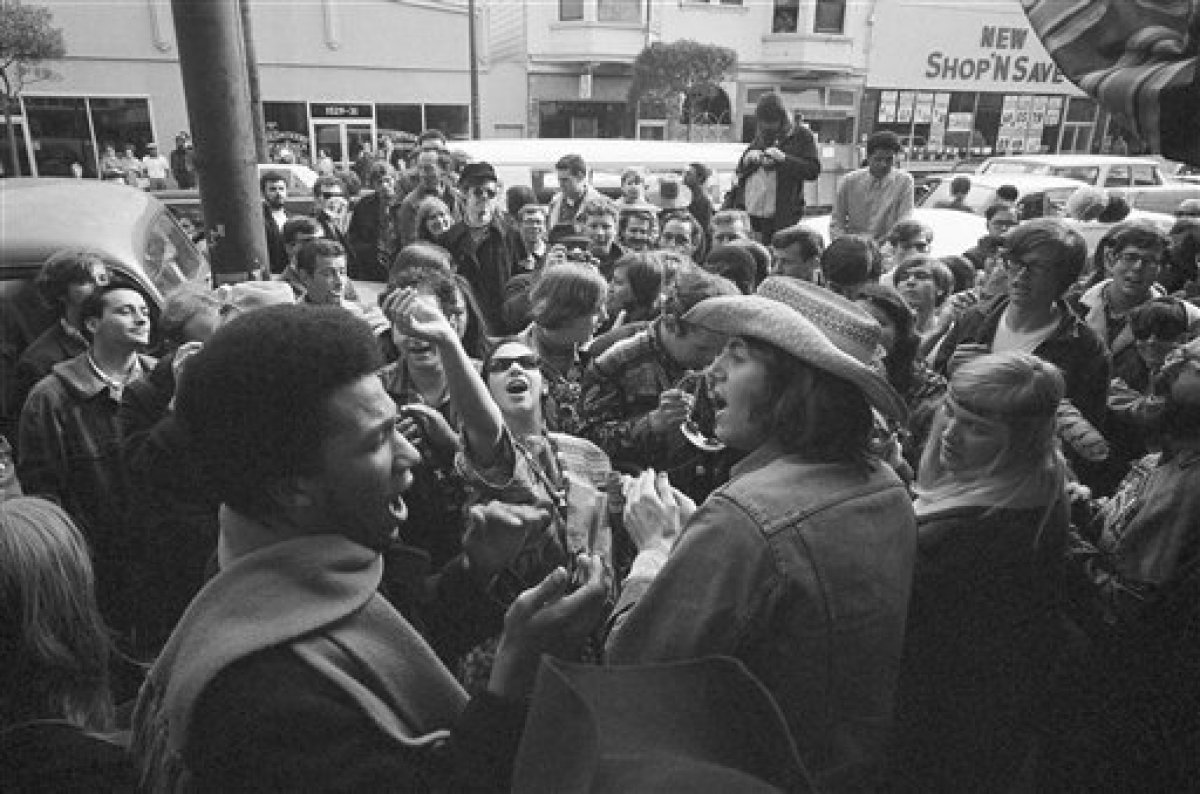
This Ain’t The Summer Of Love

27

Recently, I came across this great series from 1995 on YouTube, “Dancing In The Streets–the History of Rock and Roll”. Ten episodes from the R/B meets Country birth of the music all the way to hip hop. Really well done, excepting some glaring errors (whomever wrote the Ramones segment knew nothing of the band) and omissions (not an Elton John fan, but the guy was a recording artist of enormous success, ditto Rod Stewart and no MC5 or New York Dolls). As it is television and not music, the colorful parts of rock’s history got a lot of play.

One entire segment was devoted to psychedelia. Was great, too–bookended by the Byrds’ “Eight Miles High” and “You Ain’t Goin’ Nowhere”. Naturally, there was a lot of attention devoted to San Fran and its bands and the importance of the City in rock and roll. Which can’t be denied. San Francisco–from the mid 50’s to the mid 60’s–was America’s creative crucible. The Beats of North Beach and the hippies of the Haight are now cultural signifiers and as the program pointed out, they didn’t happen in San Francisco by accident. 

As the Airplane’s Paul Kantner points out, San Fran is a seaport and seaports tend to be where the collision of disparate ideas from around the world makes new ones. What’s not in the piece is the real reason the Beats flourished in SF. In New York, cabaret licenses were hard to obtain in the 50’s, in SF, they weren’t. Therefore, a city with a population 1/10th the size of New York’s could compete with New York. As is also said in the show, all of SF’s old ballrooms were ideal for Kesey’s acid tests and the laissez faire attitude of the City wasn’t entirely due to its open-mindedness, but simply that San Fran had no idea what was coming in 1966 and 1967.

At the end of the show (which featured Jerry Garcia’s last interview and he was good naturedly hilarious in it), I wondered if in this day and age, San Francisco could ever be the giant of the zeitgeist again. Took me less than a half a minute to realize that the answer is a resounding “no”.

Every factor that figures in to a locale becoming a spawning ground for the arts no longer exists in SF. Artists need two things above all else–lots of space and cheap rent. An “artist” that works a 50 hour a week day job to pay the bare bones of rent, food and heat hasn’t got much left by way of time and energy. If the same artist is in a Mission one bedroom (and shared), there’s no elbow room. Nowhere to rehearse one’s craft and nowhere to paint or draw without getting up in someone else’s space.

That’s to say nothing of a “night life scene” where the price of two drinks and a cover could buy lunch five days a week in another city. 

Don’t hand me the idea that the young software and PNS developers are somehow the same as Jack Kerouac, Jerry, Janis and Grace. Yeah–they’re all young (not now, of course). But conflating commerce with art that no one thought would make any money in the first place because “that’s what kids do now” is jive. They’re opposites. Artists and their fans are messy and free and by their nature hard to control, businessmen and politicians are soulmates. Catering to the very wealthy is a slam dunk to the Ed Lee’s and Nancy Pelosi’s of the world because the wealthy contribute to them.

Don’t get me wrong–the 60’s weren’t utopia and the hordes of homeless people that have flocked to SF since have become an almost intractable problem. 

San Francisco is the country’s mosy physically beautiful city. It has a long history of upheaval (culturally and seismically). But in our time, Detroit, Erie or Buffalo are becoming just as likely if not more so to be where the arts boom next. They’re cheap and with the Internet, an artist’s work can go anywhere when he or she don’t have to. Fact is, plain old venality is doing SF in. Pandering to the few at the expense of the many means that the fertile underside of the (actual) creative class gets priced right off the peninsula. All that’s left is the safe and staid that San Fran has thumbed its nose at forever. Sad.


Solomon: Obama in Plunderland: Down the corporate rabbit hole

0


By Norman Solomon

Norman Solomon is co-founder of RootsAction.org and founding director of the Institute for Public Accuracy. His books include “War Made Easy: How Presidents and Pundits Keep Spinning Us to Death.” He writes the Political Culture 2013 column.

The president’s new choices for Commerce secretary and FCC chair underscore how far down the rabbit hole his populist conceits have tumbled. Yet the Obama rhetoric about standing up for working people against “special interests” is as profuse as ever. Would you care for a spot of Kool-Aid at the Mad Hatter’s tea party?

Of course the Republican economic program is worse, and President Romney’s policies would have been even more corporate-driven. That doesn’t in the slightest make acceptable what Obama is doing. His latest high-level appointments — boosting corporate power and shafting the public — are despicable.

To nominate Penny Pritzker for secretary of Commerce is to throw in the towel for any pretense of integrity that could pass a laugh test. Pritzker is “a longtime political supporter and heavyweight fundraiser,” the Chicago Tribune reported with notable understatement last week, adding: “She is on the board of Hyatt Hotels Corp., which was founded by her family and has had rocky relations with labor unions, and she could face questions about the failure of a bank partly owned by her family. With a personal fortune estimated at $1.85 billion, Pritzker is listed by Forbes magazine among the 300 wealthiest Americans.”

A more blunt assessment came from journalist Dennis Bernstein: “Her pioneering sub-prime operations, out of Superior Bank in Chicago, specifically targeted poor and working class people of color across the country. She ended up crashing Superior for a billion-dollar cost to taxpayers, and creating a personal tragedy for the 1,400 people who lost their savings when the bank failed.” Pritzker, whose family controls Hyatt Regency Hotels, has a vile anti-union record.

Commerce Secretary Penny Pritzker? What’s next? Labor Secretary Donald Trump? SEC Chairman Bernie Madoff?

The choice of Penny Pritzker to run the Commerce Department is a matched set with the simultaneous pick of Tom Wheeler — another mega-fundraiser for candidate Obama — to chair the Federal Communications Commission.

With crucial decisions on the near horizon at the FCC, the president’s nomination of Wheeler has dire implications for the future of the Internet, digital communications and democracy. For analysis, my colleagues at the Institute for Public Accuracy turned to the progressive former FCC commissioner Nicholas Johnson, who called the choice “bizarre.”

“There is no single independent regulatory commission that comes close to the impact of the FCC on every American’s life,” Johnson said. “That’s why Congress, in creating it, characterized its mission as serving ‘the public interest’ — an expression used throughout the Act.

But with countless billions of dollars at stake, the corporate fix was in. As Johnson pointed out, “Wheeler’s background is as a trade association representative for companies appearing before the Commission, a lobbyist in Congress for other FCC customers, and a venture capitalist investing in and profiting from others whose requests he’ll have to pass on. He has no record, of which I am aware, of challenging corporate abuse of power on behalf of consumers and the poor.”

But wait. There’s more. “Nor does Wheeler’s membership on the president’s Intelligence Advisory Board bode well for those who believe Americans’ Fourth Amendment privacy rights should be getting at least as much attention as the government’s perceived need to engage in even more secret snooping.”

To urge senators to reject the nominations of Pritzker and Wheeler, click here.

Meanwhile, at the Securities and Exchange Commission, Obama’s recent appointment of Wall Street insider Mary Jo White as SEC chair is playing out in predictable fashion. Days ago, in an editorial, the New York Times faulted her role in an SEC decision on regulating the huge derivatives market: “Last week, in her first commission vote, Ms. White led the commissioners in approving a proposal that, if finalized, could leave investors and taxpayers exposed to the ravages of reckless bank trading.”

We need to ask ourselves how the forces of corporate capitalism have gained so much power over government, to the extreme detriment of people who aren’t rich. Humpty Dumpty’s brief dialectical exchange with Alice is on point

“When I use a word,” Humpty Dumpty said, “it means just what I choose it to mean — neither more nor less.”

“The question is,” Alice replied, “whether you can make words mean so many different things.””The question is,” Humpty Dumpty responded, “which is to be master — that’s all.

Denunciations and protests against the dominant power structure are essential. And insufficient. For the body politic and the potential of democracy, accommodating to the Democratic Party leadership is a deathly prescription. So is failure to fight for electoral power by challenging that leadership, fielding genuinely progressive candidates and organizing to win.

Norman Solomon is co-founder of RootsAction.org and founding director of the Institute for Public Accuracy. His books include “War Made Easy: How Presidents and Pundits Keep Spinning Us to Death.” He writes the Political Culture 2013 column.

(The Bruce Blog is written and edited by Bruce B. Brugmann, editor at large of the San Francisco Bay Guardian, and co-founder and editor and co-publisher with his wife Jean of the Bay Guardian, 1966-2012, now retired.)

Pride reverses course, schedules public meeting May 31

In a surprising but welcome change of course — after it locked out Bradley Manning supporters and press at a meeting last month, and its statement that it would not hold any more public meetings until after Pride because its decision to rescind the grand marshalship from Manning was “final” — the SF Pride board has scheduled a public meeting for May 31, 6:30pm, at the Metropolitan Community Church.

And yet the letter to “community members” couldn’t resist a couple of digs:

***”The SF Pride Board recognizes and regrets the recent error in the announcement of Mr. Bradley Manning as the Electoral College’s Community Grand Marshal” (perhaps it will offer some proof at the meeting that this was, indeed, an error — and more openly address the fact that a beloved staffer was fired over this?)

***Its condescending tone and implication that Manning supporters are violent: “We continue to be open to peaceful and constructive conversation with set ground rules but will not condone violence in any form moving forward.”

Still, with this board, the meeting is at least something.   

Dear Community Members:

For the past four decades, SF Pride has stood firmly to advance its mission to educate the world about LGBT issues, commemorate LGBT heritage, celebrate LGBT culture, and liberate LGBT people.

Thank you for your patience regarding the rescheduling of our community meeting to discuss the recent Electoral College voting. The integrity of the elections process and procedures are very important to SF Pride and the community at large. The SF Pride Board recognizes and regrets the recent error in the announcement of Mr. Bradley Manning as the Electoral College’s Community Grand Marshal. As promised, in the spirit of fairness and transparency, we are calling for an open forum where we can hear the full range of the community’s concerns.

With this in mind, we have secured the Metropolitan Community Church of San Francisco sanctuary for Friday, May 31st starting at 6:30 p.m., which is located at 150 Eureka Street between 18th & 19th Streets in the Castro District.  We encourage all concerned to participate in this public forum that will be facilitated by Scott Shafer, host of KQED’s California Report.

 We continue to be open to peaceful and constructive conversation with set ground rules but will not condone violence in any form moving forward. To ensure that community members have the opportunity to speak along with securing the safety of all attendees, we will have security on the premises.  

Please also note that MCC encourages attendees to be respectful of their space –and their neighbors– and to take their water bottles, coffee cups, etc with them when leaving.  The event cannot go past 9:30 p.m.


Hot sexy events: Ecosexual gurus want you in boot camp

1

You could be mistaken, in certain moments of Annie Sprinkle and Beth Stephens’ ecosexuality activism, into passing it off as woo-woo nonsense. In a trailer for Goodbye Gauley Moutain, the two wear “mountain” costumes while trekking through streams, passionately lick the bark of slender trees — one hopes, consensually. They go on hikes with Sprinkle’s large, shiny purse, an accessory far better suited for the couple’s hometown San Francisco, which they have dubbed the “clitoris of the world.”

At her and Stephens’ upcoming performance series at the Center for Sex and Culture (June 13-16, 20-23), Sprinkle tells me “we talk dirty to plants, get naked in piles of dirt, and we do group wedding vows to the Earth.”

But ridiculous times call for equally ridiculous measures. My amusement quickly cycled to fear and then anger when the purpose of the partners’ trip to Stephens’ childhood home was revealed by Goodbye Gauley Mountain: mountain-top removal. A gent in an American flag button-down (didn’t those used to be for hippies?) proclaiming “global warming is a hoax,” shots of mountains literally being blown up for mineral extraction.

Goodbye Gauley Mountain, Stephens’ and Sprinkle’s feature-length crusade against mountaintop removal

Suddenly, no amount of single-hued art weddings seem to be enough, because what else is working against environmental degradation (certainly not our President.) Why not activate our erotic selves, when our rational selves have done all of nothing to stop our unceasing progress into Waterworld?

“We are serious about our environmental activism, but have a lot of fun with it,” feminist porn pioneer and general force of good in the world Sprinkle wrote to me about the upcoming “ecosexual bootcamp” at CSC, entitled Earthy.  

You might want to join them — they’ve proven in the past that they can do this kind of thing rather well. The partners put a ring on their engagement with the earth seven times over the course of 2005-2011, getting married to each other and to Gaia, each time in a different location with a different, extravagant color palette for their artistic nuptials. 

Sprinkle hopes that the eight-night run will give San Franciscans a chance to discover their own ecosexuality. “Bottom line we want people to have more pleasure in their lives,” writes Sprinkle. “And at the same time, get the Earth more love. I know that sounds hokey. But it’s true.” 

The performances will feature audience vows to the earth, a bonfire, lots of naked, and interactive opportunities. Sounds better than reading another depressing Internet article, and might resonate somewhere deeper than your RSS feed.

Earthy: An Ecosex Boot Camp Center for Sex and Culture, 1349 Mission, SF. www.sexandculture.org June 13-16, 20-23, $12-25 sliding scale

MORE SEX EVENTS

Sex Worker Art and Film Fest

As mentioned in last week’s paper, the fun continues this week at the biennial fest celebrating and raising awareness for our beloved sex workers. This week you can catch a full day of sex film programming at the Roxie (Sat/25), a spa day for sex workers (Sun/26), and much more. 

Various times, venues, prices. www.sexworkerfest.com

Cunt *an opening

Graphics by Boy Young

Tbh, SF drag’s quiet storm hasn’t told me that there will be sexual happenings at the debut of their new performance piece at The Lab. That being said, nothing Dia Dear does — whether it’s luxuriating thisclose to nude dressed in a wig and Frank Ocean’s “Pyramids” at Some Thing’s Tiara Sensation pageant or minimalist, guttural interpretations of R&B jams on video — is not beyond sexy. Tonight is a performance, tonight is a party. Whatever, it’s Dia so it’s gonna be cute. 

Sat/25, 10pm, $7. The Lab, 2948 16th St., SF. www.thelab.org; www.diadear.com

Masturbate-A-Thon

There are times when I think it would be more direct to title this column “what is happening at the Center for Sex and Culture this week”, such is the high-quality output coming from that particularly well-connected sex institution in town. This week is no different — the lauded, long-running annual public masturbation event raising sex-ed awareness takes place allll over the Center. Last year, Courtney Trouble made a movie about it if you’re looking for jack-off inspiration. 

Sat/25, 7-11pm, $30. Center for Sex and Culture, 1349 Mission, SF. www.masturbate-a-thon.com

Ducky Doolittle

She’s a certified emergency room sexual assault counselor, has appeared on MTV, and explores the meaning of race, gender, and class within sex activism with her spot-on writing. This week, sex educator Ducky Doolittle will also be offering her knowledge at the Bay Area’s various institutes of sensual ed. Sat/25 and Mon/27, she hits the Armory for a class on pleasuring the him’s of the world. Sun/26, she’ll be at the Center for Sex and Culture (see?) expounding on the art of girlgasm.

Sat/25-Mon/27, Various times, venues, prices. www.duckydoolittle.com

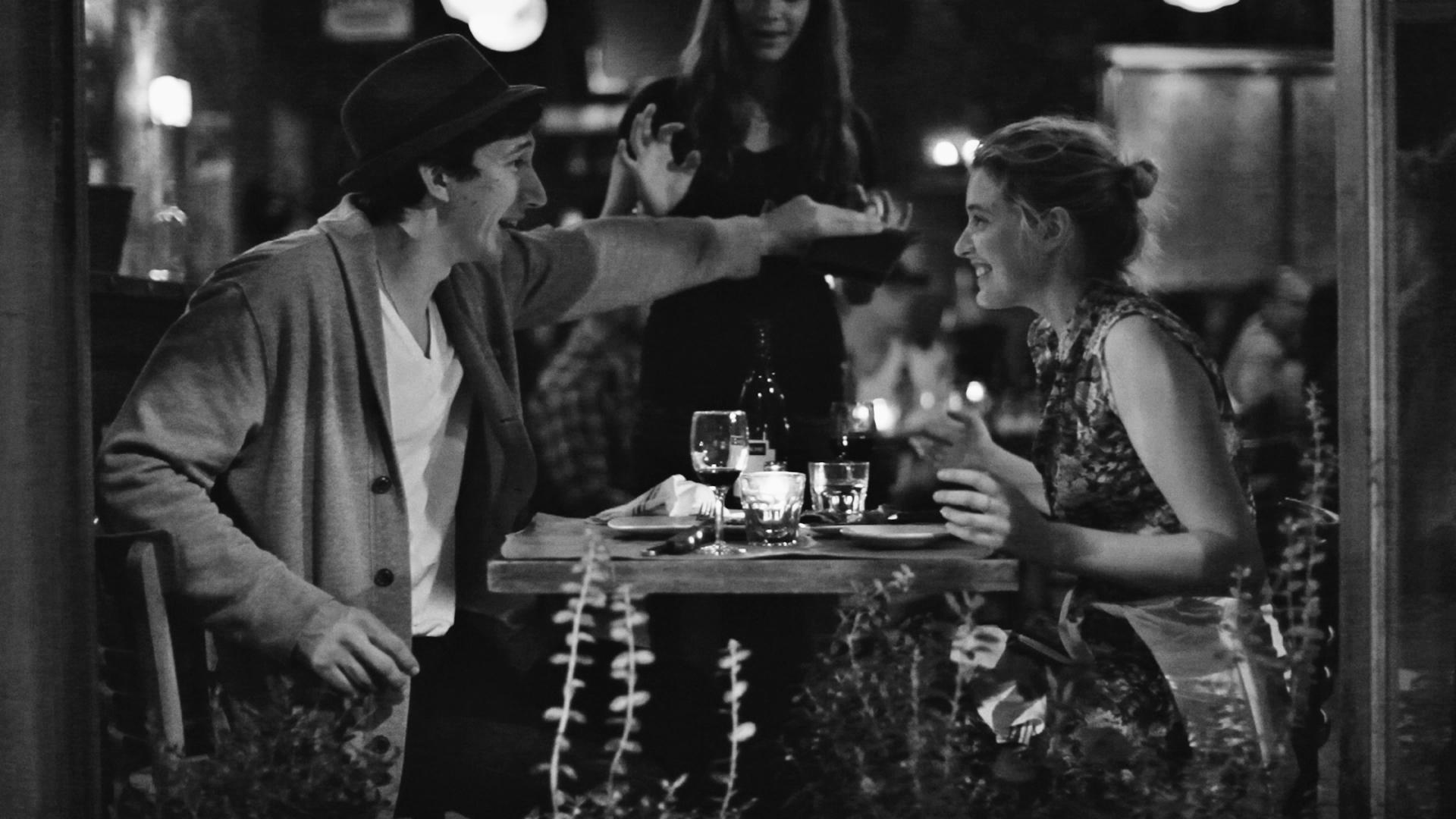
New-movie tip: skip the fury and the hangover, and go see ‘Frances Ha’

0

This week’s must-see is Noah Baumbach and Greta Gerwig’s very cute, very charming, very French New Wave-y but also-kinda-Girls-y Frances Ha; check out my interview with N + G 4-eva here.

What else? A ripping Julianne Moore performance, a worthy environmental documentary, two very different animated flicks, and some probablyunnecessary sequels. Reviews below!
http://www.youtube.com/watch?v=IDNz3oFjDhM

Elemental Even those suffering from environmental-doc fatigue (a very real condition, particularly in the eco-obsessed Bay Area) will find much to praise about Elemental, co-directed by Gayatri Roshan and NorCal native Emmanuel Vaughan-Lee (who also co-composed the film’s score). This elegantly shot and edited film approaches the issues via three “eco-warriors,” who despite working on different causes on various corners of the planet encounter similar roadblocks, and display like-minded determination, along the way: Rajendra Singh, on a mission to heal India’s heavily polluted Ganges River; Jay Harman, whose ingenious inventions are based on “nature’s blueprints”; and Eriel Deranger, who fights for her indigenous Canadian community in the face of Big Oil. Deranger cuts a particularly inspiring figure: a young, tattooed mother who juggles protests, her moody tween (while prepping for a new baby), and the more bureaucratic aspects of being a professional activist — from defending her grassroots methods when questioned by her skeptical employer, to deflecting a drunk, patronizing Robert F. Kennedy Jr. at a big-ticket fundraiser — with a calm, steely sense of purpose. (1:33) (Cheryl Eddy)

http://www.youtube.com/watch?v=9tD5itOMWqg

Epic Animated fantasy about a teenager who finds herself drawn into a conflict between warring forest creatures. Features the voices of Amanda Seyfried, Colin Farrell, Beyoncé, and Christoph Waltz. (1:42)

http://www.youtube.com/watch?v=PP7pH4pqC5A

Fast and Furious 6 Forget the “fast” (that’s understood by now, anyway) — part six in this popcorny series is heavy on the “furious,” with constant near-death stunts that zoom past irrational and slam into batshit crazy. Agent Hobbs (Dwayne Johnson) lures the gang out of sunny retirement to bust a fast driver with a knack for strategy and an eye on world domination. Sure, Ludacris jokes their London locale doesn’t mean they’re in a Bond movie, but give cold-blooded Luke Evans some time and he’ll work his way up to antagonizing 007. Shaw (Evans) is smaller than our hero Toretto (Vin Diesel), but he’s convincing, throwing his King’s English at a man whose murky dialect is always delivered with a devilish baritone. If Shaw’s code is all business, Toretto’s is all family: that’s what holds together this cast, cobbled from five Fast and Furious installments shot all over the world. Hottie Gal Gadot (playing Sung Kang’s love interest) reassures Han (Kang) mid-crisis: “This is what we are.” It’s not for nothing the gang’s main weapon is a harpoon gun that, once shot, leaves an umbilicus from the shooter to whatever’s in the crosshairs. That’s Torreto for you. Meanwhile, the villain’s weapon is a car with a spatula-like front end, that flips cars like pancakes. The climactic battle on a cargo plane has to give a face time to every member of the eight-person team, so naturally they shot it on the world’s longest runway.  Of course the parade features less car porn than previous editions but it’s got a wider reach now — it’s officially international intrigue, not just fun for gearheads. For my money, it’s some of the best action in theaters today. Stick around for the inevitable sequel-suggesting coda during the credits. (2:10) (Sara Maria Vizcarrondo)

http://www.youtube.com/watch?v=96TelFMZwHc

The Hangover Part III Even the friendliest little blackout bacchanal can get tiresome the third time around. The poster depicting Bradley Cooper, Ed Helms, and Zach Galifianakis — stern in suits and ties — says it all: it’s grim men’s business, the care and maintenance of this Hangover franchise, this orgy of good times gone bad. Once a bad-taste love letter to male-bonding, Hangover Part III is ready for a chance, primed to sever some of those misbegotten ties. This time around, the unlikely troika — with the always dispensable normal-dude figurehead Doug (Justin Bartha) in tow — are captured by random sketchy figure Marshall (John Goodman, whose every utterance of the offensive “Chinaman” should bring back Big Lebowski warm-and-fuzzies). He holds Doug hostage in exchange for the amoral, cockfighting, coke-wallowing, whore-hiring, leather-wearing Leslie Chow (Ken Jeong), who stole his gold, and it turns out Alan (Galifianakis) might be his only chum. Jeong, who continues to bring the hammy glee, is still the best thing here, even as the conscience-free instigator; he’s the dark counterpart to tweaked man-child Alan, who meets cute with mean-ass pawn-star soulmate Cassie (Melissa McCarthy). Meanwhile, Cooper and Helms look on, puzzled, no doubt pondering the prestige projects on their plate and wondering what they’re still doing here. (1:40) (Kimberly Chun)

http://www.youtube.com/watch?v=s5Vtk9jhfmw

The Painting Veteran animator Jean-François Laguionie’s French-Belgian feature is a charming and imaginative fable whose characters live in the worlds of an elusive artist’s canvases. It begins in one particular picture, a fanciful landscape in which society is strictly stratified in terms of how “finished” the figures in it are. At the top of the heap are the Alldunns, elitist castle-dwelling snobs who look down on the semi-completed Halfies. Everybody shuns the Sketchies, pencil preliminaries come to life. When members of each group get chased into the Forbidden Forest, they discover they can actually exit the frame entirely and visit other paintings in the artist’s studio. As a parable of prejudice and tolerance it’s not exactly sophisticated, and the story doesn’t quite sustain its early momentum. But it’s a visual treat throughout, nodding to various early 20th-century modern art styles and incorporating some different animation techniques (plus, briefly, live action). Note: the last screenings of each day will be in the film’s original French language, with English subtitles; all others offer the English-dubbed version. (1:18) (Dennis Harvey)

http://www.youtube.com/watch?v=3zLTWIXj_QA

A Wedding Invitation Already a hit in China, this romantic drama directed by Korea’s Oh Ki-hwan follows a young couple (Eddie Peng, Bai Baihe) as they break up to pursue careers in Beijing and Shanghai, making a pact that they’ll reunite in five years if they’re both still single. (1:45)

http://www.youtube.com/watch?v=UrGzb1nBBl4

What Maisie Knew In Scott McGehee and David Siegel’s adaptation of the 1897 Henry James novel, the story of a little girl caught between warring, self-involved parents is transported forward to modern-day New York City, with Julianne Moore and Steve Coogan as the ill-suited pair responsible, in theory, for the care and upbringing of the title character, played by Onata Aprile. Moore’s Susanna is a rock singer making a slow, halting descent from some apex of stardom, as we gather from the snide comments of her partner in dysfunctionality, Beale (Coogan). As their relationship implodes and they move on to custody battle tactics, each takes on a new, inappropriate companion — Beale marrying in haste Maisie’s pretty young nanny, Margo (Joanna Vanderham), and Susanna just as precipitously latching on to a handsome bartender named Lincoln (True Blood’s Alexander Skarsgård). The film mostly tracks the chaotic action — Susanna’s strung-out tantrums, both parents’ impulsive entrances and exits, Margo and Lincoln’s ambivalent acceptance of responsibility — from Maisie’s silent vantage, as details large and small convey, at least to us, the deficits of her caretakers, who shield her from none of the emotional shrapnel flying through the air and rarely bother to present an appropriate, comprehensible explanation. Yet Maisie understands plenty — though longtime writing-and-directing team McGehee and Siegel (2001’s The Deep End, 2005’s Bee Season, 2008’s Uncertainty) have taken pains in their script and their casting to present Maisie as a lovely, watchful child, not the precocious creep often favored in the picture shows. So we watch too, with a grinding anxiety, as she’s passed from hand to hand, forced to draw her own unvoiced conclusions. (1:38) (Lynn Rapoport)

Sanctioned for sound violations, club owner fires ethics charge back at Entertainment Commission

57

The San Francisco Entertainment Commission last night voted to restrict the hours, sound limits, and other operating conditions for Brick & Mortar Music Hall — the Mission Street live music venue that has received a series of noise complaints from its neighbors on Woodward Street — until it completes soundproofing work to deal with the problem.

While acknowledging the sound problem and pledging to address it, club co-owner Jason Perkins responded to the action today with a written complaint that makes a serious allegation: that Entertainment Commission inspector Vajra Granelli last year recommended Brick & Mortar hire an overly expensive security company he founded, Yojimbo Protective Services, and that would solve the problems it was having with the commission, Perkins wrote, “an obvious conflict that a person who is regulating us is also trying to get us to use his company.”

There is no proof that Granelli actually made the extortionary suggestion or that it was connected to the club’s current problems with its neighbors, who seem to have legitimate issues with noise. “They have a sound problem and they have to deal with it,” Entertainment Commission Executive Director Jocelyn Kane told us, calling the allegation against Granelli a diversionary tactic that has nothing to do with the case. “The neighbors are being reasonable, they just want them to fix the sound.”

Yet it does appear that Granelli is still involved with Yojimbo Protective Services, which he co-founded in 2003 to do security for entertainment venues, and that may violate city conflict-of-interest rules against outside employment in an industry that he regulates. Kane said Granelli was out-of-town and that she would get him a message about addressing the issue, but we never heard from him.

When we called Yojimbo for Granelli, someone who identified himself as Ed the CEO (presumably co-founder Edward Cissel) said, “I can take a message for him. He’s not usually here at the office.” And when I identified myself as a reporter for the Guardian, Ed said of Granelli, “He has little or nothing to do with the daily interactions of this company.”

Yet Granelli (who was profiled by the Examiner last year) remains the agent of service on the company’s business permits. Kane said she was aware of Granelli’s connnection to Yojimbo, but that, “When he took this job, he divested himself.” Indeed, on the Form 700 Statement of Economic Interests that city employees are required to complete, which Granelli renewed last month, he claims to have no reportable outside economic interests. A link to a list of clients and description of its focus on entertainment venues on the Yojimbo website has recently been removed.

Later, when we noted that Granelli still appears to be involved with the company, Kane wrote, “It remains my understanding that Vaj Granelli sits on the Board of Yojimbo but derives no financial benefit from the company, nor is responsible for any day to day operations.”

Perkins alleges that last summer, “I was told I had a security problem by Vaj Granelli,” who recommended he hire Yojimbo shortly after the club received its first of seven noise violation citations, which Granelli issued. Perkins said that when Granelli made the suggestion again following another noise complaint in October — by which time Perkins said he had learned of Granelli’s connection to the company — “I blew up and told him to fuck off, and immediately we start getting hammered by complaints.”

During the hearing last night, the commission had little patience or sympathy for Perkins, accusing him of misrepresenting his neighborhood outreach efforts and creating problems in the neighborhood by refusing the spend the necessary money on soundproofing the club, a perspective supported by several Woodward neighbors who testified they could hear music in their living rooms and that Perkins has resisted their entreaties to fix the problem.

“Rather than doing it, I believe you’ve used delay tactics,” Commission President Audrey Joseph told him, urging him to instead, “Be a big boy and just deal with the problem, which is what you need to do.”

The commission then voted unanimously to recondition the club’s entertainment permit to require it to close at 11:30pm on weeknights and 12:30am on weekends, cap its allowed outside sound at 80 decibels, provide a direct phone number to neighbors with complaints, and complete necessary soundproofing work by next month.

“We got sucker-punched last night, it’s so unfair,” Perkins told us, noting that the new sound limit will essentially prevent them from hosting live music. He claims that he was only recently made aware of some of the noise citations and they have repeatedly upgraded their soundproofing.

Kane denies that Brick & Mortar has been treated unfairly, and she said that it’s a popular music venue that everyone involved wants to see continue operating. As for Granelli’s connection to Yojimbo Protective Services, she told us, “I’m not suggesting he’s not affiliated, I’m just saying it’s not relevant.”

The Performant: Dare to DIVA

0

A yearly performance fest supports XX creatives

Spring is in the air, and so is DIVAfest, the EXIT Theatre’s annual celebration of female artists and theater-makers. Founded in 2002 by Christina Augello to give female creators a secure space to showcase their craft, DIVAfest has hosted an estimated 500 participants have come through in the last 11 years, from visual artists (Sophie Kadow, Kathy Jo Lafreniere, Michelle Talgarow) to playwrights (Kerry Reid, Lee Kiszonas, Margery Fairchild) to music-makers (Beth Wilmurt, Shannon Day, Carrie Baum Love), to burlesque dancers (Odessa Lil, Red Velvet, If-N-Whendy). This year, the fest hits the stage May 9-June 2. 

If the idea of having such a space sounds redundant or unnecessary to you, I refer you to Valerie Weak’s excellent piece at Theatre Bay Area on gender parity which breaks down, in unambiguously hard numbers, exactly how wide the underrepresentation gap is between male and female theater artists in the Bay Area of the moment. Or consider this recent observation made by Lindy West in an open letter to white male comedians: “women are 50 percent of the population, yet when it comes to our interests and grievances, we’re treated like a niche group.” Sound familiar? If you’re a woman in the arts, or practically anywhere else in the public sphere, then it probably does. 

So it’s heartening to see DIVAfest not just thriving, but expanding its scope and mission. Now in its 11th year, DIVAfest has morphed into its own stand-alone, non-profit organization, in the process of developing a year-round season and artist incubation opportunities in addition to producing the annual festival, which Augello envisions as having the potential to someday go national.

“Festivals are great because … there is power in numbers to create more work and draw more audience,” she muses over email. “New companies have been born out of coming together, (and) networking and artistic collaboration also thrive.” Those would be staple side effects of the now-venerable San Francisco Fringe Festival, also co-founded by Augello, in 1992.

This year’s festival, which runs through June 2, presents as broad a spectrum of works as ever, including a new play, You’re Going to Bleed, by Melissa Fall, a staged workshop of an interconnected “modular” play The Helen Project, by Megan Cohen and Amy Clare Tasker, a storytelling-short works showcase and a performance art one, curated respectively by Catherine DeBon and Erica Blue, a songwriter evening hosted by Melissa Lyn, and a burlesque cabaret, Rebel Without a Bra, directed by Amanda Ortmayer.

Education and outreach being very much a part of the DIVA experience, theater-goers and makers will also have the opportunity to dialogue with each other and a panel of Bay Area creators including Valerie Weak, Fontana Butterfield Guzmán, and Susannah Martin at the “Yeah, I said Feminist” symposium on Saturday, May 25, from 3pm to 6pm.

And what exactly is a DIVA, apart from its original descriptor of a celebrated opera singer, or a slang term for an impossible pop star? Augello, who expresses a fondness for all of her fellow DIVAs, past and present, has a definition at the ready, which can be applied to pretty much every artist who has passed under the festival’s auspices over the years.

“A DIVA is a self-realized artist … committed to creativity, with a passion that endures the successes and failures and learns from them to become a better artist and human being.” Long may they thrive!

DIVAfest

Through June 2

Various times and prices

EXIT Theatre

156 Eddy, SF

www.divafest.info

Tour of duty

0

arts@sfbg.com

THEATER Audience members entering the drill court of the Mission Armory and climbing the bleachers to their seats do so amid the buzzing drone of Highland music and an eager swarm of searchlights, all of it punctuated by booming pre-show announcements over the PA. When silence falls at last, a solitary man in jeans and leather jacket emerges a bit sheepishly from a doorway at the far end of the stage. Appearing small and inconsequential against the stadium-like surroundings and the preceding pomp and circumstance, he stutters a few opening lines before returning to his element — the local pub in Scotland’s Fife. There he assumes wholly different proportions, as he and his friends relay their own perspectives on the spectacle of war.

In Black Watch, the touring revival of a site-specific 2006 production by the National Theatre of Scotland (currently being presented by American Conservatory Theater), writer Gregory Burke and director John Tiffany set out to present a spectacle grounded in real lives. To that end, they blend fictionalized scenes with the accounts of young Fife veterans who served in Iraq as part of Scotland’s famed 300-year-old Black Watch regiment.

Meanwhile, the show employs a hybrid theatrical form that draws equally on the conventions of the music hall, the docudrama, and physical theater. The stage is a wide and busy corridor running between two tall banks of seats, with scaffolding on either end where actors also play, video monitors flicker, and large video projections are sometimes cast.

This is the production’s fourth international tour, remarkably. But despite its continued popularity abroad, little in it seems especially surprising or penetrating. There’s a lot of brash dialogue (hyper-macho, casually chauvinistic, expletive-laden soldierly banter in slightly toned-down Scottish brogues); some muscular dance routines (with the martial drills the most interesting); a sometimes affecting, sometimes overbearing musical score; and a few flashy staging ideas (including an eerily unexpected entrance in the barroom).

But whether the play is offering gritty realism or stylized interpretation, the message is generally and familiarly on-the-nose: war seems glamorous to the young man back home, and hell to the soldier in the field; soldiers are sold out by politicians; and soldiers don’t fight for their country or some high ideal, but for less abstract ties and especially for their fellow soldiers. The lies, illegality, and massive unpopularity surrounding the Iraq War is also hardly new ground in itself — though one line rings with unintended irony in the Armory setting (where Kink.com has been in residence since 2007) when a Scottish officer (Stephen McCole) jokingly admits the war is being waged for “petrol and porn.”

The narrative toggles between the aforementioned pub — where Cammy (Stuart Martin) and his fellow vets somewhat grudgingly and aggressively divulge their experiences to a timid middle-class Writer (Robert Jack) — and a flashback to the daily drudgery and danger of Iraq in 2004, where the company’s assignment in support of devastating American military assault on Fallujah leads to the death of three Scottish soldiers in a suicide car bombing. There’s also a segue into a somewhat silly if historically relevant recruitment scene at the outset of World War I, which further convolutes a narrative already burdened with details about political machinations at home and distress over “amalgamation” (the British government’s ill-timed decision to dissolve the Black Watch and fold it into a single, cheaper Royal Scottish Regiment).

The play never represents Iraqi lives or perspectives, nor is there more than passing sympathy for them among the characters; this is instead a work focused squarely on the Scottish soldier’s experience and, most significantly, the molding of that experience by a state reliant on a voluntary military. In a world of limited and dispiriting options, the military opportunistically and very successfully offers young men a seeming basis for pride in themselves and in an inflated (or degraded) masculine ideal. Black Watch is itself successful in those rare moments where sentimental spectacle gives way to images that register the profound, uneasy, and complex implications of this fact.

BLACK WATCH

Through June 16

Tue-Sat, 8pm (also Wed and Sat, 2pm); Sun, 2pm, $100

Drill Court, Armory Community Center

333 14th St, SF

www.act-sf.org


Selector: May 22-28, 2013

0

WEDNESDAY 22

God Loves Uganda

One of the most memorable docs to play this year’s San Francisco International Film Festival, Roger Ross Williams’ God Loves Uganda offers a remarkably all-access look at evangelical Christians who travel from America to Uganda. In Africa, these bright-eyed youths build medical clinics, teach school, and preach their ultra-conservative religion — directly influencing a rise in hate crimes and draconian anti-gay laws. To mark both Harvey Milk Day and the International Day Against Homophobia, American Jewish World Service and the Horizons Foundation host a screening of this important film. Since it’s bound to stir emotions (outrage is a big one), there’ll be a post-show discussion with human rights advocates and religious leaders. (Cheryl Eddy)

6pm, free (seating is limited, so RSVP is required)

SFJAZZ Center

201 Franklin, SF

gc.ajws.org/rsvpmaker/film-screening-god-loves-uganda


Shout Out Louds

My favorite songs by this Swedish pop group have clear antecedents in ’80s New Wave. With Our Ill WIlls (2007) opener “Tonight I Have To Leave It” singer Adam Olenius was a ringer for Robert Smith at his most ebullient (read: “Just Like Heaven”) and “Impossible” hit on the Human League and Simple Minds. It could be derivative, but with the Joy Division via Interpol meets the B-52s sound of “Glasgow” on its latest album Optica, the system the group has is working, particularly the sparkling production. Opening band Haerts seems a perfect match, as its slick debut single “Wings” sees the SOLs referent for referent, and adds in some Spandau Ballet and Stevie Nicks vocals to great effect. (Ryan Prendiville)

With Haerts

8pm, $19

Great American Music Hall

859 O’Farrell, SF

(415) 885-0750

www.slimspresents.com


THURSDAY 23

“A Gathering of Angels: opening event for Beat Memories

Let’s get it out of the way: A picture tells a thousand words. Though this doesn’t exactly apply to Allen Ginsberg, whose poetry portrayed imagery as vividly as any picture could, the many photos he took capture a different dimension. While his words express a Beat mythology that continues to resonate, his pictures freeze isolated moments that bring the figures surrounding Ginsberg alive in a profound and intimate way. We see Kerouac smoking coolly against a brick wall in 1953, then again in 1964, frowning and slumped in a chair; there’s Burroughs up close in a dark room, and Corso in an attic. The photos, beautiful works of art in themselves, show us the living people comprising the cultural history and because of that, they’re fascinating. This opening event includes a pop-up poetry salon, drop-in zine making with Rad Dad creators, and a “typewriter petting zoo.” (Laura Kerry)

Through September 8

6:30pm, $5

Contemporary Jewish Museum

736 Mission, SF

(415) 655-7800

www.thecjm.org


Philip Glass at 75

Philip Glass is no ordinary composer. Having collaborated with everyone from Ravi Shankar to David Bowie, while writing stacks of of symphonies, operas, and film scores in the process, Glass has shifted the direction of classical music as wildly, and influentially, as any living figure. In celebration of his 75th birthday, SF will be treated to screenings of two Glass-scored films, accompanied live by the Philip Glass Ensemble: Godfrey Reggio’s famously plotless multimedia extravaganza, Koyaanisqatsi (1982), and Jean Cocteau’s early film adaptation of The Beauty and the Beast, La Belle et la Bête (1946). Punctuating the weekend-long festival is a Q&A session with Glass himself, moderated by SF’s own Brad Rosenstein. (Taylor Kaplan)

Philip Glass Ensemble: La Belle et la Bête

Thu/23-Sat/25, 8pm, $40–$65 (Sat/25 includes Q&A)

Lam Research Theater at YBCA

700 Howard, SF

(415) 495-6360

www.ybca.org


Koyaanisqatsi

Sun/26, 7pm, $40-65

Davies Symphony Hall

201 Van Ness, SF

(415) 864-6000

www.sfperformances.org


Detroit Cobras

Some bands you’ll just never be able to judge by their album cover(s). Some bands just don’t have time for all that studio nonsense. They wanna rock — and they wanna rock with you. Up close and personal. In your face. Get it? That pretty much describes the rough-and-ready Detroit Cobras method, after releasing a scant handful of albums, they’ve continued to tour extensively, bringing the husky, tough-girl vocals of Rachel Nagy and the gritty, jangling guitar riffs of Mary Ramirez to the people. Their reinterpretations of vintage, B-side rock, soul, and Motown give songs that could have been contenders a brash new life, while their relentless stage show gives their adoring fans a good, old-fashioned, foot-stomping workout. (Nicole Gluckstern)

With Pangea, the Chaw

9pm, $16

Slims

333 11th St., SF

(415) 255-0333

www.slimspresents.com


“Project Open Walls”

What’s a gallery when none of its art is for sale? Project One, the Potrero gallery and art bar is exploring the concept in 2013, for which it is asking its artists not to contribute paintings or sculpture to their exhibitions, but rather to paint the walls of the gallery itself. “Project Open Walls” enjoyed its first opening in February with numerous artists (street and not) contributing murals of busy vase tableaus, color-forward twirls of 3D tags, and luminous flower designs. Now, those walls will be gradually painted over. This month, the grizzly bear-focused muralist Chad Hasegawa gets up, in addition to one of last year’s Goldies award winners, dreamy minimalist painter Brett Armory. (Caitlin Donohue)

Opening reception: 7pm, free

Project One Gallery

251 Rhode Island, SF

www.p1sf.com


FRIDAY 24

Performance Research Experiment #2: Paradox of the Heart

Scientists frequently ask for volunteers on which to test the hypothesis their research suggests. Artists rarely get that kind of concrete response to what they are working on. In come Jess Curtis and Jörg Müller — and a bevy of artist and scientist collaborators — who will help them get scientifically measurable information that we the audience provide through our responses to what happens around us. The data will be translated into what Curtis calls an “interactive mash-up of dance/performance and physical science,” also called Performance Research Experiment #2: Paradox of the Heart. In case you care, the 2003 Experiment #1, also by the team of Curtis and Müller, drew on the duo’s background in circus arts and involved a lot of brooms and balls. (Rita Felciano)

8om, $20

CounterPULSE

1310 Mission, SF

www.eventbrite.com


Black Moth Super Rainbow

Black Moth Super Rainbow is nothing if not mysterious. The five enigmatic band members perform under whimsical stage names — Tobacco, the Seven Fields of Aphelion, Power Pill Fist, Iffernaut, and Father Hummingbird — that speak volumes about the fantastical and wonderfully absurd psychedelic pop they produce. The band, formed in Pittsburgh in 2002 originally gained attention from a run of buzz-building shows as SXSW. The band’s liberal use of analog electronics like a vocoder, Rhodes piano, and Novatron gives its music a sunny, retro sound. Underneath the barrage of strange instruments and layers of synth, Black Moth Super Rainbow sneaks in solid pop hooks and tight songwriting. Through its decade of existence, the band has continuously improved with each new release, and the sixth and most recent full-length Cobra Juicy certainly continues this evolution. (Haley Zaremba)

With the Hood Internet, Oscillator Bug

9pm, $19.50

Fillmore

1805 Geary, SF

www.thefillmore.com


TSOL

First gaining notoriety for songs such as “Code Blue,” an ode to the joys of necrophilia, along with the infamous riots that would break out at its early shows, T.S.O.L — or True Sounds of Liberty — was among the earliest and best of the Southern California punk bands to emerge in the late 1970s. While singer Jack Grisham has found other outlets for stirring up the social pot over time, including a 2003 gubernatorial run and as an author (his newest book, Untamed comes out next month) he and guitarist Ron Emory are still keeping the group going strong more than 30 years after their inception in Long Beach, Calif. (Sean McCourt)

With VKTMS, Rush and Attack

9pm, $13

Thee Parkside

1600 17th St., SF

(415) 252-1330

www.theeparkside.com


SATURDAY 25

“Sex Worker Sinema”

The cinema, er, sinema portion of the San Francisco Sex Worker Film and Arts Festival — focusing on “the lives, the art, and the struggle for workers’ and human rights of people employed in sex work industries” — is highlighted by several intriguing-sounding documentaries. Alexander Perlman’s Lot Lizard explores the lives of prostitutes who conduct business out of truck stops; James Johnson’s American Courtesans widens the scope, following 11 different sex workers in various situations; and a legendary NYC trans activist and Stonewall icon gets her due in Pay It No Mind: The Life and Times of Marsha P. Johnson. Also on tap: a full slate of shorts, both doc and narrative. The $35 pass scores entry into all films in the fest. (Eddy)

2pm-midnight, $35

Roxie Theater

3117 16th St, SF

www.sexworkerfest.com


Mikal Cronin

Mikal Cronin has been bouncing around the San Francisco music scene for a couple of years as an unsung hometown hero, collaborating with Thee Oh Sees, recording with Ty Segall and performing in the Ty Segall Band, while quietly releasing his own solo records and singles. Finally, Cronin is no longer sidekicking. This year’s full-length MCII has received rave reviews from major music publications (SPIN and Pitchfork have labeled it among the best new music of the year) and Cronin is enjoying a headlining slot on a national tour. Tonight’s gig at the Rickshaw Stop is a much-deserved album release-party, and I wouldn’t be too surprised if Cronin pulls up some old friends to help him celebrate. (Zaremba)

With Audacity, Michael Stasis

9pm, $12

Rickshaw Stop

155 Fell, SF

(415) 861-2011

www.rickshawstop.com


TUESDAY 28

Radiation City

A quiet, practical friend of mine who nevers speaks in hyperbole just declared that Radiation City is his favorite band. It is a strong statement, but not surprising considering the band’s near-magical wooing ability. Comprised of two couples, even the band can’t resist its own magnetism. Maybe it’s a result of chemistry that extends offstage, but Radiation City has arrived at an enchanting formula the combines dreamy pop, some ’60s girl band flare, a shadow of psych-rock, and the occasional hint of bossa nova. After the May 21 release of its third album, Animals in the Median, Radiation will play new music to an enchanted crowd at Rickshaw Stop. My picky friend will be among those dancing, shouting, and bewitched. (Kerry)

With Cuckoo Chaos

8pm, $12

Rickshaw Stop

155 Fell, SF

(415) 861-2011

www.rickshawstop.com

The Guardian listings deadline is two weeks prior to our Wednesday publication date. To submit an item for consideration, please include the title of the event, a brief description of the event, date and time, venue name, street address (listing cross streets only isn’t sufficient), city, telephone number readers can call for more information, telephone number for media, and admission costs. Send information to Listings, the Guardian, 225 Bush, 17th Flr., SF, CA 94105; or e-mail (paste press release into e-mail body — no attachments, please) to listings@sfbg.com. Digital photos may be submitted in jpeg format; the image must be at least 240 dpi and four inches by six inches in size. We regret we cannot accept listings over the phone.

Rep Clock

0

Schedules are for Wed/22-Tue/28 except where noted. Director and year are given when available. Double and triple features marked with a •. All times pm unless otherwise specified.

ARTISTS’ TELEVISION ACCESS 992 Valencia, SF; www.atasite.org. Free-$6. "CCSF Directing Students Showcase," Thu, 8. "Shorts from SFSU’s Cinema Department," Fri, 7. "Other Cinema:" "New Experimental Works," Sat, 8:30.

CASTRO 429 Castro, SF; (415) 621-6120, www.castrotheatre.com. $8.50-13. Milk (Van Sant, 2008), Wed, 2, 4:30, 7, 9:30. •Black Swan (Aronofsky, 2010), Thu, 7, and Dancer in the Dark (von Trier, 2000), Thu, 9:05. Grease (Kleiser, 1978), presented sing-along style, Sun-Mon and June 1-3, 2:30, 8. This event, $10-15; advance tickets at www.ticketweb.com.

CHRISTOPHER B. SMITH RAFAEL FILM CENTER 1118 Fourth St, San Rafael; (415) 454-1222, www.cafilm.org. $6.75-$10.25. In the House (Ozon, 2012), call for dates and times. Midnight’s Children (Mehta, 2012), call for dates and times. The Reluctant Fundamentalist (Nair, 2012), call for dates and times. Renoir (Bourdos, 2012), call for dates and times. Stories We Tell (Polley, 2012), call for dates and times. Frances Ha (Baumbach, 2012), May 24-30, call for times. "Shorts in Brief: Quality Films For Young Children," Sun, 11am. This event, $5.

DAVIES SYMPHONY HALL 201 Van Ness, SF; www.sfperformances.org. $40-65. "San Francisco Performances presents:" Koyaanisqatsi (Reggio, 1982), Sun, 7. With live performance by Philip Glass and the Philip Glass Ensemble.

DELANCEY STREET SCREENING ROOM 600 Embarcadero, SF; lastwarcrime.com/tickets_SF.php. Free (donations accepted; RSVP at web site). The Last War Crime (the Pen, 2012), Sat, 6, 8.

FIRST UNITED METHODIST CHURCH 9 Ross Valley, San Rafael; www.mitfamericas.org. $5-10. The Sixth Sun: Mayan Uprising in Chiapas (Landau, 1995), Fri, 7:30.

NEW PARKWAY 474 24th St, Oakl; www.thenewparkway.com. $6-10. "New Parkway Classics:" Heathers (Lehmann, 1988), Thu, 9. "Thrillville:" Plague of the Zombies (Gilling, 1966), Sun, 6.

"PLAYGROUND FILM FESTIVAL" Various Bay Area venues; playground-sf.org/filmfest. $10-25. Showcasing Bay Area filmmakers and writers and their short work. Through May 25.

PACIFIC FILM ARCHIVE 2575 Bancroft, Berk; (510) 642-5249, bampfa.berkeley.edu. $5.50-9.50. PFA closed through June 5.

ROXIE 3117 and 3125 16th St, SF; (415) 863-1087, www.roxie.com. $6.50-11. "I Wake Up Dreaming 2013:" •Bluebeard’s Ten Honeymoons (Wilder, 1960), Wed, 6, 10, and Death of a Scoundrel (Martin, 1956), Wed, 7:45; •The Crooked Way (Florey, 1949), Thu, 6:10, 9:45, and Criss Cross (Siodmak, 1949), Thu, 8. Sun Don’t Shine (Seimetz, 2012), Wed-Thu, 7:15. Upstream Color (Carruth, 2013), Wed-Thu, 9. "Sex Worker Film Festival," Sat, 2. More info at www.sexworkerfest.com. D Tour (Granato, 2009), Mon, 7:30.

SF JAZZ CENTER 201 Franklin, SF; gc.ajws.org/rsvpmaker/film-screening-god-loves-uganda. Free (limited seating; RSVP required). God Loves Uganda (Williams, 2013), with community forum about homophobia and Uganda to follow, Wed, 6.

YERBA BUENA CENTER FOR THE ARTS 701 Mission, SF; www.ybca.org. $8-10. "Girls! Guns! Ghosts! The Sensational Films of Shintoho:" Death Row Woman (Nakagawa, 1960), Thu, 7:30; •Yellow Line (Ishii, 1960), Sun, 2, and Revenge of the Pearl Queen (Shimura, 1956), Sun, 3:30. "San Francisco Performances presents:" Beauty and the Beast (Cocteau, 1946), Thu-Sat, 8. With live performance by the Philip Glass Ensemble. This event, $40-65; tickets at www.sfperformances.org.

Music listings

0

Music listings are compiled by Emily Savage. Since club life is unpredictable, it’s a good idea to call ahead or check the venue’s website to confirm bookings and hours. Prices are listed when provided to us. Visit www.sfbg.com/venue-guide for venue information. Submit items for the listings at listings@sfbg.com. For further information on how to submit items for the listings, see Picks.

WEDNESDAY 22

ROCK/BLUES/HIP-HOP

Atriach, Wild Hunt, Lycus, Caffa Thee Parkside. 8pm, $10.

Belle Noire, Great Work, Soonest Bottom of the Hill. 9pm, $10.

Boris, deafheaven Rickshaw Stop. 8pm, $18.

Matthew Dear Mezzanine. 8:30pm, $20.

Quinn DeVeaux Rite Spot. 8:30pm.

Gunshy Johnny Foley’s. 10pm, free.

Hanzel and Gretyl DNA Lounge. 8pm, $13.

Jason Marion vs Susan Johnny Foley’s Dueling Pianos. 10pm, free.

Mortar and Pestle, Visibles, Great Spirits Brick and Mortar Music Hall. 9pm, $8.

Nick Moss Biscuits and Blues. 8 and 10pm, $20.

Shout Out Louds Great American Music Hall. 8pm, $19.

Slippery Slope, Lady Elaine, Easy Reader Tupelo, 1337 Grant, SF; (415) 981-9177. 8pm, free.

Speck Mountain Hemlock Tavern. 8:30pm, $7.

Twin Trilogy, Tomb Weavers, Andrew Graham and Swarming Branch Elbo Room. 9pm, $7.

JAZZ/NEW MUSIC

Big Bones Royal Cuckoo, 3203 Mission, SF; www.royalcuckoo.com. 7:30-10:30pm, free.

Dink Dink Dink, Gaucho, Eric Garland’s Jazz Session Amnesia. 7pm, free.

Terry Disley Burritt Room, 417 Stockton, SF; www.burrittavern.com. 6-9pm, free.

29th Swingtet Tupelo, 1337 Grant, SF; www.tupelosf.com. 9:30pm.

FOLK/WORLD/COUNTRY

Quinn DeVeaux Rite Spot Café. 8:30pm.

Jesse y Joy Regency Ballroom. 8pm, $27.50-$40.

DANCE CLUBS

Booty Call Q-Bar, 456 Castro, SF; www.bootycallwednesdays.com. 9pm. Juanita MORE! and Joshua J host this dance party.

Cash IV Gold Double Dutch, 3192 16th St, SF; www.thedoubledutch.com. 9pm, free.

Coo-Yah! Slate Bar, 2925 16th St, SF; www.slate-sf.com. 10pm, free. With Vinyl Ambassador, DJ Silverback, DJs Green B and Daneekah

Full-Step! Tunnel Top. 10pm, free. Hip-hop, reggae, soul, and funk.

Hardcore Humpday Happy Hour RKRL, 52 Sixth St, SF; (415) 658-5506. 6pm, $3.

Jukebox Baby Monarch. 9pm, $8. With Actually, Silent Pictures, DJ Johnny the Boy, Jungle Sniff.

Martini Lounge John Colins, 138 Minna, SF; www.johncolins.com. 7pm. With DJ Mark Divita.

Stay Sick Monarch. 9pm, free. With DJ Omar.

Timba Dance Party Bissap Baobab, 3372 19 St, SF; www.bissapbaobao.com. 10pm, $5.

THURSDAY 23

ROCK/BLUES/HIP-HOP

Beets, Fine Steps, Tiaras Hemlock Tavern. 8:30pm, $8.

Black Cobra, Ken Mode, Judgement Day Thee Parkside. 9:30pm, $10.

Bobby Joe Ebola and the Children Macnuggits, Water Tower, Tornado Rider, Mystic Knights of the Cobra Great American Music Hall. 8pm, $16.

Cold War Kids, SUPERHUMANOIDS Regency Ballroom. 8pm, $25.

Craig and Meredith Rite Spot. 8:30pm.

Detroit Cobras, Pangea, Chaw Slim’s. 9pm, $16-$18.

Front Country, Laura Cortese, Mariel Vandersteel, Valerie Thomas, Roosevelt Dime Brick and Mortar Music Hall. 9pm, $10.

Infernoh, Permanent Ruin, Merdoso, Effluxus Knockout. 10pm, $8.

Sonny Landreth Yoshi’s SF. 8pm, $26.

Dave Moreno and Friends Johnny Foley’s. 10pm, free.

Jackie Payne Biscuits and Blues. 8 and 10pm, $20.

Sir Sly, JMSN, Dresses Bottom of the Hill. 9pm, $10.

Sons of Fathers, Builder and the Butchers Café Du Nord. 8pm, $10.

Susan vs Jason Marion Johnny Foley’s Dueling Pianos. 10pm, free.

Ted Tones Chapel, 777 Valencia, SF; www.thechapelsf.com. 9pm, free.

Victoria and Vaudevillians, Unwoman, Blah Boutique DNA Lounge. 8pm, $13.

Youngblood Hawke, Pacific Air, popscene DJs Rickshaw Stop. 9:30pm, $13-$17.

JAZZ/NEW MUSIC

Craig and Meredith Rite Spot Café. 8:30pm.

Spencer Day Feinstein’s at the Nikko, 222 Mason, SF; www.ticketweb.com. 8pm, $55-$75.

Jack Curtis Dubowsky Ensemble: Current Events Luggage Store Gallery, 1007 Market, SF; www.outsound.org. 8pm, $6-$10.

Chris Sibert Royal Cuckoo, 3203 Mission, SF; www.royalcuckoo.com. 7:30-10:30pm, free.

FOLK/WORLD/COUNTRY

Gigi Amos Tupelo, 1337 Grant, SF; www.tupelosf.com. 9pm.

DANCE CLUBS

Afrolicious Elbo Room. 9:30pm, $5. DJs Pleasuremaker and Señor Oz spin Afrobeat, Tropicália, electro, samba, and funk.

All 80s Thursday Cat Club. 9pm, $6 (free before 9:30pm). The best of ’80s mainstream and underground.

Foxy Monarch Lounge. 9pm, free. With DJ Kizmiaz.

Pa’lante! Bissap Baobab, 3372 19 St, SF; www.bissapbaobao.com. 10pm, $5. With DJs Juan G, El Kool Kyle, Mr. Lucky.

Pompeya, DJ Mykill, Matt Haze Monarch. 9pm, $8.

Psymbionic Mighty. 10pm, $10.

Ritual Temple. 10pm-3am, $5. Two rooms of dubstep, glitch, and trap music.

Tropicana Madrone Art Bar. 9pm, free. Salsa, cumbia, reggaeton, and more with DJs Don Bustamante, Apocolypto Sr. Saen, Santero, and Mr. E.

FRIDAY 24

ROCK/BLUES/HIP-HOP

Black Moth Super Rainbow, Hood Internet, Oscillator Bug Fillmore. 9pm, $19.50.

Ian Franklin and Infinite Frequency Simple Pleasures, 3434 Balboa, SF; www.ianfranklinmusic.com. 7:30pm.

Inc., Dam Funk Mezzanine. 9pm, $15-$17.

Imperial Teen, Churches, Gone to Ground Bottom of the Hill. 10pm, $12.

Kinski, Phil Manley Life Coach Hemlock Tavern. 9:30pm, $10.

Gino Matteo Biscuits and Blues. 8 and 10pm, $20.

Presidents of the United States of America Independent. 9pm, $20.

Sea Lions, Still Flyin’, Burnt Palms Café Du Nord. 9:30pm, $10.

Sole Johnny Foley’s. 10pm, free.

Stornway Brick and Mortar Music Hall. 7pm, $15.

Tainted Love, Stung Bimbo’s. 9pm, $25.

TSOL, VKTMS, Rush and Attack Thee Parkside. 9pm, $13.

This Charming Band, Purple Ones, Jean Genies Slim’s. 9pm, $15.

Twin Shadow, Elliphant Great American Music Hall. 9pm, $23-$25.

Greg Zema, Susan, Jason Marion Johnny Foley’s Dueling Pianos. 10pm, free.

JAZZ/NEW MUSIC

Audium 1616 Bush, SF; www.audium.org. 8:30pm, $20. Theater of sound-sculptured space.

Spencer Day Feinstein’s at the Nikko, 222 Mason, SF; www.ticketweb.com. 8pm, $55-$75.

Dyadic Resonance: New Music by Zachary James Watkins Center for New Music, 55 Taylor, SF; www.centerfornewmusic.com. 7:30pm, $15.

Hammond Organ Soul Jazz, Blues Party Royal Cuckoo, 3203 Mission, SF; www.royalcuckoo.com. 7:30-10:30pm, free.

James Moore Unitarian Universalist Society of San Francisco Chapel, 1187 Franklin, SF; www.tangentguitarseries.com. 7:30pm, $15.

Diana Reeves SF Jazz Center, 201 Franklin, SF; www.sfjazz.org. 7:30pm, $30-$70.

Peter White Yoshi’s SF. 8pm, $29; 10pm, $22.

FOLK/WORLD/COUNTRY

Sambada Brick and Mortar Music Hall. 10pm, $10.

Sinister Dexter Tupelo, 1337 Grant, SF; www.tupelosf.com. 9pm.

DANCE CLUBS

Fag Fridays DNA Lounge. 10pm, $10. Monthly gay dance party with Quentin Harris and David Harness.

Joe Lookout, 3600 16th St.,SF; www.lookoutsf.com. 9pm. Eight rotating DJs, shirt-off drink specials.

Night Moves: Lazarao Casanova Monarch. 9pm, $10.

Old School JAMZ El Rio. 9pm. Fruit Stand DJs spinning old school funk, hip-hop, and R&B.

120 Minutes Elbo Room. 10pm, $15. With Mater Suspiria Vision, How I Quit Crack, S4NtA MU3rTE, Chauncey CC.

Paris to Dakar Little Baobab, 3388 19th St, SF; (415) 643-3558. 10pm, $5. Afro and world music with rotating DJs including Stepwise, Steve, Claude, Santero, and Elembe.

SATURDAY 25

ROCK/BLUES/HIP-HOP

Blue Diamond Fillups Riptide. 9:30pm, free.

BOAT, Gold Bears, Surf Club Hemlock Tavern. 9:30pm, $8.

Bobby Love and Sugar Sweet Johnny Foley’s. 10pm, free.

Mikal Cronin, Audacity, Michael Stasis Rickshaw Stop. 9pm, $10-$12.

Gentlemen’s Heroes, Who Does That?, Red Shift Thee Parkside. 3pm, free.

Kylesa, Blood Ceremony, White Hills, Lazer, Wulf Slim’s. 8pm, $16.

Presidents of the United States of America Independent. 9pm, $20.

Sudor, Kurraka, Replica El Rio 10pm, $7.

Susan, Jason Marion Johnny Foley’s Dueling Pianos. 10pm, free.

Tainted Love, Minks Bimbo’s. 9pm, $25.

Tera Melos, TTNG, Evkain Bottom of the Hill. 9:30pm, $14.

Earl Thomas and the Blues Ambassadors Biscuits and Blues. 8 and 10pm, $24.

Twin Shadow, Elliphant Great American Music Hall. 9pm, $23-$25.

Warbringer, Hatchet, Vektor, Apothesary Thee Parkside. 9pm, $15.

JAZZ/NEW MUSIC

Audium 1616 Bush, SF; www.audium.org. 8:30pm, $20. Theater of sound-sculptured space.

Spencer Day Feinstein’s at the Nikko, 222 Mason, SF; www.ticketweb.com. 7pm, $55-$75.

Hammond Organ Soul Jazz, Blues Party Royal Cuckoo, 3203 Mission, SF; www.royalcuckoo.com. 7:30-10:30pm, free.

North Beach Brass Band Brunch Tupelo, 1337 Grant, SF; www.tupelosf.com. 1:30pm.

Diana Reeves SF Jazz Center, 201 Franklin, SF; www.sfjazz.org. 7:30pm, $35-$85.

Lavay Smith and her Red Hot Skillet Lickers, Big Bones Yerba Buena Gardens, Mission between Third and Fourth Streets, SF; www.ybgfestival.org. 1-2:30pm.

Voicehandler and Zeek Sheck Center for New Music, 55 Taylor, SF; www.centerfornewmusic.com. 7:30pm, $15.

Peter White Yoshi’s SF. 8pm, $29; 10pm, $25.

FOLK/WORLD/COUNTRY

Cradle Duende and Safiya Red Poppy Art House. 8pm, $10-$20.

Sambada Brick and Mortar Music Hall. 10pm, $10.

DANCE CLUBS

Bootie SF: Mashup Prom DNA Lounge. 9pm, $10-$15. With DJ Tripp, Faroff, Dada, Smash-Up Derby.

Claptone, Steve Huerta, Bells and Whistles Monarch. 9:30pm, $10.

Lights Down Low Seventh Anniversary Mezzanine. 9pm, $18-$22. With Azari and III, Lee Foss, Todd Terry, LDL DJs, BT Magnum.

Paris to Dakar Little Baobab, 3388 19th St, SF; (415) 643-3558. 10pm, $5. Afro and world music with rotating DJs.

Temptation Cat Club. 9:30pm. $5–<\d>$8. Indie, electro, new wave video dance party.

SUNDAY 26

ROCK/BLUES/HIP-HOP

Big Long Now, Adult Dude Hemlock Tavern. 9pm, $7.

Dave Moreno and Friends Johnny Foley’s. 10pm, free.

Goh Nakamura, Jane Lui, Paul Dateh Café Du Nord. 7:30pm, $10.

Tropical Popsicle, Bixby Knolls, Panic is Perfect Bottom of the Hill. 9:30pm, $9.

Qwel and Maker, Rec League, Genie, DJ Mr. Bean, Johnny 5 Brick and Mortar Music Hall. 9pm, $15.

JAZZ/NEW MUSIC

Gospel Gators of San Francisco State University Yoshi’s SF. 7 and 9pm, $25.

Diana Reeves SF Jazz Center, 201 Franklin, SF; www.sfjazz.org. 7:30pm, $30-$70.

Lavay Smith Royal Cuckoo, 3203 Mission, SF; www.royalcuckoo.com. 7:30-10:30pm, free.

FOLK/WORLD/COUNTRY

Brazil and Beyond Bissap Baobab, 3372 19 St, SF; www.bissapbaobao.com. 6:30pm, free.

Marshall Law Tupelo, 1337 Grant, SF; www.tupelosf.com. 4-7pm, free.

Silver Threads, Sevon and the Lovesick Ramblers Thee Parkside. 4pm, free.

DANCE CLUBS

As You Like It Monarch. 9pm, $15. With Magic Mountain High, Move D, Dave Anju, Mossmoss, Rich Korach.

Beats for Brunch Thee Parkside. 11am, free.

Creeme Fraiche ft. Mrs. Blythe Monarch Lounge. 9pm, free.

Dub Mission Elbo Room. 9pm, $10. With Twilight Circus Dub Sound System.

Espirit du Monde Bissap Baobab, 3372 19 St, SF; www.bissapbaobao.com. 9pm, $5. Carnival after-party with DJs Cecil, Orfeu Negro, Son of Son.

Jock Lookout, 3600 16th St, SF; www.lookoutsf.com. 3pm, $2.

Stompy and Sunset, DJ Deep Café Cocomo, 650 Indiana, SF; www.cafecocomo.com. 2pm, $10-$20.

Trannyshack: Madonna Tribute DNA Lounge. 9:30pm, $15. With Heklina, Becky Motorlodge, Exhibit Q, Raya Light, Cookie Dough, and more.

MONDAY 27

ROCK/BLUES/HIP-HOP

Better Maker, An Isotope, Jordan River Brick and Mortar Music Hall. 9pm, $9.

Damir Johnny Foley’s. 10pm, free.

“Shit Kickin’ Memorial Day” El Rio. 4pm, $10. With 77 El Deora, Evangenitals, Kit and the Branded Men, Patsychords.

FOLK/WORLD/COUNTRY

Seva Kirtan Palace of Fine Arts Theater, 3301 Lyon, SF; www.seva.org. 7pm, $40-$150.

Slowpoke Tupelo, 1337 Grant, SF; www.tupelosf.com. 9pm.

DANCE CLUBS

Crazy Mondays Beauty Bar, 2299 Mission, SF; www.thebeautybar.com. 10pm, free. Hip-hop and other stuff.

Death Guild DNA Lounge. 9:30pm, $3-$5. With Decay, Joe Radio, Meltin Girl.

DJ Jules, Jacob, Alden Monarch. 8pm, free.

M.O.M. Madrone Art Bar. 6pm, free. DJs Timoteo Gigante, Gordo Cabeza, and Chris Phlek playing all Motown every Monday.

Soul Cafe John Colins Lounge, 138 Minna, SF; www.johncolins.com. 9pm. R&B, Hip-Hop, Neosoul, reggae, dancehall, and more with DJ Jerry Ross.

Vibes’N’Stuff El Amigo Bar, 3355 Mission, SF; (415) 852-0092. 10pm, free. Conscious jazz and hip-hop with DJs Luce Lucy, Vinnie Esparza, and more.

TUESDAY 28

ROCK/BLUES/HIP-HOP

Asad Messiah, Burning Monk, Ironwitch, DJ D’sasster Knockout. 9:30pm, $6.

Big K.R.I.T., Smoke DZA DNA Lounge. 8pm, $24.

Fat Tuesday Biscuits and Blues. 8 and 10pm, $15.

Grouper, Danny Paul Grody, Irwin Swirnoff Hemlock Tavern. 8:30pm, $8.

Kids, Bodies, Neon Piss, Re-Volts, Cyclops Thee Parkside. 8pm, $12.

Whitney Myer, Lindsey Pavao, Odd Owl, Mad Noise Brick and Mortar Music Hall. 8pm, $8.

Radiation City, Cuckoo Chaos Rickshaw Stop. 8pm, $10-$12.

David Ramirez, Jay Nash, Max Porter Café Du Nord. 9pm, $10-$12.

Suuns, Wymond Miles, Foli Bottom of the Hill. 9pm, $12.

JAZZ/NEW MUSIC

Terry Disley Burritt Room, 417 Stockton, SF; www.burrittavern.com. 6-9pm, free.

sfSoundSalonSeries: Maggi Payne, Varese, John Ingle, sfSound Center for New Music, 55 Taylor, SF; www.centerfornewmusic.com. 7:30pm, $7-$10.

FOLK/WORLD/COUNTRY

Balkan Brass Elbo Room. 9pm, $3.

Toshio Hirano Rite Spot. 8:30pm.

DANCE CLUBS

DJ4AM Laszlo, 2526 Mission, SF; www.laszlobar.com. Boom bap hip-hop, beats, and dub.

Level Vibes Monarch. 9pm, free. With Now Time DJs.

Soundpieces Monarch. 10pm, $5. With Zeno, El Diablo.

Stylus John Colins Lounge, 138 Minna, SF; www.johncolins.com. 9pm. Hip-hop, dancehall, and Bay slaps with DJ Left Lane.

Takin’ Back Tuesdays Double Dutch, 3192 16th St,SF; www.thedoubledutch.com. 10pm. Hip-hop from the 1990s.

ZouKizomba Bissap Baobab, 3372 19 St, SF; www.bissapbaobao.com. 8pm, $5-$10.

Stage listings

0

Stage listings are compiled by Guardian staff. Performance times may change; call venues to confirm. Reviewers are Robert Avila, Rita Felciano, and Nicole Gluckstern. Submit items for the listings at listings@sfbg.com.

THEATER

OPENING

The Beauty Queen of Leenane Marin Theatre Company, 397 Miller, Mill Valley; www.marintheatre.org. $36-52. Previews Thu/23-Sat/25, 8pm; Sun/26, 7pm. Opens Tue/28, 8pm. Runs Tue, Thu-Sat, 8pm (also June 1 and 15, 2pm; June 6, 1pm); Wed, 7:30pm; Sun, 2 and 7pm. Through June 16. Marin Theatre Company performs Martin McDonagh’s award-winning black comedy about a dysfunctional mother-daughter relationship.

By & By Ashby Stage, 1901 Ashby, Berk; www.shotgunplayers.org. $20-30. Previews Wed/22-Thu/23 and May 29-30, 7pm; Fri/24-Sat/25, 8pm; Sun/26, 5pm. Opens May 31, 8pm. Runs Wed-Thu, 7pm; Fri-Sat, 8pm; Sun, 5pm. Through June 23. Shotgun Players presents a new sci-fi thriller by Lauren Gunderson.

Hanging Georgia, a play with music about Georgia O’Keefe Pear Avenue Theatre, 1220 Pear, Mtn View; www.thepear.org. $10-30. Previews Thu/23, 8pm. Opens Fri/24, 8pm. Runs Thu-Sat, 8pm (no show Sat/25; additional shows June 1 and 8, 2pm); Sun, 2pm. Through June 9. Pear Avenue Theatre marks its 75th show with Sharmon J. Hilfinger and Joan McMillen’s world premiere, a co-production with BootStrap Theater Foundation.

ONGOING

Arcadia ACT’s Geary Theater, 415 Geary, SF; www.act-sf.org. $20-95. Opens Wed/22, 8pm. Runs Tue-Sat, 8pm (also Wed and Sat, 2pm; May 28 show at 7pm); Sun, 2pm (additional show Sun/26, 8pm). Through June 9. American Conservatory Theater performs Tom Stoppard’s literary romance.

Birds of a Feather New Conservatory Theatre Center, 25 Van Ness, SF; www.nctcsf.org. $25-45. Fri-Sat, 8pm (also Sat, 2pm); Sun, 2pm. Through June 29. New Conservatory Theatre Center performs the San Francisco premiere of Marc Acito’s tale inspired by two gay penguins at the Central Park Zoo.

Black Watch Drill Court, Armory Community Center, 333 14th St, SF; www.act-sf.org. $100. Tue-Sat, 8pm (also Wed and Sat, 2pm); Sun, 2pm. Through June 16. American Conservatory Theater presents the National Theatre of Scotland’s internationally acclaimed performance about Scottish soldiers serving in Iraq.

Boomeraging: From LSD to OMG Marsh San Francisco, 1062 Valencia, SF; www.themarsh.org. $15-50. Tue/28, 8pm. Comedian Will Durst performs his brand-new solo show.

Burqavaganza Brava Theater Center, 2781 24th St, SF; www.brava.org. $20. Thu-Sat, 8pm; Sun, 3pm. Through June 2. Brava! For Women in the Arts and RasaNova Theatre present Shahid Nadeem’s Bollywood-style “love story in the time of jihad.”

Dirty Dancing: Live! Dark Room, 2263 Mission, SF; dirtydancinglive-fbe.eventbrite.com. $20. Fri/24-Sat/25, 8pm. Watermelons will be carried, lifts will be attempted, eyes will be hungry, and nobody better put Baby in a corner.

Foodies! The Musical Shelton Theater, 533 Sutter, SF; www.foodiesthemusical.com. $30-34. Fri-Sat, 8pm. Open-ended. AWAT Productions presents Morris Bobrow’s musical comedy revue all about food.

Krispy Kritters in the Scarlett Night Exit on Taylor, 277 Taylor, SF; www.cuttingball.com. $10-50. Opens Thu/23, 7:30pm. Runs Thu, 7:30pm; Fri-Sat, 8pm (also Sat, 2pm; no shows June 8); Sun, 5pm. Through June 16. Cutting Ball Theater performs Andrew Saito’s Howl-inspired portrait of San Francisco.

The Merry Wives of Windsor Buriel Clay Theater, African American Art and Culture Complex, 762 Fulton, SF; www.african-americanshakes.org. $10-35. Sat/25, 8pm; Sun/26, 3pm. They might be two of the town’s most respectable matrons, but Mistresses Page (Safiya Fredericks) and Ford (Leontyne Mbele-Mbong), the titular Merry Wives of Windsor, at the African-American Shakespeare Company, are nobody’s fools. When the bawdy, ne’er-do-well Falstaff (a cross-dressing Beli Sullivan) tries to woo the two at the same time (as much for money as lust), they easily turn the tables on his plotting, and further dampen his ardor by having him tossed in a ditch. Their husbands, in particular the suspicious yet constantly flummoxed Master Ford (Armond Edward Dorsey), fare not much better against the wonder-twin powers of their BFF wives, and for anyone keeping score, the entire female population of Windsor generally makes out better than their slow-on-the-uptake menfolk, and they do it in style thanks to Linda Tucker’s astute, 50s-era costume design. Under Becky Kemper’s direction, the attitude skews sassy, and each character — from the befuddled town elite to the simplest servant — is a broadly-painted stroke of buffoonery, one part Desperate Housewives melodrama and one part Marx Brother’s farce. Kemper calls her rowdy take on this battle-of-the-sexes comedy “a guilty pleasure,” reminding us that however hallowed the name of Shakespeare might remain in posher circles, a good portion of his canon was written not for the austere glory of posterity, but for the base enjoyment of the general populace. (Gluckstern)

“PlayGround Festival of New Works” Various venues, SF and Berk; www.playground-sf.org. $15-40. Through Sun/26. The long-running short-play contest and development lab marks its 17th season with an evening showcasing the best of the previous year. The six plays come from six (familiar and new) playwrights out of a pool of 36 new short plays developed by PlayGround since October (and those were drawn from over 190 new original scripts created). The best of the best receives a rotating cast of strong Bay Area actors under six accomplished directors (including PlayGround founder Jim Kleinmann) but is a mixed affair, nevertheless. Katie May’s The Spherical Loneliness of Beverly Onion is a sometimes funny but generally tepid short story about a lonely mortician’s assistant (Carla Pantoja) who confronts her handlers, the natural forces of Fate (Jomar Tagatac) and Luck (Anne Darragh). Simple and Elegant, by Evelyn Jean Pine, is an ocean-side fairytale whose themes don’t sound too deeply, about the titular pair of sisters (Rebecca Pingree and Pantoja) who have a near-fatal falling out over a gold coin salvaged from the belly of a fish (Dao) who may be a handsome prince for one of them or just a nice hideaway bed. In Ruben Grijalva’s Value over Replacement, a major league player (Tagatac) confronts a career-jeopardizing accusation from a journalist-guest (Delzell) on his talk radio show in a somewhat prosaic but dramatically compact, carefully written and well-acted piece. Significant People, by Amy Sass, follows two docents (Darragh and Delzell) through the preserved home of two significant others who seem to be the same people. It’s a quirky conceit that doesn’t quite produce the necessary dramatic tension, the stakes feeling too low. In My Better Half, by Jonathan Spector, quirkiness goes full-bore as a wife (Pingree) with a justifiable complaint against her obliviously self-centered, what-me husband (Dao) looks to have him rubbed out by a reluctant hit man (Tagatac) and his couples-therapist colleague (Darragh). Finally, Symmetrical Smack-Down is William Bivins’ funny and nicely orchestrated foursome, in which the dynamic between two antagonists in the wrestling ring (Tagatac and Delzell) overlaps (literally and dramatically) with that between a long-term lesbian couple (Pingree and Pantoja) on the brink of a break-up and/or rumble. (Avila)

Sex and the City: LIVE! Rebel, 1760 Market, SF; trannyshack.com/sexandthecity. $25. Wed, 7 and 9pm. Open-ended. It seems a no-brainer. Not just the HBO series itself — that’s definitely missing some gray matter — but putting it onstage as a drag show. Mais naturellement! Why was Sex and the City not conceived of as a drag show in the first place? Making the sordid not exactly palatable but somehow, I don’t know, friendlier (and the canned a little cannier), Velvet Rage Productions mounts two verbatim episodes from the widely adored cable show, with Trannyshack’s Heklina in a smashing portrayal of SJP’s Carrie; D’Arcy Drollinger stealing much of the show as ever-randy Samantha (already more or less a gay man trapped in a woman’s body); Lady Bear as an endearingly out-to-lunch Miranda; and ever assured, quick-witted Trixxie Carr as pent-up Charlotte. There’s also a solid and enjoyable supporting cast courtesy of Cookie Dough, Jordan Wheeler, and Leigh Crow (as Mr. Big). That’s some heavyweight talent trodding the straining boards of bar Rebel’s tiny stage. The show’s still two-dimensional, even in 3D, but noticeably bigger than your 50″ plasma flat panel. Update: new episodes began May 15. (Avila)

Steve Seabrook: Better Than You Marsh San Francisco, 1062 Valencia, SF; www.themarsh.org. $15-50. Thu, 8pm; Sat, 8:30pm. Extended through June 29. Self-awareness, self-actualization, self-aggrandizement — for these things we turn to the professionals: the self-empowerment coaches, the self-help authors and motivational speakers. What’s the good of having a “self” unless someone shows you how to use it? Writer-performer Kurt Bodden’s Steve Seabrook wants to sell you on a better you, but his “Better Than You” weekend seminar (and tie-in book series, assorted CDs, and other paraphernalia) belies a certain divided loyalty in its own self-flattering title. The bitter fruit of the personal growth industry may sound overly ripe for the picking, but Bodden’s deftly executed “seminar” and its behind-the-scenes reveals, directed by Mark Kenward, explore the terrain with panache, cool wit, and shrewd characterization. As both writer and performer, Bodden keeps his Steve Seabrook just this side of overly sensational or maudlin, a believable figure, finally, whose all-too-ordinary life ends up something of a modest model of its own. (Avila)

Talk Radio Actors Theatre of San Francisco, 855 Bush, SF; www.actorstheatresf.org. $26-38. Wed-Sat, 8pm. Through June 15. Actors Theatre of San Francisco performs Eric Bogosian’s breakthrough 1987 drama.

Tinsel Tarts in a Hot Coma: The Next Cockettes Musical Hypnodrome, 575 10th St, SF; www.thrillpeddlers.com. $30-35. Thu-Sat, 8pm. Extended through June 29. Thrillpeddlers and director Russell Blackwood continue their Theatre of the Ridiculous series with this 1971 musical from San Francisco’s famed glitter-bearded acid queens, the Cockettes, revamped with a slew of new musical material by original member Scrumbly Koldewyn, and a freshly re-minted book co-written by Koldewyn and “Sweet Pam” Tent — both of whom join the large rotating cast of Thrillpeddler favorites alongside a third original Cockette, Rumi Missabu (playing diner waitress Brenda Breakfast like a deliciously unhinged scramble of Lucille Ball and Bette Davis). This is Thrillpeddlers’ third Cockettes revival, a winning streak that started with Pearls Over Shanghai. While not quite as frisky or imaginative as the production of Pearls, it easily charms with its fine songs, nifty routines, exquisite costumes, steady flashes of wit, less consistent flashes of flesh, and de rigueur irreverence. The plot may not be very easy to follow, but then, except perhaps for the bubbly accounting of the notorious New York flop of the same show 42 years ago by Tent (as poisoned-pen gossip columnist Vedda Viper), it hardly matters. (Avila)

Vital Signs: The Pulse of an American Nurse Marsh San Francisco, 1062 Valencia, SF; www.themarsh.org. $15-50. Sun, 7pm. Through June 16. Registered nurse Alison Whittaker returns to the Marsh with her behind-the-scenes show about working in a hospital.

The World’s Funniest Bubble Show Marsh San Francisco, 1062 Valencia, SF; www.themarsh.org. $8-50. Sun, 11am. Through July 21. Louis “The Amazing Bubble Man” Pearl returns after a month-long hiatus with his popular, kid-friendly bubble show.

BAY AREA

The Medea Hypothesis Berkeley City Club, 2315 Durant, Berk; www.centralworks.org. $15-28. Thu-Sat, 8pm; Sun, 3pm. Central Works performs Marian Berges’ reconfiguration of the Euripides classic.

Pericles, Prince of Tyre Berkeley Repertory Theatre, 2025 Addison, Berk; www.berkeleyrep.org. $29-77. Wed/22 and Sun/26, 7pm (also Sun/26, 2pm); Thu/23 and Sat/25, 2 and 8pm. Mark Wing-Davey directs Berkeley Rep’s take on the Bard.

PERFORMANCE/DANCE

“Acting Out — For the Health of It” Brava Theater Center, 2781 24th St, SF; bcaction.org/events/actingout/. Wed/22, 7pm. $35-75. Breast Cancer Action benefits from this evening of comedy, author readings, bluegrass tunes, and more.

“Alonzo King LINES Ballet Training Program Spring Showcase” ODC Dance, 351 Shotwell, SF; www.odcdance.org. Fri/24-Sat/25, 7pm; Sun/26, 2pm. $20. Dancers in training (ages 17-24) perform works by Kara Davis, Gregory Dawson, and others.

“Dionysian Festival” Mary Sano School of Duncan Dancing, 245 Fifth St, Studio 314, SF; www.duncandance.org. Sat/25, 8pm; Sun/26, 5pm. $20. Celebrating the 136th anniversary of Isadora Duncan’s birth with works by the pioneering choreographer.

“Dream Queens Revue” Aunt Charlie’s Lounge, 133 Turk, SF; www.dreamqueensrevue.com. Wed/22, 9:30pm. free. Drag with Collette LeGrande, Diva LaFever, Sophilya Leggz, and more.

“Improvised Murder Mystery” Bayfront Theater, B350 Fort Mason Center, SF; www.improv.org. Sat/25, 8pm. $20. BATS Improv performs one of its most popular shows.

“Kunst-Stoff Arts Fest 2013” Kunst-Stoff Arts, One Grove, SF; www.kunst-stoff.org. Through June 7. Most events $10-15. Morning classes, afternoon workshops, and evening performances are the focus of this festival of dance, film, music, and more.

Lady Rizo Z Space, 450 Florida, SF; www.ladyrizo.com. Sat/25, 8pm. $20. The NYC cabaret star performs.

Lily Cai Chinese Dance Company Lily Cai Dance Studio, 301 8th St, SF; lilycaidance.brownpapertickets.com. Fri/24-Sat/25, 8pm; Sun/26, 3:30pm. $15. The company’s 2013 studio concert includes three works, including 2013’s Xing.

“Love and Taxes” Z Space, 450 Florida, SF; www.zspace.org. Wed/22-Thu/23, 8pm. $25-70. Josh Kornbluth performs his hit stage show as a benefit for Z Space.

“Mariko Passion’s Whorrific Popcorn Theatre Bus and Cabaret” Center for Sex and Culture, 1349 Mission, SF; www.sexworkerfest.com. Fri/24, 7pm (cabaret); 9:30pm (bus tour). $15-30. Performance followed by a bus tour “visiting the haunts and landmarks or SF whoredom.” Part of the SF Sex Worker Fest.

“Mission Position Live” Cinecave, 1034 Valencia, SF; www.missionpositionlive.com. Thu, 8pm. Ongoing. $10. Stand-up comedy with rotating performers.

“Performance Research Experiment #2: Paradox of the Heart (Phase 1)” CounterPULSE, 1310 Mission, SF; www.counterpulse.org. Fri/24-Sun/26, 8pm. $15-20. Jess Curtis/Gravity presents a “performance/science experiment” in collaboration with French-German dance and circus artist Jörg Müller.

Red Hots Burlesque El Rio, 3158 Mission, SF; www.redhotsburlesque.com. Wed, 7:30-9pm. Ongoing. $5-10. Come for the burlesque show, stay for OMG! Karaoke starting at 8pm (no cover for karaoke).

“San Francisco Magic Parlor” Chancellor Hotel Union Square, 433 Powell, SF; www.sfmagicparlor.com. Thu-Sat, 8pm. Ongoing. $40. Magic vignettes with conjurer and storyteller Walt Anthony.

Shaping Sound Palace of Fine Arts Theatre, 3301 Lyon, SF; www.shapingsoundco.com. Wed/22, 8pm. $30-85. This touring company includes dancers featured on reality competitions All the Right Moves and So You Think You Can Dance.

“Tickled Pink!” Café Royale, 800 Post, SF; (415) 441-4099. Thu/23, 8pm. Free. Comedy showcase with Mike Cappazola, Nina G., Greg Asdourian, and more; this month’s theme is “Grown Up.”

“Union Square Live” Union Square, between Post, Geary, Powell, and Stockton, SF; www.unionsquarelive.org. Through Oct 9. Free. Music, dance, circus arts, film, and more; dates and times vary, so check website for the latest.

Wasatch Collective Dancers Dance Mission Theater, 3316 24th St, SF; www.dancemission.com. Fri/24-Sat/25, 8pm; Sun/26, 7pm. $12. The Utah company makes its Bay Area debut with “Aggregate,” an evening of original and commissioned work.

“When You’re In Love, The Whole World is Jewish” Marines’ Memorial Theatre, 609 Sutter, SF; www.worldisjewishtheplay.com. Fri/24-Sat/25, 8pm (also Sat/25, 2pm); Sun/26, 2pm. $45-66. Seinfeld‘s Jason Alexander directs this musical comedy revue.

“You Killed Hamlet, or Guilty Creatures Sitting at a Play” Main Street Theatre, 915 Cayuga, SF; youkilledhamlet.brownpapertickets.com. Fri/24, 8pm. $15-25. Naked Empire Bouffon Company and the International Home Theatre Festival present an even more outrageous version of their Best of the Fringe-winning show.

BAY AREA

Big Moves Laney College Theater, 900 Fallon, Oakl; www.bigmoves.org. Sat/25, 8pm; Sun/26, 2pm. $17. The company performs En Masse, a new music and dance spectacular featuring resident dance company emFATic DANCE.

“City Ballet School Spring Showcase” Showcase Theater Marin Civic Center, 10 Avenue of the Flags, San Rafael; www.cityballetschool.org. Sat/25, 1-5pm. $25. Student dancers ages 6-19 perform.

“Jewish Chronicles” Cabaret at the Marsh Berkeley, 2120 Allston, Shattuck; www.themarsh.org. Wed/22, 8pm. $15-50. Songwriter and storyteller David Canier performs.

Smuin Ballet Mountain View Center for the Performing Arts, 500 Castro, Mtn View; www.smuinballet.org. Wed/22-Sat/25, 8pm (also Sat/25, 2pm); Sun/26, 2pm. $52-68. Also May 31-June 1, 8pm (also June 1, 2pm). $54-70. Lesher Center for the Arts, 1601 Civic, Walnut Creek. The company presents the West Coast premiere of Helen Pickett’s Petal and Darrell Grand Moultrie’s JAZZIN’, among other works.

“Swearing in English: Tall Tales at Shotgun” Ashby Stage, 1901 Ashby, Berk; www.shotgunplayers.org. June 3 and 17, 8pm. $15. Shotgun Cabaret presents John Mercer in a series of three stranger-than-fiction dramatic readings.

Film listings

0

Film listings are edited by Cheryl Eddy. Reviewers are Kimberly Chun, Dennis Harvey, Lynn Rapoport, and Sara Maria Vizcarrondo. For rep house showtimes, see Rep Clock.

OPENING

Elemental Even those suffering from environmental-doc fatigue (a very real condition, particularly in the eco-obsessed Bay Area) will find much to praise about Elemental, co-directed by Gayatri Roshan and NorCal native Emmanuel Vaughan-Lee (who also co-composed the film’s score). This elegantly shot and edited film approaches the issues via three “eco-warriors,” who despite working on different causes on various corners of the planet encounter similar roadblocks, and display like-minded determination, along the way: Rajendra Singh, on a mission to heal India’s heavily polluted Ganges River; Jay Harman, whose ingenious inventions are based on “nature’s blueprints”; and Eriel Deranger, who fights for her indigenous Canadian community in the face of Big Oil. Deranger cuts a particularly inspiring figure: a young, tattooed mother who juggles protests, her moody tween (while prepping for a new baby), and the more bureaucratic aspects of being a professional activist — from defending her grassroots methods when questioned by her skeptical employer, to deflecting a drunk, patronizing Robert F. Kennedy Jr. at a big-ticket fundraiser — with a calm, steely sense of purpose. (1:33) Opera Plaza. (Eddy)

Epic Animated fantasy about a teenager who finds herself drawn into a conflict between warring forest creatures. Features the voices of Amanda Seyfried, Colin Farrell, Beyoncé, and Christoph Waltz. (1:42) Balboa, Presidio.

Fast and Furious 6 Just FYI, part seven has already been announced. (2:10)

Frances Ha See “Let’s Dance.” (1:26) Embarcadero, Piedmont, Shattuck, Smith Rafael.

The Hangover Part III The bros reunite for another ill-advised Las Vegas trip. (1:40) Four Star, Marina, Shattuck.

The Painting Veteran animator Jean-François Laguionie’s French-Belgian feature is a charming and imaginative fable whose characters live in the worlds of an elusive artist’s canvases. It begins in one particular picture, a fanciful landscape in which society is strictly stratified in terms of how “finished” the figures in it are. At the top of the heap are the Alldunns, elitist castle-dwelling snobs who look down on the semi-completed Halfies. Everybody shuns the Sketchies, pencil preliminaries come to life. When members of each group get chased into the Forbidden Forest, they discover they can actually exit the frame entirely and visit other paintings in the artist’s studio. As a parable of prejudice and tolerance it’s not exactly sophisticated, and the story doesn’t quite sustain its early momentum. But it’s a visual treat throughout, nodding to various early 20th-century modern art styles and incorporating some different animation techniques (plus, briefly, live action). Note: the last screenings of each day will be in the film’s original French language, with English subtitles; all others offer the English-dubbed version. (1:18) Opera Plaza, Shattuck. (Harvey)

A Wedding Invitation Already a hit in China, this romantic drama directed by Korea’s Oh Ki-hwan follows a young couple (Eddie Peng, Bai Baihe) as they break up to pursue careers in Beijing and Shanghai, making a pact that they’ll reunite in five years if they’re both still single. (1:45) Metreon.

What Maisie Knew In Scott McGehee and David Siegel’s adaptation of the 1897 Henry James novel, the story of a little girl caught between warring, self-involved parents is transported forward to modern-day New York City, with Julianne Moore and Steve Coogan as the ill-suited pair responsible, in theory, for the care and upbringing of the title character, played by Onata Aprile. Moore’s Susanna is a rock singer making a slow, halting descent from some apex of stardom, as we gather from the snide comments of her partner in dysfunctionality, Beale (Coogan). As their relationship implodes and they move on to custody battle tactics, each takes on a new, inappropriate companion — Beale marrying in haste Maisie’s pretty young nanny, Margo (Joanna Vanderham), and Susanna just as precipitously latching on to a handsome bartender named Lincoln (True Blood‘s Alexander Skarsgård). The film mostly tracks the chaotic action — Susanna’s strung-out tantrums, both parents’ impulsive entrances and exits, Margo and Lincoln’s ambivalent acceptance of responsibility — from Maisie’s silent vantage, as details large and small convey, at least to us, the deficits of her caretakers, who shield her from none of the emotional shrapnel flying through the air and rarely bother to present an appropriate, comprehensible explanation. Yet Maisie understands plenty — though longtime writing-and-directing team McGehee and Siegel (2001’s The Deep End, 2005’s Bee Season, 2008’s Uncertainty) have taken pains in their script and their casting to present Maisie as a lovely, watchful child, not the precocious creep often favored in the picture shows. So we watch too, with a grinding anxiety, as she’s passed from hand to hand, forced to draw her own unvoiced conclusions. (1:38) Albany, Embarcadero. (Rapoport)

ONGOING

At Any Price Growing up in rural Iowa very much in the shadow of his older brother, Dean Whipple (Zac Efron) cultivated a chip on his shoulder while dominating the figure 8 races at the local dirt track. When papa Henry (Dennis Quaid) — a keeping-up-appearances type, with secrets a-plenty lurking behind his good ol’ boy grin — realizes Dean is his best hope for keeping the family farm afloat, he launches a hail-mary attempt to salvage their relationship. This latest drama from acclaimed indie director Ramin Bahrani (2008’s Goodbye Solo) is his most ambitious to date, enfolding small-town family drama and stock-car scenes into a pointed commentary on modern agribusiness (Henry deals in GMO corn, and must grapple with the sinister corporate practices that go along with it). But the film never gels, particularly after an extreme, third-act plot twist is deployed to, um, hammer home the title — which refers to prices both monetary and spiritual. A solid supporting cast (Kim Dickens, Heather Graham, Clancy Brown, Red West, newcomer Maika Monroe) helps give the film some much-needed added weight as it veers toward melodrama. (1:45) SF Center. (Eddy)

The Big Wedding The wedding film has impacted our concepts of matrimony, fashion, and marital happiness more than all the textbooks in the world have affected our national testing average; but it’s with that margin of mediocrity I report from the theater trenches of The Big Wedding. With this, the wedding movie again peters to a crawl. Susan Sarandon (an actress I love with a loyalty beyond sense) is Bebe, the stepmother/caterer swept under the rug by the selfishness of her live in lover Don (De Niro), his ex-wife/baby momma Elle (Diane Keaton) and their racist wackjob future in-laws. When Don and Elle faced the end of their marriage, they tried to rekindle with a Columbian orphan. Cue Ben Barnes in brownface. Alejandro is set to wed Amanda Seyfried and when his mother ascends from Columbia for the wedding, he decides Don and Elle have to act like their marriage never ended &ldots; which makes Bebe a mistress. Surprise! A decade of caring selflessly for your lover’s kids has won you a super shitty wedding you still have to cater! To give you a sense of the conflict management on display, Bebe — the film’s graceful savior —drops a drink on Don before fleeing the scene in her Alfa Romeo; she’s the one character not determined to act out her more selfish urges in the style of an MTV reality show. Despite some less imaginative conflicts and degrading “solutions,” this blended family still speaks some truth about the endearing embarrassment of the happy family. (1:29) SF Center. (Vizcarrondo)

The Croods (1:38) Metreon.

Disconnect (1:55) SF Center.

Evil Dead “Sacrilege!” you surely thought when hearing that Sam Raimi’s immortal 1983 classic was being remade. But as far as remakes go, this one from Uruguayan writer-director Fede Alvarez (who’d previously only made some acclaimed genre shorts) is pretty decent. Four youths gather at a former family cabin destination because a fifth (Jane Levy) has staged her own intervention — after a near-fatal OD, she needs her friends to help her go cold turkey. But as a prologue has already informed us, there is a history of witchcraft and demonic possession in this place. The discovery of something very nasty (and smelly) in the cellar, along with a book of demonic incantations that Lou Taylor Pucci is stupid enough to read aloud from, leads to … well, you know. The all-hell that breaks loose here is more sadistically squirm-inducing than the humorously over-the-top gore in Raimi’s original duo (elements of the sublime ’87 Evil Dead II are also deployed here), and the characters are taken much more seriously — without, however, becoming more interesting. Despite a number of déjà vu kamikaze tracking shots through the Michigan forest (though most of the film was actually shot in New Zealand), Raimi’s giddy high energy and black comedy are replaced here by a more earnest if admittedly mostly effective approach, with plenty of decent shocks. No one could replace Bruce Campbell, and perhaps it was wise not to even try. So: pretty good, gory, expertly crafted, very R-rated horror fun, even with too many “It’s not over yet!” false endings. But no one will be playing this version over and over and over again as they (and I) still do the ’80s films. (1:31) SF Center. (Harvey)

42 Broad and morally cautious, 42 is nonetheless an honorable addition to the small cannon of films about the late, great baseball player Jackie Robinson. When Dodgers owner Branch Rickey (Harrison Ford) declares that he wants a black player in the white major leagues because “The only real color is green!”, it’s a cynical explanation that most people buy, and hate him for. It also starts the ball curving for a PR shitstorm. But money is an equal-opportunity leveling device: when Robinson (Chadwick Boseman) tries to use the bathroom at a small-town gas station, he’s denied and tells his manager they should “buy their 99 gallons of gas another place.” Naturally the gas attendant concedes, and as 42 progresses, even those who reject Robinson at first turn into men who find out how good they are when they’re tested. Ford, swashbuckling well past his sell-by date, is a fantastic old coot here; his “been there, lived that” prowess makes you proud he once fled the path of a rolling bolder. His power moves here are even greater, but it’s ultimately Robinson’s show, and 42 finds a lot of ways to deliver on facts and still print the legend. (2:08) Metreon, 1000 Van Ness, Sundance Kabuki. (Vizcarrondo)

The Great Gatsby Every bit as flashy and in-your-face as you’d expect the combo of “Baz Luhrmann,” “Jazz Age,” and “3D” to be, this misguided interpretation of F. Scott Fitzgerald’s classic tale is, at least, overstuffed with visual delights. For that reason only, all the fashion-mag fawning over leading lady Carey Mulligan’s gowns and diamonds, and the opulent production design that surrounds them, seems warranted. And in scenes where spectacle is appropriate — Gatsby’s legendary parties; Tom Buchanan’s wild New York romp with his mistress — Luhrmann delivers in spades. The trade-off is that the subtler aspects of Fitzgerald’s novel are either pushed to the side or shouted from the rooftops. Leonardo DiCaprio, last seen cutting loose in last year’s Django Unchained, makes for a stiff, fumbling Gatsby, laying on the “Old Sports” as thickly as his pancake make-up. There’s nothing here so startlingly memorable as the actor and director’s 1996 prior collaboration, Romeo + Juliet — a more successful (if still lavish and self-consciously audacious) take on an oft-adapted, much-beloved literary work. (2:22) California, Four Star, Marina, 1000 Van Ness, Presidio, SF Center, Sundance Kabuki, Vogue. (Eddy)

The Iceman Methody-y changeling Michael Shannon is pretty much the whole show in The Iceman, about a real-life hitman who purportedly killed over 100 people during his career. Despite some scarily violent moments, however, Ariel Vromen’s film doesn’t show much of that body count — he’s more interested in the double life Richard Kuklinski (Shannon) leads as a cold-blooded killer whose profession remains entirely unknown for years to his wife, daughters, and friends. The waitress he marries, Deborah (Winona Ryder), isn’t exactly a brainiac. But surely there’s some willful denial in the way she accepts his every excuse and fake profession, starting with “dubbing Disney movies” when he actually dupes prints of pornos. It’s in that capacity that he first meets Roy Demeo (Ray Liotta), a volatile Newark mobster who, impressed by Kuklinski’s blasé demeanor at gunpoint, correctly surmises this guy would make a fine contract killer. When he has a falling out with Demeo, Kuklinski “freelances” his skill to collaborate with fellow hitman Mr. Freezy (Chris Evans), so named because he drives an ice-cream truck — and puts his victims on ice for easier disposal. For the sake of a basic contrast defined by its ad line — “Loving husband. Devoted father. Ruthless killer.” — The Iceman simplifies Kuklinski’s saga, making him less of a monster. The movie only briefly suggests Kuklinski’s abused childhood, and it omits entirely other intriguing aspects of the real-life story. But Shannon creates a convincing whole character whose contradictions don’t seem so to him — or to us. (1:46) Embarcadero, Shattuck, Sundance Kabuki. (Harvey)

In the House In François Ozon’s first feature since the whimsical 2010 Potiche, he returns somewhat to the playful suspense intrigue of 2003’s Swimming Pool, albeit with a very different tone and context. Fabrice Luchini plays a high school French literature teacher disillusioned by his students’ ever-shrinking articulacy. But he is intrigued by one boy’s surprisingly rich description of his stealth invasion into a classmate’s envied “perfect” family — with lusty interest directed at the “middle class curves” of the mother (Emmanuelle Seigner). As the boy Claude’s writings continue in their possibly fictive, possibly stalker-ish provocations, his teacher grows increasingly unsure whether he’s dealing with a precocious bourgeoisie satirist or a literate budding sociopath — and ambivalent about his (and spouse Kristin Scott Thomas’ stressed gallery-curator’s) growing addiction to these artfully lurid possible exposé s of people he knows. And it escalates from there. Ozon is an expert filmmaker in nimble if not absolute peak form here, no doubt considerably helped by Juan Mayorga’s source play. It’s a smart mainstream entertainment that, had it been Hollywood feature, would doubtless be proclaimed brilliant for its clever tricks and turns. (1:45) Smith Rafael. (Harvey)

Iron Man 3 Neither a sinister terrorist dubbed “the Mandarin” (Ben Kingsley) nor a spray-tanned mad scientist (Guy Pearce) are as formidable an enemy to Tony Stark (Robert Downey, Jr.) as Tony Stark himself, the mega-rich playboy last seen in 2012’s Avengers donning his Iron Man suit and thwarting alien destruction. It’s been rough since his big New York minute; he’s been suffering panic attacks and burying himself in his workshop, shutting out his live-in love (Gwyneth Paltrow) in favor of tinkering on an ever-expanding array of manned and un-manned supersuits. But duty, and personal growth, beckon when the above-mentioned villains start behaving very badly. With some help (but not much) from Don Cheadle’s War Machine — now known as “Iron Patriot” thanks to a much-mocked PR campaign — Stark does his saving-the-world routine again. If the plot fails to hit many fresh beats (a few delicious twists aside), the 3D special effects are suitably dazzling, the direction (by series newcomer Shane Black) is appropriately snappy, and Downey, Jr. again makes Stark one of the most charismatic superheros to ever grace the big screen. For now, at least, the continuing Avengers spin-off extravaganza seems justified. (2:06) Metreon, 1000 Van Ness, Presidio, Sundance Kabuki. (Eddy)

Jurassic Park 3D “Life finds a way,” Jeff Goldblum’s leather-clad mathematician remarks, crystallizing the theme of this 1993 Spielberg classic, which at its core is more about human relationships than genetically manufactured terrors. Of course, it’s got plenty of those, and Jurassic Park doesn’t really need its (admittedly spiffy) 3D upgrade to remain a thoroughly entertaining thriller. The dinosaur effects — particularly the creepy Velociraptors and fan-fave T. rex — still dazzle. Only some early-90s computer references and Laura Dern’s mom jeans mark the film as dated. But a big-screen viewing of what’s become a cable TV staple allows for fresh appreciation of its less-iconic (but no less enjoyable) moments and performances: a pre-megafame Samuel L. Jackson as a weary systems tech; Bob Peck as the park’s skeptical, prodigiously thigh-muscled game warden. Try and forget the tepid sequels — including, dear gawd, 2014’s in-the-works fourth installment. This is all the Jurassic you will ever need. (2:07) 1000 Van Ness. (Eddy)

Kon-Tiki In 1947 Norwegian explorer and anthropologist Thor Heyderdahl arranged an expedition on a homemade raft across the Pacific, recreating what he believed was a route by which South Americans traveled to Polynesia in pre-Columbian times. (Although this theory is now disputed.) The six-man crew (plus parrot) survived numerous perils to complete their 101-day, 4300-mile journey intact — winning enormous global attention, particularly through Heyderdahl’s subsequent book and documentary feature. Co-directors Joachim Roenning and Espen Sandberg’s dramatization is a big, impressive physical adventure most arresting for its handsome use of numerous far-flung locations. Where it’s less successful is in stirring much emotional involvement, with the character dynamics underwhelming despite a decent cast led by Pal Sverr Hagen as Thor (who, incredibly, was pretty much a non-swimmer). Nonetheless, this new Kon-Tiki offers all the pleasures of armchair travel, letting you vicariously experience a high-risk voyage few could ever hope (or want) to make in real life. (1:58) Albany, Embarcadero, Piedmont. (Harvey)

Love is All You Need Copenhagen hairdresser Ida (Trine Dyrholm) has just finished her cancer treatments — with their success still undetermined — when she arrives home to find her longtime husband Leif (Kim Bodnia) boning a coworker on their couch. “I thought you were in chemo” is the closest he comes to an apology before walking out. Ida is determined to maintain a cheerful front when attending the Italian wedding of their daughter Astrid (Molly Blixt Egelind) — even after emotionally deaf Leif shows up with his new girlfriend in tow. Meanwhile brusque businessman and widower Philip (Pierce Brosnan), the groom’s father, is experiencing the discomfort of returning to the villa he once shared with his beloved late wife. This latest from Danish director Susanne Bier and writing partner Anders Thomas Jensen (2006’s After the Wedding, 2004’s Brothers, 2010’s In a Better World) is more conventionally escapist than their norm, with a general romantic-seriocomedy air reinforced by travel-poster-worthy views of the picturesque Italian coastline. They do try to insert greater depth and a more expansive story arc than you’d get in a Hollywood rom com. But all the relationships here are so prickly — between middle-aged leads we never quite believe would attract each other, between the clearly ill-matched aspiring newlyweds, between Paprika Steen’s overbearing sister in-law and everyone — that there’s very little to root for. It’s a romantic movie (as numerous soundtracked variations on “That’s Amore” constantly remind us) in which romance feels like the most contrived element. (1:50) Opera Plaza, Shattuck. (Harvey)

Midnight’s Children Deepa Mehta (2005’s Water) directs and co-adapts with Salman Rushdie the author’s Booker Prize-winning 1981 novel, which mixes history (India’s 1947 independence, and the subsequent division of India and Pakistan) with magical elements — suggested from its fairy-tale-esque first lines: “I was born in the city of Bombay, once upon a time.” This droll voice-over (read by Rushdie) comes courtesy of Saleem Sinai, born to a poor street musician and his wife (who dies in childbirth; dad is actually an advantage-taking Brit played by Charles “Tywin Lannister” Dance) but switched (for vaguely revolutionary reasons) with Shiva, born at the same moment to rich parents who unknowingly raise the wrong son. Rich or poor, it seems all children born at the instant of India’s independence have shared psychic powers; over the years, they gather for “meetings” whenever Saleem summons them. And that’s just the 45 minutes or so of story. Though gorgeously shot, Midnight’s Children suffers from page-to-screen-itis; the source material is complex in both plot and theme, and it’s doubtful any film — even one as long as this — could translate its nuances and more fanciful elements (“I can smell feelings!,” Saleem insists) into a consistently compelling narrative. Last-act sentimentality doesn’t help, though it’s consistent with the fairy-tale vibe, I suppose. (2:20) Shattuck, Smith Rafael. (Eddy)

Mud (2:15) California, Metreon, 1000 Van Ness, Piedmont, Sundance Kabuki.

Oblivion Spoiler alert: the great alien invasion of 2017 does absolutely zilch to eliminate, or at least ameliorate, the problem of sci-fi movie plot holes. However, puny humans willing to shut down the logic-demanding portions of their brains just might enjoy Oblivion, which is set 60 years after that fateful date and imagines that Earth has been rendered uninhabitable by said invasion. Tom Cruise plays Jack, a repairman who zips down from his sterile housing pod (shared with comely companion Andrea Riseborough) to keep a fleet of drones — dispatched to guard the planet’s remaining resources from alien squatters — in working order. But Something is Not Quite Right; Jack’s been having nostalgia-drenched memories of a bustling, pre-war New York City, and the déjà vu gets worse when a beautiful astronaut (Olga Kurylenko) literally crash-lands into his life. After an inaugural gig helming 2010’s stinky Tron: Legacy, director Joseph Kosinski shows promise, if not perfection, bringing his original tale to the screen. (He does, however, borrow heavily from 1968’s 2001: A Space Odyssey, 1996’s Independence Day, and 2008’s Wall-E, among others.) Still, Oblivion boasts sleek production design, a certain creative flair, and some surprisingly effective plot twists — though also, alas, an overlong running time. (2:05) Metreon, 1000 Van Ness. (Eddy)

Pain & Gain In mid-1995 members of what became known as the “Sun Gym Gang” — played here by Mark Wahlberg, Dwayne Johnson, and Anthony Mackie — were arrested for a series of crimes including kidnapping, extortion, and murder. Simply wanting to live large, they’d abducted one well-off man (Tony Shalhoub) months earlier, tortured him into signing over all his assets, and left him for dead — yet incredibly the Miami police thought the victim’s story was a tall tale, leaving the perps free until they’d burned through their moolah and sought other victims. Michael Bay’s cartoonish take on a pretty horrific saga repeatedly reminds us that it’s a true story, though the script plays fast and loose with many real-life details. (And strangely it downplays the role steroid abuse presumably played in a lot of very crazy behavior.) In a way, his bombastic style is well-suited to a grotesquely comic thriller about bungling bodybuilder criminals redundantly described here as “dumb stupid fucks.” There have been worse Bay movies, even if that’s like saying “This gas isn’t as toxic as the last one.” But despite the flirtations with satire of fitness culture, motivational gurus and so forth, his sense of humor stays on a loutish plane, complete with fag-bashing, a dwarf gag, and representation of Miami as basically one big siliconed titty bar. Nor can he pull off a turn toward black comedy that needs the superior intelligence of someone like the Coen Brothers or Soderbergh. As usual everything is overamped, the action sequences overblown, the whole thing overlong, and good actors made to overact. You’ve got to give cranky old Ed Harris credit: playing a private detective, he alone here refuses to be bullied into hamming it up. (2:00) Metreon. (Harvey)

Peeples (1:35) Metreon, 1000 Van Ness.

The Place Beyond the Pines Powerful indie drama Blue Valentine (2010) marked director Derek Cianfrance as one worthy of attention, so it’s with no small amount of fanfare that this follow-up arrives. The Place Beyond the Pines‘ high profile is further enhanced by the presence of Bradley Cooper (currently enjoying a career ascension from Sexiest Man Alive to Oscar-nominated Serious Actor), cast opposite Valentine star Ryan Gosling, though they share just one scene. An overlong, occasionally contrived tale of three generations of fathers, father figures, and sons, Pines‘ initial focus is Gosling’s stunt-motorcycle rider, a character that would feel more exciting if it wasn’t so reminiscent of Gosling’s turn in Drive (2011), albeit with a blonde dye job and tattoos that look like they were applied by the same guy who inked James Franco in Spring Breakers. Robbing banks seems a reasonable way to raise cash for his infant son, as well as a way for Pines to draw in another whole set of characters, in the form of a cop (Cooper) who’s also a new father, and who — as the story shifts ahead 15 years — builds a political career off the case. Of course, fate and the convenience of movie scripts dictate that the mens’ sons will meet, the past will haunt the present and fuck up the future, etc. etc. Ultimately, Pines is an ambitious film that suffers from both its sprawl and some predictable choices (did Ray Liotta really need to play yet another dirty cop?) Halfway through the movie I couldn’t help thinking what might’ve happened if Cianfrance had dared to swap the casting of the main roles; Gosling could’ve been a great ambitious cop-turned-powerful prick, and Cooper could’ve done interesting things with the Evel Knievel-goes-Point Break part. Just sayin’. (2:20) Opera Plaza, Shattuck, Sundance Kabuki. (Eddy)

The Reluctant Fundamentalist Based on Pakistani novelist Mohsin Hamid’s award-winning 2007 novel, and directed by the acclaimed Mira Nair (2001’s Monsoon Wedding, 2006’s The Namesake), The Reluctant Fundamentalist boasts an international cast (Kate Hudson, Martin Donovan, Kiefer Sutherland, Liev Schreiber, Om Puri) and nearly as many locations. British-Pakistani actor Riz Ahmed (2010’s Four Lions) stars as Changez Khan, a Princeton-educated professor who grants an interview with a reporter (Schreiber) after another prof at Lahore University — an American citizen — is taken hostage; their meeting grows more tense as the atmosphere around them becomes more charged. Most of the film unfolds as an extended flashback, as Changez recounts his years on Wall Street as a talented “soldier in [America’s] economic army,” with a brunette Hudson playing Erica, a photographer who becomes his NYC love interest. After 9/11, he begins to lose his lust for star-spangled yuppie success, and soon returns to his homeland to pursue a more meaningful cause. Though it’s mostly an earnest, soul-searching character study, The Reluctant Fundamentalist suddenly decides it wants to be a full-throttle political thriller in its last act; ultimately, it offers only superficial insight into what might inspire someone’s conversion to fundamentalism (one guess: Erica’s embarrassingly bad art installation, which could make anyone hate America). Still, Ahmed is a compelling lead. (2:08) Smith Rafael. (Eddy)

Renoir The gorgeous, sun-dappled French Riviera setting is the high point of this otherwise low-key drama about the temperamental women (Christa Theret) who was the final muse to elderly painter Auguste Renoir (Michel Bouquet), and who encouraged the filmmaking urges in his son, future cinema great Jean (Vincent Rottiers). Cinematographer Mark Ping Bin Lee (who’s worked with Hou Hsiao-hsein and Wong Kar Wai) lenses Renoir’s leafy, ramshackle estate to maximize its resemblance to the paintings it helped inspire; though her character, Dédée, could kindly be described as “conniving,” Theret could not have been better physically cast, with tumbling red curls and pale skin she’s none too shy about showing off. Though the specter of World War I looms in the background, the biggest conflicts in Gilles Bourdos’ film are contained within the household, as Jean frets about his future, Dédée faces the reality of her precarious position in the household (which is staffed by aging models-turned-maids), and Auguste battles ill health by continuing to paint, though he’s in a wheelchair and must have his brushes taped to his hands. Though not much really happens, Renoir is a pleasant, easy-on-the-eyes experience. (1:51) Smith Rafael. (Eddy)

Scatter My Ashes at Bergdorf’s This glossy love letter to posh New York City department store Bergdorf Goodman — a place so expensive that shopping there is “an aspirational dream” for the grubby masses, according to one interviewee — would offend with its slobbering take on consumerism if it wasn’t so damn entertaining. The doc’s narrative of sorts is propelled by the small army assembled to create the store’s famed holiday windows; we watch as lavish scenes of upholstered polar bears and sea creatures covered in glittering mosaics (flanking, natch, couture gowns) take shape over the months leading up to the Christmas rush. Along the way, a cavalcade of top designers (Michael Kors, Vera Wang, Giorgio Armani, Jason Wu, Karl Lagerfeld) reminisce on how the store has impacted their respective careers, and longtime employees share anecdotes, the best of which is probably the tale of how John Lennon and Yoko Ono saved the season by buying over 70 fur coats one magical Christmas Eve. Though lip service is paid to the current economic downturn (the Madoff scandal precipitated a startling dropoff in personal-shopper clients), Scatter My Ashes is mostly just superficial fun. What do you expect from a store whose best-selling shoe is sparkly, teeteringly tall, and costs $6,000? (1:33) Clay. (Eddy)

Star Trek Into Darkness Do you remember 1982? There are more than a few echoes of Star Trek II: The Wrath of Khan in J. J. Abrams’ second film retooling the classic sci-fi property’s characters and adventures. Darkness retains the 2009 cast, including standouts Zachary Quinto as Spock and Simon Pegg as comic-relief Scotty, and brings in Benedict “Sherlock” Cumberbatch to play the villain (I think you can guess which one). The plot mostly pinballs between revenge and preventing/circumventing the destruction of the USS Enterprise, with added post-9/11, post-Dark Knight (2008) terrorism connotations that are de rigueur for all superhero or fantasy-type blockbusters these days. But Darkness isn’t totally, uh, dark: there’s quite a bit of fan service at work here (speak Klingon? You’re in luck). Abrams knows what audiences want, and he’s more than happy to give it to ’em, sometimes opening up massive plot holes in the process — but never veering from his own Prime Directive: providing an enjoyable ride. (2:07) Balboa, Metreon, 1000 Van Ness, Presidio, Sundance Kabuki. (Eddy)

Stories We Tell Actor and director Sarah Polley (2011’s Take This Waltz) turns the camera on herself and her family for this poignant, moving, inventive, and expectation-upending blend of documentary and narrative. Her father, actor Michael Polley, provides the narration; our first hint that this film will take an unconventional form comes when we see Sarah directing Michael’s performance in a recording-studio booth, asking him to repeat certain phrases for emphasis. On one level, Stories We Tell is about Sarah’s own history, as she sets out to explore longstanding family rumors that Michael is not her biological father. The missing piece: her mother, actress Diane Polley (who died of cancer just days after Sarah’s 11th birthday), a vivacious character remembered by Sarah’s siblings and those who knew and loved her. Stories We Tell‘s deeper meaning emerges as the film becomes ever more meta, retooling the audience’s understanding of what they’re seeing via convincingly doc-like reenactments. To say more would lessen the power of Stories We Tell‘s multi-layered revelations. Just know that this is an impressively unique film — about family, memories, love, and (obviously) storytelling — and offers further proof of Polley’s tremendous talent. (1:48) Embarcadero, Shattuck, Smith Rafael. (Eddy)

Sun Don’t Shine Prolific indie producer and actor (Upstream Color) Amy Seimetz’s debut as feature writer-director is a intriguingly ambiguous mumblecore noir about a couple on the run, à la Bonnie and Clyde. Crystal (Kate Lyn Sheil) and Leo (Kentucker Audley) are driving south through Florida — a state that seemingly always relaxes demands on intelligence and legality — with a handgun, innumerable anxieties, and something problematic hidden in the trunk. We gradually realize she’s unstable, though to what extent remains unclear. Seimetz’s refusal to spell out that and other basic narrative elements lends her film a compelling aura of mystery, one that heightens some striking, tense sequences but also can prove somewhat frustrating in the long run. (A little more insight would have made it easier to understand why the seemingly level-headed Leo has hitched his wagon to the increasingly off-putting Crystal.) Overall, though, it’s the kind of first feature that makes you eager to see what she’ll come up with next. (1:20) Roxie. (Harvey)

Upstream Color A woman, a man, a pig, a worm, Walden — what? If you enter into Shane Carruth’s Upstream Color expecting things like a linear plot, exposition, and character development, you will exit baffled and distressed. Best to understand in advance that these elements are not part of Carruth’s master plan. In fact, based on my own experiences watching the film twice, I’m fairly certain that not really understanding what’s going on in Upstream Color is part of its loopy allure. Remember Carruth’s 2004 Primer? Did you try to puzzle out that film’s array of overlapping and jigsawed timelines, only to give up and concede that the mystery (and sheer bravado) of that film was part of its, uh, loopy allure? Yeah. Same idea, except writ a few dimensions larger, with more locations, zero tech-speak dialogue, and — yes! — a compelling female lead, played by Amy Seimetz, an indie producer and director in her own right. Enjoying (or even making it all the way through) Upstream Color requires patience and a willingness to forgive some of Carruth’s more pretentious noodlings; in the tradition of experimental filmmaking, it’s a work that’s more concerned with evoking emotions than hitting some kind of three-act structure. Most importantly, it manages to be both maddening and moving at the same time. (1:35) Roxie. (Eddy) 

Film listings

0

Film listings are edited by Cheryl Eddy. Reviewers are Kimberly Chun, Dennis Harvey, Lynn Rapoport, and Sara Maria Vizcarrondo. For rep house showtimes, see Rep Clock.

OPENING

Elemental Even those suffering from environmental-doc fatigue (a very real condition, particularly in the eco-obsessed Bay Area) will find much to praise about Elemental, co-directed by Gayatri Roshan and NorCal native Emmanuel Vaughan-Lee (who also co-composed the film’s score). This elegantly shot and edited film approaches the issues via three “eco-warriors,” who despite working on different causes on various corners of the planet encounter similar roadblocks, and display like-minded determination, along the way: Rajendra Singh, on a mission to heal India’s heavily polluted Ganges River; Jay Harman, whose ingenious inventions are based on “nature’s blueprints”; and Eriel Deranger, who fights for her indigenous Canadian community in the face of Big Oil. Deranger cuts a particularly inspiring figure: a young, tattooed mother who juggles protests, her moody tween (while prepping for a new baby), and the more bureaucratic aspects of being a professional activist — from defending her grassroots methods when questioned by her skeptical employer, to deflecting a drunk, patronizing Robert F. Kennedy Jr. at a big-ticket fundraiser — with a calm, steely sense of purpose. (1:33) Opera Plaza. (Eddy)

Epic Animated fantasy about a teenager who finds herself drawn into a conflict between warring forest creatures. Features the voices of Amanda Seyfried, Colin Farrell, Beyoncé, and Christoph Waltz. (1:42) Balboa, Presidio.

Fast and Furious 6 Just FYI, part seven has already been announced. (2:10)

Frances Ha See “Let’s Dance.” (1:26) Embarcadero, Piedmont, Shattuck, Smith Rafael.

The Hangover Part III The bros reunite for another ill-advised Las Vegas trip. (1:40) Four Star, Marina, Shattuck.

The Painting Veteran animator Jean-François Laguionie’s French-Belgian feature is a charming and imaginative fable whose characters live in the worlds of an elusive artist’s canvases. It begins in one particular picture, a fanciful landscape in which society is strictly stratified in terms of how “finished” the figures in it are. At the top of the heap are the Alldunns, elitist castle-dwelling snobs who look down on the semi-completed Halfies. Everybody shuns the Sketchies, pencil preliminaries come to life. When members of each group get chased into the Forbidden Forest, they discover they can actually exit the frame entirely and visit other paintings in the artist’s studio. As a parable of prejudice and tolerance it’s not exactly sophisticated, and the story doesn’t quite sustain its early momentum. But it’s a visual treat throughout, nodding to various early 20th-century modern art styles and incorporating some different animation techniques (plus, briefly, live action). Note: the last screenings of each day will be in the film’s original French language, with English subtitles; all others offer the English-dubbed version. (1:18) Opera Plaza, Shattuck. (Harvey)

A Wedding Invitation Already a hit in China, this romantic drama directed by Korea’s Oh Ki-hwan follows a young couple (Eddie Peng, Bai Baihe) as they break up to pursue careers in Beijing and Shanghai, making a pact that they’ll reunite in five years if they’re both still single. (1:45) Metreon.

What Maisie Knew In Scott McGehee and David Siegel’s adaptation of the 1897 Henry James novel, the story of a little girl caught between warring, self-involved parents is transported forward to modern-day New York City, with Julianne Moore and Steve Coogan as the ill-suited pair responsible, in theory, for the care and upbringing of the title character, played by Onata Aprile. Moore’s Susanna is a rock singer making a slow, halting descent from some apex of stardom, as we gather from the snide comments of her partner in dysfunctionality, Beale (Coogan). As their relationship implodes and they move on to custody battle tactics, each takes on a new, inappropriate companion — Beale marrying in haste Maisie’s pretty young nanny, Margo (Joanna Vanderham), and Susanna just as precipitously latching on to a handsome bartender named Lincoln (True Blood‘s Alexander Skarsgård). The film mostly tracks the chaotic action — Susanna’s strung-out tantrums, both parents’ impulsive entrances and exits, Margo and Lincoln’s ambivalent acceptance of responsibility — from Maisie’s silent vantage, as details large and small convey, at least to us, the deficits of her caretakers, who shield her from none of the emotional shrapnel flying through the air and rarely bother to present an appropriate, comprehensible explanation. Yet Maisie understands plenty — though longtime writing-and-directing team McGehee and Siegel (2001’s The Deep End, 2005’s Bee Season, 2008’s Uncertainty) have taken pains in their script and their casting to present Maisie as a lovely, watchful child, not the precocious creep often favored in the picture shows. So we watch too, with a grinding anxiety, as she’s passed from hand to hand, forced to draw her own unvoiced conclusions. (1:38) Albany, Embarcadero. (Rapoport)

ONGOING

At Any Price Growing up in rural Iowa very much in the shadow of his older brother, Dean Whipple (Zac Efron) cultivated a chip on his shoulder while dominating the figure 8 races at the local dirt track. When papa Henry (Dennis Quaid) — a keeping-up-appearances type, with secrets a-plenty lurking behind his good ol’ boy grin — realizes Dean is his best hope for keeping the family farm afloat, he launches a hail-mary attempt to salvage their relationship. This latest drama from acclaimed indie director Ramin Bahrani (2008’s Goodbye Solo) is his most ambitious to date, enfolding small-town family drama and stock-car scenes into a pointed commentary on modern agribusiness (Henry deals in GMO corn, and must grapple with the sinister corporate practices that go along with it). But the film never gels, particularly after an extreme, third-act plot twist is deployed to, um, hammer home the title — which refers to prices both monetary and spiritual. A solid supporting cast (Kim Dickens, Heather Graham, Clancy Brown, Red West, newcomer Maika Monroe) helps give the film some much-needed added weight as it veers toward melodrama. (1:45) SF Center. (Eddy)

The Big Wedding The wedding film has impacted our concepts of matrimony, fashion, and marital happiness more than all the textbooks in the world have affected our national testing average; but it’s with that margin of mediocrity I report from the theater trenches of The Big Wedding. With this, the wedding movie again peters to a crawl. Susan Sarandon (an actress I love with a loyalty beyond sense) is Bebe, the stepmother/caterer swept under the rug by the selfishness of her live in lover Don (De Niro), his ex-wife/baby momma Elle (Diane Keaton) and their racist wackjob future in-laws. When Don and Elle faced the end of their marriage, they tried to rekindle with a Columbian orphan. Cue Ben Barnes in brownface. Alejandro is set to wed Amanda Seyfried and when his mother ascends from Columbia for the wedding, he decides Don and Elle have to act like their marriage never ended &ldots; which makes Bebe a mistress. Surprise! A decade of caring selflessly for your lover’s kids has won you a super shitty wedding you still have to cater! To give you a sense of the conflict management on display, Bebe — the film’s graceful savior —drops a drink on Don before fleeing the scene in her Alfa Romeo; she’s the one character not determined to act out her more selfish urges in the style of an MTV reality show. Despite some less imaginative conflicts and degrading “solutions,” this blended family still speaks some truth about the endearing embarrassment of the happy family. (1:29) SF Center. (Vizcarrondo)

The Croods (1:38) Metreon.

Disconnect (1:55) SF Center.

Evil Dead “Sacrilege!” you surely thought when hearing that Sam Raimi’s immortal 1983 classic was being remade. But as far as remakes go, this one from Uruguayan writer-director Fede Alvarez (who’d previously only made some acclaimed genre shorts) is pretty decent. Four youths gather at a former family cabin destination because a fifth (Jane Levy) has staged her own intervention — after a near-fatal OD, she needs her friends to help her go cold turkey. But as a prologue has already informed us, there is a history of witchcraft and demonic possession in this place. The discovery of something very nasty (and smelly) in the cellar, along with a book of demonic incantations that Lou Taylor Pucci is stupid enough to read aloud from, leads to … well, you know. The all-hell that breaks loose here is more sadistically squirm-inducing than the humorously over-the-top gore in Raimi’s original duo (elements of the sublime ’87 Evil Dead II are also deployed here), and the characters are taken much more seriously — without, however, becoming more interesting. Despite a number of déjà vu kamikaze tracking shots through the Michigan forest (though most of the film was actually shot in New Zealand), Raimi’s giddy high energy and black comedy are replaced here by a more earnest if admittedly mostly effective approach, with plenty of decent shocks. No one could replace Bruce Campbell, and perhaps it was wise not to even try. So: pretty good, gory, expertly crafted, very R-rated horror fun, even with too many “It’s not over yet!” false endings. But no one will be playing this version over and over and over again as they (and I) still do the ’80s films. (1:31) SF Center. (Harvey)

42 Broad and morally cautious, 42 is nonetheless an honorable addition to the small cannon of films about the late, great baseball player Jackie Robinson. When Dodgers owner Branch Rickey (Harrison Ford) declares that he wants a black player in the white major leagues because “The only real color is green!”, it’s a cynical explanation that most people buy, and hate him for. It also starts the ball curving for a PR shitstorm. But money is an equal-opportunity leveling device: when Robinson (Chadwick Boseman) tries to use the bathroom at a small-town gas station, he’s denied and tells his manager they should “buy their 99 gallons of gas another place.” Naturally the gas attendant concedes, and as 42 progresses, even those who reject Robinson at first turn into men who find out how good they are when they’re tested. Ford, swashbuckling well past his sell-by date, is a fantastic old coot here; his “been there, lived that” prowess makes you proud he once fled the path of a rolling bolder. His power moves here are even greater, but it’s ultimately Robinson’s show, and 42 finds a lot of ways to deliver on facts and still print the legend. (2:08) Metreon, 1000 Van Ness, Sundance Kabuki. (Vizcarrondo)

The Great Gatsby Every bit as flashy and in-your-face as you’d expect the combo of “Baz Luhrmann,” “Jazz Age,” and “3D” to be, this misguided interpretation of F. Scott Fitzgerald’s classic tale is, at least, overstuffed with visual delights. For that reason only, all the fashion-mag fawning over leading lady Carey Mulligan’s gowns and diamonds, and the opulent production design that surrounds them, seems warranted. And in scenes where spectacle is appropriate — Gatsby’s legendary parties; Tom Buchanan’s wild New York romp with his mistress — Luhrmann delivers in spades. The trade-off is that the subtler aspects of Fitzgerald’s novel are either pushed to the side or shouted from the rooftops. Leonardo DiCaprio, last seen cutting loose in last year’s Django Unchained, makes for a stiff, fumbling Gatsby, laying on the “Old Sports” as thickly as his pancake make-up. There’s nothing here so startlingly memorable as the actor and director’s 1996 prior collaboration, Romeo + Juliet — a more successful (if still lavish and self-consciously audacious) take on an oft-adapted, much-beloved literary work. (2:22) California, Four Star, Marina, 1000 Van Ness, Presidio, SF Center, Sundance Kabuki, Vogue. (Eddy)

The Iceman Methody-y changeling Michael Shannon is pretty much the whole show in The Iceman, about a real-life hitman who purportedly killed over 100 people during his career. Despite some scarily violent moments, however, Ariel Vromen’s film doesn’t show much of that body count — he’s more interested in the double life Richard Kuklinski (Shannon) leads as a cold-blooded killer whose profession remains entirely unknown for years to his wife, daughters, and friends. The waitress he marries, Deborah (Winona Ryder), isn’t exactly a brainiac. But surely there’s some willful denial in the way she accepts his every excuse and fake profession, starting with “dubbing Disney movies” when he actually dupes prints of pornos. It’s in that capacity that he first meets Roy Demeo (Ray Liotta), a volatile Newark mobster who, impressed by Kuklinski’s blasé demeanor at gunpoint, correctly surmises this guy would make a fine contract killer. When he has a falling out with Demeo, Kuklinski “freelances” his skill to collaborate with fellow hitman Mr. Freezy (Chris Evans), so named because he drives an ice-cream truck — and puts his victims on ice for easier disposal. For the sake of a basic contrast defined by its ad line — “Loving husband. Devoted father. Ruthless killer.” — The Iceman simplifies Kuklinski’s saga, making him less of a monster. The movie only briefly suggests Kuklinski’s abused childhood, and it omits entirely other intriguing aspects of the real-life story. But Shannon creates a convincing whole character whose contradictions don’t seem so to him — or to us. (1:46) Embarcadero, Shattuck, Sundance Kabuki. (Harvey)

In the House In François Ozon’s first feature since the whimsical 2010 Potiche, he returns somewhat to the playful suspense intrigue of 2003’s Swimming Pool, albeit with a very different tone and context. Fabrice Luchini plays a high school French literature teacher disillusioned by his students’ ever-shrinking articulacy. But he is intrigued by one boy’s surprisingly rich description of his stealth invasion into a classmate’s envied “perfect” family — with lusty interest directed at the “middle class curves” of the mother (Emmanuelle Seigner). As the boy Claude’s writings continue in their possibly fictive, possibly stalker-ish provocations, his teacher grows increasingly unsure whether he’s dealing with a precocious bourgeoisie satirist or a literate budding sociopath — and ambivalent about his (and spouse Kristin Scott Thomas’ stressed gallery-curator’s) growing addiction to these artfully lurid possible exposé s of people he knows. And it escalates from there. Ozon is an expert filmmaker in nimble if not absolute peak form here, no doubt considerably helped by Juan Mayorga’s source play. It’s a smart mainstream entertainment that, had it been Hollywood feature, would doubtless be proclaimed brilliant for its clever tricks and turns. (1:45) Smith Rafael. (Harvey)

Iron Man 3 Neither a sinister terrorist dubbed “the Mandarin” (Ben Kingsley) nor a spray-tanned mad scientist (Guy Pearce) are as formidable an enemy to Tony Stark (Robert Downey, Jr.) as Tony Stark himself, the mega-rich playboy last seen in 2012’s Avengers donning his Iron Man suit and thwarting alien destruction. It’s been rough since his big New York minute; he’s been suffering panic attacks and burying himself in his workshop, shutting out his live-in love (Gwyneth Paltrow) in favor of tinkering on an ever-expanding array of manned and un-manned supersuits. But duty, and personal growth, beckon when the above-mentioned villains start behaving very badly. With some help (but not much) from Don Cheadle’s War Machine — now known as “Iron Patriot” thanks to a much-mocked PR campaign — Stark does his saving-the-world routine again. If the plot fails to hit many fresh beats (a few delicious twists aside), the 3D special effects are suitably dazzling, the direction (by series newcomer Shane Black) is appropriately snappy, and Downey, Jr. again makes Stark one of the most charismatic superheros to ever grace the big screen. For now, at least, the continuing Avengers spin-off extravaganza seems justified. (2:06) Metreon, 1000 Van Ness, Presidio, Sundance Kabuki. (Eddy)

Jurassic Park 3D “Life finds a way,” Jeff Goldblum’s leather-clad mathematician remarks, crystallizing the theme of this 1993 Spielberg classic, which at its core is more about human relationships than genetically manufactured terrors. Of course, it’s got plenty of those, and Jurassic Park doesn’t really need its (admittedly spiffy) 3D upgrade to remain a thoroughly entertaining thriller. The dinosaur effects — particularly the creepy Velociraptors and fan-fave T. rex — still dazzle. Only some early-90s computer references and Laura Dern’s mom jeans mark the film as dated. But a big-screen viewing of what’s become a cable TV staple allows for fresh appreciation of its less-iconic (but no less enjoyable) moments and performances: a pre-megafame Samuel L. Jackson as a weary systems tech; Bob Peck as the park’s skeptical, prodigiously thigh-muscled game warden. Try and forget the tepid sequels — including, dear gawd, 2014’s in-the-works fourth installment. This is all the Jurassic you will ever need. (2:07) 1000 Van Ness. (Eddy)

Kon-Tiki In 1947 Norwegian explorer and anthropologist Thor Heyderdahl arranged an expedition on a homemade raft across the Pacific, recreating what he believed was a route by which South Americans traveled to Polynesia in pre-Columbian times. (Although this theory is now disputed.) The six-man crew (plus parrot) survived numerous perils to complete their 101-day, 4300-mile journey intact — winning enormous global attention, particularly through Heyderdahl’s subsequent book and documentary feature. Co-directors Joachim Roenning and Espen Sandberg’s dramatization is a big, impressive physical adventure most arresting for its handsome use of numerous far-flung locations. Where it’s less successful is in stirring much emotional involvement, with the character dynamics underwhelming despite a decent cast led by Pal Sverr Hagen as Thor (who, incredibly, was pretty much a non-swimmer). Nonetheless, this new Kon-Tiki offers all the pleasures of armchair travel, letting you vicariously experience a high-risk voyage few could ever hope (or want) to make in real life. (1:58) Albany, Embarcadero, Piedmont. (Harvey)

Love is All You Need Copenhagen hairdresser Ida (Trine Dyrholm) has just finished her cancer treatments — with their success still undetermined — when she arrives home to find her longtime husband Leif (Kim Bodnia) boning a coworker on their couch. “I thought you were in chemo” is the closest he comes to an apology before walking out. Ida is determined to maintain a cheerful front when attending the Italian wedding of their daughter Astrid (Molly Blixt Egelind) — even after emotionally deaf Leif shows up with his new girlfriend in tow. Meanwhile brusque businessman and widower Philip (Pierce Brosnan), the groom’s father, is experiencing the discomfort of returning to the villa he once shared with his beloved late wife. This latest from Danish director Susanne Bier and writing partner Anders Thomas Jensen (2006’s After the Wedding, 2004’s Brothers, 2010’s In a Better World) is more conventionally escapist than their norm, with a general romantic-seriocomedy air reinforced by travel-poster-worthy views of the picturesque Italian coastline. They do try to insert greater depth and a more expansive story arc than you’d get in a Hollywood rom com. But all the relationships here are so prickly — between middle-aged leads we never quite believe would attract each other, between the clearly ill-matched aspiring newlyweds, between Paprika Steen’s overbearing sister in-law and everyone — that there’s very little to root for. It’s a romantic movie (as numerous soundtracked variations on “That’s Amore” constantly remind us) in which romance feels like the most contrived element. (1:50) Opera Plaza, Shattuck. (Harvey)

Midnight’s Children Deepa Mehta (2005’s Water) directs and co-adapts with Salman Rushdie the author’s Booker Prize-winning 1981 novel, which mixes history (India’s 1947 independence, and the subsequent division of India and Pakistan) with magical elements — suggested from its fairy-tale-esque first lines: “I was born in the city of Bombay, once upon a time.” This droll voice-over (read by Rushdie) comes courtesy of Saleem Sinai, born to a poor street musician and his wife (who dies in childbirth; dad is actually an advantage-taking Brit played by Charles “Tywin Lannister” Dance) but switched (for vaguely revolutionary reasons) with Shiva, born at the same moment to rich parents who unknowingly raise the wrong son. Rich or poor, it seems all children born at the instant of India’s independence have shared psychic powers; over the years, they gather for “meetings” whenever Saleem summons them. And that’s just the 45 minutes or so of story. Though gorgeously shot, Midnight’s Children suffers from page-to-screen-itis; the source material is complex in both plot and theme, and it’s doubtful any film — even one as long as this — could translate its nuances and more fanciful elements (“I can smell feelings!,” Saleem insists) into a consistently compelling narrative. Last-act sentimentality doesn’t help, though it’s consistent with the fairy-tale vibe, I suppose. (2:20) Shattuck, Smith Rafael. (Eddy)

Mud (2:15) California, Metreon, 1000 Van Ness, Piedmont, Sundance Kabuki.

Oblivion Spoiler alert: the great alien invasion of 2017 does absolutely zilch to eliminate, or at least ameliorate, the problem of sci-fi movie plot holes. However, puny humans willing to shut down the logic-demanding portions of their brains just might enjoy Oblivion, which is set 60 years after that fateful date and imagines that Earth has been rendered uninhabitable by said invasion. Tom Cruise plays Jack, a repairman who zips down from his sterile housing pod (shared with comely companion Andrea Riseborough) to keep a fleet of drones — dispatched to guard the planet’s remaining resources from alien squatters — in working order. But Something is Not Quite Right; Jack’s been having nostalgia-drenched memories of a bustling, pre-war New York City, and the déjà vu gets worse when a beautiful astronaut (Olga Kurylenko) literally crash-lands into his life. After an inaugural gig helming 2010’s stinky Tron: Legacy, director Joseph Kosinski shows promise, if not perfection, bringing his original tale to the screen. (He does, however, borrow heavily from 1968’s 2001: A Space Odyssey, 1996’s Independence Day, and 2008’s Wall-E, among others.) Still, Oblivion boasts sleek production design, a certain creative flair, and some surprisingly effective plot twists — though also, alas, an overlong running time. (2:05) Metreon, 1000 Van Ness. (Eddy)

Pain & Gain In mid-1995 members of what became known as the “Sun Gym Gang” — played here by Mark Wahlberg, Dwayne Johnson, and Anthony Mackie — were arrested for a series of crimes including kidnapping, extortion, and murder. Simply wanting to live large, they’d abducted one well-off man (Tony Shalhoub) months earlier, tortured him into signing over all his assets, and left him for dead — yet incredibly the Miami police thought the victim’s story was a tall tale, leaving the perps free until they’d burned through their moolah and sought other victims. Michael Bay’s cartoonish take on a pretty horrific saga repeatedly reminds us that it’s a true story, though the script plays fast and loose with many real-life details. (And strangely it downplays the role steroid abuse presumably played in a lot of very crazy behavior.) In a way, his bombastic style is well-suited to a grotesquely comic thriller about bungling bodybuilder criminals redundantly described here as “dumb stupid fucks.” There have been worse Bay movies, even if that’s like saying “This gas isn’t as toxic as the last one.” But despite the flirtations with satire of fitness culture, motivational gurus and so forth, his sense of humor stays on a loutish plane, complete with fag-bashing, a dwarf gag, and representation of Miami as basically one big siliconed titty bar. Nor can he pull off a turn toward black comedy that needs the superior intelligence of someone like the Coen Brothers or Soderbergh. As usual everything is overamped, the action sequences overblown, the whole thing overlong, and good actors made to overact. You’ve got to give cranky old Ed Harris credit: playing a private detective, he alone here refuses to be bullied into hamming it up. (2:00) Metreon. (Harvey)

Peeples (1:35) Metreon, 1000 Van Ness.

The Place Beyond the Pines Powerful indie drama Blue Valentine (2010) marked director Derek Cianfrance as one worthy of attention, so it’s with no small amount of fanfare that this follow-up arrives. The Place Beyond the Pines‘ high profile is further enhanced by the presence of Bradley Cooper (currently enjoying a career ascension from Sexiest Man Alive to Oscar-nominated Serious Actor), cast opposite Valentine star Ryan Gosling, though they share just one scene. An overlong, occasionally contrived tale of three generations of fathers, father figures, and sons, Pines‘ initial focus is Gosling’s stunt-motorcycle rider, a character that would feel more exciting if it wasn’t so reminiscent of Gosling’s turn in Drive (2011), albeit with a blonde dye job and tattoos that look like they were applied by the same guy who inked James Franco in Spring Breakers. Robbing banks seems a reasonable way to raise cash for his infant son, as well as a way for Pines to draw in another whole set of characters, in the form of a cop (Cooper) who’s also a new father, and who — as the story shifts ahead 15 years — builds a political career off the case. Of course, fate and the convenience of movie scripts dictate that the mens’ sons will meet, the past will haunt the present and fuck up the future, etc. etc. Ultimately, Pines is an ambitious film that suffers from both its sprawl and some predictable choices (did Ray Liotta really need to play yet another dirty cop?) Halfway through the movie I couldn’t help thinking what might’ve happened if Cianfrance had dared to swap the casting of the main roles; Gosling could’ve been a great ambitious cop-turned-powerful prick, and Cooper could’ve done interesting things with the Evel Knievel-goes-Point Break part. Just sayin’. (2:20) Opera Plaza, Shattuck, Sundance Kabuki. (Eddy)

The Reluctant Fundamentalist Based on Pakistani novelist Mohsin Hamid’s award-winning 2007 novel, and directed by the acclaimed Mira Nair (2001’s Monsoon Wedding, 2006’s The Namesake), The Reluctant Fundamentalist boasts an international cast (Kate Hudson, Martin Donovan, Kiefer Sutherland, Liev Schreiber, Om Puri) and nearly as many locations. British-Pakistani actor Riz Ahmed (2010’s Four Lions) stars as Changez Khan, a Princeton-educated professor who grants an interview with a reporter (Schreiber) after another prof at Lahore University — an American citizen — is taken hostage; their meeting grows more tense as the atmosphere around them becomes more charged. Most of the film unfolds as an extended flashback, as Changez recounts his years on Wall Street as a talented “soldier in [America’s] economic army,” with a brunette Hudson playing Erica, a photographer who becomes his NYC love interest. After 9/11, he begins to lose his lust for star-spangled yuppie success, and soon returns to his homeland to pursue a more meaningful cause. Though it’s mostly an earnest, soul-searching character study, The Reluctant Fundamentalist suddenly decides it wants to be a full-throttle political thriller in its last act; ultimately, it offers only superficial insight into what might inspire someone’s conversion to fundamentalism (one guess: Erica’s embarrassingly bad art installation, which could make anyone hate America). Still, Ahmed is a compelling lead. (2:08) Smith Rafael. (Eddy)

Renoir The gorgeous, sun-dappled French Riviera setting is the high point of this otherwise low-key drama about the temperamental women (Christa Theret) who was the final muse to elderly painter Auguste Renoir (Michel Bouquet), and who encouraged the filmmaking urges in his son, future cinema great Jean (Vincent Rottiers). Cinematographer Mark Ping Bin Lee (who’s worked with Hou Hsiao-hsein and Wong Kar Wai) lenses Renoir’s leafy, ramshackle estate to maximize its resemblance to the paintings it helped inspire; though her character, Dédée, could kindly be described as “conniving,” Theret could not have been better physically cast, with tumbling red curls and pale skin she’s none too shy about showing off. Though the specter of World War I looms in the background, the biggest conflicts in Gilles Bourdos’ film are contained within the household, as Jean frets about his future, Dédée faces the reality of her precarious position in the household (which is staffed by aging models-turned-maids), and Auguste battles ill health by continuing to paint, though he’s in a wheelchair and must have his brushes taped to his hands. Though not much really happens, Renoir is a pleasant, easy-on-the-eyes experience. (1:51) Smith Rafael. (Eddy)

Scatter My Ashes at Bergdorf’s This glossy love letter to posh New York City department store Bergdorf Goodman — a place so expensive that shopping there is “an aspirational dream” for the grubby masses, according to one interviewee — would offend with its slobbering take on consumerism if it wasn’t so damn entertaining. The doc’s narrative of sorts is propelled by the small army assembled to create the store’s famed holiday windows; we watch as lavish scenes of upholstered polar bears and sea creatures covered in glittering mosaics (flanking, natch, couture gowns) take shape over the months leading up to the Christmas rush. Along the way, a cavalcade of top designers (Michael Kors, Vera Wang, Giorgio Armani, Jason Wu, Karl Lagerfeld) reminisce on how the store has impacted their respective careers, and longtime employees share anecdotes, the best of which is probably the tale of how John Lennon and Yoko Ono saved the season by buying over 70 fur coats one magical Christmas Eve. Though lip service is paid to the current economic downturn (the Madoff scandal precipitated a startling dropoff in personal-shopper clients), Scatter My Ashes is mostly just superficial fun. What do you expect from a store whose best-selling shoe is sparkly, teeteringly tall, and costs $6,000? (1:33) Clay. (Eddy)

Star Trek Into Darkness Do you remember 1982? There are more than a few echoes of Star Trek II: The Wrath of Khan in J. J. Abrams’ second film retooling the classic sci-fi property’s characters and adventures. Darkness retains the 2009 cast, including standouts Zachary Quinto as Spock and Simon Pegg as comic-relief Scotty, and brings in Benedict “Sherlock” Cumberbatch to play the villain (I think you can guess which one). The plot mostly pinballs between revenge and preventing/circumventing the destruction of the USS Enterprise, with added post-9/11, post-Dark Knight (2008) terrorism connotations that are de rigueur for all superhero or fantasy-type blockbusters these days. But Darkness isn’t totally, uh, dark: there’s quite a bit of fan service at work here (speak Klingon? You’re in luck). Abrams knows what audiences want, and he’s more than happy to give it to ’em, sometimes opening up massive plot holes in the process — but never veering from his own Prime Directive: providing an enjoyable ride. (2:07) Balboa, Metreon, 1000 Van Ness, Presidio, Sundance Kabuki. (Eddy)

Stories We Tell Actor and director Sarah Polley (2011’s Take This Waltz) turns the camera on herself and her family for this poignant, moving, inventive, and expectation-upending blend of documentary and narrative. Her father, actor Michael Polley, provides the narration; our first hint that this film will take an unconventional form comes when we see Sarah directing Michael’s performance in a recording-studio booth, asking him to repeat certain phrases for emphasis. On one level, Stories We Tell is about Sarah’s own history, as she sets out to explore longstanding family rumors that Michael is not her biological father. The missing piece: her mother, actress Diane Polley (who died of cancer just days after Sarah’s 11th birthday), a vivacious character remembered by Sarah’s siblings and those who knew and loved her. Stories We Tell‘s deeper meaning emerges as the film becomes ever more meta, retooling the audience’s understanding of what they’re seeing via convincingly doc-like reenactments. To say more would lessen the power of Stories We Tell‘s multi-layered revelations. Just know that this is an impressively unique film — about family, memories, love, and (obviously) storytelling — and offers further proof of Polley’s tremendous talent. (1:48) Embarcadero, Shattuck, Smith Rafael. (Eddy)

Sun Don’t Shine Prolific indie producer and actor (Upstream Color) Amy Seimetz’s debut as feature writer-director is a intriguingly ambiguous mumblecore noir about a couple on the run, à la Bonnie and Clyde. Crystal (Kate Lyn Sheil) and Leo (Kentucker Audley) are driving south through Florida — a state that seemingly always relaxes demands on intelligence and legality — with a handgun, innumerable anxieties, and something problematic hidden in the trunk. We gradually realize she’s unstable, though to what extent remains unclear. Seimetz’s refusal to spell out that and other basic narrative elements lends her film a compelling aura of mystery, one that heightens some striking, tense sequences but also can prove somewhat frustrating in the long run. (A little more insight would have made it easier to understand why the seemingly level-headed Leo has hitched his wagon to the increasingly off-putting Crystal.) Overall, though, it’s the kind of first feature that makes you eager to see what she’ll come up with next. (1:20) Roxie. (Harvey)

Upstream Color A woman, a man, a pig, a worm, Walden — what? If you enter into Shane Carruth’s Upstream Color expecting things like a linear plot, exposition, and character development, you will exit baffled and distressed. Best to understand in advance that these elements are not part of Carruth’s master plan. In fact, based on my own experiences watching the film twice, I’m fairly certain that not really understanding what’s going on in Upstream Color is part of its loopy allure. Remember Carruth’s 2004 Primer? Did you try to puzzle out that film’s array of overlapping and jigsawed timelines, only to give up and concede that the mystery (and sheer bravado) of that film was part of its, uh, loopy allure? Yeah. Same idea, except writ a few dimensions larger, with more locations, zero tech-speak dialogue, and — yes! — a compelling female lead, played by Amy Seimetz, an indie producer and director in her own right. Enjoying (or even making it all the way through) Upstream Color requires patience and a willingness to forgive some of Carruth’s more pretentious noodlings; in the tradition of experimental filmmaking, it’s a work that’s more concerned with evoking emotions than hitting some kind of three-act structure. Most importantly, it manages to be both maddening and moving at the same time. (1:35) Roxie. (Eddy) 

Alerts

0

WEDNESDAY 22

Harvey Milk Day The GLBT History Museum, 4127 18th St., SF. (415) 621-1107 . 11am-6pm, free. California marks Harvey Milk’s birthday, May 22, as an annual statewide day of significance. The GLBT History Museum will honor the occasion this year by offering free admission to all visitors. In addition, the museum is extending a special welcome to Bay Area schools.


Talking about ecology and science in public 518 Valencia, SF. 7:30-10:30pm, free. Join environmental scientist and climate change activist Azibuike Akaba, Brent Plater of the Wild Equity Institute and Rose Aguilar of KALW’s Your Call radio for a debate on the best way to communicate issues about climate change with the general public.

THURSDAY 23

Report-back from Cuba Modern Times Bookstore Collective, SF. (415) 282-9246. 7pm, Free. Tony Ryan, longtime bookseller and Cuba solidarity activist, will give a presentation on the Havana International Book Fair and discuss the work of Nancy Morejón, the best known and most widely translated woman poet of post-revolutionary Cuba.

FRIDAY 24

Outdoor Film screening: Who Bombed Judi Bari? Mythbusters, 1268 Missouri, SF. tinyurl.com/aoha47n. 8:30-11:30pm, free. On May 24, 1990, a bomb blew up in the car of two of the most prominent Earth First! redwood activists: Judi Bari and Darryl Cherney — while they were driving through Oakland, CA on an organizing tour for Redwood Summer. The FBI and Oakland Police immediately accused the pair of carrying their own bomb and of being environmental terrorists. Bari and Cherney launched a lawsuit against the FBI and Oakland Police for violations of the First and Fourth Amendments of the Constitution, and when their case went to trial in 2002, they won. Watch this film on the anniversary of the explosion.

TUESDAY 28

The Future of Bicycle Parking: An International Exhibition SPUR, 654 Mission, SF. www.spur.org. 11am-8pm, free. Yerba Buena Community Benefit District presents an exhibit featuring designs from 100 international teams who entered a student competition to craft a portable bicycle corral for the Yerba Buena neighborhood. The exhibit goes till May 31, till 5pm most days.

Family meal: 18 Reasons joins forces with neighbor Three Squares to extend reach of healthy eating

3

Community food hub 18 Reasons has always had the back of the well-meaning kitchen newbie. With a cafe space, educational programming, and tasting events geared towards making a healthy, sustainable diet doable, since 2007 when the organization’s co-founders brought in Bi-Rite Market, a happy partner for the little space located a block from the family grocery store’s Mission digs. Now, the reach of 18 Reasons has grown even more. The non-profit working to create social change through food has merged with Three Squares, a neighbor food organization with a happily congruent mission to feed.

Both 18 Reasons and Three Squares aim to slow things down when it comes to the way we eat. Both non-profits serve through nutrition lessons and cooking classes with a healthy planet bent. Major difference? Three Square’s offerings, up until this point, have been free, focusing more closely on the low-income families who want to learn about eating well.

Three Squares’ founder — the now-executive director at 18 Reasons Sarah Nelson tells the Bay Guardian, “our goal is to teach people — no matter what neighborhood they live in — how to maximize their food resources. We believe the best way to fix our food system is by building skills and forging relationships among people across the economic spectrum.”

The idea for the merge arose after the companies began working on a few projects together. “I realized we had a very similar mission but were reaching out to difference audiences,” Nelson says. “I didn’t want to leave Three Squares – it is my baby. So I proposed merger.”

The merged companies will operate under 18 Reasons’ moniker, stay at its 18th Street location, and continue to hold its signature classes which include: cooking courses, urban gardening school, and various other workshops.

Three Squares will bring the group’s “Cooking Matters” course to the table. The six-week course – with different sections designed for adults, kids, and teens – includes an hour of nutritional education followed by an hour of hands-on cooking. The courses, designed for adults and teens, focus on cooking, while the kid’s section is aimed more towards getting young’ns to taste and appreciate new foods. Graduates of “Cooking Matters” walk away with a free bag of ingredients so they can go home and practice what they’ve made in class.

Recipes taught in Cooking Matters vary from class to class, but Nelson tells me dishes like veggie quesadillas, tilapia with cilantro sauce, and English muffin mini-pizzas have been students’ past favorites. 

“Our classes target home cooking,” says Nelson. “We are not teaching professional cooking skills. Our courses are for people who want to cook at home with their family.”

If you need to up your own kitchen skills but don’t frequent the Mission, don’t worry. “Cooking Matters” courses are conducted in community health centers, schools, food pantries, social services offices, and other sites all over the Bay Area.

18 Reasons, 3674 18th St., SF. (415) 568-2710, www.18reasons.org