Mission

Lia Rose lets go on new album ‘Bricks and Bones’

6

Bay Area country-folk artist Lia Rose is a ball of sunshine both on stage and off. But if you listened to her songs, you’d know it’s not because life’s been easy, it’s just that she’s chosen to face its struggles head on, chin up.

Rose played the Great American Music Hall with Blame Sally in early May and performed on NPR’s West Coast Live in April, where she met author Ruth Ozeki, with whom she’s currently collaborating on a song. Her second full-length solo album Bricks and Bones will be released this Sat/20, the night of her record-release party at the Chapel in San Francisco. In short, the bubbly, talented musician is doing quite well.

After listening to an early preview of Bricks and Bones, I noticed quite a few differences from her first two albums When You Need Me Most (self-released, 2011) and Conspire (self-released, 2012). Most obvious of these changes is an overall sunnier sound. Though there are darker toned tracks, like “Mary Edith Barnes” and “Jesse Got Trapped in a Coal Mine,” Rose has emerged more self-informed and in control than ever before, and paradoxically, it was when she let go and let others in to her process.

When the graceful singer walked into Haus Coffee, a café in the Mission on 24th Street, to meet me with a broad smile, I wanted to hear from her firsthand how these differences came about.

She’s certainly changed things around both with the new album and in her live performances.

“I don’t want every show to be the same,” Rose told me in between bites of a veggie galette and sips of green tea. “I tend to just keep my options open and play with quite a lot of folks. I like to adapt the show to the particular audience.”

This album has been a big opportunity for her to not only evolve as an artist, but also to collaborate – something that wasn’t so simple for her in the past.

On Bricks and Bones, though, Gawain Mathews assisted Rose with recording, and contributed acoustic guitar, piano, and bass lines, Charlie Wilson and John Kirchner with engineering, Michael Fecskes on cello, and Kelly McFarling with harmonies. And Rose couldn’t be happier with her decision to broaden her horizon.

“I started to do a lot of coproducing and co-writing, and that has been awesome because I think it becomes way better than anything I could have done on my own. And that’s the case for sure on this album because I got to work with Gawain Mathews.” 

For the artist whose first musical memory is of jumping on the bed at the age of 3, screaming Billy Joel’s “The Longest Time” at the top of her lungs, music has long been an integral part of life. This is why it took her a while to work up the courage to let others in on her creative process.

“It takes a lot of trust – a lot of letting go of what you think it’s supposed to be.”

Rose has tried being the only captain on the ship before, and it’s turned out alright, according to her. But that wasn’t what she was looking for this time around.

“If I stayed control freak on the whole project, which I’ve done in the past – which I can do – it’ll turn out fine. But it won’t be the magic. The magic comes, I think, when you can let go of that control and surround yourself with folks who you love the paint that they throw. And letting go and letting it be something that maybe doesn’t sound right to you right away.”

To me, Bricks and Bones sounded great upon first listen, but even better upon second. Filled with lively, acoustic-heavy twang and stomp, and spitting lyrics – that prove there may just be some fire in this graceful being after all.

“I’m like a loaded mousetrap or a hairpin trigger/I will bite, I will scratch/There’s no tellin’ what I’ll do/It’s a bad state I’m in,” sings Rose in “Trainwreck Tuesday,” letting us know there’s more to her than the soft, gentle side you’ll likely see if you meet her.

Rose seems to have come even more into her own on these tracks, singing of facing down her fears (“Snake in the Water”) and simple straightforward romance (“Secret Stories”).

It’s true, this album is a natural evolution for Rose, but there is one constant – the quality. Her vocals have never been so pure and the dreamy melodies are still present on Bricks and Bones.

Though her album’s title implies a solid, unmoving structure, Rose’s sound is anything but rigid.

“I feel like you’ve got to be able to bend, otherwise you’ll break,” she said.

This is the way the album plays out – it’s quite flexible.

It moves through the angry steam of “Trainwreck Tuesday,” to a cover of “Jesse Got Trapped in a Coal Mine,” a haunting folk tune written by Avi Vinocur of band Goodnight, Texas about a man who met death before his wedding.

You can hear the progression for yourself on Bricks and Bones and even celebrate with her at her live show at the Chapel on July 20. Listen to the angelic vocals of Lia Rose, get lost in her rich acoustic melodies. But don’t expect it to be all lollipops and rainbows. She will bite.

Lia Rose
With We Became Owls, Annie Lynch, Michaela Anne
Sat/20, 9pm, $15
777 Valencia, SF
(415) 551-5157
www.thechapelsf.com

Labors of love

0

Los Angeles’s Teatro Jornalero Sin Fronteras makes common cause with Santa Rosa’s the Imaginists

(Note: what follows is an extended version of a story and interview that appears in this week’s Guardian.)

A white passenger van pulls to the curb in a largely residential Spanish-speaking neighborhood in Santa Rosa, discharging a group of Latino men and women at the door of a converted warehouse. The visitors vary by age, class, and education. All hail from Mexico or Central America, but more recently Los Angeles, where they’re among the cities thousands of jornaleros, or day laborers, making their way job by job, often without secure documentation, or much security of any kind.
Standing beside the warehouse on this quiet street, they could be mistaken for an ad hoc work crew. But the warehouse is a theater, and this sunny afternoon in June is the culmination of a precious week off. Not that these men and women aren’t here in Santa Rosa to work — just this time it’s on a play.

Brent Lindsay and Amy Pinto, founders and artistic directors of the Imaginists, greet the visitors warmly as they collect outside the theater and slowly saunter in, joining other members and friends of the Santa Rosa company inside its spacious single room, together with their small children. The two groups have known each other barely a week, but already seem more than colleagues — more like extended family.

It’s the final day of a weeklong artistic exchange between the Imaginists and Teatro Jornalero Sin Fronteras (Day Laborer Theater without Borders), a Los Angeles–based Spanish-language ensemble theater created by and for the immigrant day laborer population. The ten-member troupe, founded in 2008 under the umbrella of LA’s Cornerstone Theater and led by co-artistic directors Juan José Mangandi and Lorena Moran, has so far created 15 short plays that they perform mostly at day laborer centers across Los Angeles — although this last year saw TJSF tour both Northern California and El Salvador. The plays examine everything from the legal and human rights of immigrant workers to health issues to the transnational cultures migrant workers share and foster.

After some socializing over a light breakfast of coffee and pan dulce, the two companies gather in a circle for some warm up exercises led by both Lindsay and Moran. One particular challenging memory game provokes mild frustration and laughter. “This is why we do this exercise,” explains Moran to her actors, all amateurs and volunteers united by the unique opportunities their theater has offered them. “We need to connect to another person and remember details about them.”

Then they all get back to work on a playlet they’ve been developing from improvisations. It begins with two workers who alternately pay off and slip by a snoozing guard (played by Imaginists company member Eliot Fintushel) to dump toxic waste into a nearby stream. When this causes an environmental disaster, a government spokesperson (played by Pinto) assures people in the audience that their organic produce is safe. Meanwhile, a cleanup crew of migrant workers is slowly poisoned to death. A news team rushes to the scene of the eco-disaster, but seems to take no notice of the brown bodies sprawled over it. Left alone onstage, the workers rise as ghosts — beginning with one who sings, “They’re carrying me off to the cemetery. Don’t anyone cry for me. Just sing my favorite song…” — and one by one exit the stage.

Throughout, Lindsay directs from a chair audience-side, giving advice or suggestions at various points. All, however, are welcome to chime in with comments and do. An elderly woman named Adela Palacios, for instance, suggests that before departing the stage each ghost can simply state their name and what they did for a living, a suggestion readily embraced by all. Soon the form of the scene has a solid arc, and the action gains many subtleties, as well as a tone that makes a virtue of the mix of amateur and professional actors. Combining slapstick, winking asides, an eerie sense of tragedy, and a moving use of direct address, it’s a surprisingly affecting bit of work.

“We come to the theater as older people,” explains Moran. “But we feel we’ve found a company [in the Imaginists] like us. We share the same path.” A native of Guatemala who worked in business administration before fleeing domestic abuse and the country, Moran (translated by Gustavo Servin, a young member of the Imaginists) speaks eloquently about the company she joined five years ago amid a dangerous working life that was both foreign and alienating to her. She acknowledges frankly, “Theater saved my life.”

TJSF is currently developing its first full-length play, Caminos al Paraíso (Paths to Paradise), written by Mangandi and directed by Moran. This exchange in Santa Rosa, made possible by a grant from the Network of Ensemble Theaters, has offered TJSF the opportunity to learn important technical aspects of crafting a full evening’s production from their more experienced colleagues. At the same time, it’s offered the Imaginists, which has grown into a bilingual company since rooting itself in Santa Rosa, a chance to advance their own mission through contact with a deeply community-driven Latino theater. But neither motive really captures the personal ties and mutual respect that have been forming here, the subtle and profound reciprocity of influence, and the solidarity emerging from it all.

“TJSF is a brave, important theater company that is telling stories that we don’t usually hear,” reflected Amy Pinto recently by email. “They tell them with humor, with heartache, in a group, in Spanish. Coming together for a week, we were able to strengthen our own resolve to tell these stories, not to be afraid of being deemed ‘political.’ For the Latino members of the Imaginists, the exchange was a catalyst to take ownership and be empowered by their histories and stories. This exchange reinforced how necessary it is to have comrades, to share experiences and methods, to have a network of support throughout the country for this work.”

The Imaginists plan to travel to Los Angeles for another face-to-face meeting with TJSF over next steps. Together they hope to develop something that can tour to labor centers across the country.

In the meantime, inspired by the exchange, the Imaginists are concocting a new play, based on a famous children’s story, which will address the plight of undocumented people. Working title: REAL.

“For Teatro Jornalero there is no division,” notes Pinto. “They are telling the stories of their lives. They are humanizing a ‘political’ situation. We have to let that sit in us, that uncomfortability — can we turn our politics off and on? No. Everything in art is a choice.”

She adds that the encounter held surprises for them too. “To have an encounter where all your expectations are turned upside down,” she marvels, “theater can do that. We are changed. There was so much laughter the entire week. And a fare share of tears.”

Voices from Teatro Jornalero Sin Fronteras

The following excerpts are from conversations that took place on Saturday, June 22, at the warehouse theater of the Imaginists in Santa Rosa. Members of the Imaginists and Teatro Jornalero Sin Fronteras had just completed their rehearsal, ahead of a public performance that evening, and were seated in a semi-circle to answer a few questions about their collaboration. Translation was provided by Julie Kaiser.

SF Bay Guardian Can I ask a general question of the members of Teatro Jornalero? Anyone who would like to answer please do. What brought you to the company, and why did you join? What does being in the company offer you?

Teatro Jornalero Sin Fronteras My name is Alberto Scareño. I found out about this when some of my friends told me about it. It was really interesting, so I called them up to see if there was a spot for me. They said, sure, come that day. And I went in. I’ve never been an actor. We started with exercises. It was really interesting and relaxing. Sometimes I have a lot of stress, or I’m just mad, and to come to this place that relaxes me — it relieves my stress, and time flies. Now what I hope for is to work with even more verve and learn more about the theater.

SFBG What kind of work do you do to make a living?

TJSF Every morning I go out and look for work at a corner in central Los Angeles. I’m a day laborer.

SFBG And you still find energy after a long day’s work for theater?

TJSF The deal is, I don’t get work everyday. So if I don’t work one day, then I have energy to go. When I work, I’m tired, but I get there, and I get my friends, and we do the exercises and I relax. And it’s fascinating.

SFBG Anyone else?

TJSF My name is Xico [pronounced “Chico”] Salvador Paredes. I was on a workers’ corner in California — I’d joined a battle to have a [day laborer] center made — and the first person that [I met] was Juan José. He had participated in theater as an actor, and he was starting to work on his play about illegals. Then he invited me and Lorena [Paredes is married to artistic director Lorena Moran], and other guys, to work in theater. At first I didn’t like it, because I’m a worker: I just get work, get work, get work — I’m not interested in anything else. I send money [home]. That was my only vision, to have a day of work.

But after I came in, I realized, it’s a weapon for communication and understanding, a means of connecting with other people. We started to create pieces out of our own experience, and to recreate our experience. It serves to take out of us what’s inside of us, and to let us know that we’re not alone. The best part of being in this theater is that we’re getting together with people who don’t know what a day laborer is. A day laborer stands on a corner. In the morning he’s cold. He doesn’t have anything to eat. He doesn’t have the security he’s going to actually get work. People walk by and say, “Oh what a lazy guy,” or they pass by as if you’re just a tree, because you’re just standing there all the time. Nobody understands what you’re doing standing there. But a day laborer has huge hope. And he doesn’t know if he’s going to get work. And that’s us.

With the theater, we’ve told many people about what a day laborer is, and shared with those who don’t know anything about their rights. Now we can say, “This is what it is.” It’s really difficult. I just got into a situation where I’ve gotten into the deportation process. I’m in the struggle, but I also have to go to court. I have to do lots of things. And I might get deported. I came here not just to work; I came here to tell my story. And my story’s big. No bigger than anybody else’s. But it’s very positive for people to hear: Here we are.

TJSF I’m Mario Rivera, and I’m very happy to be here sharing with you all. I’m also, like my friends here, a day laborer and I work in central Los Angeles. I came into the theater because I was invited by Lorena. What I like is learning from my compañeros. I had nerves when people looked at me, and I lost that. I lost that fear, and I really like being here. I’d like to learn more from everybody. And I like the play that we’re doing here [with the Imaginists]. This all suits me. I like all of this.

TJSF I’m Adela Palacios. And I’m not very good for talking. The reason why I’m in the theater is because I don’t have work. I studied nursing. Two times I graduated in nursing. I am a nurse. But I had an accident. Now I can’t find work. In this country there’s a lot of discrimination about age. I looked for work for two years. The only opportunity I’ve found, that opened doors for me without discrimination, was this theater. We are volunteers. We don’t have work. They help us. Sometimes they give us food. I am very grateful to this great person, Lorena. And I’m very grateful to Cornerstone Theater. We have some understanding there. We are not heard as we should be [in society], but they do a little, what they can. They give us a little bit of a normal life. My stress is better than it was. And they’ve done everything possible. They do what they can. They can’t do more. I’m really grateful. You have to accept what there is and not ask for much.

TJSF I’m Heidi Guevara. My problem is I have a fear of being in front of people. But now it’s gone. I didn’t think I’d ever do something like this, because I’m really embarrassed easily. Now I have the courage to be in front of people. Lorena gives us exercises. And they help you to use your voice and express yourself, to overcome your shame. It’s a little complicated, but I’m learning more little by little. And here we go! I’ve been with them one year — you have to keep learning and learning. You know this. You have to keep going and learning. Little by little, but I’m going. Thank you, Lorena.

TJSF My name is Raul Salinas. I’m from northern Mexico. Chihuahua. I have six kids. I’ve been ten years here. Now I’m in the Centro Jornalero for work. I don’t have full-time work. I’ve been with the theater three months. How did I get here? I don’t know. It was just chance. One day Lorena came to the work center. She came to do casting for a play that they’re doing called Ways to Paradise. I wasn’t going to do it. No. But there was another person who wanted to go and I helped him with directions to the place where they were doing the casting. And then I got involved. Now I’m involved with Ways to Paradise, about the problems facing migrant workers, explaining who we are, what we’re doing: Yeah, we’re undocumented, we’re from Central America, Mexico … I started thinking about the work, and I really like it. So I stayed. That’s it. There’s not much more to tell.

SFBG I’d like to ask Lorena: How did you become involved in the theater, and how has your relationship with it evolved over the years?

Lorena Moran I would like to tell you the story of Teatro Jornalero, how the project got created. In 2006, Michael John Garcés, the director of Cornerstone Theater, wrote a play called The Illegals. He went and did castings at all the day laborer centers. [Co–artistic director] Juan José [Mangandi] came out of that. He participated in the work, along with other workers from day laborer centers at the national level. And they were invited to a national congress of day laborers. One day they were bored, just hanging out. And Juan José said, “You know what? I have the script of The Illegals. Why don’t we just do a little piece of it and present it to the congress?” It was a marvelous idea.

We have lots of ideas that are marvelous. We need a reason to do it and we also need people to help us. Nothing is possible without that. This was a great idea of Juan José. And we got a lot of help from Michael Garcés and Cornerstone Theater. Roberta Uno of the Ford Foundation gave us our first grant, a big grant of several thousand dollars for two years. And right now, we’re working on a small grant of $25,000 for two years. It’s not much — it’s a big deal to maintain 21 people on $25,000. But it would not have been possible at all if we didn’t have these workers — gardeners, housekeepers, bouncers, day laborers, nurses — they all have stories and voices. And they can educate others, and educate themselves about the rules of this country, the laws, their status as undocumented people.

In 2008, I was invited to participate in a casting for the first company of Teatro Jornalero Sin Fronteras. We were 12 members, two directors. Ethan Sawyer, an American graduate of Northwestern, helped train Juan José, who didn’t know anything about the technical part of theater but had a big spirit for it. They helped us, and the other 12 members of the company.

And that’s how my story starts. I’d had just a year here. I’m from Guatemala. I suffered domestic violence; that’s something I don’t want to remember. They even have my three kids; they’re still there now. But I’m here. And I’m growing a better life. And my dream is that when I’m a citizen I can bring my kids here. But nevertheless, I’ve had five years in this country, and the theater saved my life. And if I’m well, I want my friends to be well, in spite of the traumas, the economic problems. I was this close to getting deported once. I was this close to getting deported once. I was working on a corner with my husband, Xico. I was working gardening, in construction, cleaning houses. I spent five months making six houses. Twelve men, one woman. I was the only woman building houses.

All that showed me the world of day laborers from the roots up. We’d get up at 5:00 in the morning and be standing next to Home Depot. And somebody would drive up and say, “I need somebody,” and we’d run. It was like trying to play the raffle. In my country I’m actually a business administrator. I have a university degree. It’s a totally different life. And there I am, standing on the day laborer corner. I’ve had to clean bathrooms, deal with sexual harassment, I’ve had to clean, and change floors out, and paint — it was a completely different thing for my life. And I realized this is the moment to find a sense of what it’s like to be a migrant. Separated from our families, from our countries; we’re not raking in money, we just want to live with dignity.

So we did a casting. We had some administrative help from Michael John Garcés. And I was named the managing director. It was a whole process. It didn’t happen immediately. But from the beginning I was a part of this group. There’s a moment when you’re present, and there’s a moment when you leave. I don’t know when I’ll leave. But I want people to love this group. We have a voice, and we have a story. We ourselves are part of this story, and we’re writing it.

For today, I’m grateful for my life, and I share with Brent and Amy and their group. I haven’t stop writing, because each day I want to get down every word that drops out of their mouths. For me, it’s part of my learning. That’s what this exchange is all about. We’re training in technical ways with a group that has a lot of similarity with us. They’re helping our community of day laborers and house cleaners. We’re talking. Not in the same idiom, but the same language. And I’m very grateful.

SFGB Can you say a little more about what it’s been like to work with the Imaginists?

LM This is a dream. It’s a dream. To think it all started those years again with Juan José and Sergio in Washington, DC. Juan José Mangandi, the other artistic director, he dreams all the time. He thinks of all these big ideas. For four years we’ve been looking for funds to do this. And we found a grant. And here we are. And we’re dreaming of a second one. We don’t know when or how, but we have a dream, we’re going to keep going, we want to build a network of theaters nationally in the same line as [Teatro Jornalero]. But even so, we have to talk more. This coming together now is a first pass.

We’re just dreaming — some groups in a bus, in a van, connecting with each other from different cities. We’re empowering our voice as immigrants with respect to the larger population of whites, African American, and other groups. This is the story that we have. We’re trying to remove the barriers to our opportunities. It’s huge that we came together.

SFBG What about for the Imaginists?

Amy Pinto For us, the kind of work we’re doing — in bringing Spanish and English together, the issues of the day laborers, and bringing people who are day laborers and professionals together to perform — sometimes the community doesn’t understand, and we’re not always supported. So you [Teatro Jornalero] coming here gives us strength. You teach us how to be strong and to come together to make this kind of work. I think for [Imaginists company members] Zahira [Diaz], and Sergio [Zavala], and Marcela [Mejia], and Gustavo [Servin], who is young, meeting all of you — they see the road then; and it can empower them to take more leadership.

Brent Lindsay It reminds us of why we do theater.

LM I have one question for Amy and Brent. How did it come about that two white people decided to come so close to our community, and do such magic things and help empower us? There’s migrants and Latinos — how did two white people decide to tell our stories, to live our stories?

BL There was a gentleman in the video that you showed. Close to the end, he said, I want to be proud of what I do in life. Like you, Lorena, theater saved me. And it became my religion because it saved me. My investment in theater now is the investment of human beings, what theater can give to others. Because what it did for us, that gift — now we should become its messenger. We have to invite every person into this art form. For the reasons that you’re finding: It heals us. It’s too easy to let fear divide us. We have to worker harder, to overcome fear and come together. Because so much of that fear is based on nothing. It’s nonsense. And the best way we learn that is to do what we’re doing now.

A conversation with co–artistic director Juan José Magandi [translation by Marcela Mejia]

SFBG Can you tell me about Caminos al Paraíso and your part in the production?

Juan José Mangandi As the dramaturg, I try to put the stories together in a cohesive way, drawing from the experience of the actors and my own — as a day laborer, as a community organizer, as an undocumented person. There was a lot of pressure of impose specific themes or stories, but in the end I put in what I felt was the most appropriate for the story as a whole. I was tempted to tell my own personal story, but I tried to tell the story of our community. it’s the first full-length play of Teatro Jornalero since I’ve been working with them, seven years now.

SFBG What was the starting point for this new project?

JJM I’ve worked for many years on behalf of day laborers, and have heard many stories, experiences, tragedies, dreams, songs. So Caminos al Paraíso is the story of the breakdown of connection, of what it feels like for people to lose their home, their town, their country. For example, Chronic Stress Disorder is something that affects many immigrants. Every time you cross a border, and then another, the syndrome grows worse. You don’t get rid of it. It manifests in the way you behave — in anxiety, fear, even the change in the diet has an effect, in addition to the intrinsic dangers that a journey like that implies.

So we speak about these things, so people know what happens when one cross the border, including the abuses on the Mexican side of the border. Everybody talks about the US and the racism and the discrimination of an imperialistic government, but what happens when our own people are the ones that are doing the discriminating? So the governments from Mexico and Central American countries say they want to protect the rights of our emigrants and yet they are often the first ones to commit abuses. So it’s a critique of the economic, political, and social conditions. It’s an industry, an industry of immigrants, not only here but there as well, where for the ones that benefit — the government, the traffickers, the narcos, everybody — it’s a business, it creates a lot of employment for people.

So there are a lot of tragic events that immigrants experience before they arrive in the US. And then what happens when we arrive in “paradise”? That will be the second half, and that’s a totally different story. We start to mix with other races, and we start to change. I mentioned already the diet, but also the culture, the values, the sense of belonging to a community, not necessarily a country. And chronic health problems can ensue. Many become bipolar or diabetic, suffer from high cholesterol, high blood pressure. It’s like the body is not prepared for all of this processed food. It’s a big shock physically, in addition to all the other aspects impacting the humanity of the immigrant.

We are escaping because we are old, victims of the corruption, the lack of opportunities. But we come here and there are no jobs really, and we don’t have a social identity — just the paper itself makes such a difference. It’s like being invisible. Besides doing dangerous work, we are also breaking with our cultures, with our identities, who we were and where we came from. Some people get really uptight about clinging to their past identities. It can become a big obstacle to making bridges to connection with each other, to understand each other.

SFBG Do you see the theater you’re making as a means of helping forge a new culture, bridging those divides?

JJM I think that the theater is a weapon of social struggle and transformation—not only for the people that are out in the audience but also for the actors themselves. The government teaches us about political borders, and then the poverty and the ignorance help us create another border, another barrier. We want to be different, we want to be better than the other, we want to separate form each other—a Salvadoran has to be better than a Mexican, a Mexican has to be better than a Guatemalan, and so on. For me, in my experience, the great problem is, and my big question is: Why can’t we integrate? This is what Teatro Jornalero is searching and striving for, to break these separations. We’ve had people from Cuba, Mexico, Salvador, Guatemala… Sometimes it gets heavy between the actors. There’s an inner racism. All of these themes that hurt so much, that we don’t want to talk about, are in Caminos al Paraíso. But then there is also a message for the community. That we should get ready to integrate. That we like this country. That we have adopted it as our own. Now we want them to adopt us as well, as members, and let us taste the good of this country so we can practice compassion for the ones that come after us.

Jazzie Collins: forever fighting the good fight

24

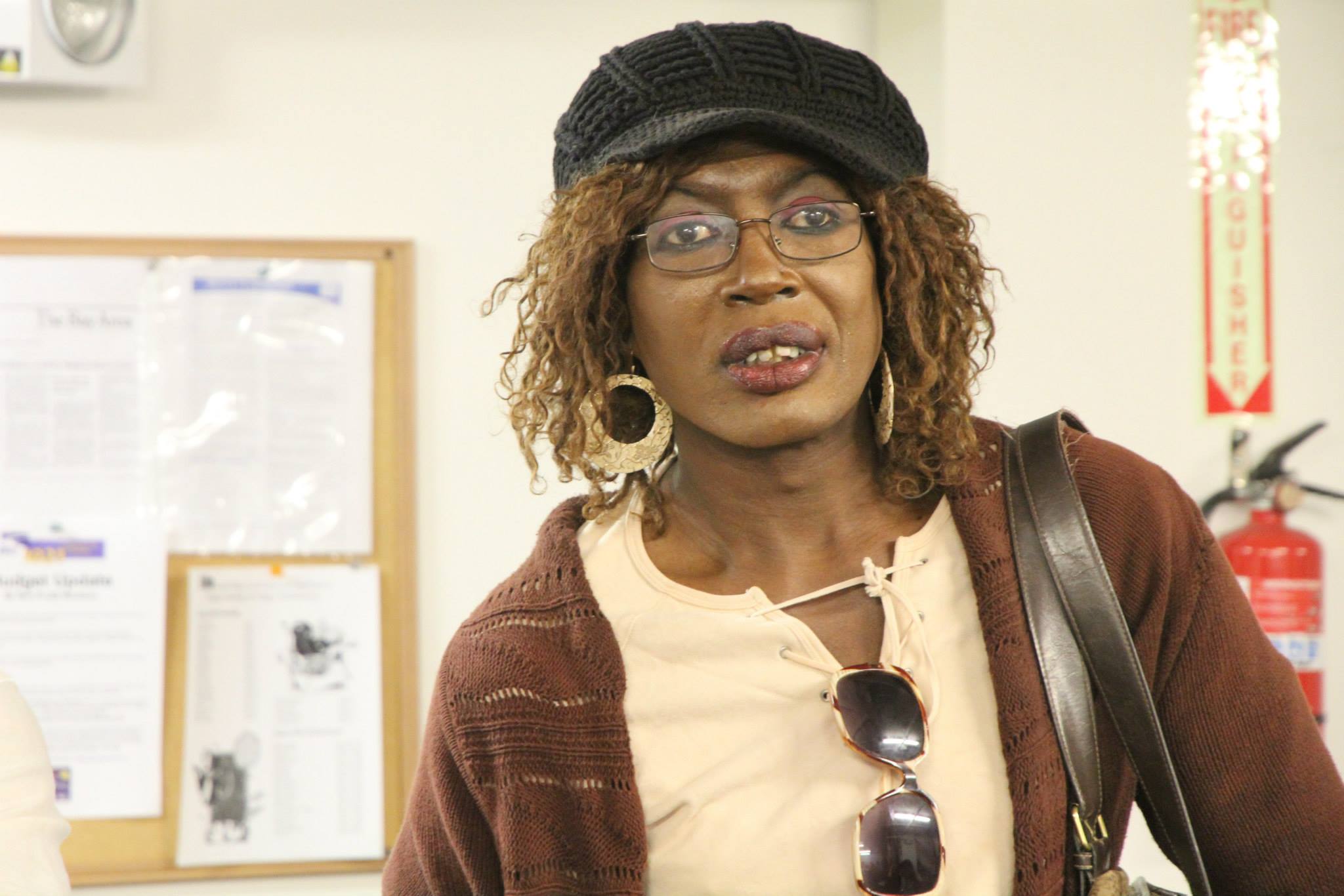
Dedicated trans rights and economic equality activist Jazzie Collins passed away this week. She was honored in June in the State Assembly for LGBT History Month, and was on the board of the annual Trans March, among many other honors and activities. There will be a legacy party and fundraiser for Jazzie’s end-of-life expenses at El Rio tomorrow, Sat/13, 3pm-8pm. Below is a remembrance from her good friend Tommi Avicolli Mecca.

Some people die, but they remain with you for the rest of your life. Death just can’t keep them away.

Such a person is Jazzie Collins, African American transgender woman and tireless fighter for social and economic justice for tenants, seniors, people with disabilities, the homeless, those without healthcare, LGBT folks, and so many others. An organizer of the annual Trans March and co-chair of the city’s LGBT Aging Policy Task Force, she recently received an award from the LGBT caucus of the state assembly for her many years of activism.


Born in Memphis, Jazzie, 54, died in the early morning hours of July 11 at Kaiser Hospital, leaving a huge hole in the heart of San Francisco.

I don’t remember when I first met Jazzie. I’m pretty certain it was at one of the countless demos in the late 90s we attended to protest the displacement of working-class and poor people during the dot-com boom. She was involved in so much of the incredible activism happening in the Mission at that time, whether it involved feeding people from Mission Agenda’s food pantry, planning direct action with the Mission AntiDisplacement Coalition, or helping elect fellow activist Chris Daly as the neighborhood’s district supervisor.

Our paths crossed often, sometimes at the monthly meetings of Senior Action Network (now Senior Disability Action) where she worked, or a tenants rights demo on the steps of City Hall just before we went inside to take advantage of our two minutes at the mic during public comment. Jazzie was never at a loss for words.

One of the original members of QUEEN (Queers for Economic Equality  Now), she helped organize several protests, including one outside the store run by the Human Rights Campaign in the Castro. We were furious that the national gay rights group pushed to exclude transgender people from ENDA (Employment Non-Discrimination Act), the federal gay employment rights bill.

When a call went out from the Board of Supervisors for its newly formed LGBT Aging Policy Task Force, Jazzie called me and told me in no uncertain terms that I had to apply. She had already sent in her application and wanted to make sure another strong housing advocate was on the task force.

We sat together at the hearing, waiting for our chance to sell ourselves to the supervisors. After we were both appointed, and as we left the room, Jazzie started talking about what she wanted the task force to do, especially on housing issues. She was always a woman with a vision. Or a cause.

Jazzie called me whenever there was something to be done. She’d say, “We gotta do something about this.” It didn’t matter how busy I was. I knew I could never say no to her.

Jazzie, my sister, wherever you are now, I know you’ll always be beside me when I’m out there fighting the good fight.

Unfinished business

1

THEATER About two years ago, a small band of Brits came on an exploratory mission from the South of England to the Bay Area. They wanted to discover what, if anything, they had in common with their American counterparts in the theater world. The trip ended with a party in the Mission, where UK performance duo Action Hero performed A Western for their new friends way out West.

And that might have been that. But a year later, in 2012, Action Hero (Gemma Paintin and James Stenhouse) was back, this time leading a workshop-residency at CounterPULSE. This collaboration with local artists (six people drawn mostly from the experimental dance and performance world) produced a one-night smorgasbord of performance, complete with a dining area, a menu, and a wait staff to bring you to your performance when it was ready.

The evening was also a lively mixer, in which a friendly, jocular man named Ben Francombe — head of the pedagogically radical theater department at the small arts-focused University of Chichester in West Sussex — was an enthusiastic participant.

As Francombe explained at the time, the school of performing arts at his university was eager to maintain contact with places like CounterPULSE as a partner in creative exchanges. “We share a commitment to the idea of ‘exchange’ in creative processes,” he wrote, in an email correspondence shortly before arriving in San Francisco, “and how artists develop methods of working through sharing ideas that are ‘foreign’ and different from their established practice. As an arts-based university, we are very interested in exploring ways in which our international connections stimulate our cultural ideas.”

He added, “As a department we have a unique commitment to developing small-scale artists, and exploring radical ideas on the nature of theater and performance through facilitating interesting artists in interesting creative contexts.”

That sounds good on paper, but what would it really mean in practice? The Chichester folks were the first to admit they didn’t really know but were seriously interested in finding out, as long as their counterparts here were game to work on it together.

It turned out many were. The call for a joint programs of exchange geared to artist-centered new work found receptive ears among the experimental dance and performance makers gathered around CounterPULSE — whose working methods are already more or less akin to the devised approach facilitated at Chichester — but it also attracted people in the theater scene, where devised work (ensemble-driven theater built from the ground up) has its champions in companies like Mugwumpin and the work of artists like playwright-director Mark Jackson and actor Beth Wilmurt, co-creators of The Companion Piece at Z Space in 2011. Indeed, Z Space was soon onboard for more contact across the pond. Meanwhile, Jackson, Wilmurt, and CounterPULSE’s Julie Phelps all went over to Chichester in February of this year to see the university’s theater-performance MA program in action.

This year, Chichester’s open-ended and open-minded dialogue with San Francisco’s theater and performance scene ramped up considerably with a just completed summer intensive at Z Space. And there’s more just ahead, including a festival of devised performance in October (at CounterPULSE) and, if all goes well, the inauguration sometime in 2014 of an international MFA program in theater-performance making exclusively linked to San Francisco.

“We decided to come here a couple of years ago,” says Louie Jenkins, a solo artist and Chichester faculty member who led the summer intensive in partnership with Mark Jackson. (Jackson has detailed the evolution of his involvement with, and his firsthand experience at, Chichester in an editorial promoting the intensive in Theatre Bay Area magazine.) “[We were] trying to understand what was happening here and whether what we did fit in with the ethos here. So we met with these different people. And the sense we had was that this was a fertile place.”

The summer intensive involved 16 artists, including several Chichester masters students mixed in with the disparate group of local theater, dance, and performance practitioners. It also came with a public component, designed to further introduce this type of work to local audiences. This included a showing of MA student work and a shrewd little piece by Box Tracy Theatre Dance Company (Nixx Strapp-Freeman and Valerie Watkinson) at CounterPULSE.

It also included last Saturday’s completely sold-out showing at ZBelow of work generated during the intensive — four pieces by four groupings of British and local artists. No director, no playwright, no set designers — the artists did everything, being responsible for the whole experience. The title of the evening was “Unfinished Business,” and yet it felt startlingly complete as an evening of performance. Still, the title is both apt and promising. At the same time, it was arguably one of the more exciting things to happen in a local theater for a long time.

“We often talk about accidents,” says Jenkins, whose own history as an artist and resident of San Francisco in the 1990s inspired Chichester’s initial foray into the Bay Area. “Out of this process of trying to make work, an accident will happen, and that becomes what the piece is about. I know it’s a luxury to have time and space to be able to look at the processes, but in [the usual mode of theatrical production] there is very little flexibility for mistakes to happen, for accidents to happen. I think that is when the excitement comes into theater.” 

For information on the MFA program as it emerges and for details on the formal launch in October 2013: www.chi.ac.uk/theatremaking


Our Weekly Picks: July 10-16, 2013

0

WEDNESDAY 10


Botany’s Breath

Even if you are a plant lover, the Conservatory of Flowers in Golden Gate Park can intimate you. Taking but a few steps from the Highland to the Lowland Tropics, places that on the outside are hundreds of miles apart, is decidedly weird. But choreographer Kim Epifano loves it. Her Epiphany Productions Sonic Dance Theater’s Botany’s Breath is both a tribute to the natural world and a wake-up call to be mindful of our position within in. Joining Epifano’s eight dancers are excellent collaborators Norman Rutherford and Peter Whitehead (music) Allen Willner (lighting design), and Ellen Bromberg and Ben Estabrook (video design). Space is tight so only 40 people at a time can take in the show.(Rita Felciano)

Through Sat/13, 7:30pm and 9pm, $25–$30

Conservatory of Flowers

100 John F. Kennedy Drive, Golden Gate Park, SF.

conservatoryofflowers.org/special-events


The Melodic

The Melodic is like a flavorful snack that hits all the right spots. Pegged as experimental Afro-folk-pop, the London quartet’s delicious harmonies alone are enough to back this, but only one part of its allure — the group is inspired by sounds around the world. While the West African folk is brought by instruments like the Kora, and the Latin influence is evident in the acoustic guitar picking and charango, the songs are also chockfull of poppy melodies and whimsical lyrics. Just as readily though, the group cranks out a song like “Ode to Victor Jara,” with such a heavy tone and earnest lyrics, you’d swear you’re hearing some kind of beautiful eulogy. The point is, the band is mighty versatile, dipping between South American and African influences with a pop edge — and how can that not translate into a great live performance? (Hillary Smith)

With Song Preservation Society and Dyllan Hersey

8:30pm, $12

Rickshaw Stop

155 Fell, SF

(415) 861-2011

www.rickshawstop.com


The Flamin’ Groovies

Influential 1960s rockers the Flamin’ Groovies — who delivered wailing cult classics like “Slow Death,” “You Tore Me Down,” and “Shake Some Action” (you know this last one from its resurrection in the film Clueless) — have gone through some serious band changes over the past four decades, with more than 15 members rotating through the legendary group and some legendary rifts in the mix as well. Roy Loney has moved on to Roy Loney and the Phantom Movers. This current lineup is a circle back to Cyril Jordan, Chris Wilson, and George Alexander, who all overlapped in the group from 1971 through ’80. That power-pop lineup played a hastily arranged show in SF earlier this year, its first time together since ’81, but now it’s given you more advance notice. The current crew is rounded out by drummer Victor Penalosa. Don’t miss it again. (Emily Savage)

With Deniz Tek (Radio Birdman), Chuckleberries, DJ Sid Presley

9pm, $25

Chapel

777 Valencia, SF

www.thechapelsf.com


THURSDAY 11


Molly Ringwald

While Molly Ringwald might be best known for her acting career, having starred in several 1980s hit movies, she has recently returned to her first love, singing. She started performing with her father, a jazz pianist, when she was just a few years old, and recorded and released several songs before turning her attention to acting. Her latest album, Except Sometimes was released earlier this year, and showcases her sultry vocals, along with her love for the classics and a desire to mesh those styles with more contemporary material — such as a jazz rendition of “Don’t You (Forget About Me),” from her film The Breakfast Club. (Sean McCourt)

Through Fri/12, 8pm (also 4pm, Sat/13), $50–$125

Starlite Room, Sir Francis Drake Hotel

450 Powell Street, SF

www.societycabaret.com


FRIDAY 12


“New Works by Emily Glaubinger // Sean Newport”

This in-store exhibit takes the one-dimensional and make it pop in 3-D. It brings together noted local graphic designer/jewelry-maker Emily Glaubinger’s colorful illustrations of bold patterns and textiles and Sean Newport’s carefully crafted sculptures, “turning her intricate illustrations into 3-D pieces of art.” The “New Works by Emily Glaubinger // Sean Newport” opening event at Mission apparel store Nooworks includes live musical performances by Wild Hum and Philip Manley Life Coach (Glaubinger created the eye-popping album cover for Life Coach’s newest record, Alphawaves). As Glaubinger mentions in the invite, this will be her last local event, for now — she’s moving to Philadelphia. So it will indeed be your final opportunity (in the foreseeable future) to witness the homespun talent of one of SF’s favorite illustrators. (Savage)

Through Sept. 15

Opening tonight, 6-10pm, free

Nooworks

395 Valencia, SF

www.nooworks.com


Suspiria and The Exorcist double feature

If there’s anything horror movies of the 1970s taught us, it’s that evil lurks in unexpected places — a comfortable brick manse in Georgetown, or a ballet school in Germany, for example. Tonight, immerse yourself in a double-feature that presents two of the decade’s spookiest standouts. First up is the 1973 film that launched Catholic nightmares galore (and probably just as many head-rotation jokes): William Friedkin’s The Exorcist, presented in director’s-cut form for maximum Captain Howdy thrills. It’s paired with Italian genre master Dario Argento’s 1977 Suspiria, which is still crazy after all these years — and is the perfect flick to get you pumped for soundtrack artist Goblin’s October tour stop in San Francisco. (Cheryl Eddy)

The Exorcist, 7pm; Suspiria, 9:30pm, $8.50–$11

Castro Theatre

429 Castro, SF

www.castrotheatre.com


“David King’s Odd Alcove”

Iconography and graphic design have long been integral to the ethos of punk. For a certain sect, there’s no stronger symbol than the iconic, anarcho-punk Crass logo (once explained by the designer David King as “a cross and a diagonal, negating serpent, formed into a circle.” This week, Needles and Pens will present “David King’s Odd Alcove,” a solo show and book release for The Secret Origins of the Crass Symbol, which will include Crass graphics, photographs, wood constructions, “hi-art, lo-art, and more.” King, who grew up in London, met Crass’ Penny Rimbaud and Gee Vaucher in art school, lived with the band at Dial House, created illustrations for Crass and other acts, formed his own bands, and migrated to San Francisco during the early 1980s punk explosion. He’s remained here ever since, and now brings an assortment of personal treasures for this show. (Savage)

Through Aug. 12

Opening tonight, 7-9pm, free

Needles and Pens

3253 16th St., SF

(415) 255-1534

www.needlesandpens.com


Winfred E. Eye

Rough around the edges but smooth when he wants to be, Winfred E. Eye frontperson Aaron Calvert crafts compelling tunes no matter where he takes them. From blues to folk to rock, Calvert’s haggard, sing-talk style surprisingly doesn’t get old. “Moonlight touches on the snow, moonlight touches on my soul,” yelps Calvert in “Money in Bank,” a hybrid tune of country and rock’n’roll. The group’s songs work on low frequencies, never using volume as a crutch to get listeners pumped. Instead, it employs eloquent yet accessible lyrics, smooth vocals, and tight rhythms to draw a crowd. (Smith)

With Glacier and Beware of Safety

9:30pm, $12

Bottom of the Hill

1233 17th St., SF

(415)626-4455

www.bottomofthehill.com


Acid Pauli

Punk bands, Bjork productions, hip-hop projects, an ambient album on Nicolas Jaar’s label, mixes for Crosstown Rebels: Martin Gretschmann has many musical roles and aliases. In DJ mode as Acid Pauli, the guy sends me Googling every time, re-energizing my excitement for new sounds. Half the time it’s something I’ve never heard like the wonky jazz romp of Der Dritte Raum’s “Swing Bop,” or tectonically teutonic deep house of Gunther Lause’s “Mountain.” (Where the school children astral pop on Jan Turkenburg’s “In My Spaceship” came from I. Just. Don’t. Know.) Even when it’s as familiar as Nancy Sinatra or Johnny Cash, Gretschmann reworkings are something else entirely. At this debut three+ hour set, I expect to see at least few cell phones on the dance floor, Shazam-ing to keep up. (Ryan Prendiville)

With Eduardo Castillo (Crosstown Rebels/Voodoo),

9pm-3:30am, $12 presale

Public Works

161 Erie St., SF

(415) 932-0955

www.publicsf.com


SATURDAY 13

Creepy KOFY Movie Time: The Golem

Keeping the tradition of the old-school local late-night horror host TV show alive and well — or perhaps undead and twisted would be better terms — the ghouls, er, guys behind “Creepy KOFY Movie Time” are getting out of their cave/studio and hosting a special party at one of the oldest theaters in the city. Featuring a screening of the classic 1920 horror flick The Golem (with new music by Hob Goblin) co-hosts Balrok, Webberly, and Slob will be on hand for the festivities that will also include live music from their house band the Deadlies, a bevy of beautiful Cave Girls, beer, prizes, and more. (McCourt)

9pm, $7.50–$10

Balboa Theater

3630 Balboa, SF

cinemasf.com/balboa


MONDAY 15

Langhorne Slim and the Law

Langhorne Slim and the Law is jumpy, chipper, and a whole lot of fun on stage — which is par for the course because it doesn’t need any of that. The group’s raw energy and commitment to its songs is seen in the stand-up bassist’s wriggly plucking, in the way Sean Scolnick approaches the mic like he’s communicating an urgent truth, and in the obvious connection they all share on stage. The group’s acoustic sound jumps as easily into foot-stomping folk as it does to soul and dirty rock. And Scolnick’s dynamic vocals thread it all together. One thing you can be sure of is there will never be a lack of energy or zeal at a Langhorne show. And with Easy Leaves on the bill, this show might just have double. (Smith)

With Easy Leaves

8pm, $20

Independent

628 Divisadero, SF

(415)771-1421

www.theindependentsf.com


TUESDAY 16

The Jazz Coffin Emergency Ensemble

If the free jazz sets on Wednesdays at Amnesia have taught us anything, it’s that hipsters can A) swing dance surprisingly well and B) appreciate music un-ironically when it comes without a price tag. The Jazz Coffin Emergency Ensemble promises standards from the 1950s and ’60s, a period when jazz was really evolving its own sub-genres. The band describes its set as verging on funk and march/dirge-heavy. This is the group’s second concert at El Rio and the price is certainly right. Hell, if that’s not enticing enough, for just $4 at 6:30pm before the show, Science, Neat, a monthly science happy hour that pairs short talks with live demos, will be on the patio with this month’s theme “Brains! Brains! Brains?” It’s the perfect opportunity to get your mind blown during a bustling happy hour at a colorful bar before enjoying some old favorites and a cheap buzz. (Ilan Moskowitz)

With Science, Neat (6:30 p.m. on the patio, $4 donation)

8pm, free

El Rio

3158 Mission, SF

(415) 800-8782

www.elriosf.com


Rep Clock

0

Schedules are for Wed/10-Tue/16 except where noted. Director and year are given when available. Double and triple features marked with a •. All times pm unless otherwise specified.

ARTISTS’ TELEVISION ACCESS 992 Valencia, SF; www.atasite.org. $5-6. “OpenScreening,” Thu, 8. For participation info, contact programming@atasite.org. “Re-Inventing the Reel,” artist-made works from Elements of Image Making, Fri, 8. “Your Skin is the Fourth Wall,” video and performance work, Sat, 8.

CASTRO 429 Castro, SF; (415) 621-6120, www.castrotheatre.com. $8.50-11. •The Night of the Hunter (Laughton, 1955), Thu, 7, and Cape Fear (Scorsese, 1991), Thu, 8:45. •The Exorcist (Friedkin, 1973), Fri, 7, and Suspiria (Argento, 1977), Fri, 9:30. The Craft (Fleming, 1996), Sat, 3, 8. With a “witch-tacular” performance starring Peaches Christ, Sharon Needles, Alaska Thunderfuck, and Honey Mahogany. This event, $30-80; more details at www.peacheschrist.com. “Ray Harryhausen Tribute:” The 7th Voyage of Sinbad (Juran, 1958), Sun, 3:05, 7, and Jason and the Argonauts (Chaffey, 1963), Sun, 1, 4:55, 8:45. Diana Vreeland: The Eye Has to Travel (Immordino Vreeland, 2011), Tue, 7, and Renoir (Bourdos, 2012), Tue, 8:45.

CHRISTOPHER B. SMITH RAFAEL FILM CENTER 1118 Fourth St, San Rafael; (415) 454-1222, www.cafilm.org. $6.75-$10.25. Augustine (Winocour, 2012), call for dates and times. Frances Ha (Baumbach, 2012), call for dates and times. Rebels With a Cause (Kelly, 2012), call for dates and times. 20 Feet From Stardom (Neville, 2013), call for dates and times. One Track Heart: The Story of Krishna Das (Frindel, 2012), July 12-18, call for times. Storm Surfers 3D (McMillan and Nelius, 2012), July 12-18, call for times.

CLAY 2261 Fillmore, SF; www.landmarktheatres.com. $10. “Midnight Movies:” The Room (Wiseau, 2003), Fri, midnight. Hosted by Sam Sharkey.

“FILM NIGHT IN THE PARK” This week: Creek Park, 400 Sir Francis Drake, San Anselmo; www.filmnight.org. Free (donations appreciated). Footloose, Fri, 8. Union Square, Geary at Powell, SF. Vicky Cristina Barcelona (Allen, 2008), Sat, 8.

518 VALENCIA SF; www.laborfest.net. Donations accepted . International Working Class Film and Video Festival: •Shift Change (Dwarkin and Young, 2012), and One Shot, One Kill (Fujimoto, 2009), Wed, 7. Also ILWU Local 34 Hall, 801 Second St, SF. •The Contis: The Struggle Continues (Clatot, 2010), and On the Art of Water (Luzi and Bellino, 2012), Fri, 7.

JACK LONDON SQUARE Market lawn, Harrison at Water, Oakl; www.jacklondonsquare.com. Free. Hitchcock (Gervasi, 2012), Thu, sundown.

PACIFIC FILM ARCHIVE 2575 Bancroft, Berk; (510) 642-5249, bampfa.berkeley.edu. $5.50-9.50. “A Call to Action: The Films of Raoul Walsh:” Regeneration (1915), Fri, 7; The Yellow Ticket (1931), Fri, 8:30; The Big Trail (1930), Sun, 6:30. “From the Archive: Treasures of Eastern European and Soviet Cinema:” Pastorale (Iosseliani, 1975), Wed, 7; Five Evenings (Mikhalkov, 1979), Sat, 6:30. “Dark Nights: Simenon and Cinema:” La tête d’un homme (Duvivier, 1933), Thu, 7; Stray Dog (Kurosawa, 1949), Sat, 8:30. “Castles in the Sky: Masterful Anime from Studio Ghibli:” Porco Rosso (Miyazaki, 1992), Sun, 4:30.

ROXIE 3117 and 3125 16th St, SF; (415) 863-1087, www.roxie.com. $6.50-11. A Band Called Death (Covino and Howlett, 2013), Wed-Thu, 7, 9. Maniac (Khalfoun, 2012), Wed-Thu, 7:15, 9:15. San Francisco Frozen Film Festival, indie films, Fri-Sat. More details at www.frozenfilmfestival.com. How to Make Money Selling Drugs (Cooke, 2013), July 12-18, 7, 9 (also Sat-Sun, 3, 5).

VOGUE 3290 Sacramento, SF; www.wordsondance.org. $20. “Words on Dance:” Maria Tallchief in Conversation with Evelyn Cisneros (1998), Mon, 7.

YERBA BUENA CENTER FOR THE ARTS 701 Mission, SF; www.ybca.org. $8-10. André Gregory: Before and After Dinner (Kleine, 2012), Thu and Sat, 7:30pm; Sun, 2.

Summer ghouls

0

emilysavage@sfbg.com

TOFU AND WHISKEY In these past three years, Phono Del Sol has built itself up into a tastemaker midsummer’s indie music fest — and it’s one to watch. It makes sense: the one-day fest is curated by on-the-pulse local blog, the Bay Bridged.

And beyond the interesting (and mostly local) band choices — the first year featured Aesop Rock and Mirah, last year the Fresh and Onlys and Mwahaha, and this year Thee Oh Sees, YACHT, Bleached, and K. Flay will headline — there’s something about the approach and atmosphere that calms the nerves.

It’s in the Mission’s Potrero Del Sol park, a hilly, grassy area bordered by an active skate park. During the fest, skaters whizz by near the bands, and street food vendors offer salty snacks on the other side of the stage.

The event tends to inhabit a particular San Francisco garage scene vibe of yesteryear, apart from current complications brewing in the nearby neighborhood between the old and new, the tech workers and SF lifers.

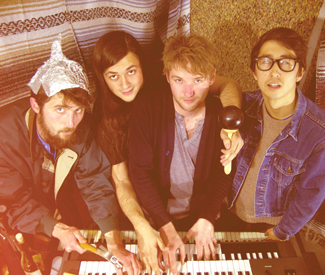
One of the newest bands on this year’s bill fits this feeling as well, the young garage pop four-piece Cool Ghouls. The psych-inflected group is relaxed and gracious, perhaps not yet jaded by the outlying music community or industry. And they’ll be bringing a horn section to Phono Del Sol this year. (Sat/13, 11:30am-7pm, $20. Potrero Del Sol Park, 25th Street at Utah, SF. www.phonodelsol.com).

Cool Ghouls, named after a phrase George Clinton used in a Parliament Funkadelic concert film, are a bit giggly during our conversation from lead guitarist Ryan Wong’s Duboce Park area apartment. They seem new to this whole recognition thing, and thusly, speak candidly, and nearly in circles. Singer Pat McDonald, bassist Pat Thomas, and Wong all grew up in the Bay Area, attending high school in Benicia together, and met up again in San Francisco after college. Alex Fleshman met the others when he went to San Francisco State University.

They formed in early 2011 and began playing shows almost immediately — in early spring of that year, showing up at brick-and-mortar spots, house shows, even Serra Bowl before it closed, and at Noise Pop. That’s where they first crossed my path, as they began popping up at shows on a frequent basis. “Now, we’re being asked to play more local shows then we can play,” Thomas says. “Pat McDonald seems to know a lot of people somehow, maybe it’s his hair? Or he’s just like, really nice.”

Their self-titled debut full-length, recorded by Tim Cohen of Fresh and Onlys and Magic Trick, saw release this April on Empty Cellar Records. “We thought we could record a whole album by ourselves, so we recorded 90 percent of it on an eight-track recorder,” Wong says. “We showed Arvel [Hernandez], who runs Empty Cellar Records…he told us ‘the songs are really good but the recording is just shitty.'”

He enlisted Cohen to record it, and said he’d release it on Empty Cellar. They were ecstatic with the revelation, and excited to work with the talented Cohen. They spent a few days in his Western Addition home, rerecording the full album while crammed in Cohen’s bedroom at the top of a towering Victorian near Alamo Square.

Cohen’s since become a de facto advocate for the band, writing a glowing press release about Cool Ghouls and the album, in which he defiantly explains “First things first: Cool Ghouls are not a retro act… Truth be told, this being their first official release, they may even be a bit naïve in their dogged pursuit of the true-blue, home-spun, rock and roll lifestyle.”

Though he later concedes, “If one were to ascribe to them a ’60s-reverent description, as one often does in the case of San Francisco bands, one would most likely find an artistic kinship with some of the most inimitable, idiosyncratic, yet unmistakably influential bands of the retro-fitting oeuvre. The Troggs, The Monks, Sir Douglas Quintet come to mind immediately. (Save your Kinks and Rolling Stones references.) Like the aforementioned, the Ghouls are natural heirs to the folkloric lineage which precedes them, adding dashes of weirdness where needed.”

The group laughs when I bring up the Cohen praise, “it’s so funny things people take away from press releases…but he did a really good job of writing that, I didn’t even know he understood us that well,” Thomas says. “He doesn’t give you that much in person, he’s a pretty stoic guy, so it’s been really cool to see that through all of that, he was digging us.”

“We were all kind of intimidated, then that came out, and I didn’t have any idea he was even writing anything,” Wong adds.

The Ghouls are democratic, and all are multi-instrumentalists, with each group member writing songs and bringing the skeletons to the group to flesh out. And many of the tracks on the album do evoke that garage pop weirdness Cohen identified, and also a casual self-awareness.

Thomas wrote joyful first single “Natural Life” quickly and brought it to the band. The perfectly corresponding video by his film student brother Rob Thomas features the band frolicking in the Marin Headlands and Sutro Baths. “That whole organic approach, natural approach, putting your pieces in place and then just winging it, is something that we generally do — it keeps it collaborative,” Thomas says.

Another standout, is mid-tempo “Witches Game,” which singer McDonald wrote, starting with the fuzzy guitar riff that rides strong through the track.

Woozy, surfy “Grace” was one of the first songs they ever played together, and usually closes out their live sets. And they agree that jangly psych-pop “Queen Sophie” was one of the more collaborative songs. There’ll be a proper video for that one out soon too.

“The whole album was a group effort. I think of it as a specific piece of where we were at when we recorded it,” Wong says.

The album artwork is worth noting as well, a collage-painting made by Thomas with a big glittery sun, swirly watercolor images of clouds, snowy mountaintops, red-yellow fire, and a colorful rooster. The images weren’t meant necessarily to reflect the songs on the album, but ended up having some meaning after the fact.

“I was just trying to represent what I lean toward anyway, like if it’s a painting I make, it’ll probably evoke the music I make, just because I’m making both of them,” Thomas says. “But liked the rooster image because I was thinking about the way roosters strut, and this is our first album.”

Wong pipes up, “I feel the way the album is with these songs, [it’s about] the morning, and the ideas of the natural life. It’s appropriate because it’s our first album, but maybe I’m looking too much into it?”

Cool Ghouls will move on soon anyway — they’re currently prepping new songs and plan to record a second album this August.


DAVINCI

Fillmore District-raised emcee DaVinci plays this free show alongside fellow burgeoning local rap duo Main Attrakionz, Young Gully, Shady Blaze, Ammbush, and Sayknowledge. DaVinci has been releasing tracks for a few years, in late 2012 dropping full-length The MOEna Lisa with an ode to SF in track “In My City” with the telling lyric, “Trying to push us out of the city/but we ain’t leaving,” in a hoarse whisper, but also referencing favorite spots like the waffle house at Fillmore and Eddy (Gussies).

Wed/10, 9pm, free. Brick and Mortar Music Hall, 1710 Mission, SF; www.brickandmortarmusic.com.


JAPONIZE ELEPHANTS

The elegant yet spooky old-world-carnival act Japonize Elephants — noted for drawing sounds from eclectic styles like gypsy jazz, bluegrass, and klezmer — will celebrate the vinyl release party for newest album Mélodie fantastique, this week at Amnesia. Go, and witness all the instrumentation you can handle (fiddle, banjo, glockenspiel, vibraphone, accordion, percussion, surf guitar), along with four-part vocal harmonies. A group of waltzing ghosts, like the ones you find on the Haunted Mansion ride, wouldn’t seem out of place here.

Thu/11, 9:30pm, $7–$10. Amnesia, 853 Valencia, SF. www.amnesiathebar.com.


Hey, baby

0

culture@sfbg.com

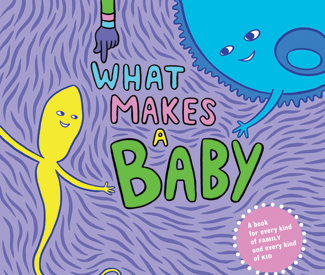
LIT A new children’s book with a social justice, all-inclusive approach to reproduction? To anyone who might question the need for such a thing, look no further than Toronto-based sexual health educator and writer Cory Silverberg‘s enormously successful crowdfunding campaign to get it published: $65,000 in one month. Not too bad to kickstart a picture book, eh?

Silverberg, along with illustrator Fiona Smyth, noticed that the existing resources for parents to explain to preschool-aged children where they came from are by default heterosexual and gender binary-based, thus excluding many families and children. These books also don’t provide much guidance on topics like adoption or alternative fertilization methods. Silverberg’s fundraising campaign gave LGBT parents an opportunity to prove demand for a factual, age-appropriate, children’s book inclusive to all families regardless of how many people were involved, what the orientation, gender identity, or other make up of the family is, or how it came to be that way.

Parents in the Bay Area offered a lot of the support. Dr. Sonja Mackenzie, faculty at the Health Equity Institute and Center for Research and Education on Gender and Sexuality (CREGS) at San Francisco State University is a queer parent of two children, aged three and seven. Dr. Mackenzie started looking for resources about birth and reproduction when her daughter was two and she was pregnant with her second child. She and her partner sought out media providing age-appropriate but real information about reproduction that reflected their two-mom family structure. For years they found nothing.

Which is why when she saw the What Makes A Baby campaign, she pre-ordered copies for their daughter’s first grade class and their son’s preschool class. Dr. Mackenzie said her favorite parts of the book are the questions that ask children to reflect on “who helped bring together the sperm and the egg that made you?” — because of the possibilities for varied family structures that question allows for. That, she says, “is beyond what we have ever seen represented in children’s books.” She also notes the tear-jerker at the close of the book that asks, “Who was waiting for you to be born?” alongside a depiction of many and varied people surrounding a baby.

Bay Area backer Vicki Hudson, parent to two kids aged four and one, also started looking for books when her wife was pregnant with their second child. What Makes A Baby “enables many different types of families to feel represented. Our story was there.” She also appreciated the physiological accuracy of the preschool material. Hudson believes that using accurate reproductive terms empowers children.

Another family structure included in the story’s framework is that of a single parent household. Hilary Brooks of Berkeley is a single mother by choice, whose five-year-old daughter has a known sperm donor. Brooks was excited about the book because she was “ecstatic to see this entry for young children… it’s more accurate, includes everyone, and will not alienate many of the children it needs to reach.” Once she received her copy she was not disappointed, “I love that love is included in this book, and that it is reframed as love for every child from their family — instead of originating in hetero lovemaking, like it was in the sex-ed books I read growing up.” Which is a main premise of Silverberg’s work, to provide a sexual education resource that is straight friendly, but is also for the parents who don’t have anything else right now.

Are mainstream publishers beginning to recognize this demand? There’s still an overwhelming amount of stigma associated with any book related to alternative sexuality. Despite the actual facts of life, books like What Makes A Baby are still too risky for mainstream publishers, it seems. Or maybe it just takes a little pitch in a language they understand. After the outpouring of immediate and public financial support for Silverberg’s book, he was approached by multiple publishing houses, and has signed a three-book deal with Seven Stories Press, beginning with What Makes A Baby. Silverberg’s next volume might well be What Makes a Book Contract.

CORY SILVERBERG: WHAT MAKES A BABY AUTHOR RECEPTION AND “CROWDFUNDING FOR SEX” WORKSHOP

Fri/12, 7:30 reception, free. 8:30 workshop, $10-$50 sliding scale

Center for Sex and Culture

1349 Mission, SF.

(415) 902-2071

www.sexandculture.org

Alerts

0

WEDNESDAY 10

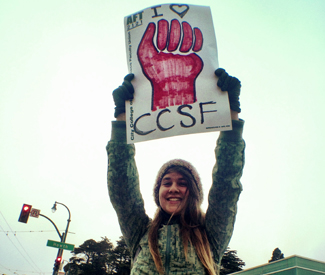
Laborfest: CCSF’s accreditation crisis City College of San Francisco, Mission Campus, 1125 Valencia, SF. www.saveccsf.org. 6-8pm, free. City College serves about 85,000 students and faces threat of closure in July 2014 if its appeals to the Accrediting Commission for Community and Junior Colleges, which has threatened to revoke the school’s accreditation in a year, aren’t successful. At this forum, Marty Hittelman, former president of the California Federal of Teachers, will speak on accreditation and the ACCJC. Sponsored by Save CCSF Coalition and AFT 2121.

THURSDAY 11

Laborfest panel: The press and the powerful First Unitarian Universalist Church, 1187 Franklin, SF. www.laborfest.net. 7-9pm, free. Gray Brechin, author of Imperial San Francisco, will join Westside Observer publisher George Wooding, former Berkeley Daily Planet reporter Richard Brenneman, and former Bay Guardian reporter Savannah Blackwell for a panel talk on the erosion of investigative journalism in the face of commercialization and monopolization of the media.

SUNDAY 14

Panel: The continuing battle for free expression Contemporary Jewish Museum, 736 Mission, SF. www.ginsbergfestival.com. 3-5pm, $12. Allen Ginsberg’s seminal poem, Howl, represented a landmark in the history of freedom of speech, obscenity issues, and the censorship of literary works. This panel talk, led by Peter Maravelis of City Lights Booksellers with panelists Rebecca Farmer of the American Civil Liberties Union (ACLU), Mark Rumold of the Electronic Frontier Foundation (EFF), and James Wheaton of the First Amendment Project, will focus on the continuing fight against censorship today. Presented in conjunction with The Allen Ginsberg Festival and the exhibition Beat Memories: The Photographs of Allen Ginsberg, at the Contemporary Jewish Museum.

TUESDAY 16

Green renters expo Ecology Center, 2530 San Pablo Ave, Berk. Ecologycenter.org. 7-9pm, free. Who says you have to own a home to live a green and energy efficient lifestyle? The Bay Area offers a myriad of resources for renters who wish to green their living spaces with efficiency upgrades, which can also help save money. Representatives from Rising Sun Energy Center, Community Energy Services Corps, the City of Berkeley Recycling Program, Stopwaste.org, the Ecology Center and others will be on hand to offer presentations, tips and advice, and to answer questions.


Stage Listings

0

Stage listings are compiled by Guardian staff. Performance times may change; call venues to confirm. Reviewers are Robert Avila, Rita Felciano, and Nicole Gluckstern. Submit items for the listings at listings@sfbg.com.

THEATER

OPENING

Endgame Royce Gallery, 2901 Mariposa, SF; www.itetheater.org. $18-24. Previews Thu/11, 8pm. Opens Fri/12, 8pm. Runs Thu-Sat, 8pm. Through July 20. International Theater Ensemble performs Samuel Beckett’s Theatre of the Absurd classic.

Keith Moon: The Real Me Eureka Theatre, 215 Jackson, SF; www.brownpapertickets.com. $40. Opens Wed/10, 8pm. Runs Thu-Sat, 8pm; Sun, 7pm. Through July 28. Mick Berry performs the world premiere of his solo play about the Who drummer.

Wunderworld Creativity Theater, 221 Fourth St, SF; www.wunderworld.net. $10-15. Opens Sat/13, 11am and 2pm. Runs Sat-Sun, 2pm (also Sat, 11am; Sun, 5pm). Through Aug 11. Sara Moore and Michael Phillis wrote and star in this “world-premiere human cartoon,” a pantomime about an elderly Alice going back down the rabbit hole.

BAY AREA

The Loudest Man on Earth Lucie Stern Theatre, 1305 Middlefield, Palo Alto; www.theatreworks.org. $19-73. Previews Wed/10-Fri/12, 8pm. Opens Sat/13, 8pm. Runs Tue-Wed, 7:30pm; Thu-Sat, 8pm (also Sat, 2pm); Sun, 2 and 7pm. Through Aug 4. TheatreWorks presents the world premiere of Catherine Rush’s unconventional romantic comedy starring acclaimed actor Adrian Blue, who is deaf.

The Spanish Tragedy Forest Meadows Amphitheater, 890 Bella, Dominican University of California, San Rafael; www.marinshakespeare.org. $20-37.50. Opens Fri/12, 8pm. Presented in repertory Fri-Sun through Aug 11; visit website for performance schedule. Marin Shakespeare Company performs Thomas Kyd’s Elizabethan revenge tragedy.

The Wiz Julia Morgan Theater, 2640 College, Berk; www.berkeleyplayhouse.org. $17-60. Previews Thu/11, 7pm; Sat/13, 2pm. Opens Sat/13, 7pm. Runs Wed-Thu and Sat, 7pm (also Sat, 2pm); Sun, noon and 5pm. Through Aug 25. Berkeley Playhouse travels to Oz with the Tony-winning musical.

ONGOING

Betrayal Phoenix Theatre, 414 Mason, Sixth Flr, SF; www.offbroadwaywest.org. $40. Thu-Sat, 8pm. Through July 20. Off Broadway West Theatre Company performs Harold Pinter’s out-of-sequence drama about an unfaithful married couple.

Can You Dig It? Back Down East 14th — the 60s and Beyond Marsh San Francisco, 1062 Valencia, SF; www.themarsh.org. $15-50. Sat, 8:30pm; Sun, 7pm. Through Aug 25. Solo performer Don Reed returns with a prequel to his autobiographical coming-of-age hits, East 14th and The Kipling Hotel.

Chance: A Musical Play About Love, Risk, and Getting it Right Alcove Theater, 415 Mason, Fifth Flr, SF; www.thealcovetheater.com. $40-60. Thu-Sat, 8pm (also Sat, 3pm); Sun, 5pm. Through July 28. New Musical Theater of San Francisco presents Richard Isen’s world premiere work inspired by the writings of Oscar Wilde.

Dark Play, or Stories for Boys Exit Theatre, 156 Eddy, SF; www.theexit.org. $5-20. Fri/12-Sat/13, 9pm. Do It Live! Productions offers a steadily engrossing production of this slippery play from Chicago playwright Carlos Murillo, wherein a less-then-trusty teenage narrator, Nick (a clever, tightly wound, darkly charming Will Hand), addicted to “making shit up,” recounts his fateful internet-baiting of a fellow teen upon whom he had become fixated. As the unwitting object of Nick’s desire, sweet guy Adam (Adam Magil) gets pulled into an online love affair with Rachel (Amy Nowak), his first love, and — as fate and Nick would have it — Nick’s sister. But Rachel exists only online. And her equally fantastical evil stepdad (Nathan Tucker) soon intercedes, throwing Nick and Adam closer together. All of this disembodied desire floating around the ether leads to a physical climax even Freud might find a bit much, but the way there proves increasingly tense and interesting — if also a little frustrating itself at times in some strained plot points and, especially, its overwrought psychopathologizing of homoerotic desire. (Erik LaDue’s awkward set design also takes a little getting over.) But despite various flaws, the story intrigues, thanks to the solid performances from director Logan Ellis’s sure cast. Tucker and Kelly Rauch are dependable throughout in a varied range of sharp and often hilarious supporting roles. Nowak’s take on the vital (albeit imaginary) teen heroine is refreshingly straightforward. And Hand, while slightly slower to catch fire, ends up a persuasively complex figure at the center of it all. (Avila)

Foodies! The Musical Shelton Theater, 533 Sutter, SF; www.foodiesthemusical.com. $30-34. Fri-Sat, 8pm. Open-ended. AWAT Productions presents Morris Bobrow’s musical comedy revue all about food.

God of Carnage Shelton Theater, 533 Sutter, SF; www.sheltontheater.com. $26-38. Thu-Sat, 8pm. Through Sept 7. Shelton Theater peforms Yasmina Reza’s award-winning play about class and parenting.

Hedwig and the Angry Inch Boxcar Theatre, 505 Natoma, SF; www.boxcartheatre.org. $27-43. Thu-Sat, 8pm. Open-ended. John Cameron Mitchell’s cult musical comes to life with director Nick A. Olivero’s ever-rotating cast.

In A Daughter’s Eyes Brava Theater Center, 2781 24th St, SF; www.brava.org. $15. Thu/11-Sat/13, 8pm; Sun/14, 3pm. Brava! for Women in the Arts and Black Artists Contemporary Cultural Experience present the award-winning 2011 play by A. Zell Williams. It’s a tense, sophisticated exploration of the politics of class and race in the story of two daughters drawn together in uneasy alliance over a legal case that forever scarred each of their families. Based on the story of journalist-activist Mumia Abu-Jamal, placed on death row in 1982 for allegedly killing a Philadelphia police officer (he was removed form death row in 2012 but remains in prison), Williams’s well written and unpredictable two-hander takes place in the legal office of Rahema Abu-Salaam (a tough, tightly wound Britney Frazier), the young Stanford law graduate trying to get a new trial for her father, a well known Black Panther, author, and death row political prisoner. To this end, she’s convinced Katherine Tinney (a quietly forlorn, conflicted Lisa Anne Porter), daughter of the murdered white police officer with a checkered past, to craft a statement to the court requesting admittance of heretofore unexamined evidence. Director Edris Cooper-Anifowoshe and her excellent cast astutely draw out the subtleties and mounting tension in a timely and involving political play, convincingly re-set in West Oakland, that forgoes easy answers for a complicated portrait of competing filial claims to justice. (Avila)

Sex and the City: LIVE! Rebel, 1760 Market, SF; trannyshack.com/sexandthecity. $25. Wed, 7 and 9pm. Open-ended. It seems a no-brainer. Not just the HBO series itself — that’s definitely missing some gray matter — but putting it onstage as a drag show. Mais naturellement! Why was Sex and the City not conceived of as a drag show in the first place? Making the sordid not exactly palatable but somehow, I don’t know, friendlier (and the canned a little cannier), Velvet Rage Productions mounts two verbatim episodes from the widely adored cable show, with Trannyshack’s Heklina in a smashing portrayal of SJP’s Carrie; D’Arcy Drollinger stealing much of the show as ever-randy Samantha (already more or less a gay man trapped in a woman’s body); Lady Bear as an endearingly out-to-lunch Miranda; and ever assured, quick-witted Trixxie Carr as pent-up Charlotte. There’s also a solid and enjoyable supporting cast courtesy of Cookie Dough, Jordan Wheeler, and Leigh Crow (as Mr. Big). That’s some heavyweight talent trodding the straining boards of bar Rebel’s tiny stage. The show’s still two-dimensional, even in 3D, but noticeably bigger than your 50″ plasma flat panel. Update: new episodes began May 15. (Avila)

So You Can Hear Me Marsh San Francisco, 1062 Valencia, SF; www.themarsh.org. $15-50. Thu-Fri, 8pm; Sat, 5pm. Through July 20. A 23-year-old with no experience, just high spirits and big ideals, gets a job in the South Bronx teaching special ed classes and quickly finds herself in over her head. Safiya Martinez, herself a bright young woman from the projects, delivers this inspired accounting of her time not long ago in perhaps the most neglected sector of the public school system — a 60-minute solo play that makes up for its relatively slim plot with a set of deft, powerful, lovingly crafted characterizations. These complex portraits, alternately hysterical and startling, offer their own moving ruminations on a violent but also vibrant stratum of American society, deeply fractured by pervasive poverty and injustice and yet full of restive young personalities too easily dismissed, ignored, or crudely caricatured elsewhere. An effervescent, big-hearted, and very talented performer, Martinez’s own bounding personality and contagious passion for her former students (as complicated as that relationship was), makes this deeply felt tribute all the more memorable. (Avila)

Steve Seabrook: Better Than You Marsh San Francisco, 1062 Valencia, SF; www.themarsh.org. $15-50. Sat, 8:30pm. Extended through August 24. Self-awareness, self-actualization, self-aggrandizement — for these things we turn to the professionals: the self-empowerment coaches, the self-help authors and motivational speakers. What’s the good of having a “self” unless someone shows you how to use it? Writer-performer Kurt Bodden’s Steve Seabrook wants to sell you on a better you, but his “Better Than You” weekend seminar (and tie-in book series, assorted CDs, and other paraphernalia) belies a certain divided loyalty in its own self-flattering title. The bitter fruit of the personal growth industry may sound overly ripe for the picking, but Bodden’s deftly executed “seminar” and its behind-the-scenes reveals, directed by Mark Kenward, explore the terrain with panache, cool wit, and shrewd characterization. As both writer and performer, Bodden keeps his Steve Seabrook just this side of overly sensational or maudlin, a believable figure, finally, whose all-too-ordinary life ends up something of a modest model of its own. (Avila)

Tinsel Tarts in a Hot Coma: The Next Cockettes Musical Hypnodrome, 575 10th St, SF; www.thrillpeddlers.com. $30-35. Thu-Sat, 8pm. Extended through July 27. Thrillpeddlers and director Russell Blackwood continue their Theatre of the Ridiculous series with this 1971 musical from San Francisco’s famed glitter-bearded acid queens, the Cockettes, revamped with a slew of new musical material by original member Scrumbly Koldewyn, and a freshly re-minted book co-written by Koldewyn and “Sweet Pam” Tent — both of whom join the large rotating cast of Thrillpeddler favorites alongside a third original Cockette, Rumi Missabu (playing diner waitress Brenda Breakfast like a deliciously unhinged scramble of Lucille Ball and Bette Davis). This is Thrillpeddlers’ third Cockettes revival, a winning streak that started with Pearls Over Shanghai. While not quite as frisky or imaginative as the production of Pearls, it easily charms with its fine songs, nifty routines, exquisite costumes, steady flashes of wit, less consistent flashes of flesh, and de rigueur irreverence. The plot may not be very easy to follow, but then, except perhaps for the bubbly accounting of the notorious New York flop of the same show 42 years ago by Tent (as poisoned-pen gossip columnist Vedda Viper), it hardly matters. (Avila)

The World’s Funniest Bubble Show Marsh San Francisco, 1062 Valencia, SF; www.themarsh.org. $8-50. Sun, 11am. Through July 21. Louis “The Amazing Bubble Man” Pearl returns after a month-long hiatus with his popular, kid-friendly bubble show.

BAY AREA

Oil and Water This week: Rhythmix Cultural Works, 2513 Blanding, Alameda; www.sfmt.org. $15-25. Also Cedar Rose Park, 1300 Rose, Berk; www.sfmt.org. Free. Sat/13-Sun/14, 2pm. At various NorCal venues through Sept. 2. It’s a rough year for mimes, or at any rate for the San Francisco Mime Troupe who, after presenting 53 seasons of free theater in the parks of San Francisco (and elsewhere), faced a financial crisis in April that threatened to shut down this season before it even started. The resultant show, funded by an influx of last-minute donations, is one cut considerably closer to the bone than in previous years. With a cast of just four actors and two musicians, plus a stage considerably less ornate then usual, even the play has shrunk in scale, from one two-hour musical to two loosely-connected one-acts riffing on general environmentalist themes. In Deal With the Devil, a surprisingly sympathetic (not to mention downright hawt) Devil (Velina Brown) shows up to help an uncertain president (Rotimi Agbabiaka) regain his conscience and win back his soul, while in Crude Intentions adorable, progressive, same-sex couple Gracie (Velina Brown) and Tomasa (Lisa Hori-Garcia) wind up catering a “benefit” shindig for the Keystone XL Pipeline giving them the opportunity to perpetrate a little guerilla direct action on a bombastic David Koch (Hugo E Carbajal) with a “mole de petróleo” and a smartphone. Throughout, the performers remain upbeat if somewhat over-extended as they sing, dance, and slapstick their way to the sobering conclusion that the time to turn things around in the battles over global environmental protection is now — or never. (Gluckstern)

Sea of Reeds Ashby Stage, 1901 Ashby, Berk; www.shotgunplayers.org. $20-35. Wed-Thu, 7pm; Fri-Sat, 8pm; Sun, 5pm. Through Aug 18. Josh Kornbluth’s brand new comedy — it involves atheism, oboes, and the Book of Exodus — opens at Shotgun Players “before it goes on Torah.”

Superior Donuts Pear Avenue Theatre, 1220 Pear, Mtn View; www.thepear.org. $10-30. Thu/11-Sat/13, 8pm; Sun/14, 2pm. Pear Avenue Theatre performs Tracy Letts’ comedy about the redemptive power of friendship.

This Is How It Goes Aurora Theatre, 2081 Addison, Berk; www.auroratheatre.org. $32-60. Tue and Sun, 7pm (also Sun, 2pm); Wed-Sat, 8pm. Extended through July 28. An awkward love triangle between former high school classmates gets the caustic Neil LaBute treatment in Aurora Theatre Company’s production of This is How it Goes. Not content to merely skewer the familiar battles between the sexes, LaBute further prods his captive audience with the big stick of race relations, and the often unacknowledged prejudices that lurk in the hearts of men. And women. There are no innocents in this play, though each character certainly has moments where they play upon audience sympathies, only to betray them a few inflammatory lines later. As the marriage between the successful yet self-conscious African American alpha male Cody (Aldo Billingslea) and his neurotically placating Caucasian wife Belinda (Carrie Paff) erodes, the mostly affable (and former fat kid) “Man” (Gabriel Marin) insinuates himself in the middle of their troubled relationship, obviously still carrying the torch for Belinda he did 15 years ago — as well as the same wary animosity an unpopular kid carries for the star of the track team, in this case, Cody. All three actors do a very good job of shape-shifting between their middle-class Jekyll and Hyde selves, assisted in part by Marin’s amiable asides, which don’t so much lull the audience as tease them with the idea that things are about to get better, when they can only get worse. (Gluckstern)

PERFORMANCE/DANCE

BATS Improv Bayfront Theater, B350 Fort Mason, SF; www.improv.org. Fri, 8pm. Through July 26. $20. BATS Improv performs spontaneous shows based on current events.

“Botany’s Breath” Conservatory of Flowers, 100 JFK Dr, Golden Gate Park, SF; www.conservatoryofflowers.org. Wed/10-Sat/13, 7:30-8:30pm and 9-10pm (short, free outdoor video/dance performances take place each night from 8:30-9pm). $30. Epiphany Productions Sonic Dance Theater performs a site-specific contemporary dance work.

Caroline Lugo and Carolé Acuña’s Ballet Flamenco Peña Pachamama, 1630 Powell, SF; www.carolinalugo.com. Sat/13, July 21, and 27, 6:15pm. $15-19. Flamenco performance by the mother-daughter dance company, featuring live musicians.

“Courage” CounterPULSE, 1310 Mission, SF; www.counterpulse.org. Fri/12-Sat/13, 8pm. $10-15. Rasika Kumar presents a solo Bharatanatyam performance.

“Mission Position Live” Cinecave, 1034 Valencia, SF; www.missionpositionlive.com. Thu, 8pm. Ongoing. $10. Stand-up comedy with rotating performers.

“Randy Roberts: Live!” Alcove Theater, 414 Mason, Ste 502, SF; www.thealcovetheater.com. Tue, 9pm. Through July 23. $30. The famed female impersonator takes on Cher, Better Midler, and other stars.

“The Rape of Lucretia” Everett Auditorium, 450 Church, SF; www.merola.org. Thu/11, 7:30pm; Sat/13, 2pm. $25-60. Merola Opera Program presents Britten’s chamber opera.

Red Hots Burlesque El Rio, 3158 Mission, SF; www.redhotsburlesque.com. Wed, 7:30-9pm. Ongoing. $5-10. Come for the burlesque show, stay for OMG! Karaoke starting at 8pm (no cover for karaoke).

“San Francisco Magic Parlor” Chancellor Hotel Union Square, 433 Powell, SF; www.sfmagicparlor.com. Thu-Sat, 8pm. Ongoing. $40. Magic vignettes with conjurer and storyteller Walt Anthony.

“Union Square Live” Union Square, between Post, Geary, Powell, and Stockton, SF; www.unionsquarelive.org. Through Oct 9. Free. Music, dance, circus arts, film, and more; dates and times vary, so check website for the latest.

“Yerba Buena Gardens Festival” Yerba Buena Gardens, Mission between 3rd and 4th Sts, SF; www.ybgfestival.org. Through Oct 15. Free. This week: AXIS Dance Company, inMotion Dance Workshop (Sun/14, 1-2pm).

Who killed City College?

news@sfbg.com

The day City College of San Francisco heard it would close was the same day, July 3, that 19-year-old Dennis Garcia signed up for his fall classes.

With a manila folder tucked under his arm, he turned the corner away from the registration counter and strode by a wall festooned with black and white sketches of every City College chancellor since 1935, including a portrait of bespectacled founder Archibald Cloud. In a meeting room on the other side of that wall, the college’s current administrators were receiving the verdict from the Accrediting Commission for Community and Junior Colleges.

It was their worst fears of the past year realized: City College’s accreditation was being revoked. Accreditation is necessary for the college to receive state funding, for students to get federal loans, and for the degree to be worth more than the paper it’s printed on.

Unbeknownst to Garcia, he walked out of the building just as the college received its death sentence, which is scheduled to be carried out next July unless appeals now underway offer a reprieve. In the interim, CCSF will essentially be a ward of the state, stripped of the local control it has enjoyed since Cloud’s days.

Just a few blocks down Ocean Avenue is the nerve center of City College’s teachers union. Housed in a flat above a Laundromat, the scent of freshly washed clothes wafted up the staircase to an office that instantly became a flurry of ringing phones and rushed voices.

Only an hour later, 10 or so union volunteers were calling their members, contacting nearly 1,600 City College faculty whose responses ranged from sad to furious. The volunteers read them bulleted factoids about accreditation and a call to join an upcoming protest march.

But the woes of City College reach deeper than a three line script could ever cover, and can be traced back to the oval office itself, leading to a really odd question: Did President Obama kill City College?


PRESSURE FROM THE TOP

When the president trumpeted education in his 2012 State of the Union speech, he sounded an understandable sentiment. “States also need to do their part, by making higher education a higher priority in their budgets,” Obama told the nation. “And colleges and universities have to do their part by working to keep costs down.”

But the specifics of how to cut costs were outlined by years of policymaking and a State of the Union supplement sheet given to the press.

The president’s statement said that they will determine which colleges receive aid, “either by incorporating measures of value and affordability into the existing accreditation system; or by establishing a new, alternative system of accreditation that would provide pathways for higher education models and colleges to receive federal student aid based on performance and results.”

The emphasis is ours, but the translation is very simple: College accreditation agencies can either enforce the administration’s numbers-based plan or be replaced. The president’s college reform is widely known and hotly debated in education circles. Commonly known as the “completion agenda,” with an emphasis on measurable outcomes in job placement, it had its start under President George W. Bush, but Obama carried the torch.

The idea is that colleges divest from community-based programs not directly related to job creation or university degrees, and use a data measurement approach to ensure two-year schools transfer and graduate students in greater numbers. “Community colleges” would quickly become “junior colleges,” accelerating a slow transition that began many years ago.

But its critics say completion numbers are screwy: They discount students who are at affordable community colleges just to learn a single skill and students who switch schools, administrator Sanford Shugart of Valencia College in Florida wrote in an essay titled “Moving the Needle on College Completion Thoughtfully.”

Funding decisions made from completion numbers affect millions of students nationwide — and CCSF has now become the biggest laboratory rat in this experiment in finding new ways to feed the modern economy.

“I think there was a general consensus that the country is in a position that, coming out of the recession, we have diminished resources,” Paul Feist, spokesperson for the California Community College Chancellor’s Office, told us. “Completion is important to the nation — if you talk to economic forecasters, there’s a huge demand for educated workers. Completion is not a bad thing.”

Like dominoes, the federal agenda and Obama’s controversial Secretary of Education Arne Duncan tipped the Department of Education, followed by the ACCJC, and now City College — an activist school in an activist city and an institution that openly defied the new austerity regime.


WINNING THE BATTLE

In the ACCJC’s Summer 2006 newsletter, Brice Harris — then an accreditation commissioner, now chancellor of the state community college system — described the conflict that arose when colleges rallied against completion measurements established by the federal government.

“In the current climate of increased accountability, our regional accrediting associations find that tight spot to be more like a vice,” Harris wrote.

Many of the 14 demands the ACCJC made of City College trace back to the early days of Obama’s administration, when local trustees resisted slashing the curriculum during the Great Recession.

“There’s a logic to saying ‘We don’t want to put students on the street in the middle of a recession,'” said Karen Saginor, former City College academic senate president. “If you throw out the students, you can’t put them in the closet for two years and bring them back when you have the money.”

And they have a lot of students — more than 85,000. Like all community colleges in California, the price of entry is cheap, at $46 a unit and all welcome to attend. But since 2008, the system was hammered with budget cuts of more than $809 million, or 12 percent of its budget.

So programs were cut, including those for seniors, ex-inmates re-entering society, or young people enrolling to learn Photoshop or some other skill without committing to a four-year degree.

“As the recession hit, the Legislature instructed the community college system [to] prioritize basic skills, career technical, and transfer,” Feist said. “That’s to a large extent what we did. That was the reshaping of the mission of that whole system.”

It’s easy to cast the completion agenda as a shadowy villain in a grand dilemma, but as Feist or anyone on the federal level would note, people were already being pushed out of the system, to the tune of more than 500,000 students since the 2008-09 academic year due to the budget crisis. Course offerings have been slashed by 24 percent, according to the state chancellor’s office.

But City College would only go so far. Then-Chancellor Don Q. Griffin raised the battle cry against austerity and the completion agenda at an October 2011 board meeting, his baritone voice sounding one of his fullest furies.

“It was obvious to me when I heard Bush … and then Obama talking about the value of community colleges … they’re going to push out poor people, people of color, people who cannot afford to go anywhere else except the community college,” he said.

But when it came to paying for that pushback, things got tricky.

“No more of this bullshit, that we turn the other way and say it’s fine. We’re going to concentrate the money on the students,” Griffin said at a December 2011 board meeting. “You guys are talking about cutting classes, we don’t believe in that. Cut the other stuff first, cut it until it hurts, and then talk about cutting classes.”

So he slashed his own salary and lost staff through attrition and other means. The college had more than 70 administrators before 2008, and it now has fewer than 40.

“Since the recession in 2009, we’ve been seen as the rebels,” said Jeffrey Fang, a former student trustee on City College’s board. “When most of the colleges went and made cuts in light of the recession, we decided to find ways to keep everything open while doing what we could to eliminate spending.”

But those successes in saving classes put City College on a collision course with its accreditor.


LOSING THE WAR

Seven years ago, the ACCJC found six deficiencies that it asked City College to fix, finding it had too many campuses serving too many students, fiscal troubles, and hadn’t enforced measurement standards. Last year, it faulted City College for resisting those changes and tacked on eight additional demands, threatening to revoke its accreditation.

Speaking on condition of anonymity, an official who worked closely with ACCJC as a member of one of the visiting accreditation teams told us there was pressure to crack down on all the Western colleges.

“The message they’re hearing from (ACCJC President) Barbara Beno is that Washington is demanding, ‘Why are you not being more strict with institutions with deficiencies that have lasted more than two years [and taking action] to revoke their accreditation?'” the source said.

This official said this may soon ripple to other accreditation agencies. “What’s anomalous about California is we’re getting to where everyone will be in a few years.”

The ACCJC’s next evaluation is this December, where it will be reviewed by the Department of Education. It wants to be ready, says Paul Fain, a reporter for Inside Higher Ed, a national trade publication.

“Washington writ large … is pushing very hard on accreditors to drive a harder line,” Fain told us. “There’s a criticism out there that accreditation is weak and toothless.”

The U.S. Department of Education declined to comment on the issue, saying only that it will formally respond to all officially filed complaints about ACCJC.

But the numbers speak volumes. As an ACCJC newsletter first described federal pressure back in 2006, seven community colleges in California were on probation or warning by the ACCJC. By 2012 that number leapt to 28.

But the California Federation of Teachers is fighting back, and recently filed a 280-page complaint about the ACCJC with the Department of Education.

The allegations were many: Business conflict of interest from a commission member, failure to adhere to its own policies and bylaws, and even the commission President Beno’s husband having served on City College’s visiting team, which the unions said is a clear conflict of interest.

Some people think it’s a waste of time, that City College has already lost.

“That process of fighting accreditation won’t succeed, it just forestalls the problem,” said Bill McGinnis, a trustee on Butte College’s board for over 20 years. He’s also served on many ACCJC visiting teams.

But the unions are making some headway. The Department of Education wrote a letter to the ACCJC telling them to respond in full to the complaints by July 8, as this article goes to press. The accreditor will soon be the one evaluated.


WHAT’S NEXT?

In the meantime, City College has exactly one year to reverse its fortunes: The loss of accreditation doesn’t actually kick in until July, 2014. A special trustee appointed by the state will be granted all the powers of the locally elected City College Board of Trustees to get with the federal program. Without voting power, the elected body is effectively castrated.

No one knows what that will mean for the college board, not even Mayor Ed Lee, who issued a statement supporting the state takeover and criticizing local trustees for not cutting enough. “The ACCJC is fundamentally hostile to elected boards and they’ve made that clear,” City College Trustee Rafael Mandelman told us. “The Board of Trustees should and may look at all possible legal options around this.”

Although officials say classes will proceed as normal for the next year, some aren’t waiting around to see if City College will survive.

At its last board meeting, the CCSF Board of Trustees grappled with how to address dwindling enrollment. As news of its accreditation troubles spread, City College has been under-enrolled by thousands of students, exacerbating its problems. Since the state funds colleges based on numbers of students, City College’s funding is plummeting by the millions.

A frightening statistic: When Compton College lost its accreditation in 2005 and was subsequently absorbed by a neighboring district, it lost half its student population, according to state records.

Even the faculty is having a hard time hanging on, said Alisa Messer, the college’s faculty union president.

“People are looking for jobs elsewhere already. Despite everyone’s dedication to see the college through, it has tried everyone and stretched them to the limit,” she told us.

The college has two hopes — that the CFT wins its lawsuit and can reverse the ACCJC decision, or that the new special trustee can somehow turn the college around by next July. But either way, something will be lost. “City College is definitely changing,” Saginor said. “What it will change into, and if those changes will be permanent, that I don’t know.”

Heads Up: 7 must-see concerts this week

2

This week I learned that if I should ever be presented with the chance to interview Selena Gomez, I should decline. The Toronto Star published this biting commentary on the current state of press interviews with pop stars, and had more information leading up to the interview than the actual chat. Recommended reading: “Meeting Selena Gomez rule No. 1: Do not mention Justin Bieber.”

Often, the story behind the stage is even more compelling. And there are some storied acts playing live in SF this week: local emcee DaVinci busts out with a freebie, the long-running Flamin’ Groovies are back, as are LA’s Happy Hollows, after a lineup shift and with a new album; we also welcome Weedeater, Japonize Elephants, and Acid Pauli. Plus the return of reliably great outdoor fest Phono Del Sol (Thee Oh Sees and YACHT headline this time).

Here are your must-see Bay Area concerts this week/end:

DaVinci
Fillmore District-raised emcee DaVinci plays this free show alongside fellow burgeoning local rap duo Main Attrakionz, Young Gully, Shady Blaze, Ammbush, and Sayknowledge. DaVinci has been releasing tracks for a few years, in late 2012 dropping full-length The MOEna Lisa with an ode to SF in track “In My City” with the telling lyric, “Trying to push us out of the city/but we ain’t leaving,” in a hoarse whisper, but also referencing favorite spots like the waffle house at Fillmore and Eddy (Gussies).
Wed/10, 9pm, free
Brick and Mortar Music Hall
1710 Mission, SF
www.brickandmortarmusic.com
http://www.youtube.com/watch?v=8PMgStbVNYk

The Flamin’ Groovies
Influential 1960s rockers the Flamin’ Groovies — who delivered wailing cult classics like “Slow Death,” “You Tore Me Down,” and “Shake Some Action” (you know this last one from its resurrection in the film Clueless) — have gone through some serious band changes over the past four decades, with more than 15 members rotating through the legendary group and some legendary rifts in the mix as well. Roy Loney has moved on to Roy Loney and the Phantom Movers. This current lineup is a circle back to Cyril Jordan, Chris Wilson, and George Alexander, who all overlapped in the group from 1971 through ’80. That powerpop lineup played a hastily arranged show in SF earlier this year, its first time together since ’81, but now it’s given you more advance notice. The current crew is rounded out by drummer Victor Penalosa. Don’t miss it again.
With Deniz Tek (Radio Birdman), Chuckleberries, DJ Sid Presley
Wed/10, 9pm, $25
Chapel
777 Valencia, SF
www.thechapelsf.com
http://www.youtube.com/watch?v=EI7-ol-TG2o

Happy Hollows
Happy Hollows, the LA group now made up of Sarah Negahdari, Charlie Mahoney, and Matthew Fry, will release its sophomore album Amethyst on July 30. Produced by Fools Gold guitarist Lewis Pesacov, the record has that shimmering indie thing down, especially on single, “Endless.” With “Endless,” you can squeeze your eyes shut and practically see the stars bouncing through the sky along with the beat, or perhaps the neon pink signs flickering down Sunset Boulevard. And then there’s bubbly electro “Galaxies,” (sensing a theme here?), used in the album trailer. They both present a compelling, synth-looped step away from 2010’s Spells.
With Nightmare Air, Broadheds
Wed/10, 9pm, $12
Café Du Nord
2170 Market, SF
www.cafedunord.com
http://www.youtube.com/watch?v=cJ5ZYMe2bIY

Japonize Elephants
The elegant yet spooky old-world-carnival act Japonize Elephants — noted for drawing sounds from eclectic styles like gypsy jazz, bluegrass, and klezmer — will celebrate the vinyl release party for newest album Mélodie fantastique, this week at Amnesia. Go, and witness all the instrumentation you can handle (fiddle, banjo, glockenspiel, vibraphone, accordion, percussion, surf guitar), along with four-part vocal harmonies. A group of waltzing ghosts, like the ones you find on the Haunted Mansion ride, wouldn’t seem out of place here.
Thu/11, 9:30pm, $7–$10
Amnesia
853 Valencia, SF
www.amnesiathebar.com
http://www.youtube.com/watch?v=axWdjXBZqIo

Weedeater
After last year’s triumphantly heavy opening slot before LA doom metal group Saint Vitus at the Indy, North Carolina sludge metal act Weedeater returns to the Bay to play a far more appropriate venue, the dank, dark cave of the Oakland Metro. And this time, local metal duo Black Cobra and fellow NC stoner act ASG will pummel the crowd first, setting up the perfect spotlight for the grimy Weedeater. Here’s hoping there’s another Southern Lord release on the horizon for Weedeater (the band’s most recent LPs, 2007’s God Luck and Good Speed and 2011’s Jason…The Dragon, were both put out by the well-curated metal label).
With ASG, Black Cobra
Fri/12, 9pm, $13
Oakland Metro
630 Third St., Oakl.
www.oaklandmetro.org
http://www.youtube.com/watch?v=3ZSN-d0e_bg

Acid Pauli
“Punk bands, Bjork productions, hip-hop projects, an ambient album on Nicolas Jaar’s label, mixes for Crosstown Rebels: Martin Gretschmann has many musical roles and aliases. In DJ mode as Acid Pauli, the guy sends me Googling every time, re-energizing my excitement for new sounds. Half the time it’s something I’ve never heard like the wonky jazz romp of Der Dritte Raum’s “Swing Bop,” or tectonically teutonic deep house of Gunther Lause’s “Mountain.” (Where the school children astral pop on Jan Turkenburg’s “In My Spaceship” came from I. Just. Don’t. Know.) Even when it’s as familiar as Nancy Sinatra or Johnny Cash, Gretschmann reworkings are something else entirely. At this debut three+ hour set, I expect to see at least few cell phones on the dance floor, Shazam-ing to keep up.” — Ryan Prendiville
With Eduardo Castillo (Crosstown Rebels/Voodoo),
Fri/12, 9pm-3:30am, $12 presale
Public Works
161 Erie St., SF
(415) 932-0955
www.publicsf.com
http://www.youtube.com/watch?v=PvwCggxOaKc

Phono Del Sol

In these past three years, Phono Del Sol has built itself up into a tastemaker midsummer’s indie music fest — and it’s one to watch. It makes sense: the one-day fest is curated by on-the-pulse local blog, the Bay Bridged. And beyond the interesting (and mostly local) band choices — the first year featured Aesop Rock and Mirah, last year the Fresh and Onlys and Mwahaha, and this year Thee Oh Sees, YACHT, Bleached, and K. Flay will headline — there’s something about the approach and atmosphere that calms the nerves. One of the newest bands on this year’s bill fits this feeling as well, the young garage pop four-piece Cool Ghouls will be bringing a horn section to Phono Del Sol this year.
Sat/13, 11:30am-7pm, $20
Potrero Del Sol Park
25th Street at Utah, SF
www.phonodelsol.com
http://www.youtube.com/watch?v=TuCx9kgtr38
http://www.youtube.com/watch?v=aeD3-sdGf1c

Celebrating independence, embracing wage slavery

50

On the eve of Independence Day, too many San Franciscans seem eager to give up on the very idea of independence, instead willingly buying into the divide and conquer strategies of those who seek to control and exploit us. Just consider the big news of the day.

On Day Three of the BART strike, mainstream and social media are once again awash with angry anti-union diatribes by people who are resentful of the fact that some workers in this society still manage to earn the pensions and decent salaries that most of us wage slaves are being denied.

Pensions are the one thing that allows the working class some degree of independence during its twilight years. And the average BART salary of $72,000 annually shouldn’t be considered excessive in an expensive city that will chew up at least a third of that in housing costs.

But they are each more than most of us are getting, so it’s easy to turn many people against their fellow workers, even though the real targets of our ire should be the bosses and economic system that are denying us our independence and the means to pursue our happiness.

It’s a similar story with the breaking news of the day: City College of San Francisco losing its accreditation and being turned over to state control. While there are some reasons to criticize how this important institution has been managed over the years, it was still being managed by locally elected trustees who made the best decisions they could under bad circumstances.

They made decisions to maintain a broad-based curriculum that this community wanted and needed, and to avoid exploiting the faculty like so many other educational institutions are doing, in the process taking a gamble with lower reserves than may be needed. And the voters of San Francisco stepped up to support CCSF with a parcel tax that was helping to ease it away from the brink, acting as a proud and independent community does during troubled times.

But a commission of unelected bureaucrats on a ideological mission to transform educational institutions into something less than the broad-based community resources that CCSF has strived to be decided to make an example of San Francisco. And they did so with the full support of Mayor Ed Lee, who issued a statement today criticizing local officials for not embracing even harsher austerity measures than they did, and saying “I fully support” the state takeover.

Lee’s hand-picked panel recommending reforms of the Housing Authority is also proposing to sacrifice the independence of poor San Franciscans in favor of ever-more subsidies to real estate developers, according to a story in today’s San Francisco Chronicle.

Among the “reforms” is a proposal to divert federal money from the Section 8 program that offers rent-subsidies to the poor, as Chron reporter John Cote described like this: “A terribly run program that provides low-income residents with vouchers for private housing would be administered by the city, rather than the federally funded public housing agency. The vouchers would be prioritized for certain affordable housing projects, creating dedicated revenue to help secure loans to build them.”

So the vouchers that allow low-income people some independence — rather than living in squalid, chronically mismanaged public housing projects in San Francisco — will instead subsidize development projects. Yes, we do need to subsidize affordable housing development, which this city is underfunding, but we shouldn’t be taking the meager resources of society’s least fortunate families to do so.  

I have no doubts that Lee will jump at this suggestion (although its unlikely to be so eagerly embraced by federal regulators at HUD) given his penchant for shady real estate schemes that line the pockets of the powerful, like the one that the Center for Investigative Reporting uncovered this week.

CIR reported that the San Francisco Bay Area Regional Center — a for-profit company connected to Willie Brown that is arranging immigration visas for Chinese nationals who invest in Lennar’s Hunters Point housing development — is getting key help from Lee and members of his staff.

This project was already looking like a bait-and-switch scam, as we also reported this week, with Lennar being guaranteed profits without even putting up its own money, thanks to Lee’s willingness to use the power of his office to solicit funds on behalf of the country’s biggest residential developer.

If Lennar wasn’t going to build the affordable housing we need on the front end, or put up the money itself, why didn’t the city just administer this project and give the work to local contractors? What exactly is this Florida-based corporation doing in exchange for being handed some of the most valuable real estate in the city, except for helping its powerful local friends who pulled strings on its behalf?

What’s motivating Lee these days? Well, considering that Brown and other power brokers placed him in the Mayor’s Office after a career at City Hall doing their bidding — a role he seems to be still playing today in his powerful new role — I’d say it was a lack of independence.

It’s all pretty depressing, but at least we have a holiday tomorrow to celebrate our independence. Happy Fourth of July, comrades.  

The Fourth of July: Remembering the good old days in Rock Rapids, Iowa, circa 1940s to 1950s

0

By Bruce B. Brugmann

(Note: In July of 1972, when the Bay Guardian was short a Fourth of July story, I sat down and cranked out this one for the front page on my trusty Royal Typewriter. I now reprint it each year on the Bruce blog, with some San Francisco updates and postscripts.)

Back where I come from, a small town beneath a tall standpipe in northwestern Iowa, the Fourth of July was the best day of a long, hot summer.

The Fourth came after YMCA camp and Scout camp and church camp, but before the older boys had to worry about getting into shape for football. It was welcome relief from the scalding, 100-degree heat in a town without a swimming pool and whose swimming holes at Scout Island were usually dried up by early July. But best of all, it had the kind of excitement that began building weeks in advance.

The calm of the summer dawn and the cooing of the mourning doves on the telephone wires would be broken early on July Fourth: The Creglow boys would be up by 7 a.m. and out on the lawn shooting off their arsenal of firecrackers. They were older and had somehow sent their agents by car across the state line and into South Dakota where, not far above the highway curves of Larchwood, you could legally buy fireworks at roadside stands.

Ted Fisch, Jim Ramsey, Wiener Winters, the Cook boys, Hermie Casjens, Jerry Prahl, Elmer Menage, and the rest of the neighborhood gang would race out of  their houses to catch the action. Some had cajoled firecrackers from their parents or bartered from the older boys in the neighborhood: some torpedoes (the kind you smashed against the sidewalk); lots of 2 and 3-inchers, occasionally the granddaddy of them all, the cherry bomb (the really explosive firecracker, stubby, cherry red, with a wick sticking up menacingly from its middle; the kind of firecracker you’d gladly trade away your best set of Submariner comics for.)

Ah, the cherry bomb. It was a microcosm of excitement and mischief and good fun. Bob Creglow, the most resourceful of the Creglow boys, would take a cherry bomb, set it beneath a tin can on a porch, light the fuse, then head for the lilac bushes behind the barn.

“The trick,” he would say, imparting wisdom of the highest order, “is to place the can on a wood porch with a wood roof. Then it will hit the top of the porch, bang, then the bottom of the porch, bang. That’s how you get the biggest clatter.”

So I trudged off to the Linkenheil house, the nearest front porch suitable for cherry bombing, to try my hand at small-town demolition. Bang went the firecracker. Bang went the can on the roof. Bang went the can on the floor. Bang went the screen door as Karl Linkenheil roared out in a sweat, and I lit out for the lilacs behind the barn with my dog, Oscar.

It was glorious stuff – not to be outdone for years, I found out later, until the Halloween eve in high school when Dave Dietz, Ted Fisch, Ken Roach, Bob Babl, and rest of the Hermie Casjens gang and I made the big time and twice pushed a boxcar loaded with lumber across Main Street and blocked it for hours. But that’s another story for my coming Halloween blog.

Shooting off fireworks was, of course, illegal in Rock Rapids, but Chief of Police Del Woodburn and later Elmer “Shene” Sheneberger used to lay low on the Fourth. I don’t recall ever seeing them about in our neighborhood and I don’t think they ever arrested anybody, although each year the Lyon County  Reporter would carry vague warnings about everybody cooperating to have “a safe and sane Fourth of July.”

Perhaps it was just too dangerous for them to start making firecracker arrests on the Fourth – on the same principle, I guess, that it was dangerous to do too much about the swashbuckling on Halloween or start running down dogs without leashes (Mayor Earl Fisher used to run on the platform that, as long as he was in office, no dog in town would have to be leashed. The neighborhood consensus was that Fisher’s dog, a big, boisterous boxer, was one of the few that ought to be leashed).

We handled the cherry bombs and other fireworks in our possession with extreme care and cultivation; I can’t remember a single mishap. Yet, even then, the handwriting was on the wall. There was talk of cutting off the fireworks supply in South Dakota because it was dangerous for young boys. Pretty soon, they did cut off the cherry bomb traffic and about all that was left, when I came back from college and the Roger boys had replaced the Creglow boys next door, was little stuff appropriately called ladyfingers.

Fireworks are dangerous, our parents would say, and each year they would dust off the old chestnut about the drugstore in Spencer that had a big stock of fireworks and they caught fire one night and much of the downtown went up in a spectacular shower of roman candles and sparkling fountains.

The story was hard to pin down, and seemed to get more gruesome every year – but, we were told, this was why Iowa banned fireworks years before, why they were so dangerous and why little boys shouldn’t be setting them off. The story, of course, never made quite the intended impression; we just wished we’d been on the scene.  My grandfather was the town druggist (Brugmann’s Drugstore, “Where drugs and gold are fairly sold, since 1902″) and he said he knew the Spencer druggist personally. Fireworks put him out of business and into the poorhouse, he’d say, and walk away shaking his head.

In any event, firecrackers weren’t much of an issue past noon – the Fourth celebration at the fairgrounds was getting underway and there was too much else to do. Appropriately, the celebration was sponsored by the Rex Strait post of the American Legion (Strait, so the story went, was the first boy from Rock Rapids to die on foreign soil during World War I); the legionnaires were a bunch of good guys from the cleaners and the feed store and the bank who sponsored the American Legion baseball team each summer.

There was always a big carnival, with a ferris wheel somewhere in the center for the kids, a bingo stand for the elders, a booth where the ladies from the Methodist Church sold homemade baked goods, sometimes a hootchy dancer or two, and a couple of dank watering holes beneath the grandstand where the VFW and the Legion sold Grainbelt and Hamms beer  at 30¢ a bottle to anybody who looked of age.

Later on, when the farmboys came in from George and Alvord, there was lots of pushing and shoving, and a fist fight or two.

In front of the grandstand, out in the dust and the sun, would come a succession of shows that made the summer rounds of the little towns. One year it would be Joey Chitwood and his daredevil drivers. (The announcer always fascinated me: “Here he comes, folks, rounding the far turn…he is doing a great job out there tonight…let’s give him a big, big hand as he pulls up in front on the grandstand…”)

Another year it would be harness racing and Mr. Hardy, our local trainer from Doon, would be in his moment of glory. Another year it was tag team wrestling and a couple of barrel-chested goons from Omaha, playing the mean heavies and rabbit-punching their opponents from the back, would provoke roars of disgust from the grandstand. ( The biggest barrel-chest would lean back on the ropes, looking menacingly at the crowd and yell, “ Aw, you dumb farmers. What the hell do you know anyway? I can beat the hell out of any of you.”   And the crowd  would roar back in glee.)

One year, Cedric Adams, the Herb Caen of Minneapolis Star-Tribune, would tour the provinces as the emcee of local  variety shows. “It’s great to be in Rock Rapids,” he would say expansively, “because it’s always been known as the ‘Gateway to Magnolia.” (Magnolia, he didn’t need to say, was a little town just over the state line in Minnesota which was known throughout the territory for its liquor-by-the-drink roadhouses. It was also Cedric Adams’ hometown: his “Sackamenna,” as Caen would say.  Adams kissed each girl (soundly) who came on the platform to perform and, at the end, hushed the crowd for his radio broadcast to the big city “direct from the stage of the Lyon County Fairgrounds in Rock Rapids, Iowa.”

For a couple of years, when Rock Rapids had a “town team,” and a couple of imported left-handed pitchers named Peewee Wenger and Karl Kletschke, we would have some rousing baseball games with the best semi-pro team around, Larchwood and its gang of Snyder brothers: Barney the eldest at shortstop, Jimmy the youngest at third base, John in center field, Paul in left field, another Snyder behind the plate and a couple on the bench. They were as tough as they came in Iowa baseball.

I can remember it as if it were yesterday at Candlestick, the 1948 game with the Snyders of Larchwood. Peewee Wenger, a gawky, 17-year-old kid right off a high school team, was pitching for Rock Rapids and holding down the Snyder artillery in splendid fashion. Inning after inning he went on, nursing a small lead, mastering one tough Larchwood batter after another, with a blistering fastball and a curve that sliced wickedly into the bat handles of the right-handed Larchwood line-up.

Then the cagey Barney Snyder laid a slow bunt down the third base line. Wenger stumbled, lurched, almost fell getting to the ball, then toppled off balance again, stood helplessly holding the ball. He couldn’t make the throw to first. Barney was safe, cocky and firing insults like machine gun bullets at Peewee from first base.

Peewee, visibly shaken, went back to the mound. He pitched, the next Larchwood batter bunted, this time down the first base line. Peewee lurched for the ball, but couldn’t come up with it. A couple more bunts, a shot through the pitcher’s mound, more bunts and Peewee was out. He could pitch, but, alas, he was too clumsy to field. In came Bill Jammer, now in his late 30’s, but in his day the man who beat the University of Iowa while pitching at a small college called Simpson.

Now he was pitching on guts and beer, a combination good enough for many teams and on good days even good enough  to take on the Snyders. Jammer did well for a couple of innings, then he let two men on base, then came a close call at the plate. Jammer got mad. Both teams were off the bench and onto the field and, as Fred Roach wrote in the Reporter, “fisticuffs erupted at home plate.” When the dust cleared, Jammer had a broken jaw, and for the next two weeks had to drink his soup through a straw at the Joy Lunch cafe, John Snyder, it was said later, came all the way in from center field to throw the punch, but nobody knew for sure and he stayed in the game. I can’t remember the score or who won the game, but I remember it as the best Fourth ever.

At dusk, the people moved out on their porches or put up folding chairs on their lawns. Those who didn’t have a good view drove out to the New Addition or parked out near Mark Curtis’ place or along the river roads that snaked out to the five-mile bridge and Virgil Hasche’s farm.

A hush came over the town. Fireflies started flickering in the river bottom and, along about 8:30, the first puff of smoke rose above the fairgrounds and an aerial bomb whistled into the heavens. BOOM! And the town shook as if hit by a clap of thunder.

Then the three-tiered sky bombs – pink, yellow, white, puff, puff, puff. The Niagara Falls and a gush of white sparks.

Then, in sudden fury, a dazzling display of sizzling comets and aerial bombs and star clusters that arched high, hung for a full breath and descended in a cascade of sparks that floated harmlessly over the meadows and cornfields. At the end, the flag – red, white and blue – would burst forth on the ground as the All-American finale in the darkest of the dark summer nights. On cue, the cheers rolled out from the grandstand and the cars honked from the high ground and the people trundled up their lawn chairs and everybody headed for home.

Well, I live in San Francisco now, and I drive to Daly City with my son, Danny, to buy some anemic stuff in gaudy yellow and blue wrapping and I try unsuccessfully each year to get through the fog or the traffic to see the fireworks at Candlestick. But I feel better knowing that, back where I come from, everybody in town will be on their porches and on the backroads on the evening of the Fourth to watch the fireworks and that, somewhere in town, a little boy will put a big firecracker under a tin can on a wood porch, then light out for the lilacs behind the barn.

P.S. Our family moved in l965 from Daly City to a house in the West Portal area of San Francisco. There are, I assure you, few visible fireworks in that neighborhood. However, down at the bottom of Potrero Hill, the professional and amateur action is spectacular on the evening of the Fourth of July.

From any Potrero Hill height, you can see the fireworks in several directions: the waterfront fireworks in the city, fireworks on the Marin side of the Golden Gate bridge, fireworks at several points in the East Bay, fireworks along the Peninsula coast line.

And for the amateur action, parents with kids, kids of all ages, spectators in cars and on foot, congregate after dusk along Terry Francois Boulevard in San Francisco along the shoreline between the Giants ballpark and the  Mission Rock restaurant.

The action is informal but fiery, fast, and furious: cherry bombs, clusters, spinning wheels, high flying arcs, whizzers of all shapes and sizes. The cops are quite civilized and gingerly patrol the perimeter but don’t bother anybody. I go every year. I think it’s the best show in town. B3.

“Eviction Free Summer” activists show up outside a landlord’s office to protest an eviction

On July 2, activists from “Eviction Free Summer,” formed to defend tenants facing eviction, gathered outside landlord Rick Holman’s South Park office building in San Francisco to protest an eviction he’d initiated against a Mission-based activist collective.

Organizer Fred Sherburn-Zimmer said it was one of many peaceful protests the housing activists plan to stage against property owners this summer. “We’re taking it to the landlord’s homes and offices,” Sherburn-Zimmer said. “They can’t pretend they’re not ruining people’s lives by displacing them.”

This past April, collective members from In The Works, an organization that rents space in what is often called the “17 Reasons” building, at 17th and Mission streets, received an eviction notice from Holman alleging illegal subletting.

Holman is a managing partner at Asher Investment Group, and from the perspective of Sherburn-Zimmer and other protesters, his move to evict the collective is helping to propel a trend of gentrification in the Mission. “We need this space, and if the whole neighborhood is high-end realty, then it’s not really helping the community,” Sherburn-Zimmer said.

The In The Works Collective bills itself as an anti-authoritarian, anti-capitalist arts and events collective, which regularly hosts skill-sharing workshops and other activism-oriented events. A collective member who introduced herself as Madeline said Holman has not been the most hospitable landlord.

“When he first came to talk to us, he said we had bad posture and body language,” she recounted. “The day after we got the three-day notice, the locks were changed.” 

When the Guardian reached Holman this past May seeking comment for a longer article about widespread evictions, he declined to comment on the matter but emphasized that he planned to keep the building as commercial office space rather than convert it into high-end condos, and said his other tenants had expressed no complaints.

Like many folks facing eviction from San Francisco rental properties, In The Works may be forced to find another space. Currently, Madeline says the collective is paying 72 cents a square foot for the 5,200 square foot place — and it’s highly unlikely that they’ll find a place in the Mission for a similar price. That’s why they welcomed support from the activists at Eviction-Free Summer.

“I totally respect them helping us out,” Madeline said. “It’s important that we stick together. Our place has always been big on solidarity and community building.” 

Eviction Free Summer hasn’t revealed what other landlords they might target, yet they plan to continue staging protests outside landlords’ homes and offices in coming months. “This is just the beginning of this direct action group,” Sherburn-Zimmer said. “We will do anything to prevent people from losing their homes and spaces.”

Stage Listings

0

Stage listings are compiled by Guardian staff. Performance times may change; call venues to confirm. Reviewers are Robert Avila, Rita Felciano, and Nicole Gluckstern. Submit items for the listings at listings@sfbg.com.

THEATER

OPENING

Chance: A Musical Play About Love, Risk, and Getting it Right Alcove Theater, 415 Mason, Fifth Flr, SF; www.thealcovetheater.com. $40-60. Previews Fri/5-Sat/6, 8pm. Opens Sun/7, 5pm. Runs Thu-Sat, 8pm (also Sat, 3pm); Sun, 5pm. Through July 28. New Musical Theater of San Francisco presents Richard Isen’s world premiere work inspired by the writings of Oscar Wilde.

Oil and Water This week: Dolores Park, 18th St and Dolores, SF; www.sfmt.org. Free. Thu/4, 2pm. Also Peacock Meadow, Golden Gate Park, SF; www.sfmt.org. Free. Sat/6, 2pm. Also Washington Square Park, Columbus at Union, SF; www.sfmt.org. Free. Sun/7, 2pm. Also Mitchell Park, South Field, 600 E. Meadow, Palo Alto; www.sfmt.org. Tue/9, 7pm. Free. At various NorCal venues through Sept. 2. The San Francisco Mime Troupe presents its 54th annual summer season; this year’s performance is comprised of two one-act musicals about corporations and the environment: Crude Intentions and Deal With the Devil.

ONGOING

Abigail’s Party San Francisco Playhouse, 450 Post, SF; www.sfplayhouse.org. $30-100. Wed/3-Thu/4, 7pm; Fri/5-Sat/6, 8pm (also Sat/6, 3pm). Although it’s tempting to compare Mike Leigh’s Abigail’s Party to Edward Albee’s rancorous Who’s Afraid of Virginia Woolf, Abigail‘s escalating nastiness skews emphatically British, giving it as much in common with televised exports such as Fawlty Towers and the Ricky Gervais version of The Office. As with these, the humor in Abigail’s Party is of the bleakest and cruelest kind, and there are moments when the five Americans onstage don’t quite convey the wit that lurks beneath the ire, but when they do the results are hysterical and uncomfortable in equal measure. Though the party we witness is not Abigail’s (she’s having a teenage house party next door, the music of which keeps throbbing through the walls of Bill English’s attractively-appointed set) the adults-only cocktail party is just as awkward as any high school mixer. Hosted by the fiercely self-absorbed Beverly (Susi Damilano) and her obnoxiously classist husband Laurence (Remi Sandri), the guest list includes the mousy Angela (Allison Jean White), her monosyllabic husband Tony (Patrick Kelley Jones), and Abigail’s ill-at-ease mum, Susan (Julia Brothers), who’s agreed to keep out of the house during her daughter’s wild soiree. The acting — as well as Brendan Aanes’ sound design, Jacqueline Scott’s props, and Tatjana Genser’s costuming — is pitch perfect, but unless you haven’t already been to enough bad parties, you might find it difficult to sit through this one. If you do, don’t be surprised if you find yourself secretly envying Laurence by the end of the play — at least he finds a way out. (Gluckstern)

Betrayal Phoenix Theatre, 414 Mason, Sixth Flr, SF; www.offbroadwaywest.org. $40. Thu-Sat, 8pm. Through July 20. Off Broadway West Theatre Company performs Harold Pinter’s out-of-sequence drama about an unfaithful married couple.

Can You Dig It? Back Down East 14th — the 60s and Beyond Marsh San Francisco, 1062 Valencia, SF; www.themarsh.org. $15-50. Sat, 8:30pm; Sun, 7pm. Through Aug 25. Solo performer Don Reed returns with a prequel to his autobiographical coming-of-age hits, East 14th and The Kipling Hotel.

Dark Play, or Stories for Boys Exit Theatre, 156 Eddy, SF; www.theexit.org. $5-20. Fri-Sat, 9pm. Through July 13. Do It Live! Productions offers a steadily engrossing production of this slippery play from Chicago playwright Carlos Murillo, wherein a less-then-trusty teenage narrator, Nick (a clever, tightly wound, darkly charming Will Hand), addicted to “making shit up,” recounts his fateful internet-baiting of a fellow teen upon whom he had become fixated. As the unwitting object of Nick’s desire, sweet guy Adam (Adam Magil) gets pulled into an online love affair with Rachel (Amy Nowak), his first love, and — as fate and Nick would have it — Nick’s sister. But Rachel exists only online. And her equally fantastical evil stepdad (Nathan Tucker) soon intercedes, throwing Nick and Adam closer together. All of this disembodied desire floating around the ether leads to a physical climax even Freud might find a bit much, but the way there proves increasingly tense and interesting — if also a little frustrating itself at times in some strained plot points and, especially, its overwrought psychopathologizing of homoerotic desire. (Erik LaDue’s awkward set design also takes a little getting over.) But despite various flaws, the story intrigues, thanks to the solid performances from director Logan Ellis’s sure cast. Tucker and Kelly Rauch are dependable throughout in a varied range of sharp and often hilarious supporting roles. Nowak’s take on the vital (albeit imaginary) teen heroine is refreshingly straightforward. And Hand, while slightly slower to catch fire, ends up a persuasively complex figure at the center of it all. (Avila)

Foodies! The Musical Shelton Theater, 533 Sutter, SF; www.foodiesthemusical.com. $30-34. Fri-Sat, 8pm. Open-ended. AWAT Productions presents Morris Bobrow’s musical comedy revue all about food.

God of Carnage Shelton Theater, 533 Sutter, SF; www.sheltontheater.com. $26-38. Thu-Sat, 8pm. Through Sept 7. Shelton Theater peforms Yasmina Reza’s award-winning play about class and parenting.

Hedwig and the Angry Inch Boxcar Theatre, 505 Natoma, SF; www.boxcartheatre.org. $27-43. Thu-Sat, 8pm. Open-ended. John Cameron Mitchell’s cult musical comes to life with director Nick A. Olivero’s ever-rotating cast.

In A Daughter’s Eyes Brava Theater Center, 2781 24th St, SF; www.brava.org. $15. Thu-Sat, 8pm; Sun, 3pm. Through July 14. Brava! For Women in the Arts and Black Artists Contemporary Cultural Experience presents the West Coast premiere of A. Zell Williams’ tale of two women: the daughter of a man on death row, and the daughter of the man he’s been convicted of killing.

Sex and the City: LIVE! Rebel, 1760 Market, SF; trannyshack.com/sexandthecity. $25. Wed, 7 and 9pm. Open-ended. It seems a no-brainer. Not just the HBO series itself — that’s definitely missing some gray matter — but putting it onstage as a drag show. Mais naturellement! Why was Sex and the City not conceived of as a drag show in the first place? Making the sordid not exactly palatable but somehow, I don’t know, friendlier (and the canned a little cannier), Velvet Rage Productions mounts two verbatim episodes from the widely adored cable show, with Trannyshack’s Heklina in a smashing portrayal of SJP’s Carrie; D’Arcy Drollinger stealing much of the show as ever-randy Samantha (already more or less a gay man trapped in a woman’s body); Lady Bear as an endearingly out-to-lunch Miranda; and ever assured, quick-witted Trixxie Carr as pent-up Charlotte. There’s also a solid and enjoyable supporting cast courtesy of Cookie Dough, Jordan Wheeler, and Leigh Crow (as Mr. Big). That’s some heavyweight talent trodding the straining boards of bar Rebel’s tiny stage. The show’s still two-dimensional, even in 3D, but noticeably bigger than your 50″ plasma flat panel. Update: new episodes began May 15. (Avila)

So You Can Hear Me Marsh San Francisco, 1062 Valencia, SF; www.themarsh.org. $15-50. Thu-Fri, 8pm; Sat, 5pm. Through July 20. A 23-year-old with no experience, just high spirits and big ideals, gets a job in the South Bronx teaching special ed classes and quickly finds herself in over her head. Safiya Martinez, herself a bright young woman from the projects, delivers this inspired accounting of her time not long ago in perhaps the most neglected sector of the public school system — a 60-minute solo play that makes up for its relatively slim plot with a set of deft, powerful, lovingly crafted characterizations. These complex portraits, alternately hysterical and startling, offer their own moving ruminations on a violent but also vibrant stratum of American society, deeply fractured by pervasive poverty and injustice and yet full of restive young personalities too easily dismissed, ignored, or crudely caricatured elsewhere. An effervescent, big-hearted, and very talented performer, Martinez’s own bounding personality and contagious passion for her former students (as complicated as that relationship was), makes this deeply felt tribute all the more memorable. (Avila)

Steve Seabrook: Better Than You Marsh San Francisco, 1062 Valencia, SF; www.themarsh.org. $15-50. Sat, 8:30pm. Extended through August 24. Self-awareness, self-actualization, self-aggrandizement — for these things we turn to the professionals: the self-empowerment coaches, the self-help authors and motivational speakers. What’s the good of having a “self” unless someone shows you how to use it? Writer-performer Kurt Bodden’s Steve Seabrook wants to sell you on a better you, but his “Better Than You” weekend seminar (and tie-in book series, assorted CDs, and other paraphernalia) belies a certain divided loyalty in its own self-flattering title. The bitter fruit of the personal growth industry may sound overly ripe for the picking, but Bodden’s deftly executed “seminar” and its behind-the-scenes reveals, directed by Mark Kenward, explore the terrain with panache, cool wit, and shrewd characterization. As both writer and performer, Bodden keeps his Steve Seabrook just this side of overly sensational or maudlin, a believable figure, finally, whose all-too-ordinary life ends up something of a modest model of its own. (Avila)

Tinsel Tarts in a Hot Coma: The Next Cockettes Musical Hypnodrome, 575 10th St, SF; www.thrillpeddlers.com. $30-35. Thu-Sat, 8pm. Extended through July 27. Thrillpeddlers and director Russell Blackwood continue their Theatre of the Ridiculous series with this 1971 musical from San Francisco’s famed glitter-bearded acid queens, the Cockettes, revamped with a slew of new musical material by original member Scrumbly Koldewyn, and a freshly re-minted book co-written by Koldewyn and “Sweet Pam” Tent — both of whom join the large rotating cast of Thrillpeddler favorites alongside a third original Cockette, Rumi Missabu (playing diner waitress Brenda Breakfast like a deliciously unhinged scramble of Lucille Ball and Bette Davis). This is Thrillpeddlers’ third Cockettes revival, a winning streak that started with Pearls Over Shanghai. While not quite as frisky or imaginative as the production of Pearls, it easily charms with its fine songs, nifty routines, exquisite costumes, steady flashes of wit, less consistent flashes of flesh, and de rigueur irreverence. The plot may not be very easy to follow, but then, except perhaps for the bubbly accounting of the notorious New York flop of the same show 42 years ago by Tent (as poisoned-pen gossip columnist Vedda Viper), it hardly matters. (Avila)

The World’s Funniest Bubble Show Marsh San Francisco, 1062 Valencia, SF; www.themarsh.org. $8-50. Sun, 11am. Through July 21. Louis “The Amazing Bubble Man” Pearl returns after a month-long hiatus with his popular, kid-friendly bubble show.

BAY AREA

Dear Elizabeth Berkeley Rep’s Roda Theatre, 2015 Addison, Berk; www.berkeleyrep.org. $24-77. Wed/3 and Sun/7, 2 and 7pm; Fri/5-Sat/6, 8pm (also Sat/6, 2pm). Berkeley Rep performs Sarah Ruhl’s play written in the form of letters between Elizabeth Bishop and Robert Lowell.

George Gershwin Alone Berkeley Repertory Theatre, Thrust Stage, 2025 Addison, Berk; www.berkeleyrep.org. $29-77. Wed/3 and Sun/7, 2 and 7pm; Fri/5-Sat/6, 8pm (also Sat/6, 2pm). Hershey Felder stars in his celebration of the music and life of composer George Gershwin.

Sea of Reeds Ashby Stage, 1901 Ashby, Berk; www.shotgunplayers.org. $20-35. Previews Wed/3-Thu/4, 8pm. Opens Fri/5, 8pm. Runs Wed-Thu, 7pm; Fri-Sat, 8pm; Sun, 5pm. Through Aug 18. Josh Kornbluth’s brand new comedy — it involves atheism, oboes, and the Book of Exodus — opens at Shotgun Players “before it goes on Torah.”

Superior Donuts Pear Avenue Theatre, 1220 Pear, Mtn View; www.thepear.org. $10-30. Wed/3 and Thu-Sat, 8pm (no show Thu/4); Sun, 2pm. Through July 14. Pear Avenue Theatre performs Tracy Letts’ comedy about the redemptive power of friendship.

This Is How It Goes Aurora Theatre, 2081 Addison, Berk; www.auroratheatre.org. $32-60. Tue and Sun, 7pm (also Sun, 2pm); Wed-Sat, 8pm. Extended through July 28. An awkward love triangle between former high school classmates gets the caustic Neil LaBute treatment in Aurora Theatre Company’s production of This is How it Goes. Not content to merely skewer the familiar battles between the sexes, LaBute further prods his captive audience with the big stick of race relations, and the often unacknowledged prejudices that lurk in the hearts of men. And women. There are no innocents in this play, though each character certainly has moments where they play upon audience sympathies, only to betray them a few inflammatory lines later. As the marriage between the successful yet self-conscious African American alpha male Cody (Aldo Billingslea) and his neurotically placating Caucasian wife Belinda (Carrie Paff) erodes, the mostly affable (and former fat kid) “Man” (Gabriel Marin) insinuates himself in the middle of their troubled relationship, obviously still carrying the torch for Belinda he did 15 years ago — as well as the same wary animosity an unpopular kid carries for the star of the track team, in this case, Cody. All three actors do a very good job of shape-shifting between their middle-class Jekyll and Hyde selves, assisted in part by Marin’s amiable asides, which don’t so much lull the audience as tease them with the idea that things are about to get better, when they can only get worse. (Gluckstern)

PERFORMANCE/DANCE

Caroline Lugo and Carolé Acuña’s Ballet Flamenco Peña Pachamama, 1630 Powell, SF; www.carolinalugo.com. July 13, 21, and 27, 6:15pm. $15-19. Flamenco performance by the mother-daughter dance company, featuring live musicians.

“Comedy Returns to El Rio” El Rio, 3158 Mission, SF; www.brownpapertickets.com. Mon/8, 8pm. $7-20. With Eve Meyer, Johan Miranda, Kate Willett, Sammy Obeid, and Lisa Geduldig.

“Mission Position Live” Cinecave, 1034 Valencia, SF; www.missionpositionlive.com. Thu, 8pm. Ongoing. $10. Stand-up comedy with rotating performers.

“Performance Making Showcase” Z Space, 450 Florida, SF; www.zspace.org. Sat/6, 7:30pm. Free. Work created by participants in the University of Chichester (UK)’s Performance Making Institute.

“Queer Rebels of the Harlem Renaissance” Performances: African American Art and Culture Complex, 762 Fulton, SF; www.queerrebels.com. Fri/5-Sat/6, 8pm. $15-20. Films: New Parkway, 474 24th St, Oakl; www.queerrebels.com. Sun/7, noon. $7-10. The National Queer Arts Festival presents this showcase of queer black performers, plus films by and about the same.

“Randy Roberts: Live!” Alcove Theater, 414 Mason, Ste 502, SF; www.thealcovetheater.com. July 9, 16, and 23, 9pm. $30. The famed female impersonator takes on Cher, Better Midler, and other stars.

Red Hots Burlesque El Rio, 3158 Mission, SF; www.redhotsburlesque.com. Wed, 7:30-9pm. Ongoing. $5-10. Come for the burlesque show, stay for OMG! Karaoke starting at 8pm (no cover for karaoke).

“San Francisco Magic Parlor” Chancellor Hotel Union Square, 433 Powell, SF; www.sfmagicparlor.com. Thu-Sat, 8pm. Ongoing. $40. Magic vignettes with conjurer and storyteller Walt Anthony.

“Union Square Live” Union Square, between Post, Geary, Powell, and Stockton, SF; www.unionsquarelive.org. Through Oct 9. Free. Music, dance, circus arts, film, and more; dates and times vary, so check website for the latest.

“Yerba Buena Gardens Festival” Yerba Buena Gardens, Mission between 3rd and 4th Sts, SF; www.ybgfestival.org. Through Oct 15. Free. This week: “Accordion Daze,” Sat, noon-3. *


Our Weekly Picks

0

WEDNESDAY 3

PANTyRAiD

Seven years after meeting in Costa Rica, Martin Folb and Josh Mayer are still doing their thing as seductive bass collaboration PANTyRAiD, even while each has achieved solo success as the Glitch Mob’s Ooah and MartyParty respectively. New album PillowTalk has the right touch of move and groove while keeping an arm’s length from booming, bro-centric dubstep or ear-shattering electro. PANTyRAids like to jump from genre to genre, dropping some trap here and some glitch there, keeping listeners on their toes. Standout track “Just For You” showcases the duo’s slick handling of hip-hop drums, brooding basslines, and melodic synths. Call it mood music for the bass-minded. (Kevin Lee)

10pm, $20-25

1015 Folsom

(415) 431-1200

www.1015.com

Fruition

Upright bass, acoustic guitars, and mandolin (quickly strummed and finger-picked) fill out Fruition’s sound, but don’t clutter its performance. And this show will feature Bridget Law of Elephant Revival, an addition that only upgrades the night. Bluegrass itself requires a lot of emotion and passion to sound right, but Fruition harbors a certain old-back-road, last drop of sunlight through the trees kind of passion. “Make me an angel that flies from Montgomery,” sings the group in gorgeous country harmonies, in its cover of John Prine’s “Angel from Montgomery.” (Hillary Smith)

7pm, free

Brick and Mortar Music Hall

1710 Mission, SF

(415) 371-1631

www.brickandmortarmusic.com


THURSDAY 4

Oil and Water

It just wouldn’t be summer in the Bay Area without the San Francisco Mime Troupe — so thank goodness the veteran company was able to raise enough funds (in part through crowdsourcing, a testament to its loyal supporters) for its 54th season. Though the 2013 musical will still be performed mostly for free, and comes complete with a political theme (corporations vs. environmental activists), the format is different this year. The show is broken into two musical one-acts: Crude Intentions and Deal With the Devil, both written by Pat Moran And Adolfo Mejia. Per tradition, the show opens July 4 in Dolores Park before spreading its jolly satire ’round NorCal parks through Labor Day; check website for additional shows this week in Golden Gate Park and beyond. (Cheryl Eddy)

Through Sept. 2

Thu/4, 2pm, free

Dolores Park

18th St. and Dolores, SF

www.sfmt.org


Giraffage

San Francisco-based futuristic dream R&B producer Charlie Yin has made some big leaps in 2013, with a performance at SXSW along with upcoming gigs at Southern California’s Lightning in a Bottle festival and SF’s Treasure Island Music Festival. His new album Needs on Los Angeles label Alpha Pup Records is a thesis in music manipulation, a comprehensive counterargument to straightforward 4/4. Vocal samples are up-shifted in tempo to lend a playful mood. Tracks are sometimes dipped in sonic mud halfway through, decelerating to a crawl before jumping back to normal time. But Needs never feels jerky, which owes to Yin’s tight transitions and harmonious melodies throughout. The sensual, infectious, shifty third track “Money” sounds like it will be played in lounges in 2050. (Lee)

With Mister Lies, Bobby Browser

9:30pm, $13–$15

Rickshaw Stop

155 Fell

(415) 861-2011

www.rickshawstop.com


FRIDAY 5

“Fiestas Fridas”

There’s a reason this three-day event is subtitled “celebrating the 103rd and 106th birthday of Frida Kahlo:” the iconic Mexican painter was actually born in 1907, but she liked to say she was born in 1910 — the year the Mexican revolution began. The fest kicks off with a gala dinner featuring Kahlo’s own recipes (cooked by Puerto Alegre, Gracias Madre, Mijita, and other restaurants), with proceeds going to Cine + Mas; Saturday brings film screenings and Kahlo-inspired performances. The fest wraps up Sunday with an afternoon and evening of live art, dance, DJs, and more family-friendly fun, like a costume contest with a variety of categories: Best Frida and Diego, Best “Little Frida,” and Best “FriDRAG.” (Eddy)

Opening dinner tonight, 6-11pm, $50

Mission Cultural Center

2868 Mission, SF

Film screening and performance, Sat/6, 5-11pm, $35

Victoria Theater

2961 16th St, SF

Community event, Sun/7, 2-9pm, $10 suggested donation

Women’s Building

3543 18th St, SF

www.fiestasfridassf.com


Johnny Mathis with San Francisco Symphony

Legendary crooner Johnny Mathis’ family moved to San Francisco when he was very young, and it was here in the city that he developed his love for music; while studying at San Francisco State University, he began performing at the Black Hawk nightclub and eventually garnered the attention of some high-profile promoters. In early 1956, Mathis recorded his first album, and he continues to this day. Singing hit songs such as “Chances Are,” “Wonderful! Wonderful!,” “A Certain Smile,” and many more, Mathis has been going strong for nearly 70 years now — don’t miss you chance to see a true icon this weekend, performing with the San Francisco Symphony (Sean McCourt)

Also Sat/6, 8pm, $20–$125

Davies Symphony Hall

201 Van Ness, SF

(415) 864-6000

www.sfsymphony.org


Accidental Bear Queer Summer Tour

What, you thought just because DOMA got overturned and same-sex couples might be getting married again this summer that our work was over? And also that we’re too hungover from Pride to start partying again? Queer mental health issues and suicide risk are still a huge concern in the community, and hyperenergetic SF gay blogger Mike Enders, a.k.a Accidental Bear, is trying to break the stigma and bring awareness — by throwing a big, fun, charitable concert and party, of course. Colorful gay novelty rappers Rica Shay and Big Dipper (let the double entendre zingers fly!), dazzlingly alien outfit Conquistador, local electro heartthrobs Darling Gunsel, and soulful tunesmith Logan Lynn fill the bill, with proceeds going to the Stonewall Project, the Ali Forney Center, and more. (Marke B.)

8pm, $15

Beatbox

314 11th St., SF.

www.accidentalbear.com


SATURDAY 6

Beast Crawl

Now in its second year, Beast Crawl is a free literary festival featuring more than 140 writers in one night. It’s probably pretty hard to go wrong with that many options. Spread out over 26 local galleries, restaurants, bars, and cafes, the annual event offers a place and performance for everyone. Beast Crawl has four legs — the first one beginning at 5pm, and the last one (the after-party) starts at 9pm. Visit the Uptown, have a drink at Telegraph Beer Garden, open your eyes at Awaken Café, all while taking in some of the best Bay Area authors, poets, and even stand-ups. You know how you always hear people say “I went to this rad little poetry reading the other night,” and then wonder where the hell they always are? Well, here’s your chance to finally check out one, or 20. (Smith)

5pm, free

Uptown, Oakland

(415) 706-9128

beastcrawl.weebly.com


Audiobus Mission Creek

Properly executed, music should take you on a mental voyage, a mini musical vacation, if you will. It’s not to remove all thought, but to direct your attention elsewhere momentarily, in the direction the sound dictates. The AudioBus, a mobile venue, will delete the figurative from that jaunt, and take you on a literal trip down a specific San Francisco route. For AudioBus Mission Creek — a Soundwave SonicLAB event — sound artists Jeffy Ray and Jorge Bachmann will sonically guide passengers through the old and new Mission District, narrated by Adobe Books’ Andrew Mckinley. Together, they’ll explore “profound themes of the past, from nostalgia to displacement, and the future ideas of technology and possibility.” The sound-tour will leave the temporary station twice tonight, once for a sunset tour and then again on a starry night ride. A reminder: the bus waits for no one, so don’t miss your stop. (Emily Savage)

8 and 9pm, $16

Bus station: Adobe Books

3130 24th St., SF

www.projectsoundwave.com


Fillmore Jazz Festival

Live jazz music, crafts, and gourmet food, all in one place (and most of it is free to check out). The Fillmore Jazz Festival is the largest of its kind on the West Coast, reportedly luring in a mind-blowing 100,000 visitors over the two-day event. Considering the history and popularity of the neighborhood — and the sheer amount of bands and musicians playing the fest — that number starts to make sense. Sultry local vocalist Kim Nalley will bring her jazzy blues blend to the stage, as will instrumentalist-composer Peter Apfelbaum, Mara Hruby, John Santos Sextet, Beth Custer Ensemble, Crystal Money Hall, Bayonics, and Afrolicious, among many others. Stroll through the 12 blocks, and you’re bound to find some acts that give you a reason to pause. (Smith)

Also Sun/7, 10am-6pm, free

Fillmore Street between Jackson and Eddy, SF (800) 310-6563

www.fillmorejazzfestival.com


Woolfy

I miss Kevin Meenan’s show listings at epicsauce.com. At one time it was a go-to for highlights of small shows going on in the city, filler free, and super reliable for finding a new act to see live. Meenan has since dropped the showlist (perhaps made redundant with the availability of social apps), but is still active with his regular event Push The Feeling. This edition features a DJ set by English born, LA musician, Simon “Woolfy” James, whose eclectic and spacey post-punk dance sensibility first got my attention with the caressingly Balearic “Looking Glass” and the recent James Murphy-esque snappy cut on Permanent Release, “Junior’s Throwin’ Craze.” (Ryan Prendiville)

With Bruse (Live), YR SKULL, and epicsauce DJs

9pm-2am, $6, free before 10 w/ RSVP

Underground SF

424 Haight, SF

www.undergroundsf.com


SUNDAY 7

Cleopatra

The backstory that looms over 1963’s Cleopatra is very nearly as glorious as the film itself, which ain’t no small feat; Joseph L. Mankiewicz’s epic take on the legendary Queen of Egypt ran famously over-budget, but damn if all those dollars aren’t one hundred percent visible, with lavish sets, costumes, and blingy whatnots filling every frame. But really, who cares about overapplied eye make-up and historical inaccuracies when you have the Elizabeth Taylor-Richard Burton romance playing out before your very eyes? There’s no better way to relive the drama — oh, the drama — than in this 50th anniversary restored DCP screening, a one-day-only affair at the Castro. (Eddy)

2 and 7pm, $8.50–$11

Castro Theatre

429 Castro, SF

www.castrotheatre.com


TUESDAY 9

Chef Hubert Keller

Hubert Keller is a culinary celebrity as a multiple James Beard Award winner and the owner and executive chef of trendy restaurants across the country, including the highly-praised San Francisco-based Fleur de Lys. But the classically trained French chef is not all expensive, showy cuisine — during the first season of Top Chef Masters, he earned the respect of broke college kids and amateur foodies everywhere when he resourcefully used a dorm room shower to cool a pot of pasta. Last year, he collaborated with co-author Penolope Wisner to publish Hubert Keller’s Souvenirs: Stories and Recipes from My Life, a memoir-cookbook featuring instructions on 120 dishes. (Lee)

In conversation with Narsai David

6pm, $25 (students, $7)

Commonwealth Club

595 Market, SF

(415) 597-6700 www.commonwealthclub.org

Heads Up: 6 must-see concerts this week

0

Not to give this family any more attention, but here I go. Are you aware of the fact that the Balloon Boy is now a long-hair tween, in a darker Hanson trio with his brothers, singing operatic heavy metal bits? It’s all here, in a Gawker long-read post. The article notes that the group (Heene Boyz) considers itself the “World’s Youngest Metal Band.” — don’t we have that already here in the Bay with our own Haunted by Heroes? Take that, Balloon Boy. (Whatever, technically they’re billed as “The World’s Youngest Rock Band.”)

But my real point is this: America, home of the free, free to whore oneself and one’s family out on reality TV, to sneak kids into homemade balloon UFOs, to shoot for fame from birth. Happy Fourth of July week, everyone. Celebrate it with the bedlam of Bob Log III, the annual Big Time Freedom Fest at El Rio or Fillmore Jazz Festival, dreamy R&B producer Giraffage, or, the snacktastic Burger Boogaloo fest with headliners Redd Kross, the Oblivians, the Trashwomen, and more! Paint your face red, white, and blue, stick a sparkler behind your ear, and rage out into the night, it’s what the founding fathers would have wanted.

Here are your must-see Bay Area concerts this week/end:

Bob Log III
What’s more US of A than a lone multi-instrumentalist on stage in a glittery bodysuit and microphone-affixed motorcycle helmet, looking like a futuristic Bowie-esque alien, and sounding like a punky blues madman, or a scrappier Bo Diddley meets the Coachwhips, on slide guitar. As the Kansas City Star puts it, “If he hired a drummer, ditched his helmet, and requested a standard swizzle stick to stir his scotch, Bob Log III would still draw an audience. His music is that entertaining.”
With The Okmoniks, Los Vincent Black Shadows (Mexico City).
Wed/3, 8:30pm, $15
Hemlock Tavern
1131 Polk, SF
www.hemlocktavern.com
http://www.youtube.com/watch?v=UQmX4LzaDDU

Big Time Freedom Fest
It’s back, El Rio’s annual Fourth of July patio party Big Time Freedom Fest is here again, and this time brings out the worthy local Black Sabbath tribute act that is Bobb Saggeth, fronted by wailing female powerhouse Meryl Press. The band isn’t nearly as active as I’d prefer, but always plays parties on Halloween and Fourth of July, usually at places like Thee Parkside, Hemlock Tavern, and yes, El Rio. Plus, newish local heavy-psych band Golden Void headlines the show, and Wild Eyes, Couches, and Upside Drown open. And it’s all on the back patio, so you can officially say you spent the holiday outdoors, (with your favorite local rock‘n’rollers).
Thu/4, 3:30pm, $8
El Rio
3158 Mission, SF
www.elriosf.com
http://www.youtube.com/watch?v=Ebe9BtnD6wQ
http://www.youtube.com/watch?v=BmXB7-plWrY

Giraffage
“San Francisco-based futuristic dream R&B producer Charlie Yin has made some big leaps in 2013, with a performance at SXSW along with upcoming gigs at Southern California’s Lightning in a Bottle festival and SF’s Treasure Island Music Festival. His new album Needs on Los Angeles label Alpha Pup Records is a thesis in music manipulation, a comprehensive counterargument to straightforward 4/4. Vocal samples are up-shifted in tempo to lend a playful mood. Tracks are sometimes dipped in sonic mud halfway through, decelerating to a crawl before jumping back to normal time. But Needs never feels jerky, which owes to Yin’s tight transitions and harmonious melodies throughout. The sensual, infectious, shifty third track “Money” sounds like it will be played in lounges in 2050.” — Kevin Lee
With Mister Lies, Bobby Browser
Thu/4, 9:30pm, $13–$15
Rickshaw Stop
155 Fell
(415) 861-2011
www.rickshawstop.com
http://www.youtube.com/watch?v=6PVWP1Zrh4Q

Fillmore Jazz Festival
“Live jazz music, crafts, and gourmet food, all in one place (and most of it is free to check out). The Fillmore Jazz Festival is the largest of its kind on the West Coast, reportedly luring in a mind-blowing 100,000 visitors over the two-day event. Sultry local vocalist Kim Nalley will again bring her jazzy blues blend to the stage, as will instrumentalist-composer Peter Apfelbaum, Mara Hruby, John Santos Sextet, Beth Custer Ensemble, Crystal Money Hall, Bayonics, and Afrolicious, among many others.” — Hillary Smith
Sat/6-Sun/7, 10am-6pm, free
Fillmore Street between Jackson and Eddy, SF (800) 310-6563
www.fillmorejazzfestival.com
http://www.youtube.com/watch?v=5XRE8FSkxQg
http://www.youtube.com/watch?v=hall_F7pTbg

Woolfy
“I miss Kevin Meenan’s show listings at epicsauce.com. At one time it was a go-to for highlights of small shows going on in the city, filler free, and super reliable for finding a new act to see live. Meenan has since dropped the showlist (perhaps made redundant with the availability of social apps), but is still active with his regular event Push The Feeling. This edition features a DJ set by English born, LA musician, Simon ‘Woolfy’ James, whose eclectic and spacey post-punk dance sensibility first got my attention with the caressingly Balearic “Looking Glass” and the recent James Murphy-esque snappy cut on Permanent Release, ‘Junior’s Throwin’ Craze.’” — Ryan Prendiville
With Bruse (Live), YR SKULL, and epicsauce DJs
Sat/6, 9pm-2am, $6, free before 10 w/ RSVP
Underground SF
424 Haight, SF
www.undergroundsf.com
http://www.youtube.com/watch?v=R9WMPPiBimc

Burger Boogaloo
We blurbed this early: everyone is talking about the disparate headliners early LA punk band Redd Kross and Modern Lover/singer-songwriter Jonathan Richman — and rightfully so, they are incredible — but can we also take a minute to thank satan for the Trashwomen addition to the lineup? For those somehow unaware, the Trashwomen are Bay Area noisy surf-punk royalty, born of the ‘90s, and featuring Tina Lucchesi (of every band, ever), Danielle Pimm, and Elka Zolot (Kreayshawn’s hot mama). Check the paper this week for an interview with the Trashwomen. And check Mosswood Park for a sloppy soul dance party.
With the Zeroes, Oblivians, Fuzz, Mikal Cronin, Audacity, Guantanamo Baywatch, Mean Jeans, Pangea
Sat/6-Sun/7, noon-9pm, $25
Mosswood Park
3612 Webster, Oakl.
www.burgerboogaloo.com
http://www.youtube.com/watch?v=QP4hxwyWxHY
http://www.youtube.com/watch?v=eJx5c_cFq5o
http://www.youtube.com/watch?v=jI3XM-X72eQ