Media

Our Weekly Picks: September 28-October 4

0

THURSDAY 29

We Don’t Belong Here Do we belong in our bodies, our skin, our families, this public space, this architectural space, this city space, the Milky Way, the planet, our species, the universe? Inquiring minds want to know. In We Don’t Belong Here, collaborators Katie Faulkner, choreographer and artistic director of little seismic dance company, and multimedia artist Michael Trigilio, along with a robust cast of 20 dancers, premiere a dance and media response to these questions as an impromptu renegade, do-it-yourself sideshow. The free performances, commissioned by Dancers’ Group as part of their Onsite series, take place at San Francisco’s Union Square and Yerba Buena Lane. Be sure to wear your San Francisco layers. (Julie Potter)

Through Fri/29, also Sun/2, 8 p.m., free

Union Square

Powell and Geary, SF

(415) 920-9181

www.dancersgroup.org


Quick Billy

Bruce Baillie’s high masterpiece moves from wounded channeling of The Tibetan Book of the Dead to metaphysical Western in the span of four reels. Baillie had thoroughly mastered his sentient film language of dissolves and superimpositions by the time of this 1970 effort. As Baillie noted then, “All of the film was recorded next to the Pacific Ocean in Fort Bragg, California, from dreams and daily life there; all of it given its own good time to evolve and become clear to me.” It still has that mysterious air of something slowly clarifying itself. Baillie, who founded Canyon Cinema fifty years ago, will be in attendance with a newly restored print of the film. (Max Goldberg)

7 p.m., $7-10

San Francisco Museum of Modern Art

151 Third St., SF

415-337-4000

www.sfmoma.org


Faustin Linyekula/Studios Kabako

“I am an African dancer. I tell exotic stories. Which one would you like today?” Congolese choreographer Faustin Linyekula does have stories to tell. Yet they have little to do with prettified harvest dances and initiation rituals. His tales are gritty, urban, and razor sharp. As a performer Linyekula is mesmerizing, a tornado of rage and vulnerability. For “more, more, more..future”, in addition to his fabulous male dancers, Linyekula is bringing a Congolese band with an indigenous pop style, ndombolo that mashes Western and African influences. Also integral to this local premiere are poems by political prisoner Antoine Vumilia Muhindo, Lineykula’s childhood friend. (Rita Felciano)

Through Sat/1, 8 p.m., $20–$25

Novellus Theater, Yerba Buena Center for the Arts

701 Mission, SF

(415) 978-2787

www.ybca.org


Weedeater

Weedeater is technically a power trio, but when the band performs, all eyes are on “Dixie” Dave Collins, its inimitable bassist-singer. With his instrument slung so low it threatens tangle between his legs, the manic North Carolingian stands cross-eyed at the mic, screaming so vehemently that it often looks like he’s about to swallow it whole. Though guitarist Dave “Shep” Shepard and drummer Keith “Keiko” Kirkum form a potent partnership, it’s Collins’ pungent bass tone that drives the music. Waves of down-tuned punishment and caterwauling fuzz seem to pour forth unabated from his amps, made musical only through Dixie’s nimble-fingered intercession. Channeled into riff after thundering riff, the onslaught is impossible to ignore. (Ben Richardson)

With Fight Amp, Bison, Saviours

8 p.m., $18

The Independent

628 Divisadero, SF

(415) 771-1421

www.theindependentsf.com


FRIDAY 30

Chicken John’s Book Release and Street Party

Chicken John Rinadi — a legendary local showman, provocateur, and one-time mayoral candidate — has written a book: The Book of the IS: Fail…To WIN! Essays in engineered disperfection. And in true Chicken fashion, he’s throwing an over-the-top book launch party featuring a stellar lineup of artists (56 of whom are designing custom book covers, including Swoon, Brian Goggin, and Rosanna Scimeca); installation art pieces by Michael Christian, Charlie Gadeken, and some Flaming Lotus Girls; live performances by Spacecraft and the Art of Bleeding; art cars and Doggie Diner heads; readings by special guests; and all manner of strange countercultural and cacophonic creations, all spilling out of the gallery into a closed-down Minna Street. This one is not to be missed. (Steven T. Jones)

7 p.m.-2 am, free

111 Minna, SF

(415) 974-1719

bookoftheis.com


FRIDAY 30

Saxon

Though they have since been overshadowed by Iron Maiden and Judas Priest, there was a time when Saxon rode on the foam-flecked crest of the New Wave of British Heavy Metal. Members have come and gone throughout the years, but a hard-rocking core formed by singer Peter “Biff” Byford and guitarist Paul Quinn dates back to the band’s beginnings in Yorkshire, in 1976. Eschewing the operatic excesses of its better-known competitors, the band has penned a vast repertoire of hard-charging, blue collar anthems. When Saxon takes the stage in Santa Clara, the fans will be wearing “Denim and Leather,” and they will expect some “Heavy Metal Thunder.” (Richardson)

With Haunted by Heroes, Hatchet, Borealis

8:30 p.m., $20

The Avalon

777 Lawrence Expressway, Santa Clara

(408) 241-0777

www.avalonsantaclara.com


SATURDAY 1

Alternative Press Expo

Although the ranks of off-the-beaten-cape comic artists swell each year at the mega-convention that is Wonder Con, the indie comic crown in San Francisco is reserved for Wonder’s younger sister, the Alternative Press Expo. At APE, special guests include not Stan Lee and Ryan Reynolds, but instead Daniel Clowes, creator of edgily neurotic texts like Wilson; Kate Beaton and her feminist re-takes of the days of the American revolution and Nancy Drew book covers; Adrian Tomime, who masterminds the Optic Nerve series. The convention also places an emphasis on pairing illustrators and writers, a useful tool for those that wish to traverse the underground tunnel to indie fame. (Caitlin Donohue)

Also Sun/2, 11 a.m.-7 p.m., $10 one day/$15 weekend pass

Concourse Exhibition Center

635 Eighth St., SF

www.comic-con.org/ape


World Vegetarian Day

Are you tentatively eying the nutritional yeast bins and blocks of jalapeño smoked tofu in the grocery store, unsure if you’re ready to take the leap beyond an animal product-dependent lifestyle? What you need is a heaping serving of vegetarian community. Enter the SF Vegetarian Society’s World Vegetarian Day expo, a meat-free miracle for those with a craving for more information on the veggie life. Two days of environmental, nutritional, and anti-paleo diet speakers have been scheduled, and those looking for a more experiential weekend can nosh on Saturday’s raw and vegan dinners — or even check out that day’s rounds of vegan speed dating. (Donohue)

Also Sun/2 10 a.m.-6 p.m., $8 suggested donation

County Fair Building

Ninth Ave. and Lincoln, SF

(415) 273-5481

www.sfvs.org/wvd


The Beat Is the Law: Fanfare for the Common People

It’s a musical fairytale story so good it could be a bad Mark Wahlberg movie: a lesser known band (Pulp) gets tapped to replace a headlining act (The Stone Roses) at a music festival (Glastonbury) and ends up blowing the non-existent roof off the place. Okay, so maybe it’s not a Wyld Stallyns level achievement, but it was supposed to be a helluva show and breakthrough in 1990s Britpop. Beyond myth-making in just the one moment, Eve Wood’s documentary, The Beat Is the Law, focuses on the decade building up to Glastonbury, in which Pulp seemed to be the little band that couldn’t. (Ryan Prendiville)

7:30 and 9:30 p.m., $10

Roxie Theater

3117 16th St., SF

(415) 863-1087

www.roxie.com


DARK PASSAGE

Celebrating the 10th anniversary of their “Film In The Fog” series, The San Francisco Film Society is presenting Dark Passage, the classic 1947 film noir thriller starring Humphrey Bogart and Lauren Bacall that was both set and filmed in San Francisco. Follow the exploits of Bogey as the wrongfully-convicted man on the run through the city at this special free outdoor screening, where audience members can set up blankets and lawn chairs and get cozy under the stars — or the city’s signature layers of fog. The movie will be preceded by a performance by local rockers Grass Widow, along with screenings of a ’50s era newsreel and a cartoon. (Sean McCourt)

5:30 p.m., free

Outside of Presidio Main Post Theater

99 Moraga, SF

www.sffs.org


SUNDAY 2

The Hades Channel

Sure, Gwyneth Paltrow just won an Emmy for guest-starring on Glee. Though she’s objectively the personification of modern evil, sinister stunt casting is actually nothing new. The Devil himself has graced the idiot box multiple times, and I’m not just talking South Park. The Vortex Room collects some of his best work (and some of the best work themed around his ominous deeds) for “The Hades Channel,” a marathon screening of episodes of classic shows like Lost in Space, Night Gallery, and Starsky and Hutch — seems Satanic Panic was a ripe plot device back in the day. Can’t get enough Beelzebub? Following “The Hades Channel,” the Vortex unleashes six weeks of hellzapoppin’ double features (sourced from the trashiest depths of the 1960s-80s), “The Vortex Incarnate,” starting October 666. Er, sixth. (Cheryl Eddy)

6:66 p.m.-1:45 a.m., $6.66

Vortex Room

1082 Howard, SF

Facebook: The Vortex Room


TUESDAY 4

John Lithgow

With a career that includes a wide spectrum of artistic output, John Lithgow has proven himself to be a versatile and talented actor, author ,and much more. His film credits such as The World According To Garp (1982) and Harry and The Hendersons (1987), television roles on shows like 3rd Rock From The Sun, and his series of stage performances and children’s books have entertained and enlightened for nearly four decades. Catch Lithgow tonight in an intimate talk about his new book, Drama (HarperCollins), focusing on his life lessons and his craft. (McCourt)

7:30 p.m., $12–$44

Sundance Kabuki Theater

1881 Post, SF

(800) 838-3006

www.booksmith.com


TUESDAY 4

Dum Dum Girls

Only In Dreams, the sophomore album from leatherette rockers Dum Dum Girls is a flavor at first consistent with the bubble gum pop of last year’s I Will Be. Half the album mechanically swings between the theme of romantic obsession, from the person you can’t bear to be without (“Bedroom Eyes”) to the one who needs to go away (“Just A Creep”). But the saccharine sweetness fades in the second half (and real substance) of the album, as singer-songwriter Dee Dee turns somber, reflecting on a loss that’s not just the sort of seasonal regularity she’s used to, but something more permanent. (Prendiville)

With Crocodiles and Colleen Green 9 p.m., $17-19

Great American Music Hall

859 O’Farrell, SF

(415) 885-0750

www.gamh.com


The Guardian listings deadline is two weeks prior to our Wednesday publication date. To submit an item for consideration, please include the title of the event, a brief description of the event, date and time, venue name, street address (listing cross streets only isn’t sufficient), city, telephone number readers can call for more information, telephone number for media, and admission costs. Send information to Listings, the Guardian Building, 135 Mississippi St., SF, CA 94107; fax to (415) 487-2506; or e-mail (paste press release into e-mail body — no text attachments, please) to listings@sfbg.com. Digital photos may be submitted in jpeg format; the image must be at least 240 dpi and four inches by six inches in size. We regret we cannot accept listings over the phone.

On the Cheap Listings

0

THURSDAY 29

Lesbian werewolf party El Rio, 3158 Mission, SF. (415) 282-3325, www.elriosf.com. 9 p.m.-close, free. Allison Moon didn’t sit around waiting for a big publishing house to bring her tale of werewolf hunter-werewolf love to the masses. She up and published it herself, which explains why Moon has been showing up in the most unexpected spots to promote her supernatural story. Not that El Rio should be considered unexpected. Where else would this party happen but at that Outer Mission be-patioed dive?

Litquake Epicenter California Institute of Integral Studies, 1453 Mission, SF. www.litquake.org. 7 p.m., free. An expert panel – including a freelance artists, poets, editors, and curators – examines the trends in inter-disciplinary arts. Talk will travel from social media to technology and cross-media storytelling. Get your teeth sharpened for Litquake’s onslaught of bookish happenings with this appetizer course.

FRIDAY 30

“Lessons from the Battle of Benton Harbor: Confronting Police Brutality, Courtroom Abuse, and Corporate Dictatorship” ArtInternationale, 963 Pacific, SF. 7 p.m., free. Listen to tales from Reverend Edward Pinkney and Dorothy Pinkney, who’ve been crusading against the corporate-government takeover of Benton Harbor, Mich. Their stories will blend with those of ex-San Francisco poet laureate devorah major and community activist and ex-president of the Board of Supervisors Matt Gonzalez, who will also bring their stories of police violence and racist government policies.

SATURDAY 1

Open Studios: Mission, Bernal Heights, Castro, Eureka Valley, Excelsior See map of participating SF galleries. www.artspan.org. Also Sun/2. 11 a.m.-6 p.m., free. If you start drinking coffee really early and wear really comfortable shoes and your art enthusiast’s hat… well you still probably won’t see all the galleries whose doors are being thrown open today. But you can try. Featured artists include All Over Coffee’s Paul Madonna, installation artist Cynthia Toms, the Metal Arts Guild, and queer creative activist Doyle Johnson.

Arab Cultural Festival Union Square, SF. www.arabculturalcenter.org. Noon-6 p.m., $6. In typical festival fashion, this event bills itself as the largest – in this case, the largest fete of Arab art and culture in Northern Cali. Regardless of its ranking, the program will bring a Palestinian folkloric dance company, an NY-based band inspired by the Sudanese pentatonic scale, a Jordanian-American virtuoso, and Syrian-American hip-hop. Did we mention that traditional food will be served?

Filipino International Book Festival San Francisco Main Library, 100 Larkin, SF. www.sfpl.org. 11 a.m.-5 p.m., free. Also Sun/2, noon-5 p.m. Wander amidst the stacks – today and tomorrow this literary event will focus on the works of Filipino and Filipino-American artists. Food will be on offer, come celebrate a culture with great significance in the Bay Area.

SUNDAY 2

Oakland Centennial Suffrage Parade Starts at Edoff Memorial Bandstand, 666 Bellevue, Oakl. www.waterfrontaction.org/parade. 11:30 a.m., free. In 1908, 300 Oakland women marched these selfsame city streets to the Republican Convention to ask the party to prioritize their right to vote in their country’s elections. It wasn’t until three years later that their civil rights were made law, but let’s continue to honor their legacy. This parade – with speeches by Oakland mayor Jean Quan and others, is a great way to give thanks to our ancestors.

Modern Times 40th anniversary party Modern Times Bookstore, 2919 24th St., SF. (415) 282-9246, www.moderntimesbookstore.com. 1 p.m., free. This recent move to 24th isn’t the first time that the Mission’s iconic bookstore has had to pack up its volumes – it’s actually the third, which might explain the uninterrupted focusing on bringing literature to the people. Today, the shop is hosting the 90th birthday of Jean Pauline, who has been working at the store’s shifting locations since 1971. It coincides with Modern Times’ 40 year marker, a fact which its new neighbor La Victoria Bakery and Kitchen will be commemorating with a custom-made cake.

MONDAY 3

First Monday Movies: High Sierra Excelsior Branch Library, 4400 Mission, SF. www.sfpl.org. 6:30-8:30 p.m., free. Settle into the Excelsior’s book palace for a screening of this 1941 Humphrey Bogart movie. Bogey plays Roy “Mad Dog” Earle, an ex-con who is compelled by a mobster to rob a resort for lots of loot. Sadly, Earle loses his stomach for the heist when his sweetie dumps him after fixing her deformed foot. The ensuing chase with the police takes him all the way up to the peak of Mt. Whitney.

“Don’t Shoot: One Man, a Street Fellowship, and the End of Violence in Inner-City America” First Unitarian Church of Oakland, 685 14th St., Oakl. www.brownpapertickets.com. 7 p.m., free. How’s this for a solution the drug wars on American inner-city streets? Huge interventions with drug offenders, in which they sit with their families and policies to hear about how their actions affect their community. If it sounds Pollyanna-esque, you should attend this lecture. David Kennedy has helped to coordinate these happenings in over 50 cities, and has seen decent results throughout.


Submit items for the listings at listings@sfbg.com. For further information on how to submit items for the listings, see Picks.

Editor’s notes

1

tredmond@sfbg.com

Every mayoral candidate who wants the progressive vote showed up for the Guardian forum Sept. 21. Everyone except Mayor Ed Lee.

Yeah, the mayor’s a busy guy. But state senators and city attorneys and public defenders and city assessors and supervisors are busy, too, and those people managed to get to the LGBT Center, where more than 100 people were packed into the fourth floor room.

Jeff Adachi made a point of talking about “showing up” — and everyone knew exactly what he was saying. Where was Ed?

Well, maybe the mayor isn’t interested in votes from the city’s left, but I kind of doubt he’s written off such a huge sector of the population. In fact, by that standard, he would have written off most of the neighborhoods, and most of the political clubs. Because the mayor isn’t showing up much at all.

There have been more than 50 forums, debates and candidates nights over the course of the election season. Sure, some of them happened before Lee got in the race — but since the day he filed his papers, the other candidates have gone to between 12 and 15 events. Lee has made it to maybe two or three — and when he does show up, he often answers one question then leaves.

I get the strategy: Lee is pretending to be above the political fray. He’s the incumbent in the Rose Garden, refusing to lower himself to the level of all that riffraff out there trying to communicate with the voters. He’s making sure nobody gets to ask him any embarrassing questions; that way he won’t make any mistakes. And his entire reelection will be one big scripted event, paid for with big corporate money and managed from behind the scenes by the same slick operators who brought you Gavin Newsom.

Do we really want four more years of that?

Tony Winnicker, who was Newsom’s press secretary, is now handing the media for Lee. He’s just as hostile and dismissive of legitimate journalistic inquiries as he ever was, just as full of spin and vinegar. He acts as if campaigning — you know, the stuff all the others are doing — is beneath the dignity of His Honor.

Come on, Mr. Mayor. Come out and campaign like everyone else. We’re starting to wonder what you’re trying to hide.

Censorship — or something else?

8

Project Censored highlight stories that didn’t make the national mainstream news media. And in this issue, we’ve got a story that shows something about how news judgments are made in two of San Francisco’s largest newsrooms.

Journalist Peter Byrne (who once worked at SF Weekly and wrote some critical stories about us) shares the tale of what happened to a story that the San Francisco Chronicle assigned him — but never published. The people at the Chron and the Bay Citizen (a nonprofit whose work runs in the New York Times) have different perspectives on what happened in this case — and whether powerful people like Richard Blum influence whether critical stories end up in print. Readers can decide for themselves how to see this situation.

But what was striking to us at the Guardian — and why we chose to print both Byrne’s account and the final story that the Chronicle chose not to print below — was that the suppressed story was actually quite tame and well-balanced after Chronicle writers, editors, and lawyers spent months working on it (Bay Citizen also invested weeks of work and never published anything relating to the story).

It simply raised the issue of whether the University of California should be doing private equity investment deals that are overseen by wealthy, politically connected people like Blum, whose own funds were also involved. It ultimately wasn’t a screaming indictment or accusation of illegal activity, but just a modest peek behind the curtain of an important institution whose focus has strayed from its core mission of serving college students.

We reviewed email exchanges that confirm the basic outline of Byrne’s story, conducted some interviews that guided our editing of this story, and included responses from the Chronicle and Bay Citizen at the end of the story. Ultimately, whether this is a case of censorship or something else, we thought it deserved to find its way into print. (Steven T. Jones)


BlumGate

Why two Bay Area newsrooms dismissed my story about conflicts of interest in UC investment deals


By Peter Byrne

news@sfbg.com

In September 2010, the journalism website Spot.us published my investigative series, “The Investors Club: How University of California Regents Spin Public Money into Private Profit.” It detailed how members of the UC Board of Regent’s investment committee oversaw the investment of nearly $1.5 billion of UC’s money into business deals in which they themselves held significant stakes.

One of the conflicted regents was Richard Blum, the financier husband of U.S. Sen., Dianne Feinstein (D-CA); another was Paul Wachter, a business partner of then-Gov. Arnold Schwarzenegger (who is also a regent).

The story caused a stir, particularly at a time when student groups were protesting draconian cuts and tuition hikes. Several newsweeklies published the series. The Los Angeles Times ran a story about my findings. And the investigation was honored with journalism awards by several local, state, and national organizations. So I was not surprised when Nanette Asimov, the higher education beat reporter for the San Francisco Chronicle, called me last October.

“I know it’s a Herculean task, but is it possible to charbroil your opus down to 800 words?” she asked. The paper offered to pay me $350 for the story.

Intrigued, I squeezed the investigation that Spot.us had paid $7,000 to produce into a few paragraphs. Little did I know that Asimov and I would be expanding and cutting and tweaking this story for the next eight months, as publication was delayed again and again by foot-dragging editors.

But I was patient. Even after Metro Editor Audrey Cooper told me that Blum had “threatened” Chronicle editors if they ran the tale, I waited several more months before going public. It is my belief that journalists must as accountable for what we do not print as for what we do print.

When Elizabeth Lesly Stevens, a staff writer at the Bay Citizen, inquired about the delay in publishing the story, I told her what I knew and gave her dozens of emails between myself and Chronicle staff. Ironically, the Bay Citizen never ran the story about the story.


THE GORY DETAILS

It quickly became obvious that the complex financial story would not easily squeeze into a few paragraphs. But since the Hearst Corporation had cut the Chronicle’s reportorial throat several years ago by laying off its investigative enterprise staff, there appeared to be no one left capable of editing it. Asimov had to constantly badger editors to work on the story.

Shortly before Thanksgiving 2010, Chronicle business reporter Tom Abate got involved. He sent me an outline indicating places where I should insert a “FIRE BREATHING QUOTE” and then a “QUOTE OF OUTRAGE.” The idea of daily news writing, he told me, was “make the readers spit up their coffee.” Okay! I dreamed that the streets of San Francisco would soon flow with rivers of regurgitated java.

By early January 2011, Asimov and I had worked up a coherent version, focusing on Blum and Wachter’s conflicts of interest. On January 31, Assistant City Editor Terry Robertson emailed, “I’m aiming to get it in the paper by the end of the week.” A few days later, he backtracked, “Well, I just found out that the story needs to be lawyered. That throws a bit of a wrench into the works. Sorry.”

By mid-February, Robertson had evidently lost interest. Determined to see it in print, Asimov recruited a veteran Chronicle reporter, John Wildermuth, to edit it. He whipped it into shape at 1,600 words. Now it was time for Asimov to call Blum for comment, since he refuses to talk to me.

According to Asimov, Blum was “spitting nails.” He called the allegations of conflicts of interest made by an array of ethics experts “obscene.” He said, “Nobody has ever told me that we had to ask UC for an OK before we invested in something. I wouldn’t be on the Board of Regents if I have to ask for permission to go to the bathroom.” And I was told he threatened the Chronicle with legal action if the story was published.

In late March, the copy was again sent to Cooper. On April 11, she decided it needed yet more attention from the lawyers.


COOPER GETS MAD

On April 14, the Daily Nexus, which is the student newspaper at UC Santa Barbara, reported on a group of students who had gathered hundreds of signatures on a petition to the state Attorney General asking for an investigation based upon the conflicts of interest identified in the Spot.us investigation. In the article, UC scholar Gray Brechin opined that the Chronicle was failing to print my story due “to the political influence of Blum and Feinstein.”

Shortly after the story was posted online, Cooper called Daily Nexus Editor Elliot Rosenfeld. She complained that Brechin’s comment about the Chronicle was “libelous.” The student editor removed the quote from the newspaper’s website.

When I asked Cooper about this, she emailed, “As for the Nexus, I think it’s a learning experience for them. As I told the paper’s editor and Dr. Brechin, I have never been intimidated into publishing anything—nor to refrain from publishing an article. And it won’t happen in the future, regardless of whether the pressure comes from a scientist, another journalist, or a senator.”

Then Cooper stopped responding to my emails.


THE PLOT THICKENS

On May 6, I received an email from the Bay Citizen’s Stevens. She had been at a dinner party with Brechin. She asked me why the Chronicle story was languishing. She said the Bay Citizen might publish it. I told her I was not ready to go public.

On May 18, I emailed Asimov about the status of the story. She said the lawyer had it.

I called Cooper. She told me, “I would like to get [the story] in for Memorial Day because we need the copy. … I am not responding to emails because I don’t want any of this shit in print. … Dick Blum can go fuck himself! Excuse my language. I don’t know the guy. I am not afraid of him. If he is doing something shady I want to publish that … [but] I am not going to be bullied into not printing it by Dick Blum and I’m not going to be bullied into printing it. … The fact that he’s called the editor and has an attorney in waiting makes us want to do it more. … I absolutely want to run it. I would like to run it next weekend.”

I asked if Blum was threatening the newspaper.

Cooper replied, “Yeah. The only people who know that are me and the executive editor and the managing editor. I don’t think Nanette knows that. So you are now like the fourth person that knows that besides Dick Blum. … People threaten to sue us all the time. But if we are going to mess with, you know, a billionaire, we are going to be a little cautious.”

A few weeks later, on June 2, I asked Asimov if she knew about Blum’s threat. She replied, “Of course, I knew. Heck, Blum told me as well. The presence of Blum’s lawyers won’t influence whether we run the piece, however. But this is getting increasingly ridiculous, and I’ve asked someone to find out the status for us.”

On June 27, Asimov told me that the “final version” of the story would “run over the weekend” and that it had been cut to 1,200 words. It did not run.

On July 6, I asked Asimov what was going on. She replied, “What happened is that the lawyer looked at it, and made some tweaks. Most were minor, but a small number of them struck me as simply wrong—like he didn’t understand the point. So I told Audrey, and its been the big chill ever since. So I don’t currently know what’s happening.”

That same day, July 6, the Chronicle ran a profile of Feinstein praising her as “the most effective politician in California.” Her well-documented conflicts of interest with her husband’s various businesses were not mentioned.

A week later, July 12, the Chronicle printed an op-ed by Blum in which he said online education is the future. He did not mention that Blum Capital has a multi-billion-dollar stake in two of the nation’s largest for-profit education corporations, each with a growing online component. Nor did the oped note that UC had invested $53 million in these companies after Blum joined the investment committee in 2004.

On July 19, Asimov told me, “The story was re-sent to the attorneys last night with the latest edits.” She said that nothing was likely to happened for at least two weeks since people were going on vacation. She said she would “leave [Cooper] a note saying that if the lawyer approves it, you must approve the final version.” And that was the last time I heard from anyone at the Hearst Corporation.

A few days later, Stevens contacted me again. She wanted to write about my story for the Bay Citizen’s section in The Sunday New York Times. Not being gifted with second sight, I did not know if the Chronicle would ever run the story, but they damn sure had let it get rigor mortis. So, I gave Stevens the email trail. I warned her that she might run into a similar problem at the Bay Citizen, which was founded by Wall Street financier Warren Hellman. It turns out that Hellman sits on the Board of Directors of the Berkeley Endowment Management Company, which controls half a billion dollars in UC Berkeley Foundation investments. Public records show that Hellman’s investment bank is partnered with the same two private equity funds that count both UC and Blum Capital as limited partners. And one of the Founding Patrons of Bay Citizen is the Blum Family Foundation. And one of the board members of the nonprofit Bay Citizen is Jeffery Ubben, a former managing partner of Blum Capital. But I digress.

[Editor’s Note: The Bay Citizen’s newsroom is run independently of its board members, and journalists there say none of the funders have influenced the selection or editing of news stories.]

A week later, Stevens informed me that the story was being pushed to the following week. And then she went on a month-long vacation and the story died. Go figure.

But Stevens did alert the Chronicle staff to my complaints, and the fact that I had provided her with emails and documentation to back up my claim that the Chronicle had bowed to Blum’s threat.

On August 8, Asimov emailed a UC instructor, Kathryn Klar, who had inquired about the status of my story. Asimov recounted, “I worked for nearly a year to get Peter Byrne’s—frankly awful—story in good enough shape to run in the Chronicle. It was poorly written and confusing. He will tell you how hard I worked to get that thing ready for publication. … By the end of July, the story was in great shape and the lawyers were taking a final look.

“And then Peter did the unthinkable. He forwarded a year’s worth of my private correspondence to another journalistic organization—not a newspaper—who then contacted me and others at the paper threatening to write a story about how the Chronicle had suppressed Peter’s story. … They behaved like blackmailers. Of course they had no story to write, and they didn’t. Needless to say, Peter’s story will not run in the Chronicle now. But it was his actions, not ours, that led to its death. We, my editors included, liked the story and were pleased that it was finally in great shape. Even the lawyers agreed.

“Its such a shame.”

Editors note: We asked Chronicle Managing Editor Steve Proctor for his response. He told us:

“The decision not to publish the story was made by the paper’s two top editors, me and Ward Bushee. After reviewing Mr. Byrne’s previously published articles and his interactions with the Chronicle, we decided that we were not comfortable publishing his work.

“The story was brought to the Chronicle after having been previously published on a journalism web site. The editors here who worked with Mr. Byrne decided that his reporting would need to be double-checked if the piece were to appear in some form in the Chronicle. This was done intermittently, over a period of time, as there was no urgency to publish given that a version of the story had already appeared.

“We want to be clear on one point. The Chronicle is never intimidated by threats made prior to the publication of a newspaper story — and they are hardly infrequent. We make all of our decisions about publishing stories based on the high standards for journalism that we seek to uphold in the newspaper every day.” Bay Citizen reporter Elizabeth Lesly Stevens told us: “After much reporting we ultimately decided that Peter’s story was a lot less interesting than he thought it was, and wouldn’t make for a very worthwhile column in the NY Times.”

Editors note: This is the final version of the story that was supposed to run in the Chron:

By Peter Byrne

news@sfbg.com

The University of California has invested hundreds of millions of dollars in business deals in which two regents who have helped oversee UC’s investment portfolio also had financial interests, records show.

Since 2003, UC has invested in five private equity deals in which Regent Richard Blum also had investment interests, according to federal, state and university documents. Regent Paul Wachter had a substantial financial interest in one of those deals.

In such cases, Blum and Wachter were in a position to benefit — or lose — from university investments they oversaw. Blum served on the investment committee from 2004 to February 2010. Wachter joined in 2004 and is its current chairman.

Both regents deny any wrongdoing. The university’s chief attorney has examined the investment overlap and concluded they were likely coincidental.

Yet some ethics experts say the overlapping investments create an appearance of conflicted interests. Critics say the deals may violate state and UC ethics guidelines.

Blum, an investment banker and financier who was appointed to the regents in 2002 by then-Gov. Gray Davis, is the husband of Sen. Dianne Feinstein. Wachter is CEO of Main Street Advisors,?a financial management company. He was named to the board by Gov. Arnold Schwarzenegger in 2004.

The regents’ 10-member investment committee sets policy for and oversees the management of UC’s $70.8 billion as of March 2011 portfolio of investments, which includes the retirement, endowment and campus foundation funds. UC’s chief investment officer, Marie Berggren, regularly reports to the committee, explaining where the money is being invested and how well the investments are doing.

The investment committee’s conflict-of-interest policy prohibits committee members from telling the investment officer what specific funds to invest in. But they can, and do, direct her to invest greater or lesser amounts in certain categories of funds.

Committee members must also adhere to conflict-of-interest guidelines established by the state and UC, both of which prohibit officials from influencing or voting on matters in which there is even an appearance of a personal conflict of interest. In particular, UC’s policy says a conflict exists “if it is reasonably foreseeable that the decision will have a material financial effect on one or more of your economic interests.” A material interest is defined as being worth more than $2,000.

DEALS EXAMINED

Blum had investments of more than $1 million in a number of the business partnerships that UC put money into, while Wachter had up to $1 million invested in one of the deals.

UC’s general counsel, Charles Robinson, examined these investments in 2010. Robinson concluded that the investment overlap was probably coincidental, and that neither Blum nor Wachter improperly steered public funds.

“Any overlap is substantially more likely to be the result of independent decisions by like-minded investors than the result of coordination,” Robinson reported.

Blum called the idea that he would coordinate investments and profit from UC’s financial dealings “ridiculous” and even “obscene.”

“Nobody has ever told me that we had to ask the UC for an OK before we invested in something,” Blum told The Chronicle. “I wouldn’t be on the Board of Regents if I have to ask for permission to go to the bathroom.”

Wachter also dismissed the idea that the overlapping investments represent a conflict. “It just doesn’t make sense at all,” Wachter said, adding that he’s surprised that he and Blum had so few overlapping investments over the years, given the extent of their holdings. “The key thing is that you’re not telling each other what to do.”

But ethics experts say conflict of interest laws and regulations do not allow for such overlaps. “The regents’ overlapping investments pose clear conflicts of interest,” said Kirk Hanson, executive director of the Markkula Center for Applied Ethics at Santa Clara University. “It is really striking that members of the investment committee stood to gain so significantly from co-investing with UC.”

Robert Weissman, president of the government watchdog group Public Citizen, was more direct: “A third-grader can see that what the regents on the investment committee were doing is unethical.”

FINANCIAL DETAILS

Minutes from committee meetings show Blum and Wachter consistently voted to instruct the investment officer to increase the amount of money invested in private equity funds, a sector in which the two regents have substantial financial interests.

More importantly, some of those investments were tied to private equity deals in which Blum and Wachter held financial stakes.

In one example, Blum, Wachter, and UC all invested in private equity funds that partnered to buy the Las Vegas casino corporation Harrah’s Entertainment in 2008.

It worked this way: The regents’ investment committee oversaw an investment of $199 million in four private equity funds that helped finance the $30 billion Harrah’s deal, according to documents filed with the U.S. Securities and Exchange Commission and UC financial records.

Blum held “more than $1 million” in one these funds, called TPG Capital V, according to Feinstein’s economic disclosure statement. Wachter owned “up to $1 million” in two of the funds that financed the Harrah’s buyout, according to his financial disclosure statements.

Blum denied any conflict. He said the money resulted from a 2006 merger between Blum’s Newbridge Capital and TPG Capital. Newbridge became TPG Asia, with Blum as its co-chairman.

As a result of the merger, “I wound up having some extremely minor — less than 1 percent — interest in some of (TPG Capital’s) funds,” Blum said, referring to his $1 million-plus asset.

Blum said he did not engineer the arrangement, and is never consulted on matters concerning TPG Capital, which did the deal with Harrah’s.

“You couldn’t pay me to invest in a casino,” he said. Wachter agreed that the Harrah’s case presents no conflict. “With investors, there will always be overlap. The point is, if one of the regents told the UC to invest in a particular fund, manager or company, that would be a different conversation. But that’s what our policy prohibits.”

OTHER DEALS

During his six years on the investment committee, Blum had a financial interest in four other deals in which UC was involved, according to SEC filings and UC records.

They involved Univision and Freescale Semiconductor in 2007, Sungard Data Systems in 2005, and Kinetic Concepts in 2004.

Blum said he had no control over any of the deals involving TPG Capital, but said his firm, Blum Capital Investments, was very involved with Kinetic Concepts.

He scoffed at the idea that he engineered any UC investment to enrich himself. “This is how ridiculous it is,” Blum said. “So someone’s going to whine because of $1 million? And somehow I’m taking advantage of the UC? I probably give away a bigger percentage of my net worth” than many people.

Private equity, in any case, has not been a cash cow for the university. In February, investment officer Berggren reported that the 10-year rate of return on the private equity portion of the UC retirement fund was averaging less than 1 percent annually, far less than the 6.5 percent return of UC’s fixed-income portfolio during the same period. Nanette Asimov contributed to this report.

28 films in six days: Jesse Hawthorne Ficks at the 2011 Toronto International Film Festival (part one!)

0

Check out parts two (here) and three (here).

1) Oslo, August 31st (Joachim Trier, Norway) This bleaker-than-bleak exploration of drug addiction hypnotically deconstructs the genre, exposing previous entries like 2000’s Requiem for a Dream as oddly glorified and even romanticized. As with his surprise hit Reprise (2008), the soundtrack for Trier’s film (Chromatics, White Birch) seals the colder-than-cold universe that lead character Øystein (played brilliantly by Anders Borchgrevink) inhabits. Not for folks who can’t handle needles dangling out of arms.

2) This Is Not a Film (Jafar Panahi, Iran) As immediate as a heart attack, this 75 minute documentary by prison-bound Iranian filmmaker Jafar Panahi (who is serving a six-year sentence with a 20-year ban on directing films or even talking to the media), truly is not a film. What is it actually? How about a terrifying cry for expression from one of the most daring and political filmmakers alive. While the world waits for his hopeful release, go watch The White Balloon (1995), The Mirror (1997), The Circle (2000), Crimson Gold (2003), and Offside (2006) as soon as possible.

3) Mausam (Pankaj Kapur, India) Withdrawn from the festival’s public screening schedule at the last minute due to censor complications by the Indian Film Board, this epic melodrama starts out joyous and clean-shaven and devolves into a ferris wheel of destruction. While the tone feels off-balance in the film’s second half, especially with its baffling sequences mimicking Top Gun (1986), Sonam Kapoor’s devastating performance, combined with some foot stompin’ singing and dancing, make this a quite enjoyable ride. Indian censors put a disclaimer before the film, explaining that the Indian Air Force did not approve the film’s presentations of flight sequences or fire explosions.

4) The Ides of March (George Clooney, USA) In the same vein as Michael Ritchie’s The Candidate (1975) and Tim Robbins’ Bob Roberts (1992), George Clooney explores the nooks and crannies of the contradictions and hypocrisies of the idealistic Democratic Party. Whereas those films were ripe with cinema verite stylings, Clooney oddly steers clear of any sort of artistic pretension and lets his actors (Ryan Gosling, a snaggletoothed Paul Giamatti) chew up the scenery.

5) Into the Abyss (Werner Herzog, Germany/Canada) This dark and memorable look at death row inmates as well as the families of the victims should spark some spectacular debates, in true Herzog fashion. Though he sometimes only had 15 minutes to interview a particular prisoner, Herzog’s footage is gripping; the finesse of Herzog’s longtime editor Joe Bini helps make the subjects seem human — not simply, solely, monsters, but rather people who have committed monstrous acts. I can’t stop thinking about this one.

6) Le Havre (Aki Kaurismäki, Finland) The almighty Finnish filmmaker is back with yet another old fashioned morality tale for the Nick Cave generation. His characters may be a whole lot older than those in Leningrad Cowboys Go America (1989), but Kaurismäki’s take on the world is just as delightfully offbeat as ever, when an eight-year-old African refugee washes ashore in a small town in Finland. As the kindly Marcel (André Wilms) and other townsfolk do their best to protect the boy from a policeman who feels like he’s just stepped out of 1940s film noir, time seems to be running out for Marcel’s longtime life partner. Be prepared for a handful of frogs getting caught in your throat as this mini masterpiece gently rests itself onto your list of underrated films in the coming year.

7) A Dangerous Method (David Cronenberg, Canada/Germany/UK/Switzerland) Don’t believe those disappointed critics! This tightly-knit theatrical adaptation accessibly explores the worlds of Freud and Jung with a precise coldness that should remind Cronenberg fans of Dead Ringers (1991) and Spider (2006). And while this film isn’t as gooey as his visceral entries Videodrome (1983) and A History of Violence (2005), the absence of spilled guts is exactly why this film might reach a much wider audience. (Folks who may keep their psyches much cleaner than you or I). Potential Oscar nods are in order for a jaw-dropping Keira Knightley and the ever-flawless Viggo Mortensen.

8) Keyhole (Guy Maddin, Canada) Given $100k to make anything he’d like (“I could’ve taken a Polaroid and pocketed the rest”) Canadian enfant terrible Guy Maddin has concocted yet another whirlwind of black and white tears, repressed fears, and a lifetime of forgotten years. With more oppressed family members hidden away in closets and attics than a V.C. Andrews book, the psychotic camerawork, ominous narration, and ever-present rapid-fire editing equals offbeat cinematic bliss.

9) Jeff Who Lives at Home (Jay Duplass and Mark Duplass, USA) The Duplass Brothers have officially gone Hollywood. Jason Segal is a perfect fit for the brothers’ slacker lead and Susan Sarandon plays his poignant mother perfectly. It’s Ed Helms who’s the odd one out in this surprisingly moral tale; he seems to overplay his middle-class character rather than disappearing into the role. Though the film is funny, it’s more of a drama than a comedy; for that reason (along with its big-name cast), Jeff might be the Duplasses’ first big hit. It just feels a bit half-in/half-out. Either way, you’ve got to root for the Duplass Brothers. Plus this film should make you appreciate how priceless last year’s underrated Cyrus (2010) truly was.

10) Dark Horse (Todd Solondz, USA) For better or worse, Todd Solondz has made a name for himself. And his latest is right on par with the rest of his films. In fact Dark Horse could be a remake of his debut Welcome to the Dollhouse (1995), but this time we’re following a 250-pound Jewish man child, Abe (Jordan Gelber) who still lives at home, collects action figures, and hates just about everyone on the planet. The film plays like a live-action adaptation of Chicago cartoonist Chris Ware’s Rusty Brown as Abe defiantly self-destructs as well as destroys everything he may or may not love. Will polarize audiences, per usual for Solondz, as audiences question if he’s being mean-spirited or just self-reflexive. (I can’t wait to watch it again.)

Coming soon: more of Jesse Hawthore Ficks’ takes on the 2011 Toronto International Film festival, including films from Lars von Trier, Michael Winterbottom, and … Bobcat Goldthwait? Ficks teaches film history at the Academy of Art University; he also curates the Midnites for Maniacs film series, celebrating celebrates dismissed, underrated, and overlooked films.

Moving the planet: San Francisco speaks

2

As far as the planet is concerned, it’s probably a good thing that Morgan Fitzgibbons is adept at guilt trips. Consider the Huffington Post editorial the SF neighborhood activist and founder of Western Addition’s Wigg Party wrote earlier this year. You know our descendents? “They will either remember you as someone who fought for life against the greatest odds, or someone who simply neglected your most fundamental responsibility — to pass the world on to the next generation,” wrote Fitzgibbons. 

In the same editorial he promised to “see you in the streets.” Well ready your street-walking shoes, because that day has come: Sat/24 is Moving Planet Day, which will see 2,000 events in more than 168 countries, promises to be one of the largest global manifestations for the environment to date. People across the Earth will be speaking out, massing up, and getting loud about the need to stop our fossil-fueled ways before it’s too late.

Morgan Fitzgibbons walks the walk at a tree planting in July. Photo via St. Cyprian’s Episcopal Church

And you should hear the voicemail we got from Fitzgibbons yesterday. Jesus, blistering. Invoking our duty as agents of change in the Bay Area, for chrissakes. So we decided to swing into action: today, tomorrow, and next week we’ll be profiling Moving Planet Day events across the planet. We’ll begin close to home with Fitzgibbons explaining what will be happening in our very own city. Tomorrow: an organizer from Buenos Aires tells us what’s in store down south. 

San Francisco Bay Guardian: What is your role in your city’s Moving Planet Day events?

Morgan Fitzgibbons: As a leader of a neighborhood based resilient community organization, I am of course a long time fan of 350.org and know from previous experience that their annual days of action are the biggest events in the whole world of climate change, sustainability, etc. So I’ve been doing general volunteering since May to help produce the event – anything from finding a scissor lift to media outreach to hopefully being able to say a few words on stage on Saturday.

SFBG: What inspired you to get involved?

MF: I’ve known and worked with the 350.org folks for a number of years now, and so I know there is no bigger event on the scene. They have done an excellent job of galvanizing the whole world to stand together, and that’s really key – this is a global problem that requires a global solution. 


SFBG: What does your city have planned for Saturday?

MF: Our event is going to bring together people from all over the Bay Area. People will meet in their regional cities and towns and then travel to San Francisco at 12 p.m. to march from Justin Herman Plaza down Market Street to Civic Center for a big rally featuring 350.org founder Bill McKibben and the Sierra Club’s executive director Mike Brune as well as a bunch of great music, including Ashel Seasunz!


SFBG: How many people are expected to attend?

MF: We won’t really know until Saturday, but we are anticipating somewhere in the 2,000-4,000 range.


SFBG: Why is this such a big deal?

MF: It’s a huge deal because climate change and the related planetary crises threaten the very foundations of our society. The world’s governments have obviously demonstrated that they are going to put short-term profits ahead of any long-term security and are effectively ignoring these issues. Saturday is the rare time when we can push the clueless governments out of the way and stand together as a concerned global population. Millions of people around the world are going to devote their day to standing up for this cause, because they know that the maintenance of a healthy planet is more important than anything else in the world. 


SFBG: What do you hope that this day achieves?

MF: You know rallies are notoriously tricky because everyone shows up, everyone’s excited, and then at the end of the day you’re not always sure what came out of it. I think obviously a big takeaway is going to be knowing that millions of people around the world feel the same urgency that you do, which is extremely empowering. But what I personally hope people take away from the day is that this isn’t a problem that’s solved with a rally or voting for or against some bill at the  ballot box. It’s something that is going to require us to get out in our neighborhoods every day to organize and build more resilient communities. That’s what I’ll be preaching if they hand me the mic.


SFBG: How will you transport yourself to the festivities?

MF: I’m going to be riding from Tour de Fat in the morning, so I’ll be taking my bicycle through the Wiggle. I wouldn’t have it any other way.


SFBG: Complete this sentence: We can reverse the causes of man-made climate change if we…

MF: …get out in our neighborhoods and organize. This must happen in every community big and small. There is no movement without this. We need no less than a cultural revolution. But as soon as people take this aspect of the work seriously… look out.


Moving Planet Day

Sat/24 10 a.m.-6 p.m., free

March starts at Justin Herman Plaza, SF

Afternoon activities at Civic Center, SF

www.moving-planet.org


The death penalty: How close, how far

5

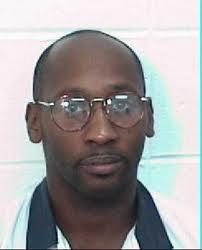
The Chronicle didn’t even put the news on the front page (although The New York Times did), but the execution of Troy Davis went forward more or less as scheduled Sept. 21, with news media around the world watching. It was a shameful miscarriage of justice; as the Times noted in an editorial:

Seven of nine witnesses against Mr. Davis recanted after trial. Six said the police threatened them if they did not identify Mr. Davis. The man who first told the police that Mr. Davis was the shooter later confessed to the crime. There are other reasons to doubt Mr. Davis’s guilt: There was no physical evidence linking him to the crime introduced at trial, and new ballistics evidence broke the link between him and a previous shooting that provided the motive for his conviction.

Yes the Georgia courts, and the federal courts, and the United States Supreme Court, let the state kill Davis — and now it’s too late to prove his innocence. That, of course, is the most horrible aspect of the death penalty. It’s also cruel, expensive and pointless.

But there’s a bit of good news, at least in California. I’m convinced that sentiment is changing. We’ve been interviewing candidates for San Francisco sheriff and district attorney over the past two weeks — and I can tell you, while San Francisco isn’t a good reflection of the state as a whole, attitudes among law-enforcement types in this town have changed pretty dramatically over the past ten years or so.

In 1999, Matt Gonzalez, Bill Fazion and Terence Hallinan all ran for district attorney, and Gonzales came in third. Fazio — a veteran prosecutor and tough-on-crime type, went to Gonzalez and sought his endorsment in the runoff. Gonzalez said he’d support him — if Fazio would agree never to seek the death penalty. It was a pretty easy call, since no San Francisco jury is ever going to vote for capital punishment anyway — but Fazio refused. He insisted that he was a death-penalty supporter to the end, and he lost the race.

Now, Fazio says the death penalty is a complete failure, and he would not only never seek it but he’s actively in favor of repealing it.

Just a few months ago, former police chief and current D.A. George Gascon was talking about how the death penatly ought to be one of a prosecutor’s tools — but now he utterly disavows is, says he would never seek it and is calling for repeal.

Chris Cunnie, a former president of the avowedly pro-death-penalty Police Officers Association, told us he opposes capital punishment.

And Kamala Harris, who never wavered in her refusal to seek the death penalty, even for the killing of a cop, managed to get elected attorney general of California.

So there’s hope.


Other Cinema remembers Helen Hill with “The Florestine Collection”

0

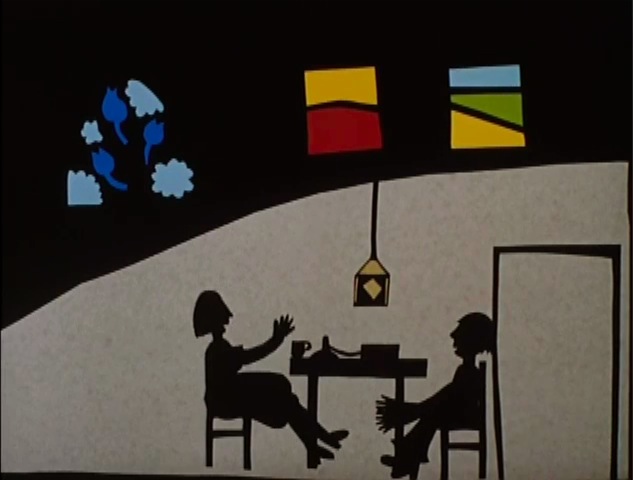
Other Cinema kicks off its fall 2011 season Sat/24 with a bittersweet program: the local premiere of Helen Hill‘s The Florestine Collection — her last film, left unfinished after her 2007 death, completed thanks to the dedicated efforts of her husband, Paul Gailiunas. Hill was only 36 when she was shot to death by an intruder (still unidentified) who broke into her New Orleans, LA home; her husband was injured but survived, and the couple’s toddler thankfully escaped unharmed.

South Carolina-born Hill made her first film at age 11, attended Harvard for undergrad, and received her MFA from California Institute of the Arts. Her unique animation techniques (including cut-out puppets) drew from the fairy-tale works of groundbreaking German animator Lotte Reiniger (whose remarkable filmography stretched from the 19-teens up through the 1970s) as well as DIY methods like hand-processing. She was continually inspired by her adopted hometown of New Orleans, as well as her chosen activist causes, including Food Not Bombs and animal rights. She also created the 2001 reference tome Recipes for Disaster: a Handcrafted Film Cookbooklet.

http://www.youtube.com/watch?v=o7ReG3l_9fM

Hill’s upbeat, friendly attitude (“I love New Orleans!”) and excitement at helping to set up the New Orleans Film Collective (you can also catch a glimpse of her pet potbellied pig!) are evident in this 2003 interview with Timecode: NOLA. The Florestine Collection was inspired by a particularly special day in 2001 (detailed in this interview with Gailiunas) when Hill discovered some 100 handmade dresses discarded after the recent death of an elderly seamstress. Hill’s reaction (per the article: “‘This is the best trash-pile find in the world!’ she exclaimed”) was followed by curiosity about the woman’s identity; the film reflects her findings. Joy and wonder, it seems, were two of Hill’s most accessible emotions — and despite her tragic, terrible death, her work lives on to inspire other creative thinkers and free spirits.

Other Cinema’s program also includes a slew of work by other experimental animators, including Martha Colburn, Kelly Sears, Jim Trainor, Janie Geiser, and more; the fall season runs through Dec. 17 and includes nights dedicated to such diverse topics as Muzak, Mexico and Canada, eco-horror films, social media, and Marshall McLuhan. In other words, fans of strange and unusual cinema: your Saturday nights are set until 2012.

Sat/24, 8:30 p.m., $6
Artists’ Television Access
992 Valencia, SF
www.othercinema.com

Heart it or hate it

0

arts@sfbg.com

MUSIC The term “emo” has become synonymous with whiny, tight-jeans-wearing 13-year-olds with asymmetrical haircuts. (Thanks, Hot Topic.) But stereotypical B.S. aside, in the beginning, emo — short for “emotional punk rock” — was a compelling music movement in the early 1990s and 2000s typified by melodic guitar, motley rhythms, and expressive, pour-your-heart-out lyrics.

“It went from being this really powerful, emotional movement into, like, the annoying little brother of music,” says Kristopher Hannum who co-runs Diary, an emo, screamo, and pop punk music night held every third Saturday of the month at Pop’s Bar. “But I feel like it’s slowly coming back in a good way — not in a Hot Topic-y, YouTube bands they call emo [way]. There are good things happening and they are slowly bubbling up to the surface, like [San Francisco’s] Clarissa Explains It All.” He adds, “It’s a band I point out to people that is kind of taking that [emo] scene and doing good things with it.”

But ever since the term was coined in the mid-80s Washington, D.C. hardcore punk scene, initially to describe bands such as Rites Of Spring, emo has been considered a four-letter word.

“I have never met a band in what I would consider the emo genre that ever copped to calling themselves ’emo.’ It’s weird. Fans throw that around really easily but you’ll never hear, for the most part, a band describe themselves as emo,” explains Leslie Simon, co-author of Everybody Hurts: An Essential Guide To Emo Culture (Harpers, 2007) and former MTV.com editor.

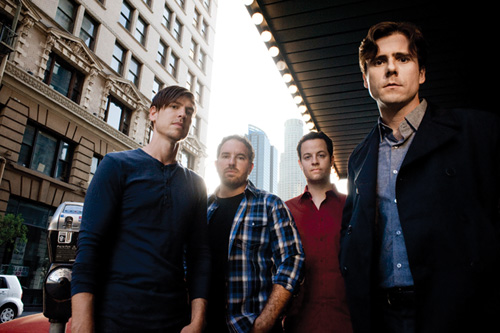
Jim Adkins lead vocalist-guitarist of Jimmy Eat World, which is heralded as a seminal emo band, rejects the label. “I’m pretty much done trying to deflect or change that perception. I don’t really consider us to be [emo]. It’s a long conversation,” Adkins says, curtly. “For me, it’s just flattering that anyone pays attention to what we do. To explain what we do, [I say] guitar-based, melodic rock music.”

Adkins’ sentiment notwithstanding, Jimmy Eat World’s 1999 release Clarity (Capitol) is often lauded as one of the most significant emo albums of the late ’90s, heavily influencing the third wave of emo (2000 — present) which includes bands like My Chemical Romance, Fall Out Boy, and All-American Rejects.

In 2001, as emo broke into mainstream media, Jimmy Eat World released its platinum-selling album, Bleed American (Dreamworks/Geffen). In its introductory title track, Adkins wails “I’m not alone ’cause the TV’s on, yeah / I’m not crazy because I take the right pills everyday” — perfectly encapsulating the angst and disillusionment of Gen Y’ers. With its empowering lyrics (“Just do your best / do everything you can /And don’t you worry what the bitter hearts are gonna say”), the anthemic “The Middle,” another track off Bleed American, reached #1 on Billboard’s Modern Rock Tracks, galvanizing wallflowers everywhere to stay true to themselves. With its impeccably relatable themes, it is no wonder why the album was the band’s biggest commercial success.

To commemorate the 10th anniversary of its release, Jimmy Eat World will play Bleed American in its entirety at the Fillmore on Monday, Sept. 26 and Tuesday, Sept. 27.

“[Bleed American] is a special record for a lot of people. It’s just been kind of a fan request that we do it, so we’re doing it in areas where we’ve always had a good time playing,” Adkins explains.

Coincidentally, Saves The Day released its first studio album in four years, Daybreak, last week. And the once-disbanded-now-reunited Get Up Kids — also wildly popular in the early-2000s — released There Are Rules earlier this year, making a stop on its tour in San Francisco, playing a show with Dashboard Confessional, another iconic emoter, most famous for its single, “Screaming Infidelities.”

Heart it or hate it, in the past year second-wave emo bands seem to be making a comeback. So this begs the question: What is behind the resurgence of this style of music?

“Playing music is an awesome opportunity. Maybe all of these people that are coming back together kind of miss it. We were really lucky that we’ve been able to continually do it,” Adkins says. “The more interesting question is why did they stop?”

“I really like to think that it wasn’t about making money which, I’m sure, half of those bands are doing it just because there are ticket sales in it, you know?” Hannum says with a hint of disillusion in his voice. “[But] I like to think that they are in a position where they can still get back together and tour to give access to these kids that couldn’t access it back then.”

“It does come off sometimes like they’re doing it for the paycheck. But, at the end of the day, who cares?” Simon replies, laughing. “I still love hearing Chris Conley (of Saves The Day) sing “Firefly” and I get a kick out of watching the Get Up Kids play “Don’t Hate Me” because those were songs that meant something to me when I was younger. And I am 22 again. It is wonderful.” 


JIMMY EAT WORLD

With Kinch

Mon/26 and Tues/27, 8 p.m., $35

The Fillmore

1805 Geary, SF

www.thefillmore.com

Our Weekly Picks: September 21-27

0

WEDNESDAY 21

Veronica Falls CANCELLED

Apparently, this UK indie rock band found its relaxed retro pop sound right from the get-go. Singles “Found Love in a Graveyard” and “Beachy Head” combined jangly, propulsive rhythms with light, morbid lyrics for a result that could easily find an anachronistic home in the recent remake of Brighton Rock (and not just because every video for the band looks like it was ran through a Hipstamatic app.) Now with a self-titled debut album on Slumberland Records, Veronica Falls is scheduled to tour in support of the Drums and Dum Dum Girls next month. This will be their West Coast record release show. (Ryan Prendiville)

With The Mantles, Brilliant Colors

9 p.m., $13

Brick and Mortar Music Hall

1710 Mission, SF

(415) 800-8782

www.brickandmortarmusic.com


THURSDAY 22

Teengirl Fantasy at Icee Hot

They put something in the water over at Oberlin. Beach House, Blondes, Teengirl Fantasy. Now at work in the real world, which includes opening for Crystal Castles, Teengirl Fantasy has found a style that’s just as likely to draw from the pop charts as it is from their academic pedigree. A little Lil Jon on one track, a little Raymond Scott on the next. With cooled, slo-mo beats and hyped up MCs turned down, the result is an aural muscle relaxant, allowing you to focus on making bedroom eyes across the dance floor. Teengirl Fantasy comes our way to play monthly party Icee Hot. (Prendiville)

With Total Freedom, Magic Touch (Damon Palermo), Shawn Reynaldo, and Rollie Fingers

10 p.m., $5-10

Public Works

161 Erie, SF

(415) 932-0955

www.publicsf.com


FRIDAY 23

Smuin Ballet

The late Michael Smuin was not one of my favorite choreographers. But he left behind a substantial inheritance that had gained him respectable audiences. Smuin choreographed one his most serious pieces, “Stabat Mater” — Dvorak’s response to the death of his infant daughter — in the aftermath of 9/11. He also loved to play with pop eroticism; “The Eternal Idol” — you can see its inspiration at the Legion of Honor — and “Tango Palace” showcase that propensity. Amy Seiwert premieres what she calls her “most “Smuinesque” piece yet — to Patsy Cline. Not the least of the company’s attractions these days is the quality of its dancers. Parking around the Palace — because of the Doyle Drive reconstruction — is somewhat restricted, so plan for extra time. Muni 43 goes there as well. (Rita Felciano)

9/23-Oct.1

$25-62

Palace of Fine Arts, San Francisco

(415) 556-5000

www.smuinballet.org


FRIDAY 23

“Hong Kong Cinema”

Though this is the San Francisco Film Society’s first-ever Hong Kong Cinema mini-fest, there’s no shortage of HK film fanatics in this town, what with the SF International Asian American Film Festival, the programming at Frank Lee’s Four Star Theatre, and even the occasional HK flick that arrives via Hollywood. If you dug Benny Chan’s now-at-the-Four-Star Shaolin, you won’t want to miss his City Under Siege, about bank-robbing, superpowered circus performers. Also on tap: another superhero action comedy, Vincent Kok’s (Pixar-inspired?) Mr. and Mrs. Incredible; Clement Chan and Yan Yan Mak’s multigenerational drama Merry-Go-Round; All About Love, from Ann Hui (her latest, A Simple Life, has been tearing up the international fest circuit); Law Wing-cheong’s kidnap thriller Punished (starring Anthony Wong, always full of win); Alex Law’s coming-of-age drama Echoes of the Rainbow; and rom-com Don’t Go Breaking My Heart, a genre departure for action man Johnnie To. (Cheryl Eddy)

Through Sun/25, $13–$20

San Francisco Film Society New People Cinema

1746 Post, SF

www.sffs.org


FRIDAY 23

SF Cocktail Week: Barbary Coast Bazaar

San Franciscans have long enjoyed a romance with alcohol — from the debauchery of the Barbary Coast era, to the modern renaissance of the artisan cocktail, the city knows how to knock ’em back. Celebrate this high-proof history with SF Cocktail Week, which features a variety of tastings, dinners, seminars, and parties, including “Barbary Coast Bazaar,” a huge fete inside the Old Mint. Expect a roaring 1920s themed party, with vintage circus acts such as stilt walkers, jugglers, contortionists, magicians, and carnival games, along with food, and of course, a wide variety of tasty cocktails. (Sean McCourt)

SF Cocktail Week events run through 9/25, pricing varies

Barbary Coast Bazaar, 9/23

8-11 p.m., $85–$95

The Old Mint

88 5th St., SF

www.sfcocktailweek.com


SATURDAY 24

Moving Planet Worldwide Rally Day

You can make yourself sick thinking about it: what are you going to tell your kids (or — hey sexy single! — the neighbor’s kids) when they ask you what you did to stop climate change back when we still had a chance and the Bayview-Sunset commute didn’t call for a rowboat? Are we creeping you out? Then let us recommend Moving Planet Day. A worldwide rally for sustainability, it’s sponsored by 350.org and will include Sept. 24 actions from Buenos Aires to Nairobi. In SF, a march of self-propelled peoples on foot, bike, and skate will trek from Justin Herman Plaza to the Civic Center, where an afternoon of speakers, music, and other events awaits. (Caitlin Donohue)

10-a.m.-6 p.m., free

March starts at Justin Herman Plaza, SF

Afternoon activities at Civic Center Plaza, SF

www.moving-planet.org


Hank 3

The grandson of country music royalty, Hank Williams III, or as he’s now known, Hank 3, continues to hone his own brand of diverse music, releasing not one, but four brand new albums this month: Ghost to a Ghost/Guttertown, a double record in a country vein, Attention Deficient Domination, with more of a “hellbilly” feeling, and Cattle Callin, which is more on the metal side of things. The modern torch bearer of outlaw country is promising that this tour will touch on all of them, which he released through his own label, Hank 3 Records, and that fans can expect a two-and-a-half to thee-hour set at each barn burning show. (McCourt)

8:30 p.m., $26

The Regency Ballroom

1290 Sutter, SF

www.theregencyballroom.com


SATURDAY 24

Celsius 7

The superchill but often splendidly goofy Bay rapper, a former member of the Psychokinetics crew, hails from one of the golden ages of local hip-hop — that late ’90s-early ’00s period when earnest showmanship and a healthy dose of good humor trumped aggro attention-seeking, niche genre overload, and crass product placement. Cel’s kept himself busy through Bay rap’s recent twists and turns, though, traveling the world and dropping some ace tracks, all the while staying true to his roots. This release party for his poppin’ second solo album, Life Well Spent (which features a nice roster of collaborators including Dirt Nasty, iLL MEDiA, and Baby Jaymes) will showcase his grin-inducing verbal dexterity, be loaded with special guest appearances, and serve as a convention of true school heads. (Marke B.)

9 p.m., $10 (includes copy of album)

Shattuck Downlow

2284 Shattuck, Berk.

(415) 455-4735

www.shattuckdownlow.com


SUNDAY 25

Chinatown Music Festival

The Yerba Buena Center for the Arts has an exhibit going on called “Daily Lives,” a group showing by local Asian American artists that takes prosaic trinkets and uses them to express the psychic winds that ruffle our insides. This weekend, “Daily Lives” is taking this exploration of the private, public. Put on your dark glasses and check out the sidewalk art exhibit in Chinatown — where your ambling will be soundtracked by a day of rad live music; traditional tunes from the SF Guzheng Society and pianist Jon Jang (who will be sharing his recently-penned homage to the Xinhai Revolution of 1911), plus more modern grooves by the grown-up local kids in Jest Jammin’ and the SF Latin Jazz Youth Ensemble. (Donohue)

1-7 p.m., free

Portsmouth Square Kearny between Clay and Washington, SF

www.apiculturalcenter.org


SUNDAY 25

Ladytron

Given the harder direction that Ladytron has gone in over the last few albums — even touring with Nine Inch Nails — I was not expecting what I heard on Gravity the Seducer: ABBA. Whether or not they were invoking the Swedish gods of pop on purpose, the opener “White Elephant” sets a tone for a lighter album. Not simply a step backwards to the sounds of Ladytron’s early albums, it’s its most synthetically dreamy, spaced out record yet. Of course, harder and softer are relative terms with the band, which has generally stuck to a distinctive sound, becoming electronic pop mainstays and developing a cult following in the process. (Prendiville)

With SONOIO, Polaris at Noon, and DJ Omar

8 p.m., $25

The Regency Ballroom

1300 Van Ness, SF

(800) 745-3000

www.theregencyballroom.com


MONDAY 26

Dr Ruth

We all fondly recall Dr. Ruth Westheimer as the funny, entertaining, and educational “sexpert” that hit the mainstream media in the 1980s and 90s, but did you know her amazing background before she was a household name? Born in 1928 in Germany, she lost her parents in the Holocaust, and actually fought (and was wounded) as a sniper during Israel’s war of independence. The icon will be touching on all these subjects, along with her new book, Heavenly Sex: Sexuality in the Jewish Tradition, at tonight’s special event. (McCourt)

7 p.m., $20–$35

Jewish Community Center of San Francisco

3200 California St., SF

(415) 292-1200

www.jccsf.org


TUESDAY 27

Tony Bennett Night

As San Francisco Giants fans know, whenever the team wins a game here at home, the crowd exits the ballpark to the sounds of the legendary crooner Tony Bennett’s signature song “I Left My Heart In San Francisco.” The 85-year-old icon performed the song live at last year’s World Series, and the team is honoring him with this special event where he will be celebrated in a pre-game ceremony. He also will perform a short set, and fans will receive a “Tony Bennett” bobblehead that has a sound chip that plays his beloved ode to our city by the bay. (McCourt)

Game starts at 7:15 p.m.; arrive early for pre-game events. Pricing varies; see website for current availability.

AT&T Park

24 Willie Mays Plaza, SF

(415) 972-2000

www.sfgiants.com/specialevents


TUESDAY 27

Nurses

If you listened to Nurses’ earliest album, you might not recognize the groovy melodic rock trio that stands before you today, presenting 2011’s Dracula (Dead Oceans). In the past five years, the harmonic freak-folk band — with a penchant for toy instruments and pianos — has gone through lineup changes, sound modifications, and location shifts. The two Nurses mainstays, singer-guitarist Aaron Chapman and singer-keyboardist John Bowers, have lived in the sweet sunshine of San Diego, close quarters during cold winters — the tour van in Chicago — and finally, settled in the dewy DIY spirit of Portland, Oreg., where they gained drummer James Mitchell, and further developed their technique. But that’s the test of a true musician, isn’t it? The ability to roll with the punches, to grow, to evolve. (Emily Savage)

With Dominant Legs

9 p.m., $12

Cafe Du Nord

2170 Market, SF

(415) 861-5016

www.cafedunord.com


The Guardian listings deadline is two weeks prior to our Wednesday publication date. To submit an item for consideration, please include the title of the event, a brief description of the event, date and time, venue name, street address (listing cross streets only isn’t sufficient), city, telephone number readers can call for more information, telephone number for media, and admission costs. Send information to Listings, the Guardian Building, 135 Mississippi St., SF, CA 94107; fax to (415) 487-2506; or e-mail (paste press release into e-mail body — no text attachments, please) to listings@sfbg.com. Digital photos may be submitted in jpeg format; the image must be at least 240 dpi and four inches by six inches in size. We regret we cannot accept listings over the phone.

BART’s failed press mainpulation

10

Another nice scoop by Zusha Elinson at the Bay Citizen: He’s got emails showing how BART tried to set up a fake counter-protest and press conference to skew media coverage toward how protests were inconveniencing riders.

The brainchild of Linton Johnson, BART’s PR chief (and the man who brought you the cell-phone shutoff), the plans included a pre-written script and a couple of private SUVs with drivers to take the BART loyalists to the press conference.

You can’t make this shit up.

BART’s attempts to avoid protests and manipulate the press appear to exceed its interest in reforming police practices. I wonder, sometimes, if the BART Board is even paying attention.

Vive Vigo

0

arts@sfbg.com

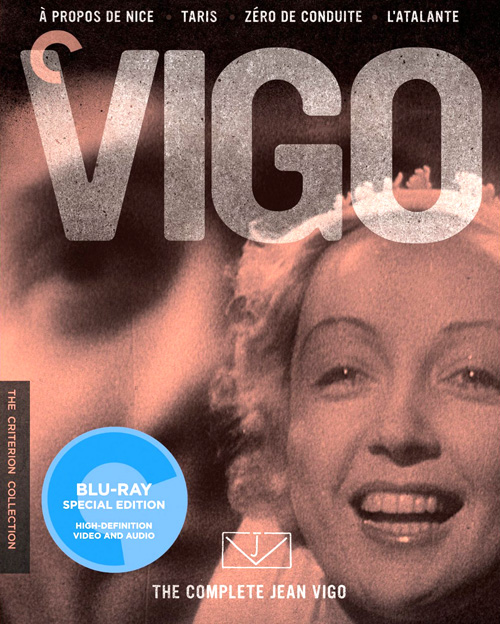
FILM The beatification of Jean Vigo as cinema’s Romantic poet — only four films before tuberculosis carried him off at 29 — is one of the less interesting things about him. As myth it’s maudlin and a little corny, nothing like his films which won’t sit still long enough for you to call them immortal. Whether structured as an exploded city symphony (1930’s À Propos de Nice), commissioned portrait (1931’s Taris), anarchic boarding school farce (1933’s Zéro de Conduite) or multivalent love story (1934’s L’Atalante), they crack open the known world and flash epiphanies like jewels before the camera.

Vigo’s most famous sequences — the pillow-fight processional in Zéro de Conduite, the lovers’ séance in L’Atalante — are lyrical outbursts expressing deep yearning. That desire can be sensual or social; the toppling effect is the same. One might take a page from Vigo’s first film, À Propos de Nice (co-directed with Boris Kaufman, Dziga Vertov’s brother and a brilliant cinematographer in his own right), and consider the intense flux of Vigo’s films as pushing towards carnival. The film’s witty comparison of the idle rich and vibrant working class of Nice goes up in smoke with the fade-in to the street fair. The social fabric suddenly tears, egged on by lusty low-angle shots and intoxicating cuts (more than that, Vigo himself appears doing the cancan).

In Vigo’s little-seen short Taris, the titular French swimmer and early media celebrity demonstrates strokes while explaining their form in voice-over. This instructive track is periodically interrupted by the filmmaker’s beautiful (and at times absurd) close-ups and slow-motion shots. In the end the libidinal again wins out, as Vigo takes advantage of a portal window to film Taris underwater turning corkscrews and circles. This sweet celebration of the body is recast as the more famous underwater idyll in L’Atalante, but here seeing Taris at play here provides a striking contrast from his more regimented athleticism. Stepping outside the rules of the sport, he doesn’t even need to come up for air.

Plenty of ink has already been spilled on Zéro de Conduite‘s joyful student revolt, though I’ve always appreciated that when the emboldened kids hail garbage down on the authorities of church and state, some of the figures below are actual puppets. Even when Vigo’s films are deadly serious, they don’t take themselves too seriously. The censors certainly did: the film was banned for its many blasphemies, though it surfaced sooner than the long shipwrecked L’Atalante. The story of a married couple coming together and apart on a barge is simplicity itself, and yet Vigo embroiders it with delicate shifts in mood and setting. The carnival spirit is here embodied by indelible Père Jules (Michel Simon), the salty sailor who whether playing a record with his finger, trying on a dress, clutching a litter of kittens or showing off his tattoos generates a turbulent vitality that’s a full partner in the film’s romance. L’Atalante is a giving film, with a musical sense of character, a wondrous balancing of melancholy and mischief, and always something new to tell you about love.

There are some who might grumble about the obvious irony of seeing Vigo’s freewheeling work packaged as a tidy commodity, but it’s humbling to think what earlier generations of film lovers would have made at being able to stuff his collected works in their coat pockets (also, Criterion’s transfers are stellar). It’s marvelous being able to explore these particular films at leisure — which is to say every which way. You see all the explosions of fantasy into real life and vice versa, and you think how unusual for someone to seek freedom not only in but through cinema.

It’s people!

0

arts@sfbg.com

THEATER Last Thursday afternoon, the floor before the stage at Z Space was strewn with dollar-store paraphernalia, neon-colored wigs, and the odd piece of kitchenware. On the stage itself, near the front, ran a long makeshift video screen about four-and-a-half feet high. Immediately behind that, at regular intervals, four small video cameras on thin stands faced the back of the stage. Caden Manson, New York–based Big Art Group’s artistic director, had been leading a workshop all week in performance media techniques for about 15 locals (most of them active in the dance-performance scene) but today they were crafting something that would actually be a part of this week’s much anticipated Big Art Group premiere, The People: San Francisco.

To that end, performers picked through the detritus on the floor and fashioned neo-classical costumes for themselves: a broom brush for a centurion’s plume, pot lids for shields, a colander for a battle helmet, a table cloth for a toga, an incongruous toy gun, a festive pair of streamers on sticks, a black cap with beaded veil, swords, plastic flowers, and other pop neo-classical accoutrement. “If anybody wants a Molotov cocktail, there’s four of them right there,” offers one of the group’s members helpfully.

By the time they had assembled themselves on stage they had become a strikingly photogenic band of miscreants and martyrs, like the crew of the Bad Ship Lollipop. Manson, a 40ish blond with an equanimous mien and contrastingly subdued in black coat and blue sneakers, announces they have ten minutes to produce a narrative tableau in an epic vein. Maybe because most of these folks — among them Evan Johnson, Ben Randle, Honey McMoney, Maryam Rostami, Laura Arrington, Rachael Dichter, and Sara Kraft — have worked together before, this all happens surprisingly on schedule.

Manson — who with a few directorial adjustments soon has them all grandly and neatly materializing on the video screen at the front of the stage — explains to me that the pop-up tableau of civil strife the performers have just concocted will act as one of several backdrops to passages from the Oresteia, the ancient trilogy of plays by Aeschylus, which itself acts as counterpoint to the series of contemporary interviews of random Bay Area citizens that forms a key component of The People.

The results you can see for yourself this weekend, as Florida Street outside Z Space (formerly Theater Artaud) becomes a re-imagined public square where a localized discussion of democracy gets played out in a big way, through massive video projections, personal perspectives, and live performance in a dazzlingly intricate and thought-provoking merger of bodies and images, the epic and the mundane, the spectacular and the quotidian.

Big Art Group’s last appearance in the Bay Area was 2009’s deft and rowdy “action media performance,” SOS, at Yerba Buena Center for the Arts. Founded and led by Manson and executive director and writer Jemma Nelson, Big Art’s distinctive, highly integrated blend of theater and media into something it calls “real-time film” was the basis then for a rousing camp send-up and critique of this culture’s media-immersive materialism and its social ramifications.

The People: San Francisco takes Big Art’s fundamental approach to performance and democratizes it. The fourth installment of a serial project begun in 2007 in Polverigi, Italy (before moving onto Halle, Germany and Salzburg, Austria), The People was designed with two goals in mind, according to Manson. One was to craft a collaborative project that might allow Manson and Nelson greater contact with the communities they’ve been regularly traveling through on Big Art’s annual performance tours. The tradeoff would be some of the precision and expertise on display in shows like SOS for an immediate and interactive bead on a specific locale. In the Bay Area, this contact was managed through three host organizations: Marin’s Headlands Center for the Arts (where Manson and Nelson were in residency a few months ago), YBCA, and Z Space. Through this relationship, the project gathered some 40 hours of taped interviews with 42 subjects (including this writer) who were asked an identical set of questions about terrorism, justice, democracy, and war. (Manson was last week still carefully whittling down those 40 hours to a manageable 16 minutes, but notes the remainder will be archived online).

The other goal was related but more specific and immediate: “At the time we started this, in 2007, Bush was in office and he was always talking about promoting democracy,” explains Manson. “We were touring all over Europe at this time, and we’re wondering: What exactly does that mean, democracy? So we started asking. It’s the first time we’ve asked here, in the United States.”

The timing, coming just after the 10th anniversary of 9/11, is auspicious (if coincidental). As a localized act of public discussion of words like terrorism, justice, democracy, and war, The People reclaims from the centers of power and their diffuse mouthpieces the shibboleths and catchwords that normally act as so many parade floats leading us all down blind alleys, if not over cliffs. Wasn’t this the real discussion we should have had ten years ago? Some did; some tried and were shouted down. This weekend, at least, the conversation continues. 

THE PEOPLE: SAN FRANCISCO

Fri/16-Sat/17, 8 p.m., $10

Z Space

450 Florida, SF

(415) 978-2787

www.ybca.org


Central Subway: justice and jobs

0

OPINION The Central Subway is a result of years of grassroots environmental transit justice organizing that San Francisco should be proud of. But in recent weeks, politicos and the media have stirred up a string of unfounded criticisms of the Central Subway — an essential project that will upgrade transit for the long term, create thousands of jobs in the midst of a recession, and expand opportunity for tens of thousands of San Franciscans who need to get to work everyday. Politicians who supported the project for years are now reversing themselves and calling it a “subway to nowhere” and a “boondoggle.” And short staffed newspapers find it easy paint a cartoon picture of City Hall and Chinatown “powerbrokers” who conspired to sell the city on an expensive project it doesn’t need.

But San Franciscans should ignore the overheated rhetoric of the moment and see the future value and need for this critical project — particularly when the Republicans in Congress are attacking us from the right. We need to unite as one city and not squander what might be the last opportunity to access federal funding to make the economic center of the city more transit accessible for all San Franciscans. In this limited space, we offer some of the facts about the project that seem to be missing in the present reporting.

The number of recent critics and media attention about the subway makes it appear that the subway’s costs and design were new news. Planning for the project began more than 20 years ago, and the essential alignment and projected costs have been agreed to and consistent since 2008. There is no new news.

The claims about skyrocketing costs are misleading, comparing different project proposals. The Civil Grand Jury and others fail to do an apples-to-apples comparison. The project costs have increased primarily because, in response to public feedback, the final project is a different project. It has a new alignment, new stations, and more contingency funds built in. The core costs for the project have not changed since 2008, when it was approved with broad support, including some of its present critics.

The critics who claim that not building the project will save future Muni operating costs fail to address the costs of doing nothing. The environmental impact report showed that the no-project option would cost even more. The absence of a subway would require Muni to run and maintain more buses on streets that will be more crowded and more gridlocked. (Ten years from now, if the critics succeed in killing the project, when you are stuck in traffic and late for work you will know who to blame).

Beneath the unfounded criticism about costs is actually a disagreement over values. The grand jury report relied upon by critics makes a only brief and superficial criticism about costs. The report actually devotes more attention and criticism to the location of the Chinatown station. The grand jury prefers a subway that runs closer to the financial district. For critics, the present project is a “subway to nowhere.” But for the Asian, black, and working class neighborhoods that will be connected via the subway and the T-line, this is a subway to jobs and economic opportunity.

Finally, we need to be clear that this is probably the last chance in many of our lifetimes for San Francisco to grow its transit system. While critics talk about alternate uses for the $940 million dollars of federal funding, the reality is we cannot redirect those dollars. The funding process for the subway is nearing the finish line after an arduous ten-year competitive federal application process. Given the federal budget, re-starting that application process may not merely mean a multi-year delay, it will likely mean there will be no funding to apply for and the loss of 30,000 jobs over the life of the project.

We urge all the mayoral candidates and our media pundits to tone down the rhetoric around the subway. We should not let short-term thinking and the heat of political passion of this campaign season kill a project that has had broad support for 20 years and will provide new transit that we desperately need for our city’s future.

Ultimately the subway is an issue about justice and access to jobs. Justice for some of the most densely populated neighborhoods in San Francisco, where 80% of the residents don’t own cars and rely entirely on public transportation. And we’re talking about the potential loss of thousands of construction jobs and access to jobs for those who need the transit to their workplaces.

Stand firm, San Francisco, for jobs and justice.

Rev. Norman Fong is the incoming director of the Chinatown Community Development Center. Mike Casey is the head of UNITE HERE Local 2.


On Guard!

0

news@sfbg.com

BART’S CRACKDOWN

For weeks now, protesters have descended on Bay Area Rapid Transit (BART) stations to denounce the fatal July 3 shooting of homeless passenger Charles Hill by a BART Police officer, and to call for the agency’s long-controversial police force to be disbanded. Commuters have had to contend with service disruptions and delays, and costs to the transit agency have exceeded $300,000. Yet it isn’t just bullhorn-wielding protesters who’ve been thrust into the spotlight — BART’s police force is also facing scrutiny for its conduct under pressure.

BART drew the ire of numerous media outlets after a Sept. 8 protest when transit cops detained members of the press along with protesters on suspected violation of California Penal Code Section 369i, which prohibits interfering with the operations of a railroad. Most journalists were eventually released, but the protest resulted in 24 arrests.

Although BART police later contended that they issued dispersal orders prior to closing in, many who were encircled and detained (including me) insisted they’d heard no such announcement. BART police also instructed San Francisco Police Department (SFPD) officers who were on hand to assist to seize reporters’ SFPD-issued press passes — a move that SFPD spokesperson Troy Dangerfield later told the Guardian was an error that went against normal SFPD protocol.

In a Sept. 10 editorial, the San Francisco Chronicle blasted BART police for placing Chronicle reporter Vivian Ho in handcuffs despite being informed that she was there as a journalist. Ho’s experience was mild compared with that of Indybay reporter David Morse (aka Dave Id), who told the Guardian he was singled out for arrest by BART Deputy Police Chief Daniel Hartwig and isolated from the scene — even though Hartwig is familiar with Morse and knows he’s been covering protests and BART board meetings for the free online publication. Asked why Morse was arrested when other journalists detained for the same violation were released, BART spokesperson Jim Allison told us, “The courts will answer that, won’t they?”

No Justice, No BART — a group that was instrumental in organizing the Sept. 8 protest — telegraphed to media and police at the outset that they intended to test BART’s assertions that people’s constitutionally guaranteed rights to free speech would be upheld as long as they remained outside the paid areas of the station, in what was dubbed a “free speech zone.” (Rebecca Bowe)


CHRON VS. WIENER(S)

Scott Wiener tried to do something eminently reasonable, and ask the naked guys in the Castro to put down a towel before they sit on public benches. Although the Department of Public Health hasn’t made any statements about the issue (and people put their naked butts on public toilet seats without creating major social problems), it’s pretty much an ick factor thing — and using a towel is an unwritten (sometimes written) rule at almost every nudist resort in the country.

The whole thing is a bit ironic, since it’s already illegal for fully clothed poor people to sit on the street — but so far, it’s not illegal for naked people to sit on benches. So far.

Wiener’s move set off an anti-nudity campaign at the San Francisco Chronicle, starting with columnist C.W. Nevius suggesting that the nudies are all perverts: “If these guys were opening a trench coat and exposing themselves to bystanders in a supermarket parking lot we’d call them creeps.” A Chron editorial called for a new law banning nudity in the city (an excellent use of time for a police department that already says it can’t afford community policing). The national (right-wing) press is having a field day. The commenters on sfbg.com are arguing about whether the pantsless men are shedding scrotal hair, or whether they’re mostly shaved. For the record, we haven’t checked.

And for the record, in a couple of months it’s going to get way too cold and rainy for this sort of thing anyway. (Tim Redmond)


HERRERA’S SMACKDOWNS

City Attorney Dennis Herrera has always been limited by his office’s neutral role in criticizing city policies and officials. But as a mayoral candidate, he seems to have really discovered his political voice, offering more full-throated criticisms of Mayor Ed Lee and his policies than any of the other top-tier candidates.

“I think it’s kind of liberating for him that he can talk policy instead of just about legal issues,” Herrera’s longtime spokesperson Matt Dorsey, who recently took a leave from his city job to work on the campaign full-time, told the Guardian.

Perhaps not surprisingly, Herrera’s shift began a little more than a month ago when Lee bowed to pressure from Willie Brown, Rose Pak, and other top power brokers to get into mayor’s race, prompting Herrera’s biting analysis that, “Ed Lee’s biggest problem isn’t that he’s a dishonest man — it’s that he’s not his own man. The fact is, if Ed Lee is elected mayor, powerful people will continue to insist on things. And I don’t think San Franciscans can be blamed for having serious doubts about whether Ed Lee would have the courage to say no.”

Herrera followed up last week by providing an example of something Lee and most other mayoral candidates don’t have the courage to say no to: the Central Subway project, with its runaway price tag and growing number of critics that say it’s a wasteful and inefficient boondoggle that will worsen Muni’s operating budget deficit.

“Fiascos aren’t born that way. They typically grow from the seeds of worthy idea, and their laudable promise is betrayed in subtle increments over time,” was how Herrera began a paper he released Sept. 8 called “It’s time to rethink the Central Subway,” in which he calls for a reevaluation of a project that he and the entire Board of Supervisors once supported.

He notes that the project’s costs have tripled and its design flaws have been criticized by the Civil Grand Jury and numerous transit experts. “Let’s look at this thing and see if it still makes sense,” Herrera told us, a stand that was greeted as blasphemy from the project’s supporters in Chinatown, who called at least two press conferences to decry that they called a “cheap political stunt.”

While the stand does indeed help distinguish Herrera from a crowded mayoral field, he insists that it was the grand jury report and other critiques that prompted him to raise the issue. “Good policy is good politics, so let’s have a debate on it and let the validity of the project stand or fall on its merits,” he said.

Herrera and fellow candidate John Avalos were also the ones who called out Lee on Sept. 2 for praising Pacific Gas & Electric Co. as “a great company that get it” for contributing $250,000 to a literacy program, despite PG&E’s deadly negligence in the San Bruno pipeline explosion and its spending of tens of millions of dollars to sabotage public power efforts and otherwise corrupt the political process.

“It shows insensitivity to victims’ families, and poor judgment for allowing his office to be used as a corporate PR tool. No less troubling, it ignores the serious work my office and others have done to protect San Franciscans from PG&E’s negligence,” Herrera said in a prepared statement.

Now, his rhetoric isn’t quite up to that of Green Party mayoral candidate Terry Baum, who last week called for PG&E executives to be jailed for their negligence, but it’s not bad for a lawyerly type. Herrera insists that he’s always wielded a big stick, expressed through filing public interest lawsuits rather than campaign missives, “but the motivation in how I do either is not really different.” (Steven T. Jones)


JACK IS BACK

The mayor’s race just got a new player, someone who is guaranteed to liven things up. His name is Jack Davis — and he’s already gone on the attack.

Davis, the infamous bad boy of political consulting who is so feared that Gavin Newsom paid him handsomely just to stay out of the 2003 mayor’s race, has been keeping a low profile of late. But he’s come out of semi-retirement to work for Jeff Adachi, the public defender who is both running for mayor and promoting Prop. D, his pension-reform plan.

Davis and Adachi first bonded when Adachi ran against appointed incumbent Kim Burton in 2002. Now, Davis has begun firing away at Mayor Ed Lee, with a new mailer that calls the competing Lee pension plan a “backroom deal.” The piece features a shadowy figure (who looks nothing like Ed Lee) slipping through a closing door, a fancy ashtray full of cigars and an allegation that Lee gave the cops a sweet pension deal in exchange for the police union endorsement.

Trust us, that’s just the start. (tr)


PENSION PALS

Meanwhile, Adachi sent Lee a letter on Sept. 8 challenging him to debate the merits of their rival pension measures — Lee spearheaded the creation of Prop. C, with input from labor unions and other stakeholders — sometime in the next month.

“I believe there is a vital need — if not an obligation — for us to ensure that the voters of San Francisco understand both the severity of our pension crisis as well as the significant differences between our two proposals,” Adachi wrote, later adding, “As the two principals behind the competing ballot measures, I hope that we can work together to increase awareness of this important issue and work toward a better future for our city.”

Lee’s campaign didn’t respond directly to Adachi, but Lee’s ever-caustic campaign spokesperson Tony Winnicker told the Guardian that the request was “the oldest political trick in book” and one they were rejecting, going on to say, “Voters deserve to hear from all the candidates on pension reform, not just two of them.”

Perhaps, but given the mind-numbing minutiae that differentiates the two measures, some kind of public airing of their differences might be good for all of us. Or I suppose we can just trust all those dueling mailers headed our way, right? (stj)

For more, visit our Politics blog at www.sfbg.com.

Mayor Lee likes Question Time just the way it is: scripted and boring

26

Mayor Ed Lee appeared before the Board of Supervisors today for his fifth monthly Question Time session, where he was asked by Sup. John Avalos – and subsequently by reporters – whether he would be willing to “change the format to make it a truly interactive, substantive, and dynamic exchange?”
But Lee disagreed with the widespread perception that the scripted nature of these exchanges – a condition that Lee’s office insisted on during negotiations with the board earlier this year, with questions submitted in writing a week before the meeting – is a contrived and dull departure from what San Francisco voters intended when they twice voted to establish Question Time.
“Supervisor Avalos, this is substance, and I think it’s exactly what the voters had in mind with Proposition C,” Lee said, reading from a prepared text. Later, he added, again reading from his script, “I think these are very substantial and dynamic exchanges.”
But apparently, that view isn’t widely shared, as the format has been criticized by a wide variety of media outlets in town, and it was the main topic that the pack of reporters who intercepted Lee in the hallway afterwards wanted to discuss. He was asked whether the session would still be as civil as they are if they were less scripted, and Lee responded that he thought they would still be civil.
“But I like a little more structure to it,” Lee said, adding that he likes to have prepared notes to address the questions that supervisors might ask. “If we don’t set boundaries, it could be a free-for-all.”
But a bit more of a free-for-all is certainly what former Sup. Chris Daly intended when he drafted the legislation, which voters approved as a binding measure last year after first approving it as an advisory measure two years early, only to have then-Mayor Gavin Newsom refuse to come.
For example, when Sup. Sean Elsbernd asked Lee for a status report on the Central Subway project, it’s possible that Lee’s recitation of the project’s benefits might have been followed up with questions asking him to address recent criticisms or the tripling of the project’s costs, which he didn’t mention.
Or perhaps Sup. Eric Mar might have asked a follow-up question when Lee answered the question “Are you willing to require that CPMC enter into a Community Benefits Agreement before their proposal is approved by the city?” by saying, “These community benefits will be incorporated into a Developer Agreement,” reminding the mayor of the premise of his question that many of the benefits that the community is seeking cannot legally be included in the Developer Agreement.
Similarly, Lee also avoided directly answering Sup. David Campos’ question about whether the mayor intends to support legislation by Campos and Sup. Mark Farrell that would require city departments to return to the board for approval of budget supplements when overtime costs are significantly exceeding those that the department budgeted for.
But there is some wiggle room in the exchanges for supervisors who want to freestyle, as long as they are within the narrow confines of civility being practiced at City Hall these days. Elsbernd embellished his approved Central Subway question, calling it an “opportunity to move beyond the clichés and one-liners of political campaigns.”
And when Lee closed his answer to Avalos by inviting him to take part in an upcoming benefit ping-pong match in Chinatown, Avalos asked the mayor, with a slight taunt in his voice, “How is your game?”
To which Lee – perhaps reaching new heights in conflict aversion – said his style of play is “diplomatic and friendship first.” To which Avalos responded, again with an air of challenge, “I used to work at the Boys and Girls Club and played everyday.”
And that, I suppose, is what passes for political conflict and debate at City Hall these days.

Powell station shut down by BART protest

A Sept. 8 protest called to test the limits of the Bay Area Rapid Transit (BART) agency’s policies on freedom of speech inside BART stations ended in a cluster of protesters and journalists being coralled by nightstick-wielding BART officers, detained, and in some cases, arrested. The station was shut down at around 6 p.m. when police surrounded a group of demonstrators who had marched around the unpaid area of the transit station, as well as a group of media who were following them with cameras and voice recorders.

It was unclear at press time just how many arrests were made, but it is clear that things did not go as planned from the perspective of either the protesters or the transit agency. As the demonstration got underway, one of the No Justice No BART protest organizers, Christopher Cantor, told reporters, “We are here to test free speech limitations at BART, but more importantly, we’re here to say we don’t trust BART, we don’t trust BART to protect us, we don’t trust BART to interpret the constitution.” He also said that none of them were there to get arrested.

Before the banners and bullhorns came out, BART spokesperson Jim Allison told the Guardian that if BART police deemed a gathering inside the unpaid area of the station to be dangerous, “we would ask people to disperse.” If they didn’t disperse, “we would declare an unlawful assembly.” Allison said protesters were free to exercise their first amendment rights to protest inside the areas of the station that don’t require a ticket to enter. He said people could do that as long as they were not “interrupting or interfering” with regular service. When the Guardian caught up with Allison after the protest by phone to find out why his statements about the dispersal order were contradicted by police activity, he refused to answer our questions, directing us instead to watch a press conference on the BART website.

“I’m going off duty,” he said after calling the Guardian in response to a page, after being asked several times why BART police had not issued a dispersal order before surrounding people and arresting them. “I simply cannot devote the rest of my night to answering your questions.”

Here’s what Cantor said just before the march around the station got underway:

Before police closed in, the protest featured some 60 protesters chanting things like, “How can they protect and serve us? The BART police just make me nervous.” One banner, from a group called Feminists Against Cops, read, “Disarm BART, Arm Feminists.”

Things heated up when the protest got closer to the fare gates, at which point police may have determined that protesters were interfering with service. At one point, police tackled a masked demonstrator to the ground. However, when people were detained, they were not standing directly in front of the fare gates.

Police did not make any public statements indicating that the situation had been deemed unlawful before surrounding the group of detainees, nor did they issue a dispersal order. We were told that we were not free to leave.

While I was detained along with Luke Thomas, a reporter from the popular political Fog City Journal, and freelance reporter Josh Wolf, an officer told us that we were being detained on suspected violation of California Penal Code 369-i, which prohibits interfering with the operations of a railroad.

Thomas phoned Matt Gonzalez, former president of the Board of Supervisors and now a chief attorney with the Public Defender’s office, to ask about that law. Gonzalez looked it up and told him that there was an exception to that law which “does not prohibit picketing in the adjacent area of any property” belonging to a railroad. So it would seem that the protesters, along with more than a dozen journalists, were being unlawfully detained. When we put this question to one of the officers who stood holding a nightstick and blocking us in, he refused to address the issue directly, repeating that we weren’t free to leave.

Members of the press with San Francisco Police Department issued credentials were made to line up and present their press passes to San Francisco police officers, who had been called in to assist. The police officers took away media’s press passes, saying it was SFPD property and could be retrieved later — which meant that if journalists had opted to stay and cover any further police activity, we would have had no way of presenting credentials to avoid arrest. We were issued Certificates of Release and ushered outside of the station, where it was impossible to see what was happening, and therefore, impossible to do our jobs as reporters.

Just outside, San Francisco State lecturer Justin Beck was very concerned that several of his journalism students, whom he’d sent on assignment to cover the protest, were being detained. They did not have SFPD issued press passes and at that time were not being allowed to exit the station.


Sticky palms: check out our nug porn gallery

0

I touched base with some of the guys with the toughest job in the world this week in Herbwise, our month-old marijuana column. Yessir folks, meet your professional weed photographers — potographers, if you will. Danny Danko, senior cultivation editor at High Times — who included some indoor growhouse shots that he told me were the trickiest to get due to light wave vagaries — and Ryno Barela, who is in charge of photography and social media over at SF’s Vapor Room were kind enough to send over some of the shots they think best represent their profession. Point, click, pass.

Remembering Graham and George

0

Bay Area film fans are still reeling from the loss of popular San Francisco Film Society executive director Graham Leggat, who passed away August 25 at age 51 after an 18-month cancer battle. (In a statement, SFFS board of directors president Pat McBaine called Leggat’s tenure “the best years in the life of the Film Society.”)

Today comes another blow, from multiple social media and blog reports, of yesterday’s passing of George Kuchar, beloved underground filmmaker extraordinaire. By himself and with his twin brother, Mike, George Kuchar — who influenced innumerable young artists while teaching at the San Francisco Art Institute — directed over 200 films, as wild and creative as they were low-budget, and almost always boasting titillating titles: Color Me Shameless (1967), Hold Me While I’m Naked (1966), The Devil’s Cleavage (1973). He also wrote the screenplay for 1975 horror-porn-turned-midnight-classic, Thundercrack!

George and Mike Kuchar have been a favorite subject in the Guardian’s pages over the years (recent stories here, here, and here). The uninitiated can get a jump start on celebrating George’s glorious legacy by first checking out Jennifer Kroot’s 2000 documentary, It Came from Kuchar; a wide selection of Kuchar films can be found at Canyon Cinema and, for those of us without film projectors, on YouTube. (Also recommended: the brothers’ Reflections from a Cinematic Cesspool, with an intro by John Waters.)

RIP.

Keep it raw

0

emilysavage@sfbg.com

MUSIC Does the Godfather of Punk really need an introduction? It’s Iggy Pop. He’s been doing this — this meaning spitting out underground ethos in a signature growl and writhing shirtless — for nearly 50 years. With the untimely death of original Stooge guitarist Ron Asheton, Pop regrouped and tapped Raw Power-era player James Williamson to rejoin the band a couple of years back.

I spoke to Pop in Paris over the phone — his current world tour was supposed to land in San Francisco on Sept. 12 and 13. As we were going to press, however, we were informed that the ever-wild Pop broke his foot and his appearance here will be rescheduled, with new dates TBA Dec. 4 and 6 at the Warfield. We wish him a speedy recovery!

SFBG: What songs are you playing this tour?

Iggy Pop: All of Raw Power, some of Funhouse, some songs from the eponymous debut the Stooges, and some stuff that was too hot to handle, too raw for the times — stuff that came out on bootlegs in the ’70s like “Cock in My Pocket,” “Open Up and Bleed,” “Head on the Curve.”

SFBG: And James Williamson is on guitar?

Iggy Pop: Yeah, it’s James. The three principles in the group are James, myself and [drummer] Scott Asheton, — [Scott] had a medical emergency…after our appearance at the Hellfest. He’s now home — he’s benched for the rest of the year. I expect he’ll fully recover and be back next year. His replacement on drums is somebody that grew up listening to our records — Toby Dammit. And Mike Watt is with us, and Steve Mackay. Mike’s there being Mike, you know?

SFBG: I do. At this point in your career do feel pressure to maintain this ‘Wild Child’ image?

Iggy Pop: You mean you’ve noticed my style? [Laughs]. It’s interesting. I feel a desire to — [screams] “still do that, BABY!” — at certain times when it’s going to do me good. And I can’t think of a better time than when the Stooges are cranking, and there are a bunch of people who are sick of this shit-soup that white rock has become and want to see some action. I let some of those elements live and breath, and I always feel good about it.

I don’t think there’s so much an image I have to live up to because one of the beautiful things about being me and about being the Stooges is that we never, ever received any legitimate or uncontested exposure from either the official music industry, when it existed, or the official media. We’re more popular now than we ever were. I’m 64 and I’m just starting to hit a career peak. I consciously try to introduce as many new things as I can into what I do and try to keep moderating it. My hair’s not gray, I haven’t lost interest in life.

SFBG: So what are you looking forward to in the future? The future being later tonight, and six months down the line?

Iggy Pop: [Laughs] well, later tonight, my wife’s with me, and I’m going to open half a bottle of Bordeaux, watch the French news, and practice my French. I’ve made a small album of my own [Existence] that’s along the lines of [2009’s] Préliminaires so I’m working on seeing if I can bamboozle some record company into putting that out. But I’m also working on [Stooges] stuff with James. He’s a real prolific talent, and wasn’t playing music for something like 37 years — he’s got a lot of pent-up energy. It’s funny because he’s an eminently sane, responsible family man who has become a very successful tech executive in San Jose. But he has still reserved his unreasoning, adolescent, spiteful side for our group — so out it comes!

SFBG: How did you end up on American Idol?

Iggy Pop: Well, my agent was begging and threatening — and I’m the sort of person that likes to take a dare. I don’t know how many times I’ve slunk past the television set when that thing was on fuming, “this stinks, what a bunch of shit this is, look at these people — they might as well be parrots!” Yet, behind all that you’re always thinking, “I can do better than that.” I thought of all 102 reasons why I shouldn’t do it, but you’re being offered a chance to do one of your own songs…on the same stage, with the chance to do it your way. I did it for that. To give four minutes of my life and put that on the record in America.

SFBG: On that same note, what was the Rock and Roll Hall of Fame experience like for you, finally getting inducted in 2010?

Iggy Pop: It always reminds me of that movie Carrie. She didn’t start out wanting to be homecoming queen, did she? They keep nominating you, and I didn’t ask, nobody asked me if I wanted to be nominated. So then with every nomination comes the rejection, so you start feeling all like, “fuck!” Then you start looking around and think, “well there’s a silly-ass prick and he’s in the Hall of Fame” and “there’s a no-talent weasel and he’s in the Hall of Fame” — why the hell can’t I be in the Hall of Fame?

Shortly after Ron and Scott and I started working together again I said, “are there any specific things you want to accomplish?” And both said, “well, I want to be in the Rock and Roll Hall of Fame. That would be the big thing.” So at that point I started doing things that would tend to let that happen. I did a couple of Grammy-related events. And then we did Madonna’s [induction]. I figured if the voters for this thing didn’t know who we were before, they’d know now. It’s a shame, Ron was really pissed when they didn’t induct us the next year — he hated doing the Madonna song but I didn’t mind. Hell, we could do “Happy Birthday” and it would sound good, too. It would sound like us. 

An American blindness

8

After the first jetliner crashed into the Twin Towers on that September 11 morning, a friend of mine and his 11-year old daughter climbed up to the roof of their Manhattan home to look around. Just then the second plane struck, the young girl fell backward, and went blind from shock.

It took more than a year of examinations and therapies before this girl came out of her blindness to look around.

That’s what happened to America itself ten years ago this Sunday on 9/11, though it might be claimed many of us were blinded by privilege and hubris long before. But 9/11 produced a spasm of blind rage, arising from a pre-existing blindness as to the way much of the world sees us. That in turn led to the invasions of Afghanistan, Iraq, Afghanistan again, Pakistan, Yemen, Somalia and, in all, a dozen “shadow wars” according to The New York Times.

Bob Woodward’s crucial book, Obama’s Wars, points out that there were already secret and lethal counterterrorism operations active in more than 60 countries as of 2009. From Pentagon think tanks came a new military doctrine of the “Long War,” a counter-insurgency vision arising from the failed Phoenix program of the Vietnam era, projecting U.S. open combat and secret wars over a span of 50 to 80 years, or 20 future presidential terms. The taxpayer costs of this Long War, also shadowy, would be in the many trillions of dollars — and paid for not from current budgets, but by generations born after the 2000 election of George W. Bush. The deficit spending on the Long War would invisibly force the budgetary crisis now squeezing our states, cities and most Americans.

Besides the future being mortgaged, civil liberties were thought to require a shrinking proper to a state of permanent and secretive war, so the Patriot Act was promulgated. All this happened after 9/11 through Democratic default and denial. Who knows what future might have followed if Al Gore, with a half-million popular vote margin over George Bush, had prevailed in the U.S. Supreme Court instead of losing by the vote of a single justice? In any event, only a single member of Congress, Barbara Lee of Berkeley-Oakland, voted against the war authorization, and only a single senator, Russ Feingold, voted against the Patriot Act.

Were we not blinded by what happened on 9/11? Are we still? Let’s look at the numbers we almost never see.


CASUALTIES OF WAR

As to American casualties, the figure now is beyond twice those who died in New York, Pennsylvania and Washington D.C. on 9/11. The casualties are rarely totaled, but are broken down into three categories by the Pentagon and Congressional Research Service. There is Operation Enduring Freedom, which includes Afghanistan and Pakistan but, in keeping with the Long War definition, also covers Kazakhstan, Kyrgyzstan, Pakistan, Tajikistan, Turkmenistan, and Uzbekistan. Second, there is Operation Iraqi Freedom and its successor Operation New Dawn, the name adopted after September 2010 for the 47,000 US advisers, trainers and counterterrorism units still in Iraq. The scope of these latter operations includes Bahrain, Jordan, Kuwait, Oman, Qatar, Saudi Arabia, Turkey and the United Arab Emirates. These territories include not only Muslim majorities but, according to former Centcom commander Tommy Franks, 68 percent of the world’s proven oil reserves and the passageway for 43 percent of petroleum exports, another American geo-interest which was heavily denied in official explanations.

A combined 6,197 Americans were killed in these wars as of August 16, 2011, in the name of avenging 9/11, a day when 2, 996 Americans died. The total number of American wounded has been 45,338, and rising at a rapid rate. The total number rushed by military Medivac out of these violent zones was 56, 432. That’s a total of 107,996 Americans. And the active-duty military suicide rate for the decade is at a record high of 2, 276, not counting veterans or those who have tried unsuccessfully to take their own lives. In fact, the suicide rate for last year was greater than the American death toll in either Iraq or Afghanistan.

The Pentagon has long played a numbers game with these body counts. In addition to being painfully difficult and extremely complicated to access, there was a time when the Pentagon refused to count as Iraq war casualties any soldier who died from their wounds outside of Iraq’s airspace. Similar controversies have surrounded examples such as soldiers killed in non-combat accidents.

The fog around Iraq or Afghanistan civilian casualties will be seen in the future as one of the great scandals of the era. Briefly, the United States and its allies in Baghdad and Kabul have relied on eyewitness, media or hospital numbers instead of the more common cluster-sampling interview techniques used in conflict zones like the first Gulf War, Kosovo or the Congo. The United Nations has a conflict of interest as a party to the military conflict, and acknowledged in a July 2009 U.N. human rights report footnote that “there is a significant possibility that UNAMA is underreporting civilian casualties.”

In August, even the mainstream media derided a claim by the White House counter-terrorism adviser that there hasn’t been a single “collateral,” or innocent, death during an entire year of CIA drone strikes in Pakistan, a period in which 600 people were killed, all of them alleged “militants.” As an a specific explanation for the blindness, the Los Angeles Times reported April 9 that “Special Forces account for a disproportionate share of civilian casualties caused by western troops, military officials and human rights groups say, though there are no precise figures because many of their missions are deemed secret.”


STICKER SHOCK OF WAR

Among the most bizarre symptoms of the blindness is the tendency of most deficit hawks to become big spenders on Iraq and Afghanistan, at least until lately. The direct costs of the war, which is to say those unfunded costs in each year’s budget, now come to $1.23 trillion, or $444.6 billion for Afghanistan and $791.4 billion for Iraq, according to the National Priorities Project.

But that’s another sleight-of-hand, when one considers the so-called indirect costs like long-term veteran care. Leading economists Joseph Stiglitz and Linda Bilmes recently testified to Congress that their previous estimate of $4 to $6 trillion in ultimate costs was conservative. Nancy Youssef of McClatchy Newspapers in D.C. — in my opinion, the best war reporter of the decade — wrote recently that “it’s almost impossible to pin down just what the United States spends on war.” The president himself expressed “sticker shock,” according to Woodward’s book, when presented cost projections during his internal review of 2009.

The Long War casts a shadow not only over our economy and future budgets but our innocent and unborn children’s future as well. This is no accident, but the result of deliberate lies, obfuscations and scandalous accounting techniques. We are victims of an information warfare strategy waged deliberately by the Pentagon. As Gen. Stanley McChrystal said much too candidly in a February 2010, “This is not a physical war of how many people you kill or how much ground you capture, how many bridges you blow up. This is all in the minds of the participants.” David Kilcullen, once the top counterinsurgency adviser to Gen. David Petraeus, defines “international information operations as part of counterinsurgency.” Quoted in Counterinsurgency in 2010, Kilcullen said this military officer’s goal is to achieve a “unity of perception management measures targeting the increasingly influential spectators’ gallery of the international community.”

This new war of perceptions, relying on naked media manipulation such as the treatment of media commentators as “message amplifiers” but also high-technology information warfare, only highlights the vast importance of the ongoing WikiLeaks whistle-blowing campaign against the global secrecy establishment. Consider just what we have learned about Iraq and Afghanistan because of WikiLeaks: Tens of thousands of civilian casualties in Iraq, never before disclosed; instructions to U.S. troops to not investigate torture when conducted by U.S. allies; the existence of Task Force 373, carrying out night raids in Afghanistan; the CIA’s secret army of 3,000 mercenaries; private parties by DynCorp featuring trafficked boys as entertainment, and an Afghan vice president carrying $52 million in a suitcase.

The efforts of the White House to prosecute Julian Assange and persecute Pfc. Bradley Manning in military prison should be of deep concern to anyone believing in the public’s right to know.

The news that this is not a physical war but mainly one of perceptions will not be received well among American military families or Afghan children, which is why a responsible citizen must rebel first and foremost against The Official Story. That simple act of resistance necessarily leads to study as part of critical practice, which is as essential to the recovery of a democratic self and democratic society. Read, for example, this early martial line of Rudyard Kipling, the poet of the white man’s burden: “When you’re left wounded on Afghanistan’s plains/ And the women come out to cut up what remains/ Just roll to your rifle and blow out your brains/And go to your God like a soldier.” Years later, after Kipling’s beloved son was killed in World War I and his remains never recovered, the poet wrote: “If any question why we died / Tell them because our fathers lied.”


A HOPE FOR PEACE

An important part of the story of the peace movement, and the hope for peace itself, is the process by which hawks come to see their own mistakes. A brilliant history/autobiography in this regard is Dan Ellsberg’s Secrets, about his evolution from defense hawk to historic whistleblower during the Vietnam War. Ellsberg writes movingly about how he was influenced on his journey by meeting contact with young men on their way to prison for draft resistance.

The military occupation of our minds will continue until many more Americans become familiar with the strategies and doctrines in play during the Long War. Not enough Americans in the peace movement are literate about counterinsurgency, counterterrorism and the debates about the “clash of civilizations”, the West versus the Muslim world.

The more we know about the Long War doctrine, the more we understand the need for a long peace movement. The pillars of the peace movement, in my experience and reading, are the networks of local progressives in hundreds of communities across the United States. Most of them are voluntary, citizen volunteers, always and immersed in the crises of the moment, nowadays the economic recession and unemployment.

This peace bloc deserves more. It won’t happen overnight, but gradually we are wearing down the pillars of the war. It’s painfully slow, because the president is threatened by Pentagon officials, private military contractors and an entire Republican Party (except the Ron Paul contingent) who benefit from the politics and economics of the Long War.

But consider the progress, however slow. In February of this year, Rep. Barbara Lee passed a unanimous resolution at the Democratic National Committee calling for a rapid withdrawal from Afghanistan and transfer of funds to job creation. The White House approved of the resolution. Then 205 House members, including a majority of Democrats, voted for a resolution that almost passed, calling for the same rapid withdrawal. Even the AFL-CIO executive board, despite a long history of militarism, adopted a policy opposing Afghanistan. The president himself is quoted in Obama’s Wars as opposing his military advisors, demanding an exit strategy and musing that he “can’t lose the whole Democratic Party.” At every step of the way, it must be emphasized, public opinion in Congressional districts was a key factor in changing establishment behavior.

As for Al Qaeda, there is always the threat of another attack, like those attempted by militants aiming at Detroit during Christmas 2009 or Times Square in May 2010. In the event of another such terrorist assault originating from Pakistan, all bets are off: According to Woodward, the U.S. has a “retribution” plan to bomb 150 separate sites in that country alone there, and no apparent plan for The Day After. Assuming that nightmare doesn’t happen, today’s al Qaeda is not the al Qaeda of a decade ago. Osama bin Laden is dead, its organization is damaged, and its strategy of conspiratorial terrorism has been displaced significantly by the people-power democratic uprisings across the Arab world.

It is clear that shadow wars lie ahead, but not expanding ground wars involving greater numbers of American troops. The emerging argument will be over the question of whether special operations and drone attacks are effective, moral and consistent with the standards of a constitutional democracy. And it is clear that the economic crisis finally is enabling more politicians to question the trillion dollar war spending.

Meanwhile, the 2012 national elections present an historic opportunity to awaken from the blindness inflicted by 9/11.

After more than 50 years of activism, politics and writing, Tom Hayden is a leading voice for ending the wars in Afghanistan, Iraq, and Pakistan and reforming politics through a more participatory democracy.