Marijuana

Endorsements 2010: State races

24

GOVERNOR

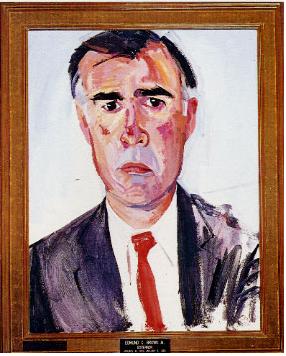
EDMUND G. BROWN

We have issues with Jerry Brown. The one-time environmental leader who left an admirable progressive legacy his first time in the governor’s office (including the Agricultural Labor Relations Board, the California Conservation Corps, and the liberal Rose Bird Supreme Court) and who is willing to stand up and oppose the Diablo Canyon nuclear power plant has become a centrist, tough-on-crime, no-new-taxes candidate. And his only solution to the state budget problems is to bring all the players together early and start talking.

But at least since he’s started to debate Republican Meg Whitman face to face, he’s showing some signs of life — and flashes of the old Jerry. He’s strongly denouncing Whitman’s proposal to wipe out capital gains taxes, reminding voters of the huge hole that would blow in the state budget — and the $5 billion windfall it would give to the rich. He’s talking about suing Wall Street financial firms that cheated Californians. He’s promoting green jobs and standing firm in support of the state’s greenhouse-gas emissions limits.

For all his drawbacks (his insistence, for example, that the Legislature shouldn’t raise any taxes without a statewide vote of the people), Brown is at least part of the reality-based community. He understands that further tax cuts for the rich won’t solve California’s problems. He knows that climate change is real. He’s not great on immigration issues, but at least he’s cognizant that 2 million undocumented immigrants live in California — and the state can’t just arrest and deport them all.

Whitman is more than a conservative Republican. She’s scary. The centerpiece of her economic platform calls for laying off 40,000 state employees — thereby greatly increasing the state’s unemployment rate. Her tax plan would increase the state’s deficit by another $5 billion just so that a tiny number of the richest taxpayers (including her) can keep more of their money. She’s part of the nativist movement that wants to close the borders.

She’s also one of the growing number of candidates who think personal wealth and private-sector business success translate to an ability to run a complex state government. That’s a dangerous trend — Whitman has no political experience or background (until recently she didn’t even vote) and will be overcome by the lobbyists in Sacramento.

This is a critically important election for California. Vote for Jerry Brown.


LIEUTENANT GOVERNOR


GAVIN NEWSOM

Why is the mayor of San Francisco running for a job he once dismissed as worthless? Simple: he couldn’t get elected governor, and he wants a place to perch for a while until he figures out what higher office he can seek. It’s almost embarrassing in its cold political calculus, but that’s something we’ve come to expect from Newsom.

We endorsed Newsom’s opponent, Janice Hahn, in the Democratic primary. It was hard to make a case for advancing the political career of someone who has taken what amounts to a Republican approach to running the city’s finances — he’s addressed every budget problem entirely with cuts, pushed a “no-new-taxes” line, and given the wealthy everything they wanted. His immigration policies have broken up families and promoted deporting kids. He’s done Pacific Gas and Electric Co. a nice favor by doing nothing to help the community choice aggregation program move forward.

Nevertheless, we’re endorsing Newsom over his Republican opponent, Abel Maldonado, because there really isn’t any choice. Maldonado is a big supporter of the death penalty (which Newsom opposes). He’s pledged never to raise taxes (and Newsom is at least open to discussion on the issue). He used budget blackmail to force the awful open-primaries law onto the ballot. He’s a supporter of big water projects like the peripheral canal. In the Legislature, he earned a 100 percent rating from the California Chamber of Commerce.

Newsom’s a supporter of more funding for higher education (and the lieutenant governor sits on the University of California Board of Regents). He’d be at least a moderate environmentalist on the state Lands Commission. And he, like Brown, is devoting a lot of attention to improving the state’s economy with green jobs.

We could do much worse than Newsom in the lieutenant governor’s office. We could have Maldonado. Vote for Newsom.


SECRETARY OF STATE


DEBRA BOWEN

California has had some problems with the office that runs elections and keeps corporate filings. Kevin Shelley had to resign from the job in 2005 in the face of allegations that a state grant of $125,000 was illegally diverted into his campaign account. But Bowen, by all accounts, has run a clean office. Her Republican opponent, Damon Dunn, a former professional football player and real estate agent, doesn’t even have much support within his own party and is calling for mandatory ID checks at the ballot. This one’s easy; vote for Bowen.


CONTROLLER


JOHN CHIANG

Chiang’s been a perfectly decent controller, and at times has shown some political courage: When Gov. Arnold Schwarzenegger tried to cut the pay of state employees to minimum-wage level, Chiang refused to go along — and forced the governor to back down. His opponent, state Sen. Tony Strickland (R-Los Angeles), wants to use to office to promote cuts in government spending. Vote for Chiang.


TREASURER


BILL LOCKYER

Lockyer’s almost certain to win reelection as treasurer against a weak Republican, Mimi Walters. He’s done an adequate job and pushed a few progressive things like using state bonds to promote alternative energy. Mostly, though, he seems to be waiting for his chance to run for governor — and if Jerry Brown loses, or wins and decides not to seek a second term, look for Lockyer to step up.


ATTORNEY GENERAL


KAMALA HARRIS

This is going to be close, and it’s another clear choice. We’ve had our differences with Harris — she’s trying too hard to be a tough-on-crime type, pushing some really dumb bills in Sacramento (like a measure that would bar sex offenders from ever using social networking sites on the Internet). And while she shouldn’t take all the blame for the problems in the San Francisco crime lab, she should have known about the situation earlier and made more of a fuss. She’s also been slow to respond to serious problem of prosecutors and the cops hiding information about police misconduct from defense lawyers that could be relevant to a case.

But her opponent, Los Angeles D.A. Steve Cooley, is bad news. He’s a big proponent of the death penalty, and the ACLU last year described L.A. as the leading “killer county in the country.” Cooley has proudly sent 50 people to death row since he became district attorney in 2001, and he vows to make it easier and more efficient for the state to kill people.

He’s also a friend of big business who has vowed, even as attorney general, to make the state more friendly to employers — presumably by slowing prosecutions of corporate wrongdoing.

Harris, to her credit, has refused to seek the death penalty in San Francisco, and would bring the perspective of a woman of color to the AG’s office. For all her flaws, she would be far better in the AG’s office than Cooley. Vote for Harris.


INSURANCE COMMISSIONER


DAVE JONES

Jones, currently a state Assemblymember from Sacramento, won a contested primary against his Los Angeles colleague Hector de la Torre and is now fighting Republican Mike Villines of Fresno, also a member of the Assembly. Jones is widely known as a consumer advocate and was a foe of Prop. 17, the insurance industry scam on the June ballot. A former Legal Aid lawyer, he has extensive experience in health-care reform, supports single-payer health coverage, and would make an excellent insurance commissioner.

Villines pretty much follows right-wing orthodoxy down the line. He wants to replace employer-based insurance with health savings accounts. He argues that the solution to the cost of health insurance is to limit malpractice lawsuits. He wants to limit workers compensation claims. And he supports “alternatives to litigation,” which means eliminating the rights of consumers to sue insurance companies.

Not much question here. Vote for Jones.


BOARD OF EQUALIZATION, DISTRICT 1


BETTY YEE

The Board of Equalization isn’t well known, but it plays a sizable role in setting and enforcing California tax policy. Yee’s a strong progressive who has done well in the office, supporting progressive financial measures. She’s spoken out — as a top tax official — in favor of legalizing and taxing marijuana. We’re happy to endorse her for another term.


SUPERINTENDENT OF PUBLIC INSTRUCTION


TOM TORLAKSON

We fully expected a November runoff between Torlakson and state Sen. Gloria Romero. Both Democrats had strong fundraising and political bases — and very different philosophies. Romero’s a big charter school and privatization fan; Torlakson has the support of the teachers unions. But to the surprise of nearly everyone, a wild-card candidate, retired Los Angeles educator Larry Aceves, came in first, with Torlakson second and Romero third. Now Aceves and Torlakson are in the runoff for this nonpartisan post.

Aceves is an interesting candidate, a former principal and school superintendent who has the endorsement of the San Francisco Chronicle and the San Francisco Green Party. But he’s too quick to take the easy line that the teachers’ unions are the biggest problem in public education, and he wants the unilateral right to suspend labor contracts.

Torlakson wants more charter-school accountability and more funding for primary education. He’s the far better candidate.


STATE SENATE


DISTRICT 8

Leland Yee

Yee’s got no opposition to speak of, and will easily be re-elected. So why is he spending money on a series of slick television ads that have been airing all over San Francisco, talking about education and sending people to his website? It’s pretty obvious: The Yee for state Senate campaign is the opening act of the Yee for San Francisco mayor campaign, which should kick into high gear sometime next spring. In other words, if Yee has his way, he’ll serve only a year of his next four-year term.

Yee infuriates his colleagues at times, particularly when he refuses to vote for a budget that nobody likes but everyone knows is necessary to keep the state afloat. He’s done some ridiculous things, like pushing to sell the Cow Palace as surplus state property and turn the land over to private real estate developers. But he’s always good on open-government issues, is pushing for greater accountability for companies that take tax breaks and then send jobs out of state, has pushed for accountability at the University of California, and made great progress in opening the records at semiprivate university foundations when he busted Stanislaus State University for its secret speaking-fees deal with Sarah Palin.

With a few strong reservations, we’ll endorse Yee for another term.


STATE ASSEMBLY, DISTRICT 12


FIONA MA

A clear hold-your-nose endorsement. Ma has done some truly bad things in Sacramento, like pushing a bill that would force the San Francisco Unified School District to allow military recruiters in the high schools and fronting for landlords on a bill to limit rent control in trailer parks. But she’s good on public power and highly critical of PG&E, and she has no opposition to speak of.


STATE ASSEMBLY, DISTRICT 13


TOM AMMIANO

Ammiano’s a part of San Francisco history, and without his leadership as a supervisor, we might not have a progressive majority on the Board of Supervisors. Ammiano was one of the architects of the return to district elections, and his 1999 mayoral campaign (against Willie Brown) marked a turning point in the organization, sophistication, and ultimate success of the city’s left. He was the author of the rainy day fund (which has kept the public schools from massive layoffs over the past couple of years) and the Healthy San Francisco plan.

In Sacramento, he’s been a leader in the effort to legalize (and tax) marijuana and to demand accountability for the BART Police. He’s taken on the unpleasant but critical task of chairing the Public Safety Committee and killing the worst of the right-wing crime bills before they get to the floor. He has four more years in Sacramento, and we expect to see a lot more solid progressive legislation coming out of his office. We enthusiastically endorse him for reelection.


STATE ASSEMBLY, DISTRICT 14


NANCY SKINNER

Skinner’s a good progressive, a good ally for Ammiano on the Public Safety Committee, and a friend of small business and fair taxation. Her efforts to make out-of-state companies that sell products in California pay state sales tax would not only bring millions into the state coffers but protect local merchants from the likes of Amazon. We don’t get why she’s joined with Berkeley Mayor Tom Bates to try to get rid of Kriss Worthington, the most progressive member of the Berkeley City Council, but we’ll endorse her for re-election.


STATE ASSEMBLY, DISTRICT 16


SANDRE SWANSON

Swanson’s a good vote most of the time in Sacramento, but he’s not yet the leader he could be — particularly on police accountability. The BART Police murdered Oscar Grant in Swanson’s district, yet it fell to a San Franciscan, Tom Ammiano, to introduce strong state legislation to force BART to have civilian oversight of the transit cops. Still, he’s done some positive things (like protecting state workers who blow the whistle on fraud) and deserves another term.

 

>>BACK TO ENDORSEMENTS 2010

High on arrival

0

arts@sfbg.com

MUSIC If hip-hop is jazz, then Curren$y can be described as a traditionalist. His debut album, Pilot Talk (DD172/Def Jam), is pure braggadocio, with rhymes about fancy cars and free-flowing liquor and free-loving women. The music, lovingly produced and arranged by Ski Beatz, sounds like an update of Dr. Dre’s The Chronic, all the way down to the New York session musicians recruited to crank out mellow grooves. It’s as if Curren$y has reinterpreted the Sugar Hill Gang’s “Rapper’s Delight” for the new millennium.

In the world of jazz, the traditionalists famously waged war against the free jazz nuts who wanted to strip the form of tonality, and then against the fusionists who sought to infect it with slovenly rock and roll. With help from Dixieland revivalists and Ken Burns’s Jazz documentary, they succeeded. In contrast, rap nerds have always viewed avant-garde experimentation with suspicion at best, and complete ignorance at worst. The furthest we’ll go, it seems, is the high-tech funk of Big Boi’s Sir Lucious Left Foot: Son of Chico Dusty, or Madlib’s Medicine Show of gutbucket blues and crusty soul-jazz loops.

If fitted with John Coltrane’s sheets of sound or Ornette Coleman’s harmolodics, Pilot Talk would be a strangely awesome experience. As is, it’s soothing yet enlightening, like an animated chop session after smoking a joint or two with a friend. Curren$y clearly made it on blunted terms: the album artwork depicts a lone airplane flying over a landscape of lush green marijuana foliage.

So Pilot Talk is like weed talk, with several narratives hidden underneath the stoner blather. On “Example,” Curren$y claims “reimbursement for paid dues,” then states, “I am an example of what can happen when you quit being afraid to gamble.” On “Seat Change,” he mocks a girl who wants to “ride with a G,” concluding that “somewhere along the line she fucked up and realized she lost her seat.” His lines are pimp slick but thankfully shorn of delusion. When he flips a bevy of yeyo metaphors for “Audio Dope,” he clearly does it in service of the concept, not to build a farcical image of himself as a drug kingpin. The image is of a neighborhood (or, more accurately, Internet) baller.

Curren$y’s persistence comes from years spent toiling for various rap crews, hip-hop’s version of the mailroom. As a young scrapper from New Orleans’s Uptown neighborhood, he rolled with C-Murder’s TRU family before C-Murder infamously caught a life bid for murder, then transferred to Master P’s No Limit label. Then he landed at Lil Wayne’s fledgling Young Money Entertainment, dropping burner verses for Weezy’s The Carter II and Dedication mixtapes, before landing under the aegis of reformed hip-hop mandarin Damon Dash, whose DD172 label released Pilot Talk in July. It’s ironic that since Curren$y’s departure, Weezy has decided to transform Young Money into an overpublicized pop star boot camp for teen idols like Nicki Minaj and Drake. Then again, the fact that even Curren$y sounds alternative when posited against mainstream rap’s scions demonstrates how rigid the culture has truly become.

However, Curren$y also benefits from marketing, albeit of a viral nature. Pilot Talk boasts the cream of the blog rap crop, including Mikey Rocks from the Cool Kids, Big K.R.I.T., and Jay Electronica (who sharply compares Flavor Flav’s signature bow tie to the Nation of Islam’s attire). Even much-beloved weed rapper Devin the Dude drops a verse for “Chilled Coughphee.” A writer friend of mine, Christopher Weingarten, remarked to me that when Devin the Dude jumps in with sly wit like “I can fuck a bum up quick / But that’s some tenth grade shit,” it only underscores Curren$y’s relative lack of vocal presence.

Other critics have theorized that Pilot Talk‘s artistic triumph is largely due to Ski Beatz’s memorable accompaniment. An NY vet whose catalog ranges from membership in early-’90s woulda-beens Original Flavor to credits on Jay-Z’s 1996 classic Reasonable Doubt and Camp Lo’s “Luchini AKA (This Is It),” Ski Beatz initially produced Pilot Talk‘s tracks himself and then hired talented unknowns like bassist Brady Watt to transform them into instrumental gems. True, any rapper would sound incredible against the majestic sunshine funk of “Address.” But give Curren$y credit for lodging its hook in your brain — “Still nothing changed but the address.”

CURREN$Y

With C-Plus and NPire Da Great, J-Billion and P-Funk, DJ ANT-1

Wed/29, 9 p.m., $16–$20

330 Ritch

330 Ritch, SF

(415) 541-9574

www.330ritch.com


Chron endorsement dishonestly attacks marijuana measure

5

Once again proving itself to be an corporate-run embarrassment to a city that has been at the forefront of progressive reform – including the movement to legalize medical marijuana – the San Francisco Chronicle this morning recommended that voters reject Prop. 19, which would allow cities and counties to legalize marijuana use by adults. And it did so with tortured logic and a cowardly, disingenuous claim to support legalizing marijuana.

As a journalist who has covered the medical marijuana industry in the Bay Area, I didn’t recognize the chaos that Chron editorial writers say resulted from the landmark 1996 measure Prop. 215, the medical marijuana measure written right here in San Francisco, home to a well-regulated, professional network of cannabis dispensaries, thanks to the city proactively setting guidelines. The cities cited in the Chron all did nothing to set standards for medical marijuana dispensaries, whereas in cities like San Francisco that did, an increasingly important sector of the local economy flourished with few problems.

Prop. 19 would similarly allow cities and counties to create systems for regulating marijuana for recreational use – or to not allow it if they so chooses. Yet the Chron takes issue with this localized approach, writing, “The measure establishes no state controls over distribution and product standards; it does nothing to help cure the state’s budget deficit.”

Both statements simply aren’t true. The measure explicitly gives the state authority to tax and regulate marijuana, Assembly member Tom Ammiano already has proposed legislation to do so if the Prop. 19 passes, and the California Legislative Analyst’s Office has estimated it could bring in more than $1.5 billion annually into state coffers.

Although the Chron claims “that the ‘war on drugs’ – especially as it applies to marijuana – has been an abject failure,” it bemoans a provision in the measure that prevent employers from firing employees simply for having marijuana in their systems, as it would be if someone smoked a joint three weeks ago, despite having no impact on job performance. “Pre-employment testing would be banned,” the Chron writes, as if that were a bad thing. The editorial also complains that people would be allowed to grow small plots of marijuana in their backyards. Again, and the problem with that is what exactly?

Bottom line: Chron editorial writers fall into the same old tired reefer madness stereotypes that have driven the drug war’s “abject failure,” but they just aren’t honest enough to admit the contradiction with their stated claim that “if this were simple a referendum on the status quo, and the ability of a 21-or-older Californian to possess an ounce or less for personal use, it might be an easy ‘yes’ vote.”

Because the reality is that’s what this measure does, simply lift the prohibition on pot, while also including language supporting local control and basic civil rights. There are some valid arguments against Prop. 19 – such as it lets jurisdictions tax or regulate pot too much – but those honest disagreements weren’t raised by the newspaper.

Instead, the paper made it sound like measure would fill the roads with stoned drivers and every neighborhood with the stench of marijuana, which is laughably alarmist. San Francisco’s experience with medical marijuana should serve as an indicator. This city has been the most accepting and legitimizing of marijuana for decades. It’s part of our culture. But drug surveys from our school district and others show that the rate of marijuana use among young people here is lower than the state average, and we have been at the forefront of world-renowned technological innovation and academic research, so clearly the normalization of marijuana hasn’t corrupted our youth or turned us all into menacing zombies.

The Chronicle’s presentation of the issue, and its recommendation on this measure, are anachronistic throwbacks to another era and should be tossed into the dustbin of history where they belong.

Evaluating the criteria the city uses to classify folks as gang members

7

I recently asked Deputy City Attorney Yvonne Mere about the criteria the city uses to determine if someone is a member of a criminal street gang.

More precisely, I wanted to know if any of the 41 young black men named in City Attorney Dennis Herrerra’s recently filed gang injunction in Visitacion Valley were named simply because they were seen affiliating with documented gang members and frequenting gang areas.

I asked because those are two criteria local law enforcement officials use to classify gang members.

According to Penal Code Section 186.22, a minimum of two or more of the following criteria must be met to classify someone as a member of a criminal street gang:
1. Subject has admitted to being a gang member (to any peace officer, school official, or juvenile hall employee).
2. Subject has committed gang-related crimes or engaged in gang-related activities.
3. Subject has been identified as a gang member by a reliable informant/source.
4. Subject has been identified as a gang member by an untested informant or source with corroborative evidence.
5. Subject has been seen affiliating with documented gang members.
6. Subject has been seen displaying symbols and/or hand signs.
7. Subject has been seen frequenting gang areas.
8. Subject has been seen wearing gang clothing.
9. Subject has identifiable gang tattoos.
10. Subject is a registered gang member under Penal Code section 186.30
OR—as a single criteria:
11. Subject admits being a gang member in a custodial classification interview.

“I don’t have a cheat sheet that says X has number 3, 7 and 10 on that list,” Mere replied. “But I will tell you that this is not the case that these guys just happen to be hanging out in the area, and weren’t committing crimes, but just got swept up.”

Mere pointed to one of the declarations posted at the City Attorney’s website that alleges that one individual admitted to being a gang member, and was also convicted of second degree robbery, arrested in felony possession of firearms and ammunition, has been seen in the neighborhood with other documented gang members, frequenting gang areas and throwing a Down Below Gang’s hand sign.

“Our expert declaration lays out all the criteria,” Mere said. “And we have an opt out provision,” she added, noting that the Lawyer’s Committee has said it will help anyone with the opt-out petition. “But so far no lawyers or individuals have contacted us about opting out.”

Another expert declaration documents how the SFPD received a tip that gang members had buried a weapon after a chase with the police and that when the SFPD recovered the firearm, they found fingerprints of one of the individuals now on the Viz Valley list.
The declaration says that this individual was then arrested and found with a plastic baggie containing ten off-white rocks of suspected rock cocaine between his buttocks.
Another individual named on the list allegedly took police on a chase through the Britton Courts public housing project and was seen stopping to bury a small off-white object, which allegedly turned out to be two bags of suspected meth. On arrest, this individual, who is not on the Britton Courts lease, was found with a bag of marijuana on his person.

 I asked Mere if the City Attorney’s gang injunction could be impacted if voters approve Prop.19, which would legalize the sale of marijuana.

“I can’t say how Prop. 19 is going to affect numerous cases that have a gang component,” Mere said. “I will tell you that we put everything on the table. We have laid out our entire case. It gives transparency. And a judge still has to decide if the evidence is sufficient.”

But if there is all this evidence, why isn’t the District Attorney’s Office prosecuting these 41 individuals on criminal charges (a process that would also automatically give these men the right to a Public Defender)?

“I think [folks in the D.A’s office] do,” Mere said. “But we’re still seeing that despite the best efforts of the police department, that the nuisance behavior still occurs. This is just another tool to stop the violence.”

Mere said none of the funding to put together this particular case came from federal sources.
“We are the same eight lawyers that do neighborhood nuisance abatement,” Mere said.

Bunny business

0

arts@sfbg.com

FILM The overlapping causes of liberating women and liberating sexuality have long been frenemies. There is no reconciling how the sexual revolution forwarded both women’s independence and their exploitation as sexual objects by industries overwhelmingly focused on male desire and purchasing power.

Nobody figures higher in that saga than Hugh Hefner. Fair to say he probably played as big a role in triggering said revolution (at least for men) as the pill. Yet he also cemented Slim-Waisted Young Blonde With Big Tits (real or factory-ordered) as the prevailing straight-male standard for desirability. An image that, decades later, strangleholds popular imaginations and private insecurities more than ever.

Brigitte Berman’s new Canadian documentary Hugh Hefner: Playboy, Activist, and Rebel acknowledges that conflict without seriously exploring it. Instead, her focus is on "Hef"’s admittedly under-appreciated role as force for progressive change. Not just in expected arenas like censorship and sex laws, but also in public-spirited concerns from racial equity to film preservation. Hef has put his money where his editorial mouth is, with a passion probably equal to (if for many incongruous with) his need to be surrounded by glossy babes now one-fourth his octogenarian age.

One can fault Berman, as the purported first outsider "granted full access" to peek past Playboy‘s corporate gates, for not being tough enough. Hefner’s personal life (such as it’s been for a lifelong, briefly speed-addicted workaholic) isn’t much touched on. First wife and family simply vanish from the narrative once our protagonist decides to become his publication’s suave, anything-but-monogamous "playboy" archetype.

No ex-wives are heard from, no kids aside from Christie Hefner, who became her absentee father’s empirical second-in-command. No ex-girlfriends either, apart from Playmate-turned-B-movie-regular Shannon Tweed, who admits that being his "No. 1 girl" still wasn’t enough because "I don’t share well."

Casting him as a First Amendment and civil rights champion, the film skimps on the full breadth of artistic-slash-business involvements, from two decades’ worth of softcore video Playmate "portraits" (do I own the 1994 La Toya Jackson one? Does it contain a gauzy music vid implying sexual abuse by Papa Joe? Double yes!) to prior dabblings producing regular movies. (The regular dabblings included Roman Polanski’s 1971 post-Manson Macbeth and Peter Bogandovich’s fine 1979 Saint Jack, not to mention hard-to-find 1973 flop The Naked Ape, a sketch-format riff on Desmond Morris’ pop anthropology tome. Its awkward, touching mix of wink-wink smut and crusading good intentions distill peak-years Playboy.) Nor does it acknowledge the Playboy empire’s latter-day struggles as the Internet has rendered print erotica a quaint antiquity.

Beyond these omissions, Berman still strains to encompass a very colorful life in two full hours. Even if it eventually feels like a very long Wikipedia bio, her film is never boring. And Hefner remains notably articulate, despite all eccentricities. (Natch, he’s interviewed throughout in silk pajamas or velvet bathrobes, currently cohabiting with just three drastically younger blondes — down from a post-second marriage harem of seven.)

Playboy (initially to be called Stag Party) started in 1953 as a direct response to Hefner’s coldly unaffectionate family background and dissatisfaction with his prematurely boring home-career respectability. Raising funds himself, he gained enormous attention with a first issue featuring pre-stardom nude photos of Marilyn Monroe that everyone had heard about but few had seen.

Promoting "a healthier attitude toward sex," not to mention the shocking notion that "nice girls like sex too" — Playboy then sought to pedestal "girls next door" rather than pro models or strippers — swiftly brought a backlash. A successful fight against the U.S. Postal Service was just its first legal battle. As noted in the film, the most morally righteous opponents often proved the most hypocritical, including Charles Keating — who pronounced pornography "part of the Communist conspiracy," then decades later went to prison for 1980s Savings and Loan fraudulence — and fundamentalist Christians like late loon Jerry Falwell.

Meanwhile Hefner used the enormously popular periodical (and syndicated TV variety-show spin-offs Playboy’s Penthouse and Playboy After Dark) to articulate a "Playboy philosophy" stretching way beyond hedonistic libertarianism. He employed Red Scare-blacklisted talent; showcased African Americans in hitherto segregated contexts; and campaigned for abortion and birth control rights and against draconian punishments for sodomy and marijuana. The girly mag gave voice to countercultural and anti-Vietnam War sentiments, deliberately stirring controversy via in-depth interviews such as Roots author Alex Haley’s with American Nazi Party leader George Lincoln Rockwell.

Hefner got an eventual NAACP award, among other kudos. But as Dr. Ruth (or is it Bill Maher? Sorry, there are too many celebrities sampled to keep track) says, the "escapist" side that spun Bunny boobs into bazillions overshadowed the earnest intellectual. Veteran feminist Susan Brownmiller is cast as the unsexy scold who loses points for labeling Playboy‘s often extraordinary taste in literary and critical voices (Updike, Mailer, Bradbury, etc.) a mere clever ruse to legitimize its jismy gist. Yet who can argue with her vintage challenge that Hefner demonstrate true gender equality by going public "with a cotton-tail on your rear end"?

It would be nice to hear from more critical voices — not just the odd ludicrous one, like born-again MOR crooner and repentant former Playboy subscriber Pat Boone. Blaming Hefner for "breaking the moral compass" of our nation, he’s the sole interviewee photographed against a wall of vainglorious mementos — apart from KISS’ aviator-shaded Gene Simmons, presumably grumpy because for once he’s discussing someone else’s slutty serial cocksmanship. (These two have more in common than they’ll acknowledge: see Boone’s unforgettable 1997 CD In a Metal Mood.)

By any fair appraisal, Hefner looms large among 20th-century societal game-changers. This undeniably entertaining documentary celebrates his heroism. Yet it can’t help getting across on cheesier snapshots. Who can resist glimpses of Playboy’s Roller-Disco and Pajama Party, a 1979 prime-time network WTF featuring the combined talents of Richard Dawson, Chuck Mangione, the Village People, and Wayland Flowers and Madame? Plus jiggling Playmates on wheels, of course. Now that is a Rorschach of American "liberation" as fucked-up perfect as you’ll never find.

HUGH HEFNER: PLAYBOY, ACTIVIST, AND REBEL opens Fri/20 in Bay Area theaters.

Smoked dry

7

DRUGS Personally, I’ll smoke any dried-up old horseshit you hand me. I don’t care. Brown buds, flat buds, wet seedy buds, leaves, stems, branches, even stuff that’s already been smoked. You got it, let’s roll it.

But I’m also not stupid: pricey gorgeous buds are the best. The tight-purple supernugs have the best smell and the best taste; they are the ultimate gateway to the total marijuana experience. On the other hand, top-shelf Prada buds will fuck you up, financially and otherwise. A dab will definitely do you.

Except at my house. If there’s weed anywhere near me, I’ll smoke it right up. I don’t care how sacred the bud is, or even if I had to scalp a hippie just to pay for it. I am a high-energy, compulsive, scatterbrained cat-lady freak-out type who isn’t a major boozer, thank God. So I’m basically the perfect candidate for chain-spliffing. And I don’t have a problem with that, in case the church people were wondering. I need my weed and I need it to be abundant and cheap. That’s why being a legal stoner smoked me dry.

It took me about three months in the fully legit scene to finally realize that my zero cash flow was entirely the weed’s fault. Oh, of course, of course: weed doesn’t smoke people; people do. I know all that. But I’m telling you, sister––you need to get a load of this dispensary weed. It will blow your mind and bring you to your knees (and don’t bother getting up, honey, because you’ll have to blow a lot of stoners to make your rent at these rates). The buds at the pot clubs are so purple, so crystal-y and seductive that it’s not offensive in the least to admit they were asking for it — for me to smoke every last one of them, that is. Like Jeffrey Dahmer, I couldn’t help myself.

No, the pressure of constant availability was simply too much. I couldn’t deal with all that convenience. Three blocks away was just too close. Realistically, the pot club would need a moat filled with cannibals and a legion of snipers with perfect aim to keep a person like me away. And imagine — I am just one Roberta Seawhore among many. I was there every other day, talking weed sass with the staff, sampling this, sampling that, always walking out with at least two to three kinds of Cannabis Cup–level bud products and paraphernalia. Long gone were the silly days of yore when I’d have to go through lazy stoner drug mules, who would maybe show up six days later, if ever, with a few scraps of pot-related plant parts that crawled directly out of a witch’s humid crotch. Ga. How plebeian.

So who did I think I was with my fancy-ass buds, anyway — the pope? I’m the kind of broad who shops flip-flops on the Payless sale rack––and now I’m some ganja quality-control expert? Please. “But it’s medicine,” I reminded myself daily. “You legally need to smoke an enormous amount of papal-quality weed, Roberta. That’s why the nice pot-doctor lady prescribed you the EZ Vape2––because you are sick. You have insomnia, dude. Because of your very critical medical-marijuana-necessitating crazy-head condition, you not only deserve the city’s sweetest buds, you simply must have them, 24/7, even if it makes you homeless. Relax, marijuana is good for you.”

Here’s what I learned: Pot clubs are perfect for yuppies who posses a freakish sense of self-control. Everyone else is too low budge.

Which is exactly why, one foggy new-moon morning, I looked deep into my dark Persephone soul and mustered the courage to do the unthinkable: I set fire to my pot card. A few bittersweet tears of relief (mixed with intense pangs of regret and panic) elbowed their way out my left eye as I watched that pretty little pot card burn in the cat dish. Sigh. Heavy is my heart under the weight of the world. Then I rolled a fat one.

From that day forward, however, I resolved to only buy buds, or whatever you call those shriveled, turd-like things, from the renegade marijuana underground — from those brave women and men who boldly said “Never mind!” to the law and scammed PG&E for the noble purpose of getting us all hella stoned. In other words: “Hey, criminals — the bitch is back. Who do I have to blow for some free shake?”

But I’d be lying if I said the financial and self-control fallouts of having unlimited access to superbuds were the only reasons I destroyed my card: In all honesty, I was getting too fucked up, thanks to the edibles.

Indeed, one of the first things I noticed when I became legit is that smoking weed is so last year. Only losers and totally boring Deadheads still smoke it. Everybody else eats it, drinks it, or swallows it, which is where, if you are not careful, you may cross the line from harmless stoner dingbat to depressing drug addict nodding off. Just ask me.

At $15 bucks a pop, the Showstopper hash cookie had better be the shit. It turns out that it is, big time. Although nothing special to look at it, this buttery, chocolate-chip morsel is similar to a ‘ludey combination of MDMA, mushrooms, and weed — a pretty sublime experience for a pot cookie. At first, half a cookie did the trick. But soon I was eating a whole one and contemplating taking two in one afternoon.

Clearly, the point of edibles is to get you majorly fucked up, and I initially had no problem with that concept because, as you will remember, I am sick! But did I really need the $50 container of hash oil, too? You bet I did. As soon as the cute hipster stonerrista at the dispensary finished explaining the proper way to spread the dark, golden oil on my spliff papers, I was thinking, “Three blocks is too far away, man. I need to be lighting this shit up RIGHT NOW.”

I ate my $15 cookie on the way home, where I smeared the hash oil on a Zig Zag with a safety pin, sparked it up, and soon started nodding off on the couch. So early ’90s, right? And it was just noon on a Saturday, and all I had to do was laundry, which prompted me to wonder, “Why am I getting this high? What am I after here? Maybe I should just start using heroin or morphine. Or maybe heroin and morphine together. What the fuck is going on, Seawhore?”

Suddenly, those lightweight days of just huffing whatever crap landed my way seemed so sweet and innocent in contrast to my new life as a hardened doper. And didn’t I feel bad for abandoning my grower peeps? Yes, I did feel bad. And stupid, too. After all, Roberta Seawhore isn’t in this habitual pot-smoking biz to get completely out of her head. I like to think of marijuana as Roberta’s little helper––not as the k-hole heroin-bomb of the plant world.

Don’t get me wrong here, people. I am thankful the dispensaries exist, and the legalization of marijuana is a huge step forward for mankind. But if you are a Payless flip-flop shopper with no self-control like me, I suggest you think twice before getting legal. Can you handle the ease? Or are you better off chasing an unreliable drug mule throughout the Mish just to get an oregano fix? Only you know the answer to that. I wish you the best.

High time

34

steve@sfbg.com

DRUGS With polls showing that California voters are probably poised to approve Proposition 19 in November and finally fully legalize marijuana, this should be a historic moment for jubilant celebration among those who have long argued for an end to the government’s costly war on the state’s biggest cash crop. But instead, many longtime cannabis advocates — particularly those in the medical marijuana business — are voicing only cautious optimism mixed with fear of an uncertain future.

Part of the problem is that things have been going really well for the medical marijuana movement in the Bay Area, particularly since President Barack Obama took office and had the Justice Department stop raiding growing operations in states that legalized cannabis for medical uses, as California did through Proposition 215 in 1996.

In San Francisco, for example, more than two dozen clubs form a well-run, regulated, taxed, and legitimate sector of the business community that has been thriving even through the recession (see “Marijuana goes mainstream,” Jan. 27). The latest addition to that community, San Francisco Patient and Resource Center (SPARC), opened for business on Mission Street on Aug. 13, an architecturally beautiful center that sets a new standard for quality control and customer service.

“This is the culmination of a 10-year dream. We’re going to have a real community center for patients with a great variety of services,” longtime cannabis advocate Michael Aldrich, who cofounded SPARC along with Erich Pearson, told us at the club, which includes certified laboratory testing of all its cannabis and free services through Quan Yin Healing Arts Center and other providers.

Yet cash-strapped government agencies have been hastily seeking more taxes and permitting fees from the booming industry, particularly since the ballot qualification of Prop. 19, an initiative that was written and initially financed by Oaksterdam University founder Richard Lee that would let counties legalize and regulate even recreational uses of marijuana.

Oakland, Berkeley, Richmond, and other California cities have placed measures on the November ballot to tax marijuana sales, and the Oakland City Council last month approved a controversial plan to permit large-scale cannabis-growing operations on industrial land (see “Growing pains,” July 20).

In an increasingly competitive industry, many small growers fear they’ll be put out of business and patient rights will suffer once Prop. 19 passes and counties are free to set varying regulatory and tax systems, concerns that have been aired publicly by advocates ranging from Prop. 15 author Dennis Peron to Kevin Reed, founder of the Green Cross medical marijuana delivery service.

“It’s tearing the medical marijuana movement apart,” Reed told the Guardian. “It’s a little scary that we’re going to go down an uncertain road that may well scare the hell out of mainstream America.” Indeed, U.S. Attorney General Eric Holder — who ended the raids on medical marijuana growers — has said the feds may reengage with California if voters legalize recreational weed.

Yet Lee said people shouldn’t get distracted from the measure’s core goal: “The most important thing is to stop the insanity of prohibition.” He expects the same jurisdictions that set up workable systems to deal with medical marijuana to also take the lead in setting rules for other uses of marijuana.

“It will be just like medical marijuana was after [Prop.] 215, when a few cities were doing it, like San Francisco, Oakland, and Berkeley,” Lee told us. “And for cities just coming to grips with medical marijuana, it will be clean-up language that clarifies how they can regulate and tax it.”

Indeed, the tax revenue — estimated to be around $2 billion for the state annually, according to the California Legislative Analyst’s Office — has been the main selling point for the Yes on 19 campaign (whose website is www.taxcannabis.org) and Assembly Member Tom Ammiano, who authored bills to legalize marijuana and has current legislation to set up a state regulatory framework if Prop. 19 passes.

“It makes it more seductive,” Ammiano said of revenue potential from legalized marijuana. “I’ve been working with Betty Yee [who chairs the California Board of Equalization, the state’s main taxing authority] on a template and structure for taxing it.”

Reed and others say they fear taxes at the state and local levels will drive up the price of marijuana, as governments have done with tobacco and alcohol, and hinder access by low-income patients. But Ammiano scoffed at that concern: “Even with the tax structure on booze, there was no diminishing of access to booze.”

Pearson said he believes Prop. 19 will actually help the medical marijuana industry. “Anything that takes the next step toward legalizing recreational use only helps medical cannabis,” he said. Pearson moved to California to grow medical marijuana more than 10 years ago, at a time when the federal government was aggressively trying to crush the nascent industry.

“When you’re packing up and running from the DEA all the time, you’re not thinking about the quality of the medicine. You’re trying to stay out of jail,” Pearson said. “Now, we can be transparent, which is huge.”

Like most dispensaries, SPARC is run as a nonprofit cooperative where most of the growing is done by member-patients. Speaking from his office, with its clear glass walls in SPARC’s back room, Pearson said the Obama election ushered in a new openness in the industry.

“Everything is on the books now, whereas before nothing was on the books because it would be evidence if we got busted … We are allowed to have banks accounts; we’re allowed to use accountants; I can write checks; we can talk to government officials,” Pearson said. “It helps with the public and governments, where they see the transparency, to normalize things.”

He also said Prop. 19 will only further that normalizing of the industry, which ultimately helps patients and growers of medical marijuana. SPARC, for example, gives free marijuana to 40 low-income patients and offers cheap specials for others (opening day, it was an eighth of Big Buddha Cheese for $28) because others are willing to pay $55 for a stinky eighth of OG Kush.

“Our objective here is to bring the cost of cannabis down. We can subsidize the medicine for people who can’t afford it with sales to people who can,” Pearson said, noting that dynamic will get extended further if the legal marketplace is expanded by Prop. 19.

While Pearson strongly supports the measure, he does have some minor concerns about it. “The biggest concern is if local governments muddy the line between medical and nonmedical,” Pearson said, noting that he plans to remain exclusively in medical marijuana and develop better strains, including those with greater CBD content, which doesn’t get users high but helps with neuromuscular diseases and other disorders.

Reed also said he’s concerned that patients who now grow their own and sell their excess to the clubs to support themselves will be hurt if big commercial interests enter the industry. Yet for all his concerns, Reed said he plans to reluctantly vote for Prop. 19 (which he doesn’t believe will pass).

“They’ll get my vote because not having enough yes votes will send the wrong message to law enforcement and politicians [that Californians don’t support legalizing marijuana],” Reed said, noting that would rather see marijuana uniformly legalized nationwide, or at least statewide.

Attorney David Owen, who works with SPARC, said the momentum is now there for the federal government to revisit its approach to marijuana. But in the meantime, he said Prop. 19 has come along at a good time, given the need for more revenue and more legal clarity following the federal stand-down.

And even if the measure isn’t perfect, he said those who have devoted their lives to legalizing marijuana will still vote for it: “A lot of these folks, intellectually and emotionally, will have a hard time voting against Prop. 19.”

Democrats divided

25

Update:This online article contains a correction concerning the DCCC’s vote on Sup. Sean Elsbernd’s Muni pay guarantees (Prop. G). In the print version of this article, the Guardian reported that the DCCC had voted “to recommend a no vote” on Prop. G. This is incorrect. The DCCC voted “not to endorse” Prop. G. As Elsbernd points out, “This is a key distinction.”

Sarah@sfbg.com

With fewer than 10 weeks to go until a pivotal November election, the San Francisco Democratic County Central Committee (DCCC) approved a package of endorsements at its Aug. 11 meeting, giving the nod to mostly progressive candidates and rejecting Mayor Gavin Newsom’s most divisive ballot measures.

This crucial election could alter the balance of power on a Board of Supervisors that is currently dominated by progressives, and that new board would be seated just as it potentially gets the chance to appoint an interim mayor.

That’s what will happen if Newsom wins his race for lieutenant governor. The latest campaign finance reports show that Newsom has raised twice as much money as the Republican incumbent, former state Sen. Abel Maldonado. But the two candidates are still neck-and-neck in the polls.

Although the DCCC supports Newsom in the race, it is resisting his agenda for San Francisco, voting to oppose his polarizing sit-lie legislation (Prop. L), a hotel tax loophole closure (Prop. K) that would invalidate the hotel tax increase that labor unions placed on the ballot, and his hypocritical ban on local elected officials serving on the DCCC (Prop. H).

Shortly after the vote, the San Francisco Chronicle reported that Newsom called an emergency closed-door meeting with some of his downtown allies to discuss the upcoming election. “We just wanted to get on the same page on what’s going on locally, what’s going with the ballot initiatives, where people are on the candidates for supervisor,” Newsom told the newspaper.

DCCC Chair Aaron Peskin, who regularly battled with Newsom during his tenure as president of the Board of Supervisors, voted with the progressive bloc against Newsom’s three controversial measures. But he told us that he was glad to see the mayor finally engage in the local political process.

Sup. David Campos kicked off the DCCC meeting by rebuffing newly elected DCCC member Carole Migden’s unsuccessful attempt to rescind the body’s endorsement of Michael Nava for Superior Court Judge, part of a push by the legal community to rally behind Richard Ulmer and other sitting judges.

Things got even messier when the DCCC endorsed the candidates for supervisor. In District 2, the DCCC gave the nod to Janet Reilly, snubbing incumbent Sup. Michela Alioto-Pier, who is running now that Superior Court Judge Peter Busch has ruled that she is not termed out (a ruling on City Attorney Dennis Herrera’s appeal of Busch’s ruling is expected soon).

In District 6, where candidates include DCCC member Debra Walker, School Board President Jane Kim, Human Rights Commission Executive Director Theresa Sparks, neighborhood activist Jim Meko, and drag queen Glendon Hyde (a.k.a. Anna Conda), the club endorsed only Walker, denying Kim the second-place endorsement she was lobbying for.

But in District 8, where candidates include progressive DCCC member Rafael Mandelman, moderate DCCC member Scott Wiener, and moderate Rebecca Prozan, the politics got really squirrelly. As expected, Mandelman got the first-place nod with 18 votes: the progressive’s bare 17-vote majority on the 33-member body plus Assembly Member Leland Yee.

Yet because Yee supports Prozan and David Chiu, the Board of Supervisors president who was also part of the DCCC progressive slate, had offered less than his full support for Mandelman, a deal was cut to give Prozan a second-place endorsement.

That move caused some public and private grumbling from Jane Kim’s supporters, who noted that Kim is way more progressive than Prozan and said she should have been given the second-place slot in D6.

A proxy for John Avalos even tried to get the DCCC to give Walker and Kim a dual first-place endorsement, but Peskin ruled that such a move was not permitted by the group’s bylaws. Then DCCC members Eric Mar and Eric Quezada argued that Kim should get the club’s second-choice endorsement.

But Walker’s supporters argued that Kim only recently moved into the district and changed her party affiliation from the Green Party to the Democratic Party, and Kim’s supporters failed to find the 17 votes they needed.

“District 6 has an amazing wealth of candidates and I look forward to supporting many of them in future races,” Gabriel Haaland told his DCCC colleagues. “I will just not be supporting them tonight.”

Wiener told the group he would not seek its endorsement for anything below the top slot. “I’m running for first place and I intend to win,” Wiener said, shortly before Prozan secured the club’s second-choice endorsement.

In District 4, the DCCC endorsed incumbent Carmen Chu, who is running virtually unopposed. The DCCC also endorsed Bert Hill’s run for the BART Board of Directors, where he hopes to unseat James Fang, San Francisco’s only elected Republican.

The body had already decided to delay its school board endorsements until September and ended up pushing its District 10 supervisorial endorsement back until then as well because nobody had secured majority support.

“I think it’s because they want to give members of the DCCC a chance to learn more about some of the candidates,” District 10 candidate Dewitt Lacy told the Guardian. “I don’t think folks have spent enough time to make an informed decision.”

D10 candidate Chris Jackson agreed, adding, “The progressives in this race have brought our issues to the forefront.”

“I think it’s appropriate,” concurred D10 candidate Isaac Bowers. “D10 is a complicated district. It’s wise to wait and see how it settles out.”

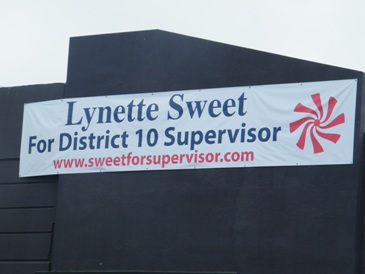
The main thing that needs to be resolved is which candidate in the crowded field will emerge as the progressive alternative to Lynette Sweet, who has the support of downtown groups and mega-developer Lennar Corp.

After the meeting, Walker said different races require different political strategies. “I think it’s hard in the progressive community, where so many of us know each other and even our supporters know the other candidates and are their supporters in other scenarios,” Walker said.

“But the Democratic Party makes decisions not just based on politics,” she continued. “So the endorsement is about being viable and successfully involved in Democratic issues. And even though I want to encourage everyone to run, and we have that ability with ranked choice voting and public financing, when it comes to straight-on politics, the goal is winning.”

Walker said the vote on D8 reflected the reality that Mandelman was having trouble getting the necessary number of votes. “I know Rebecca and I know Rafael, and Rafael was my clear first choice,” Walker said.” Rafael asked me to consider voting for Rebecca—and I voted for her as my second choice.”

Walker predicts she’ll have union support behind her campaign, while Kim, who leads in fundraising, will have independent expenditure committees that will support her campaign.

“My consultant says it’s a $250,000 race, and unfortunately the viability is based on that reality, the funds, the money,” Walker observed.

On the fall ballot measures, the DCCC voted to recommend a no vote on Public Defender Jeff Adachi’s measure to make city employees pay more for the pension and healthcare costs (Prop. B), Sup. Sean Elsbernd’s Health Service Board Elections (Prop. F,) and Newsom’s three controversial measures. And they voted “no endorsement” on Elsbernd’s measure to remove from the charter Muni pay guarantees (Prop. G). 

But the DCCC did vote to endorse a local vehicle registration fee surcharge (Prop. AA), Newsom’s earthquake retrofit bond (Prop. A), Sup. Chris Daly’s proposed legislation to require mayoral appearances at board meetings (Prop. C), Chiu’s measure to allow noncitizen voting in school board elections (Prop. D), Sup. Ross Mirkarimi’s Election Day voter registration (Prop. E), former Newsom campaign manager Alex Tourk’s Saturday voting proposal (Prop. I) Labor’s hotel tax (Prop. J ), Mirkarimi’s foot patrols measure (Prop. M) and Avalos’ real estate transfer tax (Prop. N).

With just about everybody opposed to Adachi’s measure going after public employee unions, Walker observed that Adachi probably wishes he had done it differently now. But looking into the future, Walker sees opportunities for the party to come back together.

“There’s an opportunity to start a dialogue because everyone is hurting,” Walker said. “The more we don’t have a proactive solution, the more we get caught at the bottom.”

And in a feel-good vote for the frequently divided body, the DCCC also voted overwhelmingly to endorse the statewide initiative to legalize and tax marijuana (Prop. 19). Normally local party committees don’t take a position on state initiatives, but because the California Democratic Party took no position on Prop. 19, the DCCC had permission to weigh in.

As Peskin put it before the enthusiastic marijuana vote, “Raise your hands — high.”

New approach for the new U.S. attorney

0

EDITORIAL Joseph Russoniello, the U.S. attorney who terrorized immigrants, city employees, and medical marijuana growers, is finally out of office, replaced Aug. 13 by an Obama nominee screened by Sen. Barbara Boxer. Melinda Haag is the second female U.S. attorney in California history and the first since the 1920s. She’s taking over an office that pushed all the wrong priorities and served as an outpost of Bush administration values in Democratic Northern California, and she needs to turn that around, quickly and visibly.

President Obama has made it clear that he doesn’t want his Justice Department wasting valuable resources busting people who grow, sell, and use pot for medicine. And while the president has been slow and far too cautious on immigration reform, he has resisted the nativist movement and harsh attacks on undocumented immigrants. But a U.S. attorney has a tremendous amount of discretion on law enforcement priorities, and Haag could easily slide along, refusing to break with the policies of her predecessor.

That would be a serious mistake, one that would reflect poorly not only on the Obama administration but on Boxer, who under the traditions of Senatorial courtesy played a central role in choosing Haag.

The new U.S. attorney should:

Disband the grand jury that’s been investigating whether city employees violated federal law by failing to turn suspected illegal immigrants over to immigration authorities. The grand jury started sending subpoenas to city agencies two years ago and raised the specter that some local juvenile justice workers might face charges. The move set off policy changes by Mayor Gavin Newsom that have led to more than 100 young people being torn from their families and sent to federal immigration detention centers.

The grand jury operates at the U.S. attorney’s discretion, and while its activities are secret, Haag could and should announce that the investigation is closed and no charges are pending.

Inform City Attorney Dennis Herrera that no city employee will face federal criminal charges for complying with the city’s Sanctuary Ordinance. The threat of criminal charges has given Newsom cover for refusing to implement a sanctuary law that the supervisors passed over his veto. The law, sponsored by Sup. David Campos, directs city workers not to turn juveniles over to Immigration Control and Enforcement until they’ve been convicted of a felony. Herrera asked Russoniello for assurance that city employees could implement the law without fear of federal indictment, and the Republican appointee refused. Haag should give Herrera, and all city employees, written assurance that she won’t press charges over the sanctuary policy.

Stop the pot busts — and don’t try to undermine Prop. 19. Even after U.S. Attorney General Eric Holder made clear that he isn’t interested in harassing medical cannabis operations, local growers and outlets remain fearful of federal prosecution. And if the state’s voters legalize pot this fall, as appears likely, the weed will still be illegal under federal law. Haag needs to let the FBI and Drug Enforcement Administration know that she’s not going to take any cases involving legitimate medical marijuana operations — and that she won’t use her office to undermine state law if Prop. 19 passes.

Of course, if the U.S. attorney’s office stops wasting time and money cracking down on pot growers and immigrants, the lawyers who work under Haag may have time to do some more relevant and worthwhile law enforcement. They could, for example, start looking into enforcing a federal law called the Raker Act, which requires San Francisco to operate a public power system.

What DCCC questionnaires reveal about Adachi reform, sit-lie and marijuana

20

The DCCC makes its endorsements for the November election on August 11. And in preparation for that crucial endorsement, candidates filled out questionnaires that are posted online, providing fodder for those interested in Jeff Adachi’s pension reform, Mayor Gavin Newsom’s sit-lie ordinance, and the legalization of marijuana, amongst other measures.

But before we get to those issues, I have to admit I was a bit surprised to see that D. 10 candidate Malia Cohen, who has already secured the endorsements of Sally Lieber, Fiona Ma and Aaron Peskin, says on her DCCC questionnaire that she supports the death penalty.

Now, to be fair, advocating for or against the death penalty isn’t the duty of the Board of Supervisors. And I haven’t yet caught up with Cohen yet to clarify why she holds this stance, (or whether it was one big typo, though I somehow doubt it). So, I’ll be sure to update this post, once I have a chance to talk to Cohen, who was busy at yet another candidate forum, when I was writing this entry. UPDATE: Cohen says she does not support the death penalty, and that she inadvertently misanswered the question. (Thanks for clearing up the mystery, Malia, and being gracious about it in the process.)

I should mention that Peskin also endorsed D. 10 candidate Tony Kelly.

And I should also note that while D. 10 candidate Lynette Sweet’s questionnaire says she supports Jeff Adachi’s pension and healthcare reform, Sweet’s campaign says that’s not the case, pointing to how Sweet said at the Potrero Hill Democratic Club’s August 2 D. 10 forum that what Adachi did wasn’t a bad thing, but the way he went about it was.

I quoted Sweet saying those very words in a previous post, and Sweet’s campaign manager Shane Mayer told me that he forwarded what I wrote about that meeting to the DCCC to clarify Sweet’s position. But Mayer got testy when I asked him about the rent, or rather the lack of rent, that Sweet, who Mayor Gavin Newsom has already endorsed, appears to be paying for her campaign headquarters at 25 Division Street (at Rhode Island).

As Beyond Chron tells it, the deal looks more than a bit fishy, and appears to be bankrolled by the Visovichs, a family with Republican leanings that supported Mayors Willie Brown and Newsom in past election campaigns.

 Mayer tried to dismiss the Beyond Chron article as a “hit piece”.

“The article focuses on only one candidate,” Mayer said. “We’re paying fair market rate, and using only a small portion of a warehouse. When we moved in, we didn’t have lights.”

But Sweet isn’t the only D. 10 candidate to come under Beyond Chron’s fire in recent days: fellow D. 10 candidate Steve Moss also took flak for receiving $500 from Andrew Zacks, the landlord attorney famous for doing Ellis Act evictions.

While on the phone with Moss recently, I asked what he thought about Newsom’s sit-lie ordinance, Moss said he hadn’t made up his mind yet.

And in his DCCC questionnaire, Moss also waxes ambiguous on sit-lie. “There’s clearly a lack of civility in certain areas of the city,” Moss wrote. “And in Bayview-Hunters Point, youth loitering can create conditions that create violence. However, it’s not clear to me that sit-lie is an appropriate response to this issue, and that it won’t result in unintended consequences. For example, sidewalks in Bayview-Hunters Point are also often used for peaceful gathering of neighbors, which is community-building and non-threatening.”

Makes me wonder what Moss and the rest of the candidates think about City Attorney Dennis Herrera’s recent gang injunction in Viz Valley…

UPDATE: I should add here that termed-out D.6 Sup. Chris Daly has just endorsed legislative aide and D.6 candidate James Keys, whose DCCC answers I’ve included in my round up of some of the candidate responses to this year’s DCCC questionnaire. UPDATE: And for all the Glen “Anna Conda” Hyde supporters, my humble apologies for omitting your candidate’s positions in my first post on this issue:

Chiu’s non-citizen voting in School Board elections
Supportive of non-citizen voting:  Adachi, Sup. Michela Alioto-Pier and D. 2 challenger Janet Reilly, D. 6 candidates Glen “Anna Conda” Hyde, James Keys, Jane Kim, Jim Meko, Debra Walker and Theresa Sparks. D. 8 candidates Rafael Mandelman, Rebecca Prozan and Scott Wiener. D. 10 candidates Isaac Bowers, Cohen, Chris Jackson, Tony Kelly, Dewitt Lacy and Eric Smith.
Opposed: D.2 candidates Farrell and Berwick, D. 4 incumbent Carmen Chu, and D. 10 candidates Kristine Enea and Lynette Sweet.

Newsom’s ban on dual office holding

Supportive: Berwick, Farrell, Glen “Anna Conda” Hyde, Meko, Enea.

“Yes. Better distribution of power,” Anna Conda said.

Opposed: Adachi, Alioto-Pier, Reilly, Keys, Kim, Walker, Sparks, Mandelman, Sweet, Lacy, Kelly, Cohen, Wiener, Jackson, Smith and Prozan.
“This measure is the result of petty politics between the mayor and the Board,” Prozan, who contributed S100 to Newsom’s Lt. Governor campaign, famously wrote on her DCCC questionnaire.

Newsom’s Sit-Lie Ordinance
Supportive: Farrell, Alioto-Pier, Reilly, Chu, Sparks, Wiener and Sweet.
Opposed: Adachi, Berwick, Glen “Anna Conda” Hyde, Keys, Kim, and Walker. Mandelman and Prozan. Cohen, Jackson, Kelly, Lacy and Smith.

Adachi’s Pension Reform
Supportive: Adachi, Berwick, Meko, and Sweet
Opposed: Chu, Farrell and Reilly. Glen “Anna Conda” Hyde, Keys, Kim, Walker and Sparks. Mandelman, Prozan and Wiener. Cohen, Jackson, Kelly, Lacy and Smith.
No position, yet: Alioto-Pier.

Legalization of pot (Prop. 19)
Supportive: Adachi, Berwick. Glen “Anna Conda” Hyde, Keys, Kim, Meko, Sparks, and Walker. Mandelman, Prozan and Wiener. Cohen, Jackson, Kelly, Lacy, Smith and Sweet.
Opposed: Chu and Farrell

No position, yet: Alioto-Pier, Janet Reilly.

Hard to tell: Moss.

“I philosophically support this measure but am concerned that its economic and social implications haven’t been carefully considered, nor its interaction with federal law,” Moss wrote on his DCCC questionnaire.

Sparks for her part just clarified that she mistakenly answered “No” on two DCCC questionnaire items: “Do you opposeprivatization of essential government services,” and “Will you oppose anti-worker initiatives that seek to undermine the ability of union leaders to carry out will of members and engage in political activities.”

“I meant to answer yes, as I explained at my DCCC interview,” Sparks said. “I was confused by the double negatives.”

While she was on the phone, Sparks also admitted that the pace on the campaign trail is getting intense with forums and meetings every night.

“David Campos, who has been a good friend since we were both on the Police Commission, recently told me, ‘win or lose, you need to schedule a few weeks off in November when the election is over,’” Sparks said.

Campos is right. To all the candidates on the campaign trial, here’s wishing you lots of energy and calm in the weeks to come. And see you at the DCCC forum.

<!–[endif]–>

Reinventing San Francisco

8

By Christopher D. Cook, Karl Beitel, and Calvin Welch. 

OPINION It’s hard to trust hope these days — to imagine that our world, or even our city — could be different. But for the next 10 or 15 minutes, as you read this, we invite you to suspend the cynicism and disbelief that hang over contemporary life, and allow your mind to imagine that, yes, a different San Francisco is possible. Just for 15 minutes, although we hope this helps kick-start a much longer-term revival of hope and urban reimagining.

It’s time to create something new in San Francisco — a visionary movement for constructive change that’s bold and unapologetic. Imagine, for instance, if San Francisco became a national model for how cities can reinvest local profits (public and private) and assets to expand economic opportunity and social equity. Imagine if, instead of promoting a dispiriting and volatile blend of corporate development and Darwinian “free-market” anarchy, San Francisco transformed how American cities define success by creating concrete alternatives to the chaos of capitalism.

Now imagine that San Francisco had its own public bank — a fiscally solvent, interest-generating financial force (potentially a half-billion dollars strong) dedicated to public financing and economic stimulus, that functioned as a vigorous incubator for homegrown industries and sustainable, true-green job creation.

We are proposing no less than a reinvention of San Francisco — a dramatic shift in priorities, resources, politics, and culture that marries the very best in both creative innovation and urgently needed reforms to make our city socially equitable and sustainable, both ecologically and economically.

Toward this end, the Community Congress, Aug. 14-15 on the University of San Francisco campus, will stimulate ideas, discussion, and planning to reinvigorate civic engagement and inspiration and create a concrete, locally actionable agenda for reshaping the city. You’re invited. (Visit www.sfcommunitycongress.wordpress.com for more information.) The congress is a conversation starter and idea incubator — an opportunity to begin reimagining San Francisco as a socially equitable, racially inclusive, ecologically sustainable city that grows its own food, supplies its own energy, and is an affordable haven for working-class people, immigrants, artists, and creative folk of all stripes.

We humbly propose a city that embraces cosmopolitanism and international exchange while empowering its residents to achieve a decent and livable quality of urban life. We are not trying to turn back the clock; we are trying to create new forms of social and economic value that give people meaning and sustenance, and hope.


WHY A COMMUNITY CONGRESS—WHY NOW?

Couldn’t we save such sweeping aspirations for a rainy day? The sky isn’t falling yet, is it? Not quite, but the present constellation of crises San Francisco is ensnarled in — massive and rising structural deficits, a boom/bust economy that’s profoundly unstable and inequitable, deepening economic and social divides that destabilize communities, to name a few — is simply unsustainable.

San Francisco’s economic and fiscal crisis is not a passing moment. Rather, it signals long-term structural flaws in the city’s economic policies and planning. San Francisco has lost roughly 45,000 jobs since 2000, and each “recovery” is marked by steadily higher unemployment rates (currently resting at 9.2 percent). More critically, as jobs and wages have grown more precarious and housing prices have steadily risen (over the long term), thousands of San Franciscans have been displaced.

Any serious vision for change must incorporate race and class dynamics. Consider the economic evisceration of much of the city’s African American population, which has plummeted from 13.4 percent of the population in 1970 to just 6.5 percent today (more than 22,000 African Americans left the city between 1990 and 2008). The gutting of communities of color is intrinsically intertwined with issues of job and wage loss and soaring housing costs. This is particularly acute in the geographic and political dislocation of African Americans in San Francisco. Add to this picture intense overcrowding and poverty in Chinatown and in Latino and immigrant communities, and you get a set of inequities that are morally unacceptable and socially untenable.

Like other major American cities, San Francisco faces a crucial historical moment. Global warming and fast-dwindling oil supplies require a transformative shift in how we conceive (and implement) economic development far beyond the city’s current piecemeal approach to “green procurement.” The Peak Oil Preparedness Task Force, appointed by the Board of Supervisors in 2007, concluded that a full 86 percent of San Francisco’s energy use comes from fossil fuels, primarily petroleum and natural gas, and a small amount of coal. Given the world’s fading oil supplies and mounting climate chaos, this is simply unsustainable.

The specter of a looming energy and environmental crisis, combined with economic instability marked by persistently high unemployment, rising income inequality, systemically entrenched homelessness, consumer debt, and the deepening crisis of cutbacks to critically needed human services and affordable housing call for a radical shift in how society — and San Francisco’s economy — are run.

Transforming San Francisco into a truly sustainable city will mean dramatic shifts in what (and how) we produce and consume, and aggressive city policies that promote local renewable energy. Our economy — how our food, housing, transportation and other essential goods are made — will have to be rebuilt for a world without oil.

These and other limits mean we must redefine growth and profit—fast. Work and sustainability must become fully intertwined, and we must think creatively about how jobs can produce social and community value, instead of profits concentrated at the top.

Creating truly sustainable and equitable cities for the 21st century will also mean dramatic shifts in how we produce and consume. There is no better place to begin than here in San Francisco, long an incubator in progressive thinking and genuine grassroots action and innovation. In an earlier Community Congress in 1975, residents and groups from across San Francisco united in a movement of ideas and organizing that led to district supervisorial elections and successful campaigns to stem the tide of downtown corporate development, helping to democratize politics and economics in San Francisco.

The 2010 Community Congress is aimed at reinvigorating local movements for lasting change, both on the policy level and in the relationship between people and their government. We hope to inspire a spirited and creative shift in the city’s culture and politics — with concrete, politically actionable policies to democratize planning and development and a more sweeping transformation of our expectations — toward a far richer and deeper engagement of people and communities in their own governance.


A NEW FRAMEWORK FOR URBAN DEVELOPMENT

What would this City of Hope look like, and how would it work? Consider what we could accomplish with a municipal bank. The City and County of San Francisco currently has almost $2.6 billion in highly liquid reserves, about $500 million of which could be used to fund a Municipal Bank of San Francisco. Once established (and federally insured), the Municipal Bank could take additional deposits and use this to issue more loans. The bank could promote economically viable worker-run cooperatives that produce goods and services addressing community needs — be it day care, urban gardening, or ecologically sustainable light industry that creates meaningful employment for local residents. The bank could provide competitive small-interest loans to help stimulate small-business development — the key economic engine of the city. Currently, access to credit is one of the primary impediments to small business growth in San Francisco.

The city could also start a Municipal Development Corporation to produce goods and services that meet essential needs, boost local employment, and generate surpluses that would be available for local reinvestment. San Francisco could launch itself on the path to local energy self-reliance with funds from the Municipal Bank, together with revenue bonds—raising large pools of capital to finance large-scale alternative energy investments such as solar panels to generate energy for sale to local businesses and households.

The proceeds could help subsidize community-based development such as urban farming projects that could grow food for our public schools. The Municipal Development Corporation could explore other initiatives like large-scale medical marijuana cultivation and development of a commercial fiberoptic network. Other ideas can be developed; we need to engage our collective imagination to envision what can exist if there’s enough people power and political will.

By expanding access to credit, municipalizing a chunk of the city’s assets, establishing an economically viable municipal development enterprise, and democratizing city planning and development, San Francisco can enable long-disenfranchised communities to create sustainable and diversified development — instead of fighting over “jobs versus the environment” and other false choices and getting nowhere for decades.

It’s time for proactive, community-led economic development that addresses urgent needs, from local hiring and training, to creating a diverse base of neighborhood-serving businesses, to ecologically sustainable and healthful development and planning that is driven by communities and residents.

San Francisco’s job creation policies can be transformed to prioritize community needs over corporate profits by linking major development contracts to strict local hiring and training, community benefits agreements that invest in social goods like childcare and in-home health services, and ensuring dramatic increases in the city’s stock of affordable housing.

We need to build new forms of public participation in local government in ways that address people’s everyday needs. For instance, the congress will propose a new partnership between residents and Muni to make Muni work better, involving current riders and drivers in a new, more powerful role in how Muni lines function.

We need to find better ways to sustain a diverse population of working-class, people of color, artists, writers, musicians, and others. We need to make sure development isn’t just code for finding new ways to gentrify neighborhoods and displace existing residents.

Specific proposals will address how the city and community-based nonprofits deliver critical health and human services to our neediest residents. We propose making this an integrated part of the budget process, not a last-minute afterthought. Toward this end, the Community Congress will present actionable proposals to create innovative “resident/government” partnerships to improve local government responsiveness and efficiency.


RAISING—AND SPENDING—THE BENJAMINS

One of the keys to unlocking the city’s stagnating economy is progressive revenue generation and more democratic participation in budgeting. We must enlarge the public pie while reapportioning it in a way that stimulates job creation and shifts the tax burden onto the large businesses that reap vast private benefits from public goods and services. The city’s budget process must be dramatically reshaped and democratized. Communities need a seat at the fiscal table when the budget is being crafted — instead of lobbying tooth and nail at the end of the process just to retain funding that barely keeps programs afloat.

How can we build a participatory budgeting movement that brings residents and communities into the process? For instance, community budget councils composed of elected and appointed residents from every supervisorial district could assess neighborhood needs and incorporate them into drafting the budget. Whatever form this takes, the goal is to put the needs of residents at the forefront of how the city spends its resources.

The Community Congress can also help redefine fiscal responsibility. Taxing and spending must be accountable and transparent and respect the fact that this is the public’s money. Let’s be honest: much of what passes for government excess is due to management and executive bloat at the top, not salaries of frontline workers like bus drivers, social service providers, and hospital workers. True fiscal responsibility also means investing in prevention: education, healthcare, and services that help people build their lives.


RECLAIMING HOPE

It’s time to reclaim the public sector as the sphere of our shared interest. Rather than thinking in terms of the old paradigm that counterpoises “government” and “the market,” let us envision a new citizen movement to create a more participatory, democratic, and accountable system of self-government.

The San Francisco Community Congress is about bringing people together — community activists, those working in the trenches of our increasingly strained social services, our environmental visionaries, our artists, the urban gardeners and permaculturists, poets, bicycle enthusiasts, inventors … in short, assembling our pool of collective knowledge and wisdom, and yes, our differences — in a forum to discuss, debate, share concerns and viewpoints, and ultimately produce a working template that is both visionary and can be implemented.

The Community Congress will create a space for all of us to participate in defining our own vision of San Francisco. It is a first step toward reasserting popular control over economic development. It is an invitation to be visionary, rethinking in fundamental ways what it means to live in the 21st century city, and a forum for creating real, practical platforms and proposals that can be implemented using the powers of local government.

We want to propose a new vision of urban governance. Not more bureaucracy, more commissions, more departments, but the creation of new institutions that are democratically accountable and place new kinds of economic and political resources in the hands of ordinary citizens.

We don’t have any illusions. There are limits to what local government can do. Ultimately, deep change will require actions by higher levels of government. More profoundly, it will require a deeper change in citizen awareness, a rejection of life dominated by the pursuit of narrow self-interest, in favor of a more ecologically sustainable, socially just, and more democratic way of life.

But we can begin at the local level, here and now, to envision and implement the kind of changes that will need to take place if we want to insure that our city, our country, and our planet will be the kind of place we want our children to live. Please come. Bring your hopes, passions, and ideas. This is our collective project, our shared wisdom, our joint vision of the kind of city and society in which we want to live.

Christopher D. Cook is an author, journalist, and former Bay Guardian city editor (www.christopherdcook.com). Karl Beitel is a writer, scholar, and activist. Calvin Welch is the director of the San Francisco Information Clearinghouse and a long-time affordable housing advocate. This story was funded in part by www.spot.us


Growing pains

1

steve@sfbg.com

The medical marijuana movement was born and raised in the Bay Area, and now the city of Oakland is poised to take the next big step forward by being the first city to explicitly allow and permit several massive cannabis cultivation facilities on industrial land, making millions of dollars in taxes in the process.

It’s the latest move in a growing trend toward Bay Area cities figuring out how to regulate and tax a booming industry that could really explode if California voters approve Proposition 19 in November, which would legalize even recreational uses of marijuana and give local jurisdictions more authority to control it.

Pot growing has long been the murkiest realm within an increasingly legitimate and professional medical marijuana industry (see “Marijuana goes mainstream,” 1/27/10). While Oakland, Berkeley, and San Francisco all have well-defined and regulated systems governing the 30 licensed cannabis dispensaries in those three cities, most of their growers are underground operations with no official oversight.

Public officials on both sides of the bay — who almost universally voice their support for the medical marijuana industry — say there can be problems associated with unregulated grows. Jerry-rigged wiring can pose a fire danger, and valuable crops can be targeted by criminals. Growers can be raided by police even when they have valid paperwork. And cash-strapped city governments aren’t able to tax or regulate an industry that has kept on booming throughout the Great Recession.

“There is no system to regulate production,” Oakland City Council member Rebecca Kaplan, who has authored cultivation regulations, along with co-sponsor Council member Larry Reid. Although the city may lack resources to enforce new requirements on growers, Kaplan believes growers will sign up voluntarily: “Every time we’ve created a permitting system, people have sought to use it. They want to be above board.”

The measure would permit growing facilities of more than 100,000 square feet, charging them each a $5,000 permit fee and $211,000 “regulatory fee,” as well as a gross receipts tax to be determined. The Oakland City Council approved the measure July 20 after Kaplan agreed to have staff also create a permit system for smaller growers, with both regulatory systems slated to take effect Jan. 1, 2011.  Kaplan has also proposed a November ballot measure to increase the current gross receipts tax on cannabis-related businesses from 1.8 percent now to up to as high as 11.2 percent, which the council is set to consider July 22.

Kaplan’s cultivation proposal initially generated a backlash from some small growers and Harborside Health Center, Oakland’s largest dispensary, because of its focus on creating mega-facilities that could monopolize the market and hurt the small growers who have been at the heart of the medical marijuana movement.

“All we’re asking for is a level playing field and a fair opportunity to compete with these factories,” attorney James Anthony, who represents Harborside and its network of growers, told the Guardian. “As medical cannabis comes into the light, it’s still capitalism out here in the world.”

Oakland developer and business person Jeff Wilcox, who is new to the marijuana industry, has been aggressively pushing to create a massive cannabis growing and manufacturing facility on his 7.4-acre warehouse complex near the Oakland Coliseum, covering 172,000 square feet over four buildings.

On May 21, Wilcox and his company, AgraMed, released a report showing how the facility could produce about 21,100 pounds of high-grade marijuana per year, generating about $60 million in gross sales and more than $2 million a year in taxes for Oakland, assuming a 3 percent tax rate (or about $3.5 million if the rate is set at 5 percent). The report was based partly on information gathered from independent local growers.

“By closing the loop and regulating the entire industry, we can ensure the healthy production and use of cannabis, and ensure its legitimate standing in our society. We’re working with public health and public safety agencies to make sure we do this right,” Wilcox, who did not return Guardian calls for comment, said in his press release.

Anthony said he was wary of Oakland politicians handing so much market power to one person: “It’s not for the government to pick the winners and losers through a regulatory scheme.” But he does agree that growers are overdue for regulation. “It’s time for cultivation to come into the light.”

State law requires growers to be part of the collective that uses or distributes the product, and the facility proposed by Wilcox would contract with many collectives, a model that hasn’t been tested in the courts yet. In fact, Council member Nancy Nadel has expressed concern that what she called “a structurally flawed proposal” could be on shaky legal ground (City Attorney John Russo, who has endorsed Prop. 19, did not return our calls with questions about the Oakland measure’s legality. His office also has not issued an opinion because it conflicts with federal law).

“Though state law allows for the operation of medical marijuana cooperatives by primary caregivers and patients, it does not legitimize large-scale growing operations. Just in the past few months, the DEA has raided two medical cannabis testing labs in Colorado. We need to retain a level of good sense and discretion,” Nadel wrote in a July 13 memo to her council colleagues, urging them to hold off on approving the measure until after voters decide Prop. 19 in November.

Yet Kaplan told us that even though the council moved the legislation forward, staff would continue to work through its myriad regulatory details and no permits will be issued until January. She also agreed that “it’s really important for Prop. 19 to pass,” giving Oakland more explicit authority to regulate the industry.

Oaksterdam University founder Richard Lee, who bankrolled the campaign to place Prop. 19 on the ballot, supports Kaplan’s regulations (although he told us he would like to see a greater focus on small cultivators) and called regulation of growers “a historic next step” that further legitimizes the industry.

“I think this will help Prop. 19 pass and help Oakland be ready when it does,” Lee said, voicing support for Wilcox and other business people who seek to join this movement. “We need everyone we can get on our side.”

Most polls show that Californians are split fairly evenly on Prop. 19. Even so, several California cities are already making preparations to use the new taxation and regulation authority that the measure would bestow.

Lee said Sacramento, Oakland, Stockton, Long Beach, San Jose, and Berkeley all have been working on cannabis regulatory schemes for voters to approve. For example, on July 13, the Berkeley City Council placed a measure on the November ballot proposing a gross receipts tax of 2.5 percent on medical marijuana and a 10 percent tax on recreational pot, as well as a system for permitting up to 10 medical marijuana growing operations.

“State law is really a mess at the moment and there are a number of things happening now that violate state law,” Lee told us. “That’s why Prop. 19 is going to be a cleanup law to deal with a lot of the stuff that’s going on now.”

Kaplan, who has been working on her ordinance for almost a year and got help from students in UC Berkeley’s Goldman School of Public Policy, agreed that the current legal requirements for growing medical marijuana are unclear: “There isn’t a right way [to permit cultivation facilities] under state law. The law isn’t clear.”

Attorney David Owen, who has researched medical marijuana laws for the new SPARC dispensary in San Francisco and for local growers, echoed the point. “The short answer is that we know so little about the boundaries of state law.”

Prop. 215, the 1996 measure that legalized medical marijuana, was broadly written and then codified largely by Senate Bill 420, portions of which were later struck down by the courts. But enforcement of marijuana laws has primarily been done by the federal government, which backed off after President Barack Obama took office, leaving state and local officials to regulate a fast-growing industry using standards that the courts have yet to clarify.

“We don’t have appellate court decisions to interpret a lot of key terms in state law,” Owen said. “We don’t really know what state law says.”

For example, Owen said the widely used term “dispensary” doesn’t even appear in state law. Local jurisdictions often define how much pot a patient can grow. For example, Oakland allows groups of three patients to grow up to 72 plants in 96 square feet. But most of those standards haven’t been held up by the courts. And even though state law says growers must be part of the same collective as their patients, Owen said, “In theory, you could have a collective with 37 million members.”

Although Owen said a large scale doesn’t necessarily make a marijuana operation illegal, he said permitting a 170,000 square foot facility is bound to draw attention from the feds: “I guarantee the DEA will be at their doorstep the day they open.”

Council member Nadel said Oakland could be liable then as well, noting that it would be permitting a facility that would meet about 60 percent of the entire Bay Area’s demand for 35,000 pounds of pot per year. “Thus, to prevent diversion to illegal markets and collective members outside of the cultivation collective (which would violate state law), the city must act responsibly and set a limit on the total size of cultivation allowed in Oakland. While the memo from the Council members discusses the alternative method [permitting a smaller capacity], it does not recognize the problems with projecting sales to dispensaries outside the Bay Area,” Nadel wrote.

Kaplan said the ordinance is a starting point that can be further refined by staff. But she emphasized the need to regulate the industry, warning of risks to Oakland residents. Her measure’s staff report attributes at least seven house fires, eight robberies, seven burglaries, and two homicides to unregulated growing operations in 2008 and 2009. Kaplan also said she worries about the possibility of “another Oakland Hills fire.”

Yet Kaplan, who is running for mayor, also told us the taxes are important in a city that was recently forced to fire 80 police officers. “Given Oakland’s budget crisis,” she said, “the revenue for the city is no small thing.”

Oakland considers limiting and licensing marijuana growers

7

Updated info below

The medical marijuana community – everyone from small growers to Harborside Health Center, the biggest dispensary in Oakland – are reacting strongly against an ordinance proposed by Oakland City Council members Rebecca Kaplan and Larry Reid to limit and license marijuana cultivation, a proposal that will be heard tonight (7/13) at 6 p.m. by the council’s Public Safety Committee.

They say the measure is an affront to medical marijuana patients and the small growing operations that have been at the forefront of the long struggle to legalize pot for medical uses. While the measure stems from concern about growing weed in residential areas – it would allow only a few large growing operations exclusively in industrial areas – critics characterize it as an attack on patients that violates Prop. 215, the 1996 measure that legalized medical marijuana and explicitly allows patients to grow their own medicine.

“It’s a disturbing turn of events for the usually forward thinking Oakland City Council,” medical marijuana consultant Gaynell Rogers, who works with Harborside, the city’s premier dispensary, wrote in a press release. It went on to quote Harborisde executive director Steve DeAngelo as saying, “This ordinance would deprive hundreds of patient-farmers of their livelihood. It seems a very unfair way to repay them for the years during which they courageously stood up to the federal government, and faithfully supplied patients with the medicine they could not get anywhere else…I’d rather see Harborside’s own opportunity to produce on a centralized efficient-scale basis reduced, than to see the small patient-farmers who are the backbone of this movement driven to extinction.”

Kaplan did not immediately return a Guardian call seeking comment, and neither did Oakland City Attorney John Russo, who is one of the few active law enforcement officers and elected officials to come out in support of Prop. 19, the fall ballot measure that would legalize marijuana for even recreational use by adults.

In addition to regulating growers for the first time, the proposed legislation would also increase the number of licensed dispensaries from four to six. San Francisco, a trailblazer in regulating medical marijuana, currently has more than 22 licensed dispensaries and no licensing program for growers, although Sup. Ross Mirkarimi has said there is a need to better protect growers from prosecution and even to explore having the city grow medical marijuana.

While medical marijuana advocates welcome regulations as a necessary step toward legitimizing the industry, they generally oppose anything limits a patient’s rights to grow their own weed. “We support local regulation but not when it’s at the expense of patients,” Mike Meno, a spokesperson for the DC-based Marijuana Policy Project, told the Guardian.

The hearing will be held in council chambers, with this item last on the agenda for a meeting that begins at 6 p.m.

Update: Kaplan has been in a closed session on Oakland Police Department issues all day, but her staffers just got back to me and clarified that the measure allows small grows of up to 96 square feet or 72 plants (Oakland’s standard for the needs of three patients) to continue unlicensed, although they say the intention is to eventually set standards and a legal framework for all medical marijuana growers.

Policy analyst Ada Chan said Kaplan is concerned about commercial grows in residential areas and its related crime and fire risks and “she feels we need to move it out of residential areas.” She said Harborside and other medical marijuana players were consulted in drafting the legislation, which she said would likely be subject to more staff work before being approved: “This is just the first step.”

But Harborside attorney James Anthony told us that he had not seen language or specifics on the legislation until it was publicly released last week, he’s still concerned that small growing operations will be hurt by the measure because of ambiguity in the legislation, and he fears the council intends to move quickly on an unworkable policy: “This thing is on track to go to the full City Council next week and pass.”

Weird Uncle Jerry

0

I’m starting to feel as if Jerry Brown is that strange old uncle who comes over for dinner and says things that make you cringe — and you can’t really tell if he’s just a loveable old character, a bright guy with a weird sense of humor, or someone who’s completely losing his marbles.


Check this out: First he makes a very valid, even insightful statement that’s right on target:


“Were I a CEO and someone said, ‘You know what, I’ve never been in this company, I never saw the product and I want to be a boss,’ I’d say, ‘Hey, why don’t you start at the bottom and work your way up,’ ” he said. “That’s the same way with government — you can’t wake up one morning and say, ‘Gee, I’ve got a billion dollars and I want to be governor.’ You got to learn something because those people up in Sacramento are sharks.”


Then he goes completely off the deep end:


Brown discussed his implementation of Prop. 13 despite his earlier opposition to it, as well as support for the 2nd Amendment and same-sex marriage. He said he opposed efforts to legalize marijuana, which will be on the November ballot.


“We got to compete with China, and if everybody’s stoned, how the hell are we going to make it?” he said.


Jerry, pal, I’ve got news for you: The people who are the most successfully competing with China, the brilliant high-tech visionaries you love so much? They’re already stoned. All we can do now is get some tax money out of it.


Besides, China can’t compete with this:


Our Weekly Picks: June 31-July 6

0

WEDNESDAY 30

FILM

The Hidden Fortress

There are certain experiences that, when given the chance, you should never pass up. Skydiving, for instance. Eating unusually good pizza. Seeing a Kurosawa film on the big screen. Well rejoice, reader, because at least one of those three is within your immediate grasp. UC Berkeley’s Pacific Film Archive is celebrating the centennial of Akira Kurosawa’s birth with a summer-long retrospective. On June 30, it will be showing The Hidden Fortress (1958), which directly inspired the (good) Star Wars trilogy and by proxy, pretty much every lighthearted action/fantasy caper you’ve ever seen. Also keep an eye out for The Seven Samurai (1954) on July 17, Yojimbo (1961) on July 24, and Ran (1985) on Aug. 21. (Zach Ritter)

7 p.m., $5.50–$9.50

Pacific Film Archive

2575 Bancroft, Berk

(510) 642-5249

www.bampfa.berkeley.edu


EVENT

God’s Lunatics

One of the main problems with today’s secularist revival is that it has no sense of the grotesque. Richard Dawkins and Sam Harris are bright dudes, but they can be just as dour and unyielding as their fundamentalist targets. They tend to lose sight of the notion that fanatics are more susceptible to mockery than they are to sober polemics. Enter award-winning author Michael Largo, whose new book God’s Lunatics takes the reader on a whirlwind tour of faith’s more ridiculous manifestations. The work presents a Victorian freak show of cult leaders, mystics, and crusaders from throughout history, chronicling the chaos and pitch-black comedy that inevitably results when humans exchange rational thought for passionate, earnest insanity. (Ritter)

7 p.m., free

Modern Times Bookstore

888 Valencia, SF

(415) 282-9246

www.mtbs.com


THEATER

Young Frankenstein

If you’ve seen Mel Brooks’ classic spoof Young Frankenstein (1974), you know that migrating humps, rolls in ze hay, and correcting people’s mispronunciation of his name are all in a day’s work for the young Dr. Frankenstein. But apart from his monster’s debut, which features a classy take on “Puttin’ on the Ritz,” he’s not necessarily one for musical numbers. Until 2007, that is, when the stage musical adaptation of the film premiered in Seattle, then migrated to Broadway, following in the footsteps of Brooks’ successful musical reworking of The Producers (1968) with collaborator Thomas Meehan. Now SF gets a taste of the wackiness, perhaps followed by the inevitable (if unfortunate) readaptation into film. (Sam Stander)

Through July 25

Tues.–Sat., 8 p.m. (also Wed. and Sat., 2 p.m.);

Sun, 2 p.m., $30–$99

Golden Gate Theatre

One Taylor, SF

(415) 551-2000

www.shnsf.com


THURSDAY 1

VISUAL ART

“Renaissance”

Many of the images in Bill Armstrong’s “Renaissance” series possess the eeriness of a certain strain of uncanny portrait photography, but these photos don’t incorporate living models. They’re defocused captures of Renaissance-era drawings that Armstrong has painted over with bright swathes of color. The out-of-focus effect combines with his choice of colors to lend the photos a haunting depth, so much so that it’s sometimes easy to forget the inanimate qualities of the subjects. Despite their vivaciousness, the sometimes bizarre hues prevent the images from seeming entirely organic. By photographing works of printed art, Armstrong plays with the idea of the photographic subject, resulting in these deceptively simple and fascinating shots. (Stander)

Through Aug. 28

Opening 5:30–7:30 p.m., free

Dolby Chadwick Gallery

210 Post, SF

(415) 956-3560

www.dolbychadwickgallery.com


FRIDAY 2

FILM

San Francisco Frozen Film Festival

The San Francisco Frozen Film festival’s mission statement insists “we seek to unfreeze the arts frozen beneath the weighty realities of prejudice, poverty, ignorance, and isolation.” I’m just hoping that means the name does not, in fact, reference Mark Twain’s played-out ol’ chestnut about summer temperatures in San Francisco. Whatever. This intriguing, up-and-coming fest plunges into its fourth incarnation with Dive, a doc about Dumpster diving, and continues with a variety of shorts programs (doc, experimental, animated, comedic — there’s even a “crime and western” category!), plus features like Do It Again (Kinks), about a fan’s rabid quest to get his favorite band to reunite, and 16 mm New Jersey surf film A Pleasant Surprise. (Cheryl Eddy)

Through Sat/3, $10

Roxie, 3117 16th St, SF

www.frozenfilmfestival.com


THEATER

Left of Oz

No matter how many times The Wizard of Oz is revamped, remade, or spoofed, the results are always different from what came before. This summer season, Left of Oz comes to Ashby Stage, and if you couldn’t guess by the title, the tagline — “Dorothy Comes Out!” — gives away the game. Dorothy swaps the yellow brick road for a bus to San Francisco, where she hopes to find herself and some Sapphic loving. Left borrows clichés associated with San Francisco (tie-dye, marijuana, yoga) and merges them with the fantasy elements of Victor Fleming’s 1939 movie, flipping the whole sparkly thing on its head. There may have been previous queer readings of Oz, but Left has to be among the most playful. (Ryan Lattanzio)

Through July 18

Fri.–Sat., 8 p.m.; Sun, 7 p.m., $25–$50

Ashby Stage

1901 Ashby, Berk.

(510) 841-6500

www.leftofoz.com


MUSIC

Carte Blanche

It may be impossible to predict the music game, but so far DJ Mehdi is 1 for zero. Sure, these days it’s not uncommon for a hip-hop single to blatantly cop a beat from Daft Punk, but French DJ Mehdi Favéris-Essadi has been mixing the hip-hop and dance since the days when finding Daft Punk on your rap CD was like finding a cockroach in your cereal. Now the Ed Banger cohort has hooked up with U.K. house DJ Riton to form the duo Carte Blanche, and the pair are banging out hard Chicago house like it’s next in line to take over the world. With Mehdi’s track record, I wouldn’t necessarily count it out. With White Girl Lust, Alona, and Shane King. (Peter Galvin)

9 p.m., $15

Mezzanine

444 Jessie, SF

(415) 625-8880

www.mezzaninesf.com


EVENT

“Mission Muralismo Celebrates the Graff Convention”

If there’s one thing the de Young Museum is prospering at recently, it’s the way it has been bringing SF communities not usually done right by the fine art world into its fold, and respectfully. From establishing its Native American Programs Board to this week’s continuation of the Mission Muralismo street art event series, more of the neighborhood is finding reasons to get its bags searched to enter that crazy bronze building. At the Graff Convention, the city’s top burners and sprayers will share their knowledge in lecture form, and Audiobraille will supply funky Latin jazz beats. Just don’t bring your new aerosol — that shit will get taken for sure. (Caitlin Donohue)

5–8:45 p.m., free

de Young Museum

50 Hagiwara Tea Garden Dr., SF

(415) 750-3600

www.famsf.org


SATURDAY 3

MUSIC

Fillmore Jazz Festival

San Francisco has no shortage of street fairs. But unlike those held in the duller byways of suburbia, each gathering has its own neighborhood flavor: the Haight hosts a hippie happening, Union Street conveys a yuppie flair, and the Fillmore pays homage to the music that made it famous back in the day: jazz. Ella Fitzgerald and Duke Ellington rocked the local clubs then, and while the area has changed dramatically over the years, there’s a bit of a flashback feel during this annual fest. Along with the usual street food and craft vendors, there’ll be stages of talent, including Bobbie Webb and the Smooth Blues Band, Kim Nalley, Marcus Shelby Orchestra, the Coltrane Church, and much more. (Eddy)

Through Sun/4

10 a.m.–6 p.m., free

Fillmore between Jackson and Eddy, SF

www.fillmorejazzfestival.com


SUNDAY 4

EVENT

“Pooches on Parade”

For its second year in a row, Half Moon Bay hosts “Pooches On Parade,” where you can show off your dog-walking skills — oh, and your dog, of course — if Fido or Fifi is up to par, that is. If you don’t have a dog, the event coordinators are willing to spare their imaginary dogs, Cuff and Link. Even a stuffed animal will suffice. Afterward, if all the doggone mayhem awakens your carnivorous appetite, there’s a “Bark BQ” where you and your pooch can dine while enjoying a live band. Unless you’re a staunch cat person, so many dogs in one place is probably reason enough to make the trip down coastside. (Lattanzio)

Noon, free ($10 for same-day parade registration)

Main Street

Half Moon Bay

www.poochesonparade.org


EVENT/DANCE

“Tango in the Square”

As we’ve all been repeatedly reminded, “it takes two to tango.” But before pairing off, it might be useful to learn a few basics by yourself. You can start by promenading (yes, that’s a step) over to Union Square for “Tango in the Square.” The event is part of Union Square’s 2010 Jewels in the Square series, which offers free lessons in milonga, tango, and vals (tango waltz). With hot new moves, you’ll be ready to hit the square’s open dance floor. Choose among a variety of partners (professional and amateur), watch performances by experienced tango dancers, or simply enjoy the live music by the Argentine tango band Tangonero. (Gaydos)

2 p.m., free

Union Square

Powell and Geary, SF

www.unionsquarepark.us/JewelsJuly


EVENT

Fourth of July Waterfront Celebration

If patriotic displays of gunpowder are what you seek on America’s 234th birthday, Bay Area skies will not let you down. Particularly brave San Francisco residents and their pushy out-of-town guests can head to Pier 39 for a full day of Uncle Sam-endorsed fun, with live music (including “the soft rock explosion of Mustache Harbor” — God bless irony, and God bless the U.S.A.), street performers, and fireworks galore. Pray for an unfoggy night, kids. Alternative: live in the Mission? Get thee to your roof to spot all the homespun, charmingly dangerous fireworks that inevitably appear every July 4. You’ll be up all night listening to them anyway. (Eddy)

3–9:30 p.m., free

Pier 39, SF

www.pier39.com/Events


The Guardian listings deadline is two weeks prior to our Wednesday publication date. To submit an item for consideration, please include the title of the event, a brief description of the event, date and time, venue name, street address (listing cross streets only isn’t sufficient), city, telephone number readers can call for more information, telephone number for media, and admission costs. Send information to Listings, the Guardian Building, 135 Mississippi St., SF, CA 94107; fax to (415) 487-2506; or e-mail (paste press release into e-mail body — no text attachments, please) to listings@sfbg.com. We cannot guarantee the return of photos, but enclosing an SASE helps. Digital photos may be submitted in jpeg format; the image must be at least 240 dpi and four inches by six inches in size. We regret we cannot accept listings over the phone.

Dressed in black

0

arts@sfbg.com

MUSIC “Every song I wrote was born out of being alone and frustrated in this perpetually sunny place,” explains Dee Dee, the leading lady of the Dum Dum Girls, who wrote and recorded the band’s debut full-length, I Will Be (Sub Pop), as a way to pass the time in Los Angeles. “It was a struggle to be happy and fill the hours in a day.” The album’s got a sunny-side-up vibe: the bottom-half has a fried, rough edge, while the top part remains bright and runny yellow.

Dee Dee (birth name: Kristin Gundred) is a lifetime Cali chick. She grew up in the East Bay, frolicked in San Fran and Berkeley during high school, went to college in Santa Cruz, returned to SF, and then moved to L.A. “It was such a shocking move,” she writes via e-mail while on tour in Paris. “But I’m grateful for the contrast it added to my life — for its amazing coasts and for my husband and friends, who I’d never have met otherwise.”

By herself, the 27-year-old singer-songwriter wrote tracks in her L.A. bedroom. When Dee Dee needed a band to take her songs to the stage, she recruited her a girl gang: Jules (guitar and vocals), Bambi (bass), and Sandra Vu (drums and vocals). “There was no other way to become a real band than to find the right girls and flesh out the songs a bit,” she says. “Nothing compares to playing with them.” Together the ladies are united aurally and visually — they all dress in black.

Dum Dum Girls released a rough-and-tumble self-titled EP before getting signed last summer by Sub Pop. I Will Be is a reverb-loving, 1960s girl group-influenced, rebel rock ‘n’ roll album smeared with Dee Dee’s sugary vocals. The album was produced by Richard Gottehrer, who cowrote “My Boyfriend’s Back” and produced albums by Blondie and the Go-Go’s. Gottehrer polishes the group’s sound without losing the speed and shake that distinguishes it. The ascent may seem quick, but Dee Dee’s been singing since she was a wee tot and pushing her own music for the past 10 years.

“I’ve finally got a handle on it,” she adds, about living and making music in LA. “And now I’m going to fuck it up again and see what songs come out of this next move.” The Dum Dum Girls show at Bottom of the Hill will be a homecoming of sorts, since Dee Dee prepares to return to hot-and-cold Frisco. “It’s time to go home,” she remarks.

“My life is kind of plagued with heaviness right now and attempting balance always channels itself into my songs,” Dee Dee notes. Her songwriting makes it clear that not only does she have an excellent sense of melody and harmony, she also knows how to tell a story.

“Bhang Bhang, I’m a Burnout,” an upbeat and jangly song, “is a positive commentary on the creative use of marijuana,” she explains. Observations such as “But really it just opens up doors/I never knew could be/in your head” make it easy to guess what Dee Dee was up to as she hid in her bedroom writing into the late hours of the night.

Listening to the high-spirited “Oh Mein Me,” it’s easy to get caught up in the blur of sound and make-up words like “Each to each/Oh my, oh my,” but the song is actually sung in German. Dee Dee explains it is about “love at first sight” and “the dramatic cosmic connection.” The poet-at-heart says she learned German because of her obsession with Hermann Hesse, whose narratives follow wanderers as they search for the meaning of life, or for meaning in life. Hesse’s thematic influence is apparent as the album maps out the experiences one has while growing up.

The middle of the album has the sweet stuff, with an adolescent-meets-adult feel. The lyrics possess maturity but emit the feel of a first kiss. “Yours Alone” starts in the schoolyard at age five and rocks its way through first times on to forever. “It’s bits and pieces gathered from my whole life and constructed into a love story,” she confirms, “starting with Ari Radowsky in preschool.”

The slowed-down “Blank Girl” is a purified duet sung with Brandon Welchez (of Crocodiles), who also plays guitar on the track. It follows an ugly-duckling-to-swan trajectory, relating the passage from shyness to finding a voice. “Rest of Our Lives” is a romantic ode written by Dee Dee for her husband. “Your eyes consume me/They always have/Before you knew me/I dreamt of them,” Dee Dee sings, looking back to her childhood ideals of romance. Informed by 1950s doo-wop and ’60s pop, it’s one of the sweetest songs about monogamy in years.

The failures of love are addressed in “I Will Be,” a rattled tale about a desperate, unbalanced affair that takes the listener back to the rough stuff. I Will Be concludes with “Baby Don’t Go,” a ready-to-make-you-cry Sonny and Cher cover. Whether slow or fast, sad or happy, sunny or rough, Dum Dum Girls captures the charms of the past, forming them into an anthem for the present. When asked what love means to her, Dee Dee simply and succulently replies, “Everything.”


With Crocodiles, White Cloud, DJ Mario Orduno

Wed/30, 9 p.m., $12

Bottom of the Hill

1233 17th St., SF

www.bottomofthehill.com

Bongtastic!

0

Science: it brought us non-stick saute pans, the Internet, timed traffic lights — and now, once again, it is making our lives better through the advancement of empirical knowledge. Of course, I’m referring to the findings enclosed in the new publication from Berkeley’s Ten Speed Press, Bongology.

Author Chris Stone is hardly one to rest on his laurels. Indeed, he has made significant contributions to the world of science, art, and culinary wisdom. The fruits of his endeavors can easily be referenced by his three publications; Spliffgami, Bongology, and the upcoming Baked: Marijuana Munchies to Make and Bake. A true renaissance man, a man for our time.

In honor of his achievements, I’ve assembled here a top ten list of his most illustrious designs for the scientifically correct consumption of herbals. You too, can be a scientist. By making bongs, people, lots of bongs. (*Insert golf claps)

  1. “Mini Liquor Bottle Vaporizer”: Airplane people, you tell me I can’t bring my pipe on the plane. So, whatever, that’s cool. I’m just gonna smoke out of your in flight service refreshments. Thanks, Dr. Stone! Ba-bam!

  2. “The Party Hookah”: What to do when the entire party wants to get high at once? Emily Post, to my knowledge, has never codified etiquette for the situation. The smart hostess will have at least one of these homemade beauties on hand, which can accommodate five super buddies at once.

  3. “Office Bong”: Again, big ups Doc Stone, this time for helping me understand the world around me. I finally grok the “caffeine addiction” of my Guardian editors. (No one in particular, mind you. Cough Marke B. cough.) This little gem of creativity needs only your standard to-go coffee cup, some everyday office supplies, and a healthy regard for creativity in the workplace.

  4. “Jam Jar Hookah”: God I love precious things. This has immense potential to be, scientifically speaking, the cutest fucking thing ever.

  5. “Earth Pipe”: Dude, I love the Earth. Wanna smoke out of it? No lie people, Dr. Stone (his real name, fancy!) has pioneered a way to use the very dirt beneath your feet to get lifted.

  6. “The Lung”: Actually, the illustration of the finished product of this particular model makes my stomach turn a little. But a large plastic bag inflating and collapsing into a liter bottle is just… so… sciencey — it makes the top ten!

  7. “Teapot Bong”: Granny will love it! I hear this is how they smoke in England.

  8. “Backyard Bong”: Finally, put those watering cans to use! I hear this is how they smoke in Berkeley.

  9. “Recorder Pipe”: Everyone was required to learn “Three Blind Mice” on their recorder in fifth grade. Didn’t they know that music is a gateway drug?    

  10. “The Bathroom Bong”: Don’t get squeamish on me now, people! We’re just delving deep into the realms of science. The first step to deployment of this specimen requires making your toilet cistern air tight. And that’s all I’m authorized to release.  

aaaand my least favorite: “The Mask”: No, no, no! I refuse to put a gas mask on my face and fill it with weed. I don’t care what cutting commentary it is on the futility of war, it’s just freaky and vaguely unsafe.

SFBG Radio: Tim and Johnny on the election

15

Today, Johnny and Tim talk about California Republican gubernatorial cadidates Meg Whitman and Steve Poizner and the upcoming voter initiative to legalize marijuana in the November election. You can listen after the jump.


SFBG.com Radio 6/1/10 by SFBG

The Bay Citizen makes a strong debut

2

The Bay Citizen, a well-funded newsroom that is the most anticipated of several new media experiments in San Francisco, officially launched today with some solid, interesting stories that include an investigation of toxic pesticides being illegally applied to local marijuana crops and a look at how Prop. 13 has obscenely benefited the wealthiest San Francisco residents.

The organization also announced today that it has raised an additional $3.5 million in donations to supplement the $5 million in seed money that local investment banker Warren Hellman provided to the start-up. Meanwhile, another new media start-up that we profiled this week, SF Streetsblog – one of The Bay Citizen’s many local partners — has issued a fundraising plea for $50,000 that it needs by July 1 to continue its award-winning coverage of local transportation issues.

But today is a day for The Bay Citizen to bask in its initial success, which it will do tonight starting at 7:30 with a launch party at the Great American Music Hall. And then tomorrow, once the hoopla is over and the stories that have been in development for weeks or months are replaced by fresh content, San Franciscans will begin to learn whether The Bay Citizen represents a new journalistic powerhouse or just a well-funded website with some powerful friends.

I’ve heard some detractors in the local media grumble that their presentation seems “banal” and unworthy of their big budget, but I don’t agree. Personally, I think The Bay Citizen strikes the right tone and balance, emphasizing solid journalism rather than flashy gimmicks, while also drawing on multimedia tools such as the video of yesterday’s protests against President Obama’s visit to SF.

San Francisco needs relevant, well-presented, serious journalism more than the snarky, juvenile stories we see in design-heavy local start-ups such as The Bold Italic, where The Bay Citizen’s culture writer came from, or the often out-of-touch, sneering, or self-important stories that we see in corporate-run papers like SF Weekly, San Francisco Chronicle, and San Francisco Examiner.

Instead, our first peek at The Bay Citizen seems to show that it might just be up to the important task of providing relevant content for the New York Times’ twice-weekly Bay Area section – which has also demonstrated a tin ear for San Francisco values since it launched last year – providing an important new forum for those who believe in speaking truth to power.

Most Californians want legal weed

1

By Brady Welch

Puff, puff, pass on the good news. A new poll finds that a majority of California voters—51 percent—support the fall ballot measure to legalize, tax, and regulate marijuana for even strictly recreational uses (40 percent opposed it). And support rises a point when respondents are asked about its various benefits.

According to the poll by Oakland-based firm EMC, 69 percent agree that the initiative “will raise needed tax revenue,” arguably its largest selling point. Supporting this notion of turning green into more green, the state’s tax regulator, the Board of Equalization, issued a study last summer noting that taxing pot could bring in an estimated $1.4 billion to state and local governments’ starved coffers.

“We only need fifty plus one,” Dale Sky Clare, Executive Chancellor of Oaksterdam University, told us referring to the percentage needed to pass the initiative. “We’re excited. Even with conservative questions, the poll numbers still show support.”

Six in 10 voters believe the initiative “will save the state money.” This is in line with the nonpartisan Legislative Analyst’s office estimation of “savings of several tens of millions of dollars annually… on the costs of incarcerating and supervising certain marijuana offenders,” according to a report on its website. Even a number of state law enforcement figures have come out in support of the initiative, including Oakland City Attorney John Russo.

“Folks are becoming frustrated with the politics of pure symbols,” Russo told us, referring to the failed War on Drugs. “Marijuana is widespread among otherwise law-abiding people, and it’s viewed by people morally as no different from alcohol. We should stop pretending.”

Other polls have been floating around recently, some slightly higher in one direction or the other, but overall, the numbers suggest the political winds are moving in the right direction. More than three in four voters (77 percent) have heard of the initiative, according to EMC, and awareness is particularly high among newer voters, young folks, and independents—exactly the kind of people who voted for change in 2008, and exactly the kind of voters that will move California, and the country, into a greener (in more ways than one) and brighter future.

Secrecy and criminality in the SFPD

15

Today’s Chronicle unveils more problems at the scandal-plagued San Francisco Police Department, as well as the District Attorney’s Office, raising new questions about their commitment to public accountability and protecting civil liberties at a time when the SFPD is seeking more authority and asking for the public’s trust.

At issue are police officers with criminal histories and disciplinary records serious enough to warrant disclosure to the criminal defendants that they testify against in court, which the story indicates is more than 80 officers. Such disclosures have been a standard requirement for almost 40 years, but neither police nor prosecutors in San Francisco have been making them, a revelation that could overturn hundreds of felony convictions because of this official misconduct, the Chron reports.

That bombshell comes in the wake the SFPD’s crime lab scandal, in which lab technician Deborah Madden – herself a court witness with a criminal history that should have been disclosed to defense attorneys – is suspected of regularly stealing from the seized narcotics that she tested.

The SFPD and its undercover party-busting cop Larry Bertrand are also accused of harassing nightclub owners and patrons, busting private parties using excessive force and warrantless raids, and illegally seizing computers and other personal items – all while publicly seeking to discredit the Entertainment Commission and seize its power to shut down nightlife in the city, as well as seeking greater authority to roust and threaten vagrants by proposing a law to ban sitting or lying on city sidewalks.

SFPD officials have repeatedly claimed the agency can be trusted not to abuse these new authorities, but the latest revelations about criminal cops highlights how difficult it is for the public or the press to keep tabs on the agency.

The Guardian today sent the SFPD a Sunshine Ordinance request for the names and violations of the officers in question, but if the past is a predicator, it’s likely to be denied with the claim that such records are exempt under the Peace Officers Bill of Rights, a state law with strict privacy protections for cops.

Even defense attorneys who have well-established rights to examine an arresting officer’s criminal and disciplinary histories through what’s known at Pitchess motions are routinely stonewalled by the SFPD, say defense attorneys. For example, attorneys for Arash Ghandan, an alleged victim of Bertrand’s brutality and retaliation, are now having a hard time getting information on the officer’s history. “We are in a battle for Bertrand’s personnel file,” Ghanadan’s attorney, Steve Sommers, told the Guardian. “The city of San Francisco just does not hand over documents without a fight.”

In 2006, former SDPD attorney Reno Rapagnani and his wife, former SFPD Sgt. Leanna Dawydiak, raised the issue of SFPD secrecy, its pattern of routinely shielding problem officers from discipline and public scrutiny, and retaliating against whistleblowers – and were then subjected to a witch hunt that forced them out of the department.

More recently, SFPD and its powerful Police Officers Association succeeded in watering down an early warning system for violence-prone officers, removing a number of triggers – such as resisting arrest and assault on a police officer charges that often accompany cases of abusive police conduct – that had been recommended by a police practices expert and which are currently used in San Jose and other cities. 

Meanwhile, District Attorney Kamala Harris, a candidate for California Attorney General, is also being criticized for the latest scandal. Under the Penal Code, she bears the responsibility for ensuring that her prosecutors are doing background checks on all witnesses and sharing that information with defense attorneys.

“Ultimately, the district attorney has to answer for this. It is the prosecution’s duty to check the criminal backgrounds of officers called to testify. That never happened, and as a result, people have been denied fair trials,” Public Defender Jeff Adachi said in a press conference on the issue this morning.

The tough-on-crime era of the 1990s — when politicians, police, and prosecutors did all they could to create new laws and enforcement powers – is over, and we have a severely overcrowded prison system to show for its short-sightedness. But that mentality continues to guide the SFPD.

Since the arrival of Police Chief George Gascon from Arizona last August, SFPD has undertaken a series of crackdowns, including hundreds of drug arrests in the Tenderloin, raids on marijuana-growing operations in the Sunset and parties in SoMa, citing Dolores Park-goers for drinking, and, on Friday, giving at least two Critical Mass bicyclists tickets for amplified music. He’s also said he wants more power to discipline problem officers, but he has yet to show that’s anything more than just talk.

Perhaps now it’s time for the pendulum to swing back in favor of restoring damaged civil rights and raising our expectations of the agencies that have such power over our daily lives and freedom. The SFPD should adequately police itself before it looks for new ways to police the rest of us.   

Monster rock: Gama-Go explodes into its second year

1

Greg Long stands behind his guitar-shaped spatula. “We want to make things people have joy and humor in, but aren’t embarrassed to have lying around the house,” says the co-founder of Gama-Go, a homegrown clothing and houseware store which, judging by its one year victory lap/anniversary party going down Sat/8, seems to have struck a cord with those looking for a little hip whimsy in their potholders and change purses.

To walk into the SOMA storefront where Gama-Go hawks their wares (the company also has a buzzing online presence, and sells in over 150 stores nationwide) is to enter an adult’s toy shop. It’s a cartoon aesthetic, dominated by big eyes and a bright palette. Gama-Go’s well known characters, Yeti, Deathbot and Tigerlily — a kid in a snug tiger suit known to wield firearms and electric guitars — run wild over solid backgrounds. Inspired designs — a pigeon perched atop a mountain of piled bicycles, an outsized DeathBot playing croquet with the St. Louis arch — are emblazoned on apparel, and tables full of witty things for house and office sit on white tables. One toy we’d heard about before coming; the “potholder”, a marijuana leaf-shaped trivet.

You know you want a Gama-Go Keytar in your world. Photo by Caitlin Donohue

Perhaps it’s no coincidence, then, that Long and co-founder Chris Edmundson were employed at a toy company when the idea for their own t-shirt enterprise came a-knocking in 2001. “I was turning 30, and thought it was time to do something different,” recalls Long. “We gathered together ideas and quit our jobs. Originally, we had thought about making purses, but we did some trade shows, and realized purses weren’t a great idea — but the illustrations we’d done for the purses were pretty great. We started silk screening T-shirts in the basement of my house.”

The pair contacted Tim Biskup, who was the first in a long line of designers they’ve had on staff since — currently they work with four that flesh out the general concepts that Edmundson and Long create.

The punchy scenes they came up with were a hit in t-shirt crazy SF, and soon the line was selling out of boutique stores like Therapy and Wishbone. Long cites Disney concept artist Mary Blair as one influence, in addition to punk concert flyers and LA pop surrealism. Gama-Go has since expanded into kid’s clothes, and the pun-inflected line of kitchenware and lifestyle accessories.

“We’ve never tried to go for an unattainable product,” says Long. “We wanted it to be affordable to normal people. For $10 you can buy something you’re really excited about — it’s not something you have to think a whole lot about and save money for.” Long was stoked about Gama-Go’s upcoming anniversary party, which celebrates a year in a neighborhood that is rapidly changing, restaurants and cafes sprouting up around their 8th Street location with all the alacrity of a pack of ninja kitties on one of their women’s tees.

One gets the sense that Long and company want to show off what they’ve accomplished. Their party Saturday will pack snacks and entertainment into the small storefront, with the first 50 heads that spend over $40 in the store receiving a limited edition print of Yeti entering battle on the back of a dragon.

Mythological beings come together in anniversary bloodshed. Truly celebratory!

Gama-Go One Year Anniversary Party
Sat/8 12-5 p.m., free
Gama-Go flagship store
335 8th St., SF
(415) 626-0213
www.gama-go.com


ENDORSEMENTS: National and state races

15

Editor’s note: the file below contains a correction, updated May 5 2010. 


National races


U.S. SENATE, DEMOCRAT


BARBARA BOXER


The Republican Party is targeting this race as one of its top national priorities, and if the GOP can dislodge a three-term senator from California, it will be a major blow for the party (and agenda) of President Obama. The pundits are happily talking about how much danger Barbara Boxer faces, how the country’s mood is swinging against big-government liberals.


But it’s always a mistake to count out Boxer. In 1982, as a Marin County supervisor with little name recognition in San Francisco, she trounced then-SF Sup. Louise Renne for an open Congressional seat. Ten years later, she beat the odds and won a hotly contested primary and tough general election to move into the Senate. She’s a fierce campaigner, and with no primary opposition, will have a united party behind her.


Boxer is one of the most progressive members of the not-terribly progressive U.S. Senate. She’s been one of the strongest, most consistent supporters of reproductive rights in Washington and a friend of labor (with 100 percent ratings from the AFL-CIO and National Education Association). We’ve had our disagreements: Boxer supported No Child Left Behind, wrote the law allowing airline pilots to carry guns in the cockpit, and was weak on same-sex marriage when San Francisco sought to legalize it (although she’s come around). But she was an early and stalwart foe of the war in Iraq, split with her own party to oppose a crackdown on illegal immigration, and is leading the way on accountability for Wall Street. She richly deserves reelection, and we’re happy to endorse her.


CONGRESS, 6TH DISTRICT, DEMOCRAT


LYNN WOOLSEY


It’s odd that the representative from Marin and Sonoma counties is more progressive by far than her colleague to the south, San Francisco’s Nancy Pelosi. But over the years, Lynn Woolsey has been one of the strongest opponents of the war, a voice against bailouts for the big Wall Street banks, and a foe of cuts in the social safety net. We’re proud to endorse her for another term.


CONGRESS, 7TH DISTRICT, DEMOCRAT


GEORGE MILLER


George Miller has been representing this East Bay district since 1974, and is now the chair of the Education and Labor Committee and a powerhouse in Congress. He’s too prone to compromise (with George W. Bush on education policy) but is taking the right line on California water (while Sen. Dianne Feinstein is on the wrong side). We’ll endorse him for another term.


CONGRESS, 8TH DISTRICT, DEMOCRAT


NANCY PELOSI


We’ve never been terribly pleased with San Francisco’s most prominent Congressional representative. Nancy Pelosi was the author of the bill that created the first privatized national park at the Presidio, setting a horrible standard that parks ought to be about making money. She was weak on opposing the war, ducked same-sex marriage, and has used her clout locally for all the wrong candidates and issues. But we have to give her credit for resurrecting and pushing through the health care bill (bad as it was — and it’s pretty bad — it’s better than doing nothing). And, at a time when the Republicans are trying to derail the Obama presidency, she’s become a pretty effective partner for the president.


Her fate as speaker (and her future in this seat) probably depends on how the Democrats fare in the midterm Congressional elections this fall. But if she and the party survive in decent shape, she needs to take the opportunity to undo the damage she did at the Presidio.


CONGRESS, 9TH DISTRICT, DEMOCRAT


BARBARA LEE


Barbara Lee, who represents Berkeley and Oakland, is co-chair of the Progressive Caucus in the House, one of the most consistent liberal votes in Congress, and a hero to the antiwar movement. In 2001, she was the only member of either house to oppose the Bush administration’s Use of Force resolution following the 9/11 attacks, and she’s never let up on her opposition to foolish military entanglements. We’re glad she’s doing what Nancy Pelosi won’t — represent the progressive politics of her district in Washington.


CONGRESS, 13TH DISTRICT, DEMOCRAT


PETE STARK


Most politicians mellow and get more moderate as they age; Stark is the opposite. He announced a couple of years ago that he’s an atheist (the only one in Congress), opposed the Iraq war early, called one of his colleagues a whore for the insurance industry, and insulted President Bush and refused to apologize, saying: “I may have dishonored the commander-in-chief, but I think he’s done pretty well to dishonor himself without any help from me.” He served as chair of the House Ways and Means Committee for exactly one day — March 3 — before the Democratic membership overruled Speaker Pelosi and chucked him out on the grounds that he was too inflammatory. The 78-year-old may not be in office much longer, but he’s good on all the major issues. He’s also fearless. If he wants another term, he deserves one.


State races


GOVERNOR, DEMOCRAT


EDMUND G. BROWN


Jerry Brown? Which Jerry Brown? The small-is-beautiful environmentalist from the 1970s who opposed Pacific Gas and Electric Co.’s Diablo Canyon nuke and created the California Conservation Corps, the Office of Appropriate Technology, and the Farm Labor Relations Board (all while running a huge budget surplus in Sacramento)? The angry populist who lashed out at corporate power on a KPFA radio talk show and ran against Bill Clinton for president? The pro-development mayor of Oakland who sided with the cops on crime issues and opened a military academy? Or the tough-on-crime attorney general who refuses to even talk about tax increases to solve the state’s gargantuan budget problems?


We don’t know. That’s the problem with Brown — you never know what he’ll do or say next. For now, he’s been a terribly disappointing candidate, running to the right, rambling on about preserving Proposition 13, making awful statements about immigration and sanctuary laws, and even sounding soft on environmental issues. He’s started to hit his stride lately, though, attacking likely GOP contender Meg Whitman over her ties to Wall Street and we’re seeing a few flashes of the populist Brown. But he’s got to step it up if he wants to win — and he’s got to get serious about taxes and show some budget leadership, if he wants to make a difference as governor.


LIEUTENANT GOVERNOR, DEMOCRAT


JANICE HAHN


Not an easy choice, by any means.


Mayor Gavin Newsom jumped into this race only after it became clear that he wouldn’t get elected governor. He sees it as a temporary perch, someplace to park his political ambitions until a better office opens up. He’s got the money, the statewide name recognition, and the endorsement of some of the state’s major power players, including both U.S. Senators and House Speaker Nancy Pelosi. He’s also been a terrible mayor of San Francisco — and some progressives (like Sup. Chris Daly) argue, persuasively, that the best way to get a better person in Room 200 is to ship Newsom off to an office in Sacramento where he can’t do much harm and let the supervisors pick the next mayor.


But it’s hard to endorse Newsom for any higher office. He’s ducked on public power, allowing PG&E to come very close to blocking the city’s community choice aggregation program (See editorial, page 5). His policies have promoted deporting kids and breaking up families. He’s taken an approach to the city budget — no new revenue, just cuts — that’s similar to what the Republican governor has done. He didn’t even bother to come down and talk to us about this race. There’s really no good argument for supporting the advancement of his political career.


Then there’s Janice Hahn. She’s a Los Angeles City Council member, the daughter of a former county supervisor, and the sister of a former mayor. She got in this race way before Newsom, and her nightmare campaign consultant, Garry South, acts as if she has some divine right to be the only Democrat running.


Hahn in not overly impressive as a candidate. When we met her, she seemed confused about some issues and scrambled to duck others. She told us she’s not sure she’s in favor of legalizing pot, but she isn’t sure why she’s not sure since she has no arguments against it. She won’t take a position on a new peripheral canal, although she can’t defend building one and says that protecting San Francisco Bay has to be a priority. She won’t rule out offshore oil drilling, although she said she has yet to see a proposal she can support. Her main economic development proposal was to bring more film industry work to California, even if that means cutting taxes for the studios or locating the shoots on Indian land where there are fewer regulations.


On the other hand, she told us she wants to get rid of the two-thirds threshold in the state Legislature for passing a budget or raising taxes. She supports reinstating the car tax at pre-Gov. Arnold Schwarzenegger levels. She supports a split-roll measure to reform Prop. 13. She wants to see an oil-severance tax to fund education. She’s one of the few statewide candidates who openly advocates higher taxes on the wealthy as part of the solution to the budget crisis.


We are under no illusions that Hahn will be able to use the weak office of lieutenant governor to move on any of these issues, and we’re not at all sure she’s ready to take over the top spot. But on the issues, she’s clearly better than Newsom, so she gets our endorsements.


SECRETARY OF STATE, DEMOCRAT


DEBRA BOWEN


Debra Bowen is the only Democrat running, a sign that pretty much everyone in the party thinks she’s doing a fine job as Secretary of State. She’s run a clean office and we see no reason to replace her.


CONTROLLER, DEMOCRAT


JOHN CHIANG


Like Bowen, John Chiang has no opposition in the primary, and he’s been a perfectly adequate controller. In fact, when Gov. Schwarzenegger tried two years ago to cut the pay of thousands of state employees to the minimum wage level, Chiang defied him and refused to change the paychecks — a move that forced the governor to back down. We just wish he’d play a more visible role in talking about the need for more tax revenue to balance the state’s books.


TREASURER, DEMOCRAT


BILL LOCKYER


Bill Lockyer keeps bouncing around Sacramento, waiting, perhaps, for his chance to be governor. He was attorney general. Now he’s treasurer seeking a second term, which he will almost certainly win. He’s done some good things, including trying to use state bonds to promote alternative energy, and has spoken out forcefully about the governor’s efforts to defer deficit problems through dubious borrowing. He hasn’t, however, come out in favor of higher taxes for the rich or a change in Prop. 13.


ATTORNEY GENERAL, DEMOCRAT


KAMALA HARRIS


There are really only two serious candidates in this race, Kamala Harris, the San Francisco district attorney, and Rocky Delgadillo, the former Los Angeles city attorney. Harris has a comfortable lead, with Delgadillo in second and the others far behind.


Delgadillo is on his second try for this office. He ran against Jerry Brown four years ago and got nowhere. And in the meantime, he’s come under fire for, among other things, using city employees to run personal errands for him (picking up his dry-cleaning, babysitting his kids) and driving his car without insurance. On a more significant level, he made his reputation with gang injunctions that smacked of ethnic profiling and infuriated Latino and civil liberties groups. It’s amazing he’s still a factor in this race; he can’t possibly win the general election with all his baggage.


Harris has a lot going for her. She was among the first California elected officials to endorse Barack Obama for president, and remains close to the administration. She’s a smart, articulate prosecutor and could be one of the few women atop the Democratic ticket this year. We were never comfortable with her ties to Willie Brown, but he’s no longer a factor in state or local politics. These days, she’s more closely allied with the likes of State Sen. Mark Leno.


That said, we have some serious problems with Harris. She’s been up in Sacramento pushing Republican-style tough-on-crime bills (like a measure that would bar registered sex offenders from ever using social networking sites on the Internet) and forcing sane Democrats like Assembly Member and Public Safety Committee Chair Tom Ammiano to try to tone down or kill them (and then take the political heat). If she didn’t know about the problems in the SFPD crime lab, she should have, and should have made a bigger fuss, earlier.


But Harris has kept her principled position against the death penalty, even when it meant taking immense flak from the cops for refusing to seek capital punishment for the killer of a San Francisco police officer. She’s clearly the best choice for the Democrats.


INSURANCE COMMISSIONER, DEMOCRAT


DAVE JONES


Two credible progressives are vying to run for this powerful and important position regulating the massive — and massively corrupt — California insurance industry. Dave Jones and Hector De La Torre are both in the state Assembly, with Jones representing Sacramento and De La Torre hailing from Los Angeles. Both have a record opposing insurance industry initiatives; both are outspoken foes of Prop. 17; and either would do a fine job as insurance commissioner. But Jones has more experience on consumer issues and health care reform, and we prefer his background as a Legal Aid lawyer to De La Torre’s history as a Southern California Edison executive. So we’ll give Jones the nod.


BOARD OF EQUALIZATION, DISTRICT 1, DEMOCRAT


BETTY T. YEE


Betty Yee has taken over a job that’s been a stronghold of progressive tax policy since the days of the late Bill Bennett. She’s done well in the position, supporting progressive financial measures and even coming down, as a top tax official, in favor of legalizing (and taxing) marijuana. We’re happy to endorse her for another term.


SUPERINTENDENT OF PUBLIC INSTRUCTION


TOM TORLAKSON


Two prominent Democratic legislators are running for this nonpartisan post, state Sen. Gloria Romero of Los Angeles and Assembly Member Tom Torlakson of Martinez. It’s a pretty clear choice: Romero is a big supporter of charter schools who thinks parents should be able to move their kids out of one school district and into another (allowing wealthier white parents, for example, to abandon Los Angeles or San Francisco for the suburban districts). She’s been supported in the past by Don and Doris Fisher, who put a chunk of their GAP Inc. fortune into school privatization efforts. Torlakson wants more accountability for charters, opposes the Romero district-option bill, and has the support of every major teachers union in the state. Vote for Torlakson.


STATE SENATE, DISTRICT 8, DEMOCRAT


LELAND YEE


Sen. Leland Yee can be infuriating. Two years ago, he was hell-bent on selling the Cow Palace as surplus state property and allowing private developers to take it over. In the recent budget crisis, he pissed off his Democratic colleagues by refusing to vote for cuts that everyone else knew were inevitable (while never making a strong stand in favor of, say, repealing Prop. 13 or raising other taxes). But he’s always been good on open-government issues and has made headlines lately for busting California State University, Stanislaus over a secret contract to bring Sarah Palin in for a fundraiser — and has raised the larger point that public universities shouldn’t hide their finances behind private foundations.


Yee will have no serious opposition for reelection, and his campaign for a second term in Sacramento is really the start of the Leland Yee for Mayor effort. With reservations over the Cow Palace deal and a few other issues, we’ll endorse him for reelection.


 Correction update: Yee’s office informs us that the senator suports an oil-severance tax and a tax on high-income earners and “believes that Prop. 13 should be reformed,” although he hasn’t taken a position on Assemblymember Tom Ammiano’s reform bill. 


STATE ASSEMBLY, DISTRICT 12, DEMOCRAT


FIONA MA


Fiona Ma’s a mixed bag (at best). She doesn’t like Pacific Gas and Electric Co. and supports public power, but comes up with strange bills that make no sense, like a 2009 measure to limit rent control in trailer parks. Why does Ma, who has no trailer parks in her district, care? Maybe because the landlords who control the mobile home facilities gave her some campaign cash. She faces no opposition, and we’re not thrilled with her record, but we’ll reluctantly back her for another term.


STATE ASSEMBLY, DISTRICT 13, DEMOCRAT


TOM AMMIANO


When the history of progressive politics in modern San Francisco is written, Tom Ammiano will be a central figure. His long-shot 1999 mayoral campaign against Willie Brown brought the left to life in town, and his leadership helped bring back district elections and put a progressive Board of Supervisors in place in 2000. As a supervisor, he authored the city’s landmark health care bill (which Newsom constantly tries to take credit for) and the rainy day fund (which saved the public schools from debilitating cuts). He uses his local influence to promote the right causes, issues, and candidates.


And he’s turned out to be an excellent member of the state Assembly. He forced BART to take seriously civilian oversight of the transit police force. He put the battle to reform Prop. 13 with a split-role measure back on the state agenda. And his efforts to legalize and tax marijuana are close to making California the first state to toss the insane pot laws. As chair of the Public Safety Committee, he routinely defies the police lobbies and the right-wing Republicans and defuses truly awful legislation. We’re glad Ammiano’s still fighting in the good fight, and we’re pleased to endorse him for another term.


STATE ASSEMBLY, DISTRICT 14, DEMOCRAT


NANCY SKINNER


Nancy Skinner has taken on one of the toughest, and for small businesses, most important, battles in Sacramento. She wants to make out-of-state companies that sell products to Californians collect and remit sales tax. If you buy a book at your local bookstore, you have to pay sales tax; if you buy it from Amazon, it’s tax-free. That not only hurts the state, which loses hundreds of millions of dollars in tax revenue, it’s a competitive disadvantage to local shops. Skinner’s a good progressive vote and an ally for Ammiano on the Public Safety Committee. We’re happy to endorse her for another term.


STATE ASSEMBLY, DISTRICT 16, DEMOCRAT


SANDRE SWANSON


Sandre Swanson represents the district where BART police killed Oscar Grant, but he wasn’t the one out front pushing for more civilian accountability; that was left to SF’s Ammiano. And while Swanson was generally supportive of Ammiano’s bill, he was hardly a leader in the campaign to pass it. This is too bad, because Swanson’s almost always a progressive vote and has been good on issues like whistleblower protection (a Swanson bill that passed this year protects local government workers who want to report problems confidentially). We’ll endorse him for another term, but he needs to get tougher on the BART police.

The residue

0

arts@sfbg.com

MUSIC “Drug boys steady shooting. The streets don’t give a damn. They’re filled with such pollution,” sings B.o.B on “Kids,” an interpolation of the coda from Vampire Weekend’s self-titled indie-pop gem. “The kids don’t stand a chance.”

But does B.o.B stand a chance? The Adventures of Bobby Ray (Atlantic) is pop, pop and more pop, embracing the current electro-pop-with-a-hip-hop-attitude zeitgeist with a smothering squeeze. If Kid Cudi took notes from Kanye’s 808 and Heartbreak on his intermittently fascinating Man on the Moon: End of Day; then B.o.B seems to channel Lupe Fiasco’s The Cool, with a dollop of Gym Class Heroes and Fall Out Boy thrown in.

B.o.B’s hip-pop excursion flies right into a raging debate over presence in hip-hop music, and whether there’s any left. The mainstream vanguard belongs to those willing to embrace rock and R&B clichés, whether it’s Lil Wayne fake-strumming a guitar on “Prom Queen” or, more nobly, Phonte Coleman crooning on Foreign Exchange’s “Daykeeper.” The hardcore underground belongs to growlers who can spit “16 hot bars” for days over “hit” beats lifted like Just Blaze’s “Exhibit C.” (For the uninitiated: a “bar” is a stanza in a verse.) Each camp seems to disappear into its chosen musical backdrop, driving the beat with narratives and themes, yet rarely emerging with an MC’s distinctly authoritative voice.

The recent death of Keith “Guru” Elam, who passed away April 20 after years spent battling cancer-related illnesses, underscores the stakes. On his work with Gang Starr, Guru not only excelled at storytelling, but at delivering classic lines that burned in your memory. Everyone knows “DWYCK” and “Lemonade is a popular drink and it still is/ I get more props and stunts than Bruce Willis.” Or how about this one (my personal favorite) from “The ? Remains”: “As the world revolves, wack crews lick my balls.”

Peace to one of the best to ever do it. And to be fair, Lil Wayne, DOOM, Mos Def, and a handful of others still deliver those prized “hip-hop quotables.” As for B.o.B? This may seem like a heavy burden for a 21 year-old kid who just released his first official album after years spent hyping himself with mixtapes like The Future and Hi! My Name is B.o.B. Once a hip-hop artist makes a best-seller, he becomes fodder for cruelly dismissive rap addicts clogging up chat boards, snarky rock critics penning capsule reviews for magazine slicks, and old-head journalists who slum down the media mountain to judge the latest craze against their idealized B-boy childhood. Each side will argue noisily and violently whether The Adventures of Bobby Ray spells the death or rebirth of hip-hop.

The turning point is “Nothin’ on You,” a shaggy-dog ballad that reached the summit of the Billboard singles chart. B.o.B leaves the hook to cowriter Bruno Mars, whose production crew the Smeezingtons (Flo Rida’s “Right Round,” K’naan’s “Wavin’ Flag”) aims to be the new-school version of the Neptunes. “Beautiful girls, all over the world/ I could be chasin’ but my time would be wasted/ They got nothin’ on you, baby,” sings Mars in a creamily soft voice.

In conversation, B.o.B is a likeable guy who doesn’t have much to say about the artistic process. Some musicians are erudite Questloves who can philosophize on any and every studio session, while others are Ghostface Killahs who just do it and let the historians sort out the details. B.o.B acknowledges that The Adventures of Bobby Ray is a sharp departure from his early mixtape material.

“I treated the early mixtapes like albums, but I was always holding back. I was holding back the alternative side,” he says, adding that rock bands like Coldplay are an influence. “I don’t want to be in one genre because doing that would be limiting me as an artist, if I was only being exposed to the pop crowd, or just to the urban crowd.”

Growing up Bobby Ray Simmons in Decatur, Ga., he was first discovered at 16 while performing at Club Crucial, a nightclub in Atlanta’s rough Bankhead neighborhood. As he subsequently signed deals with producer Jim Jonsin (Cypress Hill’s “Armada Latina”) and his Rebel Rock imprint, and then T.I.’s Grand Hustle camp, B.o.B toyed with idioms. His breakthrough single, the regional hit “Haterz Everywhere,” matched ATL bravado with a memorable hook. On The Future, he playfully riffed over a loop of Sam Cooke’s “Only Sixteen.” During appearances on the 2008 Rock the Bells tour, he interrupted his brief sets by bringing out a guitar and strumming an acoustic version of his marijuana ode, “Cloud 9.”

By B.o.B vs. Bobby Ray, he graduated to writing full-fledged pop songs, though none were as good as those found on The Adventures of Bobby Ray. Throughout his mixtapes, which were kind of a woodshedding process, B.o.B presented himself as an alien, a prodigal kid who doesn’t quite fit in with the teacher’s pets or the playground thugs. He frequently noted skipping high school to smoke weed and hang out on the streets. On “My Story,” he rapped, “Rebellion is just a side effect. Homicidal? Maybe. Suicidal? Yes.”

Today, B.o.B says, “It’s not as dark as it was. There’s still the residue there; the residue is on all my memories. It makes me who I am. It’s the strikes and blows that carve me as a person.” Finding success with a passion he nurtured since the third grade has undoubtedly helped. And career demands keep him out of trouble. “As I become more successful, it requires me to work more. I’ve got to be on my p’s and q’s. I gotta go to bed earlier. I can’t stay up as late as I used to. Sometimes I do party, but I’m like, alright, I gotta wake up in the morning.”

B.o.B may have grown out of his depression, but the ADD-manic energy remains. On The Adventures of Bobby Ray, the mixtape hiss and “down South” hood raps have been buffed away, leaving charismatic emotion and arena-ready entreaties like “Ghost in the Machine,” “Fame,” and “Airplanes.” A chorus line of high-profile guests, from Rivers Cuomo of Weezer and Hayley Williams of Paramore to Eminem and Lupe Fiasco, appear to ease the transition.

“Everyone listens to everything. Whatever’s going on in the hip-hop community, the pop people can see, and vice versa,” B.o.B says. When everything’s mixed up and genre lines blur, he adds, “Change is inevitable.” *

B.O.B

with Lupe Fiasco

Tues/4, 8 p.m. $34.50

Warfield

982 Market, SF

(415) 345-0900

www.ticketmaster.com