Local

On the Cheap Listings

0

Submit items for the listings at listings@sfbg.com. For further information on how to submit items for listings, see Picks.

WEDNESDAY 6

Urban dance at the library Merced Branch Library, 155 Winston, SF. www.sfpl.org. 4:30, free. For ages seven to 18. In celebration of Black History Month, Sergio Suarez of the All the Way Live Foundation will share his knowledge of street dance history — covering everything from the Memphis jook to Oakland TURF to LA crump. Children and teens will also have a chance to watch acclaimed Bay Area dancers Beatz n Pieces, Agatron, Fluidgirl, and Too Wet.

THURSDAY 7

“Bacon, Babes and Bingo” El Rio, 3158 Mission, SF. www.baconbabesandbingo.com. 7-11pm, $10. With endless ways to win prizes — from donning superlative pig-related accessories to spinning the “squeal wheel” — tonight is a shining night for bacon. To keep up with the theme, vendor BaconBacon will be serving up a variety of pork-related goodies. If all this isn’t compelling enough, there will also be burlesque, music, and free snacks courtesy of Rock Candy Snack Shop.

FRIDAY 8

Gray Loft Gallery’s second annual Love Show Gray Loft Gallery, 2889 Ford, third floor, Oakl. Through February 23. www.greyloftgallery.com. Opening reception: 6-9pm, free. Photographs, paintings, collages, sculptures, jewelry, textiles, and handmade cards, all exploring themes of love will be on display tonight in this unconventional work-live warehouse and gallery in Oakland’s Jingletown district.

“On The Edge” erotic photography exhibition Gallery 4N5, 683 Mission, SF. www.eroticartevents.com. 4-10pm. $5. Also open Sat/9, 1-10pm and Sun/10, noon-5pm. Free on Sunday. If the thought of a teddy-bear-and-Hallmark-card kind of Valentines Day puts you straight to sleep, this exhibit might be what you’ve been looking for. Featuring 400 pieces of fine nude art and extreme erotica photographs by 20 photographers, this event is sure spice up your holiday. Mingle with some of the photographers and stay for the leather fashion show at 7:30pm.

“Mortified’s Doomed Valentine’s Show” DNA Lounge, 375 11th St., SF. www.dnalounge.com. Doors open at 6:30pm. Show starts at 7:30pm, $14-21. Sat/8, 7:30pm at the Uptown, 1928 Telegraph, Oakl. “Mortified” is a nationally-loved, comic excavation of the artifacts of teenage angst (i.e. journals, home movies, letters, poems, etc.) shared by the original authors. Complete with a house band, these stories cover topics such as worst hand job, first puff, and Bible camp. Some of these stories may make you cringe with sheer awkwardness but they might make your high school experience seem slightly less tragic.

SF Beer Week Various Bay Area locations. www.sfbeerweek.org. Through Feb. 17. Every year this celebration of the Bay’s burgeoning microbrew macroculture exceeds our expectations and in 2013 we’ll be raising our steins yet again. Check the website for info on tastings, food-beer pairing dinners, educational offerings, and what special brew your favorite bar will be pouring on what night.

SATURDAY 9

“My Perverted Sucky Valentine Puts Out!” Center for Sex and Culture, 1349 Mission, SF. 8pm, $10-25 donation suggested. If you’ve fallen victim to a romantic rejection or two, you should know you’re not alone. In fact, tonight is a spoken word extravaganza focusing on topics such as: hot heartbreak, lust gone wrong, and ill-advised hookups. And let’s hear it for sponsoring sex-positive culture: your donations go to help the Center for Sex and Culture and St. James Infirmary continue those institutions’ rad, empowering programming.

Rare Device Valentine’s Trunk Show Rare Device, 600 Divisadero, SF. www.raredevice.net. Noon-6pm, free. Treat your Valentine (or yourself) with some awesome, locally-crafted goodies this afternoon. Between Zelma Rose’s cross stitched accessories, Jen Hewett’s lively prints, Emily McDowell’s inspirational illustrations, and Karrie Bakes’ gluten-free treats you are sure to walk away with something sweet.

Cupid’s Undie Run The Republic, 3213 Scott, SF. www.cupidsundierun.com. Pre-festivities start at noon, run begins at 2:30pm, $30. Register online. Strip down and sweat up for this mile long run around the Marina and Lombard Street. While your best lingerie gets all sweaty, you’ll also be helping to raise funds to benefit the Children’s Tumor Foundation. Warm up at the Republic before and afterwards with pre and post-run festivities.

SUNDAY 10

SPCA’s Be MineValentine’s Adopt-a-thon 201 Alabama, SF. www.sfspca.org. 10am-6pm, free. Nothing says “I love you” more than a puppy. Join the SF SPCA this weekend for its annual adoption extravaganza. Head over Friday night for a cocktail party, Saturday afternoon for dog and cat behavior seminars, or today for a puppy kissing booth, foster care bake sale, and prize wheel. All adoption fees are waived this weekend for animals from SF SPCA, SF Animal Care and Control, Muttville Senior Dog Rescue, and Family Dog Rescued.

MONDAY 11

“Edible Valentine Workshop” Autumn Express, 2071 Mission, SF. www.autumnexpress.com. 5-6pm. $10 if you register before Feb. 8, $15 at the door. Whether you’re still in school or not, passing out Valentine’s Day cards is fun. Head over to sustainability-oriented print shop Autumn Express to decorate some cookies and chocolate bars with icing and candies and whip up some cards for your big-kid class.

THURSDAY 14

One Billion Rising performance ritual First Presbyterian Church, 2619 Broadway, Oakl. www.bayarearising.org. 7-8:30pm, $10-100 donation suggested. Free for youth under 17. Purchase tickets online. Put your Valentines Day towards a good cause this year at a fundraiser for International Development Exchange (IDEX), an organization working to empower impoverished women across the globe. The evening will be a mix of spirituality, politics, and performances from local groups such as Youth Speaks and Mission Dance Brigade.

Dogpatch Wine Works date night Dogpatch Wine Works, 2455 Third St., SF. www.dogpatchwineworks.com. 6-8pm, $40. Few things spell out romance quite like wine and chocolate. Stroll around Dogpatch Wine Works’ tasting room sipping on some vino and snacking on locally-crafted Recchiuti chocolate. After your palette is satisfied you can tour the 15,000 square foot working winery.

“Returning Cupid’s Fire” Cartoon Art Museum, 655 Mission, SF. www.cartoonart.org. 7-9pm, $10. If you are Valentine-less and planning on having a night in with Ben and Jerry, it’s time to change your plans. San Francisco comedians Ivan Hernandez, Colleen Watson, and Mike Capozzola feel your pain and will be performing anti-Valentine’s Day themed stand-up routines tonight. Refreshments will be served.

Tout Sweet Pâtisserie tasting Tout Sweet Pâtisserie in Macy’s Union Square, 170 O’Farrell, third floor, SF. (415) 385-1679, www.toutsweetsf.com. 7-8:30pm, $55 per person. Reservations recommended. Yigit Pura, chef and owner of this sweet shop, is now offering tastings at Tout Sweet, which for our purposes means a three-course dessert menu featuring a rotating selection of seasonal offerings, each paired with local artisanal wine and beer. If you already have some sweet Valentine’s Day plans don’t fret, Pura has more tastings scheduled for March 14 and April 11.

Hella Vegan Eats V-Day pop up dinner Dear Mom, 2700 16th St., SF. www.dearmomsf.com. 5pm-midnight, free. The Oakland–based traveling food vendor will be in the city to once again take over Mission bar Dear Mom. We are hoping their doughnut burger with secret sauce will be on tonight’s menu.

Valentine’s Day at the Armory Club The Armory, 1800 Mission, SF. tickets.armorystudios.com. 7:30 and 9:30, $55. Start the evening off on the upper floor of the historic Armory then head to a workshop led by porn starlet Rain DeGrey that focuses on teaching couples how to make fantasies reality. Afterward, enjoy specialty cocktails and aphrodisiac-themed appetizers at the luxe Armory Club across the street.


Out of place

414

news@sfbg.com 

In his State of the City address last week, Mayor Ed Lee cheerfully characterized San Francisco as “the new gravitational center of Silicon Valley.” He touted tech-sector job creation. “We have truly become the innovation capital of the world,” Lee said, “home to 1,800 tech companies with more than 42,000 employees — and growing every day.”

From a purely economic standpoint, San Francisco is on a steady climb. But not all residents share the mayor’s rosy outlook. Shortly after Lee’s speech, renowned local author Rebecca Solnit published her own view of San Francisco’s condition in the London Review of Books. Zeroing in on the Google Bus as a symbol of the city’s housing affordability crisis, she linked the influx of high-salaried tech workers to soaring housing costs. With rents trending skyward, she pointed out, the dearth of affordable housing is escalating a shift in the city’s cultural fabric.

“All this is changing the character of what was once a great city of refuge for dissidents, queers, pacifists and experimentalists,” Solnit wrote. “It has become increasingly unaffordable over the past quarter-century, but still has a host of writers, artists, activists, environmentalists, eccentrics and others who don’t work sixty-hour weeks for corporations — though we may be a relic population.”

LIMITED OPTIONS

The issue of housing in San Francisco is highly emotional, and there is perhaps no greater flashpoint in the charged debate than Ellis Act evictions.

When the housing market bounces upward, Ellis Act evictions tend to hit long-term tenants whose monthly payments, protected by rent control, are a comparative bargain. Even if they’ve submitted every payment on time and upheld every lease obligation for 20 years, these renters can find themselves in the bind of being forced out.

And they don’t just lose their homes; often they lose their community. San Francisco has become so expensive that many Ellis Act victims are tossed out of this city for good.

Enacted in 1986, the state law allows a landlord to stop renting units, evict all tenants, and sell the building for another purpose. Originally construed as a way for landlords to “go out of business” and move into their properties, the Ellis Act instead gained notoriety as a driving force behind a wave of evictions that slammed San Francisco during the tech boom of the late 90s. Between 1986 and 1995, just 29 Ellis evictions were filed with the San Francisco Rent Board; in the 1999-2000 fiscal year alone, that number ballooned to a staggering 440.

Under the current tech heyday, there are indications that Ellis Act evictions are gaining fresh momentum. The San Francisco Rent Board recorded 81 this past fiscal year, more than double that of the previous year, and there appears to be an upward trend.

TIC CONTROVERSY

Buildings cleared via the Ellis Act are typically repackaged as tenancies-in-common (TIC), where several buyers jointly purchase a multi-unit residence and each occupy one unit. Realtors often market TICs as a path to homeownership for moderate-income individuals, creating an incentive for buyers to enter into risky, high-interest shared mortgages in hopes of later converting to condos with more attractive financing.

The divide between TIC owners and renters came into sharp focus at a contentious Jan. 28 hearing, when a Board of Supervisors committee met to consider legislation that would allow some 2,000 TIC units to immediately convert to condos without having to wait their turn in a requisite lottery system.

One TIC owner said he was financially burdened, but had only entered into the arrangement because “I wanted to stay here and raise my family, but we couldn’t afford a single family home.” Yet tenants brought their own set of concerns to the table, saying the temptation to create TICs was putting a major dent in the city’s finite stock of rent-controlled units — the single greatest source of affordable housing in San Francisco.

“My feeling is, let’s stop doing TICs,” Tommi Avicolli Mecca, a tenants right activist with the Housing Rights Committee, told the Guardian following the hearing. “The city has to just start making sure that the condos that are built are the kind of thing [TIC buyers] can afford. Instead, we cannibalize our rental stock? That’s a reasonable way? You evict one group of people to house another: How does that make sense?”

The grueling five-hour hearing illustrated the sad fact that San Franciscans in a slightly better economic position were being pitted against economically disadvantaged renters. The two groups were bitterly divided, and all seemed weary, furious, and frustrated by their housing situations.

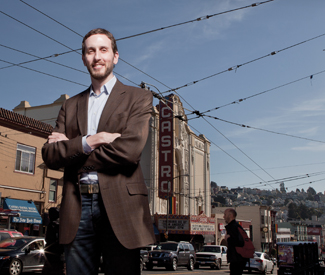
The condo-conversion legislation, co-sponsored by Sups. Scott Wiener and Mark Farrell, did not move forward that day. Instead, Board President David Chiu made a motion to table the discussion until Feb. 25, to provide time for “an intensive negotiation process.” Chiu, who rents his home, added: “While I myself would like to become a homeowner someday … I do not support the legislation in its current form.”

Sup. Jane Kim sought to appeal to the tenants as well as the TIC owners. “It’s very tragic that we have set up a situation where [TICs and renters] are pitted against one another,” she said. She hinted at what a possible alternative to might look like. “We should be looking at a ban of scale,” she said. “If we allow 1,800 potential units to go thru this year, are we willing to do a freeze for the next 8 to 10 years?”

It’s unclear what will happen in the next few weeks, but if this legislation makes it back to the full board in some form, the swing votes are expected to be Sups. London Breed, Malia Cohen and Norman Yee.

CASH OR EVICTION?

New protections were enacted following the late-90s frenzy to discourage real-estate speculators from using the Ellis Act to turn a profit on the backs of vulnerable seniors or disabled tenants. Yet a new wave of investors has discovered they can persuade tenants to leave voluntarily, simply by offering buyouts while simultaneously wielding the threat of an Ellis Act eviction. “The process got more sophisticated,” explains San Francisco Rent Board Deputy Director Robert Collins.

Once a tenant has accepted a check in lieu of eviction, rent-controlled units can be converted to market rate, or refurbished and sold as pricey condos, without the legal hindrances of an eviction blemish. Buyouts aren’t recorded with the Rent Board, and the agency has no real guidance for residents faced with this particular dilemma. “We don’t have the true number on buyouts,” says Mecca. “We don’t know how many people have left due to intimidation.”

Identity-wise, renters impacted by the Ellis Act defy categorization. A contingent of monolingual Chinese residents rallied outside City Hall recently to oppose legislation they believed would give rise to evictions; in the Mission, many targeted tenants are Latinos who primarily speak Spanish. From working immigrants, to aging queer activists, to disabled seniors, to idealists banding together in collective houses, the affected tenants do have one thing in common. When landlords or real-estate speculators perceive that their homes are more valuable unoccupied, their lives are susceptible to being upended by forces beyond their control.

The upshot of San Francisco’s affordability crisis is a cultural blow for a city traditionally regarded as tolerant, forward thinking, and progressive. In the words of Rose Eger, a musician who faces an Ellis Act eviction from her apartment of 19 years, “it changes the face of who San Francisco is.

Out of the Castro

By Tim Redmond

You can’t get much more Castro than Jeremy Mykaels. The 62-year old moved to the neighborhood in the early 1970s, fleeing raids at gay bars in Denver. He played in a rock band, worked at the old Jaguar Books, watched the rise of Harvey Milk, saw the neighborhood transform and made it his home.

He’s lived in a modest apartment on Noe Street for 17 years, and for the past 11 has been living with AIDS. Rent control has made it possible for Mykaels, who survives on disability payments, to remain in this city, in his community, close to the doctors at Davis Hospital who, he believes, have saved his life.

And now he’s going to have to leave.

In the spring of 2011, his longtime landlords sold the building to a real-estate investment group based in Union City — and the new owners immediately sought to get rid of all the tenants. Two renters fled, knowing what was coming; Mykaels stuck around. In September of 2012, he was served with an eviction notice, filed under the state’s Ellis Act.

He’s a senior, he’s disabled, his friends are mostly dead and his life is in his community — but none of that matters. The Ellis Act has no exceptions.

Mykaels spent a fair amount of his life savings fixing up his place. The walls are beige, decorated with nice art. Dickens the cat, who is chocolate brown but looks black, wanders in and out of the small bedroom. Mykaels has been happy there and never wanted to leave; “this,” he told me, “is where I thought I would live the rest of my life.”

There’s no place in the Castro, or even the rest of the city, where he can afford to move. Small studios start at $2,500 a month, which would eat up all of his income. There is, quite literally, nowhere left for him to go.

“A lot of my friends have died, or moved to Palm Springs,” he said. “But this is where my doctors are and where I’m comfortable. I’m not going to find a support system like this anywhere else in the world.”

Mykaels is the face of San Francisco, 2013, a resident who is not part of the mayor’s grand vision for bringing development and high-paying jobs into the city. As far as City Hall is concerned, he’s collateral damage, someone whose life will have to be upended in the name of progress.

But Mykaels isn’t going easily. The former web designer has created a site — ellishurtsseniors.org — that lists not only his address (460 Noe) and the names of the new owners (Cuong Mai, William H. Young and John H. Du) but the addresses of dozens of other properties that are facing Ellis Act evictions. His message to potential buyers: Boycott.

“Do not buy properties where seniors or the disabled have been evicted for profit by real estate speculators using the Ellis Act,” the website states.

Mykaels is a demon researcher — his site is a guide to 31 properties with 94 units where seniors or disabled people are being evicted under the Ellis Act. In some cases, individuals or couples are filing the eviction papers, but at least 14 properties are owned by corporations or trusts.

Mai told me that he knew a disabled senior was living in the building when he and his two partners bought it, but he said his plan all along was to evict all the tenants and turn the three-unit place into a single-family house. He said he hasn’t decided yet whether to sell building; “I might decide to live there myself.” (Of course, if he wanted to live there himself, he wouldn’t need the Ellis Act.)

Mai said he “felt bad about the whole situation,” and he had offered to buy Mykaels out. The offer, however, wouldn’t have covered more than a few months of market rent anyplace else in the Castro.

By law, Mykaels can stay in his apartment until September. If he can’t stave off the eviction by then, San Francisco will lose another longtime member of the city community.


Dark days in the Inner Sunset

By Rebecca Bowe

The living room in Rose and Willie Eger’s Inner Sunset apartment is where Rose composes her songs and Willie unwinds after playing baseball in Golden Gate Park. Faded Beatles memorabilia and 45 records adorn the walls, and a prominently displayed poster of Jimi Hendrix looms above a row of guitar cases and an expansive record collection.

It’s a little worn and drafty, but the couple has called this 10th Ave. apartment home for 19 years. Now their lives are about to change. On Jan. 5, all the tenants in their eight-unit building received notice that an Ellis Act eviction proceeding had been filed against them.

“The music that I do is about social and political things,” explains Rose, dressed from head-to-toe in hot pink with a gray braid swinging down her back. Determined to derive inspiration from this whole eviction nightmare, she’s composing a song that plays with the phrase “tenants-in-common.”

Cindy Huff, the Egers’ upstairs neighbor, says she began worrying about the prospect of eviction when the property changed hands last summer. Realtor Elba Borgen, described as a “serial evictor” in online news stories because she’s used the Ellis Act to clear several other properties, purchased the apartment building last August, through a limited liability corporation. The notice of eviction landed in the mailbox less than six months later. (Borgen did not return Guardian calls seeking comment.)

“With the [average] rent being three times what most of us pay, there’s no way we can stay in the city,” Huff says. “The only option we would have is to move out of San Francisco.” She retired last year following a 33-year stint with UCSF’s human resources department. Now, facing the prospect of moving when she and her partner are on fixed incomes, she’s scouring job listings for part-time work.

The initial notice stated that every tenant had to vacate within 120 days, but several residents are working with advocates from the Housing Rights Committee in hopes of qualifying for extensions. Huff and the Egers are all in their fifties, but some tenants are seniors—including a 90-year-old Cuban woman who lives with her daughter, and has Alzheimer’s disease.

Willie works two days a week, and Rose is doing her best to get by with earnings from musical gigs. Both originally from New York City, they’ve lived in the city 35 years. When they first moved to the Sunset, it resembled something more like a working-class neighborhood, where families could raise kids. The recent tech boom has ushered in a transformation, one that Rose believes “changes the face of who San Francisco is.” Willie doesn’t mince words about the mess this eviction has landed them in. “I call it ‘Scam-Francisco,'” he says.

The trio recently joined tenant advocates in visiting Sup. Norman Yee, their district supervisor, to tell their stories. Yee, who is expected to be one of the swing votes on an upcoming debate about condo-conversion legislation vehemently opposed by tenant activists, reportedly listened politely but didn’t say much.

As for what the next few months have in store for the Egers? “I can’t really visualize the outcome,” Rose says. “I can only visualize the day-to-day fight. And that’s scary.”


Fighting for a home in the Mission

By Tim Redmond

Eleven years ago, Olga Pizarro fell in love with Ocean Beach. A native of Peru who was living in Canada, she visited the Bay Area, saw the water and decided she would never leave.

Fast forward to today and she’s built a home in the Mission, renting a small room in a basement flat on Folsom Street. The 55-year-old has lived in the building for eight years; polio has left her wearing a leg brace and she can’t climb stairs very well, but she still rides her bike to work at the Golden Gate Regional Center. She’s a sociologist by training; the walls in her room are lined with bookshelves, with hundreds of books in Spanish and English.

The place isn’t fancy, and it needs work, but it’s hard to find a ground-floor apartment in the Mission that’s affordable on a nonprofit worker’s salary. Since 2011, when she moved in, she and her three housemates have been protected by rent control. And Pizarro’s been happy; “I love the neighborhood,” she told me.

The letter warning of a pending eviction arrived Jan. 16. A new owner of the building wants to turn the place into tenancies in common and is prepared to throw everyone out under the Ellis Act. There’s no place else in town for Pizarro to go.

“I’ve looked and looked,” she said. “The cheapest places are $2,500 a month or more. Maybe I’ll have to move out of the city.”

Pizarro’s building is owned by Wai Ahead, LLC, a San Francisco partnership registered to Carol Wai and Sean Lundy. I couldn’t reach Wai or Lundy, but their attorney, Robert Sheppard, had plenty to say. “San Francisco is going the way of New York,” he told me. “Manhattan is full of co-ops that used to be rentals, and lower-income people are moving to Brooklyn and Queens. That’s happening here with Oakland and further out.” He argued that TICs, like co-ops, provide home-ownership opportunities for former renters.

Sheppard, who for years represented tenants in eviction cases, said the Ellis Act is law, and America is a capitalist country, and “as long as there is a private housing market, there will be shifts of people as the housing market shifts.” He agreed that it’s not good for lower-income people to lose their homes, but “the poor will always be hurt by a changing economy. It’s called evolution.”

Pizarro told me she’s shocked at how expensive housing has become in the Mission. “It’s gotten so gentrified,” she said. “People show up in their BMWs. It’s starting to feel very isolated.”

She’s fighting the eviction. “I didn’t intend it to be this way,” she explained. “I just want to live here.” Lacking any family in the area, the Mission has become her community — “and I’m frustrated by the violence of how expensive it is.”


Affordability goes out of style

By Rebecca Bowe

Hester Michael is a fashion designer, and her home doubles as a project space for creating patterns, sewing custom clothing, weaving cloth, and painting. She’s lived in her Outer Sunset two-bedroom unit for almost two decades, but now she faces an Ellis Act eviction. Michael says she initially received notice last June. The timing was awful -– that same month, her husband passed away after a long battle with terminal illness.

“I’ve been here 25 years. My friends are here, and my business. I don’t know where else to go, or what else to do,” she says. “I just couldn’t picture myself anywhere else.”

Michael rents the upstairs unit of a split single-family home, a kind of residence that normally isn’t protected by rent control. Yet she leased the property in 1994, getting in under the wire before that exemption took effect. Since she pays below-market-rate rent in a home that could be sold vacant for top dollar, a target was essentially inscribed on her back when the property changed hands in 2004. That’s about when her long battle with the landlords began, she says.

From the get-go, her landlords indicated that she should look for a new place, Michael says, yet she chose to remain. The years that followed brought things falling into disrepair, she says, and a string of events that caused her feel intimidated and to fear eviction. Finally, she consulted with tenant advocates and hired an attorney. A complaint filed in superior court alleges that the property owners “harassed and retaliated [Michael] when she complained about the defective and dangerous conditions …telling [her] to move out of the property if she did not like the dangerous conditions thereat … repeatedly making improper entries into [the] property, and wrongfully accusing [her] of causing problems.”

Records show that Angela Ng serves as attorney in fact for the property owner, Ringo Chung Wai Lee. Steven Adair MacDonald, an attorney who represents both landlords and tenants in San Francisco housing disputes, represents the owners. “An owner of a single family home where the rent is controlled and a fraction of market has virtually no other choice but to terminate the tenancy,” MacDonald said when the Guardian reached him by phone. “They’ve got to empty it, and the only way to empty it is the Ellis Act.”

While Michael received an extension that allows her to remain until June 5, she fears her custom sewing business, Hester’s Designs, will suffer if she has to move. There’s the issue of space. “I have so much stuff in this house,” she says. And most of her clients are currently located close by, so she doesn’t know where her business would come from if she had to relocate. “A lot of my clients don’t have cars,” she says, “so if I live in some suburb in the East Bay, forget it. I’ll lose my business.”

The prospect of eviction has created a major dilemma for Michael, who first moved to San Francisco in 1987. While moving to the East Bay seems untenable, she says renting in San Francisco feels out of reach. “People are renting out small, tiny bedrooms for the same price as I pay here,” she says. With a wry laugh, she adds: “I don’t think there’s any vacant apartments in San Francisco -– unless you’re a tech dude and make seven grand a month.”

Editor’s notes

97

tredmond@sfbg.com

EDITORS NOTES People who rent apartments aren’t second-class citizens. In fact, under San Francisco laws, they have (and ought to have) many of the same rights as the landed gentry.

If you rent a place in this city, and you pay the rent on time, and abide by the terms of the lease, you should be able to stay in your home (and yes, it IS your home) as long as you want. The rent can only go up by a modest amount every year.

Landlords know that when they enter into rental agreements. Accepting a tenant means acknowledging that the person may want to say in his or her apartment for years, maybe for life; the rent the landlord sets for that unit has to be adequate to cover a share of the mortgage, expected maintenance costs, and a reasonable return on the owner’s investment.

When you buy a piece of rental property in the city, you are told that tenants live there; you’re told what rent they pay, you’re informed that you can’t raise it much, and unless your utterly ignorant of local law, you realize that the tenants have, in effect, lifetime leases since you can only evict them for “just cause” — which does not include your desire to make more money.

If the numbers don’t pencil out under those conditions, they you shouldn’t buy the place.

That’s how a sane rental housing system ought to operate. Unfortunately, the state Legislature has undermined local rent-control laws with the Ellis Act, which allows landlords to evict all their tenants, cease renting altogether, and turn the place into condominiums. Or, since there are limits on condo conversions in this city, into tenancies in common, which are not limited at all.

Sup. Scott Wiener wants to make it easier to turn TICs into condos; he says the poor TIC owners are having a tough time and can get better mortgage rates if they rules are changed. I don’t feel bad for them; they knew the rules when they bought their TICs. They have no right to convert to condos; that’s a privilege granted to a limited number each year, by waiting list and lottery. Buy a TIC? You should assume it will remain your ownership model for a long, long time.

The city can’t stop the TIC conversions, but it can set ground rules — for example, local law mandates a payment to tenants who are evicted, which can reach $5,000. Sounds big — but it won’t even pay two months’ rent on a new place in this market.

SO let’s be fair here: If you want to evict a tenant, who has and ought to have the right to a stable place to live, you should pay enough to make that person whole. Calculate market rent on a similar place; subtract the current rent the tenant is paying, and cover the difference — for, let’s say, five years.

If that makes TICs too expensive, and thus lowers property values by making evictions difficult and keeping rents low, fine: Property values are too high in this town anyway. And if it means more stability for lower-income people at the expense of property owners … well, I can live with that.

SF’s Cocktails shout ‘Hey Winnie’

4

I’m loving this video by newish San Francisco power-pop (or “power-slop”) band Cocktails for “Hey Winnie,” off the group’s debut self-titled EP.

The video has the playful vibe of 1990s alternative spots (when power-pop was king), and looks to be set in Tenderloin store, Vacation actually was filmed at the No Shop in the Mission.

Released a week from today (Feb. 12) on local Father/Daughter Records, the seven-inch was recorded at Fuzz City Studio with Matthew Melton, of Warm Soda and Bare Wires fame. Cocktails’ next show is Feb. 23 at the Night Light, 311 Broadway, Oak. www.thenightlightoakland.com.

Trail to historic gay Boy Scouts vote started in the Bay Area

23

This Wednesday, the Boy Scouts of America’s (BSA) Executive Board will consider removing the controversial ban on gay members and allow each individual troop to adopt its own policy on gay scouts. The board publicly reaffirmed the anti-gay policy just last summer, but recent pressure from gay rights groups, corporate sponsors, and Bay Area troops has forced the governing body to revisit the blanket prohibition on gay members.  

Opposition to the Boy Scout’s ban first surfaced in Northern California in the late 1980s when Tim Curran, an Eagle Scout and aspiring scoutmaster, sued the Mount Diablo Boy Scout Council for discrimination after being denied the position. Curran took the suit to the Supreme Court and lost. The court’s landmark decision in Curran v. Mount Diablo Council of the Boy Scouts of America continues to provide the legal justification for the BSA’s anti-gay policies.

Since the ruling, the San Francisco Bay Area has emerged as a key battleground in the struggle for gay membership in the scouts. Local troops often clash with the national organization over the ban and many local scout leaders publicly denounce the policy as discriminatory and hateful.

In October, openly gay East Bay scout Ryan Andresen was denied his Eagle Scout badge by the Mt. Diablo-Silverado Council due to his sexual orientation. Although officials with the council voiced reservations about denying Andresen, they are bound by BSA national policy that has long maintained homosexuality is inconsistent with the scouts oath to be “morally straight.”  

Andresen’s father resigned his position as an assistant scoutmaster, and Andresen’s mother organized an online petition which collected nearly half a million signatures protesting her son’s expulsion. The incident is sparking a widespread public debate about the Scout’s discrimination policy. Andresen appeared on national TV, and his petition garnered high profile support from California politicians like Lt. Gov. Gavin Newsom and US Sen. Barbara Boxer.

Andresen’s national profile and the publicity surrounding his case inspired outrage among local scouts and adult leaders. Steve Tennant, committee chair of Palo Alto Troop 57, said the parents and volunteers in his troop felt compelled to act. “We were all outraged and we immediately started thinking about how we could go about changing this policy,” he told the Guardian.

The controversy quickly galvanized parents and scouts throughout the Bay Area to more openly challenge the gay ban. From San Francisco to Palo Alto, parents and scouts penned public letters of protest decrying the policy and and urging the local Mt. Diablo-Silverado Council to reconsider Andresen.

Parents in Tennant’s Troop 57, located just a few miles from Andresen’s troop, unanimously adopted a non-discrimination policy both to voice solidarity with Anderson and to avoid potential discrimination in their own troop.

“It was just a matter of time until a kid in our troop faced the same situation as Ryan. I would rather resign my position than kick a kid out of the Scouts for being gay,” Tennant, whose two sons are currently scouts, told the Guardian. “Seeing the reaction of our parents and seeing the support for Ryan convinced me personally to stay involved with the Scouts,” he added.  

Eagle Scouts from Andresen’s district also mobilized against the ban. Trevor Wallace, an Eagle Scout from the nearby Troop 57, helped to organize meetings to pressure the Mt. Diablo-Silverado Council to allow Andresen to earn his badge. “My troop has been completely outraged by what happened to Ryan,” Wallace told the Guardian. “I got my Eagle Scout badge the same time Ryan was supposed to get his… discriminating against him like this is old fashioned and wrong.”

Michael and Andrew Dotson, a father-son scoutmaster duo who lead San Francisco’s Troop 88, echoed the concerns of Wallace and Tennant. “I want the boys to feel safe and be able to be open,” Michael Dotson told the Guardian. “Troop 88 would be very accepting of gay members once the ban is removed. And I hope it is.”

Andrew Dotson, a recent Eagle Scout who now works as his father’s assistant scoutmaster also opposes the ban. Growing up in San Francisco, he encountered plenty of gay scouts. But because of the national policy, the boys in his troop had to stay formally in the closet or risk expulsion. “I just don’t think that’s right,” he told the Guardian. “Scouting should be open to everybody.

Andresen’s case and the outpouring of support from other Bay Area scouts drew the attention of Zack Wahls, founder of Scouts for Equality, a national organization founded last summer to pressure the BSA Executive Board d to revisit the gay-ban.  

Wahls credits Andresen and his supporters with providing the necessary grassroots pressure to potentially change the national policy.

“It’s important to remember that only seven months ago, the Scouts were adamant that this policy was not going to change,” Wahls told the Guardian. “What happened in those seven months was that we harnessed online tools and worked with people like Ryan to highlight the negative impact this ban has on the local level.”

Wahl and Boy Scouts for Equality also targeted corporations and sympathetic members of the BSA board.  Over the summer, board members Randall Stephenson, CEO of AT&T, and James Turley, CEO of Ernst & Young, announced publicly their opposition to the ban. Since September, several major corporate sponsors, including Intel and UPS, announced that they would rescind financial support for the BSA until the national organization lifted the ban.  

Ahead of the board meeting, BSA officials reiterated that lifting the ban would not force any individual troops to change their own membership policies. “The Boy Scouts would not, under any circumstances, dictate a position to units, members, or parents,” BSA spokesperson Deron Smith told the New York Times. “This would mean there would no longer be any national policy regarding sexual orientation.

For many scouts in the Bay Area, however, removing the national ban is just the beginning. The end goal is the adoption of a national non-discrimination policy. But given the Boy Scouts history of strident opposition to gay rights, reconsidering the ban is significant development. “I think a national policy will take time,” reflected Michael Dotson of Troop 88, “but this is a good first step.”


Police gear up for round two on Tasers

On February 4, the San Francisco Police Commission will hold the second of three planned community meetings to gauge support for a pilot program to arm 100 SFPD officers with Tasers. The controversial proposal pits police Chief Greg Suhr, a proponent, against civil liberties organizations and homeless advocates who are mobilizing public opposition to the Taser initiative. 

Shortly after being appointed police chief in 2011, Suhr said arming the SFPD with Tasers would not be a top priority. But following the police shooting of a mentally ill man last July, Suhr has pushed the Police Commission to allow members of the cities Crisis Intervention Team (CIT)—who receive special training to deal with the mentally ill—to carry Tasers.

Since the shooting, Suhr has repeatedly argued that Tasers would help save lives and reduce instances of gun use. “You do have to have as many tools in the tool box before you go to guns,” he said at the first community forum.

The ACLU and local homeless advocates disagree.

“Every time there is an officer-involved shooting, the department uses it as an excuse to outfit officers with Tasers,” ACLU attorney Micaela Davis told the Guardian. “We continue to believe that Tasers are not a good alternative to firearms and we fear that officers run the risk of going to Tasers too early in a confrontation instead of using de-escalation techniques.”

Equipping CIT officers with Tasers would inject the controversial stun guns into already tense confrontations between the mentally ill and the SFPD.

Lisa Marie Alatorre, an organizer with the San Francisco Homelessness Coalition, argues Tasers could have a devastating effect on the city’s homeless population. “The CIT typically deals with people in crisis, people who are mentally ill, and people who are currently destitute and have nowhere to live,” she told the Guardian. “The use of Tasers in the midst of a crisis will cause severe trauma and could inflict significant psychological damage.”

Both the Coalition on Homelessness and the ACLU charge that the SFPD has dragged its feet in implementing the nonviolent components of the CIT program. Less than 75 officers have been trained in nonviolent confrontational strategies since the program’s adoption last summer, and Alatorre charges SFPD has yet to implement protocols that would bring the program to fruition.

Police Commissioner Angela Chan, a longtime proponent of the CIT program, echoed these concerns. “We need to improve our de-escalation tactics with regards to crisis intervention. Many of the steps to train and implement CIT have not yet been implemented and that’s where we need to focus our energies,” she told the Guardian.

Despite strong local opposition to Tasers, they are becoming standard equipment for police departments across the nation. SFPD officers are hopeful that public opposition does not kill this pilot program, like similar attempts before it.

Sgt. Michael Andraychak, a spokesperson with the SFPD, argued that equipping CIT officers with Tasers would give police more flexibility to use force without engaging their firearms.

“On the street, not every situation can be managed in a nonviolent fashion,” he told the Guardian. “CIT is a great program, and the implementation of Tasers would give those officers an additional tool to use before they have to escalate to deadly force.”

Police commissioners will make a final decision about Tasers after the third community meeting, which is scheduled for Feb. 11 at the Bayview Opera House.

The next community forum on the SFPD Taser pilot program will be held on Feb. 4 from 6-8pm at the Scottish Rite Center, 2850 19th Ave, in SF.  

Activists slam hollow report on SFPD-FBI spying

108

UPDATE: SUHR APOLOGIZES FOR REPORT The San Francisco Police Department continues to resist meaningful oversight of its partnership with the FBI’s Joint Terrorism Task Force. After last year pressuring Mayor Ed Lee into vetoing a strong oversight measure and signing a weaker version, the SFPD last week issued a required report that activists are slamming as “grossly inadequate.”

The Coalition for a Safe San Francisco – which includes civil libertarians and members of Muslim groups and other targets of racial and religious profiling by the FBI – last May stood with Police Chief Greg Suhr and sponsoring Sup. Jane Kim as Lee signed what they called this “historic civil rights legislation.”

But at the time, the activists told the Guardian that the value of the watered-down legislation depended entirely on how it was implemented, particularly in the annual reports on SFPD-FBI operations that it required. To ensure they were specific enough to be meaningful, the coalition says it communicated with Suhr several times asking him to include the number of joint investigations undertaken, how many times FBI requests were denied by the SFPD, and possible violations of department policy and how they were handled.

Instead, when Deputy Chief John Loftus gave the first of these annual reports to the Police Commission on Jan. 23, he spoke for only a couple minutes and said the SFPD was in “full compliance” with the ordinance and a Suhr general order banning surveillance of law-abiding citizens, offering no further details.

“We were very clear with the chief about what we expected to see,” Nadia Kayyali of the Bill of Rights Defense Committee, a coalition member, told the Guardian. She also said the report “was slipped on the agenda at the last minute,” despite assurances that the coalition would be notified and given a chance to respond. “It does show a lack of regard for the ordinance and the work that went into it.”

The activists say that Suhr broke his promise to them to include the more specific information that they sought, even after they recently followed up with messages reminding him about that assurance. “I was in the meeting where he said he would,” Nasrina Bargzie with the Asian Law Caucus, another coalition member, told us. Bargzie said she was disappointed and dismayed by what the report included, “but we’re going to keep pushing on it.”

The controversy surrounding possible SFPD-FBI spying on people who haven’t violated any laws – which is illegal under local and state law – broke almost two years ago when the American Civil Liberties Union obtained a secret 2007 SFPD-FBI memorandum of understanding placing SFPD officers under FBI command. It seemed to bypass local restrictions adopted after past SFPD scandals involving police spying on political groups.

Suhr tried to quell the controversy by issuing a general order banning officers from participating in surveillance that violates local rules or the state constitution’s privacy protections, but activists pushed for a stronger assurance. The Board of Supervisors then voted 6-5 to codify those protections into city law, but Suhr objected and Lee vetoed the measure. A weaker version calling for annual reports and Police Commission reviews of future SFPD-FBI MOUs was approved unanimously by the board.

Now, it appears the SFPD has done little to soften the “trust us” stance that it has taken from the beginning, frustrating activists who had pushed for more, here and in other cities that do domestic surveillance with the FBI.

“These policies are explicit and unequivocal. San Francisco Police Department members and their Joint Terrorism Task Force supervisors are aware of and familiar with these policies,” Loftus told the commission, explaining that the SFPD did its required quarterly reviews in November and two weeks ago, finding nothing to report.

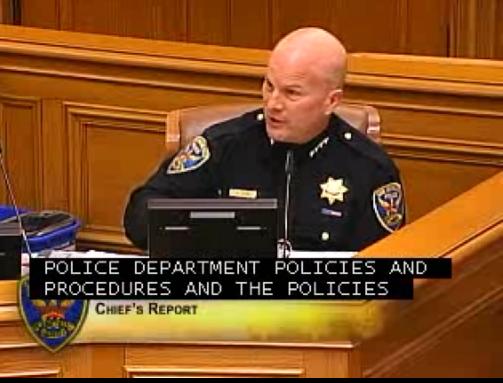
Police Commissioner Suzy Loftus asked if he could “explain a bit more” and Suhr – who was at the stand giving his report as Deputy Chief Loftus (no relation) gave his from the lectern – answered: “All San Francisco police officers are held to the San Francisco Police Department policies and procedures and the policies and laws of San Francisco, whichever is more strict. So depending on wherever they are, their fallback, if you will, is whatever the policies, procedures, laws, ordinances, and all of San Francisco.”

Suhr’s answer seemed to satisfy the commission, which defended the SFPD’s secretive approach rather than asking any more questions.

“Our officers will not participate in any investigation unless there is a predicate offense that is a violation of the California Penal Code or the United States code, so they will not be involved in random surveillance or random assessments or talking to people,” Commission President Thomas Mazzucco said.

Commissioner Joe Marshall also said he trusts Suhr and we all should too: “I want the public to feel reassured that when the chief says that’s going to be the way it is, that’s the way it is.”

But the coalition, which includes 79 organizations, was less than satisfied with that answer. In a statement issued today, it wrote, “Deputy Chief Loftus’ report completely failed to provide the information required to ensure the accountability and transparency required under the Safe San Francisco Civil Rights Ordinance. The Coalition calls on the Chief of Police to promptly issue a public written report containing the information he promised he would provide.”

Neither Kim – who sponsored both the original legislation and weaker alternative – nor the SFPD have returned Guardian calls for comment yet, but I’ll update this post if and when they do. You can watch the hearing yourself here, with that item beginning at the 48:20 mark.


Restaurant Guide*

0

La Note and Café Clem

Dorothée Mitrani-Bell, owner and proprietor of both La Note and Café Clem in Berkeley, was born in the South of France and grew up in Paris. Daughter of French gourmet cooks, she is no stranger to fine French cuisine, but wanted to bring the rustic and unpretentious side of things to her clientele. “I sell conviviality,” she says, adding with a laugh: “It’s about people – I want people to be together and sit together…and calm down.”

After “Berkeley called, ” a young twenty-something Dorothée arrived on a one-way ticket and $6 in her pocket, attended Cal, and sometime thereafter set up shop in a once dilapidated 1875 building that she completely renovated and restored on her own. La Note opened in 1997 and has been in the same location since.

“As soon as I walked in to the building, I had a vision of what it is today” – that is a charming eatery with a warm and rustic Provençal ambiance. Reclaimed and repurposed furniture like old pews make it feel homemade, like the food. The pancakes are a must-try, as are the eggs. Les Oeufs Lucas and a fresh croissant will not disappoint.

More Paris than French countryside, the new Café Clem opened last April near Berkeley High with much fanfare. “The kids are fans of the Nutella-filled baguette and les pain perdus.” A pain perdus, for the uninitiated, is a pressed stack of challah layered with Nutella, served here with a glass of milk – French comfort food at it’s finest, for students and adults alike. (Jackie Andrews)

La Note, 2377 Shattuck Ave., Berkeley | (510) 843-1535| lanoterestaurant.com

Café Clem, 2020 Kitteredge St., Berkeley | (510) 280-3881 | cafeclem-downtown.com


Taqueria Can-Cun


Voted as “Best Taqueria” in the Best of the Bay for 10-plus years, this taqueria is one of the best in the Mission. Their tacos and burritos are always delicious but if you are looking to mix it up a little try their pastor torta – flavorful pork between two fluffy warm buns with lots of tasty toppings in between. If you are a vegetarian this place will satisfy since they’ve been voted “Best Veggie Burrito” more than once. This small, quaint, authentic taqueria is located in the heart of the Mission at 2288 Mission St. @ 19th with another location at 1003 Market St. @ 6th and their newest one at 3211 Mission St. @ Valencia. Whether you are looking for lunch, dinner or a late night snack, this place deserves consideration. Open Monday through Thursday 10am to1am, Friday and Saturday 10am to 2am, and Sunday from 10am to 1:30am.


Bistro SF Grill


Bistro SF Grill provides the best, always fresh, organic, sustainable, local, and eclectic meats, and with their fresh-baked organic breads they create the most exciting burgers.

If you’re looking for a hearty meat dish – whether a traditional Kobe beef burger, or if you’re feeling funky and want to try grilled ostrich, alligator, buffalo, wild boar, or venison – then this is the place for you. Their wide variety menu also has options for the vegan and vegetarian eaters as well. This restaurant serves a wide variety of beers from around the world and also has wine tastings everyday. Open Monday through Friday, 5 to 10pm and Saturday and Sunday, noon to 10pm, located at 2819 California St. @ Divisadero.


Las Palmeras

This Salvadorian/Mexican/Latin American restaurant is sure to satisfy everyone’s taste buds, even those of the picky eater. They offer all the traditional Mexican food including refried beans, rice, homemade warm flower tortillas, salad, salsa and their famous pupusas – a thick handmade corn tortilla stuffed with a variety of cheese and pork. The menu also includes tamales, soup, finger lickin’ fried chicken and hamburgers. Open seven days a week from 8:30am to 9:30pm daily, located at 2721 Mission @ 23rd  St.


Taqueria El Castillito

This affordable, delicious, and undeniably authentic taqueria may be one of the best in the Mission. This place is best when you are looking for a late night, cheep eat.  They are known for their XXL burritos and bottomless chips and salsa everyday. They also offer a wide variety menu that includes tacos, nachos, and tortas. Whether you want a mild or extra hot salsa, their salsa bar is sure to satisfy whatever your level of spice may be.  El Castillito is pen for lunch, dinner, and late night meals with two locations –2092 Mission St. @ 17th St. and 370 Golden Gate Ave. @ Larkin.


Rainbow Grocery


This locally owned grocery store has been serving San Francisco’s Mission District since 1975. They aim to buy goods from local organic farmers, bakers, dairies, and other local businesses whenever possible. They are most known for having a wide selection specialty items, most of which you cannot find in a chain grocery store – plenty of gluten free, vegetarian, vegan, soy-free and organic products. Customer’s favorite items include the wide variety of cheeses, oils and vinegars that you can package yourself, bulk grains and teas, and a large supplement aisle. Located at 1745 Folsom St., Rainbow Grocery is open everyday from 9am to 9pm. 


Ganim’s Market

If you’re looking for some good comfort food at incredibly reasonable priecs, then Ganim’s is the place to go. With everything from delicious burgers – veggie too – and fries for $6 or less to traditional English fish and chips for the same price, this is a cheep deli-style joint that will not disappoint. Looking for something different to mix it up?  Try their surf and turf burger – a piece of fried fish on top of a bacon cheeseburger. This place has everything from burgers to burritos, and icy cold beers to wash it all down. Here, you can truly enjoy a huge meal for a small price. Located at 1135 18th St. right on the corner, Ganim’s is open Monday through Friday 11am to 9pm and Saturday from 11am to 7pm. Great lunch specials as well!


Blowfish Sushi


Blowfish offers good quality sushi in a modern, upscale environment. The restaurant has a hip club vibe with large TV screens around the dining room and a DJ spinning the latest tracks. With beautiful plating, awesome deserts, and delicious plum wine, this place is sure to satisfy all sushi lovers.  If you’re coming here for lunch make sure to come early or make a reservation as the place is usually packed. Also good to know is that from 2:30-5:30pm, Monday through Friday, it is siesta time. Open for dinner Monday, Tuesday and Sunday from 5:30 to 10pm, Wednesday and Thursday until 10:30 and Friday and Saturdays until 11pm. Located in the Mission at 2170 Bryant St.


Reina’s Taqueria

Fresh, inexpensive, local – Reina’s has all the familiar Mexican menu items you are looking for, like nachos, enchiladas, tamales, al pastor burritos, and tacos, all made with the freshest ingredients at a really great price. Make sure to check out their beer and wine selection as well. Reina’s Taqueria makes for a great lunch spot and can accommodate large groups. Located on the corner of 12th St. and Lafayette at 1550 Howard, this taqueria is very convenient to get to. Stop in for lunch or call your order in at (415) 431-0160.


Eiji Tofu


If you are looking for a low-key, Japanese restaurant in a small, quaint location then this is the place for you. Eiji offers a limited menu but the options are all signature dishes that are simply delicious, like great sushi, okra beef, homemade tofu, and more. Make sure to end your meal with their most famous dessert, the strawberry mochi. The staff is very knowledgeable and attentive to what you need, making this a great place for an un-fussy or casual dinner date night. Located in the Castro at 317 Sanchez. Open Tuesday through Sunday from 11:30am to 2pm and 5:30pm to 10pm.


Guerrero gallery bites Zero Graffiti convention

2

“The difference between art and vandalism is permission.” So said Dwight Waldo, retired San Bernadino cop, at the Zero Graffiti convention earlier this month in San Francisco. The event drew law enforcement officials from multiple countries, convening them for lectures on graffiti prevention, on street art’s connection to gangs and hate speech, and on ways to apprehend graffiti artists (“the Internet” figured prominently here, judging from the talks I managed to catch during the convention’s public portion.) In his talk, Waldo prided himself on shutting down a graffiti-inspired legal art show because it was being organized by an illegal graffiti artist. 

But it would appear that the art community isn’t satisfied with allowing those that hold the anti-graffiti wipes to be the arbiters of taste. The folks at Guerrero Gallery have branded their show opening Sat/2 with Zero Graffiti’s imagery to put scrutiny on San Francisco and other cities’ efforts to repress graffiti.

As for stopping graffiti… we should nourish it,” wrote gallery owner Andres Guerrero to me in an email. “The city’s effort to rid us of graffiti is a concern but graffiti will always be around. It’s an inspiring form of creativity that all demographics have accepted and have supported. It’s a growing culture that should be embraced and developed with the help of local communities. It’s a leading contemporary movement.”

The convention’s program, including ad for “spraycan sensor” that SF DPW officials confirmed have been purchased by the city. It’s been announced that next year’s conference will take place in Phoenix

The exhibit’s artists, Tim Diet and Remio, are both established gallery artists who got their start doing illegal graffiti. “It’s an exciting show for all of us at the gallery and they also represent a progressive intelligent community,” wrote Guerrero.

Given the dire state of arts education in the San Francisco Unified School District, perhaps city officials should start looking at graffiti artists in a different light. After all, if young people can’t find canvases elsewhere, why shouldn’t they make their mark on their neighborhood?

Project One opens “Project One Walls,” an indoor mural show, on Feb. 7. It’ll feature the work of current and former street artists and looks real cool. 

Here’s the Guerrero Sat/2 opening’s featured artists, both of whom started developing their art on the street: 

Norweigan-born artist Remio’s cluster faces still drip — but they’re emblematic of his transition from street work to showing in galleries

Bay Area artist Tim Diet’s “Sorry I Party” still embodies the chaos of work born in public space

“Man In Transition” and “This is Me”: Remio and Tim Diet

Through Feb. 23

Opening reception: Sat/2, 7-11pm, free

Guerrero Gallery

(415) 400-5168

www.guerrerogallery.com

Starting slow and ramping up

1

SEX It’s the end of an era at local sex toy and education company Good Vibrations: Dr. Charlie Glickman is stepping down from his position as education program manager for the national retailer.

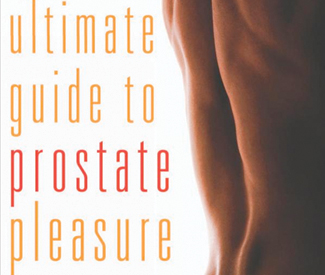
But Glickman is leaving for another adult education adventure: bringing the joys of prostate play to mainstream society. Joining up with San Francisco-based sex educator, Aislinn Emirzian, Glickman has co-authored The Ultimate Guide to Prostate Pleasure; Erotic Exploration for Men and Their Partners, set to be published by Cleis Press in February. The book is all about easy and pleasurable anal play, prostate massage, toys, pegging and anal intercourse, positions, common concerns, and safer sex techniques.

Glickman told the Guardian in an interview about that the book has been in the works for years. Though it’s not the first guide to prostate play, he feels as though he’s tapping into the zeitgeist, that our culture is finally ready for pegging and prostate pleasuring.

The man should know. Since 1996, the sex educator has been on the frontlines of trying to get accurate sexual health information to the Bay Area, and has taught many a prostate class through Good Vibes. His book release party on Thu/31 kicks off a North American prostate play workshop tour sponsored by the sex toy company, and looks to target an audience that mirrors the people who have shown up in Glickman’s sex ed workshops throughout the years: male-female couples, solo women, gay men, the college-aged to senior citizens.

Throughout the course of their research, the book’s authors interviewed over 200 men of all sexual orientations and their partners to capture a wide spectrum of perspectives on how prostate play expands one’s sexual menu, and what holds men back from experiencing its joys. Pegging is the term used to describe men being penetrated by women, often within a heterosexual context. Glickman and Emirzian’s guide is both a 101 on prostate anatomy and sensation, and an examination of the stigmas associated with prostate play.

But one’s prostate play comfort level is not determined by one’s sexuality alone, according to the authors. Reluctance to experiment — even among gay men — can be due to a perceived threat to masculine identity with which anal penetration is often associated.

Glickman says that the first challenge to exploring prostate pleasure exists on a physical level. “For most straight men, and topping queer men, sex happens outside your body as penis-oriented sex.”

“The basic story goes like this,” he continues in the guide. “Real men don’t get fucked — that’s for women, fags, and sissies. Because receiving penetration is usually viewed as the woman’s role in sex, a man may be worried that he isn’t fulfilling the man’s role if he takes a turn catching instead of pitching.”

Leaving the “get it up, get it in, get it off” mentality behind and moving into a receptive role can result in a new feeling of vulnerability. But men can expand the scope of what sex means to them by exploring the world of prostate play. According to Glickman, letting go of ass-based insecurity can open up a whole new world of sexual pleasure.

“Many straight men have said ‘I tried this and it completely changed our sex life,'” Glickman says. Getting to know the prostate can be a game changer.

And The Ultimate Guide is far from being a book for straight men. Glickman and Emirzian are adamant that most gay porn doesn’t adequately explore prostate stimulation, and the guide is also geared towards homosexual men — and for prostate players from the beginner to the advanced.

For example, in the chapter titled, “Prostate Massage,” one can learn all about how to use fingers properly: “When it comes to the prostate, poking is exactly what you don’t want to do! It may have felt great on your shoulder just now, but the prostate is another matter entirely,” says the guide. “We’ve spoken with a lot of men who complained about finger tips poking and stabbing their prostate, which can feel too intense, uncomfortable, or even painful.”

That chapter also includes sections on “starting slow and ramping up” and “rhythm and variety.” Another common misnomer that Glickman puts some ink towards correcting is the idea that bigger is always better when it comes to butt play. Did you know there is a difference between anal sensation and prostate stimulation? While anal sensations are affected by size of penetrating object, incredible prostate pleasure can be found with just one finger or a finger-sized toy. Tips like these aren’t meant to reduce men’s anxiety about being penetrated, especially those who have only seen anal sex in porn.

The book seeks to address both psycho-social concerns while providing practical how-to advice by carefully delineating between the multiple ways that the prostate can be stimulated and sexual orientation.

Another quote from the text: “The important thing to know is that whether you like anal penetration is about what kinds of sexual stimulation work for you; who you want to do it with is about your sexual orientation. While there can be some correlation between the two, one doesn’t imply anything about the other. If you’re gay and you don’t like anal play, you’re still gay. If you’re straight (or bi or any other sexual orientation) and you enjoy it, that doesn’t make you gay.”

THE ULTIMATE GUIDE TO PROSTATE PLEASURE BOOK LAUNCH

Thu/31, 6:30-8:30 p.m., free

Good Vibrations

603 Valencia, SF

(415) 522-5460

www.goodvibes.com


Libertine dream

3

marke@sfbg.com

SUPER EGO One of my supreme happy places, apparently, turned out to be the packed dancefloor of an underground fundraiser for Radical Faerie Burning Man camp Comfort and Joy, right around 3am a couple Fridays ago, when the drag queen DJ dropped “Rock the Casbah” and some behooded elfin rogue’s giant LED rainbow wings lit up and blinded me. Joe Strummer smiles from heaven, surely.

Alas, that drag queen, mi amiga grande Ambrosia Salad, will soon join the current nightlife exodus to Los Angeles, to follow her twinkling star (and cheaper rent) along the path to immortality — or at least an all-night churro cart. Can we get one here please thanks. But just when I despair of the city emptying of its precious idiosyncracies and after-dark characters, someone amazing pops up to charm the hotpants off of me and remind me of both San Francisco’s resilient weirdness and its cyclical subcultural nature.

“Oh, I moved out of the Castro when the drones moved in. Everyone started wanting to look the same, dress the same. It really took the fun out of the gay scene, these marching costumes coming in and stamping out the magic.” That’s twinkle-toned Todd Trexler, poster artist, AIDS nurse, and legendary bon vivant, speaking over the phone — not about about the samey-samey Wienerville the Castro has become, but the Castro clones of the mid-1970s. For all the renewed interest in the workboots, cut-offs, and mustaches of pre-AIDS SF gay culture (see local director Travis Mathews’ exciting, upcoming, James Franco-starring Interior. Leather Bar, which imagines the lost orgy footage from classic homoerotic/gay panic slasher flick Cruising and wowed ’em at Sundance last week), it’s good to remember there were also some fabulous butterfly dissenters to that macho wannabe world.

Trexler was a player in one of the seminal moments of alternative gay culture — after snagging an art degree from SF State, he designed the posters for the queer-raucous, acid-kaleidoscopic performance troupe The Cockettes’ first official shows, as well as the Midnight Movie series, later the Nocturnal Dream Shows at the Palace Theater in North Beach in the early ’70s, back when North Beach was a magnet for free-lovin’ freaks and nightlife oddities. (See, anything can happen). Now, he’s reprinted many of those iconic and visually stunning “Art Deco revival meets Aubrey Beardsley louche meets underground comics perversion” ink-and-photo masterpieces for surprisingly affordable purchase at www.toddtrexlerposters.com.

Divine in her iconic, kooky crinoline (“Basically she just threw on a bunch of stuff from the trunk of our car and voila, Divine!”) outside the Palace of Fine Arts for the “Vice Palace” play and, later, starring in Multiple Maniacs and “The Heartbreak of Psoriasis”; Sylvester looking his sultry best for a New Year’s Eve concert, and featured on a controversially explicit piece for decidedly hetero rock outfit the Finchley Boys; Tower of Power, Zazie dans le Metro, Mink Stole as Nancy Drew, the Waterfront gay bar — Trexler’s platinum stash of memorabilia will reinvigorate anyone zoinked out by our increasingly conformist, consumerist moment. (Trexler was prodded into reprinting by my favorite classic SF eccentric, Strange de Jim.)

And hey, there’s some hope for a freakish future, even: lauded local theater troupe Thrillpeddlers, which includes a couple gorgeous surviving Cockettes itself, will put on the Cockettes’ 1971, Trexler-postered “Tinsel Tarts in a Hot Coma” starting March 28, www.thrillpeddlers.com.

Trexler’s importance to gay culture doesn’t end with his glamourous posterization, however. After his ’70s time “crafting assemblage sculptures from gems found at Cliff’s Variety Store, hand-drawing the posters in the flat at 584B Castro Street, smoking weed with Sebastian [Bill Graham’s accountant, who instigated the whole Nocturnal Dream Emissions insanity], and hanging out at the Palace and the Upper Market Street Gallery,” he moved down to Monterey and became a registered nurse, cared for the first GRID, aka AIDS, patient in the area, and pitched in on the groundbreaking early work on the epidemic with UCSF and the National Institutes of Health.

“What troubles me most now,” he says, reflecting on his experience, “is the rising prevalence of HIV infections among young gay men.” Some cycles don’t need repeating, k?


BROWN SUGAR

Heck yes — the classic hip-hop soul joint is back, scooping you up for free after the Oakland Art Murmur’s First Fridays blast, which is amazing. Brown Sugar crew Jam the Man, The C.M.E, and Sake 1 spin with the Local 1200 crew on the street and then take it inside to the spanking new Shadow Lounge (formerly Maxwell’s). Welcome back, fellas.

Fri/1 and first Fridays, 9:30pm, free. Shadow Lounge, 341 13th St., Oakl.


MATTHEW DEAR

Moody-poppy Detroit techno pretty boy is a favorite around these parts. He may have started the recent (sometimes regrettable) trend of DJs singing, but he’s one of the best at it — and his compositions aren’t afraid to get deep and edgy.

Fri/1, 9pm, free. 1015 Folsom, SF. www.1015.com


VINTAGE

Icon Ultra Lounge is dead — please welcome new, neater venue F8 in its place. Also, after a horrific hit-and-run accident last year, beloved and crazy DJ Toph One is alive! He’s returned with his crew to reboot this eclectic-tuned early evening fave every Friday to fly you into the weekend.

Fridays, 5:30-9:30, free. F8, 1192 Folsom, SF. www.feightsf.com


KAFANA BALKAN SIXTH ANNIVERSARY

Holy Balkans, Batman! Six years of wild, whirling, stomping, shouting Romani-inspired music goodness from one of the best and most unique parties anywhere, with DJ Zeljko, the Inspector Gadje brass band, and a Balkan bellydance blowout with the inimitable Jill Parker and the Foxglove Sweethearts. Get there early.

Sat/2, 9pm, $15. Rickshaw Stop, 155 Fell, SF. www.rickshawstop.com


GAVIN AND ROBBIE HARDKISS

OK, the headliner for this event is actually the excellent old-school California techno wizard John Tejada (along with fellow mage Pezzner playing live) downstairs in the big room of Public Works — but the big news is a reunion of two of SF’s wiggy, wowza Hardkiss Brothers all night long upstairs in the loft. Bigness!

Sat/2, $12 advance, $15 door. Public Works, 131 Erie, SF. www.publicsf.com

Hello goodbye

0

emilysavage@sfbg.com

TOFU AND WHISKEY While it’ll be hard to say goodbye, Brass Menažeri’s founder Peter Jaques might have the best possible reason for dissolving his decade-old, San Francisco band. He got a Fulbright grant to study traditional Greek music — in Greece.

He’ll be traversing the Grecian island of Crete, coastal Epiros, mountainous Florina, and capitol city Athens, studying with Greek master musicians. So yeah, don’t cry for Jaques. It’ll more be the Bay Area Balkan scene’s loss than his, given the group’s influence on the local set, lo these past 12 years. (Remember that Tofu and Whiskey column on the bumping Bay Balkan scene a few weeks back? That wouldn’t have happened without it.)

With two full sets of Balkan dance music, the band will bid adieu at a final show this Fri/1 (New Parish, 579 18th St., Oakl. www.thenewparish.com. 9pm, $15). That night will include four-part horn melodies, special guest dancer Zoe Jakes of Beats Antiques, and the debut of trumpeter eO’s new DJ set of “glitch-seasoned, heavy Balko-electronic compositions and remixes.”

With that in mind, I asked Jaques to give me the rundown on the highlights — and low points — in the life of Brass Menažeri.

There are those less-than-ideal band situations: “the sound guy who insists he needs to boost the ‘kick drum’ (we don’t have one) in a room with overwhelming bass resonance. We could hear nothing at all aside from the drum; playing an outdoor festival at Civic Center 100 feet from a techno stage; getting stiffed for a measly $200 when a venue said they’d paid our money to the other band (why?) and the other band denied it.”

And then there are the inspiring moments that kept the band humming: “collaborating with Boston MC Mr. Lif at the Seattle Folk Fest in 2010; playing for Ruth Hunter’s 50th birthday party while the sun was setting on a beachfront in Seattle; crowd surfers at Amnesia; the 2008 CD release at Great American Music Hall with Aphrodesia, and returning there for Kafana Balkan last year with Fishtank Ensemble; crowd reactions at the Sebastopol Apple Blossom Festival; chasing Rupa around the Mission during her birthday procession a few years ago; double bill Balkan brass afterparty for the Goran Bregovic show, with Inspector Gadje last year; the first Kafana Balkan at ArtSF in the Mission, with people hanging from the rafters”

Wouldn’t you know it, there’s a Kafana Balkan night this weekend as well. As Jaques mentioned, Brass Menažeri played the first of these raucous Balkan dance parties. This Sat/2 is the club night’s sixth anniversary show, with Inspector Gadje, Jill Parker and Foxglove Sweethearts, and DJ Zeliko (Rickshaw Stop, 155 Fell, SF. www.rickshawstop.com. 9pm, $15).

So yes, you can pretty much spend your whole weekend reveling in the Balkans.


PETRA HADEN

For those more interested in the scores than the moving pictures on the screen, indie rock icon — and master jazz spawn — Petra Haden has done something quite unique with her newest album, Petra Goes to the Movies, released last week on Anti-. She’s rearranged classic film scores — think Psycho, A Fistful of Dollars, Superman, and 8 1/2 — mainly using her extraordinary voice to flesh out the formerly instrumental sections. For “Psycho,” that means high, layered a capella vocals creating that haunting paranoia so associated with the film’s theme. “Goldfinger” is a fun one as it also features Haden’s sultry lyric singing, and bum-da-bum “Hand Covers Bruise” from The Social Network stands out as an unexpected new gem. “When I saw the film Social Network, I thought it was a great movie but it was the music that really drew me in,” Haden said in a statement to her record label. The former That Dog vocalist’s interpretations on this album have minimal instrumental contributions courtesy of her famous father, jazz bassist Charlie Haden, pianist Brad Mehldau, and guitarist Bill Frisell.


PUSSY RIOT LIBERATION NIGHT

To celebrate the release of new book, Pussy Riot! A Punk Prayer for Freedom (Feminist Press), City Lights is hosting an evening of reading, declarations, and manifestos, with Frightwig (Deanna Mitchell, Mia Simmans, Cecelia Kuhn, Eric Drew Feldman), Daphne Gottlieb, Penelope Houston (of the Avengers), Deborah Iyall (of Romeo Void),Sophia Kumin, and Michelle Tea. Pull up some neon tights, tug a hot pink ski mask over your head, and join the movement.

Wed/30, 7pm, free. City Lights, 261 Columbus, SF. www.citylights.com.


JACKIE-O MOTHERFUCKER

Experimental, ’90s-born Portland act Jackie-O Motherfucker live at Mexican restaurant Casa Sanchez, where I can also eat chips and salsa during the set? That’ll do just fine, thank you. With You Nori, Cuttle Buttle, Baus.

Thu/31, 7:30pm, free. Casa Sanchez, 2778 24 St, SF. www.casasanchezfood.com.


BAGEL RADIO ANNIVERSARY SHOW

Ted Leibowitz has been doing Internet radio far longer than the majority of your favorite podcast hosts. His indie rock-oriented Internet radio station, BAGel Radio, is turning 10 this year. So the station founder-music director is throwing this show with local rock bands including Pixies-honoring Mister Loveless, angsty Churches, and tender Birdmonster. A lineup worth showing up early for.

Fri/1, 9:30pm, $12. Bottom of the Hill, 1233 17th St., SF. www.bottomofthehill.com.

It’s the end of Brass Menažeri, the 10th anniversary of BAGel Radio, and the start of Petra Haden’s foray into a capella film scores. Plus: Pussy Riot Night at City Lights!

Noir Faze

4

caitlin@sfbg.com

STREET SEEN While larger clothing companies are free to define their brand through glossy print campaigns and billboards staring out impassively over downtown shoppers, the little guys look elsewhere to establish identity.

Last week I went to visit a silver grill, affixed to the grin of a one Edwin Haynes, the unapologetically pierced founder of graphically subversive clothing line Sav Noir. Think T-shirts covered in upside-down crosses, hot nuns making out, and a priest hoisting a Bible, gun, and shotglass — that would be the brand’s first collection, now available. Think a tough black-and-white color palette setting off designs by local artist Henry Lewis. Also think about a back room of an unmarked studio space, which is where I was last week checking out his works of the devil, artfully arranged on an L-section sofa.

Haynes talks mess about Catholic school while members of his team — event promoter Traci P of female hip-hop crew Sisterz of the Underground and Bogl, bass-and-beat DJ and event producer — look on.

“These figures and these idols who you were forced to worship were the people doing the most dirty shit,” the ex-chef, promotor, and “fashion guy” explains as we look at his sartorial takedowns of religion splayed out before us on the couch cushions. It’s all there: slutty sisters, gangster priest, schoolgirl swilling beer. Sav Noir is adamantly for the alternative nightclub set — the people, Haynes tells me, who don’t have to wait for the end of office hours to become who really are.

That makes sense, it’s hard to picture a real estate agent rocking the white tee with the photo print of the sexily open mouth cradling pills on its tongue. (If you are a real estate agent who wears things like that, get in touch with me.)

You can cop Sav Noir’s hats and tees at Infinite (www.infinitesf.com), True (www.trueclothing.net), and Santa Cruz’s So Fresh (www.sofreshclothing.com). But you may as well make a night of it. The brand also hosts The Gift, a first Sunday dub-trap party at Vessel starring DJs Ruby Red Eye and Atlanta’s DJ Holiday. Bogl spins Tuesday nights at Monarch. The events look like they crack — the Jan. 26 launch at 1AM Gallery for the new line attracted a crowd that spilled out into the SoMa streets.

“At the end of the day, we’re all we have,” says FAZE Apparel (3236 21st St., SF. www.fazeapparel.com) co-owner Johnny Travis as he tours me around his sunny Mission space, past the racks of his own line’s SF-made button-downs with printed cuffs, peculiar pockets — just intricate enough to catch the eye, but not so crazy that they can’t be basics.

FAZE also hawks ace $21 beanies, made in LA with leather tags affixed here in the city. The line’s hoodies are lined with nursery school zoo prints, part of the “Animal City” collection that also includes a tee with snarling pumas and the words “Easy Pussy” in heavy metal slant letters. It’s streetwear, but with details that make it pop.

The shop also has one of the mores interesting arrays of hyper-local brands I’ve seen: there’s All Out Foul, a San Mateo line that supplies tees to the quickly-growing legions of Niners fans. Those tees sit alongside nautical-inspired ones designed by Charlie Noble, an Alameda Coast Guard vet. The different brands are great for the store, Travis tells me. The days of single-brand customers, he says, are over.

And FAZE (an acronym for “Fearless and Zealous Everyday”) is nothing is not group-oriented. “We don’t want to be an intruder to the community,” the SF native Travis tells me, wary of the fact that he just moved a business into a part of the Mission where rents are skyrocketing and many residents feel displaced. “We want to be a part of it.”

To that end, the regular art parties. At January’s FAZE event, the paintings created by the line’s artists on-site, made in front of the eyes of party attendees right there in the shop, were sold to benefit the Boys and Girls Club down the street. At the next event (at the shop Feb. 8, 6-10pm, free), proceeds will round another corner to another neighbor of FAZE, going to low income student support service Scholar Match. Of course, you’re welcome to buy clothes at the party.

“I know a lot of people try to get their stuff in the hands of celebrities,” says Travis. “But that’s not what we’re about. It’s people like you and I who carry brands.”

Our Weekly Picks: January 30-February 5

0

WEDNESDAY 30

Testament

Bay Area thrash metal legend Testament has been unleashing its sonic assault, and inspiring untold legions of fans, for nearly 30 years now. Propelled by the powerful lead single “Native Blood,” which draws from singer Chuck Billy’s Native American roots and experiences, the band’s newest album, Dark Roots of Earth (Nuclear Blast) was released last summer, and features the band’s signature frenzied formula for pit-inducing anthems. With longtime members Eric Peterson, Greg Christian, and Alex Skolnick joined by former Death drummer Gene Hoglan, don’t miss the band as it kicks off a new titanic tour right here in the city. (Sean McCourt)

With Overkill, 4Arm, the Butlers

6:45pm, $32.50

Fillmore

1805 Geary, SF

(415) 346-6000

www.thefillmore.com


Local Natives

Local Natives stole our collective hearts in 2009 with their self-funded debut Gorilla Manor, an irresistible slice of unearthly folk rock, before cruelly fading into the background. Finally, four years later, they’ve resurfaced with a sophomore effort, Hummingbird. Though the Orange Country-bred group recorded the album in Brooklyn, the California sunshine still shines through its meandering, ethereal soundscapes. The band’s songs draw heavily from indie peers Grizzly Bear and Fleet Foxes, but manage to add a refreshing, summery glow to the reverb-heavy pop murk. The album, which was produced by Aaron Dessner of the National, promises to translate well to a live format, keeping the band’s trademarked harmonies in place while also allowing vocalist Kelcey Ayer’s dreamy falsetto to soar. (Haley Zaremba)

With Superhumanoids

8pm, $25

Fox Theater

1807 Telegraph, Oakland

(510) 302-2250

www.thefoxoakland.com


THURSDAY 31

“The Eyes: San Francisco Beat Film” If you’ve already read Dharma Bums, had a drink at Vesuvio’s, or paid homage to Beat culture in the number of other ways available in San Francisco, here’s something different. Beat artists such as Bruce Conner, Wallace Berman, and ruth weiss made movies that captured the living, breathing world of their generation. Complementing the Jay DeFeo retrospective (on view until February 2), the five short films that SFMOMA will screen tonight are intriguing not only as historical documents, but also as an expansion of the artistic vocabulary of dislocation and spontaneity that contribute to the Beat Generation’s continuing allure. (Laura Kerry)

7pm, $10

SFMOMA, Phyllis Wattis Theater

151 Third St., SF

(415) 357-4000

www.sfmoma.org


Geographer

As a fiercely dedicated San Franciscan, I often feel obligated to rep local acts and tout their worth over artists from, say, Los Angeles. Out of all our hometown heroes, however, few deserve my praise as much as the wonderfully spaced-out indie outfit Geographer. The trio combines digital, analog, and a bit of experimentation to create gorgeous, lush pop songs that break the mold while still managing to stick in your head. Though Geographer has racked up a fair amount of buzz both locally and nationally over five years, it somehow continues to be one of the Bay Area’s best-kept secrets. So throw on your Niners jersey, pedal your fixie to the Fillmore, and show your SF pride by shoegazing your heart out. (Zaremba)

With Midi Matilda, ON AN ON

8pm, $20

Fillmore

1805 Geary, SF

(415) 346-6000

www.thefillmore.com


FRIDAY 1

“Ice Cream Girl”

It’ll be like a Lisa Frank trapper-keeper, come to life. Paint Pens in Purses, an all-female urban art collective, will present its newest collection this weekend: “Ice Cream Girl” — a blend of “urban, contemporary, and low-brow artwork” created by lady-artists from across the country. There will be Lauren Max’s photography, works by Tofusquirrel, who brings vibrant, cartoonish ice cream critters (with cheeky names like Mr. Pattymint Cone, and Sherby Sprinkles); and colorful drawings by curator Shayna Yasuhara, among works by other artists. Oh, and Paint Pens in Purses will raffle off four of Dayna Gilbert and Yasuhara’s two-foot-tall ice cream buddies. Plush! Plus, this thing has free drinks. (Emily Savage)

8pm, free

D-Structure

520 Haight, SF

www.paintpensinpurses.com


Killers

Don’t go to see Killers if you want a smoothly polished performance. Do go to observe two deeply-thinking artists, Jesse Hewit and Laura Arrington, work on finding a vehicle to tackle questions as fundamental as living and dying. The performance is likely to be rough, messy, and fierce. Don’t be surprised if some of it also looks fragile, that’s the nature of living — and performing. Hewit and Arrington —calling themselves Jarry for this project — have worked alongside one another, but separately for several years. Now their energies are flowing together for what at this point is a two-act creation: first a funeral, than a killing. Originally, they had called the project Adult — perhaps not very sexy, but accurately describing the two of them and what they do. (Rita Felciano)

Through Sun/3, 8pm

CounterPULSE

1310 Mission St., SF

$10-30

www.counterpulse.org


Life and Death Label Showcase

I spent a couple weeks of the new year coveting Mexico’s BPM festival; not just the beaches of Playa del Carmen, but some talent-packed, label-centric showcases. Particularly the one from Italy’s Life and Death, an upstart label that’s forging a deep-dug sound somewhere between the soulful, well-paced grooves of NYC’s Wolf+Lamb collective, and the smart, deep tech of Germany’s Kompakt. Luckily, label founder DJ Tennis is taking a scenic trip back to Rome, stopping in town for a stacked lineup that includes ever-playful Thugfucker, Berlin’s rising duo Tale of Us, and SF’s own PillowTalk. With each act individually known for putting its own spin on the party, expectations here are high. (Ryan Prendiville)

With Jimmy Edgar, Adnan Sharif

9pm, $15

Mezzanine

444 Jessie, SF

(415) 625-8880

www.mezzaninesf.com


w00tstock

Geeks were picked on for generations. With the advent of the 21st century computer age and mainstream successes of all manner of tech-related products, and even the acceptance of watching sci-fi and reading comic books, we can now proudly come together for a celebration of our collective nerdiness! Join Adam Savage from Mythbusters, Wil Wheaton from Star Trek: The Next Generation, and singers Paul and Storm for a night of comedy, music, readings, and much more — all embracing geek pride. Be sure to think of clever cover band names and prepare for double-entendre sing-alongs about sailors, because when it comes to being one of the funniest groups of geeks around, they sure ARRGHH! (McCourt)

7pm, $35.

Marines Memorial Theatre

609 Sutter, Second Floor, SF

www.sfsketchfest.com


SATURDAY 2

Driss Ouadah

In Fences IV, Algerian artist Driss Ouadahi depicts a hazy sky with pink-tinted clouds behind the delicate geometry of a fence. Sounds picturesque, right? But the chain-links expand to the borders of the canvas, trapping and disorienting the viewer. In “Trans-Location,” the artist’s latest show largely comprised of cityscape paintings, Ouadahi builds on this tension between promise and enclosure. The gridded and abstracted architectural spaces invite the viewer in but ultimately fail to allow them passage or clarity. Viewable from the comparatively accessible architectural space of Hosfelt Gallery, the works enacts an elegant commentary on modernity’s failure to deliver its political and social promises. And the paintings look cool too. (Kerry)

Through Mar. 23

Reception 4-6pm, free

Hosfelt Gallery

260 Utah, SF

(415) 495-5454

www.hosfeltgallery.com


Adam Green and Binki Shapiro

Opposites do attract. Adam Green is a so-called “anti-folk” Manhattanite with an extensive catalog of foul-mouthed, tongue-in-cheek ballads and admirably humble beginnings as Kimya Dawson’s counterpart in the Moldy Peaches. Binki Shapiro hails from LA, is a retro fashion icon and former member of Brazilian-American supergroup Little Joy, along with her ex-boyfriend and Strokes drummer Fabrizio Moretti. The duo’s vastly different backgrounds and musical leanings don’t seem compatible at first glance, but in practice they blend beautifully. During the writing of the record, both Green and Shapiro were going through romantic rough patches, which ultimately pushed the musicians to help write each other’s breakup albums, creating a finished product rife with earnestness and vulnerability. (Zaremba)

With the Range of Light Wilderness

9pm, $18

The Chapel

777 Valencia, SF

(415) 551-5157

www.thechapelsf.com


SUNDAY 3

Vieux Farka Toure

It should be enough to say that Vieux Farka Touré follows the footsteps of his father, the late, Grammy-winning Ali, or that he’s known as “the Hendrix of the Sahara.” But not quite. In “Gido (featuring John Scofield)” — yes, of jazz-rock fame — an acoustic guitar expertly noodles in a Malian scale, a bend on an electric cues bass and drums, then the two guitars continue to converse. It’s tempting to fashion this into some metaphor about the melding of African music and Western rock, and though this wouldn’t be misplaced, the main takeaway from “Gido” and the whole album, The Secret (2011), is that it sounds great. As Yoshi’s will prove, Touré creates his own breed of music, and he does it well. (Kerry)

With Markus James

7pm, $25

Yoshi’s

1330 Fillmore, SF

(415) 655-5600

www.yoshis.com

The Guardian listings deadline is two weeks prior to our Wednesday publication date. To submit an item for consideration, please include the title of the event, a brief description of the event, date and time, venue name, street address (listing cross streets only isn’t sufficient), city, telephone number readers can call for more information, telephone number for media, and admission costs. Send information to Listings, the Guardian, 225 Bush, 17th Flr., SF, CA 94105; or e-mail (paste press release into e-mail body — no attachments, please) to listings@sfbg.com. Digital photos may be submitted in jpeg format; the image must be at least 240 dpi and four inches by six inches in size. We regret we cannot accept listings over the phone.

Film Listings

0

Film listings are edited by Cheryl Eddy. Reviewers are Kimberly Chun, Dennis Harvey, Lynn Rapoport, and Sara Maria Vizcarrondo. For rep house showtimes, see Rep Clock.

OPENING

Bullet to the Head Walter Hill directs this tale of a hired gun (Sylvester Stallone) and a cop (Sung Kang) who become unlikely partners in vengeance. (1:32)

"Oscar Nominated Short Films 2013: Animated" If you caught Wreck-It Ralph, nominated in the Best Animated Feature category, you’ve already seen John Kahrs’ Paperman, about a junior Mad Men type who bumbles through his pursuit of a lovely fellow office drone he spots on his commute. Or, if you saw Ice Age: Continental Drift, you’ve seen Maggie Simpson in The Longest Daycare, starring Homer and Marge’s wee one as she grapples with the social order at the Ayn Rand School for Tots. Among the stand-alones, Minkyu Lee’s Adam and Dog features a quick appearance by Eve, too, but the star is really the scrappy canine who gallops through prehistory playing the world’s first game of fetch with his hairy master. Two minutes is all PES (nom de screen of Adam Pesapane) needs to make Fresh Guacamole — which depicts grenades, dice, and other random objects as most unusual ingredients. The only non-US entry, UK director Timothy Reckart’s Head Over Heels, is about an elderly married couple whose relationship has deteriorated to the point where they (literally) no longer see eye to eye on anything. The program is rounded out by three more non-Oscar-nominated animated shorts: Britain’s The Gruffalo’s Child, featuring the voices of Helena Bonham Carter and Robbie Coltrane; French art-thief caper Dripped; and New Zealand’s sci-fi tale Abiogenesis. (1:28) Embarcadero. (Eddy)

"Oscar Nominated Short Films 2013: Documentary" Selections include San Francisco filmmaker Sari Gilman’s poignant study of a Florida retirement community, Kings Point; Cynthia Wade’s Mondays at Racine, about a beauty salon that provides free services for women who have lost their hair to cancer treatments; Sean Fine and Andrea Nix’s Inocente, a profile of a young, homeless, aspiring artist; Redemption, Jon Alpert and Matthew O’Neill’s take on New York dumpster divers; and Open Heart, Keif Davidson’s look at Rwandan children who travel to Sudan for high-risk surgery. (3:29) Embarcadero.

"Oscar Nominated Short Films 2013: Live Action" Selections include Bryan Buckley’s Asad, about a Somali boy who must choose between fishing and piracy; Sam French’s Buzkashi Boys, about two young friends coming of age in war-torn Kabul, Afghanistan; Shawn Christensen’s babysitting yarn Curfew; Tom Van Avermaet’s supernatural love story Death of a Shadow; and another (sort-of) love story, Canadian Yan England’s Henry. (1:54) Embarcadero.

Sound City Dave Grohl adds "documentary director" to his ever-lengthening resume with this tribute to the SoCal recording studio, where the grimy, funky décor was offset by a row of platinum records lining its hallway, marking in-house triumphs by Fleetwood Mac, Tom Petty, Cheap Trick, Neil Young, and others (even, yep, Rick Springfield). Top acts and producers (many of whom appear in the doc to dish and reminisce) were lured in by a unique recording console, installed in the early 1970s, whose legend grew with every new hit it helped engineer. Despite its reputation as a hit factory — and the attraction of its laid-back vibe and staff — old-school Sound City began to struggle once the highly-polished sound of digital technology overtook the music industry. That is, until Grohl and Nirvana recorded Nevermind there, keeping the studio alive until the unstoppable march of Pro Tools hammered the final nails in. Or did it? Sound City‘s final third follows Grohl’s purchase of the studio’s iconic console ("A piece of rock ‘n’ roll history," he proclaims, though he installs it in a swanky refurbished space) and the recording of an album featuring luminaries from the studio’s past … plus Paul McCartney. The resulting doc is nostalgic, sure, but insider-y enough to entertain fans of classic rock, or at least anyone who’s ever sneered at a drum machine. (1:46) Roxie. (Eddy)

Stand Up Guys Call it oldster pop, call it geriatricore, just don’t call it late for its meds. With the oncoming boomer elder explosion, we can Depends — har-dee-har-har — on the fact that action-crime thrillers-slash-comedies like 2010’s Red, 2012’s Robot and Frank, and now Stand Up Guys are just the vanguard of an imminent barrage of grumpy old pros locking and loading, grousing about their angina, and delivering wisdom with a dose of hard-won levity. As handled by onetime teen-comedy character actor Fisher Stevens, Stand Up Guys is a warm, worthy addition to that soon-to-be-well-populated pantheon. It grows on you as you spend time with it — much like the two aging reprobates at its core, Val (Al Pacino) and Doc (Christopher Walken). Val, the proverbial stand-up guy who took the fall for the rest of his gang, has just completed a 25-year-plus stint in the pen. There to meet him is his only pal, and former partner in crime, Doc, who has been leading a humble life but has one last hit to commit for their old boss Claphands (Mark Margolis), who’s inexplicably named after a Tom Waits song. Sex, drugs, and some Viagra commercial-esque bluesy guitars are in order, but first Val and Doc must find their drive, in the form of their old driver buddy Hirsch (Alan Arkin), who they break out of a rest home, and, perhaps, their moral compass, which arrives with the discovery of a victim (Vanessa Ferlito) of baddies much less couth than themselves. The pleasure comes with following these stand-up guys as they make that leap from craven self-preservation to heroism, which might seem implausible to some. But to the cast’s, and Stevens’s, credit, they make it work — and even give the sentiment-washed finale a swashbuckling buddy-movie romanticism, the kind that a young Tarantino might dislike and an older Tarantino would be loathe to begrudge his lovable louses. (1:34) (Chun)

Warm Bodies Zombies need love too! (1:37)

ONGOING

Amour Arriving in local theaters atop a tidal wave of critical hosannas, Amour now seeks to tempt popular acclaim — though actually liking this perfectly crafted, intensely depressing film (from Austrian director Michael Haneke) may be nigh impossible for most audience members. Eightysomething former music teachers Georges and Anne (the flawless Jean-Louis Trintignant and Emmanuelle Riva) are living out their days in their spacious Paris apartment, going to classical concerts and enjoying the comfort of their relationship. Early in the film, someone tries to break into their flat — and the rest of Amour unfolds with a series of invasions, with Anne’s declining health the most distressing, though there are also unwanted visits from the couple’s only daughter (an appropriately self-involved Isabelle Huppert), an inept nurse who disrespects Anne and curses out Georges, and even a rogue pigeon that wanders in more than once. As Anne fades into a hollow, twisted, babbling version of her former self, Georges also becomes hollow and twisted, taking care of her while grimly awaiting the inevitable. Of course, the movie’s called Amour, so there’s some tenderness involved. But if you seek heartwarming hope and last-act uplift, look anywhere but here. (2:07) Clay, Smith Rafael. (Eddy)

Argo If you didn’t know the particulars of the 1979 Iranian Revolution, you won’t be an expert after Argo, but the film does a good job of capturing America’s fearful reaction to the events that followed it — particularly the hostage crisis at the US embassy in Tehran. Argo zeroes in on the fate of six embassy staffers who managed to escape the building and flee to the home of the sympathetic Canadian ambassador (Victor Garber). Back in Washington, short-tempered CIA agents (including a top-notch Bryan Cranston) cast about for ways to rescue them. Enter Tony Mendez (Ben Affleck, who also directs), exfil specialist and father to a youngster wrapped up in the era’s sci-fi craze. While watching 1973’s Battle for the Planet of the Apes, Tony comes up with what Cranston’s character calls "the best bad idea we have:" the CIA will fund a phony Canadian movie production (corny, intergalactic, and titled Argo) and pretend the six are part of the crew, visiting Iran for a few days on a location shoot. Tony will sneak in, deliver the necessary fake-ID documents, and escort them out. Neither his superiors, nor the six in hiding, have much faith in the idea. ("Is this the part where we say, ‘It’s so crazy it just might work?’" someone asks, beating the cliché to the punch.) Argo never lets you forget that lives are at stake; every painstakingly forged form, every bluff past a checkpoint official increases the anxiety (to the point of being laid on a bit thick by the end). But though Affleck builds the needed suspense with gusto, Argo comes alive in its Hollywood scenes. As the show-biz veterans who mull over Tony’s plan with a mix of Tinseltown cynicism and patiotic duty, John Goodman and Alan Arkin practically burst with in-joke brio. I could have watched an entire movie just about those two. (2:00) Balboa, Embarcadero, 1000 Van Ness, Presidio, Sundance Kabuki. (Eddy)

Beasts of the Southern Wild A year after winning the Grand Jury Prize at Sundance (and a Cannes Camera d’Or), Beasts of the Southern Wild proves capable of enduring a second or third viewing with its originality and strangeness fully intact. Magical realism is a primarily literary device that isn’t attempted very often in U.S. cinema, and succeeds very rarely. But this intersection between Faulkner and fairy tale, a fable about — improbably — Hurricane Katrina, is mysterious and unruly and enchanting. Benh Zeitlin’s film is wildly cinematic from the outset, as voiceover narration from six-year-old Hushpuppy (Quvenzhané Wallis) offers simple commentary on her rather fantastical life. She abides in the Bathtub, an imaginary chunk of bayou country south of New Orleans whose residents live closer to nature, amid the detritus of civilization. Seemingly everything is some alchemical combination of scrap heap, flesh, and soil. But not all is well: when "the storm" floods the land, the holdouts are forced at federal gunpoint to evacuate. With its elements of magic, mythological exodus, and evolutionary biology, Beasts goes way out on a conceptual limb; you could argue it achieves many (if not more) of the same goals Terrence Malick’s 2011 The Tree of Life did at a fraction of that film’s cost and length. (1:31) Four Star. (Harvey)

Beware of Mr. Baker This mesmerizing bio-doc about volatile, wildly talented drummer Ginger Baker (Cream, Blind Faith) begins with the 70-something musician clocking director Jay Bulger in the face. After this opening, Bulger — who also wrote a deeply compelling article about Baker for Rolling Stone last year — wisely pulls himself out of the narrative, instead turning to a wealth of new interviews (with Baker, his trademark red locks faded to gray, and many of his musical and personal partners, including Eric Clapton and multiple ex-Mrs. Bakers), vintage performance footage, and artful animation to weave his tale. Baker’s colorfully-lived, improbably long life has been literally all over the map; he overcame a hardscrabble British childhood to find jazz and rock stardom, and along the way jammed with Fela Kuti in Nigeria (where he picked up his fierce love of polo), broke many hearts (his own kids’ among them) and lost multiple fortunes, spent a stint in the US, and eventually landed at his current farm in South Africa. Two constants: his musical genius, and his frustratingly jerky behavior — the consequence of a naturally prickly personality exacerbated by copious drug use and bitterness. A must-see for musicians and those who love them. (1:30) Roxie. (Eddy)

Broken City Catherine Zeta-Jones’ measured performance and killer wardrobe run away with this uneven political thriller about a made-up Manhattan with real(-ish) problems. Russell Crowe is only slightly improving his record post-Les Mis, as he plays another harried and morally confused agent "for the people." Here, he’s Mayor Hostetler, a swaggering politico with fingers in New York’s real estate cookie jar and the sort of "get shit done" directive that results in bodies lying in NYC’s overfilled gutters. Good thing he has Mark Wahlberg in his back pocket, a cop who slipped a murder wrap and now scrapes the bottom for gigs as a private detective. Seven years ago Billy Taggart (Wahlberg) was seeking vigilante justice for the victim of a rape-murder in the city’s biggest ghetto. The victim became a household name but the killer was let off, leading to cries about the validity of NY’s justice system and to allusions to the Central Park Five. Broken City is less about a broken City and more about broken Men, and there are certain elements that seem too subtle for a story built on such bald-faced and predictable strategy. Between a script that’s struggling to demonstrate moral compromise and integrity, and direction (by Allen Hughes) that’s as sensitive to nuance as a border collie, it’s hard to find much beyond Zeta-Jones’ shoe stylings to admire. (1:49) 1000 Van Ness, SF Center. (Vizcarrondo)

Django Unchained Quentin Tarantino’s spaghetti western homage features a cameo by the original Django (Franco Nero, star of the 1966 film), and solid performances by a meticulously assembled cast, including Jamie Foxx as the titular former slave who becomes a badass bounty hunter under the tutelage of Dr. Schultz (Christoph Waltz). Waltz, who won an Oscar for playing the evil yet befuddlingly delightful Nazi Hans Landa in Tarantino’s 2009 Inglourious Basterds, is just as memorable (and here, you can feel good about liking him) as a quick-witted, quick-drawing wayward German dentist. There are no Nazis in Django, of course, but Tarantino’s taboo du jour (slavery) more than supplies motivation for the filmmaker’s favorite theme (revenge). Once Django joins forces with Schultz, the natural-born partners hatch a scheme to rescue Django’s still-enslaved wife, Broomhilda (Kerry Washington), whose German-language skills are as unlikely as they are convenient. Along the way (and it’s a long way; the movie runs 165 minutes), they encounter a cruel plantation owner (Leonardo DiCaprio), whose main passion is the offensive, shocking "sport" of "Mandingo fighting," and his right-hand man, played by Tarantino muse Samuel L. Jackson in a transcendently scandalous performance. And amid all the violence and racist language and Foxx vengeance-making, there are many moments of screaming hilarity, as when a character with the Old South 101 name of Big Daddy (Don Johnson) argues with the posse he’s rounded up over the proper construction of vigilante hoods. It’s a classic Tarantino moment: pausing the action so characters can blather on about something trivial before an epic scene of violence. Mr. Pink would approve. (2:45) Metreon, 1000 Van Ness, Presidio, Sundance Kabuki. (Eddy)

Gangster Squad It’s 1949, and somewhere in the Hollywood hills, a man has been tied hand and foot to a pair of automobiles with the engines running. Coyotes pace in the background like patrons queuing up for a table at Flour + Water, and when dinner is served, the presentation isn’t very pretty. We’re barely five minutes into Ruben Fleischer’s Gangster Squad, and fair warning has been given of the bloodletting to come. None of it’s quite as visceral as the opening scene, but Fleischer (2009’s Zombieland) packs his tale of urban warfare with plenty of stylized slaughter to go along with the glamour shots of mob-run nightclubs, leggy pin-curled dames, and Ryan Gosling lounging at the bar cracking wise. At the center of all the gunplay and firebombing is what’s framed as a battle for the soul of Los Angeles, waged between transplanted Chicago mobster Mickey Cohen (Sean Penn) — who wields terms like "progress" and "manifest destiny" as a rationale for a continental turf war — and a police sergeant named John O’Mara (Josh Brolin), tasked with bringing down Cohen’s empire. The assignment requires working under cover so deep that only the police chief (Nick Nolte) and the handpicked members of O’Mara’s "gangster squad" — ncluding Gosling, a half-jaded charmer who poaches Cohen’s arm candy (Emma Stone) — know of its existence. This leaves plenty of room for improvisation, and the film pauses now and again to wonder about what happens when you pit brutal amorality against brutal morality, but it’s a rhetorical question, and no one shows much interest in it. Dragged down by talking points that someone clearly wanted wedged in (as well as by O’Mara’s ponderous voice-overs), the film does better when it abandons gravitas and refocuses on spinning its mythic tale of wilder times in the Golden State. (1:53) Metreon, 1000 Van Ness. (Rapoport)

Hansel & Gretel: Witch Hunters So here’s something you may not have been wondering: what exactly happened to Hansel and Gretel after they killed the gingerbread-house witch and made their way to freedom? Did they really live happily ever after? Did they land in the foster care system? Did they enter adulthood bearing the deep psychic wounds a person might well suffer after shoving a living creature into an oven and listening to her agonized howls as she burned alive? Or did they realize they’d discovered their life’s vocation without even having to complete the Myers-Briggs test? Shutting his eyes and pointing at random, director and screenplay cowriter Tommy Wirkola (2009’s Dead Snow) chooses the latter scenario, keeping his eyes closed to stab out some weak dialogue and half a plot for a script that leans heavily on the power of 3D technology to send eviscerated-witch guts and other biological shrapnel flying toward the eyeballs of audience members. Hansel (why, Jeremy Renner?) and Gretel (Gemma Arterton) have grown up to share the intense sibling bond and wandering ways you might expect from a brother and sister abandoned at a tender age to starve and be rent limb from limb by wild animals. They’ve also taken full advantage of a niche witch-slaying market in and around the gloomy forest where they made their first kill. When they’re hired to track down a particularly loathsome practitioner of the dark arts (Famke Janssen) who’s been snatching up local children, multidimensional mayhem ensues. Arterton’s Gretel is pretty much a badass and the brains of the operation, while Renner’s Hansel is more of a strong, silent, and occasionally shit-faced type. Neither makes for a particularly memorable protagonist, but that flat look on their faces could just be disappointment or boredom with the material. (1:41) California, Metreon, 1000 Van Ness. (Rapoport)

A Haunted House (1:25) Metreon.

The Hobbit: An Unexpected Journey Make no mistake: the Lord of the Rings trilogy represented an incredible filmmaking achievement, with well-deserved Oscars handed down after the third installment in 2003. If director Peter Jackson wanted to go one more round with J.R.R. Tolkien’s beloved characters for a Hobbit movie, who was gonna stop him? Not so fast. This return to Middle-earth (in 3D this time) represents not one but three films — which would be self-indulgent enough even if part one didn’t unspool at just under three hours, and even if Jackson hadn’t decided to shoot at 48 frames per second. (I can’t even begin to explain what that means from a technical standpoint, but suffice to say there’s a certain amount of cinematic lushness lost when everything is rendered in insanely crystal-clear hi-def.) Journey begins as Bilbo Baggins (a game, funny Martin Freeman) reluctantly joins Gandalf (a weary-seeming Ian McKellan) and a gang of dwarves on their quest to reclaim their stolen homeland and treasure, batting Orcs, goblins, Gollum (Andy Serkis), and other beasties along the way. Fan-pandering happens (with characters like Cate Blanchett’s icy Galadriel popping in to remind you how much you loved LOTR), and the story moves at a brisk enough pace, but Journey never transcends what came before — or in the chronology of the story, what comes after. I’m not quite ready to declare this Jackson’s Phantom Menace (1999), but it’s not an unfair comparison to make, either. (2:50) Metreon, 1000 Van Ness, Sundance Kabuki. (Eddy)

The Impossible Spanish director Juan Antonio Bayona (2007’s The Orphanage) directs The Impossible, a relatively modestly-budgeted take on the 2004 Indian Ocean tsunami, based on the real story of a Spanish family who experienced the disaster. Here, the family (Naomi Watts, Ewan McGregor, three young sons) is British, on a Christmas vacation from dad’s high-stress job in Japan. Beachy bliss is soon ruined by that terrible series of waves; they hit early in the film, and Bayona offers a devastatingly realistic depiction of what being caught in a tsunami must feel like: roaring, debris-filled water threatening death by drowning, impalement, or skull-crushing. And then, the anguish of surfacing, alive but injured, stranded, and miles from the nearest doctor, not knowing if your family members have perished. Without giving anything away (no more than the film’s suggestive title, anyway), once the survivors are established (and the film’s strongest performer, Watts, is relegated to hospital-bed scenes) The Impossible finds its way inevitably to melodrama, and triumph-of-the-human-spirit theatrics. As the family’s oldest son, 16-year-old Tom Holland is effective as a kid who reacts exactly right to crisis, morphing from sulky teen to thoughtful hero — but the film is too narrowly focused on its tourist characters, with native Thais mostly relegated to background action. It’s a disconnect that’s not quite offensive, but is still off-putting. (1:54) SF Center, Sundance Kabuki. (Eddy)

In Another Country This latest bit of gamesmanship from South Korea’s Hong Sang-soo (2000’s Virgin Stripped Bare by Her Bachelors) has Isabelle Huppert playing three Frenchwomen named Anne visiting the same Korean beachside community under different circumstances in three separate but wryly overlapping stories. In the first, she’s a film director whose presence induces inapt overtures from both her married colleague-host and a strapping young lifeguard. In the more farcical second, she’s a horny spouse herself, married to an absent Korean man; in the third, a woman whose husband has run away with a Korean woman. The same actors as well as variations on the same characters and situations appear in each section, their rejiggered intersections poking fun at Koreans’ attitudes toward foreigners, among other topics. Airy and amusing, In Another Country is a playful divertissement that’s shiny as a bubble, and leaves about as much of a permanent impression. (1:39) Opera Plaza. (Harvey)

Jack Reacher (2:10) Metreon.

The Last Stand With gun control issues dominating the news, what better time to release a movie that lovingly glorifies the wonders of excessive firepower? Fortunately for star Arnold Schwarzenegger, making his return to leading-man status after that little fling with politics, The Last Stand is stupidly enjoyable enough to make any such PC-minded realizations relatively fleeing ones. When a Mexican drug lord (who also happens to be an expert race-car driver) escapes from federal custody and begins speeding home in a super-Corvette, the lead FBI agent (Forest Whitaker, slumming big-time) realizes his only hope is a teeny Arizona border town that happens to be overseen by Sheriff Schwarzenegger. (Other residents include a couple of hapless deputies; an Iraq war vet; and a gun nut played by a cartoonishly obnoxious Johnny Knoxville.) Can this ragtag crew hold off first the drug lord’s advance team (led by a swaggering Peter Stormare), and then the head baddie himself? Duh. The biggest surprise The Last Stand offers is that it’s actually pretty fun — no doubt thanks to the combo of Korean director Kim Jee-woon (2008’s eccentric The Good, The Bad, and the Weird; 2003’s spooky A Tale of Two Sisters) and the heft of Schwarzenegger’s still-potent charisma. (1:47) Metreon, 1000 Van Ness. (Eddy)

Life of Pi Several filmmakers including Alfonso Cuarón, Jean-Pierre Jeunet, and M. Night Shyamalan had a crack at Yann Martel’s "unfilmable" novel over the last decade, without success. That turns out to have been a very good thing, since Ang Lee and scenarist David Magee have made probably the best movie possible from the material — arguably even an improvement on it. Framed as the adult protagonist’s (Irrfan Khan) lengthy reminiscence to an interested writer (Rafe Spall) it chronicles his youthful experience accompanying his family and animals from their just shuttered zoo on a cargo ship voyage from India to Canada. But a storm capsizes the vessel, stranding teenaged Pi (Suraj Sharma) on a lifeboat with a mini menagerie — albeit one swiftly reduced by the food chain in action to one Richard Parker, a whimsically named Bengal tiger. This uneasy forced cohabitation between Hindu vegetarian and instinctual carnivore is an object lesson in survival as well as a fable about the existence of God, among other things. Shot in 3D, the movie has plenty of enchanted, original imagery, though its outstanding technical accomplishment may lie more in the application of CGI (rather than stereoscopic photography) to something reasonably intelligent for a change. First-time actor Sharma is a natural, while his costar gives the most remarkable performance by a wild animal this side of Joaquin Phoenix in The Master. It’s not a perfect film, but it’s a charmed, lovely experience. (2:00) Four Star, 1000 Van Ness, SF Center. (Harvey)

Lincoln Distinguished subject matter and an A+ production team (Steven Spielberg directing, Daniel Day-Lewis starring, Tony Kushner adapting Doris Kearns Goodwin, John Williams scoring every emotion juuust so) mean Lincoln delivers about what you’d expect: a compelling (if verbose), emotionally resonant (and somehow suspenseful) dramatization of President Lincoln’s push to get the 13th amendment passed before the start of his second term. America’s neck-deep in the Civil War, and Congress, though now without Southern representation, is profoundly divided on the issue of abolition. Spielberg recreates 1865 Washington as a vibrant, exciting place, albeit one filled with so many recognizable stars it’s almost distracting wondering who’ll pop up in the next scene: Jared Harris as Ulysses S. Grant! Joseph Gordon-Levitt as Robert Lincoln! Lena Dunham’s shirtless boyfriend on Girls (Adam Driver) as a soldier! Most notable among the huge cast are John Hawkes, Tim Blake Nelson, and a daffy James Spader as a trio of lobbyists; Sally Field as the troubled First Lady; and likely Oscar contenders Tommy Lee Jones (as winningly cranky Rep. Thaddeus Stevens) and Day-Lewis, who does a reliably great job of disappearing into his iconic role. (2:30) 1000 Van Ness, Presidio, SF Center, Sundance Kabuki. (Eddy)

Mama From bin Laden to wild babes in woods, Jessica Chastain can’t seem to grab a break. Equipped with just the bare outlines of a character, however, she’s one of the few pleasures in this missed-opportunity of a grim, ghostly fairy tale. Expanding his short of the same name, director Andres Muschietti kicks off his yarn on a sadly familiar note in these days of seemingly escalating gun violence: little sisters Victoria and Lily have disappeared from their home, shortly after their desperate father (Game of Thrones‘ Nikolaj Coster-Waldau) has gone on a shooting spree. They repair to an abandoned cabin scattered with mid-century modern furniture. Five years on, the girls’ scruffy artist uncle Lucas (also Coster-Waldau) is still searching for them, supported by his punk rock girlfriend Annabel (Chastain). The little girls lost are finally found by trackers — and they appear to be hopelessly feral, with the angelic-looking Victoria (Megan Charpentier), acting as the ringleader and the younger, bedraggled Lily (Maya Dawe) given to sleeping under beds and eating on all fours next to the dog bowl. The arty couple take them in and move into a "test house" provided by the sisters’ enthralled therapist (Daniel Kash), obviously psyched to study not one but two Kaspar Hausers. The traumatized kids are clearly haunted by their experience — in more ways than one — as inexplicable bumps go off, night and day, and Misfits t-shirt-clad Annabel discovers the real meaning of goth while getting in touch with her seemingly deeply buried maternal urges. Unfortunately, despite possessing the raw material for a truly scary outing that plunges to the core of our primal instincts (what’s scarier than an unsocialized kid that’s capable of anything?) and showing off Muschietti’s occasional instances of cinematic flair (as when multiple rooms are shown using split-screens), Mama ends up running away from the filmmaker and is finally simply spoiled by its mawkishly sentimental finale. It doesn’t help that the inadequate script sports logic holes that a mama could drive a truck though. (1:40) Metreon, 1000 Van Ness. (Chun)

The Master Paul Thomas Anderson’s much-hyped likely Best Picture contender lives up: it’s easily the best film of 2012 so far. Philip Seymour Hoffman stars as Lancaster Dodd, the L. Ron Hubbard-ish head of a Scientology-esque movement. "The Cause" attracts Freddie Quell (Joaquin Phoenix, in a welcome return from the faux-deep end), less for its pseudo-religious psychobabble and bizarre personal-growth exercises, and more because it supplies the aimless, alcoholic veteran — a drifter in every sense of the word — with a sense of community he yearns for, yet resists submitting to. As with There Will Be Blood (2007), Anderson focuses on the tension between the two main characters: an older, established figure and his upstart challenger. But there’s less cut-and-dried antagonism here; while their relationship is complex, and it does lead to dark, troubled places, there are also moments of levity and weird hilarity — which might have something to do with Freddie’s paint-thinner moonshine. (2:17) Albany, Sundance Kabuki. (Eddy)

Les Misérables There is a not-insignificant portion of the population who already knows all the words to all the songs of this musical-theater warhorse, around since the 1980s and honored here with a lavish production by Tom Hooper (2010’s The King’s Speech). As other reviews have pointed out, this version only tangentially concerns Victor Hugo’s French Revolution tale; its true raison d’être is swooning over the sight of its big-name cast crooning those famous tunes. Vocals were recorded live on-set, with microphones digitally removed in post-production — but despite this technical achievement, there’s a certain inorganic quality to the proceedings. Like The King’s Speech, the whole affair feels spliced together in the Oscar-creation lab. The hardworking Hugh Jackman deserves the nomination he’ll inevitably get; jury’s still out on Anne Hathaway’s blubbery, "I cut my hair for real, I am so brave!" performance. (2:37) 1000 Van Ness, SF Center, Sundance Kabuki. (Eddy)

Movie 43 (1:37) Marina, Metreon, 1000 Van Ness.

Parker (1:58) Metreon, 1000 Van Ness, Shattuck.

The Perks of Being a Wallflower Move over, Diary of a Wimpy Kid series — there’s a new shrinking-violet social outcast in town. These days, life might not suck quite so hard for 90-pound weaklings in every age category, what with so many films and TV shows exposing, and sometimes even celebrating, the many miseries of childhood and adolescence for all to see. In this case, Perks author Stephen Chbosky takes on the directorial duties — both a good and bad thing, much like the teen years. Smart, shy Charlie is starting high school with a host of issues: he’s painfully awkward and very alone in the brutal throng, his only friend just committed suicide, and his only simpatico family member was killed in a car accident. Charlie’s English teacher Mr. Andersen (Paul Rudd) appears to be his only connection, until the freshman strikes up a conversation with feline, charismatic, shop-class jester Patrick (Ezra Miller) and his magnetic, music- and fun-loving stepsister Sam (Emma Watson). Who needs the popular kids? The witty duo head up their gang of coolly uncool outcasts their own, the Wallflowers (not to be confused with the deeply uncool Jakob Dylan combo), and with them, Charlie appears to have found his tribe. Only a few small secrets put a damper on matters: Patrick happens to be gay and involved with football player Brad (Johnny Simmons), who’s saddled with a violently conservative father, and Charlie is in love with the already-hooked-up Sam and is frightened that his fragile equilibrium will be destroyed when his new besties graduate and slip out of his life. Displaying empathy and a devotion to emotional truth, Chbosky takes good care of his characters, preserving the complexity and ungainly quirks of their not-so-cartoonish suburbia, though his limitations as a director come to the fore in the murkiness and choppily handled climax that reveals how damaged Charlie truly is. (1:43) Opera Plaza. (Chun)

Quartet Every year there’s at least one: the adorable-old-cootfest, usually British, that proves harmless and reassuring and lightly tear/laughter producing enough to convince a certain demographic that it’s safe to go to the movies again. The last months have seen two, both starring Maggie Smith (who’s also queen of that audience’s home viewing via Downton Abbey). Last year’s The Best Exotic Marigold Hotel, in which Smith played a bitchy old spinster appalled to find herself in India, has already filled the slot. It was formulaic, cute, and sentimental, yes, but it also practiced more restraint than one expected. Now here’s Quartet, which is basically the same flower arrangement with quite a bit more dust on it. Smith plays a bitchy old spinster appalled to find herself forced into spending her twilight years at a home for the elderly. It’s not just any such home, however, but Beecham House, whose residents are retired professional musicians. Gingerly peeking out from her room after a few days’ retreat from public gaze, Smith’s Jean Horton — a famed English soprano — spies a roomful of codgers rolling their hips to Afropop in a dance class. "This is not a retirement home — this is a madhouse!" she pronounces. Oh, the shitty lines that lazy writers have long depended on Smith to make sparkle. Quartet is full of such bunk, adapted with loving fidelity, no doubt, from his own 1999 play by Ronald Harwood, who as a scenarist has done some good adaptations of other people’s work (2002’s The Pianist). But as a generator of original material for about a half-century, he’s mostly proven that it is possible to prosper that long while being in entirely the wrong half-century. Making his directorial debut: 75-year-old Dustin Hoffman, which ought to have yielded a more interesting final product. But with its workmanlike gloss and head-on take on the script’s very predictable beats, Quartet could as well have been directed by any BBC veteran of no particular distinction. (1:38) Embarcadero, Smith Rafael. (Harvey)

The Rabbi’s Cat A rabbi, a Muslim musician, two Russians (a Jew and a boozy Christian), and two talking animals hop into an antique Citroën for a road trip across Africa. No, it’s not the set-up for a joke; it’s the premise for this charming animated film, adapted from Joann Sfar’s graphic novel (the author co-directs with Antoine Delesvaux). In 1930s Algiers, a rabbi’s pet cat suddenly develops the ability to talk — and read and write, by the way — and wastes no time in sharing opinions, particularly when it comes to religion ("God is just a comforting invention!") When a crate full of Russian prayer books — and one handsome artist — arrives at the rabbi’s house, man and cat are drawn into the refugee’s search for an Ethiopian city populated by African Jews. Though it’s not suitable for younger kids (there’s kitty mating, and a few bursts of surprising violence) or diehard Tintin fans (thanks to a randomly cranky spoof of the character), The Rabbi’s Cat is a lushly illustrated, witty tale of cross-cultural clashes and connections. Rockin’ soundtrack, too. (1:29) Smith Rafael. (Eddy)

Rust and Bone Unlike her Dark Knight Rises co-star Anne Hathaway, Rust and Bone star Marion Cotillard never seems like she’s trying too hard to be sexy, or edgy, or whatever (plus, she already has an Oscar, so the pressure’s off). Here, she’s a whale trainer at a SeaWorld-type park who loses her legs in an accident, which complicates (but ultimately strengthens) her relationship with Ali (Belgian actor Matthias Schoenaerts, so tremendous in 2011’s Bullhead), a single dad trying to make a name for himself as a boxer. Jacques Audiard’s follow-up to 2009’s A Prophet gets a bit overwrought by its last act, but there’s an emotional authenticity in the performances that makes even a ridiculous twist (like, the kind that’ll make you exclaim "Are you fucking kidding me?") feel almost well-earned. (2:00) Opera Plaza. (Eddy)

The Sessions Polio has long since paralyzed the body of Berkeley poet Mark O’Brien (John Hawkes) from the neck down. Of course his mind is free to roam — but it often roams south of the personal equator, where he hasn’t had the same opportunities as able-bodied people. Thus he enlists the services of Cheryl (Helen Hunt), a professional sex surrogate, to lose his virginity at last. Based on the real-life figures’ experiences, this drama by Australian polio survivor Ben Lewin was a big hit at Sundance this year (then titled The Surrogate), and it’s not hard to see why: this is one of those rare inspirational feel-good stories that doesn’t pander and earns its tears with honest emotional toil. Hawkes is always arresting, but Hunt hasn’t been this good in a long time, and William H. Macy is pure pleasure as a sympathetic priest put in numerous awkward positions with the Lord by Mark’s very down-to-earth questions and confessions. (1:35) Opera Plaza. (Harvey)

Silver Linings Playbook After guiding two actors to Best Supporting Oscars in 2010’s The Fighter, director David O. Russell returns (adapting his script from Matthew Quick’s novel) with another darkly comedic film about a complicated family that will probably earn some gold of its own. Though he’s obviously not ready to face the outside world, Pat (Bradley Cooper) checks out of the state institution he’s been court-ordered to spend eight months in after displaying some serious anger-management issues. He moves home with his football-obsessed father (Robert De Niro) and worrywart mother (Jacki Weaver of 2010’s Animal Kingdom), where he plunges into a plan to win back his estranged wife. Cooper plays Pat as a man vibrating with troubled energy — always in danger of flying into a rage, even as he pursues his forced-upbeat "silver linings" philosophy. But the movie belongs to Jennifer Lawrence, who proves the chops she showcased (pre-Hunger Games megafame) in 2010’s Winter’s Bone were no fluke. As the damaged-but-determined Tiffany, she’s the left-field element that jolts Pat out of his crazytown funk; she’s also the only reason Playbook‘s dance-competition subplot doesn’t feel eye-rollingly clichéd. The film’s not perfect, but Lawrence’s layered performance — emotional, demanding, bitchy, tough-yet-secretly-tender — damn near is. (2:01) Four Star, 1000 Van Ness, Presidio, SF Center, Sundance Kabuki, Vogue. (Eddy)

Skyfall Top marks to Adele, who delivers a magnificent title song to cap off Skyfall‘s thrilling pre-credits chase scene. Unfortunate, then, that the film that follows squanders its initial promise. After a bomb attack on MI6, the clock is running out for Bond (Daniel Craig) and M (Judi Dench), accused of Cold War irrelevancy in a 21st century full of malevolent, stateless computer hackers. The audience, too, will yearn for a return to simpler times; dialogue about "firewalls" and "obfuscated code" never fails to sound faintly ridiculous, despite the efforts Ben Whishaw as the youthful new head of Q branch. Javier Bardem is creative and creepy as keyboard-tapping villain Raoul Silva, but would have done better with a megalomaniac scheme to take over the world. Instead, a small-potatoes revenge plot limps to a dull conclusion in the middle of nowhere. Skyfall never decides whether it prefers action, bon mots, and in-jokes to ponderous mythologizing and ripped-from-the-headlines speechifying — the result is a unsatisfying, uneven mixture. (2:23) Metreon, Sundance Kabuki. (Ben Richardson)

Zero Dark Thirty The extent to which torture was actually used in the hunt for Osama Bin Ladin may never be known, though popular opinion will surely be shaped by this film, as it’s produced with the same kind of "realness" that made Kathryn Bigelow’s previous film, the Oscar-winning The Hurt Locker (2008), so potent. Zero Dark Thirty incorporates torture early in its chronology — which begins in 2003, after a brief opening that captures the terror of September 11, 2001 using only 911 phone calls — but the practice is discarded after 2008, a sea-change year marked by the sight of Obama on TV insisting that "America does not torture." (The "any more" goes unspoken.) Most of Zero Dark Thirty is set in Pakistan and/or "CIA black sites" in undisclosed locations; it’s a suspenseful procedural that manages to make well-documented events (the July 2005 London bombings; the September 2008 Islamabad Marriott Hotel bombing) seem shocking and unexpected. Even the raid on Bin Ladin’s HQ is nail-bitingly intense. The film immerses the viewer in the clandestine world, tossing out abbreviations ("KSM" for al-Qaeda bigwig Khalid Sheikh Mohammed) and jargon ("tradecraft") without pausing for a breath. It is thrilling, emotional, engrossing — the smartest, most tightly-constructed action film of the year. At the center of it all: a character allegedly based on a real person whose actual identity is kept top-secret by necessity. She’s interpreted here in the form of a steely CIA operative named Maya, played to likely Oscar-winning perfection by Jessica Chastain. No matter the film’s divisive subject matter, there’s no denying that this is a powerful performance. "Washington says she’s a killer," a character remarks after meeting this seemingly delicate creature, and he’s proven right long before Bin Ladin goes down. Some critics have argued that character is underdeveloped, but anyone who says that isn’t watching closely enough. Maya may not be given a traditional backstory, but there’s plenty of interior life there, and it comes through in quick, vulnerable flashes — leading up to the payoff of the film’s devastating final shot. (2:39) Balboa, Marina, 1000 Van Ness, SF Center, Sundance Kabuki. (Eddy


On the Cheap Listings

0

On the Cheap listings compiled by Cortney Clift. Submit items for the listings at listings@sfbg.com. For further information on how to submit items for listings, see Picks.

WEDNESDAY 30

“Red Bull Curates: The Canvas Cooler Project” Public Works, 161 Erie, SF. 9pm, free. The Canvas Cooler Project pairs selected artists with local bar, lounge, and restaurant owners. Artists are then given 24 hours to transform a blank, canvas wrapped Red Bull Cooler into a work of art representative of their venue. The end results will be on display tonight where guests and selected judges vote on each piece — the winners get a trip to Miami for Art Basel week 2013.

THURSDAY 31

“Voices of Japan: Tanka after the Tsunami” SFSU Cesar Chavez Student Center, 1650 Holloway, SF. . Through Feb. 14. Opening reception: 5-8pm, free. Since the traumatic tsunami hit Japan in March of 2011, the country’s newspapers have been publishing tanka poems written by a wide range of Japanese citizens affected by the natural disaster. This exhibit takes a look at what these victims had to say, showing 29 selected poems from the papers. Photo collages, calligraphy, and video will also be on display alongside the translated words. Tonight’s reception will include a live calligraphy and story-telling performance.

FRIDAY 1

“A Hella Space” MOCO gallery, 371 17th St., Oakl. . Through Feb. 21. Opening reception: 6-10pm, free. Long time friends and artists Sam Turner, Meighan Moore, and Noelle Dexter share their artistic interpretation of life in Oakland through digital prints, watercolor, and pen and ink drawings. Tonight’s reception will also include a musical act by Noelle Dexter.

“Peace, Pies & Prophets: I’d Like to Buy and Enemy” First Presbyterian Church, 2619 Broadway, Oakl. 7pm, $12 donation accepted. There will be pie. And comedy. Need we say more? This Positive Peace Warrior and Christian Peacemaker Team fundraiser will include a homemade pie auction and a performance addressing issues of peace and justice in a comedic light.

SATURDAY 2

Fourth Annual German Family Karneval 1581 LeRoy, Berk. . 3-7pm, free. Bring the little ones out to help support the German School of Silicon Valley’s growing Berkeley campus. Enjoy a performance by a Brazilian-style marching band, snack on German food and drink, and let the kiddos take part in the various children’s activities offered.

Chantey Sing at Hyde Street Pier” San Francisco Maritime National Historical Park, 499 Jefferson, SF. (415) 561-7171. 8pm-midnight, free. RSVP by phone, required. Pick out your best blue-and-white striped shirt and channel your inner Popeye for this sailor sing along. Park rangers will lead you in sea chanteys under the stars and aboard a historic ship at San Francisco Maritime National Historical Park. Bring your own mug and soothe your vocal chords with free cider.

“Mud & Blood: A Swamp Noir Fairy Tale” The Lost Church, 65 Capp, SF. . 8pm, $10. Singer-songwriter Wesley Morgan introduces you to a new sort of story time. Through a mixture of story and song, Morgan and his guitar tell a Gothic, fantastical tale of a boy found in the mud, still attached to his mother in the aftermath of a tragic flood. Years later, the boy sets out on an adventure where he meets intoxicating temptresses, precious songbirds, and more.

Tomboy Tailors store opening Crocker Galleria, 50 Post, first floor, SF. . 2-6pm, free. Eventbrite RSVP requested. Tomboy Tailors, a fine clothier specializing in made-to-measure, custom suits for the butch among us, is opening up shop this afternoon in its new retail space. Check out the new store with champagne in one hand and hor d’oeuvres in the other. Maybe even get fitted for a suit while live jazz plays in the background?

SUNDAY 3

“Janet Jackson Flash Mob ‘Together Again'” Dance Mission Theatre, 3316 24th St., SF. . Noon-2pm, $3. On May 18th Bay Area Flash Mob will gather in various locations around San Francisco to perform “Together Again” in honor of Janet Jackson’s birthday. But before you can be part of the flash mob fun you’ve got to master the moves. Get some knowledge of the dance beforehand with free online tutorial videos and then join your mob mates this afternoon to learn part four of eight to the dance.

Fourth Annual Super Bowl Heavy Metal Chili Cookoff Bottom of the Hill, 1233 17th St., SF. . 1-6:30pm. Doors open at 1pm, game at 3:30pm, free. Spice up your Super Bowl Sunday with some home-style cooking. To give this cook-off an extra kick, all participants must also give their dish a heavy metal name. Prizes will be given away at halftime for best chili, best chili (popular vote), and best heavy metal name. Chili entrants must RSVP in advance. Everyone else is free to bring other food to share.

MONDAY 4

“Quiet Lighting’s Tour Through Town”826 Valencia, SF. . 6:30pm, $5 donation accepted. Quiet Lightning kicks off their citywide tour alongside Valencia Street literary staple, 826 Valencia for its first show of the year. Snack on some goodies from Bi-Rite Market, OneBar, and Cheddar and Chutney, sit back, relax and enjoy an evening of poetry and fiction readings by some of the city’s best young authors. This specific Quiet Lighting event will showcase pieces by written by six to 18-year-olds.


Heads Up: 7 must-see concerts this week

2

This week holds big, anticipated-return shows like Local Natives at the Fox and Cody ChesnuTT at the Independent, new pairings like Adam Green and Binki Shapiro at the Chapel, an anniversary celebration at BAGel Radio’s locally curated Bottom of the Hill night with Mister Loveless and CHURCHES, legendary Malian offspring Vieux Farka Touré at Yoshi’s, and a possible faux listing (Jackie-O Motherfucker is supposedly playing Casa Sanchez).

Only time will tell. Go out, Bay Area music lovers, into the chilly night, and report back to us.

Here are your must-see Bay Area concerts this week/end:

Cody ChesnuTT
The soul troubadour returns. Aside from his debut double-album, The Headphone Masterpiece (Ready Set Go), Roots collaboration, and brief 2010 EP Black Skin No Value (Vibration Vineyard), singer-songwriter Cody ChesnuTT just hasn’t been on the radar enough, given his powerful pipes. He brought it all back in late 2012, releasing socially-conscious soul gem, Landing on a Hundred (Redeye Label), which he’s touring on now.
Tue/29, 8pm, $15
Independent, 628 Divisadero, SF
www.theindependentsf.com
https://www.youtube.com/watch?v=CAlAmbewaZo

Local Natives
“Local Natives stole our collective hearts in 2009 with their self-funded debut Gorilla Manor, an irresistible slice of unearthly folk rock, before cruelly fading into the background. Finally, four years later, they’ve resurfaced with a sophomore effort, Hummingbird. Though the Orange Country-bred group recorded the album in Brooklyn, the California sunshine still shines through its meandering, ethereal soundscapes. The band’s songs draw heavily from indie peers Grizzly Bear and Fleet Foxes, but manage to add a refreshing, summery glow to the reverb-heavy pop murk. The album, which was produced by Aaron Dessner of the National, promises to translate well to a live format, keeping the band’s trademarked harmonies in place while also allowing vocalist Kelcey Ayer’s dreamy falsetto to soar.” — Haley Zaremba
With Superhumanoids
Wed/30, 8pm, $25
Fox Theater
1807 Telegraph, Oakland
(510) 302-2250
www.thefoxoakland.com
https://www.youtube.com/watch?v=L1dFjloBZYo

Jackie-O Motherfucker
[Disclaimer: I’ve found this show on two different punk listservs, yet nowhere else thus far. Got a call in to the shop.] Experimental, ’90s-born Portland act Jackie-O Motherfucker live at Mexican restaurant, Casa Sanchez, where I can also eat chips and salsa during the set? That’ll do just fine, thank you.
With You Nori, Cuttle Buttle, Baus.
Thu/31, 7:30pm, free
Casa Sanchez
2778 24 St, SF.
www.casasanchezfood.com

Brass Menažeri
The 12-year-old Balkan dance party band bids farewell at this final concert, with two live sets. Check this week’s issue (Wed/30) for more on the group’s demise.
Fri/1, 9pm, $15
New Parish
579 18th St., Oakl.
www.thenewparish.com
https://www.youtube.com/watch?v=twGgff89eno

BAGel Radio Anniversary Show

Ted Leibowitz has been doing Internet radio far longer than the majority of your favorite podcast hosts. His indie rock-oriented Internet radio station, BAGel Radio, is turning 10 this year. So the station founder-music director is throwing this show with local rock bands including Pixies-honoring Mister Loveless, angsty Churches, tender Birdmonster. A lineup worth showing up early for.
Fri/1, 9:30pm, $12
Bottom of the Hill,
1233 17th St., SF
www.bottomofthehill.com.
https://www.youtube.com/watch?v=n990CcF_uuA

Adam Green and Binki Shapiro
“Opposites do attract. Adam Green is a so-called “anti-folk” Manhattanite with an extensive catalog of foul-mouthed, tongue-in-cheek ballads and admirably humble beginnings as Kimya Dawson’s counterpart in the Moldy Peaches. Binki Shapiro hails from LA, is a retro fashion icon and former member of Brazilian-American supergroup Little Joy, along with her ex-boyfriend and Strokes drummer Fabrizio Moretti. The duo’s vastly different backgrounds and musical leanings don’t seem compatible at first glance, but in practice they blend beautifully. During the writing of the record, both Green and Shapiro were going through romantic rough patches, which ultimately pushed the musicians to help write each other’s breakup albums, creating a finished product rife with earnestness and vulnerability.” — Haley Zaremba
With the Range of Light Wilderness
Sat/2, 9pm, $18
The Chapel
777 Valencia, SF
(415) 551-5157
www.thechapelsf.com
https://www.youtube.com/watch?v=WrbeDDiU92g

Vieux Farka Touré
“It should be enough to say that Vieux Farka Touré follows the footsteps of his father, the late, Grammy-winning Ali, or that he’s known as “the Hendrix of the Sahara.” But not quite. In “Gido (featuring John Scofield)” — yes, of jazz-rock fame — an acoustic guitar expertly noodles in a Malian scale, a bend on an electric cues bass and drums, then the two guitars continue to converse. It’s tempting to fashion this into some metaphor about the melding of African music and Western rock, and though this wouldn’t be misplaced, the main takeaway from “Gido” and the whole album, The Secret (2011), is that it sounds great. As Yoshi’s will prove, Touré creates his own breed of music, and he does it well.” — Laura Kerry
With Markus James
Sun/3, 7pm, $25
Yoshi’s
1330 Fillmore, SF
(415) 655-5600
www.yoshis.com
https://www.youtube.com/watch?v=YMI46WhdjRE

Herrera steps up his crackdown on surcharge fraud by restaurants

46

City Attorney Dennis Herrera has stepped up his efforts to ensure San Francisco restaurants aren’t committing consumer fraud with their healthcare surcharges – by pocketing money collected from diners ostensibly to cover their city obligation to provide health coverage to employees – offering an amnesty period for following city law.

At a City Hall press conference on Friday – flanked by Sups. David Campos and David Chiu, Assembly member Tom Ammiano, and local restaurant employees – Herrera announced an investigation and enforcement effort targeting dozens of local business who have reported spending less on employee health care than they collect from customers for that purpose. They will receive letters this week urging voluntarily compliance during an amnesty period, after which they could be hit with lawsuits and civil penalties.

“The enforcement program we’re launching today isn’t simply to protect employees and consumers from surcharge fraud – it’s also to protect the vast majority of competing restaurants that follow the law and provide health care benefits to their workers,” said Herrera. “We San Franciscans take great pride in a vibrant local restaurant scene that enriches our neighborhoods, employs thousands of our residents, and serves millions of tourists each year. And it’s unfortunate that the illegal business practices of a relative handful of bad actors require the creation of this enforcement initiative.”

The City Attorney’s Office is refusing to release the list of restaurants that will receive the letters, calling it an ongoing investigation that exempts the list from public disclosure. But the office did furnish reporters who asked with a spreadsheet from the city’s Office of Labor Standards Enforcement, which ensures compliance with the landmark Health Care Security Ordinance that Ammiano authored as a supervisor, going into effect in 2008 and creating the Healthy San Francisco program.

That list includes many well-known restaurants. Topping the list is Mina Group LLC (which includes restaurants Michael Mina, RN74, Bourbon Steak, and Clock Bar) collecting $539,806 and spending $211,809, Wayfare Tavern collecting $303,207 and spending $68,018, Layers LLC (owners of Paxti’s Pizza, which Herrera’s reached a settlement with two weeks ago), Squat & Gobble collecting $160, 498 and spending nothing on employee health care. Others on the list include Cheesecake Factory, Max’s Opera Cafe, Asia SF, Burgermeister, Folsom Pie, Cafe Bellini, and One Market Restaurant.

Golden Gate Restaurant Association Executive Director Rob Black lashed out at Herrera’s office for releasing that list and media outlets for publishing it, claiming that he’s talked to many of those restaurateurs and that they had filled out the forms wrong or that they simply hadn’t yet spent the surcharges collected even though the funds may be set aside for employee health care.

“They aren’t committing fraud, which is the accusation by the city attorney, just because of errors in filling out a form,” Black said, urging the public to reserve judgment until the investigation is complete.

But it’s hard to feel too bad for GGRA or the member restaurants that aggressively contested and then sued the city over the health care law, appealing it all the way to the Supreme Court, then turned around when they lost and used deceptive (and sometime fraudulent) surcharges to single out those costs for customers.

According to a press release put out by Herrera’s office:

“The City Attorney’s target letter outlined conditions worst-offender restaurants must take steps to meet by a deadline of April 10, 2013 to come into legal compliance, and avoid civil litigation by Herrera’s office for pocketing customer surcharge money intended to fund employee health care benefits.  
* Worst-offenders must provide an accounting to City Attorney investigators for all health care surcharges collected during the period from 2009 to 2011, along with health care expenditures pursuant to the Health Care Security Ordinance, or HCSO, for that time period.
* Worst-offenders must distribute 50 percent of unallocated health care surcharge funds  to employees who worked for the company during the time surcharges were imposed on customers, covering the years 2009 to 2011, in accordance with City Attorney instructions.
* Worst-offenders must remit amounts unredeemed by their eligible employees to the San Francisco City Attorney’s Office for the purpose of funding future enforcement of the HCSO and other consumer protection laws.
* Worst-offenders must attest that they will refrain from committing further consumer fraud and remain in full compliance in good faith with the HCSO going forward, in accordance with City Attorney instructions.”

In his press conference, Herrera emphasized the “relative handful” of restaurants targeted by his office, just a few dozen in a city with thousands of restaurants. But he also said that his office is aware of restaurants that use the surcharge without even reporting to the OLSE as required, so both the amnesty program and his investigation goes beyond just the restaurants who get letters.

“I’m tremendously gratified by this very statesmanlike and generous gesture by the City Attorney’s Office, Mr. Herrera in particular,” Ammiano said. “I feel somewhat parental toward this program, the Health San Francisco program. It was a hard fight to get it and it’s been successful, so any attempts to sully it, minimize it, or water it down get my dander up.”

Scott Jones (Hank IV) medical benefit and rock show

0

In March 2012, Scott Jones, drummer for the San Francisco rock band Hank IV, was injured in a terrible accident and suffered a Traumatic Brain Injury (TBI). His wife awoke to a loud crash and found Scott unconscious at the bottom of the stairs of their Bernal Heights home. He’d fallen backwards while climbing the steps and landed striking the back of his head on the concrete landing at the bottom of the staircase. It’s suspected that his accident was related to a back injury he experienced a few days prior to his fall. And now, having at last emerged from several months in a coma and multiple surgeries, Scott is finally back living home with his wife and their three-year old son but he requires 24-hr.-a-day medical and nursing care not covered by insurance.
 
Scott’s bandmates and friends from the local and national rock scene, including Hank IV, Hot Lunch, Mitchell & Manley (Isaiah from Earthless, Phil from Trans Am), and extra special guests Brickbat (feat. David Yow and Mac McNeilly of The Jesus Lizard), are rallying together to host this benefit show, in conjunction with Bottom of the Hill, from which 100% of the proceeds will go to the Scott Jones Medical Fund towards Scott’s ongoing medical and nursing care. Purchase advance tickets here.

Sunday, Feb. 24 from 3-8pm @ Bottom of the Hill, 1233 17th St., SF | $15

Brickbat is the band for which Scott Jones drummed in the late 1980s/early-mid 1990s, Brickbat is reuniting for this benefit show and will be comprised of original members James Sardone and Scott Renner plus extra special guests, vocalist David Yow and drummer Mac McNeilly, from The Jesus Lizard.

The 3-piece post punk band Brickbat was formed in Wilmington, NC in 1987 by members Scott Jones, James Sardone and Scott Renner. Part Classic Rock N’ Roll-part Space Rock-part Southern Punk, the trio joined to create a kind of music much ahead of its time. Their self-titled debut album Brickbat, (on Torsion Records) was recorded in Chicago, IL by David Wm Sims, their 2nd album was recorded by Steve Albini, and they completed two national tours as supporting act for the Jesus Lizard.

Hot Lunch is comprised of ex-members of Parchman Farm and Men’s Club, Hot Lunch plays heavy, hard-driving punk ‘n’ roll influenced by Crushed Butler, Grand Funk Railroad, Black Flag, UFO, Coloured Balls, Dead Kennedys and Hawkwind. They’ve just released their long-awaited debut album.

Isaiah Mitchell is the guitarist for Earthless and Golden Void. Phil Manley, founding member of the pioneering DC-trio Trans Am, recently released his debut solo album on Chicago label, Thrill Jockey. Phil’s music is more minimal and adheres to the structures of German rock of the mid 70’s that has long inspired Phil, specifically the free-spirited and loose arrangements, the propulsive “motorik” pulse, and the sonic textures or “Klangfarben” (translated “sound colors”). Together they are Mitchell & Manley.

San Francisco quintet Hank IV still has no relation whatsoever to the Hank Williams clan. Their hard-charging and visceral dual-guitar rock punk has been likened to “Crime meets Viletones meets Styrenes punk” (Z-Gun Magazine) and by WFMU’s DJ Terre T as “a sick combination of Volcano Suns and Blue Cheer and Chain Gang!”

This will be the release show for the band’s sixth record, a new 7” single on the Holy Mountain label.

Scott Jones was Hank IV’s drummer up until the time of his accident. Instead of replacing Scott, the band has instead reconfigured itself as a 4-piece.

San Francisco comedian Sean Keane co-hosts San Fancisco’s’s award-winning alt-comedy night, The Business, weekly at The Darkroom. A 4-time winner of the Iron Comic competition, Sean has performed at SF Punchline, SF Sketchfest, Bridgetown Comedy fest, and has opened for the likes of Tig Notaro, Jen Kirkman, Arj Barker, and Rory Scovel.

If there is anyone in San Francisco deserving of the sobriquet “scene fixture”, it’s none other than Parker T. Gibbs. Noted comedy emcee (Funny Shitz) and philanthropist (Gibbmo’s Xmas Craptacular fundraiser for the SF Food Bank), Parker never fails to frighten and entertain the masses with the best of stolen bits from likes of Paula Poundstone, Gilbert Godfried, and Jiminy Glick.

Film Listings

0

Film listings are edited by Cheryl Eddy. Reviewers are Kimberly Chun, Dennis Harvey, Lynn Rapoport, and Sara Maria Vizcarrondo. For rep house showtimes, see Rep Clock.

OPENING

Beware of Mr. Baker This mesmerizing bio-doc about volatile, wildly talented drummer Ginger Baker (Cream, Blind Faith) begins with the 70-something musician clocking director Jay Bulger in the face. After this opening, Bulger — who also wrote a deeply compelling article about Baker for Rolling Stone last year — wisely pulls himself out of the narrative, instead turning to a wealth of new interviews (with Baker, his trademark red locks faded to gray, and many of his musical and personal partners, including Eric Clapton and multiple ex-Mrs. Bakers), vintage performance footage, and artful animation to weave his tale. Baker’s colorfully-lived, improbably long life has been literally all over the map; he overcame a hardscrabble British childhood to find jazz and rock stardom, and along the way jammed with Fela Kuti in Nigeria (where he picked up his fierce love of polo), broke many hearts (his own kids’ among them) and lost multiple fortunes, spent a stint in the US, and eventually landed at his current farm in South Africa. Two constants: his musical genius, and his frustratingly jerky behavior — the consequence of a naturally prickly personality exacerbated by copious drug use and bitterness. A must-see for musicians and those who love them. (1:30) Roxie. (Eddy)

Hansel & Gretel: Witch Hunters Jeremy Renner and Gemma Arterton star in this fairy-tale action film directed by Tommy Wirkola (2009’s Dead Snow). (1:41) California.

In Another Country This latest bit of gamesmanship from South Korea’s Hong Sang-soo (2000’s Virgin Stripped Bare by Her Bachelors) has Isabelle Huppert playing three Frenchwomen named Anne visiting the same Korean beachside community under different circumstances in three separate but wryly overlapping stories. In the first, she’s a film director whose presence induces inapt overtures from both her married colleague-host and a strapping young lifeguard. In the more farcical second, she’s a horny spouse herself, married to an absent Korean man; in the third, a woman whose husband has run away with a Korean woman. The same actors as well as variations on the same characters and situations appear in each section, their rejiggered intersections poking fun at Koreans’ attitudes toward foreigners, among other topics. Airy and amusing, In Another Country is a playful divertissement that’s shiny as a bubble, and leaves about as much of a permanent impression. (1:39) (Harvey)

Movie 43 An A-list ensemble cast (Hugh Jackman, Halle Berry, Kate Winslet) and multiple directors (Peter Farrelly, James Gunn, Bob Odenkirk) combine their star power for this 12-chapter comedy film. (1:37)

Parker "Jason Statham" is pretty much a distinct genre at this point, yeah? (1:58) Shattuck.

Quartet See "Smith Happens." (1:38) Embarcadero.

ONGOING

Amour Arriving in local theaters atop a tidal wave of critical hosannas, Amour now seeks to tempt popular acclaim — though actually liking this perfectly crafted, intensely depressing film (from Austrian director Michael Haneke) may be nigh impossible for most audience members. Eightysomething former music teachers Georges and Anne (the flawless Jean-Louis Trintignant and Emmanuelle Riva) are living out their days in their spacious Paris apartment, going to classical concerts and enjoying the comfort of their relationship. Early in the film, someone tries to break into their flat — and the rest of Amour unfolds with a series of invasions, with Anne’s declining health the most distressing, though there are also unwanted visits from the couple’s only daughter (an appropriately self-involved Isabelle Huppert), an inept nurse who disrespects Anne and curses out Georges, and even a rogue pigeon that wanders in more than once. As Anne fades into a hollow, twisted, babbling version of her former self, Georges also becomes hollow and twisted, taking care of her while grimly awaiting the inevitable. Of course, the movie’s called Amour, so there’s some tenderness involved. But if you seek heartwarming hope and last-act uplift, look anywhere but here. (2:07) Smith Rafael. (Eddy)

Argo If you didn’t know the particulars of the 1979 Iranian Revolution, you won’t be an expert after Argo, but the film does a good job of capturing America’s fearful reaction to the events that followed it — particularly the hostage crisis at the US embassy in Tehran. Argo zeroes in on the fate of six embassy staffers who managed to escape the building and flee to the home of the sympathetic Canadian ambassador (Victor Garber). Back in Washington, short-tempered CIA agents (including a top-notch Bryan Cranston) cast about for ways to rescue them. Enter Tony Mendez (Ben Affleck, who also directs), exfil specialist and father to a youngster wrapped up in the era’s sci-fi craze. While watching 1973’s Battle for the Planet of the Apes, Tony comes up with what Cranston’s character calls "the best bad idea we have:" the CIA will fund a phony Canadian movie production (corny, intergalactic, and titled Argo) and pretend the six are part of the crew, visiting Iran for a few days on a location shoot. Tony will sneak in, deliver the necessary fake-ID documents, and escort them out. Neither his superiors, nor the six in hiding, have much faith in the idea. ("Is this the part where we say, ‘It’s so crazy it just might work?’" someone asks, beating the cliché to the punch.) Argo never lets you forget that lives are at stake; every painstakingly forged form, every bluff past a checkpoint official increases the anxiety (to the point of being laid on a bit thick by the end). But though Affleck builds the needed suspense with gusto, Argo comes alive in its Hollywood scenes. As the show-biz veterans who mull over Tony’s plan with a mix of Tinseltown cynicism and patiotic duty, John Goodman and Alan Arkin practically burst with in-joke brio. I could have watched an entire movie just about those two. (2:00) 1000 Van Ness, Sundance Kabuki. (Eddy)

Broken City Catherine Zeta-Jones’ measured performance and killer wardrobe run away with this uneven political thriller about a made-up Manhattan with real(-ish) problems. Russell Crowe is only slightly improving his record post-Les Mis, as he plays another harried and morally confused agent "for the people." Here, he’s Mayor Hostetler, a swaggering politico with fingers in New York’s real estate cookie jar and the sort of "get shit done" directive that results in bodies lying in NYC’s overfilled gutters. Good thing he has Mark Wahlberg in his back pocket, a cop who slipped a murder wrap and now scrapes the bottom for gigs as a private detective. Seven years ago Billy Taggart (Wahlberg) was seeking vigilante justice for the victim of a rape-murder in the city’s biggest ghetto. The victim became a household name but the killer was let off, leading to cries about the validity of NY’s justice system and to allusions to the Central Park Five. Broken City is less about a broken City and more about broken Men, and there are certain elements that seem too subtle for a story built on such bald-faced and predictable strategy. Between a script that’s struggling to demonstrate moral compromise and integrity, and direction (by Allen Hughes) that’s as sensitive to nuance as a border collie, it’s hard to find much beyond Zeta-Jones’ shoe stylings to admire. (1:49) 1000 Van Ness, SF Center. (Vizcarrondo)

Cirque du Soleil: Worlds Away (1:31) Metreon.

Django Unchained Quentin Tarantino’s spaghetti western homage features a cameo by the original Django (Franco Nero, star of the 1966 film), and solid performances by a meticulously assembled cast, including Jamie Foxx as the titular former slave who becomes a badass bounty hunter under the tutelage of Dr. Schultz (Christoph Waltz). Waltz, who won an Oscar for playing the evil yet befuddlingly delightful Nazi Hans Landa in Tarantino’s 2009 Inglourious Basterds, is just as memorable (and here, you can feel good about liking him) as a quick-witted, quick-drawing wayward German dentist. There are no Nazis in Django, of course, but Tarantino’s taboo du jour (slavery) more than supplies motivation for the filmmaker’s favorite theme (revenge). Once Django joins forces with Schultz, the natural-born partners hatch a scheme to rescue Django’s still-enslaved wife, Broomhilda (Kerry Washington), whose German-language skills are as unlikely as they are convenient. Along the way (and it’s a long way; the movie runs 165 minutes), they encounter a cruel plantation owner (Leonardo DiCaprio), whose main passion is the offensive, shocking "sport" of "Mandingo fighting," and his right-hand man, played by Tarantino muse Samuel L. Jackson in a transcendently scandalous performance. And amid all the violence and racist language and Foxx vengeance-making, there are many moments of screaming hilarity, as when a character with the Old South 101 name of Big Daddy (Don Johnson) argues with the posse he’s rounded up over the proper construction of vigilante hoods. It’s a classic Tarantino moment: pausing the action so characters can blather on about something trivial before an epic scene of violence. Mr. Pink would approve. (2:45) Metreon, 1000 Van Ness, Sundance Kabuki. (Eddy)

Gangster Squad It’s 1949, and somewhere in the Hollywood hills, a man has been tied hand and foot to a pair of automobiles with the engines running. Coyotes pace in the background like patrons queuing up for a table at Flour + Water, and when dinner is served, the presentation isn’t very pretty. We’re barely five minutes into Ruben Fleischer’s Gangster Squad, and fair warning has been given of the bloodletting to come. None of it’s quite as visceral as the opening scene, but Fleischer (2009’s Zombieland) packs his tale of urban warfare with plenty of stylized slaughter to go along with the glamour shots of mob-run nightclubs, leggy pin-curled dames, and Ryan Gosling lounging at the bar cracking wise. At the center of all the gunplay and firebombing is what’s framed as a battle for the soul of Los Angeles, waged between transplanted Chicago mobster Mickey Cohen (Sean Penn) — who wields terms like "progress" and "manifest destiny" as a rationale for a continental turf war — and a police sergeant named John O’Mara (Josh Brolin), tasked with bringing down Cohen’s empire. The assignment requires working under cover so deep that only the police chief (Nick Nolte) and the handpicked members of O’Mara’s "gangster squad" — ncluding Gosling, a half-jaded charmer who poaches Cohen’s arm candy (Emma Stone) — know of its existence. This leaves plenty of room for improvisation, and the film pauses now and again to wonder about what happens when you pit brutal amorality against brutal morality, but it’s a rhetorical question, and no one shows much interest in it. Dragged down by talking points that someone clearly wanted wedged in (as well as by O’Mara’s ponderous voice-overs), the film does better when it abandons gravitas and refocuses on spinning its mythic tale of wilder times in the Golden State. (1:53) Metreon, 1000 Van Ness. (Rapoport)

A Haunted House (1:25) Metreon, 1000 Van Ness.

The Hobbit: An Unexpected Journey Make no mistake: the Lord of the Rings trilogy represented an incredible filmmaking achievement, with well-deserved Oscars handed down after the third installment in 2003. If director Peter Jackson wanted to go one more round with J.R.R. Tolkien’s beloved characters for a Hobbit movie, who was gonna stop him? Not so fast. This return to Middle-earth (in 3D this time) represents not one but three films — which would be self-indulgent enough even if part one didn’t unspool at just under three hours, and even if Jackson hadn’t decided to shoot at 48 frames per second. (I can’t even begin to explain what that means from a technical standpoint, but suffice to say there’s a certain amount of cinematic lushness lost when everything is rendered in insanely crystal-clear hi-def.) Journey begins as Bilbo Baggins (a game, funny Martin Freeman) reluctantly joins Gandalf (a weary-seeming Ian McKellan) and a gang of dwarves on their quest to reclaim their stolen homeland and treasure, batting Orcs, goblins, Gollum (Andy Serkis), and other beasties along the way. Fan-pandering happens (with characters like Cate Blanchett’s icy Galadriel popping in to remind you how much you loved LOTR), and the story moves at a brisk enough pace, but Journey never transcends what came before — or in the chronology of the story, what comes after. I’m not quite ready to declare this Jackson’s Phantom Menace (1999), but it’s not an unfair comparison to make, either. (2:50) Metreon, 1000 Van Ness, Sundance Kabuki. (Eddy)

How to Survive a Plague David France’s documentary chronicles the unprecedented impact political activism had on the course of AIDS in the U.S. — drastically curtailing its death toll within a few years despite considerable institutional indifference and downright hostility. As the epidemic here first surfaced in, and decimated, the gay male community, much of Reagan America (particularly in religious quarters) figured the death sentence was deserved. The President himself infamously refrained from even saying the word "AIDS" publicly until his final year of office, after thousands had died. Both terrified and outraged, the gay community took it upon themselves to demand treatment, education, and research. Most of this urgent 1980s overview is concerned with the rise of ACT-UP, whose angry young men successfully lobbied and shamed corporate, academic, medical, and pharmaceutical bodies into action, with the result that by the mid-90s new drugs existed that made this dreaded diagnosis no longer a necessarily terminal one. France is a journalist who’s been covering AIDS practically since day one, and his first feature (made with the help of numerous first-rate collaborators) is authoritative and engrossing. Just don’t expect much (or really any) attention paid to the contributions made by S.F. or other activist hotspots — like many a gay documentary, this one hardly notices there’s a world (or gay community) outside Manhattan. (1:49) Roxie. (Harvey)

The Impossible Spanish director Juan Antonio Bayona (2007’s The Orphanage) directs The Impossible, a relatively modestly-budgeted take on the 2004 Indian Ocean tsunami, based on the real story of a Spanish family who experienced the disaster. Here, the family (Naomi Watts, Ewan McGregor, three young sons) is British, on a Christmas vacation from dad’s high-stress job in Japan. Beachy bliss is soon ruined by that terrible series of waves; they hit early in the film, and Bayona offers a devastatingly realistic depiction of what being caught in a tsunami must feel like: roaring, debris-filled water threatening death by drowning, impalement, or skull-crushing. And then, the anguish of surfacing, alive but injured, stranded, and miles from the nearest doctor, not knowing if your family members have perished. Without giving anything away (no more than the film’s suggestive title, anyway), once the survivors are established (and the film’s strongest performer, Watts, is relegated to hospital-bed scenes) The Impossible finds its way inevitably to melodrama, and triumph-of-the-human-spirit theatrics. As the family’s oldest son, 16-year-old Tom Holland is effective as a kid who reacts exactly right to crisis, morphing from sulky teen to thoughtful hero — but the film is too narrowly focused on its tourist characters, with native Thais mostly relegated to background action. It’s a disconnect that’s not quite offensive, but is still off-putting. (1:54) SF Center, Sundance Kabuki. (Eddy)

Jack Reacher (2:10) Metreon.

The Last Stand With gun control issues dominating the news, what better time to release a movie that lovingly glorifies the wonders of excessive firepower? Fortunately for star Arnold Schwarzenegger, making his return to leading-man status after that little fling with politics, The Last Stand is stupidly enjoyable enough to make any such PC-minded realizations relatively fleeing ones. When a Mexican drug lord (who also happens to be an expert race-car driver) escapes from federal custody and begins speeding home in a super-Corvette, the lead FBI agent (Forest Whitaker, slumming big-time) realizes his only hope is a teeny Arizona border town that happens to be overseen by Sheriff Schwarzenegger. (Other residents include a couple of hapless deputies; an Iraq war vet; and a gun nut played by a cartoonishly obnoxious Johnny Knoxville.) Can this ragtag crew hold off first the drug lord’s advance team (led by a swaggering Peter Stormare), and then the head baddie himself? Duh. The biggest surprise The Last Stand offers is that it’s actually pretty fun — no doubt thanks to the combo of Korean director Kim Jee-woon (2008’s eccentric The Good, The Bad, and the Weird; 2003’s spooky A Tale of Two Sisters) and the heft of Schwarzenegger’s still-potent charisma. (1:47) Metreon, 1000 Van Ness. (Eddy)

The Law in These Parts Ra’anan Alexandrowicz’s documentary is a rather extraordinary historical record: he interviews numerous retired Israeli judges and lawyers who shaped and enforced the country’s legal positions as occupiers of Palestinian land and "temporary guardians" of a Palestinian populace living under foreign occupation. The key word there is "temporary" — in using here a different (military rather than civil) justice from the one Israeli citizens experience, Israel has been able to exert the extraordinary powers of an invading force in wartime. But what is "temporary" about an occupation that’s now lasted nearly 45 years? How can the state justify (under Geneva Convention rules, for one thing) building permanent Jewish settlements that now house about half a million Israelis on land that is as yet not legally Israel’s? By constantly changing the terms and laws of occupation, they do just that. If many policies have been perhaps necessary to control terrorist attacks, one can argue that they and other policies have created the climate in which oppositional fervor and terroristic acts were bound to flourish. That, of course, is a political-ethical judgement far beyond the public purview of the judges and others here, whose dry legalese admits no personal culpability — and indeed sometimes seems almost absurdly divorced from real-world ethics and consequence, which of course serves an increasingly rigid governmental stance just fine. Without preaching, The Law in These Parts raises a number of discomfiting questions about bending law to suit an agenda that in any other context would seem frankly unlawful. (1:40) Roxie. (Harvey)

Let Fury Have the Hour Though its message — that creative expression is a powerful, meaningful way to fight oppression — is a valuable one, Antonino D’Ambrosio’s Let Fury Have the Hour covers turf well-trod for anyone who has ever seen a documentary about punk rock and social justice. (Especially when it contains usual suspects like Ian MacKaye, Shepard Fairey, and Billy Bragg waxing nostalgic about how nonconformist they were in the 1980s.) In truth, Fury is more collage than doc, pasting together talking-head interviews (also here: Chuck D, John Sayles, Van Jones, Tom Morello, Boots Riley, and Wayne Kramer, plus a few token women, chiefly Eve Ensler) with a mish-mash of sepia-toned stock footage that more or less thematically compliments what’s being discussed at the time. A more focused examination of D’Ambrosio’s thesis might have resulted in a more effective film — like, say, an in-depth look at how Sayles’ politically-themed films (here, he reads from the script for 1987’s Matewan in a frustratingly brief segment) are echoed in works by contemporary artists and citizen journalists, particularly now that the internet has opened up a global platform for protest films. Listen: I admire what the film is trying to do. I am OK with watching yet another doc that contains the phrase "Punk rock politicized me." But with too much lip service and precious little depth, Fury‘s fury ends up feeling a bit diluted. (1:40) Balboa. (Eddy)

Life of Pi Several filmmakers including Alfonso Cuarón, Jean-Pierre Jeunet, and M. Night Shyamalan had a crack at Yann Martel’s "unfilmable" novel over the last decade, without success. That turns out to have been a very good thing, since Ang Lee and scenarist David Magee have made probably the best movie possible from the material — arguably even an improvement on it. Framed as the adult protagonist’s (Irrfan Khan) lengthy reminiscence to an interested writer (Rafe Spall) it chronicles his youthful experience accompanying his family and animals from their just shuttered zoo on a cargo ship voyage from India to Canada. But a storm capsizes the vessel, stranding teenaged Pi (Suraj Sharma) on a lifeboat with a mini menagerie — albeit one swiftly reduced by the food chain in action to one Richard Parker, a whimsically named Bengal tiger. This uneasy forced cohabitation between Hindu vegetarian and instinctual carnivore is an object lesson in survival as well as a fable about the existence of God, among other things. Shot in 3D, the movie has plenty of enchanted, original imagery, though its outstanding technical accomplishment may lie more in the application of CGI (rather than stereoscopic photography) to something reasonably intelligent for a change. First-time actor Sharma is a natural, while his costar gives the most remarkable performance by a wild animal this side of Joaquin Phoenix in The Master. It’s not a perfect film, but it’s a charmed, lovely experience. (2:00) 1000 Van Ness, SF Center. (Harvey)

Lincoln Distinguished subject matter and an A+ production team (Steven Spielberg directing, Daniel Day-Lewis starring, Tony Kushner adapting Doris Kearns Goodwin, John Williams scoring every emotion juuust so) mean Lincoln delivers about what you’d expect: a compelling (if verbose), emotionally resonant (and somehow suspenseful) dramatization of President Lincoln’s push to get the 13th amendment passed before the start of his second term. America’s neck-deep in the Civil War, and Congress, though now without Southern representation, is profoundly divided on the issue of abolition. Spielberg recreates 1865 Washington as a vibrant, exciting place, albeit one filled with so many recognizable stars it’s almost distracting wondering who’ll pop up in the next scene: Jared Harris as Ulysses S. Grant! Joseph Gordon-Levitt as Robert Lincoln! Lena Dunham’s shirtless boyfriend on Girls (Adam Driver) as a soldier! Most notable among the huge cast are John Hawkes, Tim Blake Nelson, and a daffy James Spader as a trio of lobbyists; Sally Field as the troubled First Lady; and likely Oscar contenders Tommy Lee Jones (as winningly cranky Rep. Thaddeus Stevens) and Day-Lewis, who does a reliably great job of disappearing into his iconic role. (2:30) 1000 Van Ness, SF Center, Sundance Kabuki. (Eddy)

LUV Baltimore native Sheldon Candis drew from his own childhood for this coming-of-age tale, which takes place in a single day as 11-year-old "little man" Woody (Michael Rainey Jr.) tags along with his uncle, Vincent (Common), recently out of jail and rapidly heading back down the criminal path. With both parents out of the picture, Woody’s been raised by his grandmother (Lonette McKee), so he idolizes Vincent even though it’s soon clear the short-tempered man is no hero. Of course, things go horribly awry, bloody lessons are learned, tears are shed, etc. Despite the story’s autobiographical origins, the passable LUV suffers greatly by inviting comparisons to The Wire — the definitive docudrama examining drug crime in Baltimore. Most blatantly, sprinkled into an all-star cast (Dennis Haysbert, Danny Glover, Charles S. Dutton) are supporting characters played by Wire icons Michael K. "Omar" Williams (as a cop) and Anwan "Slim Charles" Glover (as a meaner Slim Charles, basically). Perhaps if you’ve never seen the show this wouldn’t be distracting — but if that’s the case, you should really be watching The Wire instead of LUV anyway. (1:34) Metreon. (Eddy)

Mama From bin Laden to wild babes in woods, Jessica Chastain can’t seem to grab a break. Equipped with just the bare outlines of a character, however, she’s one of the few pleasures in this missed-opportunity of a grim, ghostly fairy tale. Expanding his short of the same name, director Andres Muschietti kicks off his yarn on a sadly familiar note in these days of seemingly escalating gun violence: little sisters Victoria and Lily have disappeared from their home, shortly after their desperate father (Game of Thrones‘ Nikolaj Coster-Waldau) has gone on a shooting spree. They repair to an abandoned cabin scattered with mid-century modern furniture. Five years on, the girls’ scruffy artist uncle Lucas (also Coster-Waldau) is still searching for them, supported by his punk rock girlfriend Annabel (Chastain). The little girls lost are finally found by trackers — and they appear to be hopelessly feral, with the angelic-looking Victoria (Megan Charpentier), acting as the ringleader and the younger, bedraggled Lily (Maya Dawe) given to sleeping under beds and eating on all fours next to the dog bowl. The arty couple take them in and move into a "test house" provided by the sisters’ enthralled therapist (Daniel Kash), obviously psyched to study not one but two Kaspar Hausers. The traumatized kids are clearly haunted by their experience — in more ways than one — as inexplicable bumps go off, night and day, and Misfits t-shirt-clad Annabel discovers the real meaning of goth while getting in touch with her seemingly deeply buried maternal urges. Unfortunately, despite possessing the raw material for a truly scary outing that plunges to the core of our primal instincts (what’s scarier than an unsocialized kid that’s capable of anything?) and showing off Muschietti’s occasional instances of cinematic flair (as when multiple rooms are shown using split-screens), Mama ends up running away from the filmmaker and is finally simply spoiled by its mawkishly sentimental finale. It doesn’t help that the inadequate script sports logic holes that a mama could drive a truck though. (1:40) Metreon, 1000 Van Ness. (Chun)

Les Misérables There is a not-insignificant portion of the population who already knows all the words to all the songs of this musical-theater warhorse, around since the 1980s and honored here with a lavish production by Tom Hooper (2010’s The King’s Speech). As other reviews have pointed out, this version only tangentially concerns Victor Hugo’s French Revolution tale; its true raison d’être is swooning over the sight of its big-name cast crooning those famous tunes. Vocals were recorded live on-set, with microphones digitally removed in post-production — but despite this technical achievement, there’s a certain inorganic quality to the proceedings. Like The King’s Speech, the whole affair feels spliced together in the Oscar-creation lab. The hardworking Hugh Jackman deserves the nomination he’ll inevitably get; jury’s still out on Anne Hathaway’s blubbery, "I cut my hair for real, I am so brave!" performance. (2:37) 1000 Van Ness, SF Center, Sundance Kabuki. (Eddy)

My Worst Nightmare First seen locally in the San Francisco Film Society’s 2012 "French Cinema Now" series, My Worst Nightmare follows icy art curator Agathe (Isabelle Huppert) as her airless, tightly-controlled world begins to crumble — thanks in no small part to an exuberantly uncouth, down-on-his-luck Belgian contractor named Patrick (Benoît Poelvoorde). (His obnoxious, freewheeling presence in Agathe’s precision-mapped orbit gives rise to the film’s title.) Director and co-writer Anne Fontaine (2009’s Coco Before Chanel) injects plenty of offbeat, occasionally raunchy humor into what could’ve been a predictable personal-liberation tale — the sight of classy dame Huppert driving through a bikini car wash, for instance. (1:43) Smith Rafael. (Eddy)

Parental Guidance (1:36) Metreon.

Promised Land Gus Van Sant’s fracking fable — co-written by stars Matt Damon and John Krasinski, from a story by Dave Eggers — offers a didactic lesson in environmental politics, capped off by the earth-shattering revelation that billion-dollar corporations are sleazy and evil. You don’t say! Formulated like a Capra movie, Promised Land follows company man Steve Butler (Matt Damon) as he and sales partner Sue (Frances McDormand) travel to a small Pennsylvania town to convince its (they hope) gullible residents to allow drilling on their land. But things don’t go as smoothly as hoped, when the pair faces opposition from a science teacher with a brainiac past (Hal Holbrook), and an irritatingly upbeat green activist (Krasinski) breezes into town to further monkey-wrench their scheme. That Damon is such a likeable actor actually works against him here; his character arc from soulless salesman to emotional-creature-with-a-conscience couldn’t be more predictable or obvious. McDormand’s wonderfully biting supporting performance is the best (and only) reason to see this ponderous, faux-folksy tale, which targets an audience that likely already shares its point of view. (1:46) SF Center. (Eddy)

The Rabbi’s Cat A rabbi, a Muslim musician, two Russians (a Jew and a boozy Christian), and two talking animals hop into an antique Citroën for a road trip across Africa. No, it’s not the set-up for a joke; it’s the premise for this charming animated film, adapted from Joann Sfar’s graphic novel (the author co-directs with Antoine Delesvaux). In 1930s Algiers, a rabbi’s pet cat suddenly develops the ability to talk — and read and write, by the way — and wastes no time in sharing opinions, particularly when it comes to religion ("God is just a comforting invention!") When a crate full of Russian prayer books — and one handsome artist — arrives at the rabbi’s house, man and cat are drawn into the refugee’s search for an Ethiopian city populated by African Jews. Though it’s not suitable for younger kids (there’s kitty mating, and a few bursts of surprising violence) or diehard Tintin fans (thanks to a randomly cranky spoof of the character), The Rabbi’s Cat is a lushly illustrated, witty tale of cross-cultural clashes and connections. Rockin’ soundtrack, too. (1:29) Smith Rafael. (Eddy)

Silver Linings Playbook After guiding two actors to Best Supporting Oscars in 2010’s The Fighter, director David O. Russell returns (adapting his script from Matthew Quick’s novel) with another darkly comedic film about a complicated family that will probably earn some gold of its own. Though he’s obviously not ready to face the outside world, Pat (Bradley Cooper) checks out of the state institution he’s been court-ordered to spend eight months in after displaying some serious anger-management issues. He moves home with his football-obsessed father (Robert De Niro) and worrywart mother (Jacki Weaver of 2010’s Animal Kingdom), where he plunges into a plan to win back his estranged wife. Cooper plays Pat as a man vibrating with troubled energy — always in danger of flying into a rage, even as he pursues his forced-upbeat "silver linings" philosophy. But the movie belongs to Jennifer Lawrence, who proves the chops she showcased (pre-Hunger Games megafame) in 2010’s Winter’s Bone were no fluke. As the damaged-but-determined Tiffany, she’s the left-field element that jolts Pat out of his crazytown funk; she’s also the only reason Playbook‘s dance-competition subplot doesn’t feel eye-rollingly clichéd. The film’s not perfect, but Lawrence’s layered performance — emotional, demanding, bitchy, tough-yet-secretly-tender — damn near is. (2:01) 1000 Van Ness, SF Center, Sundance Kabuki, Vogue. (Eddy)

Skyfall Top marks to Adele, who delivers a magnificent title song to cap off Skyfall‘s thrilling pre-credits chase scene. Unfortunate, then, that the film that follows squanders its initial promise. After a bomb attack on MI6, the clock is running out for Bond (Daniel Craig) and M (Judi Dench), accused of Cold War irrelevancy in a 21st century full of malevolent, stateless computer hackers. The audience, too, will yearn for a return to simpler times; dialogue about "firewalls" and "obfuscated code" never fails to sound faintly ridiculous, despite the efforts Ben Whishaw as the youthful new head of Q branch. Javier Bardem is creative and creepy as keyboard-tapping villain Raoul Silva, but would have done better with a megalomaniac scheme to take over the world. Instead, a small-potatoes revenge plot limps to a dull conclusion in the middle of nowhere. Skyfall never decides whether it prefers action, bon mots, and in-jokes to ponderous mythologizing and ripped-from-the-headlines speechifying — the result is a unsatisfying, uneven mixture. (2:23) Metreon, Sundance Kabuki. (Ben Richardson)

Texas Chainsaw 3D (1:32) Metreon.

This is 40 A spin-off of sorts from 2007’s Knocked Up, Judd Apatow’s This is 40 continues the story of two characters nobody cared about from that earlier film: Debbie (Leslie Mann, Apatow’s wife) and Pete (Paul Rudd), plus their two kids (played by Mann and Apatow’s kids). Pete and Debbie have accumulated all the trappings of comfortable Los Angeles livin’: luxury cars, a huge house, a private personal trainer, the means to throw catered parties and take weekend trips to fancy hotels (and to whimsically decide to go gluten-free), and more Apple products than have ever before been shoehorned into a single film. But! This was crap they got used to having before Pete’s record label went into the shitter, and Debbie’s dress-shop employee (Charlene Yi, another Knocked Up returnee who is one of two people of color in the film; the other is an Indian doctor who exists so Pete can mock his accent) started stealing thousands from the register. How will this couple and their whiny offspring deal with their financial reality? By arguing! About bullshit! In every scene! For nearly two and a half hours! By the time Melissa McCarthy, as a fellow parent, shows up to command the film’s only satisfying scene — ripping Pete and Debbie a new one, which they sorely deserve — you’re torn between cheering for her and wishing she’d never appeared. Seeing McCarthy go at it is a reminder that most comedies don’t make you feel like stabbing yourself in the face. I’m honestly perplexed as to who this movie’s audience is supposed to be. Self-loathing yuppies? Masochists? Apatow’s immediate family, most of whom are already in the film? (2:14) Metreon, 1000 Van Ness. (Eddy)

Wreck-It Ralph Wreck-It Ralph cribs directly from the Toy Story series: when the lights go off in the arcade, video game characters gather to eat, drink, and endure existential crises. John C. Reilly is likable and idiosyncratic as Ralph, the hulking, ham-fisted villain of a game called Fix-It-Felix. Fed up with being the bad guy, Ralph sneaks into gritty combat sim Hero’s Duty under the nose of Sergeant Calhoun (Jane Lynch), a blond space marine who mixes Mass Effect‘s Commander Shepard with a PG-rated R. Lee Ermey. Things go quickly awry, and soon Ralph is marooned in cart-racing candyland Sugar Rush, helping Vanellope Von Schweetz (a manic Sarah Silverman), with Calhoun and opposite number Felix (Jack McBrayer) hot on his heels. Though often aggressively childish, the humor will amuse kids, parents, and occasionally gamers, and the Disney-approved message about acceptance is moving without being maudlin. The animation, limber enough to portray 30 years of changing video game graphics, deserves special praise. (1:34) Metreon. (Ben Richardson)

Zero Dark Thirty The extent to which torture was actually used in the hunt for Osama Bin Ladin may never be known, though popular opinion will surely be shaped by this film, as it’s produced with the same kind of "realness" that made Kathryn Bigelow’s previous film, the Oscar-winning The Hurt Locker (2008), so potent. Zero Dark Thirty incorporates torture early in its chronology — which begins in 2003, after a brief opening that captures the terror of September 11, 2001 using only 911 phone calls — but the practice is discarded after 2008, a sea-change year marked by the sight of Obama on TV insisting that "America does not torture." (The "any more" goes unspoken.) Most of Zero Dark Thirty is set in Pakistan and/or "CIA black sites" in undisclosed locations; it’s a suspenseful procedural that manages to make well-documented events (the July 2005 London bombings; the September 2008 Islamabad Marriott Hotel bombing) seem shocking and unexpected. Even the raid on Bin Ladin’s HQ is nail-bitingly intense. The film immerses the viewer in the clandestine world, tossing out abbreviations ("KSM" for al-Qaeda bigwig Khalid Sheikh Mohammed) and jargon ("tradecraft") without pausing for a breath. It is thrilling, emotional, engrossing — the smartest, most tightly-constructed action film of the year. At the center of it all: a character allegedly based on a real person whose actual identity is kept top-secret by necessity. She’s interpreted here in the form of a steely CIA operative named Maya, played to likely Oscar-winning perfection by Jessica Chastain. No matter the film’s divisive subject matter, there’s no denying that this is a powerful performance. "Washington says she’s a killer," a character remarks after meeting this seemingly delicate creature, and he’s proven right long before Bin Ladin goes down. Some critics have argued that character is underdeveloped, but anyone who says that isn’t watching closely enough. Maya may not be given a traditional backstory, but there’s plenty of interior life there, and it comes through in quick, vulnerable flashes — leading up to the payoff of the film’s devastating final shot. (2:39) 1000 Van Ness, SF Center, Sundance Kabuki. (Eddy)