Local

Live to tell

1

arts@sfbg.com

FILM The most popular feel-good documentary last year was Searching for Sugar Man, Malik Bendjelloul’s film about the somewhat mysterious Rodriguez — a talented singer-songwriter who recorded two major-label albums in the early 1970s, attracted no notice whatsoever, then disappeared from any public view. Unbeknownst to him (or to his bank account, since the royalties seem to have vanished more completely than he did), the records were a big hit in South Africa, where fans eventually tracked him down and informed him that he was, well, a star. So, decades after falling into obscurity, he was playing before large audiences he’d never known he had, and (via the film) getting new ones.

Sugar Man made you wonder how many other such stories might be waiting to be excavated. We’ve probably all seen or heard acts that deserved some commercial success, but never got close to it. More than ever, the musical mainstream seems more about marketing a package than promoting genuine, idiosyncratic talent. And examples of the latter slip through the cracks all the time, hopefully getting re-discovered later — for instance Nick Drake, sainted godhead of sensitive singer-songwriters, was barely a blip on the public-awareness horizon during his life. It was only after he’d died that the cult, and record sales, began to swell.

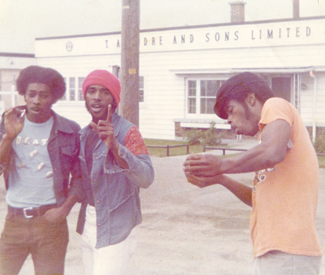
A Band Called Death is a similar story of recognition delayed so long that the principal vindicated character was no longer alive to enjoy it. Sons of a Detroit Baptist minister, David, Dannis, and Bobby Hackney were enamored with rock music from the time the family sat down to watch the Beatles play The Ed Sullivan Show in 1964. By 1971 they were calling themselves Rock Fire Funk Express — but exposure to live hard-rock acts like the Who and Alice Cooper convinced them to ditch the funk part completely. Their father’s tragic death (he was killed by a drunk driver while taking an injured coworker to the hospital) hit all of them hard, but especially guitarist David, who had a spiritual awakening of sorts and insisted their band be named after what he now considered “the ultimate trip:” Death.

It seemed a career-killing moniker if ever there was one. (Though by 1983 Orlando’s death metal pioneers would have no trouble using the same name.) Nor did the trio’s loud, fast, heavy sound — their rehearsals drove the neighbors nuts — make sense for an African American outfit in a city where Motown ruled. Though their parents had always encouraged them, nearly everyone else took a “Why are you playing that white boy music?” stance. Nonetheless, they found a supporter at local studio-music publisher Groovesville Records, recorded some tracks, and shopped them around to every imaginable label here and abroad. After innumerable rejections, they seemingly hit the jackpot with Columbia Records prez Clive Davis, who was eager to sign them … if they’d just change that name. As the band’s “visionary,” however, David Hackney was unwilling to budge on his total “concept.” The offer was withdrawn.

Defeated and exasperated, the brothers accepted a relative’s invite to stay with him in Burlington, Vt., and wound up relocating there — but when they put up Death posters around town, the unamused local cops assumed this was some sort of gang-activity threat. That was the last straw; Dave reluctantly agreed on a name change, to the 4th Movement. In that form they played some gigs and recorded a couple albums — but their new, more overtly spiritual emphasis didn’t play well with rock audiences who really didn’t want to flick their Bics to lyrics about Jesus Christ.

A man with a plan — but no backup plan — Dave eventually slunk back to Detroit, and was dismayed when his brothers moved on musically, experiencing some success with a reggae band called Lambsbread. Death wasn’t just forgotten; it had never really been noticed. Its only material issue was a self-distributed 1974 single of “Politicians in My Eyes” b/w “Keep on Knockin'” that had scored just token local radio play. But three decades later some of its 500 pressings started surfacing on underground DJ’s turntables, rare-record collectors’ wish lists, and on eBay (at $800 a pop). What could be a more fascinating enigma and find than an unknown African American group making music that was precociously protopunk (with some psych influences) well before even the Ramones’ first album in ’76?

Eventually the surviving members saw their ancient masters released at last, and toured clubs as a reformed Death with Lambsbread’s guitarist taking cancer-felled Dave’s place. It was all made sweeter by the fact that three of Bobby’s sons now had their own band, named Rough Francis after their late uncle’s last recording pseudonym.

A bit overlong, the documentary nonetheless ingratiates with its surprising wealth of home-movie footage, commentary from the very genial Hackney clan, and testimony from latter-day fans like Henry Rollins, Jello Biafra, Kid Rock, and Questlove.


A BAND CALLED DEATH opens Fri/5 at the Roxie Theater.

Get trashed

3

emilysavage@sfbg.com

MUSIC During high school one day in a sleepy Marin County enclave, Tina “Boom Boom” Lucchesi went to a local record shop where Erik Meade of Jackson Saints and the Pukes worked, and he put on a Redd Kross album. “Total obsession,” Lucchesi says now, a few decades later, from her punky, vintage-filled Peewee’s Playhouse home in Oakland. “He was playing the Teen Babes from Monsanto record, and I was like, I’m going to buy that — and I did.”

This week, Lucchesi’s early 1990s-born wild surf-punk group the Trashwomen will play alongside Redd Kross for the first time ever, during the two-day slackfest Burger Boogaloo (Sat/6-Sun/7, noon-9pm, $25/day. Mosswood Park, 3612 Webster, Oakl., www.burgerboogaloo.com). The Boogaloo, a yearly collaboration between Orange County, Calif. label and shop Burger Records, and East Bay promoters Total Trash Booking, is known for bringing an eclectic, sometimes manic mix of surf, punk, garage, doo-wop, and retro rock’n’roll acts commonly associated with both organizers.

This year, for the first time, it’s all outdoors, and the headliners are impressive: Redd Kross, Jonathan Richman, the Zeroes, the Oblivions, Fuzz, the Trashwomen. The rest of the lineup is too, including Audacity, Mean Jeans, Shannon and the Clams, Mikal Cronin, Guantanamo Baywatch, and more.

The Trashwomen immediately stuck out in the stellar lineup, mostly because the other groups are all active bands. The Trashwomen haven’t played together in four years (during a brief reunion for Budget Rock in ’08), and before that, they’d been broken up since ’97. So why now?

For Total Trash’s Marc Ribak, the choice was obvious. “In the Total Trash babe bible, Trashwomen rank number one!”

But for said babes, it was all about Redd Kross. “Redd Kross is playing! We’re all big fans, so we were like,’we’ve got to do it!'” says drummer Lucchesi, sitting on a teal patterned couch in her home next to bassist Danielle “Lead Pedal” Pimm, and guitarist Elka “Kitten Kaboodle” Zolot.

Though they also mention getting stoked to see Mexican punk legends the Zeros, and Portland, Ore. sloppy surf-rock group Guantanamo Baywatch.

“We’ve gotten a lot of offers, but we all have busy lives. There was a time when we were doing it but then you know, it kind of fizzled out,” she adds. “In the early ’90s, when the garage thing was so great in San Francisco, we played with the Mummies, the Phantom Surfers, Supercharger, we all played together. And then it just kind of died out, and we did get sick of it, and each other. But it’s fun, I like getting together and playing with these guys once in awhile.”

While their initial run ended in ’97, the group left a lasting impression on future generations of San Francisco garage groups, particularly girl groups, which has surprised Zolot. “I have my Instagram, and a lot of young bands that are still in high school [post on there] like ‘oh I look up to you,’ ‘you inspire me to write music and be a girl on guitar,’ and I’m like, how did you even hear about us? It’s cool, but sometimes it shocks me that young people know who we are.”

It’s a combination of sound, style, and era that carries on the Trashwomen torch. Likely the Internet accessibility of music had a hand in it too. The music itself, on albums like debut ’93 record Spend the Night with the Trashwomen (Estrus), is a raucous jumble of raunchy original garage anthems (“Cum on Baby,” “I’m Trash”), syrupy rock’n’roll numbers (“Daddy Love”), and surf-punk covers of rare ’60s gems like the Fender Four’s “Mar Guya” and Starfire’s “Space Needle.”

The aesthetic was based in high camp and cheap glamour — also seen on the cover of Spend the Night with the Trashwomen, the trio lounging in bed together, dolled up and looking tough in leopard print bras, red lace crop tops, and black babydoll dresses.

“It came from a lot of pin-up stuff and ’60s go-go girls. We wanted to have a weird persona, I think, like Russ Meyer bad girls,” Lucchesi says.

The group was known to play live in matching outfits, often trashy lingerie. “I don’t know if you’ll see us wearing lingerie on stage again though,” Zolot says.

Though Lucchesi and Pimm do mysteriously mention possible planned outfits for Burger Boogaloo, noting that they’re working on a little something.

“There may be just a little flair,” Pimm says with a laugh.

“No bikinis though!” Zolot again reminds everyone.

The three have an easy rapport, which Pimm says took only about 22 years to master. Each time they get back together in Lucchesi’s garage, it’s like starting over fresh, but the songs eventually come rumbling back to them, she says. They’ve been practicing for about two months this time around, going back through the classic tracks, with no intention of writing new ones. “I get disappointed when I see an older band and they don’t play much of their stuff that we all grow up with,” Zolot says. Everyone nods in agreement.

The group originally came together fresh out of high school. Lucchesi and Pimm had gone to school together in Corte Madera and both moved to San Francisco at age 18, where they met Elka. She’d grown up in Los Angeles, and moved to SF, forming the psychobilly group Eightball Scratch.

The Trashwomen were supposed to be a one-off Trashmen cover band for a New Year’s party at a long-gone venue called the Chameleon, kicking off 1992 in surf garage style. The idea was masterminded by Mike Lucas from the Phantom Surfers, then a popular local surf band.

For NYE, they learned a handful of Trashmen songs, got drunk, and played the set twice.

“After that, people kept calling, so we realized, we better write a bunch of songs,” Zolot says.

Since she’d been in Eightball Scratch, she’d already been playing punk and rockabilly guitar parts, so she continued to do so in the Trashwomen, adding even more surfy reverb.

She’s been playing music since before she can remember, and as a teenager was influenced by the Go-Go’s. “I’d listen to the Go-Go’s and pretend I was on stage.”

“I think every girl did that when that album came out,” says Lucchesi, who since the Trashwomen has gone on to front a dozen bands, including the Bobbyteens. “The Ramones definitely got me more into guitar. Every day after work I would just come home and play to the tape.”

Their personal influences all seem to overlap with those creepy-sexy goth punks, the Cramps. “All the great punk stuff, and new wave, all that stuff was happening. We were lucky we got to see it,” Lucchesi says. Putting on a mock cranky-old-lady accent she adds, “Kids today, they don’t kno-ow.”

In the early days of the Trashwomen, the threesome often played the Chameleon (in the space formerly known as Chatterbox and which is now Amnesia), and also the Purple Onion, frequently popping up at lesbian nights at clubs, warehouse parties, or underground house shows. They once wore bras scrawled with the word “Feminist” to the Faster Pussycat lesbian night at FireHouse 7 in Oakland. Often, fights would break out at their shows at the Purple Onion, just the high drama of the scene.

They also once played Bimbo’s, opening up for Nina Hagen, and they flew to New York to play CBGBs, which was monumental for all three. The day after the show, they went to Coney Island, ate hot dogs, and rode the Cyclone — on which Zolot severely injured her back; she has yet to go on a rollercoaster since. They were also heckled along the boardwalk, Pimm says. “Some of the girls at Coney Island, they were like, ‘excuse me, B-52s!'”

The band also toured Europe and Japan briefly, playing alongside its Japanese equivalent, the 5.6.7.8’s.

“The Germany shows were weird,” Pimm says. “We played somewhere in East Berlin, and all these metalheads walked in and we were like, ‘this is our audience? They’re going to hate us!’ The crowd ended up not letting the Trashwomen leave the stage, standing up front with folded arms, begging them to play more.

From all the stories, it seems like an aggressive, wildly exciting time for the band, but it’s easy to see why it eventually fizzled. Lucchesi has gone on to form acts like the aforementioned Bobbyteens, and is also currently in two-person garage-punk band Cyclops with her boyfriend Jonny Cat, and Midnite Snaxxx, with former Bay Guardian staffer Dulcinea Gonzalez. She also runs Down at Lulu’s a little vintage shop and hair salon in Oakland she opened seven years back with Seth Bogart, a.k.a. Hunx, and now runs solo.

Pimm too opened a salon, Marquee, last year in Oakland, near 1-2-3-4 Go! Records.

Zolot works in catering at wineries in the Napa area, dressing like a pin-up girl and shucking oysters with a mobile oyster bar, and also does photography. She’s not currently in another band, but says she has some secret music projects in the works.

“We didn’t even know that!” Lucchesi says when Zolot reveals this.

“It’s not the same style as people would expect, so I don’t talk about it much,” Zolot says.

“I want to know — is it hip-hop?” Lucchesi jokes.

“No! That’s for Tasha, she’s got that covered,” Zolot says, speaking of her daughter, Natassia Zolot, a.k.a rapper Kreayshawn. (Kreay can be heard at age five screaming the lead on the Trashwomen single “Boys Are Toys.”)

“That’s for the younger generation,” Pimm says.

Rep Clock

0

Schedules are for Wed/2-Tue/9 except where noted. Director and year are given when available. Double and triple features marked with a •. All times pm unless otherwise specified.

ARTISTS’ TELEVISION ACCESS 992 Valencia, SF; www.atasite.org. $6-10. Directing Dissent (Hamacher, 2013), Sat, 8.

CASTRO 429 Castro, SF; (415) 621-6120, www.castrotheatre.com. $8.50-13. •Jaws (Spielberg, 1975), Wed, 2:15, 7, and Rocky (Avildsen, 1976), Wed, 4:35, 9:25. •Josie and the Pussycats (Elfont and Kaplan, 2001), Fri, 7:30; Velvet Goldmine (Haynes, 1998), Fri, 9:30; Wild in the Streets (Shear, 1968), Fri, 11:59. “Scary Cow Independent Film Festival,” Sat, 3. This event, $10-25; visit www.scarycow.com for more details. “50th Anniversary Restoration:” Cleopatra (Mankiewicz, 1963), Sun, 2, 7.

CHRISTOPHER B. SMITH RAFAEL FILM CENTER 1118 Fourth St, San Rafael; (415) 454-1222, www.cafilm.org. $6.75-$10.25. Fill the Void (Burshtein, 2012), call for dates and times. Frances Ha (Baumbach, 2012), call for dates and times. Rebels With a Cause (Kelly, 2012), call for dates and times. 20 Feet From Stardom (Neville, 2013), call for dates and times. Augustine (Winocour, 2012), July 5-11, call for times.

CLAY 2261 Fillmore, SF; www.landmarktheatres.com. $10. “Midnight Movies:” Mr. Hush (Madison, 2011), Fri, midnight. Hosted by Miss Misery.

“FILM NIGHT IN THE PARK” This week: Creek Park, 400 Sir Francis Drake, San Anselmo; www.filmnight.org. Free (donations appreciated). Super 8 (Abrams, 2011), Fri, 8; Return of the Jedi (Marquand, 1983), Sat, 8.

NEW PARKWAY 474 24th St, Oakl; www.thenewparkway.com. Free. “First Friday Shorts,” featuring short films made by local youth, Fri, 6.

PACIFIC FILM ARCHIVE 2575 Bancroft, Berk; (510) 642-5249, bampfa.berkeley.edu. $5.50-9.50. “A Call to Action: The Films of Raoul Walsh:” Sailor’s Luck (1933), Fri, 7; Me and My Gal (1932), Fri, 8:40. “A Theater Near You:” Port of Shadows (Carné, 1938), Sat, 6:30; Kuroneko (Shindo, 1968), Sat, 8:30. “Castles in the Sky: Masterful Anime from Studio Ghibli:” Pom Poko (Takahata, 1994), Sun, 4:30.

ROXIE 3117 and 3125 16th St, SF; (415) 863-1087, www.roxie.com. $6.50-11. Hey Bartender! (Tirola, 2013), Wed-Thu, 7, 9:15. Ain’t In It For My Health: A Film About Levon Helm (Hatley, 2013), Wed, 7:15, 9:15. A Band Called Death (Covino and Howlett, 2013), July 5-11, 7, 9. Maniac (Khalfoun, 2012), July 5-11, 7:15, 9:15.

VICTORIA 2961 16th St, SF; teatrofrida.eventbrite.com/#. $12-35. “Fiestas Fridas:” •Frida: Naturaleza Viva (1984), and The Life and Death of Frida Kahlo as told to David and Karen Crommie (1966), Sat, 5. Followed by “Somos Frida,” a performance showcase. *


Our Weekly Picks

0

WEDNESDAY 3

PANTyRAiD

Seven years after meeting in Costa Rica, Martin Folb and Josh Mayer are still doing their thing as seductive bass collaboration PANTyRAiD, even while each has achieved solo success as the Glitch Mob’s Ooah and MartyParty respectively. New album PillowTalk has the right touch of move and groove while keeping an arm’s length from booming, bro-centric dubstep or ear-shattering electro. PANTyRAids like to jump from genre to genre, dropping some trap here and some glitch there, keeping listeners on their toes. Standout track “Just For You” showcases the duo’s slick handling of hip-hop drums, brooding basslines, and melodic synths. Call it mood music for the bass-minded. (Kevin Lee)

10pm, $20-25

1015 Folsom

(415) 431-1200

www.1015.com

Fruition

Upright bass, acoustic guitars, and mandolin (quickly strummed and finger-picked) fill out Fruition’s sound, but don’t clutter its performance. And this show will feature Bridget Law of Elephant Revival, an addition that only upgrades the night. Bluegrass itself requires a lot of emotion and passion to sound right, but Fruition harbors a certain old-back-road, last drop of sunlight through the trees kind of passion. “Make me an angel that flies from Montgomery,” sings the group in gorgeous country harmonies, in its cover of John Prine’s “Angel from Montgomery.” (Hillary Smith)

7pm, free

Brick and Mortar Music Hall

1710 Mission, SF

(415) 371-1631

www.brickandmortarmusic.com


THURSDAY 4

Oil and Water

It just wouldn’t be summer in the Bay Area without the San Francisco Mime Troupe — so thank goodness the veteran company was able to raise enough funds (in part through crowdsourcing, a testament to its loyal supporters) for its 54th season. Though the 2013 musical will still be performed mostly for free, and comes complete with a political theme (corporations vs. environmental activists), the format is different this year. The show is broken into two musical one-acts: Crude Intentions and Deal With the Devil, both written by Pat Moran And Adolfo Mejia. Per tradition, the show opens July 4 in Dolores Park before spreading its jolly satire ’round NorCal parks through Labor Day; check website for additional shows this week in Golden Gate Park and beyond. (Cheryl Eddy)

Through Sept. 2

Thu/4, 2pm, free

Dolores Park

18th St. and Dolores, SF

www.sfmt.org


Giraffage

San Francisco-based futuristic dream R&B producer Charlie Yin has made some big leaps in 2013, with a performance at SXSW along with upcoming gigs at Southern California’s Lightning in a Bottle festival and SF’s Treasure Island Music Festival. His new album Needs on Los Angeles label Alpha Pup Records is a thesis in music manipulation, a comprehensive counterargument to straightforward 4/4. Vocal samples are up-shifted in tempo to lend a playful mood. Tracks are sometimes dipped in sonic mud halfway through, decelerating to a crawl before jumping back to normal time. But Needs never feels jerky, which owes to Yin’s tight transitions and harmonious melodies throughout. The sensual, infectious, shifty third track “Money” sounds like it will be played in lounges in 2050. (Lee)

With Mister Lies, Bobby Browser

9:30pm, $13–$15

Rickshaw Stop

155 Fell

(415) 861-2011

www.rickshawstop.com


FRIDAY 5

“Fiestas Fridas”

There’s a reason this three-day event is subtitled “celebrating the 103rd and 106th birthday of Frida Kahlo:” the iconic Mexican painter was actually born in 1907, but she liked to say she was born in 1910 — the year the Mexican revolution began. The fest kicks off with a gala dinner featuring Kahlo’s own recipes (cooked by Puerto Alegre, Gracias Madre, Mijita, and other restaurants), with proceeds going to Cine + Mas; Saturday brings film screenings and Kahlo-inspired performances. The fest wraps up Sunday with an afternoon and evening of live art, dance, DJs, and more family-friendly fun, like a costume contest with a variety of categories: Best Frida and Diego, Best “Little Frida,” and Best “FriDRAG.” (Eddy)

Opening dinner tonight, 6-11pm, $50

Mission Cultural Center

2868 Mission, SF

Film screening and performance, Sat/6, 5-11pm, $35

Victoria Theater

2961 16th St, SF

Community event, Sun/7, 2-9pm, $10 suggested donation

Women’s Building

3543 18th St, SF

www.fiestasfridassf.com


Johnny Mathis with San Francisco Symphony

Legendary crooner Johnny Mathis’ family moved to San Francisco when he was very young, and it was here in the city that he developed his love for music; while studying at San Francisco State University, he began performing at the Black Hawk nightclub and eventually garnered the attention of some high-profile promoters. In early 1956, Mathis recorded his first album, and he continues to this day. Singing hit songs such as “Chances Are,” “Wonderful! Wonderful!,” “A Certain Smile,” and many more, Mathis has been going strong for nearly 70 years now — don’t miss you chance to see a true icon this weekend, performing with the San Francisco Symphony (Sean McCourt)

Also Sat/6, 8pm, $20–$125

Davies Symphony Hall

201 Van Ness, SF

(415) 864-6000

www.sfsymphony.org


Accidental Bear Queer Summer Tour

What, you thought just because DOMA got overturned and same-sex couples might be getting married again this summer that our work was over? And also that we’re too hungover from Pride to start partying again? Queer mental health issues and suicide risk are still a huge concern in the community, and hyperenergetic SF gay blogger Mike Enders, a.k.a Accidental Bear, is trying to break the stigma and bring awareness — by throwing a big, fun, charitable concert and party, of course. Colorful gay novelty rappers Rica Shay and Big Dipper (let the double entendre zingers fly!), dazzlingly alien outfit Conquistador, local electro heartthrobs Darling Gunsel, and soulful tunesmith Logan Lynn fill the bill, with proceeds going to the Stonewall Project, the Ali Forney Center, and more. (Marke B.)

8pm, $15

Beatbox

314 11th St., SF.

www.accidentalbear.com


SATURDAY 6

Beast Crawl

Now in its second year, Beast Crawl is a free literary festival featuring more than 140 writers in one night. It’s probably pretty hard to go wrong with that many options. Spread out over 26 local galleries, restaurants, bars, and cafes, the annual event offers a place and performance for everyone. Beast Crawl has four legs — the first one beginning at 5pm, and the last one (the after-party) starts at 9pm. Visit the Uptown, have a drink at Telegraph Beer Garden, open your eyes at Awaken Café, all while taking in some of the best Bay Area authors, poets, and even stand-ups. You know how you always hear people say “I went to this rad little poetry reading the other night,” and then wonder where the hell they always are? Well, here’s your chance to finally check out one, or 20. (Smith)

5pm, free

Uptown, Oakland

(415) 706-9128

beastcrawl.weebly.com


Audiobus Mission Creek

Properly executed, music should take you on a mental voyage, a mini musical vacation, if you will. It’s not to remove all thought, but to direct your attention elsewhere momentarily, in the direction the sound dictates. The AudioBus, a mobile venue, will delete the figurative from that jaunt, and take you on a literal trip down a specific San Francisco route. For AudioBus Mission Creek — a Soundwave SonicLAB event — sound artists Jeffy Ray and Jorge Bachmann will sonically guide passengers through the old and new Mission District, narrated by Adobe Books’ Andrew Mckinley. Together, they’ll explore “profound themes of the past, from nostalgia to displacement, and the future ideas of technology and possibility.” The sound-tour will leave the temporary station twice tonight, once for a sunset tour and then again on a starry night ride. A reminder: the bus waits for no one, so don’t miss your stop. (Emily Savage)

8 and 9pm, $16

Bus station: Adobe Books

3130 24th St., SF

www.projectsoundwave.com


Fillmore Jazz Festival

Live jazz music, crafts, and gourmet food, all in one place (and most of it is free to check out). The Fillmore Jazz Festival is the largest of its kind on the West Coast, reportedly luring in a mind-blowing 100,000 visitors over the two-day event. Considering the history and popularity of the neighborhood — and the sheer amount of bands and musicians playing the fest — that number starts to make sense. Sultry local vocalist Kim Nalley will bring her jazzy blues blend to the stage, as will instrumentalist-composer Peter Apfelbaum, Mara Hruby, John Santos Sextet, Beth Custer Ensemble, Crystal Money Hall, Bayonics, and Afrolicious, among many others. Stroll through the 12 blocks, and you’re bound to find some acts that give you a reason to pause. (Smith)

Also Sun/7, 10am-6pm, free

Fillmore Street between Jackson and Eddy, SF (800) 310-6563

www.fillmorejazzfestival.com


Woolfy

I miss Kevin Meenan’s show listings at epicsauce.com. At one time it was a go-to for highlights of small shows going on in the city, filler free, and super reliable for finding a new act to see live. Meenan has since dropped the showlist (perhaps made redundant with the availability of social apps), but is still active with his regular event Push The Feeling. This edition features a DJ set by English born, LA musician, Simon “Woolfy” James, whose eclectic and spacey post-punk dance sensibility first got my attention with the caressingly Balearic “Looking Glass” and the recent James Murphy-esque snappy cut on Permanent Release, “Junior’s Throwin’ Craze.” (Ryan Prendiville)

With Bruse (Live), YR SKULL, and epicsauce DJs

9pm-2am, $6, free before 10 w/ RSVP

Underground SF

424 Haight, SF

www.undergroundsf.com


SUNDAY 7

Cleopatra

The backstory that looms over 1963’s Cleopatra is very nearly as glorious as the film itself, which ain’t no small feat; Joseph L. Mankiewicz’s epic take on the legendary Queen of Egypt ran famously over-budget, but damn if all those dollars aren’t one hundred percent visible, with lavish sets, costumes, and blingy whatnots filling every frame. But really, who cares about overapplied eye make-up and historical inaccuracies when you have the Elizabeth Taylor-Richard Burton romance playing out before your very eyes? There’s no better way to relive the drama — oh, the drama — than in this 50th anniversary restored DCP screening, a one-day-only affair at the Castro. (Eddy)

2 and 7pm, $8.50–$11

Castro Theatre

429 Castro, SF

www.castrotheatre.com


TUESDAY 9

Chef Hubert Keller

Hubert Keller is a culinary celebrity as a multiple James Beard Award winner and the owner and executive chef of trendy restaurants across the country, including the highly-praised San Francisco-based Fleur de Lys. But the classically trained French chef is not all expensive, showy cuisine — during the first season of Top Chef Masters, he earned the respect of broke college kids and amateur foodies everywhere when he resourcefully used a dorm room shower to cool a pot of pasta. Last year, he collaborated with co-author Penolope Wisner to publish Hubert Keller’s Souvenirs: Stories and Recipes from My Life, a memoir-cookbook featuring instructions on 120 dishes. (Lee)

In conversation with Narsai David

6pm, $25 (students, $7)

Commonwealth Club

595 Market, SF

(415) 597-6700 www.commonwealthclub.org

New Zealand’s Cup

7

news@sfbg.com

A few weeks ago I was walking down the dock in the marina where I live, in Wellington, New Zealand, when I passed a woman and a young boy. I’d never seen them before, which is uncommon here in this municipal marina — about 100 boats — in a small suburb of the country’s capital.

The boy was walking from berth to berth pointing out certain rig and hull features and expounding on them as only a future aficionado can. “Lots of different boats, huh?” I asked as I passed.

“Different than America,” he confirmed in an accent the same as mine.

The kid is sharp, I thought, or maybe it’s just obvious, even to an eight-year-old from Chicago. The New Zealand sailing scene is vastly different than its American counterpart, which is not to say there’s no comparing — they’re not exactly navigating carved logs with gunnysack sails down here.

But the boats in my marina are, in fact, mostly homebuilt from steel, cement, aluminum, and wood. They appear a motley crew compared to the cookie-cutter production fiberglass Beneteaus, Catalinas, and Hunters, with their identical pacific blue sail covers lined up in San Francisco’s South Beach Marina.

In New Zealand, a boat is rarely a status symbol — it’s part of the middle-class way of life, the home base for holidays and weekend fishing trips and lots and lots of competitive racing. If I’ve noticed one thing since I arrived in this country (aboard a sailboat, after leaving San Francisco and my job as a Bay Guardian staff writer), it’s that every little harbor town has a yacht club and an awful lot of Kiwis own boats — and they sail the shit out of them.

Which is part of the reason why the New Zealand government is willing to invest NZ$36 million (US$27 million) to compete in the 34th America’s Cup against some of the richest men in the world in a race that has become so elite there’s barely any competition.

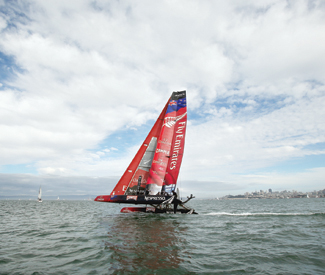
Small as the field is, Emirates Team New Zealand (ETNZ) is quickly shaping up to be the team to beat if you’re on a high-speed, air-catching AC72 catamaran. If they succeed, it will show that developing an America’s Cup team doesn’t have to come from having deep pockets in your Nantucket Red pants — it comes from having the sport ingrained in your culture, filtered through affordable local boat clubs, city-run facilities, volunteer programs, publicly accessible shorefronts, and an innovative marine industry.

In fact, without New Zealand’s maritime way of life, Larry Ellison wouldn’t have much of a team: of the 27 sailors and management crew aboard Oracle, a third are Kiwis. Another third are Australians. If you count Ellison, there are only three Americans aboard. Just one of them — tactician and grinder John Kostecki — grew up sailing on San Francisco Bay.

Ellison’s boat is mostly a Kiwi production, too — the fixed-wing sails and structural components for Oracle’s two AC72s were made in New Zealand, as were the boats, sails, and rigs for ETNZ and Luna Rossa. The only other syndicate competing, Sweden’s Artemis, in the wind since the death of crewmember Andrew Simpson, is the outlier, but they still have eight New Zealanders on board.

America’s Cup is looking more and more like it owes a lot to New Zealand. Is the Cup doing as much for San Francisco as it is for this little island nation, with a population just a tenth of California’s?

“If it wasn’t called Team New Zealand, we wouldn’t get a lot out of it,” says Sven Pannell, a competitive dinghy racer and employee of the economic development agency Grow Wellington. “The numbers of boat builders, carbon fabricators, sail makers, yacht designers coming out of New Zealand are the reason we’re still at the top of the global game. If we can bring the Cup home that means a lot for our country.”

It may also save America’s Cup from becoming even more out of touch with reality.


IT’S THE CULTURE, STUPID

It’s June 8, summer in San Francisco but winter in Wellington. The first race of the 2013 Winter Series at Evans Bay Boat Club hits hypothermic seas beneath steely overcast skies and 20-30 knots of wind — “perfect conditions,” one sailor enthuses. Tame, actually, for Wellington. A week ago, wind blew out the fifth story windows of a building downtown.

Sven Pannell has just finished racing a 12-foot skiff, a super lightweight, often homebuilt boat that probably originated in Australia and is almost exclusively raced in the Southern Hemisphere, though an 18-foot version will be showcased in San Francisco this September alongside the America’s Cup finals. Weighing about 100 pounds, with no class restrictions on sail area, they rooster-tail around Wellington harbor, bow high, barely in the water. They seem to require a similar caliber of nerve as the AC72s.

Which Pannell, who won today, evidently has. He grew up sailing as a kid, as did his crew, Craig Anderson. Neither of them can think of anyone who didn’t get into sailing as a child.

“A lot of people around the world think yachting is a well-heeled sport, but not in New Zealand,” he says. “There’s a reason that half those [America’s Cup] boats are full of Kiwis and Aussies. Go out and see the number of eight-year-olds in Optis in all kinds of weather here. A high number of people sailing at that age creates a deep pool of sailors in demand.”

“America’s Cup is about stretching the limits, but it starts here, when you’re eight years old,” he adds.

Eager to get out of the icy Antarctic wind, I enter the boat club where about 35 people are gathered at the bar, buzzing from adrenalin, barefoot and wet from spray or capsizes, gripping ginger beers and green bottles of Steinlager, the Budweiser of New Zealand. It’s a humble looking crowd — no flash gear or cashmere.

I’m introduced to Mike Rhodes, 26, wearing a blue sweatshirt and camo pants. He’d love to race an America’s Cup boat, but he also satisfies himself with a 12-foot skiff, which he stripped and rebuilt, fashioning the stainless steel fittings himself — he’s a sheet metal worker.

“New Zealand sailing is all about learning and moving forward,” he says. “The boats we’re sailing are always changing. We have set rules for weight, width, and length. After that it’s wide open. You can put up as much rig as you can handle. We went out in 50 knots last weekend. It was insane. We probably had boat speeds of 30 knots.”

The speed and innovations are what appeal to Rhodes and also connect to the America’s Cup, which has been an historic proving ground for leaps forward in boat design. “Who thought New Zealand could make the boat fly first?” he says of ETNZ’s proficiency at foiling the AC72 — going so fast the hull actually lifts off the water.

We’re soon joined by Laura Hutton, a 30-year-old from Cape Cod. She’s raced dinghies, coached and taught sailing for years. Now a speech therapist, she moved to New Zealand three months ago and immediately hooked into the local yachting scene. It’s palpably different than what she’s used to in the States. Here, she says, “It’s a lot more laid back. It’s more inclusive than exclusive. I used to go to events at New York Yacht Club in Newport and I felt so uncomfortable there. It’s the most elite, snobby place.”

“You can’t get coaching in the US unless you’re part of a yacht club or go to a school with a racing team,” she adds, and there’s often a huge cost to enter the sport. “Here, I can join the local yacht club for $35 a month,” she deadpans.

I spend more money riding the bus, I tell her, but I wouldn’t in San Francisco, where it’s cheap to catch a bus but where most people rarely board boats.

The American yacht club tradition has a certain “if you have to ask how much it costs, you can’t afford it” attitude. Ellison is one of 300 members of Golden Gate Yacht Club, official host for the Cup. Its neighbor, St. Francis Yacht Club, 2,300 strong, also has a role in the festivities. Both are exclusive, members-only clubs and neither would tell me what their members pay for the club’s privileges.

However, they’re officially nonprofit organizations and filings with the IRS show St. Francis made nearly $13 million in 2011. Golden Gate Yacht Club took home $660,000 the same year. Ironically, both clubs are on public lands, leased from San Francisco’s Recreation and Parks Department for $231,125 and $64,000 annually respectively.

Both clubs run learn-to-sail programs for kids — $350 for St. Francis and $200 for GGYC — which seem affordable, but what’s the next step? Joining the club, but apparently it’s too rude to query the price.

By contrast, Wellington’s Evans Bay Boat Club charges NZ$281 (US$210) to join and Royal Port Nicholson Yacht Club, which is a sister club to St. Francis, costs NZ$160 (US $120). The Bay Area is lucky — Berkeley and Treasure Island both have affordable clubs, however one could argue that if St. Francis and GGYC are on public lands, they should be paying more in dues to the city.

If there’s a posh club in Auckland, it’s ETNZ’s home — the Royal New Zealand Yacht Squadron. “But it’s a Kiwi version of posh, nothing like some of the yacht clubs I have been to in places like England, where women aren’t allowed to order drinks at the bar,” says Ben Gladwell, a journalist for Boating New Zealand who will be racing an 18 foot skiff in San Francisco in a regatta concurrent with the Cup finals. “At the Squaddy, there are obviously rules, like no cell phones, and dress codes and such like, but the fees are still only a few hundred dollars per year and it is much more inclusive than other yacht clubs around the world.”

Gladwell explored the health of New Zealand’s sailing culture in a story called “State of the Racing Nation” for Boating New Zealand. He found that although there is a drop-off in interest during university years, many yacht clubs have created partnerships to keep kids in the sport, there are mobile learn-to-sail units roaming the country, and lots of accessible city-run programs for kids. Couple that with low lifetime fees to stay in the sport and you see healthy clubs like Evans Bay, where people of all ages are out racing every weekend, all year round.

“Having so many people involved in sailing is a major reason we are successful,” he says. “Children are introduced to it at such a young age…by the time they come to competing at youth international regattas, they are hugely experienced and winning becomes a habit.”


“AMERICA’S CUP IS NOW NEW ZEALAND’S CUP”

In 1995, when Black Magic smoked Dennis Connor’s Stars and Stripes in a five-race shut-out, commentator Peter Montgomery famously quipped “America’s Cup is now New Zealand’s cup,” a line that’s gone down in Kiwi history like the “I have a dream” speech.

For the first time, the Auld Mug would be defended in New Zealand. Back then, Auckland’s Viaduct Harbor probably looked a lot like parts of San Francisco’s waterfront does today — dilapidated piers and old industrial buildings crumbling on their pilings. It would cost of NZ$58 million (US$29 million at the time) to dredge the harbor and spruce up the waterfront for the Cup.

The city made its money back. Hosting for two years, in 2000 and 2003, brought NZ$1 billion (US$500 million, at the time) in economic benefits to the country, about 85 percent of that going to Auckland’s local businesses, mostly from visiting megayachts and the services required for the nine syndicates that competed — twice as many as are in San Francisco today.

And Auckland made a lot less than the US$900 million predicted for San Francisco, already trimmed from the US$1.4 billion initially estimated. What the city actually gains from the $22.5 million investment they’ve been forced to make remains to be seen. Meanwhile, Auckland continues to benefit from the race.

It’s been estimated that the four Cup contenders have collectively spent half a billion on their campaigns and a decent chunk of that has been in Auckland, particularly during the AC72 design, build, and testing phases. Already, taxes paid by ETNZ employees amount to NZ$22.4 million (US$16.5 million). That doesn’t include the employee payroll taxes of all the businesses doing Cup-related activity, like the boat builders, riggers, and sailmakers.

ETNZ CEO Grant Dalton has netted sponsorships from more than 100 companies and argues that the Cup efforts have kept many marine businesses afloat that would have otherwise shuttered. Kiwis have not been immune to the world financial situation: the high New Zealand dollar hurting exports and the NZ$30 billion (US$22.5 billion) price tag for the February 2011 Christchurch earthquake have stressed the country’s coffers.

Because of that, funding ETNZ has been as contentious here as hosting Ellison’s party has been to San Franciscans. The agreement was signed in 2007 by a Labour Party-led government and when National Party’s John Key won the Prime Minister’s seat in 2008, he looked into breaking the contract, a move supported by other parties. “Funding the America’s Cup is surely a ‘nice to have’, rather than essential spending, in the current economic climate,” said Green Party co-leader Metiria Turei at the time.

The government was advised they’d still be legally on the hook for the money if they broke the contract, so ETNZ proceeded, but proof of economic return was a contingency and Dalton has taken pains to keep the public good in the conversation, a sharp contrast to Ellison’s attitude toward San Francisco. Dalton has said if New Zealand wins, the world should expect a sharp scaling back of costs. “We stand for nationality rule and we stand for real budget numbers that real people can raise,” he has said.

There’s definitely a sense that this could be New Zealand’s last chance to bring the Auld Mug home. If they don’t, the America’s Cup also loses. Who else will save it from American-style exclusiveness?

City budget boosts homelessness spending, but not enough to meet demand

6

The city budget that is now awaiting approval by the Board of Supervisors includes new funding for individuals and families facing homelessness, but community advocates say it doesn’t devote enough of the city’s rebounding revenues to addressing this growing problem.

Last Thursday, the Board of Supervisor’s Budget and Finance Committee approved $2.4 million in “add-backs” to homeless services, on top of the $2.3 million that Mayor Ed Lee pledged to supplement the city’s initiatives to curb the burgeoning number of San Francisco’s individuals and families becoming homeless.

The committee’s proposed budget will go before the full Board of Supervisors’ for a vote this month, devoting at least $2 million for this fiscal year and $1 million the next in to continue the successful Homelessness Prevention and Rapid Re-housing (HPRP) program that provides eviction defense and rent and utility vouchers to residents at-risk of homelessness.

Other homelessness initiatives in the proposed budget include extending the Lower Haight First Friendship shelter for homeless families to a year-round schedule, permanent housing units at 5th and Harrison streets for transitional age youth, 33 Local Operating Subsidy Program (or LOSP) subsidies for low-income homeless individuals and families, and funding to construct 24 shelter beds for the City’s first LGBTQ-focused homeless shelter at Dolores Street Community Center.

But for many residents and families, these initiatives may not be enough to stay in their homes, or re-house themselves after becoming homeless. And as the rent prices continue to drastically rise in San Francisco as the city’s economy heats up, the search for affordable housing or shelter beds has become more and more desperate.

January’s point-in-time homeless count identified 6,436 homeless persons on the streets and in the shelters in the city, a majority of which became homeless as San Franciscans. The current number on the city’s wait list is 220 families with an expected wait of seven to eight months, according to the Human Services Agency, which runs the city’s homeless shelter system. This is slightly down from 268 families earlier this year, then the largest in city history.

As the Guardian reported recently, the number of eviction notices in San Francisco hit a 12-year high this year, indicating an increase in displacement that may compound the number of families on the emergency shelter waiting list.

Bevan Dufty, the mayor’s point person on homelessness, told the Guardian that “the city definitely is not seeking to expand the shelter system,” despite the near-record waiting list.

 “Yes, we have lost shelter beds in recent years, and the 24 we are adding at Dolores Street Community Services is a minimal number,” Dufty added. “But you have to have a toolbox to respond in different ways.” And Dufty claims that re-housing families through programs like HPRP services in the budget has been shown to be the best way to prevent homelessness.

In response, Jennifer Friedenbach of the Coalition on Homelessness told the Guardian that, although the $1 million of HPRP services did prevent 1,300 San Francisco households from becoming homeless last year, it only covered 15 percent of the city’s overall need based on the number of people seeking services through San Francisco’s Eviction Defense Collaborative.

When asked to respond to the Coalition’s estimate, Dufty replied that he could not comment on its accuracy, but he conceded that the HPRP funding is “certainly not going to satisfy all the need.”

Dufty stressed that the city has been able to reduce the number of homeless veterans and has responded to a noticeable outcry in the need for more transitional housing, especially from LGBTQ community activists. Although the version of the budget making it to the Board of Supervisor’s vote this month would not expand the homeless shelter system beyond the Dolores Street Community Services project, it would improve the city’s oft-criticized shelter reservation system for single adults.

Along with Dufty and the Mayor Lee’s support, Friedenbach advocated in the homeless community to change the current line-based system to a lotterized system run through the city’s 311 system.

“The current shelter waitlist system is really archaic,” Friedenbach told the Guardian. “People spend 17 hours a day trying to get a bed at night.” Mayor Lee proposed this change in his budget, especially so the indigent and elderly no longer have to stand for hours waiting in line for a bed.

Though Friedenbach acknowledges the positive in the budget initiatives, she pointed out that there is still only one shelter spot for every six homeless persons in San Francisco, and that she “doesn’t know what standard you can go by to say that is too much.”

The new revenue from November’s business tax reform measure, won through a ballot initiative pushed by on-the-ground community groups like the Coalition on Homelessness, should “go back to low-end communities who are hurt from years of reduced services in mental and public health,” Friedenbach said.

Last month, the Coalition on Homelessness and other advocates pushed the Budget and Finance Committee to double Mayor Lee’s proposed $1 million for HPRP for 2013-2014 and an additional 75 LOSP rental subsidies on top of the 25 the Mayor had already pledged. At its last meeting before the new fiscal year, the Budget and Finance Committee pledged an addition $1 million for HPRP, but only added eight new LOSP subsidies.

Friedenbach attributed the lower number to the city’s logistical problems of trying to find additional service providers for subsidies. The “add-backs” marked “a lot of progress for poor folks,” Friedenbach said, although the city will still have “a situation where a lot of money is coming in, but not trickling down.”

“San Francisco is at a critical juncture,” Friedenbach prefaced her public comment at a Budget and Finance hearing last month. “The influx of wealth is pushing the heart of the city—the working class and poor—out.”

The budget approved by the Budget and Finance Committee last Thursday will likely go to the full Board of Supervisors starting next week, July 9.

Heads Up: 6 must-see concerts this week

0

Not to give this family any more attention, but here I go. Are you aware of the fact that the Balloon Boy is now a long-hair tween, in a darker Hanson trio with his brothers, singing operatic heavy metal bits? It’s all here, in a Gawker long-read post. The article notes that the group (Heene Boyz) considers itself the “World’s Youngest Metal Band.” — don’t we have that already here in the Bay with our own Haunted by Heroes? Take that, Balloon Boy. (Whatever, technically they’re billed as “The World’s Youngest Rock Band.”)

But my real point is this: America, home of the free, free to whore oneself and one’s family out on reality TV, to sneak kids into homemade balloon UFOs, to shoot for fame from birth. Happy Fourth of July week, everyone. Celebrate it with the bedlam of Bob Log III, the annual Big Time Freedom Fest at El Rio or Fillmore Jazz Festival, dreamy R&B producer Giraffage, or, the snacktastic Burger Boogaloo fest with headliners Redd Kross, the Oblivians, the Trashwomen, and more! Paint your face red, white, and blue, stick a sparkler behind your ear, and rage out into the night, it’s what the founding fathers would have wanted.

Here are your must-see Bay Area concerts this week/end:

Bob Log III
What’s more US of A than a lone multi-instrumentalist on stage in a glittery bodysuit and microphone-affixed motorcycle helmet, looking like a futuristic Bowie-esque alien, and sounding like a punky blues madman, or a scrappier Bo Diddley meets the Coachwhips, on slide guitar. As the Kansas City Star puts it, “If he hired a drummer, ditched his helmet, and requested a standard swizzle stick to stir his scotch, Bob Log III would still draw an audience. His music is that entertaining.”
With The Okmoniks, Los Vincent Black Shadows (Mexico City).
Wed/3, 8:30pm, $15
Hemlock Tavern
1131 Polk, SF
www.hemlocktavern.com
http://www.youtube.com/watch?v=UQmX4LzaDDU

Big Time Freedom Fest
It’s back, El Rio’s annual Fourth of July patio party Big Time Freedom Fest is here again, and this time brings out the worthy local Black Sabbath tribute act that is Bobb Saggeth, fronted by wailing female powerhouse Meryl Press. The band isn’t nearly as active as I’d prefer, but always plays parties on Halloween and Fourth of July, usually at places like Thee Parkside, Hemlock Tavern, and yes, El Rio. Plus, newish local heavy-psych band Golden Void headlines the show, and Wild Eyes, Couches, and Upside Drown open. And it’s all on the back patio, so you can officially say you spent the holiday outdoors, (with your favorite local rock‘n’rollers).
Thu/4, 3:30pm, $8
El Rio
3158 Mission, SF
www.elriosf.com
http://www.youtube.com/watch?v=Ebe9BtnD6wQ
http://www.youtube.com/watch?v=BmXB7-plWrY

Giraffage
“San Francisco-based futuristic dream R&B producer Charlie Yin has made some big leaps in 2013, with a performance at SXSW along with upcoming gigs at Southern California’s Lightning in a Bottle festival and SF’s Treasure Island Music Festival. His new album Needs on Los Angeles label Alpha Pup Records is a thesis in music manipulation, a comprehensive counterargument to straightforward 4/4. Vocal samples are up-shifted in tempo to lend a playful mood. Tracks are sometimes dipped in sonic mud halfway through, decelerating to a crawl before jumping back to normal time. But Needs never feels jerky, which owes to Yin’s tight transitions and harmonious melodies throughout. The sensual, infectious, shifty third track “Money” sounds like it will be played in lounges in 2050.” — Kevin Lee
With Mister Lies, Bobby Browser
Thu/4, 9:30pm, $13–$15
Rickshaw Stop
155 Fell
(415) 861-2011
www.rickshawstop.com
http://www.youtube.com/watch?v=6PVWP1Zrh4Q

Fillmore Jazz Festival
“Live jazz music, crafts, and gourmet food, all in one place (and most of it is free to check out). The Fillmore Jazz Festival is the largest of its kind on the West Coast, reportedly luring in a mind-blowing 100,000 visitors over the two-day event. Sultry local vocalist Kim Nalley will again bring her jazzy blues blend to the stage, as will instrumentalist-composer Peter Apfelbaum, Mara Hruby, John Santos Sextet, Beth Custer Ensemble, Crystal Money Hall, Bayonics, and Afrolicious, among many others.” — Hillary Smith
Sat/6-Sun/7, 10am-6pm, free
Fillmore Street between Jackson and Eddy, SF (800) 310-6563
www.fillmorejazzfestival.com
http://www.youtube.com/watch?v=5XRE8FSkxQg
http://www.youtube.com/watch?v=hall_F7pTbg

Woolfy
“I miss Kevin Meenan’s show listings at epicsauce.com. At one time it was a go-to for highlights of small shows going on in the city, filler free, and super reliable for finding a new act to see live. Meenan has since dropped the showlist (perhaps made redundant with the availability of social apps), but is still active with his regular event Push The Feeling. This edition features a DJ set by English born, LA musician, Simon ‘Woolfy’ James, whose eclectic and spacey post-punk dance sensibility first got my attention with the caressingly Balearic “Looking Glass” and the recent James Murphy-esque snappy cut on Permanent Release, ‘Junior’s Throwin’ Craze.’” — Ryan Prendiville
With Bruse (Live), YR SKULL, and epicsauce DJs
Sat/6, 9pm-2am, $6, free before 10 w/ RSVP
Underground SF
424 Haight, SF
www.undergroundsf.com
http://www.youtube.com/watch?v=R9WMPPiBimc

Burger Boogaloo
We blurbed this early: everyone is talking about the disparate headliners early LA punk band Redd Kross and Modern Lover/singer-songwriter Jonathan Richman — and rightfully so, they are incredible — but can we also take a minute to thank satan for the Trashwomen addition to the lineup? For those somehow unaware, the Trashwomen are Bay Area noisy surf-punk royalty, born of the ‘90s, and featuring Tina Lucchesi (of every band, ever), Danielle Pimm, and Elka Zolot (Kreayshawn’s hot mama). Check the paper this week for an interview with the Trashwomen. And check Mosswood Park for a sloppy soul dance party.
With the Zeroes, Oblivians, Fuzz, Mikal Cronin, Audacity, Guantanamo Baywatch, Mean Jeans, Pangea
Sat/6-Sun/7, noon-9pm, $25
Mosswood Park
3612 Webster, Oakl.
www.burgerboogaloo.com
http://www.youtube.com/watch?v=QP4hxwyWxHY
http://www.youtube.com/watch?v=eJx5c_cFq5o
http://www.youtube.com/watch?v=jI3XM-X72eQ

Community awaits benefits as Lennar finally breaks ground in Hunters Point

26

More than five years after San Francisco voters approved a massive redevelopment plan for the Hunters Point Shipyard and much the southeast part of the city — giving Lennar Corp., the country’s biggest home builder, the largest tracts of open land in the city — that project is now finally, slowly, getting underway.

But activists who have been following the project say the city is getting played by Lennar because of an agreement that lacks performance standards and has allowed the company to drag its feet to maximize its profits despite an affordable housing crisis in the city. And some community members say Lennar hasn’t lived up to promises of jobs and other benefits.

“The modus operandi of Lennar is bait and switch and delay,” Saul Bloom of Arc Ecology, who consulted on this development deal for the Redevelopment Agency before his contract was dropped in 2010 after publicly raising concerns, told us. Bloom and his firm have decades of experience analyzing complex development deals, and he has been tracking Lennar’s pattern of behavior around the country. 

Bloom said that when Lennar cut its initial deals with then-Mayor Willie Brown and other local officials in 1997, the company said it needed no external financing and that it would build housing affordable to Hunters Point residents, including rentals. Since then, the deal has gotten steadily better for the company and worse for San Francisco, and the groundbreaking date has been repeatedly pushed back.

“The city was not smart enough to build in liquidated damage and a performance schedule and that kind of thing,” Bloom said. “Lennar tells them what they want and the city tends to roll over, and there’s been no pushback.”

When Lennar ended up needing financing after all, the project stood by while a $1.7 billion deal with the China Development Bank Corp. was structured in 2012. Despite Mayor Lee personally participating in the quest for capital in China alongside the developer, the deal quickly collapsed. It is yet to be seen how Lennar will satisfy its commitments in the Bayview and at its separate Treasure Island site since the plug was pulled on the loan deal.

Lennar Urban Director of Community Affairs Cheryl Smith referred our questions to communications consultant David Satterfield of G.F. Bunting, who said that he passed them on to Lennar officials and, “They don’t have anything to say.” The Mayor’s Office also has not responded to our request for comment on the issues that Bloom is raising.

With a weak agreement and a lack of political will to push the company to expedite construction of affordable housing, Bloom said Lennar has simply waited for housing prices to increase and for other developers to lead the way in gentrifying Bayview Hunters Point before moving forward on the nearly 1,400 acres of land it controls in San Francisco — an area equivalent in size to the Presidio.

“Their incentive is to wait for the property values to rise…Lennar understands how much this land is worth,” Bloom said. “What Lennar has done is crafted a strategically smart box that the city is in.”

Yet after years of delays, the project did officially get underway last week (Wed/27), with a well-attended hilltop ceremony.  Mayor Ed Lee, former Mayor Willie Brown, District 10 Sup. Malia Cohen, and Cohen’s predecessor, Sophie Maxwell, joined Lennar Urban President Kofi Bonner to speak at the long-anticipated event.

Lennar’s local subsidiary, Lennar Urban, unveiled a master plan to convert the land to a brand new mixed-use community. At the ceremony, Brown remarked that “there is no other piece of soil that is as lucrative” as the Bayview Hunters Point peninsula and that it promises to be the “ideal place to live.”

The Hunters Point Shipyard, occupies roughly 500 acres of southeastern San Francisco and when taken together with neighboring Candlestick Point and parts of Bayview, it is the largest single tract of land in San Francisco designated for redevelopment. The other big redevelopment site in the city, Treasure Island, is also controlled by Lennar and its partners.

A former naval base, the shipyard was transferred to the city in 2004. Most naval operations there had ceased in 1974 and commercial uses declined in the 20 years that followed, steadily displacing black workers employed on the premises.

Affordable housing and job creation for neighborhood locals were two major stipulations in the ballot measure San Francisco voters approved in 2008. The “Bayview Jobs, Parks, and Housing Initiative,” however, entrusted that goal fulfillment almost wholly to Lennar and Bloom now questions whether that trust was well placed.

Phase 1 of the project will consist of construction of 1,400 new residential units in the shipyard, approximately 30 percent of which will one day be affordable housing. But Bloom said that Lennar has delayed construction of the affordable units until after much of the more lucrative market rate housing is done.

At the event, Bonner enthusiastically outlined the goal of having 800 of 1,100 market rate homes in this first phase constructed and occupied within 36 months time and Mayor Lee opened his remarks with the celebratory chant “Welcome to The Bayview! We need housing for everybody!”

But Bloom said that the city is rapidly gentrifying as Lennar waits to meet its affordable housing obligations, noting that the city was 11 percent African-American when Lennar cuts its first deal to develop Hunters Point in 1997, and that population is now 4 percent and falling.

Reconstruction of the Alice Griffith Public Housing Project will help Lennar to satisfy its affordable housing quota. Announcements of these plans garnered large applause from community activists in attendance, though they are slated for the project’s second phase, which likely won’t begin for years.

“They could build all of Alice Griffith on Parcel A, but they’re not going to do it,” Bloom said. “When is this community going to get what was promised to them?”

A group of picketers from Aboriginal Blackman United (ABU) was contained by SFPD at the bottom of the hill during the afternoon’s proceedings. As black town cars chauffeured officials to the event site, the protesters’ cries were drowned out by the music of Miles Davis playing from stage speakers.

ABU was protesting non-inclusive hiring practices at the shipyard site. Members, who were outnumbered by police 2-to-1, argued that they were being wrongfully barred access to the ceremony above and by the event’s conclusion, they had been relocated from the main intersection at Innes Avenue and Donahue Street to a side access road.

Job creation was trumpeted generally in the afternoon’s speeches, with Sup. Cohen applauding the public-private partnership between Lennar and Bayview organizations and Mayor Lee praising the project for “honoring labor and honoring local residents.” However, ABU’s founder and president, James Richards, said “we’re not getting the jobs or the contracts that the community people are supposed to get and that’s why we’re out here.”

Though ABU wants to see local residents of color placed in many of the new positions opening up, workers in the community have only been promised good faith consideration rather than actual job guarantees by the San Francisco Building and Construction Trades Council, which is in charge of staffing the project. Attempts to reach Michael Theriault, Secretary-General of the Council, were unsuccessful.

Bloom said Lennar has insulated itself from community criticism with an agreement that promises money to community groups that refrain from publicly criticizing Lennar or the project. He said Lennar has followed a similar pattern here as it has elsewhere, using its clout and political contacts to get lucrative redevelopment deals, then using delay and bait-and-switch tactics to make those projects more lucrative. He cited Lennar’s Mare Island project, which is now in bankruptcy, and its massive Newhall Ranch project north of Los Angeles.

In that latter deal, the California Public Employees’ Retirement System lost the $970 million it paid Lennar in 2007 for part of its stake in Newhall Land Development Co., which went bankrupt when the housing market crashed the next year. But Lennar built in an option to reclaim the shares, which a bankruptcy judge allowed Lennar to do in 2009 for just $138 million.

Bloom said that deal is typical behavior for a manipulative company that has a history of acting contrary to the public interest, but in which local political officials have given tremendous control over the city’s future.

“We remain skeptical about their commitment to getting it done,” Bloom said of the affordable housing that Lennar has promised. “What we’d like to see is some real action on the promises that were made to the public.”

BART on strike

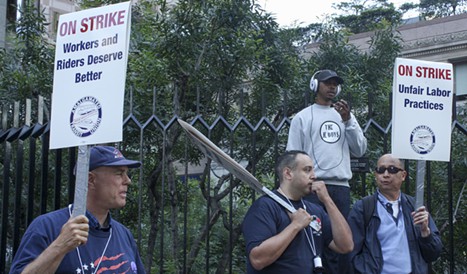
BART drivers and maintenance workers went on strike after a weekend of negotiations failed to result in a contract agreement, essentially bringing the transit system to a halt.

The unions who moved ahead with the strike just as their contracts expired at the end of June 30 are SEIU 1021, representing about 1,400 BART inspectors and maintenance workers, and the Amalgamated Transit Union Local 1555, representing BART drivers.

This morning I stopped by Civic Center plaza, where union reps were camped out with signs and distributing fliers about the strike. I spoke with Karen Joubert, vice president of representation for SEIU Local 1021. She told me the ten-hour “negotiating session” that transpired at BART’s Oakland headquarters this past weekend was not really much of a negotiation at all. Instead of considering new proposals or hashing out details, little exchange took place between the union representatives and the transit agency, Joubert said.

“It’s been, come back at 1, come back at 3, come back at 6,” to no avail, she said. Since no progress was made, the workers went ahead with the strike they had authorized days prior, which was mounted due to concerns around safety issues, workers’ requested wage increases, higher health care costs, and pension contributions. (More background here.)

“We’re meeting this morning and we’re trying to get them back to negotiate,” Joubert said.

HOT PINK LIST 2013: COMICS GEEKS

0

It’s been a big year for queer comics. A movie based on a lesbian comic book, Blue is the Warmest Color, swept the top prizes at Cannes. The first textbook history of queer comics No Straight Lines was released by local hero Justin Hall, and snagged the Lambda Literary Award for Best Anthology. Heck, even Green Lantern went queer in “Earth Two,” and there was a gay wedding in Archie’s hometown, Riverdale. Here in the Bay, of course, comics have been queer for decades: from the pioneering work of Mary Wings and Lee Marrs in the 1970s to a lively slew of young upstarts, eager to expand the genre. Take, for example, this year’s packed “Batman on Robin” show, curated by Hall and Rick Worley, which imagined the Dynamic Duo in comic contortions that had many saying, “Shazam!”

Comics Geeks: Cartoonists: Agnes Czaja, Beth Dean, Christine Smith, Diego Gomez, Ed Luce, Jon Macy, Justin Hall, MariNaomi, Paige Braddock, Rick Worley.

(Photo of Diego Gomez by Sloan Kanter)

BONUS! Legendary groundbreaker Lee Marrs just sent her picture to us, and it may be our favorite yet:


Small Business Commissioners support Pet Food Express over local stores

34

San Francisco’s Small Business Commission has recently come under fire for its promotion of corporate interests and, most recently, advocating for an allegedly predatory pet store chain known as Pet Food Express.

In 2009, the Small Business Commission voted in favor of denying Pet Food Express’ application for a location on Lombard Street in the Marina District. Subsequently, the Planning Commission also denied the request, seemingly blocking Pet Food Express’ efforts to set up shop in the Marina. 

San Francisco’s formula retail legislation requires chain stores like Pet Food Express to apply for a conditional use permit in order to receive approval for opening new locations.

But now, Pet Food Express is back after recently filing another identical application with the SBC for the exact same spot on Lombard Street, and this time some members of the SBC are oddly supporting the chain.

As Pam Habel, owner of local Marina pet store Catnip & Bones, pointed out at the commission meeting on June 10, Pet Food Express already has a location on California Street just one mile away. At the same meeting, Susan Landry, owner of another Marina pet store, Animal Connection, added that nothing has changed in the past four years that would point toward the Marina community needing or wanting this Pet Food Express, since four pet-related stores exist within a mile of the proposed Lombard Street location.

“We were really surprised and disappointed that the commission no longer seemed to be an advocate of small business and even made comments indicating sympathy for the big chain pet store,” Habel and Landry, told the Bay Guardian jointly via email. “Commissioner Adams even said it seemed unfair to him to penalize a business that had started out small and now are being victimized for their success since they are one of the largest pet store chains in the U.S.”

So what has changed since 2009 that is now making the SBC consider supporting the proposed Pet Food Express? For one, Mayor Ed Lee’s corporate-friendly appointees to the SBC, including developer Luke O’Brien and President Stephen Adams, a manager for Sterling Bank & Trust.

Additionally, San Francisco Animal Care and Control Director Rebecca Katz lobbied for approval of the Pet Food Express while holding a blind Chihuahua adorned with a sweater at the June 10 meeting. Katz cited Pet Food Express’ many financial contributions to her agency as reasoning behind supporting the chain’s new location and expansion. According to Animal Care and Control spokeswoman Deb Campbell, Pet Food Express donates an estimated $50,000 to $70,000 in supplies annually to the city department.

“The more business Pet Food Express does, the more they grow and the more they give back to the community,” Katz told the Bay Guardian. “We take in about 10,000 animals a year on a budget of about $40 million.”

Kathleen Dooley, one of the SBC’s few existing members still in favor of promoting local business over big business, met Katz’s lobbying with criticism.

“She went up and lobbied for Pet Food Express and implied if it wasn’t for them no pets would be adopted and the animal world would be in chaos,” Dooley told the Bay Guardian. “They already have a number of stores in San Francisco, but they act as if this one on Lombard would change the tide.”

But Katz says that her public promotion of Pet Food Express is not lobbying. “I spoke to the Ethics Commission and they told me it is okay for me to talk about what Pet Food Express does for us,” said Katz.

Few of the arguments in favor of the Pet Food Express’s intrusion into the Marina actually acknowledge the store’s potential detrimental impact on the existing local businesses. Katz even publically said she thought it was ironic to protest another corporation coming into the Marina, where so many chain businesses already exist.

“The size of the Lombard location would allow for an adoption center which would have a huge impact,” said Katz. “Whereas residents have to drive to the California Street location, now they could walk.”

Unfortunately for local Marina businesses, the SBC, whose professed goal is to “work to support and enhance an environment where small businesses can succeed and flourish,” may be doing just the opposite by supporting a chain business that will undoubtedly endanger the many locally owned pet stores.

“As small businesses in San Francisco, we rely on the SBC as our voice at City Hall, not as a sympathetic voice for chain stores,” said Habel and Landry. “Because of their response last month, we no longer feel that we can look to the SBC to support small business in San Francisco.”

In her presentation before the commission, Landry drew an analogy to the previous opening of a Blockbuster on Lombard Street. Following the corporation’s entrance into the community, all four independent video stores in Cow Hollow closed within a year.

At the same meeting, Commissioner Mark Dwight acknowledged the predatory nature of Pet Food Express, who has sat on the same property for four years in order to continuously rally support in favor of the proposed location.

The pet supply stores in the Marina could face the same fate as the local video rental shops if Pet Food Express succeeds in opening on Lombard Street.

“When chain stores go in, commercial rents go up and the small mom and pop businesses are priced out of the neighborhood and replaced by even more chain stores as they are the only ones who, with their corporate structures, can easily afford high rents,” said Landry and Habel. “This is about more than one Pet Food Express application on Lombard, this is part of our battle to retain the heart and soul of our neighborhood commercial corridors.”

BART workers authorize strike

Note: This post has been updated from an earlier version.

Bay Area Rapid Transit workers, whose contract expires June 30, have authorized a strike if negotiations with the transit agency do not result in renewed contract terms that are acceptable to both sides.

“They just announced it. Both unions overwhelmingly supported a strike vote,” Leah Berlanga, chief negotiating officer for Service Employees International Union 1021, told the Guardian in a phone call this morning. Votes were cast yesterday, and the results have just come in.

SEIU represents about 1,400 BART inspectors and maintenance workers. The Amalgamated Transit Union Local 1555, which has also voted to authorize a strike, represents BART drivers.

For now, Berlanga said, SEIU and ATU remain at the negotiating table, and “we’re just focusing on reaching an agreement.” The contract is valid throughout June 30, so the earliest the transit workers could go out on strike would be Monday morning.

Contentious issues in the contract negotiations include workers’ request for raises, which haven’t been granted in years despite an uptick in ridership, and the agency’s insistence that employees pick up a share of their pension contributions.

Union representatives have emphasized that their primary concern is worker safety. Last week, SEIU filed an unfair practices labor lawsuit alleging that BART was not negotiating in good faith, pointing to worker safety as a central concern. “We’ve been talking about health and safety for the last four years. By law, health and safety is a mandatory subject of bargaining. Management has rejected every proposal we’ve put forward that addresses safety, and they are not bargaining in good faith,” Berlanga said. On June 25, unionized workers and supporters held a press conference outside the 24th Street BART station, nearby where an employee was struck and killed by a train in 2001. SEIU representatives have said this death was preventable, blaming it on poor lighting inside BART tunnels.

Antonette Bryant, president of ATU 1555, also emphasized safety issues. “We’ve had over 1,000 passengers assaulted and 99 workers assaulted,” she told the Guardian. “That’s something that we take very seriously. We want our work environment and riding environment on the BART to be safe.”

The agency is also trying to make changes to workers’ compensation programs, Bryant added, an issue that goes hand in hand with safety concerns. “They just give [compensation] to people that are hurt, they don’t make efforts to rehabilitate and bring these people back to work,” Bryant said. “We are trying to start a new program for this and they just don’t want to deal with it.”

Reached by phone, BART spokesperson Rick Rice told the Guardian, “We’re still confident there’s a deal to be had at the negotiating table. As far as I know, they are back at the table” after taking a break from negotiations yesterday, he said.

As of the morning of June 26, “We’ve gotten no notice from them” about when a strike could start, but “they’ve said publicly they’ll give 72 hours warning, and we would hope they would, for the sake of the riders.”

With regard to safety concerns, Rice said BART management meets weekly with union leaders on these issues and that the agency is planning to spend $4.5 million to replace lighting in train tunnels and had budgeted for “hundreds of new security cameras.” He said BART is asking employees to make higher contributions to their health care, and pay into their pension plans. He added that workers are requesting the equivalent of a 23.2 percent wage increase over the duration of the new contract. Rice did not have information about how this requested wage increase compares with the expected rise in the cost of living in the Bay Area, but said this was almost certainly a part of the conversation at the negotiating table.

Asked about the unfair labor practices suit, Rice declined to comment specifically on the allegations raised but stated, “We’re definitely at the table negotiating in good faith.”

Devil may care

0

emilysavage@sfbg.com

TOFU AND WHISKEY Unlike most anticipated albums these days, Austra‘s sophomore LP, Olympia (June 18, Domino Records), came out in gleaming little drops. There were no leaked full downloads — at least, nothing massively widespread. But the sparkly bits that did trickle out, namely first single “Home” and its follow-up, “Painful Like,” were enough to build interest.

The Canadian synth-pop six-piece already had a built-in audience, thanks to 2011’s Feel It Break, mostly created by darkly operatic lead vocalist Katie Stelmanis, former Trust vocalist Maya Postepski on drums, and bassist Dorian Wolf, and made almost exclusively on a computer. Now a more fully realized unit using live instrumentation, the group, which also includes keyboardist Ryan Wonsiak and supernatural twin backing vocalists Sari and Romy Lightman, created the lush, full-bodied second record together in a studio. And it shows: there’s a richness to the sound. There’s a steady dance beat throughout the record, with the addition of sounds like cowbells and even more barreling percussion underneath all those moody vocals wailings and subtle piano keys.

“We have so much percussion on the album, I had days where I would just play all day,” Postepski says from Switzerland, on the group’s brief tour through Europe. “I think it added to the richness to it, and the realness of the sound. As much as it is an electronic record, we wanted it to have a balance with real instruments.”

That first released track “Home” seduced critics earlier this spring with a more upbeat style than typical of Austra, yet the lyrics are again deeply personal for Stelmanis, about someone not coming home at night because they’re out getting wasted, and the desperate feeling of waiting for that person to return.

Sonically, second single, “Painful Like” gets more to the core of what the group does best, meshing gothy dancefloor-ready beats and bubbly synth with crashing drums and Stelmanis’ otherworldly vocals on display.

The lyrics were inspired by “the disillusionment of growing up gay in a small town and finding solace in the arms of a lover.”

Stelmis told Spinner in 2011, “Indie music is funny. It’s really not as queer positive as you would think. In a lot of ways, it’s very centered around white men, basically. I just want there to be space for gays.”

She seems to have taken that to heart on Olympia, including even more of herself than on Feel it Break.

“The lyrics on the new album are personal, intimate reflections of what Stelmanis is going through,” Postepski says.

The new record contains hints of other moody synth-based projects like former tourmate Grimes, the Knife, and Zola Jesus, though Postepski says she almost exclusively listens to music made before 1995, specifically Grace Jones and David Bowie. She does make an exception for British techno producer Andy Stott. “That’s where all the super low bassy stuff comes from,” she explains.

While many of the tracks follow the same formula, Olympia is packed with emotional dancefloor moments. It’s the kind of record that could soundtrack a crying fit in a dark club bathroom, mascara bleeding down the face, strangers surrounding the mirror, all of the drama inherent in nightlife, then follow the main character triumphantly back out onto the floor.

“As much as it is a serious album, there’s a lot of playfulness as well,” Postepski says. “I think we struck a good balance.”

Austra, which has toured internationally with groups like the XX, Grimes, and the Gossip will test the balance on a quick jaunt through the States, only stopping in a few major cities. One lucky enclave is San Francisco — the group plays here this week (Wed/26, 8pm, sold out. Independent, 628 Divisadero, SF). Noted for its creative use of stage layout and synchronized twin dance movements (“they’re kind of like our cheerleaders!”), Austra has a lot to live up to at its live shows. Postepski tells me this very short tour includes a massive, beautiful new backdrop, rented from the Chinese Opera Group in Toronto.

“People are having fun at the shows. I just want it to be a dance party, you know?” Postepski says.

There’s another group traveling to San Francisco this week that also will likely be filling up the dancefloor — and, coincidentally, also has toured with the Gossip — Magic Mouth. To get a taste of the explosive energy Magic Mouth exudes, check the YouTube video “MAGIC MOUTH LIVE: MISSISSIPPI STUDIOS,” it’s like watching James Brown front a garage-punk band. The lively Portland, Ore. queer soul-punk quartet will play Hard French Hearts Los Homos (an event described by DJ Carnita as “an intergalactic Pride Party for all the gayliens who love to dance in outer space”).

Magic Mouth will open for fellow Northwesterners, Seattle’s THEESatisfaction at the event hosted by Lil Miss Hot Mess (Sun/30, 4-11pm, $20. Roccapulco, 3140 Mission, SF; hardfrenchpride2013.eventbrite.com). This will be the band’s second time in SF, after stopping by El Rio last fall. But other tours have taken the group around the country opening for the Gossip, and JD Sampson’s MEN.

Magic Mouth has a glut of reasons to be keyed up for the SF show.

“I’m really looking forward to playing with THEESatisfaction. We’ve been admirers of theirs from afar for a minute and in kind of the same music community,” says frontperson Chanticleer Trü. “And also to celebrate at Hard French, because we love what they do.”

Guitarist Peter Condra adds, “And I’m excited to play a party that’s dedicated to a political cause, which is Bradley Manning. With what went down in San Francisco Pride, I think that fueled the organizers’ enthusiasm about the topic and I want to help them create awareness in any way we can as a band. I think it’s cool they took a stance on that.”

A crash course on those events: The LGBTQ community was torn apart when the SF Pride Board rescinded the election of Wikileaker Bradley Manning to the position of Community Grand Marshal at this year’s Pride celebration. There are planned actions and marches in support of Manning (see pTK) at the Pride parade, June 30.

So yes, Magic Mouth comes to us on a mission of both solidarity and fun. And likely, to gain new fans.

The group’s electric Believer EP saw release in 2012, and now it’s in the process of finishing up another, Devil May Care, which was funded with $10,000 raised through Kickstarter. The foursome worked on the record with Nathan Howdeshell and Hannah Blilie of the Gossip, who walked the band through the process, gave feedback, and connected Magic Mouth with a producer. Devil May Care will be released on vinyl in late summer.

“I’m really proud of this record,” Trü says.

Drummer Ana Briseño says, “Yeah, I think it’s taking us into the next level, a little more grownup, of taking this band seriously. The quality of the recording, and getting to put it out on vinyl, and being able to be involved in the artwork — I think we’re really lucky and not a lot of bands make it to that point.”

“In comparison to our first EP, which we recorded like, between two of our friends’ bedroom studios,” Trü says. “It’s definitely been an evolution, and this time around I feel like we really captured the type of energy we bring to a live performance.”

The band formed in 2010 when Briseño and guitarist Peter Condra met and started talking about music — Nina Simone being the uniting interest. Briseño and Condra started playing garage rock versions of Simone songs, and eventually created their own, which brought them to Trü and bassist Brendan Scott (Condra and Scott had played together before in a cover band). “And Trü was definitely feeling the Nina Simone thing we were channeling,” Condra says.

The group says it’s now actualizing its influences. The band members have already played with one influence in the Gossip and is about to play with another in THEESatisfaction, but future goal spots would be alongside Erykah Badu or Blood Orange. I mishear Trü, thinking he mentioned Beyonce also, so ask for clarification. He laughs and says, “no, but you must be reading my mind.”


THE WHITE BARONS/WILD EYES

Some background: local Southern fried rock group (“by way of Atlanta, Jakarta, and two Midwest podunk towns”) the White Barons includes members of Thee Merry Widows, Winter Teeth, and Whiskey Dick Darryls, and SF’s Wild Eyes recently opened for King Khan and BBQ Show at Slim’s. This Bender’s show is a party for a few things: it’s the birthday of Bender’s doorperson and Subliminal SF booker Mikey Madfes, it’s a split seven-inch release celebration for the White Barons and Wild Eyes, and lastly, there’s a band vs. band chili cookoff (if you buy a record, you’ll get a chili sample). So you know it’s going to be a messy mix of raucous rock’n’roll and tender cooked meats.

Sat/29, 10pm, $5. Bender’s Bar and Grill, 806 S. Van Ness, SF; www.bendersbar.com.


What’s hot in Siberia

0

arts@sfbg.com

THEATER Emerald green rooftops and gold domes enliven the skyline of Omsk, a provincial city and former Soviet industrial hub of roughly one million people, located at the intersection of two Siberian rivers: the wide, island-populated Irtysh and the smaller, swifter Om. The latter gave its name to the town, which grew from a fort established at the meeting point of the rivers in 1716, back when this was the disputed frontier of the expanding Russian empire.

But now it’s the last week of May 2013. The fort is long gone. In its place stands the Lighthouse, a large white hotel-cum–shopping mall festively crowned with neon Cyrillic lettering. Rounded at one end and peaked with towers, it drolly resembles a cruise ship in port. The sun is still out at 10 p.m., and a gusty wind rolling off the plains churns the warm air pleasantly.

Sleepy though this town seems by comparison with St. Petersburg, Moscow, or even Yekaterinburg — the three other stops on a four-city tour I joined last month, in conjunction with a US-Russia theater dialogue developed by the Center for International Theatre Development — Omsk turns out to be not so remote in many ways. For one thing, it’s a hotbed of theatrical activity at the moment, with the biennial Young Theaters of Russia Festival in full swing. Nor is the Russian empire entirely a thing of the past, as tonight’s provocation by a troupe from the former Yugoslav republic of Slovenia makes plain enough.

Damned be the Traitor of His Homeland! — a production of Ljubljana’s internationally renowned experimental company, Mladinsko Theatre — is a no-holds-barred attack on jingoism, xenophobia, and the false allegiances they promote, as well as on complacency in the face of recent history, government corruption, and social decay. Taking its title from the last verse of the former Yugoslav national anthem, it gleefully lobs profanity, insult, accusation, nudity, a flurry of gunshots, and lots of local dirt (dug up for the occasion) at its unsuspecting audience — who frequently find themselves unnaturally exposed and singled out under merciless house lights.

It begins quietly enough: its ten cast members onstage, reclining on the floor and clutching musical instruments, looking like a freshly slaughtered marching band — until the sound of breathing through a tuba begins a general stirring that quickly escalates into an instrumental movement titled, “Won’t Go Against My Brother.” Next, the cast introduces itself with ribald, pointed, self-effacing humor through their own imagined obituaries — each of which makes explicit reference to an imaginary production of “Hey, Slavs!” (in fact, the title of the Yugoslav anthem) directed by acclaimed Bosnian Croatian bad-boy director Oliver Frljic (in fact, the production’s own director).

Cycling through various loosely related scenes, all built from improvisations, Damned delivers its pleas and gibes with a potent combination of muscular staging, lively wit, intrepid honesty, and moments of wrenching beauty. It produced some walkouts the night we saw it — many more the night before, reportedly — but its themes were undeniably urgent and its manner both raw and sure. This was all before Edward Snowden went public with details of the NSA’s PRISM program or had arrived in Moscow from Hong Kong en route to some hoped-for political asylum abroad. But there was no denying the implications for any Americans in the audience as well.

Omsk has nine large municipally funded or federally funded theaters, leaving far behind most American cities of a comparable or even much larger size. And in short it, and the Festival, had much more to offer beyond this one highlight, even if not as explicitly provocative or political in nature. (Those curious to learn more should know that Chris White, artistic director of Mugwumpin and the other San Franciscan on the tour, has written a series of reports on HowlRound with many further details).

Highlights in Moscow included an exquisite production from leading director Dimitry Kymov (whose collaboration with Mikhail Baryshnikov, In Paris, came to Berkeley Rep last year). Based (like In Paris) on the work of famed Russian short story writer Ivan Bunin, Katya, Sonya, Polya, Galya, Vera, Olya, Tanya … is an original production crafting a series of oddball, sometimes grim love stories into a kind of high art twist on Grand Guignol.

Also utterly memorable was the best production of Hamlet I’d ever seen —staged in a ramshackle venue whose lobby was stuffed with a vaguely foul-smelling array of garage sale toys, Soviet kitsch, and other odds and ends, and whose stage was a small, low-ceilinged black box packed into the aisles with what appeared to be mainly teens. The theater and the production belong to famed Russian director and playwright Nikolay Kolyada. Somewhat infamous after his endorsement of Putin in the last elections (which points to one way in which Russian theater, offstage, can be nothing if not political), Kolyada delivers a decisive reading of Shakespeare’s play as a bald, barbaric parable of power — in an incredibly meticulous, distinct, and forceful style whose macabre wit brought to mind some weird admixture of Richard Foreman, Tim Burton, and Terry Gilliam. Whatever else it demonstrated, it showed the Bard’s play as utterly, repulsively, and compellingly contemporary — something too rarely accomplished in any language. *

On the cheap

0

ONGOING

Shakespeare in the Park Various Bay Area venues; www.sfshakes.org. June 29-Sept. 22, free. One of the reasons you live in the Bay Area: to enjoy the works of the Bard in a peaceful park setting. This year, Kenneth Kelleher directs the suspenseful, plot-driven Macbeth.

WEDNESDAY 26

Indie Oasis Madrone Art Bar, 500 Divisadero, SF; www.madroneartbar.com. 9pm-2am, free. Join in at this fundraiser for SF Pride and get your Pride weekend started early — sans Katy Perry and top 40s pop — by dancing all night to your favorite indie music brought to you by DJs DIX, Blondie K, and subOctave, collaborating with local beat producers, musicians, MCs, and vocalists.

From Badlands to Alcatraz San Francisco Public Library, 1616 20th St., SF. www.sfpl.org. 6pm, free. This movie screening of From Badlands to Alcatraz chronicles the heroic effort of Oglala Lakota people from the Pine Ridge Indian Reservation in South Dakota who swam to SF in an effort to reclaim their health and spiritual power. A Q&A is to follow with director and producer Nancy Iverson.

THURSDAY 27

“The Biggest Quake: New Thinking on the San Francisco AIDS Epidemic” Subterranean Art House, 2179 Bancroft, Berk; www.subterraneanarthouse.org. 8:30pm, free. Part of the National Queer Arts Festival, this performance, curated by Kirk Read, brings together artists from various backgrounds — Mark Abramson, Justin Chin, Brontez Purnell, KM Soehnlein, and Ed Wolf — to read essays and present performance works.

FRIDAY 28

Simon Van Booy Booksmith, 1644 Haight, SF; www.booksmith.com. 6:30-9:30pm, free. The award-winning author discusses his new novel, The Illusion of Separateness, about one man’s act of mercy in the fields of France during World War II.

SATURDAY 29

Bluxome Street Winery Meet Market 53 Bluxome, SF; www.bluxomewinery.com. Noon-5pm, free. This indoor farmer’s market features local produce, artisan goods, and top culinary purveyors. Returning this month: Juco Sweets’ to-die-for handmade salted caramels made in micro batches with local and organic ingredients. Come for the drinks and stay for the sweets.

Kala Raksha lecture and trunk show Krimsa Gallery, 2190 Union, SF; www.krimsa.com. 1:30-4pm, $5–<\d>$10. Meet Judy Frater, co-founder of Kala Raksha, which promotes traditional crafts and markets the work of local artisans to certify the maker’s unique collection and further the concept of intellectual property.

San Francisco Pride Various venues; www.sfpride.org. You know what’s up: tons of queer parties, exhibits, and readings celebrating the largest LGBT gathering in the nation.

Score Pop Up Swap Motley Goods, 1564 Market, SF; www.scoreswap.eventbrite.com. 1-4pm, $5. Who doesn’t love shopping and free beer? Bring your old clothes, shoes, bags, and accessories, and donate $5 to an organization at the door. Once you’re inside, you can drop off your used items and look for new-to-you goodies. Not only will you get a huge bang for your buck, but there will be live screen-printing, a photo booth, music by DJs King Most and Freddy Anzures, food, and free beer.

SUNDAY 30

“Lep-Esto: Estonian Dance Festival” Yerba Buena Garders, Mission between Third St. and Fourth St., SF. www.ybgfestival.org. 12:30pm, free. Lively, traditional Estonian folk dance presented by groups from across the US and beyond as part of the ongoing Yerba Buena Gardens Festival.