Local

On the Rise 2014: A mixtape

0

Dear local musicians,

There’s kind of no non-awkward way to say this, but: We like you. A lot.

In honor of this week’s On the Rise issue, which celebrates the diversity and energy and inspirations and favorite sandwiches of some of the Bay Area’s most promising bands, we crafted this mix that’s rife with coded messages about our true feelings for you made up of songs by this year’s OTR artists.

Track Listing
1. “Harlem” — Cathedrals
2. “Change My Ways” — Tony Molina
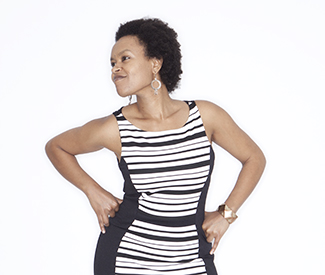
3. “Leaving Soon” — Meklit
4. “Ode To Russia” — Major Powers & The Lo-Fi Symphony
5. “Betray The Sea” — Annie Girl & The Flight
6. “Wake Up” — Rocky Rivera
7. “Sadie” — Astronauts, etc.
8. “Integrated Circuit” — Useless Eaters
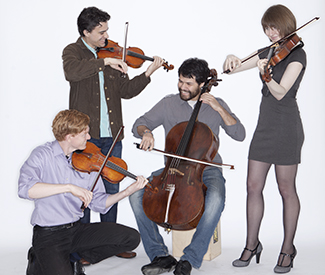
9. “Collapsing Obsidian Sun” — Friction Quartet
10. “Black Friday/Soul On Ice” — Nu Dekades
11. “Church of SoMA [excerpt]” — Avalon Emerson

…so, did you, like, have a date for the prom yet? Just out of curiosity. We have a flask.

Your friend,
The SF Bay Guardian

Bicycling and equity: Heed the call, expand the movement

87

STREET FIGHT In the face of increased gasoline prices and congestion, more public awareness of the relationship between greenhouse gas emissions and driving, and interest in physical activity, bicycling has experienced a mini-boom throughout the US. Chicago, Minneapolis, New York, Pittsburgh, Portland, Seattle, Washington, DC, and many smaller university cities, such as Boulder and Madison, have seen impressive increases in utilitarian bicycling.

In San Francisco, 3.5 to 6 percent of all trips are made by bicycle, amounting to roughly 150,000 bicycle trips in the city each day, a jump from around 1 percent of trips in the 1990s. The majority of these trips are for utilitarian purposes such as shopping and commuting, not recreation. Stand on Market and 10th streets on any weekday and you’ll see that bicycling has surged in San Francisco. In parts of Hayes Valley, the Mission, and Upper Market, over 10 percent of commuting is by bicycle. The city’s official goal — 9 percent of all citywide trips by 2018 and 20 percent in the next decade — is important for making San Francisco more livable.

But it’s also fundamental for making San Francisco more equitable. That’s right, equitable.

In many respects, bicycling is among the most equitable forms of urban transportation because it is affordable and accessible to almost everyone. Bicycling is far cheaper, safer, healthier, and cleaner than driving, and when considering global equity, far saner for a national climate policy. And for many low income workers, bicycling is also an affordable conveyance that enables not just physical mobility but also financial stability.

Indeed, US Transportation Secretary Anthony Foxx points out that nationally, a third of all bike trips are made by adults making under $30,000 and that the bicycle can have a substantial role in reducing the overall cost of living for the working class. But unfortunately lower class, non-white cyclists are also more likely to be in fatal collisions.

Speaking at the annual National Bicycle Summit in Washington, DC, earlier this month, Foxx, an African American former mayor of Charlotte, N.C., said that the federal government needs to devote more attention to making bicycling part of everyday life for the working class. Emphasizing the need for safety and convenience, Foxx was especially enthused about cycletracks — bikeways that are fully separated from automobiles and offer space for women, children, and older Americans to safely navigate cities by bike.

Foxx’s address followed a day of equity-themed panels and plenaries attended by more than 700 people. The League of American Bicyclists, focused on lobbying Congress and the White House, announced a new equity agenda to reach out to women, people of color, and to focus on reinvigorating a more progressive and egalitarian tone for bicycle advocacy.

Social justice advocates and community organizers had a strong presence at the summit, which has historically reflected a whiter, upper-middle-class male constituency. One presenter discussed bicycling and women’s prison rehabilitation, sharing how women who suffered from abuse, drug addiction, and imprisonment found bicycle riding to be normalizing and helpful for personal growth and for managing depression and anxiety.

A panel session titled “Learning from Los Angeles” showed how advocacy for bicycling can also come from community-based organizations, not just bicycle groups. Social justice issues are fundamental to LA’s inner city bicycle movement; over a third of South Central Los Angeles households are car free, and community organizers there have made a clearer connection between economic inequity and environmental problems.

Advocates from New York City chimed in that it was time for a “minority bicycle coalition” to advocate for women, minorities, and immigrant bicycle delivery workers. They pointed out that New York’s new and much-vaunted bike infrastructure has mainly spread in more affluent, white parts of Manhattan and Brooklyn, while Queens is overlooked. A speaker from the NAACP put obesity and public health at the center of the civil rights agenda and remarked on how the bike lifestyle should be brought to African American neighborhoods.

A discussion of emerging bike share systems asked how to expand to minority populations, and provided examples of how Boston subsidizes bike share membership for low income members. Boston also relaxes the charges for exceeding 30-minute rides and is figuring out ways to enable those without credit cards to participate.

Once a cynic about bike share, I experienced firsthand the benefits of a truly extensive, practical bike share system in Washington, DC (note to San Francisco — it was NOT covered in Wells Fargo or Google corporate logos). If bike share is extended to the Excelsior, Bayview, Balboa Park, Daly City, and SF State, it will work for the working class and students.

One of the most inspiring personas at the Bike Summit was Terry O’Neill, director of the National Organization for Women, who asked that bicycle advocates get beyond simply advocating for bikes. O’Neill prodded cyclists to ask: What do we need to do to make bicycling useful to women? And then she laid it out eloquently. Build affordable housing — lots of it — in areas where it is most needed, such as affluent Montgomery County, a suburb of DC, or in places like Hayes Valley and Silicon Valley. By creating the spatial proximity that makes cycling practical, women (and men) can incorporate cycling while balancing jobs, household chores, and children. This would do more to increase bicycling (and equity) than simply striping new bike lanes.

Her point is that for cycling to be logical for women, especially in complex metropolitan areas like DC or the Bay Area, well-planned and centrally located affordable housing is key. Perhaps it is time for the San Francisco Bike Coalition and Silicon Valley Bike Coalition, with their wealth of talent and donors, to create staff positions focusing on the bicycle-housing nexus and build strong partnerships with those who are fighting to build and preserve affordable housing in job- and amenity-rich areas.

Dovetailing from that, the newly elected mayor of Pittsburgh, Bill Peduto, himself a convert to bicycling, urged bicycle advocates to be an active partner in local progressive political coalitions and to work with non-bike groups such as labor unions and housing advocates. Peduto was among a handful of prominent politicians, mostly mayors and members of Congress, espousing the wisdom of linking bicycling and equity as part of the urban agenda.

The overall message is clear. Cities need to move beyond the neoliberal creative class storyline about bicycling, which says that a successful city is one that has a youthful, fit, but affluent stratum for bicycles. We need to be careful about praising the bicycle as a profitable economic development strategy for Realtors who up the rent as part of a commodified package of livability.

Sure, it’s great to see a bike lane on mid-Market, and there should definitely be more. But a successful city is not one where developers and Realtors see bike lanes and gentrify the neighborhood. A successful city is one where working class women feel safe to bike, where teachers, construction workers, and nurses can use the bicycle for many local trips, where African Americans and Latinos feel included in the bicycling movement, and where service workers and immigrants can safely maneuver the city and region by bicycle without fear of being hit by a car or truck. And the true mark of success is when all of these people can afford to live in the city and travel by bicycle.

Theater Listings: March 19 – 25, 2014

0

Stage listings are compiled by Guardian staff. Performance times may change; call venues to confirm. Reviewers are Robert Avila, Rita Felciano, and Nicole Gluckstern. Submit items for the listings at listings@sfbg.com.

THEATER

OPENING

Lottie’s Ghosts Brava Theater Center, 2781 24th St, SF; www.brava.org. $20. Previews Thu/20, 8pm. Opens Fri/21, 8pm. Runs Thu-Sat, 8pm (no show March 28); Sun, 3pm. Through April 6. Dancer, storyteller, and Brava artist-in-residence Shakiri presents a new work based on her novel of the same name.

Pearls Over Shanghai Hypnodrome Theatre, 575 10th St, SF; www.thrillpeddlers.com. $30-35. Opens Thu/20, 8pm. Runs Thu-Sat, 8pm. Through May 31. Thrillpeddlers present the fifth anniversary revival production of its enormously popular take on the 1971 Cockettes musical.

She Rode Horses Like the Stock Exchange Thick House, 1695 18th St, SF; www.crowdedfire.org. $15-35. Previews Thu/20-Sat/22, 8pm. Opens Mon/24, 8pm. Runs Wed-Sat, 8pm. Through April 12. Crowded Fire kicks off its 2014 season with the world premiere of Amelia Roper’s dry comedy about financial disaster.

The Two Chairs Bindlestiff Studios, 185 Sixth St, SF; www.performersunderstress.com. $10-30. Previews Thu/20-Fri/21, 8pm. Opens Sat/22, 8pm. Runs Thu-Sat, 8pm; Sun, 2pm. Through April 13. Performers Under Stress performs Charles Pike’s new play, described as “No Exit as a love story set in Napa on the Silverado Trail.”

Venus in Fur Geary Theater, 415 Geary, SF; www.act-sf.org. $20-120. Previews Wed/19-Sat/22 and Tue/25, 8pm (also Sat/22, 2pm); Sun/23, 7pm. Opens March 26, 8pm. Runs Wed-Sat and Tue, 8pm (also Sat, 2pm; April 1, show at 7pm); Sun, 7pm. Through April 13. American Conservatory Theater performs a new production of David Ives’ 2012 Tony-nominated play.

BAY AREA

The Coast of Utopia Ashby Stage, 1901 Ashby, Berk; www.shotgunplayers.org. $20-35 (three-show marathon days, $100-125). Previews March 20-28. Opens March 29. Part Three: Salvage runs March 20-April 27; Part One: Voyage runs March 26-April 17; Part Two: Shipwreck runs March 27-April 19. Three-play marathon, April 5 and 26. Through April 27. Check website for showtime info. Shotgun Players performs Tom Stoppard’s epic The Coast of Utopia trilogy, with all three plays performed in repertory.

ONGOING

Bauer San Francisco Playhouse, 450 Post, SF; www.sfplayhouse.org. Previews Wed/19-Fri/21, 8pm. Opens Sat/22, 8pm. Runs Tue-Thu, 7pm; Fri-Sat, 8pm (also Sat, 3pm); Sun/23 and April 13, 2pm. Through April 19. San Francisco Playhouse presents the world premiere of Lauren Gunderson’s drama about artist Rudolf Bauer.

Children Are Forever (All Sales are Final!) Stage Werx Theatre, 446 Valencia, SF; www.brownpapertickets.com. $15. Fri/21-Sat/22, 8pm. Writer-performer and comedian Julia Jackson’s well acted and consistently funny autobiographical solo show details her and her female partner’s attempt to adopt a newborn girl from a young African American mother in Florida. Along the way, Jackson’s smart script details the trials, red tape, and unexpected market incentives in the field of adoption for a same-sex, interracial couple. If the generally involving story nevertheless attenuates a little across its two-act structure, Coke Nakamoto’s precise direction (which builds on original direction by W. Kamau Bell) offers a lively framework for Jackson’s excellent characterizations as well as her frank and interesting commentary on the social, political messiness of certain natural urges. (Avila)

Crystal Springs Eureka Theatre, 215 Jackson, SF; www.crystalspringstheplay.com. $20-65. Fri/21-Sat/22, 8pm; Sun/23, 2pm. Eureka Theatre presents Kathy Rucker’s world-premiere drama about parenting in the digital age.

Feisty Old Jew Marsh San Francisco Main Stage, 1062 Valencia, SF; www.themarsh.org. $25-100. Sat, 8pm; Sun, 7pm (March 30 show at 2pm). Extended through May 4. Charlie Varon performs his latest solo show, a fictional comedy about “a 20th century man living in a 21st century city.”

Foodies! The Musical Shelton Theater, 533 Sutter, SF; www.foodiesthemusical.com. $32-34. Fri-Sat, 8pm. Open-ended. AWAT Productions presents Morris Bobrow’s musical comedy revue all about food.

Hundred Days Z Space, 450 Florida, SF; www.zspace.org. $10-100. Wed and Sun, 7pm; Thu-Sat, 8pm. Through April 6. Married musical duo the Bengsons (Abigail and Shaun) provide the real-life inspiration and guiding rock ‘n’ roll heart for this uneven but at times genuinely rousing indie musical drama, a self-referential meta-theater piece relating the story of a young couple in 1940s America who fall madly in love only to discover one of them is terminally ill. As an exploration of love, mortality, and the nature of time, the story of Sarah and Will (doubled by the Bengsons and, in movement sequences and more dramatically detailed scenes, by chorus members Amy Lizardo and Reggie D. White) draws force from the potent musical performances and songwriting of composer-creators Abigail and Shaun Bengson (augmented here by the appealing acting-singing chorus and backup band that also feature El Beh, Melissa Kaitlyn Carter, Geneva Harrison, Kate Kilbane, Jo Lampert, Delane Mason, Joshua Pollock). Playwright Kate E. Ryan’s book, however, proves too straightforward, implausible, and sentimental to feel like an adequate vessel for the music’s exuberant, urgent emotion and lilting, longing introspection. Other trappings of director Anne Kauffman’s elaborate production (including an inspired set design by Kris Stone that echoes the raw industrial shell of the theater; and less-than-inspired choreography by the otherwise endlessly inventive Joe Goode) can add texture at times but also prove either neutral figures or distracting minuses in conveying what truth and heft there is in the material. Ultimately, this still evolving world premiere has a strong musical beat at its core, which has a palpable force of its own, even if it’s yet to settle into the right combination of story and staging. (Avila)

Lovebirds Marsh San Francisco Studio, 1062 Valencia, SF; www.themarsh.org. $15-50. Thu-Fri, 8pm; Sat, 8:30pm. Extended through April 12. Theater artist and comedian Marga Gomez presents the world premiere of her 10th solo show, described as “a rollicking tale of incurable romantics.”

Mommy Queerest Exit Studio, 156 Eddy, SF; www.divafest.info. $15-25. Fri-Sat, 8pm. Through March 29. Sex scenes in solo shows might sound a little onanistic, but in the right circumstances a door jam or a love seat can serve as a fine co-star. Stand-up comic and actor Kat Evasco demonstrates as much in this raunchy and high-spirited story of her sexual awakening as a lesbian-identifying bisexual, coming out in a household dominated by her closeted mother, a Filipina American drama queen with a long-term female companion she insists is the “gay” one. Presented by Guerrilla Rep and the Exit Theatre’s DIVAfest, and directed by Guerrilla Rep’s John Caldon (who co-wrote the play with Evasco), the story follows a familiar and predictable arc in some ways — familial hypocrisy giving way to inspirational cross-generational understanding — and the characterizations and set-ups (including a family feud on Jerry Springer) come with not always inspired choices. Moreover not all the jokes land where they should in a performance that starts as stand-up but immediately shifts into the style of a solo-play confessional. (A more thoroughgoing subversion of the stand-up format might have produced more complex, less foreseeable results.) At the same time, there’s no denying Evasco’s charm and energy, or her buoyant comedic talent, which makes it easier to forgive the play’s structural shortcomings. (Avila)

“Risk Is This … The Cutting Ball New Experimental Plays Festival” Exit on Taylor, 277 Taylor, SF; www.cuttingball.com. Free ($20 donation for reserved seating). Fri-Sat, 8pm. Through March 29. Five new works in staged readings, including two from Cutting Ball resident playwright Andrew Saito.

The Scion Marsh San Francisco, 1062 Valencia, SF; www.themarsh.org. $15-60. Thu-Fri, 8pm; Sat, 5pm. Through April 18. In his latest solo show, Brian Copeland (Not a Genuine Black ManThe Waiting Period) explores an infamous crime in his hometown of San Leandro: the 2000 murder of three government meat inspectors by Stuart Alexander, owner of the Santos Linguisa Factory. The story is personal history for Copeland, at least indirectly, as the successful comedian and TV host recounts growing up nearby under the common stricture that “rules are rules,” despite evidence all around that equity, fairness, and justice are in fact deeply skewed by privilege. Developed with director David Ford, the multiple-character monologue (delivered with fitful humor on a bare-bones stage with supportive sound design by David Hines) contrasts Copeland’s own youthful experiences as a target of racial profiling with the way wealthy and white neighbor Stuart Alexander, a serial bully and thug, consistently evaded punishment and even police attention along his path to becoming the “Sausage King,” a mayoral candidate, and a multiple murderer (Alexander died in 2005 at San Quentin). The story takes some meandering turns in making its points, and not all of Copeland’s characterizations are equally compelling. The subject matter is timely enough, however, though ironically it is government that seems to set itself further than ever above the law as much as wealthy individuals or the bogus “legal persons” of the corporate world. The results of such concentrated power are indeed unhealthy, and literally so — Copeland’s grandmother (one of his more persuasive characterizations) harbors a deep distrust of processed food that is nothing if not prescient —but The Scion’s tale of two San Leandrans leaves one hungry for more complexity. (Avila)

Shit & Champagne Rebel, 1772 Market, SF; shitandchampagne.eventbrite.com. $25. Fri-Sat, 8pm. Open-ended. D’Arcy Drollinger is Champagne White, bodacious blond innocent with a wicked left hook in this cross-dressing ’70s-style white-sploitation flick, played out live on Rebel’s intimate but action-packed barroom stage. Written by Drollinger and co-directed with Laurie Bushman (with high-flying choreography by John Paolillo, Drollinger, and Matthew Martin), this high-octane camp send-up of a favored formula comes dependably stocked with stock characters and delightfully protracted by a convoluted plot (involving, among other things, a certain street drug that’s triggered an epidemic of poopy pants) — all of it played to the hilt by an excellent cast that includes Martin as Dixie Stampede, an evil corporate dominatrix at the head of some sinister front for world domination called Mal*Wart; Alex Brown as Detective Jack Hammer, rough-hewn cop on the case and ambivalent love interest; Rotimi Agbabiaka as Sergio, gay Puerto Rican impresario and confidante; Steven Lemay as Brandy, high-end calf model and Champagne’s (much) beloved roommate; and Nancy French as Rod, Champagne’s doomed fiancé. Sprawling often literally across two buxom acts, the show maintains admirable consistency: The energy never flags and the brow stays decidedly low. (Avila)

The Speakeasy Undisclosed location (ticket buyers receive a text with directions), SF; www.thespeakeasysf.com. $70 (gambling chips, $5-10 extra; after-hours admission, $10). Thu-Sat, 7:40, 7:50, and 8pm admittance times. Extended through May 24. Boxcar Theater’s most ambitious project to date is also one of the more involved and impressively orchestrated theatrical experiences on any Bay Area stage just now. An immersive time-tripping environmental work, The Speakeasy takes place in an “undisclosed location” (in fact, a wonderfully redesigned version of the company’s Hyde Street theater complex) amid a period-specific cocktail lounge, cabaret, and gambling den inhabited by dozens of Prohibition-era characters and scenarios that unfold around an audience ultimately invited to wander around at will. At one level, this is an invitation to pure dress-up social entertainment. But there are artistic aims here too. Intentionally designed (by co-director and creator Nick A. Olivero with co-director Peter Ruocco) as a fractured super-narrative — in which audiences perceive snatches of overheard stories rather than complete arcs, and can follow those of their own choosing — there’s a way the piece becomes specifically and ever more subtly about time itself. This is most pointedly demonstrated in the opening vignettes in the cocktail lounge, where even the ticking of Joe’s Clock Shop (the “cover” storefront for the illicit 1920s den inside) can be heard underscoring conversations (deeply ironic in historical hindsight) about war, loss, and regained hope for the future. For a San Francisco currently gripped by a kind of historical double-recurrence of the roaring Twenties and dire Thirties at once, The Speakeasy is not a bad place to sit and ponder the simulacra of our elusive moment. (Avila)

Tipped & Tipsy Marsh Studio Theater, 1062 Valencia, SF; www.themarsh.org. $15-50. Sat, 5pm; Sun, 7pm. Through April 6. Last fall’s San Francisco Fringe Festival began on a high note with Jill Vice’s witty and deft solo, Tipped & Tipsy, and the Best of Fringe winner is now enjoying another round at solo theater outpost the Marsh. Without set or costume changes, Vice (who developed the piece with Dave Dennison and David Ford) brings the querulous regulars of a skid-row bar to life both vividly and with real quasi–Depression-Era charm. She’s a protean physical performer, seamlessly inhabiting the series of oddball outcasts lined up each day at Happy’s before bartender Candy — two names as loaded as the clientele. After some hilarious expert summarizing of the do’s and don’ts of bar culture, a story unfolds around a battered former boxer and his avuncular relationship with Candy, who tries to cut him off in light of his clearly deteriorating health. Her stance causes much consternation, and even fear, in his barfly associates, while provoking a dangerous showdown with the bar’s self-aggrandizing sleaze-ball owner, Rico. With a love of the underdog and strong writing and acting at its core, Tipsy breezes by, leaving a superlative buzz. (Avila)

Twisted Fairy Tales Shelton Theater, 533 Sutter, SF; www.leftcoasttheatreco.org. $15-25. Thu-Sat, 8pm. Through April 5. Left Coast Theatre Co. performs the world premiere of seven one-act LGBT-themed plays based on classic children’s stories.

The World of Paradox Garage, 715 Bryant, SF; www.paradoxmagic.com. $12-15. Mon, 8pm. Through April 7. Footloose presents David Facer in his solo show, a mix of magic and theater.

Wrestling Jerusalem Intersection for the Arts, 925 Mission, SF; www.theintersection.org. $20-30. Thu-Sat, 7:30pm; Sun, 2pm. Through April 6. Intersection for the Arts presents Aaron Davidman in his multicharacter solo performance piece about Israel and Palestine.

Yellow New Conservatory Theatre Center, 25 Van Ness, SF; www.nctcsf.org. $25-45. Wed/19-Sat/22, 8pm; Sun/23, 2pm. Playwright Del Shores (Sordid Lives, Southern Baptist Sissies) returns to his native South — while detouring from previous camp-comedy treatments — with this affirming family drama set in Vicksburg, Miss., about a progressive white couple whose marriage and family are rocked in the wake of their son’s illness. Kate (Dana Zook) and Bobby (Andrew Nance) are celebrating 19 years together. Their oldest son, Dayne (Damion Matthews), is a handsome high school senior and football star; their daughter, Gracie (Ali Haas), is his high-strung younger sister, a drama devotee in more ways than one with plans to be the next Meryl Streep. Gracie’s best friend, Kendall (Maurice André San-Chez), is an effeminate young man with a golden singing voice but a strict fundamentalist mother (Linsay Rousseau) from whom he must hide his plan to join Gracie in the school’s production of Oklahoma! Kendall’s fractured family encourages his tight orbit around Gracie’s — including Dayne, on whom Kendall has an impossible-to-disguise crush — all of whom accept the closeted, innocent youth unequivocally. But when Dayne comes down with a rare liver disease (the title has nothing to do with race, which is not explored here, but references, at a literal level, the sickly color that overcomes Dayne at one point), the seemingly ideal family itself fractures along lines of a deeply buried secret regarding his paternity. Amid their worry for Dayne’s future, and the painful dynamic opened between Kate and Bobby, Kendall’s mother moves in with proselyting zeal, alienating her son to the point of total rejection, but also adding to an already volatile tension between his adoptive parents. Helmed by New Conservatory Theatre Center’s founding artistic director, Ed Decker, the production achieves (after some initial warming up) decent performances across the cast, which, along with Shores’ careful plotting and consistent humor, helps keep this sentimental, somewhat too neat story involving until the end. (Avila)

BAY AREA

Accidental Death of an Anarchist Berkeley Repertory Theatre, Roda Theatre, 2015 Addison, Berk; www.berkeleyrep.org. $29-99. Tue and Thu-Sat, 8pm (no show April 18; additional 2pm shows Thu/20 and April 17; also Sat, 2pm, but no matinee Sat/22); Sun, 2 and 7pm. Through April 20. Berkeley Rep presents comic actor Steven Epp in Dario Fo’s explosive political farce, directed by Christopher Bayes,

Arms and the Man Barn Theatre, 30 Sir Francis Drake, Ross; www.rossvalleyplayers.com. $13-26. Thu, 7:30pm; Fri-Sat, 8pm; Sun, 2pm. Through April 13. Ross Valley Players perform George Bernard Shaw’s romantic comedy.

Bread and Circuses La Val’s Subterranean, 1834 Euclid, Berk; www.impacttheatre.com. $20-25. Thu-Sat, 8pm; Sun, 7pm. Through April 6. Impact Theatre performs “a cavalcade of brutal and bloody new short plays” by various contemporary playwrights.

Fool For Love Pear Avenue Theatre, 1220 Pear, Mtn View; www.thepear.org. $10-35. Thu-Sat, 8pm; Sun, 2pm. Through April 6. Pear Avenue Theatre performs Sam Shepard’s iconic play, about a pair of former lovers who reunite at a lonely desert motel.

Geezer Marsh Berkeley, 2120 Allston, Berk; www.themarsh.org. $25-50. Thu, 8pm; Sat, 5pm. Through April 26. Geoff Hoyle moves his hit comedy about aging to the East Bay.

The Lion and the Fox Berkeley City Club, 2315 Durant, Berk; www.centralworks.org. $15-28. Thu-Sat, 8pm; Sun, 5pm. Through March 30. Central Works performs a prequel to its 2009 hit, Machiavelli’s The Prince, which depicts a face-off between Niccolo Machiavelli and Cesare Borgia.

The Music Man Julia Morgan Theater, 2640 College, Berk; www.berkeleyplayhouse.org. $17-60. Thu/20-Fri/21, 7pm; Sat/22, 1 and 6pm; Sun/23, noon and 5pm. There’s trouble in River City! See it unfold amid all those trombones at Berkeley Playhouse.

Once On This Island Lucie Stern Theatre, 1305 Middlefield, Palo Alto; www.theatreworks.org. $19-73. Tue-Wed, 7:30pm; Thu-Sat, 8pm (also Sat, 2pm); Sun, 2 and 7pm. Through March 30. TheatreWorks performs the Tony-nominated musical about a star-crossed love affair in the tropics, inspired by Hans Christian Andersen’s The Little Mermaid.

PERFORMANCE/DANCE

“Attractive Camp” Lost Weekend Video, 1034 Valencia, SF; www.eventbrite.com. Sun/23, 8pm. $10. Stand-up comedy, sketch comedy, and short films with Greg Edwards, Sean Keane, Lydia Popovich, and others.

“Awaiting Dawn” Dennis Gallagher Arts Pavilion, 66 Page, SF; internationalsf.org/awaiting_dawn. Thu/20-Sat/22 and March 27-28, 7pm; March 29, 2pm. $10-30. The French-American International School presents this series of performances exploring the intersections of art, education, and democracy.

Caroline Lugo and Carolé Acuña’s Ballet Flamenco Peña Pachamama, 1630 Powell, SF; www.carolinalugo.com. Sat/22, March 30, April 6, 12, 19, and 30, 6:15pm. $15-19. Flamenco performance by the mother-daughter dance company, featuring live musicians.

“Comedy Returns to El Rio” El Rio, 3158 Mission, SF; www.brownpapertickets.com. Thu/20, 8pm. $7-20. Stand-up with Steve Lee, Bob McIntyre, Johan Miranda, Kat Evasco, and Lisa Geduldig.

Feinstein’s at the Nikko Hotel Nikko, 222 Mason, SF; www.feinsteinssf.com. This week: Jason Grae’s “49 1/2 Shades of Grae,” Thu/20, 8pm, $25-35; Vonda Shepard, Fri/21, 8pm, $40-55.

Flamenco Del Oro Emerald Tablet, 80 Fresno, SF; www.emtab.org. Fri/21, 8pm. $15 suggested donation. Flamenco dance and music.

“Izzies Dance Awards” Brava Theater Center, 2781 24th St, SF; www.brava.org. Mon/24, 6-8pm. Free. The 28th annual Isadora Duncan Dance Awards honors achievements by members of the Bay Area dance community, with awards for choreography, performance, visual design, and other categories.

Richard Lewis Cobb’s Comedy Club, 915 Columbus, SF; www.cobbscomedyclub.com. Fri/21, 8pm; Sat/22-Sun/23, 7pm (also Sat/22, 9:15pm). $25. The comedian performs.

“Luster: An American Songbook” Davies Symphony Hall, 201 Van Ness, SF; www.sfgmc.org. March 25-26, 8pm. $25-75. San Francisco Gay Men’s Chorus performs works by Gershwin, Porter, Ellington, and Berlin, as well as the world premiere of a tribute to Tyler Clementi.

“Magic at the Rex” Hotel Rex, 562 Sutter, SF; www.magicattherex.com. Sat, 8pm. Ongoing. $25. Magic and mystery with Adam Sachs and mentalist Sebastian Boswell III.

Mona Khan Company Garage, 715 Bryant, SF; ticketfly.com/event/475517. Sun/23 and March 30, 7:30pm (also March 30, 5:30pm). $20. The Indian contemporary dance company presents Soch, a night of vignettes.

“The Naked Stage” Bayfront Theater, B350 Fort Mason Center, SF; www.improv.org. Sat, 8pm. Through March 29. $20. BATS Improv performs a completely improvised play.

“ODC/Dance Downtown” Yerba Buena Center for the Arts Theater, 700 Howard, SF; www.ybca.org. Thu/20-Sat/22 and March 28-29, 8pm; Sun/23 and March 30, 4pm; March 26-27, 7:30pm. $20-75. The acclaimed contemporary dance company marks its 43rd season with world premiere boulders and bones, inspired by the work of artist Andy Goldsworthy, among other works.

“Paper Wing” NOHspace, 2840 Mariposa, SF; www.theatreofyugen.org. Fri/21-Sat/22, 8pm. $15-35. Sculptural costume artist Sha Sha Higby presents a new solo performance.

“Point Break Live!” DNA Lounge, 373 11th St, SF; www.dnalounge.com. April 4, 7:30 and 11pm. $25-50. Dude, Point Break Live! is like dropping into a monster wave, or holding up a bank, like, just a pure adrenaline rush, man. Ahem. Sorry, but I really can’t help but channel Keanu Reeves and his Johnny Utah character when thinking about the awesomely bad 1991 movie Point Break or its equally yummily cheesy stage adaptation. And if you do an even better Keanu impression than me — the trick is in the vacant stare and stoner drawl — then you can play his starring role amid a cast of solid actors, reading from cue cards from a hilarious production assistant in order to more closely approximate Keanu’s acting ability. This play is just so much fun, even better now at DNA Lounge than it was a couple years ago at CELLspace. But definitely buy the poncho pack and wear it, because the blood, spit, and surf spray really do make this a fully immersive experience. (Steven T. Jones)

“Sausage Fest Comedy Show” Club OMG, 43 Sixth St, SF; www.clubomgsf.com. Tue/25, 8pm. $10. Charlie Ballard hosts this night of shirtless comedy, with Mark Smalls, Hayden Greif-Neill, Mark Burg, Noah Gain, and others.

Sidra Bell Dance New York Dance Mission Theater, 3316 24th St, SF; www.dancemission.com. Fri/21-Sun/23, 8pm. $12-20. The NYC-based movement arts company performs garment and STELLA as part of its San Francisco season.

“Silenced” and “The CONTACT Project” CounterPULSE, 1310 Mission, SF; www.counterpulse.org. Thu/20-Sat/22, 8pm; Sun/23, 2pm. Counterpulse’s Artist Residency Commissioning Program presents a double bill by its winter residents. Dancer-choreographer Charya Burt’s Silenced blends traditional and modern dance as well as live music in a pointed homage to Cambodian pop star Ros Sereysothea, an iconic face and voice of the swinging Cambodian Sixties who ended up among the two million Cambodians murdered during the genocide under Pol Pot and the Khmer Rouge (1975–1979). Backed by dancers Sandra Ruano and Ravy Mey and guitarist Nahuel Bronzini, Burt creates charming moments within a limited narrative arc, embodying in dance and song the artistry and resilience of her subject, who brought Cambodian sensibilities to Western popular musical forms. An enveloping montage of archival images by video designer Olivia Ting and a period score of Sereysothea’s hits supplemented by composer Alexis Alrich add further context and atmosphere. Choreographer Krista DeNio’s The CONTACT project reconfigures the theater space in an intimate exploration of the experiences and perspectives of male and female American military veterans. Created in collaboration with the performers (Daniel Bear Davis, Sonia Decker, Katarina Eriksson, Remi Frazier, Stephen Funk, Hope Hutman, Daniel Lippel, William McQueen, Utam Moses, Susan Pfeffer, Misty Rose Snyder, and Tina Taylor), some of whom are actual veterans, the piece is perhaps necessarily jagged in shape and execution, but DeNio offers connective tissue in the form of group movement and staging. Some of this brings audience members into the fold and even literally following in the steps of the vets, here the subjects and agents of an artificial and unraveling conformity. The emphasis on validating the personal experience of veterans is a political act in itself, and can make for some emotionally potent moments, although the rough balance strived for here can also inhibit a more rigorous political understanding and critique of ever-expanding American militarism. (Avila)

“Sister Spit 2014” Elbo Room, 647 Valencia, SF; www.radarproductions.org. Wed/19, 8pm. $10. Also Thu/20, 8pm, free, Mills College, Student Union, 5000 MacArthur, Oakl. Also Fri/21, 8pm, $10, Rock Paper Scissors Collective, 2278 Telegraph, Oakl. Michelle Tea hosts the 2014 “spring fling” performances by the groundbreaking queer and feminist literature series. Performers include Rhiannon Argo, Dia Felix, Chinaka Hodge, Beth Lisick, Jerry Lee Abram, and Virgie Tovar, plus special guests.

“Sorya! 2014: We Are Still At It” NOHspace, 2840 Mariposa, SF: www.brownpapertickets.com. Sat/22-Sun/23, 2pm; Mon/24, 7pm. Theatre of Yugen presents its 35th anniversary season with a performance by founder Yuriko Doi in the kyogen play Kawakami.

BAY AREA

“Fleetwood Mask: The Ultimate Tribute to Fleetwood Mac” Live Oak Theatre, 1301 Shattuck, Berk; www.theatrefirst.com. Sat/22, 8pm; Sun/23, 2pm. $30. Theatrical tribute to the iconic rock band.

“MarshJam Improv Comedy Show” Marsh Berkeley, 2120 Allston, Berk; www.themarsh.org. Fri, 8pm. Ongoing. $10. Improv comedy with local legends and drop-in guests.

Pilobolus Marin Veterans’ Memorial Auditorium, 10 Avenue of the Flags, San Rafael; www.marincenter.org. Sat/22, 8pm. $20-75. The dance company performs an eclectic program of past work and three Bay Area premieres.

“Poetry Express” Himalayan Flavors, 1585 University, Berk; poetryexpressberkeley.blogspot.com. Mon, 7pm. Free. Ongoing. This week: Ambrose Mohler, plus open mic. *


Film Listings: March 19 – 25, 2014

0

Film listings are edited by Cheryl Eddy. Reviewers are Kimberly Chun, Dennis Harvey, Lynn Rapoport, Sam Stander, and Sara Maria Vizcarrondo. For rep house showtimes, see Rep Clock.

OPENING

Afternoon of a Faun: Tanaquil Le Clercq Writer-director Nancy Buirski’s documentary follows the short, brilliant career of a young dancer named Tanaquil Le Clercq, who came up in the New York City ballet world of the 1940s and ’50s. Le Clercq was discovered by George Balanchine, married him (as three other dancers had done before her), sparked a paradigm shift in the ballet world regarding what was considered the quintessential dancer’s body, had numerous ballets set on her by Balanchine and Jerome Robbins, and then, at the peak of her career, at age 27, was stricken by polio and left paralyzed in both legs. The film takes its time moving toward this catastrophe, recounting Le Clercq’s early adult life through interviews with her contemporaries and tracking her professional progress through gorgeous archival footage of her performances. Equally moving archival material are the letters from a longtime correspondence between Le Clercq and Robbins that documented two very different periods of her life: the first, when Robbins was choreographing ballets for her, including Afternoon of a Faun, and professing his love; the second, after her paralysis, when she wrote him a series of poignant communications describing her impressions of her illness and her new, circumscribed world. The film has some trouble holding on to its center — as in life, Balanchine proves a magnetic force, and Afternoon of a Faun feels inexorably drawn to his professional and personal details. We don’t get enough of Le Clercq, which you could say is the tragedy of her story — nobody did. But the letters do provide a sense of someone resourceful and responsive to life’s richness and joys, someone who would get past this crisis and find a way to reshape her life. (1:31) Opera Plaza. (Rapoport)

Anita In 1991, Anita Hill found herself at the center of a political firestorm when she testified about being sexually harassed by US Supreme Court nominee Clarence Thomas. “The issue became my character as opposed to the character of the nominee,” she recalls in Anita, a revealing new documentary from Academy Award-winning filmmaker Freida Mock (1994’s Maya Lin: A Strong Clear Vision). Twenty years after she first made headlines, Hill recounts her story in the same eloquent voice familiar to anyone who watched her testimony; her first-person narrative, paired with accounts by her supporters, stresses the consequences many women suffer from daring to speak out. The documentary, which shows how one woman’s forthrightness about sexual harassment can upturn her life, also explores the ways in which Hill’s Bush-era notoriety laid the foundation for a prolific career dedicated to battling sexual harassment and women’s oppression. She became an unlikely icon, and a role model for women battling similar circumstances. On the other hand, Thomas still sits on the bench. (1:17) Embarcadero, Shattuck. (Laura B. Childs)

Bad Words Settling a grudge score whose precise origin remains unclear until late in the game, world-class misanthrope Guy Trilby (Jason Bateman) is celebrating his 40th birthday by competing in a national spelling bee. Yes, spelling bees are generally for children, and so is this one. But Guy has found a legal loophole permitting his participation, and the general hate wending his way from contest staff (Allison Janney, Philip Baker Hall) — let alone the tiger-mom-and-dad parents ready to form a lynch mob — is just icing on the cake where he’s concerned. What’s more, as some sort of majorly underachieving near-genius, he’s in fact well equipped to whup the bejesus out of overachieving eight-year-olds when it comes to saying the right letters out loud. The only people on his side, sorta, are the online journalist (Kathryn Hahn) reporting on his perverse quest, and the insidiously cute Indian American competitor (Rohan Chand) who wants to be besties, or perhaps just to psych him out. (Note: The tyke’s admitted favorite word is “subjugate.”) Written by Andrew Dodge, this comedy in the tradition (a little too obviously) of 2003’s Bad Santa and such provides the always enjoyable Bateman with not only a tailor-made lead role, but a directorial debut as well. He does just fine by both. Yet as nicely crafted and frequently-pretty-funny Bad Words is, at core it’s a rather petty movie — small, derivative, and cynically mean-spirited without the courage of genuine biliousness. It’s at once not-half-bad, and not half as badass as it pretends to be. (1:29) Shattuck. (Harvey)

Child’s Pose See “Smotherly Love.” (1:52) Opera Plaza, Shattuck.

Dark House Nick (Luke Kleintank) has the most depressing superpower since X-Men‘s Rogue: whenever he touches someone destined for a violent death, he has a vision of his or her terrible demise. On a rare visit to his institutionalized mother (Lesley-Anne Down), amid her ravings about “things in the walls,” she confesses that Nick’s father is still alive. After she dies, he inherits a folder stuffed with wrinkled papers — including the deed to an old mansion that’s been haunting his dreams since childhood. With his best friend and pregnant girlfriend in tow, Nick sets out to find the apparently cursed dwelling (wide-eyed locals refer to it as “Wormwood”). What they find is best not revealed here, though it does involve Tobin “Jigsaw from the Saw movies” Bell. This latest from controversial director Victor Salva borrows multiple elements from his 2001 horror breakout Jeepers Creepers (backwoods locations and folklore, murderous fellows in duster coats, superstition vis-à-vis the number 23, etc.) but sprawls beyond that film’s taut road-trip-from-hell structure, and has far more characters prone to making stupid decisions. There’s also the issue of having a certain, uh, monster intone orders to its followers via any available furnace vent — it’s funny every time, and it sure ain’t intended to be. (1:42) Presidio. (Eddy)

Divergent Shailene Woodley stars as a post-apocalyptic hero in this sci-fi action film based on the popular YA novel by Veronica Roth. (2:20) Balboa, Marina.

Enemy Adam (Jake Gyllenhaal) is an associate history professor living the usual life of quiet desperation in a very smoggy, beige, vaguely dystopian Toronto when he makes a startling discovery: glimpsed in the background of an otherwise forgettable movie rental is someone who is his complete doppelganger. Intrigued, he discovers the identity of actor Anthony (Jake again), and pokes around in the latter’s life enough to discover that they both have blonde partners (Adam’s girlfriend Mélanie Laurent, the other dude’s pregnant wife Sarah Gadon), though beyond that and the eerie physical-vocal resemblances, they’re near-opposites — Anthony is more confident, successful, assertive, and belligerent by far. Their paths-crossing isn’t going to be a good thing. Just how bad it will get depends on how you read a mysterious, perverse opening sequence and some increasingly surreal imagery scattered throughout. The second of director Denis Villeneuve’s back-to-back Gyllenhaal collaborations is very different from last year’s long, intricate, real-world thriller Prisoners. Based on a José Saramago novel (The Double), it sports the same ominous, metaphorical fantasticism that was previously translated to the screen in the widely disliked (but faithful) 2008 Blindness — another movie that played better if you know where its source material is coming from. This intriguing Kafkaesque paranoid puzzle is not to be confused with Richard Ayoade’s forthcoming Dostoevsky-derived The Double, starring Jesse Eisenberg. Actually, go ahead and confuse them — they’re stylistically distinct but otherwise practically the same fable-nightmare. (1:30) Marina, Vogue. (Harvey)

Le Week-End Director Roger Michell and writer Hanif Kureishi first collaborated two decades ago on The Buddha of Suburbia, when the latter was still in the business of being Britain’s brashest multiculti hipster voice. But in the last 10 years they’ve made a habit of slowing down to sketching portraits of older lives — and providing great roles for the nation’s bottomless well of remarkable veteran actors. Here Lindsay Duncan and Jim Broadbent play a pair of English academics trying to re-create their long-ago honeymoon’s magic on an anniversary weekend in Paris. They love each other, but their relationship is thorny and complicated in ways that time has done nothing to smooth over. This beautifully observed duet goes way beyond the usual adorable-old-coot terrain of such stories on screen; it has charm and humor, but these are unpredictable, fully rounded characters, not comforting caricatures. Briefly turning this into a seriocomedy three-way is Most Valuable Berserker Jeff Goldblum as an old friend encountered by chance. It’s not his story, but damned if he doesn’t just about steal the movie anyway. (1:33) Embarcadero, Smith Rafael. (Harvey)

Muppets Most Wanted On a European tour, the Muppets get caught up in a comedic criminal caper (as they do), with human supporting characters played by Tina Fey, Ricky Gervais, and Ty Burrell. (1:46) Balboa, Presidio.

Nymphomaniac: Volume I Found battered and unconscious in a back alley, Joe (Charlotte Gainsbourg) is taken in by good Samaritan Seligman (Stellan Skarsgaard), to whom she explains “It’s all my fault — I’m just a bad human being.” But he doesn’t believe there are such things. She seeks to enlighten him by narrating the story of her life so far, from carnally curious childhood to sexually voracious adulthood. Stacy Martin plays her younger self through a guided tour of excesses variously involving Christian Slater and Connie Nielsen as her parents; a buncha guys fucked on a train, on a teenage dare; Uma Thurman as one histrionically scorned woman; and Shai LaBeouf as a first love who’s a cipher either because he’s written that way, or because this particular actor can’t make sense out of him. For all its intended provocation, including some graphic but unsurprisingly (coming from this director) unerotic XXX action, von Trier’s latest is actually less offensive than much of his prior output: He’s regained his sense of humor here, and annoying as its “Look at me, I’m an unpredictable artist” crap can be (notably all the stuff about fly-fishing, cake forks, numerology, etc. that seems randomly drawn from some Great Big Book of Useless Trivia), the film’s episodic progress is divertingly colorful enough. But is Joe going to turn out to be more than a two-dimensional authorial device from a director who’s never exactly sussed women (or liked people in general)? Will Nymphomaniac arrive at some pointed whole greater than the sum of its naughty bits? The answer to both is probably “Nah.” But we won’t know for sure until the two-hour second half arrives (April 4) of a movie that, in fairness, was never really intended to be split up like this. (1:50) Embarcadero, Shattuck. (Harvey)

Shirin in Love This blandly TV-ready romantic comedy stars Nazanin Boniadi as a ditzy child of privilege in Beverly Hills’ Iranian-American community. Sent by her aggressively shallow magazine-editor mother (Anita Khalatbari) to find an elusive best-selling novelist for an interview, she not only stumbles upon that author (Amy Madigan) but discovers she’s already had a meet-cute with the latter’s hunky son (Riley Smith) under embarrassing circumstances. Will Shirin be able to shrug off the future her family has planned for her (including Maz Jobrani as a plastic-surgeon fiancé ) in order to, y’know, find herself? The very obvious answer takes its sweet time arriving in writer-director Ramin Niami’s innocuous film, which hews to a stale lineup of formulaic genre conventions even when relying on whopping coincidences to advance its predictable plot. The novelty of its particular social milieu goes unexplored in a movie that reveals even less about assimilated modern US Persian culture than My Big Fat Greek Wedding (2002) did about Greek Americans. (1:45) AMC Bay Street 16. (Harvey)

Tiger and Bunny: The Rising Based on the Japanese anime series (and a 2012 film, Tiger and Bunny: The Beginning), this lighthearted look at superheroes with human problems imagines a world in which the blaring Hero TV channel tracks the movements of various caped crusaders, who compete against each other for points as they race to defeat random villains. All of the heroes, who we meet both in and out of costume, work for the same parent company, and each has a corporate sponsor whose logo is a prominent part of his or her ensemble. (Heroes are big business, after all.) In the first film, we met “Wild Tiger,” a bumbling single dad, who’s reluctantly paired with talented new kid “Bunny.” They clash at first, but eventually prove a powerful team. In The Rising, a douchey new boss relegates Tiger to the junior-varsity Second League, while Bunny gets an annoying new partner, “Golden Ryan.” Meanwhile, a mysterious trio of baddies menaces the city, forcing all of the heroes to work together whether they want to or not. The most surprising part of The Rising is its sensitive development of the “Fire Emblem” character. Presented as a mincing gay stereotype in the first film, here he’s given a sympathetic back story via dream sequences that detail his youthful exploration of cross-dressing and personal identity struggles. Encouraging, to say the least. (1:48) New People. (Eddy)

ONGOING

About Last Night (1:40) Metreon.

American Hustle David O. Russell’s American Hustle is like a lot of things you’ve seen before — put in a blender, so the results are too smooth to feel blatantly derivative, though here and there you taste a little Boogie Nights (1997), Goodfellas (1990), or whatever. Loosely based on the Abscam FBI sting-scandal of the late 1970s and early ’80s (an opening title snarks “Some of this actually happened”), Hustle is a screwball crime caper almost entirely populated by petty schemers with big ideas almost certain to blow up in their faces. It’s love, or something, at first sight for Irving Rosenfeld (Christian Bale) and Sydney Prosser (Amy Adams), who meet at a Long Island party circa 1977 and instantly fall for each other — or rather for the idealized selves they’ve both strained to concoct. He’s a none-too-classy but savvy operator who’s built up a mini-empire of variably legal businesses; she’s a nobody from nowhere who crawled upward and gave herself a bombshell makeover. The hiccup in this slightly tacky yet perfect match is Irving’s neglected, crazy wife Rosalyn (Jennifer Lawrence), who’s not about to let him go. She’s their main problem until they meet Richie DiMaso (Bradley Cooper), an ambitious FBI agent who entraps the two while posing as a client. Their only way out of a long prison haul, he says, is to cooperate in an elaborate Atlantic City redevelopment scheme he’s concocted to bring down a slew of Mafioso and presumably corrupt politicians, hustling a beloved Jersey mayor (Jeremy Renner) in the process. Russell’s filmmaking is at a peak of populist confidence it would have been hard to imagine before 2010’s The Fighter, and the casting here is perfect down to the smallest roles. But beyond all clever plotting, amusing period trappings, and general high energy, the film’s ace is its four leads, who ingeniously juggle the caricatured surfaces and pathetic depths of self-identified “winners” primarily driven by profound insecurity. (2:17) Metreon, 1000 Van Ness, Piedmont, Sundance Kabuki. (Harvey)

Better Living Through Chemistry (1:31) Metreon.

Dallas Buyers Club Dallas Buyers Club is the first all-US feature from Jean-Marc Vallée. He first made a splash in 2005 with C.R.A.Z.Y., which seemed an archetype of the flashy, coming-of-age themed debut feature. Vallée has evolved beyond flashiness, or maybe since C.R.A.Z.Y. he just hasn’t had a subject that seemed to call for it. Which is not to say Dallas is entirely sober — its characters partake from the gamut of altering substances, over-the-counter and otherwise. But this is a movie about AIDS, so the purely recreational good times must eventually crash to an end. Which they do pretty quickly. We first meet Ron Woodroof (Matthew McConaughey) in 1986, a Texas good ol’ boy endlessly chasing skirts and partying nonstop. Not feeling quite right, he visits a doctor, who informs him that he is HIV-positive. His response is “I ain’t no faggot, motherfucker” — and increased partying that he barely survives. Afterward, he pulls himself together enough to research his options, and bribes a hospital attendant into raiding its trial supply of AZT for him. But Ron also discovers the hard way what many first-generation AIDS patients did — that AZT is itself toxic. He ends up in a Mexican clinic run by a disgraced American physician (Griffin Dunne) who recommends a regime consisting mostly of vitamins and herbal treatments. Ron realizes a commercial opportunity, and finds a business partner in willowy cross-dresser Rayon (Jared Leto). When the authorities keep cracking down on their trade, savvy Ron takes a cue from gay activists in Manhattan and creates a law evading “buyers club” in which members pay monthly dues rather than paying directly for pharmaceutical goods. It’s a tale that the scenarists (Craig Borten and Melisa Wallack) and director steep in deep Texan atmospherics, and while it takes itself seriously when and where it ought, Dallas Buyers Club is a movie whose frequent, entertaining jauntiness is based in that most American value: get-rich-quick entrepreneurship. (1:58) Embarcadero. (Harvey)

Elaine Stritch: Shoot Me The last time Elaine Stritch was in San Francisco was in 2003 for the Tony-winning Elaine Stritch: At Liberty. Then in her mid-70s, the legendary actress and singer appeared on a bare stage for a revealing song-studded solo confessional about love, ambition, alcoholism, and the jumble of a career in a theatrical golden age. It was an irresistible look back at (and behind) a brilliant and rocky career that began in 1946, and continues. She advances and expands that conversation in director and producer Chiemi Karasawa’s 80-minute portrait, Elaine Stritch: Shoot Me. Arguably still more fascinating and frank in her mid-80s, Stritch proves once again an undeniable presence — uncensored, irascible, charming, and witty — but it’s all now balanced with a more pronounced vulnerability, captured in disarmingly honest moments of reflection, struggle, and even crisis. Made over the course of two years of intimate observation, the film chronicles Stritch as she prepares for a number of returns. One is to the stage, to sing Stephen Sondheim again, the composer with whom she is indelibly identified; the other is her relocation back to Michigan, where she grew up in the 1930s. The two years spent shooting the life of a living legend, an elderly yet very active one with a well-earned reputation for being difficult, could not have been a walk in the park. Shoot Me (whose playful title might be thought to run in two directions at once) makes a virtue of that at times, no doubt, exasperating bargain; the camera, there every step of the way, seems thoroughly mesmerized. (1:21) Opera Plaza. (Robert Avila)

Frozen (1:48) Metreon, 1000 Van Ness.

The Grand Budapest Hotel Is this the first Wes Anderson movie to feature a shootout? It’s definitely the first Anderson flick to include a severed head. That’s not to say The Grand Budapest Hotel, “inspired by” the works of Austrian novelist Stefan Zweig, represents too much of a shift for the director — his intricate approach to art direction is still very much in place, as are the deadpan line deliveries and a cast stuffed with Anderson regulars. But there’s a slightly more serious vibe here, a welcome change from 2012’s tooth-achingly twee Moonrise Kingdom. Thank Ralph Fiennes’ performance as liberally perfumed concierge extraordinaire M. Gustave, which mixes a shot of melancholy into the whimsy, and newcomer Tony Revolori as Zero, his loyal lobby boy, who provides gravitas despite only being a teenager. (Being played by F. Murray Abraham as an older adult probably helps in that department.) Hotel‘s early 20th century Europe setting proves an ideal canvas for Anderson’s love of detail — the titular creation rivals Stanley Kubrick’s rendering of the Overlook Hotel — and his supporting cast, as always, looks to be enjoying the hell out of being a part of Anderson’s universe, with Willem Dafoe, Jeff Goldblum, and Adrien Brody having particularly oversized fun. Is this the best Wes Anderson movie since 2001’s The Royal Tenenbaums? Yes. (1:40) SF Center, Sundance Kabuki. (Eddy)

Gravity “Life in space is impossible,” begins Gravity, the latest from Alfonso Cuarón (2006’s Children of Men). Egghead Dr. Ryan Stone (Sandra Bullock) is well aware of her precarious situation after a mangled satellite slams into her ship, then proceeds to demolition-derby everything (including the International Space Station) in its path. It’s not long before she’s utterly, terrifyingly alone, and forced to unearth near-superhuman reserves of physical and mental strength to survive. Bullock’s performance would be enough to recommend Gravity, but there’s more to praise, like the film’s tense pacing, spare-yet-layered script (Cuarón co-wrote with his son, Jonás), and spectacular 3D photography — not to mention George Clooney’s warm supporting turn as a career astronaut who loves country music almost as much as he loves telling stories about his misadventures. (1:31) Castro, Metreon, 1000 Van Ness. (Eddy)

The Great Beauty The latest from Paolo Sorrentino (2008’s Il Divo) arrives as a high-profile contender for the Best Foreign Language Film Oscar, already annointed a masterpiece in some quarters, and duly announcing itself as such in nearly every grandiose, aesthetically engorged moment. Yes, it seems to say, you are in the presence of this auteur’s masterpiece. But it’s somebody else’s, too. The problem isn’t just that Fellini got there first, but that there’s room for doubt whether Sorrentino’s homage actually builds on or simply imitates its model. La Dolce Vita (1960) and 8 1/2 (1963) are themselves swaying, jerry-built monuments, exhileratingly messy and debatably profound. But nothing quite like them had been seen before, and they did define a time of cultural upheaval — when traditional ways of life were being plowed under by a loud, moneyed, heedless modernity that for a while chose Rome as its global capital. Sorrentino announces his intention to out-Fellini Fellini in an opening sequence so strenuously flamboyant it’s like a never-ending pirouette performed by a prima dancer with a hernia. There’s statuary, a women’s choral ensemble, an on-screen audience applauding the director’s baffled muse Toni Servillo, standing in for Marcello Mastroianni — all this and more in manic tracking shots and frantic intercutting, as if sheer speed alone could supply contemporary relevancy. Eventually The Great Beauty calms down a bit, but still its reason for being remains vague behind the heavy curtain of “style.” (2:22) Four Star, Opera Plaza. (Harvey)

Her Morose and lonely after a failed marriage, Theodore (Joaquin Phoenix) drifts through an appealingly futuristic Los Angeles (more skyscrapers, less smog) to his job at a place so hipster-twee it probably will exist someday: beautifulhandwrittenletters.com, where he dictates flowery missives to a computer program that scrawls them onto paper for paying customers. Theodore’s scripting of dialogue between happy couples, as most of his clients seem to be, only enhances his sadness, though he’s got friends who care about him (in particular, Amy Adams as Amy, a frumpy college chum) and he appears to have zero money woes, since his letter-writing gig funds a fancy apartment equipped with a sweet video-game system. Anyway, women are what gives Theodore trouble — and maybe by extension, writer-director Spike Jonze? — so he seeks out the ultimate gal pal: Samantha, an operating system voiced by Scarlett Johansson in the year’s best disembodied performance. Thus begins a most unusual relationship, but not so unusual; Theodore’s friends don’t take any issue with the fact that his new love is a machine. Hey, in Her‘s world, everyone’s deeply involved with their chatty, helpful, caring, always-available OS — why wouldn’t Theo take it to the next level? Inevitably, of course, complications arise. If Her‘s romantic arc feels rather predictable, the film acquits itself in other ways, including boundlessly clever production-design touches that imagine a world with technology that’s (mostly) believably evolved from what exists today. Also, the pants they wear in the future? Must be seen to be believed. (2:00) Sundance Kabuki. (Eddy)

The Lego Movie (1:41) 1000 Van Ness, SF Center.

Love and Demons A man (Chris Pfleuger) in the midst of a midlife crisis, a woman (Lucia Frangione) starting to realize she’s completely dissatisfied with her life — does this relationship have a chance? Enter each partner’s personal demon, eager to have a hand in shaping events in what turns into a not-so-friendly competition. At first, the intervention seems helpful; the male demon encourages the man, a wannabe screenwriter, to get a better job, clean up the apartment, and blurt out feel-good-isms like “I want to build something together.” But what’s this about murder? Meanwhile, the female demon (Arnica Skulstad Brown) appears to be the ultimate gal pal, stroking the woman’s ego by telling her she could do so much better, going on shopping sprees with her, and sharing her stay-skinny coke stash. Temptations ahoy! Written, directed by, and costarring local filmmaker JP Allen (as the male demon, he’s the cast’s cigarette-smoking, smirking high point) this intriguing look at modern love earns bonus points for its excellent use of SF locations — and creative editing that helps break up the film’s many voice-overs and fourth-wall-breaking moments. (1:24) Roxie. (Eddy)

The Lunchbox Ila (Nimrat Kaur) is a self-possessed housewife and a great cook, whose husband confuses her for another piece of furniture. She tries to arouse his affections with elaborate lunches she makes and sends through the city’s lunchbox delivery service. Like marriage in India, lunchbox delivery has a failure rate of zero, which is what makes aberrations seem like magical occurrences. So when widow Saajan (Irrfan Khan) receives her adoring food, he humbly receives the magical lunches like a revival of the senses. Once Ila realizes her lunchbox is feeding the wrong man she writes a note and Saajan replies — tersely, like a man who hasn’t held a conversation in a decade — and the impossible circumstances lend their exchanges a romance that challenges her emotional fidelity and his retreat from society. She confides her husband is cheating. He confides his sympathy for men of lower castes. It’s a May/December affair if it’s an affair at all — but the chemistry we expect the actors to have in the same room is what fuels our urge to see it; that’s a rare and haunting dynamic. Newcomer Kaur is perfect as Ila, a beauty unmarked by her rigorous distaff; her soft features and exhausted expression lend a richness to the troubles she can’t share with her similarly stoic mother (Lillete Dubey). Everyone is sacrificing something and poverty seeps into every crack, every life, without exception — their inner lives are their richness. (1:44) Clay, Smith Rafael. (Vizcarrondo)

The Monuments Men The phrase “never judge a book by its cover” goes both ways. On paper, The Monuments Men — inspired by the men who recovered art stolen by the Nazis during World War II, and directed by George Clooney, who co-wrote and stars alongside a sparkling ensemble cast (Cate Blanchett, Matt Damon, John Goodman, Jean Dujardin, Bob Balaban, Hugh “Earl of Grantham” Bonneville, and Bill Fucking Murray) — rules. Onscreen, not so much. After they’re recruited to join the cause, the characters fan out across France and Germany following various leads, a structural choice that results in the film’s number one problem: it can’t settle on a tone. Men can’t decide if it wants to be a sentimental war movie (as in an overlong sequence in which Murray’s character weeps at the sound of his daughter’s recorded voice singing “White Christmas”); a tragic war movie (some of those marquee names die, y’all); a suspenseful war movie (as the men sneak into dangerous territory with Michelangelo on their minds); or a slapstick war comedy (look out for that land mine!) The only consistent element is that the villains are all one-note — and didn’t Inglourious Basterds (2009) teach us that nothing elevates a 21st century-made World War II flick like an eccentric bad guy? There’s one perfectly executed scene, when reluctant partners Balaban and Murray discover a trove of priceless paintings hidden in plain sight. One scene, out of a two-hour movie, that really works. The rest is a stitched-together pile of earnest intentions that suggests a complete lack of coherent vision. Still love you, Clooney, but you can do better — and this incredible true story deserved way better. (1:58) Four Star, Metreon, 1000 Van Ness, Piedmont. (Eddy)

Mr. Peabody and Sherman Mr. P. (voiced by Ty Burrell) is a Nobel Prize-winning genius dog, Sherman (Max Charles) his adopted human son. When the latter attends his first day of school, his extremely precocious knowledge of history attracts jealous interest from bratty classmate Penny (Ariel Winter), with the eventual result that all three end up being transported in Peabody’s WABAC time machine to various fabled moments — involving Marie Antoinette, King Tut, the Trojan Horse, etc. — where Penny invariably gets them in deep trouble. Rob Minkoff’s first all-animation feature since The Lion King 20 years ago is spun off from the same-named segments in Jay Ward’s TV Rocky and Bullwinkle Show some decades earlier. It’s a very busy (sometimes to the brink of clutter), often witty, imaginatively constructed, visually impressive, and for the most part highly enjoyable comic adventure. The only minuses are some perfunctory “It’s about family”-type sentimentality — and scenarist Craig Wright’s determination to draw from history the “lesson” that nearly all women are pains in the ass who create problems they must then be rescued from. (1:30) Four Star, 1000 Van Ness, Presidio, SF Center. (Harvey)

Need for Speed Speed kills, in quite a different way than it might in Breaking Bad, in Aaron Paul’s big-screen Need for Speed. “Big” nonetheless signals “B” here, in this stunt-filled challenge to the Fast and the Furious franchise, though there’s no shame in that — the drive-in is paved with standouts and stinkers alike. Tobey (Paul) is an ace driver who’s in danger of losing his auto shop, also the hangout for his pals (Scott Mescudi, Rami Malek, Ramon Rodriguez) and young sidekick Pete (Harrison Gilbertson), when archrival Dino (Dominic Cooper) arrives with a historic Mustang in need of restoration. Tragedy strikes, and Tobey must hook up with that fateful auto once more to win a mysterious winner-takes-all race, staged by eccentric, rich racing-fiend Monarch (Michael Keaton). Along for the ride are the (big) eyes and ears for the Mustang’s new owner — gearhead Julia (Imogen Poots). All beside the point, since the racing stunts, including a showy helicopter canyon save, are the real stars of Speed, while the touchstone for stuntman-turned-director Scott Waugh — considering the car and the final SF and Northern California race settings — is, of course, Bullitt (1968), which is given an overt nod in the opening drive-in scene. The overall larky effect, however, tends toward Smokey and the Bandit (1977), especially with Keaton’s camp efforts at Wolfman Jack verbiage-slanging roaring in the background. And despite the efforts of the multicultural gallery of wisecracking side guys, this script-challenged popcorn-er tends to blur what little chemistry these characters have with each other, skip the residual car culture insights of the more specific, more urban Fast series, and leave character development, in particular Tobey’s, in the dust in its haste to get from point A to B. (2:10) Metreon, 1000 Van Ness. (Chun)

Non-Stop You don’t want to get between Liam Neeson and his human shield duties. The Taken franchise has restyled the once-gentle acting giant into the type of weather-beaten, all-business action hero that Harrison Ford once had a lock on. Throw in a bit of the flying-while-addled antihero high jinks last seen in Flight (2012) and that pressured, packed-sardine anxiety that we all suffer during long-distance air travel, and we have a somewhat ludicrous but nonetheless entertaining hybrid that may have you believing that those salty snacks and the seat-kicking kids are the least of your troubles. Neeson’s Bill Marks signals the level of his freestyle alcoholism by giving his booze a stir with a toothbrush shortly before putting on his big-boy air marshal pants and boarding his fateful flight. Marks is soon contacted by a psycho who promises, via text, to kill one person at a time on the flight unless $150 million is deposited into a bank account that — surprise — is under the bad-good air marshal’s name. The twists and turns — and questions of who to trust, whether it’s Marks’ vaguely likeable seatmate (Julianne Moore) or his business class flight attendant (Michelle Dockery) — keep the audience on edge and busily guessing, though director Jaume Collet-Serra doesn’t quite dispel all the questions that arise as the diabolical scheme plays out and ultimately taxes believability. The fun is all in the getting there, even if the denouement on the tarmac deflates. (1:50) 1000 Van Ness, Presidio, SF Center. (Chun)

Particle Fever “We are hearing nature talk to us,” a physicist remarks in awe near the end of Particle Fever, Mark Levinson’s intriguing doc about the 2012 discovery of the Higgs boson particle. Earlier, another scientist says, “I’ve never heard of a moment like this in [science] history, where an entire field is hinging on a single event.” The event, of course, is the launch of the Large Hardon Collider, the enormous machine that enabled the discovery. Though some interest in physics is probably necessary to enjoy Particle Fever, extensive knowledge of quarks and such is not, since the film uses elegant animation to refresh the basics for anyone whose eyes glazed over during high-school science. But though he offers plenty of context, Levinson wisely focuses his film on a handful of genial eggheads who are involved in the project, either hands-on at the European Organization for Nuclear Research (CERN), or watching from afar as the mighty LHC comes to life. Their excitement brings a welcome warmth to the proceedings — and their “fever” becomes contagious. (1:39) Embarcadero. (Eddy)

RoboCop Truly, there was no need to remake 1987’s RoboCop, Paul Verhoeven’s smart, biting sci-fi classic that deploys heaps of stealth satire beneath its ultraviolent imagery. But the inevitable do-over is here, and while it doesn’t improve on what came before, it’s not a total lost cause, either. Thank Brazilian filmmaker José Padilha, whose thrilling Elite Squad films touch on similar themes of corruption (within police, political, and media realms), and some inspired casting, including Samuel L. Jackson as the uber-conservative host of a futuristic talk show. Though the suit that restores life to fallen Detroit cop Alex Murphy is, naturally, a CG wonder, the guy inside the armor — played by The Killing‘s Joel Kinnaman — is less dynamic. In fact, none of the characters, even those portrayed by actors far more lively than Kinnaman (Michael Keaton, Gary Oldman, Jackie Earle Haley), are developed beyond the bare minimum required to serve RoboCop‘s plot, a mixed-message glob of dirty cops, money-grubbing corporations, the military-industrial complex, and a few too many “Is he a man…or a machine?” moments. But in its favor: Though it’s PG-13 (boo), it’s also shot in 2D (yay). (1:50) Metreon, 1000 Van Ness. (Eddy)

Stalingrad Behold, Russia’s highest-grossing blockbuster of all time, which presents (in 3D IMAX) a very small story contained within the enormous titular World War II battle, previously dramatized by the West in 2001’s Enemy at the Gates. Stalingrad begins in the aftermath of the 2011 Japanese earthquake, in which an aid worker tells stories to a group of trapped German tourists as they await rescue. Seems the man’s mother, a Russian teenager during the Battle of Stalingrad, met five Red Army soldiers who bonded while fighting the invading Nazis, and helped her survive while all kinda, sorta, falling for her at the same time. There are plenty of lavish battle scenes for war-movie buffs — likely the only people who will seek out this film during its limited US run, and it is interesting to see a WW2 tale with zero American perspective or involvement — but the film is earnest to a fault, with plot holes that may or may not be a result of cultural and language barriers. And speaking of the plot: isn’t the bloody, epic tale of Stalingrad compelling enough without awkward romance(s) shoehorned in? Eliminate that, and you eliminate the need for that ham-fisted frame story, too. (2:15) Metreon. (Eddy)

3 Days to Kill (1:40) 1000 Van Ness.

300: Rise of An Empire We pick up the 300 franchise right where director Zack Snyder left off in 2006, with this prequel-sequel, which spins off an as-yet-unreleased Frank Miller graphic novel. In the hands of director Noam Murro, with Snyder still in the house as writer, 300: Rise of an Empire contorts itself, flipping back and forth in time, in an attempt to explain the making of Persian evil prince stereotype Xerxes (Rodrigo Santoro) —all purring androgyny, fashionable piercings, and Iran-baiting, Bush-era malevolence — before following through on avenging 300‘s romantically outnumbered, chesty Spartans. As told by the angry, mourning Spartan Queen Gorgo (Lena Headey of Game of Thrones), the whole mess apparently began during the Battle of Marathon, when Athenian General Themistokles (Sullivan Stapleton) killed Xerxes’s royal father with a well-aimed miracle arrow. That act ushers in Xerxes’s transformation into a “God King” bent on vengeance, aided and encouraged by his equally vengeful, elegantly mega-goth naval commander Artemisia (Eva Green), a Greek-hating Greek who likes to up the perversity quotient by making out with decapitated heads. In case you didn’t get it: know that vengeance is a prime mover for almost all the parties (except perhaps high-minded hottie Themistokles). Very loosely tethered to history and supplied with plenty of shirtless Greeks, taut thighs, wildly splintering ships, and even proto-suicide bombers, Rise skews toward a more naturalistic, less digitally waxy look than 300, as dust motes and fire sparks perpetually telegraph depth of field, shrieking, “See your 3D dollars hard at work!” Also working hard and making all that wrath look diabolically effortless is Green, who as the pitch-black counterpart to Gorga, turns out to be the real hero of the franchise, saving it from being yet another by-the-book sword-and-sandal war-game exercise populated by wholesome-looking, buff, blond jock-soldiers. Green’s feline line readings and languid camp attitude have a way of cutting through the sausage fest of the Greek pec-ing order, even during the Battle of, seriously, Salamis. (1:43) Metreon, 1000 Van Ness, Sundance Kabuki. (Chun)

12 Years a Slave Pop culture’s engagement with slavery has always been uneasy. Landmark 1977 miniseries Roots set ratings records, but the prestigious production capped off a decade that had seen some more questionable endeavors, including 1975 exploitation flick Mandingo — often cited by Quentin Tarantino as one of his favorite films; it was a clear influence on his 2012 revenge fantasy Django Unchained, which approached its subject matter in a manner that paid homage to the Westerns it riffed on: with guns blazing. By contrast, Steve McQueen’s 12 Years a Slave is nuanced and steeped in realism. Though it does contain scenes of violence (deliberately captured in long takes by regular McQueen collaborator Sean Bobbitt, whose cinematography is one of the film’s many stylistic achievements), the film emphasizes the horrors of “the peculiar institution” by repeatedly showing how accepted and ingrained it was. Slave is based on the true story of Solomon Northup, an African American man who was sold into slavery in 1841 and survived to pen a wrenching account of his experiences. He’s portrayed here by the powerful Chiwetel Ejiofor. Other standout performances come courtesy of McQueen favorite Michael Fassbender (as Epps, a plantation owner who exacerbates what’s clearly an unwell mind with copious amounts of booze) and newcomer Lupita Nyong’o, as a slave who attracts Epps’ cruel attentions. (2:14) 1000 Van Ness. (Eddy)

Veronica Mars Since the cult fave TV show Veronica Mars went off the air in 2007, fans of the series, about a smart, cynical teenager who solves mysteries and battles her high school’s 1 percenters — a sort of adolescent noir minus the ex nihilo patois of Rian Johnson’s 2005 Brick — have had their hopes raised and dashed several times regarding the possibility of a big-screen coda. While that sort of scenario usually involves a few of the five stages of grief, this one has a twist happy ending: a full-length film, directed by show creator Rob Thomas and cowritten by Thomas and show producer-writer Diane Ruggiero (with a budget aided by a crowdfunding campaign), that doesn’t suck. It’s been a decade since graduation, and Veronica Mars (Kristen Bell) has put a continent between herself and her creepy, class war–torn hometown of Neptune, Calif. — leaving behind her P.I. vocation and a track record of exposing lies, corruption, and the dark side of the human soul in favor of a Columbia law degree and a career of covering up same. But when Logan Echolls (Jason Dohring), her brooding, troubled ex, gets charged with the murder of his pop star girlfriend and asks Veronica for help, she can’t resist the pull of what she admits is a pathological impulse. Plus, it’s her 10-year reunion. And indeed, pretty much anyone who had a character arc during the show’s three seasons makes an appearance — plus (naturally) James Franco, Dax Shepard (Bell’s husband), and (oddly) Ira Glass. It could have been a cameo fusillade, but the writing here is as smart, tight, funny, and involving as it was on the TV series, and Thomas and Ruggiero for the most part manage to thread everyone in, taking pressure off a murder mystery that falls a little flat, updating the story to reflect current states of web surveillance and pop cultural mayhem, and keeping the focus on the joy of seeing Veronica back where she belongs. (1:43) Metreon, 1000 Van Ness. (Rapoport)

The Wind Rises Hayao Miyazaki announced that Oscar nominee The Wind Rises would be his final film before retiring — though he later amended that declaration, as he’s fond of doing, so who knows. At any rate, it’d be a shame if this was the Japanese animation master’s final film before retirement; not only does it lack the whimsy of his signature efforts (2001’s Spirited Away, 1997’s Princess Mononoke), it’s been overshadowed by controversy — not entirely surprising, since it’s about the life of Jiro Horikoshi, who designed war planes (built by slave labor) in World War II-era Japan. Surprisingly, a pacifist message is established early on; as a young boy, his mother tells him, “Fighting is never justified,” and in a dream, Italian engineer Giovanni Caproni assures him “Airplanes are not tools for war.” But that statement doesn’t last long; Caproni visits Jiro in his dreams as his career takes him from Japan to Germany, where he warns the owlish young designer that “aircraft are destined to become tools for slaughter and destruction.” You don’t say. A melodramatic romantic subplot injects itself into all the plane-talk on occasion, but — despite all that political hullabaloo — The Wind Rises is more tedious than anything else. (2:06) Embarcadero, Sundance Kabuki. (Eddy)

The Wolf of Wall Street Three hours long and breathless from start to finish, Martin Scorsese’s tale of greed, stock-market fraud, and epic drug consumption has a lot going on — and the whole thing hinges on a bravado, breakneck performance by latter-day Scorsese muse Leonardo DiCaprio. As real-life sleaze Jordan Belfort (upon whose memoir the film is based), he distills all of his golden DiCaprio-ness into a loathsome yet maddeningly likable character who figures out early in his career that being rich is way better than being poor, and that being fucked-up is, likewise, much preferable to being sober. The film also boasts keen supporting turns from Jonah Hill (as Belfort’s crass, corrupt second-in-command), Matthew McConaughey (who has what amounts to a cameo — albeit a supremely memorable one — as Belfort’s coke-worshiping mentor), Jean Dujardin (as a slick Swiss banker), and newcomer Margot Robbie (as Belfort’s cunning trophy wife). But this is primarily the Leo and Marty Show, and is easily their most entertaining episode to date. Still, don’t look for an Oscar sweep: Scorsese just hauled huge for 2011’s Hugo, and DiCaprio’s flashy turn will likely be passed over by voters more keen on honoring subtler work in a shorter film. (2:59) 1000 Van Ness, SF Center, Sundance Kabuki. (Eddy) *


 

On the Rise: Avalon Emerson

1

That delectable boom you hear on dance floors across the city and SoundCloud mixes throughout the cloud-cosmos, overlayed with an earworm diced-diva sample and frenzy-inducing keyboard clang? It’s “Pressure,” the January release from DJ and techno wiz Kahley Avalon Emerson (who goes by her last two names) on local label Icee Hot.

“Pressure’s” a seven-minute beast, and B-side “Quoi” is even deeper, with a smooth acid tune-up mix from the Tuff City Kids. The entire epic shebang has been invading parties like Honey Soundsystem, As You Like It, Icee Hot itself, and Emerson’s own monthly blast, Play It Cool.

And although “Pressure” has been hitting hard in the UK and Australia as well, Emerson is all about transmitting her electronic savvy with a distinctly San Franciscan sensibility. “My next release will drop March 25th on another SF (by way of Paris) label called Spring Theory,” she told us. “It’s called ‘Church of SoMa,’ affectionately named after a big 12-room house in that neighborhood, where I lived and learned to DJ when I first moved here in 2009. It’s more dubby and deep, and it features me singing and playing the Fender Rhodes.”

Emerson came here “to work in tech and get out of Arizona,” but she’s always expressed herself musically. “I’ve been a songwriter since I was a little girl. I was first bit by the studio bug in high school when I bought a few different kinds of microphones, pirated Cool Edit Pro, and recorded my friends’ garage bands. I always liked recording and producing much more than ‘jamming.'”

Heady electronic and house artists like dark-dubby Berliner Shed and Detroit mad scientists Theo Parrish and Carl Craig inspired her to explore more experimental production techniques, and she’s been working with expressionistic, pioneering guitar-software performer Christopher Willits “who has helped me engineer my tracks in his beautiful studio in the East Bay.”

‘Church of SoMa” will help cement Emerson’s emergence on the world techno scene, but she’s got plenty of tunes – and local inspiration — in the vault to keep her momentum going. “For the most part, my music is made to be listened to on a big club sound system — it’s a playful expression of my interests.”

How do you survive here as a musician? What’s the best and worst thing about being a musician in the Bay Area?

SF is not really a place people move to in order to pursue music, and since we’ve been in quite a bit of national news lately, it’s somewhat exotic to be from here. Other than that, it’s so far away from Europe and the East Coast that it’s a little harder to tour. Being a DJ in a 2 o’clock shutdown town with a dwindling selection of alternative music spaces can be a drag, too. But there are venues here like Public Works that have a great sound system and staff, and impressive artists like Matrixxman, Aria Rostam, and Some Ember (who have a killer live show). Also, I love the pho here.

Weirdest thing that’s happened at a show?

Well, last month in Seattle the drugged-out asshat playing after me dropped his Traktor laptop on my record just as I was finishing up my set. I then punished him by playing the entirety of Sinead O’Connor’s “Nothing Compares 2 U,” which is not an easy song or vibe to follow up.

Avalon Emerson on SoundCloud

On the Rise: Friction Quartet

0

Opening for infamously iconoclastic, 40-year-old Bay Area contemporary music heroes Kronos Quartet, as the young Friction Quartet did earlier this year, might launch even the most experienced string player into a bow-snapping fit of nerves. But the Friction foursome was built on determination and fearlessness. “I wanted to start a contemporary string quartet since I was in high school,” co-founder and violinist Kevin Rogers explained. “Doug [Machiz] and I decided that if he ever moved to San Francisco, that we would form one together. A year later, we founded Friction Quartet.”

Cellist Machiz, who hails from Washington, D.C., had his own contemporary music conversion high in the Italian Alps with Rogers, playing Philip Glass’s third string quartet with Rogers at the Zephyr Music Festival. (They opened for Kronos with an exhilarating take on Glass’s fifth string quartet). Friction’s other members — Alaskan violist Taija Warbelow and violinist Otis Harriel, from Arcata — joined for a breathless, edgy past two years, featuring a run of festival dates, 26 commissions, and 22 premieres. Highlights include Transmediation, “a ground-breaking exploration of composer-performer-audience interaction through technology”; Unmanned, a resonant, war-themed environmental-electronic piece by Ian Dicke; and the odd haunting Radiohead cover here and there.

“Initially, finding other like-minded musicians was difficult,” Rogers said, but now the quartet seems up for anything — including reaching a larger audience with their upcoming debut studio album EQM. “It stands for Electronic Quartet Music, a play on the Electronic Dance Music genre, and reflects our interest in all kinds of music.” In May, the quartet will perform “A Show of Hands” at ODC Theater with dance company Garrett-Moulton Productions, and June will see an appearance at the Switchboard presents series. Oh, and they’re also involved in “Little Opera,” an after-school program that guides children through the process of creating an opera, from music to story to costumes.

Rogers summarizes the friction between life and art that sparks creativity and draws many to contemporary music: “Despite, or possibly because of, growing up in the South, I was opposed to a lot of the ideas from the culture. Specifically the conservative ideas about how one should act, or what political party they should follow. I always stuck out a little bit, being this guy that played violin and wrote poetry and advocated for the rights of those who were different. What better place to move to than San Francisco?”

What musicians or works of music have inspired you?

Taija: March from The Love of Three Oranges by Prokofiev — I used to listen to it endlessly on repeat. The work ethic of Midori and Hilary Hahn. Cat Empire also makes me very happy.

Otis: Henryk Szeryng’s Bach Ciaccone, watching violinist Jascha Heifetz’s first movement of the Tchaikovsky violin concerto, Justice, and Ladysmith Black Mambazo.

Doug: Radiohead, Tortoise, and Bang on a Can All Stars are huge influences for me. Brahms’ “Academic Festival Overture” is the piece that inspired me to study the cello.

Kevin: My three major teachers; Nan Hudson, William Terwilliger, and Bettina Mussumeli; Radiohead, Johnny Greenwood, Gidon Kremer (violinist), Kronos Quartet, and eighth blackbird.

What’s the most underrated local act that people should know more about?

Kevin: The Living Earth Show, another post-classical group. They are an electric guitar and percussion duo that slides easily between the realms of the most esoteric contemporary art music and the dirtiest rock-influenced traditions. Check out “north pacific garbage patch” on Soundcloud.

www.frictionquartet.com

On the Rise: Annie Girl & the Flight

0

The first time I saw Annie Girl & the Flight play, I started thinking about what it is, exactly, that makes a frontwoman: Annie Girl’s voice is a disaffected sing-song (Mazzy Star meets Kathleen Hanna?) that belies a dark, jagged well of feeling at the heart of the music; that’s surely front and center, layered over bandmate Josh Pollock’s slow-building wall of guitar. But it’s her absolute lack of showiness, her refusal to be anything other than exactly what she is, and her tendency to attract the entire room’s focus and energy not in spite of but because of that quality that makes her someone to watch: She has all the specific makings of a star who doesn’t seem to give a shit that she’s a star.

A Colorado native, Annie moved to the Bay Area three years ago, at age 17, on something of a whim: “I’d been attending community college, getting ready to transfer to the state school, when the dean accidentally gave me the wrong date for the application deadline,” she says. “I missed it by a day, took that as a sign, and bought a one-way ticket to San Francisco.”

Having grown up playing in Denver punk bands, she found that Northern California brought out a different sound in her songwriting — what she now calls the band’s mix of “super slow, hypnotic folk and loud, trance-inducing, art-rock.”

Add in supporting players who are veteran musicians — Pollock’s played with psych-rock giants like Gong as well as SF bands like Foxtails Brigade and the one and only Bobb Saggeth; bassist Joe Lewis is a regular on the local folk circuit (Rupa and the April Fishes, Kacey Johansing, Fpodbod), drummer Nick Ott also plays with Emily Jane White and Vanish — and the result is magnetic. Their recently released single “Betray the Sea” is the first off their new EP, Pilot Electric, which they’ll debut May 2 at The Chapel.

https://www.youtube.com/watch?v=YJsZPwRfKx4

Best and worst thing about being a musician in the Bay Area?

Josh: The best thing is that it’s the Bay Area, which seems to be one of the better places to live on this Earth. Also, if you want to do something artistically, you can do just do it — you don’t need a Kickstarter campaign, or a board of directors, or investors, you can just do it. Maybe no one will care, but you don’t have to wait around for some higher power to give you the keys to the kingdom. The worst thing is that everyone knows this, so everyone wants to live here, so it’s laceratingly expensive.

Most underrated local act (other than you)?

Nick: Most underrated local act is probably Bronze. They are the best psychedelic art rock band since Silver Apples.

Annie: Ash Reiter, Everyone is Dirty, Li Xi, Yesway, FpodBpod, Lee Gallagher & The Hallelujah, Sugar Candy Mountain, Kelly McFarling, Michael Musika. The Bay Area is overflowing with incredible music, all you have to do is go out and find it.

First record you remember loving?

Annie: “Once In A Lifetime” by the Talking Heads. When I was a baby my parents discovered that playing the Talking Heads kept me from crying.

www.anniegirlmusic.com


On the Rise: Meklit Hadero

0

How to describe a Meklit Hadero performance? Warm, bluesy upright bass; bright trumpet and saxophone. Elements of classic ’60s folk by way of acoustic guitar, a lean toward R&B and soul, lyrics that blend personal and political, the intimate and the universal. The unmistakable influence of the music of Ethiopia — the singer’s country of birth — shapes her music as it darts between genres. But what sucks you in, what keeps your eyes and ears locked on Meklit, what makes an unselfconscious Damn start to grow at the back of your mouth is her voice: Lilting, sensuous, capable of the leap from staccato jazz-cat to honeyed songbird, she conveys both fragility and great strength in a single line.

Meklit, who often goes by her first name, grew up in Washington DC, Iowa, Brooklyn, and Florida after her family moved to the US when she was just shy of two years old. Throughout the moves, she was always singing. “As a kid I saw two paths…[one] that led to a kind of cult of fame, which wasn’t really my thing. The second path was a more academic approach to music, which I also didn’t like,” she says. “I was interested in music that engaged with the world around it, and artists who were cultural voices that mattered.”

She didn’t begin making music professionally until moving to San Francisco, however, post-Yale, at age 24. Here, she found an artists’ community that was “still reeling from the first dot-com bust,” with “artists picking up the slack and making noise with all sorts of street-level organizing.” The Red Poppy Art House and the Mission Arts and Performance Project both served as launching pads for her live performances, which led to recording. Ten years later, she’s been a TED Global Fellow, served as an artist-in-residence at NYU, and completed musical commissions for the San Francisco Foundation and the Brava Theatre.

Meklit’s second full-length album, We Are Alive, has her backed by Darren Johnston on trumpet, Lorca Hart on drums, and Sam Bevan on bass. The record is currently garnering critical praise from NPR, USA Today, and other national media hot-shots, and the year is shaping up to be a busy one — in addition to touring North America and traveling to Rio for a TED conference, Meklit will be working on an arts installation with YBCA called “Home (Away From) Home” with Ethiopian and Eritrean artists based in the Bay Area. We in the Bay Area also get her record release show, at Great American Music Hall on April 2.

Influences: Caetano Veloso taught me that you could write a song about anything, Aster Aweke taught me that the human voice can express absolutely any emotion if you lead it the right way. Michael Jackson taught me that you can create an entire dance style all on your own. Nina Simone taught me that the raw moments are what stay with people once the song is done. Miles Davis taught me to never sit still and sit on a sound that is bring you success. Keep moving! John Coltrane taught me that you can hear when sound comes from intense inner searching. David Byrne taught me that a little humor and absurdity goes along way.

The first album I ever loved was Michael Jackson’s Thriller. I remember being four years old and dancing to it in the living room of our tiny Iowa apartment. I really wore the entire record out. I even wrote a fan letter to MJ when I was five. It took more than a year but his fan club wrote back.

Weirdest/coolest thing that’s happened at a show? In 2011, I went on a tour of Ethiopia with my band. We were performing at the foot of the ancient castles in Gondar, with electricity borrowed from the local Red Cross. It had been storming all day long and the power in the whole city suddenly went down. Folks started driving their cars with the headlights on to light the stage. The sense of possibility was palpable. My cousin, emcee Gabriel Teodros, climbed on top of another car and begin rapping to the crowd from there. Suddenly, the electricity was back, the crowd went wild, and the band continued to play. That was pretty epic.

www.meklitmusic.com

Smotherly love

0

FILM

Lots of big-budget English-language movies are made in Romania now, because it has good production facilities, flexibly “period” locations, and most importantly because it’s probably still a lot cheaper to shoot there than wherever your story is actually set (whether 17th-century France or even contemporary suburban America). But that trend started nearly a quarter century ago, when producers of low-rent horror movies (notably Full Moon, with its Subspecies and Puppetmaster series) realized they could film whole movies right where Dracula came from, for less than their LA catering budget.

That sort of thing continues today, and there’s even a Full Moon Festival that is the country’s only annual horror/sci-fi showcase. Yet in terms of actual Romanian movies, made by and (at least theoretically) for Romanians, horror has never gotten much of a foothold. The Romanian New Wave that began making waves internationally about a decade ago is as far from guilty pleasure genre terrain as possible, being heavy on the very long takes, cryptic narratives, and bleak realism of a particular, stratifying form of high art cinema. You could make a case for some being psychological horror stories, like Cristian Mungiu’s 2007 4 Months, 3 Weeks and 2 Days, the cheerful tale of two young women trying to get one illegal abortion amid the pro-life climate of the Ceausescu dictatorship.

At last, however, Romania has come up with its very own, original, terrifying monster movie. Yes, it is only psychological “horror,” replete with more long takes, cryptic narrative aspects, and bleak realism. But nothing has been quite as skin-crawling a filmic experience in a while as watching Luminita Gheorghiu as a Bucharest grande dame practicing her particular form of Machiavellian maternal concern in Child’s Pose. It’s a good thing Mother’s Day is still some weeks away, because here is a movie you will need to shake off before regarding your own “I carried you for nine months” claim-staker with anything but fear and loathing.

Cornelia Keneres (Gheorghiu) is introduced kvetching by phone to a friend about her son’s girlfriend — one who, being insufficiently Brahmin-born (among other things), she does not approve of. But you sense right away she wouldn’t approve of anyone who complicated her successful apron-string strangulation of said only child. She plumbs (and plies with unwanted secondhand-clothing gifts) their discomfited, shared housekeeper for every possible detail about what Barbu (Bogdan Dumitrache) has said and done of late. She clucks over the affairs of other people’s children with similarly well upholstered, upper-class Bucharest matrons you just know steered their families’ good fortunes with iron-butterfly will through the awkward transition from corrupt old Communist regime to brave new capitalist world. One such pal is a none-too-retired veteran opera diva who, while coaching two young singers in front of a small audience, can’t resist butting in on the junior soprano’s part repeatedly.

Cornelia is appreciating this spectacle — selfish, war-painted gorgons must stick together — when she gets an emergency call with some bad news. Her thirtysomething “boy,” driving recklessly on a country road, has hit and killed an actual boy. Swooping down like a mother hawk, she immediately sets about intimidating the local police and trying to revise the statement Barbu has already given them.

This might be a heartrending tale of sacrifice and love under tragic circumstances, if it weren’t for the fact that Cornelia is palpably a horrible, horrible person, and her son — who shows no signs of being much better — hates her guts. The child he killed is an inconvenient abstract for her, and one suspects what Barbu feels is less guilt than an all-consuming self-pity that this should happen to him. Jobless, hapless, and pampered, he’s the kind of terminal manboy who will never be able to make decisions of his own, or stop resenting his parents for making them on his behalf. (Actually dad, played by Florin Zamfirescu, has clearly long since given up on both of them in disgust.) He whines, he chafes in his mother’s presence. But notably, he doesn’t tell her to stop meddling, because he’s too weak to either save his own ass or accept the criminal punishment that would befall most people in his position. The line between love and control may blur between them, but it’s not about to be severed.

This Golden Bear winner by Calin Peter Netzer, who co-wrote it with Razvan Radulescu, is a bit over infatuated with handheld jerky-cam at first, a distracting aesthetic choice that does not heighten the immediacy of its mostly cold, conversational scenes. But Netzer (whose prior features, 2003’s Maria and 2009’s Medal of Honor, were well-received if little seen beyond the festival circuit) settles down after a while, his film’s impact gathering as the camera grows more and more still. There are chillingly well-realized tête-à-têtes between Cornelia and her Barbu’s well-intentioned, overmatched girlfriend (Ilinca Goia); Cornelia and a reptilian accident witness (Vlad Ivanov) she hopes to bribe into changing his testimony; then a blood-freezing standoff between Cornelia and Barbu himself.

Finally, she meets with the parents of the dead child, two “very simple people” whose desire for justice she tries every trick in the book to manipulate. It’s a bravura performance of grief, empathy, and desperation, such that Cornelia might even believe it herself. Like her bleached hair, the emotions she expresses have been inauthentic for so long she can no longer tell the difference. Recalling the mother monster in the Alien movies, she just does what she has to in order to protect offspring who probably won’t even be grateful. And like that ghoul, she has umpteen ways to eviscerate anyone who gets in the way. *


CHILD’S POSE opens Fri/21 in Bay Area theaters.

Uber adjusts insurance policy in wake of fatal collision

0

Transportation Network Companies, more commonly known as “rideshares,” have operated in legal limbo regarding their insurance since their creation. This came to a head on New Year’s Eve with the death of six-year-old Sofia Liu, who was killed in a collision with an Uber car driven by a man named Syed Muzzafar. Uber claimed in a blog post that because Muzzafar was not ferrying a passenger at the time, and only using the app to search for fares, that he was not officially covered by their insurance.

That insurance gap left Muzzafar on the hook for the little girl’s death and the injuries of her family, the subject of a lawsuit that could end up seeking some $20 million in damages.

So far, Uber has not provided any compensation to Liu’s family. But it has revised its insurance policy, suggesting future collisions may be covered.

In a blog post, Uber announced that “in order to fully address any ambiguity or uncertainty around insurance coverage for ridesharing services,” it would expand drivers’ insurance “to cover any potential ‘insurance gap’ for accidents that occur while drivers are not providing transportation service for hire but are logged onto the Uber network and available to accept a ride.”

Uber’s new policy will cover up to $100,000 per incident for bodily injuries and $25,000 per incident for property damage. But the blog specifies that the money will not kick in if a driver’s personal insurance covers a collision, as appears to be the case with the New Year’s Eve incident.

In an interview with the San Francisco Chronicle, Uber CEO and co-founder Travis Kalanick said that the Syed Muzzafar’s personal insurance policy had offered to pay the claim, but had not yet followed through.

Uber’s spokesperson Andrew Noyes declined to comment when we asked him about this.

Notably, a coalition of rideshares including Lyft and Sidecar and a handful of insurance companies banded together to develop new insurance policies. The group’s work is ongoing, though the intent looks positive — new insurance policies specific to Transportation Network Companies developed by a coalition of industries would be a great step for driver, passenger and pedestrians alike.

But for now, commercial and personal insurance policies rarely, if ever, cover TNC drivers. And Uber’s new insurance? It’s great, as long as Uber follows through. (Joe Fitzgerald Rodriguez)

Indecisive Democrats let real-estate developers win

By a slim margin, the governing body of the San Francisco Democratic Party voted Wed/12 to oppose a controversial June ballot measure, Proposition B, concerning waterfront height limits.

The initiative would require city officials to get voter approval before approving new building projects that are taller than what’s legally sanctioned under a comprehensive waterfront land-use plan. Prop. B stems from an effort last November, authored by the same proponents, to reverse approval for a luxury waterfront development project called 8 Washington, which exceeded building height limits. In the run-up to that election, the DCCC sided against the 8 Washington developers, and aligned itself with those seeking to strike down the 8 Washington height-limit increase in order to kill the project.

But this time, under the leadership of chair Mary Jung — who is employed as a lobbyist for the San Francisco Association of Realtors — the DCCC came down on the side of powerful real-estate developers.

The vote was surprising to some longtime political observers, given that until recently the DCCC was known as a progressive stronghold in San Francisco politics. Its slate cards are distributed to Democrats throughout San Francisco, and Democrats make up the vast majority of city voters.

In a politically significant outcome, the DCCC’s opposition to Prop. B was decided by a slim 13 to 12 vote. The threshold for it to pass or fail was much lower than usual, because so many DCCC members simply refused to take a stand.

San Francisco Board of Supervisors President David Chiu — who not only opposed 8 Washington but helped gather signatures for the referendum to challenge it — was among those who abstained. Chiu’s decision to abstain sets him apart from Campos, his opponent in the upcoming Assembly race, who voted to endorse Prop. B. Had Chiu voted, Prop. B’s opponents would not have had the votes to get the upper hand.

When reached for comment, Chiu told the Bay Guardian he still hasn’t formed an opinion on the measure, and that he’s waiting on a pending city analysis and the outcome of a lawsuit challenging it.

“There’s been very little analysis and I could take money away from affordable housing and cost the city money fighting a lawsuit,” he said, citing the money that developers would be spending on political campaigns as the potential source of affordable housing money.

“I am open to supporting the measure, as someone who passionate about waterfront development,” he added, citing the lead role he took in opposing the 8 Washington project. (Rebecca Bowe)


Local support for national LGBT housing rights

At the Tue/11 Board of Supervisors meeting, Sup. David Campos introduced legislation to encourage large-scale developers to protect the housing rights of the LGBT community.

Same-sex couples nationwide are more likely to experience discrimination in their search for senior housing, a study by the Washington, D.C. based Equal Rights Center found.

To investigate, testers posed as gay or straight couples with otherwise nearly identical credentials, then submitted inquiries on senior housing in 10 different states. They discovered that in 96 out of 200 tests, those posing as lesbian, gay or bisexual residents experienced at least one type of adverse, differential treatment.

Meanwhile, according to the National Center for Transgender Equality, one in five transgender U.S. residents has been refused a home or apartment, and more than one in ten has been evicted, because of their gender identity.

Federal law does not expressly prohibit discrimination based on sexual orientation or gender identity. California law does, as do laws in 19 other states. Given these gaps in legal protection, real-estate providers can adopt their own policies to prohibit LGBT discrimination.

Campos’ proposal would require large-scale developers who wish to build in San Francisco to prove their commitment to equal housing opportunities.

“We want to know whether a developer hoping to build in San Francisco is protecting LGBT housing rights when they own or manage housing in states where legal protections don’t exist,” Campos explained. “By collecting this information, we can highlight best practices and urge those who do not have these policies to do the right thing.”

Alerts: March 19 – 25, 2014

0

WEDNESDAY 19

Get educated with affordable housing experts St. Philip’s Church, 725 Diamond, SF. 7pm, free. Hosted by the Noe Valley Democratic Club, this public forum on (the lack of) affordable housing in the Bay Area will bring together a host of experts coming to the table from a variety of perspectives. Panelists will include Doug Shoemaker of Mercy Housing, Teresa Yanga of the San Francisco Mayor’s Office of Housing, Tim Colen of the San Francisco Housing Action Committee, Fernando Marti of the Council on Community Housing Organizations and Sara Shortt of the Housing Rights Committee of San Francisco. It’s a tight squeeze out there, but knowledge is power — and this is an opportunity to get educated, ask questions and join forces with longtime community members who are searching for answers. For more info, contact molly@ffrsf.com.


Meeting on the future of the Tenderloin Tenderloin Police Station, 301 Eddy, SF. 11am-noon, free. San Francisco’s Tenderloin neighborhood has been at the center of many community dialogues recently as rising rents have placed tremendous pressure on nonprofits and arts organizations in the surrounding area. Neighborhood residents, social service providers, arts groups, and local businesses may wish to attend this meeting, which will include presentations on the arts center at 950 Market Street, current projects associated with the Civic Center Community Benefit District, and other updates. For more information, call (415) 820-1412.


THURSDAY 20

How to deal with your debt once and for all The Green Arcade, 1680 Market, SF. www.thegreenarcade.com. 7-9pm, free. George Caffentzis — a contributor the newly released The Debt Resisters’ Operations Manual, and author of In Letters of Blood and Fire: Work, Machines, and the Crisis of Capitalism — will speak at the Green Arcade on providing tools for debtors everywhere who want to understand how the system really works. In the past 30 years, wages have stagnated nationwide and average household debt has more than doubled. This new book offers detailed strategies, resources, and insider tips for dealing with some of the most common kinds of debt, including credit card debt, medical debt, student debt, and housing debt.


SATURDAY 22

Bay Area Anarchist Book Fair The Crucible, 1260 7th Street, Oakl. 10am-6pm, free. www.bayareaanarchistbookfair.net. Now hosted in new East Bay digs, the 19th annual Bay Area Anarchist Book Fair is free and open to the public. It’s a gathering for folks who are interested and engaged in radical movements and organizing around social and economic justice. The book fair provides a space to connect, learn and discuss, through book and information tables, workshops, panel discussions, skill-shares, films, and more.

MONDAY 24

East Bay forum on raising the minimum wage Ed Roberts Campus, 3075 Adeline St. Berk. www.tonythurmond.com/march_24. 6-8pm, free. Join District 15 Assembly Candidate Tony Thurmond for an open panel on raising the minimum wage. With the state minimum wage to reach $10 in early 2016, this discussion will take into account that, as big of step that may be, it still won’t amount to a living wage for many Bay Area residents. Join in to have your say, share a personal story, and connect with community members who are pushing for higher wages across the board.

How To Dress Well laughs his way into the sad songs at The Independent

0

By Ryland Walker Knight

Last night at The Independent, How To Dress Well kicked off a short tour (10 shows in this second half of March) with Forest Swords, playing new songs from a forthcoming album. On the heels of the release of “Words I Don’t Remember,” a new single, HTDW has assembled a more or less “real” band for these dates, with Tom Krell expanding his live act from a duet with Aaron Read (electronics, violin, guitar, bass) to quartet with Destroyer’s Larissa Loyva (keys/synths, backing vocals) and Broken Social Scene’s Justin Peroff (drums, laptop).

Krell’s previous visit was a spot supporting Sky Ferreira at the Rickshaw Stop, but he had no trouble selling out The Independent, its floor clogged with iPhone-ready and booze-addled fans eager to bathe Krell in coos, assuaging his anxieties about playing so many new songs. Throughout the night, Krell would banter about how this was the first time people were hearing these new tunes (eight of the 14 songs), but each was greeted with bumping, grinding adoration.

htdw

HTDW has always trafficked in “sad rave” vibes, but Krell made a point to joke that “I only write emo songs now” after introducing a new song called “What You Wanted” as “being really shitty about your desires, and incredibly basic; like being a teenager about your desires and always wanting something more and new.” It’s a fun song, actually, hitting that sweet spot of enough bounce to lift the moping and wailing Krell has become known for. He sings in a high falsetto not unlike everybody in R&B’s idol, Prince, but his music is more indebted to 1990s groups like Dru Hill, and everybody’s fallen star, Aaliyah. Or, that’s the vibe on the pop-ier songs, like the new jam “Very Best Friend.” But there remains a strain of unabashed sadness, too: Krell reminded the crowd that his first visit to San Francisco in 2010 was planned, under “less than ideal circumstances,” in order to record a song called “Suicide Dream 1” that he wrote to mourn a close friend. Nevertheless, he says it’s still his favorite song to sing.

Among the other new songs was one Krell described as “a sort of reggae, emo, early Animal Collective song,” drawing on pop-punk and Rich Homie Quan. Another was inspired by the idea that if you’ll do something once, you’ll probably do it twice (which may not necessarily be a good thing), that Krell hopes becomes a radio single after “Words” has its run. Details on the record are mum, however, as the first thing Krell told the crowd was: “I just got a text message from my manager and he’s like, whatever you do on stage, don’t say the name of your album or the release date of it.” He laughed his way into a terrifically sad opening number, but not before promising to have fun soon.

htdw

The night started with the likely final show of locals EN, the duo of multi-instrumentalists James Devane and Maxwell August Croy, who layered koto and other sine waves, all the sounds (pedaled or pure) processed by Devane over syncopated electronics for a beautiful 20-minute welcome, accented by visuals from another local, the visual artist Paul Clipson. I was told Krell has invited similar experimental audio-visual artists to open each show on each stop of this tour, one imagines to lend necessary contrast against the sad pop he sings and the dub-like moods Forest Swords conjur from a similar duet of live bass and an assortment of electronics. Forest Swords’ newest work was released by Tri Angle Records, but their songs have more traditional rhythms than many of that label’s “witch” music. In fact, I joked with my friend that the Forest Swords set sounded like the saddest sex you’ve ever had, while EN and Clipson made me wish I could walk around inside those tones with my own 16mm eyes ready to chop up the light of the world.

On the other hand, even without Krell’s formerly standard encore cover of “I Wish” by R. Kelly, which he says he can’t sing anymore out of political correctness (divorce the song from the man! keep the song the song!), How To Dress Well’s set made me happy he’s at the forefront of this new genre of white guys making R&B music — at least in part because he just seems so jazzed to play his songs, to be present in his life as an artist on a stage.

Setlist and other notes
“The Power”
“What You Wanted” — being really shitty about your desires, and incredibly basic, and being a teenager about your desires and always wanting something more and new
“Cold Nights” — as a ‘metal’ song, still not very metal
“Very Best Friend” — dancey, sisqo-y, love song
“No More Death” — ‘not fun, lets make it super dark for this one please’
“Facing Up” — i don’t know what’s best for me
“Suicide Dream 1” — first visited SF in 2010, recorded song with orchestra, to commemorate a friend who had just died — his favorite song to sing
“Chop and pick’m up” — reggae emo animal collective song
“” — Radio single — If you’ll do something once, you’ll probably do it twice
“Words I Don’t Remember”
“Set It Right”

@ryknight

The unanswered question: How do we bridge SF’s affordable housing gap?

186

Nobody has a good answer to San Francisco’s most basic housing problem: How do we build the housing that existing city residents need? It was a question the Guardian has been posing for many years, and one that I again asked a panel of journalists and housing advocates on Friday, again getting no good answers.

The question is an important one given Mayor Ed Lee’s so-called “affordability agenda” and pledge to build 30,000 new housing units, a third of them somehow affordable, by 2020. And it’s a question that led to the founding 30 years ago of Bridge Housing, the builder of affordable and supportive housing that assembled Friday’s media roundtable.

“There really isn’t one thing, there needs to be a lot of changes in a lot of areas to make it happen,” was the closest that Bridge CEO Cynthia Parker came to answering the question.

One of those things is a general obligation bond measure this fall to fund affordable housing and transportation projects around the Bay Area, which Bridge and a large coalition of other partners are pushing. That would help channel some of the booming Bay Area’s wealth into its severely underfunded affordable housing and transit needs.

When I brought up other ideas from last week’s Guardian editorial for capturing more of the city’s wealth — such as new taxes on tech companies, a congestion pricing charge, and downtown transit assessment districts — Parker replied, “We’d be in favor of a lot of that.”

Yet it’s going to take far more proactive, aggressive, and creative actions to really bridge the gap between the San Francisco Housing Element’s analysis that 60 percent of new housing should be below-market-rate and affordable to those earning 120 percent or less of the area median income, and the less than 20 percent that San Francisco is actually building and promoting through its policies.

Stated another way, about 80 percent of housing we’re building is for a small minority of city residents, or the wealthy people that these developers hope to attract to the city. And we’re not building housing for the vast majority of city residents. That is a recipe for gentrification, displacement, and destruction of San Francisco as a progressive-minded city.

Parker parroted Lee and other pro-development boosters, including SPUR, in arguing that city needs to make it easier and faster for developers to build new housing of all types. “In San Francisco, we do need to expedite the [housing] entitlement process,” Parker said.

But when asked whether meeting or exceeded Lee’s housing production goals would ever bring the price of market-rate housing down to the level where someone more 120 percent of AMI — which HUD recently set at $81,550 for single San Franciscans, or $116,500 for a family of four — Parker conceded that it wouldn’t.

The bottom line for San Francisco and its overheated real estate market is we can never built our way to affordability. The only way to build housing that most people can afford is with public subsidies, and San Francisco just isn’t asking enough from its wealthy individuals, corporations, and developers to create an Affordable Housign Trust Fund that is anywhere near big enough to meet the real demand.

That kind of assertion seems radical by the standards of today’s skewed political (and online) discourse. But when I raised it to a panel that included Bridge Housing officials, members of SPUR and HOPE SF, and a panel of journalists from such pro-development outlets as San Francisco Business Times, San Francisco Magazine, SocketSite, The Registry SF, KQED, and TechCrunch (as well as the more Guardian-aligned Mother Jones), nobody had any good answers or remedies to that basic question that we’ve raised again and again.

Instead, some of the business journalists offered a more sober assessment of what’s to come than most of this city’s pro-development boosters, noting a few signs of irrational exhuberance in the local economy.

The Registry’s Vladimir Bosanac said he’s observed a recent trend of developers buying up unentitled land, indicating more optimism in the sustainability of this development boom than market conditions might warrant. Adam Koval of SocketSite, an early predicter of the last dom-com crash, also voiced sketicism in the pervasive “this time is different” faith in the tech sector, noting how realms such as gaming and online coupons are losing steam and predicting that commercial rents are plateauing.

“I think there are some real gut checks coming up,” Koval said of the tech sector and the sustainability of its growth and valuations.

Perhaps it’s also time for a gut check by Mayor Lee and others who argue that we can build our way to housing affordability without any major new efforts to capture more of the wealth now being generated in San Francisco, wealth that might not be here later if we continue avoiding the question of how to provide the housing that San Francisco needs. 

‘Budapest,’ ‘Mars,’ and more: CAAMFest + new movies!

1

Last night heralded the opening of the Center for Asian American Media’s CAAMFest; it runs through March 23 at the Castro Theatre, 429 Castro, SF; Great Star Theater, 636 Jackson, SF; New Parkway Theater, 474 24th St, Oakl; New People Cinema, 1746 Post, SF; Pacific Film Archive, 2575 Bancroft, Berk; and Sundance Kabuki Cinemas, 1881 Post, SF. For tickets (most shows $12) and complete schedule, visit www.caamedia.org. For commentary, see “The Art of Martial Arts,” “Telling Tales, ” and “Women With Movie Cameras.”

New movies after the jump.

Better Living Through Chemistry Sam Rockwell, Olivia Wilde, and Michelle Monaghan star in this dark comedy about a mild-mannered pharmacist whose life is upended when he meets a pill-addicted trophy wife. (1:31) 

Elaine Stritch: Shoot Me See “Shooting Straight.” (1:21)

The Face of Love Five years after her husband, Garrett (Ed Harris), drowns while on vacation for their 30th anniversary, Nikki (Annette Bening) chances upon his exact double, Tom (Harris again). She pretends to be a divorcée and hides all photographic evidence that would out her reason for pursing Tom, an easygoing art professor and painter who actually is divorced (he’s buddies with his ex, a low-key Amy Brennemen). To her delight, he reciprocates her interest — but as their relationship grows, it becomes harder to conceal the, uh, doppelgänger situation from Nikki’s adult daughter (Jess Weixler) and neighbor (Robin Williams), a widower who’s jealous of Nikki’s new love. Harris and especially Bening are great — and they’re great together — but The Face of Love, from director and co-writer Arie Posin (2005’s The Chumscrubber), is the romantic melodrama equivalent of a one-joke comedy (with at least one Vertigo-inspired scene, and a drippy score that underlines every emotional story beat). The end to Nikki’s agonizing charade, and the end of the movie, can’t come soon enough. (1:32) (Cheryl Eddy)

Generation War German import Generation War was originally called Our Mothers, Our Fathers, to underline the relevancy of the discussion it’s presumably trying to stir at home — even if for many viewers the war generation would have been their grandparents’. Directed by Philipp Kadelbach and written by Stefan Kolditz, it starts out in dismayingly hackneyed fashion as we’re introduced to our youthful protagonists. Celebrating a birthday in 1941 near the war’s start, when Axis victory seems assured, they pose for a photo you know damn well is going to be the heart-tugging emblem of innocence horribly lost for the next 270 minutes. Fast-paced yet never achieving the psychological depth of similarly scaled historical epics, Generation War grows most interesting in its late going, when for all practical purposes the Allies have already won the war, but Germany continues to self-destruct. Imminent peace provides no relief for protagonists who’ve survived only to find themselves fucked no matter what side they stay on, or surrender to. That moral and situational complexity is too often missing in a narrative that aims for sympathy via simplicity. The underrated recent film version of The Book Thief (2013) was criticized for soft-pedaling the era, but it was about (and from the viewpoint of) somewhat sheltered Aryan children living in a civilian wartime. Generation War’s characters are of exactly the age to be fully indoctrinated young zealots, yet none of them seems touched by National Socialist dogma. Of course such naiveté is designed to maximize their later disillusionment. But War doesn’t even try to approach the serious analysis of national character in something like Ursula Hegi’s great novel Stones from the River, in which we come to understand how time, propaganda, and preyed-upon weaknesses can turn a town of perfectly nice Germans into fascists capable of turning a blind eye toward the Final Solution. Note: longer review here(4:30) (Dennis Harvey)

The Grand Budapest Hotel Is this the first Wes Anderson movie to feature a shootout? It’s definitely the first Anderson flick to include a severed head. That’s not to say The Grand Budapest Hotel, “inspired by” the works of Austrian novelist Stefan Zweig, represents too much of a shift for the director — his intricate approach to art direction is still very much in place, as are the deadpan line deliveries and a cast stuffed with Anderson regulars. But there’s a slightly more serious vibe here, a welcome change from 2012’s tooth-achingly twee Moonrise Kingdom. Thank Ralph Fiennes’ performance as liberally perfumed concierge extraordinare M. Gustave, which mixes a shot of melancholy into the whimsy, and newcomer Tony Revolori as Zero, his loyal lobby boy, who provides gravitas despite only being a teenager. (Being played by F. Murray Abraham as an older adult probably helps in that department.) Hotel‘s early 20th century Europe setting proves an ideal canvas for Anderson’s love of detail — the titular creation rivals Stanley Kubrick’s rendering of the Overlook Hotel — and his supporting cast, as always, looks to be enjoying the hell out of being a part of Anderson’s universe, with Willem Dafoe, Jeff Goldblum, and Adrien Brody having particularly oversized fun. Is this the best Wes Anderson movie since 2001’s The Royal Tenenbaums? Yes. (1:40) (Cheryl Eddy)

Love and Demons A man (Chris Pfleuger) in the midst of a midlife crisis, a woman (Lucia Frangione) starting to realize she’s completely dissatisfied with her life — does this relationship have a chance? Enter each partner’s personal demon, eager to have a hand in shaping events in what turns into a not-so-friendly competition. At first, the intervention seems helpful; the male demon encourages the man, a wannabe screenwriter, to get a better job, clean up the apartment, and blurt out feel-good-isms like “I want to build something together.” But what’s this about murder? Meanwhile, the female demon (Arnica Skulstad Brown) appears to be the ultimate gal pal, stroking the woman’s ego by telling her she could do so much better, going on shopping sprees with her, and sharing her stay-skinny coke stash. Temptations ahoy! Written, directed by, and costarring local filmmaker JP Allen (as the male demon, he’s the cast’s cigarette-smoking, smirking high point) this intriguing look at modern love earns bonus points for its excellent use of SF locations — and creative editing that helps break up the film’s many voice-overs and fourth-wall-breaking moments. (1:24) (Cheryl Eddy)

Need for Speed Breaking Bad‘s Aaron Paul stars in this tale of a breakneck cross-country car race, an adaptation of the popular video game. (2:10)

Particle Fever “We are hearing nature talk to us,” a physicist remarks in awe near the end of Particle Fever, Mark Levinson’s intriguing doc about the 2012 discovery of the Higgs boson particle. Earlier, another scientist says, “I’ve never heard of a moment like this in [science] history, where an entire field is hinging on a single event.” The event, of course, is the launch of the Large Hardon Collider, the enormous machine that enabled the discovery. Though some interest in physics is probably necessary to enjoy Particle Fever, extensive knowledge of quarks and such is not, since the film uses elegant animation to refresh the basics for anyone whose eyes glazed over during high-school science. But though he offers plenty of context, Levinson wisely focuses his film on a handful of genial eggheads who are involved in the project, either hands-on at the European Organization for Nuclear Research (CERN), or watching from afar as the mighty LHC comes to life. Their excitement brings a welcome warmth to the proceedings — and their “fever” becomes contagious. (1:39) (Cheryl Eddy)

Veronica Mars Since the cult fave TV show Veronica Mars went off the air in 2007, fans of the series, about a smart, cynical teenager who solves mysteries and battles her high school’s one percenters — a sort of adolescent noir minus the ex nihilo patois of Rian Johnson’s 2005 Brick — have had their hopes raised and dashed several times regarding the possibility of a big-screen coda. While that sort of scenario usually involves a few of the five stages of grief, this one has a twist happy ending: a full-length film, directed by show creator Rob Thomas and cowritten by Thomas and show producer-writer Diane Ruggiero (with a budget aided by a crowdfunding campaign), that doesn’t suck. It’s been a decade since graduation, and Veronica Mars (Kristen Bell) has put a continent between herself and her creepy, class war–torn hometown of Neptune, Calif. — leaving behind her P.I. vocation and a track record of exposing lies, corruption, and the dark side of the human soul in favor of a Columbia law degree and a career of covering up same. But when Logan Echolls (Jason Dohring), her brooding, troubled ex, gets charged with the murder of his pop star girlfriend and asks Veronica for help, she can’t resist the pull of what she admits is a pathological impulse. Plus, it’s her 10-year reunion. And indeed, pretty much anyone who had a character arc during the show’s three seasons makes an appearance — plus (naturally) James Franco, Dax Shepard (Bell’s husband), and (oddly) Ira Glass. It could have been a cameo fusillade, but the writing here is as smart, tight, funny, and involving as it was on the TV series, and Thomas and Ruggiero for the most part manage to thread everyone in, taking pressure off a murder mystery that falls a little flat, updating the story to reflect current states of web surveillance and pop cultural mayhem, and keeping the focus on the joy of seeing Veronica back where she belongs. (1:43) (Lynn Rapoport)

Clean Up The Plaza run by political consultant with ties to developers

168

Neighborhood and progressive political activists have long been suspicious of the shadowy Clean Up The Plaza campaign and its possible connections to a massive housing development proposed for 16th and Mission streets — and the Guardian has now confirmed that developer-connected political consultant Jack Davis is playing a key role in that campaign.

Asked by the Guardian whether he is being paid by the developers — Maximus Real Estate Partners, which has submitted plans to build a 10-story, 351-unit housing complex overlooking the 16th Street BART plaza — Davis told the Guardian, “That’s between me and the IRS.”

Our exchange with Davis and Gil Chavez, a Davis roommate who runs the Clean Up The Plaza campaign, occurred yesterday outside the LGBT Center where they and three other campaign workers (who refused to speak to us) were promoting their cause and collecting signatures on petitions calling for crackdowns on the plaza before the debate inside between Assembly District 17 candidates David Chiu and David Campos.

Clean Up The Plaza has been refusing to return calls from the Guardian or other local journalists for months, and the group hasn’t filed any paperwork with the San Francisco Ethics Commission in association with its political fundraising or lobbying efforts.

Asked about the group’s relationship with the project developers, Chavez told us, “They’re in communication with us and we’re in communication with them, but they haven’t funded us.” Asked who paid for the group’s website, mailers, window signs, and other expenses, Chavez said it was him and other donors that he wouldn’t identify.

Davis has been the go-to political consultant on big campaigns backed by real estate interests in San Francisco, working on the successful mayoral campaigns of Frank Jordan, Willie Brown, and Gavin Newsom, as well as a number of high-profile development projects, including the 1996 ballot measure approving construction of AT&T Park.

He and Chavez say they live together in the neighborhood and their only motivation in running the group is improving public safety. “I’m happy to to talk about what Clean Up The Plaza is,” Davis told us. “I live at 17th and Mission and I’ve been mugged.”

But housing activist Sara Shortt of the Housing Rights Committee isn’t buying it, calling the group “a fake grassroots campaign that is misleading this community.”

“If you didn’t know Jack Davis’ history in politics in San Francisco, you might be able to take that at face value,” Shortt said of Davis’ claims to be simply a concerned citizen. “Given his ties to big developers, it’s not very believable.”

Willie Brown even heralded Davis’ return to political work two years ago in his San Francisco Chronicle column, entitled “Political consultant Jack Davis back on S.F. scene,” writing that he has returned to local political circles following a hiatus in Wales the previous few years.

“You political types, be warned. Jack Davis is back in town,” the column began, ending with, “I think that after watching from the sidelines for a while, he’s ready to return. Can’t wait to see whom he decides to work for. Stay tuned.”

Is Davis working on fake grassroots campaign designed to smooth the way for a massive gentrifying housing projects in one of the city’s last remaining neighborhoods that still welcomes poor people? Stay tuned.

San Francisco Ethics Commission Director John St. Croix told the Guardian that the group should be registered if it has raised more than $1,000 or if it is lobbying at City Hall — indeed, the group has boasted on its website of efforts to influence Campos and other city officials to increase police patrols and cleansing of the plaza — particularly if it is being paid by a third party to do so.

“If they’re lobbying, obviously we want to know,” St. Croix told us, saying that he planned to personally follow-up with the group on its activities.

Davis denies that the group is in violation of any disclosure laws, claiming it is simply a small neighborhood group, and he referred our inquiries to the group’s attorney, James Perrinello, a partner at the high-powered and politically connected law firm of Nielson Merksamer Parrinello Gross & Leoni, who hasn’t yet returned our calls.

For more on Clean Up The Plaza and other campaigns to “clean up” poor neighborhoods as a precursor to gentrification and market rate housing development — including the ongoing efforts to do so in the Tenderloin and Mid-Market areas — read next week’s Bay Guardian. 

[UPDATE 3/18: Former Guardian Editor/Publisher Tim Redmond’s 48 Hills site just posted a long report by reporter Julia Carrie Wong that includes an admission by Davis that he is indeed a paid consultant for Maximus, as well as interesting conflicting statements from Maximus and Chavez about a meeting they held. Check it out.] 

Dispatches from SXSW: Day 1

0

[Ed note: George was going to write a recap of the first day’s shows and general SXSW revelry, but with news of last night’s horrendous accident making the rounds, that felt a little inappropriate. Stay tuned for more festival coverage.]

Last night tragedy struck SXSW when a drunk driver rammed into a crowd of people. Two people are confirmed dead, one man from The Netherlands and one local woman. In total, 23 people have been reported injured; eight remain in the hospital. The suspect has been charged and is currently in custody, and his or her identity will be made public later today.

SXSW’s official statement on the matter:

Our thoughts and prayers go out to those affected by the tragic accident that took place last night here in Austin. We appreciate and commend the first responders, as well as the city agencies who so quickly sprung into action. We will be making schedule and venue changes for programming in the surrounding area of last night’s events. All other programming will continue as previously scheduled.

I was fortunate enough to have already been at my friend’s house and asleep when the tragic incident occurred. In fact, I didn’t even find out about it until I woke up this morning to a total of nine emails, texts, and missed calls from my parents. When I reading about the coverage of the incident, one tweet in particular stood out for me: A horrible wake up call for a rapidly growing city with an economy based on alcohol and terrible public transportation, this is awful” — a stark reminder that sometimes horrible things occur not only because of reckless individuals but as a result of our environment.

In that vein, some attendees I talked to expressed how unsurprised they were that this happened, given the continent-sized amount of alcohol drunk by thousands of people here, all stumbling around within a few square miles. From what I’ve seen, the city of Austin, the SXSW organizers, and participating venues have all gone to great lengths to ensure people’s safety. Unfortunately, there are some things you just can’t prepare for.

The miraculous and mysterious, disappearing, reappearing Clean Power SF data

38

The fight for clean power in San Francisco just got a whole lot dirtier.

In an update to the City’s Climate Action Strategy report, a prominent section discussing goals to use renewable energy featured CleanPowerSF — and then suddenly it didn’t.

For those not in the know, CleanPowerSF is a renewable energy initiative meant to give San Franciscans 100 percent renewable energy, while making us a hell of a lot less reliant on the local monopoly: PG&E. The initiative, pushed by Supervisors John Avalos, David Campos and other progressive allies, faced long-time blowback from Mayor Ed Lee.

As the Guardian has reported before, it’s a central city policy to reduce emissions by 25 percent below 1990 levels by 2017, and 80 percent below those levels by 2050.

To reach those goals many feel we need CleanPowerSF, but the mayor seems to have scrubbed it out of his environmental report without so much as a how-you-do.

The change was made apparent by a prominent blank white space on page 17 of the Climate Action Strategy report, and was discovered by Supervisor John Avalos’ office. When you highlight the blank space with your cursor, copy the section, then paste it into a document, you can see the goals of CleanPowerSF laid out plain as day.

CleanPowerSF by the Residential

and Commercial Sectors

Sector               2012   2017   2020   2025   2030

Commercial   0%       5%       10%     45%     80%

Residential     0%       16%     19%     60%     100%

The scrubbed information shows CleanPowerSF helping the city reach its renewable energy goals. The numbers are hidden in the Climate Action Strategy report, like a message in a bottle, or a painted egg hidden under a bush on Easter. 

It’s as if someone didn’t want to delete the CleanPowerSF entry entirely, and instead turned the text white in order to signal that the text used to be there. Perhaps the preparer of this report was foiled by the technological wonder known as cut-and-paste. Or more intriguingly, perhaps this was the first-ever case of activist report writing (in which case: Dear subversive report writer, please send us documents through BayLeaks).

Whether the information was left in accidentally or on purpose, it’s now clear that the mayor is dead set on scrubbing CleanPowerSF from city records, even at the expense of the city’s environmental goals. 

Above is the report. Check it out for yourself, page 17 (in the report’s numbering, not the digital numbering).

At the mayor’s Question Time today, where supervisors ask pre-planned and pre-announced questions of the mayor, Supervisor Avalos pinned Mayor Lee down on the document scrub-out.

“In your letter of introduction to the 2013 CAS you wrote the need for action has never been more evident,” Avalos said. “The Climate Action Strategy goes on to state that moving onto 100 percent renewable energy is the biggest single step the city can take to reduce greenhouse gas emissions. And yet there was an attempt to scrub CleanPowerSF… from the Climate Action Strategy.”

The version of the Climate Action Strategy included a whited out table on CleanPower SF… that table was unceremoniously removed in a new version posted two days later,” he said.

The mayor’s answer was filled with some equivocations and some fabrications. 

“We should not move forward with a program that contracts with a fossil fuel company in Texas, it doesn’t produce enough local jobs or environmental benefits,” he said. “Supervisor, I’m glad you mentioned the Climate Action Strategy.” 

Retired San Francisco Public Utilities Commission Executive Director Ed Harrington told  Guardian Editor Steven T. Jones exactly why CleanPowerSF was needed, in a story of his back in 2012: “This program before you has the only chance of reaching those goals. There’s nothing else.” 

Asking Mayor Ed Lee to explain the disappearance of the information from the report.

After question time, this reporter and a few others questioned the mayor as he walked back to his office.

What was behind the scrubbing of the CleanPowerSF data? Why did it suddenly vanish from the report?

“I don’t think I have a real answer for that,” the mayor said.

This Week’s Picks: March 12 -18, 2014

0

WEDNESDAY 12

Freddie Rainbow Presents “Gender Night”

It’s no secret that comedy is a male-dominated business. For years, there’s been this stereotype that women aren’t funny. Honestly, how often do you see a comedy with a female lead? While movies like Bridesmaids and Ghost World are few and far between, over the past couple of years, women in entertainment have been speaking out against this double standard. “Gender Night” is the most recent development. Comedian and ardent supporter of gender equality Freddie Rainbow presents an encore presentation of comedy from California’s finest comediennes. Expect jokes about shopping and love as well as fart jokes. Girls fart too, get over it. “The only reason to miss this show is if you hate women,” says the comedy club website. “Please don’t hate women.” (Laura B. Childs)

8pm, $15

Punch Line Comedy Club

444 Battery, SF

(415) 397-7573

www.punchlinecomedyclub.com


THURSDAY 13

Shpongle

For more than 15 years, English DJ and producer Simon Posford and Australian flutist Raja Ram have collaborated to produce expansive, mind-bending, psychedelic music. Fans are still raving about how Shpongle rocked Oakland’s Fox Theatre just before Halloween 2011, when Posford and Ram played with a live band and an ensemble of colorful dancers. Posford, who takes to the decks for this show in support of the duo’s latest album Museum of Consciousness (Twisted Records), was a major contributor to the frenetic psy-trance scene that blossomed in Britain in the early ’90s. Those early musical influences shine through in the track “How the Jellyfish Jumped the Mountain,” an intricate, mid-tempo, 10-minute journey through filtered melodies, distorted vocal samples and catchy basslines. (Kevin Lee)

With Desert Dwellers, Vokab Kompany

8 pm, $27.50 presale, $30 at the door

The Regency Ballroom

1300 Van Ness, SF

(415) 673-5716

http://www.theregencyballroom.com


IDEO’s David Kelley

IDEO founder David Kelley and his brother Tom Kelley believe that we are watered-down versions of what we could be. On the heels of their bestselling The Art of Innovation, the businessmen brothers have written Creative Confidence, a book that challenges the idea that only some people are creative, suggesting that creativity is not innate but rather a skill. At this JCC event, the IDEO founder and Stanford University professor will speak about unlocking our creative potential; the night will also include a guest lecture by the pioneer for modern journalism and story-telling, Douglas McGray, editor-in-chief of Pop-Up Magazine and the brand new California Sunday Magazine. (Childs)

7pm, $25

Jewish Community Center of San Francisco

3200 California, SF

(415) 292-1200

www.jccsf.com


Little Minsky’s Burlesque Cabaret

Boasting what some have called both the best pizza and jazz in the city (can you really beat that combination?), Club Deluxe is bringing back Little Minsky’s Burlesque Cabaret every second Thursday of the month. If you like your cocktails stiff and your burlesque dancers flexible, this is the night for you. Take a trip back in time with a lovely lineup of vintage cabaret performers and Prohibition-era jazz musicians. The night is sure to get hot and heavy, but in the classiest of ways, of course. (Childs)

10pm, $5

Club Deluxe

1511 Haight, SF

(415) 552-6949

www.pizza-deluxe.com


FRIDAY 14

Screen Printing for Newbies – Late Night Edition

Remember the good old days, when your parents signed you up for various art classes or random activities just so they didn’t have to deal with you on the weekends or school breaks? Workshop SF is oddly reminiscent of summer camp. With Jameson lamps, metallic saws, and only the necessary amount of clutter, the NoPa studio offers awesome classes from Sewing 101 to Hair Bootcamp to Pickling 101. Tonight, they offer a special late night edition of “Screen Printing for Newbies.” Learn the basics of silkscreen printing with an hour-long, hands-on tutorial and two hours of time to print. Bring your own printing supplies or come empty-handed — either way you’ll walk out with some cool designs printed on paper, T-shirts, and even beer koozies. (Childs)

8pm, $42

Workshop

1789 McAllister, SF

(415) 874-9186

www.workshopsf.org


Stephen Petronio

It’s been a while since we have seen Stephen Petronio’s dancers fill a local stage with the interlocking complexities of choreography so fiercely layered — and performed at such speed — that the mind sometimes had difficulties in absorbing it all. Apparently, given the newest work’s name, we can expect some slower passages. In Like Lazarus Did, Petronio and his 10 dancers are dancing about death and resurrection, not exactly a hot topic on the traveling dance circuit. But perhaps the subject makes sense for a dancer-choreographer who is close to 60, who was the first male dancer with Trisha Brown — whose troupe is currently on life support — and whose own company is celebrating its 30th anniversary this year. So happy birthday and many more to come. (Rita Felciano)

March 14-15, 7:30pm, $35-50

Yerba Buena Center for the Arts

700 Howard St. SF

(415) 978-2787

www.ybca.org


SATURDAY 15

Magic, Color, Flair: The World of Mary Blair

With a keenly creative outlook and modernist style mixed with bold, beautiful colors, artist Mary Blair helped inspire and design some of the most beloved films and attractions made by Walt Disney Studios during the 1940s and ’50s, including Peter Pan, Cinderella, and Alice In Wonderland. This new exhibit features 200 works that examine not only her seminal time and iconic output with Disney but also her early years, as well as her later work as an illustrator for advertising, theatrical sets, clothing, children’s books, and much more. (Sean McCourt)

Through Sept. 7, 2014

10am-6pm, Wed-Mon, $10 for Blair exhibit only, museum combo ticket $17-$25

The Walt Disney Family Museum

104 Montgomery, SF

www.waltdisney.org


Sureando: Rambling through the South

There is a difference between listening through your ears and listening through your heart. For the latter, there’s nothing better than the voice of Chilean cellist Mochi Parra. This performance will see Parra teaming up with Peruvian native bass virtuoso and Berkeley Jazz School teacher David Pinto to present a concert of South American musical jewels that will undoubtedly set a precedent for the possibilities of these two instruments. There’s nothing sparse about this: Pinto’s six-stringed bass seems to dialogue with Mochi commanding interpretations, and the duo’s original arrangements combine to create an exquisite orchestration right at the edges of the unpredictable nueva canción styles. (Fernando A. Torres)

7pm, $15

Red Poppy Art House

2698 Folsom, SF

(415) 826-2402

www.redpoppyarthouse.org


The San Francisco International Chocolate Salon

In the market for a sugar rush? Now in its 8th year, this annual smorgasbord of all things cocoa-based promises “55,000 square feet of chocolate,” in the form of tastings, demonstrations, new product launches, author talks, wine pairings, a “Chocolate Art Gallery,” and more. Artisan chocolatiers, confectioners, and self-proclaimed chocolate aficionados from all over the globe will converge at the Fort Mason Center to hear from locals like John Scharffenberger, chocolate maker at, yes, Scharffen Berger Chocolate, as well as chocolate-obsessed celebrities from the cooking show world. Let’s get real: It’s been a month since we had any heart-shaped truffles and there are still a few weeks to go until Cadbury Creme Eggs. Our sweet tooth needs this. (Emma Silvers)

10am, $20 -$30, discounts for kids

Fort Mason Center

2 Marina Blvd, SF

www.sfchocolatesalon.com


SUNDAY 16

Portland Cello Project

Compelling mysteries arise whenever the Portland Cello Project is slated to perform. What sort of ensemble will participate? Will they go all cellists, or will they incorporate some combination of vocals, horns, winds, and percussion? Moreover, what sort of music will they play? Known as an “indie music orchestra,” PCP (an affectionate nickname from fans) unabashedly reappropriates rap, rock, and pop artists, from Kanye West’s upbeat “All of the Lights” to Radiohead’s melancholic “Karma Police,” into provocative covers that defy easy genre classification. The Project’s most stirring renditions seem to come from slowing down a track and teaming up with a powerful voice, which seems to naturally emphasize the emotional power of the cello. Accompanied by vocalist Chanticleer Tru, the Project’s take on Beck’s “Don’t Act Like Your Heart Isn’t Hard” is a particularly devastating, soul-laden heartbreaker. (Lee)

8pm, $22 presale, $26 at the door

Yoshi’s San Francisco

1330 Fillmore, SF

(415) 655-5600

www.yoshis.com


Sunday Sampler at the Berkeley Rep School of Theatre

If you’ve spent more time practicing your Oscar acceptance speech than you’d perhaps like to admit, come out of hiding: Three times a year, the professional thespians at the Berkeley Repertory’s School of Theatre hold an afternoon of free acting workshops that are entirely open to the public, to serve as a preview of the school’s upcoming programming. Classes for youth, teens, and adults are available, from Beginning Acting and Musical Theatre to Playwriting and “Acting Violence” — aka how to stage a swordfight without actually injuring your coworkers or yourself. Even if you never go pro, you never know when that last one could come in handy. (Silvers)

1pm, free

Berkeley Repertory School of Theatre

2071 Addison, Berkeley

(510) 647–2972

www.berkeleyrep.org


MONDAY 17

Crossroads Irish-American Festival with Katherine Hastings

For those whose ideal St. Patrick’s Day celebration is a little more literary, a little less passing-out-in-your-own-green-puke, this evening honoring the legacy of Irish-American poetry, featuring Sonoma County Poet Laureate Katherine Hastings, should be just the ticket. With her recently published Nighthawks, Hastings has established herself as a poet unafraid to tackle controversial current events in her work, but there’s a constant undercurrent of appreciation for nature — she previously edited What Redwoods Know: Poems from California State Parks as a benefit for the struggling California State Parks Foundation. And because poets do know how to have fun: Irish soda bread and other Irish treats will be served. (Silvers)

7pm, free

BookShop West Portal

80 West Portal, SF

www.irishamericancrossroads.org


TUESDAY 18

Free to Play advance screening

This feature-length documentary, produced by video game developer Valve, takes viewers inside the world of competitive gaming — sorry, e-sports — as three professional gamers travel the world, competing for a $1 million prize in the first Dota 2 International Tournament. What was once considered a niche interest is now serious business, with trading and politics that mirror professional sports; Dota 2, a five-person team sport, is especially big in China, where one wealthy man recently bought an entire team for $6 million. This premiere will feature a live Q&A with the film’s creators and other special guests. (Silvers)

8pm, $25

Castro Theatre

429 Castro, SF

www.castrotheatre.com


The Guardian listings deadline is two weeks prior to our Wednesday publication date. To submit an item for consideration, please include the title of the event, a brief description of the event, date and time, venue name, street address (listing cross streets only isn’t sufficient), city, telephone number readers can call for more information, telephone number for media, and admission costs. Send information to Listings, the Guardian, 225 Bush, 17th Flr., SF, CA 94105; or email (paste press release into email body — no attachments, please) to listings@sfbg,com. Digital photos may be submitted in jpeg format; the image must be at least 240 dpi and four inches by six inches in size. We regret we cannot accept listings over the phone.