Literature

Against the grain

0

marke@sfbg.com

MUSIC It began as a burbling “Eeep!” It was June 7, 2000; we were in Davies Symphony Hall, in the middle of the second movement of Charles Ives’ super-intense Symphony No. 4 from 1910-1916. Yet despite the whirling maelstrom of that work — imagine three Fourth of Julys at once, in which a vast orchestra overlaps itself with marching band themes, spirituals, dance hall ditties, and children’s songs — I could still make out curious sounds coming from the audience behind me. Soon onlookers were shouting out nonsense; one down our row jumped up from his seat. For my part, I felt my shoulders twitch involuntarily, and my partner let out a loud hee-haw guffaw. The memory-triggering dissonance, expertly transmitted through conductor Michael Tilson Thomas, was having a spazzifying physical effect, making us active participants in Ives’ chaotic Main Street Parade.

http://www.youtube.com/watch?v=iYvWwI6YRsE

San Francisco has never lacked for excellent performances of works still often classified as “contemporary classical,” despite many being a century old. But the first American Mavericks festival, more than a decade ago, did much to elevate San Francisco’s status in the cultural world at large. We were at the very edge of the tech bubble, a maverick cultural achievement of its own, of course. Yet not much bold, native art had risen in response to all that “future now” attention and money. The much-hyped Mission School visual art movement was in its infancy, and concerned more with hermetic understatement than Bay reppin’ (a nice answer, in its way, to Web 1.0 bombast). Native dance music forms like turntablism and dirty breaks were being superseded by bland lounge house, hyphy was only hatching, Green Day was over, and literature hadn’t yet been Eggered and Chaboned.

The SF Symphony is justly famed for its impeccably polished sound and MTT’s cheeky programs pairing classical comfort food with spunky aperitifs. But American Mavericks was pretty damned ballsy for a major symphony — almost a month’s worth of edgy, attention-grabbing, well-funded gems from 20th century composers like Ruth Crawford Seeger, George Antheil, Meredith Monk, Duke Ellington, Steve Reich, Frank Zappa, Lukas Foss, and a dozen more. There was a plethora of symphonic reconfigurations and unique instrumentations: an extra brass section blared from the basement for the Ives symphony; audience members brought their own instruments to play along with Terry Riley’s ecstatic “In C.” At a very materialistic moment, American Mavericks illuminated the wild-eared, transcendentalist spirit of native music while showing the world that SF still had a huge, unfettered freak flag to fly.

American Mavericks is back Thu/8-Sun/18, this time spreading its wings to include Symphony stops in Chicago, Ann Arbor, and Carnegie Hall. And while some have bemoaned fewer and somewhat less ambitious performances on the whole (we’re in a recession, after all), there are plenty of pieces to jump up and shout about.

Ives returns, this time with astonishing masterpiece A Concord Symphony — I always hear crisp leaves crunch beneath my mental feet when this is played. Profoundly quirky enchantress Meredith Monk is back as well: in a coup of idiosyncrasy, she’ll be singing John Cage’s Song Books with magnificent diva Jessye Norman and experimental champion Joan La Barbara. Later, Hometown hero John Adams will premiere a new work, Absolute Jest, as will local techno-influenced composer Mason Bates, with “Mass Transmission.” There’s loads more packed into a mere 10 days, including pieces from Oakland instrument-inventor Harry Partch, San Francisco Tape Music Center founder Morton Subotnick, and Bay Area indigenous music devotee Lou Harrison.

Will it have the same cultural impact? Here we are back in an overconfident tech bubble — and once again our total cultural output seems a bit, well, blah. An irony of the social media onslaught is that all this personal expression seems to be quashing true individuality. So we’re having a materialist and conformist moment. A good dose of musical eccentricity from old school visionaries/crazies who turned their backs on the rat race might just do us a world of good. Here’s to more “Eeeps!” among the bleeps.

AMERCAN MAVERICKS FESTIVAL

Thu/8-Sun/18, various prices and times

Davies Symphony Hall

201 Van Ness, SF.

(415) 864-6000

www.americanmavericks.org


Dick Meister: The IWW Legacy

0

By Dick Meister

Dick Meister, former labor editor of the SF Chronicle and KQED-TV Newsroom, has covered labor and politics for more than a half-century. Contact him through his website, www.dickmeister.com, which includes more than 350 of his columns.

The Occupy Wall Street Movement and the other anti-capitalist forces of today could find no greater inspiration than the Industrial Workers of the World – the IWW, one of the most influential organizations in U.S. history, that was founded in Chicago in 1905 by a band of fiercely dedicated idealists.

The Wobblies, as they were called, battled against overwhelming odds. Their only real weapon was an utter refusal to compromise in a single-minded march toward a Utopia that pitted them against the combined forces of government and business.

Their weapon, their goals, the power of their opponents, the imperfect world about them made it inevitable that they would lose. But this is not to say the Wobblies failed because they didn’t reach their goal of creating “One Big Union” to wage a general strike that would put all means of production in the hands of workers and transform the country into a “Cooperative Commonwealth of Workers.”

To say the Wobbles failed would be to misinterpret the history of the Wobbly battle that left the world, as few battles leave it, a little less imperfect.

You need not believe in the simple Marxism and direct action techniques of the Wobblies to appreciate their great contribution to democracy, to union theory and practice, to folk music and literature, to the American idiom.

The IWW was founded by a group of socialists and dissident union organizers as an alternative to the American Federation of Labor, which they saw as an elitist and racist handmaiden of the capitalist class that controlled the economy. They denounced the AFL for ignoring the racially and ethnically mixed mass of unskilled workers in favor of the far fewer skilled and semi-skilled white craftsmen who were organized into separate unions according to their crafts.

The Wobblies would bring all workers, all of them members of the working class, into the “One Big Union” regardless of their race, nationality, craft or work skills.

Wobbly organizers crisscrossed the country on freight trains to spread their message. They mounted street corner soapboxes in many cities, often battling police and vigilantes who tried to silence them. They organized lumberjacks, mine workers, farm workers, factory and mill hands. They led strikes.

The speeches, the written statements and the songs of the Wobblies were powerful, simple, direct and moving. So were the cartoons, posters and other material that filled the IWW’s tremendous outpouring of publications, among them a dozen foreign-language newspapers that were distributed among the many unskilled immigrants from European nations where unions had goals similar to those of the IWW.

Much of what was said and sung and written is still with us, a century later. Probably most important are the brilliant insights of the IWW’s chief leaders, Bill Haywood and Elizabeth Gurley Flynn, and the songs of famed IWW martyr Joe Hill, those simple satirical rhymes set to familiar melodies that focused workers on a common body of ideals.

You’ve probably heard at least one of Hill’s songs. Remember? “You will eat, bye and bye/ In that glorious land above the sky/ Work and pray, live on hay/You’ll get pie in the sky when you die.”

The IWW legacy goes far beyond words and song. There’s still much of value that we can draw from its history, sadly including what the IWW’s ultimate fate tells us about how excessively undemocratic our government can be if left unchecked.

The Wobblies’ refusal to support U.S. entry into World War I and their refusal to abandon strikes and other organizational activities during the war were used as an excuse by officials at all levels of government to side with employers. They called out troops and police to attack non-violent IWW strikers and raid IWW offices. They encouraged vigilantism and lynchings and generally raised public hysteria against “IWW terror” that allegedly hampered the war effort.

After the war ended in 1918, officials seized on the IWW’s open support for the Bolshevik revolutionaries in Russia as an excuse to crush Wobbly strikes and organizing efforts by mass arrests and imprisonment of strikers and IWW leaders for engaging in “Bolshevik conspiracies.”

The IWW was all but destroyed. Membership shrank steeply and steadily, to the point that today the organization has only a relative handful of members, most of them employed at coffee shops, bookstores and other small businesses, their message spread primarily via websites.

Make no mistake, though. Employers did make some concessions in response to the IWW, and the very example of the Wobblies, their spirit of protest, their tactics, their history, and their courage continue to inspire labor and political activists worldwide.

As author Joyce Kornbluh notes in her magnificent IWW anthology, “Rebel Voices,” the Wobblies made “an indelible mark on the American labor movement and American society” – laying the groundwork for later mass unionization, inspiring the formation of groups to protect the civil liberties of dissidents, prompting prison and farm labor reforms and leaving behind “a genuine heritage … industrial democracy.”

Dick Meister, former labor editor of the SF Chronicle and KQED-TV Newsroom, has covered labor and politics for more than a half-century. Contact him through his website, www.dickmeister.com, which includes more than 350 of his columns.


Alive and kicking

1

THEATER Art is a life and death matter at the Garage this weekend, with the premieres of Dead/Alive and No Exit, two new contemporary dance-performance works from Minna Harri Experience Set and Christine Bonansea, respectively.

These intriguing pieces — instigated as part of an eight-month co-mentorship program between the Garage and ODC — have been developing separately for months. But in their flirtations with the sublime, they stand to be as complimentary as they will doubtlessly be distinct and strange. (Both works transfer to ODC this summer as part of the co-mentoring arrangement, a bridge-building initiative dreamed up by the Garage’s Joe Landini.)

Bonansea, who relocated to the Bay Area from her native France four years ago, is probably better known locally as a dancer — most recently for her wry, nimble performance in Catherine Galasso’s Bring on the Lumiere at ODC. A quick and spirited personality, Bonansea had just returned from Lumiere‘s New York premiere when I met with her to talk about No Exit. Bonansea studied modern literature at the Sorbonne; she took her title from Sartre, whose No Exit she revisited early on in the process.

She is careful not to equate her work with the famous play, however, stressing that it is only a starting point or one element in a larger mix of perspectives around a central idea — in this case, the illusory nature of self measured against certain physical and temporal absolutes. Moreover, she tends to think in terms of visuals and sound as much as in terms of movement.

“I like working with different media,” she explains. “There is a conversation; the perspectives are different. It’s totally a part of the process. It’s not that I do mixed media, but if I talk about something, I see that there are so many different ways to talk about it. When you work with different artists you just bounce off each other. It can be insane!” she says, explaining that for her, “insane” is a very positive word.

Sure enough, Bonansea has gathered an insanely impressive group of collaborators. Dancers Marina Fukushima, Jorge Rodolfo de Hoyos, and Rosemary Hannon will perform the piece. Graphic artist Olivia Ting provides visuals. Costumes (including an 18-yard wig) come courtesy of noted hair designer-sculpture Lauren Klein. The result is an absorbing anti-narrative inhabited by anti-characters, exploring transience and stasis while confronting irresolvable tensions in the human condition.

Similarly for Minna Harri, a Finnish-born dancer-choreographer now based in San Francisco, work often begins with a philosophical question or idea. Her last outing at the Garage was the eerily exquisite A Silent Fairground (3 Things). The delicately macabre beauty and darkly coiled humor of the piece suffused the black box with the sense of haunted memories and dreamlike intimations from the unconscious. But just whose memory, or whose unconscious, is hard to say.

“I don’t usually make work out of my own life,” Harri says. “Maybe it’s more things that bother me or won’t let me go.”

She admits that Dead/Alive, a multivalent rumination on mortality and dying that features three performers and some voluntary audience interaction, is a little different. “I bring my own thoughts and experiments, vulnerabilities and fears about that. Death as a subject in this culture is very weird, and it maybe should be talked about more,” she suggests.

Joining Harri onstage, and in her process, are performance artist and provocateur Philip Huang and, via video, dancer Ronja Ver (who figured stunningly in Silent Fairground). Harri also brought on two colleagues as dramaturges — Tessa Wills and Jesse Hewit — at distinct points in the process. “I enjoy very much a deep and thorough and informed discussion in the process of making a piece,” she explains.

Dead/Alive‘s origins reach back to an idea she first had three or four years ago.

“Maybe it’s more an aesthetic nostalgia that has been the thing for me,” says Harri, considering the matter. “I think an important part of what has influenced me is nature, the Finnish seasons. There, all four seasons are very stark. You live for the summer, which is a few months, and every fall is like dying. The birds fly away, and you know it’s going to be eight, nine months before they come back. The winter is dark. And when the spring comes, it’s wonderful because the sun comes out — but then the light is so harsh that you see every dog shit that comes out of the melting snow, and every speck of dust inside. The most suicides happen in April.”


NO EXIT AND DEAD/ALIVE

Fri/24-Sat/25, 8 p.m., $15

Garage

975 Howard, SF

www.975howard.com

6 great author readings in the next 12 days

0

Opt for a night sans sloppy drunks, covers, reality TV, or morning-after regret. Opt for a book reading — here, we’ll get you started with a list of upcoming page-turners. 

Joshua Foer: Moonwalking with Einstein

Foer investigates the inner workings of our brain by drawing on scientific research, cultural history of memory, and personal explorations of different memory techniques.  

Fri/5 7:30 p.m., free. The Booksmith, 1644 Haight, SF. (415) 863-8688, www.booksmith.com.

Karen Joy Fowler: The Jane Austen Book Club 

Fowler is an American science fiction and fantasy author who writes mostly about the lives of women. Her readings will be a part of Babylon Salon’s Spring 2012 reading and Performance event. 

Sat/ 3 7 p.m., free. Cantina SF, 580 Sutter, SF. (415) 398-1095, www.cantinasf.com. 

Joy Wilson: Joy the Baker Cookbook

Wilson loves butter, sugar, and dark chocolate, and shares her creative and delicious baking methods in her cookbook. We’re hoping she’s bringing brownies. 

Sun/4 3 p.m., free. Omnivore Books, 3885 Caesar Chavez, SF. (415) 282-4712, www.omnivorebooks.com. 

Kim Harrison: Perfect Blood

Harrison’s newest book is centered on a witch turned day-walking demon who is fleeing from human hate groups. She has fought against vampires and werewolves before, but humans are turning out to be the trickiest opponent of all.  

Mon/5 7 p.m., free. Borderlands Cafe, 870 Valencia, SF. (415) 970-6988, www.borderlands-cafe.com. 

Aaron Shurin: Citizen

Shurin uses lyrical prose and visceral language as he explores the nuances of civic and domestic life in his collection of poems. 

Mon/5 7:30 p.m., free. Moe’s Books, 2476 Telegraph, Berk. (510) 849-2133, www.moesbooks.com. 

Pamela Druckerman: Bringing Up Bebe

Druckerman investigates cultural differences involved in American and Parisian childbearing. 

Tues/6 7 p.m., free. Bookshop West Portal, 80 West Portal, SF. (415) 564-8080, www.bookshopwestportal.com


On the Cheap

0

On the Cheap listings are compiled by Soojin Chang. Submit items for the listings at listings@sfbg.com. For further information on how to submit items for the listings, see Picks.

WEDNESDAY 22

“An Edward Gorey Birthday Party” Cartoon Art Museum, 655 Mission, SF; (415) 227-8666, www.cartoonart.org. 6 p.m.-8 p.m., free. Edward Gorey: a cool guy who not only made pop-up matchbox-sized books by hand, but also redefined the macabre nonsense that makes up children’s literature. Come celebrate the world-renowned author’s birthday with an evening of readings, interpretations, and cake.

BAY AREA

“Path to Prison Reform: Freeing Jails from Racism Berkeley-East Baby Gray Panthers” North Berkeley Senior Center, 1901 Hearst, Berk; (510) 548-9696, berkeleygraypathers.mysite.com. 1:30 p.m., free. Plenty of things go down in jails that are neither documented nor resolved. Join ACLU members and former prisoners in a discussion of how racism may be the culprit behind prison brutality.

THURSDAY 23

“A Mnemosyne Slumber Party” Mechanic’s Institute, 57 Post, SF; (415) 393-0101, www.mililibrary.org. 6 p.m., $12. Mnemosyne is a free online journal that features art, fiction, and nonfiction work dedicated to the science of memory and the mind. Come to the premiere of their newest “Sleep and Dreams” issue, stay for a night of live readings and artist appearances.

FRIDAY 24

“Diversity and Evolution of Hummingbirds” City College of San Francisco Ocean Campus, 50 Phelan, SF; (415) 239-3475, ccsf.edu/upcomingevents. Noon-1 p.m., free. Hitchcock ruined birds for some of us, but for those who still find these flying feathered creatures non-terrifying, this is a chance to join ornithology instructor Joe Morlan as he discusses the many birds he saw in his adventures in California, Arizona, Belize, Costa Rica, Trinidad, and Ecuador.

BAY AREA

Oakland Food Not Bombs benefit show Revolution Cafe, 1612 Seventh St., Oakl; (510) 625-0149, www.revcafeoak.com. 7 p.m., $4-$13. Food Not Bombs is all about non-violence, consensus decision-making, and tasty vegetarian meals, distributed for free to the community. What’s not to love? Support the group’s efforts this weekend in a benefit show featuring local bands Nate Porter and Wagon Boat.

SATURDAY 25

“Noise Pop Culture Club” Public Works, 161 Erie, SF; (415) 932-0955, www.publicsf.com. 11:30 a.m.-6:30 p.m., $10. Noise Pop would not be possible without the visionary artists in the music, film, art, design, technology, and food communities. This event features a discussion by Johnny Jewel of Glass Candy, artwork by Grimes, an Ableton Live workshop with Thavius Beck, a talk on animation by Aaron Rose and Syd Garon – plus a bounce lesson taught by New Orleans bounce belle, Big Freedia.

Punk Swap Meet Speakeasy Ales and Lagers, 1195 Evans, SF; (415) 642-3371, www.goodbeer.com. 1

p.m.-6 p.m., free. If you thought flea markets were just for old knitting ladies, you have never been more wrong. Punk Swap Meet has tables selling records, zines, tapes, DIY crafts, clothing, and is open to all ages. There will be food by Eagle Dog, with vegetarian and vegan options available, and brew on tap for $3.

San Francisco Crystal Fair Fort Mason Center Building A, 99 Marina, SF; (415) 383-7837, www.crystalfair.com. 10 a.m.-6 p.m. (also Sun/26, 10 a.m.-4 p.m.), $6 for two-day admission. Is your chakra out of sync? Not to worry. Pacific Crystal Guild is coming with over 40 exhibitors carrying crystals from Nepal, Bali, Afghanistan, and China.

SF Flea Herbst Pavilion at Fort Mason Center, One Buchanan, SF; (415) 990-0600, www.sf-flea.com. Sat., 11 am.1-6 p.m. (also Sun/26, 11 a.m.-5 p.m.), $5. SF Flea is a modern public market that brings together local design, style, food, art, and entertainment.

BAY AREA

Miss and Mister Oakland Punk Rock Pageant East Bay Rats Club House, 3025 San Pablo, Oakl; (510) 830-6466, www.eastbayrats.com. 8:30 p.m., $5 (free for contestants). Who says you have to be a six-year-old from Georgia or proclaim world peace in a bikini to be in a pageant? Have your long-awaited tiara moment by showcasing how swiftly you can open a beer bottle with your teeth at Oakland’s very own punk rock pageant.

Stories of Old San Francisco Chinatown reading Eastwind Books of Berkeley, 2066 University, Berk; (510) 548-2350, www.asiabookcenter.com. 3 p.m., free. A long walk through Chinatown conjures ghosts – one can’t help cogitating on these streets’ secrets and history. Join Lyle Jan, a San Francisco native, for a journey through his youth spent growing up in Chinatown.

SUNDAY 26

San Francisco Bookstore and Chocolate Crawl Meet at Green Apple Books, 506 Clement, SF. (415) 387-2272, www.greenapplebooks.com. Noon-6 p.m., free. Go on a walking tour of some of San Francisco’s finest bookstores, buy some books, and eat a lot of chocolate.

The Fairy Dogfather signing Books Inc., 3515 California, SF; (415) 221-3666, booksinc.net/SFLaurel. 3 p.m., free. In Alexandra Day’s new book, a dyslexic boy asks for a fairy dogfather instead of a fairy godfather. And we’re so glad he did, because the combination of a fedora-wearing dog-friend and a confused child makes for one adorable picture book.

MONDAY 27

Guitar Zero: The New Musician and the Science of Learning reading Booksmith, 1644 Haight, SF; (415) 863-8688, www.booksmith.com. 7:30 p.m., free. Is it really true that an old dog can never learn a new trick? In his book Guitar Zero, NYU professor Gary Marcus chronicles his own experience learning to play the guitar at age 38, and finds that there isn’t necessarily a cut-off age for mastering a new skill.

TUESDAY 28

“Pritzker Family Lecture” with Claude Lanzmann and Regina Longo Jewish Community Center of San Francisco, 3200 California, SF. (415) 292-1200, www.jccsf.org. 7 p.m., free with reservation. Lanzmann not only lived through the German occupation of France and fought with the French Resistance, but helped document the whole thing as the editor of Les Temps Modernes, Jean Paul Sartre’s political-literary journal. Come pick his brain as he discusses his new memoir, The Patagonian Hare, and his film, Shoah.

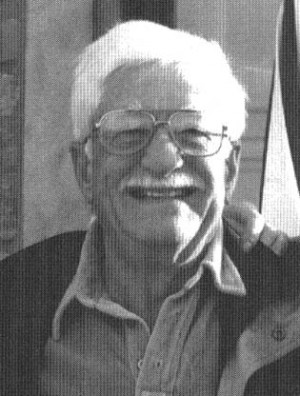
NATHANIEL BLUMBERG, 1922-2012

3

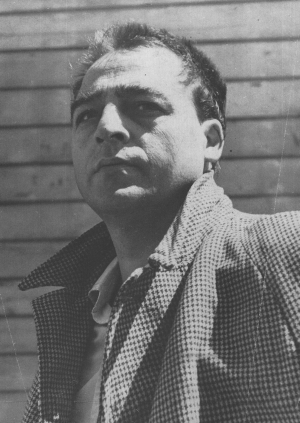
Nathan Blumberg, a great journalist who insisted on meeting deadlines, wrote his own obituary so that he would not miss his final deadline,  on Valentine’s Day, in 2012, when he died of complications from a stroke in Kalispell, Montana. Below is his obit,and his final byline, updated and corrected by Wilbur Wood, his former student and former city editor of the Guardian in the late 1960s.  Wood said that  Nathaniel wrote his own obit to insure that it would be complete and accurate. Nathaniel’s critique of mainstream journalism, and his  vision of independent journalism, were a major influence in the founding of the Guardian and the alternative press.

Nathaniel Blumberg was a World War II combat veteran, Rhodes Scholar, investigative reporter, national press critic, novelist, visiting professor and lecturer at major universities, dean and professor during his 35-year tenure at the University of Montana, and a man devoted to Montana for the last 55 years of his life.

He died February 14, 2012, at the age of 89 in Kalispell, Montana, where he had been hospitalized since a stroke February 8 in his home near Big Fork.     

Born April 8, 1922, in Denver, Colorado, Nathaniel Bernard Blumberg was the eighth and last child of Dr. Abraham Moses and Jeanette Blumberg. His father was a country doctor in Siebert, Colorado, for many years and had moved to Denver with his family to serve as superintendent of a tuberculosis sanitarium.

Nathaniel grew up in the west side of Denver with his four brothers and three sisters in a vibrant home filled with newspapers, magazines, books, music and long discussions of current events at the dinner table. He was graduated from East Denver High School after covering the city’s high school sports for the Rocky Mountain News while a senior.

His education at the University of Colorado was interrupted by the attack on Pearl Harbor and in August, 1942, he enlisted in the Army. After basic training, he was sent to the Army Specialized Training Program in Logan, Utah, and then to Camp Bowie in Texas. He was assigned to the forward observation team of Battery C of the newly formed 666th Field Artillery Battalion, a 155mm howitzer non-divisional unit trained to change mission on short notice. The Triple Sixes entered the war during one of the coldest winters of the century in Belgium against elite German SS troops in the Battle of the Bulge, the largest land battle in the history of the United States Army. The battalion then drove across the Roer river and the Rhine, through the heart of Germany and into occupation in Austria. He earned three battle stars and a Bronze Star in combat. 

Shortly after VE Day in 1945, he published the first history of a unit in World War II, “Charlie of 666,” which he had begun writing when the battalion was formed in 1944. With his poker winnings and combat pay, he published the 32-page booklet in a German print shop and distributed it to members of his battery to send home.

After the war he returned to the University of Colorado, was named editor of the student newspaper and received a bachelor of arts in journalism and a master of arts in history. He was awarded a Rhodes Scholarship for two years of study at Oxford University, where he earned a doctorate in modern history under the tutelage of the internationally known and controversial historian, A.J.P. Taylor. He was a starting guard for Oxford in the first Oxford-Cambridge basketball game ever played in 1949.

Nathaniel was an assistant professor of journalism at the University of Nebraska from 1950 to 1955, when in 1954 the University of Nebraska Press published his “One-Party Press?,” the first significant study of press performance in a presidential election. He went to Michigan State University for a year as an associate professor and in 1956 at the age of 34 he was brought to the Universty of Montana by President Carl McFarland to become dean and professor of the School of Journalism. He served under four presidents and two interim presidents during his 12 years as dean.

He established the annual Dean Stone Night in 1957 to honor the founder and first dean of the School of Journalism, to present awards to outstanding students and to bring a prominent journalist to lecture on the campus, a tradition still followed.

He formed the Department of Radio-Television in 1957 and brought in Phil Hess to put KUFM on air Jan. 31, 1965, six years before National Public Radio was begun in 1971. He has been called on air “the grandfather of Montana Public Radio, a public service of the University of Montana.”

With Mel Ruder of the Hungry Horse News, president of the Montana Newspaper Association, Nathaniel installed the Montana Newspaper Hall of Fame in the School of Journalism in 1958.

Also in 1958, he founded the Montana Journalism Review, the first journalism review in the United States, three years before the Columbia Journalism Review. It is still going.

Shortly after the inauguration of President Kennedy in 1961, the U.S. State Department asked him to serve as an “American Specialist” in Thailand for the summer. Three years later, under President Johnson, he again served in the same capacity for the summer in Trinidad, Guyana, Surinam and Jamaica.

He was elected vice president of the American Association of Schools and Departments of Journalism in 1962, declining to run for president because it meant he would be sponsoring a national journalism competition he and his faculty regarded as unethical. He was elected national chairman of the accreditation committee of the American Council on Education for Journalism in 1967 and national president of Kappa Tau Alpha, the society honoring scholarship in journalism, in 1969.

He was a member of the Rhodes Scholarship state selection committee from 1956 to 1987, including seven years as state secretary. He served six times on the western seven-state Rhodes regional selection committee.

Nathaniel was a staff writer for the Denver Post, associate editor of the Lincoln (Neb.) Star and assistant city editor of the Washington Post. He accepted invitations to serve as a visiting professor at Pennsylvania State University for fall quarter of 1964, Northwestern University’s Medill School of Journalism for the 1966-67 year and the Graduate School of Journalism at the University of California at Berkeley in 1970.

He married Lynne Stout in 1946 and they had three daughters, Janet Leslie, Jenifer Lyn and Josephine Laura. They divorced in 1970 but remained a close family. Their children and grandchildren gathered in Missoula on many occasions and spent long summers on the east shore of Flathead Lake.

Starting a new life in 1970, Nathan took the full name of Nathaniel on his birth certificate. In 1973, he married Barbara Farquhar, a college English professor and a widely published poet, who came to Missoula with her daughter, Nina. Barbara introduced him to Newfoundland dogs and they shared their 34 years together with seven Newfies (and a wolf with a touch of dog in her from the Helena hills). They enjoyed traveling together to beaches and fishing villages in the Canary Islands, Morocco, Spain, Portugal, Nova Scotia, and frequently to Florida, Mexico, Costa Rica, Orcas Island and the central Oregon coast. They balanced these adventures with quiet periods of writing in the cabin they designed and helped build near Big Fork.

In 1980 he established WoodFIREAshes Press to publish books which he hoped to write, edit and design without commercial publishers, editors or agents. He crafted “The Afternoon of March 30, A Contemporary Historical Novel” in l984, which centered on facts never reported by mainstream newspapers or on television about the attempted assassination of President Reagan by John W. Hinckley Jr. It received many warm reviews except for the Missoulian reviewer who didn’t care for the book although he termed the chapter on Hinckley’s trial “riveting.” Bud Guthrie wrote that he had “written a pretty bad novel but a forceful and persuasive book.” Doris Lessing, years before she was awarded the Nobel Prize for Literature, wrote Nathaniel, “I have read ‘The Afternoon of March 30’ with fascination. I really could not put it down, once I had started. If you ever come to London – and why should you, if you live in Montana, which I understand from friends of mine is one of the special places – then do let me know.”    
 
Nathaniel rarely spoke of his part in World War II until 19 survivors of his artillery battery gathered for a reunion in 1992 and urged him to write the uncensored story of their time at war. He returned to Belgium and Germany three times, including a three-day meeting with 32 German veterans of the Ardennes battle. In 2000 he published “Charlie of 666, a Memoir of World War II,” which included his 1945 history and his recollections on the war 55 years later. It was nominated for the 2002 Distinguished Book Award of the Society of Military History.

From 1991 to 1999 he published 20 issues of the “Treasure State Review, A Montana Periodical of Journalism and Justice.” Many of his graduates contributed to the 12-page newsletter. It served as his commentary on that decade of Montana history.

He wrote many articles for magazines, but he was most proud of his coverage of the “March on the Pentagon” in 1967 and his long essay, “Chicago and the Press,” based on his time on the streets and in the parks covering the protesters during the chaotic week of the 1968 Democratic National Convention. He was co-editor with Warren Brier of “A Century of Montana Journalism” and editor of the two-volume “Mansfield Lectures in International Relations.”

He was a demanding teacher with high standards who encouraged his students to live up to the highest principles of the journalism profession, to treat their native language with accuracy and affection, to always be skeptical but never cynical, and to remember that “sacred cows make the best hamburgers.” He was teacher, friend and counselor to hundreds of his students and took great pride in their professional success, their contributions to journalism in Montana and the nation, and their strong sense of public service in their chosen careers. They have written an extraordinary number of books. Scores of his graduates became lifelong friends.

Nathaniel was outspoken and had strong opinions. When he was honored by the Montana Newspaper Association along with Mel Ruder of the Hungry Horse News and Hal Stearns of the Harlowtown Times as the first three Master Editor/Publishers in 1991, he told a cheering audience of weekly journalists that “I am just as proud of the kind of people who don’t like me as I am of the kind of people who love me.” At the 25th anniversary of the Montana Constitutional Convention in Helena in 1997, his critique of the Montana daily press drew the longest standing ovation of the meeting.

His beloved Barbara Ann died of a stroke on the Autumnal Equinox, Sept. 21, 2007, a few days before her 73rd birthday. He also lost his youngest daughter, Josephine Loewen, in a tragic accident on Jan. 7, 2001, at the age of 46.

Survivors include his daughters, Janet Leslie Blumberg of Bothell, Wash., Jenifer Blumberg of Charlo, and stepdaughter Nina Gutierrez and husband Miguel of Ciudad Colon, Costa Rica; grandchildren Caleb Knedlik and wife Janine of Philadelphia, Pa., Asher Loeb of San Francisco, Ariel Diaz and husband Victor of Phoenix, Aram Loeb of Dayton, Ohio, Laramie and Kiam Loewen of Missoula, Adam Loewen of Portland, and Helen, Valerie and Sofia Gutierrez of Ciudad Colon, Costa Rica; numerous nieces and nephews and his first wife, Lynne Blumberg in Missoula.

He spent his last years in his cabin working on a book, including a chapter on “My 30 Years With John W. Hinckley, Jr.” in which he named Neil and Sharon Bush as co-conspirators in the attempt to assassinate President Reagan.

He requested no formal services and that his ashes be scattered with those of Barbara among the trees around their home near Big Fork.

On the Cheap Listings

0

On the Cheap listings are compiled by Soojin Chang. Submit items for the listings at listings@sfbg.com. For further information on how to submit items for the listings, see Picks.

WEDNESDAY 15

Radical Directing Lecture Series: Shari Frilot San Francisco Art Institute, 800 Chestnut, SF. (415) 771-7020, www.sfai.edu. 7:30 p.m., free. Shari Frilot is the curator of the Sundance Film Festival’s New Frontier Program. In this lecture, she will discuss the cinematic works that are being created at the crossroads where art, film, and new media technology meet.

THURSDAY 16

“Coloring Outside the Lines: Black Cartoonists As Social Commentators” panel discussion City College of San Francisco John Adams Campus, 1835 Hayes, SF. (415) 239-3580, www.ccsf.edu. 1:30 p.m.-3:30 p.m., free. Cartoonists are like modern jesters — they poke fun and offer criticism, but we can’t help but love them. Nowhere is this more apparent than in funnies that deal with race in our society. Join curator Kheven LaGrone and guests in a discussion of how black cartoonists have brought in a wide range of perspectives to racial issues and social prejudices.

“Project Censored with Mickey Huff” book release event Modern Times Bookstore Collective, 2919 24th St, SF. (415) 282-9246, www.mtbs.com. 7 p.m., free. Mainstream media seems to air more stories about cats running onto soccer pitches and M.I.A.’s middle finger than relevant news. Author Mickey Huff presents the top 25 underreported news stories you may have missed, and delves in to censorship issues in the relentless fight against Big Media.

“Beyond Cage-Free” panel discussion Port Commission Hearing Room, Ferry Building, 1 Embarcadero, SF. (415) 291-3276, www.cuesa.org. 6:30 p.m.-8:30 p.m., $5 suggested donation. The cage-free label promises eggs from unpenned hens, but can belie farm environments that are much more tragic than the happy picture on cartons would lead us to believe. Join the Center for Urban Education and Sustainable Agriculture in a panel discussion with Lexicon of Sustainability founder Douglas Gayeton, Ferry Plaza farmers, and local ranch owners.

San Francisco Childhood: Memories of a Great City Seen Through the Eyes of Its Children author discussion Green Arcade, 1680 Market, SF. (415) 431-6800, www.thegreenarcade.com. 7 p.m., free. This city has always been a hoot. Editor and author John van der Zee has put together writings dedicated to the magic of San Francisco by figures like Joe DiMaggio, Jerry Garcia, Margaret Cho, and Carol Channing. Come hear about how the city felt to them, and reflect on whether it’s the same for you today.

FRIDAY 17

SF Beer Olympics Impala, 501 Broadway, SF. (415) 982-5299, www.impalasf.com. 8:30 p.m., $10. To start the night, compete in a game of flip cup, beer pong, and relays with strangers, friends, and soon-to-be friends. Afterwards, Olympic champions and losers are welcome to meander upstairs for free admission to the Impala night club.

A night with photographer Robert Altman Wix Lounge, 3169 22nd St, SF. (415) 329-4609, www.wixloungesf.com. 7-10 p.m., free. Robert Altman not only survived the 1960’s but photographed some of the best parts of it. He will be talking about his work for Rolling Stone and his experiences photographing icons like Mick Jagger and Bill Graham. Come hang out with this all-around cool dude.

SATURDAY 18

“A Love Supreme” Harlem Renaissance art celebration First Unitarian Church of Oakland, 685 14th St, Oakl. (510) 893-6129, www.uuoakland.org. 6 p.m.-9 p.m., donations accepted. The Harlem Renaissance brought on an explosion of culture and redefined music, art, and literature in American history. Join local queer poets of color in a delicious potluck dinner and music-poetry session to celebrate how cultural richness and literary splendor have not stopped growing.

The Dark Wave book release party Fecal Face Dot Gallery, 2277 Mission, SF. (415) 500-2166, www.ffdg.net. 6-9 p.m., free. You may know Jay Howell from his zine Punks Git Cut! where he sketched out an assortment of naked people, dogs, and boners. Howell is now bringing his majestic artwork as the backdrop of his new book — a literary tale of a black metal band’s disenchanted lead singer.

SUNDAY 19

Art Beat Bazaar music, poetry, and pop-up indie-mart Starry Plough, 3101 Shattuck, Berk. (519) 841-2082, www.starryploughpub.com. 3-7 p.m., free. This is the first of the monthly community event Art Beat Foundation will be hosting as a way to showcase local musicians, spoken word artists, comedians, and visual artists. Let folk-rock band Upstairs Downstairs be the musical soundtrack to your trip to the quirky pop-up store, where you will find handmade treasures by artists like Cori Crooks and Brownie 510

Yiddish sing-along with Sharon Bernstein Jewish Community Center of San Francisco, 3200 California, SF. (415) 292-1200, www.jccsf.org. 5-6:30 p.m., free. This musical event is one part of KlezCalifornia’s Yiddish Culture Festival, a three-day event for anyone who is interested in Yiddish literature, interactions between musical cultures, klezmer music, and/or Eastern European Jewish history. Lyric books will be provided.

MONDAY 20

Open mic night with Les Gottesman and Bill Crossman Bird and Beckett Books and Records, 653 Chenery, SF. (415) 586-3733, www.birdbeckett.com. 7 p.m., free. Les Gottesman and Bill Crossman are poets, activists, and professors who are coming to share their latest and favorite works in this literary night. Gottesman’s words are said to be goosebump-invoking and Crossman’s smooth piano skills are not to be missed.

TUESDAY 21

“Laissez les bons temps rouler” Mardis Gras party Jazz Heritage Center, 1320 Fillmore, SF. (415) 346-5299, www.thefillmoredistrict.com. 5 p.m., $5 for wristbands. Make it a merry Fat Tuesday this year by going out to the Fillmore District for a neighborhood party of stilt walkers, jugglers, and face painters. 10 Fillmore Street venues will have live music and Mardi Gras-themed drinks and treats for under 10 dollars.

“Youthquake: High Style in the Swinging Sixties” American Decorative Arts forum and exhibit Koret Auditorium at de Young Museum, 50 Hagiwara Tea Garden, SF. (415) 750-3600, www.deyoung.famsf.org. 7 p.m., $15. Long hair and bellbottoms marked the fashion and music scene during the 1960’s, and a similarly defiant idiosyncrasy took over home décor. Join Mitchell Owens of Architectural Digest in a lecture on the bold and innovative interior style moves that were made during the exuberance of the youthquake.

“Feast of Words: A Literary Potluck” SOMArts Cultural Center, 934 Brannan, SF. (415) 552-1770, www.feastofwords.somarts.org. 7-9 p.m., $10 in advance; $5 with a potluck dish; $12 at door. Writers are often thought of as caffeine junkies who survive off of coffee and cigarettes. But hey, we eat just like any other Joe Schmo. At this literary event, foodies and writers unite to share (both food and literature) and learn about local cultures and flavors.

Making history: Joanne Griffith’s ‘Redefining Black Power’ project comes to the Bay

0

“Joanne [Griffith]’s work is centered on one theme: not to offer information as a point of journalistic fact, but to act as a conduit for debate and conversation, especially around issues relating to the African diaspora experience.” So writes Brian Shazor, director of the Pacifica Radio Archives, in the foreward to Griffith’s new book Redefining Black Power: Reflections on the State of Black America (City Lights Books, 206pp, $16.95). Griffith will be presenting her work, part of an interactive project to archive the state of African Americans in the United States in the Bay Area this week — starting tonight (Wed/8) at the Museum of the African Diaspora.

This shouldn’t have to be said, but in these times of reductive news media it does: Obama isn’t the only black voice that needs to be heard, during this Black History Month or any other month. Inspired by the archives of progressive African American voice kept by LA’s Pacifica Radio Archives, Griffith — a leading progressive voice herself, having reported on issues from around the African diaspora for the BBC and NPR — transcribes her interviews with leading thoughtmakers for the book, set up as a series of dialogues. Hear from political prisoner Ramona Africa why Obama is “the new crack,” journalist Linn Washington, Jr. on media matters, green jobs leader Van Jones on hybrid activism. The president is used as a theme of the book, but the interviews use him as a lens to look at issues that range far beyond the White House.

Griffith and the other minds behind Redefining Black Power want these interviews to serve as a jumping off point for other unheard voices. Head over to the book’s website and you’ll find directions on how to add your point of view to those of the better-known activists and professionals already immortalized in the Pacifica archives. You can go to one of Griffith’s upcoming readings (details below) for inspiration. Or better yet, read our recent email interview with her and then do that. 

SFBG: Explain where the interviews in the book came from. How did you become acquainted with the Pacifica Radio Archives. Why are they important for people to hear?

JG: The idea for the Redefining Black Power Project, of which the book is part, was born out of the historic audio held in the Pacifica Radio Archives; a national treasure trove of material charting America’s history from a progressive perspective dating back to 1949. Within the collection are key recordings from the civil rights, black power and black freedom movement, including Rosa Parks, Shirley Chisholm, Jesse Jackson, Malcolm X, James Baldwin, Lorraine Hansberry, Dr. Martin Luther King Jr., Bobby Seale, Elaine Brown, and so many others. But it was one recording of Fannie Lou Hamer addressing the 1964 Democratic National Convention that sparked the idea for Redefining Black Power. The director of the Pacifica Radio Archives, Brian DeShazor, heard the tape and wanted to find a permanent way to preserve and share the voices held in the archives with a wider audience, and what better way than through the written word. Brian approached City Lights Books with the idea, and this book is the result, drawing on the voices of history to link us to the election of Barack Obama, one of the most significant moments in the social and political history of the United States. Through this project, we hope to preserve the voices, opinions and perspectives of African-Americans in this so called ‘Age of Obama’ for historians to digest and explore in years to come. 

How did I get involved? As a complete audio nut, I always make a point of visiting local radio stations wherever I travel in the world. Back in 2007, I was in Los Angeles, called KPFK to arrange a visit and was introduced to the Pacifica Radio Archives. Speaking with Brian DeShazor, we came up with an idea to share the historic collection with a UK audience and I’ve been doing this every Sunday evening on BBC Radio 5 Live in the UK for over four years. Because of this work and the extensive list of people I have interviewed over the years, Brian invited me to do the interviews for the Redefining Black Power project. Through this book, we delve into the role of the activist from different perspectives; the legal system, the media, religion, the economy, green politics and emotional justice. All were recorded between September 2009 and August 2011. To be clear though, this book is not an anthology of black leaders speaking on the Obama presidency. This is simply a taster of opinions on the subject, but everyone is encouraged to participate with their thoughts and opinions at www.redefiningblackpower.com and come out to the many events we’re hosting throughout February, including here in the Bay Area at the Museum of African Diaspora from 7 p.m. on Wednesday Feb 8 and at Marcus Books in Oakland with guest panelists Hodari Davis from Youth Speaks and social justice activist Dereca Blackmon on Thursday Feb 9 from 6.30 p.m.

SFBG: Has there been an interview you’ve conducted in which your subject’s answers have deeply surprised you? 

JG: Every interview had its own surprise; from Ramona Africa describing President Obama as ‘the new crack’ and why she refused to vote, to economist Dr. Julianne Malveaux revealing the financially precarious situations many African Americans find themselves in; from high foreclosure rates and high unemployment to the low levels of accumulated wealth for black women. Very sobering statistics. Michelle Alexander, too, the author of The New Jim Crow: Mass Incarceration in the Age of Colorblindness really shocked me when she said that more African American men are currently incarcerated than were enslaved in 1850. 

However, it was Dr Vincent Harding, the man behind Dr. Martin Luther King Jr’s “Beyond Vietnam” speech that surprised me the most. A true veteran of the civil rights movement, he made the point that the election of President Obama was never the goal of the movement; instead he prefers to call the work “the movement for the expansion and deepening of democracy in America.” Put this way, it made me realize more than ever, that the work we do today is not in isolation, but part of a wider movement, stretching back all the way to slavery. And the work isn’t over. 

SFBG: Your introduction ends with a quote from Kanye and Jay-Z’s Watch the Throne album. What role, if any, does hip-hop play in the book?

JG: Hip-hop doesn’t play a role in this book, other than this quote, but it will feature heavily in the next volume of Redefining Black Power which will focus on the reflections of black entertainers, writers, poets and performers on this moment in US history.  

SFBG: What would be the best way the United States could spend Black History Month?

JG: Black history — regardless of whether it is the United States or the UK where I moved from or anywhere else — should be acknowledged daily; this is the only way for us to keep memories alive and never forget where transformative change, like the election of President Obama, comes from. 

Listening to recordings like those held in the Pacifica Radio Archives with our youth would be a great place to start. I spent a couple of days with a group of students in Detroit, sharing the archive material and getting them to discuss their thoughts on the recordings; Audre Laude, James Baldwin, Muhammad Ali, Nelson Mandela, and others. Every one of them said they wished they had heard these voices before. It gave them a context to their own lives that didn’t exist previously, while encouraging them to never give up; too many people have suffered for them to let less than favorable circumstances stop them now. 

SFBG: Who should read this book? How should it be used?

JG: Use it as a conversation starter to discuss issues in your own community. Parents, use it as a way to engage your children in history. Students, use it as a resource for papers on race and the Obama presidency. Most importantly, everyone, share your thoughts at www.redefiningblackpower.com. This book is not the end of the project; we’re only getting started. 

Joanne Griffith’s Redefining Black Power author readings:

Wed/8 7 p.m., free with $10 museum admission

Museum of the African Diaspora

685 Mission, SF

(415) 358-7252

www.moadsf.org


Thu/9 6:30-8 p.m., free

Marcus Books

3900 Martin Luther King Jr. Way, Oakl.

(510) 652-3244

www.marcusbookstores.com


Hot sexy events: February 1-7

0

(Insert “saddle friction” joke here.) At the risk of sounding like an episode of Portlandia, we are stoked for the Bike Smut Film Festival, which rides in for its second SF showing in two weeks – the first took place at Bayview’s Cyclecide Swearhouse last weekend – on Fri/3. 

Bike smut: people having sex on bikes, sex with bikes, sex with bikes watching – surely there will be bike couplings in there somewhere (a handlebar penetrating a spoke, well greased). This incarnation of the fresh-from-touring-Europe show has an Oregon Trail theme. Yes, we know you loved that game in elementary school. You know who else did? Everyone.

Anyways, the whole shebang rolls into the art collective OffCenter on Divisadero Street this Friday, led by one-time Lusty Lady dancer and full-time bike slut Poppy Cox and that saint (as ordained by the Church of Bicycle Genius) Reverend Phil. It sounds like it’s gonna be a good time. 

Bike Smut Film Festival

Fri/3 7-10 p.m., $7

TheOffCenter

848 Divisadero, SF

www.bikesmut.com


“From the Collection of Larry Townsend” ongoing art exhibit

I was recently at the premiere of Priscilla Bertucci’s [SSEX BBOX] global sexuality documentary at the Center for Sex and Culture, but I kept looking at the walls. Not because the film wasn’t rad (it was!), but because of all the amazing comic-style drawings of Roman orgies, space orgies, and orgy-orgies currently occupying the sex-positive community center’s walls. I have Larry Townsend to thank for this, and you can too if you head down to the comfy library space of the Center for Sex and Culture, which is adding Townsend’s treasures for a spell to its perma-exhibits of antique vibrators and shelves of queer and sex-positive literature.

Through March 30

Center for Sex and Culture

1349 Mission, SF

www.sexandculture.org


Hard French Winter Ball

Few nights of our lives can match the high-pitched hormonal rush that was high school prom. Outfit agony, whose-your-date torture, the shoes, the corsage – foreplay from hell, really. How could you have known that years later you’d be trying to recreate that same special freak-out with a slutty queer soul party on the Santa Cruz Beach Boardwalk? El Rio’s favorite afternoon dance party takes to the road for the second year in a row this weekend, with Juanita More and the House of Salad drag beauties in tow (check the candidates for the ball’s king and queen, adorable). Will the town of Santa Cruz be the same after tulle-and-tux-encased queers occupy the beachfront? Reserve your hotel room now and pack protection because: no.

Sat/4 7 p.m., $20-$25

Cocoanut Grove

400 Beach, Santa Cruz

hardfrenchwinterball.eventbrite.com


“Bros Before Hos: Masculinity and Its Discontents” film festival

C’mon men, look at yourselves. No really – though masculinity studies is often the subject of yucks and early 1990s primal scream mock-ups, men really don’t get the magnifying glass treatment when it comes to their sexuality. Not so at this film series orchestrated by YBCA – from the story of truck-lifting strong man Stanley “Stanless Steel” Pleskun to a collection of ’20s-’70s stag films, the meat of menfolk (c’mon, not just that part) will be offered up as prime conversation-starters. Today, a look at boundary-pushing filmmaker Bob Mizer of the Athletic Model Guild.

Festival runs through Feb. 26, $8/screening

Sat/4, 7:30 p.m.: The Golden Age of the American Male: Films From Bob Mizer’s Legendary Athletic Model Guild 

Yerba Buena Center for the Arts

701 Mission, SF

(415) 978-2787

www.ybca.org


Good Vibes’ “Ask Our Docs: Intro to Anal Play”

It’s okay not to know about anal sex, Good Vibrations says. So okay, in fact, that the sex toy company is offering this completely free primer on how to get primed, taught by Charles Glickman, that man-about-sex-education-classes-in-town.

Tue/7 7-8 p.m., free

Good Vibrations

3219 Lakeshore, Oakl.

(510) 788-2389

www.goodvibes.com


Film Listings

0

Film listings are edited by Cheryl Eddy. Reviewers are Kimberly Chun, Max Goldberg, Dennis Harvey, Lynn Rapoport, and Matt Sussman. For rep house showtimes, see Rep Clock. Due to the Martin Luther King, Jr. Day holiday, theater information was incomplete at presstime.

OPENING

Addiction Incorporated Charles Evans Jr.’s documentary revisits the history of the tobacco industry’s deceptions, machinations, and other nefarious feats of profit-shielding through the story of Victor DeNoble, an industry scientist turned whistle-blower who was hired by Philip Morris in 1980 to help create a “safer” cigarette — i.e., one that didn’t contain nicotine. The material upsides of developing a product not then known to cause 138,000 strokes and heart attacks a year were clear enough — as one scientist puts it, “dead people don’t buy cigarettes.” But when DeNoble and his colleagues, in the course of their research, developed definitive proof that nicotine has “reinforcing” — a.k.a. “addictive” — properties, the company’s executives and legal counsel recognized a risk to the bottom line that far outweighed the benefits. The lab was shut down, DeNoble lost his job, and the literature generated by the project was stifled. These and subsequent events are related by a long, winding parade of talking heads broken up by archival footage; reenactments; a series of animations featuring hybridized rat-human addicts floating on a river of dopamine; and — as we enter the mid-’90s and the tobacco companies become a target of the FDA, the media, Congress, and a mammoth alliance of 51 law firms — footage from press conferences and hearings before the House Subcommittee on Health and the Environment. The film’s narrative has some gaping holes, but given recent legal setbacks to the FDA’s attempts to regulate the industry, it’s a good reminder that the tobacco behemoth can only be corralled through the energetic efforts of a conscientious, vigilant media and political bodies courageous and committed enough to use and hone the regulating tools at their disposal. (1:42) (Rapoport)

*Coriolanus For his film directing debut, Ralph Fiennes has chosen some pretty strong material: a military drama that is among Shakespeare’s least popular works, not that adapting the Bard to the screen has ever been easy. (Look how many times Kenneth Branagh, an even more fabled Shakespearean Brit on stage than Ralph, has managed to fumble that task.) The titular war hero, raised to glory in battle and little else, is undone by political backstabbers and his own contempt for the “common people” when appointed to a governmental role requiring some diplomatic finesse. This turn of events puts him right back in the role he was born for: that of ruthless, furious avenger, no matter that now he aims to conquer the Rome he’d hitherto pledged to defend. The setting of a modern city in crisis (threadbare protesting masses vs. oppressive police state) works just fine, Elizabethan language and all, as does Fiennes’ choice of a gritty contemporary action feel (using cinematographer Barry Ackroyd of 2006’s United 93 and 2008’s The Hurt Locker). He’s got a strong supporting cast — particularly Vanessa Redgrave as Coriolanus’ hawkish mother Volumnia — and an excellent lead in one Ralph Fiennes, who here becomes so warped by bloodthirst he seems to mutate into Lord Voldemort before our eyes, without need of any prosthetics. His crazy eyes under a razored bald pate are a special effect quite alarmingly inhuman enough. (2:03) (Harvey)

Extremely Loud and Incredibly Close Director Stephen Daldry is no stranger to guiding actors to Oscars; his previous two films, 2008’s The Reader and 2002’s The Hours, both earned Best Actress statuettes for their stars. So it’s no surprise that Sandra Bullock’s performance is the best thing about this big-screen take on Jonathan Safran Foer’s 2005 novel, which is otherwise hamstrung by twee, melodramatic elements that (presumably) translated poorly from page to screen. One year after 9/11, a Manhattan mother (Bullock) and her nine-year-old son Oskar (newcomer Thomas Horn, a youth Jeopardy! champ) are, unsurprisingly, still mourning their beloved husband and father (Tom Hanks), who was killed on “the worst day.” But therapy be damned — Oskar takes to the streets, knocking on the doors of strangers, searching for the lock that will fit a mysterious key his dad left behind. Carrying a tambourine. Later befriending an elderly man (Max von Sydow) whose true identity is immediately obvious, despite the fact that he writes pithy notes instead of speaking. In its attempts to explore grief through the eyes of a borderline-autistic kid (“tests were inconclusive,” according to Oskar), Extremely Loud and Incredibly Close is so forced-quirky it makes the works of Wes Anderson look like minimalist manifestos; that it bounces its maudlin, cliché-baiting plot off the biggest tragedy in recent American history is borderline offensive. Actually offensive, however, is the fact that Daldry — who also knows from young thespians, having helmed 2000’s Billy Elliot — positions the green Horn (ahem) in such a complex role. The character of Oskar is, as written, nauseatingly precocious; adding shrill and stridently unsympathetic to the mix renders the entire shebang nigh-unwatchable, despite the best efforts of supporting players like Viola Davis and Jeffrey Wright. Congrats, Kodi Smit-McPhee, child actor who single-handedly dismantled 2009’s The Road — you now have some company at the kid’s table in the literary-adaptation hall of shame. (2:09) (Eddy)

Fullmetal Alchemist: The Sacred Star of Milos There’s probably no reason to venture out to see Fullmetal Alchemist: The Sacred Star of Milos unless you’re already a fan of the Fullmetal Alchemist manga (and/or its many offshoots, including an anime series that’s aired stateside on the Cartoon Network). That’s not to say Milos is a crappy movie; it just depends an awful lot on foreknowledge about its mythical world and main characters, a pair of young brothers named Ed and Al. Their mastery of “alchemy” (a.k.a. Harry Potter-style zapping skills) has earned them government status but also cost them various body parts — Al, whose voice suggests he’s a pre-teen, exists only as a robot-like metal suit attached to the boy’s human soul. Their adventures in steampunk mischief lead them to a country called Milos that’s been repressed by the world’s superpowers; there, they meet a young girl who’s determined to restore her homeland to grandeur using what’s alternately called “the star of fresh blood,” “the stone of immortality,” or “the philosopher’s stone” to either “open the doorway of truth” or “use the alchemy of the holy land.” Or something. Mumbo-jumbo-y plot points aside, Milos is more or less a fast-paced triumph-of-the-underdog story, with pants-wearing giant wolves and other magic-with-a-k flourishes. Fun if you’re into that kind of thing. (1:50) SFFS New People Cinema. (Eddy)

Haywire Mixed martial arts star Gina Carano ascends to action hero status in genre chameleon Steven Soderbergh’s latest. (1:45)

Pina See “In the Realms of the Unreal.” (1:43)

Red Tails History (and the highly-acclaimed 1995 TV film, The Tuskeegee Airmen) tells us that during World War II, African American fighter pilots skillfully dispatched Nazi foes — while battling discrimination within the U.S. military every step of the way. From this inspiring true tale springs Red Tails, an overly earnest and awkwardly broad film which matches lavish special effects (thank you, producer George Lucas) with a flawed script stuffed with trite dialogue (thank you, “story by” George Lucas?), an overabundance of characters, and too many subplots (including a romance and a detour into Hogan’s Heroes). The movie would’ve been much stronger had it streamlined to focus on the friendship between the brash Lightning (David Oyelowo) and the not-as-perfect-as-he-seems Easy (Nate Parker); the head-butting between these two supplies the film’s only genuine moments of tension. Otherwise, there’s not much depth, just surface-to-air heroics. (2:00) (Eddy)

A Separation See “Conflict Revolution.” (2:03)

Underworld Awakening Vampires and werewolves, still goin’ at it. (1:30)

*The Viral Factor Dreamy Taiwanese megastar Jay Chou — last seen playing second banana (as if) to Seth Rogen in 2011’s The Green Hornet — reclaims center stage in Hong Kong director Dante Lam’s latest blockbuster action flick. Chou plays Jon, a supercop tasked with protecting a scientist in possession of a new and deadly smallpox strain, highly sought-after by villains who lust after its possibilities as a chemical weapon. Unbeknownst to Jon, his long-lost older brother, Yeung (dreamy HK megastar Nicholas Tse) is up to his neck on the wrong side of the law; when clean-cut bro meets hipster-mullet-and-tattoo’d bro, screeching car chases and epic fist- and gunfights soon melt away in favor of begrudging family bonding. That doesn’t mean all of the other bad guys (corrupt cops, Jon’s evil ex-partner, an arms dealer, etc.) go soft, of course — The Viral Factor very seldom stops for a breath during its chockablock two hours, what with all the bullets, grenades, and rocket launchers busting up half the globe (Kuala Lumpur gets the worst of it). The fact that Jon has one of those only-in-the-movies ticking-clock head injuries (two weeks to live! Better make it count!) ups The Viral Factor‘s already sky-high stakes; big-name salaries aside, it’s pretty clear most of the film’s $200 million budget went into special effects of the go-boom variety. Can’t argue with that. (2:00) Metreon. (Eddy)

ONGOING

*The Adventures of Tintin Producer Peter Jackson and director Steven Spielberg join forces to adapt the work of Belgian comic creator Hergé, using performance-capture 3D animation (and featuring that new technology’s most prominent performer, Andy Serkis, in a key role). Hergé wrote over 20 volumes following the globe-trotting exploits of intrepid young reporter Tintin (Jamie Bell) and his canine companion, Snowy; The Adventures of Tintin draws from a trio of books dating from the early 1940s, tweaking the tales a bit but retaining the series’ ebullient energy and sharp humor. After he impulsively buys a model ship, Tintin is sucked into a mystery involving a long-lost pirate treasure sought by the sinister Sakharine (Daniel Craig) and, eventually, newfound Tintin ally Captain Haddock (Serkis). Fan favorites Thompson and Thomson (Simon Pegg and Nick Frost — frequent compadre Edgar Wright co-wrote the script) and a certain “Milanese Nightingale” make appearances in a story that careens between exotic locales and high-seas battles, and is packed with epic chase scenes that would leave Indiana Jones breathless. And in case you were worried, Tintin boasts the least creepy, least “uncanny valley” performance-capture animation I’ve seen to date. (1:47) (Eddy)

*The Artist With the charisma-oozing agility of Douglas Fairbanks swashbuckling his way past opponents and the supreme confidence of Rudolph Valentino leaning, mid-swoon, into a maiden, French director-writer Michel Hazanavicius hits a sweet spot, or beauty mark of sorts, with his radiant new film The Artist. In a feat worthy of Fairbanks or Errol Flynn, Hazanavicius juggles a marvelously layered love story between a man and a woman, tensions between the silents and the talkies, and a movie buff’s appreciation of the power of film — embodied in particular by early Hollywood’s union of European artistry and American commerce. Dashing silent film star George Valentin (Jean Dujardin, who channels Fairbanks, Flynn, and William Powell — and won this year’s Cannes best actor prize) is at the height of his career, adorable Jack Russell by his side, until the talkies threaten to relegate him to yesterday’s news. The talent nurtured in the thick of the studio system yearns for real power, telling the newspapers, “I’m not a puppet anymore — I’m an artist,” and finances and directs his own melodrama, while his youthful protégé Peppy Miller (Bérénice Béjo) becomes a yakky flapper age’s new It Girl. Both a crowd-pleasing entertainment and a loving précis on early film history, The Artist never checks its brains at the door, remaining self-aware of its own conceit and its forebears, yet unashamed to touch the audience, without an ounce of cynicism. (1:40) (Chun)

*Battle for Brooklyn Posed as neither a left nor a right issue (though George Will does drift into view at one improbable moment), Michael Galinsky’s powerful documentary does the exhaustive, long-haul work of charting the fight between residents and business owners in Brooklyn’s Prospect Heights as they oppose the condemnation of their property — oh-so-inconveniently in the way of the proposed Atlantic Yards, a mammoth Frank Gehry-designed development involving a basketball arena for the New Jersey Nets and more than a dozen skyscrapers. The scrappy residents and activists, led in part by graphic designer Daniel Goldstein, face seemingly unbeatable forces: developer Forest City Ratner, which looks to Eminent Domain to seize a community’s land, whether it likes it or not; a complicit and corrupt state and city government; and other members of a diverse, divided community who are clamoring for the jobs that Ratner’s PR machine promises. Galinsky imparts the impact of the project — and its devastating effects on the neighborhood, despite alternate proposals and the recent real estate bust — over the course of eight years, with hundreds of hours of footage, time-lapse images, and a fortunate focus on one every-guy hero: Goldstein, who loses a fiancé and finds love at the ramparts, while his home is shorn away, all around him. Along the way, the viewer gets an education on the infuriating ways that these sorts of boondoggles get pushed through all opposition — the corollaries between this struggle and, say, the building of the 49ers stadium in Santa Clara are there for the viewer to draw. (1:33) Roxie. (Chun)

Beauty and the Beast 3D (1:24)

Carnage Nancy (Kate Winslet) and Alan (Christoph Waltz) have arrived in the apartment of Penelope (Jodie Foster) and Michael (John C. Reilly) to discuss proper follow-up to a playground incident in which one of their children went ballistic on another. But this grownup discussion about conduct between children quickly degenerates into a four-way living room sandbox melee, as the couples reveal snobbish disdain toward one another’s presumed values and the cracks in each marriage are duly bared. Roman Polanski’s unnecessary screen translation of Yasmina Reza’s play remains awkwardly rooted to the stage, where its contrivances would have seemed less obvious, or at least apt for the medium. There’s some fun to be had watching these actors play variously self-involved, accusatory Manhattanites who enact a very lite Who’s Afraid of Virginia Woolf? amid way too much single-malt Scotch ingestion. But the text gets crudely farcical after a while, and its critiques of the characters’ shallow materialism, bad parenting, knee-jerk liberal empathy, privileged class indifference, etc. would resonate more if those faults weren’t so cartoonishly drawn. In the end, Carnage‘s high-profile talent obliterates rather than illuminates the material — it’s like aiming a bazooka at a napkin. (1:20) (Harvey)

Contraband A relative gem among the dross of January film releases, Contraband works best when it doesn’t take itself too seriously, and flounders when it does. Directed by Baltasar Kormákur, the man behind much of Iceland’s popular filmography (2006’s Jar City, 2002’s The Sea, 2000’s 101 Reykjavik), this no-frills genre picture stars Mark Wahlberg as Chris Farraday, an ex-smuggler-turned-family-man who must give the life of crime another go-round when his wife (Kate Beckinsale) and brother-in-law (Caleb Landry Jones) find themselves in thrall to a nasty, drug-addicted criminal (an especially methy-looking Giovanni Ribisi). If you’ve seen any of these One Last Heist movies, you won’t be surprised that Chris’ operation goes completely awry — in Panama, on a cargo captained by J.K. Simmons, no less. Ribisi is as simpering and gleefully evil a caricature as they come, and as Chris’ best friend, brooding Ben Foster’s unexpected about-face in the film’s last third is pretty watchable. I’m not exactly saying you should go and see it, but I’m not stopping you, either. (1:49) (Ryan Lattanzio)

A Dangerous Method Cool and chatty (unsurprisingly, given its subject matter and the fact that it’s based on a play and a novel), David Cronenberg’s latest begins in 1904 Zurich as a shrieking patient (Keira Knightley) is escorted into the care of psychiatrist Carl Jung (Michael Fassbender). Dr. Jung, an admirer of Sigmund Freud, tests the “talking cure” on the woman, who turns out to be the fiercely intelligent and conveniently beautiful Sabina Spielrein. An attraction, both intellectual and sexual, soon develops, no matter that Jung is Sabina’s doctor, or that he happens to be married to a prim wife whose family wealth keeps him in boats and lake houses. Meanwhile, Jung and Freud (an excellent Viggo Mortensen) begin corresponding, eventually meeting and forming a friendship that’s tested first when Sabina comes between them, and later when Jung expresses a growing interest in fringe pursuits like parapsychology. The scenes between Freud and Jung are A Dangerous Method‘s most intriguing — save those brief few involving Vincent Cassel as a doctor-turned-patient who advises Jung to “never repress anything” — but the film is mostly concerned with Jung’s various Sabina-related dramas. Pity that this is a tightly-wound Fassbender’s least dynamic performance of the year, and that Knightley, way over the top in Sabina’s hysterical scenes, telegraphs “casting mistake” from the get-go. (1:39) (Eddy)

The Darkest Hour (1:29)

*The Descendants Like all of Alexander Payne’s films save 1996 debut Citizen Ruth, The Descendants is an adaptation, this time from Kaui Hart Hemmings’ excellent 2007 novel. Matt King (George Clooney) is a Honolulu lawyer burdened by various things, mostly a) being a haole (i.e. white) person nonetheless descended from Hawaiian royalty, rich in real estate most natives figure his kind stole from them; and b) being father to two children by a wife who’s been in a coma since a boating accident three weeks ago. Already having a hard time transitioning from workaholic to hands-on dad, Matt soon finds out this new role is permanent, like it or not — spouse Elizabeth (Patricia Hastie, just briefly seen animate) will not wake up. The Descendants covers the few days in which Matt has to share this news with Elizabeth’s loved ones, mostly notably Shailene Woodley and Amara Miller as disparately rebellious teen and 10-year-old daughters. Plus there’s the unpleasant discovery that the glam, sporty, demanding wife he’d increasingly seemed “not enough” for had indeed been looking elsewhere. When has George Clooney suggested insecurity enough to play a man afraid he’s too small in character for a larger-than-life spouse? But dressed here in oversized shorts and Hawaiian shirts, the usually suave performer looks shrunken and paunchy; his hooded eyes convey the stung joke’s-on-me viewpoint of someone who figures acknowledging depression would be an undeserved indulgence. Payne’s film can’t translate all the book’s rueful hilarity, fit in much marital backstory, or quite get across the evolving weirdness of Miller’s Scottie — though the young actors are all fine — but the film’s reined-in observations of odd yet relatable adult and family lives are all the more satisfying for lack of grandiose ambition. (1:55) (Harvey)

The Devil Inside (1:27)

*Drive Such a lovely way to Drive, drunk on the sensual depths of a lush, saturated jewel tone palette and a dreamlike, almost luxurious pacing that gives off the steamy hothouse pop romanticism of ’80s-era Michael Mann and David Lynch — with the bracing, impactful flecks of threat and ultraviolence that might accompany a car chase, a moody noir, or both, as filtered through a first-wave music video. Drive comes dressed in the klassic komforts — from the Steve McQueen-esque stances and perfectly cut jackets of Ryan Gosling as the Driver Who Shall Remain Nameless to the foreboding lingering in the shadows and the wittily static, statuesque strippers that decorate the background. Gosling’s Driver is in line with Mann’s other upstanding working men who hew to an old-school moral code and are excellent at what they do, regardless of what side of the law they’re working: he likes to keep it clear and simple — his services as a wheelman boil down to five minutes, in and out — but matters get messy when he falls for sweet-faced neighbor Irene (Carey Mulligan), who lives down the hall with her small son, and her ex-con husband (Oscar Isaac) is dragged back into the game. Populated by pungent side players like Albert Brooks, Bryan Cranston, Ron Perlman, and Christina Hendricks, and scattered with readily embeddable moments like a life-changing elevator kiss that goes bloodily wrong-right, Drive turns into a real coming-out affair for both Danish director Nicolas Winding Refn (2008’s Bronson), who rises above any crisis of influence or confluence of genre to pick up the po-mo baton that Lynch left behind, and 2011’s MVP Ryan Gosling, who gets to flex his leading-man muscles in a truly cinematic role, an anti-hero and under-the-hood psychopath looking for the real hero within. (1:40) Roxie. (Chun)

*Everyday Sunshine: The Story of Fishbone This doc offers a lively, revealing look at SoCal ska-punk rockers Fishbone, a band that formed circa 1979 in a San Fernando Valley junior high newly filled with bussed-in South Central kids. In its heyday, Fishbone enjoyed cult success with hits like “Party at Ground Zero” and the tune that gives the film its title; Everyday Sunshine speaks to Fishbone’s broad appeal, as famous faces chime in to reminisce (and longtime fan Laurence Fishburne narrates), but it also illuminates some of the reasons its members never became megastars. Codirectors Chris Metzler (a San Francisco resident best-known for 2004’s Plagues and Pleasures on the Salton Sea) and Lev Anderson spent months on the road with the band, capturing the infectious energy of its live shows in addition to behind-the-scenes tension. Past members add their voices, but the main protagonists are bassist-vocalist Norwood Fisher and lead vocalist-saxophone player Angelo Moore. Their intertwining stories offer a poignant portrait of creative soulmates who’ve weathered many storms (personality conflicts, legal and money troubles, an industry that didn’t know how to categorize them) without once giving up on their music. In addition to its compelling story, the film’s quirkier stylistic choices, including animation, lift Everyday Sunshine above the crowded field of traditional music docs. (1:47) Roxie. (Eddy)

*The Girl With the Dragon Tattoo The meeting of Stieg Larsson’s first “Millennium” book and David Fincher promised fireworks, as he’s a director who can be equally vivid and exacting with just the elements key to the series: procedural detail, obsession, violence, tweaked genre conventions, mind games, haunted protagonists, and expansive story arcs. But perhaps because this possible franchise launch had to be rushed into production to ride the Larsson wave, what should have been a terrific matchup turns out to be just a good one — superior in some stylistic departments (notably Trent Reznor and Atticus Ross’ pulsing score), but overall neither an improvement nor a disappointment in comparison to the uninspired but effective 2009 Swedish film version. Daniel Craig plays Mikael Blomkvist, the muckraking Stockholm journalist whose public disgrace after a failed expose of a suspect corporate tycoon makes him the perfect candidate for an unexpected assignment: staying sequestered in the wealthy, warring Vanger clan’s island home to secretly investigate a teenage girl’s disappearance and presumed murder 40 years ago. His testy helpmate is the singular Lisbeth Salander (Rooney Mara), antisocial hacker, researcher, and ex-mental patient par excellence. Nearly three hours long, the compressed, slightly altered (get over it) storyline nonetheless feels rushed at times; Fincher manages the rare feat of making mostly internet research exciting in filmic terms, yet oddly the book’s more shocking episodes of sex and/or mayhem don’t have the memorable impact one might expect from him. The leads are fine, as is the big support cast of recognizable faces (Christopher Plummer, Stellan Skarsgård, Robin Wright, etc.) But the knockout suspense, atmosphere, and urgency one hoped for isn’t present in this intelligent, not entirely satisfying treatment. On the other hand, maybe those who’ve already read the books and seen the prior films have already had so much exposure to this material that a revelatory experience is no longer possible. (2:38) (Harvey)

Le Havre Aki Kaurismäki’s second French-language film (following 1992’s La Vie de Boheme) offers commentary on modern immigration issues wrapped in the gauze of a feel good fairy tale and cozy French provincialism a la Marcel Pagnol. Worried about the health of his hospitalized wife (Kaurismäki regular Kati Outinen), veteran layabout and sometime shoe shiner Marcel (Andre Wilms) gets some welcome distraction in coming to the aid of Idrissa (Blondin Miguel), a young African illegally trying to make way to his mother in London while eluding the gendarmes. Marcel’s whole neighborhood of port-town busybodies and industrious émigrés eventually join in the cause, turning Le Havre into a sort of old-folks caper comedy with an incongruously sunny take on a rising European multiculturalism in which there are no real racist xenophobes, just grumps deserving comeuppance. Incongruous because Kaurismäki is, of course, the king of sardonically funny Finnish miserabilism — and while it’s charmed many on the festival circuit, this combination of his usual poker-faced style and feel-good storytelling formula may strike others as an oil-and-water mismatch. (1:43) (Harvey)

*Hipsters Though it might misleadingly draw a horde of Hipster Bingo look-alikes, the title of this goofy, passionate, generous-hearted Russian musical is fully earned. Director Valery Todorovsky’s let’s-put-on-a-show gumption, twinkly earnestness, and clownish costumes are likely drive today’s too-cool-for-schoolies out the theater, but if they stick around, the razzle-dazzle charm and cinematic flair that the filmmaker applies to this adaptation of Yuri Korotkov’s book, Boogie Bones, should win them over. The dateline is Moscow, 1955, and the scene is a West Side Story-style showdown between the hard-partying, rebellious boogie-woogie stilyagi, or hipsters, in love with American jazz and culture, and the terribly serious, grayed-out Communist hardliners who equate flashy fashion with individualistic decadence. Yet one comrade, Mels (Anton Shagin), finds himself crossing party lines after an encounter with fetching “Good Time” Polly (Oksana Akinshina of 2002’s Lilya 4-Ever) and slowly begins to assemble the look, the moves, the music, and the bad reputation that come with life as a hipster. A few of the film’s plot turns may be a bit tough to swallow, and some details, such as the music, don’t adhere strictly to era, but the affection Todorovsky feels for his characters, their plight, and musicals (particularly Baz Luhrmann’s) gleams through, especially when the director tracks alongside his freedom-loving protagonists as they occupy the streets with their subcultural kin of yesterday and today. (2:05) Smith Rafael. (Chun)

The Iron Lady Curiously like Clint Eastwood’s 2011 J. Edgar, this biopic from director Phyllida Lloyd and scenarist Abi Morgan takes on a political life of length, breadth and controversy — yet it mostly skims over the politics in favor of a generally admiring take on a famous narrow-minded megalomaniac’s “gumption” as an underdog who drove herself to the top. Looking back on her career from a senile old age spent in the illusory company of dead spouse Denis (Jim Broadbent), Meryl Streep’s ex-British Prime Minister Margaret Thatcher steamrolls past hurdles of class and gender while ironically re-enforcing the fustiest Tory values. She’s essentially a spluttering Lord in skirts, absolutist in her belief that money and power rule because they ought to, and any protesting rabble don’t represent the “real England.” That’s a mindset that might well have been explored more fruitfully via less flatly literal-minded portraiture, though Lloyd does make a few late, lame efforts at sub-Ken Russell hallucinatory style. Likely to satisfy no one — anywhere on the ideological scale — seriously interested in the motivations and consequences of a major political life, this skin-deep Lady will mostly appeal to those who just want to see another bravura impersonation added to La Streep’s gallery. Yes, it’s a technically impressive performance, but unlikely to be remembered as one of her more depthed ones, let alone among her better vehicles. (1:45) (Harvey)

Hugo Hugo turns on an obviously genius conceit: Martin Scorsese, working with 3D, CGI, and a host of other gimmicky effects, creates a children’s fable that ultimately concerns one of early film’s pioneering special-effects fantasists. That enthusiasm for moviemaking magic, transferred across more than a century of film history, was catching, judging from Scorsese’s fizzy, exhilarating, almost-nauseating vault through an oh-so-faux Parisian train station and his carefully layered vortex of picture planes as Hugo Cabret (Asa Butterfield), an intrepid engineering genius of an urchin, scrambles across catwalk above a buzzing station and a hotheaded station inspector (Sacha Baron Cohen). Despite the special effects fireworks going off all around him, Hugo has it rough: after the passing of his beloved father (Jude Law), he has been stuck with an nasty drunk of a caretaker uncle (Ray Winstone), who leaves his duties of clock upkeep at a Paris train station to his charge. Hugo must steal croissants to survive and mechanical toy parts to work on the elaborate, enigmatic automaton he was repairing with his father, until he’s caught by the fierce toy seller (Ben Kingsley) with a mysterious lousy mood and a cute, bright ward, Isabelle (Chloe Grace Moretz). Although the surprisingly dark-ish Hugo gives Scorsese a chance to dabble a new technological toolbox — and the chance to wax pedantically, if passionately, about the importance of film archival studies — the effort never quite despite transcends its self-conscious dazzle, lagging pacing, diffuse narrative, and simplistic screenplay by John Logan, based on Brian Selznick’s book. Even the actorly heavy lifting provided by assets like Kingsley and Moretz and the backloaded love for the fantastic proponents at the dawn of filmmaking fail to help matters. Scorsese attempts to steal a little of the latters’ zeal, but one can only imagine what those wizards would do with motion-capture animation or a blockbuster-sized server farm. (2:07) (Chun)

In the Land of Blood and Honey The grudging, occasionally outright hostile tone some critics, culture vultures, and fan types have taken toward In the Land of Blood and Honey points toward a fundamental problem most of them have, though few admit it: the belief that Angelina Jolie is just too damn famous, too much a figure of public speculation and private fantasy, to be taken seriously — let alone to make a movie about rape and genocide during the Balkans Wars. But the fact is, her narrative debut as writer and director would probably be getting reviews in the respectable-to-rave range if created by anyone else. It’s certainly gotten some of those, but you’d be hard-pressed not to glimpse a certain “Who does she think she is?” resentment behind others who see the film as heavy-handed do-gooderism from a chick who should leave cinematic commentary about profoundly tragic historical events to people who are less … er, sexy. Not that Blood and Honey doesn’t have its genuine faults. There’s contrivance in the way that young Muslim painter Ajla (Zana Marjanovic) and Serb cop Danijel (Goran Kostic) have a first date just as the war reaches 1992 Sarajevo, then intersect again when she’s a POW and he’s an officer in the Serbian Army. This allows him to save her from the regular rapes other women prisoners suffer at the hands of guards, and eventually to set her up as his protected mistress, a breach of code that is unwelcome news to the ears of his powerful father General Nobosjsa (Rade Serbedzija), a fanatical “ethnic cleanser.” This premise is typical movie exceptionalism, even if it’s still a good step above the usual device of casting a Western character-star as our guide in unpleasant foreign affairs. While not a great movie, Blood and Honey is a very good one; an honorable achievement, not just a vehicle for honorable intentions. Of course the point is nothing more complicated than “War is hell,” but how often do movies actually punch that across, as opposed to pouting a bit while making war look exciting? (2:07) (Harvey)

J. Edgar The usual polished, sober understatement of Clint Eastwood’s directing style and the highlights-compiling CliffsNotes nature of Dustin Lance Black’s screenplay turn out to be interestingly wrong choices for this biopic about one of the last American century’s most divisive figures. Interesting in that they’re perhaps among the very few who would now dare viewing the late, longtime FBI chief with so much admiration tempered by awareness of his faults — rather than the other way around. After all, Hoover (played by Leonardo DiCaprio) strengthened his bureau in ways that, yes, often protected citizens and state, but at what cost? The D.C. native eventually took to frequently “bending” the law, witch-hunting dubious national enemies (he thought the Civil Rights movement our worst threat since the bomb-planting Bolshevik anarchists of half a century earlier), blackmailing personal ones, weakening individual rights against surveillance, hoarding power (he resented the White House’s superior authority), lying publicly, and doing just about anything to heighten his own fame. A movie that internalized and communicated his rising paranoid megalomania (ironically Hoover died during the presidency of Nixon, his equal in that regard) might have stood some chance of making us understand this contradiction-riddled cipher. But J. Edgar is doggedly neutral, almost colorless (literally so, in near-monochrome visual presentation), its weird appreciation of the subject’s perfectionism and stick-to-it-iveness shutting out almost any penetrating insight. (Plus there’s Eastwood’s own by-now-de rigueur soundtrack of quasi-jazz noodling to make what is vivid here seem more dull and polite.) The love that dare not speak its name — or, evidently, risk more than a rare peck on the cheek — between Hoover and right-hand-man/life companion Clyde Tolson (Armie Hammer, very good if poorly served by his old-age makeup) becomes both the most compelling and borderline-silly thing here, fueled by a nervous discretion that seems equal parts Black’s interest and Eastwood’s discomfort. While you might think the directors polar opposites in many ways, the movie J. Edgar ultimately recalls most is Oliver Stone’s 1995 Nixon: both ambitiously, rather sympathetically grapple with still-warm dead gorgons and lose, filmmaker and lead performance alike laboring admirably to intelligent yet curiously stilted effect. (2:17) (Harvey)

Joyful Noise As heartfelt and anodyne as the singing underdogs at its center, Joyful Noise offers a spirited if ultimately hamstrung spin on a familiar set-up (anyone seen 1993’s Sister Act 2?). Queen Latifah and Dolly Parton (returning to the screen after a two decade hiatus) do most of the heavy lifting as working-class single mother Vi Rose Hill and flashy widow G.G. Sparrow, respectively, who find themselves locking horns as they strategize how to take the small-town Georgia church choir they both sing in to the big-time Gospel competition that gives the film its title. There’s also the matter of G.G.’s city-slicked grandson’s aggressive courting of Vi Rose’s precocious teenage daughter, who, it turns out, like many of the supporting players here, can out-belt most American Idol finalists. Writer-director Todd Graff’s script works in some genial digs at Parton’s fabulous artifice (“Who cares if I’ve had a few little nips and tucks? God didn’t make plastic surgeons so they could starve!” she proudly declares), but Parton’s singing often provides the emotional expressiveness that her face now has trouble conveying. Latifah’s performance is the biggest surprise in a movie that seems all but hatched from a Disney channel writers meeting: Vi Rose radiates both light and heat, tempering Joyful Noise’s steady stream of homespun treacle with some much-needed righteousness and fury. (1:58) (Sussman)

*Melancholia Lars von Trier is a filmmaker so fond of courting controversy it’s like he does it in spite of himself — his rambling comments about Hitler (“I’m a Nazi”) were enough to get him banned from the Cannes Film Festival earlier this year, where Melancholia had its debut (and star Kirsten Dunst won Best Actress). Oops. Maybe after the (here’s that word again) controversy that accompanied 2009’s Antichrist, von Trier felt like he needed a shocking context for his more mellow latest. Pity that, for Melancholia is one of his strongest, most thoughtful works to date. Split into two parts, the film follows first the opulent, disastrous, never-ending wedding reception of Justine (Dunst) and Michael (Alexander Skarsgard), held at a lavish estate owned by John (Kiefer Sutherland), the tweedy husband of Justine’s sister, Claire (Charlotte Gainsbourg). Amid the turmoil of arguments (John Hurt and Charlotte Rampling as Justine and Claire’s divorced parents), pushy guests (Stellan Skarsgard as Justine’s boss), livid wedding planner (Udo Kier, amazing), and hurt feelings (Michael is the least-wanted groom since Kris Humphries), it’s clear that something is wrong with Justine beyond just marital jitters. The film’s second half begins an unspecified amount of time later, as Claire talks her severely depressed, near-catatonic sister into moving into John’s mansion. As Justine mopes, it’s revealed that a small planet, Melancholia — glimpsed in Melancholia‘s Wagner-scored opening overture — is set to pass perilously close to Earth. John, an amateur astronomer, is thrilled; Claire, fearful for her young son’s future and goaded into high anxiety by internet doomsayers, is convinced the planets will collide, no matter what John says. Since Justine (apparently von Trier’s stand-in for himself) is convinced that the world’s an irredeemably evil place, she takes the news with a shrug. Von Trier’s vision of the apocalypse is somber and surprisingly poetic; Dunst and Gainsbourg do outstanding work as polar-opposite sisters whose very different reactions to impending disaster are equally extreme. (2:15) (Eddy)

Midnight in Paris Owen Wilson plays Gil, a self-confessed “Hollywood hack” visiting the City of Light with his conservative future in-laws and crassly materialistic fiancée Inez (Rachel McAdams). A romantic obviously at odds with their selfish pragmatism (somehow he hasn’t realized that yet), he’s in love with Paris and particularly its fabled artistic past. Walking back to his hotel alone one night, he’s beckoned into an antique vehicle and finds himself transported to the 1920s, at every turn meeting the Fitzgeralds, Gertrude Stein (Kathy Bates), Dali (Adrien Brody), etc. He also meets Adriana (Marion Cotillard), a woman alluring enough to be fought over by Hemingway (Corey Stoll) and Picasso (Marcial di Fonzo Bo) — though she fancies aspiring literary novelist Gil. Woody Allen’s latest is a pleasant trifle, no more, no less. Its toying with a form of magical escapism from the dreary present recalls The Purple Rose of Cairo (1985), albeit without that film’s greater structural ingeniousness and considerable heart. None of the actors are at their best, though Cotillard is indeed beguiling and Wilson dithers charmingly as usual. Still — it’s pleasant. (1:34) (Harvey)

Mission Impossible: Ghost Protocol No world landmark (the Kremlin, the Burj Khalifia) is too iconic and/or freaking tall for uber-adrenalized Impossible Missions Force agent Ethan Hunt (Tom Cruise) and his team (Jeremy Renner, Paula Patton, Simon “Comic Relief” Pegg) to infiltrate, climb, assume false identities in, use as a home base for unleashing futuristic spy technology that seems almost plausible (with the help of lots of iPads), race a BMW through, etc. One kind of gets the sense that Cruise and company sat down with a piece of paper and were like, “What stunts haven’t we done before, and how many of them can I do with my shirt off?” Celebrated animation director Brad Bird (2004’s The Incredibles) is right at home with Ghost Protocol as his first live-action effort — the film’s plot (set in the present day, it involves a positively vintage blend of Russians and nukes) and even its unmemorable villain take a back seat to Cruise’s secret-agent shenanigans, most of which take the form of a crazy plan that must be altered at the last minute, resulting in an even crazier plan, which must be implemented despite the sudden appearance of yet another ludicrously daunting obstacle, like, say, a howling sandstorm. For maximum big dumb fun, make sure you catch the IMAX version. A warning, though: any time the movie screeches to a halt to explore emotions or attempt characterization … zzz. (2:13) (Eddy)

My Week With Marilyn Statuette-clutching odds are high for Michelle Williams, as her impersonation of a famous dead celebrity is “well-rounded” in the sense that we get to see her drunk, disorderly, depressed, and so forth. Her Marilyn Monroe is a conscientious performance. But when the movie isn’t rolling in the expected pathos, it’s having other characters point out how instinctive and “magical” Monroe is onscreen — and Williams doesn’t have that in her. Who could? Williams is remarkable playing figures so ordinary you might look right through them on the street, in Wendy and Lucy (2008), Blue Valentine (2010), etc. But as Monroe, all she can do is play the little-lost girl behind the sizzle. Without the sizzle. Which is, admittedly, exactly what My Week — based on a dubious true story — asks of her. It is true that in 1956 the Hollywood icon traveled to England to co-star with director Sir Laurence Olivier (Kenneth Branagh) in a fluff romance, The Prince and the Showgirl; and that she drove him crazy with her tardiness, mood swings, and crises. It’s debatable whether she really got so chummy with young production gofer Colin Clark, our wistful guide down memory lane. He’s played with simpering wide-eyed adoration by Eddie Redmayne, and his suitably same-aged secondary romantic interest (Emma Watson) is even duller. This conceit could have made for a sly semi-factual comedy of egos, neurosis, and miscommunication. But in a rare big-screen foray, U.K. TV staples director Simon Curtis and scenarist Adrian Hodges play it all with formulaic earnestness — Marilyn is the wounded angel who turns a starstruck boy into a brokenhearted but wiser man as the inevitable atrocious score orders our eyes to mist over. (1:36) (Harvey)

*Pariah A teenage girl stands stock-still in a dark nightclub, gazing with desire and fear at the half-naked female dancers on the stage. Later, riding home on the bus, she slowly removes the layers of butch that held her together in the club, stripping down to some version of the person her parents need to see when she walks in the door. Nearly wordlessly, the opening scenes of Dee Rees’s Pariah poignantly depict the embattled internal life of Alike (Adepero Oduye), a 17-year-old African American girl living in Brooklyn with her family and struggling both to be seen as she is and to determine what that might look like. The battles are being waged externally, too, between Alike’s adoring father (Charles Parnell), living in willful ignorance, and angry, rigid mother (Kim Wayans), desperately enforcing a feminine dress code and steering Alike away from openly butch friend Laura (Pernell Walker). Rees’ script beautifully conveys a household of landmines and chasms, which widen as husband and wife and daughter struggle and fail to communicate, asking the wrong questions, fearfully skirting the truth about Alike’s sexuality and her parents’ crumbling marriage. And the world outside proves full of romantic pitfalls and the tensions of longtime friendship and peer pressure. The poems in which the talented Alike takes solace and makes her way toward a more truthful existence are beautiful, but at a certain point the lyricism overtakes the film, forcing an ending that is tidy but less than satisfying. (1:26) (Rapoport)

*Shame It’s been a big 2011 for Michael Fassbender, with Jane Eyre, X-Men: First Class, Shame, and A Dangerous Method raising his profile from art-house standout to legit movie star (of the “movie stars who can also act” variety). Shame may only reach one-zillionth of X-Men‘s audience due to its NC-17 rating, but this re-teaming with Hunger (2008) director Steve McQueen is Fassbender’s highest achievement to date. He plays Brandon, a New Yorker whose life is tightly calibrated to enable a raging sex addiction within an otherwise sterile existence, including an undefined corporate job and a spartan (yet expensive-looking) apartment. When brash, needy, messy younger sister Cissy (Carey Mulligan, speaking of actors having banner years) shows up, yakking her life all over his, chaos results. Shame is a movie that unfolds in subtle details and oversized actions, with artful direction despite its oft-salacious content. If scattered moments seem forced (loopy Cissy’s sudden transformation, for one scene, into a classy jazz singer), the emotions — particularly the titular one — never feel less than real and raw. (1:39) (Eddy)

Sherlock Holmes: A Game of Shadows Maybe Guy Ritchie should’ve quit while he was ahead. Thanks to strong performances from Robert Downey Jr. and Jude Law, the British director’s first Holmes flick proved surprisingly fun. Two years later, it’s clear that Ritchie’s well of creatitivity has run dry. Sherlock Holmes: A Game of Shadows is cliched and overlong, burying a few good ideas under an avalanche of tired action movie stalwarts gone steampunk. To be fair, the set design and art direction are still sumptuous, creating a hyperbolic, detailed vision of Victorian Europe. New cast additions Jared Harris (as Moriarty, maliciously polite) and Stephen Fry (as Mycroft, eccentric and nude) do well with limited material. Noomi Rapace, playing a helpful gypsy, is superfluous. Downey Jr. and Law are still game for some amusing PG-13 homoeroticism, but it’s the former’s disinterested performance that ensures the movie’s downfall. Forced to make do without witty quips or interesting deductions, the Holmes of A Game of Shadows is part bruiser, part buffoon. The game’s a flop, Watson. (2:09) (Ben Richardson)

The Skin I Live In I’d like to think that Pedro Almodóvar is too far along in his frequently-celebrated career to be having a midlife crisis, but all the classic signs are on display in his flashy, disjointed new thriller. Still mourning the death of his burn victim wife and removed from his psychologically disturbed daughter, brilliant-but-ethically compromised plastic surgeon Robert (played with smoldering creepiness by former Almodóvar heartthrob Antonio Banderas) throws himself into developing a new injury-resistant form of prosthetic skin, testing it on his mysterious live-in guinea pig, Vera (the gorgeous Elena Anaya, whose every curve is on view thanks to an après-ski-ready body suit). Eventually, all hell breaks loose, as does Vera, whose back story, as we find out, owes equally to 1960’s Eyes Without a Face and perhaps one of the Saw films. And that’s not even the half of it — to fully recount every sharp turn, digression, and MacGuffin thrown at us would take the entirety of this review. That’s not news for Almodóvar, though. Much like Rainer Werner Fassbinder before him, Almodóvar’s métier is melodrama, as refracted through a gay cinephile’s recuperative affections. His strength as a filmmaker is to keep us emotionally tethered to the story he’s telling, amidst all the allusions, sex changes and plot twists torn straight from a telenovela. The real shame of The Skin I Live In is that so much happens that you don’t actually have time to care much about any of it. Although its many surfaces are beautiful to behold (thanks largely to cinematographer José Luis Alcaine), The Skin I Live In ultimately lacks a key muscle: a heart. (1:57) (Sussman)

*Tinker Tailor Soldier Spy Tomas Alfredson (2008’s Let the Right One In) directs from Bridget O’Connor and Peter Straughan’s sterling adaptation of John le Carré’s classic spy vs. spy tale, with Gary Oldman making the role of George Smiley (famously embodied by Alec Guinness in the 1979 miniseries) completely his own. Your complete attention is demanded, and deserved, by this tale of a Cold War-era, recently retired MI6 agent (Oldman) pressed back into service at “the Circus” to ferret out a Soviet mole. Building off Oldman’s masterful, understated performance, Alfredson layers intrigue and an attention to weird details (a fly buzzing around a car, the sound of toast being scraped with butter) that heighten the film’s deceptively beige 1970s palette. With espionage-movie trappings galore (safe houses, code machines), a returned-to flashback to a surreal office Christmas party, and bang-on supporting performances by John Hurt, Mark Strong, Colin Firth, Toby Jones, and the suddenly ubiquitous Benedict Cumberbatch, Tinker Tailor epitomizes rule one of filmmaking: show me, don’t tell me. A movie that assumes its audience isn’t completely brain-dead is cause for celebration and multiple viewings — not to mention a place among the year’s best. (2:07) (Eddy)

*War Horse If the idea of watching heroic horses getting slaughtered amid the brutal trench warfare of World War I fills your heart with disgust, then you might want to applaud Steven Spielberg and his relatively sensitive touch with that material in the heartrending War Horse. The PG-13 rating also gives you some idea that the director will be hewing to the movie’s origins as a children’s book. Spielberg paints this tale about loss of innocence, be it in the fields of the farm or the battle, in broad strokes, but here, you might feel a bit less manipulated by his prowess as a crowd-pleasing storyteller, less conscious about the legacy he draws on, and more immersed in a story that stays as close as it can to its animal protagonist’s point of view, short of pulling a Mr. Ed. War Horse opens with Joey’s birth and follows him as he’s sold to a struggling English farm run by traumatized war veteran Ted (Peter Mullan), his spunky wife Rose (Emily Watson), and his animal-loving son Albert (Jeremy Irvine). Circumstance — and an unyielding landlord (David Thewlis) — sends Joey off to the so-called Great War, first into the care of an honorable captain (Tom Hiddleston), later a French girl (Celine Buckens), and worst, into the arms of the German enemy, where he toils as a disposable beast of burden charged with hauling the literal machines of war uphill. Spielberg shields viewers both young and old from the more explicit horrors, though gracefully imparts war’s terrors, sending fresh chills through a viewer when, for instance, a child riding a horse disappears over a ridge and fails to return. No one’s immune from tears, and you have to wonder how much healing is actually possible at War Horse‘s conclusion, despite its stylized, symbolism-laden beauty. Nonetheless cinephiles will glean a certain pleasure from images that clearly nod to the blood-red skies of Gone With the Wind (1939), the ominous deep focus of Orson Wells, and the too-bright Technicolor clarity-slash-artifice of National Velvet (1944). (2:26) (Chun)

We Bought A Zoo “If you could choose between animals or humans or animals, which would you choose?” is a standard question among passionate critter lovers, and Cameron Crowe and company go out of their way to outline which side of the divide they stand on. The result won’t please animal-centric fans of, say, Rise of the Planet of the Apes. Reporter Benjamin Mee (Matt Damon) has just lost his beloved wife and is so overwhelmed by all the solo dad time he’s had with his two cute kids, Dylan (Colin Ford) and Rosie (Maggie Elizabeth Jones), that he’s ready to do something rash. Despite the advice of his brother (Thomas Haden Church), he quits his newspaper job and throws his lot in with the ultimate child’s amusement: he buys a ramshackle zoo in the boonies and tries his darnedest to fix it. Coming with the property is the fetching if brusque zookeeper Kelly (Scarlett Johansson, slightly bushier of eyebrow — read: homelier — than usual) and a mixed bag of kooky workers (including Elle Fanning and Crowe fave Patrick Fugit). The challenge for Ben is to get the zoo up to speed, with zero previous experience and limited lucre. Unfortunately Crowe takes the human vs. animal choice to heart and errs on the side of the humanoids: there’s way too few animals here and far too little about the zoo itself. Much like an overbearing zookeeper, the filmmaker protects us from this semi-tame kingdom, when really a viewer wants to know is, when are we going to get more stories about the animals? Can we have a real tour of the grounds? Even the comic efforts of Haden Church and J.B. Smoove as Ben’s realtor aren’t enough to whisk away one’s impatience (or the unsettling feeling that Ben’s affinity for a elderly ailing tiger will end with an SF Zoo-style arm removal) with all these damn people standing between us and the creatures, like a crowd of gawkers hogging the view of the lions. (2:03) (Chun)

*Young Adult We first meet Mavis Gary (Charlize Theron) passed out next to last night’s bar pickup, whose name she won’t remember upon waking. You get the feeling this scenario happens a lot to Mavis — she’s the aging Manhattan model who seems like a trophy until the guy realizes she’s an even bigger asshole than he is. Plus, she’s in Minneapolis, on a house-grade scotch budget, where the denizens of the Midwestern home town she’s long abandoned assume she’s living a relatively glittering existence as swinging single and published author (albeit ghost author, of a petering-out tween fiction franchise). But no, her life is empty. Save your sympathy, however — Mavis might feel she’s missing something, but her consumerist values and incredible selfishness aren’t going to be sacrificed in finding it. After getting a courtesy baby announcement from old boyfriend Buddy (Patrick Wilson), she makes a determination as arbitrary as it is adamant: they were always meant to be together, and she needs to reclaim him so they can re-live their glory as King Jock and Queen Bitch of high school. Never mind that Buddy is quite happy where he is — let alone that new baby, and a wife (Elizabeth Reaser) less glam but cooler than Mavis will ever be. Acting as her confidant on this kamikaze mission is ex-classmate Matt (Patton Oswalt), who wants to reverse time about two decades for very different reasons. This reunion for the Juno (2007) duo of director Jason Reitman and writer Diablo Cody puts the latter’s facile wit to more complex, mature, organic use — though this ruthless yet quiet black character comedy is no uptempo crowd-pleaser. Rather, it’s an insidious, incisive commentary on such entertainments, as well as on juvie fiction like Sweet Valley High, whose adaptation is what Cody was developing before this tangent trumped it. It’s a surprisingly nervy movie, more like a 20-years-later sequel to Heathers (1988) than to Juno. (1:34) (Harvey)


Trash Lit: Too much love for Stephanie Plum

1

Janet Evanovich was a moderately successful writer of romance novels before she became the funniest thriller writer in the world, and I figured at some point that side of her would come out. It’s taken 17 books before the glorious madness that is the life of Stephanie Plum would start to take a turn toward the mundane normality of New Jersey polyamory, but that’s where the series is these days. In Smokin’ Seventeen and Explosive Eighteen, written and published less than 12 months apart, there’s a lot less insanity and a lot more about Plum’s love life.

At least she gets laid, a lot, once the grandmother of her sometimes boyfriend Morelli puts some type of evil-eye curse on her that makes her really, really horny. She goes back and forth between fucking Morelli, the Trenton cop, and fucking Ranger, the dangerous Cuban man of mystery (sounds like a romance novel, right?) — and she spends a fair amount of time (way too much) trying to figure it all out.

Seventeen is all about sex and dead bodies, the ones that appear in the empty lot near the trailer where her cousin Vinny’s bail-bonds business is temporarily located now that his old office was blown up. Although neither of these books is as funny as the others in the series, they both still have the Evanovich charm: In Seventeen, there’s the Gonna Gork Meter, a 72-year-old guy who thinks he’s a vampire and keeps biting women on the neck and an FTA who meets Plum and her pal Lula like this:

Merlin answered the door at the second knock. He was naked again, and he had a boner.
Lula checked Merlin out. “Must be that time of day.”

Eighteen has a really dumb theme about Plum taking a dream vacation in Hawaii with one of the two men but we don’t know which one, a gimmick that doesn’t really work. (Note to My Favorite Funny Writer Ever: The romance thing didn’t work out well, remember? Stick to gorking and vampires.) There’s a missing picture that half the crooks in Jersey seem to want to kill someone over and they think Plum has it. It’s actually a little more of a continuing plot line than a lot of the other books, and there’s still some excellent moments featuring Grandma Mazur, who loves to attend funerals and remains one of the best characters in modern American literature:

“It got better after you left,” she said. “Melvin Shupe came through the line and cut the cheese right when he got up to the casket. He said he was sorry but the widow made a big fuss over it. And then the funeral director came with air freshener and when he sprayed it around, Louis Belman got an asthma attack and they had to cart her out the back door to get some air. Earl Krizinski was sitting behand me, and he said he saw Louisa’s underpants when they picked her up, and he said he got a stiffy.”

Let’s face it: If you’re an Evanovich fan, and millions of us are, you’re going to read both of these books anyway, and you’ll enjoy them just fine. But if you haven’t been introduced to the world of this particular Jersey girl, I’d start with another selection.

Kenneth Patchen centennial: poetry that still resonates

1

Poet Kenneth Patchen was born in Niles, Ohio, 100 years ago on December 13, 1911. He died in Palo Alto in 1972. Due to a ruptured spinal disk that was never properly treated, Patchen produced some 30 volumes of poetry and prose largely from the confines of his bed — work, nonetheless, that fiercely engaged the modern world that raged on outside. In his words, “I speak for a generation born in one war and doomed to die in another.” For this, the Beats were deeply indebted to his work. Patchen however, who lived in Telegraph Hill in the 1950s, referred to “Ginsberg and Co.” and the media hype surrounding them as a “freak show.”

Patchen had a broad range — he could be political, tender, devotional, and surreal — and unlike the Beats, he vehemently opposed being labeled as one kind of poet or another. Kenneth Patchen: A Centennial Selection (Kelly’s Cove Press, paperback, $25), edited by Patchen’s friend Jonathan Clark, marks the 100th birthday of the indefinable poet. Clark first met Patchen in the 1960s as a teenager living in the same Palo Alto neighborhood as him. He describes the collection as “a personal selection of some poems in which I hear most clearly the voice of the man I remember…those seeking perfection had best look elsewhere…” Fair enough. However, the collection is also a reasonable review of the poet’s scope. And, if indeed modest, it’s still the only book that has observed the centennial.

Although he wrote poems of all kinds, Patchen was always an adamant pacifist with a social conscience. He could be blunt and unsparing in this regard. In an essay from 1946, novelist Henry Miller described Patchen with slight terror and open-mouthed awe as “the living symbol of protest:” “He is a fizzing human bomb ever threatening to explode in our midst.” It’s a disputed description of the man. But if one had been reading Patchen’s work and nothing of his life, it would sound befitting enough. In one poem alone, “What I Want to Know Is,” he refers to politicians as “filthy lying lice,” “foul bastards,” “lousy bastards,” and “frauds and fakers.” Patchen’s pacifism is closely tied to what he sees as the loss of innocence in society, the corrupted human spirit, and is often expressed with animals. Such is the case with the forbidding “The Lions of Fire Shall Have Their Hunting:”
 
The lions of fire
Shall have their hunting in this black land
 
Their teeth shall tear at your soft throats
Their claws kill
…………………………………..

Because you are sick with the dirt of your money
Because you are pigs rooting in the swill of your war
Because you are mean and sly and full of the pus of your
     pious murder

 
Clark has also included a selection of Patchen’s artwork in the book (though the cover and back images are not the poet’s best). Patchen first started painting in 1942 to make cover illustrations for his book The Dark Kingdom, and it eventually led him to reimagine all his subsequent volumes. Larry Smith, Patchen’s biographer, notes that Patchen pioneered “the painted book, the concrete poem in which type set is used to paint the poem on the page, the drawing-and-poem form, the poetry-prose experiments of his anti-novels, and finally the picture-poem form.”

In A Centennial Selection, the artwork ranges from animals reminiscent of Chagall with words floating around them, such as “peace now for all men or amen to all things,” to an untitled work that would have been in line with Patchen’s New York School contemporaries. The latter is proof that Patchen was a painter in his own right, not simply a poet with a paintbrush. Franz Kline, upon seeing his art, called Patchen “more of an artist than most artists today.”
 
Patchen’s poems, especially those with a political edge, are as relevant as they ever were. It’s an appropriate coincidence that the Occupy Movement — and more recently, Take Back the Capitol — should correspond with Patchen’s 100th birthday. From his first volume of poetry in 1936, Before the Brave (which the New York Times categorized as Marxist), Patchen wrangled with the same questions that many people are weighing today — questions of power and greed, corruption, accountability, and of course, war. Patchen, who was invariably poor his whole life, saw things as a collective human struggle, and he placed himself squarely in that struggle with his poetry.
 
As Clark admits, A Centennial Selection has its shortcomings. But it’s a nice way to revisit Patchen’s poems and artwork and to see how both continue to work and be relevant today. Newcomers to Patchen, however, best refer to The Collected Poems.

Here are two of Kenneth Patchen’s best recordings, poems which are included in A Centennial Selection: the droll “State of the Nation” and the unusual “The Origin of Baseball.” Here you can pick up on Patchen’s dark and uncanny sense of humor.

Kenneth Patchen “The State of the Nation” by jmill116

Kenneth Patchen, “The Origin of Baseball” by jmill116

Just pho you

0

le.chicken.farmer@gmail.com

CHEAP EATS I can’t tell you how many times in my life I have been sitting in Java Supreme dunking a biscotti and discussing literature and pork with Earl Butter, and then I have to use the bathroom so I go home.

Yeah, well turnabout is fair play, according to Skeeter Willis and others. Some L.A. friends of Hedgehog were here, and wanted to bum around the Mission with us. One thing we did was I took them to meet Stoplight. But I don’t exactly live in my apartment anymore. We were hoping Stoplight would be out back outside (where he mostly is), and accepting visitors (which he mostly isn’t). As a result, we wound up waiting around in my building’s birdseed covered courtyard, discussing literature and pork, until I had to use the bathroom so we went to Java Supreme.

In truth, this happened twice, and both times I got coffee, because even though the Java people know me, and know that I’ve been dipping my biscotti into their coffee for 20 years, without hardly ever using the facilities … still, I like to set a good example: the restroom is for paying customers only.

So I kept drinking, to earn my pee, and then kept needing to pee on account of all the coffee I was drinking. This was a slippery slope, destined to leave me penniless and friendless, pretty much living on the toilet and pissing off basically everyone.

Except that, luckily, Hedgehog’s L.A. friends needed to be getting on back to L.A., and we had offered to drive them as far as Colma, where their car was parked. After dinner.

They wanted Chinese, but Mission Chinese doesn’t open for dinner until 5, and it’s a what, a six hour drive to L.A.? Or longer — at the end of a holiday weekend.

None of us had had lunch. We couldn’t wait. We went to San Tung, which I like anyway better than Mission Chinese. It was only 4:30. There was a parking space right in front. It was surreal: For the first time ever, we not only sat right down but had a choice of tables.

Then came one of the what-the-fuckest things that ever happened to me in a restaurant: nothing. It took them 20 minutes to find the time to take our order. By which time the place did get crowded. Another party of four sat at the other end of our table, ordered after us, and were served before. Which would be one thing. But. A half hour before??? I’m not exaggerating. And we’d ordered many of the same dishes!

Not only did we have to watch them smugly munching their chicken wings while our end of the table was dying of malnutrition, they were boxing up their leftovers, divvying up the bill, and putting on their coats before half of our dishes were even served. To get any of them at all, we had had to go knock on the kitchen door. Figuratively speaking.

That’s crap, and so is San Tung. Henceforth. In my opinion.

My new favorite restaurant is Pho Saigon II, in Richmond at the Pacific East Mall. I went there on the day after Thanksgiving, on Black Friday, to a mall! But I went there for a massage, and to eat pho, so, no, I have not lost my mind completely.

It’s that Asian mall, you know, with 99 Ranch, which I love. Well, there’s a place in there, upstairs, where you can get an hour-long massage for $20. Crawdad told me about it. The Jungle told her.

Now I’m telling you. And:

Pho Saigon II, for all its fluorescence and atmospherelessness, has good, cheap pho. I would think this would go without saying, but, get the beef. Hedgehog, who prefers pho ga, or chicken noodle soup, was sorely disappointed in hers. And I second her disappointment. The broth was lame and the chicken very dry.

The rare steak in my soup was perfect and pink, and the noodles were good, and the broth … just so.

After lunch, come to think of it, we did do a little shopping. We bought three kinds of rice noodles at 99 Ranch. Oh, and I also stepped into one of those little doodad stores and bought a cute little eraser for Hedgehog. I was their only customer. Pepper spray did not play a role.

PHO SAIGON II

Sun.-Thu.: 10 a.m.-9 p.m.; Fri.-Sat. 10 a.m.-10 p.m.

3288 Pierce St., Suite A116, Richmond

(510) 528-6388

Cash only

No alcohol


GOLDIES 2011 Lifetime Achievement: Ingrid Eggers

0

GOLDIES In a city that boasts far more film festivals than movie theaters, one of the most singularly focused is the annual Berlin and Beyond Film Festival — the largest German-language film festival in the United States. Carefully curated for 14 years by Dr. Ingrid Eggers, former program coordinator of the San Francisco branch of the Goethe-Institut, Berlin and Beyond has showcased an eclectic mix of movies by established filmmakers, debut features, documentaries, shorts, and silent films, from Germany, Austria, and Switzerland. Eggers’ major criteria — that the movies be filmed primarily in German, a language she felt was often missing from San Francisco’s foreign film scene — still left plenty of room for variety. Over the years, quirky documentaries about East German break dancers (Nico Raschick’s 2006 Here We Come) have shared screen space with gritty culture clashes such as Fatih Akin’s 2004 Head-On, wartime dramas such as Margarethe von Trotta’s 2003 Rosenstrasse, and non-traditional romances, such as Andreas Dresen’s 2008 Cloud 9.

Now, two-and-a-half years after her unanticipated removal from the Berlin and Beyond helm, which shocked the San Francisco film community, Eggers insists on looking forward. “We have made our peace,” she says genially, referring to the current incarnation of Berlin and Beyond, which just celebrated its sweet 16 in October.

When Eggers talks film, whether in a café in the Mission or on the stage of the Castro Theatre, her whole face lights up, a beatific glow. She may have reached Germany’s mandatory retirement age of 65 a few years ago, but her youthful vigor attests to a university background in physical education (along with history and literature) and her personal propensity for sport. Every film of the over 500 she’s presented — from the smallest short to the biggest blockbuster — has received a notably warm introduction, and more than one person has remarked in my presence that it is as if she were born to be a festival host. Yet it’s Eggers’ unassuming, collaborative nature rather than any kind of cult of personality that made Berlin and Beyond so successful. For example, it was by working closely with Anita Monga, former Castro programmer, that Eggers learned the ropes of festival scheduling.

“For our opening night in 1996 she insisted we show Fassbinder’s Martha,” Eggers reminisces. “A very difficult film; we had people walk out.”

From early partnerships with the then-San Francisco-based International Film Financing Conference and Kinofest Lünen, a sister festival in Germany’s North Rhine-Westphalia state, to later ones with corporate sponsors such as Kuehne + Nagel, who underwrote the shipping costs of the film canisters, Eggers’ ability to forge unique partnerships has served her in good stead. Her current film festival project — the smaller-scale German Gems — is set to screen for a third year in January 2012.

After that, Eggers is not so sure. “It’s incredibly expensive to put on even such a small festival,” she admits ruefully, though her many years of festival directing has provided her with the unquantifiable currency of influence. The first German Gems festival, a jam-packed day in 2010 at the Castro (with an encore performance in Point Arena), included von Trotta’s biopic of Hildegarde von Bingen, Vision, and received an official blessing from Dieter Kosslick, director of the prestigious Berlin International Film Festival.

Since she’s less interested in competing with than enhancing the selections at Berlin and Beyond, Eggers has shifted German Gems’ focus toward student and first feature films, one of her favorite components of B and B festivals past. But like any proud parent, she still speaks fondly of her first-born festival, pointing out the big-name film personalities who graced Berlin and Beyond’s stage: Bruno Ganz, Michael Verhoeven, and Wim Wenders — coups that put the event on the map, even in Germany. It won’t ever be quite the same without her, but thanks to Eggers’ persistent efforts over the years, the future of San Francisco’s premiere showcase of German cinema seems assured.

Welcome to Marijuanaland

1

steve@sfbg.com

HERBWISE Marijuana is California’s top cash crop, one that has had a major impact on the state, particularly since it was legalized for medical use in 1996. Nowhere is that impact felt more than in the global epicenter of pot production, the fabled Emerald Triangle — the rural northern counties of Humboldt, Menodocino, and Trinity — which has been transformed by the cannabis boom, in ways good and bad.

In his new book, Marijuanaland: Dispatches from an American War, author Jonah Raskin offers an insider’s look at the pot-fueled evolution of the people, politics, economics, and culture of the region. The fascinating journey — mixing personal stories with deep investigative reporting — begins in 1977 when Raskin harvested his lawyer/rancher father’s secret pot patch after he died from cancer and continues through last year’s defeat of Prop. 19, the measure that would have legalized even recreational marijuana use but which was opposed by many growers seeking to protect their market share.

Along the way, we meet a wide variety of cultivators, from back-to-the-land hippies to their entrepreneurial grandchildren, as well as the cops, community leaders, lawyers, journalists, and others touched by the marijuana trade — which in the Emerald Triangle, is pretty much everyone.

The book, published by High Times magazine, is certainly a celebration of the wonder weed and harsh condemnation of the federal government’s long-lingering war on it. Raskin — a Sonoma State University communications professor who has authored 14 books, including 2009’s Field Days about food politics — is revealingly honest about his love of marijuana and support for his fellow smokers.

“This book is in part a story about coming out of the marijuana closet,” Raskin told me. “I don’t want to out anyone but I will say this, that famous journalists who smoked marijuana stopped smoking it when they wrote and published books about marijuana so that when they were asked after publication ‘Do you smoke pot?’ they could honestly say, ‘No I do not.’ I don’t pressure anyone to come out. It’s an individual choice. But I do think that individuals and the whole society need to come out and come clean about marijuana. It has been a dirty little secret for far too long. I also wanted to prove that we are at a place in California where you can admit to smoking and not have adverse things happen to you.”

Yet Raskin also writes critically about the marijuana industry and the greed, secrecy, social problems, criminality, and economic homogenization that it has spawned in a part of California that once passionately eschewed some of these very forces. True, much of the problem stems from prohibition rather than pot production itself, but his warts-and-all approach is a refreshing perspective on an industry that tends be either demonized or glamorized — so much so that the book almost didn’t get published.

“I had to twist some arms and I had some inside help — the fact that High Times was willing to publish a book that didn’t paint an entirely rosy picture also shows that they have grown up and that they felt strongly enough about the book and themselves to publish it,” Raskin told me.

That kind of journalism — which sees marijuana as an important California industry, but one deserving of more scrutiny and sunshine — is also practiced by a pair of regional journalists included in the book: Anderson Valley Advertiser publisher Bruce Anderson and Arcata Eye editor Kevin Hoover. Along with Raskin — and perhaps us here at the Guardian — these journalists have helped create the beginnings of an honest public dialogue about this booming industry. And as Californians try to fend off the latest law enforcement assault (see “Feds crack down,” 10/11) and prepare another legalization push as soon as next year, Marijuanaland is an important contributor to that conversation.

A journey through “Gay in America” with photographer Scott Pasfield

0

Incredibly, considering what a visual people my lavender tribe are, there has been no major photographic survey of gay men in America until now. (Well, at least in book form. I’m not counting Manhunt, here.) Author-photographer Scott Pasfield journeyed around the country for three years, taking some wonderfully enlightening shots of gay men, couples, and more who had responded to his online ads for photographic subjects who were willing to tell their stories. The tally for his “Gay in America” book: 224 pages, 140 men, 50 states.

Scott will be narrating a slideshow presentation of the book (“Not boring like a travel slideshow!” he says) on Sat/5 at 7 p.m. at Magnet in the Castro. I chatted with him over the phone about the project, the men, and the concept of gay “normalization.”  

SFBG What drove you take on a project of this magnitude?

SCOTT PASFIELD It was a combination of a lot of things. I work as a professional photographer in New York, but as with most things in this economic climate, that work was drying up. My fourteen-year-old dog passed away, and I found myself mourning more than I thought. And I really just needed to get back in touch with my craft, to reignite my passion for what I do, to push myself to do something big. I have an incredibly supportive partner now — but I was raised in a difficult household, my father had been very conservative and uncomfortable, to say the least, with my sexuality. So in the big scheme of things, I wanted to connect with other gay men around the country and get them to talk about their experiences, to see where we all were at this very interesting period in the gay American journey — and hopefully learn a bit about myself as well.

I had no idea what I’d find, but the response was pretty overwhelming when I started placing the ads for subjects. People welcomed the opportunity to talk about their lives, where they’d come from and what they were doing. As gay men, we often see each other through these restrictive lenses. I wanted to open that up.

<<<<<<<<<<<<<<<<<<<<<<<<<<<<<<<<<<<<<<<<<<<<<

SFBG A lot of your subjects live in places like Oklahoma, Arkansas, or Kentucky that aren’t exactly known for gay cheerleading. Did you run up agaiinst any major barriers in getting them to pose for you? Or have attitudes changed in this age of the Internet and niche gay communities?

SP You know, it was the strangest thing. I had no problem finding guys in some of those more “remote” places. Of course, homophobia is still a major thing, but I felt that people in some of the out-of-the -way places really wanted to connect and tell their stories, maybe because they had to be strong to be who they are where they are, maybe just because no one had asked.Maybe there just aren’t as many social outlets.

It was in the big cities like San Francisco, Los Angeles, and New York that I had the darnedest time finding subjects. I don’t know if it’s because people are more jaded, or maybe they thought I was going to take advantage of them — that this was a hoax or porn. [Laughs.] I was blanketing chat rooms and social media for people to open up, and I did eventually find some great guys, but it was work.

SFBG What are some of the things you’ve taken away from doing this project? Did anyone in particular inspire you?

SP This has been a very emotional journey and I hope I’ve done justice to all the people who appear in the book. You know, five of the guys have died and I hope Gay in America is a fitting tribute to their lives. 

Beyond that, everyone’s story was really affecting. I think the one that most sticks with me is Ken from Maryland, who calls himself “a true redneck.” He and his best friend Kevin had fallen in love, gone to school together, celebrated their anniversary, but had never come out. Until the night they got in a car accident and Kevin was killed. Ken couldn’t see him after they had taken him to the hosital, so he started yelling that he was Kevin’s boyfriend until they let him through. That was how he came out to the world. It’s such an emotional story.

SFBG In the trailer for the Gay in America, you say, “Feeling normal about yourself — which we all are — and that’s the whole point of this.” With all the advances that gay America has made in recent years, from the repeal of DADT to the continued gradual acceptance of same-sex marriage, many people feel the assimilation and normalization are pushing queer diversity and radicalism under the rug. The people in your book are incredibly diverse, although all men. Now that you’ve taken this wide view of gay men, do you have any opinions about the push toward mainstream assimilation?

SP I think there is a very valuable contingent, loud if nonetheless small, of people within our community who are raising important points about the cost of assimilation, and I appreciate that they’re around. The reason I used the word “normal” was more in a personal sense. I was raised to think that homosexuality wasn’t normal, and it took me a long time to accept that I was just as valuable as anyone else. That’s what I mean about feeling normal, feeling OK.

With Gay in America I wanted people to see that the people telling their stories may have been through some crazy stuff, but inn the inside the weren’t so different after all. And I wanted to upend some stereotypes — that gay men do and look like all kinds of things, we’re not all drag queens and mean twinkie-types like you see on TV. Although there are some drag queens out of drag in the book!  

SFBG Now that you’ve been all over the country, what was your favorite place? Would you relocate if you had the chance?

SP Well , Hawaii’s awfully nice [laughs]. So is Alaska, so beautiful. And, surprising to me, I really like Maine. But if I and my partner didn’t have our work in Manhattan, I think I’d move to Portland. I love the liberal vibe, how it’s so close to nature, and how the city itself is laid out. I’m an architect before a photographer, and the urban planning and regional architecture of portland was fascinating to me. Oh, and of course, I’m looking forward to sending some time in San Francisco — my partner’s flying in and we’ll be staying with friends.

GAY IN AMERICA PRESENTATION WITH SCOTT PASFIELD
Sat/5, 7p.m., free
Magnet Center
4122 18th St, San Francisco
(415) 581-1600
www.magnetsf.org

Followed by a book signing, drinks, and hors-d’ouvres at
Under One Roof
518A Castro Street
San Francisco,
(415) 503-2300
www.underoneroof.org


Far from heaven: Sam Brower takes aim at the FLDS church in “Prophet’s Prey”

2

If you read Jon Krakauer’s 2003 book Under the Banner of Heaven, and followed the trial of Warren Jeffs — notorious leader of the Fundamentalist Church of Christ of Latter-Day Saints, now in jail for life for sexual assault (after a stint on the FBI’s 10 Most Wanted List) — you’ll dig Sam Brower’s Prophet’s Prey (Bloomsbury, 336 pgs., $27).

Brower’s book, subtitled My Seven-Year Investigation into Warren Jeffs and the Fundamentalist Church of Latter-Day Saints, is the thrilling and disturbing tale of the private investigator’s relentless crusade for justice — not just in the Jeffs case, but against high-ranking FLDS members across Texas, Utah, Arizona, and beyond. The sect, which is completely removed from mainstream Mormonism, is best-known for its polygamist beliefs, often pairing underage brides with elderly church leaders (Jeffs is estimated to have over 50 wives, including the two, ages 12 and 15, that he was convicted of assaulting). They’re extremely well-funded, with leaders who live in mansions even as the rank-and-file go hungry. They also don’t care much for outsiders.

In Brower’s estimation, the FLDS church is “an organized crime syndicate that specializes in child abuse” — after reading his book (with a preface by Krakauer), you’ll tend to agree. He’ll be reading in Berkeley Tues/15; I caught up with him by phone at his home in snowy Cedar City, Utah, just over an hour’s drive from FLDS stronghold Short Creek, an isolated community straddling the Utah-Arizona border.

San Francisco Bay Guardian: I was just watching the recent clip of you on Dr. Phil, opposite former FLDS spokesperson Willie Jessop [an antagonistic figure in Prophet’s Prey]. That must have been an interesting experience.

Sam Brower: It was. It was weird, first of all, being there with Willie, who’s been on the opposite side of things throughout this whole ordeal. And then, Willie showed his true colors — he can’t answer a question and lies at the drop of a hat.

SFBG: He was in the news a couple of weeks ago, when the story broke about one of Warren Jeffs’ wives escaping from the church compound. I think you were quoted in the article, actually.

SB: Yeah, could be. One of Warren Jeffs’ wives took off, which is a very rare occurrence. This is the second one — the first one, I wrote about in the book; her name was Janetta — so it’s kind of a weird thing that they would actually let one of his wives get out of their grip, you know. And then just recently I heard that she has gone back to him. She’s with her family now, and so she’s back in the FLDS from what I understand. I was just waiting for that to happen. I know that they can’t afford to have one of Warrens wives out and talking, and that they’ll stop at nothing to try and get her back.

SFBG: You talk about this in the book a bit, but why is it so hard for them to escape?

SB: Number one, it’s not like they’re brainwashed. A lot of people use the term brainwashed, but it’s much, much deeper than that. They’re indoctrinated. It’s a cultural thing, and they really have no understanding of any other parts of the world. Their entire existence revolves around their life with the prophet. Many of them don’t have birth certificates. They don’t have drivers’ licenses. They’re with “caretakers,” they’re called — so there’ll be a group of wives and children that are being watched over by their caretakers.

In fact, it would be hard to trace wives, because they have no credit. They’re like non-entities. So it’s easier to trace their caretakers, the guys that are watching them. So they’re being watched constantly. They’re being shuttled around from place of refuge to place of refuge, and so, you know, they just don’t have a life or a world outside the relationship with Warren Jeffs and the church. So for [the wife who recently escaped] to get away is highly unusual, and my understanding was that she was in her stocking feet. She literally ran away.

SFBG: Do you think she had her own children that she left behind?

SB: I don’t know if she does or not. Some of his wives have not had children, mostly because there’s just so many wives. By the same token, some very young wives do have children, too. And I know that part of their existence is a very deviant existence, it’s a very deviant life — some of the things that came out in Warren’s trial regarding, basically, ritualistic orgies with his wives, in which he would say, “We all have to participate.” It was something that, before they became involved with Warren, was completely foreign to them. And it has to rock them a little bit to go from absolutely no sex education, no idea what it’s even about, to such a bizarre world.

SFBG: Warren Jeffs is serving a life sentence. Is he still in charge of the church?

SB: He’s running the show from prison as much as he can. While he was in jail, he had more access, because he was spending tens of thousands of dollars a month on calls from the jail. Now that he’s in prison he’s more restricted, but he still gets a 15-minute phone call every day, and he has two hours’ worth of visits on Saturday and on Sunday. And there are people who are called to visit him for those two hours on each day, and take down his revelations and notes and orders to the people.

So he’s still running the show, not as freely as had been in the past, but he still is, and he has his brother, Lyle Jeffs, who is now the prophet’s mouthpiece — the man who’s running the show on the ground, who is just as bad as Warren. Some people say he’s worse. And he also has his places of refuge all around the country in Colorado, South Dakota, and Texas, and different compounds. He has little kind of clones of himself there who also run those operations as well.

It’s a little bit of both: he’s still overseeing everything. He still has his input in everything. But he’s gotten rid of anybody within his crime syndicate that has any kind of moral compass, and instilled people who are blindly obedient and will do whatever he tells them to do.

SFBG: In the book, the first case that draws you into the FLDS world illustrates that obedience: a family nearly loses their home after the father is kicked out of the church, seemingly on a whim, and nobody outside of his immediate family questions the decision. How come nobody rebels?

SB: That’s the hardest thing for us, people on the outside, to wrap our minds around. And I think that’s what really grabbed me when I first started working on it, when I saw [the recently excommunicated man] Ross Chatwin holding up a copy of [history book] The Rise and Fall of the Third Reich [in a newspaper photo]. I read that book when I was a kid, and in my mind I was thinking, “Good grief, when I was a kid and read that book, I couldn’t understand what would make this whole country do whatever this madman told them to do!” And that’s what Ross Chatwin was saying.

And sure enough, I go down to [Short Creek], and good grief, there’s 10, 15 thousand people that’ll do anything that this guy tells ’em. He tells them to leave their home, their family, kids, and go repent from a distance, and they do it, and the wives go to another man. It’s nuts, crazy. It took me a long time to kind of get a feel for it. I still struggle with it. It goes back again to this deep-seated cultural thing, where blind obedience gets you stature within the culture. The more you can demonstrate this obedience, the more you demonstrate your faith, and the higher up on the pedestal you are.

It’s to the point where, this is an example, a mother who’s a nurse has a daughter who is hemorrhaging. The daughter was married off at 14 to some old lecher, and she’s hemorrhaging and about ready to die, and the mother won’t take her daughter to the hospital because Warren Jeffs told her not to, because they might be able to trace her to the “priesthood,” quote-unquote, and it may result in charges. It may lead them to the prophet. And she doesn’t do it. She’s willing to let her daughter die to prove her obedience and her faith. It illustrates how there are no boundaries there.

I’ve thought many times that, had not there been a handful of people that went after Warren Jeffs and tried to expose these things, how would it have ended? In fact I still worry about that. Would it have been another Waco, or another Jonestown? Right now there are edicts coming down that are out in Short Creek that there can be no more sex, period. Not even for procreation. They can’t watch TV, listen to the radio, read books, magazines, newspapers. Get on the internet. Nothing. They have no hope in their lives, no joy. It makes me wonder, how’s this all going to end? Is going to be, just a vision, some kind of huge manifestation of their faith that ends in some other tragedy? What’s going to happen?

SFBG: If their leader is in jail and they’re all behaving the same way, is there any hope for the future?

SB: I wish I knew. The way it appears now is that it’s just getting worse. Lyle Jeffs is a real mental case himself, and he’s the one who’s running the show now. I have a client, actually a half brother of Lyle and Warren, who wants to have his children. They’re his children. He has legal custody of them. But Lyle has taken them and is hiding the children from him. So we’re having to go to court, and jump through all these hoops to try and get this guy’s children back. And for some reason Lyle just doesn’t want him to have these children. Because he’s received some revelation saying that he shouldn’t have his own children.
I see it just continuing to get worse and worse. It’s anybody’s guess, really.

SFBG: You mentioned earlier that the church is like a “crime syndicate” — is that sort of the go-to argument to convince people who wonder about freedom of religion in this case?

SB: The freedom of religion thing is the FLDS’s wild card. You know, they try and go around and say that people are going after them because they’re an unpopular religion, and they practice polygamy, or whatever. But the fact is, they have turned into a crime syndicate that specialized in child abuse. And everything they do is in support of their illegal activities. They marry little girls off as young as 12 years old. They groom them from the ages of eight, nine, even younger, to become “heavenly comfort wives.”

You know, you can can believe whatever you want, as part of your religious doctrine or theology. If you want to believe that it’s OK to sacrifice virgins and throw them in a volcano, that’s fine. But when you start acting on those beliefs — when you start breaking the law — then it’s not OK anymore. And that’s what they’ve done. They’ve regressed to the point where, anything they do, anything that’s in violation of the law is, to them, within their rights to do that. That’s part of their free exercise of religion. And that’s not true. That’s not what the constitution says. It’s not OK to break the law just because you think it’s part of your religion. You can believe it if you want, but you can’t act on it.

SFBG: In the book, you discuss your own faith as a member of the mainstream Mormon church. I know the two aren’t connected, but is the FLDS church a topic of interest for mainstream Mormons? What’s been their reaction to the book?

SB: I think mainstream Mormons have been very interested in it. It’s one of the few times they’re able to read about it and find out what’s going on without being blamed for it. In fact, I just did a signing in Salt Lake City that was attended by a lot of mainstream church members.

SFBG: It sounds like you’re still very involved in FLDS cases, even now that Warren Jeffs is in prison. What are you up to now, and — as seen in the book — are you still a target for the church?

SB: Yeah, I’m still not on their Christmas list. I still have clients that are FLDS or former FLDS, and am still involved in it, and I guess I will be for as long as they’re still abusing children. It’s been a roller coaster ride and of course they do everything they can to try and get me out of the way, but it hasn’t worked in eight years. I feel sometimes like [the third] Godfather movie, where Michael Corleone says, “Just when I think I’m out, they pull me back in.” I have those moments every once in awhile, but I think I’m probably going to be in it for awhile.

When Warren’s trial happened, it was a good feeling in Texas. Life plus 20. But it was kind of bittersweet at the same time. Because then I leave, and I’ve got another client who’s still struggling to get his kids back. Lyle Jeffs is still doing the same things out in Short Creek. And part of me is going, “Yeah, we’ve come a long way. Things are happening.” But also, it’s still going on, too.

Sam Brower

Tues/15, 7 p.m., free

Books Inc.

1760 Fourth St., Berk.

(510) 525-7777

www.booksinc.net/Berkeley

Wine tales

0

virginia@sfbg.com

APPETITE The wine scene never rests, particularly during harvest time. Besides traveling to Bordeaux for harvest a couple weeks ago (where I picked grapes with the harvesters one day in Sauternes), and continued weekends in Napa and Sonoma, I’ve been savoring the city’s latest wine bars, wine books, and a rare panel for Robert Mondavi staff of key Napa winemakers discussing Napa’s premier soil.


NEW CITY SIPS

Alongside the best wine bar openings of 2010 — like Barrique (www.barriquesf.com) and Fat Angel (www.fatangelsf.com) — there are the new Barrel Room (www.barrelroomsf.com) in the old Hidden Vine space, and the new Hidden Vine (www.thehiddenvine.com), near the Transamerica Building.

But for city-produced vino, I’d head to brand new Bluxome Street Winery (www.bluxomewinery.com). Reclaiming a SoMa winemaking heritage they say was thriving pre-1906 Great Quake, the Bluxome crew grows their own grapes within 100 miles of SF, producing a handful of whites and reds, from Sauvignon Blanc to Pinot. Tasting through flights of each, I found all balanced and interesting, particularly a Chardonnay, which reigns in typically over-oaked California qualities for a pleasantly acidic, well-rounded white. In the tasting room, sit in front of giant windows overlooking production of the wine you’re tasting.


GRAND CRU AT TO KALON

This summer I spent an unforgettable weekend with Robert Mondavi staff at Mondavi’s To Kalon vineyards, where vines were first planted in 1868. Mondavi’s master of wine, Mark de Vere, deems this land, “the preeminent Grand Cru [exceptional growth] site of Napa since the 19th century.” At the cost of more than $40,000 per acre, it’s outrageously expensive land. But to the winemakers who each claim a plot of it, they say it produces some of California’s (and the world’s) finest wine, reflective of the unique terroir of Napa.

A panel of six To Kalon winemakers (including Mondavi’s Genevieve Janssens, a Frenchwoman named 2010 winemaker of the year by Wine Enthusiast) mesmerized me, discussing how Napa is reaching maturing in the quality of vines, land, and winemaker technique. Tor Kenward, of TOR wines, said working with To Kalon vines is “intellectually challenging…. Despite price, it’s fascinating to work with.”

Sampling five To Kalon Cabernet Sauvignons side-by-side, each reflects similar characteristics pointing to the properties inherent in the land. Each also reflects winemaker style (these winemakers likewise produce wines from other Napa regions).

Standouts were Carter Cellars 2008 Cab ($125 a bottle), with dusty earth and spice giving it profound character, balanced by bright floral notes. At a mere 185-300 cases a year, it’s truly a limited wine. The other was TOR’s 2008 Cab ($150, with 400-500 cases a year). A clean, mineral nose exudes light perfume, while it tastes of dark berries with gentle spice, vanilla, and a creamy finish.

As one would expect, these are pricey bottles, hovering between $125-150 due to immense land costs. Provenance Vineyards was the exception at $75 a bottle for its 2007 Cab, exhibiting notes of white pepper, vanilla, and berries. Provenance winemaker Tom Rinaldi may get flak for not increasing the price of his To Kalon wine to more closely match fellow winemakers, but he keeps costs low for reasons akin to benefiting from rent control: he secured an early contract and plot with an essentially fixed price. I admire that although he could be making double, he has chosen not to put this on his customers… yet. (His current rates will be re-examined soon.)

Tor Kenward commented on Napa’s maturing winemaking, playfully expressing California’s place in the wine world: “I’ve gone mano y mano with Bordeaux through the decades. It’s amazing how California goes head to head.”


DRINKING IN PAGES

My recent flights overseas required some serious reading, and finishing Natalie Maclean’s new Unquenchable: A Tipsy Quest for the World’s Best Bargain Wines (www.nataliemaclean.com) helped a 10-hour flight pass quickly.

Each section hits a different part of the world in search of high quality, value wines. From South Africa to Sicily, wine terms and history are subtly slipped into stories about individual winemakers and pairing recipes. A cheery book cover belies Ms. Maclean’s skill with imagery (she’s won the M.F.K. Fisher Distinguished Writing Award and four James Beard Foundation Journalism Awards). For example, in her particularly engaging chapter on German riesling, she compares riesling as the “quivering … opera diva Sarah Brightman singing pop tunes… [with a] range [that] stretches far beyond what I hear,” to popular chardonnays as: “breathy pop stars who have to whisper the high notes.”

Subscribe to Virgina’s twice monthly newsletter, The Perfect Spot (www.theperfectspotsf.com)


Poet of dissonance: Anna Moschovakis at Meridian Gallery

0

I bought Oprah’s O Magazine in March — my first — after learning it had 24 glossy pages to honor (or degrade, depending on how you look at it) National Poetry Month. In the issue, among other things, was a photo spread of eight female poets modeling the latest spring fashion. “Spring Fashion Modeled by Rising Young Poets” was one of those rare occasions when mainstream culture and poetry awkwardly attend the same party. It’s the kind of thing that makes poets and scholars blink in disbelief and send heavy sighs over the Internet. One of the poets featured in O was Anna Moschovakis: the author of two books of poems, a translator, and an editor at Ugly Duckling Presse. (Moschovakis, who lives between Brooklyn and Delaware County, NY, reads at San Francisco’s Meridian Gallery Sat/29.) She was modeling a pink Candela dress ($359) and an Haute Hippie jacket ($995). 

It started something of an Internet brawl.

David Orr for the New York Times: “It’s impossible to say what Moschovakis was thinking during this shoot — I certainly hope one of her thoughts was ‘I better get to keep this damn jacket’.”

Jessica Winter for Slate Magazine: “How have eight lady poets and their outfits managed to put Orr in such a despondent frame of mind?”

Orr’s criticism of Moschovakis was warranted in some respects. Her latest book of poems, You and Three Others Are Approaching a Lake (Coffee House Press 2011), which was awarded the 2011 James Laughlin Poetry Prize, is a critique of gluttonous contemporary culture — a culture she arguably sold into.

So, naturally, you do wonder what she was thinking. In the stark, analytical poems that make up You and Three Others Are Approaching a Lake, Moschovakis assualts materialism, waste, and the internet and repossesses elements of that culture in her poems — Craigslist ads, Wikipedia articles, and MySpace posts — in such a way that proves how demoralizing it can all be. Her style is somewhat similar to Rae Armantrout’s. Both poets are infinitely curious, and not only do they approach each poem with a question, but they often end the poem with a question. There’s rarely a straight answer. Nonetheless, the poems manage to tear down our comfortable preconceptions anyway. Here’s an excerpt from “The Tragedy of Waste”:
  
Human wants:

First the necklace of bone
then the shift of leather

tea, tobacco, and gambling

in other words

Ten men could live on the corn
where only one can live on the beef

Emily Warn, writing for the Poetry Foundation blog, called Moschovakis to ask her about the feature in O Magazine and to see whether Moschovakis could resolve her “cognitive dissonance.”

Warn writes: “[Moschovakis] asks whether ‘cognitive dissonance’ — mine or Orr’s — is necessarily a bad thing, if it might lead us to be more critical of our assumptions.” In essence, this is what Moschovakis’ poems do: challenge our assumptions. A quote from the poet by her photo in O reads: “Poems allow us to hold two ideas that don’t hold up.”
 
Perhaps this doesn’t resolve the overwhelming question. I myself cannot say for certain what Moschovakis was thinking. But I enjoy and appreciate her philosophically bent poetry, her austere use of language, and the sense of violence that charges her poems. She is always second-guessing herself and I like that, too. Besides, dark times call for a dark poet like Moschovakis.

With John Sakkis
Sat/29, 7:30 p.m., $10
Meridian Gallery
535 Powell, SF
(415) 398 7229
www.meridiangallery.org

24 hours of occupation

1

rebeccab@sfbg.com

No sooner had I arrived at downtown Oakland’s Frank H. Ogawa Plaza — christened Oscar Grant Plaza by the activists who have established the Occupy Oakland encampment there –than the police showed up.

It was Oct. 18, and the ever-evolving occupation had been going strong for eight days. Oakland City Hall served as a backdrop for the bustling tent village, and the plaza steps were adorned with banners. “Welcome to Oscar Grant Plaza,” one proclaimed. “This is an occupation. We have not asked for permission. We do not allow the police. You are entering a LIBERATED SPACE.”

By press time, a standoff between Oakland police and the 300 to 400 occupiers hadn’t yet occurred, though a clash seemed imminent. City government had declared the autonomous village illegal and issued several eviction notices, citing health and safety concerns, while occupiers had made clear their intentions to stay put.

Around 5 p.m. on Oct. 18, two cops appeared at the camp. They weren’t in uniform, but black polo shirts emblazoned with the words “Tactical Negotiator.” Protesters immediately surrounded them, a customary response to police presence since the encampment was raised. The police said they’d come to “facilitate” a march scheduled to depart from the camp — but the protesters demurred. Occupy Oakland’s General Assembly had not consented to this, they replied.

The impasse didn’t last long, because a group of about 50 tore into the intersection and headed up Broadway. The radical queer march had commenced. “We’re here! We’re queer!” They chanted. “Tax the banks and eat the rich!” Many donned fabulous costumes, and one skinny person clad in form-fitting leopard print carried a sign showing a unicorn bursting from a cage, with the words, “It’s time to break free.”

As the march passed Wells Fargo and Chase, a dozen police vehicles trailed slowly behind, occasionally sounding sirens. Apparently, this was what they’d meant by “facilitating.”

Despite the cat-and-mouse with the cops, the nonviolent demonstration concluded without incident. Protesters returned, flushed and energized, to home base — Occupy Oakland, a vortex of radical defiance against the ills of capitalism that had materialized Oct. 10 and showed no signs of fading. Intrigued, I decided to spend 24 hours there documenting it.


ORGANIZED OPPOSITION

The camp encompassed a lively blend of projects that seemed to have materialized organically. There was a kitchen serving free food, a first aid tent, a media tent where one could power a laptop by bicycle, a free school named for police shooting victim Raheim Brown, an informational booth with stacks of radical literature, a container garden, portable toilets, an arts and crafts space, and a kids’ area. Committees had been set up to tackle safety, sanitation, finances, events, and other duties, replete with color-coded armbands. Regular workshops, political discussions, teach-ins, lectures from notable speakers, and live music performances had all been arranged. Taking it all in, a woman with long gray hair exclaimed, “The ’60s were never this organized!”

Occupy Oakland’s experimental community mushroomed up as part of the wave of encampments established in solidarity with Occupy Wall Street, part of a nationwide movement that has captured the public’s imagination and reinvigorated the left.

“We are reclaiming public space to use as a forum for the people to come together, meet one another, listen to each other, and build power for ourselves,” read a statement on the Occupy Oakland website. “[It] is more than just a speak-out or a camp out. The purpose of our gathering here is to plan actions, to mobilize real resistance, to defend ourselves from the economic and physical war that is being waged against our communities.”

The camp supported a wild and unlikely mix of people united in their disenchantment with the status quo — young and old, black and white, housed and homeless, queer and straight, credentialed and uneducated, vegan and omnivorous — and within this developing space, societal barriers seemed to be falling away.

“It’s an occupation that transcends what it was initially about,” reflected a protester named Miguel. “It’s feeding homeless people, and it’s giving people a place to sleep.”

Protesters didn’t rally around demands. “From my understanding, this is a movement of autonomy, and liberation from … the politics of representation, and the economics of capitalism,” said Bryan R., an organizer who helped plan the occupation. “To engage in dialogue with the power by means of demand is to acknowledge their power over us.”

All decisions were made by consensus in a General Assembly. The occupation had passed resolutions stating that it didn’t back any political parties, supported the Pelican Bay prisoners’ hunger strike, and was in solidarity with striking students and workers.

Rodrick Long, a 21-year-old Oakland native who’d been camped at the occupation for two days when I met him, said he felt he was participating in a piece of Oakland’s history.

“As far as Oakland goes, I just think we need more unity,” he said. “There’s a lot of gang violence, and a lot of poverty. A lot of people don’t show enough that they care about Oakland. But it’s a lot of people here. I didn’t expect this many people to come.”


MANAGING CONFLICT

Occupy Oakland seemed both serious and playful as it journeyed each day toward fomenting the revolution, or maybe just keeping the camp together, depending on who you asked. A tense General Assembly meeting was reportedly held after the city issued the first eviction notice on Oct. 20, and occupiers vowed to hold their ground. But the somber moment broke up when someone kept randomly shouting “Michael Jackson!” — prompting someone to blast the song “Smooth Criminal” over a loudspeaker, sparking an impromptu dance party before everyone got down to business again.

The occupiers were sculpting a self-governed, non-hierarchical mini society in the heart of Oakland as an affront to Wall Street bankers and capitalism itself — a complicated endeavor, to be sure. This was, after all, a mix of perfect strangers, some with mental-health issues (who’d been failed by the very system the occupation was opposing, several people pointed out to me), striving to coexist in a densely populated public park. Illegally.

There were ups and downs. Mainstream newspapers were running headlines about the occupation’s rat problems, television reporters had gotten into tiffs with protesters, and in the hours before I arrived, a man who went by Kali was forced out for starting arguments that eventually came to blows.

The outside world seemed separate from the occupation, though its presence was acutely felt. News vans were parked along the perimeter at all hours of the day, and a live stream sent raw footage directly to the Internet, making the surreal scene feel a bit like a fishbowl.

As night fell, around 150 people congregated in the plaza’s amphitheater for the evening’s General Assembly, which opened with general announcements. Ellen spoke about organizing actions against foreclosures. Jonathan urged a transition from mega-banks to credit unions. Someone proposed expanding the first aid tent into a free clinic that would operate out of an onsite RV. But just as a woman began describing the struggle of revolutionary youth in Uganda, shouts rang out from somewhere in the thicket of tents. Kali was back. Members of the “safer spaces” committee made a beeline toward him to try and deescalate the conflict, while others milled about in alarm and confusion.

Despite mediators’ efforts, Kali went on a rampage, triggering an emergency meeting to determine how best to handle this kind of aggression. Once he departed, however, the encampment’s emotional rollercoaster seemed to wind down.

“It’s up to us to figure out creatively how to maintain the health of this camp,” organizer Louise Michel told me later. “It’s really important for people here to figure out how to problem solve … Everyone has the commitment.”


LOOKING FOR REASONS

Dialogues had been started to address safety issues — but the city of Oakland was highlighting reports of assaults and sexual harassment as reasons the encampment would not be allowed to stay.

Security volunteers were regularly stationed around the plaza perimeter. Tim Simons began his shift around midnight, pacing the sidewalk and gazing out at the deserted downtown Oakland street while maintaining constant communication with his security crew via walkie-talkie.

“It’s been the most intense mixture of people coming together that I’ve ever seen,” reflected Simons, who’d watched the occupation grow since the beginning. “They’re camping here because they want this to become a revolutionary political force. The significant question is: How do we project outward from here? Is this going to become more than just a camp?”

He stressed its significance as a takeover of public space, saying it integrated all manner of people whose lives had been impacted by failed economic policies. Simons also acknowledged the anti-police attitude shared by many occupiers. “In Oakland, it’s really hard to play this game that the police are on our side,” he said. “There’s no real illusion here about what role the cops play.”

That sentiment wasn’t shared by everyone, though. “We’re trying to practice a nonviolent response toward police,” Mindy Stone, who was staying in a tent at the Occupy Oakland overflow camp at Snow Park, told me. “We want to try to make them feel like they are the 99 percent.”

It had been an eventful night. I drifted off to sleep in a borrowed tent, as the banter of people sitting and smoking on park benches floated in.

The next morning was sunny and warm, and the mood of the camp was buoyant. Kitchen volunteers busily prepared food, joking together as they listened to music. Donations flowed in daily from Arizmendi bakery, farmers’ markets, and other generous supporters.

In the arts and crafts area, people were painting a banner to urge people to withdraw their money from major banks by Nov. 5, Guy Fawkes Day. A redhead in a flowing silken outfit wound his way through camp with a garbage bag, asking people if they had pocket trash. A self-defense workshop was in swing, its participants partnered up, giggling, as they practiced holds and blocks.


INCUBATING IDEAS

Dallas Holland was tending wheatgrass, bok choy, herbs, and other edibles in a container garden. “I’ve been overwhelmed with the way the community has come together … It’s amazing to watch this transform into a Mecca of ideas,” she said. “People are having meetings and thinking of ways to perpetuate the movement.” An Alabama native, Holland graduated from college in 2006 and had been unemployed for a year.

Allen Adams, a 37-year-old Oakland native, told me he’d been sleeping outside regularly since before the occupation. “I quadruple up on the shirts. It gets to you,” he said.

He’d had little luck finding work, though he was constantly searching online. With him was Brandy, his well-loved, four-month old pit bull.

“I’ve been struggling all my life,” Adams said. “My dad did, my mom did, my grandmother did. And for what? To have no money.” But he said he was amazed and inspired by the occupation. “I like the fact that people can get together and discuss issues. How can we implement programs to do what California has failed to do? It’s a big task. We’re just working toward betterment. Lasting changes, not just temporary shit.”

Michel echoed these goals. “It’s really bold, and it’s really complex, but no one’s ever lived what we’re trying to do,” she said. “People feel a lot of ownership over what we have here. There’s a sense here of people having each other’s back. Politically, it’s huge.”

During my last hour at Occupy Oakland, David Hilliard, a founding member of the Black Panthers, delivered a speech, driving home the point that the occupation should be organized and focused.

“You’re here, which is a wonderful thing,” Hilliard told the occupiers. “Now we need to have some very basic programs dealing with desires and needs here in Oakland. It can’t be abstract. I can assure you, in a very short time, they’re going to run you out of here. Put something on paper that can help you address the basic desires — otherwise, you’re not going to last long. Get some concrete demands.” *