LGBT

Plazas are public spaces

3

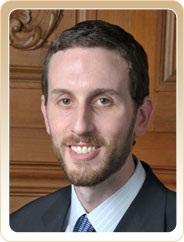
EDITORIAL The attack on public space has been underway for years now in San Francisco. Parks and recreation centers have been turned into pay-to-enter facilities rented out to private organizations. The sit-lie law restricts the use of public sidewalks. Occupy protesters have been evicted from a public plaza. And now, Supervisor Scott Wiener wants to put new restrictions on the mini-parks and plazas that have been a rare bright spot in the battle to reclaim the streets.

Wiener has introduced legislation that would ban camping, cooking, four-wheeled shopping carts, and the sale of merchandise in Harvey Milk Plaza and Jane Warner Plaza, near Market and Castro. He argues that the two parklets — one reclaimed from what had been roadway — are in legal limbo: They aren’t parks, so the city’s park codes don’t apply, and they aren’t sidewalks, so rules like the sit-lie law don’t apply, either.

But there are serious problems with the Wiener legislation. For one thing, it’s clearly directed at homeless people — the ban on shopping carts makes no sense at all except for the fact that a lot of homeless people carry their possessions in those carts. And the ban on camping (which isn’t a problem right now in the two plazas) could be used to prevent an Occupy-style action in the Castro.

The ACLU says there are serious constitutional issues with the bill. In a Jan. 21 letter, ACLU staff attorney Linda Lye notes that the ban on the sale of merchandise without a permit could “burden expressive activity.” And she explains that the shopping cart rules have exceptions for bicycles, strollers, and two-wheeled carts, but “it is wholly unclear why some but not other wheeled conveyances are singled out for prohibition, other than to restrict the activities of an unpopular group.”

A letter signed by 21 members of the Harvey Milk Club, including co-founders Harry Britt and Cleve Jones, Assemblymember Tom Ammiano, and eight past club presidents, points out that “the interests of the LGBT community have always been united with the interests of public space. As a community that is forced—far too often and for far too long—to spend much of our collective lives ‘in the closet,’ the ability to be free in public spaces has been tremendously liberating. Harvey Milk knew that liberation was only possible if we escaped the shadows of anonymity and invisibility. When we restrict these spaces—even when those restrictions are meant, initially, to be applied to another group of people—we damage ourselves.”

The issue goes far beyond the Castro. There are a growing number of small plazas in the city, part of the popular and successful Pavement to Parks Program — and the last thing the city should be doing is putting undue restrictions on their use.

Wiener, to his credit, has been in touch with the ACLU, and amended his original proposal to exempt the sale of newspapers and other printed material. But that doesn’t solve the First Amendment issues — for example, would the sale of t-shirts with political slogans be banned? Could the city decide which political candidates or causes could get a permit and which couldn’t?

The whole thing seems like a solution in search of a problem. The plazas, like most of the city’s parklets, are for the most part clean and well-maintained community gathering spots that don’t need new rules or restrictions. The supervisors should reject the Wiener legislation.

Big changes to the DCCC?

14

Half the city probably doesn’t realize there is such a thing as the Democratic County Central Committee, and most of the other half doesn’t realize how powerful it is. The daily papers never cover the DCCC meetings and rarely write about the elections that choose the members of an organization that runs the local Democratic Party — and controls local party endorsements. But it’s a serious factor in local politics — the party slate in a Democratic town is one of the most influential endorsements around. And a lot of the city’s current elected leaders started off as members of the DCCC.


For the past few years, progressives have held a majority on the DCCC, but it’s always up in the air, particularly since every elected state and federal Democrat who lives in SF is automatically an ex-officio voting member. So Senator Dianne Feinstein, Rep. Nancy Pelosi both get to vote (actually, the never show up; they send proxies). Gavin Newsom had a vote until he moved to Marin. You get the picture.


And now, with reapportionment, the part has to change its rules. Under the current system, 12 members are elected from each of the city’s two Assembly districts — but under the new lines, Tom Ammiano’s Assembly district will expand beyond the eastern side of town and he’ll now represent 61 percent of the Democratic voters in the city. Fiona Ma’s district moves south into San Mateo, and she’ll only represent 39 percent of the Democrats.


So now the state has to reapportion the DCCC. Three LGBT members describe the process in a B.A.R. piece here. It seems to me that the easiest thing to do is to add five more members on the east side of town. Good for getting more San Franciscans involved in local politics. Good for the diversity of the DCCC. And good because the more directly elected members you have, the less the ex officios influence the committee.


Seems like a fair easy fix. 

Strong opposition to Wiener plaza plan

17

More than 20 prominent LGBT activists, including eight former presidents of the Harvey Milk Club, have signed a letter opposing legislation by Sup. Scott Wiener that would put some restrictions on the use of the two plazas near Castro and Market.

Harvey Milk Plaza and Jane Warner Plaza are both in an odd legal situation — they aren’t city parks, and they aren’t city streets or sidewalks, so they don’t fit under any existing codes. The park code, for example, bars camping; the sit-lie law applies to sidewalks, but not to these plazas.

So Wiener is seeking some clarity — but his proposal has drawn the ire of the Coalition on Homelessness and the ACLU — and now a group of people who trace their political roots back to Milk, and who say that restricting the use of a plaza with his name is a terrible idea: Here’s their letter:

We, the undersigned members of the Harvey Milk Club, write in opposition to the proposed new regulations for Harvey Milk and Jane Warner Plazas.

We are writing because Harvey Milk’s name is attached to one of the two plazas for which this legislation was written and is a historic space that for decades has been a site of free speech. In the 1970s, Harvey Milk fought against that era’s sit/lie law—a law that had been written to target the hippies of the Haight-Ashbury, but was, in Milk’s day, used as an excuse to attempt to drive gay men out of the Castro. Those of us who have been around long enough, or who are at all in touch with our community’s history, are familiar with the image of Harvey Milk and his megaphone at the plaza which was eventually given his name. To propose to prohibit sitting in that very plaza is not just ironic, it disrespects our community’s legacy.

The interests of the LGBT community have always been united with the interests of public space. As a community that is forced—far too often and for far too long—to spend much of our collective lives “in the closet,” the ability to be free in public spaces has been tremendously liberating. Harvey Milk knew that liberation was only possible if we escaped the shadows of anonymity and invisibility. When we restrict these spaces—even when those restrictions are meant, initially, to be applied to another group of people—we damage ourselves.

We must also recognize that this law does not apply, in any very meaningful way, to another group of people: It applies to us. A great many—perhaps the majority—of homeless people who spend time in the Castro are LGBT San Franciscans, who came from somewhere else, but who came here seeking community and safety. This is most especially notable for the youth of LYRIC. Cuts to the City budget have reduced LYRIC’s drop-in hours to only a few every week. During the other hours, homeless LGBT youth are faced with the choice of either heading to drop-in services in the Mission or Tenderloin—services that are already so overburdened that they must turn clients away, and which likely feel to most youth to be outside of their own communities—or using open spaces in the Castro. With Collingwood Park fenced in, Harvey Milk and Jane Warner Plazas are the last open community spaces in the neighborhood. They are the last places in our community where our community’s most marginalized youth can be.

We have read and share the grave concerns expressed by the ACLU.  Much of the law infringes on important constitutional freedoms, and as they noted, cannot be cured.  We respectfully ask the Board of Supervisors to vote no.

Sincerely,

Tom Ammiano, Assembly member
Harry Britt, Co-Founder, Harvey Milk Club,  Former Supervisor who replaced Harvey Milk on the Board of Supervisors
Cleve Jones, Co-Founder, Harvey Milk Club, Human Rights and AIDS activist, Co-founder of SF AIDS Foundation and AIDS Memorial Quilt
The Harvey Milk LGBT Democratic Club
Stephany Joy Ashley, President, Harvey Milk Club
Gabriel Haaland, Former President, Harvey Milk Club, Former Commissioner
Laura Thomas, Harvey Milk Club member, AIDS activist
Anna Glendon Conda Hyde, Harvey Milk Club member, Commissioner
Esperanza Macias, Former Vice-President, Harvey Milk Club
Eileen Hansen, Harvey Milk Club member, Former Commissioner
Rafael Mandelman, Former President, Harvey Milk Club, Former Commissioner
Gwenn Craig, Former President, Harvey Milk Club, Former Commissioner
David Waggoner, Former President, Harvey Milk Club
Nate Albee, Former President, Harvey Milk Club
Tamara Ching, Harvey Milk Club member
Lisa Feldstein, Harvey Milk Club member, Former Commissioner
Suzanne Rueker, Harvey Milk Club officer
Carol Stuart, Vice-President, Harvey Milk Club
Kim-Shree Maufus, Vice President, Harvey Milk Club, Commissioner
Matt Dorsey, Harvey Milk Club member, SFDCCC
Brian Bassinger, Former President, Harvey Milk Club
Debra Walker, Former President, Harvey Milk Club, Former Commissioner

Dick Meister: Walter Johnson did what needed to be done

4

BY Dick Meister

Dick Meister, former labor editor of the SF Chronicle and KQED-TV, has covered labor and politics for more than a half-century, Contact him through his website, www.dickmeister.com, which includes more than 350 of his columns,

Walter Johnson was everything a labor leader should be – a dedicated, unflinching, champion of working people and their unions. But more than that, Walter was also an unyielding advocate of all those  inside and outside the labor movement who wanted – and badly needed – a decent living , or who were in any way oppressed.

Johnson, who died in San Francisco of a heart attack on Jan. 12 at age 87, devoted his life to that noble – yes, noble – task as head of the Department Store and Retail Clerks unions in San Francisco. He also later headed the SF Labor Council for nearly 20 years, from 1985 until his retirement in 2004.

 Walter was a genuine humanitarian, a kind, thoughtful man who very much liked and sincerely wanted to help people, who freely acknowledged the contributions of others who joined him in his efforts for social, political and economic justice, who seemed always ready and eager to do what needed to be done.

He was a man of great good humor, an outgoing man who seemed to get along with just about everybody, even some of his toughest adversaries. I know, I know. That surely does sound like pure hyperbole. But, believe me, it’s not, as many others who knew Walter Johnson could tell you.

Listen to Art Pulaski, who heads the California State AFL-CIO. He declared that Johnson “was a big and fearless advocate for everyone and anyone who was wronged, mistreated, put down, left out, pushed aside or just down on their luck.  He was fearless because he always followed his faith, his values and his heart.”

Despite the seriousness of his undertakings and his militancy, Johnson was no grim advocate. Whatever the situation, there was always lots of good-natured teasing, and jibes to be traded with friends. And jokes, always jokes – always! Corny, make-you-groan jokes usually, but effective at lessening the tensions that invariably came with the struggles he helped lead.

One look at Johnson’s face made clear his Scandinavian background, a mixture of Norwegian and Swedish. But you wouldn’t necessarily recognize him as a labor leader. He didn’t fit the stereotype. He almost invariably dressed in coat and tie and otherwise looked more like the public image of a business leader, more like management than labor.

Many union leaders spend most of their time in their offices, but Walter was out on the picket lines, or marching or otherwise demonstrating in support of the demands of his union and others, as well as those of other organizations also demanding justice. He was arrested several times for joining in sit-ins and other demonstrations that the authorities wanted to halt. And Johnson kept that up, despite his retirement.

I met Walter thanks to my job as the Chronicle’s labor editor. That was in the early 1960s, a few years after he had arrived in San Francisco from his native North Dakota to work as a Sears appliance salesman.

Dave Selvin, the labor historian and former public information officer for the Labor Council, had told me I should be sure to check out “a young guy” who’d just been elected president of the Department Store Employees. Walter Johnson, of course.

Selvin predicted good things for Johnson, and he was right.

Under Johnson’s leadership, San Francisco store clerks, department store employees and others won labor contacts at least as rewarding as the contracts as those who held similar jobs elsewhere.

Johnson was a key leader in winning strong, virtually unprecedented support for labor from City Hall and the Board of Supervisors – especially from Mayor Joseph Alioto.

Union representatives were appointed to many city commissions, major job creating construction projects were approved, and Alioto stepped in to mediate settlements of major strikes. Picketing strikers could be pretty certain police wouldn’t interfere. New businesses unfriendly to labor found it difficult to get the necessary city permits. Thanks to Johnson and other leaders, labor had gained considerable political clout to go with its considerable economic clout.

Johnson didn’t fear clashing with the AFL-CIO and its other affiliated unions as long as he felt he was right. He was one of the few labor leaders to speak out against the Vietnam War, which was wholeheartedly supported by the AFL-CIO’s national leadership and most of its affiliates.

Johnson was a leader in the growing global union movement that aims to create a powerful international labor federation that would bring the world’s unions close together to deal with “global capitalism” and thus improve the often deplorable conditions of many workers in many countries.

Closer to home, Johnson was one of the first labor leaders to give unconditional support to the LGBT movement. He was an important supporter of proposals to create a gay organization within the labor movement, despite the homophobic nature of most unions at that time. Johnson played a key role in the founding of the LGBT group that became Pride at Work in 2004.

Nancy Wohlforth, the current president of Pride at Work and now an AFL-CIO Executive Council member, had approached Johnson with the idea of such a group in 1979 and was shocked when he readily agreed it was a great idea. Wohlforth was so thankful for his help she dubbed him “an honorary lesbian.”

“Walter was thrilled,” Wohlforth said.

She later was the new business manager of a San Francisco secretarial union that was on strike against a union group that employed its members. Wohlforth noted that Johnson could very easily have avoided being involved, but “he dove right in.”

“He walked the picket line on rainy days and led a toy drive for the strikers during the Christmas holiday. He was, as always, so concerned that workers would know that they were supported at that difficult time.

“Working people’s struggles were always on his mind. I’m sure he dreamed of them every night – and he constantly was coming up with ways to make people’s lives better. He truly was my hero and he will be missed so much by all who were fortunate enough to know him.”

Amen to that.

Dick Meister, former labor editor of the SF Chronicle and KQED-TV, has covered labor and politics for more than a half-century, Contact him through his website, www.dickmeister.com, which includes more than 350 of his columns,

First drag queen to run the Milk Club

5

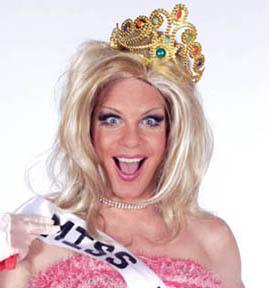
Here’s some good news for some bleak days: Anna Conda, whose given name is Glendon Hyde, is set to become the first drag queen to serve as president of the Milk Club. Glendon, a well known and exceptionally talented local performer, ran for District 6 supervisor in 2010 as a strong progressive and has been active in district as well as citywide politics as a member of the Entertainment Commission.

Gabriel Haaland reminds me that Anna Conda will not be the first trans person to serve as Milk Club president — Haaland had the job years ago. But still: Politics is serious, and Anna Conda takes it seriously — but a little fun in life makes it all bearable. And I suspect that Anna will make the Milke Club meetings lively. Congratulations!

Should city commissioners live in San Francisco?

14

Overriding the Rules Committee recommendation and dissing Sup. Scott Wiener – who has taken a lead role on protecting nightlife from critical cops and NIMBY neighbors – the Board of Supervisors yesterday voted to appoint Glas Kat Supper Club owner Steven Lee to the Entertainment Commission, even though he doesn’t live in the city and needed a special residency waiver. UPDATE (1/12, 3 PM): Sup. Sean Elsbernd informs us that the City Attorney’s Office has ruled residency waivers can’t be used with Charter Commissions such as Entertainment, thus invalidating this appointment. 

Why would supervisors do so when Castro club owner Tim Eicher, Wiener’s pick and the Rules Committee’s choice, was well-qualified, anxious to serve, and actually lives in the city? Maybe it has something to do with the fact that sources say Chinatown political fixer Rose Pak and Pak protege David Ho are close to Lee and have been lobbying on his behalf. Or that Wiener said Lee supporters have been making the argument that there are already too many gay men on the commission.

“Nightlife issues are important tot he LGBT community,” Wiener said, noting that he was disappointed that Lee supporters have made that argument, particularly because he noted the LGBT people are underrepresented on many city commissions, particularly the powerful Planning and Airport commissions, where there are none.

Whatever the case, it made for a tense discussion at the board yesterday, followed by a vote that didn’t break along normal ideological lines. The motion by Sup. Eric Mar to substitute Lee for Eicher was approved on a 6-5 vote, with Sups. David Campos, Carmen Chu, Sean Elsbernd, Mark Farrell, and Wiener opposed.

Lee supporters noted that he has lived and worked in San Francisco for decades even though he has recently moved down the peninsula to help care for an aging father and disabled brother. For three generations, Lee’s family has been opening and operating businesses in San Francisco, including nightclubs.

“I felt his experience was somewhat superior,” Sup. John Avalos said of his reason for backing Lee.

But those who voted against Lee said it’s a troubling precedent to choose an out-of-towner over a city resident. “To grant a residency waiver for someone when we have a qualified San Francisco candidate is something we just don’t do,” Farrell said.

Sup. Jane Kim cited examples of other appointees that had such waivers, but Elsbernd angrily retorted that those were for seats that no city residents had applied for. And if Sup. Malia Cohen gets her way, there will be even more non-residents being appointed to city commissions. She said that she intends to recommend African Americans who have left the city to serve on various commissions, and she told her colleagues that she expects their future support for that effort.

After the hearing, both Lee and Ho downplayed Pak’s role in the move, telling the Guardian that Lee had key supporters in many of the supervisorial districts. “I’ve been doing this on my own,” Lee said. “I never asked Rose to help me.”

As for his priorities on the Entertainment Commission, Lee said, “Obviously, our main goal is public safety, but also working with the neighbors.”

Stuck in reverse

18

Some days, you wake up, check the news, and wonder just what the hell happened to this country. And I’m not talking about that nutty right-wing view that we’ve strayed from the original vision laid out for us by the authors of the Constitution or the Bible. I have just the opposite view: I’m wondering why those people seem so intent on dragging us back into the bad old days of bygone centuries, when white male property owners ran things as they saw fit.

A dangerously intolerant religious fundamentalist who longs for the Puritan days, Rick Santorum, essentially tied for first place in the Iowa Republican presidential caucuses. And he was part of an entire field of candidates that wants to revoke women’s reproductive and LGBT rights, deny that industrialization has affected the environment and should be addressed, dismantle already decimated government agencies, simply let the strong exploit the weak, and hope that Jesus comes back to save us from ourselves. Their strange reverence for the Constitution apparently stems from wanting to drag us back into the 18th century.

And don’t even get me started on President Barack Obama and his worthless Democratic Party, which is only a bit better than the truly heinous Republicans. At least Obama says some of the right things – like wanting to raise taxes on millionaires, reverse Bush-era attacks on civil liberties, respect states’ medical marijuana laws, and use diplomacy rather than only bellicosity with concerning countries like Iran – even though he acts in contradiction of those statements, over and over again.

It’s no better in the Golden State, where the yestercentury crowd now wants to abandon plans for a high-speed rail system that has already been awarded $3.5 billion in federal transportation funding and for which California voters authorized another $10 billion in bond funding. Why? Because a panel headed by an Orange County douchebag says the business plan isn’t detailed enough and the money for the entire $100 billion buildout isn’t nailed down yet. Well guess what? California also doesn’t have a plan for when its highway and airport systems get overwhelmed by population growth over the next 20 years. And criticizing the viability of high-speed rail – something most other advanced countries figured out how to build decades ago – isn’t exactly going to help secure private equity commitments. It’s a super fast train, folks – not some scary satanic iron horse from the future – people will pay to ride it.

But the situation must be better here in liberal San Francisco, right? Wrong! Mayor Ed Lee, the San Francisco Chronicle, and all their business community allies continue to relentlessly push their belief that the main job of government is to create private sector jobs, even though most economists say a politician’s ability to do so is limited at best.

Lee is pushing for all city legislation to be measured by whether it creates private sector jobs, as if protecting the environment, preserving public sector jobs, or safeguarding the health, welfare, and workers’ rights of citizens weren’t also under the purview of local government. A Chronicle editorial today called Lee the most “realistic city leader in memory. He’s all about creating jobs, repaving streets, sprucing up faded Market Street and fixing Muni’s flaws,” the same goals the paper was focused on a century ago.

But the main trust of the editorial was calling for Lee to also focus on homelessness. Not poverty, mind you, but homelessness. “A decrease in jobless numbers is important, but so are fewer shopping carts pushed along sidewalks and a drop in the numbers of mentally ill in doorways and on park benches,” they wrote. In other words, they just don’t want to see poor people on the streets, because that newspaper and its fiscally conservative editorial writers and base of readers certainly haven’t been calling for a fairer distribution of this city’s wealth, or even higher taxes on the rich that might fund more subsidized housing programs or mental health treatment. I get the feeling they’d be content to just allow shanty towns on our southern border where our low-wage workers can live, just like the Third World cities that they seem to want to emulate.

Ugh, so depressing, so ridiculous, so regressive. I think I’m going back to bed now.

An open letter to Ed Lee

76

OPINION Dear Mr. Mayor,

During the next week you will be appointing the a supervisor for District 5, an area of the city that has been historically considered the most progressive part of one of the most progressive cities in the country. It will be a signature decision for you in the next year, and will reveal the tone of your administration. Will you be a consensus mayor — or will you carry on your predecessor’s fight with progressives?

You have many qualified choices, but there is probably only one on your list that a majority of progressives would consider a clear progressive choice: Christina Olague, president of the Planning Commission. There are some who have hesitations about her, but ironically those hesitations are based on her relationship to you and her support for your candidacy for mayor. I have to admit, as a supporter of progressive Supervisor John Avalos for mayor, I shared some disappointment that she didn’t support John.

I’m sure there’s intense pressure on you to choose a more moderate choice, and I’m sure there are from your perspective some valid points to that argument. That said, District 5 deserves progressive representation.

I am a Haight resident, and I ran for Supervisor in District 5 in 2004. Supervisor Ross Mirkarimi came in first, I came in second, and Lisa Feldstein came in third. Both Lisa and I have spoken repeatedly about whether we would run next year, and we have even discussed running as a slate. Most political analysts think one of us would have a decent shot at winning — but I think both of us would support Christina, assuming that her votes continue to reflect her commitment to the progressive values of the district.

Christina not only supported you, she also supported Mirkarimi in 2004, and Matt Gonzalez when he ran for supervisor in 2000. She was appointed to the Planning Commission by Gonzalez and has been reappointed repeatedly by progressive supervisors to that commission. While her votes have not been perfect, by and large, her record is excellent; she has never succumbed to pressure, has listened well to all sides, and has ultimately done what she thought was right.

For example, she stood up for tenants’ rights when the landlord from Park Merced came to the Planning Commission to ask that 1,500 apartments be demolished, all of which were subject to the city’s rent control ordinance. She recognized the flaws in the landlord’s argument that a side agreement (negotiated without the local tenant groups involved) would prevent rent hikes and evictions. Olague was on the right side of history on the Park Merced deal, and has a long record of building tenant and senior tenant power. That’s the kind of leadership we need for District 5, an area comprised of primarily renters. I believe Olague will be a supervisor tenants can trust.

I can’t guarantee that all progressives will stand down if Olague gets the seat. The ego game is what it is. You have learned that from politics, I’m sure. But I think most progressive institutions and progressive activists will see her appointment as a victory and will support her candidacy for Supervisor next fall, as they should if she shows that her votes reflect the trends and values of District 5.

With Christina Olague, you have a win-win. You appoint a supervisor who reflects the progressive values of the district and who is also electable in November. 

Gabriel Haaland is an elected member of the San Francisco Democratic County Central Committee and an LGBT labor and tenant activist.

Gifted: The Poor Bastard’s SF Almanac

0

Hey, Slingshot Organizer gang. Yeah youse, the well-planned anarchists in the corner. Stephen Kovacic would like you folks to know you are no longer the only alt-dayplanner game in town. 

Kovacic — inspired, he says, by his experience working the front desk at the LGBT Community Center — has pulled off the impressive feat of assembling a one-stop guide to sustainable brokeness in this fair city of ours. Not only is The Poor Bastard’s SF Almanac a calendar, but it is also is packed with supervisoral district maps, last-BART-of-the-night times, guides to where to find fair trade coffee, free museum and zoo visits, eight (!) $1 oyster happy hours, and San Francisco pools. The result is delightfully scrappy, delightfully useful package of wisdom. In an email interview with the Guardian, Kovacic admitted to ordering far, far too many of the things from the print shop, so in addition to being able to cop the planners for $12 in local bookstores (we even spotted them at Scarlet Sage Herb Company), you can order them from his website at prices as low as five for $35.

The thing even comes with a mix CD of local artists, from the Dents to Rin Tin Tiger (listen to it for free here). So, maybe New Year’s Day gifts are the new, hot holiday present? Here’s what Kovacic had to say about his labor of love. 


SFBG: Tell us a little about yourself.

SK: My name is Stephen Kovacic, I’m a 28-year old male, I’ve lived in San Francisco for nine years. I went to SFSU and CCSF. I like chemistry, and turtles, and Rubix cubes, and the people in my life. I like making systems work better.


SFBG: What inspired you to put together this dayplanner?

SK: I was working for three years as the front desk info and referral person at the LGBT Community Center, compiling info for visitors or people off the street who needed referrals to services. I noticed immediately that there were a ton of services and fun things and things to know about the city, but no really good compendium of up-to-date information. Websites on the subject are woefully out of date.   

When budget issues dissolved that job I was gainfully unemployed for a while, living very cheap, going to free things, writing things that were useful into my Slingshot Organizer. I wrote in free zoo and museum days, and I drew guitar chords and such in the back pages. It seemed like a logical progression to make my own organizer and fill it with as many useful things as possible, like supervisor contact info, or last BART times, or when to register to vote, or your rights at work, or a list of anti-gay companies to boycott. Things that empower people to be who they want to get around to being. And to entice people to carry it around all the time, i put games and trivia and interesting days in SF history, free days, zodiacs, SF celebrity births, guitar chords, fun stuff. 


SFBG: What’s your favorite feature in its pages?

SK: The history probably. I spent a long time finding things that happened in this city 100 years ago, and there’s a ton of them. I put the most compressible, interesting stories in there. I encourage people to look them up because there’s a lot more to each story than i had room to put in. At the same time, the CD is the thing i’m least tired of seeing. It’s really good.


SFBG: Who were the artists that helped you out with it?

SK: The folks on the CD are all local San Franciscan bands. Mostly talented friends of mine that I’ve been collecting. People can listen to the whole CD for free at www.SFalmanac.org. Sometimes compilations are crappy, but this one turned out really good. Mostly because I took songs that were already my favorites and begged their SF writers to let me use them. Everybody was really supportive of the idea. There’s even some gems on there [that are] previously unreleased.

The [visual] art is about one-third mine, the rest is my friends’, people that supported the concept. If it’s going to happen next year I’ll need a whole bunch more contributing artists. The real star player is Justine Lucas, she did the cover and a whole bunch of other pages too. She’s been the most supportive and encouraging person there could be, it would never have happened without her support and advice and skill.

Style Paige: Retrofit Republic’s vintage flair

0

Wedged between two clothing stores in San Francisco, a narrow alley leads to the home of Jenny Ton and Julie Rhee, a.k.a. the alternative vintage boutique Retrofit Republic. Inside on a recent visit, I felt like a kid in a candy store – except there was no candy. Instead, bowls of earrings, necklaces, and pendants were neatly displayed on a table. Here, a stunning sequin clutch with colorful roses. There, four racks of vintage men’s and women’s clothing, with shoes on display wherever they could fit. Wearing the perfect gold holiday dress, a mannequin peeking around the corner told me to look around, stay awhile.

It didn’t feel as though I was standing in an apartment at all. With a floral curtain hiding the kitchen and bedrooms on the far side of their apartment, the place felt like a quaint little vintage shop. 

“I feel like I have a relationship with every piece in here,” said Ton, who along with Rhee owns the store. The two handpick every item that now decorates their living room. A sustainable vintage seller with a social impact,  Retrofit Republic offers styling to individuals, changemakers, and brands. Its slogan: Look good. Do good. Make an appointment and you can enter the home for a free private session of custom styling, or to buy signature vintage pieces.

Julie Rhee [left] and Jenny Ton [right]: Owners of Retrofit Republic, stylists extraordinaire. 

Old tennis rackets were stacked in front of luggage pieces, handbags hung on a coat rack with a grey hat resting on the top, and a vintage clock reading the wrong time sat in front of a framed photo of the duo’s company name. Each piece had incredible details, embroidery, and structure, like the off-white brocade coat with gold buttons and the men’s herringbone blazers with brown elbow patches. I wanted to slip away with one of the many fur coats, or perhaps the pair of Salvatore Ferragamo flats. 

To schedule a private shopping appointment, you must fill out a styling profile on Retrofit Republic’s website. The 26 questions include queries regarding your signature style and favorite accessories, as well as your shoe, pant, and dress sizes. Based on your profile, Ton and Rhee will pull together head-to-toe outfits that fit your style and personality.

Along with providing private shopping sessions to those who first fill out the 26-question style interview, Retrofit Republic styles photoshoots, bridal parties, and – perhaps its most popular service – does home wardrobe assessments. 

The hour-long assessment (particularly for those who are looking to revamp their wardrobe) includes getting rid of not-so-flattering garments. The duo teaches customers how to pick clothes that are more flattering but still compliment their lifestyle and personality. Ton says the service is perfect for people who are tired of their work wardrobe. “And it helps that we’re a good time,” Rhee added.

The shop’s mission is to prove that being fashionable and socially responsible can go hand-in-hand. Fusing passions for fashion, thrifting, and sustainability gave birth to Retrofit Republic. Ton and Rhee got started at an all-weekend yard sale they set up to clear out stuff before moving to another apartment. 

Their endeavor has been going strong for almost a year. Both Ton and Rhee came from non–profit backgrounds, so it is fitting that Retrofit Republic is a community- and consumer-conscious company.

So many shiny things, so little time: the sea of accesories at Retrofit Republic 

And although the duo has styled CEOs, political candidates, and music artists they stay mindful of their local community. Retrofit Republic works with every budget and markets to low-income people of color and the LGBT community by collaborating with various community organizations. The shop has also donated styling services to non-profits in the Bay Area like the Asian Pacific Environmental Network and the Lyon-Martin Clinic, and never requires a purchase to enter the store.

Ton and Rhee find vintage pieces anywhere and everywhere. They hit up local thrift stores, yard sales, garage sales, estate sales, and accept donations. They have traveled as far as Europe, South America, and Asia to find unique vintage goods. The two can tell you about each piece’s journey to the shop – on each hang tag, printed opposite the shop’s logo there is the line “Where I’m from?” Below that, a handwritten answer brings to life thrift stories. 

Browsing the amazing finds, I found myself wondering how the two were able to say goodbye to some of the items when it was time to sell. 

“I found these amazing, amazing vintage boots at a street market in Argentina and I’m kicking myself because I sold them,” Rhee said laughing. “They were so amazing.”

Only they said they don’t get attached. They’re constantly shopping, so there’s a strong probability that they’ll find those amazing boots over and over again.

Besides, “it’s the thrill of the hunt,” said Ton. 

Set up an appointment to check out Retrofit Republic at www.retrofitrepublic.com

The unlikely sheriff

1

Michael Hennessey has served as San Francisco’s sheriff for half of his life, the longest such career in California history — and by all accounts the most progressive. Since taking office in 1980, Hennessey has been an island of liberal enlightenment in a political climate and law enforcement culture where tough-talking conservatism has been ascendant.

Yet in that era, Hennessey pioneered the creation of innovative programs to compassionately deal with drug abuse, violence, recidivism, and lack of education among jail inmates. He proactively brought unprecedented numbers of minorities, women, LGBT employees, and ex-convicts onto his staff. And he sometimes resisted carrying out evictions or honoring federal immigration hold orders, bold and risky social-justice stands.

His stances drew scorn from the local law enforcement community, which never endorsed him in contested elections, and criticism from political moderates and national media outlets. But San Francisco voters reelected him again and again, until he finally decided to retire as his current term ends next month.

He credits his success and longevity to the people of San Francisco, who have also bucked the harsh national attitude toward criminals and the poor. “San Francisco is still largely a liberal voting town,” he told us in his well-worn office at City Hall, “and not many liberals run for sheriff.”

That logic held up in this year’s election when progressive Sup. Ross Mirkarimi — Hennessey’s hand-picked successor — was elected to the post. Mirkarimi, who led a tribute to Hennessey at the Dec. 13 Board of Supervisors meeting, said he’s honored to be able to continue the legacy of someone he called “the most innovative sheriff in the United States.”


LONG RECORD

Hennessey was a 32-year-old Prisoner Legal Services attorney for the Sheriff’s Department in 1979 as he watched then-Sheriff Eugene Brown letting go of reform-minded staffers and ending his predecessor Dick Hongisto’s early experiment with a school in the jail. So Hennessey quit his job and focused on running for the office.

“I said to myself that I’m not sure if I’ll be a good sheriff or not, but I know I’m better than anyone else running,” he told us, later adding, “I certainly never expected to be sheriff for 32 years.”

Rank-and-file deputies — with whom Hennessey has periodically clashed throughout his career — always preferred one of their own in the job. “As seen in this election, they would like to see someone coming from their ranks,” said Hennessey, even though he notes that at this point, he has hired all but three of the department’s nearly 1,000 employees.

But Hennessey’s outsider status allowed him to deal with the inmate population in a way that the average San Franciscan appreciated, even if the average cop didn’t. “When you’re in law enforcement, all you see are criminals, victims, and people in law enforcement. But I would talk to all kinds of people in the community,” Hennessey said, noting that his experience as a jailhouse attorney gave him a holistic view of his job. “I worked in the jail and I got to know prisoners as people.”

They were people who had certain needs and problems, such as substance abuse, a common problem among criminals. And they were people who would be returning to society at some point, as Hennessey constantly reminded those who expected prisoners to be treated harshly or simply warehoused.

So he broke down the wall between the jail and the community, bringing the city’s social service providers and educators to work programs in the jails, and developing anti-recidivism and vocational programs that allowed ex-offenders to re-engage with the local community.

“Take the bold step of inviting the public in, not all the public, but those who can provide services and help address people’s problems,” Hennessey said. “Then we took the same concept and applied it to violent offenders, which is a little riskier.”

But it was a risk that has paid off as recidivism rates among jail inmates has dropped, and it’s been without any serious cases of inmates harming outsiders. Hennessey is particularly proud of the high school he created in the jail, which will graduate its next class on Jan. 3.

He said the school can truly transform those who end up behind bars. “It gives them a leg up and it’s like a booster shot,” Hennessey said. “They’re at the lowest point in their lives when the come to jail, and then they’re given an opportunity to accomplish something they haven’t been able to on the outside.”

One of many controversial moves during Hennessey’s storied career was his decision to allow female inmates to leave the jails and perform in theaters around San Francisco with the Medea Project, which was created by Rhodessa Jones and the Culture Odyssey art collective to turn the stories of female inmates into plays.

“Rhodessa is a very persuasive person who talked me into letting these women out of jail to perform,” Hennessey said, smiling at the memory. “It was very controversial.”


HIRING REFORMERS

Hennessey’s mentor in the Sheriff’s Department — the man who hired him, ran his first campaign, and then became his longtime chief-of-staff — was the late Ray Towbis, a tough activist whose social justice stands on behalf of tenants, prisoners, and other marginalized members of society would sometimes put Hennessey into difficult positions.

“Ray caused me aggravation many times,” said Hennessey, who nonetheless kept a life-sized cutout photo of Towbis in his office long after he was gone, a reminder to fight for the values he believed in.

There was the time when Towbis angrily flipped over a table and cursed at a panel of parole commissioners after failing to win the release of a model inmate, triggering a demand from the presiding judge that Hennessey fire Towbis, which the sheriff ignored.

Later, Towbis adopted a compassionate approach to the evictions that sheriff’s deputies are forced to perform, allowing deputies to spare tenants who were disabled or elderly and personally calling journalists to help publicize cases in which the parties bringing the eviction action might back off. That sensitivity stays with Hennessey today.

“That’s one of the tough spots I’m in is doing these foreclosure evictions,” Hennessey said, clearly troubled by his duty but also aware that it is one that he is required to perform, despite pressure from progressive groups urging him to refuse to carry them out.

As a lawyer, Hennessey said he must respect court orders and avoid being held in contempt of court, as Hongisto was in the mid-1970s for refusing to carry out evictions against tenants in the International Hotel.

Hennessey and his staff have always been willing to help tenants resist eviction. His office has an eviction assistance program, and Towbis would sometimes tip off the media to publicize certain unjust evictions. One time, Hennessey said Towbis even called hotel magnate Leona Helmsley and talked her out of allowing her company to evict an elderly ParkMerced resident. Instead, Helmsley allowed the woman to live rent-free for the rest of her life, an unlikely gesture of kindness from the “queen of mean” that Towbis helped publicize.

Hennessey draws the line at outright refusal to carry out a judge’s eviction order. “The sheriff shouldn’t be a law-breaker,” he says. Yet Hennessey’s lawyerly approach to complex issues also resulted in his recent policy of not honoring federal detention holds on undocumented immigrants in the jail, after discovering that the holds are administrative — different than arrest warrants — so defying them isn’t a crime.

The policy Hennessey created last year was to ignore ICE requests for prisoners who aren’t charged with felonies or domestic violence charges, noting that the latter charges are often brought but eventually dropped against people who are the victims of domestic violence.

Hennessey tapped federal and foundation grant money to fund his new treatment and educational programs, hiring an ex-convict to write his grant proposals, something that particularly irked many of his deputies.

But Hennessey believed that ex-offenders had something to offer the department so he didn’t back down in hiring them, going so far as to elevate Michael Marcum, who had gone to prison for killing his own abusive father, to the top position of undersheriff in 1993.

Police groups were outraged, but Hennessey said he had known Marcum for many years and valued his counsel and perspective on the criminal justice system. “It wasn’t hard because I knew him and I know of his integrity and loyalty,” Hennessey said.

Hennessy also irked conservative cop culture for aggressive efforts to make the department more diverse. “We wanted more minorities, we wanted more women, and we wanted gay people,” said Hennessey, who initiated outreach efforts to each of those communities.

In 1984, when he approved of an outreach event in Chaps, a gay leather bar in the Castro — complete with flyers around the Castro publicizing the event — it generated a furor that made headlines not just locally in the San Francisco Chronicle, but the National Enquirer tabloid as well.

Yet Hennessey was able to ride out each of the controversies, many of which happened to fall years away from his next reelection campaign. “Those are good times to make dramatic changes,” Hennessey said.

And because he also saw to some neglected basics in the Sheriff’s Department — such as improving training and the jails’ physical structures to prevent escapes and instituting policies to reduce violence between inmates and guards — Hennessey endured and became a beloved sheriff.


VICTORY OF PERSISTENCE

“I’ve always felt somewhat isolated in these beliefs,” said Hennessey, who said that the biggest failure of his career was not proselytizing those beliefs to a statewide and national audience more aggressively. Instead, he has focused on San Francisco, quietly turning the city into a national model for a different kind of policing.

Despite his progressive record, Hennessey has won plaudits and respect from across the political spectrum. In the last election, even the cops who sought to replace him and to undermine his endorsement of Mirkarimi — Chris Cunnie, Paul Miyamoto, and David Wong — all praised Hennessey and promised to continue his programs.

During the Dec. 13 board meeting, Sup. Mark Farrell — consistently one of the most conservative votes on the board — said he has known Hennessey almost his entire life (the sheriff and Farrell’s dad were law school classmates). “I cannot think of anyone with more integrity, a more trustworthy and honest person, than I’ve ever know in my life,” Farrell said.

Sup. David Campos said the immigrant community owes Hennessey a tremendous debt of gratitude. “You have been a tremendous champion for civil rights,” Campos said. “For that, history will judge you very kindly.”

It is a history that Mirkarimi pledges to continue. “Who’s going to fill his shoes? It’s impossible,” Mirkarimi said at the board meeting. “But we certainly have an incredible standard to try to live up to.”

As for Hennessey, he has a fairly clear idea of what he plans to do now that his long and unlikely run as one of the city’s top cops is over: “I’m going to goof around.” *

Catholic Church rejects LGBT ministers

32

I grew up in the Catholic Church, and it pretty much drove me away from religion. I could never quite get the basic contradictions between a message of love for all people and a politics of intolerance. (Jesus loves his children, except the women, who have to be second-class citizens, and the homosexuals, who are going to burn in Hell.)

Then there was the general wackiness: Every Sunday, we had to pray for “the Jews” in the hope that they would see the light of Jesus and be saved. I once asked our head parish priest, who was also the “Christian Doctrine” teacher at my Catholic school, what that was all about; the Jewish people I knew seemed to be doing fine on their own. They believed their thing, we believed ours, and so what? Were these folks all really going to suffer eternal damnation? That seemed so, you know, harsh.

The priest was very direct: Our way, the Catholic way, was the only way. Everyone else was wrong and would pay for it. People who didn’t believe the same things we did were doomed to hideous torture in the flames of Hades until the end of time and beyond. Too bad for them.

Oh, and by the way: It wasn’t just a sin to have sex, even with yourself — it was a sin to think about it.Later, Father.

Before the blog comments start, let me acknowledge that there are many wonderful Catholics who have done wonderful things for the world. I have nothing but respect for them and they way they live their lives. The nuns who live next door to my mom in Philadelphia are really sweet and helpful to her, and they were great when my dad was dying. I’m a proud atheist, but whatever turns your spirit on is fine with me. Just don’t tell me I have to agree with you.

That said, the dodos who run the organizational part of the Church have always been a bit of a problem.

For example: this is San Francisco, and there are a decent number of gay Catholics, and a lot of them go to Most Holy Redeemer Church in the Castro, which is about as welcoming to gay people as any Catholic institution can ever be. And what does the Great and Exalted Archbishiop, Geroge Niederauer, do? According to a nice scoop by Cythina Laird in the BAR, he kicks a few lesbian and gay ministers out of an Advent service:

At least three gay and lesbian clergy members were disinvited from participating in Advent services at Most Holy Redeemer Catholic Church in the Castro, the Bay Area Reporter has learned. … “The basic reason is that Archbishop Niederauer felt the themes for vespers should better reflect the themes of Advent,” Wesolek told the B.A.R.

The “themes of Advent?” The only “theme of Advent” I know is that it celebrates the upcoming feast of the birth of Christ, who, at the time of his miraculous arrival into this world, hadn’t said a single thing about homosexuals.

Let’s be serious: This isn’t a religious statement, it’s a political statement about same-sex marriage. The archbishop can’t tolerate the idea that people — even respected religious people who also believe in Jesus, one of them a damn bishop, for Christ’s sake  — who happen to disagree with his teachings on marriage might share the stage with his holy crew:

Charles was the Episcopal bishop of Utah and was married to a woman for many years. After his retirement in 1993, he came out as a gay man, divorced his wife, and moved to San Francisco. In October 2008 he married Felipe Sanchez-Paris, Ph.D. in a civil ceremony in San Francisco. The couple had a church wedding in 2004 that was covered in the San Francisco Chronicle .

He told the B.A.R. that he received a call the night before his scheduled appearance “indicating that my participation in a liturgical service was unacceptable to the Chancery (in all likelihood, the archbishop): presumably, my participation as the first openly out gay bishop, legally married according to the laws of the state of California, might suggest approval of gay marriage.”

Kind of hard to believe. Or not.

I wish the folks at the archdiocese would talk to me about this, but they haven’t returned my calls.

UPDATE: George Wesolek, spokesperson for the archdiocese, just called me. He acknowledged that the archbishop had decided to disinvite the three ministers on the grounds that “it appeared they might be going to talk about topics with agendas. Advent is not the time for politicizing this, for divisive issues, it’s a time to bring people together.”

In other words: If you want to talk about same-sex marriage, shut up.


Michael Goldstein, 1953-2011

7

news@sfbg.com

San Francisco lost a valued champion of progressive causes on Dec. 2 when Michael Goldstein lost his battle with stage 4 lymphoma after surviving nearly 20 years living with HIV, a disease that helped awaken his political activism.

Michael was born in 1953 in New Mexico, where he was raised. His grandparents had come to New Mexico after surviving the Holocaust, and Michael came to the San Francisco in the early 1980s. Like many gay men of his generation, Michael came here to find community, to create family, and to be welcomed when much of the country was still hostile to the LGBT community.

He worked at Neiman Marcus, dressing “the San Francisco A list,” as he used to say. He studied at City College towards a paralegal certificate and was heavily involved in student politics. He landed a job at AIDS Legal Research Panel, where he worked when he was diagnosed HIV-positive in the mid-’80s.

The news hit hard, and the treatment he began took its toll. The HIV drugs were harsh then and there were many horrible side-effects with these early drugs. At that time, there was very little information or education about HIV/AIDS and there was even less support, from families and from the public.

Our San Francisco political community became Michael’s family. He was also blessed with an amazing friend in Lorae Lauritch. They worked together at NM, became roommates, and lived together with some incredible cats that were dear to him, including Paloma, Huey, Cadeau, and Missy.

Michael was a proud feminist who valued the women in his life and community, leading him to endorse a pair of successive female candidates for the Castro’s District 8 seat on the Board of Supervisors: Eileen Hansen in 2002 and Alix Rosenthal in 2006.

Over the years, Michael served as an elected member of the Democratic County Central Committee (serving as vice president), served as President of the Harvey Milk LGBT Democratic Club, and was appointed to a San Francisco City College citizen oversight board, where his questioning helped bring attention to mishandling of funds at that institution.

Michael was determined, opinionated, persistent, intolerant of bullshit, prickly, always questioning. He challenged us all to move a common agenda, come together beyond our own personal ambitions, but to also never back down out of convenience or feigned civility. “Civility doesn’t make change,” he often said.

I came to know Michael as many came to know him. Michael always showed up in support of every one of our causes. He not only showed up, he advised, opined, debated, argued, protested, got arrested, drafted policy, and so much more. Campaign after campaign, issue after issue — our friendships grew around our passion for politics, our deep concerns about everything, and a strong and unwavering belief that anyone can help make change.

Michael believed that and Michael lived that.

In the past few years, many of us noticed that Michael wasn’t feeling well. We pushed him to go to the doctor. This is a man who spent hours fighting to push through HIV/AIDS policy and funding, healthcare reform, Healthy SF — and he did not have healthcare, had not seen a doctor in nearly 10 years, and was not treating his HIV.

As many know, Michael and I were like brother and sister…often bickering back and forth on whatever was going on. We “debated” like the dear friends we had become. His lack of healthcare was one of the more important issues I would bring up often. As a long term survivor of this condition, Michael knew the score.

As the symptoms of this disease ravaged his body, he retreated from us and attempted to make sense of the unimaginable alone.

Finally at the end of September, Michael was admitted to General Hospital. With the amazing care of Ward 5A, Diane Jones, and all the amazing General Hospital workers, as well as Laguna Honda Staff and at his final resting place UCSF — his care, though coming too late, was the best in the world and gave Michael a fighting chance. He was clearly comforted and supported by his community in his final days, support that mattered so much to him.

If you knew Michael, you know there is a “what comes out of this” part. We all got to really see the results of the hard work we all participated in to rebuild General Hospital, to rebuild Laguna Honda, and to provide healthcare access to everyone, even the poorest among us. Michael, personally, was able to experience the fruits of our collective labor over these years.

He also experienced some areas where there really is a need for some work. We need to remember that AIDS/HIV is still killing people every day. We must improve people’s access to healthcare. We need to protect patients’ access to medical cannabis, even in General Hospital. We need services and we need housing, particularly affordable housing for those who need it, people struggling through this bad economy.

These are our issues and this is our agenda on the left that we have been fighting for.

I will never forget Michael. One of the last real discussions we had about politics was around election time, with Michael remembering the 2010 elections. Michael was probably more upset about what has come out of that election — the beginning of a political shift to the right in San Francisco — than many.

He has been such an integral part of the work that brought our progressive community together and he was devastated by the events tearing it apart. More than anything, he wanted to bring us together, but he ran out of time.

Michael had an agenda. His agenda was to move forward our agenda. It is time to come together and do that.

Debra Walker is an artist, activist, DCCC member, and city commissioner who ran for the District 6 seat on the Board of Supervisors last year.

Castro residents clash over proposed restrictions in public spaces

37

UPDATE: This article has been changed to include three corrections.

Community activists in the Castro District of San Francisco have been riled up by recent legislation proposed to limit public use of the Harvey Milk and Jane Warner plazas.

The ordinance proposes to ban “wheeled equipment” and prevent people from sleeping, camping, or selling merchandise. Further, the ordinance limits the time that seating will be available to 9 a.m. to 9 p.m. 

“Poor people and low income people can’t live in the neighborhood anymore,” said community activist and Housing Rights Committee member Tommi Avicolli Mecca. “This ordinance is a response to people’s discomfort with people who look homeless in the plaza.”

Mecca believes that this legislation was pushed forward by the Castro/Upper Market Community Benefit District and the Merchants of Upper Market and Castro (MUMC) as a way to privatize the public spaces and, in effect, prevent homeless people from occupying them.

“(The legislation) talks about sleeping and camping. Who is doing that other than homeless people and what printed materials are being distributed other than the Street Sheets?” said Bob Offer-Westort human rights organizer for the Coalition for Homelessness. “All of this really clearly targets homeless people.”

Other community activists, such as blogger Mike Petrelis, believe that this legislation is a preemptive act against the Occupy movement and that meetings discussing the ordinance intentionally excluded activists like himself. “This new legislation is part of a downtown agenda to prevent an Occupy encampment set up,” said Petrelis.

Petrelis wrote about the legislation on his blog, and among his arguments he states that preventing tents to be present in Harvey Milk and Jane Warner plazas expresses direct disapproval of the movement.

“I read this and hear fear on the part of [Sup. Scott] Wiener, MUMC and the CBD that an Occupy the Castro encampment could take root at the top of Market Street,” he said.

Wiener, who is sponsoring the legislation, says that it was drafted under the Pavement to Parks effort to transform the space into park land and that the provisions are standard for that use. 

“We’re trying to have usable vibrant public space and this legislation will help us have it,” Wiener told us. “This legislation provides what we already have in our parks. It’s pretty basic provisions.”

Wiener says that many local merchants and advocates, such as the Sisters of Perpetual Indulgence, have been involved in discussions around of this legislation, but the Sisters have not taken a stand on the measure.

“The Sisters, as far as I know, have not made a collective effort one way or another on the legislation at this time,” said Sister Barbi Mitzvah in an email. “The Sisters individually can comment, but coming from the organization takes a majority vote as we are a 501c3 non profit.”

Whether this legislation addresses homelessness, an attempt to prevent an Occupy Castro movement, or if it is to create a “usable vibrant public space,” the community is demanding participation in this decision.

“Both plazas play a vital role in the Castro community,” Petrelis said. “So why won’t he hold a public meeting?”


Our Weekly Picks: November 23-29

0

WEDNESDAY 23

Immortal Technique

“So now that it’s proven, that a soldier of revolution/ Or head of an empire, disguised in a constitution/ Can not escape the retribution or manipulation/ Of the self-appointed rulers of the planet’s corporations.” So says Afro-Peruvian rapper Immortal Technique on new mixtape The Martyr (Viper Records). Born Felipe Coronel, Tech seizes every opportunity to eviscerate American class warfare and excoriate the United States government’s complicity. Tech’s angry sermons get a little lost in the first half of Martyr because of distracting riffs taken from the Beatles, Aerosmith, and The Goonies soundtrack, though there is a clever reworking of ABBA’s “Money, Money, Money” in reference to this generation’s “Rich Man’s World (1%).” Pure, undiluted Tech shines through on the mixtape’s second half. Swill with care. (Kevin Lee)

With Chino XL, Da Circle, DJ GI Joe

8 p.m., $32.50

Fillmore

1805 Geary, SF

(415) 346-6000

www.thefillmore.com


MOM’s Family Funk’tion

Before you indulge in caloric binges, first endear yourself to the soulful 1960s sound that has always sounded sweeter during the holidays: Motown. No one knows and appreciates this more than the masterminds behind MOM (Motown on Mondays) who bring originals, remixes, and “close relatives” of Motown label songs to venues and events across San Francisco, including Madrone Art Bar, Public Works, SF Funk Fest, even the Treasure Island Music Festival. The first MOM’s Family Funk’tion goes down the night before the turkey funeral that is Thanksgiving at Brick & Mortar, with DJs Gordo, Timo, Phleck, and Matteo spinning the tracks that get the tail-feathers shaking. The crew from MOM promises to provide “toasty soul and fresh funk jams.” (Emily Savage)

10 p.m., $5

Brick & Mortar Music Hall

1710 Mission, SF

(415) 800-8782

www.brickandmortarmusic.com


tUnE-YarDs

Before her set at Pitchfork Music Festival last summer, we were all given tubes of neon yellow warpaint so we could emulate tUnE-YarDs’ Merrill Garbus. Though we may have resembled her, it was no use. We would never be as badass as the woman on stage looping ukulele, smashing drums, and wailing something fierce. With help from additional saxophonists and drummers, the playful jams of Garbus’ quirky hit album w h o k i l l (4AD) burst forth into the calculated cacophony that is tUnE-YarDs. (Frances Capell)

With Pat Jordache

8 p.m., $23

Regency Ballroom

1300 Van Ness, SF

(415) 673-5716

www.theregencyballroom.com


FRIDAY 25

“Sing-A-Long Sound of Music”

Chances are “Sing-A-Long Sound of Music,” the classic musical from 1964 with lyric subtitles so the whole theater can burst into song, is your mother’s dream come true — unless I am the only one who has watched their mom caper around the house, singing “My Favorite Things” (a possibility). It’s fortunate that “Sing-A-Long Sound of Music” should show the weekend after Thanksgiving. If mom’s in town, it’s your best bet. Additionally, the theater hands out goody bags, holds a pre-film concert featuring organist David Hegarty, as well as a costume contest. Your mom can dress up as Maria, of course, and you can dress as one of the Von Trapp children. Come on, do it for family. (James H. Miller)

7 p.m., $15

Castro Theater

429 Castro, SF

(415) 621-6120

www.castrotheater.com


Nadastrom

Are there a lot of orphans in the DJ community? Why are they active the weekend after Thanksgiving, when touring bands are presumably in food comas? Thankfully, there’s still down and dirty shows like this to sweat the gravy out, featuring a big lineup of international and SF DJs including Nadastrom, the progenitors of the bastard toddler of Dutch house and reggaeton: moombahton. Put on by Soundpieces, Camp?, and Irie Cartel, the proceeds of the event will benefit DJs Bogl and Benjammin Taylor, who lost their home in the fire above the Haight and Fillmore Walgreens a couple months back.(Ryan Prendiville)

With Truth (NZ), Stylust Beats (CAN), Lorne B (CAN), Tuffist (SP), Dnae Beats and more

10 p.m., $15 advance

103 Harriet, SF

(415) 431-1200

www.1015.com


“Velveteen Rabbit”

There is a lovely tradition in English children’s books that dresses issues around growing up with imagination and a gentle but firm hold on reality. Winnie the Pooh and Wind in the Willows are two of them. Marjorie Williams’ 1922 The Velveteen Rabbit is another. ODC/Dance’s KT Nelson, a young mother at the time, choreographed it 24 years ago. Today, it’s as fresh and imaginative as ever, with wonderfully colorful costumes, Benjamin Britten’s splendid score and Geoff Hoyle’s intimate narration. The two-person high Nana has just a touch of Victorian strictness about cleaning up the nursery but her efficiency is more than held in check by the toys who have minds of their own. Opening performance is Grandparents’ (20 percent off) and photo day (Rita Felciano)

Through Dec. 11, times vary, $15–$45

Novellus Theater

Yerba Buena Center for the Arts

700 Howard, SF

(415) 978-2787

www.ybca.org


“Great Dickens Christmas Fair”

Do not discount the Dickens Fair’s potential for holiday weekend shenanigans. Opportunities for hijinx abound, and not just because the fair’s 800 performers — from dirty-overcoated “guvnah!” drunks to crinoline-encased ladies who tea — are encouraged to interact in character with passers-by (mess with them gently! They love it!) The fair fills the cavernous Cow Palace, and houses a corsetry with live models coordinated by local cinchers Dark Garden, an adventurer’s salon where you can share your rollicking tales of shot glass exploration with fantastically mustached gents — and yes, you can booze your face off. Four bars, people! Including an absinthery in an alley, where you can mix chemically-induced hallucinations in with your environment-induced ones. (Caitlin Donohue)

Through Dec. 18, $22–$25

Cow Palace

2600 Geneva, SF

1-800-510-1558

www.dickensfair.com


Boys Noize

Here’s a great way to shed those new extra turkey (or Tofurkey) pounds — waddle into the Mezzanine Saturday night in your most comfortable tight jeans and dance your ass off. Boys Noize throws down the kind of relentlessly squelchy music that might make pioneers of Detroit’s minimal techno scene wince. Noize, actually the moniker of German DJ Alex Ridha, has been busy as of late, pushing releases on his record label, BoysNoize Records and its digital offshoot BNR Trax. The label’s sounds range from acidy techno to sinister electro, with a sprinkle of wobbly dubstep and a dash of oddball, leftfield sounds — much like the label’s creator himself. (Lee)

10 p.m., $30

Mezzanine

444 Jessie, SF

415) 625-8880

www.mezzaninesf.com


SUNDAY 11/27

Jeffrey Luck Lucas and Nebulous Orchestra

The Mission District’s Episcopal Church of St. John the Evangelist is no ordinary church — sure, it holds regular worship services, but it is also highly progressive (vocally supportive of LGBT rights, for example), boasts a colorful mural on one of its exterior walls, and is staunchly community-oriented, welcoming the occasional secular event into its historic (circa 1910, after being rebuilt post-1906 quake) building. Tonight’s performance features Mission troubadour Jeffrey Luck Lucas, heading up an “orchestra” (pipe organ, oboes, clarinets, strings, and more) comprised of other local musicians. You can bet that the acoustics in the church — itself known for a strong music program — will render the experience even more amen-worthy. (Cheryl Eddy)

With Gloaming Boys

6 p.m., $8–$20 (no one turned away for lack of funds)

Episcopal Church of St. John the Evangelist

1661 15th St., SF

www.saintjohnsf.org


MONDAY 11/28

“You Are All Captains”

A beguiling and beautiful meta-fiction, You All Are Captains grew out of Oliver Laxe’s experience teaching film workshops to local kids in Tangiers. Everyone plays themselves in this reflexive movie, though Laxe casts himself as the fool — a presumptuous European director guiding students to his own ends. The disguise allows him to realize sly but substantive reflections upon the ontology and ethics of filming. It’s fitting that You All Are Captains is making its local premier in a classroom: a U.C. Berkeley student group flying under the banner of “Picturing Neo-Imperialism” has invited Laxe to present his debut in person more than a year after it won the FIPRESCI critics’ award at Cannes. (Max Goldberg)

7 p.m., free

UC Berkeley

Dwinelle B-4, Berk.

www.pnwg.wordpress.com/events


TUESDAY 11/29

Metal Mother

By some standards, Oakland’s Tara Tati came into music fairly late: she didn’t take up the piano seriously until she was 23. But you wouldn’t guess as much listening to her ethnic fusion project, Metal Mother. On the debut album Bonfire Diaries, the singer-songwriter builds up a bold and elemental sound. With its trudging percussion and distinctly dark temper, Metal Mother invokes ’80s goth rock, ethnic fusion bands like Dead Can Dance, and at times, world ambient soundscapes. And yet, at heart, Tati sounds like a pop artist in the same vein as Björk circa Homogenic, and that alone implies talent. (Miller)

With Horns of Happiness, Mortar and Pestle, Birdseye

8 p.m., $10

Cafe Du Nord

2170 Market, SF

(415) 861- 5061

www.cafedunord.com


Retox

Is the Locust a joke? With its speedy deliver, high vocals, beepy attack synth, and masked personas, I never could quite decide. And yet, who cares? The energy level was always high, the shows always masterful absurdist romps. Justin Pearson and Gabe Serbian from the screamy ’90s-born Three One G act have now formed Retox — like Locust 2.0. Masks now off, and sounds a bit filled in (but really, just a smidge — its new album clocks in at 13 minutes total), it’s shinier, thicker, less jokey. It’s helter-skelter rock’n’roll, minus the screeching buzz-saw, the painful intro to “Boredom is Counter-Revolutionary” notwithstanding. The band is matched well with frantic experimental Japanese noise-punk act Melt-Banana. Anticipate high-energy, non-medical spasms. (Savage)

With Melt-Banana, Peace Creep

9 p.m., $14

Bottom of the Hill

1233 17th St., SF

(415) 621-4455

www.bottomofthehill.com