Labor

Harry Bridges: Working class hero

0

He died 20 years ago this month, but I can still see him, a tall, wiry, gray-haired, hawk-nosed man. I can hear him.

I see him pacing restlessly back and forth behind the podium at union meetings, nervously twirling a gavel, puffing incessantly on a cigarette. I hear him calling on members, white, black, Asian, Latino, in the broad accent of his native Australia, actually encouraging debate and dissent.

He died in San Francisco at the age of 88 — Harry Bridges, co-founder and for 40 years president of one of the most influential organizations in this or any other country, the International Longshore and Warehouse Union.

Bridges often was irritating to the ILWU’s friends and foes alike. He was irascible and obstinate. But he was unquestionably one of the past century’s greatest leaders.

Bridges was not in it for money. His salary as union president was far less than he would have made had he remained a working longshoreman. Bridges was in it because of his unswerving belief in “the rank-and-file,” as he once told me, a naive and inquisitive young Chronicle reporter — “the working stiff, that’s who! Can you understand that?”

I understood, eventually. And though I and others sometimes harshly questioned Bridges’ specific notions of what was needed by working people, none could legitimately question his incredible commitment, skill and integrity.

“The basic thing about this lousy capitalist system,” Bridges declared, “is that the workers create the wealth, but those who own it, the rich, keep getting richer and the poor get poorer.”

Harry Bridges’ lifelong task, then, was to shift wealth from those who owned it to those who created it – a task he began in 1934, when he led his fellow longshoremen in a strike aimed at winning true collective bargaining rights from West Coast shipowners.

As Bridges’ biographer Charles Larrowe recalled, “The shipowners said ‘no,’ said it with tear gas vigilantes and billy clubs wielded by cops who thought they were in the front lines against a communist takeover. Up and down the coast, the waterfront was turned into a battlefield.”

Police bullets killed 10 men during the three-month-long strike that also prompted a four-day general strike in San Francisco. But the longshoremen ultimately got what they had demanded, most importantly, an end to the notorious system of job allocation known as the “shape-up. “

Previously, jobs were parceled out by hiring bosses in exchange for kickbacks from the longshoremen who lined up on the docks every morning clamoring for work. But after the strike, job assignments were made by an elected union dispatcher at a union-controlled hiring hall, using a rotation system that spread the work evenly among longshoremen. The victory was downright revolutionary, and had a profound impact on workers and employers nationwide.

Within two years, Bridges joined with Lou Goldblatt, the brilliant young leader of the warehousemen who worked closely with longshoremen on the docks. They brought the two groups together into a single powerful union. the ILWU, under the banner of the newly established Congress of Industrial Organizations — the CIO.

The union ultimately extended its jurisdiction to virtually all waterfront workers on the Pacific coasts of the United States and Canada and to workers in a wide variety of occupations in Hawaii.

Bridges and Goldblatt used their potent base to help lead drives by other CIO unions that spread unionization from the waterfront to many other industries throughout the West at a time when employers treated workers as chattel, giving them little choice but to accept near-starvation wages and whatever else the employers demanded.

For the ILWU, Bridges and Goldblatt drafted a union constitution that still is unique in the control it grants members. Many union constitutions give members very little beyond the right of paying dues in exchange for the services provided them by the union’s securely entrenched bureaucrats. But the ILWU constitution guarantees that nothing of importance can be done without direct vote of the rank-and-file.

No one can take ILWU office except through a vote of the entire membership; no agreement with employers can be approved except by a vote of all members; the union cannot take a position on anything without membership approval.

The ILWU helped set important precedents that enhanced the civil liberties of everyone through its strong opposition to those who tried to deny constitutional rights to Bridges and others by labeling them Communists. The union’s efforts included an eight-year-battle against attempts to deport Bridges to Australia that ended with a Supreme Court ruling that enabled him to become a U.S. citizen in 1945.

The ILWU under Bridges was an outspoken foe of U.S. involvement in Vietnam, even at a time when most other unions enthusiastically supported involvement. And members backed their opposition to oppressive regimes abroad by refusing to handle cargo bound for or coming from their countries.

Thanks in large part to Bridges, the ILWU also was one of the first unions to be thoroughly integrated racially, and otherwise has always been probably the country’s most socially conscious union. And its members, now including women, have long been among the most highly compensated workers in any field, while at the same time benefitting from labor-saving equipment that makes their work easier. The new equipment and methods on the docks have brought employers higher profits, which union negotiators have made certain they share with dock workers.
The ILWU used its employer-provided pension funds to finance construction of low-rent apartments in San Francisco’s St. Francis Square, an extremely rare example of what the union calls “cooperative, affordable, integrated working-class housing.”

Harry Bridges led the way to that and much more which benefited the working stiffs to whom he devoted his life — and many, many others. As a newspaper that once reviled him as a dangerous radical said on his death, “He sought the best of all possible worlds. This one is much better due to his efforts.” Boy, is it.

Dick Meister, formerly labor editor of the SF Chronicle and KQED-TV Newsroom, has covered labor and politics for a half-century. Contact him through his website, www.dickmeister.com, which includes more than 250 of his recent columns.

Can Newsom save SF parties?

11

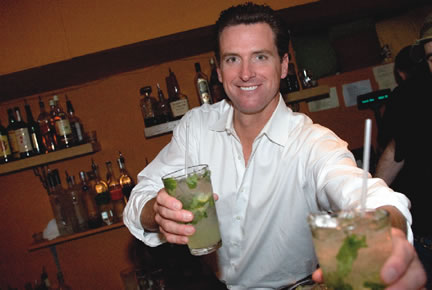
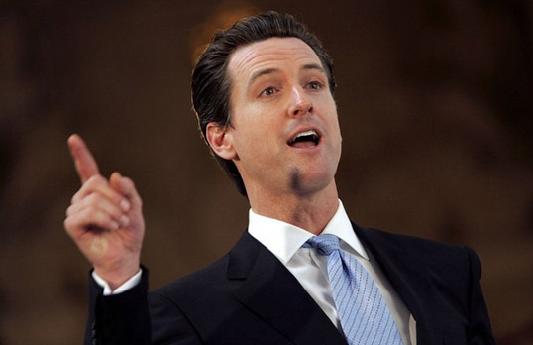
Why won’t Mayor Gavin Newsom save San Francisco’s nightlife and culture? That question was raised toward the end of this week’s cover story on party-crashing cops, but it’s worth highlighting here because Newsom seem uniquely suited to the task of mediating this damaging dispute.

Newsom owned a restaurant and bar before being elected mayor with the strong support of the San Francisco Police Officers Association. The business community is one of his key constituencies, and he constantly talking about the need to promote tourism, which relies on our cultural vitality. He’s the most natural, logical bridge for this divide.

That’s why attorney Mark Webb, who represents several clubs and individuals who have been harassed by SFPD Officer Larry Bertrand, has explicitly been calling for Newsom to get involved.

“I really believe his involvement could help us get to a place of calm,” Webb said. “We have to stop this petty infighting and we have to embrace the cause, which is to make San Francisco’s nightlife an inviting environment.”

DNA Lounge, which is not part of Webb’s lawsuit but has been fighting against harassment by Bertrand and the ABC, also wants to see Newsom broker some peace talks. 

“Absolutely, Gavin certainly has the juice to deal with this problem and we would welcome his involvement,” DNA general manager Barry Synoground told us. “We don’t know why there is such vehemence against nightlife and entertainment…What kills me is we have a large group of responsible purveyors, but we’re not being treated as such. We’re being treated like criminals.”

But Newsom has resisted the call, with his press secretary Tony Winnicker telling us, “I wouldn’t rule it out, but the mayor has department heads for that reason,” saying he preferred for Police Chief George Gascon to tell with it. But the problem is this isn’t a police issue, it’s a political one.

DNA Lounge (which has reguarly blogged the crackdown) has highlighted how SFPD Commander James Dudley sees nightlife in the city: as a nuisance to be abated, rather than an important culture to be embraced and celebrated. Winnicker claims that Newsom understands this: “The mayor understands the importance of a vibrant nightlife.”

But that understanding hasn’t translated into official city policy. Attorney Mark Rennie, who handles permitting and compliance issues for about 40 nightlife and culture clients, said that San Francisco has become notorious for making life difficult for club owners and other purveyors of fun. 

“The city has always had this love-hate relationship with nightclubs. But it’s really bad now,” Rennie said, noting how welcoming other local cities are toward nightclubs, which are important economic drivers. “Berkeley gets it. Oakland gets it. I don’t know why San Francisco doesn’t get it.”

Which is strange because, of all people, Newsom should get it. He should understand the natural tension between certain elements of both the police and nightlife communities and, valuing them both, try to find a way to solve this problem. So whatdaya say, Gavin? After you’re done try to clean up the mess you created with the labor unions, how about stepping in to address a problem that is closer to your sweet spot?


Image by Luke Thomas/Fog City Journal

Let the Eagle Fly!

1

The long and dramatic struggle for basic labor and civil rights by the California farmworkers led by Cesar Chavez is wonderfully told in an exceptional new musical, “Let the Eagle Fly,” that’s now playing a limited engagement in San Jose, the city where Chavez began the organizing career that brought him worldwide acclaim.

The musical score is excellent, as are the musicians and the actors – some in their teens or younger, others with broad experience. They tell the story of Chavez and the early struggles of the farm workers union he founded in 1964 and led for three decades – in lively song and dance, often with humor. And for all its artistry, the story they tell is accurate, down to small details. I know first-hand of the events dramatized, since I covered them in detail as the SF Chronicle’s labor editor.

Chavez’ start as an organizer for the Community Services Organization, his unwavering belief in the non-violent tactics of Mohandas Gandhi, his fasts and other personal sacrifices and those of his sometimes reluctant family . . .

The rushed and exhausting motions of vegetable pickers, wielding 18-inch hoes as they scurry over the fields like spiders, bent double, rhythmically bending, stooping and straightening, as they scoop up lettuce, carrots and other produce. Bend and pick. Bend and pick. Endlessly . . .

The fruit pickers, making their way swiftly through vineyards, reaching high to pluck the grapes. Reaching, stretching and picking. Reach, stretch, pick. Endlessly. Fast and endlessly.

The racist growers who fought fiercely to avoid giving their Chicano grape pickers decent pay and working conditions . . . the Kern County sheriff who sided with the growers . . . the dogged determination of Chavez and his followers . . . the nationwide grape boycott that finally won the workers the right to bargain with the growers and, in doing so, finally win union contracts guaranteeing them decent pay and working conditions . . . Chavez’ untimely death in 1993 . . .

The words and music show and tell all that and much more, and the audience can’t help but be drawn into the dramatic finale. We were quickly on our feet, cheering, applauding, clapping rhythmically, singing along with the actors, followed by a standing, cheering, much deserved ovation.

Only four more performances are left in the run of “Let the Eagle Fly” in the San Jose City College Theater – Thursday March 25, at 8 p.m.; Friday March 26, at 8 p.m.; Sunday, March 28, at 2 p.m.; and a final performance Wednesday, March 31, at 7:30 p.m. Details on ticket availability, prices and directions are available at www.lettheeaglefly.com.

Viva la huelga!

San Francisco writer Dick Meister is the co-author of “A Long Time Coming: The Struggle to Unionize America’s Farm Workers (Macmillan).

Anti-war movement seeks allies

7

By Jobert Poblete

This Saturday (March 20) will mark the seventh anniversary of the Iraq war and local groups are mobilizing for another round of protests to oppose the occupation of Iraq and the expansion of the war into Afghanistan. But this year’s program will also highlight local struggles as well, with speakers delving into the fight for more public education funding and the march passing by two hotels where union workers are in strained negotiations for a new contract.

The protest is being organized by ANSWER – Act Now to Stop War and End Racism – a coalition notorious for its everything-but-the-kitchen-sink approach to protest. Besides its plugs for Iraq, Afghanistan, public education, and local labor struggles, flyers promoting Saturday’s protest include demands around jobs, Palestine, Latin America, and Haiti. ANSWER organizer Chris Banks told us that these seemingly disparate issues are connected.

“There is a finite amount of resources in our society,” Banks said. “And if those resources are used on wars and to bail out banks, then we can’t use them for schools, health care, and public transit. The wall between foreign policy and domestic policy is a fictitious wall.”

This year’s protest will focus on the economic crisis and on “bailing out people instead of banks.” Students who helped organize the recent March 4 Day of Action are part of the coalition mobilizing for the Saturday protest and students and teachers will be among the speakers at the rally at Civic Center. Protest endorsers include the United Educators of San Francisco, a union that represents more than 6,000 public school employees. Dennis Kelly, president of UESF, told us that the protest “ties directly in with our concerns about the California state budget, that the priorities being set are the wrong priorities.”

The rally will be followed by a march that will pass by the Hilton and the Four Seasons, two hotels where members of Unite Here Local 2 are without a contract because of a negotiating impasse with management. The biggest point of contention between the hotels and union is over health care. (Union members currently pay $10 a month for family coverage but the hotels want to increase that to $200 a month.)

Israel Alvaran, a community organizer at Local 2, said that the health care issue provides a connective thread between the anti-war movement and his union’s struggles. “We believe in stopping the wars in the Middle East,” Alvaran said. “They’re driving the war economy that’s preventing people at home from getting affordable health care, public education, programs for creating jobs and building the economy.”

Alvaran hopes the March 20 protest will help raise the visibility of hotel workers and show the hotel corporations that the union has broad community support. He also said that including workers’ struggles in the protest is important because it exposes young activists joining the anti-war movement to labor and union issues.

Banks echoed this desire to raise public consciousness about local issues. “As much as possible, we want people to make the connection between local struggles and imperialist wars,” Banks said. “People go into political motion for different reasons. We want them to come out on March 20 and they’ll have opportunities to hear speakers representing different movements.”

Saturday’s protest will begin with a rally at Civic Center Plaza at 11 a.m. At noon, protesters will march through downtown San Francisco before returning to Civic Center. 

Occupation! exhibit highlights racism at SF businesses

1

By Cécile Lepage

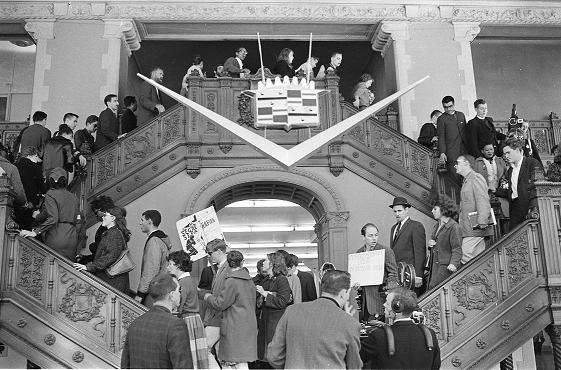
San Francisco has always had a liberal streak, but not so its business community, as a current exhibit highlights. In 1963 and ‘64, San Francisco was hit with massive demonstrations that denounced businesses’ discriminatory hiring practices and demanded equal work opportunity for African-Americans. Crowds picketed on Auto Row, in front of Mel’s Drive-In, Lucky Store, the Sheraton Palace Hotel, and Bank of America.

The Main Library exhibit “Occupation! Economic Justice as a Civil Right in San Francisco, 1963-64” retraces a struggle for economic justice that was specific to the city by the Bay, where thousands of African-Americans had moved to during World War II to work on the shipyards. When the war effort wound down, they were the first to be fired. Only direct actions—sit-ins, sleep-ins, and shop-ins—were able to shake the status quo: they led to more than 260 employment agreements for minority workers. There’s only a few days left to discover this important yet underrepresented piece of SF history: the display ends on March 27.

We spoke with curator Nancy J. Arms Simon about the exhibit and its relevance:

SFBG: How did this exhibition come to be?

NAS: It was actually the brainchild of Susan Goldstein, from the San Francisco History Center, and Catherine Powell, the director of the Labor Archives and Research Center. They had talked about collaborating on an exhibit related to labor, drawing from both collections.

In the meantime, I had fallen in love with the photographs of the photojournalist Phiz Mezey that I had discovered at the Labor Archives. She documented the April ‘64 demonstrations on Auto Row. So, it was a perfect blending. Those pictures are amazing because esthetically they’re incredible. On every single one of them, the layout just keeps your eyes circling. And the other part is that Phiz Mezey had been removed from her position at San Francisco State University, where she had been a professor. She had refused to sign the Communist Levering Act that all public employees were required to sign. In the 1950s, anyone who worked for a state agency had to sign an anti-communist oath.

While she was petitioning San Francisco State for years to get her job back, which she did in 1978, she was also trying to support herself and her kids. And so she became a documentary photographer. So I had become intrigued with her and with that story. When I started the project, I thought it would be an exhibit on the Auto Row protests. I didn’t even realize that this was part of a greater series of events that had spanned for two years.

SFBG: What were people asking for?

NAS: What they wanted was jobs, what I refer to as front-end jobs. I don’t like the idea of using the terms skilled and unskilled labor, because too many things that are very skilled get lumped under unskilled labor.

Blacks in San Francisco were assigned to jobs where they didn’t interact with the public. Basically, they weren’t allowed to. So they were allowed to be mechanics, janitors, but they weren’t allowed to be service people: bank tellers, waitresses, salesmen. There were two big pushes conjointly going on. There was the push for equality in housing, to end the segregation in housing, and also this push for jobs. If you don’t have access to jobs, there’s so much that you lose along with that. There’s that compounded effect of not saving to send your kids to college or provide for your own retirement… 

SFBG: But during the Second World War, [President] Roosevelt had enacted the Fair Employment Practices Act that made discrimination unlawful with companies that held government contracts.

NAS: But it was slated to end once the war was over. It was voted through to continue slowly across the country state by state, but it wasn’t nationwide until ‘64, when LBJ signed the Civil Rights Act. So for 20 years, from 1945 to 1964, people who had known a certain quality of life were fighting just to maintain it. Laws to promote equality might have been enacted, or agreements might have been signed, but having the law didn’t mean anything. There was this understanding that you can never let out the pressure; you have to keep pushing to make sure that that equality is actually enacted.

SFBG: How did the protesters organize their actions?

NAS: There’s a lot of lessons on how you effectively make change. There was a lot of unity amongst the groups, CORE, the WEB Du Bois Club, and the Ad-hoc Committee to End Discrimination. They had lawyers in place. Before a protest, they would decide who could afford to get arrested, and who couldn’t. So the people who could afford to get arrested would go to a certain level, they would maybe go inside the building. And all the leaders always made a point to get arrested, because they knew that that would get more press. And they also intentionally clogged the courts. They made sure that hundreds of people would get arrested just to slow things down and make it more difficult on the system.

It was really effective. And I think there’s a lot of these lessons that we miss today. They started with Mel’s Diner and they did get the owner to sign the agreements. Over at Lucky Store grocery, they did a shop-in. This is non-violent protest at its most beautiful! They went in and filled their shopping carts, they got to the counter and got them all run through. Remember, this is all scanned by hand. And then, once everything was scanned, they would say, “I will pay for these groceries once you give better jobs to Blacks,” and then they would leave. And all these bagged groceries filled the entire floor! All this stuff had to be put away. Plus people were picketing outside the store. So not only are you creating this major headache and throwing this wrench in the wheel, you’re also blocking people from shopping. So they were significantly cutting into their income.

SFBG: The Sheraton Palace Hotel rally was the biggest protest to take place.

NAS: It was really hard to narrow it down to a few statements to get into a showcase! About 1,500 protesters surrounded the hotel on March 6, 1964. There were other events leading up to that, though, they had tried negotiations, they had started smaller pickets outside. There would have been a court order to end the picket. So this is all building up.

During the major protest, I think 450 people entered the building and wouldn’t leave the lobby. The police carried them out, but they came back. They slept in overnight. And then the mayor, Jack Shelley, stepped in. He worked on the negotiation process and made it happen. After that, literally, the day they signed the agreement, they started picketing on Auto Row. This is how well organized they were. At the same time, other businesses were signing agreements for hiring Blacks, because they didn’t want this kind of press to happen. Remember, this is all happening in “liberal” San Francisco, so the fact that this is not good press for them counted.

SFBG: In the outcomes, you were careful to underline how these events had an impact on individuals’ lives.

NAS: It’s so easy for us in hindsight to know that civil rights were the right thing to fight for. But just think about what it would take out of somebody to get arrested. Tracy Sims, who later became Tamam Tracy Moncur, basically took the fall for her group. Because there were so many people arrested, they sent them to court in groups of 10 to12 people. She ended up getting 60 days in jail, plus a $200 fine. It was horrible for her. She was an idealistic 18-year-old. She knew she was doing the right thing. They were successfully changing laws just to confirm she was doing the right thing. And then she’s punished. After she served her time, her mother was already back on the East Coast, and she went to live with her mom.

SFBG: You were able to gather artifacts to tell this story, pins in particular.

NAS: These are all part of the Labor Archive collection. Graphically, they’re so simple, easy to read. You see them in photographs and they absolutely pop out. My favorite one is this “= Quality” one. It’s timeless. You’ve got the word play of equality equals quality. It’s got the silhouettes of a white child and a black child. What does equality really mean? It means equal quality for everybody. It’s not just a word. I really love that one, because it’s still so contemporary. Objects have got a power of their own. If you can stop and think of what’s involved, why they were created, and all the places they’ve been to… Some of the old pins will have the printer’s union stamp and the sheet metal workers’ stamp Look at that! That’s pride in your work right there.

Thrifting for the the perfect song with tUnE-yArDs

0

The deep piles of used goods can be a bit daunting at some of the best thrift stores, but when you find that shimmering prize, the fuzzy feeling is relative to winning a race or seeing your worst enemy trip into a puddle. For the sole member of tUnE-yArDs, musician Merrill Garbus— playing Sat/20 at Bottom of the Hill— her ultimate find was a white purse with row after row of luscious beads.

“I was in high school, living in Connecticut and we’d take trips into New York City to shop at thrift stores,” she recalls, talking to me over the phone while walking in her Oakland neighborhood. “I used to collect purses, even though I never used them.”
Recently she bought up a desk and an entire wardrobe of tour clothes, all without spending more than 20 bucks. Garbus says she uses thrift stores as a way to try on different personalities and I’m guessing she finds a little inspiration in there, too.

Plainly stated, Garbus’ music is lo-fi, indie-folk, but beneath the glorious yodeling and ukulele strumming are lyrical melodies, strong heart beats and interesting percussion made from banging and clanking on found objects. Her latest album, BiRd-BrAiNs (Marriage, 2009) was recorded through a hand-held voice recorder and mixed on her laptop— total DIY style.

http://www.youtube.com/watch?v=AwDEQWaSiEU

Dig through her multitude of songs and you’ll find outside sounds, children talking about fruit and all sorts of one-of-a-kind clips that wear just like your favorite Goodwill-adopted sweatshirt. She’s a one-woman version of Yeasayer and you can hear Garbus’ love of African music, more specifically notes borrowed from her visit to Swahili.

As I talked to her, Garbus was getting ready for the launch of the tour— the car needed an oil change and she needed to get rid of a nasty cold.

“I’m struggling with being human right now— sick, tired and overworked,” she said with a cough. “But I think I’ll be fine and remarkably, my singing voice comes from a different place.”

Still thinking about thrifting and the old white purse, I wondered if Garbus had ever thought about who was the bag’s previous owner. I like to imagine who bought the item new and I always hope to channel some sort of energy through the garment– to see if I can stake out any secrets from its past life. I asked Garbus if she puts subliminal messages into her music for a similar effect.

“I don’t think so,” she laughs. “But maybe a really cheesy message of love? These songs take time and sort of fold and unfold, exposing miniature worlds inside each of them. They’re a labor of love and I guess that’s the message. Yes, love…. Sorry to cheese out.”

tUne-yArDs w/Xiu Xiu
Sat/20, 8:30pm, $12
Bottom of the Hill
1233 17th Street, SF
www.bottomofthehill.com

Newsom’s plan means service cuts

15

The San Francisco Controller’s Office says that Mayor Newsom’s plan to lay off 15,000 city employees then hire most of them back at a reduced workweek will save $110 million. The Examiner quotes the mayor:


“The 37½-hour idea was a way of equalizing,” Newsom said in an interview Tuesday. “I would have to go to every single labor union, open contracts that are closed and engage with those open contracts in collective bargaining for each and every local.
“Every labor union is in this together. We aren’t going to pick and choose. That being said, they are coming back Thursday with a set of alternatives, and I will keep an open mind.”


Actually, it’s not exactly equalizing — no police officers or firefighters will get what amounts to 6.25 percent pay cuts. But here’s the more important issue:


The mayor — and, to a great extent, the newspapers — present this as a simple way of saving money; sure, the workers take a little hit in their pay, but jobs are preserved. What nobody’s saying is that this will amount to more very significant service cuts.


Take 15,000 employees and cut 2.5 hours from each of their workweeks. That’s 37,500 hours of work a week, or the equivalent of 937 full-time jobs. So one of two things are going to happen: Either city employees are going to be working 40 hours for 37.5 hours pay — that is, taking a direct pay cut, which is what I think Newsom really wants — or the city’s going to lose the equivalent of 937 workers.


If you assume that it’s unfair to ask people to work 40 hours for 37.5 hours pay (and if you assume, as I do, that the unions won’t stand for that), we’re going to be talking about service cuts — work that doesn’t get done. And where will those cuts happen? Guess what — it’s the usual places.


Public health takes the biggest hit, with $35.5 million in “savings” (actually, cuts) over the next 14 months. Human Services gets $10 million cut, and Muni about $8 million.


That means longer lines and sicker people at SF General, and more broken buses with no mechanics to fix them, which means slower Muni service … you get the picture.


I’m not saying that we don’t need cuts, and you could argue that it’s more fair to cut everyone’s pay a little than to eliminate 937 jobs altogether. But let’s be honest about this — it’s not just “salary savings.” It’s service cuts. On top of last year’s service cuts, on top of the previous year’s service cuts … and it’s being done without any real overall plan for what services we need to provide and what takes priority.


And of course, it’s being done with no discussion at all of raising new revenue.  

Hop on the St. Patty’s wagon

0

culture@sfbg.com

EVENTS Diarmuid Philpott, chairman of this year’s St. Patrick’s Day parade and president of the Irish United Societies, knows a thing or two about SF’s glorious Irish heritage, the holiday’s significant religious and cultural roots, and of course, where the party is for the upcoming week. “First of all, it’s a celebration of being Irish,” Philpott explains. “Everyone wants to be Irish on St. Patrick’s Day. And they are welcome to be Irish on St. Patrick’s Day!” So don that emerald green, and buckle down for a hooley of a time.


“GETTING THE JOB DONE: IRISH CITIZENS AND A LIFETIME OF CIVIL SERVICE”

What have the Irish ever done for you? Learn about their contributions to our city at this panel discussion, featuring local paddies from the public and private sectors and moderated by Tony Bucher of the Irish Herald. The event is part of the Irish Crossroads Festival, which celebrates the intersection of roots and modernity in Irish culture today.

Thur/11, 7 p.m., free

United Irish Cultural Center

2700 45th Ave. , SF

(415) 810-3774

www.irishamericancrossroads.org


159TH ANNUAL ST. PATRICK’S DAY PARADE AND FESTIVAL

The largest celebration of Emerald Isle culture west of the Mississippi is taking over downtown this weekend — and you want in on the dancin’, pipin’ action. Afterward, head to the Civic Center street festival, featuring vendors, activities, a beer garden and Irish gypsy jazz group, the Doug Martin Avatar Ensemble.

Parade: Sat/13, 11:30 a.m. , free

Starts at 2nd St. and Harrison, SF

Festival: Sat/13 and Sun/14, 11 a m.-5 p.m., free

Civic Center Plaza, SF

www.sfstpatricksdayparade.com


ST. PATRICK’S DAY BLOCK PARTY

For a family-oriented celebration, jet down to the United Irish Cultural Center, which will be co-hosting this al fresco event with Java Beach. There’ll be food, drink, games for the kids, jumpy castles — and a zoo across the street if you really want to make a wee one’s day.

Sun/14, 11 a .m.- 4 p.m., free

45th Ave. (between Sloat and Wawona), SF

(415) 661-2700

www.irishcentersf.org


HARRINGTON’S BLOCK PARTY

Sure, we’re a city that doesn’t lack for a superlative Irish pub in which to celebrate St. Patty’s — Durty Nelly’s, the Plough and Stars, and the Chieftain come to mind — but Harrington’s joins with neighborhood businesses for a celebration right in the FiDi of it all, closing down the block for performances by Ben Hunter and Celtic Scandal, the Kennelly Irish dancers and big, steaming plates of corn beef and cabbage.

Wed/17, 11 a m-1 a m., free

245 Front, SF

(415) 392-7595


BOG SAVAGES

Get a load of the reggae-laced tones of these Irish rebel rockers, who’ve got the street cred to back it up. Frontman Kevin Barry escaped from Belfast’s Long Kesh prison in the IRA’s 1983 “Great Escape.” They rock.

Wed/17, 8:30 p.m., free

Maggie McGarry’s

1353 Grant, SF

(415) 399-9020

www.maggiemcgarrys.com


FATHER YORKE DAY

A salute to a real hero. Father Yorke was a 19th century Irish revolutionary and labor activist. His service takes place each year here at All Saint’s — a sober end to a holiday season that can be anything but.

Sun/28, 10:30 p.m., free

All Saints’ Chapel Holy Cross Cemetery

1500 Mission, Colma

www.sfstpatricksdayparade.com

And though the Guinness be full of vitamin D and goodness, take ‘er easy — the real Irish celebrate responsibly. Berg Injury Lawyers are sponsoring the same free cab rides home on St. Patty’s that they do on New Year’s. Call Luxor Cabs at (415) 282-4141 for a lift in the city, or Veterans Cab at (415) 282-4141 for Oakland, Alameda, or Berkeley .

Our weekly picks

0

WEDNESDAY 10th

DANCE

Alvin Ailey American Dance Theater


Today, Alvin Ailey American Dance Theater is as much Judith Jamison’s company as it was Ailey’s. Having reluctantly taken on the company’s artistic directorship after Ailey’s death, Jamison has led the troupe for the last 20 years with remarkable perspicacity and skill. Jamison may not be a great choreographer, but she is a great company director and dance visionary. This anniversary season sports three Bay Area premieres. Borrowing the title from Jamison’s autobiography, Ronald K. Brown, something of a visionary himself, set his new Dancing Spirit in her honor. Company dancer-choreographer Matthew Rushing’s Uptown looks to the Harlem Renaissance for inspiration. Finally, Jamison contributes Among Us (Private Spaces: Public Places), a series of vignettes set to a jazz score by Eric Lewis. (Rita Felciano)

8 p.m. (through Sat/13), $36–$62

Zellerbach Hall

UC Berkeley campus, Berk.

(510) 642-9988

www.calperformances.org

THURSDAY 11th

VISUAL ART

Pepe Moreno


Exploring the life of one of the most iconic characters in the history of comic books, the new "Batman: Yesterday and Tomorrow" exhibit at the Cartoon Art Museum spotlights Bruce Wayne and his crime-fighting alter-ego, starting from his creation by artist Bob Kane and running through his many transformations over the years. Groundbreaking artist Pepe Moreno will be on hand tonight to discuss his revolutionary 1990 graphic novel Batman: Digital Justice, which was written and illustrated using computer hardware and software — one of the first such endeavors undertaken in the comics world. (Sean McCourt)

7 p.m., $5 donation requested

Cartoon Art Museum

655 Mission, SF

(415) 227-8666

www.cartoonart.org

EVENT

Thirsty Bear Beer Tasting


I’m hardly the first person to hop on the eat-everything-organic bandwagon. But when you live in San Francisco, it’s only a matter of time before you start shopping at farmers markets in hopes of finding the perfect toxin-free mango or avocado. Now you can add "organic beer connoisseur" to your list of titles by attending Thirsty Bear’s free organic beer tasting and workshop. You’ll learn all there is to know about sustainable brewing techniques, and get to sample some of the tastiest beers immediate area has to offer. (Elise-Marie Brown)

12-1:30 p.m., free

Green Zebra Environmental Action Center

50 Post, SF

(415) 346.2361

www.thegreenzebra.org

MUSIC

A Sunny Day in Glasgow


A Sunny Day in Glasgow wants you to rethink shoegaze. The Philadelphia trio layers their instruments in a manner that resembles a 21st-century Cocteau Twins, but their wall of sound is never as heavy, aiming instead for a sunny pop atmosphere you wouldn’t expect from the genre. Sometimes the accompanying vocals by Annie Fredrickson and Josh Meakim are maddeningly hard to make out beneath the waves of sound, but then they emerge clearly at just the right moment, like a breath of fresh air. Last year’s sophomore album Ashes Grammar (Mis Ojos Discos) was a sprawling mega-mix of moods, with songs bleeding into songs willy-nilly, and it’s safe to figure that their live show would reflect such a singular aural experience. If the critical reactions to Ashes Grammar are any indication, chances are good A Sunny Day in Glasgow won’t be performing in spaces as tiny as the Hemlock for long. (Peter Galvin)

With the Gold Medalists and Apopka Darkroom

9 p.m., $8

Hemlock Tavern

1131 Polk, SF

(415) 923-0923

www.hemlocktavern.com

EVENT/MUSIC

Free Party for Experience Hendrix Tour


Inspired by Jimi Hendrix’s significant contributions to the music world, his father formed Experience Hendrix, a series of tribute concerts. Debuting in 1995 at Seattle’s Bumbershoot Arts and Music Festival, the show has been on the road ever since. The tour comes to the Warfield tonight with a lineup that includes Band of Gypsys’ original bassist Billy Cox, along with Joe Satriani, Kenny Wayne Shephard, Eric Johnson, Susan Tedeschi, and Jonny Lang. Before the show, Hard Rock Café hosts a party with a raffle for tickets and transportation to the show. (Lilan Kane)

4 p.m., free

Hard Rock Café

Pier 39, SF

(415) 956-2013

www.hardrock.com/sanfrancisco

FRIDAY 12th

MUSIC

The Temper Trap


Although these guys were featured in (500) Days of Summer, don’t let that fool you into thinking they’re strictly light and whimsical. Just reminiscing on the first time I saw them gets me giddy inside. Drumsticks flew everywhere, and Dougy Madagi whaled uncontrollably in the mic as the crowd absorbed every drop of their soaring energy. Let’s just say these guys know how to put on a serious show. Now the Melbourne, Australia rockers are making their second trip here as headliners. (Brown)

9 p.m., $22.50

The Fillmore

1805 Geary, SF

(415) 346-6000

wwwvenation.com

COMEDY

Dave Attell


You wanna know why you’ve never seen television commercials for Jägermeister? Dave Attell knows a few good reasons. Attell is perhaps best known to mainstream audiences for his stint hosting Comedy Central’s Insomniac, a hilarious late-night, booze-fueled TV program where he explored what to do in various cities while on tour. This weekend the sometimes abrasive but always gut-bustingly funny comedian brings his high-proof standup to the city for the weekend, covering a variety of topics, including the aforementioned elixir and its propensity for instigating debauchery. (McCourt)

8 p.m. and 10:15 p.m. (also Sat/13) , $35.50

Cobb’s Comedy Club

915 Columbus, SF

(415) 928-4320

www.cobbscomedyclub.com

DANCE

ODC/Dance


How many modern dance companies do you know with two in-house choreographers? These ensembles usually swim an eclectic rep or feature the work of a single artist. ODC/Dance is very much the exception because of KT Nelson and Brenda Way, two dance-makers who couldn’t be more different in terms of style, artistic temperament, musicality, and sources of inspiration. Every season offers at least one new piece from each. This year, Way is working with composer/performer Pamela Z on Waving Not Drowning (A Guide to Elegance), a response to a 1963 manual on etiquette. Nelson turns to Mozart’s glorious Piano Concerto No. 20 in D minor for Labor of Love, in which she explores what she calls "committed adult love" — the stresses and joys experienced by couples in relationships. (Felciano)

March 12/ 7 p.m. (through March 28), $15–$45

Novellus Theater

Yerba Buena Center for the Arts

701 Mission, SF

(415) 978-ARTS

www.odcdance.org

SATURDAY 13th

COMEDY

Martin Lawrence


Damn, Gina! Even if he’s fallen off your radar after donning the "Eddie Murphy fat suit" in Big Momma’s House (2000), you have fond memories of Martin Lawrence from such early comedic ventures as the TV series Martin, the host of HBO’s Def Comedy Jam or the tabloid field-day "Running Down Ventura Boulevard Yelling at Cars." In 2010, Lawrence is taking a break from film and returning to his roots with a stand-up tour, where his manic delivery really has room to breathe. Though he often finds himself an easy target, there is no doubt Lawrence is a huge star and these tickets are going to sell out — so get to steppin’! (Galvin)

8 p.m. (also Sun/14), $42.75–$77.50

Paramount Theatre

2025 Broadway, Oakl.

(510) 465-6400

www.paramounttheatre.com

MUSIC

E.C. Scott


E.C. Scott works a crowd, inciting laughter and tears. Atlantic Records’ cofounder Jerry Wexler praised her as "one honest-to-God soul singer." She’s become a major staple in the blues circuit in the Bay Area and beyond. Scott grew up singing in St. John’s Missionary Baptist Church in Oakland and cites gospel as a major influence. She’s shared the stage with Lou Rawls, Ray Charles, Patti Labelle, and John Lee Hooker, and in 1994, signed a multirecord deal with Blind Pig Records that resulted in a Downbeat award and W.C. Handy nomination for Soul/Blues Female Artist of the Year. (Lilan Kane)

8 p.m., $20

401 Mason, SF.

(415) 292-2583

www.biscuitsandblues.com

MUSIC

Youth Brigade


Formed by brothers Adam, Mark, and Shawn Stern in 1980, Youth Brigade made its mark on the early California punk scene with empowering anthems like "Fight to Unite" and DIY action. The trio started the Better Youth Organization to promote shows and put out records for themselves and their friends’ bands. Thirty years later, the group still plays with raw, rebellious energy and spirit. The sprawling new box set Let Them Know: The Story of Youth Brigade and BYO Records chronicles their efforts. (McCourt)

9 p.m., $18

Slim’s

333 11th St., SF

(415) 255-0333

www.slims-sf.com

SUNDAY 14th

MUSIC

Scarlett Fever


Local fans of punk, rockabilly, hot rods, burlesque, and more join together today for a very special cause — the annual "Scarlett Fever" show, an all-day benefit for Scarlett James, teenage daughter of Rosa and Bob James, who suffers from Rett syndrome, a childhood neurodevelopmental disorder that leads to the loss of many motor skills. The annual event helps pay for her care and raises money for research into the disorder. Her father is a veteran musician (playing in Del Bombers) and each year has enlisted the help of some stellar talent. Today’s event includes Big Sandy and the Fly Rite Boys, Three Bad Jacks, Stigma 13, Ghost Town Hangmen, plus live burlesque — courtesy of Hubba Hubba Revue — and raffles, including one for a new custom motorcycle. (McCourt)

1 p.m., $15

DNA Lounge

375 11th St., SF

(415) 626-1409

www.dnalounge.com

TUESDAY 16th

FILM

Remembering Playland at the Beach


If you haven’t yet met Laffing Sal, it’s time for you to take a trip to (dreaded) Fisherman’s Wharf and the (free) Musée Mécanique. As every self-respecting San Franciscan knows, Sal once presided over the Funhouse at Playland at the Beach, an amusement park along Ocean Beach that had its heyday in the 1910s and ’20s (but didn’t close until 1972). The most famous film to feature Sal’s terrifying cackle is 1948’s The Lady From Shanghai — but no doubt you’ll get an earful in Tom Wyrsch’s brand-new doc, Remembering Playland at the Beach, which is stuffed with archival footage, photographs, and interviews. Appropriately, the film debuts at the Balboa, just blocks from the former site of Playland’s famous midway. (Cheryl Eddy)

7 and 9:15 p.m., $6.50–$9

Balboa Theatre

3630 Balboa, SF

(415) 221-3117

www.balboamovies.com

FILM

Palestine Cinema: A Shorts Program


The Red Vic has partnered with the Arab Film Festival for a tempting "second look" at a series of short works by a new and international generation of Palestinian filmmakers, originally screened as part of AFF 2009. Topping the lineup is Riyad Deis’ Swesh Swesh, set during the Arab Revolt in Palestine in 1936–39, as a farming family reluctantly harbors a revolutionary fugitive and finds its traditional beliefs challenged in the resulting exchange. The one-night-only program also includes Lesh Sabreen by Bay Area–trained Muayad Alayan (and shot by SF filmmaker Christian Bruno). It focuses on a young couple trapped, literally, between the wall of Israeli occupation and their families’ own conservative mores. (Robert Avila)

7:15 and 9:15 p.m., $6-9

Red Vic Movie House

1727 Haight, SF

(415) 668-3994

www.redvicmoviehouse.com

The Guardian listings deadline is two weeks prior to our Wednesday publication date. To submit an item for consideration, please include the title of the event, a brief description of the event, date and time, venue name, street address (listing cross streets only isn’t sufficient), city, telephone number readers can call for more information, telephone number for media, and admission costs. Send information to Listings, the Guardian Building, 135 Mississippi St., SF, CA 94107; fax to (415) 487-2506; or e-mail (paste press release into e-mail body — no text attachments, please) to listings@sfbg.com. We cannot guarantee the return of photos, but enclosing an SASE helps. Digital photos may be submitted in jpeg format; the image must be at least 240 dpi and four inches by six inches in size. We regret we cannot accept listings over the phone.

Stage listings

0

Stage listings are compiled by Molly Freedenberg. Performance times may change; call venues to confirm. Reviewers are Robert Avila, Rita Felciano, and Nicole Gluckstern. Submit items for the listings at listings@sfbg.com. For further information on how to submit items for the listings, see Picks. For the complete listings, go to www.sfbg.com.

THEATER

OPENING

Death Play EXIT Theatre, 156 Eddy; 673-3847, www.theexit.org. $15-$20. Opens Thurs/11. Runs Thurs-Sat, 8pm. Through March 27. Thunderbird Theatre Company presents the third installment in the comedy series by Sang S. Kim.

…And Jesus Moonwalks the Mississippi Cutting Ball Theater, 277 Taylor; (800) 838-3006, cuttingball.com. $15-$30. Previews Fri/12-March 18. Opens March 19. Runs Thurs-Sat, 8pm; Sun, 5pm. Through April 11. Cutting Ball presents this deeply personal fantasy play inspired by the myth of Demeter and Persephone and directed by Amy Mueller.

KML Preaches to the Choir Jewish Theater, 470 Florida; www.killingmyblobster.com. $15-$20. Opens Thurs/11. Runs Thurs-Fri, 8pm; Sat, 7 and 10pm; Sun, 7pm. Through March 28. The award-winning sketch comedy group takes aim at the higher powers in this piece directed by Paco Romane.


ONGOING

Beauty of the Father Phoenix Theatre, 414 Mason; (800) 838-3006, www.offbroadwaywest.org. $30. Thurs/11-Sat/13, 8pm. Off-Broadway West’s season opener offers the Bay Area a first look at the somewhat messy but ultimately rewarding 2006 drama by Cuban American Pulitzer Prize–winner Nilo Cruz ("Anna in the Tropics"). (Avila)

Caddyshack: Live! Dark Room, 2263 Mission; 401-7987, www.brownpapertickets.com/event/99361. $20. Fri-Sat, 8pm. Through March 27. The Dark Room presents Jim Fourniadis’ live adaptation of the iconic movie.

*The Caucasian Chalk Circle A.C.T., 415 Geary; www.act-sf.org. $10-$82. Tues-Sat, 8pm; Wed/10, Sat/13, and Sun/14, 2pm. After bringing his acclaimed pared-down "Sweeney Todd" to ACT in 2007, director John Doyle returns with Bertolt Brecht’s inspired take on the biblical Judgment of Solomon, a story whose faith in the essential decency of people—especially those not completely corrupted by power over, and under, others—is here counterpart to a damning and rousing dissection of war, politics and the justice system/racket. (Avila)

Death Play EXIT Theatre, 156 Eddy; 289-6766, www.thunderbirdtheatre.com. $15-$20. Thurs-Sat, 8pm. Through March 27. Thunderbird Theatre Company presents the third installment in the critically acclaimed sketch comedy series "Serve By Expiration" by Sang S. Kim.

Desperate Affection Royce Gallery, 2901 Mariposa; www.expressinproductions.com. $28. Thurs-Sat, 8pm. Through April 10. Expression Productions presents a dark comedy by Bruce Graham.

Eat, Pray, Laugh! Off-Market Theaters, 965 Mission; www.brownpapertickets.com. $20. Wed, 8pm. Through March 31. Off-Market Theaters presents stand up comic and solo artist Alicia Dattner in her award-winning solo show.

*Loveland The Marsh, 1074 Valencia; 826-5750, www.themarsh.org. $15-$50. Sat, 8:30pm; Sun, 7pm. Through April 11. Los Angeles–based writer-performer Ann Randolph returns to the Marsh with a new solo play partly developed during last year’s Marsh run of her memorable Squeeze Box. Randolph plays loner Frannie Potts, a rambunctious, cranky and libidinous individual of decidedly odd mien, who is flying back home to Ohio after the death of her beloved mother. The flight is occasion for Frannie’s own flights of memory, exotic behavior in the aisle, and unabashed advances toward the flight deck brought on by the seductively confident strains of the captain’s commentary. The singular personality and mother-daughter relationship that unfurls along the way is riotously demented and brilliantly humane. (Avila)

*Mirrors In Every Corner Intersection for the Arts, 446 Valencia; 626-2787, www.theintersection.org. Thurs-Sun, 8pm. Through March 21. Try to ask someone who’s ever felt marked by the color (any color) of their skin if they believe in a post-racial society, and see what kind of a response you elicit. That there is no tidy answer to this potentially messy question is a conundrum well-illustrated by playwrite Chinaka Hodge’s hypothetical fable of a white-skinned baby born into an African-American family. Each member of the family has a different reaction to and relationship with the mysterious blonde-haired changeling Miranda, dubbed "Random". Her father, who dies when she is young, is reported to have hated her. Her oldest brother Watts (Daveed Diggs) claims to understand her best, but in trying to get her to unravel what it means to be "black" vs. "white", reveals himself to be as confused as anyone by the lack of a single definition. Her mother Willie—played tough and no-nonsense by Margo Hall (who also plays the teenaged Miranda)—loves her unconditionally, yet ultimately sacrifices her for the well-being of the greater family unit. Hodge’s first full-length play, Mirrors succeeds in strong performance, warm humor, and crackling, poetic dialogue, but fails to adequately resolve how it is that the otherwise uncompromising Willie lets the low card of an unfortunate accident trump her otherwise strong hand of "colorblind" maternal loyalty. With Dwight Huntsman and Traci Tolmaire. (Gluckstern)

Now and at the Hour EXIT Stage Left, 156 Eddy; 673-3847, www.theexit.org. $15-$25. Fri-Sat, 8pm. Through March 27. EXIT presents the subtly unnerving show by theatrical magician Christian Cagigal.

Oedipus el Rey Magic Theatre, Building D, Fort Mason Center; 441-8822, www.magictheatre.org. $20-$55. Days and times vary. Through Sun/14. Luis Alfaro transforms Sophocles’ ancient tale into an electrifying myth, directed by Loretta Greco.

Pearls Over Shanghai Hypnodrome, 575 Tenth St.; 1-800-838-3006, www.thrillpeddlers.com. $30-69. Sat, 8pm; Sun, 7pm. Through April 24. Thrillpeddlers presents this revival of the legendary Cockettes’ 1970 musical extravaganza.

The Real Americans The Marsh, 1062 Valencia; 826-5750, www.themarsh.org. $15-$50. Thurs-Fri, 8pm; Sat, 5pm. Through April 18. The Marsh presents the world premiere of Dan Hoyle’s new solo show.

Shopping! The Musical Shelton Theater, 533 Sutter; (800) 838-3006, www.brownpapertickets.com. $27-$29. Fri-Sat, 8pm. SF’s longest running original musical begins its fifth year at Shelton.

Something You Might Want Stagewerx Theatre, 533 Sutter; catchynametheatre.org. $16. Fri-Sat, 8pm; Sun, 3pm. Through March 28. CatchyNameTheatre presents this dark comedy written and directed by Jim Strope.

Suddenly Last Summer Actors Theatre, 855 Bush; 345-1287, www.actorstheatresf.org. $15-$35. Thurs-Sat, 8pm. Through March 27. Actors Theatre presents one of Tennessee Williams’ finest and most famous plays.

The Sugar Witch New Conservatory Theatre Center, 25 Van Ness; 861-4914, www.nctcsf.org.

Various days and times through April 4. NCTC presents the premiere of Nathan Sanders’ crime story.

What Just Happened? The Marsh, 1062 Valencia; (800) 838-3006, www.themarsh.org. $20-$50. Fri/12-Sat/13, 8pm. The Marsh presents Nina Wise’s improvisation-based sow about personal and political events which have transpired over the previous 24 hours.

What Mama Said About ‘Down There Our Little Theater, 287 Ellis; 820-3250, www.theatrebayarea.org. $15-$25. Thurs-Sun, 8pm. Through July 30. Writer/performer/activist Sia Amma presents this largely political, a bit clinical, inherently sexual, and utterly unforgettable performance piece.


BAY AREA

Beebo Brinker Chronicles Brava Theater Center, 2781 24th St; 641-2822, www.brava.org. $20-$30. Thurs/11-Sat/13, 8pm. The regional premiere of Kate Moira Ryan and Linda S. Chapman’s play adapted from a series of pulp novels.

Concerning Strange Devices from the Distant West Roda Theatre, 2015 Addison, Berk; (510) 647-2949, berkeleyrep.org. $13.50-$27. Days and times vary. Through April 11. Berkeley Rep presents a sexy and intriguing new show from Naomi Iizuka.

*East 14th Laney College Theatre, 900 Fallon St, Oakl. www.east14thoak.eventbrite.com. $10-$50. Fri-Sat, 8:30pm. Through March 28. Also at the the Marsh Berkeley in March. Don Reed’s solo play, making its Oakland debut after an acclaimed New York run, is truly a welcome homecoming twice over. (Avila)

Handless Central Stage, 5221 Central, Richmond; (800) 838-3006, www.raggedwing.org.$15-$30. Thurs-Sat, 8pm. Through March 27. Ragged Wing Ensemble presents Amy Sass’ re-invention of the folk-tale The Handless Maiden.

*Learn to be Latina La Val’s Subterranean, 1834 Euclid, Berk. impacttheatre.com. $10-$20. Thurs-Sat, 8pm. Through March 27. Impact Theatre continues its 14th season with the world premiere of Enrique Urueta’s play.

Singin’ in the Rain Julia Morgan Center for the Arts, 2640 College, Berk; (510) 665-5565, www.berkeleyplayhouse.org. Check Web for days, times, and prices. Through March 21. Berkeley Playhouse presents this classic musical.


PERFORMANCE

"All Star Magic & More" SF Playhouse, Stage 2, 533 Sutter; 646-0776, www.comedyonthesquare.com. Sun, 7pm. Ongoing. Magician RJ Owens hosts the longest running magic show in San Francisco.

30th Anniversary Celebration of New Works African American Art and Culture complex, 762 Fulton; 292-1850, www.culturalodyssey.org/tickets. Thurs-Sat, 8pm; Sun, 3pm. $20. In celebration of Black History Month and National Women’s Month, Cultural Odyssey presents a festival featuring The Love Project, The Breach, and Dancing with the Clown of Love.

BATS Improv Theatre Bayfront Theater, Fort Mason Center, B350 Fort Mason; 474-6776, www.improv.org. Fri-Sat, 8pm. $17-$20. The Theatresports show format treats audiences to an entertaining and engaging night of theater and comedy presented as a competition.

"Cabaret Showcase Showdown" Martuni’s, 4 Valencia; www.dragatmartunis.com. Sun, 7pm. Katya Ludmilla Smirnoff-Skyy and Mrs. Trauma Flintstone are proud to continue the individual contests.

The Capitol Steps Kanbar Hall, JCCSF, 3200 California; 292-1233, www.jccsf.org/arts. Sun, 4 and 7pm. $46-$50. The musical political satire troupe made up of former Congressional staffers, return with a new administration to poke fun at.

"Death as a Salesman" Jellyfish Gallery, 1286 Folsom; deathasasalesman.org. Fri-Sat, 8pm. Teahouse of Danger Productions present Douglass Truth’s one-woman musical.

"Performance Art in Front of an Audience Ought to be Entertaining" The Garage, 975 Howard; 975howard.com. Fri-Sat, 8pm. Resident Art Workshop presents Sean Fletcher and Isabel Reichert in a sordid art-world drama.

PianoFight Studio 250 at Off-Market, 965 Mission; www.pianofight.com. Mon, 8pm. Through March 29. $20. The female-driven variety show Monday Night ForePlays returns with brand new sketches, dance numbers, and musical performances.

"Rocky Horror Picture Show" Roxie, 3117 16th St; www.barelylegal.rhps.org. Sat, 11:30pm. Barely Legal presents the cult classic.

"Sex and the Bible: The Opera (Part I)" Community Music Center, 544 Capp; (707) 474-7273, www.goathall.org. Fri-Sat, 8pm; Sun, 7pm. $10-$15. San Francisco Cabaret Opera presents the world premiere of Mark Alburger’s 8-=minute work-in-progress.

"Slaughter City" Zellerbach Playhouse, UC Berkeley Campus, Berk; (510) 642-8827, tdps.berkeley.edu. Fri-Sat, 8pm; Sun, 2pm. $10-$15. Naomi Wallace’s labor play plays, ingeniously, on the great tropes of history and labor struggle but it also labors, a little too hard, in accomplishing it all. Its poetical realism provocatively mingles the gritty, visceral, blood-and-cartilage realities of labor, laboring bodies and labor history (in all its racial and gendered complexity) with a supernatural time-tripping duo—something like the dialectic personified—to sometimes powerful, and sometimes muddled effect. Nevertheless, the 1996 work—about a group of meatpacking workers organizing, fighting, and flirting among themselves, and the odd outsider who joins them—has never seemed more timely, and the production offered by UC Berkeley’s theater department, directed by Catherine Ming T’ien Duffly, sports expansive and powerful aural and visual landscapes (courtesy of composer–sound designer Chris Huston, scenic designer Eric E. Sinkonnen, lighting designer David K.H. Elliott and video designer Kwame Braun) and competent, sometimes truly compelling acting from its student cast. (Avila)

"Unscripted: unscripted" Off-Market Theater, Studio 205, 965 Mission; 869-5384, www.un-scripted.com. Thurs-Sat, 8pm. The Un-Scripted Theater Company kicks off its eighth season with an improvised improv show.

Virgin Play Series Locations vary. Mon, 6pm. Through March 29. Magic Theatre presents Martha Heasley Cox’s series of staged readings of works currently in development.


BAY AREA
"Eemax and Zurno’s Amazing Circus Humans" Kinetic Arts Center, 785 7th St, Oakl; (510) 444-4800, www.kineticartscenter.com. Sat, 7pm; Sun, 2pm. $10-$15. Circus Spire presents a circus show featuring theatre, puppets, contortionists, acrobatics, circus aerials, and clowns.
"Flamefuze" Art House Gallery and Cultural Center, 2905 Shattuck, Berk; (510) 472-3170. Sun, 3pm. $10. Take a neo-gypsy trip through time and space with traditional flamenco and fusion with Dani Torres and Amigos.

Safe at last?

0

Dick Meister, former labor editor of the SF Chronicle and KQED-TV Newsroom, has covered labor and politics for a half-century. Contact him through his website, www.dickmeister.com, which includes more than 250 of his recent columns.

It’s called musculoskeletal disorder or MSD, the most common of the serious injuries suffered by U.S. workers. But because corporate employers fear that greater public awareness would force them to spend more on job safety, MSD has remained one of the least understood of injuries.

The latest government figures show that more than 60 percent of the million or more on-the-job injuries reported annually are MSD-related. Some of the victims are permanently disabled, and many more have to take time off from work while their injuries heal.

The victims include computer operators, factory and construction workers, meat and poultry processors, hospital and restaurant employees, supermarket clerks and many others.  They suffer serious neck, shoulder and back problems, chronically sore arms and wrists and other repetitive motion injuries resulting from work that requires them to be in almost constant motion, bending, reaching, typing, or frequently lifting heavy objects.

The first serious government efforts to combat the rapidly growing problem of MSD came ten years ago, in the final days of the Clinton administration. The Occupational Safety and Health Administration (OSHA) issued a lengthy set of so-called ergonomic regulations that were designed to lessen the dangers of MSD.

The regulations, which had taken three years to draft, covered such things as how long and how many breaks workers in particular occupations should get, what protective equipment should be issued to them, how their work stations should be designed and hundreds of related matters.

That was way too much for the U.S. Chamber of Commerce and other corporate employer representatives. They got their Republican allies, who controlled Congress, to repeal OSHA’s regulations just before the decidedly anti-labor George W. Bush succeeded Clinton.

Certainly neither Bush nor his OSHA appointees would even consider such impingements on their corporate friends. Signing the legislation that repealed the ergonomic regulations was one of Bush’s first acts as president. He followed that quickly by revoking 19 previously approved grants that were to go to unions, universities and labor-management groups to finance safety and health training programs for small business employers and particularly vulnerable groups such as construction workers and immigrants.

Bush’s OSHA appointees, many of them former executives of the industries they were supposed to regulate, blocked, withdrew or weakened dozens of other safety regulations in addition to those covering MSD. They discontinued safety education and training programs, worked with Congress to cut their own barely adequate budgets and instead of enforcing the safety laws, stressed  “voluntary compliance” by employers.

But now comes Barack Obama and his labor and Democratic Party allies to resume the fight for the ergonomic regulations President Clinton had been forced to abandon.

The initial proposals of President Obama’s OSHA appointees are modest. They’re asking merely that employers note, on the accident reports they are required to file, whether the injury was MSD-related. No such designation is currently required, which makes it difficult – if not impossible – for OSHA to collect the accurate data required to develop a program for effectively dealing with MSD, the most serious safety problem faced by American workers.

Corporate employers headed by the Chamber of Commerce oppose even that simple reform. They fear it would be a first step toward development of an ergonomic safety program that could cost employers millions of dollars to implement.

It also could bring badly needed protections to U.S. workers. But workers’ concerns are, of course, of secondary interest to the Chamber of Commerce and its Republican friends. They’re not much interested in helping working people. Their role is to further the profit-seeking of employers, even if that should come at the expense of the men and women who do the nation’s work.

Dick Meister, former labor editor of the SF Chronicle and KQED-TV Newsroom, has covered labor and politics for a half-century. Contact him through his website, www.dickmeister.com, which includes more than 250 of his recent columns.

Stiglitz: The Dangers of Deficit Reduction

0

By Joseph E. Stiglitz

Here is our monthly installment of Joseph E. Stiglitz’s Unconventional Economic Wisdom column from the Project Syndicate news series. Stiglitz is University Professor at Columbia University and the winner of the 2001 Nobel Prize in economics. His forthcoming book Freefall will be published this winter.

NEW YORK – A wave of fiscal austerity is rushing over Europe and America. The magnitude of budget deficits – like the magnitude of the downturn – has taken many by surprise. But despite protests by the yesterday’s proponents of deregulation, who would like the government to remain passive, most economists believe that government spending has made a difference, helping to avert another Great Depression.

Most economists also agree that it is a mistake to look at only one side of a balance sheet (whether for the public or private sector). One has to look not only at what a country or firm owes, but also at its assets. This should help answer those financial sector hawks who are raising alarms about government spending. After all, even deficit hawks acknowledge that we should be focusing not on today’s deficit, but on the long-term national debt. Spending, especially on investments in education, technology, and infrastructure, can actually lead to lower long-term deficits. Banks’ short-sightedness helped create the crisis; we cannot let government short-sightedness – prodded by the financial sector – prolong it.

Faster growth and returns on public investment yield higher tax revenues, and a 5 to 6% return is more than enough to offset temporary increases in the national debt. A social cost-benefit analysis (taking into account impacts other than on the budget) makes such expenditures, even when debt-financed, even more attractive.

Finally, most economists agree that, apart from these considerations, the appropriate size of a deficit depends in part on the state of the economy. A weaker economy calls for a larger deficit, and the appropriate size of the deficit in the face of a recession depends on the precise circumstances.

It is here that economists disagree. Forecasting is always difficult, but especially so in troubled times. What has happened is (fortunately) not an everyday occurrence; it would be foolish to look at past recoveries to predict this one.

In America, for instance, bad debt and foreclosures are at levels not seen for three-quarters of a century; the decline in credit in 2009 was the largest since 1942. Comparisons to the Great Depression are also deceptive, because the economy today is so different in so many ways. And nearly all so-called experts have proven highly fallible – witness the United States Federal Reserve’s dismal forecasting record before the crisis.

Yet, even with large deficits, economic growth in the US and Europe is anemic, and forecasts of private-sector growth suggest that in the absence of continued government support, there is risk of continued stagnation – of growth too weak to return unemployment to normal levels anytime soon.

The risks are asymmetric: if these forecasts are wrong, and there is a more robust recovery, then, of course, expenditures can be cut back and/or taxes increased. But if these forecasts are right, then a premature “exit” from deficit spending risks pushing the economy back into recession. This is one of the lessons we should have learned from America’s experience in the Great Depression; it is also one of the lessons to emerge from Japan’s experience in the late 1990’s.

These points are particularly germane for the hardest-hit economies. The United Kingdom, for example, has had a harder time than other countries for an obvious reason: it had a real-estate bubble (though of less consequence than in Spain), and finance, which was at the epicenter of the crisis, played a more important role in its economy than it does in other countries.

The UK’s weaker performance is not the result of worse policies; indeed, compared to the US, its bank bailouts and labor-market policies were, in many ways, far better. It avoided the massive waste of human resources associated with high unemployment in America, where almost one out of five people who would like a full-time job cannot find one.

As the global economy returns to growth, governments should, of course, have plans on the drawing board to raise taxes and cut expenditures. The right balance will inevitably be a subject of dispute. Principles like “it is better to tax bad things than good things” might suggest imposing environmental taxes.

The financial sector has imposed huge externalities on the rest of society. America’s financial industry polluted the world with toxic mortgages, and, in line with the well established “polluter pays” principle, taxes should be imposed on it. Besides, well-designed taxes on the financial sector might help alleviate problems caused by excessive leverage and banks that are too big to fail. Taxes on speculative activity might encourage banks to focus greater attention on performing their key societal role of providing credit.

Over the longer term, most economists agree that governments, especially in advanced industrial countries with aging populations, should be concerned about the sustainability of their policies. But we must be wary of deficit fetishism. Deficits to finance wars or give-aways to the financial sector (as happened on a massive scale in the US) lead to liabilities without corresponding assets, imposing a burden on future generations. But high-return public investments that more than pay for themselves can actually improve the well-being of future generations, and it would be doubly foolish to burden them with debts from unproductive spending and then cut back on productive investments.

These are questions for a later day – at least in many countries, prospects of a robust recovery are, at best, a year or two away. For now, the economics is clear: reducing government spending is a risk not worth taking. 

Joseph E. Stiglitz is University Professor at Columbia University and recipient of the 2001 Nobel Prize in Economics. His most recent book Freefall: Free Markets and the Sinking of the Global Economy is available in French (Le Triomphe De La Cupidité, Liens Qui Liberent) and will be available shortly in Japanese, Spanish, German, and Italian.

Copyright: Project Syndicate, 2010.
www.project-syndicate.org

Obits for sale

0

Dick Meister, former labor editor of the SF Chronicle and KQED-TV Newsroom, has covered labor and politics for a half-century. Contact him through his website, www.dickmeister.com, which includes more than 250 of his recent columns.

Like most daily newspapers these days, the San Francisco Chronicle is hustling to increase declining profit margins.  But let me offer some advice to my former employer: Quit gouging grieving readers as part of your profit chasing. I mean those who pay the Chronicle for running their loved ones’ death notices on the paper’s obituary pages.

Sure, the paper’s not making anywhere near as much as it once did from other classified ads, but don’t try to make up for it by outrageously exploiting the saddened friends and families of the recently deceased.

The basic price for death notices is $16 per printed line per day – $112 per column inch (about seven lines of type).  Those 1×1½ inch photos that sit atop many obits cost about $135 more. If you also want the obit on the Chronicle’s website, that will be another $25, please. And if you want the obit to run for a longer period, for say a week, that can get quite pricey – as much as  $784 per inch.

On a typical day this week, 40 notices ran on the Chronicle’s three pages of paid obits, 21 with photos. They ranged from two to 14 inches each and cost from about $225 to about $1570 to run for that one day. That’s right – $1570, plus the $135 charge for those with photos.

Like all papers, the Chronicle also runs unpaid news obituaries of particularly prominent people that are researched and written by the newspaper’s staffers or by an outside news agency that serves the paper. The paid obits are usually written by members of the deceased’s family or by employees of the mortuary that’s involved.

So, it’s like this: If you’re well known, it probably won’t cost your family or friends a dime to notify the public and remind people of your life story. But if you’re just plain folks, it’ll cost family or friends – and probably cost them dearly.  But at least your story will be told by friendly observers, eager to stress the good over the bad, eager to give you a proper send-off – if they can afford the Chronicle’s price for doing so.

Dick Meister, former labor editor of the SF Chronicle and KQED-TV Newsroom, has covered labor and politics for a half-century. Contact him through his website, www.dickmeister.com, which includes more than 250 of his recent columns.

SF leaders condemn SEIU tactics

104

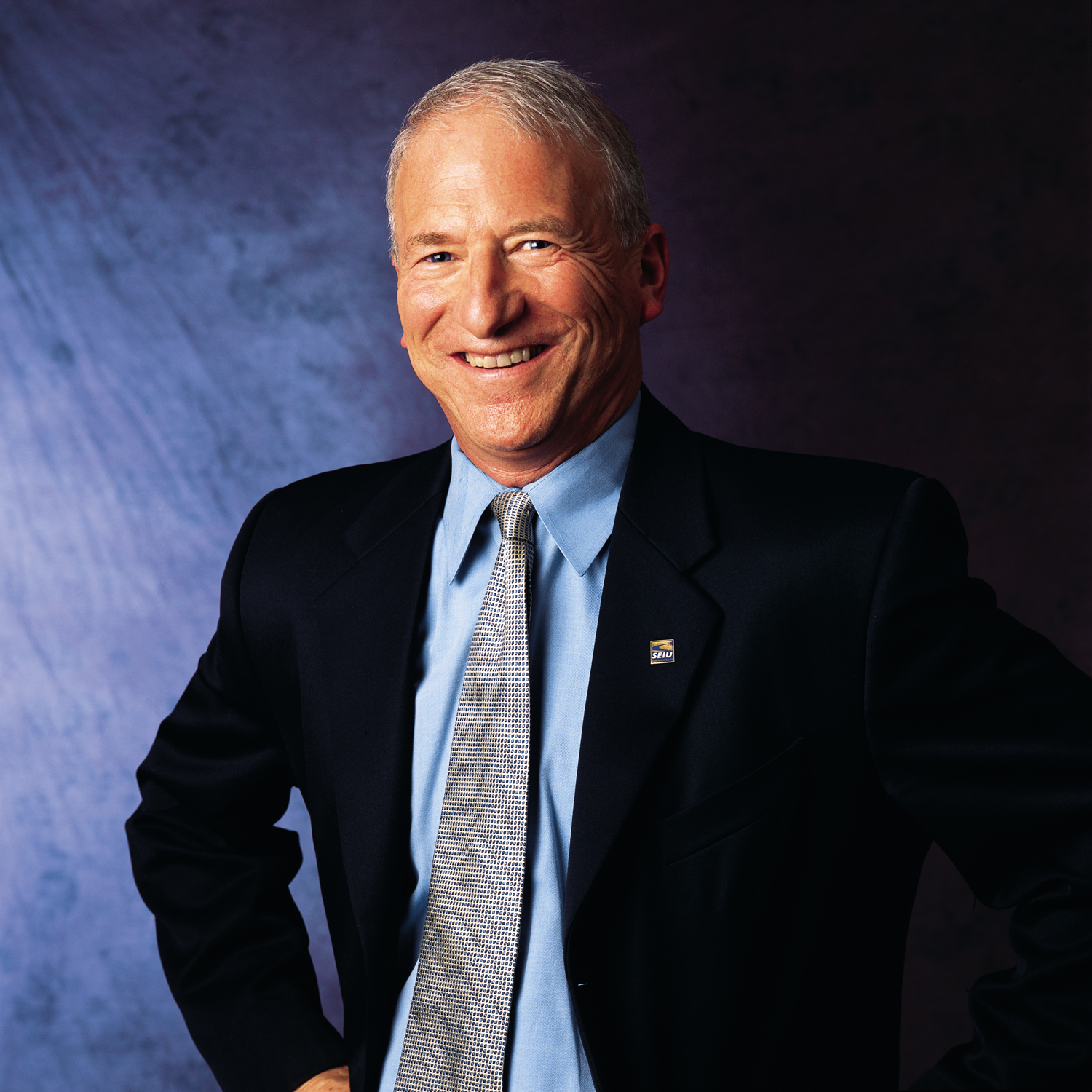
San Franciscans seem to be turning against Service Employee International Union and its national President Andy Stern this week, first with the vote by SEIU Local 1021 members to oust Stern’s leadership team, and now with a letter signed by a broad array of top political officials condemning SEIU tactics against the National Union of Healthcare Workers.

As the Guardian reported last year, NUHW President Sal Rosselli and his management team broke away from SEIU’s United Healthcare Workers after a protracted conflict that culminated in a hostile SEIU takeover of the local, placing it under a Stern-controlled trusteeship. NUHW had criticized Stern’s autocratic leadership style and undemocratic methods while SEIU accused Rosselli of using union funds to undermine Stern’s decisions.

Since then, a majority of SEIU-UHW workers statewide has filed petitions asking to decertify with SEIU-UHW and affiliate with NUHW, which has won seven of the nine elections that have been held so far. So SEIU filed various complaints with the National Labor Relations Board to try to block those elections, while NUHW has complained of worker harassment and ballot meddling by SEIU.

Earlier today, SEIU-UHW sent out a press release touting an NLRB ruling that clears the way for elections at 51 facilities around the state covering 6,845 voters, blaming NUHW for “violating members’ democratic rights” in opposing those elections.

But NUHW leaders say SEIU-UHW has been “cherry-picking” selected sites where they think their chances of winning are good and keeping their NLRB complaints in place to block other sites, often dividing up bargaining units in the process to raise fears in workers that they might lose bargaining clout if they switch unions. NUHW is a relatively small organization compared to the massive SEIU.

NUHW leaders say they want a fair, up-or-down vote among all of the SEIU-UHW members statewide who have asked for elections, and they’ve asked SEIU to sign a Fair Election Agreement to prevent harassment and intimidation, something that SEIU often asks employers to sign.

Supporting that request is an open letter signed by 116 San Francisco political leaders from across the spectrum, including every member of the Board of Supervisors except Sup. Carmen Chu, Assembly members Tom Ammiano and Fiona Ma, Sen. Mark Leno, Democrat Party chair Aaron Peskin and nine other members of the DCCC, all four major candidates for the Dist. 8 Board of Supervisors seat, United Educators of San Francisco President Dennis Kelly, and representatives from a board array of unions and grassroots organizations, including UNITE-HERE, POWER, Young Workers United, Chinese Progressive Association, Coleman Advocates, and many others.

Interestingly, in addition to his critics on the left within the labor movement, Stern is also being criticized by conservatives right now after President Barack Obama appointed him to his National Commission on Fiscal Responsibility and Reform.

The Guardian has forwarded the letter and allegations to SEIU-UHW officials and is awaiting a response, which I’ll post in the comments section when I hear back.


The letter reads:

WE, THE UNDERSIGNED community leaders of San Francisco, are deeply troubled by allegations that the Service Employees International Union (SEIU) committed multiple, serious violations of state labor law during the union representation election between SEIU United Healthcare Workers – West (SEIU-UHW) and the National Union of Healthcare Workers (NUHW) for 10,000 Fresno County homecare workers this June.

These allegations, made in sworn testimony before the California Public Employment Relations Board, include that SEIU officials directed staff to open, mark, and alter workers’ ballots; threaten the deportation of immigrants; and tell workers they would suffer the loss of wages, benefits and hours to scare them into voting for SEIU. The complaint alleges further that SEIU organizers physically removed ballots from workers’ mailboxes and homes.

Caregivers in San Francisco have complained of similar intimidation and harassment at the hands of SEIU officials trying to block union representation elections requested by them and tens of thousands of other California healthcare workers who have petitioned to join NUHW.

Over the next year, as thousands of San Francisco homecare workers, private sector nursing home workers, and private sector hospital workers make their choice for union representation between SEIUUHW and NUHW, we are committed to see that these workers can make their decision democratically, without intimidation, harassment, threats or coercion of any kind, from any party.

NUHW officials have communicated to us their willingness to enter into Fair Election Agreements, which are common in California’s healthcare industry, and which SEIU officials have long championed throughout the nation, to govern their campaign conduct and protect caregivers’ freedom of choice in their upcoming union representation elections.

Therefore, we are asking that you and San Francisco’s healthcare employers join NUHW in negotiating Fair Election Agreements to establish ground rules for these elections and guarantee that workers can choose their representatives for themselves. Please know that regardless of your decision, we will stand united to ensure that San Francisco’s healthcare workers have the fair elections they deserve.

Jerry Brown and the Rose Bird factor

16

Jerry Brown hadn’t even formally announced that he was running for governor when the San Francisco Chronicle brought up the name of Rose Bird.


It’s fine to talk about where Brown is vulnerable, and there’s no shortage of material. The guy has a long public record; anyone who served two terms as governor in the 1970s and early 1980s, and two terms as mayor of Oakland, and one term as chair of the state Democratic Party, and did a couple of years as a KPFA talk show host, is going to have baggage. He’s also got a wealth of experience.


But the Rose Bird stuff is a cheap shot.


Here’s how the Chron describes it:


Rose Bird: As governor, Brown appointed Bird to be chief justice of the state Supreme Court. After she invalidated the death sentence of every case she reviewed, voters in 1986 made her and two others the first judges unseated from the court. To voters older than 45, Bird’s name is shorthand for “liberal judges.”


Actually, voters ousted her after a savage campaign funded by big business interests who were mad at her pro-labor and pro-free speech rulings. The death penalty was their weapon, and even then it was pretty bogus: The Bird Court consistently upheld the constitutionality of the death penalty.


But in the early 1980s, death-penalty law was unsettled in the United States; the U.S. Supreme Court had in 1977 ruled that executions were legal in America, but set strict standards for states to follow. Most states were struggling to sort out what the ruling meant and to figure out how to comply. By 1986, when Bird was under assault, 38 states had adopted death-penalty laws, but only 13 had actually executed anyone. In conservative states like Arkansas, Kentucky, Mississippi and Tennessee, judges were trying to determine if the laws fit the Supreme Court’s standards — essentially what the Bird Court was doing in California.


And in California, the death-penalty statute had been written by John Briggs, the guy who wanted to keep gay people from teaching in the schools. The Briggs law was, by all accounts, poorly drafted, unclear and convoluted, and applying it under the federal standard was a challenge.


In other words, as we wrote at the time (In Defense of Rose Bird, Sept. 3, 1986):


The charge that the Bird court has refused to enforce the death penalty is simply inaccurate … the California Supreme Court has simply been doing what most state and federal courts have done over the past ten years: carefully scrutinizing death sentences to ensure that they are valid under the federal and state constitutions and complex and ever-changing standards of the U.S. Supreme Court.


The real issue didn’t make the press. Again, from our cover story at the time:


For nine years, the California Supreme Court, headed by Chief Justice Bird, has led the nation in advancing the causes of free speech, civil liberties, environmental protection and the rights of tenants, senior citizens, women, minorities and organized labor.


 Big-business interests organized and funded a massive campaign to get rid of Bird — not because of the death penalty but for purely economic reasons.


The Chronicle got it wrong back then, and is getting it wrong again today.

SEIU members oust the old guard

0

In a stunning repudiation of the union leadership installed by Service Employees International Union President Andy Stern – whose autocratic style, aggressive expansion, and friendly relationships with big employers has caused a rift in the national labor movement – members of SEIU Local 1021 have voted overwhelmingly for a reform slate of new leaders.

As we wrote recently, the stakes were high here in San Francisco, where the old guard leaders threatened to undermine the union’s progressive tendencies just as Mayor Gavin Newsom is threatening mass layoffs and pay cuts for city employees, and the San Francisco Labor Council’s ideological balance was being tipped by the pro-development push of the building trades.

But the results couldn’t have been more clear in the first local election since Stern installed the Local 1021 after merging 10 union locals together, including the former Local 790, which represents most city employees. Stern’s whole slate was voted out by a substantial margin, including current President Damita Davis-Howard, who had 1445 votes to the 2141 votes garnered by Sin Yee Poon, who now takes over the top spot after having led SF Human Services Agency workers.

Also pushed out was James Bryant, a political ally of Newsom and enabler of Pacific Gas & Electric and other downtown power brokers, who was defeated in his run for Political Action Committee Chair. Alysabeth Alexander, who is in her 20s, beat him by a vote of 2552-1506.

The vote will certainly strengthen the hand of progressives in San Francisco going into what’s expected to be a tough budget fight with Newsom, as well as helping progressive supervisorial candidates in the November election against what is expected to be a strong push by downtown to break the progressive majority on the Board of Supervisors.

In addition, it could roil SEIU’s internal politics after a turbulent year, in which Stern created divisive clashes with his own local health care workers (causing Sal Rosselli to create the rival National Union of Healthcare Workers), UNITE-HERE, and the California Nurses Association.


The press release from the winning reform slate follows: 

Reformers Sweep in SEIU 1021 Election; Members Vote for Transparency and Democracy for Northern California’s Largest Public Sector Union 

On Friday, thousands of public sector votes were counted to determine the future leadership of one of the largest unions in Northern California.  This is the first election for SEIU 1021, formed only three years ago after the merging of 10 locals.

The reform slate, Change 1021, swept the elections taking a clear majority of the executive leadership seats. This all-member slate easily defeated the former administration-appointees by the International SEIU.  Some candidates won by a 3 to 1 margin while others enjoyed a comfortable 2 to 1 lead on their opponents. See attached list of election results.

“We are excited about the opportunity to give the leadership of this Union back to the membership,” stated Karen Bishop, the San Francisco County Area Representative Elect.  Former San Francisco Board of Supervisors President and current Chair of the San Francisco Democratic Party  Aaron Peskin agreed, affirming, “It is very heartening to see that real democracy has prevailed.”

Change 1021 campaigned on a platform for reform, seeking a stronger union that would prioritize member representation at work sites; fiscal transparency; and an internal democratic structure. “Members spoke with their votes, sending a clear message about priorities,” said Roxanne Sanchez, President Elect.

The challenges for the new board are daunting-they must reunite and reinvigorate a membership hit hard by the economic downturn, with thousands to receive lay-off notices this week.  The Board Elect is ready to make the budget fight a priority to fight layoffs and preserve important public and non-profit services for our communities.

 “Our members have spoken, loudly and clearly, that business as usual is absolutely no longer tolerable and that a fundamental change in the focus of our union towards the needs and priorities of our members are in prompt order,” says Sin Yee Poon, Chief Elected Officer Elect. For now, there is cause for celebration as the congratulatory calls have been flooding across California from members, elected officials, labor leaders, and community partners.

Newly  elected members will assume office at the next Executive Board meeting, March 9th.   International Union leaders are expected to be in attendance.           

Change 1021 Candidates who were elected are: Chief Elected Officer, Sin Yee Poon; President, Roxanne Sanchez; First Vice President, Gary Jimenez; Second Vice President, Crawford Johnson; Third Vice President, Larry Bradshaw; Secretary, Pamela Morton; Treasurer, Kathy O’Neil; Political Action Comm. Chair, Alysabeth Alexander; Social & Economic Justice Comm. Chair, Gladys Gray; Capital Stewardship Comm. Chair, Harry Baker; Cities Industry Chair, Renita Terry; Counties Industry Chair, Ken Tam; Special Districts Industry Chair, Saul Almanza; Schools Industry Chair, Mynette Theard; Sacramento County Rep, Ken Bloomberg; Registered Nurses Industry Chair, David Fleming; City & County of SF Industry Chair, Kathy Basconcillo; San Francisco Area Reps- Karen Bishop, David Turner, Jacqueline Sowers; Alameda County Area Reps,- Amy Dooha, Eric Stern, Gregory Correa; Sonoma County Area Rep, Nancy Atwell; Budget & Finance Comm Region 3, Michael Tong; and Budget & Finance Comm. Region 4, Mary Jane Logan.

How the UC regents avoided a PR mess with Bill Clinton

0

Things were calm and peaceful outside San Francisco’s Fairmont Hotel, perched high atop a windy hill on Mason Street, as dark shiny vehicles rolled up to the stately entrance and well-dressed patrons filed in on the evening of Feb. 24. They were there to hear former President Bill Clinton deliver a speech titled “Don’t Stop Thinking About Tomorrow: Building a Better World,” as a benefit for the American Himalayan Foundation. The AHF is chaired by Richard Blum, a member of the University of California Board of Regents who is married to Sen. Diane Feinstein.

As guests arrived, a small group of workers tried to thrust neon green fliers into their hands. The fliers were headlined, “Tell Richard Blum to Stop Poverty at UC!” and charged that the UC Regents had approved a package of raises for UC executives on Jan. 21 even as front-line UC workers faced layoffs and cuts. The stack of Xeroxed fliers was a mere blip compared with what AFSCME Local 3299, the union that represents workers throughout the University of California system, had originally planned.

The union had organized a picket against Blum’s AHF event, which would have forced Clinton to cross a picket line in order to go in. Not only would this have created an unwanted spectacle, it could have marred the entire event. As AFSCME Local 3299 member Tim Thrush put it, “Bill Clinton is a friend of labor. AFSCME has worked with him a lot in the past … And Clinton will not cross the picket line.”

UC workers have been reeling in the face of massive layoffs and budget cuts. While the university administration contends that there is little it can do in the face of a decimated state budget, union workers point to examples of privatization on the UC campus as an alarming trend that is supplanting public-sector jobs and eroding California’s renowned public-education system.

AFSCME Local 3299 laid out three demands, according to organizer Danielle DiSilverio. While two — involving benefits for custodians at the Irvine campus and concerns about “reductions in time” at the Santa Cruz and San Diego campuses — have not been met, they did secure an agreement to abandon a plan to contract out jobs for shuttle drivers at UC Berkeley. Since the UC Berkeley shuttle drivers would be able to keep their jobs, Local 3299 called off the picket.

“We would prefer to not have to do this kind of stuff,” Thrush told the Guardian. “But unfortunately, in the world that Dick Blum operates in, we can’t get his attention unless we do stuff like this. As he works hard on poverty issues and gives money and time to poverty issues, he also makes decisions at UC that further the poverty problem of our lowest-paid workers. We want to keep reminding him that it’s not OK to do that.”

No pixels, please — we’re plastic

0

Film and prints, like dinosaur bones and fossilized treasures, seem like ancient artifacts blown to the wayside in our digital age. We lost the mystery in photography when we introduced the point and shoot, erasing not only the physical labor but the ugly smiles, blinky eyes, and embarrassing angles. Where are the mistakes? The light leaks and fuzz on the lens? They’re making a comeback.

Obscure, eerie, and beautifully whimsical images galore will be on display starting Fri/26  at the RayKo Photo Center, as part of the third annual Plastic Camera Show.

More than 100 images from Bay Area artists, national and international photographers will have you yearning to get out there, grind that advance gear, and capture a local critter with some old fashion film.

A fascination with old school cameras is growing, with updated versions of the Diana and Holga plastic models showing up at Urban Outfitters and antique versions trading online faster than they can click. A backlash to our digital photo machines, it’s invigorating to see a picture lacking today’s high standards of “perfection”, allowing the camera to steer and our imagination to follow.

Cloudy, out of focus bridges and water towers clash and mingle with oddly colored figures and landscapes. Advanced photographer and amateurs alike can find success with the plastic gadgets, yielding photos with a quality unlike any produced by the futuristic models.

The work of Czech artist, Michael Borek, will be highlighted in the exhibit, shots of hot air balloons (see above) and lazy summer days harnessing the Holga’s unpredictability with gorgeous light leaks and inspiring angles.

RayKo’s 3rd Annual Plastic Camera Show
Fri/26-April 17 (Opening reception 6-9pm)
RayKo Photo Center
428 Third St., SF
www.raykophoto.com

The battle for the forgotten district

24

sarah@sfbg.com

This November, when voters in District 10 — the largest, sunniest, and most diverse of the city’s 11 supervisorial districts — replace termed out Sup. Sophie Maxwell, they’ll be making a selection that could have pivotal implications for the entire city.

That’s because the next supervisor from southeast San Francisco inherits a district that is home to some of the city’s biggest environmental and public health challenges, as well as the most potential for development that will determine what kind of city San Francisco becomes.

District 10 is where you’ll find the most polluted and most underdeveloped lands in San Francisco, areas that could either be transformed into models of a sustainability or, in the words of Tony Kelly, the president of Potrero Boosters Neighborhood Association, “be turned into a toxic Foster City.”

District 10 is where the slaughterhouses, tanneries, and glue factories set up shop and used the bay as a dumping ground. It’s where the smokestacks of coal and oil fired power plants polluted the air. It’s where the Navy filled the Bay, built a shipyard at Hunters Point and loaded parts of the first atomic bomb onto the USS Indianapolis in 1945.

District 10 is where the bottom fell out of this industrial economy in 1974, when the Navy left, taking with it people’s jobs, pay, and hopes for a home of their own and a better future, particularly for what was then a predominantly African American population.

And District 10 is ground zero for plans that will triple the population and double the number of homes — homes that likely will only be “affordable” to Google executives and retirees from Marin, forever changing the face of San Francisco’s southeast sector. Critics fear that will accelerate what has been a steady exodus of black residents, replaced by megadeveloper Lennar’s vision for a new D10.

It’s against this dark history and difficult present that a wide open field of more than a dozen candidates are vying to replace Maxwell, who came to power in 2000 and has had a mixed voting record in her decade on the board. Sometimes, Maxwell was the eighth vote that let the progressive majority on the Board override Mayor Gavin Newsom’s veto and pass trailblazing legislation. Other times, she was the swing vote that allowed the moderate minority to carry Newsom’s water.

So, in addition to D10’s many internal challenges, this seat could determine the political balance of power on the Board of Supervisors, placing all the more importance on voters in this long-marginalized part of town.


DISTRICT OF DISCONTENT

Eric Smith, a biodiesel activist who has thrown his hat in the D10 ring, says that there is a lot of frustration in the air, and looking at the problems the district is facing, it’s hardly surprising that it has what nearly every candidate agrees is a fractured political culture.

“The Bayview, the Hunters Point Shipyard’s toxic Superfund site, the homicide rate, unemployment, poor public transportation, dwindling services and community resources have made D10 one of the city’s largest melting pots of discontent,” Smith said.

Smith’s words were spoken while the Elections Department was verifying signatures earlier this month on a second failed effort to qualify a petition to recall Maxwell.

Bayview resident and D10 candidate Marie Franklin didn’t support the attempt to recall Maxwell, but she understood it as “a frustration movement.”

“People are sinking in the sand, we’ve already lost so many of them, and they felt Sophie wasn’t doing anything for them,” said Franklin, who praised Maxwell for helping get Franklin’s apartment building complex renovated — a job that was completed 18 months ago, at a cost of $65 million, creating 500 local jobs.

“There are 654 units here, and they were uninhabitable,” Franklin said. “There was black mold, rain falling inside. We had people living worse than Haiti.”

Franklin, who said she is running because she “knows the history,” came here in 1978, when she and her son were living in a car after a fire left them homeless. She said the Bayview was a totally isolated area, barely part of mainstream San Francisco.

“There were no taxis, no services,” she recalled. “Nobody would come here, it was the stigmatized area where no one was accountable to provide services.”

The Bayview — which in some ways is the heart of D-!0 — wasn’t always a black community. But African Americans have been living here for 70 years, dealing with all the racism, denial of services, poverty, and pollution. And it bothers Franklin that 85 percent of the 10,500 homes that Lennar plans to develop won’t be affordable to the elderly, disabled, unemployed and low-income people who currently live in the Bayview.

“We need to preserve the diversity of the community and make sure their issues and information will flow to City Hall,” she said. “You must give the people a handle. If you don’t reach out, they’ll slip. That’s why folks out migrated.

Whoever succeeds Maxwell will be a central player in addressing some very big and dirty issues: the future of the Navy’s radiologically impacted shipyard at Hunters Point, Lennar’s massive redevelopment plan for the Shipyard and Candlestick Point, the polluting power plants, replacement of stinky digesters at the sewage plant, and the SF Hope public lousing rebuild.

There’s also the chance to address violence and crime. James Calloway, a candidate who has long worked in Bay Area schools, told us he believes that education and jobs are part of the keys to rejuvenating the district.

“Job opportunities are not as plentiful in the district,” Calloway said. “When I was a kid, you could walk down Third Street at 2 a.m. Now I wouldn’t walk down it at 9 p.m., and I know the area.”

Calloway is hopeful that the massive redevelopment plan, if done correctly, could start the district’s comeback. “Not a lot of black folks stay here when they have extensive education,” he said. “But it’s not only them. Many were displaced by redevelopment and had no way to go back.”


ELECTION UP FOR GRABS

The largest of the city’s 11 electoral districts, D10 is a huge triangular piece of land in the city’s southeast sector that was used as an industrial dumping zone for decades. Today, the district runs from the Giants stadium at AT&T Park to the 49ers stadium at Candlestick Point and encompasses Mission Bay, Potrero Hill, Dogpatch, India Basin, Portola, Little Hollywood, and Visitacion Valley. It’s also crossed by two freeways that isolate it from the rest of the city, and is home to a large number of crumbling housing projects that are in the process of being rebuilt.

Candidate Ed Donaldson grew up in the projects until he was 10 years old, when the Redevelopment Agency kicked his family out in the 1970s. “We landed on our feet, but others weren’t so lucky,” said Donaldson, who works as a housing counseling director at the San Francisco Housing Development Corporation.

“There is a sense that the Bayview and Visitacion Valley have not been included within the San Francisco family,” Donaldson said. “There is a sense of being forgotten.”

In 2007, Donaldson co-founded the Osiris Coalition to tackle the city’s dormant Certificate of Preference program, in which the Redevelopment Agency issued a document to displaced residents and businesses in the 1960s promising that they could return.

He also tried to rescue some 700 foreclosed properties and recycle them as affordable housing stock. And now he is trying to prevent the city from bulldozing seven SF Hope projects without guaranteeing residents that they have right to remain.

In 2007, Mayor Gavin Newsom and Maxwell convened an African American Outmigration Task Force that didn’t get a public hearing about its findings until August 2008. The timing angered some, who questioned why the report’s findings and implications for urban planning weren’t released before June 2008, when the residents of San Francisco voted for the Lennar-led Proposition G, a proposal to build 10,000 market rate homes at one of San Francisco’s last remaining black communities, which Newsom and Maxwell endorsed.

The taskforce didn’t publish its recommendations until the end of 2009, allegedly because of insider squabbling. Meanwhile, gentrification was going on actively, and many blamed Newsom, and by extension Maxwell, for failing to do anything with the group’s findings as D10 residents continued to suffer from high rates of asthma, cancer, unemployment and an ongoing black exodus.

It wasn’t always this way. In the 1940s, the district’s black population exploded when migrants from the south and World War II veterans came to work at the Hunters Point Naval Shipyard. Some moved to Alice Griffith Public Housing complex, or Double Rock, which was built as military housing in 1962. Others relocated to the Bayview when the Redevelopment Agency took over the Fillmore/Western Addition in the ’60s and ’70s as part of a controversial urban renewal effort.

But when the Navy abandoned the shipyard in 1974, unemployment hit the black community hard. Today, hundreds of the city’s lowest income residents live in Alice Griffith’s crumbling units and endure sewage backups, no heat, cloudy drinking water and leaking ceilings, as they wait for the projects to be rebuilt.

“Generations have been trapped in the silo of public housing and cannot get out, because of lack of opportunity and education, so when we legislate, we need to take that into consideration,” said candidate Malia Cohen, whose grandfather came from Texas to work at the shipyard where he met her grandmother, whose family came from New Orleans.

“My grandfather’s father was a longshoreman. He worked with the infamous Leroy King [a commissioner at the city’s Redevelopment Agency] and he has fantastically vivid stories of racism,” said Cohen, who works for the Federal Reserve Bank of San Francisco, previously served on the executive staff of Mayor Gavin Newsom, and has already raised over $18,000 in the D10 race and qualified for public matching funds.

“My family came here to work hard, they lived on Navy road in the projects, and then they bought a house here. My parents were born here, and we were all public schooled,” Cohen recalled as she took me on a tour of D10 that ended up in Visitacion Valley, an increasingly Chinese-American neighborhood that reflects a district-wide trend.

Census data show that by 2000, Asians were the largest racial group in the district (30 percent), followed by blacks (29 percent), whites (26 percent), and Latinos (19 percent). By 2003, according to the California Urban Issues project, the trend continued. Asians were the largest racial group (32 percent), followed by blacks (27 percent), whites (21 percent) and Latinos (17 percent) of the population.

This means that D10 candidates will have to garner support from more than one ethnic group to win. Over a dozen candidates have already filed papers in the race, but so far there is no clear front-runner.

Also frustrating the prognosticators is that fact that D10 has had the lowest voter turnout in the city, so the winner will also depend on who goes to the polls.

D10 candidate Geoffrea Morris, who is the grand daughter of longtime Bayview activist Charlie Walker, has been knocking on doors and participating in voter registration drives.

“We need new blood,” Morris said

Getting elected will be a complicated equation. Although Bayview’s population was 50 percent African American at the time of the 2000 census, it didn’t turn out the vote. In the 2006 election, only 14,000 of the district’s 37,000 registered voters went to the ballot, and 50 percent were from whiter, richer, and more Asian neighborhoods.

“It’s very important to the future of the city that the ethnicity diversity of the board be maintained and that the African American community have representation,” former Board President and current Democratic Party chair Aaron Peskin told the Guardian.

Maxwell recently told the Guardian that she’s not ready to endorse any D10 candidates yet. “I’m waiting for people to have a better understanding of what this community is, what the common thread running through it is, and how to use rank choice voting,” she told us.

The only candidate who currently holds elected office is BART director Lynette Sweet, who had her answers down pat when we reached her by phone, and even used wording that was eerily similar to Maxwell’s words.

“D10 is a pretty diverse district, but there is only one common thread: the need for economic development,” Sweet told me. “That’s true in Potrero Hill, Portola, Dog Patch and the Bayview. It’s the same mantra: a lot of small businesses need help, and the only way to help them is through economic development. In Potrero Hill it’s about land use. In the Bayview, it’s about the shipyard and better transportation and truancies.”


THE COMMON THREAD

District 10 is ground zero for the Lennar’s $2.2 billion plan to develop 10,500 market rate condos at the Shipyard and Candlestick Point. The plan will allegedly create thousands of jobs and new parks, deliver on an historic community benefits agreement that labor groups claim is so “lawyered up” that the developer can’t renege on its promises.

The package is framed as the one and only way to revitalize the southeast’s formerly vibrant economic engine. Indeed, any time anyone tries to slow down the process—to take time to thoroughly read the draft EIR and see if it adequately addresses the impacts of this massive urban reengineering project — a chorus of “no delays” starts up, either from residents of the housing projects desperate to see their homes rebuilt, or the labor contractors who hope to get jobs.

“It’s as if the city is playing checkers, while Lennar is playing three-dimensional chess,” Eric Smith observed.

Lennar has stated that it will contribute $711 million to finance this massive project. The remainder will be leveraged by Mello-Roos bonds, state taxes based on the use and size of a property and intended to raise money for needed services, and tax increment financing, which creates funding for projects by borrowing against future property tax revenues.

The conceptual plan won Maxwell’s backing but environmental groups are critical of the draft EIR.

During DEIR hearing, environmentalists questioned the wisdom and the cost of filling the Bay to build a bridge over Yosemite Slough, and building condos on Candlestick Point state recreation area, the only open major open space in the district.

But the city’s Planning Department also has 20,000-30,000 units of housing in its pipeline. This means that if all these plans get approved in the next decade, they’d account for 80 percent of residential development citywide. And D10’s population could triple, further skewing the district’s already shifting demographics.

In other words, D10 as we know it could become nothing more than a historic relic in a few years, and the next supervisor will play a key role in deciding whether that happens. SFHDC’s Ed Donaldson warns that any supervisor who does not understand the complexity of the city’s largest district can expect a similar recall backlash in future.

“There is no one homogenous voice in the community,” Donaldson said. “The grass-roots organizing that brought about the recall effort was a result of a changing political structure in the area, but is not yet on par with other districts in town. We still allow our politics to be controlled from downtown.”

Fellow candidate Eric Smith warns that the issues—and politics—are complex.

“People were emotional, angry, and desperate because they feel no one listens to them,” Smith said. “That’s part of the problem here; they would rather have a supervisor go down swinging for them, rather than watch one seemingly side with Lennar, PG&E and the mayor on issues contrary to their interests. That’s the terrible irony and one of the biggest problems in District 10. Folks are so mad, they’re willing to do whatever it takes to make them feel they have a voice in the outcome, even if it’s potentially worse.”

Smith cited the sequence of events that culminated last year in the Navy dissolving the community-based shipyard Restoration Advisory Board (RAB), which for years has reviewed technical documents and commented on the Navy’s clean-up proposals. But in December, the Navy made its official decision to disband the RAB, citing dysfunctional behavior and off-topic discussions that got in the way.

“Some of the same folks who were frustrated by the process, tried to send a signal to the Navy that they weren’t being heard and for all their well-intentioned efforts got the RAB dissolved,” Smith said. “I truly feel for them, it’s absolutely heartbreaking, but at times, they can be their own worst enemy.”

One of the looming issues about the shipyard is that the land has been polluted and needs to be cleaned. The shipyard contains radioactive debris from ships towed to the shipyard, after a 90-foot wave washed over them during an atomic test gone awry. The Navy burned 610,000 gallons of radioactively contaminated ship fuel at the shipyard, and workers showered on the shipyard, raising concerns that radioactive materials got into the drains and sewers. And questions have been raised about radiological tests on animals at the yard.


LEAKS AND FLOODS

It’s not just the shipyard that’s toxic. Even the buildings that were constructed to house workers 50 years ago are a serious mess.

Realtor Diane Wesley Smith, who grew up in public housing projects, took me on a walking tour of Alice Griffith last week to see conditions that tenants will likely have to endure until at least 2014, if the city sticks to its plan to relocate people into a new replacement unit in the same geographical area, if not the exact same site.

What we found was pretty messed up.

“The water sometimes comes out brown and feels like sand. It’s been like that for a year,” one resident said.

“The water is cloudy, the bath tub isn’t working and the sink keeps stopping up,” said another.

A woman named Silvia showed us how the water from the tap in her elderly mother’s kitchen flows out cloudy and then doesn’t settle properly, like foamy beer.

“The roof’s been leaking for years, the sewage backs up, but they just fixed the lights,” Silvia said. A neighbor named Linda was using her oven as a heater.

“The toilet backs up a lot, and my grandson’s been coughing a lot from asthma,” Linda said.

“Roaches is always a problem,” said a woman named Stormi, dressed in black sweats and a black T-shirt that read, “Can’t knock the hustle.”

“They’re trying,” said Stormi, a member of the Alice Griffith Residents Association, as a couple of Housing Authority trucks pulled up to do repairs.

“They promise that you will not have to leave your unit, but if they try to move us down to the waterfront, well, there’s a reason there’s no housing there, and it’s because the land will flood,” Stormi said.

“If we don’t end up at the table, we’ll end up on the menu,” Wesley Smith warned, as she stopped to chat with a group of young men, who were worried they would pushed out of the Alice Griffith rebuild through the criteria being established.

“Fred Blackwell, the executive director of the Redevelopment Agency, assures me that’s not the case, but Alice Griffith is a Housing Authority property, and empty promises have the potential to be great promises provided they are made in writing,” Wesley Smith said as we walked out of the projects and onto the road where a yellow and black sign announced “flooded” next to Candlestick Point park, where Lennar wants to build.

Malia Cohen expressed concern about Hope SF residents, as we drove through the Sunnydale housing project.

“We have to be diligent and mindful that people are not pushed out,” Cohen said, noting the sweeping views at Gleneagles golf course above Sunnydale, and the value of housing for a golf course community. “When public housing gets taken offline, we must work with Redevelopment and the Housing Authority to make sure no one is changing the rules halfway. We have to make sure the talks and walks line up. We need to be equal partners. We cannot be bulldozed by City Hall.”

Geoffrea Morris is a Calworks employee, at the Southeast Community College facility on Oakdale, which was built to mitigate the city’s expansion of the sewage plant in 1987. She cited concerns about the literacy levels of people who live in the 2200 public housing units that cluster D10. “A lot of people in Alice Griffith don’t even know the dates or when it’s going to be reconstructed,” Morris said. “Folks like to be told stuff like that, but the city gives you a stack of papers. Some will read them, but others rely on folks they think are trustworthy. They need stuff in layman’s terms written on one sheet of paper.”

Morris is a fan of the Internet who posted a community survey online, and made sure every housing project got some literature telling people to get informed. She worries about the digital divide in D10:

“A lot of folks don’t have computers and access to important information,” Morris said. “And let’s talk about the way ‘affordable’ is used to trick people.”

Michael Cohen, Newsom’s top economic adviser, recently stated in a memo that over the expected 15-20 year phased build out, Lennar’s Candlestick-Shipyard development would include, “up to 10,500 residential units, about 32 percent of which (3,345) will be offered at below market rates.”

“But 892 units of this ‘affordable category’ will be sold to folks earning $100,000,” Morris said. “So if you subtract 892 units from affordable unit category, you’re back to 25 percent affordable.”

Candidate Kristine Enea, an attorney and a former RAB member, chairs the India Basin Neighborhood Association, which administers a US EPA grant to hire experts to translate the Navy’s cleanup documents into plain English and comment on them She was frustrated by the Navy’s decision to dissolve the RAB.

“The lack of a forum does nothing to bolster the community’s trust in the cleanup or the redevelopment process,” Enea said.

Enea generally supports the Lennar project, but has concerns about whether it will adequately mitigate increased car traffic, or result in commercial development that benefits her neighborhood.

“India basin is a pocket of Hunters Point right along the shoreline,” Enea said. “Right now, we have no shops or restaurants, no ATM, no groceries, nothing beyond one liquor store and a few industrial businesses.

Potrero Boosters president Tony Kelly told us that District 10 residents can think for themselves. “D10 residents don’t need to rely on corporations to solve their problems,” he said.

“Folks in the eastern neighborhoods came up with a better revitalization plan than what the city proposed and community activists managed to close the power plant, after the city said it was impossible,” Kelly recalled.

And there’s no shortage of good ideas.

Kelly suggested that an urban agriculture center could immediately put low-skilled folks to work by erecting greenhouses on unused land. Smith said the industrial zone could be “incredible eco-park made from sustainable sources.

‘D 10 is the dumping ground for everything, including all the city’s waste,” he said. “We could be a shining example, not just for D 10, but the rest of the state.”

The D 10 candidate line up includes Calloway, Cohen, Donaldson, Smith, Enea: civil rights attorney Dewitt Lacy, Morris, Potrero View publisher Steve Moss; District 7 BART director Lynette Sweet, Wesley-Smith. Bill Barnes, who works for Sup. Michela Alioto-Pier, and Linda Richardson, who was appointed to the Human Rights Commission in 2007 by Mayor Newsom, have also expressed interest in the race.

In such a huge field, name identification will play a major role. Sweet is in office, but BART Board is not a high-profile job and won’t give her a huge advantage.

Cohen has a slight edge right now in that she’s raised $18,505, including $500 from former Newsom flak Peter Ragone, making her the first D. 10 candidate to qualify for campaign financing. The oldest of five girls, Cohen recalls how her mother got laid off from her city job as a school-based mental health worker and then rehired, as part of the city’s budget cuts.

“We felt that pinch and the frustrating games that are played out between the leadership and the rank and file,” she said.

Cohen who worked for Newsom in his first term as mayor, but has since left his administration , said she is uncomfortable at being framed as Newsom’s candidate.

“Because I’m not, but I am one of the few candidates who has seen how the mayor and the Board work—and don’t work—together,” she said.

Moss sees the city’s southeast as a “district in transition.” Over coffee at Farley’s in Potrero Hill, he told me that the southeastern neighborhoods could be “launching pads for environmentally sustainable growth.”

“The district’s been in a frozen period for 30 years, But despite the problems, people are deeply committed to and in love with their community.

“This district is the future of San Francisco and its social fabric—the diversity, income –and its problems are leftovers from the city’s industrial age.”


DISTRICT 10, BY THE NUMBERS

Total Acres: 5,650

Average household income: $85,000

Population: 73,000

Registered voters: 37,700

Average housing price: $335,000

Ethnicity (2003 figures): Asian 32%, African American, 27%, white 21%, Hispanic 17%

Development status of land: 18% residential, 38% is commercial, 38% undevelopable

All figures the latest available. Sources: SFGIS, Association of Bay Area Governments, U.S. Census, California Urban Issues Project. Ethnicity and income data is from 2003 and almost certainly has changed.


Is Chevron lying about its crude plans?

1

By Adam Lesser

William Rostov, the Earthjustice lawyer who represents three Bay Area environmental groups, broke it down: “The question is: will it be heavier and will that result in more pollution?” He was speaking about crude oil refining at Chevron’s Richmond refinery as he addressed California’s First Appellate Court in San Francisco this morning. Heavier crude oil is usually less expensive for oil companies to purchase but generates more pollution during the refining process.

Environmentalists, labor unions, lawyers and Chevron representatives packed the courtroom to hear opposing counsel spar over the project’s environmental impact report, which was invalidated by a Contra Costa Superior Court judge last June. The ruling stopped the refinery expansion that Richmond has approved.

Chevron attorney Ronald Van Buskirk hammered the point that “the project didn’t propose a crude switch.” When pressed on why Chevron declined to disclose the data behind the conclusion that there would be no switch to heavier grade crude, Van Buskirk countered that the data constituted “trade secrets” that are protected under law.

Rostov argued that “refinery experts showed this project allows the use of heavier crude” and that Chevron “misled the public” in its EIR. A key component of the environmentalists’ argument rests on the 2007 Chevron annual report to the U.S. Securities and Exchange Commission, which specifies that “design and engineering for a project to increase the flexibility to process lower API-gravity crude oils at the company’s Richmond, California, refinery continued in 2007.” API gravity is a measure of how heavy or light petroleum is. Lower API gravity corresponds to a heavier crude oil. But Van Buskirk countered that the plaintiff’s evidence amounted to “one sentence in a 10K report.”

Justice Patricia Sepulveda questioned Van Buskirk about whether the $61 million Community Benefits Agreement that Chevron offered to contribute to the city of Richmond gave the city “bias to approve the project.” But Van Buskirk said, “It wasn’t a quid pro quo, if that’s what you’re suggesting,” before ultimately conceding that it was fair suggest to that the gift had played a role in the approval.

Judge Ignacio Ruvolo presided over Chevron’s appeal. At the end of oral arguments, he spoke to the efforts the court has taken to expedite the case, pressing attorneys on whether there was any chance of a settlement.

“The parties are still very far apart,” said Van Buskirk, and Rostov nodded the same. For the first time all morning, everyone was in agreement.

The court will rule within 90 days.

An open letter to the Transit Workers Union

18


By Gabriel Metcalf

OPINION Last week, the Transit Workers Union refused to accept a deal with San Francisco that would have modestly reduced major service cuts and eliminated another increase in discount fares at least for this year. The proposal would have involved two things: first, a one-time contribution by drivers to their own pension plans (worth $8.9 million for next year, almost precisely cancelled by the automatic raise of $8 million the drivers will receive next year); and second, a change in work rules that would have required drivers to actually work 40 hours in a week before earning overtime, which would have saved $3.8 million over the next 14 months.

Muni is facing a deficit of at least $17 million in the current fiscal year and around $55 million next year. Future years will be worse. Given these pressures, the TWU is getting ready to re-vote. I presume that, eventually, union members will accept the deal. But either way, given how utterly marginal this deal is for the riders, progressives need to begin a public conversation about what responsibility the union has for making Muni work better.

The problem is not that TWU salaries are too high. The problem is the work rules. These include: drivers not having to let their managers know how long they will be absent from work, making it impossible to set schedules; drivers earning overtime pay before actually working 40 hours a week; and perhaps most significantly, a set of rules that makes it virtually impossible to hire part time drivers. Currently, Muni is forced by the work rules to pay drivers at full hourly rates to sit around between the morning and afternoon peaks. That rule costs MTA about $11 million each year.

If the TWU is willing to give on just the overtime and part-time driver rules, MTA would save $12.4 million in next year’s budget — and this savings would grow in the future. Other work rule changes could save much, much more, while dramatically increasing service to riders.

Probably the underlying cause of Muni’s work rules is the fact that the TWU, unlike other bargaining units in the city, has its salary and benefits set by formula in the City Charter — which means that management has nothing to offer during labor negotiations. Friends of mine in the labor movement argue that TWU is just doing its job in trying to get a good deal for members. I would argue that TWU needs to do more than that, and needs to begin taking responsibility for building a transit system that works well and can grow over time.

Maybe this public sector union needs to take a page from the Swedish labor movement.

Early into the post World War II economic boom, the Swedish unions learned that, since they controlled the government and increasingly controlled the boards of directors of the corporations they had organized, they were essentially always going to get their major demands met. This forced a big shift in their culture, causing them to have to take responsibility not just for cutting a good deal for their members, but for ensuring the profitability of the companies. Labor could easily “win too much” and drive the companies out of business, thereby returning its members to unemployment. Once labor controlled the businesses, it had to come up with a proactive agenda for how to run them successfully.

Closer to home, we’ve seen the teachers union accept cuts and changes to their equivalent of work rules in order to prevent teacher layoffs. And we’ve seen the Service Employees International Union at the national level put immense resources into passing health care reform — something that will benefit all Americans, not just SEIU members.

Something similar needs to happen now at Muni.

Muni workers deserve a good wage. It’s a hard job under the best of circumstances. And as Muni tries to keep service on the streets without enough money for equipment and maintenance, workers on the front lines will bear the brunt of the bigger problems. But a lot of people resent the things the union has chosen to ask for in addition to a good wage.

Muni’s troubles are multifaceted. They involve bad management, bad street design, bad land use planning, and certainly insufficient funding. But work rules are undeniably part of the issue as well. It cannot be progressive for the TWU, in the middle of the worst financial crisis to hit our country since the Great Depression, to cling to the same work rules it has had in the past. Muni needs TWU to help it be successful.

Gabriel Metcalf is executive director of the San Francisco Planning and Urban Research Association (SPUR).

The attack on the SF left

20

If I were a political consultant hired by the San Francisco Chamber of Commerce and the big developers and the landlords and Mayor Newsom, and my job was to launch an effective attack on the progressive movement in the city and undermine progressive control of the Board of Supervisors, here’s what I’d do:


1. I’d attack district elections. See, every time the downtown folks have tried to run candidates in swing districts under the existing system, they’ve lost. That’s in part because the business types can’t seem to find decent candidates, and part because money doesn’t rule in districts, so progressives who can mobilize at the grassroots level have a better chance.


So when you can’t win the game you try to change the rules. You can’t do it too directly, because the polls show that people like having district supervisors, so I’d come up with a “hybrid” plan — say, seven districts and four at-large supervisors. Since anyone who runs at large in this city needs gobs of campaign cash, that would pretty much guarantee that four board members would be accountable to downtown. Then draw the districts to create two moderate-conservative seats, and the progressives have lost control.


I’d launch this by planting stories in the San Francisco Chronicle about a “growing movement” to change the way the supervisors are elected — even thought there is no real grassroots movement.


But that creates the appearance that’s needed to begin raising money and preparing for a ballot initiative. It’s not hard to get the Chron to bit on something like this; C.W. Nevius, the local columnist who lives in the East Bay suburbs, never liked district elections, so he’ll play along and the Chron’s corporate ownership, which is close to the Chamber folks, never liked the system either. You can expect an editorial from the Chronicle Feb. 28th calling for a partial repeal of district elections.


The argument won’t have anything to do with the fact that the Chron doesn’t like the policies this particular board has passed; it will be all about the need for a “citywide perspective.” Now, that’s just horseshit, since the district boards have done an immense amount of work on citywide issues (like mininum wage and health care) that the at-large boards would never do.


But “citywide perspective” is a term that’s been focus-group tested and sounds good.


2. I’d look for a nice wedge issue for the November elections — something that could be used against progressives in swing districts. When Newsom ran for mayor the first time, he used “care Not Cash” — a well-funded attack on homeless people.


And gee, guess what? There’s another nice anti-homeless measure that’s recently been floating around, and it comes from the media-savvy police chief, George Gascon. It’s called a “sit-lie” law — legislation that would criminize the act of sitting on the sidewalk. It’s got a lot of populist zing to is, particularly since Gascon is talking about the need to clean up Haight Street, where some ill-behaved young people have been bothering the merchants and shoppers.


A November ballot initiative on a sit-lie law would allow downtown to raise a lot of money — and attack people like Rafael Mandelman and Debra Walker, candidates for supervisor in districts where a simplistic attack on the homeless might play. 


3. I’d try to split the city’s labor movement and drive labor away from the progressives. The obvious tactic: Construction jobs. I’d get every construction trade union member to campaign in District 10 for a supervisor who will support Lennar Corp.’s redevelopment project, and I’d attack any supervisor or candidate who supports limits on, say, buildings that shadow the parks and call them anti-jobs.


4. I’d launch a quiet effort to raise a big chunk of money to push pro-downtown candidates for the Democratic County Central Committee. The DCCC used to be something of a political backwater, but under progressive control, it’s become a significant force in local elections. The DCCC controls the local Democratic Party endorsements and money — which can be a big factor in district supervisorial races.


Now: I have no evidence that any individual consultant has created any such plan — but it’s sure an interesting coincidence, isn’t it?


What I see right now is a coordinated, orchestrated attack on the left — and I’m getting a little nervous that our current leadership on the Board of Supervisors isn’t doing enough about it.


SF Weekly mangles Mexican politics

1

The SF Weekly, in its continuing effort to make everything the progressives in San Francisco do look stupid, just stepped in a major turd. A piece by Matt Smith seeks to trash the supes for passing a resolution supporting Mexican electricity workers against an effort by the Mexican government to privatize the nation’s electricity system.

He notes:

However, the government of Mexico felt this one to be so egregious as to warrant fact-checking. As it happens there was no privatization. The government transferred Luz y Fuerza del Centro to a much larger power utility called the Comision Federal de Electricidad — which is, you guessed it, also government-run.

 His single source for that information? The (utterly unbiased, of course) Mexican consulate.

Well, John Ross, our Mexico City correspondent, who has lived there more more than 25 years, has written several books on Mexican politics and is nationally known an expert in the area, has written about this issue extensively. I just sent him Smith’s blog post, and here’s how he responded:

Consul general Carlos Felix Corona’s response to the Board of Supervisors resolution re Felipe Calderon’s efforts to break the mexican electricity workers union (SME) is disingenuous. The Luz y Fuerza Company was forced to buy electricity from the federal electicity commission (CFE) at an exorbitant price, with the costs then passed along to the consumer by presidential fiat. The CFE itself now buys a third of the electricity it generates from private corporations — in violation of the Mexican Constitutionl, which ascribes electricity generation as a state function, thus privatizing electricity generation in Mexico City and five other states in the center of the country. According to the SME, whose workers were forced out of the generating plants and which the Mexican Labor Commission has now stripped of its authority to represent the workers, Luz y Fuerza lines will now be sold off to W Communications, a Madrid-based transnational represented in Mexico by two ex-energy secretaries (Calderon himself is an ex energy secretary). W Communications is expected to install fiber optic cables on the old Luz y Fuerza lines. The Calderon administration will no doubt wait several months to seal this deal until the clamor about priviatization recedes. But the contracts have been signed, so don’t be fooled by the consul’s disingenuous response that Luz y Fuerza has not yet been privatized. Now that US unions and the SF Board of Supes have expressed their solidarity with the electricity workers, Felix Corona, a shill for calderon, seeks to bamboozle San Franciscans that all is honky dory South of the border and that protest marches that regularly turn out a quarter of a million Mexicans are just the work of a few malcontents  

So there’s another side to this story, Matt, and the consulate is hardly a trustworthy source.