Labor

Cheating U.S. workers

0

The drive to strengthen workers’ rights is one of the most important ever undertaken by an American administration

Hundreds of thousands of workers are being cheated by U.S. employers who blatantly violate the laws that are supposed to guarantee workers decent wages, hours and working conditions.

That’s been going on for a long time, but rarely as extensively as it was during the administration of George W. Bush. Thankfully, Bush is gone. And thankfully, President Obama and his outstanding Secretary of Labor, Hilda Solis, have this month launched a major campaign to try to overcome the very serious damage of the past.

Even the name of the campaign itself is very un-Bush-like. “We Can Help,” it’s called. Bush, of course, never so much as offered help to badly exploited workers. But he did, of course, offer plenty of help to their law-breaking employers.

So, just what are Obama, Solis and their allies in the labor movement and elsewhere up to? They’re taking some very big steps to encourage workers to report employer violations of the wage and hour laws – especially low-wage workers, who are the most exploited. And they’re trying to respond as quickly as possible to the workers’ complaints.

Undocumented immigrants, who are perhaps the most exploited of all workers, are being encouraged to make complaints and are promised they won’t be punished for their illegal status. As the Labor Department explains, all workers deserve decent treatment, whatever their legal status.

Solis’ Labor Department has made the campaign a top priority. The department has already hired more than 250 new investigators, increasing the number by more than one-third. Even with a lesser number, the department recovered more than $170 million in back pay for more than 200,000 workers since Obama took office.

The key element of the campaign is to make sure that workers understand their rights under the laws and report any violations of those rights.

Certainly there’s no doubt that there are plenty of violations to report. For instance, a recent survey of workers in Los Angeles, New York and Chicago found thousands of rampant abuses of low-wage workers, many of them undocumented immigrants. They worked in stores, in factories and offices, at construction sites, in janitorial and food service jobs, in  warehouses, in  private homes  and elsewhere.

More than one-fourth of the workers had been paid less than the legal minimum wage, often by more than $1 an hour less. That amounted to an average of more than $50 week in underpayments on wages that averaged not much more than $300 a week to begin with.

Many of the workers had been denied overtime pay or had their pay illegally docked for the cost of tools or transportation. Some were forced work without pay before and after their regular work shifts. Slavery is the word for that – being forced to work without pay.

Although the Labor Department is relying primarily on workers themselves to report on employers’ labor law violations, the department is also getting help from the AFL-CIO, its affiliated unions and other worker advocacy groups.

They are distributing posters, fact sheets and booklets spelling out the wage and hour laws and how to report violations, arranging meetings between workers and Labor Department staffers, holding forums at union halls, and other steps.

The department also has begun a publicity campaign in English and Spanish that includes TV ads featuring prominent Latinos, such as Dolores Huerta, co-founder of the United Farm Workers union, and prominent Puerto Rican actor Jimmy Smits.

Win or lose, the drive to greatly strengthen workers’ rights is one of the most important ever undertaken by an American administration. And I strongly suspect it will come in a winner.

Dick Meister, formerly labor editor of the SF Chronicle and KQED-TV Newsroom, has covered labor and politics for a half-century. Contact him through his website, www.dickmeister.com, which includes more than 250 of his recent columns.


Record Store Day spins right round this Saturday

0

Digital music files are the Snuggie of the music industry; so comfy, so easy, but it’s fleece is cheap and one dimensional. Vinyl is a thick quilt, a layered labor of love Grandma crafted just for you– a product that brings about a whole new quality of life when you’re wrapped beneath it. Strange analogy, but if you’re unfamiliar with the loveliness and depth of vinyl’s sound possibilities, Record Store Day– this Sat/17 at locations across the Bay– is your day to give ’em a spin.

1234 GO!

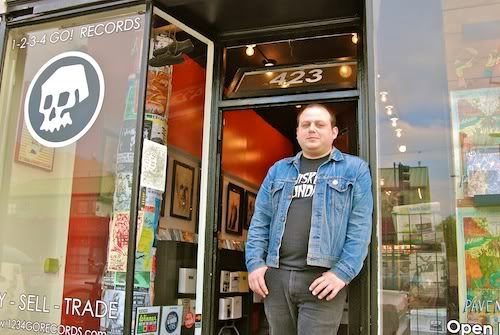
Steve Stevenson, owner of Oakland’s 1-2-3-4 Go! Records understands why people chuck and trade their physical albums for digital– to simplify their lives and clear out some clutter. He says he did the same thing two years ago when he opened the store. 

“I ended up selling almost all of my records– it’s basically how the store started. And now I don’t have many…” he says, pauses, and looks around at the loaded shelves in his shop. “Or I guess I have more than I’ve ever had.” Exactly. Stevenson didn’t cut his collection– his passion for records blew up, the physical stacks of beats and sounds have become his livelihood. 

1234 GO!

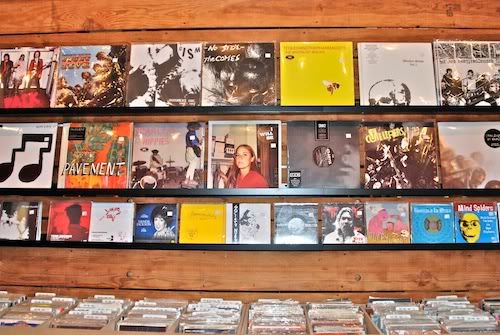
Maybe you’re not into building a gigantic vinyl collection over the weekend, but a short celebratory stack for the holiday can make for a healthy collection. And what’s great about visiting a small, boutique shop like Stevenson’s, is what it’s lacking– no over abundance of records to sift and flip for hours on end.

“My shop is small, but it’s packed with almost all exclusively good things,” he smiles. “We have good turnover on everything in here. And customers often tell me it’s nice to come in here for a half-hour and leave with something. It’s not a six-hour process of digging to get to one album you care about.”

So what are some things Stevenson is currently caring about? He would love to share. 

1234 GO!

The self-titled debut of Vermont’s grunge-pop trio Happy Birthday [Sub Pop, 2010] is by far this record shop’s pride and joy right now. Stevenson claims it’s the best collection of music he’s heard in the past two years and while he has yet to confirm totals with the label, he’s pretty he has sold more copies than any store around. 

“It’s only been out a month and I’ve sold 35 copies. I tend to push it on people. It’s just so good.”

1234 GO!

1234 GO!

He’s also pretty proud of Seattle’s Cute Lepers‘ sophomore release, Smart Accessories, [1-2-3-4 GO! Records, 2009] put out on Stevenson’s very own label. Why he gleams and grins so big when it comes to this particular record? It glows in the dark! Trippy! 

“Perfect for dark listening,” he says. 

1234 GO!

Besides music, 1-2-3-4 GO! also showcases the work of local artists each month. Currently it’s Danny Neece’s totally awesome paintings that pair oh so perfectly with the store’s colors. Get introduced to new music, new people and new art: everybody wins. 

While these goodies and other rotating gems are available every day at local music shops, the grandiose appeal of Record Store Day is the limited edition, exclusive releases both labels, artists and shops put out each year in celebration of the under-appreciated music hubs. From in-store performances to mix tapes and snacks (maybe?), put down your iPod this Saturday and let a physical person give you an earful of inspiration. 

Check out www.RecordStoreDay.com to see the major list of nationwide events. 

Or browse this list of participating stores in the Bay Area: 

San Francisco:

Amoeba Music
Aquarius Records
Creative Music Emporium
Force of Habit Records
Medium Rare Music
Streetlight Records
The Music Store

East Bay:

Amoeba Music (Berkeley)
Down Home Music Fourth Street (Berkeley)
Rasputin Music (Berkeley)
Down Home Music (El Cerrito)
Mod Lang (El Cerrito)
1-2-3-4 Go! Records (Oakland)

North Bay:

Back Door Disc (Cotati)
Watts Music (Novato)
Vinyl Planet (Petaluma)
Bedrock Music & Video (San Rafael)
Red Devil Records (San Rafael)
Last Record Store (Santa Rosa)

San Jose:

Space Cat
Streetlight Records

Sit/lie debate takes a strange new turn

Emails are rocketing around San Francisco political circles in anticipation of an April 21 meeting of the Democratic County Central Committee (DCCC), the policy-making body for the Democratic Party in San Francisco. Committee members are slated to discuss the city’s proposed sit/lie ordinance, a controversial measure backed by Mayor Gavin Newsom and Police Chief George Gascon meant to afford police more powers for dealing with hostile youth occupying sidewalk space.

Labor activist Gabriel Haaland, a DCCC committee member, touched off a small firestorm early this week when he submitted a resolution against the sit/lie ordinance. Haaland, who has lived in the Haight for around 15 years, said wayward youth have been flocking to that neighborhood and hurling occasional barbs at passersby (including himself) since he can remember, and recent interest in the issue does not make it a new problem. “What would actually solve the problem?” Haaland asked, and offered that sit/lie is not the answer. According to a post on Fog City Journal, his resolution for the Democratic Party to oppose sit/lie was co-sponsored by Assemblymember Tom Ammiano, Supervisor David Campos, Supervisor Chris Daly, Supervisor Eric Mar, Aaron Peskin, Hene Kelly, Rafael Mandelman, Michael Goldstein, Joe Julian, Jane Morrison, Jake McGoldrick, Michael Bornstein, and Debra Walker.

While some might look at a grungy street kid and see a menace to smooth business functioning or an unruly vagrant not being properly dealt with because the laws are too weak, Haaland said he perceives a kid from a broken home who already feels alienated from society. Incarceration for a nonviolent crime such as lying on the sidewalk would only further alienate these youths, he argued, possibly nudging them toward criminal behavior instead.

“This legislation will not solve longstanding, complex problems,” Haaland’s resolution reads. “City Hall has openly and repeatedly admitted in the press that the criminal justice system is failing to deal with similar issues in the Tenderloin, and has created an alternative known as the Community Justice Court (CJC) that is founded on principles of Restorative Justice.”

Restorative Justice is an alternative approach to dealing with crime that involves bringing together those who are directly affected to understand and address the harm that has been done, with emphasis on personal accountability and transformation. Some models also seek to change the conditions in which harmful actions occurred.

Haaland’s resolution urges the Board of Supervisors and the Mayor to oppose sit/lie, and to explore successful alternatives to incarceration.

The proposal sparked a second resolution, this one from committee member Scott Wiener, who is a candidate for the District 8 seat on the Board of Supervisors. Wiener submitted that the Democratic Party should officially get behind the CJC, and should acknowledge its error in opposing the court, a Newsom pet project, in 2008. “When I saw Gabriel’s resolution … I noticed it contained a positive reference to the [CJC],” Wiener told the Guardian. “I was pleasantly surprised.”

Furthermore, his resolution “encourages the Mayor and Board of Supervisors, budget permitting and based on careful analysis, to consider future expansion of the CJC’s geographic boundaries to include the Haight-Ashbury.”

Wiener is fully behind the sit/lie ordinance. “Right now, the police do not have enough enforcement tools to deal with some of the behavior on the streets,” he said. The measure has been an issue in the District 8 race, since progressive candidate Rafael Mandelman opposes the ordinance.

The resolution contest wasn’t over yet. In response to resolution No. 2, Haaland submitted yet another resolution — along with a personal note that appeared to extend an olive branch — revising Wiener’s proposal by urging support for “the restorative justice model as an alternative to incarceration.” (Haaland wrote an in-depth piece about restorative justice in a recent Guardian editorial.)

“I appreciated him doing that,” Wiener said when asked what he thought about resolution No. 3. “But I’m not convinced that that’s the way to go. That’s why I did not agree to it.”

Perhaps there won’t be any kum-ba-ya moments after all.

Along other email-blast circuits, Haaland’s initial proposal prompted David Villa-Lobos, a strong sit/lie advocate and District-6 contender, to sound his own alarm by urging SFPD officers to attend the April 21 meeting and defend the sit/lie ordinance.

The city Planning Commission recently voted 6-1 against the measure, and a grassroots group that brought opponents of the rule onto city sidewalks last month will hold another Stand Against Sit Lie citywide protest on April 24. The measure is expected to go before the Board of Supervisors near the end of the month.

The DCCC meeting will be held on Wednesday, April 21, at 6 p.m. in the basement auditorium of the California State Building, 455 Golden Gate Ave.

Andy Stern to quit SEIU

3

Just days after a San Francisco trial aired the ugly battle between Service Employees International Union President Andy Stern and some of his former top aides in the Bay Area, Stern has confirmed that he’s resigning after 38 years in the movement, 14 as head of SEIU.

Stern was once thought of as a rising figure in the progressive movement, but in recent years he has become a polarizing figure within the labor movement, prone to undemocratic power-building and starting fights with other unions. He was criticized as too close to corporations and the Democratic Party, but he doesn’t endear himself to either in an exit interview with the Huffington Post.

The fight between SEIU and the National Union of Healthcare Workers has created bad feelings on both sides, as indicated by the comments section every time we write about it, and I can’t help but think that Stern’s decision can only help the labor movement. But I suppose we’ll see.

BTW, there’s more on the SEIU-NUHW fight here at Spot.us, which we partnered with on this week’s story.

An inconvenient war

4

By Christopher D. Cook

news@sfbg.com

For two weeks, in the marble-walled modernist grandeur of the Ninth Circuit U.S. District court in San Francisco, I watched nearly a dozen well-dressed lawyers for the Service Employees International Union — long my favorite union and one I’ve written about and marched with over the years — sue the bejeezus out of two-dozen former SEIU comrades-in-arms, some of labor’s most committed soldiers.

Judge William Alsup’s courtroom was packed and tense every day for two weeks, patrolled watchfully by U.S. marshals as former coworkers shot glares across the aisle and rushed by each other in the hallway outside. “This is like a bad family reunion,” one told me. Indeed, there’s a painful, often quite personal fight inside the family of labor — a fight one can only hope will lead to strong, deep democratic unionism down the road.

In the latest chapter of a saga that’s simmered to a boil over four years, SEIU sued 24 former staffers of its powerful 150,000-member Bay Area local, United Healthcare Workers West (UHW), alleging they used the union’s money and resources to create a rival organization. Since SEIU took over the old local in a bitter trusteeship fight in January 2009, the National Union of Healthcare Workers (NUHW), led by former UHW president Sal Rosselli, has been organizing workers in droves, challenging SEIU’s hold on health care workers in California.

In the end, following grueling testimonies and cross-examinations, it came to this: on April 9, the jury hit NUHW and 16 of its leaders with a $1.5 million penalty (which might be reduced to $737,850 depending on Alsup’s interpretation of the jury’s intent). It’s a lot of money, but far less than SEIU’s original claim seeking $25 million, and the appeals are likely to drag on into next year.

After dozens of interviews and whispered conversations in the hallways outside Alsup’s courtroom, I was left wondering: how could this be happening? At a time of historic lows in union membership (7.2 percent in the private sector last year) and a recession that may never end for workers, how could SEIU, once the darling of the progressive labor movement, be embroiled in a brutal war with one of its flagship former locals? How could these two unions be tearing each other apart, exchanging ugly accusations that threaten to further tarnish labor’s tenuous reputation? All at a time when California unemployment sits stubbornly at 12.5 percent and more than 90 percent of workers remain unorganized. Hospital executives who are accustomed to tangling with a unified labor front must be thanking their lucky stars.

But this isn’t some union corruption story or simply a scuffle for personal power. Beyond the name-calling lie crucial questions about how unions function, about whose voices are heard both in union offices and on the shop floor. How much voice will workers have in union decisions, not just about break rooms and arguments with the boss, but in the shape and direction of the labor movement?

Ultimately this fight won’t be decided by any jury or judge: despite the verdict, NUHW and its volunteer organizers are pressing on with SEIU for the right to represent California’s health care workers, 400,000 of whom currently pay dues to SEIU. Over the past year, more than 80,000 of those dues-payers have signed petitions to join NUHW, which has won seven of nine elections of health care workers called so far. With more big elections coming soon, most notably among 47,000 Kaiser Permanente workers this June, the stakes are only getting higher.

In a nutshell, the two sides argue thus: SEIU contends that Rosselli and company flouted the will of President Andy Stern, and ultimately its members, by refusing to abide by Stern’s decisions on a union consolidation. That led to a trusteeship of Rosselli’s local, with its leaders allegedly using SEIU resources to form their own union. Rosselli and NUHW insist they were boxed into an untenable corner by Stern’s centralization of power in Washington, D.C., at the expense of locals and workers and that they tried many times to resolve disputes internally, and only broke away to form a new union after they were forced out by Stern.

To convince a jury of its claims, SEIU amassed a formidable legal team drawing from four firms at a cost of roughly $5 million, according to SEIU spokesman Steve Trossman. (An expert witness hired by SEIU testified the union paid him roughly $300,000 just to prepare testimony for the case; defendants say the trial cost SEIU closer to $10 million.) Whatever the number, it’s an awful lot of time and money that could be spent organizing new workers and winning strong contracts instead.

Asked if he thinks the trial is worth the expense, Trossman said, “I think members of the union, when this is over, are going to get the truth of what happened — that they directly used union resources … to hold onto personal power.”

Dan Siegel, NUHW’s chief attorney, casts it differently: “This case is about punishing the defendants and sending a message” to other union dissidents across the country.


A LONG-TERM BATTLE

The rift that ended up in federal court has its roots in a 2006 move by Stern to consolidate California’s long-term health care workers, such as home care and nursing home employees, into a single statewide local — a move that would peel away 65,000 long-term care workers from Rosselli’s union.

The most likely beneficiary of the consolidation was the Los Angeles-based Long-Term Care Workers Union, local 6434, headed by Tyrone Freeman, who had been fending off corruption charges (allegedly stealing more than $1 million in union funds for personal gain) since 2002, according to the Los Angeles Times.

“Nowhere else but in California did SEIU attempt splitting long-term care and acute care workers into different unions,” said John Marshall, an SEIU strategic researcher who resigned in protest of UHW’s trusteeship, but who remains active in the labor movement. “But it’s worse than that — here SEIU proposed forcing long-term care workers into a local that was widely known to be corrupt, that had contracts with substandard wages and benefits. And on top of it all Stern and SEIU refused to allow those workers to vote on whether or not the transfer should occur.”

When Freeman’s alleged corruption became front-page news in the Times in 2008, and even after SEIU put the L.A. local in trusteeship later that year, Stern continued to push the consolidation. Rosselli resisted, arguing the shift would weaken workers’ voice and standards; wages for workers in Local 6434 were often far lower than those for their counterparts up north, and the mounting corruption charges didn’t bode well for union bargaining power or democracy.

SEIU’s Trossman insists union leaders were not aware of the Freeman allegations until they appeared in the L.A. Times, though one of those stories quotes an unnamed inside source saying Trossman knew of the charges as early as 2002. But Trossman said the issue was not Freeman. “The proposal was to create a new long-term care local in California, and by the time that decision was made in January 2009, Tyrone Freeman was already long out of the picture,” he told us, insisting the long-term care decision was made after hearings and an “advisory member vote.”

Yet 15 months after the takeover of UHW, the consolidation of long-term care workers remains on hold.

Friction between Stern and Rosselli — over the merger, leadership, and labor movement strategy — heated up throughout 2007 and 2008; Rosselli was unanimously booted off of Stern’s “kitchen cabinet” of labor leaders, and removed from his post as president of SEIU’s California State Council.

Then on Jan. 22, 2009, an SEIU-commissioned report by former Labor Secretary Ray Marshall recommended trusteeship — if Rosselli’s union didn’t abide by the transfer of its long-term care workers. A few days later Rosselli and the UHW executive board sent Stern a letter saying they would abide by the merger — if the UHW rank and file could vote on it first. No deal: on Jan. 27, UHW was put into trusteeship: its buildings were locked up, security guards patrolled the perimeters, and many of the deposed union staff camped out on the floors of their old offices.

On the afternoon of the 27th, Rosselli, who had been reelected UHW president earlier that month, spoke to cheering supporters: “[It’s] your right to determine what union you want to be in!”

NUHW members insist it’s never been about Rosselli or the other defendants. “We are not just a bunch of lemmings — we do what we believe,” said Tonya Britton, a Fremont convalescent home worker. “They couldn’t make it this far if there weren’t all of us members … When I heard about the trusteeship, I wanted a union that was for members, not top-down. We were making gains. Now it seems we’re doing nothing but fighting.”


Christopher D. Cook is a former Bay Guardian city editor. He has written on labor for Mother Jones, Harper’s, The Economist and others. This story was funded in part by spot.us.

The dawn of Earth Day

2

tredmond@sfbg.com

GREEN ISSUE The heavens welcomed Earth Day to America. All over the country, April 22, 1970 dawned clear and sunny; mild weather made it even easier to bring people into the streets. The Capitol Mall was packed, and so many members of Congress were making speeches and appearing at events that both houses adjourned for the day.

Mayors, governors, aldermen, village trustees, elementary school kids, Boy Scout troops, labor unions, college radicals, and even business groups participated. In fact, the only organization in the nation that actively opposed Earth Day was the Daughters of the American Revolution, which warned ominously that "subversive elements plan to make American children live in an environment that is good for them."

By nightfall, more than 20 million people had participated in the First National Environmental Teach-In, as the event was formally known. It established the environmental movement in the United States and helped spur the passage of numerous laws and the creation of hundreds of activist groups.

It was, by almost all accounts, a phenomenal success, an event that dwarfed the largest single-day civil rights and antiwar demonstrations of the era — and the person who ran it, 25-year-old Denis Hayes, wasn’t happy.

His concern with the nascent movement back then says a lot about where environmentalism is 40 years later.

Gaylord Nelson, a mild-mannered U.S. senator from Wisconsin, came up with the idea of Earth Day on a flight from Santa Barbara to Oakland. Nelson was the kind of guy who doesn’t get elected to the Senate these days — a polite, friendly small-town guy who was anything but a firebrand.

A balding, 52-year-old World War II veteran who survived Okinawa, Nelson was a Democrat and generally a liberal vote, but he got along fine with the die-hard conservatives. He kept a fairly low profile, and did a lot of his work behind the scenes.

But long before it was popular, Nelson was an ardent environmentalist — and he was always looking for ways to bring the future of the planet into the popular consciousness.

In August 1969, Nelson was on a West Coast speaking tour — and one of his mandatory stops was the small coastal city that seven months earlier had become ground zero for the environmental movement. Indeed, a lot of historians say that Earth Day 1970 was the coming out party for modern environmentalism — but the spark that made it possible, the event that turned observers into activists, took place Jan. 28, 1969 in Santa Barbara.

About 3:30 on a Tuesday afternoon, a photographer from the Santa Barbara News Press got the word that something had gone wrong on one of the Union Oil drilling platforms in the channel just offshore. The platforms were fairly new — the federal government had sold drilling rights in the area in February 1968 for $603 million, and Union was in the process of drilling its fourth offshore well. The company had convinced the U.S. Geological Survey to relax the safety rules for underwater rigs, saying there was no threat of a spill.

But shortly after the drill bit struck oil 3,478 feet beneath the surface, the rig hit a snag — and when the workers got the equipment free, oil began exploding out. Within two weeks, more than 3 million gallons of California crude was on the surface of the Pacific Ocean, and a lot of it had washed ashore, fouling the pristine beaches of Santa Barbara and fueling an angry popular backlash nationwide.

Nelson received an overwhelming reception at his Santa Barbara talk — and horrified as he was by the spill, he was glad that an environmental concern was suddenly big news. But, as he told me in an interview years ago, he still wasn’t sure what the next steps ought to be — until, bored on an hour-long flight to his next speech in Berkeley, he picked up a copy of Ramparts magazine.

The radical left publication, once described as having "a bomb in every issue," wasn’t Nelson’s typical reading material. But this particular issue was devoted to a new trend on college campuses — day-long "teach-ins" on the Vietnam War.

Huh, Nelson thought. A teach-in. That’s an intriguing idea.

Hayes was a student in the prestigious joint program in law and public policy at Harvard. He’d been something of a campus activist, protesting against the war, but hadn’t paid much attention to environmental issues. He needed a public-interest job of some sort for a class project, though, so when he read a newspaper article about the senator who was planning a national environmental teach-in, he called and offered to organize the effort in Boston. Nelson invited him to Washington, was impressed by his Harvard education and enthusiasm, and hired him to run the whole show.

The senator was very clear from the start: the National Environmental Teach-In would not be a radical Vietnam-style protest. The event would be nonpartisan, polite, and entirely legal. Hayes and his staffers chafed a bit at the rules (and the two Senate staffers Nelson placed in the Earth Day office to keep an eye on things), and they ultimately set up a separate nonprofit called the Environmental Action Foundation to take more aggressive stands on issues.

Meanwhile, Hayes did the job he was hired to do — and did it well. Everywhere he turned, from small towns to big corporations, people wanted to plug in, to be a part of the first Earth Day. Many wanted to do nice, noncontroversial projects: In Knoxville, Tenn., students decided to scour rivers and streams for trash to see if they could each clean up the five pounds of garbage the average American threw away each day. In dozens of communities, people organized tree-plantings. In New York, Mayor John Lindsay led a parade down Fifth Avenue.

A few of the actions were more dramatic. A few protesters smashed a car to bits, and in Boston, 200 people carried coffins into Logan International Airport in a symbolic "die-in" against airport expansion. In Omaha, Neb., so many college students walked around in gas masks that the stores ran out. But it was, Hayes realized, an awful lot of talk and not a lot of action. The participants were also overwhelmingly white and middle-class.

Hayes wasn’t the only one feeling that way. In New York, author Kurt Vonnegut, speaking from a platform decorated with a giant paper sunflower, added a note of cynicism.

"Here we are again, the peaceful demonstrators," he said, "mostly young and mostly white. Good luck to us, for I don’t know what sporting event the president [Richard Nixon] may be watching at the moment. He should help us make a fit place for human beings to live. Will he do it? No. So the war will go on. Meanwhile, we go up and down Fifth Avenue, picking up trash."

Hayes finally broke with the politics of his mentor early on Earth Day morning when it was too late to fire him. The next day, the National Environmental Teach-In office would close and the organization would shut down. From that moment on, he could say what he liked and not worry who he offended.

"I suspect," he told a crowd gathered at the Capitol Mall, "that the politicians and businessmen who are jumping on the environmental bandwagon don’t have the slightest idea what they are getting into. They are talking about filters on smokestacks while we are challenging corporate irresponsibility. They are bursting with pride about plans for totally inadequate municipal sewage plants. We are challenging the ethics of a society that, with only 6 percent of the world’s population, accounts for more than half the world’s annual consumption of raw materials.

"We are building a movement," he continued, "a movement with a broad base, a movement that transcends traditional political boundaries. It is a movement that values people more than technology and political ideologies, people more than profit.

"It will be a difficult fight. Earth Day is the beginning."

I first met Hayes in 1990, near the office in Palo Alto where he was planning the 20th anniversary of Earth Day. He’d continued his environmental work inside and outside government, at one point running the National Energy Laboratory under President Jimmy Carter. Earth Day 20 was shaping up as a gigantic event, one that would ultimately involve 200 million people around the globe. Earth Day was becoming the largest secular holiday on the planet.

Hayes was excited about the event, which he was running this time without the moderating influence of a U.S. senator. And he was aiming for a much more activist message — in fact, at that point, he was pretty clear that the U.S. environmental movement was running out of time.

"Twenty years ago, Earth Day was a protest movement," he told a crowd of more than 300,000 in Washington, D.C. "We no longer have time to protest. The most important problems facing our generation will be won or lost in the next 10 years. We cannot protest our losses. We have to win."

And now another 20 years have passed — and by many accounts, we are not winning. Climate change continues, and even accelerates; an attempt at a global accord just failed; and Congress can’t even pass a mild, watered-down bill to limit carbon emissions.

And Hayes, now president of the Bullitt Foundation, a sustainability organization in Seattle, thinks the movement has a serious problem. "Earth Day has succeeded in being the ultimate big tent," he told me by phone recently. "To some rather great extent, is had some measure of success."

But he noted that "in American politics these days, it’s not the breadth of support, it’s the intensity that matters. Environmentalists tend to be broadly progressive people who care about war and the economy and health care. They aren’t single-issue voters. And somehow, the political intensity is missing."

Hayes isn’t advocating that environmentalists forget about everything else and ignore all the other issues — or that the movement lose its broad-based appeal — but he said it’s time to bring political leaders and policies under much, much sharper scrutiny and to "stop accepting a voting record of 80 percent."

It’s hard today to be bipartisan, and compromise is unacceptable, Hayes told me. "I was probably right [in 1990]," he said. "If what you’re aspiring to do is stop the greenhouse gases before they do significant damage to the environment, it’s too late." At this point, he said, it’s all about keeping the damage from turning into a widespread ecological disaster.

"I would like to see Earth Day 50 be a celebration," he said. "I would like to see by then a real price on carbon, nuclear power not proliferating, and a profound, stable investment in cost-effective, distributed renewable energy." But for that to happen, "we need to have a very intense core of environmental voters who realize that these threats to life on the planet are more important than a lot of other things."

Tim Redmond is the author, with Marc Mowrey, of Not In Our Back Yard: The People and Events that Shaped America’s Modern Environmental Movement (William Morrow, 1993) which can still be found in the remainder bins of a few used book stores.


Events listings

0

Events listings are compiled by Paula Connelly. Submit items for the listings at listings@sfbg.com.

WEDNESDAY 14

How to Grow Veggies Baazar Café, 5927 California, SF; (415) 831-5620. 7pm, free. Just because you live in a small apartment in San Francisco with no backyard doesn’t mean you can’t grow fruits and vegetables. Pam Pierce, author of Golden Gate Gardening, will be on hand to teach attendees how to do just that.

Mission Bay Farmers’ Market 3rd Street between 4th and 5th Streets on Campus Way, SF; 1-800-949-FARM, or www.pcfma.com. 10am-2pm, free. Check out the opening of the weekly Mission Bay Farmers’ Market and take home some produce, flowers, seafood, tofu, and more from over two dozen vendors.

THURSDAY 15

“The Americanitis Elixir” Southern Exposure, 3030 20th St., SF; (415) 863-2141. 7pm, free. If you are suffering from Americanitis, the cure may be in your own backyard. Bring some hand picked fruits or herbs to share and watch as artist Alison Pebworth and collaborator Jerome Waag debut a San Francisco Americanitis Elixir, distilled from the vital spirits of collected native ingredients.

BAY AREA

Jewish Jokes JCC of the East Bay, 1414 Walnut, Berk.; (510) 848-0237. 7:30pm, $9. Hear performers and scholars tell jokes, look at the history of Jewish humor, and explore the future featuring Jewish comedian Joseph Nguyen, Jewish clown Jeff Raz, and Jewish joke expert Mel Gordon. Jewish joke open mic to follow.

Strictly Sail Pacific Jack London Square, 1956 Webster, Oak.; www.strictlysailpacific.com. Thurs.-Fri. 10am-6pm, $12; Sat. 10am-7pm, $15; Sun. 10am-5pm, $15. Join other sailing enthusiasts for this four day sailing show featuring the hottest new sailboats, gear, and accessories, including the latest in green sailing, and activities, demonstrations, and seminars.

FRIDAY 16

CubaCaribe Dance Mission Theater, 3316 24th St., SF; (415) 273-4633. Fri. and Sat. 8pm, Sun. 7pm; $15. Through May 2, visit cubacaribe.org for full schedule. Enjoy this festival of dance and music “From Katrina to Port-au-Prince” celebrating the spirit of the Caribbean with artists from Haiti, New York, New Orleans, and Cuba.

World Wide Hustle[rs] Luggage Store Annex, Cohen Alley, 509 Ellis, SF; (415) 255-5971. 6pm, free. Attend the opening reception of collaborative work by Robin David and Angela Angel that pays homage to markets and workers across the globe, inspired by true narratives from Chile, India, Mexico, the Philippines, and Tanzania.

SATURDAY 17

Bug Day Randall Museum, 199 Museum Way, SF; (415) 554-9600. 10am, $3 suggested donation. Bring your family or date and explore the incredible worlds of arthropods, creepy crawlies, hoppers, and slitherers. Learn how important bugs are to the earth and our survival, enjoy love entertainment, make bug-related crafts, play bug games, and bring a picnic lunch to enjoy with the view.

Goat Cheese Festival Ferry Plaza Farmers’ Market, Ferry Building, One Ferry Building, SF; (415) 291-3276. 10am-1pm, free. Celebrate all things goat at this festival sponsored by the Center for Urban Education about Sustainable Agriculture (CUESA) featuring samples, cooking demonstrations, a reading by Gordon Edgar, author of Cheesemonger: A life on the wedge, a chance to pet baby goats, and more.

“Insight and Inspiration” de Young Museum, Koret Auditorium, 50 Hagiwara Tea Garden, Golden Gate Park, SF; (415) 750-3627. 10am, $10. Attend this panel discussion with Bay Area fiber artist Judith Content, and Studio Art Quilt associates Marion Coleman, Charlotte Bird, and more discussing fiber art, different creative processes for making fiber art, and the history of contemporary fiber art.

Swankety Swank Trunk Sale 289 Divisadero, SF; (415) 932-6615. 11am, free. Part of San Francisco’s “Shop Local SF” program, Swankety Swank will be hosting monthly trunk sales through Labor Day. This month’s sale features DJ Sunshine Jones spinning smooth music and art, furniture, accessories, and clothes made by local artists.

SUNDAY 18

American College of Traditional Chinese Medicine San Francisco War Memorial Building, Green Room, 401 Van Ness, SF; (415) 355-1601 ext. 12. 2pm, free. Celebrate the 30th anniversary of the ACTCM with local politicians, community health organizers, and other members of the community and enjoy performances by the renowned Monks of the Shaolin Temple, Chinese folk dancers, a traditional Lion Dance performance, and more.

Northern California Book Awards San Francisco Public Main Library, Koret Auditorium, 100 Larkin, SF; (510) 525-5476. 1pm, free. Find out the winners of this year’s book awards at this ceremony, where all nominated books will be saluted, but only a few will win. Nominees are entered in categories for fiction, general nonfiction, creative nonfiction, poetry, translation, and children’s literature and include Michael Chabon, Dave Eggers, Joseph Stroud, Catherine Brady, Yiyun Li, and more. To view a full list of nominees, visit www.poetryflash.org.

Tequila and Tamales by the Bay Fort Mason Center, Conference Center, Buchanan at Marina, SF; (415) 695-9296. Noon, $40. Sample tamales from Cocina Poblana, La Espiga de Oro, Tamale Factory, the Whole Tortilla, and Evelia and sip tequilas from Don Julio, Jose Cuervo, and El Relingo at this festival featuring contests, craft vendors, and more to benefit the Benchmark Institute.

MONDAY 19

No


TUESDAY 20

“Cool Cuisine” San Francisco Main Library, 100 Larkin, SF; (415) 557-4484. 6pm, free. Hear chef Laura Stec and atmospheric scientist Eugene Cordero, Ph.D., discuss how to move to a diet that counters the biggest environmental problems while also eating more healthy and getting more pleasure out of food at this talk titled, “Cool Cuisine: Taking a bite out of global warming.

Stop mistreating working women!

0

Dick Meister, formerly labor editor of the SF Chronicle and KQED-TV Newsroom, has covered labor and politics for a half century. Contact him through his website www.dickmeister.com

Although the global recession has had a serious impact on working men and women alike, two new reports make clear that women in the United States and throughout the world have suffered most because of long-standing discrimination.

The findings come from two highly regarded sources – the United Nations’ International Labor Office (ILO), and the New Center for American Progress (CAP), a think tank headed by John Podesta, former chief of staff for President Clinton.

Above all, the reports show the critical need to combat the worldwide mistreatment of working women, especially in these times of economic distress. The initial blow of the recession was felt in work dominated by men, such as finance, manufacturing and construction. But the main impact has shifted to other areas of work, including service work, where women generally are dominant.

Nevertheless, as the CAP report notes, “Most of the jobs that have been lost have been lost by men, leaving millions of women and mothers to support their families.”

That’s a rough task for many women. For though they’re usually doing essentially the same work as men, or the equivalent of it, women earn substantially less than the men – internationally, 30 to 40 percent less, despite a narrowing of the gap in recent years. The gap is narrower within the United States, but even so, U.S. women average only 77 cents for every dollar earned by men.

The pay gaps exist in part because, as the ILO’s Sara Elder says,  “We still find many more women than men taking up low pay and precarious work, either because this is the only type of job made available or because they need to find something that allows them to balance work and family responsibilities. Men do not face these same constraints.”

And it may get worse for women, even after the recession ends, since “we know from previous crises that female job-losers find it more difficult to return to work as economic recovery settles in.”

What’s needed everywhere, of course, is equal treatment for working women – paying them the same as men doing comparable work and otherwise treating them the same.

In the United States that would mean cracking down on the widespread violations of the 47-year-old Equal Pay Act that has never delivered its promise to guarantee women equal treatment on the job.

Better yet would be the passage – and strict enforcement  – of the long stalled Paycheck Fairness Act. It would close loopholes in the Equal Pay Act that have made it relatively easy for employers to discriminate against women in pay and other matters.

It’s estimated that if U.S. women were granted equal pay , they could each earn as much as $2  million more over the whole of their working lives. It’s estimated as well that equal pay would reduce the number of families living in poverty by as much as half.

Probably the most essential reform aside from paycheck fairness would be, as the CAP report recommends, worldwide updating of basic labor standards “to recognize that most workers have family responsibilities and need predictable and flexible work schedules, family and medical leaves and paid sick days.” That would assure that women “who stay employed to support their families” won’t end up unemployed because of  “family-work.

At least in the United States, those and other reforms would likely win broad public support. A recent poll cited in the CAP report showed that “a large majority of Americans support new, more family-friendly workplace policies.” Eighty-five percent “said businesses that fail to adapt to needs of modern families risk losing good workers.”

And businesses that fail to adapt will be furthering the mistreatment of working women that’s gone virtually unchecked for far too many years. No matter what the recession – or its end – brings, we will not have a truly healthy economy until working women are guaranteed their full rights.

Dick Meister, formerly labor editor of the SF Chronicle and KQED-TV Newsroom, has covered labor and politics for a half century. Contact him through his website www.dickmeister.com

Verdict leaves SEIU-NUHW fight unresolved

44

By Christopher D. Cook

In a mixed ruling this morning (April 9), a nine-member U.S. District Court jury awarded $1.5 million to the Service Employees International Union in its ongoing campaign to stymie a rival union created by former SEIU staffers, in a mixed ruling that’s unlikely to resolve the unions’ protracted battle over members and leadership in the labor movement. 

Coming after a tense and bruising two-week trial and several days of jury deliberations, the verdict includes a $724,000 penalty against the insurgent National Union of Healthcare Workers, led by Sal Rosselli, former long-time president of SEIU’s United Healthcare Workers West (UHW). Rosselli and 15 of his NUHW colleagues were also hit with smaller penalties ranging from $30,000 to $74,000.

The SEIU lawsuit originally sought $25 million in damages for an array of allegations that its former staffers, who launched NUHW a day after the local was put in trusteeship, had stolen union funds and used SEIU resources and staff time to build their rival organization.

In the process of litigating the case, SEIU deployed four law firms at an expense of $5 million, according to SEIU-UHW communications director Steve Trossman (NUHW’s attorneys estimate the figure at closer to $10 million)—so if the award is upheld, SEIU stands to lose at least $3.5 million on the case. 

“It’s absolutely worth it,” said Michelle Ringuette, SEIU’s strategic affairs director.  “There’s no price tag on justice.”  She called the verdict “an enormous slam-dunk victory for SEIU members, who wanted to hold [NUHW] accountable…they are exhilarated today.”

But in an interview a few hours after the verdict, Rosselli said he and NUHW are undaunted by the ruling.  “Their goal was to destroy NUHW, and they failed,” he said.  “They wanted us to walk away from NUHW, that’s what this is all about…This will go on for more than a year before they can try to see a dime” of NUHW money, Rosselli added, noting NUHW’s attorneys will ask Judge William Alsup to set aside the verdict, and if he doesn’t they’ll press on to the U.S. Court of Appeals.

According to Rosselli, SEIU “said I was in jail, they said that I stole $3 million, and it hasn’t resonated…This has the potential to backfire on them—what we got dinged for is fighting the trusteeship, fighting for democracy, and fighting for a voice.”

Meanwhile, on the ground, where the two unions are locked in a tough fight for members, a different verdict is playing out.  In nine hospital elections over the past year, NUHW has won seven, mostly by resounding margins. The new union has won elections for more than 3,000 workers so far, while more than 100,000 have signed petitions requesting NUHW representation. The biggest organizing prize is Kaiser, where 50,000 workers will decide which union they want in an election this June.  “Once we win the Kaiser election, it’s going to be all over for SEIU healthcare,” Roselli said.

Rosselli said there are 100 union elections pending, and SEIU has moved to block all but 30 elections at nursing homes where staff turnover has been nearly 100 percent in the past year.  “The only reason they’re blocking is because they think they’re going to lose,” he said.

As the ruling came down, prominent California leaders such as United Farm Workers co-founder Dolores Huerta and former California State Senate pro tem John Burton issued statements supporting NUHW. “Tens of thousands of healthcare workers are organizing with NUHW for a real voice at work and a democratic voice in their union, and that will continue in spite of this verdict,” Huerta said. “These reformers stood up for workers’ right to vote when SEIU tried to take it away, and that’s the only thing they’re guilty of.”

Hot sex events: April 7-13

0


Dear Good Vibrations,

Please stop putting on such awesome classes, you’re making me look like I don’t have anything else to write about for sex events.

Thanks,

Caitlin

Just kidding, Good Vibes! But honestly, a quick shout out to our local legendary sex toy company. This place was started in 1977 by sex educator Joani Blank, and since then has made lovers of all kinds of sexual persuasions very, very happy with it’s high quality toys, classes and videos. But you already knew that. Onto this week’s sex events! Not coincidentally, they feature three Good Vibes lessons for very bad girls and boys. But it would appear the rest of the Bay has caught the fever for some bedroom education as well… 


Prostate Play and Pleasure

Dr. Charles Glickman knows what it takes to make your little prostate guy happy. In this free hour long class, he’ll run down the toys, tips, and techniques to shed some love on you or your partner’s gland of love.

Wed/7 6:30-7:30 p.m., free

Good Vibrations

2504 San Pablo, Berkeley

(510) 841-0171

www.goodvibes.com


The Sexuality of Pregnancy and Birth

The store continues it’s non stop sex ed blockbusting with this class, which takes away the confusion and uncertainty regarding pregnancy and sexual activity. Sexual pleasure as a labor enhancer? Which positions will show love for that belly of joy? Carrie Flemming, birth advocate/artist/health worker shows the way.

Wed/7 8 p.m.-10 p.m., $25-30

Good Vibrations

603 Valencia 

www.goodvibes.com


Freedom Dreams

Don’t miss the kick off party for Safetyfest, Community United Against Violence’s educational workshop series on avoiding domestic violence in queer/trans relationships. The party will feature queer performance group Mango with Chili, bangin’ DJs, a kissing booth, and of course, lots of learnin’ on how to keep your honey and yourself safe.

Thur/8 7-10 p.m., $5-20 sliding scale

Bench and Bar

510 17th St., Oakland

 www.cuav.org


Booze, Broads and Hotrods

For all those into the smoothness of curves, the rev of the engine, the smell of hot grease… the 12th annual car show/jive dance party/burlesque showcase, Booze, Broad and Hotrods. Get you out to Milbrae for cheap hotel rooms at the Clarion, a pre 1965 classic car show, and front row seats for La Cholita, the infamous burlesqueteer who will be performing throughout the evening.

Sat/10 3 p.m. – 1:30 a.m., $18-20

Clarion Hotel

401 East Milbrae, Millbrae


Secret Desires: Playing with Erotic Edges

On how to bring what you’ve always thought would remain a fantasy in your head to the fore of your lovemaking. Cleo DuBois shows the way to “deeply authentic sex.” And perhaps a little more honesty in the bedroom, to boot.

Tues/13 8-10 p.m., $25-30

Good Vibrations

1620 Polk, SF

www.goodvibes.com


Girl Sex 101

Allison Moon wants to teach you the same lessons on licking, grinding, and girl on girl sexual communication that she dispenses at Burning Man’s Camp Beaverton for Wayward Girls. Won’t you let her?

Tues/13 7-9 p.m.

Center for Sex and Culture

1519 Mission, SF

(310) 694-4895 

www.sexandculture.org


School of Shimmy: Burlesque 101

I’m unclear on whether it’s B.Y.O.P. (Bring Your Own Pasty), but regardless, you should get your shakable ass down to El Rio for Red Hot Burlesque’s crash course on that classiest form of clothes shucking. Important: will there be $1 Pabsts?

Tues/13 7-9 p.m., $30 (reservations recommended)

El Rio 

3158 Mission, SF

(201) 615-9245 

www.redhotsburlesque.com


Part of the solution

0

Caitlin@sfbg.com

CAREERS AND ED Just a thought. As our country becomes an economic-cultural stew fraught with problems so complex we don’t even know yet what they are, different approaches to education may be necessary for tomorrow’s good guys. Which is why it’s so positive that Bay Area higher ed institutions have developed unique degree programs that anticipate tomorrow’s issues today. From robot wars to social stratification — learn about this stuff and you’ve got the skills you need for the battles to come.


PHILIPPINE STUDIES

Rare is the program in our country that offers a concentration in the culture and history of the Philippines. But with 40,072 Filipinos in the Bay Area, that’s an oversight USF was happy to correct with this concentration, which can be paired with any of its undergraduate degrees to create a Filipino context within science, art, nursing, or the humanities.

University of San Francisco, 2130 Fulton, SF. (415) 422-5555, www.usfca.edu


LABOR AND COMMUNITY STUDIES

This associate degree program focuses on giving working people the educational background they need to be effective in the world of labor union activism — collective bargaining, labor law, and workplace discrimination issues, among other things. The school also runs not-for-credit programs that link minority students and workers up with job training for careers in the trades. Kicking ass for the working class, and all that.

City College of San Francisco, Evans Campus, 1400 Evans, SF. (415) 550-4459

www.ccsf.edu


TRANSFORMATIVE LEADERSHIP

On the slightly less tangible end of the spectrum, the California Institute for Integral Studies offers an online master’s degree program for “personal transformation and creating positive change in the world.” Courses focus on group mediation, identifying one’s own strengths and weaknesses, and effective leadership. Let Your Love Shine 101 (for professionals).

California Institute for Integral Studies, 1453 Mission, SF. (415) 575-6100, www.ciis.edu


EQUITY AND SOCIAL JUSTICE IN EDUCATION

There’s no way an equitable educational system wouldn’t improve this crazy old country of ours. To that end, the future teachers and leaders in this concentration of the master’s program in education study historical/political perspectives of injustice in schools, with a mind to changing things about the way Americans learn.

San Francisco State University, 1600 Holloway, SF. (415) 338-1111, www.sfsu.ca


DISABILITY STUDIES

A unique minor at Berkeley examines how the concept of disability has been shaped and created by our social constructs over time. Attention is also paid to how the interpretation of disability has been highlighted in law, art, and politics. The Web site on the study features a wheelchair basketball league open to all comers regardless of bodily capabilities.

University of California Berkeley, Berk. (415) 643-7691, www.berkeley.edu


COMPUTER GAME DESIGN

Look, not everything in the future’s gonna be heavy! We’re still gonna need people who are real good at making blood look realistic and keeping a step ahead of everyone’s World of Warcraft avatars. The students in this undergraduate major have seen the light: if we don’t master the machines, they master us.

University of California Santa Cruz, 1156 High, Santa Cruz. (831) 459-0111, www.ucsc.edu

Events listings

0

Events listings are compiled by Paula Connelly. Submit items for the listings at listings@sfbg.com.

WEDNESDAY 7

California Nights California Historical Society Museum, 678 Mission, SF; (415) 357-1848. 6pm, free. Connect, learn, and discuss the future of the Golden State at this open house in conjunction with the current exhibition, Think California, a collection of artwork, artifacts, and ephemera that represent different parts of California’s history.

Castro Farmers’ Market Noe between Market and Beaver, SF; for a list of farmers’ markets in the area, visit pcfma.com. 4-8pm, free. Attend the seasonal opening of the Castro Farmers’ Market and enjoy fresh fruits and vegetables, live music, a blessing by the Sisters of Perpetual Indulgence, and more.

Women’s International Film Festival Various Bay Area locations, visit http://www.sfwff.com/ for more information. Wed. – Sun., ticket prices vary. Choose from a diverse selection of films made by female filmmakers from around the world, featuring work by local and international women in all areas of film, in short and feature productions.

THURSDAY 8

1369 Lights Blue Six Acoustic Room, 3043 24th St., SF; www.moholyground.org. 7pm, $5. Be among the first to get a copy of the new Moholy Ground Magazine, the New Photography Journal. Meet Moholy Ground staff and featured artists and enjoy cocktails and music from DJ BoomBostic spinning soul, motown, and funk. The Moholy Ground Project publishes nonprofit art journals and books and provides low cost promotions and marketing to art organizations and individuals involved in the art community.

BAY AREA

Freedom Dreams @ 17th, 510, 17th St., Oak.; (415) 777-5500. 7pm, $5-$20 sliding scale. Attend the launch party for Community United Against Violence’s (CUAV) Safetyfest, a festival celebration safe ways for queer and trans people in the Bay Area to strut their stuff. Proceeds to benefit CUAV’s programs supporting LGBTQQ survivors of hate and domestic violence.

Three Ring Bingo RhythMix Cultural Works, 2513 Blanding, Alameda; (510) 865-5060. 7:30pm; $20, including one drink. Play ten knockout rounds of Bingo while enjoying performance art spectacles complete with live entertainment, tumbling numbers, cash prizes, the Yay Girls, Lucky Lucy, and emcee Mr. Entertainment.

FRIDAY 9

BAY AREA

"What I Learned at Straight Camp" UC Berkeley Campus, room 2050 VLSB, Dwinelle Hall, off Bancroft and Telegraph, Berk.; atheists.meetup.com. 7pm, free. Hear about Ted Cox’s undercover stint in gay-to-straight therapy programs at this presentation including music, videos, and a live demonstration. Cox is a godless writer from Sacramento.

SATURDAY 10

Cesar E. Chavez Parade and Festival Parade starts at 19th St. and Guerrero; 24th Street Fair, 24th St. between Treat and Bryant, SF; (415) 621-2665. Noon parade, 1pm street fair; free. People of all races and creeds are encouraged to participate in honoring the life and work of civil rights and labor leader Cesar E. Chavez at this parade and festival featuring live music, ethnic dance, entertainment, food vendors, and more.

BAY AREA

Yuri’s Night Bay Area NASA Ames Research Center, Hangar 211, Moffett Field, Mountain View; ybna.org. Noon – Midnight, $49.50. Join other space enthusiasts to interact with exhibits from a wide range of groups including Google Earth, Zero Gravity Arts Consortium, Loco Bloco, the Astronomical Society of the Pacific, and more and catch the huge line up of musical acts to be performing on two stages including N.E.R.D., the Black Keys, Les Claypool, Common, and more.

SUNDAY 11

Reinventing Porcelain San Francisco Airport Commission Aviation Library and Louis A. Turpen Aviation Museum, Departures Level, International Terminal, San Francisco International Airport, SF; (650) 821-6700. 1:30pm, free. Attend this lecture with Malcolm D. Gutter, professor at Foothill College and UC Berkeley Extension, about the development of Meissen, Europe’s oldest porcelain, during the Golden Age. This lecture is in conjunction with the exhibit, "Evolution of a Royal Vision: The Birth of Meissen Porcelain," through Sept. 13.

Phillip Schultz Space Gallery, 1141 Polk, SF; (415) 377-3325. 3pm, free. Hear Pulitzer Prize winning poet Philip Schultz read and discuss selections from his recent book of poetry, The God of Loneliness, at this celebration of the third anniversary of Writers Studio Workshops in San Francisco.

Wildflower Ramble Mt. Livermore, Angel Island Park; (415) 435-3522. From Tiburon take 10am ferry, meet at Gift Shop at 10:30am. From San Francisco take 10:35am Blue and Gold Fleet ferry from Pier 41, meet at Visitor’s Center at 11am; $5. Learn about the wildflowers that grow on Mt. Livermore on this docent led, 4 1/2 mile hike. Wear comfortable, layered clothing. Bring lunch and liquids.

MONDAY 12

No Rich, No Poor! Modern Times Bookstore, 888 Valencia, SF; (415) 282-9246. 7pm, free. Join Charles Andrews in this discussion based on his new book about whether capitalism can be repaired or if it needs to be replaced and what a potential new "program of common prosperity" could look like.

Post-Punk Extravaganza Needles and Pens, 3253 16th St., SF; (415) 255-1534. 7pm, free. Join Microcosm Publishing for their West Coast author tour featuring zine author Joe Biel showing his latest documentary, If It Ain’t Cheap It Ain’t Punk, followed by a Q&A about DIY Publishing, Mia Partlow and Michael Hoerger presenting the secret history of food and espionage in conjunction with their new book, Edible Secrets, and more.

Editor’s Notes

0

Tredmond@sfbg.com

A couple of weeks ago, political consultant David Latterman, who often works with downtown interests, sent off an e-mail warning that the pro big-business, moderate bloc needed to get its act together. "It appears as if different groups are unwilling to set aside their egos or agendas, and pool together resources in a comprehensive plan to take back the [Democratic County Central Committee]," he wrote. "And guess what, we’re going to lose, in June and November."

His point: the DCCC matters, a lot. "The DCCC controls the supe endorsements that matter most," he noted, adding, "The mayor’s race starts now."

And that’s absolutely true — and unless the folks downtown are foolish or have given up (and neither is terribly likely) they’re going to get the message, and there’s going to be a big-money push in the next two months to oust the progressive majority on the county committee.

The DCCC controls the Democratic Party endorsements — and the party slate card is among the most influential political slates in a city where the vast majority of the population votes for Democrats. The DCCC could well make the difference in some of the key supervisorial races this fall — and could play a key role in choosing the next mayor of San Francisco.

But it’s not a high-profile election. More than half the votes will probably be absentees. That means it’s critical that the progressive candidates can raise money, do mailers, and fight back.

At this point, there’s a pretty good consensus on a progressive slate. We published our endorsements last week, and the Milk Club, Sierra Club, Tenants Union, and Assembly Member Tom Ammiano have endorsed most of the same candidates. In the fall, labor, environmental groups, tenants, and other progressive interests will be putting a lot of money into the races for district supervisor. But I could argue that the DCCC is just as important — and if we don’t fight this one to win, it’s going to be a lot harder in November.

Revenue for all

2

OPINION Cut, cut, cut, cut, cut: this is the sound of your government — parks, schools, playgrounds, hospitals, clinics, public transportation, programs for youth and seniors, arts, social services, the whole fabric that makes San Francisco what it is — fading away as state and local politicians refuse to raise revenue to revitalize our economy.

Mayor Gavin Newsom and big business groups have promoted a defeatist politics of low expectations, cutting spending, laying off city workers by the thousands, and offering tax breaks to businesses and developers rather than tapping San Francisco’s deep pockets of wealth to generate economic opportunities citywide.

It’s time for a new path: a fiscal politics of optimism, opportunity, and addition rather than subtraction. It’s time for an unapologetic progressive taxation movement for this November’s ballot and beyond, to make the city’s great wealth — individual and corporate, often badly undertaxed — work for all San Franciscans.

As California crumbles, local revenue movements could fuel a statewide campaign of towns, cities, and counties to overturn Proposition 13. San Francisco can take the lead with progressive taxation to create jobs, promote small neighborhood businesses, expand affordable housing and public transit, save public health, and more.

A citywide campaign for progressive taxes is building, including leaders from community-based nonprofits, grassroots organizing and neighborhood groups, labor unions, and some corners of City Hall. There are many promising ideas; with the right political will and organizing, the city could, for instance, tax large-scale real estate and levy profits from large firms. Progressive taxes could, at minimum, bring in close to $100 million and help save critical city services.

To win this campaign, a strong coalition must educate and mobilize the public about the vital importance — and citywide benefit — of raising revenue through targeted taxes on large firms and wealthy individuals. The city’s political leaders will need prodding, pressure, and support to get this done.

Progressive taxation will benefit all of San Francisco, not just some — working-class people of color and immigrants who endure the cuts’ harshest effects, everyone from youths to seniors, and vitally needed city employees like social workers, nurses, librarians, park workers, and firefighters.

The politics of austerity poses false choices between public safety and public health — as if health isn’t a safety issue. San Franciscans of all stripes must reject the pitting of services and "constituencies" against each other, reject the wedge politics that pit labor against nonprofits (both of which work to uplift working-class and poor residents), and unify around progressive revenue.

Nobody likes taxes, least of all the middle class, working class, and poor (the vast majority of us) who shoulder the bulk of the burden. But wealthy individuals and corporations can and must pay their fair share. According to a 2007 World Wealth Report produced by Merrill Lynch, 123,621 households in the Bay Area — many of them in San Francisco — "had $1 million or more in financial assets in 2007, up 10.8 percent from the year before," the San Francisco Chronicle reported.

At a Feb. 14, 2007 Town Hall on Poverty in Bayview-Hunters Point, Newsom asserted, "we haven’t addressed the wealth divide; we haven’t addressed the health divide; we haven’t addressed the economic divide … why in a city like San Francisco has income inequality grown like it has?"

Yet Newsom and others continue to avoid progressive taxation — despite polls suggesting such measures can win. Tell Mayor Newsom, and your district supervisor, to make San Francisco’s wealth work for everyone. Now. *

Christopher Cook, an award-winning journalist and former Bay Guardian city editor, is communications director for the Revenue for All campaign of Budget Justice, a coalition of members from dozens of community organizations, labor unions and their allies working to raise revenue and protect the most vulnerable San Franciscans from budget cuts.

Alerts

0

alert@sfbg.com

WEDNESDAY, APRIL 7

The Human Cost of Food


Join the Green Café Network, Mission Pie, and local farmers for a discussion about the different models of farm labor structure and how individual consumers, cafes, and restaurants can integrate this knowledge into their sourcing decisions and methods. It’s an idea whose time has come: fooders and foodies working together to balance social and economic justice goals with economic demands.

6:30 p.m., $5–$10 suggested donation

Kitchen at Mission Pie

2901 Mission, SF

(415) 282-1500

greencafenetwork.org

FRIDAY, APRIL 9

Berkeley Critical Mass


Join this "spring renewal ride" to celebrate Berkeley Critical Mass’ 17th year of protests on wheels. Bring noise-makers, bike decorations, food to share, and bike lights.

6 p.m., free

Berkeley BART

Center at Shattuck, Berk.

www.berkeleycriticalmass.org

SATURDAY, APRIL 10

Forum for Choice 2010


Hear candidates for governor, attorney general, and insurance commissioner take part in an in-depth discussion on a woman’s right to choose and the government’s role in making reproductive health decisions that affect all of us. Confirmed participants are Jerry Brown, Hector De La Torre, Rocky Delgadillo, Kamala Harris, Dave Jones, Chris Kelly, Ted Lieu, Pedro Nava, and Alberto Torrico.

8:30 a.m.; $50, $15 for students

Nob Hill Masonic Center

1111 California, SF

forumforchoice.com

Hilltop Park Beautification Day


Join AmeriCorps members of Habitat for Humanity as they maintain and beautify Hilltop Park, an under-utilized public outdoor space in the Bayview neighborhood that has fallen into disrepair due to budget cuts at SF’s Recreation and Park Department.

9 a.m., free

Across from 52 Whitney Young Circle construction site, SF

www.habitatgsf.org

San Francisco Green Festival


Volunteer or attend the Spring 2010 San Francisco Green Festival, a sustainability event featuring talks by authors, educators, and leaders; exhibits from ecofriendly businesses; workshops, films, activities, vegetarian food, and more.

Sat. 10 a.m.–7 p.m., Sunday 11 a.m.– 6 p.m.

$15 weekend, $10 one-day; $5 seniors, bike, and public transit riders;

free for volunteers, students, and youth.

SF Concourse Exhibition Center

635 Eighth St., SF

www.greenfestivals.org

SUNDAY, APRIL 11

Cuba and U.S.


Attend this afternoon of presentations and discussions about Cuba, the U.S. blockade, how to visit, how to get involved advocating for Cuba, and how you can get involved with freeing the Cuban Five.

3 p.m., $5

La Pena Cultural Center

3105 Shattuck, Berk.

(510) 849-2568 or email cucaravan@igc.org

Mail items for Alerts to the Guardian Building, 135 Mississippi St., SF, CA 94107; fax to (415) 255-8762; or e-mail alert@sfbg.com. Please include a contact telephone number. Items must be received at least one week prior to the publication date.

True believers

0

The best season of the year is finally here. Baseball season. Sure, it’s only a game – but it’s a game that can be very serious business to the young people who play it.

I once was one of them, playing in the 1940s and 1950s on some of the many semi-professional teams that once were common in San Francisco, as in many other cities, as well as on teams in the Mendocino County, Southwestern Oregon and Western Canadian Leagues.

We were true believers, all of us. For there are no heretics on a baseball diamond. We accepted, without question, that the game must be governed by the mystical number of three and its multiples. Three strikes and you’re out. Three outs per inning. Nine players per side. Nine innings per game. Sixty feet, six inches from pitcher’s mound to home plate. Ninety feet between bases.

We knew, too, that there were foul lines within which we had to play, and that if we were hurt or weary, we had better stay in the game anyway. If we left, there was no returning. And we knew we had to do everything, to hit, to run and to field.

It was that way because there was no other possible way for it to be, the way it had been since the 1800s, when mustachioed men wearing dark suits and derby hats had laid down the rules.

The ball, for instance: It is ideally sized. At 5 to 5.25 ounces and 2.86 to 2.94 inches round, noted Roger Angell, baseball’s poet laureate, the ball “is a perfect object for a man’s hand,” one that “instantly suggests its purpose. . . to be thrown a considerable distance – thrown hard and with precision . . . If it were a fraction of an inch larger or smaller, a few centigrams heavier or lighter, the game would be utterly different. . . Feel the ball, turn it over in your hand . . .You want to get outdoors and throw this spare and sensual object to somebody.”

And that 90 feet between bases, as sportswriter Red Smith observed, “represents man’s closest approach to perfection. The fastest man in the world hits a grounder to an infielder, who fields it cleanly.  The hitter must lose the race.  But if the ball is bobbled or slowed by the grass, he can win. That’s perfect balance.”

There were unquestioned patterns of behavior as well as rules to guide us. We invariably swung three bats round and round over our heads – Louisville Sluggers, naturally – as we waited our turn to hit, and glared threateningly at the pitcher as we stood in the batter’s box pawing at the ground.

We glanced coolly down to the third base coaching box where coaches and managers ran their fingers over the bills of their caps, across the front of their uniform shirts, along the outside of their thighs, pinched their noses, scratched their ears, passing us secret orders we never dared challenge, telling us to hit, take a pitch, bunt.

In the field, we spat on the ground and into our gloves between pitches, rubbing the saliva deep into the leather of the pocket as we earnestly chattered, and chattered.
“Get him out, Mick . . . humbabe . . . you can do it . . . YOU CAN DO IT! Easyout! Easyout!

That’s how the professionals did it, and we were certain, many of us, that our play was preparing us for professional careers.

Like apprentices in any other trade, we had to master a special vocabulary. If a pitcher was left handed, he was a “southpaw,” of course. Men on base were “ducks on the pond.” As a second baseman or shortstop, I was part of the “keystone combination.”
Unfortunately, I was a “banjo hitter” as well, one of those batters who hit too many “Texas Leaguers” and easily caught “cans of corn,” and had too many “K’s” – strikeouts – charged against him.

We never asked how those terms came to be used, for the “why” of things didn’t concern young ballplayers, only the “what.”

We were careful never to step on the white foul line as we trotted on and off the field, although we did kick first or third base on the way by.  It was things like that which caused – or didn’t cause – all the otherwise inexplicable happenings in baseball, a game in which the element of chance was as important as the precise rules we followed.

There was no other way to explain such things as why a ball hit to a particular spot in one inning would take a nice easy bounce into your waiting glove, but in the very next inning, a ball hit to the same spot would bounce up and over your glove.

That’s why I ate a liverwurst sandwich on a roll – always liverwurst, always on a roll — and washed it down with tomato juice – always tomato juice – before every game.  Boy, how I learned to hate liverwurst; but once I had followed such a lunch by getting four hits.  It had to be the liverwurst.

Standing out on the field we learned our importance. We were part of a team, sure, but each of us stood apart, alone.  Each of us had a unique role to fill if we were to be a team, for there were nine of us, and nine different positions.

When the ball was hit, only one of us would reach it, and that player would be the center of attention; everybody would be watching, the other players, the spectators.  What happened next in the game would be solely his doing. He was in control of his destiny and the destiny of those around him.

It was the same when your team was at bat, in that tense, electric moment before the ball was hit and attention shifted from batter to fielder. You stood alone at home plate waiting for the pitch, the entire team relying on what you would do.

There was no faking and no hiding. You did what you did in public. Your performance, your past, was never forgotten. It was etched forever in cold, hard statistics, facts that could never be challenged. Whatever you did would be compared to what others were doing, or had done, no matter when they had done it.

You were competing against players alive and dead, whose recorded performances would never die. Many of them were hitting or had hit .300 – and so should you. Many were playing or had played errorless games – and so should you.

And those umpires we argued with – the argument was just another part of the ritual of baseball.  We knew a pitch was not a strike or a ball because it crossed or didn’t cross home plate at a point delineated in the rulebook. It was a strike or a ball because the umpire said it was a strike or a ball.  A base runner was not out because we tagged him before he reached the base.  He was out because the umpire said he was out.

We learned those things, and more.  But we, of course, thought we were only learning baseball.

Dick Meister, formerly labor editor of the SF Chronicle and KQED-TV Newsroom, has covered labor, politics and other matters for a half-century. You can contact him through his website, www.dickmeister.com, which includes more than 250 of his recent columns.

The Daily Blurgh: San Fran pranksters

0

Curiosities, quirks, oddites, and items from around the Bay

As Laughing Squid wisely reminds us, today is Internet Annoyance Day. So, rather than annoy you with fake news items that SURPRISE! Link to NSFWLOLfunnytimes, here’s a compedium of some of my favorite moments in which our city has played the fool at the hands of some trickster, egghead-with-a-funny bone, practical joker, anonymous collective, or plain ‘ol sick fuck.


“The Stockton Street Tunnelway, running South below this ‘Tunnel Top,’ is recognized as the first of 200 ‘Oriental labor tunnels’ dug within the state of California. Dating to the year 1894, the Oriental labor force indentured by the Moorlock-Datsun Company worked tirelessly in deep water and suffered many deaths in the pursuit of easy, underground passage for the residents of San Francisco.

This Plaque was erected in July 2002 in memoriam for the 3 men who lost their lives digging here, having succumbed to a sudden and terrible subterranean whirlpool.”


“Enter the world of the samurai, where more than seven centuries of martial rule are reduced to a single Disney-like trope of gentleman-warrior myth. Military prowess  meets cultural connoisseurship in an ideal of masculine perfection–selling militarism as beauty in a time of war.”


www.youtube.com/watch?v=MFHxn_9aVq8


“It’s Official…I am Running for Governor of California”


“Back in 1998 several San Francisco Bay Area radio stations had April Fool s-themed programming, including commercial station KITS (aka Live 105), which changed to KGAY for a day, airing gay-themed music. That same year college station KUSF read an announcement over the air stating that the university was selling off the station and commercial rock station KFOG devoted their 10 at 10 3 segment to big band music. Another year KFOG spent part of their program day playing the best 15 seconds of songs as their new format.”

(Yeah, yeah. “KGAY” is about as funny as Rudy Giuliani in drag, but props to KFOG’s 15 second rule)


For a true education pick up a copy of Re-Search #11: Pranks, as well as the follow-up volume, for interviews and invaluable tips from past and current local funny folks as Jello Biafra, Monte Cazazza, Mal Sharpe, and Bruce Conner, among many others.

Si Se Puede: The legacy of Cesar Chavez

0

(Scroll down for a personal note from Dick Meister)

March 31st is a special day in eleven states, including California, and in dozens of cities and counties nationwide– and should be. It’s Cesar Chavez Day, honoring the late founder of the United Farm Workers union on the 83rd anniversary of his birth.

Certainly there are few people in any field more deserving of such an honor, certainly no one I’ve met in more than 50 years of labor reporting.

I first met Cesar Chavez when I was reporting on labor for the SF Chronicle.  It was a hot summer night in 1965 in the little San Joaquin Valley town of Delano, California. Chavez, shining black hair trailing across his smooth brown forehead, wearing a red plaid shirt that had become almost a uniform, sat behind a makeshift desk topped with bright red Formica, deadly serious but quick to smile.

 “Si se puede,” he said repeatedly to me, a highly skeptical reporter, as we talked deep into the early morning hours there in the cluttered shack that served as headquarters for him and the others who were trying to create an effective farm workers union.  “Si se puede — it can be done!”

But I would not be swayed.  Too many others, over too many years, had tried and had failed to win for farm workers the union rights they had to have if they were to escape the severe economic and social deprivation inflicted on them by their grower employers.

Although they did the indispensable work of harvesting the food that sustains us all, farm workers typically were paid at or below the poverty level, had few fringe benefits and very little legal protection from employer mistreatment. Most lacked even such on-the-job amenities as toilets and fresh drinking water, and were regularly exposed to pesticide poisoning and other hazards. Their living conditions were generally as abominable.

The futile attempts to arm the workers with the essential weapon of unionization began with  the Industrial Workers of the World,  who stormed across western fields early in the last century. Next came Communists, socialists, AFL and CIO organizers. All their efforts had collapsed under the relentless pressure of growers and their powerful political and corporate allies.

I was certain Chavez’ effort would be no different.  I was wrong.  I had not accounted for the tactical brilliance, creativity, courage and just plain stubbornness of Cesar Chavez, a sad-eyed, disarmingly soft-spoken man who talked of militancy in calm, measured tones, a gentle and incredibly patient man who hid great strategic talent behind shy smiles and an attitude of utter candor.

Chavez grasped the essential fact that farm workers had to organize themselves.  Outside organizers, however well-intentioned, could not do it. Chavez, a farm worker himself, carefully put together a grass-roots organization that enabled the workers to form their own union, which then sought out — and won — widespread support from influential outsiders.

The key weapon of this United Farm Workers union was the boycott. The UFW’s boycotts against grape and lettuce growers and wineries in the late 1960s won the first farm union contracts in history.  That in turn led to enactment in 1975 of the California law — also a first — that requires growers to bargain collectively with workers who vote for unionization. That has brought  substantial improvements in the pay, benefits, working conditions and general status of the state’s farmworkers.

The struggle was extremely difficult for the impoverished workers, and Chavez risked his health — if not his life — to provide them extreme examples of the sacrifices necessary for victory.  Most notably, he engaged in lengthy, highly publicized fasts that helped rally the public to the farm workers’ cause and that may very well have contributed to his untimely death in 1993 at age 66.

Fasts, boycotts.  It’s no coincidence that those were among the principal tools of Mohandas Gandhi, for Chavez drew much of his inspiration from the Indian leader.  Like Gandhi and another of his models, Martin Luther King Jr., Chavez believed fervently in the tactics of non-violence. Like them, he showed the world how profoundly effective they can be in seeking justice from even the most powerful of opponents.

As Chavez explained,  “We have our bodies and spirits and the justice of our cause as our weapons.”

What the UFW accomplished, and how the union accomplished it, will never be forgotten — not by the millions of social activists who have been inspired and energized by the farm workers’ struggle, nor by the workers themselves.

The struggle continues, for despite the UFW’s successes, most farm workers are still mired in poverty. But because of the union, they have a genuine hope of bettering their condition.

The UFW won important legal rights for them.  But more than union contracts, and more than laws, farm workers now have what Cesar Chavez insisted was needed above all else.  That, as he told me so many years ago, “is to have the workers truly believe and understand and know that they are free, that they are free men and women, that they can stand up and say how they feel.”

Freedom.  No leader has ever left a greater legacy.

Dick Meister, former labor editor of the SF Chronicle and KQED-TV Newsroom, is co-author of “A Long Time Coming: The Struggle to Unionize America’s Farm Workers (Macmillan). Contact him through his website, www.dickmeister.com.

Sidebar: Let’s truly honor Cesar Chavez

It’s way past time that Congress declared the birthdate of Cesar Chavez a national holiday. President Obama agrees. So do the millions of people who are expected to sign petitions being circulated by the United Farm Workers, the union founded by Chavez. And so do Democratic Rep. Joe Barca of California and 43 co-sponsors who have introduced a bill designating March 31st as Cesar Chavez Day nationwide.

President Obama says Chavez should be honored  “for what he’s taught us about making America a stronger, more just, and more prosperous nation” and for providing inspirational strength “as farm workers and laborers across America continue to struggle for fair treatment and fair wages.”

Like Martin Luther Jr., who’s rightly honored with a national holiday, Chavez inspired and energized millions of people worldwide to seek – and to win – basic human rights that had long been denied them, and inspired millions of others to join the struggle.  He, too, showed that the poor and oppressed can prevail against even the most powerful opponents – if they can organize themselves and adopt non-violence as their principal tactic.

A national holiday would be a well-deserved tribute, not only to Chavez, but also to Latinos generally, to organized labor and to all those who do the hard, dirty and dangerous work that puts food on our tables.

–Dick Meister

Ross on the road: The great white north

1

Editors note: Guardian correspondent John Ross is traveling across the nation pomoting his new book, El Monstruo — Dread & Redemption in Mexico City, and is sending us dispatches from the road. This week: Twin Cities, Madison and Northern Michigan.


 1. BLUE IGLOO


As I deplaned the Southwest Shuttle from Denver wrapped in my blue igloo, a puffed up garment that doubles my skeletal girth, a sudden spasm of panic punched me in the gut. Had I slept through my stop and disembarked in Fargo, North Dakota instead?
Minneapolis might just as well have been Fargo. The dead winter landscape lay frozen under week-old snowdrifts and the Twin Cities shivered in negative wind chill numbers beneath a leaden sky from which a cold hard rain would pelt down for a week. Fargo or Minneapolis? It didn’t much matter where I had landed – just don’t toss me into the wood chipper.


On my first evening in this desolate region, I was invited to dialogue with the Minnesota Immigrant Freedom Network at a community center in St. Paul. About 15 transplanted Mexicans, many of them related by marriage or friendship, pulled together in a circle in the gymnasium while the kids romped in the other room. Each called out his or hers’ “patria chica,” their home state or region or town. I talked about Mexico down on the ground today in the cheerless winter of 2010, the 100th anniversary of a distant revolution. How four out of every ten heads of households are out of work. 10,000 farmers and their families forced to abandon their milpas as millions of tons of NAFTA corn inundate the country. 19,000 dead in Felipe Calderon’s disastrous attempt to beat down the drug cartels. Who will be next?


Those in the circle leaned forward on their folding chairs, bending into my words as if I was a messenger bringing bad news from home. One woman began to weep and another rose to comfort her.


Later, I pulled out my book, El Monstruo – Dread & Redemption in Mexico City to show them what I had written. Families who would probably not eat meat for a week if they bought one snapped up three Monsters and asked me to sign them for their children — Alejandra, Yesica, Jeni, Alfonso, Jonaton — so that they could learn about the country they had been forced to abandon, in their new language.


As the session wound down, Mariano (not his real name) invited the families to a Jewish Seder the next week at a progressive Minneapolis schul. Then they would get on the buses and head for Washington D.C., a 150 hour round trip, to march for immigration reform on March 21st, the first day of spring. In the nooks and crannies of Obama’s America, Mexicans were beginning to come out of four years of social hibernation to rally for immigration reform, not a hot button issue in this economically strewn landscape.


I hung up with my old camarada Tomas Johnson, one of the apostles of fair trade Zapatista coffee — similar dispensaries like Just Coffee in Madison and Higher Grounds in Michigan are sprinkled over the frigid Midwest. Café has played a diminished role in the slender Zapatista economy ever since Muk’Vitz, a Tzotzil Indian cooperative, imploded when coffee prices soared — coyotes, bottom-feeder speculators, started showing up on the members’ doorsteps offering a few pesos more than the fair trade price.


Coffee is not an ideal resource upon which to build Zapatista autonomy — the price is set far away on commodity exchanges in London and New York and the product itself is destined for the jaded palettes of the connoisseur class in the cities of the north. Moreover, the coffee crop soaks up corn land and adds nothing to indigenous nutrition.


I marked my journey into my 73rd year at a house fiesta hosted by Tomas’s steady squeeze, an audiologist who gifted me with a hearing aid so that I might be able to decipher that questions hurled at me from the small audiences I address. This time last year, I was being wheeled into a green, antiseptic operating room for a round of chemotherapy that would k.o. the tumor that had taken over my liver. This birthday is the real gift.


I entertained privileged white students at several universities during my stay in the Twin Cities, got hopelessly lost in a frigid wasteland trying to find a Lutheran college, told tall tales to a handful of Raza at the U. of Minn, and attended a showing of the Benny More bio-pic at a jam-packed local theater. Benny’s scintillating calor radiating from the screen in waves of tropical heat juxtaposed oddly against the backdrop of the frozen north. Minneapolis-St Paul, with their new populations of color – Somalis, Ethiopians, Eritreans, Hmung, and Latinos – spice up this staid old state with exotic flavors. The music has changed: Reggaeton and Rancheros have replaced Spider John Koerner. I drink in the Albert Ayler-like contortions of a longhaired white boy at a jam session downstairs at the Clown Lounge.


Politics too are not as usual in this once-upon-a-time farmer-labor socialist paradise: Keith Ellison is the nation’s first Muslim congress person and a middle-of-the-road Democrat comedian stands small in the shoes of Paul Wellstone. In the other corner, the pit viper Michelle Bachman spits her venom into the black lagoons of Obamalandia.


II. TURKEY MOLE


I’m back on the Big Dog — there are plenty of Mexicans here but no Mexican bus. On the jump over to Madison, I chat with a well-seasoned black man during a smoke break. He wants to know where I’m headed. I’m on a low-rent book tour, I explain, I move from city to city to sell my books. “I’m on a book tour myself,” he laughs, “I get off where I want to and see if I like it or not. Hung up in Oswego for eight days but wasn’t anything there for me…”


There is a down-at-the-heels traveling class — the evicted and foreclosed, laid off and uprooted — rolling around the underbelly of this damaged country with no fixed destination in mind, looking for a place to light, some place that feels like home.


Norm Stockwell, who keeps WORT-FM, the Voice of Madison’s Voiceless, choogling, picks me up at the Greyhound depot, a furniture-less warehouse that resembles an immigrant detention center on the outskirts of town, and drives me over to the once-a-month Socialist pot-luck, but only scraps and few stained paper plates are left. A few hours earlier, the Madison P.D. visited the premises at the behest of the Wisconsin Socialist Party to remove a truculent member who had been abruptly expelled from its ranks, an astonishingly unpolitical resolution to a political dispute.


Madison is a city that doesn’t leave much up to chance. Cops are ever at the ready to surveil radical meetings. One cannot post a hand-scrawled street sign protesting injustice without first obtaining a permit from the city. No household is allowed to house more than three chickens (no roosters), a law that necessitates chicken inspectors and has given birth to the Chicken Liberation Front.


The State Capitol, a knock-off the Nation’s, is forever on the eyeline in Madison to remind one of the power of the State, I expect. The city is laid out on a grid so that all avenues spoke off from its monstrous dome – you have to move out of town to escape the radiation.


On Saturday, March 20th, a fistful of eternal protestors gathered at the foot of this granite beast to mark the start of the eighth year of the illegal invasion and occupation of Iraq and the decimation of millions of its people. As I trudged up State Street towards the Capitol, I flashed back to our feverish days as Human Shields in Baghdad in March 2003 and thought about Sasha for whom the war never goes home, climbing the hills of Amman, delivering collateral repair from dawn to dusk to the million Iraqi refugees that forgotten war has exiled to the Jordanian capitol.


Our presidents invade so many foreign countries that they can’t even remember the name of the last one they destroyed. Iraq has been erased from the North American mind screen in favor of Afghanistan, the Good War on Obama’s agenda. Last month, Sasha and Mary’s Collateral Repair Project took in just $50 in donations and CRP is in danger of folding. Send them some Yanqui shekels at (www.collateralrepairproject.org.)


The annual commemoration of the Iraqi genocide draws smaller and smaller knots of humanity each year — 80 or so souls in Madison, 500 in San Francisco, not 10,000 in Washington. But the next day, as Baracko’s Dems braved the racist jibes and hard fruit of the Teabaggers to enter the hallowed halls of Congress and narrowly vote up a phony health care reform bill that excludes immigrants from coverage and leaves the insurance congloms on top, 200,000 assembled outside to back up a proposed immigration reform that smells just as cheesy as Obamacare.


The rally proved to be the largest confluence of immigrant workers since that miraculous May 1st four years ago when millions came out of the shadows to shout “aqui estamos y no nos vamos.” After that milestone moment, the immigrant rights movement was driven into the underground by Bush’s ICE raids, Lou Dobbs, the Minutemen, real-time Mexico bashing with knives and bottles, Sheriff Joe’s Arizona storm troopers, good ol’ American-as-apple-pie racism, and the squeamish response of the official Latino leadership.


Now the indocumentados are taking their first baby steps back into the maelstrom of U.S. politics. Hundreds of grassroots groups like the Minnesota Immigration Freedom Network rented buses and drove off to Washington on the first day of spring and May 1st, the day on which immigrant workers first took to the streets of America 124 years ago in the battle for the eight hour day, now looms large on the calendar of resistance.


Lester Dore is a graphic artist who operates under the influence of the king of the calaveras Jose Guadalupe Posada, the brothers Flores Magon, and the breathtaking explosion of popular art that detonated on the walls of Oaxaca during the 2006 uprising in that southern city. Lester whips up a pair of prints to celebrate the publication of “El Monstruo” and the life after death of Praxides G. Guerrero, the first anarchist to fall in the 100 year-old-this-year Mexican revolution. He serves up a big pot of Mole de Guajalote (Turkey) and invites us over. Three compas from Toluca in Mexico State share the sumptuous repast and the conversation quickly slides into Mexican. I learn the origin of the Chilango-ismo “teparocha” (falling down drunk) but eschew the vino (the liver lives on.)


III. SANCTUARY IN THE HEARTLAND


Driving the long route around Lake Superior into northern Michigan, the first tentative fingers of spring have brought a thawing to the land. The cherries that draw thousands of migrant workers to the Lower Peninsula are threatening to burst into bud. Gladys Munoz (her real name) directs Migrant Health Services for seven northern Michigan counties. She is based in Traverse City, a comfortable upper crust enclave — the billion buck mansions out on the peninsula are in the El Chapo Guzman category of ostentation (Michael Moore is rumored to be in residence in the environs ensconced in a lavish log cabin roughly the size of downtown Flint.)


Gladys knows where the bodies are buried. We ply the backroads to the labor camps hidden away down in the dank gullies. Guatemalans and Mexicans stream into this region each spring to do the stoop labor no gringo will do and pick the Maraschinos that top off the parfaits of the few upwardly mobile Americans left in the wake of the ravaged economy (Michigan unemployment clocks in around 15%.) Gladys tells me about three babies born without brains — she suspects pesticides. She speaks about a man from Chiapas who hung himself when he found out that he had contacted AIDS — a priest was called upon to perform an exorcism at the house where he expired. And a young Triqui Indian mother from Oaxaca picking cucumbers for a Vlasic pickle contractor who was stranded in a country that doesn’t recognize her language after her husband went fishing for supper without a license and Fish & Game turned him over to the Migra.


We visit with Liliana (not her real name) from the drug war-riddled hot lands of Guerrero state. The patron is a kindly old farmer who has installed cable TV for the workers and we watch Barack Obama extol the wonders of his tarnished health care bill. Liliana’s husband is picking oranges in Florida but will soon return to work the cherry. She says he doesn’t much believe that an immigration reform measure will make it out of congress – “just some more blahblahblah…” But Liliana will march this May 1st if she can get a ride — undocumented workers are not permitted drivers’ licenses in the state of Michigan.


Traverse City is good to me. I perform at a local organic coffee roaster for a roomful of social change agents. The next morning, Jody T. who gave up her life to drive this garrulous old gaffer around the bioregion, steers the Viva into a trepidatious triangle. Cadillac was once the home base for Timothy McVeigh and the Michigan Militia, a recent flashback on the Ten O’clock News after a Christian posse purportedly targeted cops for blood sacrifice in preparation for the appearance of the Anti-Christ. To the west, small towns with Dutch-inflected names like Holland and Zeeland and Vreland dot the lakeside.


White clapboard outposts of the Dutch Reform Church, the architect of South African apartheid, their steeples spiring piously into the spring breeze, hug the highway. The Dutch Reform Church is the spiritual home of the Prinz family whose most celebrated spawn, Eric, is the go to guy at Blackwater. Further south we slide into Grand Rapids where the similarly affiliated DeVos dynasty’s Amway holds sway. The Prinzes and the DeVoses (a good reason not to root for the Orlando Magic) finance such repositories of right-wing fanaticism as Focus On The Family and Operation Rescue. The largesse of Dick DeVos rivaled the Mormon Church in putting California’s homophobic Proposition 8 over the top.


Grand Rapids, once the furniture capitol of the known universe and now the home of the Gerald Ford Museum of Presidential Imbeciles, is a good boxing town (Buster Mathis and Roger Mayweather have gyms here) and a swelling Latino population has changed the complexion of the city. Despite the downturn, Grand Rapids is trying to upgrade its downtown but the further one gets from the core of the city, the seedier things look.


Koinonia House is a sanctuary near the old demolished heart of Grand Rapids — in fact, it is the only structure left standing on its block. Established by disaffected seminarians like Jeff Smith in the early 1980s when the U.S. waged war on Central America, K House became a station on the underground railroad built by the Sanctuary Movement. The first refugees were Guatemalan Indians fleeing the scorched earth genocide of Efrain Rios Montt. In recent years, K House has taken in Mexicans fleeing that “desgraciada pobreza” back home, like Carlos and Alynn (their real names) who have brought their remarkable art with them to El Norte.


Jeff kicks back and reminisces about the fates of former tenants. The big-bellied wood stove belches out waves of warmth on a chill late March morning. The big arms of the fluffy old lounger envelop a weary traveler and hold him close. K House remains a sanctuary deep in the heart of a wounded land.


Stay tuned. Chicago, St Louis, Jackson Mississippi – there is still a whole lot of traveling to do as the Monstruo tour moves eastwards.               


FIN


John Ross and “El Monstruo – Dread & Redemption in Mexico City” will visit St. Louis April 4th-7th, and Millsaps College Jackson Mississippi April 9th for a symposium on Mexico City – he will tour Baltimore, Washington, New York, and Boston April 19th through May 1st. For details write johnross@igc.org.

Blink

0

le.chicken.farmer@gmail.com

CHEAP EATS He was tapping a red-tipped cane, staying close to the buildings, and sometimes bumping into them. We greeted each other in passing. And the second person I saw that morning, walking to BART in the dark, was using a red-tipped cane too, but also holding onto her man’s arm. Her hat was tall and adorned with either fruit, flowers, or both. I took off my glasses and wiped them on my shirt.

The children have been wonderful. Boink, who started reading books to his little sister while I was away, says "I love you" about a million times a day now. One of the first things we did was make gnocchi, and now Popeye the Sailor Baby is old enough to help roll them too.

The Chunks de la Cooter remember all our songs and games, and Chunk II hardly ever lets go of me when I’m there. As if, more than even me, she can’t believe I’m back and ain’t lettin’ go this time.

I feel like I’ve just woken up from a really, really bad dream, rolled over in my sweat-soaked life, and blinked into the also-blinking eyes of my four True Loves, age two, two, three, and four. These four, they give my heart right back to me.

Boink thinks we should open a restaurant together. Inclined to believe him, I picture the boy 14 years from now, standing on a step-stool next to me, lightly dusted in flour from his fuzzy blond head to his pink tennis shoes — only I guess by then he’ll have flour in his beard too.

Maybe in the meantime — his parents and child labor laws willing — I can practice him in my imaginary guerilla Guerrero Street pastry war against Tartine. He can sell lemonade to the liner-uppers across the street while I learn to cook. Or better yet: limeade.

The burritos I have eaten have tended to be from Cancun, of course, with Earl Butter, and of course El Farolito with Dan-Dan the Fireman and Phenomenon. With one exception. That was El Buen Sabor, with Last Straw Sullenger, who is helping me to curtain and depression-proof my new hovel.

And she bought me a burrito for lunch.

Now I was never very fond of Good Taste during my previous stomps through the Mission, I forget why. But Earl Butter told me El Buen Sabor got better, and I trust him, as you know.

As you also know, if you’ve been reading Cheap Eats while I was out there getting my ass kicked, the buttery one just doesn’t venture beyond a two-block radius of his house at lunchtime or dinnertime. Or breakfast time, for that matter.

So what I think he likes about El Buen Sabor is that it’s the closest beans to home for him, and now me. Well, their two table-top squeezy-thingie salsas are excellent — both the red and the green. They both have some seriousness to them, and are good not only on chips and burritos, but back home poured over slightly stale and heavily buttered drop biscuits. I speak from first-hand leftover experience. But personally, I don’t think the place is any better than I think I used to think it was. That is: nothing special.

They do have brown rice and spinach tortillas, as Last Straw proved by asking for, and getting, both. With her vegetarian burrito.

Whereas I got my vegetarian burrito with as much unhealthiness as possible: white rice, refried beans, and carnitas. It was good, but honestly, unless you live one block away and are Earl Butter, or have recently eaten Mexican food in Regensburg, Germany … it’s nothing to write home about.

Let alone a restaurant review.

So now, if you’ll excuse me, I would like to go back outside again, before it gets dark again, and look into one of those stenciled sidewalk gems again, for a while longer.

This one:

I WOULD STEAL THE STARS FOR YOUR and then I can’t quite make out the last word but I believe it to be HAT.

There is more than one way to read this.

EL BUEN SABOR

Daily: 10 a.m.–10:30 p.m.

697 Valencia, SF

(415) 552-8816

D/MC/V

Beer & wine

L.E. Leone’s new book is Big Bend (Sparkle Street Books), a collection of short fiction.

Quick Lit: March 31-April 6

0

Literary readings, book tours, and talks this week

Wednesday, March 31

Vito Acconci
Hear writer/visual artist turned designer and architect, Vito Acconci, talk about “Words/Action/Architecture,” where he will discuss recent and upcoming projects of Acconci Studio like an artificial island in Graz, an elevated subway station in Coney Island, and a street that runs through a building in Indianapolis.
7:30 p.m., free
Mills College
Lisser Theater
5000 MacArthur, Oak.
(510) 430-2164


Performing South Africa’s Truth Commission: Stages of Transition
Join author Catherine M. Cole as she discusses South Africa’s Truth and Reconciliation Commissions, which helped to end apartheid by providing a public forum to exposed human rights abuses, and how the truth commission as public ritual and national theater provided a medium for performing evidence and truth to legitimize a new South Africa.
5:30 p.m., free
University Press Books
2430 Bancroft, Berk.
(510) 548-0585


Thursday, April 1

James Hannaham and Andrew Sean Greer
McSweeney’s and Modern Times Bookstore present an April Fool’s Day evening of literary debauchery with James Hannaham reading from his award-winning novel, God Says No, and Andrew Sean Greer reading his acclaimed NASCAR piece from the McSweeney’s publication, San Francisco Panorama.
7 p.m., free
Amnesia
853 Valencia, SF
(415) 970-0012
www.mtbs.com

April Martin Chartrand
Attend this audio visual presentation of April Martin Chartrand’s book, Angel’s Destiny: A novel story of poems and illustrations, and experience the emotional life of a multi-cultural woman in the United States trying to overcome violent adversities and embrace self-love.
6 p.m., free
San Francisco Main Library
100 Larkin, SF
angelsdestiny2009.blogspot.com

K.M. Soehnlein
Hear Soehnlein read from his new book, Robin and Ruby, a sequel to The World of Normal Boys where he introduces the character Robin MacKenzie. In this new story of love and loss we meet Robin’s sister Ruby.
7:30 p.m., free
Books Inc.
2275 Market, SF
(415) 864-6777

Surviving the Dragon
Hear author Arjia Rinpoche share his inspiring survival story of the years he spent in Tibet during the Cultural Revolution at this reading for his book, Surviving the Dragon: A Tibetan Lama’s life under Chinese rule. Rinopoche witnessed the torture and arrest of his monastery family, spent 16 years in a forced labor camp, and endured many other hardships before he escaped to the United Stated in 1998.
7:30 p.m., free
The Booksmith
1644 Haight, SF
(415) 863-8688
www.booksmith.com

World Poetry Night in the Oral Tradition
Enjoy recited poetry from diverse cultures and time periods in the “oral tradition,” where one poem inspires another from classics such as Rumi, Sappho, Hafiz, Whitman, Shakespeare, T.S. Eliot, Dickinson, Neruda, and more.
7 p.m., $12
Mechanics’ Institute
57 Post, SF
(415) 393-0100
www.milibrary.org

Friday, April 2

Litpunk
Enjoy intense, punk-edged lit readings and music at this punk rock alternative to the popular Litquake annual reading series. Featuring Penelope Houston, lead singer of the Avengers, reading poetry, prose, and singing, John Shirley, author and former lead singer of SadoNation, Eddie Jetson, of Ice 9, “Jennifer Blowdryer,” Johnny Genocide, and more.
7:30 p.m., $5
Makeout Room
3225 22nd St., SF
(415) 647-2888


Reality Hunger: A manifesto

Author David Shields argues that our culture is obsessed with reality because we experience hardly any. At this reading, Shields will share his stance that aims to reframe how we think about “truthiness.”
7:30 p.m., free
The Booksmith
1644 Haight, SF
(415) 863-8688
www.booksmith.com

Saturday, April 3

Indivisible: An anthology of Contemporary South Asian American Poetry
Kick off national poetry month at this book launch, reading, and signing of this collection of poetry from contemporary American poets from different cultures and faiths who trace their origins back to Bangladesh, India, Nepal, Pakistan, and Sri Lanka. The anthology aims to capture the simultaneous tensions of belonging and not belonging in America.
Featured contributors: Ravi Chandra, Tanuja Mehrotra, and Swati Rana
7:30 p.m., free
Booksmith
1644 Haight, SF
(415) 863-8688
www.booksmith.com

Monday, April 5

The Hills in Berkeley
Attend this UC Berkeley geology talk where professor Dr. Doris Sloan will discuss the formation of the Hills in Berkeley.
7:30 p.m., $5
The Hillside Club
2286 Cedar, Berk.
(510) 848-3277
www.hillsideclub.org

Tuesday, April 6

Homero Aridjis with Lawrence Ferlinghetti
Hear Mexican poet, novelist, and environmentalist, Homero Aridjis read from his new collection of poetry, Solar Poems, addressing both his ecological concerns and a mystical relationship to the sun. Lawrence Ferlinghetti will also read several poems from the new bilingual edition of his book, What is Poetry?/¿Qué es la Poesía?, which Aridjis translated.
7 p.m., free
City Lights Bookstore
261 Columbus, SF
www.citylights.com

Biking Book Club
Join members of the SF Bike Coalition and other biking enthusiasts for this book club and discussion group about bike and transportation related books. The current book up for discussion is Traffic: Why we drive the way we do by Tom Vanderbilt. Bring ideas for future reads.
6:30 p.m., free
San Francisco Bicycle Coalition
995 Market, SF
www.sfbike.org/books

Insectopedia
Hear author Hugh Raffles discuss his new book that pays tribute to bugs of all kinds in this collection of 26 offbeat and bizarre essays and philosophical musings.
7 p.m., free
BookShop West Portal
80 West Portal, SF
(415) 564-8080

Study: Cuts to health programs a bad plan for state economy

It doesn’t take a Ph.D. to understand that people who earn less shell out a greater percentage of their income from month to month than those occupying more elite ranks. Anyone fortunate enough to be holding down even a low-paying gig in a state where unemployment stands at 12.5 percent knows that basic living expenses can quickly consume a paycheck in San Francisco.

A study released by the Center for Labor and Research Education at the University of California at Berkeley has found that cutting relatively low-paying jobs in the state’s health and human services sector would deal a harsher blow to California’s financial health than alternative budget-balancing measures, like raising taxes on the wealthiest residents. Gov. Arnold Schwarzenegger has proposed cutting $6.4 billion from California’s health and human services budget, part of his solution for closing a roughly $20 billion budget gap.

“The budget proposals that the governor is making would … significantly worsen the economic crisis in the state, rather than pull us out,” said Ken Jacobs, chair of the Labor Center at UC Berkeley.

The report highlights “multiplier” effects of hypothetical cuts to statewide health and human services programs. The study examined the impacts of cutting $1 billion each from Medi-Cal, Healthy Families, and CalWORKS – state programs that assist low-income families – and found that the resulting losses would total 98,600 jobs for all three combined. The worst impacts from cuts to those programs would come from indirect consequences, according to Jacobs. Since those programs are funded in part from federal dollars, a loss in federal funding matched for every dollar the state invests also takes a toll.

A $1 billion cut to state funding for In-Home Supportive Services (IHSS), which aids disabled and elderly people who want to remain in their homes, would result in a statewide loss of 215,900 jobs, the report found.

Meanwhile, generating that same $1 billion through taxes from households in the highest income bracket in California would result in a comparatively lower job loss of 6,400, the research group estimated.

Health Access, a nonprofit consumer advocacy group, used the study’s findings in its own report to predict ramifications of the actual proposals in Schwarzenegger’s budget. According to Health Access, a minimum of 42,384 jobs would be lost as a result of proposed health cuts to Healthy Families and Medi-Cal, with more than $2.7 billion lost in business activity. It predicted 370,000 jobs would be wiped out if IHSS were eliminated altogether.

In a tumultuous economic downturn like the one facing California right now, “the best stimulus is funds in the pockets of low-income families,” according to Jacobs. Cutting these health and human service programs, which employ low-income workers and serve residents living near the poverty line, would do just the opposite.

Speaking of multipliers, Jacobs noted that corporate tax cuts produce the absolute worst bang for the buck out of any other schemes to fix the economy.

A good, stubborn Irishman

0

He was one of the last of the old-line labor leaders who once had great influence in many cities. He was Irish-Catholic, of course, a resident of the city’s principal working class district, and from one of the blue-collar trades.

 His name was Joseph Michael O’Sullivan. He had been president of the San Francisco Building and Construction Trades Council and for four decades head of its main carpenters union local.
 
Those who would truly understand the history of San Francisco and in  particular the key role organized labor has played in the city’s development, as in that of so many other cities, must pay attention to the memory of Joe O’Sullivan.

 He was a very good man. He also was a very stubborn man. I remember, for instance, that time in 1976 when he insisted on going to jail.

 O’Sullivan and three other construction union officials had been sentenced to jail for having led a strike by municipal craftsmen — who, as public employees, supposedly did not have the legal right to strike. O’Sullivan — then aged 74 and ailing — didn’t have to go to jail, since union lawyers were certain they could overturn the sentences, as they ultimately did.

The other union officials were content to have the lawyers handle the matter through court appeals, but O’Sullivan refused to be “a damned labor bureaucrat.” He preferred to be a labor activist, and so turned himself over to the San Francisco County sheriff for a five-day stay behind bars.

 O’Sullivan thought that was a small price to pay for the badly needed opportunity it would give the city’s unions to bounce back from the severe beating they had suffered in the craftsmen’s strike. Surely, he thought, the unions would mount a major campaign to protest the jailing of one of their best known and most respected leaders over one of the most fundamental of labor rights.

 That would draw maximum attention to the injustice of a court ruling which had denied that fundamental right to thousands of working people. It would show that the unions still were capable of the militancy that had earned San Francisco a reputation as one of the country’s premier “union towns.”

And it would be an ideal way for the unions to seek the support essential to restoring their former influence — the support of public employees and others in the heavily non-union white collar occupations that had come to dominate the city’s economy and that of so many other cities as unionized blue collar occupations once did.

 But the unions allowed Joe O’Sullivan to enter jail, and to leave jail, quietly and alone.  There were no protest rallies. no demonstrations, no marches, no angry speeches, no picketing, no sympathy strikes, none of the militant actions that had marked labor’s rise to economic, political and social prominence.
 There was only grumbling, among most of the city’s other labor leaders, that O’Sullivan was “grandstanding” in trying to get them top rely on more than just largely unpublicized courtroom arguments.

 But the arguments won the unions very little. About all they got was a narrow court ruling that, although indeed overturning the decision which had ordered the strike leaders to jail, did so on purely technical grounds. The ruling did not upset the previous finding that city employees could not legally strike.

Union strategists argue to this day whether activist tactics would have countered that anti-unionism of the 1970s, as they argue whether such tactics would be the best way to counter the anti-unionism that has plagued the labor movement of San Francisco and other cities ever since.
 
Such questions rarely even occurred to O’Sullivan. Activism was virtually the only tactic he knew. He learned it very early in life, as an 11-year-old telegraph messenger working with the Irish Republican Army in 1913, against the British forces occupying his native village of Tralle, County Kerry.

 Young O’Sullivan, entrusted by the British authorities to deliver messages to the occupying British troops, showed the messages first to local IRA leaders — despite the leaders’ warnings “that if I was caught, it would be the finish for me.”
 
 So why did he do it? “The messages were very important, they wanted them, and I felt that whatever I could do for Ireland … well, I would do it.”
 
 O’Sullivan left the messenger’s job to work with his father, a master carpenter and secretary of the carpenters union in Tralle, but continued his IRA activities.
 
“Whenever they were going to ambush a British lorry,” he recalled, “the IRA had to know when it was leaving to come out in the country. So I would put out a gas lamp, then another boy a mile away would see that and he would put out another one.  That would be the signal. The IRA would did a trench in the road and the lorry would fall into it. Our guys would call on them to surrender. We’d take the rifles and ammunition, and their shoes, and then make them walk back into town. . .
 “We never went to kill them — though people were killed, that was for sure . . . But there was more caskets going back to England than were being lowered in the ground in Ireland.”

 O’Sullivan’s IRA activities ended abruptly one night when two British soldiers burst into the cottage where he lived and dragged him away at gun point after O’Sullivan’s mother, certain he was to be killed, “started throwing holy water on me.”  Once outside the cottage, O’Sullivan knocked away the rifle of one of the soldiers and ran. Although wounded by the other soldier, he escaped, eventually making his way to the United States.

 O’Sullivan arrived in San Francisco in 1925, seeking work through the carpenters union local he eventually would head. At the time, the local was leading a major strike aimed at forcing contractors to bargain with construction unions on pay and working conditions.  Contractors had brought in more than 1,000 non-union strikebreakers from Southern California to replace the strikers, and they became the striking union’s main targets.

 “We formed ‘wrecking crews’ — ‘thugs,’ they used to call us in the newspapers — and got $1.50 a day from the union to get into a job, roust the scabs, break their tools,” O’Sullivan remembered. “When we shut a job down, nobody worked — they got out fast. We just used our hands, but we worked the scabs over good …. Maybe it was the right thing to do, maybe it was wrong — but that’s the way it got done.”

 At one point, O’Sullivan and the six other members of his “wrecking crew” were arrested for the murder of a strikebreaker. They were held three weeks, until two other men confessed to the killing.

 The construction unions lost the strike after a year of fierce struggle and O’Sullivan, blacklisted by employers, had to move to the  city of Vallejo across San Francisco Bay to find work. But he later returned to San Francisco and, in 1935, was elected to head Carpenters Local No. 22.  O’Sullivan held that job until 1977, helping lead carpenters and other building tradesmen in the struggles that finally won them the right to effective union representation.

 The relatively high pay and benefits and decent working conditions of the tradesmen today are taken for granted. But the workers wouldn’t have them if it wasn’t for their unions, which had to fight hard to get employers to grant even the simplest amenities.  O’Sullivan’s nephew James vividly recalled his uncle’s great pride in getting “fresh water and toilets on the job for the carpenters and a pension plan to take care of them when they grew old.”

O’Sullivan was stubborn to the end. He left union office only because of the adoption, over the strong objections of O’Sullivan and many of his local’s members, of an amendment to the carpenters’ national constitution that prohibited anyone over 70 — O’Sullivan included — from seeking union office.

But he was no grim advocate, despite his stubbornness, dedication and determination. I recall watching him turn on his considerable Gaelic charm in Israel, where he had gone with a delegation of touring labor leaders in 1973. The most important day of the tour was March 17, when the leaders were to confer with David Ben-Gurion.

As the senior member of the delegation, O’Sullivan greeted the legendary former prime minister, who stood before the visitors with an air of immense and almost forbidding dignity.  Joseph Michael O’Sullivan, looking and sounding only as someone who had been baptized in Ireland with such a name could look and sound, quickly broke the ice.

 “Mr. Ben-Gurion,” he said, “let me be the first to wish you a happy St. Patrick’s Day.”

Dick Meister, formerly labor editor of the SF Chronicle and KQED-TV Newsroom, has covered labor and politics fror a half-century. Contact him through his website, www.dickmeister.com, which includes more than 250 of his recent columns.

Workers rally against Newsom’s layoff scheme

8

By Jobert Poblete

Dozens of workers at San Francisco General Hospital rallied March 25 to protest layoffs there and throughout the city as ordered by Mayor Gavin Newsom. More than 17,000 city workers received layoff notices in the last few weeks, including hundreds at the hospital. The protest was organized by SEIU Local 1021, which represents around 12,000 city employees, 9,000 of whom have received pink slips. 

Many of these workers are expected to be re-hired as part-time employees, working 37.5 hours a week or less. The move is expected to shave $50 million from a more than $500 million budget deficit. The Mayor’s Office is calling this a “reorganization” that will minimize the impact on services and maintain employment. But the plan, which was proposed by Newsom last month without first consulting with the city’s unions, has met fierce resistance from employees and their labor representatives and is now the subject of negotiations between the mayor and 41 city employee unions.

SEIU acknowledged the city’s fiscal troubles but is upset about what it calls a unilateral change in its members’ wages and benefits. “Essentially what they’re doing is unilaterally cutting wages and benefits without negotiating it,” SEIU organizer Gabriel Haaland told us. “It’s not a question of whether we’re willing to sacrifice, but that choice has been taken away.”

Hospital workers, carrying signs that read “Patient Care is Not Part Time,” also raised concerns about the layoff-rehire scheme’s potential effects on the quality of services at the hospital. “It can’t work in the emergency room and it can’t work in the rest of the hospital,” said Ed Kinchley, a social worker who works in the hospital’s emergency room.

Shari Zinn, an X-ray technician in the hospital, said her department already runs below minimum staffing levels, forcing patients to wait two to four hours for X-rays. Since X-ray technicians are hard to retain, she is not being laid off, but clerks and aids in her department are. “If there isn’t a clerk or aid,” Zinn said, “then an X-ray tech has to stop what they’re doing. Fewer patients can be served.”

Hospital officials would not comment on the layoffs.

At the rally, speakers called on the city to come up with revenue measures and other ways to balance the budget. “The city has really pushed us too far,” Sin Yee Poon, SEIU’s chief elected officer, told the assembled workers. “They’re balancing they’re budget on us, just us.”