Kids

Film Listings

0

MILL VALLEY FILM FESTIVAL

The 34th Mill Valley film festival runs Oct. 6-16 at various North Bay venues, including the Christopher B. Smith Rafael Film Center, 1118 Fourth St., San Rafael. For tickets (most shows $13.50) and complete schedule, visit www.mvff.com. For commentary, see “Do North.”

OPENING

*American Teacher Public school teachers have one of the most important jobs in America — and most of them are paid very little in proportion to the long, difficult hours they put in (truth, no matter what Tea Partiers say). Vanessa Roth’s American Teacher — narrated by Matt Damon, co-produced by Dave Eggers, and spurred by the nonprofit Teacher Salary Project — examines the current state of the teaching profession, from its many drawbacks (like those mentioned above) to its chief rewards, namely, the feelings of joy that come from helping to expand young minds. As education experts lament the fact that top college grads gravitate toward big-bucks careers in law and medicine instead of teaching, the film profiles four teachers who’re struggling to stay in the career they love (one of them reluctantly quits his job at San Francisco’s Leadership High School in favor of a higher-paying gig with his family’s real-estate business). There’s also the Harvard grad tempted by a magnet school that pays its teachers over $100,000 a year; the pregnant first-grade teacher worried about the intricacies of maternity leave; and the most devastating tale, of a small-town Texas teacher and coach forced to take on a second job to support his family, at the eventual expense of his marriage. It’s likely that American Teacher will play mostly for audiences already sympathetic to its message, but there’s always hope a film like this will inspire an angry Fox News-er to have a change of heart. (1:21) Roxie. (Eddy)

*The Dead Most zombie movies tell the same basic story, some variation of “survivors on the run.” Sometimes, the repetition is forgivable, as when the special effects are particularly juicy, or there’s totally unique plot twist (2009’s Zombieland set a new gold standard for that one), or there’s some other special thing that makes the film stand out from the brains-gobbling pack. For British directing brothers Howard J. and Jon Ford, that thing is the setting, which is neither backwoods America nor empty London, but West Africa. When The Dead begins, the outbreak (never explained) has already commenced; in an abandoned village, a grizzled American soldier (Rob Freeman) encounters a grim African soldier (Prince David Osei). Since they’re the only two living humans for miles, logic dictates they should team up; much of the film follows the pair on a surreal road trip through a rural landscape populated only by slow-moving, staring, ever-hungry undead. Despite some flaws (uneven acting, plus a few culturally iffy points — isn’t “witch doctor” kind of an outdated turn of phrase?), The Dead delivers where it matters, with moments of genuine suspense and some satisfyingly gross-outs. A+ in the ripped-off limbs department, Ford brothers. (1:45) Metreon. (Eddy)

Dirty Girl The teenage heroine and hero of Dirty Girl, a self-possessed, unabashed slut and a chubby, diva-loving gay boy, were clearly meant for better things than life in the small-minded town of Norman, Okla., where they seem destined for a succession of beat-downs and shunnings. But as writer-director Abe Sylvia’s sweet-tart 1987-set story opens, Danielle (Juno Temple) and Clarke (Jeremy Dozier) have been wedged by a high school administration ill-equipped to handle square pegs into a remedial-track classroom that resembles the Island of Misfit Toys. There they are paired up for a “life skills” project as unenthusiastic new parents to a five-pound sack of flour (christened Joan after the pair’s respective idols, Jett and Crawford). Parenting missteps loom uncomfortably large in their lives: on Danielle’s home front, an ineffectual mother (Milla Jovovich), feebly deflecting her daughter’s rancor and clinging to her cheery Mormon boyfriend (William H. Macy); on Clarke’s, a homophobic father (Dwight Yoakam) and a recessive mother (Mary Steenburgen) passively witnessing his abuses. With none of the adults seeming up to the task of competently raising these misfit teenagers, it’s something of a relief when they acquire some wheels and Dirty Girl turns into a road movie — destination: Danielle’s mystery birth father, now living in California. With Danielle narrating — and penning diary entries in baby Joan’s name — Sylvia’s skillfully made first feature maps the high and low points of the journey with a comic eye and compassion, depicting a girl and her (flour)baby daddy’s deepening relationship and the complications attending any attempt to draw a family tree from scratch. (1:45) Shattuck. (Rapoport)

The Human Centipede II: Full Sequence In which a mentally disturbed man becomes obsessed with, and attempts to recreate, events that occurred in the original Human Centipede film. I think you know which events. (runtime not available) Lumiere.

The Ides of March George Clooney directs and co-stars, along with Ryan Gosling and Paul Giamatti, this timely political drama. (1:51) Balboa, California, Marina, Piedmont.

Margaret Lisa Cohen (Anna Paquin) is an Upper West Side teen living with her successful actress mother (J. Smith-Cameron, wife to writer-director Kenneth Lonergan) — dad (Lonergan) lives in Santa Monica with his new spouse — and going through normal teenage stuff. Her propensity for drama, however, is kicked into high gear when she witnesses (and inadvertently causes) the traffic death of a stranger. Initially fibbing a bit to protect both herself and the bus driver (Mark Ruffalo) involved, she later has second thoughts, increasingly pursuing a path toward “justice” that variably affects others including the dead woman’s friend (Jeannie Berlin), mom’s new suitor (Jean Reno), teachers at Lisa’s private school Matt Damon and Matthew Broderick), etc. Lonergan is a fine playwright and uneven sometime scenarist who made a terrific screen directorial debut with 2000’s You Can Count On Me (which also featured Ruffalo, Broderick and Smith-Cameron). He appears to have intended Margaret as a pulse-taking of privileged Manhattanites’ comingled rage, panic, confusion, and guilt after 9-11. But if that’s the case, then this convoluted story provides a garbled metaphor at best. It might best be taken as a messy, intermittently potent study of how someone might become the kind of person who’ll spend the rest of their lives barging into other people’s affairs, creating a mess, assuming the moral high ground in a stubborn attempt to “fix” it, then making everything worse while denying any personal responsibility. Certainly that’s the person Lisa appears to be turning into, though it’s unclear whether Lonergan intends her to be seen that way. Indeed, despite some sharply written confrontations and good performances, it’s unclear what Lonergan intended here at all — and since he’s been famously fiddling with Margaret‘s (still-problematic) editing since late 2005, one might guess he never really figured that out himself. (2:29) Embarcadero. (Harvey)

1911 Jackie Chan’s 100th film is a historical epic, presumably containing some pretty awesome fight scenes. (2:05) Four Star, Opera Plaza, Shattuck.

*Puncture Chris Evans seems poised to break out of that chiseled superhero category with this smart, quietly rabble-rousing portrait of a hard-partying lawyer who makes the switch from ambulance-chasing to crusading. Mike Weiss (Evans) is an attorney with a penchant for cruising for crack, jumping on bumps, and hitting the hypodermic while buried in briefs or on the way to the courtroom or Senator’s office. He comes to learn that chemical addiction can translate into a consuming passion for justice when he and his partner, Paul (Mark Kassen, co-directing with brother Adam Kassen) meet with nurse Vicky (Vinessa Shaw), who has become infected with HIV after a prick from a contaminated needle. She only wants one thing: that her inventor friend Jeffrey Dancort’s (Marshall Bell) safety needle is used in hospitals to avoid future accidents like her own. “Sometimes the brightest light comes from the darkest places,” she assures Mike, in the throes of his fighting a battle with his own addicted body as his way-over-its-head firm struggles to wage war with a massively well-funded pharmaceutical giant. Throughout Mike’s showdowns and screw-ups — notably, nodding out and dripping blood from his ravaged nostrils instead of attending a vital meeting with his client — Evans convincingly pours himself into his part, while imparting the idea that his counselor’s only hope is the conviction that he’s in a righteous fight. Also on point: the Kassens’ restrained direction — encapsulating the seedy eccentricity of their protagonist, the OTT opulence of the opposition, and the crumminess of generic hotel suites, as well as rain drops refracting street lights — and Ryan Ross Smith’s minimal electronic score. (1:39) Bridge. (Chun)

Real Steel Father-son bonding, plus robot boxing. Or vice versa, not sure. (2:07) Presidio.

*Sleep Furiously Gideon Koppel’s poetical feature takes a snapshot of an ebbing agricultural hamlet in middle Wales where his parents now live, one near in flavor and geography to Dylan Thomas’ fictive “Llareggub” in Under Milk Wood. Not that any background information is laid out here — this is the kind of documentary that eschews narrative and informational elements for an impressionist approach, little fragments of artfully arranged life adding up to a flavorsome if incomplete whole picture. Koppel is attracted to the way things haven’t changed — we never see a TV on, let alone somebody using a cell phone — yet we soon glean that things in Trefeurig are changing whether he likes it or not. The local residents we meet don’t: a dwindling populace has already shuttered the post office and other basic lifelines, with the schoolhouse scheduled next. What’s at issue here is the extinction of a community, though despite the attempts we see at sustaining local traditions, that may already be a foregone conclusion. Still, life goes on, from livestock birthings and shearings to the rain-or-shine route of John the mobile librarian, whose monthly visits to isolated pensioners provides Sleep‘s closest thing to a connecting thread. Some may be frustrated by the film’s opacity, and Koppel’s directorial choices can be pointlessly mannered. Yet there’s a lovely, lyrical warmth of observation that makes this perversely named (after a Noam Chomsky quote) nonfiction work a real pleasure to watch. It’s also a pleasure to hear, thanks to one exceptional local choir (featured in a rehearsal segment) and an original ambient soundtrack by Aphex Twin. (1:34) Roxie. (Harvey)

*Take Shelter Jeff Nichols directed Michael Shannon in 2007’s Shotgun Stories, released right around the time the actor’s decade-plus prior career broke huge with an Oscar nom for 2008’s Revolutionary Road. Their second collaboration, Take Shelter, is a subtle drama that succeeds mostly because of Shannon’s strong star turn, with an assist from Jessica Chastain (suddenly ubiquitous after The Help, The Debt, and Tree of Life). Curtis (Shannon) and Samantha (Chastain) live paycheck to paycheck in a small Midwestern town; the health insurance associated with his construction job is the only reason they’ll be able to afford a cochlear implant for their deaf daughter. When Curtis starts having horrible nightmares, he can’t shake the feeling that his dreams prophesize an actual disaster to come — or are an indicator that Curtis, like his mother before him, is slowly losing touch with reality. Curtis does seek professional help, but he also starts ripping up his backyard, making expensive improvements to the family’s tornado shelter. You know, just in case. Domestic turmoil, troubles at work, and social ostracization inevitably follow. Where will it all lead? Won’t spoil it for you, but Take Shelter‘s conclusion isn’t nearly as gripping as Shannon’s performance, an skillfully balanced mix of confusion, anger, regret, and white-hot terror. (2:00) Embarcadero. (Eddy)

*Weekend See “A New England.” (1:36) Embarcadero, Shattuck.

ONGOING

Abduction (1:46) 1000 Van Ness.

*The Black Power Mixtape 1967-1975 Cinematic crate-diggers have plenty to celebrate, checking the results of The Black Power Mixtape 1967-1975. Swedish documentarian Göran Hugo Olsson had heard whispers for years that Swedish television archives possessed more archival footage of the Black Panthers than anyone in the states — while poring through film for a doc on Philly soul, he discovered the rumors were dead-on. With this lyrical film, coproduced by the Bay Area’s Danny Glover, Olsson has assembled an elegant snapshot of black activists and urban life in America, relying on the vivid, startlingly crisp images of figures such as Stokely Carmichael and Huey P. Newton at their peak, while staying true to the wide-open, refreshingly nonjudgmental lens of the Swedish camera crews. Questlove of the Roots and Om’Mas Keith provide the haunting score for the film, beautifully historicized with shots of Oakland in the 1960s and Harlem in the ’70s. It’s made indelible thanks to footage of proto-Panther school kids singing songs about grabbing their guns, and an unforgettable interview with a fiery Angela Davis talking about the uses of violence, from behind bars and from the place of personally knowing the girls who died in the infamous Birmingham, Ala., church bombing of 1963. (1:36) Lumiere, Shattuck. (Chun)

Circumstance Thirteen (2003) goes to Tehran? The world of sex, drugs, and underground nightclubs in Iran provides the backdrop for writer-director Maryam Keshavarz’s lusty, dreamy take on the passionate teenagers behind the hijabs. Risking jail and worse are the sassy, privileged Atafeh (Nikohl Boosheri) and the beautiful, orphaned Shireen (Sarah Kazemy), who, much like young women anywhere, just want to be free — to swim, sing, dance, test boundaries, lose, and then find themselves. The difference here is that they’re under constant, unnerving surveillance, in a country where more than 70 percent of the population is less than 30 years old. Nevertheless, within their mansion walls and without, beneath graffitied walls and undulating at intoxicating house parties, the two girls begin to fall in love with each other, as Atafeh’s handsome, albeit creepy older brother Mehran (Palo Alto-bred Reza Sixo Safai) gazes on. The onetime musical talent’s back from rehab, has returned to the mosque with all the zeal of the prodigal, and has hooked up with the Morality Police that enforces the nation’s cultural laws. Filmed underground in Beirut, with layers that permit both pleasure and protest (wait for the hilarious moment when 2008’s Milk is dubbed in Farsi), Circumstance viscerally transmits the realities and fantasies of Iranian young women on the verge. (1:45) Opera Plaza, Shattuck. (Chun)

City of Life and Death There have been a number of recent works about the “rape of Nanking,” but perhaps none tackles the brutal nature of Nanjing’s fall with as much beauty as City of Life and Death. Shot in striking black and white, the film depicts the invasion of China’s capital by Japanese forces from a number of points of view, including that of a Japanese soldier. It can be difficult at times to become emotionally attached to characters within such a restless narrative, but the structure goes a long way toward keeping the proceedings balanced. The stunningly elaborate sets and cinematography alone are worth the price of admission, and it’s amazing that such detail was achieved with a budget of less than $12 million. But it is the unflinching catalog of the some 300,000 murders and rapes that took place between 1937 and 1938 in Nanjing that will remain with you long after watching. (2:13) Four Star. (Peter Galvin)

*Contagion Tasked with such panic-inducing material, one has to appreciate director Steven Soderbergh’s cool head and hand with Contagion. Some might even dub this epic thriller (of sorts) cold, clinical, and completely lacking in bedside manner. Still, for those who’d rather be in the hands of a doctor who refuses to talk down to the patient, Contagion comes on like a refreshingly smart, somewhat melodrama-free clean room, a clear-eyed response to a messy, terrifying subject. A deadly virus is spreading swiftly — sans cure, vaccine, or sense — starting with a few unlikely suspects: globe-trotting corporate exec Beth (Gwyneth Paltrow), a waiter, a European tourist, and a Japanese businessman. The chase is on to track the disease’s genesis and find a way to combat it, from the halls of the San Francisco Chronicle and blog posts of citizen activist-journalist Alan (Jude Law), to the emergency hospital in the Midwest set up by intrepid Dr. Mears (Kate Winslet), to a tiny village in China with a World Health investigator (Marion Cotillard). Soderbergh’s brisk, businesslike storytelling approach nicely counterpoints the hysteria going off on the ground, as looting and anarchy breaks out around Beth’s immune widower Mitch (Matt Damon), and draws you in — though the tact of making this disease’s Typhoid Mary a sexually profligate woman is unsettling and borderline offensive, as is the predictable blame-it-on-the-Chinese origin coda. (1:42) California, 1000 Van Ness, Sundance Kabuki. (Chun)

Crazy, Stupid, Love Keep the poster’s allusion to 1967’s The Graduate to one side: there aren’t many revelations about midlife crises in this cleverly penned yet strangely flat ensemble rom-com, awkwardly pitched at almost every demographic at the cineplex. There’s the middle-aged romance that’s withered at the vine: nice but boring family man Cal (Steve Carell) finds himself at a hopeless loss when wife and onetime teenage sweetheart Emily (Julianne Moore) tells him she wants a divorce and she’s slept with a coworker (Kevin Bacon). He ends up waxing pathetic at a slick nightclub where he catches the eye of the well-dressed, spray-tanned smoothie Jacob (Ryan Gosling), who appears to have taken his ladies man stance from the Clooney playbook. It’s manly makeover time: GQ meets Pretty Woman (1990)! Cut to Cal and Emily’s babysitter Jessica (Analeigh Tipton), who is crushing out on Cal, while the separated couple’s tween Robbie (Jonah Bobo) hankers for Jessica. Somehow Josh Groban worms his way into the mix as the dullard suitor of Hannah (Emma Stone) in a hanging chad of a storyline that must somehow be resolved in this mad, mad, mad, mad — actually, the problem with Crazy, Stupid, Love is that it isn’t really that crazy. It tries far too hard to please everybody in the theater to its detriment, reminding the viewer of a tidy, episodic TV series (albeit a quality effort) like Modern Family more than an actual film. Likewise I yearned for a way to fast-forward through the too-cute Jessica-Robbie scenes in order to get back to the sleazy-smart, punchy complexity of Gosling, playing adeptly off both Carrell and Stone. (1:58) SF Center. (Chun)

The Debt On paper, The Debt has a lot going for it: captivating history-based plot, “it” actor Jessica Chastain, Helen Mirren vs. Nazis. And while the latest from John Madden (1998’s Shakespeare in Love) is fairly entertaining, the film is ultimately forgettable. Chastain plays Rachel, a member of an Israeli team tasked with capturing a Nazi war criminal and bringing him to justice. Mirren is the older Rachel, who is haunted by the long-withheld true story of the mission. Although The Debt traffics in spy secrets, it’s actually rather predictable: the big reveal is shrug-worthy, and the shocking conclusion is expected. So while the entire cast — which also includes Tom Wilkinson, Sam Worthington, and Ciaran Hinds — turn in admirable performances, the script is lacking what it needs to make The Debt an effective drama or thriller. Like 2008’s overrated The Reader, the film tries to hide its inadequacies under heavy themes and the dread with which we remember the Holocaust. (1:54) Piedmont, Sundance Kabuki. (Louis Peitzman)

Detective Dee and the Mystery of the Phantom Flame (2:02) Lumiere.

Dolphin Tale (1:53) 1000 Van Ness, Presidio, SF Center.

Dream House (1:33) 1000 Van Ness, SF Center.

*Drive Such a lovely way to Drive, drunk on the sensual depths of a lush, saturated jewel tone palette and a dreamlike, almost luxurious pacing that gives off the steamy hothouse pop romanticism of ’80s-era Michael Mann and David Lynch — with the bracing, impactful flecks of threat and ultraviolence that might accompany a car chase, a moody noir, or both, as filtered through a first-wave music video. Drive comes dressed in the klassic komforts — from the Steve McQueen-esque stances and perfectly cut jackets of Ryan Gosling as the Driver Who Shall Remain Nameless to the foreboding lingering in the shadows and the wittily static, statuesque strippers that decorate the background. Gosling’s Driver is in line with Mann’s other upstanding working men who hew to an old-school moral code and are excellent at what they do, regardless of what side of the law they’re working: he likes to keep it clear and simple — his services as a wheelman boil down to five minutes, in and out — but matters get messy when he falls for sweet-faced neighbor Irene (Carey Mulligan), who lives down the hall with her small son, and her ex-con husband (Oscar Isaac) is dragged back into the game. Populated by pungent side players like Albert Brooks, Bryan Cranston, Ron Perlman, and Christina Hendricks, and scattered with readily embeddable moments like a life-changing elevator kiss that goes bloodily wrong-right, Drive turns into a real coming-out affair for both Danish director Nicolas Winding Refn (2008’s Bronson), who rises above any crisis of influence or confluence of genre to pick up the po-mo baton that Lynch left behind, and 2011’s MVP Ryan Gosling, who gets to flex his leading-man muscles in a truly cinematic role, an anti-hero and under-the-hood psychopath looking for the real hero within. (1:40) Four Star, 1000 Van Ness, SF Center, Sundance Kabuki. (Chun)

50/50 This is nothing but a mainstream rom-com-dramedy wrapped in indie sheep’s clothes. When Adam (Joseph Gordon-Levitt) learns he has cancer, he undergoes the requisite denial, anger, bargaining, depression, and acceptance like a formality. Aided by his bird-brained but lovable best friend Kyle (Seth Rogan), lovable klutz of a counselor Katherine (Anna Kendrick), and panicky mother (Anjelica Huston), Adam gets a new lease on life. This comes in the form of one-night-stands, furious revelations in parked cars, and a prescribed dose of wacky tobaccy. If 50/50 all sounds like the setup for a pseudo-insightful, kooky feel-goodery, it is. The film doesn’t have the brains or spleen to get down to the bone of cancer. Instead, director Jonathan Levine (2008’s The Wackness) and screenwriter Will Reiser favor highfalutin’ monologues, wooden characters, and a Hollywood ending (with just the right amount of ambiguity). Still, Gordon-Levitt is the most gorgeous cancer patient you will ever see, bald head and all. (1:40) 1000 Van Ness, Presidio, SF Center, Sundance Kabuki. (Ryan Lattanzio)

The Guard Irish police sergeant Gerry Boyle (Brendan Gleeson) is used to running his small town on his own terms — not in a completely Bad Lieutenant (1992) kind of way, though he’s not afraid to sample drugs and hang with hookers. More like, he’s been running the show for years, and would prefer that big-city cops stay the hell out of his village. Alas, a gang of drug smugglers is doing business in the area, so an officious group of investigators from Dublin (horrors!) and America (in the form of an FBI agent played by Don Cheadle) soon descend. His mother’s dying, his brand-new partner’s missing, and between all the interlopers on both sides of the law, Boyle’s having a hard time having a pint in peace. Good thing he’s not as simple-minded as all who surround him think he is. Writer-director John Michael McDonagh (brother of playwright Martin, who directed 2008’s In Bruges — also starring Gleeson) puts an affable Irish spin on what’s essentially a pretty typical indie comedy, with some pretty typical crime-drama elements layered atop. Boyle’s character is memorably clever, but the film that contains him never quite elevates to his level. (1:36) Lumiere. (Eddy)

The Help It’s tough to stitch ‘n’ bitch ‘n’ moan in the face of such heart-felt female bonding, even after you brush away the tears away and wonder why the so-called help’s stories needed to be cobbled with those of the creamy-skinned daughters of privilege that employed them. The Help purports to be the tale of the 1960s African American maids hired by a bourgie segment of Southern womanhood — resourceful hard-workers like Aibileen (Viola Davis) and Minny (Octavia Spencer) raise their employers’ daughters, filling them with pride and strength if they do their job well, while missing out on their own kids’ childhood. Then those daughters turn around and hurt their caretakers, often treating them little better than the slaves their families once owned. Hinging on a self-hatred that devalues the nurturing, housekeeping skills that were considered women’s birthright, this unending ugly, heartbreaking story of the everyday injustices spells separate-and-unequal bathrooms for the family and their help when it comes to certain sniping queen bees like Hilly (Bryce Dallas Howard). But the times they are a-changing, and the help get an assist from ugly duckling of a writer Skeeter (Emma Stone, playing against type, sort of, with fizzy hair), who risks social ostracism to get the housekeepers’ experiences down on paper, amid the Junior League gossip girls and the seismic shifts coming in the civil rights-era South. Based on the best-seller by Kathryn Stockett, The Help hitches the fortunes of two forces together — the African American women who are trying to survive and find respect, and the white women who have to define themselves as more than dependent breeders — under the banner of a feel-good weepie, though not without its guilty shadings, from the way the pale-faced ladies already have a jump, in so many ways, on their African American sisters to the Keane-eyed meekness of Davis’ Aibileen to The Help‘s most memorable performances, which are also tellingly throwback (Howard’s stinging hornet of a Southern belle and Jessica Chastain’s white-trash bimbo-with-a-heart-of-gold). (2:17) 1000 Van Ness, SF Center, Shattuck, Sundance Kabuki. (Chun)

*Killer Elite Jason Statham has a lot going on, in addition to devastatingly attractive male-pattern balding: along with fellow Brit Daniel Craig, he’s one of the most believable action heroes in the cineplex today. This continent-hopping, Bourne-ish exercise, kitted out with piercingly loud sound design, comes chock-full of promise in the form of Statham, Robert De Niro, and Clive Owen, wielding endless firearms and finding new deadly uses for bathroom tile — you don’t want to be caught solo in anger management class with these specialists in cinematic rageaholism. Mercenary assassin Danny (Statham) wants out of the game after a traumatic killing involving way too much eye contact with a small child. Killer coworker Hunter (De Niro) pulled him out of that tight spot, so when the aging gunman is held hostage, Danny must emerge from hiding in rural Australia and take on a seemingly impossible case: avenge the deaths of a dying sheik’s sons, who were gunned down by assorted highly trained British military hotshots, get them to confess, and make it all look like an accident. Oh, yes, and try to make sure his own loved ones aren’t killed in the process. Dancing backwards as fast as he can is those retired Brits’ guardian angel-of-sorts, Spike (Owen), another intense, dangerous fellow with too much time on his hands. Throw in my favorite Oz evil-doer Adewale Akinnuoye-Agbaje as Danny and Hunter’s boss, some welcome been-there twinkle from De Niro, as well as a host of riveting fight scenes (and that ’00s cliché: sudden death by bus/truck/semi), and you have diverting popcorn killer. (1:40) 1000 Van Ness. (Chun)

The Lion King 3D (1:29) 1000 Van Ness, SF Center, Shattuck, Sundance Kabuki.

*Love Crime Early this year came the announcement that Brian De Palma was hot to do an English remake of Alain Corneau’s Love Crime. The results, should they come to fruition, may well prove a landmark in the annals of lurid guilty-pleasure trash. But with the original Love Crime finally making it to local theaters, it’s an opportune moment to be appalled in advance about what sleazy things could potentially be done to this neat, dry, fully clothed model of a modern Hitchcockian thriller. No doubt in France Love Crime looks pretty mainstream. But here its soon-to be-despoiled virtues of narrative intricacy and restraint are upscale pleasures. Ludivine Sagnier plays assistant to high-powered corporate executive Christine (Kristin Scott Thomas). The boss enjoys molding protégée Isabelle to her own image, making them a double team of carefully planned guile unafraid to use sex appeal as a business strategy. But Isabelle is expected to know her place — even when that place robs her of credit for her own ideas — and when she stages a small rebellion, Christine’s revenge is cruelly out of scale, a high-heeled boot brought down to squash an ant. Halfway through an act of vengeance occurs that is shocking and satisfying, even if it leaves the remainder of Corneau and Nathalie Carter’s clever screenplay deprived of the very thing that had made it such a sardonic delight so far. Though it’s no masterpiece, Love Crime closes the book on his Corneau’s career Corneau (he died at age 67 last August) not with a bang but with a crisp, satisfying snap. (1:46) Albany, Clay. (Harvey)

Machine Gun Preacher The title sounds like a sequel to Hobo with a Shotgun — but there’s nary a speck of tongue-in-cheek, kitschy-koo-koo irony in this passionate rendering of the life of Sam Childers. Childers (Gerard Butler) was a former dealing, thieving biker who found God, built a refuge for Sudanese orphans and former child soldiers, and became their fiercest fight-fire-with-fire defender. As Machine Gun Preacher opens, Childers has just emerged from the pen — he’s still the mean motherfucker he always was, shooting up within hours of release and hooking up with chum Donnie (Michael Shannon) to rob dealers. But a semi-mystical run-in forces him to face the worst and sends him to church, to join wife Lynn (Michelle Monaghan), a former stripper and addict. Childers’ fiery love of the Lord, and his spontaneous visions, lead him to construct his own church for sketched-out recovered sinners like himself and then on to war-torn Sudan, where he discovers even more to fix — and likely more than he ever can. To his credit, director Marc Forster (2001’s Monster’s Ball, 2008’s Quantum of Solace) doesn’t shy away from the visceral violence nor the enraged holy-rolling that’s a clear part of Childers’ life, although the most memorable part of Machine Gun Preacher must be Butler, who gets his righteous wrath on in his meatiest part since 2006’s 300. (2:03) Sundance Kabuki. (Chun)

Midnight in Paris Owen Wilson plays Gil, a self-confessed “Hollywood hack” visiting the City of Light with his conservative future in-laws and crassly materialistic fiancée Inez (Rachel McAdams). A romantic obviously at odds with their selfish pragmatism (somehow he hasn’t realized that yet), he’s in love with Paris and particularly its fabled artistic past. Walking back to his hotel alone one night, he’s beckoned into an antique vehicle and finds himself transported to the 1920s, at every turn meeting the Fitzgeralds, Gertrude Stein (Kathy Bates), Dali (Adrien Brody), etc. He also meets Adriana (Marion Cotillard), a woman alluring enough to be fought over by Hemingway (Corey Stoll) and Picasso (Marcial di Fonzo Bo) — though she fancies aspiring literary novelist Gil. Woody Allen’s latest is a pleasant trifle, no more, no less. Its toying with a form of magical escapism from the dreary present recalls The Purple Rose of Cairo (1985), albeit without that film’s greater structural ingeniousness and considerable heart. None of the actors are at their best, though Cotillard is indeed beguiling and Wilson dithers charmingly as usual. Still — it’s pleasant. (1:34) Albany, Embarcadero. (Harvey)

The Mill and the Cross One of the clichés often told about art is that it is supposed to speak to us. Polish director Lech Majewski’s gorgeous experiment in bringing Flemish Renaissance painter Peter Bruegel’s sprawling 1564 canvas The Procession to Calvary to life attempts to do just that. Majeswki both re-stages Bruegel’s painting –which draws parallels between its depiction of Christ en route to his crucifixion and the persecution of Flemish citizens by the Spanish inquisition’s militia — in stunning tableaux vivant that combine bluescreen technology and stage backdrops, and gives back stories to a dozen or so of its 500 figures. Periodically, Bruegel himself (Rutger Hauer) addresses the camera mid-sketch to dolefully explain the allegorical nature of his work, but these pedantic asides speak less forcefully than Majeswki’s beautifully lit vignettes of the small joys and many hardships that comprised everyday life in the 16th century. Beguiling yet wholly absorbing. (1:37) Embarcadero, Shattuck. (Sussman)

Moneyball As fun as it is to watch Brad Pitt listen to the radio, work out, hang out with his cute kid, and drive down I-80 over and over again, it doesn’t quite translate into compelling cinema for the casual baseball fan. A wholesale buy-in to the cult of personality — be it A’s manager Billy Beane or the actor who plays him — is at the center of Moneyball‘s issues. Beane (Pitt) is facing the sad, inevitable fate of having to replace his star players, Jason Giambi and Johnny Damon, once they command the cash from the more-moneyed teams. He’s gotta think outside of the corporate box, and he finds a few key answers in Peter Brand (a.k.a. Paul DePodesta, played by Jonah Hill), who’s working with the sabermetric ideas of Bill James: scout the undervalued players that get on base to work against better-funded big-hitters. Similarly, against popular thought, Moneyball works best when director Bennett Miller (2005’s Capote) strays from the slightly flattening sunniness of its lead actor and plunges into the number crunching — attempting to visualize the abstract and tapping into the David Fincher network, as it were (in a related note, Aaron Sorkin co-wrote Moneyball‘s screenplay) — though the funny anti-chemistry between Pitt and Hill is at times capable of pulling Moneyball out of its slump. (2:13) Balboa, Marina, 1000 Van Ness, Sundance Kabuki. (Chun)

Mozart’s Sister Pity the talented sister of a world-shaking prodigy. Maria Anna “Nannerl” Mozart, who may have had just as much promise as a composer as her younger brother, according to Rene Féret’s Mozart’s Sister. A scant five years older, enlisted in the traveling family band led by father-teacher Leopold (Marc Barbe), yet forced to hide her music, being female and forbidden to play violin and compose, Nannerl (Marie Féret, the filmmaker’s daughter) tours the courts of Europe and is acclaimed as a keyboardist and vocalist but is expected to share little of her brother’s brilliant future. Following a chance carriage breakdown near a French monastery, Nannerl befriends one of its precious inhabitants, a daughter of Louis XV (Lisa Féret, another offspring), which leads her to Versailles, into a cross-dressing guise of a boy, and puts her into the sights of the Dauphin (Clovis Fouin, who could easily find a spot in the Cullen vampire clan). He’s seduced by her music and likewise charms Nannerl with his power and feline good looks — what’s a humble court minstrel to do? The conceit of casting one’s daughters in a narrative hinging on unjustly neglected female progeny — shades of Sofia Coppola in The Godfather: Part III (1990)! — almost capsizes this otherwise thoughtful re-imagination of Maria Anna’s thwarted life; despite the fact Féret has inserted his children in his films in the past, both girls offer little emotional depth to their roles. Nevertheless, as a feminist rediscovery pic akin to Camille Claudel (1988), Mozart’s Sister instructs on yet another tragically quashed woman artist and might inspire some righteous indignation. (2:00) Shattuck. (Chun)

*My Afternoons with Margueritte There’s just one moment in this tender French dramedy that touches on star Gerard Depardieu’s real life: his quasi-literate salt-of-the-earth character, Germain, rushes to save his depressed friend from possible suicide only to have his pretentious pal pee on the ground in front of him. Perhaps Depardieu’s recent urinary run-in, on the floor of an airline cabin, was an inspired reference to this moment. In any case, My Afternoons With Margueritte offers a hope of the most humanist sort, for all those bumblers and sad cases that are usually shuttled to the side in the desperate ’00s, as Depardieu demonstrates that he’s fully capable of carrying a film with sheer life force, rotund gut and straw-mop ‘do and all. In fact he’s almost daring you to hate on his aging, bumptious current incarnation: Germain is the 50-something who never quite grew up or left home. The vegetable farmer is treated poorly by his doddering tramp of a mother and is widely considered the village idiot, the butt of all the jokes down at the cafe, though contrary to most assumptions, he manages to score a beautiful, bus-driving girlfriend (Sophie Guillemin). However the true love of his life might be the empathetic, intelligent older woman, Margueritte (Gisele Casadesus), that he meets in the park while counting pigeons. There’s a wee bit of Maude to Germain’s Harold, though Jean Becker’s chaste love story is content to remain within the wholesome confines of small-town life — not a bad thing when it comes to looking for grace in a rough world. (1:22) Opera Plaza. (Chun)

*Point Blank Not for nothing did Hollywood remake French filmmaker Fred Cavaye’s last film, Anything for Her (2008) as The Next Three Days (2010) — Cavaye’s latest, tauter-than-taut thriller almost screams out for a similar rework, with its Bourne-like handheld camera work, high-impact immediacy, and noirish narrative economy. Point Blank — not to be confused with the 1967 Lee Marvin vehicle —kicks off with a literal slam: a mystery man (Roschdy Zem) crashing into a metal barrier, on the run from two menacing figures until he is cornered and then taken out of the action by fate. His mind mainly on the welfare of his very pregnant wife Nadia (Elena Anaya), nursing assistant Samuel (Gilles Lellouche) has the bad luck to stumble on a faux doctor attempting to make sure that the injured man never rises from his hospital bed. As police wrangle over whose case this exactly is — the murder of an industrialist seems to have expanded the powers of the stony-faced, monolithic Commandant Werner (Gerard Lanvin) — Samuel gets sucked into the mystery man’s lot, a conspiracy that allows them to trust no one, and seemingly impossibly odds against getting out of the mess alive. Cavaye never quite stops applying the pressure in this clever, unrelenting cat-and-mouse and mouse-and-his-spouse game, topping it with a nerve-jangling search through a messily chaotic police station. (1:24) Opera Plaza. (Chun)

*Rise of the Planet of the Apes “You gotta love a movie where the animals beat up on the humans,” declared my Rise of the Planet of the Apes companion. Indeed, ape must not kill ape, and this Planet of the Apes prequel-cum-remake of Conquest of the Planet of the Apes (1972) takes the long view, back to the days when ape-human relations were still high-minded enough to forbid smart apes from killing those well-armed, not-so-bright humanoids. I was a fan of the original series, but honestly, I approached Rise with trepidation: I dreaded the inevitable scenes of human cruelty meted out to exploited primates — the current wave of chimp-driven films seems focused on holding a scary, shaming mirror up to the two-legged mammalian violence toward their closest living genetic relatives. It’s a contrast to the original series, which provided prisms with which to peer at race relations and generational conflict. But I needn’t have feared this PG-13 “reboot.” There’s little CGI-driven gore, apart from the visceral opening and the showdown, though the heartbreak remains. Scientist Will (James Franco, brow perpetually furrowed with worry) is working to find a medicine designed to supercharge the brain in the wake of Alzheimer’s — a disease that has struck down his father (John Lithgow). When the experimental chimp that responds to his serum becomes violently aggressive, the project is shut down, although the primate leaves behind a surprise: a baby chimp that Will and his father name Caesar and raise like a beloved child in their idyllic Bay Area Victorian. Growing in intelligence as he matures, Caesar finds himself torn by an existential dilemma: is he a pet or a mammal with rights that must be respected? Rise becomes Caesar’s story, rendered in heart-wrenching, exhilarating ways — to director Rupert Wyatt and his team’s credit you don’t miss the performance finesse of Roddy McDowell and Kim Hunter in groundbreaking prosthetic ape face in the original movies — while resolving at least one question about why humans gave up the globe to the primates. One can only imagine the next edition will take care of the lingering question about how even the cleverest of apes will feed themselves in Muir Woods. (1:50) 1000 Van Ness. (Chun)

Sarah Palin: You Betcha! Isn’t the Sarah Palin joke kind of over at this point? Apparently not, as British documentarian Nick Broomfield (1998’s Kurt and Courtney) dons his ear-flap hat and travels to Alaska, intent on discovering the real Palin. Unsurprisingly, Palin dodges his interview requests; her supporters are none to eager to speak to Broomfield either, after word gets out he’s making “a hit [piece],” according to Palin’s father (who does appear in the film, along with his “antler dog”). Broomfield doggedly traces Palin’s path from Wasilla beauty queen to mayor to Alaska governor to Vice Presidential nominee, finding plenty of dirt (albeit no real revelations) along the way. Worth seeing for some of the odder asides (Levi Johnston’s manager suggesting the lad won’t go below $20,000 for an interview), but there’s not much new Sarah-bashing material here. Now, if Broomfield could marshal a Michele Bachmann hit-piece right quick, that’d be something worth cashing in on. (1:30) Sundance Kabuki. (Eddy)

*Senna When Ayrton Senna died in 1994 at the age of 34, he had already secured his legacy as one of the greatest and most beloved Formula One racers of all time. The three-time world champion was a hero in his native Brazil and a respected and feared opponent on the track. This eponymous documentary by director Asif Kapadia is nearly as dynamic as the man himself, with more than enough revving engines and last minute passes to satisfy your lust for speed and a decent helping Ayrton’s famous personality as well. Senna was a champion, driven to win even as the sometimes-backhanded politics of the racing world stood in his way. A tragic figure, maybe, but a legend nonetheless. You don’t have to be an F1 fan to appreciate this film, but you may wind up one by the time the credits roll. (1:44) Opera Plaza. (Cooper Berkmoyer)

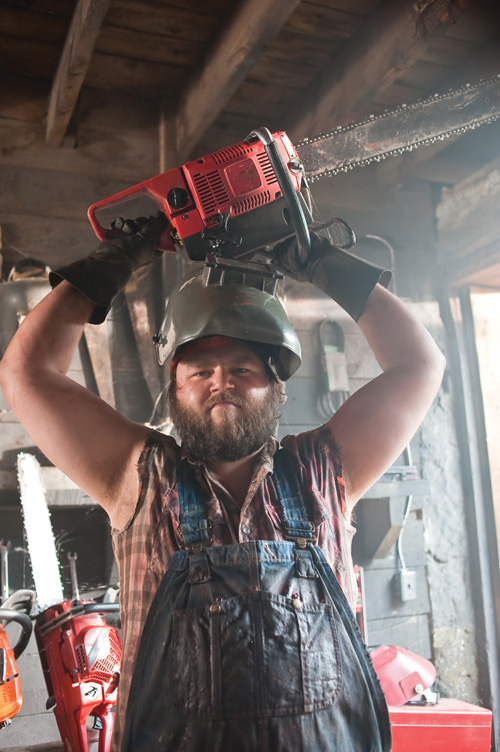
*Tucker and Dale vs. Evil Hillbilly horror is nothing new. Some might mark its heyday as the 1970s, a decade containing Deliverance (1972) and The Texas Chain Saw Massacre (1974), The Hills Have Eyes (1977), and I Spit On Your Grave (1978). Others might point to Herschell Gordon Lewis’ immortal Two Thousand Maniacs! (1964), probably cinema’s most persuasive example of why Yankees road-tripping below the Mason-Dixon Line should never, for any reason, detour off the main highway. Twenty-first century hillbillies are still scary, at least on the big screen; this is one stereotype that’ll never die. Any number of recent horror films — most of them remakes of the films noted above (or directed by Rob Zombie) — have drawn their clichéd plots from a checklist that always includes city slickers, cars that break down, cell phones that don’t work, and inbred locals. The lesson remains the same: stay the hell out of the backwoods, yuppie! But what if, asks Eli Craig’s Tucker and Dale vs. Evil, you were totally misjudging those sinister-seeming whiskey-tango yokels? What if, despite being a little unwashed and fond of sharp objects and power tools, they happened to be really nice guys? The film — about a couple of blue-collar guys (Tyler Labine and Alan Tudyk) hanging out at their mountain cabin who unwittingly terrify a group of vacationing college kids — finds a sense of humor in the tired genre. The result is blood-spattered comedy gold. (1:28) Lumiere, Shattuck. (Eddy)

*We Were Here Reagan isn’t mentioned in David Weissman’s important and moving new documentary about San Francisco’s early response to the AIDS epidemic, We Were Here — although his communications director Pat Buchanan and Moral Majority leader Jerry Falwell get split-second references. We Were Here isn’t a political polemic about the lack of governmental support that greeted the onset of the disease. Nor is it a kind of cinematic And the Band Played On that exhaustively lays out all the historical and medical minutiae of HIV’s dawn. (See PBS Frontline’s engrossing 2006 The Age of AIDS for that.) And you’ll find virtually nothing about the infected world outside the United States. A satisfying 90-minute documentary couldn’t possibly cover all the aspects of AIDS, of course, even the local ones. Instead, Weissman’s film, codirected with Bill Weber, concentrates mostly on AIDS in the 1980s and tells a more personal and, in its way, more controversial story. What happened in San Francisco when gay people started mysteriously wasting away? And how did the epidemic change the people who lived through it? The tales are well told and expertly woven together, as in Weissman’s earlier doc The Cockettes. But where We Were Here really hits home is in its foregrounding of many unspoken or buried truths about AIDS. The film will affect viewers on a deep level, perhaps allowing many to weep openly about what happened for the first time. But it’s a testimony as well to the absolute craziness of life, and the strange places it can take you — if you survive it. (1:30) Castro. (Marke B.)

What’s Your Number? Following some sage relationship advice from Marie Claire about the perils of a lengthy sexual résumé, Ally (Anna Faris) resolves to cut off her partner roster at 20, too late to avoid getting tagged a slut by her friends but not, she hopes, to secure her soul mate — if she can cast back over a storied career of failed relationships and hook the one who might not have been a total douche after all. Aiding her in this sad, misguided quest is her far sluttier across-the-hall neighbor, Colin (Chris Evans), whose main selling point other than P.I. skills and a well-defined set of obliques seems to be that he’s virtually the only person in the movie who doesn’t think Ally is doomed to solitude for having slept with 20 people. Faris is a charmer, and — no mean feat given the modest claims of the material at hand — she injects a comic exuberance into Ally’s reunions with a succession of impossibles, who are either engaged to be married, still not interested, or a gay politico seeking a beard. For jokes not revealed in the trailer, see: the inexorable progression of Ally and Colin’s friendship (they have plenty of time to hang out, cyber-stalk people, and play games of strip H-O-R-S-E since she’s just been laid off and he has no visible source of income), which leaves Ally with a couple of insights into Colin’s character and motivations and the viewer shrugging, only half-convinced of the merits of bachelor number 21. (1:46) 1000 Van Ness, Presidio. (Rapoport)

Film listings are edited by Cheryl Eddy. Reviewers are Kimberly Chun, Max Goldberg, Dennis Harvey, Lynn Rapoport, and Matt Sussman. For rep house showtimes, see Rep Clock.

The Hangover: Sept. 30-Oct. 2

0

Jounce with us, if you will, through the Guardian staff’s frenzied weekend. Here’s our live reviews, hot raging, random sightings.

**The wonderfully energetic (and wonderfully tall) Robin Simmons puts on an occasional gig in the middle of Dolores Park called the Boombox Affair, hooking up a wall of old boomboxes as turntable speakers and letting disco-minded DJs go nuts with their all-vinyl obsessions. On Friday’s Odyssey party at Deco Lounge, he went indoors and at night hosting a three-hour set by DJ David Harness that reminded of those ancient “back in the day” days. Just 30-40 freaks, many of whom were previously unfamiliar to each other, jacking all night in the dark to some heavy tunes as the walls sweat and pounded. Hopefully the party will come back around soon. (Marke B.)

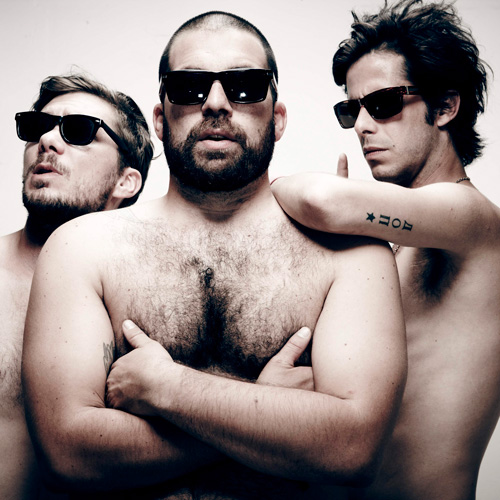
**I was not acquainted with the work of dOP before I attended Friday night’s Liaison Showcase at Public Works — the French techno trio has some excellent grooves and an absurdly over-the-top “sexy” aesthetic that would make their hits like “Horny” hilarious, if they weren’t actually very, very horny. Example: the chain-smoking boys are just fine wiggling around onstage half-naked, and the singer-rapper-screamer is one of the hottest little tattooed bear cubs I’ve ever seen. He spent most of the set playing with his nipples and shaking sweat from his shoulder hair. The crowd ate it up. (Marke B.)

**Saturday at the Warfield for Amon Tobin’s ISAM tour was like entering the 22nd century, except surrounded by young Pixar workers who couldn’t stop screaming, “Amaaazing!” everytime one of the realtime 3-D effects of the stage set was unveiled. Why? Because it really was amaaazing. Opener Eskmo did an entrancing job live-sampling cookware and plastic Coke bottles to build left-field grooves that weren’t afraid of floor-bending tempo changes. (Marke B.)

**With flickering string lights strung from the center of the grand ballroom and splayed out brass instruments across the stage, Beirut’s performance at the Fox Theater in Oakland on Saturday warmed like a fancy indoor county fair. The sound, which can be bass-problematic at the Fox, was good this evening, near perfect for the otherworldly folk-marching band from Santa Fe. Ringleader Zach Condon switched back and forth from ukulele to his beloved trumpet, singing in deep baritone throughout, once stepping to his newly rediscovered favorite, the keys. Here’s our interview with Condon from last week. (Emily Savage)

**What else is there to say about Saturday’s Hard French party besides the fact that Scott Weiner got to express his gratitude to us for his official Guardian ass towel? The queer patio shakefest at El Rio (theme: “Hardly Strictly French.” Overalls.) featured hand-wagging talents of many of the candidates for November’s city elections. Plus, Sups. Weiner and Jane Kim tagged along for the ride and they aren’t even running for anything. (Caitlin Donohue)

**The crowd at Odd Future’s show at the Warfield on Friday may have looked like Warped Tour cool kids, but you couldn’t fault them on their choice in music. The crew from Compton bug-eyed and jello-kneed through and generally crushed their set, although we were all out of their by 11 p.m. What Warfield, not into bands hurling their most enthusiastic devotees back into the crowds spine-first? Here’s the full review, btw. (Caitlin Donohue) 

**So we only made it to Sunday of Hardly Strictly Bluegrass, but damn if that afternoon’s Devotchka set and red wine from the bottle wasn’t a welcome entree to sunny banjo strumming. Even the crowd itself was hotter than ever (where did all these surfer-hippie hotties come from and to whence have they now returned?) — and in contrast to Outside Lands’ frenzied crowds, filtered through the fenceless areas calmly and happily. Yay free concerts! Happy birthday, Mr. Hellman. (Caitlin Donohue)

Taking sit-lie lying down: Graduate student beds down on Haight Street

3

Some things seem strange even for San Francisco. The pedestrian double take was in full effect at the Haight Street curb where Bennett Austin fed the meter for his bed last Thursday. And it wasn’t even Parking Day

Austin hoped to create awareness about the homeless youth who wander, sleep, and hang out on Haight Street. The graduate school student set up a bed to demonstrate that the only safe space for the homeless to sleep in public are curb spots that they must pay for by the hour, joining the tradition of artists speaking out against sit-lie. 

His campaign, “Keep the Meter Running,” spun from last year’s sit-lie ordinance, which prohibits sitting or lying on the sidewalk or public spaces for more than three minutes at a time. Although this law is nominally meant to be enforced uniformly, it is widely understood that it targets the homeless. 

Austin wanted to do something. “I wanted to put creative efforts to solutions,” he told the Guardian that day on Haight Street. He contacted the Homeless Youth Alliance (HYA), a youth-focused organization in the Haight-Asbury which provides food, clothing, showers, counseling, and mental health and medical services to the homeless. Within three weeks his idea was in action. 

The project was also accepting donations for HYA’s HIV prevention program, whose  funding was recently cut, reducing the organization’s total funds by one-third. Mary Howe, founder and executive director for HYA, said she and her staff was very open to Austin’s advertising idea.

“It brings attention to the sit-lie law, which doesn’t solve the problem [of homelessness],” Howe said.  

Austin said he understands that everyone’s circumstances are different and he is hoping his campaign can help people become more open-minded. He said he has received very few negative responses. The first six people to donate to the HYA, Austin said, were homeless youth themselves.

Because the parking spot is paid for and Austin moves the bed every two hours (to comply with San Francisco parking laws) everything he is doing is legal. “Keep the Meter Running,” is costing Austin $16 per day to advertise on a historic street. For him, it is the cheapest and easiest way. 

“I’m reclaiming public space,” he added. “Because these kids are just as much a part of the Haight as the Haight is a part of them.”

Bevan Dufty loves Muni

8

The award for the best political ad of the year (so far) goes (no surprise) to Bevan Dufty, who is the only mayoral candidate willing to laugh about himself and the only one who could pull off an ad that’s a love poem to Muni.

I’m sympathetic: I love Muni, too. But I’m not running for mayor and trying to explain why the system is so fucked up.

Still: It’s great to see Dufty on the train with his kid, and it’s great to remember how exciting Muni is for kids, and I laughed when I saw the ad. Which is something.

Check it out:


We could ride trains

0

The Muni trains are fun. I rode them for years before I figured that out. 

Muni was always a matter of function, a means of getting around. I was in a rush, a busy person with Places to Be. I was late; the train wasn’t there. When one of those historic clankers from Boston showed up on Church Street, I got even more crabby. The thing goes about four miles an hour; don’t they know we’re on a schedule here?

And then I had a son.

Even before he could talk, Michael loved trains. He’d point at them and start waving his hands up and down and laughing. “Choo-choo” was one of his first words; I think he knew that one even before “dada” and “mama.” And when I finally took him for a ride on the J-Church, around his second birthday, he became the happiest boy on the planet.

For the next year or so, every weekend morning, when he woke me up at the crack of dawn, I’d ask him what he wanted to do that day, and he’d say, with a big smile, “We could ride trains!” And almost every Saturday and Sunday afternoon, that’s what we’d do, from Church Street to Market Street, down Market, maybe along the waterfront to the end of the line at Fisherman’s Wharf. Then we’d get on another train and ride back home.

Sometimes we’d stop for a while at Dolores Park; sometimes we’d have doughnuts and check out the sea lions at the wharf. Sometimes we’d take a walk along the bay and look at boats. But really, as Zen masters and three-year-old boys have always known, the journey was the destination.

It’s different seeing the city through a child’s eyes.

I remember the amazing sense of wonder I had when I first arrived in San Francisco, a 22-year-old out of the New York suburbs and a Connecticut college town who had never been west of Buffalo. Everything seemed so alive, so special and strange and funny. And after a while, like everyone else, I had to pay the rent, and fight with the bank and the phone company, and the IRS found me, and life in the big city became, well, life in the big city.

But when you walk around with a kid, it all starts to come back. The whole urban world is an adventure. That stuff blowing around on the sidewalks isn’t garbage — it’s treasure. The graffiti on the walls isn’t vandalism (or even art) — it’s a clue to some sort of puzzle, maybe a map to where the pirates buried the gold. Even watching the train pull away just before you get to the corner isn’t any reason to be mad — because (as Michael always announces with glee) pretty soon there will be another one!

Just walking out the door is an explosion of scientific marvels. The wind is moving air, which is pretty cool when you think about it. The fog is a cloud on the ground. The rain makes puddles, and puddles lead to big splashes and soaking wet feet, and life doesn’t get much better than that. I suspect that every day in Michael’s life is like the first time I smoked pot and tried to talk about the difference between time and color.

There was a long period (and now it seems like another lifetime) when I could go for weeks without venturing beyond work, the 500 Club, a couple of take-out places, and my apartment. The advantage (and curse) of this city is that you can live quite well in your own neighborhood (particularly when it’s a place like the Mission District or Bernal Heights), so you don’t need to go anywhere else.

Amazing what I was missing.

I’ve lived in or around the Mission for 10 years, and I’d never been to Garfield Pool. You can swim there for three bucks, and it’s never crowded. The locker room feels like something out of a 1940s socialist paradise — everything’s one color, brutally utilitarian, and just a little bit broken. There are free kickboards, basketballs (and a poolside hoop), and sometimes even swim goggles (I guess when people leave them behind they become properly nationalized). The Upper Noe Recreation Center has the same sort of feel: on Saturday mornings, there’s a toddler gym, filled with a huge conglomeration of toys that look and feel like they were never actually new. But they work just fine and are durable as hell, and on rainy days, dozens of children stranded inside get a chance to ride welded tricycles and plastic cars around and crash into each other, with no ill effect. I smile just thinking about it.

The big children’s playground at Golden Gate Park has a long, steep slide made out of concrete that would make a modern-day insurance agent gasp in horror and alarm. Kids who have barely learned to walk somehow manage to climb up about 75 slippery, uneven steps that are almost too much for me, then sit on torn pieces of cardboard and careen down a hard, fast incline and skid to a stop at the bottom. It’s outstanding.

At Crissy Field, there’s a narrow, shallow channel where the water in the newly restored tidal marsh flows in and out of the bay. I don’t think the people who oversaw the ecological restoration of the wetlands area had any idea they were creating a swimming hole for kids, but that’s what happened: on warm days, dozen of children splash in the stream and build elaborate sand castles on the banks. When the tide goes out, a muddy island appears in the middle. Even with the tide coming in, the channel is never more than a few feet deep. It’s mind-boggling: you’re on the edge of the bay, in the shadow of the Golden Gate Bridge, a few yards away from the icy-cold currents and riptides where even seriously athletic adults in wet suits venture only with care — and three-years-olds are romping in the water with their dogs.

There’s a railroad museum at the old Hunters Point shipyard, with vintage steam engines that still work. There’s a model river (full of water and plastic fish) at the Bay Area Discovery Museum in Sausalito. There’s a working beehive in the bug house at the San Francisco Zoo, and the queen bee has a white dot painted on her abdomen. There’s an artificial earthquake that shakes up the Lego houses you can build at the California Academy of Sciences.

There are stores in the Mission that sell parachuting space aliens. If you ask nicely at Mitchell’s Ice Cream, they’ll stick a few green gummy worms in your chocolate-chip cone.

These are all things I didn’t know.

When I was a kid in the suburbs, I couldn’t imagine growing up in a city. I hope my kids see it differently. Because I’m getting to be a kid again right here in San Francisco — and I can’t imagine anyplace better.

Live Shots: Odd Future at the Warfield, 9/30/11

3

Hello, and welcome to the worst concert photography post ever! Let me explain. Odd Future’s sold-out show at the Warfield on Friday was not a hip-hop show. Or it was – the group’s wordplay and Shaolin-esque mythological persona is pretty unimpeachable – but it was mainly a grimy, sweaty, hopped-up-on-youth punk show.

Odd Future presents the conscientious music conundrum: can one like a band whose lyrics are reprehensible? The crew from Compton is way more attractive than the Insane Clown Posse, but the milieu that they’ve conjured, complete with darkly nonsensical terminology and sheer, bounding disregard for niceties, strike similar notes.

The stage’s backdrop was a massive image the Golf Wang tour’s kitty mascot, introduced by the group as Sharkcat. 

“Look at Sharkcat’s eyes! Aren’t you scared?” The audience roared back, completely not scared by whatever the group had to offer. 

Odd Future’s songs focus on the going insane, violence, and getting head. The meat of the masses was young men dressed in the same sneaker, tee, and cutoffs look of the men onstage, but a large portion of the crowd at the Warfield was in fact, young women. They screamed along to every lyric and when Tyler the Creator, the group’s brave young leader, surged to their side of the stage, they rushed forward with elbows just as pointed as the ones their masculine counterparts were flinging side-to-side and backwards in the frenzied mosh pit that would usually resolve with a security guard roughly shoving a key instigator out the theater to sure doom and no-reentry on the twinkling mid-Market strip. 

“We really cater to the ladies,” Tyler snarked at one point, thanking the XX-chromosoned for braving the rough-and-tumble front rows. Or maybe he was serious – his washboard abs, unveiled midway through the show, winked knowingly at this being the case. 

And because of that, I’m real sorry that my photos suck. Consider them rather a homage to the general feeling of the show rather than literal documentation. They’re worth a look though, because the set kicked ass. Odd Future is real, real good. The group’s appeal to the skaters, the hip-hop kids, and the yelping R&B babies is the kind of connection that didn’t need that Late Night with Jimmy Fallon Show performance to cement itself — the artists are really artists, they’re deranged-sexy, and they’re bringing through a kind of hip-hop that has little to do with the consumerist posturing we see most of the time.

“I am not a fucking role role model!” one of the group members bellowed. Well, yeah. We didn’t think you were.

By the time the show ended (at 11 p.m.?! One wonders if the Warfield got nervous about the would-be stage climber the band flung the 15 feet back down into the crowd, spine first, just as he had ascended to the level of his beloved rap crew) one of Odd Future’s emcees was leading the crowd in their customary chant: “KILL PEOPLE BURN SHIT FUCK SCHOOL.” It’s all real ignorant, but looking at the kids around me I couldn’t help but be glad that they were here and not at an ICP show. 

And that conundrum? Consider it tabled for the moment. I think I was singing along. 


The Performant: Weekend in Wonderland

4

ALICE and Folsom Street Fair fall down different holes

From North Beach to South of Market, clowning to carousing, the weekend offered up a veritable smorgasbord of sensory overload and playful edge. First off, a debut performance of a quirky bit of deconstruction in new kid venue on the North Beach block, The Emerald Tablet. Written and conceptualized by two spirited performers (Edna Miroslava Barrón and Karen Anne Light), “ALICE: Down the Rwong Wrabbit Whole” offered a welcome introduction to both the space and the still-fresh faces of the presenting duo.

Billed as a version of Alice in Wonderland in which the two performers play “all 359 characters” (they don’t quite make it) the performance quickly becomes more of an exploration of the creative life rather than a linear narrative based on that classic tome. In a schizophrenic, sometimes mimed, frenzy, Barrón and Light assume and discard a handful of roles in rapid-fire sequence—Alice, Dinah the cat, the White Rabbit, the Caterpillar—but the characters that wind up with the most stage time are themselves as they jostle each other for center stage. Light launching into a series of poker-faced monologues regarding the importance of art and professionalism in theatre; Barrón undermining her pedantic pomposity at every turn with unscheduled pee breaks and incandescent bursts of childish enthusiasm.

“We’re like a pear and an orange,” she confides, referring to her and Light’s working relationship. “Totally different…but we still taste good together.”

“Actually we’re more like a pineapple and a quasar,” retorts Light, re-entering the scene after a brief jaunt into Salvador Dali territory. Supported throughout the performance by Barrón’s idiosyncratic sound design (she moonlights as DJ Nobody of KUSF/KUSF-in-Exile), and punctuated by moments of brilliance (a water-logged Mad Hatter’s Tea Party scene, for example), “Rwong Wrabbit Whole” plays for the most part like a string of firecrackers. Plenty of bang, despite lacking a particular climactic epiphany.

Sunday dawned damp, but fortunately by the afternoon it was downright balmy, just perfect for the parade of fantasy and flesh that is the Folsom Street Fair. Though it’s safe to say no-one really heads down to the Fair for the music, every year there’s always at least one standout act, and this year that act was the sultry electro-soul chanteuse Billie Ray Martin. Although late in the day, the sweet pulse of the music infused the worn and torn crowd with blissed-out euphoria. Although perhaps best known by the club kids for her stint in 90’s house music ensemble Electribe 101, Martin’s husky, powerful vocals would not be out of place shimmering on the soundtrack for the next James Bond flick, or tucked into a Gladys Knight tribute album. And the buoyant electro-clash of songs such as “Sold Life,” “Undisco Me,” and Hard Ton duet “Fantasy Girl,” juxtaposed against her rough diamond voice and Kit Kat Klub cabaret style offer a compelling combination you wouldn’t want to miss no matter the occasion.

“ALICE: Down the Rwong Wrabbit Whole”
through October 15
The Emerald Tablet
80 Fresno, SF
(415) 500-2323
RwongWrabbitWhole.webs.com

Counting calories

2

caitlin@sfbg.com

HERBWISE An old factory sits in the outskirts of Oakland. In decades past, this building produced name brand snacks, but the smell of baking still permeates the factory air.

And weed. It smells like weed too. Bhang Chocolate churns out medicinal marijuana sweets here, bars that are smartly packaged in Bhang’s sleek black, orange, and green boxes that are a far cry from the plain wax envelopes and saran wrap that most marijuana edibles used to be sold in. The company is part of the current expansion in edible products — these days, patients can buy medicated cheesecakes, and even savory trail mix.

Adjacent to Bhang’s factory floor, about ten marijuana edibles producers are listening to a man talk about quality control for weed food. Robert Martin, Ph.D., worked for years in corporate food product development and quality assurance. He tells the class his specialty was frozen foods.

Martin is the co-founder of C.W. Analytical, a business that consults marijuana producers and has cannabis testing facilities. A patient himself, he says that marijuana-medicated foods are technically subject to all the same guidelines for commercially-produced non-pot products, although actual enforcement is sparse. C.W. offers these classes for free to interested entrepreneurs. They teach professional skills and serve as an introduction to the for-sale services the business provides.

The students are being treated to quality assurance fail stories from Martin’s career in the corporate world. A sherbet producer he once knew bought a wildly expensive machine to make fudge bars, but when he failed to make the proper tests on his treats, they caused a nasty spate of diarrhea in consumers and he ended up losing his shirt.

“That’s the kind of crap that can happen to you guys,” cautions Martin, and starts reading from a tongue-in-cheek guide to how you can tell food has gone bad. “Flour is spoiled when it wiggles,” he reads. This is quality assurance humor. “I love this stuff!”

One of the day’s students Lacey (not her real name) says she learned a lot from the class that she’ll be able to implement in her own business, Laced Cakes Bakery. She’s been making prettily iced cannabis cookies and brownies since 2007 and has seen the industry requirements shift dramatically.

“Years ago, you could just bring down a tray [to a dispensary] and drop it off,” she says. Nowadays, to sell in San Francisco she has to package the sweets in opaque material and make sure that the design can’t be interpreted as too appealing to kids. “The laws keep changing.”

She had heard about C.W. Analytical at some of the cannabis expos she’s been a vendor at — the firm will have a booth at next weekend’s West Coast Cannabis Expo as well — and was happy that the class was offered for free. She hadn’t finalized her opinion, however, on Martin’s suggestion that producers get their foods analyzed by the company so that they can put nutrition labels on their packaging. “It seems like they might just be trying to make money off of us,” she mused. 

WEST COAST CANNABIS EXPO

Oct. 7-9. Fri/7, 3-9 p.m.; Sat/8, 11 a.m.-9 p.m.; Sun/9 11 a.m.-7 p.m., $18 one day/$45 weekend pass

Cow Palace

Geneva and Santos, Daly City

(650) 591-0420

www.westcoastcannabisexpo.com


Twang on

0

cheryl@sfbg.com

FILM Hillbilly horror is nothing new. Some might mark its heyday as the 1970s, a decade containing Deliverance (1972), The Texas Chain Saw Massacre (1974), The Hills Have Eyes (1977), and I Spit On Your Grave (1978). Others might point to Herschell Gordon Lewis’ immortal Two Thousand Maniacs! (1964), probably cinema’s most persuasive example of why Yankees road-tripping below the Mason-Dixon Line should never, for any reason, detour off the main highway.

Twenty-first century hillbillies are still scary, at least on the big screen; this is one stereotype that’ll never die. Any number of recent horror films — most of them remakes of the films noted above (or directed by Rob Zombie) — have drawn their clichéd plots from a checklist that always includes city slickers, cars that break down, cell phones that don’t work, and inbred locals. The lesson remains the same: stay the hell out of the backwoods, yuppie!

But what if, asks Eli Craig’s Tucker and Dale vs. Evil, you were totally misjudging those sinister-seeming whiskey-tango yokels? What if, despite being a little unwashed and fond of sharp objects and power tools, they happened to be really nice guys? The film — about a couple of blue-collar dudes (Tyler Labine and Alan Tudyk) hanging out at their mountain cabin who unwittingly terrify a group of vacationing college kids — finds a sense of humor in the tired genre. The result is blood-spattered comedy gold.

“The initial premise was: what if Leatherface from Texas Chainsaw Massacre was really just a good guy with an unwieldy chainsaw? It’s the good-looking college kids that have been terrorizing him!” explains first-time feature director Craig (he also co-wrote the script). “In order to pull this off, there has to be a series of misunderstandings. My writing partner, Morgan Jurgenson, and I made a rule that Tucker and Dale would never hurt the college kids. They just kept on accidentally killing themselves and leaving their mangled corpses in Tucker and Dale’s yard to deal with.”

The accidental suicides (most memorably, via wood chipper) are gruesome enough to please genre fans — but are also pretty goofy. The label “splat-stick” has rarely been so aptly applied.

“The film satirizes and often pays homage to the clichés of the slasher-horror genre. So it has the look and feel of a horror film, but I think of it as a comedy,” Craig explains. “I always erred on the side of big laughs, and for the stuff that was meant to be more horrific, I tried to push it into a realm where it was so big that it wasn’t quite believable, and hence allowed people to still laugh.”

Horror comedies may not traditionally rake it in at the box office, but they often become cult sensations — see: 1985’s Re-Animator and 2004’s Shaun of the Dead. For Craig, whose film is firmly in the midnight-movie tradition, the lasting appeal of the genre (which goes back even farther than hillbilly horror — see: Abbott and Costello) is obvious.

“To me [horror comedies are] a subcategory of black comedy which basically deals with the farce that is human existence,” he says. “We are all stuck within these hopeless limitations — we can only see life through one pair of eyes, and we will all face our own demise. But to laugh at it all, to see that the world is both cruel and hilarious, to find joy in the hopeless, that allows us to transcend our problems. Good horror-comedy is about laughter amid despair, [which] really is the best option we have sometimes.” 


TUCKER AND DALE VS. EVIL opens Fri/30 in Bay Area theaters.

Film Listings

0

OPENING

Dream House Newlyweds Daniel Craig and Rachel Weisz, plus third wheel Naomi Watts, star in this psychological thriller. (1:33)

50/50 This is nothing but a mainstream rom-com-dramedy wrapped in indie sheep’s clothes. When Adam (Joseph Gordon-Levitt) learns he has cancer, he undergoes the requisite denial, anger, bargaining, depression, and acceptance like a formality. Aided by his bird-brained but lovable best friend Kyle (Seth Rogan), lovable klutz of a counselor Katherine (Anna Kendrick), and panicky mother (Anjelica Huston), Adam gets a new lease on life. This comes in the form of one-night-stands, furious revelations in parked cars, and a prescribed dose of wacky tobaccy. If 50/50 all sounds like the setup for a pseudo-insightful, kooky feel-goodery, it is. The film doesn’t have the brains or spleen to get down to the bone of cancer. Instead, director Jonathan Levine (2008’s The Wackness) and screenwriter Will Reiser favor highfalutin’ monologues, wooden characters, and a Hollywood ending (with just the right amount of ambiguity). Still, Gordon-Levitt is the most gorgeous cancer patient you will ever see, bald head and all. (1:40) Presidio. (Ryan Lattanzio)

Machine Gun Preacher The title sounds like a sequel to Hobo with a Shotgun — but there’s nary a speck of tongue-in-cheek, kitschy-koo-koo irony in this passionate rendering of the life of Sam Childers. Childers (Gerard Butler) was a former dealing, thieving biker who found God, built a refuge for Sudanese orphans and former child soldiers, and became their fiercest fight-fire-with-fire defender. As Machine Gun Preacher opens, Childers has just emerged from the pen — he’s still the mean motherfucker he always was, shooting up within hours of release and hooking up with chum Donnie (Michael Shannon) to rob dealers. But a semi-mystical run-in forces him to face the worst and sends him to church, to join wife Lynn (Michelle Monaghan), a former stripper and addict. Childers’ fiery love of the Lord, and his spontaneous visions, lead him to construct his own church for sketched-out recovered sinners like himself and then on to war-torn Sudan, where he discovers even more to fix — and likely more than he ever can. To his credit, director Marc Forster (2001’s Monster’s Ball, 2008’s Quantum of Solace) doesn’t shy away from the visceral violence nor the enraged holy-rolling that’s a clear part of Childers’ life, although the most memorable part of Machine Gun Preacher must be Butler, who gets his righteous wrath on in his meatiest part since 2006’s 300. (2:03) (Chun)

The Mill and the Cross One of the clichés often told about art is that it is supposed to speak to us. Polish director Lech Majewski’s gorgeous experiment in bringing Flemish Renaissance painter Peter Bruegel’s sprawling 1564 canvas The Procession to Calvary to life attempts to do just that. Majeswki both re-stages Bruegel’s painting –which draws parallels between its depiction of Christ en route to his crucifixion and the persecution of Flemish citizens by the Spanish inquisition’s militia — in stunning tableaux vivant that combine bluescreen technology and stage backdrops, and gives back stories to a dozen or so of its 500 figures. Periodically, Bruegel himself (Rutger Hauer) addresses the camera mid-sketch to dolefully explain the allegorical nature of his work, but these pedantic asides speak less forcefully than Majeswki’s beautifully lit vignettes of the small joys and many hardships that comprised everyday life in the 16th century. Beguiling yet wholly absorbing. (1:37) Embarcadero, Shattuck. (Sussman) *Mysteries of Lisbon Though produced for Portuguese television, Raúl Ruiz’s Mysteries of Lisbon won awards and raves on the festival circuit. Suddenly, the aging Ruiz seemed more assured his rightful status as a master. Mysteries of Lisbon has arrived for a rather miraculous theatrical run — but Ruiz is gone. He died in August 2011, having directed many more films than his 70 years. His movies have typically been the province of hardcore cinephiles, but this splendid epic holds wider appeal. It’s difficult to think of another movie that so satisfyingly captures the intricacies and volatilities of the 19th century novel — anyone enthralled by the teeming creations of Balzac and Dickens will find that Mysteries of Lisbon‘s four-and-a-half hours stream by. Ruiz was no stranger to the 19th century — his recent films included Klimt (2006) and the Proustian Time Regained (1999) — but the ornately plotted trio of novellas by Portuguese author Camilo Castelo Branco which supply these mysteries seem specially tailored to the director’s affinity for involved narrations. The story sweeps across dozens of characters and several generations of doomed love, revenge plots, disguised identities, uncertain parentages, and religious vows. We even glimpse the Napoleonic Wars. Ruiz’s narrations are commonly likened to labyrinths, but for Mysteries of Lisbon‘s vigorous expansion I reach for the cosmos: one luminous sphere rotates another which in turn rotates a larger system, the whole of it spreading outwards in all directions at once. (4:26) Embarcadero, Shattuck. (Goldberg)

Passione John Turturro’s lush tribute to the music of Naples, Italy is beamed directly from a strange alternate universe completely devoid of snark — a place where grand emotions and sweeping melodrama are presented at face value. In other words, anyone who can’t stomach a heaping helping of cheese will miss the point of Passione. (If you can stomach a small helping of cheese, the film will suck you in after a few minutes.) Passione is more free-form than docs like Buena Vista Social Club (1999), but it’s in a similar vein: a celebration of the musical traditions and artists from a specific place, and an exploration of what it is about that specific place that inspires such creativity. In Naples, there are centuries-old folk ballads, comedic ditties about the mafia, histrionic romantic duets, slinky laments, opera, and more. Actor-turned-director Turturro — the Brooklyn-born son of Italian immigrant parents — doesn’t really provide a structure so much as simply let the performances, most of which are staged in organic settings, flow. Fans of Italian popular music might recognize some of the singers, but most will be unfamiliar to stateside viewers. The majority of the songs offer subtitles, but even the ones that don’t are so over-the-top that their meanings (usually having to do with anguish, love, or the anguish of love) are easy to decipher. Turturro is scheduled to appear in person at the film’s Mon/3 evening screenings; check www.sffs.org for updates. (1:31) SFFS New People Cinema. (Eddy)

*Tucker and Dale vs. Evil See “Twang On.” (1:28) California, Lumiere.

What’s Your Number? Unlucky-in-love Anna Faris checks back in with all her former conquests in this romantic comedy. (1:46) Presidio.

ONGOING

Abduction (1:46) 1000 Van Ness.

*The Black Power Mixtape 1967-1975 Cinematic crate-diggers have plenty to celebrate, checking the results of The Black Power Mixtape 1967-1975. Swedish documentarian Göran Hugo Olsson had heard whispers for years that Swedish television archives possessed more archival footage of the Black Panthers than anyone in the states — while poring through film for a doc on Philly soul, he discovered the rumors were dead-on. With this lyrical film, coproduced by the Bay Area’s Danny Glover, Olsson has assembled an elegant snapshot of black activists and urban life in America, relying on the vivid, startlingly crisp images of figures such as Stokely Carmichael and Huey P. Newton at their peak, while staying true to the wide-open, refreshingly nonjudgmental lens of the Swedish camera crews. Questlove of the Roots and Om’Mas Keith provide the haunting score for the film, beautifully historicized with shots of Oakland in the 1960s and Harlem in the ’70s. It’s made indelible thanks to footage of proto-Panther school kids singing songs about grabbing their guns, and an unforgettable interview with a fiery Angela Davis talking about the uses of violence, from behind bars and from the place of personally knowing the girls who died in the infamous Birmingham, Ala., church bombing of 1963. (1:36) Embarcadero, Piedmont, Shattuck. (Chun)

Circumstance Thirteen (2003) goes to Tehran? The world of sex, drugs, and underground nightclubs in Iran provides the backdrop for writer-director Maryam Keshavarz’s lusty, dreamy take on the passionate teenagers behind the hijabs. Risking jail and worse are the sassy, privileged Atafeh (Nikohl Boosheri) and the beautiful, orphaned Shireen (Sarah Kazemy), who, much like young women anywhere, just want to be free — to swim, sing, dance, test boundaries, lose, and then find themselves. The difference here is that they’re under constant, unnerving surveillance, in a country where more than 70 percent of the population is less than 30 years old. Nevertheless, within their mansion walls and without, beneath graffitied walls and undulating at intoxicating house parties, the two girls begin to fall in love with each other, as Atafeh’s handsome, albeit creepy older brother Mehran (Palo Alto-bred Reza Sixo Safai) gazes on. The onetime musical talent’s back from rehab, has returned to the mosque with all the zeal of the prodigal, and has hooked up with the Morality Police that enforces the nation’s cultural laws. Filmed underground in Beirut, with layers that permit both pleasure and protest (wait for the hilarious moment when 2008’s Milk is dubbed in Farsi), Circumstance viscerally transmits the realities and fantasies of Iranian young women on the verge. (1:45) Opera Plaza, Shattuck. (Chun)

City of Life and Death There have been a number of recent works about the “rape of Nanking,” but perhaps none tackles the brutal nature of Nanjing’s fall with as much beauty as City of Life and Death. Shot in striking black and white, the film depicts the invasion of China’s capital by Japanese forces from a number of points of view, including that of a Japanese soldier. It can be difficult at times to become emotionally attached to characters within such a restless narrative, but the structure goes a long way toward keeping the proceedings balanced. The stunningly elaborate sets and cinematography alone are worth the price of admission, and it’s amazing that such detail was achieved with a budget of less than $12 million. But it is the unflinching catalog of the some 300,000 murders and rapes that took place between 1937 and 1938 in Nanjing that will remain with you long after watching. (2:13) Four Star. (Peter Galvin)

*Contagion Tasked with such panic-inducing material, one has to appreciate director Steven Soderbergh’s cool head and hand with Contagion. Some might even dub this epic thriller (of sorts) cold, clinical, and completely lacking in bedside manner. Still, for those who’d rather be in the hands of a doctor who refuses to talk down to the patient, Contagion comes on like a refreshingly smart, somewhat melodrama-free clean room, a clear-eyed response to a messy, terrifying subject. A deadly virus is spreading swiftly — sans cure, vaccine, or sense — starting with a few unlikely suspects: globe-trotting corporate exec Beth (Gwyneth Paltrow), a waiter, a European tourist, and a Japanese businessman. The chase is on to track the disease’s genesis and find a way to combat it, from the halls of the San Francisco Chronicle and blog posts of citizen activist-journalist Alan (Jude Law), to the emergency hospital in the Midwest set up by intrepid Dr. Mears (Kate Winslet), to a tiny village in China with a World Health investigator (Marion Cotillard). Soderbergh’s brisk, businesslike storytelling approach nicely counterpoints the hysteria going off on the ground, as looting and anarchy breaks out around Beth’s immune widower Mitch (Matt Damon), and draws you in — though the tact of making this disease’s Typhoid Mary a sexually profligate woman is unsettling and borderline offensive, as is the predictable blame-it-on-the-Chinese origin coda. (1:42) California, 1000 Van Ness, Sundance Kabuki. (Chun)

Crazy, Stupid, Love Keep the poster’s allusion to 1967’s The Graduate to one side: there aren’t many revelations about midlife crises in this cleverly penned yet strangely flat ensemble rom-com, awkwardly pitched at almost every demographic at the cineplex. There’s the middle-aged romance that’s withered at the vine: nice but boring family man Cal (Steve Carell) finds himself at a hopeless loss when wife and onetime teenage sweetheart Emily (Julianne Moore) tells him she wants a divorce and she’s slept with a coworker (Kevin Bacon). He ends up waxing pathetic at a slick nightclub where he catches the eye of the well-dressed, spray-tanned smoothie Jacob (Ryan Gosling), who appears to have taken his ladies man stance from the Clooney playbook. It’s manly makeover time: GQ meets Pretty Woman (1990)! Cut to Cal and Emily’s babysitter Jessica (Analeigh Tipton), who is crushing out on Cal, while the separated couple’s tween Robbie (Jonah Bobo) hankers for Jessica. Somehow Josh Groban worms his way into the mix as the dullard suitor of Hannah (Emma Stone) in a hanging chad of a storyline that must somehow be resolved in this mad, mad, mad, mad — actually, the problem with Crazy, Stupid, Love is that it isn’t really that crazy. It tries far too hard to please everybody in the theater to its detriment, reminding the viewer of a tidy, episodic TV series (albeit a quality effort) like Modern Family more than an actual film. Likewise I yearned for a way to fast-forward through the too-cute Jessica-Robbie scenes in order to get back to the sleazy-smart, punchy complexity of Gosling, playing adeptly off both Carrell and Stone. (1:58) SF Center, Shattuck. (Chun)

The Debt On paper, The Debt has a lot going for it: captivating history-based plot, “it” actor Jessica Chastain, Helen Mirren vs. Nazis. And while the latest from John Madden (1998’s Shakespeare in Love) is fairly entertaining, the film is ultimately forgettable. Chastain plays Rachel, a member of an Israeli team tasked with capturing a Nazi war criminal and bringing him to justice. Mirren is the older Rachel, who is haunted by the long-withheld true story of the mission. Although The Debt traffics in spy secrets, it’s actually rather predictable: the big reveal is shrug-worthy, and the shocking conclusion is expected. So while the entire cast — which also includes Tom Wilkinson, Sam Worthington, and Ciaran Hinds — turn in admirable performances, the script is lacking what it needs to make The Debt an effective drama or thriller. Like 2008’s overrated The Reader, the film tries to hide its inadequacies under heavy themes and the dread with which we remember the Holocaust. (1:54) Four Star, 1000 Van Ness, Presidio, Sundance Kabuki. (Peitzman)

Detective Dee and the Mystery of the Phantom Flame (2:02) Embarcadero, Four Star, Shattuck, Sundance Kabuki.

Dolphin Tale (1:53) 1000 Van Ness, Presidio, SF Center.

*Drive Such a lovely way to Drive, drunk on the sensual depths of a lush, saturated jewel tone palette and a dreamlike, almost luxurious pacing that gives off the steamy hothouse pop romanticism of ’80s-era Michael Mann and David Lynch — with the bracing, impactful flecks of threat and ultraviolence that might accompany a car chase, a moody noir, or both, as filtered through a first-wave music video. Drive comes dressed in the klassic komforts — from the Steve McQueen-esque stances and perfectly cut jackets of Ryan Gosling as the Driver Who Shall Remain Nameless to the foreboding lingering in the shadows and the wittily static, statuesque strippers that decorate the background. Gosling’s Driver is in line with Mann’s other upstanding working men who hew to an old-school moral code and are excellent at what they do, regardless of what side of the law they’re working: he likes to keep it clear and simple — his services as a wheelman boil down to five minutes, in and out — but matters get messy when he falls for sweet-faced neighbor Irene (Carey Mulligan), who lives down the hall with her small son, and her ex-con husband (Oscar Isaac) is dragged back into the game. Populated by pungent side players like Albert Brooks, Bryan Cranston, Ron Perlman, and Christina Hendricks, and scattered with readily embeddable moments like a life-changing elevator kiss that goes bloodily wrong-right, Drive turns into a real coming-out affair for both Danish director Nicolas Winding Refn (2008’s Bronson), who rises above any crisis of influence or confluence of genre to pick up the po-mo baton that Lynch left behind, and 2011’s MVP Ryan Gosling, who gets to flex his leading-man muscles in a truly cinematic role, an anti-hero and under-the-hood psychopath looking for the real hero within. (1:40) Marina, 1000 Van Ness, SF Center, Sundance Kabuki. (Chun)

Farmageddon First-time director Kristin Canty embarked on this documentary after discovering the healing power of raw milk in helping her child’s allergies. And it shows. Farmaggedon really should have been titled A Raw Deal for Raw Milk, considering its primary focus on several small family-operated dairies and the souring treatment they have received from government bureaucrats, spurring Canty’s activist act of making this movie. Larry and Linda Failace of Three Shephard’s Cheese in Vermont (the latter wrote her own book, 2007’s Mad Sheep: The True Story Behind the USDA’s War on a Family Farm) seem to have suffered the most, driven out of business when the sheep they brought over legally, with all the required quarantines, were seized and destroyed by the government agents on the pretext that the animals might spread “mad cow” disease. The sight of Linda Failace breaking into tears reading her daughter’s words about how the sheep were like her brothers and sisters is heart-breaking. Undermining such powerful, outrageous material are Canty’s textbook missteps: the director has major problems organizing her seemingly scattershot, lopsided material into a coherent and, er, organic whole, and lets her many sources drone on without a strong narrative through-line. All of this makes Farmaggedon a bit of a struggle to watch, although the dirt Canty digs up is likely to justifiably raise the hackles of progressive foodies. (1:30) Roxie, Smith Rafael. (Chun)

*The Future Dreams and drawings, cats and fantasies, ambition and aimlessness, and the mild-mannered yet mortifying games people play, all wind their way into Miranda July’s The Future. The future’s a scary place, as many of us fully realize, even if you hide from it well into your 30s, losing yourself in the everyday. But you can’t duck July’s collection of moments, objects, and small gestures transformed into something strangely slanted and enchanted, both weird and terrifying, when viewed through July’s looking glass. Care and commitment — to oneself and others — are two vivid threads running through The Future. Cute couple Sophie (July) and Jason (Hamish Linklater) — unsettling look-alikes with their curly crops — appear at first to be sailing contently, aimlessly toward an undemanding unknown: Jason works from home as a customer-service operator, and Sophie attempts to herd kiddies as a children’s dance instructor. But enormous, frightening demands beckon — namely the oncoming adoption of a special-needs feline named Paw-Paw (voiced by July as if it’s a traumatized, innocent child). Lickety-splitsville, they must be all they can be before Paw-Paw’s arrival. The weirdness of the familiar, and the kindness of strangers, become ways into fantasy and escape when the couple bumps up against the limits of their imagination. This ultra-low-key horror movie of the banal is obviously remote territory for July (2005’s Me and You and Everyone We Know). The Future is her best film to date and finds her tumbling into a kind of magical realism or plastic fantastic, embodied by a talking cat that becomes the conscience of the movie. (1:31) Roxie. (Chun)

The Guard Irish police sergeant Gerry Boyle (Brendan Gleeson) is used to running his small town on his own terms — not in a completely Bad Lieutenant (1992) kind of way, though he’s not afraid to sample drugs and hang with hookers. More like, he’s been running the show for years, and would prefer that big-city cops stay the hell out of his village. Alas, a gang of drug smugglers is doing business in the area, so an officious group of investigators from Dublin (horrors!) and America (in the form of an FBI agent played by Don Cheadle) soon descend. His mother’s dying, his brand-new partner’s missing, and between all the interlopers on both sides of the law, Boyle’s having a hard time having a pint in peace. Good thing he’s not as simple-minded as all who surround him think he is. Writer-director John Michael McDonagh (brother of playwright Martin, who directed 2008’s In Bruges — also starring Gleeson) puts an affable Irish spin on what’s essentially a pretty typical indie comedy, with some pretty typical crime-drama elements layered atop. Boyle’s character is memorably clever, but the film that contains him never quite elevates to his level. (1:36) Lumiere, Shattuck, Sundance Kabuki. (Eddy)

*The Hedgehog You needn’t possess the rough, everyday refinement of the characters of The Hedgehog to appreciate this debut feature by director-screenwriter Mona Achache — just an appreciation for a delicate touch and a tender heart. Eleven-year-old Paloma (the wonderful Garance Le Guillermic) is too smart for her own good, bored, neglected by her parents, and left to fend for herself with only her considerable imagination and a camcorder. She drifts around her fishbowl of privilege, a deluxe art nouveau-style apartment building in Paris, leveling her all-too-wise gaze on its denizens and plotting certain suicide on her 12th birthday — that is until a new resident appears in her viewfinder: a kindly Japanese gentleman Kakuro Ozu (Togo Igawa). He has as much of a connoisseur’s eye as Paloma — the proof is in his unlikely focus of attention, the building’s concierge Renée Michel (Josiane Balasko, resembling a burly Gertrude Stein), who hides her cultured and bookish inclinations behind a gruff, drab exterior. They recognize in each other a reverence for an almost monkish life of the mind, the austere elegance of wabi-sabi, and the transient beauty of rough-hewn imperfection, even in the sleek, well-heeled heart of the City of Light. To the credit of Achache, working with Muriel Barbery’s novel, these unlikely fragile friendships between outsiders take hold in a way that sidesteps preciousness and stays with you long after its pages have turned. (1:40) Smith Rafael. (Chun)

The Help It’s tough to stitch ‘n’ bitch ‘n’ moan in the face of such heart-felt female bonding, even after you brush away the tears away and wonder why the so-called help’s stories needed to be cobbled with those of the creamy-skinned daughters of privilege that employed them. The Help purports to be the tale of the 1960s African American maids hired by a bourgie segment of Southern womanhood — resourceful hard-workers like Aibileen (Viola Davis) and Minny (Octavia Spencer) raise their employers’ daughters, filling them with pride and strength if they do their job well, while missing out on their own kids’ childhood. Then those daughters turn around and hurt their caretakers, often treating them little better than the slaves their families once owned. Hinging on a self-hatred that devalues the nurturing, housekeeping skills that were considered women’s birthright, this unending ugly, heartbreaking story of the everyday injustices spells separate-and-unequal bathrooms for the family and their help when it comes to certain sniping queen bees like Hilly (Bryce Dallas Howard). But the times they are a-changing, and the help get an assist from ugly duckling of a writer Skeeter (Emma Stone, playing against type, sort of, with fizzy hair), who risks social ostracism to get the housekeepers’ experiences down on paper, amid the Junior League gossip girls and the seismic shifts coming in the civil rights-era South. Based on the best-seller by Kathryn Stockett, The Help hitches the fortunes of two forces together — the African American women who are trying to survive and find respect, and the white women who have to define themselves as more than dependent breeders — under the banner of a feel-good weepie, though not without its guilty shadings, from the way the pale-faced ladies already have a jump, in so many ways, on their African American sisters to the Keane-eyed meekness of Davis’ Aibileen to The Help‘s most memorable performances, which are also tellingly throwback (Howard’s stinging hornet of a Southern belle and Jessica Chastain’s white-trash bimbo-with-a-heart-of-gold). (2:17) California, 1000 Van Ness, SF Center, Sundance Kabuki. (Chun)

I Don’t Know How She Does It I don’t know how a likable comedian like Sarah Jessica Parker does it — meaning, such mediocre material as this mom-com. Parker may have parlayed her Sex and the City fame into a fashion, fragrance, and spin-off franchises, but she still hasn’t quite found her stride away from Carrie Bradshaw, though her Lucille Ball-esque physical comedy here — pulling down her skirt in mid-mommy-frazzle in front of her high-powered client — can be cute. Kate (Parker) just might be the busiest mom in the world: she’s juggling two kids, a hubby whose own career is on the rise (Greg Kinnear), and a major fund idea, which she has to sell to an attractive banking bigwig (Pierce Brosnan). Poor, poor privileged mom — in the trenches of the still-unadorable field of banking, with her obviously sizable salary, enviable Boston duplex, flaky-nice nanny, and bubbly single-mom friend (Christina Hendricks)! The biggest assist comes from her careerist aide, played by Olivia Munn, who grabs the biggest laughs with her deadpan delivery. (1:35) 1000 Van Ness. (Chun)

*Killer Elite Jason Statham has a lot going on, in addition to devastatingly attractive male-pattern balding: along with fellow Brit Daniel Craig, he’s one of the most believable action heroes in the cineplex today. This continent-hopping, Bourne-ish exercise, kitted out with piercingly loud sound design, comes chock-full of promise in the form of Statham, Robert De Niro, and Clive Owen, wielding endless firearms and finding new deadly uses for bathroom tile — you don’t want to be caught solo in anger management class with these specialists in cinematic rageaholism. Mercenary assassin Danny (Statham) wants out of the game after a traumatic killing involving way too much eye contact with a small child. Killer coworker Hunter (De Niro) pulled him out of that tight spot, so when the aging gunman is held hostage, Danny must emerge from hiding in rural Australia and take on a seemingly impossible case: avenge the deaths of a dying sheik’s sons, who were gunned down by assorted highly trained British military hotshots, get them to confess, and make it all look like an accident. Oh, yes, and try to make sure his own loved ones aren’t killed in the process. Dancing backwards as fast as he can is those retired Brits’ guardian angel-of-sorts, Spike (Owen), another intense, dangerous fellow with too much time on his hands. Throw in my favorite Oz evil-doer Adewale Akinnuoye-Agbaje as Danny and Hunter’s boss, some welcome been-there twinkle from De Niro, as well as a host of riveting fight scenes (and that ’00s cliché: sudden death by bus/truck/semi), and you have diverting popcorn killer. (1:40) 1000 Van Ness, Presidio. (Chun)

The Lion King 3D (1:29) SF Center, Shattuck, Sundance Kabuki.

*Love Crime Early this year came the announcement that Brian De Palma was hot to do an English remake of Alain Corneau’s Love Crime. The results, should they come to fruition, may well prove a landmark in the annals of lurid guilty-pleasure trash. But with the original Love Crime finally making it to local theaters, it’s an opportune moment to be appalled in advance about what sleazy things could potentially be done to this neat, dry, fully clothed model of a modern Hitchcockian thriller. No doubt in France Love Crime looks pretty mainstream. But here its soon-to be-despoiled virtues of narrative intricacy and restraint are upscale pleasures. Ludivine Sagnier plays assistant to high-powered corporate executive Christine (Kristin Scott Thomas). The boss enjoys molding protégée Isabelle to her own image, making them a double team of carefully planned guile unafraid to use sex appeal as a business strategy. But Isabelle is expected to know her place — even when that place robs her of credit for her own ideas — and when she stages a small rebellion, Christine’s revenge is cruelly out of scale, a high-heeled boot brought down to squash an ant. Halfway through an act of vengeance occurs that is shocking and satisfying, even if it leaves the remainder of Corneau and Nathalie Carter’s clever screenplay deprived of the very thing that had made it such a sardonic delight so far. Though it’s no masterpiece, Love Crime closes the book on his Corneau’s career Corneau (he died at age 67 last August) not with a bang but with a crisp, satisfying snap. (1:46) Albany, Clay, Smith Rafael. (Harvey)

Mary Lou A musical fable for fans of Glee, Hedwig and the Angry Inch (2001), The Adventures of Priscilla, Queen of the Desert (1994), and Bollywood, the latest from Eytan Fox (2002’s Yossi and Jagger) is a drag-flavored dramedy (Israel’s first?) Originally a hit miniseries in its home country, Mary Lou screens at the Castro in one big chunk jammed with singing, dancing, and a dreamy cast. Pouty Ido Rosenberg stars as Meir, a gay boy obsessed with finding the mother who left him when he was 10. After a disastrous graduation party, Meir flees his homophobic high school for the worldly environs of Tel Aviv, where he soon becomes a drag star named Mary Lou, after his mother’s favorite song. Love, loss, friendship, tragedy, joy, coming-of-age, and quite a few elaborate musical numbers soon transpire — the plot is not without clichés, to be sure, but it’s hard to hate on anything possessed of such sparkly energy. Not familiar with Svika Pick, the Israeli legend whose music provides much of the soundtrack? It matters not, especially if you’re a fan of deliriously corny pop tunes. (2:30) Castro. (Eddy)

Midnight in Paris Owen Wilson plays Gil, a self-confessed “Hollywood hack” visiting the City of Light with his conservative future in-laws and crassly materialistic fiancée Inez (Rachel McAdams). A romantic obviously at odds with their selfish pragmatism (somehow he hasn’t realized that yet), he’s in love with Paris and particularly its fabled artistic past. Walking back to his hotel alone one night, he’s beckoned into an antique vehicle and finds himself transported to the 1920s, at every turn meeting the Fitzgeralds, Gertrude Stein (Kathy Bates), Dali (Adrien Brody), etc. He also meets Adriana (Marion Cotillard), a woman alluring enough to be fought over by Hemingway (Corey Stoll) and Picasso (Marcial di Fonzo Bo) — though she fancies aspiring literary novelist Gil. Woody Allen’s latest is a pleasant trifle, no more, no less. Its toying with a form of magical escapism from the dreary present recalls The Purple Rose of Cairo (1985), albeit without that film’s greater structural ingeniousness and considerable heart. None of the actors are at their best, though Cotillard is indeed beguiling and Wilson dithers charmingly as usual. Still — it’s pleasant. (1:34) Albany, Embarcadero, Four Star, Piedmont. (Harvey)

Moneyball As fun as it is to watch Brad Pitt listen to the radio, work out, hang out with his cute kid, and drive down I-80 over and over again, it doesn’t quite translate into compelling cinema for the casual baseball fan. A wholesale buy-in to the cult of personality — be it A’s manager Billy Beane or the actor who plays him — is at the center of Moneyball‘s issues. Beane (Pitt) is facing the sad, inevitable fate of having to replace his star players, Jason Giambi and Johnny Damon, once they command the cash from the more-moneyed teams. He’s gotta think outside of the corporate box, and he finds a few key answers in Peter Brand (a.k.a. Paul DePodesta, played by Jonah Hill), who’s working with the sabermetric ideas of Bill James: scout the undervalued players that get on base to work against better-funded big-hitters. Similarly, against popular thought, Moneyball works best when director Bennett Miller (2005’s Capote) strays from the slightly flattening sunniness of its lead actor and plunges into the number crunching — attempting to visualize the abstract and tapping into the David Fincher network, as it were (in a related note, Aaron Sorkin co-wrote Moneyball‘s screenplay) — though the funny anti-chemistry between Pitt and Hill is at times capable of pulling Moneyball out of its slump. (2:13) Marina, 1000 Van Ness. (Chun)

Mozart’s Sister Pity the talented sister of a world-shaking prodigy. Maria Anna “Nannerl” Mozart, who may have had just as much promise as a composer as her younger brother, according to Rene Féret’s Mozart’s Sister. A scant five years older, enlisted in the traveling family band led by father-teacher Leopold (Marc Barbe), yet forced to hide her music, being female and forbidden to play violin and compose, Nannerl (Marie Féret, the filmmaker’s daughter) tours the courts of Europe and is acclaimed as a keyboardist and vocalist but is expected to share little of her brother’s brilliant future. Following a chance carriage breakdown near a French monastery, Nannerl befriends one of its precious inhabitants, a daughter of Louis XV (Lisa Féret, another offspring), which leads her to Versailles, into a cross-dressing guise of a boy, and puts her into the sights of the Dauphin (Clovis Fouin, who could easily find a spot in the Cullen vampire clan). He’s seduced by her music and likewise charms Nannerl with his power and feline good looks — what’s a humble court minstrel to do? The conceit of casting one’s daughters in a narrative hinging on unjustly neglected female progeny — shades of Sofia Coppola in The Godfather: Part III (1990)! — almost capsizes this otherwise thoughtful re-imagination of Maria Anna’s thwarted life; despite the fact Féret has inserted his children in his films in the past, both girls offer little emotional depth to their roles. Nevertheless, as a feminist rediscovery pic akin to Camille Claudel (1988), Mozart’s Sister instructs on yet another tragically quashed woman artist and might inspire some righteous indignation. (2:00) Bridge, Shattuck, Smith Rafael. (Chun)

*My Afternoons with Margueritte There’s just one moment in this tender French dramedy that touches on star Gerard Depardieu’s real life: his quasi-literate salt-of-the-earth character, Germain, rushes to save his depressed friend from possible suicide only to have his pretentious pal pee on the ground in front of him. Perhaps Depardieu’s recent urinary run-in, on the floor of an airline cabin, was an inspired reference to this moment. In any case, My Afternoons With Margueritte offers a hope of the most humanist sort, for all those bumblers and sad cases that are usually shuttled to the side in the desperate ’00s, as Depardieu demonstrates that he’s fully capable of carrying a film with sheer life force, rotund gut and straw-mop ‘do and all. In fact he’s almost daring you to hate on his aging, bumptious current incarnation: Germain is the 50-something who never quite grew up or left home. The vegetable farmer is treated poorly by his doddering tramp of a mother and is widely considered the village idiot, the butt of all the jokes down at the cafe, though contrary to most assumptions, he manages to score a beautiful, bus-driving girlfriend (Sophie Guillemin). However the true love of his life might be the empathetic, intelligent older woman, Margueritte (Gisele Casadesus), that he meets in the park while counting pigeons. There’s a wee bit of Maude to Germain’s Harold, though Jean Becker’s chaste love story is content to remain within the wholesome confines of small-town life — not a bad thing when it comes to looking for grace in a rough world. (1:22) Embarcadero, Shattuck. (Chun)

*Point Blank Not for nothing did Hollywood remake French filmmaker Fred Cavaye’s last film, Anything for Her (2008) as The Next Three Days (2010) — Cavaye’s latest, tauter-than-taut thriller almost screams out for a similar rework, with its Bourne-like handheld camera work, high-impact immediacy, and noirish narrative economy. Point Blank — not to be confused with the 1967 Lee Marvin vehicle —kicks off with a literal slam: a mystery man (Roschdy Zem) crashing into a metal barrier, on the run from two menacing figures until he is cornered and then taken out of the action by fate. His mind mainly on the welfare of his very pregnant wife Nadia (Elena Anaya), nursing assistant Samuel (Gilles Lellouche) has the bad luck to stumble on a faux doctor attempting to make sure that the injured man never rises from his hospital bed. As police wrangle over whose case this exactly is — the murder of an industrialist seems to have expanded the powers of the stony-faced, monolithic Commandant Werner (Gerard Lanvin) — Samuel gets sucked into the mystery man’s lot, a conspiracy that allows them to trust no one, and seemingly impossibly odds against getting out of the mess alive. Cavaye never quite stops applying the pressure in this clever, unrelenting cat-and-mouse and mouse-and-his-spouse game, topping it with a nerve-jangling search through a messily chaotic police station. (1:24) Opera Plaza. (Chun)

*Rise of the Planet of the Apes “You gotta love a movie where the animals beat up on the humans,” declared my Rise of the Planet of the Apes companion. Indeed, ape must not kill ape, and this Planet of the Apes prequel-cum-remake of Conquest of the Planet of the Apes (1972) takes the long view, back to the days when ape-human relations were still high-minded enough to forbid smart apes from killing those well-armed, not-so-bright humanoids. I was a fan of the original series, but honestly, I approached Rise with trepidation: I dreaded the inevitable scenes of human cruelty meted out to exploited primates — the current wave of chimp-driven films seems focused on holding a scary, shaming mirror up to the two-legged mammalian violence toward their closest living genetic relatives. It’s a contrast to the original series, which provided prisms with which to peer at race relations and generational conflict. But I needn’t have feared this PG-13 “reboot.” There’s little CGI-driven gore, apart from the visceral opening and the showdown, though the heartbreak remains. Scientist Will (James Franco, brow perpetually furrowed with worry) is working to find a medicine designed to supercharge the brain in the wake of Alzheimer’s — a disease that has struck down his father (John Lithgow). When the experimental chimp that responds to his serum becomes violently aggressive, the project is shut down, although the primate leaves behind a surprise: a baby chimp that Will and his father name Caesar and raise like a beloved child in their idyllic Bay Area Victorian. Growing in intelligence as he matures, Caesar finds himself torn by an existential dilemma: is he a pet or a mammal with rights that must be respected? Rise becomes Caesar’s story, rendered in heart-wrenching, exhilarating ways — to director Rupert Wyatt and his team’s credit you don’t miss the performance finesse of Roddy McDowell and Kim Hunter in groundbreaking prosthetic ape face in the original movies — while resolving at least one question about why humans gave up the globe to the primates. One can only imagine the next edition will take care of the lingering question about how even the cleverest of apes will feed themselves in Muir Woods. (1:50) 1000 Van Ness, SF Center. (Chun)

Sarah’s Key (1:42) Opera Plaza.

*Senna When Ayrton Senna died in 1994 at the age of 34, he had already secured his legacy as one of the greatest and most beloved Formula One racers of all time. The three-time world champion was a hero in his native Brazil and a respected and feared opponent on the track. This eponymous documentary by director Asif Kapadia is nearly as dynamic as the man himself, with more than enough revving engines and last minute passes to satisfy your lust for speed and a decent helping Ayrton’s famous personality as well. Senna was a champion, driven to win even as the sometimes-backhanded politics of the racing world stood in his way. A tragic figure, maybe, but a legend nonetheless. You don’t have to be an F1 fan to appreciate this film, but you may wind up one by the time the credits roll. (1:44) Opera Plaza, Smith Rafael. (Cooper Berkmoyer)

*Shaolin There’s a lot to like about Shaolin, from Andy Lau, as a warlord turned passionate monk, to the return of Jackie Chan, as a stir-frying Shaolin, to its overall Buddhistic message (by way of heaps of chopsocky, blood-spitting violence), to its many action scenes, complete with mucho ax-throwing and horsing around with out-of-control carriages. We’re at the dawn of China’s republic, and the warlords are squabbling over the country’s spoils. General Hou Jie (Lau) appears to be the most ruthless of them all, following his second in command Cao Man (Nicholas Tse) into the Shaolin Temple to pursue an enemy with a golden secret and arrogantly leaving his mark on the sanctuary signage. But tragedy turns Hou around and sends him in the temple once more, where he finds real brotherhood with the good-hearted monks. Lau has reteamed here with director Benny Chan, and the results effectively recast the star, sometimes too easily pictured as a villain with his hawkish looks, as a hero once again, all while foregrounding Buddhism and giving it to the white devils at the end — an anti-imperialism message that has become rote in recent years, little wonder considering China’s growing might and the hardening of positions on the front lines of the global economy. (2:11) SFFS New People Cinema. (Chun)

Straw Dogs Never could I have predicted there would be a day when the violent finale of Straw Dogs would be met with raucous cheers. The original 1971 film was produced within a morally ambiguous social climate and remains one of director Sam Peckinpah’s most controversial efforts; contemporary audiences trained to applaud a payoff of blood and gore are likely in the wrong headspace for a film like this. The remake, which sends a good-natured screenwriter (James Marsden) on a retreat in his wife’s (Kate Bosworth) sweaty Southern hometown where they find themselves at odds with a group of good ol’ boys, remains powerful and just as uncomfortable and mean as Peckinpah’s version, but it’s in service of a moral outcome that’s more in line with its commercial placement: ultimately it takes the road of “man becomes protector” over “man becomes monster.” If you have no interest in the original, you will find a fair bit of talent in this remake, but without the cynical attitude it can be hard to separate Straw Dogs from any other horror-movie-of-the-week. (1:50) 1000 Van Ness, SF Center. (Galvin)

*3 The press literature for 3, Tom Tykwer’s latest, throws around references to classic Hollywood screwball comedies, but this romantic drama is far too self-conscious, serious, and almost pretentious to ever completely ape the mercury lightness of that genre. Apart from one slightly jarring fantasy sequence or two, this polyamorous love story is all about contemporary Berlin bohemia, from hero Hanna’s (Sophie Rois) immersion in the worlds of science and art, to her increasingly plastic relationship with partner Simon (Sebastian Schipper). On the edge of their 20th anniversary, the smart, stylish 40-ish bohos are still in love, though a younger, perpetually amused-looking doctor Adam (Devid Striesow) threatens to turn their two-decade itch into something much more involved. Tykwer kicks off his high-minded romp with a pas de trois, sprinkling split-screen interludes into the program as he goes, but such devices fall away — sucking the viewer into its heady, seductive undertow — beneath the sheer eroticism of these sexual empiricists’ couplings, particularly in the humid, Cat People-like scenes set in a Badeschiff pool, which comes to resemble a carnally charged hothouse as envisioned by Olafur Eliasson. (1:59) Sundance Kabuki. (Chun)

The Tree of Life Mainstream American films are so rarely adventuresome that overreactive gratitude frequently greets those rare, self-conscious, usually Oscar-baiting stabs at profundity. Terrence Malick has made those gestures so sparingly over four decades that his scarcity is widely taken for genius. Now there’s The Tree of Life, at once astonishingly ambitious — insofar as general addressing the origin/meaning of life goes — and a small domestic narrative artificially inflated to a maximally pretentious pressure-point. The thesis here is a conflict between “nature” (the way of striving, dissatisfied, angry humanity) and “grace” (the way of love, femininity, and God). After a while Tree settles into a fairly conventional narrative groove, dissecting — albeit in meandering fashion — the travails of a middle-class Texas household whose patriarch (a solid Brad Pitt) is sternly demanding of his three young sons. As a modern-day survivor of that household, Malick’s career-reviving ally Sean Penn has little to do but look angst-ridden while wandering about various alien landscapes. Set in Waco but also shot in Rome, at Versailles, and in Saturn’s orbit (trust me), The Tree of Life is so astonishingly self-important while so undernourished on some basic levels that it would be easy to dismiss as lofty bullshit. Its Cannes premiere audience booed and cheered — both factions right, to an extent. (2:18) Lumiere. (Harvey)

*Warrior Those wondering why the mixed martial arts scene has captured the imagination of so many can finally understand what the fuss is all about, now that it comes filtered through a melodramatic narrative akin to The Fighter (2010). Warrior‘s mis-en-scene is immediately recognizable: a prodigal returns, in the form of Tom Conlon (Tom Hardy). Once a talented teenage wrestler, the now-battered man is the damaged youngest son of alcoholic ex-boxer Paddy Conlon (Nick Nolte). Tom wants his father to train him for a major mixed martial arts tournament with a multimillion-dollar purse, though the two obviously still have a deadly hold on each other — the repentant Paddy is on the wagon and the emotionally bruised Tom harbors secrets he won’t reveal — and battle with cutting comments rather than fists. Tom isn’t the only prodigal in the house: Paddy has lost the trust of Tom’s bro, Brendan (Joel Edgerton), a former fighter and present-day physics high school teacher who’s struggling to make ends meet with an underwater mortgage. Though Warrior is no Raging Bull (1980), it almost outdukes The Fighter in terms of its brutal bouts, conveying the swift, no-holds-barred action of MMA in the ring, while giving actors plenty of drama to wrap their jowls ’round — particularly in Nolte’s case. His tore-up turn as an all-excuses patriarch is as heartbreaking as a solid kick to the jaw. (2:19) SF Center. (Chun)

*We Were Here Reagan isn’t mentioned in David Weissman’s important and moving new documentary about San Francisco’s early response to the AIDS epidemic, We Were Here — although his communications director Pat Buchanan and Moral Majority leader Jerry Falwell get split-second references. We Were Here isn’t a political polemic about the lack of governmental support that greeted the onset of the disease. Nor is it a kind of cinematic And the Band Played On that exhaustively lays out all the historical and medical minutiae of HIV’s dawn. (See PBS Frontline’s engrossing 2006 The Age of AIDS for that.) And you’ll find virtually nothing about the infected world outside the United States. A satisfying 90-minute documentary couldn’t possibly cover all the aspects of AIDS, of course, even the local ones. Instead, Weissman’s film, codirected with Bill Weber, concentrates mostly on AIDS in the 1980s and tells a more personal and, in its way, more controversial story. What happened in San Francisco when gay people started mysteriously wasting away? And how did the epidemic change the people who lived through it? The tales are well told and expertly woven together, as in Weissman’s earlier doc The Cockettes. But where We Were Here really hits home is in its foregrounding of many unspoken or buried truths about AIDS. The film will affect viewers on a deep level, perhaps allowing many to weep openly about what happened for the first time. But it’s a testimony as well to the absolute craziness of life, and the strange places it can take you — if you survive it. (1:30) Castro. (Marke B.)


Film listings are edited by Cheryl Eddy. Reviewers are Kimberly Chun, Michelle Devereaux, Max Goldberg, Dennis Harvey, Louis Peitzman, Lynn Rapoport, Ben Richardson, and Matt Sussman. For rep house showtimes, see Rep Clock. For complete film listings, see www.sfbg.com.

Fear not Folsom first-timers: advice through the lens of local photographers

0

Folsom weekend has arrived and if you’re new to the game, you’ve got all kinds of decisions to contemplate before running out onto the leather field. Those who trot through the gates minus preparation are still going to win on visuals and play, but those who put in just a minute of pre-fair prep will really score– hard. The best place to garner suggestions is obviously via a Folsom veteran, but take it a step further and open your orifices to advice from those who not only make it a point to attend, but whose job it is to professionally observe, capture, and display erotic action at the fair and beyond.

Fear No Art features 17 local photographers and a body of work that will make you cum, gasp, smile, and laugh (not necessarily in that order). From intense bondage, hardcore sex, pretty toys, notes on death and loss, and even a woman strung like a harp, this collection is going to get you all revved up for the weekend’s plethora of sexual opportunities. Since these photographs are more so for offering inspiration and not the obvious logistical advice you may need for your first-time Folsom adventure, a handful of the artists have offered up some helpful hints to get you off in the right direction.

patti_beadles

Patti Beadles

SFBG: Give us a couple notes on etiquette– what to do or not to do? Are there rules?

Beadles: Be respectful. Don’t touch people without permission. Looking is OK but gawking is tacky. Try not to sound like a drunken frat boy by making crude passes at people. 

SFBG: What to wear? Ahh, the choices!

Beadles: Wear whatever you feel comfortable and sexy in. Leather is good. Lace is good. Heels are good. Boots are good. Whatever you wear, remember that you have to spend the afternoon in it while walking around in the hot sun!


morgan

Morgan Weinert

SFBG: Give us three must-sees for newbies.

Weinert: 1. The boot black stand at the intersection of Dore and Folsom. Make sure to tip your boot black! 2. Venus’ Playground. Great performances are open for all to watch but the women/trans only space is a great place to get out of the crowd. 3. The Kink.com booth is a crazy place to watch some interesting public performances. The Kink.com models and directors never hold back!

SFBG: What to wear? It’s so last minute…

Weinert: Multi-Kulti is a great place to get fishnet body suits, sequined booty-shorts, and false eyelashes. Clothes Contact is full of awesome vintage lingerie and great dresses– most of it sold by the pound!


rosen

Michael Rosen

SFBG: Name your absolute must-try?

Rosen: Five dollars gets you three minutes of spanking, flogging, or foot worship via one of the ladies of Fantasy makers, a local BDSM establishment. Five dollars can also get you three minutes to fondle the ample breasts of a beautiful, green-haired lady. All proceeds go to charity, this year to the Center for Sex and Culture. 

SFBG: What should I wear?

Rosen: Dress to impress, or not. Nudity is OK; wear clothing you can stuff into a fanny pack. The police are cool, but they will tell you to stop any sexual touching. Bring your camera. Leave your “certified panty/jockstrap inspector” t-shirt at home. It’s OK to wear a law enforcement officer’s uniform, as long as it’s not from the SF Police. 

mim

Mim Weisburd

SFBG: Three must-sees?

Weisburd: 1. Fear No Art Exhibit 2. My Daddy’s hot ass 3. All your friends nekkid in the sunshine

SFBG: How about a must-try?

Weisburd: Something you have never ever done before.


shilo

Shilo McCabe

SFBG: Thoughts on etiquette?

McCabe: 1. Please refrain from taking photos without permission. 2. Don’t touch anyone without permission– seriously. Just because someone is showing a little (or a lot!) of skin doesn’t mean it’s there for you to touch. 3. Leave the kids at home! It’s kind of unnerving to see parents pushing strollers or walking around with toddlers in hand.

SFBG: What to wear?

McCabe: I always suggest to my friends that the most important things to wear are sunscreen and shit-kicking boots– in case you have to kick shit. 


Fear No Art (Opening Reception)

Fri/23, 7 p.m. to 11 p.m., donations accepted 

Mark I Chester studio

1229 Folsom St, SF

http://markichester.com

Moving the planet: The beat quickens in Buenos Aires

0

In Day Two of our series on Moving Planet Day organizers and events around the world (check out yesterday’s chat with San Francisco MPD planner Morgan Fitzgibbons), we’re taking it south to Buenos Aires. 

You might remember Matias Kalwill, founder of the bike-art website La vida en bici, from my article this summer on his city’s emerging bike culture. Since we last checked in, Kalwill has become the leading bike advocate in his city of nearly 13 million people. Over the last few months, Kalwill and his La vida en bici team have been painting a plaza not far from where he grew up. Their goal is to make Plaza Luna de Enfrente — which already includes a playground for the neighborhood kids — the first “bicifriendly” plaza in Buenos Aires. It’ll make a great backdrop for the day of political action and personal development that Kalwill and the Moving Planet Day organizers have planned.

Check out what Saturday will feel like in Argentina — we caught up with Kalwill via email last night in the middle of his pedal-powered preparations. Check in next week when we’ll hear about how the day went from an organizer in Austin, Tex. as well as other places around the globe. 


SFBG: What is your role in your city’s Moving Planet Day events?

MK: I’m organizing the event. I invited Greenpeace Argentina, FARN, ITDP, and other NGO’s to participate. I’m also hosting a conference on “biking for sustainable development” and am the main author of the project proposal letter that will be handled to representatives of the National Congress on Saturday. I wrote the series “Moving Cities” for Treehugger Latin America, which had support from 350.org addressing urban mobility and the road to the MP events in Latin American cities.

Matias Kalwill and David Byrne on the musician and bike activist’s recent trip to Argentina. 

SFBG: What inspired you to get involved?

MK: The chance to put on a high impact action connecting bikes and sustainability. The opportunity to share a common effort with people from all over the world. Bill Mckibben’s work, wich is amazing. Previous 350.org’s events in which I participated. The idea that we could share what’s happening in Buenos Aires with the rest of the country.

Buenos Aires’ Plaza Luna de Enfrente with it’s bici-friendly makeover — ready to go for Sat/24’s festivities. 

SFBG: What does your city have planned for Saturday?

MK: We will be doing live art and music and conferences and personal workshops in the Plaza Luna de Enfrente, and then a ride to deliver a project proposal to representatives of the National Congress. The proposal aims to have urban cycling declared “of interest for the sustainable development of the country” by the Congress and can be read here. If eventually this project is aproved by the Congress, it will become a tool for local bike advocates, politicians, and activists all over Argentina. Awesome!


SFBG: How many people are expected to attend?

MK: I’m guessing 50 to 200.


SFBG: Why is this such a big deal?

MK: I feel it’s another step forward in the road to urban sustainable mobility. In this case, it’s a big one since there will be so many people doing similiar things at the same time. And because so much energy from all over the world will be focused on a few ideas it will be a strong push to get more people involved in the positive and urgent changes we are riding for.


SFBG: What do you hope that this day achieves?

MK: More visibility for these problems and more commitment to the solutions for sustainable mobility and climate change.


SFBG: How will you transport yourself to the festivities?

MK: With my dear bike of course!


SFBG: Complete this sentence: We can reverse the causes of man-made climate change if we…

MK: Come up with exciting and accessible ways to engage people in low-impact city life. Bikes are an excellent example of this: make it sexy and sustainable and available, and the hype is on!


Moving Planet Day Bay Area

Sat/24 10 a.m.-6 p.m., free

March starts at Justin Herman Plaza, SF

Afternoon activities at Civic Center Plaza, SF

www.moving-planet.org

Consequences of inaction

8

news@sfbg.com

The San Francisco Sunshine Ordinance, although it sounds bright and cheery, remains shrouded in a cloud of inaction. Meant to increase transparency in city government, it hasn’t emerged from the bureaucratic fog since its establishment in 1994. Cases wait years to be heard and even blatant violations go unpunished, due to infighting and power disputes between the commissions that are supposed to enforce government compliance.

The Sunshine Ordinance outlines citizen’s rights to request document and information. Citizens can take their complaints about request denials to the Sunshine Ordinance Task Force, an 11-member committee appointed by the Board of Supervisors to ensure government compliance. If the task force decides a violation has occurred the case is handed over to the Ethics Commission, a five-member appointed board that will supposedly enforce the rulings with fines or ordering documents to be made public.

George Wooding, reporter for the Westside Observer and president of the West of Twin Peaks Central Council, is the complainant in one of the task force’s most recent cases. This spring Wooding requested emails from the Recreation and Park Department multiple times but was told the documents did not exist. What RPD didn’t know was that Wooding had the emails all along.

The task force unanimously found RPD guilty of withholding emails. This is the third major sunshine violation by RPD in three years. Even more surprising, not one RPD employee has been fined, suspended, or faced any kind of punishment or corrective action.

The episode is a case study in the total eclipse of sunshine enforcement in the city, and how one embattled department — the RPD, which has come under heavy scrutiny for efforts to monetize park resources (see “Parks Inc.”, July 12) — used that dysfunction to stifle dissent.


DILUTING DISSENT

George Wooding v. RPD began when Wooding was asked to be a panelist at a Commonwealth Club event on May 11. The event, titled “Golden Gate Park Under Siege,” was to be a discussion about possible development projects in the park. Other panelists were representatives of environmental and anti-development groups who claimed they were not given time to voice their concerns in Board of Supervisors meetings, and wanted a forum to do so.

Wooding says that the Commonwealth Club was bombarded with phone calls and emails weeks before the discussion.

“They were saying our panel was one-sided, which is really unusual, and the Commonwealth Club told us they were getting a lot of heat for such a little panel discussion,” Wooding said. “It was not going to be a big deal, in all honesty.”

The emails that Wooding had and the department denied include correspondence from Sarah Ballard, RPD’s director of policy and public affairs, to Kerry Curtis, co-chair of the Commonwealth Club Environment & Natural Resources Forum, indicating she had phoned the club as well and asked that the discussion be canceled due to its “deeply biased panel that has no interest in discussing facts.”

There are also emails between Susan Hirsch, director of the City Fields Foundation, a private group that has been installing artificial turf in public parks, from her business email address to the panel moderator Jim Chappell’s private email, urging him to reconsider the event.

“You and I discussed this project years ago; the private sector is contributing far more than $20 million to provide safe, accessibly, and yes, environmentally sound fields for kids all across San Francisco to use. We have a unique private/public partnership with Rec and Park; it’s too bad the focus is on something negative, rather than the positive impact,” Hirsch wrote.

Mark Buell, president of the Recreation and Park Commission, also emailed Greg Dalton, Commonwealth Club’s COO, from his private email address: “I find the title inflammatory, the participants biased, and the fact that no one from the Rec and Park Department invited hard to understand. As president of the Commission I would like to urge the club to both alter the title of the event to ‘issues facing the park’ and have the club ask a representative of the department to be on the panel.”

Shortly thereafter, Buell was added to the panel and the event was renamed “Golden Gate Park Under Siege?”

Buell says the situation has been blown out of proportion. “I got on the panel because I’ve been active with the Commonwealth Club for years and all of a sudden I read a very slanted title about something tantamount to the ruination of Golden Gate Park, and a panel of people who are all critics,” Buell told us.

Wooding says the panel went smoothly, but he was unsettled by the last minute changes. He asked around for any information about what happened and got the emails through a knowledgeable source close to the RPD.

“[RPD] has pissed off a lot of people because they came in with a hammer when they didn’t need a sledge hammer. One of the people they pissed off was really upset and ended up giving me the correspondence,” Wooding told us.

As a journalist, Wooding said, “I was thinking, ‘this is a great story but wait, I can’t use any of this information,’ so I thought about how I could get the information legitimately?”

Wooding immediately emailed Olivia Gong, a RPD secretary, making clear that he was requesting the emails in accordance with the Sunshine Ordinance. Gong replied that the department did not have any documents matching the request.

“Imagine how amazed I was when they claimed they didn’t exist,” Wooding said.

After a second request turned up nothing, Wooding knew they were hiding the emails. He then asked Gong how she had determined the emails did not exist. Gong forwarded emails she had sent to department members who replied they did not have responsive documents.

Wooding then filed a complaint with the task force, which voted unanimously that RPD was in the wrong. Not only did it claim the emails did not exist, but when it became clear that they did, the department said that members deleted the emails because some were sent on private accounts and did not directly pertain to RPD affairs.

“I just delete everything,” Buell says. “It’s not that I did anything, it’s just that I didn’t know the rules that you’re supposed to keep everything.”

Task Force Chair Hope Johnson says she was shocked by this argument. The California Public Records Act, which is more lenient than the Sunshine Ordinance, clearly lists emails as a form of government document that must be handed over on request. The Sunshine Ordinance covers emails as well, and all officials who serve on city boards were required to undergo sunshine training last year, outlining what public documents are and noting that it’s illegal under state law to destroy them.

“Just switching over to another email address lends itself to the idea that this is something they knew was underhanded and would not be received positively by the public,” Johnson said.

She says this is becoming a problem throughout city government.

“There’s not a lot of specificity about keeping emails. They need a retention policy,” Johnson says. “Obviously I think that they prefer it to be as vague as possible.”


POSSIBLE PUNISHMENT?

Although the task force found RDP in violation, punishment is up to the Ethics Commission, a separate entity at City Hall.

Enter bureaucratic gloom and doom.

Since 1993 the task force has given the Ethics Commission 19 sunshine violation cases. Only one has even been heard. The other 18 were dismissed or are still “pending investigation.” Government officials are therefore under no serious threat if they disobey the law.

Richard Knee, former chair of the task force, says there is obvious animosity between the task force and commission staff. Rather than enforcing punishment, the Ethic Commission staff claim that cases can be dismissed on the grounds of insufficient evidence, or require additional investigation, which stalls the process indefinitely.

“I don’t think there’s any confusion, I think it’s merely resistance,” Knee said. “We are not asking the Ethics Commission to re-adjudicate something we have already adjudicated. When we refer a matter to the Ethics Commission we are asking them to tack some kind of enforcement action on a violation we have already found exists.”

In the one case Ethics did hear, it turned the punishment decision over to the mayor as the “appointing officer,” who did nothing. It has, therefore, never enforced a penalty on any government official that the task force found guilty.

A report released in August by the Civil Grand Jury, entitled “San Francisco’s Ethics Commission: The Sleeping Watchdog,” criticizes the body’s record of inaction on both sunshine and campaign finance complaints.

“Because of the Ethics Commission’s lack of enforcement, no city employee has been disciplined for failing to adhere to the Sunshine Ordinance. The Commission has allowed some city officials to ignore the rulings of the Sunshine Ordinance Task Force,” the report says.

Johnson says that since the report came out, her correspondence with the Ethics Commission has shifted slightly.

“They used to send us letters back saying they dismissed it, but recently we’ve sent over two cases and they agreed that there had been a violation,” Johnson said. “But they said they wouldn’t be able to do enforcements of any kind.”

She says that the Sunshine Ordinance won’t be taken seriously until the very people it is meant to monitor begin to enforce its stipulations.

“It’s difficult with the Ethics Commission because they keep all of their investigations secret,” Johnson says. “There is no external oversight, it is all the politicians, all of the people who appointed them, they are the only people who monitor what they’re doing.”

In response to the report, Johnson hopes the Ethics Commission will be urged to actually hear sunshine cases, and Wooding’s could be one of the first.

“The George Wooding case is a good example of how the Sunshine Ordinance can reveal oppression of a group of people who wanted to come together and have a constructive analysis,” Johnson said. “That should be something that’s allowed, and here’s the very entity that they want to have an analysis and discussion about shutting them down. And here are some documents that prove it.”

Wooding’s case will be heard once more by the task force on Sept. 27. It will almost certainly be sent to the Ethics Commission, but Wooding may be waiting awhile for any resolution.

“It’s probably going to take forever,” Wooding says. “Either I’ll just end up being another file in a cabinet somewhere, or this may even become an example, if it moves through, of how things should be done. There might be a lot more life in this than anyone ever imagined.”

Heart it or hate it

0

arts@sfbg.com

MUSIC The term “emo” has become synonymous with whiny, tight-jeans-wearing 13-year-olds with asymmetrical haircuts. (Thanks, Hot Topic.) But stereotypical B.S. aside, in the beginning, emo — short for “emotional punk rock” — was a compelling music movement in the early 1990s and 2000s typified by melodic guitar, motley rhythms, and expressive, pour-your-heart-out lyrics.

“It went from being this really powerful, emotional movement into, like, the annoying little brother of music,” says Kristopher Hannum who co-runs Diary, an emo, screamo, and pop punk music night held every third Saturday of the month at Pop’s Bar. “But I feel like it’s slowly coming back in a good way — not in a Hot Topic-y, YouTube bands they call emo [way]. There are good things happening and they are slowly bubbling up to the surface, like [San Francisco’s] Clarissa Explains It All.” He adds, “It’s a band I point out to people that is kind of taking that [emo] scene and doing good things with it.”

But ever since the term was coined in the mid-80s Washington, D.C. hardcore punk scene, initially to describe bands such as Rites Of Spring, emo has been considered a four-letter word.

“I have never met a band in what I would consider the emo genre that ever copped to calling themselves ’emo.’ It’s weird. Fans throw that around really easily but you’ll never hear, for the most part, a band describe themselves as emo,” explains Leslie Simon, co-author of Everybody Hurts: An Essential Guide To Emo Culture (Harpers, 2007) and former MTV.com editor.

Jim Adkins lead vocalist-guitarist of Jimmy Eat World, which is heralded as a seminal emo band, rejects the label. “I’m pretty much done trying to deflect or change that perception. I don’t really consider us to be [emo]. It’s a long conversation,” Adkins says, curtly. “For me, it’s just flattering that anyone pays attention to what we do. To explain what we do, [I say] guitar-based, melodic rock music.”

Adkins’ sentiment notwithstanding, Jimmy Eat World’s 1999 release Clarity (Capitol) is often lauded as one of the most significant emo albums of the late ’90s, heavily influencing the third wave of emo (2000 — present) which includes bands like My Chemical Romance, Fall Out Boy, and All-American Rejects.

In 2001, as emo broke into mainstream media, Jimmy Eat World released its platinum-selling album, Bleed American (Dreamworks/Geffen). In its introductory title track, Adkins wails “I’m not alone ’cause the TV’s on, yeah / I’m not crazy because I take the right pills everyday” — perfectly encapsulating the angst and disillusionment of Gen Y’ers. With its empowering lyrics (“Just do your best / do everything you can /And don’t you worry what the bitter hearts are gonna say”), the anthemic “The Middle,” another track off Bleed American, reached #1 on Billboard’s Modern Rock Tracks, galvanizing wallflowers everywhere to stay true to themselves. With its impeccably relatable themes, it is no wonder why the album was the band’s biggest commercial success.

To commemorate the 10th anniversary of its release, Jimmy Eat World will play Bleed American in its entirety at the Fillmore on Monday, Sept. 26 and Tuesday, Sept. 27.

“[Bleed American] is a special record for a lot of people. It’s just been kind of a fan request that we do it, so we’re doing it in areas where we’ve always had a good time playing,” Adkins explains.

Coincidentally, Saves The Day released its first studio album in four years, Daybreak, last week. And the once-disbanded-now-reunited Get Up Kids — also wildly popular in the early-2000s — released There Are Rules earlier this year, making a stop on its tour in San Francisco, playing a show with Dashboard Confessional, another iconic emoter, most famous for its single, “Screaming Infidelities.”

Heart it or hate it, in the past year second-wave emo bands seem to be making a comeback. So this begs the question: What is behind the resurgence of this style of music?

“Playing music is an awesome opportunity. Maybe all of these people that are coming back together kind of miss it. We were really lucky that we’ve been able to continually do it,” Adkins says. “The more interesting question is why did they stop?”

“I really like to think that it wasn’t about making money which, I’m sure, half of those bands are doing it just because there are ticket sales in it, you know?” Hannum says with a hint of disillusion in his voice. “[But] I like to think that they are in a position where they can still get back together and tour to give access to these kids that couldn’t access it back then.”

“It does come off sometimes like they’re doing it for the paycheck. But, at the end of the day, who cares?” Simon replies, laughing. “I still love hearing Chris Conley (of Saves The Day) sing “Firefly” and I get a kick out of watching the Get Up Kids play “Don’t Hate Me” because those were songs that meant something to me when I was younger. And I am 22 again. It is wonderful.” 


JIMMY EAT WORLD

With Kinch

Mon/26 and Tues/27, 8 p.m., $35

The Fillmore

1805 Geary, SF

www.thefillmore.com

Because Princess says so

3

caitlin@sfbg.com

SEX ISSUE 2011 I saw Donna Dolore for the first time at a Hard French queer soul dance party at El Rio. I remember because she took my drink so authoritatively that I had no choice but to be okay with it. She sipped it, handed it back, and strode away. Can I get a thank you? Throughout the whole, sloppy afternoon, I noticed it was kind of her theme.

But no one seemed to care. Part of it was obvious: Dolore is a Sophia Loren with wider eyes, maybe a little taller, with the same generous tendencies towards sharing glimpses of the bust line. Only — I reflected, shortly before falling back into cheap-beer-and-go-go-dancer melee — that attitude. Who the hell is this woman?

Weeks later, I’m telling her the story in person in the cavernous break room at Kink.com’s headquarters in the San Francisco Armory (everything at the Armory is cavernous). It turns out that Dolore is in fact, a pretty big deal. Just ask her legions of heavy-breathing fans who know her as Princess Donna, the Kink.com director and star queer dominatrix.

“Oh my gosh, I did that?” At the office from where she plans shoots for the three Kink websites she heads, Dolore is a less formidable figure. She’s not wearing any makeup. Her black outfit makes her look like she’s about to take off for a light jog around the Mission.

But she might just be being coy. After all, I’d stalked her up good before our appointment and had come across this gem in a video interview she did a few years back: “I’m pretty true to form — Princess Donna acts a lot like I do.”

Dolore double majored at New York University, perfectly enough, in gender and sexuality studies and photography. She became a stripper while at school, and then on a tip from a coworker, got into professional BDSM shoots. Although she had been to some BDSM play parties, the work was the first time she’d ever been tied up.

“I was immediately into the challenge of being in a really stressful position — being flogged or caned, total sensory overload,” she remembers. “I would leave a shoot feeling really invigorated, a stronger person. It made me want to see what my body was capable of.”

Nowadays, Princess Donna sits — utterly sexily, usually in a short skirt and fuck-me heels — atop the Internet BDSM porn puppy pile.

At Kink she is the mind behind no less than three sites. For “Public Disgrace,” Dolore makes trips around the world to supervise the stripping-down, feeling-up, and penetration of beautiful women in town squares and busy bars. On “Wired Pussy,” she plays with electrical equipment, inducing screaming orgasms in her female partners.

In her latest endeavor, “Bound Gang Bang,” Dolore supervises teams of horny men and one or two women in fantasy-type shoots: high school nerds get their revenge on the bitchy mean girls, a prison warden drops her key and winds up giving head to inmates through a chain link fence. She has guest-starred in many of Kink’s different sites, usually as a top, sometimes as a bottom.

“I get stressed out because we have so much content to produce,” says Dolore, who works on one or two shoots a week. “But it’s a challenge that I enjoy.” One gets the sense that at Kink, Dolore has found a place that can nurture her talent for perversion.

http://www.youtube.com/watch?v=bYkStoeNtuw

Like most of Kink’s offerings, Dolore’s sites are unapologetically brutal. Women are dominated, wind up covered in ejaculate and with bound breasts that are agonizing to look at (well, at least for the BDSM newbie).

This is exactly the kind of stuff that sends shivers — the bad kind — up the spines of anti-porn feminists. But Dolore is a feminist too. As articulate as she is and as prominent she is and as wild as her porns are, she’s often called on to defend BDSM’s treatment and portrayal of women.

“I think the exact opposite of the people that think that BDSM would promote violence against women,” she says. That tired question — “is porn degrading to women?” — is something that Dolore finds degrading. Why, she asks, don’t the anti-porn musketeers ask the same of men in the industry?

“What is going on in our society that we continue to see sex as something that is put on women that they don’t desire? Why can’t we fathom it being a dream job for a woman?”

Kink is doing its part to raise awareness about the sexual pleasure that can be experienced by submissive actors. Before and after each shoot, the man or woman who you’ve watched screaming, a cattle prod or vibrator pressed against their genitals, is interviewed. That familiar dazed after-sex look is all over their faces, and their endorphin-heavy perk is really all you need to know what Dolore says is true: the models at Kink really, really love their job.

Delore contests the notion that only people who have been sexual abused take pleasure in pain, although she says you’ll find abuse victims in porn studios, just like any other workplace.

“Unfortunately, you could look to any profession and say a lot of them were abused as kids. You could look at secretaries and say that. Personally, I wasn’t sexually abused.” She smiles. “I’m just a natural pervert.”

Delore’s a regular on the queer party circuit — this week, you can catch her stealing drinks at Sunday’s “Deviants” Folsom Street Fair closing party. Her exuberance in exploring the outer realms of sexuality haven’t gone unnoticed in the San Francisco sex community. Kelly Lovemonster, editor of the queer quarterly sexuality zine [SSEX BBOX] is a close friend of Dolore, and calls her a “super heroine.”

“Even when she is portraying a submissive bottom, being cattle prodded, nipples clamped down and attached to electric cords, you can tell she is absolutely in control,” says Lovemonster. “She shows us that our dirtiest, scariest, and wildest sexual fantasies can come true through healthy communication and BDSM play. She rescues us all from a world where sexuality is suppressed and made shameful.”

This, according to Dolore, is a big part of why what Kink produces is important. The website puts BDSM urges out there, lets people that get turned on by being slapped across the face know that they’re not the only ones.

For the dis-empowered and isolated BDSM fan, that can be heady stuff. “You can explore your rape fantasy in a way that the woman is in control of what’s happening to their body — it’s a way to relive a situation where you had no control and relive it in a way in which you do have control,” says Dolore.

In a direct repudiation of the claims that abuse victims fall into BDSM for unsavory reasons. Dolore says she’s seen rough sex and power play rehabilitate partners whose sexuality seems terminally fucked. “I’m not a therapist but I feel like I am sometimes.”

But when I ask her if she considers herself an activist, she says no.

“When I think of the word activist, I think of people who are more outspoken than I am. I do my thing on my website, and people can come watch it if they want to.”

Which is not to say that the forward girl at Hard French doesn’t think she’s affecting change. Says the princess: “I’m just happy that I can help people be honest about what they want in bed.” 

DEVIANTS: OFFICIAL FOLSOM STREET FAIR CLOSING PARTY

Sun/25 4 p.m.-3 a.m., $20-30

Public Works

161 Erie, SF

www.publicsf.com


Our Weekly Picks: September 21-27

0

WEDNESDAY 21

Veronica Falls CANCELLED

Apparently, this UK indie rock band found its relaxed retro pop sound right from the get-go. Singles “Found Love in a Graveyard” and “Beachy Head” combined jangly, propulsive rhythms with light, morbid lyrics for a result that could easily find an anachronistic home in the recent remake of Brighton Rock (and not just because every video for the band looks like it was ran through a Hipstamatic app.) Now with a self-titled debut album on Slumberland Records, Veronica Falls is scheduled to tour in support of the Drums and Dum Dum Girls next month. This will be their West Coast record release show. (Ryan Prendiville)

With The Mantles, Brilliant Colors

9 p.m., $13

Brick and Mortar Music Hall

1710 Mission, SF

(415) 800-8782

www.brickandmortarmusic.com


THURSDAY 22

Teengirl Fantasy at Icee Hot

They put something in the water over at Oberlin. Beach House, Blondes, Teengirl Fantasy. Now at work in the real world, which includes opening for Crystal Castles, Teengirl Fantasy has found a style that’s just as likely to draw from the pop charts as it is from their academic pedigree. A little Lil Jon on one track, a little Raymond Scott on the next. With cooled, slo-mo beats and hyped up MCs turned down, the result is an aural muscle relaxant, allowing you to focus on making bedroom eyes across the dance floor. Teengirl Fantasy comes our way to play monthly party Icee Hot. (Prendiville)

With Total Freedom, Magic Touch (Damon Palermo), Shawn Reynaldo, and Rollie Fingers

10 p.m., $5-10

Public Works

161 Erie, SF

(415) 932-0955

www.publicsf.com


FRIDAY 23

Smuin Ballet

The late Michael Smuin was not one of my favorite choreographers. But he left behind a substantial inheritance that had gained him respectable audiences. Smuin choreographed one his most serious pieces, “Stabat Mater” — Dvorak’s response to the death of his infant daughter — in the aftermath of 9/11. He also loved to play with pop eroticism; “The Eternal Idol” — you can see its inspiration at the Legion of Honor — and “Tango Palace” showcase that propensity. Amy Seiwert premieres what she calls her “most “Smuinesque” piece yet — to Patsy Cline. Not the least of the company’s attractions these days is the quality of its dancers. Parking around the Palace — because of the Doyle Drive reconstruction — is somewhat restricted, so plan for extra time. Muni 43 goes there as well. (Rita Felciano)

9/23-Oct.1

$25-62

Palace of Fine Arts, San Francisco

(415) 556-5000

www.smuinballet.org


FRIDAY 23

“Hong Kong Cinema”

Though this is the San Francisco Film Society’s first-ever Hong Kong Cinema mini-fest, there’s no shortage of HK film fanatics in this town, what with the SF International Asian American Film Festival, the programming at Frank Lee’s Four Star Theatre, and even the occasional HK flick that arrives via Hollywood. If you dug Benny Chan’s now-at-the-Four-Star Shaolin, you won’t want to miss his City Under Siege, about bank-robbing, superpowered circus performers. Also on tap: another superhero action comedy, Vincent Kok’s (Pixar-inspired?) Mr. and Mrs. Incredible; Clement Chan and Yan Yan Mak’s multigenerational drama Merry-Go-Round; All About Love, from Ann Hui (her latest, A Simple Life, has been tearing up the international fest circuit); Law Wing-cheong’s kidnap thriller Punished (starring Anthony Wong, always full of win); Alex Law’s coming-of-age drama Echoes of the Rainbow; and rom-com Don’t Go Breaking My Heart, a genre departure for action man Johnnie To. (Cheryl Eddy)

Through Sun/25, $13–$20

San Francisco Film Society New People Cinema

1746 Post, SF

www.sffs.org


FRIDAY 23

SF Cocktail Week: Barbary Coast Bazaar

San Franciscans have long enjoyed a romance with alcohol — from the debauchery of the Barbary Coast era, to the modern renaissance of the artisan cocktail, the city knows how to knock ’em back. Celebrate this high-proof history with SF Cocktail Week, which features a variety of tastings, dinners, seminars, and parties, including “Barbary Coast Bazaar,” a huge fete inside the Old Mint. Expect a roaring 1920s themed party, with vintage circus acts such as stilt walkers, jugglers, contortionists, magicians, and carnival games, along with food, and of course, a wide variety of tasty cocktails. (Sean McCourt)

SF Cocktail Week events run through 9/25, pricing varies

Barbary Coast Bazaar, 9/23

8-11 p.m., $85–$95

The Old Mint

88 5th St., SF

www.sfcocktailweek.com


SATURDAY 24

Moving Planet Worldwide Rally Day

You can make yourself sick thinking about it: what are you going to tell your kids (or — hey sexy single! — the neighbor’s kids) when they ask you what you did to stop climate change back when we still had a chance and the Bayview-Sunset commute didn’t call for a rowboat? Are we creeping you out? Then let us recommend Moving Planet Day. A worldwide rally for sustainability, it’s sponsored by 350.org and will include Sept. 24 actions from Buenos Aires to Nairobi. In SF, a march of self-propelled peoples on foot, bike, and skate will trek from Justin Herman Plaza to the Civic Center, where an afternoon of speakers, music, and other events awaits. (Caitlin Donohue)

10-a.m.-6 p.m., free

March starts at Justin Herman Plaza, SF

Afternoon activities at Civic Center Plaza, SF

www.moving-planet.org


Hank 3

The grandson of country music royalty, Hank Williams III, or as he’s now known, Hank 3, continues to hone his own brand of diverse music, releasing not one, but four brand new albums this month: Ghost to a Ghost/Guttertown, a double record in a country vein, Attention Deficient Domination, with more of a “hellbilly” feeling, and Cattle Callin, which is more on the metal side of things. The modern torch bearer of outlaw country is promising that this tour will touch on all of them, which he released through his own label, Hank 3 Records, and that fans can expect a two-and-a-half to thee-hour set at each barn burning show. (McCourt)

8:30 p.m., $26

The Regency Ballroom

1290 Sutter, SF

www.theregencyballroom.com


SATURDAY 24

Celsius 7

The superchill but often splendidly goofy Bay rapper, a former member of the Psychokinetics crew, hails from one of the golden ages of local hip-hop — that late ’90s-early ’00s period when earnest showmanship and a healthy dose of good humor trumped aggro attention-seeking, niche genre overload, and crass product placement. Cel’s kept himself busy through Bay rap’s recent twists and turns, though, traveling the world and dropping some ace tracks, all the while staying true to his roots. This release party for his poppin’ second solo album, Life Well Spent (which features a nice roster of collaborators including Dirt Nasty, iLL MEDiA, and Baby Jaymes) will showcase his grin-inducing verbal dexterity, be loaded with special guest appearances, and serve as a convention of true school heads. (Marke B.)

9 p.m., $10 (includes copy of album)

Shattuck Downlow

2284 Shattuck, Berk.

(415) 455-4735

www.shattuckdownlow.com


SUNDAY 25

Chinatown Music Festival

The Yerba Buena Center for the Arts has an exhibit going on called “Daily Lives,” a group showing by local Asian American artists that takes prosaic trinkets and uses them to express the psychic winds that ruffle our insides. This weekend, “Daily Lives” is taking this exploration of the private, public. Put on your dark glasses and check out the sidewalk art exhibit in Chinatown — where your ambling will be soundtracked by a day of rad live music; traditional tunes from the SF Guzheng Society and pianist Jon Jang (who will be sharing his recently-penned homage to the Xinhai Revolution of 1911), plus more modern grooves by the grown-up local kids in Jest Jammin’ and the SF Latin Jazz Youth Ensemble. (Donohue)

1-7 p.m., free

Portsmouth Square Kearny between Clay and Washington, SF

www.apiculturalcenter.org


SUNDAY 25

Ladytron

Given the harder direction that Ladytron has gone in over the last few albums — even touring with Nine Inch Nails — I was not expecting what I heard on Gravity the Seducer: ABBA. Whether or not they were invoking the Swedish gods of pop on purpose, the opener “White Elephant” sets a tone for a lighter album. Not simply a step backwards to the sounds of Ladytron’s early albums, it’s its most synthetically dreamy, spaced out record yet. Of course, harder and softer are relative terms with the band, which has generally stuck to a distinctive sound, becoming electronic pop mainstays and developing a cult following in the process. (Prendiville)

With SONOIO, Polaris at Noon, and DJ Omar

8 p.m., $25

The Regency Ballroom

1300 Van Ness, SF

(800) 745-3000

www.theregencyballroom.com


MONDAY 26

Dr Ruth

We all fondly recall Dr. Ruth Westheimer as the funny, entertaining, and educational “sexpert” that hit the mainstream media in the 1980s and 90s, but did you know her amazing background before she was a household name? Born in 1928 in Germany, she lost her parents in the Holocaust, and actually fought (and was wounded) as a sniper during Israel’s war of independence. The icon will be touching on all these subjects, along with her new book, Heavenly Sex: Sexuality in the Jewish Tradition, at tonight’s special event. (McCourt)

7 p.m., $20–$35

Jewish Community Center of San Francisco

3200 California St., SF

(415) 292-1200

www.jccsf.org


TUESDAY 27

Tony Bennett Night

As San Francisco Giants fans know, whenever the team wins a game here at home, the crowd exits the ballpark to the sounds of the legendary crooner Tony Bennett’s signature song “I Left My Heart In San Francisco.” The 85-year-old icon performed the song live at last year’s World Series, and the team is honoring him with this special event where he will be celebrated in a pre-game ceremony. He also will perform a short set, and fans will receive a “Tony Bennett” bobblehead that has a sound chip that plays his beloved ode to our city by the bay. (McCourt)

Game starts at 7:15 p.m.; arrive early for pre-game events. Pricing varies; see website for current availability.

AT&T Park

24 Willie Mays Plaza, SF

(415) 972-2000

www.sfgiants.com/specialevents


TUESDAY 27

Nurses

If you listened to Nurses’ earliest album, you might not recognize the groovy melodic rock trio that stands before you today, presenting 2011’s Dracula (Dead Oceans). In the past five years, the harmonic freak-folk band — with a penchant for toy instruments and pianos — has gone through lineup changes, sound modifications, and location shifts. The two Nurses mainstays, singer-guitarist Aaron Chapman and singer-keyboardist John Bowers, have lived in the sweet sunshine of San Diego, close quarters during cold winters — the tour van in Chicago — and finally, settled in the dewy DIY spirit of Portland, Oreg., where they gained drummer James Mitchell, and further developed their technique. But that’s the test of a true musician, isn’t it? The ability to roll with the punches, to grow, to evolve. (Emily Savage)

With Dominant Legs

9 p.m., $12

Cafe Du Nord

2170 Market, SF

(415) 861-5016

www.cafedunord.com


The Guardian listings deadline is two weeks prior to our Wednesday publication date. To submit an item for consideration, please include the title of the event, a brief description of the event, date and time, venue name, street address (listing cross streets only isn’t sufficient), city, telephone number readers can call for more information, telephone number for media, and admission costs. Send information to Listings, the Guardian Building, 135 Mississippi St., SF, CA 94107; fax to (415) 487-2506; or e-mail (paste press release into e-mail body — no text attachments, please) to listings@sfbg.com. Digital photos may be submitted in jpeg format; the image must be at least 240 dpi and four inches by six inches in size. We regret we cannot accept listings over the phone.

Film Listings

0

OPENING

Abduction A teenager (Taylor Lautner) sets out to find his true identity (duh, dude, everyone knows you’re a werewolf) in John Singleton’s action thriller. (1:46)

*The Black Power Mixtape 1967-1975 Cinematic crate-diggers have plenty to celebrate, checking the results of The Black Power Mixtape 1967-1975. Swedish documentarian Göran Hugo Olsson had heard whispers for years that Swedish television archives possessed more archival footage of the Black Panthers than anyone in the states — while poring through film for a doc on Philly soul, he discovered the rumors were dead-on. With this lyrical film, coproduced by the Bay Area’s Danny Glover, Olsson has assembled an elegant snapshot of black activists and urban life in America, relying on the vivid, startlingly crisp images of figures such as Stokely Carmichael and Huey P. Newton at their peak, while staying true to the wide-open, refreshingly nonjudgmental lens of the Swedish camera crews. Questlove of the Roots and Om’Mas Keith provide the haunting score for the film, beautifully historicized with shots of Oakland in the 1960s and Harlem in the ’70s. It’s made indelible thanks to footage of proto-Panther school kids singing songs about grabbing their guns, and an unforgettable interview with a fiery Angela Davis talking about the uses of violence, from behind bars and from the place of personally knowing the girls who died in the infamous Birmingham, Ala., church bombing of 1963. (1:36) Embarcadero, Piedmont, Shattuck. (Chun)

City of Life and Death There have been a number of recent works about the “rape of Nanking,” but perhaps none tackles the brutal nature of Nanjing’s fall with as much beauty as City of Life and Death. Shot in striking black and white, the film depicts the invasion of China’s capital by Japanese forces from a number of points of view, including that of a Japanese soldier. It can be difficult at times to become emotionally attached to characters within such a restless narrative, but the structure goes a long way toward keeping the proceedings balanced. The stunningly elaborate sets and cinematography alone are worth the price of admission, and it’s amazing that such detail was achieved with a budge of less than $12 million. But it is the unflinching catalog of the some 300,000 murders and rapes that took place between 1937 and 1938 in Nanjing that will remain with you long after watching. (2:13) Opera Plaza. (Peter Galvin)

Dolphin Tale A wayward dolphin with an injured tail is rescued by marine biologists, befriends a little boy and his single mother (Ashley Judd), and somehow Kris Kristofferson and Morgan Freeman are involved. Admit it, you’re weeping already. (1:53) Presidio.

Farmageddon First-time director Kristin Canty embarked on this documentary after discovering the healing power of raw milk in helping her child’s allergies. And it shows. Farmaggedon really should have been titled A Raw Deal for Raw Milk, considering its primary focus on several small family-operated dairies and the souring treatment they have received from government bureaucrats, spurring Canty’s activist act of making this movie. Larry and Linda Failace of Three Shephard’s Cheese in Vermont (the latter wrote her own book, 2007’s Mad Sheep: The True Story Behind the USDA’s War on a Family Farm) seem to have suffered the most, driven out of business when the sheep they brought over legally, with all the required quarantines, were seized and destroyed by the government agents on the pretext that the animals might spread “mad cow” disease. The sight of Linda Failace breaking into tears reading her daughter’s words about how the sheep were like her brothers and sisters is heart-breaking. Undermining such powerful, outrageous material are Canty’s textbook missteps: the director has major problems organizing her seemingly scattershot, lopsided material into a coherent and, er, organic whole, and lets her many sources drone on without a strong narrative through-line. All of this makes Farmaggedon a bit of a struggle to watch, although the dirt Canty digs up is likely to justifiably raise the hackles of progressive foodies. (1:30) Roxie, Smith Rafael. (Chun)

*Killer Elite Jason Statham has a lot going on, in addition to devastatingly attractive male-pattern balding: along with fellow Brit Daniel Craig, he’s one of the most believable action heroes in the cineplex today. This continent-hopping, Bourne-ish exercise, kitted out with piercingly loud sound design, comes chock-full of promise in the form of Statham, Robert De Niro, and Clive Owen, wielding endless firearms and finding new deadly uses for bathroom tile — you don’t want to be caught solo in anger management class with these specialists in cinematic rageaholism. Mercenary assassin Danny (Statham) wants out of the game after a traumatic killing involving way too much eye contact with a small child. Killer coworker Hunter (De Niro) pulled him out of that tight spot, so when the aging gunman is held hostage, Danny must emerge from hiding in rural Australia and take on a seemingly impossible case: avenge the deaths of a dying sheik’s sons, who were gunned down by assorted highly trained British military hotshots, get them to confess, and make it all look like an accident. Oh, yes, and try to make sure his own loved ones aren’t killed in the process. Dancing backwards as fast as he can is those retired Brits’ guardian angel-of-sorts, Spike (Owen), another intense, dangerous fellow with too much time on his hands. Throw in my favorite Oz evil-doer Adewale Akinnuoye-Agbaje as Danny and Hunter’s boss, some welcome been-there twinkle from De Niro, as well as a host of riveting fight scenes (and that ’00s cliché: sudden death by bus/truck/semi), and you have diverting popcorn killer. (1:40) Presidio. (Chun)

Moneyball As fun as it is to watch Brad Pitt listen to the radio, work out, hang out with his cute kid, and drive down I-80 over and over again, it doesn’t quite translate into compelling cinema for the casual baseball fan. A wholesale buy-in to the cult of personality — be it A’s manager Billy Beane or the actor who plays him — is at the center of Moneyball‘s issues. Beane (Pitt) is facing the sad, inevitable fate of having to replace his star players, Jason Giambi and Johnny Damon, once they command the cash from the more-moneyed teams. He’s gotta think outside of the corporate box, and he finds a few key answers in Peter Brand (a.k.a. Paul DePodesta, played by Jonah Hill), who’s working with the sabermetric ideas of Bill James: scout the undervalued players that get on base to work against better-funded big-hitters. Similarly, against popular thought, Moneyball works best when director Bennett Miller (2005’s Capote) strays from the slightly flattening sunniness of its lead actor and plunges into the number crunching — attempting to visualize the abstract and tapping into the David Fincher network, as it were (in a related note, Aaron Sorkin co-wrote Moneyball‘s screenplay) — though the funny anti-chemistry between Pitt and Hill is at times capable of pulling Moneyball out of its slump. (2:13) Marina. (Chun)

*My Afternoons with Margueritte There’s just one moment in this tender French dramedy that touches on star Gerard Depardieu’s real life: his quasi-literate salt-of-the-earth character, Germain, rushes to save his depressed friend from possible suicide only to have his pretentious pal pee on the ground in front of him. Perhaps Depardieu’s recent urinary run-in, on the floor of an airline cabin, was an inspired reference to this moment. In any case, My Afternoons With Margueritte offers a hope of the most humanist sort, for all those bumblers and sad cases that are usually shuttled to the side in the desperate ’00s, as Depardieu demonstrates that he’s fully capable of carrying a film with sheer life force, rotund gut and straw-mop ‘do and all. In fact he’s almost daring you to hate on his aging, bumptious current incarnation: Germain is the 50-something who never quite grew up or left home. The vegetable farmer is treated poorly by his doddering tramp of a mother and is widely considered the village idiot, the butt of all the jokes down at the cafe, though contrary to most assumptions, he manages to score a beautiful, bus-driving girlfriend (Sophie Guillemin). However the true love of his life might be the empathetic, intelligent older woman, Margueritte (Gisele Casadesus), that he meets in the park while counting pigeons. There’s a wee bit of Maude to Germain’s Harold, though Jean Becker’s chaste love story is content to remain within the wholesome confines of small-town life — not a bad thing when it comes to looking for grace in a rough world. (1:22) Embarcadero, Shattuck. (Chun)

Restless See “Twee of Life.” (1:35) Lumiere, Shattuck.

*3 The press literature for 3, Tom Tykwer’s latest, throws around references to classic Hollywood screwball comedies, but this romantic drama is far too self-conscious, serious, and almost pretentious to ever completely ape the mercury lightness of that genre. Apart from one slightly jarring fantasy sequence or two, this polyamorous love story is all about contemporary Berlin bohemia, from hero Hanna’s (Sophie Rois) immersion in the worlds of science and art, to her increasingly plastic relationship with partner Simon (Sebastian Schipper). On the edge of their 20th anniversary, the smart, stylish 40-ish bohos are still in love, though a younger, perpetually amused-looking doctor Adam (Devid Striesow) threatens to turn their two-decade itch into something much more involved. Tykwer kicks off his high-minded romp with a pas de trois, sprinkling split-screen interludes into the program as he goes, but such devices fall away — sucking the viewer into its heady, seductive undertow — beneath the sheer eroticism of these sexual empiricists’ couplings, particularly in the humid, Cat People-like scenes set in a Badeschiff pool, which comes to resemble a carnally charged hothouse as envisioned by Olafur Eliasson. (1:59) Sundance Kabuki. (Chun)

ONGOING

Bucky Larson: Born to Be a Star (1:36) 1000 Van Ness.

Circumstance Thirteen (2003) goes to Tehran? The world of sex, drugs, and underground nightclubs in Iran provides the backdrop for writer-director Maryam Keshavarz’s lusty, dreamy take on the passionate teenagers behind the hijabs. Risking jail and worse are the sassy, privileged Atafeh (Nikohl Boosheri) and the beautiful, orphaned Shireen (Sarah Kazemy), who, much like young women anywhere, just want to be free — to swim, sing, dance, test boundaries, lose, and then find themselves. The difference here is that they’re under constant, unnerving surveillance, in a country where more than 70 percent of the population is less than 30 years old. Nevertheless, within their mansion walls and without, beneath graffitied walls and undulating at intoxicating house parties, the two girls begin to fall in love with each other, as Atafeh’s handsome, albeit creepy older brother Mehran (Palo Alto-bred Reza Sixo Safai) gazes on. The onetime musical talent’s back from rehab, has returned to the mosque with all the zeal of the prodigal, and has hooked up with the Morality Police that enforces the nation’s cultural laws. Filmed underground in Beirut, with layers that permit both pleasure and protest (wait for the hilarious moment when 2008’s Milk is dubbed in Farsi), Circumstance viscerally transmits the realities and fantasies of Iranian young women on the verge. (1:45) Embarcadero, Shattuck. (Chun)

*Cold Fish Did you love (or find yourself baffled by) Sion Sono’s Love Exposure during its Roxie run? Sono’s Cold Fish is similarly occupied with indoctrination, masochism, and extreme behavior. However, it’s also somewhat better able to sustain a tone of hysteria escalating toward dementia. An unhappy family (father Mitsuru Fukikoshi, daughter Hikari Kajiwara, stepmother Megumi Kagurazaka) is yanked into the orbit of a tropical-fish tycoon (Denden) who at first seems a boisterous benefactor providing shock therapy to their depressed lives out of simple altruism. But he and his bombshell wife (Asuka Kurosawa) soon reveal sides not just sinister but psychopathic, ensnaring all three in diabolical doings that encompass murder, rape, grisly corpse disposals, and more. Structured like Love Exposure as one long countdown to a transformative moment, Cold Fish pushes black comedy way beyond the bounds of taste with an oddly neutralizing good cheer. It’s a manic Grand Guignol set to the soothing kitsch strains of retro Hawaiian-flavored lounge music. (2:24) Roxie. (Harvey)

Colombiana (1:47) 1000 Van Ness.

*Connected: An Autoblogography About Love, Death, and Technology Local filmmaker Tiffany Shlain (founder of the Webby Awards) takes a look at 21st century connections, both technological and personal, in this documentary. And the film gets very personal at times; constructed mostly as a video collage (using animation, stock footage, etc.), its few original clips come from Shlain family movies, which become more poignant when it’s revealed that the filmmaker’s beloved father, an author and brain surgeon, is dying of brain cancer. Shlain’s film draws some of its themes from her father’s 1999 book The Alphabet Versus the Goddess, a study of literacy’s effect on male-female dynamics over history, and the film is dedicated to him. But though the Shlain family’s struggles with loss and life (the filmmaker was pregnant when her father died) form Connected‘s thru line, the film’s probing, lively exploration of links (on- and offline) is universally relatable, and ultimately quite thought-provoking. (1:20) Embarcadero, Shattuck. (Eddy)

*Contagion Tasked with such panic-inducing material, one has to appreciate director Steven Soderbergh’s cool head and hand with Contagion. Some might even dub this epic thriller (of sorts) cold, clinical, and completely lacking in bedside manner. Still, for those who’d rather be in the hands of a doctor who refuses to talk down to the patient, Contagion comes on like a refreshingly smart, somewhat melodrama-free clean room, a clear-eyed response to a messy, terrifying subject. A deadly virus is spreading swiftly — sans cure, vaccine, or sense — starting with a few unlikely suspects: globe-trotting corporate exec Beth (Gwyneth Paltrow), a waiter, a European tourist, and a Japanese businessman. The chase is on to track the disease’s genesis and find a way to combat it, from the halls of the San Francisco Chronicle and blog posts of citizen activist-journalist Alan (Jude Law), to the emergency hospital in the Midwest set up by intrepid Dr. Mears (Kate Winslet), to a tiny village in China with a World Health investigator (Marion Cotillard). Soderbergh’s brisk, businesslike storytelling approach nicely counterpoints the hysteria going off on the ground, as looting and anarchy breaks out around Beth’s immune widower Mitch (Matt Damon), and draws you in — though the tact of making this disease’s Typhoid Mary a sexually profligate woman is unsettling and borderline offensive, as is the predictable blame-it-on-the-Chinese origin coda. (1:42) California, Empire, Marina, 1000 Van Ness, Sundance Kabuki. (Chun)

Crazy, Stupid, Love Keep the poster’s allusion to 1967’s The Graduate to one side: there aren’t many revelations about midlife crises in this cleverly penned yet strangely flat ensemble rom-com, awkwardly pitched at almost every demographic at the cineplex. There’s the middle-aged romance that’s withered at the vine: nice but boring family man Cal (Steve Carell) finds himself at a hopeless loss when wife and onetime teenage sweetheart Emily (Julianne Moore) tells him she wants a divorce and she’s slept with a coworker (Kevin Bacon). He ends up waxing pathetic at a slick nightclub where he catches the eye of the well-dressed, spray-tanned smoothie Jacob (Ryan Gosling), who appears to have taken his ladies man stance from the Clooney playbook. It’s manly makeover time: GQ meets Pretty Woman (1990)! Cut to Cal and Emily’s babysitter Jessica (Analeigh Tipton), who is crushing out on Cal, while the separated couple’s tween Robbie (Jonah Bobo) hankers for Jessica. Somehow Josh Groban worms his way into the mix as the dullard suitor of Hannah (Emma Stone) in a hanging chad of a storyline that must somehow be resolved in this mad, mad, mad, mad — actually, the problem with Crazy, Stupid, Love is that it isn’t really that crazy. It tries far too hard to please everybody in the theater to its detriment, reminding the viewer of a tidy, episodic TV series (albeit a quality effort) like Modern Family more than an actual film. Likewise I yearned for a way to fast-forward through the too-cute Jessica-Robbie scenes in order to get back to the sleazy-smart, punchy complexity of Gosling, playing adeptly off both Carrell and Stone. (1:58) SF Center, Shattuck, Sundance Kabuki. (Chun)

The Debt On paper, The Debt has a lot going for it: captivating history-based plot, “it” actor Jessica Chastain, Helen Mirren vs. Nazis. And while the latest from John Madden (1998’s Shakespeare in Love) is fairly entertaining, the film is ultimately forgettable. Chastain plays Rachel, a member of an Israeli team tasked with capturing a Nazi war criminal and bringing him to justice. Mirren is the older Rachel, who is haunted by the long-withheld true story of the mission. Although The Debt traffics in spy secrets, it’s actually rather predictable: the big reveal is shrug-worthy, and the shocking conclusion is expected. So while the entire cast — which also includes Tom Wilkinson, Sam Worthington, and Ciaran Hinds — turn in admirable performances, the script is lacking what it needs to make The Debt an effective drama or thriller. Like 2008’s overrated The Reader, the film tries to hide its inadequacies under heavy themes and the dread with which we remember the Holocaust. (1:54) Four Star, 1000 Van Ness, Sundance Kabuki. (Peitzman)

Detective Dee and the Mystery of the Phantom Flame (2:02) Embarcadero, Shattuck, Sundance Kabuki.

*Drive Such a lovely way to Drive, drunk on the sensual depths of a lush, saturated jewel tone palette and a dreamlike, almost luxurious pacing that gives off the steamy hothouse pop romanticism of ’80s-era Michael Mann and David Lynch — with the bracing, impactful flecks of threat and ultraviolence that might accompany a car chase, a moody noir, or both, as filtered through a first-wave music video. Drive comes dressed in the klassic komforts — from the Steve McQueen-esque stances and perfectly cut jackets of Ryan Gosling as the Driver Who Shall Remain Nameless to the foreboding lingering in the shadows and the wittily static, statuesque strippers that decorate the background. Gosling’s Driver is in line with Mann’s other upstanding working men who hew to an old-school moral code and are excellent at what they do, regardless of what side of the law they’re working: he likes to keep it clear and simple — his services as a wheelman boil down to five minutes, in and out — but matters get messy when he falls for sweet-faced neighbor Irene (Carey Mulligan), who lives down the hall with her small son, and her ex-con husband (Oscar Isaac) is dragged back into the game. Populated by pungent side players like Albert Brooks, Bryan Cranston, Ron Perlman, and Christina Hendricks, and scattered with readily embeddable moments like a life-changing elevator kiss that goes bloodily wrong-right, Drive turns into a real coming-out affair for both Danish director Nicolas Winding Refn (2008’s Bronson), who rises above any crisis of influence or confluence of genre to pick up the po-mo baton that Lynch left behind, and 2011’s MVP Ryan Gosling, who gets to flex his leading-man muscles in a truly cinematic role, an anti-hero and under-the-hood psychopath looking for the real hero within. (1:40) Empire, 1000 Van Ness, Presidio, SF Center, Sundance Kabuki. (Chun)

*The Future Dreams and drawings, cats and fantasies, ambition and aimlessness, and the mild-mannered yet mortifying games people play, all wind their way into Miranda July’s The Future. The future’s a scary place, as many of us fully realize, even if you hide from it well into your 30s, losing yourself in the everyday. But you can’t duck July’s collection of moments, objects, and small gestures transformed into something strangely slanted and enchanted, both weird and terrifying, when viewed through July’s looking glass. Care and commitment — to oneself and others — are two vivid threads running through The Future. Cute couple Sophie (July) and Jason (Hamish Linklater) — unsettling look-alikes with their curly crops — appear at first to be sailing contently, aimlessly toward an undemanding unknown: Jason works from home as a customer-service operator, and Sophie attempts to herd kiddies as a children’s dance instructor. But enormous, frightening demands beckon — namely the oncoming adoption of a special-needs feline named Paw-Paw (voiced by July as if it’s a traumatized, innocent child). Lickety-splitsville, they must be all they can be before Paw-Paw’s arrival. The weirdness of the familiar, and the kindness of strangers, become ways into fantasy and escape when the couple bumps up against the limits of their imagination. This ultra-low-key horror movie of the banal is obviously remote territory for July (2005’s Me and You and Everyone We Know). The Future is her best film to date and finds her tumbling into a kind of magical realism or plastic fantastic, embodied by a talking cat that becomes the conscience of the movie. (1:31) Roxie. (Chun)

The Guard Irish police sergeant Gerry Boyle (Brendan Gleeson) is used to running his small town on his own terms — not in a completely Bad Lieutenant (1992) kind of way, though he’s not afraid to sample drugs and hang with hookers. More like, he’s been running the show for years, and would prefer that big-city cops stay the hell out of his village. Alas, a gang of drug smugglers is doing business in the area, so an officious group of investigators from Dublin (horrors!) and America (in the form of an FBI agent played by Don Cheadle) soon descend. His mother’s dying, his brand-new partner’s missing, and between all the interlopers on both sides of the law, Boyle’s having a hard time having a pint in peace. Good thing he’s not as simple-minded as all who surround him think he is. Writer-director John Michael McDonagh (brother of playwright Martin, who directed 2008’s In Bruges — also starring Gleeson) puts an affable Irish spin on what’s essentially a pretty typical indie comedy, with some pretty typical crime-drama elements layered atop. Boyle’s character is memorably clever, but the film that contains him never quite elevates to his level. (1:36) Lumiere, Shattuck, Sundance Kabuki. (Eddy)

*The Hedgehog You needn’t possess the rough, everyday refinement of the characters of The Hedgehog to appreciate this debut feature by director-screenwriter Mona Achache — just an appreciation for a delicate touch and a tender heart. Eleven-year-old Paloma (the wonderful Garance Le Guillermic) is too smart for her own good, bored, neglected by her parents, and left to fend for herself with only her considerable imagination and a camcorder. She drifts around her fishbowl of privilege, a deluxe art nouveau-style apartment building in Paris, leveling her all-too-wise gaze on its denizens and plotting certain suicide on her 12th birthday — that is until a new resident appears in her viewfinder: a kindly Japanese gentleman Kakuro Ozu (Togo Igawa). He has as much of a connoisseur’s eye as Paloma — the proof is in his unlikely focus of attention, the building’s concierge Renée Michel (Josiane Balasko, resembling a burly Gertrude Stein), who hides her cultured and bookish inclinations behind a gruff, drab exterior. They recognize in each other a reverence for an almost monkish life of the mind, the austere elegance of wabi-sabi, and the transient beauty of rough-hewn imperfection, even in the sleek, well-heeled heart of the City of Light. To the credit of Achache, working with Muriel Barbery’s novel, these unlikely fragile friendships between outsiders take hold in a way that sidesteps preciousness and stays with you long after its pages have turned. (1:40) Smith Rafael. (Chun)

The Help It’s tough to stitch ‘n’ bitch ‘n’ moan in the face of such heart-felt female bonding, even after you brush away the tears away and wonder why the so-called help’s stories needed to be cobbled with those of the creamy-skinned daughters of privilege that employed them. The Help purports to be the tale of the 1960s African American maids hired by a bourgie segment of Southern womanhood — resourceful hard-workers like Aibileen (Viola Davis) and Minny (Octavia Spencer) raise their employers’ daughters, filling them with pride and strength if they do their job well, while missing out on their own kids’ childhood. Then those daughters turn around and hurt their caretakers, often treating them little better than the slaves their families once owned. Hinging on a self-hatred that devalues the nurturing, housekeeping skills that were considered women’s birthright, this unending ugly, heartbreaking story of the everyday injustices spells separate-and-unequal bathrooms for the family and their help when it comes to certain sniping queen bees like Hilly (Bryce Dallas Howard). But the times they are a-changing, and the help get an assist from ugly duckling of a writer Skeeter (Emma Stone, playing against type, sort of, with fizzy hair), who risks social ostracism to get the housekeepers’ experiences down on paper, amid the Junior League gossip girls and the seismic shifts coming in the civil rights-era South. Based on the best-seller by Kathryn Stockett, The Help hitches the fortunes of two forces together — the African American women who are trying to survive and find respect, and the white women who have to define themselves as more than dependent breeders — under the banner of a feel-good weepie, though not without its guilty shadings, from the way the pale-faced ladies already have a jump, in so many ways, on their African American sisters to the Keane-eyed meekness of Davis’ Aibileen to The Help‘s most memorable performances, which are also tellingly throwback (Howard’s stinging hornet of a Southern belle and Jessica Chastain’s white-trash bimbo-with-a-heart-of-gold). (2:17) California, Empire, 1000 Van Ness, Presidio, SF Center, Sundance Kabuki. (Chun)

I Don’t Know How She Does It I don’t know how a likable comedian like Sarah Jessica Parker does it — meaning, such mediocre material as this mom-com. Parker may have parlayed her Sex and the City fame into a fashion, fragrance, and spin-off franchises, but she still hasn’t quite found her stride away from Carrie Bradshaw, though her Lucille Ball-esque physical comedy here — pulling down her skirt in mid-mommy-frazzle in front of her high-powered client — can be cute. Kate (Parker) just might be the busiest mom in the world: she’s juggling two kids, a hubby whose own career is on the rise (Greg Kinnear), and a major fund idea, which she has to sell to an attractive banking bigwig (Pierce Brosnan). Poor, poor privileged mom — in the trenches of the still-unadorable field of banking, with her obviously sizable salary, enviable Boston duplex, flaky-nice nanny, and bubbly single-mom friend (Christina Hendricks)! The biggest assist comes from her careerist aide, played by Olivia Munn, who grabs the biggest laughs with her deadpan delivery. (1:35) 1000 Van Ness. (Chun)

The Lion King 3D (1:29) 1000 Van Ness, SF Center, Shattuck, Sundance Kabuki.

*Love Crime Early this year came the announcement that Brian De Palma was hot to do an English remake of Alain Corneau’s Love Crime. The results, should they come to fruition, may well prove a landmark in the annals of lurid guilty-pleasure trash. But with the original Love Crime finally making it to local theaters, it’s an opportune moment to be appalled in advance about what sleazy things could potentially be done to this neat, dry, fully clothed model of a modern Hitchcockian thriller. No doubt in France Love Crime looks pretty mainstream. But here its soon-to be-despoiled virtues of narrative intricacy and restraint are upscale pleasures. Ludivine Sagnier plays assistant to high-powered corporate executive Christine (Kristin Scott Thomas). The boss enjoys molding protégée Isabelle to her own image, making them a double team of carefully planned guile unafraid to use sex appeal as a business strategy. But Isabelle is expected to know her place — even when that place robs her of credit for her own ideas — and when she stages a small rebellion, Christine’s revenge is cruelly out of scale, a high-heeled boot brought down to squash an ant. Halfway through an act of vengeance occurs that is shocking and satisfying, even if it leaves the remainder of Corneau and Nathalie Carter’s clever screenplay deprived of the very thing that had made it such a sardonic delight so far. Though it’s no masterpiece, Love Crime closes the book on his Corneau’s career Corneau (he died at age 67 last August) not with a bang but with a crisp, satisfying snap. (1:46) Albany, Clay, Smith Rafael. (Harvey)

Mary Lou A musical fable for fans of Glee, Hedwig and the Angry Inch (2001), The Adventures of Priscilla, Queen of the Desert (1994), and Bollywood, the latest from Eytan Fox (2002’s Yossi and Jagger) is a drag-flavored dramedy (Israel’s first?) Originally a hit miniseries in its home country, Mary Lou screens at the Castro in one big chunk jammed with singing, dancing, and a dreamy cast. Pouty Ido Rosenberg stars as Meir, a gay boy obsessed with finding the mother who left him when he was 10. After a disastrous graduation party, Meir flees his homophobic high school for the worldly environs of Tel Aviv, where he soon becomes a drag star named Mary Lou, after his mother’s favorite song. Love, loss, friendship, tragedy, joy, coming-of-age, and quite a few elaborate musical numbers soon transpire — the plot is not without clichés, to be sure, but it’s hard to hate on anything possessed of such sparkly energy. Not familiar with Svika Pick, the Israeli legend whose music provides much of the soundtrack? It matters not, especially if you’re a fan of deliriously corny pop tunes. (2:30) Castro. (Eddy)

Midnight in Paris Owen Wilson plays Gil, a self-confessed “Hollywood hack” visiting the City of Light with his conservative future in-laws and crassly materialistic fiancée Inez (Rachel McAdams). A romantic obviously at odds with their selfish pragmatism (somehow he hasn’t realized that yet), he’s in love with Paris and particularly its fabled artistic past. Walking back to his hotel alone one night, he’s beckoned into an antique vehicle and finds himself transported to the 1920s, at every turn meeting the Fitzgeralds, Gertrude Stein (Kathy Bates), Dali (Adrien Brody), etc. He also meets Adriana (Marion Cotillard), a woman alluring enough to be fought over by Hemingway (Corey Stoll) and Picasso (Marcial di Fonzo Bo) — though she fancies aspiring literary novelist Gil. Woody Allen’s latest is a pleasant trifle, no more, no less. Its toying with a form of magical escapism from the dreary present recalls The Purple Rose of Cairo (1985), albeit without that film’s greater structural ingeniousness and considerable heart. None of the actors are at their best, though Cotillard is indeed beguiling and Wilson dithers charmingly as usual. Still — it’s pleasant. (1:34) Albany, Embarcadero, Piedmont. (Harvey)

Mozart’s Sister Pity the talented sister of a world-shaking prodigy. Maria Anna “Nannerl” Mozart, who may have had just as much promise as a composer as her younger brother, according to Rene Féret’s Mozart’s Sister. A scant five years older, enlisted in the traveling family band led by father-teacher Leopold (Marc Barbe), yet forced to hide her music, being female and forbidden to play violin and compose, Nannerl (Marie Féret, the filmmaker’s daughter) tours the courts of Europe and is acclaimed as a keyboardist and vocalist but is expected to share little of her brother’s brilliant future. Following a chance carriage breakdown near a French monastery, Nannerl befriends one of its precious inhabitants, a daughter of Louis XV (Lisa Féret, another offspring), which leads her to Versailles, into a cross-dressing guise of a boy, and puts her into the sights of the Dauphin (Clovis Fouin, who could easily find a spot in the Cullen vampire clan). He’s seduced by her music and likewise charms Nannerl with his power and feline good looks — what’s a humble court minstrel to do? The conceit of casting one’s daughters in a narrative hinging on unjustly neglected female progeny — shades of Sofia Coppola in The Godfather: Part III (1990)! — almost capsizes this otherwise thoughtful re-imagination of Maria Anna’s thwarted life; despite the fact Féret has inserted his children in his films in the past, both girls offer little emotional depth to their roles. Nevertheless, as a feminist rediscovery pic akin to Camille Claudel (1988), Mozart’s Sister instructs on yet another tragically quashed woman artist and might inspire some righteous indignation. (2:00) Bridge, Shattuck, Smith Rafael. (Chun)

*One Day Why do romantic comedies get such a bad rap? Blame it on the lame set-up, the contrived hurdles artificially buttressed by the obligatory chorus of BFFs, the superficial something-for-every-demographic-with-ADD multinarrative, and the implausible resolutions topped by something as simple as a kiss or as conventional as marriage, but often no deeper, more crafted, or heartfelt than an application of lip gloss. Yet the lite-as-froyo pleasures of the genre don’t daunt Danish director Lone Scherfig, best known for her deft touch with a woman’s story that cuts closer to the bone, with 2009’s An Education. Her new film, One Day, based on the best-selling novel by David Nicholls, flirts with the rom-com form — from the kitsch associations with Same Time, Next Year (1978) to the trailer that hangs its love story on a crush — but musters emotional heft through its accumulation of period details, a latticework of flashbacks, and collection of encounters between its charming protagonists: upper-crusty TV presenter Dexter (Jim Sturgess) and working-class aspiring writer Emma (Anne Hathaway). Their quickie university friendship slowly unfolds, as they meet every St. Swithin’s Day, July 15, over a span of years, into the most important relationship of their lives. Despite the blue-collar female lead and UK backdrop that it shares with An Education, One Day feels like a departure for Scherfig, who first found international attention for her award-winning Dogme 95-affiliated Italian for Beginners (2000). (1:48) 1000 Van Ness, Piedmont. (Chun)

*Our Idiot Brother If you thought 1998’s The Big Lebowski had eked all the humor that it could from the Dude, well, screenwriter (and Vanity Fair contributor) Evgenia Peretz, her not-so-idiotic brother (director Jesse Peretz), and star Paul Rudd would differ. They correctly guessed that there are still laughs to be wrung from a shaggy stoner in floral jams, only this time with less fuuuck-s and more benevolent, idiot-savant good vibrations. Dazed and confused broheim 2.0 (Rudd) is glimpsed through the jaded, harried prism of his three dysfunctional, supposedly normal sisters: frumpadelic mom Liz (Emily Mortimer), queen-bitch Vanity Fair writer Miranda (Elizabeth Banks), and slatternly would-be comedian Natalie (Zooey Deschanel). A good-hearted naïf who’s easily entrapped by a uniformed police officer claiming to need some pity doobage, Ned has just emerged from the joint and is now couch-surfing among his sibs, exposing the hypocrisies of bourgie-hipster Brooklyn, as well as the infidelities and vanities of family, friends, and partners (Steve Coogan, Rashida Jones, Adam Scott, and Hugh Dancy) as he goes, in his own good-natured, aw-shucks way. As innocuous (and desexualized) as Andy Griffith beneath the hippie trappings, this dude-with-a-little-d knows where his real family is — with his dog, Willie Nelson, who loves him just as unconditionally. Beastie besties have never seemed so innocent as they are in this proudly feel-good comedy, and despite a cringe-y, saccharine soundtrack and lackadaisical pacing, Rudd’s charismatic sunny slacker and some pointed jabs at the follies of the cooler-than-thou save this indie-that-could. (1:36) 1000 Van Ness, Sundance Kabuki. (Chun)

*Point Blank Not for nothing did Hollywood remake French filmmaker Fred Cavaye’s last film, Anything for Her (2008) as The Next Three Days (2010) — Cavaye’s latest, tauter-than-taut thriller almost screams out for a similar rework, with its Bourne-like handheld camera work, high-impact immediacy, and noirish narrative economy. Point Blank — not to be confused with the 1967 Lee Marvin vehicle —kicks off with a literal slam: a mystery man (Roschdy Zem) crashing into a metal barrier, on the run from two menacing figures until he is cornered and then taken out of the action by fate. His mind mainly on the welfare of his very pregnant wife Nadia (Elena Anaya), nursing assistant Samuel (Gilles Lellouche) has the bad luck to stumble on a faux doctor attempting to make sure that the injured man never rises from his hospital bed. As police wrangle over whose case this exactly is — the murder of an industrialist seems to have expanded the powers of the stony-faced, monolithic Commandant Werner (Gerard Lanvin) — Samuel gets sucked into the mystery man’s lot, a conspiracy that allows them to trust no one, and seemingly impossibly odds against getting out of the mess alive. Cavaye never quite stops applying the pressure in this clever, unrelenting cat-and-mouse and mouse-and-his-spouse game, topping it with a nerve-jangling search through a messily chaotic police station. (1:24) Opera Plaza. (Chun)

*Rise of the Planet of the Apes “You gotta love a movie where the animals beat up on the humans,” declared my Rise of the Planet of the Apes companion. Indeed, ape must not kill ape, and this Planet of the Apes prequel-cum-remake of Conquest of the Planet of the Apes (1972) takes the long view, back to the days when ape-human relations were still high-minded enough to forbid smart apes from killing those well-armed, not-so-bright humanoids. I was a fan of the original series, but honestly, I approached Rise with trepidation: I dreaded the inevitable scenes of human cruelty meted out to exploited primates — the current wave of chimp-driven films seems focused on holding a scary, shaming mirror up to the two-legged mammalian violence toward their closest living genetic relatives. It’s a contrast to the original series, which provided prisms with which to peer at race relations and generational conflict. But I needn’t have feared this PG-13 “reboot.” There’s little CGI-driven gore, apart from the visceral opening and the showdown, though the heartbreak remains. Scientist Will (James Franco, brow perpetually furrowed with worry) is working to find a medicine designed to supercharge the brain in the wake of Alzheimer’s — a disease that has struck down his father (John Lithgow). When the experimental chimp that responds to his serum becomes violently aggressive, the project is shut down, although the primate leaves behind a surprise: a baby chimp that Will and his father name Caesar and raise like a beloved child in their idyllic Bay Area Victorian. Growing in intelligence as he matures, Caesar finds himself torn by an existential dilemma: is he a pet or a mammal with rights that must be respected? Rise becomes Caesar’s story, rendered in heart-wrenching, exhilarating ways — to director Rupert Wyatt and his team’s credit you don’t miss the performance finesse of Roddy McDowell and Kim Hunter in groundbreaking prosthetic ape face in the original movies — while resolving at least one question about why humans gave up the globe to the primates. One can only imagine the next edition will take care of the lingering question about how even the cleverest of apes will feed themselves in Muir Woods. (1:50) 1000 Van Ness, SF Center. (Chun)

Sarah’s Key (1:42) Four Star, Opera Plaza.

*Senna When Ayrton Senna died in 1994 at the age of 34, he had already secured his legacy as one of the greatest and most beloved Formula One racers of all time. The three-time world champion was a hero in his native Brazil and a respected and feared opponent on the track. This eponymous documentary by director Asif Kapadia is nearly as dynamic as the man himself, with more than enough revving engines and last minute passes to satisfy your lust for speed and a decent helping Ayrton’s famous personality as well. Senna was a champion, driven to win even as the sometimes-backhanded politics of the racing world stood in his way. A tragic figure, maybe, but a legend nonetheless. You don’t have to be an F1 fan to appreciate this film, but you may wind up one by the time the credits roll. (1:44) Opera Plaza, Smith Rafael. (Cooper Berkmoyer)

Straw Dogs Never could I have predicted there would be a day when the violent finale of Straw Dogs would be met with raucous cheers. The original 1971 film was produced within a morally ambiguous social climate and remains one of director Sam Peckinpah’s most controversial efforts; contemporary audiences trained to applaud a payoff of blood and gore are likely in the wrong headspace for a film like this. The remake, which sends a good-natured screenwriter (James Marsden) on a retreat in his wife’s (Kate Bosworth) sweaty Southern hometown where they find themselves at odds with a group of good ol’ boys, remains powerful and just as uncomfortable and mean as Peckinpah’s version, but it’s in service of a moral outcome that’s more in line with its commercial placement: ultimately it takes the road of “man becomes protector” over “man becomes monster.” If you have no interest in the original, you will find a fair bit of talent in this remake, but without the cynical attitude it can be hard to separate Straw Dogs from any other horror-movie-of-the-week. (1:50) 1000 Van Ness, SF Center, Shattuck. (Galvin)

The Tree of Life Mainstream American films are so rarely adventuresome that overreactive gratitude frequently greets those rare, self-conscious, usually Oscar-baiting stabs at profundity. Terrence Malick has made those gestures so sparingly over four decades that his scarcity is widely taken for genius. Now there’s The Tree of Life, at once astonishingly ambitious — insofar as general addressing the origin/meaning of life goes — and a small domestic narrative artificially inflated to a maximally pretentious pressure-point. The thesis here is a conflict between “nature” (the way of striving, dissatisfied, angry humanity) and “grace” (the way of love, femininity, and God). After a while Tree settles into a fairly conventional narrative groove, dissecting — albeit in meandering fashion — the travails of a middle-class Texas household whose patriarch (a solid Brad Pitt) is sternly demanding of his three young sons. As a modern-day survivor of that household, Malick’s career-reviving ally Sean Penn has little to do but look angst-ridden while wandering about various alien landscapes. Set in Waco but also shot in Rome, at Versailles, and in Saturn’s orbit (trust me), The Tree of Life is so astonishingly self-important while so undernourished on some basic levels that it would be easy to dismiss as lofty bullshit. Its Cannes premiere audience booed and cheered — both factions right, to an extent. (2:18) California, Lumiere. (Harvey)

*Warrior Those wondering why the mixed martial arts scene has captured the imagination of so many can finally understand what the fuss is all about, now that it comes filtered through a melodramatic narrative akin to The Fighter (2010). Warrior‘s mis-en-scene is immediately recognizable: a prodigal returns, in the form of Tom Conlon (Tom Hardy). Once a talented teenage wrestler, the now-battered man is the damaged youngest son of alcoholic ex-boxer Paddy Conlon (Nick Nolte). Tom wants his father to train him for a major mixed martial arts tournament with a multimillion-dollar purse, though the two obviously still have a deadly hold on each other — the repentant Paddy is on the wagon and the emotionally bruised Tom harbors secrets he won’t reveal — and battle with cutting comments rather than fists. Tom isn’t the only prodigal in the house: Paddy has lost the trust of Tom’s bro, Brendan (Joel Edgerton), a former fighter and present-day physics high school teacher who’s struggling to make ends meet with an underwater mortgage. Though Warrior is no Raging Bull (1980), it almost outdukes The Fighter in terms of its brutal bouts, conveying the swift, no-holds-barred action of MMA in the ring, while giving actors plenty of drama to wrap their jowls ’round — particularly in Nolte’s case. His tore-up turn as an all-excuses patriarch is as heartbreaking as a solid kick to the jaw. (2:19) California, 1000 Van Ness, SF Center. (Chun)


Film listings are edited by Cheryl Eddy. Reviewers are Kimberly Chun, Michelle Devereaux, Max Goldberg, Dennis Harvey, Louis Peitzman, Lynn Rapoport, Ben Richardson, and Matt Sussman. For rep house showtimes, see Rep Clock.

Film Listings

0

OPENING

Abduction A teenager (Taylor Lautner) sets out to find his true identity (duh, dude, everyone knows you’re a werewolf) in John Singleton’s action thriller. (1:46)

*The Black Power Mixtape 1967-1975 Cinematic crate-diggers have plenty to celebrate, checking the results of The Black Power Mixtape 1967-1975. Swedish documentarian Göran Hugo Olsson had heard whispers for years that Swedish television archives possessed more archival footage of the Black Panthers than anyone in the states — while poring through film for a doc on Philly soul, he discovered the rumors were dead-on. With this lyrical film, coproduced by the Bay Area’s Danny Glover, Olsson has assembled an elegant snapshot of black activists and urban life in America, relying on the vivid, startlingly crisp images of figures such as Stokely Carmichael and Huey P. Newton at their peak, while staying true to the wide-open, refreshingly nonjudgmental lens of the Swedish camera crews. Questlove of the Roots and Om’Mas Keith provide the haunting score for the film, beautifully historicized with shots of Oakland in the 1960s and Harlem in the ’70s. It’s made indelible thanks to footage of proto-Panther school kids singing songs about grabbing their guns, and an unforgettable interview with a fiery Angela Davis talking about the uses of violence, from behind bars and from the place of personally knowing the girls who died in the infamous Birmingham, Ala., church bombing of 1963. (1:36) Embarcadero, Piedmont, Shattuck. (Chun)

City of Life and Death There have been a number of recent works about the “rape of Nanking,” but perhaps none tackles the brutal nature of Nanjing’s fall with as much beauty as City of Life and Death. Shot in striking black and white, the film depicts the invasion of China’s capital by Japanese forces from a number of points of view, including that of a Japanese soldier. It can be difficult at times to become emotionally attached to characters within such a restless narrative, but the structure goes a long way toward keeping the proceedings balanced. The stunningly elaborate sets and cinematography alone are worth the price of admission, and it’s amazing that such detail was achieved with a budge of less than $12 million. But it is the unflinching catalog of the some 300,000 murders and rapes that took place between 1937 and 1938 in Nanjing that will remain with you long after watching. (2:13) Opera Plaza. (Peter Galvin)

Dolphin Tale A wayward dolphin with an injured tail is rescued by marine biologists, befriends a little boy and his single mother (Ashley Judd), and somehow Kris Kristofferson and Morgan Freeman are involved. Admit it, you’re weeping already. (1:53) Presidio.

Farmageddon First-time director Kristin Canty embarked on this documentary after discovering the healing power of raw milk in helping her child’s allergies. And it shows. Farmaggedon really should have been titled A Raw Deal for Raw Milk, considering its primary focus on several small family-operated dairies and the souring treatment they have received from government bureaucrats, spurring Canty’s activist act of making this movie. Larry and Linda Failace of Three Shephard’s Cheese in Vermont (the latter wrote her own book, 2007’s Mad Sheep: The True Story Behind the USDA’s War on a Family Farm) seem to have suffered the most, driven out of business when the sheep they brought over legally, with all the required quarantines, were seized and destroyed by the government agents on the pretext that the animals might spread “mad cow” disease. The sight of Linda Failace breaking into tears reading her daughter’s words about how the sheep were like her brothers and sisters is heart-breaking. Undermining such powerful, outrageous material are Canty’s textbook missteps: the director has major problems organizing her seemingly scattershot, lopsided material into a coherent and, er, organic whole, and lets her many sources drone on without a strong narrative through-line. All of this makes Farmaggedon a bit of a struggle to watch, although the dirt Canty digs up is likely to justifiably raise the hackles of progressive foodies. (1:30) Roxie, Smith Rafael. (Chun)

*Killer Elite Jason Statham has a lot going on, in addition to devastatingly attractive male-pattern balding: along with fellow Brit Daniel Craig, he’s one of the most believable action heroes in the cineplex today. This continent-hopping, Bourne-ish exercise, kitted out with piercingly loud sound design, comes chock-full of promise in the form of Statham, Robert De Niro, and Clive Owen, wielding endless firearms and finding new deadly uses for bathroom tile — you don’t want to be caught solo in anger management class with these specialists in cinematic rageaholism. Mercenary assassin Danny (Statham) wants out of the game after a traumatic killing involving way too much eye contact with a small child. Killer coworker Hunter (De Niro) pulled him out of that tight spot, so when the aging gunman is held hostage, Danny must emerge from hiding in rural Australia and take on a seemingly impossible case: avenge the deaths of a dying sheik’s sons, who were gunned down by assorted highly trained British military hotshots, get them to confess, and make it all look like an accident. Oh, yes, and try to make sure his own loved ones aren’t killed in the process. Dancing backwards as fast as he can is those retired Brits’ guardian angel-of-sorts, Spike (Owen), another intense, dangerous fellow with too much time on his hands. Throw in my favorite Oz evil-doer Adewale Akinnuoye-Agbaje as Danny and Hunter’s boss, some welcome been-there twinkle from De Niro, as well as a host of riveting fight scenes (and that ’00s cliché: sudden death by bus/truck/semi), and you have diverting popcorn killer. (1:40) Presidio. (Chun)

Moneyball As fun as it is to watch Brad Pitt listen to the radio, work out, hang out with his cute kid, and drive down I-80 over and over again, it doesn’t quite translate into compelling cinema for the casual baseball fan. A wholesale buy-in to the cult of personality — be it A’s manager Billy Beane or the actor who plays him — is at the center of Moneyball‘s issues. Beane (Pitt) is facing the sad, inevitable fate of having to replace his star players, Jason Giambi and Johnny Damon, once they command the cash from the more-moneyed teams. He’s gotta think outside of the corporate box, and he finds a few key answers in Peter Brand (a.k.a. Paul DePodesta, played by Jonah Hill), who’s working with the sabermetric ideas of Bill James: scout the undervalued players that get on base to work against better-funded big-hitters. Similarly, against popular thought, Moneyball works best when director Bennett Miller (2005’s Capote) strays from the slightly flattening sunniness of its lead actor and plunges into the number crunching — attempting to visualize the abstract and tapping into the David Fincher network, as it were (in a related note, Aaron Sorkin co-wrote Moneyball‘s screenplay) — though the funny anti-chemistry between Pitt and Hill is at times capable of pulling Moneyball out of its slump. (2:13) Marina. (Chun)

*My Afternoons with Margueritte There’s just one moment in this tender French dramedy that touches on star Gerard Depardieu’s real life: his quasi-literate salt-of-the-earth character, Germain, rushes to save his depressed friend from possible suicide only to have his pretentious pal pee on the ground in front of him. Perhaps Depardieu’s recent urinary run-in, on the floor of an airline cabin, was an inspired reference to this moment. In any case, My Afternoons With Margueritte offers a hope of the most humanist sort, for all those bumblers and sad cases that are usually shuttled to the side in the desperate ’00s, as Depardieu demonstrates that he’s fully capable of carrying a film with sheer life force, rotund gut and straw-mop ‘do and all. In fact he’s almost daring you to hate on his aging, bumptious current incarnation: Germain is the 50-something who never quite grew up or left home. The vegetable farmer is treated poorly by his doddering tramp of a mother and is widely considered the village idiot, the butt of all the jokes down at the cafe, though contrary to most assumptions, he manages to score a beautiful, bus-driving girlfriend (Sophie Guillemin). However the true love of his life might be the empathetic, intelligent older woman, Margueritte (Gisele Casadesus), that he meets in the park while counting pigeons. There’s a wee bit of Maude to Germain’s Harold, though Jean Becker’s chaste love story is content to remain within the wholesome confines of small-town life — not a bad thing when it comes to looking for grace in a rough world. (1:22) Embarcadero, Shattuck. (Chun)

Restless See “Twee of Life.” (1:35) Lumiere, Shattuck.

*3 The press literature for 3, Tom Tykwer’s latest, throws around references to classic Hollywood screwball comedies, but this romantic drama is far too self-conscious, serious, and almost pretentious to ever completely ape the mercury lightness of that genre. Apart from one slightly jarring fantasy sequence or two, this polyamorous love story is all about contemporary Berlin bohemia, from hero Hanna’s (Sophie Rois) immersion in the worlds of science and art, to her increasingly plastic relationship with partner Simon (Sebastian Schipper). On the edge of their 20th anniversary, the smart, stylish 40-ish bohos are still in love, though a younger, perpetually amused-looking doctor Adam (Devid Striesow) threatens to turn their two-decade itch into something much more involved. Tykwer kicks off his high-minded romp with a pas de trois, sprinkling split-screen interludes into the program as he goes, but such devices fall away — sucking the viewer into its heady, seductive undertow — beneath the sheer eroticism of these sexual empiricists’ couplings, particularly in the humid, Cat People-like scenes set in a Badeschiff pool, which comes to resemble a carnally charged hothouse as envisioned by Olafur Eliasson. (1:59) Sundance Kabuki. (Chun)

ONGOING

Bucky Larson: Born to Be a Star (1:36) 1000 Van Ness.

Circumstance (1:45) Embarcadero, Shattuck.

*Cold Fish (2:24) Roxie.

Colombiana (1:47) 1000 Van Ness.

*Connected: An Autoblogography About Love, Death, and Technology Local filmmaker Tiffany Shlain (founder of the Webby Awards) takes a look at 21st century connections, both technological and personal, in this documentary. And the film gets very personal at times; constructed mostly as a video collage (using animation, stock footage, etc.), its few original clips come from Shlain family movies, which become more poignant when it’s revealed that the filmmaker’s beloved father, an author and brain surgeon, is dying of brain cancer. Shlain’s film draws some of its themes from her father’s 1999 book The Alphabet Versus the Goddess, a study of literacy’s effect on male-female dynamics over history, and the film is dedicated to him. But though the Shlain family’s struggles with loss and life (the filmmaker was pregnant when her father died) form Connected‘s thru line, the film’s probing, lively exploration of links (on- and offline) is universally relatable, and ultimately quite thought-provoking. (1:20) Embarcadero, Shattuck. (Eddy)

*Contagion (1:42) California, Empire, Marina, 1000 Van Ness, Sundance Kabuki.

Crazy, Stupid, Love (1:58) SF Center, Shattuck, Sundance Kabuki.

The Debt (1:54) Four Star, 1000 Van Ness, Sundance Kabuki.

Detective Dee and the Mystery of the Phantom Flame (2:02) Embarcadero, Shattuck, Sundance Kabuki.

*Drive Such a lovely way to Drive, drunk on the sensual depths of a lush, saturated jewel tone palette and a dreamlike, almost luxurious pacing that gives off the steamy hothouse pop romanticism of ’80s-era Michael Mann and David Lynch — with the bracing, impactful flecks of threat and ultraviolence that might accompany a car chase, a moody noir, or both, as filtered through a first-wave music video. Drive comes dressed in the klassic komforts — from the Steve McQueen-esque stances and perfectly cut jackets of Ryan Gosling as the Driver Who Shall Remain Nameless to the foreboding lingering in the shadows and the wittily static, statuesque strippers that decorate the background. Gosling’s Driver is in line with Mann’s other upstanding working men who hew to an old-school moral code and are excellent at what they do, regardless of what side of the law they’re working: he likes to keep it clear and simple — his services as a wheelman boil down to five minutes, in and out — but matters get messy when he falls for sweet-faced neighbor Irene (Carey Mulligan), who lives down the hall with her small son, and her ex-con husband (Oscar Isaac) is dragged back into the game. Populated by pungent side players like Albert Brooks, Bryan Cranston, Ron Perlman, and Christina Hendricks, and scattered with readily embeddable moments like a life-changing elevator kiss that goes bloodily wrong-right, Drive turns into a real coming-out affair for both Danish director Nicolas Winding Refn (2008’s Bronson), who rises above any crisis of influence or confluence of genre to pick up the po-mo baton that Lynch left behind, and 2011’s MVP Ryan Gosling, who gets to flex his leading-man muscles in a truly cinematic role, an anti-hero and under-the-hood psychopath looking for the real hero within. (1:40) Empire, 1000 Van Ness, Presidio, SF Center, Sundance Kabuki. (Chun)

*The Future (1:31) Roxie.

The Guard (1:36) Lumiere, Shattuck, Sundance Kabuki.

*The Hedgehog (1:40) Smith Rafael.

The Help (2:17) California, Empire, 1000 Van Ness, Presidio, SF Center, Sundance Kabuki.

I Don’t Know How She Does It I don’t know how a likable comedian like Sarah Jessica Parker does it — meaning, such mediocre material as this mom-com. Parker may have parlayed her Sex and the City fame into a fashion, fragrance, and spin-off franchises, but she still hasn’t quite found her stride away from Carrie Bradshaw, though her Lucille Ball-esque physical comedy here — pulling down her skirt in mid-mommy-frazzle in front of her high-powered client — can be cute. Kate (Parker) just might be the busiest mom in the world: she’s juggling two kids, a hubby whose own career is on the rise (Greg Kinnear), and a major fund idea, which she has to sell to an attractive banking bigwig (Pierce Brosnan). Poor, poor privileged mom — in the trenches of the still-unadorable field of banking, with her obviously sizable salary, enviable Boston duplex, flaky-nice nanny, and bubbly single-mom friend (Christina Hendricks)! The biggest assist comes from her careerist aide, played by Olivia Munn, who grabs the biggest laughs with her deadpan delivery. (1:35) 1000 Van Ness. (Chun)

The Lion King 3D (1:29) 1000 Van Ness, SF Center, Shattuck, Sundance Kabuki.

*Love Crime (1:46) Albany, Clay, Smith Rafael.

Mary Lou A musical fable for fans of Glee, Hedwig and the Angry Inch (2001), The Adventures of Priscilla, Queen of the Desert (1994), and Bollywood, the latest from Eytan Fox (2002’s Yossi and Jagger) is a drag-flavored dramedy (Israel’s first?) Originally a hit miniseries in its home country, Mary Lou screens at the Castro in one big chunk jammed with singing, dancing, and a dreamy cast. Pouty Ido Rosenberg stars as Meir, a gay boy obsessed with finding the mother who left him when he was 10. After a disastrous graduation party, Meir flees his homophobic high school for the worldly environs of Tel Aviv, where he soon becomes a drag star named Mary Lou, after his mother’s favorite song. Love, loss, friendship, tragedy, joy, coming-of-age, and quite a few elaborate musical numbers soon transpire — the plot is not without clichés, to be sure, but it’s hard to hate on anything possessed of such sparkly energy. Not familiar with Svika Pick, the Israeli legend whose music provides much of the soundtrack? It matters not, especially if you’re a fan of deliriously corny pop tunes. (2:30) Castro. (Eddy)

Midnight in Paris (1:34) Albany, Embarcadero, Piedmont.

Mozart’s Sister (2:00) Bridge, Shattuck, Smith Rafael.

*One Day (1:48) 1000 Van Ness, Piedmont.

*Our Idiot Brother (1:36) 1000 Van Ness, Sundance Kabuki.

*Point Blank (1:24) Opera Plaza.

*Rise of the Planet of the Apes (1:50) 1000 Van Ness, SF Center.

Sarah’s Key (1:42) Four Star, Opera Plaza.

*Senna (1:44) Opera Plaza, Smith Rafael.

Straw Dogs Never could I have predicted there would be a day when the violent finale of Straw Dogs would be met with raucous cheers. The original 1971 film was produced within a morally ambiguous social climate and remains one of director Sam Peckinpah’s most controversial efforts; contemporary audiences trained to applaud a payoff of blood and gore are likely in the wrong headspace for a film like this. The remake, which sends a good-natured screenwriter (James Marsden) on a retreat in his wife’s (Kate Bosworth) sweaty Southern hometown where they find themselves at odds with a group of good ol’ boys, remains powerful and just as uncomfortable and mean as Peckinpah’s version, but it’s in service of a moral outcome that’s more in line with its commercial placement: ultimately it takes the road of “man becomes protector” over “man becomes monster.” If you have no interest in the original, you will find a fair bit of talent in this remake, but without the cynical attitude it can be hard to separate Straw Dogs from any other horror-movie-of-the-week. (1:50) 1000 Van Ness, SF Center, Shattuck. (Galvin)

The Tree of Life (2:18) California, Lumiere.

*Warrior (2:19) California, 1000 Van Ness, SF Center.


Film listings are edited by Cheryl Eddy. Reviewers are Kimberly Chun, Michelle Devereaux, Max Goldberg, Dennis Harvey, Louis Peitzman, Lynn Rapoport, Ben Richardson, and Matt Sussman. For rep house showtimes, see Rep Clock.

Vive Vigo

0

arts@sfbg.com

FILM The beatification of Jean Vigo as cinema’s Romantic poet — only four films before tuberculosis carried him off at 29 — is one of the less interesting things about him. As myth it’s maudlin and a little corny, nothing like his films which won’t sit still long enough for you to call them immortal. Whether structured as an exploded city symphony (1930’s À Propos de Nice), commissioned portrait (1931’s Taris), anarchic boarding school farce (1933’s Zéro de Conduite) or multivalent love story (1934’s L’Atalante), they crack open the known world and flash epiphanies like jewels before the camera.

Vigo’s most famous sequences — the pillow-fight processional in Zéro de Conduite, the lovers’ séance in L’Atalante — are lyrical outbursts expressing deep yearning. That desire can be sensual or social; the toppling effect is the same. One might take a page from Vigo’s first film, À Propos de Nice (co-directed with Boris Kaufman, Dziga Vertov’s brother and a brilliant cinematographer in his own right), and consider the intense flux of Vigo’s films as pushing towards carnival. The film’s witty comparison of the idle rich and vibrant working class of Nice goes up in smoke with the fade-in to the street fair. The social fabric suddenly tears, egged on by lusty low-angle shots and intoxicating cuts (more than that, Vigo himself appears doing the cancan).

In Vigo’s little-seen short Taris, the titular French swimmer and early media celebrity demonstrates strokes while explaining their form in voice-over. This instructive track is periodically interrupted by the filmmaker’s beautiful (and at times absurd) close-ups and slow-motion shots. In the end the libidinal again wins out, as Vigo takes advantage of a portal window to film Taris underwater turning corkscrews and circles. This sweet celebration of the body is recast as the more famous underwater idyll in L’Atalante, but here seeing Taris at play here provides a striking contrast from his more regimented athleticism. Stepping outside the rules of the sport, he doesn’t even need to come up for air.

Plenty of ink has already been spilled on Zéro de Conduite‘s joyful student revolt, though I’ve always appreciated that when the emboldened kids hail garbage down on the authorities of church and state, some of the figures below are actual puppets. Even when Vigo’s films are deadly serious, they don’t take themselves too seriously. The censors certainly did: the film was banned for its many blasphemies, though it surfaced sooner than the long shipwrecked L’Atalante. The story of a married couple coming together and apart on a barge is simplicity itself, and yet Vigo embroiders it with delicate shifts in mood and setting. The carnival spirit is here embodied by indelible Père Jules (Michel Simon), the salty sailor who whether playing a record with his finger, trying on a dress, clutching a litter of kittens or showing off his tattoos generates a turbulent vitality that’s a full partner in the film’s romance. L’Atalante is a giving film, with a musical sense of character, a wondrous balancing of melancholy and mischief, and always something new to tell you about love.

There are some who might grumble about the obvious irony of seeing Vigo’s freewheeling work packaged as a tidy commodity, but it’s humbling to think what earlier generations of film lovers would have made at being able to stuff his collected works in their coat pockets (also, Criterion’s transfers are stellar). It’s marvelous being able to explore these particular films at leisure — which is to say every which way. You see all the explosions of fantasy into real life and vice versa, and you think how unusual for someone to seek freedom not only in but through cinema.

Miami sound machine

1

emilysavage@sfbg.com

MUSIC Michael John “MJ” Hancock is in a silly mood. Out on the road with his band ANR (which stands for Awesome New Republic), the drummer-singer picks up my call and says, “Awesome New Republic answering service.” I give pause, waiting a tick for the beep, assuming this was an answering machine. But he was there, in the van in Grand Rapids, Mich., on the phone after a “long, deep night drive.” Flustered from the confusion, I chattily ask about the current tour.

“It’s going very well,” he says. “We’re all getting along swimmingly aside from the 50 percent of the time when we’re yelling at each other. Most of the yelling is just passionate arguments about important sociopolitical issues though — the way a good American tour should go.”

His curious mood might be due to the odd freak accident that happened to ANR a few days before they left for tour. While filming a music video in the band’s Miami home base for the song “It’s All Around You” off the deluxe version of its album Stay Kids, keyboardist-effects pedal charmer Brian Robertson was trying his hand at some modern dance choreography and ended up breaking his foot on the hard cement floor. “[The song] is about hurricanes and earthquakes pummeling the East Coast — which coincidentally has been happening — and he was spinning a girl around in a conceptual imitation of a hurricane,” explains Hancock.

Now here’s where you need to bring in the suspension of disbelief. This story could be bogus, the modern dance, the hurricane imitation, it all just sounds too darkly comedic to be true. And yet, I choose to believe. And that goes for the music ANR makes as well. The songs off Stay Kids — and the deluxe version released this week — are about the magnificent and horrifying scope of natural disasters, and yet, thanks to the synthy-pyschadelic pop tones, they exude futuristic glee. It’s less ha-ha funny, more thought-provoking amusing. A black comedy.

The duo enlisted a friend to come on tour and help with the things Robertson cannot do with his injury — set up equipment, lift heavy machinery, drive the van. “Brian just sits on a nice golden stool and tells us what to do,” Hancock says. But he can still press the effects pedals with his booted foot.

Hancock may be in a mirthful mood, but he takes his work seriously. The band’s next couple of releases sound as divergent as their sound stretches; one is a live instrumentation rock record influenced by violence around the world, the other an electronic R&B and pop record they’ve been recording in motel rooms along the tour. Along with playing three keyboards and a Moog, Robertson also mixes and masters all their albums.

Hancock and his partner in psychedelic pop crime, Robertson, met and began creating beat-heavy music with soulful melodies after both relocated to South Florida a decade ago to attend the Frost School of Music at the University of Miami. In between then and now the duo has released a smattering of well-received records and EPs, toured heavily, and opened for Animal Collective, Neon Indian, and No Age. They got a mention in a New York Times article a few years back about the rise of the Miami indie scene, and have recently been mentioned in the same breath with fellow Miami up-and-comers Jacuzzi Boys.

This tour takes ANR to San Francisco proper for the first time (there was an Oakland show three or so years ago) this Thursday, Sept.15. “Hopefully we’ll make it,” Hancock jokes. “You’ve got a lot of hills and our van doesn’t go up hills very well — I guess we’re playing Bottom of the Hill, so we’ll be okay.” Pause, “If you see three guys pushing a big white creepy stalker van up a hill, you know, that’s us.”

Despite the constant touring and songwriting, the duo says it hasn’t changed all that much in the past eight years. “It’s only really evolved as far as our ability to record better, and lyrically, it’s evolved,” says Hancock. “It used to be a lot more intentionally funny — I guess some people still think we’re pretty funny. But we’re not joking, we’re serious now,” he says with a laugh. Got it, ANR is no laughing matter. *


ANR

With We Barbarians, Strange Vine

Thurs/15, 9 p.m., $12

Bottom of the Hill

1233 17th St., SF

(415) 621-4455

www.bottomofthehill.com